There’s an unusual dance event BODY MOVES 2023 on your doorstep in Gauteng. Celebrating dance in its truest, most inclusive form, it is happening at the Sibikwa Arts Centre in Benoni from November 20 to 26. Anyone who is interested in the impact of dance on both able-bodied as well as disabled dancers, should pay attention writes DIANE DE BEER:
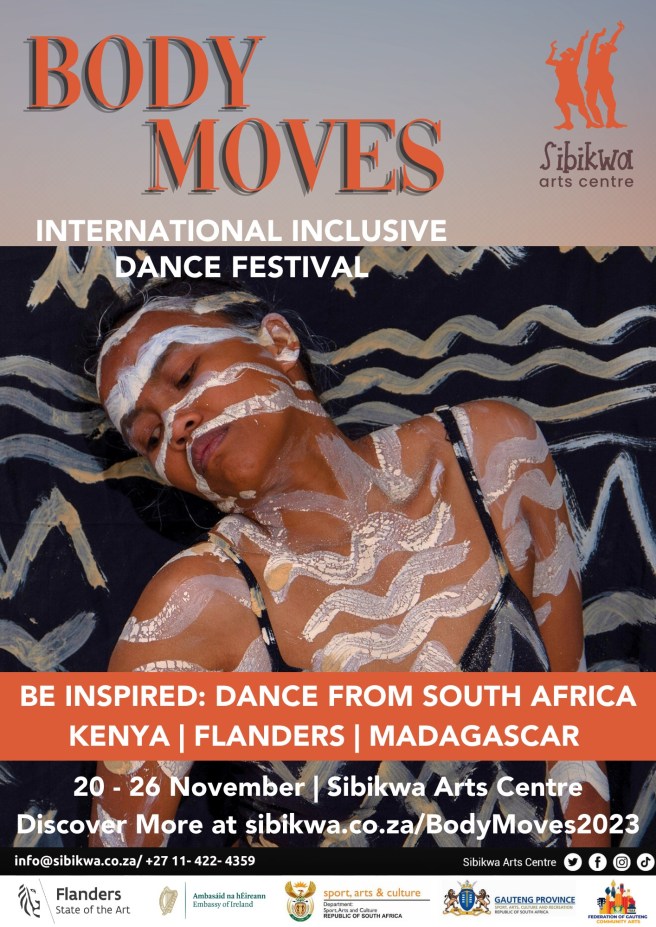
From the whirlwind success of last year’s debut, the Body Moves International Inclusive Dance Festival returns for what promises to be a triumphant second edition.
Set against the backdrop of Disability Awareness Month, the festival showcases an unparalleled array of workshops by esteemed international and local facilitators, live-streamed discussions, and breathtaking afternoon performances on November 25 and 26.
Once again according to the unshakeable Sibikwa mover and shaker Phyllis Klotz, Body Moves steps up the beat, accentuating cultural exchanges and collaborations. With participating companies spanning from Kenya, Madagascar to Ireland, Flanders and various regions of South Africa, the festival embodies the spirit of diversity and unity. Among the highlights:

Flatfoot Company in performance.
- Workshops: From a sign workshop with the talented deaf dancer, Andile Vellem of Unmute, to Ondiege Mathew’s exploration of choreography through improvisation, Fanny Vandesande’s deep dive into the lived experiences of people with disabilities, a satellite workshop at Moving Into Dance in Newtown, and more.
- Performances: Featuring works such as Chosen, highlighting the plight of a village through the eyes of a visually impaired dancer; to TWOTFAM, a thought-provoking piece that brings to the forefront the overlooked challenges faced by individuals with disabilities.
- Live-Streamed Discussion: To be hosted in partnership with ADDN, at Sibikwa and on the Sibikwa Arts Centre Facebook page, at 6pm on November 23, their aim is engaging conversations inspired by the impactful 5-minute videos from Introdans and Unmute.
Moving away from the hustle of town, yet not too far from the comforts of home, Sibikwa offers a perfect locale for audiences. See below for a detailed line-up of Festival events, or visit sibikwa.co.za/BodyMoves2023.
Supported by the General Representation of the Government of Flanders, Embassy of Ireland, Department of Sport, Arts & Culture, Gauteng Department of Sport, Arts, Culture & Recreation, and Federation of Gauteng Community Arts, the festival is more than just an event; it’s a celebration of local and international talent, a nod to cultural vibrancy, and a testament to the belief that arts and dance know no bounds.
Tickets for performances at 2.30pm on November 25 and 26 are now available on Quicket link https://qkt.io/BODYMOVES23 at R120 per person. Special group rates apply at R100 for groups of 10 or more. On-the-day tickets will be available at the door for R140. For those travelling from Johannesburg, a shuttle will be available from Rosebank Mall, the price for this ticket (including shuttle and entry) is R250.
For organisations interested in hosting a workshop or for more details, reach out to caryn@sibikwa.co.za. Additional performance and event specifics are available upon request or at sibikwa.co.za/BodyMoves2023.
About Body Moves:
A pioneer in its field, Body Moves Inclusive International Dance Festival seeks to disrupt societal norms, championing inclusive dance and fostering collaboration across borders. It stands as a symbol of hope, understanding, and the transformative power of the arts.
Contact: Caryn Green|caryn@sibikwa.co.za | 0114224359
See more detail on the programme below:
PERFORMANCES
SOUTH AFRICA


Company: Flatfoot Dance Company (Durban)
Flatfoot Dance Company has a 28-year history of working in integrated arts. It is particularly well known for its 6-year-old integrated programme fondly referred to as Flatfoot Downie Dance Company. This unique dance programme is unprecedented in South Africa and is a celebration of the power of dance to shift lives and to negotiate difference and inclusivity. This particular dance programme celebrates community across the divide of race, gender and ability.
Title: The Infinite Space Between Us
Choreography: Lliane Loots in collaboration with the dancers
Dancers: Jabu Siphika, Ndumiso ‘Digga’ Dube and Julia Pitt
Short Description of dance work: In an intimate dance journey taken by three dancers, Lliane Loots’s collaborative “the infinite space between us”, delves into how we hold, walk and wheel past or towards one another as we attempt to find or break connections. Working with FLATFOOT’s Jabu Siphika, Ndumiso Dube, and Julia Pitt, Loots’s own on-going choreographic interrogations into the intimate politics of relationships, is given a unique spin as the dancers play around with duet, trio, solo formats – and a wheelchair.
Company: Moving into Dance (Johannesburg)

Happiness in dance.
MID was born in the cruel turbulence of 1978 Apartheid South Africa. It was an artistic response to the destructive policy of apartheid. The vision was to draw on the creative capacity of the human spirit to connect enliven and transcend. In keeping with its founding vision Moving into Dance introduced its ‘Enable Through Dance’ programme in 2016 which seeks to inspire confidence and self-esteem in the physically disabled through creative means especially dance.
Title: Remember our Time
Choreographer: Lesego Dihemo
Short Description of dance work: This piece is a reflection on the change that time brings and how it has affected culture. It is looking back and acknowledging the what we had and celebrating how we have adapted and progressed.
Company: Unmute Dance Theatre (Cape Town)
Unmute Dance Theatre is a company of artists with mixed ability/disability using physical theatre, contemporary and integrated dance to create awareness on accessibility, integration and inclusion of people with disability within the main stream of society. The company came into existence in 2013 after a performance entitled Unmute. Within the past 9 years, Unmute Unmute has developed various inclusive projects that have created access and integrated people with and without disability in one environment.

Title: Isikhalo Sendoda (The Cry of a Man)
Choreographer and Dancer: Andile Vellem
Short Description of dance work: As an African man, culturally, he is not permitted to show emotion or to cry. This dance piece, inspired by his late son, is the beginning of Vellem’s healing.
Work commissioned by Sibikwa Arts Centre (Benoni)
Title: bells and sirens
Choreographer: Thapelo Kotlolo
Performers: Lethabo Shai, Keaoleboga Seodigeng, Thapelo Kotlolo
Short Description of dance work: For most young queer individuals club life is an important element of self-image. The club is a place of refuge, a protected space where they are able, and allowed, to enjoy a little freedom. The nightlife means an opportunity to become self or at least who and how they wish to be seen. While at the same time this is not always a true reflection of their day to day lives. The work explores themes relating to queer bodies escaping into the night.
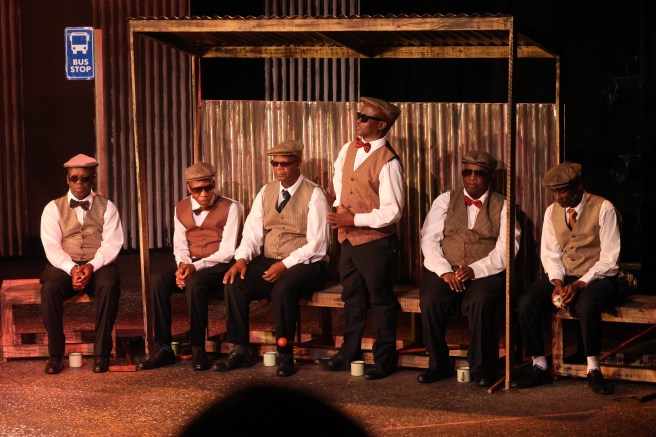
The Ga-Rankuwa Requesters began in 1984 under the leadership of music composer Lucas Kopaopa. The group initially had 9 male members in total, 8 were visually impaired and 1 was partially sighted. The group worked together at Are Itereleng Centre for the Blind, in Zone 2 in Ga-Rankuwa. After the formation of the group, now known as the Ga-Rankuwa Happy Boys, they released 3 acapella albums. As the group’s journey continued and new members joined and old members left, they formed the Ga-Rankuwa Requesters in 2005. They have entered music competitions convened by the South Africa Disabled Musicians Association and have won a recording deal. Over the past year they have been performing Lifted – Let the Blind Sing at the State Theatre under the musical direction of Zakehele Mabena.
FLANDERS


Title: TWOTFAM The Works Of The Flesh Are Manifest
Choreographer: Fanny Vandesande
Dancer: Anna Dujardin
Music Composition & Performance: Kobe Boom
Short Description of dance work: The works of the flesh are manifest and focuses on the creation of intimacy on stage and the power relations that it carries forward. The performance departs from Anna D’s diary entries, illustrations and poetry, which is presented through movement.
FANNY VANDESANDE is currently conducting research in intimacy, sexual agency, autonomy, and social perception with people living with disability.
MADAGASCAR
Company: Lovatiana
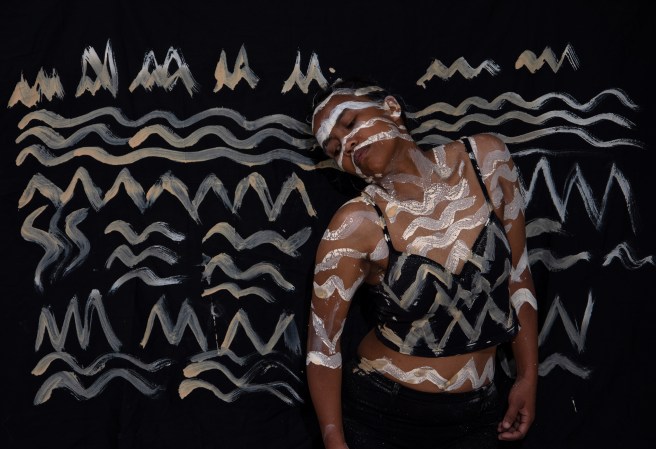
Created in 2002 in Antananarivo by the choreographer Lovatiana Erica Rakotobe. In 2009, people with disabilities were integrated into the company and the company currently has 8 members who work in the artistic, social and educational sectors in Madagascar. The company organises different events, including a multidisciplinary in inclusive festival Miaraka, which takes place every two years.
Title: Chosen
Choreographer: Lovatiana Erica Rakotoba
Dancer: Nacelle Somoh
Short Description of dance work: Dance piece inspired by the story of young children chosen to save the people of the village often threatened by floods.
KENYA
Company: Dance Into Space
Dance Into Space (DIS) is a Kenyan contemporary dance company fostering training, practice and appreciation of dance in conventional and unconventional spaces. DIS champions’ inclusiveness through works with people with disability in East Africa in a mixed ability dance program exploring existential issues creatively. The company has established a growing centre for implementing mixed ability and contemporary dance projects in Siaya County.
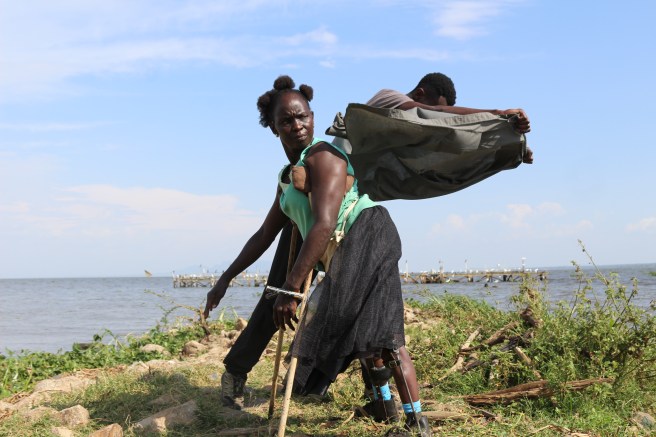
Title: NYANAM (Daughter of the Lake)
Choreographer: Ondiege Matthew Oyango
Dancer: Pamela Jura
Short Description of dance work: Re-imagining a Kenyan myth that has previously promoted patriarchal behavior. Nyanam challenges the traditional power play by demystifying myths and suggesting new narratives where women are seen to be empowered and play a stronger role in the hierarchy.
WORKSHOPS (2 to 2 and a half hour in length)
- Ondiege Matthew: A mixed abled dance workshop discovering how the body with disability in contrast to the body without a disability explores space, direction, levels and approaches choreography through improvisation.
- Lovantiana Erica Rakotoba: The workshop will be based on inclusive dance working through body weight and fluidity and exploring different bodies in space; sharing the choreographic repertoire of the piece running at the Festival.
- Andile Vellem: Presenting a sign dance technique workshop established by UNMUTE, using the basics of sign language and finding ways to translate it into creative movement.
- Fanny Vandesande: This workshop delves into the difficult challenges people living with disabilities confronts regularly, which includes, intimacy and sexual agency.
- Cindy Cummings: This workshop, titled ‘Serious Play’, will focus on the ever-changing dialogue between people. Pairs and small groups will use improvisational structures to experiment with specific tools for this kinesthetic dialogue to reveal how everyday actions can be crafted into a unique and original dance through the lens (and practice) of Noticing.
IRELAND
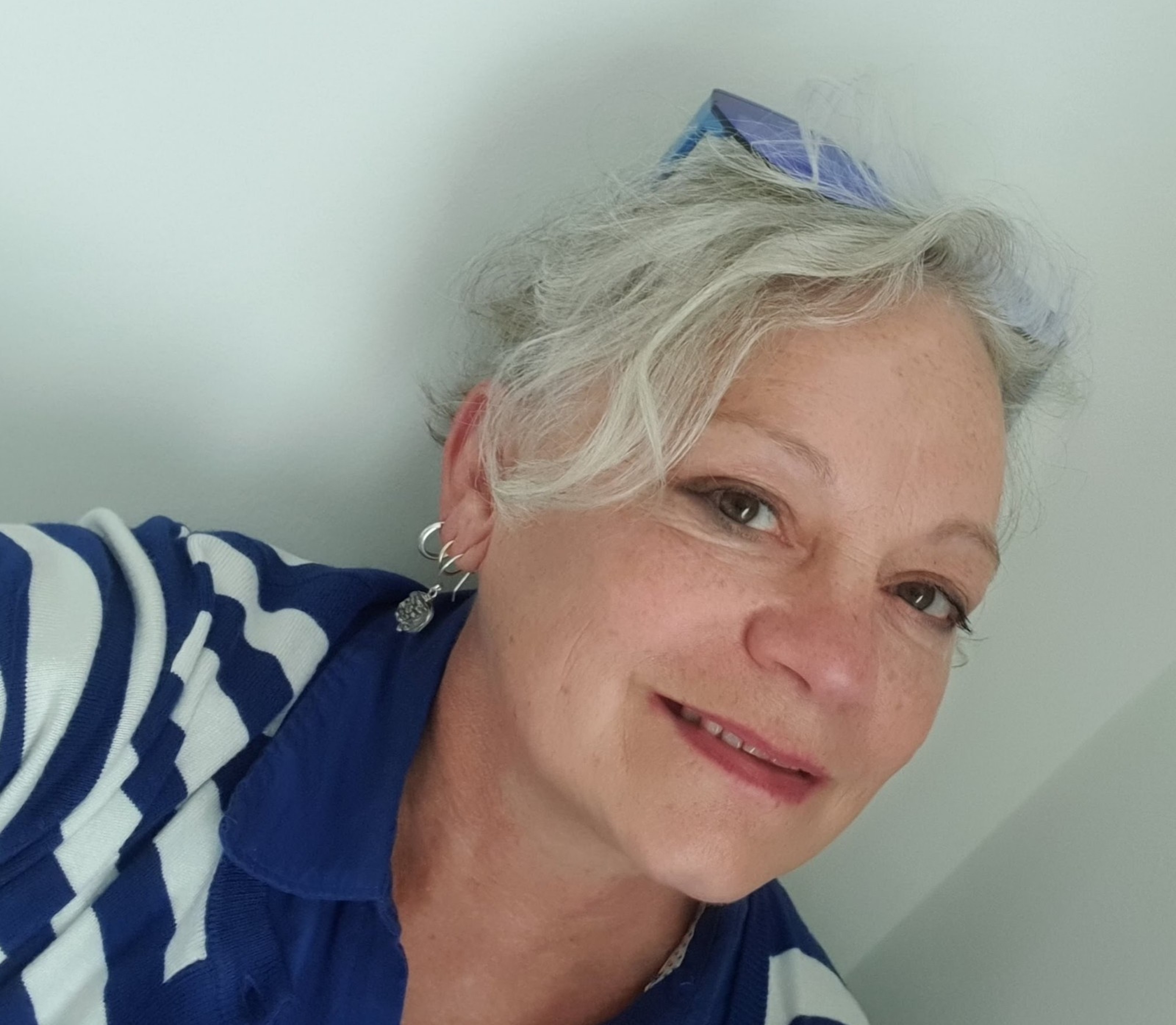

CINDY CUMMINGS is a freelance dance artist who creates original collaborative works with dance, theatre, visual, sound, literary and media artists around the world for live performance, installation and film. Cindy is based in Kilkenny, Ireland where she has choreographed productions at the National Theatre of Ireland and most recently, with the award-winning Asylum Productions. Currently she is movement director with Equinox Theatre Company at KCAT Arts Centre and is a facilitator on the Inclusive Dance Cork course at Dance Cork Firkin Crane. Since 2007 Cindy has been a member of Aosdána, the affiliation of creative artists in Ireland.
DISCUSSION
To be hosted at Sibikwa, in partnership with ADDN, and live-streamed to Facebook, it promises engaging conversations inspired by the impactful 5-minute videos from Introdans and Unmute.
Link to Introdans video: https://vimeo.com/860961292/a614acc7e5
The AFRICAN DANCE DISABILITY NETWORK (ADDN) is part of a UKRI – AHRC funded research project entitled ‘Encountering disability through contemporary dance in Africa’. It aims to gather academics, artists and educators in a free and open space of community, sharing and support. Their approach is intersectional, considering how disability as an experience sits alongside our ethnic, gendered, racial, class and national identities.

 De Beer Necessities