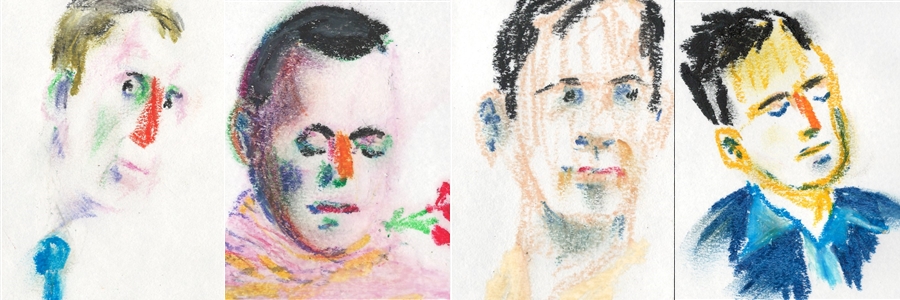
Photographers: Christo Niemandt: @christojniemandt_ @kinomotiontoys (both instagram) (pictures of final work) and Nolan Lister (pictures of artists)
Internationally acclaimed local sculptor Angus Taylor was recently invited to create part of a gift which the South African government wanted to present to the world leaders attending the G20 summit, held in Johannesburg last month. He tells Diane de Beer about the creative endeavour:
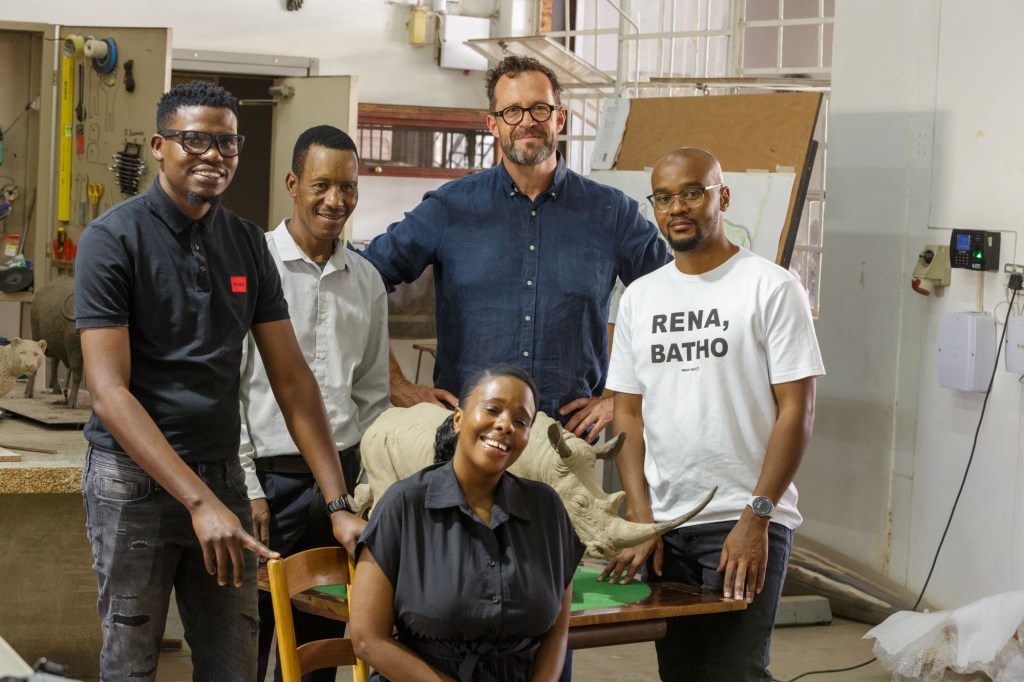
Back from left: Theophelus Rikhotso, Victor Nkuna, Angus Taylor and Malose Pete; Front: Dikeledi Maponya
When Anande Nöthling from the South African Government recently contacted sculptor Angus Taylor and asked if he would make one of the five gifts representing the big five for the G20, he was keen to know who the other participating artists would be.
“It’s important with whom you associate creatively and whether we would all be compatible,” he says. “She said she would still find the people.” He then suggested that, instead of her looking for artists, he would find a group whose work would complement each other.
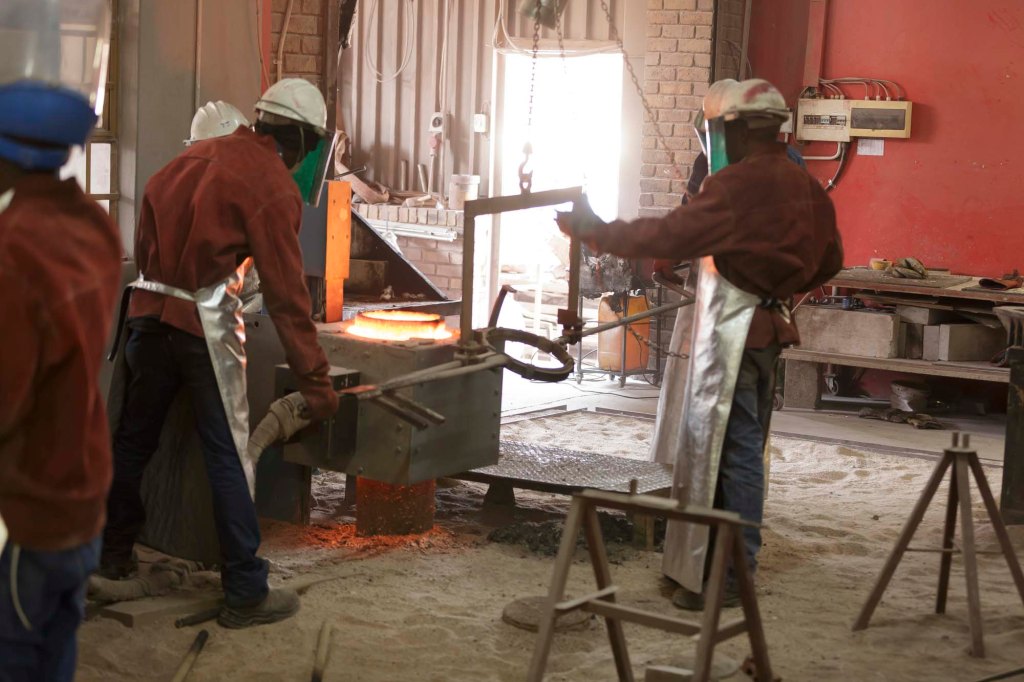
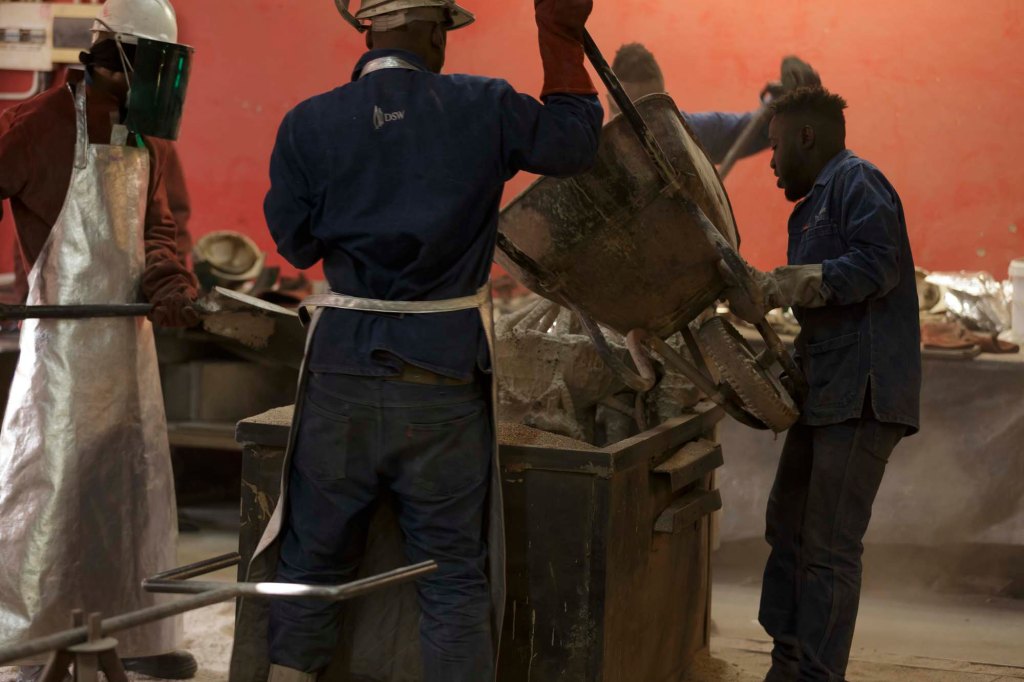
Artists at work in the Dionysus Sculpture Works (DSW).
They wanted previously disadvantaged people who would benefit from his experience, as well as from the project and exposure. “I decided to opt for three younger artists, two from the Tshwane University of Technology and one from Durban, as well as a self-taught older artist, Victor Nkuna.”Artists at work
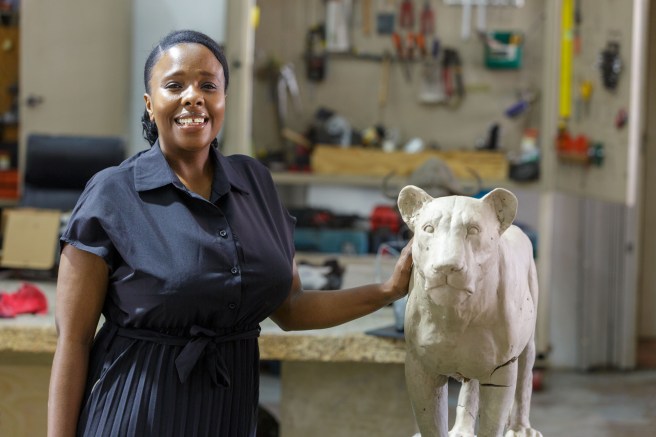
Dikeledi Maponya and her lion.
He was relieved and delighted that each of the artists chose a different animal, which meant there was no conflict. At worst, they could all have gone for an elephant, which meant they might have had to draw straws.
They decided to start big and then revert to the smaller sculpture, a method he has perfected in his own practice. “When you work larger and you reduce it to its pure essence, your big mistakes become little mistakes which can more easily be reworked and corrected.
“It means that you work larger, scan it and then print these sculptures smaller. That is then transferred back to clay because the surface needs to be activated by human hands to give it life – in my opinion.
“If it is a full-on digital process, it dies in a certain way. It’s as though the surface is lifeless, like making a photostat of a photograph of somebody,” he says.
“The smaller, reduced to scale and transferred to clay sculpture is then built into an environment so that each animal stands in a little piece of landscape.”
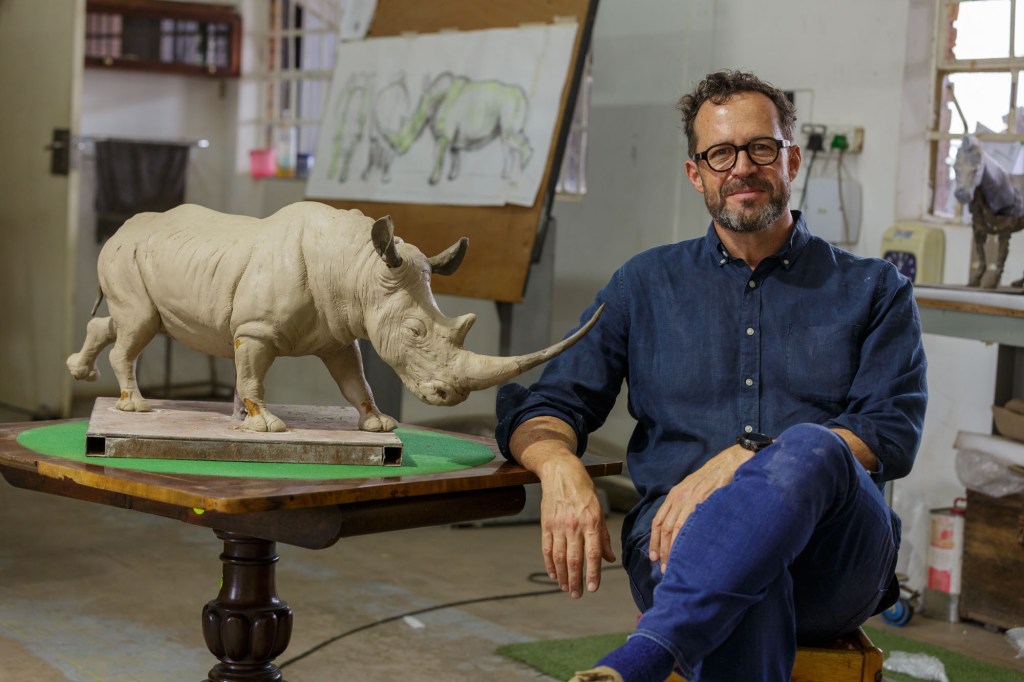
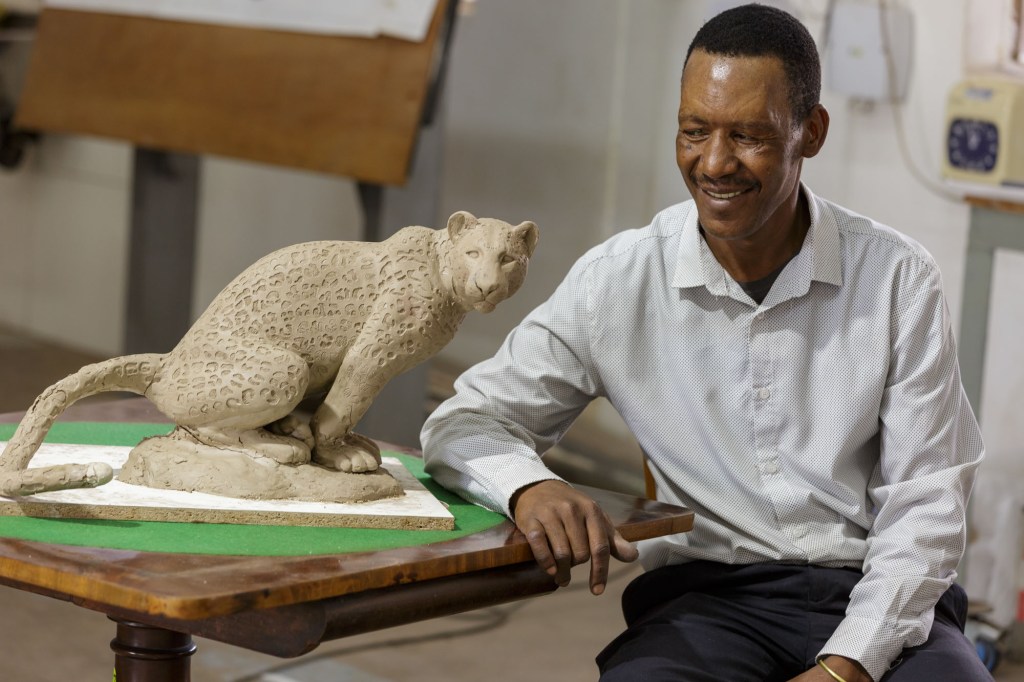
Angus Taylor with his rhino. Victor Nkuna with his leopard.
On the bronze base of each sculpture, Taylor envisioned a concept that wasn’t simply the description and name of each animal – that would have been lacking in content. “There are African idioms that attach something philosophical to each animal. These are introduced in an indigenous language and translated into English on each base of the sculpture. So, for instance, when it came to the elephants, we chose: When elephants fight, it’s the grass that suffers.
The leopard shares the following: The rain can wash out its coat but the leopard won’t lose it spots. Be careful with rhinos, the recipients are warned: You shouldn’t speak of a rhino if there’s no tree nearby.
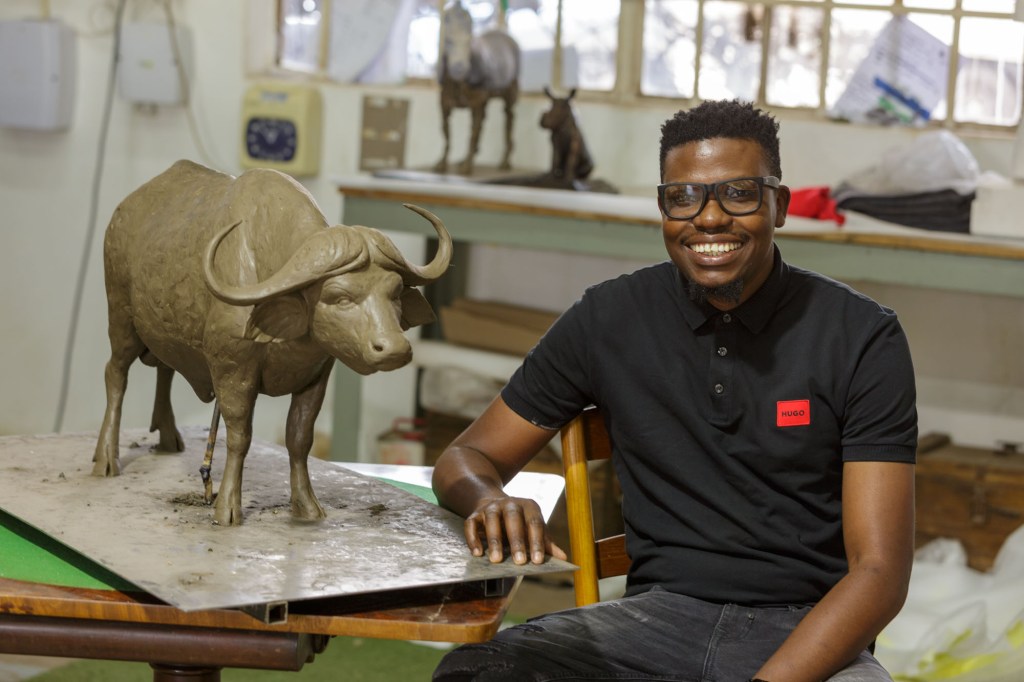
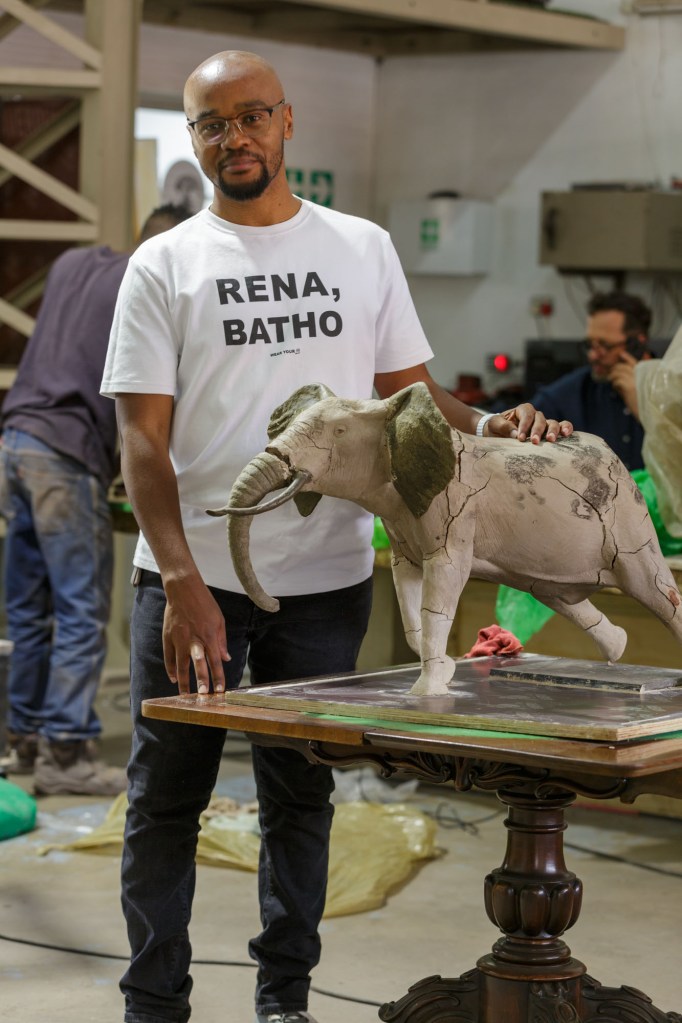
Theophelus Rikhotso with his buffalo. Malose Pete with his elephant.
“So don’t just share your woes, share your wisdom,” argues Taylor, who wanted to embellish the sculptures with some of our rich African sayings and stories.
“There are all these idioms attached to different animals which turns our sculptures into an imaginative and hopefully coveted gift,” muses the artist.
All five bronze animals are set onto South African stone and the complete artwork fits into a wooden box lined with African shwe shwe. This is strapped in with a leather belt with a handle so it can easily be carried. It weighs less than 20 kilos and is proudly South African.
Listed are the complete group of artists with their chosen animal:
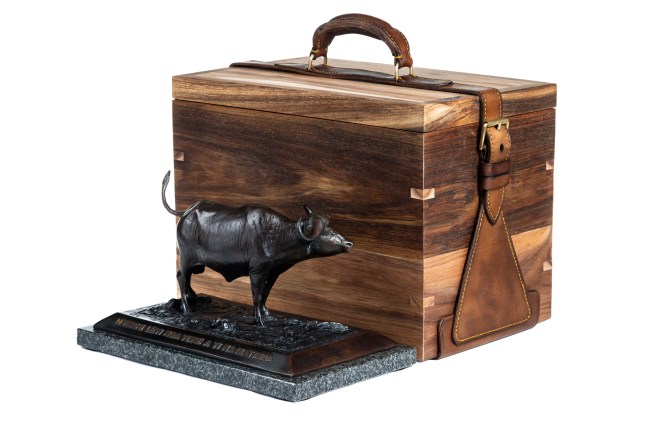
Theophelus Rikhotso, who is responsible for the buffalo, loved working with others. “It helped me understand how a sculpture should be articulated.”
Buffalo
2025
Cast Bronze on Rustenburg Granite Base
Approx 250mm (h) x 370mm x 210mm
Edition of 24
“Nyarhi leyi nga yoxe a yi na matimba “
“A lone buffalo has no strength”
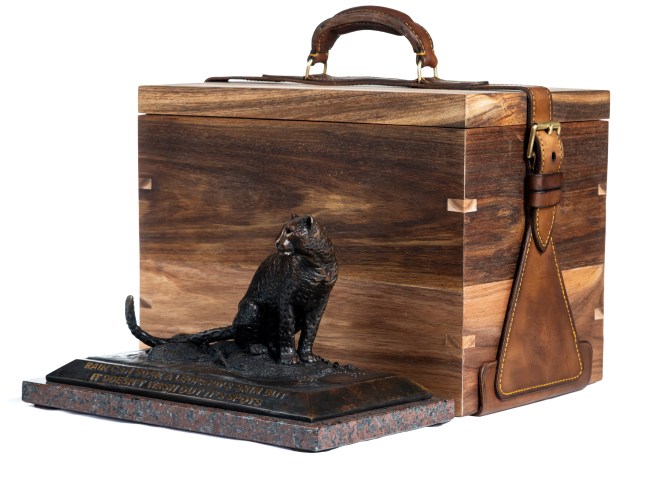
Victor Nkuna made a leopard with fine detail. “The leopard is the animal I love which is also favoured by my people. It’s all in the detail.”
Leopard
2025
Cast Cronze on African Red Granite Base
Approx 250mm (h) x 370mm x 210mm
Edition of 24
“Rain can soak a leopard’s skin but it doesn’t wash out it’s spots”
“Mpfula yi tsakamise Dzovo ra yingwe kambe yinge yi suli mavala”
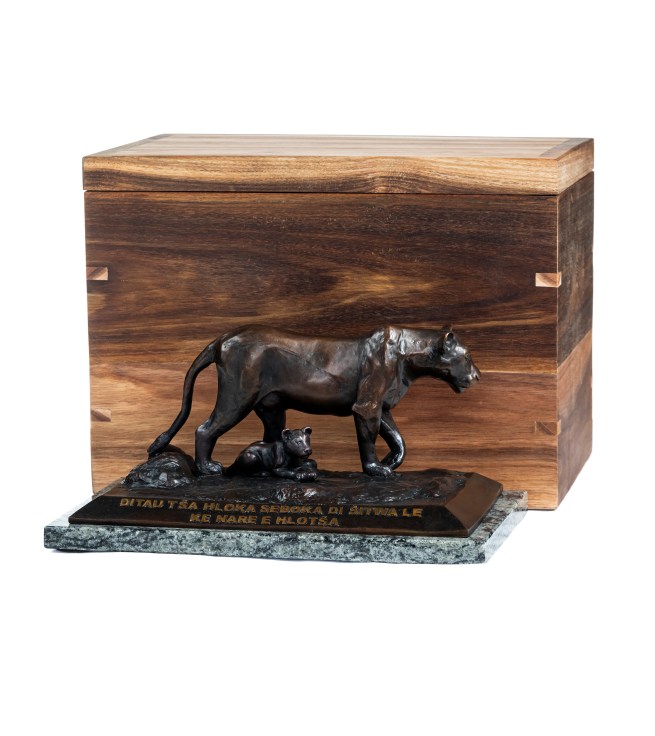
Dikeledi Maponya enjoyed the process, working with others and exchanging ideas. “Every time I work in the studio, I learn something new.”
Lion
2025
Cast Bronze on Olive Green Granite Base
Approx 250mm (h) x 370mm x 210mm
Edition of 24
“Ditau tša hloka seboka di šitwa le ke nare e hlotša” ”Lions that lack unity and cooperation are less effective than a limping buffalo”
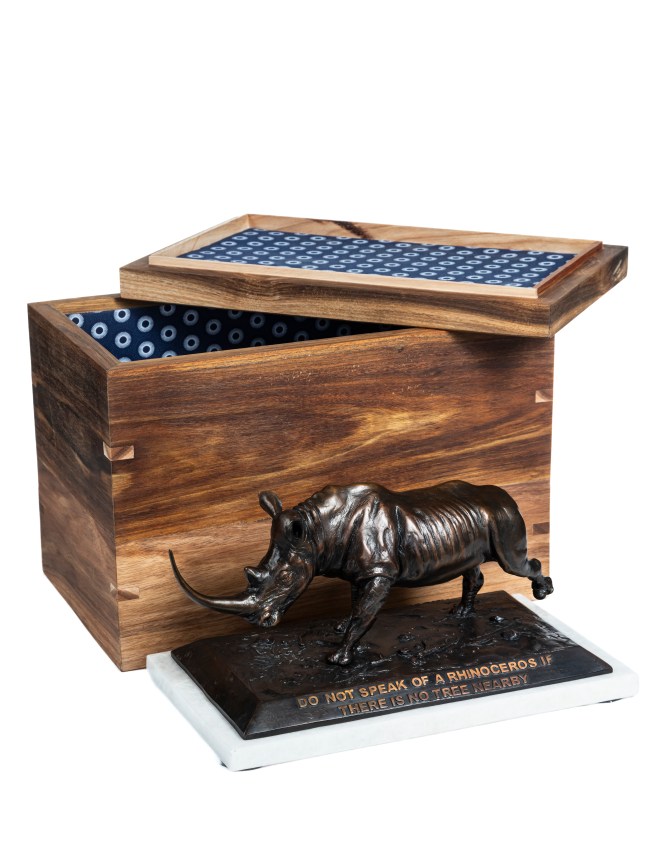
Angus Taylor goes for the real thing as he sets up his workspace almost within touching distance of a rhinoceros herd.
Rhinoceros
2025
Cast Bronze on Marble Base
Approx 250mm (h) x 370mm x 210mm
Edition of 24
Do not speak of a rhinoceros if there is no tree nearby ”Ungakhulumi ngobhejane kungekho sihlahla eduze”
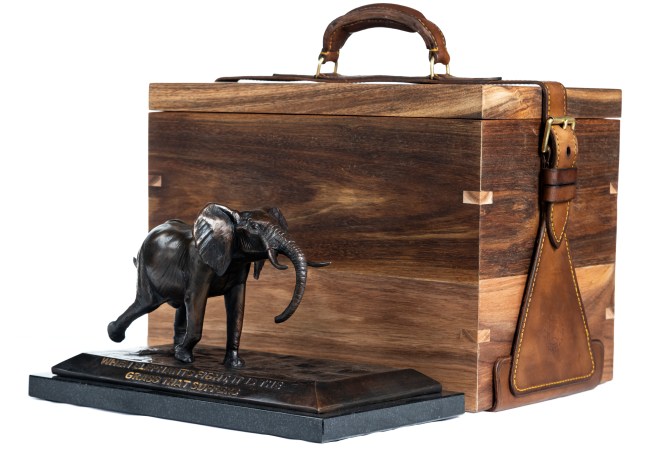
Malose Pete has – by chance – for the past few years been studying the elephant, so when this request was made, it felt right. “Working in this kind of space where you can actually step back, expands your mind. This isn’t like work.”
Elephant
2025
Cast Bronze on Belfast Granite Base
Approx 250mm (h) x 370mm x 210mm
Edition of 24
“When elephants fight, it is the grass that suffers.” ”Wapiganapo tembo nyasi huumia.”
The Craftsmen Collective made the leather handles. (https://craftsmencollective.co.za) and woodworker Chris (Instagram: @furnituremadebyChris ) made the boxes.

 De Beer Necessities