WORDS, WORDS, WORDS, WE JUST LOVE WORDS SAYS THE VRYE WEEKBLAD WITH THEIR BOOK FESTIVALS

Book festivals are becoming more and more popular but if you think they’re easy to curate and organise, think again. You have to think about the where, when and who, what kind of topics you want to present, find a balance between light and weighty, none of which will give you a sure-fire result. Deborah Steinmair from Vrye Weekblad cooked with the right ingredients. DIANE DE BEER was there:

Pictures supplied by Vrye Weekblad
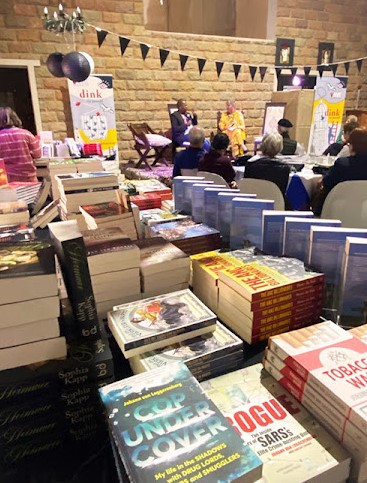
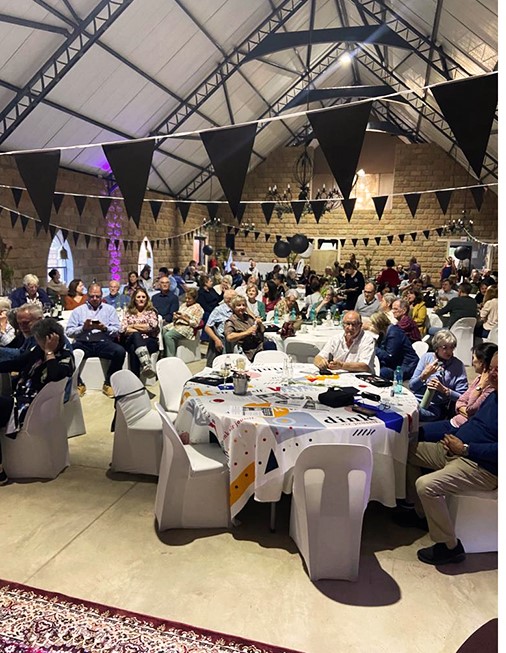
Cullinan was the chosen spot for Vrye Weekblad’s first Gauteng Boekefees following the success of the Cape equivalent in Stilbaai last year. They’re also following with a third one in the Free State’s Clarens in July and there is talk of another one in the Cape. (If you’re interested, follow their social media…)

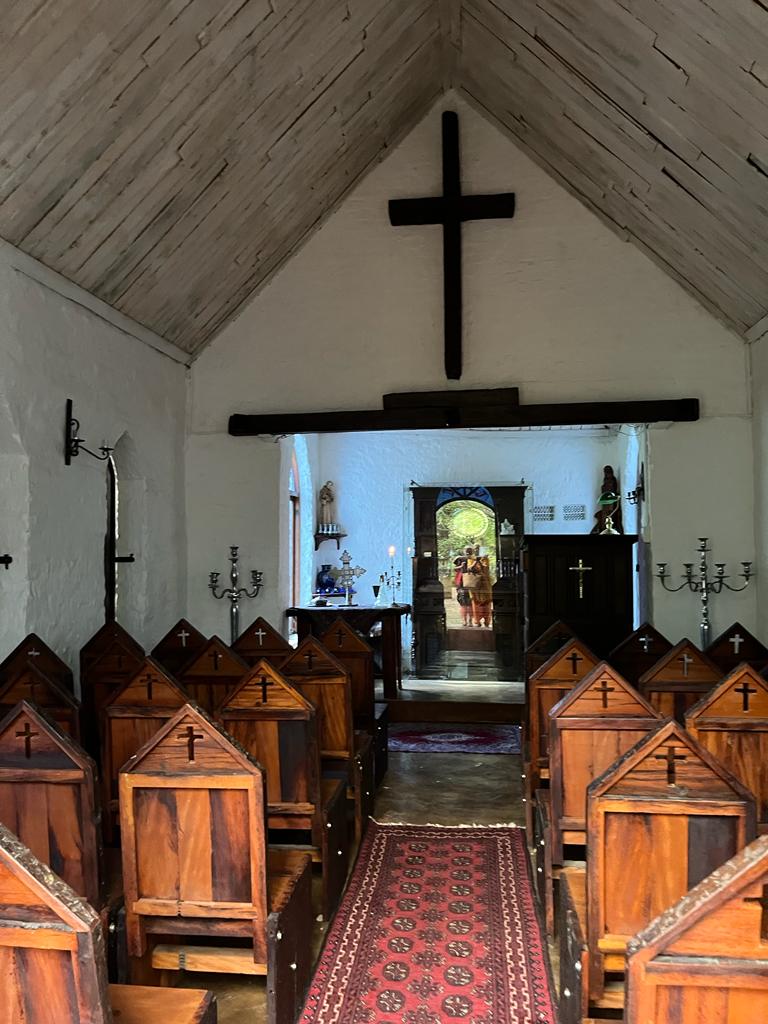
But this time, book genius Deborah Steinmair was the one who had to get all her ducks in a row. First she found the perfect venue, a church with a large hall, all on one property with parking across the road and in walking distance from where most people would be staying during the weekend.

Architecturally, if that’s your thing, it also had the perfect look. It is a Herbert Baker design after all and that’s what these kinds of towns dotted all across the country offer. Think Dullstroom, Clarens, Tulbach, and more…

And as the visitors started arriving on the Friday afternoon for the editors’ launch Daar’s ‘n Mier in my Broek (There are ants in my pants) with Max du Preez, Anneliese Burgess and Piet Croucamp, it was obvious that the weekend would draw a crowd.
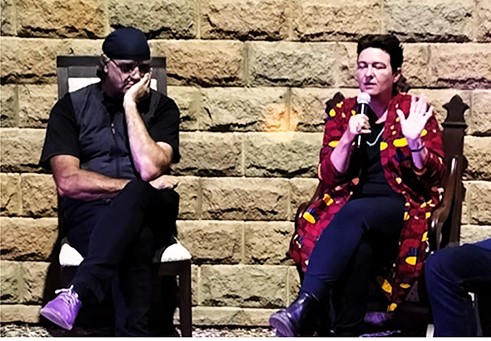
Anneliese Burgess (right) and Piet Croucamp talk SA politics.

Politics in this country is part of our daily bread – especially now – and if you have a few breakaway voices setting the tone, you’re getting it right. But then that’s been a Vrye Weekblad trademark. You had to be there to catch their drift but what really hit the mark for me was the collective decision that we need new ideas not new ideologies.

And then a few pointers. Watch out for distractions. From what did the media turn their gaze when they were so obsessed with the Thabo Bester saga? But there’s good news on that front as well. Who would have known that Parliament could do such a deep dive when investigating Bester’s miraculous escape?
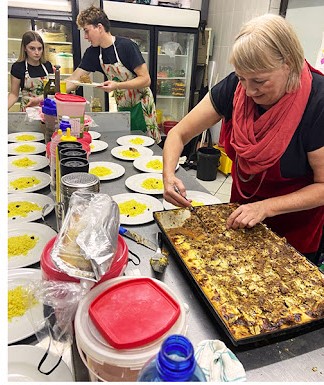
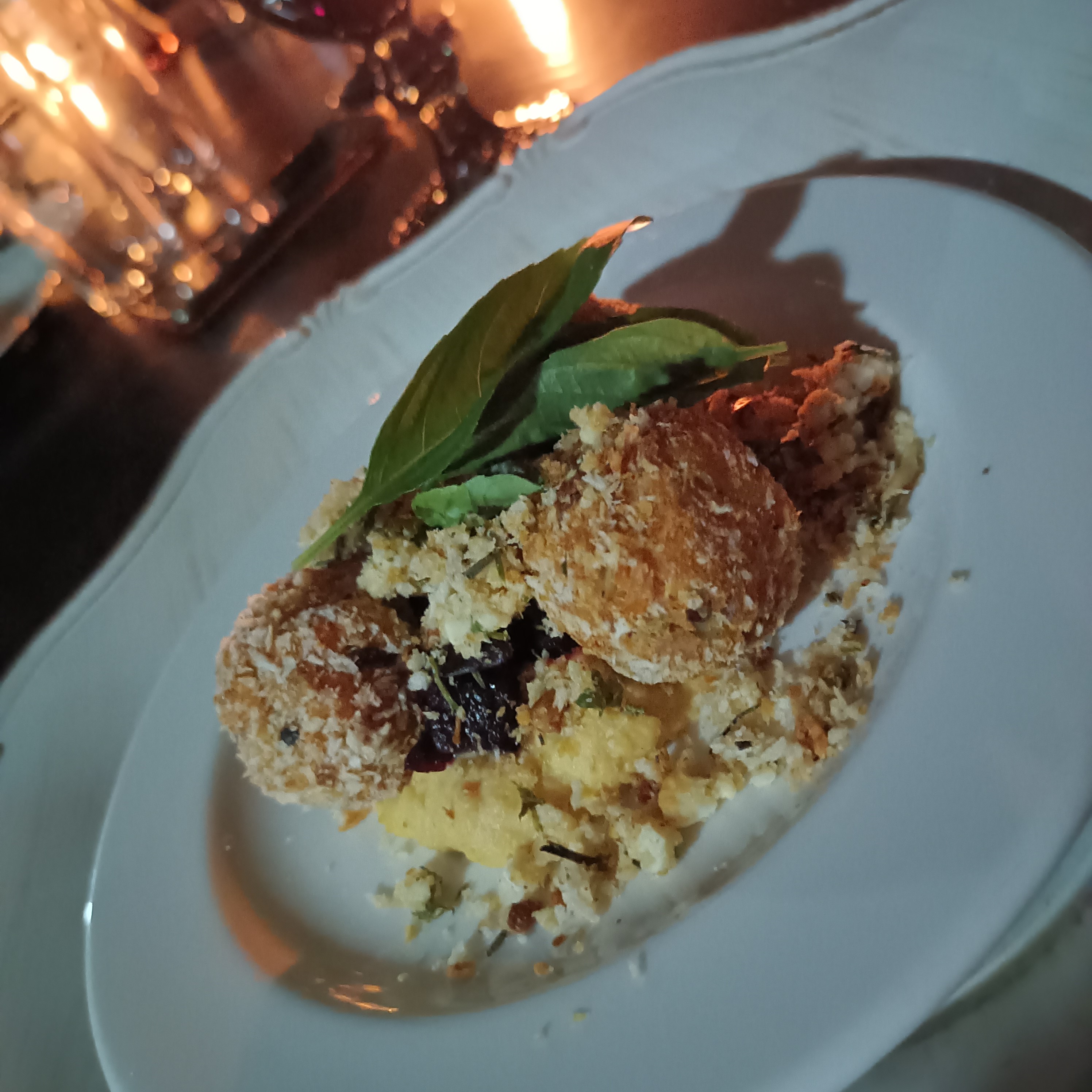
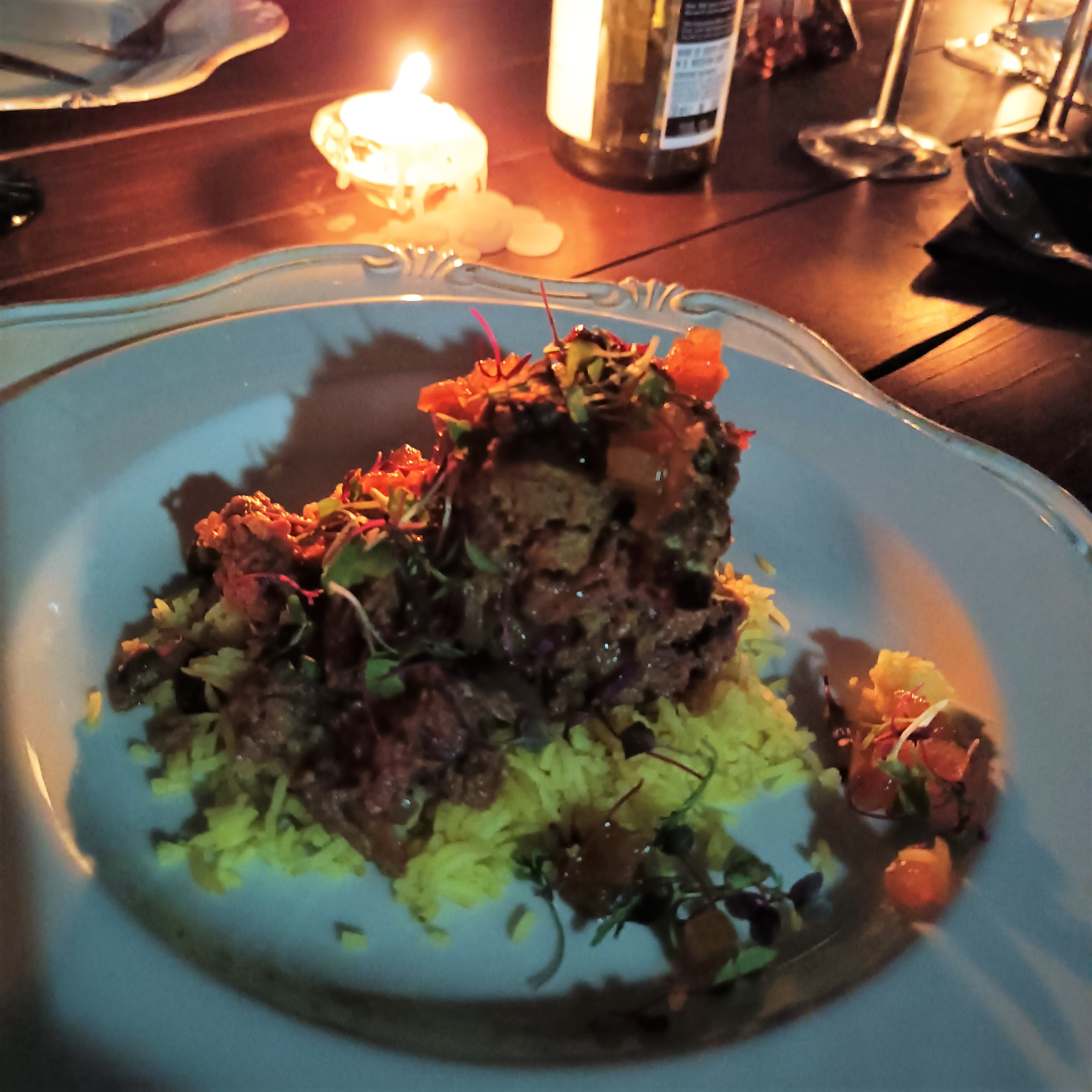
Lientjie Wessels (left) with chicken croquettes and venison and miso bobotie.

This was followed by another Deborah brainwave: asking one of our most inventive chefs, Lientjie Wessels, to host an old-fashioned grand dinner in what was once a diamond town.

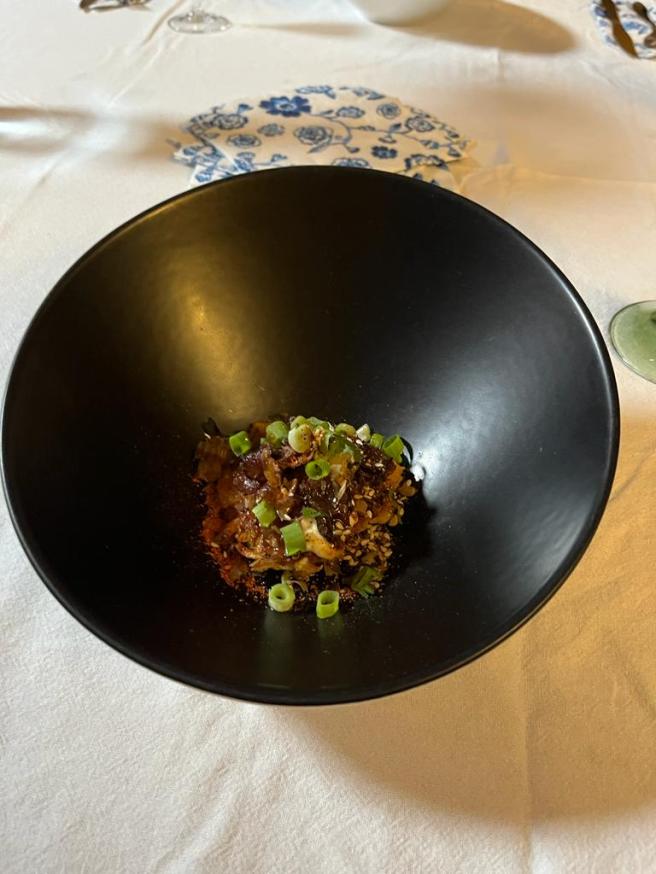
The menu and pictures do the talking: from tomato soup with togarashi, to squash hummus, chicken croquettes, roasted beetroot with feta and herb crumbs followed by a venison and miso bobotie with the traditional yellow rice and pear chutney, and concluding with a Persian love cake with lemon caramel.

And if you are wondering, like I did, about togarashi, it is described as a common Japanese spice mixture containing seven ingredients. It’s one of the things I love about Lientjie’s food, I always learn something. Also, you know that every meal by this creative genius will be something extraordinary, and I’m not exaggerating.

We stayed in the Cullinan Hotel and here I also have to give a plug, I was pleasantly surprised. Nothing fancy, but smartly yet simply renovated furnishings in the rooms turned this into a pleasant stay as well
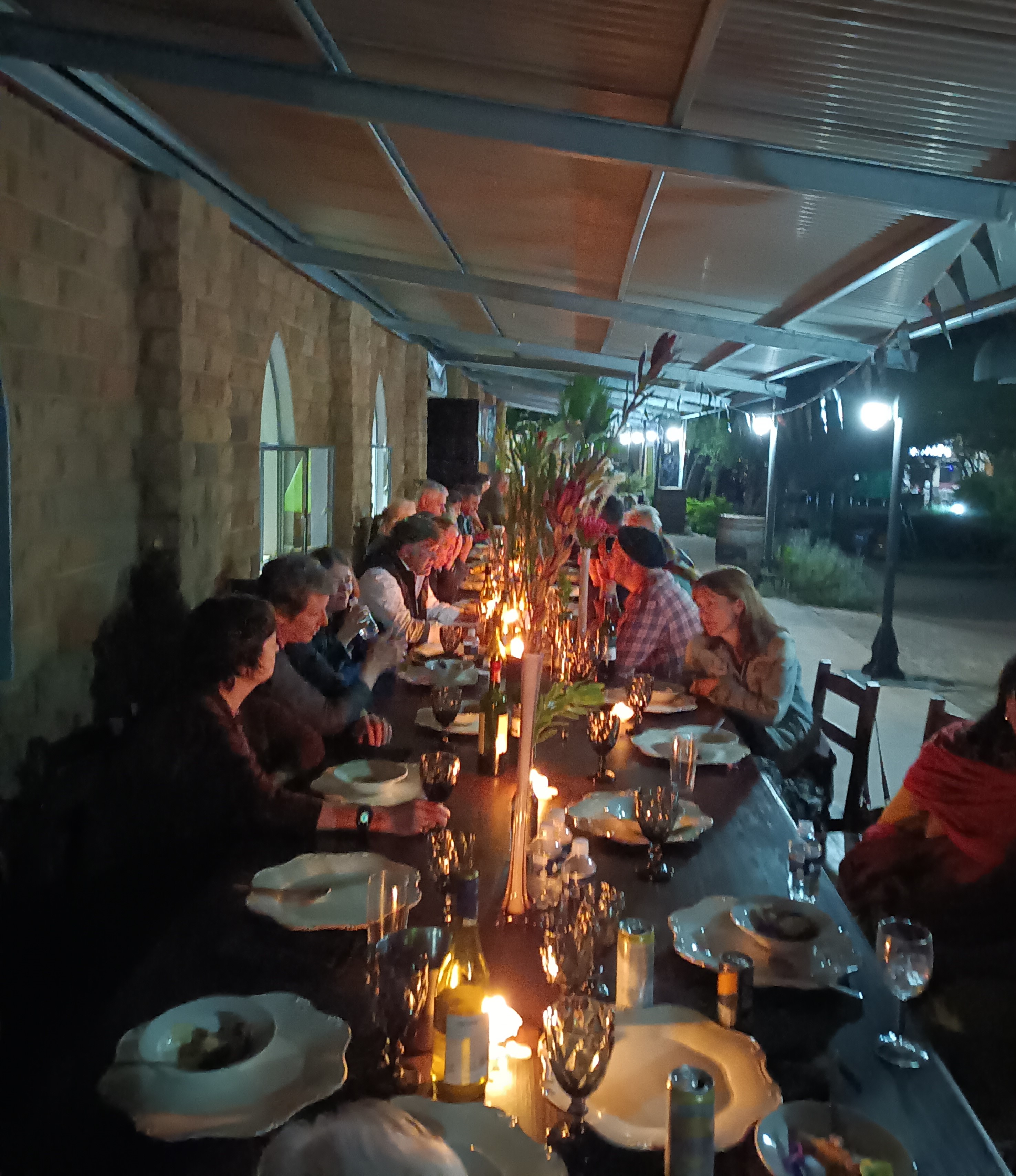
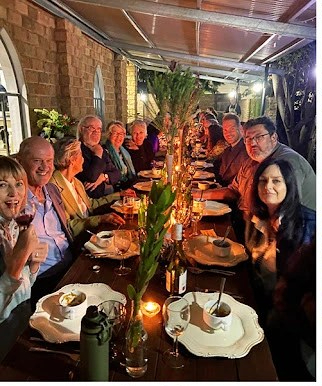
Dinner by candlelight at the Boekefees.

The next morning kicked off with Renée Rautenbach Conradie’s discussion with author Willemien du Preez on her book described as autofiction, ‘n Plaas se Prys. And what that means is that the story is based on her life but interwoven with fictional elements. The talk was titled Futility farm and the Afrikaner’s farm gene. The drift of the story is a couple following their dream, buying a farm and then finding themselves literally and figuratively overwhelmed by the elements – with dust and flies dominating.

It’s a universal story of broken dreams … and yet she lives to tell the tale and probably another, and another.

A highlight was a collective group of feisty women authors who captured the imagination and the spirit of the book fest.

Borrel, gorrel, smoeg en wroeg (loosely translated à la Shakespeare: boil, bubble, toil and trouble) Women who write can bewitch: including Gerda Taljaard (Vier Vroue), Bettina Wyngaard (Lokval), Renée Rautenbach Conradie (Met die Vierkleur in Parys), Michèle Meyer (Moer), Celeste Theron (her first will be released in the next few months), Emma Bekker (Vel), and Marida Fitzpatrick (Mara).

Deborah took the reins: one needs her kind of wicked humour to get the sharp-tongued talk going and with these more recent than others, but all spending stolen or free time on words.

Asked about feminism, the responses varied from an aversion to labels to Wyngaard’s struggle with the basics. If people aren’t accepted as equal yet, how can we ignore the fight?
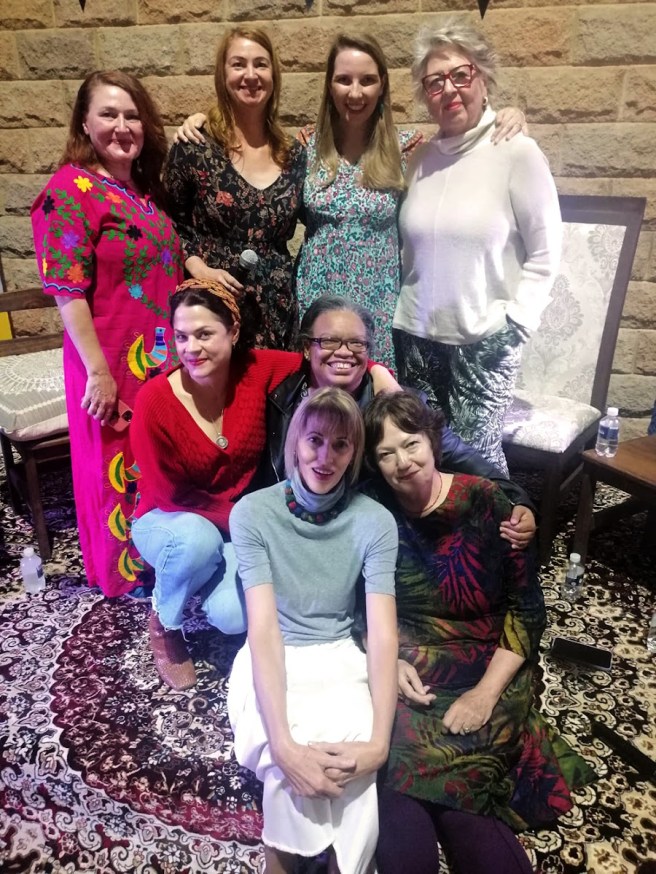
Feisty females: Back: Emma Bekker, Gerda Taljaard, Marida Fitzpatrick and Renée Rautenbach Conradie; Centre: Celeste Theron and Bettina Wyngaard; Front: Michèle Meyer and organiser Deborah Steinmair.

Some members of the panel are inspired to write by history, others want to investigate certain questions, yet another talks about fever dreams or even nightmares when awake. There are also those thoughts that burst through from the unconscious just before you nod off and another feels for her, writing is the only way to express herself.

And just to throw the cat amongst the pigeons, Deborah wanted to know whether women write better sex scenes than men.

For Gerda it was simple: The male gaze can be quite technical. Replace that with a woman’s perspective and it’s softer, more subtle.

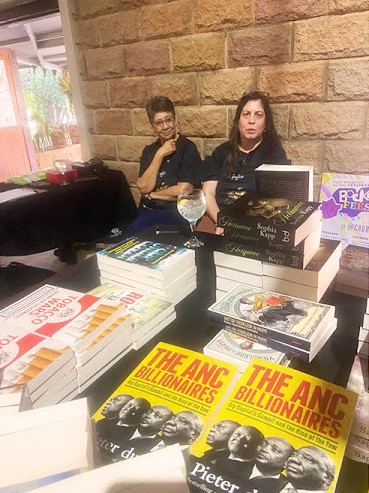
And then I have to agree with Anneliese Burgess about the deeply serious closing  conversation of the day between editor Max du Preez and writers Johann van Loggerenberg (former head of the investigative unit at SARS) and Pieter du Toit discussing ANC Billionaires and Rogues.

It’s the kind of meaty discussion, “an in-depth analysis about the state of the nation”, is how Burgess describes is, you want to conclude with, even though I sadly had to leave after the cheerful chatter of the female authors.

Sunday suitably swung into a gathering of poets (Johan Myburg, Jolyn Phillips, Kirby van der Merwe, Eunice Basson, Martjie Bosman, Emma Bekker, Johann Lodewyk Marais, Pieter Odendaal and Jaco van der Merwe) who did their reading in the Baker church before a final meal with Frik de Jager whose selected dishes each told its own story.

And just like that, it was all finish and klaar. With the next one just around the corner.

I can’t wait.

KENTRIDGE WIELDS HIS ARTISTRY TO SHINE THE LIGHT MAGNIFICENTLY ON THE FORGOTTEN BLACK FOOT SOLDIERS WHO FOUGHT VALIANTLY BUT WERE IGNORED IN THE WRITTEN HISTORY OF WORLD WAR ONE

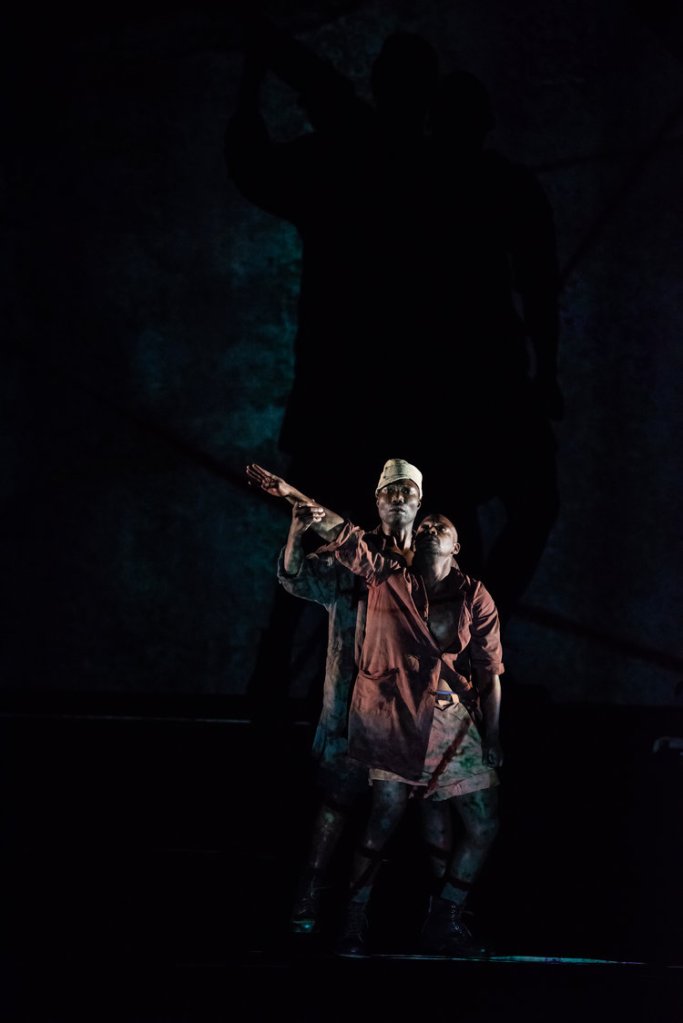
The Head and the Load is about Africa and Africans in the First World War.

That is to say about all the contradictions and paradoxes of colonialism that were heated and compressed by the circumstances of the war.

It is about historical incomprehension (and inaudibility and invisibility).

The colonial logic towards the black participants could be summed up:

“Lest their actions merit recognition,

Their deeds must not be recorded.”’

The Head and the Load aims to recognise and record.

           WILLIAM KENTRIDGE

Pictures supplied

SHOW: The Head and the Load

CONCEPT AND DIRECTOR: William Kentridge

COMPOSER: Phillip Miller

MUSIC DIRECTOR AND CO-COMPOSER: Thuthuka Sibisi

CHOREOGRAPHY: Gregory Maqoma

PROJECTION DESIGN: Catherine Meyburgh

COSTUME DESIGN: Greta Goiris

SET DESIGN: Sabine Theunissen

LIGHTING DESIGN: Urs Schönebaum

And the magnificent cast and musicians – with the African premiere dedicated to the original narrator Mncedisi Shabangu who sadly died last year.

DIANE DE BEER reviews:

And the top introduction by Kentridge gives you a pretty good idea of the load the artist, in many different disciplines, (and when not, he brings in others of his ilk) had in his head.

If you’re the one watching, it might just blow your mind. And if you’re familiar with his work, there’s much you will recognise as he often works with the same artists and combines original music with references to the period and composers of the time as well as texts, movement, shadow play and lighting.

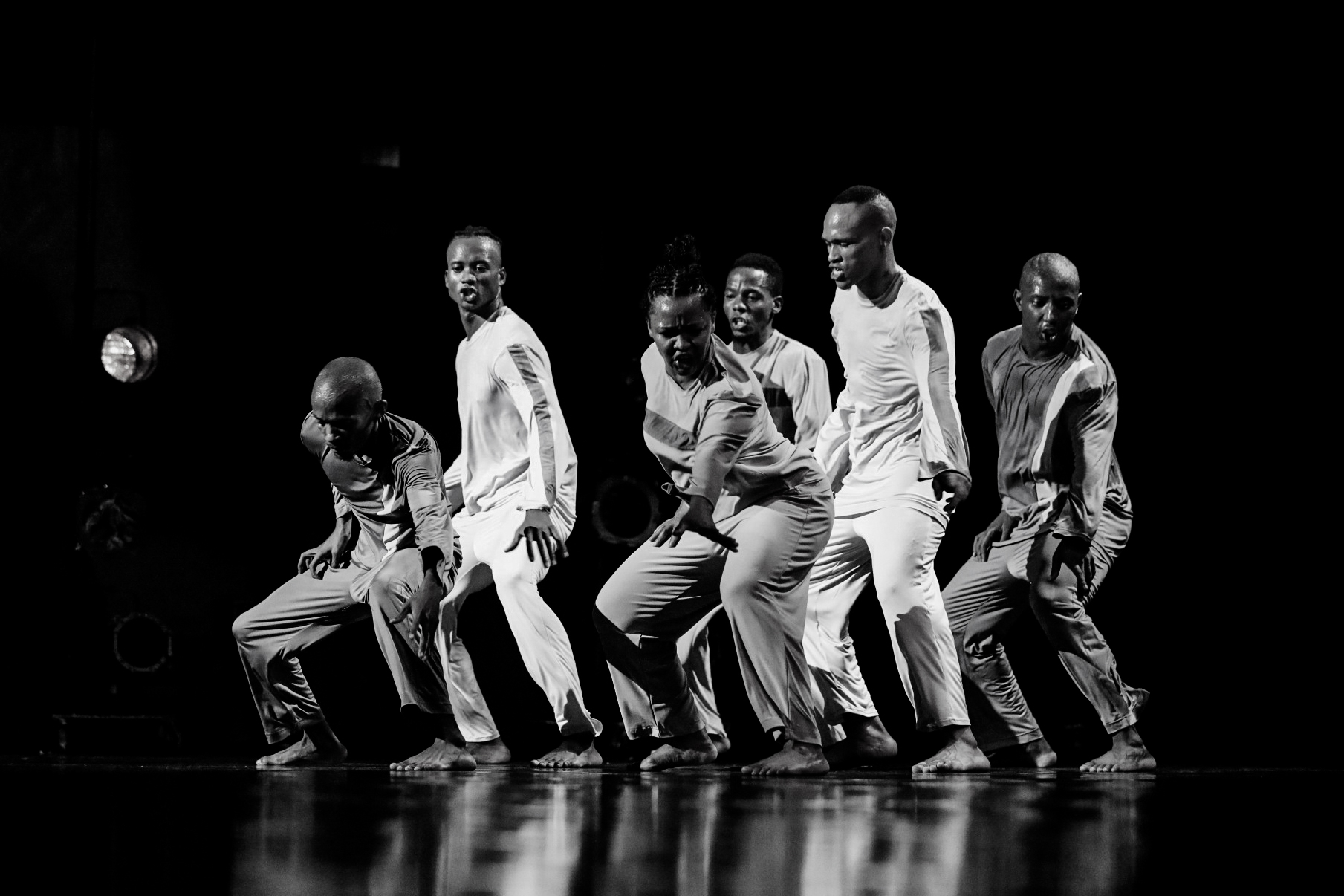
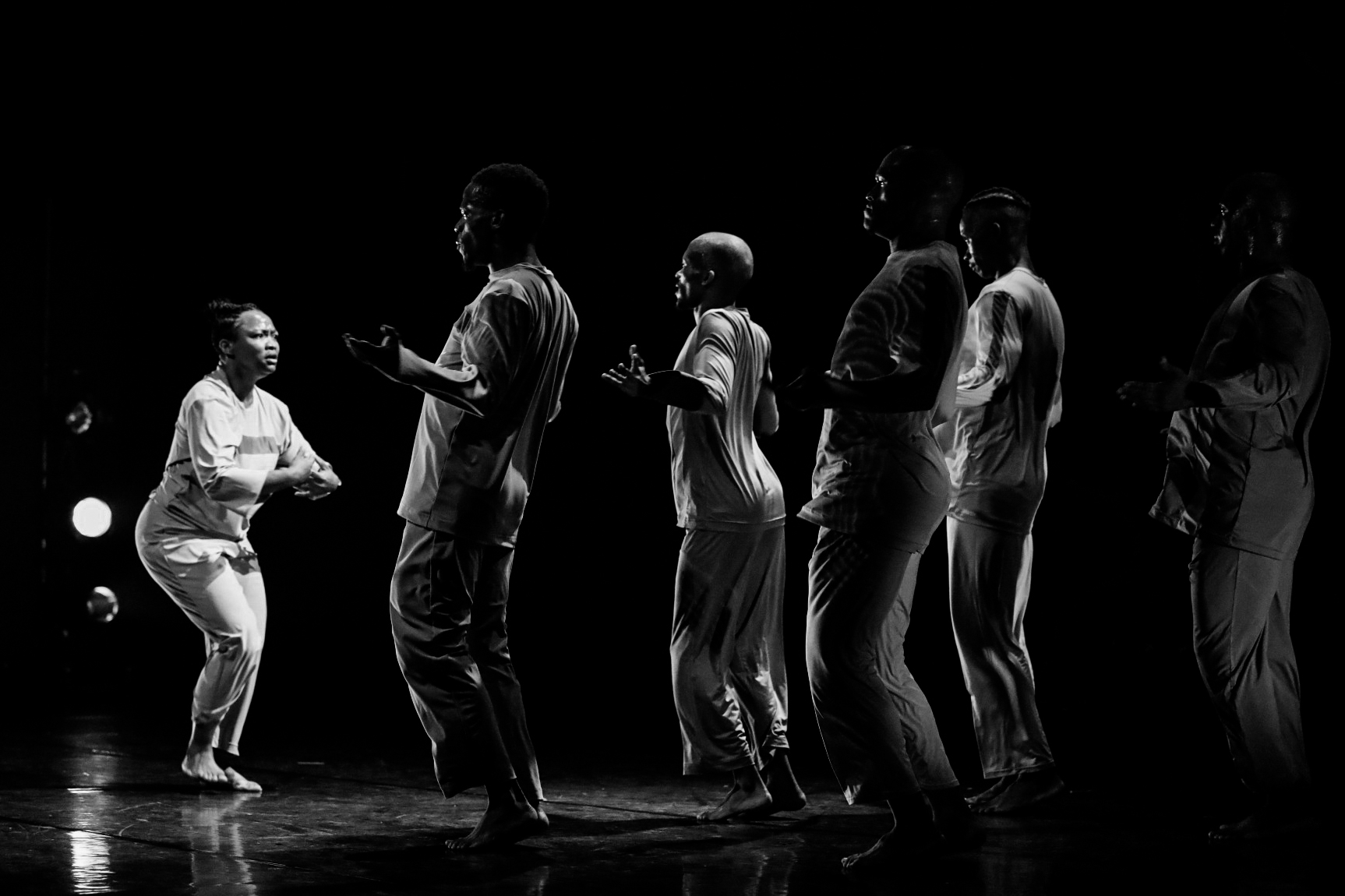
You see a body marching in the distance (they use backstage for the performance because they need that length of space), and just the way he moves already tells you he is a dancer. But not any dancer, one of the best, Gregory Maqoma.

That’s how it runs all through the performers and the musicians. When I hear the brass sounds used in this specific way, it reminds me of the cacophony Emir Kusturica used in his war drama Underground to capture the sounds he associated with war.

And Philip Miller and Thuthuka Sibisi work similarly. They transformed traditional African songs as well as quotations from composers from the time of the war like Ravel, Hindeman, Satie and Schoenberg. It’s varied, as they mimic the different sections of the story, and the way the musicians and the singers use their voices is spectacular.

Just think of wind instruments. They’re used here in the true sense of the word. It’s as if the wind witnesses and blows silently through the space.

But let’s start at the beginning when the show starts. Performers have silently been slipping in and placing themselves inconspicuously in specific spots. And almost in one fell swoop, the giant screen, the lights and the cast come to life.

The audience, in touching distance, are instantly scooped up and almost thrown into the story and the action.

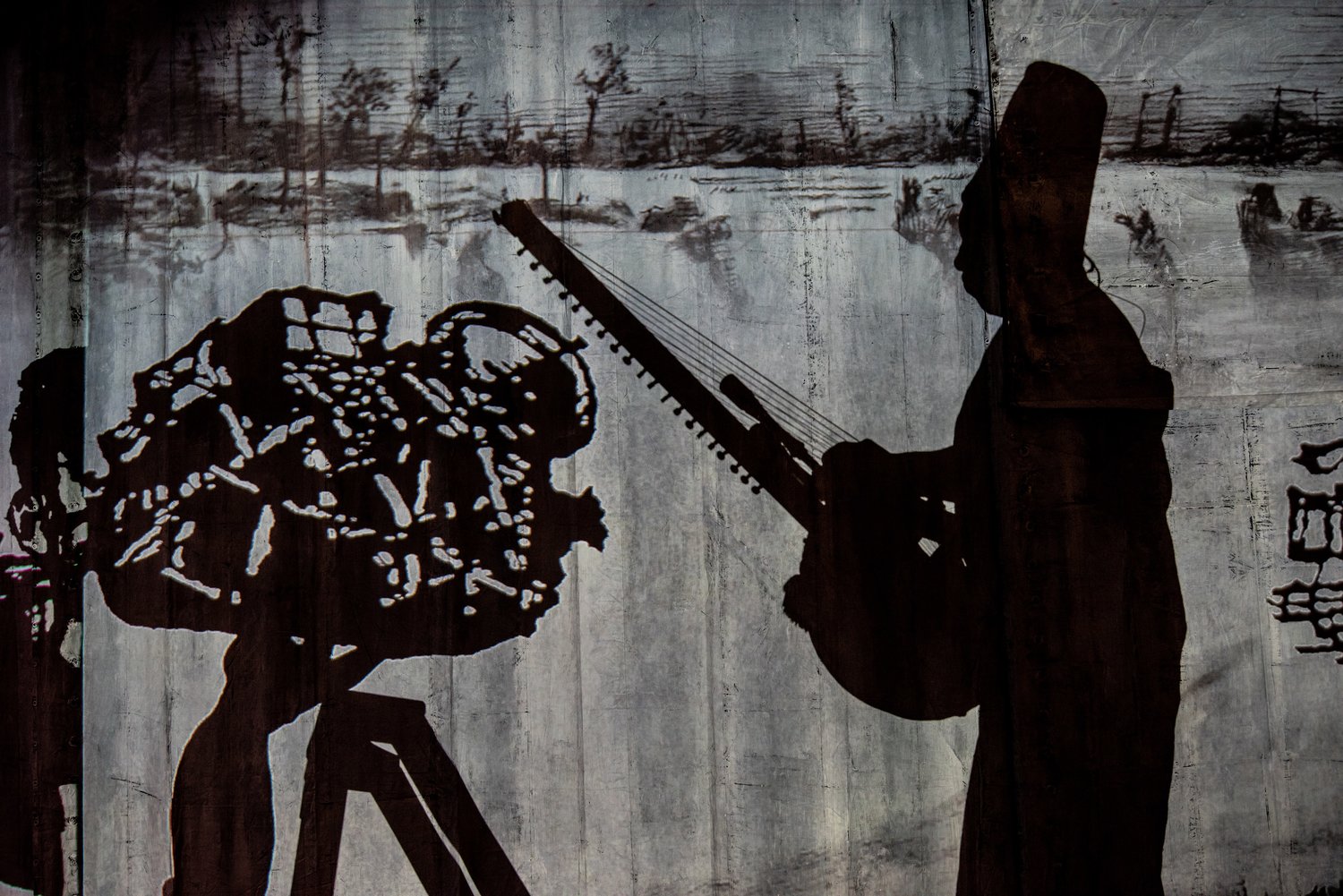
In one spot there’s the most exquisite Vermeer scene with bold Kentridge drawings and sketches, all heightened by the wonderful and magnified shadow play, while individual performers have all, as if magically wound up, started moving. And then the narrator starts with the tale.

Everything is part of the fabric, the texture, the mood and essence of the whole. It’s like a giant storytelling extravaganza yet this has no fairy-tale ending. There’s melancholia and war mania, and there’s the feasting on the foot soldiers as they are put to battle almost deliberately as war fodder. In one of the war reels, the African participants displayed in uniform are barefoot!

Kentridge puts the spotlight on World War One, but this time, he tells and shows it all. This he wants to record. And in full Kentridge splendour, he unravels and reveals everything he wants you to know. With this grand theatrical flourish he imprints the pictures and performances in your mind.

Having waited for Covid restrictions to be lifted to see the production, it has become even more relevant with first the Russian invasion of Ukraine and now also the frightening war in Sudan.

It’s impossible to take all the individual flourishes in and yet, it is an immersive theatrical experience which will linger and almost lay you low. But then the sense of wonder, the way of revealing the relentless horror and the sheer scale of the endeavour, are what keep swirling in your head.

Gauteng is blessed to have Kentridge in its midst and to witness this astounding theatrical avalanche so brilliantly composed and performed, which is – sadly –  as relevant today as it was in 1918.

FOR MARINDA DU TOIT HER ART IS A PLAYFUL PARADE, A CELEBRATION, A PERFORMANCE

It is the playfulness, the sense of joy in artist Marinda du Toit’s work that first captures the imagination. But there’s much more than just laughter involved in what she describes as sculptures. They’re unusual, have a life of their own and if you listen carefully, they will tell you a story. DIANE DE BEER takes a closer look:

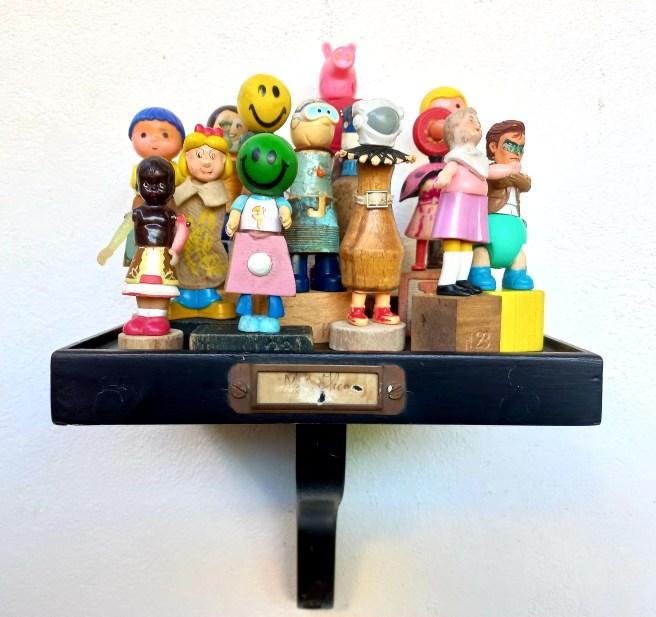
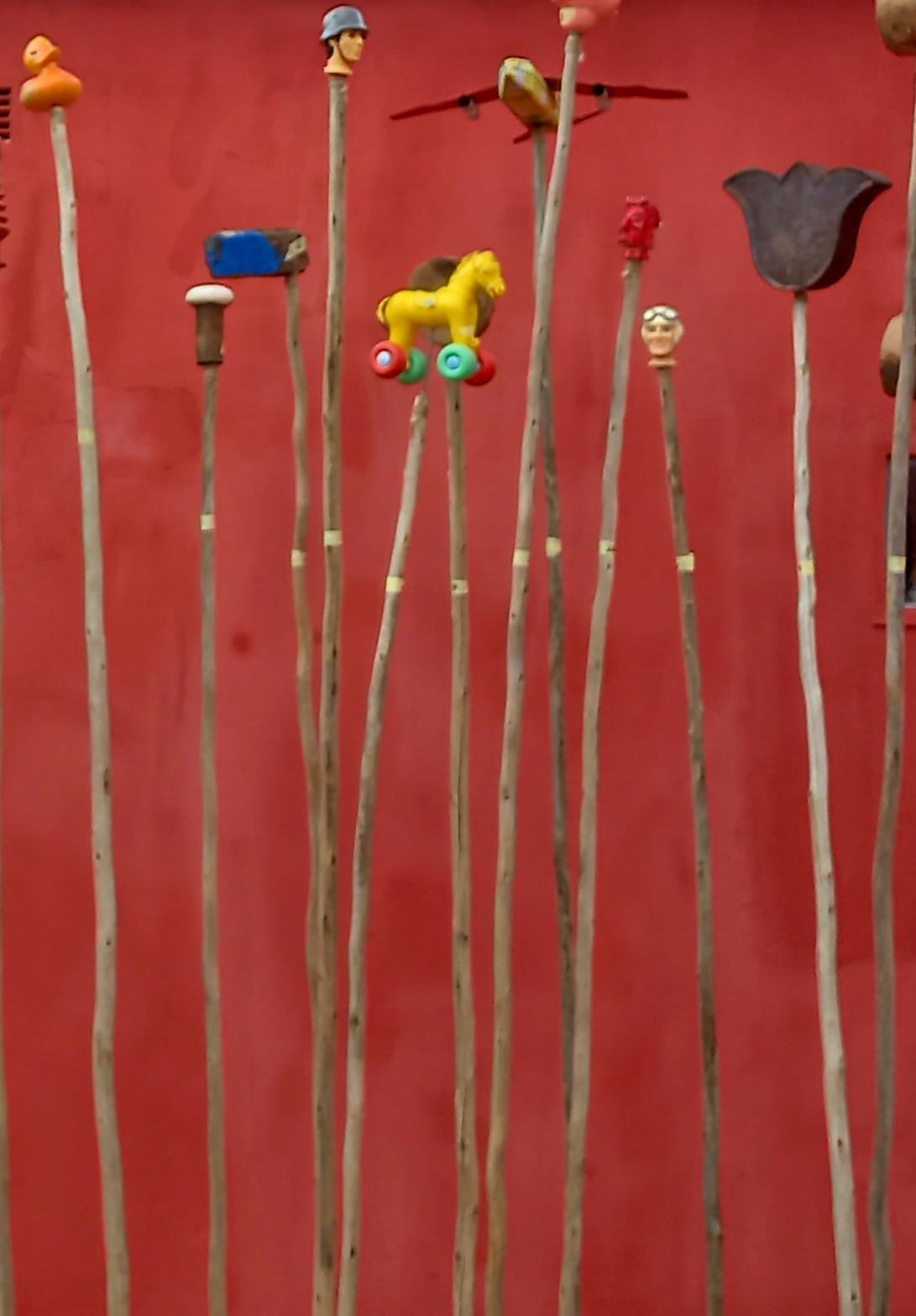
A colourful bunch

I lost my heart to Marinda du Toit’s sculptures the first time I saw them. She started three- dimensional work 17 years ago and I have always known her work would evolve.

There have been small changes along the way, and my most recent addition was a big one, an   installation of a kind which features in my kitchen and brings me great joy.

Since she moved to the Cape a few years back with Covid thrown in-between, she has been missing from our galleries for some time. But she’s back with So gemaak en so gelaat staan (loosely translated as Was made like this, so stays like this) at the Association of Arts, Pretoria from tomorrow (Saturday, April 22) until May 6.

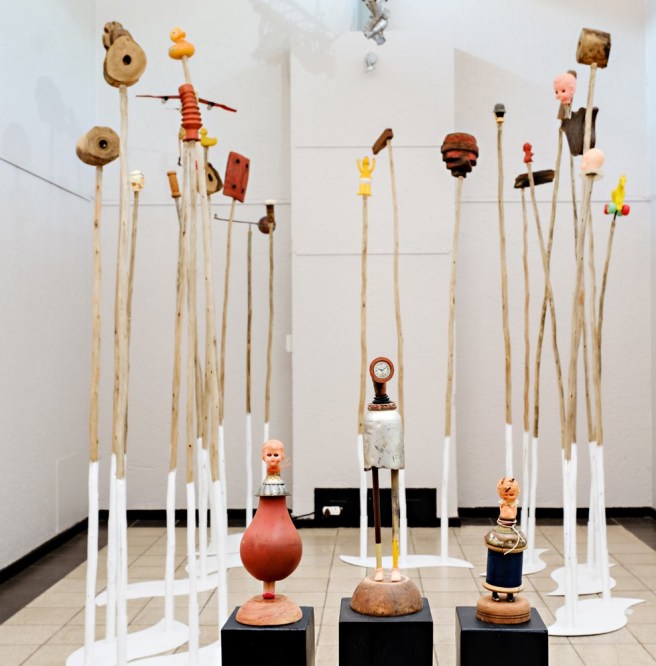
She describes the latest work as a stripped figure which can still read as a character, but it becomes a tree or a branch which is still in the process of growth.

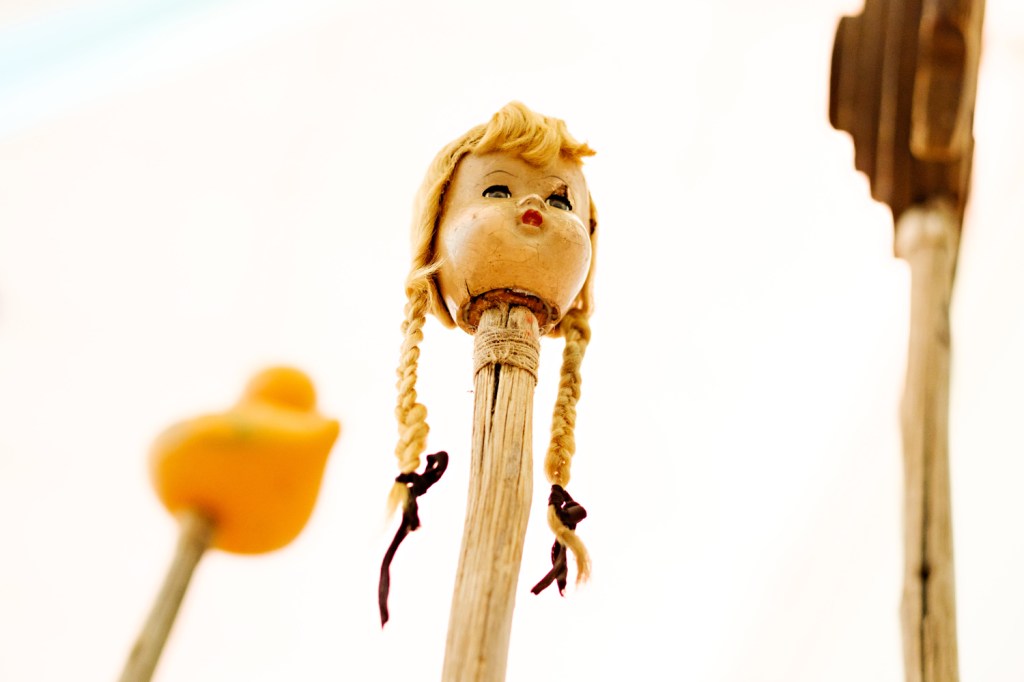
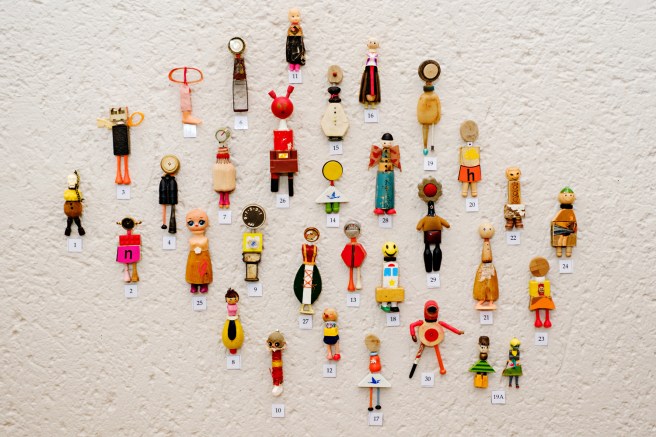
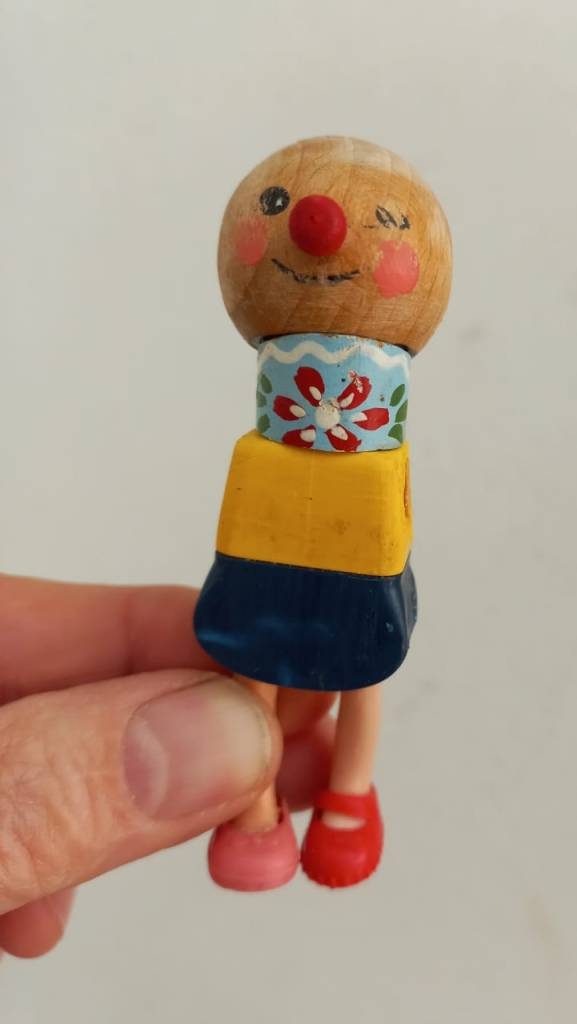
“In 2019 I had an exhibition of heads and dolls (Poppe en Koppe). In my studio, I have a cupboard with drawers and in the one drawer, I keep the heads of dolls. I rarely use these heads, because there’s such a clichéd meaning to it with the Chucky dolls and the Walt Disney movies, but I kept them nevertheless.”

And she had a lot of sticks outside, because she is constantly making fences, working with sticks or harvesting sticks in Simonsberg amongst the alien growth. So she had a lot of sticks in stock.

She wanted something different (“go a little bit mad”, she says), so she put a lot of heads on sticks. “Some people thought it was extremely weird and some people loved it.”

 And personally, she started falling in love with the stripped figure and the stick in hand that becomes something else; a weapon, a symbol, a crutch or anything you want to imagine. “We use sticks all our life, daily – think of brooms,” she explains.

So she started exploring the stick stories.

The magic of Marinda du Toit’s work (Artistic Photography)

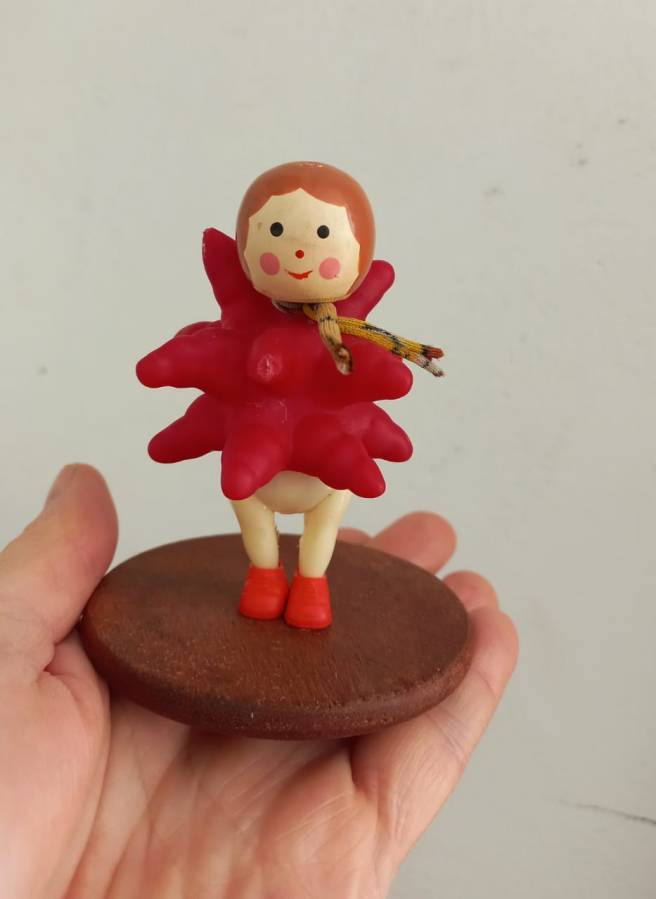
She had to develop a way of presenting them neatly, standing upright, but how to assemble them, how to transport them, all became part of the puzzle. After many tries with cement and other  methods, she developed the Escher-like leaf base, which also represents growth, or mulch and getting rid of aliens, and leaving it in the ground for new growth, “all these different metaphors,” she says.

“I can’t actually say what these sculptures mean, I just love them. I think it’s an ode to old toys, the era of plastic that’s gone, but we sit with it now, so let’s play. It’s playful, it’s a parade, a performance dance and celebration. It’s simply play, play, play!

Marinda wearing her heart on her sleeve (Picture: Artistic Photography)

“I just want to have fun and joy, there’s so much trouble and sadness.”

The new work differs from her previous, mostly individual pieces in that the pieces are stripped with no arms and legs, no recognisable figure, and she views it as much more of an installation than before, as well as more abstract.

The use of multiple colours is new and vibrant and personally I feel it has a stronger fairy-tale quality than before. It draws you into a narrative with storytelling becoming an active invitation.

She explains her desire to be joyous. “It happened within myself after recovering from cancer, many issues followed by therapy, troubles, a rocky road and healing. Then came Covid and no money.”

The pandemic was a major turning point for her. She and fellow artist Diek Grobler commented on  the first 100 days of lockdown with postcards and multimedia, which was fun and gave them a voice. They found a way to engage the support of people who still buy and love art. And, she feels their success also followed because what they did was accessible and affordable.

Those first 100 postcards saved her life. “I then used all my savings, did one or two commissions, had fantastic clients who took care of me, and that was when all the paraphernalia and the fluff got stripped from my work.”

She discovered the essence of living and the essence of her art, which was how it manifested in the new work.

“It was all about being simplistic, being honest, being playful, being stripped, being real.”

She was also bored with the “poppe” which she felt she was almost turning into a mass-producing exercise and she became dissatisfied with the quality of her work. She felt driven by her monthly budget, what she needed to sell rather than inspiration.
 “Then you become flat, there’s no meaning, you’re just a machine.” It’s something I think every artist has to battle, with Covid heightening that kind of hysteria.

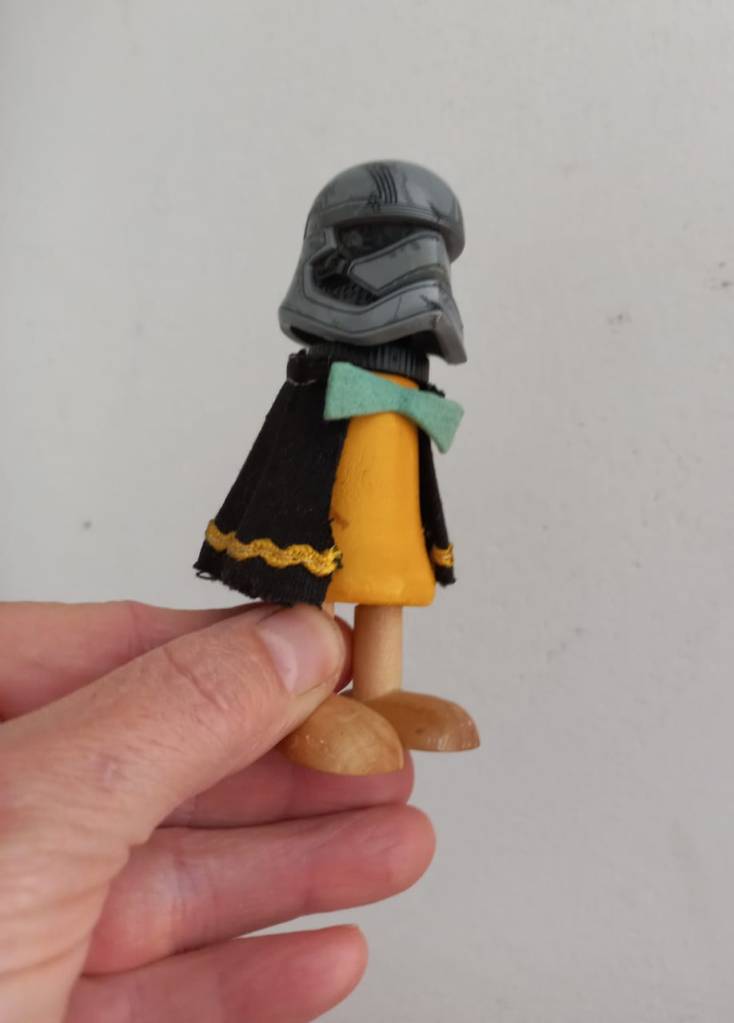
Pocket-sized poppets. (Artistic Photography)

Her response was to challenge herself with other projects and proposals and her work again started growing and evolving, but it was a difficult time.

Now she’s lost her heart and she can’t wait to show the new work. “It creates a challenge to look differently at objects and find new meaning in objects I selected or adapted,” she notes.

What she did was change the application rather than the object, which means she had to find meaningful objects.

And voilà!

 It’s not as if fans of her work will not recognise and find some familiar figures at the exhibition. They can still construct and put together their own stories as they gather the Du Toit characters in a way that makes sense individually.

Who can resist an invitation to have fun?

LOCAL HEROES WITH WINGS CAN EASILY ADD SMILES AND SUNSHINE TO YOUR DAY

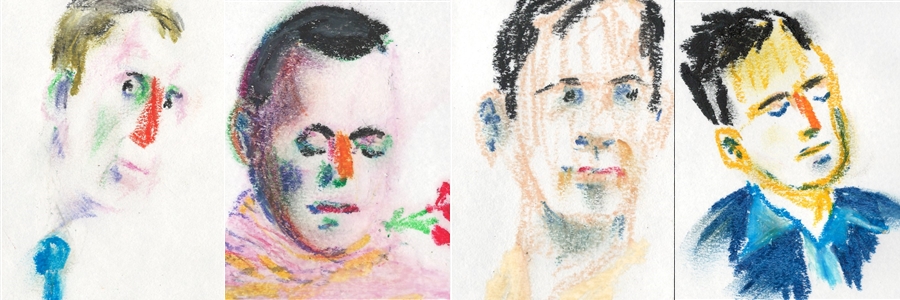
Sketches by Dries de Beer

Dealing with bureaucracy is often challenging on any level or front. So when during some of our most stressful times, you happen to bump into individuals who not only do their work well but seem to make the effort to help you as best they can, it changes the nature of how you view the world. Often they aren’t in top positions so they cannot make all the decisions, but they will make sure that the path is smooth for you to achieve whatever you need to get done. DIANE DE BEER highlights some of her personal heroes of the past few months:

My sister who lives   London and left the country in 1975 was back home for a three month visit. One of our first tasks was a visit to Home Affairs with a request for a new South African passport and ID.
I knew that this would be no small ask and was gritting my teeth from the start, but also determined that we would see this through and that there would be a way.

She has American citizenship, but didn’t want to relinquish her South African links. Dual citizenship was also necessary for certain practicalities.

We arrived early at Home Affairs, which I was already familiar with because I have been helping one of my employees, who we discovered to our dismay, doesn’t have any documentation. Yes, he is a South African and has been working for us for a long, long time, but my husband and I were both working all our lives and were unaware that he didn’t have any documentation … don’t ask. I was given a severe public scrubbing by a Home Affairs official.

Nevertheless, I was hopeful. Our first encounter was short and sweet in the sense that we were given the name of a head office employee and a phone number.

Just a little background. My sister had been to the South African equivalent in London and her ID and passport applications had been handed in a few years back. Regular visits to check on progress offered no hope and this is why she decided to return to source.

As we started our journey back home, we immediately phoned the number we were given to get the process started. This was in the first week of December last year. Her details were again taken with promises that the matter would be taken up with the London offices.

There was much toing and froing, too much detail to bore you with, but all of it seemed very hopeful. Phones were always answered and slowly the case was making progress. One of these was the information that her new ID had been processed and was waiting for collection at the London offices. Why she wasn’t told this or given the document at her last visit was unclear and we let it go. She will collect the ID now that she is back in London.

In the meantime, the passport became the priority and one of the issues was a visit we were planning in the new year to Mozambique. A South African rather than an American passport would mean no visa and we had also discovered that these would only be given when making the crossing into Mozambique, which could mean hours wasted. We couldn’t simply get it at their Pretoria offices. It seemed a very random decision, but they were very clear that it was the only way.

So our journey continued. In the meantime Christmas arrived and I decided not to bother our contact in the week before New Year. It just didn’t seem likely to my mind that anything would happen.

Instead she phoned us, reporting progress! To make a long story short. Our interaction and the progress with our Home Affairs contact was miraculous. From the start, our feelings were positive. It just seemed that this was an individual who was going to make this happen – and she did.
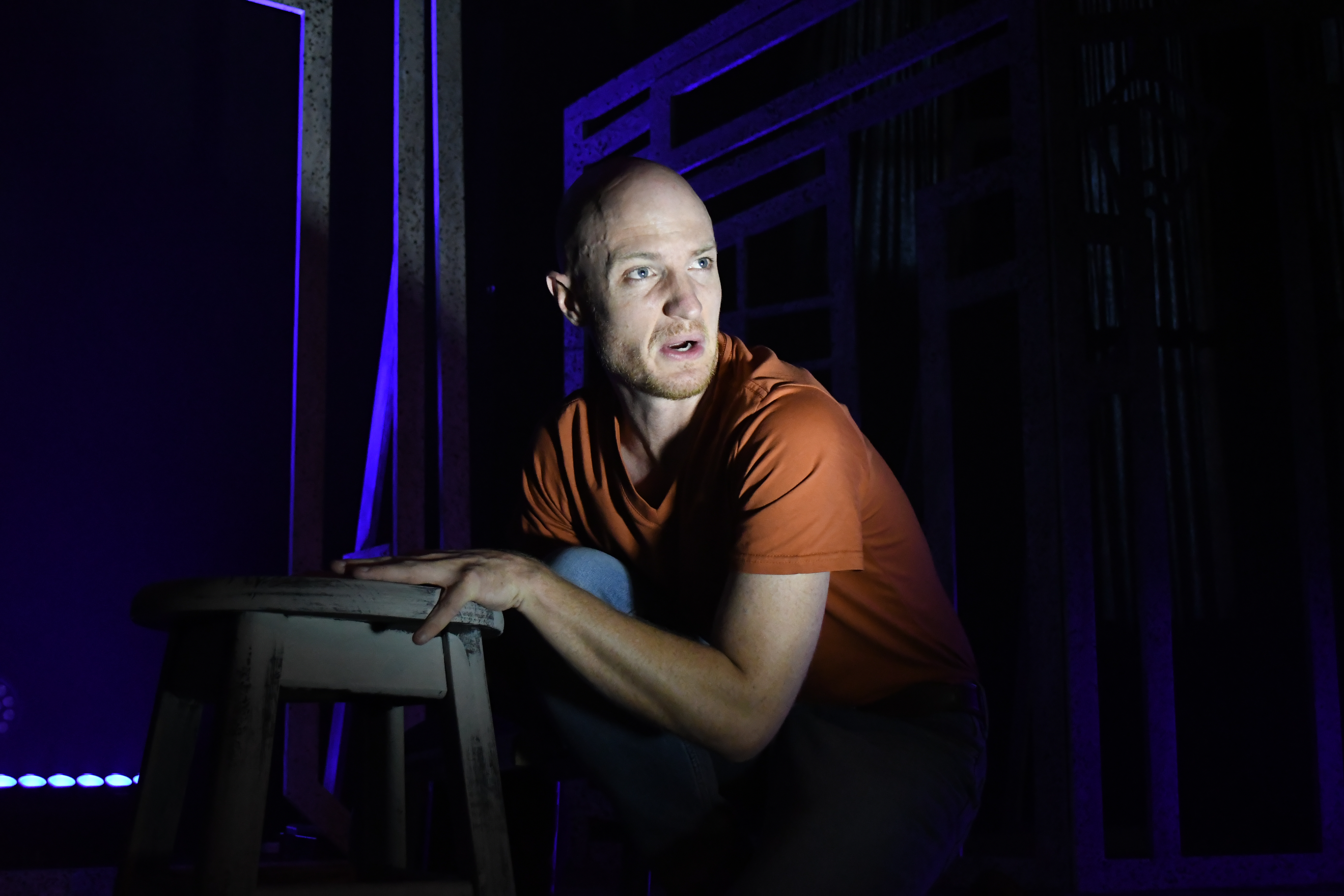
There were a few requests like filling in a new passport, for example, and writing a few notes so that our request for her to collect her passport at the local Home Affairs rather than in London was explained. The letter was even dictated, so that we would get all the wording right!

And never was any favour asked. And the only reason I am saying this is that stories abound how ordinary work only gets done in certain public and private enterprises if the worker is compensated in some way.

Not here. There was such fear from her side of any impropriety that we haven’t yet met her just to say thank-you in person. In the end, my sister collected her passport which she duly used in her crossing to Mozambique and we both lost our hearts to our Home Affairs saviour.

The only reason I am not using her name is to save her any embarrassment or long lines forming in front of her office with others lodging complaints.

Whenever I tell the story, I am inundated with cries of help from others who want their passport or ID problems resolved.

We struck it lucky, I know. But I also know that she cannot be the only one. And in a time when everyone is complaining about everything that goes wrong, she restored our faith in the civil service and the many gems that might be hidden in those government offices.

The fact that they are there was also confirmed when a friend and I did our regular renewal of driving licences, also in December. And this time I will give the name.

On a previous occasion, my husband had renewed his driver’s licence in the Cape because Gauteng’s system was in such disarray. But this time I was getting good reports about the offices in Echo Park, Centurion. This was the route we decided to go.

I made my appointment, but my friend decided to tag along, not having managed a booking. The building was in one of those office developments one sees from the highway between Tshwane and Joburg, not knowing who works there.

We found our way there with some directions, and once parked, we wound our way to what we expected would be a long queue. Not so.

Our police service was employed here and they were working according to a streamlined plan which had everyone smiling as they left the offices and again when they came to collect their licences. Not only did these young policemen all smile magnificently as they helped some of us less efficient with forms on our way, it took less time to get in and out than it took us to get there.

Some time ago this particular service was in a shambles and I can remember reports of corruption even about getting appointments. That isn’t happening anymore. I cannot vouch for any of the other offices in Gauteng but I do know that on two occasions – both of them huge – my faith in our country and the way things could and should be run, was restored.

I have never paid a bribe and I hope never to be in a situation where I feel there’s no other option. And with these two encounters, I know it is possible to make what could have been really tough situations (if not impossible), joyous.

Just keep looking, you will find someone who will help when they should.

PS: Following this writing, I had two more service hero encounters!

They might seem small in comparison, yet they added a sparkle and a huge smile to my day. The first was a grocery shopping trip to my local grocery store Uitkyk in Silverton Pretoria.

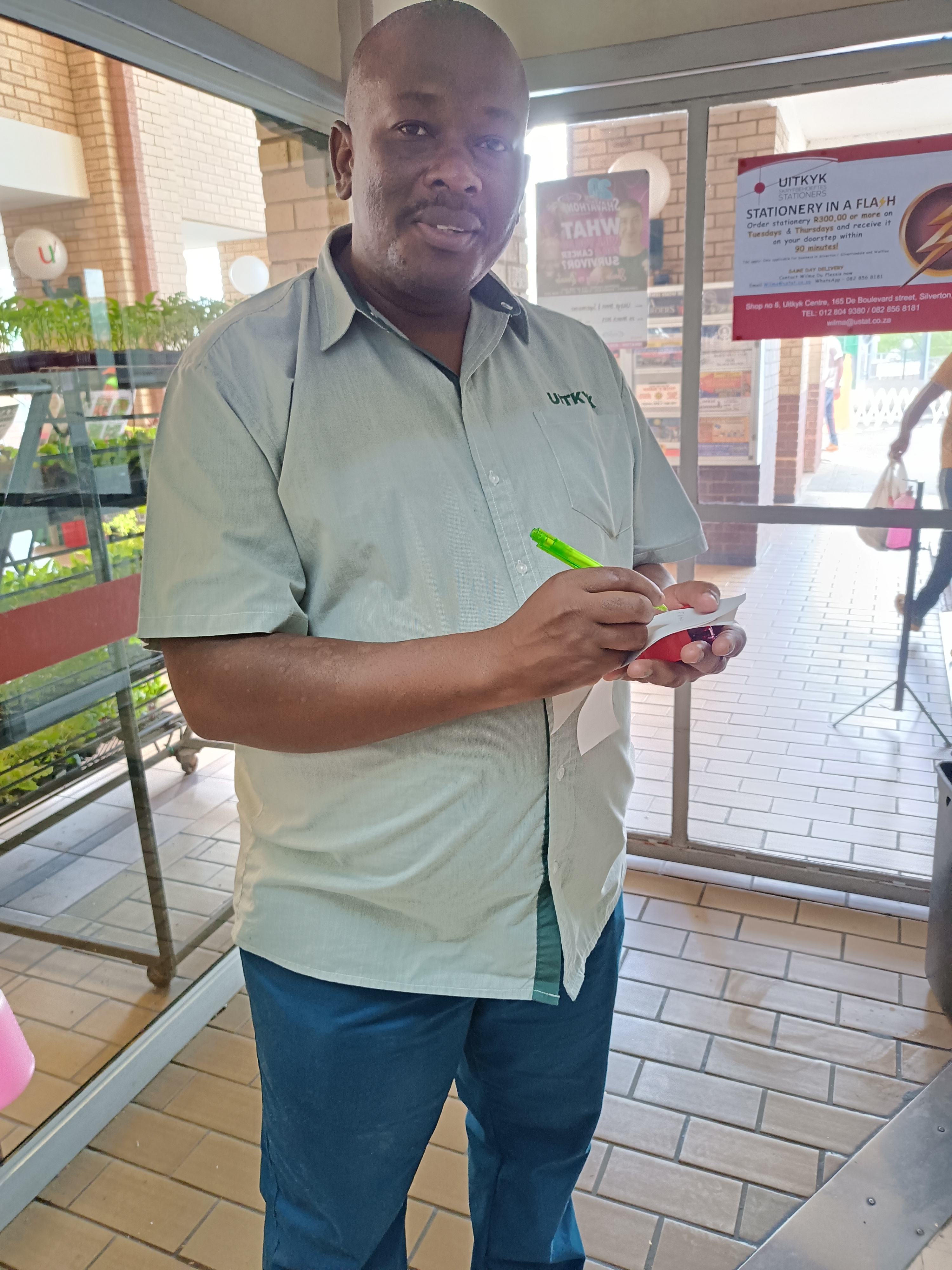
Frans Madula diligently at his post.

I have become accustomed to their custom of having two employees checking slips and groceries every time you purchase anything, but this time something was different. Having bought only a few items, I was surprised that the bill was more than R600, but I was distracted and didn’t complete the thought in my head. It was only when my trolley and purchases were checked by the alert Frans Madula, that my suspicions were confirmed. But for his quick eye, I would have paid double the amount my groceries cost!

It was a simple error, 22 rather than two tins of sardines were charged to my account but luckily for me, it was spotted and caught.

At a different store, Builders Express at Gift Acres, I found some swimming pool floaters at the best price I could find. When I got to the till where I was helped by a friendly employee whose nametag aptly read Queen. She pointed out that I could only get that specific special price if I owned a loyalty card.

No problem, she said, she would quickly register me. It was a tedious process, but she had no problem doing what she felt was her job.

And while people were piling into the queue behind me where my purchases were prolonging the process, two women slipped in behind two empty tills to prevent everyone’s impatience.

I didn’t notice anyone guiding this process in any way. These were simply employees who were well trained and who knew how to make the shopping process a smooth one – for everyone.

THE STARS ALIGNED FOR THIS ONE TO CRUISE ITS WAY INTO THE HEARTS OF ACTORS AND AUDIENCES

Daniel Geddes Pictures: Odette Putzier

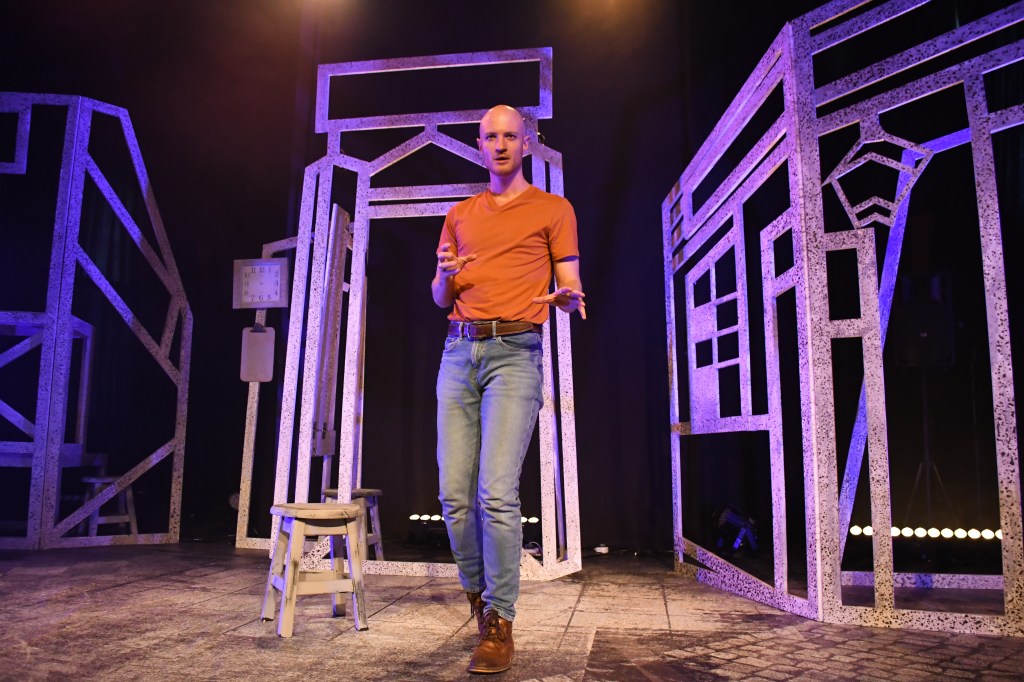
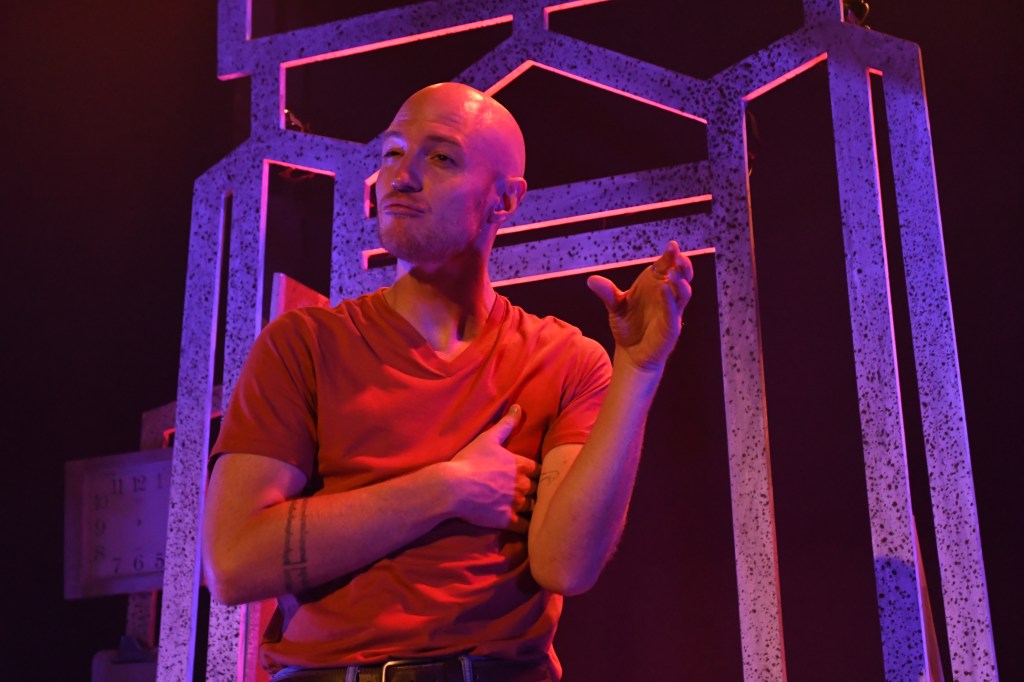
After much acclaim, following it’s London debut with Jack Holden, and then a Joburg run starring local actor Daniel Geddes, Cruise, heads for Cape Town for a short season (April 12 to 30) at the Homecoming Centre (formerly The Fugard Theatre). DIANE DE BEER chatted to the British playwright/actor about the play and the handing over of this his first stage-produced play, which he had both written and starred in back home:

It was as if all the stars aligned for actor/playwright Jack Holden with the creative processes surrounding his first play Cruise, which is having its second local run in Cape Town this month.

Jack Holden in Cruise

“I had the idea of the show for a while, for many years actually. It was based on a phone call I heard while I was volunteering for Switchboard, an LGB+ helpline here in the UK. I took that call in 2013. 

“The story struck me as so moving and powerful and life-affirming that I knew I needed to tell it someday, somehow, and it was only in the pandemic when I was locked down at home with nothing else to do, I finally got on and did it. So in that sense it saved me because it really gave me a focus during the first lockdown here,” he explained.

But the writing only started in 2020. He thinks that it might have had something to do with the context of sitting with another epidemic, Covid, that made him reflect upon the sort of fear and terror that the gay community must have gone through in the UK especially, with the 1980’s HIV and AIDS. (It was more widespread in South Africa, affecting more communities).

A lot of the research about Soho where the play is set was quite easy to do online. But, he explains, “the stuff that gave the show the texture that I think makes it sing, are the interviews I did with some older gay friends that I’m lucky to have. I asked them about their time in Soho in the 1980s. Neither of them claimed to be seen kids, but they had memories which were incredibly useful, and gave so much texture to the piece. “

Initially he thought it might be a short film, but then he thought, no, be ambitious. “I also predicted that when theatres reopen after the pandemic, they are probably not going to put on massive shows, so if I can make it a solo show, that would be great. I’d performed a few monologues of other people’s writing previously in my career, so I knew I could do it and I wanted to do a show with John Patrick Elliott doing the music again.”

Daniel Geddes in Cruise.

They had worked together before and again with great foresight, Jack’s thinking was about producing a show that would land with a huge bang.

“I have a very strange relationship with the pandemic. At the start of the pandemic, I thought my career was over and at the end of it, my career was better than it had ever been, so it was a weird time.”

Theirs was the first play to open in the West End and the first new play as well. “I think people were so hungry for the live experience and Cruise is loud and brash and all of those things. I think because it’s such an ultra-high-octane live experience, people were so receptive to it, so emotional behind their medical masks, that it landed well,” which was also the intent.

From the start, the writing of it, once he got in a room with John, was actually very quick, because it was always going to be only one actor (Jack) with the DJ (John), which meant he would be playing all the parts, which also provided certain limitations. They knew it would be roughly 90 minutes straight through and he wanted it to be an odyssey that bounces around all the bars and clubs and pubs of Soho. “It’s quite a classic hero’s journey that he had to go on,” he says.

Primarily he was trying to  create something that would entertain people and he doesn’t think entertainment has to be light all the time. In fact, he argues that entertainment is better if there’s a bit of darkness, a bit of sadness mixed in there, a bit of humanity that lifts the lightness and makes it even more delicious.

“I was hoping to entertain people and as I was taking on the subject of HIV and AIDS in the 1980’s, I obviously wanted the piece to feel authentic. And that was the scariest thing which only surfaced when I got to performances. I suddenly thought this could be high risk, I could have judged this wrong.”

But he had gone about the whole process in a very thoughtful way. His research was thorough and he talked to the right people with good people surrounding him who told him if something wasn’t ringing true. “And indeed, in rehearsals we had several changes and bits to cut.”

 He also wanted to dive into the music of the era which hugely adds to the entertainment element of the piece. “I love ’80s music. It can be really, really good and it can also be really, really bad and I wanted to play with that. There’s been a real moment of ‘80s nostalgia, so I thought it would do really well.

“I wanted the music to be in the DNA of the play and that‘s why I worked so closely with John. I brought a few pages of text to our first workshop and he brought samples of ‘80s music. And we started mixing it together. That means the show has musicality in its veins. I love traditional shows and when it works it absolutely blows me away, but there’s no shame in putting on a show and entertaining people.

“We have so many tools at our disposal in theatre; sound, light, music, smoke, movement. And especially with a solo show, you don’t have to use all of those, but I really wanted to. I never dared to hope that the show would get as big as it did.”

Because he is dealing with something in the past, yet in a strange way linked to our present circumstances, the content has huge impact. It’s obviously been written with performance and watchability in mind. Jack has a great way with words with the text written as a kind of rhythmic monologue interspersed with music, which also passes on the message. It holds your attention throughout.

And then there’s Daniel  and the local production. Jack was surprised that South Africa was the first outside of the UK to stage Cruise, “but I was also cheered by it and love it. Obviously South Africa’s history with HIV and AIDS is well known, so on that front it struck me as completely logical.

“I loved watching the South African production. It was surreal watching someone else performing Jack (me) performing the show. It was quite a mind-bending experience and really informative to see how the show can be interpreted in different ways.

“And yes, humbling. It’s not just me who can do this, other actors can do this, so I’m really thrilled that it’s getting another life. I’m so pleased about the Cape Town run, because they really deserve another go at it,” he concludes.

TWO OF THE BEST CHEFS IN THE BUSINESS MAKE MY HEART SING WITH THEIR ARDENT APPROACH

It’s a blessing to have had meals cooked by two of my favourite chefs recently, not having been at their tables for quite some time and as always, their food was simply the best. DIANE DE BEER pays tribute to two of the best:

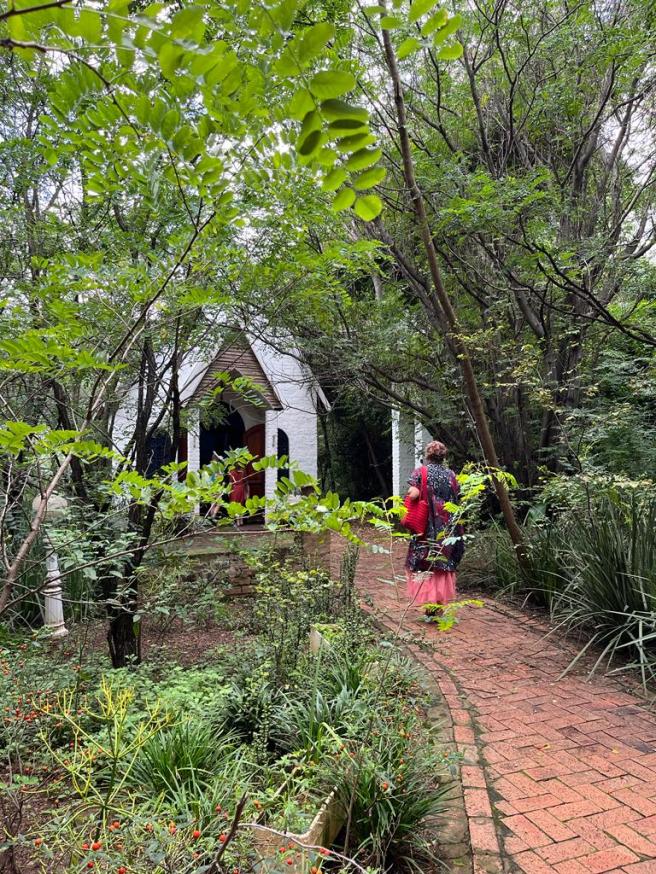
Enchanted garden.

I have been a Lientjie Wessels fan forever – of her food, her art, her writing and more. Having tried for quite some time to go to one of her Cullinan long tables, I was excited when finally I could go with a group of foodie friends for one of her delightfully quirky meals.

Lientjie Wessels.
Portrait: Hennie Fisher

That has always been part of her charm for me. She makes the kind of food with ingredients I really love. A long time ago she told me that for her mother, who passed on her love of food to her daughter, it was all about taste. I think she also taught her about unusual flavours and combinations.

Right from the start, my chef consort Hennie Fisher was just blown away by her very first dish of the day: Japanese-style pancakes, homemade mayo (and she was heard murmuring as an aside that she had put this together incidentally but would include it in her repertoire, it was that good!), bonito, lowveld wild honey and spekboom.

Japanese style starter.

What Hennie loved about the dish was once again her creative playfulness. “It’s the clever way she emulated bonito with the fine powder biltong, almost turning the biltong into a kind of ‘land’ bonito,” he explains. “But also because she so cleverly combines meat and fish (even if both are dried), because it is so often a combination used in Asian cuisine. And how brilliant to make that connection with biltong and bonito!”

Just listing the ingredients should inform anyone about her innovative choices. But she’s not just throwing things together. Her cooking is instinctive yet thoughtful and she knows her customers. In her kitchen, she is always at play. And for diners, this is a fun adventure if you’re up for it.

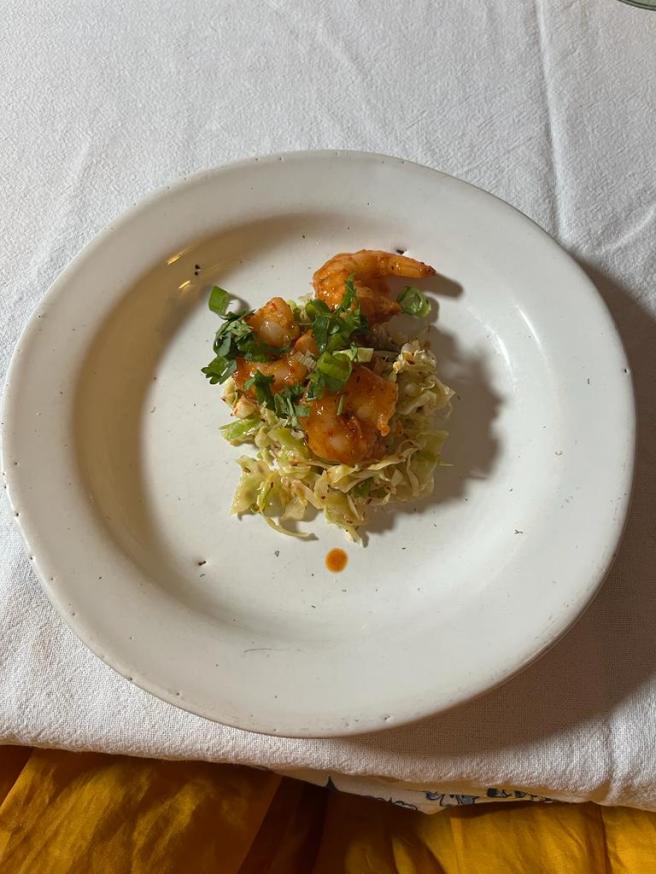
Miso and peri-peri prawns.

The next one stuck to the Asian theme and clever combo with peri-peri prawns and miso with sesame coleslaw. It was just a dream and perfectly cooked. She seamlessly ticks all the boxes.

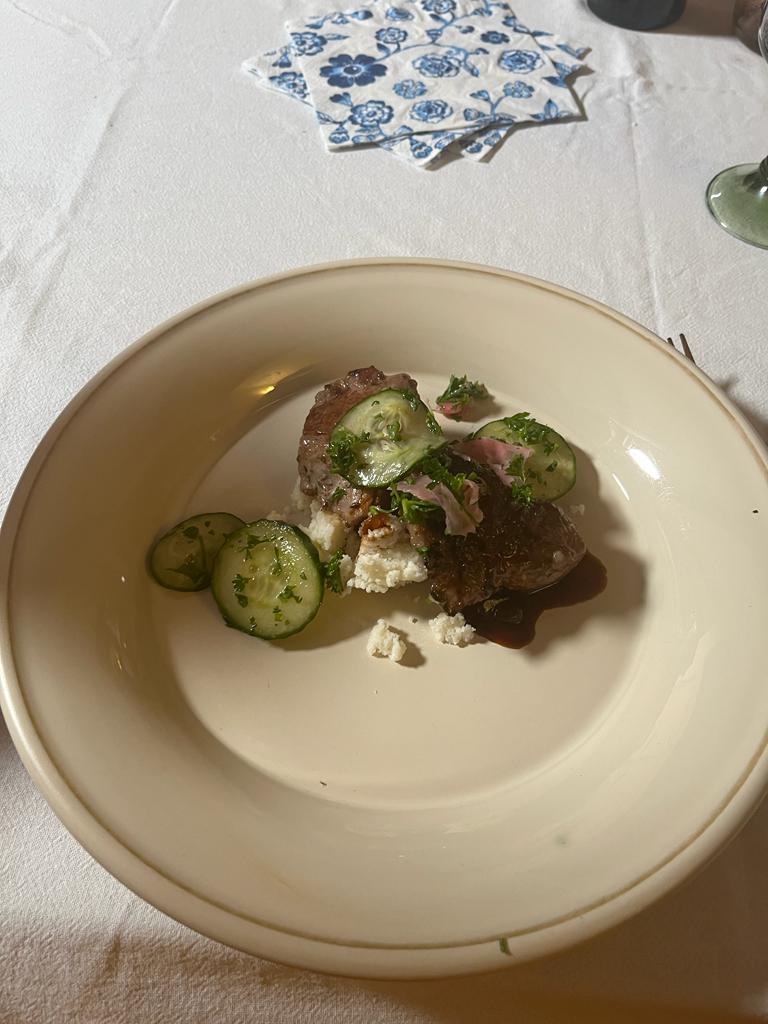
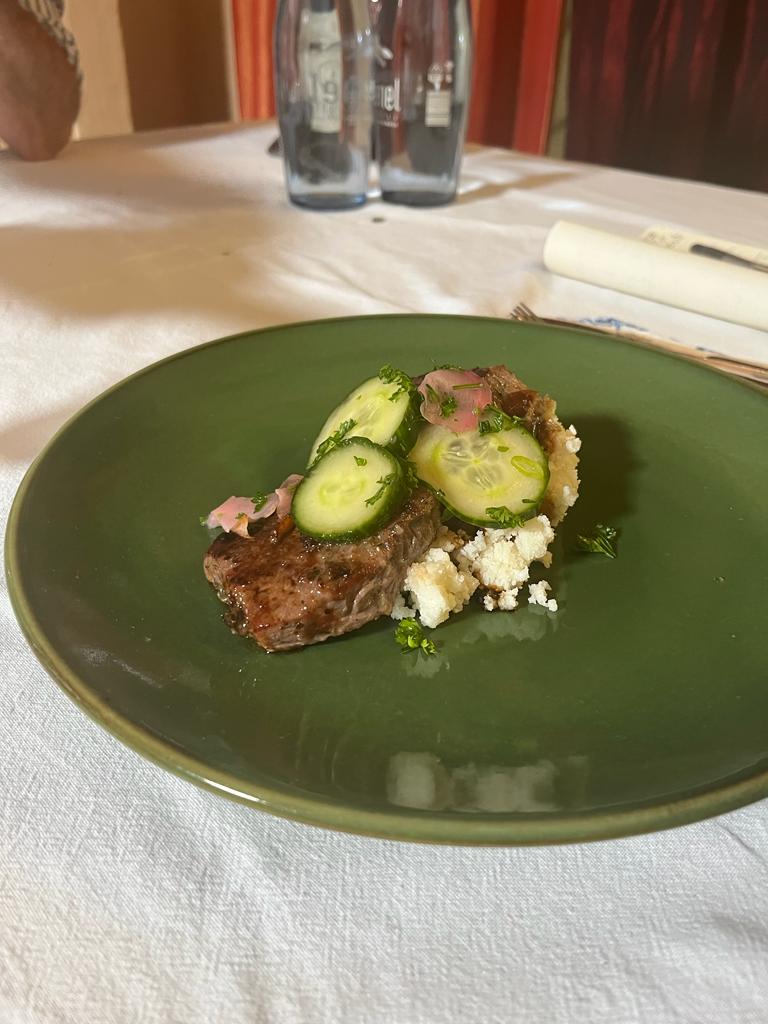
A Lientjie meal is possibly the only time I won’t shy away from krummelpap (maize, polenta), not one of my favourite foods but I knew if anyone could, she would convert me. She won me over with her specific buttermilk version served with Koji beef rump, a ginger steakhouse sauce (how can you not fall in love with that choice!) and pickled cucumber. It’s in the detail and the combinations, everything contributes to that single spoonful taste explosion.

And to perfectly conclude in Japanese style, the dessert, a cotton cheesecake with cinnamon syrup and tennis biscuit crumbs, sealed the deal, which I proclaimed perfection. Even as a cheesecake fanatic and two visits to Japan, I had never encountered a Japanese cheesecake before.

And blessings to the internet, which explained that this version is also known as a soufflé-style cheesecake, usually lighter in texture and less sweet than the more traditional version. But then also to serve it with Tennis biscuit crumbs! How could she not?

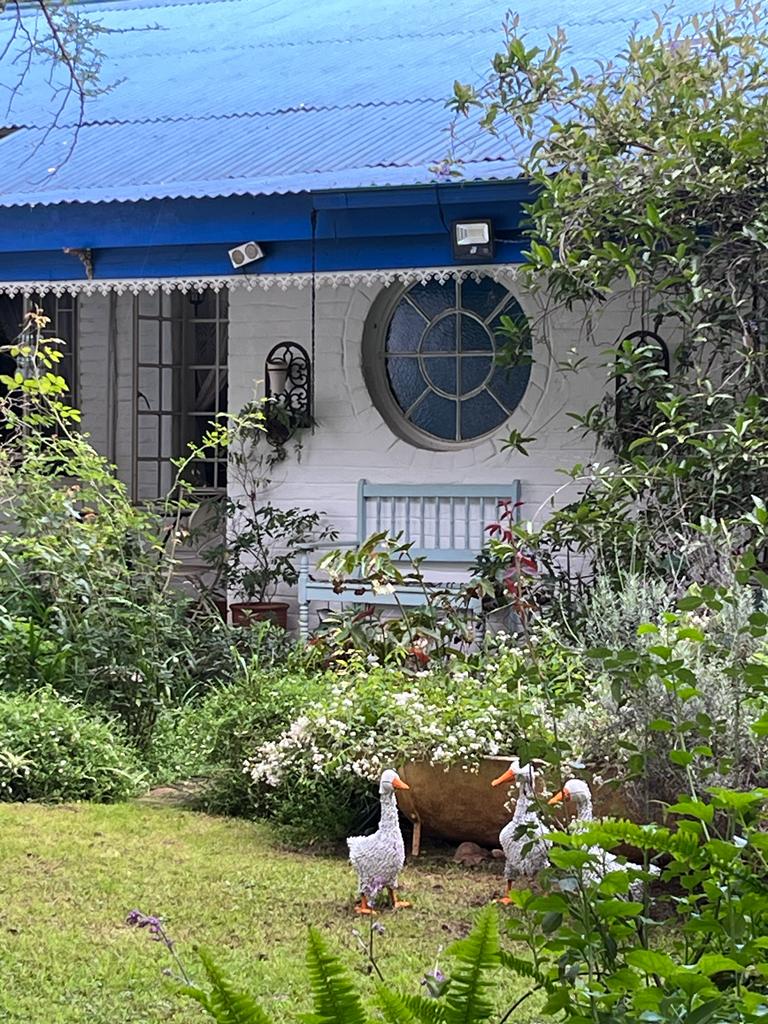
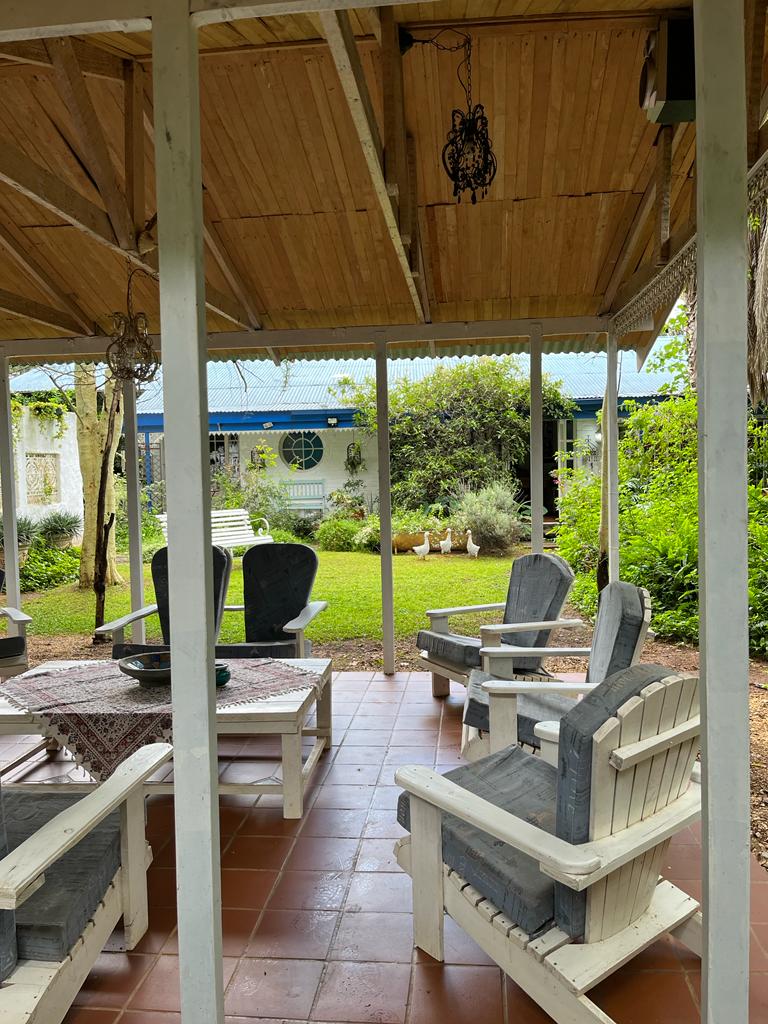
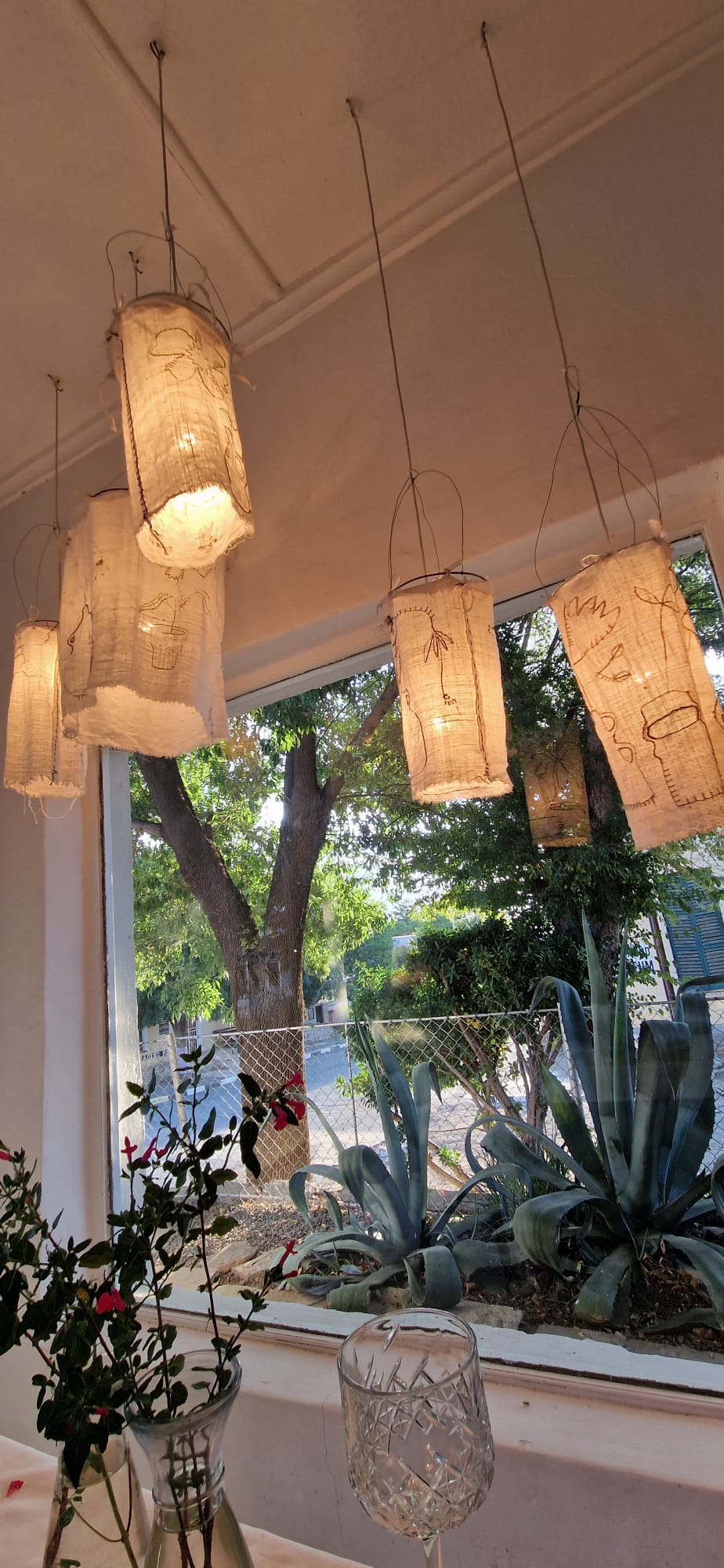
It’s not only the food that’s spectacular – the fact that Lientjie no longer has a restaurant in Cullinan hasn’t deterred her one bit. She simply commands the kitchens of friends in venues that contribute to the ambience of the event. And this one certainly did as I’m sure each one will. The walk up to the house was like stepping into a fairy tale.

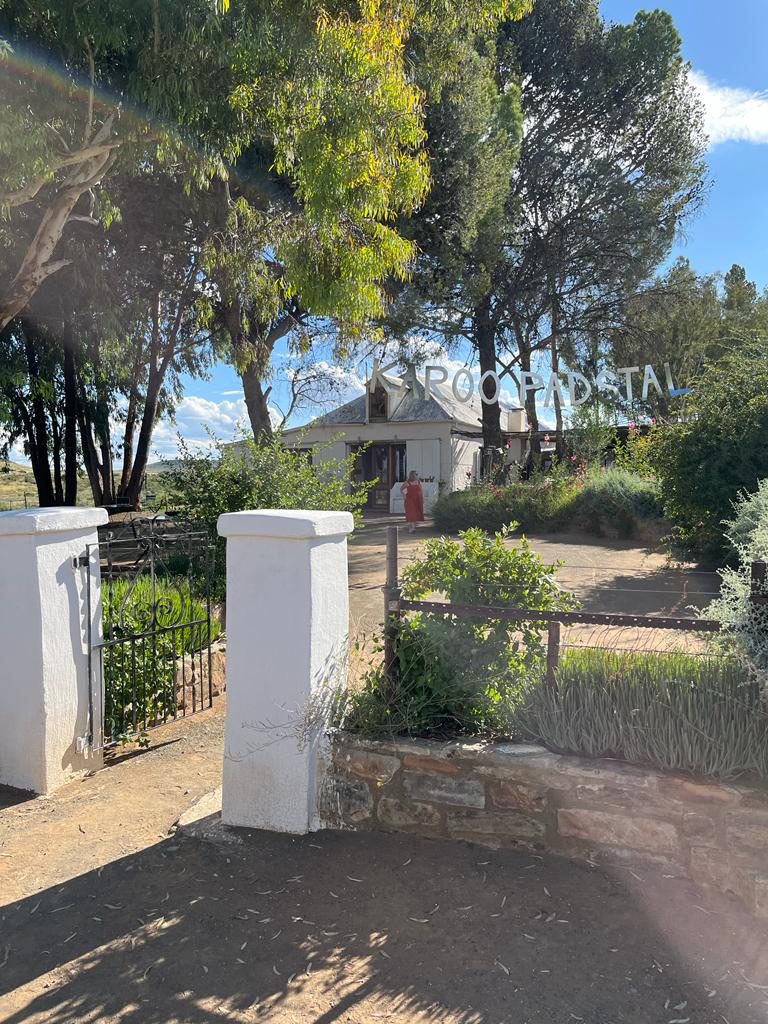
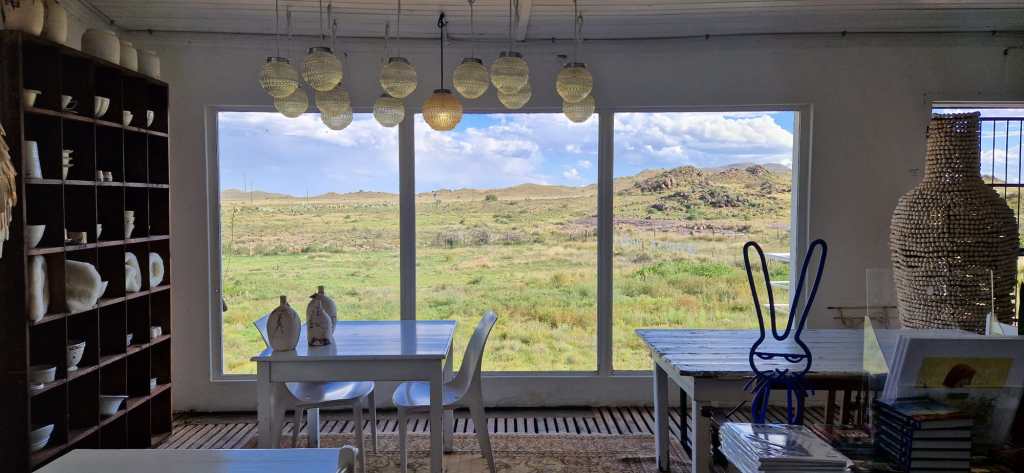
Lientjie has recently bought a house in Richmond (Cape), a town that is fast becoming yet another food destination but with added interests like Die Karoo Padstal, Richmond Rooms and Café, MAP gallery with one of the best local art collections you will find anywhere, a bookshop to keep you busy for days and much more. It’s the perfect halfway stop.

And in future, when she’s in town, she will also be doing lunch in Richmond, like on April 9 when she is presenting a fantastic feast. If you’re passing through or sleeping over, book a table. She’s also doing a dinner in Cullinan at the Vrye Weekblad Boeke Fees, which promises to be spectacular.

Check her out on Facebook and Instagram for information. And whatsapp her on 082 531 6141 for bookings.

But while in Richmond, that’s also the location of my other much loved chef, Klaradyn Grobler of Richmond Café and Rooms and Die Karoo Padstal fame, who is also back in business. Yet she is still arguably the hardest booking to pin down.

I was thrilled when on our last trip to Cape Town, to show the London family the best of the best, we could manage to secure a booking for dinner while sleeping over at another guesthouse, one with an attached gallery – it is that kind of town, one with many hidden gems.

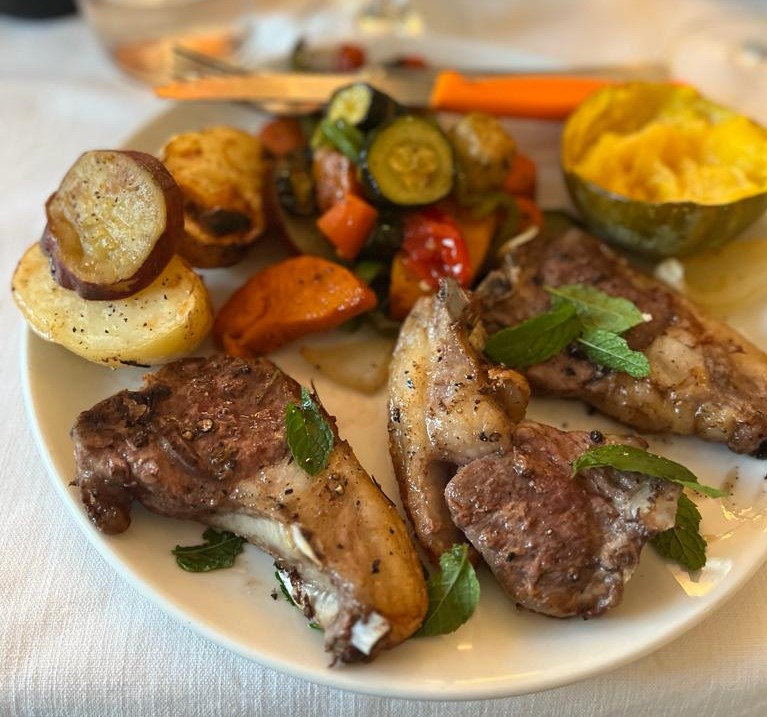
We had the best of all worlds to show off this spectacular landscape with a dinner celebrating Karoo lamb included. On our journey that morning we were sent the menu on our phones with three of us opting for lamb chops with roasted vegetables, while I couldn’t resist the lamb curry and one of the diners who couldn’t eat lamb, had a bacon pizza.

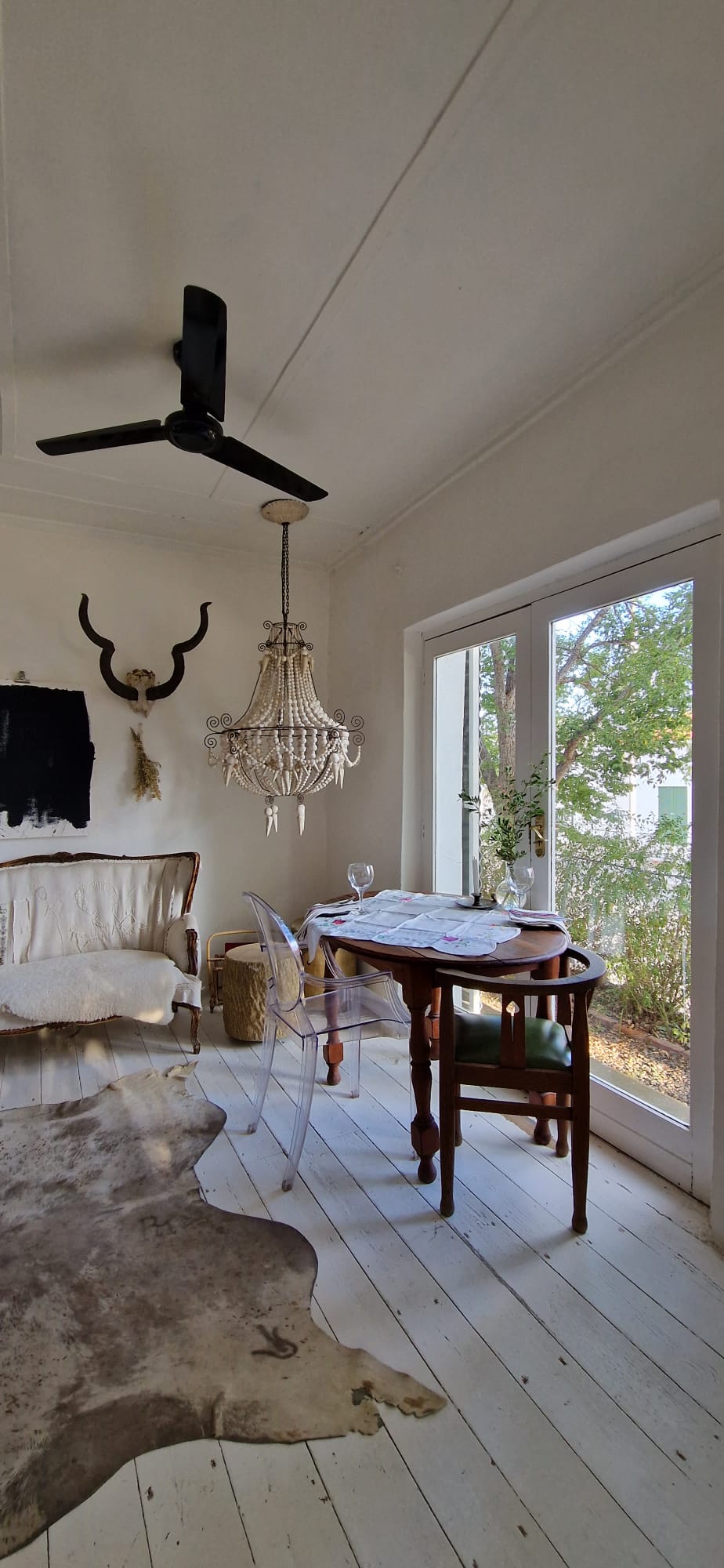
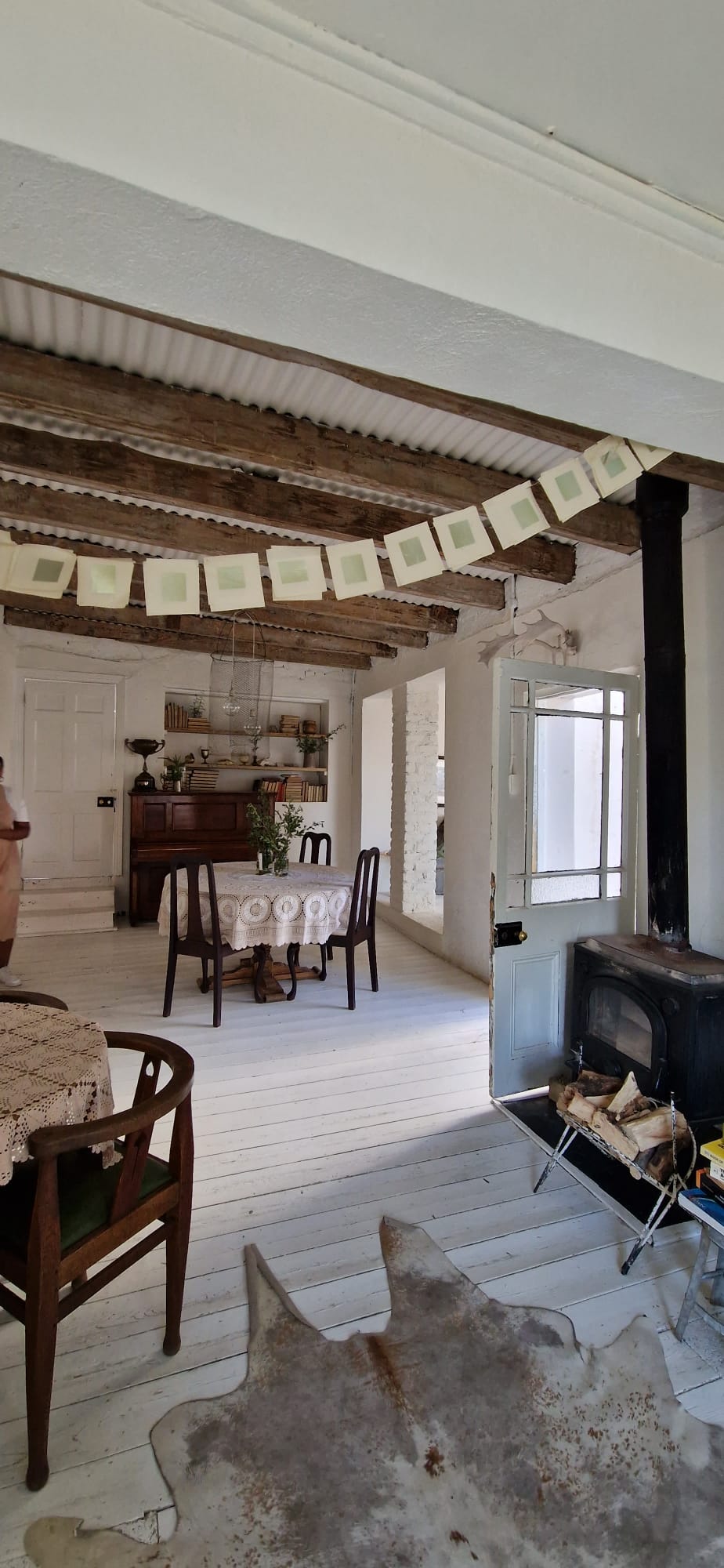
As with Lientjie, the venue is just as important as the food. In fact, I recognised Klaradyn’s style (having seen it in the Free State) when I first had a meal at her Richmond Café and Rooms. It’s unmistakable, buzzing with creativity and  probably complemented by her husband Nicol’s architectural skills.

And with both these chefs, their style enhances the full experience. On the night, we had two charming women in the kitchen, and as they had our choice of meals ahead of time, everything ran very smoothly.

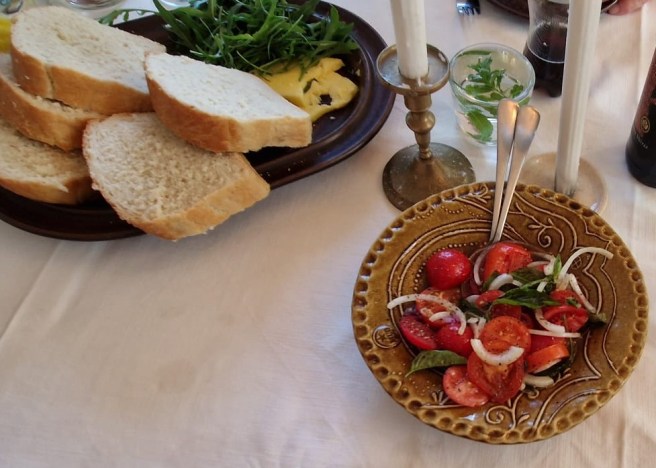
Fresh home-baked bread and home-grown tomatoes.

We sat down at 6 pm because the kitchen closed at 7 (one listens to their commands!) and were presented with what was the perfect starter, home-baked bread (deliciously thick slices) with farm butter and fresh tomatoes from the garden. We had to battle not to indulge to the point of messing with our mains.

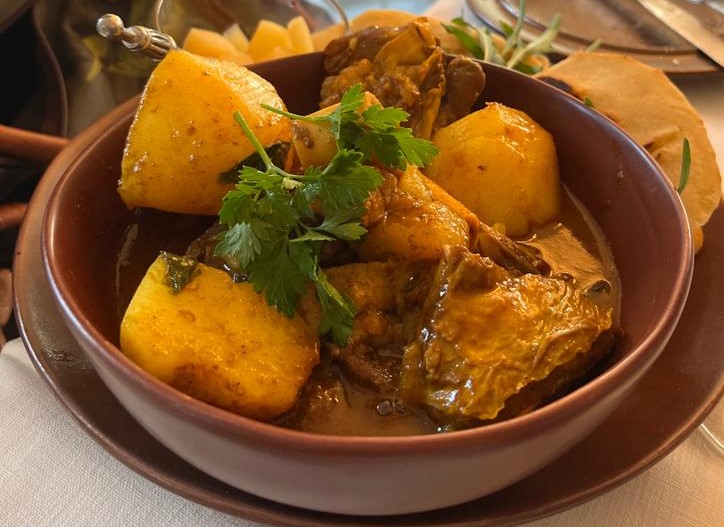
And then the main attraction. I absolutely lost my heart to Simon’s lamb curry with flatbread even though the lamb chops (I had a taste) were fantastic. For me the curry had just the right flavours to celebrate the lamb and after a long day’s travel, it was the best comfort food.

The chops were served with roasted vegetables in just the right mix. It is a skill to present a simple meal to perfection. There’s nowhere to hide so everything has to work. And it does!

On the counter was the night’s dessert, a bumper milktart, which had us licking our lips. At R250 a meal, it’s a steal.

Both these chefs, Lientjie and Klaradyn, popped in to discuss their food and acknowledge that they were dealing with diners who are devotees of their special way with food. We appreciated that.

It’s not difficult to understand these two spectacular women, the way they cook and how in different ways they celebrate their strengths. For me part of the charm is their similar ethos, presenting diners with food to die for and yet, their menus are so different. It’s about how they go about it and what they come up with – and in the end, as they say, the proof is in the pudding!

For bookings and info: Richmond Café and Rooms 079 755 8285.

SANDRA PRINSLOO IN SEARCH OF PERFECTION IN TERRENCE MCNALLY’S MASTER CLASS

DIANE DE BEER reviews:

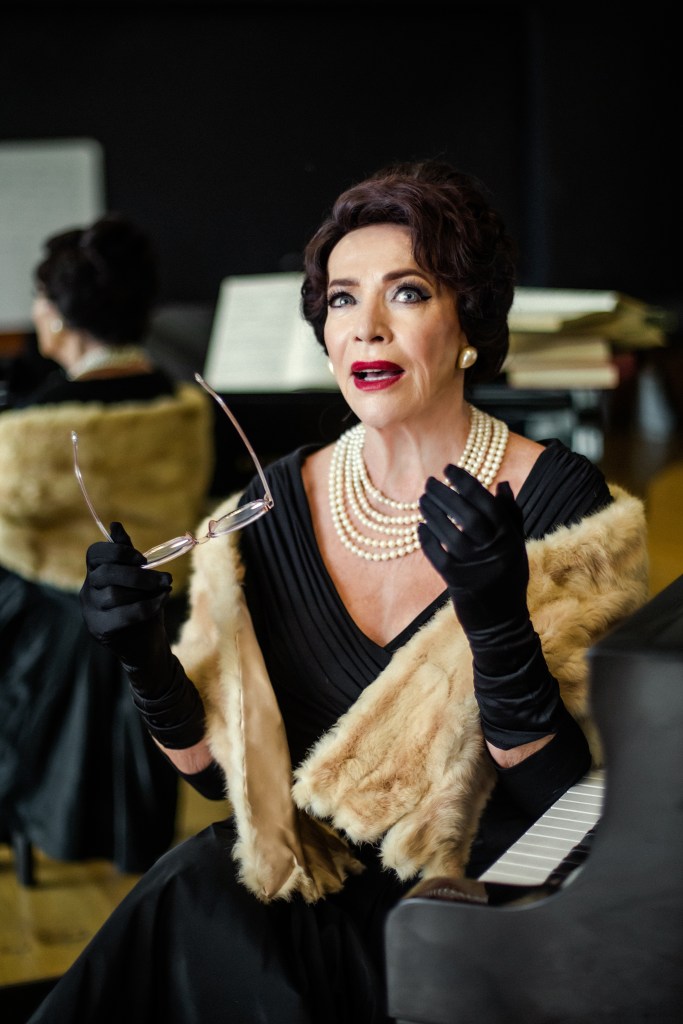
MASTER CLASS by Terrence McNally

Director: Magdalene Minnaar

Cast: Sandra Prinsloo, Alida Scheepers, Brittany Smith, Tylor Lamani and José Dias

Venue: Montecasino’s Pieter Toerien Theatre

Dates: Until April 2

THIS is Sandra Prinsloo’s time.

Having recently seen her performance in Florian Zeller’s Moeder and now this revival of Master Class as Maria Callas in a mentorship rather than singing role, her range is astounding. For the past few years, she has been touring mainly in solo shows and it’s been a joy to have her back with ensemble casts, still reigning supreme.

If you’re expecting a Callas double, you will be disappointed, it’s not that kind of performance even though there are hints and gestures to pay homage. 

This one’s all about the process, how to become an artist and if you’re blessed by the theatre gods, you’re shown the finer points by La Divina. That’s where the focus lies, in the script and the performances.

Prinsloo turns into the fading yet never diminished star in front of your eyes. With a voice that’s dropped an octave, an attitude that displays both wisdom and wit and an accent to add to the theatricality of the piece, you’re swept into this world.

Alida Scheepers with Aandra Prinsloo in Master Class.

McNally cleverly fashioned a play that’s as much about becoming an artist as being on stage, and then he centred it around one of the world’s most dramatic divas, one who seemingly turns a master class into something that’s as much about her as it is about the students.

But in the process, she reveals as much about the artist as she does about the woman. Even at that time when social media wasn’t yet part of the publicity machine, the great ones couldn’t find anywhere to hide. Perhaps at a much slower pace, but eventually the stories would come out. This is why the reminders of her and Ari Onassis’s turbulent love life have impact.

And even if all of this adds flashy flesh to the McNally text, at its heart, it is a treatise on  the making of a true artist. All the other shenanigans, as Callas implies, are mere sideshows. But you have to pay attention to making an entrance, having a look, to understanding and investing in every word you sing and more. Everything comes together in a performance that will have you holding the audience’s attention, which is exactly what Prinsloo does in the persona of Callas as she chastises her young students when they perform with what she perceives as too much charisma and not enough care.

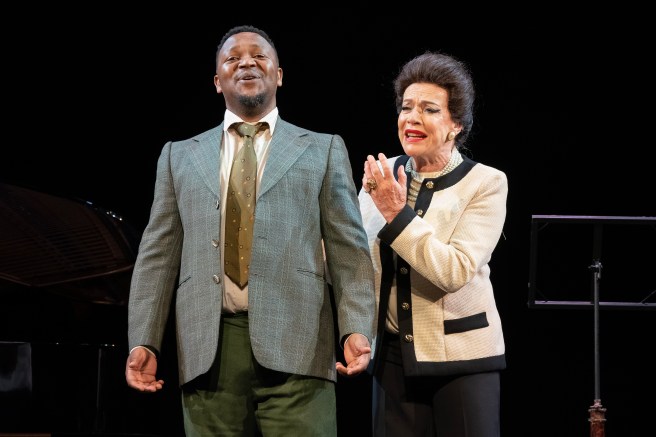
Master Class with Sandra Prinsloo and Tylor Lamani.

They hardly have the chance to utter a note before she destroys what might have been the smallest sign of an ego with shattering disapproval and a sharp gesture to underline her disdain. And then comes the command to sing again. Those who can’t stand the pressure are bitingly rebuked and if they still have any aspiration left, the performance is less assured.

The supporting cast, from José Dias (also musical direction) as the unperturbed répétiteur to the three courageous singers brave enough to face the harsh sometimes hysterical disdain of the tempestuous tutor, are a good foil with McNally introducing a dash of diversity with a trio of types from the nervous ingénue (Scheepers) to the self-assured poseur (Smith) and the cheeky, almost dismissive tenor (Lamani). Their singing is another highlight of the performance.

Master Class with Sandra Prinsloo and Brittany Smith.

I wasn’t sure of the flashing way the memory reels of Maria and Ari were introduced and found it quite disruptive. Perhaps loadshedding also had an impact. And perhaps Callas and Prinsloo would have been better served in another costume, one more suited to a master class.

But in the end, Prinsloo’s performance is the one that stuck as she made sure that the way Callas served her art was always at the forefront of her performance. Talent is obviously the X factor of great artists, but without blood, sweat and tears and an unwavering and selfish dedication to your art, few will achieve the ultimate prize.

That’s what Callas knew and delivered both on and off stage and what McNally so masterfully captures in Master Class with Prinsloo persistently reaching for perfection.

For bookings: https://www.webtickets.co.za/v2/Event.aspx?itemid=1524418851

JOBURG BALLET KEEPS THE DANCE DIALOGUES ALIVE WITH CREATIVELY MOVING CONVERSATIONS

PICTURES: Lauge Sorensen

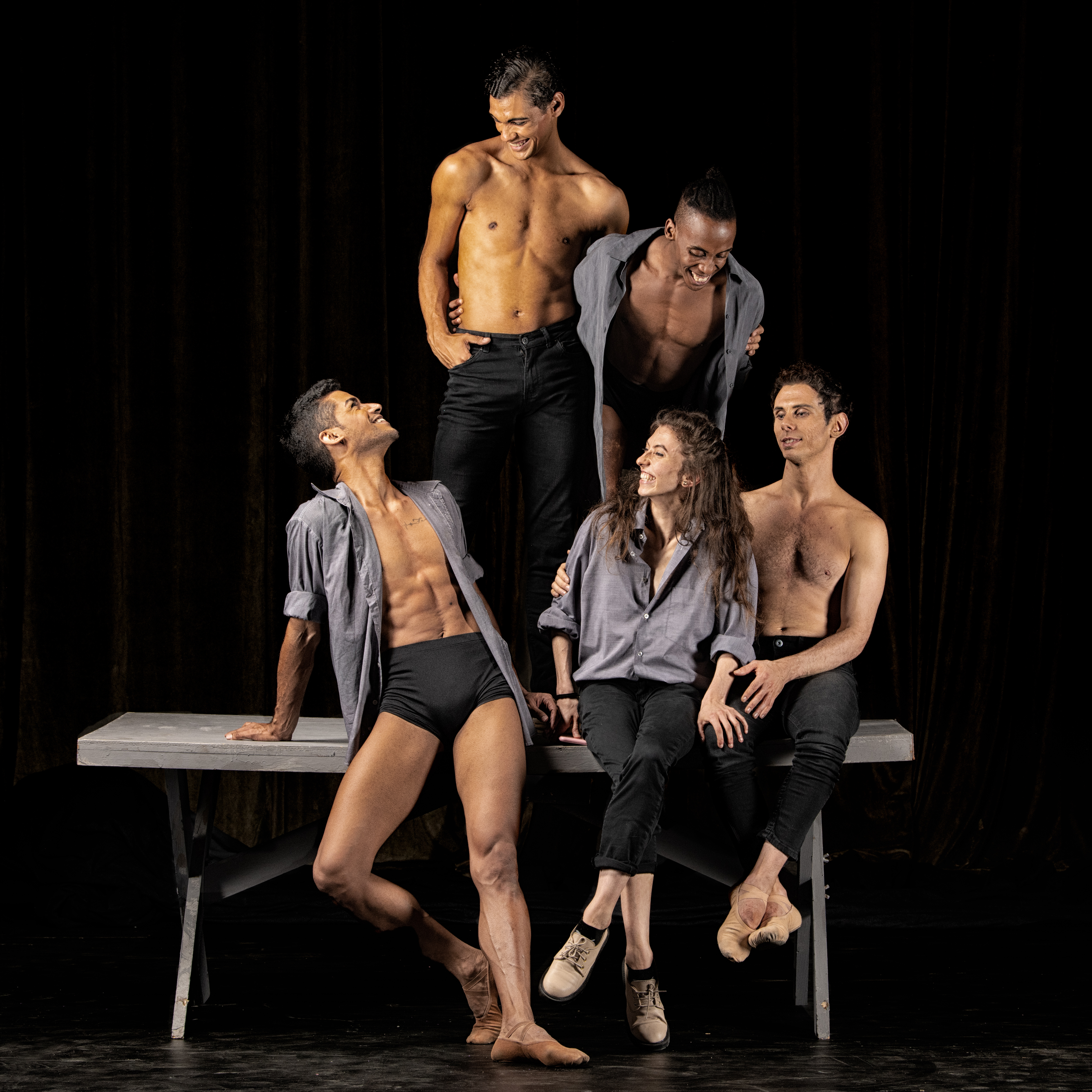
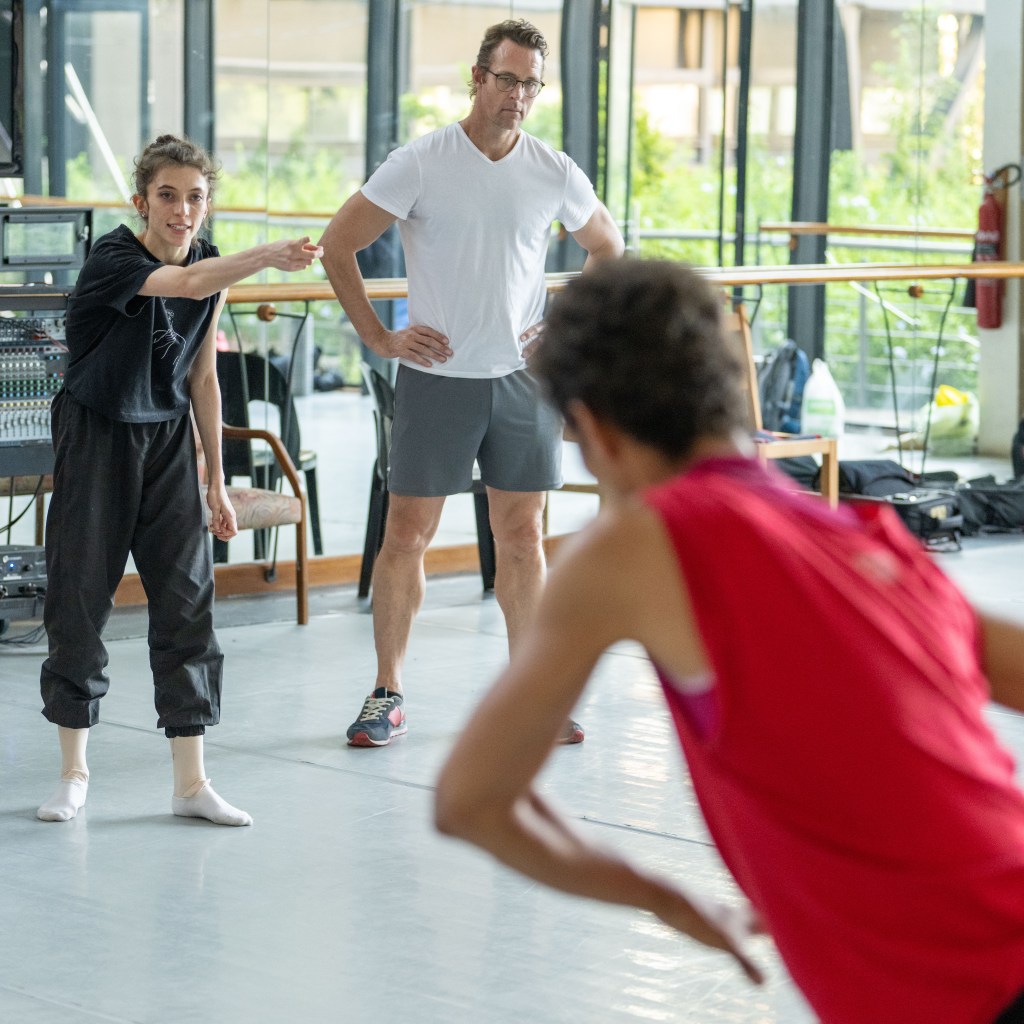
The dance conversation starts tomorrow at the Joburg Theatre with Joburg Ballet’s triple bill of ballets new to the company’s mainstream repertoire. Titled Dialogues, two dancers were invited to choreograph two new works while a third, Bruno Miranda, will stage the 1896 ballet Bluebeard Grand Pas

Bruno Miranda with the cast for the 1896 ballet Bluebeard Grand Pas

described as a glittering showcase for dancing in ballet’s finest classical tradition. Artistic director Iain MacDonald believes the programme exposes dancers and audiences to the diversity and versatility of the company. DIANE DE BEER talks to Joburg Ballet dancer Chloé Blair who has been invited to expand Table for Two (part of Joburg Ballet’s RAW programme for new choreographers in 2021) for this first season of 2023 and Roseline Wilkens of Vuyani Dance Theatre with her first for Joburg Ballet entitled Identity:

Revil Yon (above) and Bruno Miranda in Table for Two.

“My choreography philosophy comes from the extreme passion and love that I have for dancing, specifically ballet. I find dancing to be one of the most humble ways to tell a story as it’s very understated as opposed to other art forms, like singing or acting which are maybe more out there or confrontational in some way.”

Chloé Blair believes that dance is so special because it asks the audience to look at body language and interpret it for themselves and then to connect this body language to their own feelings in a way that’s not really conscious.

When she starts working on a piece, there’s her emotional response to music, which is always the starting point. “I find that music allows me to process ideas and memories and thoughts and there’s a lot of time that I spend by myself just listening to movie scores, orchestral music, classical music and just letting my mind wander into specific situations.”

In this instance she was sitting at the dining room table with a friend listening to music they both loved called Table for Two. It’s music she loves and she started thinking about how much of our relationships happen around a table: we celebrate, we eat together, we toast one another, we have fights, she says. “And I thought that would be such an interesting way to centre a specific relationship story. From there I took some of my own memories and own experiences I had which all felt quite universal.”

As a classical ballet dancer, it influences her choreography because it forces her to pay attention to the detail of body language. “In my dance life I’m bound to a classical repertoire, which has a very solid structure. The things that convey emotion are often in the detail, like a look, a head movement, the use of the fingers or a touch, detail orientated when it comes to body language, interpretation.” She tried to use that in the piece, to capture those detailed moments, the difference between emotions by using specific body language. “Being a classical dancer, the dance is very structured and I enjoy that. You find freedom in that structure.”

But after the initial discovery of the narrative, she finds music – which, incidentally, is not usually the music she has used to develop her narrative. “The music which I finally use for the piece, is something different which marries not just the feeling of the narrative, but the structure as well.

Excited to rework the piece, she is also intimidated because to expand everything would be quite a challenge.  “I expanded the cast, because the first time it was just two men, but this time round there was a whole corps de ballet.  I used the extra dancers as a tool to tell the story, giving a lot more thought to formations, movement and how to incorporate this into the structure,” she notes.

Using two men as main characters was determined by a desire for the relationship to be very interpretive. “I wanted the audience to view it as either a friendship, a romantic relationship, or a family dynamic without specifically dictating it,” she says.  She also loves working with men, because they bring an energy and a freedom of movement which is very inspiring to work with.

Her narrative and thus choreography tells a story of how changes in thought and changes in feeling lead to changes in the dynamic between the two of them. While Table for Two follows one character’s narrative, she wanted to show a relationship in multi-dimensional way, not always as so often seen from our own perspective.

Identity choreographed by Roseline Wilkens

What Roseline Wilkens hopes to achieve with Identity is for the self to be comfortable in its own skin. She strongly believes that everything happens for a reason. “My identity was formed by my life stories. All the work I have created is very personal.”

It deals with the journeys she has made, things that have happened to her, and things that have formed her as the person she is today. “But things still keep happening and shaping my character,” she emphasises. “Whoever I meet, whether the person stays in my life or leaves, there’s always something that keeps forming you.”

But, importantly, she also holds onto her roots and where she came from, not forgetting what she stands for. She embraces change and carefully dissects wat she incorporates into her life and what she lets go. “That’s what identity is all about, finding your true self,” she says.

She was surprised by how much the dancers understood the storyline she presented them with. “It was more than I thought they would because it came from a personal perspective,” she explains. “Dealing with identity, everything had to be honest about some life-changing event.

She usually works in the field of African contemporary, sometimes classical and it would have been easier working with dancers she has worked with on a daily basis However, it was surprising working with classical contemporary ballerinas. “It was interesting how we influenced one another and the work. It came together as they made it their own and gave it their own flavour. I didn’t come with any expectations, so it was a work in progress and a work together.”

Having created the music in collaboration with Isaac Molelekoa, she doesn’t see herself as a composer, but she loves sound and working with what she feels. “I created the music with my own beats which was then transcribed as sheet music by my collaborator.” She feels blessed by this partnership which has been worked at through the years. “He gives life to the craziness in my head and the sounds I make during rehearsals.”

She doesn’t have to use any other sounds or music and this for her, truly represents her identity. “I chose the title, because it is about becoming one with self, learning to start over, relearning yourself in every way possible which means growth. I am in tune with myself,” she aptly concludes.

Joburg Ballet 2023 seasons at a glance:

Dialogues (Joburg Theatre): Friday 17 March – Sunday 26 March

Romeo and Juliet (Joburg Theatre): Friday 30 June – Sunday 9 July

La Traviata-The Ballet (Baxter Theatre, Cape Town): Wednesday 26 July – Saturday 29 July

Don Quixote (Joburg Theatre): Friday 29 September – Sunday 8 October

Dialogues: Booking Information

Standard Ticket Prices:

R475, R410, R375, R275, R200 (applicable to all performances except Wednesday 22 March for which all tickets are R100)
Discounts:

Friends of the Ballet 35%; Pensioners 15%; Groups of 10+ 10%; Children 4-7 50%
Where:

Joburg Theatre, Braamfontein
Book:

At Joburg Theatre Box Office or 0861 670 670 or online at www.joburgtheatre.com

Patrons can also book and pay via the Nedbank app and at selected Pick ‘n Pay stores.

THE MAGNIFICENCE OF LIVE PERFORMANCE AT THE JOBURG THEATRE CELEBRATES OUR ARTISTS

The past month has really brought back the nightmare of Covid for the arts with the staging of two mesmerising shows at the Joburg Theatre highlighting the miracle of live theatre. DIANE DE BEER speaks her mind:

First off there was August Wilson’s Fences with an amazing, vibrant cast  just right for the present time. As I have written in a previous post, there was nothing to fault. But what reminded me even more strongly what we missed during Covid,  was a second show, this time contemporary dance with two of the best in the business and with the choreographers almost reaching the status of elder statesmen.

But let’s refer to them (Gregory Maqoma and Vincent Mantsoe) as the wise men of dance as they tap into the time in a way that elevates the show in so many ways.

What they presented with their specific talents and differing styles together, is so smart. I am not a dance critic, so I tread lightly when commenting on dance yet theatricality is much more universal and an easy one to asses.

While Mantsoe is much more the traditionalist, someone who time and again returns and robustly mines his roots, Maqoma bristles with contemporary energy and enthusiasm, which makes this the perfect pairing and shows the capacity and capability of the Vuyani dancers at their best.

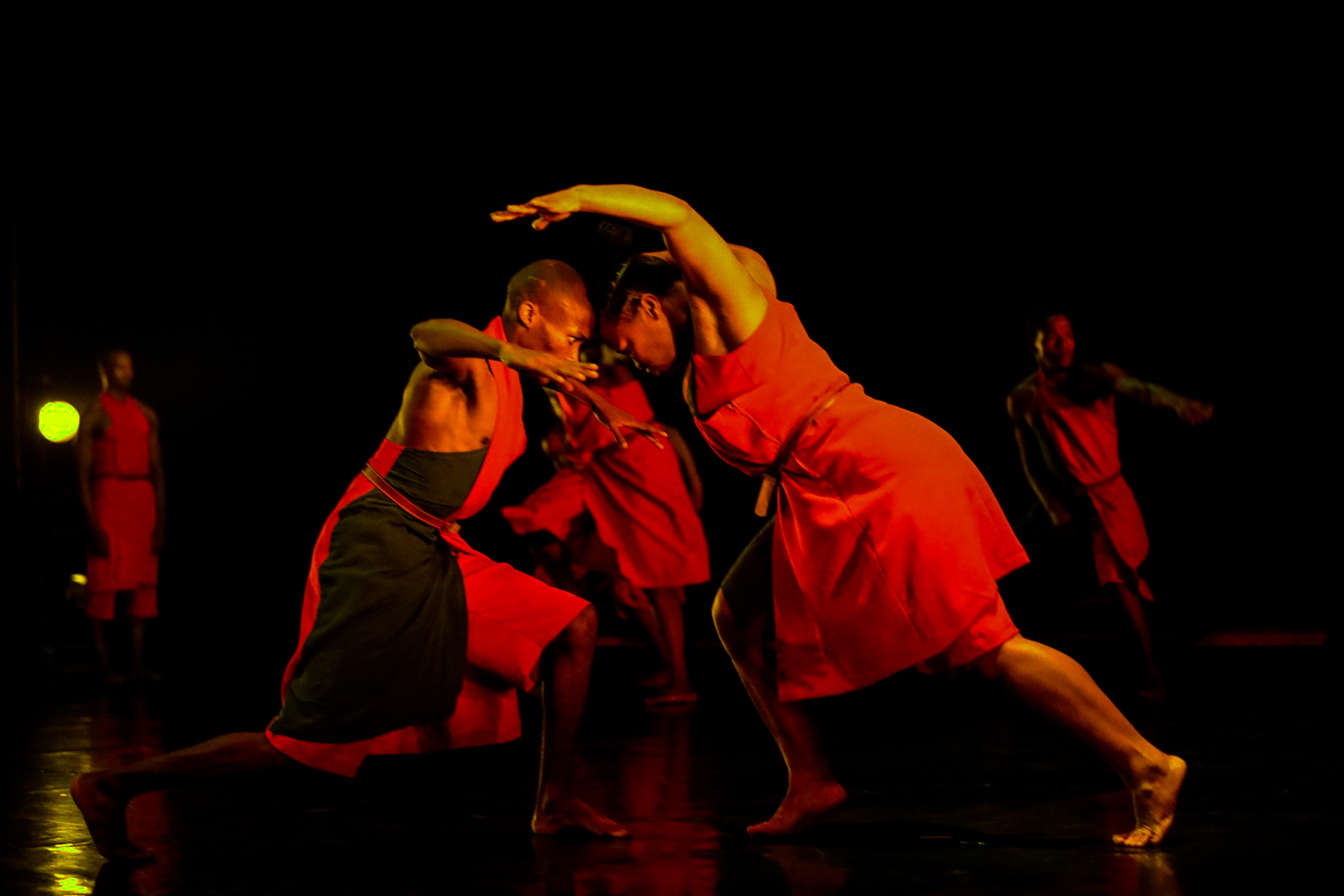
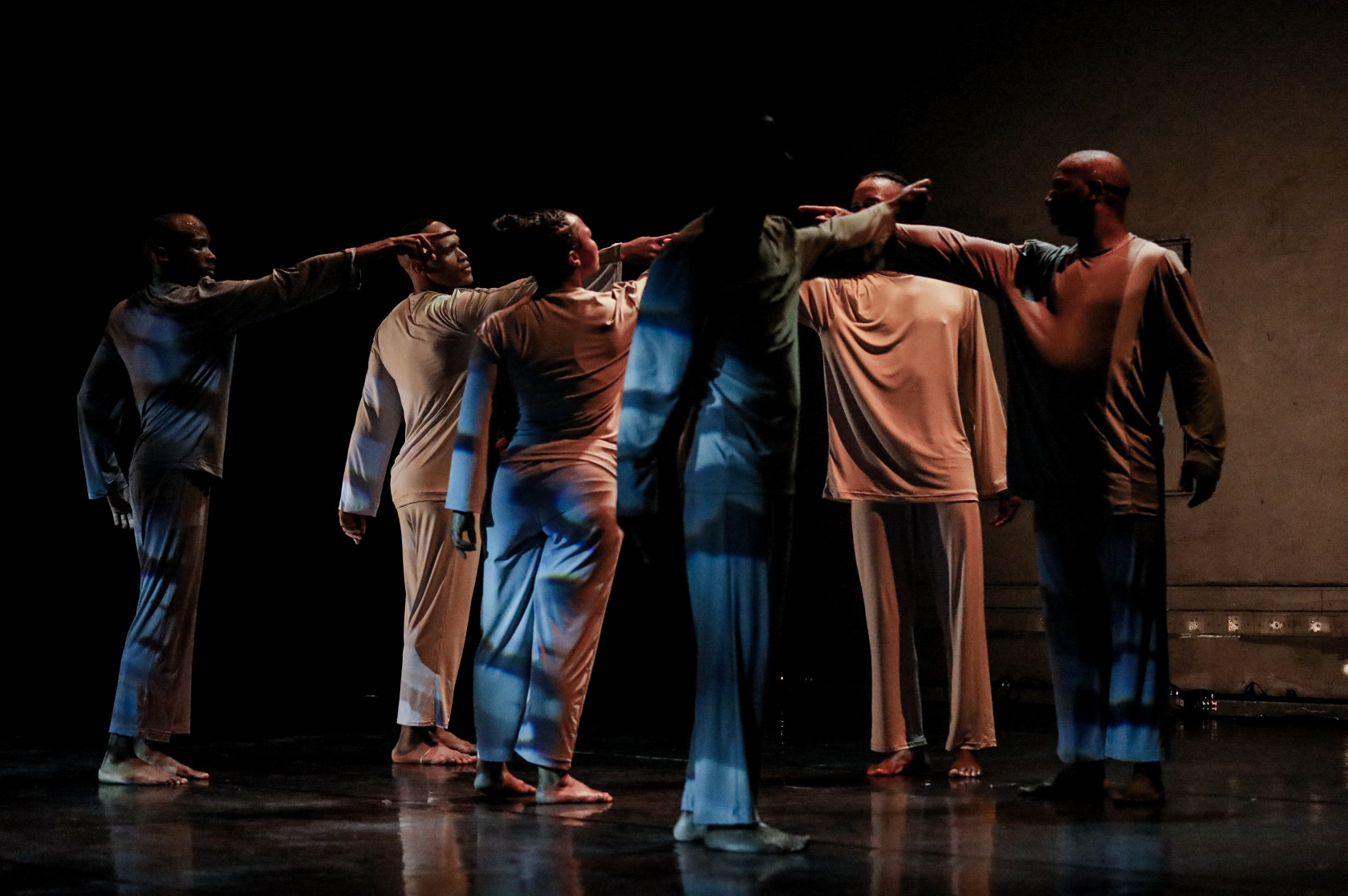
The masters Vincent Mantsoe (below left) and Gregory Maqoma (below right) and the magnificent Vuyani dancers.

It’s in the moves, but it’s also in the mood they create on stage as the interpret their different choreographers with a precision and passion that takes your breath  away. And because of the temperature differences in the approach of the two choreographers, that’s what really gift wraps the entire production so stylishly and with such abundant generosity for the audience.

It’s the full spectrum of emotions which makes for the perfect experience in the theatre. And that’s what we missed, artists performing with a passion that comes across in every lift of a head and every tweak of a muscle.

From the costumes by Asex, which also marked the two presentations very specifically, to the exquisite music specially created for this presentation by Andrea Cera (for Mantsoe) and Elvis Sibeko (for Maqoma). Lighting by Wilhelm Disbergen, is again in a distinct language for the individual storytelling, and generously captures the atmosphere.

The masters Vincent Mantsoe (below left) and Gregory Maqoma (below right) and the magnificent Vuyani dancers.

With the programme digitally set up in the foyer for everyone to access, it enhances the experience for each individual attending. They’ve leapt bravely into a new year, one still hanging by a thread with still so much uncertainty in the world.

But the artists understand. They know there’s no holding back. As long as there are audiences, they have to tell their stories in their own way – and when they do it with such confidence as these two do, the audiences are there .

That’s been amazing and exciting to see with both Fences and ZO!Mute, neither of which will necessarily appeal to the masses – and yet, both shows I attended were packed and with an audience who were there to watch and take on anything on offer from start to finish.

That’s not always a given in the arts. I have been in many theatre and dance shows where you wish there was an audience to witness the wonders on stage. But it seems, Covid has brought a new kind of awareness.

It happens too often. When we have shows in abundance, we don’t always pay attention. But take them away – at least the live ones – for a few years, and the value of artists and what they have to say and show us seems suddenly to be appreciated.

It shouldn’t be that way,  but that’s life.

The Vuyani Dancers choreographed by Vincent Mantsoe.

Just becoming used to  the idea again of live theatre returning to our lives in full splendour, I want to shine a light on how blessed we all are to have these artists around us who bring so much to our lives.

Sometimes it silly escapism, other times it’s the marvel of their artistry. Storytelling in some form is always part of the equation and if it is for that alone, the constant expansion of our minds, we should all appreciate the sparkle, the sublime and the sheer wonderment they bring to our lives.

The Vuyani dancers cvhoroegraphed by Gregory Maqoma.

Following sold-out performances in the 2022  singer Simphiwe Dana Announces the returns with Moya directed by the prolific Gregory Maqoma under the musical direction of the seasoned Titi Luzipho, which will be staged on the Mandela Stage at Joburg Theatre, from tomorrow (Friday) until Sunday (March 3 to 5).

It has been an incredible journey for Dana in the music business and her powerful and soulful voice has moved the hearts of fans across international stages. She was just a young girl from the Eastern Cape, who initially doubted the sound of her voice, before realising its strength through song. Her activist work has also allowed her voice to highlight serious social issues such as the discriminatory plight that women face.

Moya, is filled with themes of spirituality, and healing, which is inspired by the concept of loss and life. Simphiwe started writing the show after the passing of her mother, trying to find a way of understanding and healing from the loss.

The Simphiwe Dana show Moya directed by Gregory Maqoma this weekend.

Her music will be complimented by the creative fusion of contemporary African dance by the dynamic Vuyani dancers. Her story is told through the acapella roots of her music.

Tickets are available for bookings at https://www.joburgtheatre.com at R350 to R550 with corporate bookings and a VIP experience from R1 000.

He is also part of the long-awaited The Head and the Load which due to Covid has been rescheduled from Friday April 21 to Saturday 6 May, also at the Joburg Theatre.

e is also part of With music composed and conceived by Philip Miller with Thuthuka Sibisi, this is William Kentridge’s exploration of Africa’s role in the First World War combining music, dance, film projections, mechanized sculptures and shadow play to illuminate the untold story of the millions of African porters and carriers who served- and in many cases died for- British, French and German battlefield forces.

Freighted with the weight of this little-examined history and quickened by Kentridge’s visionary theatrical alchemy, The Head & the Load has been described as an exceptionally ambitious work of performance.

And all of this is just the start of a momentous year for the monumental artist Gregory Maqoma.Watch this space in a year he celebrates his half century.

THEATREMAKER/WRITER DIANNE DU TOIT ALBERTZE COURAGEOUSLY SPEAKS HER MIND

From the title of the book bottelnel breek bek, the warning signs are there — this is not going to be an easy read.

But because I have been following Dianne du Toit Albertze’s career for a long time, I knew this would be worth the battle.

In a digital interview, she tells me that the story found her rather than her discovering what she wanted to write about. “I needed to write about people who were braver than me because it was Covid and I needed something to save me,” she says.

That’s where she found Dora and Whashiela, who came with their own heaven-sent gifts. And their strong appearance was probably driven by the fact that “as a trans person, I don’t find many heroines in the books I read. I also don’t see them at festivals or on television. Especially not in my mother tongue,” she notes.

In her own way, she wanted to show Afrikaanse moffies that they shouldn’t let go of their dreams  —  “Moenie jou tong oppie highway verkoop nie” is how she says it bluntly and beautifully. “Nancy is waiting, we need to make and take our own space.”

Feeling and querying whether this is a very personal tale, she acknowledges that first novels are probably always close to the bone. “I wanted to push my high heels through the literary door with a story that feels close to me. I wanted to go as close to the edge as I could and much method writing followed,” she says. “I learnt about everything I wrote about and didn’t want to be a faker.

Dianne Du Toit Albertze
Picture: Peter van Noord.

“Perhaps I listen to too much Tupac or hide too easily behind my pen … because the book also helped me recover from a poisonous addiction. Every day without drugs is a BIG day. And hopefully this full-frontal writing of mine will mean something to someone out there.”

We all know about method acting and what that has done to those taking it too far, and if you read the book without the hairs on your arms standing on edge you’re possibly not paying attention.

This is an artist who takes her art seriously and even if it meant she climbed a steep mountain with the language, it is what adds authenticity and soul to the characters and story.

“I wouldn’t have been true to my characters if they spoke the language of dubbed Turkish soapies,” explains Dianne about her choices. And acknowledges that she wanted to honour the colourful language of the trans community in Observatory and Matjieskloof. “A variant like Gayle (created by the  queer coloured community in Cape Town) even has its own accents in specific regions.”

 And then she’s not even referring to Sabela (a language flounced together from numerous local languages in local prisons for gangs to communicate) or those creative Cape expressions we’re all familiar with. This is completely different yet with distinct similarities – an anomaly in itself.

Dianne du Toit Albertze striking a pose.

“I’ve always been fascinated by linguistics – to create different codes and to learn different expressions and idioms.”

On a language level, she embroiders, the tongues of the different characters metaphorically reflect their life paths – also pushed out and teetering on the periphery. “Those of us who have for so long been hiding in the shadows should move into the light and speak loudly.” Another incentive for telling her story the way she does – letting it all hang out … bravely.

Amen, say I, having read the book and also revelling in this particular interview/conversation, which was a written rather than a spoken one. “Steve Biko says I write what I like and perhaps I agree with him,” notes Dianne. “I write about shit that matters to me and what I believe will interest a broader audience.”

She also hopes that a trans child might read the book and realise that they too matter, perhaps influenced by her own struggles and lack of support.

For the writer personally, she has many dreams and desires: a musical, Medea in Namakwaland, staged in-between the koppies; and to write a few movie scripts. These are on the cards.

For her, writing plays is like breathing in and out. She’s been doing that from a very young age right through her drama studies. “Poetry and prose come from there, but to write for stage is my big love,” she says.

As for her activist stance, she took her queue from the Sestigers (a moniker for a group of dissident Afrikaans writers, including Breyten Breytenbach, André Brink, Ingrid Jonker, Elsa Joubert, Jan Rabie and Etienne le Roux) who believed that words carry weight and that we need the arts and artists to be our conscience.  
This would mean, to her mind, stories that free us from what is becoming a hopeless land with steadily growing layers and levels of suffering.

In the meantime she is working with actor/director Lee-Ann van Rooy on a season of her text Kaap, which was performed at the 2020 NATi Jong Sterre Suidoosterfees . And with her Namakwaland trans sisters, she is busy creating an NGO House of Influence with which they hope to establish safe houses as well as perform community theatre.

She’s a busy woman but for those of us lucky enough to witness her creativity, moving on the edges as she does, she draws a curtain on a hidden yet important world.

This is what makes our universe an interesting one. People are allowed if not encouraged to be themselves and for those who are open to the diversity and differences, it establishes a never-ending stage of wonder, wisdom and, of course, a wackiness without which life would be so much poorer and less colourful.

And as Dianne is so determined to bring to our attention, real people are living here.