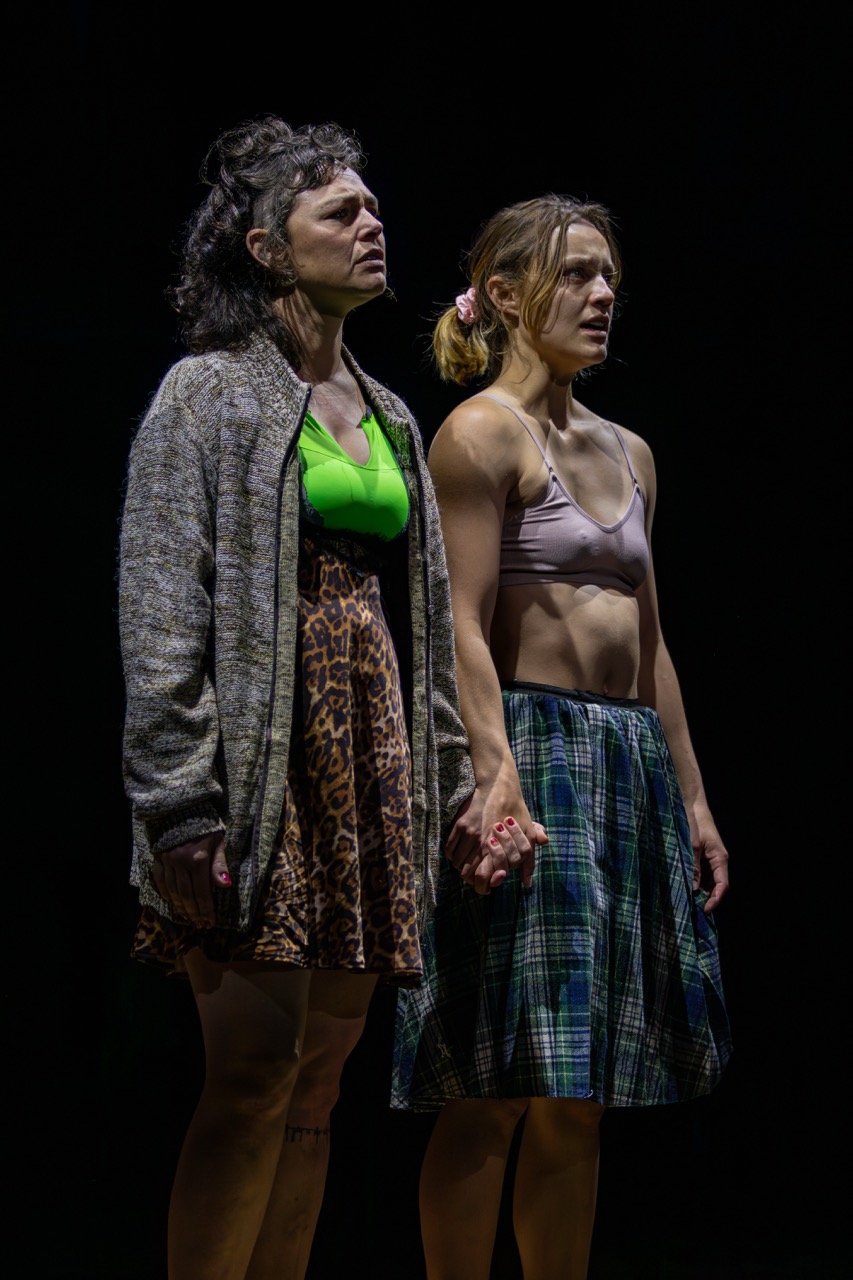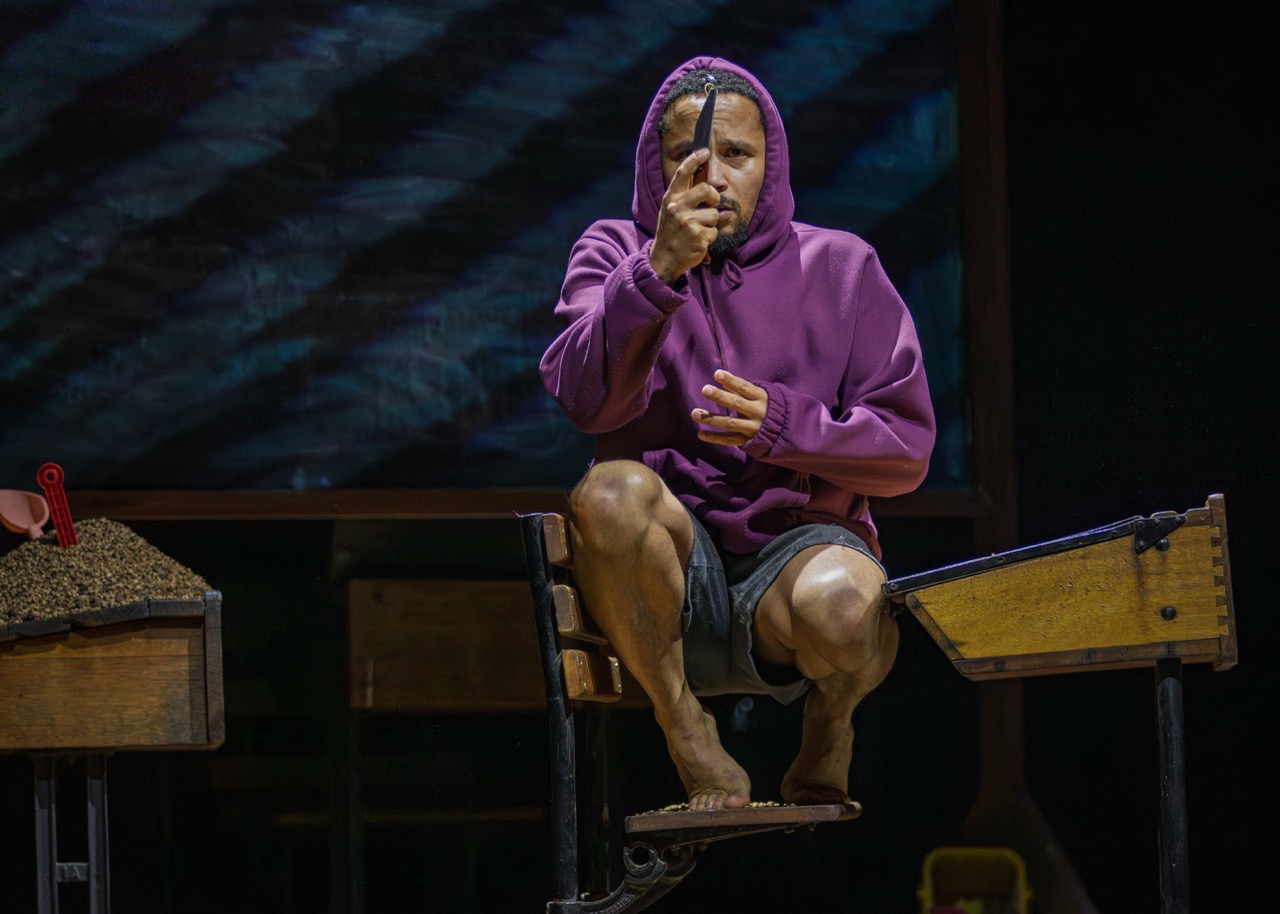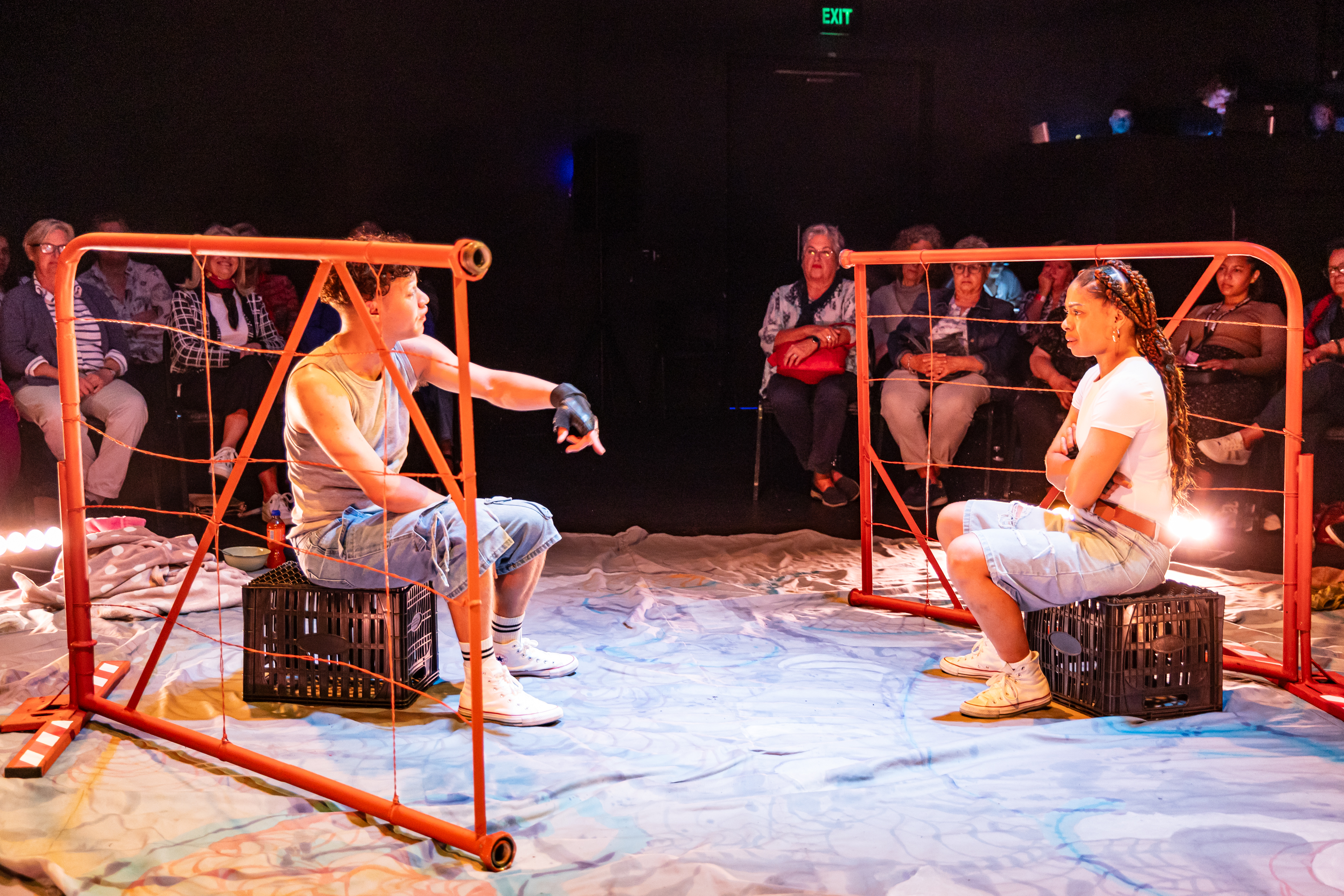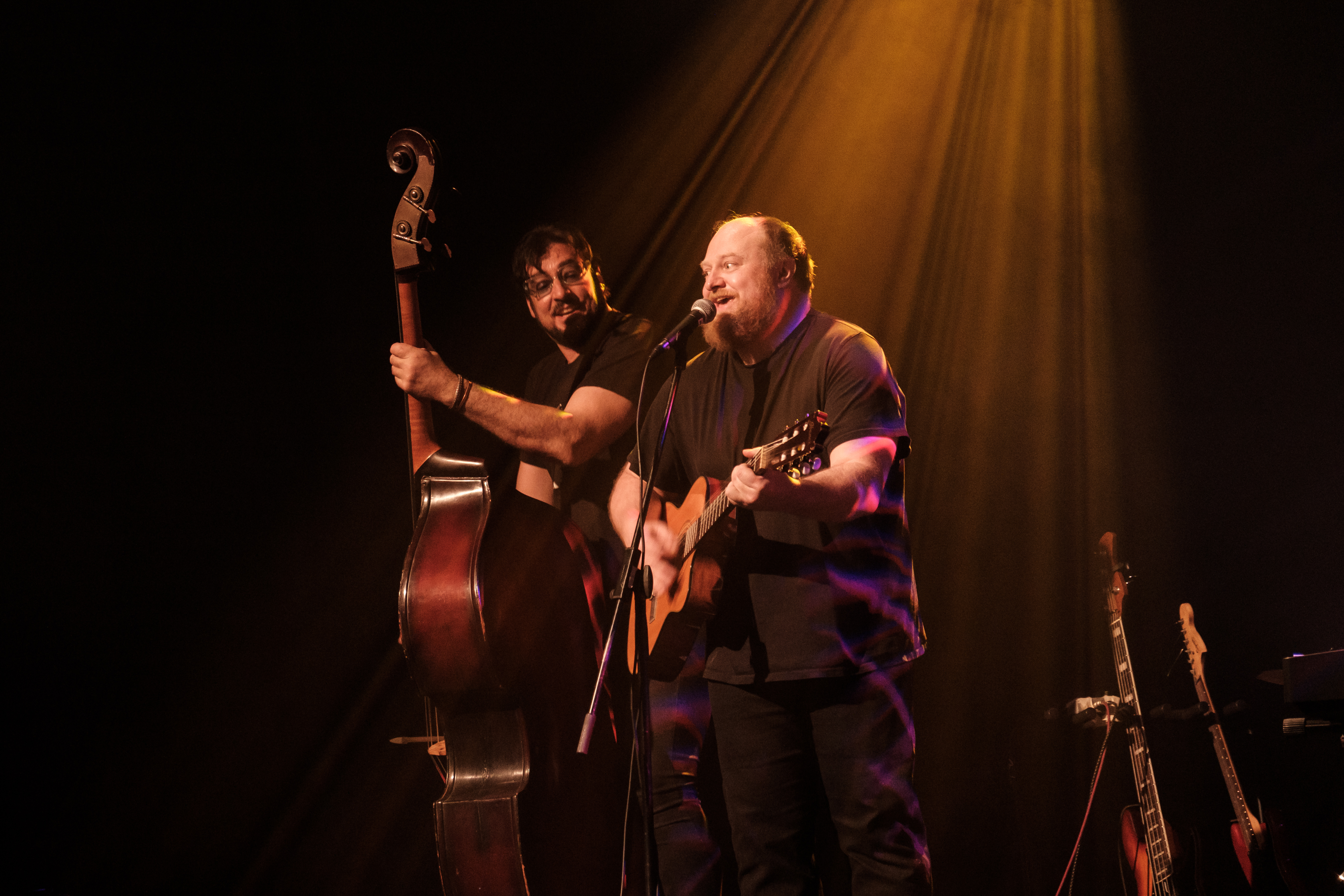

WITH A ROBUST PRODUCTION TEAM AND VIBRANT CAST “JOSEPH” IS A RADIANT REVIVAL

BY DIANE DE BEER

JOSEPH AND THE AMAZING TERCHNICOLOR DREAMCOAT BY TIM RICE AND LLOYD WEBBER

DIRECTOR: Anton Luitingh and Duane Alexander

CHOREOGRAPHER: Duane Alexander and Jared Schaedler

MUSICAL SUPERVISOR: Charl-Johan Lingenfelder

MUSICAL DIRECTOR: Amy Campbell

SET, COSTUMES AND PROP DESIGN: Niall Griffin

LIGHTING DESIGN: Oliver Hauser

SOUND DESIGN: David Classen

PRODUCERS: Pieter Toerien and Lamta

CAST: Lelo Ramasimong (narrator), Dylan Janse van Rensburg (Joseph), Chris Jaftha (Jacob/Potiphar/Pharaoh)

DATES: Until the end of September

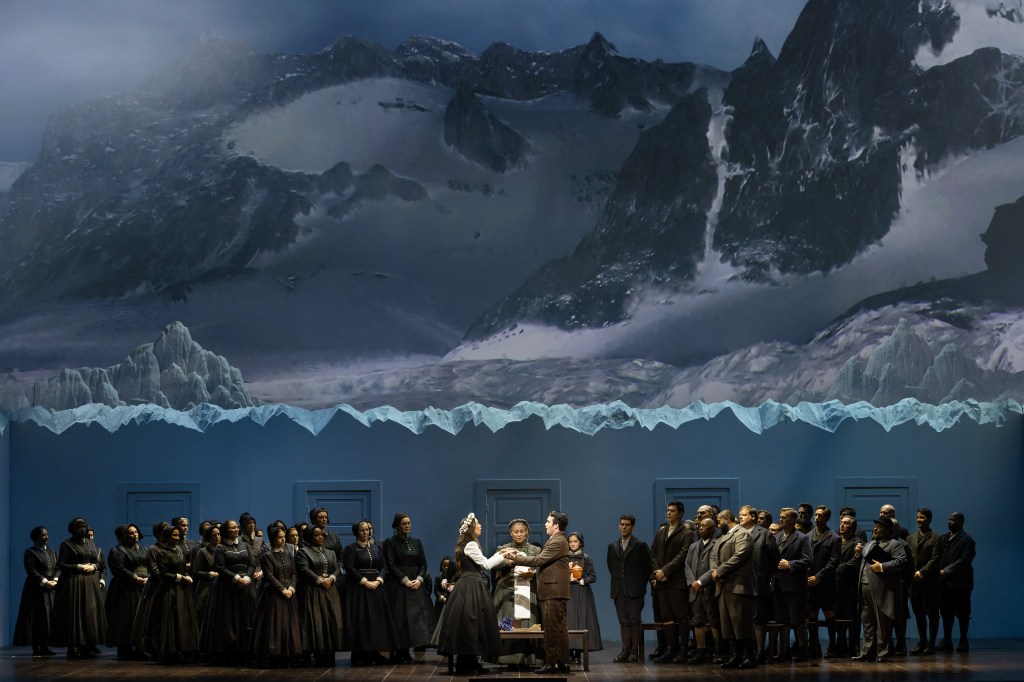
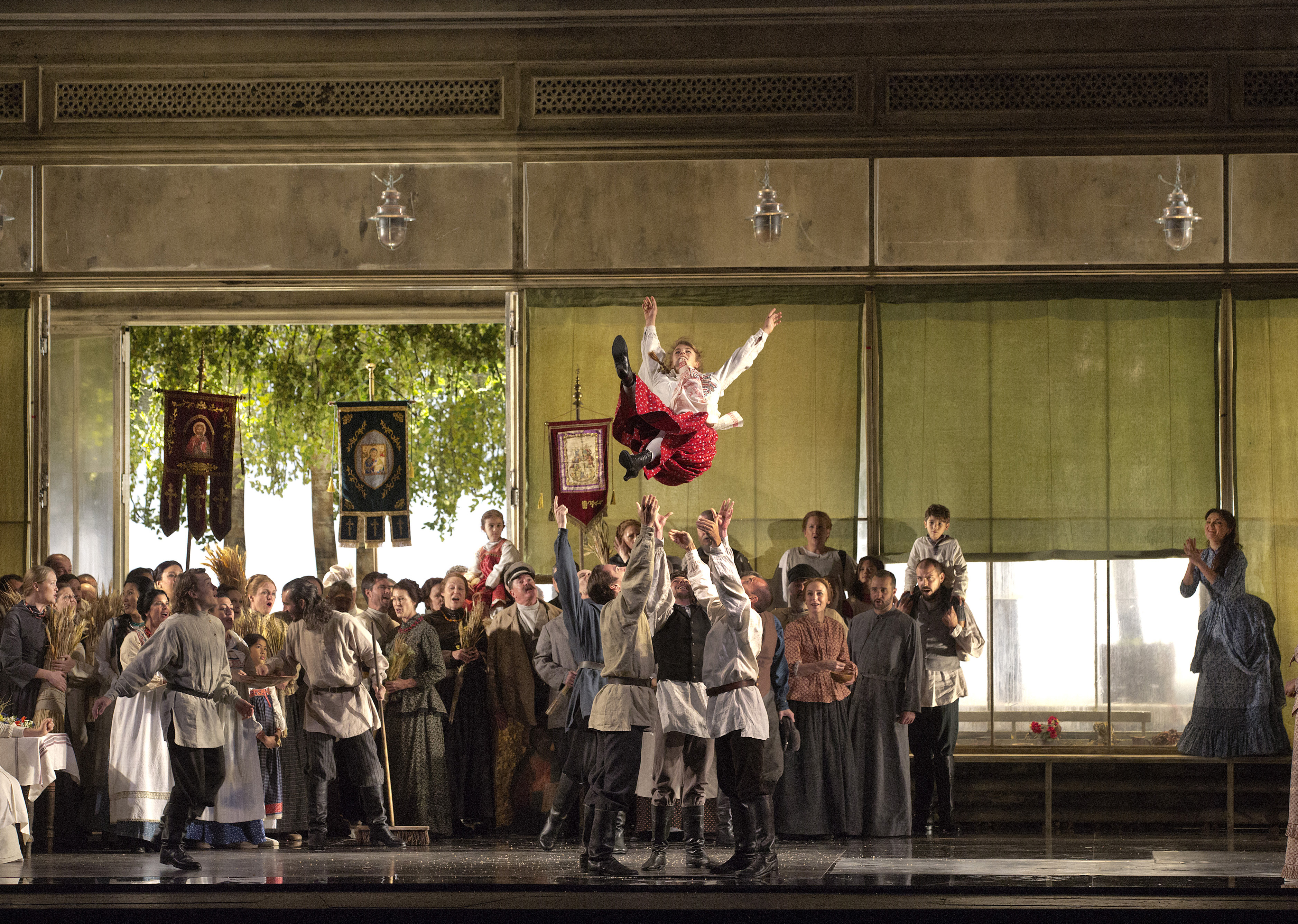
This iconic musical had its first performances 50 years ago and if we take the current revivals, it’s still going strong. And with reason.

It’s always worth watching what Luitingh, Alexander, Lingenfelder, Griffin and Hauser are doing. They know how to breathe new life into what might have become a tired musical without losing its soul.

It’s a young and exciting cast who are being given wonderful opportunities to shine but they have also been gifted the tools to make it work.

From start to finish, the clarity of what they wanted to present and achieve was clear and that’s a joy to behold.

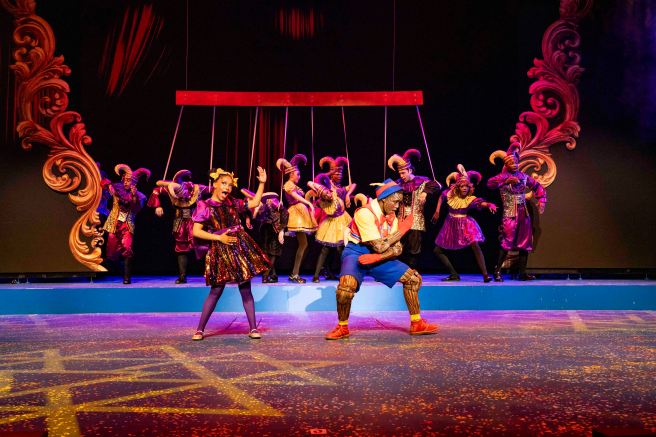
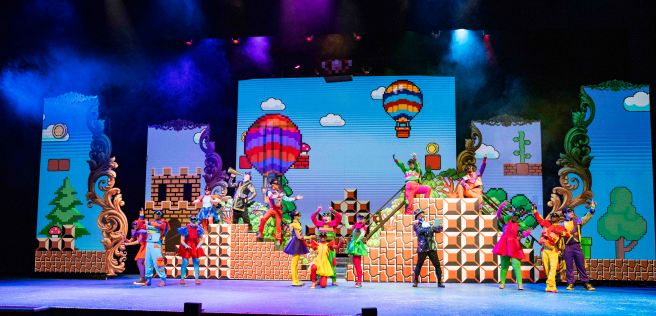
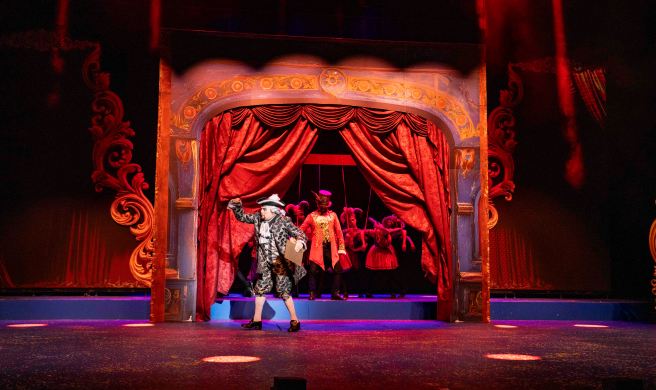
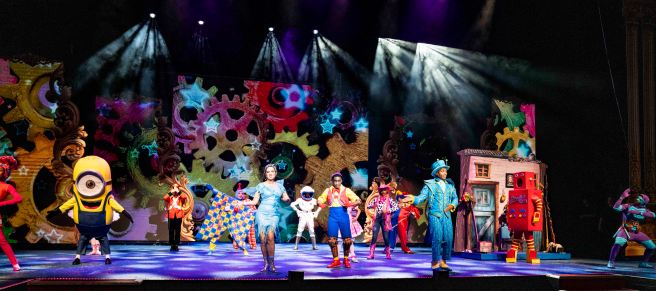
From the clever and uncluttered design which works in these smaller theatres to the choreography which flows and adds to the energy, everything is thought through and then executed to perfection. There’s just no leeway for things to go wrong.

Even when it comes to the look, it’s the way they have selected the costumes. Many were bought rather than freshly designed and, in this instance, a good choice not opting for the traditional dungerees the brothers more typically used to wear.

The only one that had me flummoxed was the narrator. Ramasimong’s blue jeans and shirt with the oddest jersey/jacket was an eyesore rather than using some imagination. Perhaps just a simple flowing robe would have had more impact. She plays a major role, is probably the one who has the most stage time and yet, she sticks out for the wrong reasons visually.

Fortunately she’s a marvelous performer and soars in her role as narrator. She has an unusual voice and a lovely stage presence. She knows this is where she belongs.

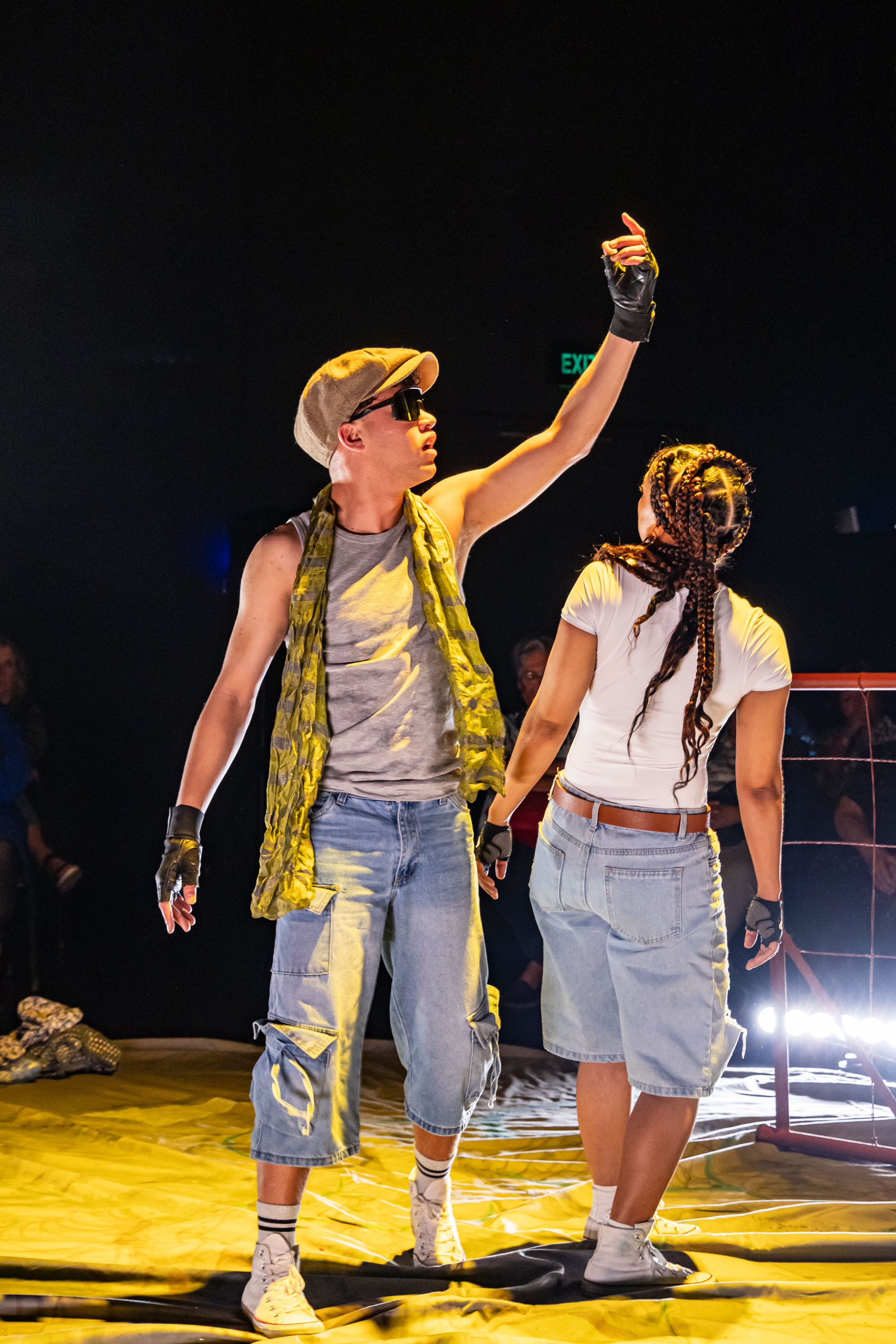
And so do the rest of the cast. One has to start with Janse van Rensburg’s Joseph, after all he is in the title role. It’s quite a responsibility on young shoulders in such an intimate large theatre. There’s nowhere to hide and if you don’t bring the goods as well as the charm, you’re in trouble. Janse Van Rensburg has already proved himself in challenging shows like Spring Awakening and he does it again here. He has a strong voice and a vulnerability that works in this part.

And someone who played his part in stealing some of the limelight is Jaftha, who had fun with his trio of roles as Jacob, Potiphar and in particular Pharaoh, the rocker who has a large moment in the musical which has rocketed other local actors (think Alvin Collison) to fame.

It’s a tricky role, but Jaftha has charisma and sass and was more than willing and able to step into any large shoes.

But as much as there are solo moments, it is a musical that involves the full cast because of the nature of the story – a bunch of brothers, for example – and then you have to balance that with the other roles.

If you’ve lived with a musical as long as I have with this one, it’s not easy to catch my attention. But I was stunned. I have seen a few musicals by this production team and I know they usually deliver. From the casting to the costume (bar one!) to the ensemble performances, the singing, the cast in full, it had a joyous feel about it in what can only be described as difficult times.

As well as the music, which was spirited into the new millenium as only Lingenfelder can do. “It was my third production of Joseph and I really didn’t want to do it,” he says. But when he was given the chance to pull the emphasis back to the story and to make sure everything worked for this time, he stepped on board. And it shows, with a score that’s as familiar as it is musically edgy. It’s something he achieves with astonishing regularity.

With the right people, that’s what entertainment can do in times of trouble. It offers respite and has you singing along with a bunch of brothers who hatch a plan to get rid of their father’s favourite son. An unlikely story but many decades ago a clever collaborating team started a much-envied partnership with this one as their first worldwide success.

And if you get it right, it still works. As it does in this latest version.

THERE’S NO WAY OF STOPPING THE CREATIVE NATANIËL, AN ARTIST CONSTANTLY ON THE MOVE

Nataniël is on the go – again – and it was time for DIANE DE BEER to pop in and find out more about upcoming shows, events and anything else happening in this prolific artist’s life:

What is keeping him up at night and awake at the crack of dawn is the work on his latest podcast series, which has become yet another of his performance features since his first series a while back. Kwessie van die Dag, his brand-new video column, starts on August 4 on Netwerk24.

As with anything he does, Nataniël approaches these latest podcasts with everything he’s got. “It’s as much work as a TV series,” he notes. And for this perfectionist, it is. He simply cannot do things haphazardly, with quality a constant taskmaster.

He is aware that everybody has turned to podcasts and his will be the best. This isn’t boasting because he is genius when it comes to storytelling. There’s no competing with this conversationalist.

It is all about the words which he has to learn by heart – 3 000 a week! They are his words, he has written each one, but then he has to get them tripping off the tongue. While it comes easily, he believes in scripts and knows exactly what he has to do and how he wants it to sound. So while there are many copycats, few can master him at his craft.

I often see pieces written by “Nataniël”, but it’s easy to spot when someone tries to capture his style because it is so unique. And this is where his podcast will pass with flying colours. “I don’t like waffling,” he says as he launches an attack on what he has labelled “electronic pollution”!

“There’s enough rubbish around.” He has an opinion which his followers will be familiar with, but he also loves facts when he is dealing in a specific subject. One of the many hurdles is the battle of language. He will be speaking in Afrikaans and to capture a language in this way is fraught with many pitfalls especially the way we mix our languages in our daily conversations.

It is clear that this is his latest challenge but also part of the excitement that charges his existence.

He is always busy creating and many of the things might seem as though they have a familiar pattern which, if you study them, they don’t. Into that mix, he is also constantly injecting new accomplishments which keep him on his toes.

“Everyone invites me to be a guest on their podcasts.” But for him there is a specific reason to engage with people in this fashion. “I want to address issues and for me it is about inspiration.”

BOEK • BYBEL • BIOSKOOP is the title of the show he is doing with organist Zorada Termmingh, a friend from varsity, together with his accompanist, pianist Charl du Plessis. Knowing something about his creative mind, he will be pulling all their respective talents together in a spectacular bouquet.

We’re in August and it is all about women. Composers, writers, singers, designers, as well as timeless characters from movies, classic literature, Biblical tales, art and theatre are their inspiration in this colourful show full of stories and songs. Zorada and Nataniël have performed on stage many times, starting during their student years. Charl has been his accompanist (apart from establishing his own career as a solo artist and performing with the Charl du Plessis Trio) for the past 25 years. And this is not the first outing for this trio of consummate performers.

It is a one-off in the capital city on August 13 at 7pm and the Ned Geref Universiteitsoord Kerk. The show is 90 minutes (more or less) long.

In September he returns to one of his most ambitious projects, Mass for the Good Princes (recently released on CD), which will be performed in the Cape for the first time thanks to the goodwill of the Atterbury Trust.

It’s a double whammy for Nataniël –  one of both joy and hysteria. This was one of those accomplishments he had dreamt of for a very long time. Writing it was an almost impossible feat with his kind of schedule, and with each performance he has to once again memorise the Latin text, which is a killer.

This will be the 3rd time that he attempts this daunting exercise and while it stretches even his seemingly limitless determination, he can’t resist it. It is based on the classical structure of a Latin church mass with a sacred composition by Nataniël in six parts which includes a prayer for goodness, new leadership and the hope of a new generation. It will be sung in English and Latin with descriptions and translations in Afrikaans.

It will be presented at the Ned Geref Welgemoed Church on Saturday September 20 at 5pm. He will be joined by the Charl du Plessis Trio (Charl with Werner Spies and Peter Auret) as well as organist Ockie Vermeulen, guitarist Luke van der Merwe and the Akustika Chamber Choir led by Christo Burger.

In March this year, Nataniël and Charl celebrated 25 years on stage together and they seal this with a Gala Concert at Aardklop – on October 7 (7pm) and October 8 (10 am) in the University of Potchefstroom Auditorium.

This won’t be an ordinary concert. These two artists haven’t only shared 25 years on stage and many kilometres of travel through the South African countryside for one-off shows, but this was also the start of Charl’s stage career, which has been quite stunning to witness from the start – one he has since established both nationally and internationally – a feat for someone who started out as a classical pianist (one of the most difficult careers to pursue) and accompanist. Today he has a doctorate and is celebrated as both a classical and jazz artist. I can’t wait to see these two face off on stage on equal footing. For those fortunate enough to see one of these concerts, I predict something unique.

Nataniël is already making promises that this won’t be a rundown of what they have already accomplished. They will be celebrating today and tomorrow. “Who are we now and how do we see the future” will be their aim.

“Why would we return to the past? That’s done and we have all been there.” And in typical Nataniël fashion he predicts: “I want to hear an intake of breath when I walk on stage!”

As he so astutely confirms, it will be 70 years of experience when the two of them mark their stage partnership.

While talking partnerships and friendships, one of his closest friends, actress/comedian Marion Holm, will be interviewing Nataniël on his latest book of short stories titled Sweetie. Book discussions aren’t his favourite, but if he has to do it, Marion would be his choice. “She can physically shut me up just by barking.” You’ll have to be there to understand exactly what that means. They go way back and to experience these two like-minded actors sparring verbally, you don’t want to miss that. They’re a scream individually, together it’s an exuberance.

Your ticket will be a copy of Sweetie which can either be bought before the time or at the Exclusive Pop-Up in the book tent. The first 200 people with a book in hand will be allowed into the space, which will be closed off for this event. You won’t be able to listen in on the sidelines. The Sweetie discussion is going to be that exclusive and is happening on October 8 at 3pm at Aardklop.

And it’s not over yet by a long stretch. A photographer who for more than two decades documented Nataniël’s career, Clinton Lubbe, who immigrated a few years back, is back in town for an exhibition of life-size Nataniël pictures titled Parade, another first for Aardklop. Their collaboration has also been running for more than two decades and Nataniël describes Clinton’s camera as a paintbrush, because of the way he creates pictures. They’re not simply pictures, they’re artworks, he notes. “I’m going to be the Naomi Campbell of Aardklop,” he says with a smile and a wink.

Finally, but just for the moment, there’s his latest production, Catch Me, Love, which will be staged at Artscape from November 13 to 16. He is already busy writing, which is unheard of. He usually works on his scripts much closer to his performance than a few months, but looking at his schedule, he knew he had to get ahead.

This one is going to be visually and structurally different to his former shows, he says. And although it is still early days, I know he has already dreamt and planned it in detail. It will only feature in Gauteng in the New Year because in-between there’s the promise of a French countryside holiday, his annual escape (when he can manage) to one of his favourite places, which is what motivates him these days.

Watch this space for fresh announcements or changes. They will be coming …

SAVIOUR OF DEMOCRACY OR DESTINED TO DISAPPOINT IN A COUNTRY RAVAGED BY WAR?

DIANE DE BEER

FROM LEFT TO RIGHT: Gontse Ntshegang as Grace, Craig Jackson as the psychiatrist and Farai Chigudu as the bodyguard with Themba Ndaba as Robert Mugabe.

PICTURES: Ngoma KaMphahlele

BREAKFAST WITH MUGABE by FRASER GRACE

DIRECTOR: Calvin Ratladi

PLAYWRIGHT: Fraser Grace

SET DESIGNER: Wilhelm Disbergen

COSTUME DESIGNER: Sheli Masondo

LIGHTING DESIGNER: Denis Hutchinson

CULTURAL DRAMATURGE: Professor Samuel Ravengai

MUSIC: Matthew Macfarlane

ACCENT COACH: Louise-Saint Claire

 CAST: Themba Ndaba as Mugabe, Gontse Ntshegang as Grace, Craig Jackson as Andrew Peric and Farai Chigudu as Gabriel

VENUE: Mannie Manim at the Market Theatre

DATES: until August 10

If you are intrigued by the title, this is a play you will want to see. With the name Robert Mugabe having special meaning in South Africa, neighbouring country to Zimbabwe, it was a packed buzzy audience in attendance, always a joy to behold in an industry that’s constantly in battle.

If you google the number of Zimbabweans living in South Africa, they are described as the largest group of foreign migrants in the country. “Some estimates suggest the number could be as high as 3 to 5 million.”  And it goes on to say that the influx is primarily due to economic hardship and instability in Zimbabwe.

South Africans will all have some opinion of what occurred in Zimbabwe. Mugabe is still an enigma to many because he started as a saviour in the new democracy in 1980 in a country which was ravaged by civil war. The education system alone can attest to that.

Yet, because of the ambiguities, political perspectives and where you come from will come into play when watching this fierce production. If you are expecting answers to the many questions you might have, what you get is a view of the complications of a system which so clearly exposes the cliché, “you cannot please all of the people all of the time”.

What you have is a deeply troubled man haunted by his actions as a political leader of a country that lay in ruins yet full of hope for a new dawn. The action is heightened from the start as Grace Mugabe (his second wife) has summoned a white psychologist to see her husband. What unfolds all happens in hushed tones, with people looking over their shoulders waiting for some kind of menace.

A man who was born to intimidate, Mugabe’s bodyguard, is hovering and watching in constant attendance. A jittery wife at first seems worried about her distressed husband, yet as she almost pounces on her guest, it is clear that she is much more concerned with her own wellbeing as Shopper of the Nation (which is clearly and most deliciously displayed in her glitzy attire) and wants to make sure her own position isn’t threatened. She is after all a secretary, who switched to sycophantic wife.

What happens next is like a thriller unspooling in almost Shakespearean fashion. Present are Robert Mugabe, his wife Grace, an English psychiatrist and the ever present bodyguard. The tone is set by an obviously agitated and deeply paranoid leader who, even though haunted by the past, is intent on dissembling reality.

The cast is astounding, from Ndaba’s resolved Mugabe and Jackson’s bewildered yet embattled psychiatrist to the staunch bodyguard portrayed by Chigudu and the glorious Ntshegang, who masterfully displays Grace’s Machiavellian traits as she plays everyone differently.

The writing is a masterpiece. First written at the turn of the century, its relevance seems heightened in today’s world where unfettered power is displayed and celebrated with such candour and even pride. But it’s the way playwright Fraser Grace tackles all the issues, explores the ruthlessness of the regime and manages to stand aside from the writing that makes this hair-raising yet compulsive viewing.

Perhaps it takes someone from such a distance, almost unattached, to tackle such momentous events with such a clearcut vision.  He writes vividly in the Guardian about his own experiences, and it is worth reading for further clarity. https://www.theguardian.com/stage/2025/jul/23/play-breakfast-with-mugabe-market-theatre-johannesburg-fraser-grace.

Well done to Greg Homann and The Market for staging this work and for the passion of director Calvin Ratladi, Standard Bank Young Artist for Theatre who held onto his dream of directing this play one day and grabbed the opportunity when he had the chance.

He knew exactly how and with whom it should be told.

FRIEDA VAN DEN HEEVER IS A BRILLIANT ARTIST WITH A MISSION WHO KNOWS HOW TO STAGE A MESMERISING SHOW

Frieda van den Heever is an artist who understands how to communicate and how best to express herself and show her world on stage. DIANE DE BEER shares some of the artistry of this amazing woman who will be performing in Pretoria for the first time this week

“What we love about music is not that it sounds good. What we love about music is that it sounds inevitable. It’s playing the thing that we all know is unfolding. Whether we want to accept it or not …”

Jon Batiste (American Symphony)

This is the quote artist Frieda van den Heever sent me when we started a conversation on email.

I became aware of her as a producer. She was mostly involved with poetry-driven productions, but what I noticed was the sensibility of what is a very tough stage production.

How do you get people to attend poetry productions at a festival where there is so much on the go? But she did and she knew how.

She describes herself as a novice who preaches, because she studied drama not theology. She explains that in Springbok, where she grew up, they called it people’s church when a normal person preached because the preacher couldn’t be there.

“I have been doing it for almost 14 years, and no one has ever asked for my credentials,” she says. Having encountered her on stage, I understand why.

She is part of InVia congregation in Cape Town and describes this community as a group of people who love music and people. Her father was a minister and while she spent most of her free hours as a child in his study rather than on her own, she never thought that she would either enter the church or become a musician like her mother. “I had spent enough time in churches with music in my ears for a lifetime,” was what she thought.

Still, when she read something impactful she always caught herself speaking rather than just reading that passage. She simply couldn’t escape and then there was a time when she didn’t want to any longer. It has always been a juggling game, because it wasn’t something she could practise fulltime. But she missed theatre.

She believes in the power of stories, fables, poetry and metaphors. “Both theology and theatre navigate a place beyond knowledge, something like mysticism, and tell stories that often hold warm truths rather than cold facts,” she explains.

The part of her work that she favours most is what she describes as “accompanying rituals”, including marriages, funerals, christenings and the like. She regards it as her calling to add to the honouring of these events. It’s not that she participates only in religious ceremonies; she is often involved when people aren’t particularly interested in a church but still have a need for some kind of ritual which they share with their loved ones.

She also presents talks and retreats for congregations or groups of people who approach her. These are creative workshops specifically for women, but she stresses, “it has nothing to do with pancakes, crochet and tea parties.”

She knows these certainly have a place, but for her it is about togetherness, breathing, chanting, laughing and crying.

That’s just the beginning of all her activities. She is also involved in yoga and the transformation that ensues and has a deep fascination with people and how they struggle and survive. And while she would have loved to study psychology, a lack of time made her opt for an intensive 14-month course in integral coaching which will be incorporated in her other work.

And still, she keeps going. Once a week, she travels to Stellenbosch, her alma mater, and teaches cabaret facilitating the practical execution and texts of the honours students in the US Drama Department . As a student of the legendary Marthinus Basson, she is delighted that she can pass on her experience to a younger generation.

There’s also her radio work which started on small scale, but her talents were quickly recognized. And she still benefits from her innovative moves during Covid which resulted in her producing programmes in the basement of her home.

That led to her producing most of her radio and television work in her home. It means that she doesn’t have to spend too much time away from her children and allows her to do much of that work early in the morning. “It all happens before the children and the cars have to wake,” she says.

I’m breathless and haven’t yet come to her performance, which is really what I want to promote.

On Wednesday at 7pm, Frieda will be performing at the Fairtree Atterbury Theatre in Lynnwood, Pretoria for the first time in a magnificent production, Spoorsny (tracking) .

“I really went into grief. I sensed that I had to go in if I wanted to come out. I don’t mean that I’m perfect now, but I’ve been through the perfect storm and that moulds one to find more light because I was mining the darkness. I can sense, I almost want to say I can smell light and when I sense it I look for it everywhere. The material for my debut album came from a show I did on what would have been the night of Leon’s (Kruger) 50th birthday. (He had died very suddenly in 2021) I saw the Woordfees was during that time and I didn’t know on which date I was going to perform and then when they sent me the date, I went for it to really celebrate him with this work and this script. I could have gone to sit somewhere in the quiet and the dark which isn’t wrong, I have done it. But for that night I wanted to share what was left of me, so that it could multiply and I’m grateful for that.”

Frieda van den Heever – Spoorsny: Frieda van den Heever – Spoorsny – Seatme

Her previous productions as director, Die Poet – Wie’s Hy?, Die Oerkluts Kwyt and Met Woorde Soos Kerse all shared a particular sensibility that made me aware of a rare director at work. She knows she didn’t have the technical experience, but her affinity with poetry and performance outweighed anything else. I didn’t notice any imperfections with any of those mind-blowing shows.

She works with love, a fine-tuned ear and excellent evalution. Also, part of the package was a childlike “unknowing”, an unwavering belief in the collective intelligence and the process, endless curiosity as well as an excellent production team and artists. Her motto was to always be present in the process. Whatever the requirements, it worked.

If you’re crying halt, there’s more. For 10 years she has been involved in a process with farm workers who boast magnificent voices. Each year she selects 10 of the best and offers them the opportunity to learn and to show off their talent. “I try to bring each individual something, give some of my experience, but I can’t teach them anything about singing. I have worked with voices that compare with the best in the world and it is a burning passion to create more platforms to showcase these voices.”

Her own musical talent, writing and composing songs and performing, has never been the only thing she wants to rely on to make a living. She wanted to be a free spirit when going on stage.

She is much more of a homebody than someone who wants to be out there but she also has a need to be challenged by the alchemy of a live performance. She obviously has a blueprint when she goes on stage, but she also reads the room and has the talent to shape her performance in different ways.

If she had a choice, she would write songs, play music, dance and jam with other voices and instruments all day long. “That feels like the best and most unvarnished version of myself,” she concedes.

To my mind, that is exactly who we watch and listen to during a performance of Spoorsny.

But let me give wordsmith Frieda van den Heever the last word: “The sudden death of my husband in 2021 and the impact of mortality and loss give perspective to everything I do and am. I am much more than a widow and single mom, but it gives context to my decisions and relationships, the spaces I find myself in and how I engage with people. The raw material which emerged in my debut album Skoonveld and formed the platform for the stage show Spoorsny as well as the anthology (published by NB) ‘n Asem Lank says everything about my search for meaning and light.”

MAGIC ON STAGE IN THE MOON LOOKS DELICIOUS FROM HERE

REVIEW BY DIANE DE BEER

Pictures: Hoek Swaratlhe

THE MOON LOOKS DELICIOUS FROM HERE

WRITTEN AND PERFORMED: Aldo Brincat

DIRECTOR: Sjaka September

VENUE: Market Theatre

DATES: July 27

DURATION: 70 minutes

In the programme notes online it says that this play is a masterclass in writing and performance – and that is exactly what it is. And the aspects that I found most intriguing as being a born South African, I have been dealing and watched others sharing their trauma in this country for many decades.

Some similarities especially in text will occur, but I am passionate about people creating theatre – especially solo theatre.

Having to travel from Pretoria for most of my theatre, I consider very carefully which plays I want to see whether good or bad, just work that will appeal to me. And this is where theatre sometimes becomes problematic. If you are going to see a play that is 70 minutes long, it becomes a money issue. It has to. Time and travel become a worry.

So I have started coming up with fresh solutions to make my choices easier. With this one, I had already booked for a new musical opening and I thought I could slip this short prodcution into the mix without any difficulty. I see many more plays on one day when attending a festival. And that is what I did and will do more of in the future when the problem rears its head.

Brincat, who is a first generation South African, is described in many different ways and with many accomplished skills from acting, juggling and magic artistry to fine art, chef, writing and producing one-man shows, it seems.

But this is my first encounter as far as I can tell with this versatile artist. As he’s based in Cape Town and visits the National Arts Festival, while I am based in Pretoria and cover the Afrikaans festivals around the country, his work is unfamiliar to me.

The Moon Looks Delicious from Here is a man’s struggle with identity and finding his own place in what should be his world but isn’t always that straightforward is what he shares and struggles with.

It is familiar territory stretching from the ‘60s tot ’94, but it’s always interesting to discoverhow other people deal with issues that come up for many of us in different ways. It is also fascinating to see how others approach their work, especially when at play, as solo shows  can be limiting, depending on the content and how familiar you are with the subject.

He had me from beginning to end; engaging with his audience wasn’t an issue for him even with a most unusual mix on a Sunday afternoon. Half of the 100-plus theatre audience (and I’m guessing numbers) were elderly white couples and the other half were young (between 20 and 35) Black men and women. And throughout there was laughter from different quarters. It was a journey of remembrance for oldies and probably one of illumination for youngsters.

It would have been fascinating to have an audience talk after the show in this instance. This is Brincat sticking his toe in the water and it feels good. Hopefully he will be back so that we can get to know more of his work and his content.

ANTJIE KROG, AN AUTHOR WHO SPEAKS HER MIND

When you have one writer in the family, I would imagine you feel blessed. Two? Perhaps not so much but someone who makes a meal of this is ANTJIE KROG who in her latest memoir writes about the relationship between her and her mother, the author Dot Serfontein. DIANE DE BEER started out reading the English version, followed that with the one in Krog’s home language and then listened to her talk about the book:

It’s a personal thing, I know, but if I can read a writer in her home language, I do. And again I was proved right with Antjie Krog’s latest offerings, Blood’s Inner Rhyme or the Afrikaans version Binnerym van die Bloed, which she describes as an autobiographical novel.

Because I write in English, I thought it might be easier to read that version, but after hearing her speak, I knew I had to get my hands on the Afrikaans book. It’s the way she Krog uses the Afrikaans language which enriches the reading.

If I didn’t have the option, I would have given the English a similar review, it’s simply that the Afrikaans introduces a different heartbeat.

Even in the best pairings, mothers and daughters have complicated relationships. When you are competing with one another even if that’s not the intention, which I’m sure it wasn’t, it’s going to be tough. Add to that two headstrong women who arguably stand on opposite sides of the political spectrum, expect fireworks – and that’s what you get.

Women all have mothers, that’s obvious, and some have their own daughters. All of us know the intricacies of that relationship – and that is when it isn’t public. Writing for an English newspaper, I wasn’t part of the Afrikaans writers’ circles and even I, not your natural gossip girl, heard rumours. And that’s where I admire Krog for doing this extraordinary book.

Antjie Krog, author extraordinaire.

Both of these women are celebrated writers who lived their lives in the spotlight. To then delve even more publicly into that life must have been an excruciating decision. And then to travel the country as one does to promote the book – what extraordinary courage. It reminds me that artists sometimes don’t have a choice, it has to come out. And usually it is the reader who benefits.

Thanks goodness Krog decided to write about this often fraught, sometimes fragile but also intense relationship. I can only guess that while sometimes devastating it must also have been therapeutic and the way to mourn and celebrate what she once had. Death has a way of shining a new light on something that was just too overwhelming to observe as it was happening.

For those of us ageing ourselves who have also shared a close relationship with a mother in her last years, it is especially meaningful. My eldest sister booked my parents into a retirement home which was on the way home from my work and I could pop in as often as possible without any inconvenience. I coped with the sometimes-daily trauma of witnessing this ageing process by communicating with a third sister who could only get the news via whatsapp or email. It was a lifesaver.

I could appreciate the daily diary of Krog’s mother’s most basic needs. That is in fact what happens when people age as we are forced to focus on the brutal minutiae of their lives. For example:

Night report:

20.00 Medication. Pt (patient) didn’t want to drink half a sleeping pill. Wanted a whole one

22.45 PT said her toes hurt. Applied Turlington + gave another half sleeping pill

00.30 Pt wanted another half sleeping pill. She was uncomfortable. She wanted to get up, I had to hold her by the sides. Pt wanted to make food. Pt was angry that the freezer had no meat.

These diaries were kept day and night – every day and night. It constantly reminds one of the process that is unfolding. As Krog tells it, focussing on her mother’s “excrement which happens daily is to own that which is being rejected, that which is such a part of her waning existence, her body’s extremities.” Krog who tells things exactly how they are explains: “There’s actually a very profound thing about shit,” she says as she captures the importance of change as life starts running out.

In full flow.

Yet there’s so much more happening around the family. It is an especially fraught time for farmers and for Dot Serfontein the family farm represents who she is. It was her inheritance. For Krog, even though she has similar bonds to the farm, she also knows and is burdened by the privilege it represents – something in this country that was often at the cost of someone else.

It is fascinating to read and witness the lives of different generations, especially in that time when everyone in the country knew things were going to change dramatically. She acknowledges that the relationship between mother and daughter is complex. In this family and between this mother and daughter perhaps even more than most.

While Krog is at pains to write about this sometimes combative relationship, it is also a celebration of Dot Serfontein, who she was and what she achieved with her writing. This is where and how Krog first discovered her words and both she and her readers have benefited.

There are so many stories captured in what can be described as a memoir. Having lived through the ageing process of my parents, that is what drew me to the writing. One learns so much about your own mortality, growing old gracefully and celebrating life whatever your age.

And thus her mother concludes only a couple of chapters into the book: “I keep all your letters,”  she writes to her daughter. “One day you can compile us in a plundered book like Audrey Blignault’s daughter. Initially I wondered whether the sudden revival of my oevre was thanks to you, but when I saw so many Dot Serfonteinisims in your work and some of our private family phantom(b)s, I thought we constitute each other.”

Having lived in each other’s shadow most of their lives, it couldn’t be any other way. That is what this astonishing writer captures so magnificently. Yes it is about a mother and daughter, but there is so much more. It’s insightful, entertaining, both sad and extremely funny, and even historical in many instances. But what captured my heart was Krog’s writing. She has a way with words that is unequaled.

THE BLACK CIRCUS OF THE REPUBLIC OF BANTU IS ORIGINAL, LIFE CHANGING AND A JOY TO BEHOLD

REVIEW BY DIANE DE BEER:

THE BLACK CIRCUS OF THE REPUBLIC OF BANTU

ARTIST: Albert Ibokwe Khoza

DIRECTOR: Princess Zinzi Mhlongo

DATES: June 26, 27, 28, 29

VENUE: Mannie Mannim Theatre at The Market

It’s explosive, it’s engaging, it plays with your mind (stretching it this way and that), it’s mesmerising, it sweeps your whole being along and most of all, it’s original and creative in a way that heightens all the senses. And then it shows you everything theatre can be.

Khoza is a presence not only with the theatricality of their costumes but especially with the way they move, speak, sing, chant and engage their audience from start to finish. There’s no time for your mind to wander or wonder, you’re simply in the moment as you participate in this experience that for most of us would be completely unique.

It’s ritual and rhythm, it’s engaging your whole being. This isn’t something you‘re watching, you’re participating on a level that is here and now. It’s theatre-in-the round with the performer, the one who is leading the way on this exploration of the past where human zoos and exhibitions in Western societies, our societies, turned people into curiosities to be paraded and exploited for the delight of white fetish. That is even difficult to write after seeing this play.

Especially for those of us on the oppressors’ side, while we gasp in horror at the stories, we know what our race has done to people because of the colour of their skin, have seen many plays and read many books about those times, yet, sadly it remains just that. It’s not as though your body can viscerally experience what that must have been like. It’s something that white people to this day never experience. They simply don’t have to navigate a world that plays by rules made for them … still.

How many times have you as a white body thought about how anything that you do on a specific day will be determined by the colour of your skin? Think of Trump’s world in today’s context for example. People are being rounded up and deported even with citizenship because of the way they look.

Khoza suggests that it is a history that is not spoken about and which they are determined to address so that those affected can reclaim, reflect and confront themselves as people. Because it is something that continues to this day, for them it is about the need for spiritual healing and reclaiming violated dignities.

The one thing all of us have felt in our lives is humiliation. For many it is an occasional thing that can be quickly discarded as you move on with your life. For others it is an institutionalized part of their life and there’s no escaping. The only requisite to fall prey to this is the colour of your skin. Everything in our lives to this day is determined by this. Think Black Lives Matter.

It is described as an installation-based performance and for me personally, it was as though my whole body had suddenly been awakened. I felt alerted to the way the world works. Was there anything said that I hadn’t heard before or didn’t know? How many times have I not experienced the Saartjie Baartman story, a woman torn from her family, stripped of her identity as a human being, taken from Africa to Europe and displayed for the Western world to view in a human zoo? We know and sympathise about the atrocities of the past. And again we wonder about those happening all around us, because they’re still there.

What The Black Circus does is change the perspective; it inhabits your body and soul in a way that takes you the the heart of the atrocities. For Khozait is a place of collective healing where the shackles are discarded, and a spiritual connection established.

It’s a difficult experience to write about because it is one to experience rather than to analyse. You want to enter the space knowing just the title.

At the beginning I felt as though I was sitting in a glorious painting. A story of some kind was going to unfold and as with most theatre, I was excited. What I got was so much more. It was unexpected, challenging in the way theatre should be, explosive in performance and presentation, and something that has changed my life. And that is what theatre should be.

I will be looking at and facing the world diffently.

THE GOOD WHITE IS THEATRE THAT TELLS IT LIKE IT IS, WHICH IS THE MIKE VAN GRAAN WAY

DIANE DE BEER reviews the latest Mike van Graan play

THE GOOD WHITE

DIRECTOR: Greg Homann

PLAYWRIGHT: Mike van Graan

CAST: Shonsani Masutha, Russel Savadier, Vusi Kunene and Renate Stuurman

SET DESIGNER: Patrick Curtis

LX DESIGNER: Themba Stewart

COSTUMES: Nadia Kruger

VENUE: Market Theatre

RUNNING TIME: Until June 1

Pictures: Ngoma Ka Mphahlele

Pair the title with the four characters on stage – Vusi Kunene (Black, pictured right), Russel Savadier (White), Renate Stuurman, (Coloured, pictured left) and Shonsani Masutha, (Black, centre front), — and, in the South African context, sparks will fly.

That is what Mike van Graan’s latest play leans into. He says in the programme notes that he hasn’t written anything but solo shows since 2018 and it feels as though this one has been bubbling under and then just exploded – in the best possible way. It’s an epic piece of writing which will have you gasping as he appeals to each one in the audience, whoever they are, to grapple with the issues – our inner core – of South Africa.

While Nelson Mandela did many things for this nation, coining the phrase Rainbow Nation was arguably not one of them. It is as though he constantly reminds us what we are not, but if you were part of the opening audience on what seemed to be a quiet Sunday afternoon in the theatre, you would have witnessed that we could be.

The perfect quartet: Vusi Kunene, Shonsani Masutha, Russel Savadier and Renate Stuurman.

The audience pretty much reflected the mixed bunch we are and from the deadly silence following the first poem of strength recited by the astonishing Masutha to the immediate participation during the rest of the play, it was as though there was another solo performer on that stage – the audience.

It captured the heartfelt emotions Van Graan has always been able to harness as he tackles the South African nation. And no one does gloves-off like this playwright. Setting the play in academia, he has chosen his boxing ring and then selected his characters to represent every foible in the human race, it felt like. And then he lets them rip.

As always, he doesn’t hold back, everyone and each weakness is held up for scrutiny and the constant audience gasping and finger clicks told you how he hit the mark throughout the play.

Through the years Van Graan has been honing his very own way of dealing with what he views as our fatal flaws and this time it feels as though he has unleashed it all in glorious colour. 

It might sound like something you don’t want to hear or see but, because South Africans will all relate to everything, it’s like witnessing the full South African story from Once Upon A Time …Prejudices in all their pitiful hostility, power plays, colour bashing, gender gore, poor vs privilege and the list is endless. He plays all those cards to their fullest.

Those who know his work, also know that he can write and he has never been scared to speak his mind. He does it to the Department of Arts and Culture and he does it on stage. When he has a platform, he steps up and tells it like it is and believe me, he is one of the few who speaks his mind unabashedly whenever he can.

He has been maligned to the high heavens, but nothing has stopped him. And finally, to my mind, here is his magnus opus and it is flawless and delicious to witness. And when (not if) you go and see it, I hope you have the same audience we had; it added to the fun and spectacle of the drama.

Add the director and the cast to complete the perfect coming together. Homann allowed the Van Graan words to do the work, which was the best thing to do. It should be unfettered because you really have to engage and listen to get the full extent, which here you do.

The cast delivers magnificently. I didn’t know Masutha’s work but she made sure I would never forget her. What a performance! From start to finish she’s there with all her energy and might and that’s what her volatile character needs. Stuurman is an old favourite and to my mind, this is her best performance yet. Savadier and Kunene also fit the bill and, as seasoned actors, they never put a foot wrong.

It’s a play I will try to see again towards the end of the run, because there’s just too much to take in at one sitting. It’s something — even though it doesn’t sound like it — that gives hope. If, as Van Graan suggests, this is exactly who we are, at some stage togetherness will take hold. As for now, we are still that dysfunctional family who needs a stern word to set us on the right path – and this is it.

We want more Mike please!

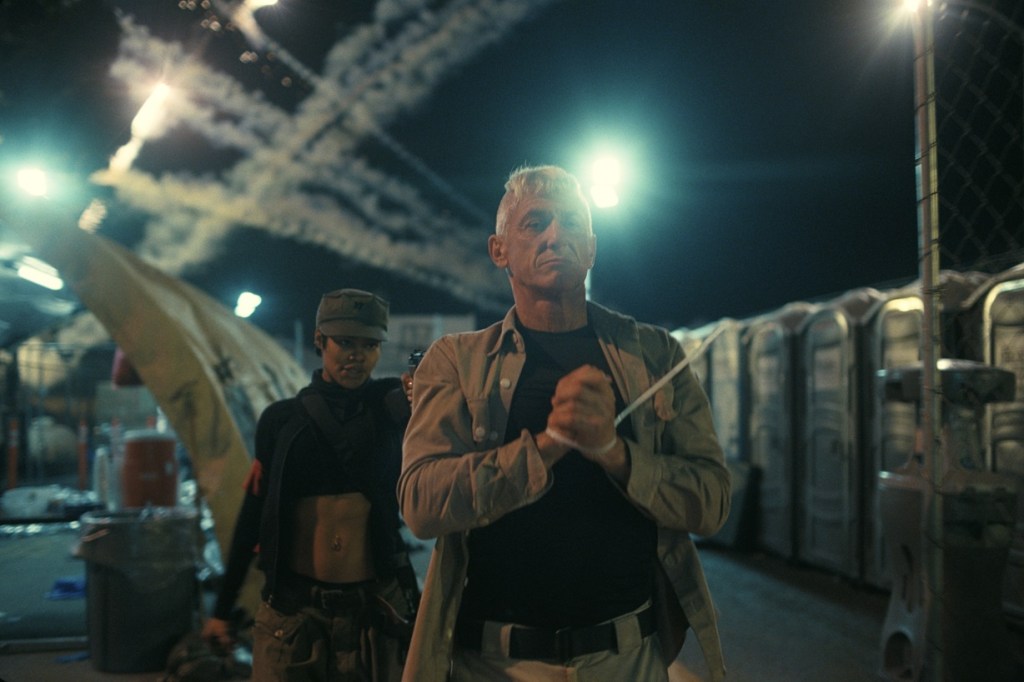
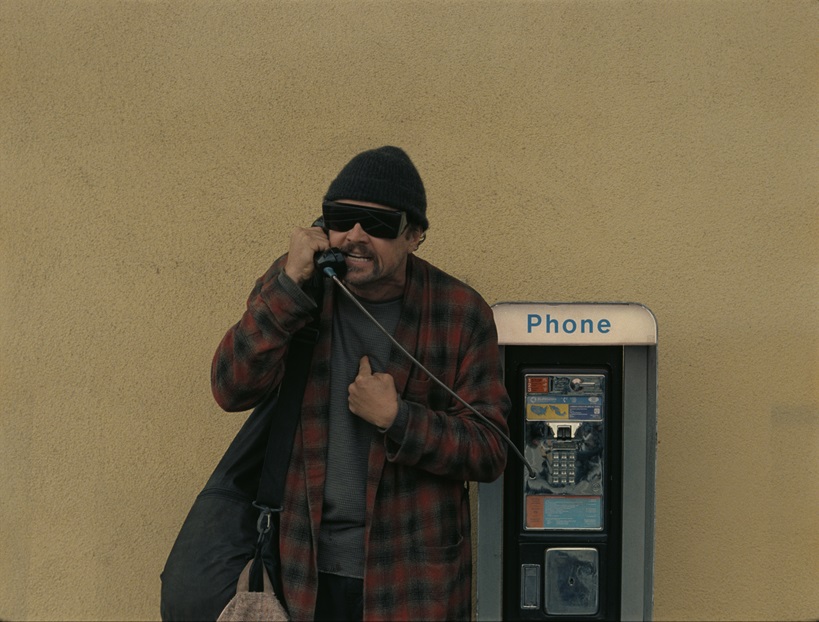
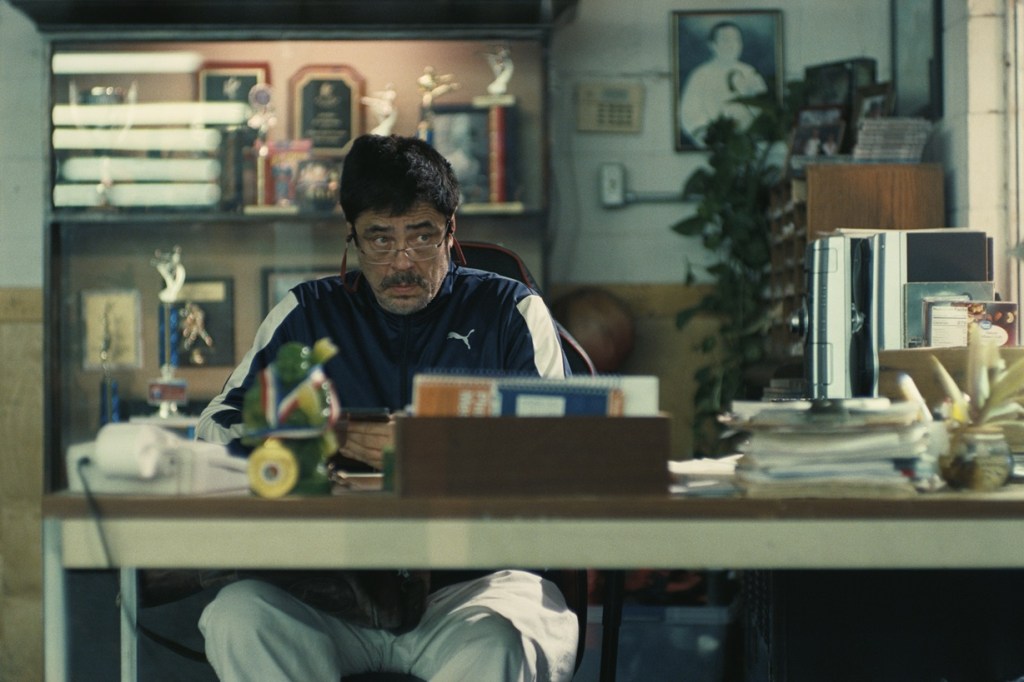
DON’T SINN AGAINST YOUR BETTER SENSES TO SEE THE LATEST RYAN COOGLER EXTRAVAGANZA ON OUR SCREENS

The latest Ryan Coogler movie Sinners is an off-the-charts invigorating experience.DIANE DE BEER speaks her mind:

Currently showing at Ster-Kinekor

Michael B Jordan and Miles Canton face their fears in Sinners

SINNERS

DIRECTOR: Ryan Coogler

CAST: Michael B Jordan, Delroy Lindo, Wunmi Mosaku, Hailee Steinfeld, Lu Jun Li, Yao, Omar Benson Miller

If you are familiar with the movies Fruitvale Station, Creed and Black Panther, you will also know the director as well as the star of Sinners. Apart from the fact that Coogler knows how to go big, work with issues and pick a star cast, everything else will be new.

Horror and vampires aren’t exactly my favourite genres, in fact, I avoid them, but here Coogler’s name was just too much of a draw. That and the fact that much of what he seemed to be aiming at in this film comes across like the themes in one of my favourite movies, Get Out.

Too many people like steering clear of issue-driven movies, but in our world where the divide is still so big in so many areas, as an older white film fanatic, I want to hear what the dynamic young black voices have to say; which stories they want to tell and also, how do they get those stories across.

That was what I was looking forward to in this one. The cast is huge and the actors are quite something. Coogler has worked with Jordan in most of his films and here he literally doubles up as the twin brothers Smoke and Stack (yip, that’s what they’re called). They’re equally dandily dressed, but their clothes, although similar, have distinctive features, and the one’s behaviour is more out there than the other’s. Fortunately, technology can pretty much perfectly deliver anything directors want these days.

Michael B Jordan and his friends stand together.

The rest of the cast are as cleverly picked and especially the two women, a stunningly statuesque Mosaku and the smouldering Steinfield, will knock your socks off with their performances. And if you don’t know the names, you will recognize them and after this movie, you will certainly also remember the names.

But everyone in the film impresses. The look and the style will grip you from start to finish and then you can add the music, which for me truly dominated in the best sense of the word. It is quite simply brilliant – both from the black brethren as well as the white trash.

The first are seriously into the blues and the latter have a more gentle, contained country folk sound. You will be rocking in your chair and the cast are seemingly given free rein to make those moves rhythmically magical. It’s one party you don’t want to miss.

The first half of the film is pretty much about the two brothers returning from Chicago where they have collected rolls and rolls of cash and boxes of Irish beer (courtesy Al Capone circa 1930) and returning to the Mississippi Delta (which already spells trouble), where they establish a juke joint in a rundown mill belonging to a supremacist landlord, who is only interested in the lucre and not the colour of their skin when he rents them the place … or so he says.

Then the hard labour begins as everybody gets ready to get the place rocking. As the night hovers on the horizon, when the sun sets the trouble begins.

Michael B Jordan and director Ryan Coogler discussing the scene about to be shot.

This is where it became a bit too much, as the seriously partying crowd are stopped in their tracks by a family of vampires who threaten to deliver them all into a permanent state of wandering.

And yet, those are all just the package in which this film is wrapped. What Coogler is really playing with is the grand divide which has been ongoing for millennia. Every time I questioned the rage and the explosive catastrophe that turns a festive night into a slaughter madness, I was reminded of the damage inflicted by their relentless savage treatment.

As always, critics differ, but here the critical thinking swings viciously from one end of the spectrum to the other – and I found myself on both sides in certain instances.

The originality was the standout feature for me. The epic extremes the director decided to launch when he truly wanted to make his point felt like the result of dealing with an unexplained hatred which has been raging for ages. And if you had to be on the receiving end of such constant humiliation, hardship and absence of humanity which have run through generations of your brothers and sisters, perhaps the results have to be of volcanic proportions.

I was wondering how many of especially the older generation would stomach this particular version but, for me, it is the weight of the story, the magnificence of the performances of especially the two female leads, the sublime singing, musicmaking and acting  by the young Miles Canton, the doubling up of the Jordan performances, or just to witness the making of the movie in this single instance, and the list goes on.

It didn’t all work for me, but as usual Coogan is epic in his filmmaking approach. Brace yourself, participate in the ride. Already the staff at Brooklyn Ster-Kinekor is saying it has been their busiest show yet. And techy podcaster Kara Swisher is celebrating the fact that Coogan negotiated good money on worldwide ticket sales as well as owning the intellectual property after a few years, something almost unheard of in Hollywood. Don’t miss the changing of the guard. It’s going to be one helluva wave – and perhaps just

FOR MARGARET NEL, MEMORIES ARE MADE OF THIS

The brightly-coloured paintings in the latest exhibition by Pretorian artist MARGARET NEL will take viewers down memory lane as she showcases subjects that seem to reflect a different time. There is however much more to this than meets the eye she tells DIANE DE BEER

Margaret Nel on the journey of a painting: – “This work, titled Corner seat  was completed in 1976 and was sold to Mrs Dora Scott when it was exhibited in Bloemfontein. Dora Scott and her husband were very involved in the arts in the Free State and her son Fred Scott is a founding partner of Walker Scott Art Advisory. When Dora Scott died, some of her large collection of art works, including this one, were put on auction and it was  bought by the collector, art dealer  \and erstwhile gallery owner Warren Siebrits. I bumped into him at an art fair and he invited me to see the painting at his house.  I  asked him to let me know if he wanted to sell the work  at some stage and he later contacted me to say it was for sale. It  is a good example of my figurative work painted during the 1970’s. I have very few paintings from this period in my possession and I was very glad to be able to buy it to add to my personal collection. It is about 50 years old and quite frail.

Before starting to write this story, I quickly glanced through an interview I had done a few years back with one of my favourite artists, Margaret Nel, when she held a major retrospective at the Pretoria Art Museum in conjunction with the Association of Arts Pretoria where her latest exhibition titled Aftermath opens on Saturday  May 10 running until the end of the month.

As she says so clearly in her Artist Statement, the theme that dominates her work from her earliest days hasn’t changed. It has always been about loss. She believes we have all witnessed and experienced loss in some form during our lives. “The debilitating effects of age and consequent loss of power and a voice and sense of self are perhaps the ultimate cruel and unexpected loss that all of humanity has to encounter eventually.”

Yet while her driving force hasn’t changed for this exhibition, her subject matter has. She has turned to objects rather than her usual figurative work, which has become more and more difficult to apply. “It’s easier to work with a theme and a new way of exploring the things I want to say,” she explains.

Allsorts 1

It is also a tough ask to find models willing to take the time, she says.

When listening to her talk about life and the harshness of loss, which the word almost unconsciously implies, I was surprised at my immediate reaction to her current work.

She is dealing mostly in things from her past, which means that many of us would find them familiar too: shiny pinwheels, old fashioned pincushions, Liquorice Allsorts, sweets in shiny wrappers in different stages of unwrapping or even the unfolded, now empty wrapper without the sweet, tinfoil containers, mechanical birds, wrapped flowers, colourful whistles, enamel bowls and a rather disconsolate plastic doll.

And even though I concede there is a certain melancholy, it also brings me great joy in a nostalgic kind of way. And who would not be tempted by her bright sunshine colours?

As important as the paintings themselves are, the names she gives each work also play a huge role and will point many in a certain direction. The enamel bowls for instance are titled Begging Bowls (see below). The name alone will encourage viewers to uncover their own stories. Alert is how she identifies the whistles, and it is as though you can immediately hear that shrill sound or visualize a school sports event.

All these objects were carefully selected by Margaret, who understands and is happy if everyone viewing the paintings gives them a different meaning. It’s not something she wishes to impose and if the work is simply seen as pretty pictures, which they certainly also are, she is fine with that.

For her, the objects in the individual works all play with the meanings of loss. And there certainly is a feeling of melancholy when you look at the exquisitely rendered paintings. Personally, it takes me back to childhood. I have always had a fascination with pinwheels, which because of their colours as well as their joyous twirling when the wind blows, have always held that hint of magic.

As someone who sews, I was immediately enchanted by the pincushions, the like of which I had never seen before, but Margaret explains : “I am not sure if the Chinese pincushions are made any more. Mine are antique and probably about 80 years old, the material is silk and the stuffing is some sort of organic material like grass. We regularly holidayed in  Lourenco Marques (now Maputo), when I was a child and the pincushions were bought at small Chinese curio shops. Nothing similar was available in post war South Africa.

Curio 111

In her world, when it comes to her peers, she says she feels like the last man standing, which also explains why loss at present conjures up such heartfelt emotions. There’s no one around who witnessed her childhood or even young adulthood, she says, and expresses envy as an only child for those of us who have siblings. There’s no one who can hold on with her and share her memories.

Talking about the process of painting, she declares that she often feels quite high when a painting is completed.She also does all her framing and with these paintings has changed from aluminium frames to wood which she can also paint and feels adds to the painting. She’s also in the habit of reworking old paintings and precisely that compulsion will be the subject of her next exhibition.

She will be looking at old work, all locked away in a storeroom, figurative work, which will be reworked.

Alert.

“I’m full of self-doubt,” she notes, and one can understand why. Her work is usually done in isolation with no one to encourage or discuss issues or share her thoughts about the work. Yet her beautiful home, the iconic round house close to the Union Buildings, is an interior masterpiece and glorious example of how exquisitely she curates her own life.

The house has been furnished magnificently to capture a very specific mood with, at the time of my visit, her exhibition paintings displayed on all the walls throughout the house. Because of the prolific windows, the backdrop is the sunny highveld skies while the furniture has an industrial feel with added warmth due to her cunning colour choices.

It is a pity that in today’s often hostile world, she has decided against a home exhibition because this is where Margaret so obviously feels at ease. And for the visitor it is an exciting extension of her creativity.

She knows she has to take her whole body of work into consideration, yet she’s constantly worrying about certain decisions and whether she has got it right. But still, she welcomes and encourages criticism and is sad that art criticism has all but vanished. She talks about very harsh criticism she received at a previous showing and feels that the writer opened new avenues for her. They probably simply confirmed something that had worried her and that set her off in a new direction.

Doll.

“I can’t promote myself,” she says and, because she is quite solitary, she finds it hard to put herself out there. Yet she is keen to have proper conversations about her art. “How else would I learn?” she wants to know.
What she believes though is that her experiences of life captured so stunningly in this body of work would be familiar to viewers. “Life is just full of loss,” she laments – and she’s right, yet there’s so much more captured in this magnificent display of her latest exhibition.

The exhibition will be complemented by a selection of ceramic vessels by Dale Lambert. Her delicate, decorative stoneware is characterised by minimal, bold forms and vibrant, primary colours.  The artist states: “My obsessive fascination with clay goes back to my early childhood and remains to this day.  I currently enjoy the thrill of working with porcelain, and the translucent pieces I create are an expression of my being.”

*Visit the exhibition between May 10 and 31.

Association of Arts Pretoria

173 Mackie Street

Tel:  012 346 3100 | artspta@mweb.co.za | www.artspta.co.za

Nieuw Muckleneuk, Pretoria