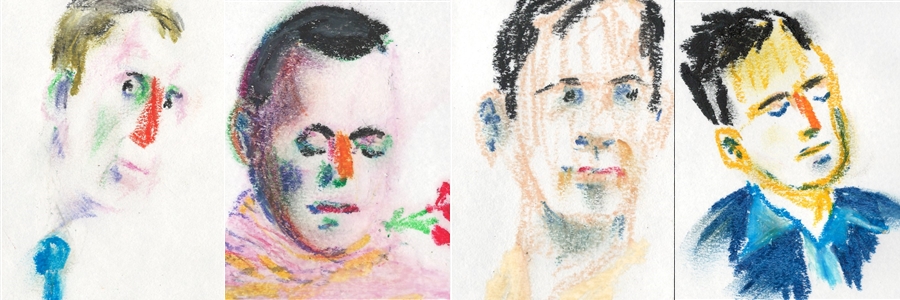
It’s almost like experiencing a command performance when speaking to Nataniël about his momentous week at the beginning of October. DIANE DE BEER explains:
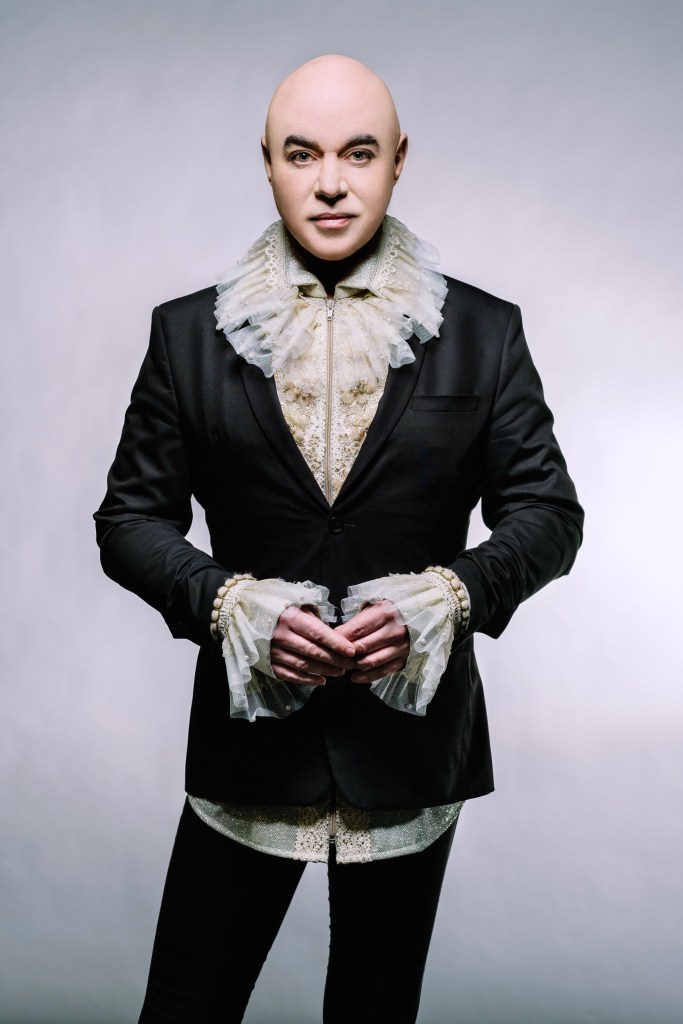
Being who he is with all his talents on display, it’s a busy time, even though Nataniël complains that none of his hard work is paying dividends at the moment. But we know it will. If there’s one thing he knows how to do without thinking about it, it’s being creative.
Hardly a thought crosses this uber-active mind without its generating some future event. Most people would collapse just listening…
It starts with two concerts which conclude the Aardklop Opwipfees as part of the Aubade series at Afrikaans Hoër Seunskool on October 3 at 11am and 3pm with Nataniël as the narrator and and Charl du Plessis and Megan-Geoffrey Prins (both on piano) with a chamber orchestra for Karanaval van die Diere (Saint-Saëns) and Pieter en die Wolf (Prokofiev).
Both of the texts have been rewritten by Nataniël (in Afrikaans, one translated from a previous English text also written by the artist) and he underlines that while these were originally created with children in mind, neither he, his texts nor his clothes will appeal to children in any form. “No one under 15 should even consider attending,” he warns.
He also points out that while he isn’t allowed to interfere with the music, he will. “It is deceptively difficult and I’m sure I will have something to say at rehearsal!”
People should book because tickets are limited to 250 – and you don’t want to miss this one!
“And” says Nataniël, “if you’re an adult and you’re not fond of the classics, there are always rusks.”
Or, perhaps you might want to pop in just to see how he solved the problem of reading the text on stage. “No one knows about my reading glasses and I’m not going to buck that trend,” he says.
Bookings at ticketpros.co.za.
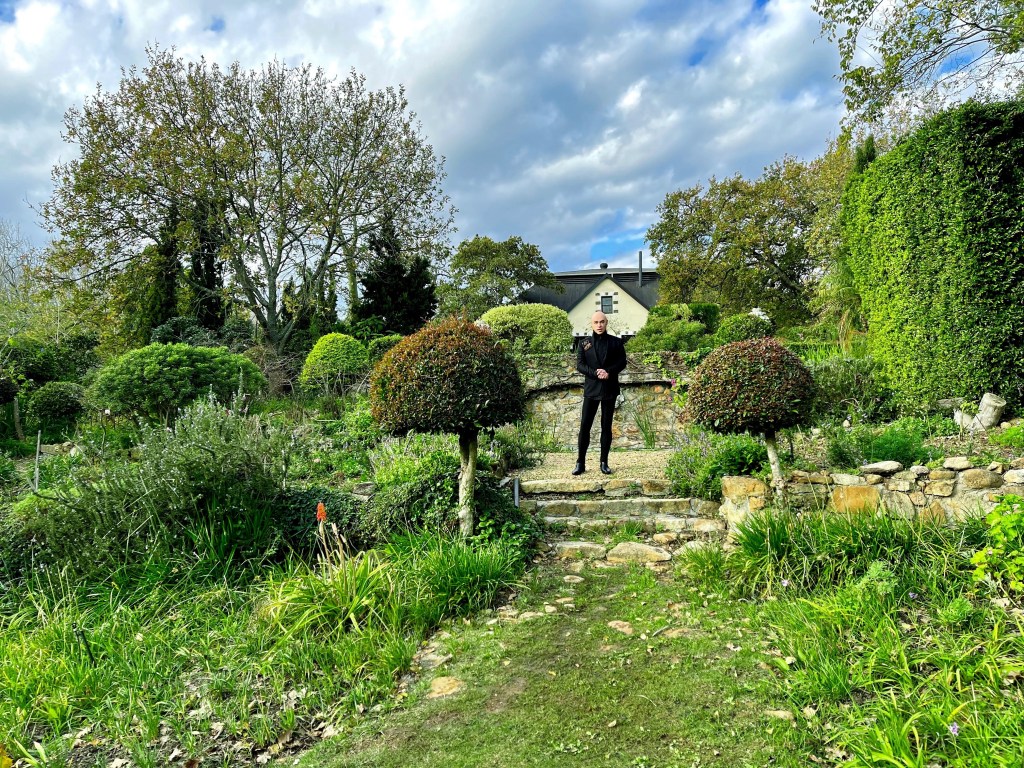
The following day is the launch of his latest television series Terwyl Ek Wag, which for him is the logical follow-up to his Nantes series in which he travelled to this historical university and cultural city to investigate and explore his roots.
This time he plays inventively and imaginatively, as he does, with the arrival of the Huguenots. The stage is set on the original farm of one of the four Le Roux families (from Normandy and not his own). It is a place he discovered many moons ago and at the time wished he could do something there. Now’s the time.
“It’s a farm that looks like a farm, not a shopping mall,” he says pointedly, referring to the over-developed wine farms he loves to hate.
What they do in the series is to explore the skills of the time, like soap-making but also appreciate the artistic tendencies of the current family who returned to their ancestral farm some time ago. “They’ve tried to respect the past and, for example, maintained and restored some of the old buildings and pursue things like gardening,” he says. You might even find fairies if you look carefully.
And for Nataniël there is something about starting a second life. “If I had to do that now, I want a bed, a gas flame and table for cooking, and an art gallery,” he says. He rejects all the frippery and trappings in this new life and names it antique minimalism.
Focussing on the food for the series, he hoped to create dishes that look as though they had their origins in a painting. “I like food that appears to be quite rough and ready.” Anything from the garden with lots of flour and which resembles pictures from children’s books, appeals to him.
It’s not historically researched as such, but what he made had to come from an old-fashioned farm – that’s the feel. The crew (of which his sister Madri was a part) ate everything he made.
As always, he emphasizes that he isn’t a chef. “I have zero technique,” he says, but lots of inspiration from chefs like Topsi Venter and Rachel Botes. (The recipes will appear on his blog in English after the broadcast of each programme.)
The series, which is broadcast on kykNET (144), is 13 episodes long and they also have an astonishing documentary, which will be screened at the end of the year about the making of the soundtrack.
In past seasons he could find appropriate music for his French series but this time he decided to compose everything himself – and this is what the documentary spotlights. “The music is as dramatic as the series,” says the drama genius.
“Everything in my series is curated,” he says and anyone who has seen this producer at work knows that what he says is what he means – EVERYTHING. And you can see that from the costumes to the cuisine.
We’re speaking French Huguenots; think collars and creativity. Fashion looms large, from the signature opening scenes to the final curtain.
And for those who are waiting for his annual stage show, even with the harshest of Covid restrictions, he is determined to step on stage with all the pomp and splendour his audiences love. “I don’t care how many see this one.”
One gets the feeling, indulgent or not, this one is for him. And if he is the audience, I want to be there – even if he feels that as actors they have been denied audiences – stupidly. “Our audiences are intelligent, don’t scream or chat, they’re silent, socially distanced as required and masked.” But to make a living, 50-strong audiences didn’t even cover the costs. Fortunately this has changed to 250, hopefully in time.
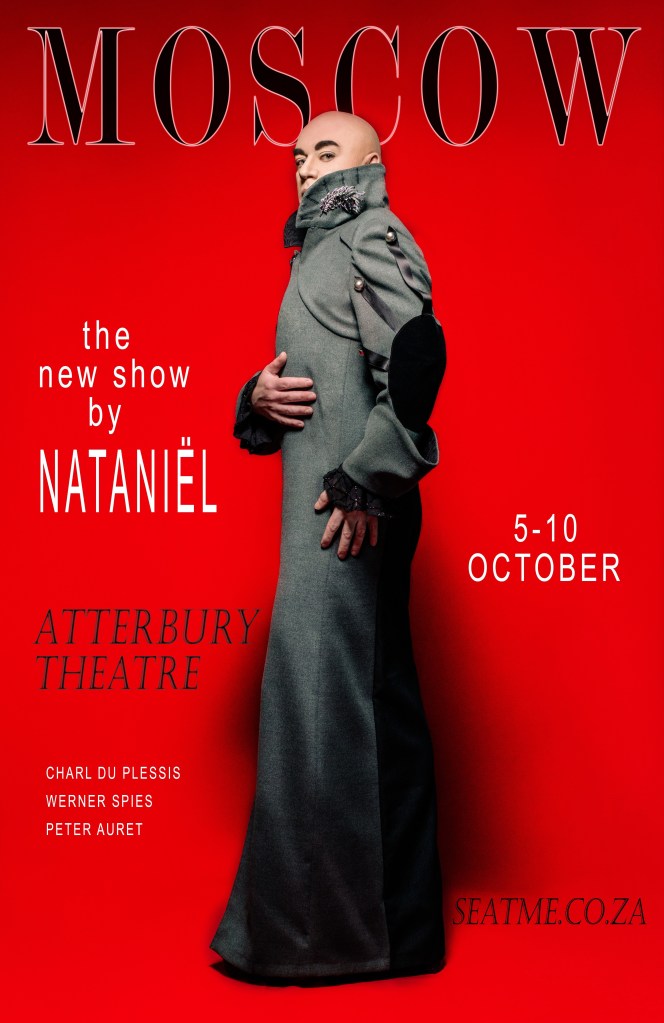
Titled Moscow and, luckily for Pretoria, staged at the Atterbury Theatre from October 5 to 10, the show will feature full costumes, full band and full lighting. But more than anything as always, it will be about the content and the chanson.
He feels this isn’t a time of laughter and frivolity but rather an exploration of chaos and order, insight and inspiration and, of course, a celebration of the most beautiful month of the year ̶ October.
But even in his most philosophical mood, this storyteller is someone who views the world in a way that few can match ̶ and whether he tries to make you laugh or even when it’s not that funny, the way he describes even a disaster will have you in stitches.
And there’s the music, original compositions and selections from old songbooks with the music of Dusty Springfield and the Mills Brothers, for example.
And even if you don’t like dramatic music or costumes … “there will be rusks”. That’s a promise.
Bookings at www.seatme.co.za

Also on display, before and after the show, will be the collection of his unpublished Kaalkop columns, 107 Kaalkoppe, which he advises you to buy and read, one story a day. “There’s a specific rhythm involved in a book like this. Like a column, you shouldn’t read three or four at a time! Savour each one and do one a day ̶ or even a week.”
He promises loads of fun and bookends the collection with an introductory and concluding story. And for those who want to hear him chat about his Kaalkop journey, he will be part of the Woordfees festivities on Channel 150 (DStv) from 1 to 7 October (see details on website later). Or check it out at Woordfees link, supplied below.
What more could you possibly want.
Possibly rusks?

















 De Beer Necessities