Make Time for the Lives of Others: It Alternatively Shakes and Makes the World a Better Place for Everyone

capernaum-nadine-labaki-movie
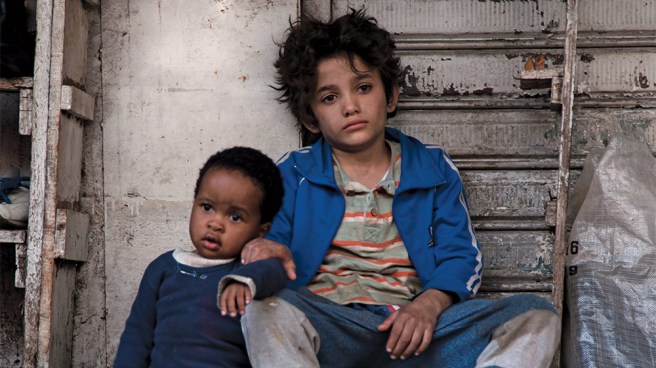
A heartbreaking scene from Capernaum

When filmmakers take issues of the day and shine a glaring light on them – smartly – it can shake your world in the best possible sense. DIANE DE BEER highlights two of the best:

Living in South Africa, we all know what it means to read about something and the horror of living it. For too long we lived in a country where it was a matter of law to keep things separate and in the dark. Evil needs to be shouted from the mountain tops.

Two films (one currently on circuit) currently making the rounds in cinemas and available out there to stream, tell stories that are as close to living it as is possible on screen.
nadine-capernaum
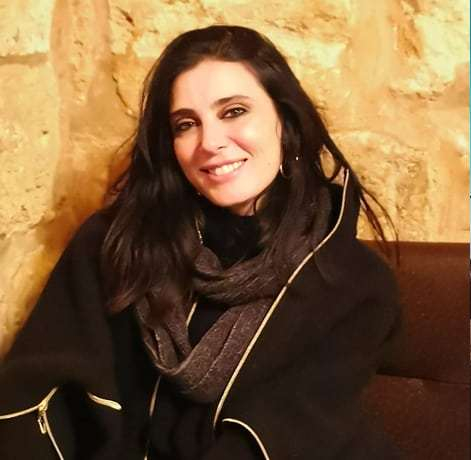
Nadine Labaki, the writer,director and actor.

The first is Capernaum, a film by Nadine Labaki, a Lebanese filmmaker whose previous two movies (Caramel, Where Do We Go Now?) were screened locally with this one, Oscar nominated, currently on circuit.

She truly believes in the power of cinema and her latest, Capernaum, which in this context means chaos, deals with refugees, people who are stateless and as she says, “become invisible.”

The story she picked to tell was specifically that of the children trapped in these lives.  “We’re talking about children not receiving their fundamental rights,” is how she describes it in an interview.

With a script in hand, she started to look for the actors and smartly turned to the very people whose stories she wanted to tell. And then she listened to their lives and adapted her screenplay to reflect their reality.
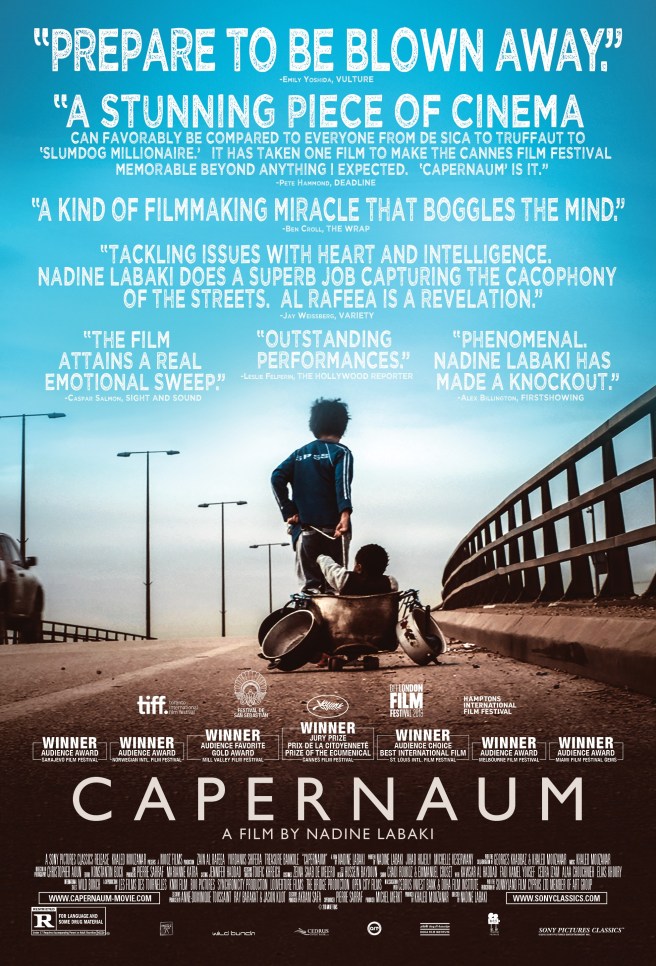
Capernaum Poster

Most important in this equation is Syrian refugee child actor Zain Al Rafeea as Zain El Hajj, a 12-year- old living in the slums of Beirut. In yet another interview the director explained that in real life he is that age, but because of their lives, the children are all smaller because of malnutrition. (He and his family have since moved to Sweden where he is going to school for the first time.)

It’s a world of pain but those living there are simply trying to survive. When landing up in prison simply because he’s fighting for others in his life, a 12-year-old boy sues his parents for neglect. “Being born,” is how he says it.

If you want to see what survival looks like, this is it. It is done with compassion but without shying away from the harsh realities that many people – in this instance children – find themselves in. The number of refugees in the world at this specific time is horrifying with many countries and world leaders fighting to keep them from safety – that is, their countries.

The film reflects the lives of the children who had to flee Syria, Yemen, Afghanistan, Iraq, Venezuela, Honduras, and the list goes on and keeps expanding daily.

“I need proof you’re a human being?” A sentence that might not be familiar to any of us, but in this world you need papers to say who you are and where you belong. Without them, as the director says, you become invisible.

And when one child is left caring for another because the mother has gone missing, your heart breaks. Even towards the young in that harshest of worlds, having nothing isn’t enough to change anything. Survival means exactly that, a drop of water, a crust of bread and no one to turn to because everyone is hustling – some more cunningly than others.

The ingenuity of children who have to look after themselves is astonishing. A car-wash, for example, will clean both bodies and clothes. When feeding a baby ice because there’s nothing else, he says: “Seriously, isn’t this better than a shawarma  sandwich?” And your heart shatters as it should because we all need to understand the lives of others.

And the parents? Can you judge them? Have you walked in their shoes? They believe that more children is their way out.

But when one child dies, another is born and the young son tells his mother, “My heart aches”.

This 12-year-old is tired of those who can’t care for their children. “That kid in your belly will be just like me,” he tells his mother.
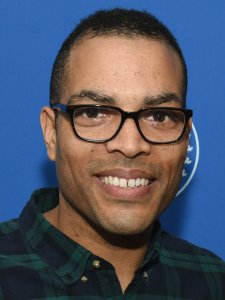
Indiewire, Canada Goose and YouTube Dinner, Sundance Film Festival, Park City, USA - 21 Jan 2018
Reinaldo Marcus Green, director of Monsters and Men

In a similar vein, Monsters and Men deals with the scourge of African American men dying at the hands of police, publicly and visibly, yet nothing happens to change the situation. We from afar watch in horror.

But here are some answers as the movie follows the rise of tensions in the neighbourhood and how it affects the bystanders, one of whom filmed the scene as it unfolds – something that often happens.

It is the dilemma of the innocent, how to react and what to do. How to be a man when you’re living among monsters. That’s the story director Reinaldo Marcus Green tells with such honesty and clarity. There’s no way you don’t get this one.

When a black policeman asks his white female colleague how often she has been stopped that year, her response is that she drives too well not understanding the nuanced question. “I have been stopped six times,” he says, “and it’s only June.” That sentence captures his life and that of every black man living in America (and of course elsewhere). Skin has always mattered, no matter where you live – even in Africa.

But how does he go about his life and building a career when his chosen calling is policing in a force where he is regarded as the monster. To share his insights on the officer who was fast to draw his gun, means the end of his career, his livelihood and his “normal” family life that we all expect when we live in a certain way. But not here.
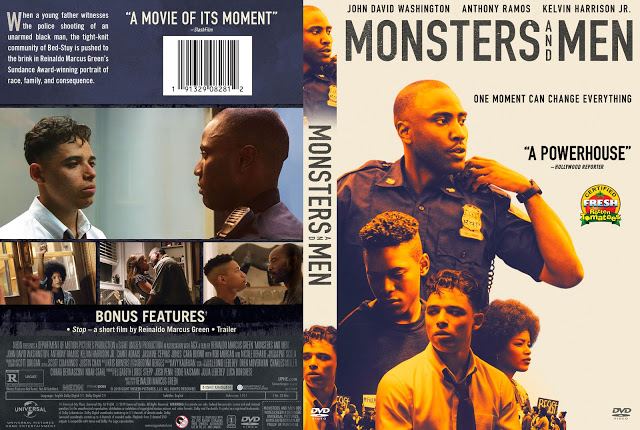
Monsters And Men DVD Cover

The young man who captures the event on his phone finds himself compelled to send it and his life turns into the nightmare he knew it would.

And then there’s the young sport star on the verge of making the big league – a new life not only for himself but also for his long-suffering father. How are you expected to make these life decisions about doing the right thing in a world that won’t take even your best word? Not even being caught on camera will seal the fate of those who go around terrorising African American men because they can.

What both these films do so majestically yet with illuminating simplicity is take you for a walk in the other’s shoes.

These stories need to be told and to be seen so that we all understand how the world works and what is at stake with every choice we make.


 

Choices Choices Choices: Entertainment In Style – Out On The Town Or At Home

cine prestige
Cinema in style at Cine Prestige The Grove

There’s a world of entertainment out there for you to tap into whatever your interests. DIANE DE BEER explores some of the options and the way it stretches your mind:


If your movie-going days seem to have dwindled, The Grove Ster-Kinekor recently launched its revamped Cine Prestige theatre with a screening of action thriller John Wick Chapter 3: Parabellum – and all of Cine Prestige’s signature comfort.

If you are one of those people who are reluctant to leave the comfort of their home because cinemas have become rowdy places with cell phone interruptions and blinding screen lights that detract from the experience, then this might be a way to entice you back.

cocktails at cine prestige
Cocktails at Cine Prestige

It reminded me of business or first class flying with seats that move and change into comfortable sofas with you and your partner sweetly ensconced into your own private space.

The experience also includes a cosy private lounge, and a full bar offering with a range of drinks from wine, beer, cocktails, and hot drinks.

You are no longer reliant on popcorn and coke, although those are also available for those die-hard movie memories. Guests can also enjoy gourmet snack platters, and a selection of desserts, all served in the comfort of a fully reclining leather seat. It’s a great way of watching a movie.

All of this comes at a price, naturally (R161 a ticket without refreshments) but assuming you want to watch movies on a big screen in extreme comfort, this certainly is that.

John Wick
Fight or flight in John Wick Chapter 3: Parabellum

Personally, I realise that I’m not the target audience of the John Wick franchise which we were invited to see yet fortunately this was my first experience of this particular Keanu Reeves strongman, which meant there was an element of novelty involved.

But not for too long. These films are simply a series of flight and fight scenes in various guises, with little happening in-between.

Their next offering, Longshot, is a love story that tracks the life of a free-spirited journalist who keeps running into trouble. Played by Seth Rogen, Fred unexpectedly charms Charlotte (Charlize Theron), who is smart, sophisticated and sassy. The combo of the silly and the serious should be fun and our girl is always someone to watch.

This will be followed by Godzilla: King of the Monsters, which won’t be diarised, and Rocket Man, which is described as an epic musical fantasy which makes sense if you’re told it is based on the unfiltered story of Elton John’s breakthrough years. It nevertheless is not an unauthorised version, Sir Elton was a big part of the process.

Cine Prestige, it seems, is about a fun experience rather than movies that might seriously engage your mind, but we need these escapist adventures as well. And seeing the whole adventure as a bit of a fantasy, the movie itself might just as well fall in that genre too.

But while on the subject of entertainment and keeping up with the latest out there in a way that’s easy – and perhaps not putting you out of pocket, I was recently watching a Christiane Amanpour programme on CNN. This is one of the few that cover politics but also the arts with authors, filmmakers, directors and the like all making an appearance. (Check it out on CNN, currently at 7pm on weeknights and again repeated at 5am in the morning. She keeps you in touch.)

But this particular segment featured two extraordinary women who are both tasked with introducing us to a new world fast emerging out there.

Radhika Jones
Radhika Jones

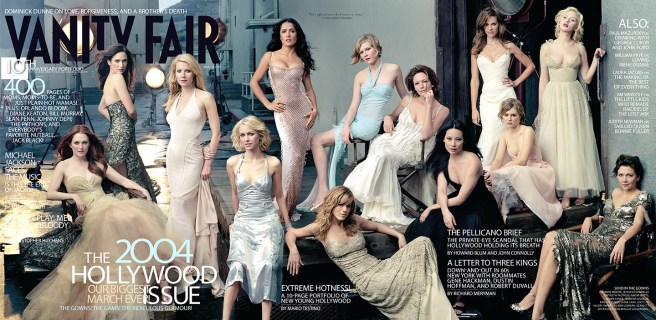
The first was Radhika Jones, the first mixed race editor of the pop culture magazine Vanity Fair, which immediately impacts their cover and story choices to reflect the world we live in – all of it – not just from a certain vantage. She makes some brave decisions for the future of the magazine, and this is where you get to play around for a while. She recently opened up the Vanity Fair archives, free of charge for now.

Vanity Fair archive
From the Vanity Fair archives

That means you can sit endlessly scrolling through issues from the beginning of time depending on your interest. Vanity Fair has always been a magazine that homes in on the zeitgeist which is what makes it of interest internationally.

As Jones explained to Amanpour, her cover choices weren’t really the result of who she is but rather of what is happening in the world around us, with the success for example of Black Panther and Get Out and she wants to capture the spirit of the times. To allow readers into this world through the archives is a treat. Go and have a look. Just make sure that you are in the archives, not the magazine itself which is limited to four articles a month, of Vanity Fair and then have fun with your reading choices.


And on that note, if you have a Netflix account, don’t miss the Rachel Lears documentary Knock Down The House. It looks at the primary campaigns of Alexandria Ocasio-Cortez, Amy Vilela, Cori Bush and Paula Jean Swearengin, four Democrats endorsed by Justice Democrats and Brand New Congress (the names say it all) who ran for Congress in last year’s US midterm elections.

Knock Down The House1
The four women competing in the Midterm Elections

It premiered at Sundance 2019 in January, was voted an audience favourite and was bought by Netflix for the most money ever paid for a documentary.

These women were running together on a grassroots level and what the filmmaker wanted to explore was power now and what it looked like, how representatives and money converge and what happens when people who don’t have the money, are brought into the process. Because of the large amounts of money required to run, usually only certain kinds of people can access the process, but this is changing with Ocasio-Cortez and her particular brand (and charisma)  turned into hot currency with the current crop of Democratic Presidential hopefuls whenever they have a stage.

She was the only one elected and has already challenged the status quo in a country where a largely white male Alabama senate recently passed the most restrictive abortion bill in the US deciding about the rights of women and their bodies, “the only thing men cannot control,” argues Gloria Steinem.

All of the above are “entertainment” options in our new world of access, streaming and many other avenues that keep popping up.

It’s time to play and stretch the mind – and that’s the best way.

Author Lauri Kubuitsile – Force of Nature

“If you only read the books that everyone else is reading, you can only think what everyone else is thinking.” 
― Haruki Murakami

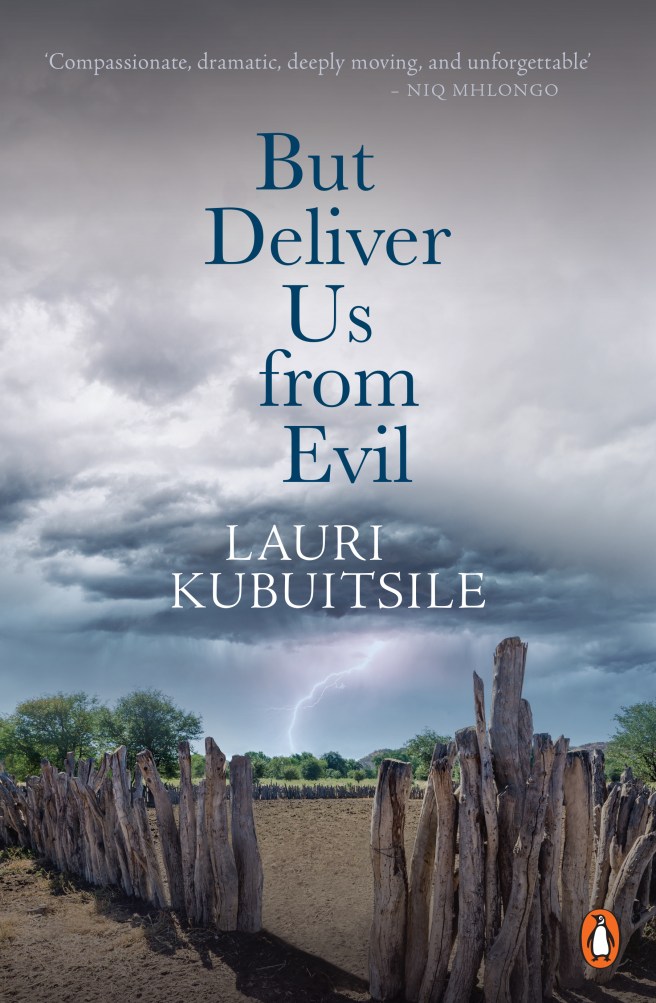
Evil cover HR

DIANE DE BEER

Everything about author Lauri Kubuitsile is unexpected.

First there’s the name which (for me anyway) implied that I was meeting a black Botswana writer, only to be surprised by this Baltimore-born woman appearing at the guesthouse in Johannesburg where we were set to meet.

She moved to Botswana in 1989 (first running away from home at the young age of 16), where she met her husband (they are recently divorced). She declares herself a proud Botswana citizen hence the stories she has written especially in her last two books: The Scattering with at the centre the Herero who were forced to flee in 1904 South-West Africa when the German colonial authorities issued an extermination order; and now But Deliver Us From Evil (Penguin Books), a story about a young Koranna woman who is mistaken for a kidnapped white child, something that determines her whole life.

Kubuitsile only started writing at 40 and that was by accident. An unscrupulous business partner left her with a publishing business which finally led to this former science teacher publishing the first of many books.

Before these two books, she has won or been shortlisted for many awards. She twice won Africa’s premier prize for children’s writing, The Golden Baobab. She also won the creative writing prize sponsored by Botswana’s Department of Youth and Culture. In 2011, she was shortlisted for Africa’s most prestigious short story prize, The Caine Prize.

She writes across the age spectrum for adults, teens and children and her books cross many genres. Her book, Signed, Hopelessly in Love was recognised by South Africa’s O Magazine as one of the best reads in December 2011. The first book in her Kate Gomolemo Mysteries series, The Fatal Payout, is a prescribed book in Botswana for all junior secondary school children.

And she writes easily it seems. Once the story is in her head, she rushes through that first draft just to get it down on paper. Only then the tough work begins as she starts editing. That takes much reading and rewriting, but the process has always worked for her. “I know I won’t die while I have a story in my head because that need to get it out on paper is too overwhelming,” she says – only half in jest.

The thing about Kubuitsile’s writing is her storytelling ability. She draws you in immediately with a style that is focussed on plot rather than characters, she says, but even copping to this penchant, she manages to flesh everything out: the places, the people and their incredible lives. That’s what keeps you turning those pages as you delve back into a history that’s familiar but unknown.

lauri pic 1
Fearless author Lauri Kubuitsile

Many of us would know about the Koranna, but that’s probably in most instances the extent of our knowledge. Their history is vague. “I’m surprised by how few people know their story or even about them,” says Kubuitsile, who hopes to change some of that with this and hopefully a next book (following another story in-between) which will also be revealing.

The other intriguing aspect of her writing is that she is telling the story of especially the women – and added to that, the women of the oppressed/vanquished, which makes it doubly hard but also timely. These stories of our past were mostly recorded by men thus writing the odd throwaway line about women or their place in society into the actual history being told, those of the men and their wars.

But we know, says Kubuitsile that these women were doing a lot and often keeping things going. “This is history as a narrative,” she explains. “You can’t find the voices anywhere, but you are given leeway to fill in, because the evidence is there.”

She loves the research and has stumbled on the most amazing stories that have informed her own writing or even set a book in motion, like this one. It was while researching The Scattering that she read a line about “the daughter of the maid at the missionary’s home” as well as a letter by Kgosi Sechele (the ruler of the Bakwena of Botswana) in which he corrects a letter that accuses him of killing 25 witches to say that they were only five and in any case well known as witches. All of these fuelled her imagination as the story so masterfully unfolds.

More than anything though, it is her fascination with the Koranna that first piqued her interest. She explains that most of them came from the colonies, some mixed race but more a mix of many people including the Batlhaping, San, Griqua, Baster, Dutch and other Khoi people, hence the lightness of her protagonist Beatrice’s complexion, lived on islands in the Gariep River and were big raiders. “They wanted to be free and to be left alone,” she says and what kept them alive was their ability to swim and navigate the river, better than anyone else.

She talks about her books in the same way she writes, with a confidence and credibility that sits comfortably with someone who has published 30 often very different books, with much success.

She calls herself a generalist, loves the fact that she can make her living from writing, but that’s only half of what is going on in her life. She talks of many different projects, amongst others writing computer games, the one she had to tackle immediately and features hugely in her life.

But there’s also a book with the current title of Reflecting Light that she describes as probably her most autobiographical. It tells the story of a woman who grew up with a very famous mother followed by a famous husband. Her light was always reflected by who they were, making compromises, and being defined by feelings that weren’t her own.

That’s not all – naturally! She is currently collaborating on a project with an established well-known South African  author, which they are writing as a first-person narrative. “We come from very different places, she is character driven and I do plot,” she says. “We will have to see if two people can get their brains together to make one!” It’s early days still but if anyone can, it will be these two.

That is if either of them can be penned down to get it done. For Lauri Kubuitsile, for a story to be written, it must be aching in her head.

And thank goodness, that’s exactly why But Deliver Us From Evil is so riveting. She desperately needed to tell that story and did so quite brilliantly.

Storytelling for a Novel Congregation

Jobe2
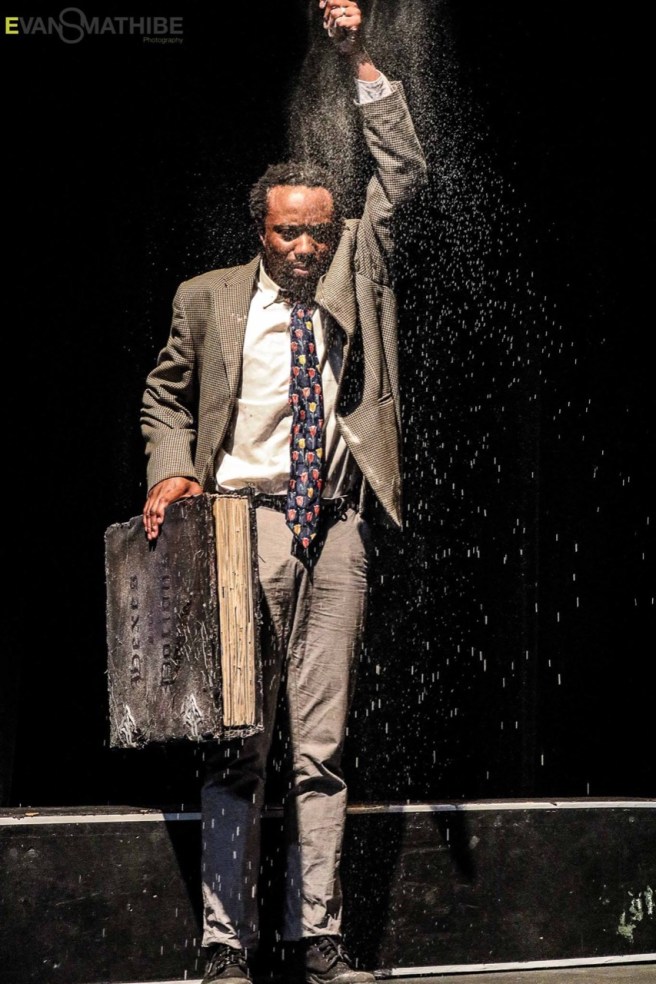
Muzi Mthabela as Jobe

As it became more and more difficult to produce theatre, director/playwright Josias Dos Moleele decided to combine all his passions. He speaks to DIANE DE BEER about his latest production Jobe, which plays at Sandton’s Theatre on the Square from May 29 until June 15:


Josias Moleele looked around at the theatre landscape he believed was diminishing, and decided he would take theatre and the church and bring the two together.

As the son of a pastor, when he was younger, there were expectations for him to follow in his father’s footsteps, but he had different plans. He wanted a career on the stage, whether it was performing in a production like Five Guys Named Mo or writing and directing his most popular play Call Me Crazy (which will have yet another run at Sandton’s  Auto & General Theatre on the Square later this year), or my personal favourite, Sarafina in Black and White which he did a few years back with the TUT students.

And to this day, he still lectures at both TUT and the University of Pretoria’s drama departments.

Josias Dos Moleele
Director/playwright Josias Dos Moleele

But writing and staging his own productions is his calling and when he thought about the tradition in local churches to dramatize stories from the bible, he knew this was where he wanted to go.

He knew that there were more than enough ministries in Gauteng, that he would be able to put together professional productions and that he would have an inbuilt audience. His model was a simple one. While he would be doing training for free, people would have to pay for the production, which included the actors and everyone who worked on it.

Once his ideas were aired, a young aspirant playwright came to him with the story of Job which he knew would be inspiring. He knew there was something there and together he and Teboho Sengoai started reworking the original text to take it to a different level.

Once they had played it at different ministries, Moleele wanted to test the professional stage and they did a run at the Joburg Theatre in 2017. “There’s a new audience emerging,” he says as he explains that churchgoers enjoy seeing a familiar story reinterpreted in a modern setting. And this is when he decided to contact Daphne Kuhn at Sandton’s  Auto & General Theatre on the Square for a season with the hope of testing his theories positively.

Jobe4
Mogau Motlhatswi as Princess and Muzi Mthabela as Jobe

Jobe is the story of a man who goes through adversity and pain, and longs for an explanation and counsel as to why his world has been turned upside down. Why do bad things happen to good people? When life is going smoothly, faith is easy. The test of faith always comes when life stops making sense.

According to the biblical tale, counsel is revealed in a dramatic life changing dream and vision that hits his beliefs to the core and those of his friends and his wife.

“It’s a universal story set in a modern time,” says Moleele.

What interests him is also the mixed audience that will hopefully see the play. In his diverse working life, he has produced documentaries for a Jewish audience, and with Jobe based on an old testament story, he believes that in discussion sessions following the performances, interesting conversations could emerge.

It’s the different congregations present at the theatre that Moleele finds intriguing and hopes will instigate probing conversations.

“I feel theatre isn’t speaking boldly at the moment and because I kept on facing rejection, I had to redirect my own intentions and passions.”

Jobe1
The cast of Jobe with Muzi Mthabela (centre,) questioning his conscience.

He was determined to do it professionally with a cast that includes the following:

Muzi Mthabela (Jobe) who aside from his role on Isibaya, is a regular on TV including Jacob’s Cross, Dream World, The Road and more. Mogau Motlhatswi (Princess, Jobe’s wife)

is best known for her role as Mapitsi in Skeem Saam. This is her debut stage role.

Titus Mekgwe (Lebese Titus) started his career professionally in 2010 and is both actor and director. He has also worked on film. Simpho Mathenjwa (Jwara) has a BA deg in the arts (Wits) and has done mainly industrial theatre and television while Teboho Sengoai (Professor) who wrote the initial play which he reworked with Moleele, completes the cast.

Following his work with the different ministries, Moleele has also established his own ministry in Atteridgeville Faith Acts Ministries (FAM where he hopes to do things a little differently with all the focus on the congregation. His work around theatre will continue as he keeps training actors through his Graduate Arts Project (GAP) as a feeder programmed to community theatre groups. and everyone involved with the production from the different congregations he works with.

He wants to keep it as professional as possible and has joined a Chamber of Business to help guide him in this world.

Having found a way to feed his different passions, Moleele is determined to navigate his way through all the teething problems. Like many others before him (and many to come), his choice of career(s) is more of a calling which makes it tough to turn his back on any of this.

He knows he is probably a trailblazer but with so many disruptors in this time, it is those who can be innovative who will find new ways to follow their dreams.

In the meantime, this novice preacher is determined to keep telling stories and to find different ways of finding a captive audience. He wants to keep it exciting and with our diverse audiences, reverting to age-old stories familiar to many in different guises, he hopes to get the conversations up and running.


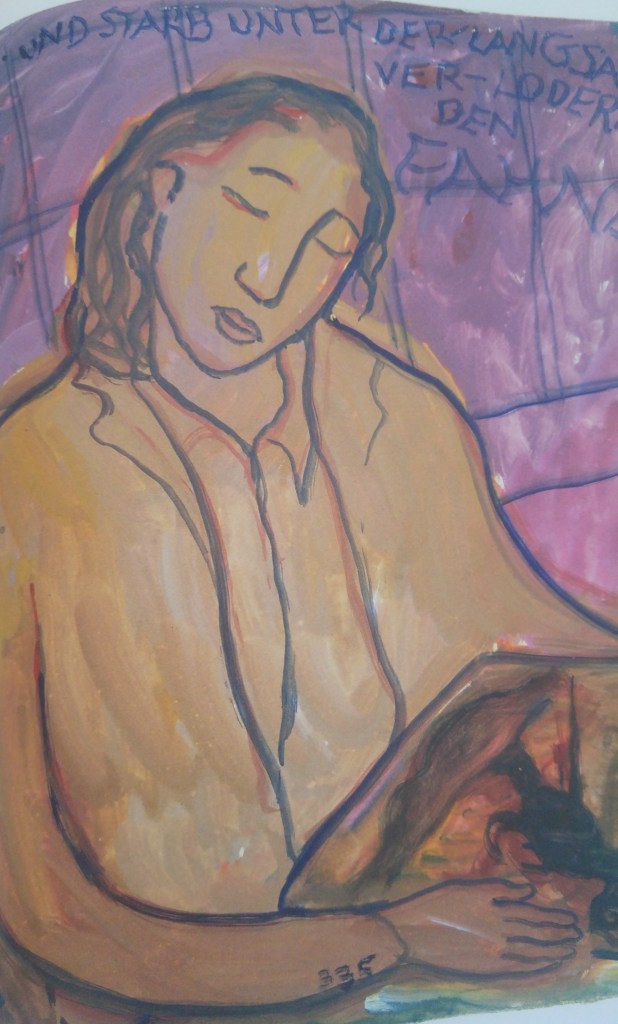
“Take good care of it, it is my life,” said artist Charlotte Salomon about Life? or Theatre? which was also her Life’s Work

Pictures are all the work of Charlotte Salomon from Taschen’s  Life? or Theatre?

Charlotte SalomonDIANE DE BEER

Charlotte by David Foenkinos (Canongate) and Charlotte Salomon Life? Or Theatre? – Charlotte Salomon’s artistic feat under the Third Reich Charlotte Salomon Life? Or Theatre? – Charlotte Salomon’s artistic feat under the Third Reich (Taschen):

Charlotte Salomon is born into a family stricken by suicide and a country at war – but there is something very exceptional about her. She has a gift, a talent for painting. And she has a great love, for a brilliant, eccentric musician.

But just as she is coming into her own as an artist, death is coming to control her country. The Nazis have risen to power and, as a Jew in Berlin, her life is narrowing – she is kept from her art, torn from her love and her family and chased from her country. But still she is not safe, not from the madness that has haunted her family, or from the one gripping Europe…

Charlotte is a heart-breaking true story – inspiring, unflinching, awful, hopeful – of a life filled with curiosity, animated by genius and cut short by hatred. A beautifully, lucidly told memorial, it has become an international success.

20190513_140944
Inside cover of Life? or Theatre?

These are the words on the jacket of David Foenkinos’s Charlotte (Canongate).

I was given this book as a gift by an astute friend together with Taschen’s Charlotte Salomon Life? Or Theatre? – Charlotte Salomon’s artistic feat under the Third Reich which includes essays by Judith C.E. Belinfante and Evelyn Benesch as well as a selection of 450 gouaches.

Because I didn’t know the artist at all, I didn’t immediately connect the two books but soon discovered, the first, written almost in poetic prose –  like an epic poem – was inspired by Charlotte’s lightly fictionalised memoir consisting of hundreds of paintings, sketches, text and musical annotations created during the years she was in hiding.

Foekinos is an award-winning French novelist and screenwriter who won the Prix Renaudot and the Prix Goncourt des Lycéens, and Charlotte has sold more than half a million copies in France and was translated into 19 languages.

20190513_141616
And they walked home together, absorbed in silent communication.

It is excellently translated from French into English by American Sam Taylor. So once you have read the intriguing story by the novelist who simultaneously with Charlotte’s life story shares his own tale of discovering the artist, you can follow that with the Taschen art collection which again delves into Charlotte’s life but this time with the paintings and illustrations in hand.

It is an extraordinary insight into an artist who before these two books, might not have been familiar to you.

Foenkinos, for example, only discovered her work in 2004 in a museum in Germany and this propelled him to tell her story. It’s difficult to imagine that the life you encounter was such a short one and in a time as a Jewess in Germany (1917 – 1943), there wasn’t much chance of her visibility as artist flourishing.

Executing her gouache series Life? Or Theatre? she pleaded with a friend to “take good care of it, it is my entire life.” Perhaps she had a premonition because a few months later, the 26-year-old was deported to Auschwitz where she was killed shortly after her arrival.

20190513_141641
Out there in the forest there he stands – there dwells many a beautiful king’s child – in the forest there we want to listen.

The work tells her life story with a ground-breaking narrative that spans her entire short life: her complicated family life coloured by the high incidence of female suicides; her youth in Berlin marked by die rise of the Nazis and the oppression that followed; her close relationship with singing teacher Alfred Wolfsohn; her exile in France where her masterwork was accomplished; as well as abuse suffered on different levels from different people.

All these are reflected in her personal story that she embellishes with pseudonyms and fantasies to hide the actual personae, but reading both books, the story is clear. It’s an astonishing insight into her inner world, into that time, the way people lived and were terrorised, the decisions you make under duress and without foresight of course. Now we know everything in full colour, but at the time, the citizens of Germany, especially those being persecuted, had no idea of the horrors lying in wait.

But what also makes this such an intriguing read is the passions of the artist when it comes to the people and her painting and how she told her personal story in a way that kept her sane and allowed her artistic expression to flower.

Illustrated diaries, art books, aren’t uncommon anymore but at that time, given her youth and her life, what she produced is astonishing and adds greatly to her story and her art – both in equal measure and with astounding strength.

In 1947, her parents discover her life project in the South of France. They decide to donate it to the Joods Historisch Museum (Jewish Historical Museum) in Amsterdam in 1971. Throughout the years, parts of the work have been displayed in museums around the world, but many art lovers are still unaware of this artist and her body of unique and unusual art.

20190513_141437
…and died under the slowly dying flames of the blazing flag.

According to Wikipedia, in 1981 the Museum presented 250 scenes in narrative sequence, and critics began to comment on the work.  An exhibition was presented at the London Royal Academy in 1998  and was an unexpected sensation, helped by the publication of a complete catalogue. Part of her anonymity, they believe, is the result of Salomon’s work not appearing on the international art market, as the whole archive belongs to the protective Charlotte Salomon Foundation based at the Joods Historisch Museum. The art historian Griselda Pollock dedicated a chapter to Charlotte Salomon in her Virtual Feminist Museum, analysing her work in terms of contemporary art, Jewish history and cultural theory.

And most recently Charlotte Salomon: Life? or Theatre? was exhibited at the Joods Historisch Museum from October 2017 to March 2018.

With these two latest books, there’s a chance of a wider audience and perhaps a deeper understanding of her work. But more than anything, it is the excitement of discovering an artist with such a strong voice, a woman to boot, who tells her story in such an individual and inspiring fashion.

It’s not an uplifting story, but it is inspiring that she could find a way to express herself so magnificently and with such a unique voice in such dark times. And leave such an luminous legacy.


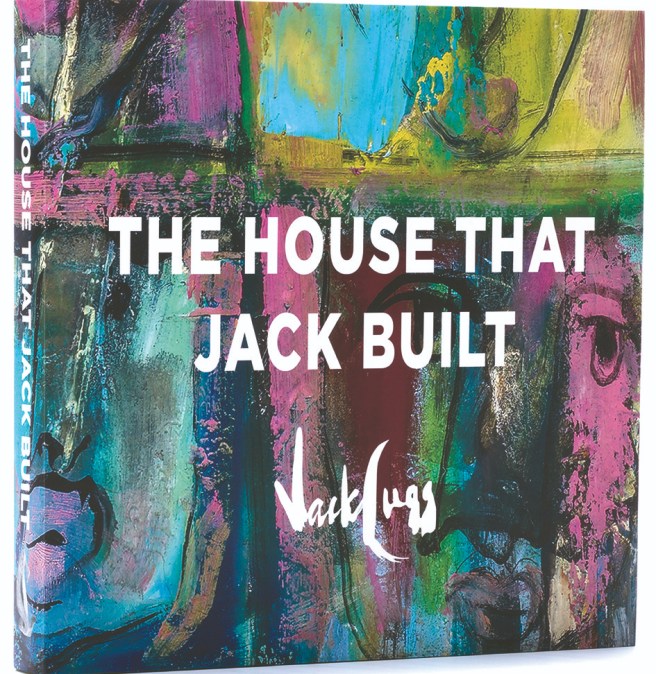
The House That Jack Built Celebrates the Life and Art of Local Artist Jack Lugg

house-that-jack-built-book-cover-high-res.jpgLocal artist Jack Lugg is being celebrated with a book launch and a retrospective exhibition at the Pretoria Art Museum from May 7 until June 23. DIANE DE BEER investigates his life and work which is detailed in The House That Jack Built, an illustrated biography instigated by his daughter Pippa Lugg Verster:
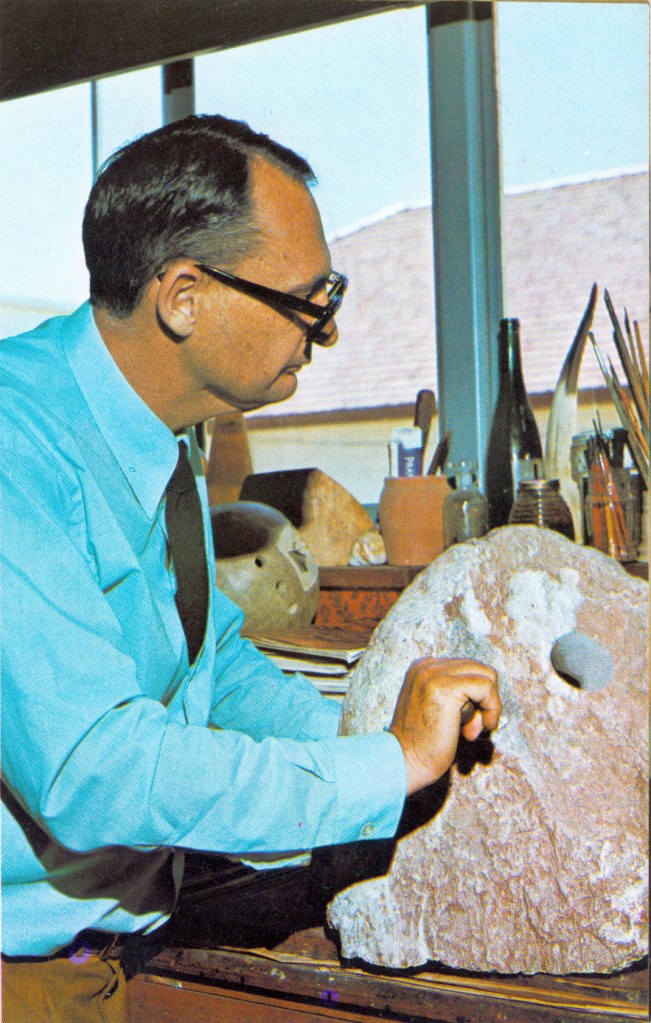
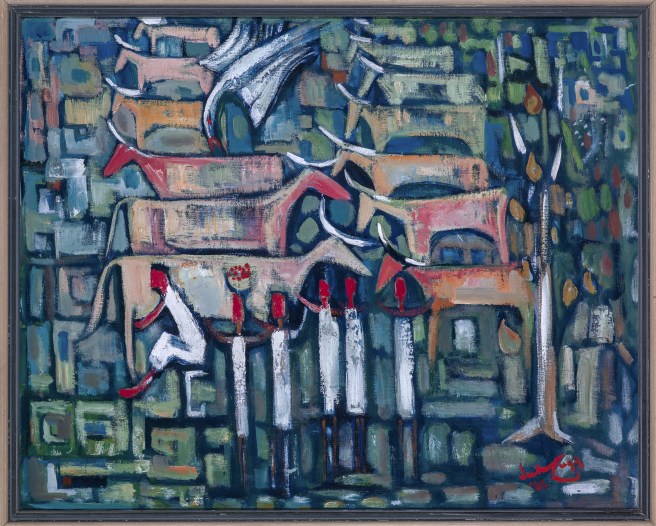
Jack sculpting in the 70's at Tech
Jack sculpting in the 70’s at Tech


Checking my artistic circle, none of them was really familiar with the artist Jack Lugg, but if you should venture into academic and artist circles, the response would be totally different.

“I first heard of Jack Lugg in about 1965 while I was still a student at Selborne College. He was the best-known artist in East London and his art was totally different from the art I had grown up with…” writes celebrated artist Norman Catherine in the foreword of The House That Jack Built – Jack Lugg (Jack Lugg Art Gallery CC).

For many, says his daughter, Pippa Lugg, in her introduction, the name brings back memories of an influential mentor, or others who own his art are reminded of a devoted and passionate artist. “My father worked tirelessly: sketching, sculpting and painting over the course of seven decades.”

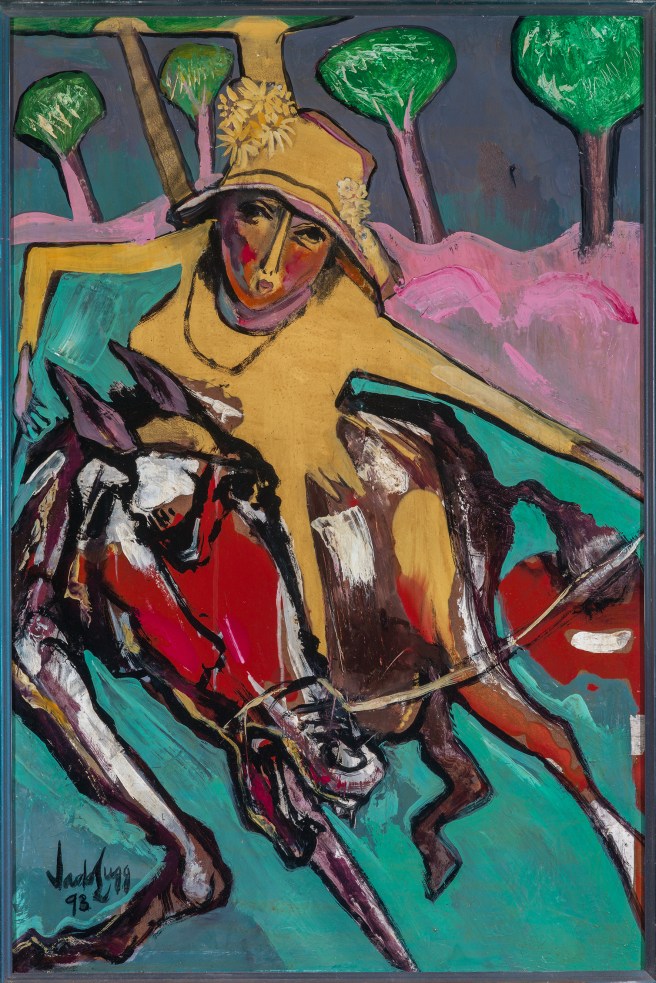
1993 Spirited ride
Spirited Ride, Oil, 1993

He was the head of the of the department at the East London Technical College Art School for 35 years and it was her hope that this book (together with the exhibition in the Pretoria Art Museum) would be a testament to “his remarkable life, and to all that he built”.

She explains that the foundations for the book were laid by the artist himself, and his wife Rosemary. They planned to publish it to celebrate his 80th birthday but sadly it didn’t happen in time for his birthday or even before his death in 2013.

But things were set in motion and part of these was a blank sketchbook that his daughter gifted to him on his 78th birthday which became an integral part of the book. She explains: “The cover of the book was decorated with a collage of his paintings and sculptures and I titled it Jack Lugg’s Memoirs.”

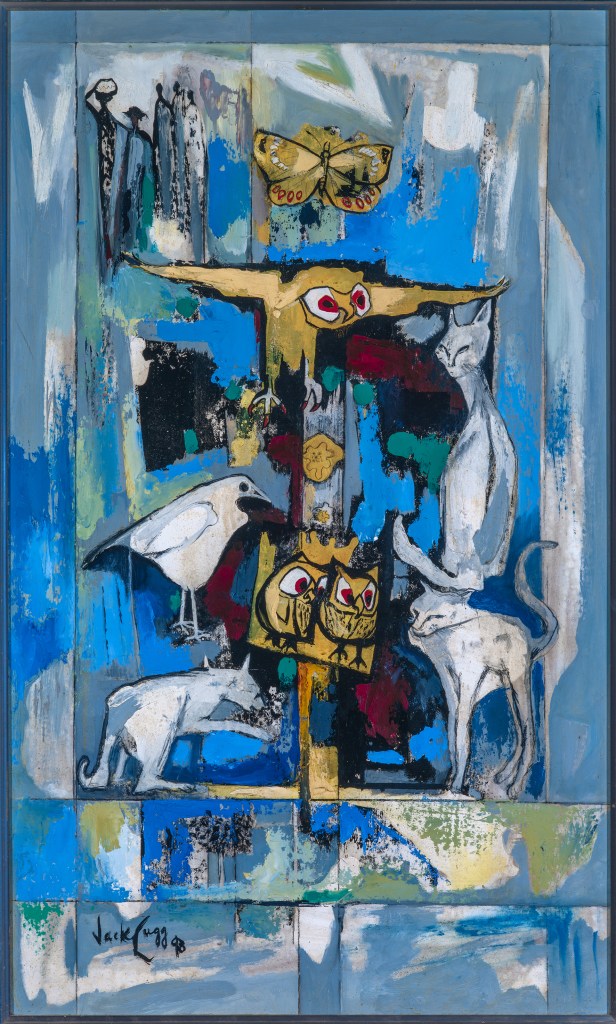
1962 African legend
The Greedy Man, Oil on cloth/board, is one of a series of twelve different African Legends.

She wrote a note encouraging her artist dad to record his memories with the aim of including it in his book. His response: “If it ever happens.” Hers: “Not if but when.”

And she proved him wrong. When she was sorting through her parents’ vast collection, including 1 000 artworks, with her brother, the last box she unpacked was the small book which her father had created, and she describes as a gem. She believed he had given her a masterpiece handwriting his entire life story and illustrating every page. “It was the actual moment of conception of this publication,” she recalls.

Once she started gathering her thoughts and the people she wanted to include, she invited Kin Bentley, at the time sub editor at Port Elizabeth’s The Herald. She describes him as an experienced art critic and also a past student of her father. “He paints a picture of a man whom he knew as an inspiring mentor and teacher.”

1993 Each tells the other
Each tells the other, Oil on board, 1993, is the work in mind to use for the marketing of the Pretoria Exhibition next year.

And what makes the essay special to her as the daughter is that in quoting for her dad’s memoirs, Kin has allowed the artist to tell his own story. “The result is a sensitive and personal account.”

Complementing this work, Barry Gibb, an Eastern Cape art historian who taught Lugg in the ‘50s drew on his vast art historical knowledge to present an insightful and layered analysis of the artist’s paintings and sculptures.

Because these two writers knew the artist, they brought a wealth of knowledge and perspective but, writes Lugg Verster, the book is about the artist and his extraordinary body of art.  For her it is important that “the artworks take centre stage” and together with the current exhibition, they have published many works which have never been seen in public before.

Thus, The Visual Essay is dedicated to illustrating his creativity and includes prints, sketches and paintings. The idea was to allow readers to witness the development of the artist and his particular journey.

“Short textual inserts highlight important life events, themes and anecdotes,” she notes. It follows his work through the decades from 1938 when he was a teenager to 2013, the year of his death.

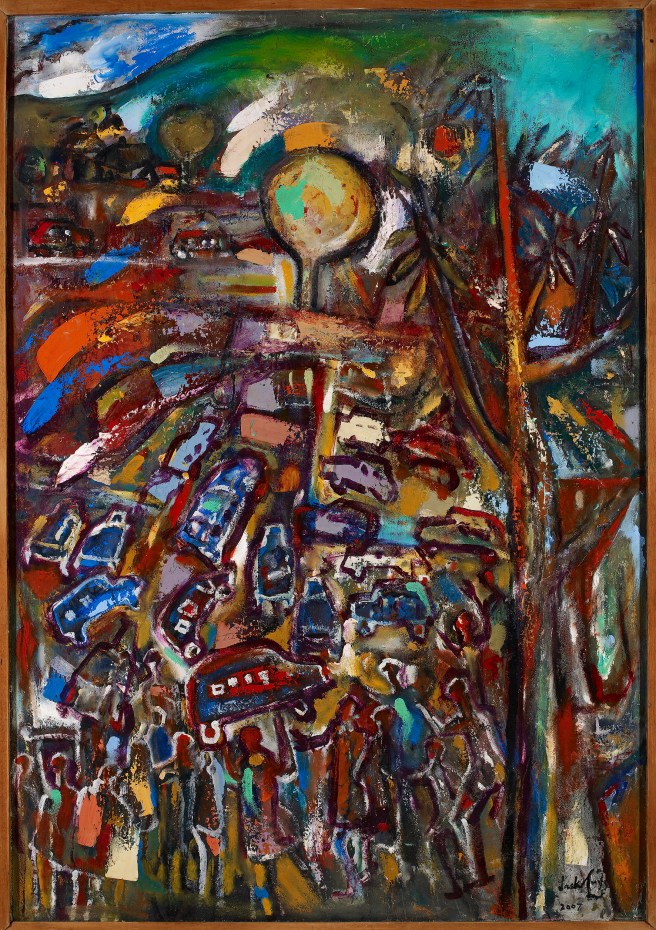
2007 Taxi rank
Taxi Rank, Oil on board, 2007


It’s quite extraordinary to be introduced to an artist in this way, if indeed that is the case as it was for me, and to have an accompanying exhibition showing a comprehensive collection of his work.

And covering a life and a prolific one at that, it is fascinating to see the way the artist has developed, where he has been influenced by his time or artists living in specific eras.

Initially, the Jack Lugg Art Gallery was based in Knysna for 18 years. Then it continued to operate in Plettenberg Bay through the gallery website and studio appointments until the author’s death in 2013. Now run by his children, the Jack Lugg Art Gallery sells artworks through the website and arranges private viewings by appointment in Port Elizabeth. The works on show range from Lugg’s teens in Pretoria where he studied under Walter Battiss, to his service in World War 2, through his studies in Durban where he won the Emma Smith scholarship, to Camberwell, London and Ecole des Beaux Arts, Paris, where he studied under Matisse.

Perusing the gallery website or his book, Lugg had a deep connection with the landscape, animals, and people of Africa. He held his first exhibition at 17 and continued to exhibit in many solo and group exhibitions throughout his expansive career. His art can be found in significant public and private art collections around the world and this current Pretoria Art Museum exhibition, which runs until June 23 in the South Gallery.

The first iteration of this current exhibition and launch of The House That Jack Built was held at the Nelson Mandela Metropolitan Art Museum, Port Elizabeth in February last year and was opened by Dirk Oegema, Director of the Pretoria Art Museum. An East London exhibition and launch took place at the Ann Bryant Art Gallery in April 2018 and was opened by Marlene Neumann, South African Master Fine Art Photographer.

Now Gauteng can catch a glimpse of this Eastern Cape painter/sculptor who should be better known and celebrated and whose family is determined to nourish and nurture his legacy.

*The exhibition will be opened on Tuesday (May 7) at 6.30 for 7pm by Prof Ora Joubert.


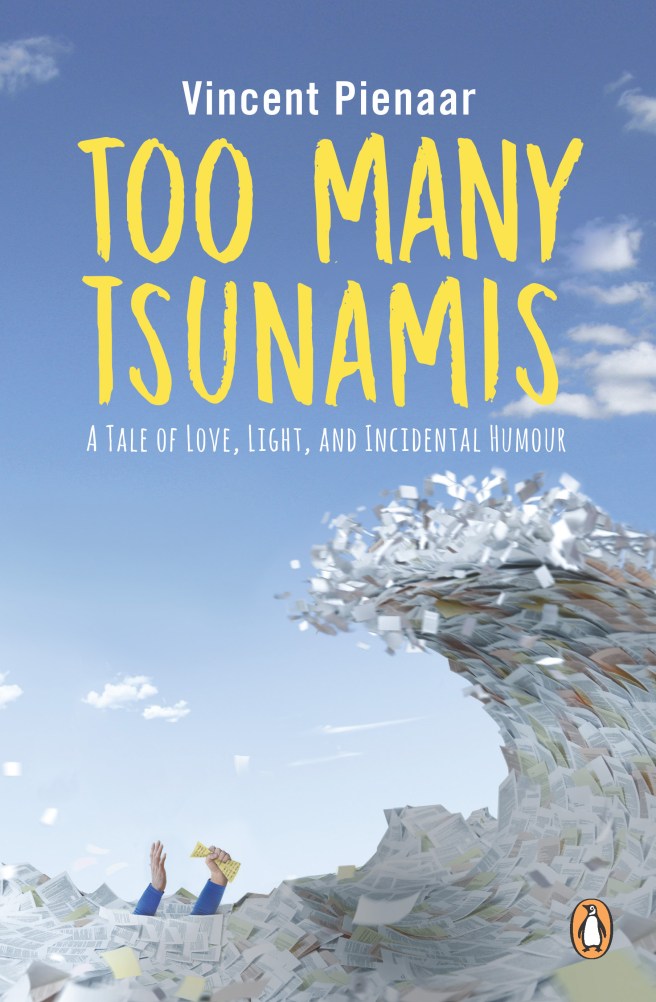
Author Vincent Pienaar is Riding the Wave with his Own Special Tsunami

BK Too many tsunamis

Author Vincent Pienaar is experiencing his own tsunami with his latest book Too Many Tsunamis – a tale of love, light. He tells DIANE DE BEER why:


With a book titled Too Many Tsunamis – a tale of love, light, and incidental humour (Penguin Books) and an opening sentence that deals with suicide – more the dilemma of being or not being – author Vincent Pienaar’s latest book is hard to resist.

And if you don’t know who this journalist/writer is, he gives some clues with a dedication that includes names like Gabriel García Márquez, Etienne Leroux, Damon Runyon, Eugène Marais, Virginia Woolf, Elmore Leonard, Akira Kurosawa, Lennon-McCartney and Harrison for the opening chord of A Hard Day’s Night… and more.

All of these are hints of what’s to come. And it’s joyous. “When I wrote Too Many Tsunamis, I deliberately decided to write an amusing story that didn’t explore the standard ‘troubled country’ story lines. I set out to write a story that was only incidentally set in South Africa. I love it when people tell me things like ‘this doesn’t feel like a typical South African story’. While I don’t want to speculate what a ‘typical’ South African story is, I happily admit that I wanted to write (let’s call it) a universal story. I’m fascinated by the way storytelling has changed (catering for a faster world) and I absolutely love the challenge of telling my story at breakneck speed.”

I had asked him about what I perceived as a breakaway from his usual style and while he confessed to not having a particular style, “I do believe this is the style I want to retain. It really works for me.” It did for me too.

The story is fast-paced which, as he explains above, was the idea but there’s a filmic element to the storytelling that makes everyone on the page come alive.

“If Bert truly wants to commit suicide he certainly finds a number of reasons why he simply can’t do it right now. He is always working on a magnificent bestseller, but it is never identified – and whether it exists or not is for the reader to decide. He lives in a fantasy world, where he talks to his conscience – or Conscience the character – who does not necessarily like or support him.

“His mother – or Mother – spends a lot of time getting him a job or a woman and if the gods allow it, both.

“My favourite character is Light, an unkempt young woman who appears to be deliberately slovenly, slow, and certainly deliberately overweight. The character development (and I really enjoy this) comes from Light – and what a gem she turns out to be! Mother, Bert, Light and Conscience are the main protagonists I suppose, but I have populated the book with many minor characters who are all quirky in their own right. (Boring people really are boring, aren’t they?)

Vincent Pienaar (002)
Author/journalist Vincent Pienaar.

“The story, although not a mystery or anything like that, has a number of reveals that I hope induces the occasional minor gasp.

“It’s a style that is balanced (as you say) on a knife’s edge a little and might not have worked. To maintain the right balance is quite something.”

Following this Pienaar monologue, as the interviewer, I have to make a confession. It was unfair to ask a journalist to tell us about his book, because if like Pienaar, you’ve just invented this incidental magical tale, your response will have the same effect – in essence writing the interview. Apologies though, but in this instance, no one can talk about his book better than the author.

Talking about the style, he immediately used a musical metaphor and the names he drops into his book and the conversation explain why.

“I have developed a style with surprises. I enjoy the ‘duel’ with the reader to offer something unexpected every now and then, to keep the reader just a little off balance (and interested). I have, over the years, developed an aversion for ‘dead words. I don’t want to write them, and I don’t want to read them. (With this my mentors Jo-Anne Richards and Richard Benyon helped me to weed them out and slaughter them.) I like the idea of what you call the ‘knife edge’ because it is an indication that the action propels this story.” Which it certainly does.

“I applied a different rhythm to different sections. It’s deliberate and it is an attempt to make it easy for the reader to remain interested.

“A late (erudite) friend said the difference between jazz and blues is that jazz is performed for the enjoyment of the musicians themselves and blues is performed for the satisfaction of the audience. There is often that part in a jazz piece where the audience sits patiently and reverently while the musician is ‘performing his art’. I, too, don’t mind sitting quietly waiting for solos to end. But when I write, I write the blues. I work at making my writing for the benefit of the reader and not the writer.”

He’s achieved all that and more. Perhaps there no longer is a typical South African novel although we all know what he means when living in a country where reality has for most of our lives felt like fiction. How could writers not go there?

But Pienaar wanted to write something different and he achieved that with aplomb.

“A movie? I wish! I know that I write scenes instead of chapters. If I have helped the reader to forget about the words and to see the images, I’m very happy. I wanted to write a book that would make people smile. Believe me, the style was deliberate and no coincidence.”

How could it not be? When (not if) you read the book, you will discover what that means. It’s like slipping into a world of merry-go-rounds, slightly crazy, yet delightfully so. And it keeps you smiling even when there are the occasional sad undertones.

Elaborating about his own reading preferences even if he lists some in his dedication in the book, he comes up with the following:

“In my pursuit of universal writing, I have drifted further and further into the arms of the classics. I read, with admiration, works by Virginia Woolf and sections of Anthony Powell and the short novels of John Steinbeck. I have read and re-read two short novels, Breakfast at Tiffany’s (not the terrible movie) and The Great Gatsby. They both have great plots and subplots and no dead words. I ponder why they are so great. I read Hunter S Thompson as a study in breathing fire. Would he write: ‘The car drove off at high speed.’? Fuck no! He might possibly write: ‘Tyres howled and smoke billowed as the car shot from the sidewalk into the fast lane.’ Yeah!

“I watch a lot of movies and very often the classics. I think His Girl Friday (from 1941!) has the best dialogue I have ever seen. Some Like it Hot is a study in timing. The Lion in Winter has acerbic dialogue that needs to be watched in two-minute sections. (O’Toole to Hepburn: ‘Will you give me a moment’s peace, woman?!’ Hepburn: ‘I can give you eternal peace. Now there’s a thought.’)”

With Pienaar doing most of the talking, hopefully he has said enough to get you reading – and you should. Apart from the battered-feeling Bert who has written a brilliant suicide note but can’t quite get to the brilliant suicide, it’s a deliciously discordant romantic romp with much more than the haphazard Bert, although he is the perfect anti-hero in today’s world, that seldomly has you smiling for the right reasons.

Pienaar brilliantly manages that.

To top it all, his book has just been picked for the 2019 Longlist of the Sunday Times Literary Awards’ Barry Ronge Fiction Prize.


A Perfect Night to Catch The Music

20190421_193805
The gang from The Buckfever Underground with Toast Coetzer responsible for the spoken word.

Diane be Beer


What does one do on an Easter Sunday night in Tshwane?

The city is empty – ish. Of those left, most are doing the family thing and then an unexpected house concert is announced in Rietondale.

Journalist/editor Marguerite Robinson is hosting the affair and The Buckfever Underground (with SkreeAlleen for this leg of the trip), would turn up and around in Tshwane for the final leg of their most recent tour.

Timing was perfect and even if the weather promised to deliver a storm, it was one of those nights where the wind lights up for a brief moment and then disappears. The rest of the evening had signs of the winter chill but nothing too hectic and under a large avocado tree in a quiet suburb, a group of music/poetry enthusiasts turned up with their chairs, cushions, snacks and wine for an evening interlude of poetic musical bliss.

Vocalist/performer Toast Coetzer (with Stephen Timms on drums, Michael Currin on guitar and guest artist, Gerhard Barnard, on bass, previously from Brixton Moord en Roof) calls Buckfever a random spoken word band which captures it best, but without thinking too much about it, their performance was perfect for that particular night on that particular weekend.

20190421_174931
Producer Giep van Zyl in charge of the lights.

While gathering around, fairy lights were being added for festive effect and someone was heard murmuring about sound checks which might be more effective. But none of this had any impact and the lights brought magic and lightness while the sound was perfection – under the night skies.

Art was the genie on the night, a random night with a random band but nothing about the spoken word or the underpinning experimental music was any of that. It was balm at the start of a chilly season, had everyone smiling, gasping and simply listening to the random yet thoughtful words held by music that seemed to attach to those thoughts and prevent them from flying off without just some space to linger a little longer.

It is about what takes our hearts and minds a’wandering, how these sentences strung together in simplicity but also words selected with care and cunning, allow us to view things anew, from a different stance or simply just to listen and allow them to wash over you.

20190421_191251
SkreeAlleen

Artists at work are always a sight to behold and on this particular night it started with SkreeAlleen (Willem Samuel), a  guitarist/songwriter whose name captures his style with an offhand charm and embracing style which does its own special thing under a tree in a suburb somewhere on a Sunday night. His songs on the night were mostly around the theme of love – whether lost or found or simply explored.

But then to taking on a completely different rhythm, dominated and determined by both voice and  music, The Buckfever Underground get rocking, gently, while Toast Coetzer speaks in words that sometimes sing, at others sting or stupefies and stuns – all of these.

If on a night you slip into a chair and listen to a solo performer and a random spoken word band, neither of which you know, it is especially meaningful to listen, the be given the glimpse of the minds of others, to catch something as offbeat as a protest smart phone song reminiscent of Johannes Kerkorrel’s Sit Dit Af which was more personal because he was referring to PW on the TV – or was it. Smart phones are as invasive, persistent and sustained as politicians selling their usually self-serving wares. The more things change, they say…

20190421_191813
Captivated by the music.

Fortunately everyone listening would have attached their own thoughts to the Coetzer lyrics – as poetry often does, it allows for that, almost like slipping down a rabbit’s warren.

Luckily that’s not all the night was about. It reminded one of how easily one can escape in the arts, how it takes you off and away and how hard artists have to work, just to make a buck – and hardly living.

But these talented performers all have many strings to their bow, and probably the musical one is also their escape. After all, The Buckfever Underground is celebrating 20 years and they would be doing this for love rather than money.

20190421_173409
Chef Hennie Fisher’s brilliant garden picnic food

That’s what artists do. They put their wares out there for you to catch if you can. And like on Sunday night, we were the blessed ones.

Catch their final show in Darling on Freedom Day or check them on the internet if you don’t know them. They’re quite something.

Here’s to another 20!


The Arts Show Us The Way – Joyously

voice-sa-with-riana-nel-ricky-rick-lira-and-francois-van-coke.jpg
The Voice SA with Riana Nel, Ricky Rick, Lira and Francois van Coke.

There is so much to celebrate when we consider our country and our people and the arts have a huge role to play says DIANE DE BEER:


Watching the first season of The Voice SA some time back, the overwhelming feeling was surprise at how specifically the format impacted this country.

It wasn’t that race or colour was an issue, it was precisely because it was taken out of the equation, with the judges turning their backs on singers vying for contestant status, that the magic happened and just kept rolling in.

With this current season and a change of judges with an unexpected dynamic, the impact seems even more emotionally driven. Lira is the only one from the first round and she is joined by Ricky Rick, Riana Nel and Francois van Coke. The fact that she speaks Afrikaans adds another dimension, but it could just as well have been Riana speaking Zulu, a similar impact would have occurred. As South Africans we know these cross-cultural exchanges are still too rare and always hugely appreciated and acknowledged.

The audience shows that all the time and just seeing South Africans come together with such gusto is such a treat – especially now. It’s a reminder of who we are which isn’t always the message out there.

I haven’t calculated or counted but it feels as if the majority of contestants are either of colour or Afrikaans-speaking and that also makes for some fascinating stereotypes biting the dust. And the reaction of the judges as well as the audience which is as mixed as it should be, reflects the importance of reconciliation – still.

There’s huge reaction when a black contestant for example translates a popular Afrikaans song into Zulu because she loved the song but didn’t understand the lyrics, or when a prospective contestant chooses a judge and that choice seems at odds with their race. When someone singing in Afrikaans for example, goes for Ricky who doesn’t understand their home language, it is powerful in the context of our country. And then Francois van Coke remarks on the lyrics of a Zulu song obviously understanding the language. It’s lekker!

Mentioned in any other context, all of this would be difficult to understand, but in a country with our past, small gestures still have massive impact and what should be expected is still unexpected. Yet the goodwill is overwhelming and in our current climate of political chaos and upheaval, like a breath of fresh air on a Sunday night.

When people are in a creative space and left to their own devices, it seems to result in only good things even when there’s a competitive edge. Especially in this country where the arts had such impact during the struggle years, we should not be surprised by the healing impact that is possible even in these random spaces.

Hugh Masekela used to say that white people were also deprived during the apartheid years because they were cut off from the creativity of most of their countrymen and when you listen to the music and how it is interpreted by different language groups and the impact that has on everyone, it reinforces the strength of diversity. Music in all its different forms (like sport) is a universal language which is again so clear as this one plays out.

It’s such a neutral space for people to come together to play and that’s where South Africans show how their diversity comes together powerfully and why people are truly the strength of this country. When we get together and embrace, we can truly be proudly South African – and are.

The arts are in dire straits in this country because funding has been impossible in these dire times. Yet even with these odds, artists will find a way to perform and get the message out there. That’s also in spite of arts coverage which has dwindled disastrously in traditional media. So strange that because I would have thought especially die-hard newspaper readers would want more of that.

Rooilug picture Retha Ferguson
Rooilug with Jefferson Dirks-Korkee Picture: Retha Ferguson

Watching two recent performances from two young coloured men at consecutive Afrikaans art festivals, both dealing with what felt like very personal stories if not of them individually, from the community or perhaps both, the power of storytelling and eventual healing for both performer and audiences was rewarding.

Both Jefferson J Dirks-Korkee with his luminous Rooilug at the US Woordfees and Carlo Daniels with the innovative Klippies van die Grond at the Klein Karoo National Arts Festival (KKNK) announced their strong presence in this artistic space with stories that were self-written or with some help.

The talent though was evident in these two young men who entered a world outside their comfort zone, though one that had flung open its arms to encourage new voices from a wider South African community to tell their stories. This is how we get to know and understand one another. That’s always been the most positive strength of the arts in this country.

It is in our stories that we find common ground and empathy for the other’s circumstances. That’s what especially these Afrikaans festivals have done almost unwittingly. Because there’s a real desire (growing stronger in this past decade) to be inclusive, people get to hear from one another and more often than not, it is the similarities rather than the differences that come into play. But it is also the chance to acknowledge the humanity in us all that adds to the insight.

Living in a country so fraught with racial inequality – still – where one group remains empowered to a much greater degree than another, it is in the arts where we can stand still, tell our stories, reach out and start understanding and embracing the lives of others.

Embracing diversity is not encouraged in our world today, but our past has handed us some insight and the gift of understanding how easy it is to turn our backs but how rewarding it is to celebrate the diversity.

With yet another Freedom Day on the horizon, it’s about time.

Viva the Arts Viva!


Royal rewards for Koningin Lear led by Marthinus Basson at 25th KKNK Festival

PICTURES: Hans van der Veen

Koningin Lear with cast
The cast led by Antoinette Kellermann in Koningin Lear

With Koningin Lear rewarded in all the categories they were nominated for at the Klein Karoo National Arts Kanna Awards – eight of them – it was an extraordinary year for theatre. DIANE DE BEER reviews the spectacular 25th anniversary of the KKNK and the way festivals have changed hearts and minds. (See full list of winners below.):


While waiting for a show to begin, a festival goer went up to actress Cintaine Schutte and thanked her for the kind of work they were doing. She was referring to Huishou, a play that spotlights a same-sex couple.

What was more interesting was her age (approximately 70 plus) and that she was an inhabitant of Oudtshoorn and she was waiting to see Rokkie with Charlton George telling a transgender story. “I don’t know about these worlds,” she explained and that’s why she specifically chose these two particular plays, to broaden her scope.

That’s what an arts festival can mean to a rural community and its people. Through the 25 years of its existence, those of us who have been attending and reporting on the festival for all those years have noticed the audiences mature in their appreciation of a world that they might not always recognise or be familiar with and embrace it in all its diversity.

In the process of writing this, I watched a BBC arts programme Front Row discussing censorship and the anxiety amongst the public in both Britain and Brazil about a play dealing with a transgender Jesus written and performed by Jo Clifford.

Lovers, dogs and rainbows
Rudi van der Merwe and Oyama Mbopa (right) in Lovers, Dogs and Rainbows.

To even see a production like Rudi van der Merwe’s Lovers, Dogs and Rainbows supported by Pro Helvetia Swiss Arts Council would not have happened a decade ago without a fuss. This is the kind of innovation that all arts festivals long for – worldwide.

It’s an agonising balancing act for the artistic directors to serve the widest possible community while creating an identity for the festival which will appeal to newcomers but also those searching for the extraordinary.

Van der Merwe’s physical theatre piece told a story of almost excruciating emotional transformation as the young boy tried to establish his identity in the small rural town of Calvinia. Now based in Geneva, he interrogates his past with a documentary shot in the town of his youth in 2017 and played as a backdrop (yet centre stage) while Van der Merwe and Oyama Mbopa move from the shadows into the light simply to disappear again in a physical drama all its own.

Marginalised places and people dominate his playground as the camera lingers on the coloured and the LGBTQ community, as among the most displaced in this world, where the shock of apartheid still lingers and people and livestock from cattle to dogs are all treated harshly as if that is the way of the world.

Van der Merwe and Mbopa move in and out of elaborate scenes dressing up while moving from darkness to spotlight – often in chains as their lives must have felt to them in this isolated world where people are all trying to survive. Living on the edge wasn’t even part of that equation.

In conclusion it is in a spoken/printed letter to his father in his new home language – French screened as part of the documentary that he breaks out of any prescribed mould, any pretense of who he is emotionally and physically and yet his message is shrouded in a kind of secrecy as if he still cannot shout too loudly. Or might he be in a place where it doesn’t matter?

Not all of the translation of the letter is visible all of the time, so one snatches at something here and there.  I thought that in a show planned in minute detail, there’s a message, perhaps a warning here, that everything is not as it should be even if he has embraced his new world, who he is and how he wants to tell his story. But he corrected this blurring of the message after two shows by moving to the side.

It is the approach and the execution, the content and the substance that all contribute to this extraordinary performance that grabs one by the throat and doesn’t let go for the longest time.

Antoinette Kellerman in Koningin Lear
The phenomenal Antoinette Kellermann in Koningin Lear

On the other end of the spectrum, there’s the magnificent troika of playwright Tom Lanoye, translator Antjie Krog and director Marthinus Basson. Koningin Lear is a majestic production worthy of the 25th anniversary of the KKNK with Antoinette Kellermann in the role of a lifetime (and her career as we all know, is not a shabby one).

But Lanoye, having said that the role was created with her in mind, has written a part for the ages, on a scale that not many women get the chance to play. From the moment she enters the stage and grabs the attention, dressed to kill, until she collapses in a bundle of bones in a shabby slip of a petticoat with her darling son dead in her arms, she is allowed to tower above them all with a might that obliterates, until it turns on her in similarly cruel fashion.

With a script that would have many on their knees, but that Kellermann masters powerfully, her queen of the business world storms majestically but stumbles as disastrously as she demands that her three sons vie for the family riches by declaring their undying love.

It’s in the shading of her character and her speech that Kellermann astounds in this almost three hour play as she paints a picture of a woman fading both mentally and physically as she is ravaged by the worlds she was seen to have conquered yet is ready to relinquish – or so she thinks. It’s about grandeur and grandiosity which falters as greed in every sphere becomes the overwhelming motivator.

Not only does Kellermann command the stage and the character physically, emotionally she gives it all in a role which demands this kind of effort. The work isn’t visible, and the results are riveting.

A New York Times quotation published in the book of the translated play from a review written by Paul Krugman of  Thomas Piketty’s Capital of the Twenty First Century captures the intent of this Lanoye flirtation with King Lear: We haven’t just gone back to the nineteenth-century levels of income inequality, we’re also on a path back to “patrimonial capitalism”, in which the commanding heights of the economy are controlled not by talented individuals but by family dynasties”.

And this dynastic aspect is glaringly explored and exploited in the three sons: Gregory (Neels van Jaarsveld playing the bully with brawn), Hendrik (Wilhelm van der Walt portraying his character’s smarmy self-serving mode) and Cornald (Edwin van der Walt as the gentler more caring sibling and in a contrasting scene-stealing junkie performance).

The eldest two brothers are supported by their differently conniving wives, Connie (a brilliant Anna-Mart van der Merwe as the flamboyantly brassy broad) and Alma (Ronalda Marais as the silent usurper whose roots tug at her better self but loses the battle).

A business-like André Roothman as the somewhat bewildered Kent and Matthew Stuurman as the carer and moral compass, Oleg, complete a cast that contributes and brilliantly balances the whole.

With all his design and directing flair on display, Basson began with clever casting because with a storming Kellermann in the lead of a play titled Koningin Lear, it could have been a lopsided production and it needed all the pieces to fit together.

None of this would have been possible without Antjie Krog’s staggering translation of Tom Lanoye’s Flemish text. She has such command of what she wants to say and how she says it that it gives a specific context, a gravitas as well as playfulness, all of which combine to make it such an exciting and textured work to both watch and listen to. It also allows the actors to spread their wings and with a director of Basson’s stature and vision, the guidance to make this one fly.

It deserves to be seen and theatre goers who understand the language should not let this one pass if there’s another opportunity. Many flew in specially and they were rewarded royally. (Presently a run is planned at The Baxter later this year and perhaps there’s a possibility at the final of the Afrikaans festivals in Potchefstroom).

Other notable artists include Sima Mashazi with her Miriam Makeba Story, a musical performance with the singer sharing a personal connection with the iconic songbird. Supported by the excellent jazz pianist Ramon Alexander, it was a simple yet compelling performance which allowed the music to shine as it should.

johnny-boskak-pictured-by-retha-ferguson-e1552917383453.jpg
Johnny Boskak with Craig Morris Picture: Retha Ferguson

Craig Morris travelled from the Woordfees with Johnny Boskak but this time he played in both English and Afrikaans. He says that the languages and their specific rhythms have interesting effects on the character, and it was fascinating to see it performed in Afrikaans with a smart translation. It’s a piece that has withstood the test of time driven by Morris’s physical approach to the role which takes audiences on a wild ride reminiscent for me of a film like Who Framed Roger Rabbit?

And for the sheer joy of it, the delightful Springtime in which Hendrick-Jan de Stuntman meets Merel Kamp (Jos van Wees and Merel Kamp). Presented on an outside stage in front of the ABSA Auditorium for everyone to watch, the two actor/mime artistes were each hooked to a swing furnished with very lively springs which meant that their love story was told with a jaunty air and a jolliness that was mesmerising – entertainment supreme.

Naturally there was more, but if I had to put a few perfect shows together to make or break an arts festival, this would be it. A bouquet that incorporates something larger than life, something that pushes the gender boundaries, someone who captivates musically, a motormouth in motion and a buoyant romance of the sweetest kind.

JAKKALS EN WOLF ONBEPERKDEBUUT Gesinsvermaak ’n Kunste Onbepe
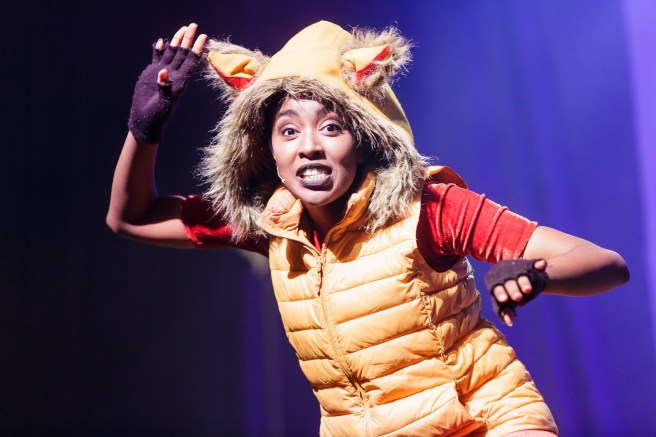
Devonecia Swartz as Best Newcomer in Jakkals en Wolf Onbeperk

The Kanna Awards:

Best literary contribution for her translation: Antjie Krog for Koningin Lear.

Best Production and Best Debut Production: Koningin Lear.

Best Actress: Antoinette Kellermann in Koningin Lear.

Best Actor: Craig Morris in Johnny Boskak voel ‘n bietjie…

Best Supporting Actress: Anna-Mart van der Merwe in Koningin Lear.

Best Sopporting Actor: Edwin van der Walt in Koningin Lear.

Best Director as well as Best Design: Marthinus Basson for Koningin Lear.

Best Musical contribution: Sima Mashazi for My Miriam Makeba Story

Best Newcomer: Devonecia Swartz in Jakkals en Wolf Onbeperk.

Herrie Prize for innovation: Rudi van der Merwe for Lovers, Dogs and Rainbows 

Best Visual Art: Ugandan Donald Wasswa and Kenyan Onyis Martin and their collective exhibition Imagining Tomorrow.

Best Technical contribution: Jaco Conradie

Special Service Kanna: Daleen Witbooi