The Javett Art Centre at the University of Pretoria Aims to Forge a Partnership between the University and the Public

Javett - UP - View 01~1

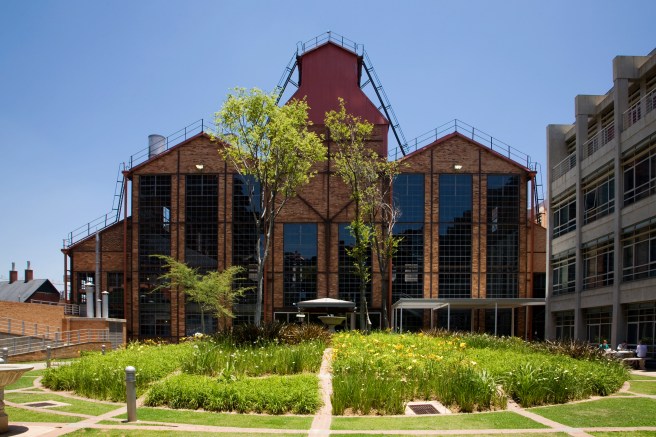
Gauteng’s latest art centre featuring a handful of galleries, something which can stand as a counterpoint to Cape Town’s Zeitz MOCAA and Norval Foundation, is in the process of being built on the edges of the University of Pretoria’s Hatfield and South campuses. Named the Javett Art Centre at the University of Pretoria (Javett-UP) in honour of its philanthropic donor, work started in 2016 and the Centre is set to open in the first half of 2019. DIANE DE BEER spoke to the architect Pieter Mathews whose firm Mathews and Associates designed the Centre as a link to the people: 

Javett Art Centre at UP (Liam Purnell) (2)
Javett Art Centre in the making. (Liam Purnell)


Even before we get to the art, which is really what the Javett Art Centre is all about, there’s the building – and according to lead and concept architect Pieter Mathews it is easily the most challenging project his firm has ever worked on.

Keeping in mind that with these grand art projects, the buildings have become as important as the art featured, the fact that the first concept design was penned at the end of 2012, captures the complexity of the endeavour. With the help of project architect Liam Purnell assisted by two project dedicated architects Carla Spies and Jannes Hattingh, their goal has been to create a space that would activate the connection between art and architecture. That’s also why the specific site (one of three options) was selected, because of the proximity of the Boukunde Building and the Visual Art Building that flank the Art Centre. “It makes sense that those three should be linked,” says Mathews.

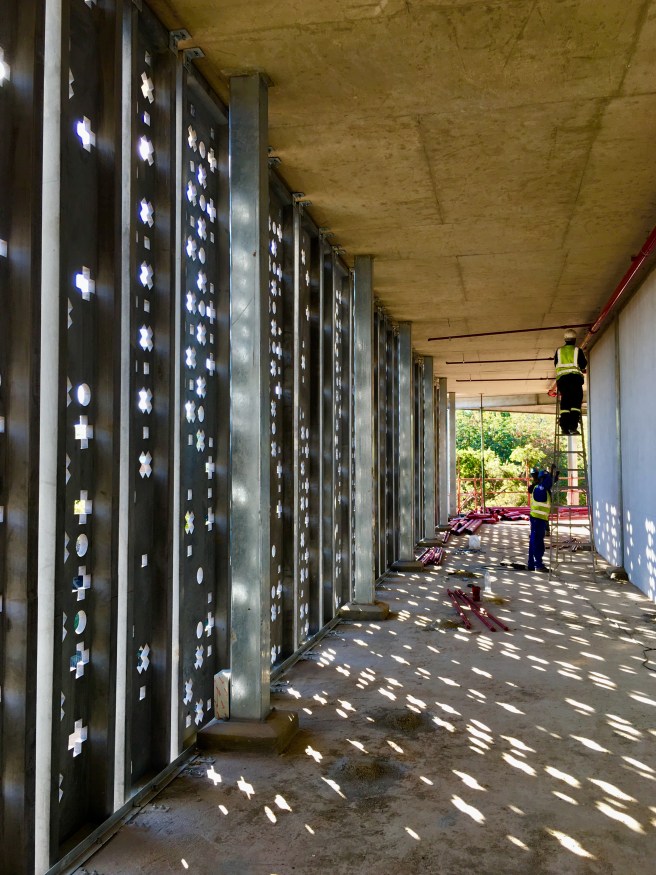
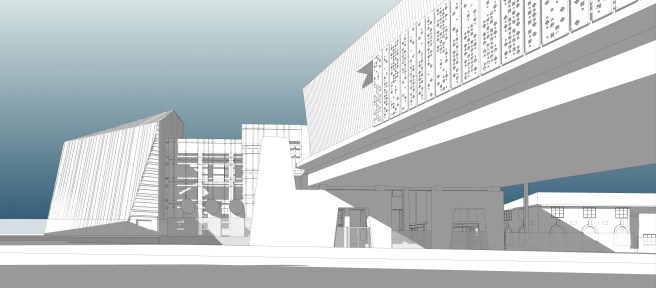
It also complicated the challenge because it meant that they would be building across one of Tshwane’s main arteries, Lynnwood Road and yet, because of their approach, it will heighten the visual appeal as well as the visibility of the centre. They have turned the bridge into a huge feature wrapped in lightweight concrete cloth that reaches across the exterior and interior based on the much-loved shweshwe fabric. This “cloth” displays many different features including a play of light and shadow also turning the bridge into an expansive feature when it is illuminated at night. “It almost looks like fairy lights glistening in the middle of the road,” explains the architect about this design feature which has strong South African connections which embraces all its people.
Javett Art Centre at UP (Liam Purnell) (1)
Shadows in Play at Lynnwood Road. (Liam Purnell).

But the bridge is also the connector between the public and the students and academics, the two campus sites and the diversity which is embraced on campus

The other reason for the site is that while it has one section on the main Hatfield campus, the section that crosses to the far side of Lynnwood Road will offer the public easy access to the galleries as well as a restaurant which will be part of the complex and is planned as an inviting addition for museum visits.

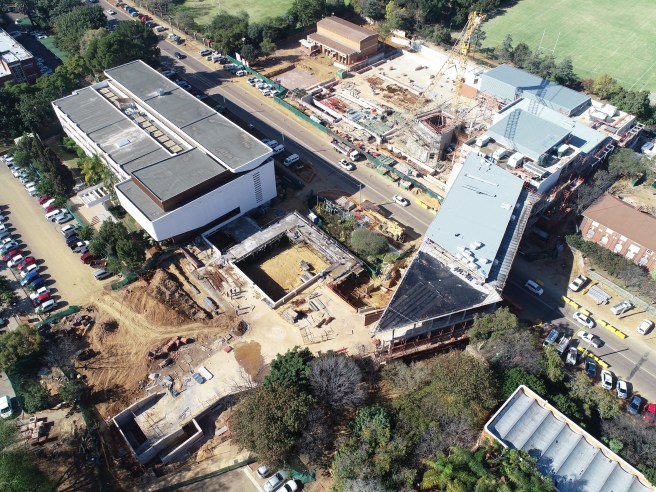
Apart from the bridge, which is also an exhibition space and offers visual invitations to the other galleries, the Mapungubwe gallery – which will house one of the most important collections entrusted to the stewardship of the University of Pretoria – is the other focal point of the Centre, towering into the sky. It adds to the dominance of the building not only because of the design but also its height.
DCIM100MEDIADJI_0098.JPG
The Javett Art Centre at University of Pretoria reaching across Lynnwood Road. (Hein Dedekind)


The building will profoundly change the landscape of the campus as well as the city. When complete, it will comprise nine distinct exhibition spaces, one of which will be housed in the iconic bridge and in addition to the Javett Foundation’s collection of 20th century SA Art and contemporary collections from the University as well as private donors, Director Christopher Till will feature exciting rotating exhibitions and the students, from across the university, will have rolling exhibitions in the dedicated student gallery. The Centre, with its focus on the Art of Africa, will also include a sophisticated restoration department and an auditorium which can be used for performances or public lectures.

Other design features that had to be taken into account were heritage buildings in the vicinity which are reflected in the design of facing walls of the new structure, trees that had to be maintained, the extension of the main artery of the university known as Tukkie Laan and the inclusion of two main squares, the Art Square which embraces both the art and the architecture students on either side and the Museum Square which is the public entrance to the galleries from different public parking spaces.
Javett - UP - View 02~1

Before any of this even started, Mathews, who has just been awarded the Medal of Honour for Visual Arts (Architecture) by the Suid-Afrikaanse Akademie vir Wetenskap en Kuns, went on a 10 day museum tour courtesy of the Mellon Foundation accompanied by the late Stephan Welz who was also instrumental in the appointment of his architectural firm together with Prof Antony Melck and Prof Karel Bakker from the department at UP where Mathews studied. It was a learning curve, an intense museum tour to different world-class institutions visiting everything from their restoration spaces to their storage facilities. They were also introduced to different curators and the way they shaped their exhibitions, all of which had an impact on the final design.

And with something this all-encompassing as the Javett Art Centre, they had to find a unifying leitmotif to bind the various elements like the bridge wrapping, the faceted concrete shell structure of the Mapungubwe “mountain”, galvanised steel pergolas and all the other building elements. The solution was found in the colour scheme determined by the concrete cladding – a natural light grey. When they want to separate various elements, they will use charcoal as the shadow colour.

Javett - UP - View 05~1Anyone who knows the architect, will deem this a perfect fit – not only because of his innovative design skills, but also because he has always combined art with architecture. “I am an ambassador for the visual environment, “ says Mathews whose firm designed amongst others the Nellmapius Bridge on the N1; the New Mussina Bridge as gateway into South Africa (expected completion date end of this year); Transport Architecture TRT stations in the historic sensitive Pretoria CBD, (for example, Rivonia Trial station opposite the Old Synagogue); and various award-winning educational buildings for city schools, including Afrikaans Hoër Meisieskool and a new music centre for Afrikaanse Hoër Seunskool. He and his Cool Capital team also hosted and designed the 2017 South African Pavilion at the Venice Biennale.

He is happy that he and his team have a good hold on this massive project. “I am very confident in the collective brain at work here.”

*The building will be completed by the beginning of next year.

.


The Unholy Trinity of Mike van Graan, Rob van Vuuren and Daniel Mpilo Richards Breaking Ground on Landacts

Landacts

DIANE DE BEER

LANDACTS

WRITER: Mike van Graan

DIRECTOR: Rob van Vuuren

ACTOR: Daniel Mpilo Richards

VENUE: Sandton’s Auto & General Theatre on the Square

DATES: Until July 29


The unholy trinity of writer Mike van Graan, director Rob van Vuuren and actor Daniel Mpilo Richards are at it again.

They have found a way to tell stories with ease about a diseased country – and have the audience laughing their heads off, while facing the music – willingly.

That’s no mean feat but Van Graan, who not only won the 2018 Hiroshima Foundation for Peace and Culture, a biannual international award recognising those who foster dialogue, understanding and peace in conflict areas, but was also awarded an honorary doctorate from the University of Pretoria earlier this year, has been peddling these political wares for a long time and has honed his skills in a way that is perfectly palatable. In fact, this artistic trio fuses three of the best in this particular genre.

It all begins with the playwright who from Pay Back the Curry to State Fracture and now the third in this alternative history lesson, has street smarts but also the knowledge and insight into the shenanigans of politicians who live in the belief that they can pull off the impossible – in plain sight. He has found a way to formulate this heady yet heavy-going message while fully engaging the audience in a rollercoaster ride of what is probably their lives.

Daniel Mpilo Richards

It’s where the fun starts – with the writing. That’s before checking into the content – simply the writing itself. Van Graan is having fun as he reaches from soccer games with political parties playing the field to Shakespeare as he runs through the titles, characters and phrases easy to pick out and giggle about. He lashes out at landgrab as he gets stuck into the Aborigine issues down under while dealing with the results of colonialism that simply won’t go away – anywhere and everywhere you look. It might seem too far away but the similarities as we all recognise are glaring. And yet, its easier to pick up on the wrongs of others, he seems to say. As he shoots straight arrow at the American cowboy who sings a looter’s lament in which he has the following demand: “You shall not take what I’ve taken from you.”

It is the third in the series and it can run forever in the world we live in today. Van Graan himself concedes: “I’m not writing, I’m editing.” But there is more to it than that. Even though there is a formula that runs through the series, the result isn’t formulaic. Van Graan is wise and he takes care with writing that is as wily as it is witty. He has always been the self-appointed town crier, felt the need to broadcast the message and down the years, he has found different ways to conduct and consummate that calling.

All you have to do is listen, smile throughout and then mull over and take the distressing truths on board.

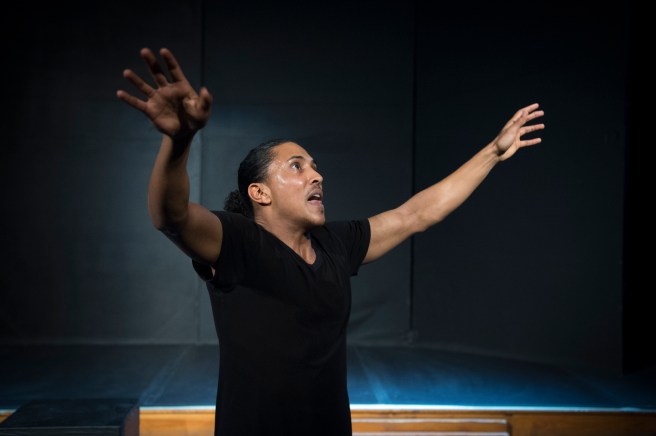
Fortunately, Richards simplifies that process. Part of the magic has been the discovery of this performer. He takes the material and has fun with it at breakneck speed which means from the start, he must be word perfect with a performance that’s seamless. None of the work can be visible and he has to be light-footed yet painfully exact with his execution for everything to work. He plays with every nuance that is required, both to entertain and to underline the gravitas of this material.

Daniel Mpilo Richards1

He has masses of talent which is cleverly displayed from his musical abilities to his way with accents and innuendo which perfectly captures a look required in this instance to tell the story. Talking car guards, someone who is part of everyone’s life daily and religiously ignored by many, the story is easy to tell and while both writer and performer want you to laugh, they also need you to squirm as Richards reminds his audience when they leave, to tip the car guard.

It’s that kind of show. As South Africans there’s nothing we don’t recognise in this familiar landscape. But it has been painted in colours that boldly slap us on the shoulder before it punches us in the gut. And to complete the circle, Van Vuuren’s touch is unmissable as he manipulates and massages the skills of a performer that’s as flexible whether he is flagrantly funny or poignant with purpose when he concludes with a reworked version á la Van Graan of John Lennon’s searing Imagine.

And sadly, at this point, it’s simply that. But at least you will walk out of there laughing…in hope as we always do.


Renata Coetzee Honoured with Relaunch of Feast from Nature and UP Food Feast

DR Renata Coetzee, a pioneer in research and awareness of the various food cultures in South Africa over five decades, passed away in Stellenbosch at the end of last month at the age of 88. DIANE DE BEER honours a woman, always a warrior, who attended the relaunch of her latest book only last month:


Through her lifetime of research and books, Renata Coetzee has built both national and international awareness of the culinary heritage of various cultural groups in South Africa. It is apt that her latest book, Food Culture of the First Humans on Planet Earth – A Feast From Nature, is currently being relaunched with a 2nd impression to bring it to the attention of a wider public.

One of these celebrations will be a dinner in Tshwane on Mandela Day to celebrate the impact of the culinary and cultural history of our first people on contemporary South African cuisine and another a launch presented at the Market Theatre the day before, July 17.

In collaboration with the DST-NRF Centre of Excellence in Food Security, the editor Truida Prekel and African Sun Media, the University of Pretoria Department of Consumer and Food Sciences will present a four-course dinner with recipes inspired by Coetzee’s decades of research on indigenous food cultures in celebration of her book.

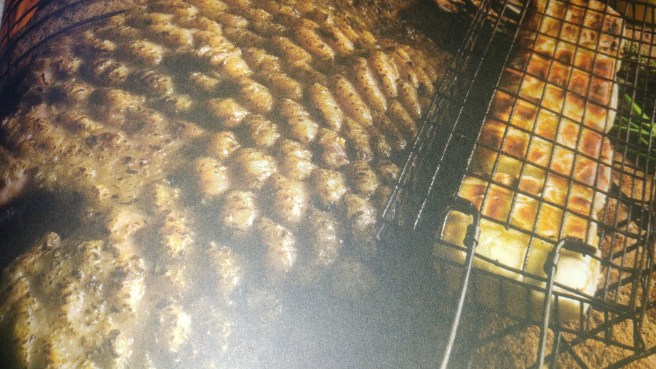
Renata's porcupine skin braai
Renata’s porcupine skin braai

The menu which will honour her research is the following: Sundowner is a honeybush and aloe cooler; First course, Nature’s Salad consists of morogo puree, spekboom gel, pelargonium sand, lemon foam, pickled papkuil shoots, compressed aloe buds, and an array of flowers; Second Course, Forager’s Pride is a dune spinach soup with deep fried warthog biltong; Third course,  Rocky Waters, includes Tilapia, buttered ice leaf, sea fennel and oyster leaf puree and bokkoms dust ; main course, Exploring Burrows presents porcupine and waterblommetjies served with “ystervark-se-mielie”, roast uintjies, crickets rice and glace de viande; and thre meal is concluded on a sweet note with  a Sunset tea party  of buchu panna cotta served with pickled t’samma, rooibos and gooseberry syrup, arum lily crumble and acacia sweets.

Many will remember this remarkable woman as someone who was obsessed with and specifically studied our roots in many different forms with the food culture of different groups as her resource. Her aim was to promote “nutritional authentic cultural cuisine” which she believed could play a huge role in our growing tourist industry – and should do even more so in the future. Her major contribution is probably scientific, but she has always tried to engage ordinary people interested in food heritage with creative and stimulating documentation of various aspects of the South African – and particularly the Cape’s – culinary culture and lifestyles.

renata's veld food
Renata Coetzee’s veld food

Her most important books in this field include South African Culinary Tradition/Spys en Drank – the food and food habits at the Cape between 1652 and 1800, featuring influences of the Malay slaves, French, Dutch and German settlers (Struik, 1977) (Afrikaans and English both out of print); Funa – Food from Africa – the food and food habits of the different African ethnic groups (Butterworths, 1982) (which should be reprinted); Cost-conscious Creative Catering and recently KukumakrankaKhoiKhoin-Culture, customs and creative cooking which was a translation of the 2009 Afrikaans version dealing with food cultures in the early days; and this present relaunched book is based on research of 15 years which aimed to preserve the culinary heritage of the earliest humans and their descendants.

She always believed that she had to understand local foods to promote healthy nutrition. At one point in her career, she was catering for Anglo American Gold Mines providing 250 000 meals a day for five years with the accent on cultural preference. That is why she was always intrigued by the palates of especially the San and the Khoi people who presented the oldest DNA. She felt she was dealt this amazing hand which would just be silly to ignore.

By going back into the past, the way brains progressed and patterns developed, all of these, she argued, influenced the way people selected food. When the San and the Khoi people split, for example, their food choices developed differently. She realised that many of these choices were made for practical reasons. Some wouldn’t let go of traditions, but sometimes the changing environment determined new dining habits. The San, for example, became hunter gatherers and the Khoi turned to smaller animals while also learning more about the veld and the plant life around them. This was all determined by the way their lifestyles changed, something which still influences and determines our eating patterns and choices today.

Renata Verjaa r 2
Foodies Renata Coetzee, Cass Abrahams and Topsi Venter celebrate in style

Because of the way she studied, researched and publicised her hard-earned knowledge through her writings and TV programmes, and formal training, she empowered thousands of women over the years, by training them in the finer skills of entertaining guests and tourists with her cultural cuisine.

This latest version of this unique collector’s book on original food cultures, A Feast From Nature (R650 is a combination of the many decades of her knowledge as a nutritionist and food culture expert with multidisciplinary research of over 15 years – bringing together aspects of archaeology, palaeontology, botany, genetics, history, languages and culture in a unique way. While scientifically sound, it is also beautifully illustrated and a true collector’s piece.

In 2015 she self-published the book, through Penstock Publishing. The first print-run of 500 copies was soon sold out – mostly to friends, family and fans. The book was reprinted shortly before her death to make her unique work available to a wider audience. Academics, researchers and food experts can also benefit and build further on her research.

According to Prekel, “Communities will benefit from further work to build understanding among various cultures and on the history of our ‘First Peoples’. Indigenous plants with culinary and agricultural potential can be further developed for food production.”

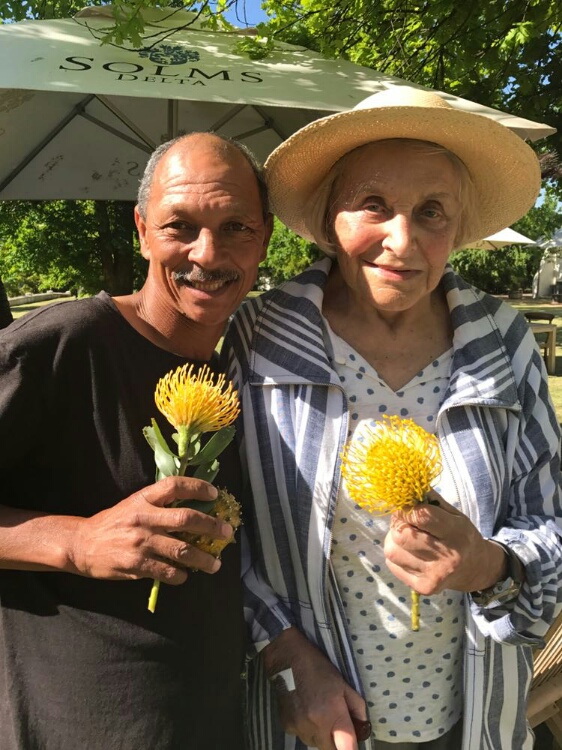
Renata en Johan by S-Delta

“Her research included interviews with many elderly Khoi-Khoin women and men in various regions, about the details of their food sources and uses. A special feature in the book is that wherever possible, the Khoi and Afrikaans names of plants and animals are given, with English and scientific names. About 250 fine photographs and over 80 illustrations of edible indigenous plants – as well as maps and Khoi traditions – make the book a journey of discovery, bringing to life the linkages between evolution and culinary history over millennia.

“The book also offers valuable lessons in terms of the nutritional value of many indigenous foods, food security and sustainability. The DST/NRF Centre of Excellence: Food Security, hosted by UWC and the University of Pretoria, has supported the reprint of the book. They, together with the Agricultural Research Council, intend doing further research on indigenous food products identified in Coetzee’s extensive work on the various food cultures in South Africa.”

Her legacy will be legendary especially as it impacts on all of our lives, not only now – but especially in the future.

The book can be ordered from orders@africansunmedia.co.za or online at http://www.sun-e-shop.co.za

feast of nature1

  • The book will be relaunched on July 17 with speakers Prof Himla Soodyall, 50:50 presenter Bertus Louw and Prof Julian May on Tuesday 17 July at 6pm at the Market Photo Workshop Auditorium, Market Theatre. Contact: zamab@markettheatre.co.za.
  • The four-course dinner will be held at EAT@UP, Old Agricultural Building 2.9.1, University of Pretoria, Hatfield Campus. For more info contact kyla.balcou@gmail.com Tickets are R300 per person.


RMB Turbine Art Fair in Newtown Cultural Precinct Bubbles with Innovation both Young and Old

Turbine Art Fair
Turbine Art Fair

In the past six years Gauteng has adopted and taken to heart the RMB Turbine Art Fair in Newtown’s cultural precinct. This year running from July 12 to 15, it again bubbles with innovation and artists from across the land trying to make their mark. DIANE DE BEER speaks to a Pretoria gallerist in this, her second fair, about her latest find. And gives some Fair guidelines:


For Ronel van der Vyver reopening her Millenium Gallery in Groenkloof returned her to a space she needed to be. It was time-out for a few years but she’s back with a bang and last year’s Turbine Art Fair was proof of that. “It felt as if I was back in business,” is how this art lover describes this coming home.

It is especially the Fair’s mission statement – that it offers an opportunity to view and buy quality artwork from emerging and established talent in a fun and accessible way, with all pieces for sale priced below R50 000.00 – that appealed to her. That implies a specific market and one where she’s happy to play. It allows some of her established artists to sell work in a specific class while it is also a great time to introduce and push new and younger talent.

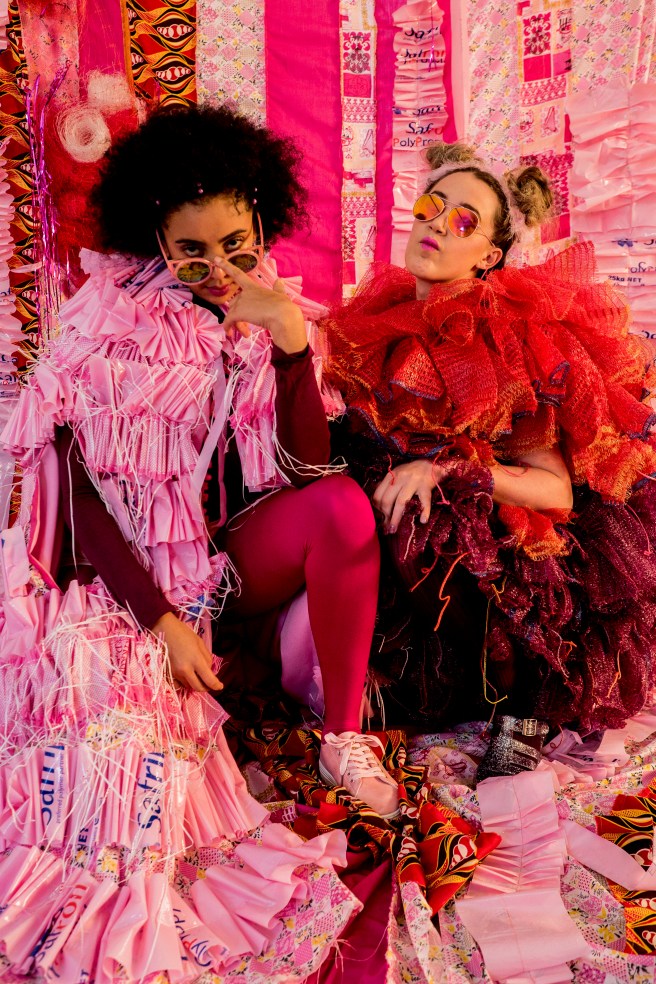
Odette Graskie's Human Noise
Odette Graskie’s Human Noise

She felt that even though last year was her first excursion into this market, she hit the mark with her selection including work by the late Braam Kruger. This year she’s excited by a new young artist she has just exhibited in her Groenkloof gallery, Odette Graskie.

This exciting young artist is a studio artist at End Street Studios in Joburg with a degree from the University of Pretoria where her most influential lecturer was Nicola Grobler, who is known for her interactive artworks. Part of the appeal for Van der Vyver was her own affinity to installation and sculpture and what she loves about Graskie’s work is the playfulness.

She explains her most recent exhibition and work that will be shown at the Fair titled Human Noise, as textile artworks that play with the idea of anthropomorphism as a tool to create an emotive response from those who encounter the work. “The figures,” she explains, “are presented in an attempt to anthromorphise emotion, identifying humanity in a psychological sense.”

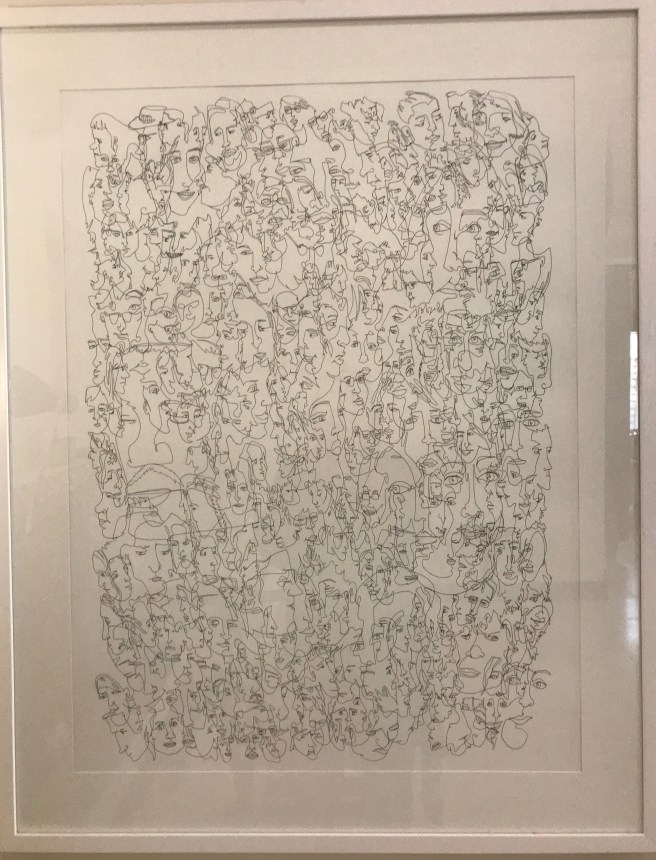
Odette Graskie's detailed drawings of human intgeraction
Odette Graskie’s detailed drawings of human intgeraction

Her title was inspired by a Raymond Carver quote: I could hear my heart beating. I could hear everyone’s heart. I could hear the human noise we sat there making, not one moving, not even when the room went dark. “I want to confront viewers with uncertainty,” she says. Her figures are suspended with string and displayed in what she describes as a “gymnastics of form”, and despite their not being alive – obviously – even if the viewer rejects interacting, they force certain issues. “The shapes aren’t all inspired by humans, but by shadows and trees passed by on a dark night or waving in the wind in a strange and magical way,” she notes.

Underpinning these shapes and forms are her drawings which also experiment with her need to dot and detail encounters with others – from strangers in the street to her closest relationships. “Working with such drawings enhances my experience of a moment with someone,” she explains. But she also explores sewing as an artform or rather, as drawing, which she views it to be. “Line is the most crucial factor in my process,” she says.

Enhancing this work which will probably dominate the Millenium stand because of its playful presence perfect for this kind of fair, Van der Vyver also features paper work by Norman Catherine, some brilliant pieces by the Danish based South African artist Doris Bloom and sculpture by Zelda Stroud.

Other highlights at the RMB Turbine Art Fair:

* Throughout the weekend, the RMB Private Bank Talks Programme has walkabouts with celebrities, art professionals and well-known artists including magazine editors, art advisors, curators, #instagrammers, major collectors and successful artists talk about their journeys.  These free walkabouts also include age appropriate options aimed at helping children understand art and sharing a vocabulary that equips them to appreciate and describe it.

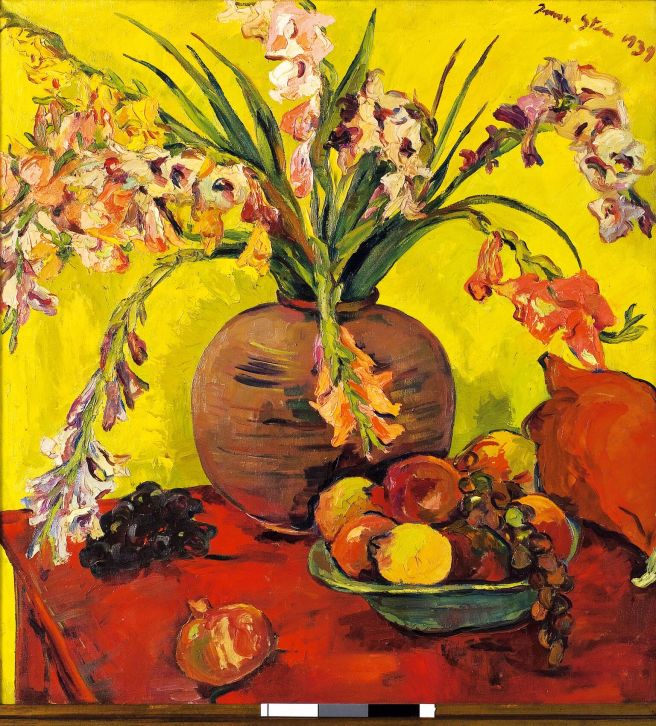
Gladioli by Irma Stern

* An exhibition featuring a selection of Irma Stern still lifes from private collections titled Is there Still Life? The Work of Irma Stern will be presented by Strauss & Co. A competition among scholars at tertiary art schools in Gauteng has also been created for artists to submit a still life in a medium of their choice and a selection of the best works will be exhibited alongside the Stern showcase.

* Installations have always been an exciting part of the Fair. Curator, Tamzin Lovell-Miller asks the question “Who are we after this “Post-Truth” time has shaped us?” She pulls together artworks that range from the finely crafted to the augmented virtual, and the interactive physical and digital hoping to inspire and encourage extraordinary new ideas.

* The Graduate Exhibition returns for a 4th year and is specially curated. It features some of the best post-graduate paintings and in 2018 the inclusion of photography from university arts departments across South Africa. The exhibition is curated by Musa N. Nxumalo.

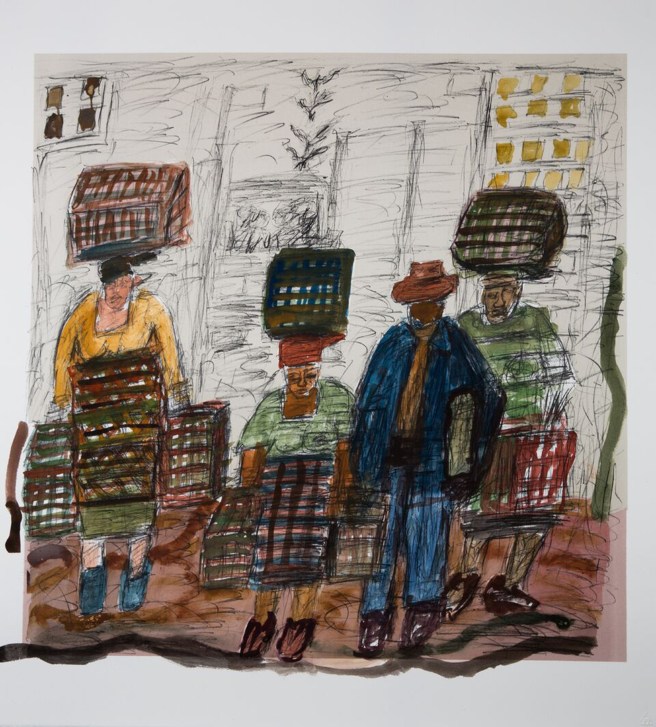
David Koloane Lithograph with watercolour finish

* This landscape. This landscape! The Quintessential Metaphor For Life by David Koloane in collaboration with LL Editions and curated by Ruzy Rusik to celebrate 80 years of artist David Koloane.

* RMB Talent Unlocked has funded a six-month intensive workshop programme for emerging artists, that integrates practical art-making (focusing on process and conceptual development) and professional practice training in collaboration with Assemblage and VANSA.  This exhibition of emerging artists is curated by Fulufhelo Mobadi.


Ticket details:

VIP COCKTAIL PREVIEW:   Thursday 12 July 6 to 9pm: R800 per person. Online bookings only, no tickets will be sold at the door. Canapés and drinks are included in the ticket price.

Friday 13 July 11am to 8pm; Saturday 14 July 10am to 6pm; Sunday 15 July  10am to 5pm.

Tickets: (via Webtickets): ADULTS: R100 online / R120 at the door; R200 online/R250 at the door Weekend pass (Fri, Sat and Sun)

CHILDREN: R50 online U12 /R80 door; R80 online over 12/R100 door

STUDENTS: R80 online/R100 at the door

For safety and convenience, it will be a completely cashless environment.

For more info or to buy tickets: www.turbineartfair.co.za


It’s Time to Send in those Clowns

Pictures: MARCELLO BASSI

LaChair_Option2
Buhle Ngaba and Klara van Wyk.

In a dystopia of Womxn’s Day pink ribbons, fuchsia-glitter quicksand and the bloodied afterbirth of a new, New South Africa, our clowns wait… while the outside world is in chaos – squabbling over fool’s gold at the end of a nation’s rainbow. This is how director/writer Penny Youngleson describes her latest show for the National Arts Festival to DIANE DE BEER:


Anyone thinking that the battles for womxn have run their course with the #MeToo movement aren’t living in the real world.

What it has done for women theatre makers and womxn artists like Penelope Youngleson in general is create a more level playing field, an awareness and a level of access to something like the National Arts Festival in Grahamstown for the first time in 44 years.

The exciting director/writer concedes that things are moving, but she has been working in this space for far too long to think that it will be easy. But she is celebrating that they are the first female company on the Main Festival in the history of the Festival. And there are more firsts on the Main.  “We are the first all-female clowning show and the youngest, and actor Buhle Ngaba is the first black female clown and one of the few in the country,” says an elated Youngleson.

But she adds quickly, “We’re not making a protest piece because #MeToo is trending and it’s the ‘right’ time to care about inclusivity: we’re making it because we want our ceiling to be our sisters’ floor.”

The protest theatre she’s referring to is titled La Chair de ma Chair (Flesh of my Flesh) which was fashioned after the male-centric double acts of South Africa’s protest theatre trope; the production consciously self-references palimpsests of local canons – including productions like The Island and Woza Albert – to interrogate our performance heritage and, in particular, its relationship to womxn as theatre activists and change agents.

She elaborates: “There is also a tongue-in-cheek nod to the classic French work, Waiting for Godot, as we observe two South African clowns…in limbo. One black, one white. They are living in a future South Africa. One beyond time as we are currently living it. And in the middle of a past we can’t get away from.”

She was first approached by her two actors Ngaba and Klara van Wyk who have known each other for years and done many of workshops and informal plays together as clowns and physical performers. They had a discussion about how they wanted to work on a piece together –  and then invited her as a writer and director.

“We started having discussions about the ‘shape’ of the project and what we were all interested in. And we pitched to a couple of festivals and platforms…and no one wanted us. We were these three womxn wanting to make a pink, sparkly show about an apocalyptic future with two clowns waiting in limbo, covered in glitter. Unsurprisingly, it wasn’t an easy sell.”

Things shifted and a couple of months ago the National Arts festival got back to them and said they wanted them to do the show for the Main stage. “We started formal rehearsal in May.”

LaChair_Option1
Buhle Ngaba and Klara van Wyk.

Detailing the production, Youngleson explains that clowning is a very specific discipline that she doesn’t have much experience in – but Ngaba and Van Wyk have been practising for years now. “Their training processes were different, but both draw from the traditional French schools and masters. Protest theatre in South Africa has a fond reliance on clowning and a celebration of the clown to unravel serious subjects in an accessible and non-confrontational format,” she notes as it also explains their choice.

“Beckett’s clowns are a different breed (in some ways) though,” she says, “and their tensions lie in the breath and rhythms of their language and their existential crises braided into the crushing banalities and minutiae of everyday life.”

“We chose clowning as one of the performance conduits in the show because clowns cannot be held accountable for their actions – they are most successful in performance when they are ‘failing’ by the world’s standards; and their humanity and vulnerability in that moment is what resonates with audience members and makes us love them for their honesty and innocence. We applaud their obtuse objectivity in the face of hegemonic morals and structures…and we laugh because we’re so relieved it isn’t happening to us! That’s what I think,” she says.

“Clowning is, in that sense, the perfect vehicle for discussing politically charged content because the clown doesn’t judge whether it’s right or wrong for more than half the population of the Western Cape to be living in apocalyptic conditions in informal settlements. The clown doesn’t preach. Our clowns just happen to live in a pink, sparkly world (where ‘the city works for you’) and nothing functions and nothing can grow and they’re stuck, indefinitely. With no hope. But it’s funny, so we don’t switch off. We listen. And, hopefully, talk afterwards.”

Youngleson further explains that South Africa is a country that lives in a constructed newness defined by its overshadowing past. “Our style and playmaking references this forward and backward dithering between who we were and who we are trying to be. I hope the piece feels very South African. It should, if we’ve done our jobs right.

“The clowns find themselves in a future, dystopian South Africa. The way we (in 2018) understand the world, is gone – but they can remember ‘before’. They’re in a no-man’s land. Which suits them just fine (being two female clowns). But how much do they have to remember to know who they are? And when does the remembering start to become rebuilding. And the rebuilding become re-enforcing…and does the re-enforcing lead to the same mistakes/atrocities being made over and over again?”

From that point of view, she believes they are, but expresses the hope that they are following in the footsteps of their South African canon of classics and that that they disturb and provoke just like these masters of theatre did before them.

Pre-empting any questions, she adds that Flesh of my Flesh refers to someone being born/made out of someone else. “It seemed like a very appropriate title for a show about how we try to live in a new, New South Africa. And, yes, the French title is a pretentious clue that we use a European tradition of clowning in our work, to critique and provoke contemporary, supposedly post-colonial content.

“There is a set narrative and a script to La Chair. There are text- and character-driven scenes…and there are non-verbal sections… and there is ‘pure’ clowning that relies on improvisation and audience engagement. The three of us each bring our own specific strengths and we’ve tried our best to marry them in this production.”

The show, which will be staged by this trio of award-winning artists at Grahamstown on the Main Festival on July 4 and 5, is multilingual and uses Setswana, English, Afrikaans, isiXhosa and gibberish. Now we need to hold thumbs that while people are laughing through their tears, it also delivers a budget for further touring.

Let’s send in those clowns!

La Chair de ma Chair (Flesh of my Flesh) performs on July 4 and 5 at the National Arts Festival in Grahamstown.


A Play of Artists by Jemma Kahn and her own Band of Creatives as 2018 Standard Bank Young Artist for Theatre

Pictures: JACOB VAN SCHALKWYK

Jemma Kahn Poster


It’s time for the 2018 Standard Bank National Arts Festival from today until July 8. DIANE DE BEER spoke to Jemma Kahn, the innovative theatre maker and Young Artist Award Winner for Theatre about her production The Borrow Pit which performs at the Festival today, tomorrow and Saturday (June 28 to 30) and at The Centre for the Less Good Idea in Joburg on July 7:


“Unmitigated joy,” is how Jemma Kahn, this year’s Standard Bank Young Artist for Theatre, describes her rehearsal process for her National Festival production The Borrow Pit.

And even though, as we know, the life of the artist is a tough and insecure one, she is delighted that in this process, she gets to look into the eyes of another artist. “It’s been a profound working experience,” is how she describes the rehearsal period which has been such a luxury – courtesy of the Young Artist award which is amongst others a monetary one – and for Kahn, there was no question, she has spent that on the people helping her produce this work.

KAHN1_PHOTO_JACOB VAN SCHALKWYK
Jemma Kahn

She describes the piece thus: “The place is London, the time 1966. Artist Francis Bacon meets George Dyer and they start a relationship. Bacon was already a prolific painter and public figure and Dyer, several years Bacon’s junior, was a good-looking criminal who had never been in a gay relationship before. Bacon liked to drink heavily, gamble, get into fights and he liked his lovers to rough him up.

“Bacon was a masochist but unfortunately George was not a sadist. So George Dyer’s tender love (inexplicable and frightening to himself) was intolerable to Bacon. He didn’t want to be cuddled and loved and tea and eggy in the bed. Their relationship was a tumultuous one, fuelled by lots of booze on both sides. A tragic quote: “Being the artist’s ‘friend’ – George played down the sexual connection – provided him with enough money to keep himself and a variety of hangers-on more or less permanently drunk”.

“As Bacon distanced himself, George Dyer, heartbroken, went to seek counsel of Bacon’s friend Lucian Freud. Freud was grandson of Sigmund, painter. Freud, like Bacon was that kind of bohemian posh that means he lived in rambling squalor and had weird relationships with his female children. Bacon and Freud were painter terribles, painting figuratively throughout the 20th century despite portraiture being unfashionable.

VANDERWALT_PHOTO JACOB VAN SCHALKWYK
Wilhelm van der Walt plays George Dyer

“Freud painted Dyer’s portrait. To sit for a portrait by Freud was a lengthy commitment of months, even years sometimes.  They must have spoken about Bacon a lot, or perhaps not at all since Freud was a famously mercurial. ‘George got very depressed’, says Freud, ‘he came and stayed with me in Paddington for a while, and I painted him. In the end of course, he killed himself.’ George Dyer died of an overdose in a Paris hotel room in 1971. Two days later a large retrospective of Bacon’s work opened in at La Grande Palais, Paris – many of the paintings on the show were of Dyer.

“Is art more important than people? Are the paintings of Dyer by Freud and Bacon more valuable than he was himself?”

MIYAMBO1_PHOTO JACOB VAN SCHALKWYK
Tony Miyambo plays Francis Bacon

Bacon is somebody who has been floating around her head for a number of years, has even featured in a short film she produced recently and while there is something about actors and celebrities, artists, to her mind, will trump that every time. Her description gives some impetus to the inner working of the play, and what a group of artists of the stature she has gathered, can do with the rich world they have been tasked with.

Some background: Shortly after graduating Kahn spent two years in Japan which had a strong impact on the content and form of her work. Her primary theatre focus is Japanese kamishibai or ‘paper theatre’, a 12th century highly visual storytelling medium. She has been creating and performing kamishibai since 2009 and the interesting aspect has been the way she has developed this particular form of theatre to tell her stories – each production evolving into something that opens yet another avenue for her to explore. And she makes grand leaps.

VIVIERS1_ PHOTO JACOB VAN SCHALKWYK
David Viviers plays Lucien Freud

Collaboration has always been part of her creative process and this time the funds allowed her to stretch that as far as she possibly could. “They had to be paid well,” she stresses. It started with the writing, yet she simply couldn’t afford to bring on a fulltime writer so instead she invited writer/director/film composer Marco Dutra to collaborate on the writing. What it did was to open up the thought processes and filter all those layers while exploring the script. On Skype they teased the thing until it was ready to stand on its own, is how she describes it.

On the production side she further surrounded herself with Jacob van Schalkwyk, artist/writer/filmmaker, as dramaturge and the man who has to bear witness to everything, especially because she was both playing and directing; her childhood friend Rebecca Haysom, an illustrator/artist/curator who helped her with the paintings; and box designer/artist/framer Wessel Snyman who made her the most insanely perfect boxes, which is how kamishibai reveals itself.

On the acting side, Tony Miyambo plays Francis Bacon, “simply because that’s who he is,” David Viviers is Lucien Freud and Wilhelm van der Walt is George Dyer. “They’re all just so gentle and smart,” she says and again waxes lyrical about the process and being allowed to watch how other actors work at revealing their characters. “They arrived in the room at different intervals,” she explains introducing her own role as “everyone else and then some”.

For Kahn, it has been all about the process and when speaking to her just before the company left for Grahamstown, she had earlier found herself in bed reading a book – quite relaxed. But that has been the result of a rigorous planning process and the knowledge of what the rehearsal process has meant to her.

When she received her award, she was told by a wise soul that she could opt for something that would be a commercial success or she could take this opportunity to do exactly what she has always wanted and be damned. No guesses there!

Even if The Borrow Pit appears and disappears swiftly, “sinks without a trace”, Jemma Kahn will have the memory of the artists and the process – worth its weight in gold.

Those of us following her career though have none of those rewards. We need to see it!

*Sadly for those wishing to see, all tickets sold out for Joburg shows. But yea for the arts and artists!!


A Tale of Two Siblings Told in Travel and Food – Nataniël and Erik le Roux

edik6
Men on the move.

Edik van Nantes: Winter is the fourth and last in Nataniël and his brother Erik’s kykNET series, finishing a particular story which started with the one brother living in the area and the other joining him to, amongst other adventures, discover their roots. DIANE DE BEER reveals more about the Le Roux siblings’ French love affair which can be seen from July 4:


Food is the binding factor although Nataniël is quick to insist that it isn’t a cooking show. “I hate those,” he says, “they’re boring.” Even if his brother has cooked in restaurants and he has spent his whole life dealing with food in some way, neither regard themselves as a chef. “We’re home cooks,” he says. But they make an abundance of food in the series, making sure there’s lots of chat and other things happening in-between.

Their secret ingredient is that Nantes is Erik’s environment, his home, and one that Nataniël has lost his heart to. “I love the old buildings, it’s as if they keep me safe,” he explains. And this love affair spills over into every frame of the series.

edik5
The beauty of the country architecture.

He won’t leave South African soil, he knows he really misses his people – his family and friends – but when he is here, he misses Nantes, the place. It’s a different universe, one where he can immerse himself in culture and architecture, art and innovation. Erik is excited by Brittany’s food even though Nantes is no longer part of the region, while Nataniël delves in the Huguenot history. And the food is hearty and wholesome, food they like to eat. “Neither of us is attuned to fine dining,” he says.

The first season focussed on farm life, followed by châteaux (castles proliferate in the French countryside) and then the previous series focussed on city life. “Most of Europe spend most of their life in cold weather,” says Nataniël and he realised that while they had been cooking spring and summer cuisine in the first three Nantes series, the last would have to feature winter food. That, he also knew, isn’t the easiest thing to present, because the most prominent of dishes, stews, don’t film well. “There’s only so much you can do to tart it up visually,” he says. And they don’t like fiddling with the food because it also serves as meals for cast and crew.

Edik1
Water dominates the city of Nantes

“Everything we made was a full-on feast for all of us working, following the shoot,” he explains.

Village life was to be the setting for this one, that and a search for their forefathers. “I needed to know what this landgrab would mean for me,” he says with a twinkle in his eye to not only South Africans but also his French hosts.

While he believes this series is visually the most beautiful, it also cost blood, sweat and tears. “We don’t have stylists and set designers and builders. We had to do it all ourselves.” What he means, is that they had to create the studio where all the cooking is done. Because they were shooting village life, it had to be in one of those tiny houses that open onto a French street. “The house literally starts shaking when a baby in pram passes by,” he says. And the ceilings are too low and…

edik4
A brotherhood – the Nantes gang.

So what they did was to recreate a miniature studio for themselves in the loft of one of these homes. Then they had to deal with the cold. “A dishcloth turns to ice and when you’re cooking and chatting, steam seems to pour from your mouth.” But they were getting used to extremes because Europe is currently experiencing the hottest and coldest seasons for decades. “We have cooked in both 17 and 47deg,” says someone who likes a temperate environment.

And while they were battling the cold, they were also fighting the clear blue sky and the sun. “When it rained and snowed, that’s when we got the cloudy weather we needed, but at its coldest of course, are these beautiful days that don’t translate as winter on television!”

edik3
The silence of winter climes.

The atmosphere he wanted to encourage was a spooky one with evocative death dolls and missing soldiers, superstitions and investigations of mourning, all part of his French tale.

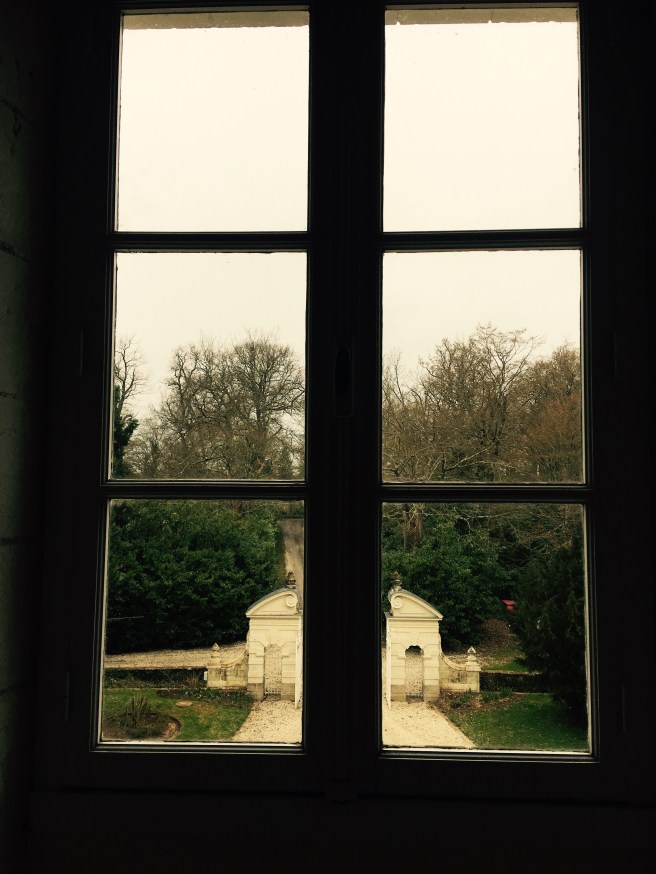
Their food choices were also determined by the harshness of winter in this region. Pantries had to be stocked with all kinds of delights which could be added to meals that would be prepared later. “It’s the concept of living inside, something foreign to South Africans – pretty much. Think home movies, crafts, hobbies, board games, all the things people do when most of their time is spent inside the home.”

Because they were shooting in winter, they had to contend with the darkness descending earlier, which they weren’t used to, and then you have to get through long evenings. The result was that Nataniël could again have fun with his lavish table settings. This time he was inspired by the shocking colours and grotesque images from across the street where a Salvador Dali retrospective was being exhibited, the largest ever held outside Spain. “It was pure coincidence, but we could watch the queues snaking around the building and see the amazing images of people hanging out of windows and strange creatures,” he explains.

edik7
Room with a view.

“The Tannies are going to complain because it all exploded on my tables!” He describes what he created as a cross between Salvador Dali and the Owl House in Nieu Bethesda.

Knowing that this is the end of a very specific chapter in his life, one that he describes as the most joyous, he is grateful to Nantes that turned into a city of inspiration. It is as a city of contradiction, he says “It’s a Medieval city that has an obsession with modern art!”

That’s what this place brought to the table. Because he believes and finds food TV boring, he understands that you have to introduce different flavours. It also helped that the two Le Roux brothers were creating this series from nothing. Neither of them watches food television and they’re not part of that world, so what they do is completely instinctive and inspirational.

Always the one pulling the strings and managing his own career, he doesn’t say what’s next and doesn’t want to show his hand just quite yet. Enjoy this current series of 13 episodes which starts on July 4 on kykNET (channel 144) at 8pm (with re-broadcasts during the week). But remember to wait and watch, Nataniël is again entering a new phase and if anything, it will be something he is excited to reveal – and play with for the next few years.

Joburg Ballet Dance with Their Soul in a Season of Redha and Raymonda Act 3

Pictures: Lauge Sorensen

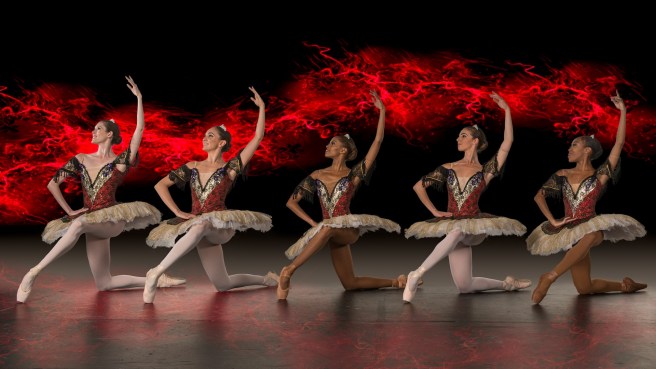
Joburg Ballet_members of the company in c1_Photo Lauge Sorensen_med res
Whispers Of My Soul by Redha

A dynamic double bill, Fire and Ice showcases Joburg Ballet’s latest season in two contrasting ballets, the classical Raymonda Act 3 staged by Brazilian producer Guivalde de Almeida and and Whispers Of My Soul, a world première by internationally acclaimed French-Algerian choreographer Redha. DIANE DE BEER speaks to these two visiting artists as well as CEO Esther Nasser about dance:


It was immediately obvious when I walked into one of the two rehearsal spaces of Joburg Ballet at the Joburg Theatre that this was a different company to the one I had seen approximatelty three or four years back.

Not only has classical ballet always battled elitism, but it took this country – because of its past beliefs that classical ballet was suitable for only specific bodies (white) – longer than most to transform. However, in the past few years things have been moving at a rapid pace and for someone not aware of the changes, the room is suddenly charged and the upcoming season an exciting lucky packet with lots of surprises hopefully spilling over onto the stage.

It would be easy for them to only stage the much-loved classical ballets, tickets would sell, and many would be smiling but the future of the company would be uncertain. “This is a youthful and vital company,” says CEO Esther Nasser (since 2016), “and it is important to challenge them with new work.” They also need to grow young and new audiences with ballets that will appeal and tempt them to the theatre.

Joburg Ballet_members of the company in Fire & Ice_photo Lauge Sorensen_6_Med Res
A scene from Raymonda act 3

With the company itself in transformation, that should also be reflected in these showcase performances. The two chosen works are vastly different technically with the beautiful classical Raymonda Act 3 which has never been danced locally before moving into the explosive, contemporary Whispers Of My Soul created by a choreographer who knows this country and its dancers. The classical work is exuberant and precise and was first seen by Nasser and artistic director Iain MacDonald on a visit to Brazil. They extended an invitation to the producer Giuivalde de Almeida to stage this ballet with the Joburg Ballet dancers.

“He teaches and stages work around Brazil and the world and his work is extremely precise,” she says.

Joburg Ballet_Guivalde de Almeida in Raymonda rehearsals_2_Photo Lauge Sorensen
Guivalde de Almeida in Raymonda rehearsals

Bringing in a teacher from the outside is invaluable for the dancers because they pick up on individual points that can make huge differences to a dancer’s work and performance. De Almeida, explains Nasser, is a gentle man and he immediately expresses his affinity with the South African dancers. For him Raymonda Act 3 is a challenging work but his local pupils are like sponges and he is delighted with the progress. Because it is a new work, the bar is set high and the technical demands specific.

The excitement of a classical work never seen on our stages before that carries such depth, is good for the company and for audiences.

Redha comes from a completely different world artistically. He wears his heart on his sleeve, tells his dancers what they are doing right and wrong and demands everything. This French-Algerian choreographer has been here a few times before doing work for companies that Nasser was running at the time.

“He doesn’t hold back,” she says but if you have seen his work like CrashDance or his reimagination of Giselle, he is always worth watching. “If he asks for international quality, you had better give him that,” says Nasser, who is thrilled by both these dance masters in their different fields working with this young company.

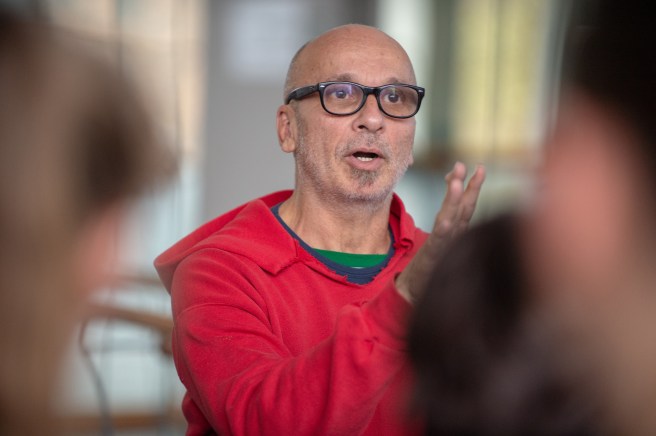
Joburg Ballet_Redha in rehearsals_Photo Lauge Sorensen
Redha in rehearsals.

Redha loves working with a company that deals in reality and has a vision. “It’s good to be in a space where you can talk to people,” he says. For him the work talks about life, and obviously part of it is his own life. He always remembers when creating that people come to the theatre to be entertained.
“It’s a sacrifice, they pay money and they want a journey,” he believes. “They have to be touched. You can’t leave the theatre unchanged.”

He doesn’t want to speak about the content, rather the people. But he does explain that Whispers Of My Soul is all about the imperfections of being human. It’s about losing time, losing people and then missing everything you lose. Communication is also an element. The way we speak to one another today or don’t, drives Redha to examine how humans communicate with one another. “If you don’t speak to me, we’re all machines,” he says in disgust as he disses texting. This is an artist who has little patience with things that don’t work for him in this modern world.

“Art is a social and political reflection of the world we live in,” he stresses. “We have to entertain.” And then follows the but, “we had better have something to say. All the best writers do.” He feels strongly that as his company of dancers have to show the weaknesses and the strengths, the fragility and the extreme hardships of loss for the dance to have impact.

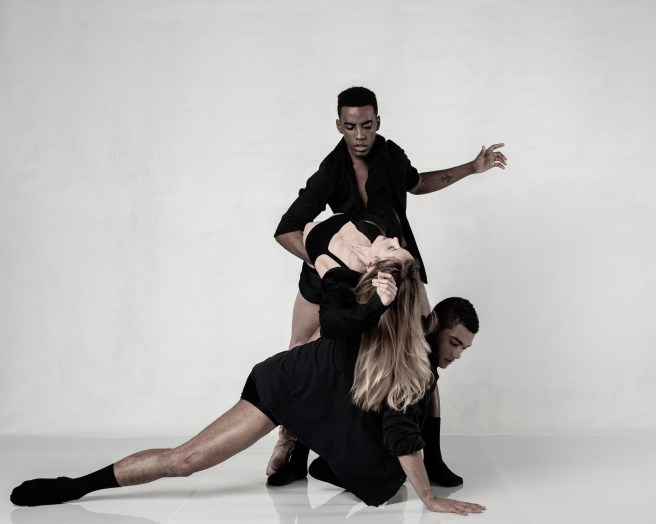
Joburg Ballet_(top to bottom) Ruan Galdino, Shannon Glover & Revil Yon in Whispers Of My Soul_photo Lauge Sorensen_med res
Joburg Ballet_(top to bottom) Ruan Galdino, Shannon Glover & Revil Yon in Whispers Of My Soul

Wherever he works he likes to incorporate the spirit of the country in his work. “That’s how you touch people,” he insists, something he regards as an obligation. He talks about countries like Colombia and Argentina where he worked recently and how important art becomes. Their lives are so tough that art is vital, he says. But in Africa, a special place, music is part of life and the secret with this work is to bring stories we don’t always want to hear.

For the dancers it is all about the soul. That’s what he’s working with when he drums it into the young dancers to pay attention and to do things exactly the way he wants them to. “With each step, you have to bring your history.”

For both Redha and De Almeida, that’s simply what artists do.

Joburg Ballet_Ana Paulina rehearsing Raymonda Act 3_Photo Lauge Sorensen
Ana Paulina rehearsing Raymonda Act 3

BOOKING INFORMATION

Dates, Times, Prices:

Fri 29 June at 19:30 – Half Price: R100, R138, R188, R205, R238

Sat 30 June, Sat 7 July at 7.30pm& Sat 30 June, Sun 1 July, Sat 7 July, Sun 8 July at  3pm –R200, R275, R375, R410, R475

Wed 4 July at 11:00 – All tickets R100

Where: Joburg Theatre, Braamfontein (GPS -26.191316, 28.038519)

Book now: At Joburg Theatre Box Office, tel. 0861 670 670 or online at www.joburgtheatre.com or www.webtickets.co.za

Patrons can also book and pay via the Nedbank app and at selected Pick n Pay stores (full list at www.webtickets.co.za/pnpoutlets.aspx)

Zikhona Sodlaka Stakes her Claim as the Majestic Queenie in the Market’s Nongogo

Photographer: Lungelo Mbulwana

_DSC4228
Zikhona Sodlaka as Queenie with Bongani Gumede and Peter Mashego in the background.

DIANE DE BEER

NONGOGO

DIRECTOR: James Ngcobo

CAST: Zikhona Sodlaka, Vusi Kunene, Peter Mashego, Bongani Gumede, Zenzo Ngqobe

LIGHTING: Wesley France

SET AND COSTUME: Nadya Cohen

VENUE: Mannie Manim at the Market Theatre

DATES: Until July 15


Queenie towers over everyone in the room with her power, personality and presence.

The casting is a stroke of brilliance with Zikhona Sodlaka making her debut at the Market Theatre in the role of a woman who encourages many different interpretations. She is described as “a woman of strength, determination and courage as she dreams of a better life and has a past that’s riddled with dark secrets”.

_DSC4183
Zikhona Sodlaka as Queenie with Peter Mashego as Blackie

Sodlaka takes Queenie by the scruff of the neck and turns her into a creature so mesmerising, she completely inhabits the stage as she stalks the room filled with men, all who only have eyes for her –  and each also with his own desires and needs.

Johnny (Ngcobe) appears in the room almost like a whirlwind as he broadcasts the possibility of a big entrepreneurial break. Queenie is immediately enchanted by this handsome stranger who is filled with dreams that appear close to her own. He opens up to her as she does to him much to the distress of her longtime partner Sam (Kunene), a tough businessman who believes he has total control over this woman and in the end, is nothing more than the pimp he used to be. Blackie (Mashigo), her deformed almost slavish hanger-on, will do anything for this woman he is so obviously bewitched by.

And thrown into this mix is the familiar drunk, always part of the shebeen, Patrick (Gumede, a Market Lab alumni), the man who because of his addiction can be manipulated by those who have dark needs.

The setting is Queenie’s shebeen, one of the few places of freedom during the apartheid years. The stage is set for a play of Shakespearean emotions driven by Fugard’s understanding of the human condition and his language that lies easily on the tongue.

_DSC4205
Vusi Kunene as Sam with Zikhona Sodlaka as Queenie.

But in the end, it is the performances in a piece that’s all about ensemble with the queen bee at the centre. Sodlaka is easily up to the task as she rises in raucous laughter, then sinks to the depths of despair at the snap of a finger. Her Queenie is someone who is at the service of others, always trying to please, with hardly anyone really seeing her as the woman she is. Until this stranger enters. She allows herself to see possibilities and opens herself up once again to the charms of this man who she invites into her inner sanctum which has been closed to others for such a long time.

From a tiger to the coquette, it’s all there as she is thrown about by those who demand and dominate her life – but no more. This is her chance and she will fight for it.

_DSC4285
Zenzo Ngqobe as Johnny.

On the night, the men were still struggling to find the rhythm and momentum of their moves, especially Ngcobe, who started with a sprint rather than a canter and then had nowhere to go. This fine actor will fine-tune and come with more nuance as will Kunene, whose initial whimper should be stronger from the start to establish the potential power he has over this strong woman who seems to be her own mistress as she plays with her new man.

Mashigo’s shuffle in both stature and character was pitched perfectly while Gumede’s cameo as the drunkard, intoxicated as well as in remorse, hit all the right notes. And once all these men slip into sync, it will unleash the full power of this intriguing Fugard play.

_DSC4269
Peter Mashego and Zikhona Sodlaka waiting their turn.

Ngcobo’s second attempt is fascinating with a cast so different from the first time round a few years back – and brave. That already changes the piece. The intro (without spoiling the surprise) which establishes a particular approach to the play, could have been signalled again at a later stage to establish the intent. And similarly, one is puzzled by the decision to keep some actors on stage throughout, while others enter and exit the stage. Perhaps uniformity would have served the play better.

But with all the niggles, and that’s what these are, it is a production that excites and exudes energy as it explores the agony and ecstasy of people trying to live their lives in the toughest times – to the fullest.

Chantal Stanfield Tells and Does it Her Way In Koe’siestes to Kneidlach

DIANE DE BEER

Chantal Koe'siestes to Kneidlach
Chantal Stanfield in Koe’siestes to Kneidlach

FROM KOE’SIESTES TO KNEIDLACH

WRITER/PERFORMER: Chantal Stanfield

DIRECTOR: Megan Furniss

VENUE: Sandton’s Auto and General Theatre on the Square

DATES: Until June 23


When actress Chantal Stanfield asks someone about a word a family member of her soon-to-be Jewish husband used in her presence and she discovers it is derogatory on par with the K- or N-word, she is devastated knowing that it isn’t something she can just let go. She would have to tackle it head-on. But how? Well, by slipping it into a play naturally. Checkmate!

This is why it is such a savvy piece of writing. The above is the only section where she really goes quiet and addresses the elephant in the room in serious fashion, but then she flips it to the bright side with her winning solution to a devastating dilemma. That’s how she approaches her marriage, that of a Coloured woman (“some are comfortable with the word and others not,” is how she deals with that) with a Jewish man.

chantal2

Everything has a context and when she deals with this particular cultural clash we know it is loaded on many levels – one could say in today’s world but really, it seems to get worse by the day looking forwards and backwards. What she has done though is found a young man with a sweetly suburban family where the happiness of the individual is the most important driving force. Ditto for her Cape Flats family. That is rare – sadly. Usually families are much more intent on cultural homogeny and protecting their purity from outside influences rather than individual happiness.

She dives right into the religious aspects of the relationship as she joins her new boyfriend and his family for Shabbat, a Friday evening meal that begins with a blessing called kiddush followed by another blessing recited over two loaves of challah.

And while those in the auditorium obviously au fait with these cultures on both sides are collapsing all around, what she is dealing with and sharing is both funny – and not. But again, she has found a way to put it out there while being entertaining and allowing people to face their fears, laugh out loud and then discover what we’re doing to one another. She goes on hilarious rants pointing to all the humiliation dumped on her by yet another family member or friend from her soon-to-become relations who congratulates her on her well-spoken English and comments from within her own community that with this union, at least her children have a chance of better hair!

chantal 1

Stanfield is both smart and talented. She plays with accents, languages, hairstyles, how to dress when and introducing friends to family. All of this is set to a musical soundtrack which is also clever because her other half is musician RJ Benjamin. They met because she was listening to his music while working in Turkey and started tweeting him which started the ball rolling – big time. That’s where the story begins, and the actress has found a way to delve into her life which affects so many people, while others can listen and learn.

While it deals with the world’s most single-minded problem, racism, something few want to grapple with, she has turned it into entertainment, making light of her love entanglement yet never diminishing the disastrous effects of racism on individuals. Her show invites people to listen and participate in a way that few of these discussions would.

Solo shows are tough to do. Not only are you the only one on stage, but when it is your story, the vulnerability issues are vast. But Stanfield has turned all of these to her advantage. Because she tells a story that is heartfelt and obviously hers, she makes no bones about that, it works. She delivers with ease on every level and ticks all the boxes with authenticity and honesty ahead in the race.

She has a smart director which you need in this instance when flying solo with your own story, and one who understands the world she is navigating. All of these combine to produce comedy with a conscience which is probably the best way to deal with issues that have been around forever yet desperately need to be dealt with – constantly.