Engaging With The Diversity Of Our Narratives Is How We Learn From The Past And Progress Into The Future

 It was the best of times, it was the worst of times, it was the age of wisdom, it was the age of foolishness, it was the epoch of belief, it was the epoch of incredulity, it was the season of light, it was the season of darkness, it was the spring of hope, it was the winter of despair. ­– Charles Dickens, A Tale of Two Cities.

DIANE DE BEER

NEW-TIMES-COV

New Times by Rehana Rossouw (Jacana):

Familiar and startling as the quote (above) might be, it is the perfect introduction to Rossouw’s book as she must have intended – placing it on the page preceding the start of this involved and intriguing tale of a country at the dawn of its democracy.

It points to many different things including that familiar adage that the more things change, the more they stay the same. It’s the never-ending cycle experienced through the ages, as the story takes the reader back more than 20 years to a time of hope and distrust, mingling together in a way this country had never experienced and allowing for many different narratives to develop.

The excitement was palpable, and remembering those heady days at a time in our country’s history when we seem to be experiencing this kind of maelstrom yet again is a reminder of the validity of the Dickens quote, and adds to the depth of the story which makes it so much more than mere fiction.

Most of us will have our own memories, but what Rossouw is doing is dipping into her own world to tell a story and investigate certain personal truths she wants to play with.

Rehana Rossouw

But she stresses: “The story is not mine, although I was a political reporter in 1995 and I was covering Parliament and the Presidency. Nelson Mandela’s timeline in the book is accurate and all the issues Ali covers were unfolding at the time. And I do have PTSD (post traumatic stress disorder), partly as a result of covering all the political violence of the 1980s. I began writing the novel out of frustration with the Fallists: in many interactions I had with them there were two refrains: Nelson Mandela was a sell-out and violence is a justified form of protest. I wanted to explore how compromised Mandela was as he spent most of his presidency involved in work on reconciliation and did little to ensure redistribution of wealth to poor and black South Africans.”

She does however emphasize that the book was written in anger and that she was unhealthily obsessed by violence. “I need to write for other reasons, other than healing,” she says about future work. But it feels as if she hasn’t quite finished what she has started in her first two books – both so revealing in different ways of so many different issues which is what makes her stories so powerfully engaging.

Her father died while she was writing, which was incredibly stressful and triggered one of her worst bouts of PTSD flashbacks and she explains that all of the symptoms Ali experiences are hers. She would write during these attacks which is why they make such an impact and feel so immediate and raw.

The PTSD flashback, for me personally, was a revelation. Of course, when you look back at our history and what journalists were put through during those horrific, oppressive years, it is understandable.

It’s not as if no one has spoken about it before but Rossouw has given it a personality in the form of Ali and lifted the veil for us to experience what it feels like and how it happens. It did catch me by surprise and brought a renewed awareness of the different lives led in the same country from so many perspectives – not just the obvious ones.

That has always been both our challenge but also the fascination of living here – and as Ramaphosa pointed out time and again in his first State of the Nation Address – as one people.

But writing about the PTSD as she does also plays into her engagement with the Fallists. “Don’t lead your people into violence,” is what she argued strongly because students can do their protests legally and Rossouw is still carrying the pain of the violence she witnessed and experienced. She knows what that does to a life.

Being a woman in today’s world is not an easy thing – and again this changes from individual to individual and personal circumstances. Ali’s struggles in her community, who she is, her coming to terms with her sexuality in a religiously conservative environment, where being a woman comes with very particular problems, drive much of the story.

She’s appealingly hardcore, a politically-driven journalist, the toughest job in a country as volatile as ours – especially in those times if you had all the cards stacked against you. Ali was both female and a woman of colour. That was enough to make her world a much tougher one than many of us experienced.

We are currently living in times when perhaps we look at the world more cynically than we did in the Mandela years. And many believe that skeletons from those heady days will all start tumbling out as Zuma tries to salvage some honour.

That rockets this book into a heightened space even though it was relevant from the start. That’s the thing about our stories. We live in such a divided country still. What that means is that some narratives still play out more loudly than others and the different sections of society are at odds often because they ignore the similarities and focus on the differences, which should be exciting and embraced rather than viewed as a threat. But that’s the world we live in and who we are.

Reviewing our world today through the prism of the past but selecting specifically a time that is arguably viewed by many as golden years, reminds us how far we have come and who we are becoming, even when it is a sometimes an excruciatingly bumpy ride.

And in-between all these huge stories, Rossouw reminds us that there are the smaller individual stories about people who are affected directly as history plays itself out around us. It’s fast, furious and I love the fact that I am constantly learning more about our people and this place when I read stories from here.

In a fractured society and world like ours, it’s the best way to discover who we are in all our rich diversity.

And as Rossouw talks about issues she deals with when writing, she concludes that with everything that has happened in her life, she would still rather be part of the oppressed than the oppressor.  That’s why her stories have such power and reach – especially today.

With Laurinda Hofmeyr At The Helm, Afrique Mon Désir Makes The Right Sounds

Laurinda ensembleAfrique Mon Désir, both an album and a live show to be presented at this year’s Klein Karoo National Arts Festival following their amazing debut in Stellenbosch at the Woordfees, is the culmination of many different desires but more than that, the right people at the right time for performer/composer Laurinda Hofmeyr to stretch herself and broaden her scope. She talks to DIANE DE BEER about this latest venture, which can be seen at the Klein Karoo National Arts Festival in the next few days but watch out for further sightings as well as a trip to France:

It began with a meeting with Nico McLachlan of the Cape Town Music Academy who sponsored the project and was the initial driver. He introduced her to the then director of the Alliance in Cape Town, Christian Pizafy, who organised a few concerts at the Alliance through 2015 and 2016.

Hofmeyr’s magic has always been setting Afrikaans poetry to music with strong African rhythms inherent in the music. “The crowd at the Alliance was very multicultural and quite a few French people also attended. So I made a point of throwing in a sentence or two in French into the English presentation (where I sang Afrikaans songs). I liked the context; it was as if I heard the Afrikaans poems as pearls when I sang to a multicultural audience.”

It was also McLachlan that suggested she branch out with the same art but in a new direction. “He suggested I take French poetry from Africa (actually English was initially also included in the mix) and put it to music. I was hesitant because I thought Afrikaans was the only language where every word had a special colour and texture for me.

“I think the longing poems, the French that I could speak as well as the French African people far from their homes in Cape Town, were probably the elements that ignited the project,” she explains.

The thing that finally convinced her was that McLachlan said the newly founded Cape Town Music Academy would sponsor her and fund the new CD, also titled Afrique Mon Désir.

This was a new world for this lone musician, who in the past had to battle her way through the artistic world just to get herself heard. She has always had her followers (myself included), but not the audience that her extraordinary work deserved. While she is a niche performer, it was as if her audience had not yet found her – and perhaps the language was limiting.

Afrique1

Another theme in her life has been French, as both school and University French had opened doors in her head and in real life. “Important people in my life also had a French African connection (like Breyten Breytenbach). The only connection to French I had for a long time though, was speaking to the car guards, all people longing for home.”

The fact that McLachlan was aware of French-speaking people far from home (maybe through the Alliance) made him suggest that they bring musicians from French-speaking countries into the project. Here Pizafy from the Alliance assisted in a huge way. “He listened to over 70 West African musicians and chose 10 for a workshop in December 2016. From these, we chose the three fantastic singers and the one guitarist that forms part of the Afrique mon Désir Ensemble,” she says.

During the workshop Hofmeyr realised that the theme of ‘world music’ being an inspiration for her, was also taken to new heights with this project. Another musician, Régis Gizavo (a Madagascan accordion player), was also brought on board, someone she describes as one of the most amazing musos she has ever met. “He took just one take with most of the songs and that is without even listening once to a song before he started playing along.” (Sadly, he died unexpectedly only a few weeks after the recording.) “I feel very blessed to have shared some of his last musical moments on this planet.”

The poetry was selected from countries like Madagascar, Senegal, Mauritania and Chad and she was assisted by Catherine du Toit, head of foreign languages at the University of Stellenbosch, suggested by Breytenbach. “All French departments at different SA universities were busy with a project where a famous poet from Madagascar was translated into Afrikaans and English. That was the first poet that Catherine introduced me to. With each poet, she chose a few poems herself that she thought would be workable; not too long, and then I translated every word for myself with a French dictionary.

“Before actually trying to set the poem to music, I made sure that the words had a colour and texture for me and that I was convinced of my interpretation. Only then did I choose a poem or two from a specific poet.

“I also did some research of the countries where the poets were born (most live in non-African countries now). I tried to listen and read about different musical traditions and how the musical elements are used in those traditions which I used as inspiration. A good example is Mon pays and the suggestion of a Modus that I heard in Mauritanian music. I tried to let my picture of how the landscape would look, where the poet grew up, correspond with the feel of the music.”

Combining these new French-African poems with some of her Afrikaans poems already set to music, her selections were determined by those that had specific themes of longing and of course, Africa.

“Working with the four musicians made me aware of all the borders drawn between people through language, a different culture but also through socio-economic status. The little bit that I have learned about their lives here in South Africa as well as their excellent musical ability has been an eye opener.” As always, her musical collaboration when working on the poems was genius guitarist and composer in his own right Schalk Joubert. “Where I explored the poems, Schalk did a lot of the crossover/fusion work. I explained the theme of a poem and then he often suggested a ‘chorus’ and the singers would come up with words that would fit.”

Anyone who can catch any of these concerts should try to do so but there’s also the album which might not be live, but captures some of the magical coming together on the continent from musicians who all feel the heartbeat.


Pieter Dirk Uys Aims to Reboot Live Theatre with When In Doubt Say Darling

OLYMPUS DIGITAL CAMERAIt’s show time and Pieter Dirk Uys is on the march as he opens his latest show at the Klein Karoo National Arts Festival followed with a season of the same show – albeit with a switch of languages from Afrikaans to English – with a stated mission: Live theatre has slipped down to the bottom of page 5 of everyone’s priorities. Let us reboot it back to page one!

He speaks to DIANE DE BEER about this time of performance:


The wonderful thing about artist Pieter Dirk Uys is his maturity, the way he is looks back yet keep his eye on the future as he confronts, charms and sometimes chills us with his stories about our past, present and what to expect in years to come.

“The age of 72 is a very specific place to be,” he says. “You can see your sell-by date. The audition is also over. The disease to please has been cured. You don’t have to prove anything; just improve. To quote from (a previous show) The Echo of a Noise: sort out your legacy. Make sure you flush before you go.”
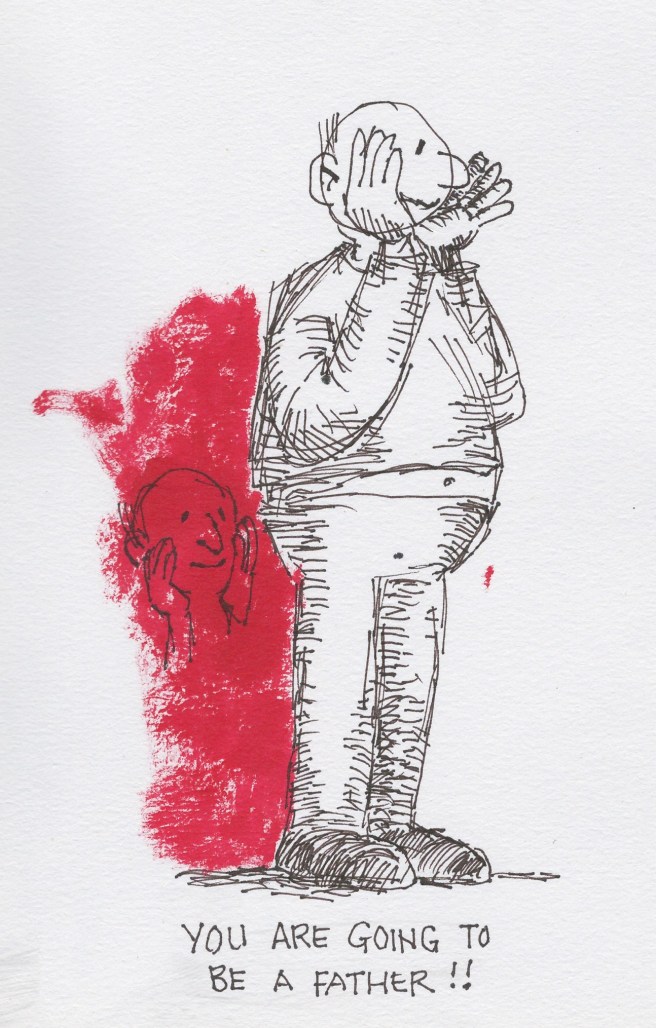
That’s exactly what he is doing with Weifel oor Jy Twyfel: When in Doubt say Darling which plays at the Klein Karoo National Arts Festival on March 29 and 30 followed by a season at Montecasino’s Pieter Toerien Theatre from April 4 to 22.

“The stage setting is an area filled with cardboard boxes, crates and black bags. Packing-up time. After 40 years I have a collection of props, costumes, wigs, eyelashes, hats and Koornhof masks among old Nat emblems. The show is about sorting out, and reinventing.
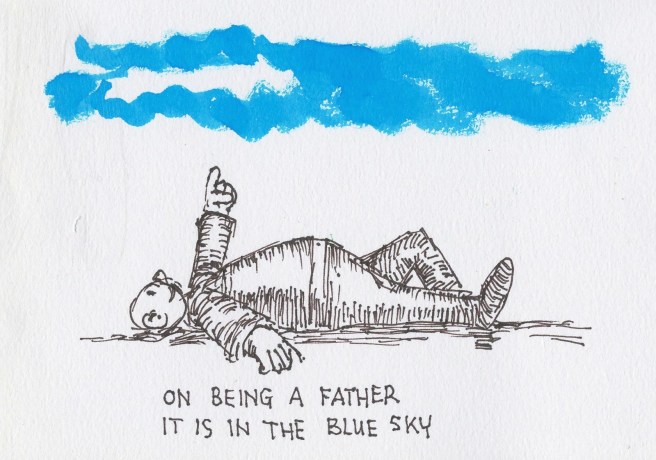
“Out of a box comes a prop. I give it a place in our history, and then it also becomes the centre of a new sketch, character, issue. I also weave throughout stories about my d—word: darling. And living in Darling: the kids, the community, the hope, the humour and the reality that if we do not look after our communities, the country will dissolve.

“Too much focus on government as a superman; no, government is the essential toilet paper to help us clean up and move on!”

As always, this one also started with the title which began in 1968 when he was the only one in CAPAB’s PR department brave enough to deal with Taubie Kushlick who was arriving to direct The Lion in Winter.

“Pietertjie-darling, she called me, and I was at her bek se call! Instinctively I knew how to handle her demands and maybe that was the beginning of the rest of my life as a one-man band. PR is essential. Diplomacy is a foundation to negotiation. When I kissed her goodbye, I said: ‘Mrs Kushlick, you call everyone darling.’ ‘Yes, darling?’ she asked. I said: ‘You must call your autobiography When in doubt say darlng.’ She looked at me as if I had coughed. Didn’t get it. Didn’t use it. Now I use it!”

OLYMPUS DIGITAL CAMERA

Proof again, that his way of thinking is instinctive and is always there – in the early days as much as it is now. But now, many decades on, he can reach back and recycle the past while reinventing the future.

He understands that he has a broader horizon behind him than ahead and that’s why he dusts off those targets to remind audiences that bad politics easily reinvents itself as a democratic solution.

“In this new show I even do Piet Koornhof in a sketch from 1984 with his focus on illegal blacks, and then reinvent him in the same voice as an officer at Heathrow Airport, sorting out refugees and illegals who want to get into the UK – not unlike what we did in the old days of apartheid.

“Yes, it is a full English Brexit. I am moving away from the brittle political reflections. Let the younger generation sort out their future. I am already in my future!”

And as he points to his future, he also gives credit to his health. “If you can do it, get on with it. And so far, touch wood and stroke kitty, I still have the discipline and energy to tour with three 70-minute solo shows in the boot of my car. I also treasure my independence. I have no staff: I am my own stage manager, writer, director, performer (he or she) driver, publicist and sometimes my own worst enemy.”

“All you need to do is speak clearly and not bump into the furniture.”

His shows are all about the audience. He wants to make a difference to their view of life and their belief in themselves. No small task!

OLYMPUS DIGITAL CAMERA

It’s about laughing at your fear, confronting fear, giving it a name, understanding its lethal ability but never allowing it to win, he explains. “There is no time for knock-knock jokes. The reality of the absurdity around the obscenity of daily life is enough to fill 70 minutes. And then someone leaves my theatre and realises that they have laughed at something they don’t even dare think about.”

He points out that we have just again teetered on the edge of a cliff only to see “the Ramaphosa wind gush up and level the playing field. We must stop blindly believing that things will get better. They won’t.  What you see is what we’ve got. Just make sure things don’t get worse.”

Instead of watching the world, he suggests we look in the mirror and ask the stranger his/her next move.

“Courage, honesty, compassion, healthy anger, information, respect and maybe a talent to amuse,” are his keys to success.

But not just any old talent. It is one that he has kept shining for more than half a century – and now sparkles more brightly than ever.

PS: ‘Evita’s Free Speech’ on You Tube every Sunday is now in Episode 132!  On Daily Maverick on Mondays. She has 140,000 on @TannieEvita.

* KKNK: Thursday and Friday (March 29 and 30) at 6pm at Oudtshoorn Civic Centre

Pieter Toerien Theatre, Montecasino: (April 4 to 22); Wednesday to Friday at 8pm, Saturdays at 4pm and Sundays 3pm.


Staging a Change from Actress to Director

DIANE DE BEER

Too few women directors’ was a topic of discussion a few years ago following the Afrikaans festivals. Things are changing with two new directors, both accomplished actresses – brought into the fold. DIANE DE BEER speaks to Nicole Holm and Tinarie van Wyk Loots about this debut directing outing:

Nicole Holm
Nicole Holm

For Nicole Holm directing wasn’t an option. “I didn’t like the idea that the buck stopped here,” she said about that role.

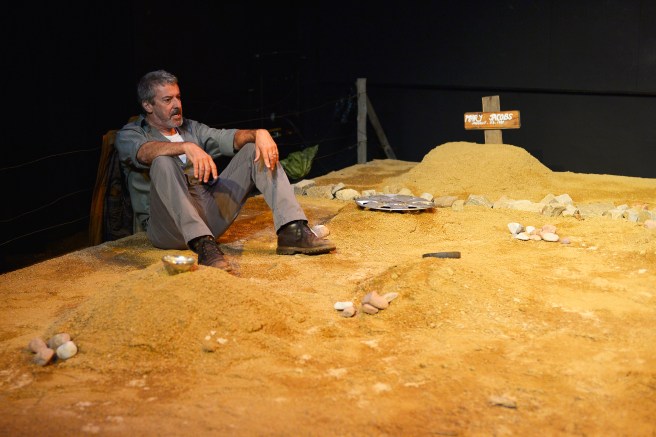
Yet that’s exactly what’s happened with her first stint as director. The text by Ingrid Winterbach, Ons Is Almal Freaks Hier, isn’t an easy one as it deals with Saartjie Baartman, a loaded issue in especially these fraught times, for women.

Ons is Almal Freaks Hier, as the title suggests, deals specifically with the Other, the way they are exposed and viewed by those who feel entitled and empowered – white people, to state the obvious. And then the text is written by a white woman and directed by yet another one, to further contaminate the issue.

Ons is almal freaks hier © Nardus Engelbrecht
Ons is almal freaks hier with Albert Pretorius, Kay Smith and Lee-Ann van Rooi. Picture: Nardus Engelbrecht

But she’s been fielding those missiles and believes the growth value for her as an artist has been extraordinary. What she didn’t expect for example was the isolation she felt before coming together with the actors while studying the text. “I felt as if I had to make these huge decisions without any input, no chorus,” she explains.

But once they moved into the rehearsal space and the collaboration kicked in with her cast (Lee-Ann van Rooi, Albert Pretorius and Kay Smith), she could tackle and get to grips with the process and the issues. Who has the right to tell the story, and could she take the Saartjie Baartman issue wider than it has been viewed before? Is it time now to grapple with the issues from a 2018 perspective?

Or should it be that of collaboration so that all the different perspectives are covered? In the final product it was exactly that, taking the issues from a new vantage, combining the past and the present and asking whether anything has changed for the victims/oppressed of the past?

The venue in Stellenbosch (which changes perspective again in Oudtshoorn) was the Stellenbosch Museum which, for Holm, brought in the historical as well as a theme of knowledge, which is part of any university. “It seemed as if many narratives were served, in retrospect; probably too many.”

That has all been part of the learning curve for this experienced actress who chose to wear this new hat albeit a touch gingerly at the start. One of the challenges in the museum was the way they presented the piece. On the first night, because the audience was led from room to room, it lengthened the performance by 20 minutes which added rhythm problems for the context and the cast.

But thinking on her feet, she quickly changed the format by the next performance to fit the scale and movement of the audience better. “Someone advised me that you could not expect the audience to move more quickly. They had to be allowed to follow at their own pace,” she said.

Speaking to Holm early in the Stellenbosch run, I was impressed by the way she reacted, how she was coping with the criticism, and how she experienced this first-time adventure. It wasn’t a comfortable ride because of the subject matter and the differing opinions about the performance, but probably because of her maturity as an actress, it was less daunting to deal with this kind of exposure and her decision to face it head on was a good one.

While she found the responsibility quite stressful, she also processed the joyful aspects of this new venture. In a way this was her narrative to tell with the collaboration of her cast, and while it wasn’t a familiar place for her to be, she revelled in this discomfort and the growth that followed.

Oudtshoorn will bring its own challenges, but at least this time she will be aware of the possibility of problems. They will be moving into a new space with very little time to acclimatise, which is the old bugbear at festivals, but her head space will accommodate everything thrown at her. She has got through it once, a second time round will be less stressful.

And even though this wasn’t a smooth ride – is there ever one? – the thing Holm discovered is that she wants to do this again.

Gif - Tinarie van Wyk Loots © Hanno Otto
Gif with Tinarie van Wyk Loots Picture: Hanno Otto


For Tinarie van Wyk Louw, the process was different and perhaps not as unexpected. She had walked a long road with her text, Swerfgoed by Bauke Snyman, which she had been involved in from the start as well as  passing it on to different people to read until it finally reached the text market which has been set up to feed the Afrikaans festivals.

Once it had been accepted, Van Wyk Louw was selected to direct. “That was unexpected and a push that I needed,” she says hardly containing her excitement about the project ahead. Speaking to her while she was performing in four different pieces at the Woordfees, the bulk of the process still lay ahead.

Swerfgoed © Robert A Hamblin
Richard September, Andrew Laubscher, Nicole Holm and Anna Mart van der Merwe (front) in Swerfgoed. Picture: Robert A Hamblin

But she was ready to bolt. The script is unusual, she says, “out there” and her casts includes Anna Mart van der Merwe, Nicole Holm (yes the director of the first piece), Richard September and Andrew Laubscher, any director’s dream. And she is salivating.

Water and land is at the centre of the story and with a script which gave birth in 2009, it started happening long before the current crises. She describes the text as colourful, visceral and focused and she’s pushing it as far as she can. “I want to see how far we can stretch it,” she says.

If anyone is passionate about theatre it is this completely compulsive actress – or so it seems when you look in from outside. In the world of theatre, there’s more to that story of course. But when she speaks about theatre, you pay attention.

She’s one of a younger generation that fuels Afrikaans theatre and she believes that it is the stage that takes you into a personal space with universal stories. “This is where you find understanding, beauty and where you find yourself. It’s intimate and immediate, it’s raw and it has to be live.”.

Speaking about the process so far at that stage, she was excited by the cast and how they allowed her to be the facilitator, putting it all together. “The actor is the real tool, the one telling the story,” she argues.

She has handpicked those with whom she surrounds herself and for the design, she has the best with Jemma Kahn. Most of their props were purchased at the Milnerton Market, which she knows will add authenticity to the venture.

She’s also relieved that she is only committed to one other production (Gif with Mbulelo Grootboom) at the festival. This is rare for this prolific actress, who has found herself on a bit of a treadmill – which is difficult to disentangle once you’re there. It is the nature of the beast because of the precarious world of theatre, when you’re offered work, it is tough not accept it. It is a case of juggling and trying to balance as best you can but sometimes the pendulum swings too far which happened with her at Stellenbosch.

It’s an accumulation of work, years of running too fast that catches up with you, with often your health showing the first signs of strain. “It’s madness when the very thing that you love, destroys you,” she notes.

But she takes a deep breath, giggles about the production she holds so tenderly in her hands and concedes that fortunately, the more you surround yourself with people you admire, the more they inspire you. “We’re a team,” she says, “which means equality,” is how she speaks about the Swerfgoed team.

She’s been inspired by the generosity and the spirit and the lesson she has learnt is to let go and to focus on her new task at hand – directing.

  • Both of these will be seen at the KKNK from March 29 to April 4 with a run in 2019 at The Baxter for Swerfgoed backed by Kunste Onbeperk and Ons Is Almal Freaks Hier produced by Kunste Onbeperk and the US Woordfees.


Joan Didion’s Year of Magical Thinking with Dorothy Ann Gould at The Market

Dorothy Ann Gould5Pictures: Lungelo Mbulwana

DIANE DE BEER

The Year of Magical Thinking

Playwright: Joan Didion (based on her memoir)

Actor: Dorothy Ann Gould

Director: Mark Graham Wilson

Set and Costume Designer: Nadya Cohen

Lighting Designer: Thapelo Mokgosi

AV Designers: Jurgen Meekel and Andrea Rolfes

Sound Designer: Paul Riekert

Venue: Barney Simon at The Market

Dates: Until April 1


dorothy-ann-gould2.jpeg

Death is something that affects all of us.

It’s a scary thought and probably why we don’t spend much time thinking or talking about it on a personal level. This is exactly what the extraordinary writer Joan Didion does following the loss of first her husband John Dunne, while their daughter Quintana is in a coma, and then dies a few years later, leaving a devastated wife and mother behind.

Described as an unusually close family threesome, that’s probably what turned this into such a dramatic life-changing trauma that propelled her to share what she had experienced. With this play, she talks directly to her fellow travellers, all of whom will experience this nightmare in some form or another – hopefully not many as traumatic as hers.

She compels her audience to participate, not allowing them to simply watch, but addressing them directly, almost in confrontational fashion, because she feels she must.

She can do this, because she knows in different forms, everyone sitting in the theatre, listening to her, will have to deal with death. That’s a fact. The only thing she cannot predict is how they will experience it and how their particular journey will challenge them. But sitting there, we all know that it will.

Even though she accepted her husband’s death intellectually once she had survived the initial shock, emotionally she imposed a full set of rules to live by to ensure his coming back. As ridiculous as that might sound, when you hear her story, the anguish and the horror she experienced with her partner and soul mate’s death while dealing daily with her daughter’s induced coma, the coping mechanisms that kicked in make perfect sense.

Who of us hasn’t woken up after a particularly bad day and for a moment believed that the bad stuff of the previous day was just a nightmare? Someone close to you dying can have a similar effect depending on your relationship.

Playwright Rachelle Greef wrote in Die Naaimasjien that death is like someone turning their back on you. It is the inevitability, the fact that we can’t control any of this and everything else that comes and goes with the finality of death that makes this such a taboo subject and, in this instance, such a riveting one. There’s not much said in the 80-minute-long play that doesn’t have resonance on some level for everyone participating.

Dorothy Ann Gould3

It’s a masterclass all round. Dorothy Ann Gould and director Mark Graham Wilson are solid gold as a team. He has a delicacy when directing while she slips into character in a way that pulls you directly to the centre of the story.

Gould had to battle the text, the American accent as well as the fact that she is basically doing this long monologue in which she has to engage an audience on a topic that’s deathly serious and scary. But being Gould, she grabs the text by the throat and becomes one with Didion’s sublime and insightful words in a way that holds your thought processes in almost vice-like grip as you navigate your own narrative of what this woman experienced in her life. None of us will be spared, that’s what we all know and are told by this wife and mother who is trying to make sense of her life – even when she has finally let her loved ones go.

The staging adds to the narrative with a visual reflection of her emotional as well as physical presence in the story as a backdrop. Depending on where you sit, it will have specific impact.

The stage is set almost horseshoe-style and for those sitting on the side, almost on stage, the actor draws most of the attention, while from the more traditional auditorium side, there will be a somewhat fuller visual picture.

Moving around the demarcated stage, Gould often stands closer to the audience than the centre of the stage, as if looking on as she talks about her life. The only physical aid is a chair that she sometimes sits in or stands behind.

Dorothy Ann Gould6

So subtly has Graham Wilson worked the production that the striking thing is the conversation that she maintains throughout. It’s as if someone is sharing a story about their life, sometimes -as a relief to both audience and narrator – she slips into a side stream that takes us away from the immediacy of what she wants to unpack. But then she faces the full force of her life and attacks it with the veracity of someone who has lived it.

The despair is devastating and yet, there’s a grace that accompanies her pain and her eventual understanding of what it means for her – and eventually those who are willing to share.

It’s tough but tackled with such dexterity, you want to be there to witness the fullness of what it means to live and love.

In conversation and with his cuisine, Shuichiro Kawaguchi gets you smiling

shuichiro-kawaguchi-with-his-much-loved-butternut.jpg
Shuichiro Kawaguchi with his much loved butternut

Most people have some kind of obsession – some good, others not so much. For Shuichiro Kawaguchi it has always been food. He loves to cook and with the results, he hopes to charm – or simply get you to smile. DIANE DE BEER who has tasted his extravagant cooking, discovers his latest passion – butternut. He shares his thoughts on what he regards as a remarkable ingredient with which to experiment:


When Shuichiro Kawaguchi (Minister-Counsellor and Deputy Head of Mission at the Japanese Embassy) talks about food, it always makes you smile.

Such is his passion, one that was cultivated by his mother from an early age, that his stories and his obsession – the best kind – have that effect. In fact, he says he is motivated to cook for others because it puts a smile on their face. And he certainly does that – in conversation or with his cuisine.

Selfportrait
Self-portrait

He was raised in a family where food played a key role. His love of cooking was encouraged by his mother while his father loved tasty food. Once he got married, his passion for cooking became even stronger because as his family grew, he always had an audience and they kept smiling.

Not only is he an extraordinary cook, but in Africa, Japanese cuisine (perhaps sushi aside) is not that familiar and as he cooks with a French and Japanese flair combined, the results are quite stunning.

Speaking to him recently about his latest mission, it didn’t take long before I was completely hooked. This time his fancy is butternut. “I was motivated by a Japanese friend during a Facebook conversation when they insisted butternut didn’t taste good.” That’s his explanation and he is sticking to that.

Jupiter
Jupiter

He wanted to prove that she was wrong, and he knew with the specific qualities of butternut – sweet, creamy and rich – he had more than enough to work with.

It’s not that butternuts aren’t cultivated in Japan, but they’re not as good as what he has found here and they’re very expensive. He can talk with authority, because for the past year starting on July 24 last year, he has invented a new recipe with butternut as the star, daily, and has up to now, collected more than 230 recipes.

He has taken inspiration from others, but when he works from a recipe, and that’s not often, he makes it his own.

And when you ask him about the length of time this fancy is going to last, he smiles and says, as long as it takes.

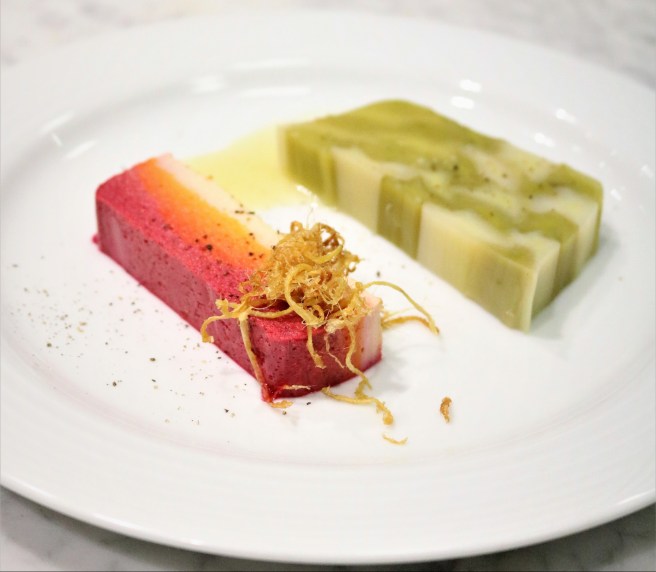
Japanese Flavoured Mousse

He reminded me of Faust’s pact with the devil and says that he will go up to 800 or the perfect tasting dish, whichever comes first. Only then will he consider publishing a book of butternut recipes and turn his food flavours in a different direction.

He and his wife have five children, two whom are currently with them in Tshwane, and he concedes that they might be bored with butternut, but he hasn’t quite achieved the brilliance he is hoping will conclude this project.

It started with the ubiquitous butternut soup and his version persuaded him to keep going. “I started really liking the taste and was determined to prove my point,” he explains.

All his experiments have detailed recipes as well as pictures of the process concluding with the finished dish. The quality is fine dining and his family don’t have much to complain about. Few of us would argue if this is the quality of food placed in front of us – even if all of it has butternut at its centre.

Mock Deep-fried Carp
Mock deep-fried Carp

Talk to him about the diversity of the dishes and he shows a picture of butternut cookies and talks about pickled butternut which has a sweet and sour taste. Every dish is given a name like (the Munch) Scream or Flower World, Self-Portrait or Sunset in Pretoria, the names as imaginative as the project.

He has also after the number of recipes cooked, become the authority on butternut. He buys in bulk at his local greengrocer because it’s so much cheaper and prefers a young squash because it is less sweet and the texture much more flexible. The more mature the butternut, the sweeter the flesh and the more fragile, which is also useful for specific recipes.

You can even eat it fresh, he says. What he does is slice it very thinly and then dips it into salt. He also likes baking it whole, almost char-grilling at a high temperature, which results in deliciously soft butternut which he eats simply with olive oil and white balsamic vinegar. Because it’s not a vegetable with a strong taste, salt should be used sparingly, but that also means that it adapts easily to different taste experiments.

He has no problems inventing new recipes because his years of cooking have provided a great memory bank on which to draw and he does grocery shopping on an almost daily basis which further invigorates his imagination.

On previous postings, when he was in Tanzania, he had his own television cooking programme and in Finland he cooked for a Finnish/Japanese society to further expose them to Japanese cuisine and extend his own cooking experiences.

Having been a guest at an eight-course dining extravaganza at his home, it is evident that this is his life’s mission. “It’s like a music concert,” says the Minister who is also an accomplished violinist, “only, I entertain with food.”

If you want to try one of Kawaguchi recipes, here’s a simple but delicious sample:

Almond Butternut Cake

Almond Butternut Cake:

Ingredients:

1 Cup Butternut puree
Almond flour  200g
Sugar  200g
Wheat Flour    150g
Eggs   8
Butter  250g
A few drops of Almond essence


Method:


1: Pre-heat the oven at 170℃.
2: Combine all the ingredient except butter together and mix well, then add melted butter and mix well.
3: Put the dough into a cake pan with a bake sheet on the bottom.
4: Bake for about 45 minutes until done.
5: Serve with whipped cream or ice-cream

Didion’s Year of Magical Thinking With Dorothy Ann Gould and Mark Graham Wilson

Pictures: Lungelo Mbulwana

Dorothy3Dorothy2

Dorothy Ann1
Dorothy Ann Gould as Joan Didion

It took someone the quality of writer Joan Didion to get actor Dorothy Ann Gould and director Mark Graham Wilson together for a stage production following their much-acclaimed Hello and Goodbye with her husband Michael Maxwell, a decade ago. They speak to DIANE DE BEER about The Year of Magical Thinking that opens on March 9 and runs until April 1 at The Market’s Barney Simon Theatre in Joburg:


Life changes fast.

Life changes in the instant.

You sit down to dinner and life as you know it ends.

Thus begins the American writer Joan Didion’s haunting memoir of the year following the death of her husband, John Gregory Dunne. The unexpected event ended a partnership of 40 years in a second, just days after their only child, Quintana, had fallen dangerously ill and slipped into a coma.

During Didion’s New York promotion of the recently published memoir, Quintana became seriously ill again. Following massive brain surgery, she died. She was 39.

Following these catastrophic events, it was the famed director David Hare who asked Didion to change her memoir into a play and six months after her second tragedy, the death of her daughter, she began working on the play. This time she was dealing with both the death of her partner and her daughter – a double tragedy.

Both director and actor knew this was the play that would embolden their stage partnership. It is said that The Year of Magical Thinking is a journey through that most universal experience of human pain: bereavement. And while it is frequently harrowing, it is also often amusing and, ultimately has been described as an expression of the power love has to give life meaning. All of that describes the remarkable writer Joan Didion and that is what struck both Graham Wilson and Gould.

How much can one person take? That’s the question Gould asked herself when reading the memoir. “We all cope differently,” she acknowledges but we all encounter these kinds of tragedies at some point in our lives.

It is the way Didion thinks, the way she escapes, the way she writes that makes this such a harrowing yet healing experience and just thinking about Gould and Graham Wilson tackling this depth of feeling is exciting. Watching them work, the detail and thought that goes into every breath, the way they battle one another to get to the truth, is extraordinary and the stuff theatre is made of.

“It’s the scale of the mountain of loss that’s daunting,” says Gould as she wonders about Didion’s husband’s death who she believes just “let go of the fence,” because he couldn’t cope with the sadness of his daughter’s coma. “Some people do that, and I think he told Joan that he was going, he warned her. But she wasn’t listening.” Gould was also affected by the ordinary circumstances in which tragedy occurs hence the opening stanzas of this marvelous text.

“She goes on a big journey with this lament but because she’s deprecating and wry, it is bearable to witness,” is how Gould explains it. She talks for example about the games Didion plays with her mind to cope, something we will all recognize.

How often do we not wish for a different outcome when we go to sleep and hoping for comfort when we wake up? “Joan wills things to turn around, believes she can shift reality with her strong will,” says Gould. We all recognise those games we play with the universe.

For Graham Wilson, one of the joys of the text is the perfection. “There’s not a word you want to cut, not a word out of place,” he says. Gould at the time we were speaking was still worried about remembering her words because we are speaking solo performance and 62 pages of monologue.

But we’re also dealing with someone who knows how to work through tough situations. She started memorizing the text earlier than she would have normally because she knew how important it was to get this one to a point where she didn’t even have to think about what she was saying.

It’s all in the text. The tension is held in what is being said, notes Graham Wilson, and as importantly being left unsaid. That was why every word is so important. “It isn’t a conventional play,” he acknowledges, but that is why this pairing is so valuable. Both these artists are risk takers, daring with their art and pushing the boundaries. Gould feels safe with Graham Wilson because they have worked successfully together before and that allows her to step beyond her comfort zone – to the benefit of audiences.

For Graham Wilson returning to stage after many years in the television world of soapies where he has been in the writing side because of family commitments and financial stability, this project is terrifying – but in the best sense of the word. “It’s such an exposed world,” he says of the stage. And he regards himself as very private. He likes being out of sight, but working in live theatre changes that.

To watch these two experienced artists work, delve into the work, manage every movement, every thought, how something should be placed, when she should turn and how to connect with her audience, is quite something. It’s an exciting and beautiful play written by a woman who has an extraordinary ability to express her deepest feelings in a most unusual fashion.

Gould in her own way has all those qualities on a different level and that’s why this is such a heavenly match. With Graham Wilson as her guide, her star gazer, the two of them will make theatre magic. All the ingredients are there – and this is not above expectation.

“I have to channel her energy of thought,” says Gould about the process.

This is only the second day of rehearsal and already they’re grappling with meaning and movement – the words flowing as if they come from the actress herself.

And she takes flight.


Sylvaine Strike and Jenine Collocott – Homage to Inspired and Inspiring Artists

DIANE DE BEER

Artists are the people I love writing about most.

They’re creative, think out of the box, live to entertain and make people smile, think, dream, cry and much more – all at the same time.  They teach, learn, tell stories, show us how to view the world differently, how to admire and accept or simply entertain to take us away from a harsh world – if only for a moment.

Talking to two remarkable women artists recently, I was reminded of the privilege to be given access to their work but also to the magic they achieve through blood, sweat and tears. And in the artistic world, especially at this moment in time, stage is probably bottom of the rung. Not for those of us who love theatre but for the multitudes who haven’t discovered it yet.

Jenine Collocott
Jenine Collocott

Jenine Collocott, artist extraordinaire and director, most recently formed a new theatre company Contagious with actors James Cairns and Tarryn Bennett as well as long-time Fringe producers Simon and Helen Cooper with the aim of “producing independent fringe theatre that brings the creative freedom, simplicity and energy of the festival circuit to mainstream audiences” – so wherever you are in South Africa, watch out for them on their current rounds with their much loved The Snow Goose.

She’s currently rehearsing for a clowning show for the annual Oudtshoorn-based Klein Karoo National Arts Festival at the end of March (29 until April 4). Even though she trained for this specifically in Italy, it is her biggest venture in clowning with a cast of seven, most of whom she hasn’t worked with before and most of whom haven’t done any clowning before, even though you can see why they were picked.

Included are actors Jemma Kahn, Roberto Pombo and actor/producer De Klerk Oelofse who got the whole thing off the ground as the producer.

Speaking to a terrified Collocott is what got me excited. Even though what she was doing was mammoth, she was as excited as fearful in what can be said was a healthy balance.

Not only did she have to take her cast through what could be a painstaking process of becoming a clown, once there and only then, could they start to workshop the performance. Fortunately, she is working with a bunch of actors who know how to create their own work and with her as the gentle yet guiding teacher, the results will be something awesome to witness whether they pull it off or not.

“I’ve never seen anyone be as caring with a cast as Jenine was throughout this challenging process and she didn’t know us. I will never forget it,” says Oelofse who is on a mission to develop a skill set that is as broad as it is empowering.

They are at play in full swing as I write and few shows at this year’s Klein Karoo National Arts Festival excite me more than this novel attempt at a family show with something completely different. Titled Babbelagtig (which means something like chatterbox-ing) the idea was also fuelled by Oelofse’s response to the recent Slava Snow Show.

As with most things Collocott tackles, it’s innovative, imaginative and invigorating. Can it go wrong? Of course, but that’s how artists grow their craft – by pushing those boundaries and taking leaps not of faith but of grandeur and bravery because they’ve worked their way towards this.

Sylvaine Strike
Sylvaine Strike Photohraphed by Suzy Bernstein

No one works harder and with more precision than Sylvaine Strike, director extraordinaire, who has built a reputation for her unique work which is remarkable in its individuality. And she’s constantly changing like a chameleon the work she chooses – and then she makes it her own. It’s her particular Strike style that can be adapted to work with any play she selects in a way that’s quite astonishing.

From her standout The Travellers and Coupe in which she also played, the recently revived Black and Blue in which she recast  Atandwa Kani opposite herself to the two Molière plays The Miser followed by Tartuffe and now making a U-turn with Sam Shepard’s The Curse of the Starving Class, the road she travels allows her fans to jog along with excitement.

What will she do next and how is she going to approach this? Casting on its own is an art as she turns to Andrew Buckland for the extraordinary Tobacco and the Harmful Effects Thereoff and then adds extra bang with the exceptional Toni Morkel.

Gerard Bester, Brian Webber, Daniel Buckland and now Neil McCarthy have all taken on a special Strike hew when working with her. It’s as if her visual acuity allows her to use these actors, formidable as they usually are, in a completely new light.

With Buckland in Tobacco for example, she didn’t simply apply his amazing mime and clowning skills, she allowed the actor in him to flourish with accents of his many skills popping up to accentuate certain points she wanted to make.

If you watch her work, she plunges to a depth with detail that is quite exhausting but triumphs in the final production. Nothing escapes her eye which is both a visual and a visceral one and with her current Shepard production, she used music to tap out the rhythms for the actors to give their characters grounding.

“Shepard can be quite messy and chaotic,” she says, but in that is where you find the meaning and the magic of his message.

It is both what she brings and the way she does it that has netted her such a strong following. They know whatever she does, it will have intent and innovation. From the visual spectacle to the quirky casting, nothing is done without juggling many different balls to find the exact formation for this specific production.

That’s why a Strike show will sweep you off your feet – and then it lingers and plays with your mind.