Jemma Kahn takes you into the mouth of the wolf like the theatre warrior she is

jemma-kahn-in-bocca-al-lupo.jpg
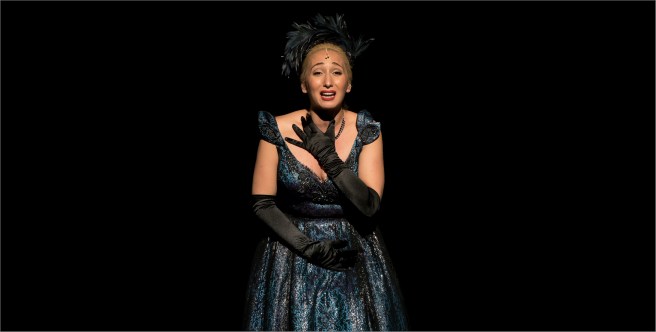
Jemma Kahn in In Bocca Al Lupo in designs by Ella Buter directed by Jane Taylor

It had to come to this in the third of her Kamishibai series which started with The Epicene Butcher, followed by We Didn’t Come to Hell for the Croissants. Now with In Bocca Al Lupo, the innovative Jemma Kahn (2018 Standard Bank Young Artist Award Winner for Theatre) turns the spotlight on herself – sharply – and we get to know where the series comes from and how it started. DIANE DE BEER gives the lowdown on a short run at the end of the month at POPArt in Maboneng:

It’s the perfect way to go if you are creating your own work which probably like for most stage creatives, is all about making a living. She had to turn somewhere new while maintaining the structure that has made this solo series such a rich and rewarding enterprise.

It is about working those changes while not losing the essence of what makes something work in the first place. And this is where Kahn cleverly brough playwright Tertius Kapp on board . Even and especially when telling such a personal story, it is good to have an outside eye. And arguably someone who is not involved with what is being shared on stage.

“After every kamishibai show I say ‘not again’ or rather ‘not again immediately’ but then an idea comes to mind that niggles me. The idea of the multiple boxes came first and then I thought, ‘if there are four, it could be about family – one story, four perspectives.’

“I approached Tertius to write with me because I had enjoyed his story for Croissants so much. I’d also enjoyed our back and forth and I wanted to work with him again. He asked for some writing and I sent him a pile of shit; a few diary-type entries (some which I had written whilst in Japan) and some pretentious descriptive pieces. He thought the kamishibai origin story was a good one. We sat and had a bottle of wine, I told him about The Irishman and he was like ‘whaaaaa? There’s a story here’.”

The partnership was on a roll … again. He hammered it into a 3 Act structure and Kahn sent him writing. “He would say ‘we need to know what happened here’, or ‘did this happen?’ – prompting me. I needed prompting because writing is an impossibly irritating and boring and painful exercise. All I remember was sitting with my forehead mashed against the keyboard howling. Was it hard to be that personal? Yes and no. Again Tertius was very helpful with curating what ended up on the stage.

He told it like it is: “‘Don’t put a wound on stage and expect a plaster.’ he said. So nothing that ended up in the show was emotionally unresolved. Through the process of rehearsals with Jane (Taylor) and then hitting the road alone, I did relive some stuff and sometimes that was painful. Painful but not destructive.”

Jemma Kahn
The 2018 Standard Bank Young Artist Award Winner for Theatre

This is hard stuff, putting yourself out there, but Kahn has always been that girl. She knocks your expectations down quite quickly in Bucca when she shares how unhappy she was in Japan, especially as this is seemingly where her theatre genesis established itself in her mind. But that’s her story, unexpected, with much to say about our world, especially the stage she finds herself on with her particular career choice.

She describes this one as cathartic though because she could learn to love Japan again, “although it nearly killed me. Also it was a way of telling my parents things that were too difficult to say to their faces. And I like remembering my grandmother. I like that strangers know her name because if people know her name she can still be around. I like having her around.”

Kahn might not be the predictable pick for particular roles but it is those quirky choices that often turns a theatre piece on its head and appeals to those who are constantly waiting for the unexpected. In tough times, taking risks though, are often prohibitive – sadly.

But then again, had Kahn’s obvious creative talent been spotted and applied from the start, what she has come up with might never have seen the light of day. She was forced to experiment and explore, and being who she is, she did.

“Good actors are watchable for so many reasons,” responds Kahn. “Whatever the case may be. I’m starting to understand what makes me watchable.  Though I resent the word brave I think that is it. Fearlessness. Of course it’s not real. In real life I have fears. But they are very deep down. Over the course of a show, I can be fearless. “

That’s how it works and those that need that push and can deliver, share the magic with those watching. Which is exactly what Kahn does that makes her performances so exciting. And I haven’t even touched on her visual acuity.

She has street smarts. She picks the right team to surround her, knows and understands the impact of design and colours every corner of a performance in the sharpest shades. Add to that 160 illustrations by Kahn that illustrate her story elaborately and music by the brilliant Charl Johan Lingervelder to set the mood.

It’s a wild ride.

Jemma Kahn2
Jemma Kahn
  • In Bocca Al Lupo can be seen at POPArt in Joburg’s Maboneng Precinct on 29, 30 November and 1 and 2 December at 8pm; as well as 2 and 3 December at 3:30pm.

    Tickets are R 150. Block rates available for groups over 10pax

    Venue: POPArt Theatre, 286 Fox Street, Johannesburg

    Tickets available at : www.popartcentre.co.za

    Running time: 70mins

  • In Cape Town next year at the Alexander Bar from February 28 to March 10.


Graham Weir gives us Moments in Time in Dead Yellow Sands at Market Theatre

DIANE DE BEER

graham-weir-picture-jesse-kramer.jpg
Graham Weir in Dead Yellow Sands Picture: Jesse Kramer

DEAD YELLOW SANDS

DIRECTOR: Bo Petersen

PERFORMER/WRITER: Graham Weir

LIGHTING DESIGN: Darron Araujo

VENUE: Barney Simon at the The Market Theatre, Joburg

UNTIL: December 10  (Tuesday – Saturday at 8.15pm and Sunday at 3.15pm)


It feels like a moment in time.

Now he’s there, talking about different lives, all exposed in a specific shard of light – and as quickly it is all gone, quiet and then as it began – with a young boy’s voice, singing.

It takes a while to catch the monotony and the accent of the voice telling that first tale of a town called Benoni, translated from Hebrew as Son of Sorrow, to get to grips with what is unfolding. But then the tales take you by the hand and the heart and you fall silently into this reverie which seems to be snapshots of sacred yet suffering lives.

It’s in the writing, the telling of the tales, the performance, the lighting, all working together seamlessly to catch an audience moving through at that time. They have to stop, and listen, to immerse themselves in the powerful onslaught of what is unfolding mostly in their mind’s eye.

The actor is capturing different lives and he does this with a slight movement of how he is sitting in a chair, a voice that might shift an octave or a half, and accents. But then there’s the shift in each tale and a light(s) that falls in a different way.

graham-weir.jpg
Graham Weir       Picture: Lungelo Mbulwana

Yet nothing detracts from the essence of each life as it is washed ashore in this crashing of a wave. There’s little trickery and no gilding of these stories. It is all up to  the author who mesmerises with a message he wants those listening, to hear.

It’s hard to explain because these are not lightheartedstories and all have an inherent sadness about a life that has been caught up in some slipstream which is difficult to stop or even divert. And yet, one is left with a feeling of gratitude about what you have and this experience in particular.

While the state of art and artists, their diminishing options as time progresses and they a age are also offered, you are faced with an artist who is battling all those forces and triumphs in a way that is quite extraordinary in the conception and the execution of this performance.

There’s the writing of each particular story, the accent chosen, the character dissected and then there’s Weir’s performance that never falters. It’s quiet and yet each word cuts the air even (or especially) when whispered – or sometimes sung.

The extraordinary lighting on its own colours and shades each individual character vividly.

Written and performed by Weir, it is a piece we are catching at the tail end of huge acclaim. As it jabs at the heart it also lands softly as these characters take you by the hand, draw the curtains just to glimpse a life and then let go.

It’s haunting and magnificently compelling.

A Family Play on Generations of Women

DIANE DE BEER


It’s not often that Cape Town comes to Gauteng but when they do, it is worth taking note as this production was the 2016 Standard Bank Ovation GOLD award winner and it’s easy to see why:


IvanBlazic
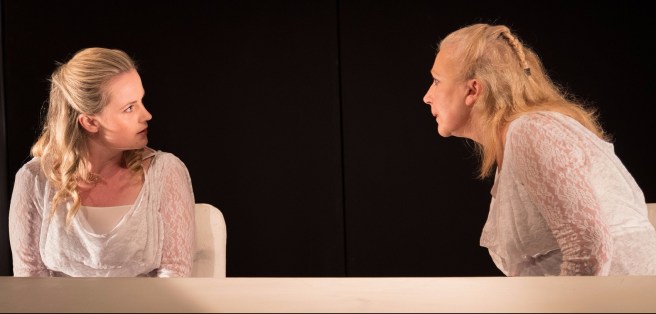
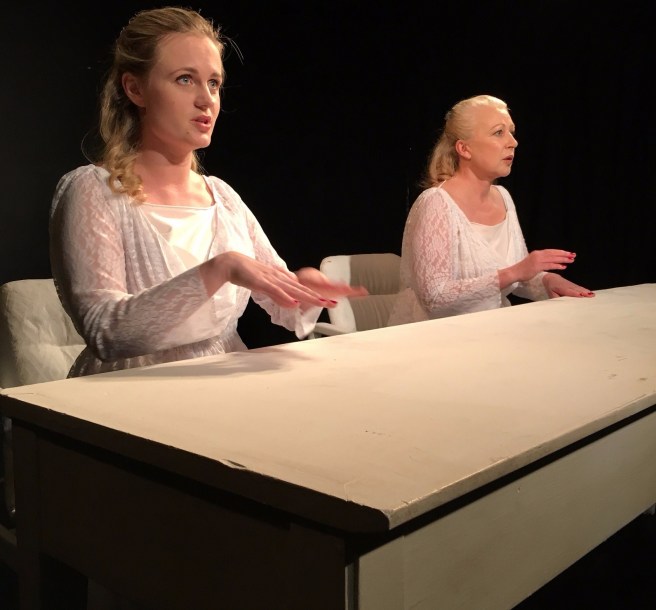
Rebecca Makin-Taylor (daughter) and Michele Belknap (mother) Picture: Ivan Blazic

SILLAGE

DIRECTOR/WRITER: Penny Youngleson

CAST: Rebeccas Makin-Taylor, Michele Belknap

VENUE: POPArt, 286 Fox Street, Maboneng Precinct

DATES: Tonight, Thu and Fri at 8pm at 8pm; Sat at 3.30 and 8pm; Sun at 12 and 3.30pm

Don’t worry about the name, it is explained and scents the play throughout as the story unfolds as if in a set piece that has been part of the mother/daughter relationship for millennia.

In this instance, recognisable and toxic, the younger and older generation square up as if starting off on the same foot but gradually the dance becomes more disheveled, the tone more confrontational and two individuals though bound by blood, antagonistic and attacking rather than supportive and sympathetic.

If they were on the same side, that sharply unravels as each one stands their ground in what seems like a fight in which both have something to lose and little to gain.

Youngleson has again tapped into family mores which in this instance might be mother and daughter but could be played on any scale and in different settings – even the country, as she points out.

Sillage_2
Rebecca Makin-Taylor (daughter) and Michele Belknap (mother) Picture: Ivan Blazic

We live in a world that stands on its head with a world power considering a vote for a sexually accused candidate to secure a political victory. Why would the rest of us remain unscathed? If ever these smaller battles are important and worth rescuing, it’s now.

Everything on Sillage’s playing field is fraught. Even on a generational level, how we do things, when we cannot concede that time might play a part and what was right then, might not be the best approach now and vice versa.

But rational thought isn’t what rules in these instances. It’s the battle, its the wound that has been opened and is festering, and there’s no reaching out as the two women come together to unpack a life that touches and tears at their relationship in tortuous fashion.

It’s an hour-long hugely entertaining lament from two perspectives with two women who when you sit them down, would probably want the same thing but they have long stopped caring about themselves and the other. They’re trapped as they tear each other down at the cost of what could have been.

It is a play best seen with little foreknowledge as it unfolds delicately in front of your eyes with two actors who are intertwined in their thought processes and how they want to impart the story.

Not only has Youngleson written a tone poem that reaches to the heart of this sadly familiar relationship, she has also painted a picture that best displays and allows the characters to detail this daily dance magnificently.

Everything about the production folds into one another with this one as we witness something that is as familiar as it is fatal. It is as funny as it is horrific because the inevitability is what lingers.

And that really makes you think…

Tickets available at : www.popartcentre.co.za

Running time: 60mins


Travel with perfect companions: a chef and an art historian in Italy Unpacked

By Diane de Beer

Cartoons by Fatman

They bowled me over, right from the start. I was already familiar with Andrew Graham-Dixon’s art programmes which we see occasionally on BBC World (DStv) and had the Sicily cookbook by Giorgio Locatelli, Made in Sicily, but didn’t quite expect the fireworks to come.

I binged through four seasons and just couldn’t resist going on this Italian trip with these two delightful connoisseurs.

I knew I would like the art and the food is a no-brainer. What knocked me off my feet was the bromance between these two. It’s so charming and reminds one how people should be. When one lets the other into a secret (an insider’s ingredient or hidden artwork), the expectation from both and how they enjoy giving and receiving is simply spectacular to witness.

It seems that what must have caught them by surprise as well, is their similar passions. While they have different fields of expertise, the two dovetail and they could recognise where and how the other derived pleasure because their’s was the same.

Art cartoon

But back to the basics first. Italy Unpacked is four seasons with each one consisting of three hour-long episodes, and individual seasons focusing on a specific area in Italy with the last one traveling to Sicily. The different episodes mix art and food with the two men sharing their expertise, something extraordinary in their field in a particular region (like hunting for truffles) as they travel from one town to the next, sometimes a city (or the return of some lost art to the area it originated from) and at others, a tiny village.

It’s like escaping into another world and because Graham-Dixon’s art knowledge is so superior and specialist, he takes us to see very unusual works of art and often, while tourists are standing in long lines to see the leaning tower of Pisa for example, what this art historian regards as one of the best museums in the world in a particular field is just around the corner and completely empty because people just don’t know about it. But he does and he shares it lovingly with his friend Locatelli.

Market cartoon

The chef then, in turn, is inspired to cook a specific dish from that area which might have originated in the time of the painting. Or something in a work of art reminds him of a particular dish. But what moves him the most in his cooking is produce. He is driven by the particularities of the area and loves food of the region which he then shows his friend.

So apart from going on your own extraordinary tour through Italy, this is one to take before you actually go, because it’s the perfect guide book to plan a trip. Not only will you learn what to eat, you will also find the best places to find a particular food. Or if you want to make it yourself, where to buy the produce and how to prepare it.

Italian-born Locatelli who has restaurants in London and Graham-Dixon who is extremely knowledgeable on Italian art, swap their expertise in a way that takes us into a whole new way of traveling. I have always wanted some kind of wise bird sitting on my shoulder and whispering things in my ear as I walk through museums or try new food.

That’s exactly what these two do. They have insider info, they know the right people to speak to, and doors open for them so that they can capture the best of each place they visit.

Once I had finished the full series, I dipped into Locatelli’s cookbook and was charmed because I felt I knew the author so much better. Similarly with Graham-Dixon. Because he has made many art-related programmes (mostly for the BBC), it’s not cold turkey following this series. You will find many more examples of his work on the internet. Granted to double up on the firepower of the two presenters is simply the best, but individually they also have more than enough to keep you watching and reading.

It’s as easy as searching on YouTube for Italy Unpacked to start your viewing. The DVD’s are also available through Amazon or BBC sites. But do yourself a favour. As unusual as their mode of transport – from Maserati to moped – as unusual is their friendship as well as their conversation. And they throw the window open as widely as possible and embrace you.

I am obviously a huge fan. But believe me, watch them and join the club!


Nostalgic Food for Friends and Family

DIANE DE BEER

For Friends & Family

For Friends and Family by Nicky Stubbs (Human and Rousseau):


Everything about this book screams nostalgia and when you ask Nicky Stubbs about her love for food, she points to the Elisabeth Luard quotation at the beginning of her book:

Meanwhile I have discovered no panacea for the troubles which afflict humanity – unless it is that a meal shared round the kitchen table serves both as a celebration of the good times and a comfort in times of trouble. At the end of it all, I can only echo the words of wise clergyman, the Reverend Sydney Smith (now there was a man for good advice): ‘Take a short view of life. Look no further than dinner or tea.’

– Elizabeth Luard, Family Life –

Nicky Stubbs Credit Philippa Hetherington
Author Nicky Stubbs. Picture Philippa Hetherington

And this book in particular happened when the author was sifting through a lifetime of recipes to gather them all in one place. “I was missing my parents terribly and found it comforting to immerse myself in the recipes that I grew up with.” What she thought in the process of sorting, was that this was a cookbook she would love to have.

Hence For Friends and Family. She  wanted to achieve a book that would be helpful, useful and practical for all cooks, from beginners to specialists – the family’s go-to cookbook in fact!

The book fell into a natural order based on solid useful everyday recipes with special recipes for high days and holidays – which is exactly what she had wished for.

It’s a book with equal emphasis on family and food. “The family photos, food photography and beautiful layout and cover still take my breath away. It appeals to children as young as six and to the best cooks I know,” she notes.

Because she was so clear on what she wanted to achieve, the book was written in a two weeks during a family holiday where she would wake up at 4 in the morning to write until the family woke up. She then handed the manuscript to a remarkable design/editing/cooking/styling team to turn it into what is her dream cookbook.

family and friends

“All the crockery and cutlery used in the food shots are mine, the photos are family archive pics taken by my mother and the contemporary mood shots were taken by my sister. The end papers are taken from paintings I inherited from my uncle,” she says which explains why this is a book that reads and feels like a family love letter.

From start to finish, Stubbs has not only selected the recipes from her family and friends, but also infused the book with the way she feels about the people around her. It’s memories she shares with the world and something all of us recognise.

The recipes naturally have a South African flavour with milk tart and bobotie and many other familiar local favourites even if not always strictly from here. But as Stubbs desired, she now has all the best recipes gathered and bound in one book.

“I suppose in a way, South African cuisine is fusion cooking at its best,” she explains. “It’s a fusion of ingredients, cooking cultures, proud communities, abundant fresh and seasonal ingredients woven together.”

And the recipes she selected for this book are those she can’t live without when travelling and the recipes which are the most crowd-pleasing.

When paging through, it is a book filled with the warmth and love of family food from stewed fruit (remember those?) to oats and Maltabella, French toast (each family has its own version), kedgeree and sweetcorn fritters, and … wait for it: macaroni cheese.

All of these would have been part of a white South African family table of a certain time.

It’s fun to check them out, see these particular versions and explore the unfamiliar or twists to recipes that are part of most repertoires. From Sunday lunches to heirloom recipes, childhood favourites and old-fashioned classics, it’s all here from the crème brûlée to the irresistible fudge, pears in red wine (which seems to pop out as a classic each alternative decade), profiteroles, meringues, rocky roads, and brownies.

It’s yum!

A rich Heritage uncovered: An Untold Zulu Story by Nomavenda Mathiane

DIANE DE BEER

An Untold Zulu Story: Eyes in the Night by Nomavenda Mathiane (Bookstorm)

Eyes in the Night

It’s been fascinating in the world of books, especially of late, to watch people find their voices to tell their stories. It’s about taking ownership of something that has always been their own but for some reason, was told by others.

That’s why the lead-in title to this particular book, is such a fascinating one: An Untold Zulu Story.

Nomavenda Mathiane is a journalist and that’s probably why her mother gave her daughter, hér mother’s pass book and asked her to reconstruct the photograph because it was the only picture she had.

Being a journalist, Mathiane did much more than that. At her mother’s funeral, she asked the firstborn in the family, Sis Ahh (short for Albertinah) why her mother had never talked about their grandmother, her mother? “It’s because her mother’s story was filled with too much drama, regret, guilt and finally, triumph. That’s why she didn’t speak about her mom,” said her sibling who, because of circumstances, had been raised by her grandmother.

Naturally that piqued the journalist’s news sense and her book was launched. But that makes it sound simple.

Making her task even more difficult, she expected her elderly sister to remember their Gogo’s exact words – no mean feat. “So I wrote as best I could, sticking to Gogo’s voice as told by my sister,” she explains the process.

It’s a remarkable story. It is the year 1879, when her gogo was forced to grow up faster “than she could shout her name. That year was the one in which we experienced events and encounters that no one, particularly a child, should ever witness. It was also the year my people lost everything – their land and their fields – and were reduced to being vagrants   and beggars in the land of their birth.”

And with this her grandmother’s story begins: “I am the daughter of Mqokotshwa Makhoba, one of King Cetshwayo’s generals.”

It captures a time and a place where most (if not all) of the stories are told from the men’s (those fighting) point of view. So we will know the names of the Zulu kings and the British generals but not that of the women and children who simply slipped through the cracks – with their stories untold.

And talking of the battles, her gogo wasn’t exactly there, so these were muddled says the journalist. “I would have to refer to historical books to see which battle could have been fought in mid-winter for example,” she explains. “So oral history has its challenges.”

Nomavenda Mathiane
Journalist/author Nomavenda Mathiane

But that is also why this story is so important. It gives Mathiane and thus her readers an opportunity to learn about Zulu history as told by the ordinary people she and her sister met as they tried to piece together the information. They also learnt about the grand life Zulu people lived in those days. “Can you imagine an ordinary person owning 60 cattle and 100 goats. Someone described one of King Cetshwayo’s generals, Sihayo, saying his homestead sprawled as far as the eyes could see.”

She learnt more about the trials and tribulations of kings such as Cetshwayo, Mpande and Dinuzulu. “So much is written about King Shaka and very little about the other kings. It makes my blood boil. But then, come to think of it, how much do we know about King Sekhukhuni who was a powerful king of the BaPedi people who lived around the same time as King Cetshwayo? Black writers have a job ahead of them of writing about our past,” she admonishes.

She’s right. The way she tackled this particular story gives insight into a woman and a time that is invaluable and probably impossible to find any other way. Her grandmother was an ordinary woman, a child, when the war began. She and her family lost everything  and she eventually had to make her own way and a new life in an extremely hostile world. Few of us would have survived, but she did and lived to tell the tale – gloriously.

Without this being a book about land issues, it is underlying throughout and for those who have never had to deal in this kind of loss, it is a very personal account of how it affects people, their lives, past, present and future. In today’s world, this is invaluable information, we all need to embrace.

When Mathiane sent her story to publishers, they initially said the writer’s voice was missing, and while she at first resisted, it meant that to rectify this, she introduced chapters of how the story was in fact recounted and written, how she quizzed and teased the information out of her sister, and why she says oral histories are problematic.

That they might be, but in this instance, it worked miraculously. Her mother obviously knew what she was doing when she sowed that little seed because as a journalist, Mathiane didn’t only know how to write the story but also knew how to get to it.

That’s the glory of this amazing tale of a young child ripped from her home and later her family and what it took for her to survive. And then, have a granddaughter who shares her story with the world.

What a rich heritage she has uncovered.

The Grand Dame Of Many Different Parts

A panto without Janice Honeyman is unthinkable. This year, the much loved and completely apt Pinocchio is her 30th season. This is how she unleashes her inner child, something that has always been part of her creativity and when you listen to her speak, it doesn’t seem she will ever stop.

Yipee!

With some help from Honeyman, DIANE DE BEER explains why:

Pinnochio
Kanyi Nokwe as Pinocchio

I hate Horrible Hook, I adore Sweet-sweet Smee, and the lonely Lost Boys creep into my heart. But then Snow White, as the first one, also has a special place for me. In every Panto I’ve written and directed I get immersed in the excitement and stimulation of creating a Favourite for our audiences.

That response from the unstoppable Janice Honeyman is why she has never been allowed to let go of the panto reins.

She took her first scary steps towards writing one for Joburgers when her colleague and friend Lynette Marais asked her 30 years ago to get going. She was astonished, had never seen a pantomime, and had no clue where this would lead to. She was simply told to jump as she took that first flying leap …

Janice Honeyman
Janice Honeyman

Janice being Janice, you simply have to run through her resumé to know, her life has been about taking risks – and those that didn’t pay off, taught her lessons.

“Yes –  I knew nothing 30 pantos ago, but by now I should be able to fiddle with the formula knowing that I have learned lots and lots of truths, techniques and tricks over the years.  I try to keep the spirit and heart of each story pure and unique, but still use what I know works for audiences.”

Those of us who have been around with her for as many pantos, know that Marais knew what she was doing all those years ago.

In Honeyman’s own words: “I think that the panto has grown and developed and up-scaled itself over the years, to achieve more audience satisfaction, but it has essentially remained a fun-filled story-telling presentation of well-known and loved folk and fairy tales. They have essentially been “family” shows, with something for everyone, an experience to be enjoyed together – perhaps I have always had ‘the common touch’, and that is why they’ve worked across a very broad age range and cross-section of the public. And I hope I can stay in touch and continue to give people what they want.”

She thinks about the next one all year long – as she must: “I know there is a constant pressure to come up with something new every year, and so I try to check on the news, read newspapers, kids and teenage magazines, watch what is trending on social media and take note of worldwide lunatic politics (great lines for the script are handed to me on a plate by some of the current world leaders!) I listen to popular music on radio while driving, or the background supermarket song-choice while shopping. And I try to sense what is hot with youngsters, nostalgic for grown-ups, and what will aid and abet the classical story I’m busy embellishing at the time. The rehearsal period is always fun, sharing interpretations of topical events with the cast, and trying to integrate some of their suggestions into the show.”

tobie-cronje-as-gepetto-e1509537837433.jpg
Tobie Cronje as Gepetto

Casting is another trick up her sleeve and she wants to pay tribute to the contributions of actors like Marc Lottering, Robert Whitehead, Desmond Dube, Fiona Ramsay, Anna-Mart van der Merwe, Judy Page, the late Greg Melville-Smith, the late Dale Cutts, Val Donald-Bell, Seputla Sebogodi, Louise St-Claire, Michael Richard, Maralin Vanrenen, Christopher Japhta, Bongi N’thombeni, Graham Hopkins, the late Frantz Dobrowski and many, many more – including, of course, the long-standing (and she wants to know if we get the pun!) expert Dame and Villain, the much-loved Tobie Cronje who will be stealing hearts in this reprising role as Gepetto.

There is also a whole range of good performances waiting in the wings with Andre Schwartz, Chi Mende, Garth Collins, Ilse Klink and Kanyi Nokwe (from theatre royalty) as Pinocchio in this year’s panto.

She praises her panto sidekick Timothy LeRoux, who has been at her side for at least half of the time she has been at it, for his wonderful theatre sense, his choreographer’s eye, and his understanding of pace and rhythm. “It feels like long long ago! He is definitely the Crown Prince who should succeed the Panto Queen when she abdicates.”

And then she moves to the prime minster of panto, executive producer Bernard Jay. “He enabled me to continue this tradition over the last 17 years. Credit must go to him for the WOW factor each year.”

lerato-mvelase-as-shug-avery.jpg
Lerato Mvelase as Shug Avery

As soon as Pinocchio is up and running, next in line is The Color Purple which opens at the end of January. Producers Joburg Theatre and Bernard Jay have recently announced the casting of Lerato Mvelase as Shug Avery, the popular bluesy singer whom we meet in the musical ‘at death’s door’. The all South African cast also features Didintle Khunou as Celie and Aubrey Poo as Mister.

That has been Honeyman’s trademark – moving between genres ranging from serious drama to opera to TV presentation, from storytelling to rowdy, raucous rude comedy (as she did in Stratford Upon Avon  for the RSC earlier this year), prose adaptations like Andre P Brink’s Bidsprinkaan and workshop productions. “That’s what has kept me excited and stimulated these 48 years.”

From her early days of fame as TV’s storytelling Bangalory Girl, she clicked she could tell stories. And a better way of doing this, was to become a director rather than an actress.

“I couldn’t have had a better time in the theatre. And I can’t see myself retiring, giving up the joys of theatre. I’ve quite a few more goodies to create up my sleeve.”

Hear hear, bravo and encore for as many as she is still up for.

Pinocchio opens officially at Joburg Theatre on Sunday and runs until December 30. It is followed by The Color Purple on January 31 until March 4.


Sello Maake kaNcube’s Can Themba speaks his truth at Theatre on the Square

DIANE DE BEER


Can Themba2
Sello Maake kaNcube as Can Themba

Pictures: Neo MNtsoma

THE HOUSE OF TRUTH

PLAYWRIGHT: Siphiwo Mahala

PERFORMER: Sello Maake kaNcube

DIRECTOR: Vanessa Cooke

VENUE: Sandton Theatre on the Square

UNTIL November 18


It’s the perfect storm when the playwright, director and actor all come together this sweetly.

Telling stories from our past, especially in this country, reminds us of where we come from, what we have lost and how many lives were affected, often devastated by the laws in a land functioning for a handful of white people.

And while it takes us back to a dark past which we should never forget, that is not what this play is about. The focus is on Can Themba, a writer and raconteur of remarkable quality, a man who regales us with tales of his life and his longings in spite of his hardships, all the result purely of the colour of his skin.

But he soldiers on, thank goodness, or we wouldn’t have had any of his writing which is all pleasurable and a reminder of the creativity that is so much a part of this continent and adds to the richness of our cultural landscape from the past with much to learn for the present.

CanThemba-1The writer/educator is craftily captured in Mahala’s text and it is amazing that this is his first play. It is cleverly put together in a way that illustrates the struggling writer who wanted nothing more than to be a teacher which was blocked in every conceivable way shattering his only hope for a future in his beloved country. And while battling to fight the good fight, a bottle of brandy looms ever larger.

It explains much about his personality but also his life and again reminds us that as in all these oppressive situations, survival is always tougher for those who have the ability to speak their minds – something Themba did with such flair and fire.

Maake kaNcube steps onto stage into a role that he obviously relishes and has refined in the time he has been touring with the production. It’s great that it is being afforded more than just a single run because it tells such a personable and enlightening story about our past and people that should be honoured and remembered.

In this remarkable actor’s hands, Themba comes alive in a way that is completely his own. There’s nothing straightforward about the performance which turns into a dance as he moves between the writer and the man that finds his stories all around him from the shebeens to the Sof’town streets. As a bonus, he also does a heart-warming rendition of Madiba perhaps the results of his earlier turn in Rivonia Trial.

can thembaThere’s a strong beating heart with Cooke deftly using the solo performance in a way that is never static yet doesn’t feel choreographed which is always the dilemma in these kinds of performances.

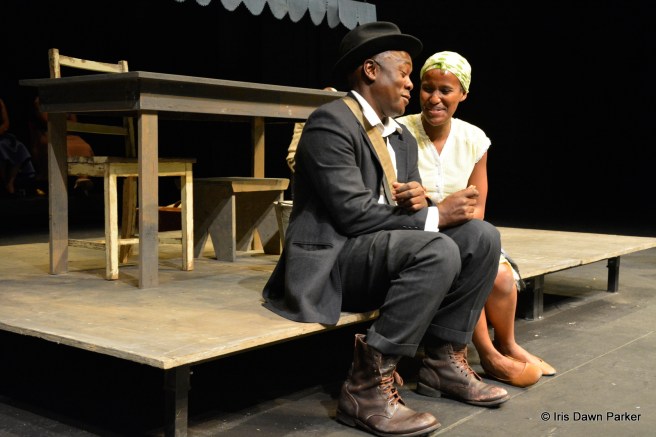
Not with these two stalwarts. With Cooke’s experienced artistic vision and kaNcube’s performance skills, they do justice to Mahala’s invigorating script in a way that’s mesmerising and enthralling. One would have imagined that most of us would be as familiar with Themba as was possible, but this piece shows his life in a completely novel way – with many life lessons to boot.

Apart from stricter editing which would allow for a slightly shorter show, it’s a near perfect production and one that brings much joy – from performance to storytelling of a personal kind which we need much more of.

Can Themba’s voice is one that should be heard. And in this show, the volume is at its sharpest.


The Suitcase is packed with Stories

The Suitcase 2017
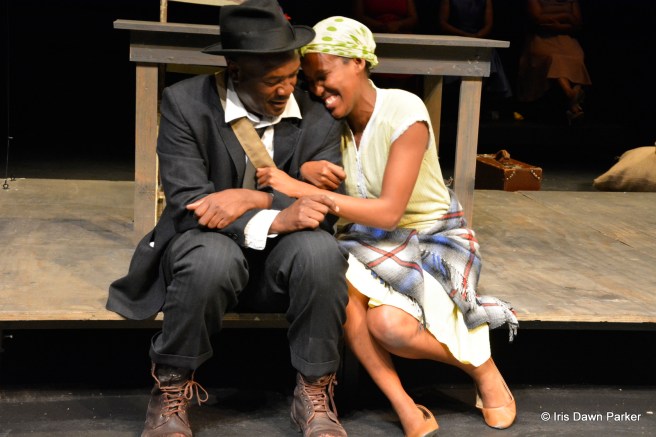
Masasa Mbangeni and Siyabonga Thwala

DIANE DE BEER

THE SUITCASE (by Es’kia Mphahlele)

ADAPTED AND DIRECTED by: James Ngcobo

CAST: Siyabonga Thwala, Masasa Mbangeni, Desmond Dube, John Lata

GUITARIST: Bheki Khoza with singers Gugulethu Shezi, Ndoh Dlamini, Nokukhanya Dlamini

SET DESIGN: Nadya Cohen

LIGHTING DESIGN; Wesley France

COSTUME DESIGN: Nthabiseng Makone

VENUE: Joburg’s Market Theatre

UNTIL: November 26


The Suitcase 2017
Siyabonga Thwala and Masasa Mbangeni


The audience were vocal in their approval from start to finish with Es’kia Mphalele’s The Suitcase, a reminder of how important and inspirational stories that reflect lives will always be.

This is the third reincarnation of this James Ngcobo production which started at The Baxter more than a decade ago, evolved for the opening of the Soweto Theatre and now this current production, which was revived for a UK tour with original members Thwala and Lata with Dube and Mbangeni, new additions.

And none of its power is lost. If anything, it grows in strength as Ngcobo, adds, takes away, uses the space differently, plays with the pace, and approaches the music from a different perspective, which in this instance with the three women singers, seems to reflect on the times.

Also in sync with the times is the spotlight on the poor and their particular dilemma. For many it is unthinkable not to have somewhere to turn to in times of distress, yet in the real world, that’s a luxury and an option not many are privileged to have.

When you are battling for survival, there usually aren’t any safety nets and that makes every day precarious.

The Suitcase 2017
Siyabonga Thwala and Masasa Mbangeni

For Timi and Namhla, that’s a way of life and they have moved to the big city in pursuit of their dreams. They do still have those and their strongest suit is their love. They’re partners in everything they do and get their strength from one another – until it all becomes too much to bear. But for that desperate chance, says Timi, who seemingly loses hope and yet …

Set in the days of apartheid, it is a reminder of where we come from but also that for these particular people in today’s world, not much has changed. The safety net is still not there and their days are as precarious as they ever were. And that’s sad. The poor seem to get poorer in a world where greed is what drives the powerful.

One of the fascinating things about seeing this play in its different incarnations, is Thwala’s growth through the years. He is older and that adds to the substance of the performance. Each step is taken with so much more impetus as if everything this man does determines what comes next.

But all of the sweetness between the two lovebirds is still there, the lifeline that exists in this family and carries them into their future. Masasa with her beautiful depth of voice offers a gentle strength for her man as he struggles to find something to keep them going in their battle for a better life. And it gives her older character a gravitas which adds to the story.

The Suitcase 2017
Ndo Dlamini, John Lata, Desmond Dube and Siyabonga Thwala

As the two narrators as well as numerous other characters, both Dube and Lata are seasoned performers who know when to milk a specific scene and how far to go without stepping completely out of character – and the story demands their kind of tomfoolery.

To hold it all together, there’s the music that is both haunting and heavenly with Khoza’s guitar accompaniment for three sublime voices in unison and solo, holding the show in a very specific ambience. It’s quite something.

The Suitcase is a story, sometimes sublime and sometimes extraordinarily sad, that captures both the good and the bad, and in these specific times, it again underlines the lives of others, and how those without, so often slip through the cracks.

Evita, a musical of our time, then and now, round and round, again and again

DIANE DE BEER


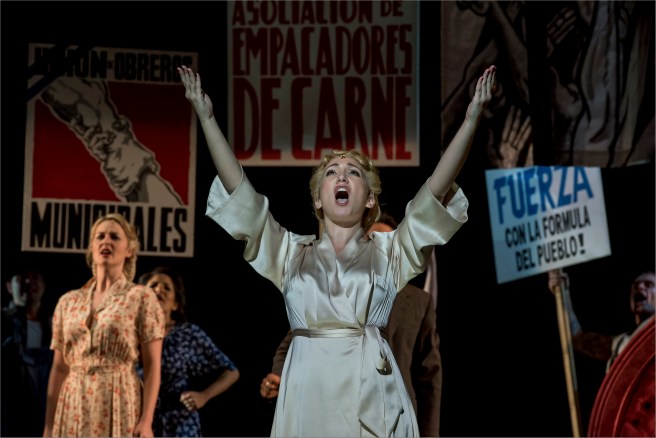
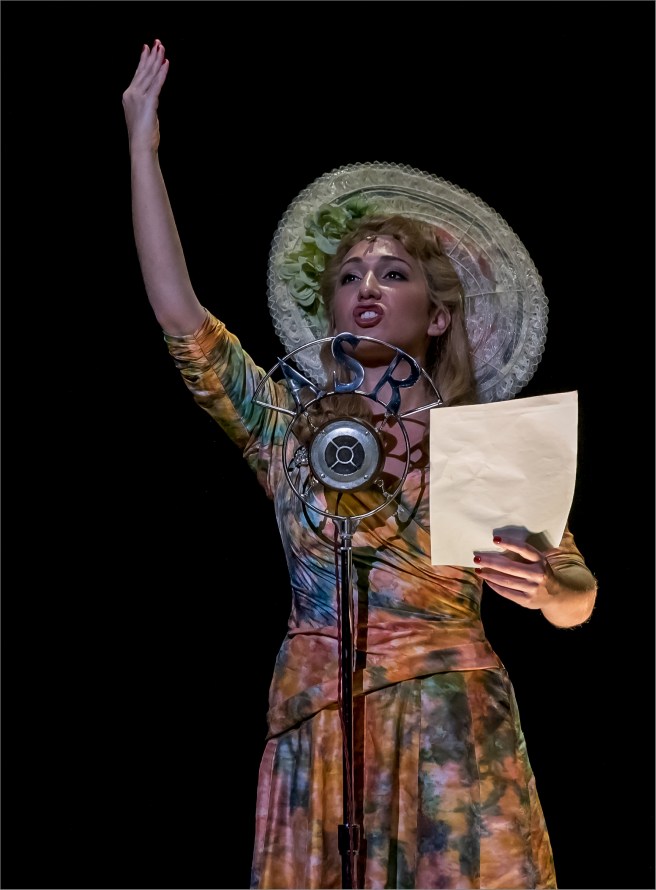
Eva Peron3eva peron2Eva Peron

Pictures: Christiaan Kotze


EVITA

ORIGINAL DIRECTOR: Hal Prince 

RESIDENT DIRECTOR: Anton Luitingh

CAST: Jonathan Roxmouth (Che), Emma Kingston (Eva Peron), Robert Finlayson (Peron), Anton Luitingh (Magaldi), Isabella Jane (Mistress) and ensemble

CHOREOGRAPHER: Larry Fuller (international team)

RESIDENT CHOREOGRAPHER: Duane Alexander

MUSICAL DIRECTOR: Louis Zurnamer

DESIGNER: Timothy Brian O’Brien (international team)

VENUE: Teatro at Montecasino

UNTIL November 26; Cape Town’s Artscape December 1 to January 7


We do know how to do musicals – and do them well –  with some of the best talent around.

More than anything this one is steered by the exceptional Jonathan Roxmouth, who inhabits the spirit of Che with a scheming eye and the knowledge that he has picked his cast of opportunists well, to skewer at heart’s content.

Jonathan Roxmouth in full colour

And then there’s Eva, the Madonna of Argentina, who is played by Kingston (picked by Andrew Lloyd Webber, Tim Rice and Hal Prince) with a harshness that places this musical squarely in the world we find ourselves in today.

It isn’t a pretty story with pretty songs. It is about a people who put their hope in a woman (and her man) who knew their lives intimately because she had lived it before her own clamber to power succeeded.

Everything is tainted with a clinical yet cynical brush which makes this a truly remarkable revival of a production seen here before many times. Perhaps it’s simply the state the world finds itself in at this particular time that has upped the relevance here and now, but there’s no way to witness this one without being aware of the cyclical nature of power and its abusive nature – always at the cost of the people.

It is also again the casting that turns it into the sensation it is, with especially the leads all making their mark magnificently.

Roxmouth is in a class of his own and this role allows him free rein to explore many of his extraordinary powers from the singing to his acting as he slips most comfortably into this particular narrator’s skin. It’s a glorious turn as he grows in confidence and ticks every box perfectly – to the benefit of the production, and those of us witnessing his skills in a blaze of brilliant colour.

Initially I was puzzled by Kingston’s almost screechy approach in the songs but as the musical progressed, her character grew almost bloated in its horror because of the way she approached her. She plays her like someone who understands from the start that she will access everything she needs to maintain this extraordinary life.

Welcome back to Finlayson whose voice is as powerful as it was in his early days and who perfectly fits the Peron persona, while both Luitingh (doing double duty as performer and director with aplomb) and Jane shone in their solo moments as they nail their iconic songs.

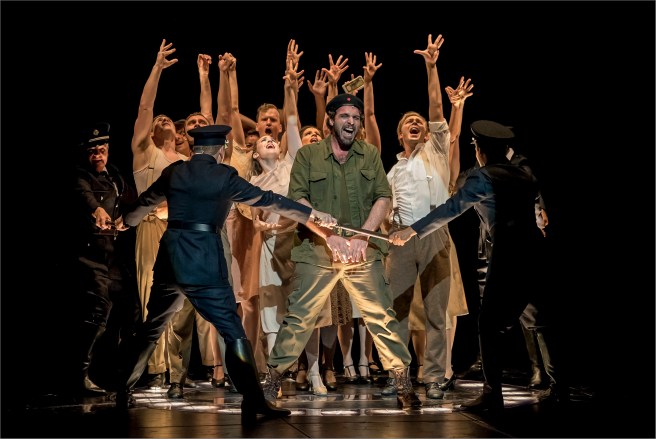
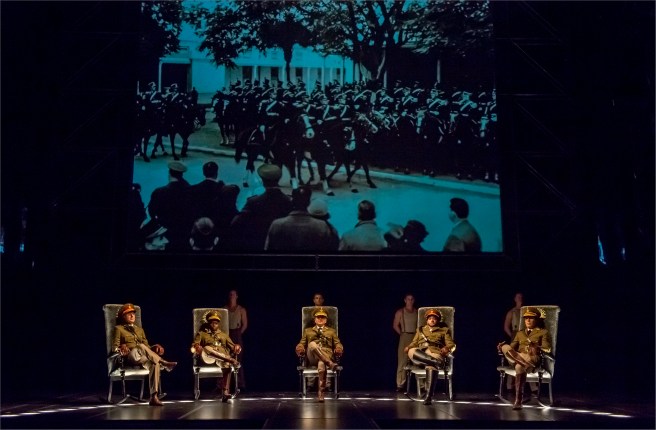
None of this would matter if the ensemble didn’t step up to support the excellence of the soloists – and they do at every turn. There’s enthusiasm and energy as the show is pulled together with an authenticity as real footage of the era and the people is used to great artistic effect.

Evita general scene
Night of the Generals

Because of the times, it is an appropriately dark version of Evita but because almost all the songs have become anthems, the songs will carry it for those who want music rather than message and for those of us wishing for more, it is all there in gruesome splendour and sadly,  it is all so horribly familiar.

It’s a grand spectacle, with lighting and designs cleverly creative, the orchestra, both in full sound and solo moments, beautifully held, and the whole comes together because of the attention to even the tiniest detail.

And while this is an internationally conceived production and the timing adds superbly to the substance, it is Roxmouth, Luitingh and the local gang that pull this one off with such style.