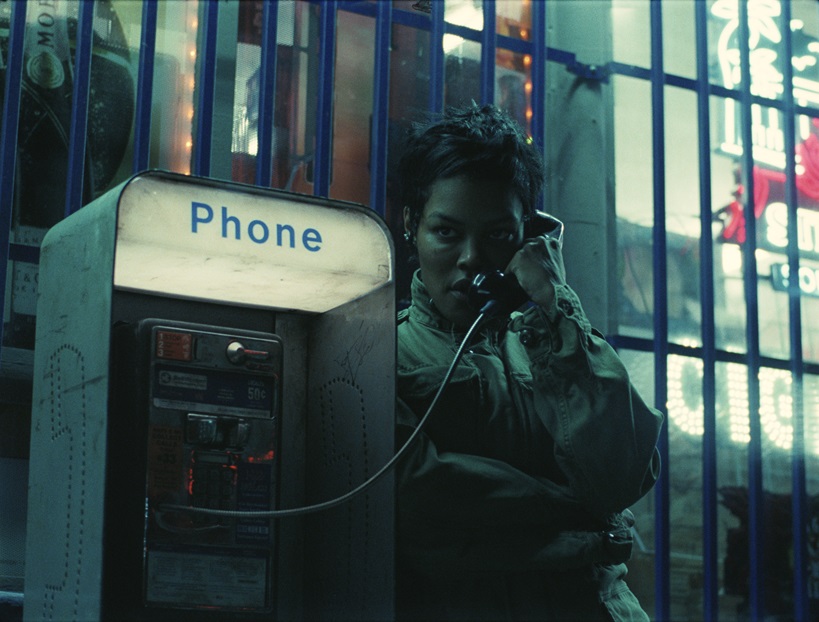
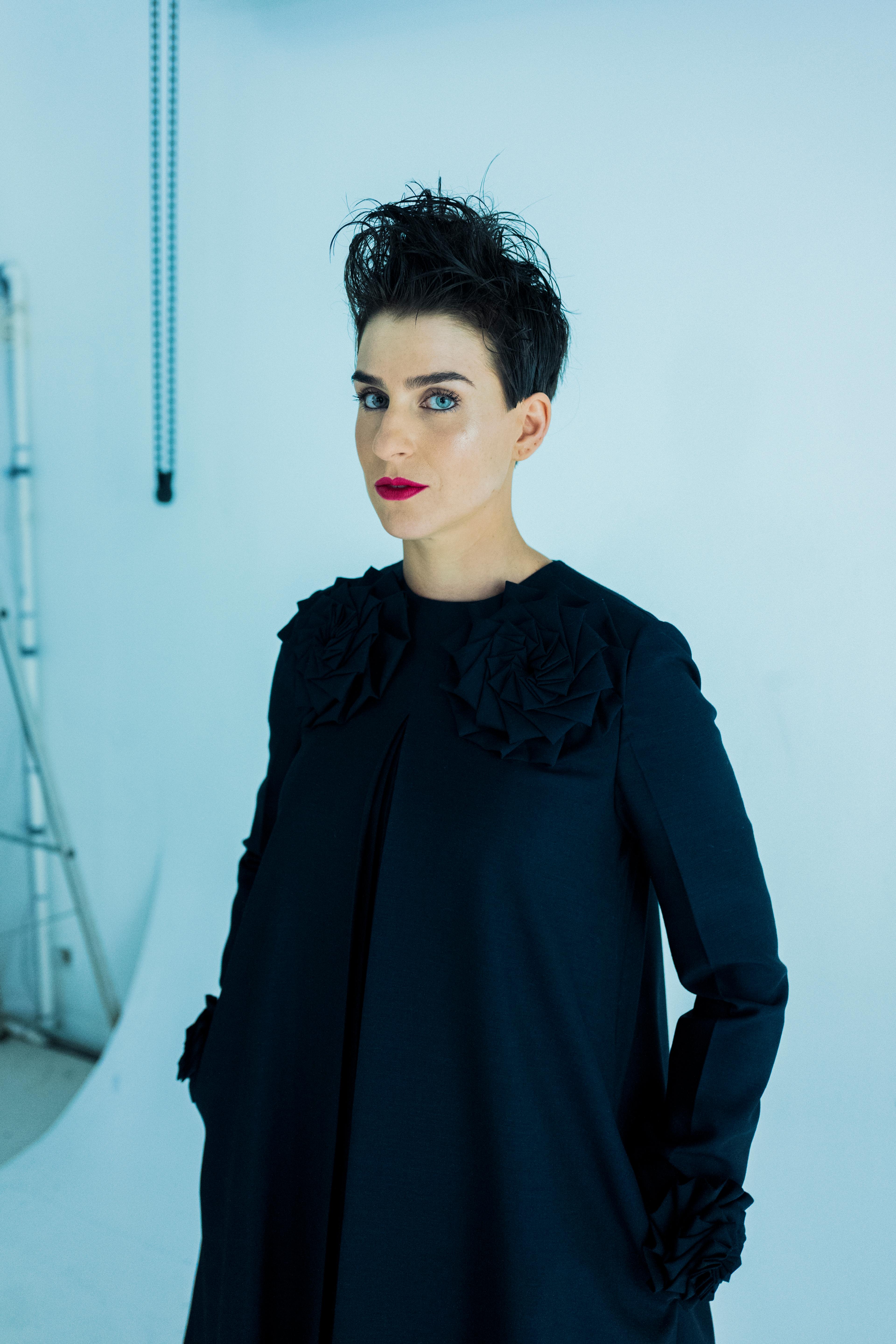
Teyana Taylor as Perrfidia, the eternal revolutionary
ONE BATTLE AFTER ANOTHER
CAST: Leo DiCaprio, Sean Penn, Chase Infiniti, Teyana Taylor, Regina Hall, Benicio del Toro
Living in these unsettling times when nobody knows what they will wake up to every morning in so many parts of the world, it is fascinating to see how artists are going to interpret something so personal and yet so beyond anything anyone could have imagined.
If you take previous movies like Boogie Nights, Magnolia and There will Be Blood, with their intent and in their diversity, Anderson’s decision to tackle the life he currently finds himself in, is not surprising. Neither is his approach.
Taking Thomas Pynchon’s ‘80s novel Vineyard (according to production notes) as his starting point, he writes a script so daringly in-your-face yet anchored by a father/daughter love story and electrifies this helter-skelter caper-like tale with a fantastic cast and a pace that leaves you breathless from the start to finish.
Making his attentions clear from the start, two of the strangest revolutionaries explode onto the screen as they shoot their way through an immigration centre to free the victims while simultaneousloy, disabling their viciously fierce, military captors.
With raucous music and an exuberantly energetic, romantically charged couple participating in the escape, it plays like a merry romp rather than a deathly revolution, quite reminiscent of the hippies in the ‘60s.
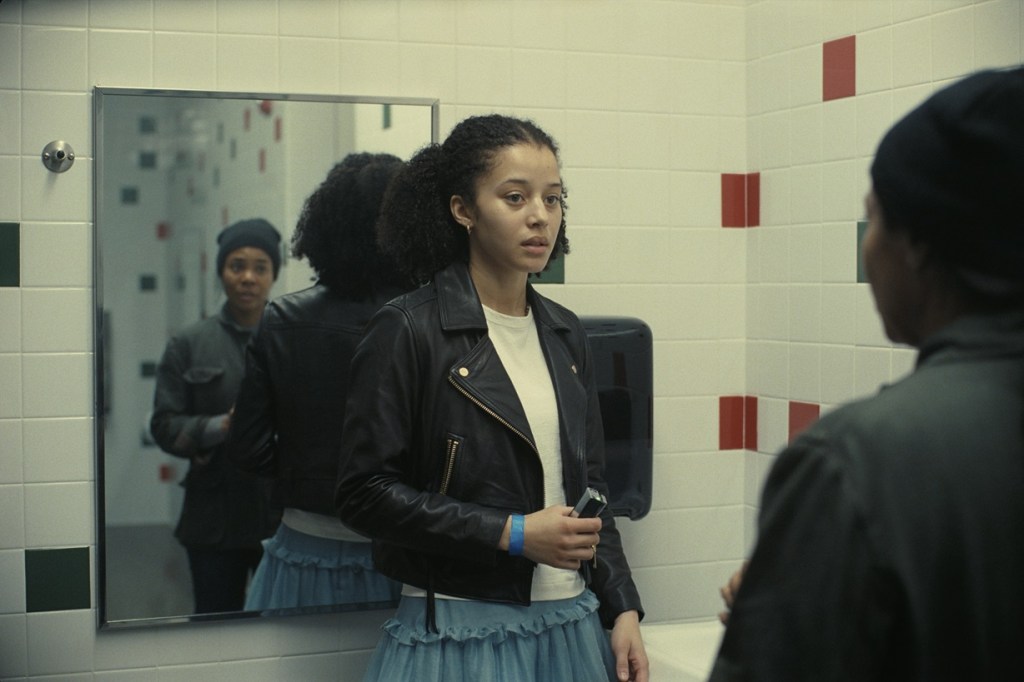
Chase Infiniti as the daughter of revolutionary active parents faces Regina Hall
And that sets of a chain of events which races through causes and time shifting in giant-sized leaps with the young revolutionaries suddenly parents even though their activities don’t diminish and again as mother is torn apart from father and baby, the child turns into an accomplished scholar raised by her now drug and alcohol drenched dad who spends all his time doting on his darling daughter.
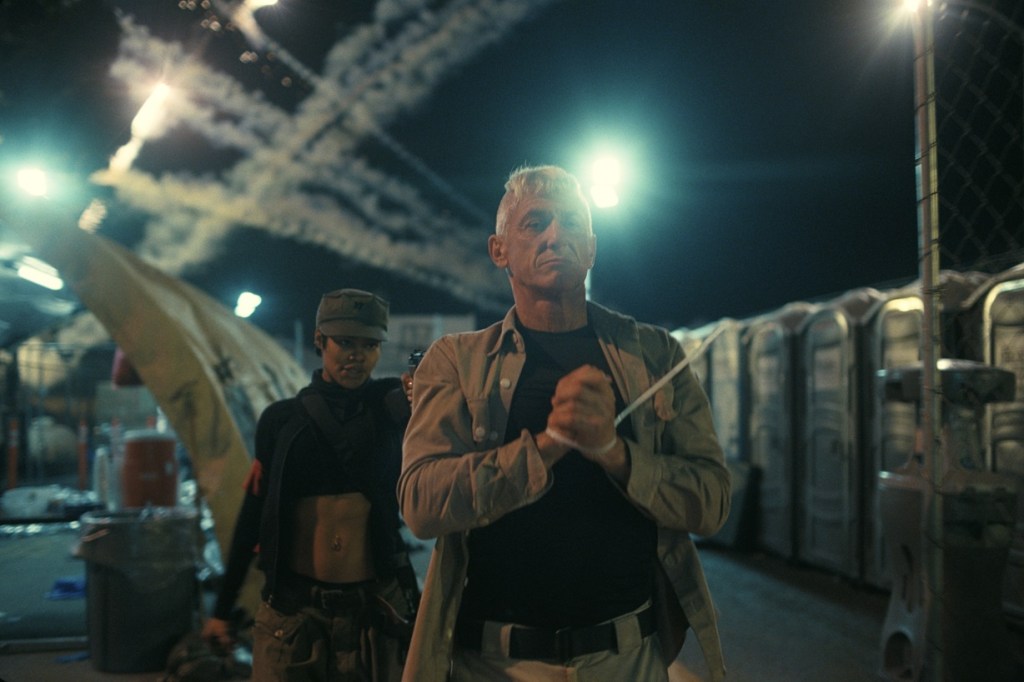
That’s at the heart of the frenetic contemporary tale but into its violent centre strides Colonel Steven J Lockjaw inhabited by a transformed Sean Penn (with the best contemporary remake of a mullet ever as seen above) who immerses himself in his right-wing tin soldier on a crusade to turn his country into a white universe ruled by power-demented ageing white men.
As these stories go, his hormones are unstoppable at the sight of Perfidia and even though he is a monstrous racist, he cannot resist her and starts to stalk her.
She however is committed to the resistance which is how he lands on the trail of Bob (DiCaprio, pictured above) and his now 16-year-old daughter Willa while catching a whiff of his addictive sexual attraction every once in a while.
The rest of the film is as promised one battle after another as father and daughter spend their lives evading their deadly predator while leading seemingly normal lives even though they have escape tunnels and technical devices which speak only to each other.
The film is packed from top to bottom and one side to another. It stretches every way and catapults back and forth to get a hold of the story and everything Anderson embroiders and stictches into his contemporary political tale.
Yet none of this is obvious as you are taken on a madcap adventure with some of the best action scenes and acting you will ever see. DiCaprio’s Bob reminds one of his character in The Wolf of Wall Street, only it’s a few decades on, he acknowledges his brain is fried from decades of abuse and what is left, is a laid-back dad who is happy as long as he is high and his daughter is happy.
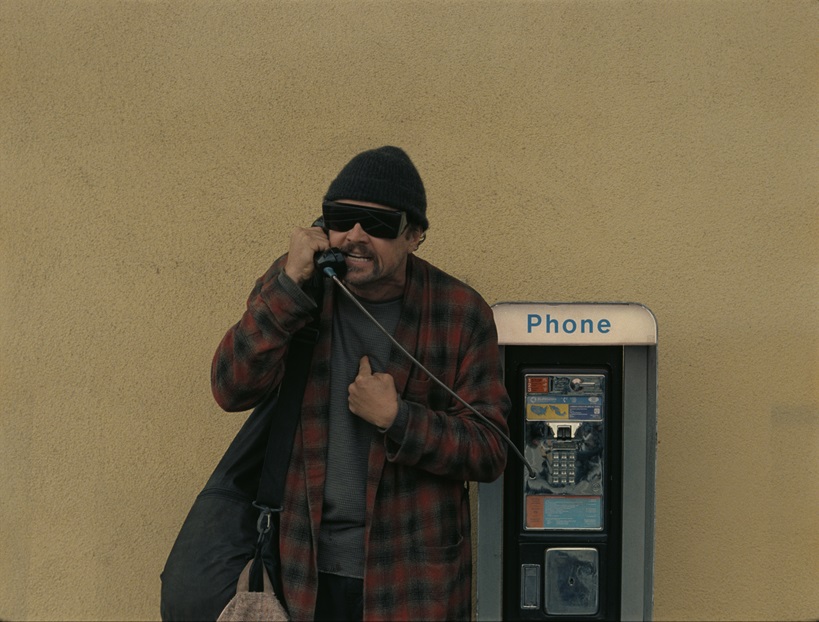
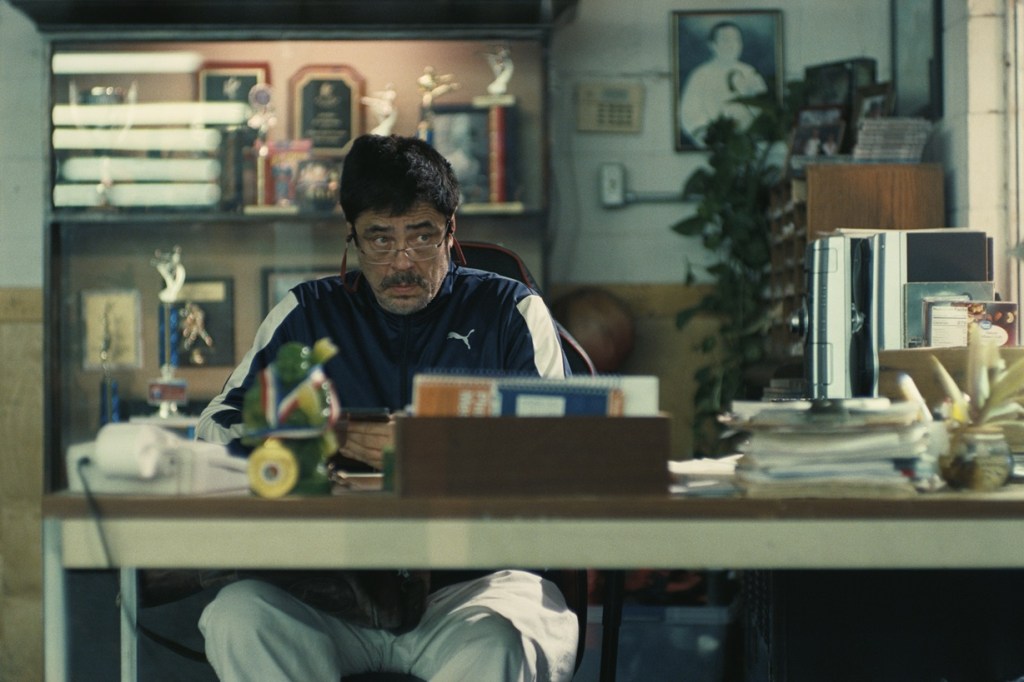
Keeping him calm is Benicio del Toro’s sensei (pictured above), who is as cool as he is calm and the one who watches over his charges as if they are precious artefacts. He has manufactured a secret city within a city where he and his followers can escape when the crazy people start descending and some of the best chase scenes – on foot and in cars – will take you on a spree you have never encountered in film. James Bond can only dream of these kind of escapes.
But even as you run along and together as fast as you can (almost with a hop, skip and a jump) with the ragtag collection of what the rulers of their world see as life’s misfits, the politics are deadly serious and nothing to laugh at.
Anderson knows how to get his message across. No use preaching. We all know what is happening around us, the signs are everywhere even if we’re too busy to notice. Catch them with classic comedy and craftmanship and then hit hard with the story you’re really intent on sharing.
And that’s exactly what he does. You might just die laughing.
Screened exclusively at Ster-Kinekor cinemas, with select livestreams at V&A Waterfront
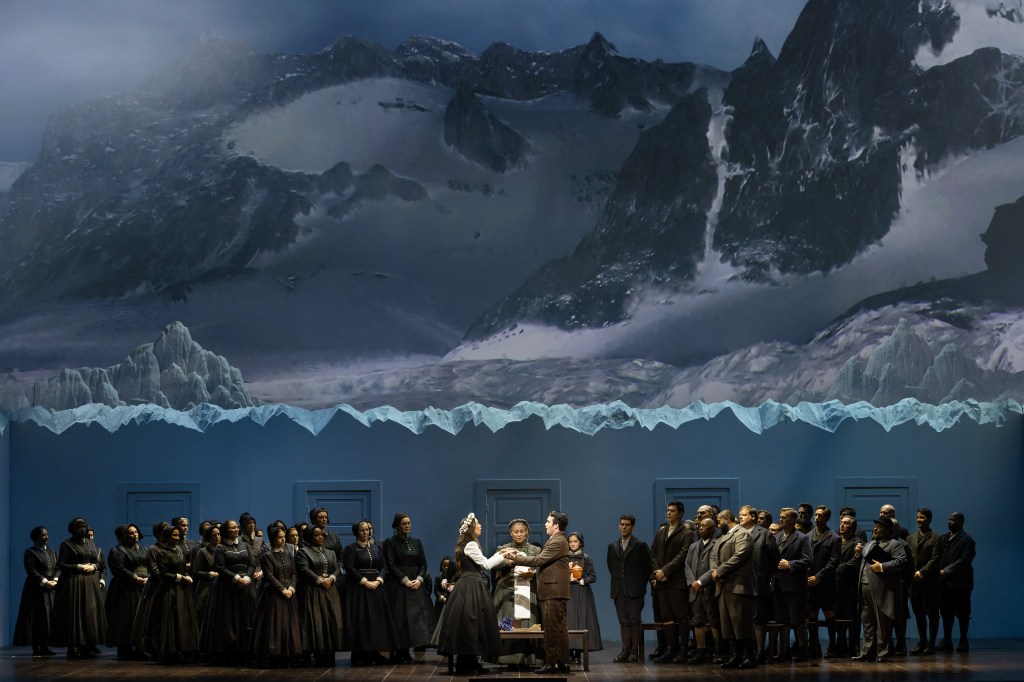
Deborah Nansteel as Teresa, Nadine Sierra as Amina, Sydney Mancasola as Lisa, Xabier Anduaga as Elvino, and Nicholas Newton as Alessio in Bellini’s “La Sonnambula.” Photo: Marty Sohl / Met Opera
It’s time for the 25/26 Met Opera season and what a spectacular worldwide season they’ve put together for the opera cognoscenti including South African opera enthusiasts.
This is the 18th Met: Live in HD, the Metropolitan Opera’s award-winning series of live high-definition cinema simulcasts and will locally be seen exclusively at select Ster-Kinekor and Cinema Nouveau cinemas.
With eight productions screening from this Sunday to mid-June 2026, the 2025-26 Live in HD season features one premiere, three new productions of much-loved operas and four revivals.
“With The Met: Live in HD productions screening in our cinemas, local audiences get to experience some of the world’s best-loved opera productions in a near-live situation, from The Met’s opulent stage to our big screens. The theatre-like setting enables cinemagoers to become an extension of the live production’s audience, making these world-class productions from the Met in New York accessible to anyone who enjoys and appreciates great opera,” says Lynne Wylie, chief marketing officer at Ster-Kinekor Theatres.
“What began as an experiment 18 years ago has become a staple experience for opera lovers all over the world,” said Peter Gelb, the Met’s Maria Manetti Shrem General Manager.
“Our 2025–26 season in cinemas reflects how opera is changing at the Met, where we’re balancing timeless classics with accessible new work that is advancing the art form and attracting younger and more diverse audiences.”
Don’t miss this world-class opera production, filmed and transmitted from the Met stage to the big screen at Cinema Nouveau and select Ster-Kinekor cinemas: Eastgate and Rosebank Nouveau in Johannesburg; Brooklyn in Tshwane; Watercrest in Hillcrest, KZN; Garden Route in George; Somerset in Somerset West; and Blue Route and V&A Waterfront (with live streams) in Cape Town. Loyalty card discounts apply, as does Ster-Kinekor’s Half-Price Tuesdays ticket price offering.
Bookings are open, with each production limited to two screenings only. Book your tickets now on the new-look Ster-Kinekor website at www.sterkinekor.com or download the new SK App on your smartphone. For news and updates, go to Facebook: Ster-Kinekor Theatres | follow Ster-Kinekor on Twitter: @Ster-Kinekor. For all queries, call Ticketline on 0861-Movies (668 437).
Here is the 2025-26 Met: Live in HD season at a glance, hold on to the programme for bookings:
Nadine Sierra as Amina in Bellini’s La Sonnambula. Photo: Marty Sohl / Met Opera
La Sonnambula – Bellini (new production)
Screening dates: 02 and 04 November 2025 (3h 15min)
Music by Vincenzo Bellini | Libretto by Felice Romani
Conductor: Riccardo Frizza
Cast: Amina – Nadine Sierra; Lisa – Sydney Mancasola; Elvino – Xabier Anduaga; Rodolfo – Alexander Vinogradov
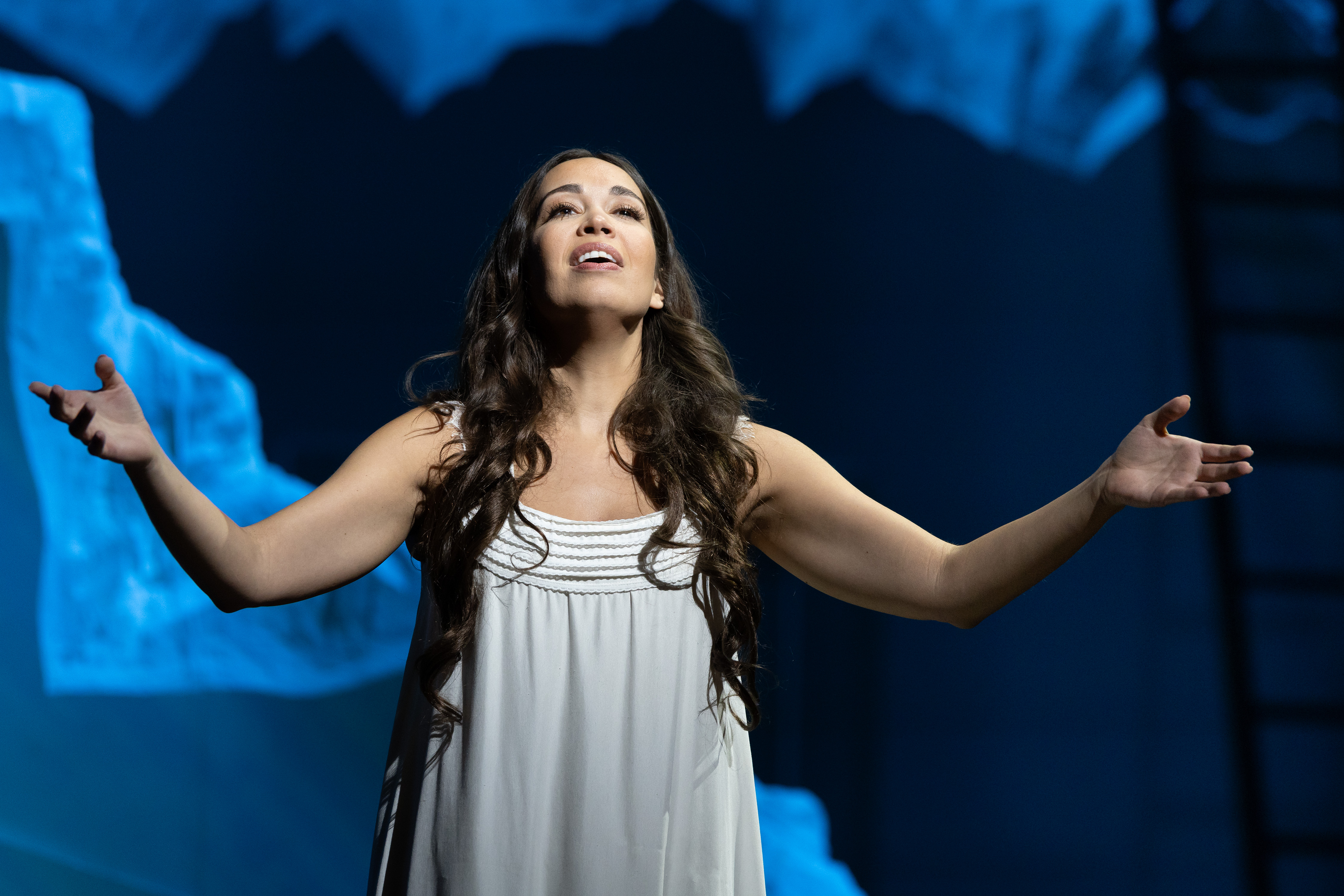
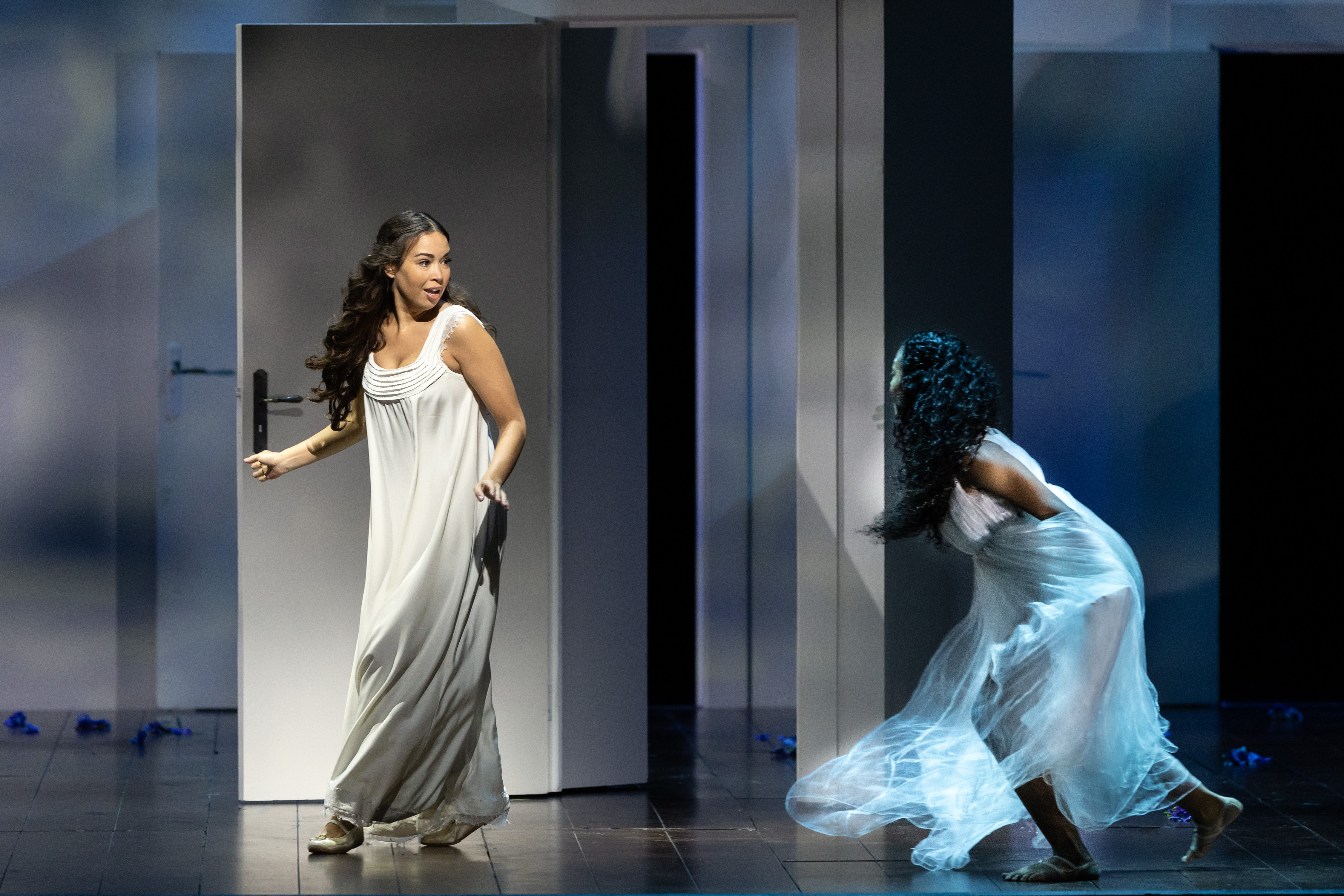
Roméo et Juliette, Verdi’s La Traviata, and Donizetti’s Lucia di Lammermoor, Nadine Sierra (seen in previous seasons of Roméo et Juliette, Verdi’s La Traviata, and Donizetti’s Lucia di Lammermoor) summits another peak of the soprano repertoire as Amina, who sleepwalks her way into audiences’ hearts in Bellini’s poignant tale of love lost and found.
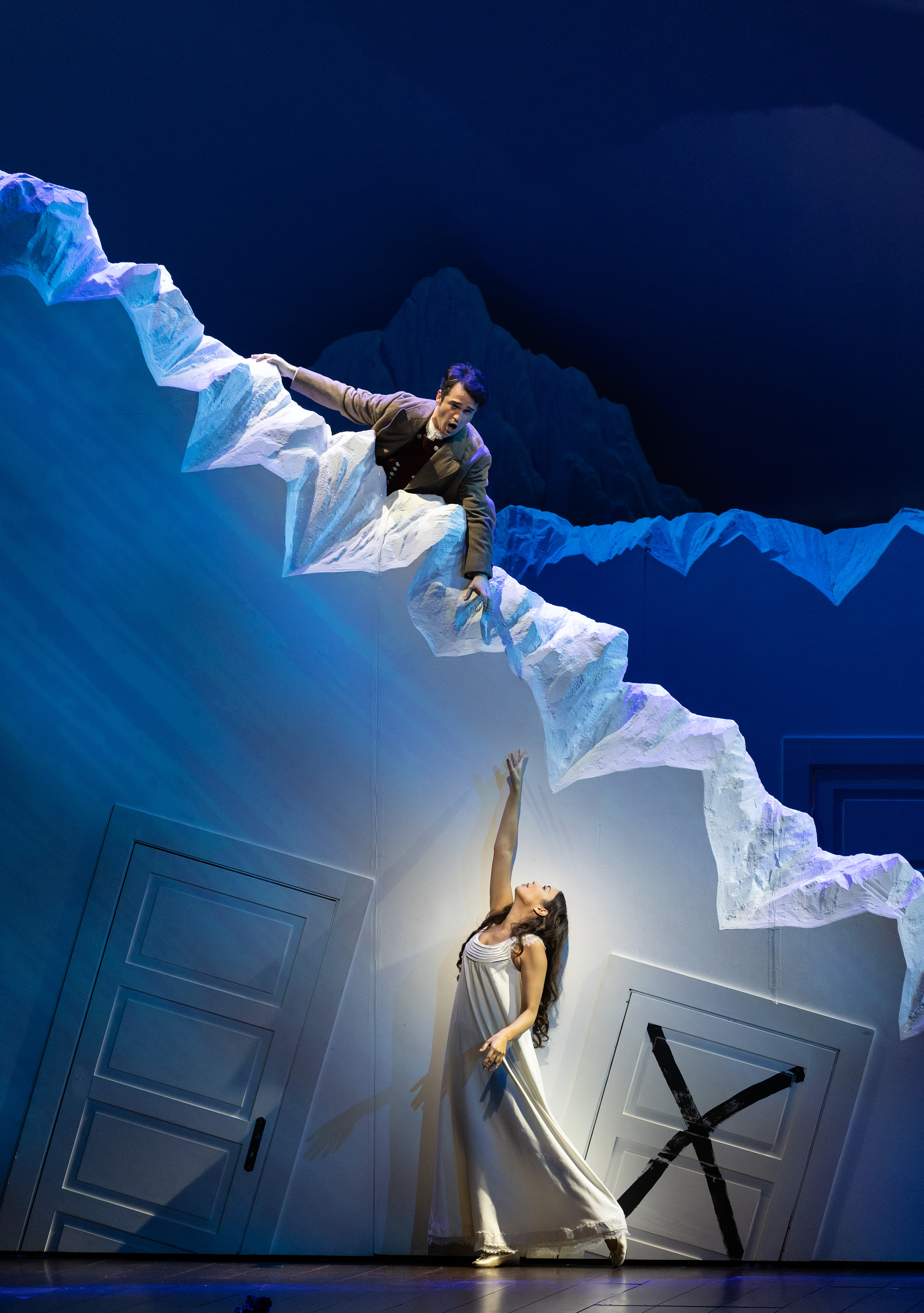
In this new production, Rolando Villazón—the tenor who has embarked on a brilliant second career as a director—retains the opera’s original setting in the Swiss Alps but uses its somnambulant plot to explore the emotional and psychological valleys of the mind.
Tenor Xabier Anduaga co-stars as Amina’s fiancé, Elvino, alongside soprano Sydney Mancasola as her rival, Lisa, and bass Alexander Vinogradov as Count Rodolfo. Riccardo Frizza takes the podium for one of opera’s most ravishing works.
Juliana Grigoryan as Mimì and Freddie De Tommaso as Rodolfo in Puccini’s La Bohème. Photo: Karen Almond / Met Opera
La Bohème – Puccini (revival)
Screening dates: 08 November (livestream at V&A Waterfront); 23 and 25 November 2025
(3h 29min)
Music by Giacomo Puccini | Libretto by Luigi Illica and Giuseppe Giacosa
Conductor: Keri-Lynn Wilson | Production: Franco Zeffirelli
Cast: Mimì – Juliana Grigoryan; Musetta -Heidi Stober; Rodolfo – Freddie De Tommaso; Marcello – Lucas Meachem; Schaunard – Sean Michael Plumb; Colline – Jongmin Park; Benoit/Alcindoro – Donald Maxwell
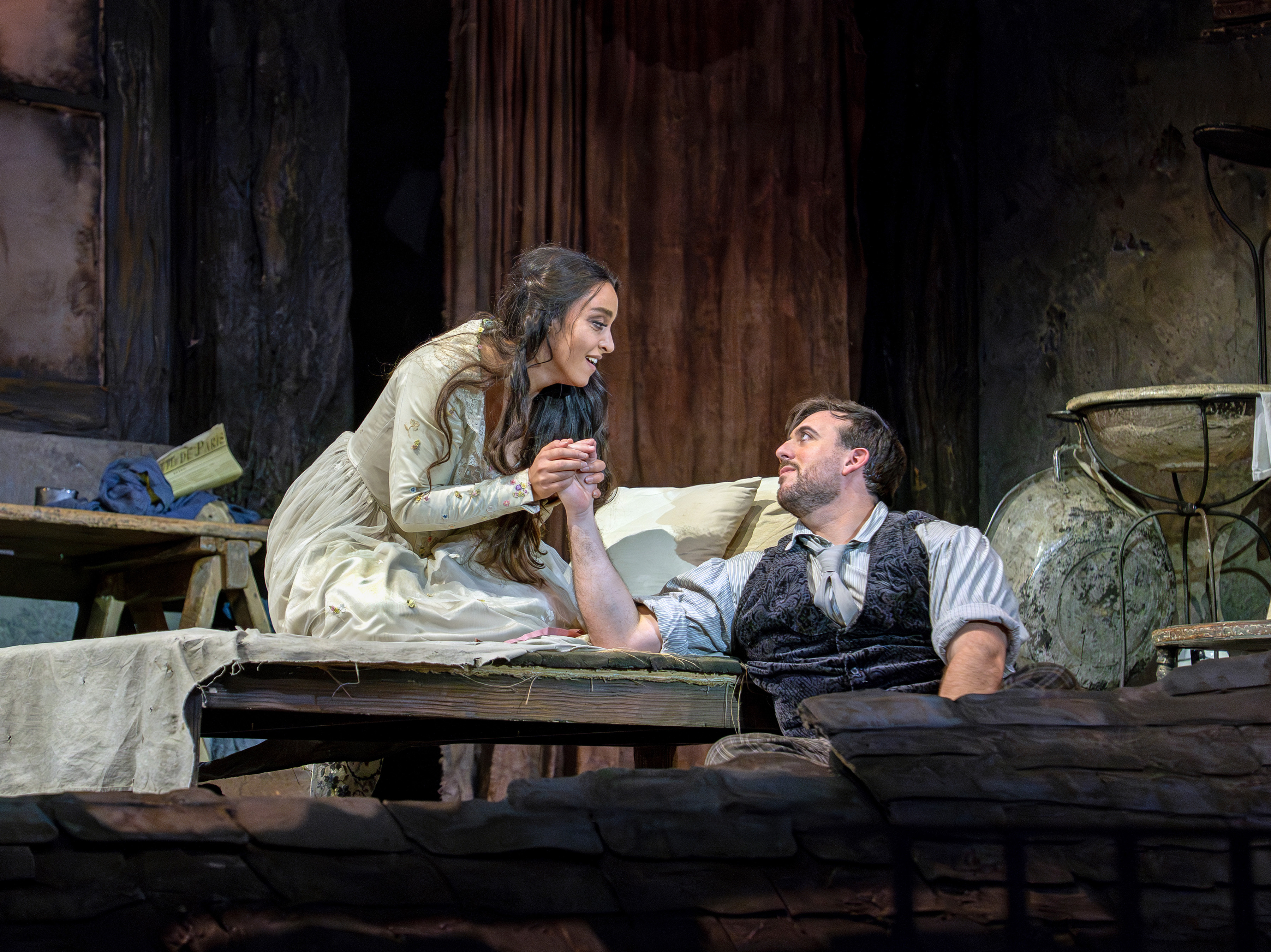
With its enchanting setting and spellbinding score, the world’s most popular opera is as timeless as it is heartbreaking. Franco Zeffirelli’s picture-perfect production brings 19th-century Paris to the Met stage as Puccini’s young friends and lovers navigate the joy and struggle of bohemian life. Soprano Juliana Grigoryan is the feeble seamstress Mimì, opposite tenor Freddie De Tommaso as the ardent poet Rodolfo. Keri-Lynn Wilson conducts the 08 November performance, which will be transmitted live from the Met stage to cinemas worldwide, including at Ster-Kinekor V&A Waterfront in Cape Town.
A scene from Strauss’s Arabella. Photo: Marty Sohl / Met Opera
Arabella – Strauss (revival)
Screening dates: 07 and 09 December 2025
(4h 12min)
Music by Richard Strauss | Libretto by Hugo von Hofmannsthal
Conductor: Nicholas Carter
Cast: Arabella – Rachel Willis-Sørensen; Zdenka – Louise Alder; Matteo – Pavol Breslik; Mandryka – Tomasz Konieczny; Waldner – Brindley Sherratt
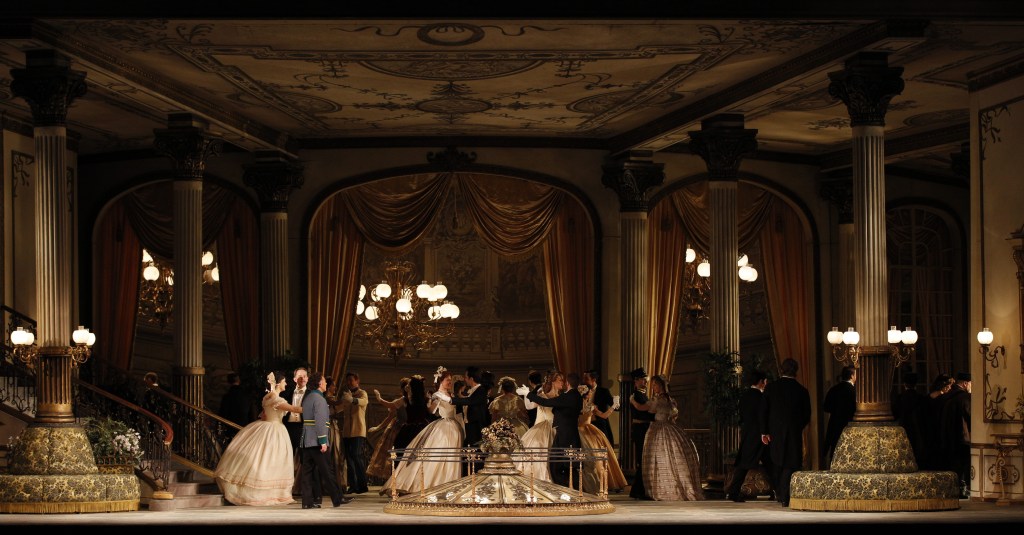
Strauss’s elegant romance brings the glamour and enchantment of 19th-century Vienna to cinemas worldwide in a sumptuous production by legendary director Otto Schenk that “is as beautiful as one could hope” (The New York Times). Soprano Rachel Willis-Sørensen stars as the title heroine, a young noblewoman in search of love on her own terms. Radiant soprano Louise Alder is her sister, Zdenka, and bass-baritone Tomasz Konieczny is the dashing count who sweeps Arabella off her feet.
Soprano Sonya YonchevaA scene from Giordano’s Andrea Chénier. Photo: Marty Sohl / Met Opera
Andrea Chénier – Giordano (revival)
Screening dates: 13 December 2025 (livestream at V&A Waterfront); 04 and 06 January 2026
(3h 31min)
Music by Umberto Giordano | Libretto by Luigi Illica
Conductor: Daniele Rustioni
Cast: Maddalena di Coigny – Sonya Yoncheva; Andrea Chénier – Piotr Beczała; Carlo Gérard – Igor Golovatenko
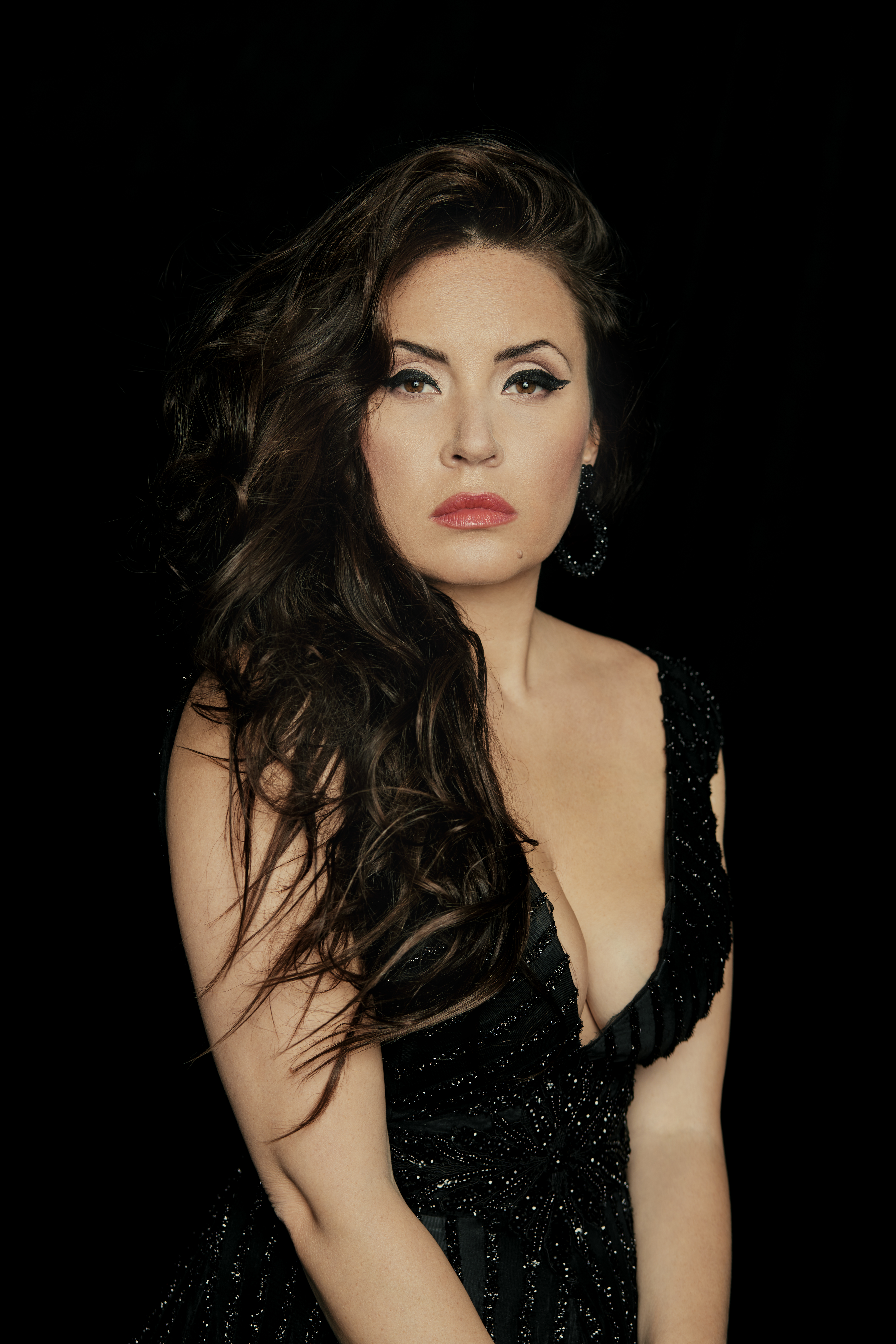
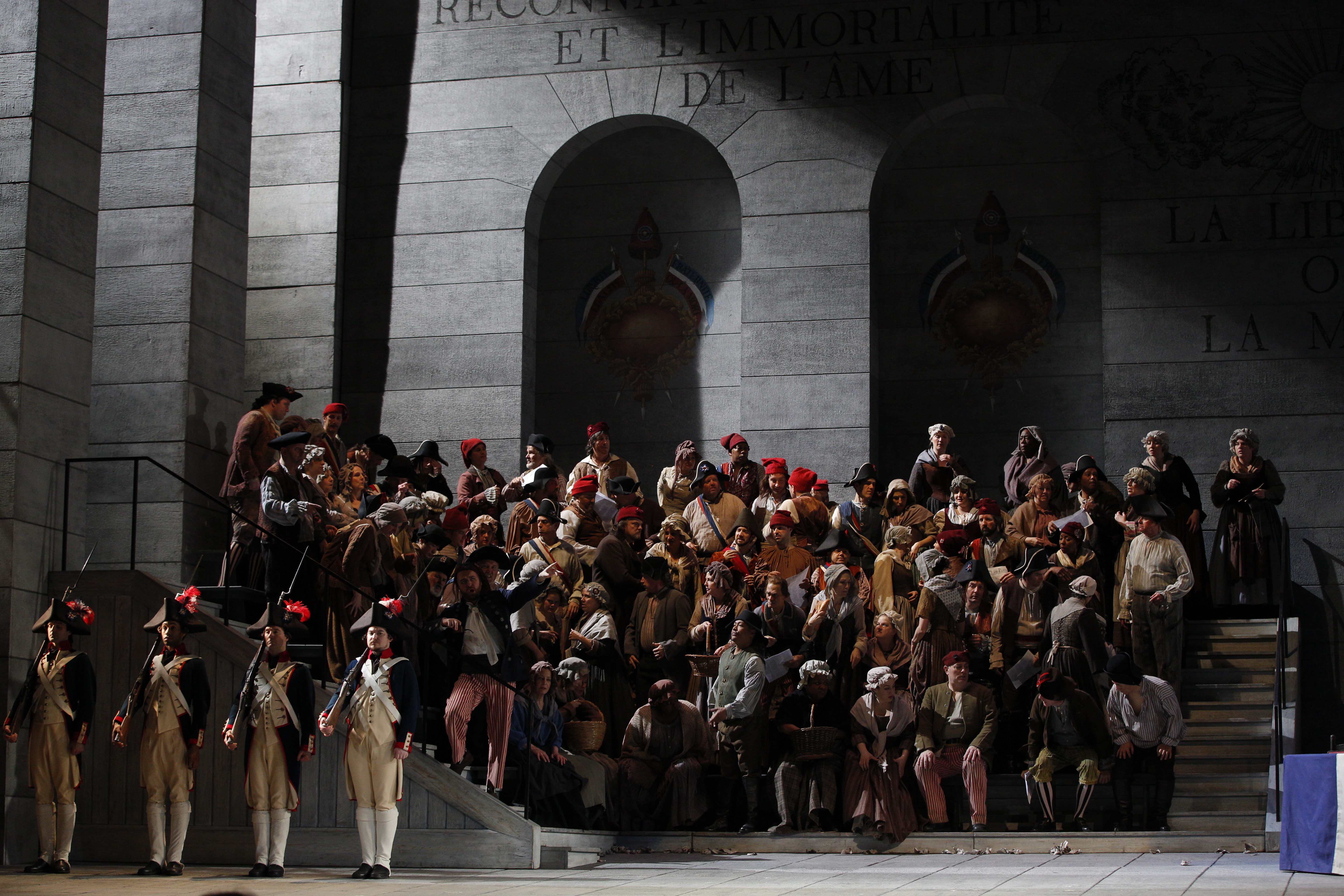
Giordano’s passionate tragedy stars tenor Piotr Beczała as the virtuous poet who falls victim to the intrigue and violence of the French Revolution. Following their celebrated recent partnership in Giordano’s Fedora in the 2022–23 Live in HD season, Beczała reunites with soprano Sonya Yoncheva as Chénier’s aristocratic lover, Maddalena di Coigny, with baritone Igor Golovatenko as Carlo Gérard, the agent of the Reign of Terror who seals their fates. Met Principal Guest Conductor Daniele Rustioni takes the podium to lead Nicolas Joël’s gripping staging.
Lisette Oropesa as Elvira in Bellini’s I Puritani. Photo: Paola Kudacki / Met Opera
I Puritani – Bellini (new production)
Screening dates: 10 January (livestream at V&A Waterfront); 08 and 10 February 2026
(3h 31min)
Music by Vincenzo Bellini | Libretto by Carlo Pepoli
Conductor: Marco Armiliato
Cast: Elvira Walton – Lisette Oropesa; Lord Arturo Talbot – Lawrence Brownlee; Riccardo Forth – Artur Ruciński; Giorgio Walton – Christian Van Horn
For gorgeous melody, spellbinding coloratura, and virtuoso vocal fireworks, I Puritani has few equals. The first new Met production of Bellini’s final masterpiece in nearly 50 years – a striking staging by Charles Edwards, who makes his company directorial debut after many successes as a set designer – arrives in cinemas worldwide. The Met has assembled a world-beating quartet of stars, conducted by Marco Armiliato, for the demanding principal roles. Soprano Lisette Oropesa and tenor Lawrence Brownlee are Elvira and Arturo, brought together by love and torn apart by the political rifts of the English Civil War, with baritone Artur Ruciński as Riccardo, betrothed to Elvira against her will, and bass-baritone Christian Van Horn as Elvira’s sympathetic uncle, Giorgio.
Lise Davidsen as Isolde in Wagner’s Tristan und Isolde. Photo: Paola Kudacki / Met Opera
Tristan und Isolde – Wagner (new production)
Screening dates: 05 and 07 April 2026
(5h 12min)
Music by Richard Wagner | Libretto by the composer
Conductor: Yannick Nézet-Séguin
Cast: Isolde – Lise Davidsen; Brangäne – Ekaterina Gubanova; Tristan – Michael Spyres; Kurwenal – Tomasz Konieczny; King Marke – Ryan Speedo Green
After years of anticipation, a truly unmissable event arrives in cinemas as the electrifying Lise Davidsen tackles one of the ultimate roles for dramatic soprano: the Irish princess Isolde in Wagner’s transcendent meditation on love and death. Heroic tenor Michael Spyres stars opposite Davidsen as the love-drunk Tristan. The momentous occasion also marks the advent of a new, Met-debut staging by Yuval Sharon – hailed by The New York Times as “the most visionary opera director of his generation” and the first American to direct an opera at the famed Wagner festival in Bayreuth, as well as Music Director Yannick Nézet-Séguin’s first time leading Tristan und Isolde at the Met. Mezzo-soprano Ekaterina Gubanova reprises her portrayal of Brangäne, alongside bass-baritone Tomasz Konieczny, who sings Kurwenal after celebrated Met appearances in Wagner’s Der Fliegende Holländer and Ring cycle. Bass-baritone Ryan Speedo Green makes an important role debut as King Marke.
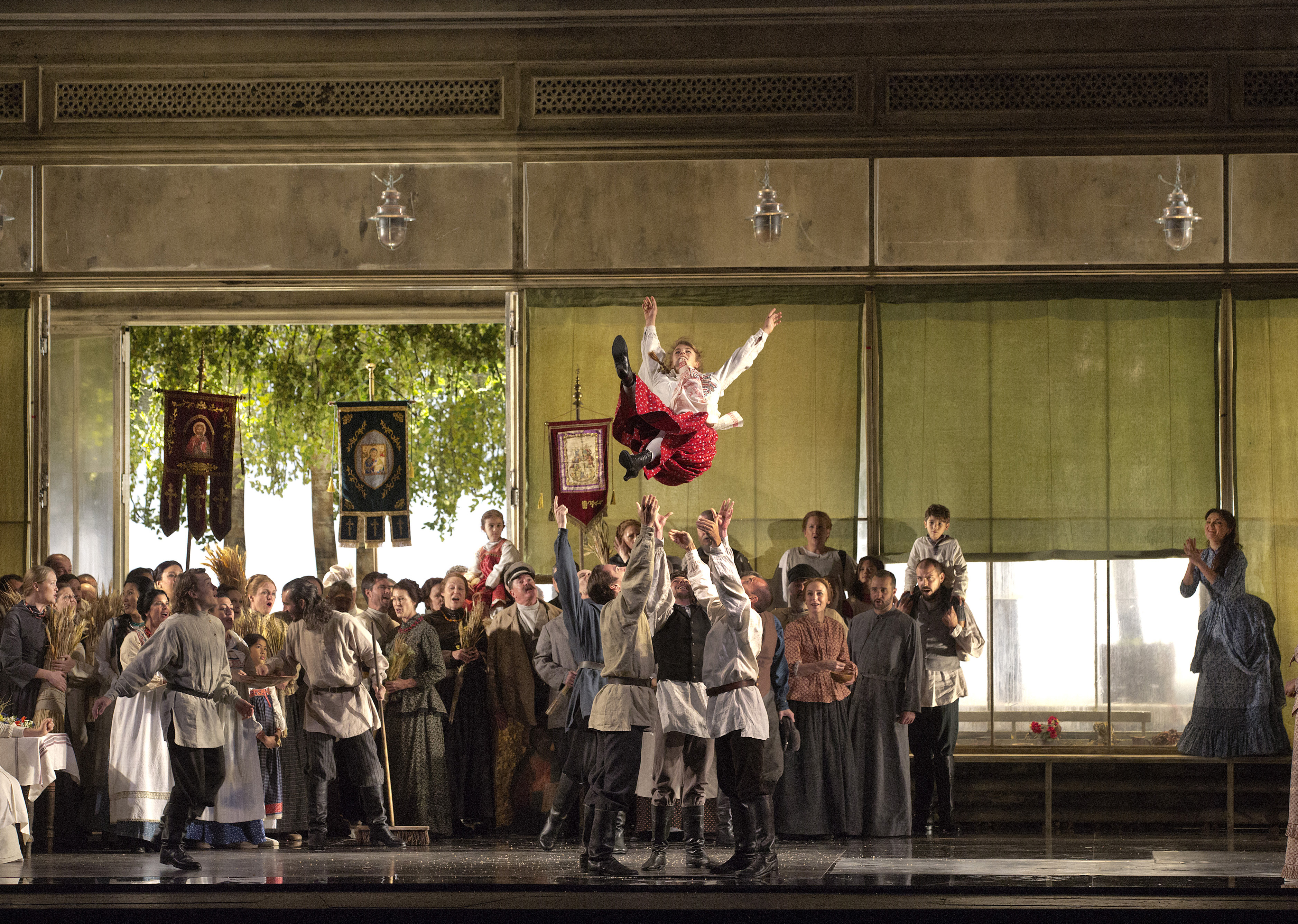
Soprano Asmik Grigorian A scene from Tchaikovsky’s Eugene Onegin. Photo: Ken Howard / Met Opera
Eugene Onegin – Tchaikovsky (revival)
Screening dates: 02 May (livestream at V&A Waterfront); 17 and 19 May 2026
(4h 05min)
Music by Pyotr Ilyich Tchaikovsky | Libretto by the composer and Konstantin Stepanovich Shilovsky
Conductor: Timur Zangiev*
Cast: Tatiana – Asmik Grigorian; Olga – Maria Barakova; Filippyevna – Stephanie Blythe; Lenski – Stanislas de Barbeyrac; Eugene Onegin – Igor Golovatenko; Prince Gremin – Alexander Tsymbalyuk
Following her acclaimed 2024 company debut in Puccini’s Madama Butterfly, soprano Asmik Grigorian returns to the Met as Tatiana, the lovestruck young heroine in this ardent operatic adaptation of Pushkin, which will be transmitted live from the Metropolitan Opera stage to cinemas worldwide on 02 May, including at Ster-Kinekor V&A Waterfront, on 02 May. Baritone Igor Golovatenko reprises his portrayal of the urbane Onegin, who realises his affection for her all too late. The Met’s evocative production, directed by Tony Award–winner Deborah Warner, “offers a beautifully detailed reading of … Tchaikovsky’s lyrical romance” (The Telegraph).
El Último Sueño de Frida y Diego – Frank (Metropolitan Opera premiere)
3 / 5
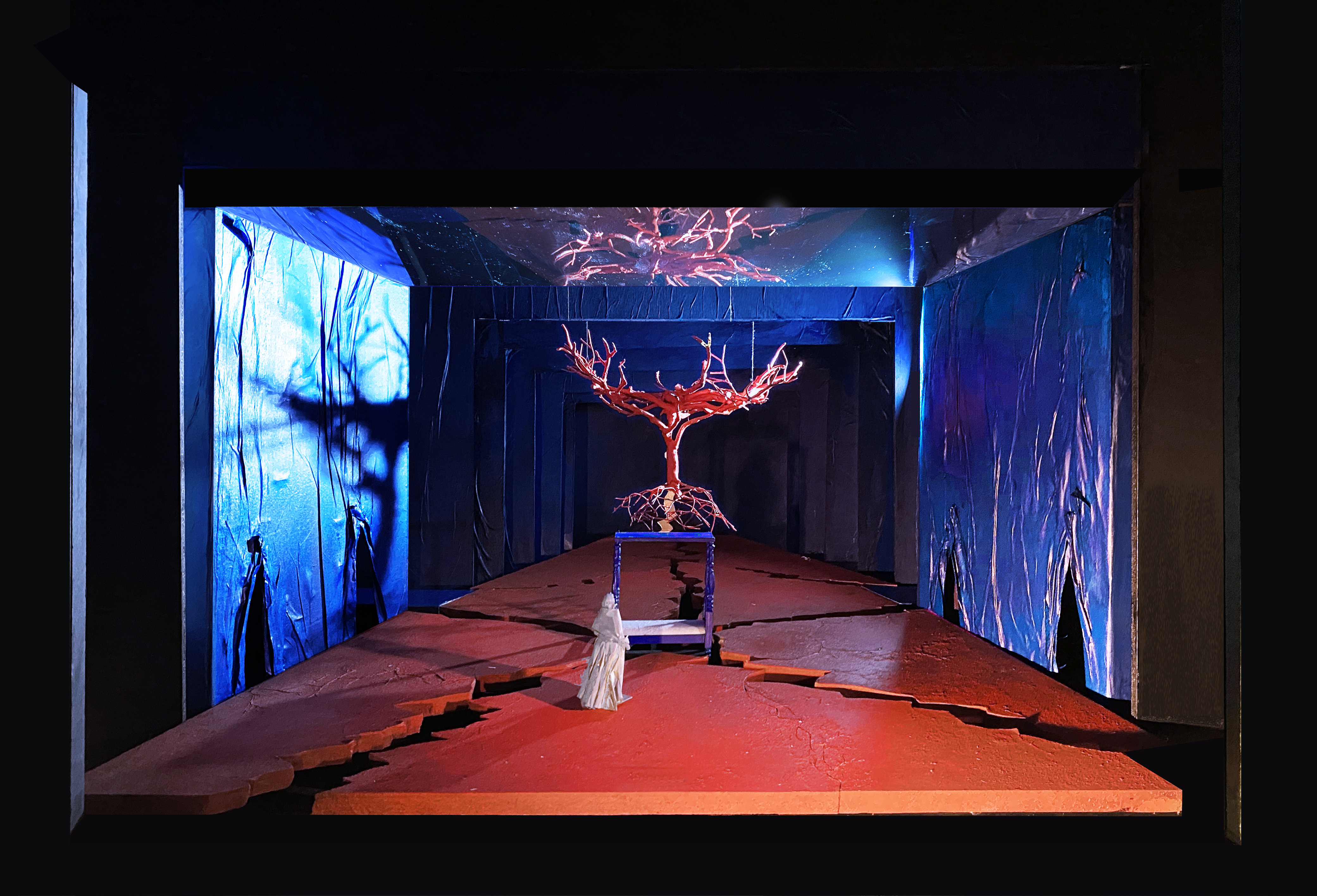
A set design by Jon Bausor for the Met premiere of Gabriela Lena Frank’s El Último Sueño de Frida y Diego.
Screening dates: 30 May (livestream at V&A Waterfront); 14 and 16 June 2026
(2h 48min)
Music by Gabriela Lena Frank* | Libretto by Nilo Cruz*
Conductor: Yannick Nézet-Séguin
Cast: Catrina – Gabriella Reyesl; Frida – Isabel Leonard; Leonardo – Nils Wanderer; Diego – Carlos Álvarez
A scene from Tchaikovsky’s Eugene Onegin. Photo: Ken Howard / Met Opera
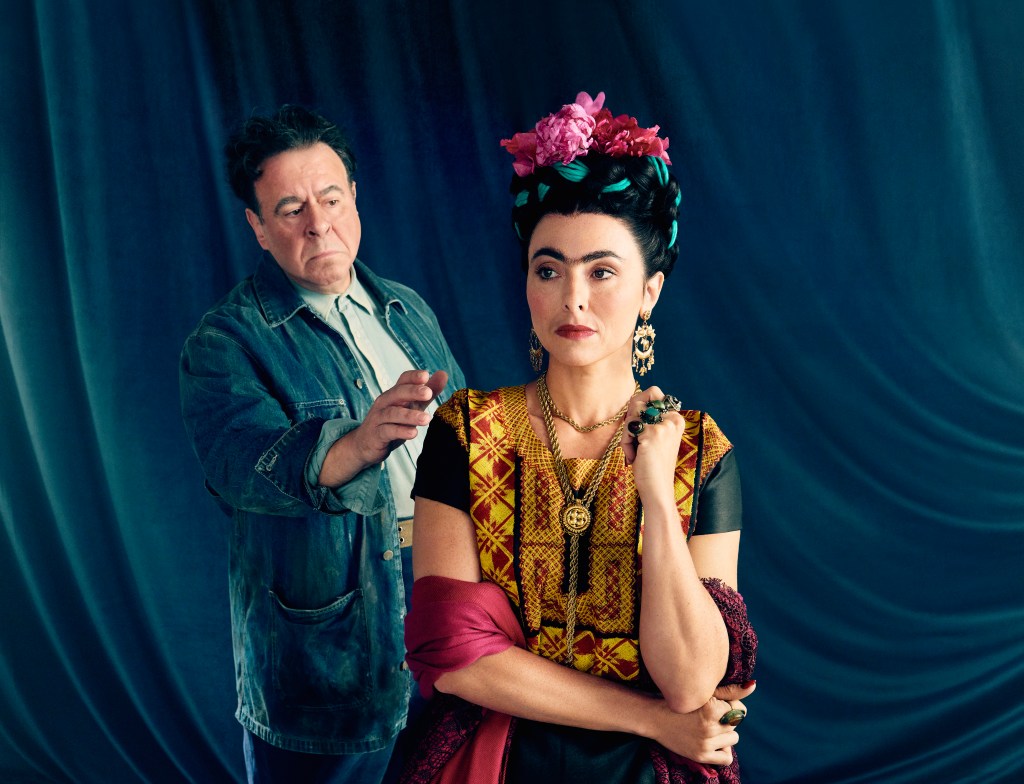
On 30 May, the Metropolitan Opera’s 2025–26 Live in HD season comes to a close with a live transmission (only at V&A Waterfront) of American composer Gabriela Lena Frank’s first opera, a magical-realist portrait of Mexico’s painterly power couple Frida Kahlo and Diego Rivera, with libretto by Pulitzer Prize–winning playwright Nilo Cruz. Fashioned as a reversal of the Orpheus and Euridice myth, the story depicts Frida, sung by leading mezzo-soprano Isabel Leonard, leaving the underworld on the Day of the Dead and reuniting with Diego, portrayed by baritone Carlos Álvarez. The famously feuding pair briefly relive their tumultuous love, embracing both the passion and the pain before bidding the land of the living a final farewell. Music director Yannick Nézet-Séguin conducts the Met-premiere staging of Frank’s opera, a “confident, richly imagined score” (The New Yorker) that “bursts with colour and fresh individuality” (Los Angeles Times). This vibrant new production, taking enthusiastic inspiration from Frida and Diego’s paintings, is directed and choreographed by Deborah Colker.
Paul Slabolepszy is one of our most prolific artists, as both playwright and actor. To her surprise, DIANE DE BEER only recently discovered that there are two amazing artists in this family and caught up with both at the closure of Carol Slabolepszy’s latest exhibition:
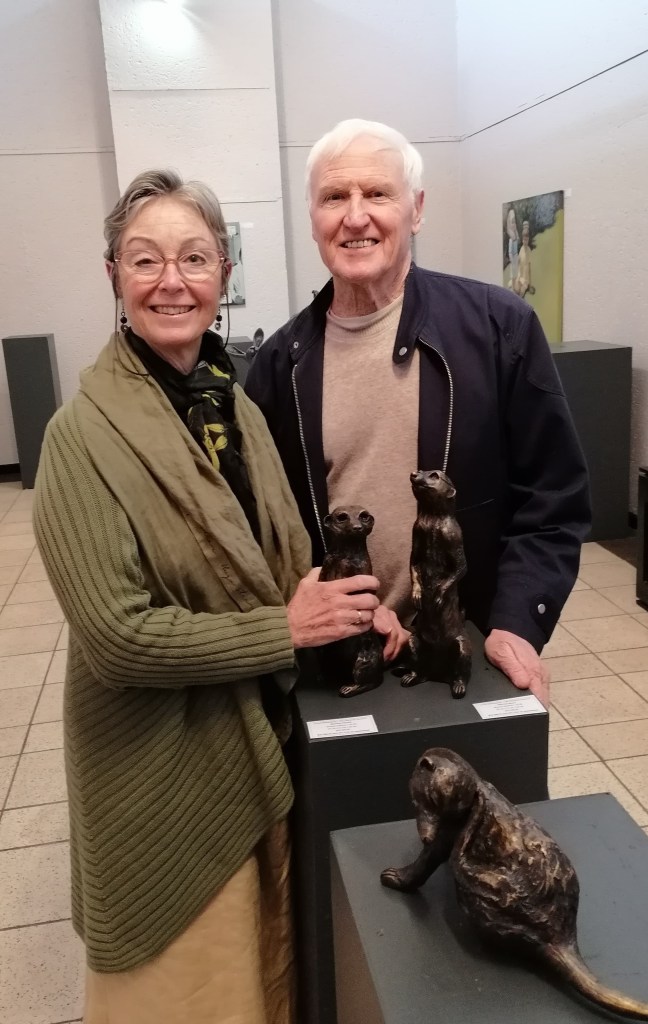
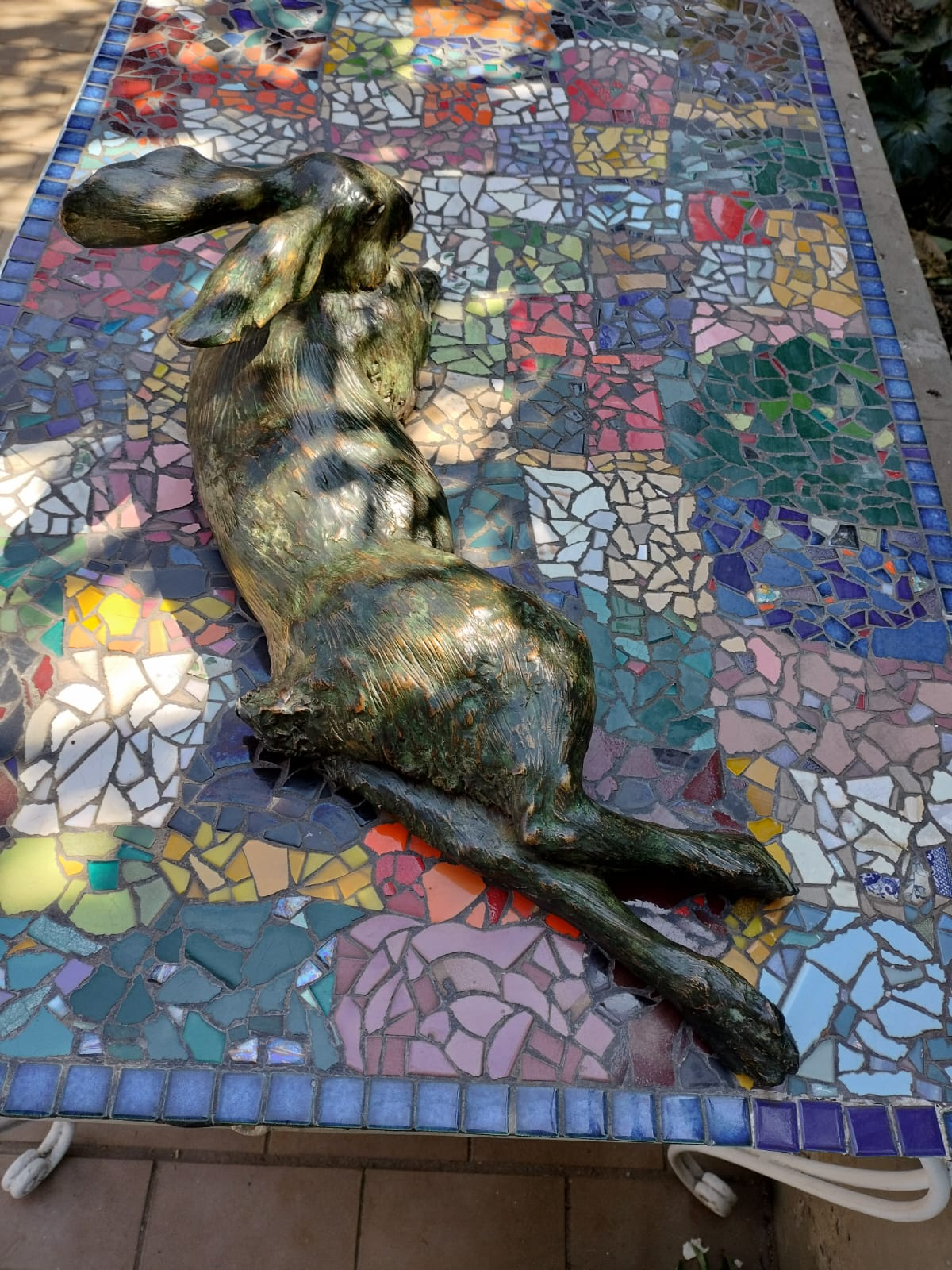
I first became aware of sculptor Carol Slabolepszy when I went to view a painting exhibition at the Association of Arts Pretoria and discovered what I later learnt was Carol’s exquisite collection titled My Hares and Graces.
I was enchanted and completely unaware that someone I only knew as actor Paul Slab’s wife was such an amazing sculptor. And when I say knew I mean that, having seen her for decades accompanying Paul to plays, she was familiar to me.
But now that I have been blessed to meet another artist in the family, it was a delight to find out more about this creative couple’s life. This is Carol’s second creative endeavour. She spent seven years dancing professionally with CAPAB and PACT Ballet in her early years and it was during this time that she met her husband of 40 plus years. They also have three children.
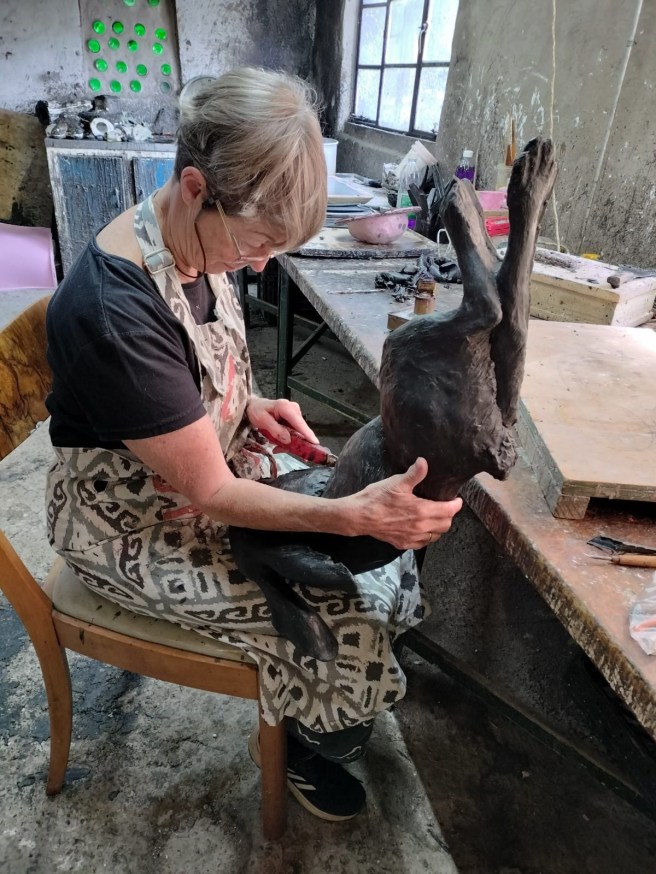
She has always had an artistic bent but with a burgeoning family what also motivated her was to be economically active. She decided to study art as a mature student, and it took some time for her to find her true passion, sculpting. “I was painting at the time and, while I was a good painter, I wasn’t an extraordinary painter.” She wanted to do something she could reproduce while working in a way that would be, for her, more cutting edge.
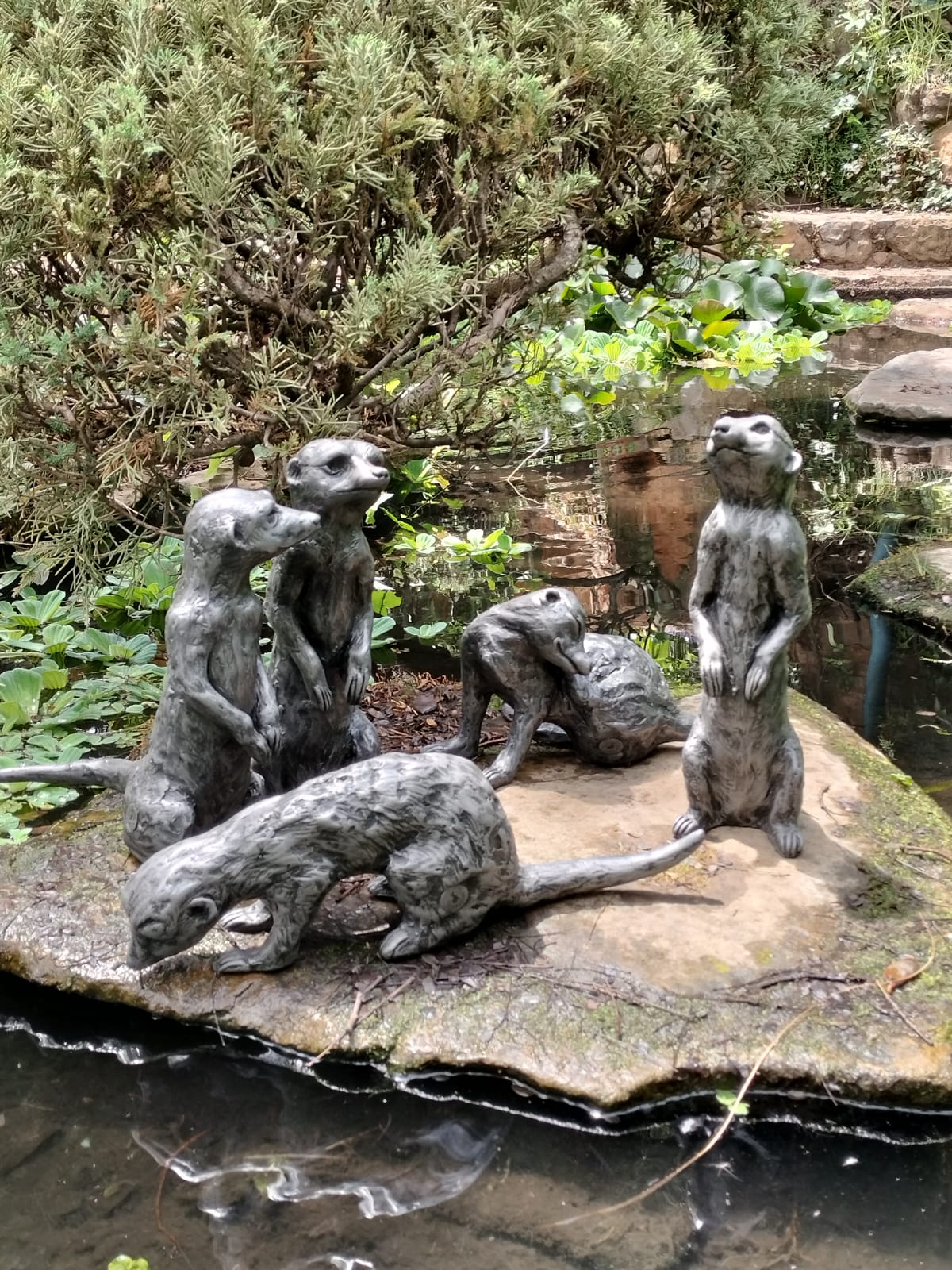
Where she has found her niche is in the animal kingdom, specifically with her magical hares Although there’s also the rest of her ever-growing menagerie – she makes the most wonderful cats, Pangolins, and Meerkats, a few specific dogs, sometimes for a mourning pet owner. But when you witness her husk of hares (14 different ones), you can’t help but lose your heart.
It all began when she was looking for something that was manageable in size due to space constraints but, ever practical with a specific goal in mind, it should be able to travel easily. She also invests in narrative and has strong and happy memories of the Karoo and seeing hares darting in the car headlights at night.
While the hares are all part of a series, each one is made individually and implanted with its very own microchip with an identity number and a letter of authentication. “They don’t just pop out of a machine,” she says. But that is easily visible when you encounter this lively bunch.
Each one has its own personality and name: Lalela – The Listener, Moongazer, Ready Steady… Go!, Hare Apparent, Mvundla (isiXhosa for hare), Cambalele (isiZulu for sleepy and relaxed), uNogwaja (isiZulu for hare), Mpho (isiZulu for gift), uMoya (isiZulu for spirit), Thinker, Nwaya (isiZulu for itch) and Matasatasa, (isiZulu for busy), Bheka and Dancer.
And that’s exactly what first catches your attention. These are hares with identity and probably that’s how they find their rightful owners. And that doesn’t seem a problem for Carol. Her latest consignment is for a Belgian Gallery which has ordered 98 sculptures. What caught their attention were these hares with souls!
A percentage of the sales of her hares is donated to the Endangered Wildlife Trust’s Riverine Rabbit Project.
But this is by far not the end of her reach. Do yourself a favour and browse through her My Hares and Graces website. (https://myharesandgraces.co.za) Don’t miss her archives and see that you scroll right to the bottom to catch a glimpse of her own favourite ‘canvas’.
She describes it as “painting/quilt/castle/cave/mosaic/river/mountain sculpture. Four stone masons became my paint brushes together with a man making the cement (doing the rough stuff) while I directed them and put some pieces of stone in myself, here and there. The making of this Wall gave me enormous pleasure and gives me pure joy looking at it. I don’t have a seascape or a mountain scape but this canvas is as close as I can get and it constantly changes with the light of the day. When it rains the water flows over it like a waterfall.”
I was delighted to discover the sculptures of Carol Slabolepszy and to see the majestic range of her art was magnificent and just adds to the richness of this artist’s creativity.
Because of my strong ties with local theatre, it was Paul whom I contacted to express my surprise about discovering Carol’s work. We arranged to meet when they came to fetch her sculptures following the closure of the exhibition.
He was also on my list for a chat because his latest smash hit Bitter Winter is due for a run at both the Hilton Arts Festival (August 8 – 10) and Potchefstroom’s Aardklop (October 7 – 12).
I loved the play when it made its debut in Joburg last year, and like everyone else, raved about the production. What Paul did so cleverly was to write about something (as he always does) that he knows intimately – two actors auditioning for a play.
It was written during Covid, a scary time for everyone but especially in the acting world, which is a precarious career choice without something like a pandemic adding to their often tough livelihood.
As he tells it, it was a talk by Lizz Meiring in her role as warrior for the Theatre Benevolent Fund that started his mind racing on this latest play. He is part of the ageing theatre community and is aware of just how difficult it is to make a living from the arts.
He also knows how scary auditions can be. “It’s not just something you can switch on,” he says of performance. “And as you walk in you spot another actor who is perfect for the part you’re hoping for.”
But still, they learn to deal with the fear and how to work a situation. And it is exactly this that Bitter Winter deals with.
As I wrote in my review, (https://bit.ly/4jPBGy9 ) anyone who knows about theatre recognizes this daunting yet challenging situation. Yet not many of us are faced with this particular hurdle every time we need to work.
And while actors simply have to accept and work with their fear, as we also know, there’s not that much one can do to alleviate those jangling nerves in what can only be described as a heightened experience which comes around every so often.
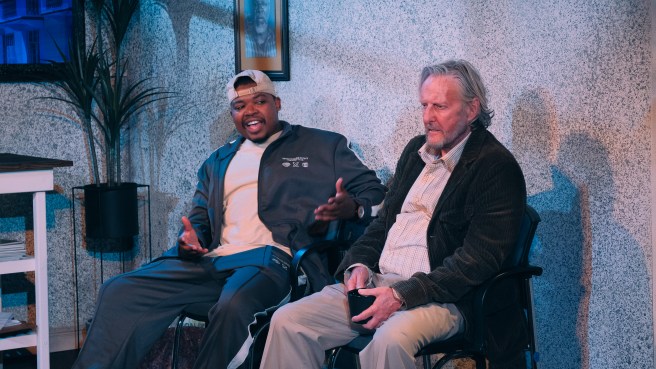
Starring Andre Odendaal (pictured right), Oarabile Ditsele (left) and Chantal Stanfield, Bitter Winter is an extremely clever play on many levels. It’s something everyone can relate to. And that has always been Paul’s gift.
There’s a raw but real quality to his storytelling in a language that he has shaped and refined in his own special.
Watching and listening to him talk, I think of his enthusiasm and excitement over the years. Whether on or off stage, he remains exactly who he always is. Thrilled about this latest success, he can hardly wait to tell me that he is already busy writing a new play.
Titled Midnight in Parys, Paul describes it as a thriller, and as with most of his work, he reaches into his past, something he remembers, and comes up with a play that touches audiences because of its authenticity and its characters who seem to represent people we know.
My curiosity was rewarded and all I wish for this creative couple is that they never stop dreaming. I know they never will.
JOSEPH AND THE AMAZING TERCHNICOLOR DREAMCOAT BY TIM RICE AND LLOYD WEBBER
DIRECTOR: Anton Luitingh and Duane Alexander
CHOREOGRAPHER: Duane Alexander and Jared Schaedler
MUSICAL SUPERVISOR: Charl-Johan Lingenfelder
MUSICAL DIRECTOR: Amy Campbell
SET, COSTUMES AND PROP DESIGN: Niall Griffin
LIGHTING DESIGN: Oliver Hauser
SOUND DESIGN: David Classen
PRODUCERS: Pieter Toerien and Lamta
CAST: Lelo Ramasimong (narrator), Dylan Janse van Rensburg (Joseph), Chris Jaftha (Jacob/Potiphar/Pharaoh)
DATES: Until the end of September
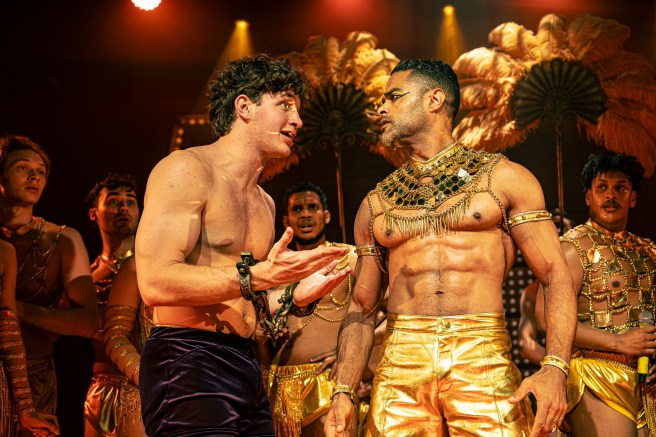
This iconic musical had its first performances 50 years ago and if we take the current revivals, it’s still going strong. And with reason.
It’s always worth watching what Luitingh, Alexander, Lingenfelder, Griffin and Hauser are doing. They know how to breathe new life into what might have become a tired musical without losing its soul.
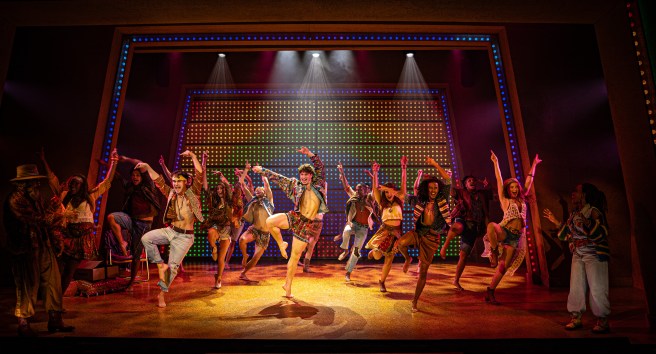
It’s a young and exciting cast who are being given wonderful opportunities to shine but they have also been gifted the tools to make it work.
From start to finish, the clarity of what they wanted to present and achieve was clear and that’s a joy to behold.
From the clever and uncluttered design which works in these smaller theatres to the choreography which flows and adds to the energy, everything is thought through and then executed to perfection. There’s just no leeway for things to go wrong.
Even when it comes to the look, it’s the way they have selected the costumes. Many were bought rather than freshly designed and, in this instance, a good choice not opting for the traditional dungerees the brothers more typically used to wear.
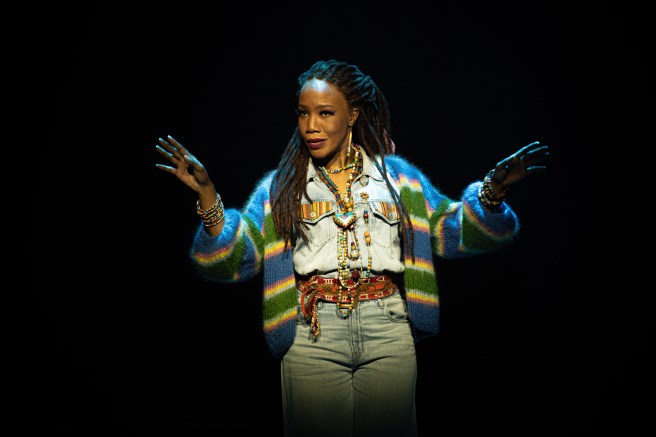
The only one that had me flummoxed was the narrator. Ramasimong’s blue jeans and shirt with the oddest jersey/jacket was an eyesore rather than using some imagination. Perhaps just a simple flowing robe would have had more impact. She plays a major role, is probably the one who has the most stage time and yet, she sticks out for the wrong reasons visually.
Fortunately she’s a marvelous performer and soars in her role as narrator. She has an unusual voice and a lovely stage presence. She knows this is where she belongs.
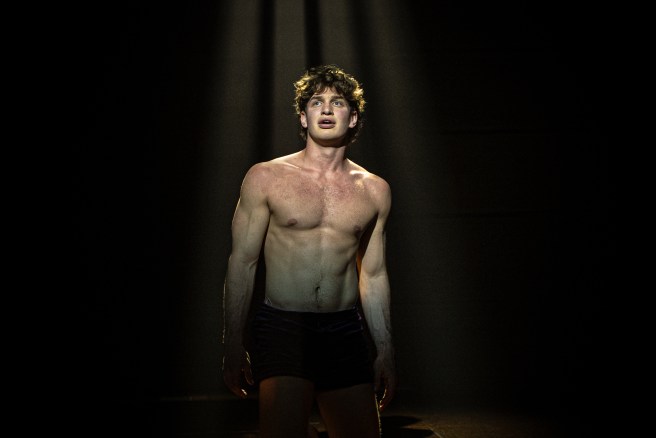
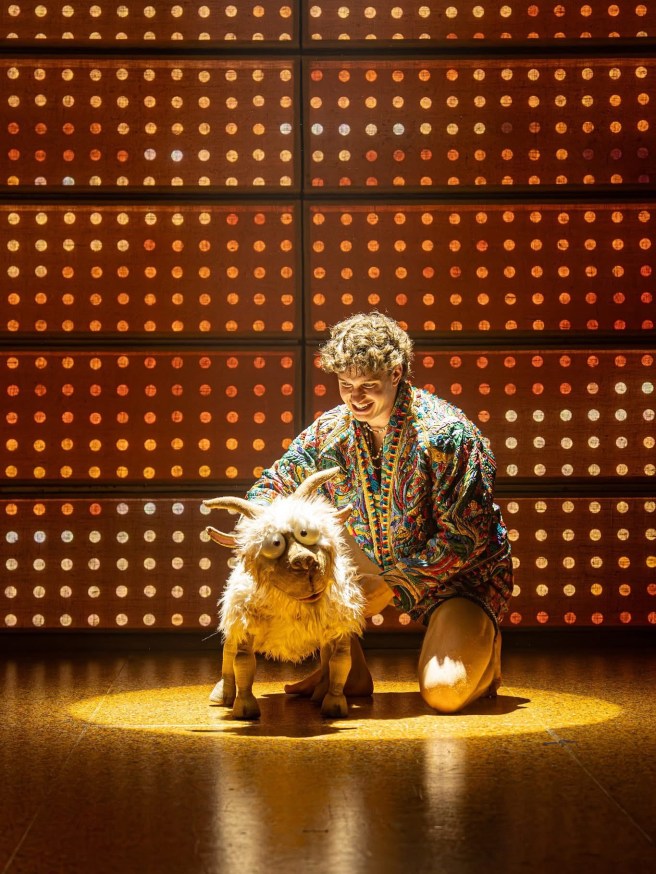
And so do the rest of the cast. One has to start with Janse van Rensburg’s Joseph, after all he is in the title role. It’s quite a responsibility on young shoulders in such an intimate large theatre. There’s nowhere to hide and if you don’t bring the goods as well as the charm, you’re in trouble. Janse Van Rensburg has already proved himself in challenging shows like Spring Awakening and he does it again here. He has a strong voice and a vulnerability that works in this part.
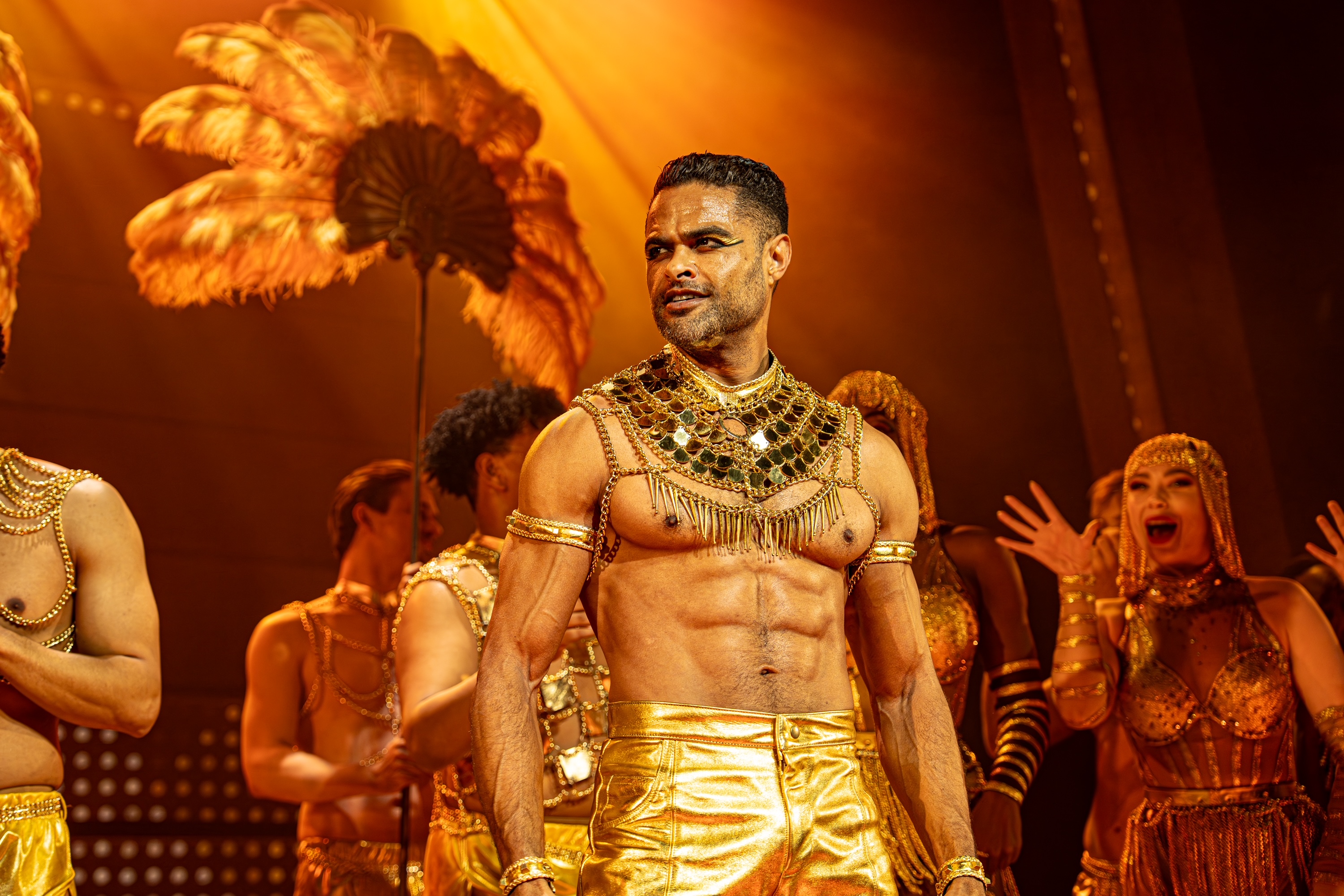
And someone who played his part in stealing some of the limelight is Jaftha, who had fun with his trio of roles as Jacob, Potiphar and in particular Pharaoh, the rocker who has a large moment in the musical which has rocketed other local actors (think Alvin Collison) to fame.
It’s a tricky role, but Jaftha has charisma and sass and was more than willing and able to step into any large shoes.
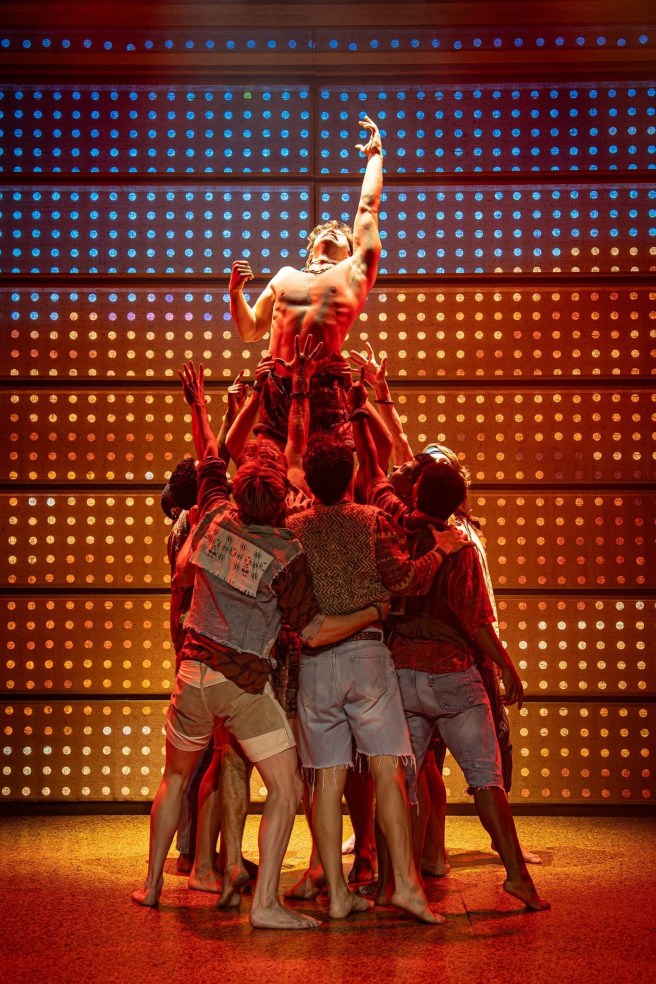
But as much as there are solo moments, it is a musical that involves the full cast because of the nature of the story – a bunch of brothers, for example – and then you have to balance that with the other roles.
If you’ve lived with a musical as long as I have with this one, it’s not easy to catch my attention. But I was stunned. I have seen a few musicals by this production team and I know they usually deliver. From the casting to the costume (bar one!) to the ensemble performances, the singing, the cast in full, it had a joyous feel about it in what can only be described as difficult times.
As well as the music, which was spirited into the new millenium as only Lingenfelder can do. “It was my third production of Joseph and I really didn’t want to do it,” he says. But when he was given the chance to pull the emphasis back to the story and to make sure everything worked for this time, he stepped on board. And it shows, with a score that’s as familiar as it is musically edgy. It’s something he achieves with astonishing regularity.
With the right people, that’s what entertainment can do in times of trouble. It offers respite and has you singing along with a bunch of brothers who hatch a plan to get rid of their father’s favourite son. An unlikely story but many decades ago a clever collaborating team started a much-envied partnership with this one as their first worldwide success.
And if you get it right, it still works. As it does in this latest version.
Nataniël is on the go – again – and it was time for DIANE DE BEER to pop in and find out more about upcoming shows, events and anything else happening in this prolific artist’s life:
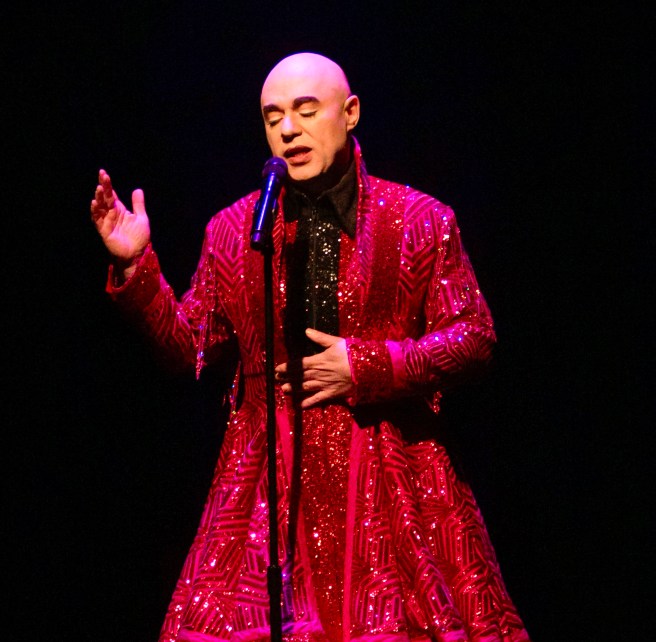
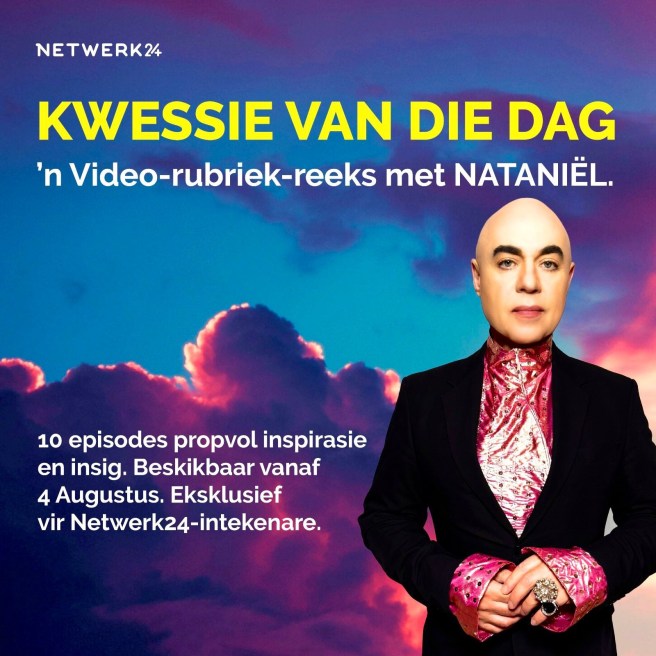
What is keeping him up at night and awake at the crack of dawn is the work on his latest podcast series, which has become yet another of his performance features since his first series a while back. Kwessie van die Dag, his brand-new video column, starts on August 4 on Netwerk24.
As with anything he does, Nataniël approaches these latest podcasts with everything he’s got. “It’s as much work as a TV series,” he notes. And for this perfectionist, it is. He simply cannot do things haphazardly, with quality a constant taskmaster.
He is aware that everybody has turned to podcasts and his will be the best. This isn’t boasting because he is genius when it comes to storytelling. There’s no competing with this conversationalist.
It is all about the words which he has to learn by heart – 3 000 a week! They are his words, he has written each one, but then he has to get them tripping off the tongue. While it comes easily, he believes in scripts and knows exactly what he has to do and how he wants it to sound. So while there are many copycats, few can master him at his craft.
I often see pieces written by “Nataniël”, but it’s easy to spot when someone tries to capture his style because it is so unique. And this is where his podcast will pass with flying colours. “I don’t like waffling,” he says as he launches an attack on what he has labelled “electronic pollution”!
“There’s enough rubbish around.” He has an opinion which his followers will be familiar with, but he also loves facts when he is dealing in a specific subject. One of the many hurdles is the battle of language. He will be speaking in Afrikaans and to capture a language in this way is fraught with many pitfalls especially the way we mix our languages in our daily conversations.
It is clear that this is his latest challenge but also part of the excitement that charges his existence.
He is always busy creating and many of the things might seem as though they have a familiar pattern which, if you study them, they don’t. Into that mix, he is also constantly injecting new accomplishments which keep him on his toes.
“Everyone invites me to be a guest on their podcasts.” But for him there is a specific reason to engage with people in this fashion. “I want to address issues and for me it is about inspiration.”
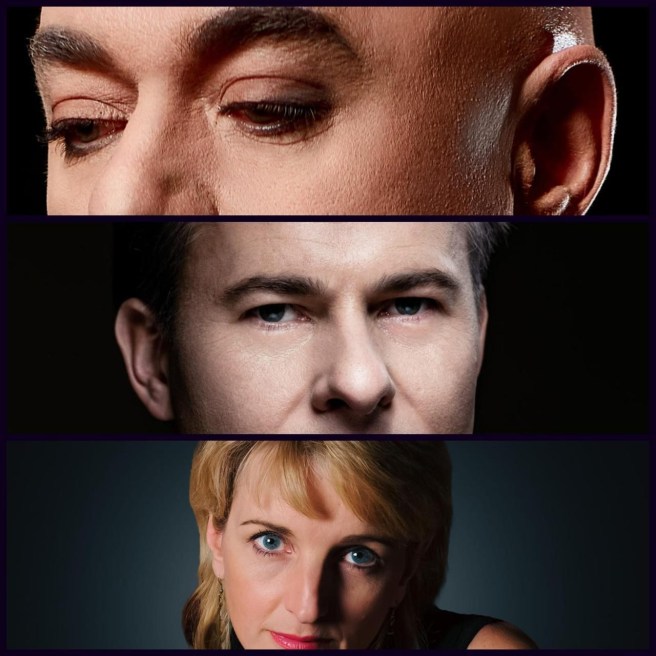
BOEK • BYBEL • BIOSKOOP is the title of the show he is doing with organist Zorada Termmingh, a friend from varsity, together with his accompanist, pianist Charl du Plessis. Knowing something about his creative mind, he will be pulling all their respective talents together in a spectacular bouquet.
We’re in August and it is all about women. Composers, writers, singers, designers, as well as timeless characters from movies, classic literature, Biblical tales, art and theatre are their inspiration in this colourful show full of stories and songs. Zorada and Nataniël have performed on stage many times, starting during their student years. Charl has been his accompanist (apart from establishing his own career as a solo artist and performing with the Charl du Plessis Trio) for the past 25 years. And this is not the first outing for this trio of consummate performers.
It is a one-off in the capital city on August 13 at 7pm and the Ned Geref Universiteitsoord Kerk. The show is 90 minutes (more or less) long.
In September he returns to one of his most ambitious projects, Mass for the Good Princes (recently released on CD), which will be performed in the Cape for the first time thanks to the goodwill of the Atterbury Trust.
It’s a double whammy for Nataniël – one of both joy and hysteria. This was one of those accomplishments he had dreamt of for a very long time. Writing it was an almost impossible feat with his kind of schedule, and with each performance he has to once again memorise the Latin text, which is a killer.
This will be the 3rd time that he attempts this daunting exercise and while it stretches even his seemingly limitless determination, he can’t resist it. It is based on the classical structure of a Latin church mass with a sacred composition by Nataniël in six parts which includes a prayer for goodness, new leadership and the hope of a new generation. It will be sung in English and Latin with descriptions and translations in Afrikaans.
It will be presented at the Ned Geref Welgemoed Church on Saturday September 20 at 5pm. He will be joined by the Charl du Plessis Trio (Charl with Werner Spies and Peter Auret) as well as organist Ockie Vermeulen, guitarist Luke van der Merwe and the Akustika Chamber Choir led by Christo Burger.
In March this year, Nataniël and Charl celebrated 25 years on stage together and they seal this with a Gala Concert at Aardklop – on October 7 (7pm) and October 8 (10 am) in the University of Potchefstroom Auditorium.
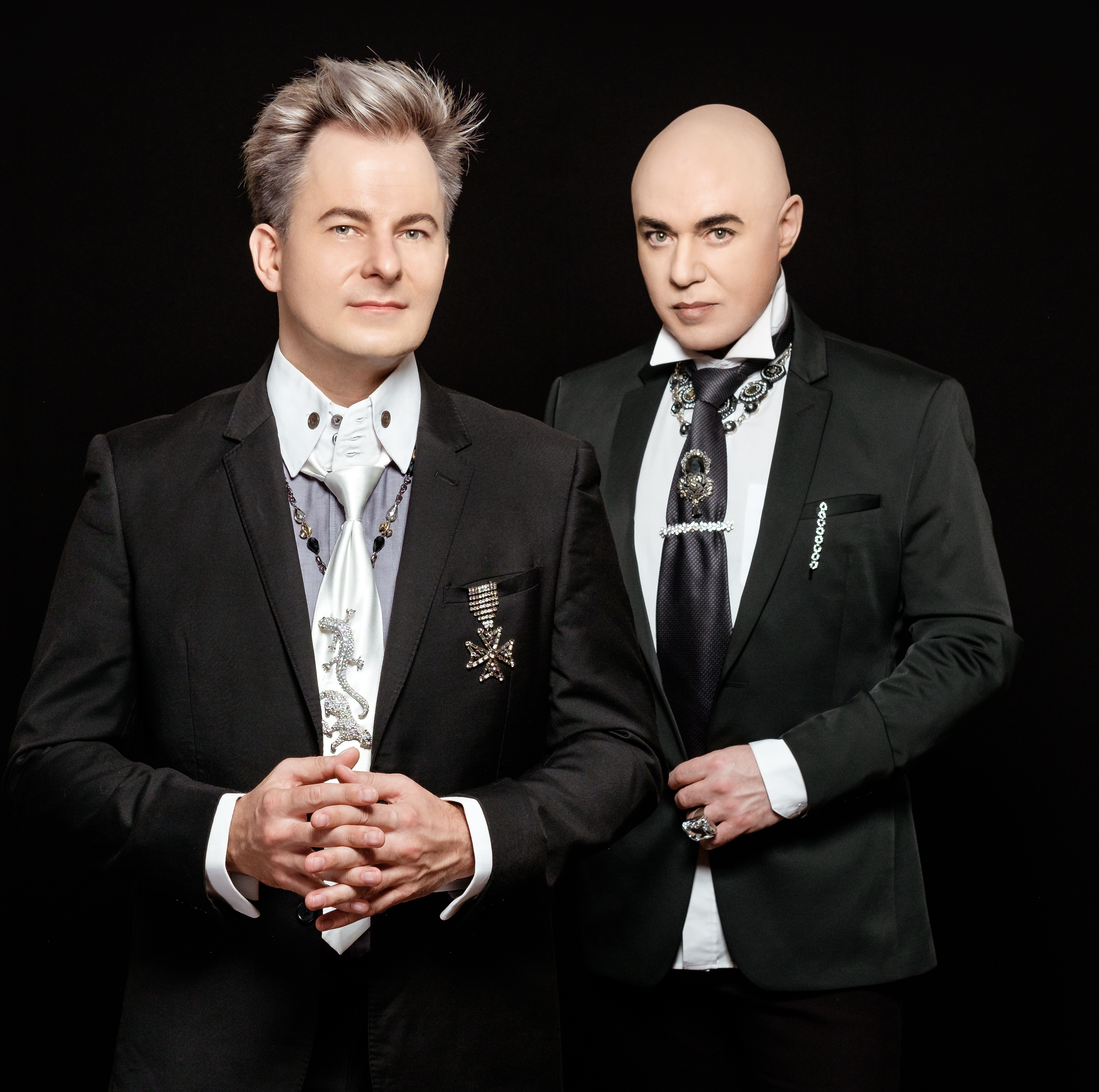
This won’t be an ordinary concert. These two artists haven’t only shared 25 years on stage and many kilometres of travel through the South African countryside for one-off shows, but this was also the start of Charl’s stage career, which has been quite stunning to witness from the start – one he has since established both nationally and internationally – a feat for someone who started out as a classical pianist (one of the most difficult careers to pursue) and accompanist. Today he has a doctorate and is celebrated as both a classical and jazz artist. I can’t wait to see these two face off on stage on equal footing. For those fortunate enough to see one of these concerts, I predict something unique.
Nataniël is already making promises that this won’t be a rundown of what they have already accomplished. They will be celebrating today and tomorrow. “Who are we now and how do we see the future” will be their aim.
“Why would we return to the past? That’s done and we have all been there.” And in typical Nataniël fashion he predicts: “I want to hear an intake of breath when I walk on stage!”
As he so astutely confirms, it will be 70 years of experience when the two of them mark their stage partnership.
While talking partnerships and friendships, one of his closest friends, actress/comedian Marion Holm, will be interviewing Nataniël on his latest book of short stories titled Sweetie. Book discussions aren’t his favourite, but if he has to do it, Marion would be his choice. “She can physically shut me up just by barking.” You’ll have to be there to understand exactly what that means. They go way back and to experience these two like-minded actors sparring verbally, you don’t want to miss that. They’re a scream individually, together it’s an exuberance.
Your ticket will be a copy of Sweetie which can either be bought before the time or at the Exclusive Pop-Up in the book tent. The first 200 people with a book in hand will be allowed into the space, which will be closed off for this event. You won’t be able to listen in on the sidelines. The Sweetie discussion is going to be that exclusive and is happening on October 8 at 3pm at Aardklop.
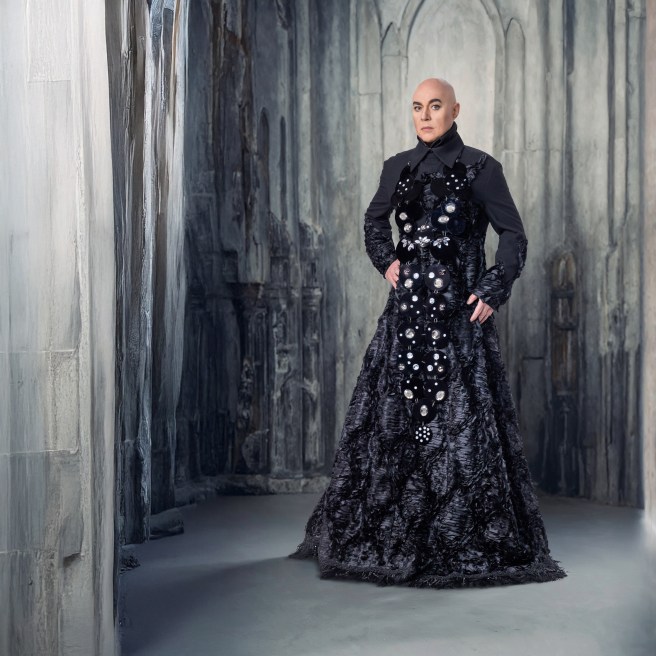
And it’s not over yet by a long stretch. A photographer who for more than two decades documented Nataniël’s career, Clinton Lubbe, who immigrated a few years back, is back in town for an exhibition of life-size Nataniël pictures titled Parade, another first for Aardklop. Their collaboration has also been running for more than two decades and Nataniël describes Clinton’s camera as a paintbrush, because of the way he creates pictures. They’re not simply pictures, they’re artworks, he notes. “I’m going to be the Naomi Campbell of Aardklop,” he says with a smile and a wink.
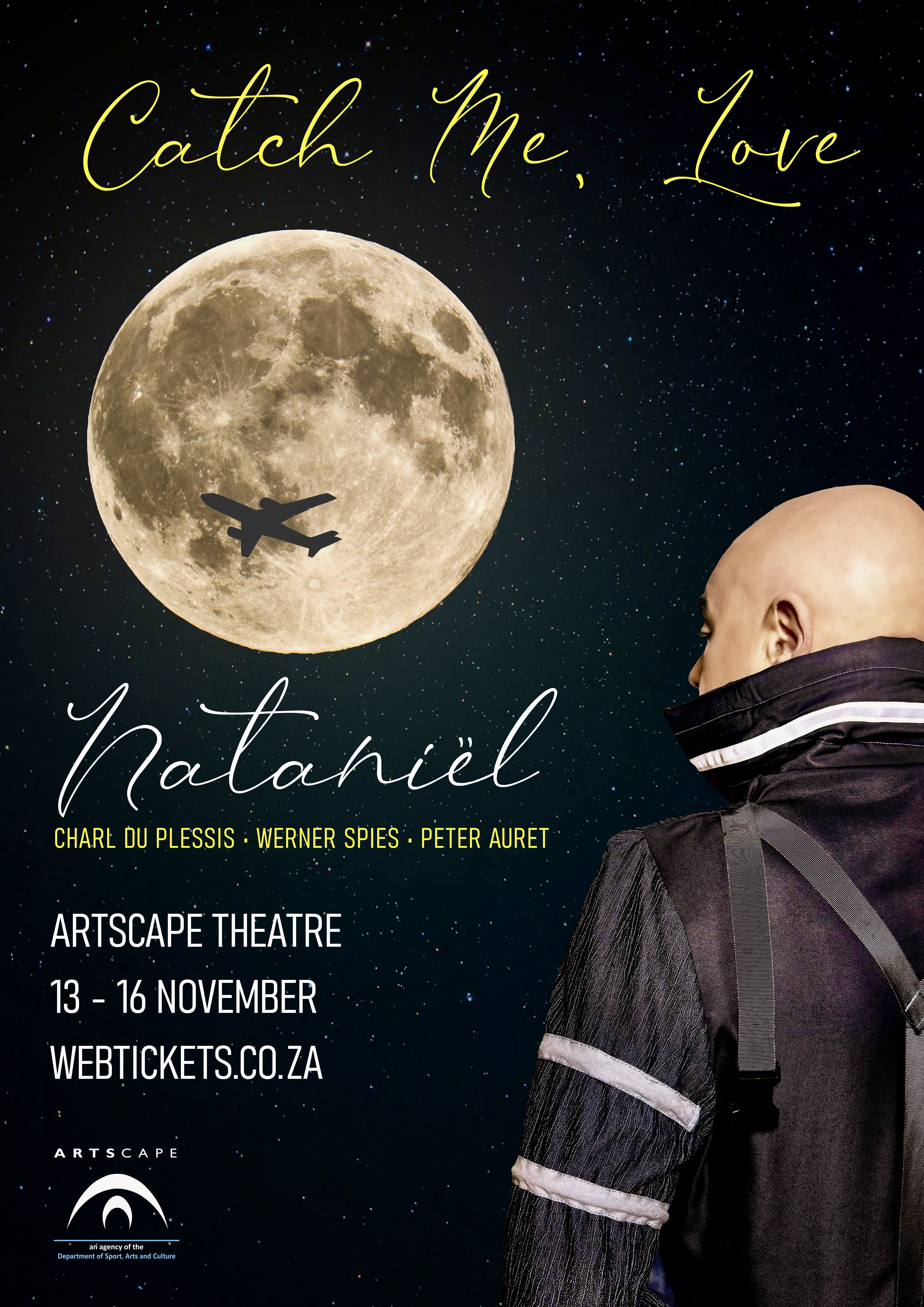
Finally, but just for the moment, there’s his latest production, Catch Me, Love, which will be staged at Artscape from November 13 to 16. He is already busy writing, which is unheard of. He usually works on his scripts much closer to his performance than a few months, but looking at his schedule, he knew he had to get ahead.
This one is going to be visually and structurally different to his former shows, he says. And although it is still early days, I know he has already dreamt and planned it in detail. It will only feature in Gauteng in the New Year because in-between there’s the promise of a French countryside holiday, his annual escape (when he can manage) to one of his favourite places, which is what motivates him these days.
Watch this space for fresh announcements or changes. They will be coming …
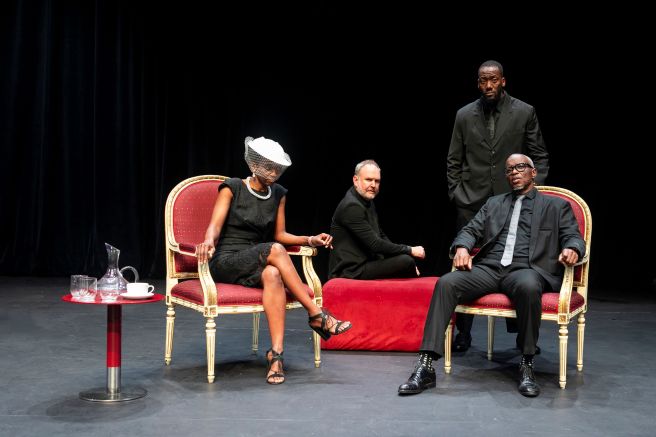
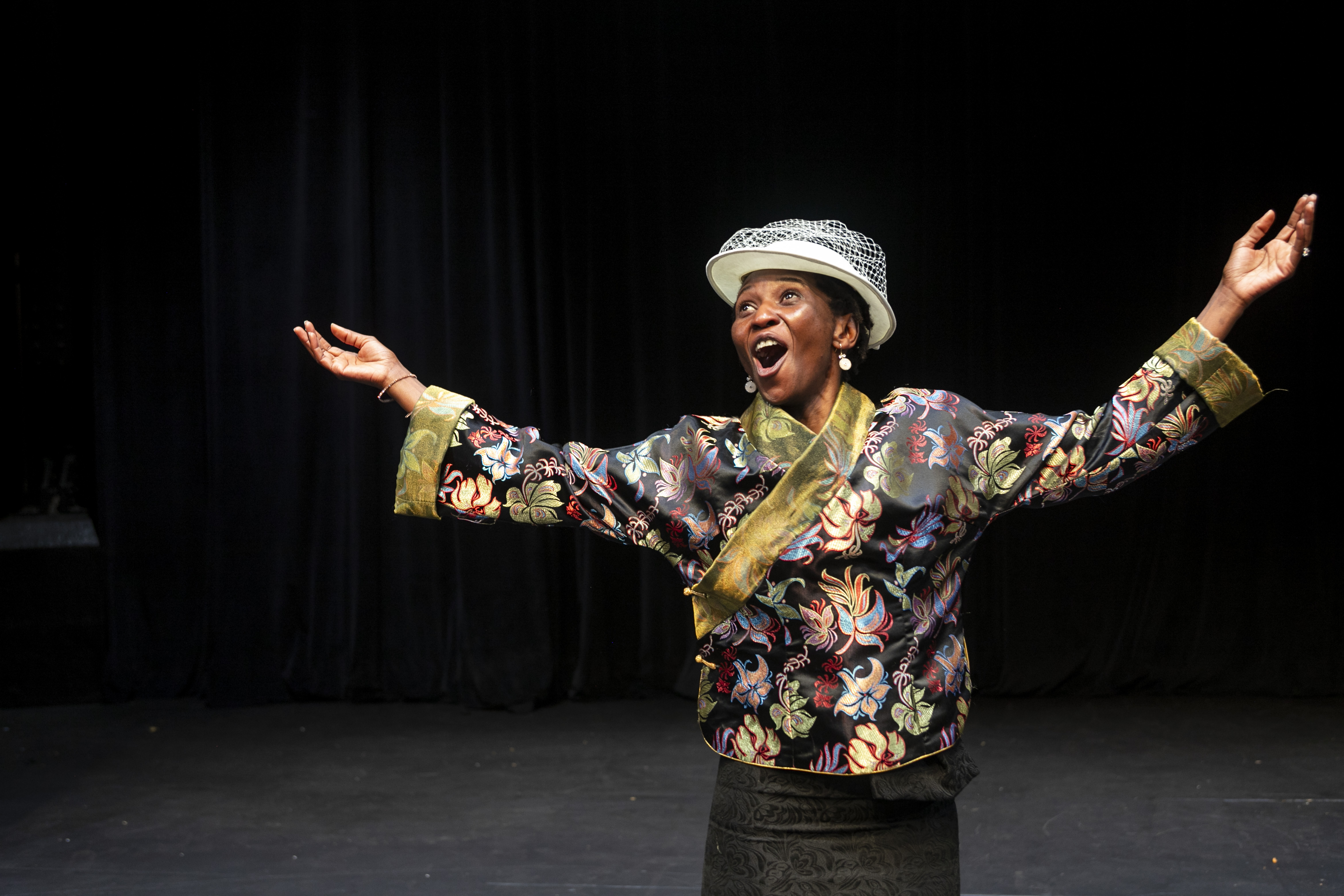
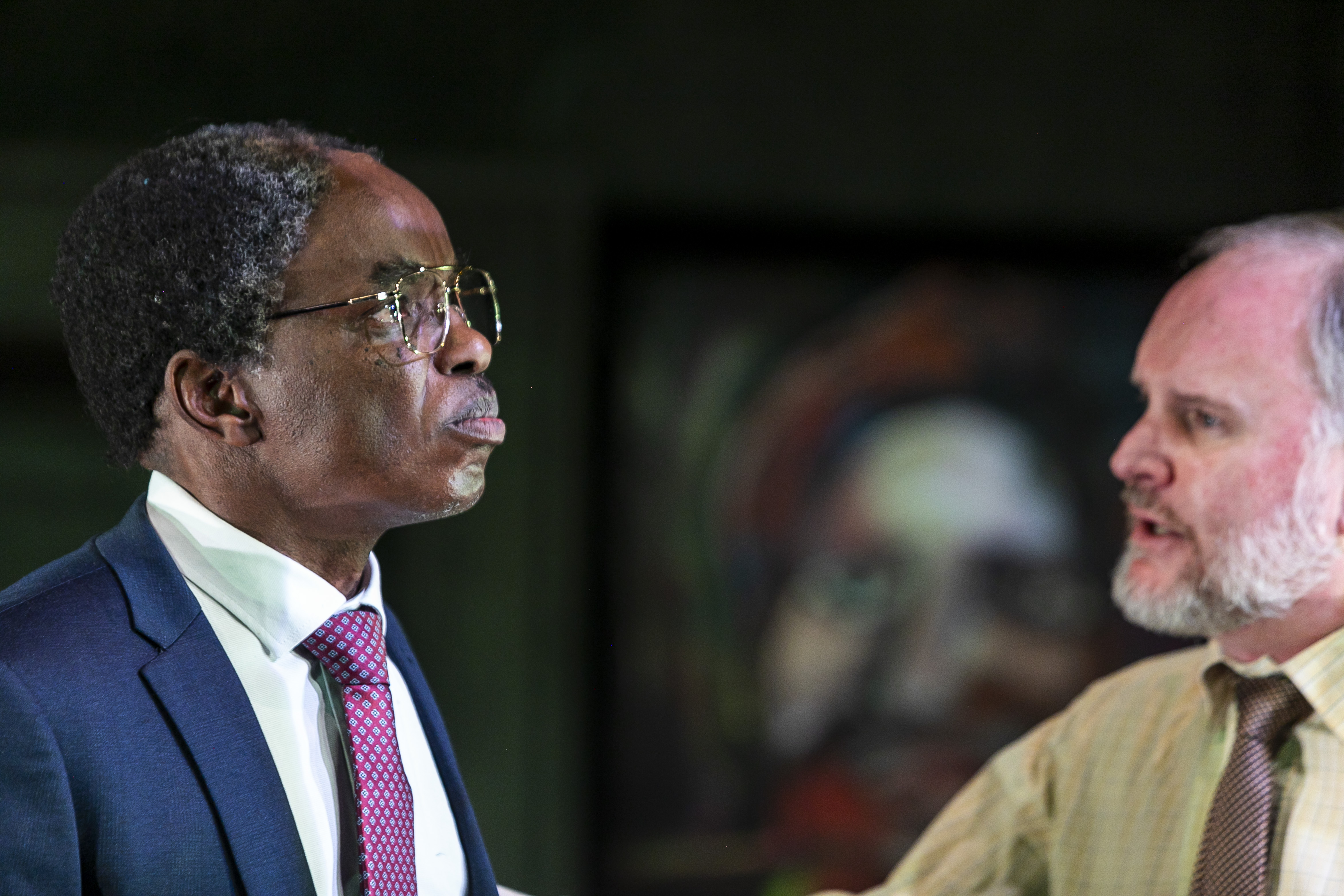
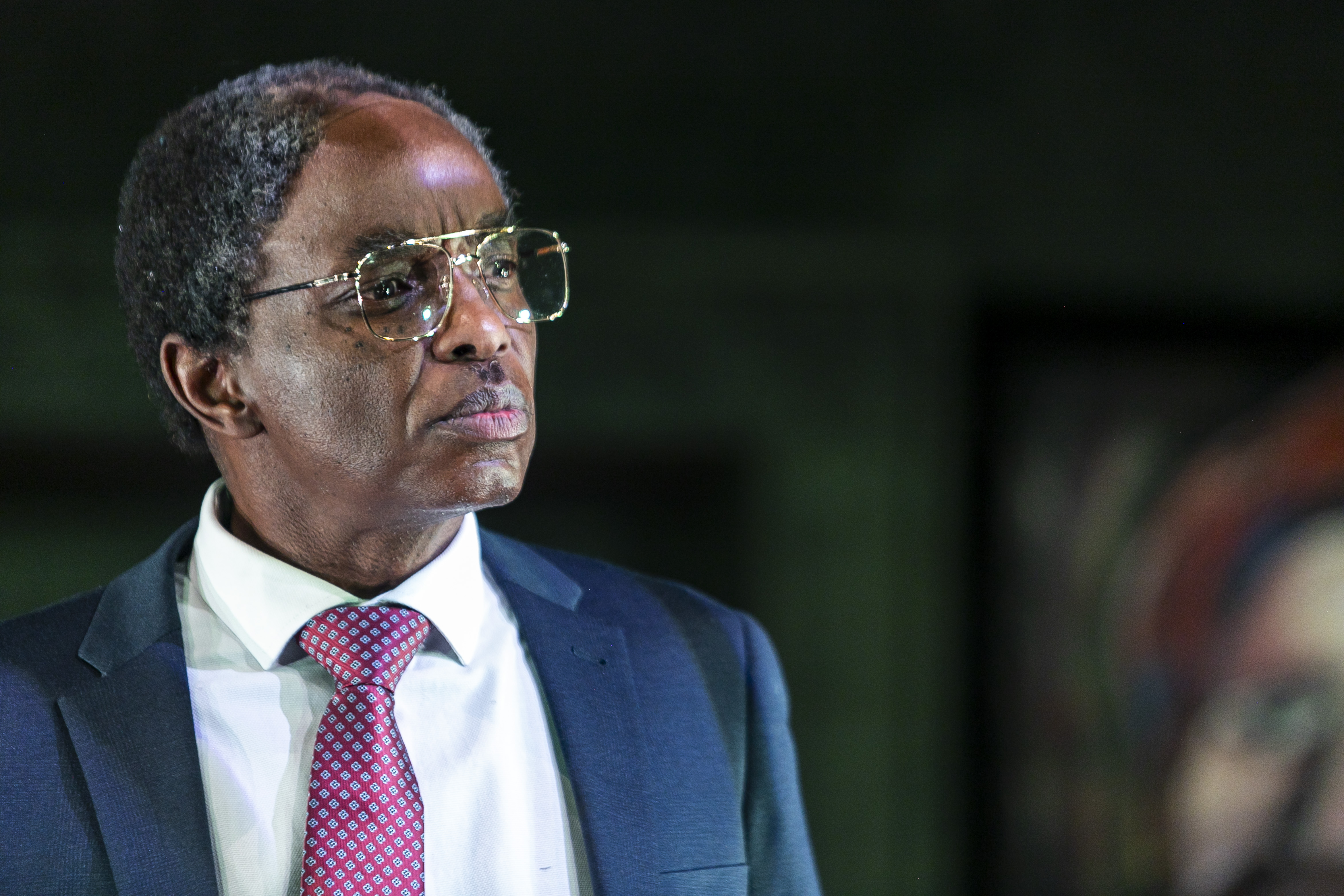
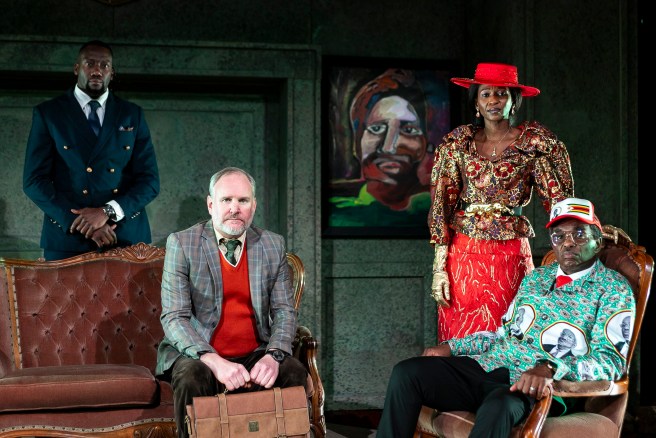
FROM LEFT TO RIGHT: Gontse Ntshegang as Grace, Craig Jackson as the psychiatrist and Farai Chigudu as the bodyguard withThemba Ndaba as Robert Mugabe.
PICTURES: Ngoma KaMphahlele
BREAKFAST WITH MUGABE by FRASER GRACE
DIRECTOR: Calvin Ratladi
PLAYWRIGHT: Fraser Grace
SET DESIGNER: Wilhelm Disbergen
COSTUME DESIGNER: Sheli Masondo
LIGHTING DESIGNER: Denis Hutchinson
CULTURAL DRAMATURGE: Professor Samuel Ravengai
MUSIC: Matthew Macfarlane
ACCENT COACH: Louise-Saint Claire
CAST: Themba Ndaba as Mugabe, Gontse Ntshegang as Grace, Craig Jackson as Andrew Peric and Farai Chigudu as Gabriel
VENUE: Mannie Manim at the Market Theatre
DATES: until August 10
If you are intrigued by the title, this is a play you will want to see. With the name Robert Mugabe having special meaning in South Africa, neighbouring country to Zimbabwe, it was a packed buzzy audience in attendance, always a joy to behold in an industry that’s constantly in battle.
If you google the number of Zimbabweans living in South Africa, they are described as the largest group of foreign migrants in the country. “Some estimates suggest the number could be as high as 3 to 5 million.” And it goes on to say that the influx is primarily due to economic hardship and instability in Zimbabwe.
South Africans will all have some opinion of what occurred in Zimbabwe. Mugabe is still an enigma to many because he started as a saviour in the new democracy in 1980 in a country which was ravaged by civil war. The education system alone can attest to that.
Yet, because of the ambiguities, political perspectives and where you come from will come into play when watching this fierce production. If you are expecting answers to the many questions you might have, what you get is a view of the complications of a system which so clearly exposes the cliché, “you cannot please all of the people all of the time”.
What you have is a deeply troubled man haunted by his actions as a political leader of a country that lay in ruins yet full of hope for a new dawn. The action is heightened from the start as Grace Mugabe (his second wife) has summoned a white psychologist to see her husband. What unfolds all happens in hushed tones, with people looking over their shoulders waiting for some kind of menace.
A man who was born to intimidate, Mugabe’s bodyguard, is hovering and watching in constant attendance. A jittery wife at first seems worried about her distressed husband, yet as she almost pounces on her guest, it is clear that she is much more concerned with her own wellbeing as Shopper of the Nation (which is clearly and most deliciously displayed in her glitzy attire) and wants to make sure her own position isn’t threatened. She is after all a secretary, who switched to sycophantic wife.
What happens next is like a thriller unspooling in almost Shakespearean fashion. Present are Robert Mugabe, his wife Grace, an English psychiatrist and the ever present bodyguard. The tone is set by an obviously agitated and deeply paranoid leader who, even though haunted by the past, is intent on dissembling reality.
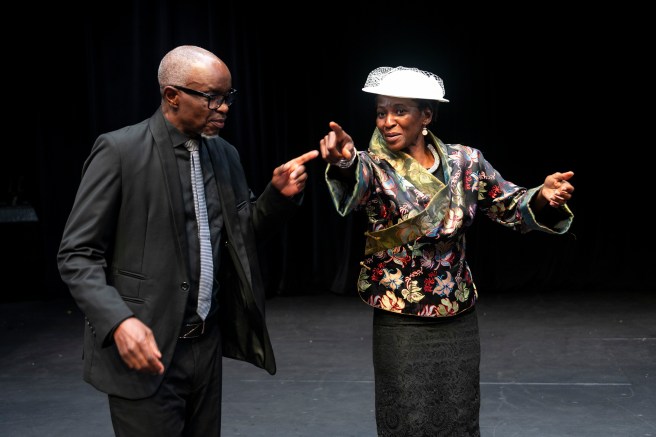
The cast is astounding, from Ndaba’s resolved Mugabe and Jackson’s bewildered yet embattled psychiatrist to the staunch bodyguard portrayed by Chigudu and the glorious Ntshegang, who masterfully displays Grace’s Machiavellian traits as she plays everyone differently.
The writing is a masterpiece. First written at the turn of the century, its relevance seems heightened in today’s world where unfettered power is displayed and celebrated with such candour and even pride. But it’s the way playwright Fraser Grace tackles all the issues, explores the ruthlessness of the regime and manages to stand aside from the writing that makes this hair-raising yet compulsive viewing.
Well done to Greg Homann and The Market for staging this work and for the passion of director Calvin Ratladi, Standard Bank Young Artist for Theatre who held onto his dream of directing this play one day and grabbed the opportunity when he had the chance.
He knew exactly how and with whom it should be told.
In the programme notes online it says that this play is a masterclass in writing and performance – and that is exactly what it is. And the aspects that I found most intriguing as being a born South African, I have been dealing and watched others sharing their trauma in this country for many decades.
Some similarities especially in text will occur, but I am passionate about people creating theatre – especially solo theatre.
Having to travel from Pretoria for most of my theatre, I consider very carefully which plays I want to see whether good or bad, just work that will appeal to me. And this is where theatre sometimes becomes problematic. If you are going to see a play that is 70 minutes long, it becomes a money issue. It has to. Time and travel become a worry.
So I have started coming up with fresh solutions to make my choices easier. With this one, I had already booked for a new musical opening and I thought I could slip this short prodcution into the mix without any difficulty. I see many more plays on one day when attending a festival. And that is what I did and will do more of in the future when the problem rears its head.
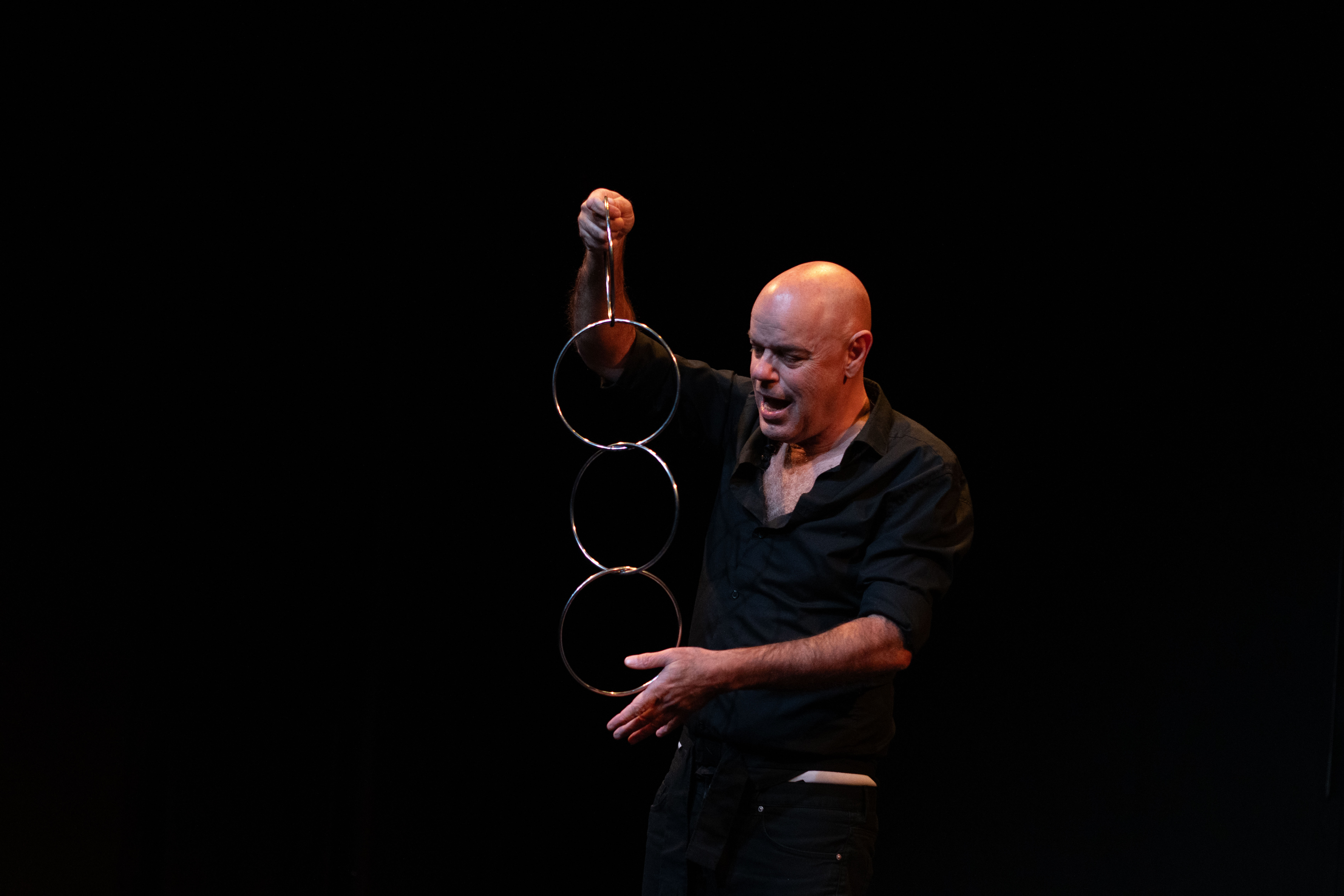
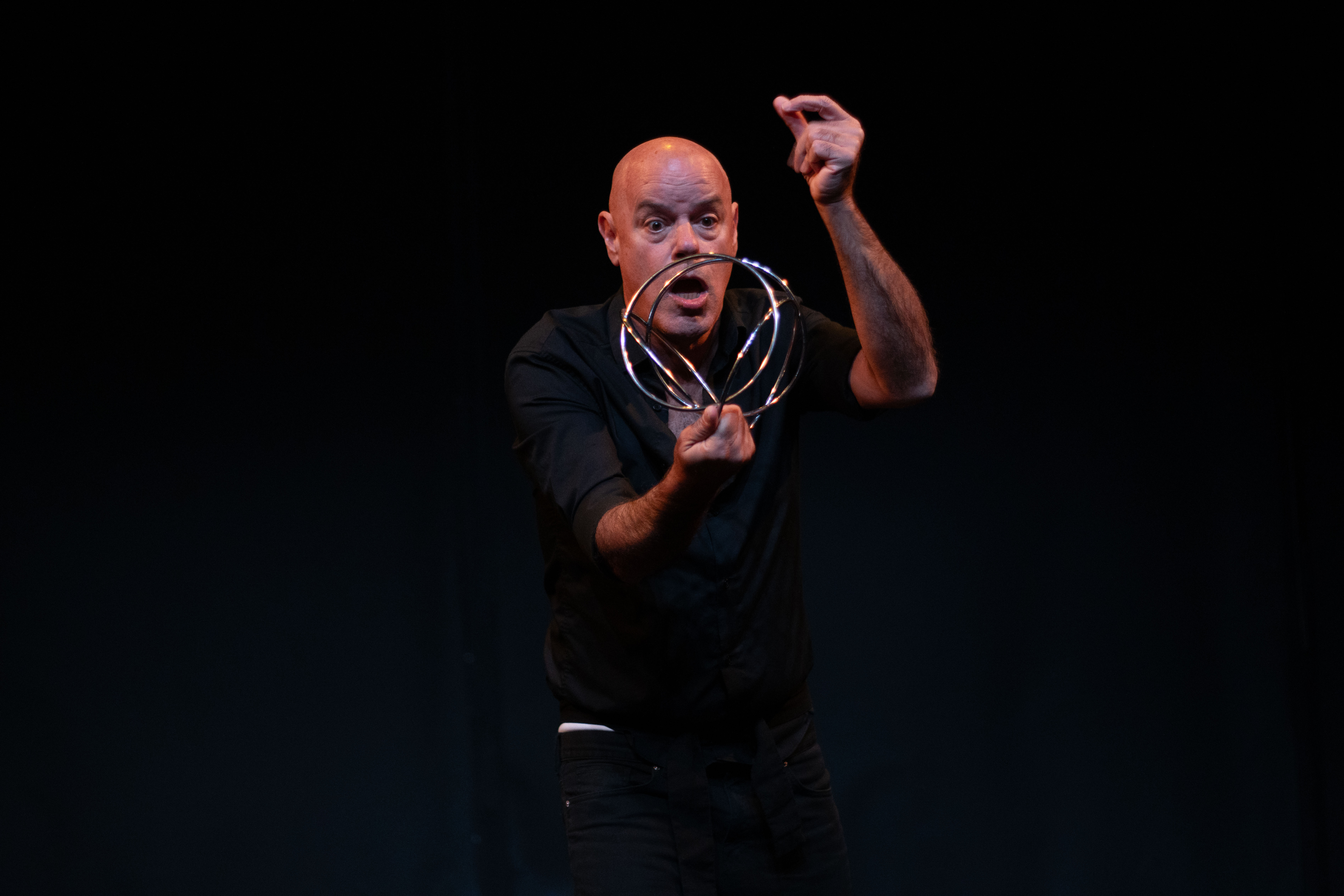
Brincat, who is a first generation South African, is described in many different ways and with many accomplished skills from acting, juggling and magic artistry to fine art, chef, writing and producing one-man shows, it seems.
But this is my first encounter as far as I can tell with this versatile artist. As he’s based in Cape Town and visits the National Arts Festival, while I am based in Pretoria and cover the Afrikaans festivals around the country, his work is unfamiliar to me.
The Moon Looks Delicious from Here is a man’s struggle with identity and finding his own place in what should be his world but isn’t always that straightforward is what he shares and struggles with.
It is familiar territory stretching from the ‘60s tot ’94, but it’s always interesting to discoverhow other people deal with issues that come up for many of us in different ways. It is also fascinating to see how others approach their work, especially when at play, as solo shows can be limiting, depending on the content and how familiar you are with the subject.
He had me from beginning to end; engaging with his audience wasn’t an issue for him even with a most unusual mix on a Sunday afternoon. Half of the 100-plus theatre audience (and I’m guessing numbers) were elderly white couples and the other half were young (between 20 and 35) Black men and women. And throughout there was laughter from different quarters. It was a journey of remembrance for oldies and probably one of illumination for youngsters.
It would have been fascinating to have an audience talk after the show in this instance. This is Brincat sticking his toe in the water and it feels good. Hopefully he will be back so that we can get to know more of his work and his content.
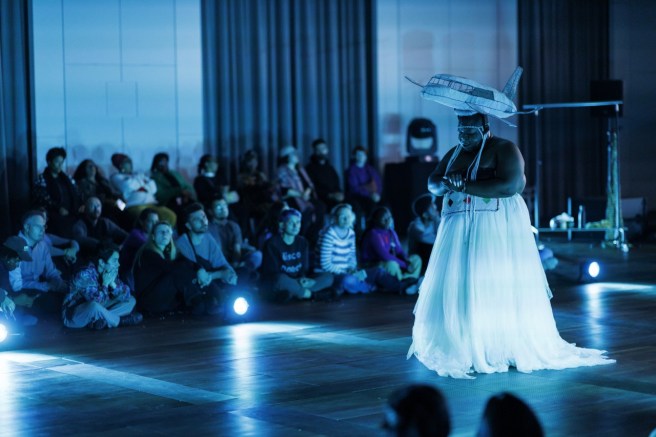
It’s explosive, it’s engaging, it plays with your mind (stretching it this way and that), it’s mesmerising, it sweeps your whole being along and most of all, it’s original and creative in a way that heightens all the senses. And then it shows you everything theatre can be.
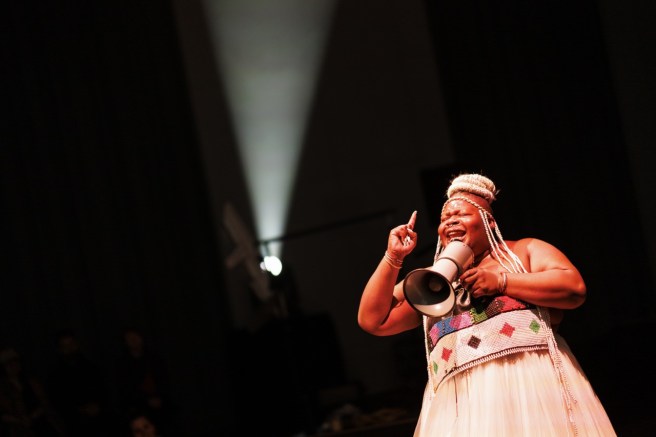
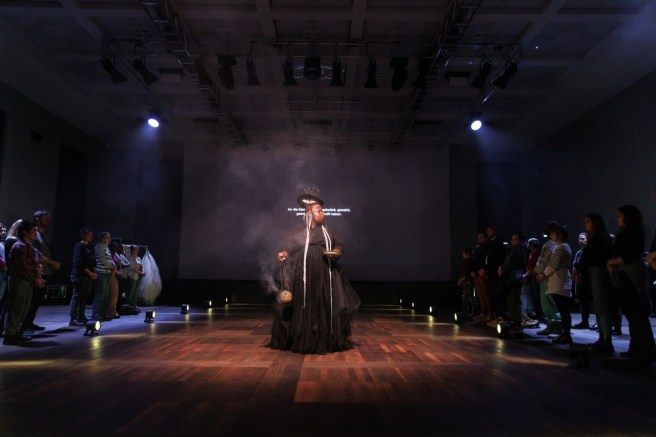
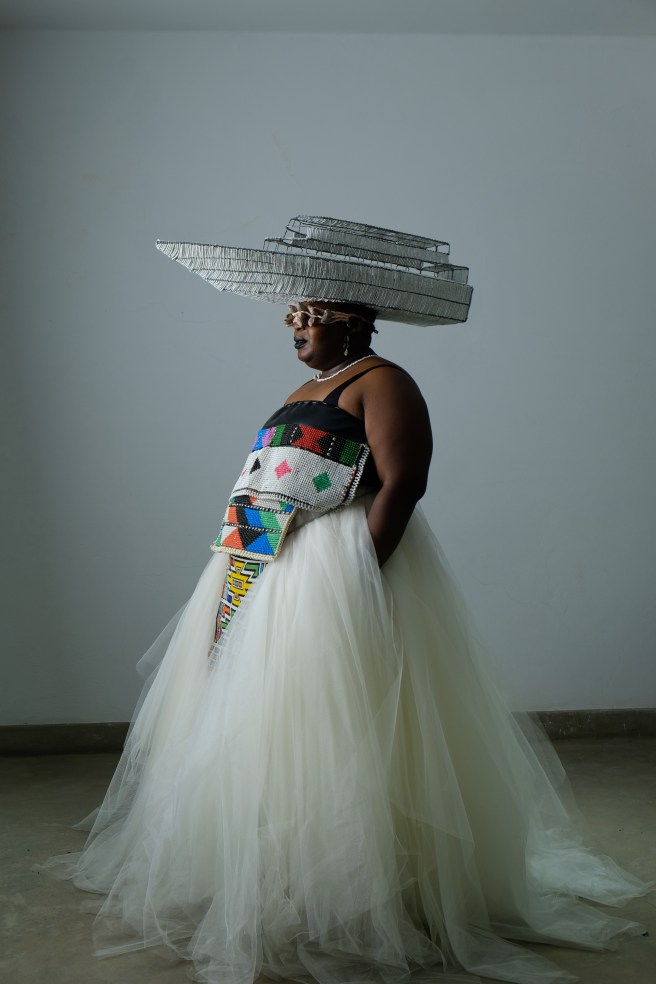
Khoza is a presence not only with the theatricality of their costumes but especially with the way they move, speak, sing, chant and engage their audience from start to finish. There’s no time for your mind to wander or wonder, you’re simply in the moment as you participate in this experience that for most of us would be completely unique.
It’s ritual and rhythm, it’s engaging your whole being. This isn’t something you‘re watching, you’re participating on a level that is here and now. It’s theatre-in-the round with the performer, the one who is leading the way on this exploration of the past where human zoos and exhibitions in Western societies, our societies, turned people into curiosities to be paraded and exploited for the delight of white fetish. That is even difficult to write after seeing this play.
Especially for those of us on the oppressors’ side, while we gasp in horror at the stories, we know what our race has done to people because of the colour of their skin, have seen many plays and read many books about those times, yet, sadly it remains just that. It’s not as though your body can viscerally experience what that must have been like. It’s something that white people to this day never experience. They simply don’t have to navigate a world that plays by rules made for them … still.
How many times have you as a white body thought about how anything that you do on a specific day will be determined by the colour of your skin? Think of Trump’s world in today’s context for example. People are being rounded up and deported even with citizenship because of the way they look.
Khoza suggests that it is a history that is not spoken about and which they are determined to address so that those affected can reclaim, reflect and confront themselves as people. Because it is something that continues to this day, for them it is about the need for spiritual healing and reclaiming violated dignities.
The one thing all of us have felt in our lives is humiliation. For many it is an occasional thing that can be quickly discarded as you move on with your life. For others it is an institutionalized part of their life and there’s no escaping. The only requisite to fall prey to this is the colour of your skin. Everything in our lives to this day is determined by this. Think Black Lives Matter.
It is described as an installation-based performance and for me personally, it was as though my whole body had suddenly been awakened. I felt alerted to the way the world works. Was there anything said that I hadn’t heard before or didn’t know? How many times have I not experienced the Saartjie Baartman story, a woman torn from her family, stripped of her identity as a human being, taken from Africa to Europe and displayed for the Western world to view in a human zoo? We know and sympathise about the atrocities of the past. And again we wonder about those happening all around us, because they’re still there.
What The Black Circus does is change the perspective; it inhabits your body and soul in a way that takes you the the heart of the atrocities. For Khozait is a place of collective healing where the shackles are discarded, and a spiritual connection established.
It’s a difficult experience to write about because it is one to experience rather than to analyse. You want to enter the space knowing just the title.
At the beginning I felt as though I was sitting in a glorious painting. A story of some kind was going to unfold and as with most theatre, I was excited. What I got was so much more. It was unexpected, challenging in the way theatre should be, explosive in performance and presentation, and something that has changed my life. And that is what theatre should be.
I will be looking at and facing the world diffently.
DIANE DE BEER reviews the latest Mike van Graan play
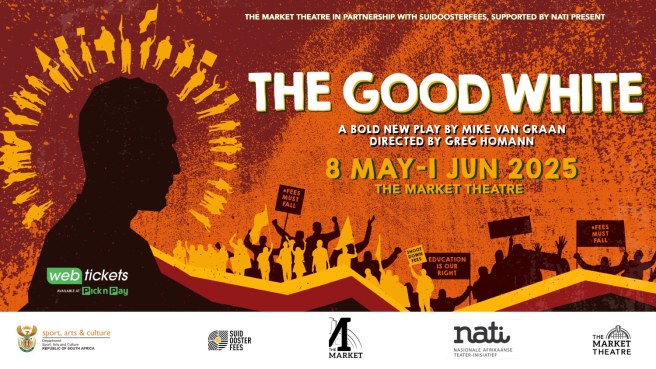
THE GOOD WHITE
DIRECTOR: Greg Homann
PLAYWRIGHT: Mike van Graan
CAST: Shonsani Masutha, Russel Savadier, Vusi Kunene and Renate Stuurman
SET DESIGNER: Patrick Curtis
LX DESIGNER: Themba Stewart
COSTUMES: Nadia Kruger
VENUE: Market Theatre
RUNNING TIME: Until June 1
Pictures: Ngoma Ka Mphahlele
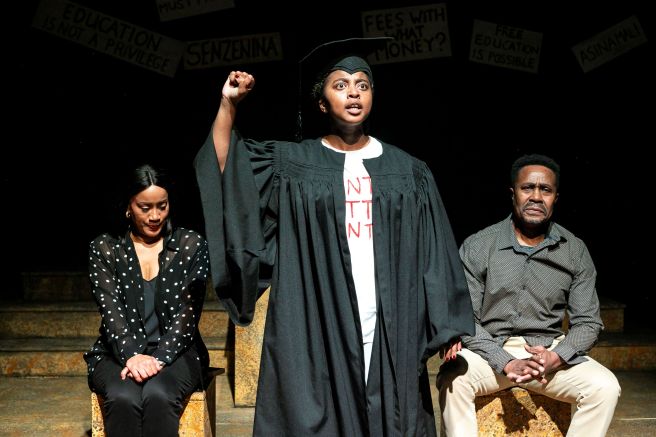
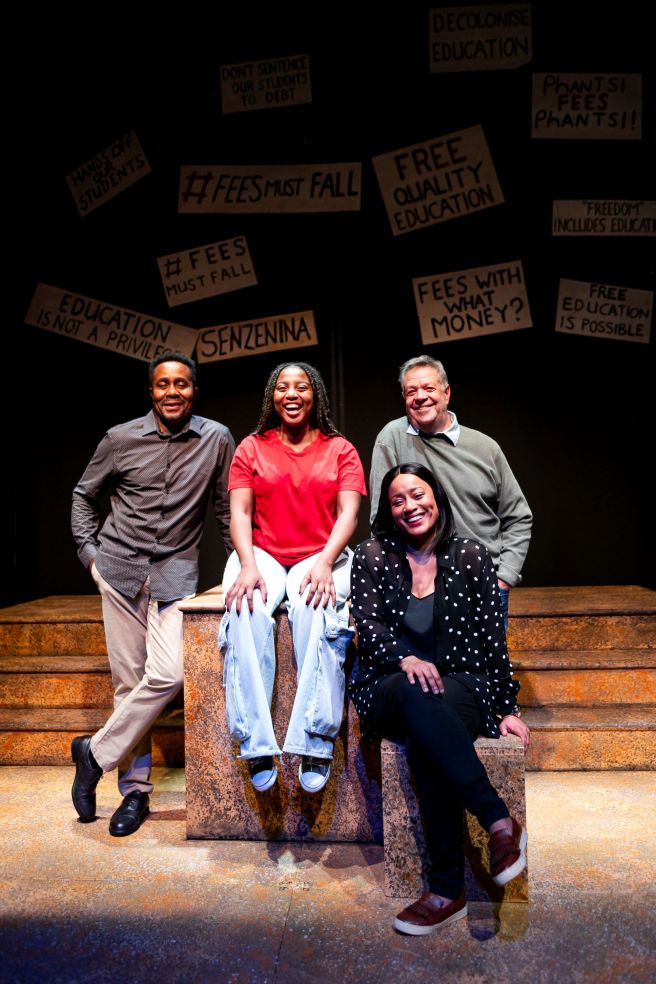
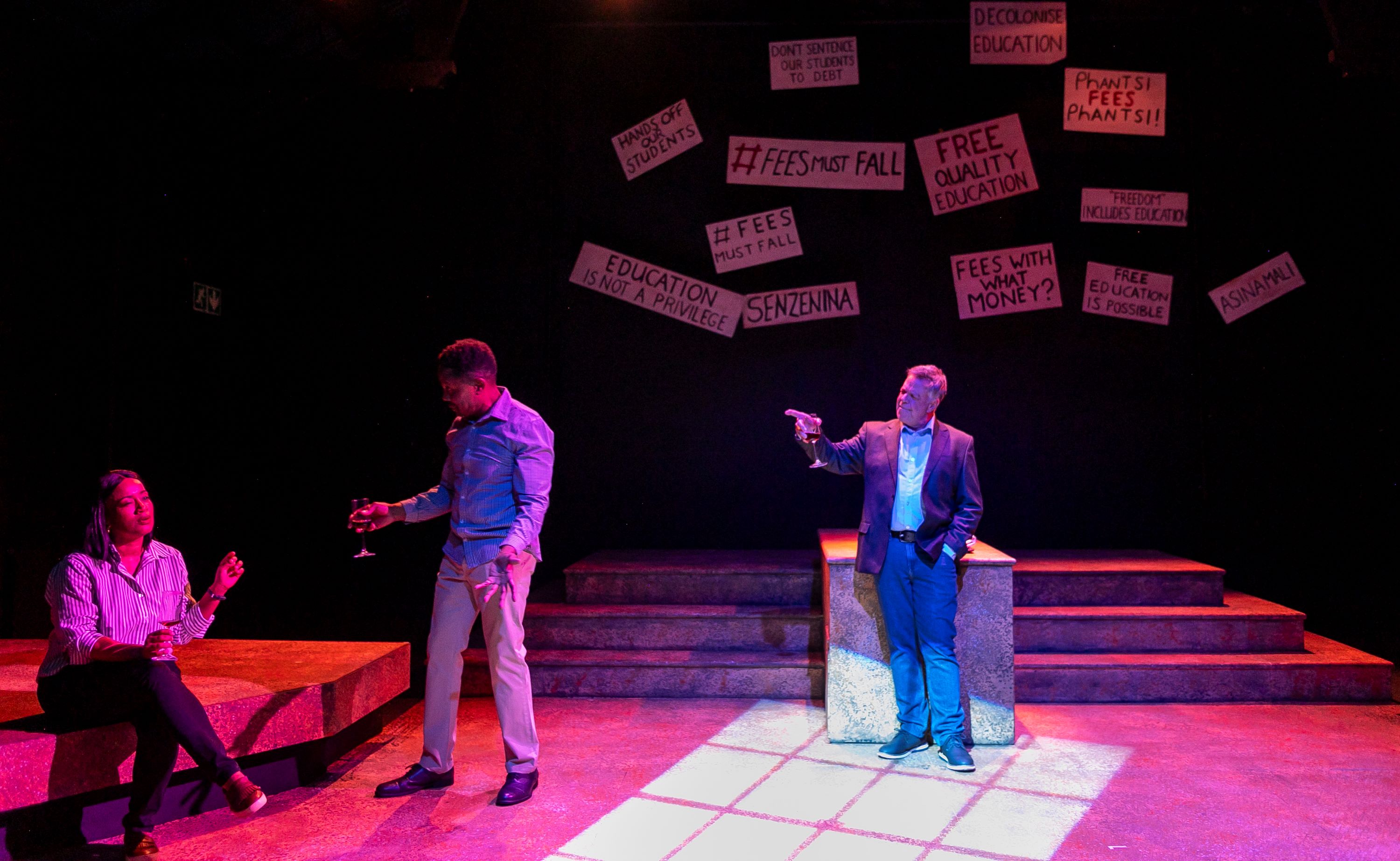
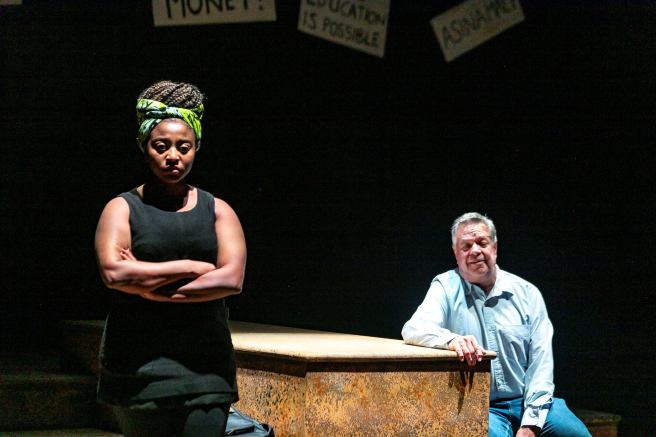
Pair the title with the four characters on stage – Vusi Kunene (Black, pictured right), Russel Savadier (White), Renate Stuurman, (Coloured, pictured left) and Shonsani Masutha, (Black, centre front), — and, in the South African context, sparks will fly.
That is what Mike van Graan’s latest play leans into. He says in the programme notes that he hasn’t written anything but solo shows since 2018 and it feels as though this one has been bubbling under and then just exploded – in the best possible way. It’s an epic piece of writing which will have you gasping as he appeals to each one in the audience, whoever they are, to grapple with the issues – our inner core – of South Africa.
While Nelson Mandela did many things for this nation, coining the phrase Rainbow Nation was arguably not one of them. It is as though he constantly reminds us what we are not, but if you were part of the opening audience on what seemed to be a quiet Sunday afternoon in the theatre, you would have witnessed that we could be.
The perfect quartet: Vusi Kunene, Shonsani Masutha, Russel Savadier and Renate Stuurman.
The audience pretty much reflected the mixed bunch we are and from the deadly silence following the first poem of strength recited by the astonishing Masutha to the immediate participation during the rest of the play, it was as though there was another solo performer on that stage – the audience.
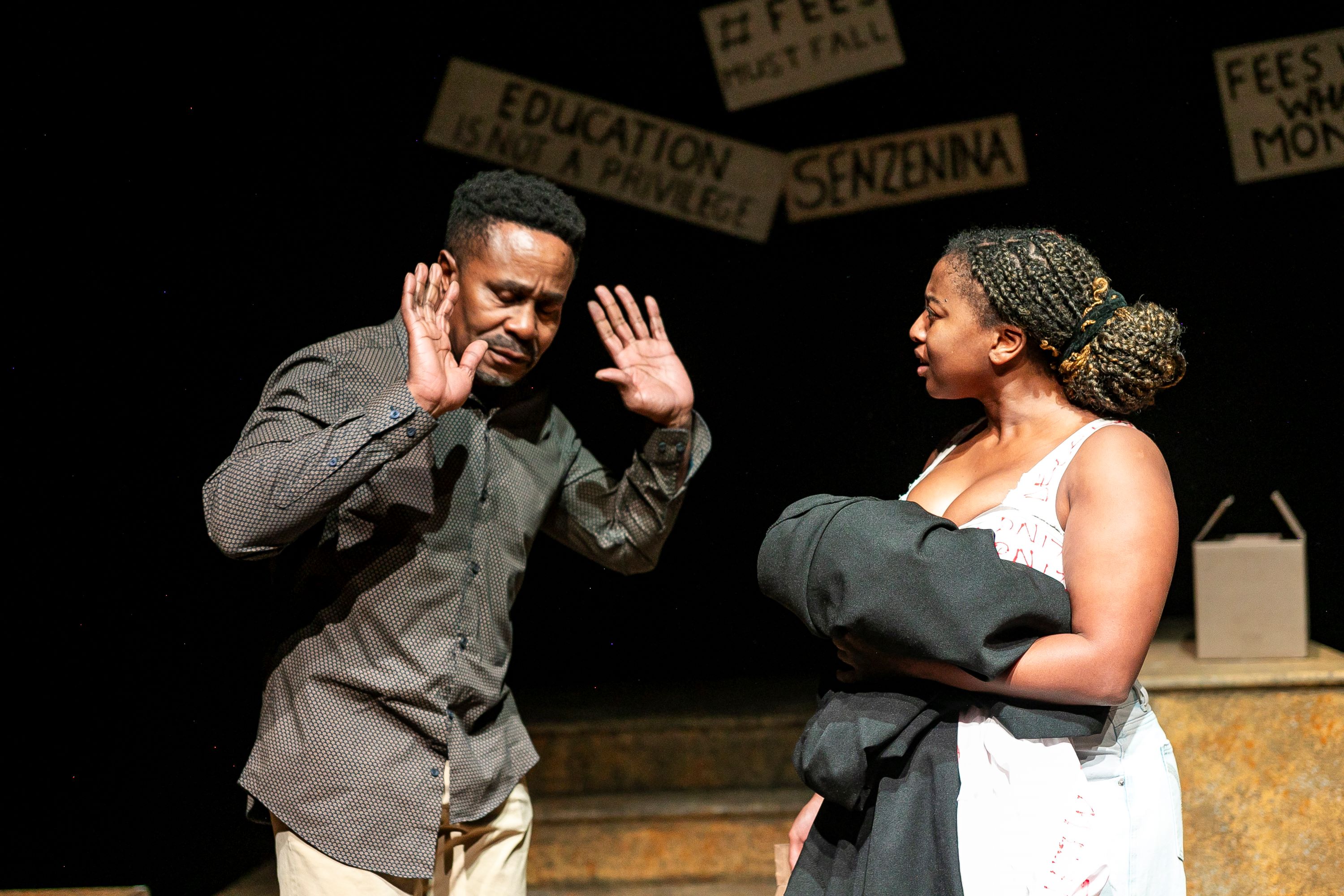
It captured the heartfelt emotions Van Graan has always been able to harness as he tackles the South African nation. And no one does gloves-off like this playwright. Setting the play in academia, he has chosen his boxing ring and then selected his characters to represent every foible in the human race, it felt like. And then he lets them rip.
As always, he doesn’t hold back, everyone and each weakness is held up for scrutiny and the constant audience gasping and finger clicks told you how he hit the mark throughout the play.
Through the years Van Graan has been honing his very own way of dealing with what he views as our fatal flaws and this time it feels as though he has unleashed it all in glorious colour.
It might sound like something you don’t want to hear or see but, because South Africans will all relate to everything, it’s like witnessing the full South African story from Once Upon A Time …Prejudices in all their pitiful hostility, power plays, colour bashing, gender gore, poor vs privilege and the list is endless. He plays all those cards to their fullest.
Those who know his work, also know that he can write and he has never been scared to speak his mind. He does it to the Department of Arts and Culture and he does it on stage. When he has a platform, he steps up and tells it like it is and believe me, he is one of the few who speaks his mind unabashedly whenever he can.
He has been maligned to the high heavens, but nothing has stopped him. And finally, to my mind, here is his magnus opus and it is flawless and delicious to witness. And when (not if) you go and see it, I hope you have the same audience we had; it added to the fun and spectacle of the drama.
Add the director and the cast to complete the perfect coming together. Homann allowed the Van Graan words to do the work, which was the best thing to do. It should be unfettered because you really have to engage and listen to get the full extent, which here you do.
The cast delivers magnificently. I didn’t know Masutha’s work but she made sure I would never forget her. What a performance! From start to finish she’s there with all her energy and might and that’s what her volatile character needs. Stuurman is an old favourite and to my mind, this is her best performance yet. Savadier and Kunene also fit the bill and, as seasoned actors, they never put a foot wrong.
It’s a play I will try to see again towards the end of the run, because there’s just too much to take in at one sitting. It’s something — even though it doesn’t sound like it — that gives hope. If, as Van Graan suggests, this is exactly who we are, at some stage togetherness will take hold. As for now, we are still that dysfunctional family who needs a stern word to set us on the right path – and this is it.
The latest Ryan Coogler movie Sinners is an off-the-charts invigorating experience.DIANE DE BEER speaks her mind:
Currently showing at Ster-Kinekor
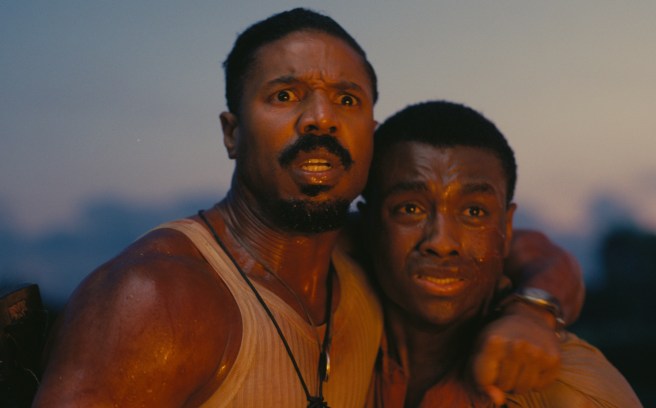
Michael B Jordan and Miles Canton face their fears in Sinners
SINNERS
DIRECTOR: Ryan Coogler
CAST: Michael B Jordan, Delroy Lindo, Wunmi Mosaku, Hailee Steinfeld, Lu Jun Li, Yao, Omar Benson Miller
If you are familiar with the movies Fruitvale Station, Creed and Black Panther, you will also know the director as well as the star of Sinners. Apart from the fact that Coogler knows how to go big, work with issues and pick a star cast, everything else will be new.
Horror and vampires aren’t exactly my favourite genres, in fact, I avoid them, but here Coogler’s name was just too much of a draw. That and the fact that much of what he seemed to be aiming at in this film comes across like the themes in one of my favourite movies, Get Out.
Too many people like steering clear of issue-driven movies, but in our world where the divide is still so big in so many areas, as an older white film fanatic, I want to hear what the dynamic young black voices have to say; which stories they want to tell and also, how do they get those stories across.
That was what I was looking forward to in this one. The cast is huge and the actors are quite something. Coogler has worked with Jordan in most of his films and here he literally doubles up as the twin brothers Smoke and Stack (yip, that’s what they’re called). They’re equally dandily dressed, but their clothes, although similar, have distinctive features, and the one’s behaviour is more out there than the other’s. Fortunately, technology can pretty much perfectly deliver anything directors want these days.
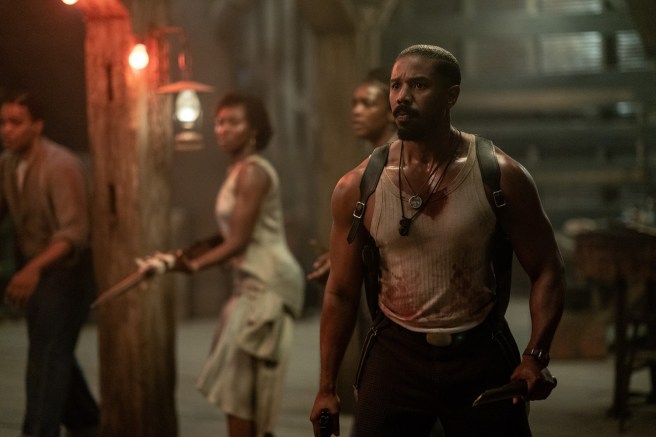
Michael B Jordan and his friends stand together.
The rest of the cast are as cleverly picked and especially the two women, a stunningly statuesque Mosaku and the smouldering Steinfield, will knock your socks off with their performances. And if you don’t know the names, you will recognize them and after this movie, you will certainly also remember the names.
But everyone in the film impresses. The look and the style will grip you from start to finish and then you can add the music, which for me truly dominated in the best sense of the word. It is quite simply brilliant – both from the black brethren as well as the white trash.
The first are seriously into the blues and the latter have a more gentle, contained country folk sound. You will be rocking in your chair and the cast are seemingly given free rein to make those moves rhythmically magical. It’s one party you don’t want to miss.
The first half of the film is pretty much about the two brothers returning from Chicago where they have collected rolls and rolls of cash and boxes of Irish beer (courtesy Al Capone circa 1930) and returning to the Mississippi Delta (which already spells trouble), where they establish a juke joint in a rundown mill belonging to a supremacist landlord, who is only interested in the lucre and not the colour of their skin when he rents them the place … or so he says.
Then the hard labour begins as everybody gets ready to get the place rocking. As the night hovers on the horizon, when the sun sets the trouble begins.
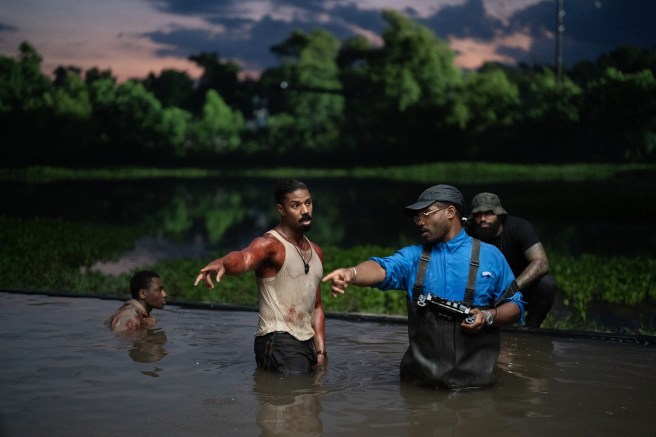
Michael B Jordan and director Ryan Coogler discussing the scene about to be shot.
This is where it became a bit too much, as the seriously partying crowd are stopped in their tracks by a family of vampires who threaten to deliver them all into a permanent state of wandering.
And yet, those are all just the package in which this film is wrapped. What Coogler is really playing with is the grand divide which has been ongoing for millennia. Every time I questioned the rage and the explosive catastrophe that turns a festive night into a slaughter madness, I was reminded of the damage inflicted by their relentless savage treatment.
As always, critics differ, but here the critical thinking swings viciously from one end of the spectrum to the other – and I found myself on both sides in certain instances.
The originality was the standout feature for me. The epic extremes the director decided to launch when he truly wanted to make his point felt like the result of dealing with an unexplained hatred which has been raging for ages. And if you had to be on the receiving end of such constant humiliation, hardship and absence of humanity which have run through generations of your brothers and sisters, perhaps the results have to be of volcanic proportions.
I was wondering how many of especially the older generation would stomach this particular version but, for me, it is the weight of the story, the magnificence of the performances of especially the two female leads, the sublime singing, musicmaking and acting by the young Miles Canton, the doubling up of the Jordan performances, or just to witness the making of the movie in this single instance, and the list goes on.
It didn’t all work for me, but as usual Coogan is epic in his filmmaking approach. Brace yourself, participate in the ride. Already the staff at Brooklyn Ster-Kinekor is saying it has been their busiest show yet. And techy podcaster Kara Swisher is celebrating the fact that Coogan negotiated good money on worldwide ticket sales as well as owning the intellectual property after a few years, something almost unheard of in Hollywood. Don’t miss the changing of the guard. It’s going to be one helluva wave – and perhaps just

 De Beer Necessities