THE PROMISE DELIVERS CHALLENGING THEATRE WITH DIRECTOR SYLVAINE STRIKE AT THE HELM

DIANE DE BEER

Pictures: Claude Barnardo

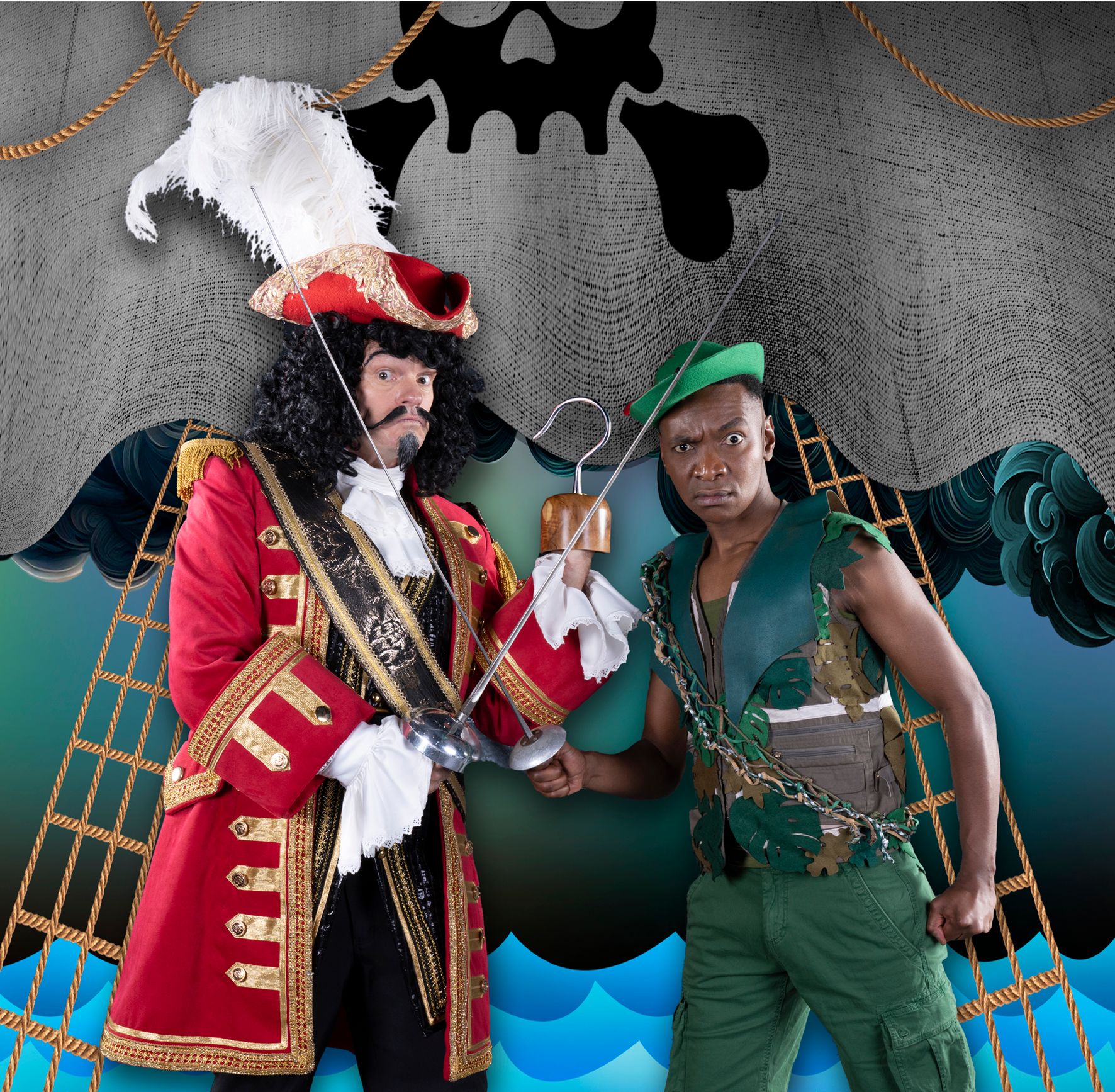
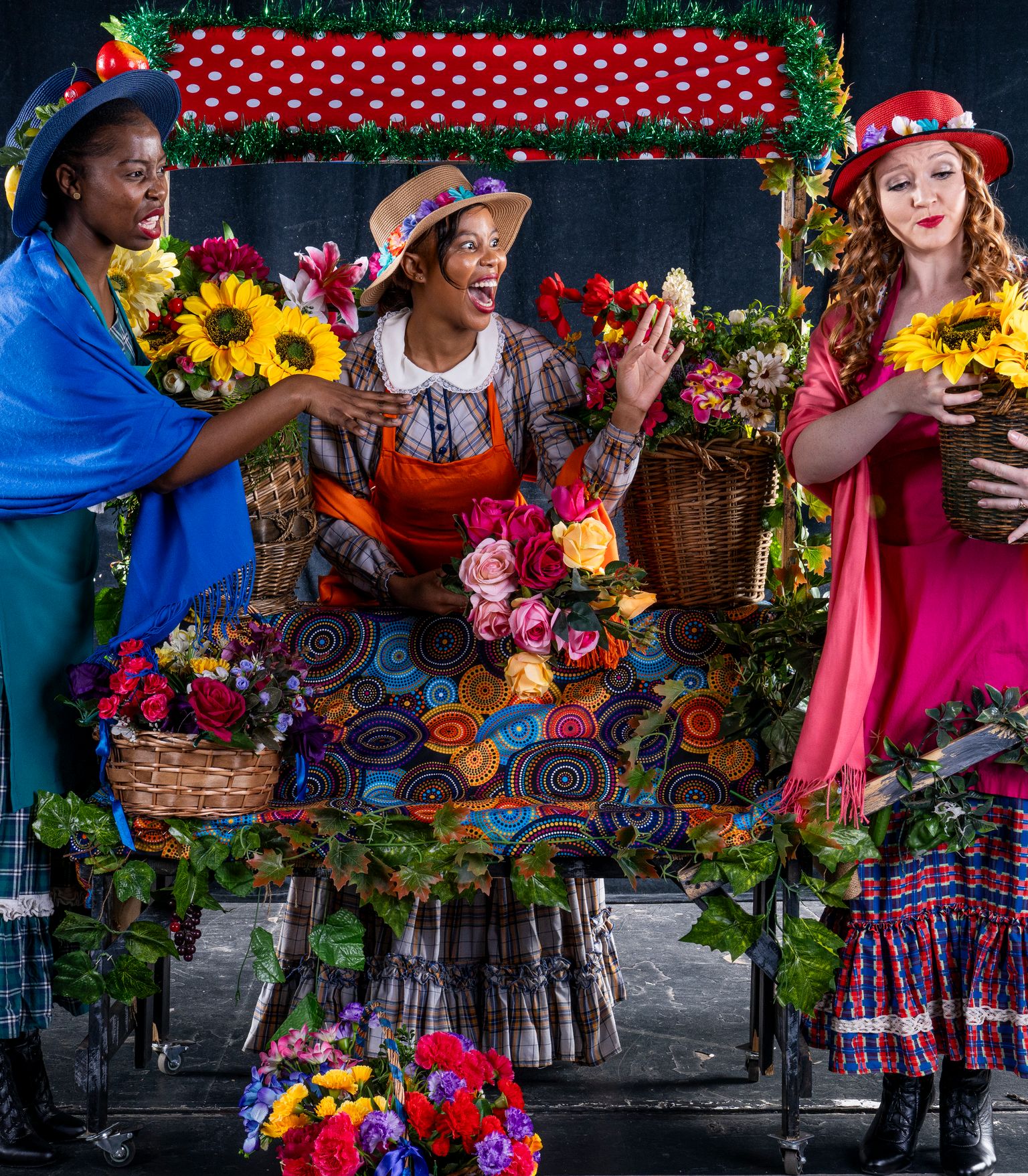
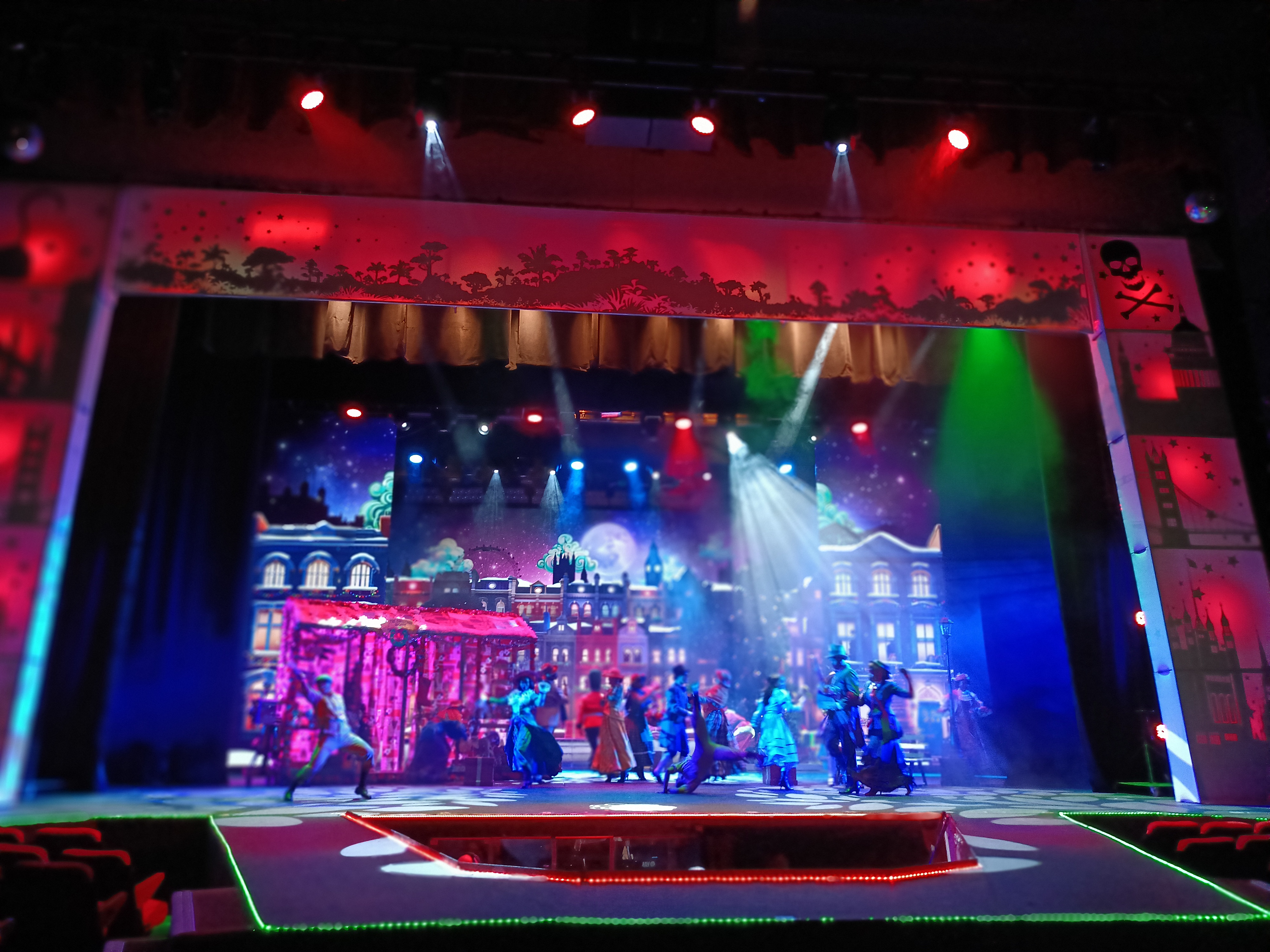
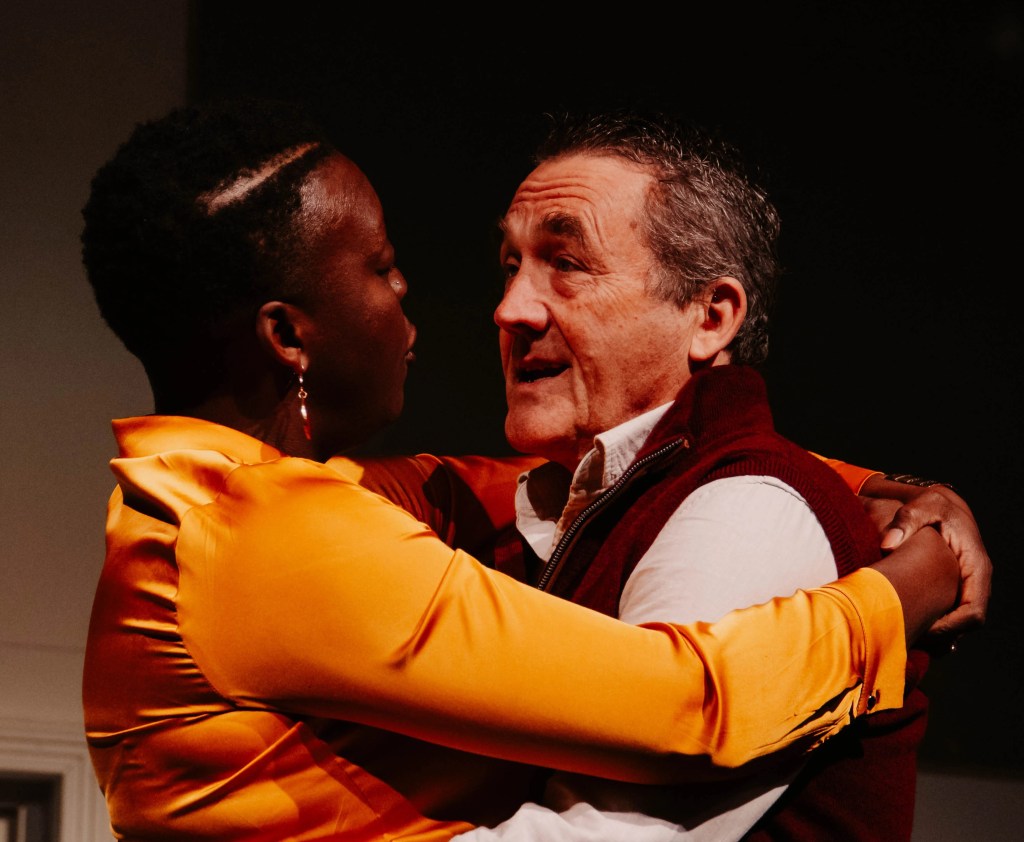
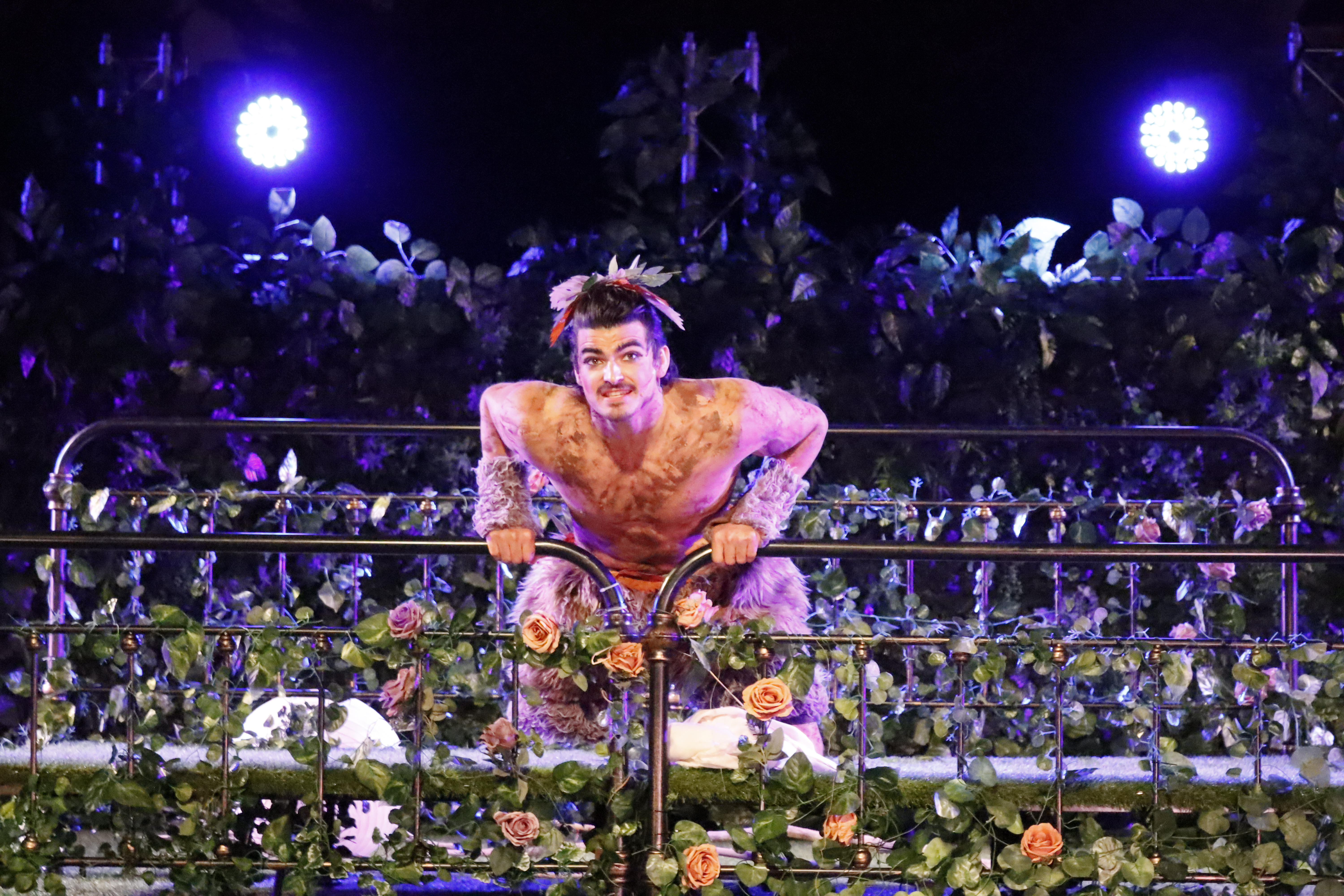
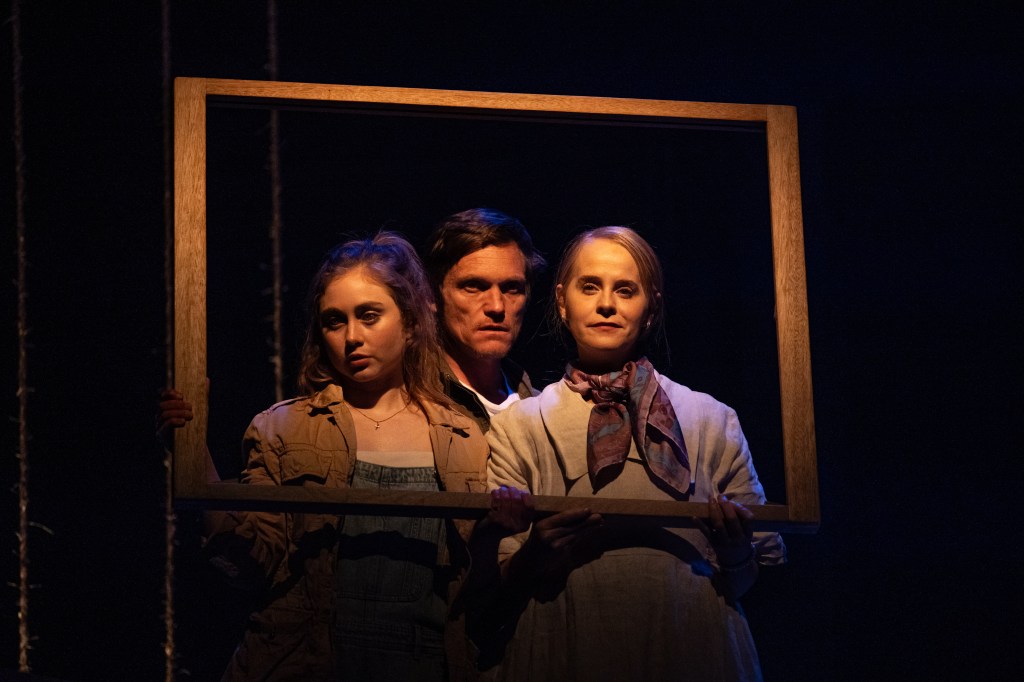
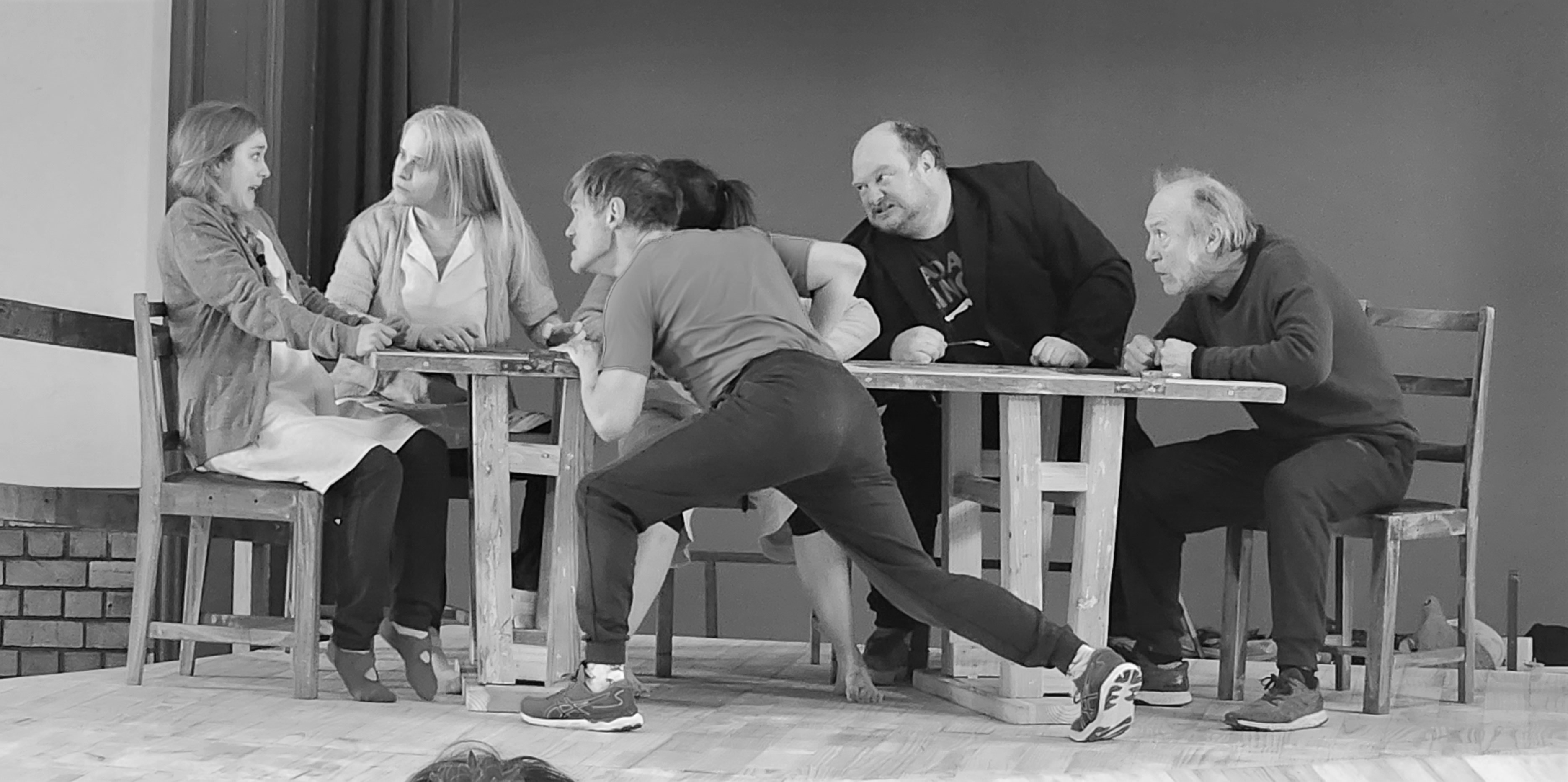
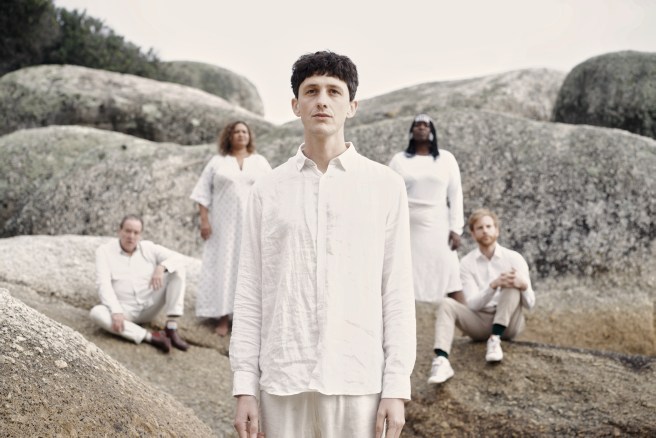
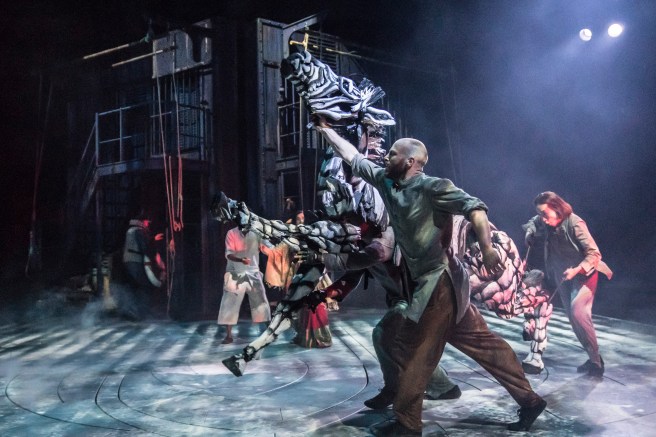
The Promise cast on stage.

THE PROMISE

ADAPTATION:

Author Damon Galgut with Sylvaine Strike and suggestions by the cast

DIRECTOR

Sylvaine Strike

CAST

Chuma Sopotela, Rob van Vuuren, Kate Normington, Frank Opperman, Jane de Wet, Jenny Stead, Albert Pretorius, Sanda Shandu, Cintaine Schutte

ASSISTANT DIRECTOR AND ARCHIVIST

Kirsten Harris

SET AND LIGHTING DESIGN

Joshua Lindberg

MUSIC DIRECTOR, SOUND DESIGN AND ORIGINAL SCORE

Charl-Johan Lingenfelder

CHOREOGRAPHY AND INTIMACY CO-ORDINATOR

Natalie Fisher

COSTUME DESIGN

Penny Simpson

VENUE

The Market Theatre

DATES

Until November 5

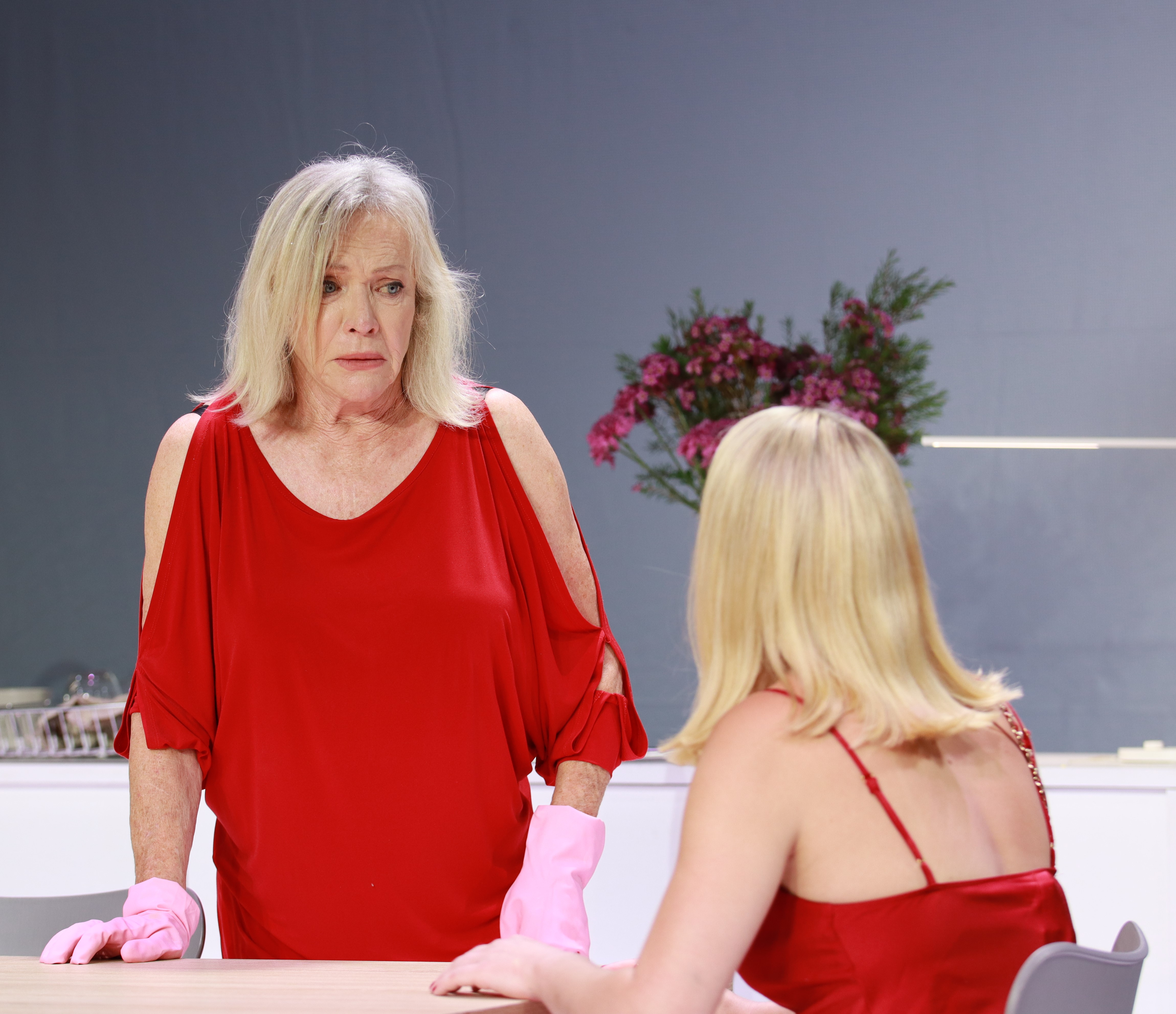
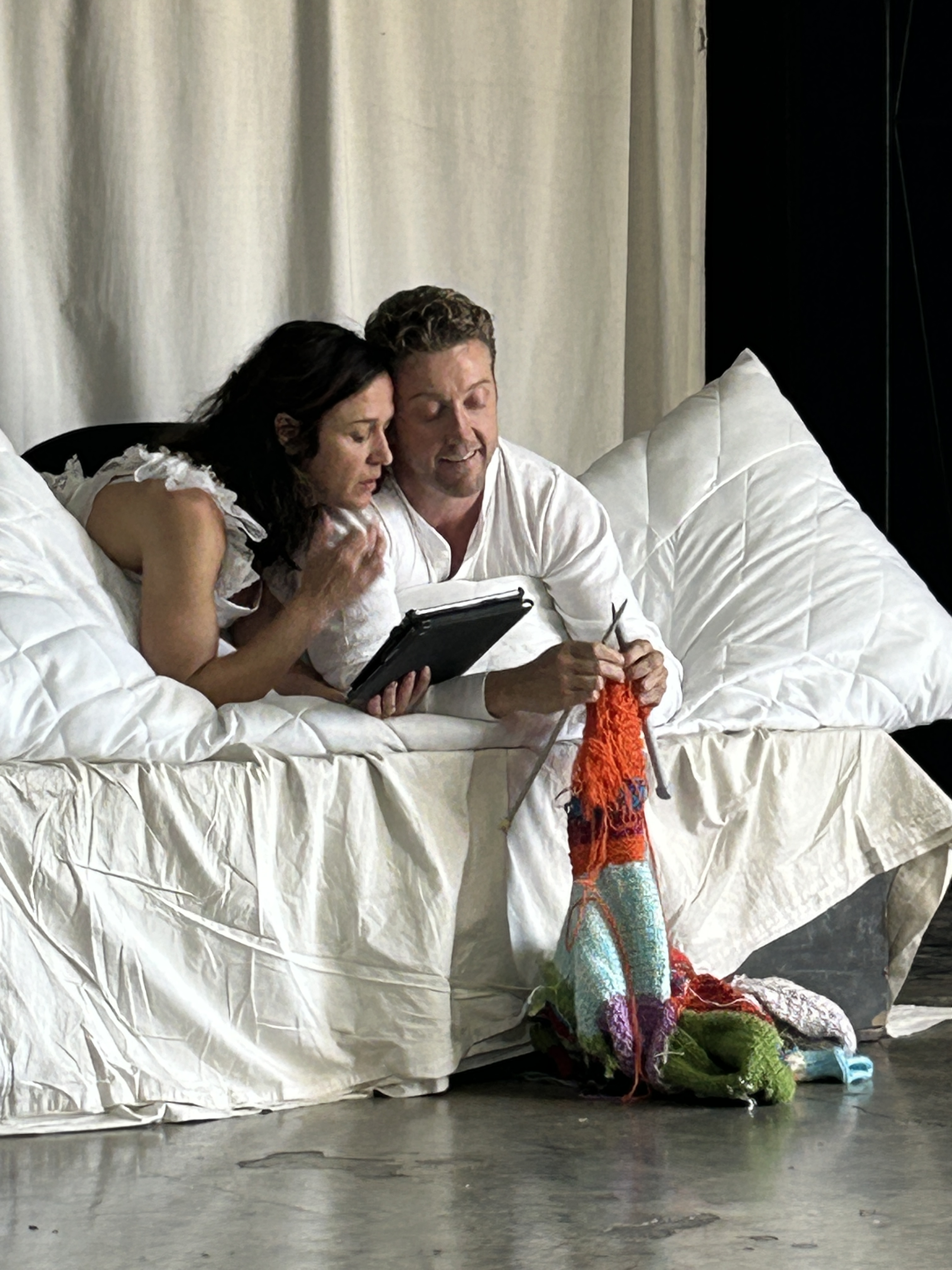
Jane de Wet, Rob van Vuuren and Jenny Stead.

One has to admire artist Sylvaine Strike’s process when she decides on a project. It’s all systems go and in Strike’s world, the focus is unfailing.

She spent 18 months hard at work on this extraordinary piece of theatre, which has finally reached The Market Theatre.

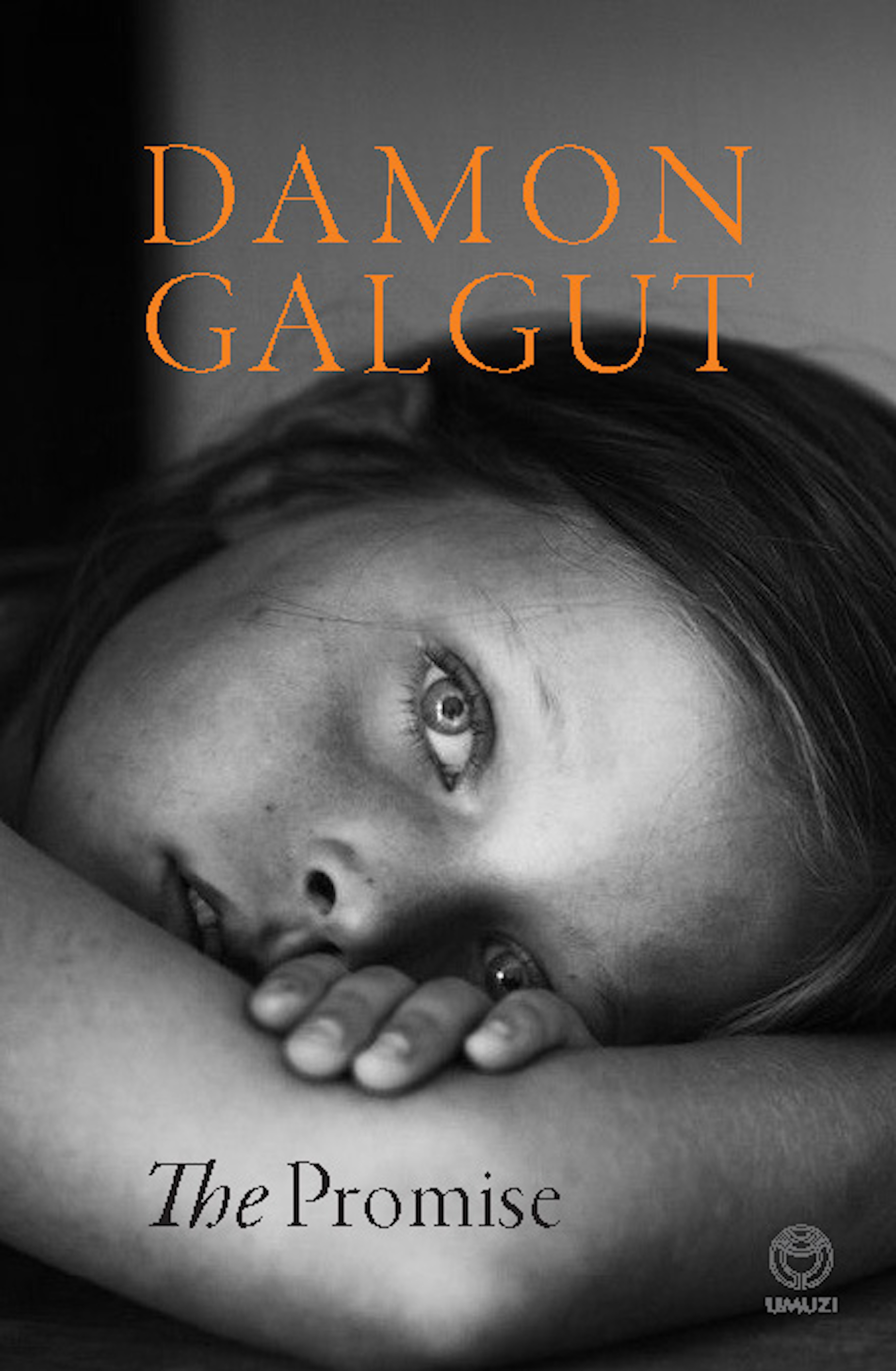
But there are a few things to take on board before you arrive. It’s based on a book, Damon Galgut’s The Promise, and that means that it is her interpretation of Galgut’s writing and script, even if he was closely involved throughout.

Also, it is two hours 40 minutes long and for many less-experienced theatre goers, that might be quite

 an ask. One has to be theatre fit.

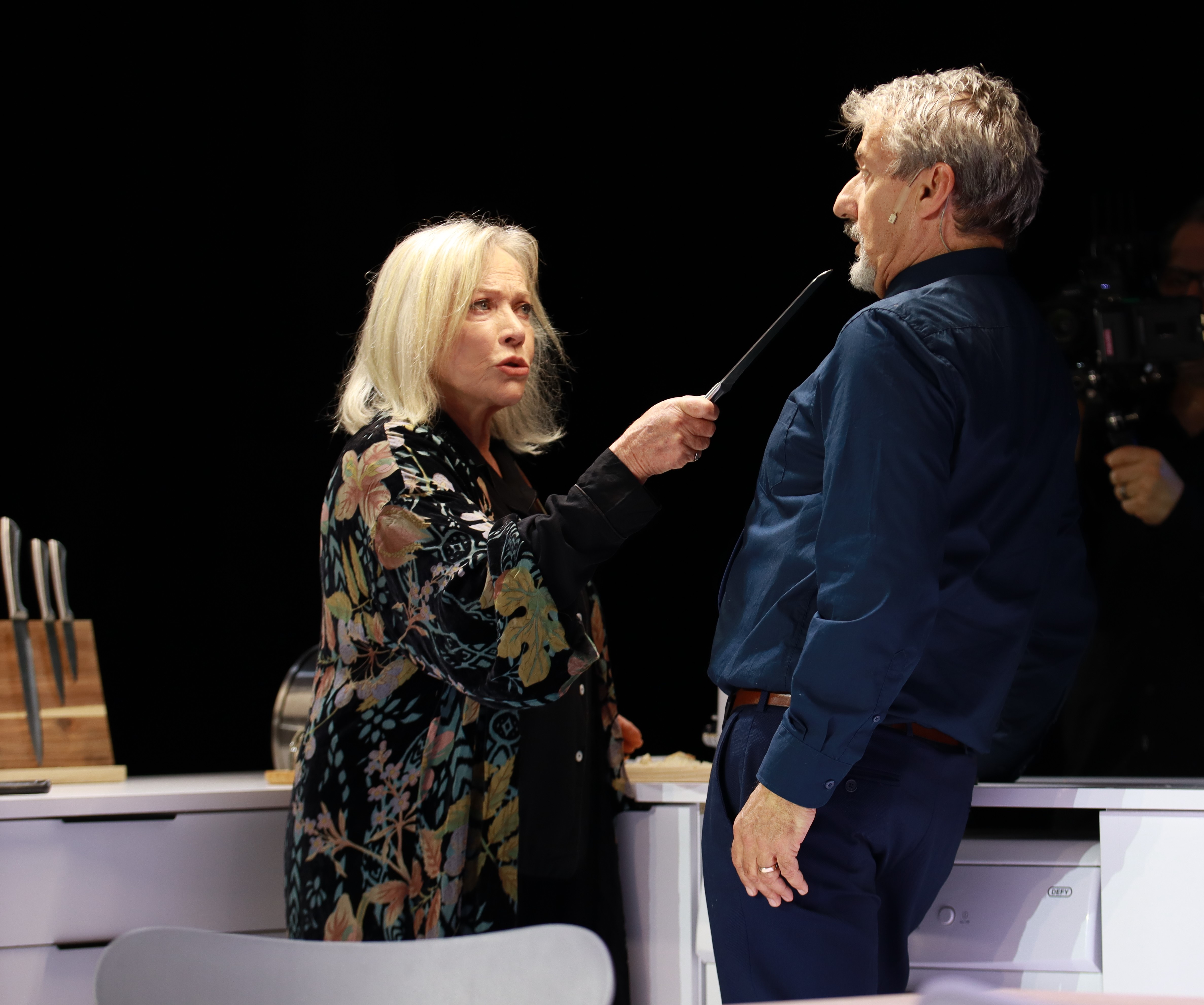
Albert Pretorius and Sanda Shandu as two policemen

But for me there’s no question that it has to be seen, and a very packed and excited audience obviously in anticipation was ready and waiting on opening day. Even when we arrived to collect tickets there was an audible buzz and it was lovely to experience a theatre event of this kind. The last one was the August Wilson production at the Joburg Theatre last year.

Five minutes into the production, I already had a smile. For this one, Strike created her own theatre language in which to tell her story and for me, it couldn’t have been further from the language and storytelling of the book, yet both had a very individual and personal flavour which I loved.

I almost felt as though I had walked into a kind of grotesque fairy tale for adults and, while the approach might have felt comical to some, it was anything but because of the content and the story it was telling.

Frank Opperman.

It was also clear that as individuals, those watching the play would have to buy into the concept – and for me that wasn’t a tough ask. It’s why we watch theatre, to catch those productions where those participating take risks to give audiences a storytelling experience that’s novel and best suited to a particular text.

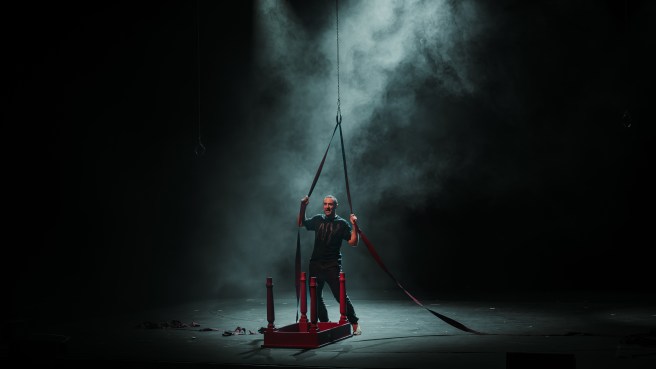
The Strike brand has always been about her individual style and, while she pays close attention to the text, her language is much more than just something we listen to. She uses the stage and everything visual as part of the ensemble and then she adds very specific movements and rhythms as well – as in this instance, a soundscape by genial music man Charl-Johan Lingenfelder with a kind of music/sound box on the side of the extraordinary stage designed insightfully by Joshua Lindberg, who was also responsible for fantastic lighting (so delighted that the family name lives on in our theatre landscape).

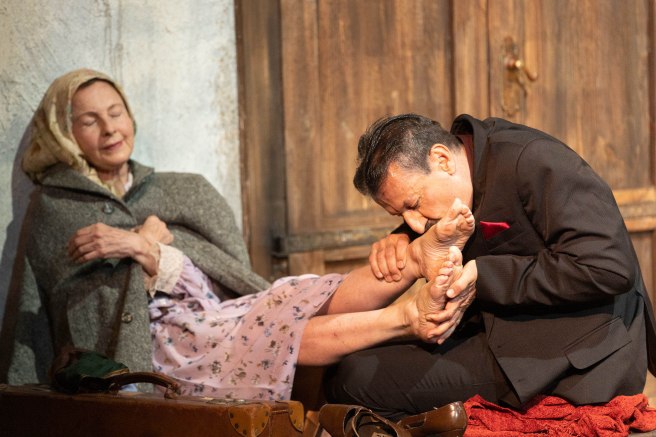
And that in itself sets the tone for this topsy-turvy world the Swart family inhabit. The matriarch of the family, seemingly the one that held them steady with a strong hand and a moral compass, has died. Thus we find all of them in turmoil as they come together for the family funeral (one of four that determine four periods in a country gone mad).

But there’s one obstacle  –  Amor (Jane de Wet), the youngest sibling, had heard Ma (Kate Normington) extract a promise from Pa (Frank Opperman) that he would give Salome (Chuma Sopotela) her house on the furthest corner of the farm, mainly because she was the one who diligently and lovingly looked after the mother in her illness.

A familiar scene in many white South African households and the rest of the family simply disengage while Amor keeps at it relentlessly – determinedly – as their conscience. The ensemble of nine work well together as a group and individually, although I suspect, audiences will have different favourites.

Cintaine Schutte and Albert Pretorius .

Amongst the men, my favourite performer was Albert Pretorius who even though his many different characters often had a comical edge, he manages such a fine artistic line and knows just how to hold it back. Frank Opperman also captured his different characters masterfully. Rob van Vuuren is at the heart of the piece as Anton Swart.

Chuma Sopotela is the key of the piece as both Salome and the storyteller, and in both roles her strong presence holds The Promise, both in the production and at the centre of the story. She was the perfect fit.

Each one of the performers added to the whole. Because many roles were played by each actor, some characters worked better than others, and who you like or discard will be a personal preference. I don’t think with the adopted style there’s a right or wrong, it’s a preference thing.

So how did it all come together. It’s a HUGE production. I suspect, especially while writing this review, that one needs more than one or two viewings to truly appreciate the breadth of the drama and staging. I can simply stand back in awe.

What for me personally would have worked better, would have been to lose most of the second half (obviously not the end). Up to the interval, everything worked perfectly, but then it started to unravel. A trim of an hour would have been my ask and would have served the actors and the story better.

It was as if sustaining the production for swo long was too big an ask and detracted rather than added to the final product.

Should people go? What a question! It’s a theatrical experience. There’s a cast that does exquisite work, moments that will take your breath away, a set, costumes and lighting that all contribute to the bigger picture and, finally, a director who puts herself out there, pushes as far as she dares, breaks boundaries and develops ways of telling stories that keep you riveted.

You might not love every minute, but you have to admire the artistry, the vision and the theatricality with scope that’s daunting yet inevitable when Strike decides to do it. And we’re the beneficiaries.

SYLVAINE STRIKE’S INSIGHTFUL PLAY WITH DAMON GALGUT’S BOOKER PRIZE WINNER THE PROMISE

Time was the rare gift that celebrated director Sylvaine Strike was given with her latest production, The Promise, written and adapted (from his novel) by author Damon Galgut. She tells DIANE DE BEER more about the extraordinary process which started more than 18 months ago and is on at The Market (until November 5) following its recent Cape Town run:

“In a way, The Promise selected me,” she explains, because Damon approached her to adapt it for the stage, thinking that she would probably be the right fit because he had foreseen that it would have to be done very theatrically and very physically if it were to have a theatrical life at all.

She was utterly smitten by the idea, but insisted that Damon adapt it alongside her because she was reluctant to tinker with his text. “I needed him to travel the road and structure it in a way that he would feel could live as theatrical version.” She had read the novel twice even before he contacted her and was delighted.

The Promise with the full cast as well as author, Damon Galgut (left) and Sylvaine Strike (right).

When it came to casting, it began with finding the right person to set the bar from a physical perspective and she knew from the outset when reading The Promise and imagining who her Anton could be, that it was Rob van Vuuren.

Gifted this opportunity of a role that is a once-in-a-lifetime experience, Rob was thrilled just to delve into this exquisite character and the very many facets of it. Sylvaine knew he would be the one who she would work off in finding the rest of the family, which includes Frank Opperman as Anton’s father, an Afrikaans patriarch, Kate Normington as his mother, jenny Stead as Astrid, his middle sister, and the young Jane de Wet as Amor

“The pivotal and most important character of Salome is played by Chuma Sepotela, who holds this exquisite part in two dimensions in the sense that she’s also the narrator of the piece, as Chuma herself, who plays the story conjuror.”

Sandu Shando plays Lukas, Salome’s son, and “the amazing Albert Pretorius and Cintaine Schutte, both adding deep dimension, comedy and pathos in the roles of Tannie Marina and Okkie as well as the many characters they portray,” she concludes.

In total it’s a cast of 9 and, before anything else, they did a workshop with Sylvaine to discover the physical language as the blueprint to the play.

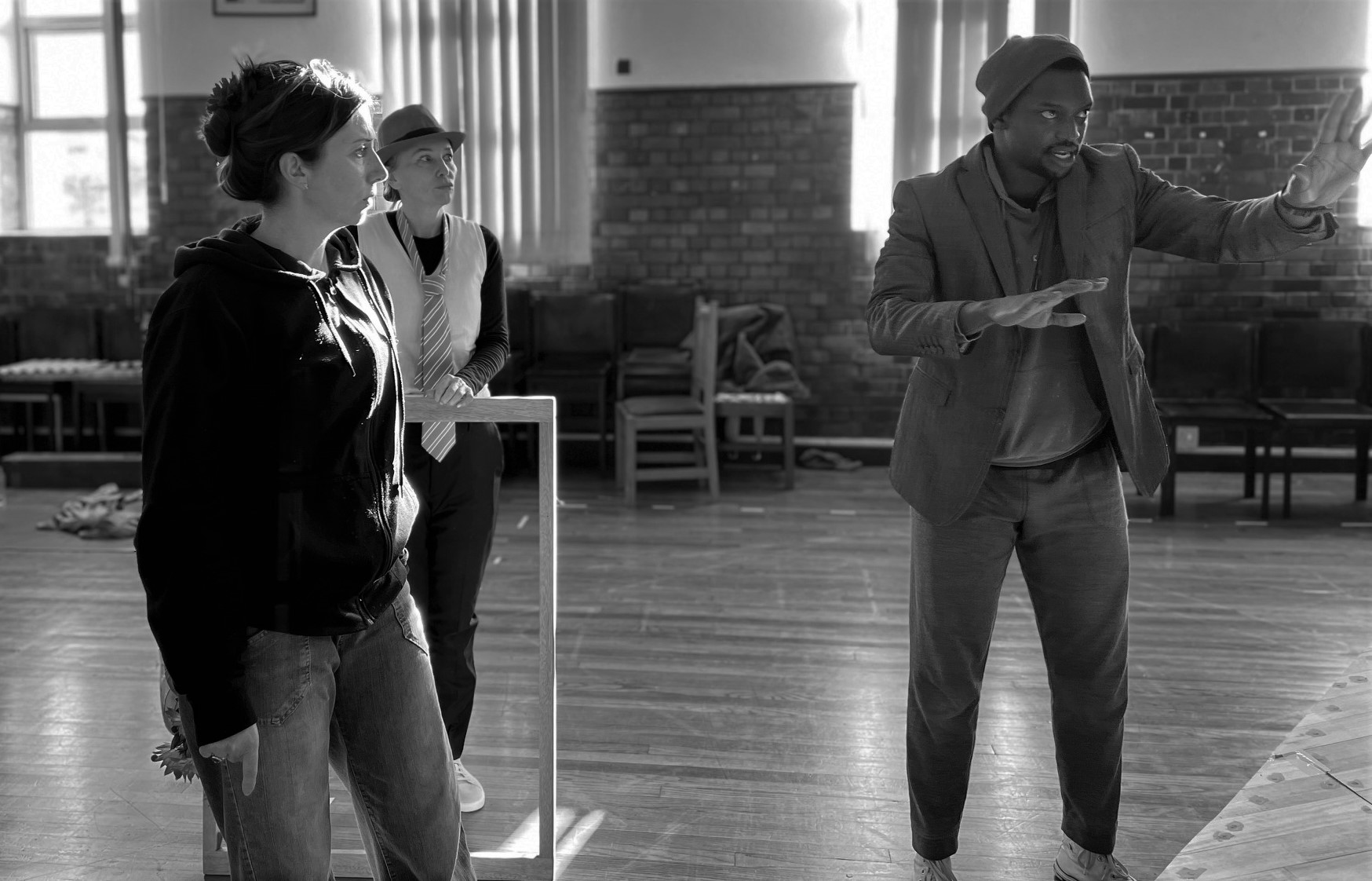
In rehearsals: the cast and director Sylvaine Strike.

With both the director and writer growing up in Pretoria, their coming together was almost written in the stars. “I think growing up in Pretoria and being aware of the glaring chasm between the haves and the have nots, the ability for Pretoria to ride that knife edge between ignoring the political reality, the lies that have been woven to its children, the incredible duality between darkness and light, tragedy and comedy that this book engages with and its calling out for us to face the shame for how we lived,” all of that made the book irresistible.

“There’s no escape but to look it in the eye, which is what this was and showing what it felt like for me. The novel forced me to do it as it named everything I was feeling growing up there as a child and being a teenager there and sensing that something was so terribly wrong with it.

The full cast on stage. Photographer: Claude Barnardo.

“Four decades of Pretoria so distinctly captured, I rose to the challenge of telling the story on stage because I wanted to reach people with it and make them feel what it felt like for me to read it and everything it made me feel to confront our whiteness in its brutal hideousness and its complexity and own it.”

Once the decision was made, she and Damon sat for two solid weeks unpacking the novel. At first he really battled with seeing how it could be put on stage. Sylvaine thinks that in his mind the locations were so specific that it took some time for them to understand the kind of language it would need in order to tell the story.

“We both agreed that the very fluid narrative that Damon captures and writes in, a narrative that changes perspective all the time, changes its mind all the time, needed to come from a chorus almost in the Greek tragedy sense, to comment on the action, to speak to the hero or the anti-hero, to contain their thoughts, and to move swiftly through the action alongside it.”

Scenes on stage. (Pictures: Claude Barnardo)

Neither the reader nor the writer could hold on to all their darlings. They knew they had to lose certain bits of the novel, cutting and culling, choosing only the very essential parts of the story, and look at compressing it into a time frame that would suit theatre, so much more condensed than in a book.

 They also needed to find a theatrical language and a physical language that was able to edit between time and place very swiftly, where actors could age from one decade to the next simply by using their bodies. Damon then proceeded to write five drafts which incorporated this language and refined it more and more and more.

In between the first and second draft they had a workshop which Damon attended in which she worked with her cast and at which Charl-Johan Lingenfelder (music/soundscape) and Joshua Lindberg (set and lighting design ) as well as Penny Simpson (costumes) were present. “It was a collaborate effort to reach a place  where script was done and created,” she explains.

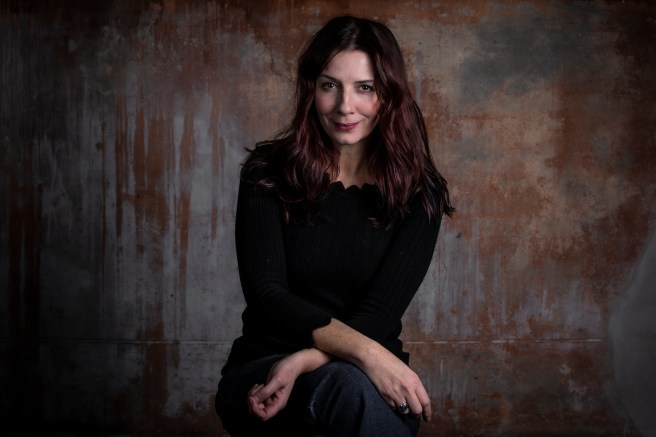
Wearing her heart on her sleeve, director Sylvaine Strike.

Photographer: Martin Kluge

In conclusion, after all the hard work, the introspection, a fantastic cast, long hours and hard work, she hopes audiences take a good hard look  at our country  –  and a soft look as well. “And by that I mean allowing us to enter its deep humanity and inhumanity, looking into a mirror, admitting our own whiteness, hearing it, not making excuses for it,  not trying to explain it, but most of all really looking at the relationship we have as South Africans with each other.

“There’s also the microcosm of a family and its domestic worker Salome, which is a microcosm for  the dynamics within our country, the difficulties, the obstacles, the promises made and broken, the lack of care we have for one another, the care in some aspects, about our country looking at itself, not being spoken down to, but simply observing itself, taking a step back to see more clearly, not back in time, just to get more focus on where we’re at.

“And what I love about The Promise is that it doesn’t offer any solutions, just gives us a glimpse of what we have done and what we have become over the last four decades of our country’s democracy.”

THE PHENOMENAL NATANIËL IN FULL FLOW

October is a month packed with performances for one of our most prolific performers, Nataniël. He tells DIANE DE BEER about his punishing schedules as he presents three shows – all completely different, yet all with one thing in common, the artist and his creativity:

It all begins with Momentum Beleggings Aardklop which is back in Potchefstroom following the upheavals of the pandemic

Ring van Vuur attempts to bind five fiery elements together: original music from more than three decades; original stories as only he can imagine; the rhythms and techniques of countries such as Mexico, Argentina, Chile and Peru; a shimmering set of costumes designed by his personal designer Floris Louw; and seven world class musicians.

Charl du Plessis on keyboards is joined by Werner Spies (bass) and Peter Auret (bass) as well as four brilliant guitar players: Juan Oosthuizen, Loki Rothman, Leon Gropp and Luke van der Merwe.

He promises to present 90 minutes of heartache, humour, heat, virtuosity and rhythms.

As part of the Aardklop festivities, the show will be presented on October 3 at 3 and 7pm in the Beeld Auditorium

Book at ticketpros.co.za.

Nataniël follows this with a short new season titled ROME ’62

On October 10 to 15, he returns to Pretoria’s Atterbury Theatre.

At a fair in the Free State, there’s a stall that sells second hand clothes. In between the rather tired-looking garments, there’s an unusual outfit, handmade by an acclaimed Italian designer. This discovery a few years back, was the first sighting of what has eventually turned into this particular show.

From family secrets, suspicion, stunning strangers, international travel, legendary films, timeless radio hits to exuberant fashion and the most dramatic designs, everything is included with stories in both English and Afrikaans, as well as music in abundance, brand new as well as six decades old.

Charl du Plessis (piano), Werner Spies (bass), Peter Auret (drums) and Wernd van Staden (cello) will be the accompanying orchestra.

Costumes by Floris Louw.

ROME ’62

Atterbury Theatre

From 10 to 15 October

Book at Seat Me

Finally a performance that Nataniël is hugely excited about and describes as his best:

Titled MASS FOR THE GOOD PRINCES it is a follow-up of last year’s successful DIE SMITSTRAAT SUITE. This one though is his first full length musical mass based on the classical structure of a composition with five, six or seven parts, which is a prayer for goodness, new leadership and the hope of a new generation.

The mass will be sung in Latin and English with stories and descriptions in Afrikaans.

As before, he shares the stage with Ockie Vermeulen (organ),

Charl du Plessis (keyboard), Juan Oosthuizen (guitar), Werner Spies (bass), Peter Auret (drums and percussion) and the Akustika Chamber Choir led by Christo Burger.

Aardklop Aubade

Sunday October 29

Afrikaans Hoër Seunskool

11am and 3pm

Book at ticketpros.co.za

At all these shows, he begs for no cell phones, no short pants and promises no intervals!

A CELEBRATORY MOMENTUM BELEGGINGS AARDKLOP RETURNS WITH A SPARKLING SMORGASBORD OF EXCELLENT THEATRE

It’s the time of festivals with Aardklop opening with a celebration of jacaranda showers and shows from October 3 until 8. DIANE DE BEER points to a few of her favourites:

When I look at festivals, what they have to offer, I always go to theatre first. It’s my passion, people who tell stories.  Fortunately, I know that stories are an integral part of the arts and are told in different ways. That’s what makes a festival such a delight.

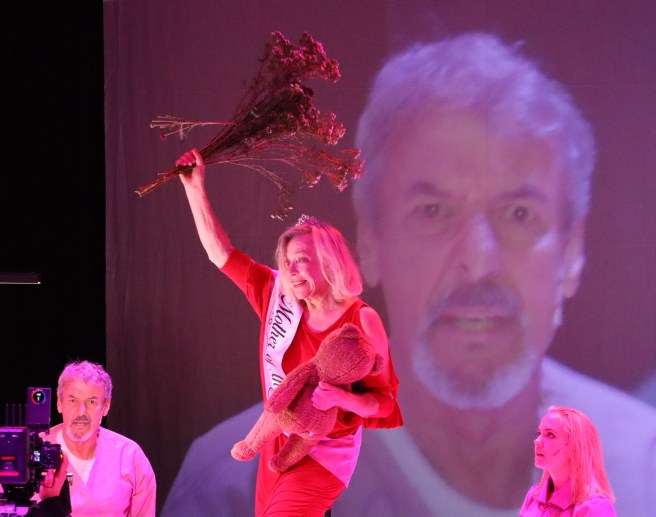
Die Moeder with Sandra Prinsloo and Dawid Minnaar. Picture: Emma Wiehman.

But let’s start with theatre. If you haven’t seen Sandra Prinsloo’s Die Moeder yet or even if you have, see it again. It’s one of those once-in-a-lifetime performances even if she has had many of those. It’s a story of a woman ageing who has lost her heart and her soul as she feels discarded and left out of the dance of life.

That might sound horrific, but the text and the ensemble cast, including the magnificent Dawid Minnaar, Ludwig Binge and Ashley de Lange with exciting directing by Christiaan Olwagen, present huge rewards.

Bettie Kemp and Dawid Minnaar in Mirakel.

On a lighter note, Marthinus Basson, a Reza de Wet genius, presents probably her funniest play, titled Mirakel. With another fantastic cast, including Rolanda Marais, Carla Smith, Dawid Minnaar, Edwin van der Walt, Bettie Kemp and Ebin Genis, it takes us back in time when theatre was presented by traveling companies, which went from town to town, region to region.

That already puts a smile on my face, and when you get this almost ragtag band of actors together, trying to save their lives by enhancing their livelihood with all the drama of the time and the company, it’s a scream. Just seeing Minnaar, who we are used to seeing on stage in serious mode, is a delight as he lights up the room with his angst and artistic temperament.

Braam en die Engel with Joannie Combrink, de Klerk Oelofse, Rehane Abrahams and Shaun Oelf, directed by Nico Scheepers, has all the elements for something quite enchanting. Add to that Kanya Viljoen who adapted the text from a YA book with the eponymous title, Grant van Ster as choreographer, Franco Prinsloo as composer and Scheepers and Nell van der Merwe on props and puppets as well as set, costume and lighting design, it’s a no-brainer.

Described as a magic realism experience for the whole family, this sounds worth driving for and not to be missed. I don’t even know the book although the title does the trick, but the artists involved get my backing all the way.

Geon Nel in Hoerkind. Picture: Gys Loubser.

Also based on a book, Hoerkind, written by Herman Lategan and adapted by Francois Toerien, tells the writer’s own story about a life in tatters when as a six-year-old he is sent to an orphanage. His stepfather shoots at him, at 13 he is stalked by a paedophile, and he turns to drink and drugs to stay sane, this solo production is directed by Margit Meyer-Rödenbeck, with Geon Nel in the title role.

The young boy’s missteps are many as he tries to survive. It’s a hair-raising story of loss and triumph in a world that is feels as if it is against him as he valiantly fights to survive.

Goed wat wag om te gebeur. Picture: Nardus Engelbrecht

Another debut production, Goed Wat Wag Om te Gebeur, has impeccable credentials with a cast featuring Antoinette Kellerman, Gideon Lombard and Emma Kotze with Philip Rademeyer as playwright and director (reworked in Afrikaans from The Graveyard).

Hendrik returns home after 15 years but, because the house is deserted, he decides to wait in the cellar where he spent his childhood years. It is empty, but the family’s secrets and history thicken the air and form part of the foundation of the house. Three figures keep appearing – his hardened sister, his petite mother and his lively girlfriend … and secrets and lies come to the surface.

Droomwerk. Picture: Lise Kuhn.

Droomwerk spotlights Jill Levenberg, Ben Albertyn, Johann Nel, Tyrish Mili and Johann Vermaak, directed by Kanya Viljoen and Lwanda Sindaphi. It unfolds as a dream as the title suggests. Petrus is the one who dreams about his family’s complex past: his ancestral mother, Diana of Madagascar, is looking for her daughter; and his grandfather, an apartheid senator, is dying.

The play deals with conflict, alienation and disillusionment. Will Petrus find the answers that bring him peace? Written by Pieter Odendaal, the text has already garnered an award for the best drama by the ATKV Woordveertjies.

Cindy Swanepoel and Zak Henrdrikz star in Henrietta Gryffenberg’s text 1 (Een) – described as a tragicomedy about love. Directed by Alby Michaels with choreography by Craig Morris and original music by Coenraad Rall (Amanda Strydom’s accompanist), it’s all about once upon a time … there were two people so fond of one another that they grew,the one into the other.

With too much togetherness, the two eventually decide it’s time to separate … but which one will survive this miraculous ordeal?

This tongue-in-cheek production looks with a slight jaundiced eye at the ancient themes of love and transience while placing it in an absurd context. Are human beings likely to find their perfect partner or are the chances just endlessly slim?

It’s a challenging piece, which should translate perfectly on stage with hopefully much laughter at the fallibility of man.

Two strong solo productions include Marion Holm, a seasoned actress who works wonderfully with words and life as she experiences it. She has her own style, a way of sharing her stories that are hysterical and sometimes quite harrowing but everything is done with such hilarity, it’s laughter from beginning to end.

On a dramatic note, Je-ani Swiegers stars in Die Vrou Op Die Dak, which tells the story of a woman who flees to the roof of her house where she hopes to find the answers to a life that has suddenly become impossible. Everything she thought she knew is disintegrating and she hopes this fresh perspective might bring fresh insights.

And don’t miss out on the latest offerings from the grand dames of cabaret, Elzabé Zietsman(with Tony Bentel in the perfectly pitched Femme is Fatale) and Amanda Strydom (Amber/Ombré). Their staying power is unique as they keep refining their artistry.

It’s a lucky packet of plays with a selection of everything one could possibly wish for when going to a festival.

And then there’s more and many different entertainment options waiting to be discovered at https://aardklop.co.za/program-2023/

Also to follow, is Nataniël’s Aardklop production as well as the rest of his surprise packages.

THE MESMERISING WONDROUS LIFE OF PI

Review by DIANE DE BEER:

It all happens on stage with all the bells and whistles . Credit: Johan Persson

LIFE OF PI BY YAN MARTEL ADAPTED BY LOLITA CHAKRABARTI

Director: Max Webster

Cast: Hiran Abeysekera and the magnificent puppets

Set and Costume Designer: Tom Hatley

Puppet and Movement Director: Finn Caldwell

Puppetry Designers: Nick Barnes and Finn Caldwell

Lighting Designer: Tim Lutkin

Sound Design: Carolyn Downing

Composer: Andrew T Mackay

Scheduled screenings on 27 August at 2.30, and on 30 and 31 August at 5.30, but check your area for loadshedding, when screening times might change.

Halfway through the filmed version of this spectacular West End play, the director, designer and writer (who adapted the book) have a short chat about the play and how it all began. For the writer it was about the story, finding all the important bits and pulling them together for the stage version. For the director, it was about what could work on stage and how to do it. And for the designer it all began with the Richard Parker, the tiger.

Life of Pi imagined in spectacular style. Credit: Johan Persson

Anyone who has read the book and now sees the filmed play will know that this is where the struggle on every level is centred and, once they got that right, it was all systems go. And that’s no small thing. I counted seven puppeteers just for the tiger. It’s simply spectacular – the design, the puppets, the lighting, the video and the sound. That’s why I listed all the names in the credits. It’s a production with all the bells and whistles and yet it holds the heart of the story with the performances by Abeysekera and the animals that come to life.

Seven puppeteers are listed in the credits just for the tiger. Credit: Johan Persson

It’s clear that imagination was the key requirement for this fantastic book, which tells the story of a 16-year-old boy named Pi who is stranded on a lifeboat in the middle of the ocean with four other survivors – a hyena, a zebra, an orangutan and a Royal Bengal tiger.

We know he has made it because he is telling the story to two scientific types, the one sympathetic, the other a sceptic.

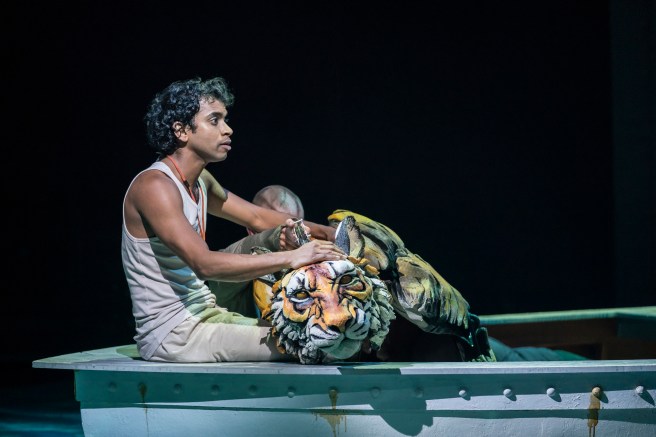
Hiran Abeysekera as Pi with one of his companions, a zebra. Credit: Johan Persson

But the wizardry of the play is all achieved by the magical approach and manner of telling and showing the marvellous Mantel story with no missteps. And although just the set is enough as it moves and rises and changes form to overwhelm the story, everything holds together in the way it should with Pi and his animal friends taking centre stage.

The experience is mesmerising and the two and a half hours flies by as Pi cajoles and cunningly sweet talks and outsmarts his sometimes ferocious and reluctant companions. It’s a kind of Alice-in- Wonderland adventure yet perhaps with a touch more reality than wonder, even if that is always present.

The determination of Pi to achieve his destiny draws you into both his pain and pleasure and this journey, keeping in mind that is after all a stage play, is all about the overwhelming power of theatre when done this magnificently.

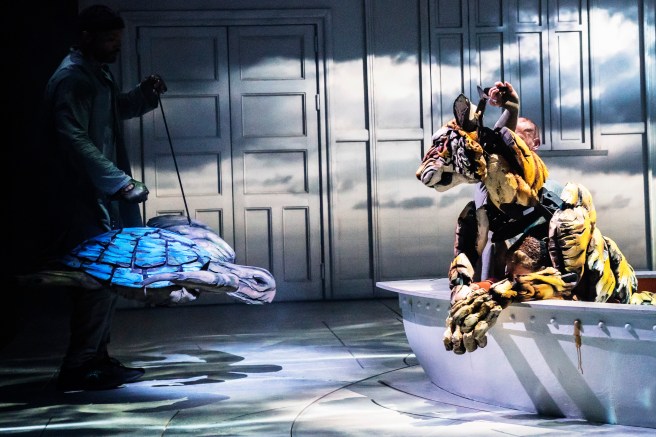
Pi in conversation with Richard Parker, the tiger. Credit: Johan Persson

I have to admit, I think Pi and his friend Richard Parker and their struggle for survival have everything to do with it!

The NT Live experience is an expensive exercise but you are seeing some of the best theatre experiences the world has to offer. If that’s your gig, don’t think twice.

Bookings at Ster Kinekor: Rosebank Nouveau in Johannesburg, Ster-Kinekor Brooklyn in Pretoria, Ster-Kinekor V&A Waterfront in Cape Town and Ster-Kinekor Gateway in Umhlanga.

MIKE VAN GRAAN’S PIERCING GAZE PERFECTLY CHANNELED BY KIM BLANCHE ADONIS AT THEATRE ON THE SQUARE

DIANE DE BEER reviews:

MY FELLOW SOUTH AFRICANS

WRITTEN BY Mike van Graan

PERFORMED BY Kim Blanche Adonis

CHANNELING DIRECTION BY Rob van Vuuren and Daniel Mpilo Richards

PLAYING AT Theatre on the Square Sandton

UNTIL September 2 (Tuesday to Friday at 7.30pm and Saturdays at 5 and 8pm)

Booking at Computicket

Kim Blanche Adonis has style, sass, sparkle and a suitcase stuffed with characters and wise Van Graan words.

Playwright Mike van Graan has the gift of casting his net, finding the right focus and then going in for the kill in the most devastating fashion.

But all of this is done with such skill and finesse that, even in those uncomfortable moments when you might be the target, you nod in agreement.

Yes, it is incredibly funny until it isn’t. And, sadly, in this country, it often isn’t. This time he has found a devastating target  –  the upcoming elections. With the unravelling of the country so visible in the Eskom fiasco which just keeps going, never letting up, his audience (and it was packed to the rafters on opening night) are rooting all the way. We have all suffered enough and there’s often a collective sigh.

Thirty years into our post-apartheid democracy, he tells us, our country is in desperate need of change, a reset, a re-imagining of the dream we had some three decades ago. And then he reveals the real purpose of the play: everyone agrees that the elections in 2024 offer an opportunity for the beginning of new beginnings, hence My Fellow South Africans, which he describes as his modest contribution to the discourse that may shape the elections, reflecting us back to ourselves, reminding us of our optimism, and finally urging us ‘to do something’.

And while he is humble in his aspirations, Van Graan has been doing this for most of his playwriting life, showing us who we are and just how much we are willing to take. Through the years, he has fine-tuned what he says and how to say it, and in this instance also gathered the perfect coterie of stage chums with whom he has collaborated on three one-person revues: Rob van Vuuren (director) and Daniel Mpilo Richards (performer but in this instance director) who also brought the star of this show, Kim Blanche Adonis, on board.

Taking over from Richards is no small ask and for the shortest time while acclimatising to her particular style, I wasn’t sure she was going to crack it – until she did with sheer determination, style, skill and an exuberant performance that never let up.

The text is dense, the demands on the actor intense, but she has taken this on with a will and willingness to make it her own. There’s nothing she’s not going to do to make a character work and her deftness with accents, complete comfort on stage and constant chameleon-like changes are astonishing. Van Graan has found a warrior for his sharpest words.

And as the audience, you have to tune in too. It’s fast and furious, and the writer doesn’t tread lightly as he flies fiercely through the South African landscape, demolishing everything he witnesses in a land that’s punch drunk as it faces one disaster after the other.

Just before the show, I was listening to a news report on the BRICS summit which revealed that the Chinese had gifted us R500 million, but it went on to report, R170 million had already disappeared! I can just imagine what Van Graan would do with that.

He wishes us a cathartic experience and it is that, but what I love the most is the way he lets rip with words and worries, always funny but never at the expense of the catastrophe of what has happened to this country we had such hopes for. He is piercingly honest. It’s not always possible to laugh and at some moments the spotlight on those of us who are born with privilege just because of the colour of a skin is vicious, as it should be.

Yes, he is there to entertain, and with the smarts of Adonis, it is just that, but he never turns away, softens the blow or shies away from making a point whatever the target might be. This is about our country, making the right choices and going into action rather than simply complaining.

Van Graan carries the moniker cultural activist because that is exactly what he does with all the skill of both his perceptive and piercing gaze and his writing wizardry.

It’s a blast!

AUTHOR/ACTRESS WILLEMIEN DU PREEZ TURNS A DEVASTATING FOLLY, A DREAM DASHED, INTO YET ANOTHER CREATIVE ENDEAVOUR

Most of us have dreams that we hope will become reality one day, but sometimes life happens and we don’t get round to it. Willemien du Preez and her husband, whom she refers to as Liefie, decided on what many might suggest was the spur of a moment, to buy what they believed would be their dream farm. DIANE DE BEER speaks to the author about her book Plaas se Prys (Price of a Farm) (Protea Boekhuis):

He left a perfectly good job with all the richly earned rewards still waiting in the future and she waved goodbye to city life and everything familiar to her.

The Du Preez couple had been to visit the area far fom their current home in Gauteng, much closer to Cape Town, had lost their hearts almost at first sight and here they were, taking the first steps into what they hoped would be their dream life.

Willemien’s book is about this period in her life (if you don’t read Afrikaans, hold thumbs for a translation) in which she captures the adventures of two city slickers hoping to transform overnight into their version of Karen Blixen’s “I had a farm in Africa…”.

It all began when Willemien was battling the loss of an almost three-year-long project that had demanded blood, sweat and tears, but just didn’t work out. She longed for something peaceful, something beautiful and a respite – and to add to her dilemma, her husband was also battle-weary and simply dead tired.

With hindsight, this self-made adventure felt fantastical from the start. She describes it as two desperate individuals fleeing from their reality. “The mountains and a different lifestyle were appealing.”

A the time they didn’t regard this madcap move as such. Their children were adults, they had some money in the bank and Gauteng’s crime statistics were unnerving. “My husband always wanted to farm like his grandfather before him, and I wanted to live like my grandfather and grandmother, off the land.”

“We were still young enough to start over,” she explains, “probably a misguided romance with nature.”

The day they bought the farm was perfect. As Willemien describes it, they were overwhelmed by the spectacle of what they hoped to purchase – and then inhabit. “The fields, the mountains, the sky, the light, everything seemed to conspire.”

For the Du Preez’s, it felt like a gift. A rose-tinted picture emerged, the income it seemed would be more than they hoped for and it felt as though the farm had been made specifically to fulfil  their dreams

When your eyes rest on the cobbling stream, it fails to see the damage the flood waters could do during a terrifying rain storm. What they saw was a farming project for her husband and a restoration project for her. “I would restore the 100-year old  farmhouse with two attics into a holiday home for our children and the grand-children still to come. We were thinking of the future – yet not so much!”

Again, looking back, she knows that even when packing their belongings for the grand move, there was trepidation. “The alarm bells came from inside me after that first visit to the farm. It didn’t feel so right anymore.”

On their way back following their first visit, they argued, but not about their momentous purchase. “That was too late. We had already signed the papers,” she says. But reality set in almost immediately after their arrival on the farm. “I realised it wasn’t mist blowing over the farm, it was dust,” only now realising that it dominated her huge struggle to cling to the dream.

No wisdom was passed on when they bought the farm and probably they would not have listened. Once they had decided to throw in the towel, a neighbour described as a wise boervrou (farmer’s wife), said that if she were buying a farm, she would have visited often, even if the seller grew tired of the intrusion. She would have considered every vantage point before she made an offer. “Now I would tell my younger self, you have to talk to all the farmers in the region. You have to ask about the pitfalls, know the weather patterns and discover everything there is to know which will not be included in the sales pitch,”says Willemien.

She has gained insight, of course, and now she knows that you cannot lightly tackle something this extraordinary. “You can’t just decide one day to go farming. You must know the lay of the land and preferably come from there.”

Fortunately the Du Preezs are not people who simply take life lying down. After quitting the farm, they spent a few years rebuilding their life in Cape Town and environment. André returned to law and Willemien taught Afrikaans to English speakers, picked up her acting career and earned enough money in international ads to take them on an overseas trip.

Following a decade in the Cape, they returned to Gauteng to be closer to their children and grandchildren and she started writing this book after encouragement from another author, Johann Symmington.

There were dark times as the pandemic was both a threat yet provided the time to write. For Willemien, writing about something that still has an impact on their lives was therapeutic. I suspect the rewards from grateful readers will also help to heal some wounds. It’s a story told with searing honesty and a humanity that’s heart-warming.

It’s the kind of thing that many will identify with, told in a manner that is as frank as anyone can be when focussing on their biggest folly. But don’t we all mistakes and tumble down that slippery slope and if you can rise from that heroically, take a bow.

When I met her following a talk at the Vrye Weekblad Book Festival in Cullinan, I knew that this was a book I wanted to read. When a dream shatters, not everyone manages to put the pieces together again.

But Willemien and André have done exactly that. “I know that we have accepted  the past and each other.”

And most precious of all, that’s what they have left: each other.

BARBIE’S SWEETNESS WITH SASS AND MISSION IMPOSSIBLE’S HIGH-VOLTAGE ACTION ADD NECESSARY VERSATILITY TO CINEMA SCREENS

Two very different movies have been drawing in the crowds with boasting admirers and detractors. DIANE DE BEER finds merit in both: the delightful Barbie as well as the Tom Cruise action extravaganza Mission: ImpossibleDead Reckoning Part One

Two very different heroes: Margo Robbie as Barbie and Tom Cruise as Ethan Hunt in the latest Mission Impossible

BARBIE

DIRECTOR: Greta Gerwig

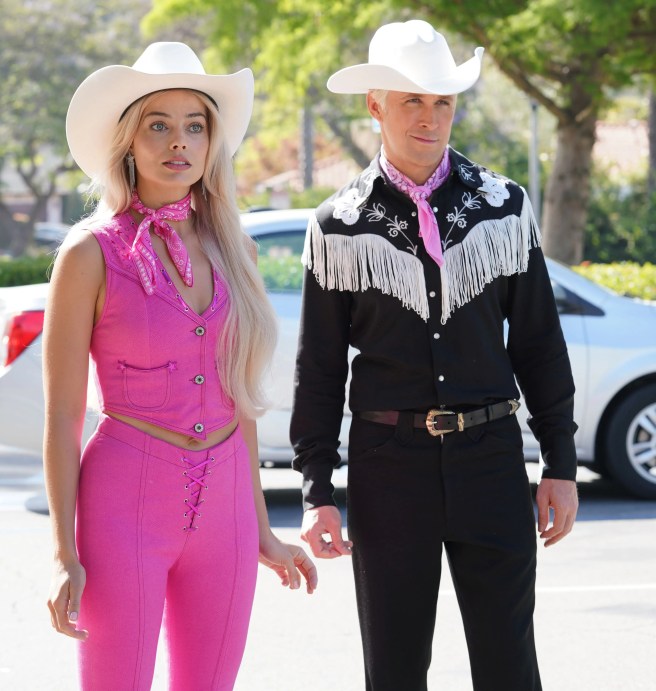
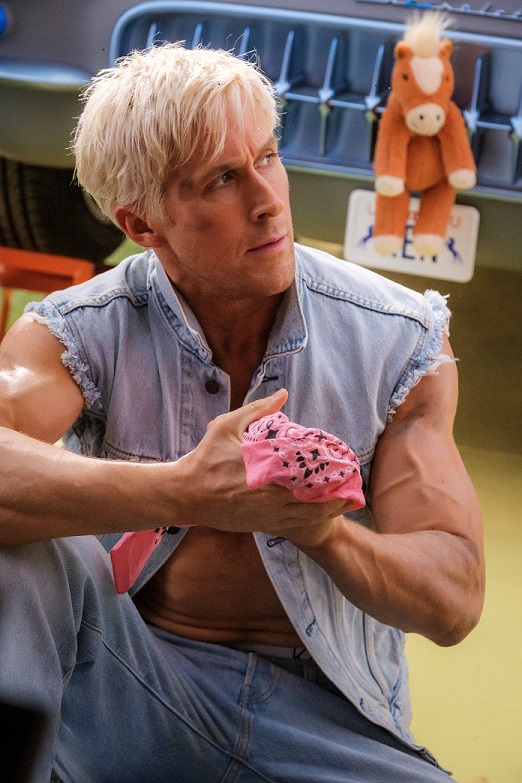
CAST: Margot Robbie and Ryan Gosling as Barbie and Ken

Barbie dolls were not my thing as a little girl. What got me wanting to see the film was the choice of director Greta Gerwig. She was first approached by Margot Robbie to write the script

And it wasn’t that I was such a fan of her most recent movie, the latest version of Little Women (which I thought had more appeal for a younger generation not yet familiar with a filmed version), it was because I thought (with Lady Bird in mind) that her take on the Barbie phenomenon would be sassy and smart.

The Perfect Pair

As a modern woman/filmmaker/scriptwriter, she would have to perform quite a dance to get this one right. With her and her partner, filmmaker/scriptwriter Noah Baumbach writing the script together about something which has become a painfully idealistic pinup of a doll, it would be intriguing.

Also, she has been vocal about accepting Robbie’s invitation to direct and that she wouldn’t have become involved with any other version.

She doesn’t disappoint. Starting with the script, the approach was incredibly inventive as they deconstruct the imposed vision to illustrate the unsustainability of that Barbie if the original version was the course you would keep following.

It might have worked in its time (and they did make concessions like a space Barbie before real women were allowed to have their own credit cards, as Gerwig notes in another interview), but today’s young Barbie’s potential followers would need a different take – and that’s exactly what Gerwig has given them.

It’s a smart, good-looking, entertaining and educational film with the only perfection they go for in the genius casting of its two lead actors, Robbie and Gosling.

Anyone who has seen Gosling’s Lars and the Real Girl will know that he has comedic chops and Robbie is a no-brainer who not only looks the part but also saw the possibilities of Barbie. She made all the right moves both on the production and the performance sides.

If anything, they could have pushed it even more in every aspect, but that’s just me. It is a perfect vehicle to set Barbie on the fast track with the latest target generation. And that is probably why Martell is happy to take any criticism of the original Barbie.

She’s been set up to take on the world once again.

MISSION: IMPOSSIBLE – DEAD RECKONING PART ONE:

DIRECTOR: Christopher McQuarrie

CAST: Tom Cruise as the hero; Esai Morales as evil personified; and a list of fabulous women all holding their own

It was evident very soon into the film that my partner and I had come to the cinema with very different expectations: he was looking for content and substance that has never been part of the series even though he was the better target for the movie; and I had no expectations but to have fun, giggle at the silliness of the script, and hang on to my seat during all the fast-paced action, which we have all seen in some form or another before, yet heightened here to the nth degree.

And this was only Part One. Apparently, the filmmakers say Part Two will be better.

Tom Cruise as Ethan Hunt who is always on the run … to or from danger.

Is Tom Cruise ageing? Of course he is, like all our action heroes. I mention Harrison Ford as another example. And the list goes on. But as long as they still draw the crowds, they will keep reprising the roles.

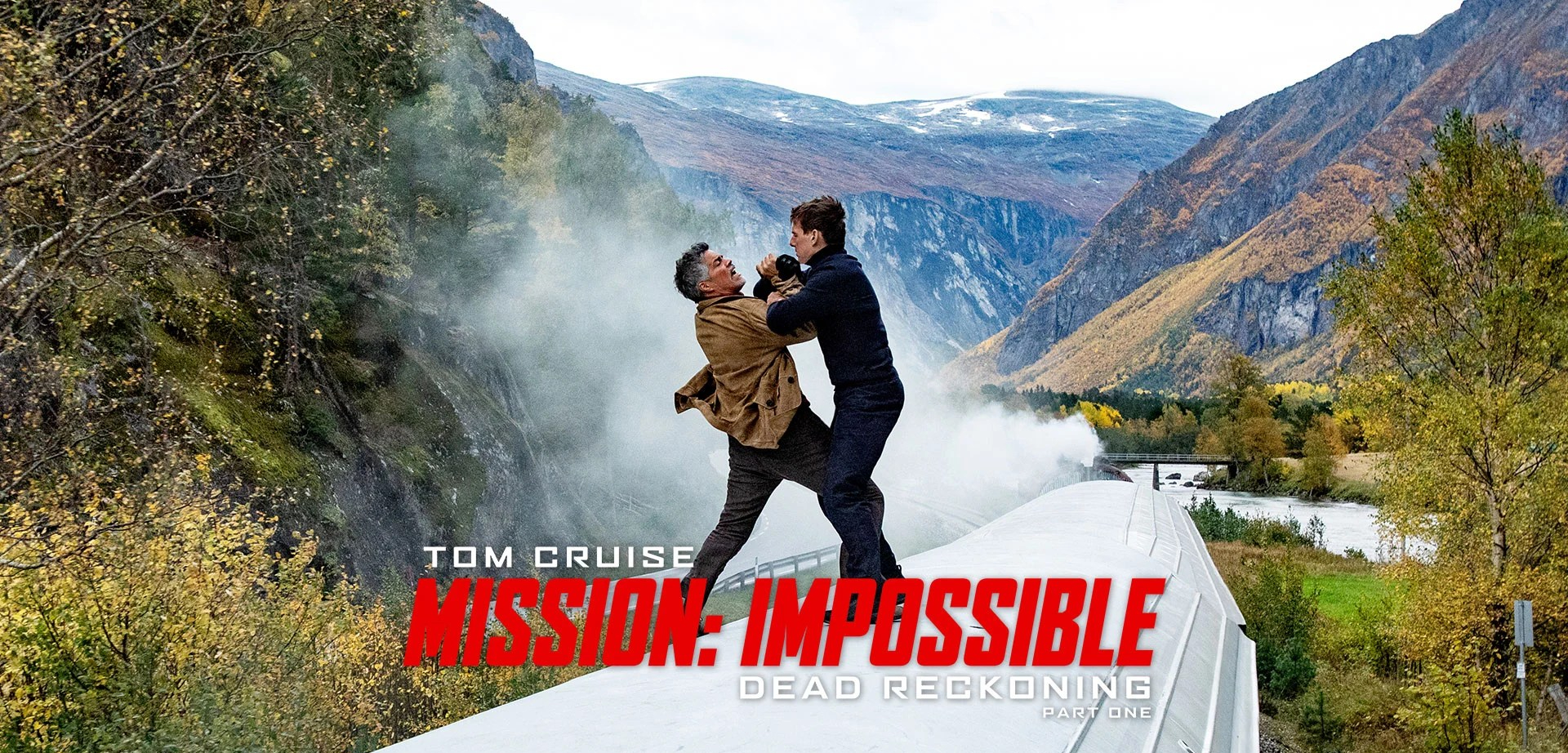
And once you get beyond the age-defying make-overs, it’s all systems go. Cruise is long  past having to prove his acting skills. This is not the focus here. This is where he jumps on a motorbike and races to the edge of a majestic mountain cliff where he takes off and safely lands on a fast moving train with the help of a parachute. If you haven’t heard yet, he does his own stunts.

One of the many impressive stunt sequences.

And these are truly magnificent. It’s hair raising and huge fun to watch if you’re willing to let go and embrace this for what it is. If not, it’s not your movie. The plot can become laborious and the dialogue often incomprehensible, but it doesn’t matter.

Some like it, others don’t. The approach of the viewer matters. Cartoon by Dries de Beer aka Fatman as part of A Man and his Dog series.

It’s also a movie of which one doesn’t want to reveal any of the laughs or the high-voltage action. You need to go in cold, sit back, exhale and have a blast. That’s all this is about.

 It’s no more than a caper. That’s all you get, escapism deluxe.

WHILE SHIMMERING IN GLITTER AND GOLD NATANIËL WILL BE TRIPPING THE LIGHT FANTASTIC

DIANE DE BEER talks to Nataniël about the few weeks ahead…

After an absence of several years from any Johannesburg theatre stage, Nataniël brings his award-winning show, Prima Donna, to the Teatro at Montecasino for five performances only from August 17 to 20 at 8pm, with a matinee included on the Saturday at 3pm.

And while this is a show which he has performed before, it is a new staging with new stories or old ones updated and even the old songs have new arrangements.

Over  the past few years Nataniël has written and staged more than 13 productions not seen in the Johannesburg area, and extraordinary moments from these shows as well as brand new material has been put together for five unforgettable gala concerts.

And, if you should wonder, naturally the costumes are all new, created by Floris Louw.That’s just who Nataniël is. But he’s nervous. This is a huge theatre, and even if it is similar to the seasons he used to stage annually at Emperors, he was familiar with the audience.

This time he doesn’t know because he hasn’t been in Joburg for some time. But those who know his work, won’t want to wait to buy tickets. His trademark stories will be in English and Afrikaans with songs in English.

(Book at SeatMe).      

In this tale as the title suggests, he is dealing with prima donnas. It’s a touch of fantasy, a dash of humour, some sadness, and as a reality check, a take on history, family, failures, hope  and modern society.

“We all know these drama queens, know how they operate and what they’re capable of. But we indulge them, their behaviour becomes worse and only death can release us,” he warns.

Charl du Plessis Trio will join him on stage for both shows with other musicians in tow. Pictured are Werner Spies (bass), Charl du Plessis (piano) and Peter Auret (drums).

He knows he also has that reputation, but his demands are about performance and what he knows he needs on stage. “I never fight, because I don’t like confrontation,” he says.

Never able to resist raising an eyebrow, he adds that he always believed one of the perks of success was being difficult!

“We hate them so we would rather do without them,” he says. But, in case you start taking all of this seriously, he says he chose the title because it looks good on the poster!

See what an interviewer has to contend with.

Vocalists Dihan Slabbert and Nicolaas Swart

But before you lose patience, he includes one of his elaborate and irresistible descriptions: “If Sarah Bernhardt, Maria Callas and Isadora Duncan had a child, it would resemble my costumes!”

And, he adds, a touch of Florence Foster Jenkins.

His music he describes as a combination of the dramatical and accessible. “I sing many of my own songs and familiar old songs.”

With him on stage is Charl du Plessis who now travels with his own Steinway piano (and that’s a whole other story) Luke van der Merwe (guitar), Marcel Dednam (keyboard), and Werner Spies (bass), as well as Dihan Slabbert, Wiehahn Francke and Nicolaas Swart on vocals.

Having a final word, Nataniël notes that the show is vocally driven. “That’s what a prima donna does!” He’s been waiting for this one for 12 years. “I’m ready for that farewell concert,” he says.

And the force with which he speaks is almost persuasive, but I know about his addiction – performance –  and he’s so good at that!

For those who are looking for something completely different, there’s a second concert of Afrikaans in Styl on September 9 presented at Sun Bet Arena in Times Square.

This time the artists included on the bill are Spoegwolf, Elvis Blue and Corlia.

“I’m the headgirl,” says Nataniël who will be staging the show. “It’s rare that artists are given a free hand to stage their own shows on this kind of platform,” he says, excited by the prospect.

Nataniël and Spoegwolf in a different kind of performance.

And if you’re not familiar with some of the performers, he explains it thus: Spoegwolf brings the war, Corlia brings the notes, Elvis, the smoothness and blues, and he brings the sequins.

The performers will almost exclusively be performing their own songs. “I love that. It’s rare that someone like Corlia who has such a huge voice is allowed to get away without singing Barcelona.”

Perhaps this time. It’s up to each one individually what they wish to perform.

He is also thrilled that this is a once-off. It won’t be filmed. If you’re not there, that’s it.

“The performers are all people who regularly perform in theatres.

“People must come and see. It will be new and not commercially driven. The artists will be adventurous with their performances and the staging will be daring.

“As artists (and audiences) we need to step out of our comfort zones when we go to shows. It’s a time for rebirth and venture.”

He always keeps in touch with what is happening in the rest of the world because it takes a time to reach our shores.

“We’re all ready to try new things!”

And why not.

“This time my brother won’t be hiding backstage. But we might have one or two surprises up our sleeve.”

Book NOW at www.webtickets.co.za

And talking about that, Nataniël also has a new Christmas book in shops in October.

The title is Help, Help, it is beautifully packaged with a special cover for the festive season, and once you’ve seen it, packed with unpublished Afrikaans and English short stories, your Christmas shopping will be done.

And still there’s more: Rome 62 will be staged at Atterbury Theatre later in the year, a new Mis will be performed at Aardklop Aubade in Pretoria and there’s the annual Christmas season also at the Atterbury Theatre.

And even then he’s not done. But we will wait for the final conclusion to his year.

In the meantime,  he’s busy on stage – performing.

ARRESTING PORTRAIT OF A WOMAN OF SUBSTANCE WITH ACTOR MPUME MTHOMBENI AND DIRECTOR NEIL COPPEN THE PERFECT TEAM

DIANE DE BEER reviews:

Mpume Mthombeni as Zenzile Maseko

PICTURES: Val Adamson

Isidlamlilo/The Fire Eater

Presented by The Market Theatre in association with Empatheatre and the National Arts Festival

Workshopped by actor Mpume Mthombeni and director Neil Coppen from an oral history project on migration

Dates: Sunday 30 July at 3pm, 2, 3, 4 August at 7pm and 5 and 6 August at 3 and 7pm

Our first encounter with Zenzile Maseko (Mthombeni) is in her women’s hostel room. She is a grandmother, partially disabled, who has just discovered that Home Affairs declared her dead two years ago. That’s why she hasn’t been receiving her grant, which would enable her to build her dream house in her childhood village, iPharadise.

What might have seemed to those of us looking at a woman, ageing, alone in a room with probably all her worldly possessions, as a small life is given towering proportions as this magnificent Shakespearean monologue starts spilling forth. All of this takes place in the midst of a nightmarish storm, which recalls the recent KwaZulu-Natal floods as well as the stormy life of Zenzile, who is being purged through this devastating, often delirious unfolding of a life of one of millions of similar women in similar circumstances in this country.

Few of us would even handle one of these events that seem to consume her whole being as the disasters roll in and out with regular intervals. Just the word Home Affairs is enough to draw sighs of despair as we think of the rows and rows of people seen in a distance on a monthly basis as they wait to collect their grants, which is often the only lifeline for an extended family.

But Zenzile has courage to fall back on and draw from as her life could not have been more dramatic.

And that’s just the broad strokes.

Yet, more than this epic life story that seems to span many lives, generations and cycles of violence that feel never-ending, is the performance by the magnificent Mthombeni. She transforms Zenzile in a matter of minutes as she draws on all her skills to explore this heart wrenching embodiment of a woman whose life depended on her being a warrior.

And that she is as she rises through each crisis that becomes her life. She simply has to survive. Nothing has been brought on by her own actions or even who she is. It is simply the way people are discarded and ignored as they battle their every daily task.

Few of us have any idea how most of our people live. We think loadshedding is our biggest struggle. For many electricity is but a dream.

Zenzile brings all of that to the light as she creates her own Lear, battling her fraught life as well as the elements. It is an awe-inspiring performance which takes you on an emotional endurance race that’s hugely exciting to witness but also daunting to compute.

Brilliant lighting design by Tina le Roux

Her performance is enhanced by the text and the way she grabs hold of it, workshopped by Coppen and Mthombeni, who never lets up, as well as the staging which is achieved with spectacular lighting that brings a magnificent intensity.

In the publicity it is said that some have referred to this as a modern day South African classic, I can see why. It’s startling yet stunning theatre which explores invisible South African lives and gives one such woman a platform.