AARDKLOP PUNCHES ABOVE ITS WEIGHT

Like most things in life there are good and bad to small packages, but Aardklop CEO Alexa Strachan has turned her shiny Potchefstroom gem into a star through clever planning, a balancing act of note and enough variety to have everyone laughing and crying – with good food all over the place to boot. DIANE DE BEER speaks her mind:

My husband knows I’m a festival junkie (while he is NOT) but it is a personal indulgence and one that clearly nourishes.

This year was no different. Taking only a handful of my best, it’s not a difficult case to make.

Running down the alphabet as the festival guide does, it’s the overwhelming laughter that blew me away. I’m not a comedy girl so I didn’t know who Alfred Adriaan was but I screamed with laughter from start to finish and he was obviously a festival favourite in the packed auditorium.

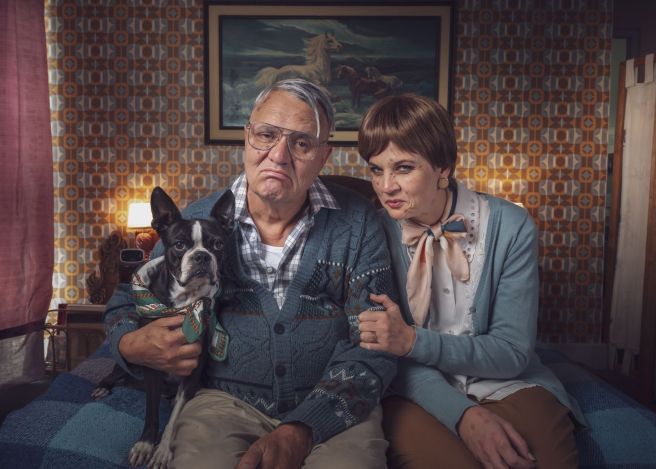
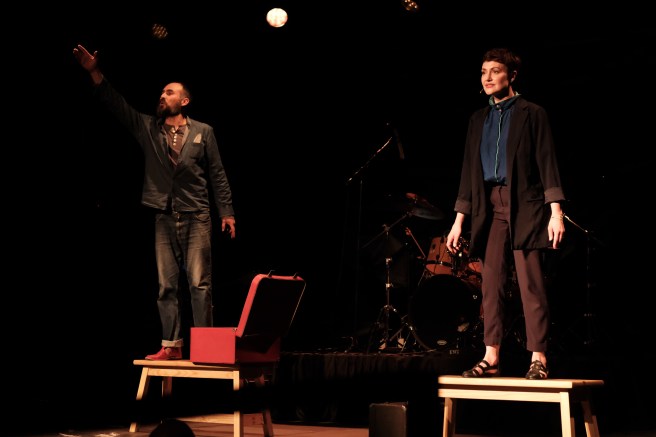
With the name of Magda Louw (Desiré Gardner), one would think that I would remember that this is one of my favourite characters, but again, because of the comedy aversion, it just never surfaces. And yet, from the minute she walks on stage in her latest production, Magda Louw en haar Erhard, how Louw can you go?, this time with her husband Erhard (a delightfully Sad Sack performance by Hannes van Wyk), they just bowl you over.

What makes Magda so delightful to embrace is that she doesn’t go on the clichéd South African rant of potholes and politics, she has much more exciting things to deal with like the man constantly shuffling behind her as she leads the way at a faster pace and with much more rhythm, but the two ageing souls give you hope for the future as you realise that life is just a bowl of bubbles if you attack it in the right way.

On the other side of the spectrum there’s the magnificent solo debut by the extraordinary Wilhelm van der Walt, who unassumingly takes the stage and then reaching into a far too familiar past, given new perspective.

There was a time when I could hardly stomach another troepie tirade because it was so dominating in the country that it constantly surfaced on stage. What I realized this time round, is that Van der Walt himself probably never participated in this deadly exercise for so many decades part of our lives and there were certainly many young audiences who needs this insight on our past.

And if it is done with such magnificence, the flashbacks are worth recalling even if the past could be wished away.

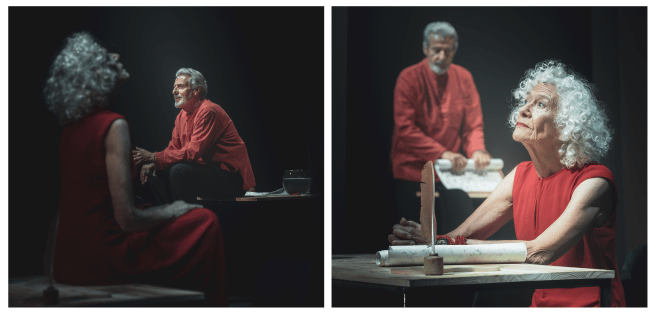
How can anyone not be thrilled to experience Antoinette Kellermann and Dawid Minnaar on stage and in this instance in Breyten Breytenbach’s last play, Verwelkingslied, before he died. Although he dedicated the piece to Antoinette Kellermann and Marthinus Basson, she performed with her long-time stage partner Minnaar with Mari Borstlap as director on a set which was reminiscent of some of their earlier work together.

Minnaar is an eerily similar version of the poet in voice and image and immediately you can lose yourself in the meanderings of this philosophical and always poetic (almost) memoir. As the two actors take turns in monologue yet sharing Breytenbach’s feelings on death, one drifts away in the words so magnetic and the voice so penetrating, almost in dreamlike state, the actors and the audience.

The simplicity of the presentation is apt as it holds the depth and strength of the text so delicately. This is where we need the words to wash over us as an audience in almost immersive fashion.

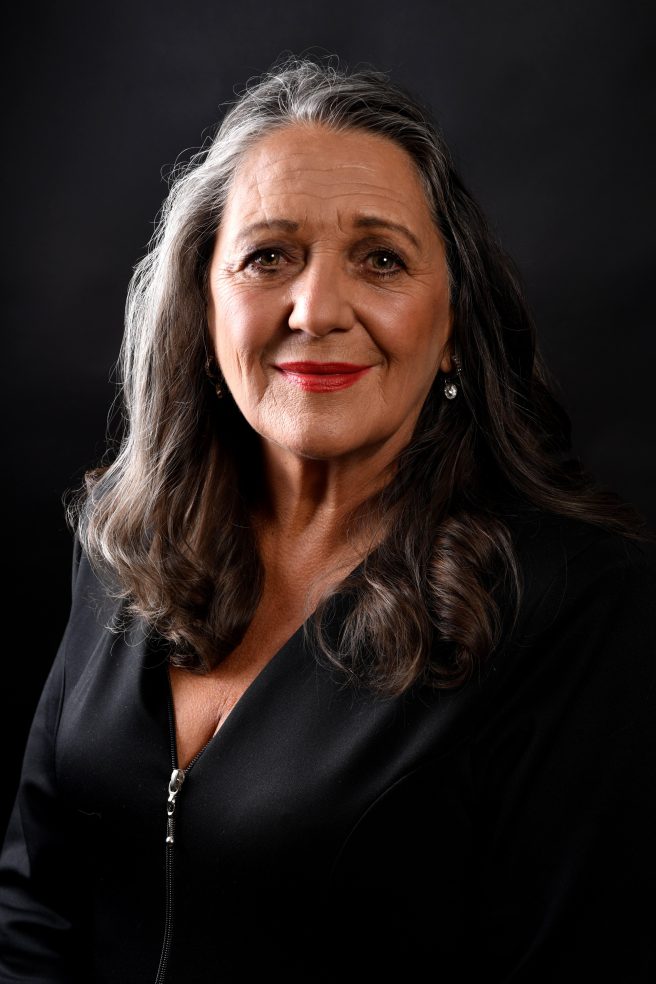
I know that Amanda Strydom first mesmerized me with The Incredible Journey of Tinkerbell van Tonder and was eager to experience the performance all these decades later. Not that I can remember the detail, but with age of both text and performer, it’s as if everything has just found a warmer and gentler place to settle and lay her head down.

Finding your place in the world is a never-ending search and when you are fighting for freedom it is almost impossible – yet not when you’re Nelia Petersen who was handed the struggle together with mother’s milk.

It’s rigorous and robust with Strydom tackling the text and music with equal energy and exuberance. And all these years later, if anything, it is even more brittle and brilliant than before. I could watch this performance any day.

Belofte van Vere was our first production and yet another Breytenbach tribute but, once I witnessed the full cast on stage, they had my full attention. With the musically adventurous Laurinda Hofmeyr on piano, a rare singing appearance from the jazz-infused Ilse Klink, the genius muso Leon Gropp (guitar and voice), the soulful David Klassen (drums), a rhythmic Concord Nkabinde (bass) with the velvet voices of Rolanda Marais and Eben Genis, I knew I would be transformed. And I was.

Performers Eben Genis and Rolanda Marais

This exciting, gifted collection of artists would know how to do Breyten Breytenbach, without frills and fancy tricks, just delivering on their accomplishments and Breyten’s poetry and words. Anything else to my mind would have been unwarranted.

It’s my kind of show with my kind of people and poems. I needed nothing more. For me this was a Breytenbach celebration and I’m certain he would have been honoured.

Combining two dance companies, Cape Town’s magnificent Figure of 8 Dance Theatre who also performed their haunting tribute (Die Een Wat Bly) to the relationship between mothers and sons, the more expansive Wings of Light: Dance of an Angel returned dance to Aardklop in spectacular fashion. The music composed by Mauritz Lotz set the tone for an exquisite performance which showcased both classical and contemporary dance, the perfect rendition for an audience who might not often have the chance to see this kind of performance. It was a rare feat to stage this production and hopefully paved the way for similar ventures in the future.

Festivals have to walk a tightrope of not playing it too safe yet not antagonising their core audiences. With the large auditorium thé venue for one of our best comedians as well as two of the most exciting dance companies in the country, they managed just that.

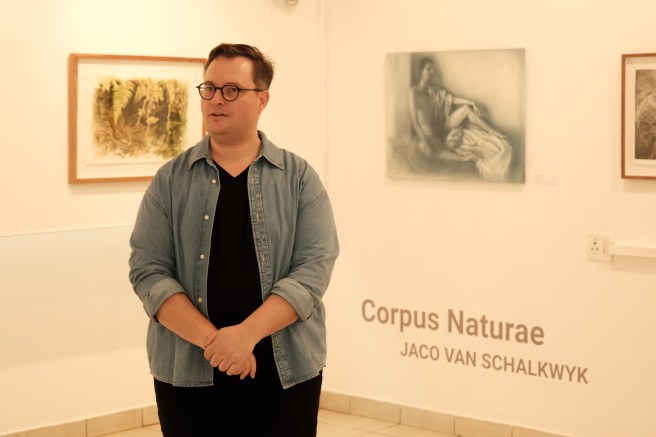
There was also time to slip into the art venues, always something to cherish, and this time it was the festival Artist Jaco van Schalkwyk as well as a challenging group exhibition Vice Versa curated by artist Gwynneth Miller, all of which got the mind racing on a variety of contemporary issues. The renovated campus art museum also featured an exciting range of Nataniël pictures captured by his longest serving photographer Clinton Lubbhe

As an extra fillip, there was the celebratory concert of Nataniël and Charl du Plessis’s 25-year collaboration on stage. And as I had witnessed their initial first performances together, this was quite emotional.

To watch two stratospheric artists develop, dissect and model their artistry as they grow and stretch in different ways is unexpected and artistically adventurous.

There’s Du Plessis’s breathtaking exuberance and excellence on piano, the way he shifts between genres and his approach to his longtime stage companion. Nataniël again exhibits his stagecraft, flips easily from text to music, his stories hilariously funny with a hint of melancholy, or on the musical side, surprising everyone with his superb classical training which he hardly ever shares. They are an unbeatable combination with so many years of performance between them.

Aardklop features youth theatre with their Pronk Podium product, which this year invited its most successful writer/director/producer to present his latest work Doolhof together with the NWU Kampustoneel winner Diereryk  directed and written by Pierre-André Viviers, cleverly based on Animal Far.

Every year I am thrilled and struck by the quality of the productions and everyone’s artistry involved. For future artists, this is unequalled training ground and for audiences the ideal opportunity to see how young artists tell their stories and what to expect in the future.

At future festivals, remember to watch out for this special section.

I could go on and on, I even made a turn at the market, something I never do, but I wanted to surprise my favourites at home with some specialty snacks.

As always it was a festival with feisty and fabulous fare on every level.

And the winners for the annual Aardklop festival awards are:

  • Best Actress: Elzabé Zietsman for Routrip
  • Best Actor: Wilhelm van der Walt for Seun
  • Best Director: Nico Scheepers for Seun
  • Best Overall Production: Seun
  • Award for most innovative work: The Scullery Quintet: Stir-fried Sonatas
  • Visual Art: Best Exhibition: Corpus Naturae, Jaco van Schalkwyk
  • Best Music-driven Production: Amanda Strydom: The incredible journey of Tinkerbell van Tonder
  • Best Classical Music performance: Road Trip Rhythms
  • Best Musical-driven performance: The Scullery Quintet
  • Hartsvriende Beste Produksie: Seun
  • Best new Afrikaans Script: Nataniël for NATANIËL + CHARL = 25
  • Best Production: Drama: Seun
  • Knockout Award: Alfred Adriaan: Positive Strokes
  • Extra Mile: Riaan Rademan (Technical project manager for Blond Productions)

TWO OSCAR-WORTHY MOVIES WITH GREAT PERFORMANCES AND PRODUCTION CHOICES

TWO new films, currently on circuit at Ster Kinekor theatres, deserve all the accolades for performance and production whatever the outcome of the award show still revered as the one everyone wishes for. DIANE DE BEER reviews:

Picures: Pablo Larrain

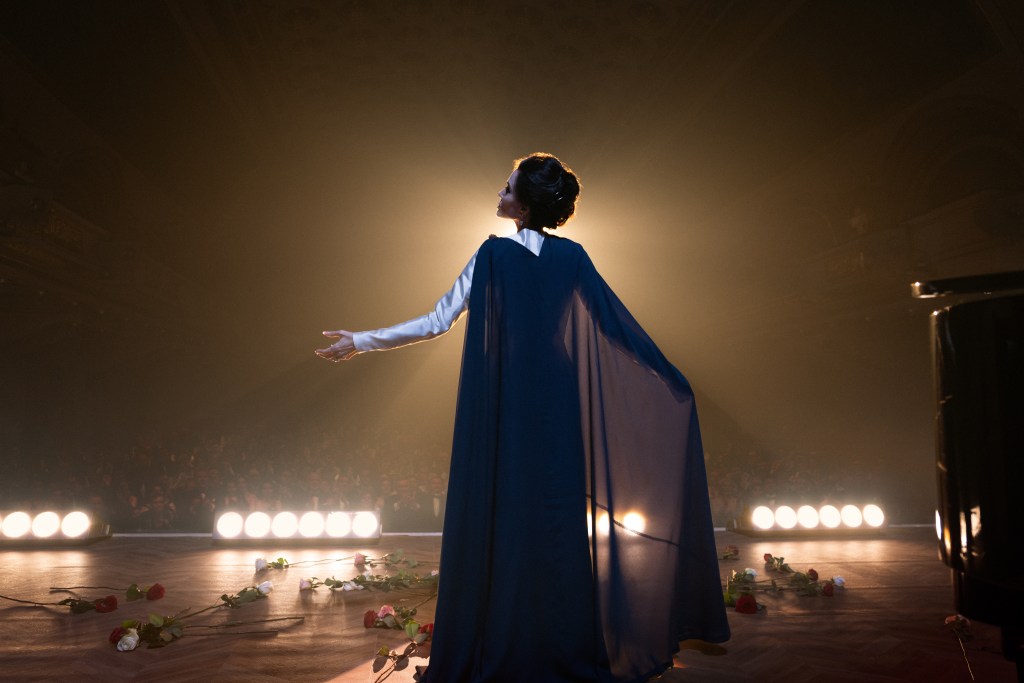
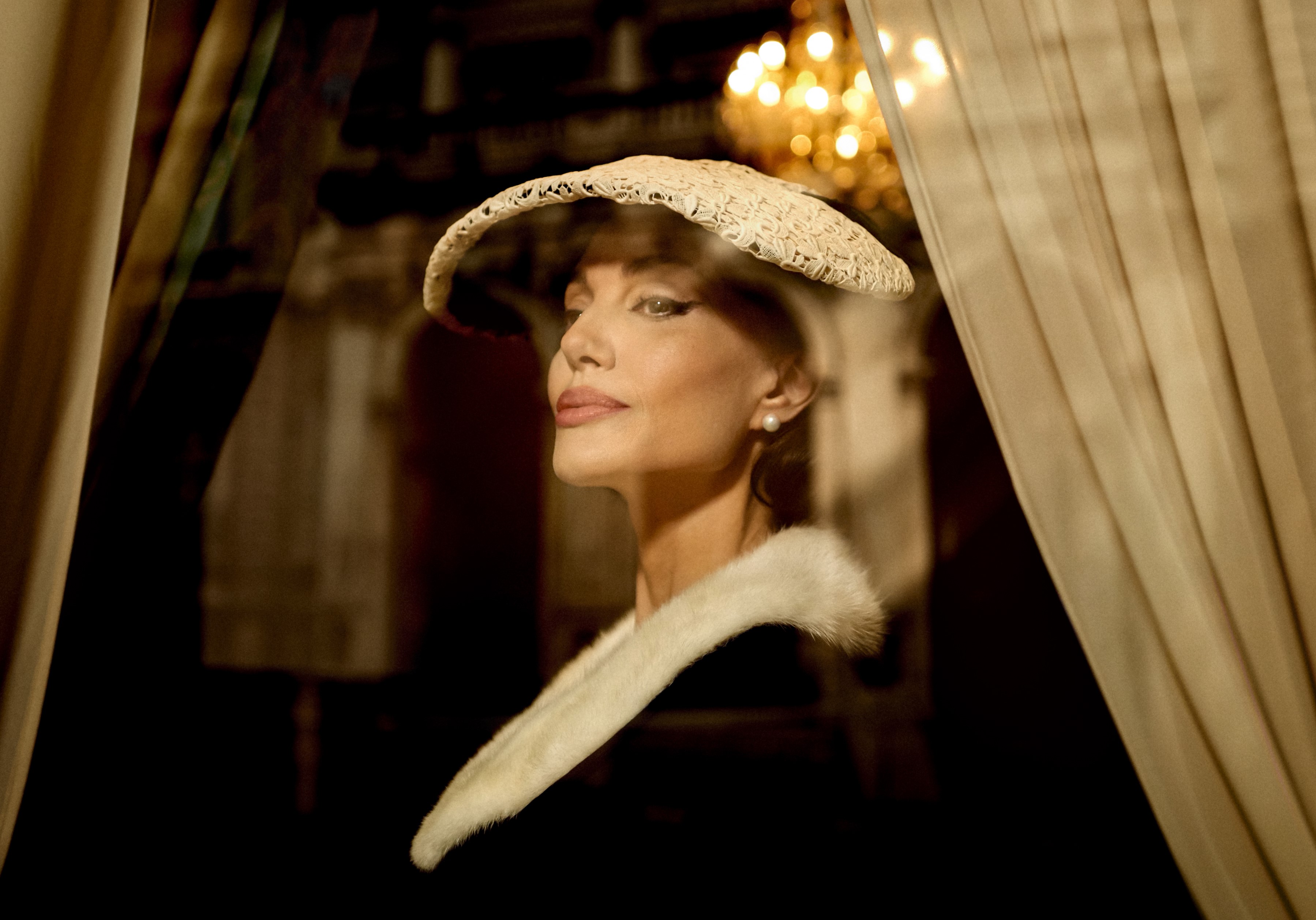
MARIA

Director: Pablo Larrain

Cast: Angelina Jolie, Haluk Bilginer (Onassis), Alba Rohrwacher (the housekeeper), Pierfrancesco Favino (valet)

If you’re an opera fan, this one should be hard to resist.

Arguably, the success of the film rests on Angelina Jolie’s shoulders. And she delivers magnificently.

I’m old enough to remember when Maria Callas and her public love/hate relationship with Ari Onassis dominated the gossip columns. When he married Jackie Kennedy, the snub to his former lover could be felt worldwide – even without the presence of social media.

Many women have been scorned but not as publicly as she. And this is where Jolie pays homage to the remarkable superstar whose health and voice are starting to fail. She hasn’t been on stage for more than four years, but in her head, that’s where lives.

It’s where she comes alive and that is where the film gloriously captures the great Callas presence and voice.

Even though the two women aren’t lookalikes, the subtlety of Jolie’s transformation, the way she holds herself and moves and when she “sings” all vividly embody the spirit of the damaged diva – both physical and mental.

The casting is inspirational and the way the director has imaginatively captured the elegance and dignity of Callas combines to tell a story with great heart and empathy. Told as if from another era, which indeed it was, it is the tragedy and tribulations of Maria’s life that are delicately rendered so that it feels as though a real woman emerges.

And the film cleverly tells the story from Maria’s point of view. She wasn’t someone who relished sharing her secrets, but with Onassis and the women he courted, she didn’t have to. The world was fascinated.

The title doesn’t need more than just a name – Maria. Perhaps youngsters know less of her, but the older generation will know enough to care about this woman who seemed to have it all – but not the love of her life. And that was everything to her.

It’s obvious that she was the right choice for the Greek shipping magnate, but perhaps she too easily outshone him with her talent and artistic temperament. Jackie, a persona in her own right, but more as a symbol of a nation than an artist, to his mind, would allow him to shine brighter.

It was the mismatch of the century with the shy American first lady not a match for the rough-edged Ari, and he, no competition for the memory of the suave Jack Kennedy.

The one who suffered was Maria, who reflects on her life while trying to relive the glory of her younger voice.

It is indeed a Greek tragedy, but, fortunately, because of all the ingredients so smartly complementing  each other, it is beautifully told, with Jolie’s performance and the Callas voice stealing the show.

Oscar nominations: Cinematography; and I would have included the director and Angeline Jolie in the nominations

Pictures: courtesy A24

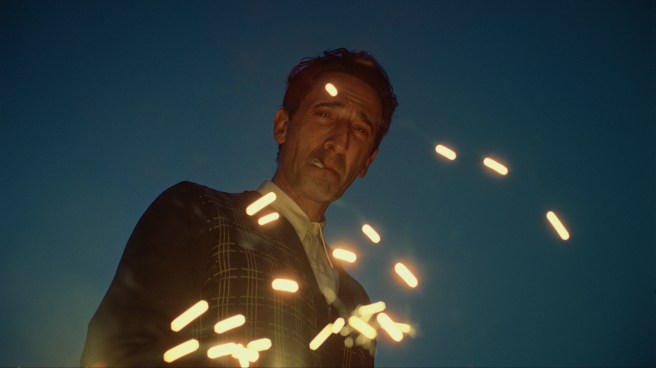
THE BRUTALIST

Director: Brady Corbet

Cast: Adrien Brody, Felicity Jones, Raffey Cassidy, Alessandro Nivola

It’s probably the length of the film that has kept some from seeing this exquisite film – both in storytelling and the way it unfolds.

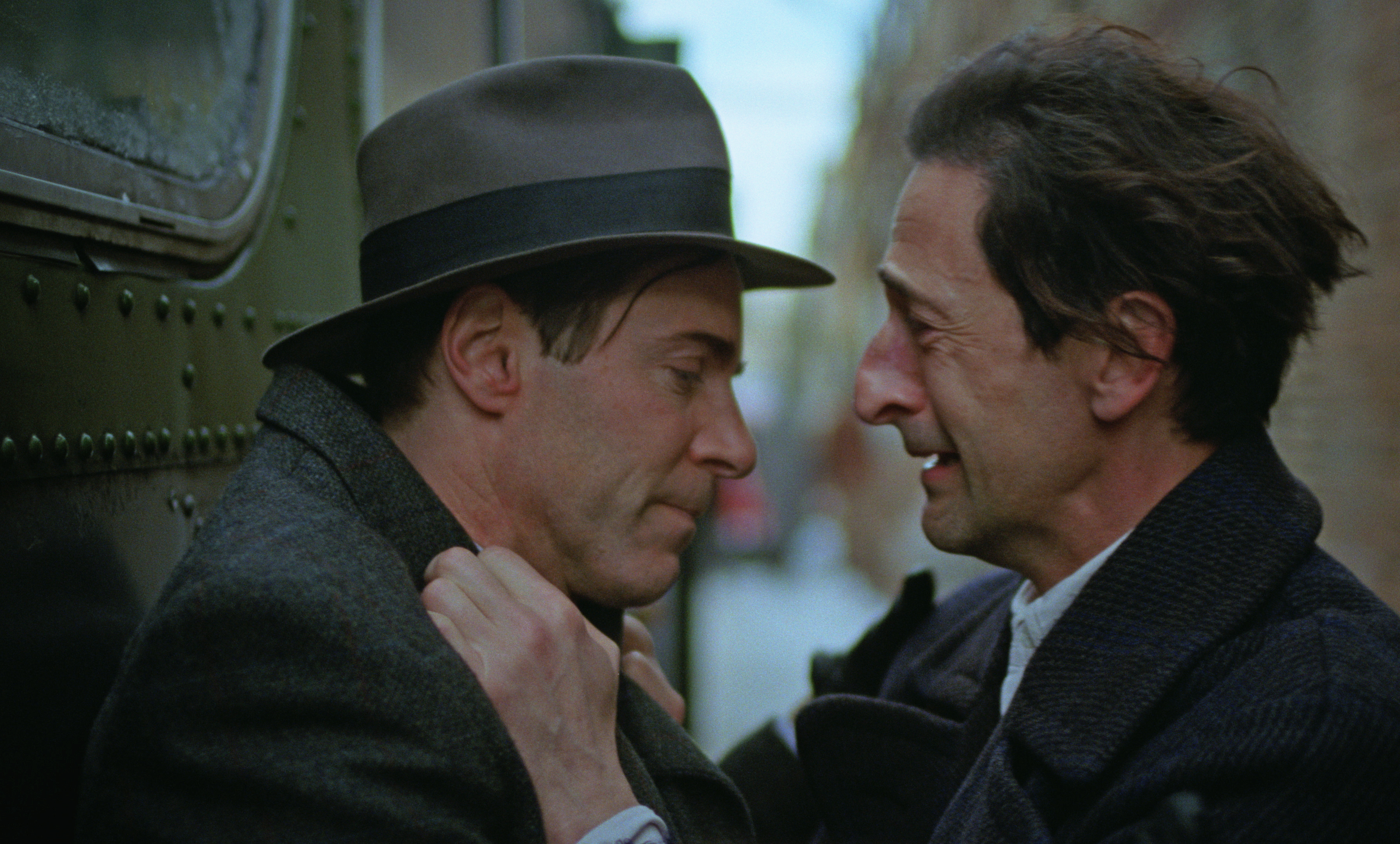
It is and feels epic from beginning to end. The Brutalist is a story about an architect who flees to America from a devastating postwar Europe. He hopes to invigorate his life, his career and finally reunite with his wife and niece whom he leaves behind until he has established himself.

The more things change, the more they stay the same. In today’s climate, it is the struggling life of the immigrant that grabs hold most viciously as a visionary artist is forced to grovel his way to simply survive.

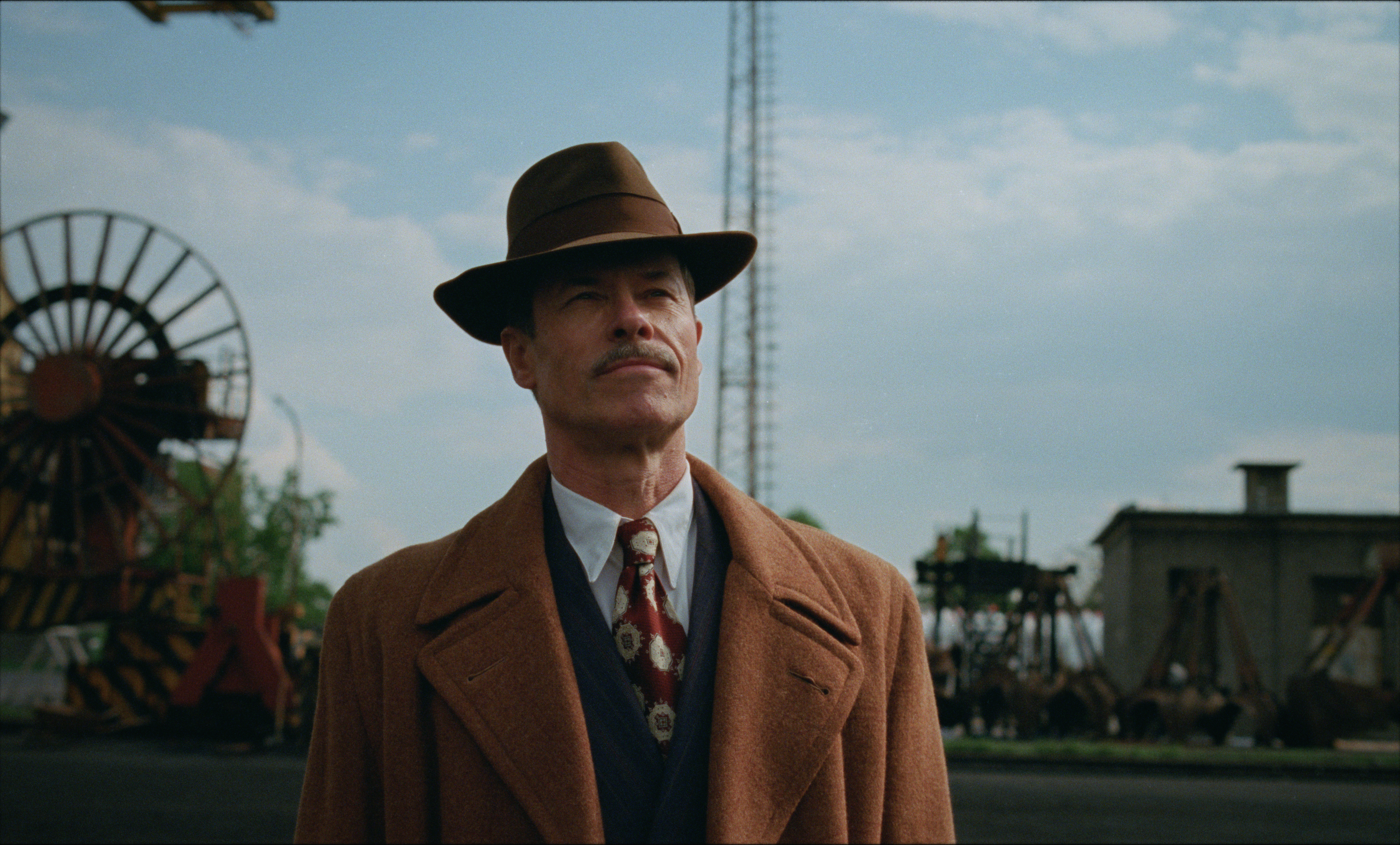
Power and its frightening effects are not something that’s just of our times. Even though he is soon spotted by a wealthy industrialist, Harrison lee Van Buuren (a name that carries weight in society), he is completely at the mercy of the powerful and their needs.

Nothing is secure, even when you’re designing for the best. They can tear you apart in seconds, make you bend the knee while praising your abilities and constantly hold you in their grip – even when celebrating your masterpiece.

Brody won his first Oscar as Best Actor in Roman Polanski’s The Pianist and has made a few other memorable films, but this performance will stay with you as he perfectly captures the angst, anxiety and reserved jubilation as he tries to battle his way through in this strangely cruel new world.

He quickly realises he is in a fight for his family’s life. First, he needs to get them there and then he has to make it work at all costs. “They don’t want us here,” he says to his wife, in a delicately balanced performance by Felicity Jones.

The battered architect knows and understands the cost, doesn’t lose his confidence in his own ability and yet, he is kept dangling, always on the edge while surviving on the whims of others. It’s the animal kingdom and only the fiercest fighters survive.

The title might point to a specific architectural style and one that the brave László Toth (with a name that could only come from somewhere else) brilliantly creates, but it is you who will feel battered and brutalised by the end of this majestic film as you witness the treatment of others that the privileged believe they’re entitled to.

It certainly is the scourge of our time and one that director/writer has firmly in his grasp.

Oscar Nominations: Adrien Brody as Best Actor, Felicity Jones as Best Supporting Actress, Guy Pearce as Best Supporting Actor, Best Cinematography, Best Directing, Best Editing, Best Original Score, Best Picture, Best Production Design, Best Original Screenplay

THE IMAGINARIUM OF THE RELUCTANT ARTIST

DRIES DE BEER

PICTURES: ALET PRETORIUS.

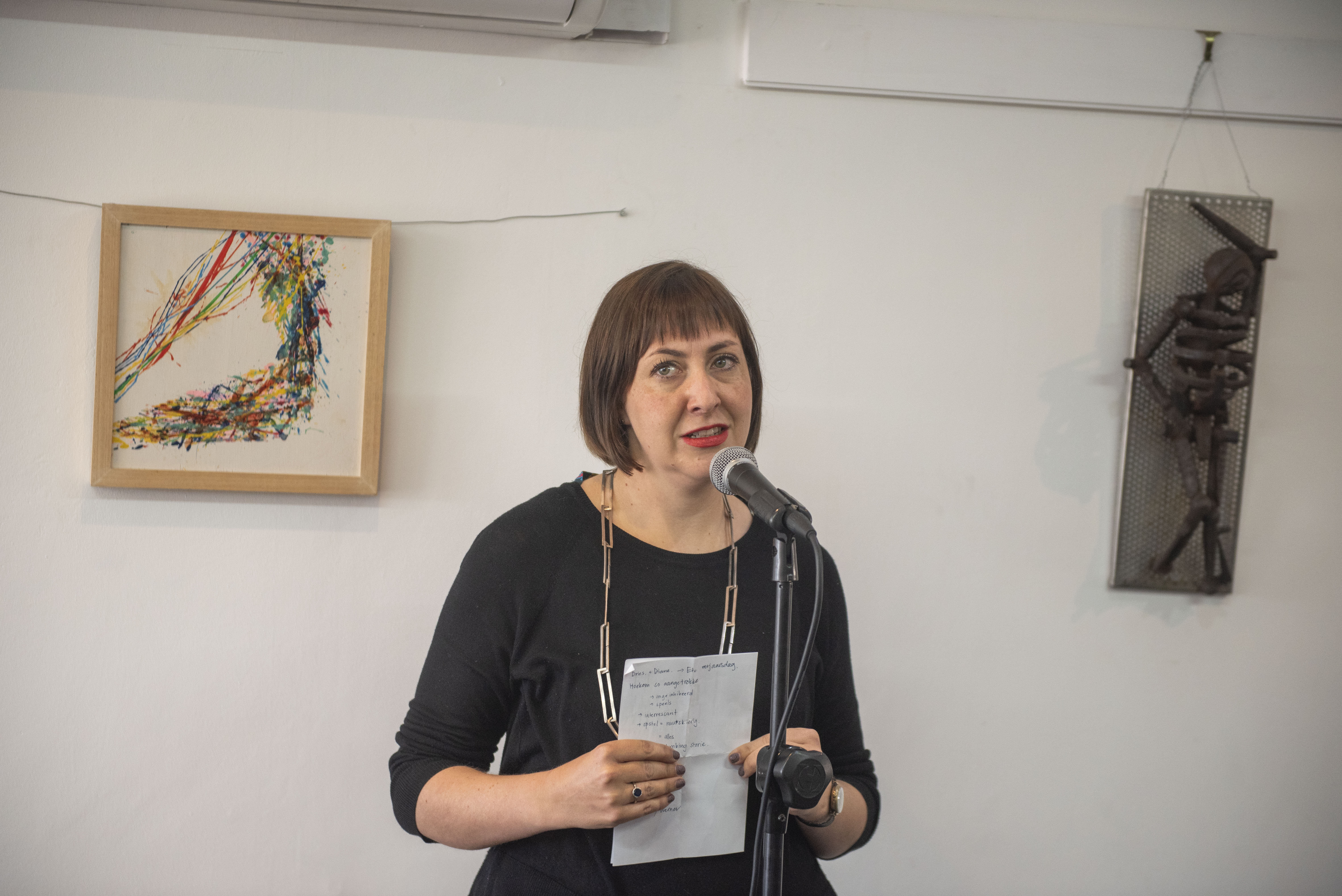
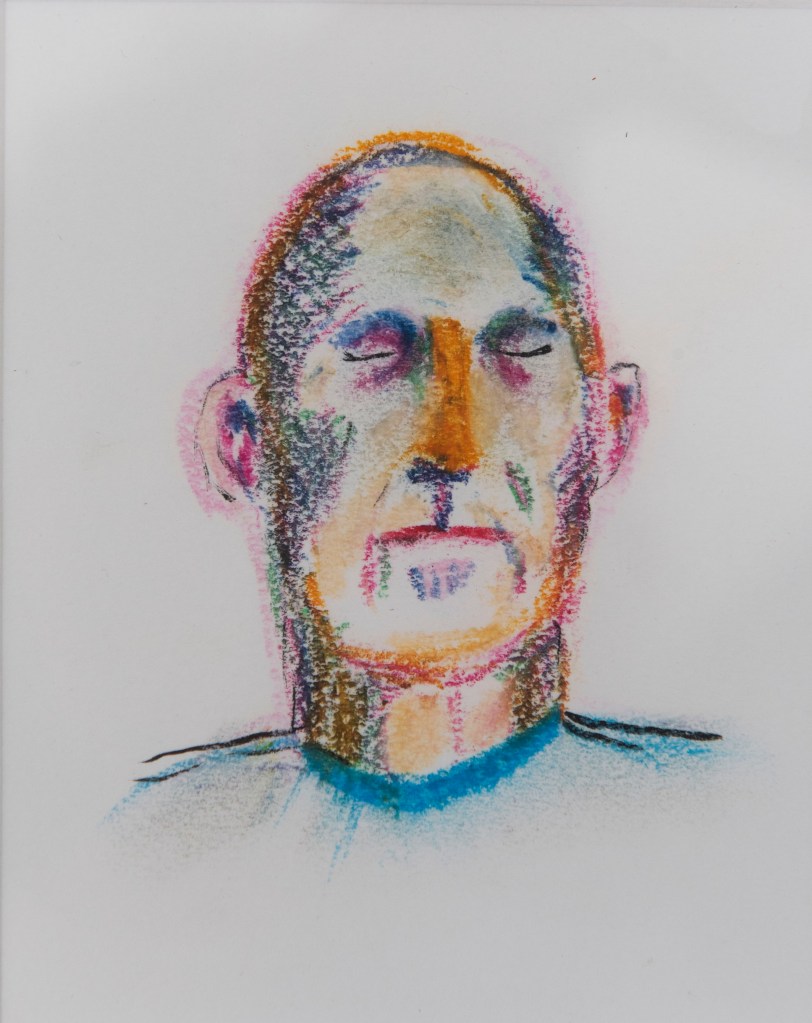
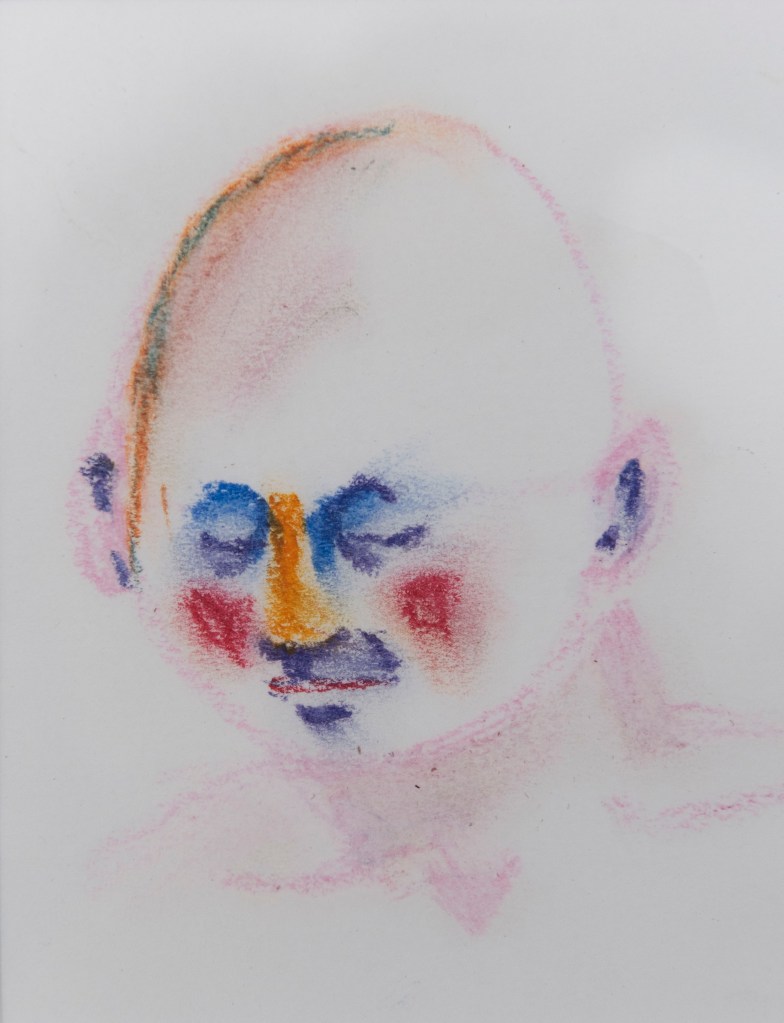
Art exhibitions come and go, with some pieces remembered, some purchased and others touching your heart. When the event features the work of someone who has turned himself into your personal artist yet has decided to show his work for the first time, the feelings all round are overwhelming. For me, it was the gift of sharing the art of Dries de Beer and the emotional impact it has had on our lives. DIANE DE BEER gives her biased opinion of an artistic celebration:

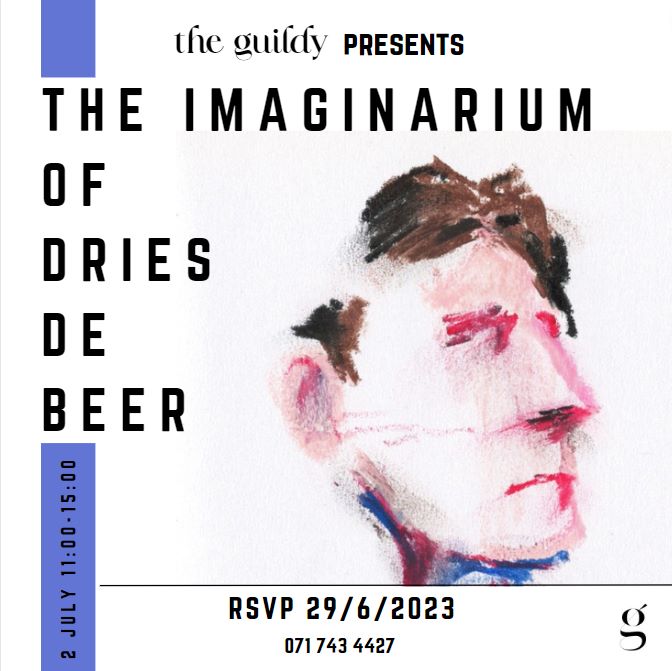
Invite designed by Ursa Engelbrecht Curator Carla Spies

When architect/gallerist/curator Carla Spies suggested that her gallery, The Guildy, curate an exhibition for my husband, the reluctant artist (as I have dubbed him), I knew this was the perfect space and opportunity.

No pressure, no sales and for one day only with people we invite who we think will enjoy the work. And that is exactly what Carla and her gallery represent. As an architect, her work is not on the creative side and through the years she knew she had to find a way of scratching that itch.

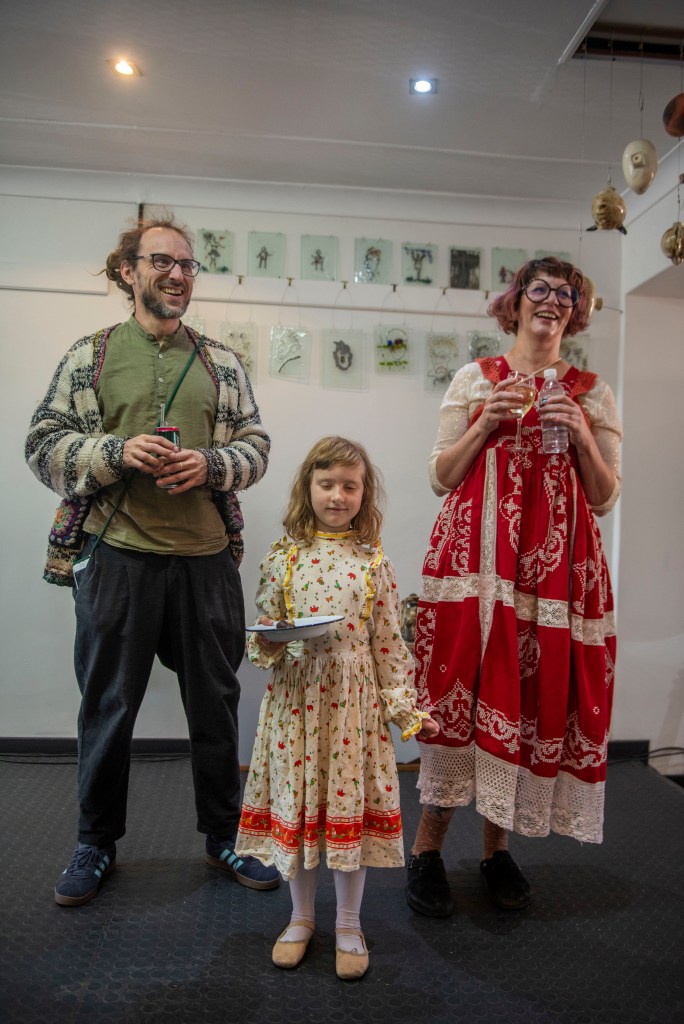
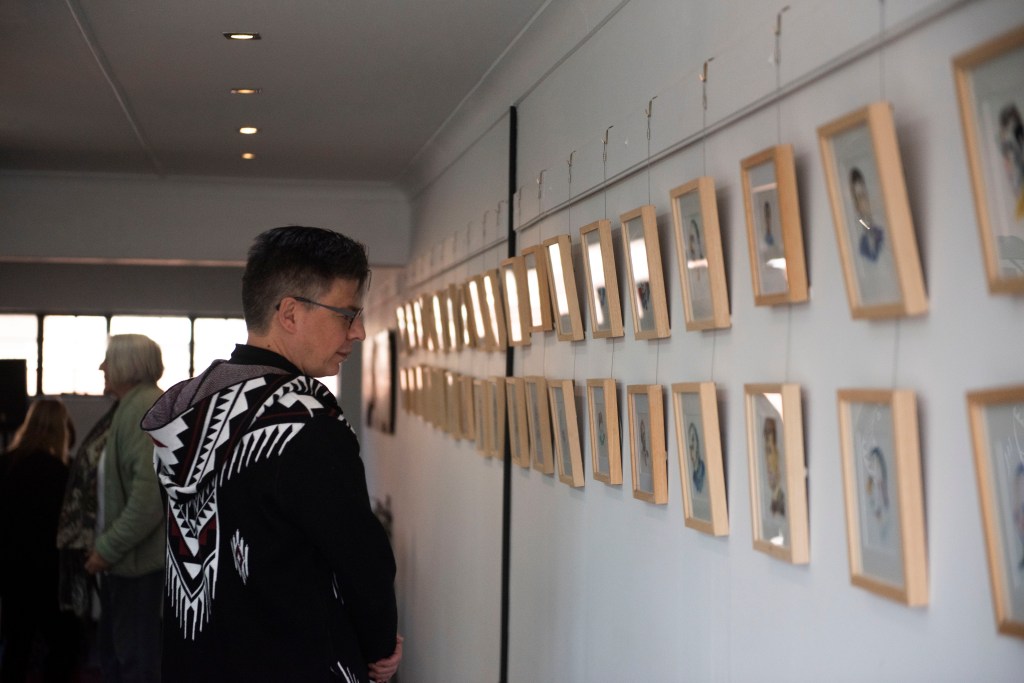
Even the guests looked like artworks

The gallery was her solution and, having just gone through the whole process of an exhibition, I understand how this works as I do a similar thing by writing about the arts. There’s no direct renumeration, we’re not driven by money but rather by a passion for the arts and how it affects, touches and changes people. It’s the creativity – the process and the outcome and, finally, the joy.

But I knew my artist would feel differently. NO! was the immediate response, but I worked my cause and finally he conceded.

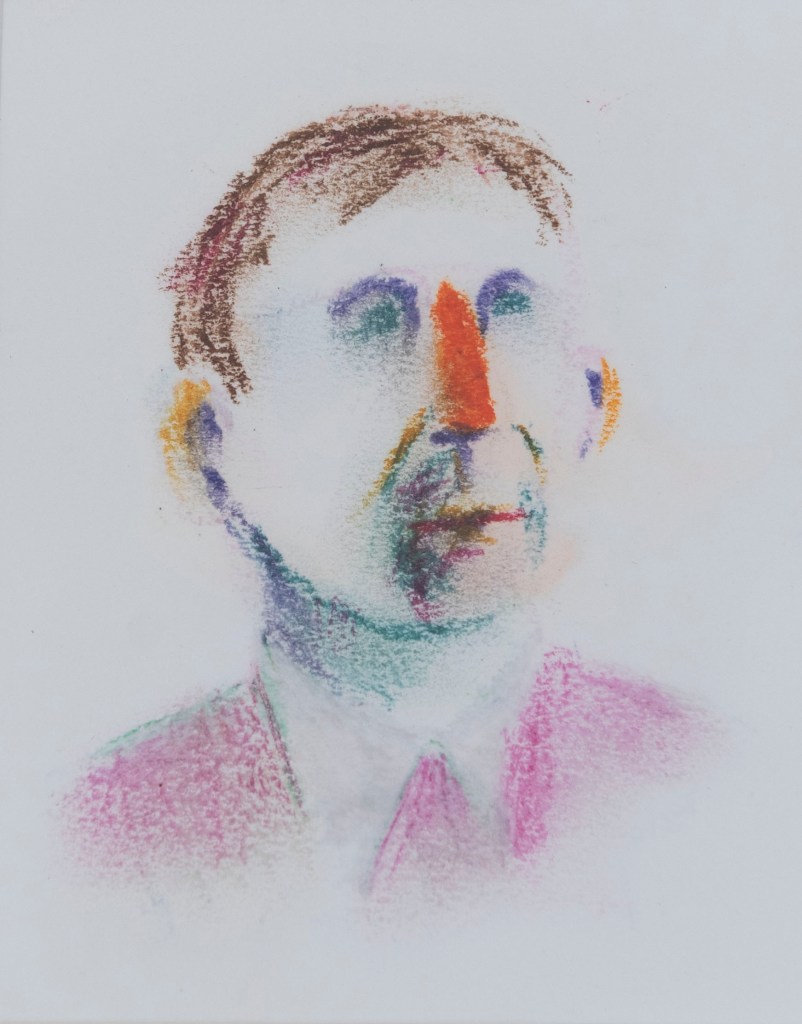
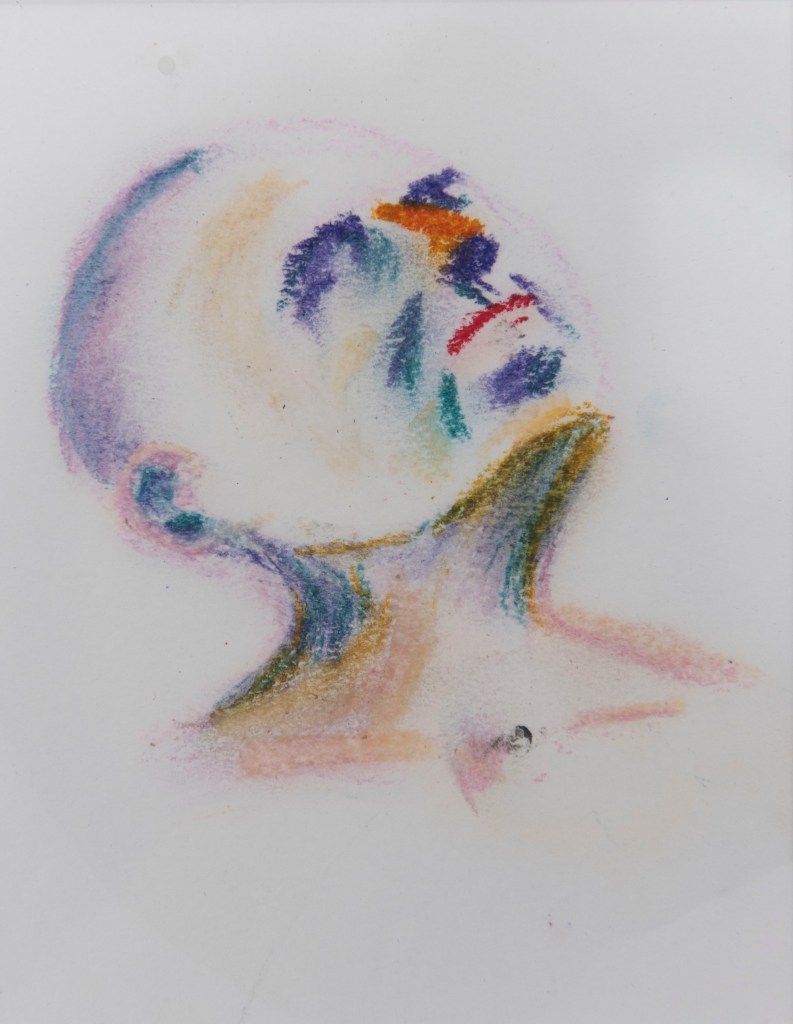
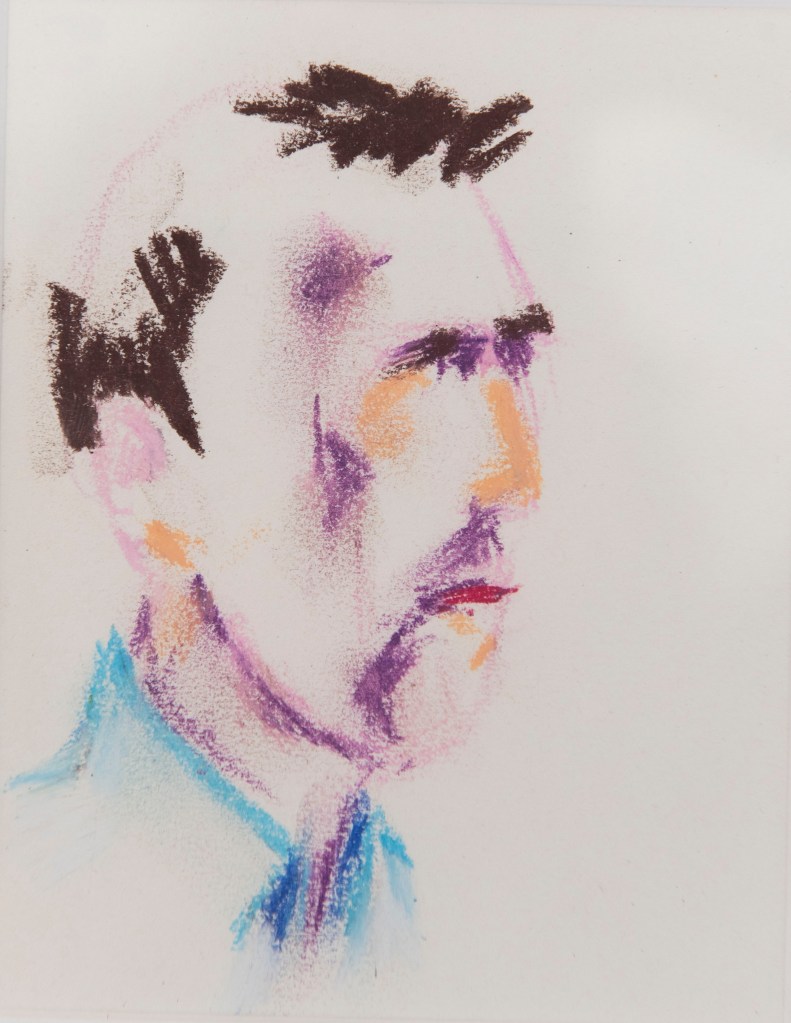
The fabulous thing about this exhibition, which Carla named The Imaginarium of Dries de Beer, was that all the art was there. That is what interested Carla in the first place. She had seen especially his series of faces and was intrigued. It’s her gallery and like me, who only writes about the art that inspires me personally, she only shows work that moves her.

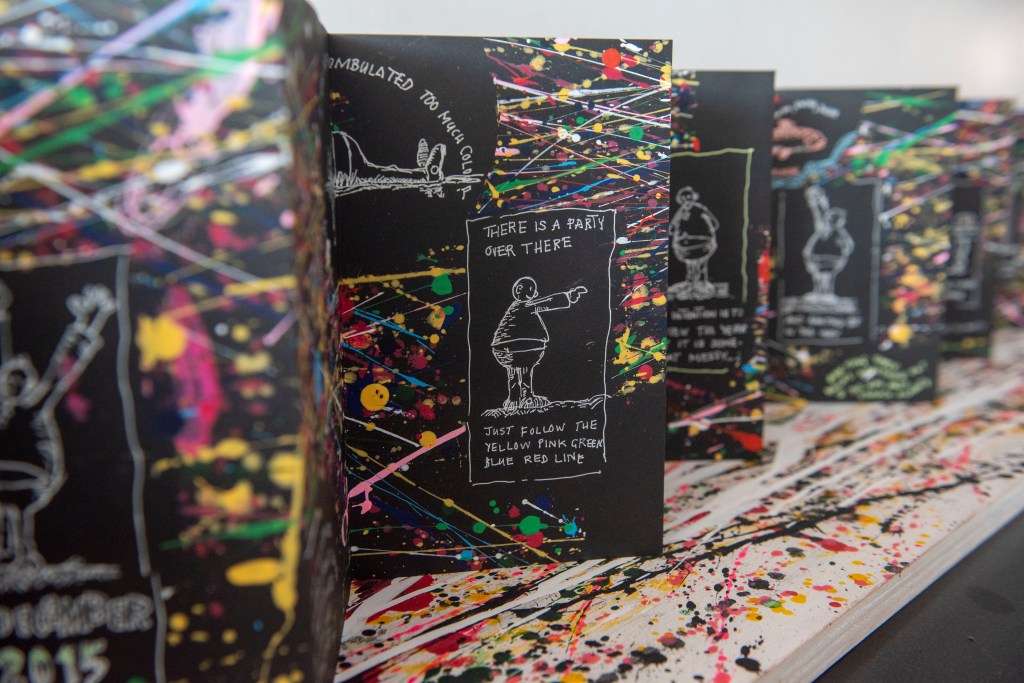
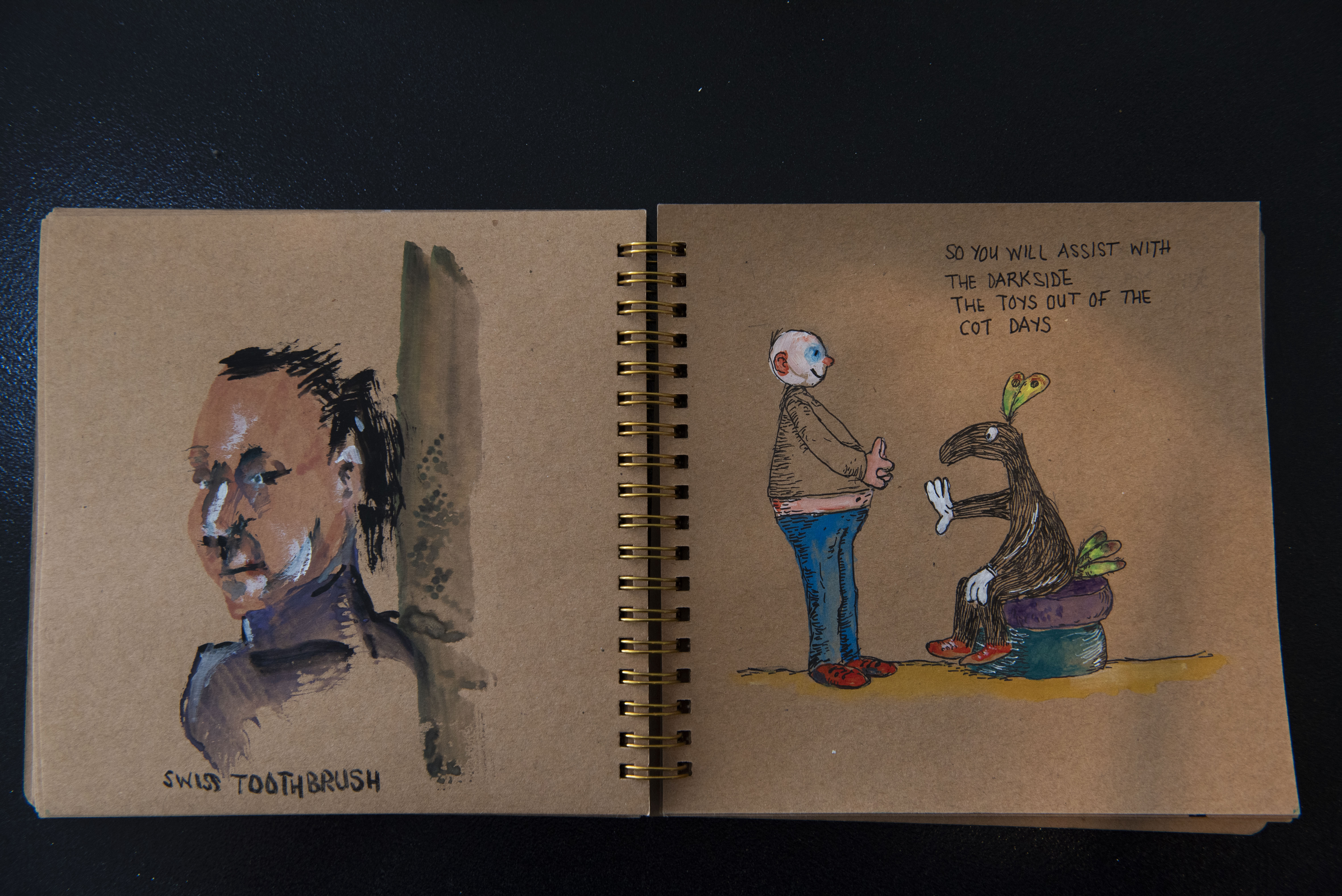
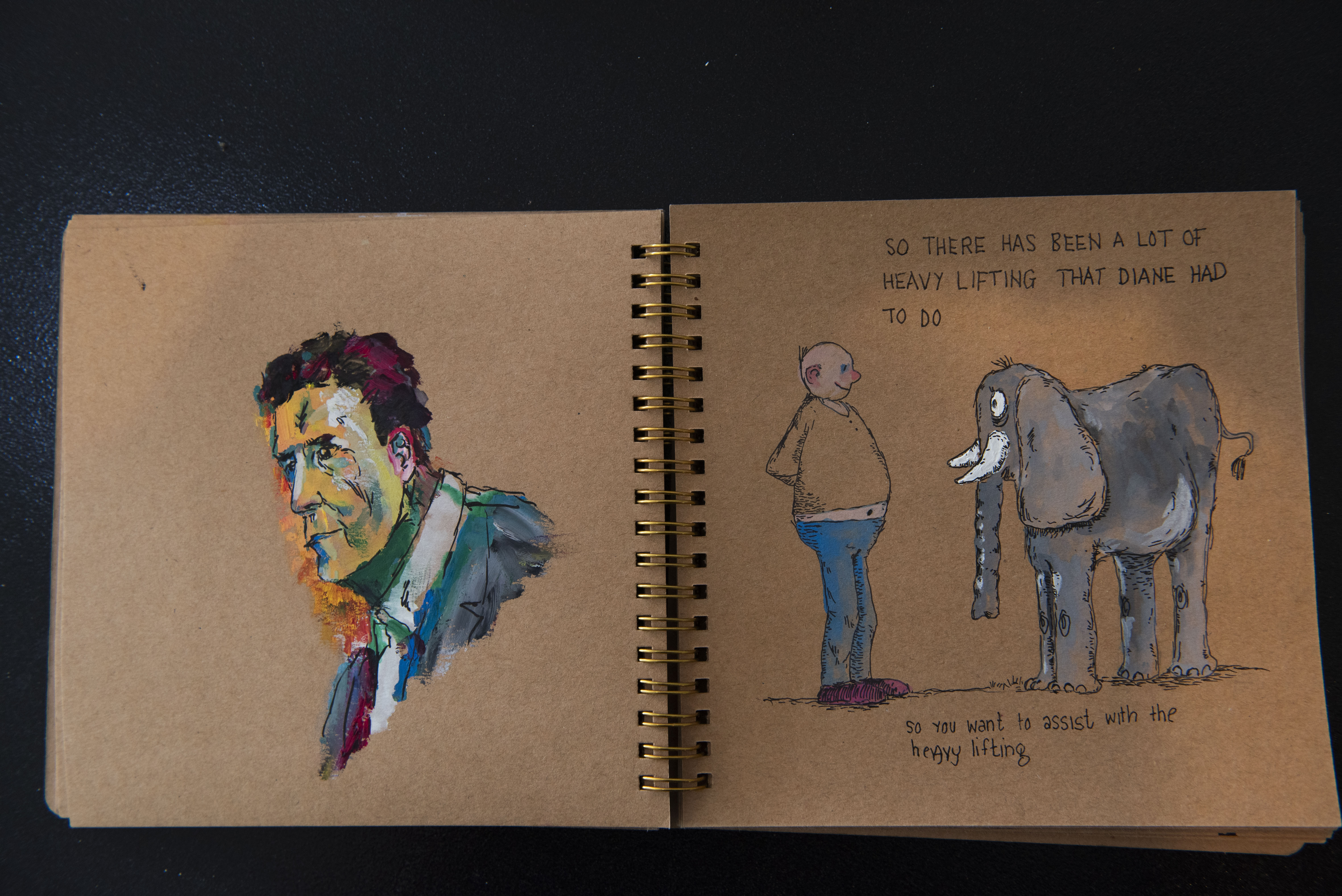
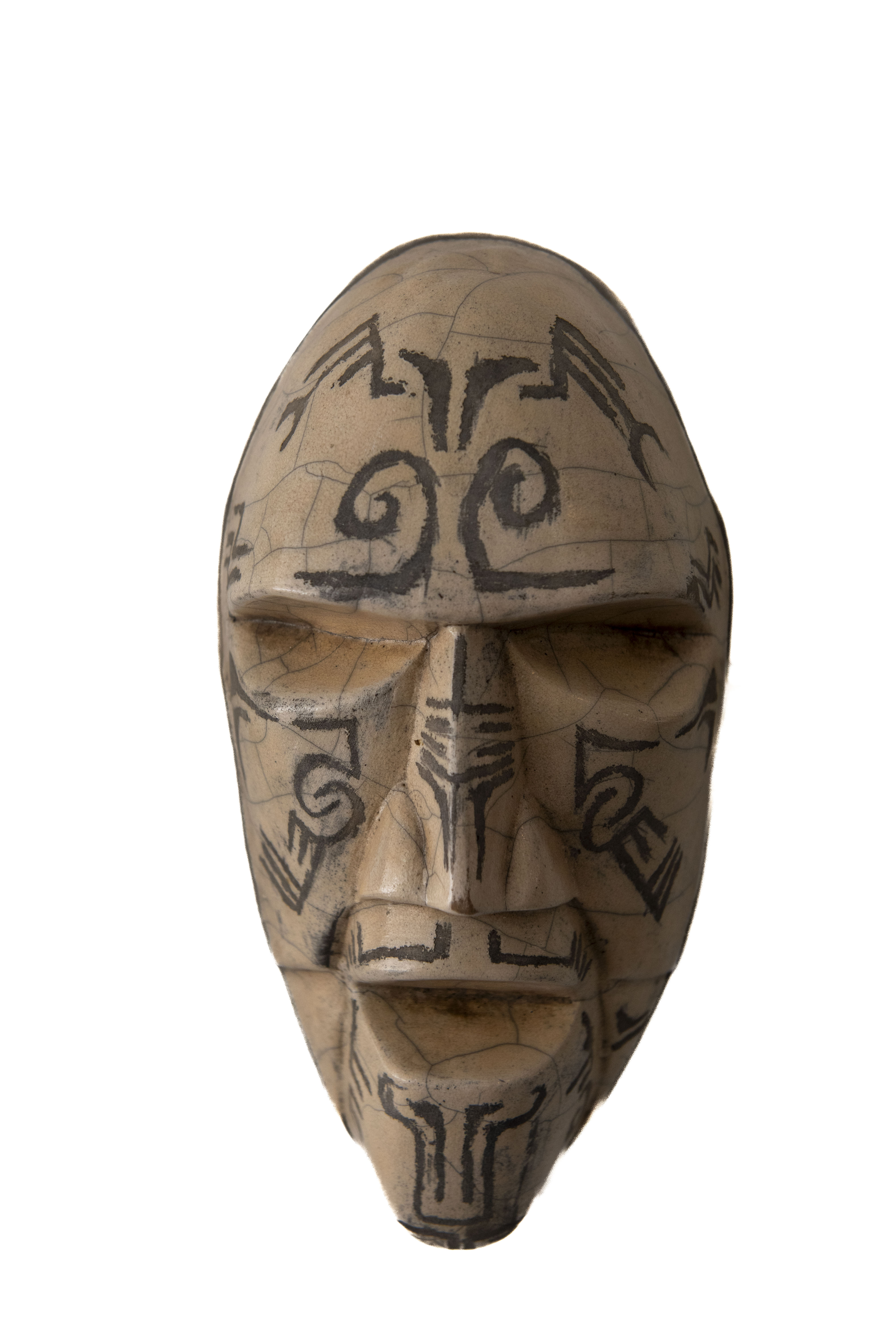
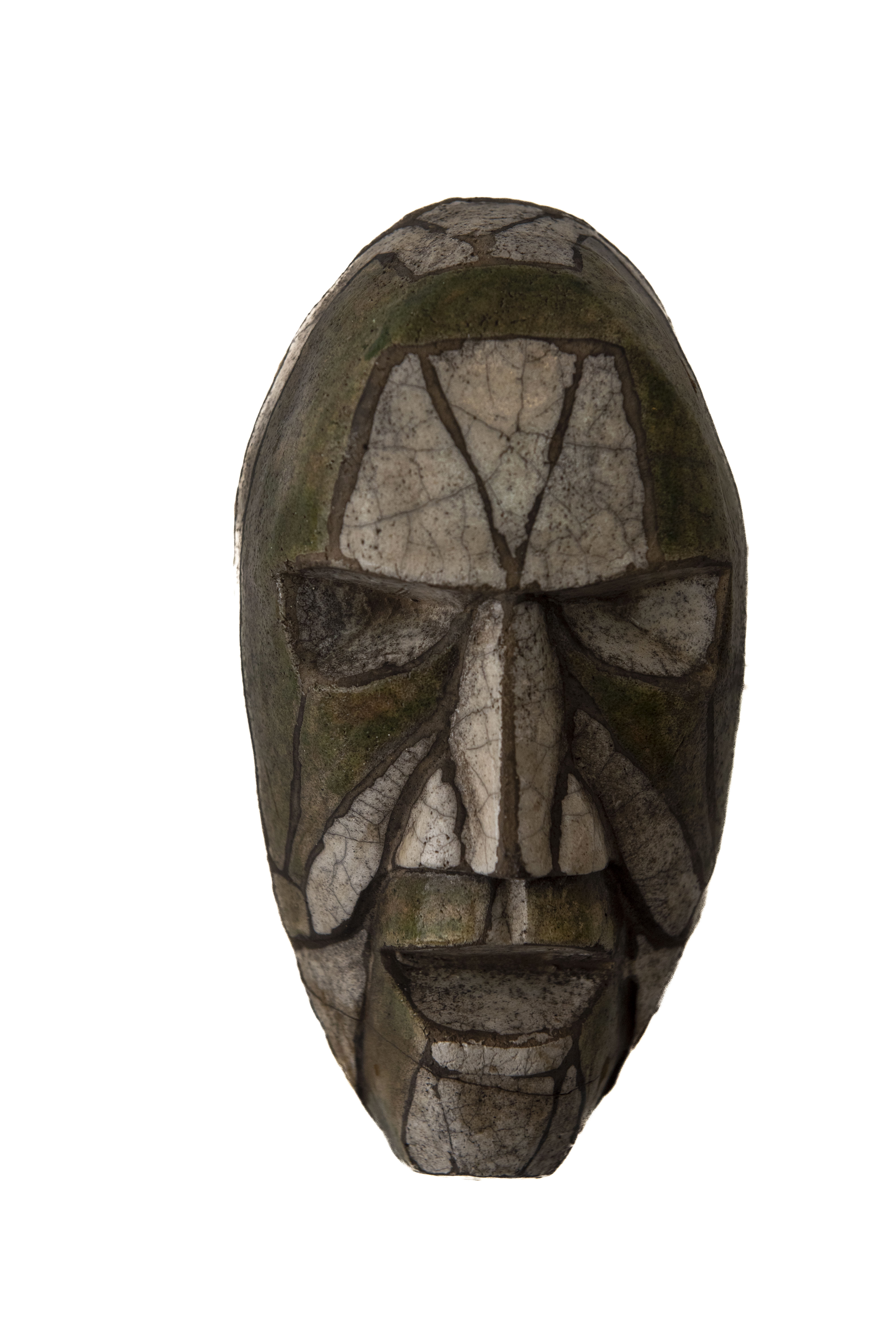
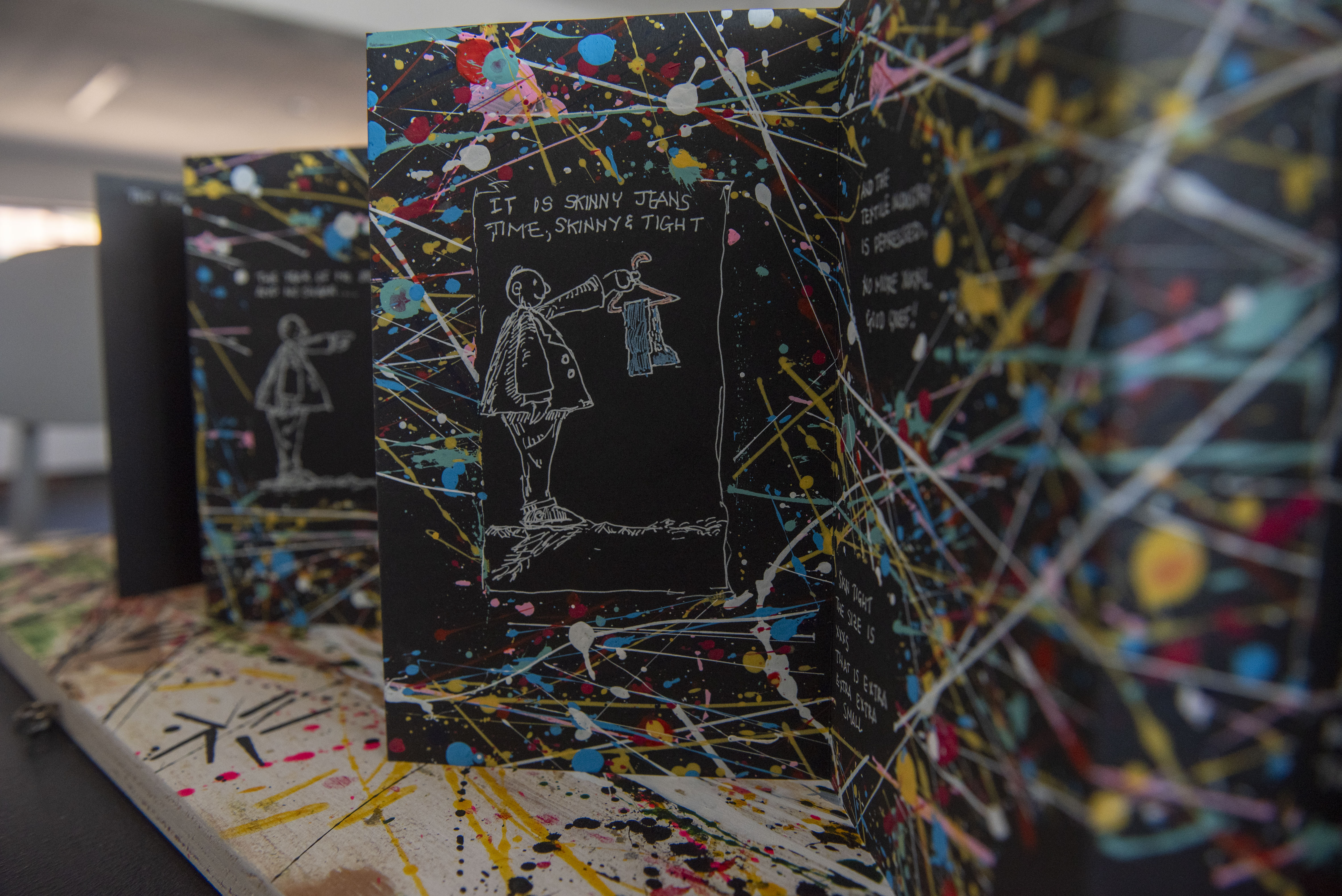
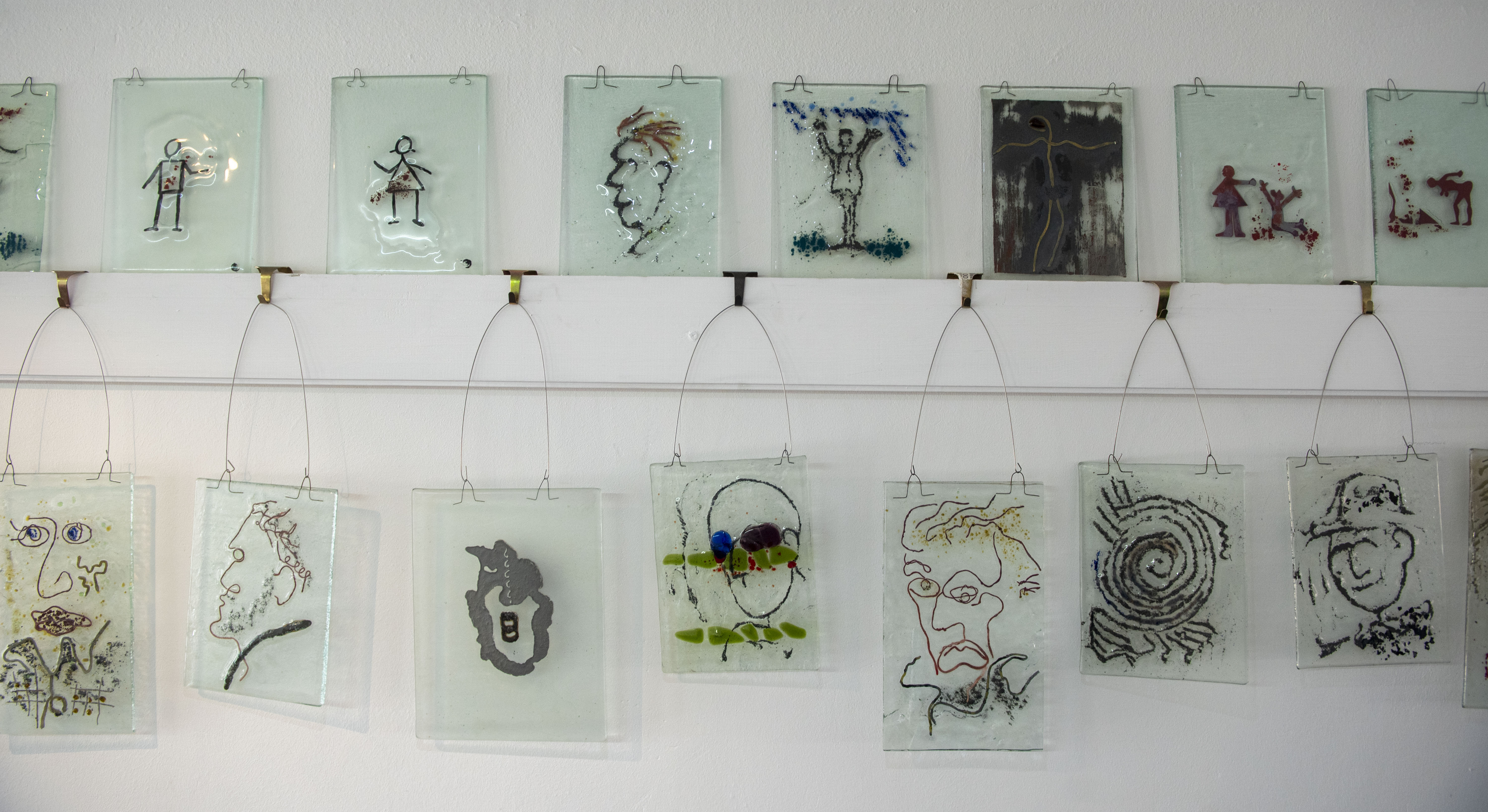
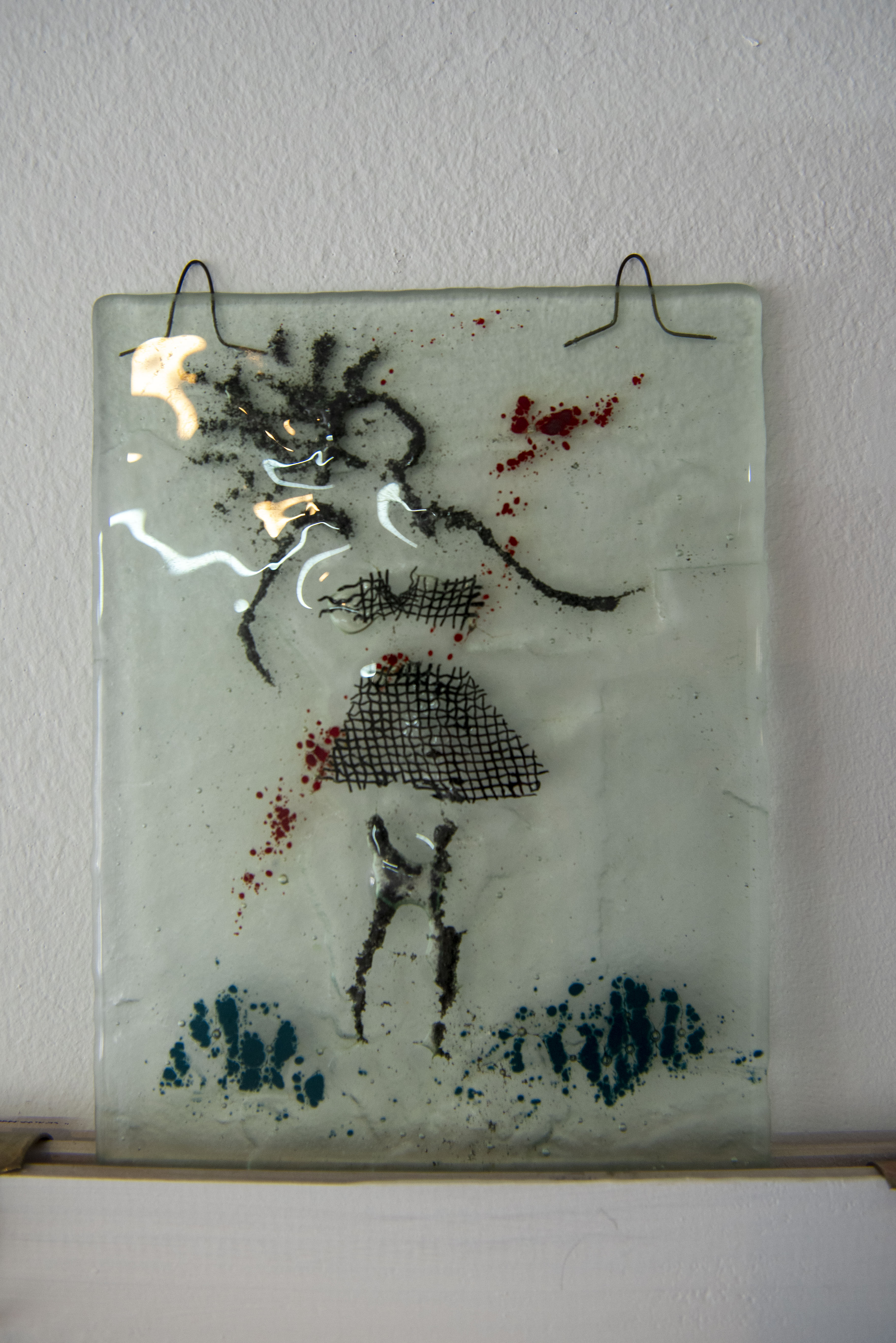
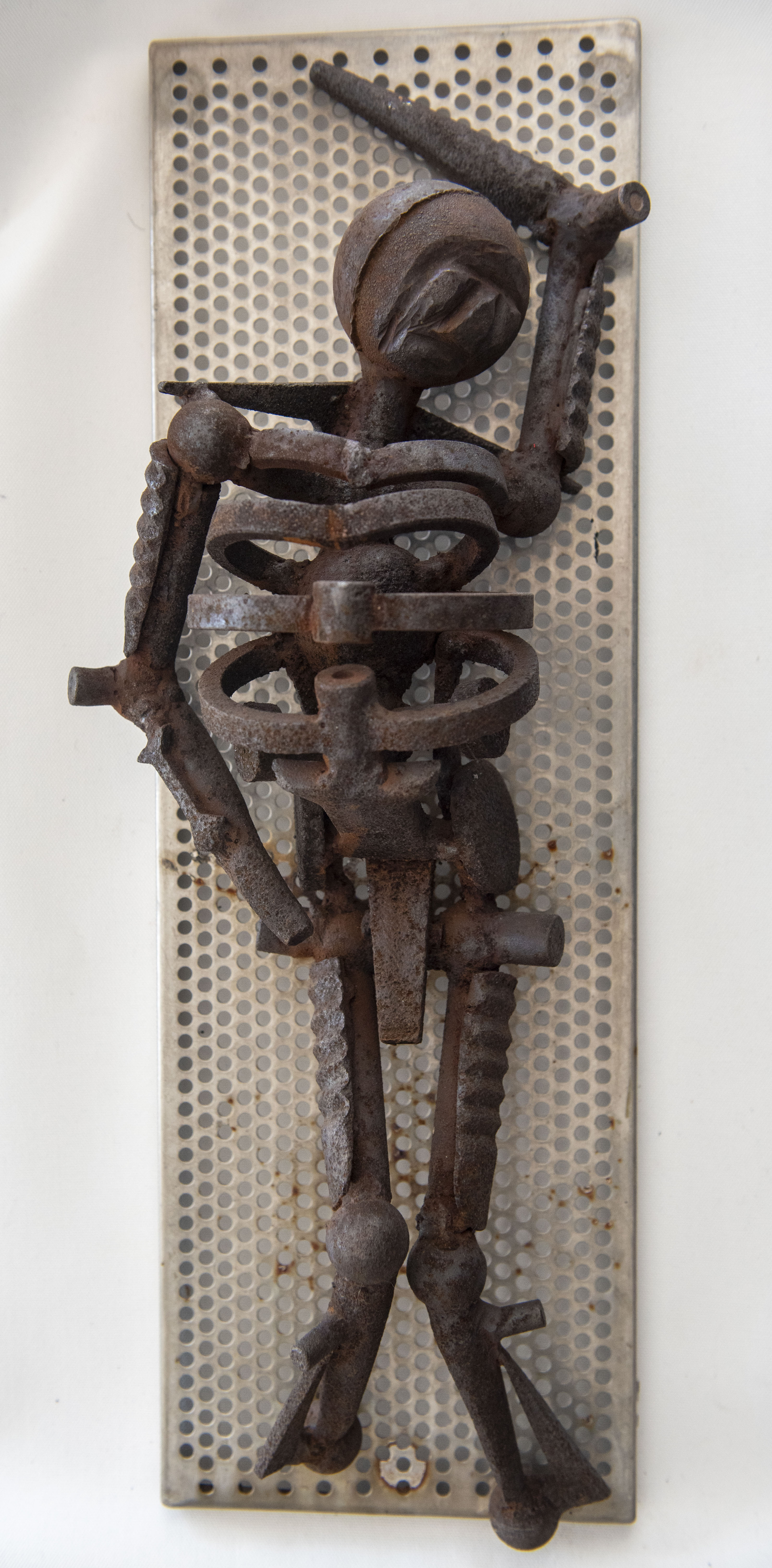
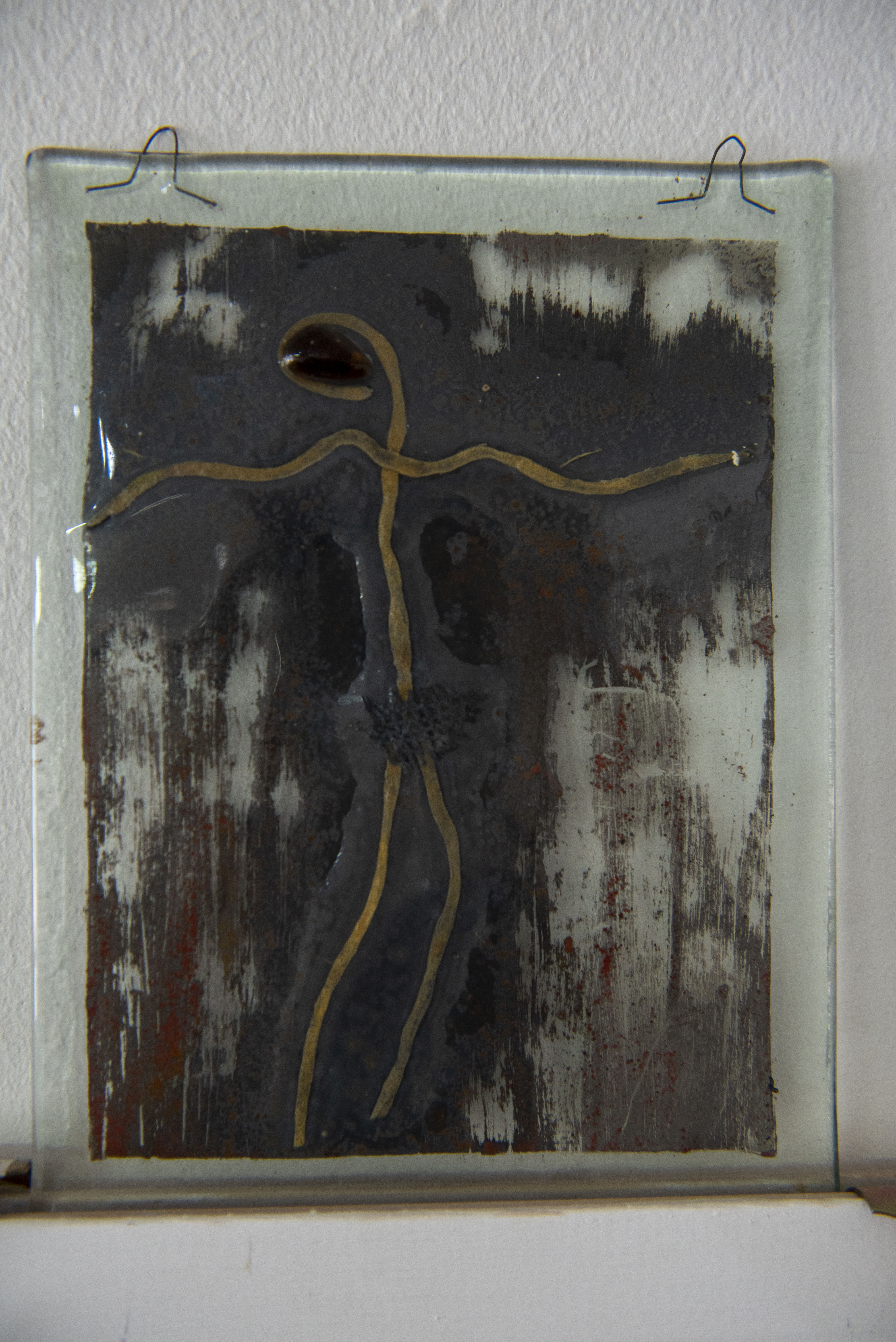
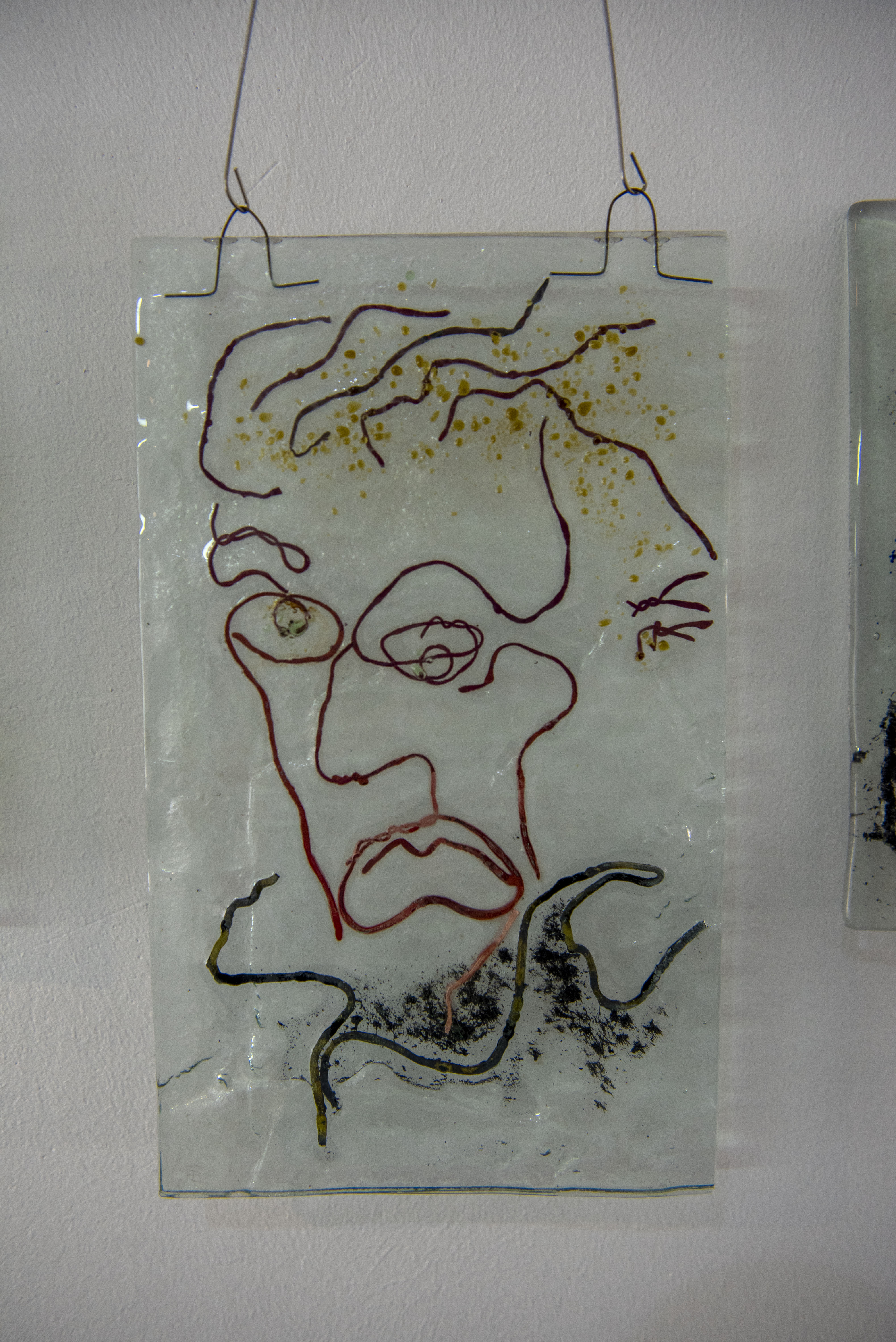
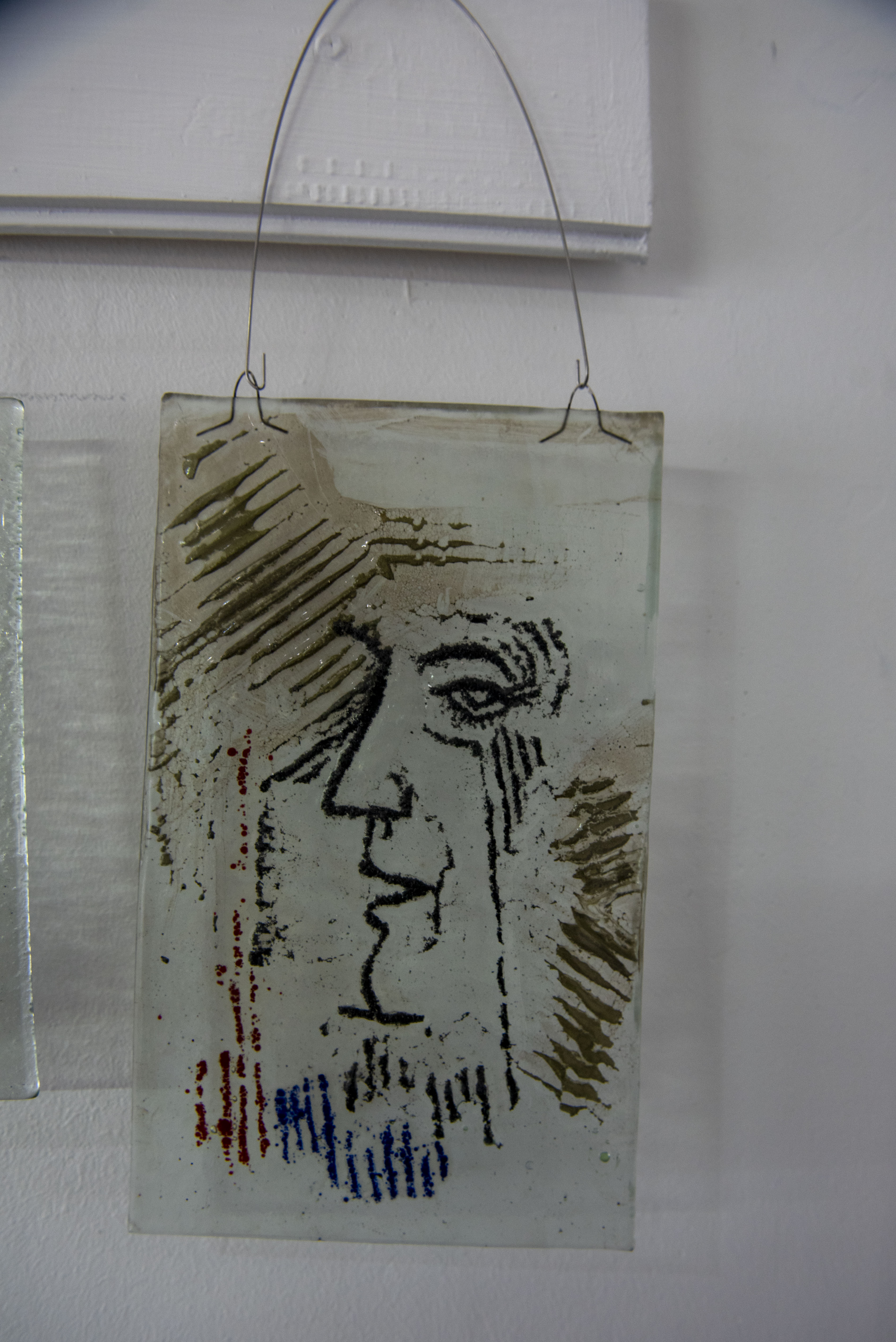
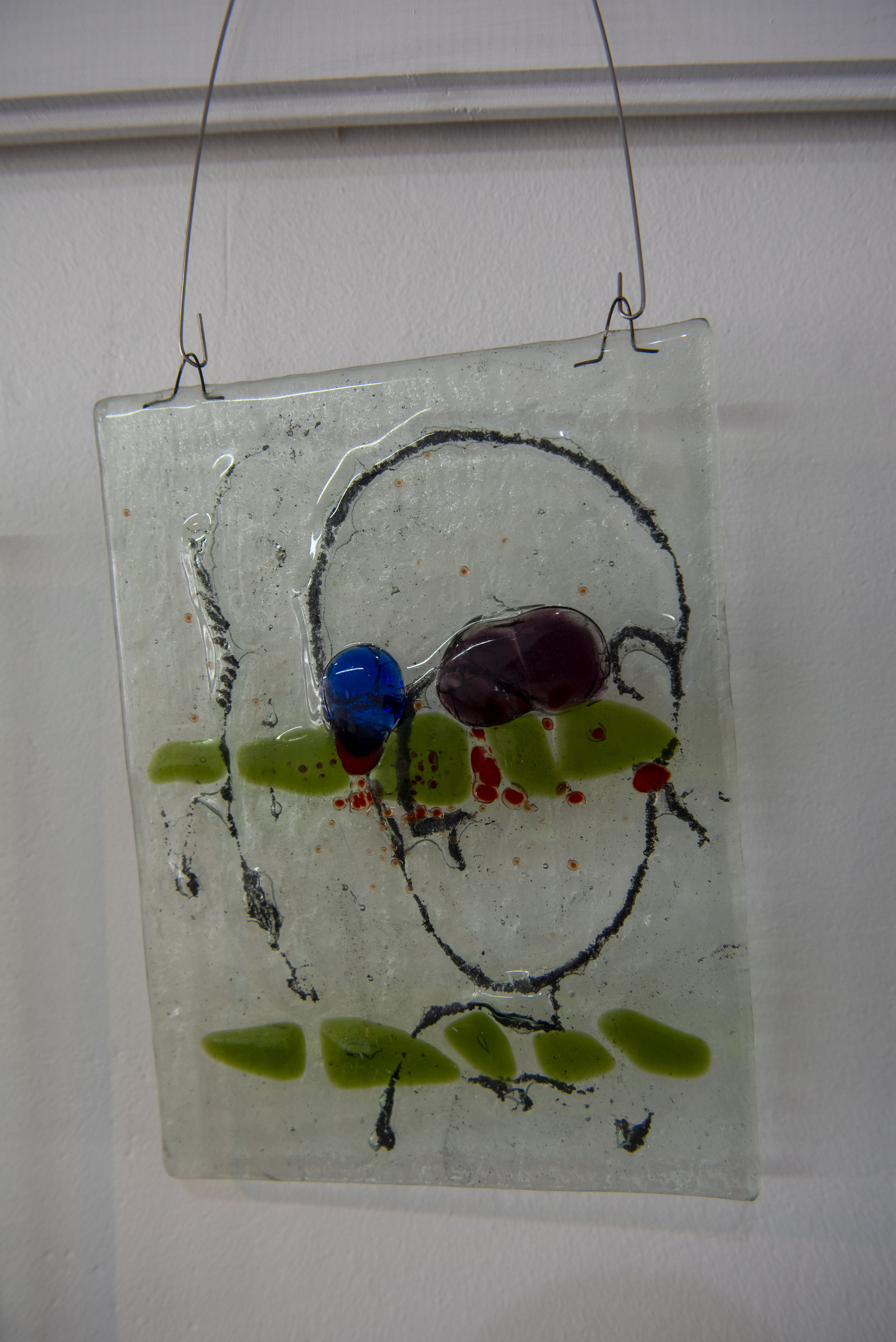
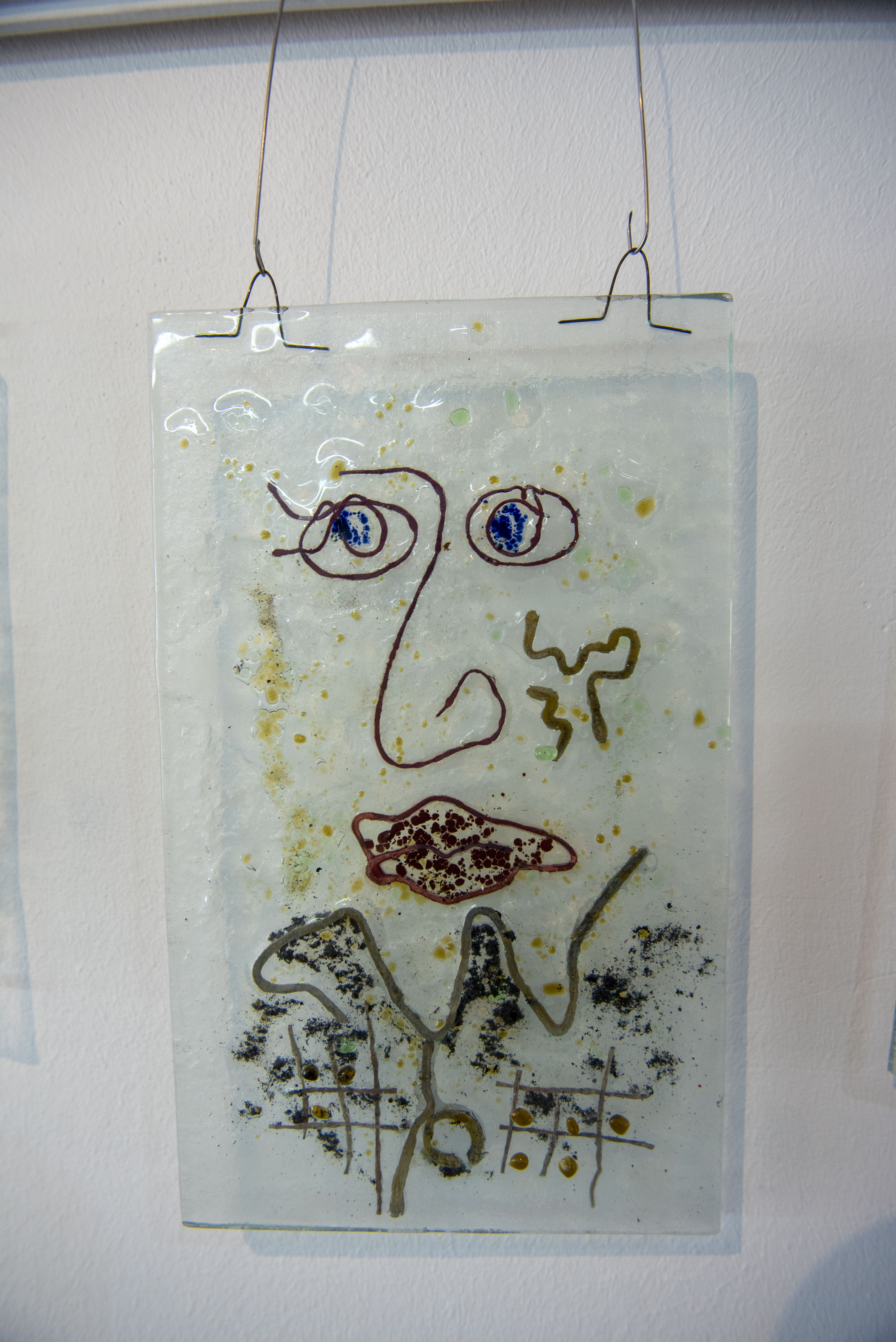
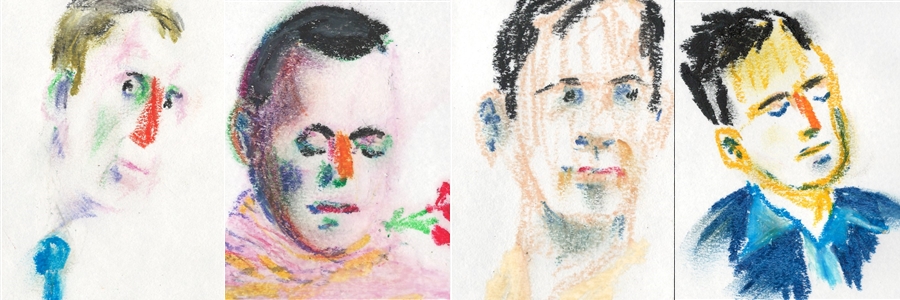
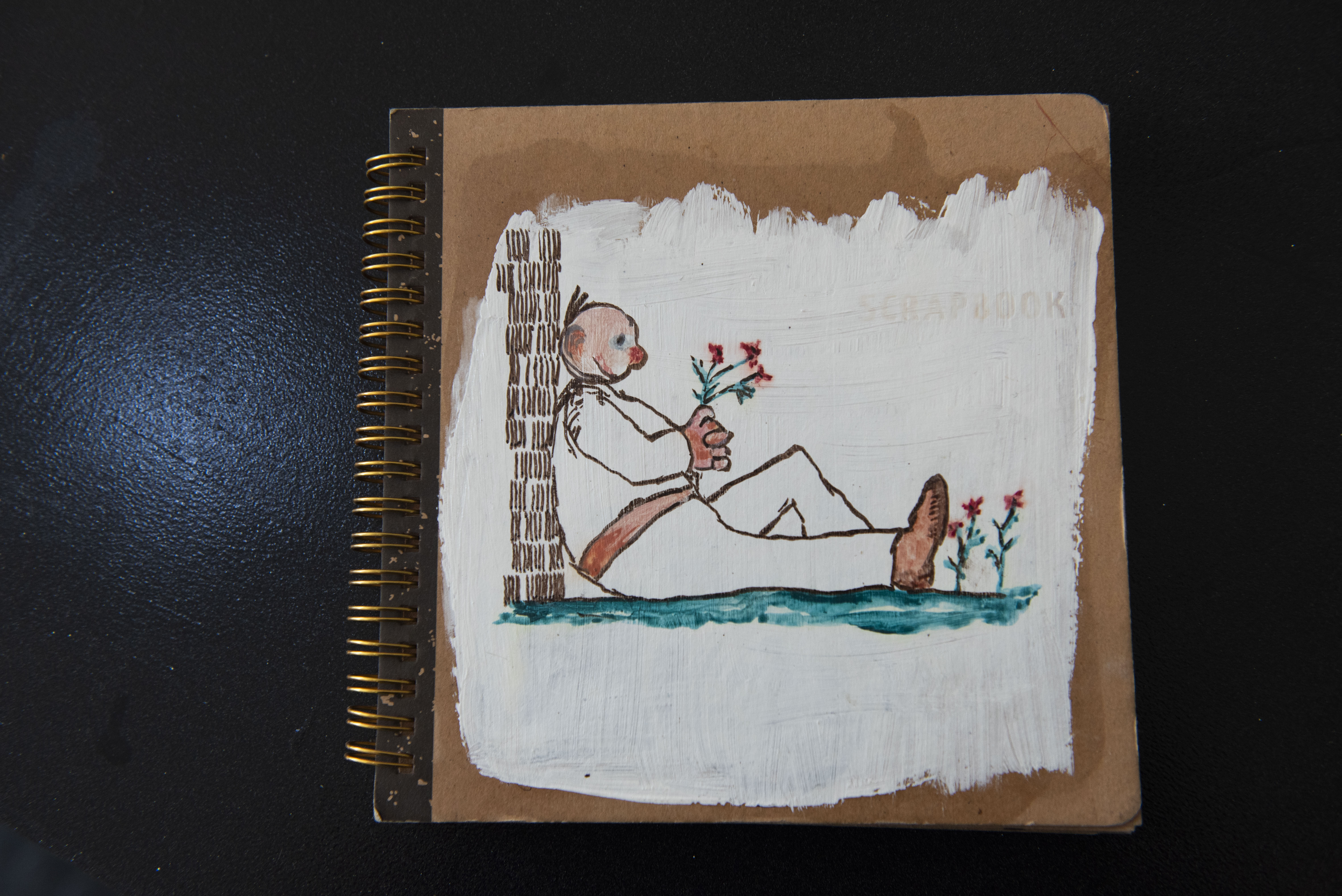
And I was quite clear that the thing I really wanted Dries to showcase was the diversity of his art. Because he has always been compulsive in a constructive way about his art, moving from one thing to the next, exhibiting a theme, yet in very different ways. He has played around in ceramics, cartoons (which he still does daily), scrapyard found objects, which would result in anything from a small human figure to huge installations, and glass tiles in which he made pictures with objects of lesser desire found on his daily walks and changed it into something exquisite.

On the ceramic side, it all began with handmade ceramic zebras painted and then fired for the final result. Thery were unique and each one individual but labour intensive. To really make money – if that were one’s goal – it would have to be mass-produced and then lose that artistic quality that each one displays.

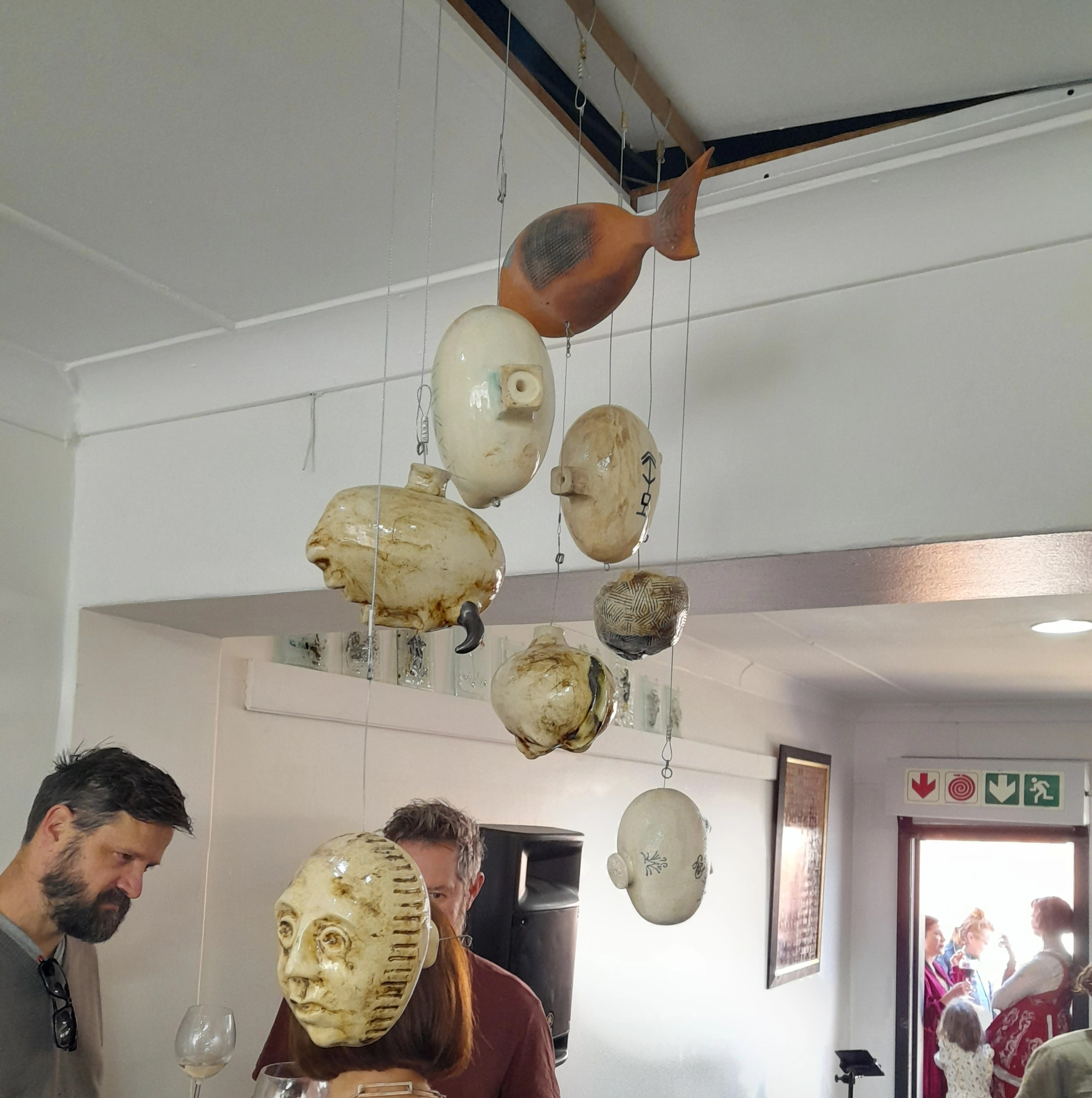
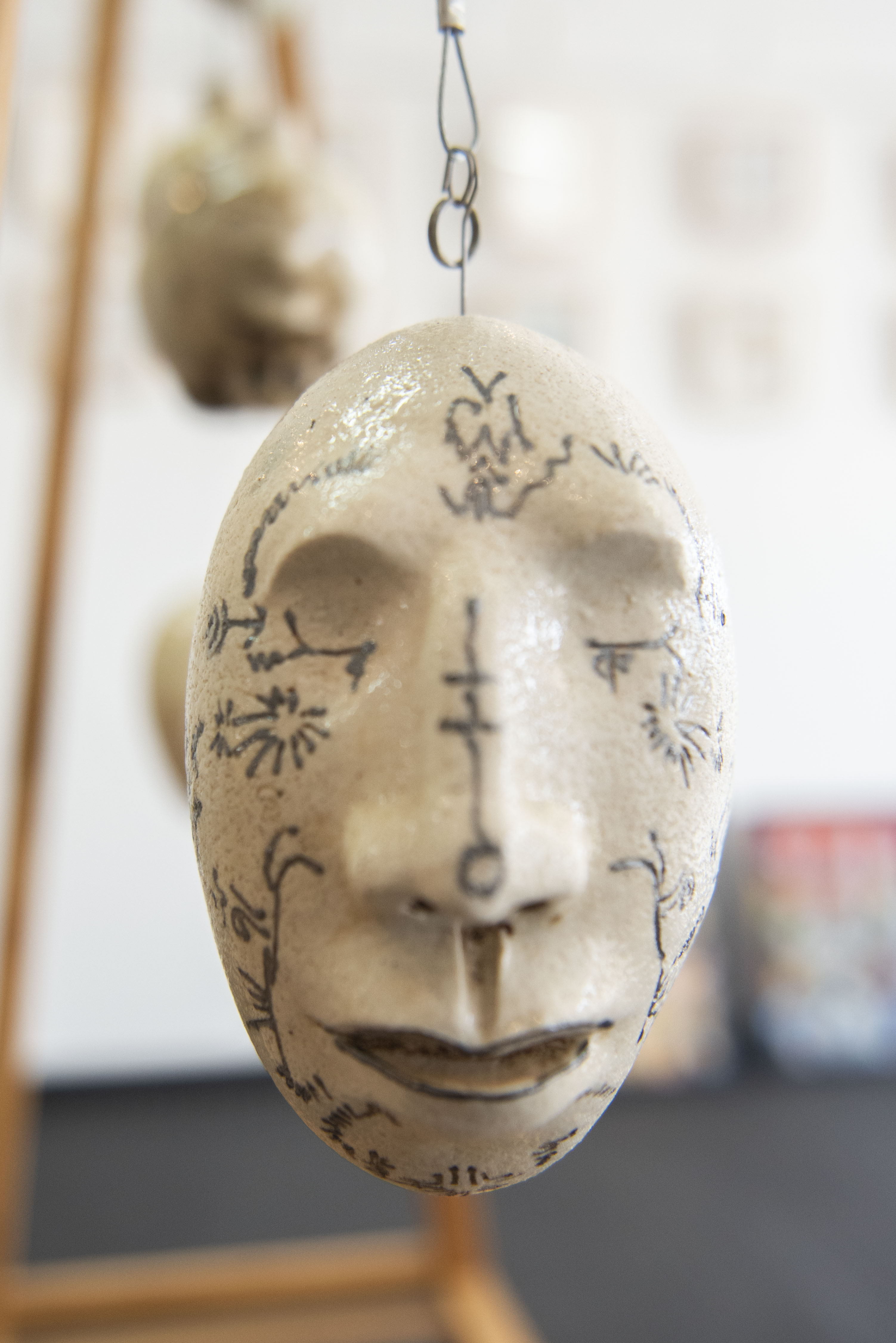
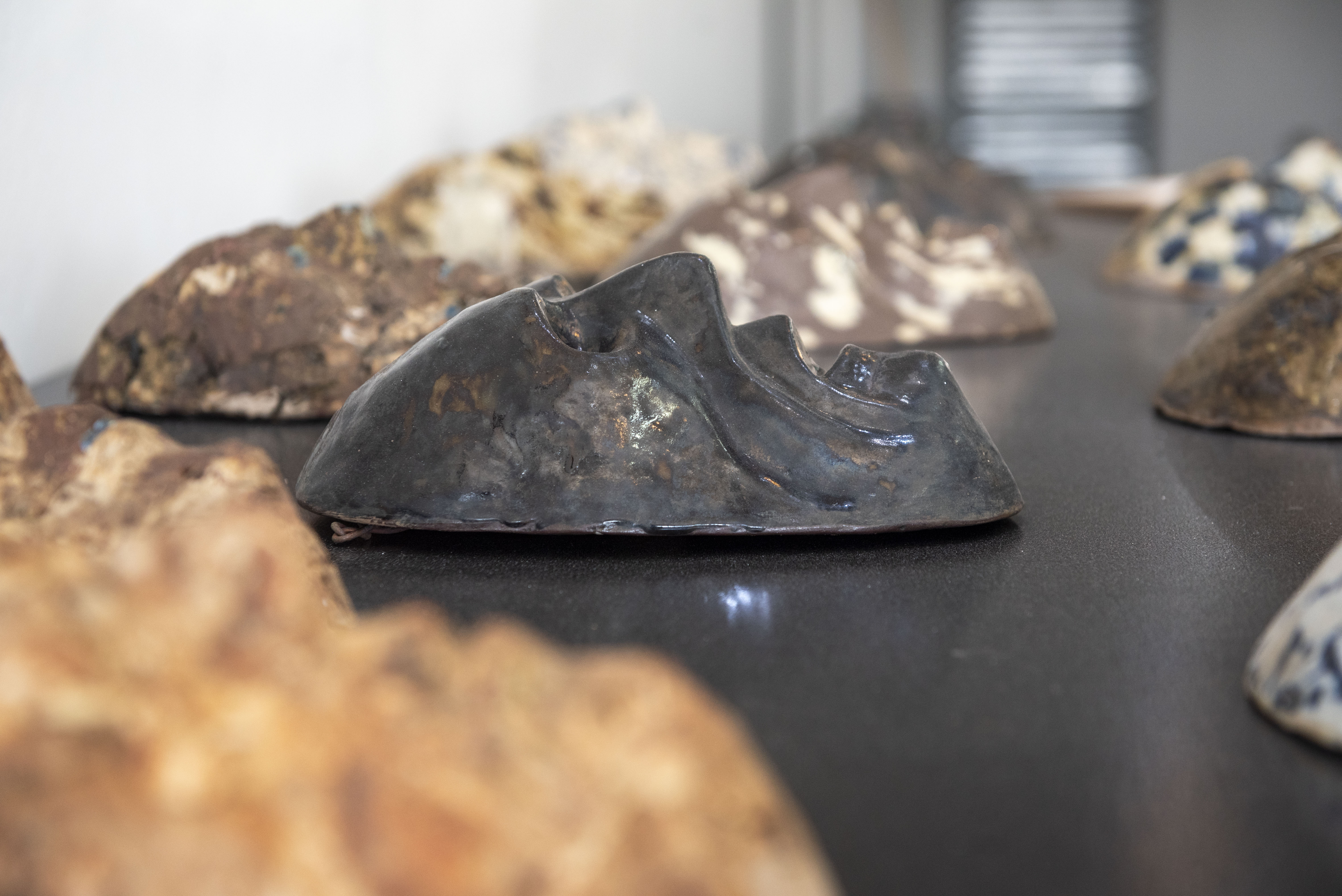
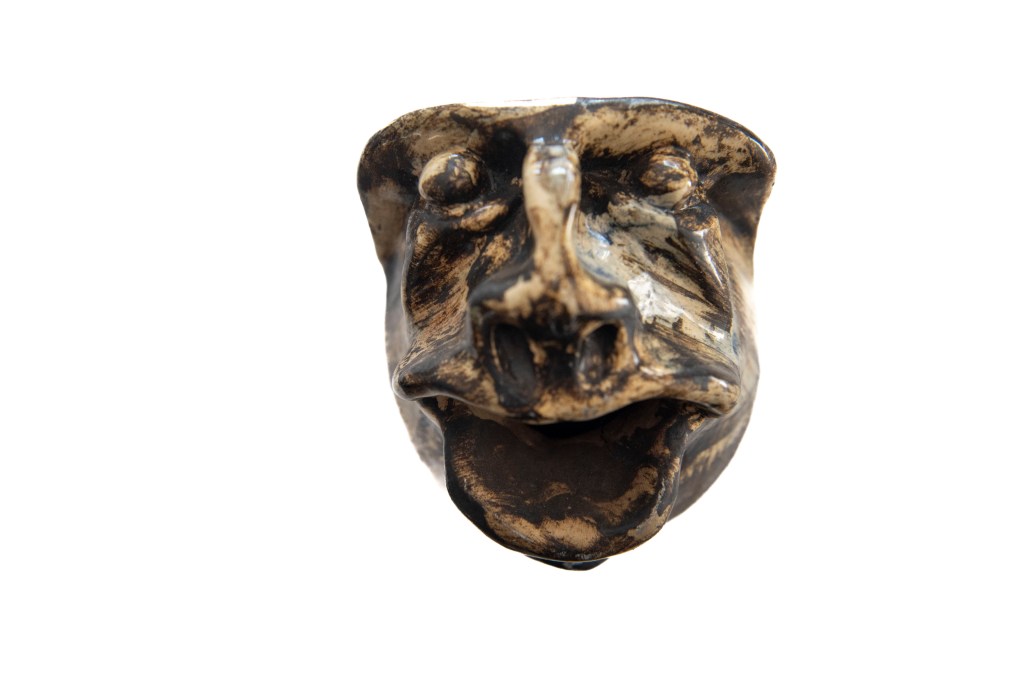
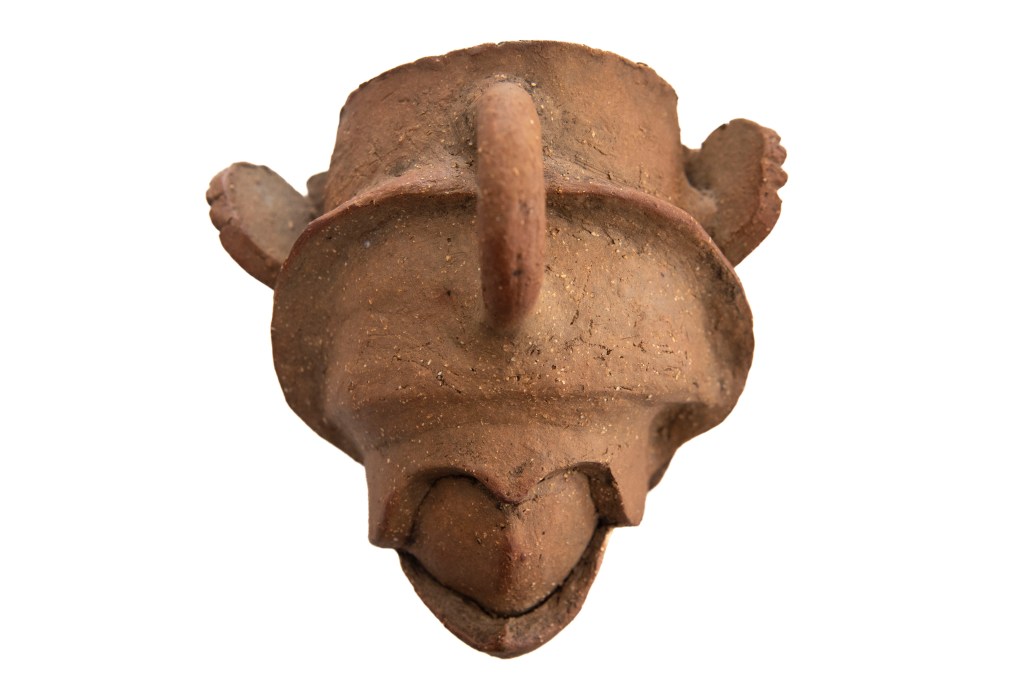
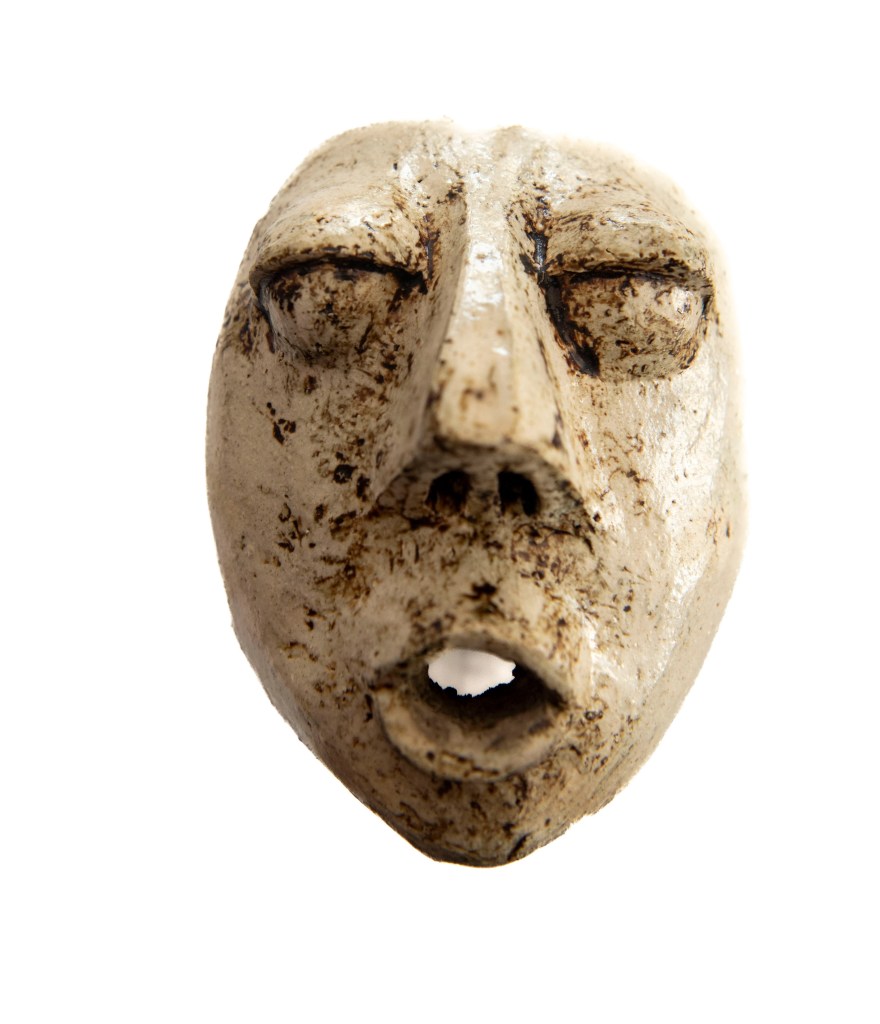
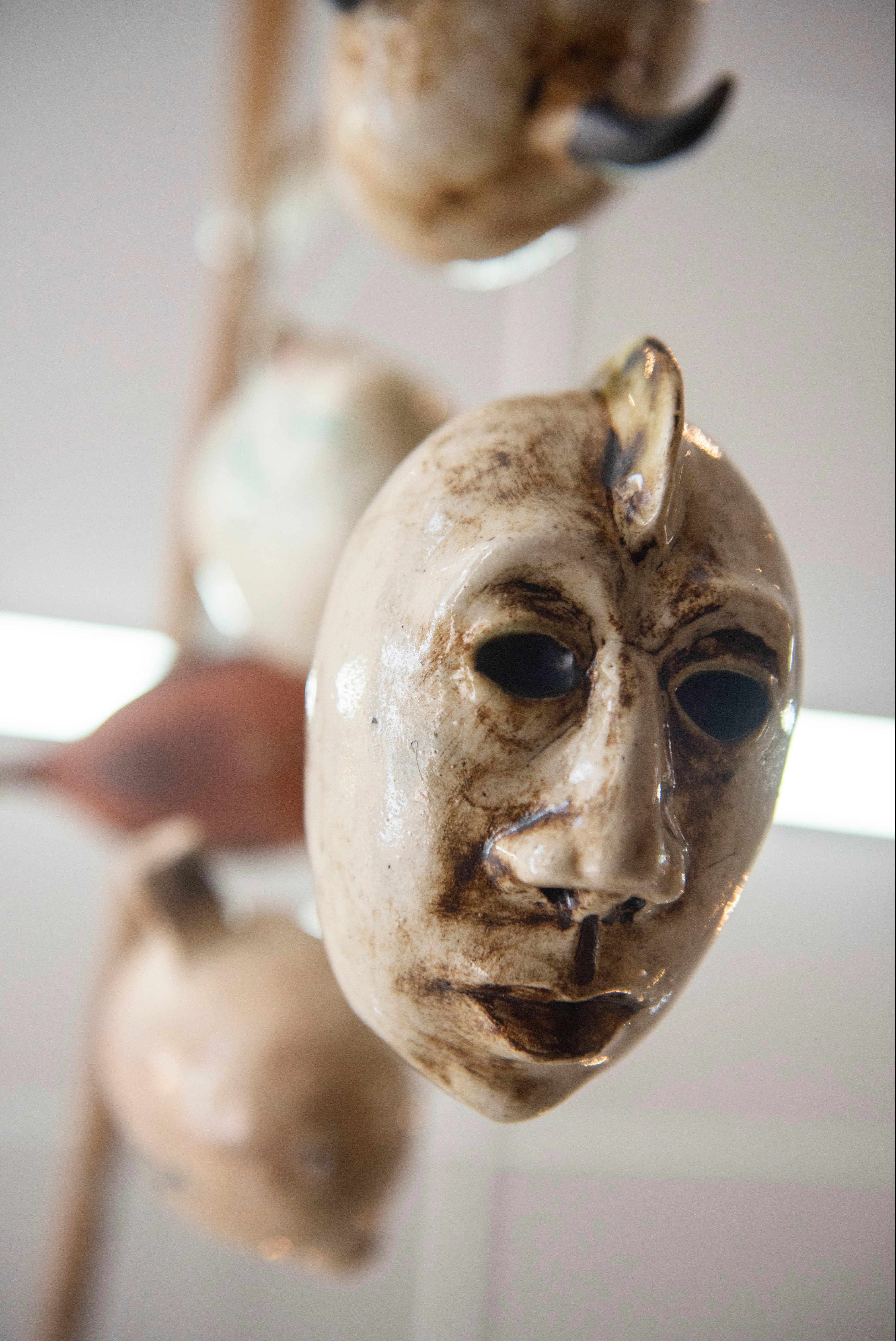
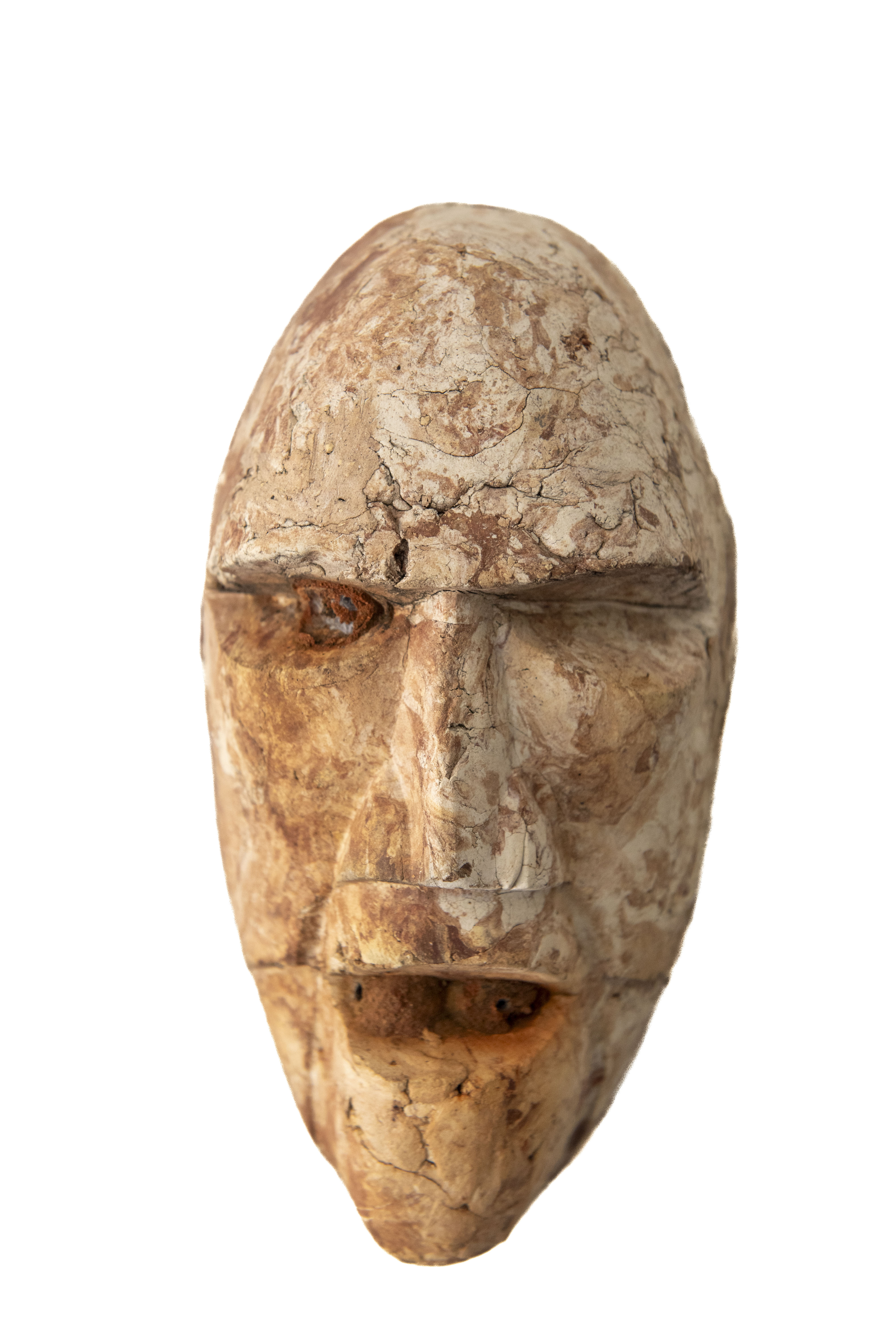
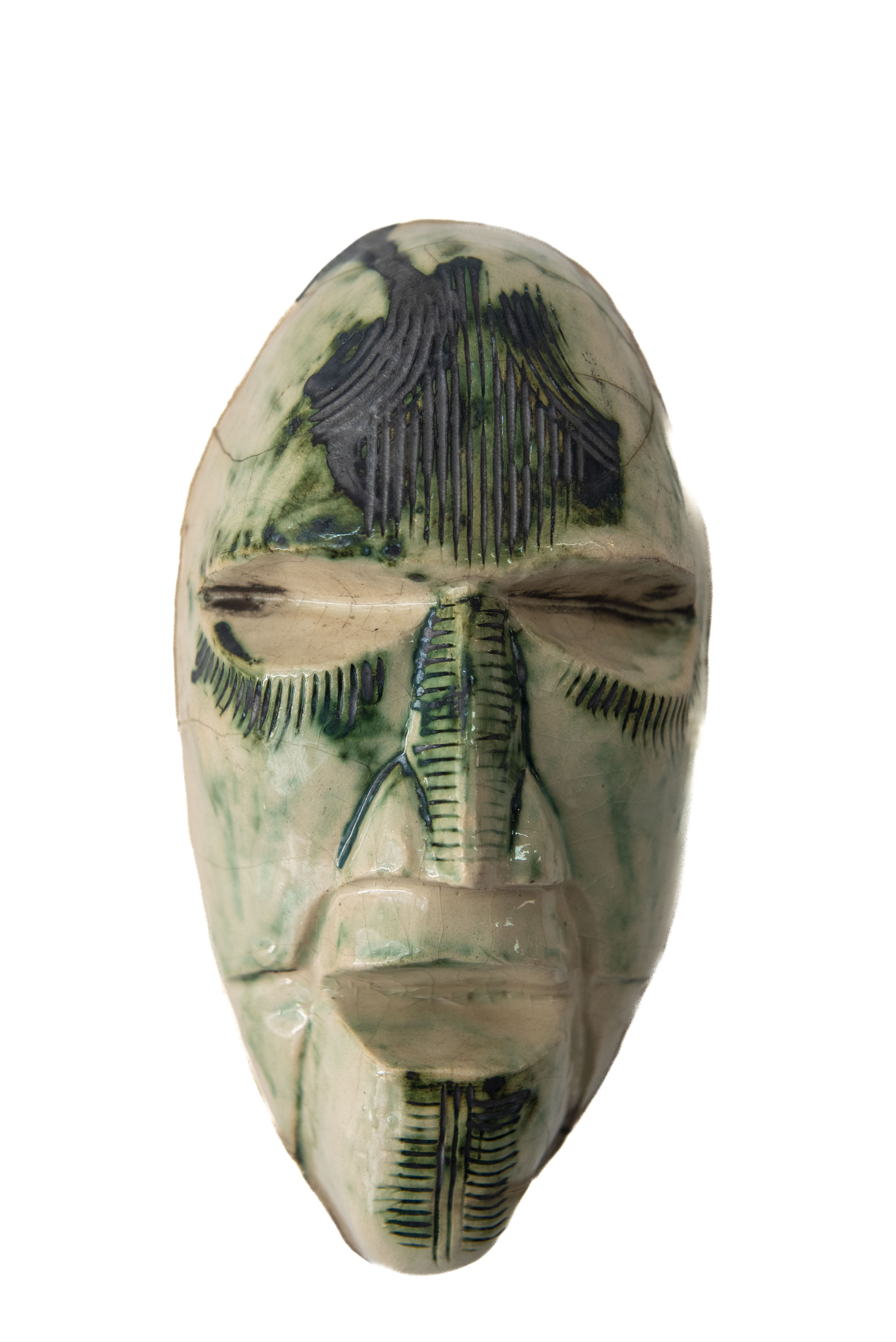
This led to masks and hanging faces which started out as a mass of small and larger cement and ceramic balls which all found a place in our garden. Today those hanging installations, sculpted into different faces and fishes of different kinds are on window sills, against outside and inside walls, hanging outside from poles and trees and even in the shape of gargoyles, each at the end of a pergola pole as decoration. It’s the way he changes and enhances what would just have been another ordinary garden structure. Instead a secret world of chattering ceramic faces and masks emerged

I have written about the work of many artists in an introductory rather than critical fashion. Fine art is something I had to give exposure to because as times grew tough, newspapers and magazines featured less and less specialist writers. Mine was the performing rather than the fine arts, but I knew we had to embrace as wide a range of the arts as was possible – and that’s what I still try to do.

Ceramic gargoyels.

But with this artist’s work, because he and his work are mine, working at a formal institution I couldn’t focus on any of his work. That’s why this exhibition was so important to me and gave me such pleasure. To do it with Carla and her crew, was a dream come true.

Dries, who slowly warmed to the idea of showing his work, and I made the initial selection of what we wanted to show and then Carla and her musician/entrepreneur husband Werner arrived a week before the showing to look at the final selection and help us move the work from home to gallery.

Then the fun really began, as we started hanging the work. This is where Carla and Werner took over while we helped on the side. It’s no easy thing to physically do the hanging and even more specialised is to decide how and where to display each single piece. This is where, I suspect, Carla’s creativity kicks in – and she knows what she wants. We could just stand smiling at the results.

I suspect for Dries it was a new way of experiencing his work. In our house the effect is diminished by it being all over the place. Here it was Dries de Beer in full force – and whether you like it or not, which is a personal choice and what art is all about, this was a special display and one of which even the reluctant artist approved.

I appreciated once again what inspires me most about his art. It comes from within, it’s who he is and how he has conversations with himself and the world – and me.

Also on board were a group of special friends who gathered around me and took over when I really needed help. Writing about the creatives in the food world as well, I have my own favourites and Alicea Malan of Lucky Bread Company https://www.luckybread.co.za/ and Elze Roome of Tashas, Menlyn Main feature on that short list.

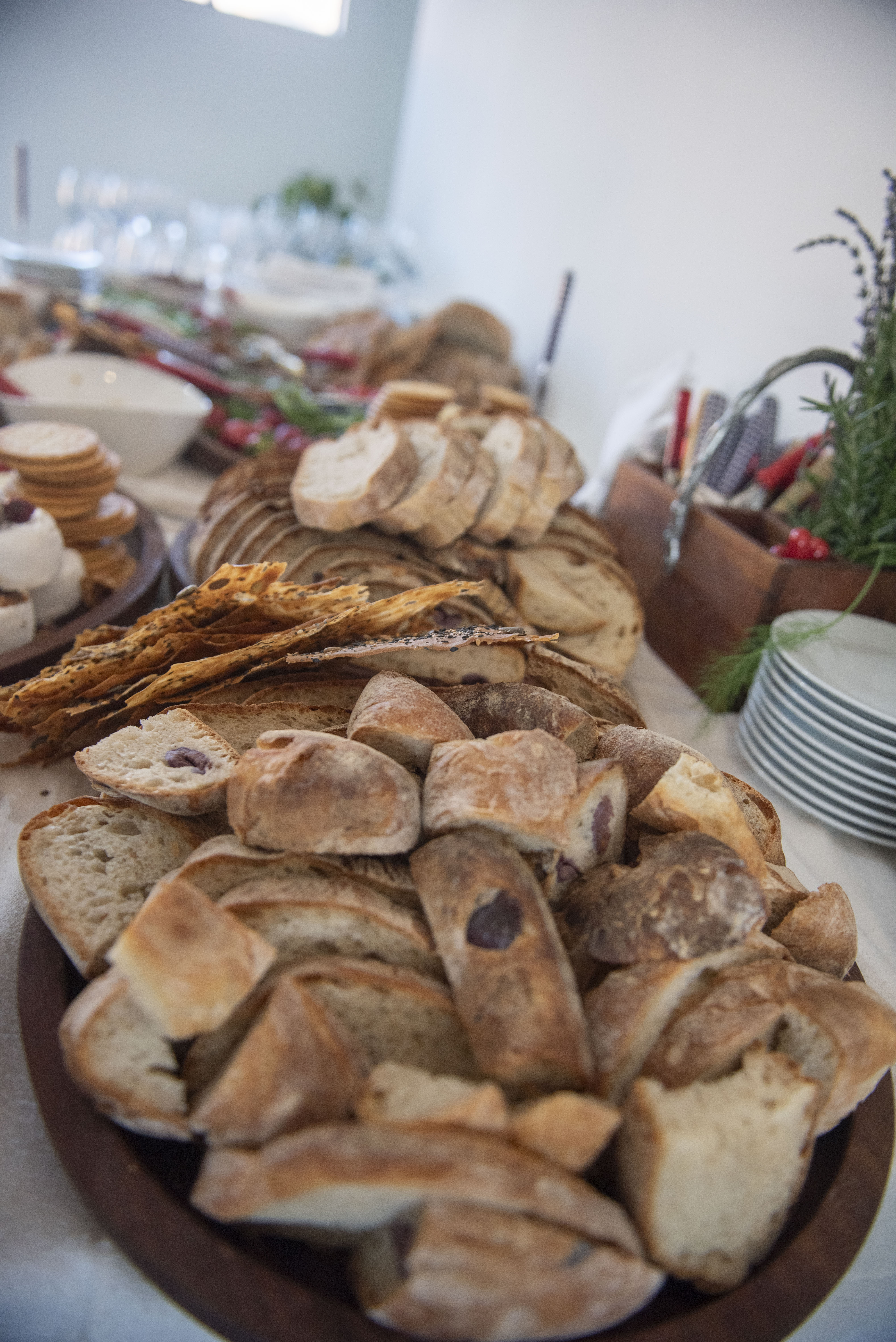
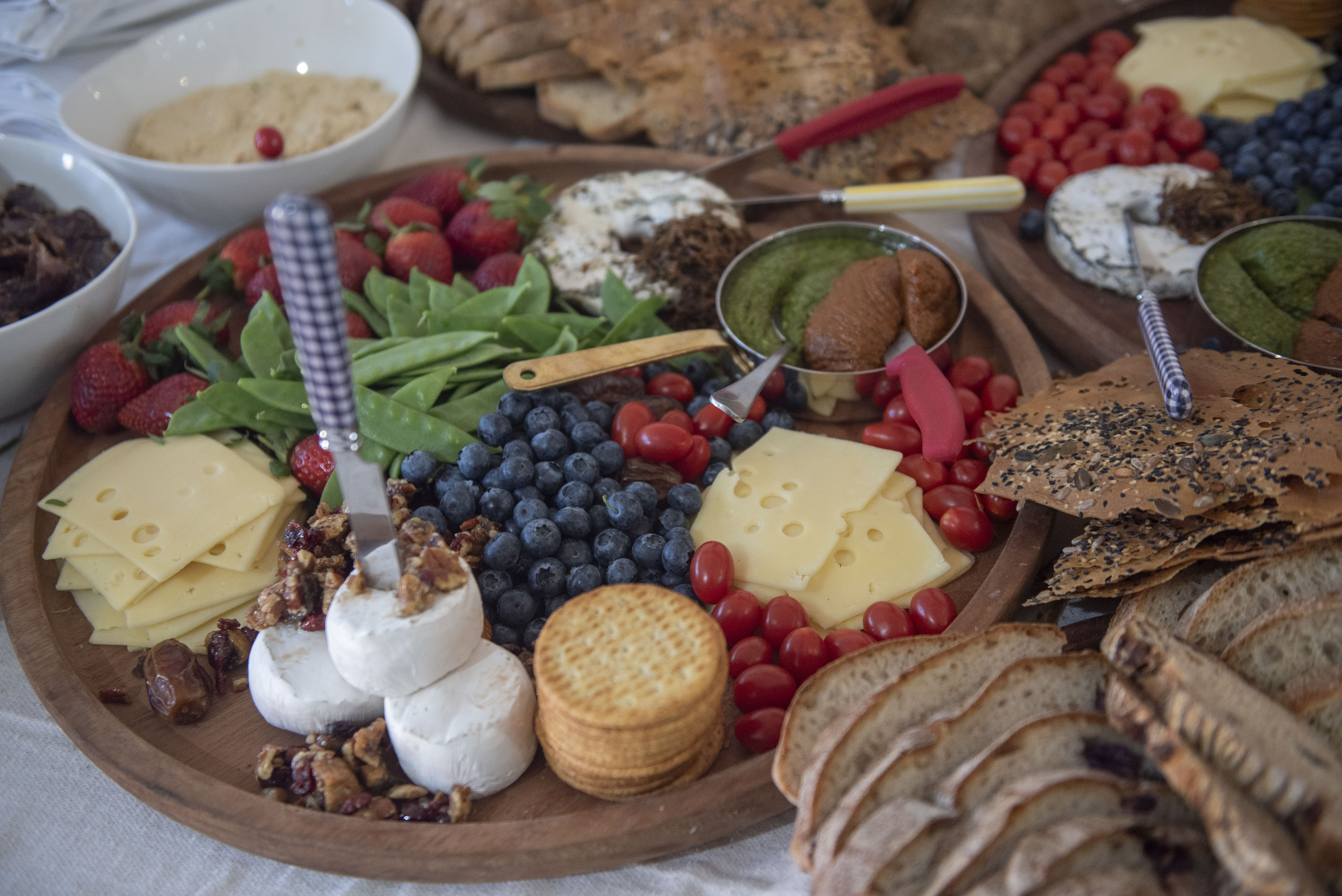
I simply asked Alicea about some produce and she said “Leave it to me.” She pulled together a spread with the amazing breads from Lucky Bread https://www.luckybread.co.za/ and then, as importantly, showcased it at the gallery in a way that just adds that edge to any event. Elze Roome https://www.tashascafe.com/locations/pretoria/menlyn-maine/ jumped in with the sweet stuff which was melt-in-the-mouth.

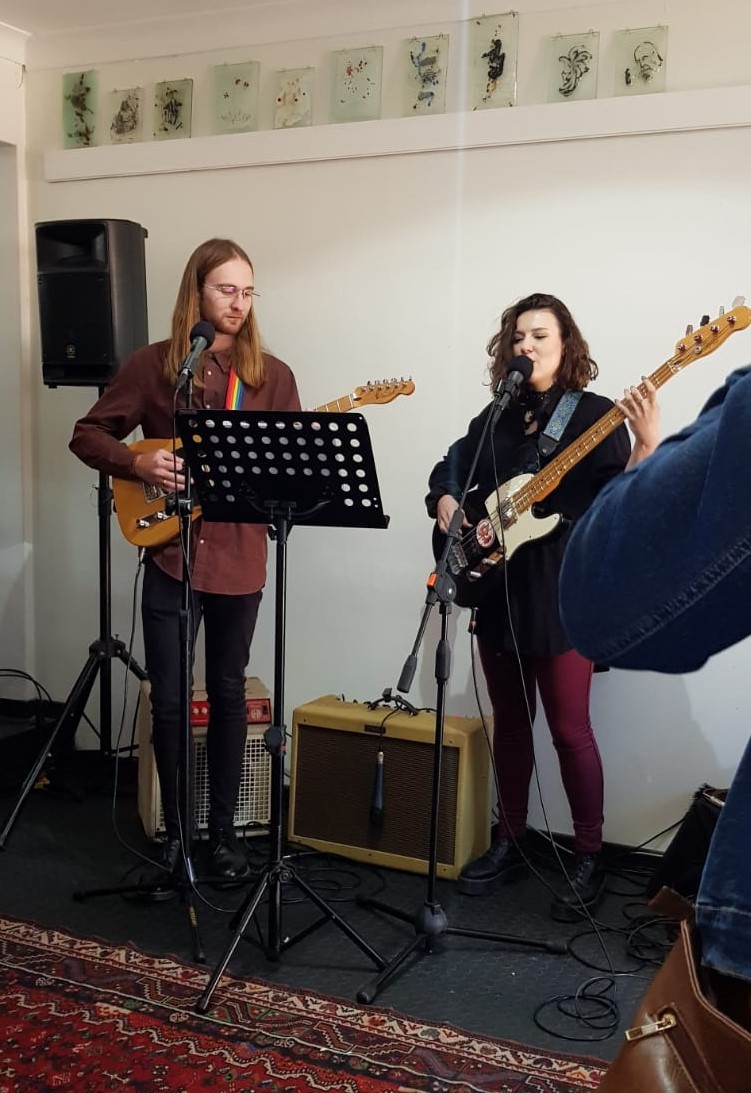
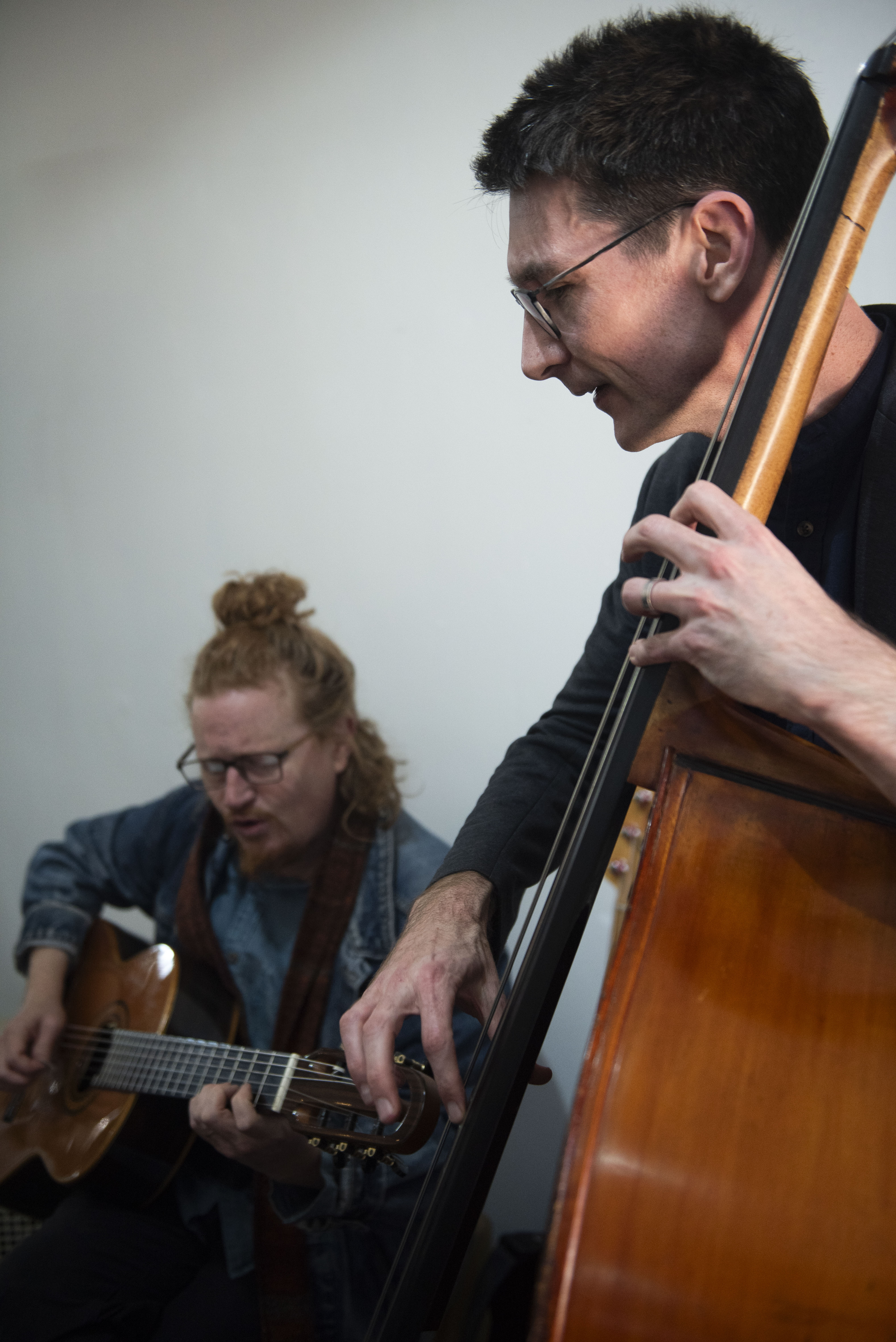
To add yet even more sparkle to the event, Werner on bass and Rynier Prins made exquisite background music, often I think one of the more thankless jobs and yet it fills a room full of people with a sound that’s embracing.

Also part of the picture was one of Carla’s most recent employees, Ursa Engelbrecht. She’s a young woman with artistic flair, was immediately excited, designed the invite and helped out everywhere and anywhere she could. She and Estevan Kuhn also provided music when the first duo needed a break.

So when people ask me about the worth of a single day showing which is what The Guildy specialises in, I can only underline how it brings a group of creatives in different fields together to create a little bit of magic in the world of those who share this kind of passion.

Ursa and Estavan (left) andRynier and Werner (right) making wonderful music.

I know my artist looks at Carla and Werner with eyes that appreciate how they approach life and the world they hope to create. I know he saw how people like Alicea, Elze and Ursa all stepped in to add their special icing to this magnificent cake.

And more than anything, it gave my reluctant artist the chance to see how others viewed his work, to inspire fresh and novel ideas, and to view the future in a way where he shares his work with more people than just me. This was his chance to shine brightly.

Mission accomplished!

FOUR SOUTH AFRICAN ARCHITECTS ARE PROUDLY TELLING THE SOUTH AFRICAN STORY AT THE 2023 BIENNALE ARCHITECTURA IN VENICE

Meeting up with two of the four primary participants inthe South African Pavilion of the Biennale Architectura 2023 in Venice, it quickly becomes clear that it takes a village to raise a pavilion, as the pamphlet specially designed for visitors acknowledges. DIANE DE BEER talks to lecturer Stephen Steyn with Carla Spies (who is responsible for co-ordinating the whole project) about this year’s architectural adventure:

When the core group of Carla Spies (Spies Architects), Stephen Steyn (lecturer at the Department of Architecture and Industrial Design at TUT), Dr Sechaba Maape (senior lecturer at the Wits School of Architecture and Planning) and Dr Emmanuel Nkambule (senior lecturer at the Department of Architecture and Industrial Design at TUT) got together, they played with the idea that we live in a unique country and that being in this place affects how we live.

That is where they wanted their focus to be and what they hoped to visually explore and exhibit at the Biennale.

All in the field of architecture, their interest and research were aligned, which meant that each one brought something specific to the project.

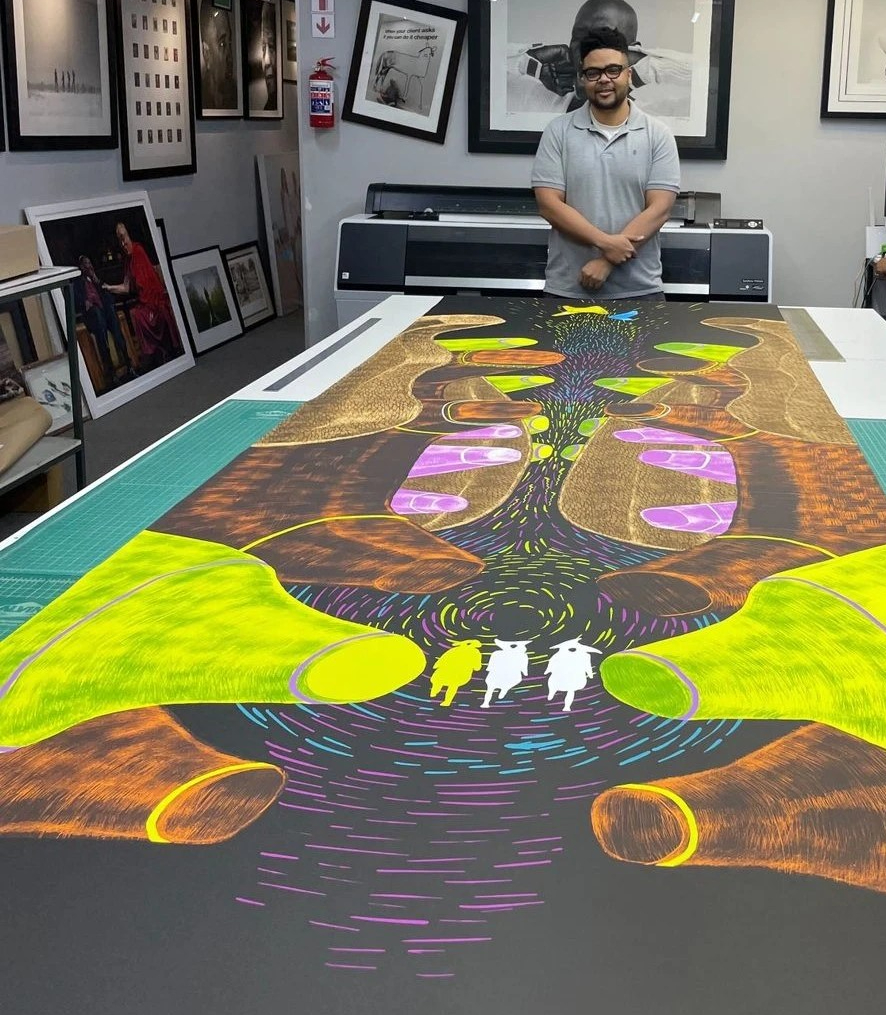
Digital visuals as part of the South African Pavilion.

Stephen explains that we identify with things, creatures, ideas and, most significantly, other people. Identities, which are what drive this project, like walls, contain, convene and comfort us, but should they be too solid and too insistent, they imprison us. “It is something that defines you,” he explains, “but it shouldn’t be seen as just one thing.”

Between the abstract binary poles of ‘freedom’ and ‘containment’ there is architecture. By using our imaginations, we choose how we identify as active, conscious agents. He argues that while a space might define its occupants, it shouldn’t confine them.

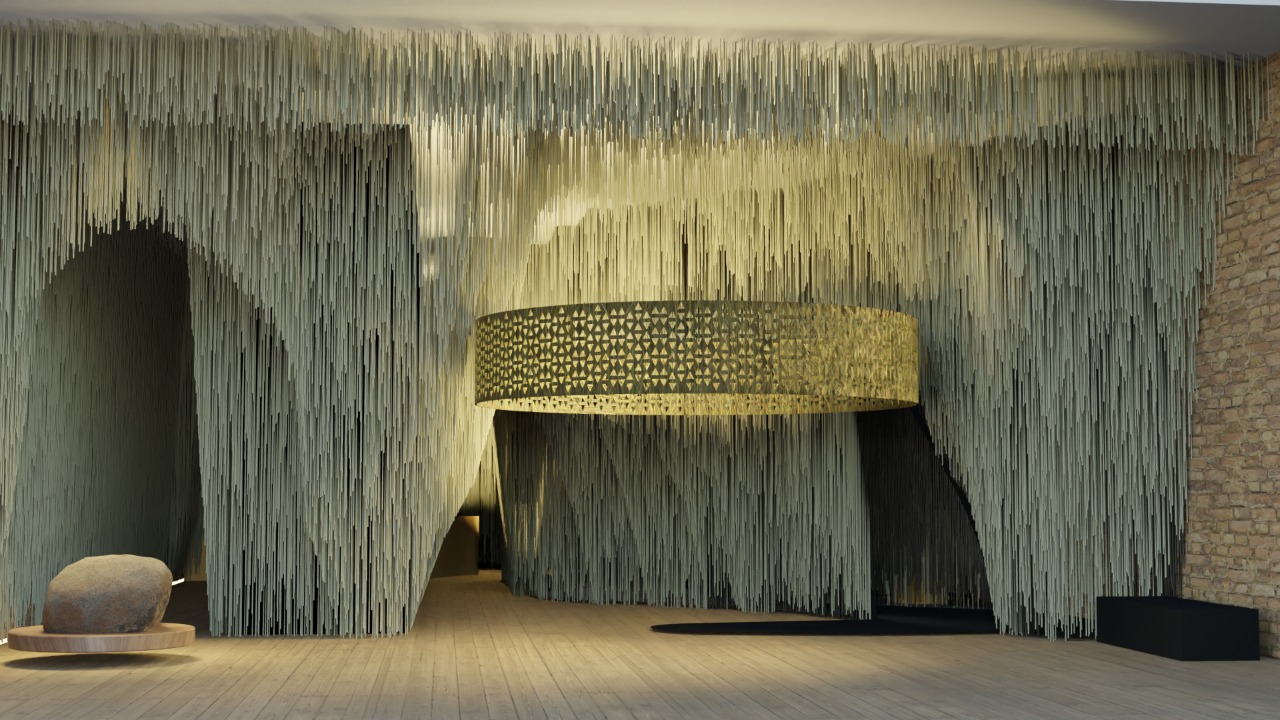
Before the ‘primitive hut’, in fact, before the wall itself was conceived of as a construction, the natural world had supplied us with the architecture of the cave. The cave wall is simultaneously a containing element, and a surface of representation. Beyond this wall exists another world – intimately connected to our own, but with its own logics and forces.

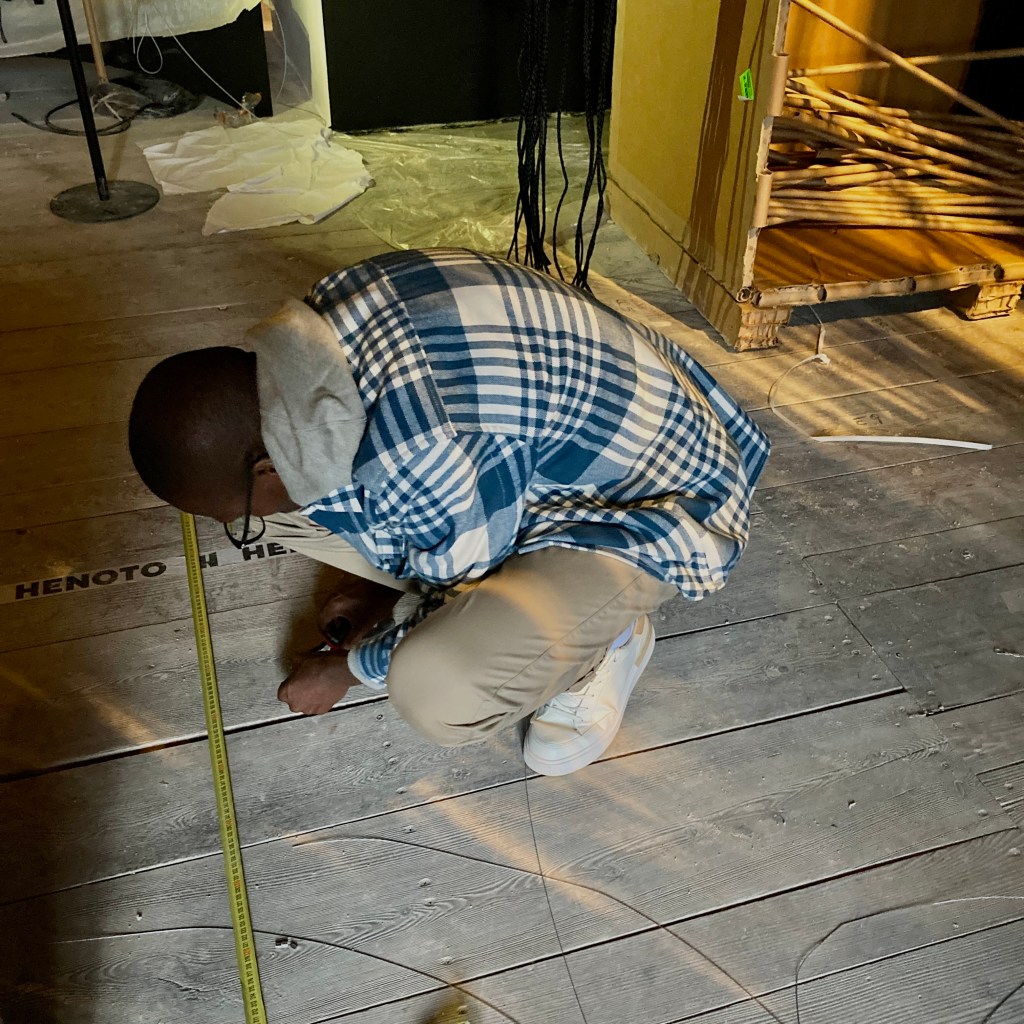
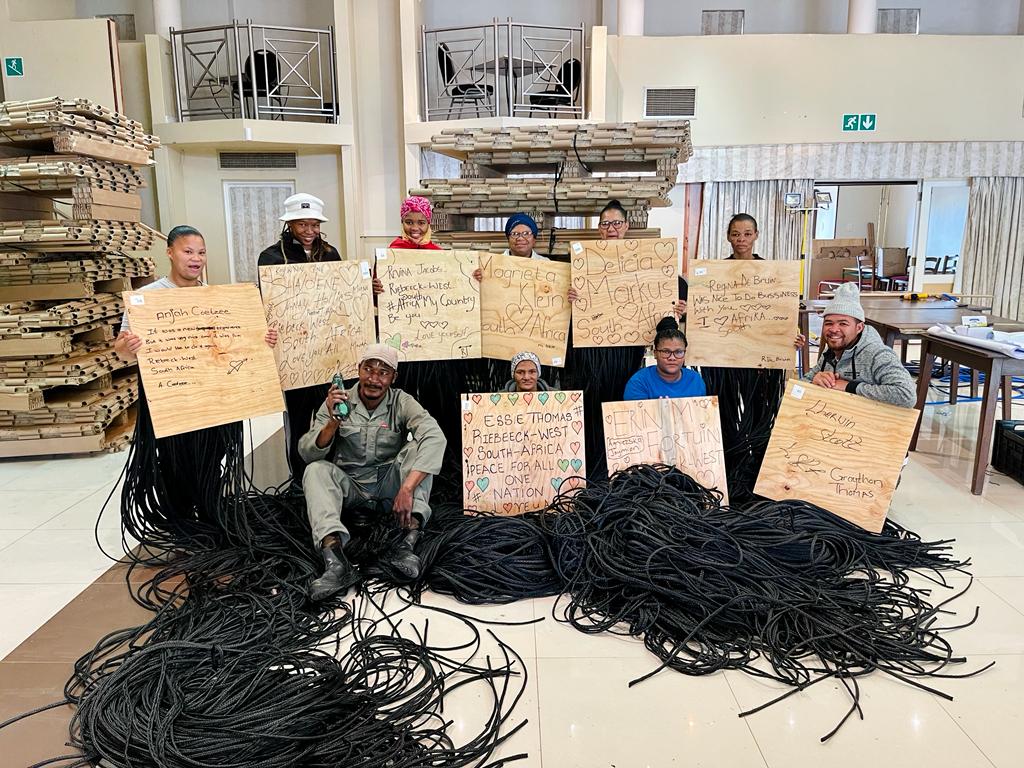
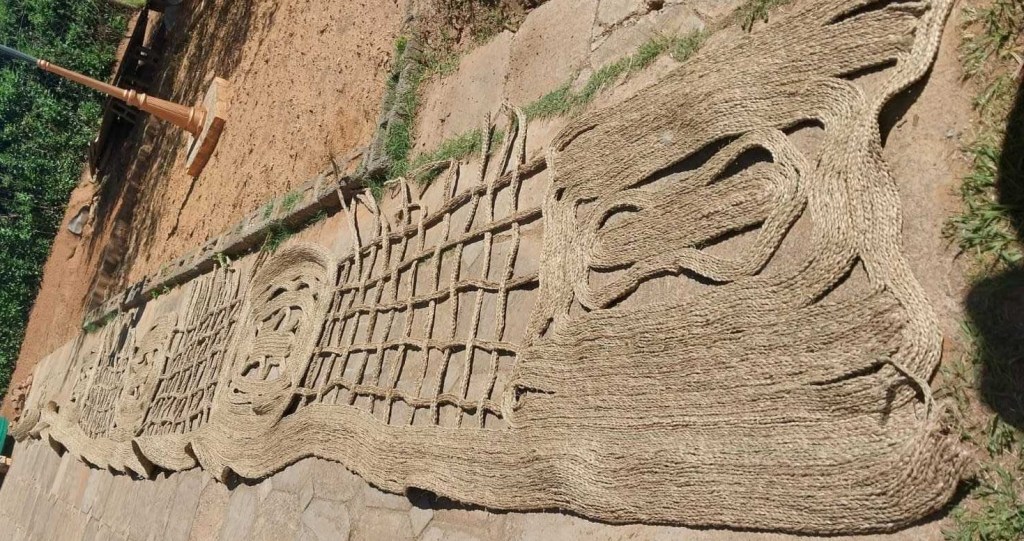
The hanging ropes starting to take shape. The group from Kent&Lane who fastened the ropes to the tiles for the eventual hanging.

The future is unknown. From that darkness, full of both fears and hopes, architects pull images which, like self-fulfilling prophecies, become the future itself through construction.

 It is not fail proof; like any prophecy, it remains vague no matter how clearly articulated. And it is always subject to the influence of enormously varied and powerful forces as it travels from the world beyond the surface of representation – where the future and the past co-mingle – to our own.

And part of their quest was to reach out to the pre-colonial past, into the present post-colonial era to determine the future. Histories are alive and should constantly be revised, because so much has not been recorded in traditional ways.

The main pavilion structure (designed by Stephen and realised by Carla with the help of many others), invites visitors to a ritual performance of collective identification, community formation and initiation.

Then the exhibition unfolds and reveals itself  through three zones.

Zone I is titled The Past Is the Laboratory of the Future, and traces historical links to the architectural representation of social structures as documented in pre-colonial southern-African societies.

Scattered over 10 000 square kilometres of grassland in Mpumalanga lie the ruins of a vast civilization known as the Bokoni. The architecture of the Bokoni consisted primarily of two materials: permanent, dry-stacked stone, and ephemeral, hand-woven grass.

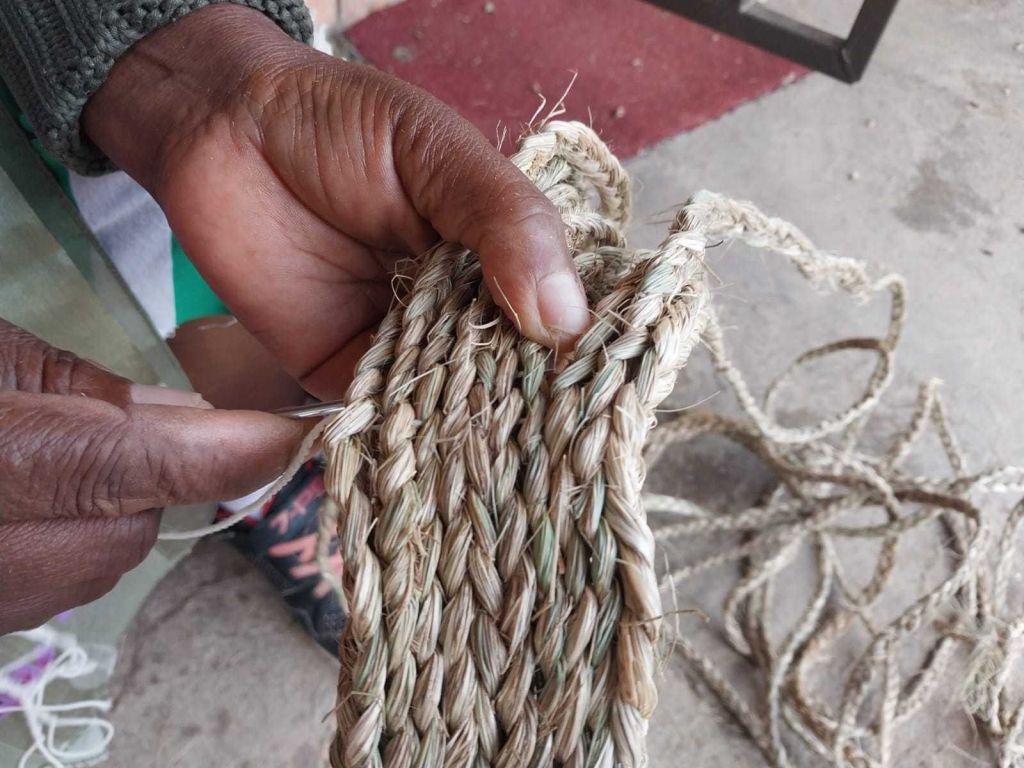
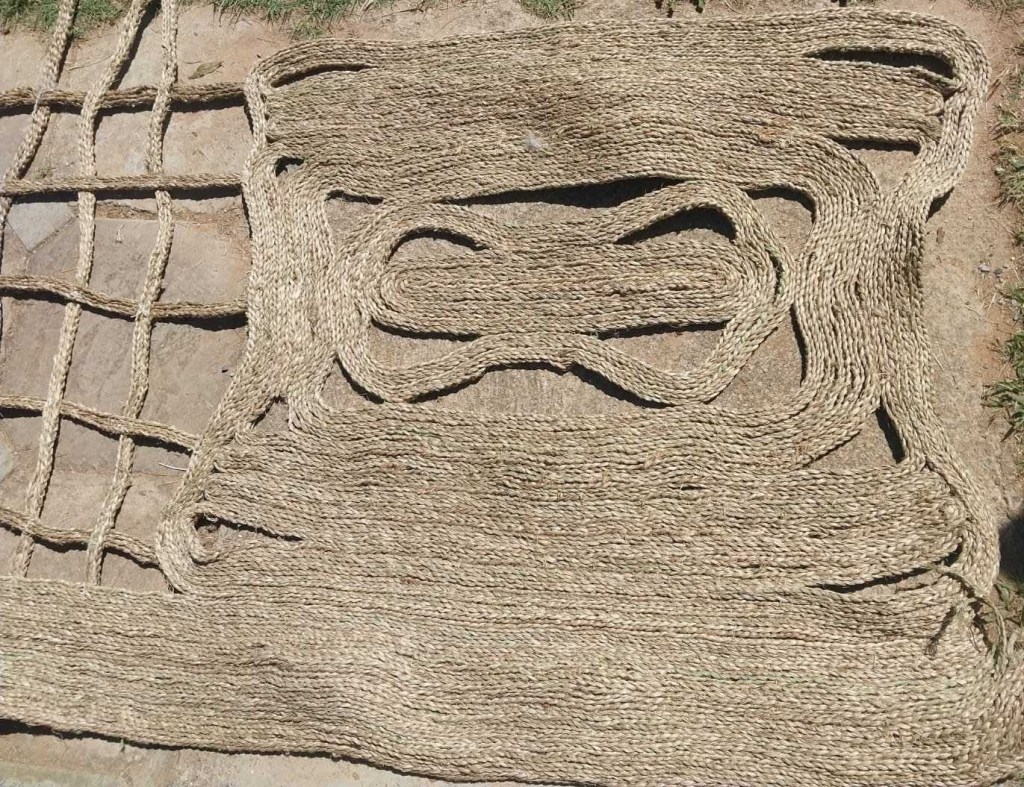
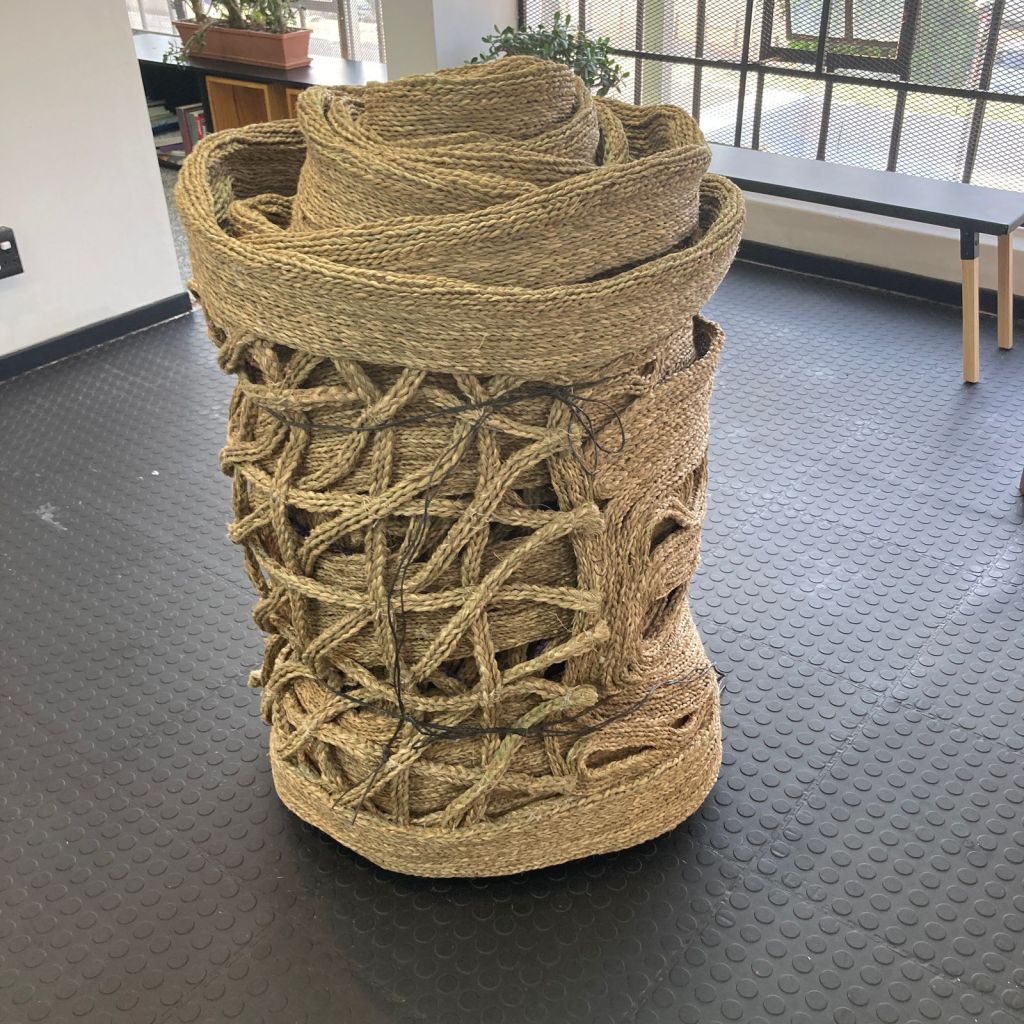
Rather than captured in books, the social structures (how they lived and functioned) of the Bokoni are preserved in the visible plan forms of their homesteads, and are represented by weaving practices, which can only be inferred from sub cultures still practising grass weaving today. For this element, five individual weavers were brought together to make woven artefacts that serve as scaffolding for another construction; that of a social as well as a professional network, and thus representing a community.

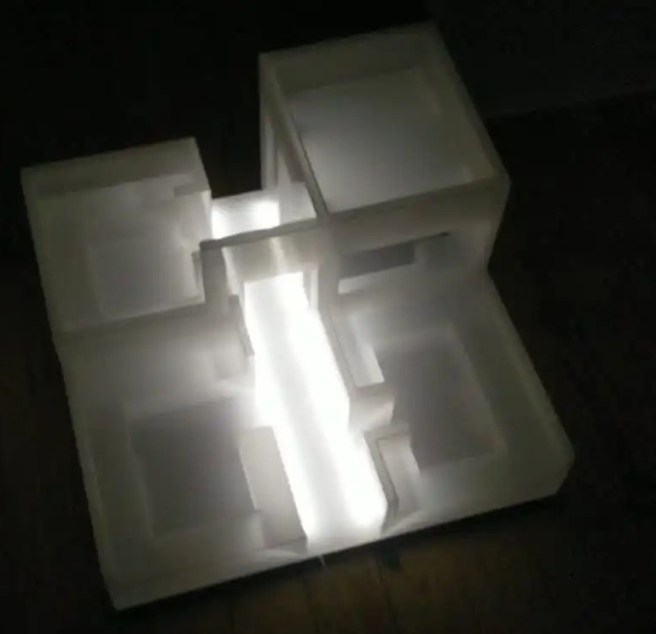
Part of Nkambule’s model which represents a “modern”Bokoni society.

They also found a digital way of showing the enduring solidity of the dry-stacked stone used in the construction of a Bokoni homestead, which can be accessed by a visitor to the pavilion on their smart phone.

This contemporary interpretation of traditional social practices, as they are manifested in spaces and thresholds still being built today, connects our distant history with our present and, through re-interpretation, sets new trajectories for the future.

Zone II is titled The Council of (non-human) Beings, and contains contemporary drawings on the topic of animism in architectural practice.

Here the work of Dr Maape is presented in a space inspired by the caves of Kuruman in South Africa — spaces that are dark and removed from day-to-day life, and primarily used for initiation rituals.

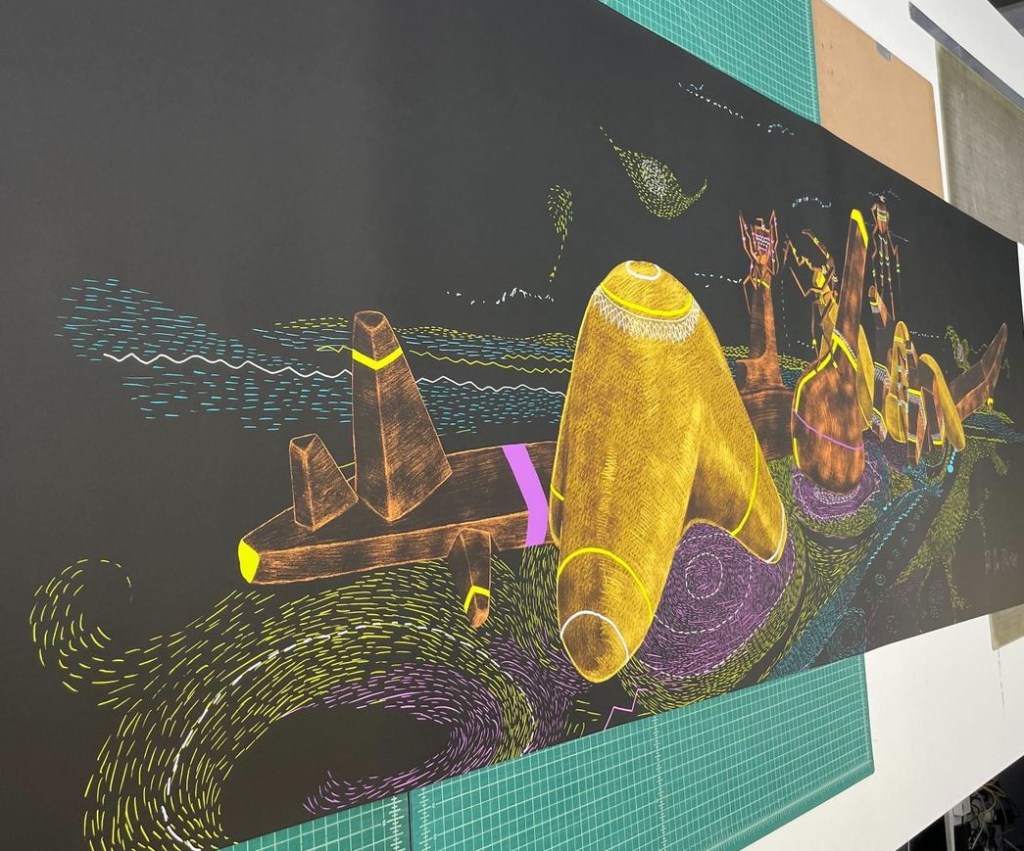
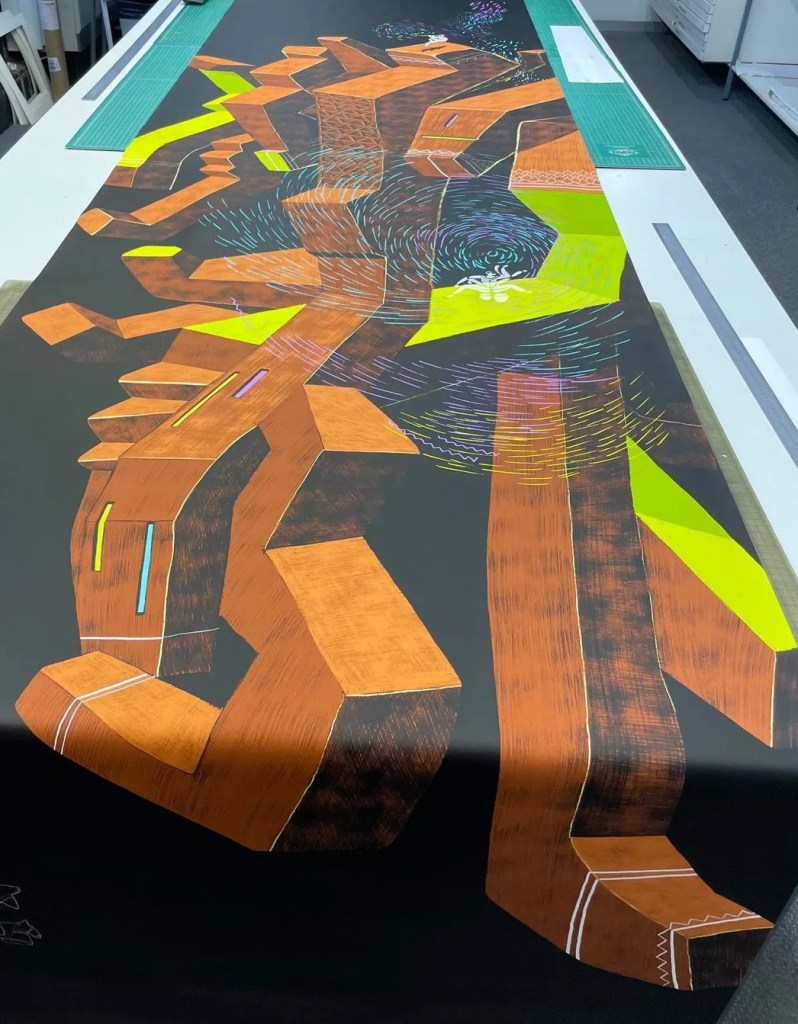
 In this setting, large digital prints of the living landscape, drawings that are themselves set in blackness, emphasise the value of dark and black spaces within the cultural practices of indigenous communities of South Africa.

Initiates are challenged to face their fears by facing the stereotypes of ‘dark/black as evil’, the ‘dark continent’ or ‘black magic’, inverting and exposing the false and sinister narrative of the metaphor of ‘light’ or ‘enlightenment’ in its colonial manifestation.

Part of Nkambule’s model which represents a “modern”Bokoni society.

Combining these influences with the indigenous knowledge of his home, Maape generates works that question the way we see the earth on which we design and build.

He proposes a practice that seeks the council of all beings, human and non-human, in the production of architecture, and suggests that it is in reframing concepts like ‘context’ or ‘site’ that we may be more responsive to our current planetary crises

 Zone III is titled Political Animals, and presents the organizational and curricular structures of South African architecture schools as architectural objects.

They invited students and staff from South African schools of architecture to construct sample representations of the Laboratories of the Future in which they are embedded and of which they are part. The competition format was adjusted to engage with Stephen’s research and curatorial project, resulting in six entries constructed with the assistance of Johannesburg-based ModelArt.

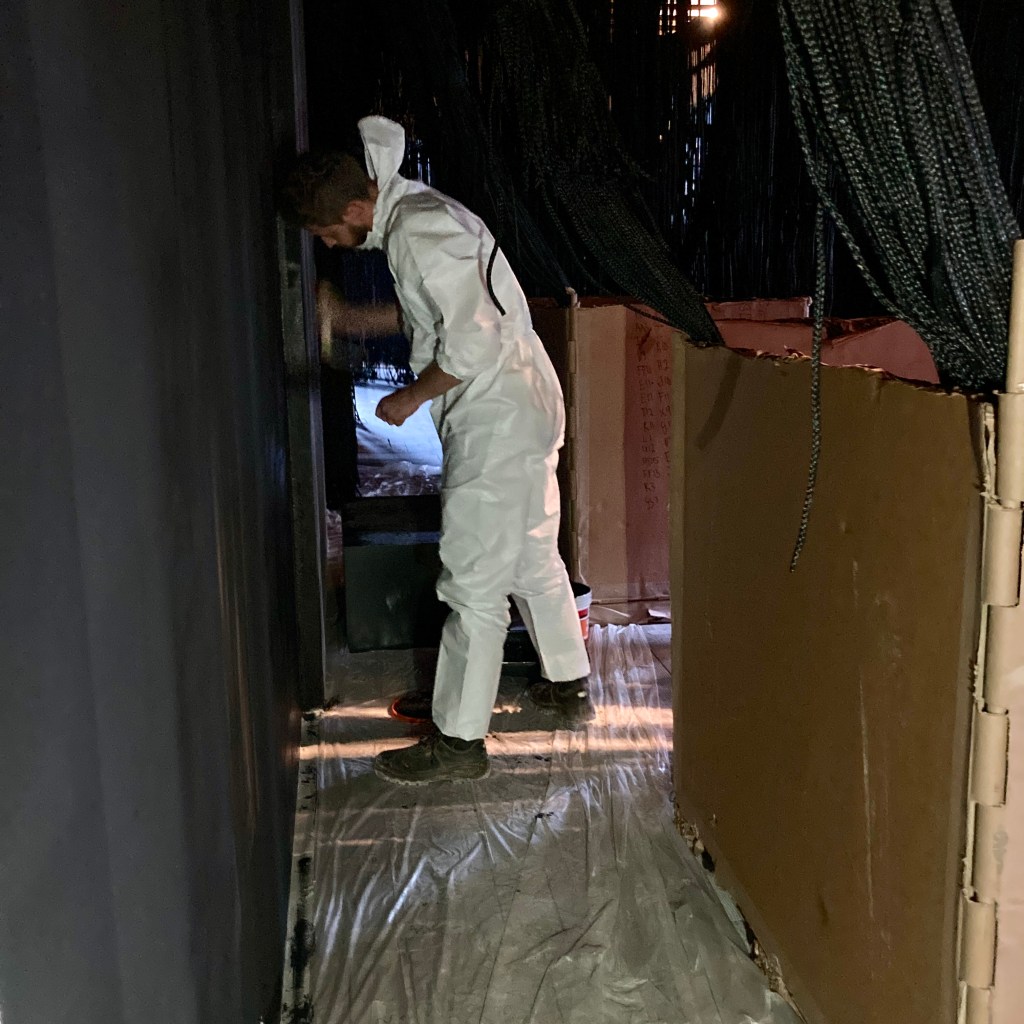
In the process of being transformed.

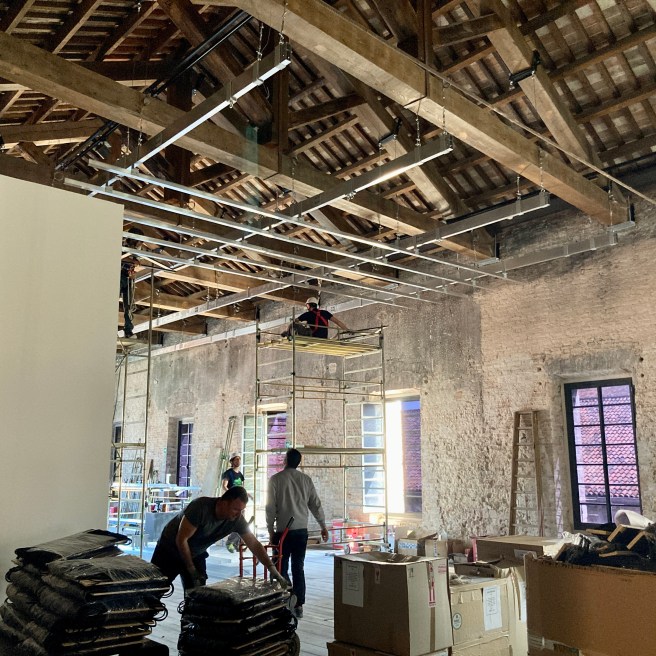
Most of this has been done in South Africa, because of the rand/euro exchange. Carla flew to Venice this a month ago to start co-ordinating the installation of the pavilion and the rest of the crew involved in the setting up, including the other three core members, followed a week later.

It is a major undertaking, but if one views their narrative (some of which I hopefully captured) with images of what’s to come, the intent and inclusive nature with which the project was put together and run, South Africans should be holding thumbs and be proud  of this young team of architects who have taken our architectural heritage with visions of the future to represent us at the prestigious 18th Biennale Architectura 2023.

 * The 18th International Architecture Exhibition, titled The Laboratory of the Future and curated by Lesley Lokko, will be open from 20 May to 26 November 2023.

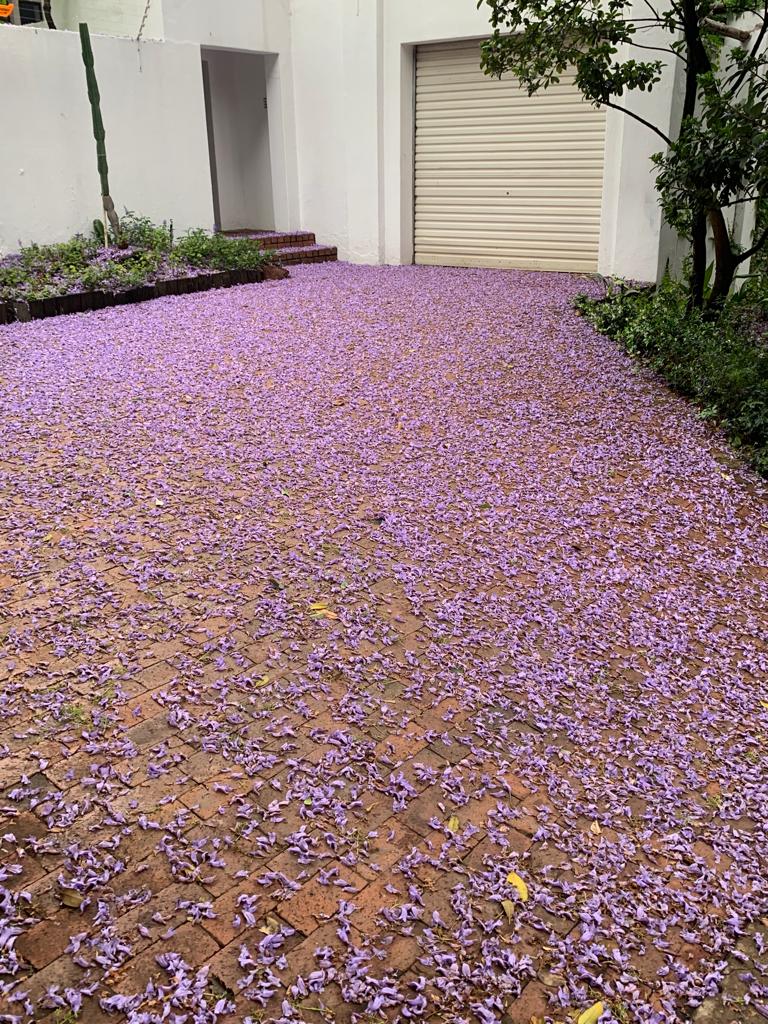
THE PURPLE HAZE OF PRETORIA’S JACARANDAS CREATES THE PERFECT PICTURE OF A CAPITAL CITY

DIANE DE BEER

PICTURES: Thomas Honiball

PRETORIA, jakarandastad,

Dis weer Oktobermaand…

Miskien is dit die rede dat

Ek só verlang vanaand,

Want hoeveel jare het jy nie

My life en leed gedeel

En stil geluister wanneer ek

My ou kitaar bespeel

This is the first verse of singer/songwriter sublime Koos du Plessis’s ode to Pretoria.

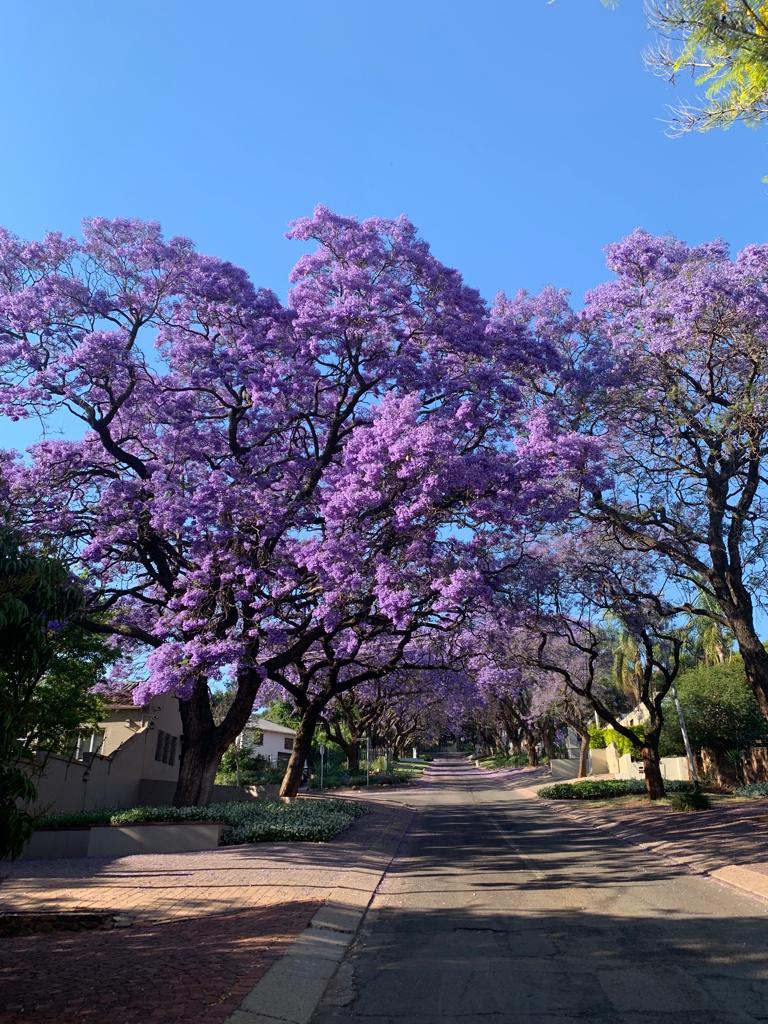
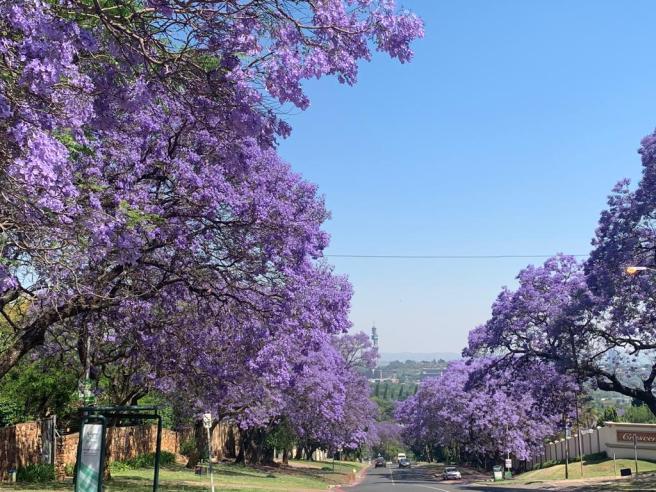
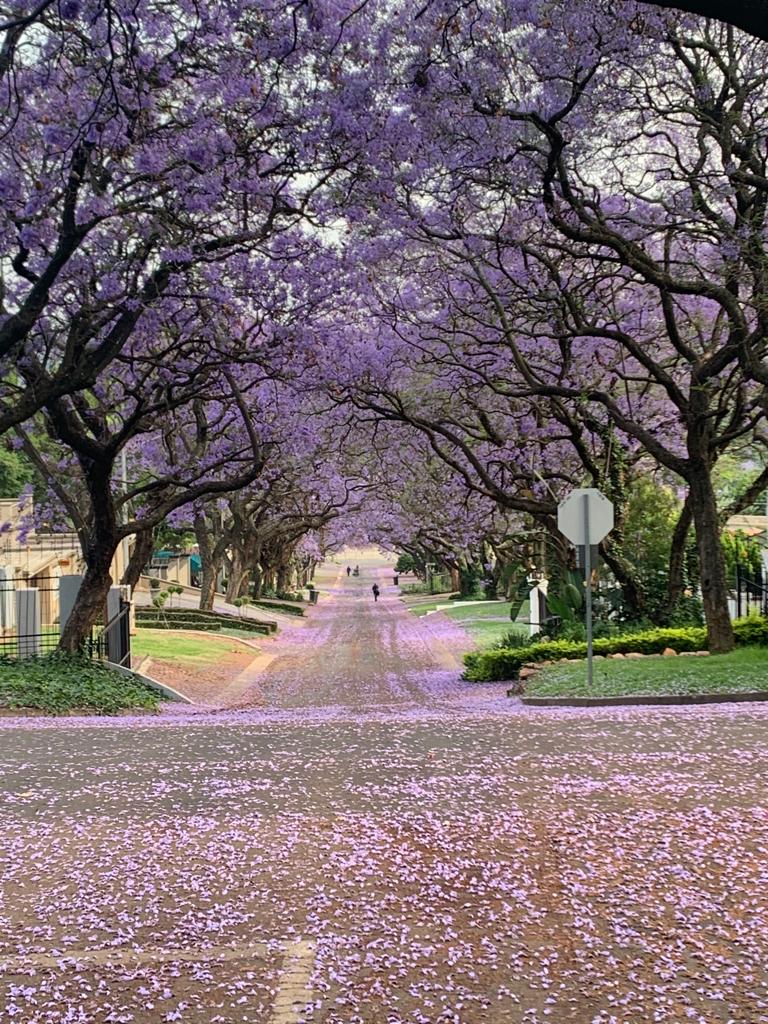
He frames his beloved city in a cloak of purple haze, which is how many of us identify the most colourful capital city.

But much controversy has surrounded this emblem of the city over the years and there are visions of fights for this particular tree and the replanting and upkeep of the city’s pride for those of us living here long enough.

Money talks, and the hordes of tourists who visit the city annually is proof enough for everyone who witnesses this influx that, at least for the moment, Jacarandas are allowed to flourish and bloom in all their splendour.

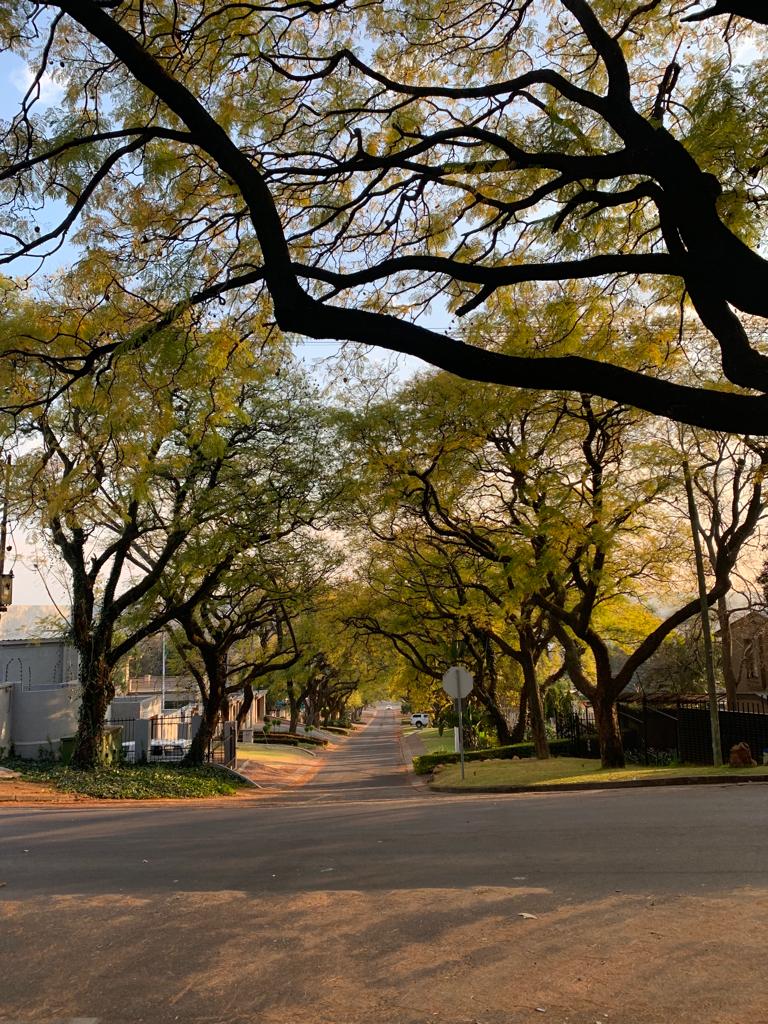
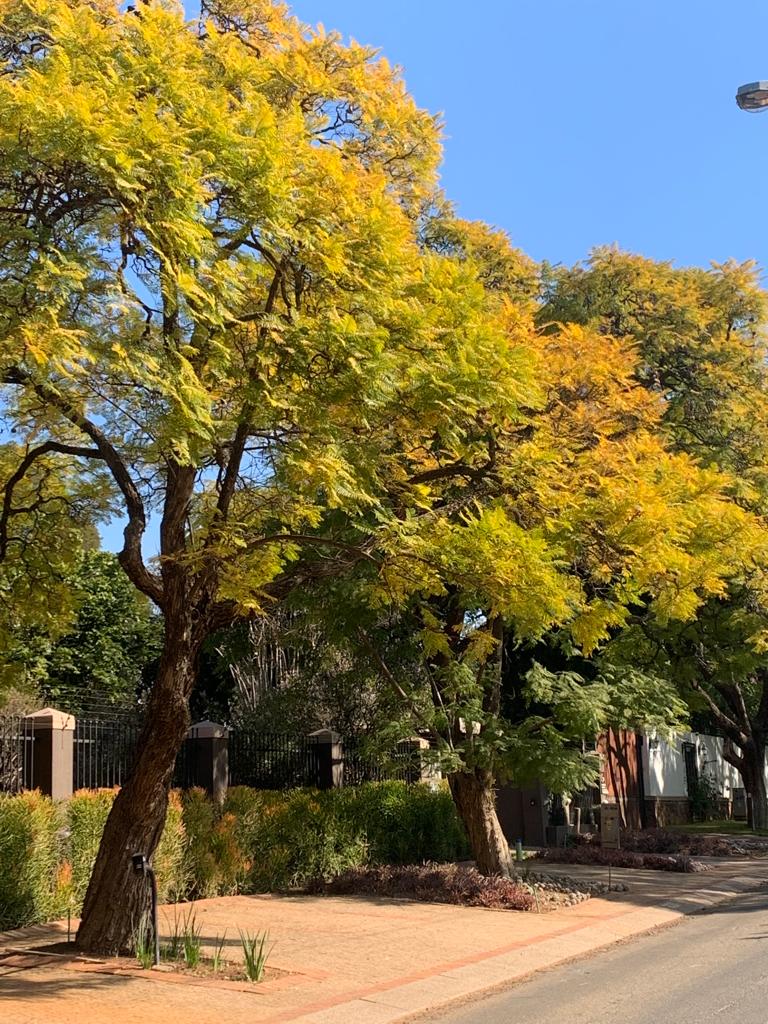
The four annual stages of the Jacaranda tree

Jacaranda trees were first imported from Rio de Janeiro by Baron von Ludwig of Cape Town in about 1830. A travelling nurseryman from Cape Town named Templemann brought two Jacaranda trees to Pretoria in 1888. He planted them in the garden he had laid out for Jacob Daniel (Japie) Celliers at Myrtle Lodge in Sunnyside, shortly after it was established as Pretoria’s second suburb.

In the 1890s Celliers secured a concession from President Paul Kruger to plant trees in Groenkloof for the Government of the Republic. James Clark, a wholesale and retail seedsman, florist and nursery, received the order to import seeds from Australia.

The story goes that among the consignment of eucalyptus seeds Clark imported for planting in Pretoria in 1898, a packet of Jacaranda seeds had found their way.

On 16 November 1906, the 51st anniversary of the founding of Pretoria, Clark presented 200 Jacaranda trees to the City Council as a birthday present to Pretoria. These trees were planted in Bosman street in Arcadia Park where the Pretoria Art Museum was established in 1864.

Frank Walton James was appointed as town engineer in 1909. He suggested the planting of Jacarandas in all the streets of the town to enhance the status of Pretoria as the proposed capital of the Union. When Jameson left the Council in 1920, fewer than 6 000 trees had been planted. By 1939, with the constant encouragement of Jameson, the number of trees had risen to 17 000.

Today there are approximately 40 000 Jacaranda trees in the streets of Pretoria.

And these facts were all handed to me in a letter by Jacaranda activist, architect Thomas Honiball, a man who has always battled and fought for the preservation of Pretoria as the beautiful city it is.

Some of us still remember the huge controversy about the west façade of  Church Square, which was going to be demolished, but was finally left intact thanks to Honiball and a committee he had established with exactly this in mind. And the city proudly hails this part of its heritage today.

The aforementioned letter was written with a request to the Minister of Agriculture for the planting of Jacaranda trees in the city of Tshwane – and fortunately those battles were hard fought and won.

For Thomas, who lives in Nieu Muckleneuk with a spectacular view of Jacaranda blossoms when they are in full bloom, these trees hold and embrace the spirit of the city. He believes they were first planted to establish the character of a city that would be named the country’s capital – and thus it was.

“We have something that no other city boasts in such abundance,” he says. He also argues it is especially the city’s layout, the long streets, and the koppies,  that allow for the spectacular showing of this tree Pretorians have claimed for themselves.

And he has many anecdotes to claim the city’s towering Jacaranda status. “I was told the story that Elon Musk’s grandfather when he flew over the city and saw the spectacle of the purple blooms was so overwhelmed, he emigrated here,” he says.

He also remembers as a young Free State lad paying his first visit to the city and sighting the purple spectacle, how it overwhelmed him. “It was just so pretty!”

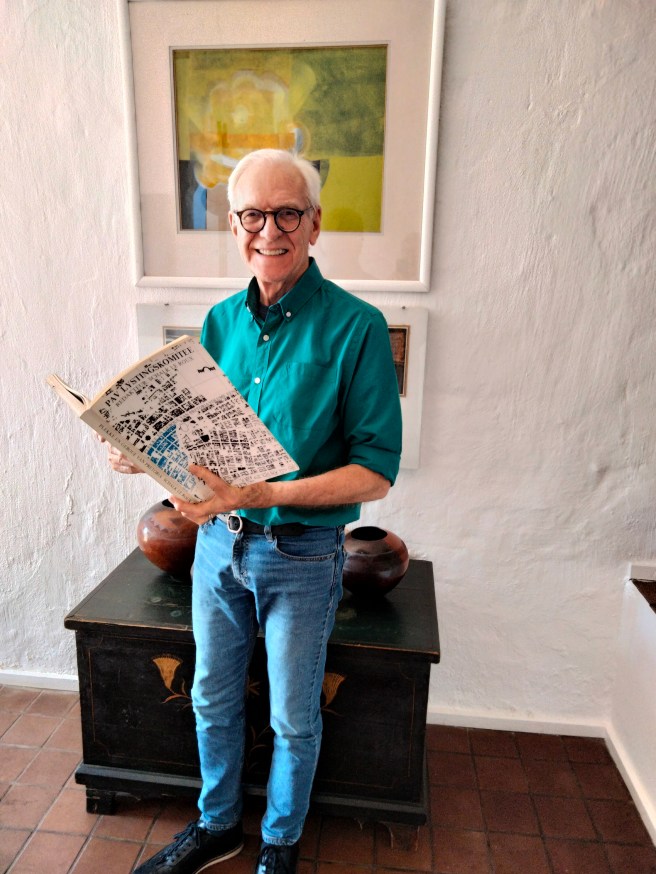
Thomas Honiball and the book of listings he instigated.

That’s not all he achieved in this city. He was also instrumental in the production of a book with the listing of buildings worth holding on to, often used by city planners to save specific buildings which form a part of the city’s heritage. It’s not something South Africa has always done well and we need these visual planners who understand the importance of cherishing the old while celebrating the new.

He is very aware that everything cannot be kept simply because its old. There’s a saying that if a city centre doesn’t change, keep up with the times, it will die.

Fortunately for Tshwane, we have citizens like Thomas Honiball in our midst who have the city’s interests at heart and understand the importance of the picture perfect visual that keeps us all mesmerised.

DIS BAIE LEKKER BY DIE SEE

Publishing this following story about a Durban/Kwa-Zulu Natal visit a month before the horrifying insurrection was quite tricky. In fact it was going to appear a day before the riots – but fortunately didn’t. In the meantime we’ve all been holding our breath so I’m hoping and have checked the places mentioned and nothing has changed apart from the city (I am told) getting a clean-up around elections, so please, if you’re planning to holiday in that region in the coming festive months, have a blast.

And for those who don’t understand the heading: It’s very good at the sea, or some such!

DIANE DE BEER gives a few impressions:

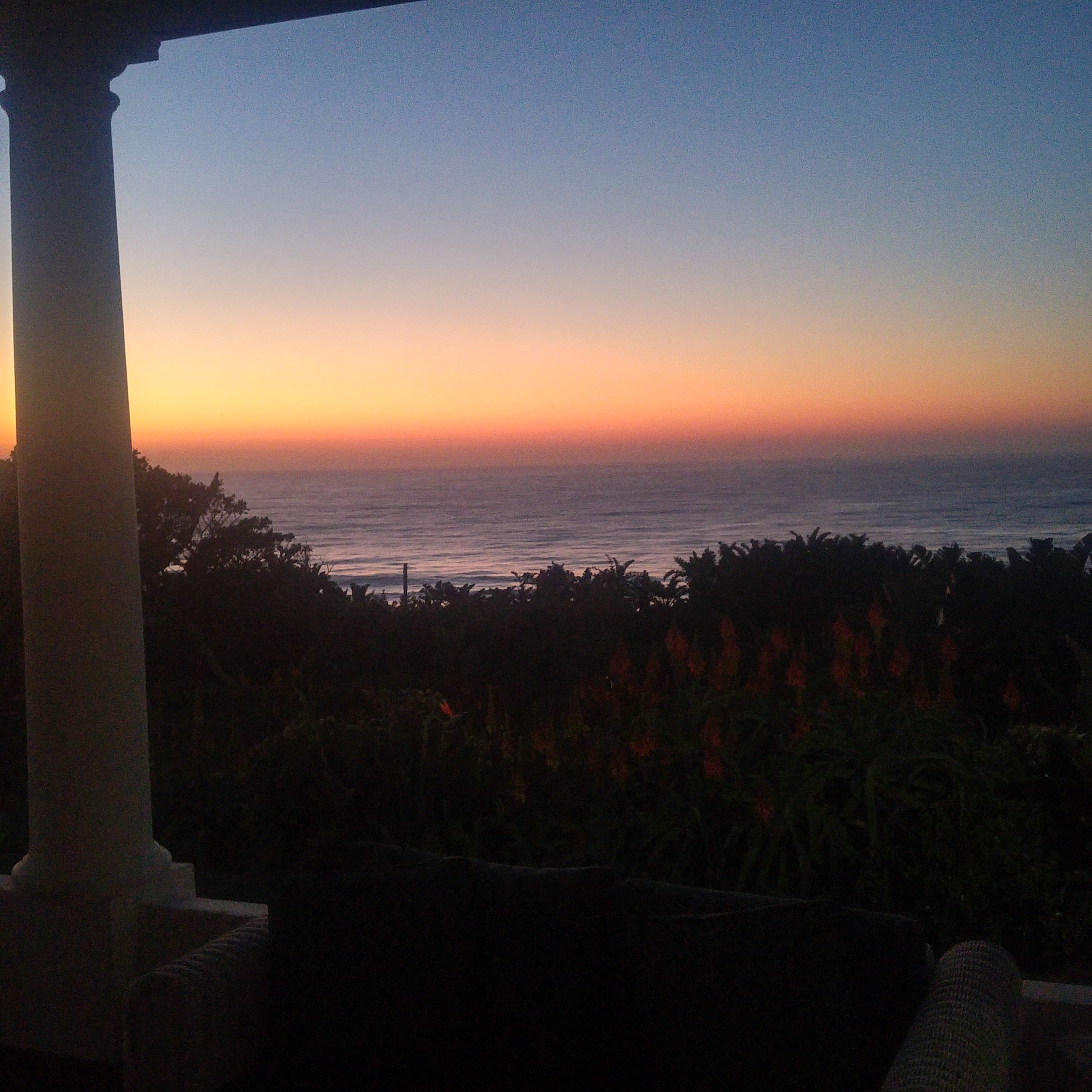
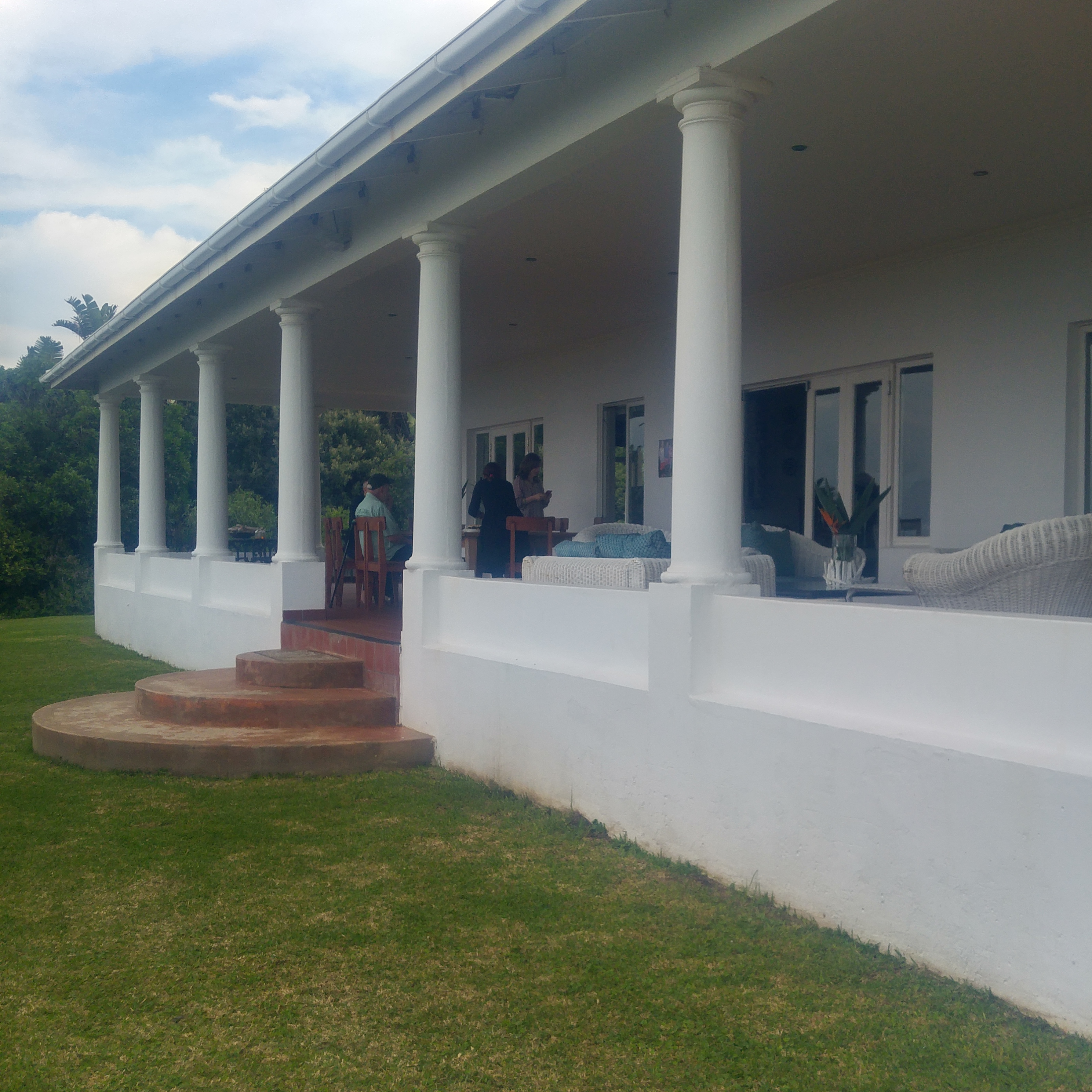
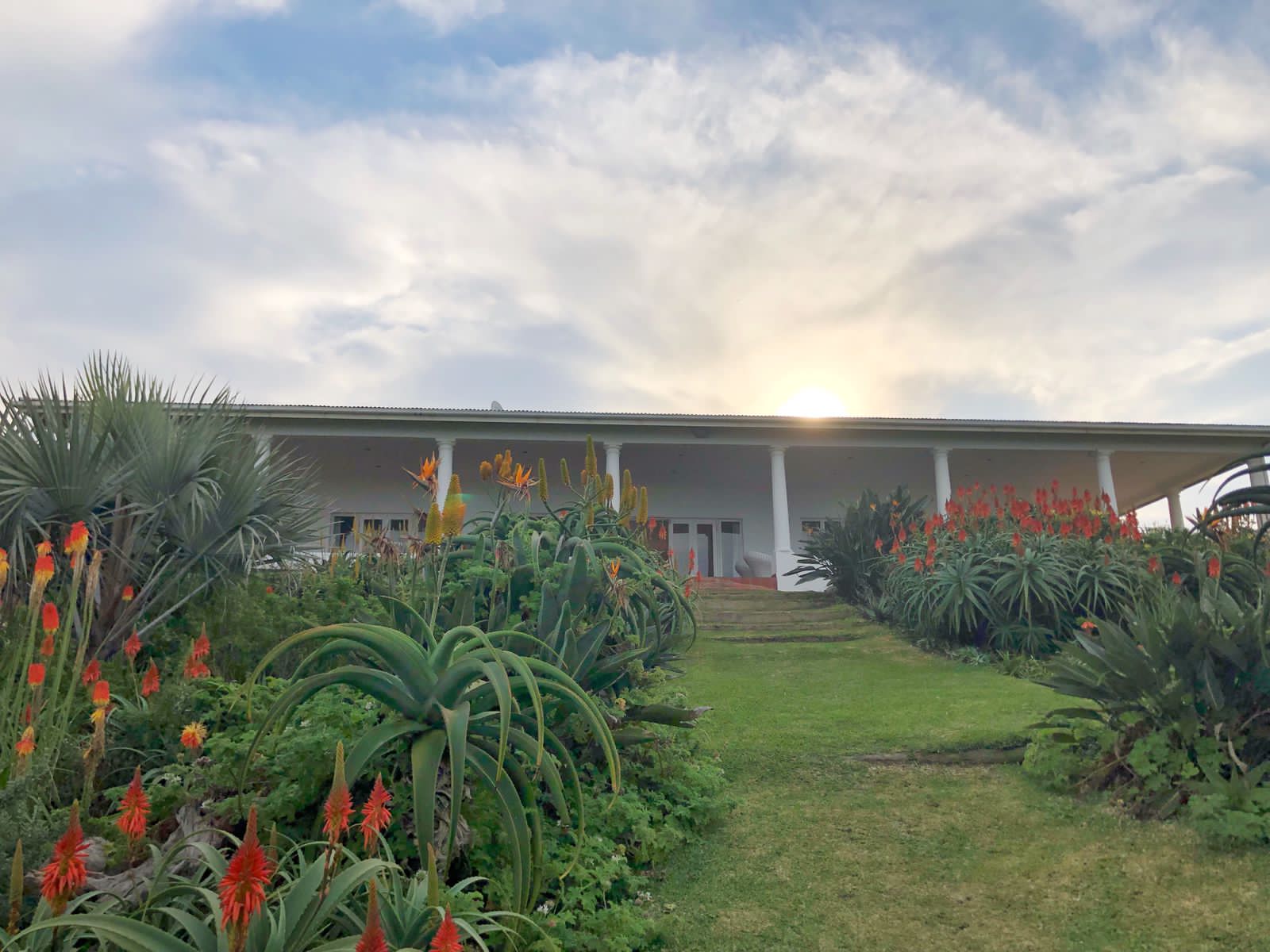
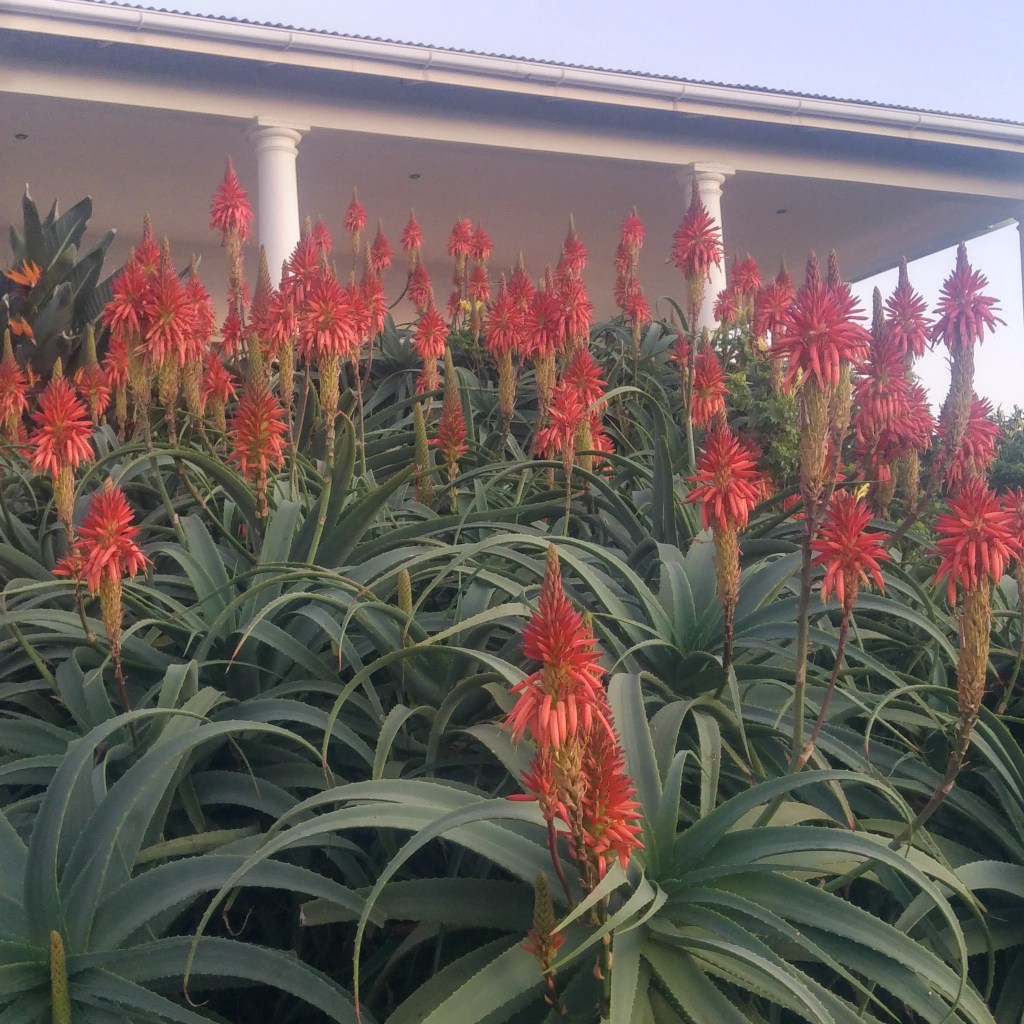
Our final birthday destination: Shangrila Beach House (in Bazley), a self-catering house, cottage and chalet with an exquisite garden designed by indigenous landscape gardener and botanist Alice Pooley.

When a friend decided to celebrate her 50th birthday on the Kwazulu-Natal South Coast recently, five of us decided to travel to Durban for a few days prior to the celebrations to explore especially the art and the food in a city none of us knew at all.

Art and culinary adventures are passions for all of us and we had read enviously about the hot spots in both Durban and the coast and we were excited to go on this adventure.

Travelling down by car, our first stop was for lunch in the region of Van Reenen’s Pass where two of our companions had previously enjoyed some excellent meals. The road to Oaklands Country Manor with a name change to Oaklands Farm Stay turns off (for a few kilometres) at the little town of Van Reenen and is easily worth the detour.

Together with the handful of super siblings (four sisters and a brother I think) who are in charge, the setting and the farm itself is special. On the day we stopped which happened to be a Sunday, there was a polo match in progress but quite a few families were occupying the outside tables with spectacular views, ready for lunch.
The splendours of Oaklands Farm Stay.

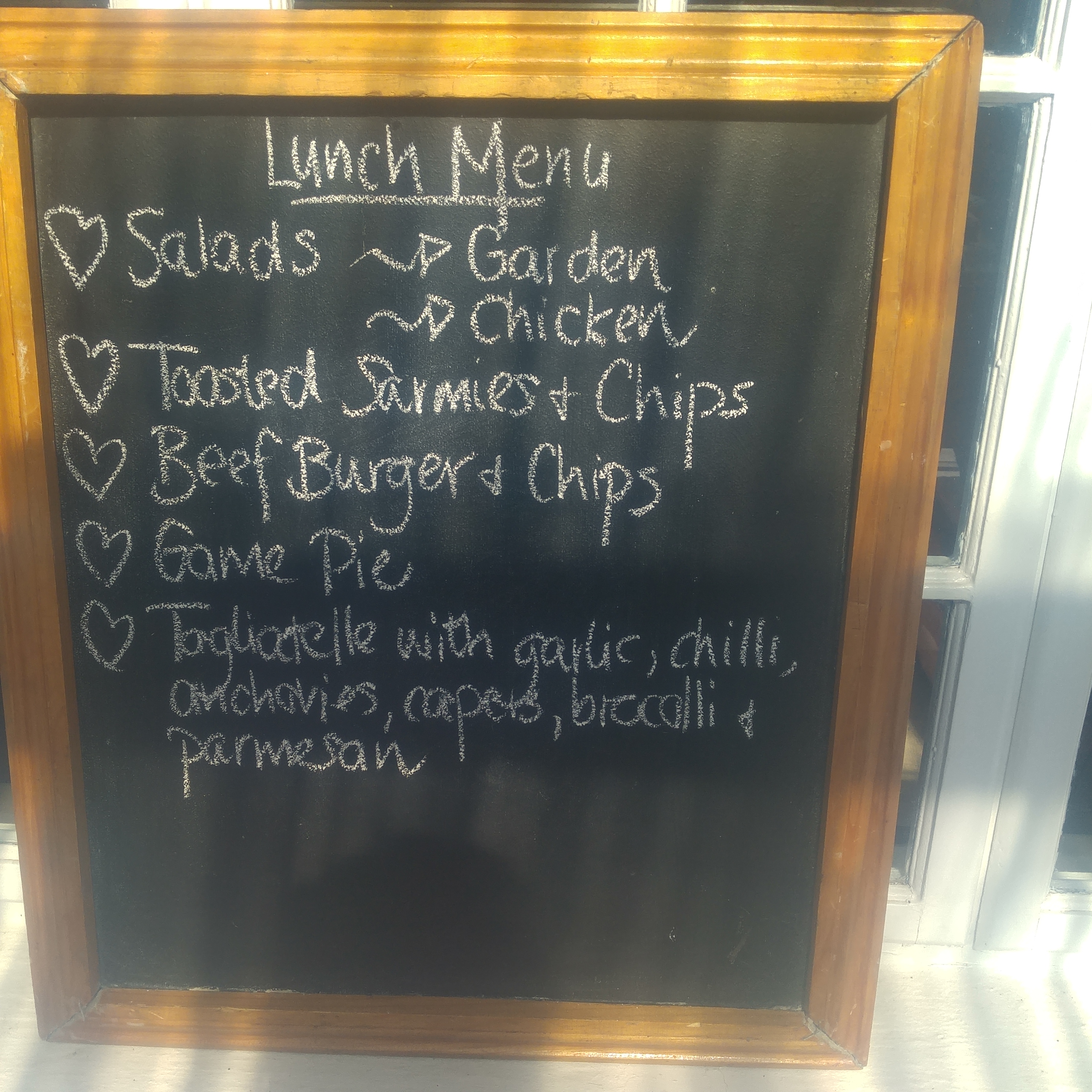
The menu was perfect for travellers, simple but with enough variety to cover the spectrum.

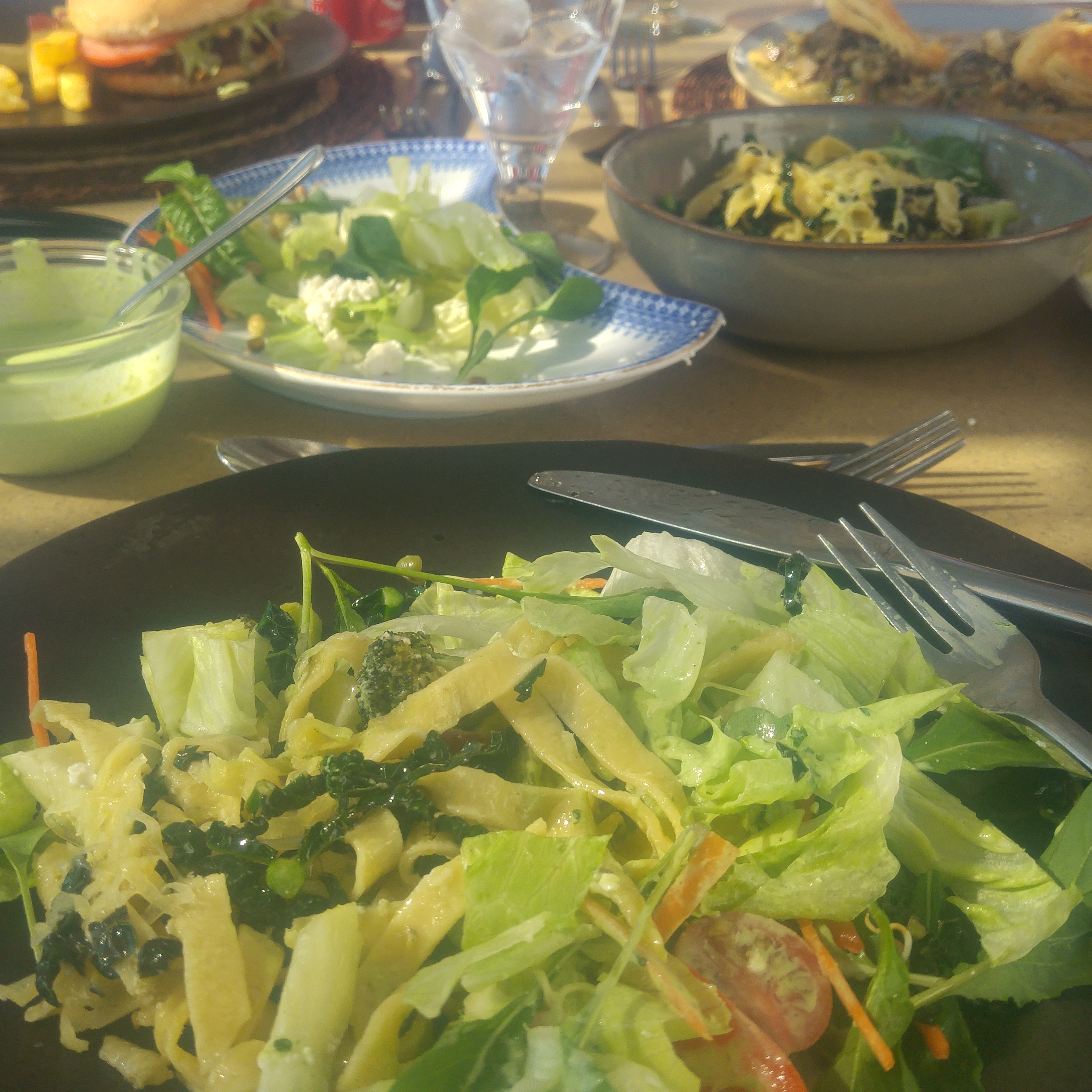
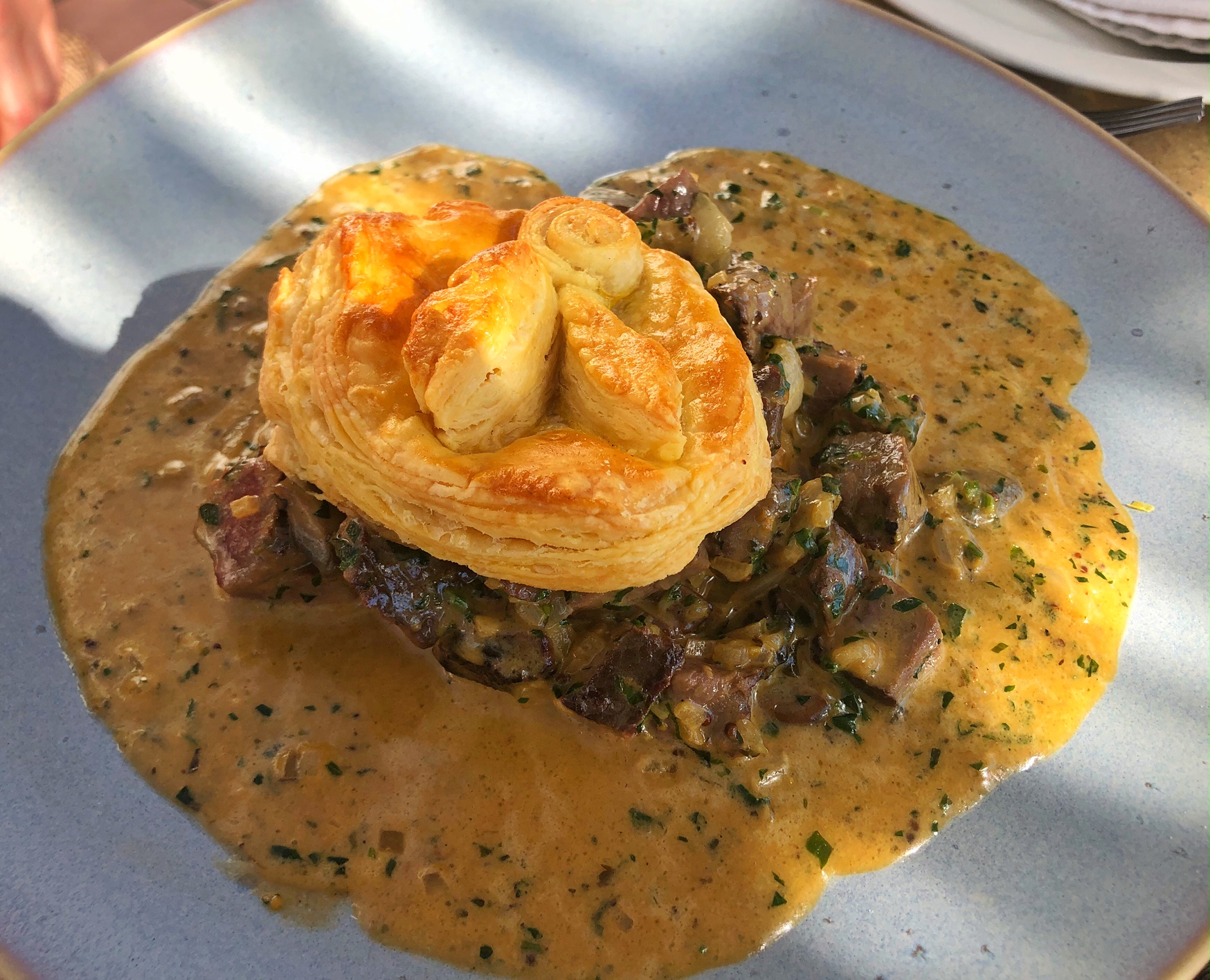
Salads either garden or chicken, toasted sarmies with chips, beef burger and chips, game pie or tagliatelle with garlic, chilli, anchovies, capers, broccoli and parmesan were the options. Our table covered the full menu and while the rest of the team started with a special cocktail, as the dedicated driver, I went for the homemade ice cold kombucha-style mixer, which was spot on.

The food was delicious, (I shared the game pie and the tagliatelle with the birthday girl because we both were undecided), but so was the atmosphere, the company and the hosts. We will be back whenever we travel this way.

We had ample sustenance for the rest of the journey which isn’t an easy one with all the trucks making their way to the coast. The bill without the lunch drinks was R250 per person (coffees included) which was a really good deal.

Durban was a huge surprise, great fun but not exactly what we expected. We took into account that we were there just before a strict lockdown and as we arrived the province was struggling with high covid numbers.

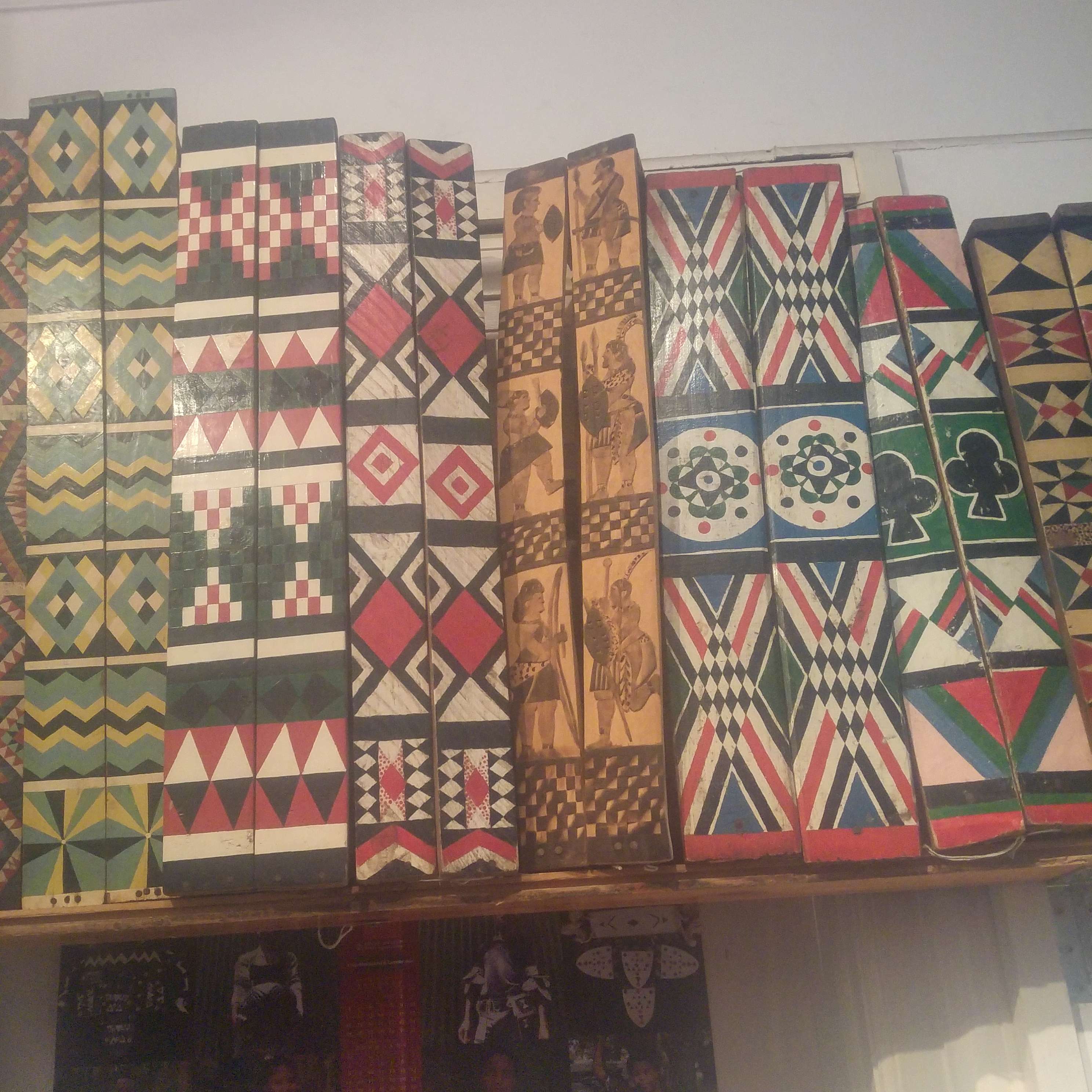
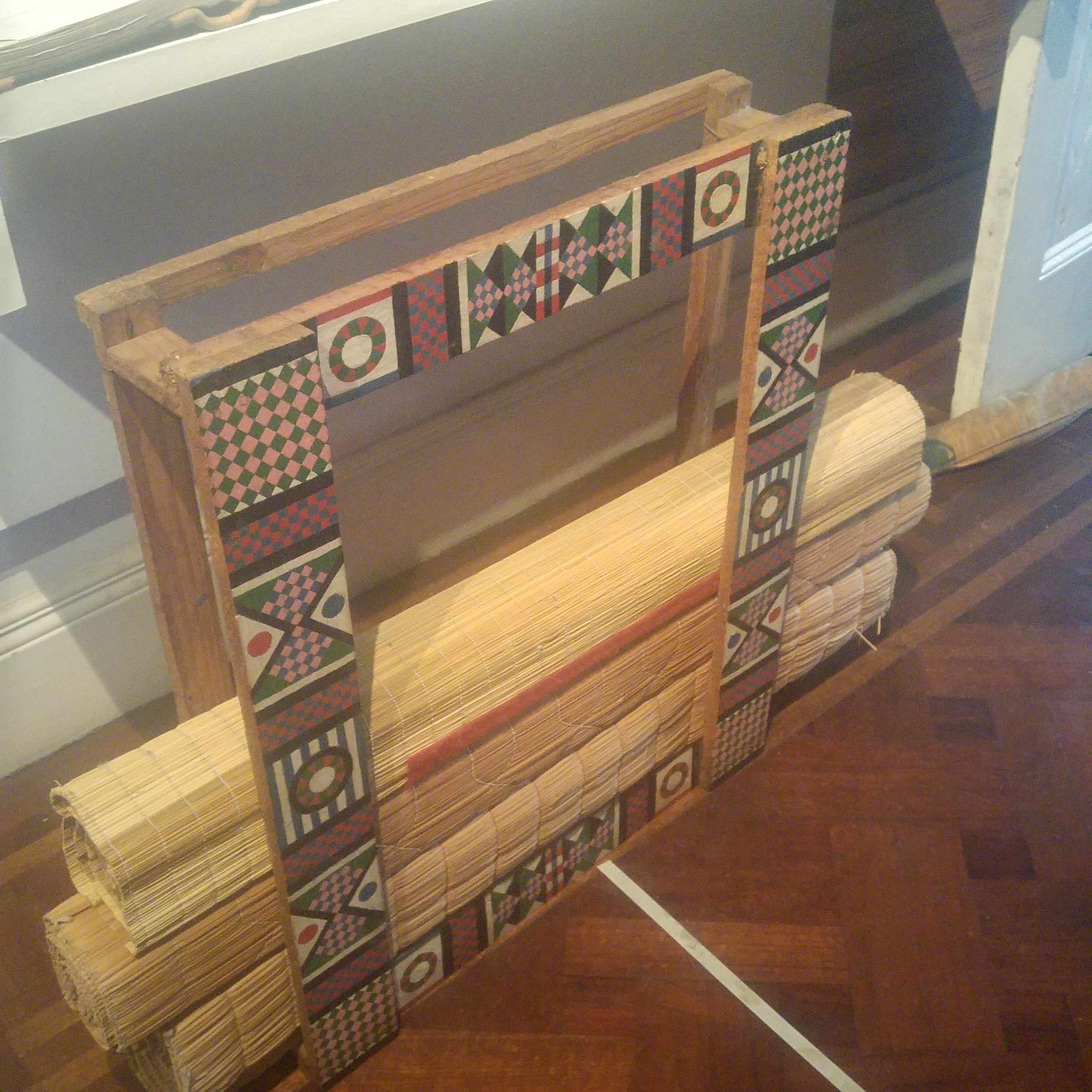
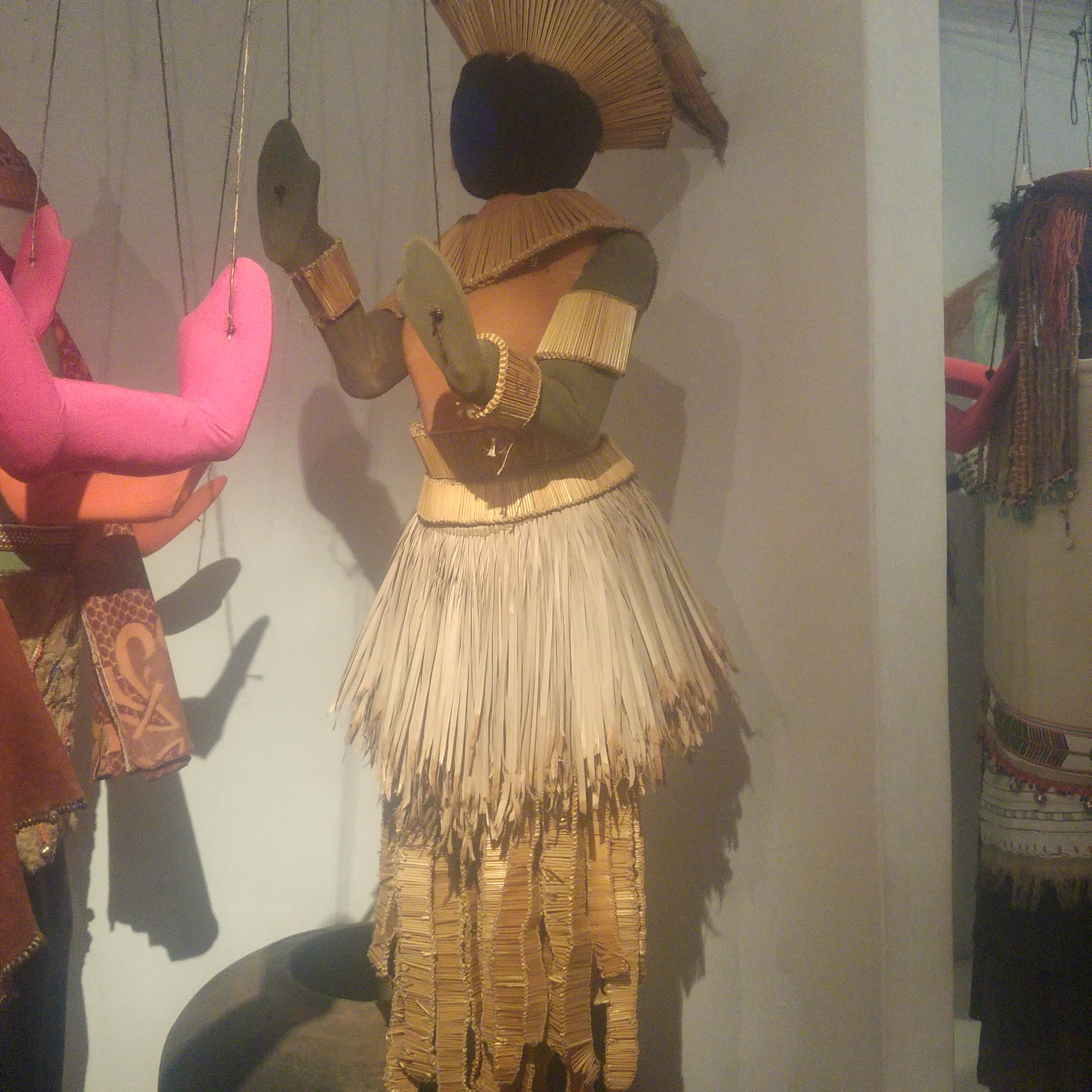
The splendours of the Phansi Museum.

On the art side we had two excursions: the one was the truly mind-blowing Phansi Museum (with on the side the exquisitely stocked African Art Centre if you’re in the need for some serious local craft shopping) and the other the Kwazulu-Natal Society of the Arts with a vibrant indoor/and out coffee bar/deli attached which was buzzing when we arrived.

The Phansi Museum will blow your mind. The breadth and scope of the collection is simply overwhelming and one wonders why this isn’t duplicated in every city in this country. There’s hardly a more accessible way to introduce the depth of the different cultures in South Africa. And I would travel all the way to the coast if only for a visit to this world-class museum.

Taking a guided tour with the embracing and embraceable guide, it’s amazing to discover the wealth and cultural riches of our people. Even if you are aware of the diversity out there, to see it all gathered together is magnificent. And there’s much to admire and much to learn, a truly heavenly experience.

This was followed by the Society of Arts also in the vicinity but unfortunately they were setting up for their next exhibition, which was a development project. We were, however,  enchanted that in spite of the lack of any art happening at that precise moment, the café was packed. That is good news and I want to appeal to all the large art institutions around the country, in Pretoria in particular (The Pretoria Art Museum, The Javett and Association of Arts particularly on my mind), to find a way to serve at least good coffee with some refreshments. It’s a way of drawing people in whether for an exhibition or simply to gather for some bonhomie.

This particular space is enchanting, and you could see that the refreshments and food were as good and it has to have that stamp of approval. Nothing could be more welcoming and it makes perfect business sense if you get it right. They also have a fun museum shop and anyone traveling to world museums, will know how important those are. Our art venues have to find ways to appeal to visitors. Once there, they will hopefully be captivated by the art.

We popped into one independent gallery just off the well-known Florida Road, but they were also busy setting up and apart from these three, that, according to what we discovered and were told, was it.

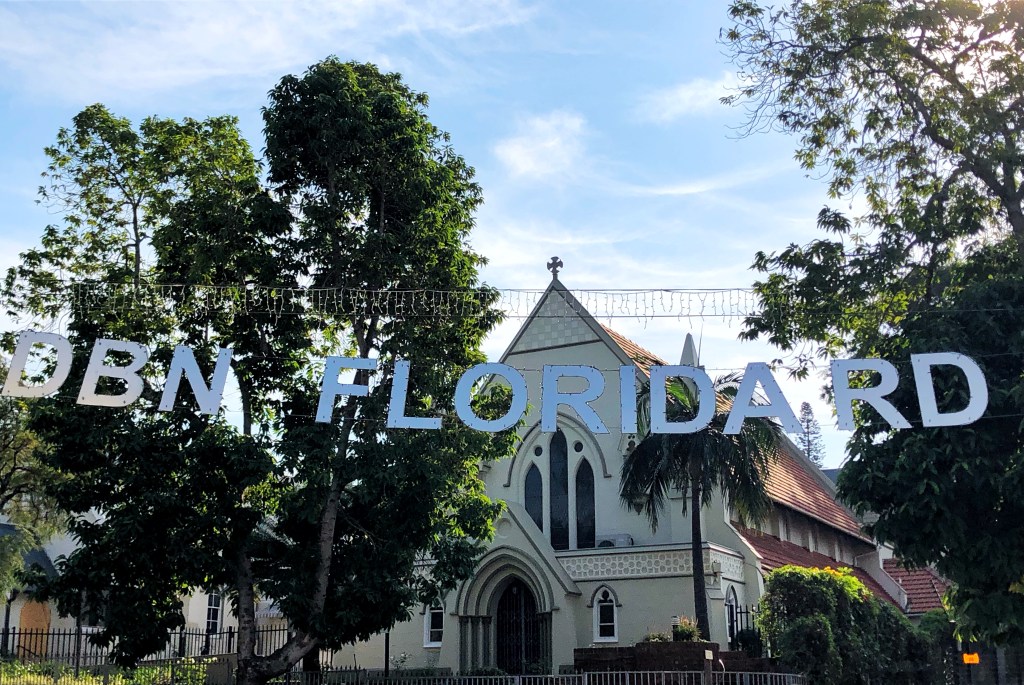
Florida Road, a destination we returned to time and again.

On the food side it was also hit and miss. Our first stop was a breakfast/coffee shop which came highly recommended in an online paper and sadly was a huge let down. When writers go all out with their praise that might not be warranted, you are then reluctant to follow their advice. With only a few days at our disposal, we didn’t want any more disappointments.

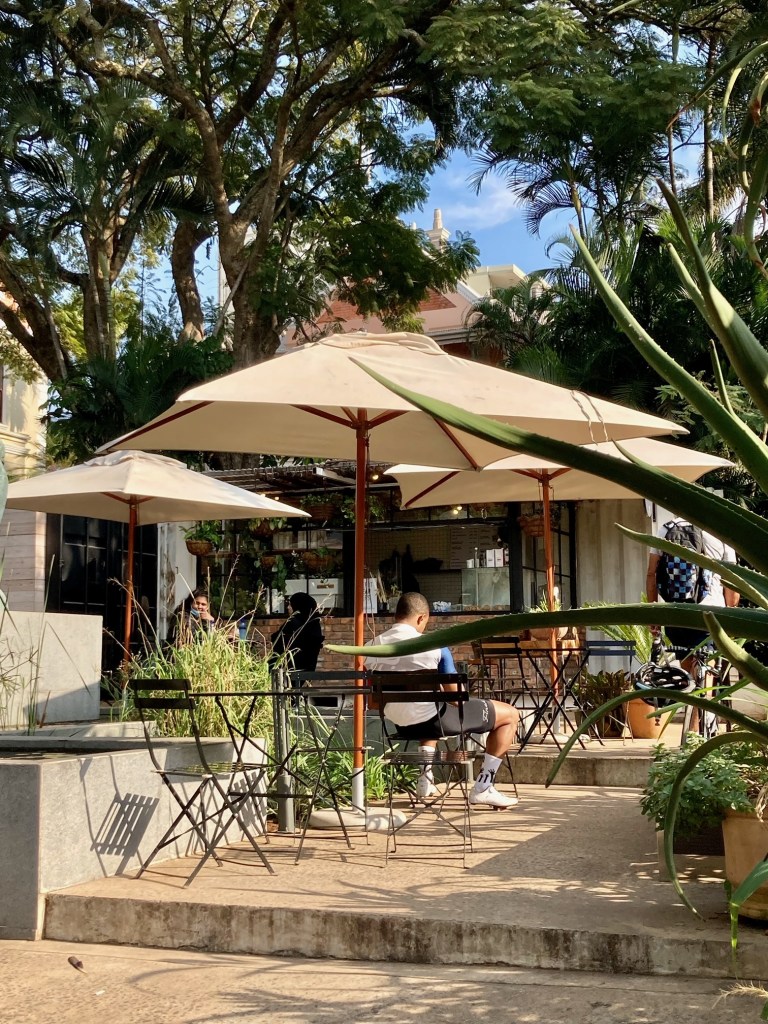
Fortunately we also had some pointers from friends and locals and we started with what for me was a real find and a must if you go to the city. Glenwood Bakery and its pumping pavement area is an instant comfort. These are locals and you can see this is their regular haunt.

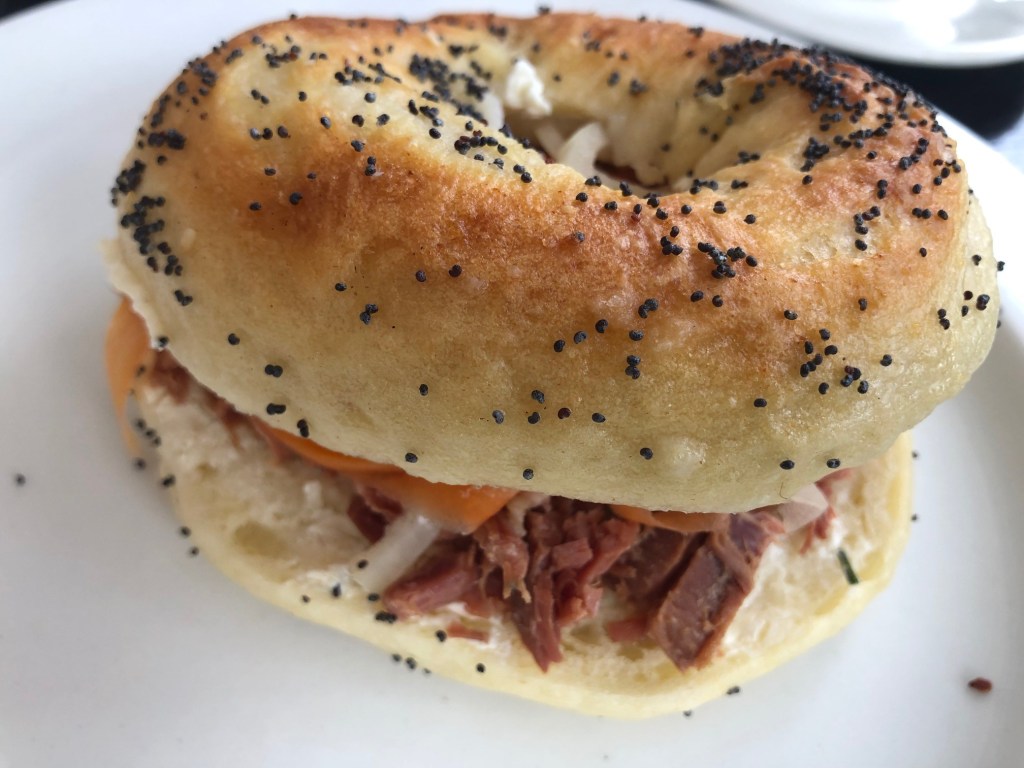
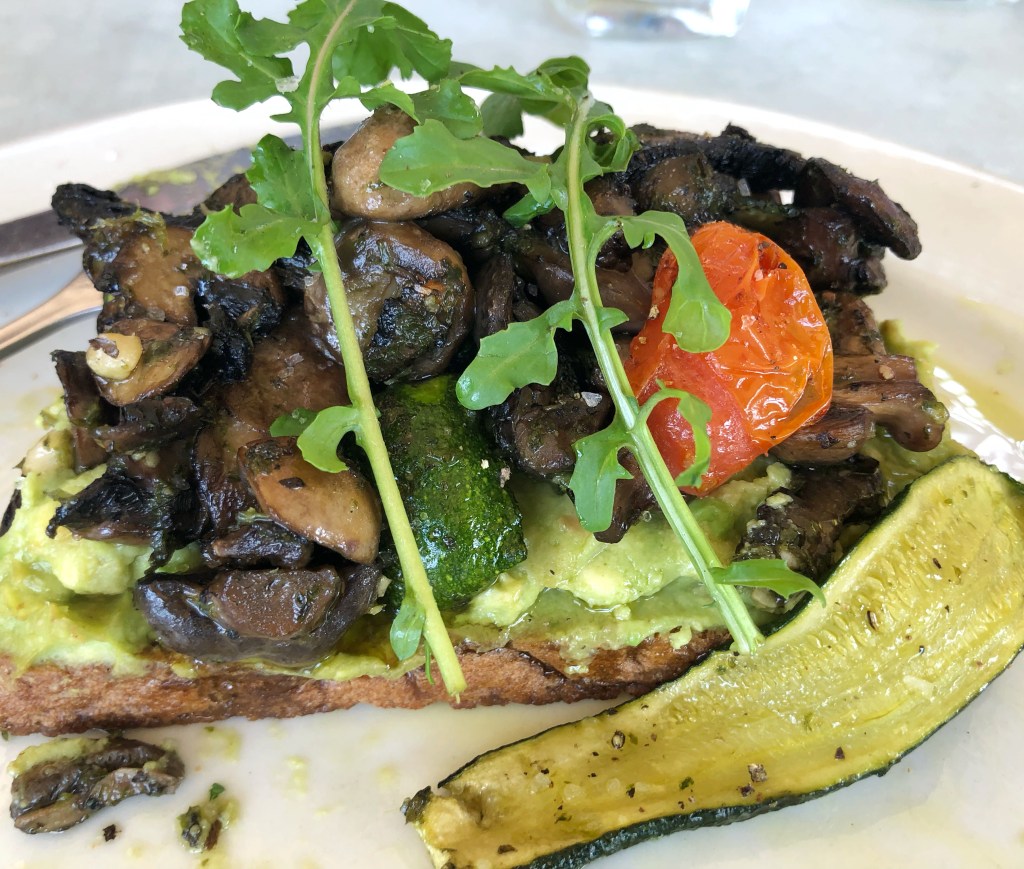
Our visit explained why. Starting with the bill, breakfast with two cappuccinos each, cost R100 per person, which was quite extraordinary considering the quality of the food. Bread and pastries is a big thing at the Bakery and our choices were as varied as our taste – from my mushroom and egg affair which was perfect in size, produce and preparation to bagels with various toppings, and even sweet delights with flavours like hazelnut and apricot which had to be set aside because things were flying off the shelves. We were told probably to preserve freshness, only a very specific amount of baked goodies are prepared each day, so once they’re gone, that’s it.

After our previous flop, this was at the other end of the cuisine spectrum and one to keep in mind if you need a failsafe option. It’s guaranteed!

Of course we had to do Indian and the name we had was Palki, which a few sources had recommended. On our last night we wanted to do take-out and as there were restrictions anyway, it worked out well.

Our cuisine connoisseurs made the choices and we had a mixed bag, which in this style relates to a food feast. Again it is the option to go for when you have such a diverse group of diners, all foodies but with different tastes. But it also allows you to be adventurous in some of your choices and to add new dishes to the group’s repertoire. This time round, it was the not to be missed paratha and dhal makhani, both of which should be part of any Indian meal. Added were a paneer driven dish, a chicken curry and a brinjal pakora. And for the solo diner who is reluctant to be too daring, there’s always a Lamb Curry mince.

And that’s how we even drag the less adventurous along who eventually cannot resist and grow their palate. Palki is not cheap, but it’s quality with great flavours – which is what we were told.

A series of coffee shops and ice cream parlours to choose from in Florida Road.

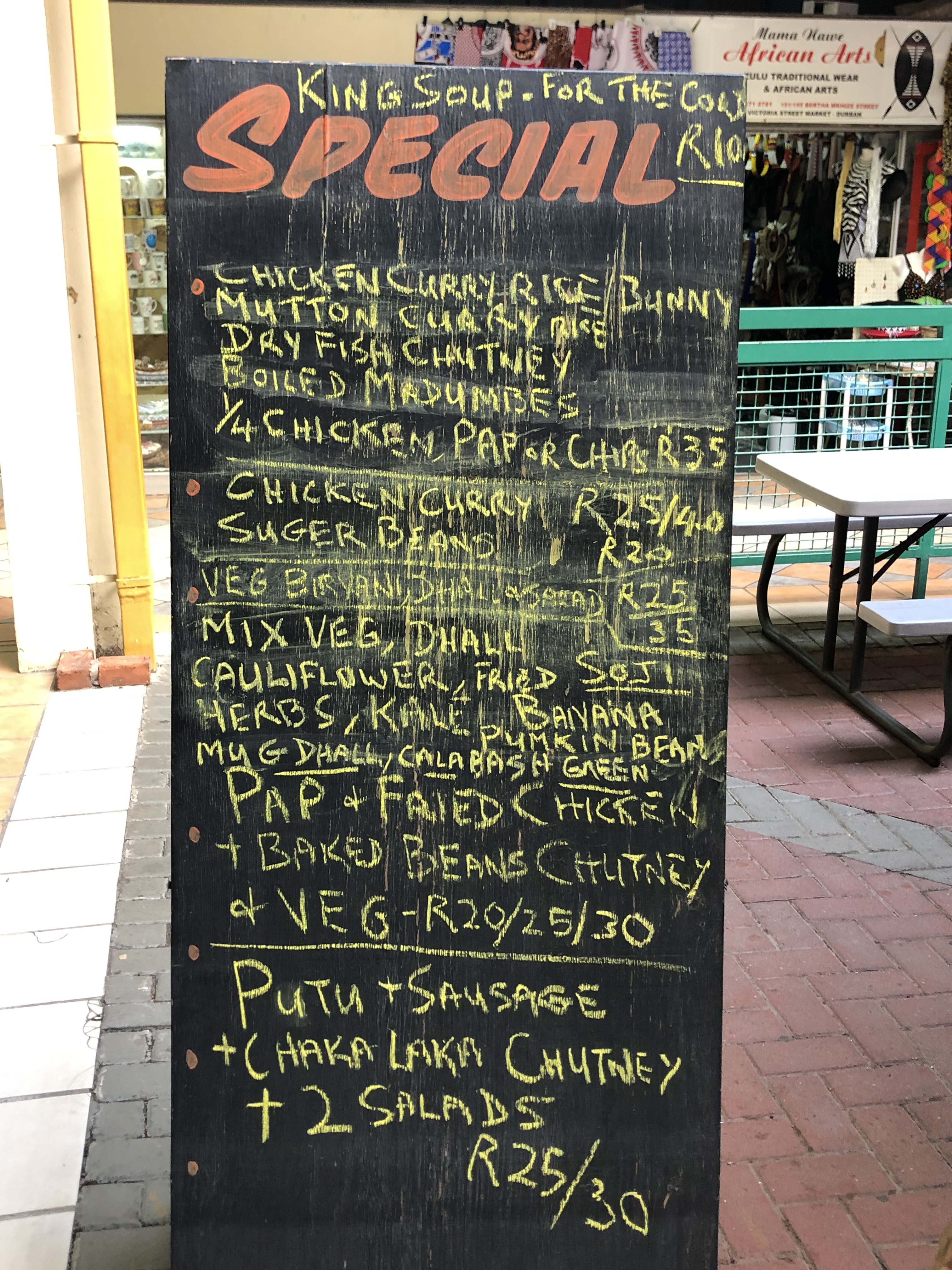
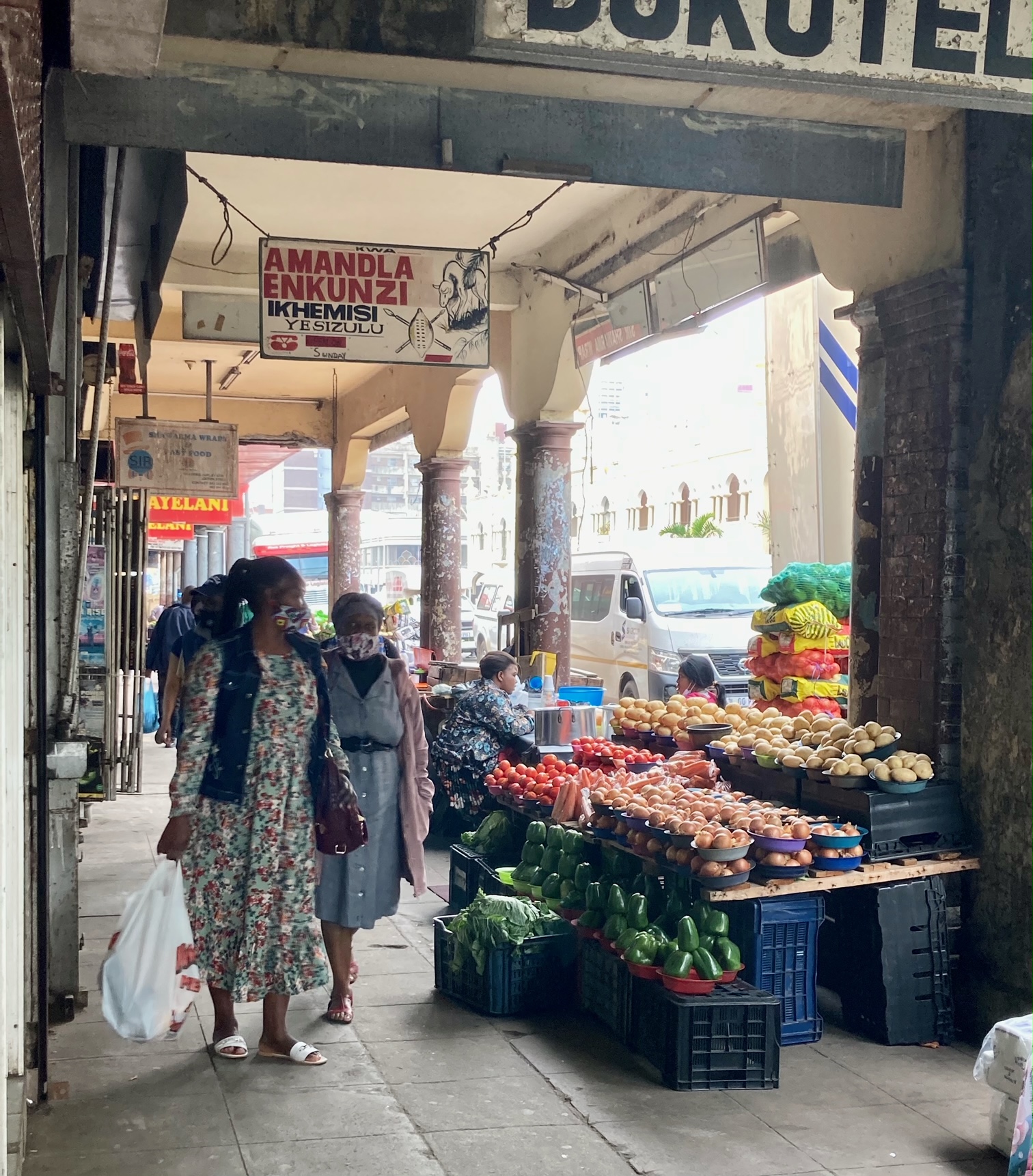
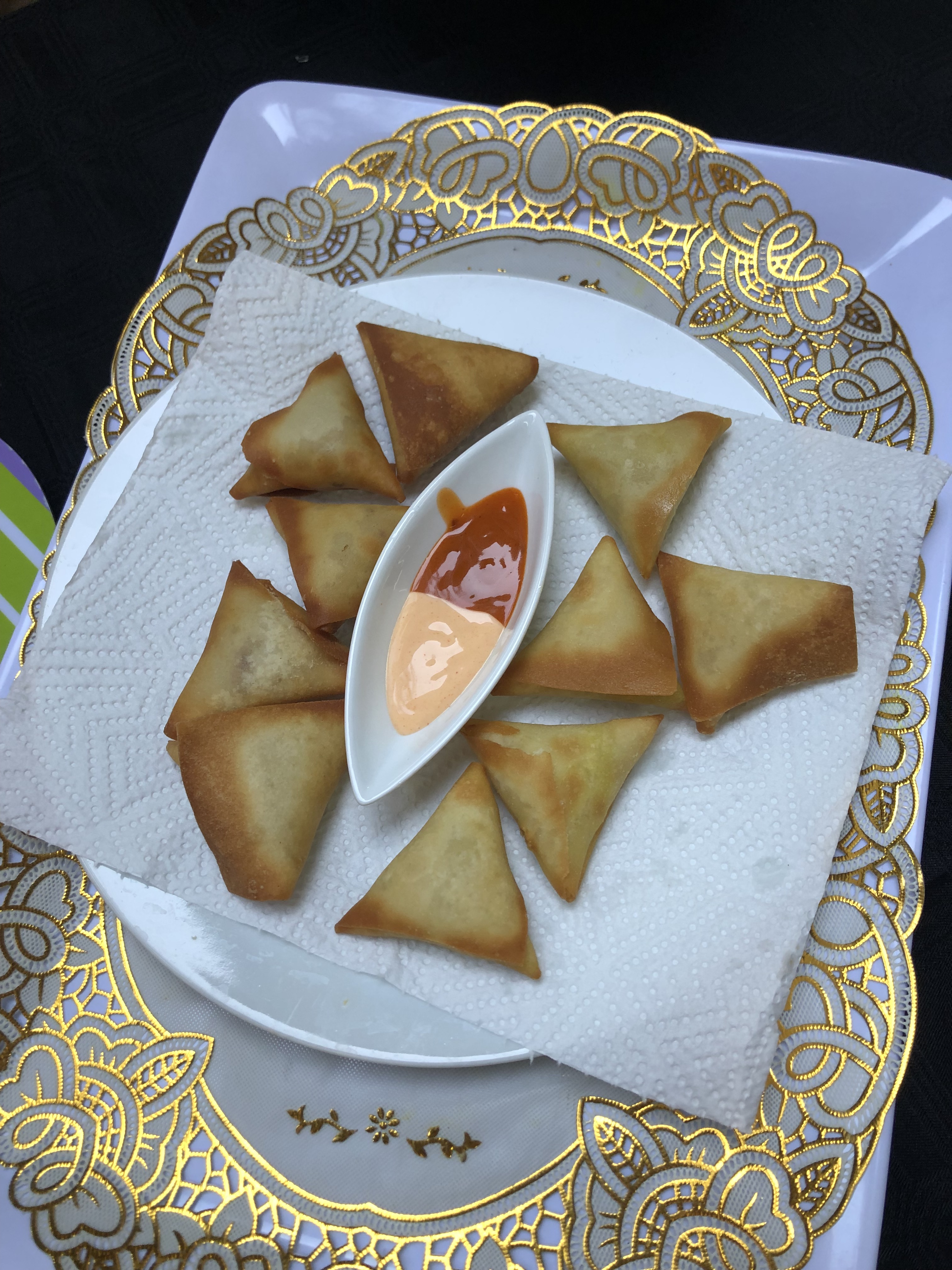
In between we hung out in the popular Florida Road, kept missing the Patisserie du Maroc which is French flair with Moroccan inspiration, but we had a Monday and public holiday squeezed into our stay, both not good for certain businesses. We caught up on lots of good coffee and artisanal ice cream (a delicious rum ‘n raisin flavour) and even managed to squeeze in some samoosas at the Indian market.

Which is where we spent the rest of the time; a variety of markets on and around Warwick Junction. Outside of lockdown, there are tours available and probably one of these can be fun to do as the different types of markets within the bigger precinct will be showcased.

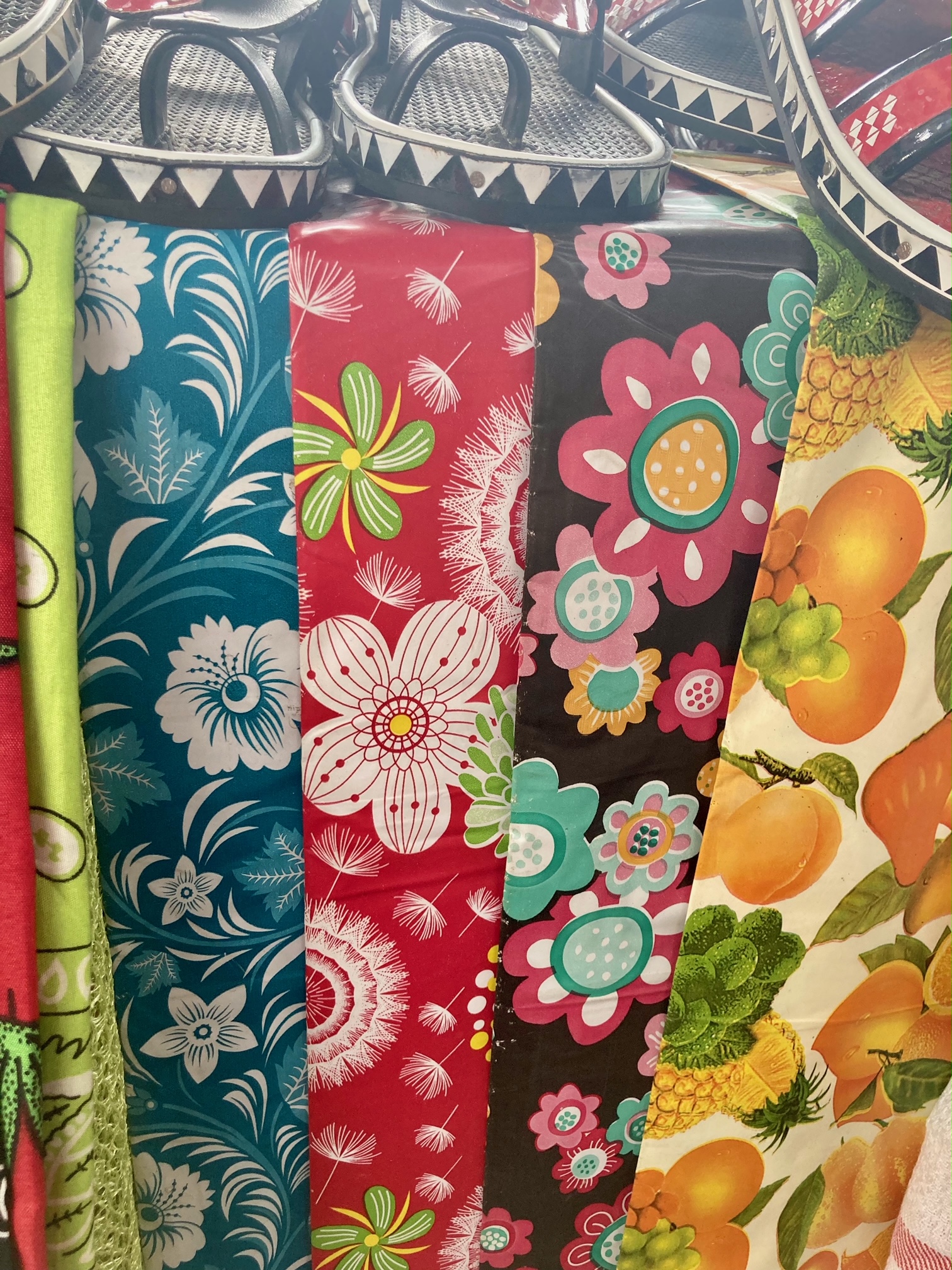
The colourful area in and around the city markets.

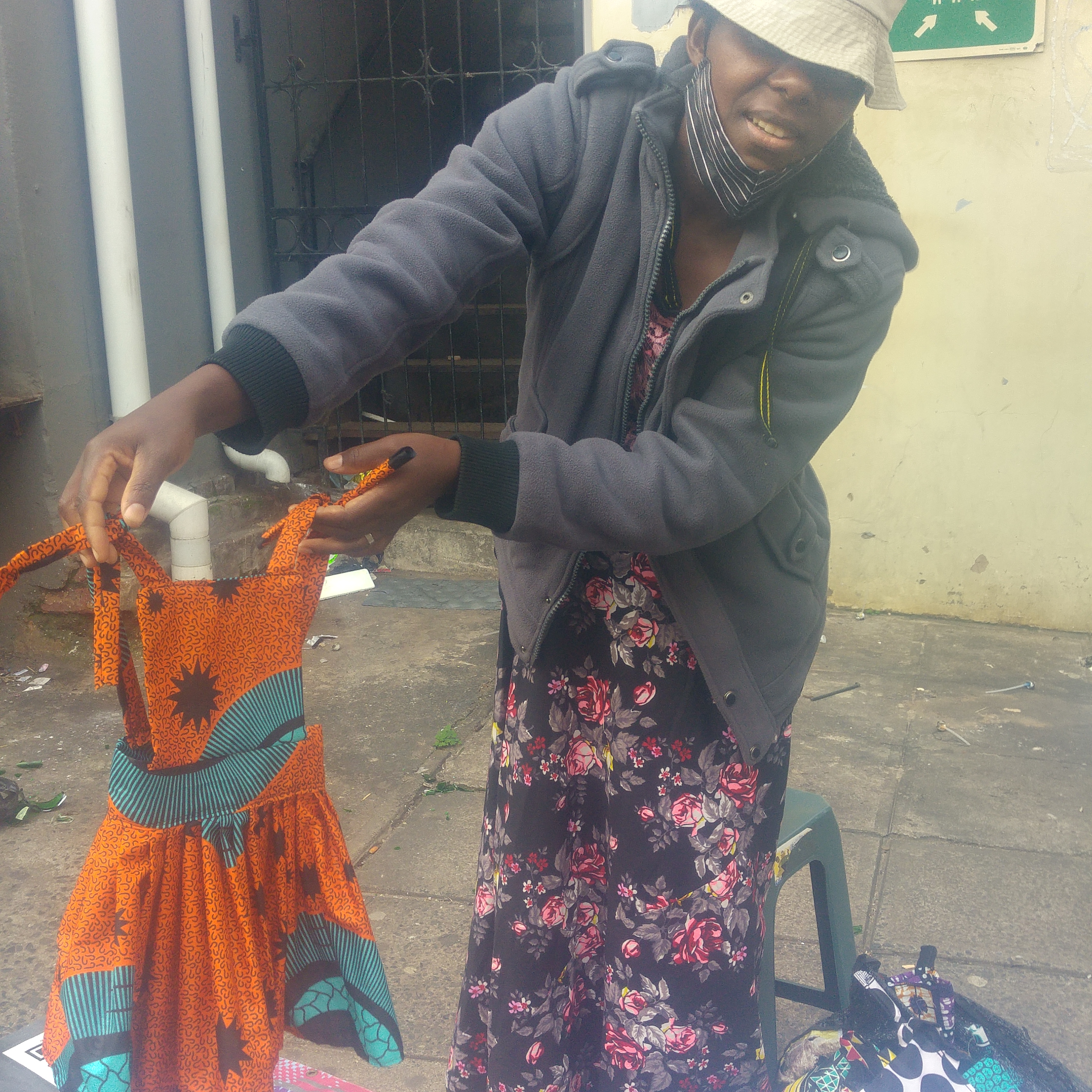
We didn’t have the luxury of a tour guide, but old hands, we easily found our way around the colourful markets, which range from typical Indian and African fare to the ubiquitous Chinese goods which seem to have invaded all local markets.

Getting goods during these difficult times are also problematic and without the foreign buying power, these markets also seem quite depressed. We nevertheless had a great time just walking around, checking the scene (in between a confluence of railway tracks and a graveyard with some interesting gravestones) and seeing how the city centre functions.

From there it was a brisk walk to the Durban City Hall, Post Office and some other majestic buildings including a beautifully preserved Norman Eaton building from a bygone era but many of them still in use today. Sadly the back stairs of the post office was a sight to behold and those who are responsible for cleaning, cannot point fingers at the state of the rest of the city centre if this is the example.

And that was the sad thing about this very vibrant and embracing city centre. With its wide avenues leading to the sea front, it should be a tourist mecca with the markets and beautiful buildings included in this space. But the neglect is horrifying and typical of so many South African cities as white business moves out, it appears owners of the buildings also stop caring.

Also disturbing was the fact that we were the only white people in the area on both days we were there. Just the traffic and the double parking and navigating was like an hilarious movie. It just seems such a pity that a space this vibrant if spruced up and embraced by a much wider community – could become a real tourist mecca.

We had a blast and were welcomed everywhere we went but my heart bled for those who had to spend their lives day in and day out under these sometimes horrific circumstances while hardly a kilometre away, the Durban seafront is a completely different matter.

Personally I suspect its all about money but there’s bags full to be made if the city centre was given a touch of love and care – not gentrified – just a look that a buzzing city centre deserves. It already has all the basics!

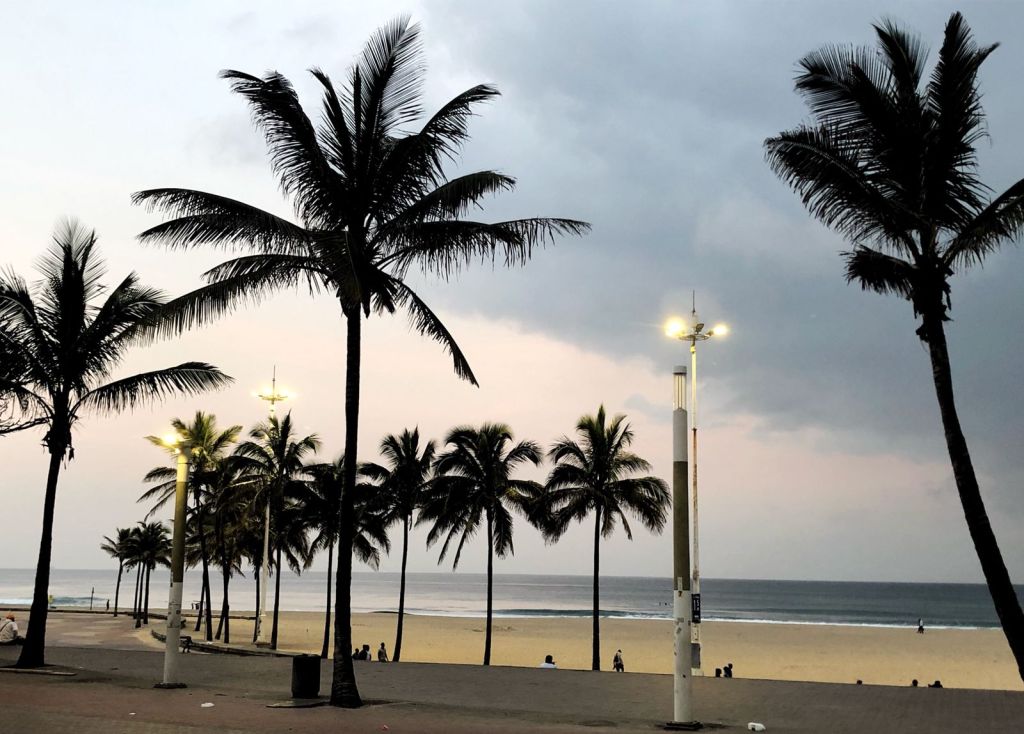
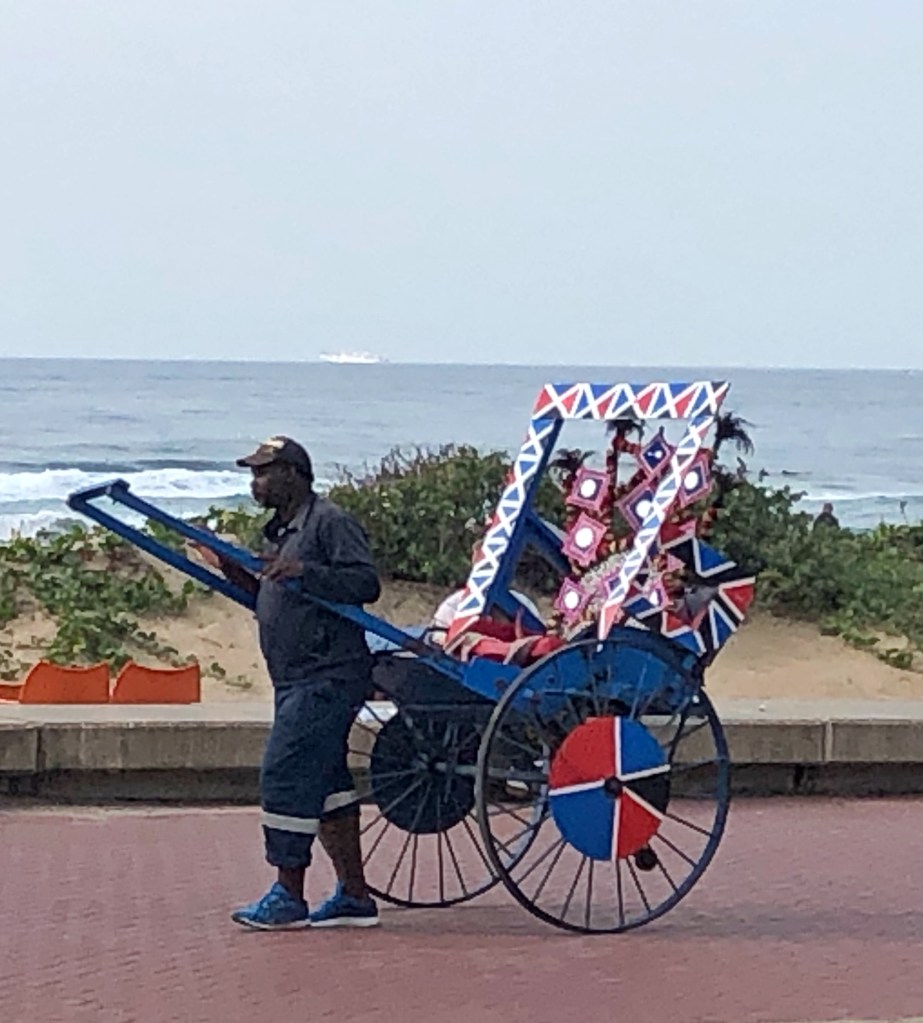
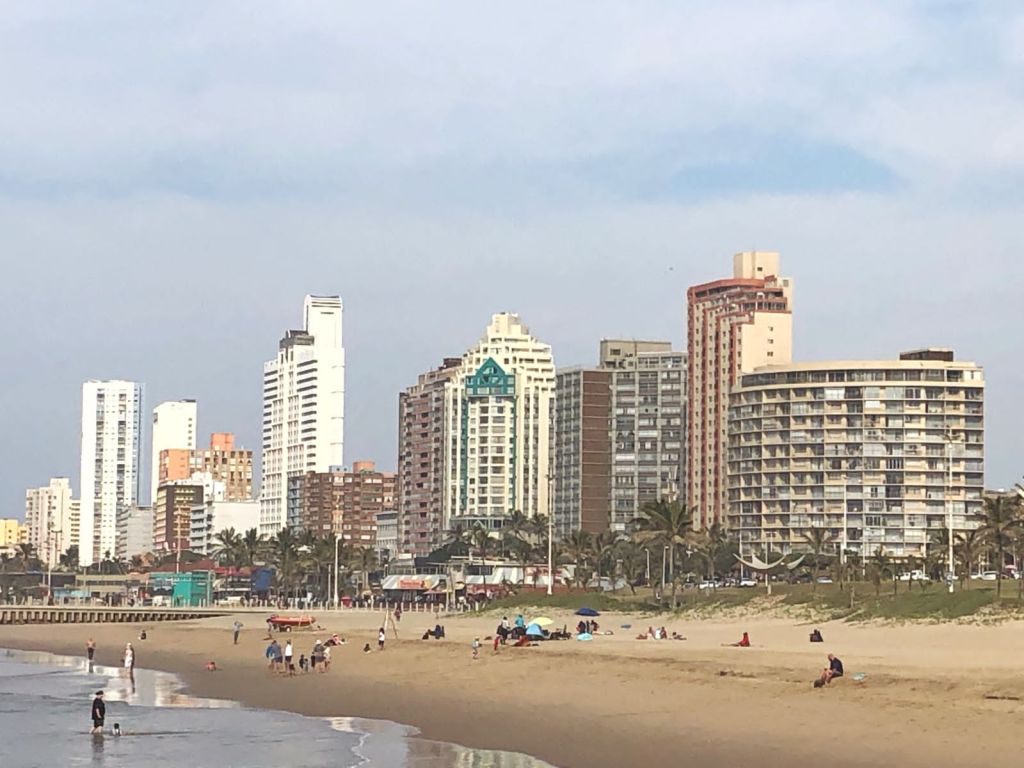
We concluded our Durban trip with a breakfast at the promenade at Circus Circus. We were told they serve great coffee and the breakfasts are hale and hearty. It was good to witness the Durban community in all its splendour with joggers, cyclists, rickshaws and hawkers all part of the parade.

From there our trip became a celebration as we moved to a little touch of heaven called the Shangrila Beach House (in Bazley), a self-catering house, cottage and chalet (depending on the amount of people) with the best sea view, its own access to the beach first crossing a working railway line, and an exquisite garden designed by indigenous landscape gardener and botanist Elsa Pooley.

The bliss of Shangrila.

And I haven’t got to the best yet, a mass of friendly dogs and the most wondrous wrap-around stoep. Self-catering with a chef (á la Dr Hennie Fisher) in our midst was bliss and apart from an excursion to Botha House (now a guest house with spectacular views), which was built for the former prime minister Louis Botha by his friend Sir Frank Reynolds, we pretty much stayed put in our imagined home away from home.

Two last suggestions on the way back, was a fuel stop just off Pinetown called the Polo Pony Convenience Centre (571 Kassier Road, Assagay) with a Woolworths food store with the best takeout sandwiches and coffee.

A little further up the road, again at Van Reenen’s Pass (this time on the left hand side of the road on the way to Jozi), there’s the perfect lunch stop at The Little Church Tea Garden which serves food made by the local farming community.

We opted for pies followed by scones and coffee as well as browsing through their well-stocked shelves for some last-minute pressies if needed. There’s also a chance to visit the little church and while having lunch, the views are spectacular. Again, it’s the perfect stop before hitting the road back home.

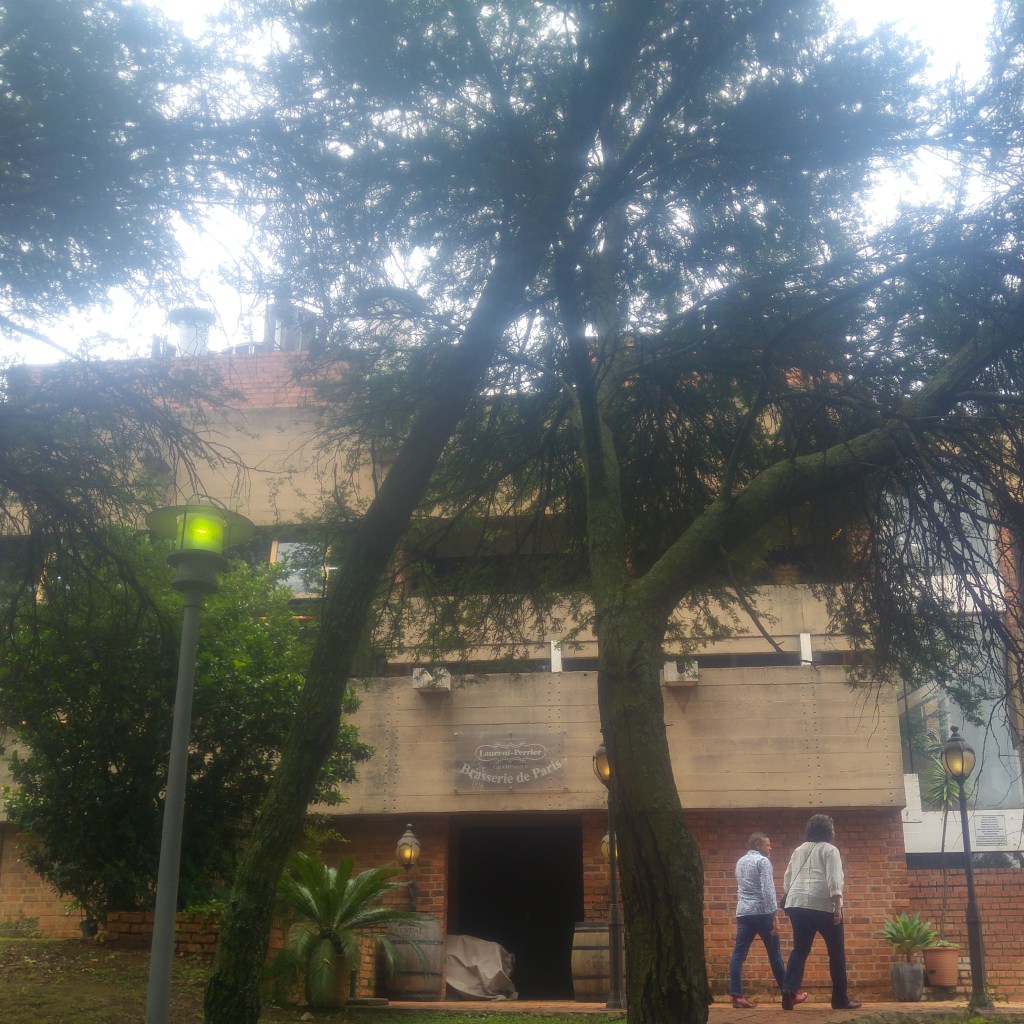
BRASSERIE DE PARIS LED BY SARIE JOOSTE JORDAAN TAKE THEIR LEAVE – OR NOT YET

PICTURES: Hennie Fisher

When you are invited to the final meal at a favourite restaurant, there’s naturally some excitement about the event – but also a sadness because of all the memories. DIANE DE BEER predicts this might not be their swan song:

Especially in these Covid19 times, it’s been a tough environment for the restaurant industry. There is, however, one beacon of hope and that is the diners’ awareness about how much they miss restaurants when they’re not there.

Being human as we all are, we tend to take our luxuries for granted until someone takes them away. The place I’m talking about is Tshwane’s Brasserie de Paris, where proprietor Sarie Jooste Jordaan magically created a very special restaurant. It’s something she and architect husband Johan Jooste almost fell into when they were invited by patron-chef Christian du Bois to  become partners in his business.

When he decided to leave, Jooste-Jordaan knew she had the perfect setup. Her husband’s father Karel Jooste had designed and built one of Pretoria’s iconic homes in Waterkloof and while some might argue it’s not the perfect home, it turned out to be the perfect dining venue.

And then they had something to live up to. Expectations were set but Jooste Jordaan had a few aces up her sleeve. Her niece Elze Roome was a trained chef, which made this the perfect solution – a match made in heaven.

That was 26 years ago and in the meantime and a lifetime in the world of a chef, Roome (with her brother as partner and many adventures in-between) has opened a Tashas in Times Square and you just have to experience the buzz to know that they have struck gold – or more likely, they know what they’re doing.

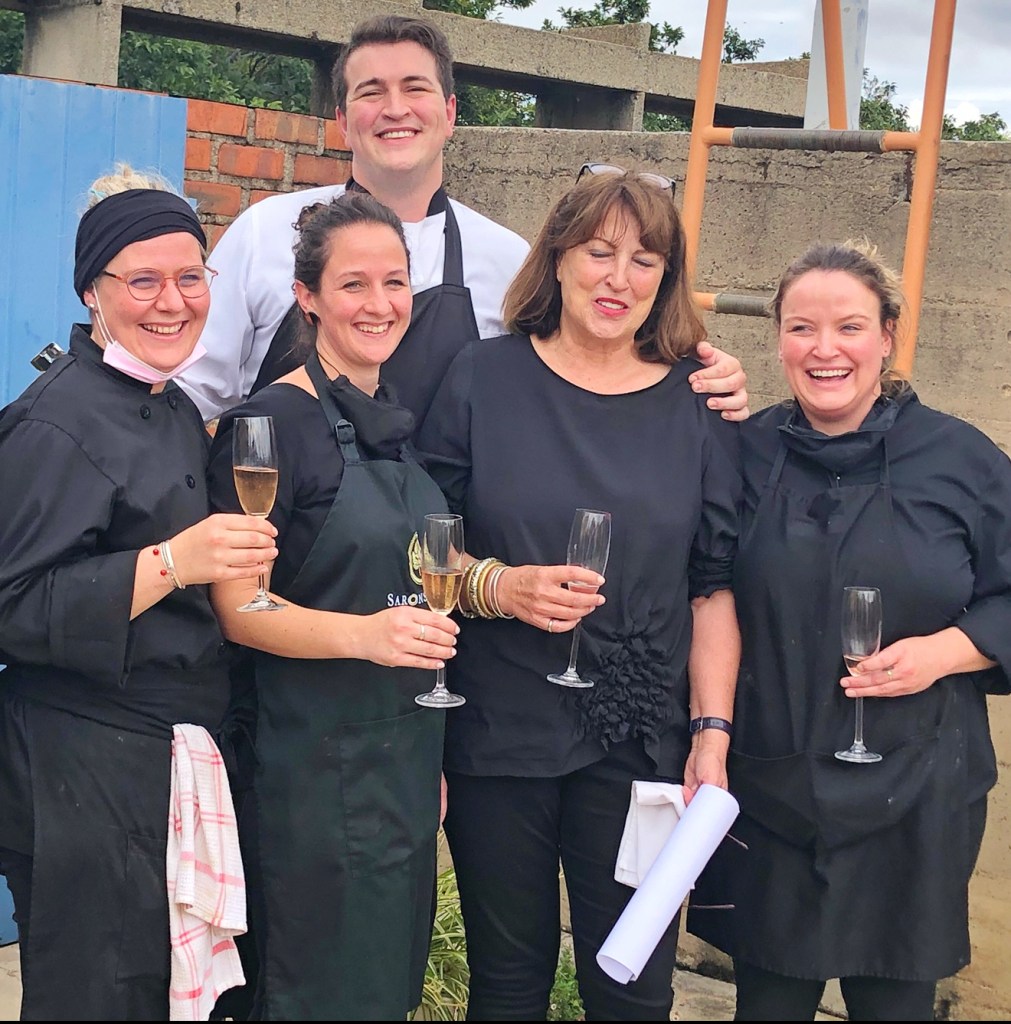
The team from Brasserie through the years and the reason for their success : from left Marlise Whelan, Ané Wait, Sarie Jooste Jordaan, Elze Roome and Loodt van Niekerk (behind)

“It all happened quite organically,” notes Roome, who has kept in touch with all the chefs who followed her at Brasserie about the celebratory final meal. Ané Wait (now from Buffelsfontein Beesboerdery in Greenlyn), Marlise Whelan (lecturer at Capitol Hotel School) and Loodt van Niekerk who pleaded to be head chef on the day because he hadn’t been one previously.

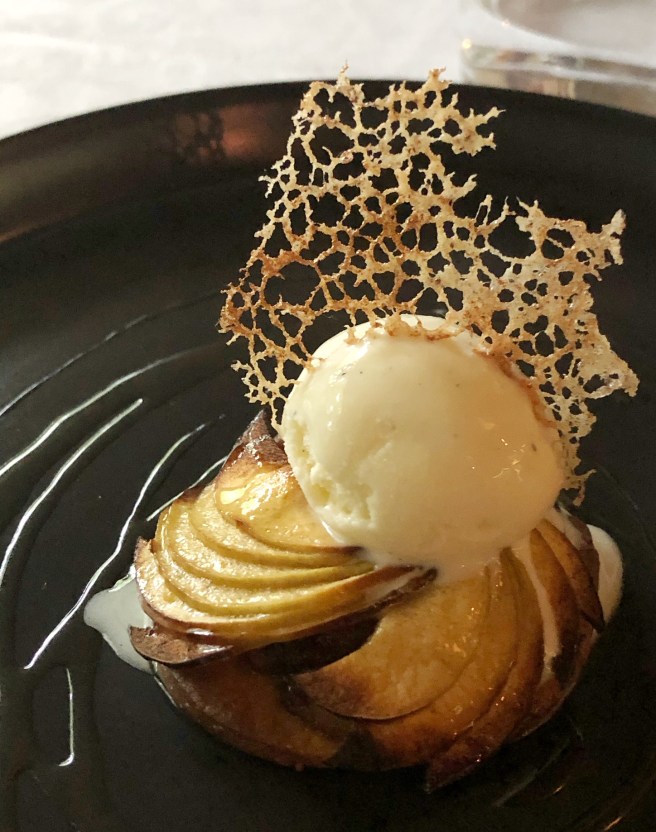
All of these  chefs have a classic slant and drawing up the menu was a full-on team effort. For example, Roome explains that Whelan had created the original apple tart but Wait had refined it. It was a no brainer that it would be the dessert on the day.

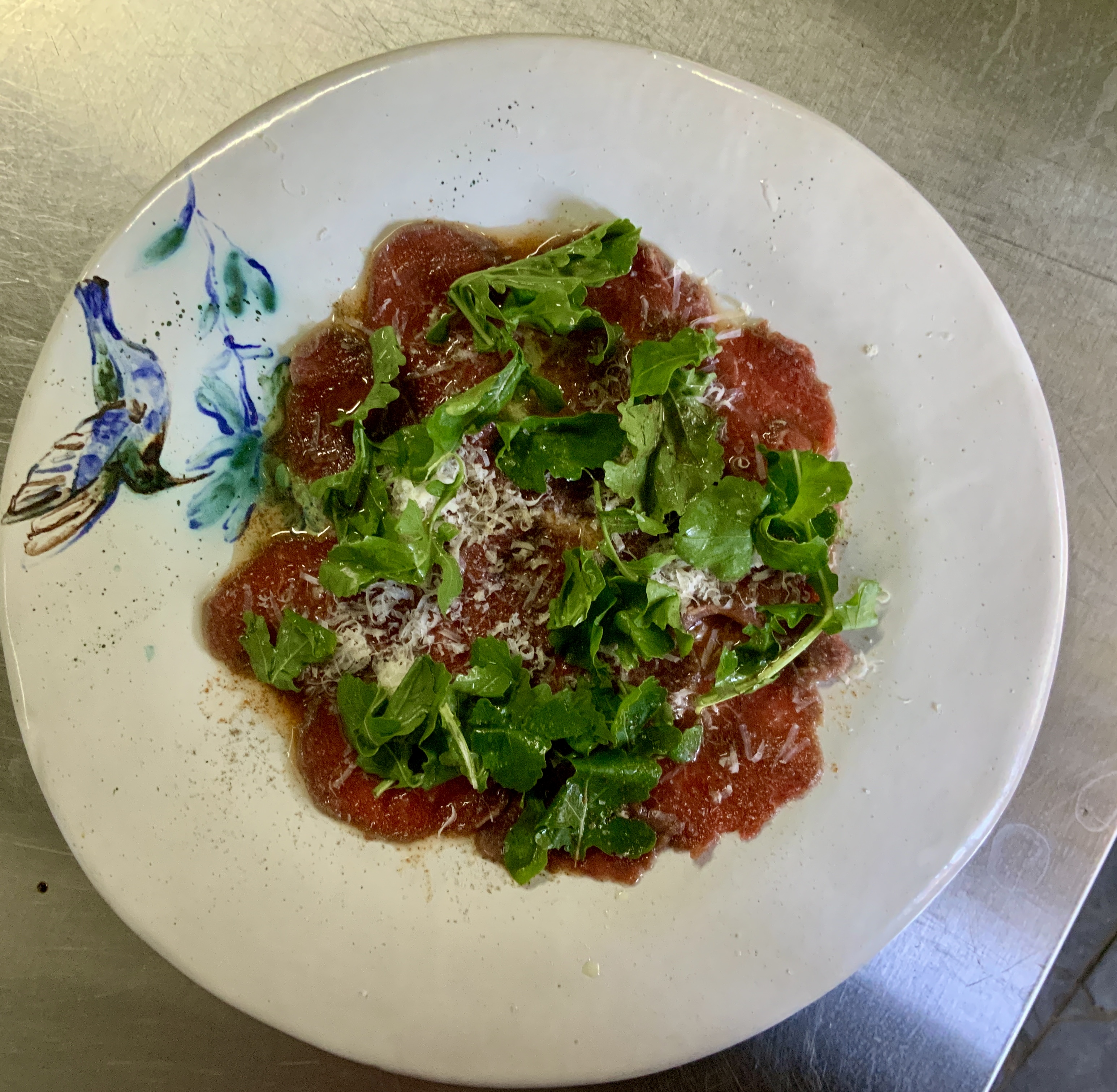
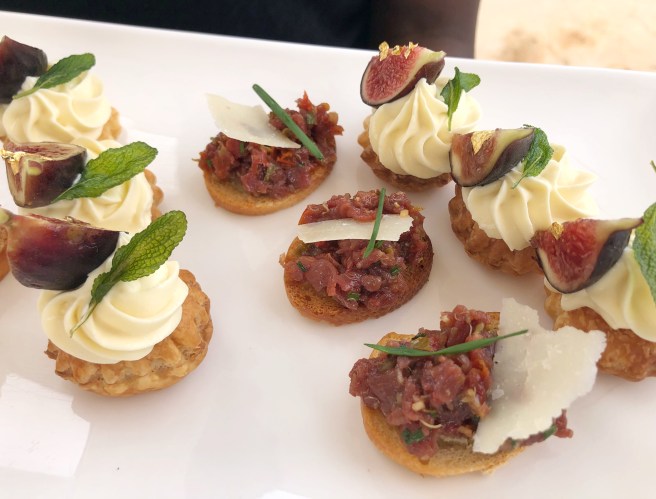
Reading through the menu, memories flooded back, as they had put together almost a prototype of everything Brasserie represented. Starting with an amuse bouche of blue cheese cream and figs as well as Springbok carpaccio, these were started with a celebratory welcoming sparkling wine on their amazing roof, which probably everyone there had probably experienced in some madcap dinner. Ours was an Easter affair and one of the best evenings I can remember with the stars all aligning for a spectacular event all those years back.

But that’s what Brasserie has always been. I can’t remember them ever not getting it right. As chef Hennie Fisher always says about them: “One of my personal most favourite elegant dining choices – a sophisticated mix of old world charm and modern flair. And never broke the bank!”

Following Covid protocols as they would, the restaurant again proved its many assets because of the way we were all protected and yet not without managing to create the fondly remembered Brasserie ambience.

I was blessed to be in the company of a chef and two wine connoisseurs, so I knew this was going to be special. Leaving the wine in their capable hands, the men u prompted them to kick off with a white wine (Lismore Viognier) followed by a red (Thelema Merlot 2017).

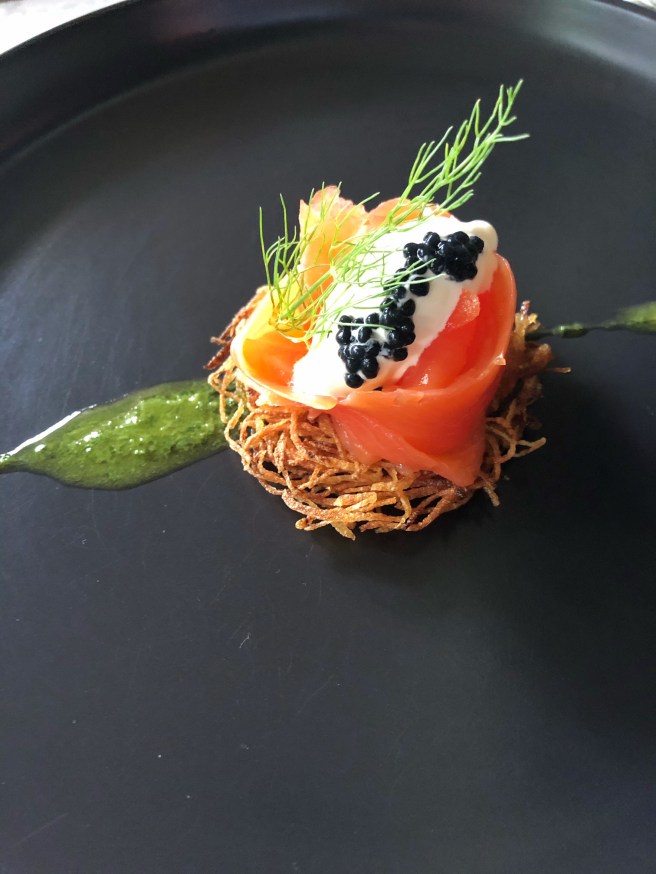
Once seated we were first presented with a smoked salmon rösti, a smart choice because of the combo and the distinct flavours. Just the right entrée to get you hungry and with what was to follow, we needed that.

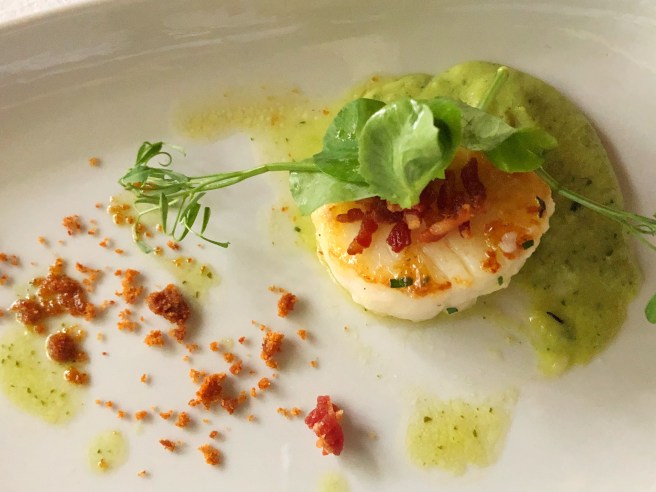
A plump scallop, sharp green pea purée and bacon crisp richly finished the seafood side of the menu. Following these teasers, Brasserie got stuck into the serious stuff: meat. I knew when the Japanese Embassy a few years back invited me to lunch here, it was a huge nod of approval. They were especially guided by the quality of meat and I suspect, the no-nonsense approach to things and the stylish setting also appealed to their specific sensibilities.

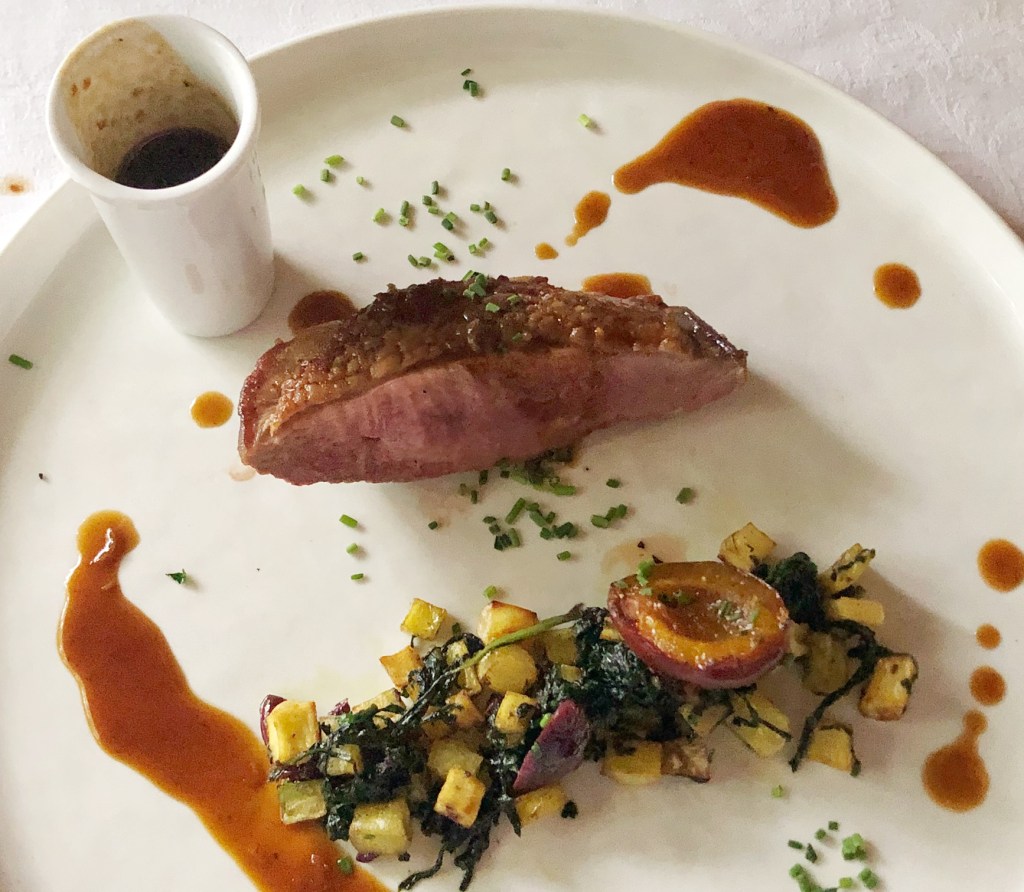
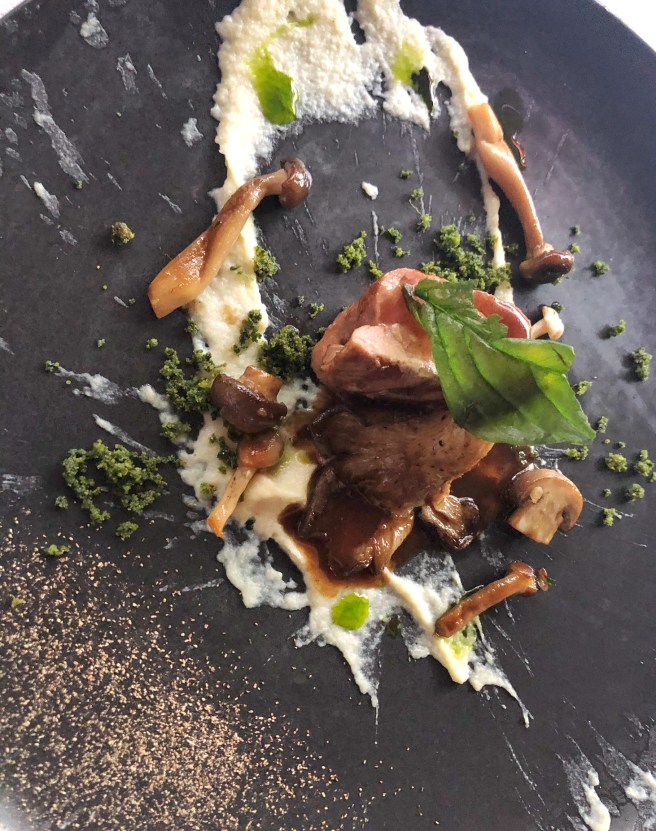
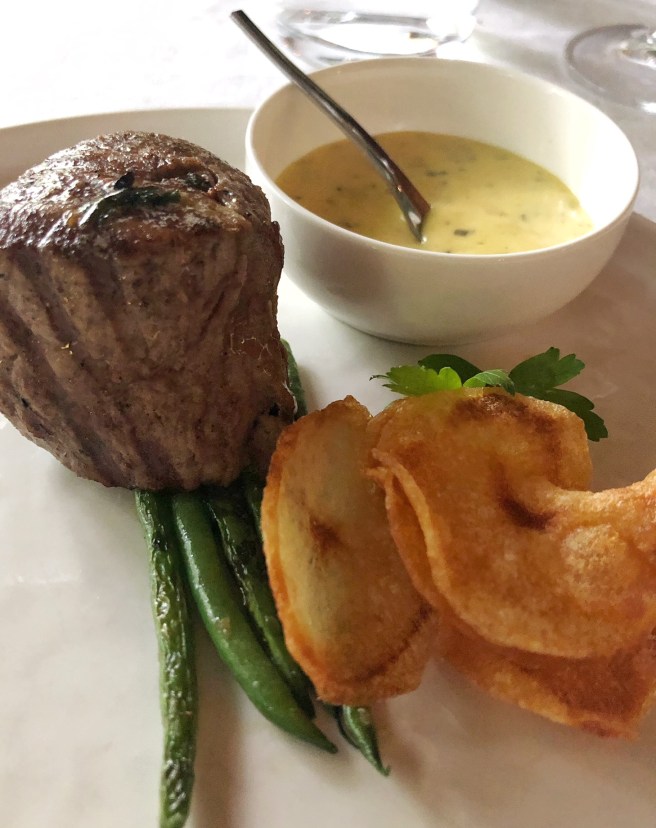
The trio of meat dishes was led by duck breast and sauce bigarade (orange sauce), a classic combination, followed by lamb loin, basil oil and wild mushroom and completed with a beef fillet, potato crisps and Bearnaise. These were all melt-in-the-mouth

And if it sounds like a mouthful, that’s exactly what it was and still remains my best way of sampling food: a tasting menu. This one was obviously substantial but for those of us riffing on nostalgia, this gang of superb chefs all had a role in establishing this kitchen and to come together in this way, could not make a stronger statement.

Apple Tart

Finishing with the prettiest of apple tarts and mignardise with coffee, it was the perfect dining experience and especially savoured because of the people, the place and of course the times.

My hat off to the gracious Sarie Jooste Jordaan who had no plans to run a restaurant, but given the splendid setting and the right ingredients to make it work her way, in the end it was truly a grand affair.

I remember, part of the original idea was to stick to Du Bois’s menu guidelines and while settling in and finding their feet, they did exactly that. But having established the basic rules they could then start playing around, making it their own.

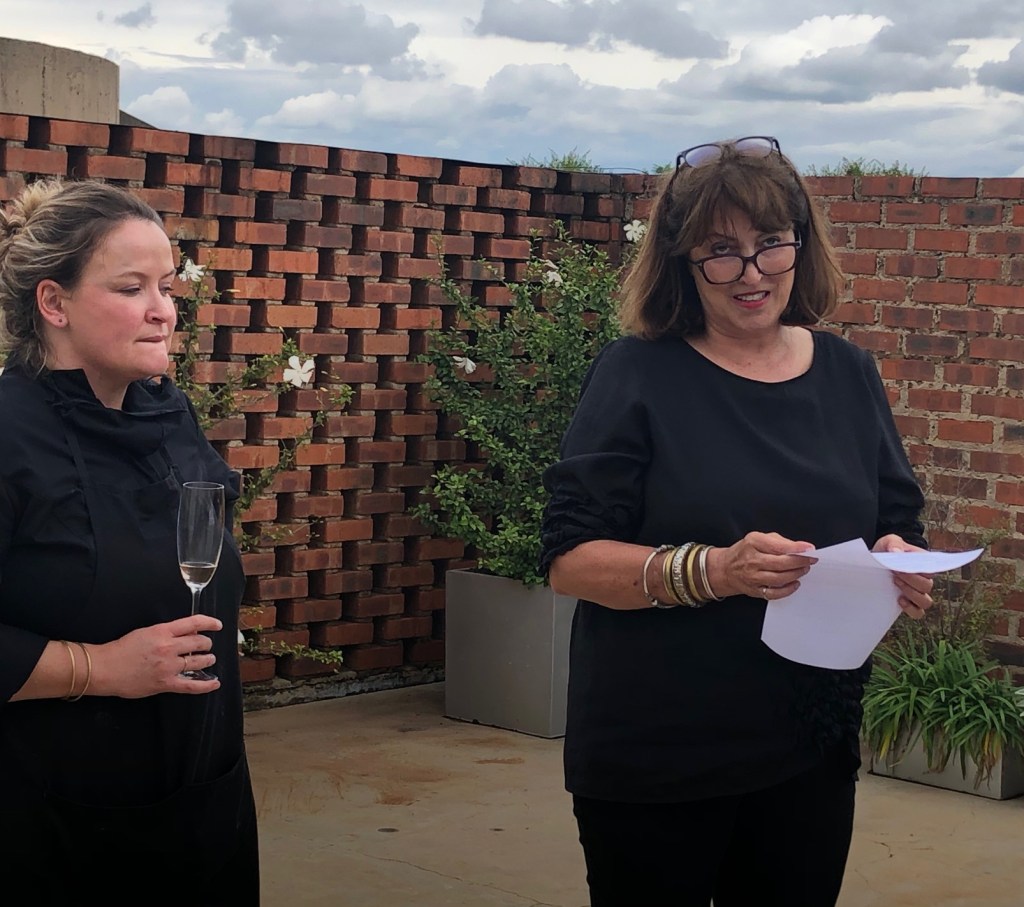
Patron Sarie Jooste Jordaan (right) and her niece Chef Elze Roome

And that they did with classic flair and flourish. These are peculiar times and I know this is a business that isn’t easy but I just have a feeling that this is not the last we hear from the indomitable Sarie. So I’m tipping my hat to all the chefs for a fantastic experience in the Jooste house – once again. But I’m holding my breath before saying final goodbyes…

And holding thumbs for the next chapter!

A PIECE OF ART HEAVEN IN THE KAROO

All pictures courtesy of MAP

MAPSA Contemporary Art Gallery in Richmond
Mapsa logo

When traveling internationally, we wouldn’t think twice about going into an art gallery in a village you might be passing through, but locally – not so much. Harrie Siertsema and his team have made sure that both Richmond in the Karoo and Mpumalanga’s Graskop should stop you in your tracks. DIANE DE BEER takes a closer look and loses her heart:
MAP Opening of exhibition by Sam Nhlengethwa at Harrie’s Pancakes in Pretoria.

“Living with art” is a phrase invented for art connoisseur and instigator of the Modern Art Projects South Africa (MAPSA) Harrie Siertsema, which is mainly found in the small Karoo town Richmond and Graskop with two extraordinary galleries.

That’s right, not many when driving through or rather passing by on their way to either Cape Town or in the other direction, Johannesburg or pass through Graskop, would consider it possible to visit what many consider world class galleries.

But that’s exactly what Harrie and curator/artist Abrie Fourie have established with financial assistance from Harrie’s longtime partner Willem van Bergen with art possibilities growing and evolving at some speed..

It all began with Harrie buying what he thought was a single house in the small Karoo town, only to discover at closer inspection that it was much more – almost an entire block. While peeping through a window of the house he was interested in, someone tapped him on the shoulder and asked for work. The deal was done.

MAPSA Collection Richmond: from left Eric Duplan, Jan van der Merwe, Seretse Moletsane and Maja Marx

When you arrive in Richmond, this same George Williams will welcome you to MAPSA or for a stayover at their guesthouse.

With the purchase, Harrie’s many hours of play as a youngster-  when this former architect was measuring not only every room in his childhood home but also the furniture – kicked in.

But not only that, he can remember buying his first artwork at the age of 15 with money he earned working at a local stationery shop. “I still have it,” he says as I sit admiring the amazing art I can see over his shoulder in his city home, a constantly growing extension of that first purchase.

This is a man with a straightforward passion, but one he has followed without fail while on the way, not only supporting established artists, but also discovering up-and-coming artists at shows, SASOL New Signatures and Absa L’Atelier.

He describes his particular art bent as close to the Italian Arte Povera (poor art) movement that emerged in in the late 60s. “It wasn’t as if I knew of them at the time, it simply must have been a part of the zeitgeist,” he believes. His interest is recycled and rescued art rather than the corporate kind and when you look at the names like Jan van der Merwe, Gordon Froud, Jeremy Wafer, Sam Nhlengethwa, Willem Boshoff, Robert Hodgins, Cecile Heystek, Diane Victor, Claudette Schreuders, Sandile Zulu, Seretse Moletsane and Strijdom van der Merwe (a who’s who of local artists and the list goes on).

The narratives grow and there is a multitude of  South African stories being told by a diversity of local voices magically reverberating in places that will hopefully capture a much larger audience – of both local and international travellers.

Since its inception in 2005, MAPSA’s activities have included exhibitions in various venues in South Africa (Cullinan, Dullstroom, Graskop, Pretoria, Aardklop, Potchefstroom and Richmond) determined by Harrie’s many other business interests.

Like in Richmond where an old supermarket packed with broken pinball machines was turned into a spacious art gallery, Harrie was having a pancake at a small café in Graskop when before he knew it, he was the owner of a pancake joint with two burners. Many years later it has been turned into a flourishing business with Harrie’s Pancakes thriving in Graskop, Cullinan, Dullstroom and in Pretoria with a Delagoa Arts and Crafts alongside.

Colombé Ashborn’s MAP Graskop Cottage

Further expansion in Graskop also includes a hotel where it really all began and where some of his favourite artists were asked to decorate the rooms, which allow visitors the delight of sleeping in a space filled with not only the individual artist’s art, but also a real sense of the artist. A gallery similar to that in Richmond also features in this Mpumalanga town with space that artists can usually just dream of.

There’s always something happening in their art world. MAPSA has commissioned site-specific installations and published limited edition monographs while artist’s residencies, workshops and retreats are ongoing at different properties in Richmond.

They constantly engage with the community and well as dealing with the challenges facing contemporary artists. They are determined to make a difference and to contribute to change and development whenever possible. Collaboration is something they encourage and nurture and with Harrie and Abrie a dynamic duo backed by the rest of the team, including the logistic genius, executive manager Morné Ramsay, they are constantly at work to provide creative opportunities to artists from around the country as well as Richmond inhabitants.

For people tackling the N1 in any direction, Richmond is the perfect stop for a stayover. The first time I did this with family and friends, finding ourselves the next morning with mugs of coffee still in pyjamas in a gallery with spectacular art – in the middle of the Karoo – was simply magical and unexpected. And still feels unreal and something to be cherished with every stopover.

That’s what art can do for you. It keeps on giving in the most imaginative fashion and when you have someone like Harrie with the team he has surrounded himself with as he would, you know that you have to keep an eye on what they come up with next.

MAP Richmond Bookbinding Project, from left to right, Jesica Olifant, Felicity Pipes, Elizabeth Jones, and Mongezi Ncombo

On site in Richmond for example, they also have an extraordinary Bookbinding Project overseen by artist Mongezi Mcombo, an Artist Proof Studio alumni, who also produces his own work on the premises, OpenLab, a biennial project where artists can explore site-based public interventions, an interdisciplinary laboratory, the yearly Land Art Project for art students of the University of the Free State under the guidance of Professor Willem Boshoff (how can you resist with the never-ending vistas of the Karoo) and an informal Clay Brick Making Collaboration. And this sentence should really be open-ended because they are constantly coming up with yet another collaboration or creative venture that adds to MAPSA’s art experience.

Staying over is an option, but not everyone wants to take such a specific break when on the road. In that instance, Richmond is the perfect turn-off for a well-deserved artistic break. Pick up a MAPSA art walk map from the gallery, which will point you in the right direction to include their magnificent contemporary art collection. Also discover Willem Boshoff’s dictionary Word Woes (which as the title suggests works in different ways when read in either Afrikaans and English) as well as work by Strijdom van der Merwe, Johan Moolman, Gordon Froud and Abrie Fourie in the connected Sculpture Garden.

MAP Martli Jansen van Rensburg room in Richmond

Included in this space is also the previously mentioned bookbinding project and Ella Ziegler’s Does The Ground Feel Tears?, a text-based work using handmade alphabet bricks, a MAPSA collaboration with local brickmaker Trevor Snyders.

Sculptor Guy du Toit has added his version of Two Thousand and Ten Reasons to Live in a Small Town, a public art project facilitated by VANSA and funded by the National Lottery Distribution Trust Fund, which has many different goals incorporated in a single project.

 The latest in the MAPSA series is Richard John Forbes’s Black Room (see more detailed story following in this space) which will blow your mind and give you a sense of experiencing art in a very distinct and visceral manner.

Add to that MAPSA’s fruit and veg garden, Hoggie Viljoen’s indigenous garden as well as Shane de Lange’s text-based work The Fence and Hannelie Coetzee’s Tokkas, Londa and Oom Samuel engraved on a plastered wall.

If all of this sounds quite hectic, this is just a taster and not even half of it. But it can all be explored in your own time.  I would simply start with the gallery, have a wander through the sculpture garden and then see how much more is possible or keep the rest for the trip back or whenever you pass through Richmond again.

It can easily turn into a lifelong and life-enhancing discovery.

For more info and bookings:

www.map-southafrica.org

For stayover bookings at Richmond: contact Hazel Mbuyane on 073 386 8509 (but be aware that they often have residencies or other activities which prevent stay-overs)

The gallery has a number for George Williams on the outside which can be contacted for info or a walk-along: 073 436 4413

For bookings at the hotel in Graskop: 013 7671244

Phone Harries’s Pancakes manager Lindy Kruger, for gallery viewings or accommodation in Harrie’s Cottage: 078 111 9060 .

For good food when passing through:

Vetmuis: Magriet Burger on 082 380 1196 or

Die Padstal: Klaradyn Grobler 079 755 8285.

READ INTERVIEW WITH ARTIST RICHARD JOHN FORBES AND THE ASTONISHING BLACK ROOM FOLLOWING:

RICHARD JOHN FORBES’ ODE TO DARKNESS

The latest addition to Richmond’s surprisingly bustling art scene is BLACK ROOM recently established by sculptor Richard John Forbes who opened the door during the town’s annual book festival in the last week of October. DIANE DE BEER speaks to the artist:

Eclipse with black book in the background

What you find in Black Room, is a collection of his work of the last 15 years.

It’s all still a project in flux and one that flourished due to synchronicity, believes the artist. When standing quietly and motionless just after entering the Black Room, what you discover is that this is a place where the artist, his work and the space found one another, and the winner is the viewer.

It all happened when Richard was in transit between Joburg and George where he was moving – and lives now –  and the work was waiting to be moved from the north to the south. By the grace of how these things happen, Harrie Siertsema of Modern Art Projects South Africa (MAPSA) had a space looking for transformation, loved the work and Forbes’ ethos, and voila!
While Richard, always the philosophical one, doesn’t believe in luck but rather coincidence, he knows that what has been happening these past few months with his work – and the future to come – is meant to be.
Richard J Forbes with a blackened skull – found object

He works predominantly with large sculptures, quite a limiting niche to occupy, because it is art that is bought mainly by serious collectors and institutions. Synchronicity plays an especially large role because of the way he works and produces, and when you walk into Black Room it makes sense with it all coming together.

He  feels there’s a kind of providence about this specific exhibition and space, with Richmond on one of the main tributaries in the country (N1). It is meant to be seen and it seems the stars have aligned.

Entering the Black Room disturbed by light

 As an artist, he has often been told that his work is unpredictable. To my mind, with Richard being an artist, that’s a compliment. But, as with most things in life, people want you to keep producing the thing that perhaps made the biggest impact. That’s just not who he is. From start to finish he is about change and movement. Even the individual pieces move.

Richard J Forbes’ introductory poem read by his niece Delilah Richie Kaufman who is 10 and lives in England followed by his proposed viewing of the room:

He has also changed mediums. He started out as a painter, one who loved colour. Since he turned to sculpting, he prefers to stay with the colour (or lack thereof) of the material he is working with.

The word that has been used to describe what he does is ‘erratic’ and yet, there’s no sign of that in Black Room, which has brought many of his big pieces together enabling a conversation. “When I put them all together, there was a flow with the different pieces communicating with one another,” he says. “It was so exciting and I really hope that many people get to experience this.”

And if I could do anything to help and encourage, this is it. Being in Black Room with the artist is a privilege. While these creative individuals are often reluctant to speak too much about their work, Forbes explains that his partner, Kate has encouraged exactly that. She believes that it can only enhance the work if the artist shares something about the process.

“I always felt that I had spoken my words in art, but she has taught me that I need to express myself,” he explains and in the process perhaps accessing the work more easily for the viewer.

As such, because he is seldomly around, he has introduced quite a few aids to help viewers to engage with his work. One of these was to invite a 10-year-old niece (living in the UK) to read his poem that’s a kind of introduction to the exhibition and now can be listened to instead of just being read. And there’s more, which should allow passers-by to access the art easily.

Tornado in Richmond, NC – block print on Gelatong wood

With this work all gathered together, he introduces different themes and layers. As the viewer standing in this dark room with light intruding as much as you wish, there seems to be a kind of silence before the storm – something which permeates the work, one piece even representing a tornado with everything else seeming to flow from that.  “I feel there’s a bit of a storm in the room and it is important for me to have governance over that storm,” he says.

He adds that there are things in the universe that leave us in awe or that scare us and hopefully some of what you experience in the room filled with Forbes’ art is a pathway to navigate some of those feelings.

“People who have visited this work told me that at first they felt fear or confusion, a feeling of lostness,” he says, but he doesn’t want to elaborate more because it is something that people need to experience individually. And as is often the case, it’s all about who you are and what you discover that determines the experience. “The artist is a filter for the world and what filters out is his experience.”

Personally I felt an immediate emotional connection  to the space – quite turbulent. But then everything went very still …

Richard John Forbes working on his Black Book

What we then do with what we see and understand will be different for everyone. And that is what Richard enjoys, seeing how people experience his work and the effect it has on them. Just being in his presence, his excitement about the work is extraordinary. It’s what creatives do. They make something, put their feelings on display and allow you to do with it what you will.

Another unexpected bonus of Richard’s Richmond experiment is not working in isolation.  Being an artist in a studio can be a lonely occupation but once you start collaborating with others, it becomes a community. This is exactly what he found while working on the installation in Black Room.

Once he started talking to Harrie and they discovered similar obsessions with the tone (or lack thereof) of black, his journey took on new twists and turns – hence Black Room. Apart from the sculptures, it’s also black that keeps evolving and that keeps Richard engaged and playing. “Black became more and more significant in my work,” he says as he experiments with all kinds of ways to create a specific tone, a different dramatic effect. It is his curiosity about materiality that drives this particular experimentation, like when he works in paper pulp or burns charcoal, all of which imbues his work with energy.

With this current exhibition, Richard’s dream, which was sent into the universe, has come true. “All I want is a curator that allows me to be the expansive person I’m meant to be,” he says.

From left: Like-minded souls – partners Willem van Bergen, Harrie Siertsema and Richard J Forbes.

And in stepped Harrie Siertsema … and his team including curator Abrie Fourie, executive manager Morné Ramsay and the list goes on.

And we, the viewers, benefit from an experience that’s all heart.

www.map-southafrica.org

For stayover bookings at Richmond: contact Hazel Mbuyane on 073 386 8509 (but be aware that they often have residencies or other activities which prevent stay-overs)

The gallery has a number for George Williams on the outside which can be contacted for info or a walk-along: 073 436 4413

For bookings at the hotel in Graskop: 013 7671244

Phone Harries’s Pancakes manager Lindy Kruger, for gallery viewings or accommodation in Harrie’s Cottage: 078 111 9060 .

For good food when passing through:

Vetmuis: Magriet Burger on 082 380 1196 or

Die Padstal: Klaradyn Grobler 079 755 8285.

Hustles Explains the Creative Compass of an Architect and a Photographer with a Contemporary African Space

DIANE DE BEER

I am fascinated by the idea that the greatest architecture in the city has happened by accident

Thomas Chapman.

Hustles1

Hustles – Five Years Of Local Studio by architect Thomas Chapman with photographer Dave Southwood:


Because of the time I’m writing in, I couldn’t speak to the author(s) face to face, but really didn’t need to, because they state their purpose so clearly in the book Hustle – Five years of Local Studio by Thomas Chapman (Photographer: David Southwood).

The title, explains the architect Thomas Chapman, refers to the “opportunistic process of becoming local – of using design to solve urban problems amidst immense financial and time constraints – and throughout this process, trying to hustle an architectural product that is present, engaged, hopeful and ultimately, never boring”.

Knowing a few of their buildings but also having read this book, they can never be accused of that – boring! No sir!

Trevor Huddleston Memorial Centre
Trevor Huddleston Memorial Centre.

With this book then, Thomas wanted to capture the spirit of the five past years of his practice, which consisted entirely of projects that required hustling of some form or another to get the project done.

In the meantime, he states, while compiling the book, they have embarked on a new phase for the practice with “more trusting clients, (slightly) bigger project budgets and hence a greater refinement in design and construction.

He admits to it being tempting to include some of these projects to extract value from what was becoming a very expensive book, but he resolved to draw the line at 99 Juta, at the time their most recently completed project in Braamfontein, which he thought still captured the spirit of Local Studio as a start-up.

Their choice of photographer, David Southwood, a self-proclaimed human rights photographer, is someone whose pictures of their work made them change the way they saw and contextualised their work so that they started thinking differently about people in cities.

Urban landscapes
Urban landscapes

David recalls their first meeting in the book and quotes something he said on their drive: “I like photographing architecture, but I much prefer photographing scenes which embed the built form into the street and render the structure as a continuum of its context, if in fact they are at all connected. In fact the photos of architecture that I have done which I like the most obscure the structure almost entirely.” As it turned out, the architect and the photographer were a perfect match.
Urban landscapes
Urban landscapes

He remarked further on in this introduction: “The only way a practice can include as many street photographs as this in a monograph is if they are genuinely concerned with the street. Local Studio is obsessed with the street. The street is the immediate  material context in Johannesburg if you are building, where the urban fabric is rough and unkempt.”

Outreach Foundation Community Centre
Outreach Foundation Community Centre in Hillbrow.

Familiar with the following project, the Outreach Foundation in Hillbrow, because of the Hillbrow Theatre where Gerard Bester is involved, this is also one of the projects I want to focus on here.

Gerard explains in a piece about this complex that the theatre provides a space for inner-city children and youth. It serves the neighbourhood and after-school programmes are held. The theatre was there, but in 2009 they raised some money for a homework centre. After workshops and discussions were held with Thomas, what emerged was a building that now houses the computer centre, dance studio, boardroom and offices of the youth centre.
He explains further that though Hillbrow has negative connotations for outsiders, “I think the people that actually live in Hillbrow, have made it their own.”

Hillbrow Trauma Counselling Centre

Even though it is one of the city’s toughest neighbourhoods, he believes that we have to keep “engaging an exercise in imagining what Hillbrow can be, and not oppose that; to absolutely engage with the people that reside in the neighbourhood, and not gentrify it but to create meaningful, authentic change.”

Which is exactly what has been happening with the project he is engaged with – creating a safe space that is also open and accessible.

Hill Cafe
Hill Street Café

Pretty close by is (was) the Hill Street Café, a steel restaurant pavilion built as a temporary structure on the foundations of a demolished lunatic asylum in Jozi’s historical Old Fort (just above the Constitutional Court) which was designed to last 2 years but eventually stood for four.

I can remember doing an interview with Gerard there about the Hillbrow Theatre and it’s a pity that the structure, which was erected there specifically to commemorate the space where the Asylum stood, has been removed. It was a warm and embracing space with great coffee and I remember cool service.

Fullham Heights now
Fullham Heights which now houses Breezeblock Café and Whippet Cycle Company on the ground floor, Local Studio on the first floor and two residential units on the top floor.

The other building which I am familiar with is the one that also houses the brilliant Breezeblock Café in Brixton. Called Fullham Heights, Thomas notes that it is one of the first projects to demonstrate the principals and guidelines of the Johannesburg Corridors of Freedom policy. It looks to promote mixed-use development and residential densification in neighbourhoods adjacent to the recently completed BRT (Bus Rapid Transit) network.

He explains that the building is a conversion of an old corner shop, which had been a Chinese restaurant and subsequently rented by Local Studio as office space prior to its purchase for redevelopment.

Fullham Heights
The Local Studio offices, a part of Fullham Heights in Brixton.

Now the building houses the funky Café and Whippet Cycle Company on the ground floor, Local Studio on the first floor and two residential units on the top floor. The new structure contrasts with the original concrete facade and pavement colonnade, which were restored as part of the project.

These are simply two projects selected because I am familiar with them, but there is so much more to this book. One needs to see the full scope to understand the ethos. Even if the firm is bigger and reaching higher, I can hardly believe that with this kind of creative compass, their work doesn’t still remain in this kind of contemporary African city mind space.

Westbury Pedestrian Bridge and Park
Westbury Pedestrian Bridge and Park, an effort to influence the choice of architecture in the city.

And what would be even better would be to buy the book and do your own guided tours to discover a city you probably weren’t even aware exists.


To buy the book:

https://local-studio.myshopify.com/products/hustles-book