FIREFLY GLOWS WITH WONDER AS A CLUTCH OF ARTISTS CELEBRATE THE MAGIC OF THEATRE

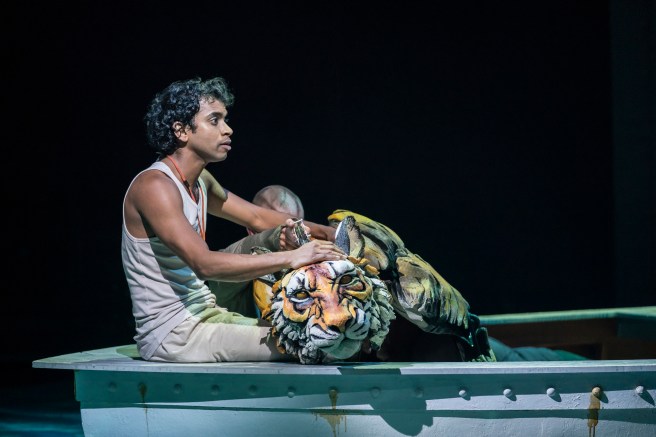
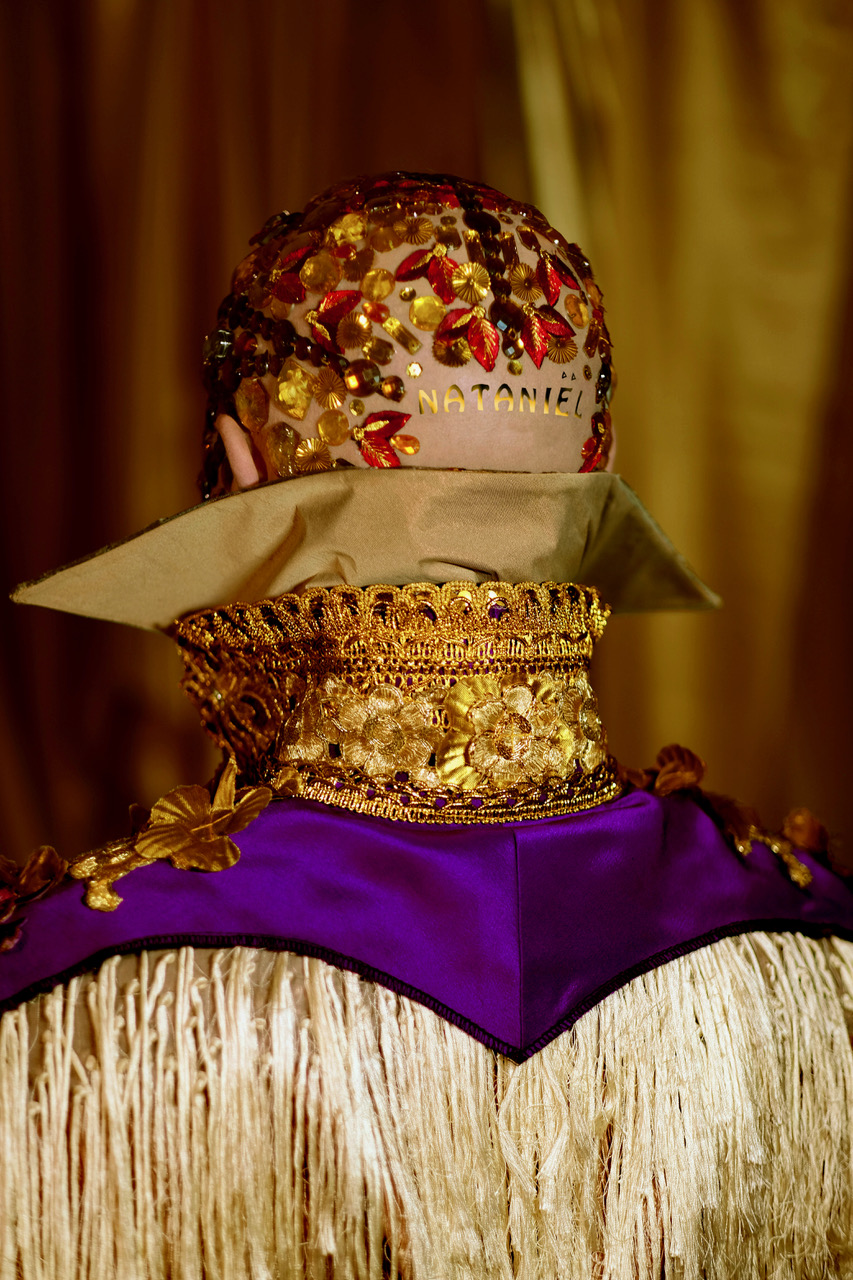
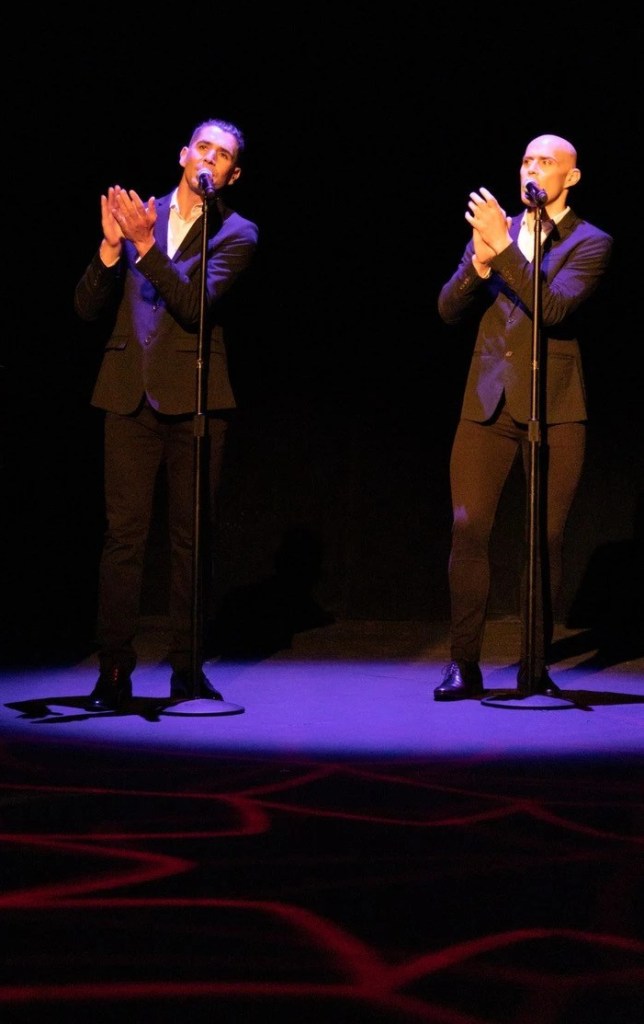
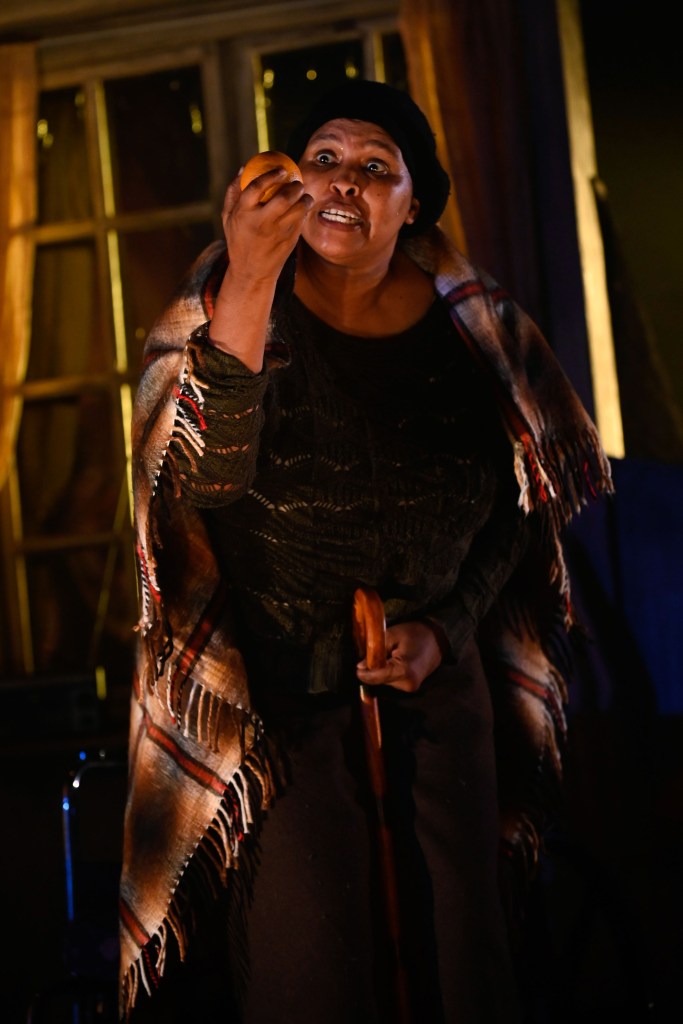
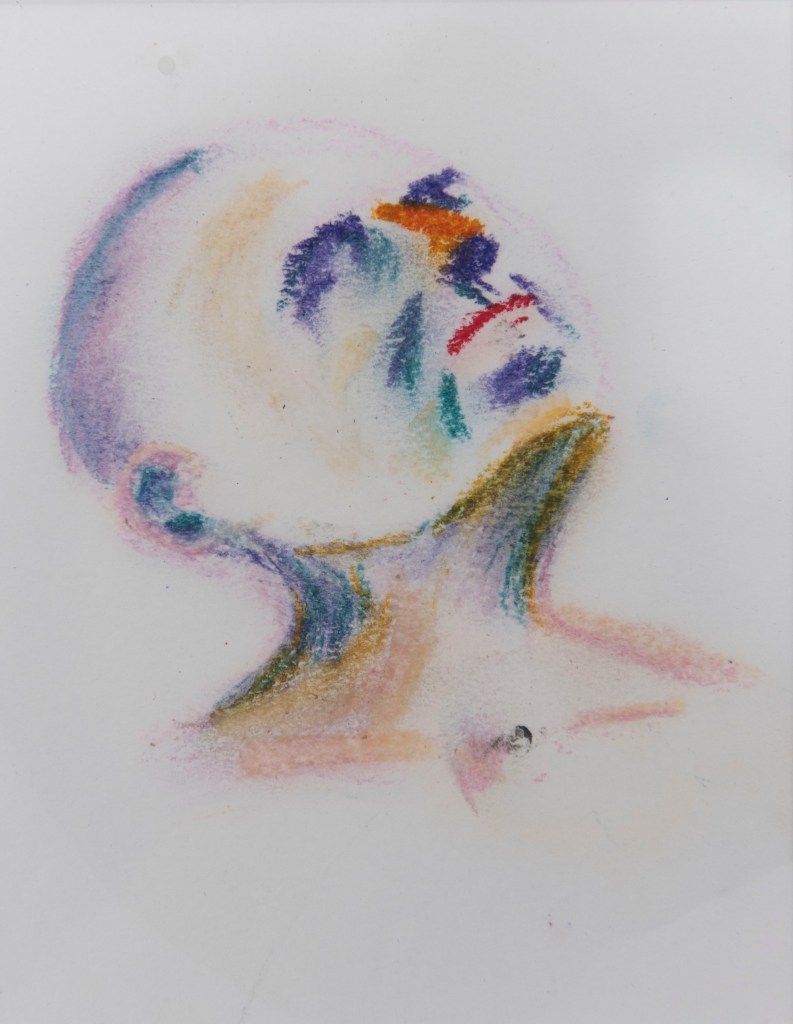
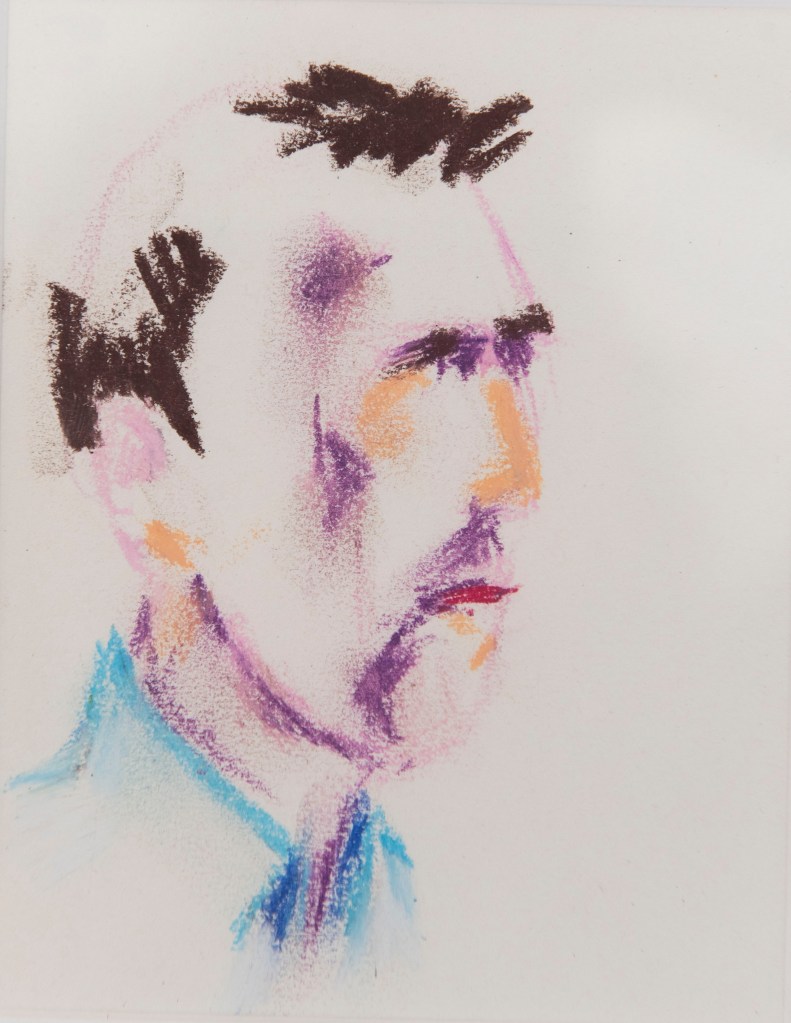
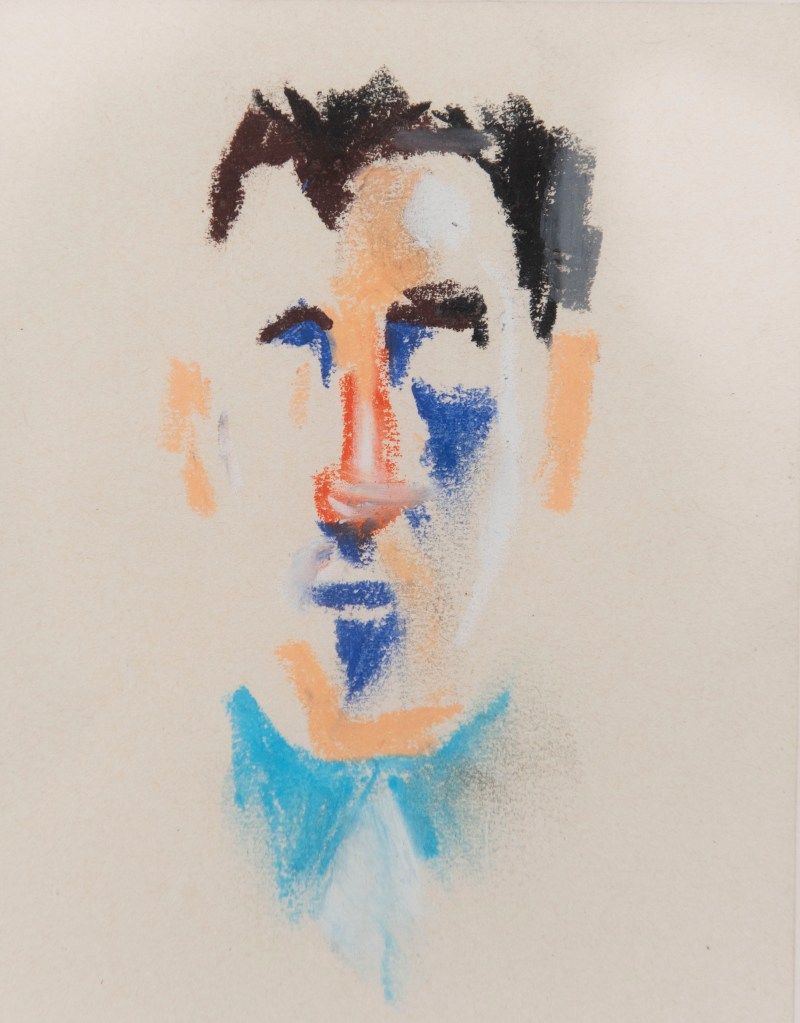
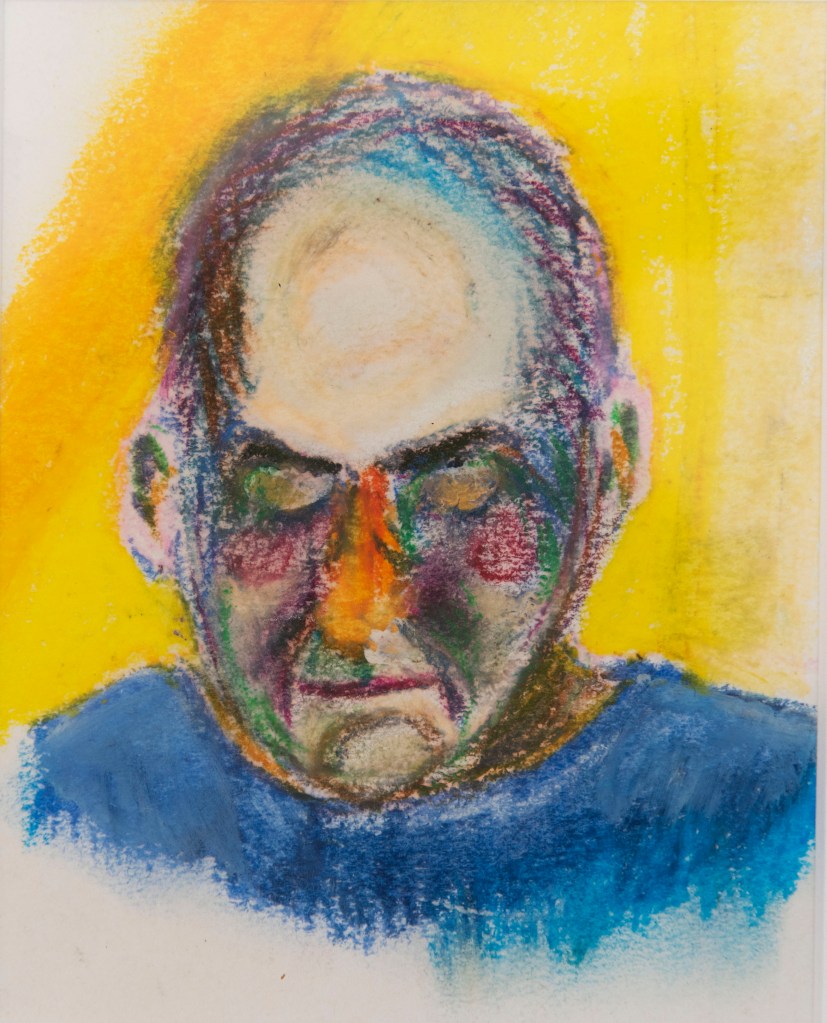
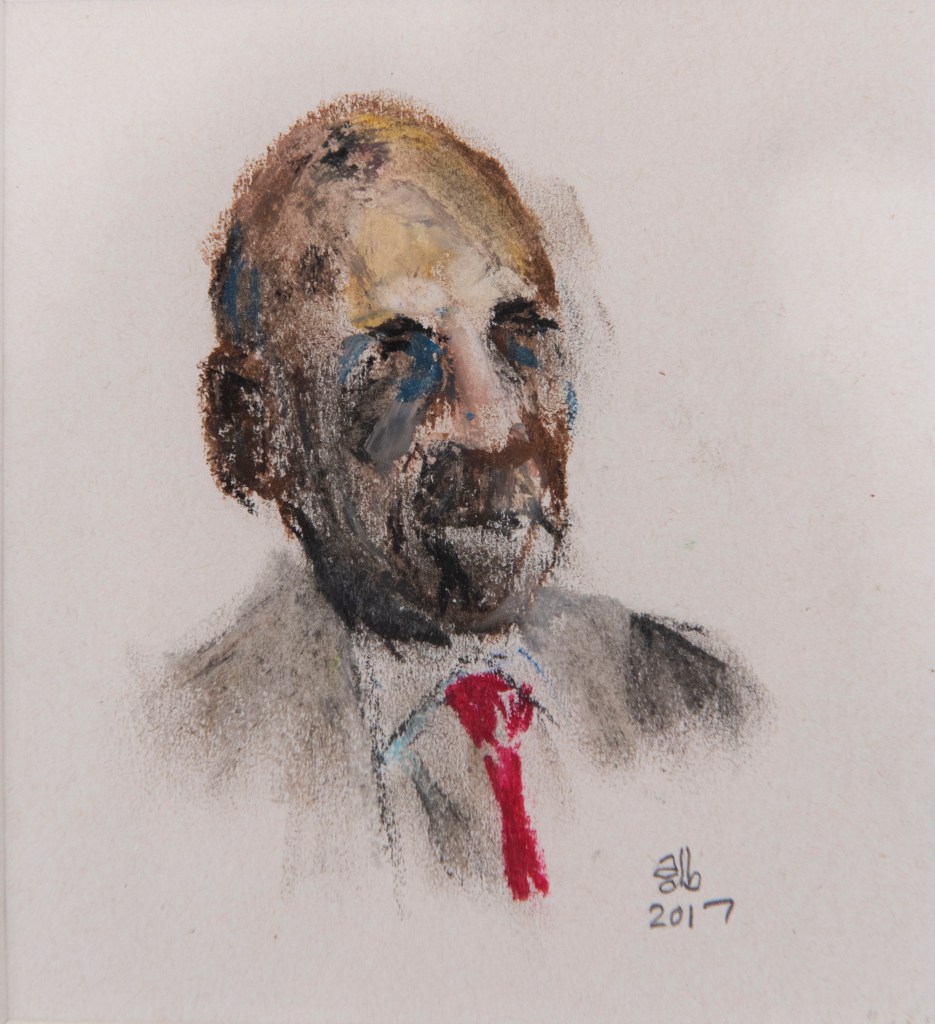
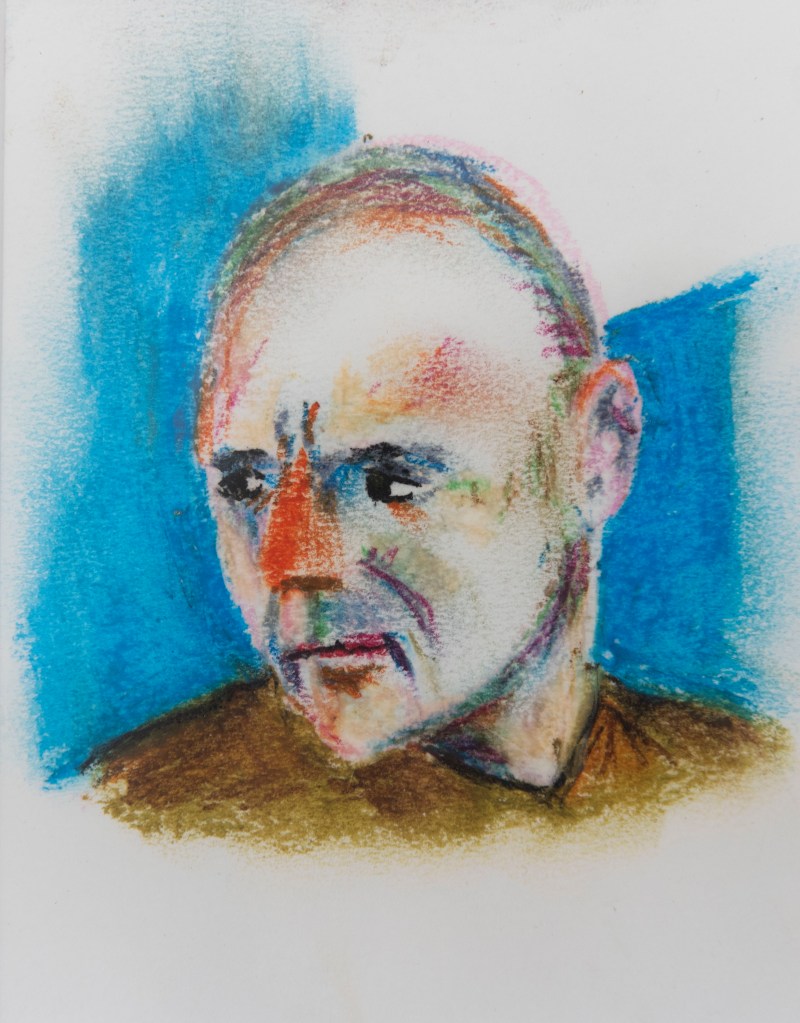
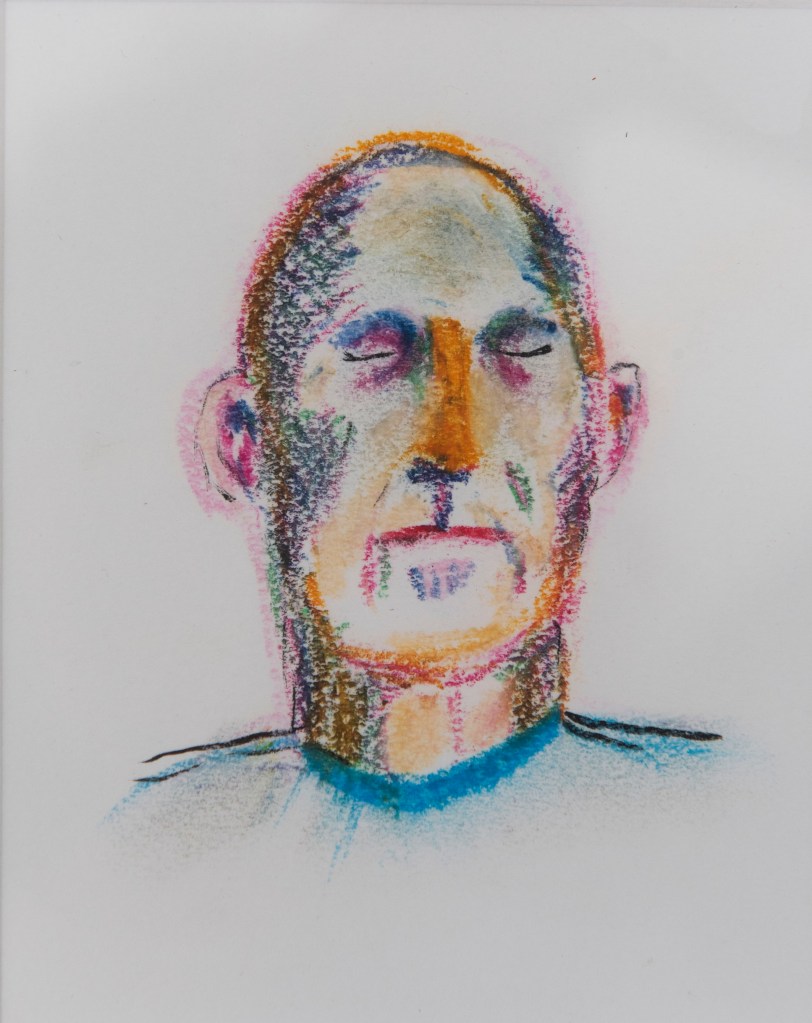
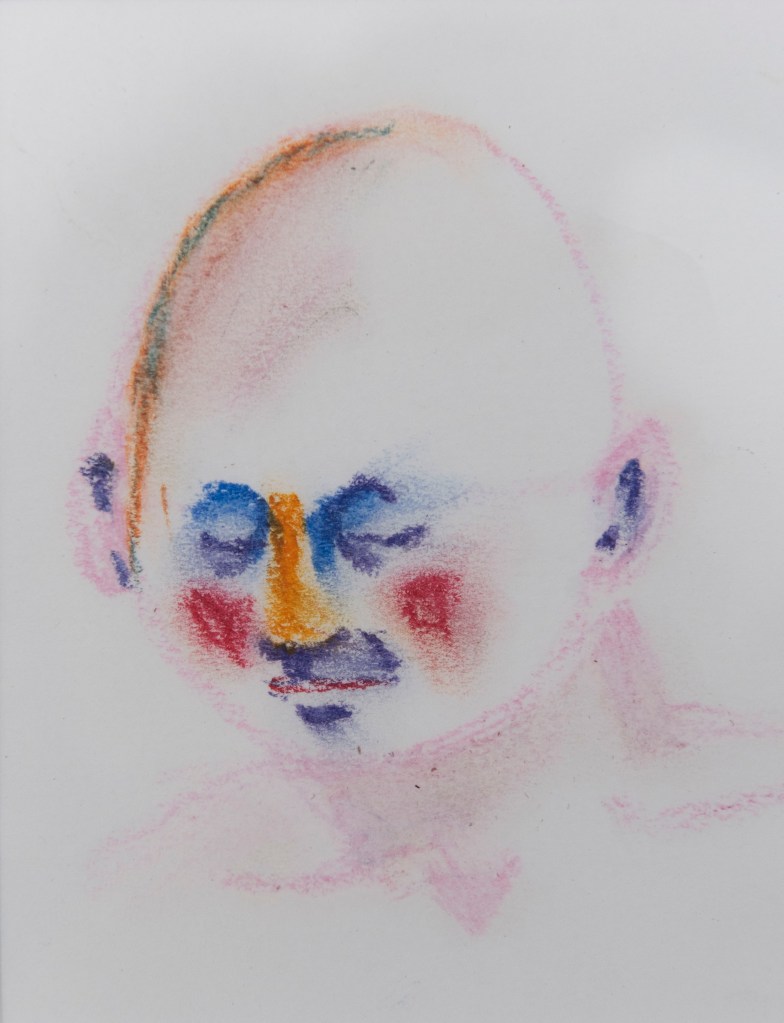
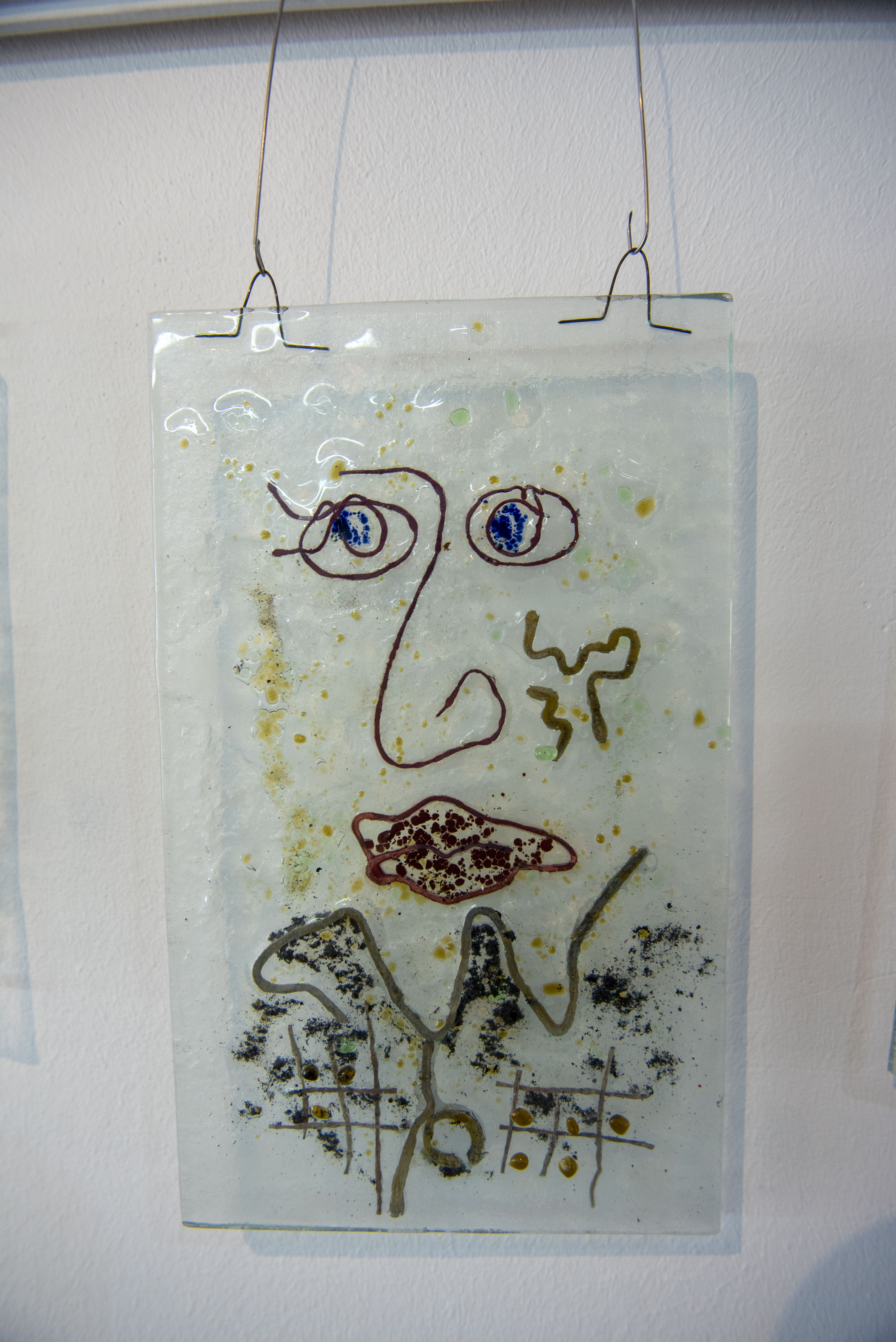
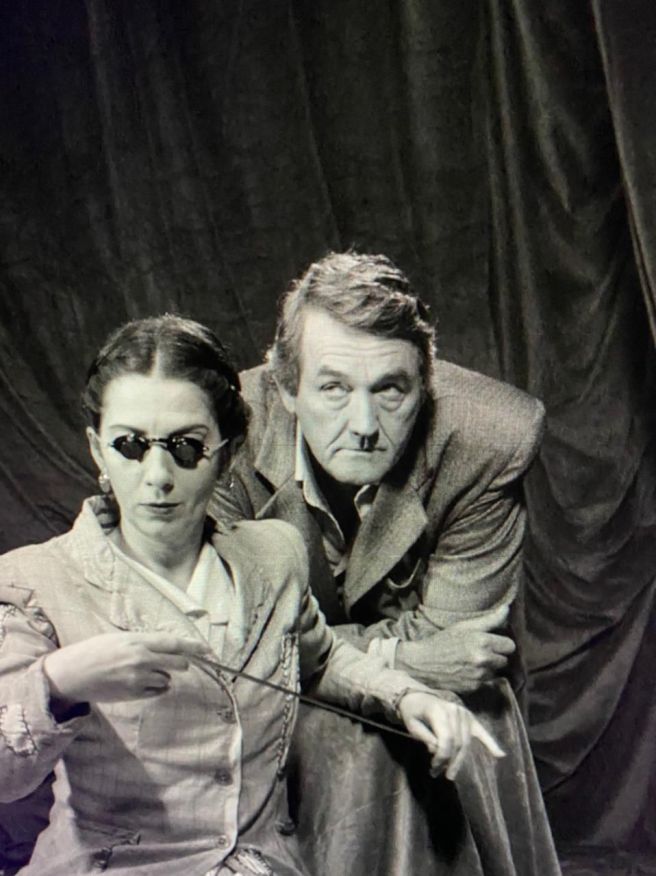
Pictures taken off the screen by directors Toni Morkel and Jaco Bouwer during the film shoot:
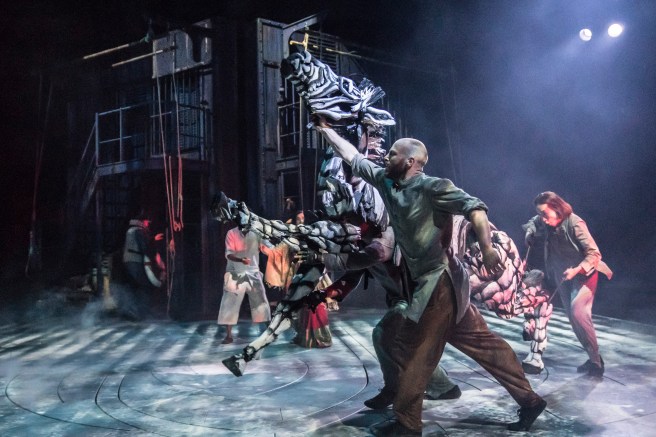
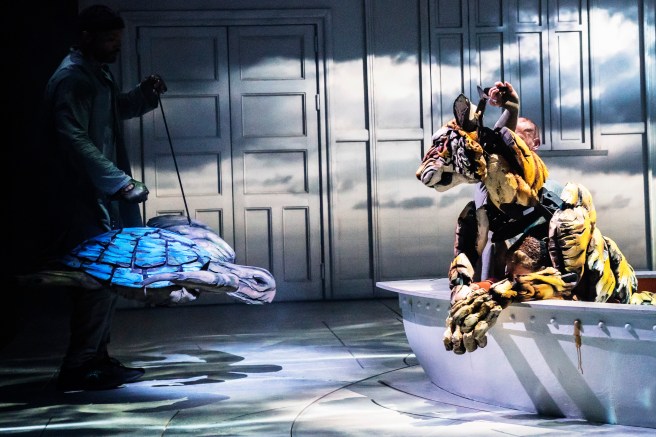
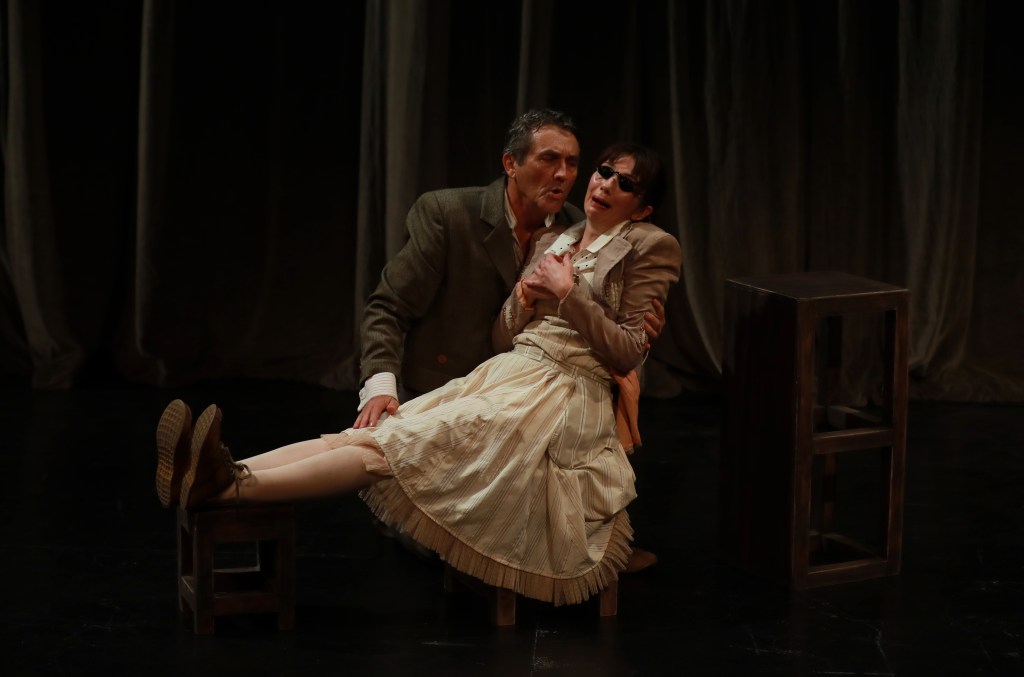
If you haven’t yet seen Sylvaine Strike’s wondrous Firefly, Pieter Toerien’s Montecasino Theatre is presenting another season from May 19 to June 11. It’s a once-in-lifetime theatrical experience with two seasoned artists stepping into the magical world of storytelling in a way that plays with your imagination in the best possible sense. If you want to know more, see below. This is the story written when they first stepped onto stage following covid:
The Countess Pafanesca in the Vodka Tango

When you are excited by the group of artists who have  come together to make theatre, sparks can fly. And that’s exactly what can happen with the first live run of Firefly, a production that was created to celebrate live theatre. DIANE DE BEER speaks to a few of the artists involved:

Theatre fans are blessed with the latest Sylvaine Strike, Andrew Buckland and Toni Morkel collaboration as they bring Ferine and Ferase (which was filmed by Jaco Bouwer for the Woordfees digital programme) to life on stage – as it was originally planned.

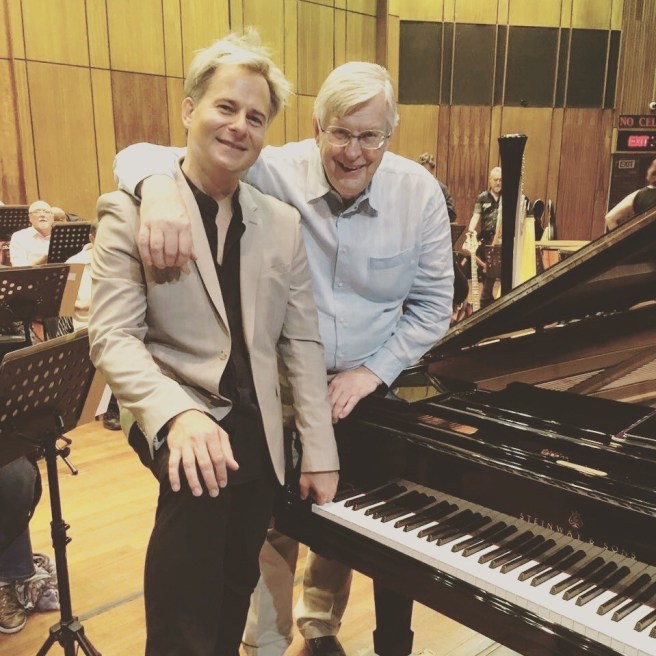
This is the second time this trio have combined their creative talents (the first was in the much lauded Tobacco and the Harmful Effects Thereof) even if the roles have been switched. Firefly was written by Sylvaine Strike and Andrew Buckland and devised for the stage by the full company (Andrew, Sylvaine Toni Morkel, Tony Bentel) and directed by Toni Morkel with Tony Bentel on piano..

Sylvaine Strike and Andrew Buckland at play.

The initial name was derived from two chemical components luciferin and luciferase, which exist in a firefly’s bum and make it glow, explained Sylvaine. “So one without the other can’t make light, they have to be together to glow. Lots of fireflies in this show.” And that is why it is now called the more familiar Firefly.

The play was first created on commission by head of the Woordfees Saartjie Botha in September 2020, three-quarters of the way through the first tough lockdown. The idea was to create something that would show audiences why theatre is unique and exciting. Saartjie didn’t want a big set, she didn’t want audiovisuals, no multimedia, only pure theatre. “We want body and craft and what the actor is,” was the instruction.

Because of lockdown, they started writing remotely through October, November and December and in mid-January last year (2021) met in a rehearsal room with their director. With Tony Bentel on piano, they began to develop the story on their feet to find a common language between Sylvaine and Andrew, who both have very specific styles. But when this trio are tasked to make theatre, that’s exactly what they do.

It’s all in the telling of the tale.

They discovered and developed a mutual style for the two actors largely based on clowning duos. Think Laurel and Hardy, for example, that kind of world, very much a nostalgic, romantic story where they play three different characters each, with the narrators the main characters called … Ferine and Ferase. They have a backstory of their own, which they tell as travelling players of Bucket’s End. It’s a time of magic and wonder which allows you to sit back, be transported and dream, a luxury in these times.

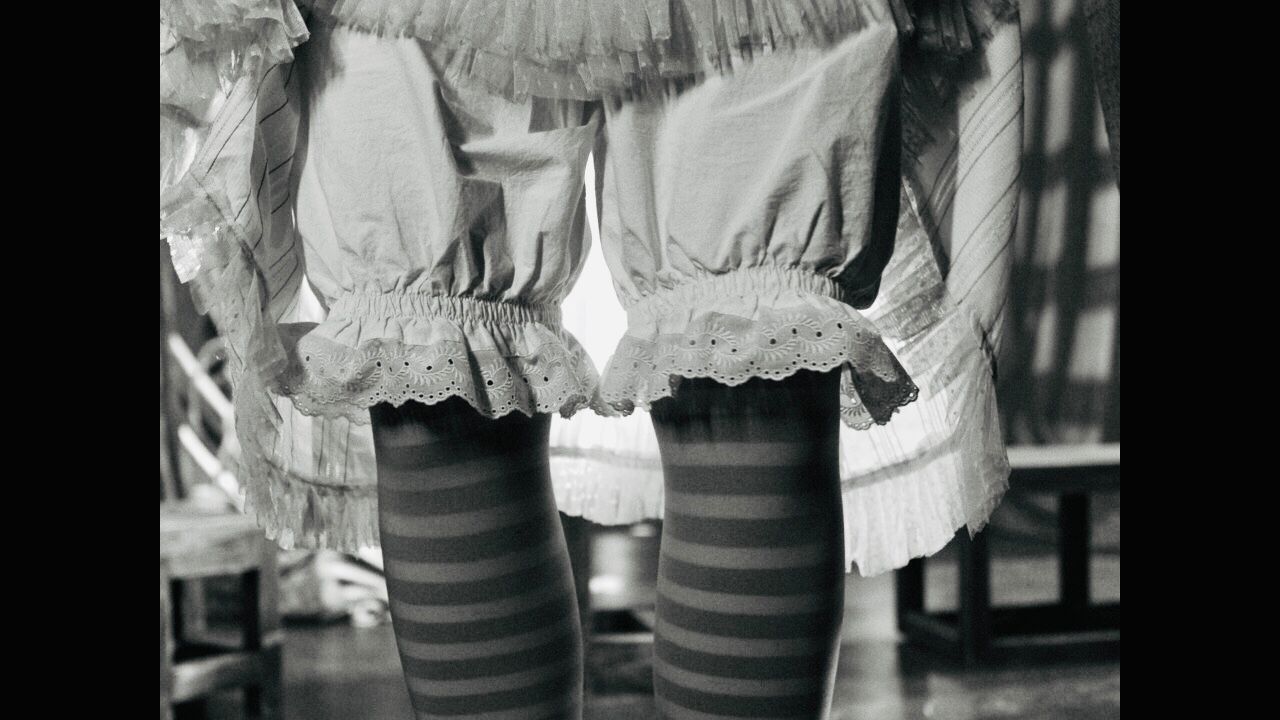
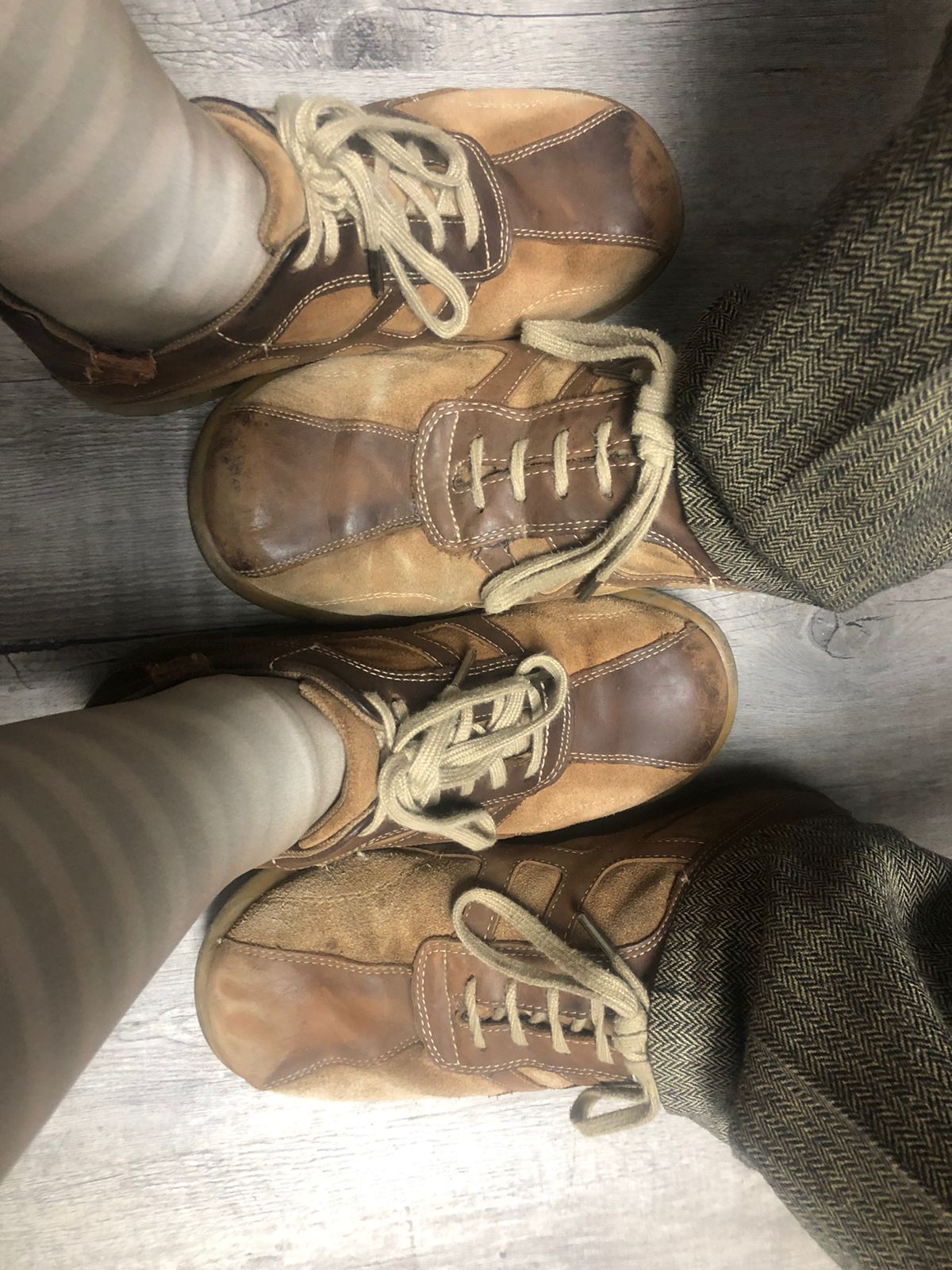
“It’s beautiful, it’s very physical, it’s gorgeously costumed with each a standard clowning costume that transforms into a couple of things,” Sylvaine embroiders.

Every detail tells a story.

From the start it was meant to play on stage and they had a short trial run with a 45-minute version. But this all had to take on a different hue when live changed to digital and they spread their special brand of fairy dust.

The full play was filmed with Sylvaine enchanted with Jaco’s extraordinary transformation from stage into film, shot in studio, all in black and white, inspired by old movies. And those of us lucky enough to have seen it, agree.

It was delightful to witness how they adopted and adapted for the new medium with all the elements colliding and fusing.

 And now they’re back on stage and it will be marvellous to be experience yet another transformation. Personally, I can’t wait!

Crafting a clutch of characters with craft and creativity.

Sylvaine and Andrew make perfect sense together and then to have the extraordinary Toni Morkel directing is genius.

As she has often been directed by Sylvaine and performed with Andrew, she was terrified yet thrilled when asked but she trusted her instincts because all three of them know one another well and understand each other’s particular theatre language.

“I’m very excited to do it live,” says Toni, who has just started with rehearsals again. These are two actors who know how to act with their whole being and she finds herself smiling as she watches them go through their moves. “I’m living my dream,” says this consummate theatre maker.

The great difference between the screen and stage version is most specifically the sets. The two actors with their costumes and imagination have to construct their world on stage. And while it is sometimes frustrating to remember what they could do on film, the stage version is what they envisioned from the start.

“We wanted to create a play that would travel easily and anywhere – whether we had lights, curtains, even a stage,” she says. And knowing what they have achieved in the past together and individually, this is not an impossible ask. It has always been part of their theatre ethos, and while it might have been initiated by a scarcity of funds, it also focused their imaginations magnificently.

Andrew Buckland and Sylvaine Strike in Firefly.

“I know their world, their physical ability and strength and how they work,” she says about the process. “What we are relying on is good old-fashioned storytelling.”

She does have two more aces up her sleeve with Wolf Britz again making magic with his wondrous lighting and he has a few more tricks in the bag. And there’s Tony Bentel’s wizardry on piano. “I can’t help but gush when speaking of his astonishing ability. He has a world of music in his body,” is how she explains this gifted musician who accompanies the two actors live.

“For any section of the play, he comes up with five or six different musical suggestions and because he is adept with improv, he can embellish what the actors are trying to express at any moment. I am constantly in awe of what he has arranged musically.

“I am blessed,” she says.

And so are we. With these dynamic artists, expect fireworks in Firefly!

THE KLEIN KAROO NATIONAL ART FESTIVAL SHOWS HOW THEY SPEAK IN PICTURES AND INSTALLATIONS

PICTURES: Fahiem Stellenboom

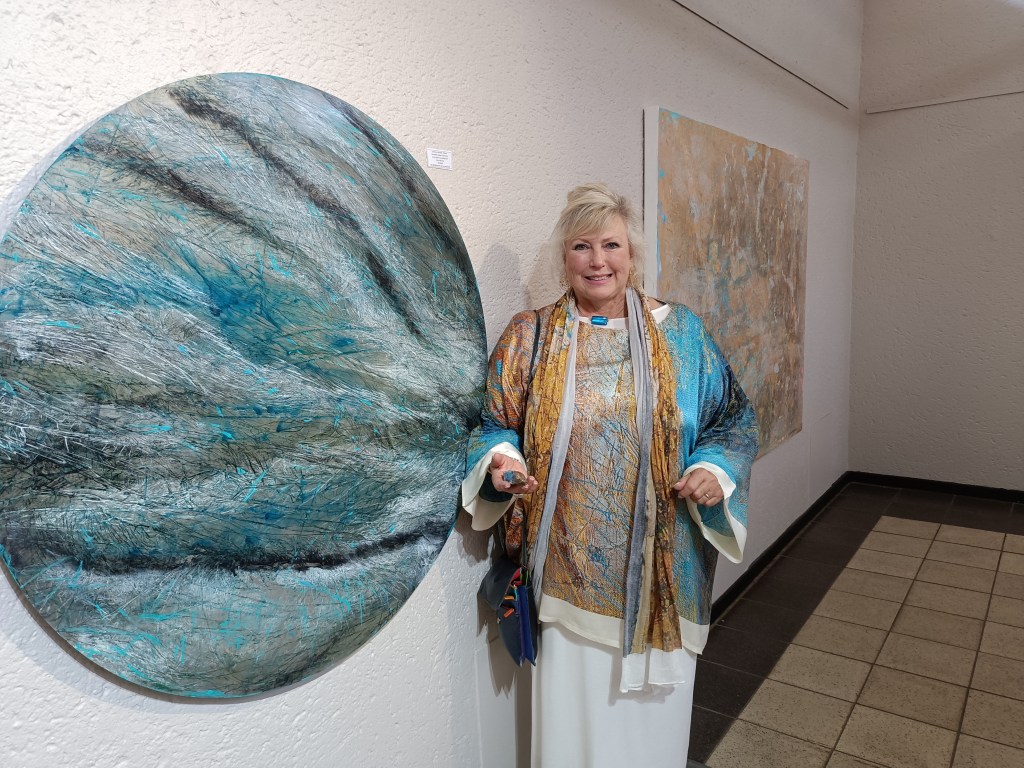
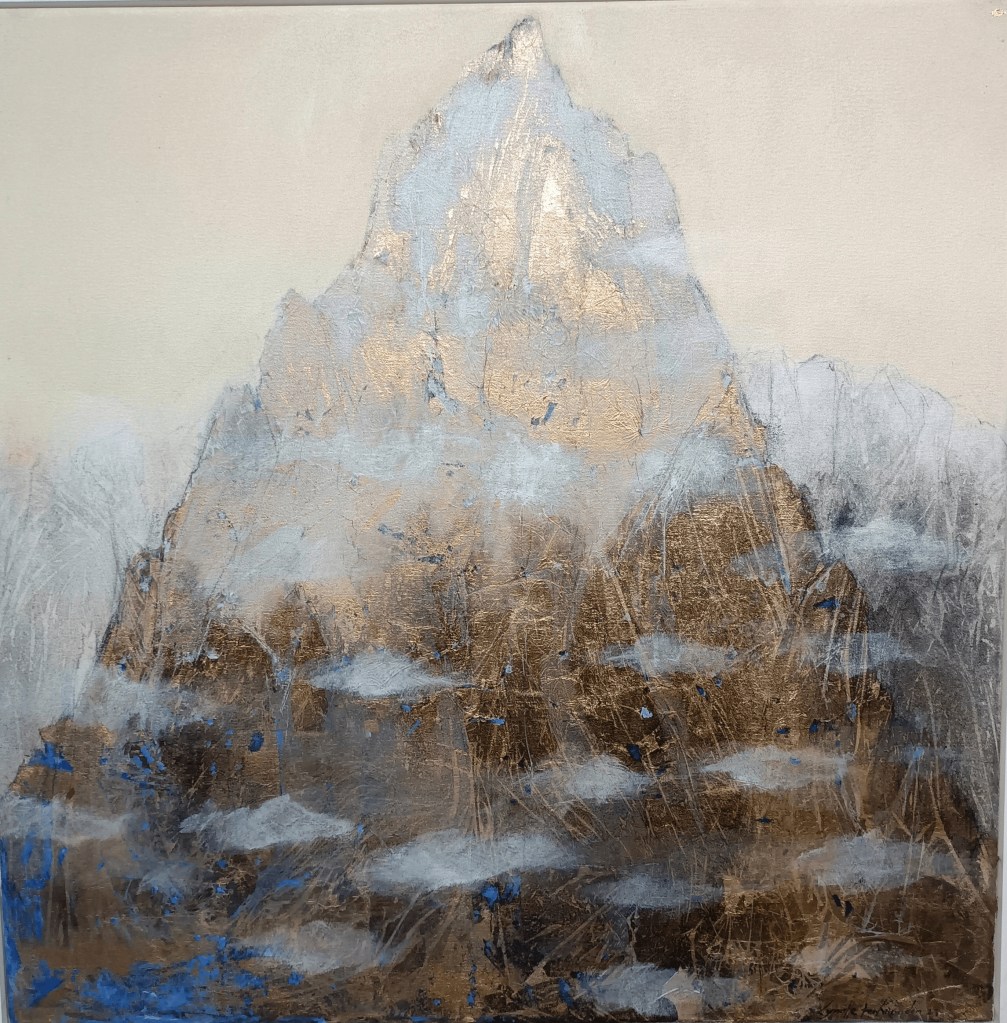
Liza Grobler Festival Artist and the winner of the art prize captures the essence of her Karoo which constantly changes.

Art has always played an important role at the festivals, with the Klein Karoo National Festival one of my favourite viewing venues. DIANE DE BEER tells you why:

It has to do with the place, because they have easy access to different venues and spaces, but perhaps because of the length of the festival, it has also meant that you have time to meander and really take note of the art.

Another reason might be the more recent introduction of curator Dineke van der Walt. Her choice of themes and artists has been unusual, varied and always presenting a large number of artists who I had no knowledge of.

That doesn’t necessarily mean anything except that I don’t pay enough attention during the year and the festivals mean that artists from around the country are on display.

Curator Dineke van der Walt on one of her many walk-abouts. Picture: Hans van der Veen.

This year was no exception and I was lucky enough to catch one of Van der Walt’s walk-abouts which for this art fan is always a bonus and a learning experience. Sometimes the artists or the curators are around and do the talking, but other times, Van der Walt told the story. Keep this one in mind for the future.

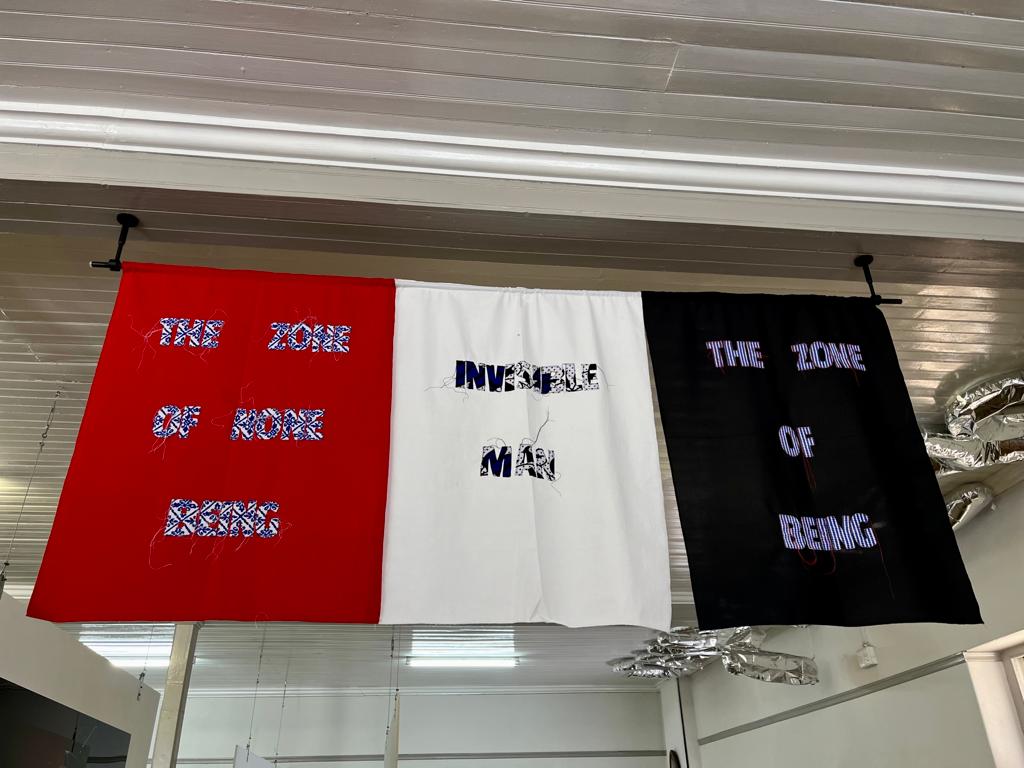
This year’s theme very aptly was Hide and Seek: Reimagined Histories. It’s about taking a much wider and more representative look at the world. For far too long, stories have been told from a specific vantage. It has long been time to fling open those doors and allow the light in. We all gain from a wider and more honest perspective – on every level.

There are too many artists and  venues to include here, but that doesn’t mean that there weren’t many more worthy of a mention. Simply that I had to make a choice, and for the moment, these were my picks.

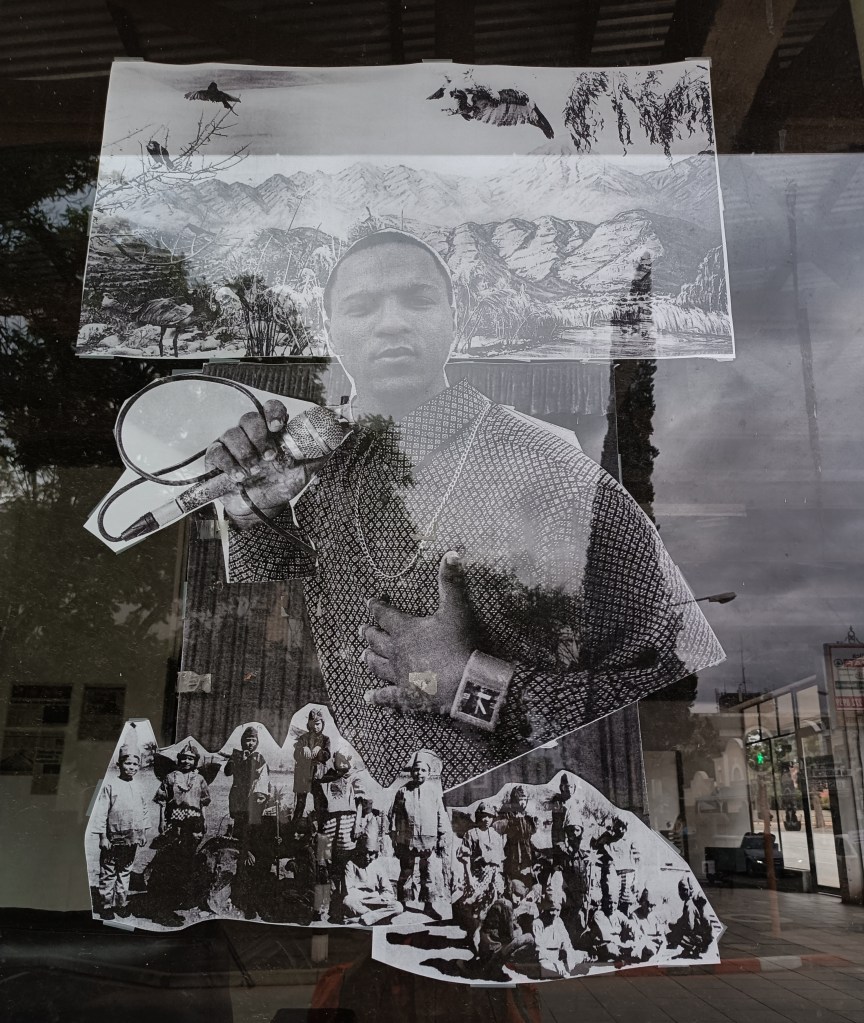
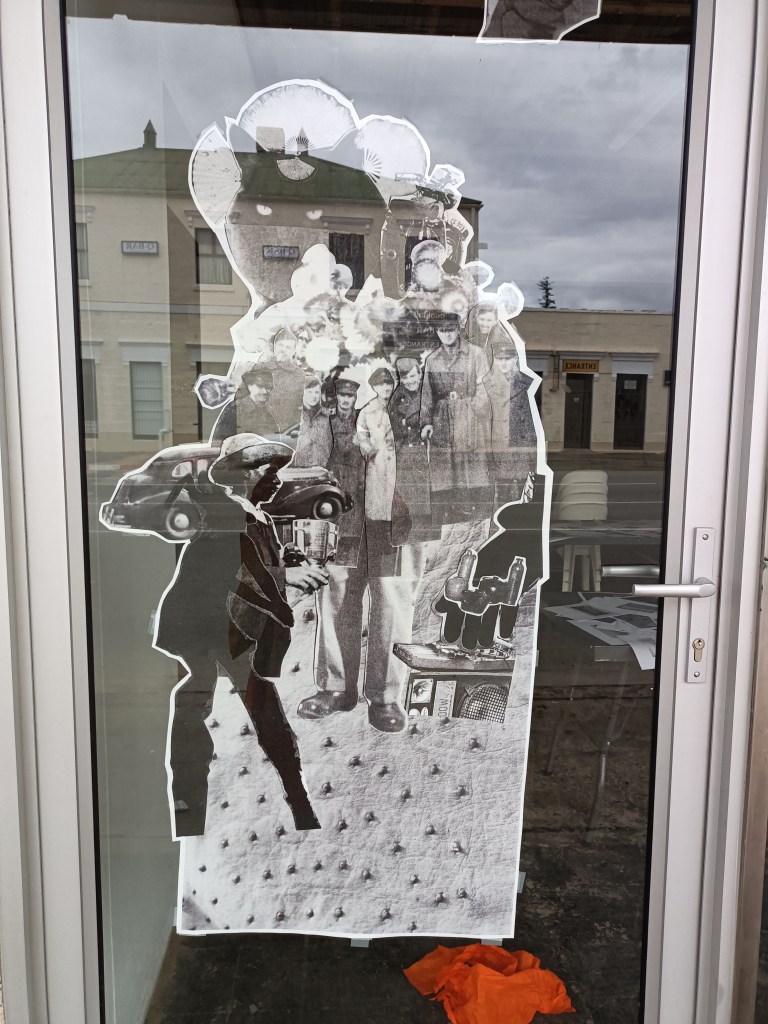
Two stood outside of the parameters of the St Vincent Building which exhibited most of the art. Another well-deserved extension of Karoo Kaarte, was yet again a fantastic example of how art can include a much wider audience as well as introduce participants to a new way of expressing themselves.

 Collages and narratives feature strongly in this project and this time they were displayed in full view of everyone in town because at some point they would have passed these beautifully illustrated windows and stopped by to see what was happening.

The pictures best tell the story that is one that should just keep on running. Here are some of the collages in the building where they presented daily workshops.They had many contributions and one they cleverly slipped into the exhibition space was the way they re-imagined children’s games from the past ,which some of us might remember like kennetjie, skaloeloe, drieblik and gaatjie. These were then explained in a pamphlet with instruction-driven drawings to show the way. It’s also another way of appealing to the youngsters attending the festival.

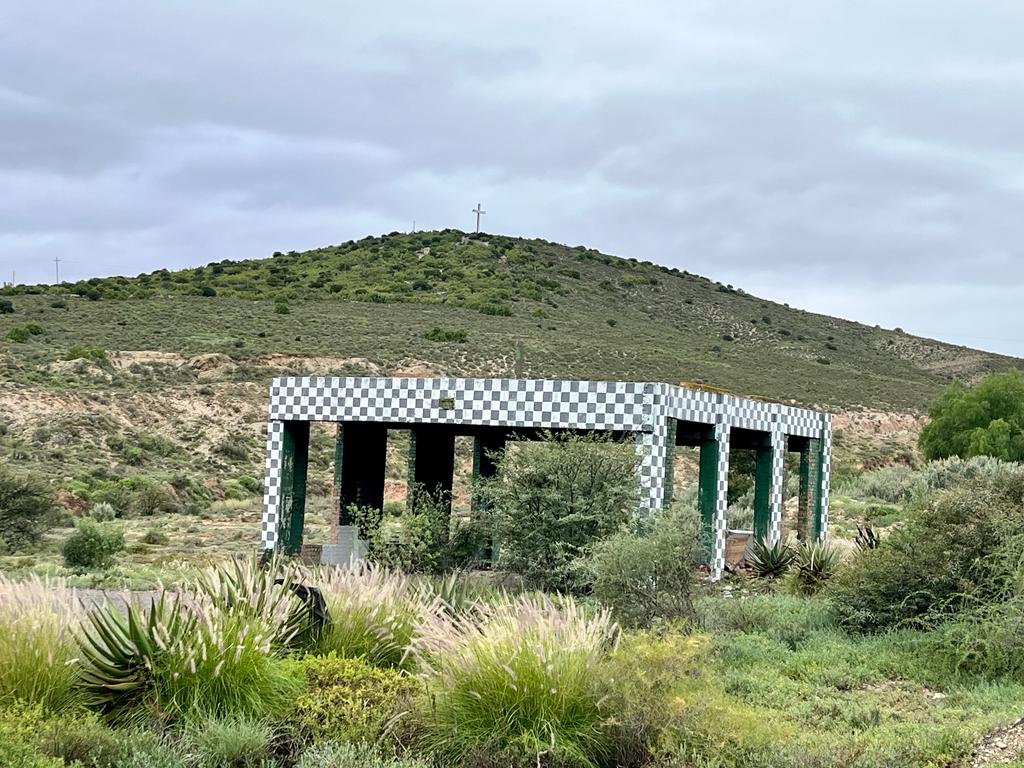
The other was a series of site specific installations which apparently were meant to be quite hidden, but for hurried festinos it might have been a hazard rather than an adventure.

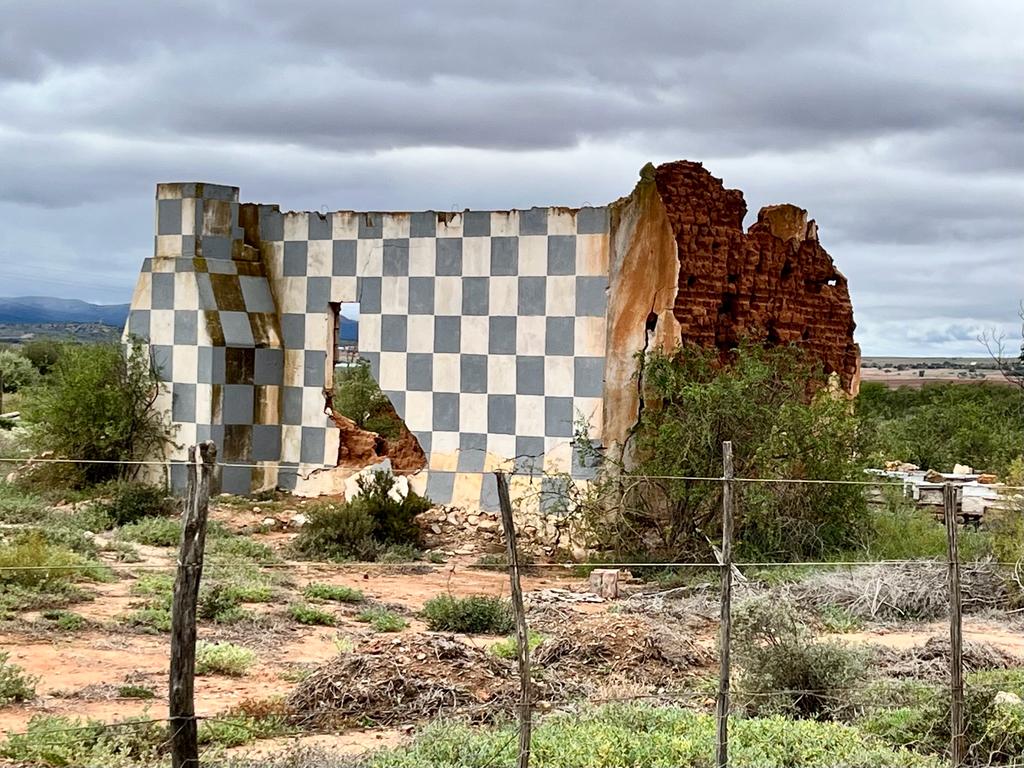
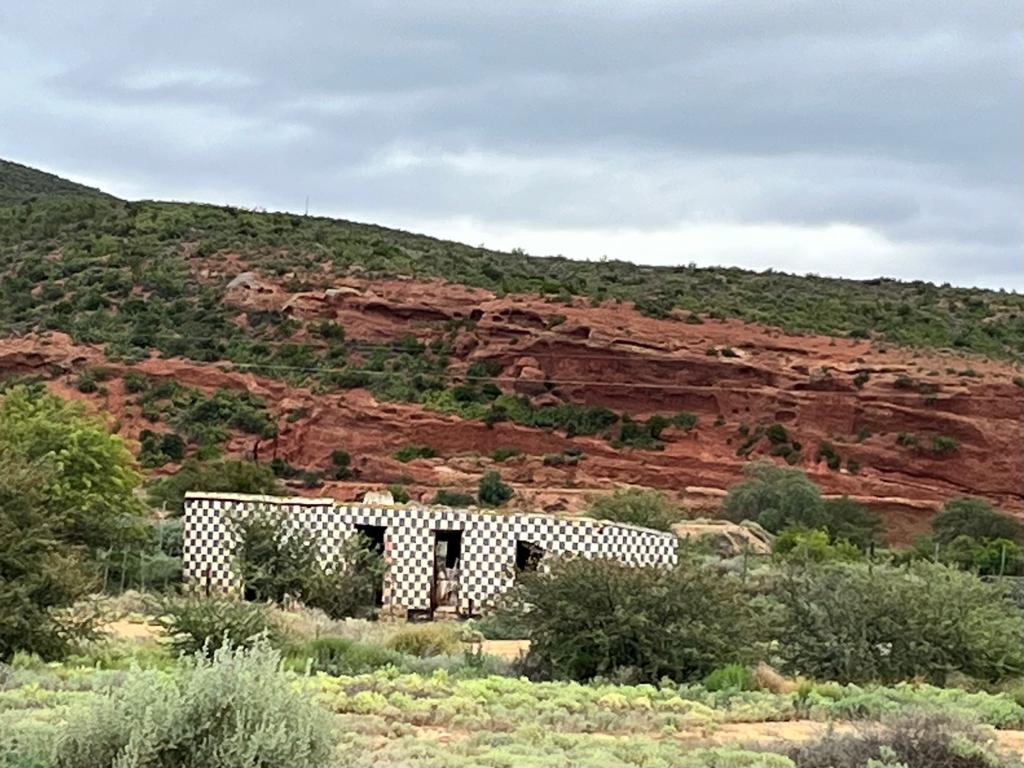
Three derelict buildings were selected as the backdrop for Norman O’Flynn and ONE. with the trio of installations titled Transparent. The idea was to lift these structures, which have probably for many years gone unnoticed, out of their environment by applying a quite ordinary yet eye catching pattern.

What they were hoping to achieve was to show the way society deals with issues like poverty, inequality and violence in a community, by turning a blind eye.

It was a wonderful exercise apart from the difficulty in finding especially one of the installations. The point about hidden had already been drawn by picking these structures all on the edge of society.

Art is enough of a niche not to add obstacles to further shift it closer to the edge.

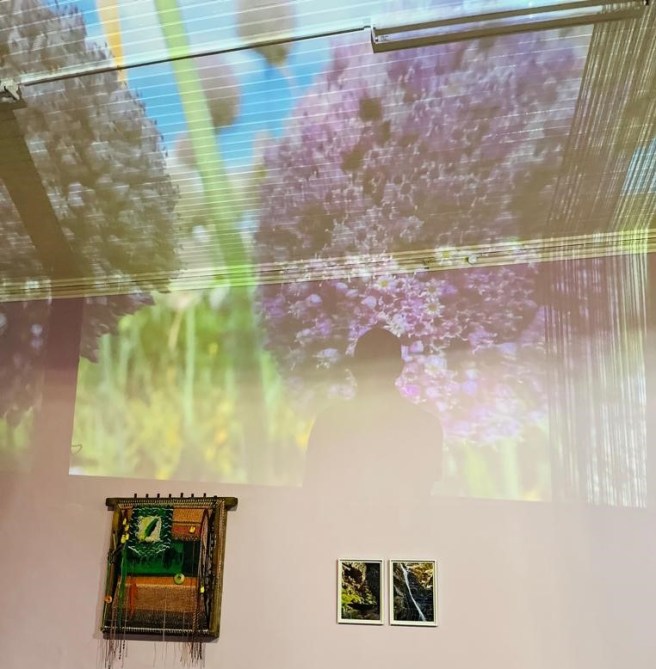
Kanna for Best Presentation – visual arts, sponsored by Absa: Liza Grobler – Inkommers, laatkommers & laatlammers, as well as the Droom installation”:

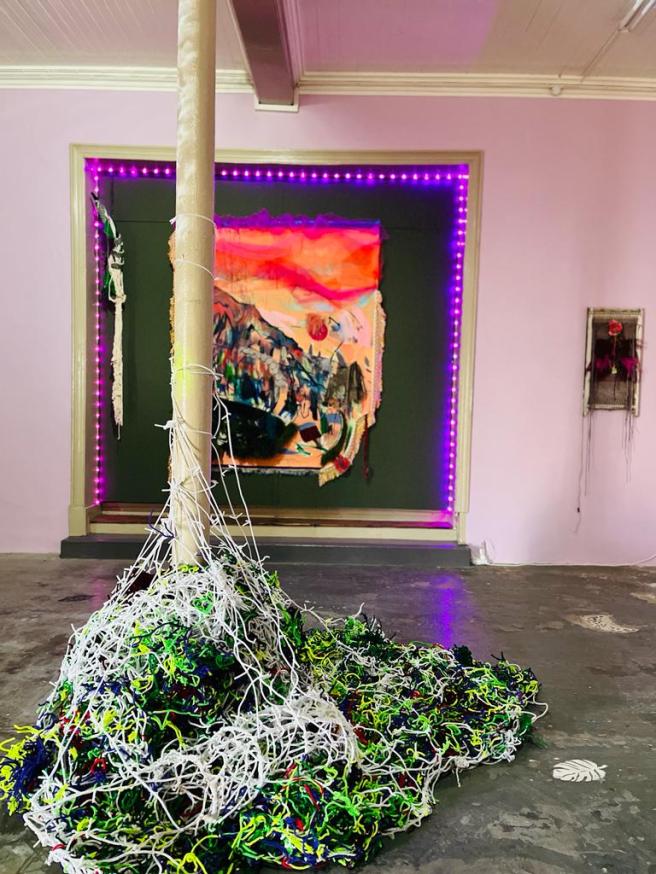
And then moving inside to be enveloped by the colourful explosion of the Festival Artist. Liza Grobler dabbles in many different ways of making art. With the title Inkommers, laatkommers en laatlammers, this recent Oudtshoorn inhabitant was clearly stating her case.

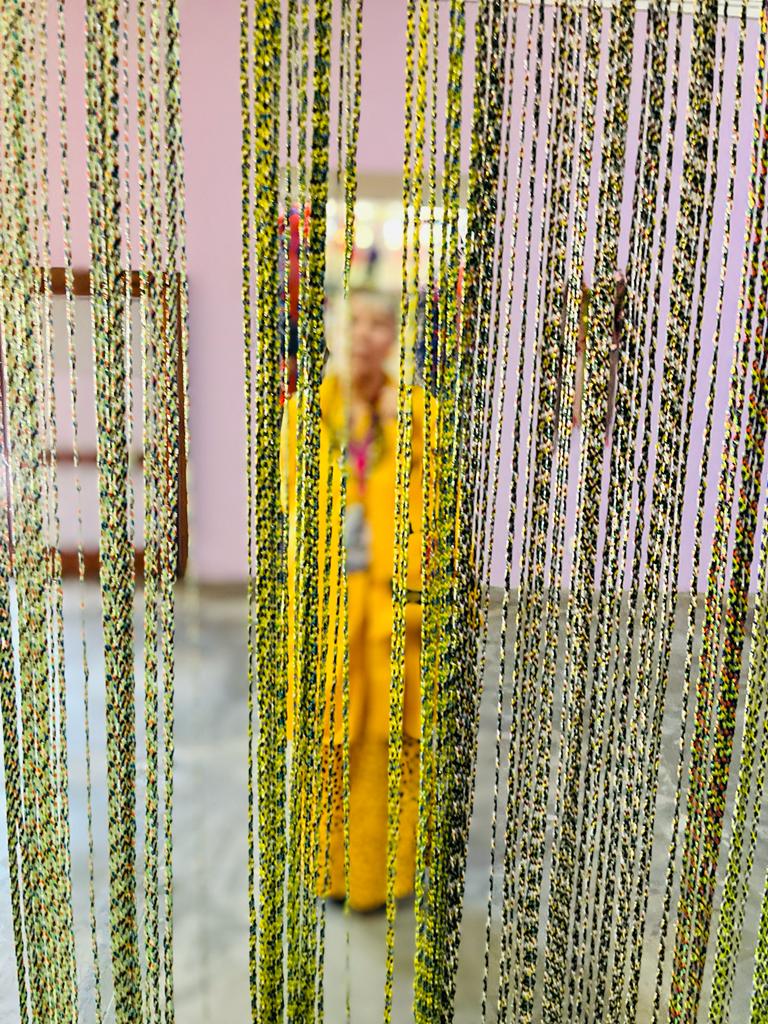
From her side, there’s an exuberance, an energy and enthusiasm that’s catching. She targets the imagination not only with her variety of work but also with the way she invites you to engage with her art.

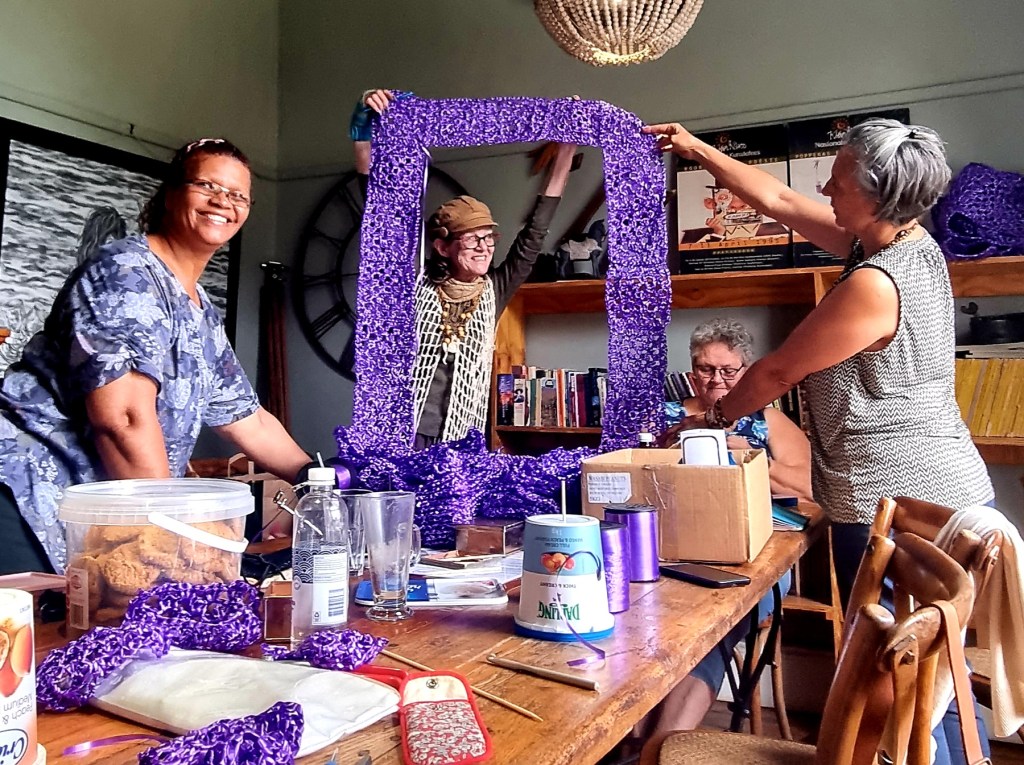
Stringing along while playing with your mind.

There’s a playfulness that’s engaging and yet her work is loaded with meaning if you take the time to explore and engage. And here the title took you by the hand and pointed the way.

As did her outside installation with the word DROOM in eight different languages. She also encourages others to dream by having workshops and including other Oudtshoorn creatives to collaborate.

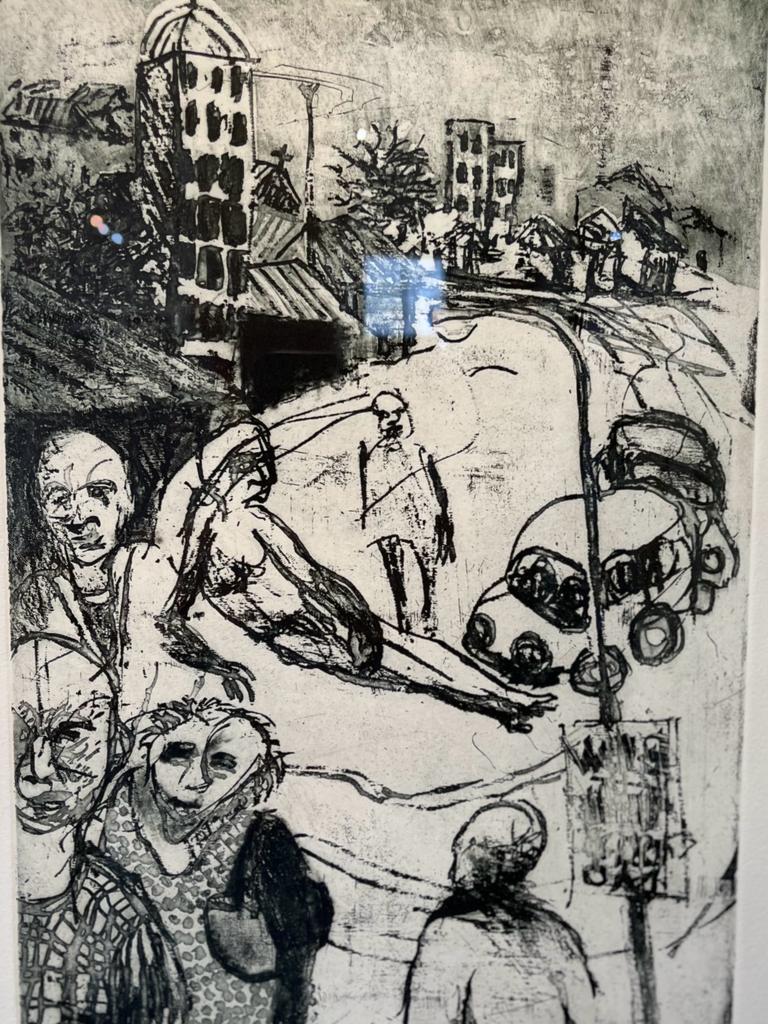
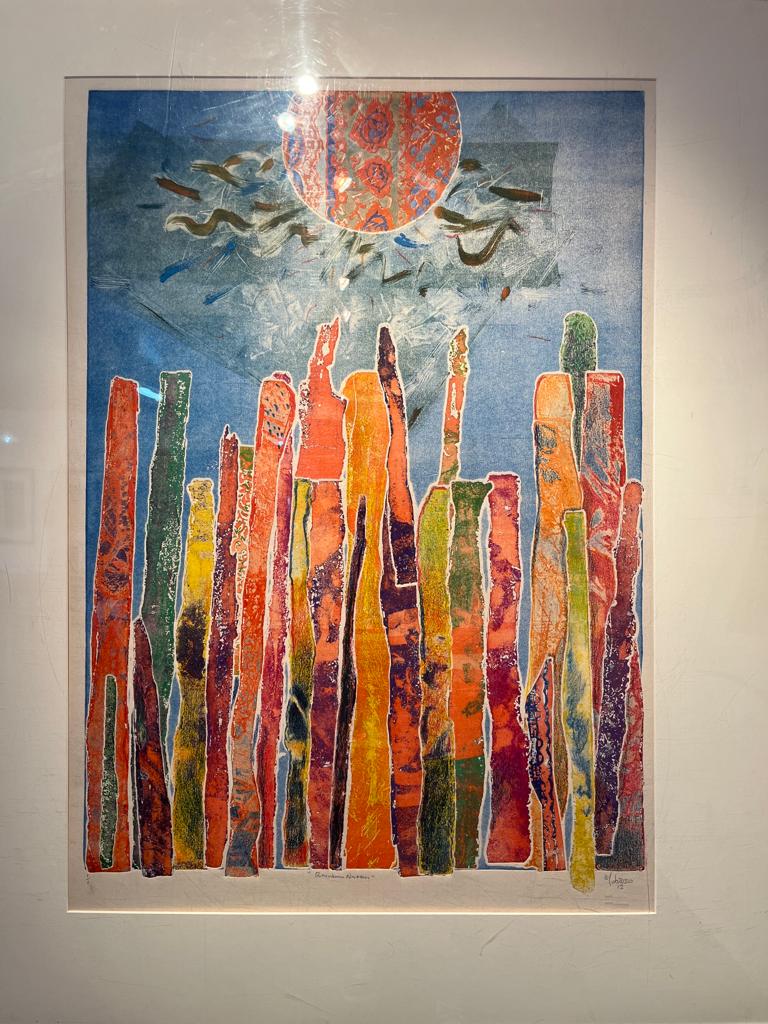
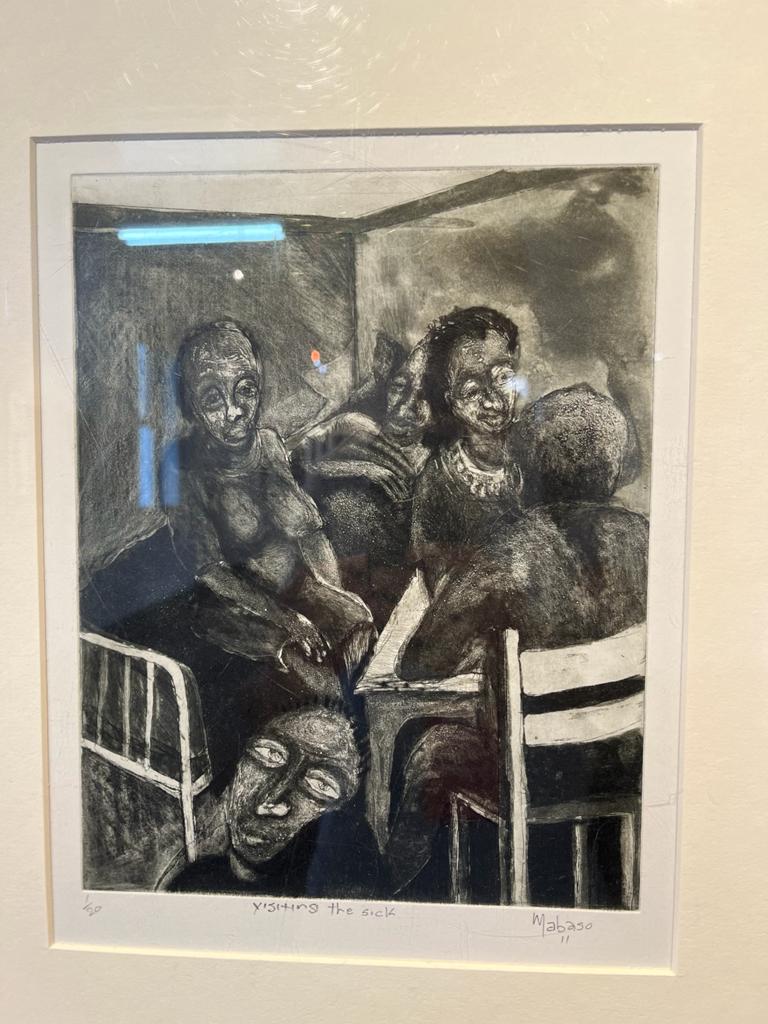
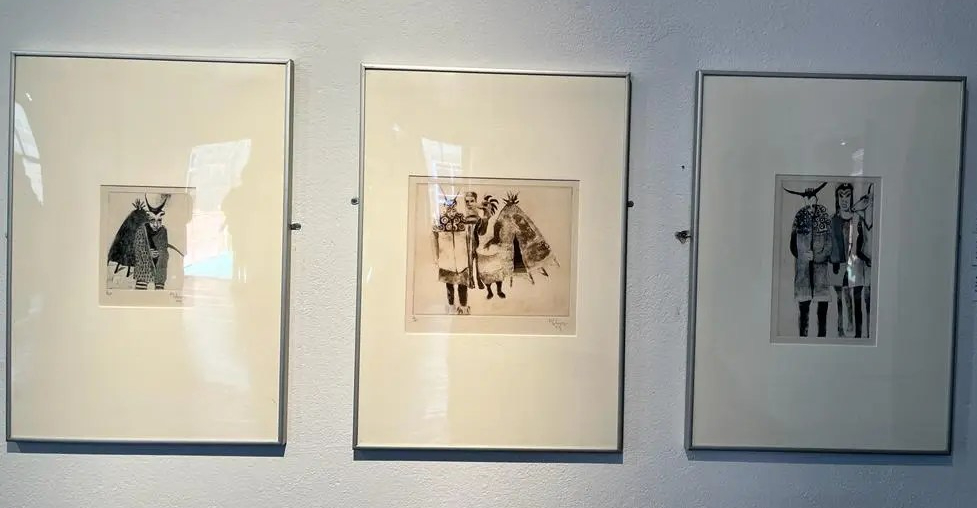
Another artist’s work that grabbed my heart was titled Untitled: the Dumisani Mabaso Retrospective. I was immediately bowled over by the work, the emotional impact, the diversity, the way Mabaso moved from one visual look to the next.

Only then did I wonder about the artist and why I had never seen or perhaps noticed his work before? He was a painter, a master printmaker and a jazz musician, and all of these influences played a role in his art.

His approach was gentle but, living from 1955 to 2013, his art spoke to the time and the conditions of the disenfranchised and disaffected. And he never stopped. His was always a fight for the poor and the working class and for their emancipation.

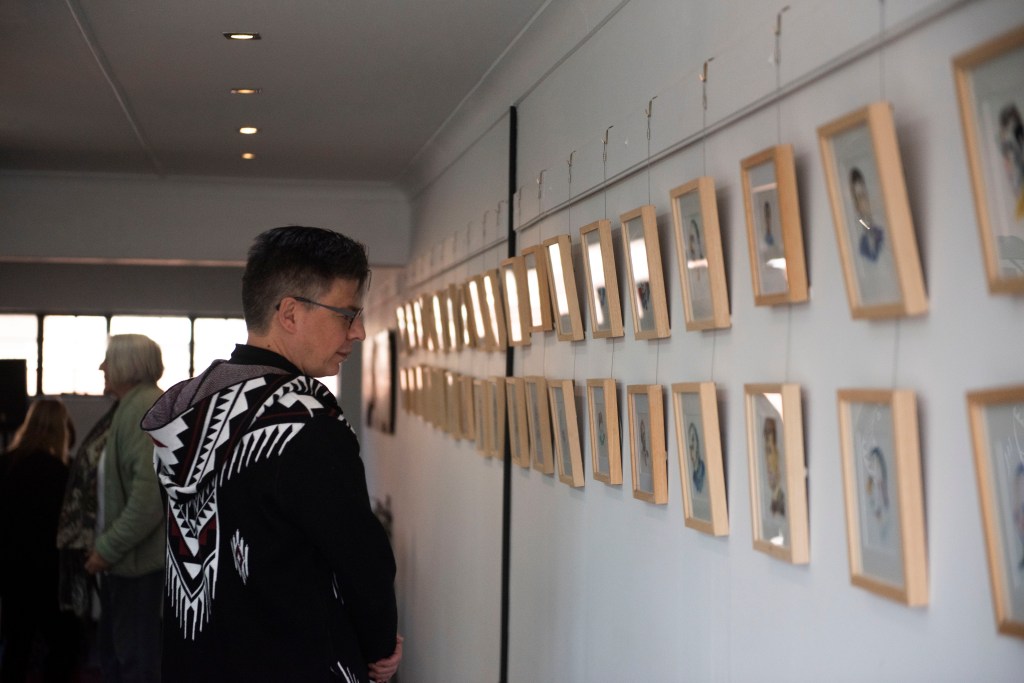
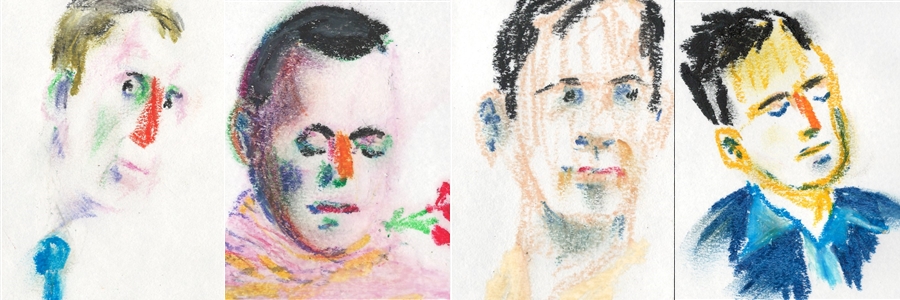
A trio of Mabaso sketches that reminds of costume portraits with their delicacy.

This retrospective resulted from consultations with the Mabaso family by the William Humphreys Gallery about the importance of underlining his importance and contribution to South African art.

We are the richer for this inheritance.

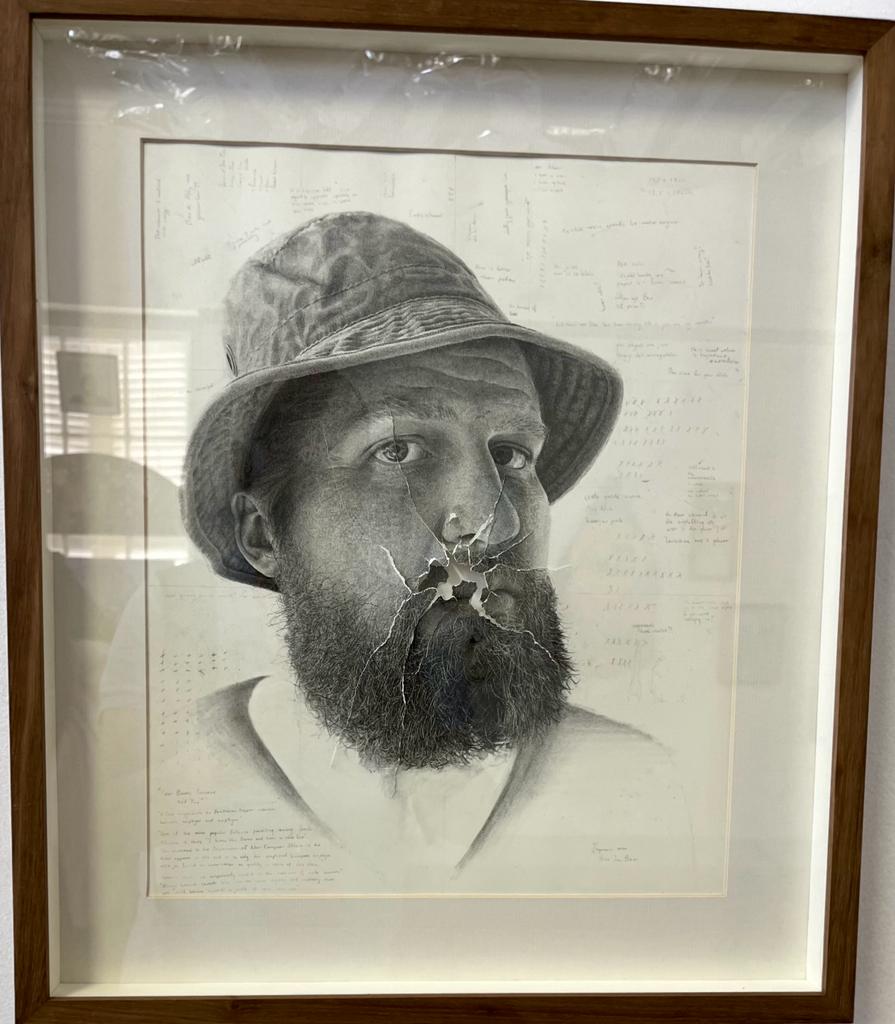
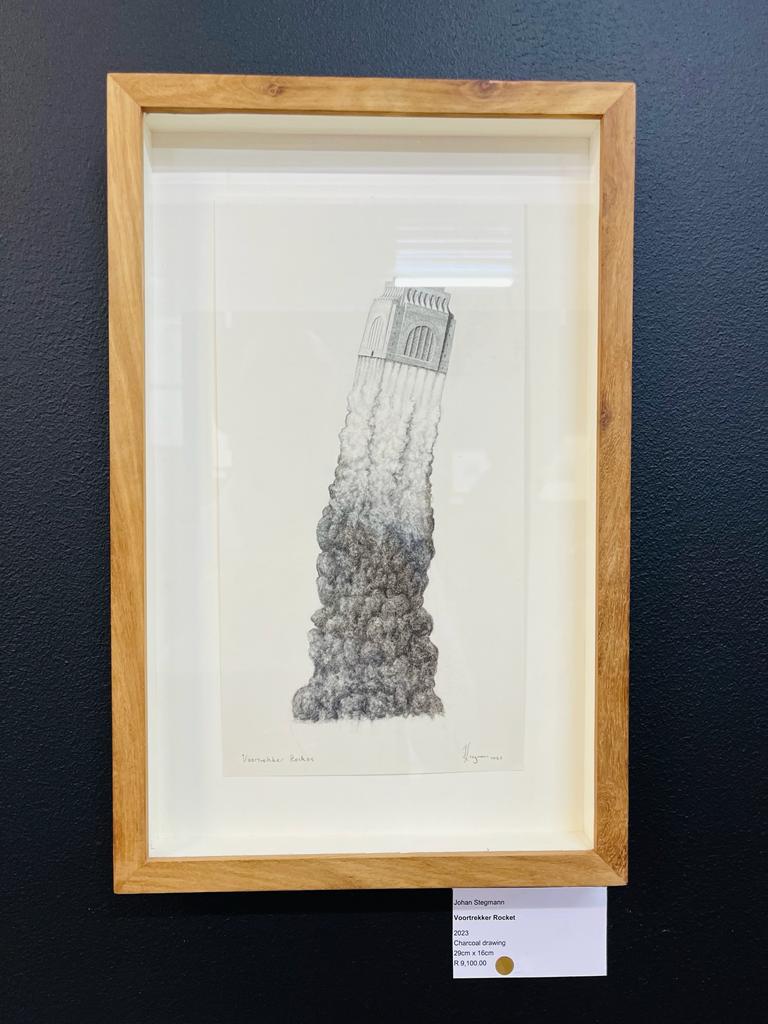
Two other notables include the work of Johan Stegman who was very articulate in explaining the title of his exhibition: ‘n Goeie dag vir ‘n Slag.

It’s all about the one who writes the history and from where it is interpreted. Rather than argue the facts, he  takes the battle of Blood River, the legendary fight between the Voortrekkers and the Zulus, and investigates it from different angles with the idea that this will offer different perspectives.

Included are other works which immediately point you to the way his mind works.

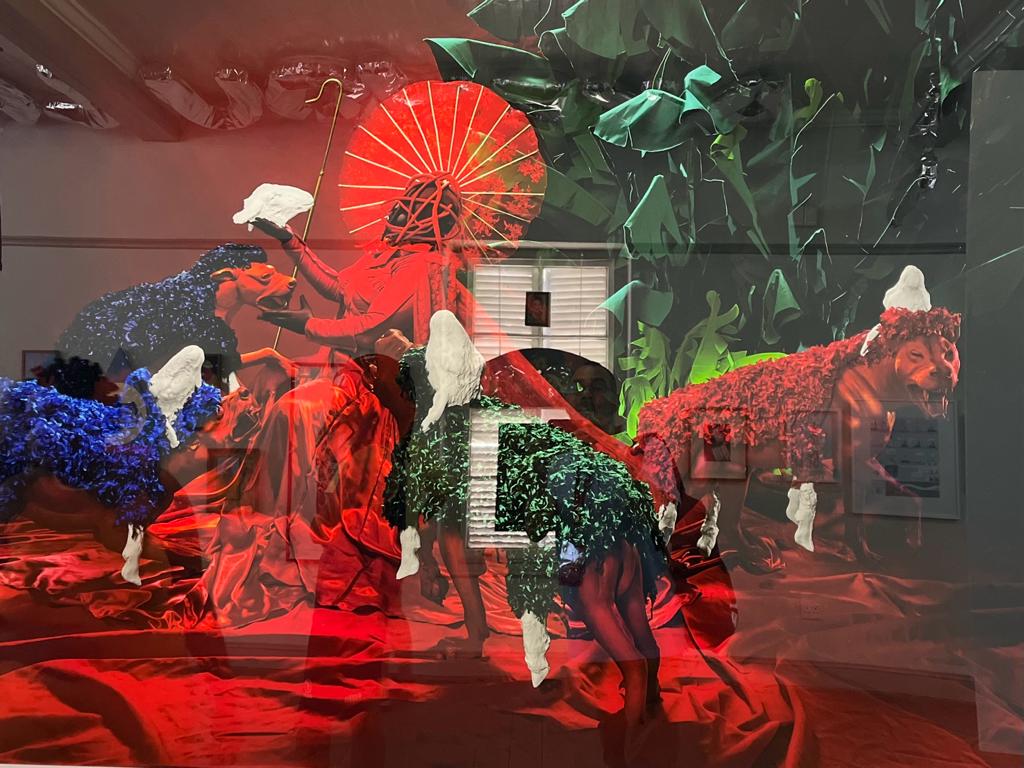
In another grouping, Is ons nog ‘n ding, he smartly invited Lawrence Lemaoana to co-curate with a title exploring the use of the term Afrikaner which can be used or abused by white Afrikaans artists to explore their shared needs and desires.

The white artists’ lager only gains huge perspective when the work of a few outsiders is included, in this instance that of Lemaoane and his wife, Mary Sibande. You cannot find a more powerful art couple to make this point.

The worth of any work only comes into play when it is compared with others.

As already said, there are many other exciting examples, and the engaging and provocative approach of the art at this year’s festival again contributed to many conversations, in general and in particular, that is what it is meant to evoke.

THERE’S ENOUGH FOR THE BIG BIRDS IN THE KAROO AND KKNK FESTIVAL DOES THE SAME FOR PEOPLE

Festivals, each one of them, are their own creatures. They’re put together in a way that hopes to attract audiences and once they’re there, will feed and nourish them in many different ways. That’s exactly what this year’s Klein  Karoo National Festival achieved and here are just a handful of reasons why. DIANE DE BEER gives her impressions of some of the best:

Pictures: Hans van der Veen

Picture (above) capturing the Karoo by Fahiem Stellenboom.

First the music productions:

Stylish simplicity of Woordmusiek staging.

Woordmusiek: One of the toughest  things is to keep a stage/performance career going. Coenie de Villiers knows this.

Stylish simplicity of Woordmusiek staging. (Van der Veen)

Especially on the music side. Even if someone like De Villiers is hugely popular, his music part of the Afrikaans lexicon, and his performance style slick and always smartly rehearsed.

It’s quite something to keep reinventing yourself, however. How long will an audience keep listening to the same songs done in exactly the same style and presentation?

Coenie de Villiers (Van der Veen)

De Villiers has always had the key to renewal: collaboration. And while that can also work against you because it can be seen as too gimmicky, he has the musical and performance nous to make it work – and in this instance, brilliantly.

With this one, he decided to focus on his lyrics. He cleverly invited three of our top actors, all with distinct voices – Jana Cilliers, Vinette Ebrahim and Antoinette Kellermann – to read his lyrics as if poems, which they are when done in this way. And in between, he performed his music, some with, and others without song.

Voices that opened vistas.

The staging was stylish without any frills, and guitar genius Mauritz Lotz provided another musical element – and voila, it was a sublime performance with not a note or sound out of place.

Anders/Eenders: a musical ensemble that sparkled. Each individual performer had his/her own style and together, they blend and cook musically.

There’s the superb songbird Sima Mashazi with the extraordinary voice and stage presence; African guitar genius Louis Mhlanga who is as gentle as his music is glorious; the exuberant Riaan van Rensburg on percussion; keyboard king Ramon Alexander; and brilliant producer/bass Schalk Joubert who always looks as if he is enjoying making music while finding the best sounds.

The fact that they all compose and perform their own music adds to the special sound they create as a group. It is the best of who we are, with music that covers the spectrum and tells stories that criss-crosses the country and holds us all together.

You walk out of there overwhelmed and bouncing with African rhythms. It’s a blast and so much part of the South African fabric.

Kanna for Best Presentation – music, sponsored by Castle Lager: Ver innie wêreld Kittie ; Kanna for Best Ensemble, sponsored by Kunste Onbeperk; Ver innie wêreld Kittie

Ver Innie Wêreld Kittie: It might be an intimate setting, but it’s a huge story with heart  – and one of David Kramer’s best. I loved the intimacy of the staging with only four dazzling actors/singers (Dean Balie, Rushney Ferguson, Jenny Stead and André Terblanche) and two musicians, Nick Turner and Yvan Potts.

In 1952, Doris Day and Frankie Lane had a hit with Sugarbush, which was apparently written by Josef Marais (the stage name of Joseph Pessach). Marais and his wife Rosa de Miranda became hugely successful in the US as a folk duo who sang Afrikaans songs translated by Marais into English.

Back home and much later, Kramer hears about Marais’s talent because these two musos both grew up in Worcester. But no one remembers Marais, except Renaye Kramer’s aunt Lily Lange who was courted in her youth by Pessach, who wasn’t considered a good enough catch by the family.

From left: , Jenny Stead , dean Balie, Rushney Ferguson, André Terblanche with David and KKNK CEO Hugo Theart.

Weaving all these stories together, Kramer adds meat to the story by telling a tale of appropriation, something which has long been a problem on especially the African continent. The performers, the staging, the story, the words, used very sparsely but specifically, and the way Kramer tells the story, all contribute to a magical musical affair.

As usual, Kramer has excelled in the casting, with this quartet bursting with talent. And keeping it small, hopefully this one will travel far and wide. It’s a universal story told with heartiness and honesty by performers who are world class.

And then theatre:

Kanna for Best Interpretation, sponsored by Wicus Pretorius: Dawid Minnaar – Mirakel

Dawid Minnaar in a delicious performance with a brave Bettie Kemp who sailed through the play brilliantly as a last-minute replacement.

I have to start with Reza de Wet’s Mirakel ,directed by by her close friend Marthinus Basson. This has always been a stage match made in heaven.

But I hadn’t realised that this was a play I had never seen – and what a delight with a darkness captured in the script. De Wet can be quite melancholy with stories that tear you apart as she scratches around in the psyche of her people.

The cast of Mirakel with a fully cooked dinner including roast lamb … every performance!

But here she looks at a theatrical touring group with a much more gentle eye as she captures all the stereotypes in what can be a very melodramatic world. All the world’s a stage and nowhere is this more true than here.

And Basson’s first masterstroke was the casting. Dawid Minnaar’s performance sets the tone and gives free rein to the rest of the cast as they all swing into over-the-top storytelling that will have you in stitches.

But what lingers is the toughness that is here hidden by play, the struggle to practise something that brings pleasure. The way we regard and value our artists and allow them the space to breathe and to grow. All of which in the long run will bring huge rewards.

I hope this can travel all over and play as many runs as can possibly be imagined. If ever you want to flee the problems of the present, this is where you want to go. It’s fun, it sketches a world we are all familiar with but perhaps not often part of and it allows the actors to go at it full tilt – and no one does it quite as deliciously and with so much relish (one can almost see him smacking his lips as he enters the stage) as Minnaar.

This is one I will cherish for a long time as the depth of what De Wet wanted us to contemplate lingers.

Kanna for Best Design and Technical Contribution, sponsored by Herotel: Craig Leo and Neil Coppen for the concept and design of Droomkraan Kronieke; For a second year running and deservedly so Herrie Prize for innovation or ground-breaking work, sponsored by Kunste Onbeperk: Karoo Kaarte

The enchanting cast of Droomkraan Kronieke stole hearts and more.

And as with Mirakel, similar things can be said of Karoo Kaarte’s Droomkraan Kronieke.

If anyone were wondering about the viability and sustainability of this dream project driven by Neil Coppen and Vaughn Sadie, they simply had to witness the leap this team has made in just a year following last year’s Op Hierdie Dag, which also received much praise, seven nominations and a win for artist Marinda Ntantiso.

This time they were aided by internationally renowned puppet master Craig Leo as well as actor Carlo Daniels, and the full team of actors worked much more in a cohesive unit, than the previous time.

It was a fun, emotionally fulfilling and rewarding experience as the actors displayed their performance skills, exuberance and energy and their growth in professional approach and execution.

This is a production that will play anywhere without any explanation needed of where they come from and who they are. That’s simply embellishment and heightens the admiration one feels for what they have achieved and the lives that are changed. Both for those performing and watching.

I wrote a huge piece on Karoo Kaarte last year (check for it in my blog if you want background), but it should also stand as a blueprint of how to make a festival (or any event) inclusive in an attempt to upend the status quo.

What Droomkraan Kronieke achieves more than anything else is to show and point to the potential right in front of our eyes and what happens when two artists (with the help of gracious donors and many other hands) can achieve with a community that has previously been held back and not given the opportunities.

Kanna for Best Director, sponsored by the ATKV Nicola Hanekom – Mirre en aalwyn; Kanna for Best Presentation – theatre, sponsored by the Het Jan Marais Nationale FondsMirre en aalwyn; Kanna for Best Literary Contribution, sponsored by NATi; Nicola Hanekom – Mirre en aalwyn (original script).

Leading the way, a heartbreaking performance by Amalia Uys.

Finally, Nicola Hanekom is back with yet another of her shattering site-specific pieces Mirre en Aalwyn, and as always she’s tuned into the zeitgeist, with abuse the one issue that has for many years grabbed the headlines. More  than ever, it is critical in communities worldwide and in South Africa in particular.

There’s hardly a woman who reaches adulthood who cannot speak of an incident and often worse that can be ticked off as abuse. (If anyone heard Trump’s recent monstrous ramblings, that says it all). And instead of things improving and more people taking up the cause, it’s as if people turn their heads away and ignore those talking too loudly.

Elzabé Zietsman is doing the festival circuit with her devastating solo Femme is Fatale and now Hanekom has also stepped into the arena with a piece that doesn’t flinch as they go full on to investigate this scourge in especially women’s lives.

And in this instance where it besets families and the women have no protection, no one to turn to, no positive role models, it’s almost as if they turn on themselves. It’s the only thing of value they have to display and that’s where they go. And to add to the dilemma, they have found a voice in social media where everything is amplified, not always in especially the vicitms’s interest.

Oudtshoorn with its spectacular weather and environment offers the perfect canvas and Hanekom has refined this gloves-off type of approach when dealing with tough topics.

Her cast, always handpicked with great care, tell a story that audiences have to hear, and Hanekom introduces enough darkness and light to hold the attention and make the most explosive impact.

If you don’t leave this one shattered, think again.

And watch out, it might be difficult to play somewhere else because it is site-specific, but when there’s a will, there’s a way. And for this one, that’s how it should be.

Until next year, meanwhile there’s the Karoo Klassique from 4 to 7 August later this year. Also check the next story on the fabulous art.

KENTRIDGE WIELDS HIS ARTISTRY TO SHINE THE LIGHT MAGNIFICENTLY ON THE FORGOTTEN BLACK FOOT SOLDIERS WHO FOUGHT VALIANTLY BUT WERE IGNORED IN THE WRITTEN HISTORY OF WORLD WAR ONE

The Head and the Load is about Africa and Africans in the First World War.

That is to say about all the contradictions and paradoxes of colonialism that were heated and compressed by the circumstances of the war.

It is about historical incomprehension (and inaudibility and invisibility).

The colonial logic towards the black participants could be summed up:

“Lest their actions merit recognition,

Their deeds must not be recorded.”’

The Head and the Load aims to recognise and record.

           WILLIAM KENTRIDGE

Pictures supplied

SHOW: The Head and the Load

CONCEPT AND DIRECTOR: William Kentridge

COMPOSER: Phillip Miller

MUSIC DIRECTOR AND CO-COMPOSER: Thuthuka Sibisi

CHOREOGRAPHY: Gregory Maqoma

PROJECTION DESIGN: Catherine Meyburgh

COSTUME DESIGN: Greta Goiris

SET DESIGN: Sabine Theunissen

LIGHTING DESIGN: Urs Schönebaum

And the magnificent cast and musicians – with the African premiere dedicated to the original narrator Mncedisi Shabangu who sadly died last year.

DIANE DE BEER reviews:

And the top introduction by Kentridge gives you a pretty good idea of the load the artist, in many different disciplines, (and when not, he brings in others of his ilk) had in his head.

If you’re the one watching, it might just blow your mind. And if you’re familiar with his work, there’s much you will recognise as he often works with the same artists and combines original music with references to the period and composers of the time as well as texts, movement, shadow play and lighting.

You see a body marching in the distance (they use backstage for the performance because they need that length of space), and just the way he moves already tells you he is a dancer. But not any dancer, one of the best, Gregory Maqoma.

That’s how it runs all through the performers and the musicians. When I hear the brass sounds used in this specific way, it reminds me of the cacophony Emir Kusturica used in his war drama Underground to capture the sounds he associated with war.

And Philip Miller and Thuthuka Sibisi work similarly. They transformed traditional African songs as well as quotations from composers from the time of the war like Ravel, Hindeman, Satie and Schoenberg. It’s varied, as they mimic the different sections of the story, and the way the musicians and the singers use their voices is spectacular.

Just think of wind instruments. They’re used here in the true sense of the word. It’s as if the wind witnesses and blows silently through the space.

But let’s start at the beginning when the show starts. Performers have silently been slipping in and placing themselves inconspicuously in specific spots. And almost in one fell swoop, the giant screen, the lights and the cast come to life.

The audience, in touching distance, are instantly scooped up and almost thrown into the story and the action.

In one spot there’s the most exquisite Vermeer scene with bold Kentridge drawings and sketches, all heightened by the wonderful and magnified shadow play, while individual performers have all, as if magically wound up, started moving. And then the narrator starts with the tale.

Everything is part of the fabric, the texture, the mood and essence of the whole. It’s like a giant storytelling extravaganza yet this has no fairy-tale ending. There’s melancholia and war mania, and there’s the feasting on the foot soldiers as they are put to battle almost deliberately as war fodder. In one of the war reels, the African participants displayed in uniform are barefoot!

Kentridge puts the spotlight on World War One, but this time, he tells and shows it all. This he wants to record. And in full Kentridge splendour, he unravels and reveals everything he wants you to know. With this grand theatrical flourish he imprints the pictures and performances in your mind.

Having waited for Covid restrictions to be lifted to see the production, it has become even more relevant with first the Russian invasion of Ukraine and now also the frightening war in Sudan.

It’s impossible to take all the individual flourishes in and yet, it is an immersive theatrical experience which will linger and almost lay you low. But then the sense of wonder, the way of revealing the relentless horror and the sheer scale of the endeavour, are what keep swirling in your head.

Gauteng is blessed to have Kentridge in its midst and to witness this astounding theatrical avalanche so brilliantly composed and performed, which is – sadly –  as relevant today as it was in 1918.

FOR MARINDA DU TOIT HER ART IS A PLAYFUL PARADE, A CELEBRATION, A PERFORMANCE

It is the playfulness, the sense of joy in artist Marinda du Toit’s work that first captures the imagination. But there’s much more than just laughter involved in what she describes as sculptures. They’re unusual, have a life of their own and if you listen carefully, they will tell you a story. DIANE DE BEER takes a closer look:

A colourful bunch

I lost my heart to Marinda du Toit’s sculptures the first time I saw them. She started three- dimensional work 17 years ago and I have always known her work would evolve.

There have been small changes along the way, and my most recent addition was a big one, an   installation of a kind which features in my kitchen and brings me great joy.

Since she moved to the Cape a few years back with Covid thrown in-between, she has been missing from our galleries for some time. But she’s back with So gemaak en so gelaat staan (loosely translated as Was made like this, so stays like this) at the Association of Arts, Pretoria from tomorrow (Saturday, April 22) until May 6.

She describes the latest work as a stripped figure which can still read as a character, but it becomes a tree or a branch which is still in the process of growth.

“In 2019 I had an exhibition of heads and dolls (Poppe en Koppe). In my studio, I have a cupboard with drawers and in the one drawer, I keep the heads of dolls. I rarely use these heads, because there’s such a clichéd meaning to it with the Chucky dolls and the Walt Disney movies, but I kept them nevertheless.”

And she had a lot of sticks outside, because she is constantly making fences, working with sticks or harvesting sticks in Simonsberg amongst the alien growth. So she had a lot of sticks in stock.

She wanted something different (“go a little bit mad”, she says), so she put a lot of heads on sticks. “Some people thought it was extremely weird and some people loved it.”

 And personally, she started falling in love with the stripped figure and the stick in hand that becomes something else; a weapon, a symbol, a crutch or anything you want to imagine. “We use sticks all our life, daily – think of brooms,” she explains.

So she started exploring the stick stories.

The magic of Marinda du Toit’s work (Artistic Photography)

She had to develop a way of presenting them neatly, standing upright, but how to assemble them, how to transport them, all became part of the puzzle. After many tries with cement and other  methods, she developed the Escher-like leaf base, which also represents growth, or mulch and getting rid of aliens, and leaving it in the ground for new growth, “all these different metaphors,” she says.

“I can’t actually say what these sculptures mean, I just love them. I think it’s an ode to old toys, the era of plastic that’s gone, but we sit with it now, so let’s play. It’s playful, it’s a parade, a performance dance and celebration. It’s simply play, play, play!

Marinda wearing her heart on her sleeve (Picture: Artistic Photography)

“I just want to have fun and joy, there’s so much trouble and sadness.”

The new work differs from her previous, mostly individual pieces in that the pieces are stripped with no arms and legs, no recognisable figure, and she views it as much more of an installation than before, as well as more abstract.

The use of multiple colours is new and vibrant and personally I feel it has a stronger fairy-tale quality than before. It draws you into a narrative with storytelling becoming an active invitation.

She explains her desire to be joyous. “It happened within myself after recovering from cancer, many issues followed by therapy, troubles, a rocky road and healing. Then came Covid and no money.”

The pandemic was a major turning point for her. She and fellow artist Diek Grobler commented on  the first 100 days of lockdown with postcards and multimedia, which was fun and gave them a voice. They found a way to engage the support of people who still buy and love art. And, she feels their success also followed because what they did was accessible and affordable.

Those first 100 postcards saved her life. “I then used all my savings, did one or two commissions, had fantastic clients who took care of me, and that was when all the paraphernalia and the fluff got stripped from my work.”

She discovered the essence of living and the essence of her art, which was how it manifested in the new work.

“It was all about being simplistic, being honest, being playful, being stripped, being real.”

She was also bored with the “poppe” which she felt she was almost turning into a mass-producing exercise and she became dissatisfied with the quality of her work. She felt driven by her monthly budget, what she needed to sell rather than inspiration.
 “Then you become flat, there’s no meaning, you’re just a machine.” It’s something I think every artist has to battle, with Covid heightening that kind of hysteria.

Pocket-sized poppets. (Artistic Photography)

Her response was to challenge herself with other projects and proposals and her work again started growing and evolving, but it was a difficult time.

Now she’s lost her heart and she can’t wait to show the new work. “It creates a challenge to look differently at objects and find new meaning in objects I selected or adapted,” she notes.

What she did was change the application rather than the object, which means she had to find meaningful objects.

And voilà!

 It’s not as if fans of her work will not recognise and find some familiar figures at the exhibition. They can still construct and put together their own stories as they gather the Du Toit characters in a way that makes sense individually.

Who can resist an invitation to have fun?

SANDRA PRINSLOO IN SEARCH OF PERFECTION IN TERRENCE MCNALLY’S MASTER CLASS

DIANE DE BEER reviews:

MASTER CLASS by Terrence McNally

Director: Magdalene Minnaar

Cast: Sandra Prinsloo, Alida Scheepers, Brittany Smith, Tylor Lamani and José Dias

Venue: Montecasino’s Pieter Toerien Theatre

Dates: Until April 2

THIS is Sandra Prinsloo’s time.

Having recently seen her performance in Florian Zeller’s Moeder and now this revival of Master Class as Maria Callas in a mentorship rather than singing role, her range is astounding. For the past few years, she has been touring mainly in solo shows and it’s been a joy to have her back with ensemble casts, still reigning supreme.

If you’re expecting a Callas double, you will be disappointed, it’s not that kind of performance even though there are hints and gestures to pay homage. 

This one’s all about the process, how to become an artist and if you’re blessed by the theatre gods, you’re shown the finer points by La Divina. That’s where the focus lies, in the script and the performances.

Prinsloo turns into the fading yet never diminished star in front of your eyes. With a voice that’s dropped an octave, an attitude that displays both wisdom and wit and an accent to add to the theatricality of the piece, you’re swept into this world.

Alida Scheepers with Aandra Prinsloo in Master Class.

McNally cleverly fashioned a play that’s as much about becoming an artist as being on stage, and then he centred it around one of the world’s most dramatic divas, one who seemingly turns a master class into something that’s as much about her as it is about the students.

But in the process, she reveals as much about the artist as she does about the woman. Even at that time when social media wasn’t yet part of the publicity machine, the great ones couldn’t find anywhere to hide. Perhaps at a much slower pace, but eventually the stories would come out. This is why the reminders of her and Ari Onassis’s turbulent love life have impact.

And even if all of this adds flashy flesh to the McNally text, at its heart, it is a treatise on  the making of a true artist. All the other shenanigans, as Callas implies, are mere sideshows. But you have to pay attention to making an entrance, having a look, to understanding and investing in every word you sing and more. Everything comes together in a performance that will have you holding the audience’s attention, which is exactly what Prinsloo does in the persona of Callas as she chastises her young students when they perform with what she perceives as too much charisma and not enough care.

Master Class with Sandra Prinsloo and Tylor Lamani.

They hardly have the chance to utter a note before she destroys what might have been the smallest sign of an ego with shattering disapproval and a sharp gesture to underline her disdain. And then comes the command to sing again. Those who can’t stand the pressure are bitingly rebuked and if they still have any aspiration left, the performance is less assured.

The supporting cast, from José Dias (also musical direction) as the unperturbed répétiteur to the three courageous singers brave enough to face the harsh sometimes hysterical disdain of the tempestuous tutor, are a good foil with McNally introducing a dash of diversity with a trio of types from the nervous ingénue (Scheepers) to the self-assured poseur (Smith) and the cheeky, almost dismissive tenor (Lamani). Their singing is another highlight of the performance.

Master Class with Sandra Prinsloo and Brittany Smith.

I wasn’t sure of the flashing way the memory reels of Maria and Ari were introduced and found it quite disruptive. Perhaps loadshedding also had an impact. And perhaps Callas and Prinsloo would have been better served in another costume, one more suited to a master class.

But in the end, Prinsloo’s performance is the one that stuck as she made sure that the way Callas served her art was always at the forefront of her performance. Talent is obviously the X factor of great artists, but without blood, sweat and tears and an unwavering and selfish dedication to your art, few will achieve the ultimate prize.

That’s what Callas knew and delivered both on and off stage and what McNally so masterfully captures in Master Class with Prinsloo persistently reaching for perfection.

For bookings: https://www.webtickets.co.za/v2/Event.aspx?itemid=1524418851

JOBURG BALLET KEEPS THE DANCE DIALOGUES ALIVE WITH CREATIVELY MOVING CONVERSATIONS

PICTURES: Lauge Sorensen

The dance conversation starts tomorrow at the Joburg Theatre with Joburg Ballet’s triple bill of ballets new to the company’s mainstream repertoire. Titled Dialogues, two dancers were invited to choreograph two new works while a third, Bruno Miranda, will stage the 1896 ballet Bluebeard Grand Pas

Bruno Miranda with the cast for the 1896 ballet Bluebeard Grand Pas

described as a glittering showcase for dancing in ballet’s finest classical tradition. Artistic director Iain MacDonald believes the programme exposes dancers and audiences to the diversity and versatility of the company. DIANE DE BEER talks to Joburg Ballet dancer Chloé Blair who has been invited to expand Table for Two (part of Joburg Ballet’s RAW programme for new choreographers in 2021) for this first season of 2023 and Roseline Wilkens of Vuyani Dance Theatre with her first for Joburg Ballet entitled Identity:

Revil Yon (above) and Bruno Miranda in Table for Two.

“My choreography philosophy comes from the extreme passion and love that I have for dancing, specifically ballet. I find dancing to be one of the most humble ways to tell a story as it’s very understated as opposed to other art forms, like singing or acting which are maybe more out there or confrontational in some way.”

Chloé Blair believes that dance is so special because it asks the audience to look at body language and interpret it for themselves and then to connect this body language to their own feelings in a way that’s not really conscious.

When she starts working on a piece, there’s her emotional response to music, which is always the starting point. “I find that music allows me to process ideas and memories and thoughts and there’s a lot of time that I spend by myself just listening to movie scores, orchestral music, classical music and just letting my mind wander into specific situations.”

In this instance she was sitting at the dining room table with a friend listening to music they both loved called Table for Two. It’s music she loves and she started thinking about how much of our relationships happen around a table: we celebrate, we eat together, we toast one another, we have fights, she says. “And I thought that would be such an interesting way to centre a specific relationship story. From there I took some of my own memories and own experiences I had which all felt quite universal.”

As a classical ballet dancer, it influences her choreography because it forces her to pay attention to the detail of body language. “In my dance life I’m bound to a classical repertoire, which has a very solid structure. The things that convey emotion are often in the detail, like a look, a head movement, the use of the fingers or a touch, detail orientated when it comes to body language, interpretation.” She tried to use that in the piece, to capture those detailed moments, the difference between emotions by using specific body language. “Being a classical dancer, the dance is very structured and I enjoy that. You find freedom in that structure.”

But after the initial discovery of the narrative, she finds music – which, incidentally, is not usually the music she has used to develop her narrative. “The music which I finally use for the piece, is something different which marries not just the feeling of the narrative, but the structure as well.

Excited to rework the piece, she is also intimidated because to expand everything would be quite a challenge.  “I expanded the cast, because the first time it was just two men, but this time round there was a whole corps de ballet.  I used the extra dancers as a tool to tell the story, giving a lot more thought to formations, movement and how to incorporate this into the structure,” she notes.

Using two men as main characters was determined by a desire for the relationship to be very interpretive. “I wanted the audience to view it as either a friendship, a romantic relationship, or a family dynamic without specifically dictating it,” she says.  She also loves working with men, because they bring an energy and a freedom of movement which is very inspiring to work with.

Her narrative and thus choreography tells a story of how changes in thought and changes in feeling lead to changes in the dynamic between the two of them. While Table for Two follows one character’s narrative, she wanted to show a relationship in multi-dimensional way, not always as so often seen from our own perspective.

Identity choreographed by Roseline Wilkens

What Roseline Wilkens hopes to achieve with Identity is for the self to be comfortable in its own skin. She strongly believes that everything happens for a reason. “My identity was formed by my life stories. All the work I have created is very personal.”

It deals with the journeys she has made, things that have happened to her, and things that have formed her as the person she is today. “But things still keep happening and shaping my character,” she emphasises. “Whoever I meet, whether the person stays in my life or leaves, there’s always something that keeps forming you.”

But, importantly, she also holds onto her roots and where she came from, not forgetting what she stands for. She embraces change and carefully dissects wat she incorporates into her life and what she lets go. “That’s what identity is all about, finding your true self,” she says.

She was surprised by how much the dancers understood the storyline she presented them with. “It was more than I thought they would because it came from a personal perspective,” she explains. “Dealing with identity, everything had to be honest about some life-changing event.

She usually works in the field of African contemporary, sometimes classical and it would have been easier working with dancers she has worked with on a daily basis However, it was surprising working with classical contemporary ballerinas. “It was interesting how we influenced one another and the work. It came together as they made it their own and gave it their own flavour. I didn’t come with any expectations, so it was a work in progress and a work together.”

Having created the music in collaboration with Isaac Molelekoa, she doesn’t see herself as a composer, but she loves sound and working with what she feels. “I created the music with my own beats which was then transcribed as sheet music by my collaborator.” She feels blessed by this partnership which has been worked at through the years. “He gives life to the craziness in my head and the sounds I make during rehearsals.”

She doesn’t have to use any other sounds or music and this for her, truly represents her identity. “I chose the title, because it is about becoming one with self, learning to start over, relearning yourself in every way possible which means growth. I am in tune with myself,” she aptly concludes.

Joburg Ballet 2023 seasons at a glance:

Dialogues (Joburg Theatre): Friday 17 March – Sunday 26 March

Romeo and Juliet (Joburg Theatre): Friday 30 June – Sunday 9 July

La Traviata-The Ballet (Baxter Theatre, Cape Town): Wednesday 26 July – Saturday 29 July

Don Quixote (Joburg Theatre): Friday 29 September – Sunday 8 October

Dialogues: Booking Information

Standard Ticket Prices:

R475, R410, R375, R275, R200 (applicable to all performances except Wednesday 22 March for which all tickets are R100)
Discounts:

Friends of the Ballet 35%; Pensioners 15%; Groups of 10+ 10%; Children 4-7 50%
Where:

Joburg Theatre, Braamfontein
Book:

At Joburg Theatre Box Office or 0861 670 670 or online at www.joburgtheatre.com

Patrons can also book and pay via the Nedbank app and at selected Pick ‘n Pay stores.

THEATREMAKER/WRITER DIANNE DU TOIT ALBERTZE COURAGEOUSLY SPEAKS HER MIND

From the title of the book bottelnel breek bek, the warning signs are there — this is not going to be an easy read.

But because I have been following Dianne du Toit Albertze’s career for a long time, I knew this would be worth the battle.

In a digital interview, she tells me that the story found her rather than her discovering what she wanted to write about. “I needed to write about people who were braver than me because it was Covid and I needed something to save me,” she says.

That’s where she found Dora and Whashiela, who came with their own heaven-sent gifts. And their strong appearance was probably driven by the fact that “as a trans person, I don’t find many heroines in the books I read. I also don’t see them at festivals or on television. Especially not in my mother tongue,” she notes.

In her own way, she wanted to show Afrikaanse moffies that they shouldn’t let go of their dreams  —  “Moenie jou tong oppie highway verkoop nie” is how she says it bluntly and beautifully. “Nancy is waiting, we need to make and take our own space.”

Feeling and querying whether this is a very personal tale, she acknowledges that first novels are probably always close to the bone. “I wanted to push my high heels through the literary door with a story that feels close to me. I wanted to go as close to the edge as I could and much method writing followed,” she says. “I learnt about everything I wrote about and didn’t want to be a faker.

Dianne Du Toit Albertze
Picture: Peter van Noord.

“Perhaps I listen to too much Tupac or hide too easily behind my pen … because the book also helped me recover from a poisonous addiction. Every day without drugs is a BIG day. And hopefully this full-frontal writing of mine will mean something to someone out there.”

We all know about method acting and what that has done to those taking it too far, and if you read the book without the hairs on your arms standing on edge you’re possibly not paying attention.

This is an artist who takes her art seriously and even if it meant she climbed a steep mountain with the language, it is what adds authenticity and soul to the characters and story.

“I wouldn’t have been true to my characters if they spoke the language of dubbed Turkish soapies,” explains Dianne about her choices. And acknowledges that she wanted to honour the colourful language of the trans community in Observatory and Matjieskloof. “A variant like Gayle (created by the  queer coloured community in Cape Town) even has its own accents in specific regions.”

 And then she’s not even referring to Sabela (a language flounced together from numerous local languages in local prisons for gangs to communicate) or those creative Cape expressions we’re all familiar with. This is completely different yet with distinct similarities – an anomaly in itself.

Dianne du Toit Albertze striking a pose.

“I’ve always been fascinated by linguistics – to create different codes and to learn different expressions and idioms.”

On a language level, she embroiders, the tongues of the different characters metaphorically reflect their life paths – also pushed out and teetering on the periphery. “Those of us who have for so long been hiding in the shadows should move into the light and speak loudly.” Another incentive for telling her story the way she does – letting it all hang out … bravely.

Amen, say I, having read the book and also revelling in this particular interview/conversation, which was a written rather than a spoken one. “Steve Biko says I write what I like and perhaps I agree with him,” notes Dianne. “I write about shit that matters to me and what I believe will interest a broader audience.”

She also hopes that a trans child might read the book and realise that they too matter, perhaps influenced by her own struggles and lack of support.

For the writer personally, she has many dreams and desires: a musical, Medea in Namakwaland, staged in-between the koppies; and to write a few movie scripts. These are on the cards.

For her, writing plays is like breathing in and out. She’s been doing that from a very young age right through her drama studies. “Poetry and prose come from there, but to write for stage is my big love,” she says.

As for her activist stance, she took her queue from the Sestigers (a moniker for a group of dissident Afrikaans writers, including Breyten Breytenbach, André Brink, Ingrid Jonker, Elsa Joubert, Jan Rabie and Etienne le Roux) who believed that words carry weight and that we need the arts and artists to be our conscience.  
This would mean, to her mind, stories that free us from what is becoming a hopeless land with steadily growing layers and levels of suffering.

In the meantime she is working with actor/director Lee-Ann van Rooy on a season of her text Kaap, which was performed at the 2020 NATi Jong Sterre Suidoosterfees . And with her Namakwaland trans sisters, she is busy creating an NGO House of Influence with which they hope to establish safe houses as well as perform community theatre.

She’s a busy woman but for those of us lucky enough to witness her creativity, moving on the edges as she does, she draws a curtain on a hidden yet important world.

This is what makes our universe an interesting one. People are allowed if not encouraged to be themselves and for those who are open to the diversity and differences, it establishes a never-ending stage of wonder, wisdom and, of course, a wackiness without which life would be so much poorer and less colourful.

And as Dianne is so determined to bring to our attention, real people are living here.