Presented by The Market Theatre in association with Empatheatre and the National Arts Festival
Workshopped by actor Mpume Mthombeni and director Neil Coppen from an oral history project on migration
Dates: Sunday 30 July at 3pm, 2, 3, 4 August at 7pm and 5 and 6 August at 3 and 7pm
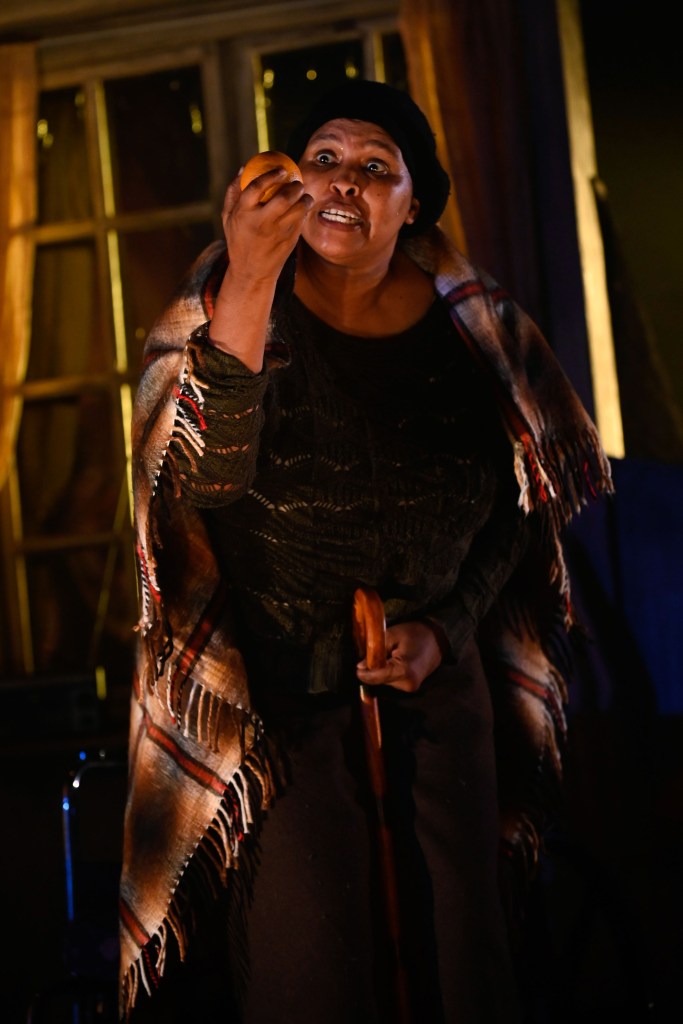
Our first encounter with Zenzile Maseko (Mthombeni) is in her women’s hostel room. She is a grandmother, partially disabled, who has just discovered that Home Affairs declared her dead two years ago. That’s why she hasn’t been receiving her grant, which would enable her to build her dream house in her childhood village, iPharadise.
What might have seemed to those of us looking at a woman, ageing, alone in a room with probably all her worldly possessions, as a small life is given towering proportions as this magnificent Shakespearean monologue starts spilling forth. All of this takes place in the midst of a nightmarish storm, which recalls the recent KwaZulu-Natal floods as well as the stormy life of Zenzile, who is being purged through this devastating, often delirious unfolding of a life of one of millions of similar women in similar circumstances in this country.
Few of us would even handle one of these events that seem to consume her whole being as the disasters roll in and out with regular intervals. Just the word Home Affairs is enough to draw sighs of despair as we think of the rows and rows of people seen in a distance on a monthly basis as they wait to collect their grants, which is often the only lifeline for an extended family.
But Zenzile has courage to fall back on and draw from as her life could not have been more dramatic.
And that’s just the broad strokes.
Yet, more than this epic life story that seems to span many lives, generations and cycles of violence that feel never-ending, is the performance by the magnificent Mthombeni. She transforms Zenzile in a matter of minutes as she draws on all her skills to explore this heart wrenching embodiment of a woman whose life depended on her being a warrior.
And that she is as she rises through each crisis that becomes her life. She simply has to survive. Nothing has been brought on by her own actions or even who she is. It is simply the way people are discarded and ignored as they battle their every daily task.
Few of us have any idea how most of our people live. We think loadshedding is our biggest struggle. For many electricity is but a dream.
Zenzile brings all of that to the light as she creates her own Lear, battling her fraught life as well as the elements. It is an awe-inspiring performance which takes you on an emotional endurance race that’s hugely exciting to witness but also daunting to compute.
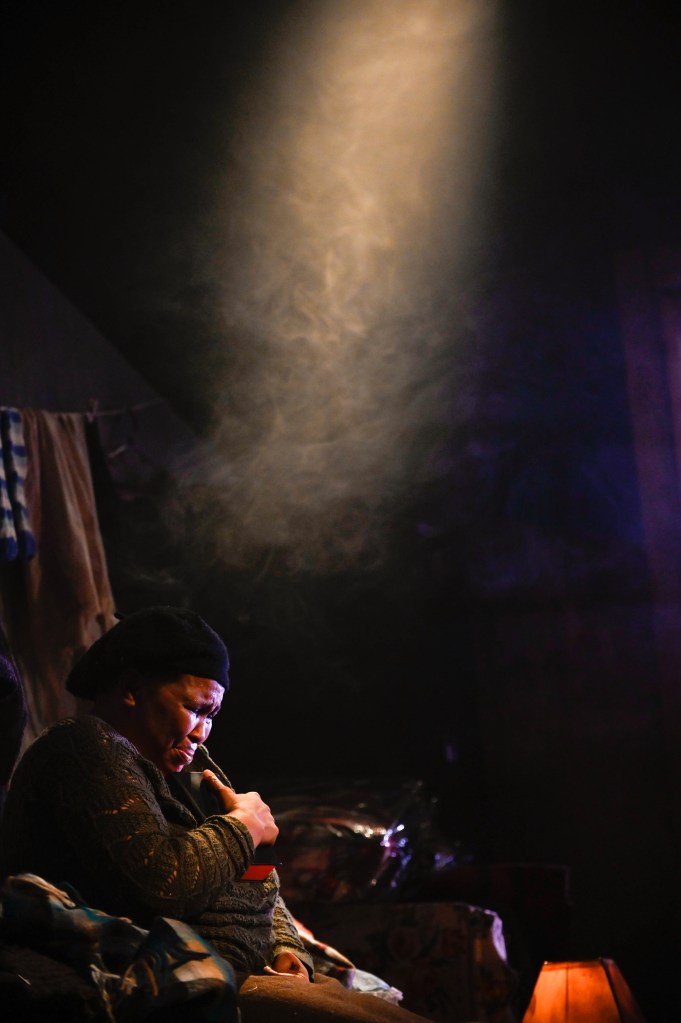
Brilliant lighting design by Tina le Roux
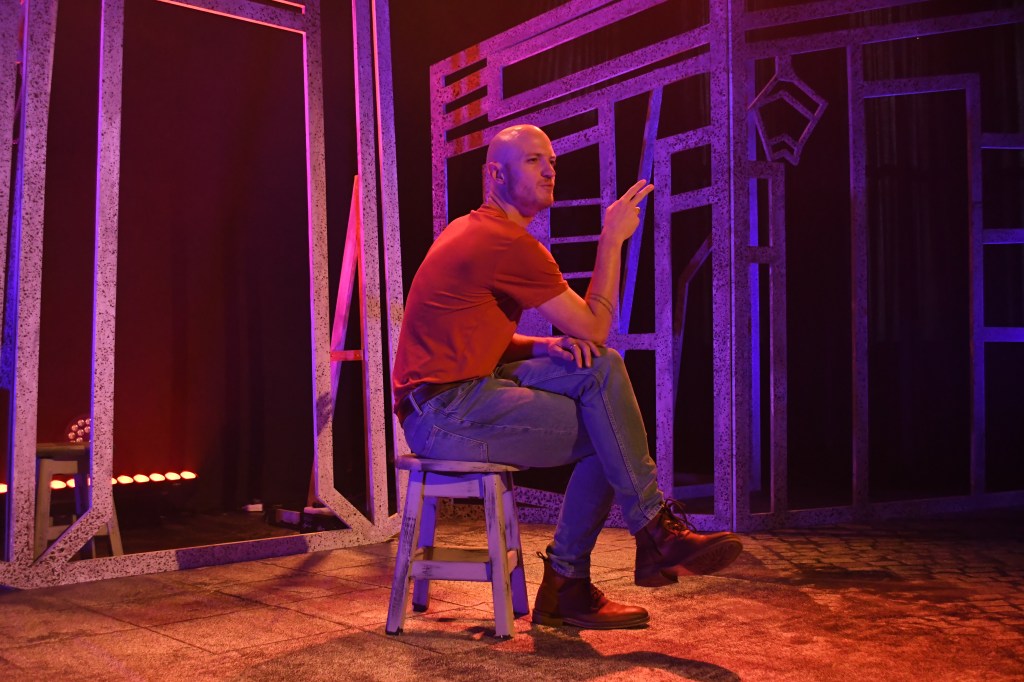
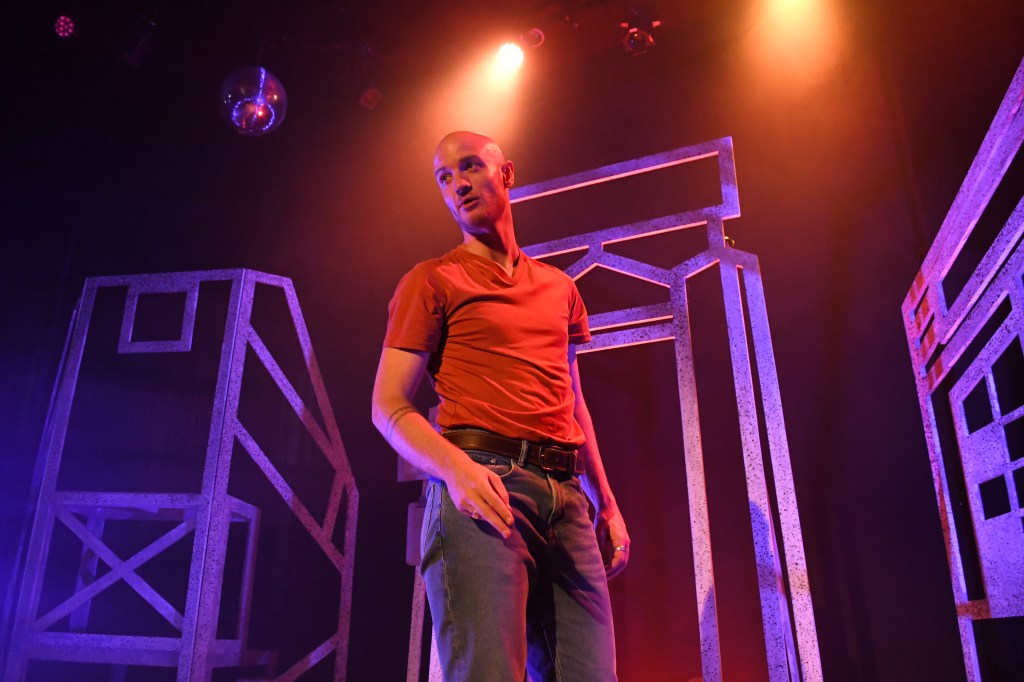
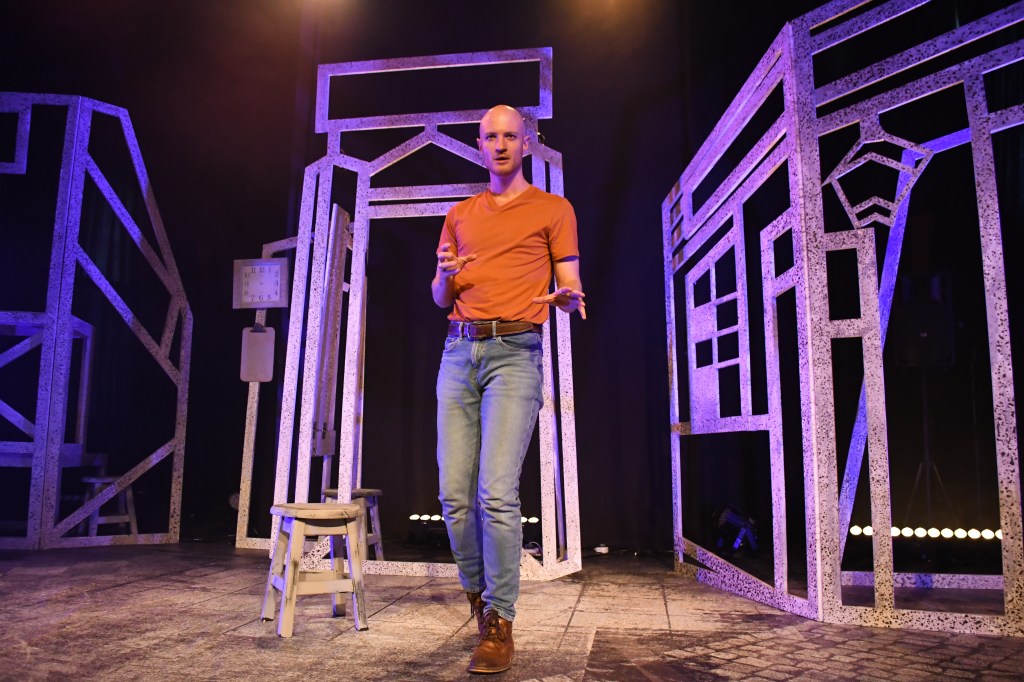
Her performance is enhanced by the text and the way she grabs hold of it, workshopped by Coppen and Mthombeni, who never lets up, as well as the staging which is achieved with spectacular lighting that brings a magnificent intensity.
In the publicity it is said that some have referred to this as a modern day South African classic, I can see why. It’s startling yet stunning theatre which explores invisible South African lives and gives one such woman a platform.
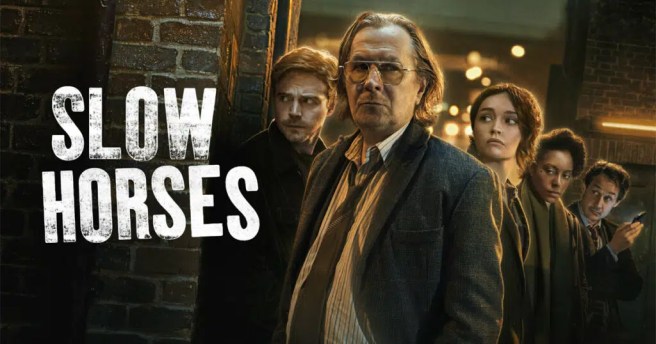
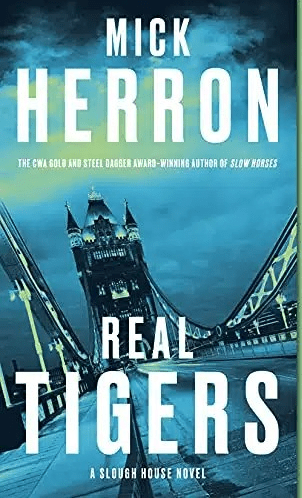
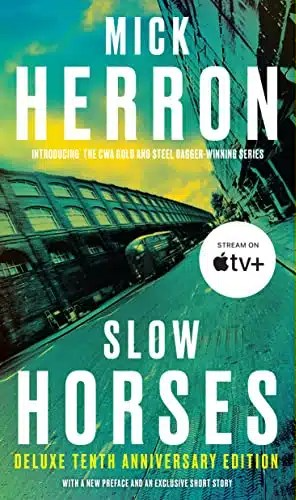
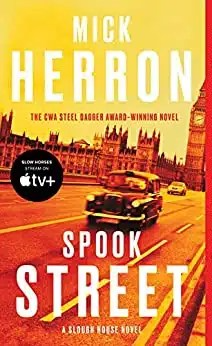
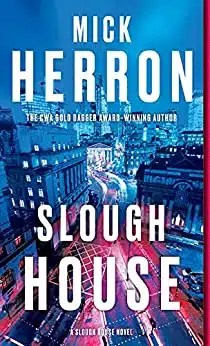
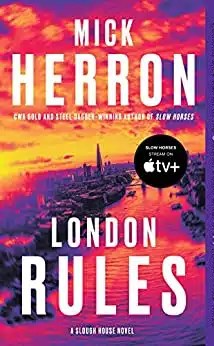
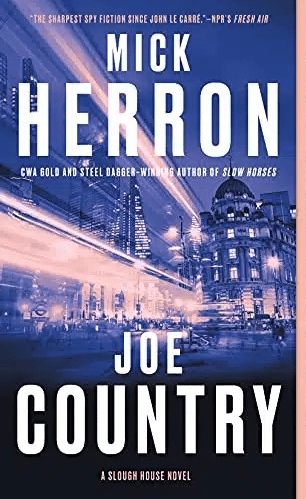
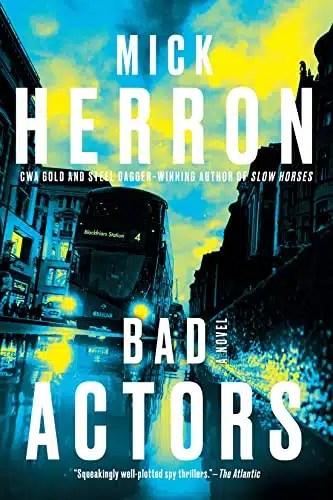
If you haven’t heard of the author Mick Herron and the imaginary men and women who are all part of Slow Horses, it’s time to find those books and to stream the first two seasons of Slow Horses which can be seen on Apple TV now. DIANE DE BEER reveals more:
If you have Apple TV, this is one to see.
Those of you who loved the intrigue of John le Carré’s spy novels, lost your heart to his characters with George Smiley leading the pack and still remember Alec Guinness’s portrayal of the seemingly distracted, downtrodden spymaster, will be pleased to know there’s another spy series available to both read and catch on a streaming service.
With a gaping hole left behind by the Le Carré absence, just in time, in steps author Mick Herron. I was told by a friend about the new arrival a few years back, and my husband and I jumped in immediately to tackle the series.
That was a while before the television series was even on the cards.
We were immediately hooked, but for me it was slow going because I had to catch up first with some other freshly published works waiting for review. I was even sent one of the books in the Slow Horses series along the way and quite recently I decided it was time to spoil myself and tackle the last four in the series. And I did so with glee.
Herron is a fantastic writer. His language often has your toes curling, and his characters and their ticks, especially the motley crew who make up the Slow Horses and quickly rule the roost.
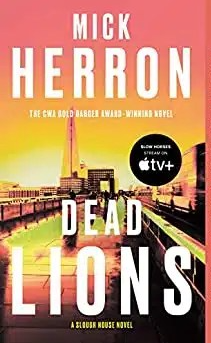
Herron’s first thriller, aptly titled Slow Horses, was immediately shortlisted for the CWA Ian Flemming Steel Dagger as well as named one of the 20 best spy novels of all time by the London Daily Telegraph. The second, Dead Lions, won the CWA Goldsboro Gold Dagger, and so the list reads on and on with the awards and praise growing with each new novel in the series.
Once you’ve met the reluctant leader of the pack, Jackson Lamb, you won’t stop smiling at all his antics. He must be one of the most reviled bosses ever created and yet, while he is constantly deriding and humiliating his underlings, he is also first on the scene at any sign of trouble and the one to think up some terrible revenge when even a hair on the head of one of his spooks is pulled out of place.
Slough House, the name of the unappealing offices (if you could reasonably call it that), is where spies from MI5 are sent when they’ve messed up. No one cares what happens to them, borne out by the fact that their boss seems no more than a slouch who has been put on this earth to torture those who are unfortunate enough to serve under him.
While all this might be painting completely the wrong picture, it is difficult not to shout from the rooftops about this exhilarating spy writer who seems to have silently (and sometimes unobserved) risen to the top of the all-time best spy series list. It would be tough to find a reader who disagrees.
What more can one ask for than a spy novel written in a way that’s character-driven yet has a story unfolding which not only keeps you up at night, but also boasts a plot that will keep you engaged as you puzzle your way through the world of espionage?
In the end, if I had to pinpoint the most appealing aspect of a Jackson Lamb novel, it would be the language. To prove my point, a small extract which offers some kind of description of Slough House: “Heat rises, as is commonly known, but not always without effort. In Slough House, its ascent is marked by a series of bangs and gurgles, an audible diary of a forced and painful passage through cranky piping, and if you could magic the plumbing out of the structure and view it as a free-standing exoskeleton, it would be all leaks and dribbles: an arthritic dinosaur, its joints angled awkwardly where fractures have messily healed; its limbs a mismatched muddle; its extremities producing explosions of heat in unlikely places; its irregular palpitations a result of pockets of air straining for escape.”
And then about the ethos: “Slough House was a branch of the Service, certainly, but ‘arm’ was pitching it strong. As was ‘finger’, come to that; fingers could be on the button or on the pulse. Fingernails, now those you clipped, discarded, and never wanted to see again. So Slough House was a fingernail of the Service: a fair step from Regent’s Park geographically, and on another planet in most other ways. Slough House was where you ended up when all the bright avenues were closed to you. It was where they sent you when they wanted you to go away, but didn’t want to sack you in case you got litigious about it.”
And then finaly, just something about the feared leader Jackson Lamb: “Breakfast was two pints of water and four Nurofen. Shaving was out of the question, but he released himself from yesterday’s tie with the kitchen scissors and found a fresh suit, which meant one that had been in his actual wardrobe, if not on a hanger”… and it goes on.
I am now waiting patiently for book no ten in the series. In the meantime I could revisit the television series, two seasons of which have been released on Apple TV and are still available to watch with the promise of a third coming later this year.
When you have lost your heart to a series of books, it’s with trepidation that you watch the live version, the characters and stories you have invested in. But with this one, it’s all systems go. While Gary Oldman didn’t pop into my mind as Jackson Lamb, once the actor had inhabited the man, there was no one else who could have stepped into those slippery Lamb shoes with such relish and robust. And ditto to Kristin Scott Thomas in the role of Lamb’s nemesis as she plays his arrogant and disdainful boss at MI5. There are few actresses who can play elegant haughtiness with such ease. And the rest of the cast complete the picture magnificently.
Mick Herron must be thrilled with this adaptation which so sharply captures the essence of both the people and the place of this much loved series. And hopefully we will be able to catch up on the full series – and a few yet to be written, in the years to come.
If any of the above appeals to you, don’t hesitate. It’s a glorious addiction and one I plan to hold onto for as long as possible!
Published by John Murray, it is distributed by Jonathan Ball locally.
With his latest book Milk The Beloved Country (Umuzi), author Sihle Khumalo speaks his mind on many issues, and with the focus on local, it gives readers the chance to reflect on what they have and what the future holds for this country and its people. DIANE DE BEER spends some time with the man who has much on his mind and likes to share:
At our first meeting I realized that it would be impossible to try to give a summary of who this man, Sihle Khumalo, is.
I culd capture more of this prolific writer by giving you the titles of the books he has already written: Dark Continent – My Black Arse;Heart of AFRICA;Almost Sleeping My Way to Timbuktu; and Rainbow Nation My Zulu Arse.
And then the one I will focus on most sharply here, his latest, Milk The Beloved Country. He tells that the first book was the result of his travels from Cape Town to Cairo using public transport. This was also to celebrate his 30th birthday.
In 1999, to celebrate his 24th birthday, he bungee jumped at Victoria Falls in Zimbabwe; for his 25th he ran the Comrades Marathon (11hours 40 minutes); for his 27th birthday, in 2002, he started parachuting (on static line) at Pietermaritzburg’s Oribi airport ; in 2003, he did aerobatic flying (as a passenger) at Rand airport.
He currently lives in Johannesburg with his wife and two children. And the two women he dedicates the book to is his mother and his mother-in-law. For me that also speaks volumes and probably more revealing than anything I could add.
Perhaps this is not the kind of book that would have caught my attention if I didn’t have to speak to Sihle publicly – twice – which also meant I read the book twice. That in the end was a good thing, because it was with the second reading that I realised exactly what he was doing. It seems to be all over the place and yet, after a more careful reading, I was starting to get the drift of this very active mind.
Sihle Khumalo will have you thinking. With this smartly tongue-in-cheek book, what had me doing just that from the start, was wondering how he comes up with the concept. And even now I’m still not sure he knows. He has an active mind and personality (if that’s possible) but once you pin him down and start taking his words seriously, he has some very interesting stories to tell and points to make.
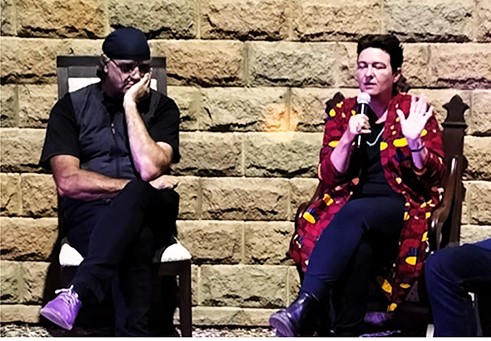
Myself (Diane de Beer ) with authors Sihle Khumalo and Deborah Steinmair at the Vrye Weekblad Book Festival at Cullinan earlier in April.
But take note, there is sleight of hand, because it might all seem frivolous, yet it’s anything but.
His previous books are travel-driven, so the research was done while visiting different places, but in this instance, the research had to come in more traditional fashion; libraries for example rather than the excitement of travel.
But he wanted to do it this way and it will be interesting to watch his future adventures to see whether they will be of the physical or mental kind.
The book is neatly divided into three sections, starting with the names of especially smaller towns and villages and where these come from. It’s intriguing and something all of us might have thought of or even discussed with children during tedious journeys, but he makes a study of it. And while there’s much to smile at, he also makes sure to spotlight some sharply observed issues, as this following notice in https://theconversation.com/africa daily email reaffirms:
“Today marks 60 years since Kenya attained internal self-rule from the British colonial powers. Names of places and other urban symbols were used as tools of control over space in many African countries during the colonial period. This strategy was epitomised by the British, who applied it vigorously in the Kenyan capital Nairobi from the late 1800s. Street names celebrating royalty and officialdom dominated the central part of the city, while African names were relegated to peripheral neighbourhoods. Melissa Wanjiru-Mwita explains the ways in which this strategy actively alienated the native African majority while promoting the political, ideological and racial dominance of the colonialist.”
What tickled me though is remembering the fuss from the white population about changes to the names of towns and provinces, for example when we were just staring out on our democracy in the early 90s. I can remember the anxiety expressed while wailing about their heritage ….
Much of the name changing has happened without fuss but, as Sihle reflects, many more changes wouldn’t be a bad idea – including the name of our country which to his mind, points to a destination rather than something which would reflect the people living there. I still have to scratch my head to remember and hold on to some of the name changes, but they do make sense and feel much more part of the continent, the country and all its people. It is the diversity of the country that is our strength and it should be reflected in as much as possible publicly so that it becomes commonplace.
The second section starts with the intriguing quote: You’ve got to find some way of saying it without saying it (Duke Ellington) and this is something that I personally think drives Sihle’s writing.
Titled The Power Brokers he dives right in, exploring our very own secret society, the Broederbond. He starts with the role players and their influence and then moves on to the private sector and intelligence.
As with the names of towns, which most South Africans might say they’re familiar with, the Broederbond because of its secrecy was intriguing to many, but for those of us not invested in the politics of the apartheid state, we thought we knew more than we actually did. And this, coming from an outside point of view as well as after the fact (or so we hope!), reminds us where we come from when we start pointing fingers.
Politics has always been about power and we can only hold thumbs that it comes from a good place – even if just most of the time.
Drawing a line through all that secrecy, he moves to different groupings of people including the freemasons; the unions and then couples the taxis, religion and traditional leaders together concluding with The Masses and sadly, the fact that we the people warrant less than a third of a page, says it all. That and the first sentence: There is nothing significant to report here.
What I also like about this particular section is the comparison of the past with the present. Corruption for example, we all speak about it as if it’s something new. Read on …
And in conclusion, Sihle tells us to Pause and Ponder:
Two weeks after the 2021 insurrection, The Washington Post described our “celebrated rainbow nation” as the “global poster child of economic inequality where deep poverty sits in the shadow of astronomical wealth.” If that doesn’t make you weep, nothing will.
He sums up the apathy by focusing first on the Feeding frenzy on state resources. I know that surprised me most post 94. I didn’t think that the leaders would turn their back on the very people who needed their assistance most. (And I do understand that they had the best examples in the former white regime).
For those of us puzzled by the ruling party’s elective conferences, he takes a closer look at: 2007, 2012 and 2017.
The Constitutional Court and the judiciary also come into play. It’s under attack in so many countries, the US and Israel, to name a few? It’s always been my beacon of hope, and I do still in spite of, believe that our people, our strength will pull us through. Sihle speaks his mind as he does on the following hair raising issue: Is South Africa a failed state? And when exactly was it captured?
And then finally, on a second reading, this lucky packet of a book truly spoke to me. Not just about what he was writing about but also learning more about this man with his wandering mind. I have heard different opinions about his writing. I cannot speak to any other than this latest book.
Some could argue that Sihle Khumalo is a man of too many seasons. But he speaks his mind and where that takes us is what appealed to me. As a fellow South African, I want as many opinions as are out there because in the end, most of us just want to be left to get on with our lives. And, if possible, to have a government that lends a helping hand. Life is tough enough without any extra hindrances.
And while some might be milking the beloved country, we should remember what we have and that the people and the place are real strengths and not something to mess with.
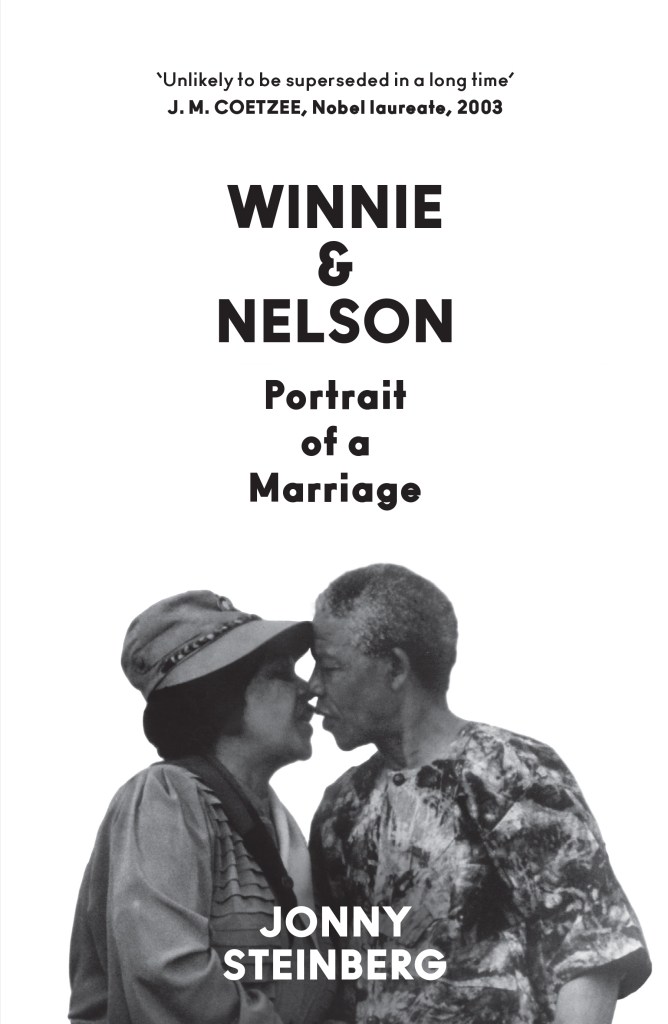
If you think you know everything about Winnie and Nelson Mandela, award-winning author Jonny Steinberg will probably change your mind with his insightful portrayal of a couple who held the world’s attention for the longest time. Having read the book, DIANE DE BEER listens to the author speak about his latest endeavour:
Pictures from the book courtesy of the publishers
When I first spotted the book Winnie and Nelson: Portrait of a Marriage (Jonathan Ball), it was the author Jonny Steinberg who caught my attention.
Not that the Mandelas aren’t worthy, simply that I didn’t think another book on the Mandelas could shed new light. But Steinberg changed that presumption.
From the first time I had to read a Steinberg book – as he was going to be a guest speaker at one of our newspaper’s book lunches – I was a fan.
Author Jonny Steinberg
The Number, which dealt with gangs, was the one that did it. I had very little interest in the subject, thought I knew enough, but having read Steinberg’s well-researched and analytically astute account, I wasn’t going to miss any of his books again.
And when I saw he was to be one of the speakers at the Franschhoek Literary Festival 2023 where I was invited to do an interview with the delightful Nataniël, I was sold on reading and listening to the author’s conversation with Hlonipha Mokoena, an associate professor and researcher at WiSER (Wits Institute for Social and Economic Research) where she specialises in African Intellectuals.
I picked the right one. Portrait of a Marriage should have been my clue because this is what this author does. He takes a topic which might not have crossed your radar in any sense of the word, and turns it on its head in a way that pulls you in and grabs your interest. It’s a gift and one that has turned him into one (if not the top) of our best non-fiction writers.
And one of the first obstacles he encountered was a feeling of shame because he found himself prying into the private world of these two icons – once again. Initially, he was going to write two books, one on each of these individuals, until someone pointed out that one would perhaps be more sensible and, ultimately, probably better.
This is where his own thoughts probably gathered momentum and insight. The question he wished to explore was Nelson’s sense of being and how much that was entwined with Winnie, especially while in prison – which was a punishing 27 years long.
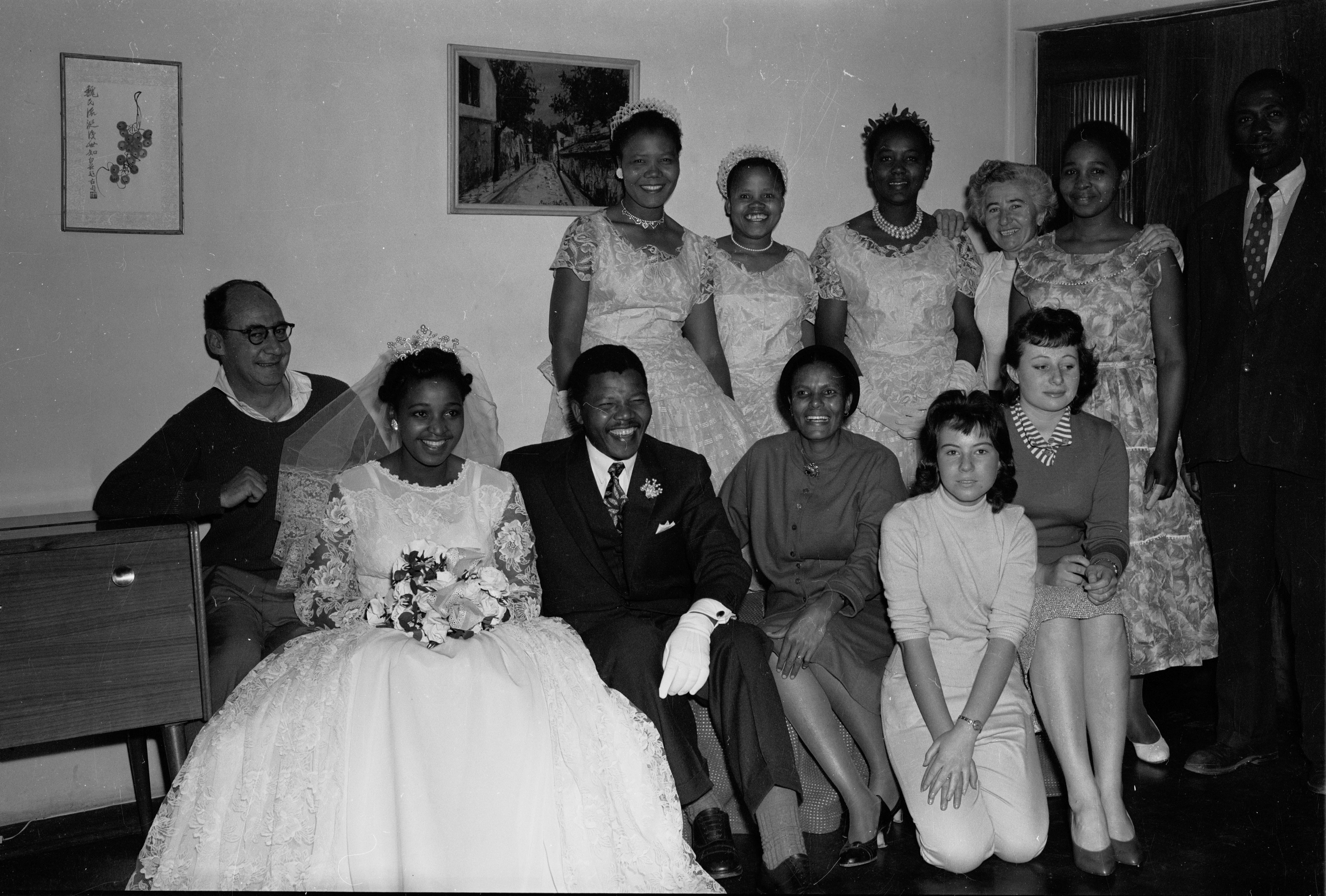
Nelson and Winnie, 1958, probably shortly before their wedding. Eli Weinberg, UWC-Robben Island Museum Mayibuye Archives.
What Steinberg realised was that when imprisoned, Nelson didn’t know Winnie that well. That’s when a fantasy of the woman he loved started emerging. She became the dominant figure in his head. When a great man is written about, his personal life is obscured but the opposite is true for a woman. And this is where the blessing and curse of the Mandela name came into play.
With Nelson’s incarceration, the impact on Winnie and her two daughters was intense on many different levels. For instance, Nelson understood himself as head of the family and he wanted to preserve his wife and their marriage.
But this became difficult in prison because of their compromised relationship. All their conversations were recorded and transcribed. And again, it is these transcriptions that gave the author entrée and heightened insight into the Mandela couple. Yet in some ways they also made him a reluctant participant.
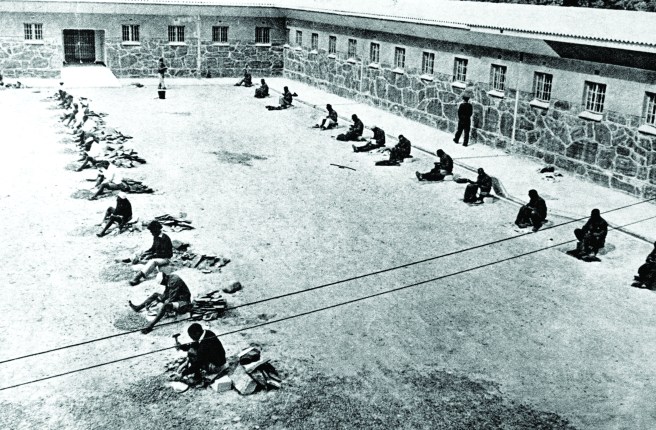
Prisoners breaking stones in the courtyard outside the leadership section on Robben Island. Nelson’s cell window is on the far right. Copyright of Cloete Breytenbach, courtesy of Leon Breytenbach.
Many issues come into play. Because they were being recorded, something they were aware of, these intimate conversations were compromised from the start. For Steinberg it became a compromising decision. Could he use these conversations without compromising the couple’s dignity? “It’s unusual to eavesdrop in this way,” he explained.
For example, the pettiness of an incarcerated Nelson was one of those situations for Steinberg, yet he knew if he wanted to write the book, he needed the information.
From very early on, Winnie used her sexuality as power, says the author. And Nelson in a similar vein was always very aware of how he looked in the suits he used to wear. Unusual at the time and with his presence, an additional bonus. “They understood that their very being was a commodity,” notes Steinberg.
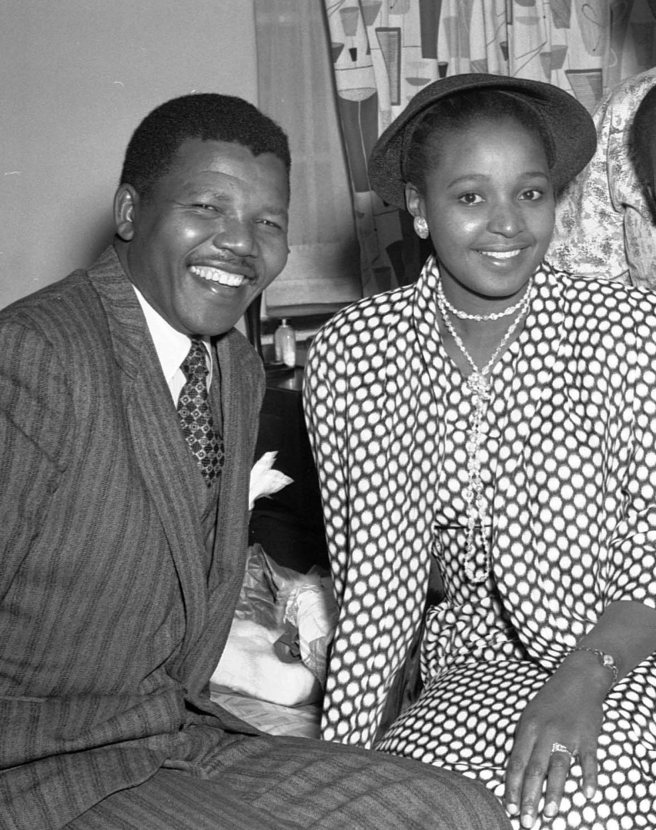
One of the first photographs of Winnie Madikizela to be published. Bantu World/Arena Holdings.Winnie and daughter Zindzi leaving court in Bloemfontein, 1977. Winnie was charged with breaking the conditions of the order banning her to Brandfort. Bailey’s African History Archive/Africa Media Online.
Beauty complicated Winnie’s life. Right from the start, she was born into the struggle which determined her life. She understood how to pick winners and forget the losers. She also knew how to get under someone’s skin. Few people who met her could resist her and were left untouched.
In fact, it is the effect the Mandelas had individually and together that Steinberg explores and captures so well. Would life have been different if the couple had been less aware of their pulling power, their value as a commodity?
Winnie for example couldn’t be alone and always knew that she had to deliver on the expectations of others. She had to be what they wanted her to be. She even told tales about her childhood from very early on.
To protect herself, her reality often had to be concealed. Steinberg explains: she became the symbol of Black womanhood. She was able to become what people wanted and had a sense of her role in public life, believing that she was the centre piece.
For Nelson it was Fort Hare where the foundation of leadership was born.
When they came together, Winnie understood what it meant to be seen. The mission schools invested in the idea that Black men should marry Black women and the Mandelas represented that myth of the power couple. “Their marriage becomes a symbol for the struggle for freedom.”
Nelson and Winnie Mandela at the rally held to celebrate Nelson’s release at FNB Stadium near their Soweto home on February 13, 1990. nelson spent the previous night, his first bnack in Johannesburg, alone in a suburban house near Lanseria Airport. Photo by Udo Weitz/AP/Shutterstock (7364405a)
Nelson understood the power of his and Winnie’s story with the focus on the romance between them. Their power did represent a nation and yet, they ended up being political enemies. Is there anyone in South Africa who lived through their story and wasn’t shattered by the dissolution of their marriage?
The irony of their relationship was that for Nelson his greatest fear for his country was civil war, while his wife was the embodiment of everything he feared.
He becomes a powerful person, but in prison – and out of touch with what is happening. He is locked up by and with people who hate him and when he escapes, he does so in his imagination, The essence of Winnie’s life is her internal world of fire.
I was completely mesmerised by Steinberg’s deeply felt analytical writing about South Africa’s most powerful couple. Even before the advent of social media, with Nelson Mandela imprisoned and his wife under constant surveillance, they captured and kept the attention of the world.
Steinberg tells that story magnificently and with fresh insight and focus.
Book festivals are becoming more and more popular but if you think they’re easy to curate and organise, think again. You have to think about the where, when and who, what kind of topics you want to present, find a balance between light and weighty, none of which will give you a sure-fire result. Deborah Steinmair from Vrye Weekblad cooked with the right ingredients. DIANE DE BEER was there:
Pictures supplied by Vrye Weekblad
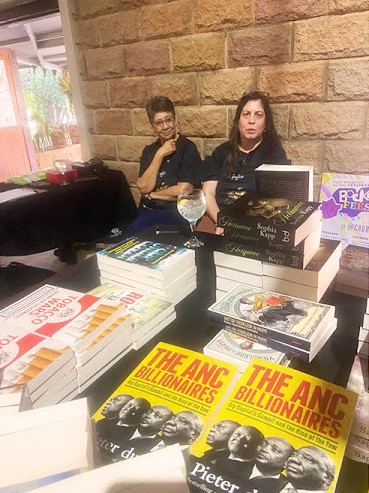
Talking books.Leonie van Rensburg from Graffiti Books in Montana.Book talk
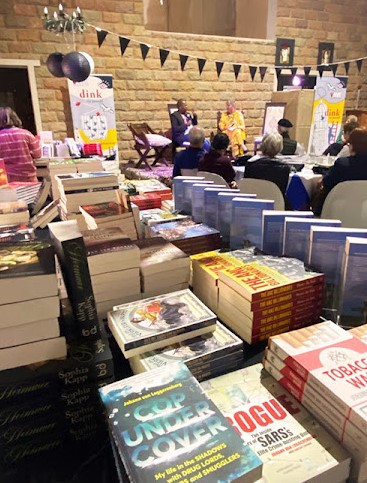
Cullinan was the chosen spot for Vrye Weekblad’s first Gauteng Boekefees following the success of the Cape equivalent in Stilbaai last year. They’re also following with a third one in the Free State’s Clarens in July and there is talk of another one in the Cape. (If you’re interested, follow their social media…)
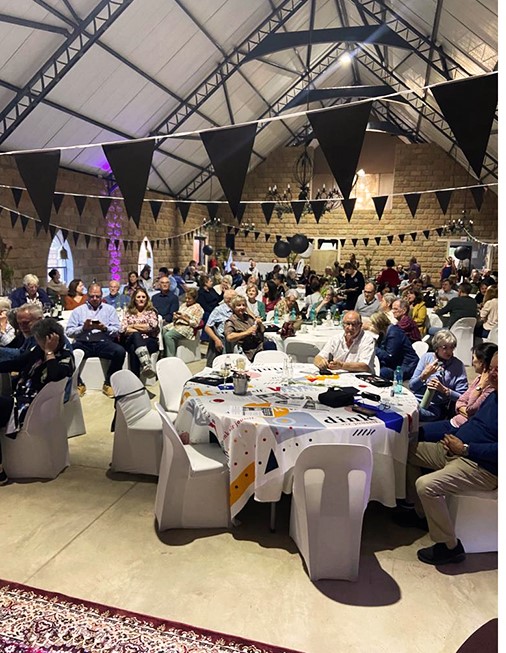
But this time, book genius Deborah Steinmair was the one who had to get all her ducks in a row. First she found the perfect venue, a church with a large hall, all on one property with parking across the road and in walking distance from where most people would be staying during the weekend.
Architecturally, if that’s your thing, it also had the perfect look. It is a Herbert Baker design after all and that’s what these kinds of towns dotted all across the country offer. Think Dullstroom, Clarens, Tulbach, and more…
And as the visitors started arriving on the Friday afternoon for the editors’ launch Daar’s ‘n Mier in my Broek (There are ants in my pants) with Max du Preez, Anneliese Burgess and Piet Croucamp, it was obvious that the weekend would draw a crowd.
Anneliese Burgess (right) and Piet Croucamp talk SA politics.
Politics in this country is part of our daily bread – especially now – and if you have a few breakaway voices setting the tone, you’re getting it right. But then that’s been a Vrye Weekblad trademark. You had to be there to catch their drift but what really hit the mark for me was the collective decision that we need new ideas not new ideologies.
And then a few pointers. Watch out for distractions. From what did the media turn their gaze when they were so obsessed with the Thabo Bester saga? But there’s good news on that front as well. Who would have known that Parliament could do such a deep dive when investigating Bester’s miraculous escape?
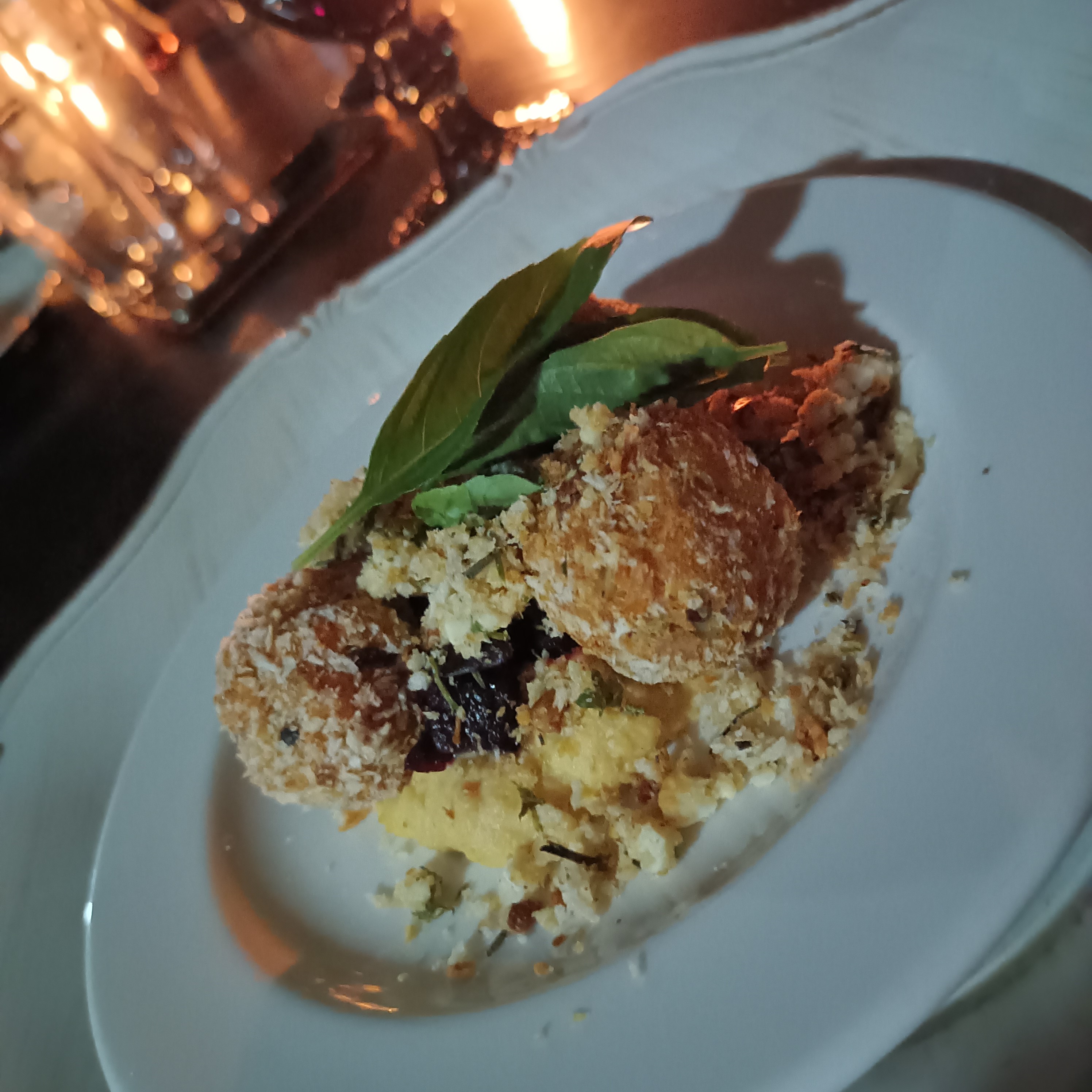
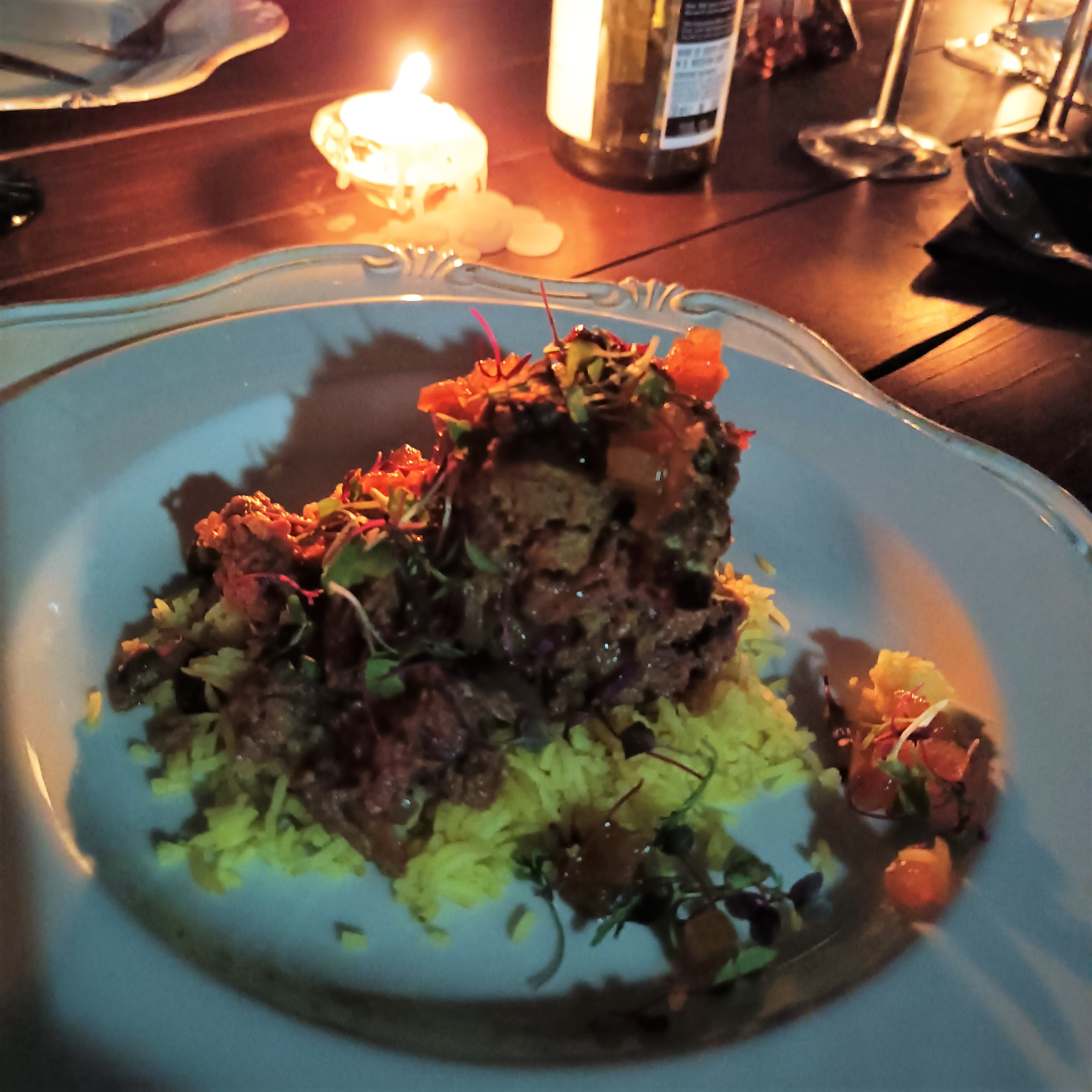
Lientjie Wessels (left) with chicken croquettes and venison and miso bobotie.
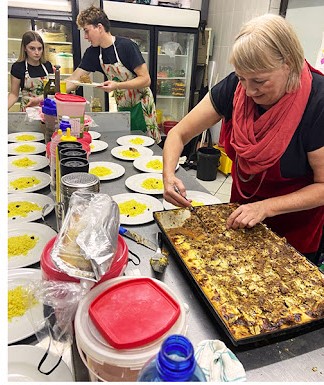
This was followed by another Deborah brainwave: asking one of our most inventive chefs, Lientjie Wessels, to host an old-fashioned grand dinner in what was once a diamond town.
The menu and pictures do the talking: from tomato soup with togarashi, to squash hummus, chicken croquettes, roasted beetroot with feta and herb crumbs followed by a venison and miso bobotie with the traditional yellow rice and pear chutney, and concluding with a Persian love cake with lemon caramel.
And if you are wondering, like I did, about togarashi, it is described as a common Japanese spice mixture containing seven ingredients. It’s one of the things I love about Lientjie’s food, I always learn something. Also, you know that every meal by this creative genius will be something extraordinary, and I’m not exaggerating.
We stayed in the Cullinan Hotel and here I also have to give a plug, I was pleasantly surprised. Nothing fancy, but smartly yet simply renovated furnishings in the rooms turned this into a pleasant stay as well
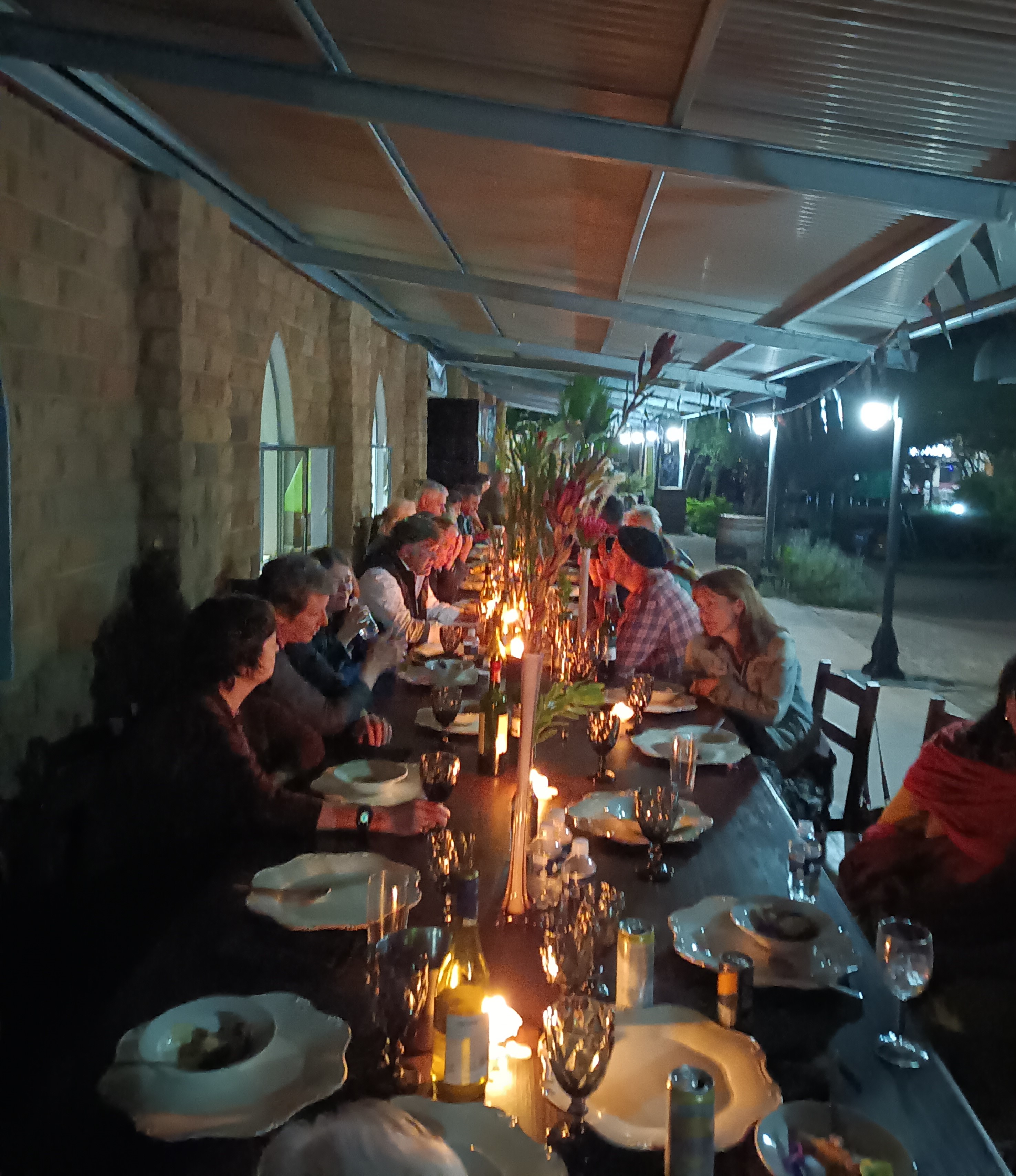
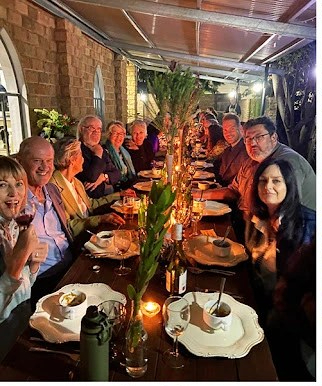
Dinner by candlelight at the Boekefees.
The next morning kicked off with Renée Rautenbach Conradie’s discussion with author Willemien du Preez on her book described as autofiction, ‘n Plaas se Prys. And what that means is that the story is based on her life but interwoven with fictional elements. The talk was titled Futility farm and the Afrikaner’s farm gene. The drift of the story is a couple following their dream, buying a farm and then finding themselves literally and figuratively overwhelmed by the elements – with dust and flies dominating.
It’s a universal story of broken dreams … and yet she lives to tell the tale and probably another, and another.
A highlight was a collective group of feisty women authors who captured the imagination and the spirit of the book fest.
Borrel, gorrel, smoeg en wroeg (loosely translated à la Shakespeare: boil, bubble, toil and trouble) Women who write can bewitch: including Gerda Taljaard (Vier Vroue), Bettina Wyngaard (Lokval), Renée Rautenbach Conradie (Met die Vierkleur in Parys), Michèle Meyer (Moer), Celeste Theron (her first will be released in the next few months), Emma Bekker (Vel), and Marida Fitzpatrick (Mara).
Deborah took the reins: one needs her kind of wicked humour to get the sharp-tongued talk going and with these more recent than others, but all spending stolen or free time on words.
Asked about feminism, the responses varied from an aversion to labels to Wyngaard’s struggle with the basics. If people aren’t accepted as equal yet, how can we ignore the fight?
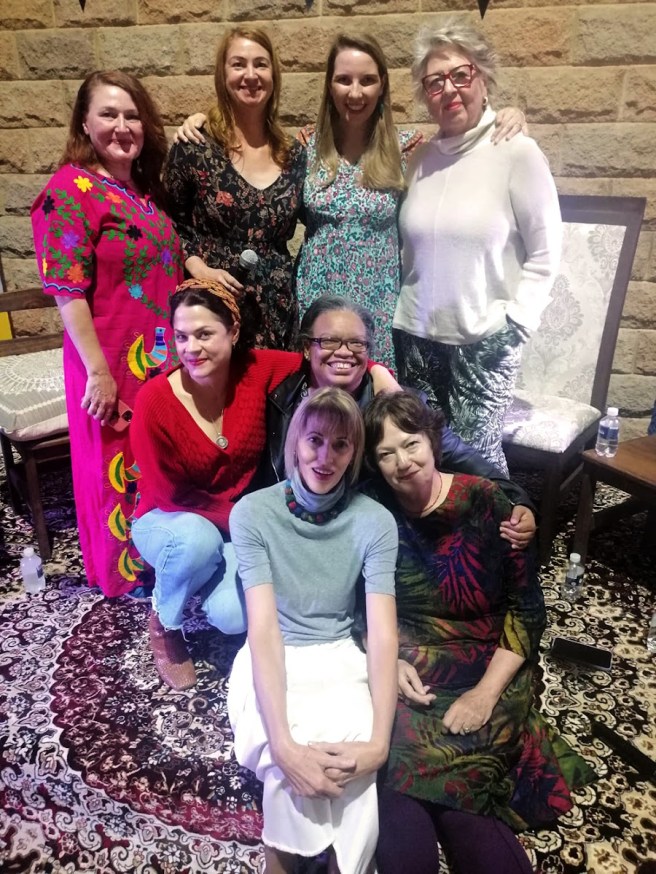
Feisty females: Back: Emma Bekker, Gerda Taljaard, Marida Fitzpatrick and Renée Rautenbach Conradie; Centre: Celeste Theron and Bettina Wyngaard; Front: Michèle Meyer and organiser Deborah Steinmair.
Some members of the panel are inspired to write by history, others want to investigate certain questions, yet another talks about fever dreams or even nightmares when awake. There are also those thoughts that burst through from the unconscious just before you nod off and another feels for her, writing is the only way to express herself.
And just to throw the cat amongst the pigeons, Deborah wanted to know whether women write better sex scenes than men.
For Gerda it was simple: The male gaze can be quite technical. Replace that with a woman’s perspective and it’s softer, more subtle.
And then I have to agree with Anneliese Burgess about the deeply serious closing conversation of the day between editor Max du Preez and writers Johann van Loggerenberg (former head of the investigative unit at SARS) and Pieter du Toit discussing ANC Billionaires and Rogues.
It’s the kind of meaty discussion, “an in-depth analysis about the state of the nation”, is how Burgess describes is, you want to conclude with, even though I sadly had to leave after the cheerful chatter of the female authors.
Sunday suitably swung into a gathering of poets (Johan Myburg, Jolyn Phillips, Kirby van der Merwe, Eunice Basson, Martjie Bosman, Emma Bekker, Johann Lodewyk Marais, Pieter Odendaal and Jaco van der Merwe) who did their reading in the Baker church before a final meal with Frik de Jager whose selected dishes each told its own story.
And just like that, it was all finish and klaar. With the next one just around the corner.
After much acclaim, following it’s London debut with Jack Holden, and then a Joburg run starring local actor Daniel Geddes, Cruise, heads for Cape Town for a short season (April 12 to 30) at the Homecoming Centre (formerly The Fugard Theatre). DIANE DE BEER chatted to the British playwright/actor about the play and the handing over of this his first stage-produced play, which he had both written and starred in back home:
It was as if all the stars aligned for actor/playwright Jack Holden with the creative processes surrounding his first play Cruise, which is having its second local run in Cape Town this month.
Jack Holden in Cruise
“I had the idea of the show for a while, for many years actually. It was based on a phone call I heard while I was volunteering for Switchboard, an LGB+ helpline here in the UK. I took that call in 2013.
“The story struck me as so moving and powerful and life-affirming that I knew I needed to tell it someday, somehow, and it was only in the pandemic when I was locked down at home with nothing else to do, I finally got on and did it. So in that sense it saved me because it really gave me a focus during the first lockdown here,” he explained.
But the writing only started in 2020. He thinks that it might have had something to do with the context of sitting with another epidemic, Covid, that made him reflect upon the sort of fear and terror that the gay community must have gone through in the UK especially, with the 1980’s HIV and AIDS. (It was more widespread in South Africa, affecting more communities).
A lot of the research about Soho where the play is set was quite easy to do online. But, he explains, “the stuff that gave the show the texture that I think makes it sing, are the interviews I did with some older gay friends that I’m lucky to have. I asked them about their time in Soho in the 1980s. Neither of them claimed to be seen kids, but they had memories which were incredibly useful, and gave so much texture to the piece. “
Initially he thought it might be a short film, but then he thought, no, be ambitious. “I also predicted that when theatres reopen after the pandemic, they are probably not going to put on massive shows, so if I can make it a solo show, that would be great. I’d performed a few monologues of other people’s writing previously in my career, so I knew I could do it and I wanted to do a show with John Patrick Elliott doing the music again.”
Daniel Geddes in Cruise.
They had worked together before and again with great foresight, Jack’s thinking was about producing a show that would land with a huge bang.
“I have a very strange relationship with the pandemic. At the start of the pandemic, I thought my career was over and at the end of it, my career was better than it had ever been, so it was a weird time.”
Theirs was the first play to open in the West End and the first new play as well. “I think people were so hungry for the live experience and Cruise is loud and brash and all of those things. I think because it’s such an ultra-high-octane live experience, people were so receptive to it, so emotional behind their medical masks, that it landed well,” which was also the intent.
From the start, the writing of it, once he got in a room with John, was actually very quick, because it was always going to be only one actor (Jack) with the DJ (John), which meant he would be playing all the parts, which also provided certain limitations. They knew it would be roughly 90 minutes straight through and he wanted it to be an odyssey that bounces around all the bars and clubs and pubs of Soho. “It’s quite a classic hero’s journey that he had to go on,” he says.
Primarily he was trying to create something that would entertain people and he doesn’t think entertainment has to be light all the time. In fact, he argues that entertainment is better if there’s a bit of darkness, a bit of sadness mixed in there, a bit of humanity that lifts the lightness and makes it even more delicious.
“I was hoping to entertain people and as I was taking on the subject of HIV and AIDS in the 1980’s, I obviously wanted the piece to feel authentic. And that was the scariest thing which only surfaced when I got to performances. I suddenly thought this could be high risk, I could have judged this wrong.”
But he had gone about the whole process in a very thoughtful way. His research was thorough and he talked to the right people with good people surrounding him who told him if something wasn’t ringing true. “And indeed, in rehearsals we had several changes and bits to cut.”
He also wanted to dive into the music of the era which hugely adds to the entertainment element of the piece. “I love ’80s music. It can be really, really good and it can also be really, really bad and I wanted to play with that. There’s been a real moment of ‘80s nostalgia, so I thought it would do really well.
“I wanted the music to be in the DNA of the play and that‘s why I worked so closely with John. I brought a few pages of text to our first workshop and he brought samples of ‘80s music. And we started mixing it together. That means the show has musicality in its veins. I love traditional shows and when it works it absolutely blows me away, but there’s no shame in putting on a show and entertaining people.
“We have so many tools at our disposal in theatre; sound, light, music, smoke, movement. And especially with a solo show, you don’t have to use all of those, but I really wanted to. I never dared to hope that the show would get as big as it did.”
Because he is dealing with something in the past, yet in a strange way linked to our present circumstances, the content has huge impact. It’s obviously been written with performance and watchability in mind. Jack has a great way with words with the text written as a kind of rhythmic monologue interspersed with music, which also passes on the message. It holds your attention throughout.
And then there’s Daniel and the local production. Jack was surprised that South Africa was the first outside of the UK to stage Cruise, “but I was also cheered by it and love it. Obviously South Africa’s history with HIV and AIDS is well known, so on that front it struck me as completely logical.
“I loved watching the South African production. It was surreal watching someone else performing Jack (me) performing the show. It was quite a mind-bending experience and really informative to see how the show can be interpreted in different ways.
“And yes, humbling. It’s not just me who can do this, other actors can do this, so I’m really thrilled that it’s getting another life. I’m so pleased about the Cape Town run, because they really deserve another go at it,” he concludes.
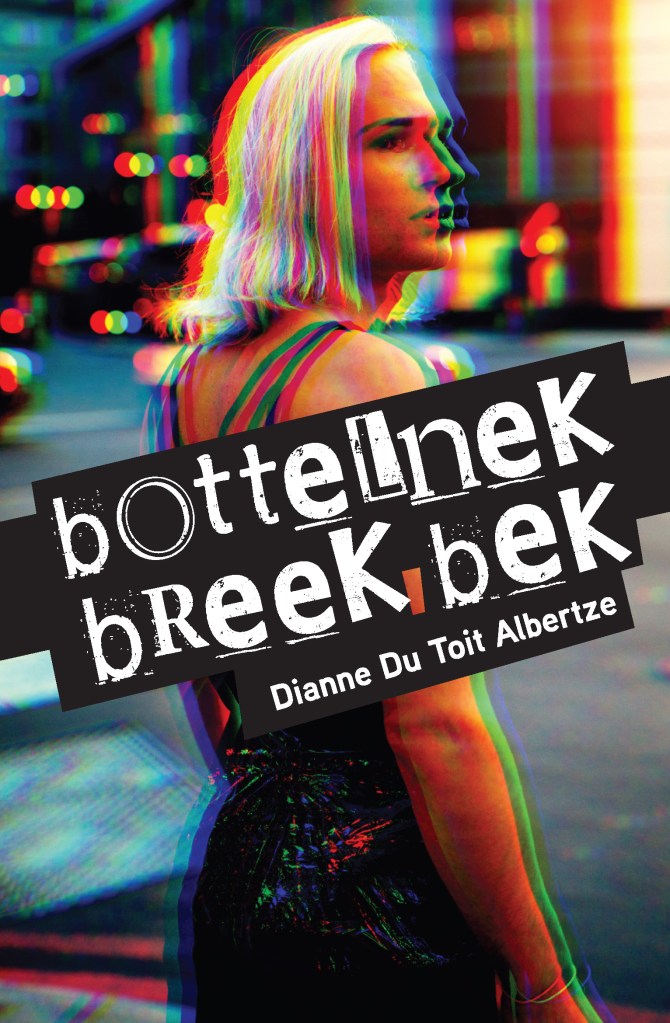
From the title of the book bottelnel breek bek, the warning signs are there — this is not going to be an easy read.
But because I have been following Dianne du Toit Albertze’s career for a long time, I knew this would be worth the battle.
In a digital interview, she tells me that the story found her rather than her discovering what she wanted to write about. “I needed to write about people who were braver than me because it was Covid and I needed something to save me,” she says.
That’s where she found Dora and Whashiela, who came with their own heaven-sent gifts. And their strong appearance was probably driven by the fact that “as a trans person, I don’t find many heroines in the books I read. I also don’t see them at festivals or on television. Especially not in my mother tongue,” she notes.
In her own way, she wanted to show Afrikaanse moffies that they shouldn’t let go of their dreams — “Moenie jou tong oppie highway verkoop nie” is how she says it bluntly and beautifully. “Nancy is waiting, we need to make and take our own space.”
Feeling and querying whether this is a very personal tale, she acknowledges that first novels are probably always close to the bone. “I wanted to push my high heels through the literary door with a story that feels close to me. I wanted to go as close to the edge as I could and much method writing followed,” she says. “I learnt about everything I wrote about and didn’t want to be a faker.
Dianne Du Toit Albertze Picture: Peter van Noord.
“Perhaps I listen to too much Tupac or hide too easily behind my pen … because the book also helped me recover from a poisonous addiction. Every day without drugs is a BIG day. And hopefully this full-frontal writing of mine will mean something to someone out there.”
We all know about method acting and what that has done to those taking it too far, and if you read the book without the hairs on your arms standing on edge you’re possibly not paying attention.
This is an artist who takes her art seriously and even if it meant she climbed a steep mountain with the language, it is what adds authenticity and soul to the characters and story.
“I wouldn’t have been true to my characters if they spoke the language of dubbed Turkish soapies,” explains Dianne about her choices. And acknowledges that she wanted to honour the colourful language of the trans community in Observatory and Matjieskloof. “A variant like Gayle (created by the queer coloured community in Cape Town) even has its own accents in specific regions.”
And then she’s not even referring to Sabela (a language flounced together from numerous local languages in local prisons for gangs to communicate) or those creative Cape expressions we’re all familiar with. This is completely different yet with distinct similarities – an anomaly in itself.
Dianne du Toit Albertze striking a pose.
“I’ve always been fascinated by linguistics – to create different codes and to learn different expressions and idioms.”
On a language level, she embroiders, the tongues of the different characters metaphorically reflect their life paths – also pushed out and teetering on the periphery. “Those of us who have for so long been hiding in the shadows should move into the light and speak loudly.” Another incentive for telling her story the way she does – letting it all hang out … bravely.
Amen, say I, having read the book and also revelling in this particular interview/conversation, which was a written rather than a spoken one. “Steve Biko says I write what I like and perhaps I agree with him,” notes Dianne. “I write about shit that matters to me and what I believe will interest a broader audience.”
She also hopes that a trans child might read the book and realise that they too matter, perhaps influenced by her own struggles and lack of support.
For the writer personally, she has many dreams and desires: a musical, Medea in Namakwaland, staged in-between the koppies; and to write a few movie scripts. These are on the cards.
For her, writing plays is like breathing in and out. She’s been doing that from a very young age right through her drama studies. “Poetry and prose come from there, but to write for stage is my big love,” she says.
As for her activist stance, she took her queue from the Sestigers (a moniker for a group of dissident Afrikaans writers, including Breyten Breytenbach, André Brink, Ingrid Jonker, Elsa Joubert, Jan Rabie and Etienne le Roux) who believed that words carry weight and that we need the arts and artists to be our conscience. This would mean, to her mind, stories that free us from what is becoming a hopeless land with steadily growing layers and levels of suffering.
In the meantime she is working with actor/director Lee-Ann van Rooy on a season of her text Kaap, which was performed at the 2020 NATi Jong Sterre Suidoosterfees . And with her Namakwaland trans sisters, she is busy creating an NGO House of Influence with which they hope to establish safe houses as well as perform community theatre.
She’s a busy woman but for those of us lucky enough to witness her creativity, moving on the edges as she does, she draws a curtain on a hidden yet important world.
This is what makes our universe an interesting one. People are allowed if not encouraged to be themselves and for those who are open to the diversity and differences, it establishes a never-ending stage of wonder, wisdom and, of course, a wackiness without which life would be so much poorer and less colourful.
And as Dianne is so determined to bring to our attention, real people are living here.













 De Beer Necessities