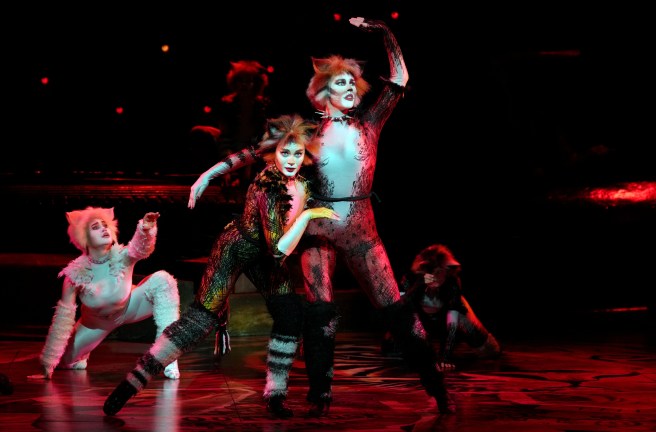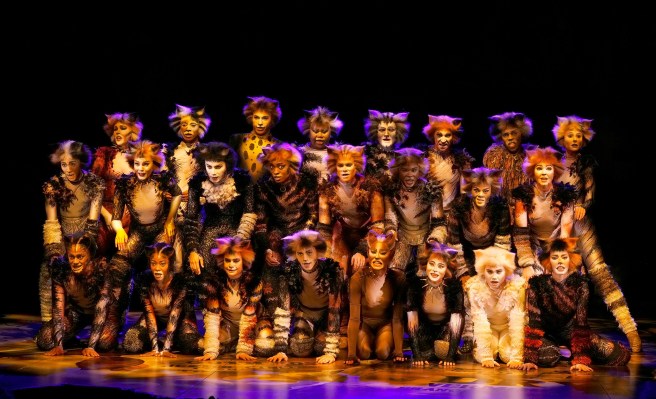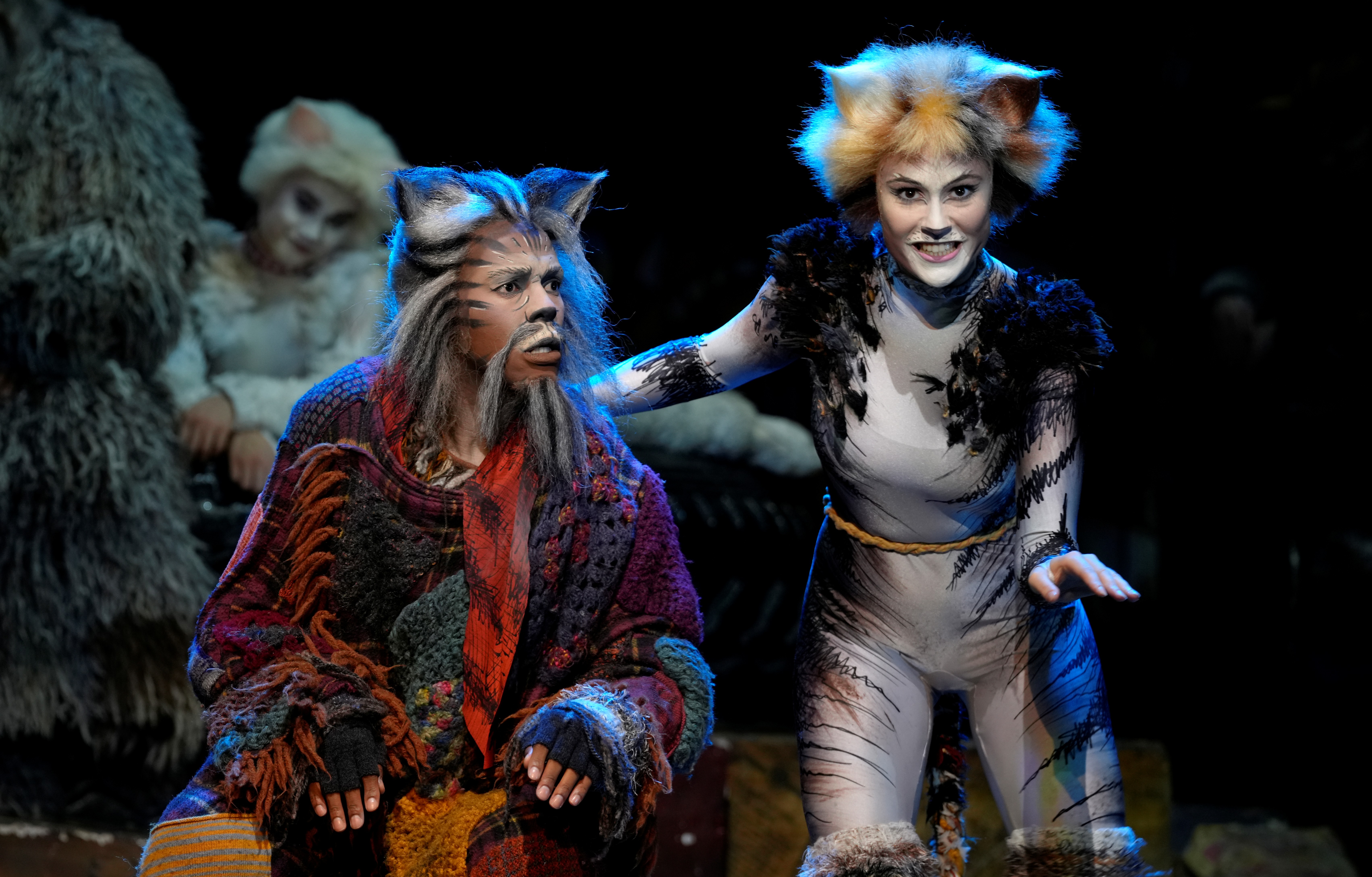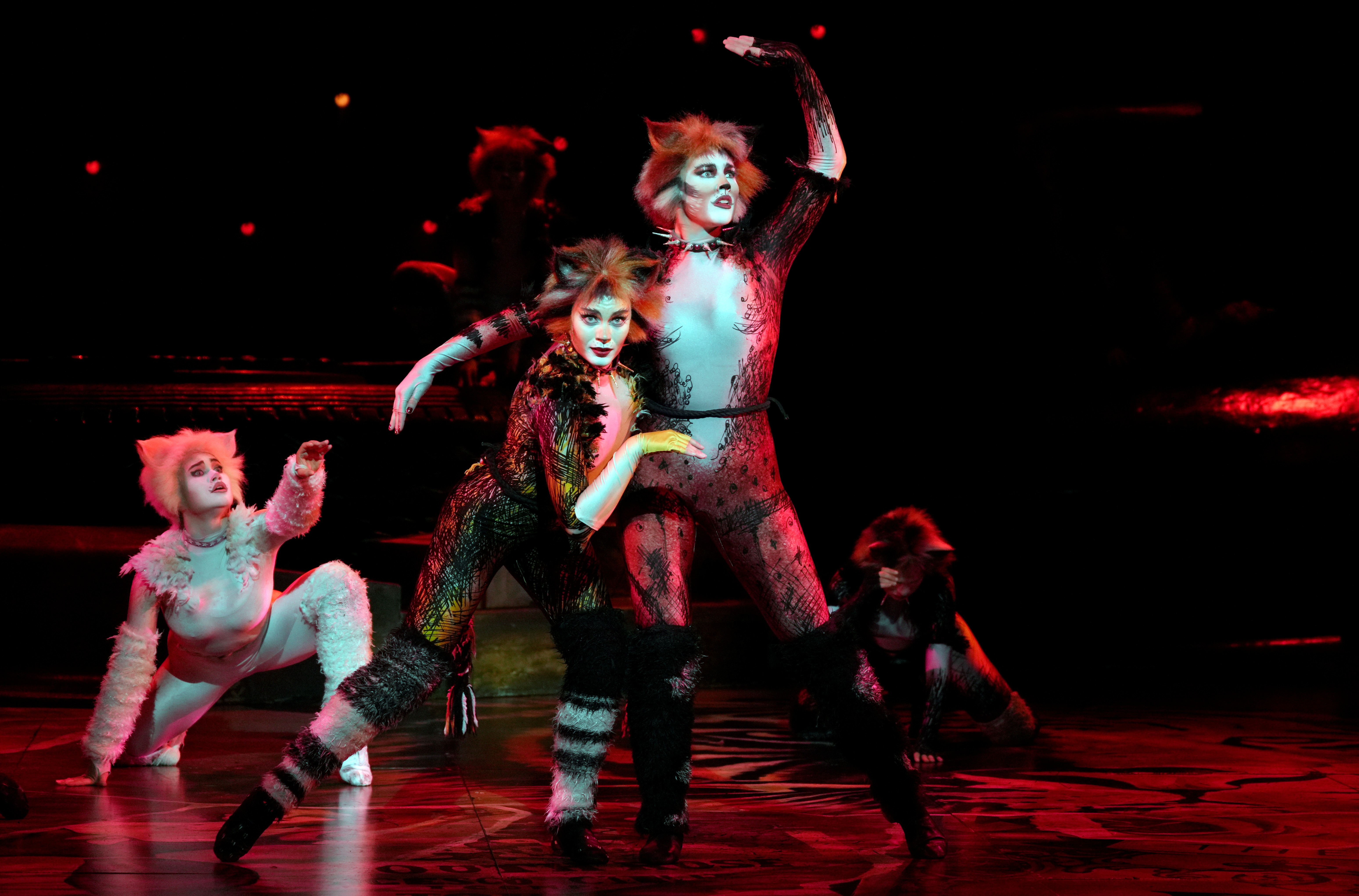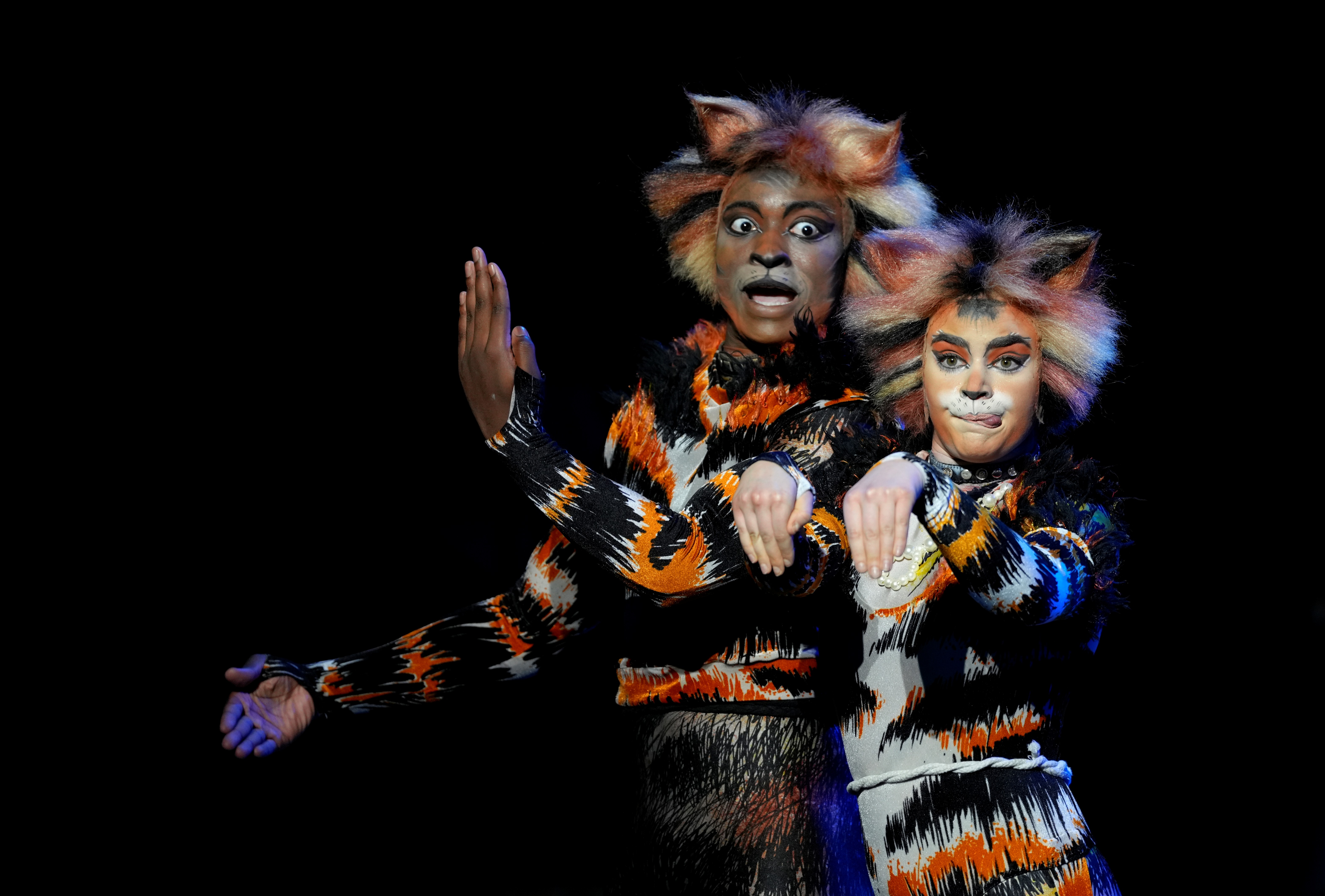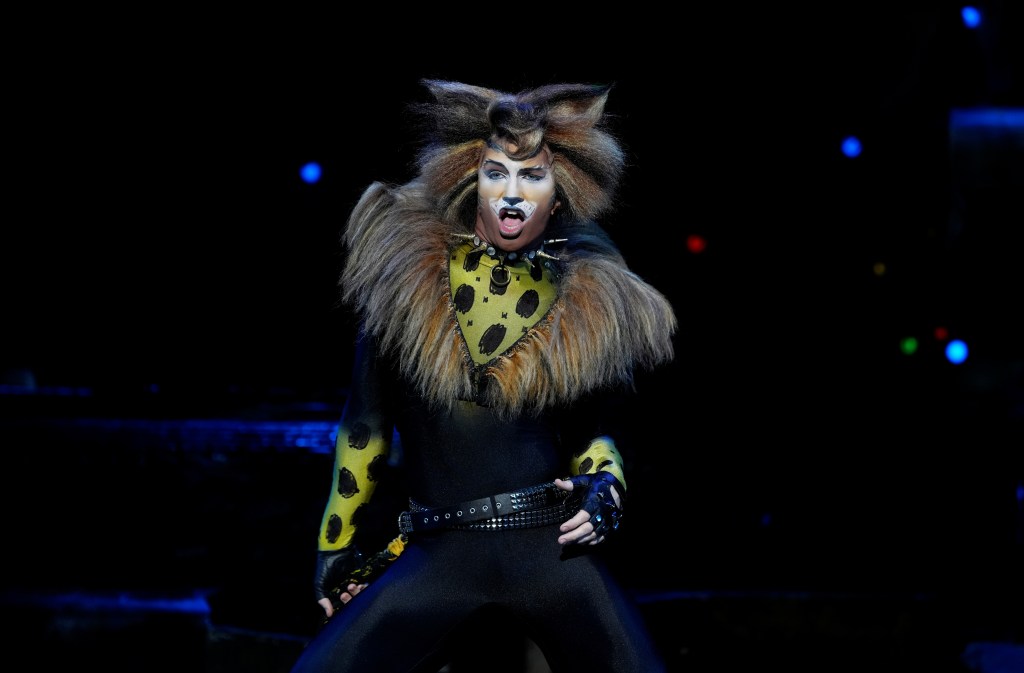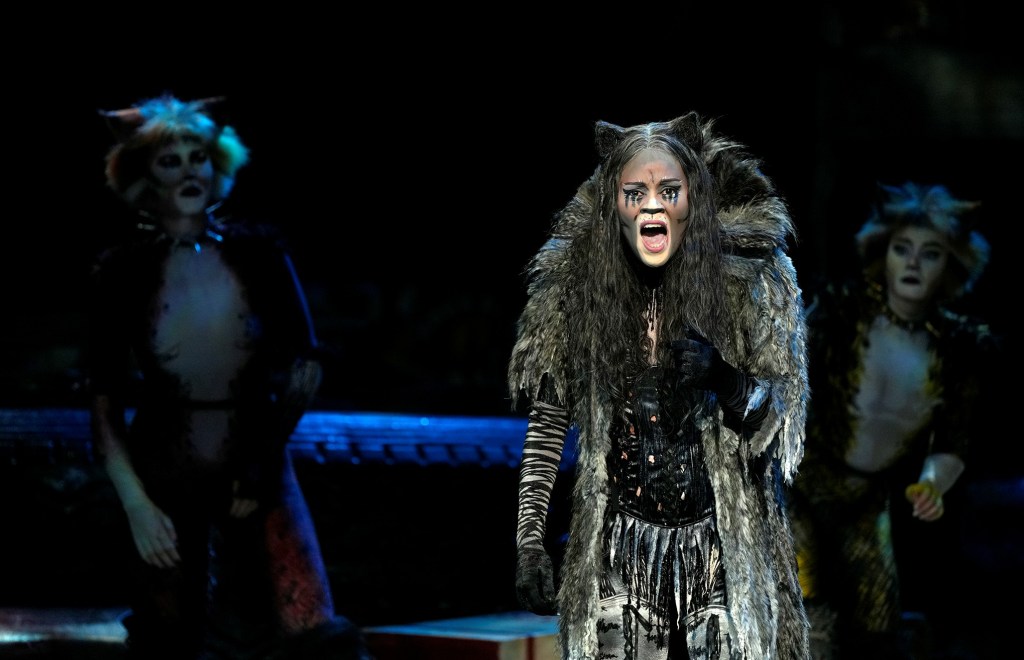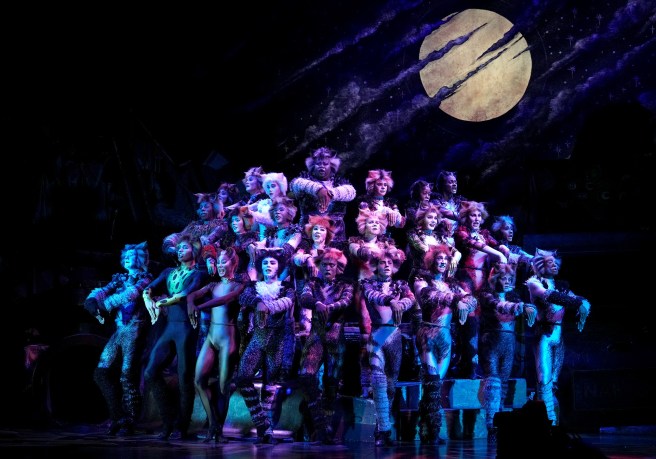
THE TOYOTA STELLENBOSCH WOORDFEES FEATURES MANY DREAM PRODUCTIONS AND PERFORMANCES

Photographers: Jeremeo Le Cordeur; Llewelyn de Wet and Gys Loubser

The Stellenbosch Woordfees can be quite a daunting prospect because there is so much on offer. It is perhaps easier if you have specific artistic passions, as most of them will be on offer here and it is possible to make a selection. DIANE DE BEER spotlights what caught her fancy

There’s not even a chance that you can include all your darlings in a festival wrap or even try to see them all.

I did my best, was constantly on the move and writing, and still I hear of more productions you just had to see.

Personal favourites (don’t discount others because I probably didn’t see them):

My best theatre productions were stories that turned me into an emotional wreck but did so with authenticity (I know this is a woke word, but …).

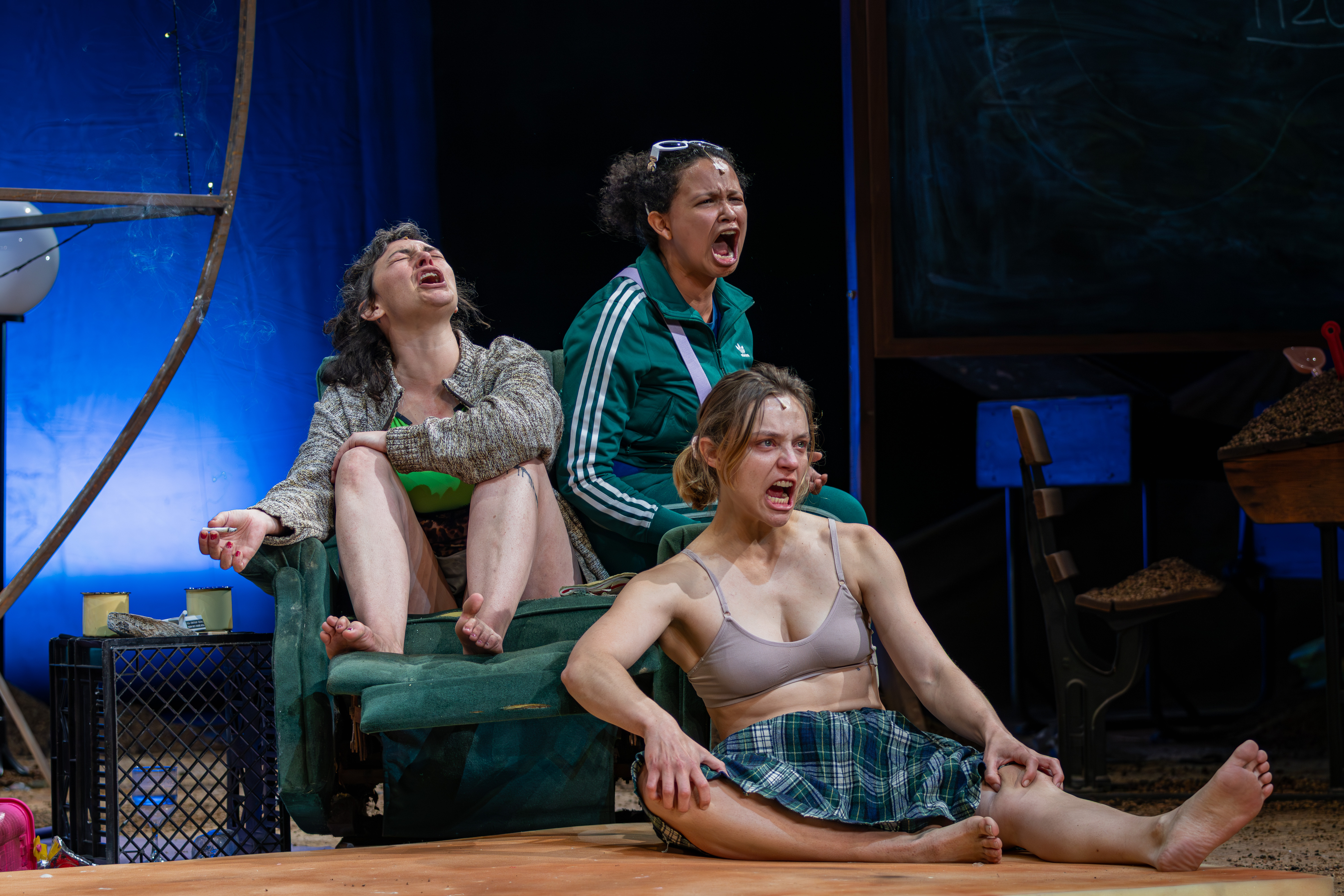
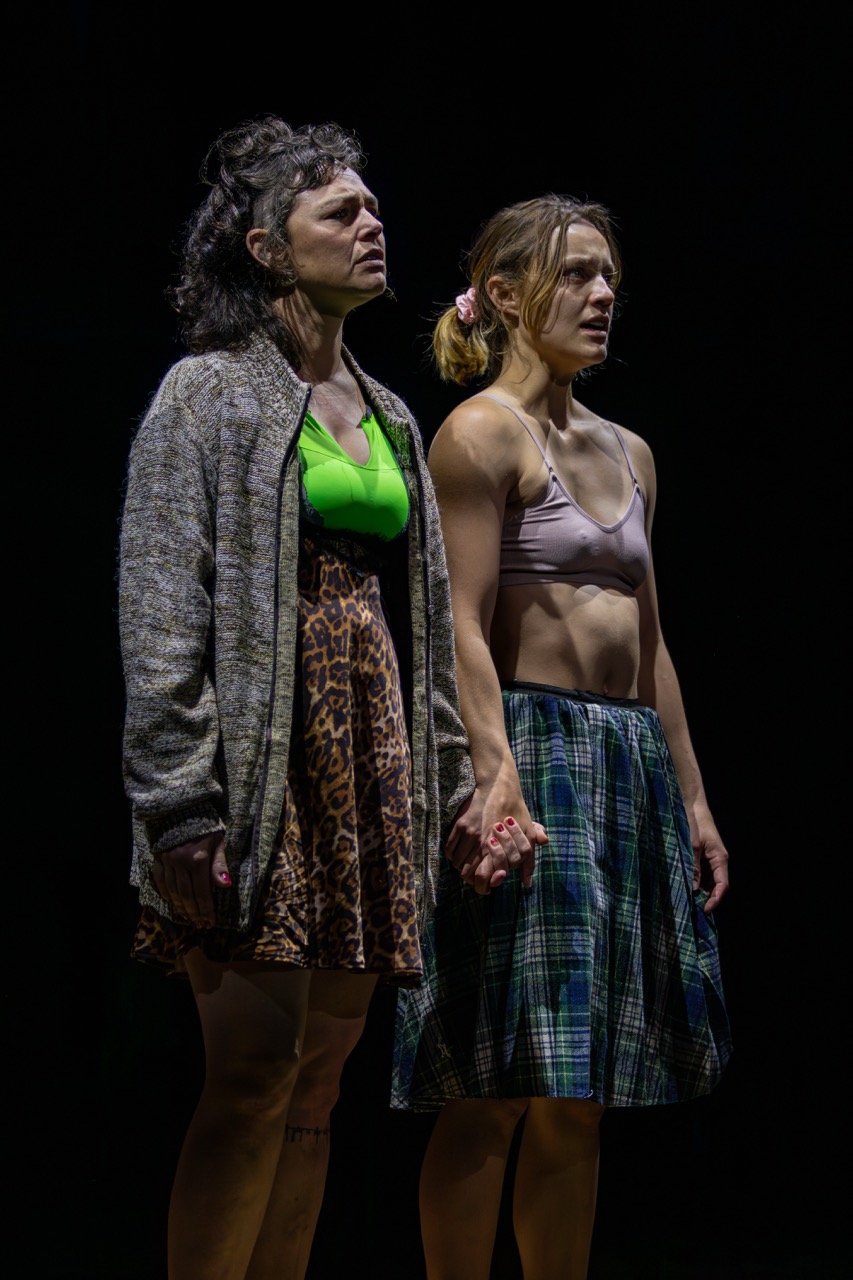
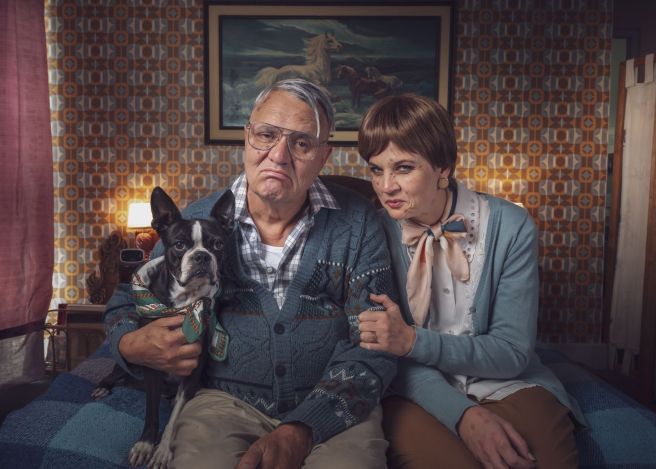
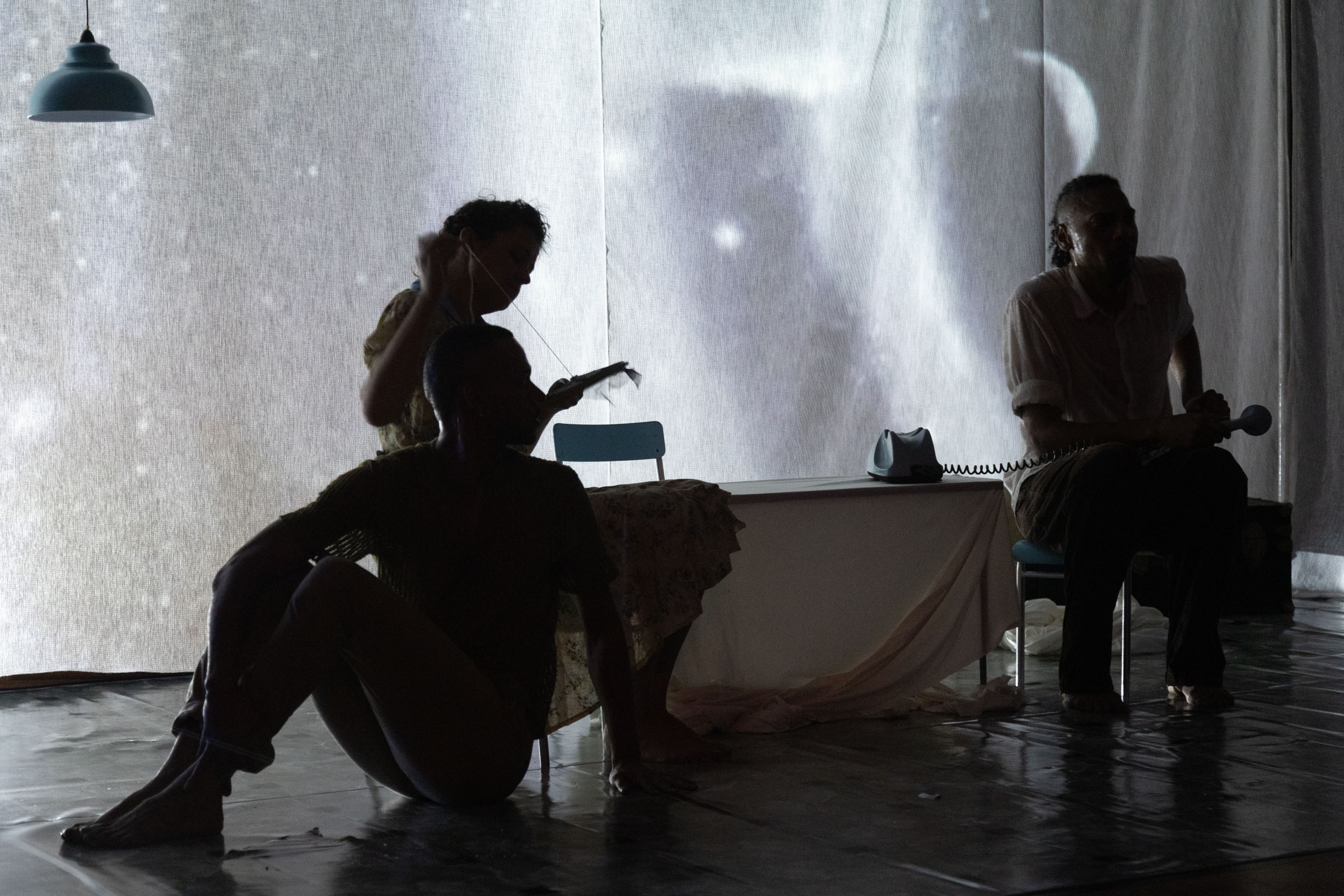
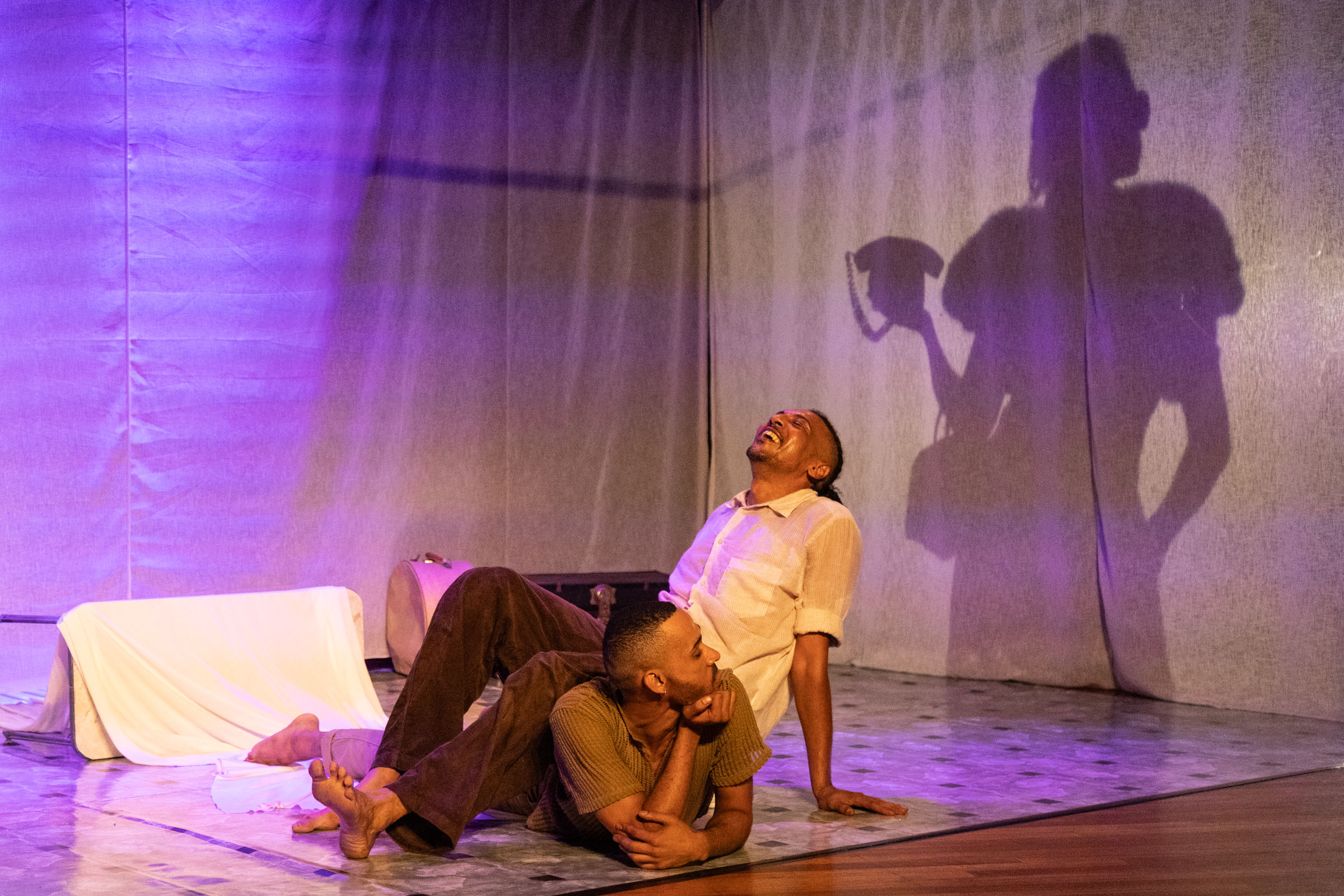
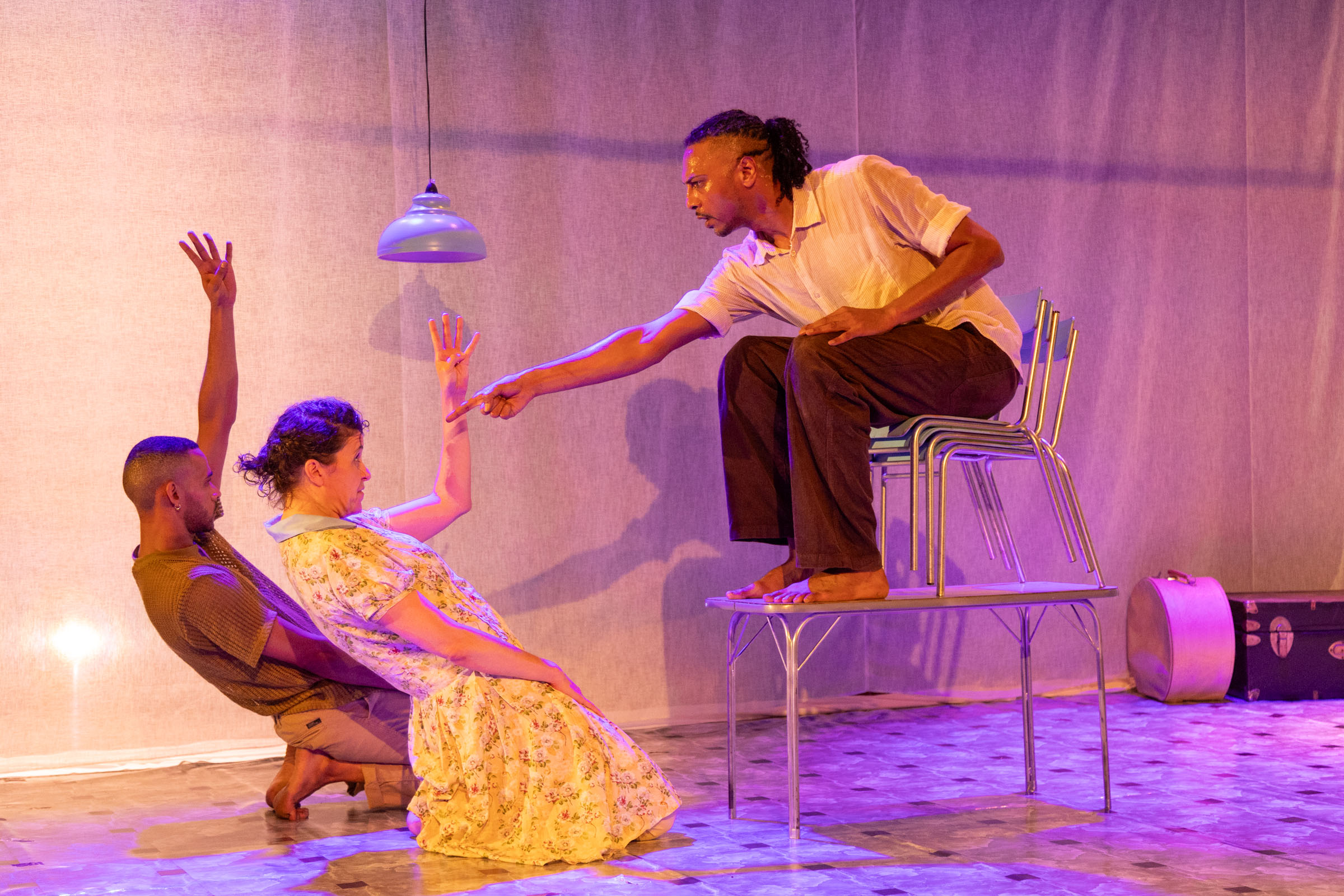
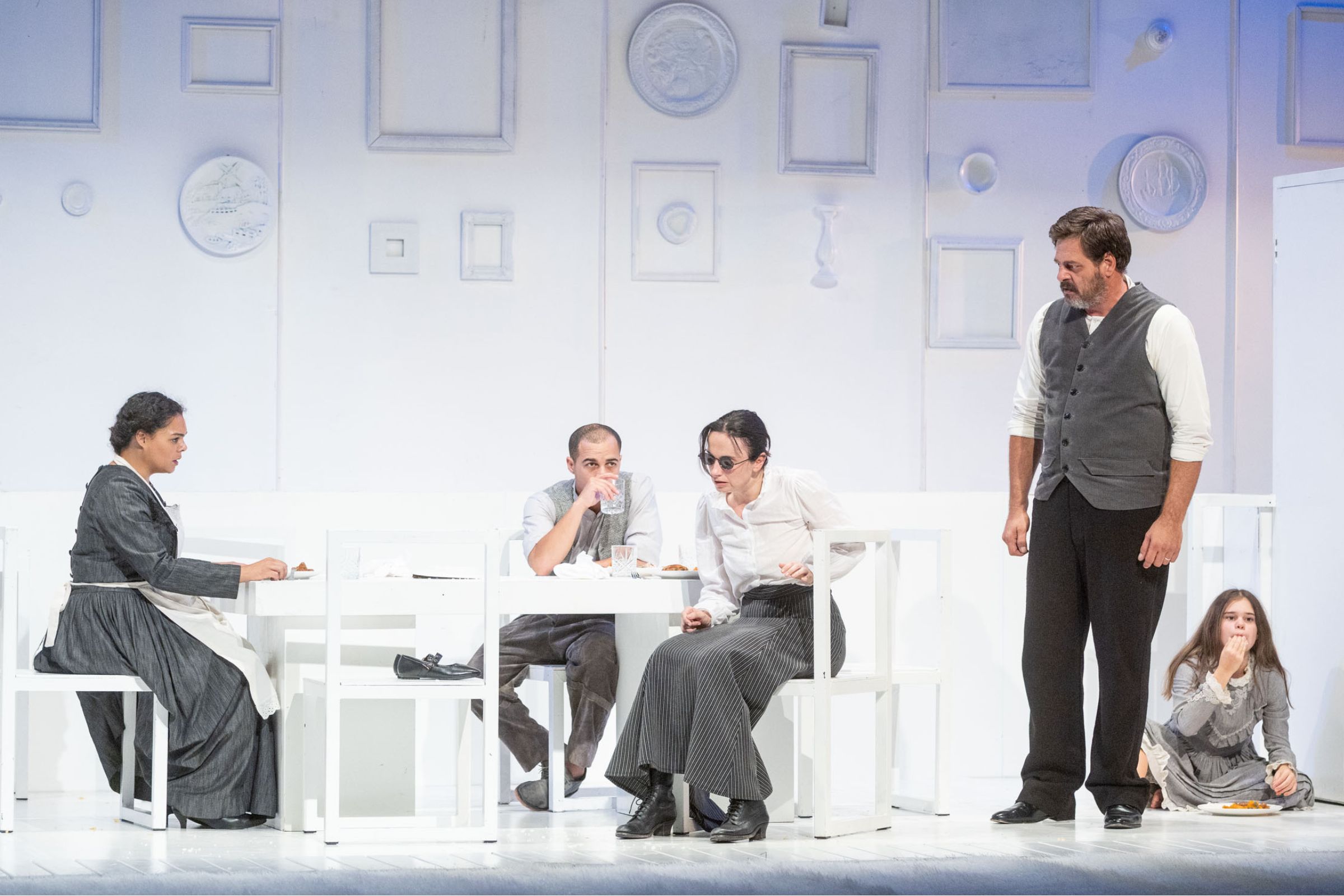
Tinarie van Wyk-Loots and Kristen Raath (left) and Jefferson J Dirks-Korkee (right) in

Dianne du Toit Albertze’s Huis van Sand. Pictured by Jeremeo Le Cordeur

The winning text of the prestigious Reinet Nagtegaal prize, Dianne du Toit Albertze’s Huis van Sand, with her honest portrayal of a dysfunctional family that’s probably not even part of most audiences’ consciousness. She writes about what she knows and where she comes from, the Northern Cape. But she does this in her self-made tongue, which shoots right to the heart and guts of the matter, no pussyfooting around with this one.

It is not a place many of the traditional Woordfees audiences will know. The backdrop is the N7, a route that runs from one end of the country to the other. It is her little spot next to the highway that Sandy knows. She and her daughter share Rodney’s caravan and too much of his life, especially the dark side. They’re trapped and yet the lifestyle is passed on from one generation to the next with the whole family fully engaged. A seemingly never-ending devastating cycle.

What drives Huis van Sand are Albertze’s words, her imagination, and the way she plays wildly with your head and emotions. Throw into the mix director Wolfie Britz’s strong casting and determined direction. With the remarkable Tinarie van Wyk-Loots launching herself body and soul into this one, Sandy’s daughter (Kristen Raath) trying to duck the missiles and resist diving headfirst into the temptations, Jefferson J Dirks-Korkee’s chilly capture of the toxic male scent always hovering menacingly and René Cloete showing she is much more than just an innocent bystander, everything about this production hits you like an onslaught.

Yet this is one you want to struggle and engage with because of the sharp edges and the unblinking gaze at the harsh reality of so many lives. It’s heartwrenching, but that is something this playwright has never turned away from. She stares straight into the skewered glare of too many unseen lives and throws us all in at the deep end. The brilliance is well worth the battle.

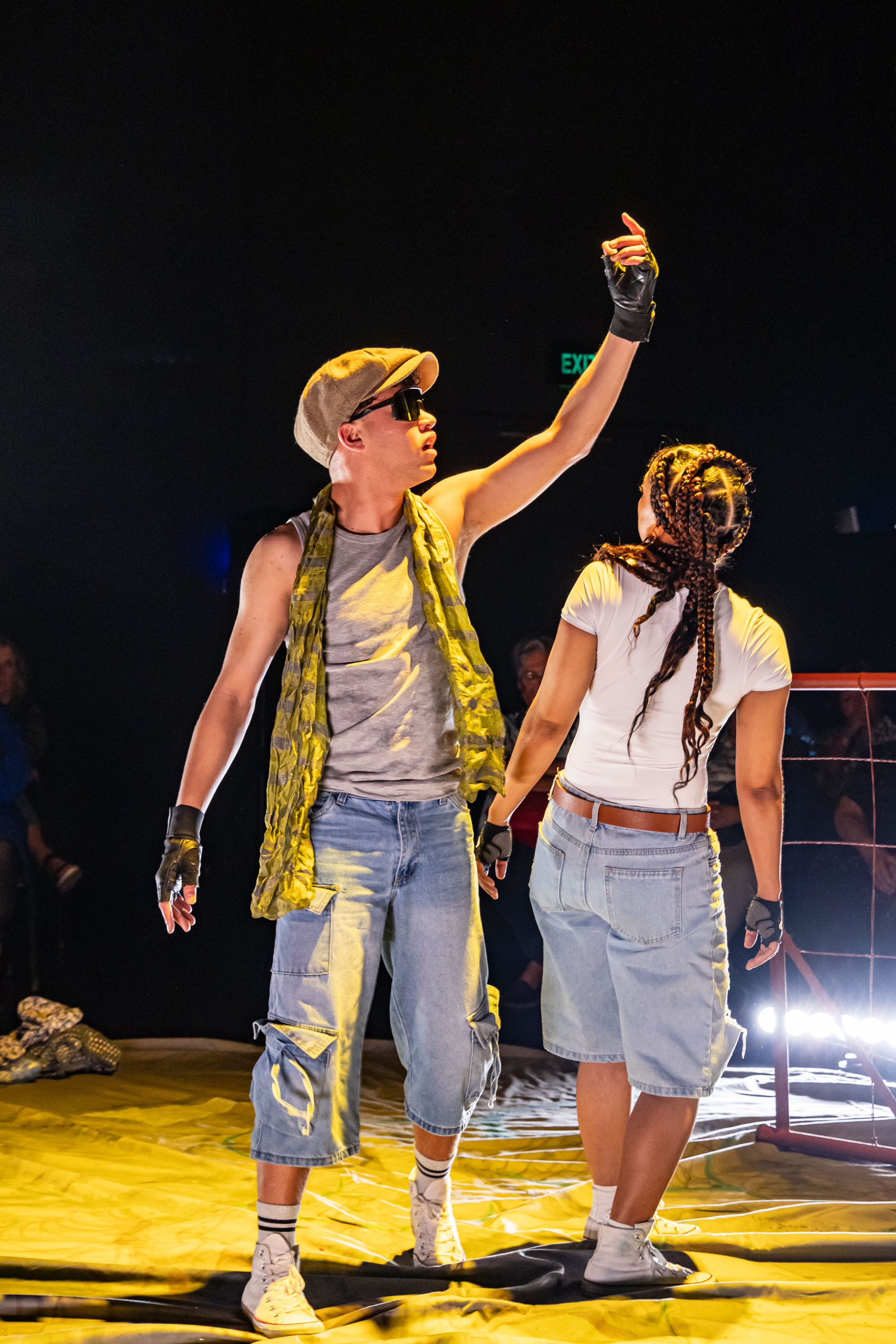
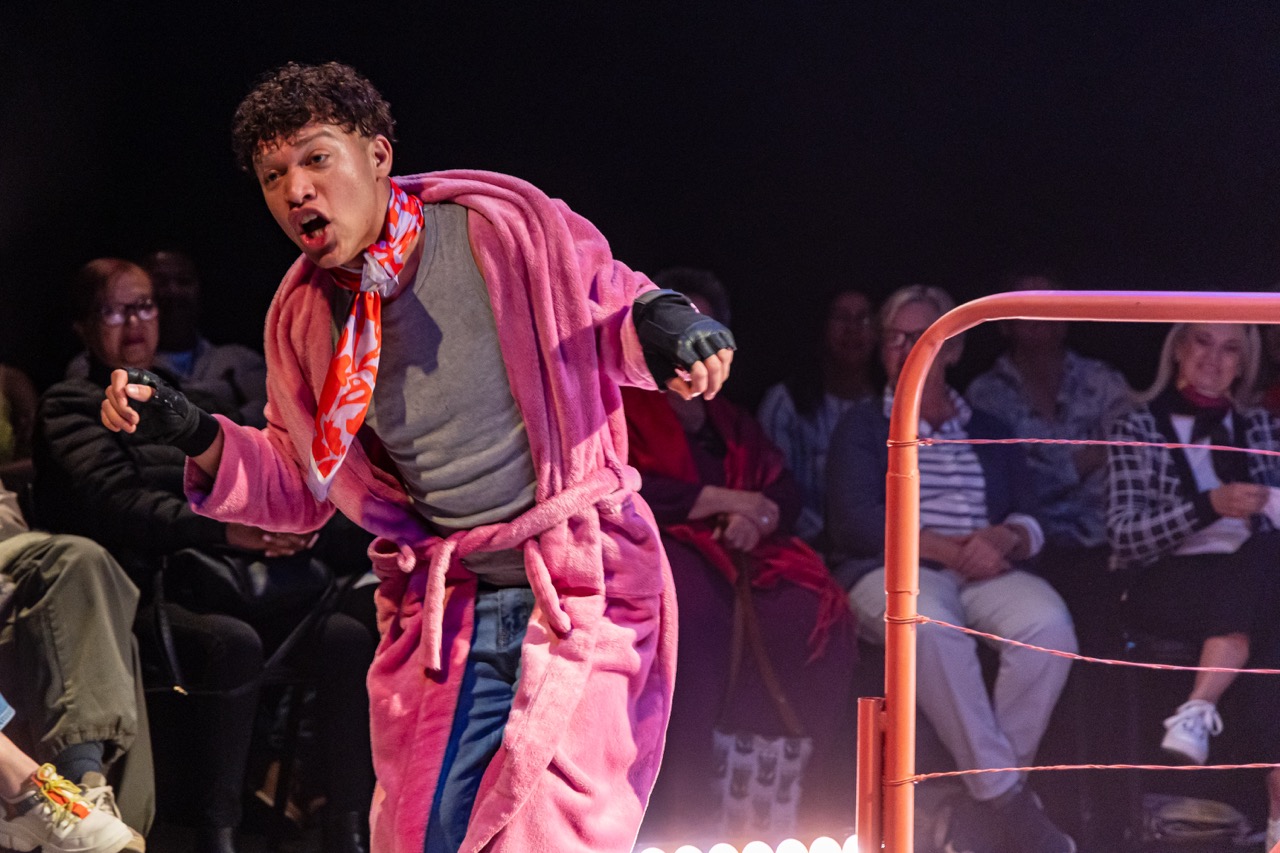
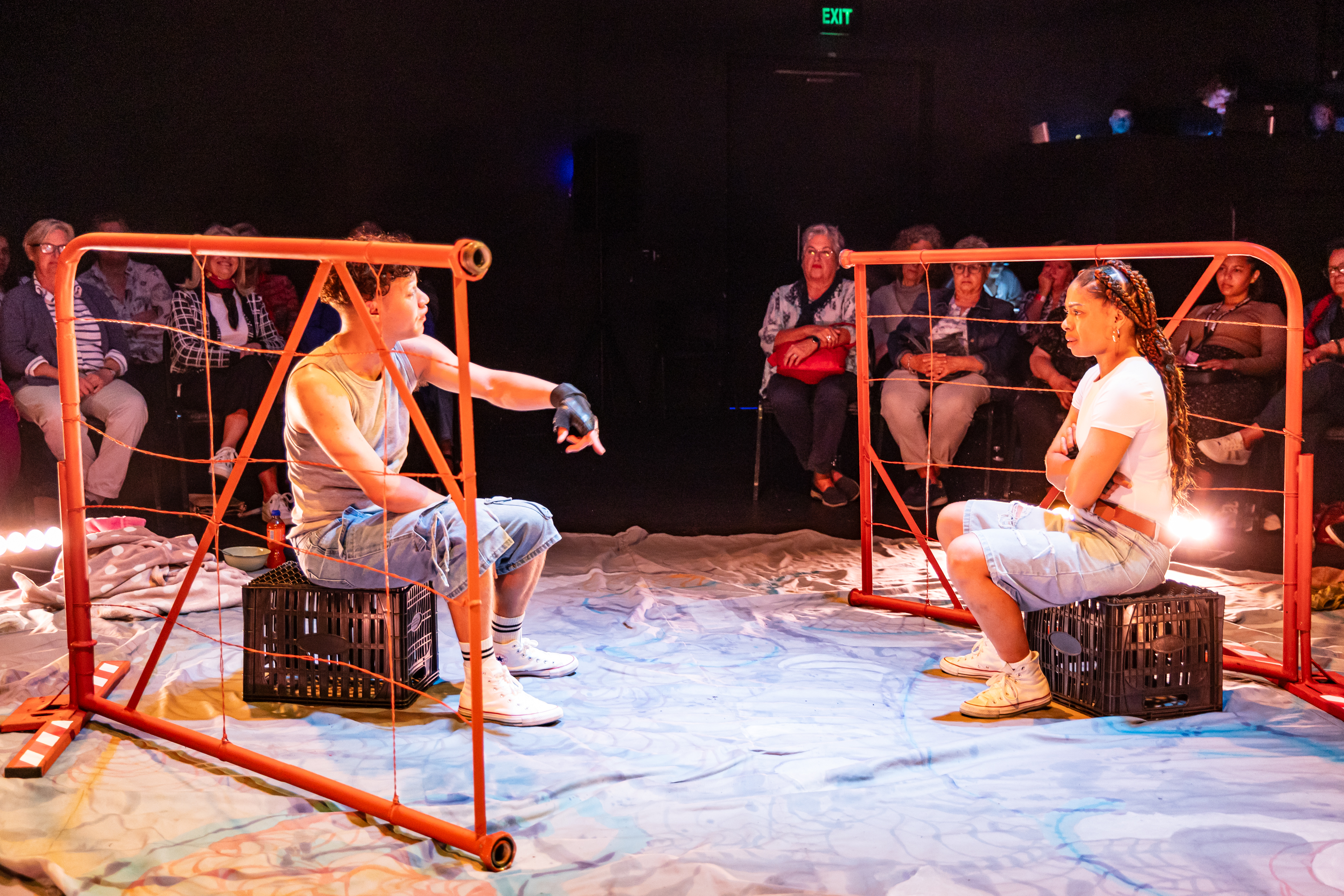
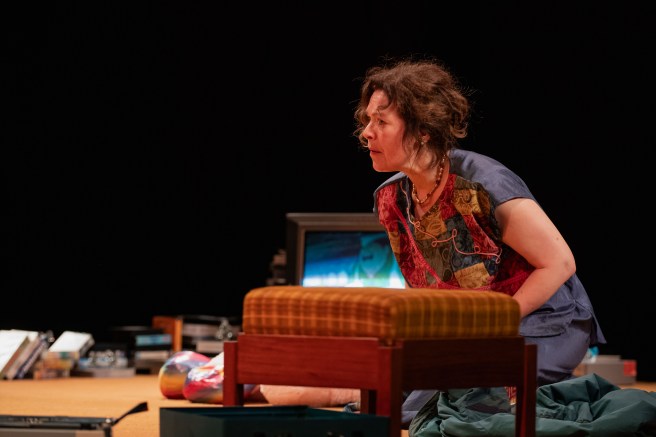
Melissa de Vries as Nadia and Angelo Bergh as her friend Zavie

Walking the same tightrope, is the adaptation by Jolyn Phillips of Ronelda Kampher’s ravaging novel starring two vulnerable yet resilient teen cousins who try their best to navigate a world they don’t understand while instinctively understanding that they are their only protection.

For Nadia (Melissa de Vries) and her chum Zavie (Angelo Bergh) their bond while tenuous and often fragile is what keeps them breathing.

With this one it is again the magnificence of the performances and the staging by Lee-Ann van Rooi that holds the attention as these two baby-adults going about their lives as if it is normal – and for them it is, it’s all they know.

That’s precisely the point. This is their normal, their life and the one Kampher’s words in her searing novel lay bare. Their whole existence is determined by outside factors, never certain or expected. Yet they do know how to grab the small slices of life when given the chance which isn’t often. They should not even be aware of the things happening in their lives, yet that’s the only way they know how to roll.

Kampher’s language is brilliantly captured by Phillips’ adaptation. How she even knew where to start! It’s such a complex and almost crippling story about these children whose future is determined purely by the happenstance of their birth.

Both of them have bucketsful of gifts which will never be realized because there’s simply no support or networks for these drifting families where not one generation manages to get even a foothold on a real life.

If anything good happens in their lives, it is luck and often, at that particular moment, the recipient doesn’t know how to deal with it.

When reading Kampher’s book the first time, you’re in awe of the writing and the storytelling. It’s the way she focused on the stories never told, the way she draws the characters, gives them flesh and emotions, which in this instance are perfectly re-created by the choices of Van Rooi and the adaptation by Phillips.

What a beautiful acting team. I don’t know them, don’t watch television if that’s where they perform, but I do know that they have inhabited these two kids with so much energy and guts, it’s hard to resist.

And that’s the joy of festivals, the opportunities that arise for artists so that when the stars align (a good script, director and actors), nothing can hold them back.

All of these performances should and will hopefully travel. For far too long too many voices have been silenced. We are so much richer as a country, as audiences and as performers when all our stories are shared.

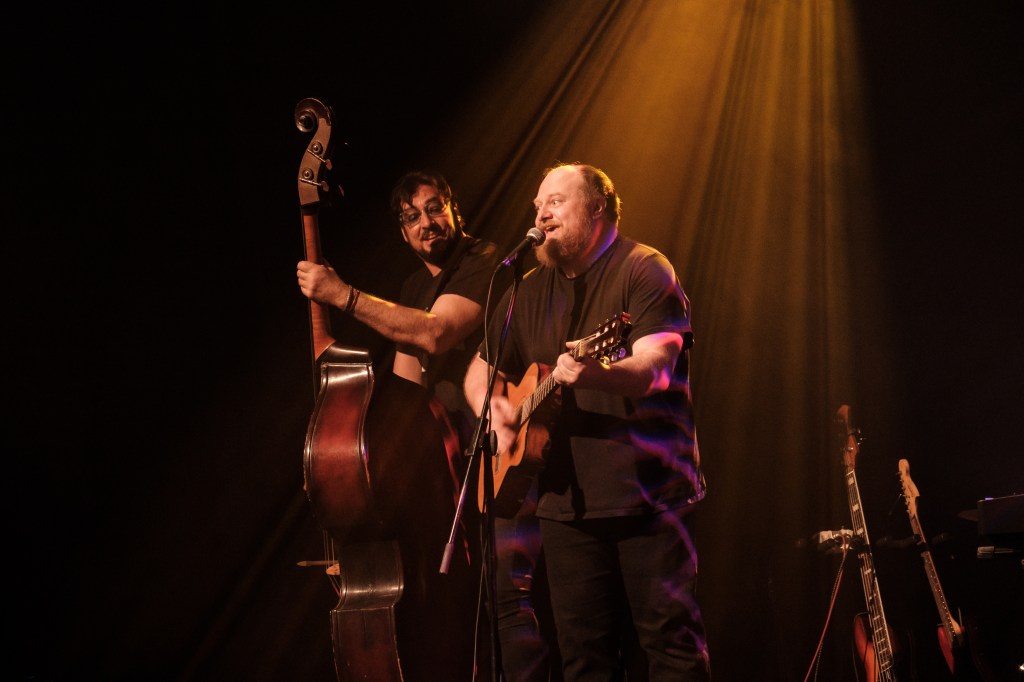
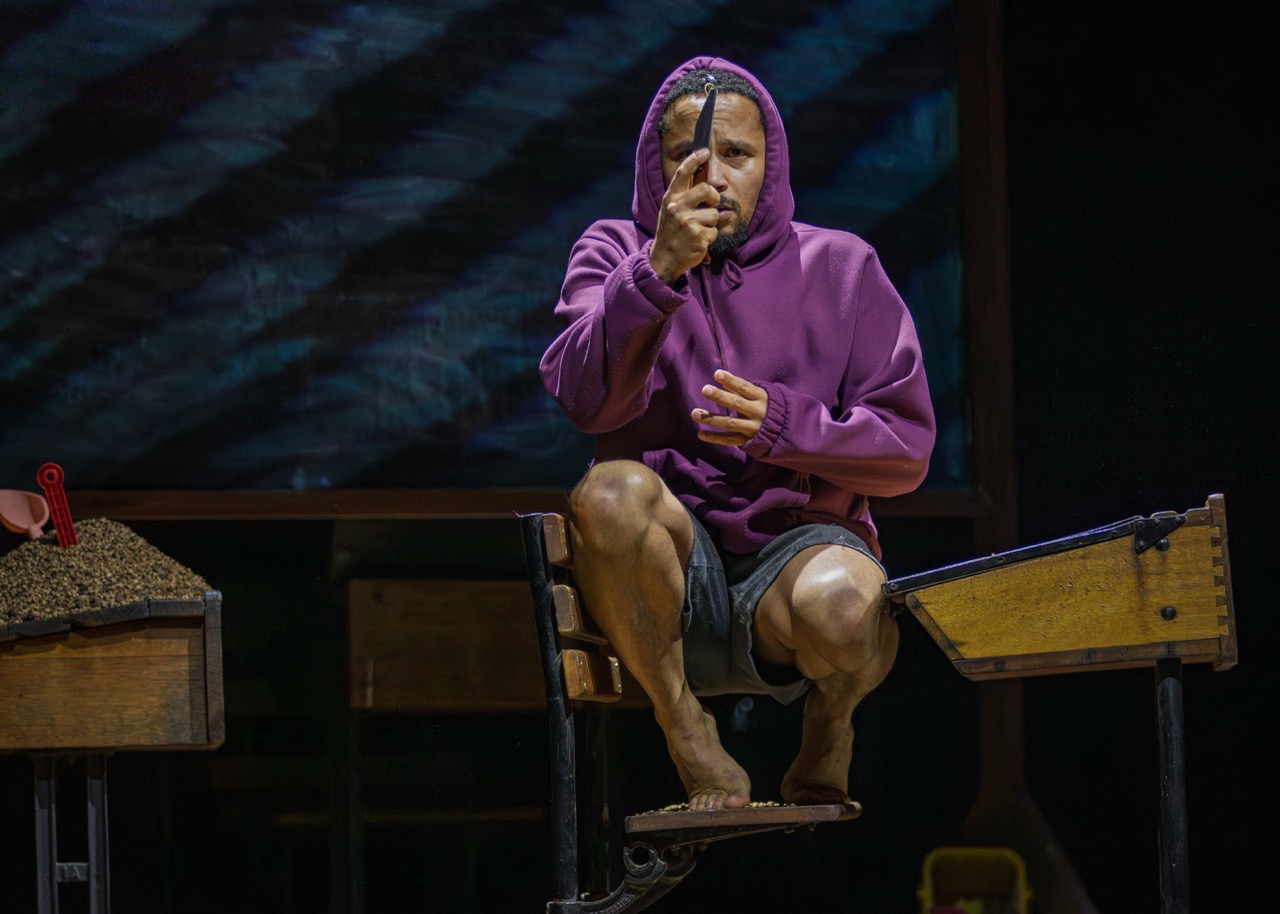
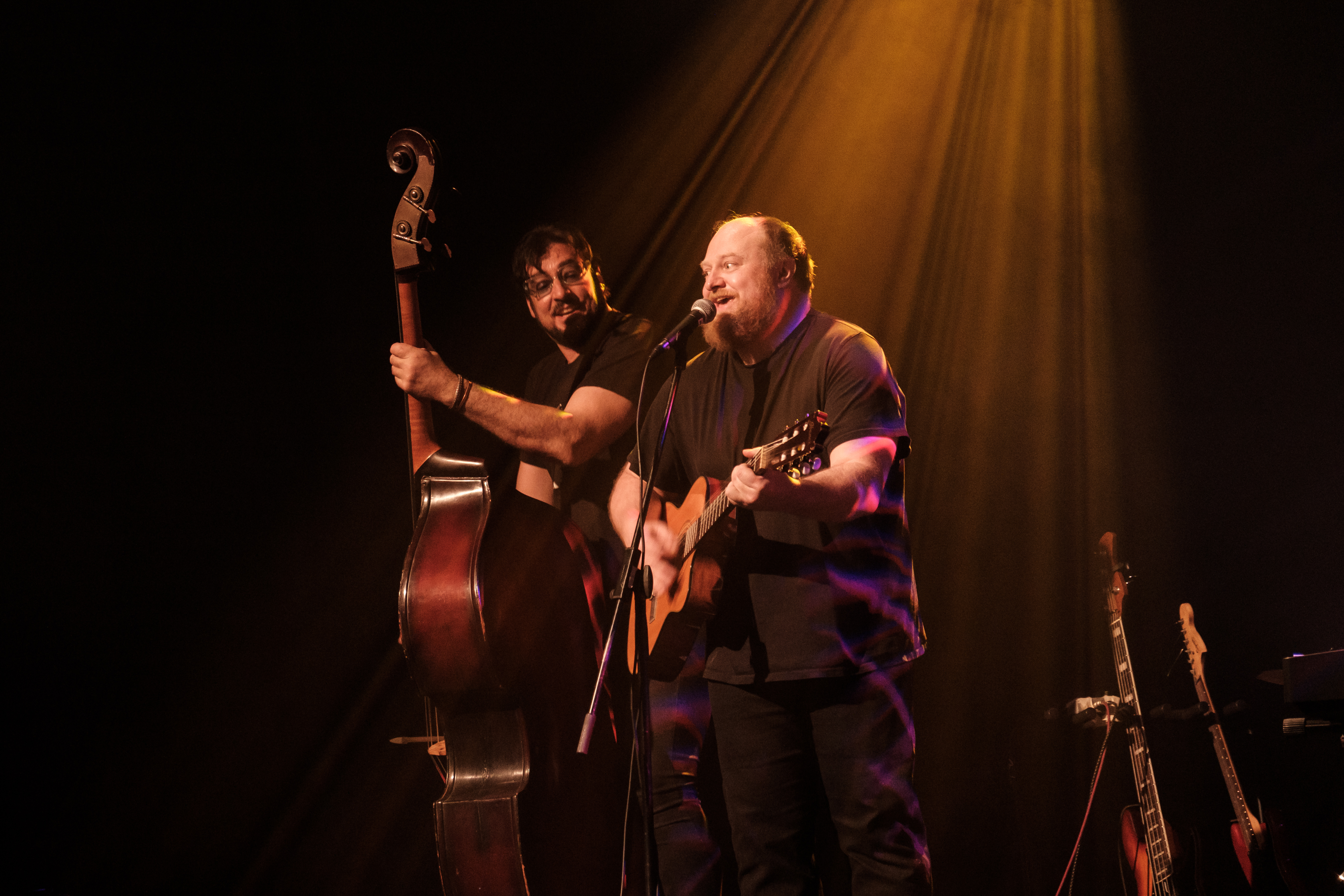
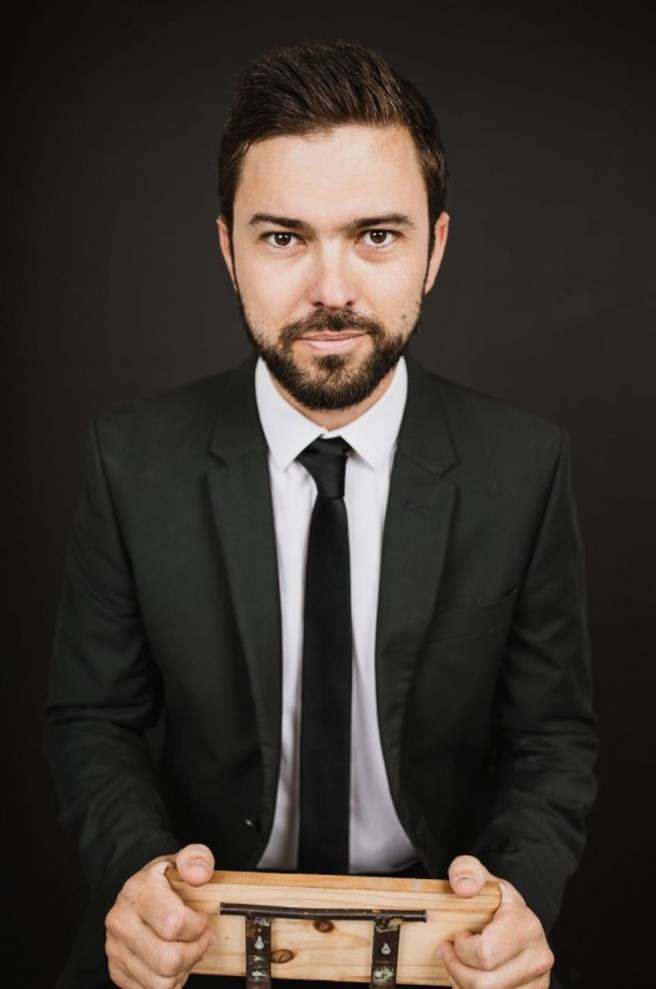
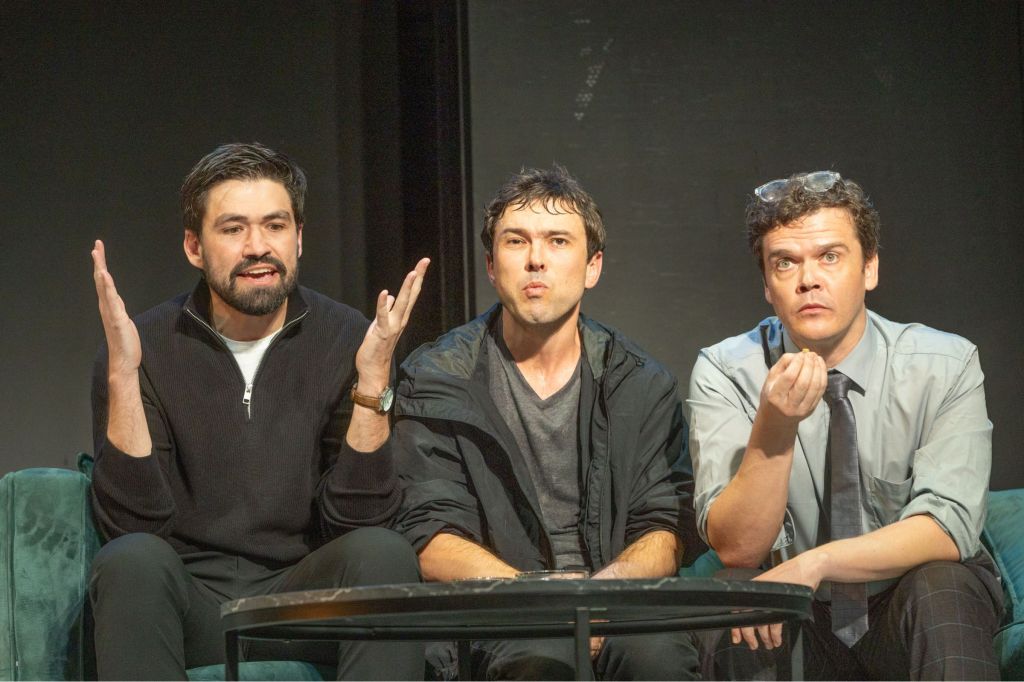
Albert Pretorius (actor) and Schalk Joubert (guitarist) in Ek is nie Danie pictured by Llwellyn de Wet and Gys Loubser.

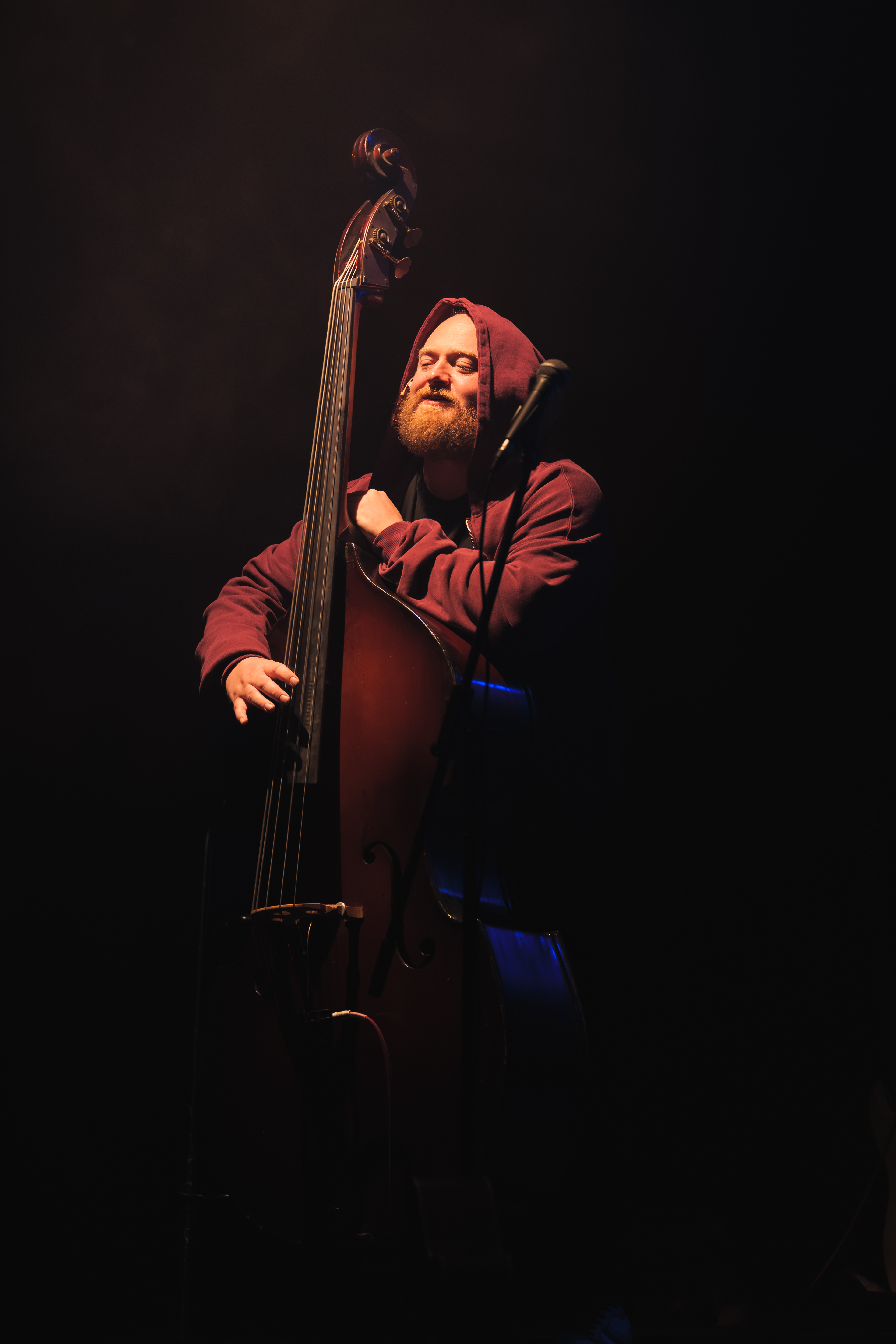
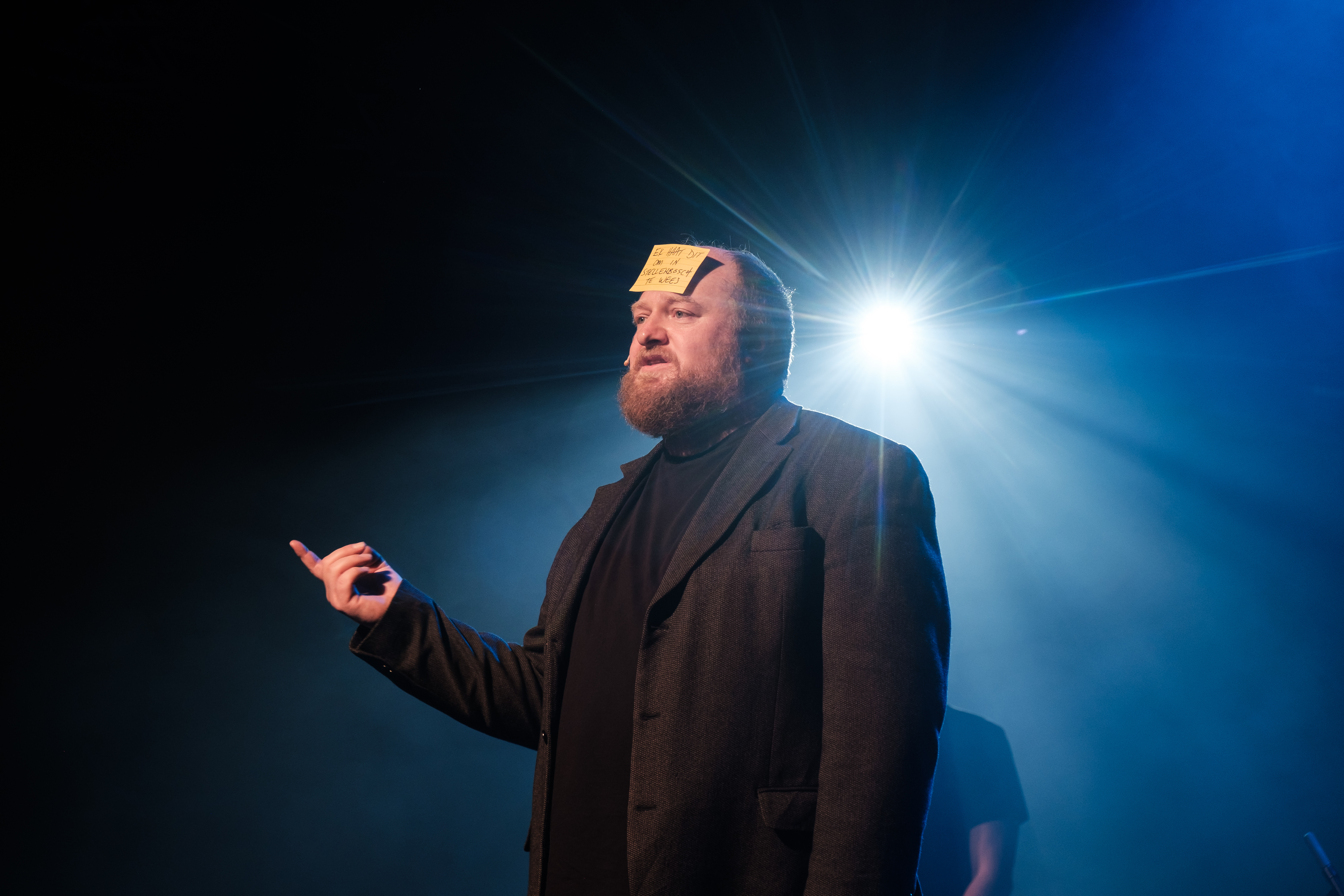
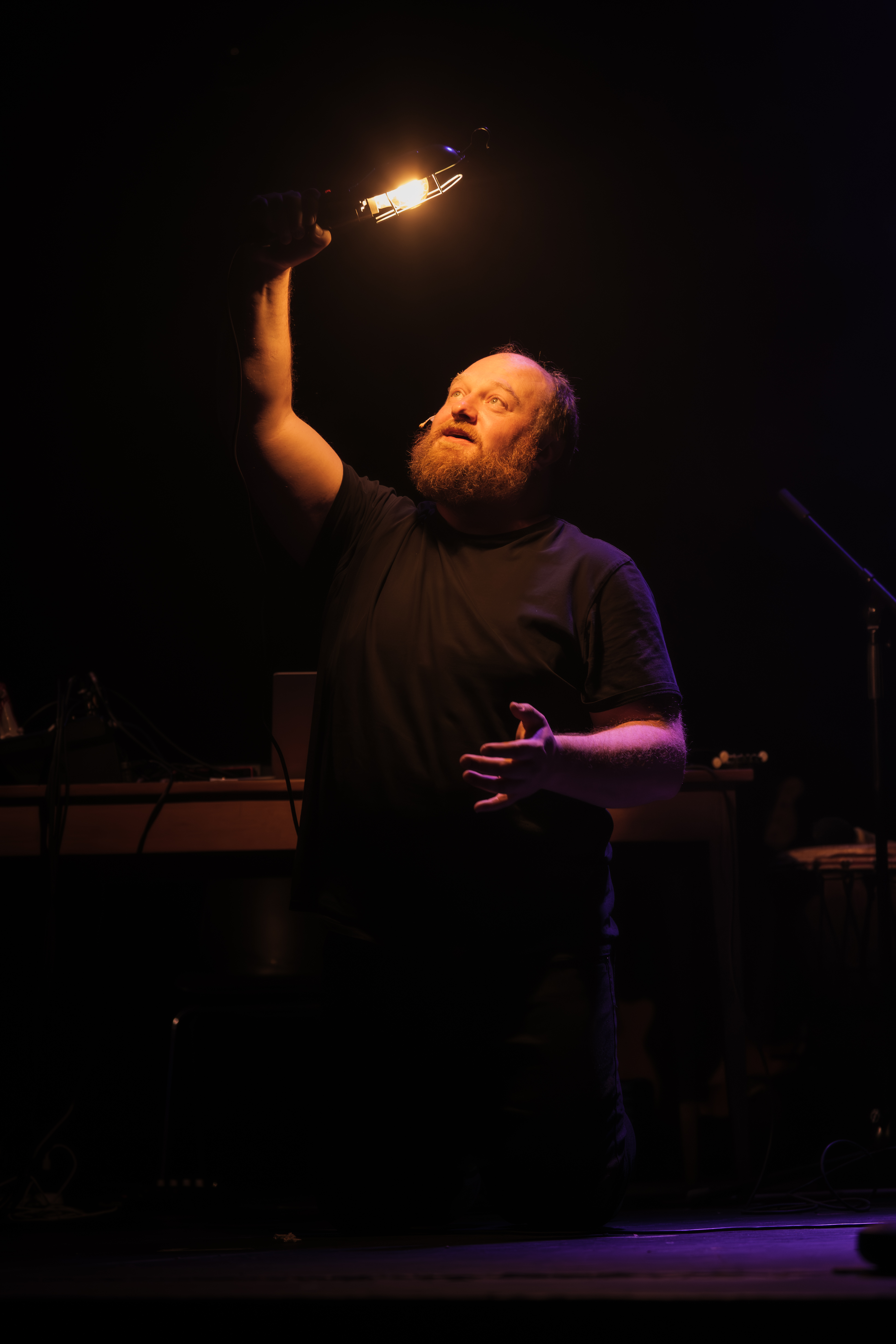
Writing about stars aligning, another perfect example of this was Ek Is Nie Danie with 21 poems from poet Danie Marais’ four collections woven into a magnificent text that deals with a middle-aged white man struggling.

What four middle-aged men did with what they had, was inspirational. They took something which if not handled with the same delicacy as the poetry, could have been disastrous. But because of deft hands and hearts, it feels as though you are dealing with an emotional vortex, but one driven with artistic insight and instinct which holds the audience tightly and sharply in focus from start to finish.

It worked because of the truly exquisite writing and then the choice of the right participants. The concept was Niel van Deventer’s according to the programme, but then handed to one of our smartest directors, Nico Scheepers. He is given a topic which would turn most people away – the angst and anxiety of ageing white men, not a species that many have much sympathy for.

Yet this company with actor Albert Pretorius and musical director/guitarist Schalk Joubert has shown that, given the right elements, a director who knows how to shape something yet value his actor and musician by allowing them the freedom to be and to do, it will work – and in this instance, explosively.

It’s one of those performances that you want to see again as soon as you leave the theatre. I hope it travels the country.

I took these three stunning plays to give some flavour to the Woordfees which is far too dense and diverse to dilute, but that there’s something for everyone, that’s a certainty and you won’t have to look too far or hard.

They have achieved much in only a short time and in the future with everything changing so rapidly, we can only expect to experience even more.

And then just a small PS: I was asked to interview Nataniël on a book Bloei+Blom and being who he is, the first lunch was booked out swiftly and another date the next day was included and again fully booked. But hey, the more the merrier.

As an interviewer, this is the one date I don’t have nerves. I know I am in safe hands and he is the master of chat.

It was the easiest gig in town. Even though he and I had talked about topics of conversation before the time, once on a roll, and only three questions down, I could sit back, relax and enjoy one of our best (and naturally funniest) conversationalists in action.

There was no way to ask anything else. He was in full flight on his own. He did glance my way once or twice, but there was no interrupting the flow. And even better, he was the one they wanted to see and hear.

I felt blessed, centre stage and could watch the wizard in full flights of fantasy.

*There were many others I loved, many of which I had written on at the Woordfees or previously including Boklied, Seun, Bridling, Kuns, Magda en haar Erhard, Ont-, and always The Ugly Noo Noo …

AARDKLOP PUNCHES ABOVE ITS WEIGHT

Like most things in life there are good and bad to small packages, but Aardklop CEO Alexa Strachan has turned her shiny Potchefstroom gem into a star through clever planning, a balancing act of note and enough variety to have everyone laughing and crying – with good food all over the place to boot. DIANE DE BEER speaks her mind:

My husband knows I’m a festival junkie (while he is NOT) but it is a personal indulgence and one that clearly nourishes.

This year was no different. Taking only a handful of my best, it’s not a difficult case to make.

Running down the alphabet as the festival guide does, it’s the overwhelming laughter that blew me away. I’m not a comedy girl so I didn’t know who Alfred Adriaan was but I screamed with laughter from start to finish and he was obviously a festival favourite in the packed auditorium.

With the name of Magda Louw (Desiré Gardner), one would think that I would remember that this is one of my favourite characters, but again, because of the comedy aversion, it just never surfaces. And yet, from the minute she walks on stage in her latest production, Magda Louw en haar Erhard, how Louw can you go?, this time with her husband Erhard (a delightfully Sad Sack performance by Hannes van Wyk), they just bowl you over.

What makes Magda so delightful to embrace is that she doesn’t go on the clichéd South African rant of potholes and politics, she has much more exciting things to deal with like the man constantly shuffling behind her as she leads the way at a faster pace and with much more rhythm, but the two ageing souls give you hope for the future as you realise that life is just a bowl of bubbles if you attack it in the right way.

On the other side of the spectrum there’s the magnificent solo debut by the extraordinary Wilhelm van der Walt, who unassumingly takes the stage and then reaching into a far too familiar past, given new perspective.

There was a time when I could hardly stomach another troepie tirade because it was so dominating in the country that it constantly surfaced on stage. What I realized this time round, is that Van der Walt himself probably never participated in this deadly exercise for so many decades part of our lives and there were certainly many young audiences who needs this insight on our past.

And if it is done with such magnificence, the flashbacks are worth recalling even if the past could be wished away.

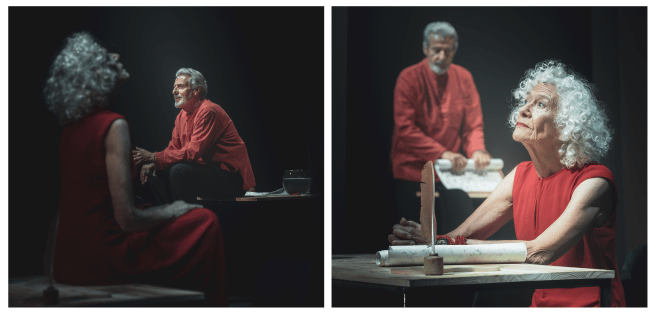
How can anyone not be thrilled to experience Antoinette Kellermann and Dawid Minnaar on stage and in this instance in Breyten Breytenbach’s last play, Verwelkingslied, before he died. Although he dedicated the piece to Antoinette Kellermann and Marthinus Basson, she performed with her long-time stage partner Minnaar with Mari Borstlap as director on a set which was reminiscent of some of their earlier work together.

Minnaar is an eerily similar version of the poet in voice and image and immediately you can lose yourself in the meanderings of this philosophical and always poetic (almost) memoir. As the two actors take turns in monologue yet sharing Breytenbach’s feelings on death, one drifts away in the words so magnetic and the voice so penetrating, almost in dreamlike state, the actors and the audience.

The simplicity of the presentation is apt as it holds the depth and strength of the text so delicately. This is where we need the words to wash over us as an audience in almost immersive fashion.

I know that Amanda Strydom first mesmerized me with The Incredible Journey of Tinkerbell van Tonder and was eager to experience the performance all these decades later. Not that I can remember the detail, but with age of both text and performer, it’s as if everything has just found a warmer and gentler place to settle and lay her head down.

Finding your place in the world is a never-ending search and when you are fighting for freedom it is almost impossible – yet not when you’re Nelia Petersen who was handed the struggle together with mother’s milk.

It’s rigorous and robust with Strydom tackling the text and music with equal energy and exuberance. And all these years later, if anything, it is even more brittle and brilliant than before. I could watch this performance any day.

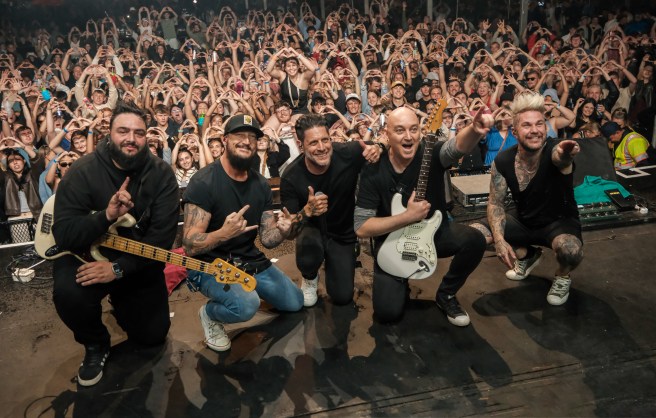
Belofte van Vere was our first production and yet another Breytenbach tribute but, once I witnessed the full cast on stage, they had my full attention. With the musically adventurous Laurinda Hofmeyr on piano, a rare singing appearance from the jazz-infused Ilse Klink, the genius muso Leon Gropp (guitar and voice), the soulful David Klassen (drums), a rhythmic Concord Nkabinde (bass) with the velvet voices of Rolanda Marais and Eben Genis, I knew I would be transformed. And I was.

Performers Eben Genis and Rolanda Marais

This exciting, gifted collection of artists would know how to do Breyten Breytenbach, without frills and fancy tricks, just delivering on their accomplishments and Breyten’s poetry and words. Anything else to my mind would have been unwarranted.

It’s my kind of show with my kind of people and poems. I needed nothing more. For me this was a Breytenbach celebration and I’m certain he would have been honoured.

Combining two dance companies, Cape Town’s magnificent Figure of 8 Dance Theatre who also performed their haunting tribute (Die Een Wat Bly) to the relationship between mothers and sons, the more expansive Wings of Light: Dance of an Angel returned dance to Aardklop in spectacular fashion. The music composed by Mauritz Lotz set the tone for an exquisite performance which showcased both classical and contemporary dance, the perfect rendition for an audience who might not often have the chance to see this kind of performance. It was a rare feat to stage this production and hopefully paved the way for similar ventures in the future.

Festivals have to walk a tightrope of not playing it too safe yet not antagonising their core audiences. With the large auditorium thé venue for one of our best comedians as well as two of the most exciting dance companies in the country, they managed just that.

There was also time to slip into the art venues, always something to cherish, and this time it was the festival Artist Jaco van Schalkwyk as well as a challenging group exhibition Vice Versa curated by artist Gwynneth Miller, all of which got the mind racing on a variety of contemporary issues. The renovated campus art museum also featured an exciting range of Nataniël pictures captured by his longest serving photographer Clinton Lubbhe

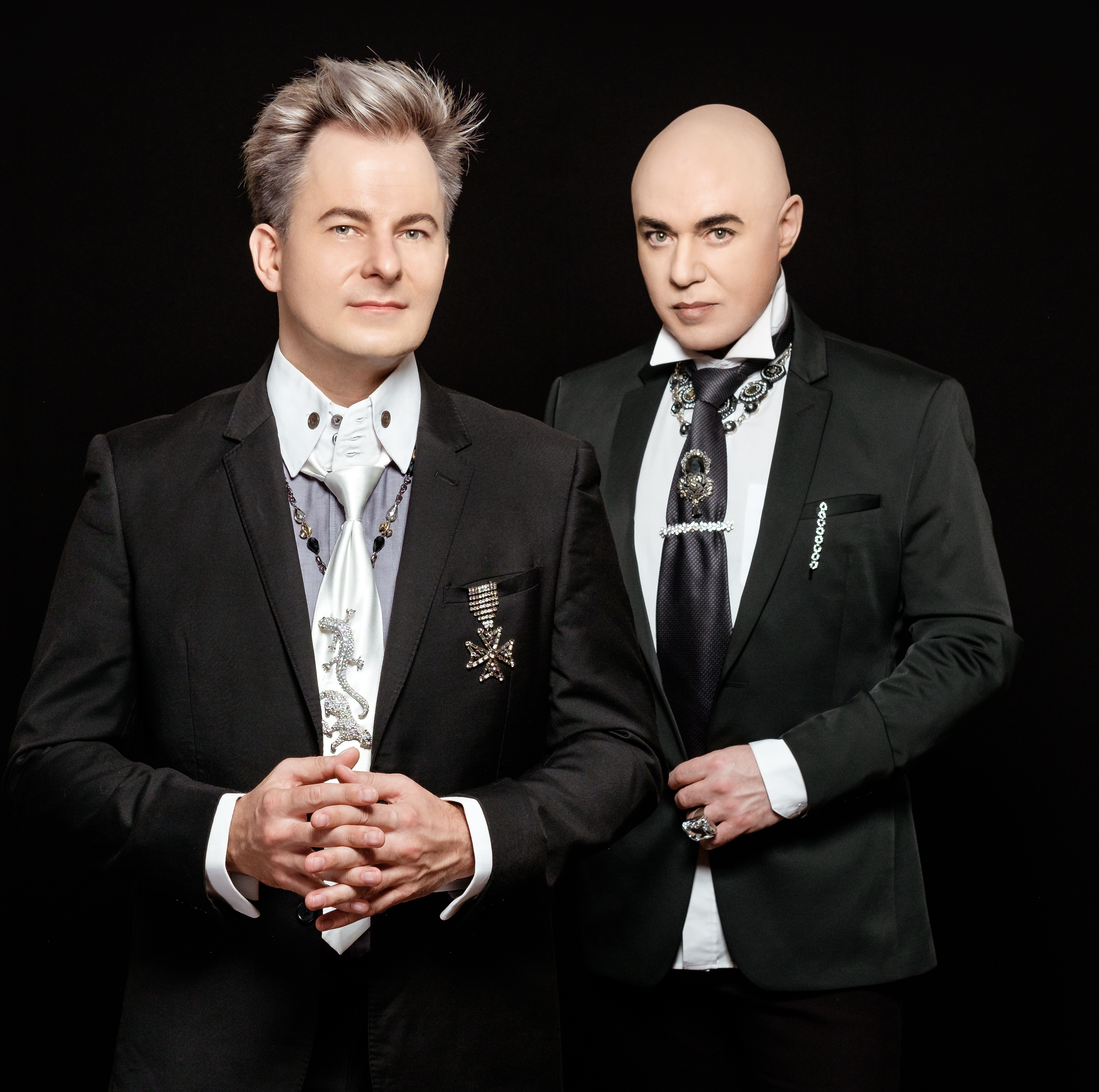
As an extra fillip, there was the celebratory concert of Nataniël and Charl du Plessis’s 25-year collaboration on stage. And as I had witnessed their initial first performances together, this was quite emotional.

To watch two stratospheric artists develop, dissect and model their artistry as they grow and stretch in different ways is unexpected and artistically adventurous.

There’s Du Plessis’s breathtaking exuberance and excellence on piano, the way he shifts between genres and his approach to his longtime stage companion. Nataniël again exhibits his stagecraft, flips easily from text to music, his stories hilariously funny with a hint of melancholy, or on the musical side, surprising everyone with his superb classical training which he hardly ever shares. They are an unbeatable combination with so many years of performance between them.

Aardklop features youth theatre with their Pronk Podium product, which this year invited its most successful writer/director/producer to present his latest work Doolhof together with the NWU Kampustoneel winner Diereryk  directed and written by Pierre-André Viviers, cleverly based on Animal Far.

Every year I am thrilled and struck by the quality of the productions and everyone’s artistry involved. For future artists, this is unequalled training ground and for audiences the ideal opportunity to see how young artists tell their stories and what to expect in the future.

At future festivals, remember to watch out for this special section.

I could go on and on, I even made a turn at the market, something I never do, but I wanted to surprise my favourites at home with some specialty snacks.

As always it was a festival with feisty and fabulous fare on every level.

And the winners for the annual Aardklop festival awards are:

  • Best Actress: Elzabé Zietsman for Routrip
  • Best Actor: Wilhelm van der Walt for Seun
  • Best Director: Nico Scheepers for Seun
  • Best Overall Production: Seun
  • Award for most innovative work: The Scullery Quintet: Stir-fried Sonatas
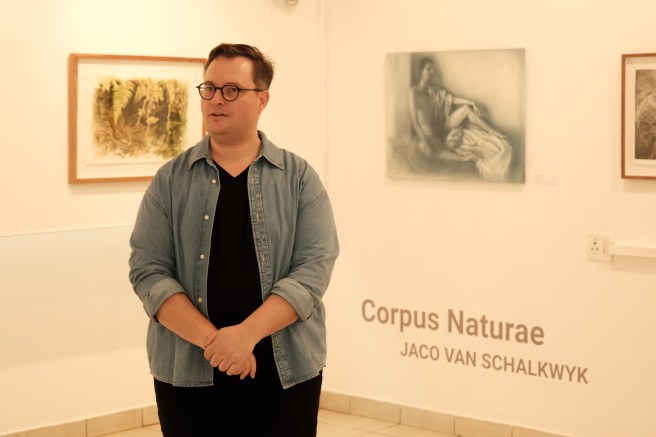
  • Visual Art: Best Exhibition: Corpus Naturae, Jaco van Schalkwyk
  • Best Music-driven Production: Amanda Strydom: The incredible journey of Tinkerbell van Tonder
  • Best Classical Music performance: Road Trip Rhythms
  • Best Musical-driven performance: The Scullery Quintet
  • Hartsvriende Beste Produksie: Seun
  • Best new Afrikaans Script: Nataniël for NATANIËL + CHARL = 25
  • Best Production: Drama: Seun
  • Knockout Award: Alfred Adriaan: Positive Strokes
  • Extra Mile: Riaan Rademan (Technical project manager for Blond Productions)

THERE’S NO WAY OF STOPPING THE CREATIVE NATANIËL, AN ARTIST CONSTANTLY ON THE MOVE

Nataniël is on the go – again – and it was time for DIANE DE BEER to pop in and find out more about upcoming shows, events and anything else happening in this prolific artist’s life:

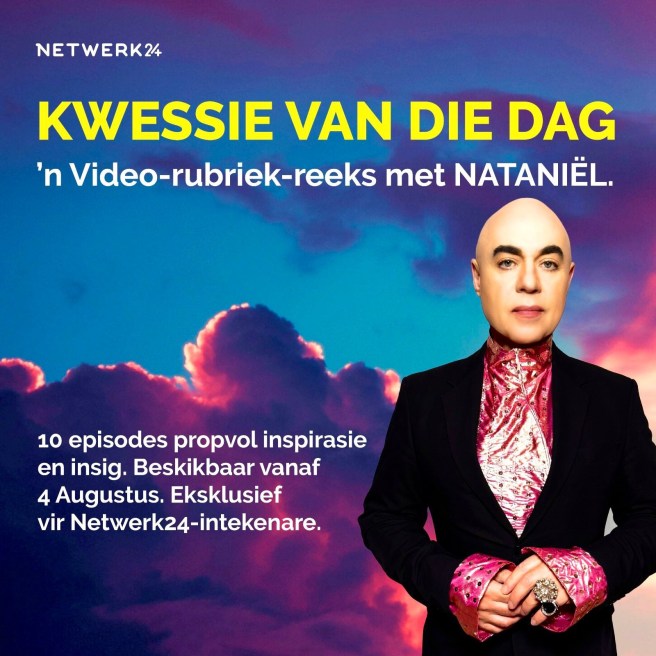
What is keeping him up at night and awake at the crack of dawn is the work on his latest podcast series, which has become yet another of his performance features since his first series a while back. Kwessie van die Dag, his brand-new video column, starts on August 4 on Netwerk24.

As with anything he does, Nataniël approaches these latest podcasts with everything he’s got. “It’s as much work as a TV series,” he notes. And for this perfectionist, it is. He simply cannot do things haphazardly, with quality a constant taskmaster.

He is aware that everybody has turned to podcasts and his will be the best. This isn’t boasting because he is genius when it comes to storytelling. There’s no competing with this conversationalist.

It is all about the words which he has to learn by heart – 3 000 a week! They are his words, he has written each one, but then he has to get them tripping off the tongue. While it comes easily, he believes in scripts and knows exactly what he has to do and how he wants it to sound. So while there are many copycats, few can master him at his craft.

I often see pieces written by “Nataniël”, but it’s easy to spot when someone tries to capture his style because it is so unique. And this is where his podcast will pass with flying colours. “I don’t like waffling,” he says as he launches an attack on what he has labelled “electronic pollution”!

“There’s enough rubbish around.” He has an opinion which his followers will be familiar with, but he also loves facts when he is dealing in a specific subject. One of the many hurdles is the battle of language. He will be speaking in Afrikaans and to capture a language in this way is fraught with many pitfalls especially the way we mix our languages in our daily conversations.

It is clear that this is his latest challenge but also part of the excitement that charges his existence.

He is always busy creating and many of the things might seem as though they have a familiar pattern which, if you study them, they don’t. Into that mix, he is also constantly injecting new accomplishments which keep him on his toes.

“Everyone invites me to be a guest on their podcasts.” But for him there is a specific reason to engage with people in this fashion. “I want to address issues and for me it is about inspiration.”

BOEK • BYBEL • BIOSKOOP is the title of the show he is doing with organist Zorada Termmingh, a friend from varsity, together with his accompanist, pianist Charl du Plessis. Knowing something about his creative mind, he will be pulling all their respective talents together in a spectacular bouquet.

We’re in August and it is all about women. Composers, writers, singers, designers, as well as timeless characters from movies, classic literature, Biblical tales, art and theatre are their inspiration in this colourful show full of stories and songs. Zorada and Nataniël have performed on stage many times, starting during their student years. Charl has been his accompanist (apart from establishing his own career as a solo artist and performing with the Charl du Plessis Trio) for the past 25 years. And this is not the first outing for this trio of consummate performers.

It is a one-off in the capital city on August 13 at 7pm and the Ned Geref Universiteitsoord Kerk. The show is 90 minutes (more or less) long.

In September he returns to one of his most ambitious projects, Mass for the Good Princes (recently released on CD), which will be performed in the Cape for the first time thanks to the goodwill of the Atterbury Trust.

It’s a double whammy for Nataniël –  one of both joy and hysteria. This was one of those accomplishments he had dreamt of for a very long time. Writing it was an almost impossible feat with his kind of schedule, and with each performance he has to once again memorise the Latin text, which is a killer.

This will be the 3rd time that he attempts this daunting exercise and while it stretches even his seemingly limitless determination, he can’t resist it. It is based on the classical structure of a Latin church mass with a sacred composition by Nataniël in six parts which includes a prayer for goodness, new leadership and the hope of a new generation. It will be sung in English and Latin with descriptions and translations in Afrikaans.

It will be presented at the Ned Geref Welgemoed Church on Saturday September 20 at 5pm. He will be joined by the Charl du Plessis Trio (Charl with Werner Spies and Peter Auret) as well as organist Ockie Vermeulen, guitarist Luke van der Merwe and the Akustika Chamber Choir led by Christo Burger.

In March this year, Nataniël and Charl celebrated 25 years on stage together and they seal this with a Gala Concert at Aardklop – on October 7 (7pm) and October 8 (10 am) in the University of Potchefstroom Auditorium.

This won’t be an ordinary concert. These two artists haven’t only shared 25 years on stage and many kilometres of travel through the South African countryside for one-off shows, but this was also the start of Charl’s stage career, which has been quite stunning to witness from the start – one he has since established both nationally and internationally – a feat for someone who started out as a classical pianist (one of the most difficult careers to pursue) and accompanist. Today he has a doctorate and is celebrated as both a classical and jazz artist. I can’t wait to see these two face off on stage on equal footing. For those fortunate enough to see one of these concerts, I predict something unique.

Nataniël is already making promises that this won’t be a rundown of what they have already accomplished. They will be celebrating today and tomorrow. “Who are we now and how do we see the future” will be their aim.

“Why would we return to the past? That’s done and we have all been there.” And in typical Nataniël fashion he predicts: “I want to hear an intake of breath when I walk on stage!”

As he so astutely confirms, it will be 70 years of experience when the two of them mark their stage partnership.

While talking partnerships and friendships, one of his closest friends, actress/comedian Marion Holm, will be interviewing Nataniël on his latest book of short stories titled Sweetie. Book discussions aren’t his favourite, but if he has to do it, Marion would be his choice. “She can physically shut me up just by barking.” You’ll have to be there to understand exactly what that means. They go way back and to experience these two like-minded actors sparring verbally, you don’t want to miss that. They’re a scream individually, together it’s an exuberance.

Your ticket will be a copy of Sweetie which can either be bought before the time or at the Exclusive Pop-Up in the book tent. The first 200 people with a book in hand will be allowed into the space, which will be closed off for this event. You won’t be able to listen in on the sidelines. The Sweetie discussion is going to be that exclusive and is happening on October 8 at 3pm at Aardklop.

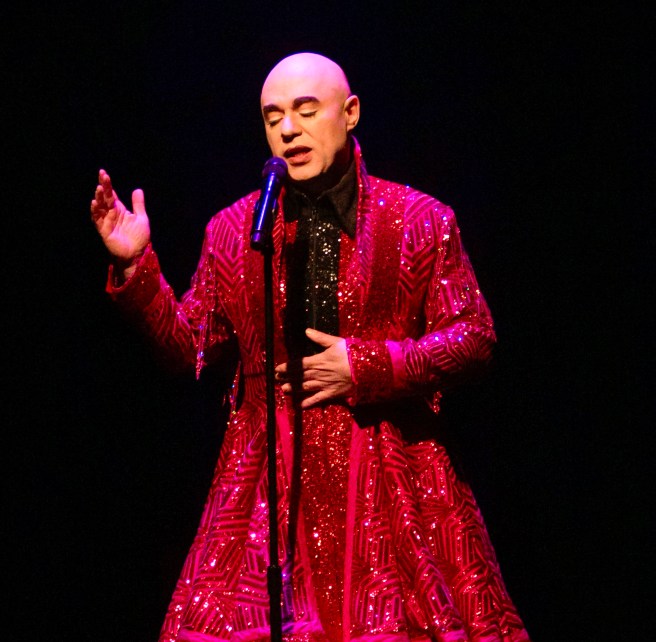
And it’s not over yet by a long stretch. A photographer who for more than two decades documented Nataniël’s career, Clinton Lubbe, who immigrated a few years back, is back in town for an exhibition of life-size Nataniël pictures titled Parade, another first for Aardklop. Their collaboration has also been running for more than two decades and Nataniël describes Clinton’s camera as a paintbrush, because of the way he creates pictures. They’re not simply pictures, they’re artworks, he notes. “I’m going to be the Naomi Campbell of Aardklop,” he says with a smile and a wink.
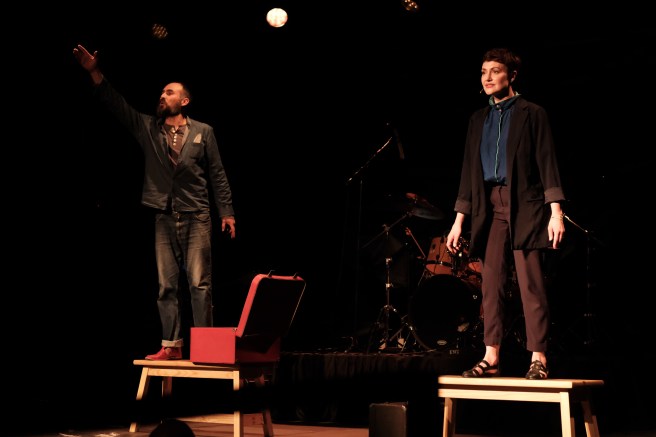
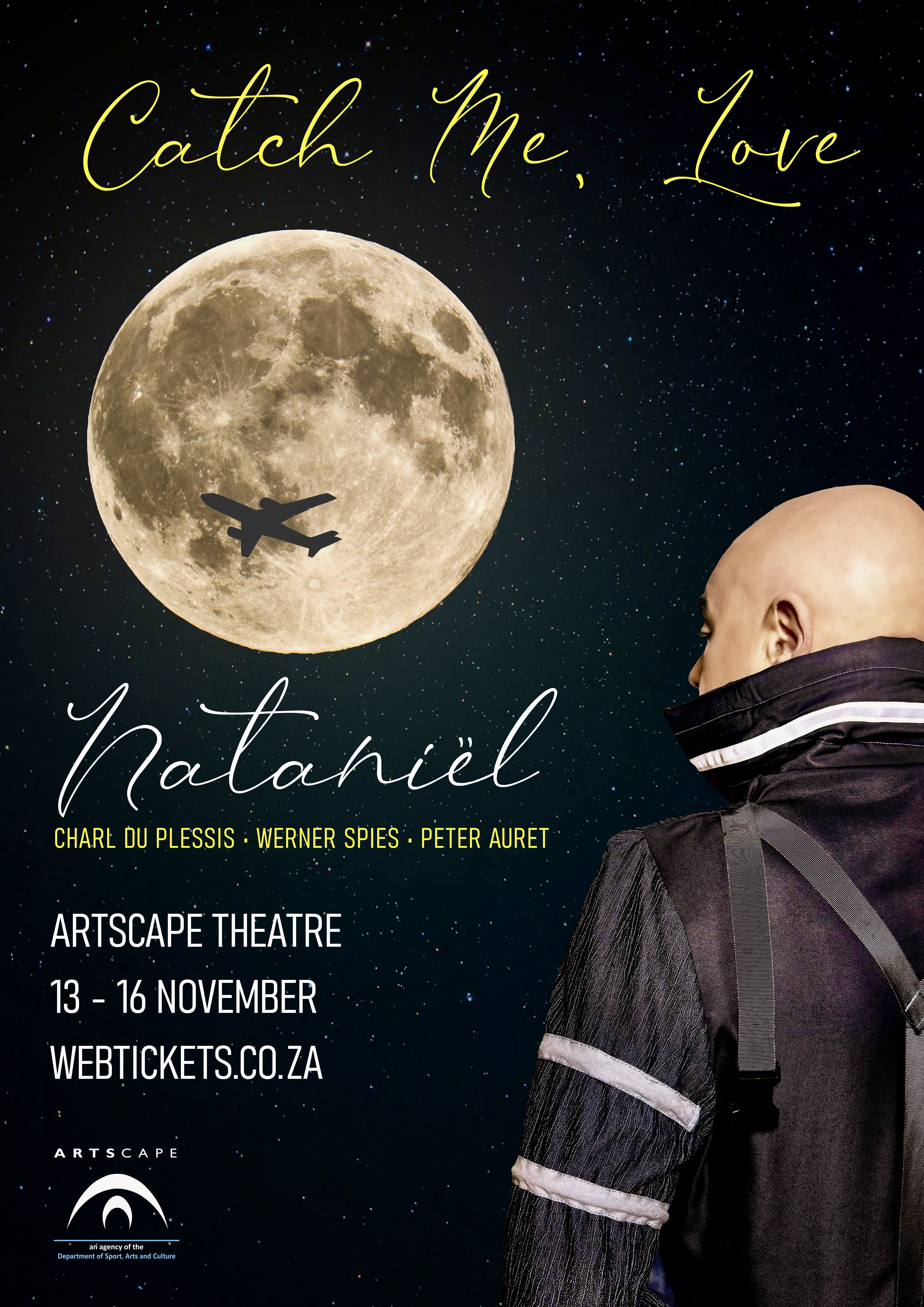
Finally, but just for the moment, there’s his latest production, Catch Me, Love, which will be staged at Artscape from November 13 to 16. He is already busy writing, which is unheard of. He usually works on his scripts much closer to his performance than a few months, but looking at his schedule, he knew he had to get ahead.

This one is going to be visually and structurally different to his former shows, he says. And although it is still early days, I know he has already dreamt and planned it in detail. It will only feature in Gauteng in the New Year because in-between there’s the promise of a French countryside holiday, his annual escape (when he can manage) to one of his favourite places, which is what motivates him these days.

Watch this space for fresh announcements or changes. They will be coming …

ANTJIE KROG, AN AUTHOR WHO SPEAKS HER MIND

When you have one writer in the family, I would imagine you feel blessed. Two? Perhaps not so much but someone who makes a meal of this is ANTJIE KROG who in her latest memoir writes about the relationship between her and her mother, the author Dot Serfontein. DIANE DE BEER started out reading the English version, followed that with the one in Krog’s home language and then listened to her talk about the book:

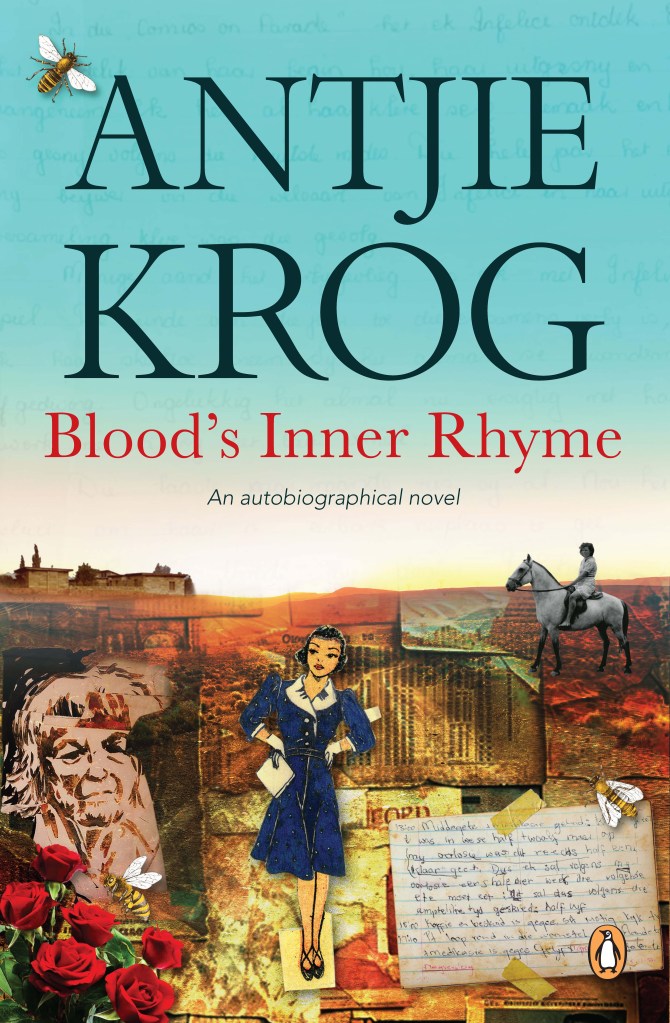
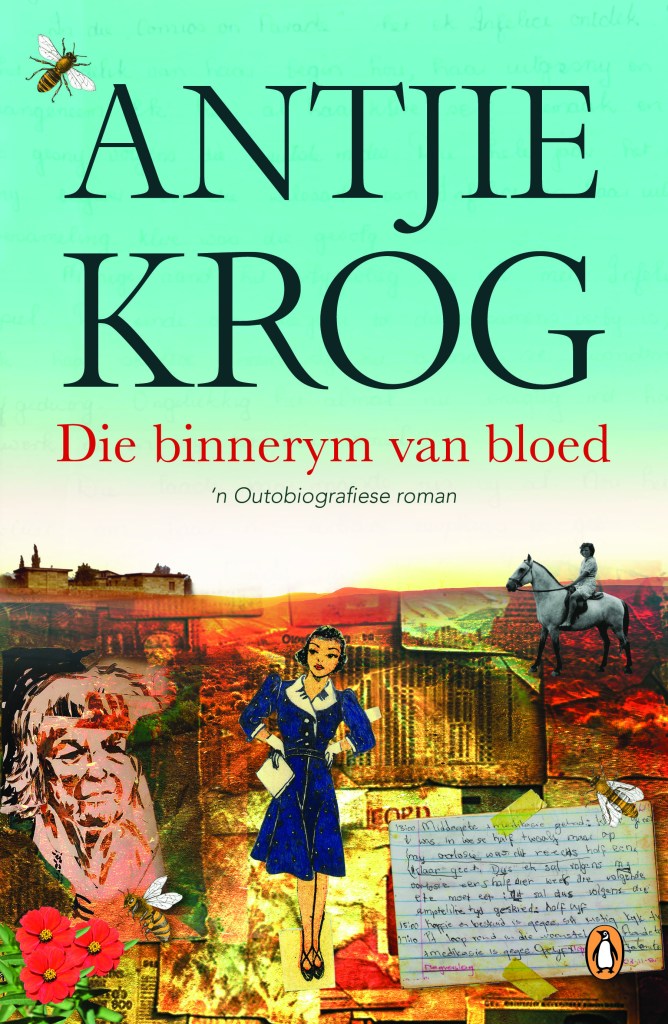
It’s a personal thing, I know, but if I can read a writer in her home language, I do. And again I was proved right with Antjie Krog’s latest offerings, Blood’s Inner Rhyme or the Afrikaans version Binnerym van die Bloed, which she describes as an autobiographical novel.

Because I write in English, I thought it might be easier to read that version, but after hearing her speak, I knew I had to get my hands on the Afrikaans book. It’s the way she Krog uses the Afrikaans language which enriches the reading.

If I didn’t have the option, I would have given the English a similar review, it’s simply that the Afrikaans introduces a different heartbeat.

Even in the best pairings, mothers and daughters have complicated relationships. When you are competing with one another even if that’s not the intention, which I’m sure it wasn’t, it’s going to be tough. Add to that two headstrong women who arguably stand on opposite sides of the political spectrum, expect fireworks – and that’s what you get.
Women all have mothers, that’s obvious, and some have their own daughters. All of us know the intricacies of that relationship – and that is when it isn’t public. Writing for an English newspaper, I wasn’t part of the Afrikaans writers’ circles and even I, not your natural gossip girl, heard rumours. And that’s where I admire Krog for doing this extraordinary book.

Antjie Krog, author extraordinaire.

Both of these women are celebrated writers who lived their lives in the spotlight. To then delve even more publicly into that life must have been an excruciating decision. And then to travel the country as one does to promote the book – what extraordinary courage. It reminds me that artists sometimes don’t have a choice, it has to come out. And usually it is the reader who benefits.

Thanks goodness Krog decided to write about this often fraught, sometimes fragile but also intense relationship. I can only guess that while sometimes devastating it must also have been therapeutic and the way to mourn and celebrate what she once had. Death has a way of shining a new light on something that was just too overwhelming to observe as it was happening.

For those of us ageing ourselves who have also shared a close relationship with a mother in her last years, it is especially meaningful. My eldest sister booked my parents into a retirement home which was on the way home from my work and I could pop in as often as possible without any inconvenience. I coped with the sometimes-daily trauma of witnessing this ageing process by communicating with a third sister who could only get the news via whatsapp or email. It was a lifesaver.

I could appreciate the daily diary of Krog’s mother’s most basic needs. That is in fact what happens when people age as we are forced to focus on the brutal minutiae of their lives. For example:

Night report:

20.00 Medication. Pt (patient) didn’t want to drink half a sleeping pill. Wanted a whole one

22.45 PT said her toes hurt. Applied Turlington + gave another half sleeping pill

00.30 Pt wanted another half sleeping pill. She was uncomfortable. She wanted to get up, I had to hold her by the sides. Pt wanted to make food. Pt was angry that the freezer had no meat.

These diaries were kept day and night – every day and night. It constantly reminds one of the process that is unfolding. As Krog tells it, focussing on her mother’s “excrement which happens daily is to own that which is being rejected, that which is such a part of her waning existence, her body’s extremities.” Krog who tells things exactly how they are explains: “There’s actually a very profound thing about shit,” she says as she captures the importance of change as life starts running out.

In full flow.

Yet there’s so much more happening around the family. It is an especially fraught time for farmers and for Dot Serfontein the family farm represents who she is. It was her inheritance. For Krog, even though she has similar bonds to the farm, she also knows and is burdened by the privilege it represents – something in this country that was often at the cost of someone else.

It is fascinating to read and witness the lives of different generations, especially in that time when everyone in the country knew things were going to change dramatically. She acknowledges that the relationship between mother and daughter is complex. In this family and between this mother and daughter perhaps even more than most.

While Krog is at pains to write about this sometimes combative relationship, it is also a celebration of Dot Serfontein, who she was and what she achieved with her writing. This is where and how Krog first discovered her words and both she and her readers have benefited.

There are so many stories captured in what can be described as a memoir. Having lived through the ageing process of my parents, that is what drew me to the writing. One learns so much about your own mortality, growing old gracefully and celebrating life whatever your age.

And thus her mother concludes only a couple of chapters into the book: “I keep all your letters,”  she writes to her daughter. “One day you can compile us in a plundered book like Audrey Blignault’s daughter. Initially I wondered whether the sudden revival of my oevre was thanks to you, but when I saw so many Dot Serfonteinisims in your work and some of our private family phantom(b)s, I thought we constitute each other.”

Having lived in each other’s shadow most of their lives, it couldn’t be any other way. That is what this astonishing writer captures so magnificently. Yes it is about a mother and daughter, but there is so much more. It’s insightful, entertaining, both sad and extremely funny, and even historical in many instances. But what captured my heart was Krog’s writing. She has a way with words that is unequaled.

A GREAT BEGINNING FOR 2025, THE KKNK FESTIVAL WAS A BRILLIANT SHOWCASE FOR THE ARTS

Diversity was the element that dominated this year’s fantastic KKNK Festival (in Oudtshoorn at the beginning of the month) – from the audiences to the artists, also including the plays and performances. DIANE DE BEER reports:

PICTURES: Hans van der Veen (unless otherwise stated.)

On one day you could see a solo show, a play with both words and movement, a translated modern classic and a new work that will outlast some of us watching.

Yet as is often the case at this festival, theatre was what really captured the imagination – and true to the diversity theme, it played out in many ways.

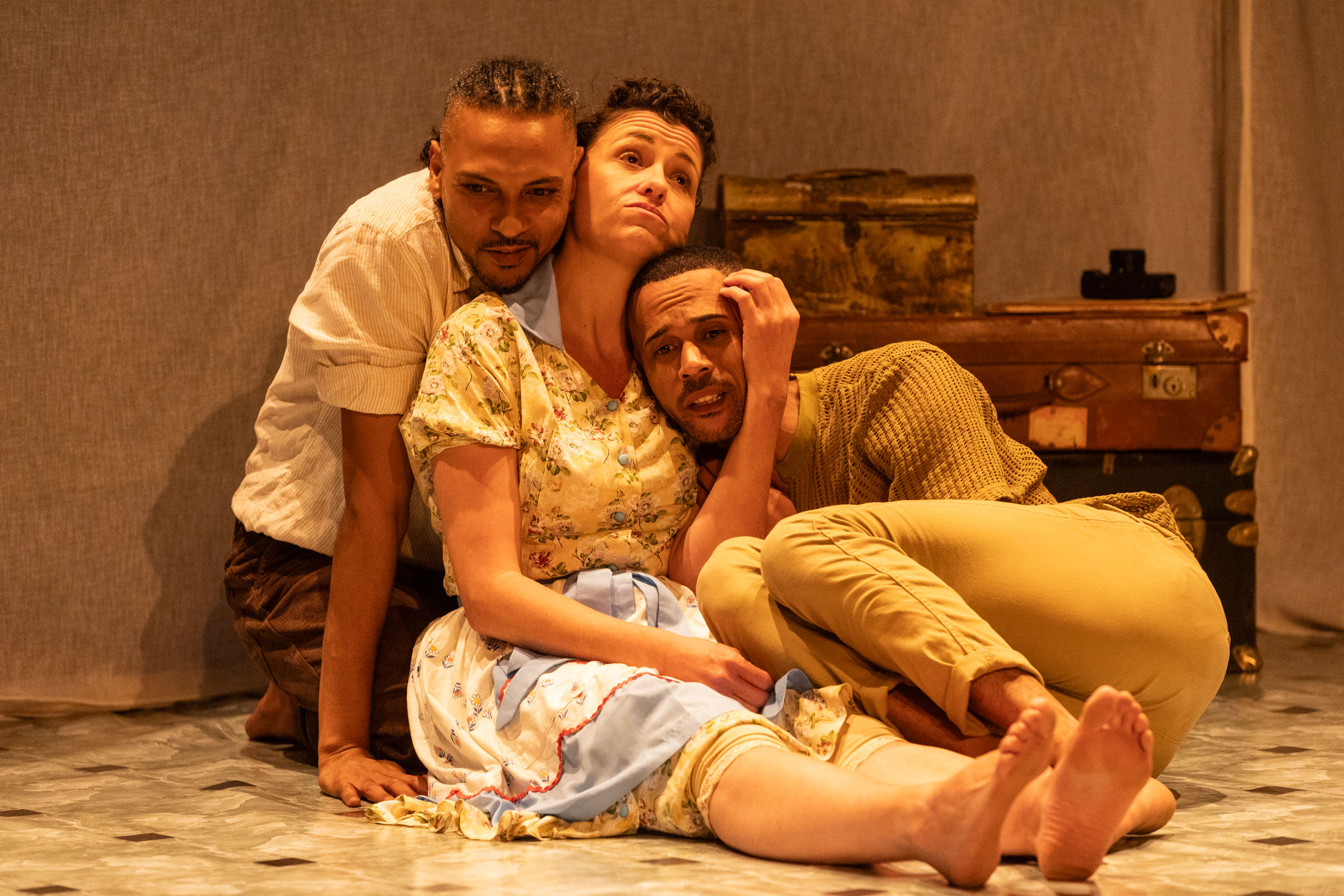
For me it started with a bang with a piece titled Die Een Wat Bly (which can also be seen at the upcoming Cape Town Suidooster) with a cast consisting of the two talented dancers from Figure of 8 Dance Theatre (Grant van Ster and Shaun Oelf) who in this instance combined their extraordinary movement with the insightful words of Wessel Pretorius who seems to deliver an endless stream of brilliance. And the third member of this inspired cast is Daneel van der Walt who is an actor who has emerged these past few years as someone to watch.

Everything seemed to combine beautifully, from the story, how it was written, the excellence of the casting and the way movement underlined and emphasized every emotion so magnificently. I couldn’t resist catching it a second time and it confirmed my initial instincts that all the elements just flowed together seamlessly to present perfect theatre. I could easily watch it again … and again… and again.

In a different guise, Pretorius performed in Yasmina Reza’s translated text Kuns (which had previously been performed by two of the actors, also directed by Marthinus Basson in the English version titled Art). Pretorius and Wilhelm van der Walt (part of the former cast) were joined by Ludwig Binge in a play that satirises the often achingly precious way people view and talk about art.

Because of the NOW, a time where an anti-wokeness and fake news seem to dominate everything, it worked even better than the first time I saw it and with these three adventurous actors (all three Basson graduates who have established exciting theatre careers), it was perfect for this festival which always celebrates.

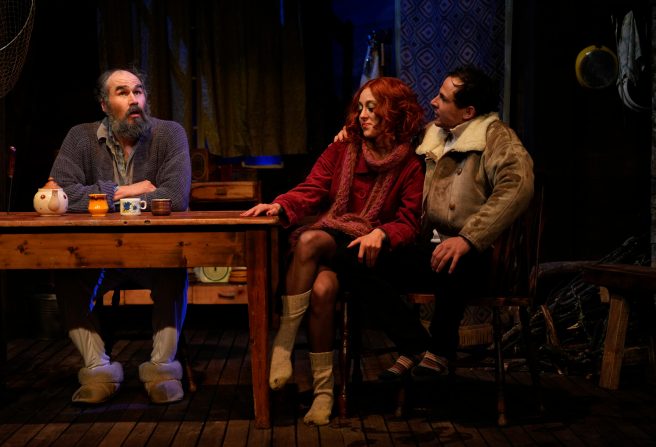
Basson also delighted with a play which has been on the circuit for a while, and I was thrilled to finally experience. Who would not be intrigued by a play titled Kruispad, of die legende van die goue vis.

Picture: Nardus Engelbrecht.

Again the casting blew me away with Eben Genis giving one of his finest performances in the role of the eccentric recluse Oswald whose life is rudely interrupted by two lost and rain-drenched youngsters played by two of the best, Edwin van der Walt and Carla Smith, with a glorious copper-coloured wig which completely changed her character without her having to say a word.

Because it plays with temptation and loyalty, it reminded me of the film Indecent Proposal in which Robert Redford offers to buy Demi Moore for a million dollars for the night.

Masterfully written and performed with great gusto you are never sure what is real or not, whether something is fact or fiction, and in fact when someone is being honest or not. It’s like trying to solve a puzzle that tortures and teases with a few disruptive detours that keep you slightly unbalanced as an audience.

There was so much more in the theatrical realm with solid performances in the Hennie van Greunen translated and directed Annie+Helen with Cintaine Schutte as Annie, the governess/teacher in the Hellen Keller story and Judi Hattingh as the severely damaged teenager who cannot see, hear or talk.

A mighty struggle ensues and from beginning to end, the two actors battle, and sometimes, bruise one another in a fight for something so much more than survival.

I have always been a huge fan when some of our younger directors (and he might take exception to that description) take on the classics, and I was excited to see Speelgoed van Glas translated, directed and designed by Nico Scheepers.

Casting was a further incentive with Annamart van der Merwe, Carla Smith, Ben Albertyn and Mark Elderkin on board, and was also alerted by all the awards they had already received, all of them thoroughly deserved. Van der Merwe’s bravura performance as the brittle mother is bruising as she embodies a woman who is desperately fighting to hold on to the only power available to her, that of motherhood (and in this instance also victimhood).

Her children, especially her son, have no such illusions and their confrontation reminds one of how a home which should be a protected space for a family can become a warzone which holds only fear and a frantic will of those threatened, to flee and find emotional freedom.

It’s devastating writing, smartly translated and, set in the present with a cast who have had the time to hone their craft and honour the play.

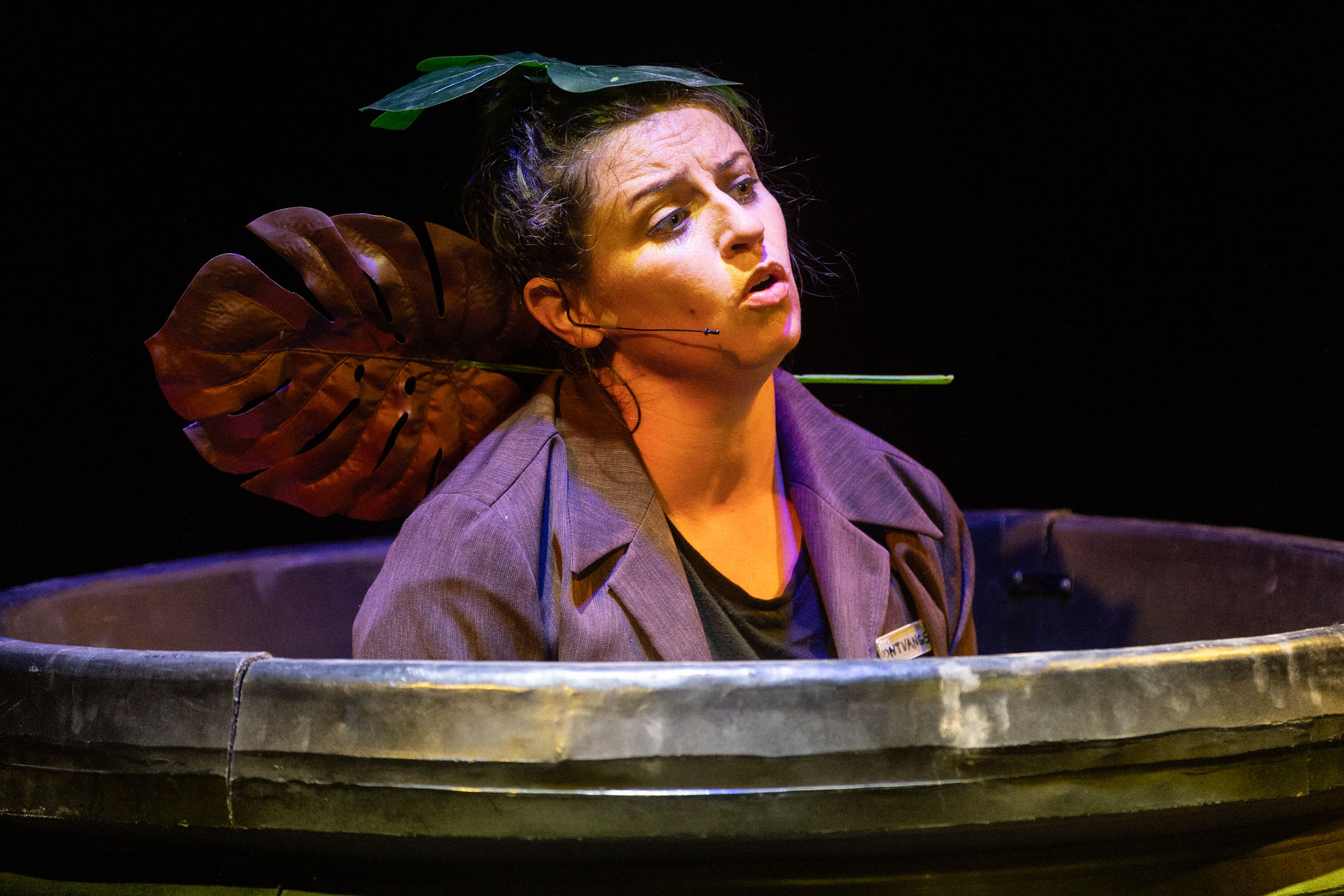
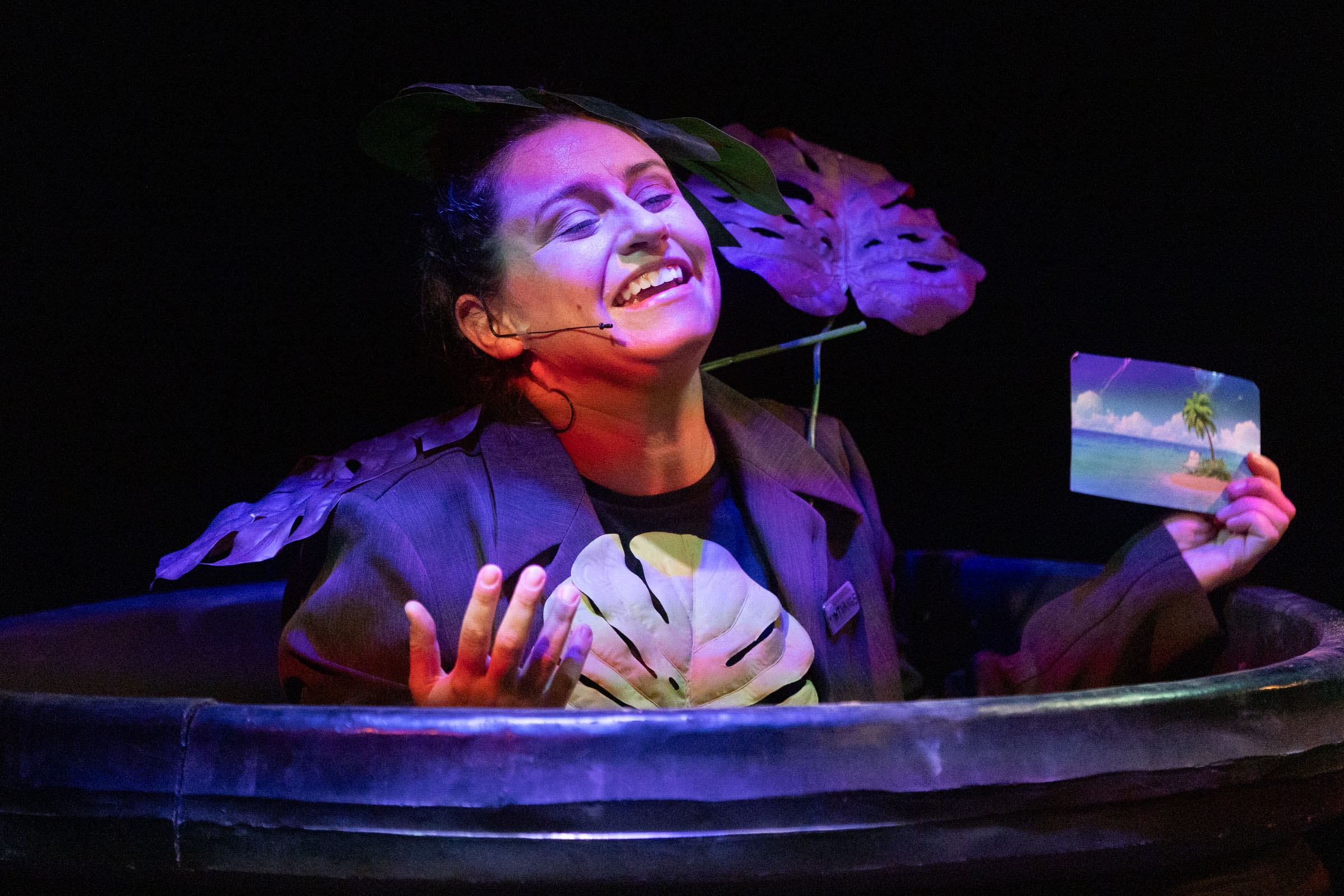
Also Die Potplant: ‘n Tragedie written and played by Karli Heine who changed what had previously been part of something now called Blitsteater into a longer piece had an interesting effect on me. It’s a wonderful idea with a script that’s inventive with underlying pathos – and yet, while it still had the impact and was cleverly stretched into a more comprehensive play, I think I preferred the shorter version.

It might have had something to do with the impact it had the first time round as well as having lost my heart to that version, I was more aware of the padding. Yet Heine is worth watching. She is someone that thinks out of the box as well as having the courage to take chances. You need all of that in this challenging profession.

Another joy at a festival is discovering new talent as well as witnessing the creativity of artists and how they find ways to explore their craft in a world with no boundaries yet many obstacles. Bibi Slippers, who can only be described as a compulsive creative did two shows as part of the Blitsteater (a bit like fast food, fast theatre), but there’s nothing fast about what she does with her imagination.

Picture: Stephanie M. Gericke.

I have always been fascinated by this young woman who has carved her own career in a very individual way. She pops up all over the show and her strengths lie in her words. She knows how to use them and has two spectacular poetry books that run like a thread through her performances.

Everything she does has thought behind it, is usually novel and it works. If anyone wants to see how to be an artist in today’s world and be in command of your own life, this is it.

In similar vein Sandi Dlangalala and Ilana Cilliers combined style and swagger to present an interlude of theatrical magic with Smak. The way they told the story in very little time with their whole being and soul was quite extraordinary.

A regular festival contributor, Llandi Beeslaar, who with her partner has been running a series of short performances by various artists, in the above mentioned Blitsteater, decided it was her turn to shine individually. She was ready to test herself as a comic with her first stand-up piece.

She participates in the arts in different ways, but this is a chance to use her own voice – and that she does with a particular style. Most importantly she has something to say and should keep going while honing her craft. There aren’t enough women in this space and the only thing she lacks is confidence.

Picture: Mia Truter.

A solo performance that stood out was that of singer/songwriter Frieda van den Heever.  I first noticed her as producer with a fine sensitivity as well as an imagination which seemed to be strongly independent.Picture

She has obviously decided it is her time and instead of producing others, she staged her own show. She’s got all the goods and probably if you start counting, has more talents than a triple threat. In this her first solo show (that I know of) at a festival, she did the performance as well as the production. She brought in Mauritz Lotz on guitar, but the rest was all done by this astonishing performer.

I’m more of a theatre girl than music, but she blew me away with her presentation, the way she put together her show, her music (on piano as well as singing and songwriting), her lyrics and her singing. I know I can find her album Ontspoor, onlineand that’s what I’ll do.

But to find new music so accessible and a performance that’s fresh, daring and quite darling. I’m a groupie. Once I checked her previous work (which I had seen, with her as producer rather than performer) I understood why I liked the show so much.

Karoo Kaarte is one of my favourite experiences every year at this festival. They pick their battles, how best to explore them and this year they joined forces with the District Six Museum and GALA queer archive and used the Kewpie: Daughter of District Six picture archive as a platform to develop this years’ experience.

It all culminated in a queer festival with a multi-disciplinary drama titled Kroon en Konfetti which incorporated three elements: Kewpie’s life and legacy as dancer and artist; the rich culture of Oudtshoorn’s beauty competitions called “models”; and 25 personal stories collected from Oudtshoorn’s queer community.

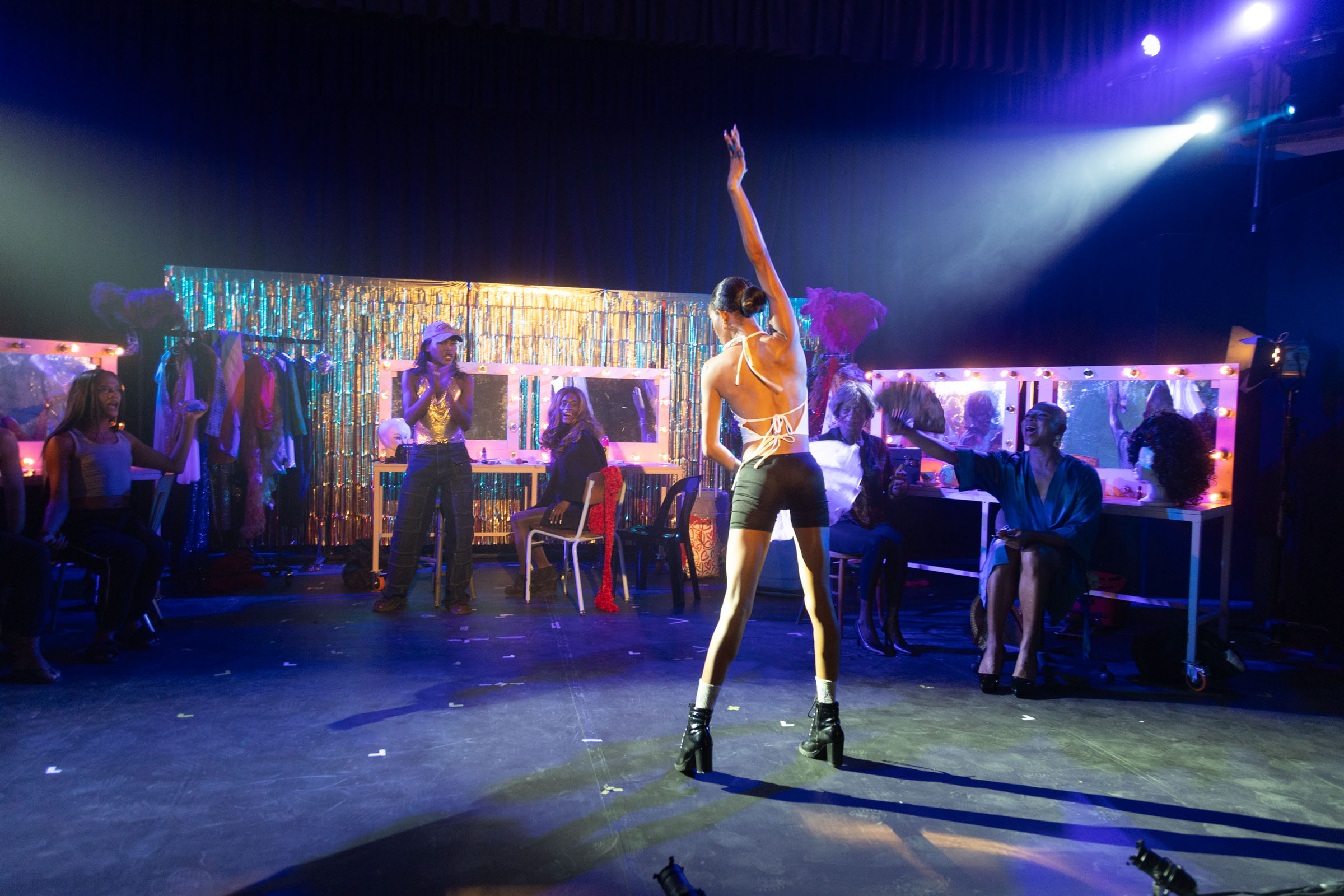
Dressed in all their finery, the “models” all gathered in a dressing room to start their show with the dialogue smart, sassy and with an edge. It was quite magnificent as are all the Karoo Kaarte productions and more than anything it’s the topics they choose to spotlight that’s so important.

Here is deals with a group of people who are already sidelined in a country where prejudice is still rife. With their queer status they are in search and hoping to find safe spaces in their community where they can celebrate their culture, yet behind all the glitz and glamour, the shadow of oppression is hard to ignore.

As always Neil Coppen, Vaughn Sadie and Tiffany Witbooi are the creative team responsible and my only regret – as happens every year – is that I couldn’t participate in all their offerings. It’s one of those projects that’s imaginative and innovative and even more importantly, they’re constantly working with elements that result in real change in a community that has always been neglected.

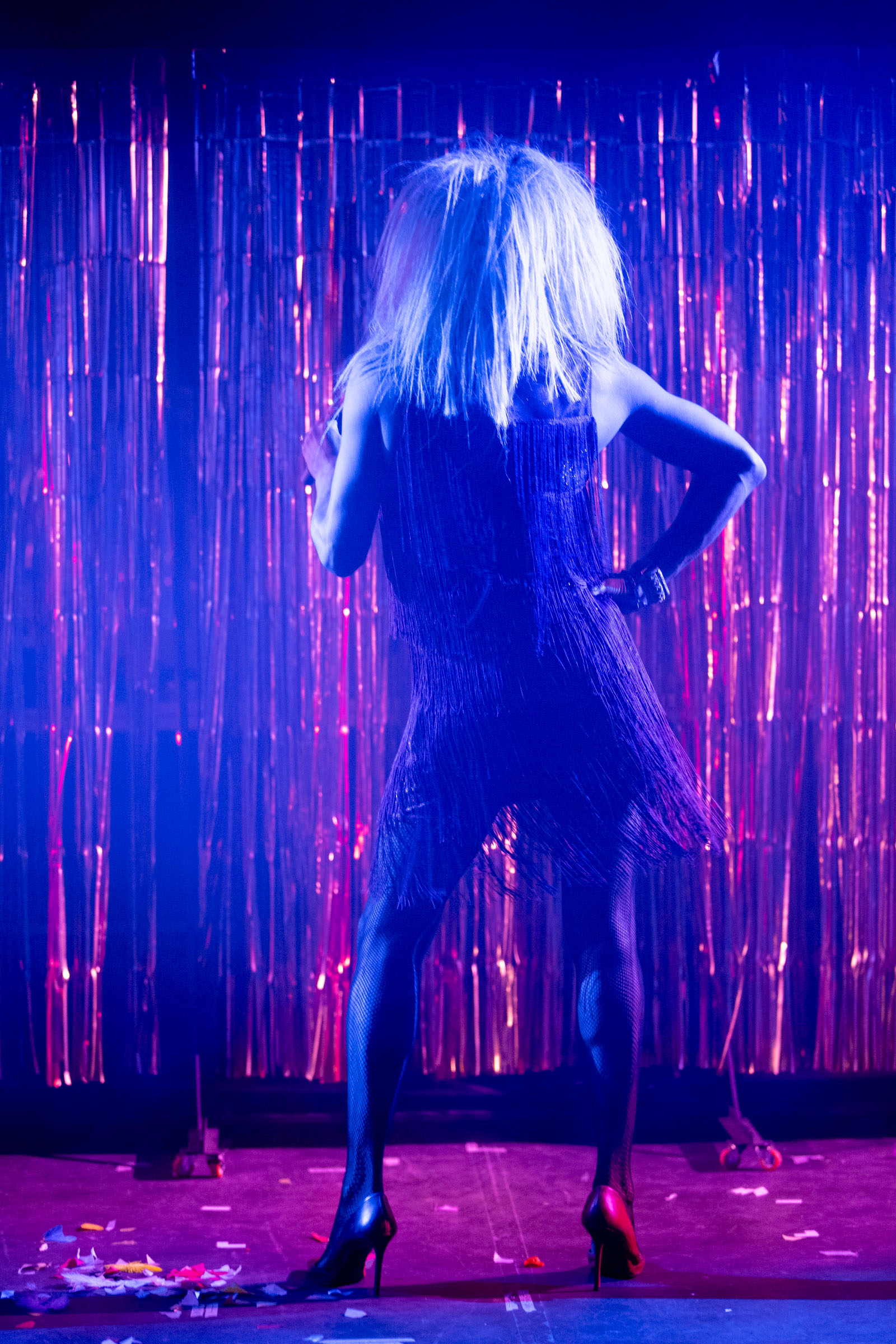
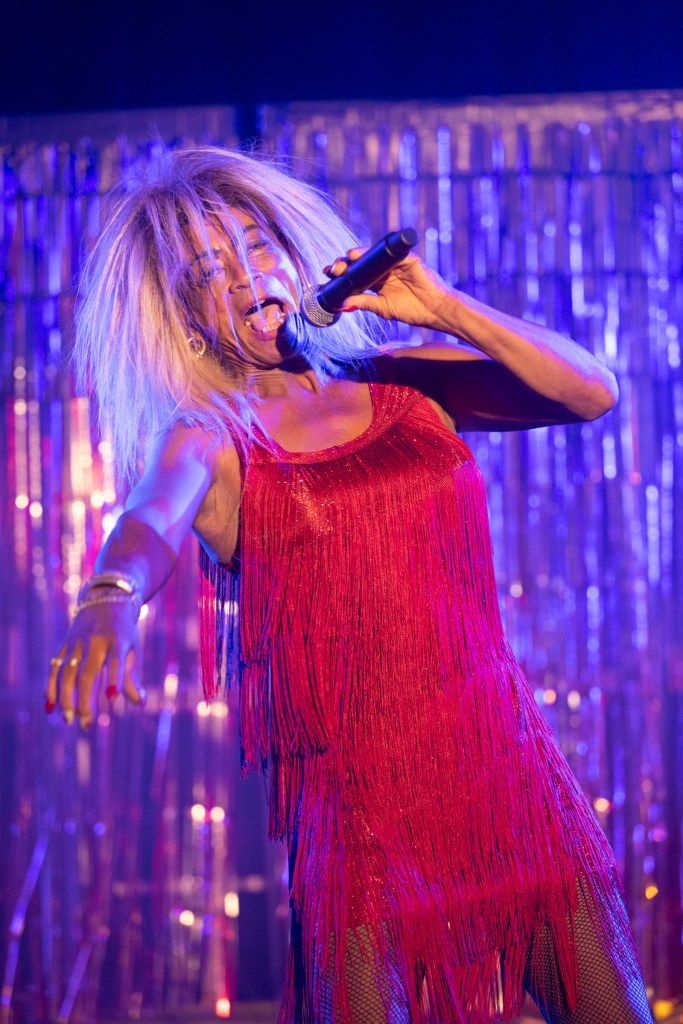
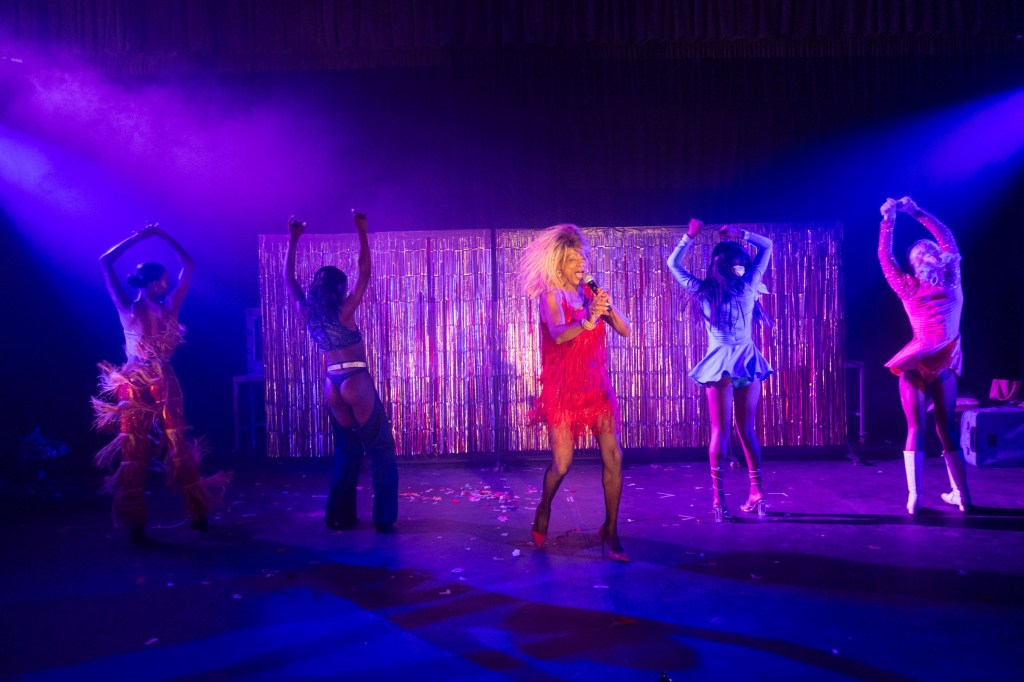
And then cleverly the festival ended with Nataniël and a company of 10 on the openair stage under the Oudtshoorn night skies. The elements aren’t his friends, but it was a glorious way to end the festival with a performance that showcased new voices and performers as well as the glorious artist himself with stories and songs that suited the occasion.

Tracy-Lee Oliver was the artist he chose to spotlight on the night, and she made full use of the occasion with spunk and singing that added spark to this final show. It was great to see someone step into the limelight with such poise. As usual, making sure he gave his audience all the hysterical stories and masterful songs they expected with his superb band and backup singers, he also paid it forward with this sassy introduction of new voices for this audience.

He first spotted her when she was a contestant on a television show he judged, and astute as he always is when it comes to producing for an occasion, this was where he decided to showcase her – for all the world to witness.

Rehearsal picture.

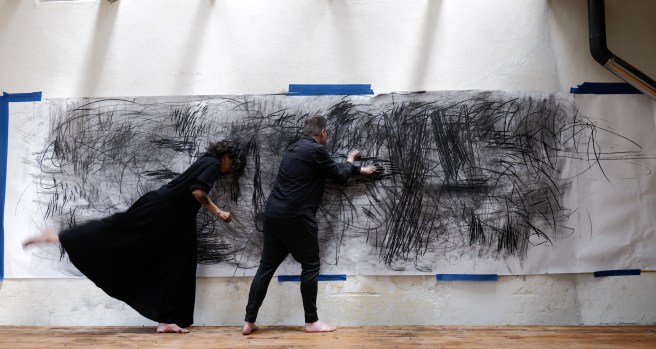
I haven’t even touched on the festival artist Henk Serfontein’s magnificent exhibition Die Stomme Aarde complimented by a performance piece by the artist and his collaborator Hannah Loewenthal as he made a painting to which she contributed while both of them participated in an expressive dance which further enhanced this particular emotional landscape of both the St Jude’s Church as well as the art displayed in this holy space .

It was the perfect example of how art and artists when working with an emotional intelligence can transport you in a way that seldomly happens in what has become quite a cranky world.

Similarly, Mareli Stolp, a pianist with a particular penchant for avant garde music invited animation artist Diek Grobler to illustrate her chosen compositions for a programme Die Gevlerktes. It was a stroke of genius.

The exquisite animation was imaginative in the way it enhanced the music and the listening experience which then also transformed into a visual feast.

I could go on, but this is simply one art lover’s experience …

See if you can catch any of these gems at other festivals and theatres in the year ahead.

THE MOST REWARDING ASPECT OF THE ANNUAL FIЁSTA ARTS AWARDS IS THE ACKNOWLEDGEMENT OF LOCAL ARTISTS IN DIFFERENT GENRES

Diane de Beer reports:

Pictures: Gys Loubser

Awards can mean nothing or EVERYTHING. It really depends on each individual  and perhaps the most important ingredient is to witness especially the individual artists when they get over their surprise, gather their thoughts and express their wonderment at receiving such accolades.

Rocco Pool (Best Design), Christian Olwagen, (Best Festival Production), Rolanda Marais, (Best Actress) all for Hedda Gabler.

Astonished yet astonishing actress Rolanda Marais perhaps captured the moment best when she reflected on the 17-year-old schoolgirl she had been and how she would have experienced this achievement.

It’s one of the most vulnerable yet vibrant careers to choose, as your whole life is always dependent on the vision of others. If a director selects you, if the play is one that shows you at your best, if the audiences come, if they like the play and the cast and the list is endless.

Aardklop Fiësta winners: Joshwin Dyson (Laaitie mettie biscuits for Best Upcoming Artist and Best Actor), Artistic Director Alexa Strachan, Conroy Cupido, (Best Achievement in Classical Music for Die groot Finalé) and Philip Rademeyer (Stinkhout for Best Text ).

And yet, time and again, the actors put themselves on the line and out there to hopefully change the world for some in the audience. They probably do it more than they give themselves credit for and I have often been in awe of what they manage to achieve with too many obstacles for anyone to deal with, let alone create magic.

The Fiëstas panel attended every debut production at seven arts festivals (KKNK, Suidoosterfees, Innibos, Vrystaat Kunstefees, Klein-Karoo Klassique, Momentum Beleggings Aardklop and Toyota Stellenbosch Woordfees) last year. Following an extensive voting process audited by auditors, the winners in 14 categories were determined and announced at the end of last month at a glamorous awards ceremony held at the Kirstenbosch National Botanical Garden in Cape Town.

kykNET also announced that the kykNET Fiëstas will have a new home. After 15 years of management by kykNET, the Tribuo Trust will now coordinate the Fiëstas, with kykNET taking on the role of naming sponsor.

“The decision was made so that the  kykNET Fiëstas can continue and flourish as a vibrant celebration of the arts in Afrikaans. kykNET remains the main sponsor and naming sponsor of the Fiëstas,” said Waldimar Pelser, M-Net Channel Director of Premium Channels.

“In discussions with the festival directors, kykNET emphasised that we will strengthen our support for the arts festivals in a way that we hope will also make the festivals more sustainable. We look forward to reimagining the new kykNET Fiëstas together with Tribuo and are excited about the road ahead.”

Karen Meiring, Executive Chairperson of Tribuo, said: “It is an important objective of Tribuo to invest in the future and the sustainability of the entertainment industry’s ecosystem. The kykNET Fiëstas seamlessly align with this goal as the awards recognise and celebrate excellent work. They also encourage crucial audience engagement and honour the people who carry the performing and creative arts. Tribuo looks forward to continuing this project together with kykNET, who remains the naming sponsor.”

The winners are:

BEST ACHIEVEMENT IN CLASSICAL MUSIC

Die groot finale (Momentum Beleggings Aardklop)

BEST CONTEMPORARY MUSIC PRODUCTION

kykNET-konsert (Innibos)

BEST MUSIC-DRIVEN THEATRE

Ontban (Suidoosterfees)

BEST ADAPTATION OR TRANSLATION OF A TEXT

Naòmi Morgan – Ons wag vir Godot (Vrystaat Kunstefees)

BEST NEW TEXT

Philip Rademeyer – Stinkhout (Momentum Beleggings Aardklop)

BEST ACHIEVEMENT IN VISUAL ARTS

Marlene Steyn – Between my i’s: tussen my oë (Toyota Stellenbosch Woordfees)

BEST ACHIEVEMENT IN DESIGN

Rocco Pool – Hedda Gabler (Toyota Stellenbosch Woordfees)

BEST ACTOR IN A SUPPORTING ROLE

Gerben Kamper – Ons wag vir Godot (Vrystaat Kunstefees)

BEST DIRECTION

Dion van Niekerk – Ons wag vir Godot (Vrystaat Kunstefees)

Joshwin Dyson (right) with his playwright/director Christo Davids

BEST UPCOMING ARTIST

Joshwin Dyson – Laaitie mettie biscuits (Momentum Beleggings Aardklop)

BEST ENSEMBLE

Hedda Gabler (Toyota Stellenbosch Woordfees)

BEST ACTOR

Joshwin Dyson – Laaitie mettie biscuits (Momentum Beleggings Aardklop)

BEST ACTRESS

Rolanda Marais – Hedda Gabler (Toyota Stellenbosch Woordfees)

BEST FESTIVAL PRODUCTION

Hedda Gabler (Toyota Stellenbosch Woordfees)

The winner of the Blou Fiësta, awarded for commendable work that does not fall into any of the other categories, is the Suidoosterfees project 21. In celebration of the festival’s 21st anniversary, 21 productions were staged, each lasting 21 minutes with a ticket price of R21.

Amanda Strydom and Frank Opperman were honoured for their contributions to the arts.

FIRST-TIME AUTHOR JULIETTE MNQETA CONFESSES THAT SHE LOVES WRITING AND TELLING STORIES

Juliette Mnqeta has dreamt about her debut novel and now that it is finally here, she’s hoping that this, a crime novel, will be the first of many more adventures. If The Dead Could Talk (published by Kwela)is impressive and DIANE DE BEER was keen to meet the writer who seems so comfortable in her author skin:

Playing the sleuth: first-time author Juliette Mnqeta (Picture: Sean Eyes)

“A WHITE PIECE OF PAPER IS A SAFE SPACE.”

Anyone who can say those  words must be confident because I haven’t heard many writers confess that.

First-time author Juliette Mnqeta also writes in her preface: ‘‘I believe I can … write.’’

When you start asking her questions, she’s quick to confide that she’s shy and doesn’t have too much self-belief.

Not too far into the story, I was thinking of Deon Meyer, so impressed was I by the storytelling. “Well, I am the youngest of nine children. I guess that’s why I have so much to say,” is her response. “I have always loved telling a story, which I think I got from my mother. She was a very emotive woman and could always retell events with a little bit of  her own  spice.’’

Juliette spent most of her childhood and teenage years in Wynberg and began writing once in her teens. She started with short stories and even tried her hand at writing poetry, but it never occurred to her to study anything that would help her with writing.  “I just love to write.”

She had no particular interest in crime novels and it only started when she realised most of the girls in her class would go for romance, so she opted for crime. “The first crime novel she ever read was in high school, a book by Ruth Rendell and that was for a school project.

Her interest was piqued when watching a few Agatha Christe adaptations on television. “I started reading her novels and haven’t stopped since,” she explains. “What draws me in is the puzzle of solving the crime.

“There’s a sense of justice and lightbulb moment when everything comes together, I enjoy that.”

And that’s exactly what she gives us with this her first venture into this world, resulting in her debut novel.

She’s still a young writer but her processes reflect her love of writing. “With my Facebook stories, I simply open the page and start typing to see where it leads,” she says.

It all falls in the realm of practice, practice, and more practice, long believed to be thé thing to do.

With If the Dead could Talk, she started with the full reveal. “I remember starting with the planning of the ending.”

She had her villain(s) first, their motives outlined and only then did she start working on her protagonists. She knew if she had her culprits, she could disguise that person amongst a few red herrings and suspects. “I then worked backwards, which was fun because I slowly discovered my protagonists’ personalities and fell in love with them.”

At the tender age of 19, she was told by her then employer that to be a writer, she would have to be exceptional, and he didn’t think she quite fit that criterion. But she always knew he said that without having read her work. When her mother died in 2018, she decided to start writing this current novel.

“My mother had always bragged to her friends that I could write, even though she had also never read my work. But when she was suddenly gone, I opened my laptop, and started mapping out my story.

“I already had my villain. I had my crime, and I had the reaction in mind that I wanted the audience to have when they figured out who this villain was.”

While writing had always come easily, this was different, even humbling, she says. She had the ideas, would turn them into words but, when read from a  reader’s point of view, suggestions would come her way as well as a few plot blunders. “I would have to come up with changes that would make it work,” she explains.

But she knew, listening to these early readers and taking suggestions from her editor were key to what got the book published.

I think she listened carefully. Right from the start I was excited by the book. I felt very early on that this was an exceptional voice and that feeling never dimmed from beginning to end.

If the ending was something of a bumpy ride, I’m not sure it wasn’t me as a reader who really enjoys the exhilaration of the build-up and often finds the roll-out something of an anti-climax or perhaps a mini let-down.

But here’s holding thumbs that she keeps writing and plays around with the crime genre for a little bit longer.

 I’m excited to see what her unique voice and perspective will come up with as she gains confidence and a following.

I suspect she’s something special.

“When I conceived of If The Dead Could Talk, the idea was that it would be a one shot only and I would give it my all. I can now see that I can try my hand at the crime genre again.

“When I read a cozy mystery, there is something exciting for me as a reader to try and work along with the detective or protagonist. I put together every clue and see how close I am to solving the crime. I want to offer other readers that feeling.”

Who as a first-time published author would not suffer – even if just a light touch of – imposter’s syndrome? But Juliette is learning to beat those battles.
 “I actually have a book published now! People will get to meet Azania. That’s exciting. It’s exhilarating knowing that I’ve introduced her to the world,” she concludes.  

“I love the fact that I can imagine. When I write, I genuinely feel that it’s fine to be me. It’s fine to be Juliette. On a piece of paper, I just run wild with characters, scenarios, dialogue and everything else I  can think of.

“Let me dream a little and say I can picture myself thinking up a bestseller one day. That’s the empowering element of an imagination. I can imagine just about anything.”

That would be my wish for this talented author. I for one would love to read her often in the future.


MAKE SURE YOU CAN FEND FOR YOURSELF IN THE KITCHEN IS INA PAARMAN’S MAGICAL MANTRA

Ina Paarman has been in the business for half a century and has been a competitive author in a genre that offers in abundance so you need to stand out and find your niche. She did all that and with her latest cookbook brings it all together. She shares some of the secrets of her success with DIANE DE BEER:

Success comes with consistency, says Ina Paarman who has established her reputation with just that. “You have to send out the same message all the time,” she says. Together with that you have to give practical culinary information and recipes backed by good, top quality, products.

Her food philosophy which probably grew through the years was that you have to be able to fend for yourself in the kitchen. “It is an essential life skill and the best way to stay healthy,” she advises.

And with a fast ageing population, this is her mantra, one that has never changed through the years. Instead it has grown stronger.

For those who have watched and heard stories through the years, teaching is her calling. “I love sharing knowledge. Information about skills and technique for example. I believe in removing the fear of food and at the same time the importance of understanding the essence of good nutrition.”

Fresh Pea Soup with Spinach Fish Cakes with Tartar Sauce

In the beginning and in her younger days, she was scared of famous dishes.; “I felt intimidated,” she confesses. But with some experience she learnt that it is best to be your own trendsetter and at the same time to pay attention to your customers. You have to understand and get to know their needs.

In her line of work, she was dealing with real people with families and friends to feed who love good food, food that men and children will enjoy. That’s quite a big ask, but because she was one of these women herself, she knew how to make it work.

In today’s world, less meat is the way to go if you take international trends into account and then you have to understand that everyone is battling with time. When it comes to preparing meals for a family, you are often dealing with people who have many different priorities and time is of the essence.

Branding in today’s world is huge and this is what Paarman understood from the earliest days. “The brand is part of who we are and what we as a family have always been intimately involved with.”

Venison Pie with Phyllo Roses

“Our lives are what we do every day. We do not have a heavy social life, and if we travel it always involves gathering ideas and knowledge. A good business is an extremely demanding taskmaster. But I won’t have it any other way.”

And it shows. Ina Paarman’s name has always been synonymous with quality and in the over-supplied world of cookbooks, you can’t afford not to get it right. There are just too many options and worldwide it has become BIG BUSINESS. Just watch the latest season of Masterchef and see what is happening in the food world. The quality of those young chefs is astounding.

Everyone who manages in a kitchen at some stage might think they have the knowledge for their own cookbook journey. Think carefully, as the specialist explains. “They must realise that success takes time and dedication. Just as you would give total dedication to raising a child, a business, to grow, demands time, attention and continuous re-investment of money.”

We should all know that nothing comes easily. Success has always meant hard work together with the luxury of talent which has been honed.

Talking to her about social media, she is still dubious about the benefits at all times. And that is probably most people’s feeling about this area of our lives which in many cases has become quite monstrous.

Even when we do understand how it has given many of us the ability to do what we do. “Social media is a great way to communicate directly with your customers,” she explains. “But you have to do it in an honest and credible way.” Again that sounds like experience talking. Everyone has had to find their own way.

Through the many decades, staying relevant has probably been her best tool. “Listening, listening and listening and then acting on what you observe,” is her solution.

In conclusion she celebrates the latest cookbook. “It has given us all a lot of pleasure she says. I worked with a talented team and photographer Nicky Hoyle. We took time doing the book (over a year) and worked with the seasons. Our garden was great inspiration and the team are the best in town!

“Beside we enjoyed some delicious meals and had exciting moments of creative stimulation and sharing ideas.”

She recommends the book as all the recipes are thorougly tested and will always work. How can that not work for those of us in our own kitchens? It’s exactly what you want.

She also includes that all the recipes are based on our South African culture with the availaibility of products extremely important. That and our style of eating.Homecooks will feel comfortable with the recipes, she adds. The print is large enough, the ingredients familiar and as a bonus, beautiful photographs. Finally, she says, “I felt the need to share a bit about my background to ‘set the scene’ for each chapter.”

Chicken and Olive Bake with Pitted Dates.

And if you need more encouragement.:

The book’s title, INA PAARMAN: MY FAVOURITE RECIPES, should seal the deal.

Their online shop has closed but the book is available from their factory shop in Diep Rivier, Cape Town or at certain Checkers and Exclusive Books brances.

Here is her favourite recipe in the book:

Ouma’s Karoo Lamb Pie:

This traditional recipe from my mother Nellie Jooste should be preserved for future generations. The aromatic pie always looks impressive and tastes and smells delicious. It can be prepared in advance and frozen with the uncooked pastry cover.

Main Dish:                                                                                 Sauce Condiments:

2 kg lamb on the bone (shoulder or knuckles)        1 t (5ml) ground coriander

Or a mixture of the two cut into 4cm pieces            2 cloves garlic, crushed

Ina Paarman’s Meat Spice                                                2,5ml  Ina Paarman Chilli and Garlic

2 cups (500ml) water                                                           seasoning

2 times 25g Ina Paarman Liquid Beef Stock                 2 t(10 ml) mustard powder

1 onion, chopped                                                                    2 t (10 ml) sugar

2 bay leaves and 5 cloves                                                     4 T (60 ml balsamic vinegar

Sour cream pastry if you have the book, or                    2 T (30ml) cornflour or potato flour

Bought all-butter puff pastry                                               mixed with a little cold water

Egg Wash:                                                                                Half an onion studded with 7 cloves

1 egg, a pinch of sugar and a pinch of salt

                                                                            Makes 1 to 2 pies.

METHOD

Adjust the oven rack to one slot below the middle position and preheat the oven to 160 degrees C

Season the lamb with Meat Spice. Place the water, the beef stock, onion, bay leaves and cloves into a large heavy-based cast iron pot with a lid. Add the seasoned lamb and cook the meat in the oven until  completely tender and starting to fall off the bone (approx. 2 and a half hours).

Spoon the meat out with a slotted spoon and let it cool a little. Remove the bones, excess fat, gristle and bay leaves, then flake the meat.

Fill up the stock remaining in the saucepan with water – you should have approx. one and a half cups. To that, add all the sauce condiment ingredients. Thicken it with cornflour or potato flour blended into a little water. Add the flaked meat and taste for seasoning.

Dish the meat mixture into a heat-resistant  pie dish of approx. 25 cm. Position the spiked onion half in the centre to prevent the pastry from sagging. Leave to cool down. Ideal to refrigerate overnight.

Cover the pie with pastry. Put an extra pastry strip on the rim of the pie dish, then cover the pie with pastry. Scallop  the edges. Glaze with egg wash ingredients beaten together. Turn the temperature up to 190 deg C. Bake for 45 minutes until golden brown. Cover with foil, shiny side up, for the final 15 minutes to prevent overbrowning of the pastry.WINE CHOICES: A wooded Chardonnay or Shiraz will complement the butteriness of the pastry.                

TWO FOODIES HAVE TIPTOED IN THE GARDEN FOR THEIR ADVENTURE INTO A PLANT-BASED DIET

Pictures from the book

Cookery books have always been popular but it’s not always easy to find a hook, that something that makes it special. For creatives Isabella Niehaus and Louis Janse van Vuuren it’s as much about the creativity as it is about the food. DIANE DE BEER spoke to this powerhouse duo a while back about There’s a Vegan on my Verandah (Also available as Daar’s ‘n Vegan op my Verandah):

Food is the common thread between these two friends –Isabella Niehaus (Bella to friends) and Louis Janse van Vuuren – and, to make this one special, they decided to go the vegan route.

It has to happen with the way the world is going, and those like myself who love everything plant based will welcome their imaginative ideas. With both of them innovative chefs who are used to cooking for multitudes, coming up with novel ideas and combining that with wonderful words seem to come easily.

The fresh ingredients are from the forest/kitchen garden at Le Rembuché in the French countryside where Louis and his partner Hardy Olivier lived. And with Bella’s legendary long tables at her Duinhuis on the West Coast (she recently moved), and Louis’s fantasy vegan meals presented at Café Vincent and Chateau la Creuzette, it made sense for them to combine their cuisine adventures.

The book which has been rewarded with prizes and praise makes sense because of their passions which are so similar. Both of them are visual creatives and everything they do comes from that perspective. Which in this instance naturally means that the emphasis is as much on the pictures as on the words.

Not that the latter is neglected. Stories are the way they communicate amongst themselves but also on paper, and because this is a self-published book, they could do with it what they wanted with their own wishes, the ones to be obeyed. And you can see that.

With both having lived in what must be some of the most beautiful regions to be found (the French countryside and Cape West Coast) how they present their cuisine and their conversations is impacted by the visual presentation – something that works particularly well in a cookbook. It is who they are and how they operate.

This visual emphasis also drives how and what they do with food. “We don’t like stylised cookbooks,” they agreed at one of the presentations they did on their countrywide tour last year.

Nostalgia and memories are also feelings that dominate the way they worked with what they were going to present. Bella only got cooking late in her life, she explains, and for her, the table is as important as the food she selects for the day.

She loves working with flour and enjoys the whole tactile thing about preparing food. Fortunately we are still a country that cooks and they are hoping that with their particular plant-based ethos, they will inspire a new approach and an easy way to embrace the future where vegetables and fruit will play a far bigger role than meat and fish.

For Louis it is all about the senses and as soon as he smells food, he also visualises how it will look on the plate. “It will finally look exactly like a painting,” says the artist. His food habits had to change to improve his health. “Once I let go of dairy, I simply felt so much better.”

But that also heightened the emphasis he gave to food, because he had to put more thought into it, especially in the early days. He also believes that as he grows older, the importance of each meal is heightened. “I want every meal to be a festive occasion,” he says.

To compile and write the book, make the recipes and take the pictures, Bella had to travel to France and with her small duct-taped suitcase, she took with her some spekboom leaves (there’s simply not an English equivalent) as well as some other South African delicacies she could squeeze in.

Fresh produce is another of their secret ingredients. If they have to eat bread, it should be freshly baked. And when you think of the French and the abundance of bakeries, it’s part of how they breathe.

But that is also much more common here than before, so there’s no excuse. And even for those of us who are gluten intolerant, it’s easy to make our own version of what represents bread.

Similarly with fresh products. It’s important to go into your garden if you have one, and pick fresh lemons for example.

Simplicity is also underlined in their choice of recipes. “If I’m eating pumpkin,” says Bella, “I want to taste the pumpkin.”

Louis has been a vegan for more than seven years, while Bella with the writing of the book was dipping her toe in the water. But what they aimed to do with the book was to show the importance of produce and how to turn a vegan lifestyle into something spectacular in an everyday kind of way.

They emphasise that this cookbook is as much about the conversations as the cuisine. “We are two creative beings who like to chatter on about our food memories,” says Louis. They were guided by what they had in hand, how to combine smartly and imaginatively, and how to come up with affordable, wholesome and even luxurious meals.

I have to admit, my love of dairy still keeps me from adopting the vegan lifestyle. But I really cherish the information from those who are already doing it so that I can acquire as many of the wholesome habits as possible.

And because much of my food at home is plant-based, to find some clever combinations from those who know how is something special. It is a beautiful book with many exquisite pictures and the recipes are unusual, evoking many memories from childhood and family meals.

It is also a fantastic book to add spice to your kitchen – and we all long for that. Hurry up, because there are rumours that they are starting with a second one.

AUTHOR ONKE MAZIBUKO, A MAN FOR ALL SEASONS

The second verse of any song has to be more killer than the first. Always. The rhythm has to slap. The lyrics must be on point. The feeling intense. And the impact mad-definitive. It’s just the way it is. In the same way, if you do well in life once in a life, then you always have to be better from that point onwards. No doubt.

Author Onke Mazibuko is the director of transformation, diversity and inclusion at Johannesburg’s Kingsmead College, he has two master degrees, one in psychology, the other in public health and is busy with a PhD in creative writing. As if all that isn’t daunting enough, he tells DIANE DE BEER about The Second Verse, (Penguin Random) as well as two more books on the horizon – as well as a few other passions in his life:

“Whenever people ask me what I do for a living or who am I, I always feel I’m going to shortchange myself because there’s no one box or title or definition that would do it all justice.

“For example, if I say to people I work in a school as a director of transformation diversity and inclusion, that doesn’t explain that I’m also a writer. And when I say that also, it doesn’t do justice to the fact that I’m also a psychologist, and when I do that, it doesn’t do justice to the fact that I’m also a cyclist.

“I also love cycling, and when I say that, it doesn’t do justice to the fact that I love hiking. And when I do that, it doesn’t do justice to the fact that I’m curious about Buddhism. I’m practising meditation, but I’m not necessarily a Buddhist.

“And then there’s the rapping, the music aspect of it.”

And then he concludes that it’s easiest to say: “I’m a person, I’m a spirit, I am someone who is highly creative and I love learning. There’s nothing I love more than self-expression and learning.”

Speaking is the delightful Onke Mazibuko, whom I was privileged to interview in front of a live audience at the recent Vrye Weekblad Book Festival at Cullinan. We hadn’t met before the event apart from a short introductory phone call, but his heartfelt coming-of-age, first novel, The Second Verse (Penguin Random House), told me something about Onke’s youth.

I felt quite strongly that he had experienced the same emotions as his main character Bokang at some stage and that he was a writer I would love to read more of in the future. When asked questions about himself, he easily pours his heart out and shows who he is – as much as is comfortable – but with great sincerity.

“ I also sometimes wonder how I got to where I am because I feel there are things that happened in my life that have taken me off the path. But when I look back, I realise, I’ve never really been off the path as such,” he explains. With so many accomplishments to his name, one wonders what drives him.

“Going back to when I was six years old, all I wanted to be was a cartoonist. I used to enjoy drawing and painting and I remember my parents used to laugh at me (my father was a doctor and my mother was a nurse), thinking that this was cute maybe, and as I got older, I wanted to be a doctor like my father, but when my parents separated when I was 12, I let go of that idea. When I entered high school, it was a difficult time because our financial circumstances had changed because of the separation.

“I went from private schools to government schools and even though there are very good government schools, it was a very big change in my life. We moved from KwaZulu-Natal where I had been in boarding school for eight years and suddenly we were in East London in the Eastern Cape and I was a day scholar.”

That is where the writing started – an emotional response, perhaps a coping mechanism in a life that might have felt as though it was disintegrating.

“I started writing a lot of poetry. Now years later, I’ve become aware that whenever I go through emotionally difficult times, I tend to turn to writing.”

This developed into an interest in learning to rap and taking part in hip-hop events when he attended the University of Cape Town. For the first time he saw his peers getting on stage and doing poetry and he challenged himself to learn to rap and get over his fear of talking in front of people. “I was very shy,” he explains. Getting on stage, enjoying the hip-hop scene, that’s where he forged an identity for himself.

He eventually dropped out of university because he had chosen a specific field for the wrong reasons. And while the hip-hop was going well, at the time, it wasn’t yet commercially viable. “I was not compromising and I felt that I wasn’t going to change my music just to fit into the industry standards.”

And he still takes that stance when making decisions. Something he questions in his writing is when others try to define him. The Second Verse has been branded as young adult, while he feels that, if he had anybody in mind, it was an older reader. “I wanted readers to reflect on their past, look back,” he says.

Leaving university, his life took what some might think of as a sharp left. He went to work for a bank. But this also allowed him to explore his creative side in many ways. He decided to return to his university studies but also kept up the writing. His office and the university were in close proximity and graffiti became another pastime to indulge his creative dreams.

“I would leave home at 7am in the morning dressed in working gear, walk 25 minutes to work. Opening accounts for people, talking to them about  home loans etc, doing all these professional things, and at approximately 4pm, would walk about 5 minutes and get to school and attend lectures until about 8 at night.”

Then he would walk home at nighttime, and his creativity would emerge again. He would have his spray cans handy and start tagging and doing throw-ups. Then to bed at about 10 so that he could wake up at 2 in the morning, go and graffiti train carriages and return home to get ready for work, where he would show up with fingers covered in paint.

People didn’t know what he was doing, but he was at work on time. In-between clients, when he got bored, he would write poetry and rap, which passed the time.

He always read a lot, and he remembers reading somewhere that if you are a reader, you are a writer under cover. “If I had to find an origin of when I started writing, I would take it as far back as when I started reading.” When he was at boarding school at the age of 5, “they would read us bedtime stories, and by the time I was in std 1, you had to have your own book.”

Books were always a part of his life. His father’s books were all around the house, in fact, he and his brother’s room was pretty much his father’s library. “We felt we were sleeping in his library rather than that his books were in our room.”

He didn’t do particularly well in writing at high school and this was him trying, so he left school thinking that he couldn’t write, didn’t think it was something special. His sister (who sadly died a few years ago) always played a special mentoring role. She was a lecturer where he was studying and would give him feedback about what his lecturers were saying.

He was in the psychology department and she was in the sociology department, and she would tell him how proud she was of him because the lecturers were always saying how well he wrote.

But it wasn’t until he got to his honours degrees, when they started telling him he could write well. During his psychology studies, he was having emotional struggles and had read that journalling could help him. He has  been doing that since 2008 and hardly ever skips his daily journalling. For him it is not about the content but about the practice of making time to be with himself.

The first time he really attempted to write a story, he was 35 years old and was doing a PhD in psychology. He was having problems and again writing became his safe place. In the process, he realised how much he was enjoying the writing.

He also started volunteering at youth-centred NGO’s, while writing another novel which deals with young people. He’s continued seeing clients, not a lot, but he loves the therapy. He also does palm reading, astrology and tarot. When spending time in libraries at 19 after dropping out, he discovered books on astrology, and just read and read.

This side of his career developed organically and he knows now that when he felt his life was falling apart, he was actually gathering knowledge and strength for the future. “Things come around; what I learnt to do at a young age has become part of my life.”

When he isn’t writing, he falls apart. He does a lot of writing exercises, which keeps him healthy and focussed on a routine. Research methods, life experience, everything comes into play.

Mentoring plays a large role in his life. Once he starts talking about the youngsters he mentors, the stories just pour out. Often their stories remind him of his own journey. He is also someone who received scholarships and travel grants –  once you’ve received these kind of gifts, you want to do the same for other people.

It was one of his mentees, a young man who had never read a novel and was sent one of the early drafts of The Second Verse, whose response and determination to keep reading, proved to Onke that while he didn’t view his book as great literature, he has the ability to capture emotions. It’s not about the words (in other words), it’s about the storytelling capability.

He was humbled when he received the South African Literary Award for Youth Literature, which confirmed to him that this is the kind of story he should write.

The book was influenced by Catcher in the Rye which at first he hated, but when he read again after dropping out at varsity, he experienced it very differently. Once he realised he was writing a coming-of-age story, he tapped into the most difficult four years of his life –  high school. He was discriminated against by both white and Black kids and always made to feel different, creating a yearning to fit in.

His two latest books are a story of two brothers whose sister died and, one he is writing for his PhD in creative writing that follows his years at Transnet and deals with a whistleblower who discovers corruption in a state-owned company. It can’t come too soon.