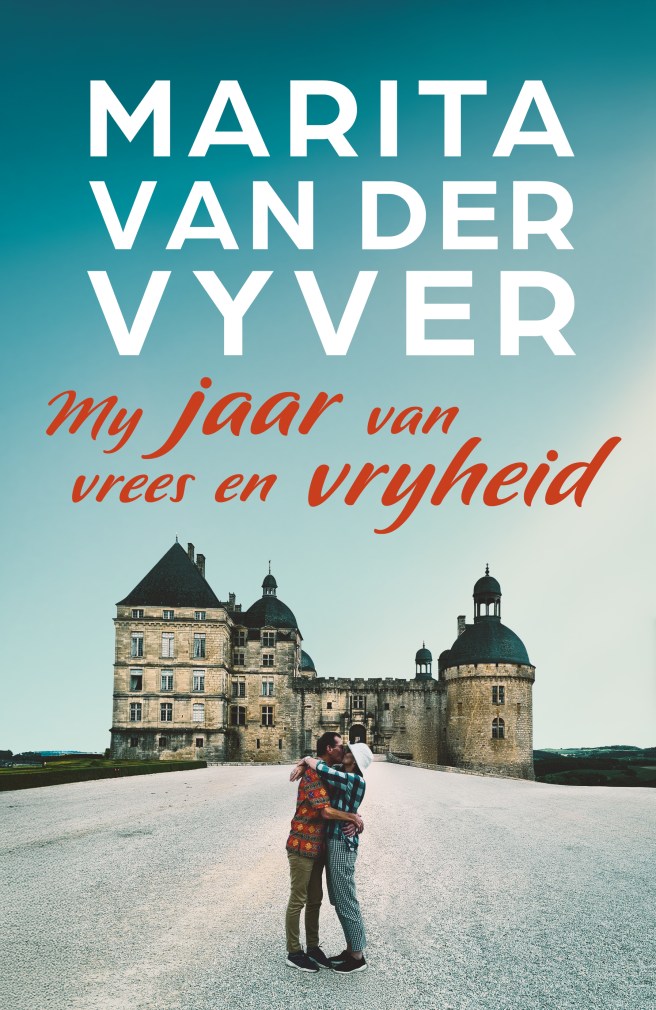
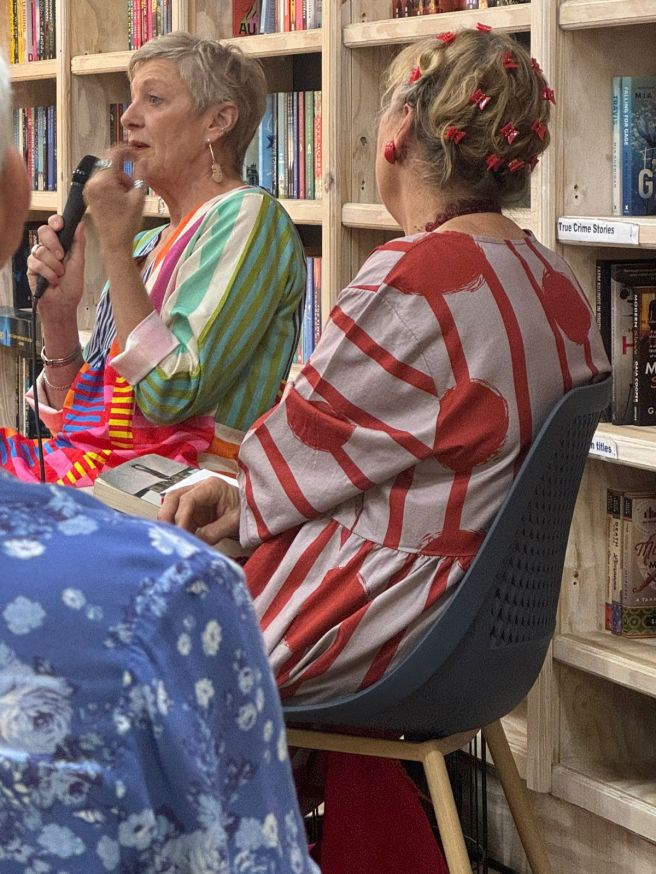
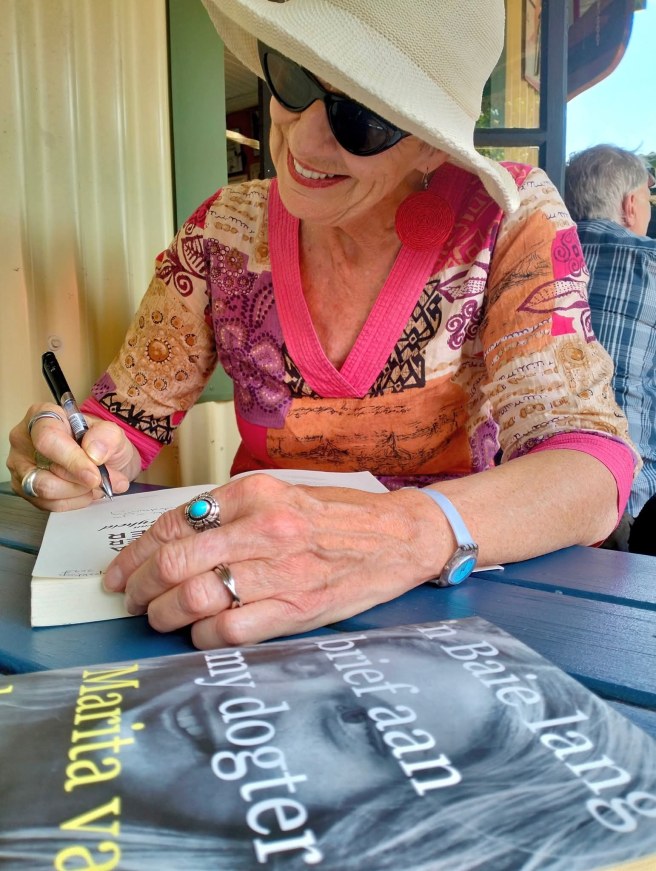
Author Marita van der Vyver who has been living in France for most of her adult life recently returned to her home country to promote her latest book My Jaar van Vrees en Vryheid (My Year of Fear and Freedom), and hopefully the Afrikaans version will be translated soon. DIANE DE BEER interviewed her with a live audience:
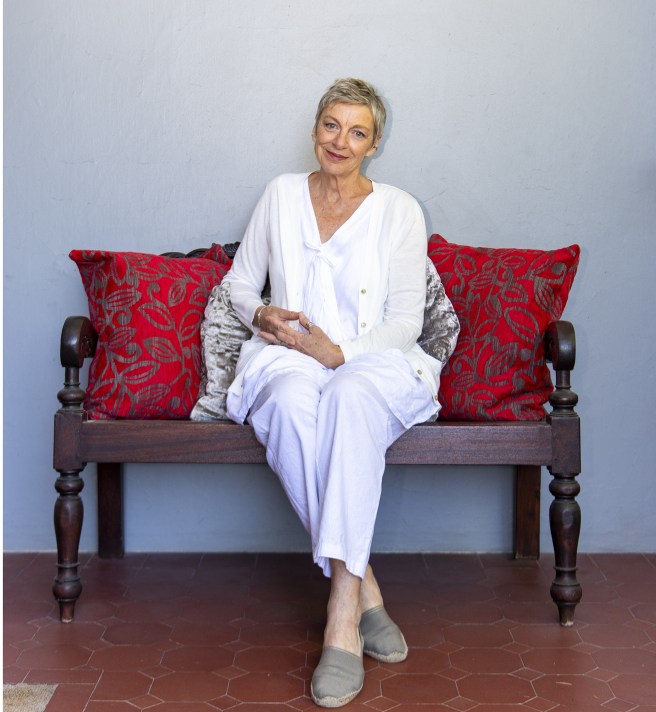
Marita van der Vyver, Picture: Jaco Marais.
“I think if you lose your language, it’s because you want to lose it,” says Marita in response to my remarking on her excellent Afrikaans after so many years spent living in France. “Your language will always be part of you,” she admonishes.
And that’s the thing about this author, she’s been around and done many of these travelling book tours, which though a welcome financial opportunity, can probably be exhausting. Having done many of these as the enquiring journalist, my empathy always remains with the authors, but I also enjoy these conversations because they’re usually keen to promote their writing.
I was delighted when I realized the book I was sent by the publishers was a memoir rather than fiction. Either would have been fine, but I was looking forward to reading about her travels.
When she and husband Alain decided to embark on this extraordinary journey, many things were in play. “I didn’t know whether the marriage would still be intact following this adventure,” she admitted.
And at the start of their expedition, a book wasn’t on her mind. As a writer she always takes notes and to generate an income she wrote for Litnet, Daily Maverick, Sarie as well as Vrye Weekblad, which was still publishing at the time of the journey.
She never stopped capturing moments along the route. Back home there was a sigh of relief because the marriage had stood the test; in fact, their relationship was stronger than before.
That was what turned her head to a book. In the first chapter she explains the reasons for the journey, which was the result of the confluence of many incidents. Writers, she tells us, always live things twice. “You live it in the moment, but then you’re always standing back and observing, living it a second time when you write about the experience. Only then do you know what you truly felt about it.”
“Once I was writing, I could really understand what I had experienced,” she explains. She admits to being very honest and once you read the book, you will understand and agree.
Initially she was going to write a travelogue, but regular first readers (honest friends), encouraged her to delve more deeply into their lives. This wasn’t an easy time and without her husband’s permission, she would never have drawn back the curtains so sharply, revealing much more than many would care to share.
This is also what makes this such a fascinating read. Wherever you are in your life’s journey, relationships play out in many different ways, but there are always incidents that will remind readers of their own lives. That and because Alain wasn’t only a willing participant but also the comic relief (“he’s funny naturally,” says his wife).
Travelling, as we all know, can be huge fun, but it’s also hard work and often extremely trying to make your way in foreign lands.
When writing, Marita is always very protective of her family. Yet writing a memoir depends on the author opening up, making themselves vulnerable. But her husband easily agreed and their relationship and togetherness contribute warmly to the enjoyment of their journey.
Yet, it also meant that she had to share the details about her husband’s depression and addiction. During Covid, as for so many freelancers, her income evaporated. Being an Afrikaans writer who is trying to make a living in Europe includes many different jobs. She has to do functions, writing schools, talks to various groups and more. All of this was impossible due to the pandemic.
Together with the reappearance of Alain’s depression, her world collapsed. Depression and addiction often go hand in hand, but both of these had been under control, until it wasn’t. “There were none of the usual aids, including psychologists or AA meetings, everything was cancelled. His regular psychiatrist had to turn to the physical needs of those struggling rather than mental health issues.”
Suddenly their needs changed drastically, and she thought of something written by James Baldwin in Giovanni’s Room: “Perhaps home is not a place but simply an irrevocable condition.”
That and the way the couple adapted to their year-long journey is what is so deftly and delightfully sketched by Marita, who made all the right decisions to turn this into so much more than simply traveling from one country to the next, and from one continent to another.
Isn’t that just the dream of many people? And yet it always sounds more romantic and achievable than it is. But here Marita and her Frenchman show how it can be done, even with all the odds against you.
And perhaps even more than the travels – and I truly enjoyed and relished every little byway and highway – it’s about two individuals who might be at the end of their time together, trying to give it one more chance.
Who can resist? Marita is a writer who knows how to tell stories and with this one she instinctively realized what had to be done. The fact that Alain agreed to everything tells me much more about their marriage than any book could. How could they not survive?
Because of the originality of the book, I am hoping and holding thumbs that it will be translated for a much wider audience. Not only will it inform you about the way to approach something of this magnitude, but it also proves when two people are meant to be together, their happiness has a much bigger chance of survival.
And what could be a better panacea than going off on a madcap adventure crisscrossing the world. After all, as one of her other favourite quotes by the Egyptian Naguib Mahfouz remind us: “Home is not where you are born, home is where all your attempts to escape cease.”
Photographers:Christo Niemandt: @christojniemandt_ @kinomotiontoys (both instagram) (pictures of final work) and Nolan Lister (pictures of artists)
Internationally acclaimed local sculptor Angus Taylor was recently invited to create part of a gift which the South African government wanted to present to the world leaders attending the G20 summit, held in Johannesburg last month. He tells Diane de Beer about the creative endeavour:
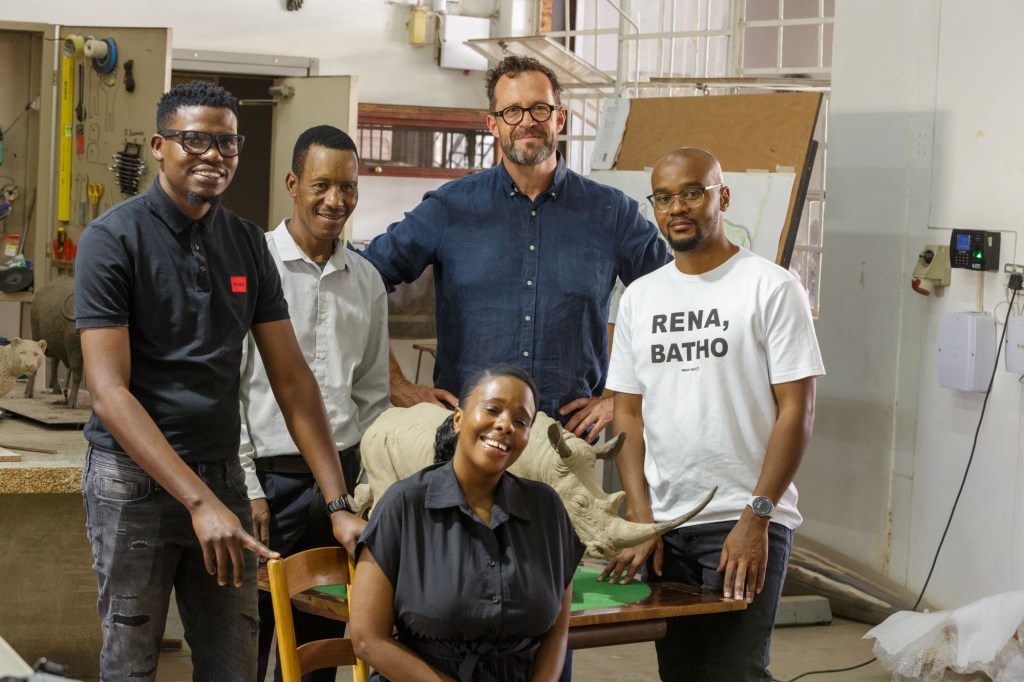
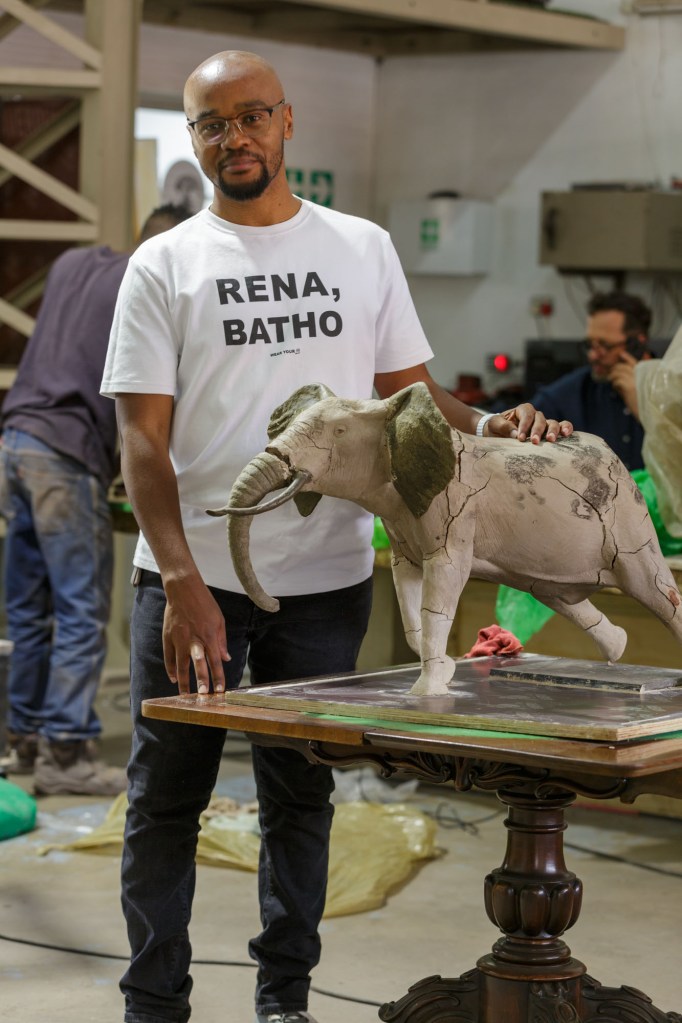
Back from left: Theophelus Rikhotso, Victor Nkuna, Angus Taylor and Malose Pete; Front: Dikeledi Maponya
When Anande Nöthling from the South African Government recently contacted sculptor Angus Taylor and asked if he would make one of the five gifts representing the big five for the G20, he was keen to know who the other participating artists would be.
“It’s important with whom you associate creatively and whether we would all be compatible,” he says. “She said she would still find the people.” He then suggested that, instead of her looking for artists, he would find a group whose work would complement each other.
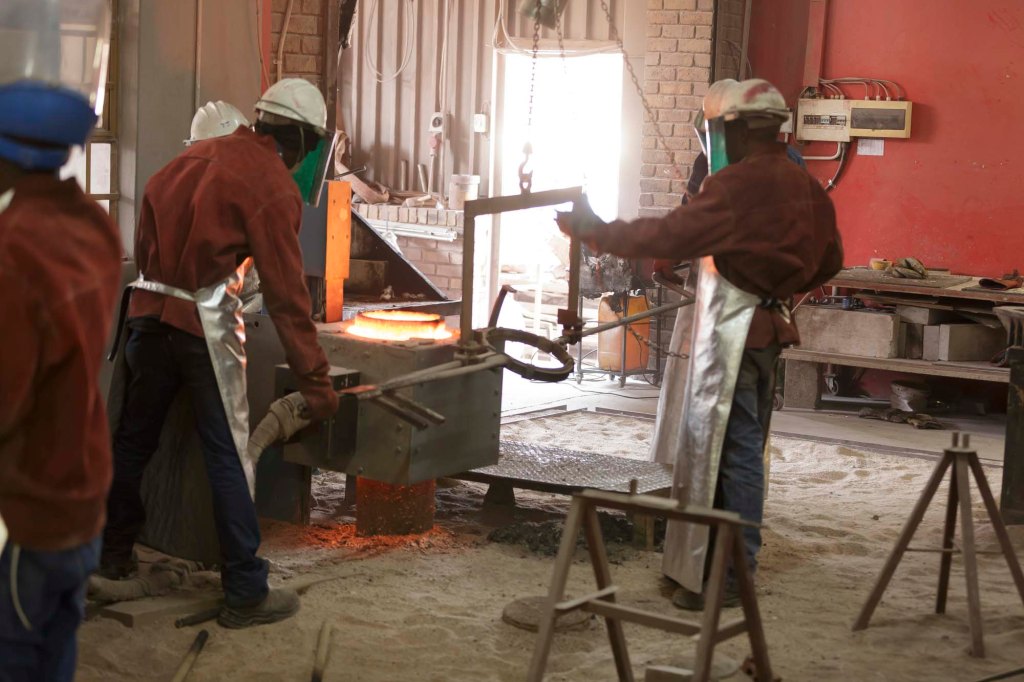
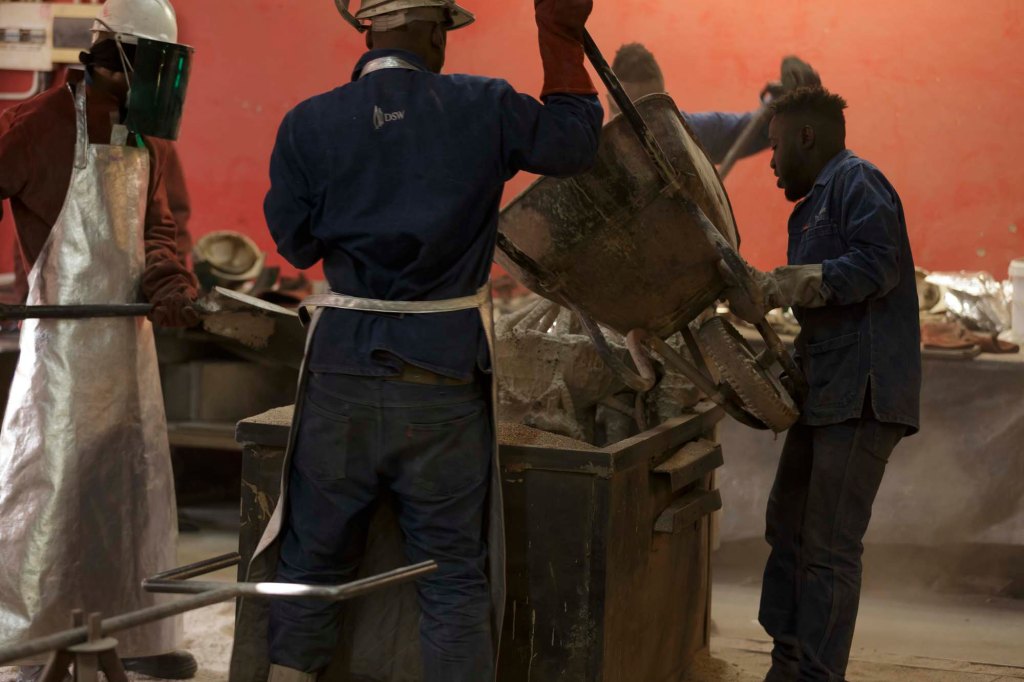
Artists at work in the Dionysus Sculpture Works (DSW).
They wanted previously disadvantaged people who would benefit from his experience, as well as from the project and exposure. “I decided to opt for three younger artists, two from the Tshwane University of Technology and one from Durban, as well as a self-taught older artist, Victor Nkuna.”Artists at work
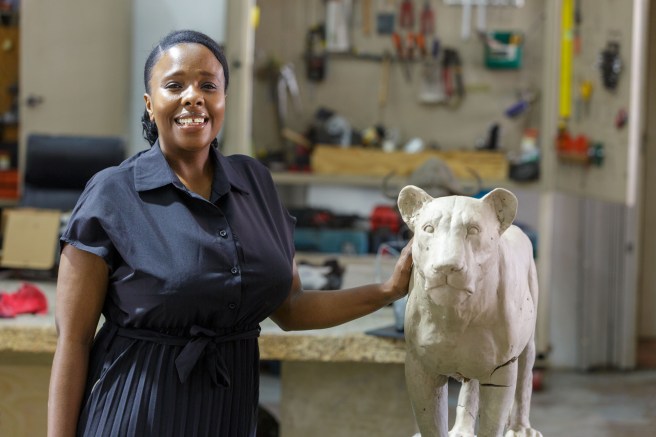
Dikeledi Maponya and her lion.
He was relieved and delighted that each of the artists chose a different animal, which meant there was no conflict. At worst, they could all have gone for an elephant, which meant they might have had to draw straws.
They decided to start big and then revert to the smaller sculpture, a method he has perfected in his own practice. “When you work larger and you reduce it to its pure essence, your big mistakes become little mistakes which can more easily be reworked and corrected.
“It means that you work larger, scan it and then print these sculptures smaller. That is then transferred back to clay because the surface needs to be activated by human hands to give it life – in my opinion.
“If it is a full-on digital process, it dies in a certain way. It’s as though the surface is lifeless, like making a photostat of a photograph of somebody,” he says.
“The smaller, reduced to scale and transferred to clay sculpture is then built into an environment so that each animal stands in a little piece of landscape.”
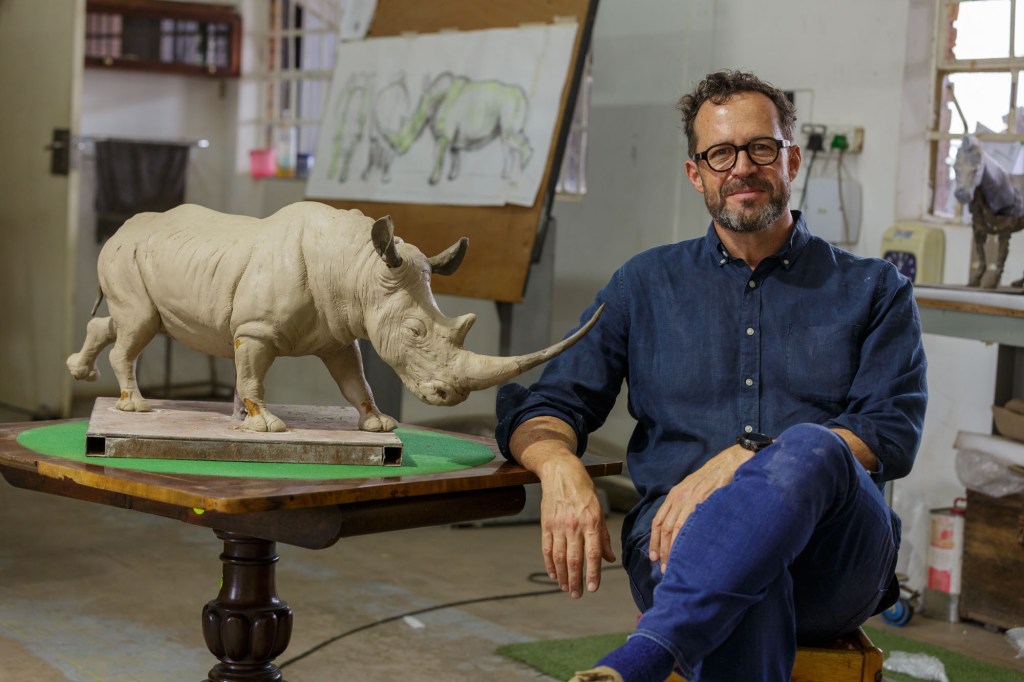
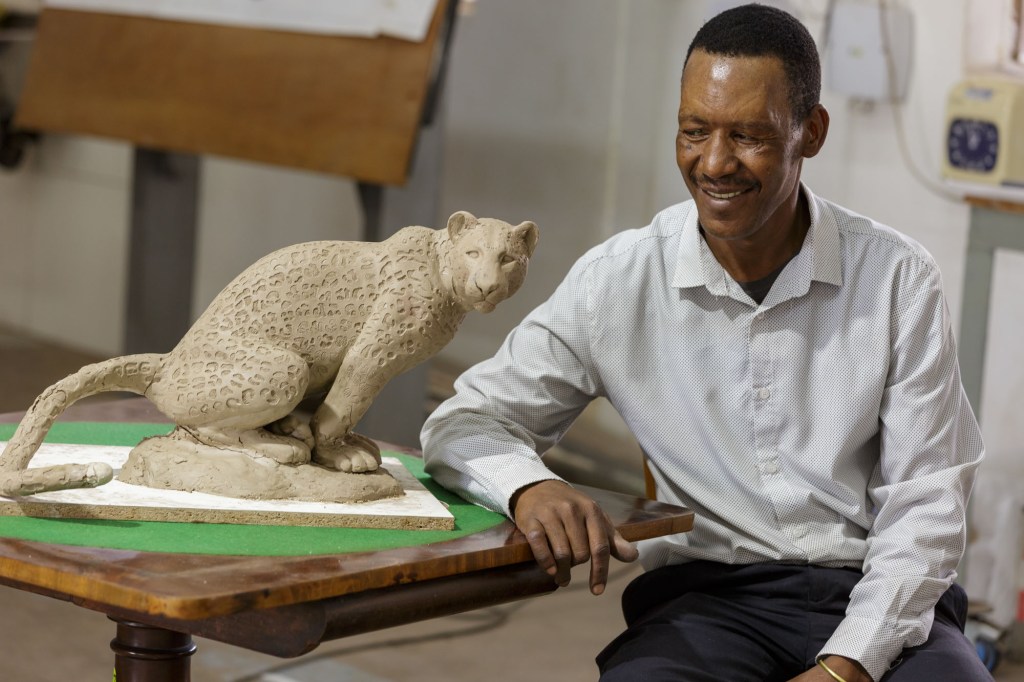
Angus Taylor with his rhino.Victor Nkuna with his leopard.
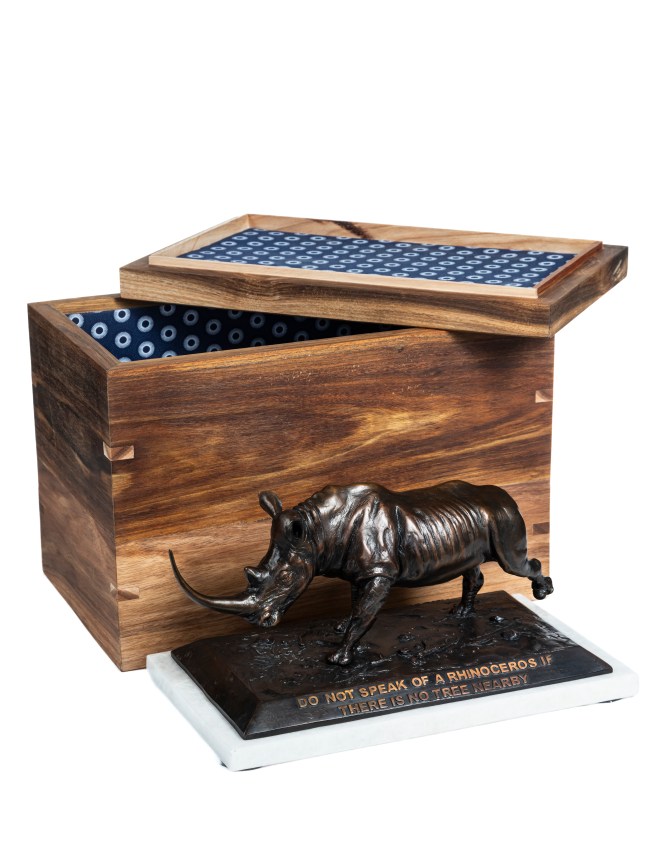
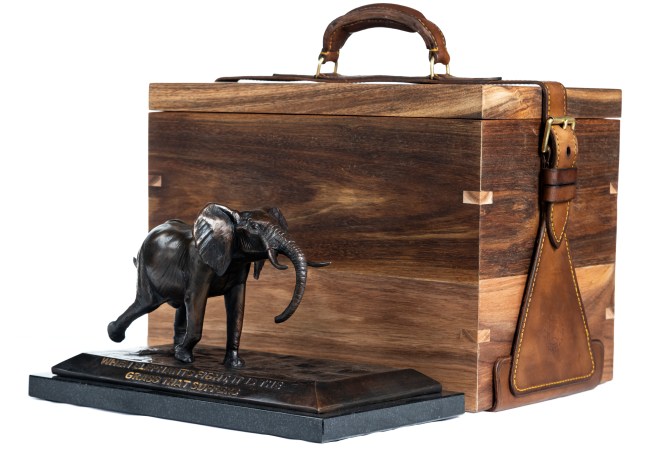
On the bronze base of each sculpture, Taylor envisioned a concept that wasn’t simply the description and name of each animal – that would have been lacking in content. “There are African idioms that attach something philosophical to each animal. These are introduced in an indigenous language and translated into English on each base of the sculpture. So, for instance, when it came to the elephants, we chose: When elephants fight, it’s the grass that suffers.
The leopard shares the following: The rain can wash out its coat but the leopard won’t lose it spots. Be careful with rhinos, the recipients are warned: You shouldn’t speak of a rhino if there’s no tree nearby.
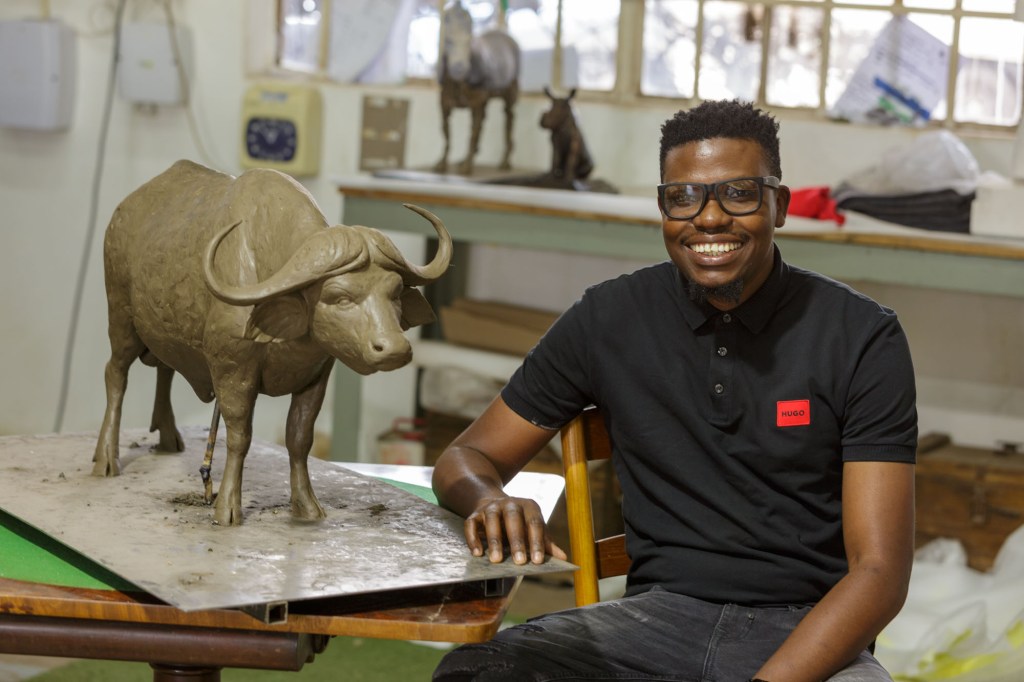
Theophelus Rikhotso with his buffalo.Malose Pete with his elephant.
“So don’t just share your woes, share your wisdom,” argues Taylor, who wanted to embellish the sculptures with some of our rich African sayings and stories.
“There are all these idioms attached to different animals which turns our sculptures into an imaginative and hopefully coveted gift,” muses the artist.
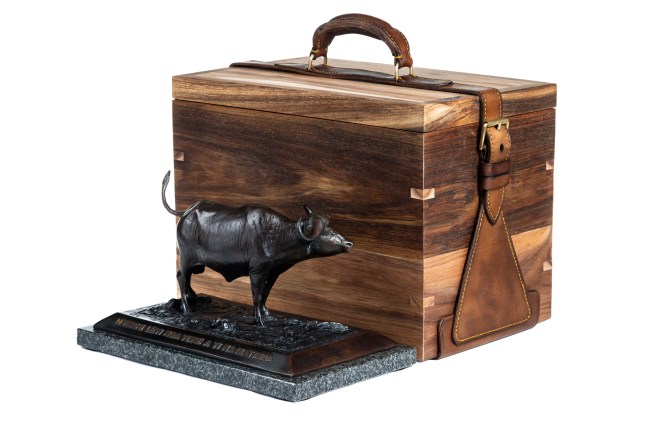
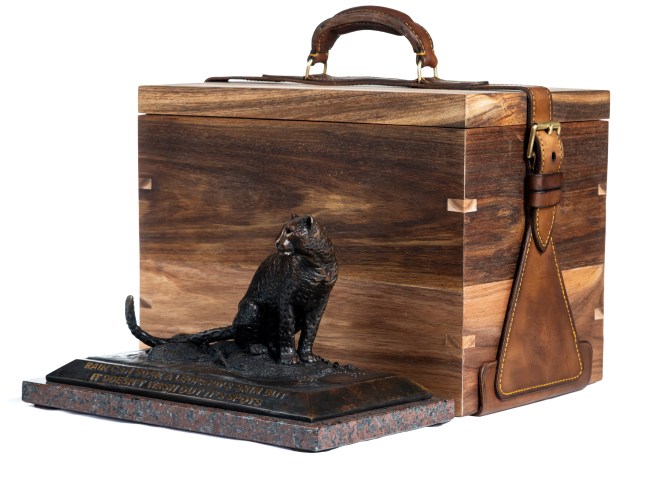
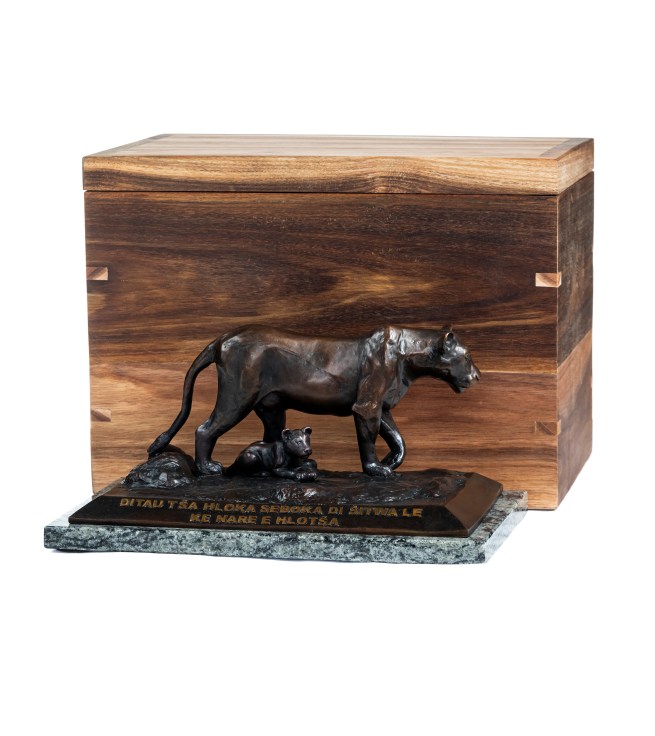
All five bronze animals are set onto South African stone and the complete artwork fits into a wooden box lined with African shwe shwe. This is strapped in with a leather belt with a handle so it can easily be carried. It weighs less than 20 kilos and is proudly South African.
Listed are the complete group of artists with their chosen animal:
Theophelus Rikhotso, who is responsible for the buffalo, loved working with others. “It helped me understand how a sculpture should be articulated.”
Buffalo
2025
Cast Bronze on Rustenburg Granite Base
Approx 250mm (h) x 370mm x 210mm
Edition of 24
“Nyarhi leyi nga yoxe a yi na matimba “
“A lone buffalo has no strength”
Victor Nkuna made a leopard with fine detail. “The leopard is the animal I love which is also favoured by my people. It’s all in the detail.”
Leopard
2025
Cast Cronze on African Red Granite Base
Approx 250mm (h) x 370mm x 210mm
Edition of 24
“Rain can soak a leopard’s skin but it doesn’t wash out it’s spots”
“Mpfula yi tsakamise Dzovo ra yingwe kambe yinge yi suli mavala”
Dikeledi Maponya enjoyed the process, working with others and exchanging ideas. “Every time I work in the studio, I learn something new.”
Lion
2025
Cast Bronze on Olive Green Granite Base
Approx 250mm (h) x 370mm x 210mm
Edition of 24
“Ditau tša hloka seboka di šitwa le ke nare e hlotša” ”Lions that lack unity and cooperation are less effective than a limping buffalo”
Angus Taylor goes for the real thing as he sets up his workspace almost within touching distance of a rhinoceros herd.
Rhinoceros
2025
Cast Bronze on Marble Base
Approx 250mm (h) x 370mm x 210mm
Edition of 24
Do not speak of a rhinoceros if there is no tree nearby ”Ungakhulumi ngobhejane kungekho sihlahla eduze”
Malose Pete has – by chance – for the past few years been studying the elephant, so when this request was made, it felt right. “Working in this kind of space where you can actually step back, expands your mind. This isn’t like work.”
Elephant
2025
Cast Bronze on Belfast Granite Base
Approx 250mm (h) x 370mm x 210mm
Edition of 24
“When elephants fight, it is the grass that suffers.” ”Wapiganapo tembo nyasi huumia.”
The Craftsmen Collective made the leather handles. (https://craftsmencollective.co.za) and woodworker Chris (Instagram: @furnituremadebyChris ) made the boxes.
Photographers: Jeremeo Le Cordeur; Llewelyn de Wet and Gys Loubser
The Stellenbosch Woordfees can be quite a daunting prospect because there is so much on offer. It is perhaps easier if you have specific artistic passions, as most of them will be on offer here and it is possible to make a selection. DIANE DE BEER spotlights what caught her fancy
There’s not even a chance that you can include all your darlings in a festival wrap or even try to see them all.
I did my best, was constantly on the move and writing, and still I hear of more productions you just had to see.
Personal favourites (don’t discount others because I probably didn’t see them):
My best theatre productions were stories that turned me into an emotional wreck but did so with authenticity (I know this is a woke word, but …).
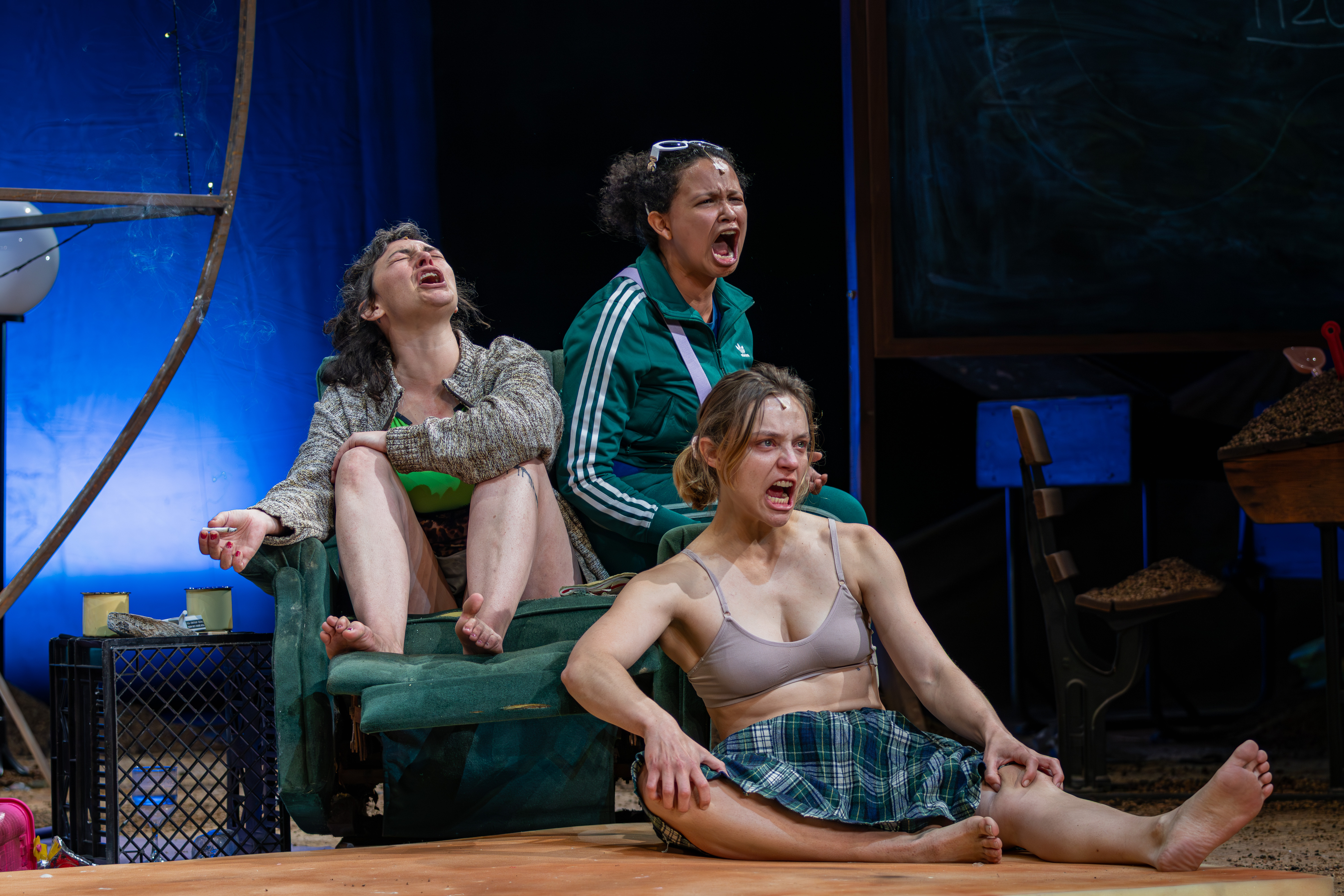
Tinarie van Wyk-Loots and Kristen Raath (left) and Jefferson J Dirks-Korkee(right) in
Dianne du Toit Albertze’s Huis van Sand.Pictured by Jeremeo Le Cordeur
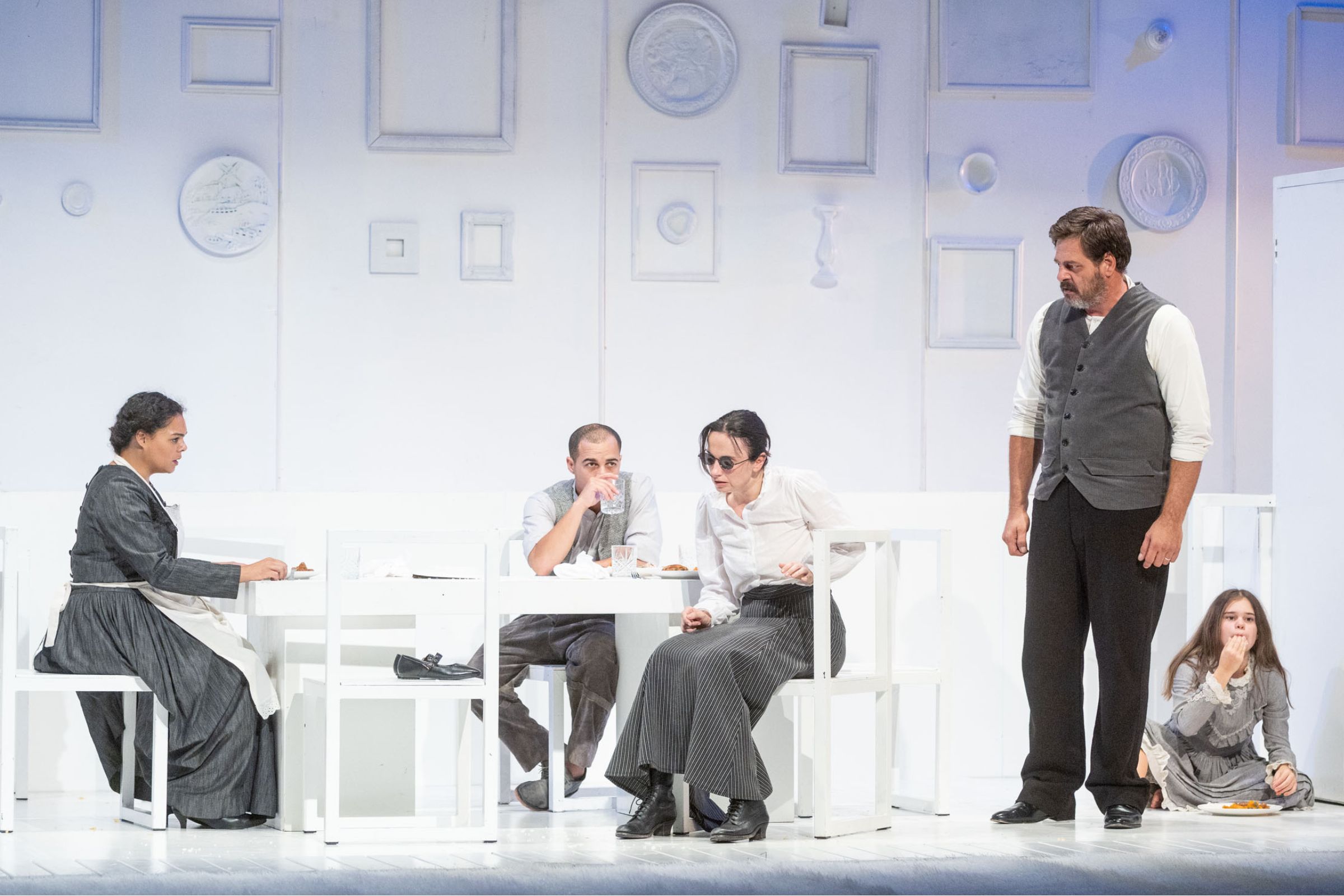
The winning text of the prestigious Reinet Nagtegaal prize, Dianne du Toit Albertze’s Huis van Sand, with her honest portrayal of a dysfunctional family that’s probably not even part of most audiences’ consciousness. She writes about what she knows and where she comes from, the Northern Cape. But she does this in her self-made tongue, which shoots right to the heart and guts of the matter, no pussyfooting around with this one.
It is not a place many of the traditional Woordfees audiences will know. The backdrop is the N7, a route that runs from one end of the country to the other. It is her little spot next to the highway that Sandy knows. She and her daughter share Rodney’s caravan and too much of his life, especially the dark side. They’re trapped and yet the lifestyle is passed on from one generation to the next with the whole family fully engaged. A seemingly never-ending devastating cycle.
What drives Huis van Sand are Albertze’s words, her imagination, and the way she plays wildly with your head and emotions. Throw into the mix director Wolfie Britz’s strong casting and determined direction. With the remarkable Tinarie van Wyk-Loots launching herself body and soul into this one, Sandy’s daughter (Kristen Raath) trying to duck the missiles and resist diving headfirst into the temptations, Jefferson J Dirks-Korkee’s chilly capture of the toxic male scent always hovering menacingly and René Cloete showing she is much more than just an innocent bystander, everything about this production hits you like an onslaught.
Yet this is one you want to struggle and engage with because of the sharp edges and the unblinking gaze at the harsh reality of so many lives. It’s heartwrenching, but that is something this playwright has never turned away from. She stares straight into the skewered glare of too many unseen lives and throws us all in at the deep end. The brilliance is well worth the battle.
Melissa de Vries as Nadia and Angelo Bergh as her friend Zavie
Walking the same tightrope, is the adaptation by Jolyn Phillips of Ronelda Kampher’s ravaging novel starring two vulnerable yet resilient teen cousins who try their best to navigate a world they don’t understand while instinctively understanding that they are their only protection.
For Nadia (Melissa de Vries) and her chum Zavie (Angelo Bergh) their bond while tenuous and often fragile is what keeps them breathing.
With this one it is again the magnificence of the performances and the staging by Lee-Ann van Rooi that holds the attention as these two baby-adults going about their lives as if it is normal – and for them it is, it’s all they know.
That’s precisely the point. This is their normal, their life and the one Kampher’s words in her searing novel lay bare. Their whole existence is determined by outside factors, never certain or expected. Yet they do know how to grab the small slices of life when given the chance which isn’t often. They should not even be aware of the things happening in their lives, yet that’s the only way they know how to roll.
Kampher’s language is brilliantly captured by Phillips’ adaptation. How she even knew where to start! It’s such a complex and almost crippling story about these children whose future is determined purely by the happenstance of their birth.
Both of them have bucketsful of gifts which will never be realized because there’s simply no support or networks for these drifting families where not one generation manages to get even a foothold on a real life.
If anything good happens in their lives, it is luck and often, at that particular moment, the recipient doesn’t know how to deal with it.
When reading Kampher’s book the first time, you’re in awe of the writing and the storytelling. It’s the way she focused on the stories never told, the way she draws the characters, gives them flesh and emotions, which in this instance are perfectly re-created by the choices of Van Rooi and the adaptation by Phillips.
What a beautiful acting team. I don’t know them, don’t watch television if that’s where they perform, but I do know that they have inhabited these two kids with so much energy and guts, it’s hard to resist.
And that’s the joy of festivals, the opportunities that arise for artists so that when the stars align (a good script, director and actors), nothing can hold them back.
All of these performances should and will hopefully travel. For far too long too many voices have been silenced. We are so much richer as a country, as audiences and as performers when all our stories are shared.
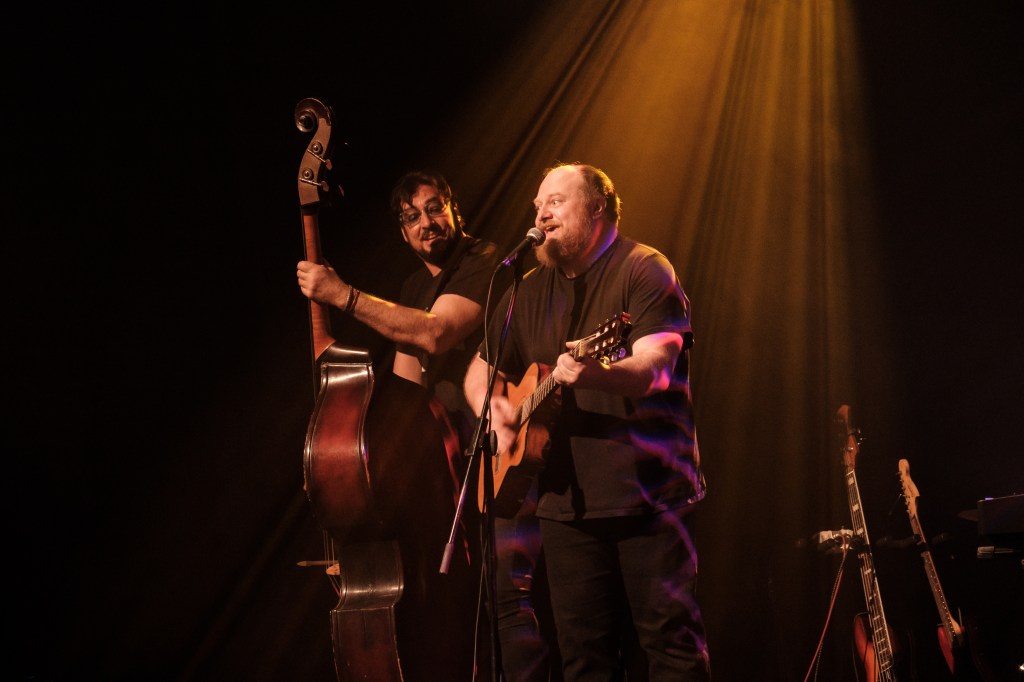
Albert Pretorius (actor) and Schalk Joubert (guitarist) in Ek is nie Danie pictured by Llwellyn de Wet and Gys Loubser.
What four middle-aged men did with what they had, was inspirational. They took something which if not handled with the same delicacy as the poetry, could have been disastrous. But because of deft hands and hearts, it feels as though you are dealing with an emotional vortex, but one driven with artistic insight and instinct which holds the audience tightly and sharply in focus from start to finish.
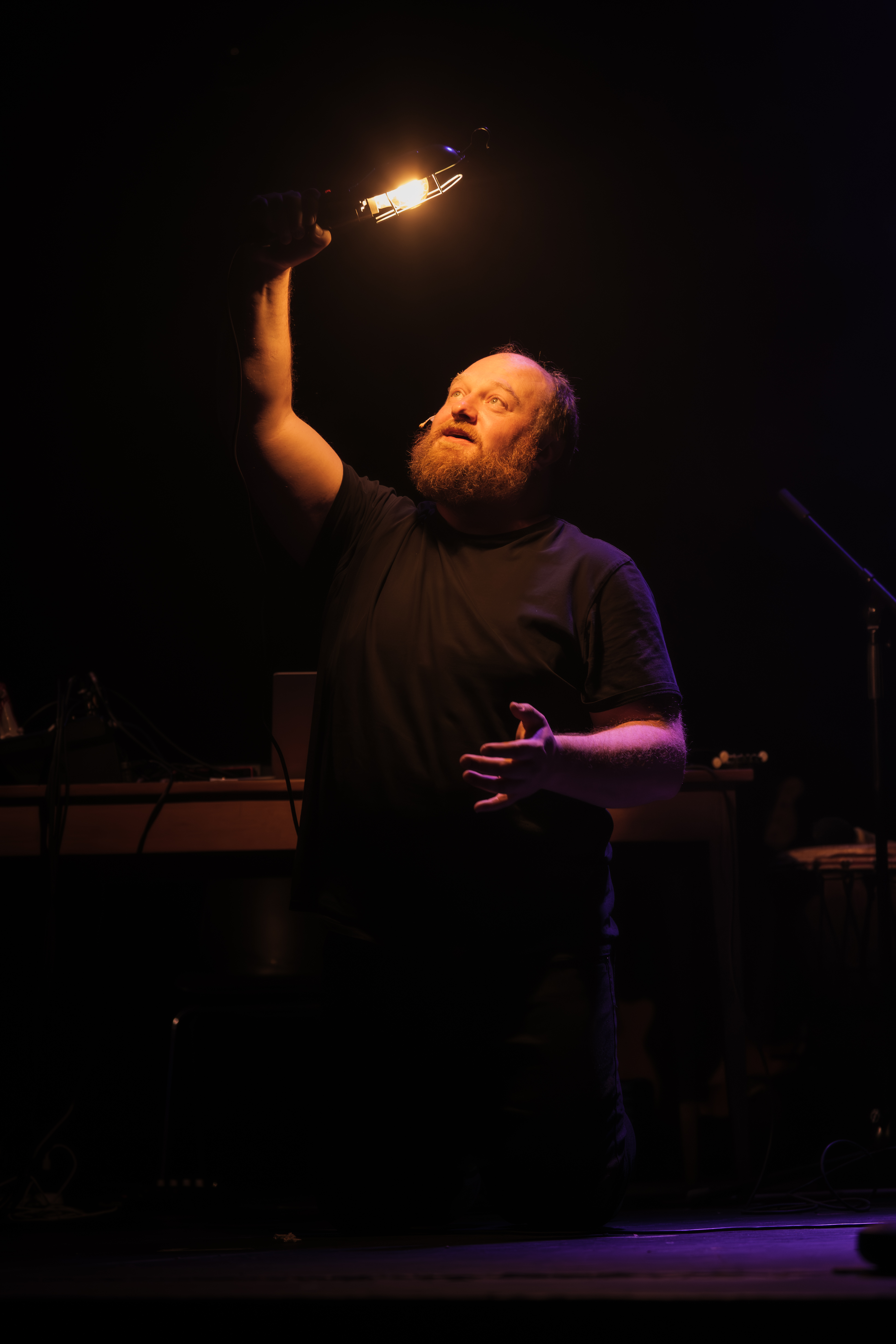
It worked because of the truly exquisite writing and then the choice of the right participants. The concept was Niel van Deventer’s according to the programme, but then handed to one of our smartest directors, Nico Scheepers. He is given a topic which would turn most people away – the angst and anxiety of ageing white men, not a species that many have much sympathy for.
Yet this company with actor Albert Pretorius and musical director/guitarist Schalk Joubert has shown that, given the right elements, a director who knows how to shape something yet value his actor and musician by allowing them the freedom to be and to do, it will work – and in this instance, explosively.
It’s one of those performances that you want to see again as soon as you leave the theatre. I hope it travels the country.
I took these three stunning plays to give some flavour to the Woordfees which is far too dense and diverse to dilute, but that there’s something for everyone, that’s a certainty and you won’t have to look too far or hard.
They have achieved much in only a short time and in the future with everything changing so rapidly, we can only expect to experience even more.
And then just a small PS: I was asked to interview Nataniël on a book Bloei+Blom and being who he is, the first lunch was booked out swiftly and another date the next day was included and again fully booked. But hey, the more the merrier.
As an interviewer, this is the one date I don’t have nerves. I know I am in safe hands and he is the master of chat.
It was the easiest gig in town. Even though he and I had talked about topics of conversation before the time, once on a roll, and only three questions down, I could sit back, relax and enjoy one of our best (and naturally funniest) conversationalists in action.
There was no way to ask anything else. He was in full flight on his own. He did glance my way once or twice, but there was no interrupting the flow. And even better, he was the one they wanted to see and hear.
I felt blessed, centre stage and could watch the wizard in full flights of fantasy.
*There were many others I loved, many of which I had written on at the Woordfees or previously including Boklied, Seun, Bridling, Kuns, Magda en haar Erhard, Ont-, and always The Ugly Noo Noo …
Like most things in life there are good and bad to small packages, but Aardklop CEO Alexa Strachan has turned her shiny Potchefstroom gem into a star through clever planning, a balancing act of note and enough variety to have everyone laughing and crying – with good food all over the place to boot. DIANE DE BEER speaks her mind:
My husband knows I’m a festival junkie (while he is NOT) but it is a personal indulgence and one that clearly nourishes.
This year was no different. Taking only a handful of my best, it’s not a difficult case to make.
Running down the alphabet as the festival guide does, it’s the overwhelming laughter that blew me away. I’m not a comedy girl so I didn’t know who Alfred Adriaan was but I screamed with laughter from start to finish and he was obviously a festival favourite in the packed auditorium.
With the name of Magda Louw (Desiré Gardner), one would think that I would remember that this is one of my favourite characters, but again, because of the comedy aversion, it just never surfaces. And yet, from the minute she walks on stage in her latest production, Magda Louw en haar Erhard, how Louw can you go?, this time with her husband Erhard (a delightfully Sad Sack performance by Hannes van Wyk), they just bowl you over.
What makes Magda so delightful to embrace is that she doesn’t go on the clichéd South African rant of potholes and politics, she has much more exciting things to deal with like the man constantly shuffling behind her as she leads the way at a faster pace and with much more rhythm, but the two ageing souls give you hope for the future as you realise that life is just a bowl of bubbles if you attack it in the right way.
On the other side of the spectrum there’s the magnificent solo debut by the extraordinary Wilhelm van der Walt, who unassumingly takes the stage and then reaching into a far too familiar past, given new perspective.
There was a time when I could hardly stomach another troepie tirade because it was so dominating in the country that it constantly surfaced on stage. What I realized this time round, is that Van der Walt himself probably never participated in this deadly exercise for so many decades part of our lives and there were certainly many young audiences who needs this insight on our past.
And if it is done with such magnificence, the flashbacks are worth recalling even if the past could be wished away.
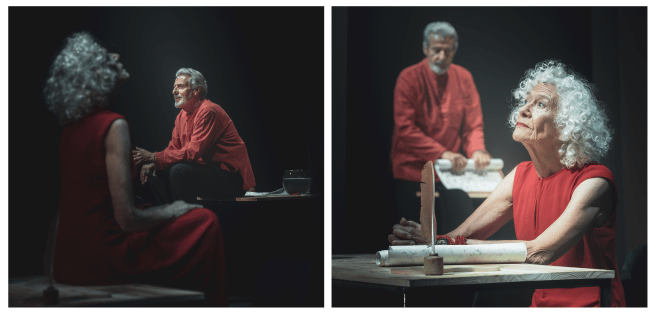
How can anyone not be thrilled to experience Antoinette Kellermann and Dawid Minnaar on stage and in this instance in Breyten Breytenbach’s last play, Verwelkingslied, before he died. Although he dedicated the piece to Antoinette Kellermann and Marthinus Basson, she performed with her long-time stage partner Minnaar with Mari Borstlap as director on a set which was reminiscent of some of their earlier work together.
Minnaar is an eerily similar version of the poet in voice and image and immediately you can lose yourself in the meanderings of this philosophical and always poetic (almost) memoir. As the two actors take turns in monologue yet sharing Breytenbach’s feelings on death, one drifts away in the words so magnetic and the voice so penetrating, almost in dreamlike state, the actors and the audience.
The simplicity of the presentation is apt as it holds the depth and strength of the text so delicately. This is where we need the words to wash over us as an audience in almost immersive fashion.
I know that Amanda Strydom first mesmerized me with The Incredible Journey of Tinkerbell van Tonder and was eager to experience the performance all these decades later. Not that I can remember the detail, but with age of both text and performer, it’s as if everything has just found a warmer and gentler place to settle and lay her head down.
Finding your place in the world is a never-ending search and when you are fighting for freedom it is almost impossible – yet not when you’re Nelia Petersen who was handed the struggle together with mother’s milk.
It’s rigorous and robust with Strydom tackling the text and music with equal energy and exuberance. And all these years later, if anything, it is even more brittle and brilliant than before. I could watch this performance any day.
Belofte van Vere was our first production and yet another Breytenbach tribute but, once I witnessed the full cast on stage, they had my full attention. With the musically adventurous Laurinda Hofmeyr on piano, a rare singing appearance from the jazz-infused Ilse Klink, the genius muso Leon Gropp (guitar and voice), the soulful David Klassen (drums), a rhythmic Concord Nkabinde (bass) with the velvet voices of Rolanda Marais and Eben Genis, I knew I would be transformed. And I was.
Performers Eben Genis and Rolanda Marais
This exciting, gifted collection of artists would know how to do Breyten Breytenbach, without frills and fancy tricks, just delivering on their accomplishments and Breyten’s poetry and words. Anything else to my mind would have been unwarranted.
It’s my kind of show with my kind of people and poems. I needed nothing more. For me this was a Breytenbach celebration and I’m certain he would have been honoured.
Combining two dance companies, Cape Town’s magnificent Figure of 8 Dance Theatre who also performed their haunting tribute (Die Een Wat Bly) to the relationship between mothers and sons, the more expansive Wings of Light: Dance of an Angel returned dance to Aardklop in spectacular fashion. The music composed by Mauritz Lotz set the tone for an exquisite performance which showcased both classical and contemporary dance, the perfect rendition for an audience who might not often have the chance to see this kind of performance. It was a rare feat to stage this production and hopefully paved the way for similar ventures in the future.
Festivals have to walk a tightrope of not playing it too safe yet not antagonising their core audiences. With the large auditorium thé venue for one of our best comedians as well as two of the most exciting dance companies in the country, they managed just that.
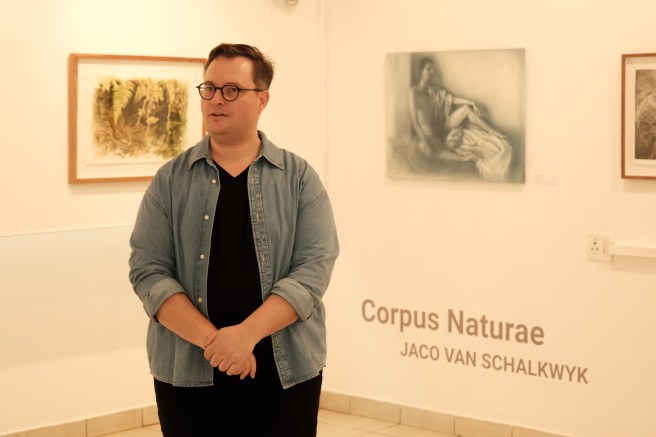
There was also time to slip into the art venues, always something to cherish, and this time it was the festival Artist Jaco van Schalkwyk as well as a challenging group exhibition Vice Versa curated by artist Gwynneth Miller, all of which got the mind racing on a variety of contemporary issues. The renovated campus art museum also featured an exciting range of Nataniël pictures captured by his longest serving photographer Clinton Lubbhe
As an extra fillip, there was the celebratory concert of Nataniël and Charl du Plessis’s 25-year collaboration on stage. And as I had witnessed their initial first performances together, this was quite emotional.
To watch two stratospheric artists develop, dissect and model their artistry as they grow and stretch in different ways is unexpected and artistically adventurous.
There’s Du Plessis’s breathtaking exuberance and excellence on piano, the way he shifts between genres and his approach to his longtime stage companion. Nataniël again exhibits his stagecraft, flips easily from text to music, his stories hilariously funny with a hint of melancholy, or on the musical side, surprising everyone with his superb classical training which he hardly ever shares. They are an unbeatable combination with so many years of performance between them.
Aardklop features youth theatre with their Pronk Podium product, which this year invited its most successful writer/director/producer to present his latest work Doolhof together with the NWU Kampustoneel winner Diereryk directed and written by Pierre-André Viviers, cleverly based on Animal Far.
Every year I am thrilled and struck by the quality of the productions and everyone’s artistry involved. For future artists, this is unequalled training ground and for audiences the ideal opportunity to see how young artists tell their stories and what to expect in the future.
At future festivals, remember to watch out for this special section.
I could go on and on, I even made a turn at the market, something I never do, but I wanted to surprise my favourites at home with some specialty snacks.
As always it was a festival with feisty and fabulous fare on every level.
And the winners for the annual Aardklop festival awards are:
Best Actress: Elzabé Zietsman for Routrip
Best Actor: Wilhelm van der Walt for Seun
Best Director: Nico Scheepers for Seun
Best Overall Production: Seun
Award for most innovative work: The Scullery Quintet: Stir-fried Sonatas
Visual Art: Best Exhibition: Corpus Naturae, Jaco van Schalkwyk
Best Music-driven Production: Amanda Strydom: The incredible journey of Tinkerbell van Tonder
Best Classical Music performance: Road Trip Rhythms
Best Musical-driven performance: The Scullery Quintet
Hartsvriende Beste Produksie: Seun
Best new Afrikaans Script: Nataniël for NATANIËL + CHARL = 25
Best Production: Drama: Seun
Knockout Award: Alfred Adriaan: Positive Strokes
Extra Mile: Riaan Rademan (Technical project manager for Blond Productions)
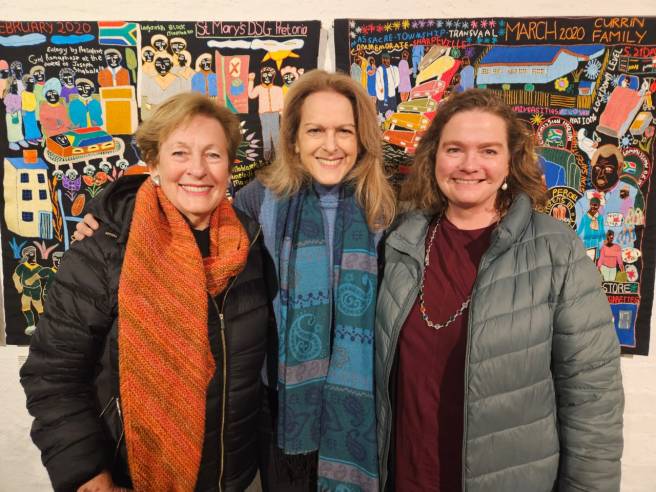
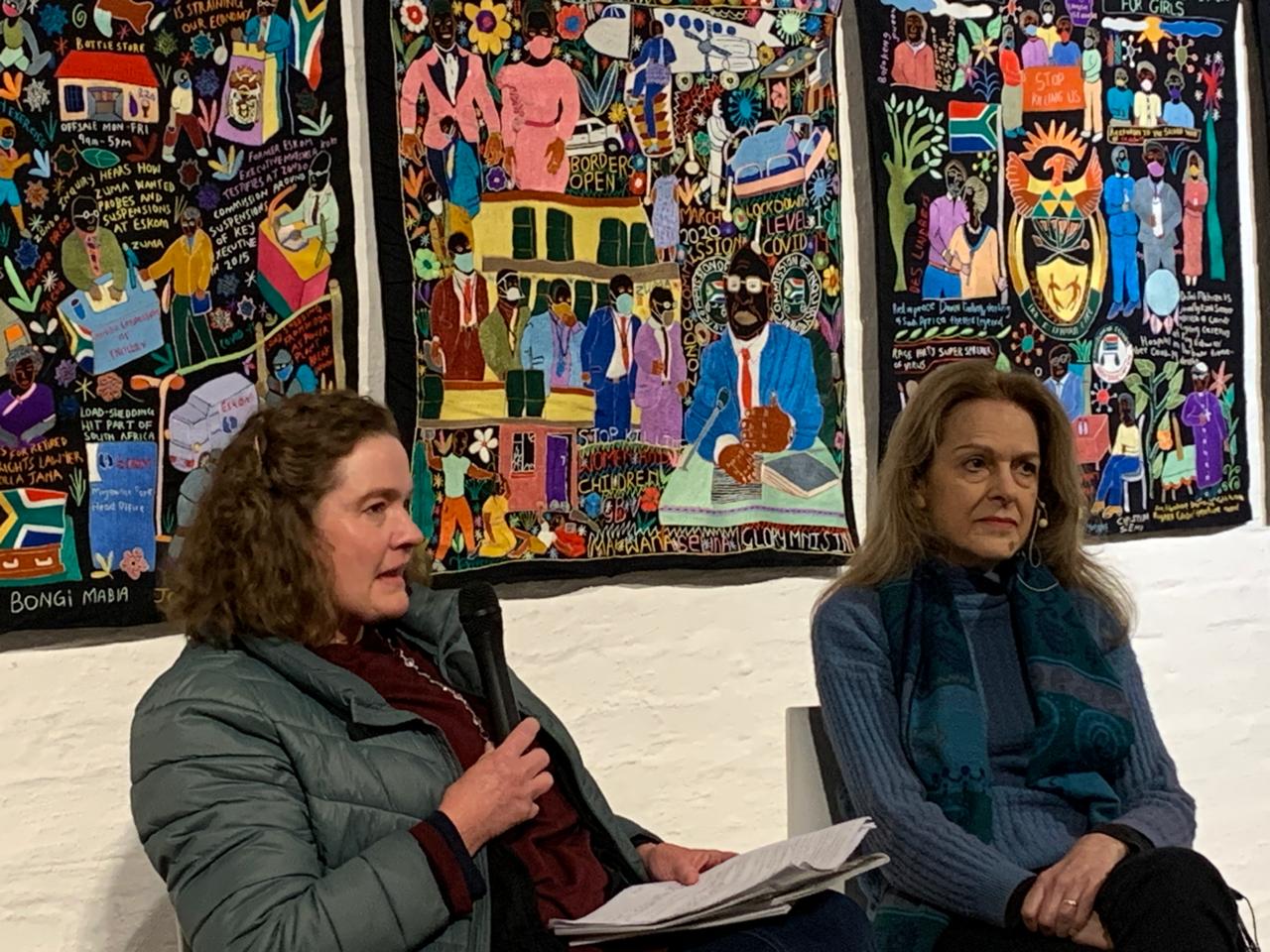
A walkabout of the newly installed exhibition 2020 Through the Eye of a Needle: Remembering the Covid-19 Pandemic in 2025 curated by Julia Charlton, senior curator at WAM (Wits Art Museum), reminded everyone who was present how quickly we move on from events that change the world dramatically. DIANE DE BEER gives her impression of the way women rule the charity world:
As Professor Brenda Schmahmann — South African art historian and current South African Research Chair in South African Art and Visual Culture (SARChI) at the University of Johannesburg’s Faculty of Art, Design and Architecture (FADA) — was in conversation with Julia, I was again reminded of women and the way they participate in the world where people are negatively impacted simply because of their circumstances, not because of anything they did wrong.
Living in Africa has many advantages, and for me, one of them is the constant reminder of how the real world functions. Privilege is usually something that is bestowed on you at birth and in a sense with the roll of the universal dice, it could just as well have been the other way.
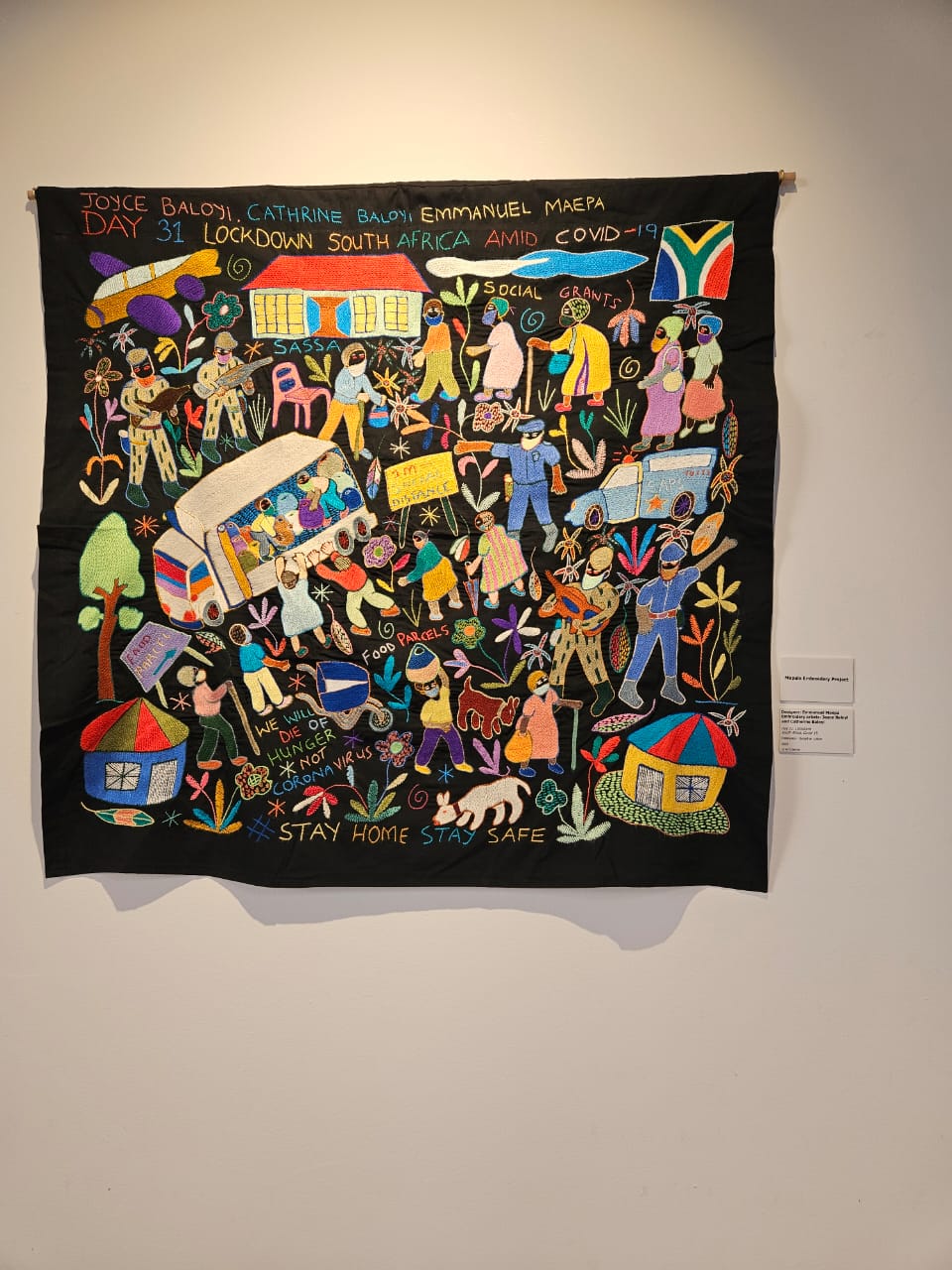
But listening to these women as they share reflections and insights into the embroideries on exhibition, created by members of the Mapula Embroidery Project, a community art collective of women embroiderers based in the Winterveld and Hammanskraal, I again witnessed the part three women played and in the process changing the lives of many families in the Winterveld.
It’s as though the time since Covid passed in a flash, but this year marks five years since the World Health Organisation declared Covid-19 a global pandemic.
We all know how the disease has devastated the whole world. There was the astronomical loss of life, terrible emotional strain, extreme social disruption and economic devastation. We were also reminded of the impact of so many things in personal lives: first year students who in the end never had the opportunity to experience campus life and live lectures; exacerbating the horror of the high number of deaths, no one could attend funerals which had to happen in isolation; and following that time, we’ve simply had to get on with recapturing some of the life we had lost.
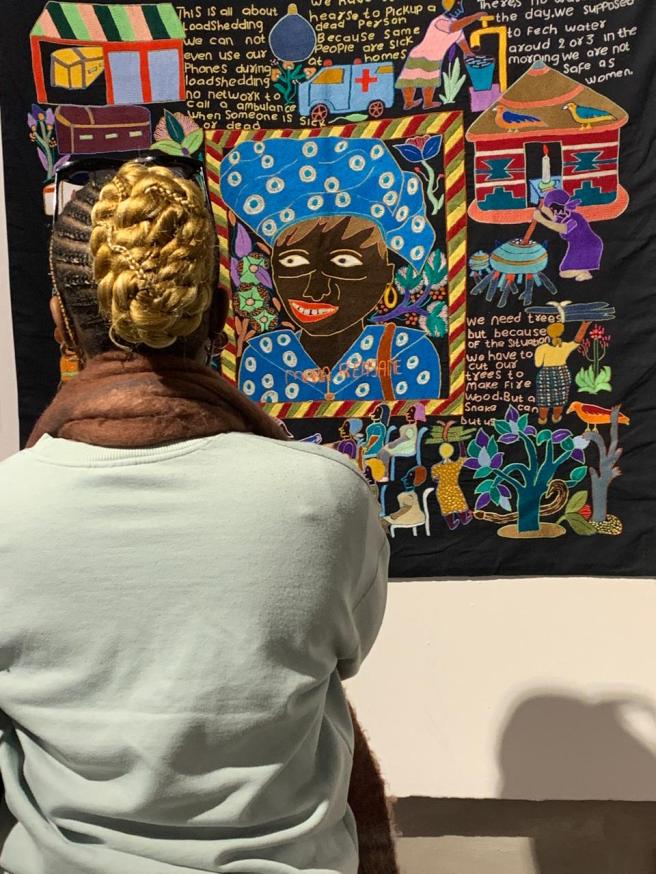
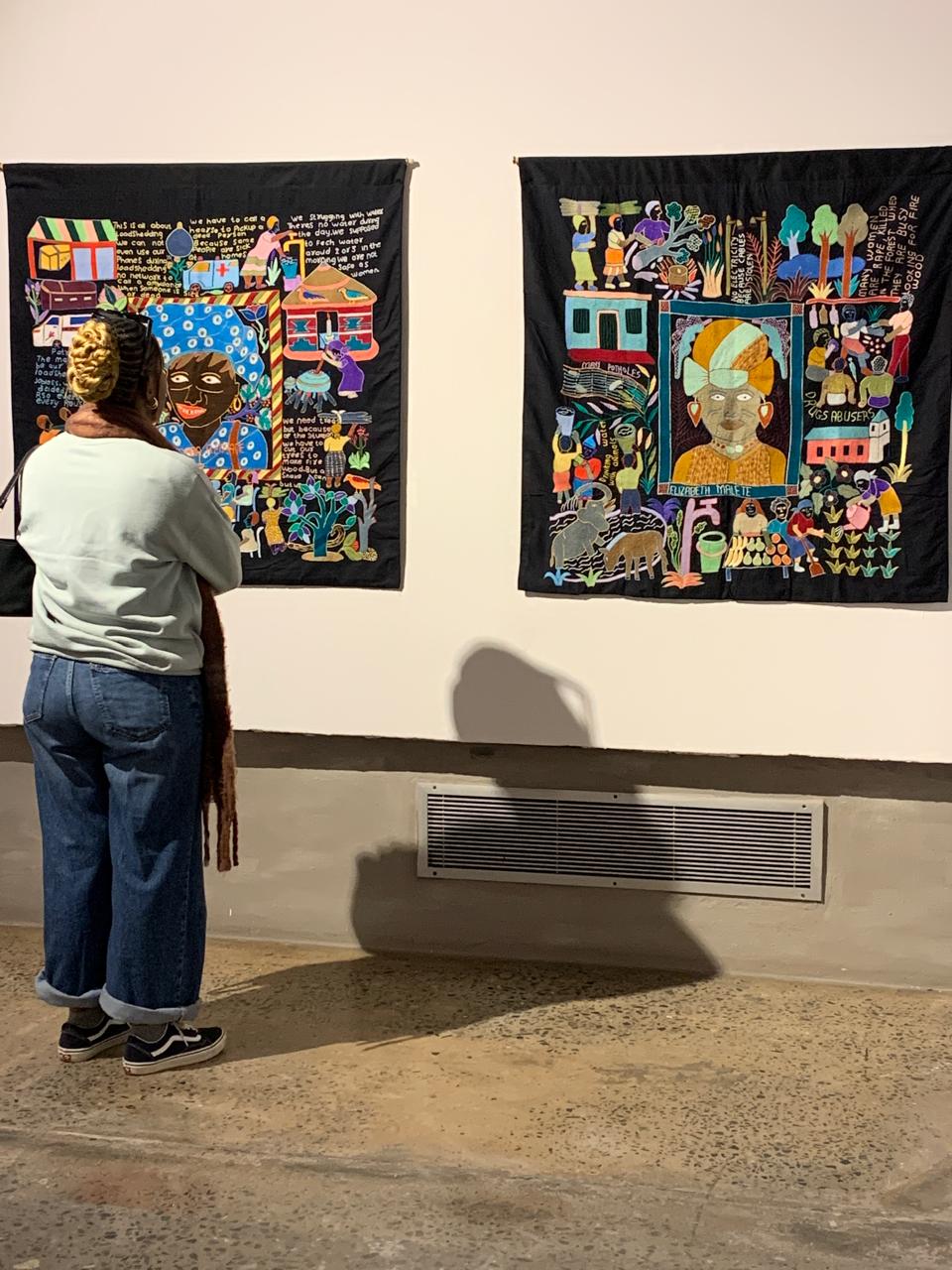
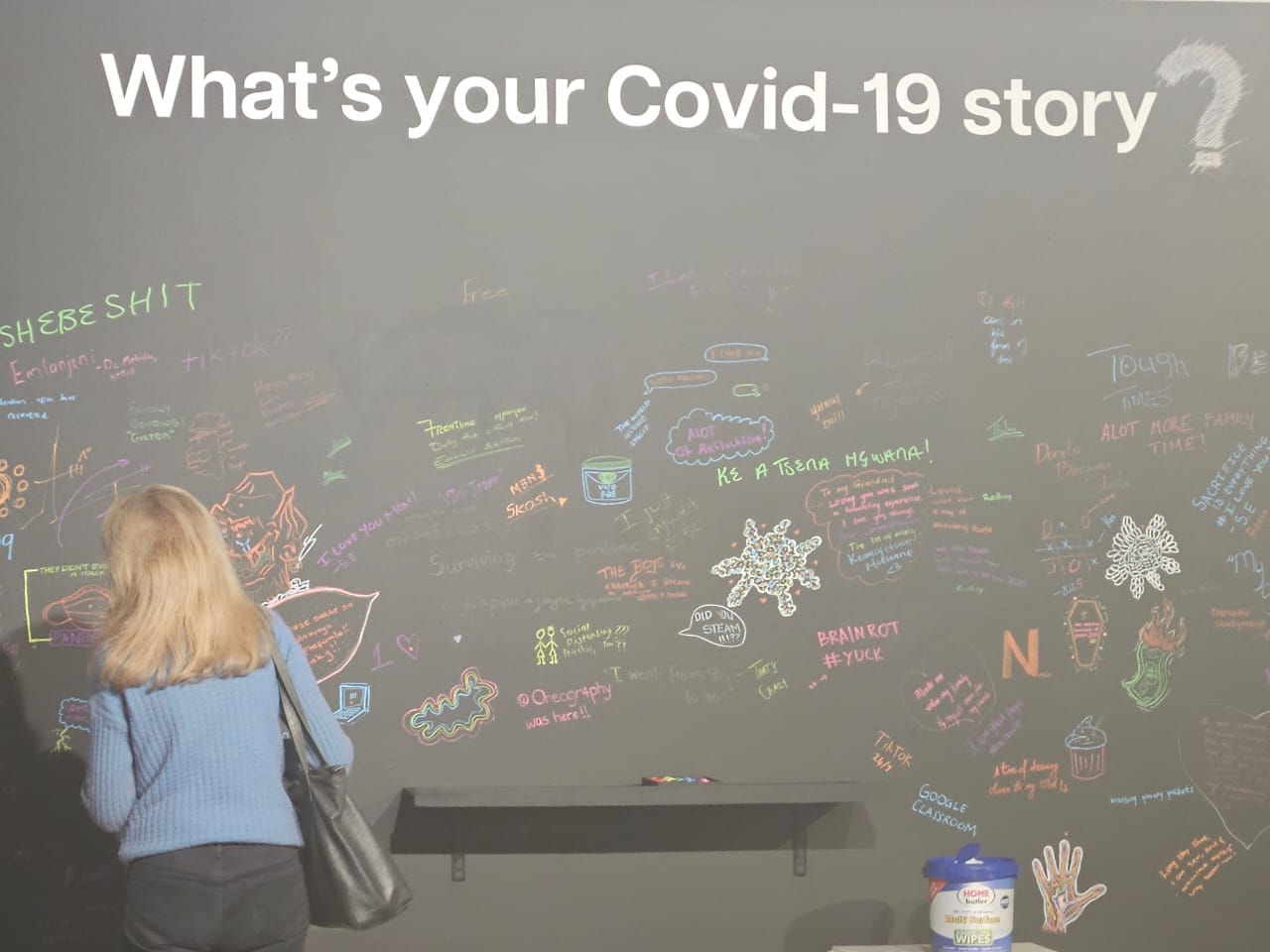
This exhibition on the five year anniversary offers an opportunity to reflect on that time by considering an interactive exhibition of embroidered textiles dealing with Covid-19 and its impact on a community. Without the Mapula project, it would have been an even worse catastrophe for this community and other groups also part of the Mapula family.
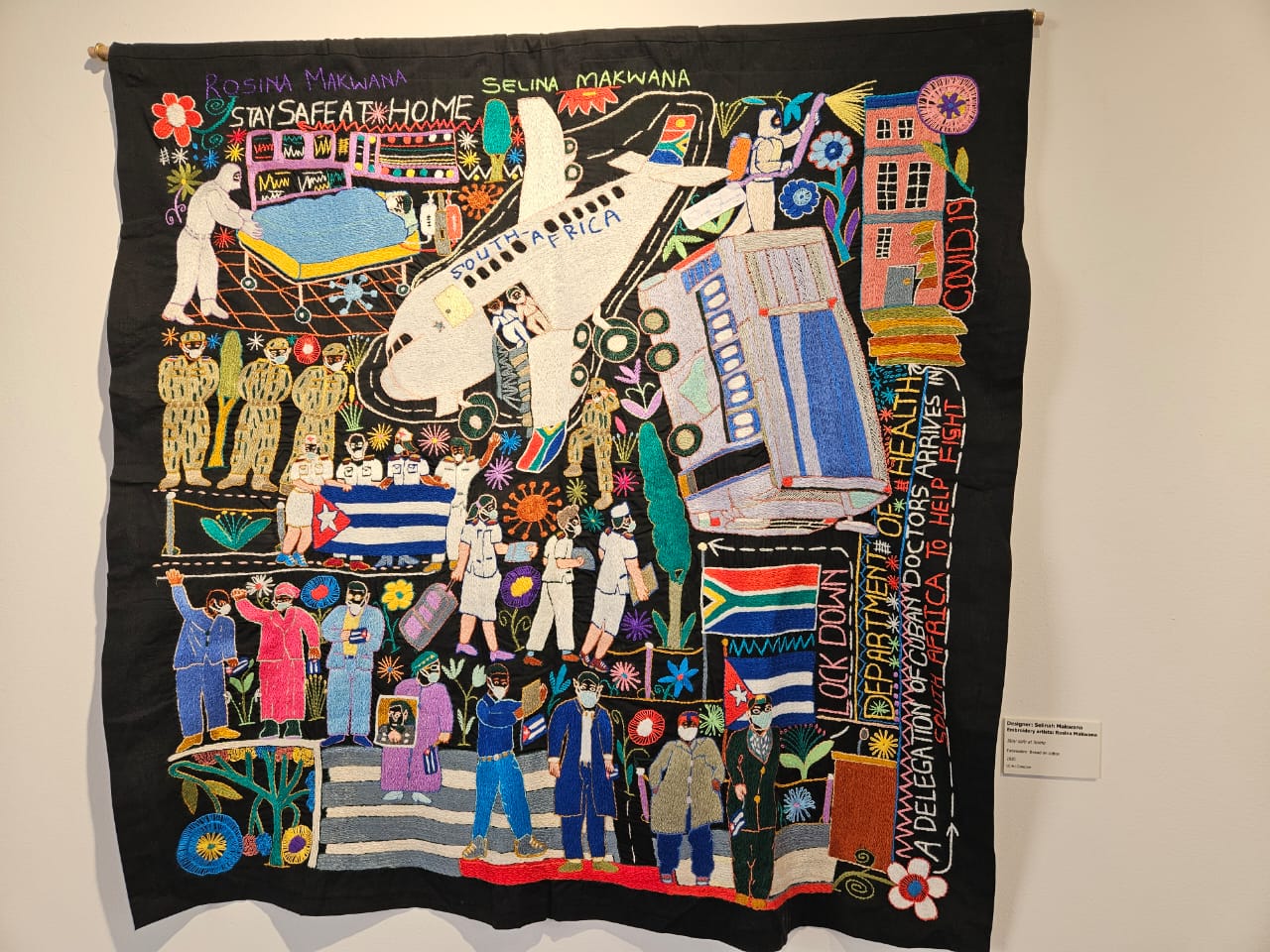
When engaging with the exhibition it is clear that the women use these hangings to depict their own lives. One of the first things you notice in the Covid panels for example, are the people featured all wearing masks, a vivid reminder of a time we had to isolate from others.
The hangings also serve as an historical document of a specific time. Whether it is the floods in Mozambique, the pandemic or even the tsunami in different parts of the world, these events are first captured by different artists in the group and then the individual women get sewing to create these artworks, hence the title Through the eye of the needle.
Other themes that pop up are food parcels during the pandemic, which were made up out of samp, rice and sugar, the absolute basics. Many of the cloths are also inspirational, not depicting what their lives are, but what they would like them to be.
What would we be as human beings without dreaming? “There’s always a focus on positive things,” noted Brenda
Janetje, who is involved with the embroiderers on almost a daily basis, explaining the logistics of keeping this group going. Because distances are sometimes huge due to the past, it takes planning and organizing to purchase the raw materials, get them delivered and establish pathways amongst the women to make it all work and come together.
In today’s hectic lives with family demands another obstacle, many women would have thrown their hands up in the air.
But these three are amazing examples of how women often work tirelessly to improve the lives of people who, but for the grace, might have been any of us.
Go and remind yourself in the coming months. Entrance is free and no booking is required.
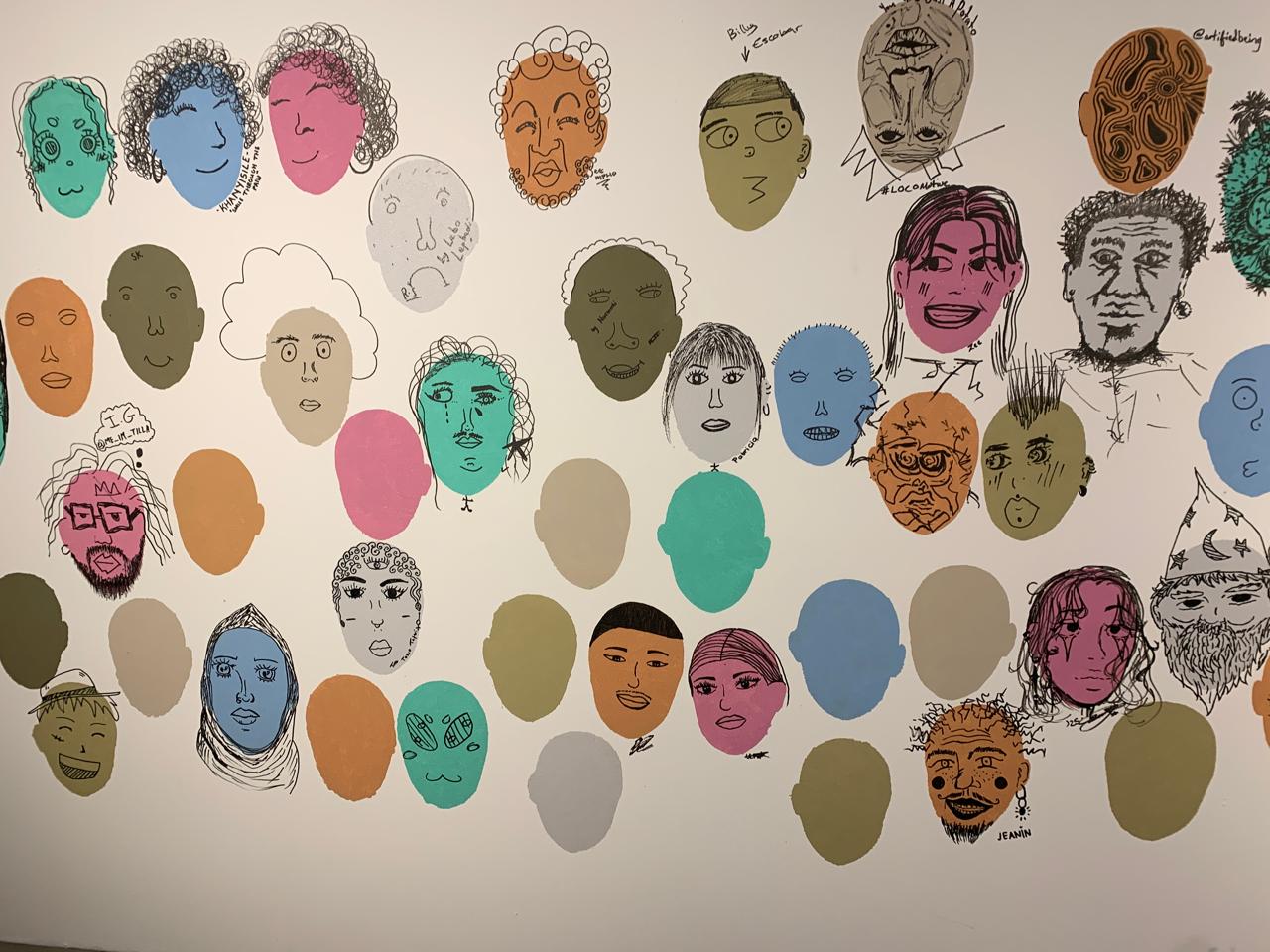
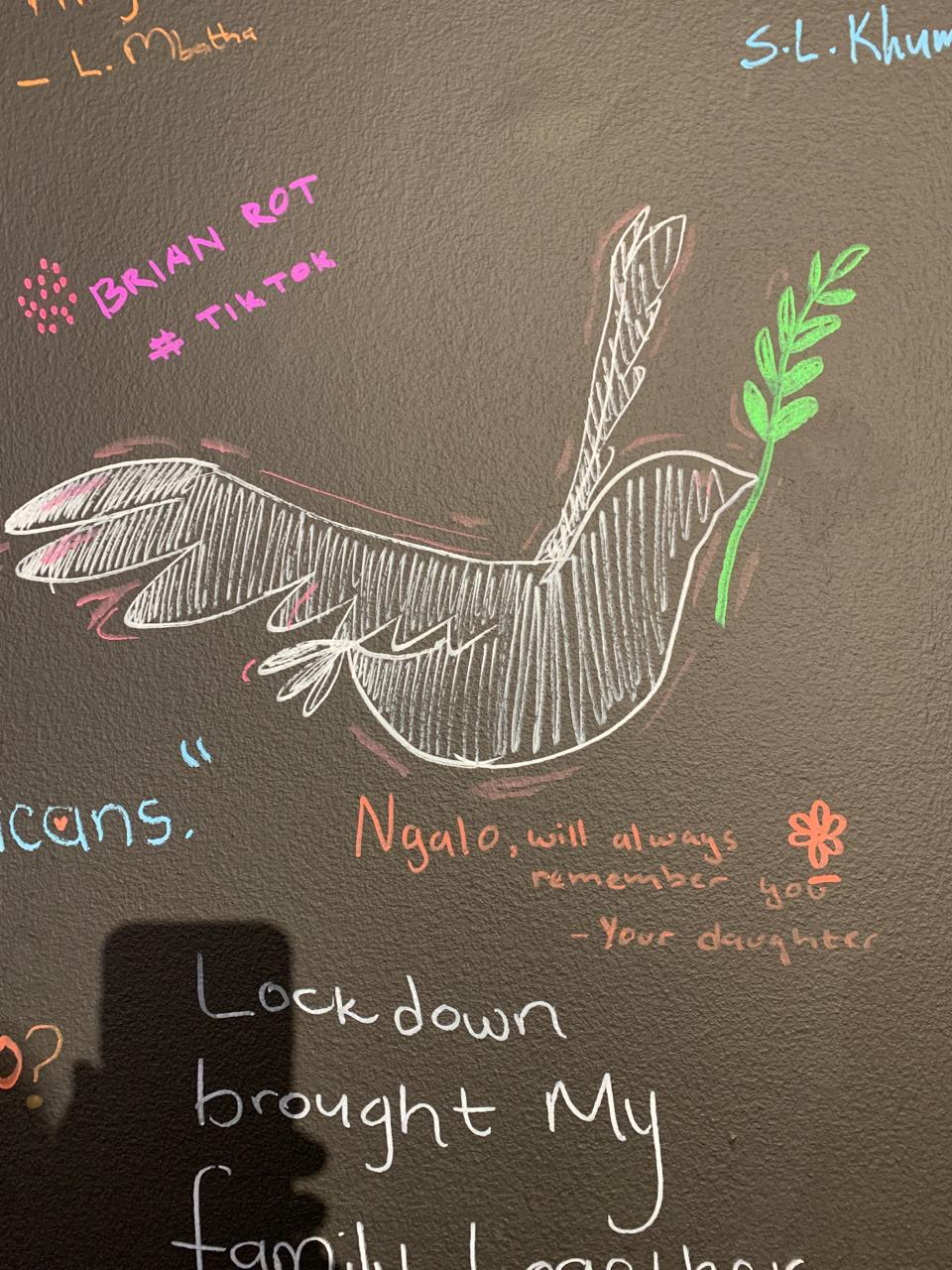
It’s an enriching experience which the whole family can witness and enjoy. And along the way, a few lessons are imparted with quite a few fun interactive features, which will get everyone participating.
Museum hours: Tuesday – Saturday 10am to 4pm with the exhibition on until 13 September 2025.Physical address University Corner, Corner Bertha (extension of Jan Smuts Avenue) and Jorissen Streets, Braamfontein, Johannesburg. 011 717 1365 (Week-days) and 011 717 3158 (Weekends) E-mail: info.wam@wits.ac.za
Paul Slabolepszy is one of our most prolific artists, as both playwright and actor. To her surprise, DIANE DE BEER only recently discovered that there are two amazing artists in this family and caught up with both at the closure of Carol Slabolepszy’s latest exhibition:
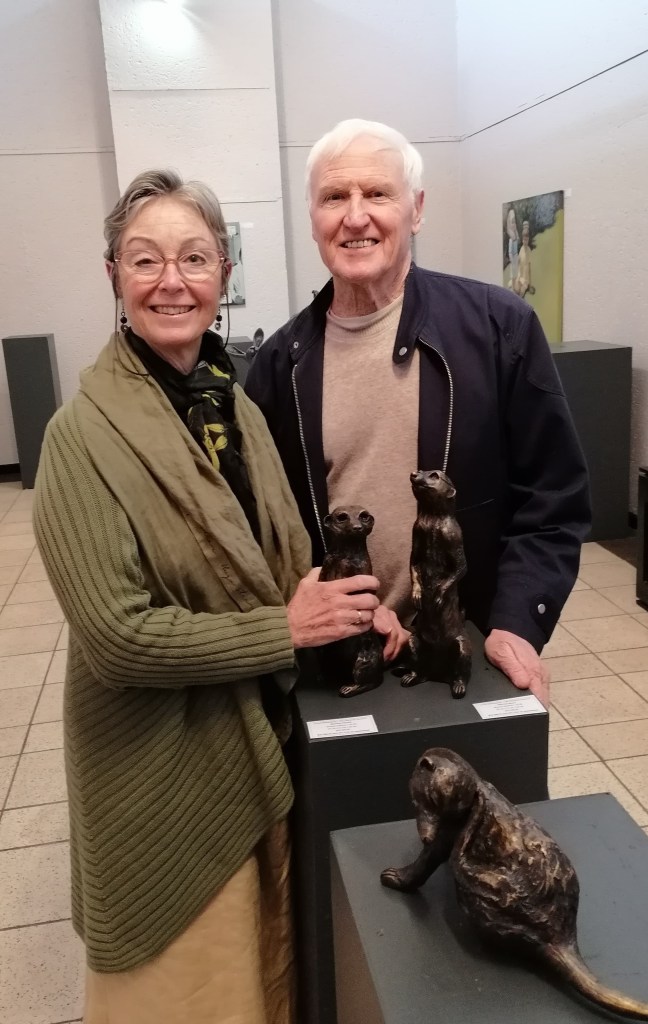
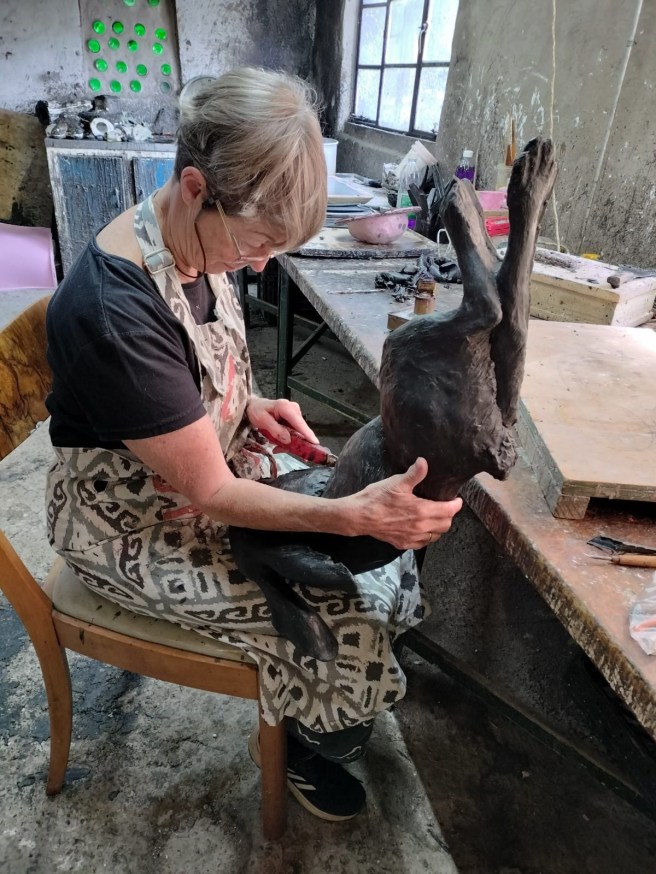
I first became aware of sculptor Carol Slabolepszy when I went to view a painting exhibition at the Association of Arts Pretoria and discovered what I later learnt was Carol’s exquisite collection titled My Hares and Graces.
I was enchanted and completely unaware that someone I only knew as actor Paul Slab’s wife was such an amazing sculptor. And when I say knew I mean that, having seen her for decades accompanying Paul to plays, she was familiar to me.
But now that I have been blessed to meet another artist in the family, it was a delight to find out more about this creative couple’s life. This is Carol’s second creative endeavour. She spent seven years dancing professionally with CAPAB and PACT Ballet in her early years and it was during this time that she met her husband of 40 plus years. They also have three children.
She has always had an artistic bent but with a burgeoning family what also motivated her was to be economically active. She decided to study art as a mature student, and it took some time for her to find her true passion, sculpting. “I was painting at the time and, while I was a good painter, I wasn’t an extraordinary painter.” She wanted to do something she could reproduce while working in a way that would be, for her, more cutting edge.
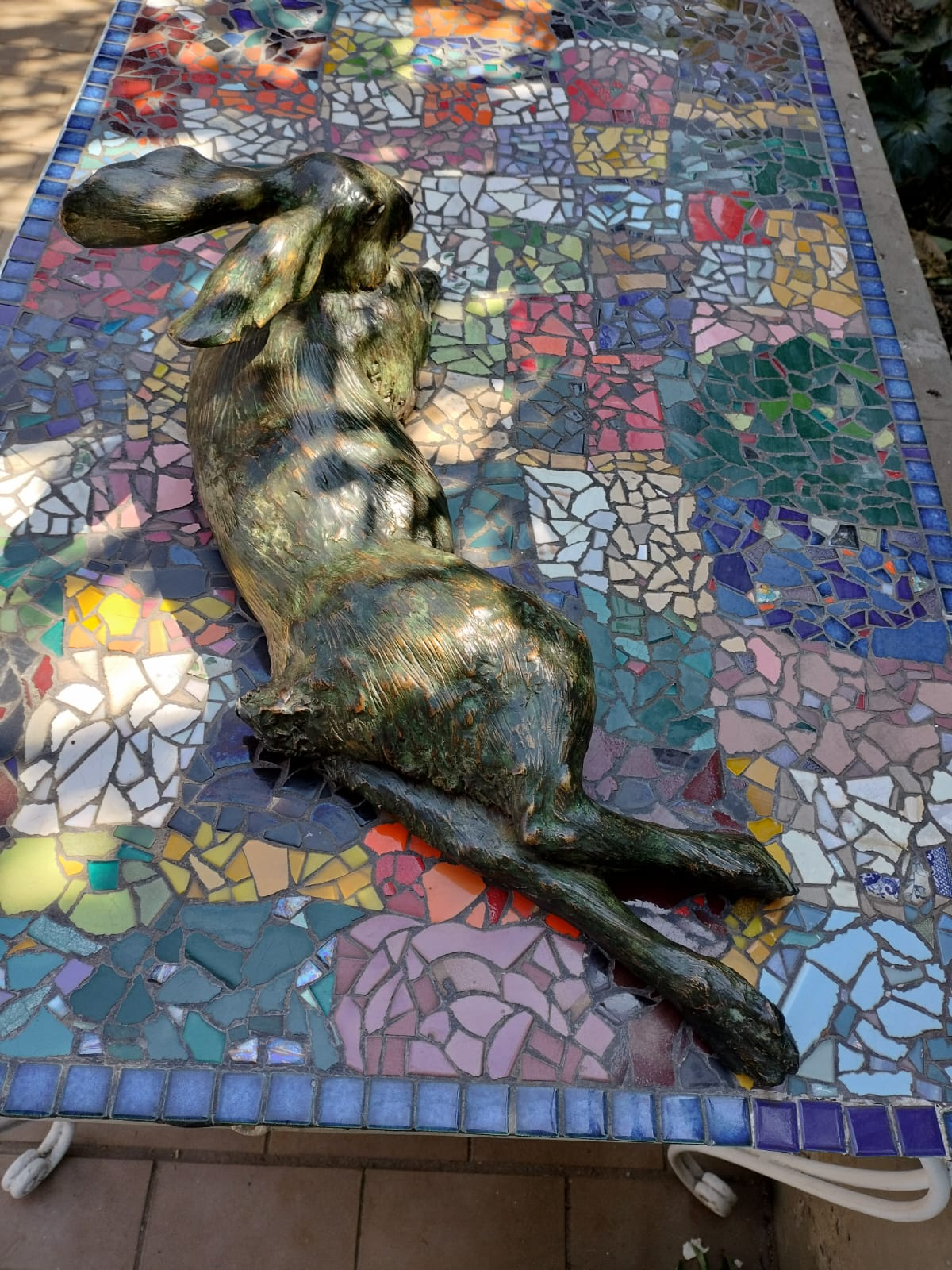
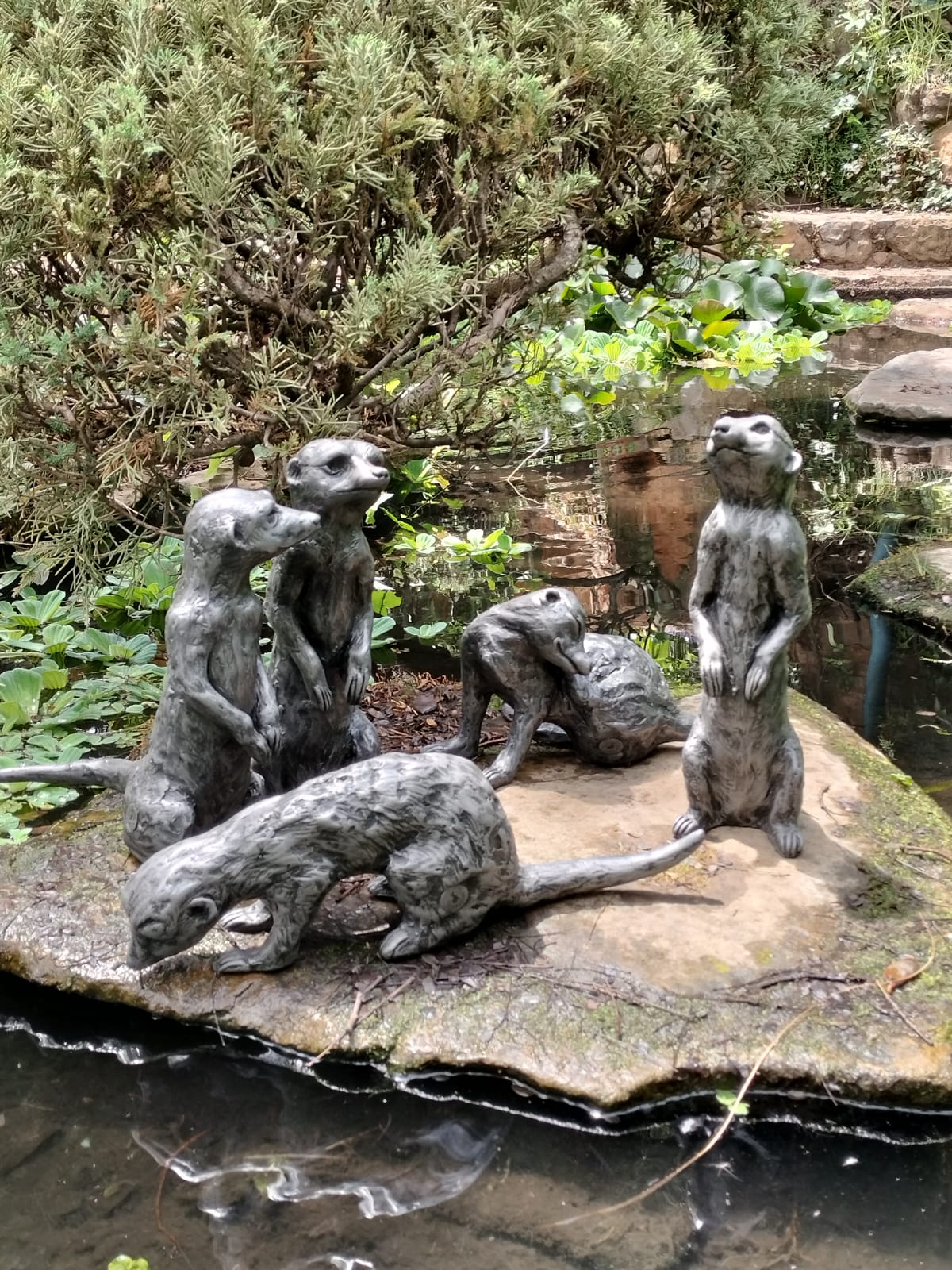
Where she has found her niche is in the animal kingdom, specifically with her magical hares Although there’s also the rest of her ever-growing menagerie – she makes the most wonderful cats, Pangolins, and Meerkats, a few specific dogs, sometimes for a mourning pet owner. But when you witness her husk of hares (14 different ones), you can’t help but lose your heart.
It all began when she was looking for something that was manageable in size due to space constraints but, ever practical with a specific goal in mind, it should be able to travel easily. She also invests in narrative and has strong and happy memories of the Karoo and seeing hares darting in the car headlights at night.
While the hares are all part of a series, each one is made individually and implanted with its very own microchip with an identity number and a letter of authentication. “They don’t just pop out of a machine,” she says. But that is easily visible when you encounter this lively bunch.
Each one has its own personality and name: Lalela – The Listener, Moongazer, Ready Steady… Go!, Hare Apparent, Mvundla (isiXhosa for hare), Cambalele (isiZulu for sleepy and relaxed), uNogwaja (isiZulu for hare), Mpho (isiZulu for gift), uMoya (isiZulu for spirit), Thinker, Nwaya (isiZulu for itch) and Matasatasa, (isiZulu for busy), Bheka and Dancer.
And that’s exactly what first catches your attention. These are hares with identity and probably that’s how they find their rightful owners. And that doesn’t seem a problem for Carol. Her latest consignment is for a Belgian Gallery which has ordered 98 sculptures. What caught their attention were these hares with souls!
A percentage of the sales of her hares is donated to the Endangered Wildlife Trust’s Riverine Rabbit Project.
But this is by far not the end of her reach. Do yourself a favour and browse through her My Hares and Graces website. (https://myharesandgraces.co.za) Don’t miss her archives and see that you scroll right to the bottom to catch a glimpse of her own favourite ‘canvas’.
She describes it as “painting/quilt/castle/cave/mosaic/river/mountain sculpture. Four stone masons became my paint brushes together with a man making the cement (doing the rough stuff) while I directed them and put some pieces of stone in myself, here and there. The making of this Wall gave me enormous pleasure and gives me pure joy looking at it. I don’t have a seascape or a mountain scape but this canvas is as close as I can get and it constantly changes with the light of the day. When it rains the water flows over it like a waterfall.”
I was delighted to discover the sculptures of Carol Slabolepszy and to see the majestic range of her art was magnificent and just adds to the richness of this artist’s creativity.
Because of my strong ties with local theatre, it was Paul whom I contacted to express my surprise about discovering Carol’s work. We arranged to meet when they came to fetch her sculptures following the closure of the exhibition.
He was also on my list for a chat because his latest smash hit Bitter Winter is due for a run at both the Hilton Arts Festival (August 8 – 10) and Potchefstroom’s Aardklop (October 7 – 12).
I loved the play when it made its debut in Joburg last year, and like everyone else, raved about the production. What Paul did so cleverly was to write about something (as he always does) that he knows intimately – two actors auditioning for a play.
It was written during Covid, a scary time for everyone but especially in the acting world, which is a precarious career choice without something like a pandemic adding to their often tough livelihood.
As he tells it, it was a talk by Lizz Meiring in her role as warrior for the Theatre Benevolent Fund that started his mind racing on this latest play. He is part of the ageing theatre community and is aware of just how difficult it is to make a living from the arts.
He also knows how scary auditions can be. “It’s not just something you can switch on,” he says of performance. “And as you walk in you spot another actor who is perfect for the part you’re hoping for.”
But still, they learn to deal with the fear and how to work a situation. And it is exactly this that Bitter Winter deals with.
As I wrote in my review, (https://bit.ly/4jPBGy9 ) anyone who knows about theatre recognizes this daunting yet challenging situation. Yet not many of us are faced with this particular hurdle every time we need to work.
And while actors simply have to accept and work with their fear, as we also know, there’s not that much one can do to alleviate those jangling nerves in what can only be described as a heightened experience which comes around every so often.
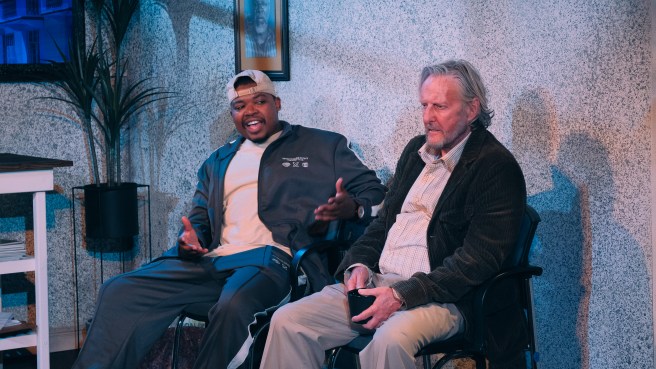
Starring Andre Odendaal (pictured right), Oarabile Ditsele (left) and Chantal Stanfield, Bitter Winter is an extremely clever play on many levels. It’s something everyone can relate to. And that has always been Paul’s gift.
There’s a raw but real quality to his storytelling in a language that he has shaped and refined in his own special.
Watching and listening to him talk, I think of his enthusiasm and excitement over the years. Whether on or off stage, he remains exactly who he always is. Thrilled about this latest success, he can hardly wait to tell me that he is already busy writing a new play.
Titled Midnight in Parys, Paul describes it as a thriller, and as with most of his work, he reaches into his past, something he remembers, and comes up with a play that touches audiences because of its authenticity and its characters who seem to represent people we know.
My curiosity was rewarded and all I wish for this creative couple is that they never stop dreaming. I know they never will.
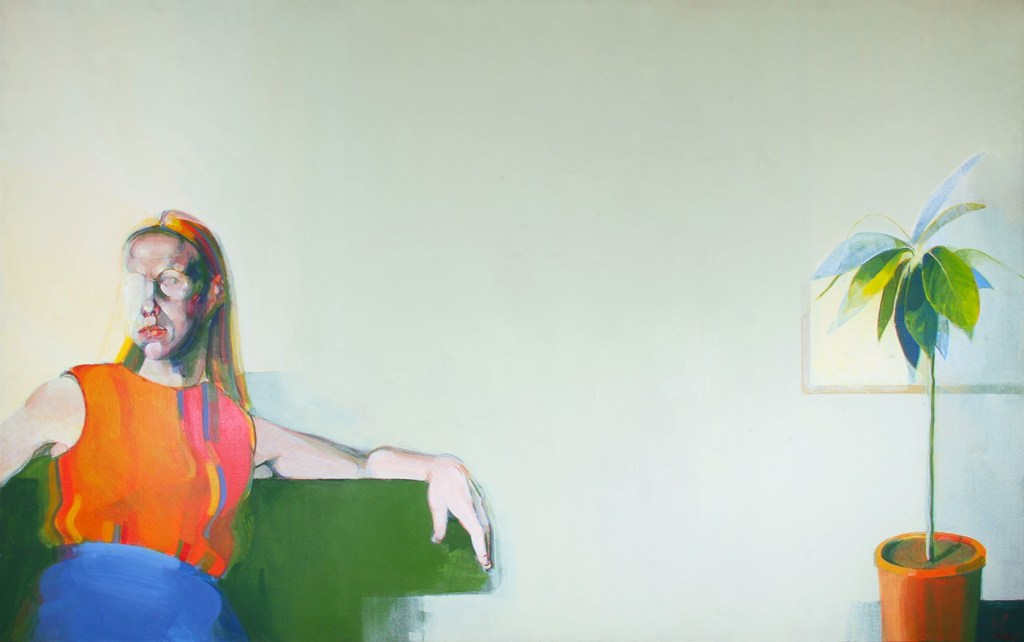
Margaret Nel on the journey of a painting: – “This work, titled Corner seat was completed in 1976 and was sold to Mrs Dora Scott when it was exhibited in Bloemfontein. Dora Scott and her husband were very involved in the arts in the Free State and her son Fred Scott is a founding partner of Walker Scott Art Advisory. When Dora Scott died, some of her large collection of art works, including this one, were put on auction and it was bought by the collector, art dealer \and erstwhile gallery owner Warren Siebrits. I bumped into him at an art fair and he invited me to see the painting at his house. I asked him to let me know if he wanted to sell the work at some stage and he later contacted me to say it was for sale. It is a good example of my figurative work painted during the 1970’s. I have very few paintings from this period in my possession and I was very glad to be able to buy it to add to my personal collection. It is about 50 years old and quite frail.”
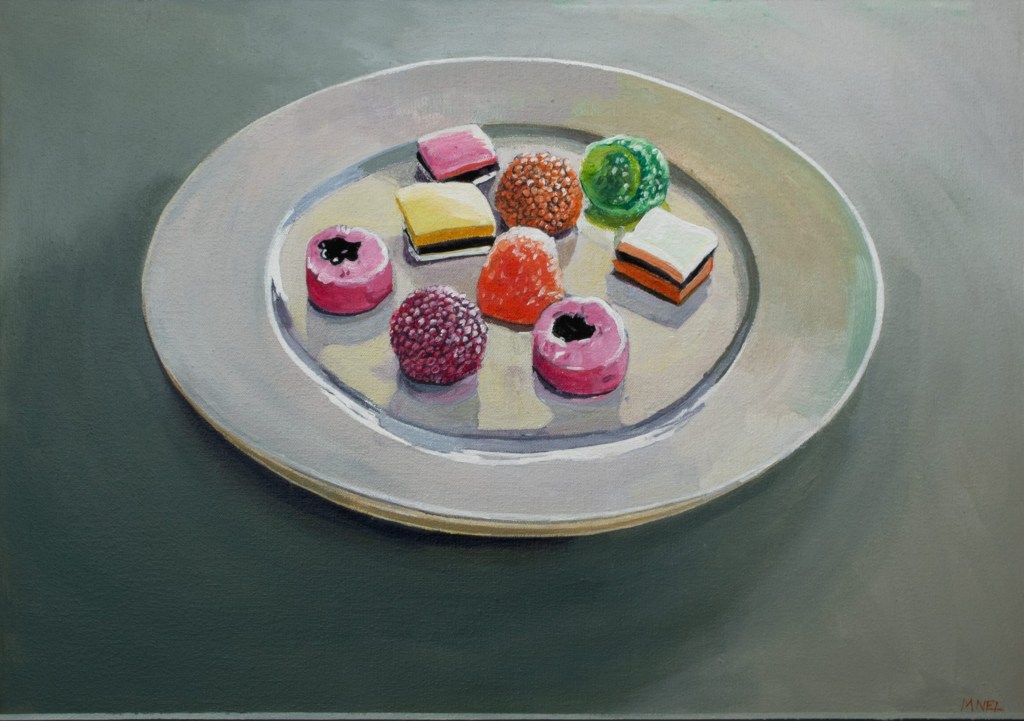
Before starting to write this story, I quickly glanced through an interview I had done a few years back with one of my favourite artists, Margaret Nel, when she held a major retrospective at the Pretoria Art Museum in conjunction with the Association of Arts Pretoria where her latest exhibition titled Aftermath opens on Saturday May 10 running until the end of the month.
As she says so clearly in her Artist Statement, the theme that dominates her work from her earliest days hasn’t changed. It has always been about loss. She believes we have all witnessed and experienced loss in some form during our lives. “The debilitating effects of age and consequent loss of power and a voice and sense of self are perhaps the ultimate cruel and unexpected loss that all of humanity has to encounter eventually.”
Yet while her driving force hasn’t changed for this exhibition, her subject matter has. She has turned to objects rather than her usual figurative work, which has become more and more difficult to apply. “It’s easier to work with a theme and a new way of exploring the things I want to say,” she explains.
Allsorts 1
It is also a tough ask to find models willing to take the time, she says.
When listening to her talk about life and the harshness of loss, which the word almost unconsciously implies, I was surprised at my immediate reaction to her current work.
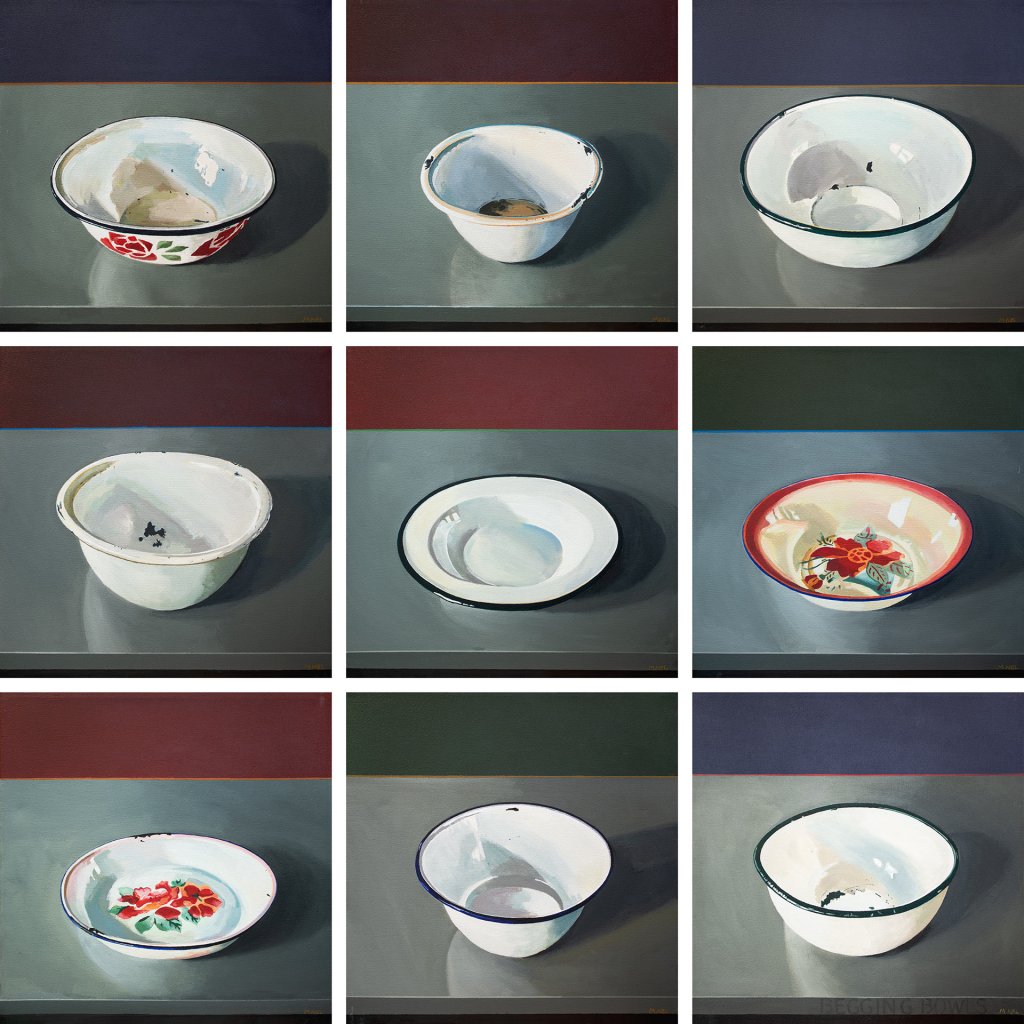
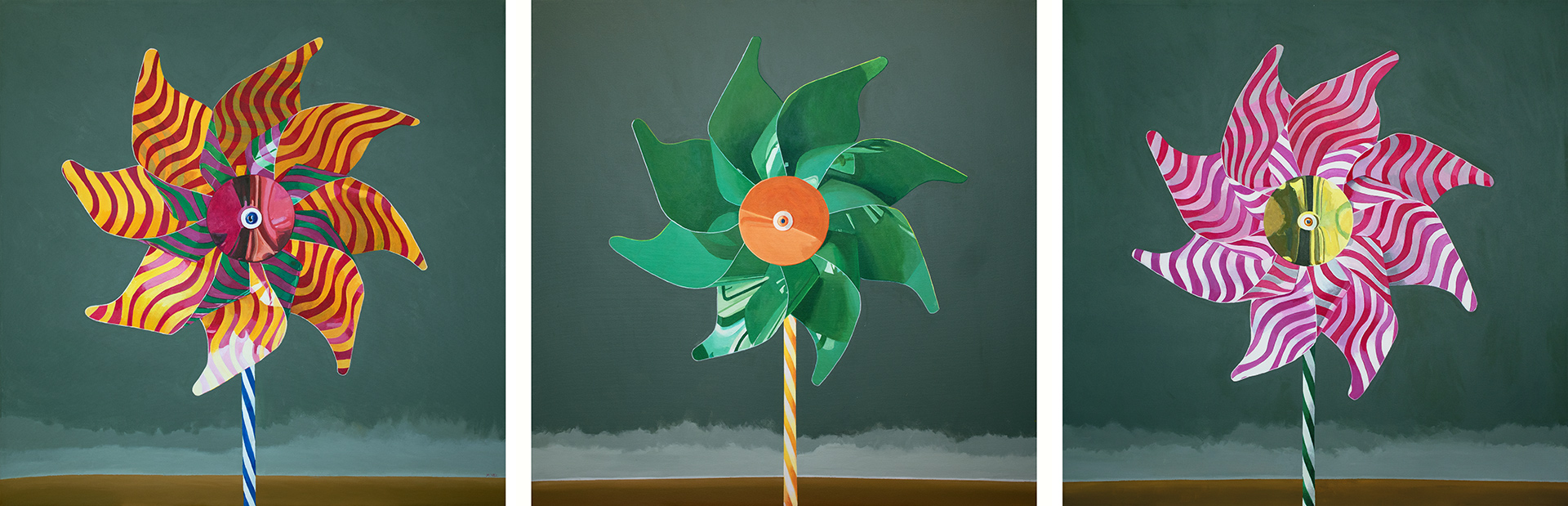
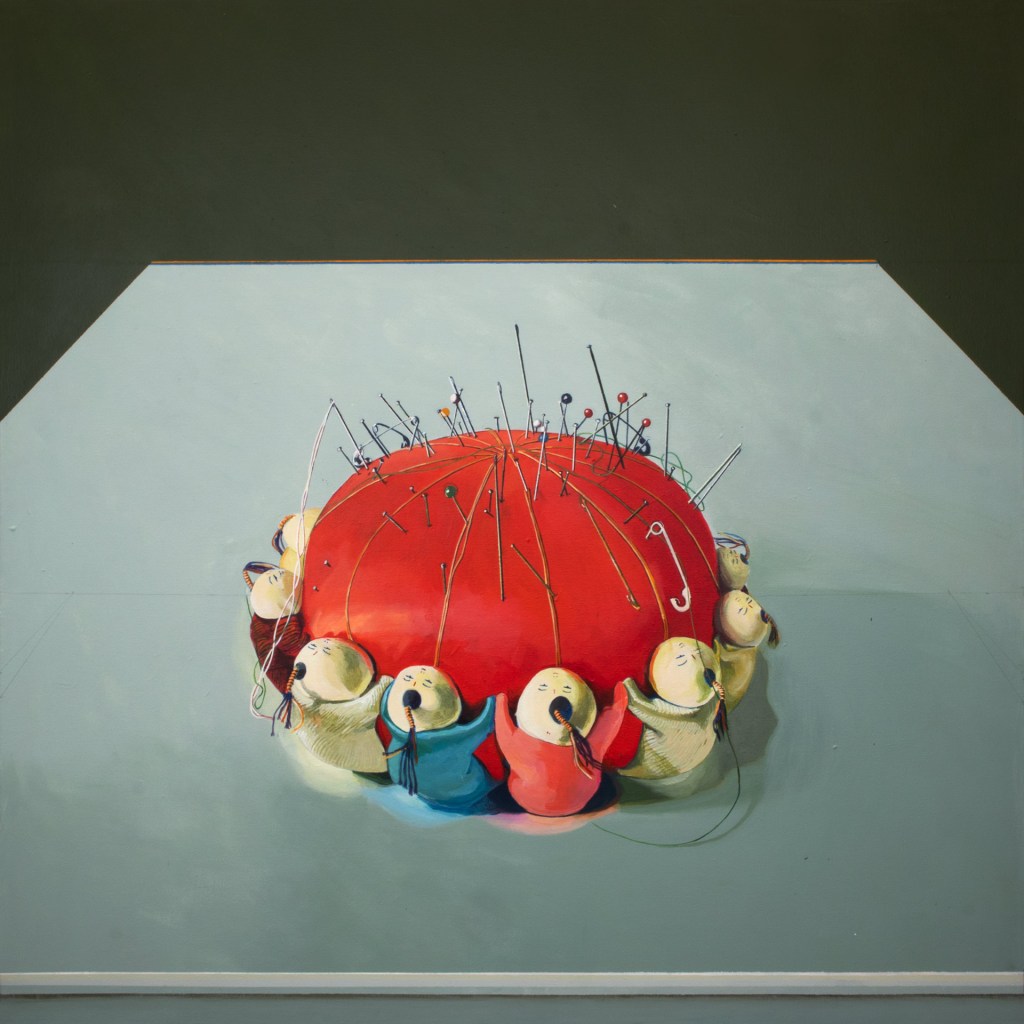
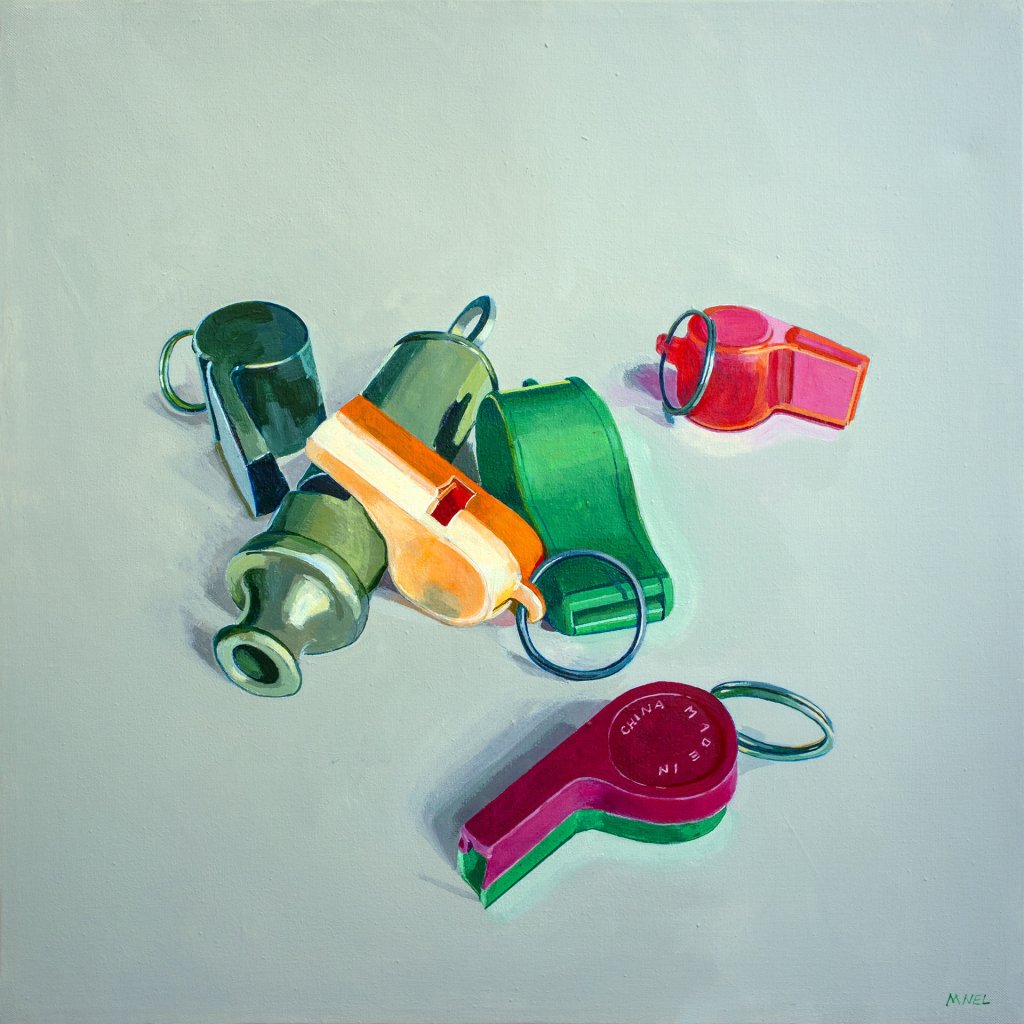
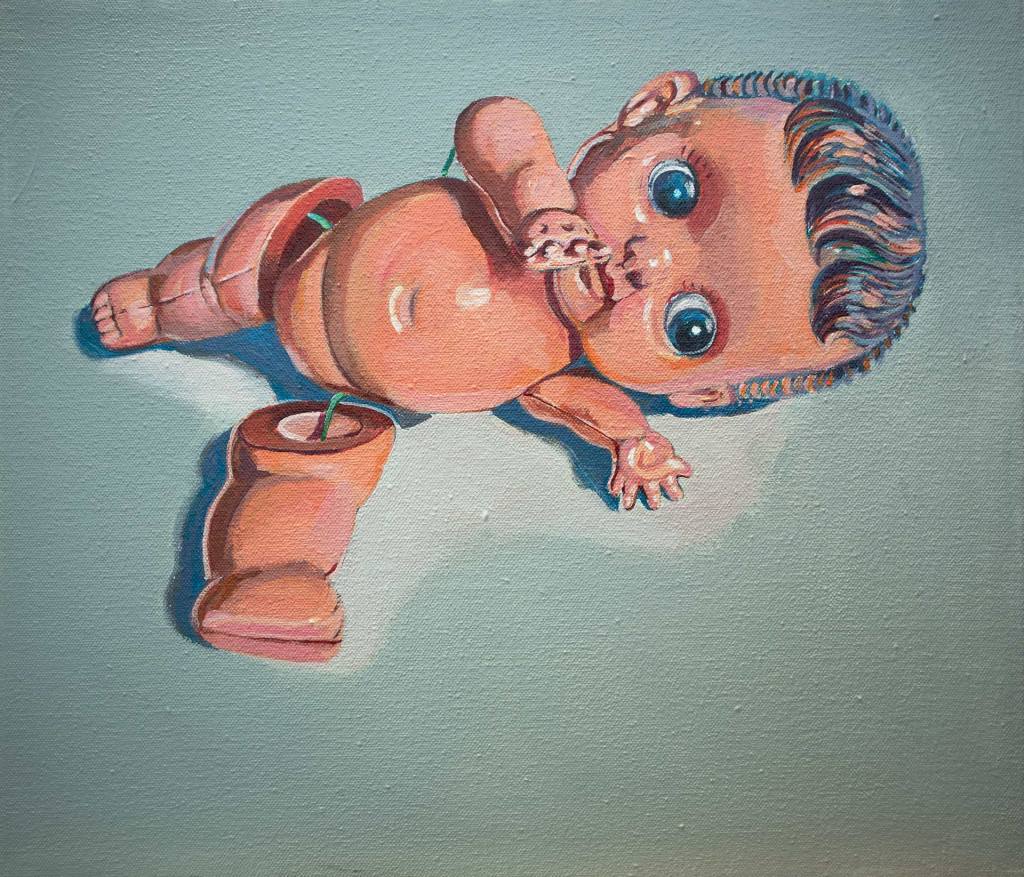
She is dealing mostly in things from her past, which means that many of us would find them familiar too: shiny pinwheels, old fashioned pincushions, Liquorice Allsorts, sweets in shiny wrappers in different stages of unwrapping or even the unfolded, now empty wrapper without the sweet, tinfoil containers, mechanical birds, wrapped flowers, colourful whistles, enamel bowls and a rather disconsolate plastic doll.
And even though I concede there is a certain melancholy, it also brings me great joy in a nostalgic kind of way. And who would not be tempted by her bright sunshine colours?
As important as the paintings themselves are, the names she gives each work also play a huge role and will point many in a certain direction. The enamel bowls for instance are titled Begging Bowls (see below). The name alone will encourage viewers to uncover their own stories. Alert is how she identifies the whistles, and it is as though you can immediately hear that shrill sound or visualize a school sports event.
All these objects were carefully selected by Margaret, who understands and is happy if everyone viewing the paintings gives them a different meaning. It’s not something she wishes to impose and if the work is simply seen as pretty pictures, which they certainly also are, she is fine with that.
For her, the objects in the individual works all play with the meanings of loss. And there certainly is a feeling of melancholy when you look at the exquisitely rendered paintings. Personally, it takes me back to childhood. I have always had a fascination with pinwheels, which because of their colours as well as their joyous twirling when the wind blows, have always held that hint of magic.
As someone who sews, I was immediately enchanted by the pincushions, the like of which I had never seen before, but Margaret explains : “I am not sure if the Chinese pincushions are made any more. Mine are antique and probably about 80 years old, the material is silk and the stuffing is some sort of organic material like grass. We regularly holidayed in Lourenco Marques (now Maputo), when I was a child and the pincushions were bought at small Chinese curio shops. Nothing similar was available in post war South Africa.
Curio 111
In her world, when it comes to her peers, she says she feels like the last man standing, which also explains why loss at present conjures up such heartfelt emotions. There’s no one around who witnessed her childhood or even young adulthood, she says, and expresses envy as an only child for those of us who have siblings. There’s no one who can hold on with her and share her memories.
Talking about the process of painting, she declares that she often feels quite high when a painting is completed.She also does all her framing and with these paintings has changed from aluminium frames to wood which she can also paint and feels adds to the painting. She’s also in the habit of reworking old paintings and precisely that compulsion will be the subject of her next exhibition.
She will be looking at old work, all locked away in a storeroom, figurative work, which will be reworked.
Alert.
“I’m full of self-doubt,” she notes, and one can understand why. Her work is usually done in isolation with no one to encourage or discuss issues or share her thoughts about the work. Yet her beautiful home, the iconic round house close to the Union Buildings, is an interior masterpiece and glorious example of how exquisitely she curates her own life.
The house has been furnished magnificently to capture a very specific mood with, at the time of my visit, her exhibition paintings displayed on all the walls throughout the house. Because of the prolific windows, the backdrop is the sunny highveld skies while the furniture has an industrial feel with added warmth due to her cunning colour choices.
It is a pity that in today’s often hostile world, she has decided against a home exhibition because this is where Margaret so obviously feels at ease. And for the visitor it is an exciting extension of her creativity.
She knows she has to take her whole body of work into consideration, yet she’s constantly worrying about certain decisions and whether she has got it right. But still, she welcomes and encourages criticism and is sad that art criticism has all but vanished. She talks about very harsh criticism she received at a previous showing and feels that the writer opened new avenues for her. They probably simply confirmed something that had worried her and that set her off in a new direction.
Doll.
“I can’t promote myself,” she says and, because she is quite solitary, she finds it hard to put herself out there. Yet she is keen to have proper conversations about her art. “How else would I learn?” she wants to know.
What she believes though is that her experiences of life captured so stunningly in this body of work would be familiar to viewers. “Life is just full of loss,” she laments – and she’s right, yet there’s so much more captured in this magnificent display of her latest exhibition.
The exhibition will be complemented by a selection of ceramic vessels by Dale Lambert. Her delicate, decorative stoneware is characterised by minimal, bold forms and vibrant, primary colours. The artist states: “My obsessive fascination with clay goes back to my early childhood and remains to this day. I currently enjoy the thrill of working with porcelain, and the translucent pieces I create are an expression of my being.”
Diversity was the element that dominated this year’s fantastic KKNK Festival (in Oudtshoorn at the beginning of the month) – from the audiences to the artists, also including the plays and performances. DIANE DE BEER reports:
PICTURES: Hans van der Veen (unless otherwise stated.)
On one day you could see a solo show, a play with both words and movement, a translated modern classic and a new work that will outlast some of us watching.
Yet as is often the case at this festival, theatre was what really captured the imagination – and true to the diversity theme, it played out in many ways.
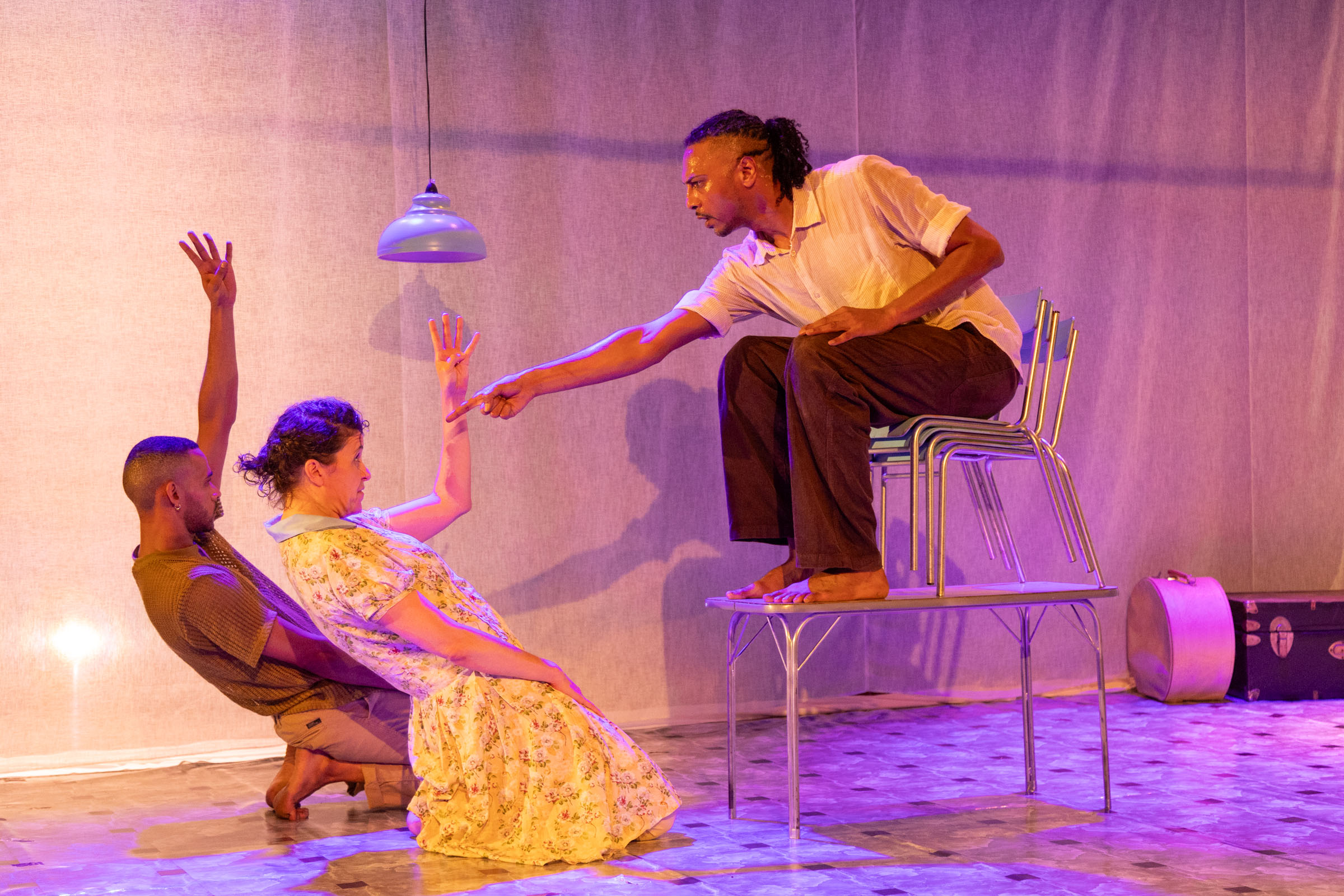
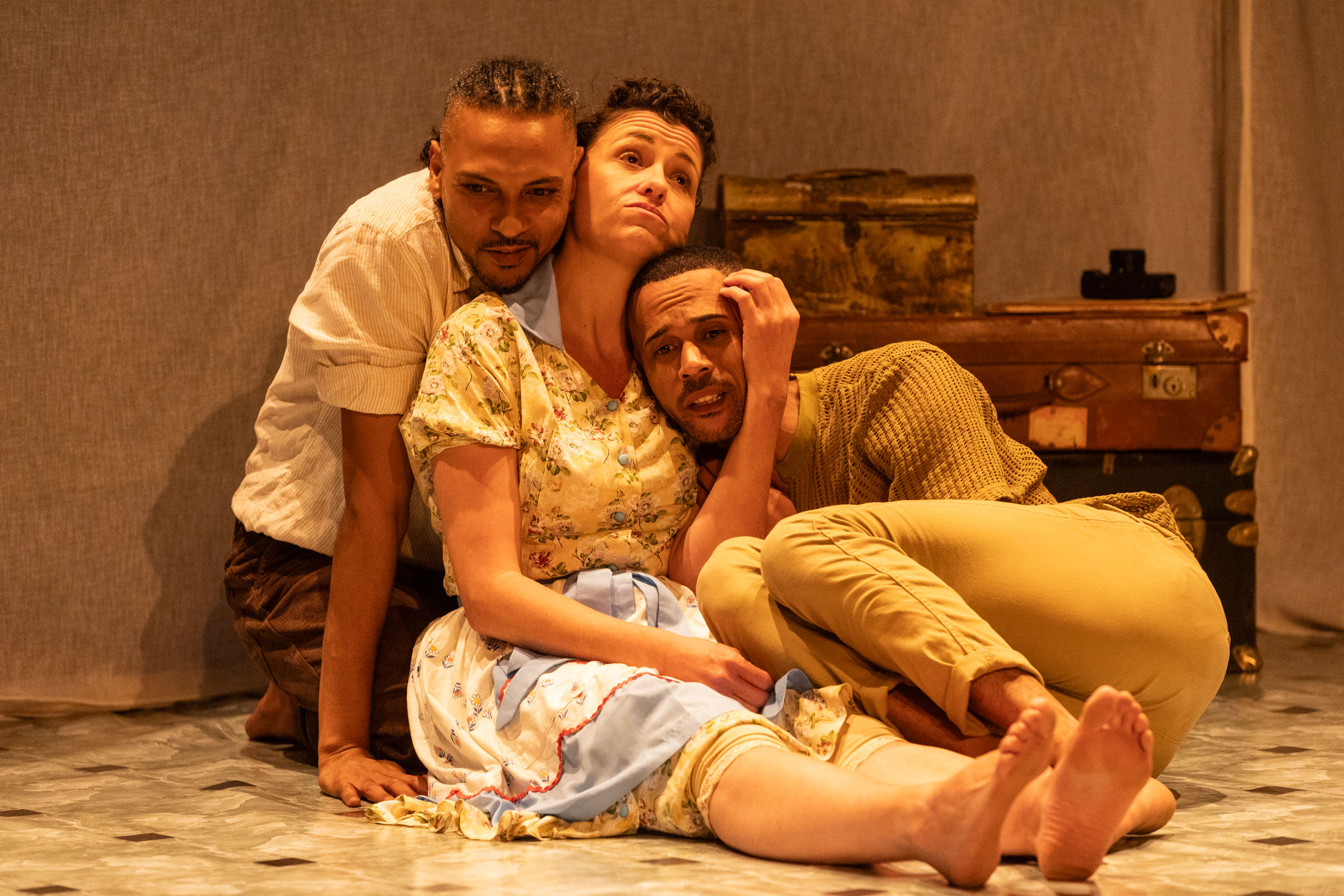
For me it started with a bang with a piece titled Die Een Wat Bly (which can also be seen at the upcoming Cape Town Suidooster) with a cast consisting of the two talented dancers from Figure of 8 Dance Theatre (Grant van Ster and Shaun Oelf) who in this instance combined their extraordinary movement with the insightful words of Wessel Pretorius who seems to deliver an endless stream of brilliance. And the third member of this inspired cast is Daneel van der Walt who is an actor who has emerged these past few years as someone to watch.
Everything seemed to combine beautifully, from the story, how it was written, the excellence of the casting and the way movement underlined and emphasized every emotion so magnificently. I couldn’t resist catching it a second time and it confirmed my initial instincts that all the elements just flowed together seamlessly to present perfect theatre. I could easily watch it again … and again… and again.
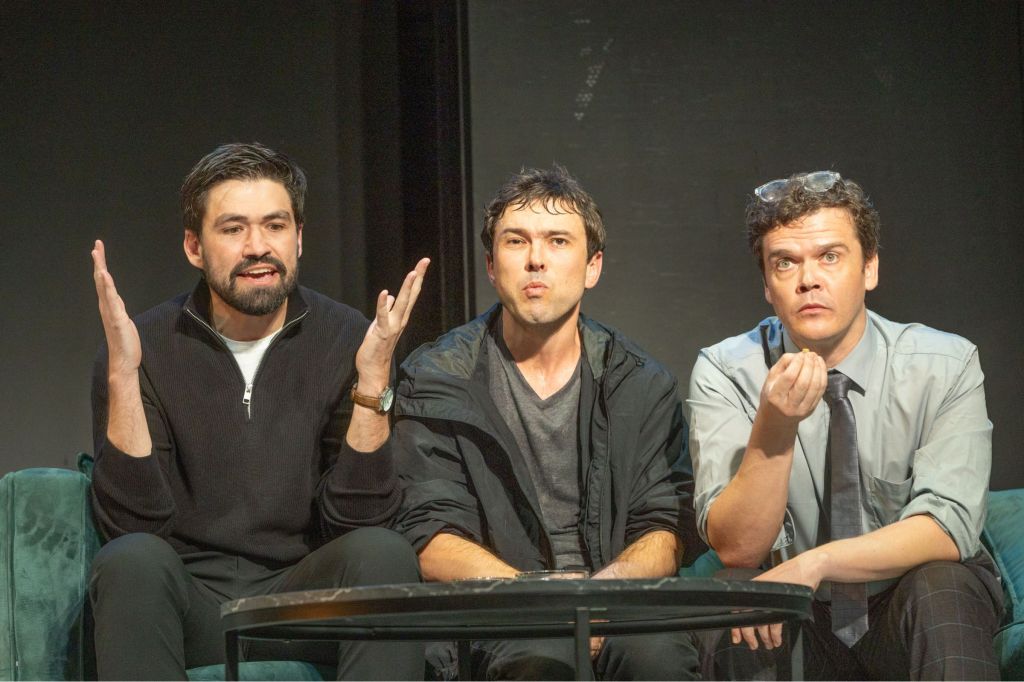
In a different guise, Pretorius performed in Yasmina Reza’s translated text Kuns (which had previously been performed by two of the actors, also directed by Marthinus Basson in the English version titled Art). Pretorius and Wilhelm van der Walt (part of the former cast) were joined by Ludwig Binge in a play that satirises the often achingly precious way people view and talk about art.
Because of the NOW, a time where an anti-wokeness and fake news seem to dominate everything, it worked even better than the first time I saw it and with these three adventurous actors (all three Basson graduates who have established exciting theatre careers), it was perfect for this festival which always celebrates.
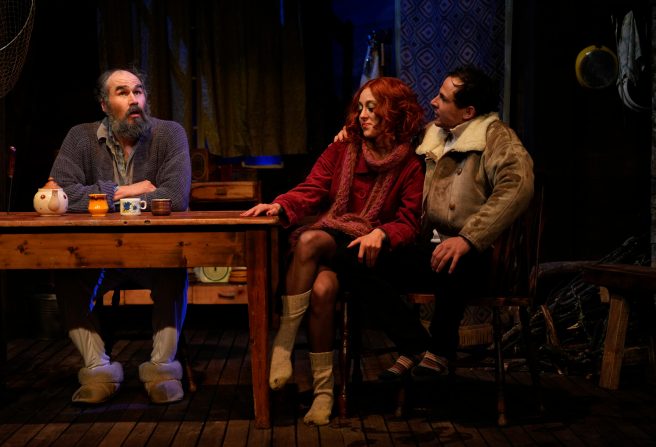
Basson also delighted with a play which has been on the circuit for a while, and I was thrilled to finally experience. Who would not be intrigued by a play titled Kruispad, of die legende van die goue vis.
Picture: Nardus Engelbrecht.
Again the casting blew me away with Eben Genis giving one of his finest performances in the role of the eccentric recluse Oswald whose life is rudely interrupted by two lost and rain-drenched youngsters played by two of the best, Edwin van der Walt and Carla Smith, with a glorious copper-coloured wig which completely changed her character without her having to say a word.
Because it plays with temptation and loyalty, it reminded me of the film Indecent Proposal in which Robert Redford offers to buy Demi Moore for a million dollars for the night.
Masterfully written and performed with great gusto you are never sure what is real or not, whether something is fact or fiction, and in fact when someone is being honest or not. It’s like trying to solve a puzzle that tortures and teases with a few disruptive detours that keep you slightly unbalanced as an audience.
There was so much more in the theatrical realm with solid performances in the Hennie van Greunen translated and directed Annie+Helen with Cintaine Schutte as Annie, the governess/teacher in the Hellen Keller story and Judi Hattingh as the severely damaged teenager who cannot see, hear or talk.
A mighty struggle ensues and from beginning to end, the two actors battle, and sometimes, bruise one another in a fight for something so much more than survival.
I have always been a huge fan when some of our younger directors (and he might take exception to that description) take on the classics, and I was excited to see Speelgoed van Glas translated, directed and designed by Nico Scheepers.
Casting was a further incentive with Annamart van der Merwe, Carla Smith, Ben Albertyn and Mark Elderkin on board, and was also alerted by all the awards they had already received, all of them thoroughly deserved. Van der Merwe’s bravura performance as the brittle mother is bruising as she embodies a woman who is desperately fighting to hold on to the only power available to her, that of motherhood (and in this instance also victimhood).
Her children, especially her son, have no such illusions and their confrontation reminds one of how a home which should be a protected space for a family can become a warzone which holds only fear and a frantic will of those threatened, to flee and find emotional freedom.
It’s devastating writing, smartly translated and, set in the present with a cast who have had the time to hone their craft and honour the play.
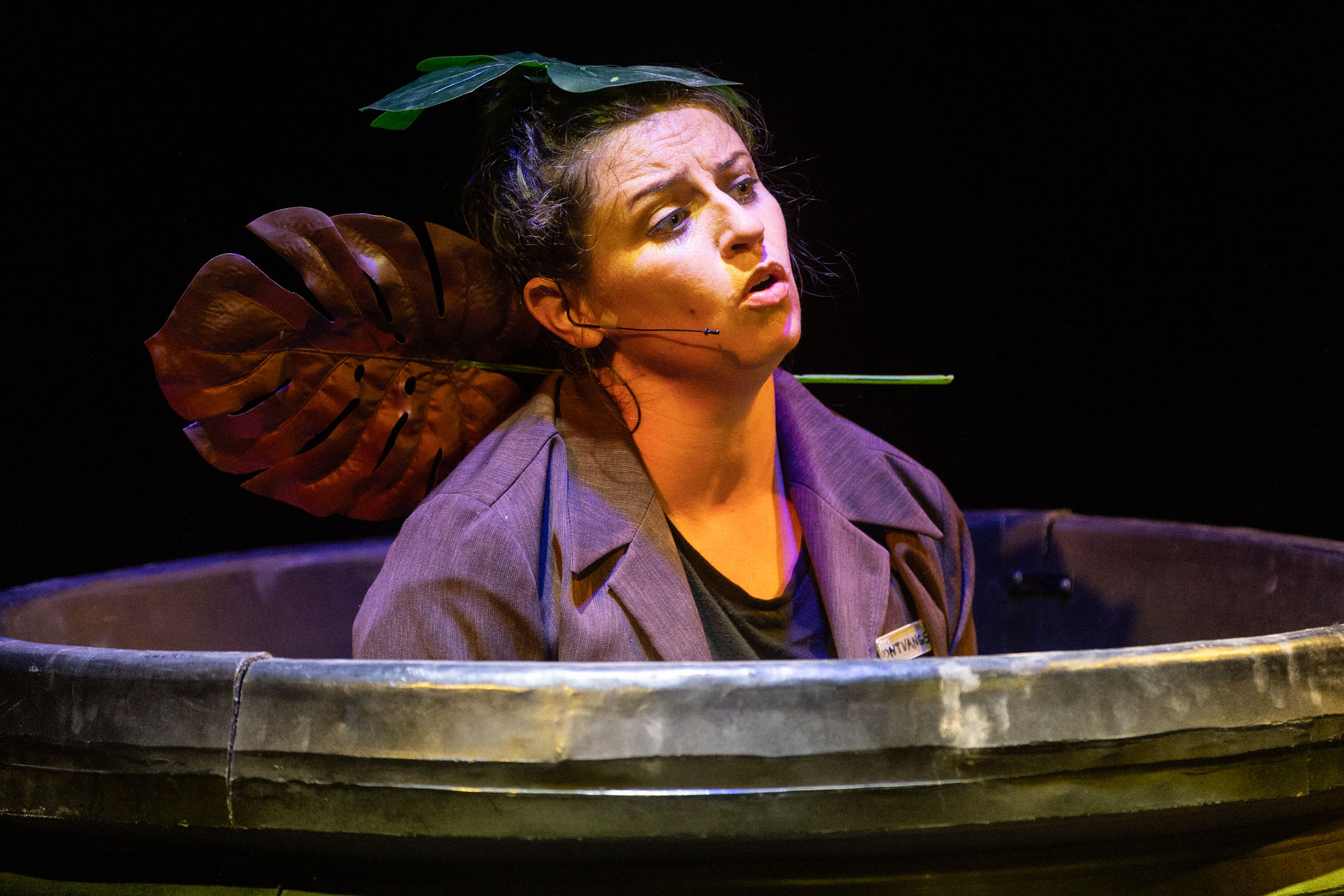
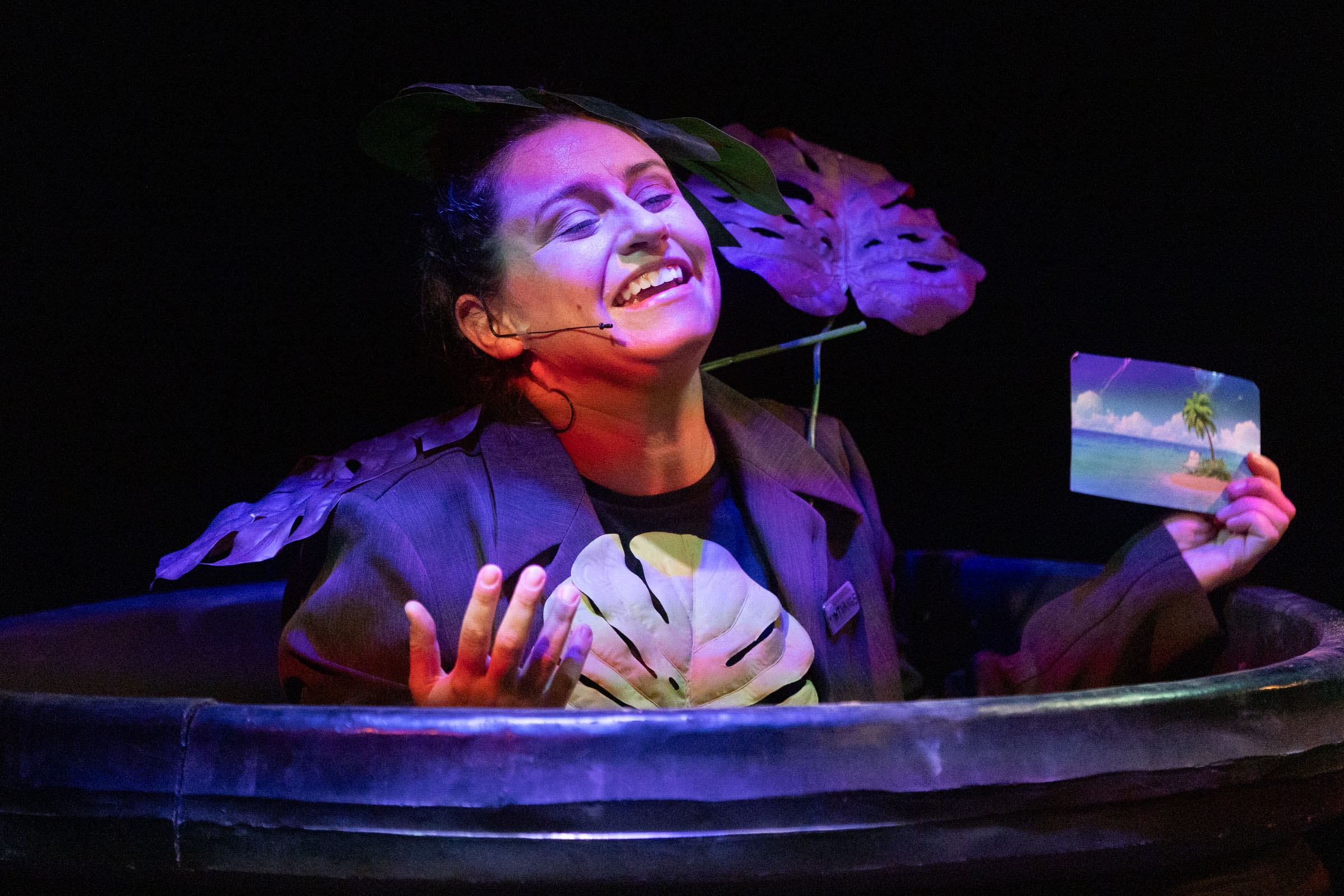
Also Die Potplant: ‘n Tragedie written and played by Karli Heine who changed what had previously been part of something now called Blitsteater into a longer piece had an interesting effect on me. It’s a wonderful idea with a script that’s inventive with underlying pathos – and yet, while it still had the impact and was cleverly stretched into a more comprehensive play, I think I preferred the shorter version.
It might have had something to do with the impact it had the first time round as well as having lost my heart to that version, I was more aware of the padding. Yet Heine is worth watching. She is someone that thinks out of the box as well as having the courage to take chances. You need all of that in this challenging profession.
Another joy at a festival is discovering new talent as well as witnessing the creativity of artists and how they find ways to explore their craft in a world with no boundaries yet many obstacles. Bibi Slippers, who can only be described as a compulsive creative did two shows as part of the Blitsteater (a bit like fast food, fast theatre), but there’s nothing fast about what she does with her imagination.
Picture: Stephanie M. Gericke.
I have always been fascinated by this young woman who has carved her own career in a very individual way. She pops up all over the show and her strengths lie in her words. She knows how to use them and has two spectacular poetry books that run like a thread through her performances.
Everything she does has thought behind it, is usually novel and it works. If anyone wants to see how to be an artist in today’s world and be in command of your own life, this is it.
In similar vein Sandi Dlangalala and Ilana Cilliers combined style and swagger to present an interlude of theatrical magic with Smak. The way they told the story in very little time with their whole being and soul was quite extraordinary.
A regular festival contributor, Llandi Beeslaar, who with her partner has been running a series of short performances by various artists, in the above mentioned Blitsteater, decided it was her turn to shine individually. She was ready to test herself as a comic with her first stand-up piece.
She participates in the arts in different ways, but this is a chance to use her own voice – and that she does with a particular style. Most importantly she has something to say and should keep going while honing her craft. There aren’t enough women in this space and the only thing she lacks is confidence.
Picture: Mia Truter.
A solo performance that stood out was that of singer/songwriter Frieda van den Heever. I first noticed her as producer with a fine sensitivity as well as an imagination which seemed to be strongly independent.Picture
She has obviously decided it is her time and instead of producing others, she staged her own show. She’s got all the goods and probably if you start counting, has more talents than a triple threat. In this her first solo show (that I know of) at a festival, she did the performance as well as the production. She brought in Mauritz Lotz on guitar, but the rest was all done by this astonishing performer.
I’m more of a theatre girl than music, but she blew me away with her presentation, the way she put together her show, her music (on piano as well as singing and songwriting), her lyrics and her singing. I know I can find her album Ontspoor, onlineand that’s what I’ll do.
But to find new music so accessible and a performance that’s fresh, daring and quite darling. I’m a groupie. Once I checked her previous work (which I had seen, with her as producer rather than performer) I understood why I liked the show so much.
Karoo Kaarte is one of my favourite experiences every year at this festival. They pick their battles, how best to explore them and this year they joined forces with the District Six Museum and GALA queer archive and used the Kewpie: Daughter of District Six picture archive as a platform to develop this years’ experience.
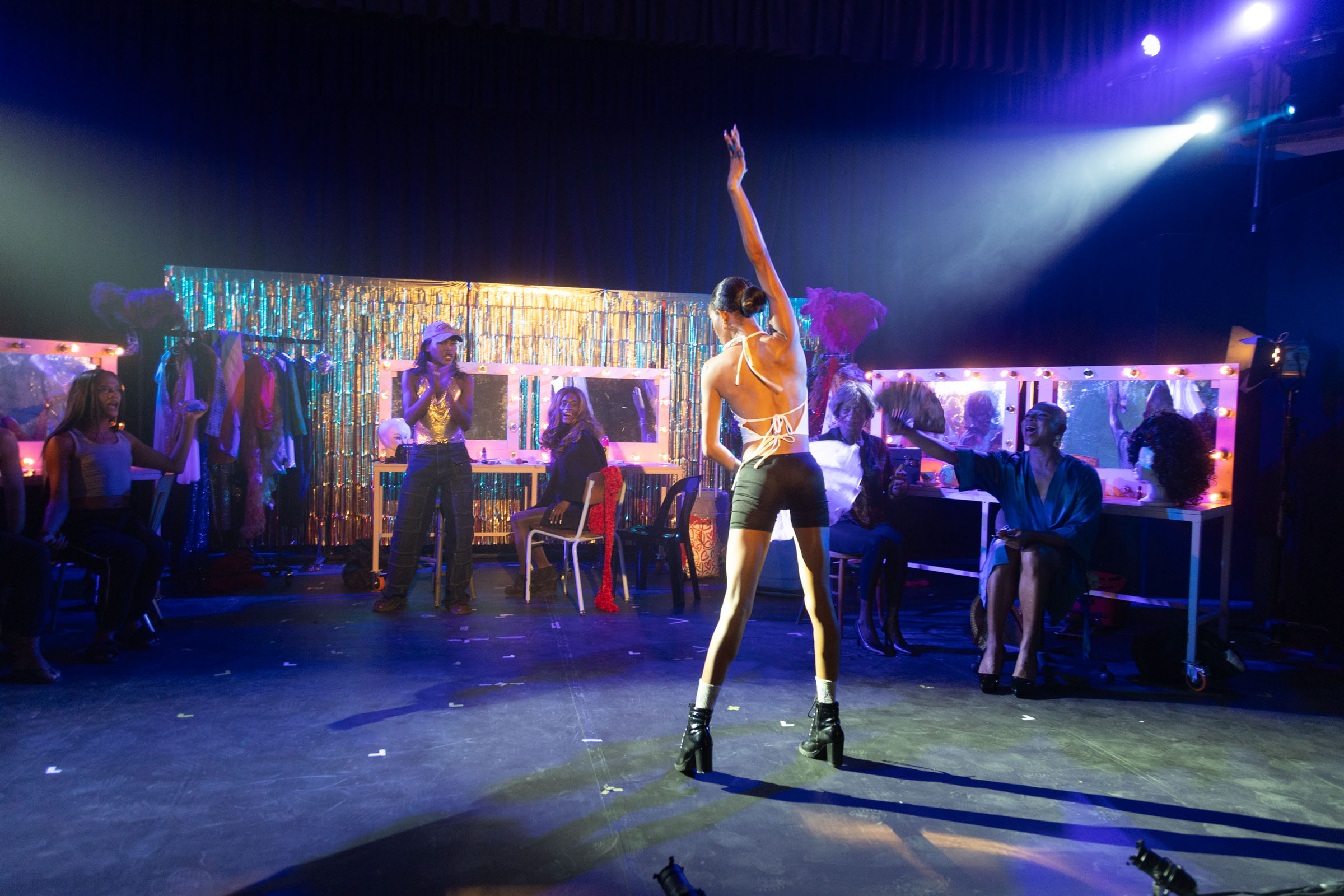
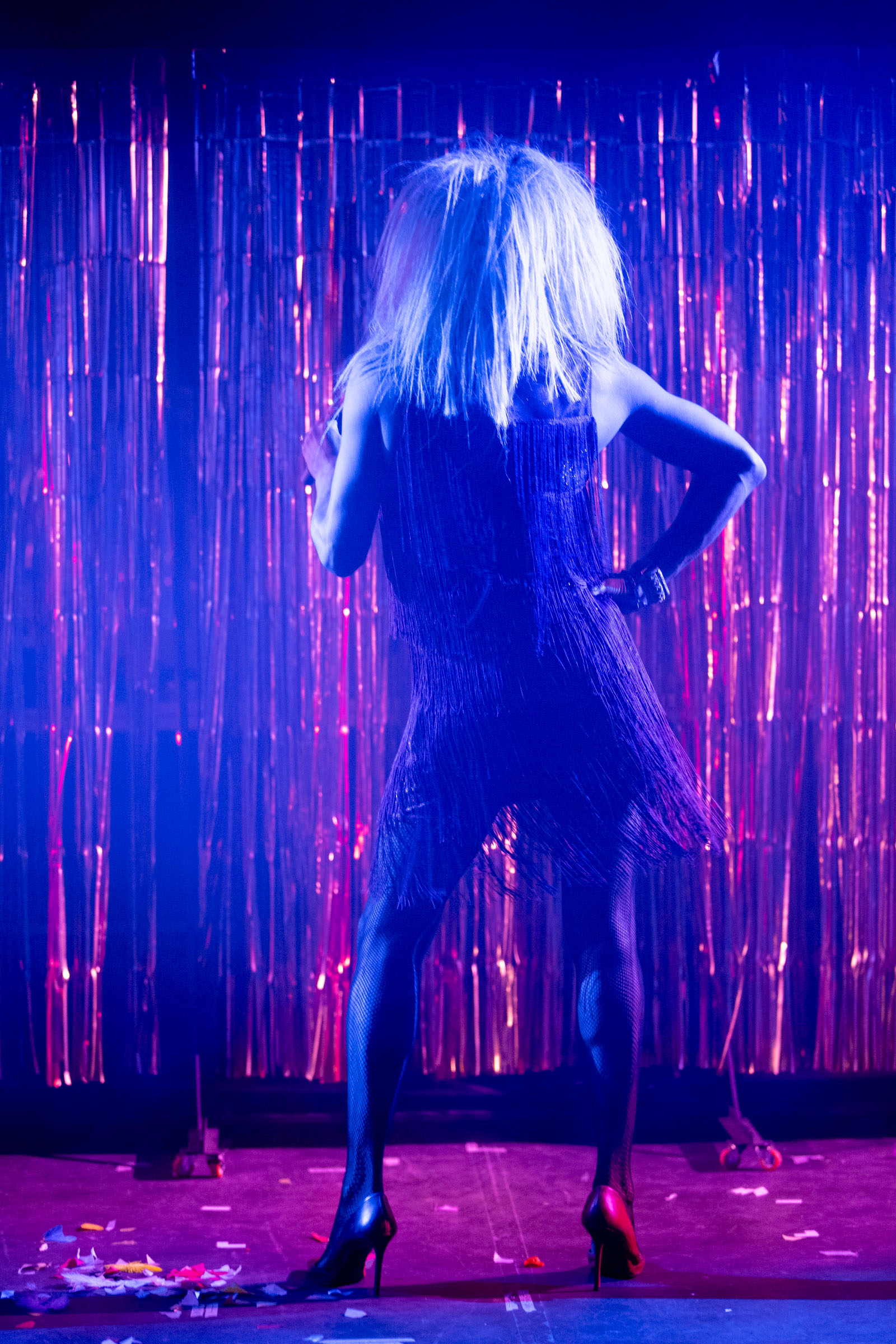
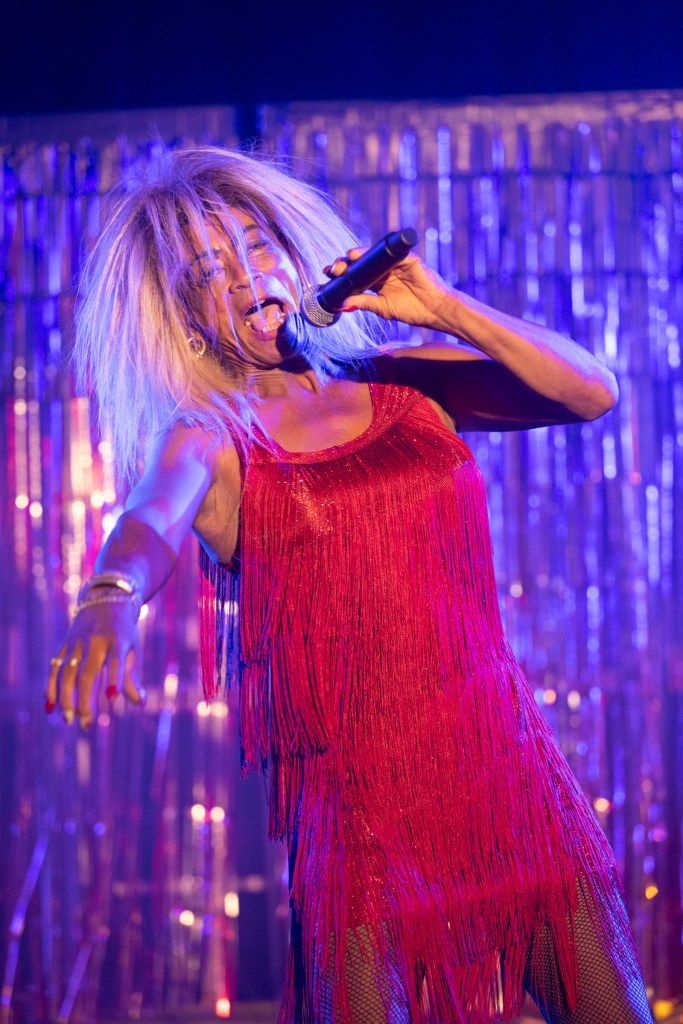
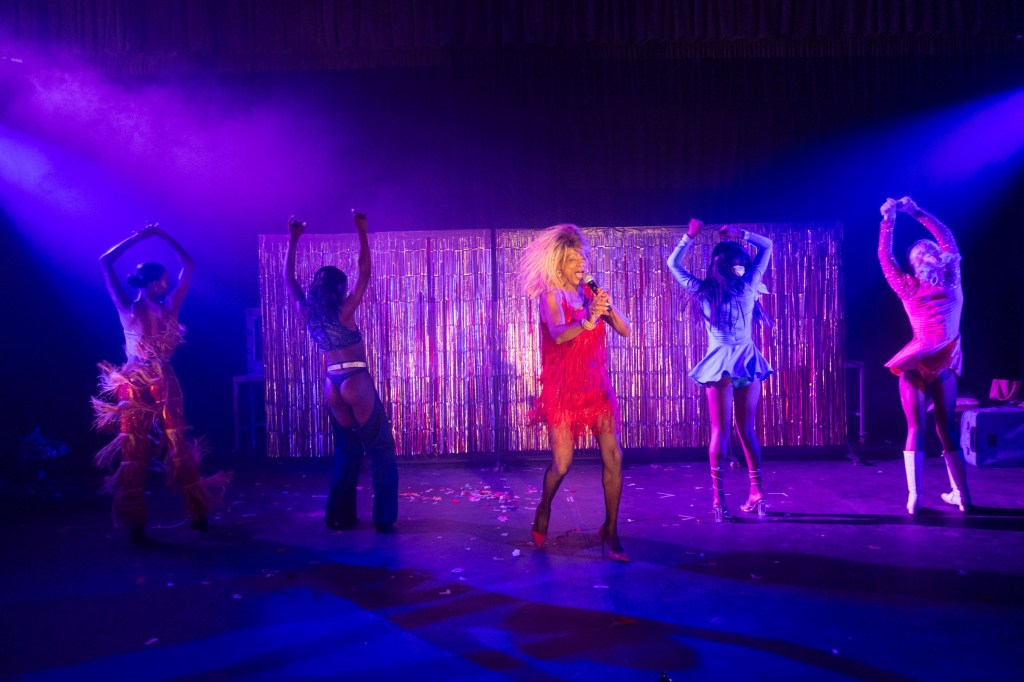
It all culminated in a queer festival with a multi-disciplinary drama titled Kroon en Konfetti which incorporated three elements: Kewpie’s life and legacy as dancer and artist; the rich culture of Oudtshoorn’s beauty competitions called “models”; and 25 personal stories collected from Oudtshoorn’s queer community.
Dressed in all their finery, the “models” all gathered in a dressing room to start their show with the dialogue smart, sassy and with an edge. It was quite magnificent as are all the Karoo Kaarte productions and more than anything it’s the topics they choose to spotlight that’s so important.
Here is deals with a group of people who are already sidelined in a country where prejudice is still rife. With their queer status they are in search and hoping to find safe spaces in their community where they can celebrate their culture, yet behind all the glitz and glamour, the shadow of oppression is hard to ignore.
As always Neil Coppen, Vaughn Sadie and Tiffany Witbooi are the creative team responsible and my only regret – as happens every year – is that I couldn’t participate in all their offerings. It’s one of those projects that’s imaginative and innovative and even more importantly, they’re constantly working with elements that result in real change in a community that has always been neglected.
And then cleverly the festival ended with Nataniël and a company of 10 on the openair stage under the Oudtshoorn night skies. The elements aren’t his friends, but it was a glorious way to end the festival with a performance that showcased new voices and performers as well as the glorious artist himself with stories and songs that suited the occasion.
Tracy-Lee Oliver was the artist he chose to spotlight on the night, and she made full use of the occasion with spunk and singing that added spark to this final show. It was great to see someone step into the limelight with such poise. As usual, making sure he gave his audience all the hysterical stories and masterful songs they expected with his superb band and backup singers, he also paid it forward with this sassy introduction of new voices for this audience.
He first spotted her when she was a contestant on a television show he judged, and astute as he always is when it comes to producing for an occasion, this was where he decided to showcase her – for all the world to witness.
Rehearsal picture.
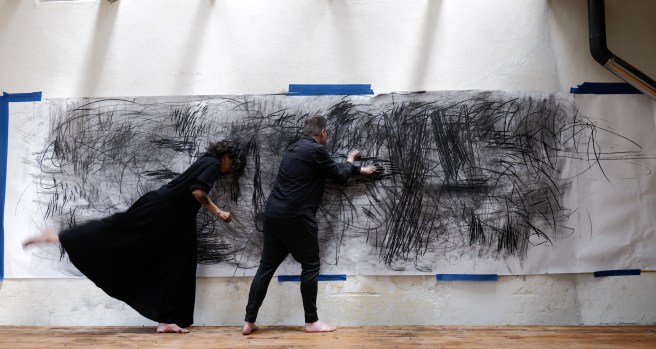
I haven’t even touched on the festival artist Henk Serfontein’s magnificent exhibition Die Stomme Aarde complimented by a performance piece by the artist and his collaborator Hannah Loewenthal as he made a painting to which she contributed while both of them participated in an expressive dance which further enhanced this particular emotional landscape of both the St Jude’s Church as well as the art displayed in this holy space .
It was the perfect example of how art and artists when working with an emotional intelligence can transport you in a way that seldomly happens in what has become quite a cranky world.
Similarly, Mareli Stolp, a pianist with a particular penchant for avant garde music invited animation artist Diek Grobler to illustrate her chosen compositions for a programme Die Gevlerktes. It was a stroke of genius.
The exquisite animation was imaginative in the way it enhanced the music and the listening experience which then also transformed into a visual feast.
I could go on, but this is simply one art lover’s experience …
See if you can catch any of these gems at other festivals and theatres in the year ahead.
Awards can mean nothing or EVERYTHING. It really depends on each individual and perhaps the most important ingredient is to witness especially the individual artists when they get over their surprise, gather their thoughts and express their wonderment at receiving such accolades.
Rocco Pool (Best Design), Christian Olwagen, (Best Festival Production), Rolanda Marais, (Best Actress) all for Hedda Gabler.
Astonished yet astonishing actress Rolanda Marais perhaps captured the moment best when she reflected on the 17-year-old schoolgirl she had been and how she would have experienced this achievement.
It’s one of the most vulnerable yet vibrant careers to choose, as your whole life is always dependent on the vision of others. If a director selects you, if the play is one that shows you at your best, if the audiences come, if they like the play and the cast and the list is endless.
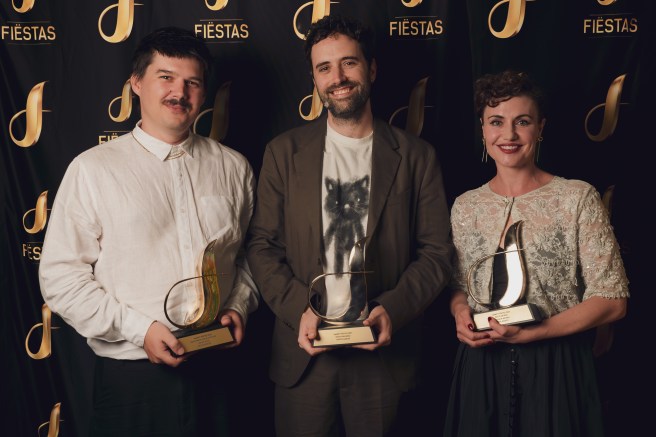
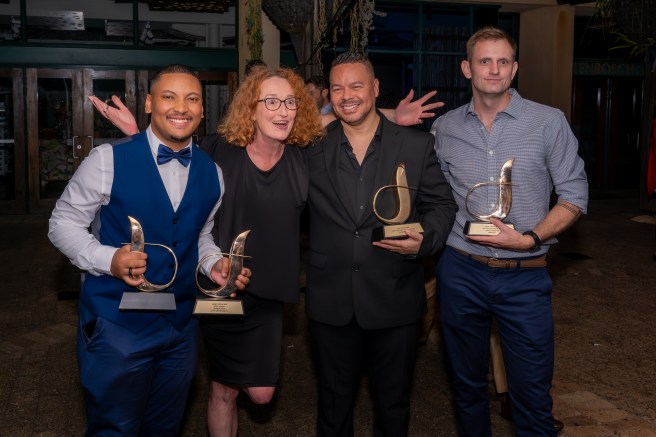
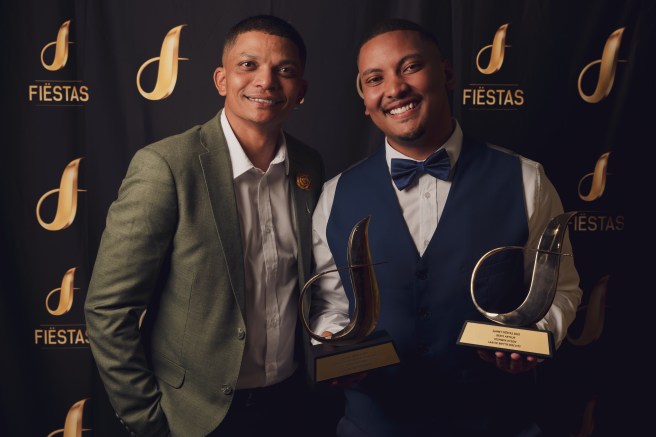
Aardklop Fiësta winners: Joshwin Dyson (Laaitie mettie biscuits for Best Upcoming Artist and Best Actor), Artistic Director Alexa Strachan, Conroy Cupido, (Best Achievement in Classical Music for Die groot Finalé) and Philip Rademeyer (Stinkhout for Best Text ).
And yet, time and again, the actors put themselves on the line and out there to hopefully change the world for some in the audience. They probably do it more than they give themselves credit for and I have often been in awe of what they manage to achieve with too many obstacles for anyone to deal with, let alone create magic.
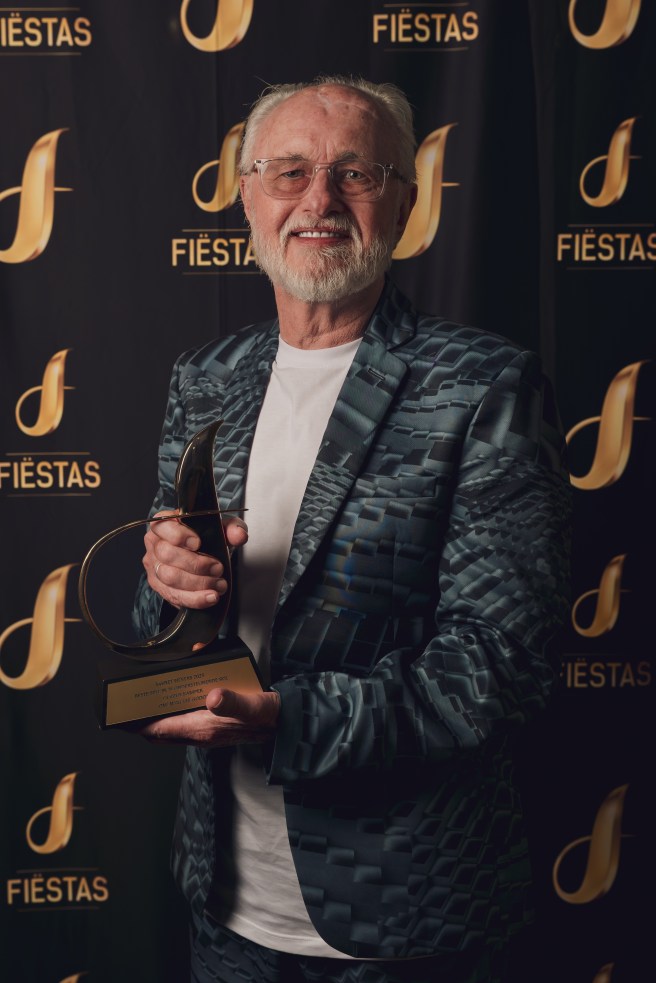
The Fiëstas panel attended every debut production at seven arts festivals (KKNK, Suidoosterfees, Innibos, Vrystaat Kunstefees, Klein-Karoo Klassique, Momentum Beleggings Aardklop and Toyota Stellenbosch Woordfees) last year. Following an extensive voting process audited by auditors, the winners in 14 categories were determined and announced at the end of last month at a glamorous awards ceremony held at the Kirstenbosch National Botanical Garden in Cape Town.
kykNET also announced that the kykNET Fiëstas will have a new home. After 15 years of management by kykNET, the Tribuo Trust will now coordinate the Fiëstas, with kykNET taking on the role of naming sponsor.
“The decision was made so that the kykNET Fiëstas can continue and flourish as a vibrant celebration of the arts in Afrikaans. kykNET remains the main sponsor and naming sponsor of the Fiëstas,” said Waldimar Pelser, M-Net Channel Director of Premium Channels.
“In discussions with the festival directors, kykNET emphasised that we will strengthen our support for the arts festivals in a way that we hope will also make the festivals more sustainable. We look forward to reimagining the new kykNET Fiëstas together with Tribuo and are excited about the road ahead.”
Karen Meiring, Executive Chairperson of Tribuo, said: “It is an important objective of Tribuo to invest in the future and the sustainability of the entertainment industry’s ecosystem. The kykNET Fiëstas seamlessly align with this goal as the awards recognise and celebrate excellent work. They also encourage crucial audience engagement and honour the people who carry the performing and creative arts. Tribuo looks forward to continuing this project together with kykNET, who remains the naming sponsor.”
The winners are:
BEST ACHIEVEMENT IN CLASSICAL MUSIC
Die groot finale (Momentum Beleggings Aardklop)
BEST CONTEMPORARY MUSIC PRODUCTION
kykNET-konsert (Innibos)
BEST MUSIC-DRIVEN THEATRE
Ontban (Suidoosterfees)
BEST ADAPTATION OR TRANSLATION OF A TEXT
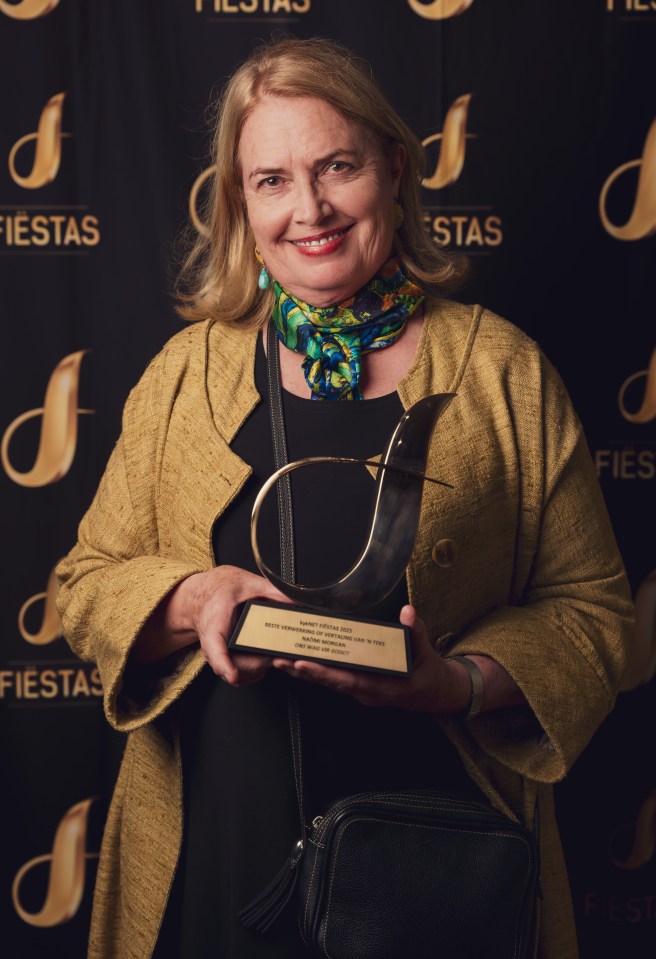
Naòmi Morgan – Ons wag vir Godot (Vrystaat Kunstefees)
BEST NEW TEXT
Philip Rademeyer – Stinkhout (Momentum Beleggings Aardklop)
BEST ACHIEVEMENT IN VISUAL ARTS
Marlene Steyn – Between my i’s: tussen my oë (Toyota Stellenbosch Woordfees)
BEST ACHIEVEMENT IN DESIGN
Rocco Pool – Hedda Gabler (Toyota Stellenbosch Woordfees)
BEST ACTOR IN A SUPPORTING ROLE
Gerben Kamper – Ons wag vir Godot (Vrystaat Kunstefees)
BEST DIRECTION
Dion van Niekerk – Ons wag vir Godot (Vrystaat Kunstefees)
Joshwin Dyson (right) with his playwright/director Christo Davids
The winner of the Blou Fiësta, awarded for commendable work that does not fall into any of the other categories, is the Suidoosterfees project 21. In celebration of the festival’s 21st anniversary, 21 productions were staged, each lasting 21 minutes with a ticket price of R21.
Amanda Strydom and Frank Opperman were honoured for their contributions to the arts.
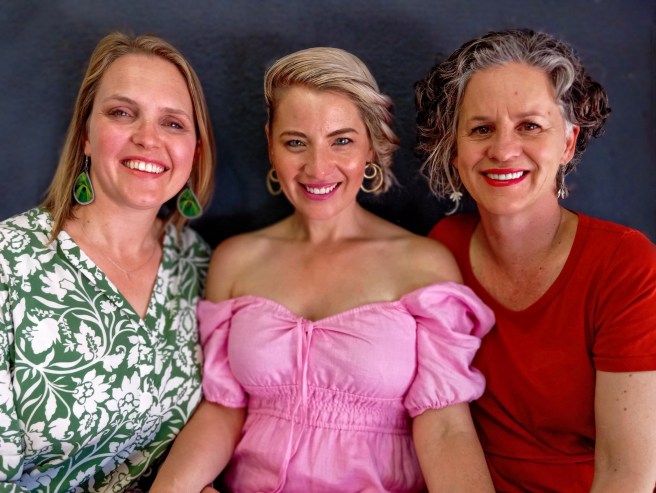
Three artists in cahoots: Magdel van Rooyen (left), Thania Louw (centre) Martli Jansen van Rensburg (right)
Thania Louw, Magdel van Rooyen and Martli Jansen van Rensburg all work in different media and it while their art has many commonalities, that’s not what brought them together.
It was the children! They all go to the same school and that’s how the three moms met. Go figure.
However, when you sit around the table with these three artists, what they have in common is the way they approach their art. In their own individual way, they’re telling stories. That’s what all artists do.
While their techniques differ, the common theme is transformation and change. It may be change in the physical body or the internal landscape, or an individual, unique way, each one explores the ideas of intangible internal shifts and how they experience these changes.
These might of course result in relational shifts which might not be immediately noticed or visible, but eventually a sense of movement will result in the awareness of change.
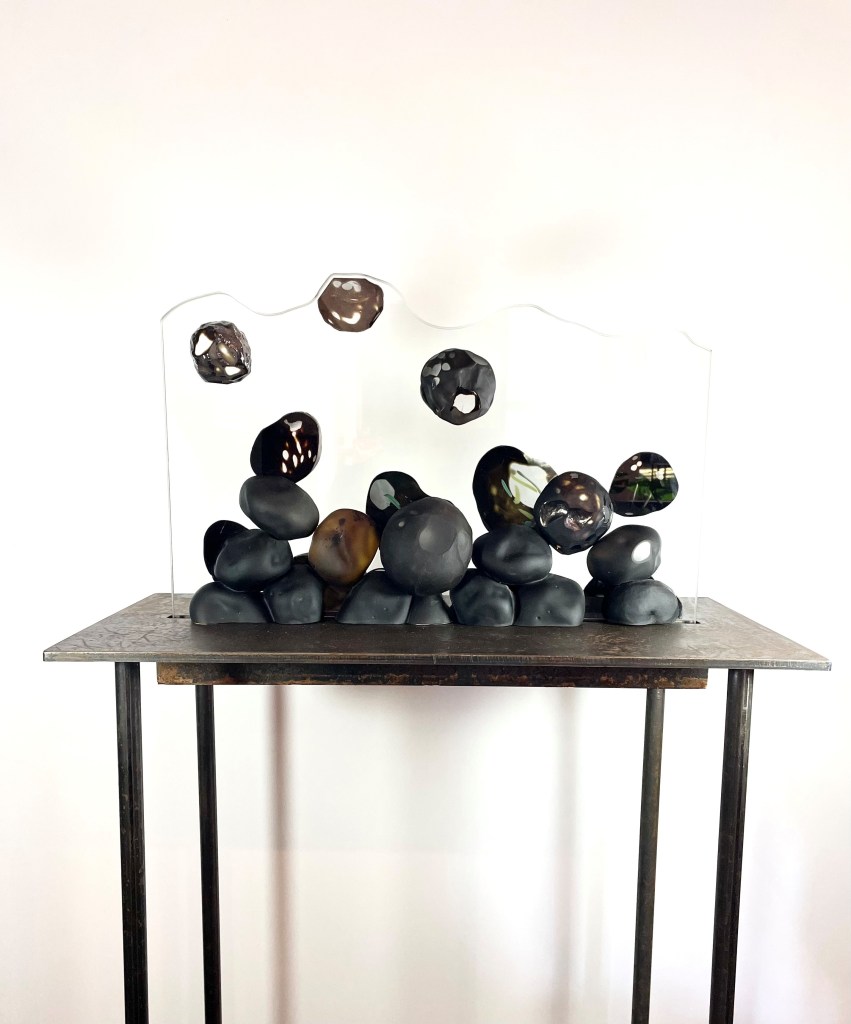
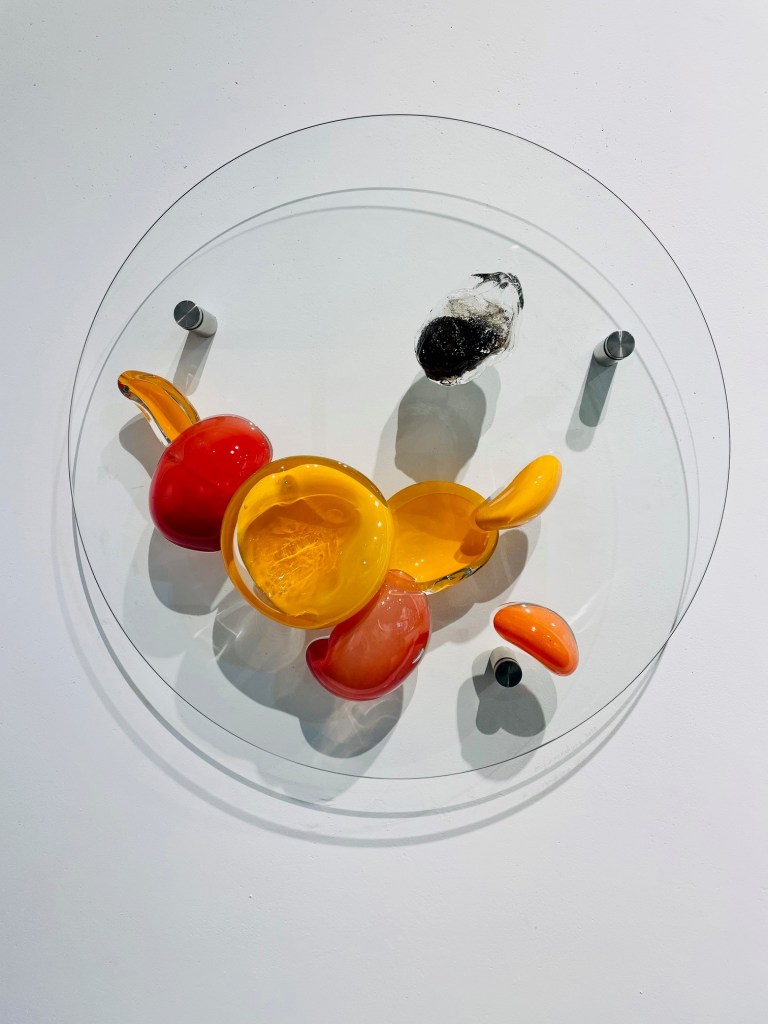
Martli is a glass artist but when you look at her work, you might not immediately be aware that the whole piece is made of glass. For her it’s about scratching around in herself which eventually is given substance in her work. “I’m usually trying to figure out something in myself,” she says. Her work manifests her spiritual journey. “It really is all about my beliefs.”
Memorial of Remembrance by Martli Jansen Van RensburgHidden by Martli Jansen Van Rensburg
It might appear as if nothing is happening in her world and as if her ideas are stagnant at some stages, but she sees it as a time of growth while the seeds are dormant until they’re ready to burst forth. Works have titles like Memorial of Remembrance and Rocks of Forgiveness which point the way to her thought processes.
“Our work has to signal possibility, to shift minds,” she says.
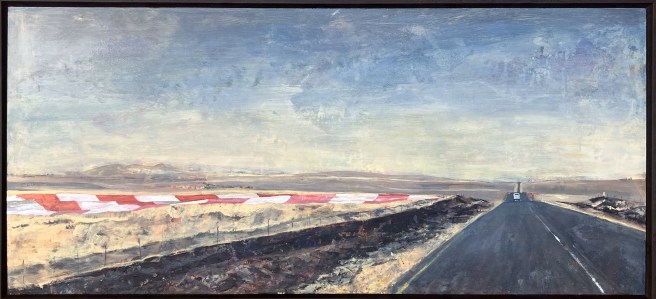
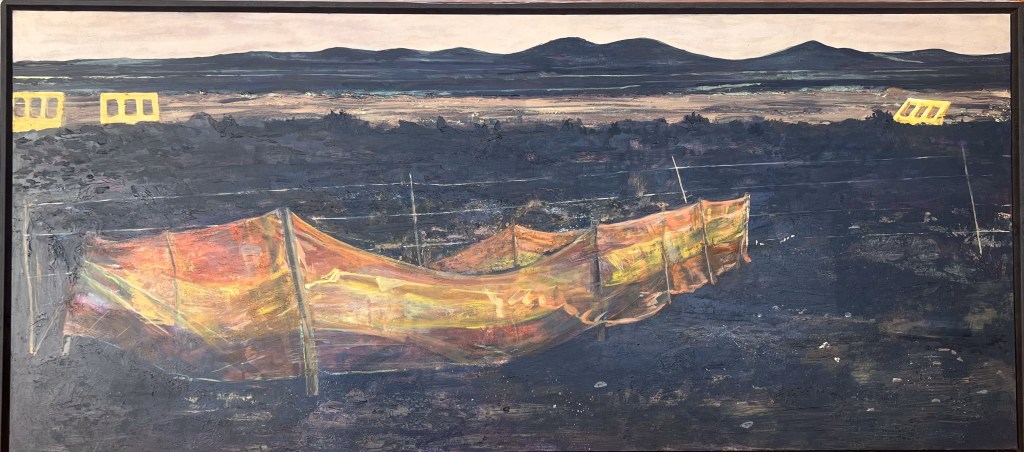
Magdel, the painter in the group, is obsessed with construction. Her genre is landscapes and she continually seem to round back to the liminal. She describes her work as moving in-between building up and breaking down.
“Once I have an idea, I chase it down,” she says. While she is a strong believer in hope, she also knows that hope is messy. “Everything is always something of a construction site,” she says. And when you see her work, it all starts making sense.
It almost seems as if she views the world as anything that goes up, must also come down. And in essence that’s true and what she captures in her work. It could almost describe the process of construction followed by collapse.
Bound(less) III by Magdel van Rooyen,
(un)Bound I by Magdel van Rooyen
She plays with words when forming her ideas and discusses the dexterity of concepts like un(bound) which in a sense she believes sets you free and leaves you bound(less) – also the title of her two pictured works. It could also mean that you’re going, or even that you’re intending to go.
Tension is what allows her to play on canvas. We live in tension, it’s inevitable and drives the work. “In fact, we probably thrive on that tension,” says Magdel.
Thania, the photographer in the group is busy investigating emotions, thoughts, behaviour and interaction with her camera as she explores the connections between the conscious and unconscious exhibited in the body. While these are all invisible, she’s interested in how they are experienced from within and communicated to others. Is there a connection?
Questions are part of her investigation, but her story will probably be read differently by those who look at her works of art from a different perspective.
Clockwise: In Bloom; The Vertruvian Woman; and Fragmented by Thania Louw.
It’s how others see you, whether you are influenced by their perspective and whether your body also adopts some of the emotions cast your way?
What does the perfect woman look like? How does she see herself? How does she cope with the storms erupting on the inside?
“What does the world expect from me,” she asks? “Do we fight it or can we find inner peace.”
She has also discovered that beauty can be found in imperfection. “All these things happen in cyclical fashion,” she says as she keeps her camera pointed in a way that might capture the story she hopes to tell.
For these three women, life is a progression and that’s why, even when they tackle dark subjects, they hope their work is always filled with light. No one wants a study of pain in their face all the time, they concur.
The quest is to explore those emotions and then to show your stories to the world in the way the pictures you make demand. This is how they hope their work will prompt viewers to look and discover their own stories.
Verkuif/Shift will be opened by Prof Jenni Lauwrens on August 27 at 6pm at the University of Pretoria @ Link Gallery. Email @ https://louw.co.uk/verskuifshift.html
RSVP for opening by this Sunday. The exhibition is open until Friday, September 6. Entrance Lynnwood Rd, UP main gate. The gallery is open for viewing Tuesday – Friday from 9 – 3 pm. Safe parking available on premises in front of the building.
ARTIST BIOS: THANIA LOUWShe (born in 1984) is a versatile artist and photographer. With a BA Hons in Textile Design from the University of the Arts London, Central Saint Martins, where she graduated with distinction, Louw quickly gained acclaim for her work, earning nominations as one of Britain’s top 100 students and participating in prestigious exhibitions such as the 2010 New Designers exhibition in London and Heimtextil in Germany. In 2010 Louw was selected as a student researcher at Central Saint Martins. This led to an exhibition at the Victoria and Albert Museum, London. Returning to her native South Africa in 2013, Louw shifted her focus to museology and photography. In 2020, Louw furthered her commitment to the field by completing a BSocSciHons in Heritage, Museum, and Preservation Studies at UP, graduating with distinction. She has been commissioned by prominent private collectors, universities, and museums worldwide to photograph their art collections. Her work has been featured in numerous publications, scholarly articles, and academic papers. She is currently a board member of the International Council of Museums South Africa (ICOM).MAGDEL VAN ROOYENMagdel van Rooyen (ne Fourie born in 1983) is a process-oriented artist situated in Pretoria. She completed her BA (Fine Arts) degree at UP in 2006 and then her MA (Fine Arts) in 2012. Since 2007 van Rooyen has been teaching part-time at UP in the Fine Arts division, lecturing in different subjects including, painting, drawing, printmaking, and sculpture. In 2010 she was selected for the Art-St-Urban residency based in Switzerland and in 2013 she formed part of the Art-St-Urban exhibition at the Selected Art fair Basel. She was also selected for the R5 Residency with Nagel University in 2013, the residency culminated in a travelling group exhibition Between the Shadow and the Light. The exhibition travelled to various universities in North America from 2014-2018. Van Rooyen has taken part in various group shows in and around Pretoria including at the Pretoria Art Museum and Arts Association of Pretoria. Her work is part of UP’s Collection.MARTLI JANSEN VAN RENSBURGJansen van Rensburg (born 1977, Pretoria) is an artist, lecturer, and master glassblower. In 2000 she finished her B. Tech Degree at Tshwane University of Technology, where she majored in glass sculpture. From 2000 -2004 she worked and trained at glass studios in the UK, and Germany and did a glass art residency in Scotland. In 2007 she received a scholarship to study glass design in Sweden. While lecturing part-time at TUT, she runs Smelt Glass Studio, with Mike Hyam. Her work has been exhibited internationally at Scotland North Lands Creative, the Museum of African Design, and many more. Her work is part of the permanent collection in Absa Bank, Wits Origin Centre, SAB breweries, and Absa Capital.
 De Beer Necessities