CAST: Thimothée Chalamet, Odessa A’Zion, Fran Drescher, Gwyneth Paltrow, Tyler Okonma, Sandra Bernhard, Abel Ferrara
VENUES: Ster Kinekor
Marty Supreme is a star effort.
The theme of table tennis didn’t thrill me, so I skipped this movie until I heard an interview with the two stars, Chalamet and Paltrow. I was intrigued.
Then Paltrow came out of self-imposed retirement for her role, which also says something.
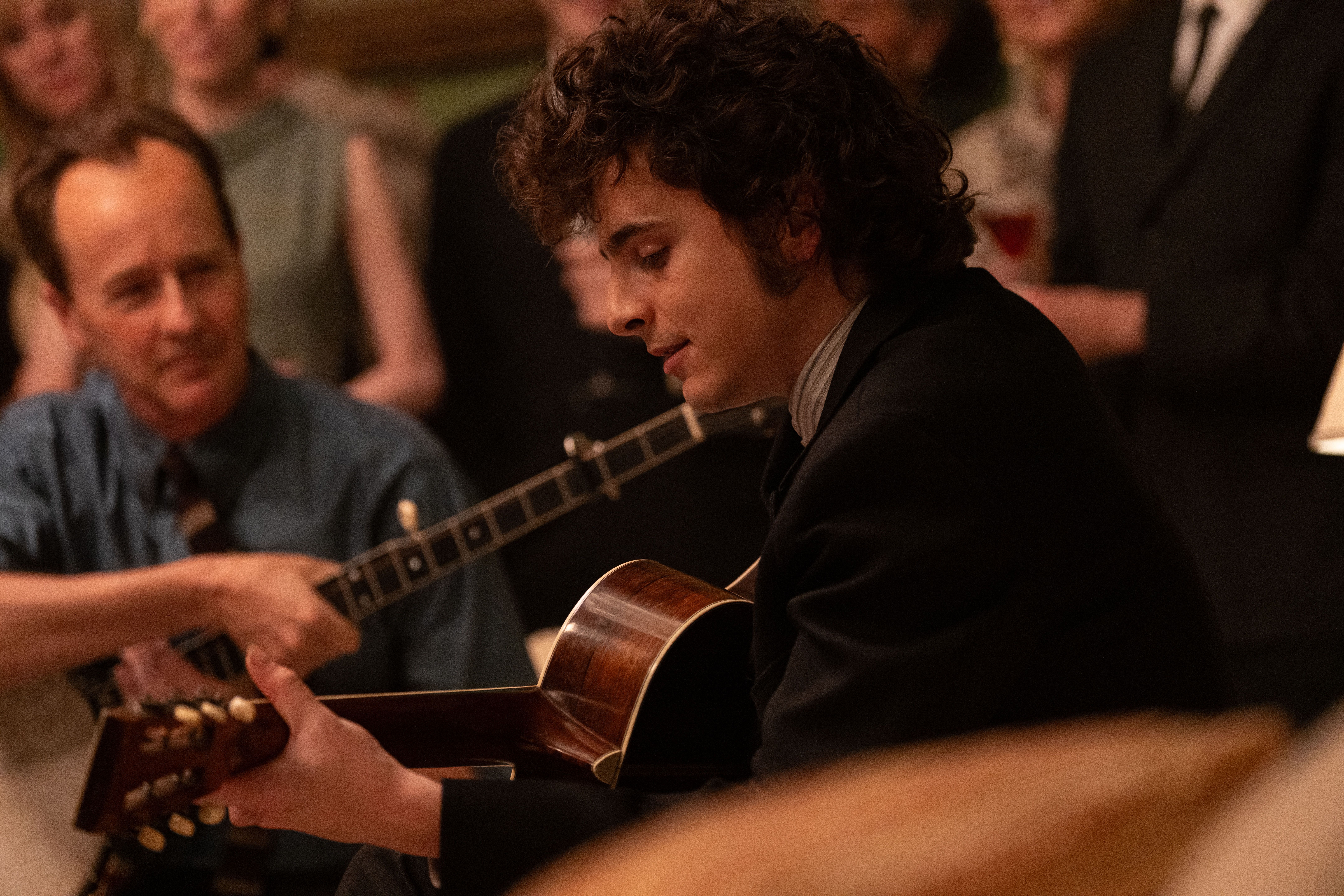
Chalamet impressed in Call Me By Your Name, but it was especially the Bob Dylan movie, A Complete Unknown, that caught my attention and that I loved. Paltrow has been away from the screen for some time, yet this role tempted her and she’s back.
It’s the story of Marty Mauser, a shoe salesman with an ambition to become a world star – by using his charm and his ping-pong skills. You have to meet this exuberant, frantically frenetic young man to run with his story. And run you do.
It’s not only the story, but it’s also the performance and the pace, which hardly allows you to catch your breath or debate the deals that are struck to get this young man to his first high-profile tournament in England. This is where he hopes to kickstart his dream of becoming the world champion.
And while Marty is scheming and dreaming all the way, it is as though he is constantly hanging by his nails from the 10th floor of an apartment building. Forget the image a table tennis tournament might call up in your psyche, it is the choices made by director Safdie that are the real star of the show.
Everything screams originality, and that’s where they really hook me. It’s the way this almost throwback grifter’s tale unfolds, unravels and then picks up speed again as Marty fixes or flinches his way through the latest calamity. It’s not that he means to cheat his way to the top; it’s that he believes if given the chance, he could really make it. It’s his belief that it is owed him that lends his enterprising jockeying the appearance of acceptability.
When he really wants something, he takes it. And then wiggles his way out of the latest precarious pickle he has singly manufactured to reach his dreams. He is never allowed to forget that he is trespassing in a world that shuns him. Yet, he pushes through.
The fact that Chalamet, with his superstar appearance, was cast is a stroke of genius. You need his talent to pull it off as an actor. They managed to downplay his dreamy, glamorous side, which makes a huge difference. It’s subtle but smart.
Paltrow also plays her part in a role that suits her to a T. She is old-time glamour, she doesn’t have to represent it. And, again, smart choice; it is one of her best performances as she takes risks and pushes boundaries, which she pulls off simply because of who she is – in the film and the real world.
Lots of contradictions there, but they make it work, especially in today’s world where everything is about appearances, who you are and whether you have money.
It is all the little things that add up to turn this into a story that’s fun, yet keeps the focus on the underlying serious issues. It could all have been a huge mistake, but because of the attention to detail, it works.
This is Safdie’s first solo effort as director. He had previously written and directed with his younger brother Benny as the Safdie Brothers before they decided that they wanted to follow their individual dreams. If this is how Josh launches his solo effort, his future is one to watch.
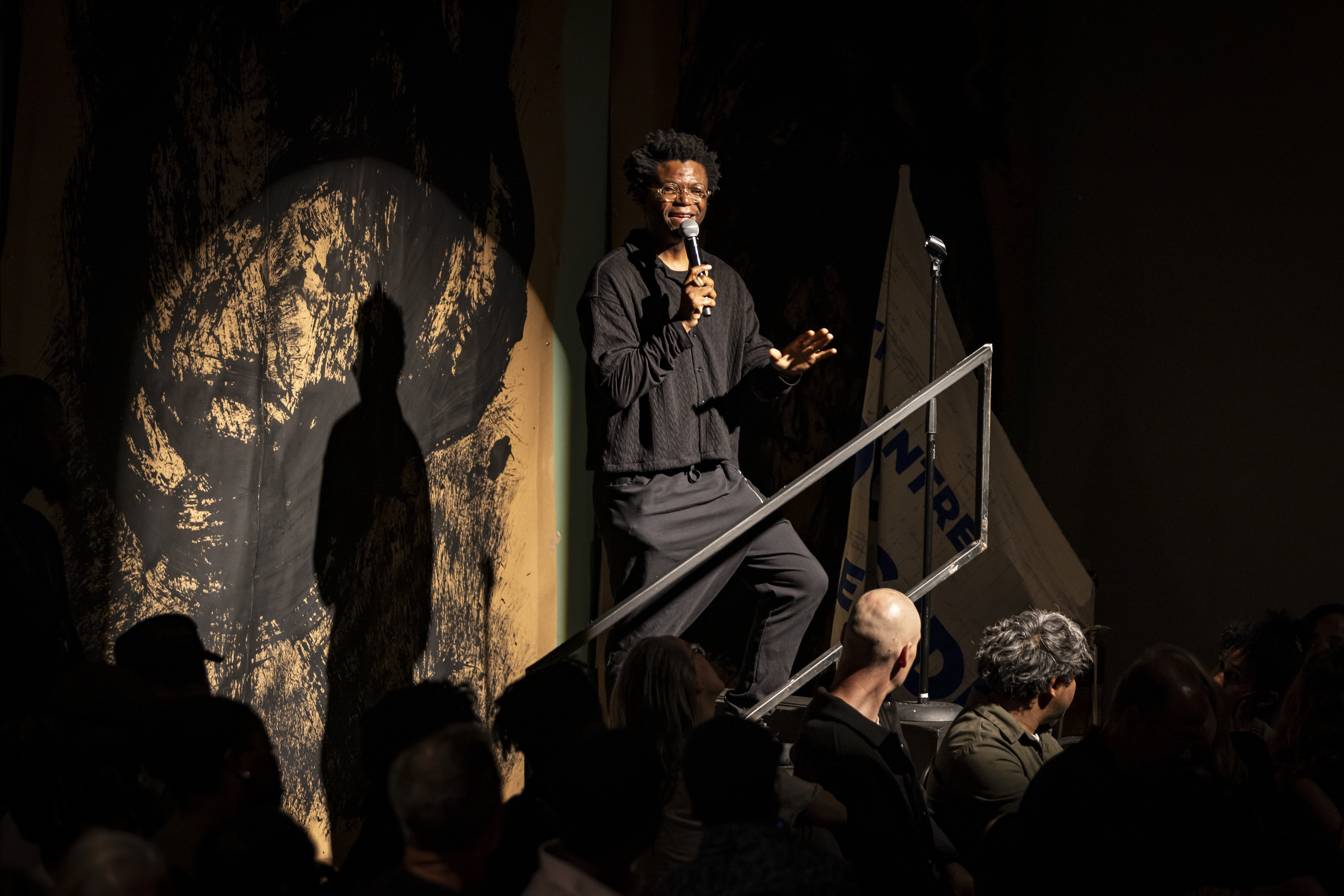
“It’s about how we become an ensemble, whether we are performers, audience members, or neighbours. It’s how the city performs itself through us, and also how we choose to perform the city. Johannesburg is a place that requires a collective navigation, a mutual reliance, a particular call and responses.” Neo Muyanga, Impressario of the Centre for the Less Good Idea in Maboneng.
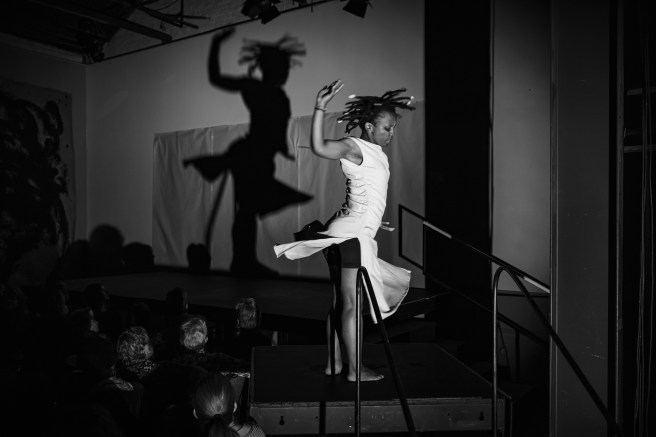
Dancer Thulisile Binda
By DIANE DE BEER
The best would have been to attend all the evenings of the 11th season to experience the full impact of what co-founder and director of The Centre, Bronwyn Lace describes as a multi-limbed, complex organism which she believes is what the Less Good Idea has evolved into. “…our arms reaching into various directions but connected to the same robust body. It makes sense for us to share a season at the end of this year, because we have an abundance of new strategies, forms, and artworks to test, show, and celebrate.”
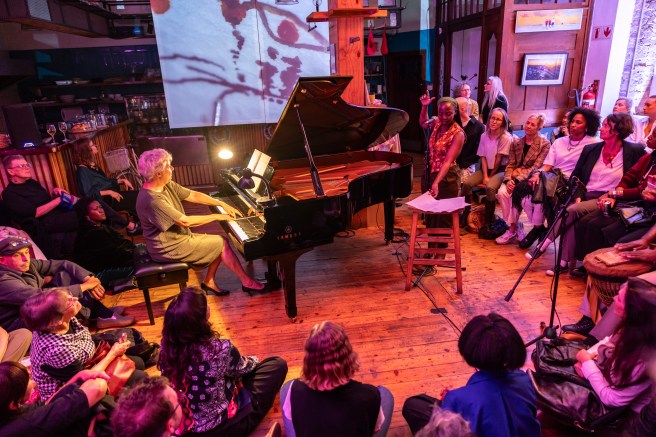
Pianist Jill Richards with vocalist Pertunia Msani.
And it certainly was all of that, exploding with a sense of creative abandon in two hours of exuberant performance which ranged from the glorious musically driven showcase by classically trained improviser Jill Richards who performed magnificently with the Benin drummer, percussionist, composer and arranger Angelo Moiustapha accompanied by the melodic voice of Pertunia Msaniiwith Marcus Neustetter’s digital storytelling adding yet another dimension to the experience. The musicianship was breathtaking.
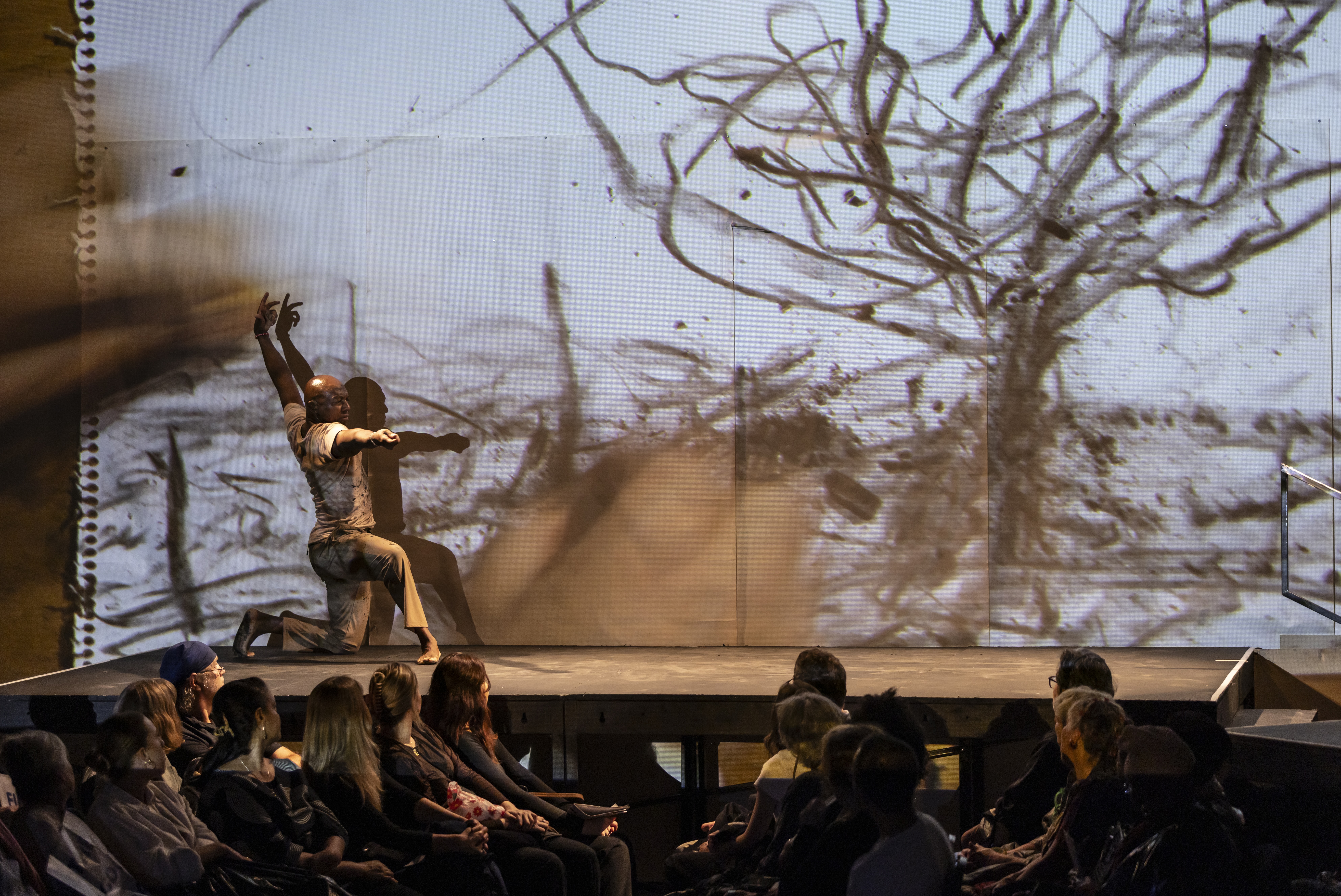
It set the tone for what was to come as the audience moved to William Kentridge’s studio to experience a collection of mindblowing artists, starting with the spiritually immersive Vincent Mantsoe, one of our finest choreographers/dancers in one of his rare local appearances. Translike in his movement and tearing at the soul of those witnessing his deep level of engagement, the evening merged from one artist to another as Kentridge stepped from one stage to the next as he expressed his creativity with body and soul.
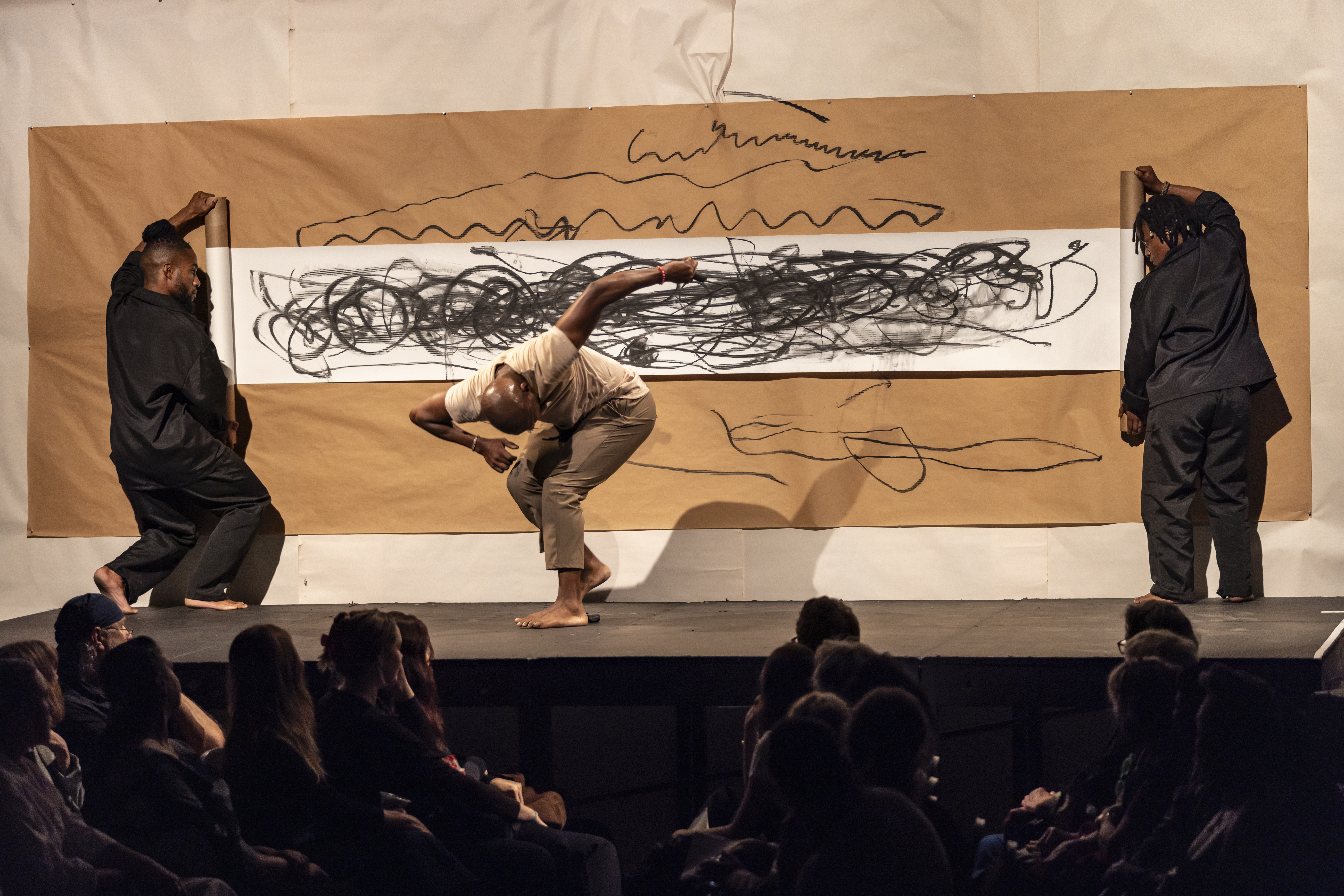
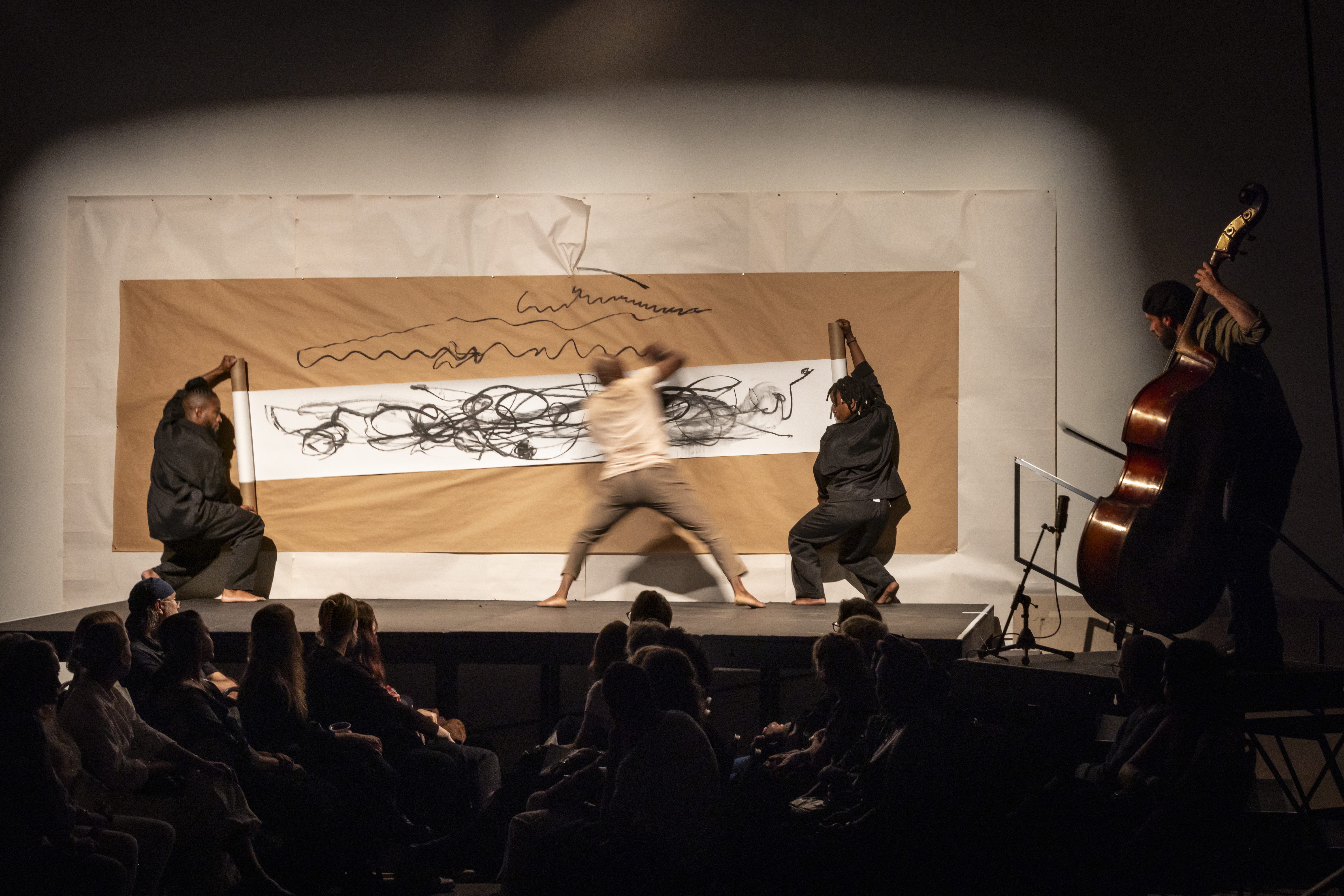
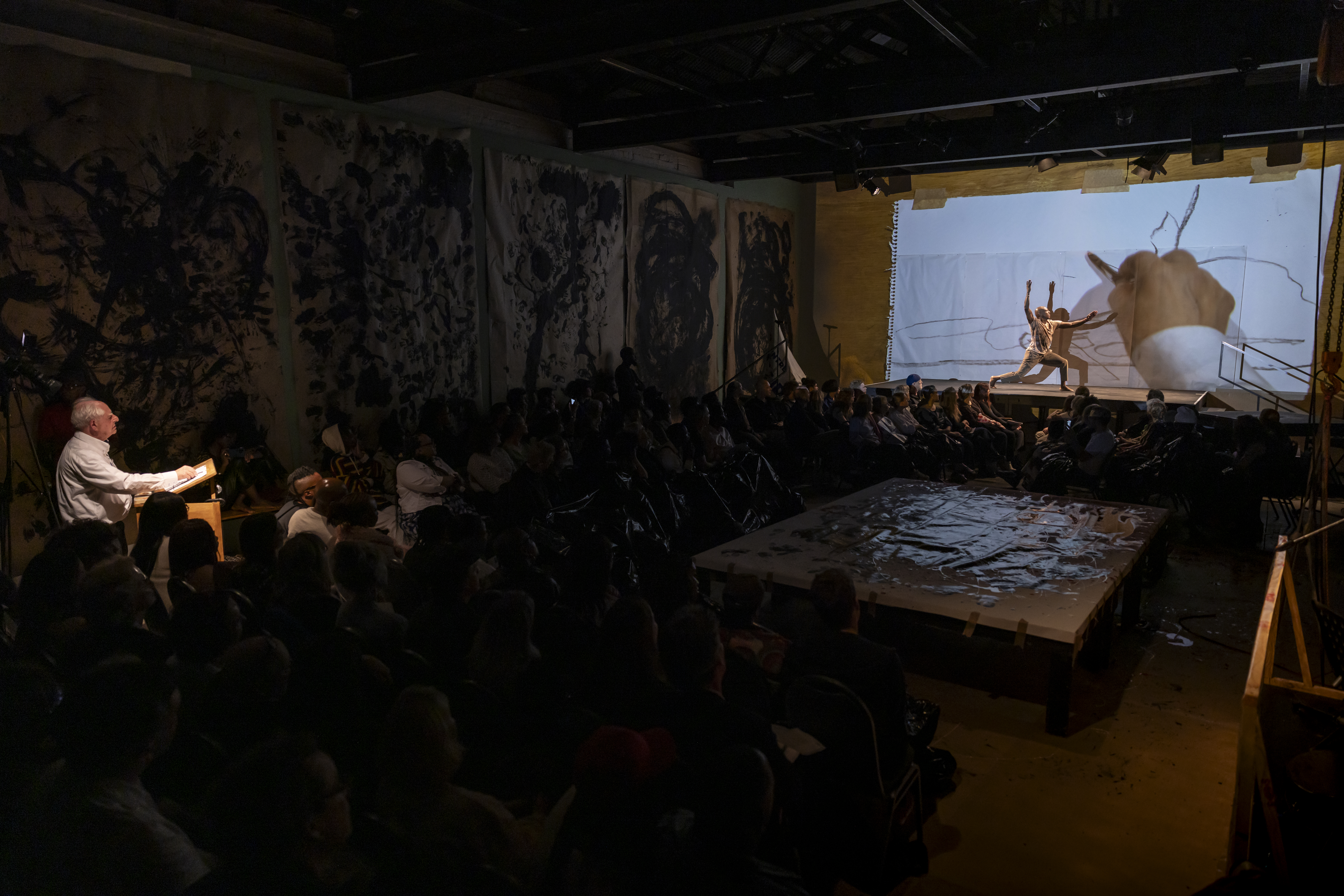
It was all about the merging of art and movement, Moving the Mark, as the event was titled, exploring the relationship between visual art and dance. What they wanted to achieve was to explore the relationship between these unusual pairings and what would emerge.
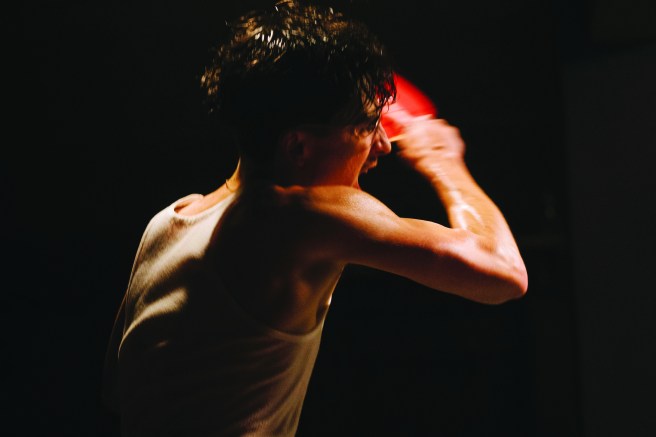
Vincent Mantsoe in action with percussionist Micca Manganye
How would the pure art of collaboration determine new creative decisions for an audience to experience and absorb? What happens when a dancer like Mantsoe mimics the ink stains of an artist like Kentridge, or from a different vantage, when the painter choreographs their brushstrokes?
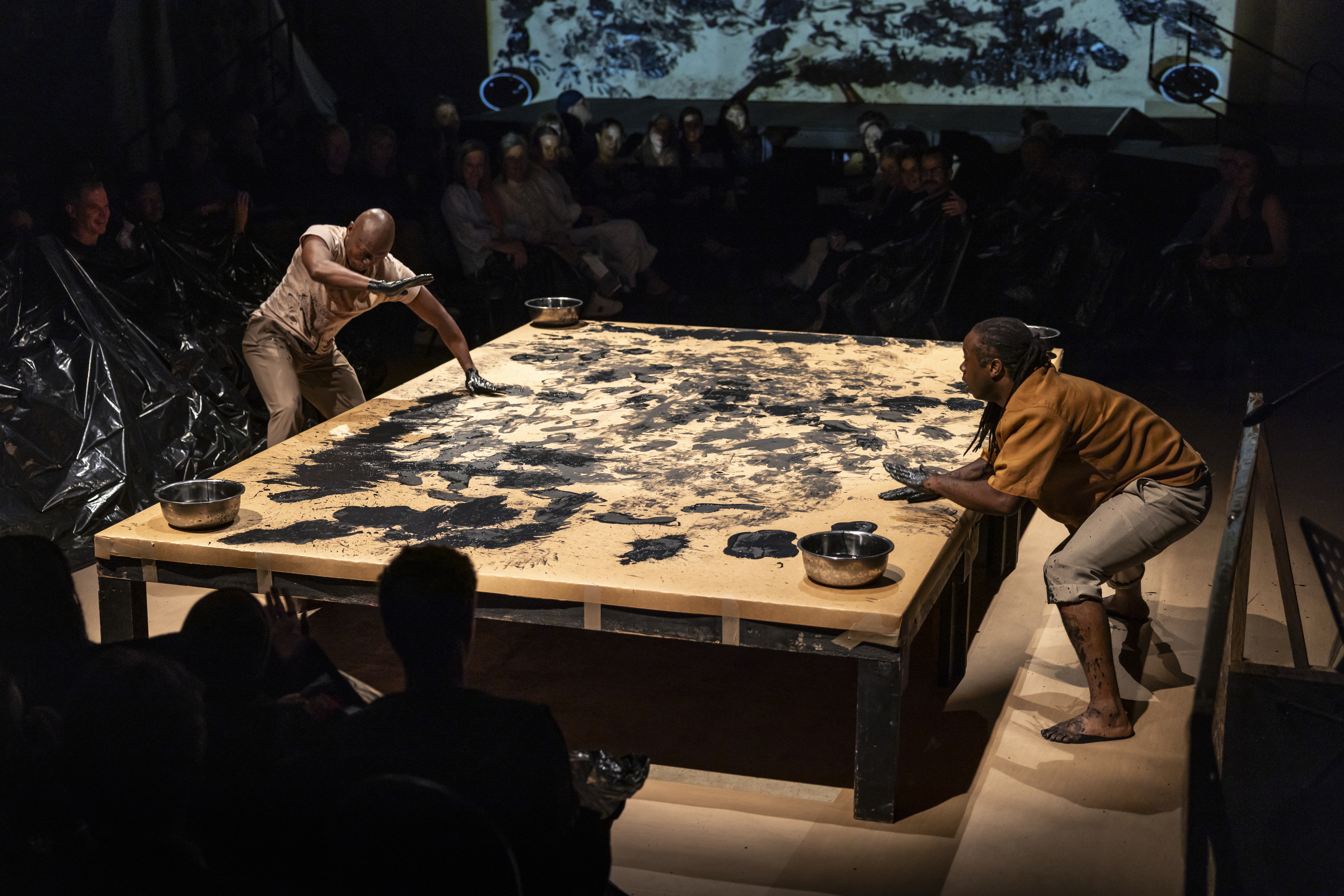
Artist Penny Siopis took to the air in almost trapeze-like fashion, painting her canvas on the floor from up high while choreographer/dramaturg Shannel Winlock-Pailman worked her magic below in mesmerizing fashion, the two artists in total union while expressing their heightened emotions.
All the while, the musical accompaniment captured the experience of the moment, enveloping the audience in the round, some wrapped in black bags to protect them from the explosive expression of art as artists flung paint creatively with fearsome flair.
The Centre for the Less Good Idea is all about the collective voice expressed in collaborative pairings, artists who work in different mediums but have creativity and exploration that binds them, pushing the boundaries, trying different ways of making new work to excite themselves as artists while also challenging and stimulating audiences constantly searching for art and creativity exploring the evolving world we live in.
Curator Neo Muyanga (left) and Kentridge (right, in the left corner) choreographing with brushstrokes while Mantsoe is on stage following the moves.
It’s exciting when artists go beyond the expected, and are given free rein to explore their storytelling genres. How can they beat that drum differently? Given the chance to fail is often the best way to reach excellence but the restrictions are many. And more than anything, it is the encouragement to stretch far beyond the boundaries, to take that leap and to experience the beginning of experiments which are allowed to grow and flourish.
This first sold-out performance of the 11th season proved that the audience is willing and determined to experience artists moving the mark. The rest of the season sounded as extraordinary and my wish would have been to witness the full week of extraordinary creativity encouraged to dare to go beyond the expected.
How blessed are Gauteng audiences (who showed their appreciation) to experience these glorious experiments inspired and empowered by William Kentridge who could have staged them anywhere in the world. Kentridge gives us the opportunity to grow together and to expand our idea of what anything and everything is. Step into the void and see what happens comes to mind.
Photographers: Jeremeo Le Cordeur; Llewelyn de Wet and Gys Loubser
The Stellenbosch Woordfees can be quite a daunting prospect because there is so much on offer. It is perhaps easier if you have specific artistic passions, as most of them will be on offer here and it is possible to make a selection. DIANE DE BEER spotlights what caught her fancy
There’s not even a chance that you can include all your darlings in a festival wrap or even try to see them all.
I did my best, was constantly on the move and writing, and still I hear of more productions you just had to see.
Personal favourites (don’t discount others because I probably didn’t see them):
My best theatre productions were stories that turned me into an emotional wreck but did so with authenticity (I know this is a woke word, but …).
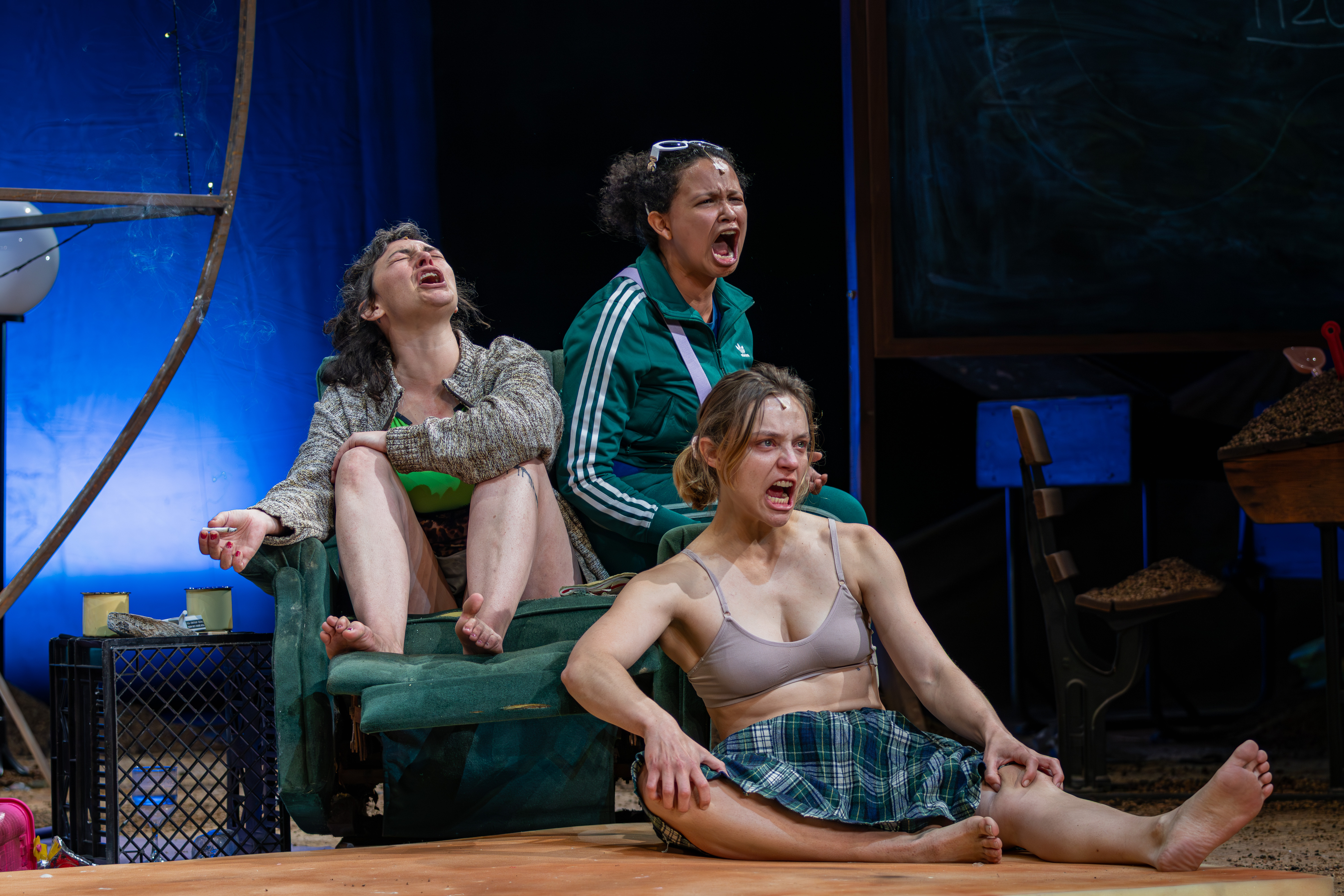
Tinarie van Wyk-Loots and Kristen Raath (left) and Jefferson J Dirks-Korkee(right) in
Dianne du Toit Albertze’s Huis van Sand.Pictured by Jeremeo Le Cordeur
The winning text of the prestigious Reinet Nagtegaal prize, Dianne du Toit Albertze’s Huis van Sand, with her honest portrayal of a dysfunctional family that’s probably not even part of most audiences’ consciousness. She writes about what she knows and where she comes from, the Northern Cape. But she does this in her self-made tongue, which shoots right to the heart and guts of the matter, no pussyfooting around with this one.
It is not a place many of the traditional Woordfees audiences will know. The backdrop is the N7, a route that runs from one end of the country to the other. It is her little spot next to the highway that Sandy knows. She and her daughter share Rodney’s caravan and too much of his life, especially the dark side. They’re trapped and yet the lifestyle is passed on from one generation to the next with the whole family fully engaged. A seemingly never-ending devastating cycle.
What drives Huis van Sand are Albertze’s words, her imagination, and the way she plays wildly with your head and emotions. Throw into the mix director Wolfie Britz’s strong casting and determined direction. With the remarkable Tinarie van Wyk-Loots launching herself body and soul into this one, Sandy’s daughter (Kristen Raath) trying to duck the missiles and resist diving headfirst into the temptations, Jefferson J Dirks-Korkee’s chilly capture of the toxic male scent always hovering menacingly and René Cloete showing she is much more than just an innocent bystander, everything about this production hits you like an onslaught.
Yet this is one you want to struggle and engage with because of the sharp edges and the unblinking gaze at the harsh reality of so many lives. It’s heartwrenching, but that is something this playwright has never turned away from. She stares straight into the skewered glare of too many unseen lives and throws us all in at the deep end. The brilliance is well worth the battle.
Melissa de Vries as Nadia and Angelo Bergh as her friend Zavie
Walking the same tightrope, is the adaptation by Jolyn Phillips of Ronelda Kampher’s ravaging novel starring two vulnerable yet resilient teen cousins who try their best to navigate a world they don’t understand while instinctively understanding that they are their only protection.
For Nadia (Melissa de Vries) and her chum Zavie (Angelo Bergh) their bond while tenuous and often fragile is what keeps them breathing.
With this one it is again the magnificence of the performances and the staging by Lee-Ann van Rooi that holds the attention as these two baby-adults going about their lives as if it is normal – and for them it is, it’s all they know.
That’s precisely the point. This is their normal, their life and the one Kampher’s words in her searing novel lay bare. Their whole existence is determined by outside factors, never certain or expected. Yet they do know how to grab the small slices of life when given the chance which isn’t often. They should not even be aware of the things happening in their lives, yet that’s the only way they know how to roll.
Kampher’s language is brilliantly captured by Phillips’ adaptation. How she even knew where to start! It’s such a complex and almost crippling story about these children whose future is determined purely by the happenstance of their birth.
Both of them have bucketsful of gifts which will never be realized because there’s simply no support or networks for these drifting families where not one generation manages to get even a foothold on a real life.
If anything good happens in their lives, it is luck and often, at that particular moment, the recipient doesn’t know how to deal with it.
When reading Kampher’s book the first time, you’re in awe of the writing and the storytelling. It’s the way she focused on the stories never told, the way she draws the characters, gives them flesh and emotions, which in this instance are perfectly re-created by the choices of Van Rooi and the adaptation by Phillips.
What a beautiful acting team. I don’t know them, don’t watch television if that’s where they perform, but I do know that they have inhabited these two kids with so much energy and guts, it’s hard to resist.
And that’s the joy of festivals, the opportunities that arise for artists so that when the stars align (a good script, director and actors), nothing can hold them back.
All of these performances should and will hopefully travel. For far too long too many voices have been silenced. We are so much richer as a country, as audiences and as performers when all our stories are shared.
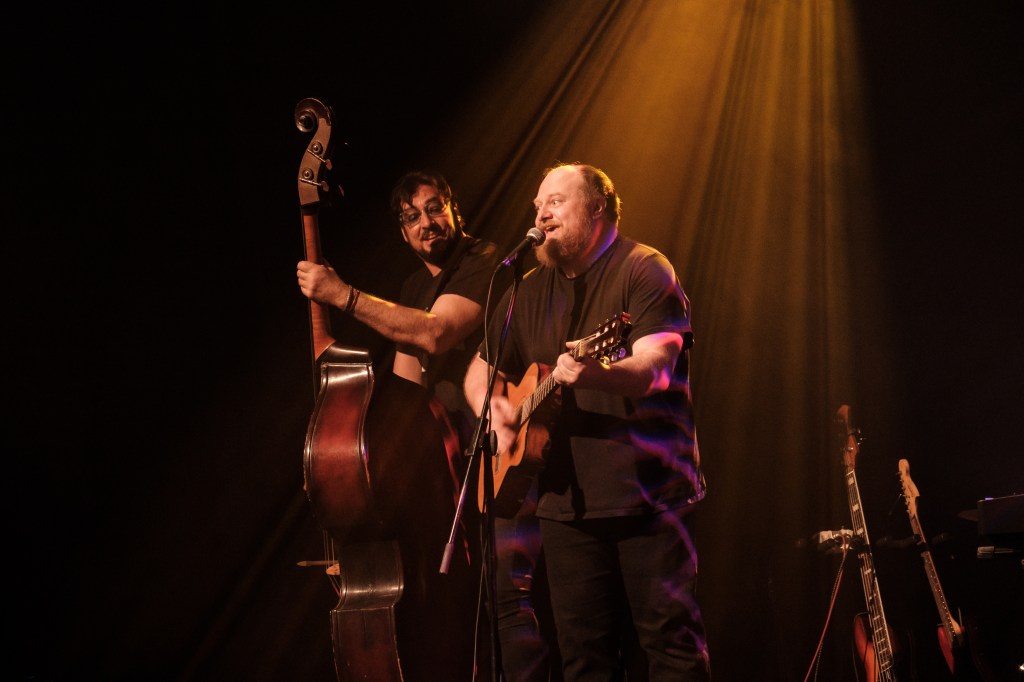
Albert Pretorius (actor) and Schalk Joubert (guitarist) in Ek is nie Danie pictured by Llwellyn de Wet and Gys Loubser.
What four middle-aged men did with what they had, was inspirational. They took something which if not handled with the same delicacy as the poetry, could have been disastrous. But because of deft hands and hearts, it feels as though you are dealing with an emotional vortex, but one driven with artistic insight and instinct which holds the audience tightly and sharply in focus from start to finish.
It worked because of the truly exquisite writing and then the choice of the right participants. The concept was Niel van Deventer’s according to the programme, but then handed to one of our smartest directors, Nico Scheepers. He is given a topic which would turn most people away – the angst and anxiety of ageing white men, not a species that many have much sympathy for.
Yet this company with actor Albert Pretorius and musical director/guitarist Schalk Joubert has shown that, given the right elements, a director who knows how to shape something yet value his actor and musician by allowing them the freedom to be and to do, it will work – and in this instance, explosively.
It’s one of those performances that you want to see again as soon as you leave the theatre. I hope it travels the country.
I took these three stunning plays to give some flavour to the Woordfees which is far too dense and diverse to dilute, but that there’s something for everyone, that’s a certainty and you won’t have to look too far or hard.
They have achieved much in only a short time and in the future with everything changing so rapidly, we can only expect to experience even more.
And then just a small PS: I was asked to interview Nataniël on a book Bloei+Blom and being who he is, the first lunch was booked out swiftly and another date the next day was included and again fully booked. But hey, the more the merrier.
As an interviewer, this is the one date I don’t have nerves. I know I am in safe hands and he is the master of chat.
It was the easiest gig in town. Even though he and I had talked about topics of conversation before the time, once on a roll, and only three questions down, I could sit back, relax and enjoy one of our best (and naturally funniest) conversationalists in action.
There was no way to ask anything else. He was in full flight on his own. He did glance my way once or twice, but there was no interrupting the flow. And even better, he was the one they wanted to see and hear.
I felt blessed, centre stage and could watch the wizard in full flights of fantasy.
*There were many others I loved, many of which I had written on at the Woordfees or previously including Boklied, Seun, Bridling, Kuns, Magda en haar Erhard, Ont-, and always The Ugly Noo Noo …
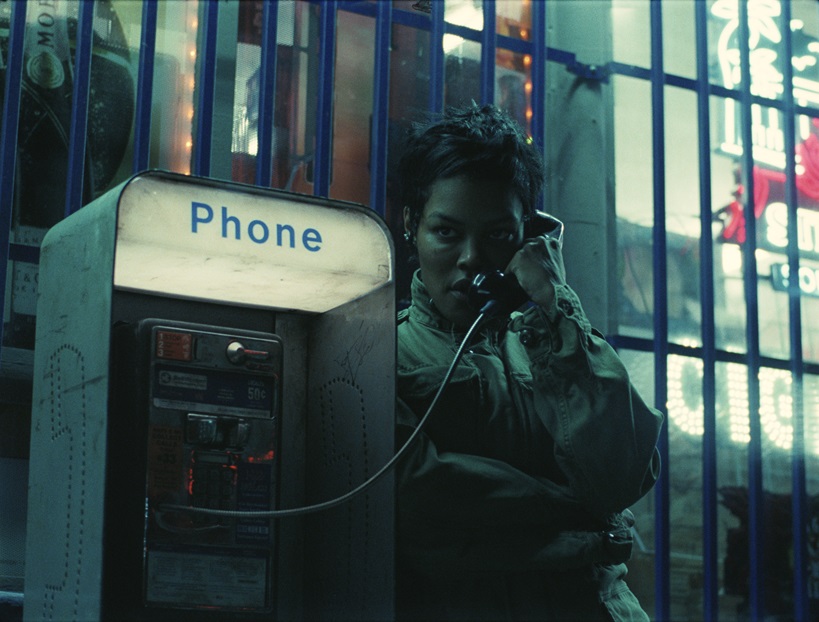
Teyana Taylor as Perrfidia, the eternal revolutionary
ONE BATTLE AFTER ANOTHER
CAST: Leo DiCaprio, Sean Penn, Chase Infiniti, Teyana Taylor, Regina Hall, Benicio del Toro
Living in these unsettling times when nobody knows what they will wake up to every morning in so many parts of the world, it is fascinating to see how artists are going to interpret something so personal and yet so beyond anything anyone could have imagined.
If you take previous movies like Boogie Nights, Magnolia and There will Be Blood, with their intent and in their diversity, Anderson’s decision to tackle the life he currently finds himself in, is not surprising. Neither is his approach.
Taking Thomas Pynchon’s ‘80s novel Vineyard (according to production notes) as his starting point, he writes a script so daringly in-your-face yet anchored by a father/daughter love story and electrifies this helter-skelter caper-like tale with a fantastic cast and a pace that leaves you breathless from the start to finish.
Making his attentions clear from the start, two of the strangest revolutionaries explode onto the screen as they shoot their way through an immigration centre to free the victims while simultaneousloy, disabling their viciously fierce, military captors.
With raucous music and an exuberantly energetic, romantically charged couple participating in the escape, it plays like a merry romp rather than a deathly revolution, quite reminiscent of the hippies in the ‘60s.
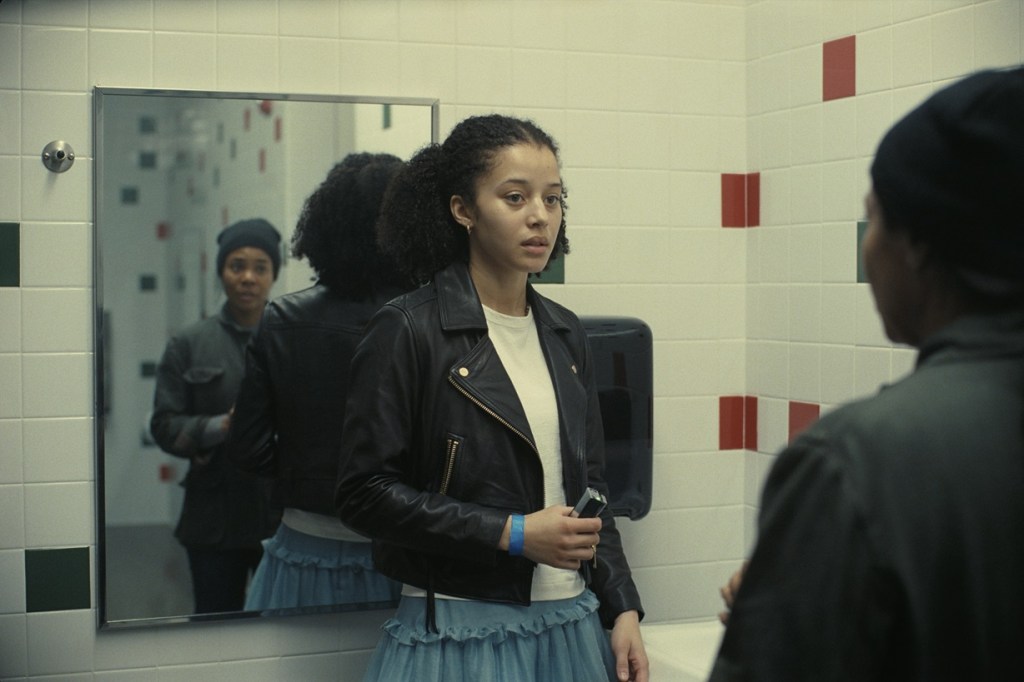
Chase Infiniti as the daughter of revolutionary active parents faces Regina Hall
And that sets of a chain of events which races through causes and time shifting in giant-sized leaps with the young revolutionaries suddenly parents even though their activities don’t diminish and again as mother is torn apart from father and baby, the child turns into an accomplished scholar raised by her now drug and alcohol drenched dad who spends all his time doting on his darling daughter.
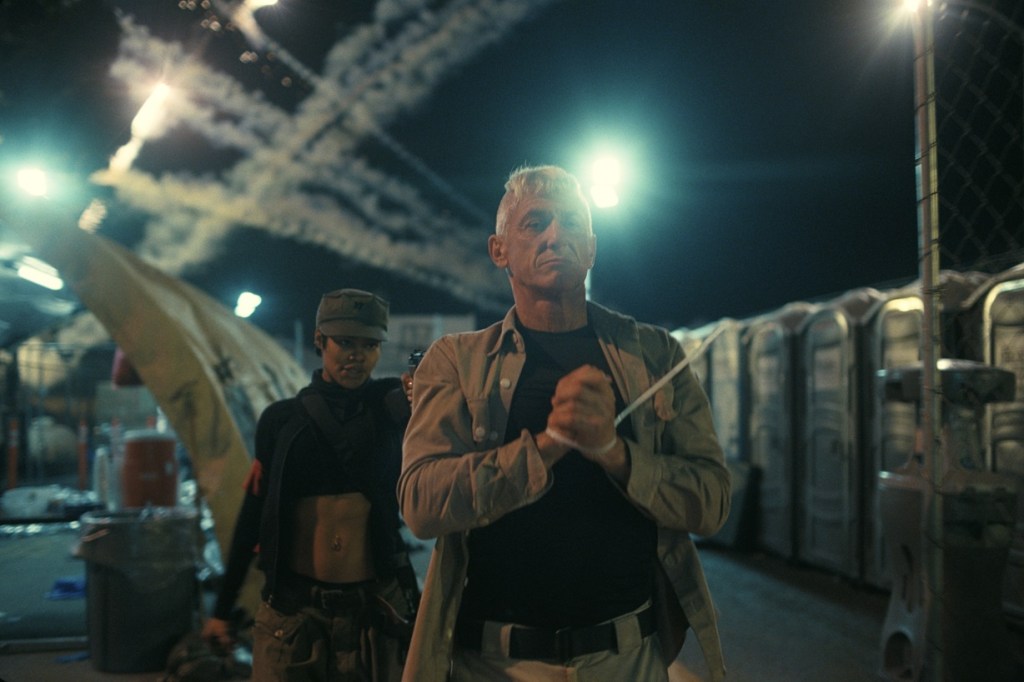
That’s at the heart of the frenetic contemporary tale but into its violent centre strides Colonel Steven J Lockjaw inhabited by a transformed Sean Penn (with the best contemporary remake of a mullet ever as seen above) who immerses himself in his right-wing tin soldier on a crusade to turn his country into a white universe ruled by power-demented ageing white men.
As these stories go, his hormones are unstoppable at the sight of Perfidia and even though he is a monstrous racist, he cannot resist her and starts to stalk her.
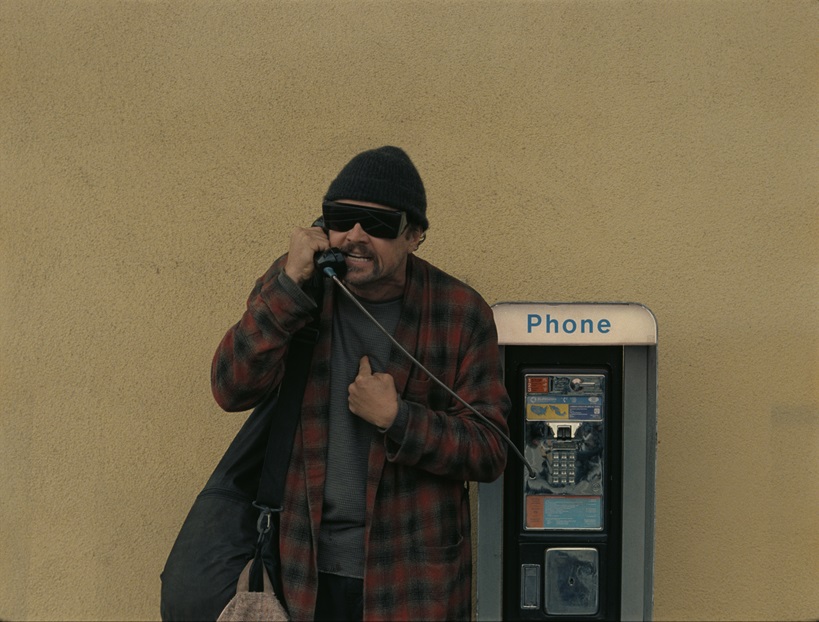
She however is committed to the resistance which is how he lands on the trail of Bob (DiCaprio, pictured above) and his now 16-year-old daughter Willa while catching a whiff of his addictive sexual attraction every once in a while.
The rest of the film is as promised one battle after another as father and daughter spend their lives evading their deadly predator while leading seemingly normal lives even though they have escape tunnels and technical devices which speak only to each other.
The film is packed from top to bottom and one side to another. It stretches every way and catapults back and forth to get a hold of the story and everything Anderson embroiders and stictches into his contemporary political tale.
Yet none of this is obvious as you are taken on a madcap adventure with some of the best action scenes and acting you will ever see. DiCaprio’s Bob reminds one of his character in The Wolf of Wall Street, only it’s a few decades on, he acknowledges his brain is fried from decades of abuse and what is left, is a laid-back dad who is happy as long as he is high and his daughter is happy.
Keeping him calm is Benicio del Toro’s sensei (pictured above), who is as cool as he is calm and the one who watches over his charges as if they are precious artefacts. He has manufactured a secret city within a city where he and his followers can escape when the crazy people start descending and some of the best chase scenes – on foot and in cars – will take you on a spree you have never encountered in film. James Bond can only dream of these kind of escapes.
But even as you run along and together as fast as you can (almost with a hop, skip and a jump) with the ragtag collection of what the rulers of their world see as life’s misfits, the politics are deadly serious and nothing to laugh at.
Anderson knows how to get his message across. No use preaching. We all know what is happening around us, the signs are everywhere even if we’re too busy to notice. Catch them with classic comedy and craftmanship and then hit hard with the story you’re really intent on sharing.
And that’s exactly what he does. You might just die laughing.
Screened exclusively at Ster-Kinekor cinemas, with select livestreams at V&A Waterfront
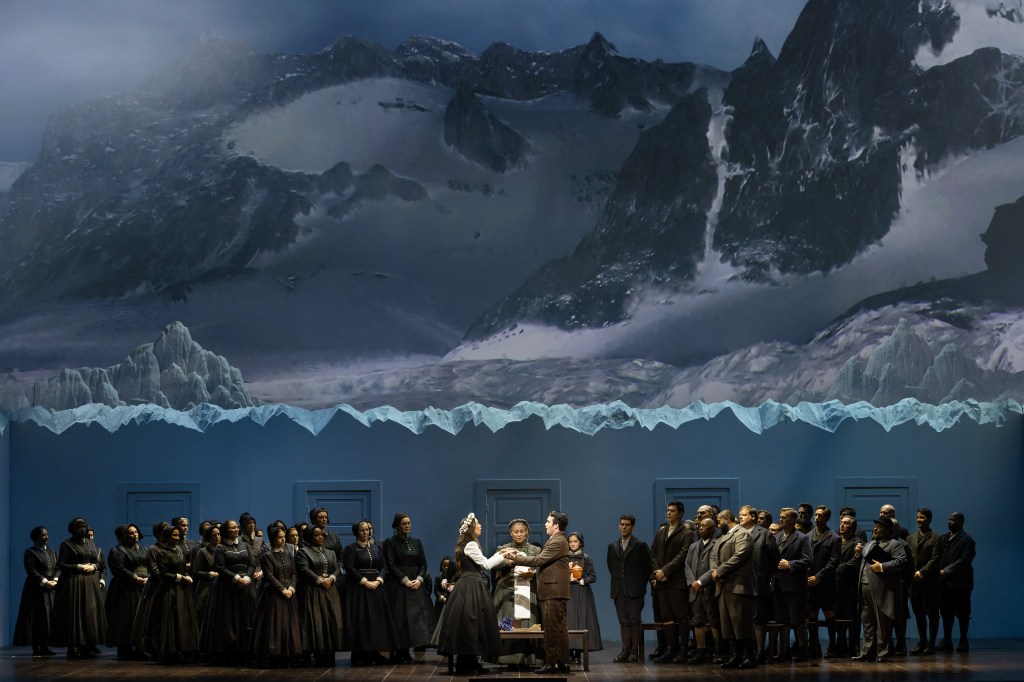
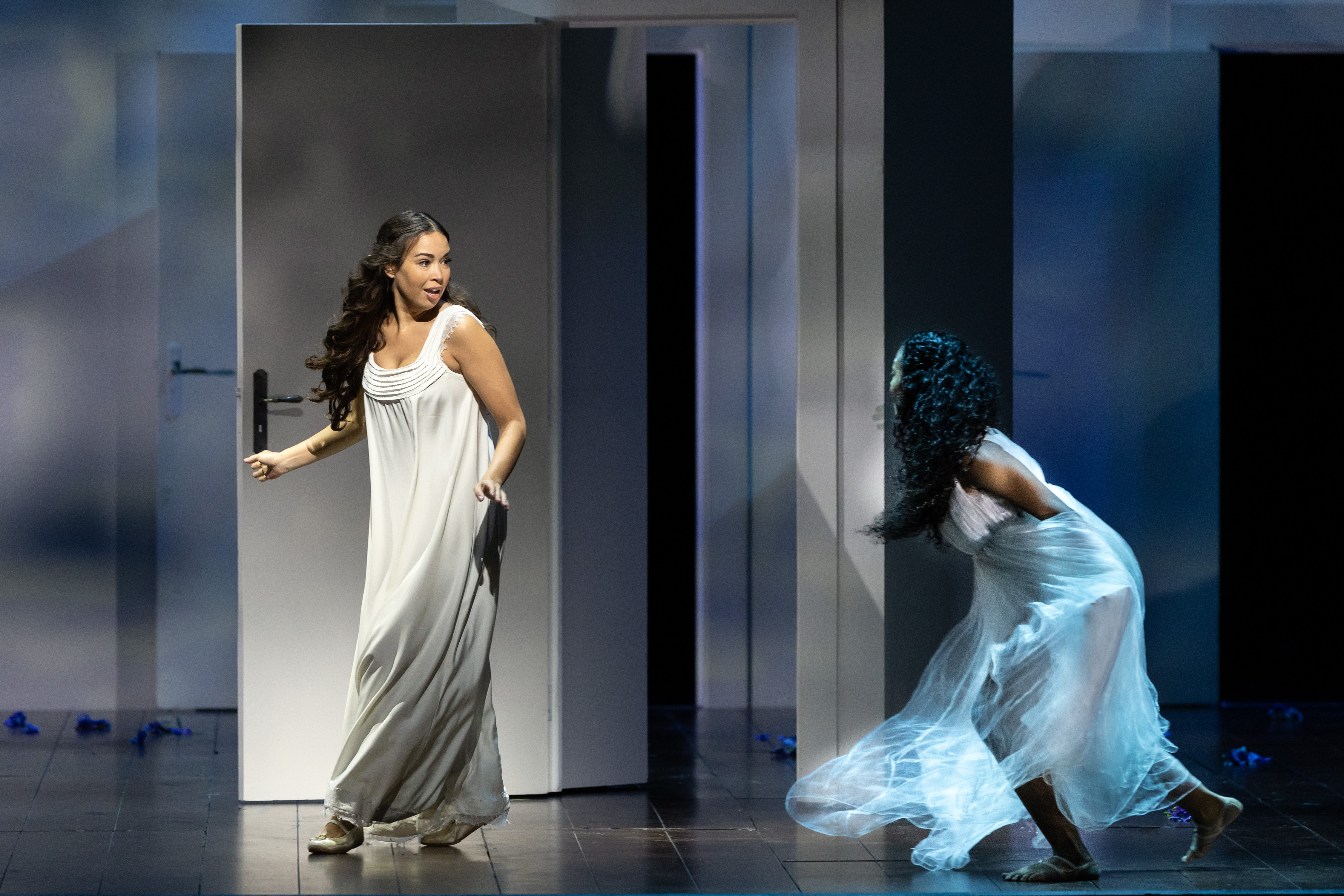
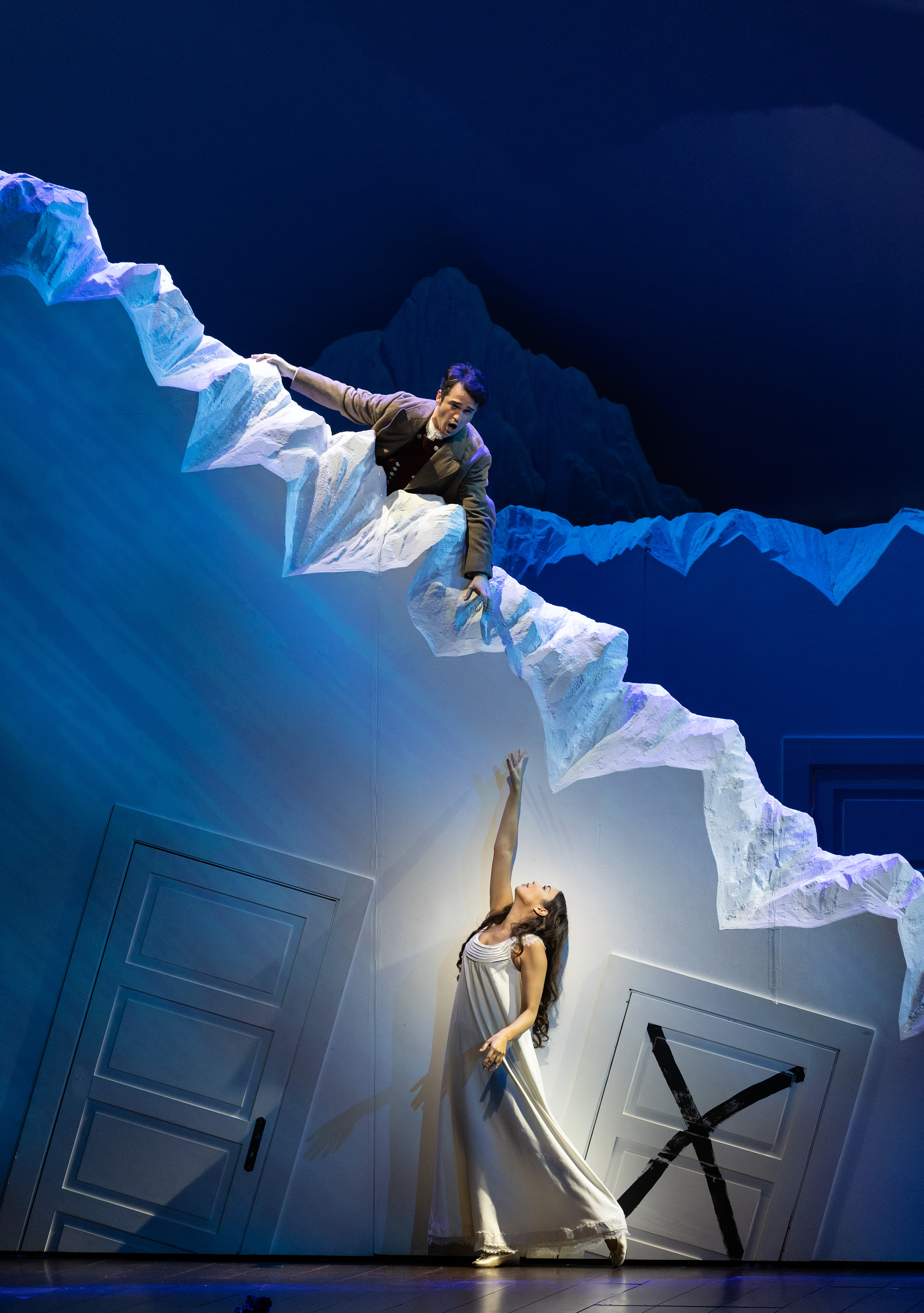
Deborah Nansteel as Teresa, Nadine Sierra as Amina, Sydney Mancasola as Lisa, Xabier Anduaga as Elvino, and Nicholas Newton as Alessio in Bellini’s “La Sonnambula.” Photo: Marty Sohl / Met Opera
It’s time for the 25/26 Met Opera season and what a spectacular worldwide season they’ve put together for the opera cognoscenti including South African opera enthusiasts.
This is the 18th Met: Live in HD, the Metropolitan Opera’s award-winning series of live high-definition cinema simulcasts and will locally be seen exclusively at select Ster-Kinekor and Cinema Nouveau cinemas.
With eight productions screening from this Sunday to mid-June 2026, the 2025-26 Live in HD season features one premiere, three new productions of much-loved operas and four revivals.
“With The Met: Live in HD productions screening in our cinemas, local audiences get to experience some of the world’s best-loved opera productions in a near-live situation, from The Met’s opulent stage to our big screens. The theatre-like setting enables cinemagoers to become an extension of the live production’s audience, making these world-class productions from the Met in New York accessible to anyone who enjoys and appreciates great opera,” says Lynne Wylie, chief marketing officer at Ster-Kinekor Theatres.
“What began as an experiment 18 years ago has become a staple experience for opera lovers all over the world,” said Peter Gelb, the Met’s Maria Manetti Shrem General Manager.
“Our 2025–26 season in cinemas reflects how opera is changing at the Met, where we’re balancing timeless classics with accessible new work that is advancing the art form and attracting younger and more diverse audiences.”
Don’t miss this world-class opera production, filmed and transmitted from the Met stage to the big screen at Cinema Nouveau and select Ster-Kinekor cinemas: Eastgate and Rosebank Nouveau in Johannesburg; Brooklyn in Tshwane; Watercrest in Hillcrest, KZN; Garden Route in George; Somerset in Somerset West; and Blue Route and V&A Waterfront (with live streams) in Cape Town. Loyalty card discounts apply, as does Ster-Kinekor’s Half-Price Tuesdays ticket price offering.
Bookings are open, with each production limited to two screenings only. Book your tickets now on the new-look Ster-Kinekor website at www.sterkinekor.com or download the new SK App on your smartphone. For news and updates, go to Facebook: Ster-Kinekor Theatres | follow Ster-Kinekor on Twitter: @Ster-Kinekor. For all queries, call Ticketline on 0861-Movies (668 437).
Here is the 2025-26 Met: Live in HD season at a glance, hold on to the programme for bookings:
Nadine Sierra as Amina in Bellini’s La Sonnambula. Photo: Marty Sohl / Met Opera
La Sonnambula – Bellini (new production)
Screening dates: 02 and 04 November 2025 (3h 15min)
Music by Vincenzo Bellini | Libretto by Felice Romani
Conductor: Riccardo Frizza
Cast: Amina – Nadine Sierra; Lisa – Sydney Mancasola; Elvino – Xabier Anduaga; Rodolfo – Alexander Vinogradov
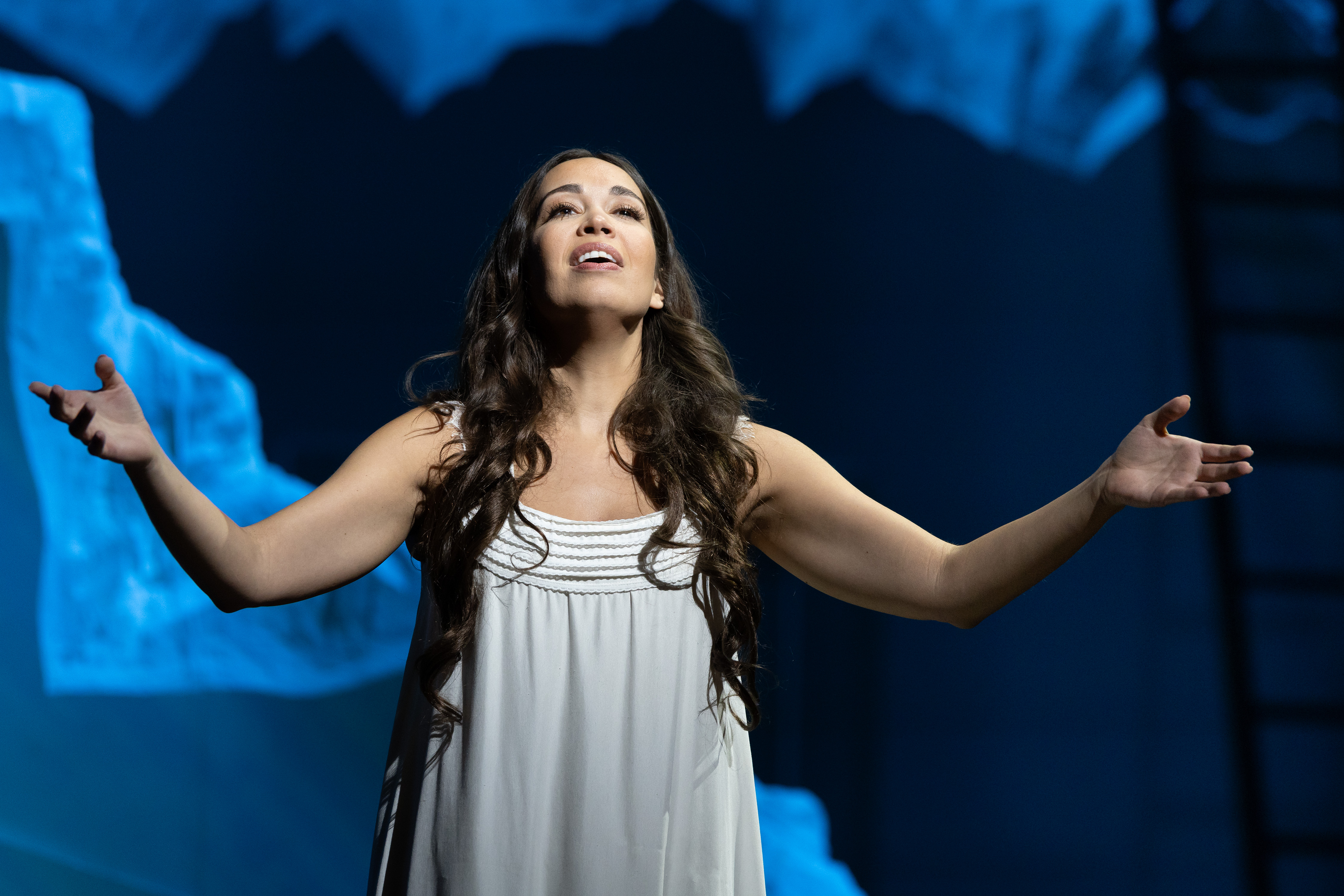
Roméo et Juliette, Verdi’s La Traviata, and Donizetti’s Lucia di Lammermoor, Nadine Sierra (seen in previous seasons of Roméo et Juliette, Verdi’s La Traviata, and Donizetti’s Lucia di Lammermoor) summits another peak of the soprano repertoire as Amina, who sleepwalks her way into audiences’ hearts in Bellini’s poignant tale of love lost and found.
In this new production, Rolando Villazón—the tenor who has embarked on a brilliant second career as a director—retains the opera’s original setting in the Swiss Alps but uses its somnambulant plot to explore the emotional and psychological valleys of the mind.
Tenor Xabier Anduaga co-stars as Amina’s fiancé, Elvino, alongside soprano Sydney Mancasola as her rival, Lisa, and bass Alexander Vinogradov as Count Rodolfo. Riccardo Frizza takes the podium for one of opera’s most ravishing works.
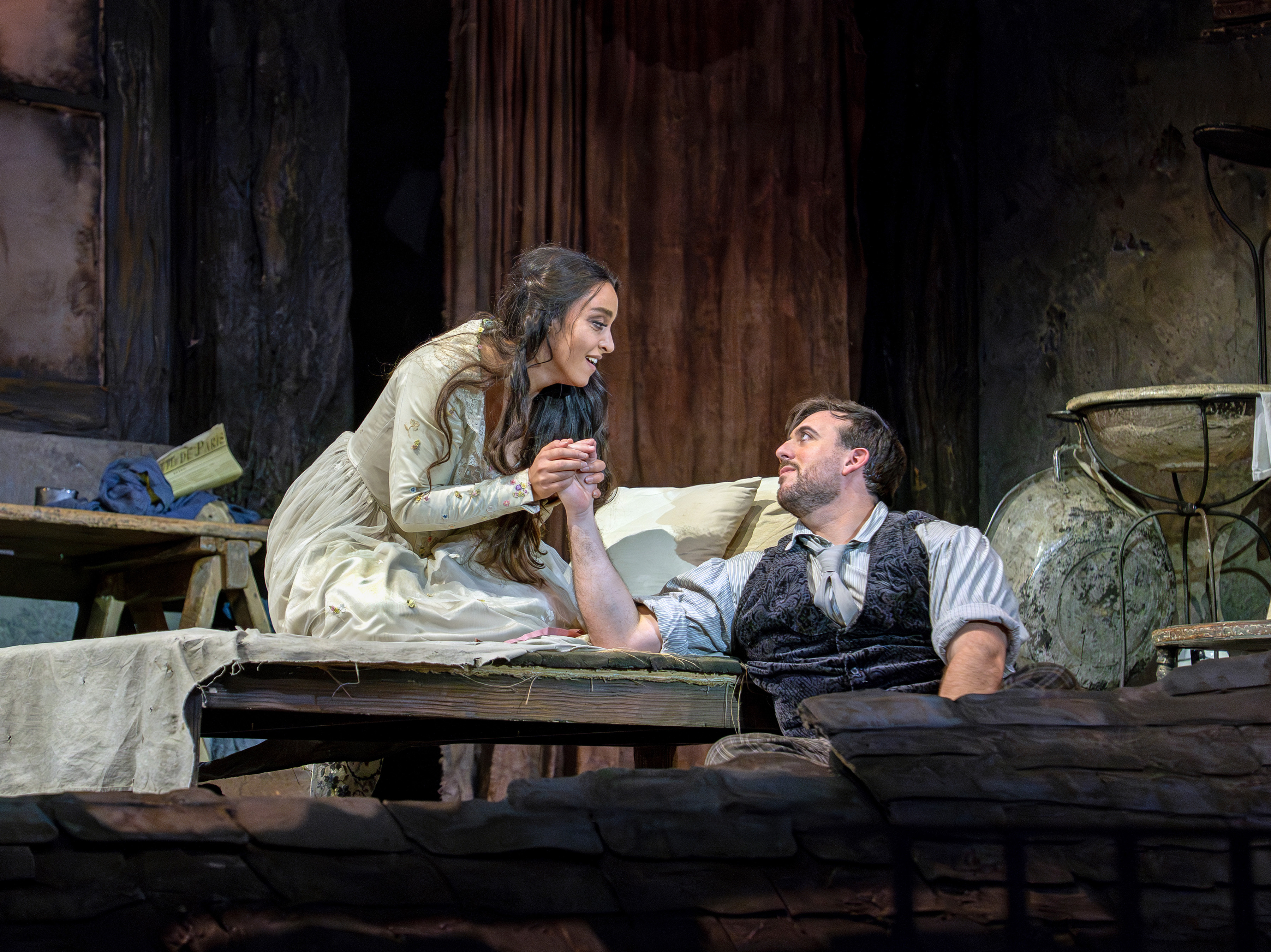
Juliana Grigoryan as Mimì and Freddie De Tommaso as Rodolfo in Puccini’s La Bohème. Photo: Karen Almond / Met Opera
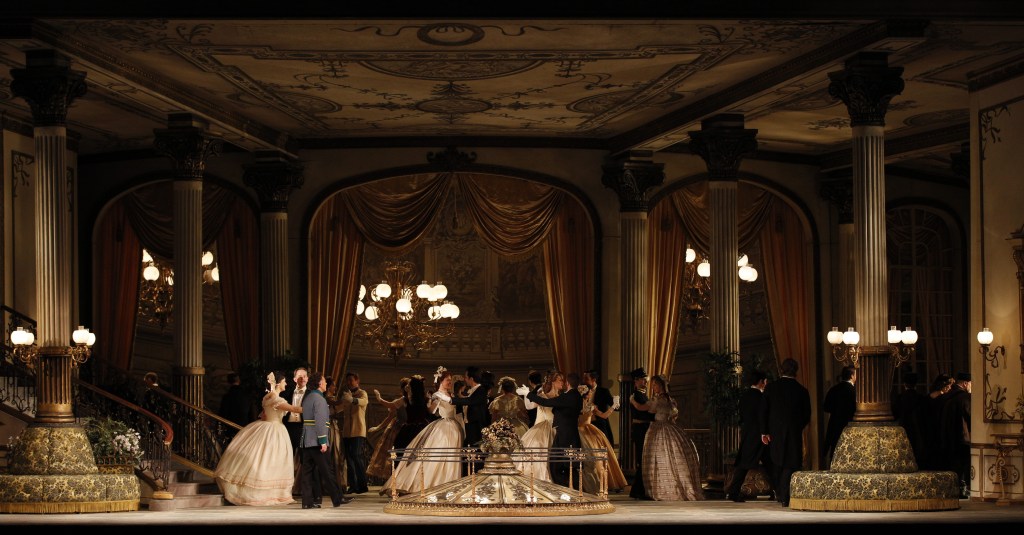
La Bohème – Puccini (revival)
Screening dates: 08 November (livestream at V&A Waterfront); 23 and 25 November 2025
(3h 29min)
Music by Giacomo Puccini | Libretto by Luigi Illica and Giuseppe Giacosa
Conductor: Keri-Lynn Wilson | Production: Franco Zeffirelli
Cast: Mimì – Juliana Grigoryan; Musetta -Heidi Stober; Rodolfo – Freddie De Tommaso; Marcello – Lucas Meachem; Schaunard – Sean Michael Plumb; Colline – Jongmin Park; Benoit/Alcindoro – Donald Maxwell
With its enchanting setting and spellbinding score, the world’s most popular opera is as timeless as it is heartbreaking. Franco Zeffirelli’s picture-perfect production brings 19th-century Paris to the Met stage as Puccini’s young friends and lovers navigate the joy and struggle of bohemian life. Soprano Juliana Grigoryan is the feeble seamstress Mimì, opposite tenor Freddie De Tommaso as the ardent poet Rodolfo. Keri-Lynn Wilson conducts the 08 November performance, which will be transmitted live from the Met stage to cinemas worldwide, including at Ster-Kinekor V&A Waterfront in Cape Town.
A scene from Strauss’s Arabella. Photo: Marty Sohl / Met Opera
Arabella – Strauss (revival)
Screening dates: 07 and 09 December 2025
(4h 12min)
Music by Richard Strauss | Libretto by Hugo von Hofmannsthal
Conductor: Nicholas Carter
Cast: Arabella – Rachel Willis-Sørensen; Zdenka – Louise Alder; Matteo – Pavol Breslik; Mandryka – Tomasz Konieczny; Waldner – Brindley Sherratt
Strauss’s elegant romance brings the glamour and enchantment of 19th-century Vienna to cinemas worldwide in a sumptuous production by legendary director Otto Schenk that “is as beautiful as one could hope” (The New York Times). Soprano Rachel Willis-Sørensen stars as the title heroine, a young noblewoman in search of love on her own terms. Radiant soprano Louise Alder is her sister, Zdenka, and bass-baritone Tomasz Konieczny is the dashing count who sweeps Arabella off her feet.
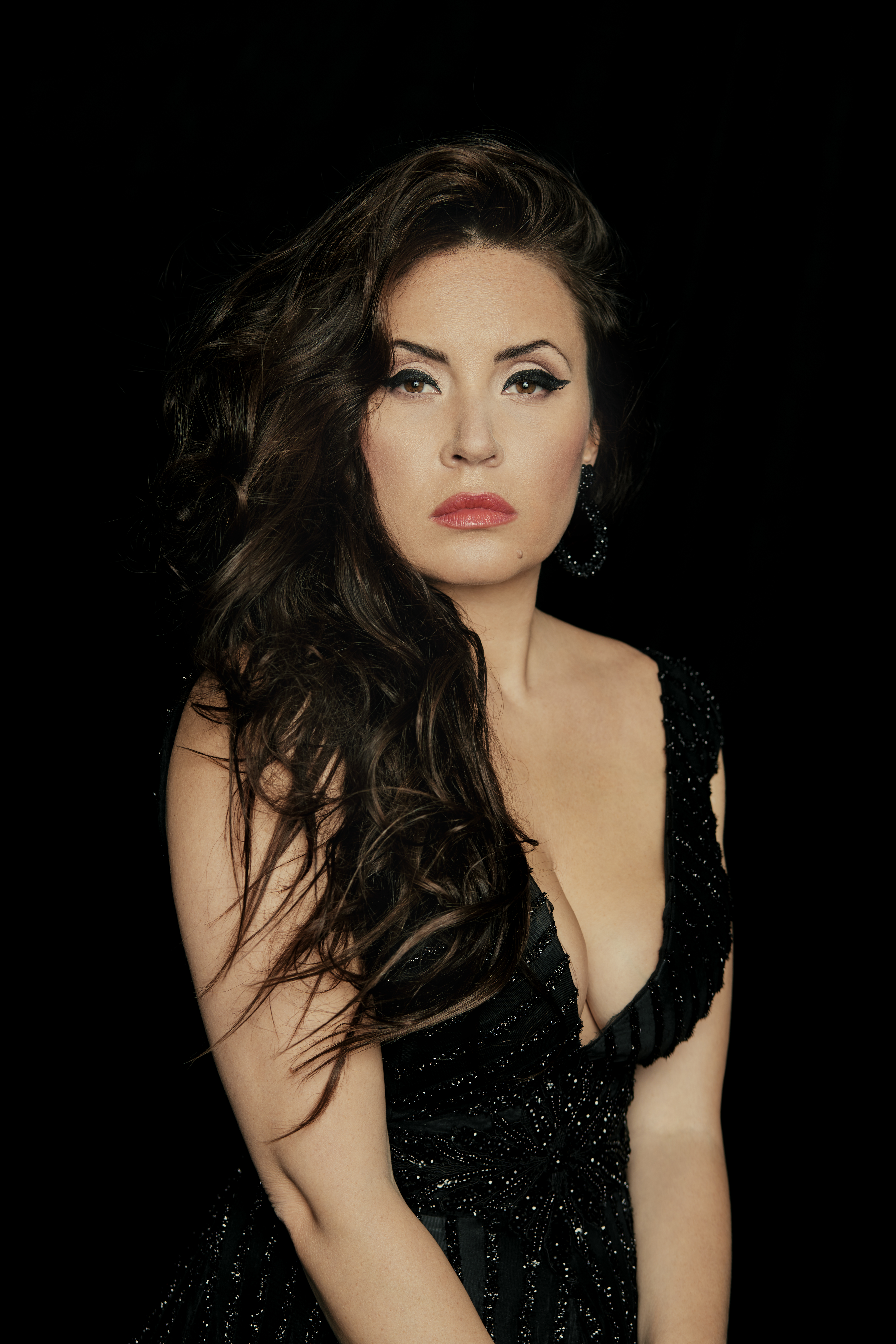
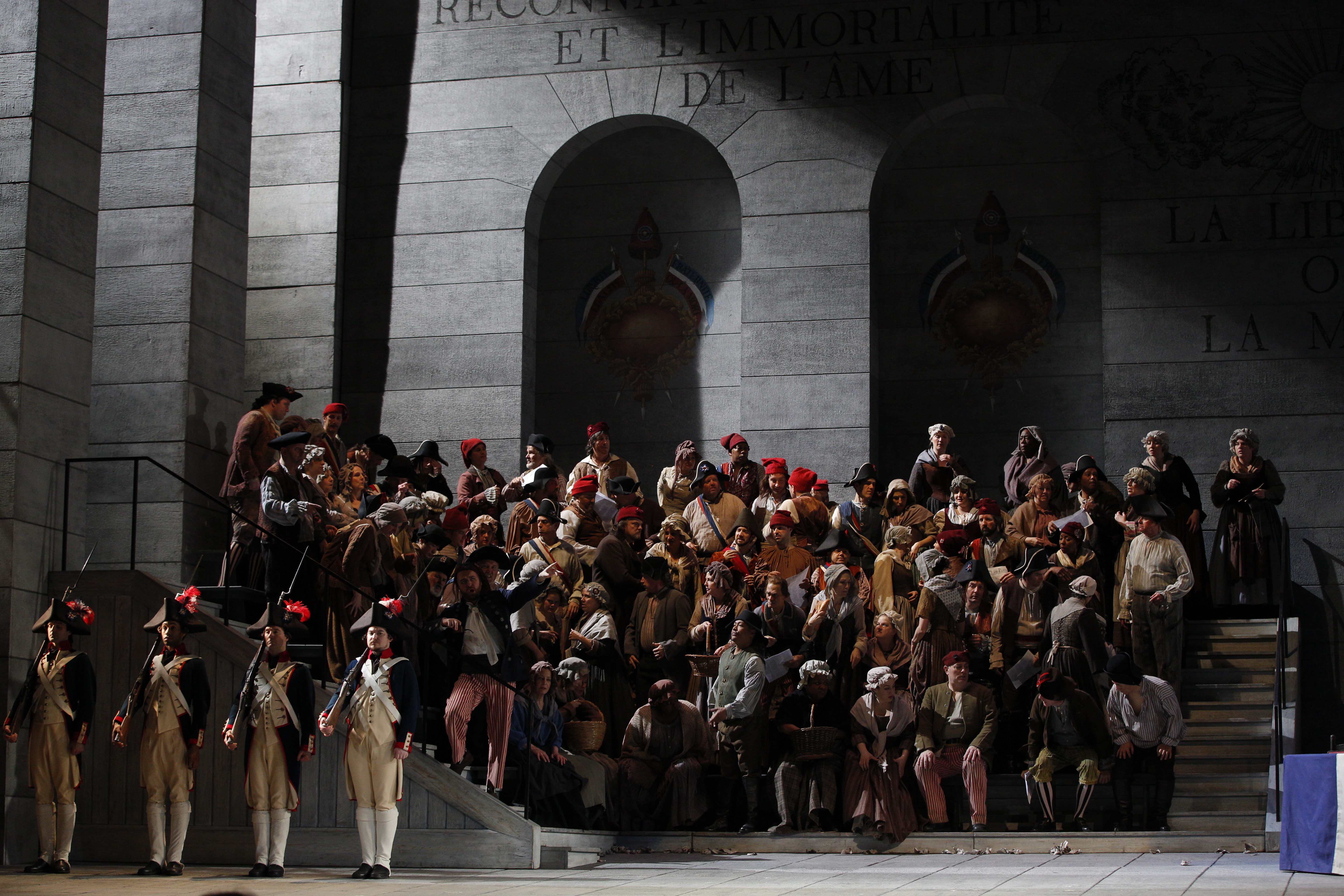
Soprano Sonya YonchevaA scene from Giordano’s Andrea Chénier. Photo: Marty Sohl / Met Opera
Andrea Chénier – Giordano (revival)
Screening dates: 13 December 2025 (livestream at V&A Waterfront); 04 and 06 January 2026
(3h 31min)
Music by Umberto Giordano | Libretto by Luigi Illica
Conductor: Daniele Rustioni
Cast: Maddalena di Coigny – Sonya Yoncheva; Andrea Chénier – Piotr Beczała; Carlo Gérard – Igor Golovatenko
Giordano’s passionate tragedy stars tenor Piotr Beczała as the virtuous poet who falls victim to the intrigue and violence of the French Revolution. Following their celebrated recent partnership in Giordano’s Fedora in the 2022–23 Live in HD season, Beczała reunites with soprano Sonya Yoncheva as Chénier’s aristocratic lover, Maddalena di Coigny, with baritone Igor Golovatenko as Carlo Gérard, the agent of the Reign of Terror who seals their fates. Met Principal Guest Conductor Daniele Rustioni takes the podium to lead Nicolas Joël’s gripping staging.
Lisette Oropesa as Elvira in Bellini’s I Puritani. Photo: Paola Kudacki / Met Opera
I Puritani – Bellini (new production)
Screening dates: 10 January (livestream at V&A Waterfront); 08 and 10 February 2026
(3h 31min)
Music by Vincenzo Bellini | Libretto by Carlo Pepoli
Conductor: Marco Armiliato
Cast: Elvira Walton – Lisette Oropesa; Lord Arturo Talbot – Lawrence Brownlee; Riccardo Forth – Artur Ruciński; Giorgio Walton – Christian Van Horn
For gorgeous melody, spellbinding coloratura, and virtuoso vocal fireworks, I Puritani has few equals. The first new Met production of Bellini’s final masterpiece in nearly 50 years – a striking staging by Charles Edwards, who makes his company directorial debut after many successes as a set designer – arrives in cinemas worldwide. The Met has assembled a world-beating quartet of stars, conducted by Marco Armiliato, for the demanding principal roles. Soprano Lisette Oropesa and tenor Lawrence Brownlee are Elvira and Arturo, brought together by love and torn apart by the political rifts of the English Civil War, with baritone Artur Ruciński as Riccardo, betrothed to Elvira against her will, and bass-baritone Christian Van Horn as Elvira’s sympathetic uncle, Giorgio.
Lise Davidsen as Isolde in Wagner’s Tristan und Isolde. Photo: Paola Kudacki / Met Opera
Tristan und Isolde – Wagner (new production)
Screening dates: 05 and 07 April 2026
(5h 12min)
Music by Richard Wagner | Libretto by the composer
Conductor: Yannick Nézet-Séguin
Cast: Isolde – Lise Davidsen; Brangäne – Ekaterina Gubanova; Tristan – Michael Spyres; Kurwenal – Tomasz Konieczny; King Marke – Ryan Speedo Green
After years of anticipation, a truly unmissable event arrives in cinemas as the electrifying Lise Davidsen tackles one of the ultimate roles for dramatic soprano: the Irish princess Isolde in Wagner’s transcendent meditation on love and death. Heroic tenor Michael Spyres stars opposite Davidsen as the love-drunk Tristan. The momentous occasion also marks the advent of a new, Met-debut staging by Yuval Sharon – hailed by The New York Times as “the most visionary opera director of his generation” and the first American to direct an opera at the famed Wagner festival in Bayreuth, as well as Music Director Yannick Nézet-Séguin’s first time leading Tristan und Isolde at the Met. Mezzo-soprano Ekaterina Gubanova reprises her portrayal of Brangäne, alongside bass-baritone Tomasz Konieczny, who sings Kurwenal after celebrated Met appearances in Wagner’s Der Fliegende Holländer and Ring cycle. Bass-baritone Ryan Speedo Green makes an important role debut as King Marke.
Soprano Asmik Grigorian A scene from Tchaikovsky’s Eugene Onegin. Photo: Ken Howard / Met Opera
Eugene Onegin – Tchaikovsky (revival)
Screening dates: 02 May (livestream at V&A Waterfront); 17 and 19 May 2026
(4h 05min)
Music by Pyotr Ilyich Tchaikovsky | Libretto by the composer and Konstantin Stepanovich Shilovsky
Conductor: Timur Zangiev*
Cast: Tatiana – Asmik Grigorian; Olga – Maria Barakova; Filippyevna – Stephanie Blythe; Lenski – Stanislas de Barbeyrac; Eugene Onegin – Igor Golovatenko; Prince Gremin – Alexander Tsymbalyuk
Following her acclaimed 2024 company debut in Puccini’s Madama Butterfly, soprano Asmik Grigorian returns to the Met as Tatiana, the lovestruck young heroine in this ardent operatic adaptation of Pushkin, which will be transmitted live from the Metropolitan Opera stage to cinemas worldwide on 02 May, including at Ster-Kinekor V&A Waterfront, on 02 May. Baritone Igor Golovatenko reprises his portrayal of the urbane Onegin, who realises his affection for her all too late. The Met’s evocative production, directed by Tony Award–winner Deborah Warner, “offers a beautifully detailed reading of … Tchaikovsky’s lyrical romance” (The Telegraph).
El Último Sueño de Frida y Diego – Frank (Metropolitan Opera premiere)
3 / 5
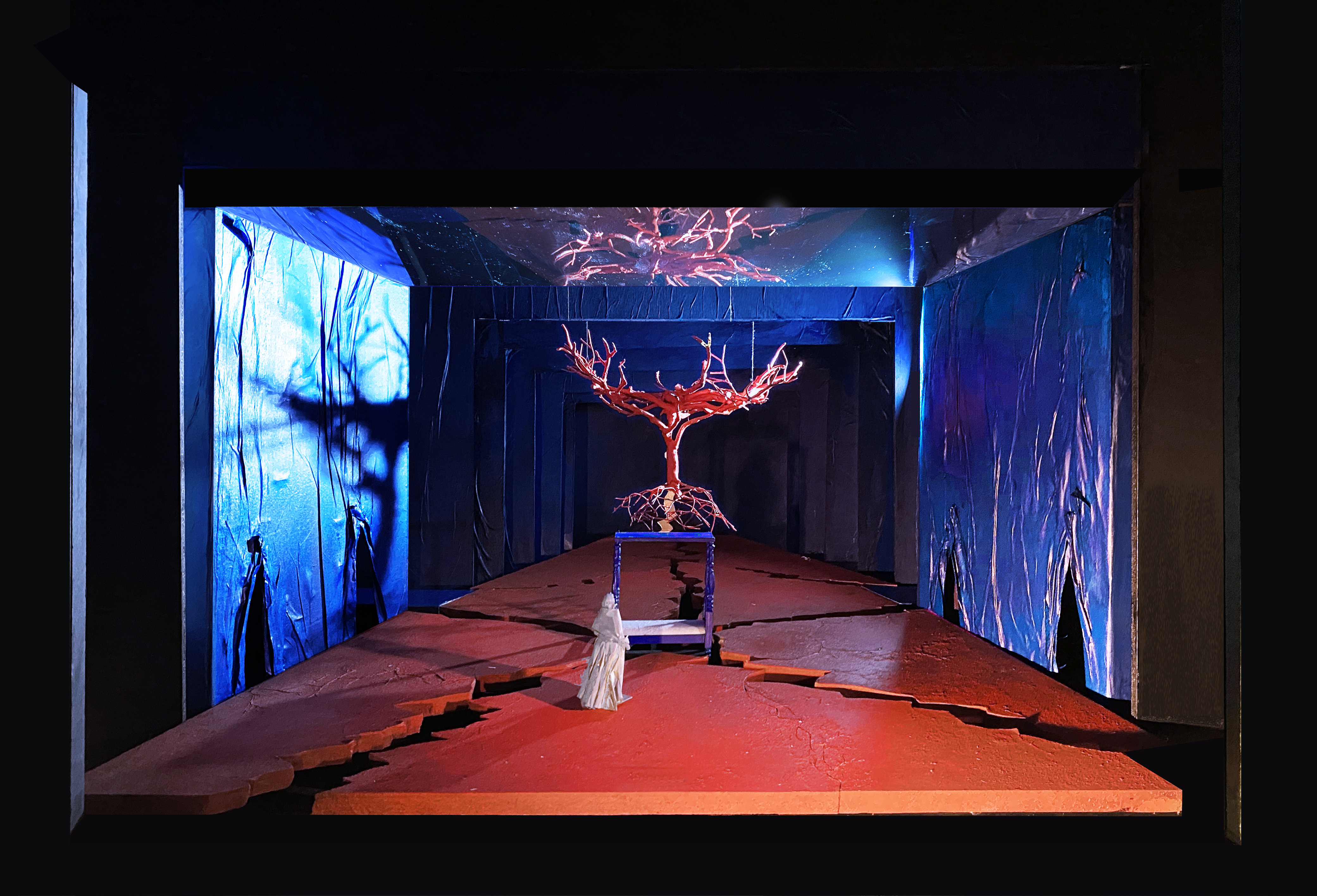
A set design by Jon Bausor for the Met premiere of Gabriela Lena Frank’s El Último Sueño de Frida y Diego.
Screening dates: 30 May (livestream at V&A Waterfront); 14 and 16 June 2026
(2h 48min)
Music by Gabriela Lena Frank* | Libretto by Nilo Cruz*
Conductor: Yannick Nézet-Séguin
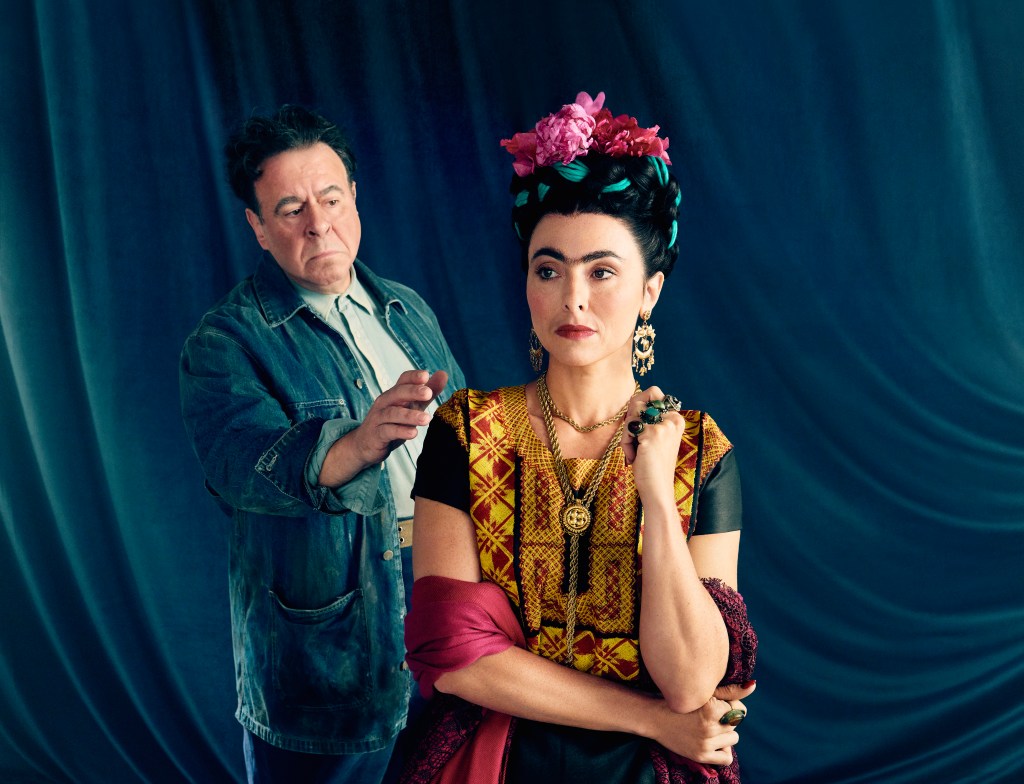
Cast: Catrina – Gabriella Reyesl; Frida – Isabel Leonard; Leonardo – Nils Wanderer; Diego – Carlos Álvarez
A scene from Tchaikovsky’s Eugene Onegin. Photo: Ken Howard / Met Opera
On 30 May, the Metropolitan Opera’s 2025–26 Live in HD season comes to a close with a live transmission (only at V&A Waterfront) of American composer Gabriela Lena Frank’s first opera, a magical-realist portrait of Mexico’s painterly power couple Frida Kahlo and Diego Rivera, with libretto by Pulitzer Prize–winning playwright Nilo Cruz. Fashioned as a reversal of the Orpheus and Euridice myth, the story depicts Frida, sung by leading mezzo-soprano Isabel Leonard, leaving the underworld on the Day of the Dead and reuniting with Diego, portrayed by baritone Carlos Álvarez. The famously feuding pair briefly relive their tumultuous love, embracing both the passion and the pain before bidding the land of the living a final farewell. Music director Yannick Nézet-Séguin conducts the Met-premiere staging of Frank’s opera, a “confident, richly imagined score” (The New Yorker) that “bursts with colour and fresh individuality” (Los Angeles Times). This vibrant new production, taking enthusiastic inspiration from Frida and Diego’s paintings, is directed and choreographed by Deborah Colker.
The latest Ryan Coogler movie Sinners is an off-the-charts invigorating experience.DIANE DE BEER speaks her mind:
Currently showing at Ster-Kinekor
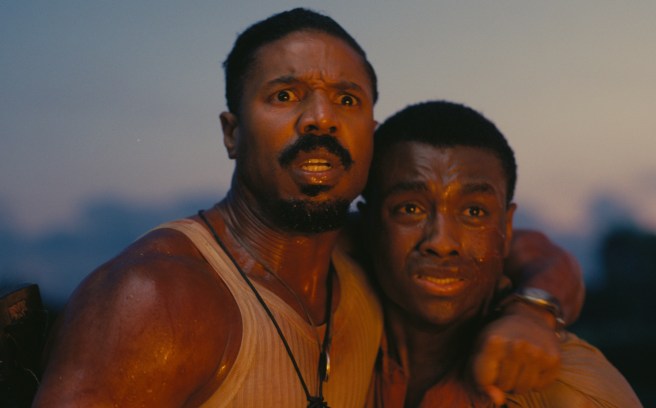
Michael B Jordan and Miles Canton face their fears in Sinners
SINNERS
DIRECTOR: Ryan Coogler
CAST: Michael B Jordan, Delroy Lindo, Wunmi Mosaku, Hailee Steinfeld, Lu Jun Li, Yao, Omar Benson Miller
If you are familiar with the movies Fruitvale Station, Creed and Black Panther, you will also know the director as well as the star of Sinners. Apart from the fact that Coogler knows how to go big, work with issues and pick a star cast, everything else will be new.
Horror and vampires aren’t exactly my favourite genres, in fact, I avoid them, but here Coogler’s name was just too much of a draw. That and the fact that much of what he seemed to be aiming at in this film comes across like the themes in one of my favourite movies, Get Out.
Too many people like steering clear of issue-driven movies, but in our world where the divide is still so big in so many areas, as an older white film fanatic, I want to hear what the dynamic young black voices have to say; which stories they want to tell and also, how do they get those stories across.
That was what I was looking forward to in this one. The cast is huge and the actors are quite something. Coogler has worked with Jordan in most of his films and here he literally doubles up as the twin brothers Smoke and Stack (yip, that’s what they’re called). They’re equally dandily dressed, but their clothes, although similar, have distinctive features, and the one’s behaviour is more out there than the other’s. Fortunately, technology can pretty much perfectly deliver anything directors want these days.
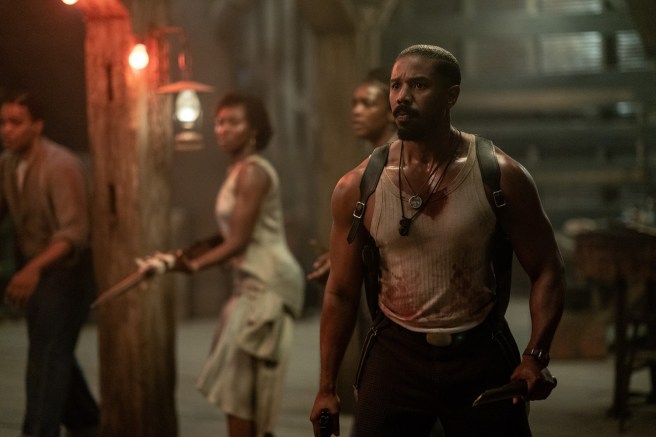
Michael B Jordan and his friends stand together.
The rest of the cast are as cleverly picked and especially the two women, a stunningly statuesque Mosaku and the smouldering Steinfield, will knock your socks off with their performances. And if you don’t know the names, you will recognize them and after this movie, you will certainly also remember the names.
But everyone in the film impresses. The look and the style will grip you from start to finish and then you can add the music, which for me truly dominated in the best sense of the word. It is quite simply brilliant – both from the black brethren as well as the white trash.
The first are seriously into the blues and the latter have a more gentle, contained country folk sound. You will be rocking in your chair and the cast are seemingly given free rein to make those moves rhythmically magical. It’s one party you don’t want to miss.
The first half of the film is pretty much about the two brothers returning from Chicago where they have collected rolls and rolls of cash and boxes of Irish beer (courtesy Al Capone circa 1930) and returning to the Mississippi Delta (which already spells trouble), where they establish a juke joint in a rundown mill belonging to a supremacist landlord, who is only interested in the lucre and not the colour of their skin when he rents them the place … or so he says.
Then the hard labour begins as everybody gets ready to get the place rocking. As the night hovers on the horizon, when the sun sets the trouble begins.
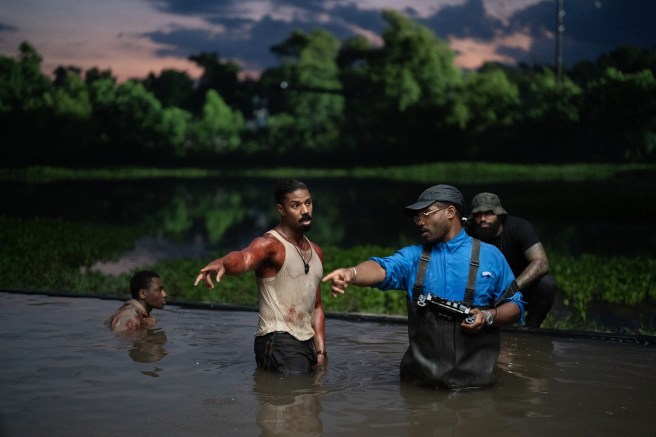
Michael B Jordan and director Ryan Coogler discussing the scene about to be shot.
This is where it became a bit too much, as the seriously partying crowd are stopped in their tracks by a family of vampires who threaten to deliver them all into a permanent state of wandering.
And yet, those are all just the package in which this film is wrapped. What Coogler is really playing with is the grand divide which has been ongoing for millennia. Every time I questioned the rage and the explosive catastrophe that turns a festive night into a slaughter madness, I was reminded of the damage inflicted by their relentless savage treatment.
As always, critics differ, but here the critical thinking swings viciously from one end of the spectrum to the other – and I found myself on both sides in certain instances.
The originality was the standout feature for me. The epic extremes the director decided to launch when he truly wanted to make his point felt like the result of dealing with an unexplained hatred which has been raging for ages. And if you had to be on the receiving end of such constant humiliation, hardship and absence of humanity which have run through generations of your brothers and sisters, perhaps the results have to be of volcanic proportions.
I was wondering how many of especially the older generation would stomach this particular version but, for me, it is the weight of the story, the magnificence of the performances of especially the two female leads, the sublime singing, musicmaking and acting by the young Miles Canton, the doubling up of the Jordan performances, or just to witness the making of the movie in this single instance, and the list goes on.
It didn’t all work for me, but as usual Coogan is epic in his filmmaking approach. Brace yourself, participate in the ride. Already the staff at Brooklyn Ster-Kinekor is saying it has been their busiest show yet. And techy podcaster Kara Swisher is celebrating the fact that Coogan negotiated good money on worldwide ticket sales as well as owning the intellectual property after a few years, something almost unheard of in Hollywood. Don’t miss the changing of the guard. It’s going to be one helluva wave – and perhaps just
CAST: Michael Fassbender, Cate Blanchett, Gustav Skarsgǻrd
RATING: *** and a half
It’s quite serendipitous that while watching and then thinking about this latest espionage thriller currently showing on local Ster Kinekor screens, the US is again struggling with the latest scandal by what seems a most inept group of security heads.
That’s how seriously spying is taken in our modern world as different governments keep check on different countries to try to manage a world where we will all be safe.
Obviously the making of the movie happened long before all this played out, but be warned of a slew of spy movies popping up in the not too distant future. Those telling stories are already encouraged by the popularity of series such as Slow Horses and Day of the Jackal, both brilliantly made.
Casting plays a huge role, with Gary Oldman and Eddie Redmayne the stars in those two shows and here Soderbergh has gone for star power – Michael Fassbender and Cate Blanchett. Strengthening his case even more, they’re playing husband and wife.
And upping the ante, the one is investigating the serious offense of leaking sensitive information to the enemy. The stakes couldn’t be higher.
The scene is immediately set with a dinner party to which all the possible suspects are invited and we find them seated around the dinner table. Naturally, it takes a while to discover who is who but that’s the fun part of a spy movie. The story shouldn’t be so oblique that you never get to unravel it, but it also shouldn’t be too obvious so that you get to the solution long before it is revealed in the movie.
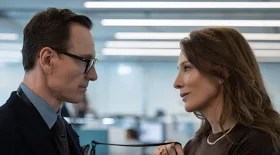
That certainly isn’t the case here. George (Fassbender), however, is facing a dilemma. What if his wife Kathryn (Blanchett) is the culprit? And that is where the tension and the intrigue lie.
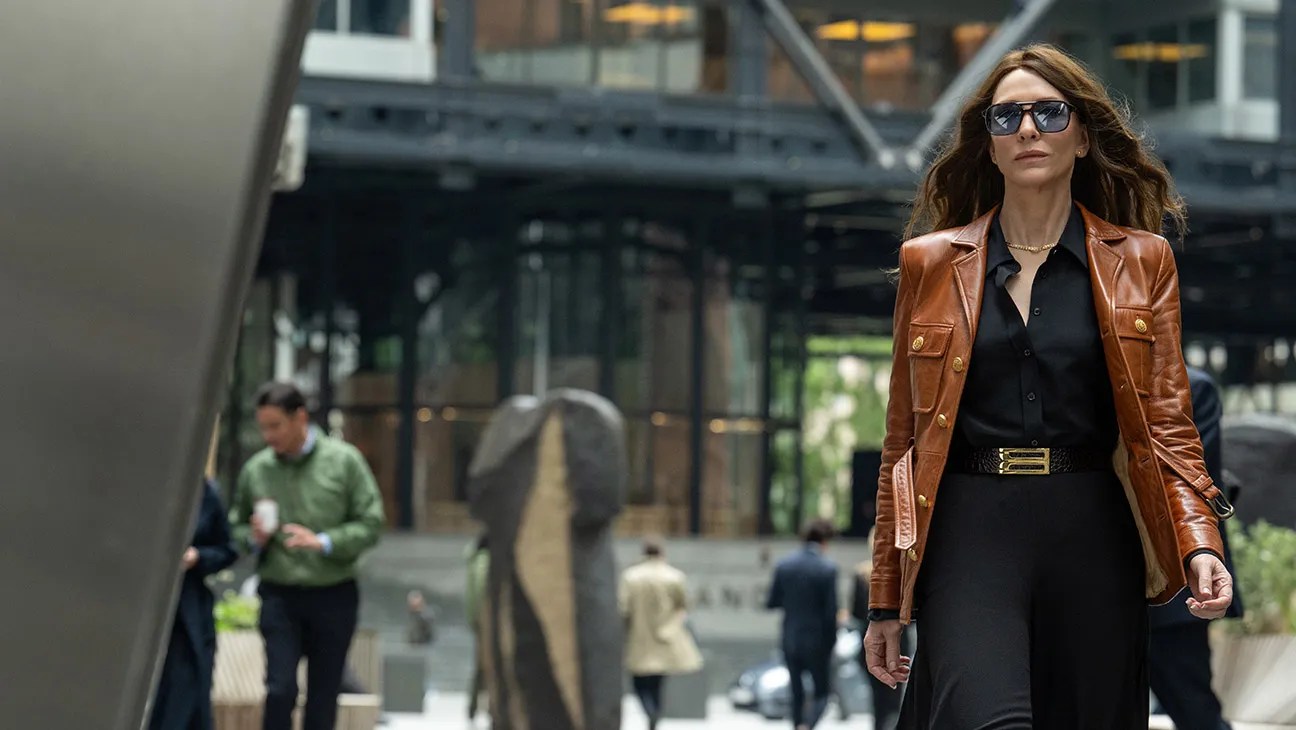
It’s all about style and luckily enough substance as these two actors play the game with great skill. Fassbender is the perfect spy with his inscrutable expression and formal manner while Blanchett, very fetching with long brunette hair, is much more vibrant and the one that you suspect could get in trouble because of her exuberant nature.
These might sound flimsy, but this couple have no problem playing their different roles and keeping you guessing. Is the story important? Not so much, which is fortunate because it could take you some time to get it worked out.
But that’s probably the point. If that’s what you like from your movies, this is it. You won’t get a better combination than Soderbergh and his pick of actors, which include an ageing Pierce Brosnan as their boss with Naomi Harris, Marisa Abela (recently seen in Industry) and Tom Burke completing the strong line-up.
It’s fast, extremely easy on the eye and yet the tension takes hold right from the start because the stakes are high. All the ingredients of the spy thriller are there, perhaps too perfectly to give it a strong beating heart.
Both the television series mentioned above focus more on the characters. With Oldman as the odd ball Jackson Lamb you’re immediately hooked and, with the tension created by the high stakes with Redmayne as the assassin, you’re also pulled in. With a movie, it relies more on the story because of the time constraints. This one falters because it has less time to embroider, but it is a much faster ride and more exhilarating as the denouement is the ultimate goal. Need a few hours of escape? This will do it!
TWO new films, currently on circuit at Ster Kinekor theatres, deserve all the accolades for performance and production whatever the outcome of the award show still revered as the one everyone wishes for. DIANE DE BEER reviews:
Picures: Pablo Larrain
MARIA
Director: Pablo Larrain
Cast: Angelina Jolie, Haluk Bilginer (Onassis), Alba Rohrwacher (the housekeeper), Pierfrancesco Favino (valet)
If you’re an opera fan, this one should be hard to resist.
Arguably, the success of the film rests on Angelina Jolie’s shoulders. And she delivers magnificently.
I’m old enough to remember when Maria Callas and her public love/hate relationship with Ari Onassis dominated the gossip columns. When he married Jackie Kennedy, the snub to his former lover could be felt worldwide – even without the presence of social media.
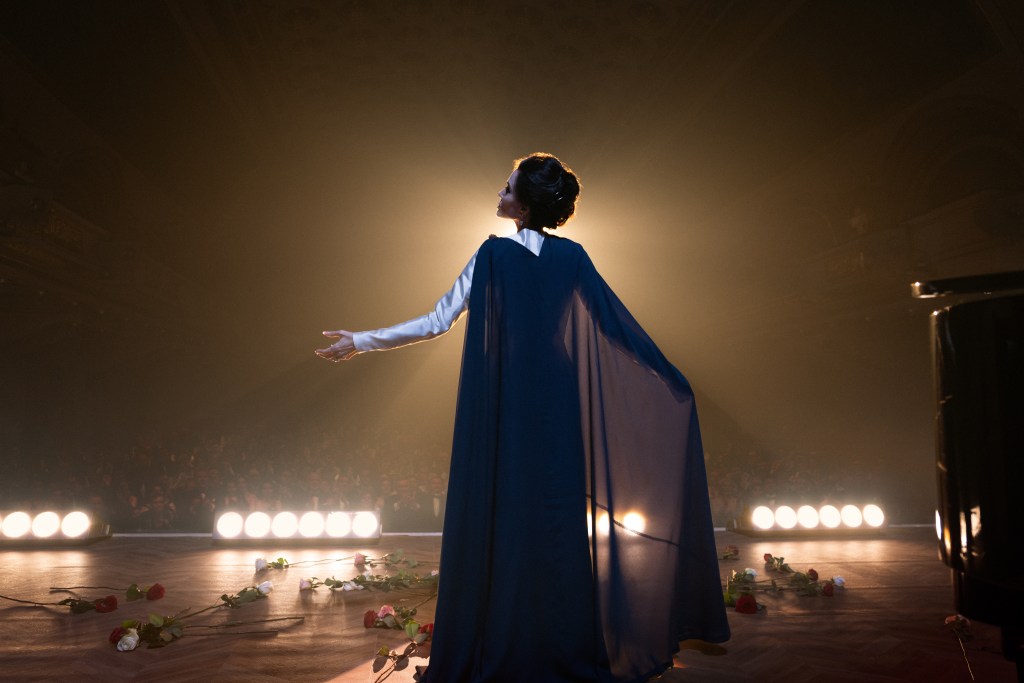
Many women have been scorned but not as publicly as she. And this is where Jolie pays homage to the remarkable superstar whose health and voice are starting to fail. She hasn’t been on stage for more than four years, but in her head, that’s where lives.
It’s where she comes alive and that is where the film gloriously captures the great Callas presence and voice.
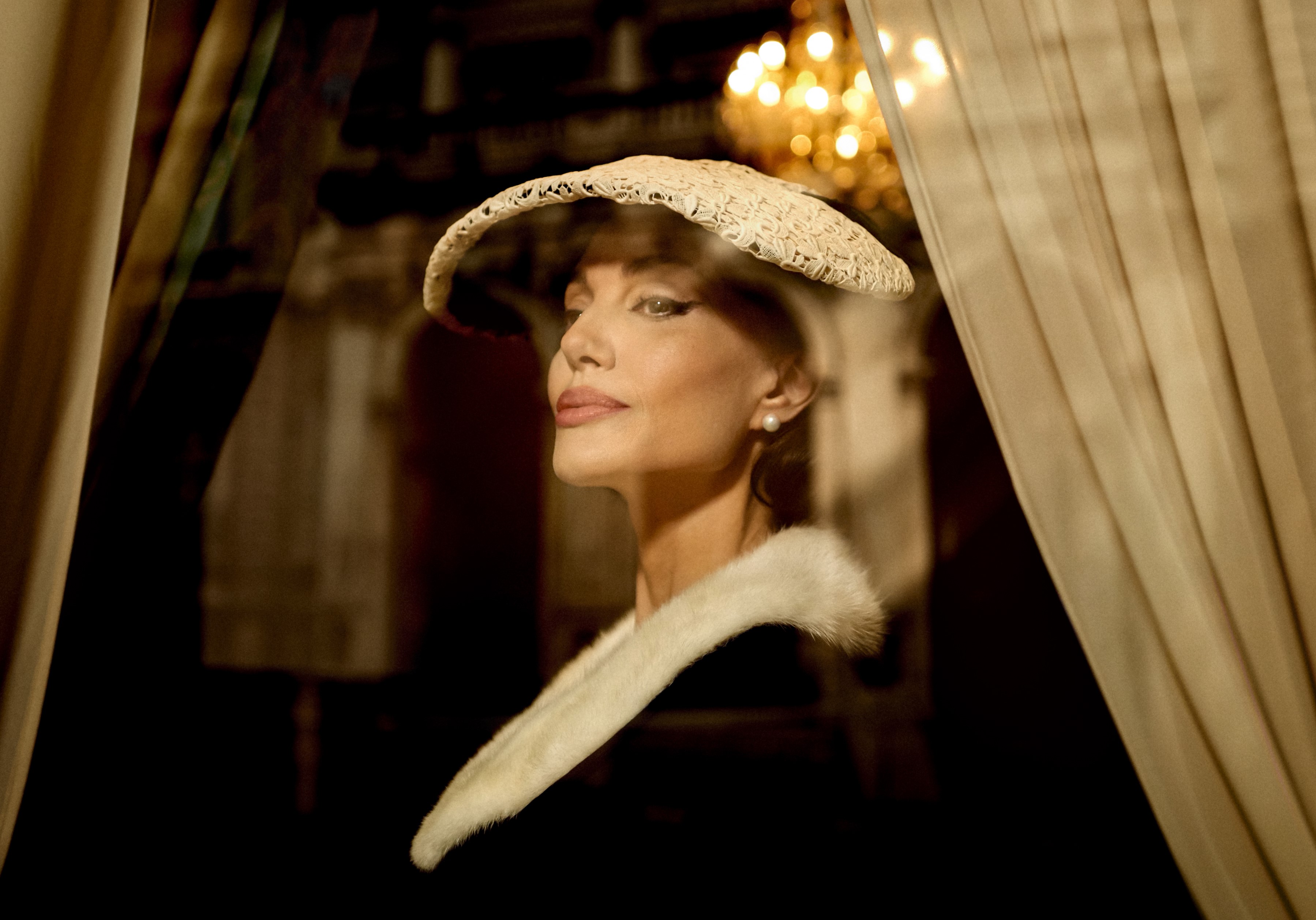
Even though the two women aren’t lookalikes, the subtlety of Jolie’s transformation, the way she holds herself and moves and when she “sings” all vividly embody the spirit of the damaged diva – both physical and mental.
The casting is inspirational and the way the director has imaginatively captured the elegance and dignity of Callas combines to tell a story with great heart and empathy. Told as if from another era, which indeed it was, it is the tragedy and tribulations of Maria’s life that are delicately rendered so that it feels as though a real woman emerges.
And the film cleverly tells the story from Maria’s point of view. She wasn’t someone who relished sharing her secrets, but with Onassis and the women he courted, she didn’t have to. The world was fascinated.
The title doesn’t need more than just a name – Maria. Perhaps youngsters know less of her, but the older generation will know enough to care about this woman who seemed to have it all – but not the love of her life. And that was everything to her.
It’s obvious that she was the right choice for the Greek shipping magnate, but perhaps she too easily outshone him with her talent and artistic temperament. Jackie, a persona in her own right, but more as a symbol of a nation than an artist, to his mind, would allow him to shine brighter.
It was the mismatch of the century with the shy American first lady not a match for the rough-edged Ari, and he, no competition for the memory of the suave Jack Kennedy.
The one who suffered was Maria, who reflects on her life while trying to relive the glory of her younger voice.
It is indeed a Greek tragedy, but, fortunately, because of all the ingredients so smartly complementing each other, it is beautifully told, with Jolie’s performance and the Callas voice stealing the show.
Oscar nominations: Cinematography; and I would have included the director and Angeline Jolie in the nominations
It’s probably the length of the film that has kept some from seeing this exquisite film – both in storytelling and the way it unfolds.
It is and feels epic from beginning to end. The Brutalist is a story about an architect who flees to America from a devastating postwar Europe. He hopes to invigorate his life, his career and finally reunite with his wife and niece whom he leaves behind until he has established himself.
The more things change, the more they stay the same. In today’s climate, it is the struggling life of the immigrant that grabs hold most viciously as a visionary artist is forced to grovel his way to simply survive.
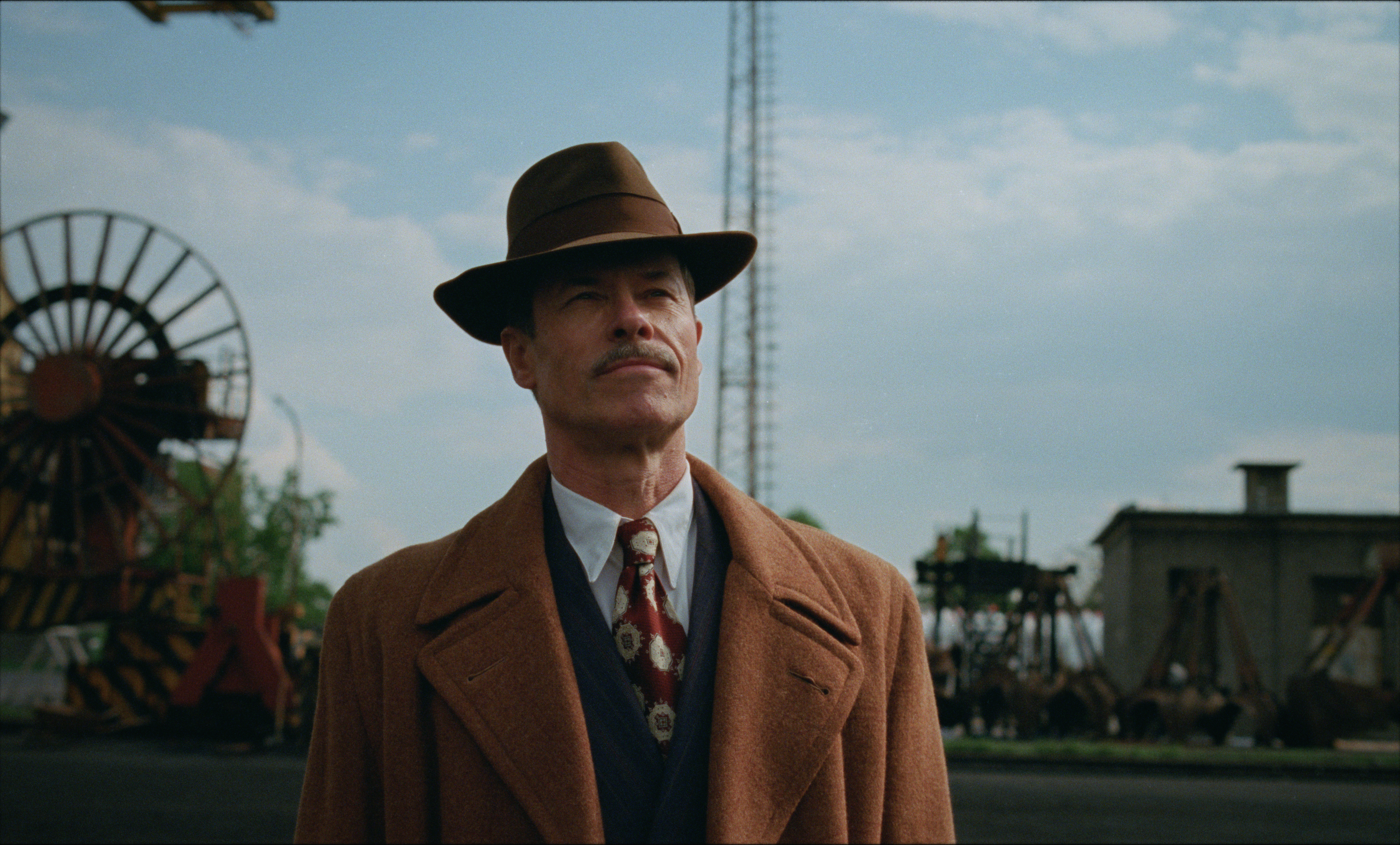
Power and its frightening effects are not something that’s just of our times. Even though he is soon spotted by a wealthy industrialist, Harrison lee Van Buuren (a name that carries weight in society), he is completely at the mercy of the powerful and their needs.
Nothing is secure, even when you’re designing for the best. They can tear you apart in seconds, make you bend the knee while praising your abilities and constantly hold you in their grip – even when celebrating your masterpiece.
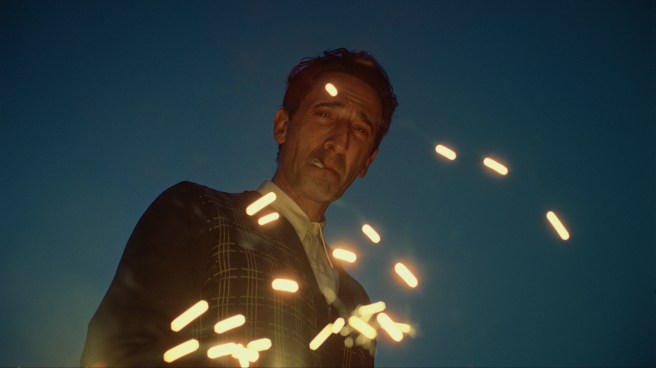
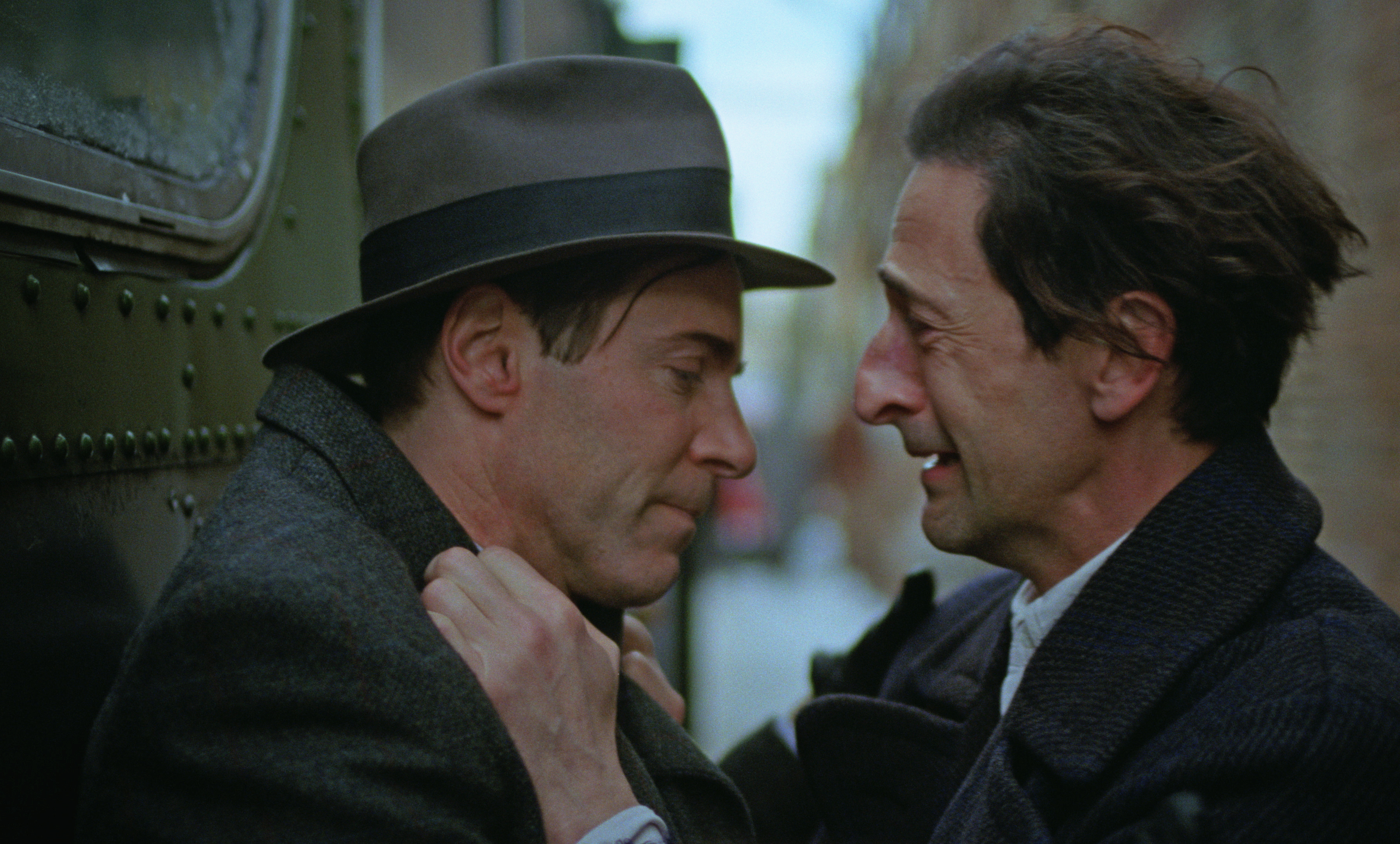
Brody won his first Oscar as Best Actor in Roman Polanski’s The Pianist and has made a few other memorable films, but this performance will stay with you as he perfectly captures the angst, anxiety and reserved jubilation as he tries to battle his way through in this strangely cruel new world.
He quickly realises he is in a fight for his family’s life. First, he needs to get them there and then he has to make it work at all costs. “They don’t want us here,” he says to his wife, in a delicately balanced performance by Felicity Jones.
The battered architect knows and understands the cost, doesn’t lose his confidence in his own ability and yet, he is kept dangling, always on the edge while surviving on the whims of others. It’s the animal kingdom and only the fiercest fighters survive.
The title might point to a specific architectural style and one that the brave László Toth (with a name that could only come from somewhere else) brilliantly creates, but it is you who will feel battered and brutalised by the end of this majestic film as you witness the treatment of others that the privileged believe they’re entitled to.
It certainly is the scourge of our time and one that director/writer has firmly in his grasp.
Oscar Nominations: Adrien Brody as Best Actor, Felicity Jones as Best Supporting Actress, Guy Pearce as Best Supporting Actor, Best Cinematography, Best Directing, Best Editing, Best Original Score, Best Picture, Best Production Design, Best Original Screenplay
With streaming becoming such a comfortable option, I haven’t been to the movies for a while, but pre-Oscar Awards is always a good time to catch up on as many of the nominated films as possible It always turns the event into something more substantial because you actually know more about the possible winners. I chose these two films – Conclave and A Complete Unknown (Ster Kinekor)and my selections were both extraordinary – both with chances of quite a few Oscars each:
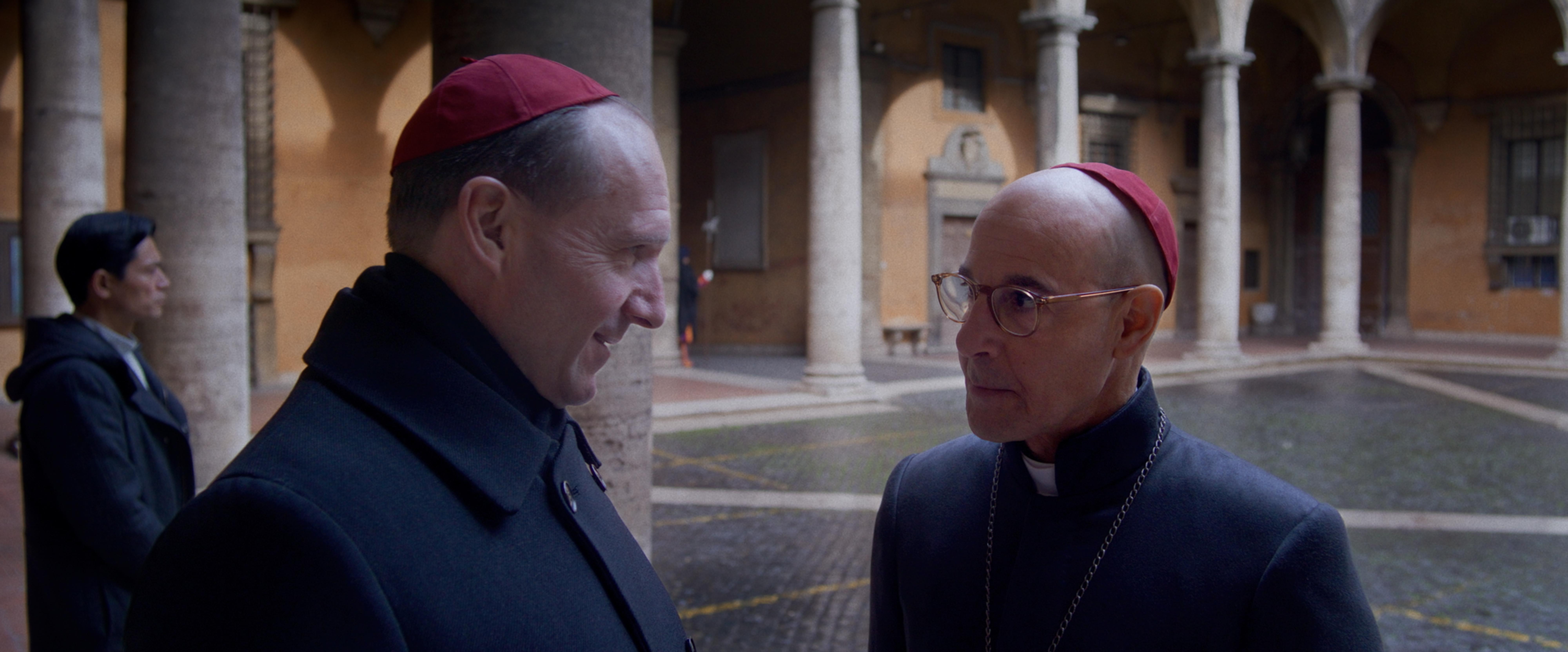
CONCLAVE
DIRECTOR: Edward Berger
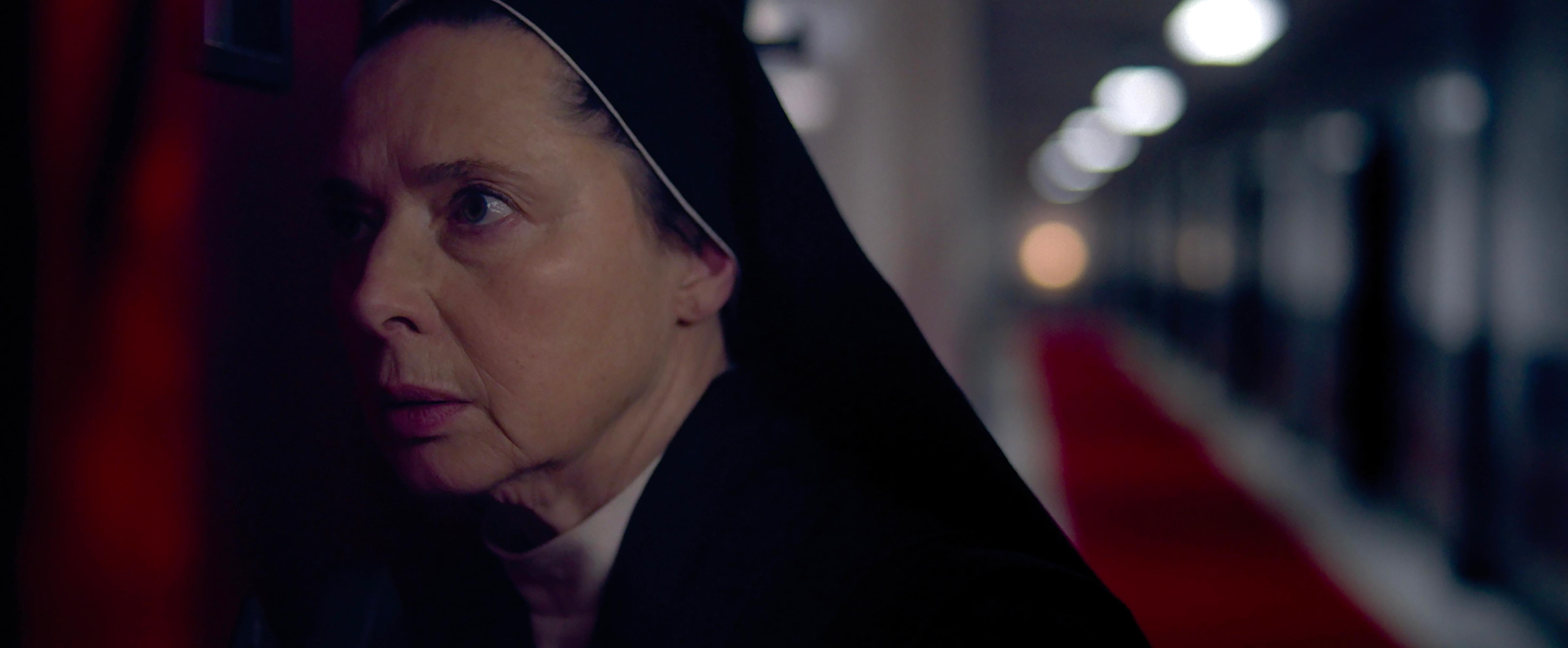
CAST: Ralph Fiennes, Stanley TuccI, Carlos Diehz, John Lithgow, Isabella Rossellini, Sergio Castellitto
How can one not be pulled into this story with such a fantastic cast? And then the secrecy about everything that surrounds the Vatican inside and out?
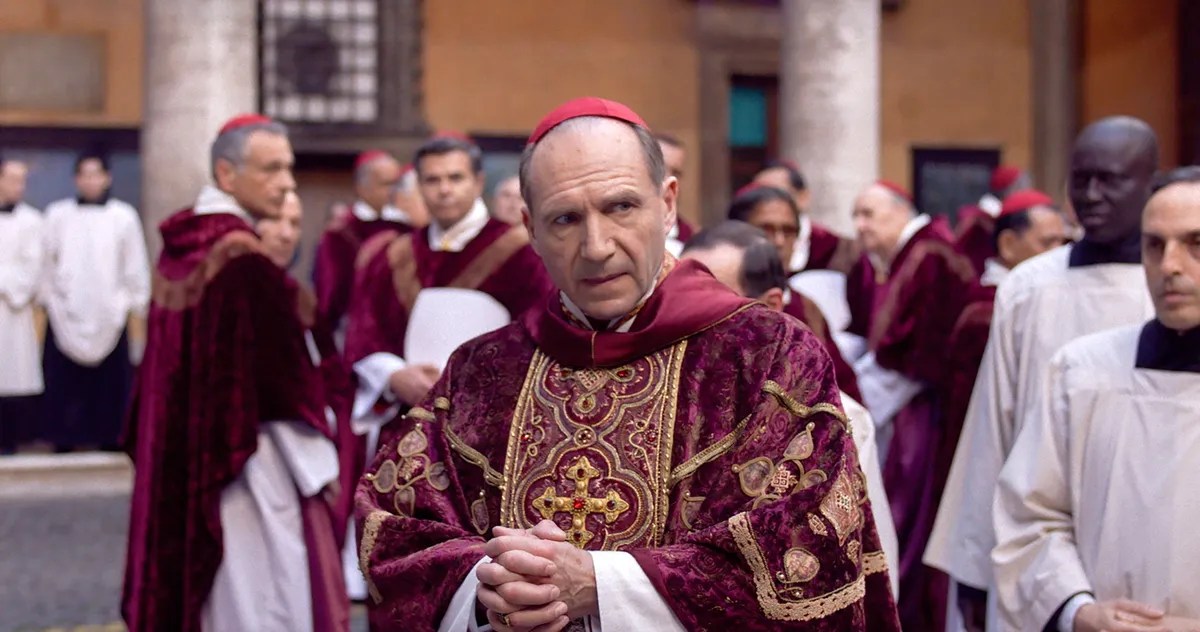
Cardinal Lawrence (Fiennes) leads one of the world’s most secretive and ancient events as the dean who is in charge of the selection of the new Pope.
If you’re not Roman Catholic, it is a religion that comes your way mostly through scandal, the misbehaviour of priests around the world, the lack of action by the church itself when its representatives transgress and the films and books that feature these kinds of missteps, Spotlight being the most recent one that springs to mind.
Perhaps because of the look of the members of the priesthood as so magnificently showcased in this film (already enough reason to see the spectacle), yet because of the visuals as well as the secrecy, I kept thinking of the recent television seasons of The Handmaid’s Tale.
In today’s communication-rich world, any secrecy is immediately viewed with suspicion and becomes rife with rumours and stories emerging. And for those on the outside, how to distinguish between rumour and fact with this particular faith and its powerful leaders is often what draws us to whatever it is that drives the church.
With Conclave. to glimpse the inner workings of one of the most powerful institutions in the world is quite extraordinary. Add this particular cast and the weight of the storytelling is heightened and the final product doesn’t disappoint and leaves you gasping.
The eight Oscar nominations including Best Picture, Best Actor for Ralph Fiennes, Best Writing, Best Production Design, Best Music (original score), Best Costume Design, Best Actress in supporting role (Isabella Rossellini), and Best Editing are all deserved.
It certainly lived up to all that. It has a rich story and is beautifully directed but what really kept me enthralled was the cast and their particular storytelling. If I really had to give only one acknowledgement it would be to the actors.
It was their ensemble performance that kept the intrigue going with especially strong performances by Fiennes (who is the true centre of the movie), Tucci, Diehz, Lithgow, and Rossellini.
As the puzzle unfolds, sometimes painfully slowly yet deliberately, you have to keep your wits about you because you will be kept in suspense right until the end. Again because it is the unfolding that holds the key, I was glad not to have read the book before seeing the movie.
The less you know, the more it will add to the thrill of the viewing. It is a novel story which holds all the intrigue one would expect from such a rich presentation which is all an extremely clever balancing act. Once in a while, I wasn’t too sure whether it was delivering on the expectations surrounding the film.
But pull it all together, and it ticks all the boxes. The best is that you have no idea where it is going or what to expect. And finally, it delivers magnificently in a way that is as relevant in today’s circus as it is unexpected.
It’s one that lies there for quite a while and the more you delve, the better it gets.
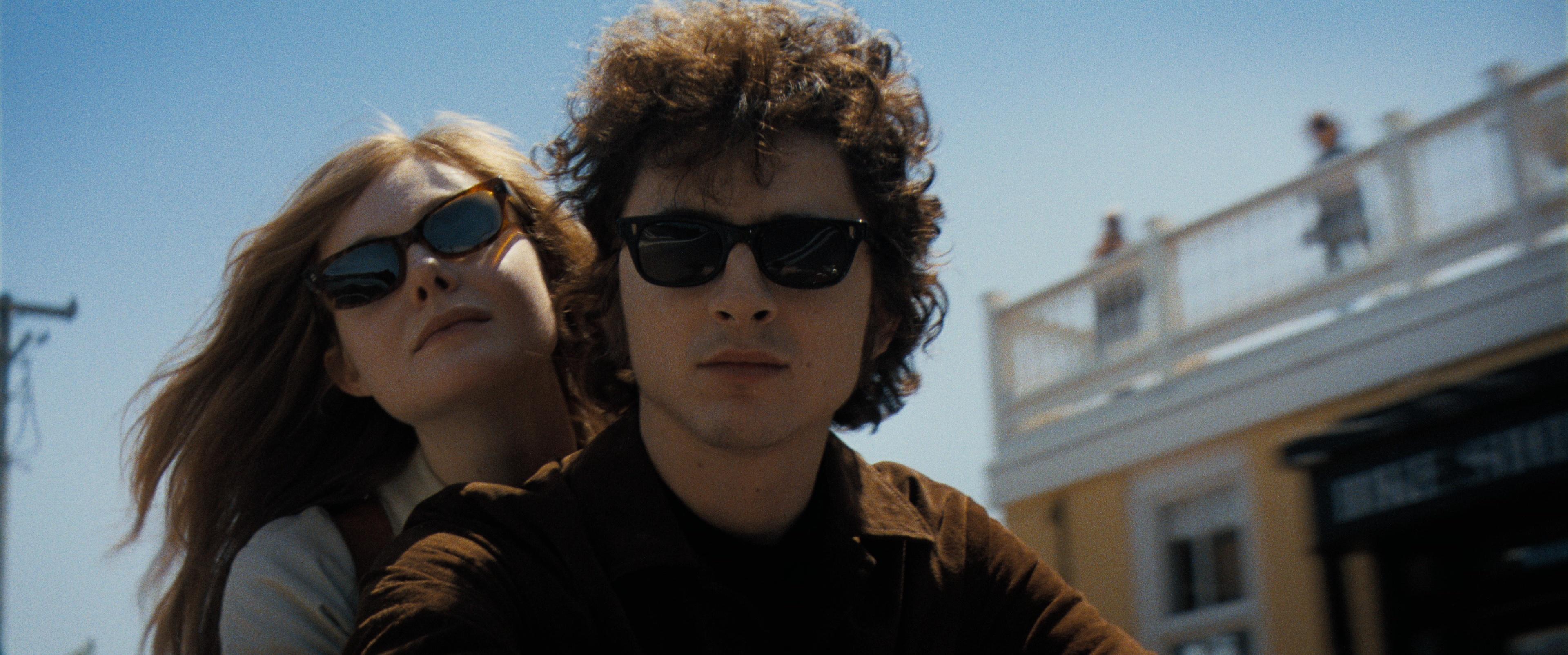
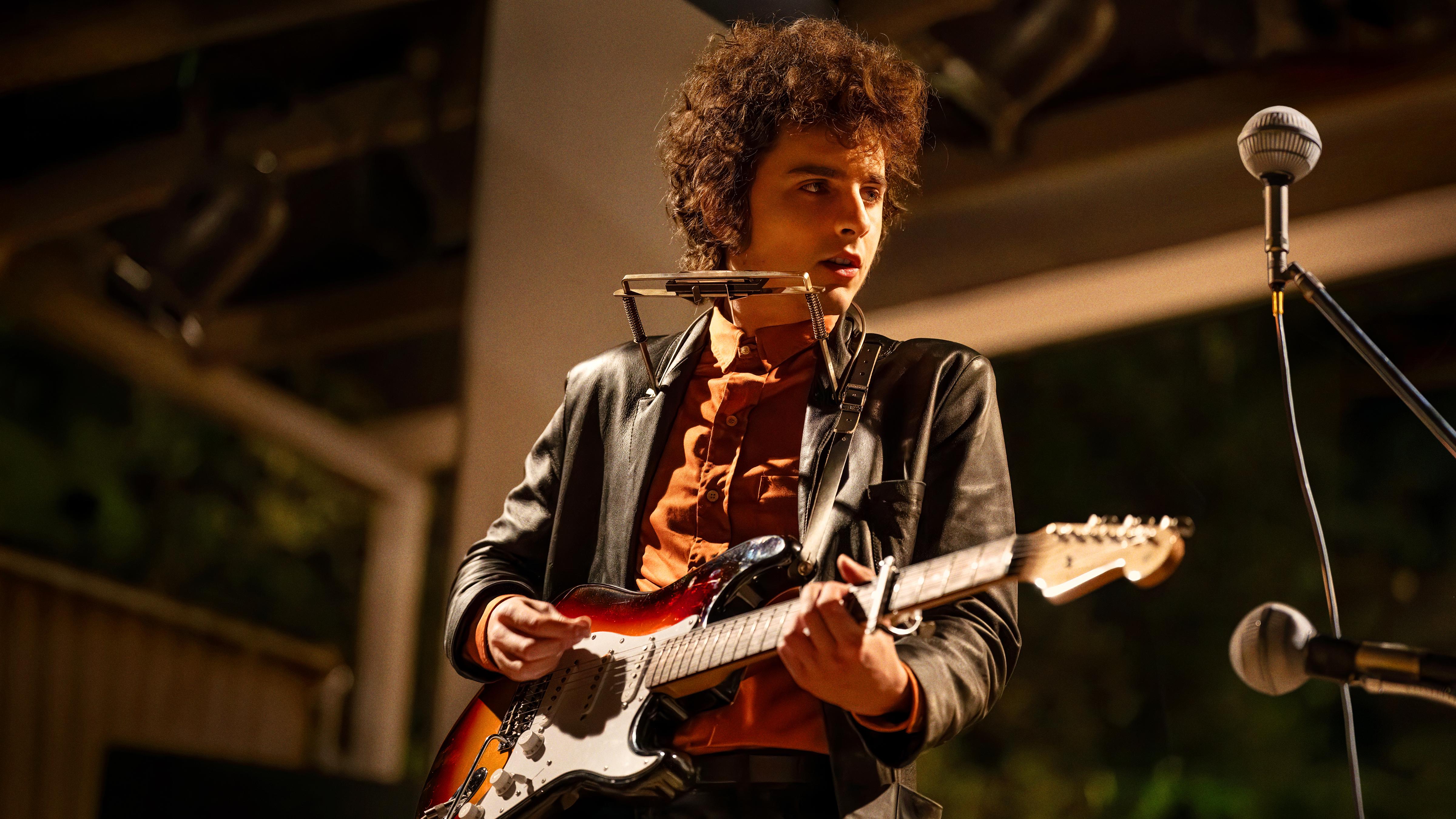
A COMPLETE UNKNOWN
DIRECTOR: James Mangold
CAST: Timothée Chalamet, Monica Barbaro, Edward Norton, Elle Fanning
I was truly surprised by how much I loved this movie. Of course I know Dylan’s music, but there are as many songs I didn’t recognise.
And while I thought I knew a lot about him, there’s as much that I didn’t know. One has to keep in mind that this isn’t a documentary, it captures a piece, mostly the early part when he first appears on the scene, of his life.
I was even caught unawares by the fact that he turned up at festivals on a racy motorbike. If the women weren’t so mesmerised by die budding artist they would have known that the music was everything in his life. Did he love them? Of course. But he was a performer and everything in his life revolved around that.
It was understood, if unspoken, that the women could be part of all this – but no demands. He wasn’t unfeeling, just unaware and completely wrapped up in his own creative world. That’s where his mind and all his attention was focussed.
It begins with Chalamet’s performance. He captures the essence and then just goes with it. He is not trying too hard to fake being Dylan. He has something, resembles the wiry, wild-haired singer and has enough of a voice to do the nasal drawl and sing the music well enough.
It centres on his performance and the reason he stole the limelight from the day he first appeared is his star presence – without paying too much attention to that stuff. He’s a lovely actor, has bags full of screen presence and pulls this one off magnificently.
It was as if Mangold with the right script and cast selected the right mood for the film and pulled it off masterfully.
To my mind, Chalamet is the James Dean of his generation. His reach is huge and his future cemented. And because Dylan, as one of the most influential artists of our time, is familiar to most of us, it must have been a challenge to capture his persona. But that he does with astonishing grace and with a strong cast and an especially brilliant performance by the always excellent Edward Norton as Pete Seeger, it’s a story that shines brightly, music that dominates and, for those of us who know some but lack the detail, a blissful few hours to catch up on working-class heroes.
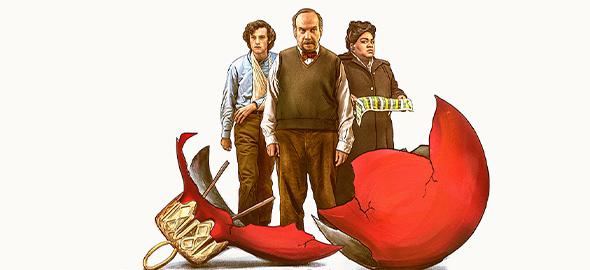
CAST: Paul Giamatti, Da’Vine Joy Randolph, Carrie Preston and Dominic Sessa
Let’s start with a confession. I went to see this movie mainly because of Paul Giamatti as well as Da’Vine’s acceptance speeches. It was obvious that she was special and that’s not even on screen!
Halfway through the film, I sat back with the thought in my head that this was a comfortable movie and it was strange to get that word foremost in my mind with an Alexander Payne movie. He’s someone who deals mainly in characters and relationships and these are never comfortable.
Sideways, Nebraska, Citizen Ruth and About Schmidt are some of his best and when you look at the casting, he is obviously an actor’s director. His choices are always smart and often quirky, like Carrie Preston who one feels should now be given a starring role. She’s got the chops and has done her bit as character actor.
Boys having fun: Michael Provost, Dominic Sessa and Brady Hepner.
But back to the movie. After a rather sluggish start, it suddenly gets life. It’s not that Payne goes into overdrive but he shows why he chose these specific actors to tell this rather subtle and slow-paced film.
It’s a story about three oddball characters thrown together and how they move backwards, forwards and sideway to see how it can work. There aren’t any surprises. You know from the start that things will turn out well. It’s the way they get there and the how Payne softly nudges his actors to tell this story.
If you hear that Giamatti’s tough-toffee character is given a wandering eye as well as a lingering body odour, it already gets a smile but it also explains many of his character traits.
Paul Giamatti (centre) with a few schoolboys including Sessa (left).
While Da’Vine’s award season has been quite dramatic, her character is a much gentler yet really wise woman. As a large black woman living in a country where colour is barely tolerated, you know she knows how to make herself invisible and how to survive without compromise. She’s that gal. She knows she has to look out for herself, no one else will.
But she also has a heart that is large enough to keep a watchful eye over all the broken-winged creatures in her vicinity.
Giamatti plays true to form. He isn’t capable of a bad performance that’s why I try never to miss a movie. His films are always all about the characters and he knows how to fill those out delicately but with kick when needed.
The newcomer also does a fine star turn. He has strong competition but youth is on his side and he holds back and gives when the story or character demands.
Payne says he wanted to make a good, old-fashioned 70’s film with no CGI razzmatazz and that’s exactly what he achieved. Catch it at the one off cinemas that are still screening it.
In Gauteng you can catch it at Ster Kinekor’s Rosebank Nouveau and in Cape Town at The Labia Theatre






 De Beer Necessities