October is a month packed with performances for one of our most prolific performers, Nataniël. He tells DIANE DE BEER about his punishing schedules as he presents three shows – all completely different, yet all with one thing in common, the artist and his creativity:
It all begins with Momentum Beleggings Aardklop which is back in Potchefstroom following the upheavals of the pandemic
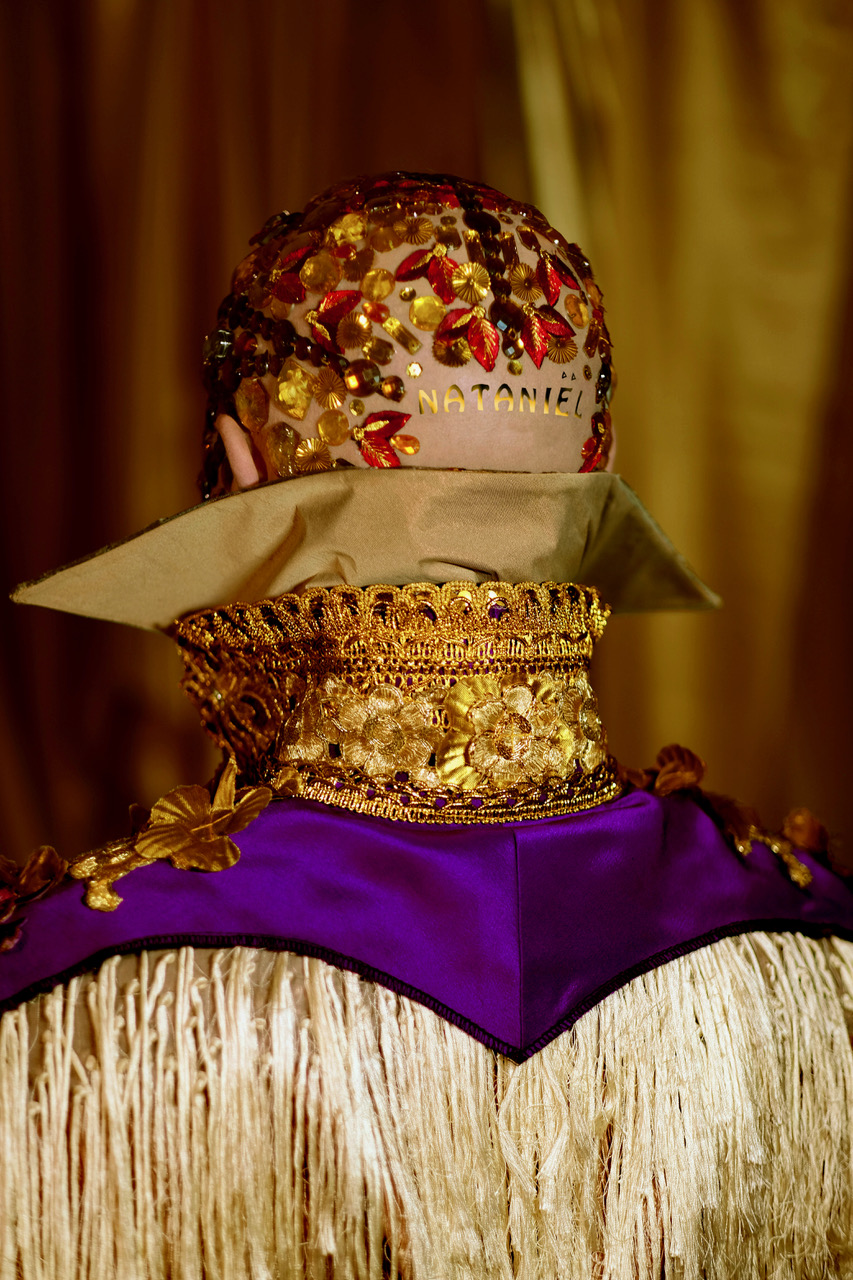
Ring van Vuurattempts to bind five fiery elements together: original music from more than three decades; original stories as only he can imagine; the rhythms and techniques of countries such as Mexico, Argentina, Chile and Peru; a shimmering set of costumes designed by his personal designer Floris Louw; and seven world class musicians.
Charl du Plessis on keyboards is joined by Werner Spies (bass) and Peter Auret (bass) as well as four brilliant guitar players: Juan Oosthuizen, Loki Rothman, Leon Gropp and Luke van der Merwe.
He promises to present 90 minutes of heartache, humour, heat, virtuosity and rhythms.
As part of the Aardklop festivities, the show will be presented on October 3 at 3 and 7pm in the Beeld Auditorium
Nataniël follows this with a short new season titled ROME ’62
On October 10 to 15, he returns to Pretoria’s Atterbury Theatre.
At a fair in the Free State, there’s a stall that sells second hand clothes. In between the rather tired-looking garments, there’s an unusual outfit, handmade by an acclaimed Italian designer. This discovery a few years back, was the first sighting of what has eventually turned into this particular show.
From family secrets, suspicion, stunning strangers, international travel, legendary films, timeless radio hits to exuberant fashion and the most dramatic designs, everything is included with stories in both English and Afrikaans, as well as music in abundance, brand new as well as six decades old.
Charl du Plessis (piano), Werner Spies (bass), Peter Auret (drums) and Wernd van Staden (cello) will be the accompanying orchestra.
Finally a performance that Nataniël is hugely excited about and describes as his best:
Titled MASS FOR THE GOOD PRINCES it is a follow-up of last year’s successful DIE SMITSTRAAT SUITE. This one though is his first full length musical mass based on the classical structure of a composition with five, six or seven parts, which is a prayer for goodness, new leadership and the hope of a new generation.
The mass will be sung in Latin and English with stories and descriptions in Afrikaans.
As before, he shares the stage with Ockie Vermeulen (organ),
Charl du Plessis (keyboard), Juan Oosthuizen (guitar), Werner Spies (bass), Peter Auret (drums and percussion) and the Akustika Chamber Choir led by Christo Burger.
The Charl du Plessis Trio with the Phoenix Orchestra conducted by Richard Cock will showcase some unique and exciting music for piano and orchestra (sponsored by MayFord Seeds) on September 10 at the Linder Auditorium. DIANE DE BEER chatted to the much loved conductor Richard Cock about music and its longevity:
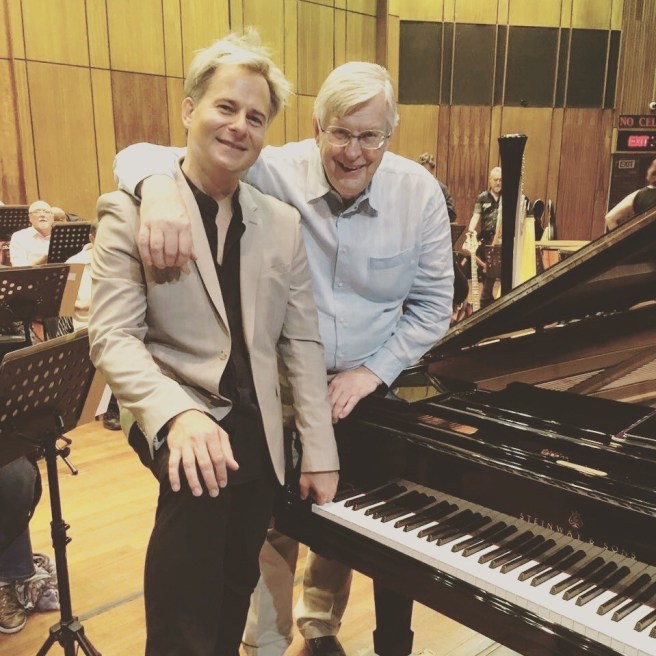
Musical chums Charl du Plessis and Richard Cock.
He has worked as a conductor in so many spheres of music, from the old days of the National Symphony Orchestra with strict classical repertoire to these days conducting the beloved Starlight Classics concerts with pop, rock and crossover music, which has everything to do with stretching the appeal to reach as wide an audience as possible.
And while more serious concerts will always be part of his repertoire, most of his work involves the crossover type programmes like this one with Charl and his trio and the Phoenix Orchestra, which started during the Covid period when they were trying to create work when there was none. “We have continued since as it worked well and players were responsive,” says Richard.
On piano: Charl du Plessis
With piano the featured instrument for this concert, Richard believes that it is the instrument that most audiences identify with most easily hence the attraction. “I think many people have played the piano in their youth and they can associate with it quite easily. You can also see how it is played, and it is pretty impressive to see the hands flashing over the keyboard. There is a big visual element that comes into play.”
The programme will include arrangements of music by classical composers as well as some new upbeat arrangements in diverse styles, ranging from rock and boogie to blues. Audiences can also look forward to big band jazz and soothing film music sounds. The concert will also include arrangements of music by Bach, Vivaldi, Beethoven and Mozart, as well as Oscar Peterson, Duke Ellington and Astor Piazzolla.
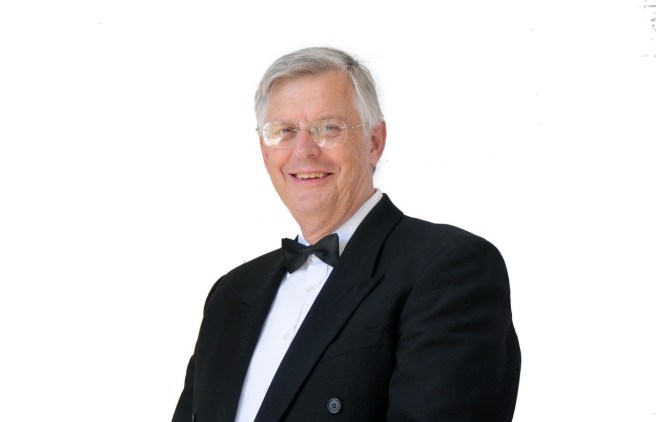
Richard Cock
“It’s a wide range of music, beautiful and expert arrangements by Charl, and unusual contrasts (Grieg and Lady Gaga). All of this and the presentation where Charl and I chat to each other about the music makes it unique,” he explains.
“We have worked together since he was a young boy singing in the Bloemfontein Children’s Choir! And a lot more recently. I love his energy and creativity, and we have a good verbal exchange on stage. The chat is unrehearsed and spontaneous, and thus lively and fresh every time.”
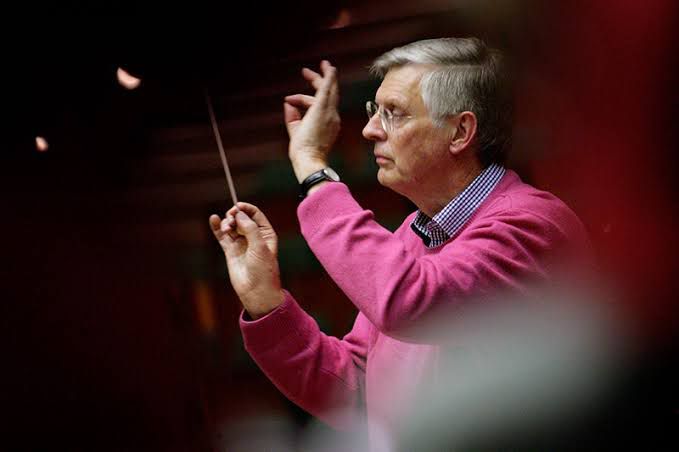
Conductor for the ages: Richard Cock.
With so much on offer, live and online post Covid, audiences will always be a need for what is perceived as more niche art forms, but the conductor is excited about the future. “ I see audiences changing and a lot of younger people are attending classical and orchestral concerts.” As one of the presenters on Classic 102.7 for many years, it was a loss to many regular listeners but like many things in life, Richard knows how to mourn and when to move on. “The chances of getting another Classic station are low.”
Instead he puts the emphasis on what he can still do and something that has always dominated his life – conducting. It invigorates and challenges him still. “I love the creative process of bringing music off the printed page and into the air. It never fails to excite me, and I hope the audience too.”
DIANE DE BEER talks to Nataniël about the few weeks ahead…
After an absence of several years from any Johannesburg theatre stage, Nataniël brings his award-winning show, Prima Donna, to the Teatro at Montecasino for five performances only from August 17 to 20 at 8pm, with a matinee included on the Saturday at 3pm.
And while this is a show which he has performed before, it is a new staging with new stories or old ones updated and even the old songs have new arrangements.
Over the past few years Nataniël has written and staged more than 13 productions not seen in the Johannesburg area, and extraordinary moments from these shows as well as brand new material has been put together for five unforgettable gala concerts.
And, if you should wonder, naturally the costumes are all new, created by Floris Louw.That’s just who Nataniël is. But he’s nervous. This is a huge theatre, and even if it is similar to the seasons he used to stage annually at Emperors, he was familiar with the audience.
This time he doesn’t know because he hasn’t been in Joburg for some time. But those who know his work, won’t want to wait to buy tickets. His trademark stories will be in English and Afrikaans with songs in English.
In this tale as the title suggests, he is dealing with prima donnas. It’s a touch of fantasy, a dash of humour, some sadness, and as a reality check, a take on history, family, failures, hope and modern society.
“We all know these drama queens, know how they operate and what they’re capable of. But we indulge them, their behaviour becomes worse and only death can release us,” he warns.
Charl du Plessis Trio will join him on stage for both shows with other musicians in tow.Pictured are Werner Spies (bass), Charl du Plessis (piano) and Peter Auret (drums).
He knows he also has that reputation, but his demands are about performance and what he knows he needs on stage. “I never fight, because I don’t like confrontation,” he says.
Never able to resist raising an eyebrow, he adds that he always believed one of the perks of success was being difficult!
“We hate them so we would rather do without them,” he says. But, in case you start taking all of this seriously, he says he chose the title because it looks good on the poster!
See what an interviewer has to contend with.
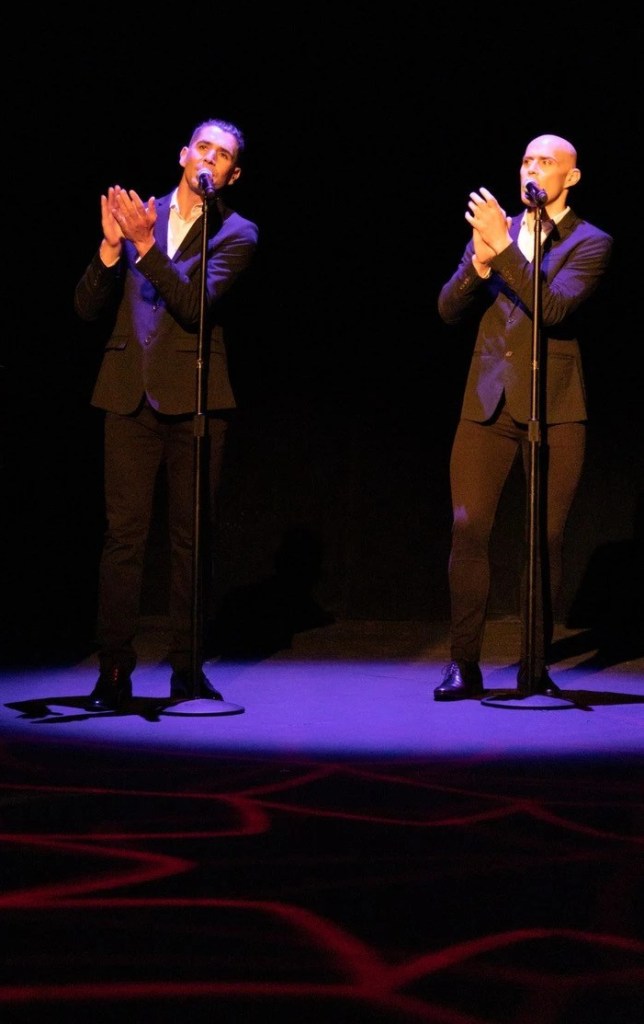
Vocalists Dihan Slabbert and Nicolaas Swart
But before you lose patience, he includes one of his elaborate and irresistible descriptions: “If Sarah Bernhardt, Maria Callas and Isadora Duncan had a child, it would resemble my costumes!”
And, he adds, a touch of Florence Foster Jenkins.
His music he describes as a combination of the dramatical and accessible. “I sing many of my own songs and familiar old songs.”
With him on stage is Charl du Plessis who now travels with his own Steinway piano (and that’s a whole other story) Luke van der Merwe (guitar), Marcel Dednam (keyboard), and Werner Spies (bass), as well as Dihan Slabbert, Wiehahn Francke and Nicolaas Swart on vocals.
Having a final word, Nataniël notes that the show is vocally driven. “That’s what a prima donna does!” He’s been waiting for this one for 12 years. “I’m ready for that farewell concert,” he says.
And the force with which he speaks is almost persuasive, but I know about his addiction – performance – and he’s so good at that!
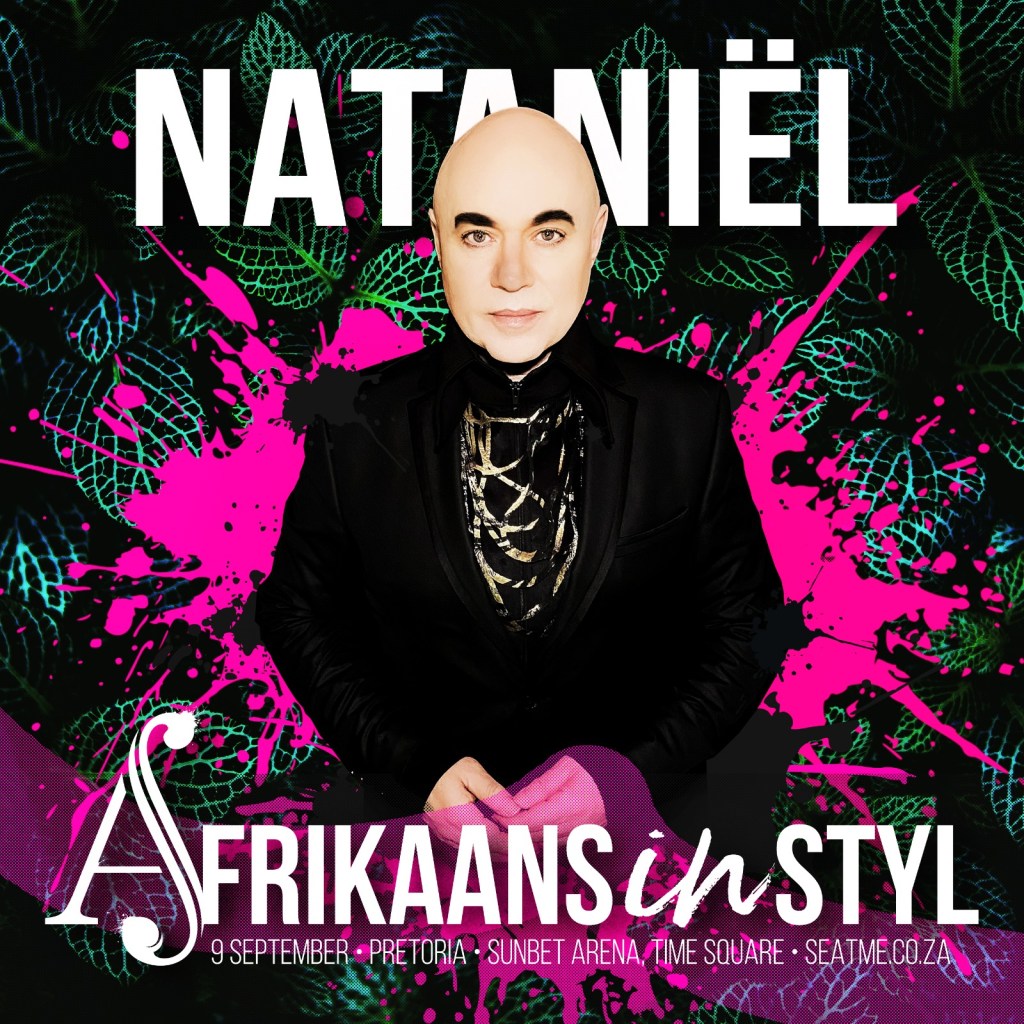
For those who are looking for something completely different, there’s a second concert of Afrikaans in Styl on September 9 presented at Sun Bet Arena in Times Square.
This time the artists included on the bill are Spoegwolf, Elvis Blue and Corlia.
“I’m the headgirl,” says Nataniël who will be staging the show. “It’s rare that artists are given a free hand to stage their own shows on this kind of platform,” he says, excited by the prospect.
Nataniël and Spoegwolf in a different kind of performance.
And if you’re not familiar with some of the performers, he explains it thus: Spoegwolf brings the war, Corlia brings the notes, Elvis, the smoothness and blues, and he brings the sequins.
The performers will almost exclusively be performing their own songs. “I love that. It’s rare that someone like Corlia who has such a huge voice is allowed to get away without singing Barcelona.”
Perhaps this time. It’s up to each one individually what they wish to perform.
He is also thrilled that this is a once-off. It won’t be filmed. If you’re not there, that’s it.
“The performers are all people who regularly perform in theatres.
“People must come and see. It will be new and not commercially driven. The artists will be adventurous with their performances and the staging will be daring.
“As artists (and audiences) we need to step out of our comfort zones when we go to shows. It’s a time for rebirth and venture.”
He always keeps in touch with what is happening in the rest of the world because it takes a time to reach our shores.
“We’re all ready to try new things!”
And why not.
“This time my brother won’t be hiding backstage. But we might have one or two surprises up our sleeve.”
And talking about that, Nataniël also has a new Christmas book in shops in October.
The title is Help, Help, it is beautifully packaged with a special cover for the festive season, and once you’ve seen it, packed with unpublished Afrikaans and English short stories, your Christmas shopping will be done.
And still there’s more: Rome 62will be staged at Atterbury Theatre later in the year, a new Mis will be performed at Aardklop Aubade in Pretoria and there’s the annual Christmas season also at the Atterbury Theatre.
And even then he’s not done. But we will wait for the final conclusion to his year.
Sylvaine Strike, director/actor/playwright and any other creative word one can dream up, teamed with three other brilliant creatives, Toni Morkel (director), Andrew Buckland (fellow actor) and Tony Bentel, musical genius to create the dreamily magical Firefly currently in its last week at the Pieter Toerien Theatre at Montecasino. Having seen it for the third time at the weekend, this is a copy of my original review to encourage anyone who hasn’t yet seen it, to go. It will warm your heart and the glow will last for the longest time.
DIANE DE BEER reviews:
Scenes from Firefly with Sylvaine Strike and Andrew Buckland:
Pictures by Nardus Engelbrecht
I was blessed to see Firefly at Cape Town’s Baxter Theatre with the emergence of live theatre following the pandemic.
The bewitching Firefly, which as one of the first Covid-19 impacted productions saw light of day as a Woordfees digital production, made a magically mesmerising transition. I had lost my heart earlier to the filmed production and was excitedly inquisitive at how that particular story – with many filmic tricks up its sleeve – would translate and transform on stage.
But this particular creative quartet (Strike, Andrew Buckland, Toni Morkel as director and Tony Bentel on piano) are the perfect combo. This is their theatrical landscape. Give them a stage and they will be telling stories in such an imaginative way, it becomes a visual feast.
Because they have all worked together, they understand each other’s strengths, and Morkel could stretch that piece of string intuitively with fantastically imaginative and explosive pyrotechnics.
Buckland and Strike are a brilliant blend of artistry with an instinct for detail that holds your attention gently yet persistently. Storytelling is their forte, aided by the fact that they have an endless supply of tools to draw on to embellish a wink or the final lift of a foot to express and underline the tiniest emotion.
It is theatre at its best when it has you smiling from start to finish because of the artistry, the wizardry of the production, the perfection of the coupling, and just the sheer audacity of the storytelling.
No matter how or why, just immerse yourself and see what happens when Saartjie Botha commands two artists to give her a production in the purest style of theatre.
If you have seen the digital version that’s a bonus, because to witness how one story can be told in such magnificent splendour in two completely different approaches is truly special and quite rare. The one had all the bells and whistles and worked like a charm. But here, with Strike and Buckland live on stage with just themselves to grab hold of their audience and cast that spell, the essence of theatre comes into play – and again I willingly lost my heart.
Add to the two artists on stage, the magnificence of Wolf Britz’s set and props as well as starstruck-inducing lighting and the keyboard genius of Bentel’s soundtrack that holds every emotion so thrillingly in a familiar yet completely Bentel-constructed composition.
If you want to see how the best make theatre with their instincts, intuition and imagination, don’t miss the sparkling Firefly. Yet don’t think for one second that the miracle unfolding on stage didn’t come with buckets of blood, sweat, tears and ENDLESS talent. Part of the theatrical trickery of this foursome is to present something that is this skilled as seemingly effortless.
It’s brilliant and personally I hope to see this travel around the country casting its spell throughout. We are desperately in need of this kind of adult fairy tale in these tumultuous times.
And with every fresh viewing, they’ve added fresh insight and sparkle if that’s even possible.
Book at Webtickets for any of the shows from tonight until Friday at 8pm, Saturday at 3 and 8pm; and Sunday at 2pm for their final bow.
Festivals, each one of them, are their own creatures. They’re put together in a way that hopes to attract audiences and once they’re there, will feed and nourish them in many different ways. That’s exactly what this year’s Klein Karoo National Festival achieved and here are just a handful of reasons why. DIANE DE BEER gives her impressions of some of the best:
Pictures: Hans van der Veen
Picture (above) capturing the Karoo by Fahiem Stellenboom.
First the music productions:
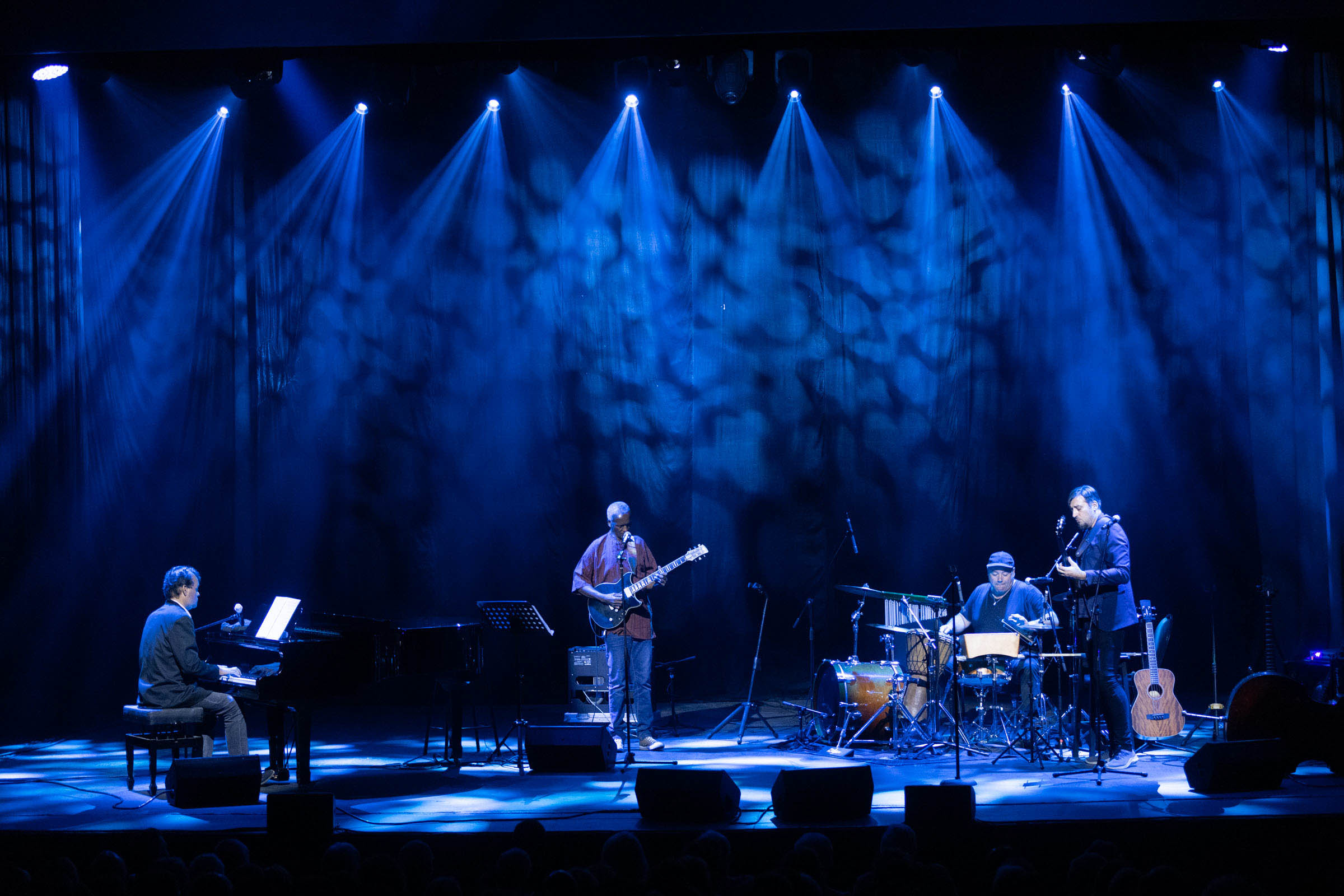
Stylish simplicity of Woordmusiek staging.
Woordmusiek: One of the toughest things is to keep a stage/performance career going. Coenie de Villiers knows this.
Stylish simplicity of Woordmusiek staging. (Van der Veen)
Especially on the music side. Even if someone like De Villiers is hugely popular, his music part of the Afrikaans lexicon, and his performance style slick and always smartly rehearsed.
It’s quite something to keep reinventing yourself, however. How long will an audience keep listening to the same songs done in exactly the same style and presentation?
Coenie de Villiers (Van der Veen)
De Villiers has always had the key to renewal: collaboration. And while that can also work against you because it can be seen as too gimmicky, he has the musical and performance nous to make it work – and in this instance, brilliantly.
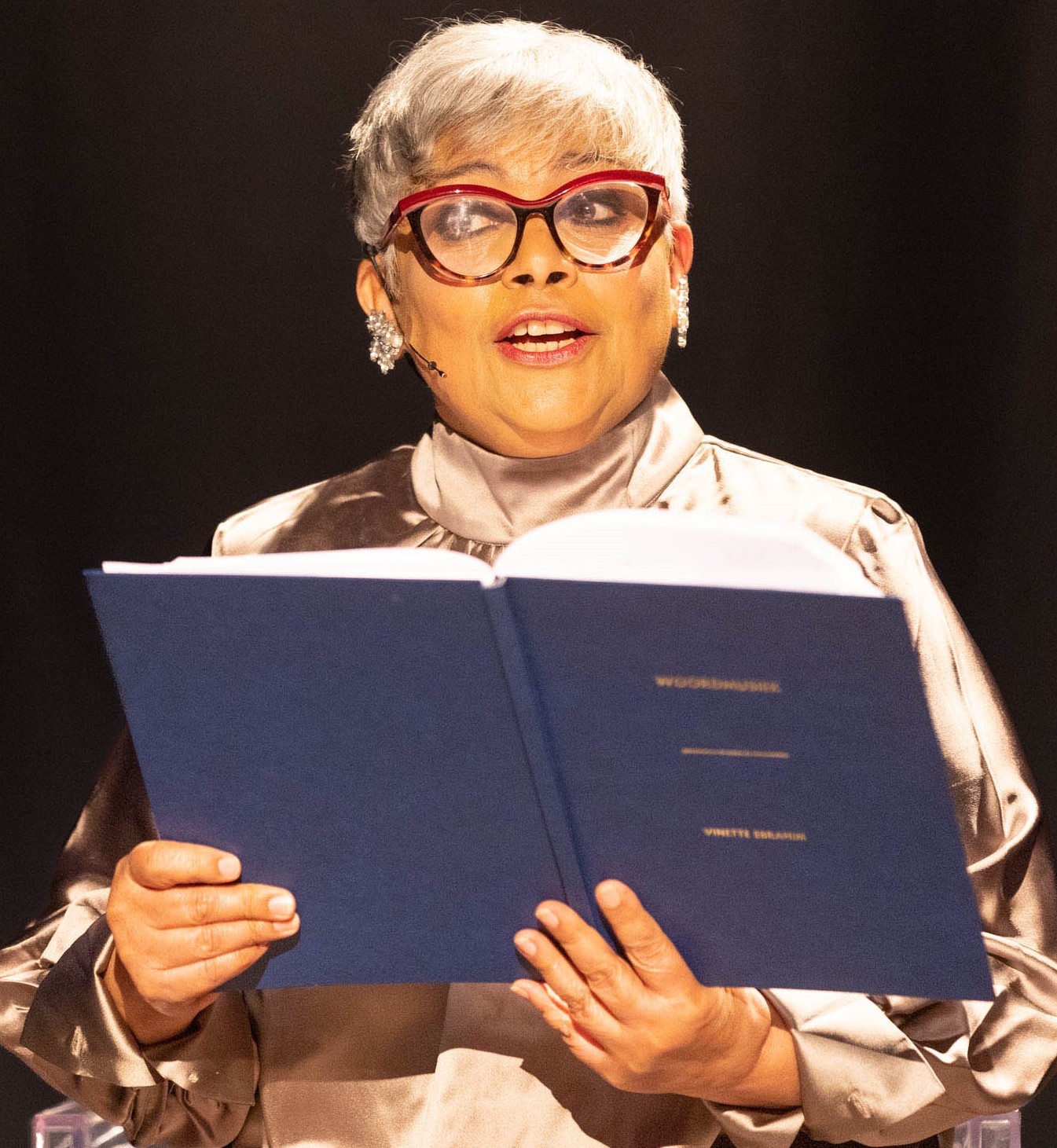
With this one, he decided to focus on his lyrics. He cleverly invited three of our top actors, all with distinct voices – Jana Cilliers, Vinette Ebrahim and Antoinette Kellermann – to read his lyrics as if poems, which they are when done in this way. And in between, he performed his music, some with, and others without song.
Voices that opened vistas.
The staging was stylish without any frills, and guitar genius Mauritz Lotz provided another musical element – and voila, it was a sublime performance with not a note or sound out of place.
Anders/Eenders: a musical ensemble that sparkled. Each individual performer had his/her own style and together, they blend and cook musically.
There’s the superb songbird Sima Mashazi with the extraordinary voice and stage presence; African guitar genius Louis Mhlanga who is as gentle as his music is glorious; the exuberant Riaan van Rensburg on percussion; keyboard king Ramon Alexander; and brilliant producer/bass Schalk Joubert who always looks as if he is enjoying making music while finding the best sounds.
The fact that they all compose and perform their own music adds to the special sound they create as a group. It is the best of who we are, with music that covers the spectrum and tells stories that criss-crosses the country and holds us all together.
You walk out of there overwhelmed and bouncing with African rhythms. It’s a blast and so much part of the South African fabric.
Kanna for Best Presentation – music, sponsored by Castle Lager: Ver innie wêreld Kittie ; Kanna for Best Ensemble, sponsored by Kunste Onbeperk; Ver innie wêreld Kittie
David Kramer in conversation with Hugo TheartDavid and André Terblanche.
Ver Innie Wêreld Kittie: It might be an intimate setting, but it’s a huge story with heart – and one of David Kramer’s best. I loved the intimacy of the staging with only four dazzling actors/singers (Dean Balie, Rushney Ferguson, Jenny Stead and André Terblanche) and two musicians, Nick Turner and Yvan Potts.
In 1952, Doris Day and Frankie Lane had a hit with Sugarbush, which was apparently written by Josef Marais (the stage name of Joseph Pessach). Marais and his wife Rosa de Miranda became hugely successful in the US as a folk duo who sang Afrikaans songs translated by Marais into English.
Back home and much later, Kramer hears about Marais’s talent because these two musos both grew up in Worcester. But no one remembers Marais, except Renaye Kramer’s aunt Lily Lange who was courted in her youth by Pessach, who wasn’t considered a good enough catch by the family.
From left: , Jenny Stead , dean Balie, Rushney Ferguson, André Terblanche with David and KKNK CEO Hugo Theart.
Weaving all these stories together, Kramer adds meat to the story by telling a tale of appropriation, something which has long been a problem on especially the African continent. The performers, the staging, the story, the words, used very sparsely but specifically, and the way Kramer tells the story, all contribute to a magical musical affair.
As usual, Kramer has excelled in the casting, with this quartet bursting with talent. And keeping it small, hopefully this one will travel far and wide. It’s a universal story told with heartiness and honesty by performers who are world class.
And then theatre:
Kanna for Best Interpretation, sponsored by Wicus Pretorius: Dawid Minnaar – Mirakel
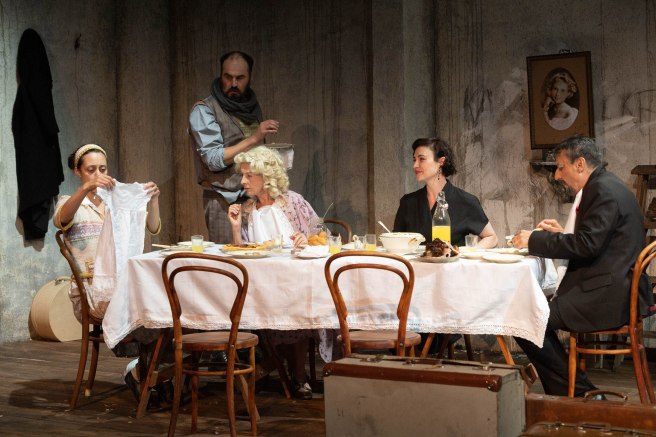
Dawid Minnaar in a delicious performance with a brave Bettie Kemp who sailed through the play brilliantly as a last-minute replacement.
I have to start with Reza de Wet’s Mirakel ,directed by by her close friend Marthinus Basson. This has always been a stage match made in heaven.
But I hadn’t realised that this was a play I had never seen – and what a delight with a darkness captured in the script. De Wet can be quite melancholy with stories that tear you apart as she scratches around in the psyche of her people.
The cast of Mirakel with a fully cooked dinner including roast lamb … every performance!
But here she looks at a theatrical touring group with a much more gentle eye as she captures all the stereotypes in what can be a very melodramatic world. All the world’s a stage and nowhere is this more true than here.
And Basson’s first masterstroke was the casting. Dawid Minnaar’s performance sets the tone and gives free rein to the rest of the cast as they all swing into over-the-top storytelling that will have you in stitches.
But what lingers is the toughness that is here hidden by play, the struggle to practise something that brings pleasure. The way we regard and value our artists and allow them the space to breathe and to grow. All of which in the long run will bring huge rewards.
The drama of a traveling theatre company.The staging of Mirakel
I hope this can travel all over and play as many runs as can possibly be imagined. If ever you want to flee the problems of the present, this is where you want to go. It’s fun, it sketches a world we are all familiar with but perhaps not often part of and it allows the actors to go at it full tilt – and no one does it quite as deliciously and with so much relish (one can almost see him smacking his lips as he enters the stage) as Minnaar.
This is one I will cherish for a long time as the depth of what De Wet wanted us to contemplate lingers.
Kanna for Best Design and Technical Contribution, sponsored by Herotel: Craig Leo and Neil Coppen for the concept and design of Droomkraan Kronieke; For a second year running and deservedly so Herrie Prize for innovation or ground-breaking work, sponsored by Kunste Onbeperk: Karoo Kaarte
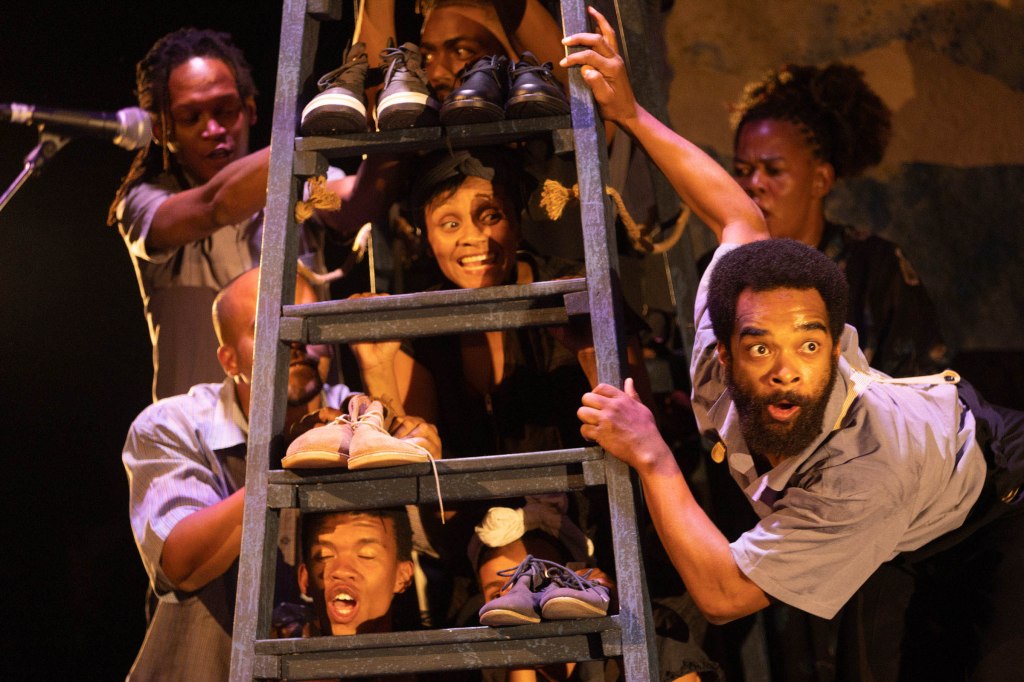
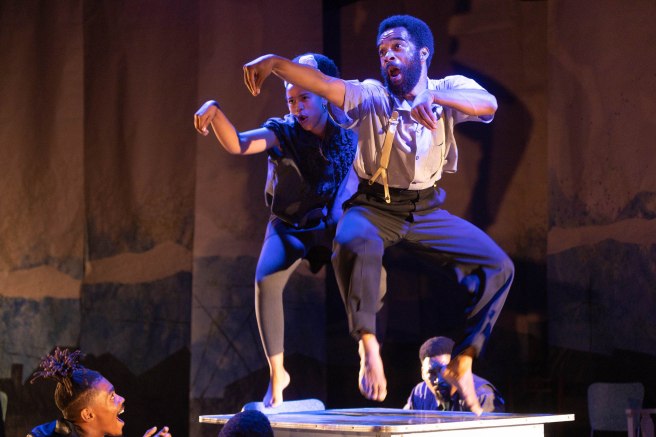
The enchanting cast of Droomkraan Kronieke stole hearts and more.
And as with Mirakel, similar things can be said of Karoo Kaarte’s Droomkraan Kronieke.
If anyone were wondering about the viability and sustainability of this dream project driven by Neil Coppen and Vaughn Sadie, they simply had to witness the leap this team has made in just a year following last year’s Op Hierdie Dag, which also received much praise, seven nominations and a win for artist Marinda Ntantiso.
This time they were aided by internationally renowned puppet master Craig Leo as well as actor Carlo Daniels, and the full team of actors worked much more in a cohesive unit, than the previous time.
It was a fun, emotionally fulfilling and rewarding experience as the actors displayed their performance skills, exuberance and energy and their growth in professional approach and execution.
This is a production that will play anywhere without any explanation needed of where they come from and who they are. That’s simply embellishment and heightens the admiration one feels for what they have achieved and the lives that are changed. Both for those performing and watching.
I wrote a huge piece on Karoo Kaarte last year (check for it in my blog if you want background), but it should also stand as a blueprint of how to make a festival (or any event) inclusive in an attempt to upend the status quo.
What Droomkraan Kronieke achieves more than anything else is to show and point to the potential right in front of our eyes and what happens when two artists (with the help of gracious donors and many other hands) can achieve with a community that has previously been held back and not given the opportunities.
Kanna for Best Director, sponsored by the ATKV Nicola Hanekom – Mirre en aalwyn; Kanna for Best Presentation – theatre, sponsored by the Het Jan Marais Nationale FondsMirre en aalwyn; Kanna for Best Literary Contribution, sponsored by NATi; Nicola Hanekom – Mirre en aalwyn (original script).
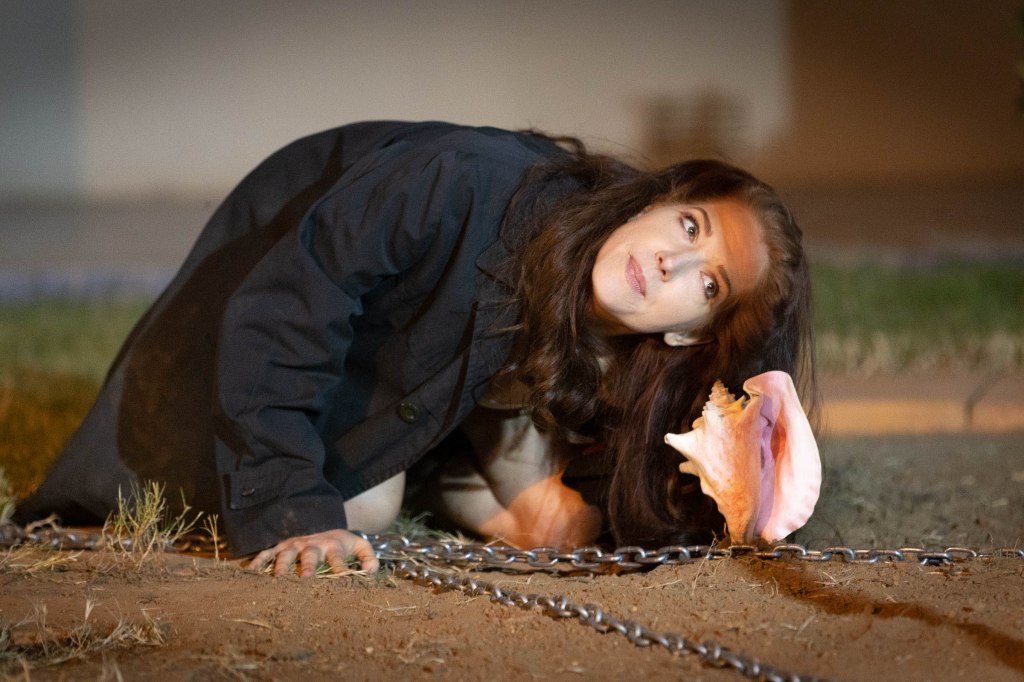
Leading the way, a heartbreaking performance by Amalia Uys.
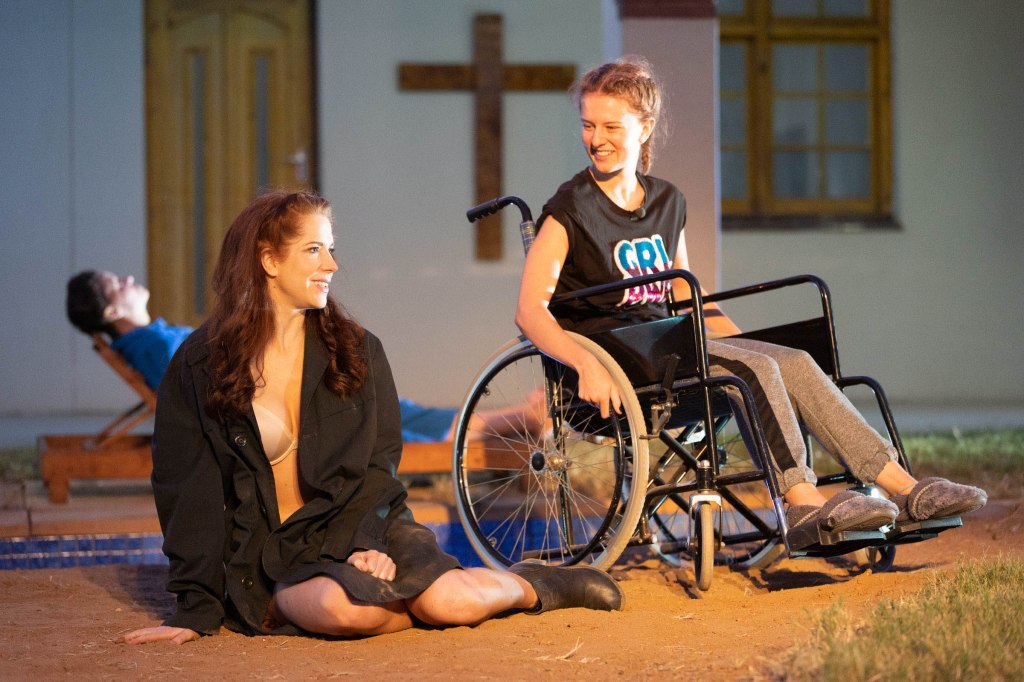
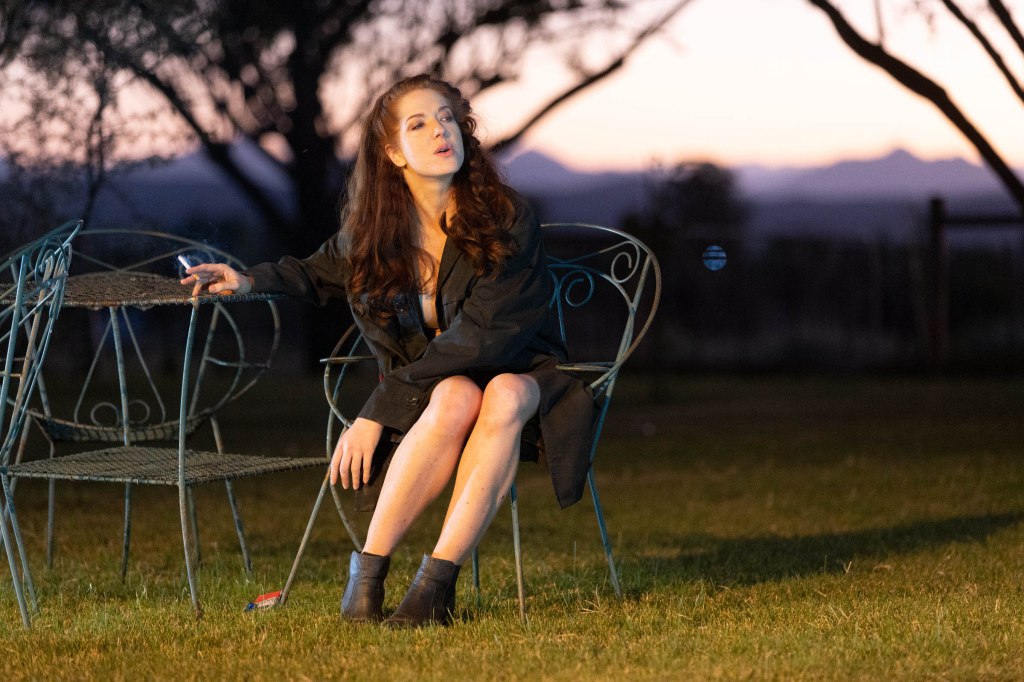
Finally, Nicola Hanekom is back with yet another of her shattering site-specific pieces Mirre en Aalwyn, and as always she’s tuned into the zeitgeist, with abuse the one issue that has for many years grabbed the headlines. More than ever, it is critical in communities worldwide and in South Africa in particular.
There’s hardly a woman who reaches adulthood who cannot speak of an incident and often worse that can be ticked off as abuse. (If anyone heard Trump’s recent monstrous ramblings, that says it all). And instead of things improving and more people taking up the cause, it’s as if people turn their heads away and ignore those talking too loudly.
Elzabé Zietsman is doing the festival circuit with her devastating solo Femme is Fatale and now Hanekom has also stepped into the arena with a piece that doesn’t flinch as they go full on to investigate this scourge in especially women’s lives.
And in this instance where it besets families and the women have no protection, no one to turn to, no positive role models, it’s almost as if they turn on themselves. It’s the only thing of value they have to display and that’s where they go. And to add to the dilemma, they have found a voice in social media where everything is amplified, not always in especially the vicitms’s interest.
Oudtshoorn with its spectacular weather and environment offers the perfect canvas and Hanekom has refined this gloves-off type of approach when dealing with tough topics.
Her cast, always handpicked with great care, tell a story that audiences have to hear, and Hanekom introduces enough darkness and light to hold the attention and make the most explosive impact.
If you don’t leave this one shattered, think again.
And watch out, it might be difficult to play somewhere else because it is site-specific, but when there’s a will, there’s a way. And for this one, that’s how it should be.
Until next year, meanwhile there’s the Karoo Klassique from 4 to 7 August later this year. Also check the next story on the fabulous art.
The Head and the Load is about Africa and Africans in the First World War.
That is to say about all the contradictions and paradoxes of colonialism that were heated and compressed by the circumstances of the war.
It is about historical incomprehension (and inaudibility and invisibility).
The colonial logic towards the black participants could be summed up:
“Lest their actions merit recognition,
Their deeds must not be recorded.”’
The Head and the Load aims to recognise and record.
WILLIAM KENTRIDGE
Pictures supplied
SHOW: The Head and the Load
CONCEPT AND DIRECTOR: William Kentridge
COMPOSER: Phillip Miller
MUSIC DIRECTOR AND CO-COMPOSER: Thuthuka Sibisi
CHOREOGRAPHY: Gregory Maqoma
PROJECTION DESIGN: Catherine Meyburgh
COSTUME DESIGN: Greta Goiris
SET DESIGN: Sabine Theunissen
LIGHTING DESIGN: Urs Schönebaum
And the magnificent cast and musicians – with the African premiere dedicated to the original narrator Mncedisi Shabangu who sadly died last year.
DIANE DE BEER reviews:
And the top introduction by Kentridge gives you a pretty good idea of the load the artist, in many different disciplines, (and when not, he brings in others of his ilk) had in his head.
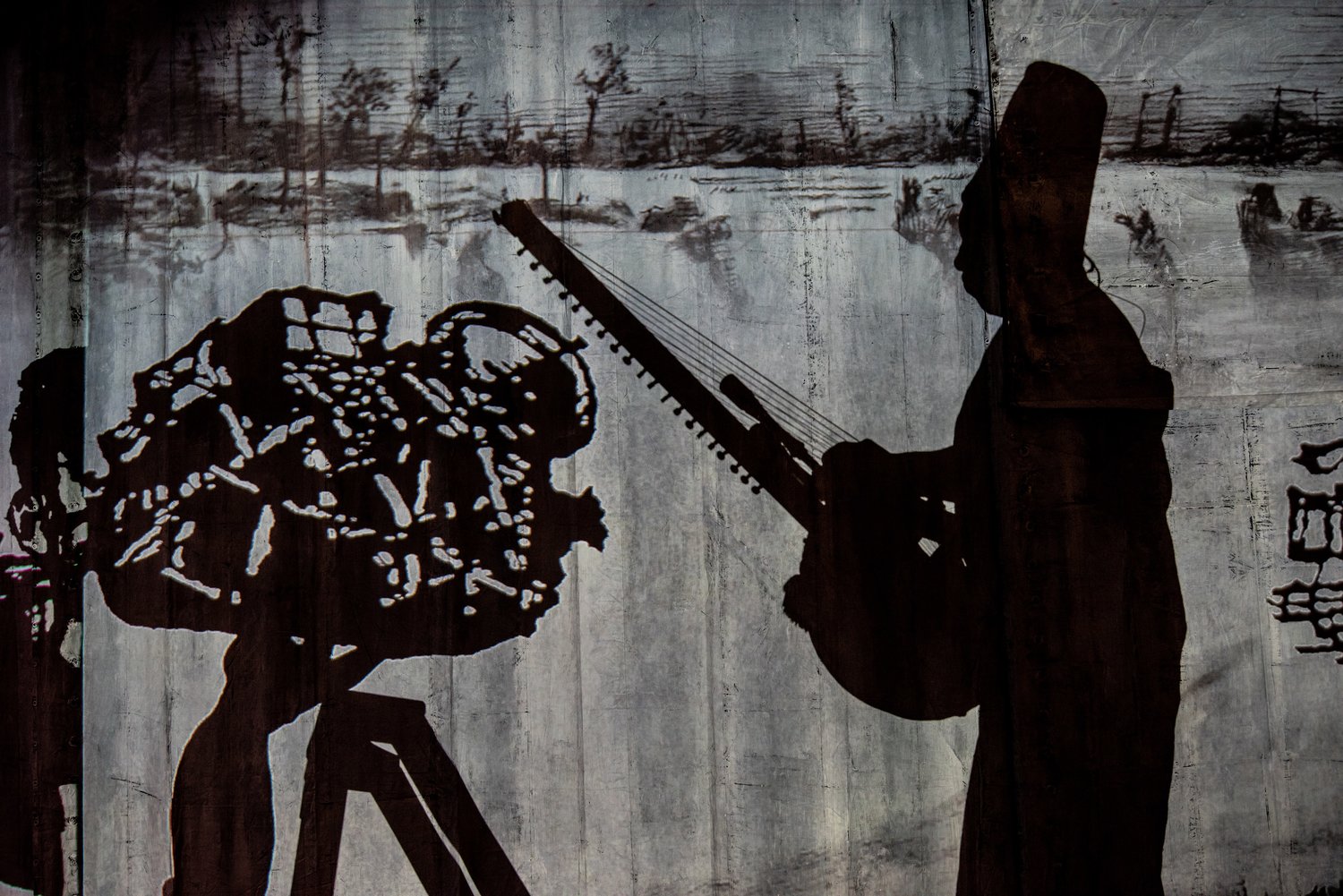
If you’re the one watching, it might just blow your mind. And if you’re familiar with his work, there’s much you will recognise as he often works with the same artists and combines original music with references to the period and composers of the time as well as texts, movement, shadow play and lighting.
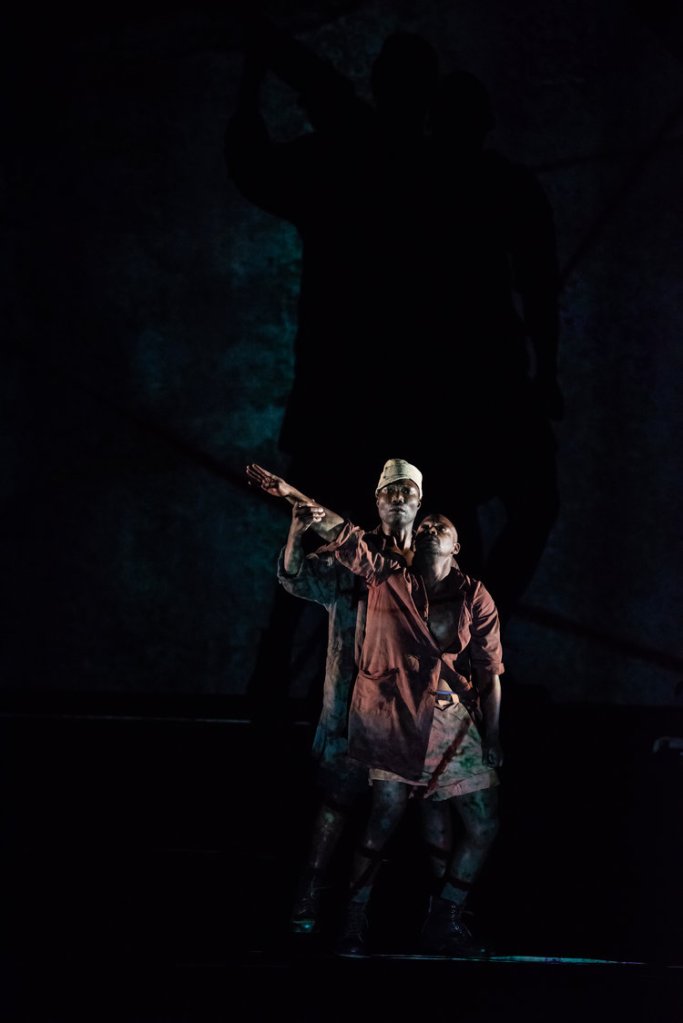
You see a body marching in the distance (they use backstage for the performance because they need that length of space), and just the way he moves already tells you he is a dancer. But not any dancer, one of the best, Gregory Maqoma.
That’s how it runs all through the performers and the musicians. When I hear the brass sounds used in this specific way, it reminds me of the cacophony Emir Kusturica used in his war drama Underground to capture the sounds he associated with war.
And Philip Miller and Thuthuka Sibisi work similarly. They transformed traditional African songs as well as quotations from composers from the time of the war like Ravel, Hindeman, Satie and Schoenberg. It’s varied, as they mimic the different sections of the story, and the way the musicians and the singers use their voices is spectacular.
Just think of wind instruments. They’re used here in the true sense of the word. It’s as if the wind witnesses and blows silently through the space.
But let’s start at the beginning when the show starts. Performers have silently been slipping in and placing themselves inconspicuously in specific spots. And almost in one fell swoop, the giant screen, the lights and the cast come to life.
The audience, in touching distance, are instantly scooped up and almost thrown into the story and the action.
In one spot there’s the most exquisite Vermeer scene with bold Kentridge drawings and sketches, all heightened by the wonderful and magnified shadow play, while individual performers have all, as if magically wound up, started moving. And then the narrator starts with the tale.
Everything is part of the fabric, the texture, the mood and essence of the whole. It’s like a giant storytelling extravaganza yet this has no fairy-tale ending. There’s melancholia and war mania, and there’s the feasting on the foot soldiers as they are put to battle almost deliberately as war fodder. In one of the war reels, the African participants displayed in uniform are barefoot!
Kentridge puts the spotlight on World War One, but this time, he tells and shows it all. This he wants to record. And in full Kentridge splendour, he unravels and reveals everything he wants you to know. With this grand theatrical flourish he imprints the pictures and performances in your mind.
Having waited for Covid restrictions to be lifted to see the production, it has become even more relevant with first the Russian invasion of Ukraine and now also the frightening war in Sudan.
It’s impossible to take all the individual flourishes in and yet, it is an immersive theatrical experience which will linger and almost lay you low. But then the sense of wonder, the way of revealing the relentless horror and the sheer scale of the endeavour, are what keep swirling in your head.
Gauteng is blessed to have Kentridge in its midst and to witness this astounding theatrical avalanche so brilliantly composed and performed, which is – sadly – as relevant today as it was in 1918.
After much acclaim, following it’s London debut with Jack Holden, and then a Joburg run starring local actor Daniel Geddes, Cruise, heads for Cape Town for a short season (April 12 to 30) at the Homecoming Centre (formerly The Fugard Theatre). DIANE DE BEER chatted to the British playwright/actor about the play and the handing over of this his first stage-produced play, which he had both written and starred in back home:
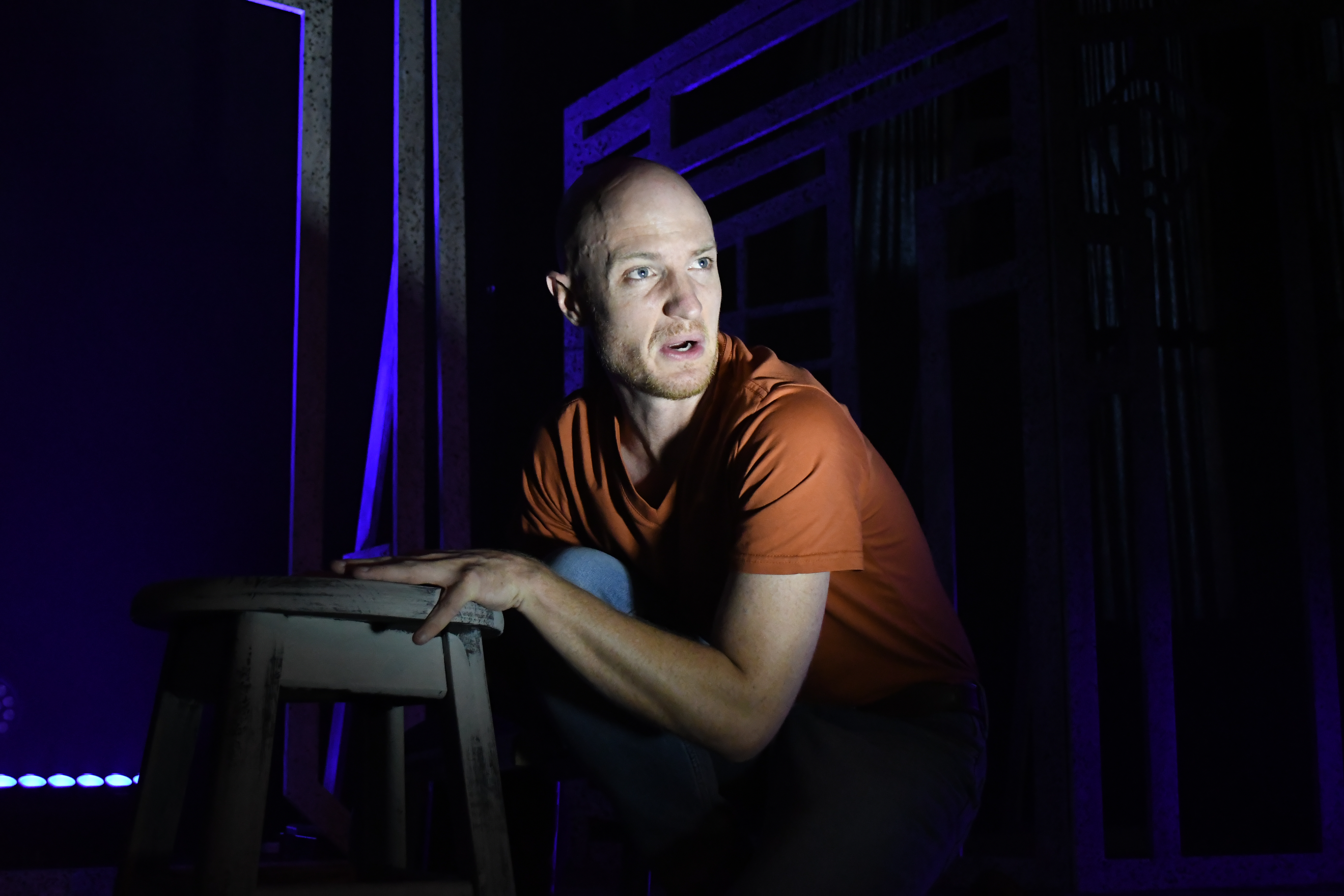
It was as if all the stars aligned for actor/playwright Jack Holden with the creative processes surrounding his first play Cruise, which is having its second local run in Cape Town this month.
Jack Holden in Cruise
“I had the idea of the show for a while, for many years actually. It was based on a phone call I heard while I was volunteering for Switchboard, an LGB+ helpline here in the UK. I took that call in 2013.
“The story struck me as so moving and powerful and life-affirming that I knew I needed to tell it someday, somehow, and it was only in the pandemic when I was locked down at home with nothing else to do, I finally got on and did it. So in that sense it saved me because it really gave me a focus during the first lockdown here,” he explained.
But the writing only started in 2020. He thinks that it might have had something to do with the context of sitting with another epidemic, Covid, that made him reflect upon the sort of fear and terror that the gay community must have gone through in the UK especially, with the 1980’s HIV and AIDS. (It was more widespread in South Africa, affecting more communities).
A lot of the research about Soho where the play is set was quite easy to do online. But, he explains, “the stuff that gave the show the texture that I think makes it sing, are the interviews I did with some older gay friends that I’m lucky to have. I asked them about their time in Soho in the 1980s. Neither of them claimed to be seen kids, but they had memories which were incredibly useful, and gave so much texture to the piece. “
Initially he thought it might be a short film, but then he thought, no, be ambitious. “I also predicted that when theatres reopen after the pandemic, they are probably not going to put on massive shows, so if I can make it a solo show, that would be great. I’d performed a few monologues of other people’s writing previously in my career, so I knew I could do it and I wanted to do a show with John Patrick Elliott doing the music again.”
Daniel Geddes in Cruise.
They had worked together before and again with great foresight, Jack’s thinking was about producing a show that would land with a huge bang.
“I have a very strange relationship with the pandemic. At the start of the pandemic, I thought my career was over and at the end of it, my career was better than it had ever been, so it was a weird time.”
Theirs was the first play to open in the West End and the first new play as well. “I think people were so hungry for the live experience and Cruise is loud and brash and all of those things. I think because it’s such an ultra-high-octane live experience, people were so receptive to it, so emotional behind their medical masks, that it landed well,” which was also the intent.
From the start, the writing of it, once he got in a room with John, was actually very quick, because it was always going to be only one actor (Jack) with the DJ (John), which meant he would be playing all the parts, which also provided certain limitations. They knew it would be roughly 90 minutes straight through and he wanted it to be an odyssey that bounces around all the bars and clubs and pubs of Soho. “It’s quite a classic hero’s journey that he had to go on,” he says.
Primarily he was trying to create something that would entertain people and he doesn’t think entertainment has to be light all the time. In fact, he argues that entertainment is better if there’s a bit of darkness, a bit of sadness mixed in there, a bit of humanity that lifts the lightness and makes it even more delicious.
“I was hoping to entertain people and as I was taking on the subject of HIV and AIDS in the 1980’s, I obviously wanted the piece to feel authentic. And that was the scariest thing which only surfaced when I got to performances. I suddenly thought this could be high risk, I could have judged this wrong.”
But he had gone about the whole process in a very thoughtful way. His research was thorough and he talked to the right people with good people surrounding him who told him if something wasn’t ringing true. “And indeed, in rehearsals we had several changes and bits to cut.”
He also wanted to dive into the music of the era which hugely adds to the entertainment element of the piece. “I love ’80s music. It can be really, really good and it can also be really, really bad and I wanted to play with that. There’s been a real moment of ‘80s nostalgia, so I thought it would do really well.
“I wanted the music to be in the DNA of the play and that‘s why I worked so closely with John. I brought a few pages of text to our first workshop and he brought samples of ‘80s music. And we started mixing it together. That means the show has musicality in its veins. I love traditional shows and when it works it absolutely blows me away, but there’s no shame in putting on a show and entertaining people.
“We have so many tools at our disposal in theatre; sound, light, music, smoke, movement. And especially with a solo show, you don’t have to use all of those, but I really wanted to. I never dared to hope that the show would get as big as it did.”
Because he is dealing with something in the past, yet in a strange way linked to our present circumstances, the content has huge impact. It’s obviously been written with performance and watchability in mind. Jack has a great way with words with the text written as a kind of rhythmic monologue interspersed with music, which also passes on the message. It holds your attention throughout.
And then there’s Daniel and the local production. Jack was surprised that South Africa was the first outside of the UK to stage Cruise, “but I was also cheered by it and love it. Obviously South Africa’s history with HIV and AIDS is well known, so on that front it struck me as completely logical.
“I loved watching the South African production. It was surreal watching someone else performing Jack (me) performing the show. It was quite a mind-bending experience and really informative to see how the show can be interpreted in different ways.
“And yes, humbling. It’s not just me who can do this, other actors can do this, so I’m really thrilled that it’s getting another life. I’m so pleased about the Cape Town run, because they really deserve another go at it,” he concludes.
Cast: Sandra Prinsloo, Alida Scheepers, Brittany Smith, Tylor Lamani and José Dias
Venue: Montecasino’s Pieter Toerien Theatre
Dates: Until April 2
THIS is Sandra Prinsloo’s time.
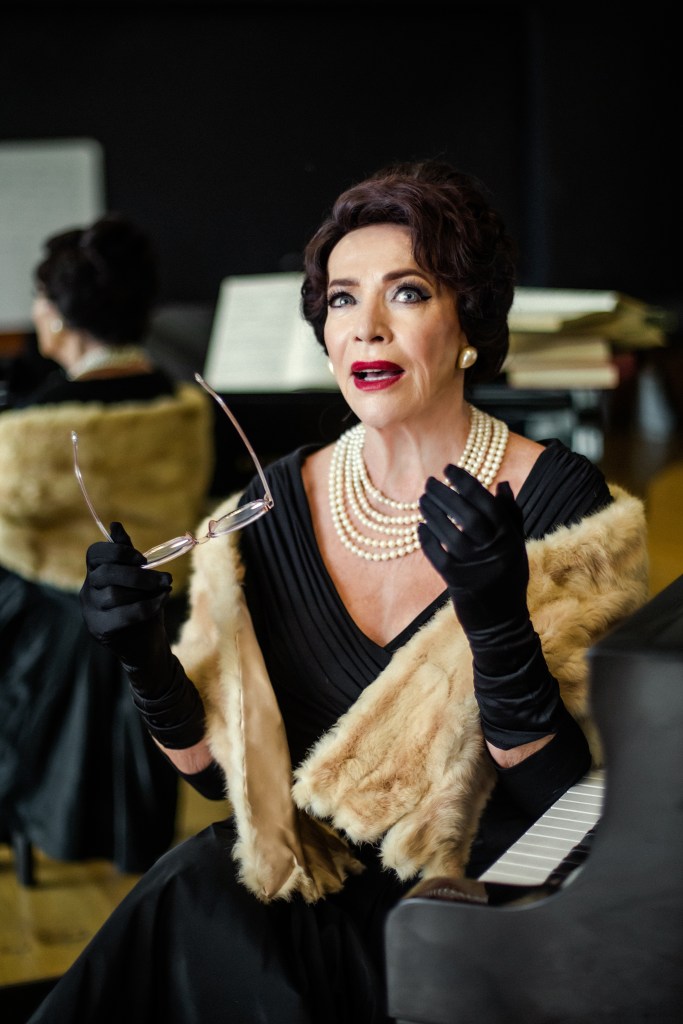
Having recently seen her performance in Florian Zeller’s Moeder and now this revival of Master Class as Maria Callas in a mentorship rather than singing role, her range is astounding. For the past few years, she has been touring mainly in solo shows and it’s been a joy to have her back with ensemble casts, still reigning supreme.
If you’re expecting a Callas double, you will be disappointed, it’s not that kind of performance even though there are hints and gestures to pay homage.
This one’s all about the process, how to become an artist and if you’re blessed by the theatre gods, you’re shown the finer points by La Divina. That’s where the focus lies, in the script and the performances.
Prinsloo turns into the fading yet never diminished star in front of your eyes. With a voice that’s dropped an octave, an attitude that displays both wisdom and wit and an accent to add to the theatricality of the piece, you’re swept into this world.
Alida Scheepers with Aandra Prinsloo in Master Class.
McNally cleverly fashioned a play that’s as much about becoming an artist as being on stage, and then he centred it around one of the world’s most dramatic divas, one who seemingly turns a master class into something that’s as much about her as it is about the students.
But in the process, she reveals as much about the artist as she does about the woman. Even at that time when social media wasn’t yet part of the publicity machine, the great ones couldn’t find anywhere to hide. Perhaps at a much slower pace, but eventually the stories would come out. This is why the reminders of her and Ari Onassis’s turbulent love life have impact.
And even if all of this adds flashy flesh to the McNally text, at its heart, it is a treatise on the making of a true artist. All the other shenanigans, as Callas implies, are mere sideshows. But you have to pay attention to making an entrance, having a look, to understanding and investing in every word you sing and more. Everything comes together in a performance that will have you holding the audience’s attention, which is exactly what Prinsloo does in the persona of Callas as she chastises her young students when they perform with what she perceives as too much charisma and not enough care.
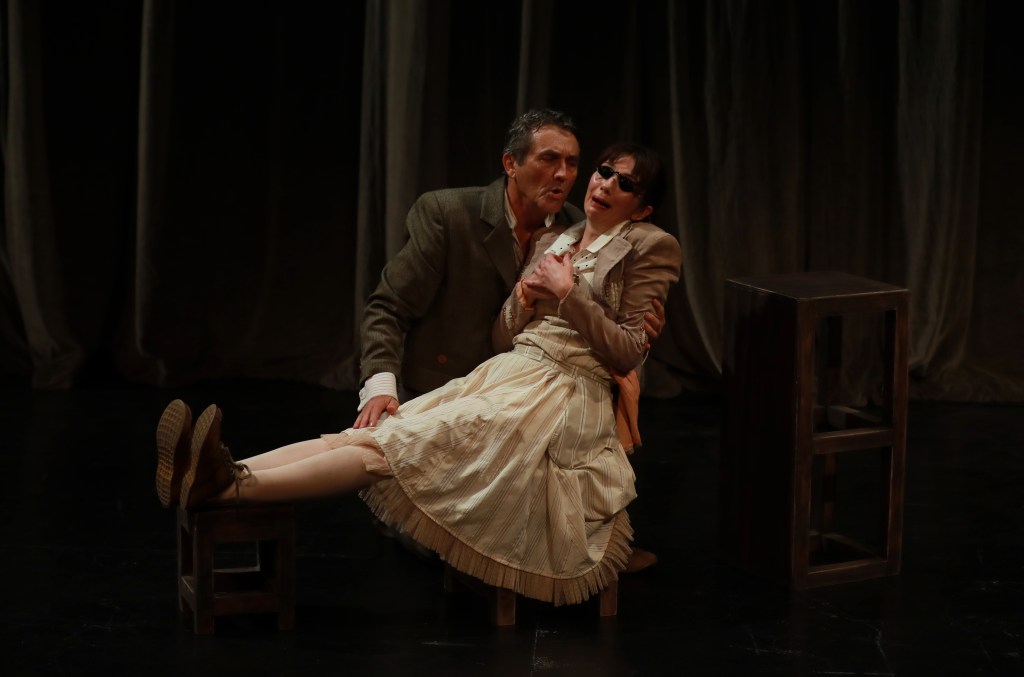
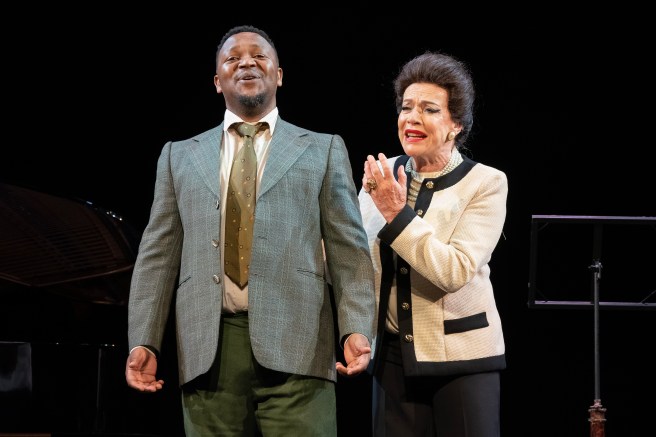
Master Class with Sandra Prinsloo and Tylor Lamani.
They hardly have the chance to utter a note before she destroys what might have been the smallest sign of an ego with shattering disapproval and a sharp gesture to underline her disdain. And then comes the command to sing again. Those who can’t stand the pressure are bitingly rebuked and if they still have any aspiration left, the performance is less assured.
The supporting cast, from José Dias (also musical direction) as the unperturbed répétiteur to the three courageous singers brave enough to face the harsh sometimes hysterical disdain of the tempestuous tutor, are a good foil with McNally introducing a dash of diversity with a trio of types from the nervous ingénue (Scheepers) to the self-assured poseur (Smith) and the cheeky, almost dismissive tenor (Lamani). Their singing is another highlight of the performance.
Master Class with Sandra Prinsloo and Brittany Smith.
I wasn’t sure of the flashing way the memory reels of Maria and Ari were introduced and found it quite disruptive. Perhaps loadshedding also had an impact. And perhaps Callas and Prinsloo would have been better served in another costume, one more suited to a master class.
But in the end, Prinsloo’s performance is the one that stuck as she made sure that the way Callas served her art was always at the forefront of her performance. Talent is obviously the X factor of great artists, but without blood, sweat and tears and an unwavering and selfish dedication to your art, few will achieve the ultimate prize.
That’s what Callas knew and delivered both on and off stage and what McNally so masterfully captures in Master Class with Prinsloo persistently reaching for perfection.
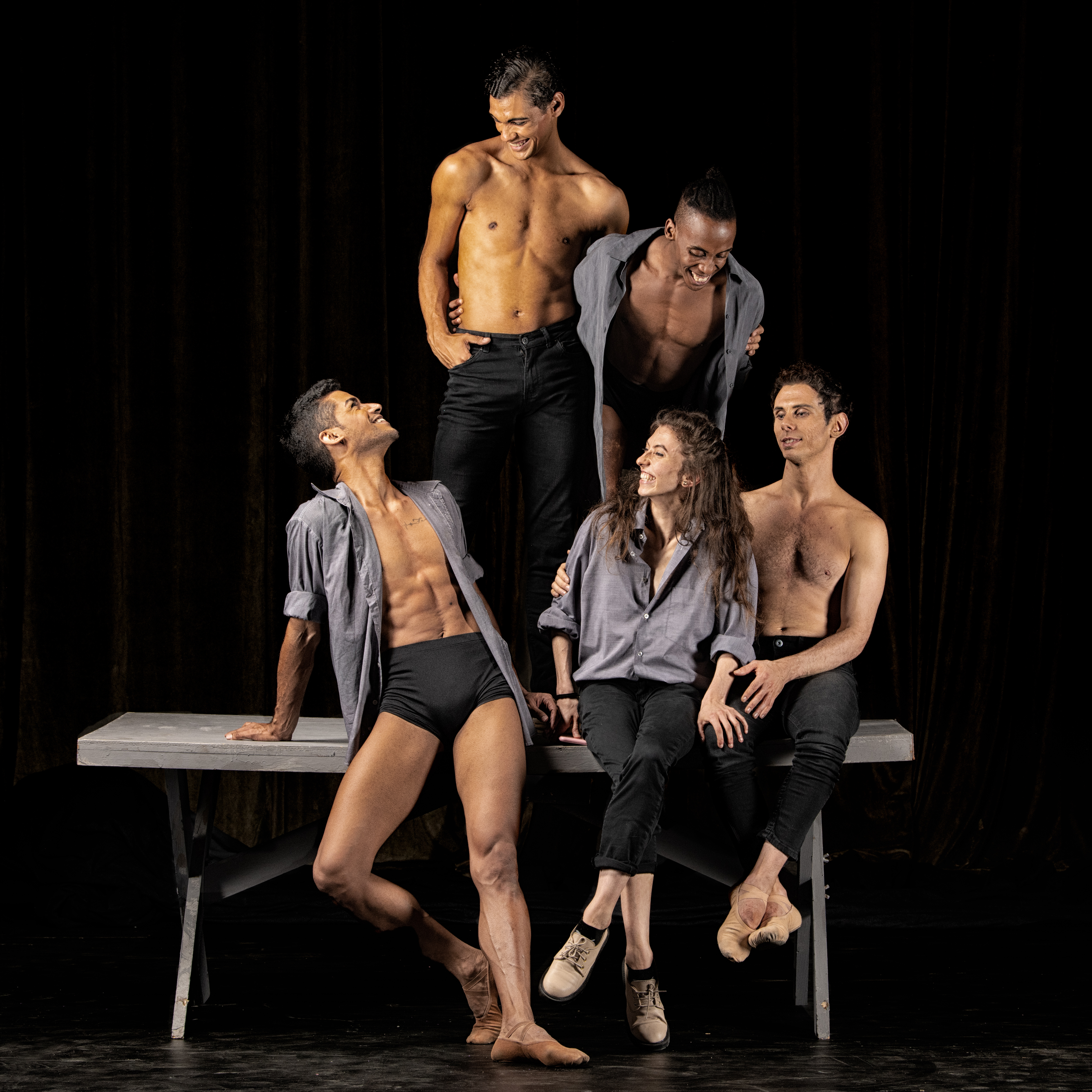
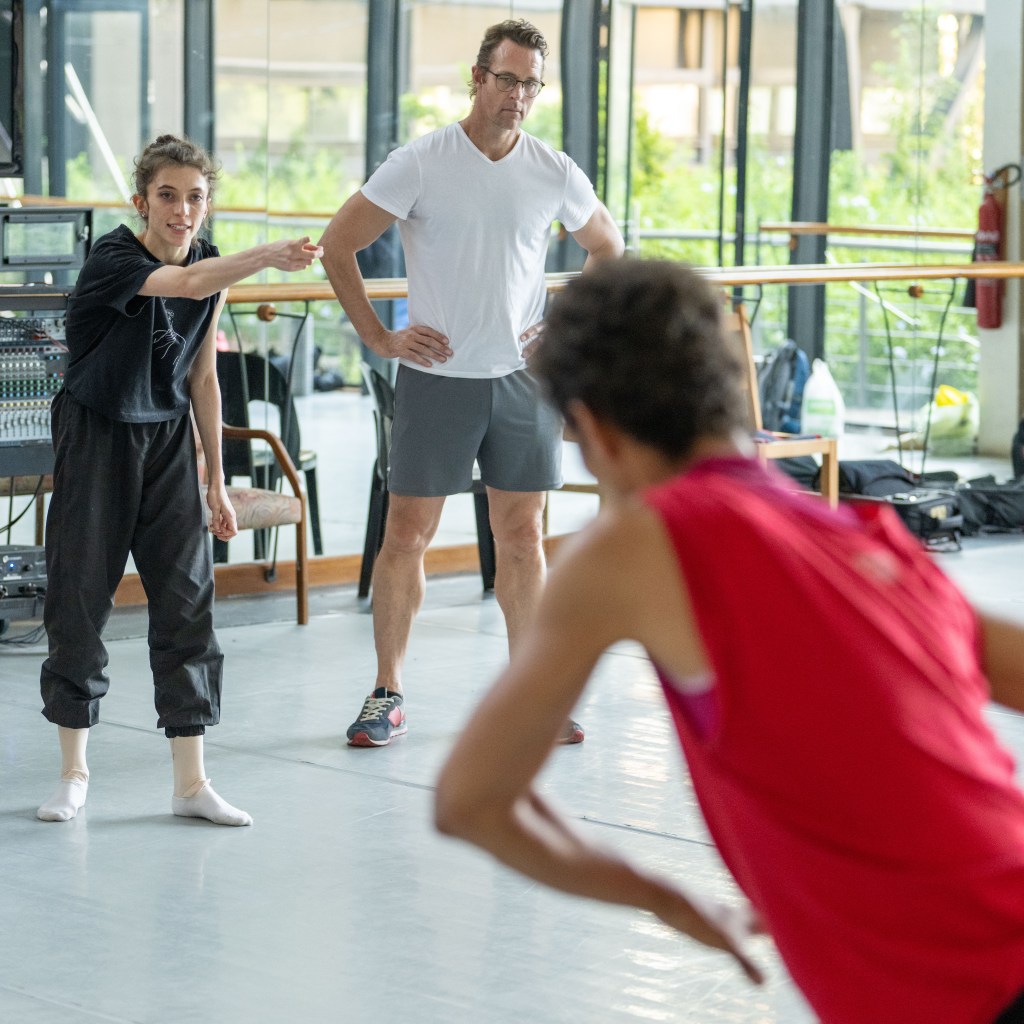
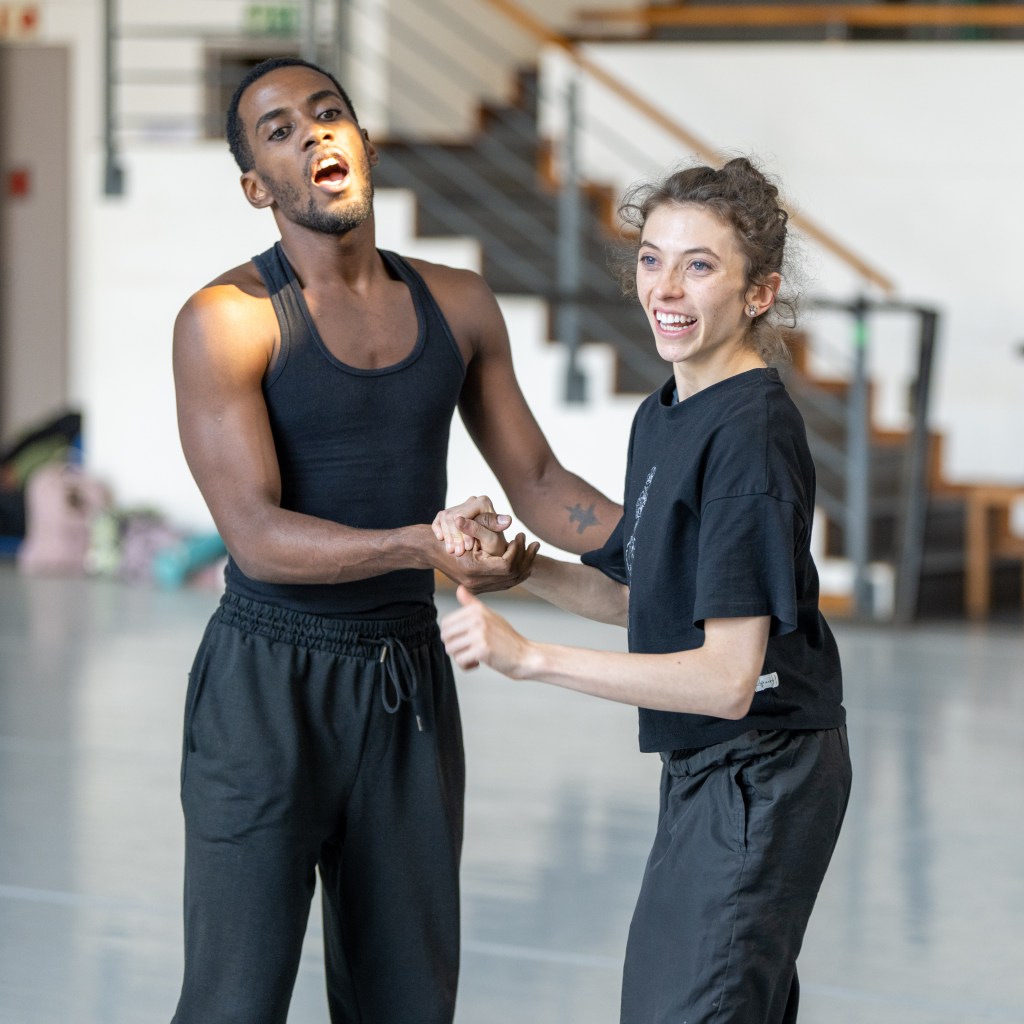
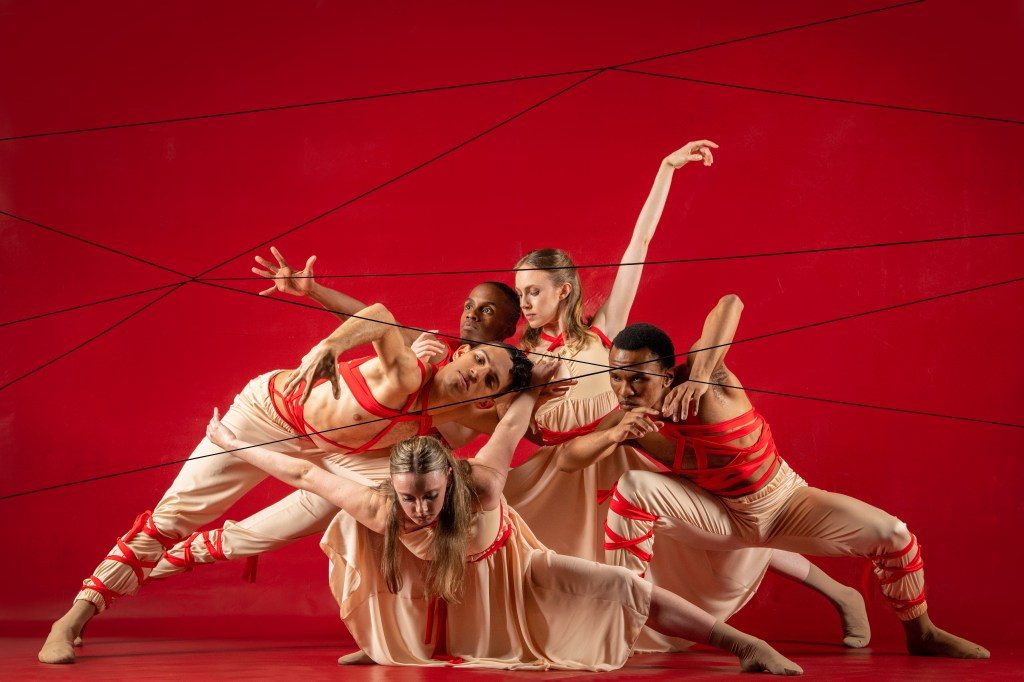
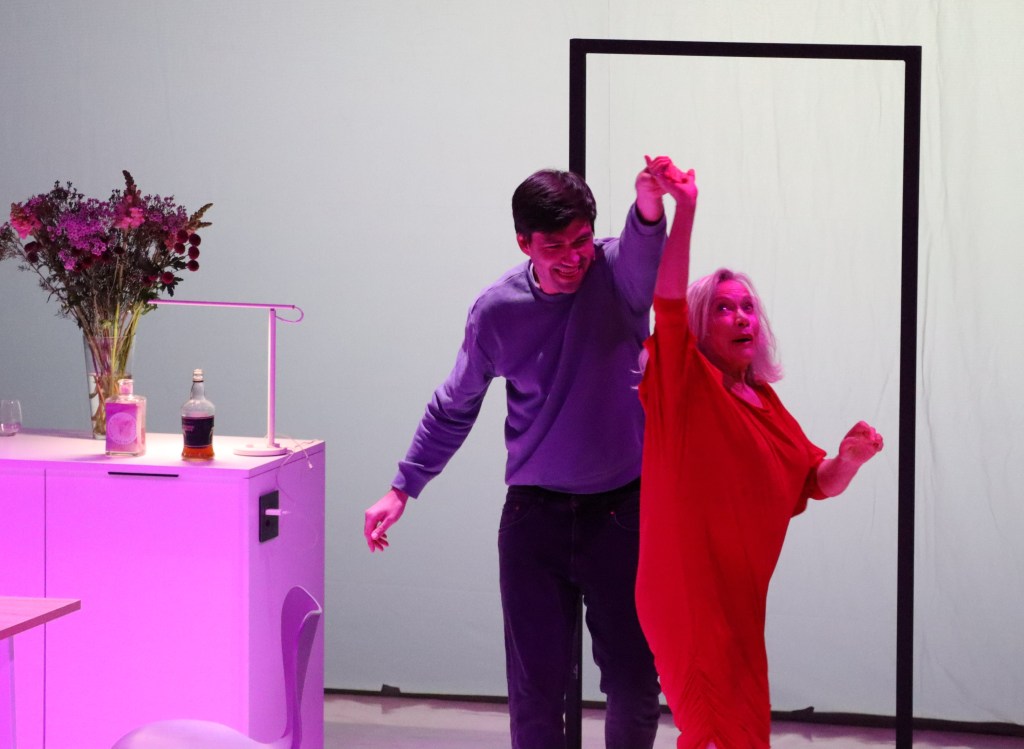
The dance conversation starts tomorrow at the Joburg Theatre with Joburg Ballet’s triple bill of ballets new to the company’s mainstream repertoire. Titled Dialogues, two dancers were invited to choreograph two new works while a third, Bruno Miranda, will stage the 1896 ballet BluebeardGrand Pas –
Bruno Miranda with the cast for the 1896 ballet Bluebeard Grand Pas
described as a glittering showcase for dancing in ballet’s finest classical tradition. Artistic director Iain MacDonald believes the programme exposes dancers and audiences to the diversity and versatility of the company. DIANE DE BEER talks to Joburg Ballet dancer Chloé Blair who has been invited to expand Table for Two (part of Joburg Ballet’s RAW programme for new choreographers in 2021) for this first season of 2023 and Roseline Wilkens of Vuyani Dance Theatre with her first for Joburg Ballet entitled Identity:
Revil Yon (above) and Bruno Miranda in Table for Two.
“My choreography philosophy comes from the extreme passion and love that I have for dancing, specifically ballet. I find dancing to be one of the most humble ways to tell a story as it’s very understated as opposed to other art forms, like singing or acting which are maybe more out there or confrontational in some way.”
Chloé Blair believes that dance is so special because it asks the audience to look at body language and interpret it for themselves and then to connect this body language to their own feelings in a way that’s not really conscious.
When she starts working on a piece, there’s her emotional response to music, which is always the starting point. “I find that music allows me to process ideas and memories and thoughts and there’s a lot of time that I spend by myself just listening to movie scores, orchestral music, classical music and just letting my mind wander into specific situations.”
In this instance she was sitting at the dining room table with a friend listening to music they both loved called Table for Two. It’s music she loves and she started thinking about how much of our relationships happen around a table: we celebrate, we eat together, we toast one another, we have fights, she says. “And I thought that would be such an interesting way to centre a specific relationship story. From there I took some of my own memories and own experiences I had which all felt quite universal.”
As a classical ballet dancer, it influences her choreography because it forces her to pay attention to the detail of body language. “In my dance life I’m bound to a classical repertoire, which has a very solid structure. The things that convey emotion are often in the detail, like a look, a head movement, the use of the fingers or a touch, detail orientated when it comes to body language, interpretation.” She tried to use that in the piece, to capture those detailed moments, the difference between emotions by using specific body language. “Being a classical dancer, the dance is very structured and I enjoy that. You find freedom in that structure.”
Chloé Blair with artistic director of Joburg Ballet Iain MacDonald during Table for Two rehearsals.
Chloé Blair in rehearsals for Table for Two.
But after the initial discovery of the narrative, she finds music – which, incidentally, is not usually the music she has used to develop her narrative. “The music which I finally use for the piece, is something different which marries not just the feeling of the narrative, but the structure as well.
Excited to rework the piece, she is also intimidated because to expand everything would be quite a challenge. “I expanded the cast, because the first time it was just two men, but this time round there was a whole corps de ballet. I used the extra dancers as a tool to tell the story, giving a lot more thought to formations, movement and how to incorporate this into the structure,” she notes.
Using two men as main characters was determined by a desire for the relationship to be very interpretive. “I wanted the audience to view it as either a friendship, a romantic relationship, or a family dynamic without specifically dictating it,” she says. She also loves working with men, because they bring an energy and a freedom of movement which is very inspiring to work with.
Her narrative and thus choreography tells a story of how changes in thought and changes in feeling lead to changes in the dynamic between the two of them. While Table for Two follows one character’s narrative, she wanted to show a relationship in multi-dimensional way, not always as so often seen from our own perspective.
Identity choreographed by Roseline Wilkens
What Roseline Wilkens hopes to achieve with Identity is for the self to be comfortable in its own skin. She strongly believes that everything happens for a reason. “My identity was formed by my life stories. All the work I have created is very personal.”
It deals with the journeys she has made, things that have happened to her, and things that have formed her as the person she is today. “But things still keep happening and shaping my character,” she emphasises. “Whoever I meet, whether the person stays in my life or leaves, there’s always something that keeps forming you.”
But, importantly, she also holds onto her roots and where she came from, not forgetting what she stands for. She embraces change and carefully dissects wat she incorporates into her life and what she lets go. “That’s what identity is all about, finding your true self,” she says.
She was surprised by how much the dancers understood the storyline she presented them with. “It was more than I thought they would because it came from a personal perspective,” she explains. “Dealing with identity, everything had to be honest about some life-changing event.
Roseline Wilkens in Identity rehearsals.
She usually works in the field of African contemporary, sometimes classical and it would have been easier working with dancers she has worked with on a daily basis However, it was surprising working with classical contemporary ballerinas. “It was interesting how we influenced one another and the work. It came together as they made it their own and gave it their own flavour. I didn’t come with any expectations, so it was a work in progress and a work together.”
Having created the music in collaboration with Isaac Molelekoa, she doesn’t see herself as a composer, but she loves sound and working with what she feels. “I created the music with my own beats which was then transcribed as sheet music by my collaborator.” She feels blessed by this partnership which has been worked at through the years. “He gives life to the craziness in my head and the sounds I make during rehearsals.”
She doesn’t have to use any other sounds or music and this for her, truly represents her identity. “I chose the title, because it is about becoming one with self, learning to start over, relearning yourself in every way possible which means growth. I am in tune with myself,” she aptly concludes.
Joburg Ballet 2023 seasons at a glance:
Dialogues (Joburg Theatre): Friday 17 March – Sunday 26 March
Romeo and Juliet (Joburg Theatre): Friday 30 June – Sunday 9 July
La Traviata-The Ballet (Baxter Theatre, Cape Town): Wednesday 26 July – Saturday 29 July
Don Quixote (Joburg Theatre): Friday 29 September – Sunday 8 October
Dialogues: Booking Information
Standard Ticket Prices:
R475, R410, R375, R275, R200 (applicable to all performances except Wednesday 22 March for which all tickets are R100) Discounts:
Friends of the Ballet 35%; Pensioners 15%; Groups of 10+ 10%; Children 4-7 50% Where:
When you are sitting in contemplation at the end of a year, your head packed full of memories of live festivals for the first time in 24 months, you realise the excitement, exuberance and energy live theatre brings to both performers and audiences. There’s simply nothing that compares DIANE DE BEER discovers. Here are just a few of those magical moments…:
There were many performances that I will hold onto for a lifetime, some that linger, others that were a fun watch, and one performance in particular that just made me senselessly happy.
(Pictures of Die Moeder by Emma Wiehman and top far right, Nardus Engelbrecht)
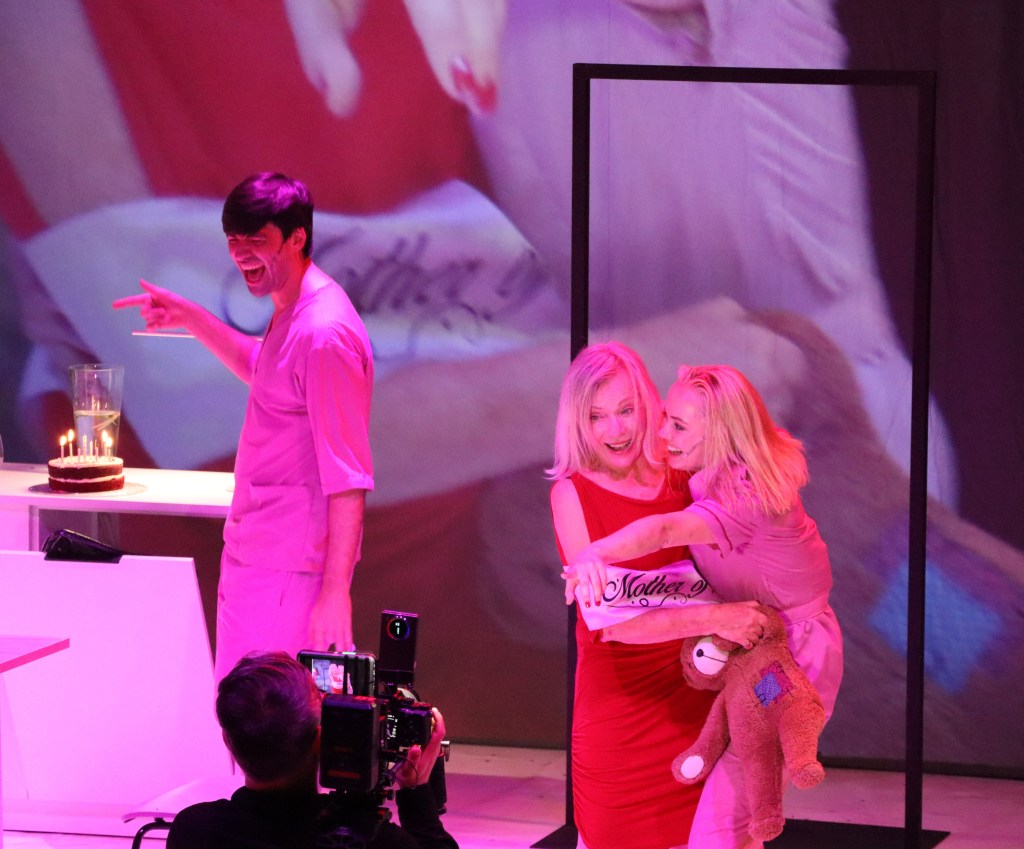
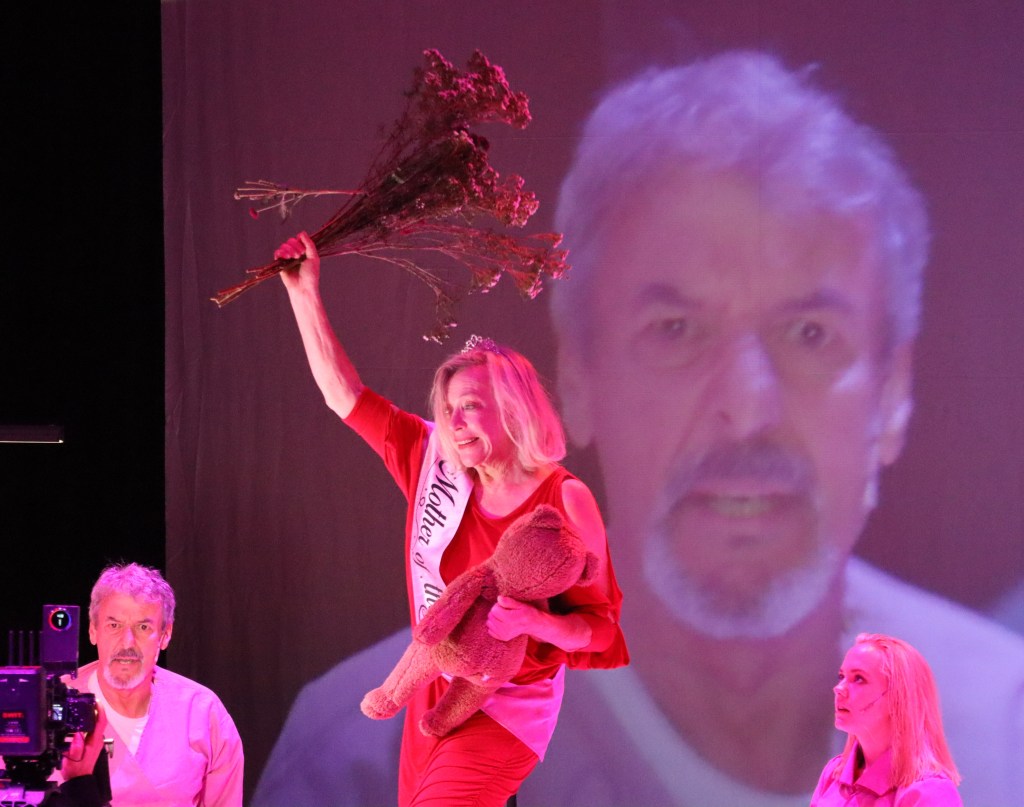
It was also the play, the director, and the rest of the cast, (Dawid Minnaar, Ludwig Binge, Ashley de Lange) , but Sandra Prinsloo was the star of Die Moeder, which had its debut at the Woordfees. It held all the potential of being something special, but what this actor brought to the role was spectacular. If this is how she dances into the twilight of her career, buckle up.
Director Christiaan Olwagen has been away playing successfully in television and movies, but it’s always on stage that he has been most impressive for me. It feels as if it is a medium he understands and where he feels at home and his vision translates magnificently.
With that driving her and a magnificent script, it was up to Prinsloo to plumb the depths of an ageing woman who has lost all sense of herself as the world (and her family) seems to have discarded her. Or that’s how she perceives it to be.
Prinsloo slips under her character’s skin (and yours) and more in a performance that simply surpasses everything she has done before (and there were some great ones). But this was next level and for this gracious actor, a just reward for years and years of hard work.
We all knew she was one of the greats and then she went one better! We’re blessed to have her.
The other magic Saartjie Botha created, with live performances allowing yet another experience of Sylvaine Strike and Andrew Buckland’s Ferine and Ferasse, was the breathtaking Firefly. A production I can see over and over again, each time reliving the complete and overwhelming embrace of old-fashioned storytelling.
But let’s start at the beginning. I have been to perhaps too many festivals in my time, but this was my first time at Cape Town’s Suidooster at the start of a new (and hopefully) live 2022 and I was surprised and impressed by Jana Hatting’s ingenuity. Some of the smaller festivals have tight budgets, audience complexities and artists who are all vying for a slice of the cake.
She introduced a brilliant mini season titled Voices/Stemme for which she invited seasoned and exciting younger talent to tell stories, short ones, and they hit all the right buttons. It’s good at a festival, where the menu is diverse, to have short interludes of dedicated excellence. And with performances by Chris van Niekerk, Devonecia Swartz, Buhle Ngaba and Elton Landrew, for example, with directors and writers like Amelda Brand, Wessel Pretorius, Dean Balie and Jemma Kahn for these 10-minute short pieces, it hit the sweet spot time and again. And the shows were all free … and packed.
Because of the Zap Zap Circus, also on the Artscape premises, they’re included as part of the festival and that’s another huge tick in the box. There’s nothing like a circus for the whole family and especially this one, where such amazing development work is being done, is worth promoting. It also meant that the venue was available for other shows.
It’s a great little festival with great vibes as it is all contained on the premises of Artscape. Watch out for this one with many hidden treasures including young talent showing off their best on many different platforms. They had some amazing jazz as well, with some literary excellence happening on the writing/authors side.
Caro Daniels and Wilhelm van der Walt in Ek, Anna van Wyk.Genius director Marthinus Basson.
Terminaal 3 with Carla Smith and Edwin van der Walt.
KKNK was back with a bang, a smaller and shorter festival, but one that packed a punch. Perhaps it was a case of old favourites back at their best, but with the long break, that’s exactly what we wanted. Marthinus Basson delivered a double whammy with a recharged Ek, Annavan Wyk and a play that crept up on me and is still at work, Terminaal 3, both with star casts and both lingering with obliterating impact.
For me it was also a renewed admiration of Frieda van den Heever, the director and compiler of Oerkluts Kwyt, a programme celebrating the poetry of Antjie Krog, and the performance brilliance of Antoinette Kellermann, both of whom turned 70. Van den Heever had previously created the perfect Die Poet Wie’s Hy with Dean Balie.
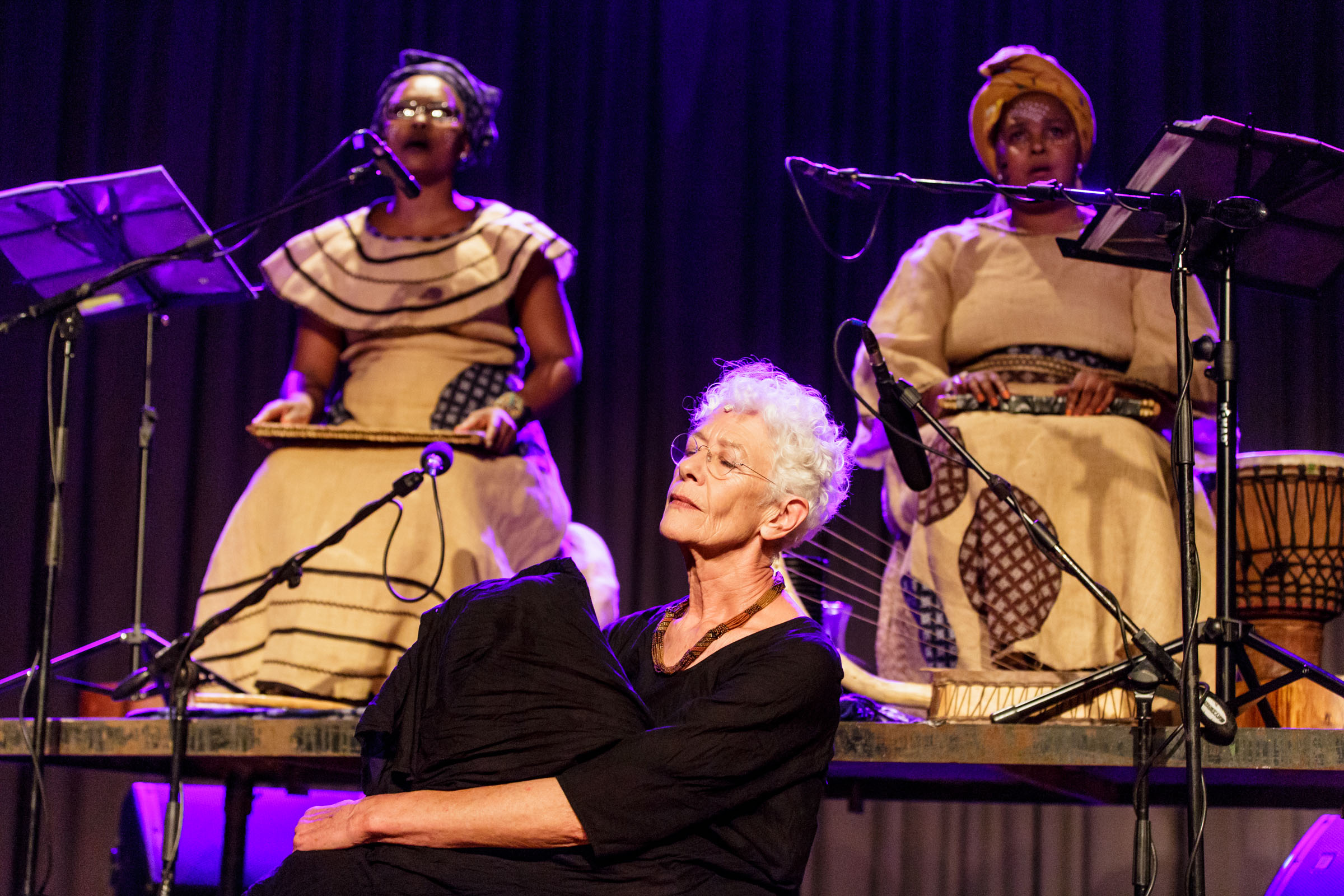
She has a wonderful sensibility, she knows how to pick them and then present a programme basically consisting of the spoken word and music, but the way she balances content and creativity is delicately stunning. For this one she also brought on board astonishing sounds, two women who sing under the Ancient Voices title, the duo Lungiswa Plaatjies and Nimapostile Nyiki, – extraordinary.
Anna Davel
I was also reminded this year to watch out for producer/performer/writer Anna Davel (production manager for above mentioned show). She has turned into someone who seems to spot gold. She was also responsible (and part of performance) for Aardklop’s Mixtape van die Liefde where another new artist, Stephanie Baartman, made her mark. She has been part of the television soapie circuit for a few years, but she announced her presence on stage with poetry and song. And that, I suspect, is just a smidgeon of what she will show in the future.
Everyone was also raving about Davel’s exceptional 21, presented at KKNK. She has always shone on stagte, but her voice and her comfort levels on stage have matured magnificently.
Karatara, a production I’ve written about frequently, is one that honours the story which deals with the devastating Knysna fires. The performers (dancers Grant Van Ster and Shaun Oelf and Dean Balie, narrator) as well as the creative team, Wilken Calitz and Gideon Lombard created something extraordinary . It’s worth seeing again and again as it feeds the soul.
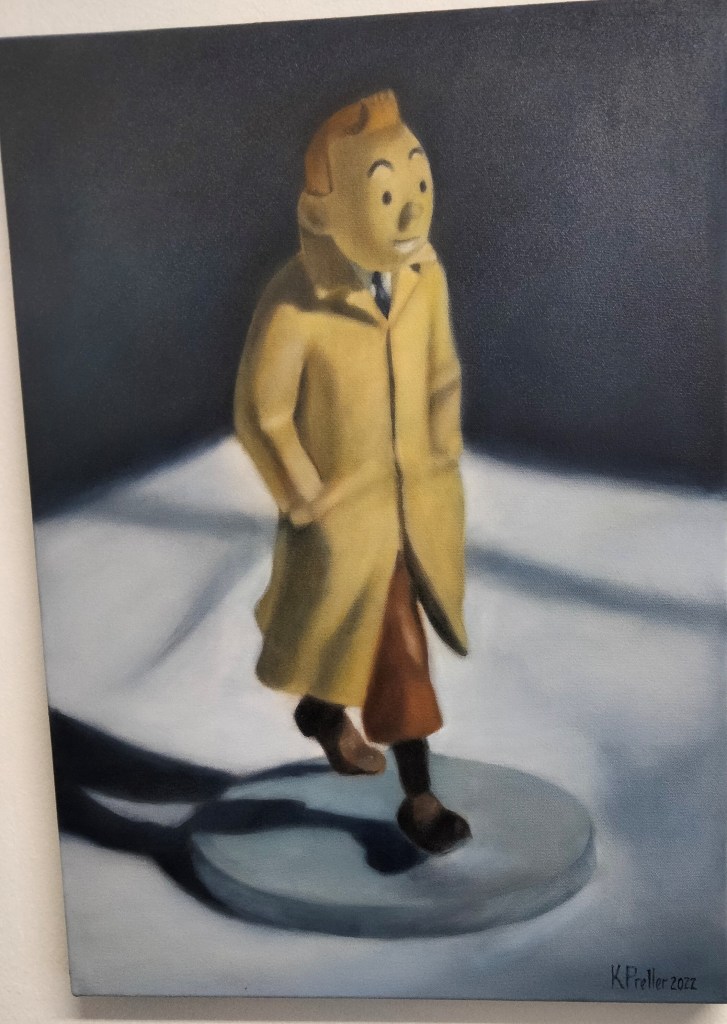
And who can forget the art of Karen Preller? Her mesmerising exhibiton took you back in time in an extraordinarily unique way.
Om Skoon Te Wees with Conradie van Heerden
And as an interlude there was the hugely successful Lucky Pakkies, an extension of the previously popular Uitkampteater, which created a stage for shorter if no less exciting work and some extraordinary performances.
It’s also a concept that allows performers to practise and hone their craft in different genres as well as roles. Writers are given a chance for short and sassy work, actors have a smaller if intimate and often vulnerable stage and directors are offered an opportunity to try different things in challenging spaces.
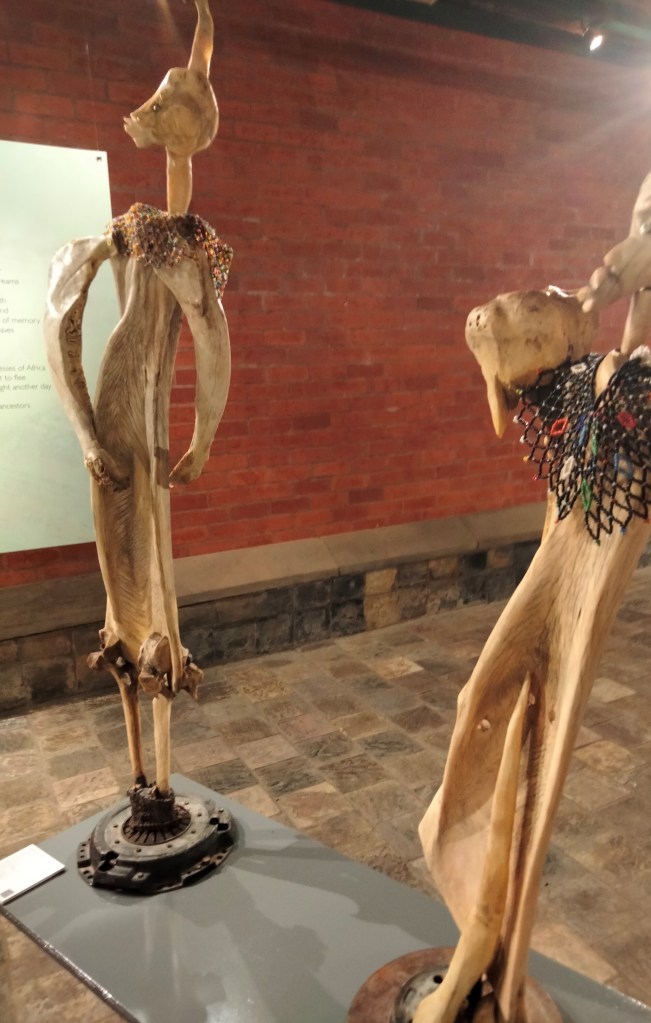
In the Free State, it is always the art that overwhelms and again they didn’t disappoint, one example being Pitika Ntuli’s Return To The Source (which can still be seen at the Oliewenhout Art Museum on your way to the coast), which is simply stunning and perfect for the space at that amazing institution, and they also have a provocative permanent exhibition worth viewing again and again. André Bezuidenhout’s unique photographs was another winner, with the subject well-chosen and then magnificently captured.
And then there was the welcome return of Elzabé Zietsman with the hard-hitting Femme is Fatale. This is someone who understands how to grab you by the throat when there’s no other way. Her intent is to violently if necessary showcase gender-based violence. We all know the scourge it is in this country and no one is listening.
She is going to try her best to make you listen. And with a script which is as blunt and blistering as it is determined, she hits where it hurts most. Being the veteran she is, there’s not a note, a line or a hair out of place and she shows what contemporary cabaret can achieve when done with heartfelt honesty. It’s a courageous and memorable performance.
Another standout and engaging performance was the dance production Blame It On the Algorithm by the Darkroom Contemporary Dance Theatre. It was mesmerising, memorable and something completely different, always a gift for a festival.
Finally it was with a new stance that Aardklop approached the 2022 live season. Instead of hosting a festival in Potchefstroom (it will be returning there in 2023), shows were also presented in Pretoria and Jozi. There are many differing opinions about the success, but for artistic director Alexa Strachan it is about survival.
They’re a small and possibly struggling yet determined artistic collective and they produced a few winners of which the standout was Nataniël’s Die Smitstraat Suite, an astonishing accomplishment.
It’s been a lifelong dream for this prolific artist/composer whom many simply know as a pop composer. Not being my field of expertise, he explained that the music was inspired by the classical oratorium with nine compositions sung in English and Latin (some of his songs not previously recorded combined with original music). He was accompanied by the excellent Akustika Choir led by Christo Burger.
And to add his trademark stamp, an original series of stories, which cleverly pulls the title and the full performance together.
This is what makes him so unique. Few people have the skill to come up with something as complicated as this music with choir and solo parts, accompanied by the Charl du Plessis Trio. And then to add some achingly funny stories that introduce an explosive touch before you lose yourself again in the exquisite music.
He also had two other performances at festivals during the year. First there was Moscow at the Suidooster at the beginning of the year and then Prima Donna at the KKNK. Both of these were innovative and unique in performance, scripts and music, all executed by the artist himself except for the musicans (Charl du Plessis Trio) and costume designer Floris Louw who all contributed with flourish.
Aardklop Aubade’s driving force Charl du Plessis
Produced under the Aardklop Aubade flag, this classical season, introduced by Aardklop and led by Charl du Plessis presents Sunday morning classical concerts at Affies to re-introduce the classics to a previously enthusiastic audience as well as a stage for especially solo artists, but not exclusively so. It’s another great festival invention.
In similar vein, with the help of the KKNK, artists Neil Coppen and Vaughn Sadie established the ongoing Karoo Kaarte with the aim of promoting real change in communities. The idea was to use the arts in many different ways to change the narrative of the Oudtshoorn community to a more inclusive one.
These were early days, but the work which included fine art projects to navigate and explore identities as well as a theatre production which involved the community and workshopped a story to include all their lives and dreams.
Ownership has been activated, but this was simply the beginning and it is going to be hugely exciting to watch how this develops and how local artists are given wings.













































 De Beer Necessities