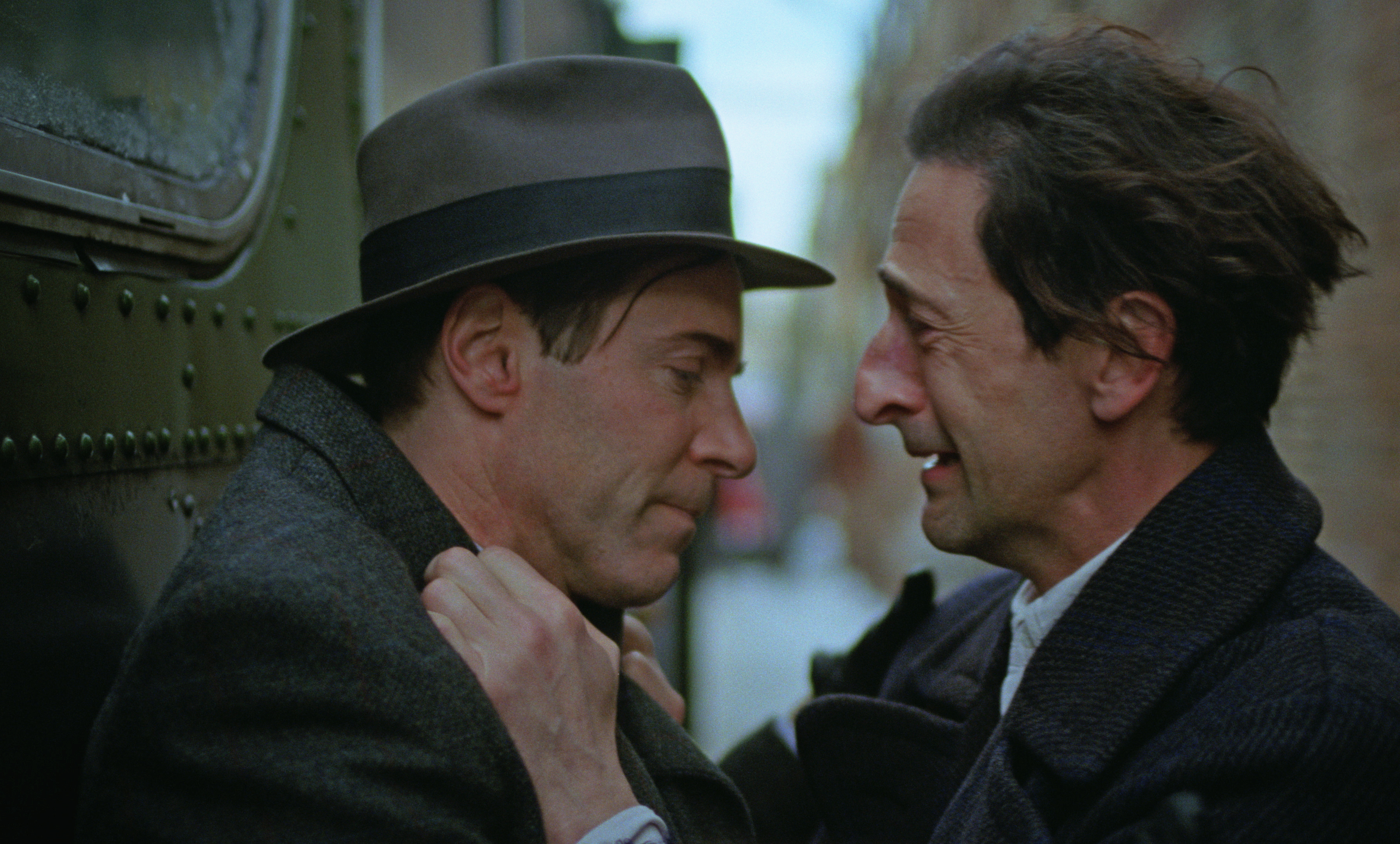
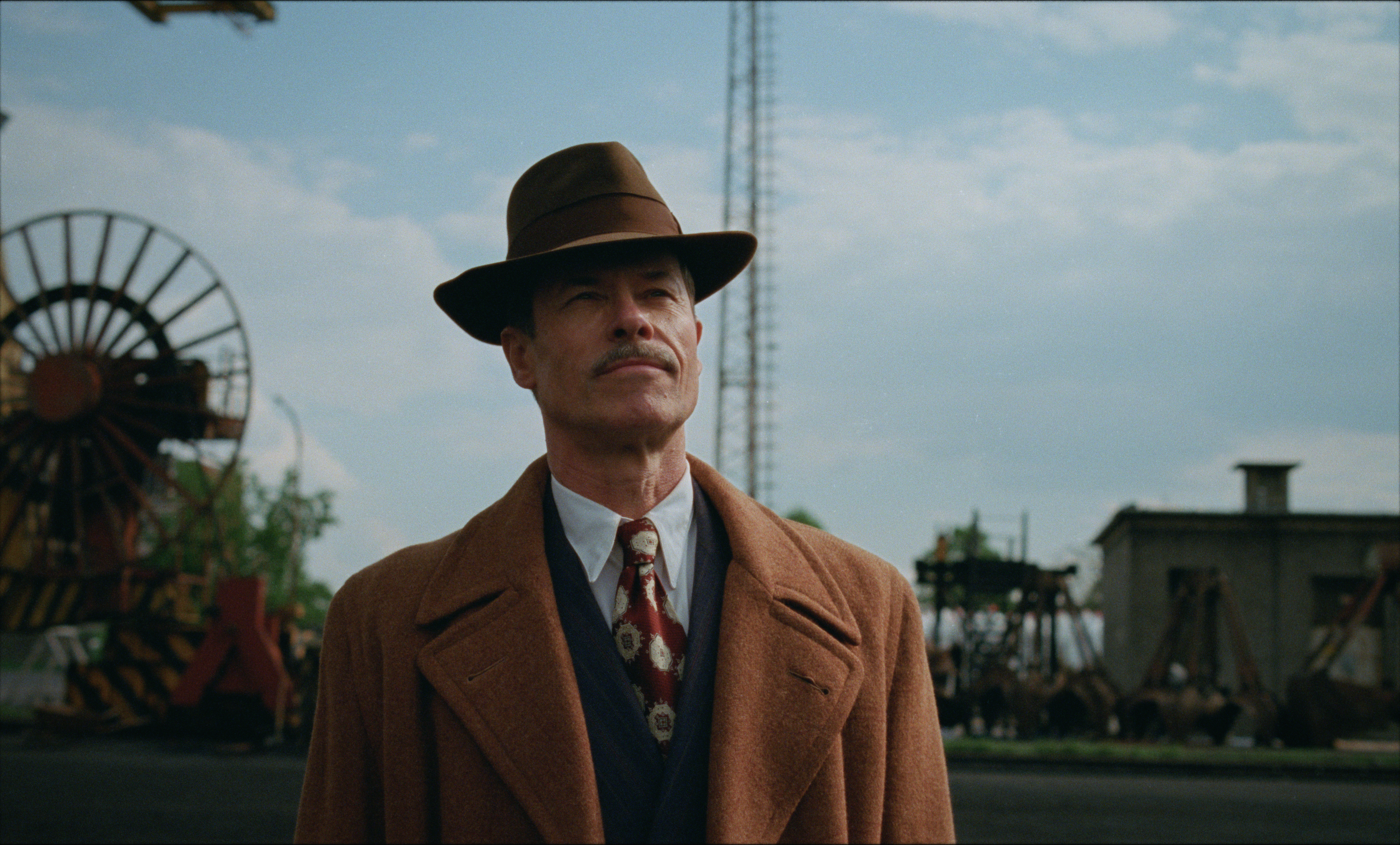
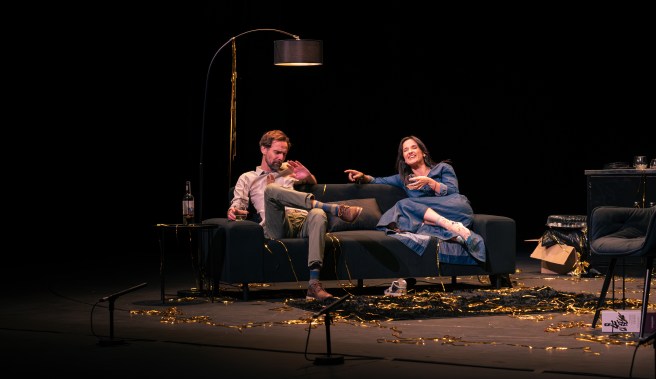
TROU- EN SPEELMAATS CINTAINE SCHUTTE EN CAREL NEL MAAK ‘n BEGIN BY DIE MARK TEATER

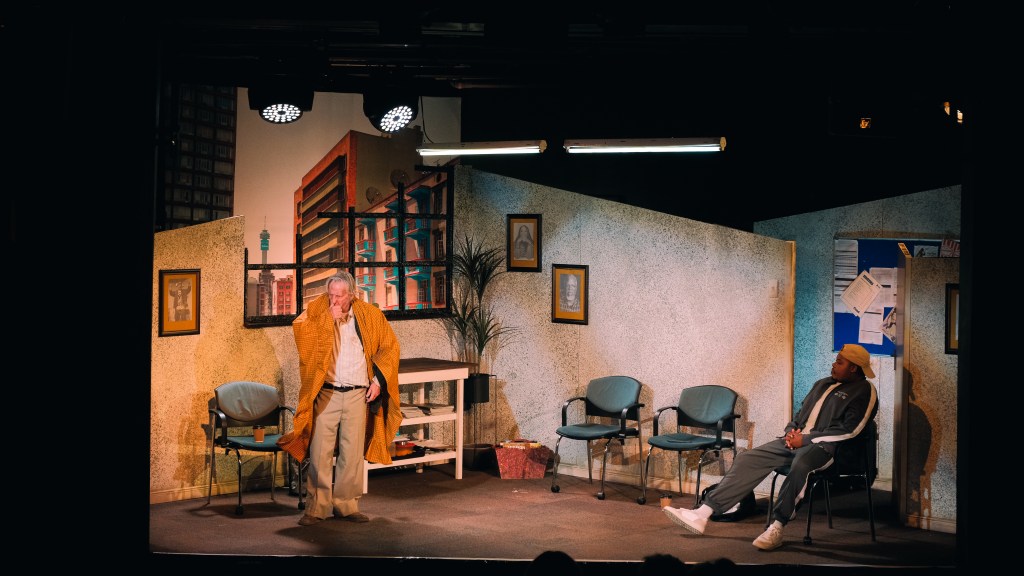
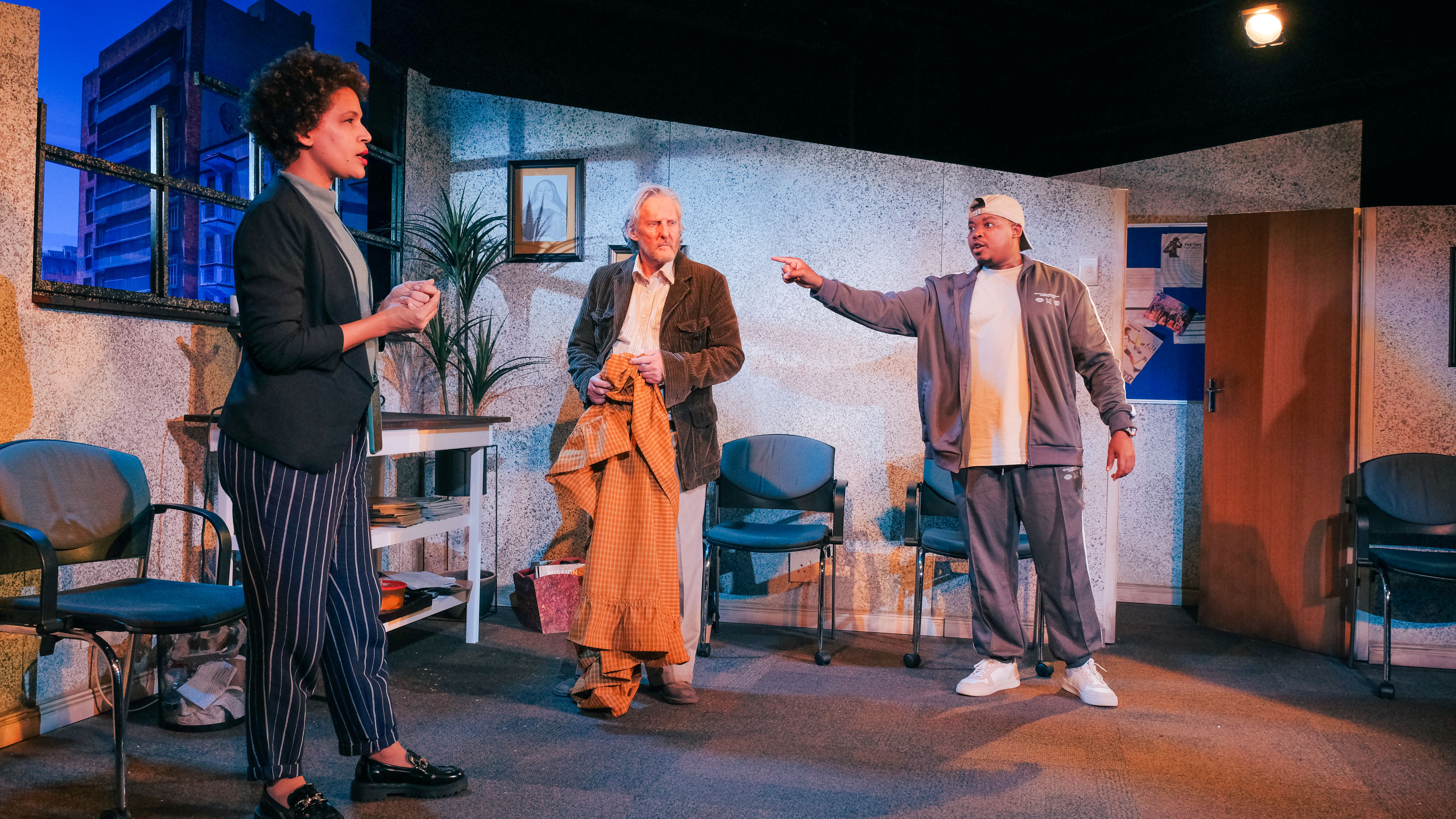
KLEUR FOTOS: Gys Loubser

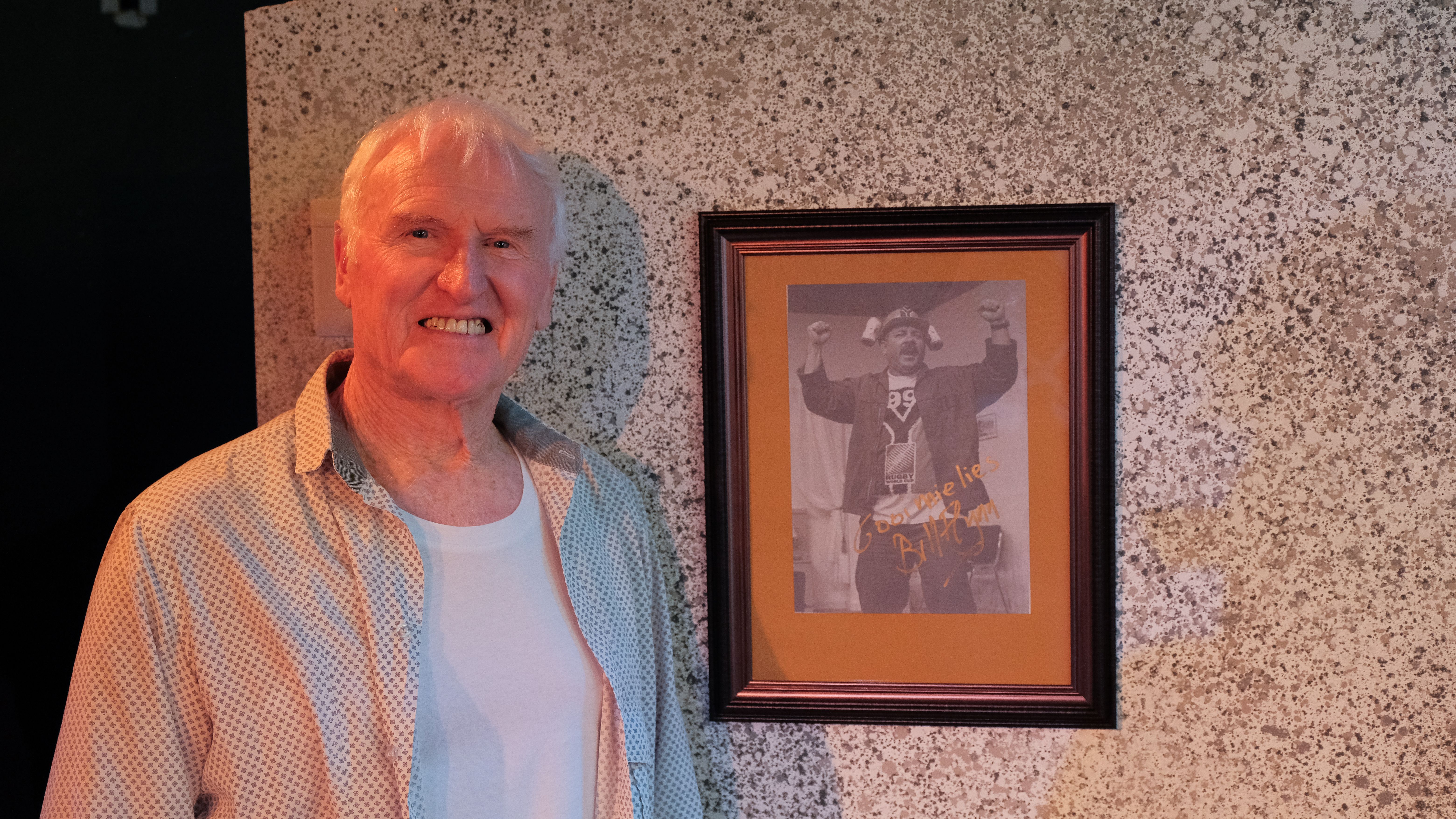
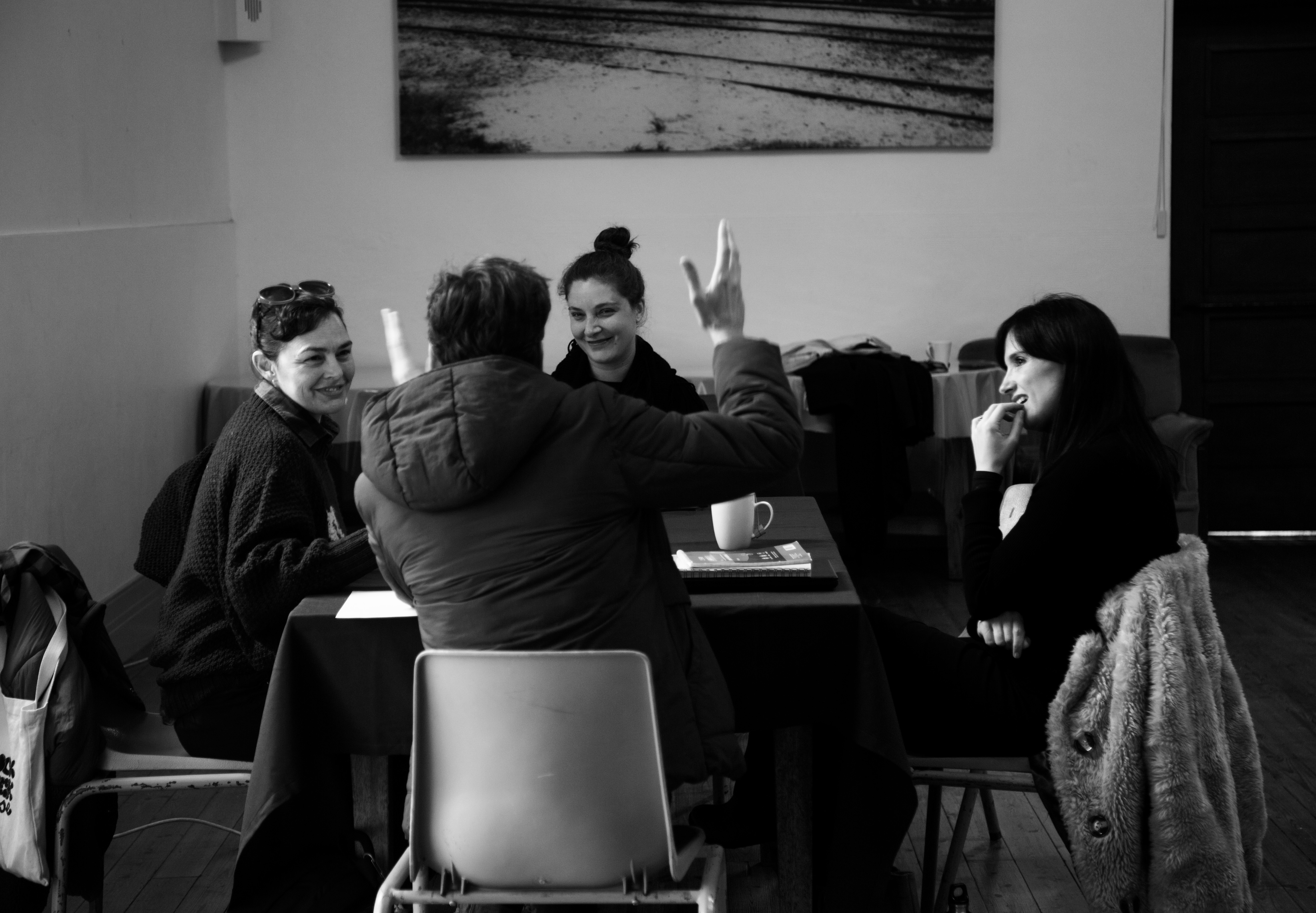
SWART EN WIT FOTOS: Stephanie Gericke

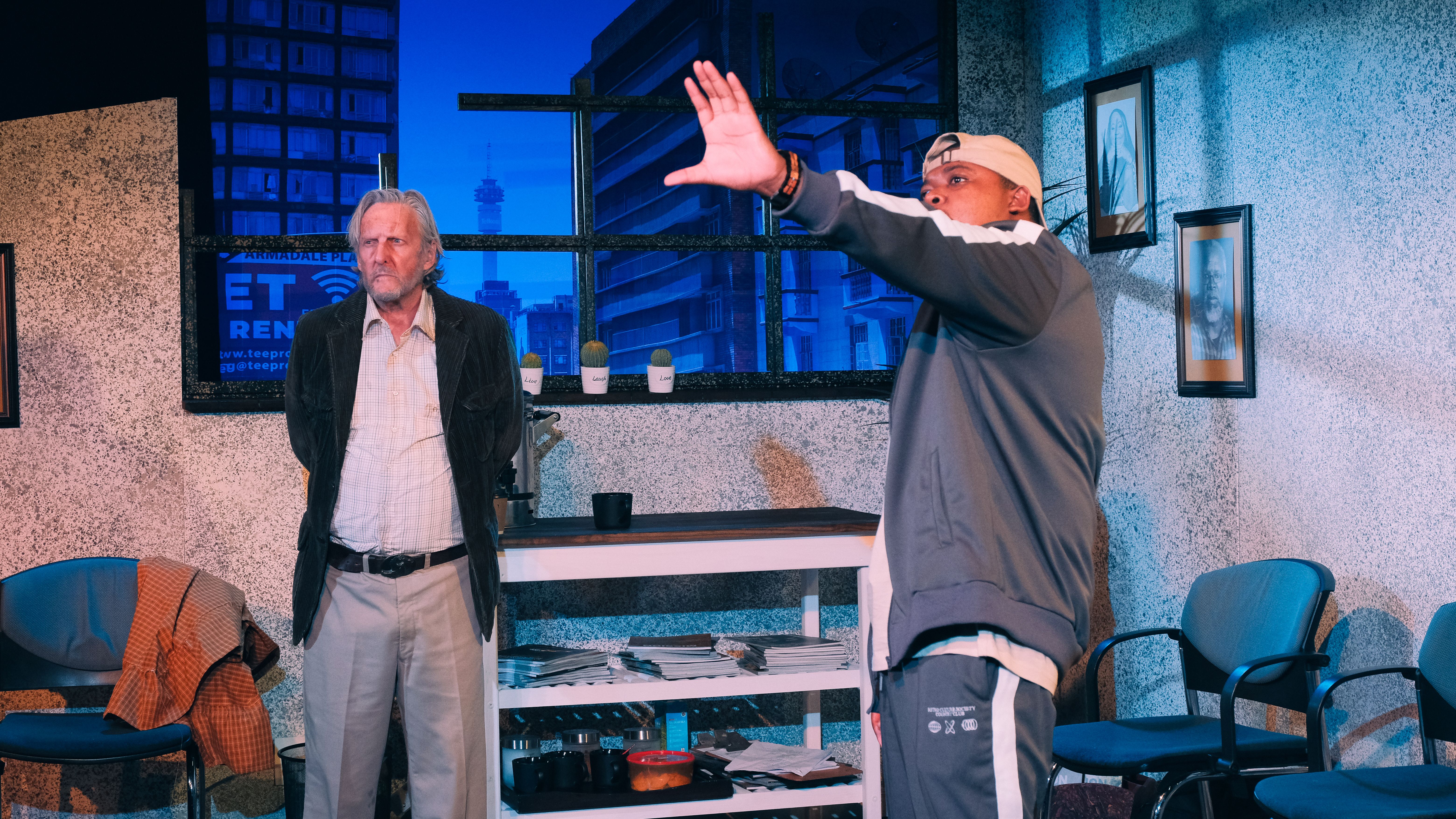
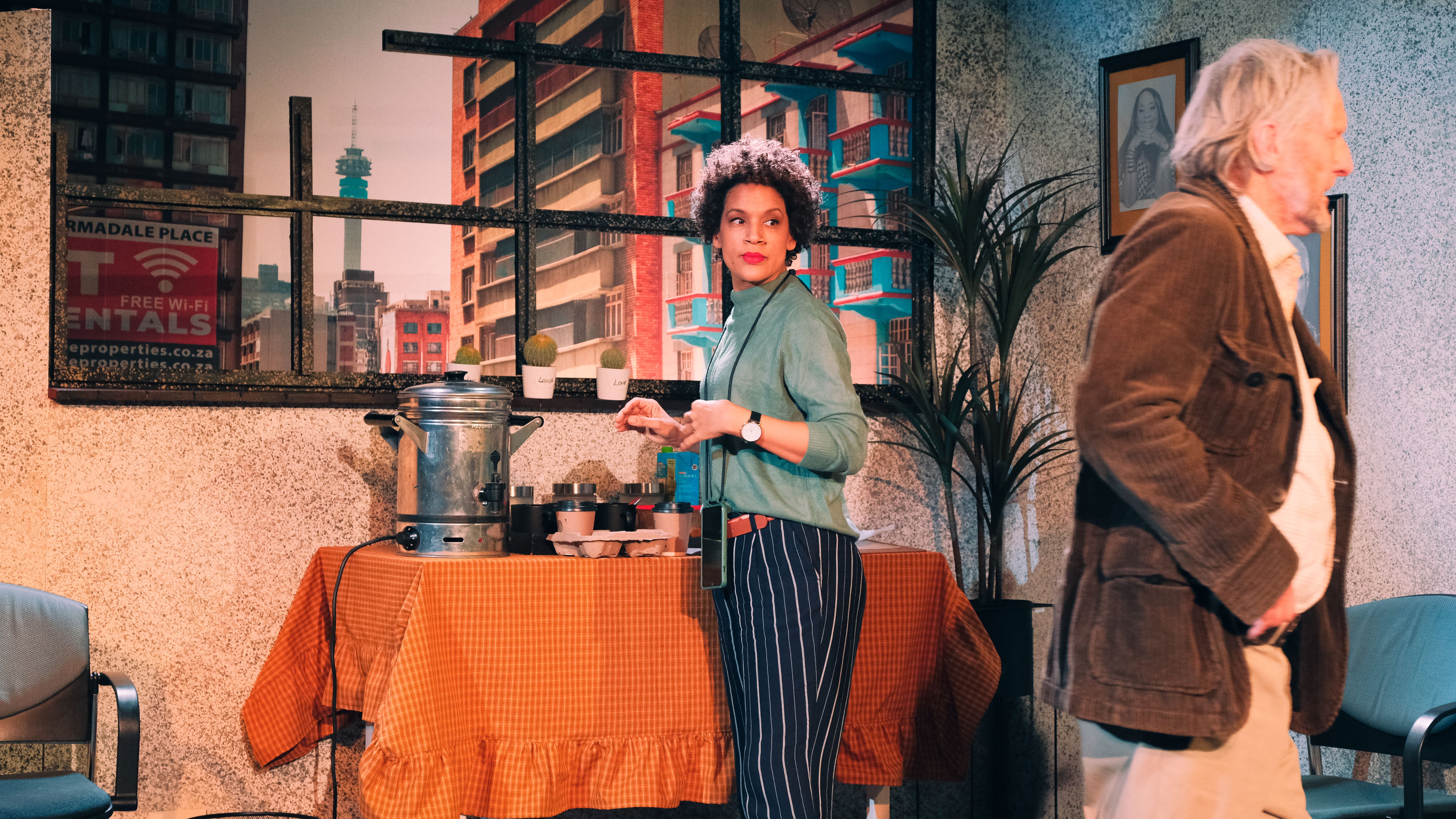
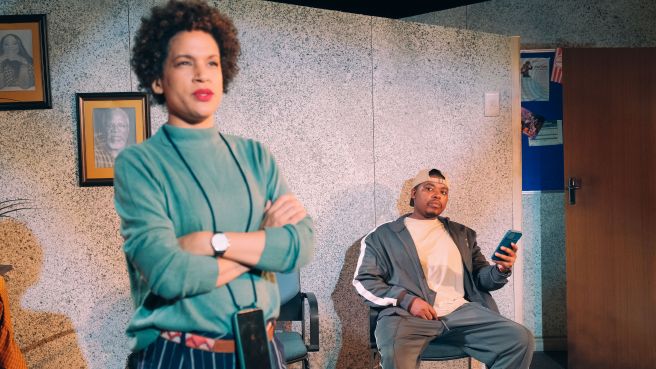
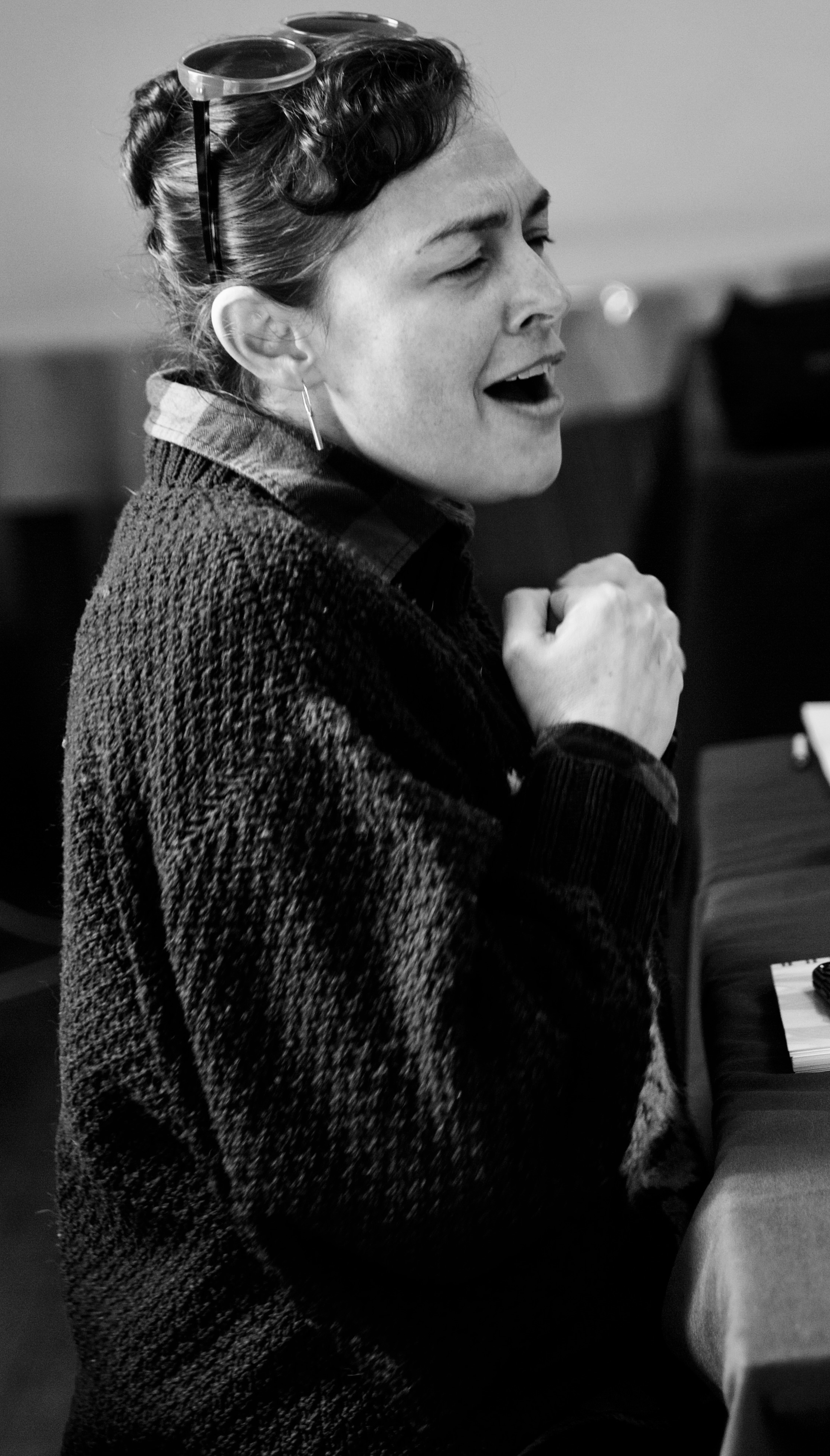
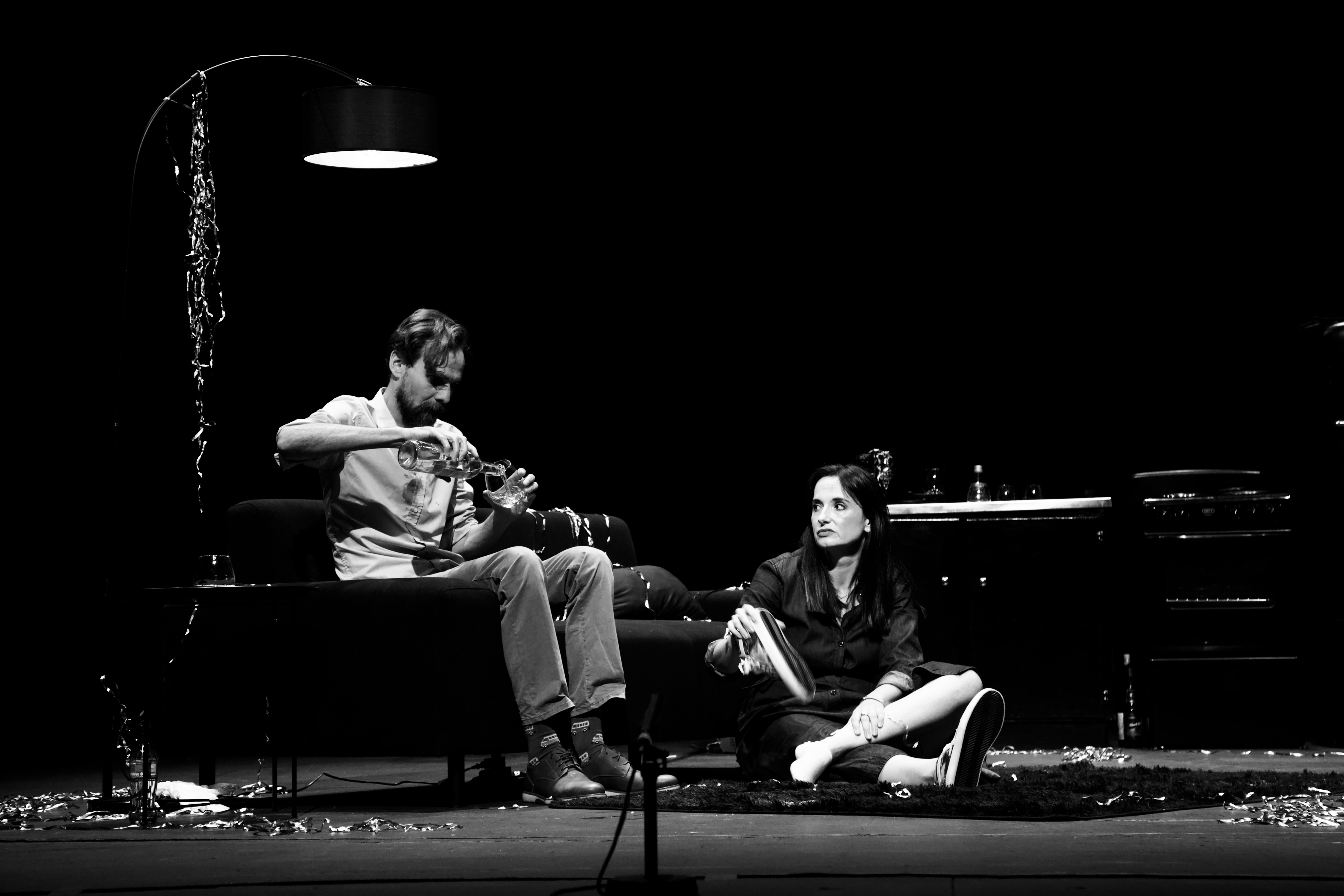
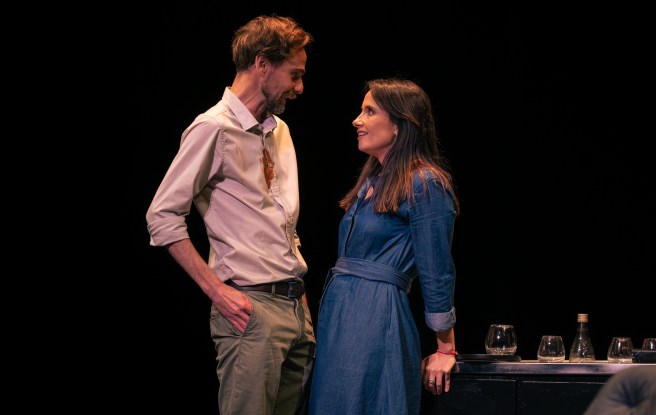
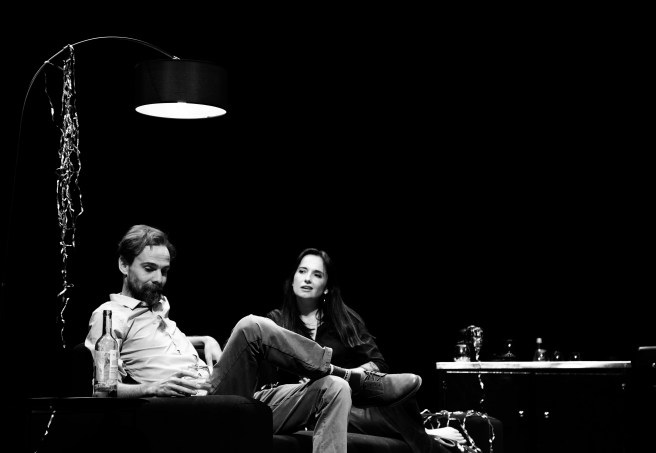
Cintaine Schutte en Carel Nel speel nie aldag op die verhoog saam nie, maar die tyd is reg. Die twee gesels met DIANE DE BEER oor hulle jongste stuk ‘n Begin, wat Donderdag 30 Januarie by die Mark Teater in Johannesburg begin, oor hulle prosesse:

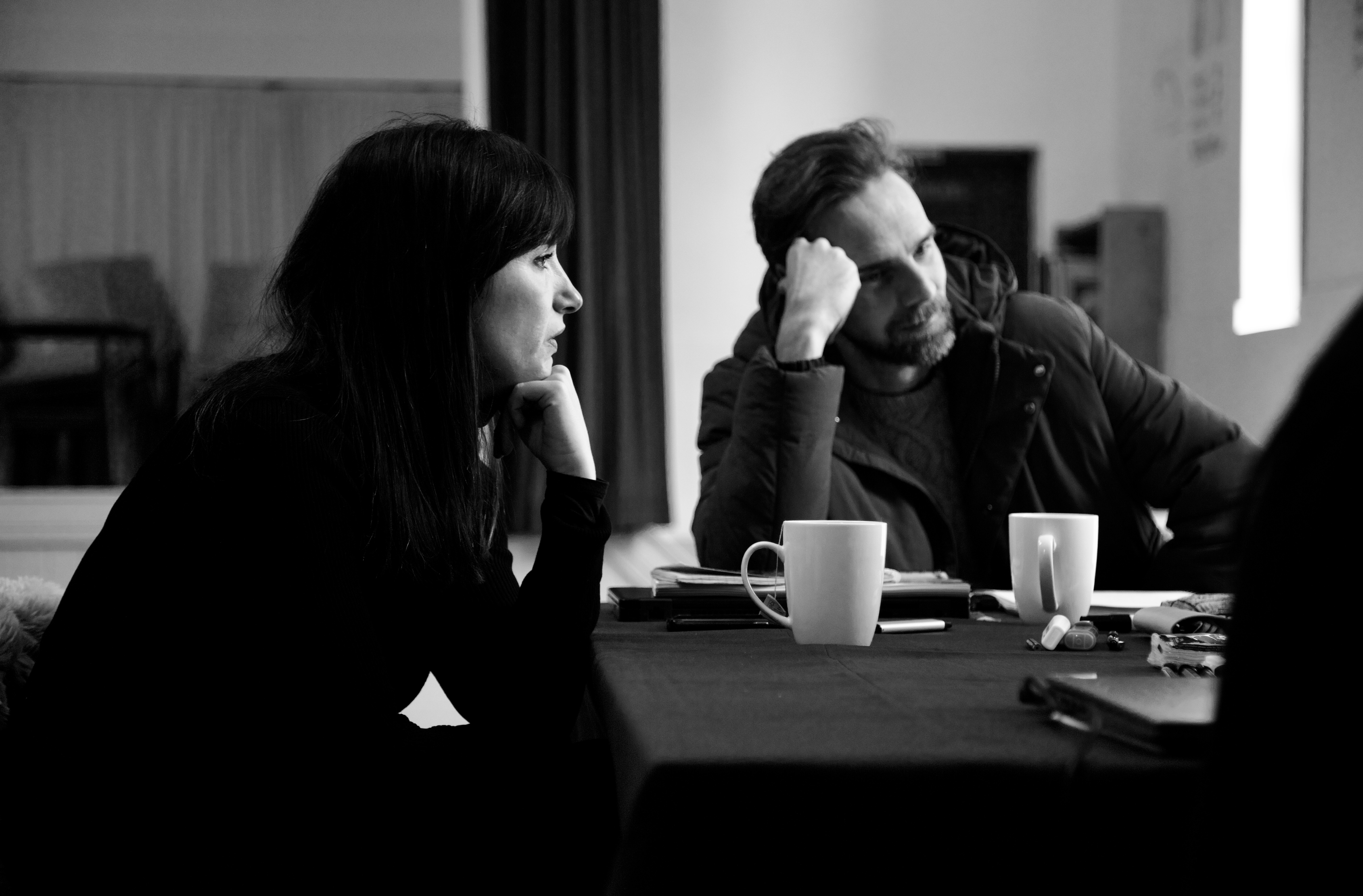
Cintaine Schutte en Carel Nel in rehearsals (links) saam met Tinarie van Wyk Loots (regisseur) en verhoogbestuurder Lize-Marie Wait (regs)

HOEWEL hulle werkprosesse baie verskil, is daar darem baie voordele ook aan saamwerk.

“Hoe nader ons kom aan die speelvak by die Mark Teater (Johannesburg), is dit net ‘n luuksheid dat ek dadelik ‘n wordrun kan doen saam met Carel in die sitkamer of ons kan praat oor die karakters,” vertel Cintaine.

“Maar natuurlik is daar altyd tussen hom en my ‘n Cintaine en Carel. Daar’s ‘n tyd wanneer ons praat oor werk en daars ‘n tyd wanneer ons nie praat oor werk nie, want ons moet ook lewe tussenin, en ek moet dit ook respekteer.”

Sy is iemand wat te veel wil praat oor werk, en dikwels belaai met notaboekies en bladsye vol geskryf. “Dan sien ek vir Carel  op die bank lê en as ek vra ‘wat doen jy’, dan sê hy, hy dink aan die scenes en hoe dit uitspeel in sy kop.

 “Ek moet dit op die bladsy hê.  Ek dink ook dis belangrik om nie altyd uit te vra oor sy werkproses nie, want dan verras jy jouself op die vloer. As ek uit ‘n gemaklike plek uit speel, kan ek enige iets regkry. Vir my is voorbereiding baie groot.”

Carel besef dat almal anders  werk. “Ek het nog nooit met ‘n akteur gewerk wat presies dieselfde werksprosesse as ek het nie. Dis normaal, en jy moet dit maar net respekteer. Elke persoon werk anders. Solank die eindresultaat positief is, gee ek nie rerig om hoe die ander  se prosesse werk nie.”

Vir hom is die belangrikste om by die waarheid van die stuk uit te kom en die eerlikheid daarin vind. En egos moenie deel van die proses wees nie.

“Dis die eerste maal in ‘n lang tyd dat die twee van ons saamwerk maar as vervaardiger toe ek eers besluit het dat Tinarie van Wyk Loots (onder links) die regisseur is, het ek haar die keuse laat maak van wie my Daniel sou wees. Sy het nie eerse tweekeer gedink nie, en dadelik Carel voorgestel want sy het gesê dit kort ‘n akteur met gravitas en sy het al met Carel gewerk met Baby I Love You.”

Cintaine  was dadelik opgewonde oor die saamwerk. “Hy is natuurlik ‘n goeie akteur, en daar sou ‘n shorthand tussen ons wees maar ek was ook bietjie huiwerig dat man en vrou in regte lewe op die verhoog gaan staan. Maar dit is waar die verbeelding van teater inkom waar ons verdwyn in die karakters.

 “Ek het ook iemand gekies wie se spelleiding baie sterk moet wees en daarom het ek as vervaardiger vir Tinarie gekies.”

Sy weet sy sal die vertroue wat hulle in die regte lewe het verplaas na die  verhoog en nie te veel druk daarop plaas nie. En dan kyk waar die kreatiewe proses hulle neem. Maar sy wil ook seker maak dat hulle lekker  kan  speel  en  fun  kan hê met die stuk.

Hoewel  Carel vier of   vyf   jaar laas  op die verhoog was  gaan hy  die  stuk   benader soos enige ander stuk met enige ander akteur of aktrise. “Julle moet mekaar toelaat om julle eie prosesse te volg en dis wat ons doen.”

Cintaine vertel dat hulle aan die begin van verlede jaar iewers in Europa saam  op ‘n trein was toe iets  vir  haar  fluister  dat sy weer lus is om te vervaardig. Kies ‘n stuk wat jy sal wil doen, is verder gefluister.

“Toe dink sy aan ‘n two-hander want dit is miskien beter as ‘n groot rolverdeling. Mens  wil soms groot gaan maar dis moeilike tye.”

Met navorsing kom sy op David Eldridge se Beginning af, bestel die play, kry dit en begin lees. Dit het haar gevang. Dit is ‘n stuk wat haar geraak en gepraat het.

“Laura is 38 en Daniel is 42 en dit raak baie punte aan van gesprekke wat ek al met my vriende gehad het, die psige van mense ons ouderdom. Dis ‘n baie naturalistiese play in die sin dat dit speel in regte tyd oor 80 minute, daar’s geen truuks of twists of plot -turns nie. Dis net ‘n slice of life.

“Hierdie stuk praat met my en ek het gedink ek moet iemand on board kry wat vertaling goed ken en wat dit kan lokaliseer.  Ek besluit toe op Nico Scheepers juis omdat ek al met hom gewerk het met Tienduisend Ton en ‘n fliek wat hy ook vertaal het.

“Die speelbaarheid het ook baie te maak met die vertaling en ek dink Nico het baie goeie werk gedoen.”  Tog met die eerste week van repetisies het sy, Carel, Tinarie en hulle verhoogbestuurder Lize-Marie Wait ook gesit en  dit hulle eie gemaak. “Ons het gesny waar ons gedink het maar nie te ver van Nico se vertaling verwerk nie, maar ons eie stempel daarop  afgedruk.”

Nou kan hulle met repetisies dit eg Suid Afrikaans hou, en die twee mense wat in die Kaap woon met eerlikheid speel.

Cintaine vertel dat daar baie verskillende temas aangeraak word en dat die skrywer baie lekker stories vertel. Die stuk het al oor die hele wêreld gespeel en die skrywer en sy agent was baie opgewonde oor die Suid Afrikaanse speelvak.

Vir haar as vervaardiger is dit ook lekker om van die sukses te hoor. “The proof is in the pudding, en juis omdat dit in soveel lande gespeel het, beteken dat dit praat met mense.”

Vir Carel is die temas wat uitstaan,  eensaamheid in die moderne wêreld. Dit handel oor mense van hulle ouderdom, laat 30s en vroeë 40s, hoe om iemand te vind in liefde en in vriendskap in die moderne wêreld van Tinder, Facebook en Instagram.

 “Hoe navigate jy om iemand te ontmoet. Dit klink dalk of dit makliker is  maar dit kompliseer eintlik dinge,”  sê Carel. “Dit maak dit anders,  en op daai ouderdom is mense getroud of geskei, hulle kom met baie baggage, so dis ook wat elke persoon saamdra. Wanneer jy iemand nuuts ontmoet is daar allerhande goeters wat jy uitvind.

“Die skryfwerk is baie naturalisties, dis twee mense wat mekaar ontmoet aan die einde van ‘n aand na ‘n partytjie, en ek dink Nico het ‘n baie goeie vertaling gedoen soos altyd. Dis net ‘n blik op die lewe, dis 90 minute waarin twee mense mekaar ontmoet vir die eerste keer, maar albei het ‘n verlede.”

Cintaine se karakter is Laura, 38 jarige vrou, en ‘n besturende direkteur by haar maatskappy. Sy is baie suksesvol, het sopas ‘n woonstel in Sandton gekoop en dit was haar housewarming  

“Sy is ‘n interessante kat en dit is so lekker om met Tinarie te werk want sy gee my so baie insig, verskillende perspektiewe om hierdie karakters in fully-fleshed mense te verander.”

Hulle hoop gehore sal hulleself of ander in die karakters herken.

“Laura is baie ver verwyderd van my af, en nou dat ek ‘n breuk gehad het na verlede jaar se Woordfees, is dit lekker dat ek weer bietjie kan deepdive in haar psige. Sy het ‘n baie goeie selfbeeld, lyk na ‘n baie sterk vrou, en sy sê haar vriende is jaloers op haar, die aande uit, die sukses. Sy is so in beheer van haar eie lewe.”

Dis hoe dit voorkom sê Cintaine, maar onder draai die duiwels rond. “Diep, diep binne is sy baie alleen en eensaam. Sy wil ook die wit trourok he, die kinders, ‘n familie. Sy wil ook iemand na haar huis toe kan nooi om te kuier. Dis maar die primere behoeftes van menswees en sy het dit nie in haar lewe nie.”

As dit by Cintaine kom wat haarself beskryf as  “‘n groot empath”, sy het empatie met Laura, maar sy  sal moet diep gaan delf om daai eerlikheid te kan speel wanneer sy uitkom by hierdie vreemdeling.

“Want ek dink nie sy deel verskriklik baie nie, sy bou mure op waar ek self so min mure het dat ek te baie deel. Maar as sy met Daniel begin deel, dan sien ons wat gebeur as daardie mure afgebreek word, en hoe die eerlikheid uitkom.”

“Daniel is ook baie anders as ek, dra baie bagasie saam met hom rond,en het baie verkeerde besluite geneem in sy lewe,” vertel Carel. “Hy is alleen en op soek na iets. Ek dink hy soek na human connection as gevolg van omstandighede en waar hy is in sy lewe hy is.

“Hy is baie anders as ek maar tot ‘n mate tog die selle. Elke mens soek maar connection, dis alles goeters wat jy verstaan. Hy’s net gewone man wat soek na die dinge wat ons almal wil he.

“Ek hoop mense geniet dit obviously, ek hoop hulle lag want ek vind van dit nogal komies en snaaks en ek hoop mense hou van die karakters want hulle is gewone mense met goeie harte wat eintlik net hulle pad deur hierdie wêreld probeer vind en ek hoop tot ‘n mate dat die gehoorlede sal voel asof hulle voyeuristies (nie op weird manier nie),  kyk hoe mense mekaar ontmoet, die op en af van nuwe verhoudings, dis wat ek hoop wat mense sal ervaar.”

Vir Cintaine as vervaardiger is dit ‘n groot eer om in een van ons land se beste teaters te kan speel en die stuk na Gautengse gehore te kan bring. Butterflies is daar, sê  sy maar daar is niks lekkerder as om op ‘n verhoog te staan met ‘n gehoor nie. “Hulle voel amper vir my soos deel van die stuk, nog ‘n karakter. Die energie is so tasbaar in daai 90 minute, mens moet maar duimvas hou dat dit werk.”

Maar die ergste lekker lê vir haar by die optel repetisies wanneer jy kan werk aan die stuk en so gemaklik as moontlik kan wees voor jy op die verhoog klim.

Vir Carel is dit sy eerste liefde. Dis wat hy geswot het, intussen paar liefdes bygekry, “Cintaine is een van hulle maar ook televisie en film en baie lekker om terug te wees … op die verhoog.”

Vir“hom is die lekkerte altyd die repetisie periode want “as jy begin en jy  kry die ritmes, is dit amper soos jou eie klein geheimpie en ek hou nogal daarvan om dit vir myself te hou. Dan kom die anxieties van nou moet ons dit deel met ander mense. Gaan jy gejudge word, is jy goed genoeg. maar jy kom oor dit alles en beweeg terug na die eerlikheid van die storie wat jy met mense wil deel. Jy leer om met die anxieties saam te leef.”

“As die stuk lekker speel, is dit ‘n wen situasie, en as mens by ‘n teater kan speel en ons sal graag na verskillede feeste wil reis,” sê Cintaine oor die verloop van die stuk.

Sy speel ook bietjie met die idee omdat sy die laaste paar jaar huiskonserte gedoen het dat mens  die stuk in iemand se sitkamer kan doen. Maar sy besef ook sy  moet  haar mede akteur respekteer en dit sal afhang of hy dit sal wil doen, getroud of nie.

Dit is ‘n baie anderste energie en tipe intimiteit wat jy jouself voor oopmaak, vertel sy, maar miskien is dit tog iets wat die stuk voor vra. “Die tyd sal leer,” sê sy.

Vir Carel sal dit  afhang van sy beskikbaarheid,  sê hy tong-stewig-in-kies. “Maar sy sal maar my beskikbaarheid moet check, want ek is soms nogal besig.”

En ons wat teater kyk, hou duimvas dat dit goed gaan met die twee – deesdae gesoute -akteurs, en dat hule die land deur speel met ‘n Begin.

*Die twee toegewyde akteurs het vrae beantwoord terwyl hulle luilekker in Griekeland getoer het verlede jaar voor die Woordfees speelvak. Die het intussen suksesvol plaasgevind met baie goeie terugvoer. Dit open 30 Januarie by Johannesburg se ikoniese Mark Teater en die speelvak is tot 16 Februarie.

Om te bespreek:

https://www.webticket.co.za/v2/event.aspx?itemid=1558065074
CHEF PATRON DANIEL LEUSCH CELEBRATES FOUR DECADES OF LA MADELEINE, ONE OF THE CAPITAL CITY’S BEST LOVED RESTAURANTS

When you are invited to celebrate the 40th birthday of a Pretoria restaurant which has managed to remain on the top ten list in the city from beginning to end, the excitement is huge. DIANE DE BEER pays homage:

Pictures: Hennie Fisher

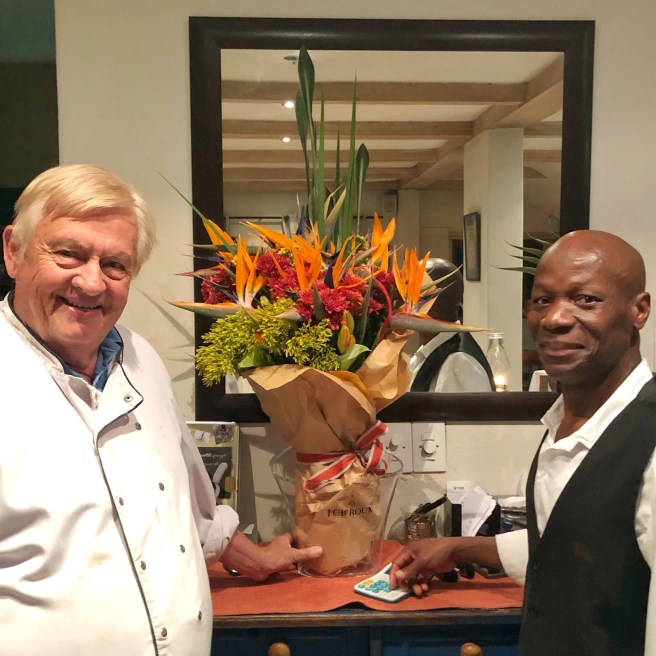
Chef patron Daniel Leusch and maitre’d Abu Fofana

I have known chef patron Daniel Leusch for as many decades and been a huge fan but I haven’t had a meal for a few years. I’m expecting nostalgia, reminiscing, and glorious food. What I didn’t expect from the classicist is a makeover, subtle as is the secret of his special craft, yet with a specific modern slant which proves why diners keep coming back.

But before I get to the menu, I returned on a Sunday at 2pm for a chat to catch up on the history as well as future dreams.

I walk into a buzzy restaurant where family and friends have packed the room for a hearty and probably heavenly Sunday lunch as my bubbles and freshly baked La Madeleine bread with cheese attest.

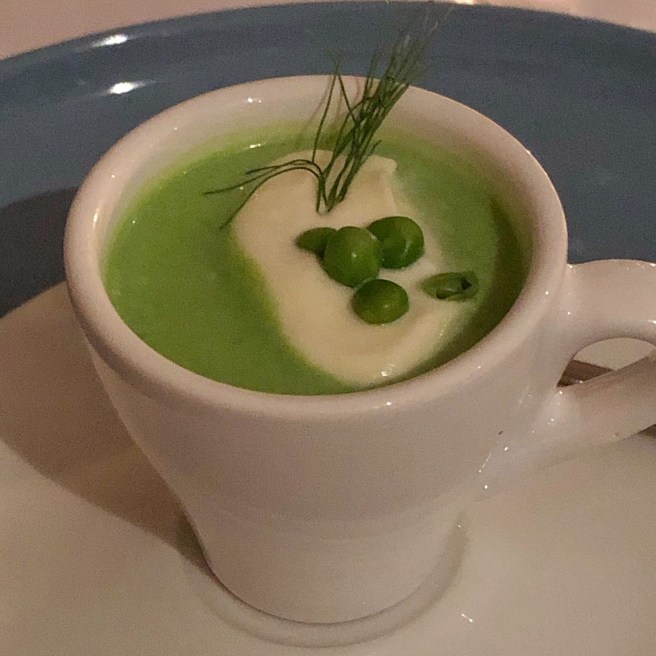
Cappuccino of fresh peas

Chef Daniel has long ago tapped into the Tshwane ethos. He knows we are still a traditional society when family rituals come into play. He has many regular diners who started with the grandparents and the parents and eventually, the kids are now the diners. La Madeleine is part of their dining DNA.

He first arrived in Johannesburg in 1976 as part of an adventure which he didn’t know at the time would shape his life. Johannesburg’s Carlton Hotel’s iconic Three Ships restaurant was his first port of call before he moved to the capital city where he started at the Alliance with Chez Daniel, an obvious beginning for a young chef (’77 to ’80) and was then gifted a sponsorship by the director of Boland bank where he opened his own restaurant.

La Madeleine had its start in Esselen Street, Sunnyside in 1984 where Daniel would be cooking for 16 years. This is where he made national news with his famous champagne-injected crayfish. There was a huge outcry but the foodies around the country took note – and with reason.
And finally, today’s setting for La Madeleine which has been the home for this extraordinary chef since 2000. And now he is celebrating one of Pretoria’s best and its 40th anniversary. It’s the longevity, the sustainability, the years of maintaining standards – and never losing his drive to excite diners as we discovered a few weeks ago at our celebratory dinner.

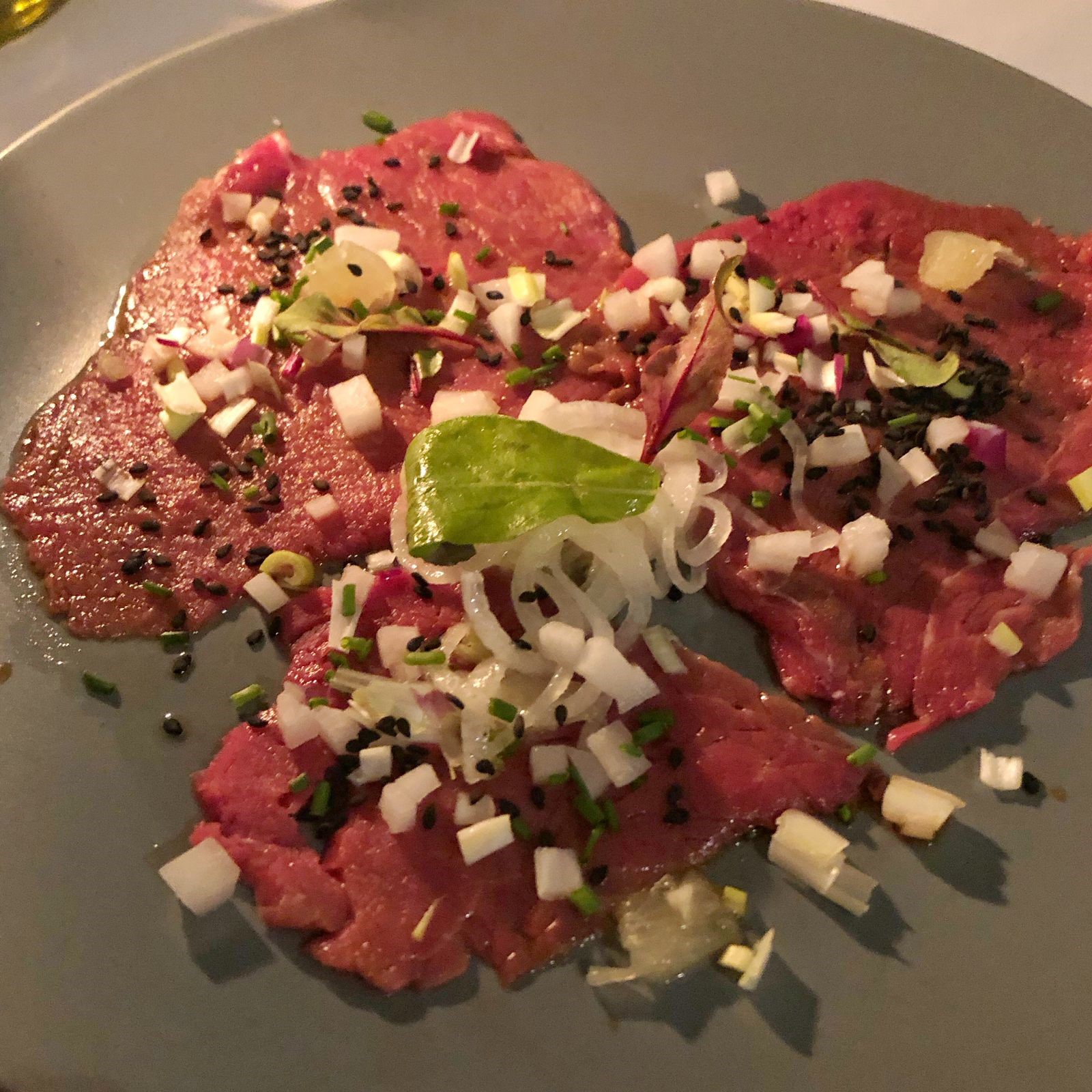
Carpaccio Japanese style

I hadn’t been for a few years because even though I’m still reporting on food and restaurants, I seldomly dine out. It’s been a privilege for a number of decades to be treated by many city restaurants and to share in their triumphs. Daniel and I come a long way and I had visited every restaurant, from the Alliance days, all these years. He has always been able to marvel at the experience he presented me with from the early days and I should have expected it now.

What I didn’t expect is that he was going to excite us (party of four with myself, chef Hennie Fisher and our partners) with beautiful classically based modern food.

I should have known. His generation of European chefs, Daniel notes, were influenced and inspired by the great Paul Bocuse. I had to smile when the cappuccino of fresh pea arrived. He had refined a masterful green pea soup that I remember from earlier days and I knew we were off on one of Daniel’s food fantasies and we were going to have an extraordinary meal.

This was followed by a carpaccio Japanese style (where his son is in the hotel management business) served with diced daikon. Simply sublime and it transported me back to that island of fine cuisine.

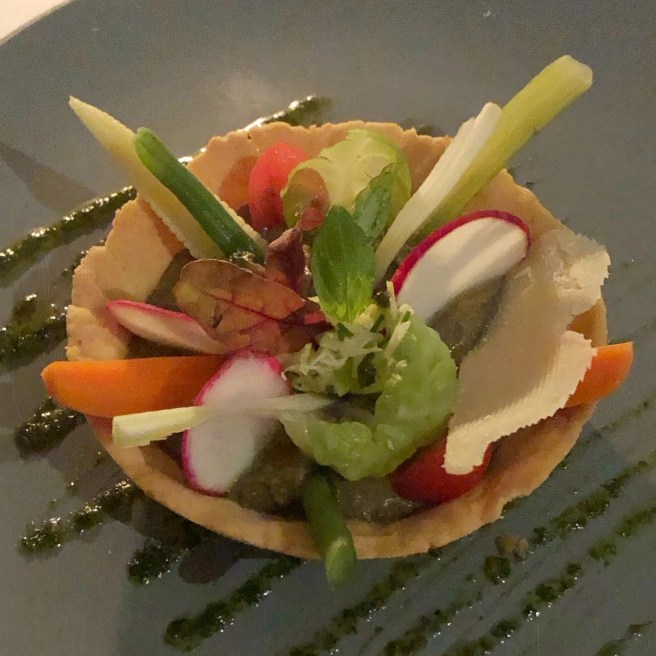
Paying tribute to his roots, next were some exquisite Provencal inspired tartlets with delicate fresh and cooked vegetables, a pastry that’s melt-in-the-mouth, shavings of Parmesan and a hint of basil pesto. Heavenly!

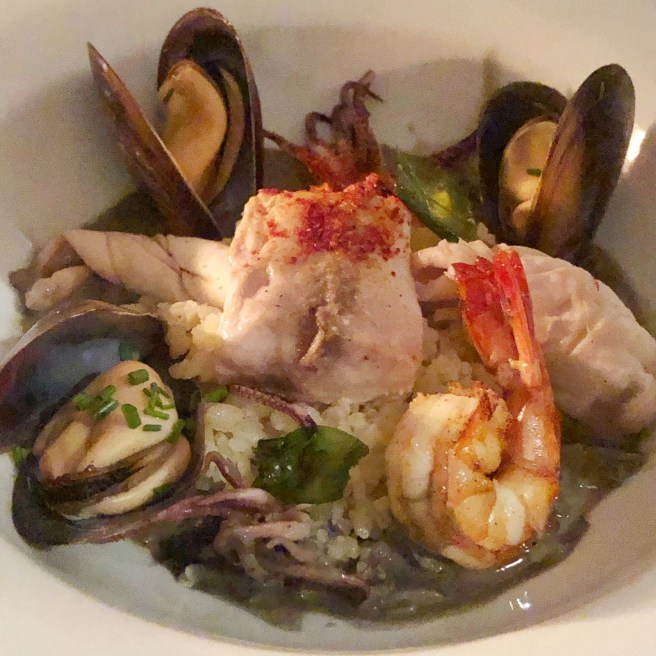
And then he came with a delightful surprise. The mains were a classical paella. And as any chef will do, he went to find fish where he knows it will be fresh as fresh can be, in Cyrildene’s Chinatown. The picture tells the story. He couldn’t have picked something more delicious. How can one not feel utterly spoilt when a fine dining chef presents you with something as wonderful as that Spanish classic.

Classic Daniel Leusch Paella

So in a sense, even though his imagination was on high alert, he did opt for the classical. Only it wasn’t what I had imagined it would be.

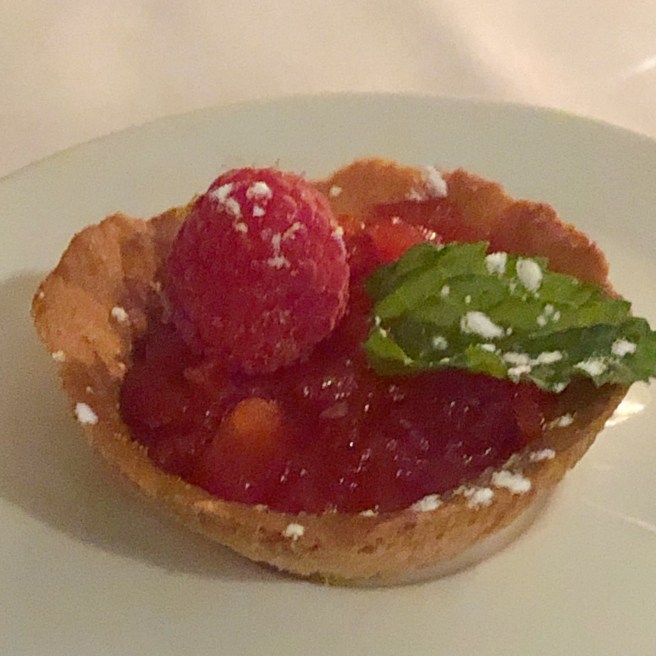
Then came what he cleverly called a pre-dessert tartlet, filled with a  paste of tomato jam and a raspberry sauce. A marvellous transition to what was to come.

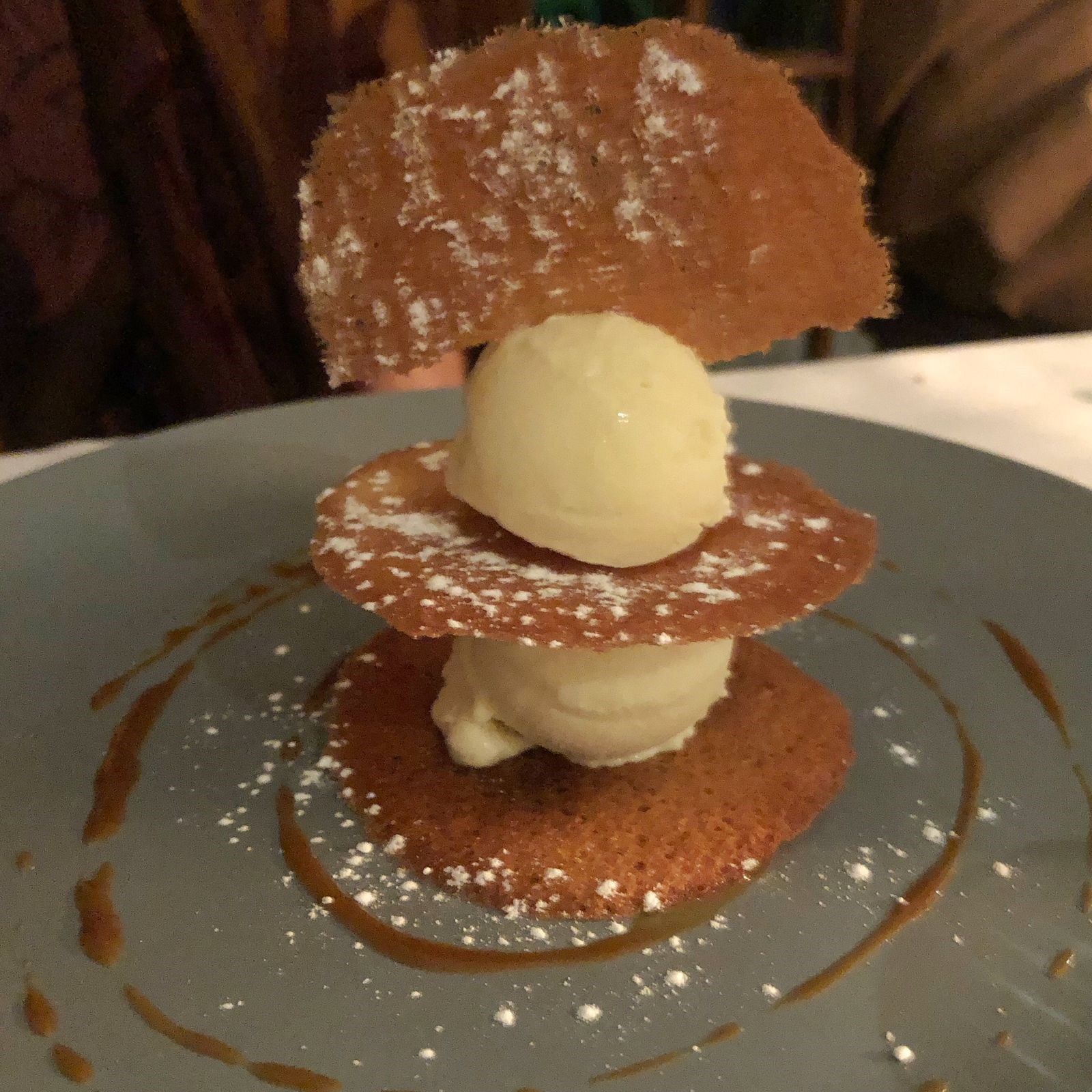
The dessert was next and he showed off his spectacular skills with four different sweet delights. It simply started a merry-go-round at the table as we moved from one to the next and started all over again.

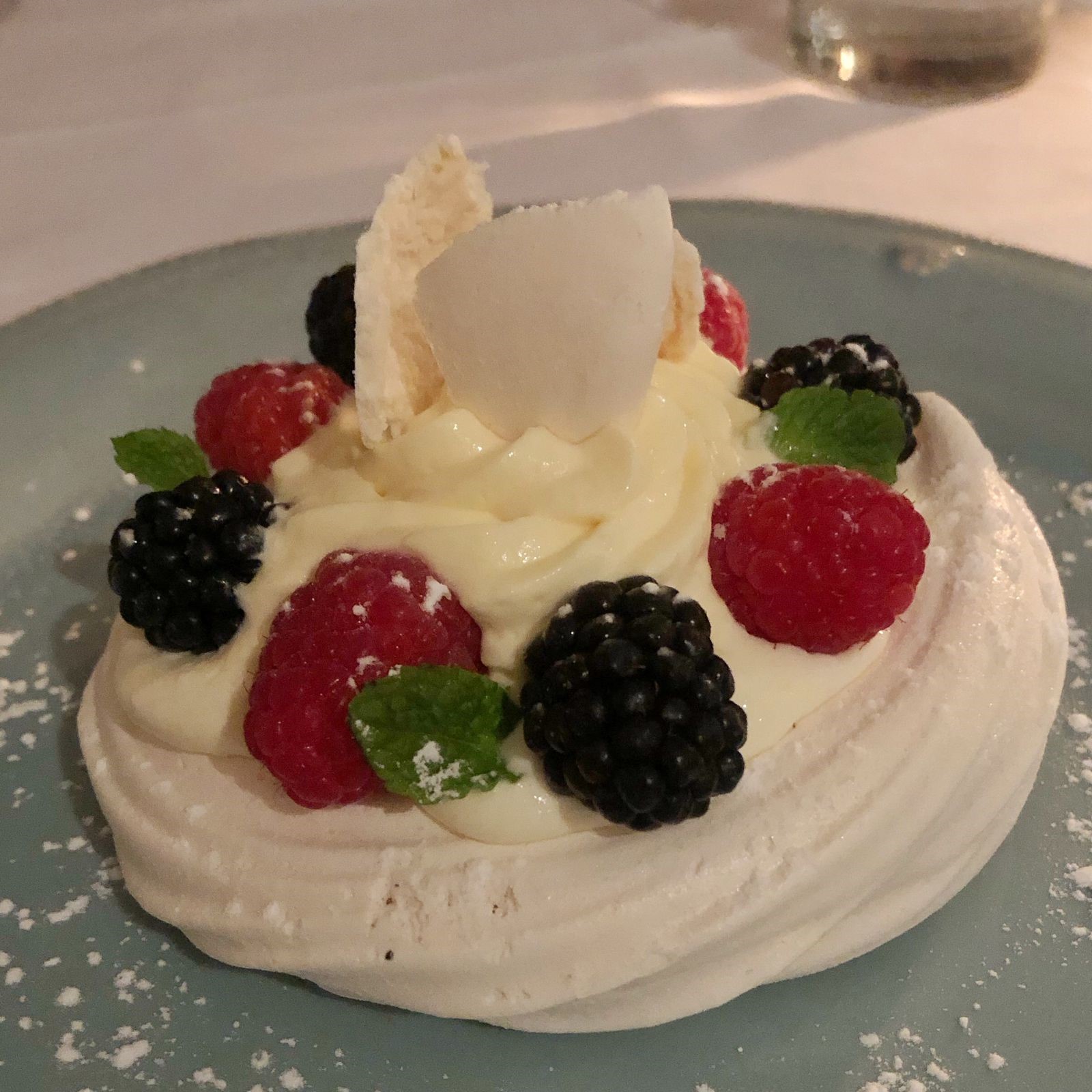
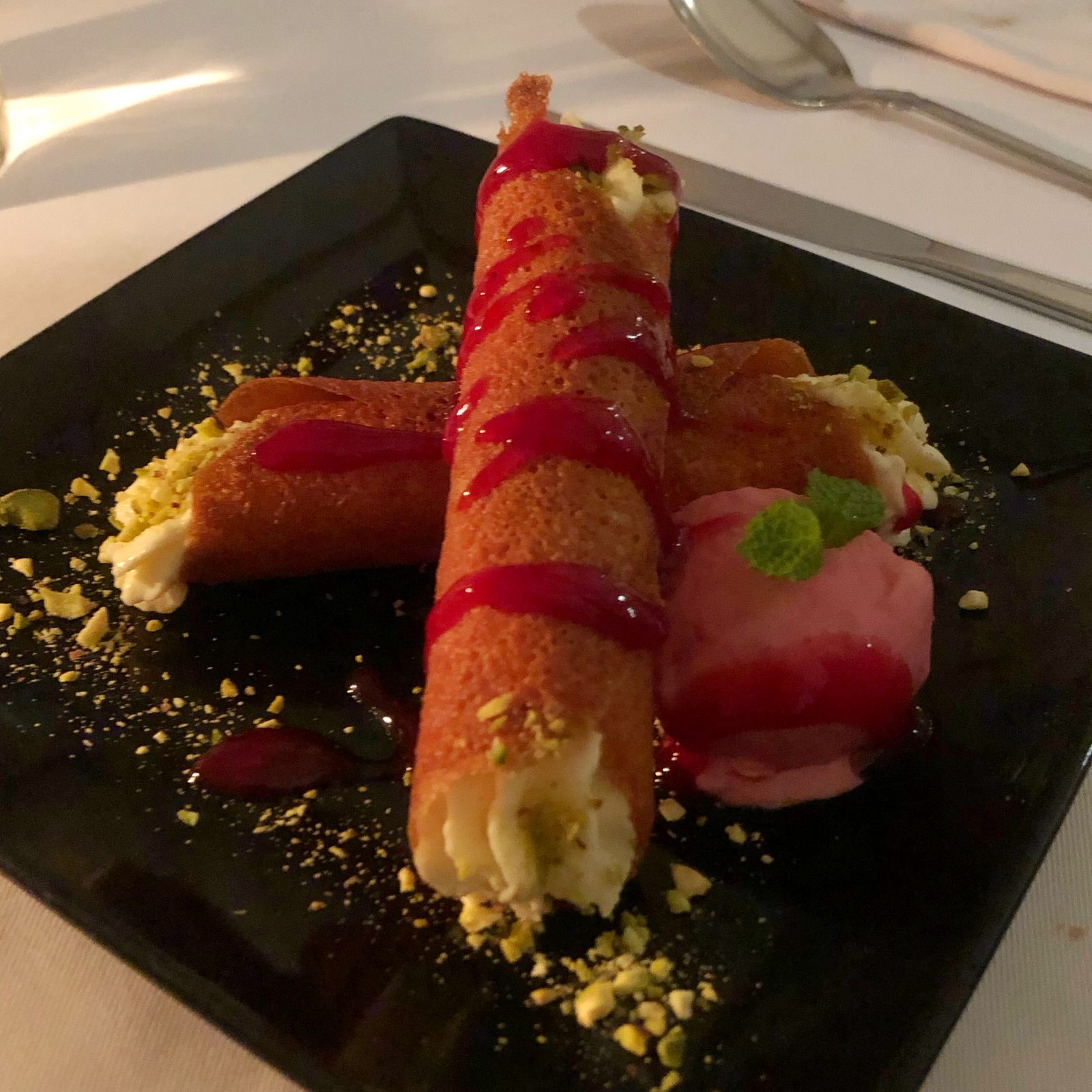
From a homemade ice cream with a salted caramel sauce between crackling brandy snaps; meringue filled with marmalade of fresh strawberries, coconut cream and raspberries; brandy snaps filled with cream, ricotta, raspberry sauce and ice cream. The combo was spectacular and the way a meal should be concluded, all sweetness and light.

Daniel’s wife Carine who many regulars will remember was the pastry chef in earlier times and his daughter Anne, who followed in his footsteps and now cooks in France in the Paris environs, was also a pastry specialist amongst all their other skills, but he’s no slouch and he has obviously well-trained staff.

Like his maitre’d Abu Fofana from Côte d’Ivoire who recently returned to his former post where he is a huge favourite, he takes his cue from Daniel and is perfectly attuned to diners and their needs.

Daniel of course has not changed a jot from when I first met him probably at his first post at the Alliance. He has kept his accent and his familiar manner of introducing the menu and mingling with the diners throughout the meal. He’s wonderful to watch as he moves between tables chatting away while observing what may be needed.

While I was writing at a table on the side, I could hear his voice as he explained the different dishes which meant I was smiling all the time. There’s a charm, a warmth and generosity of spirit when you dine and a desire to keep everyone happy while dining. That’s worth going back for time and again.

I knew – as always – what to expect from the man himself. What was unexpected was the meal and the surprise element, the menu. I wouldn’t have been let down if I was served what I had come to expect as classic Daniel.

But the way he invigorated the menu on the day, the thoughtfulness of inviting us (myself and chef Hennie Fisher who not only took these pictures but also wrote for many decades raving about all his accomplishments) and then overwhelming us with a spread that simply took our breath away, made this 40th celebration something extraordinary. And when I look back and reflect, should have been expected.

That’s why Daniel Leusch could sustain La Madeleine for 40 years. That’s where his heart lies. He still chooses all the produce himself. He knows that’s where the heartbeat is established.

And simply stated: “It’s my life!” says Chef Daniel. What an honour to be given a taste of just that!

THE STRENGTH OF A WOMAN’S DREAM DRIVES AND SUSTAINS THE KAROSS CREATIVE ENTERPRISE

Irma van Rooyen’s life is driven by her creative instincts. What started as an idea has changed and enhanced many lives. DIANE DE BEER speaks to a woman who didn’t only have a dream, but turned it into reality called Kaross:

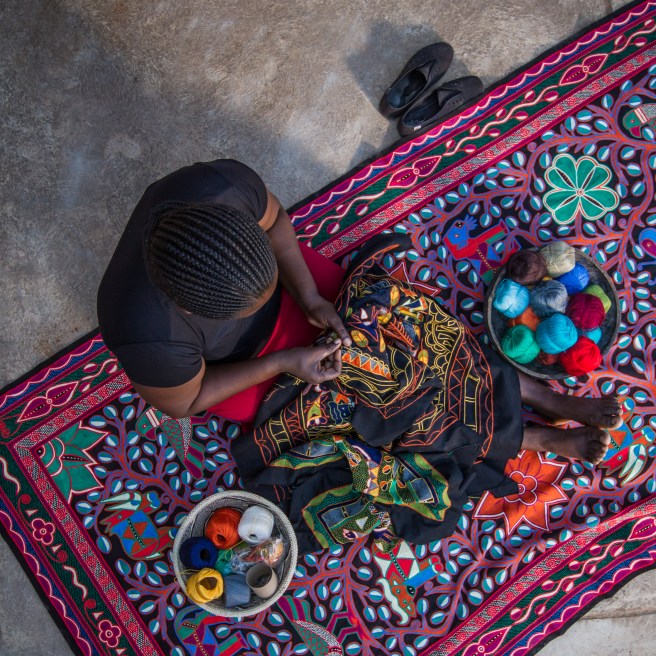
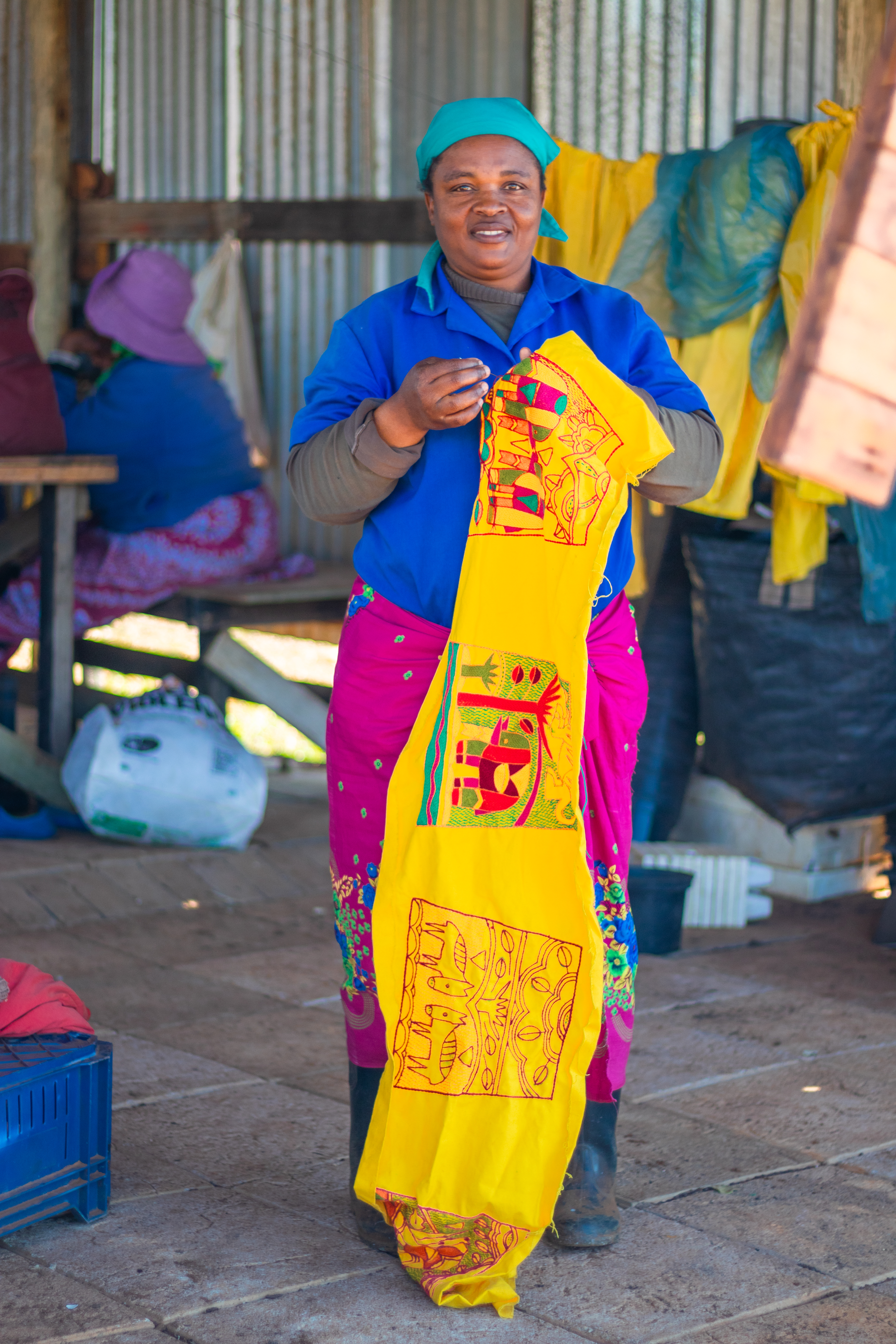
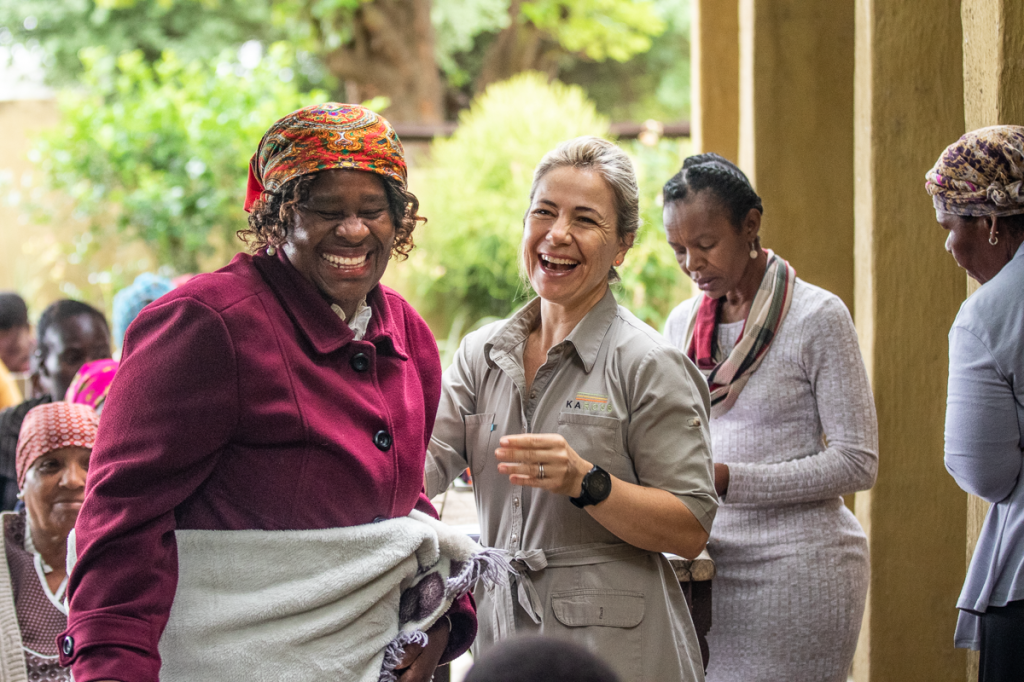
Kaross Cloth being created by Thembi Lebepe.

When Irma van Rooyen and her husband started farming in the Letsitele region (nearest town Tzaneen), their life took an unexpected turn.

It wasn’t part of their dream from the start, but once they decided this was their future, it was all systems go.

Growing up in a creative household, art was always part of Irma’s destiny. That was what she studied, with sculpture and mosaic all part of the programme. At home, her mother gave embroidery classes, all their clothes were made and fabulous food was what the family enjoyed.

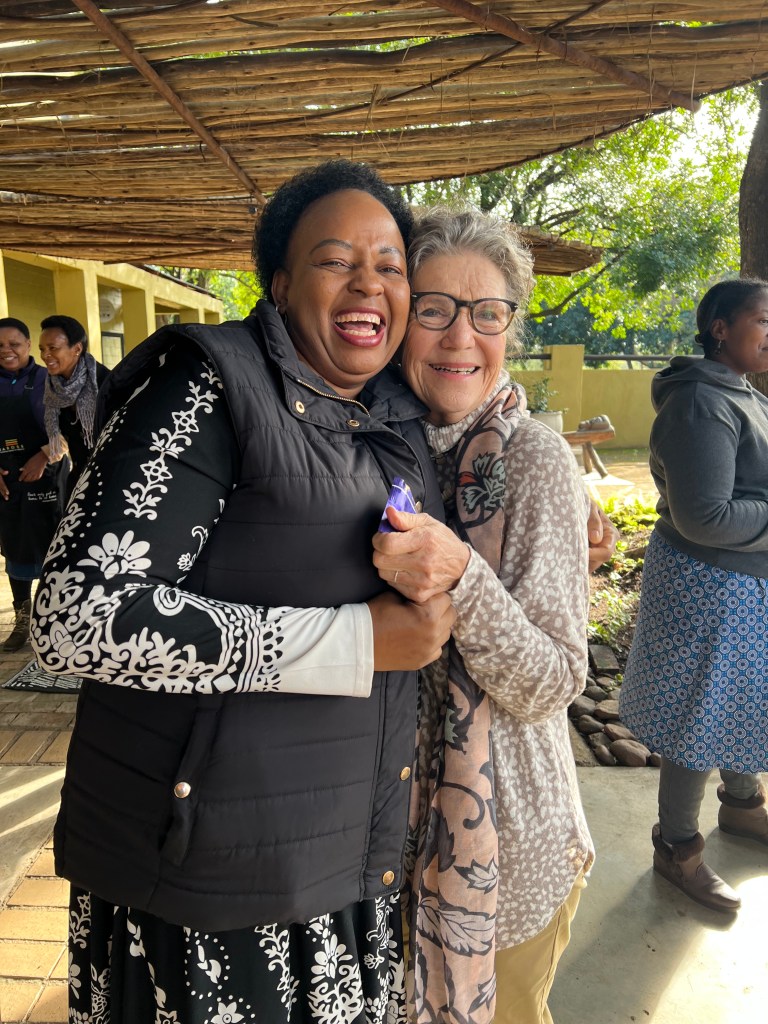
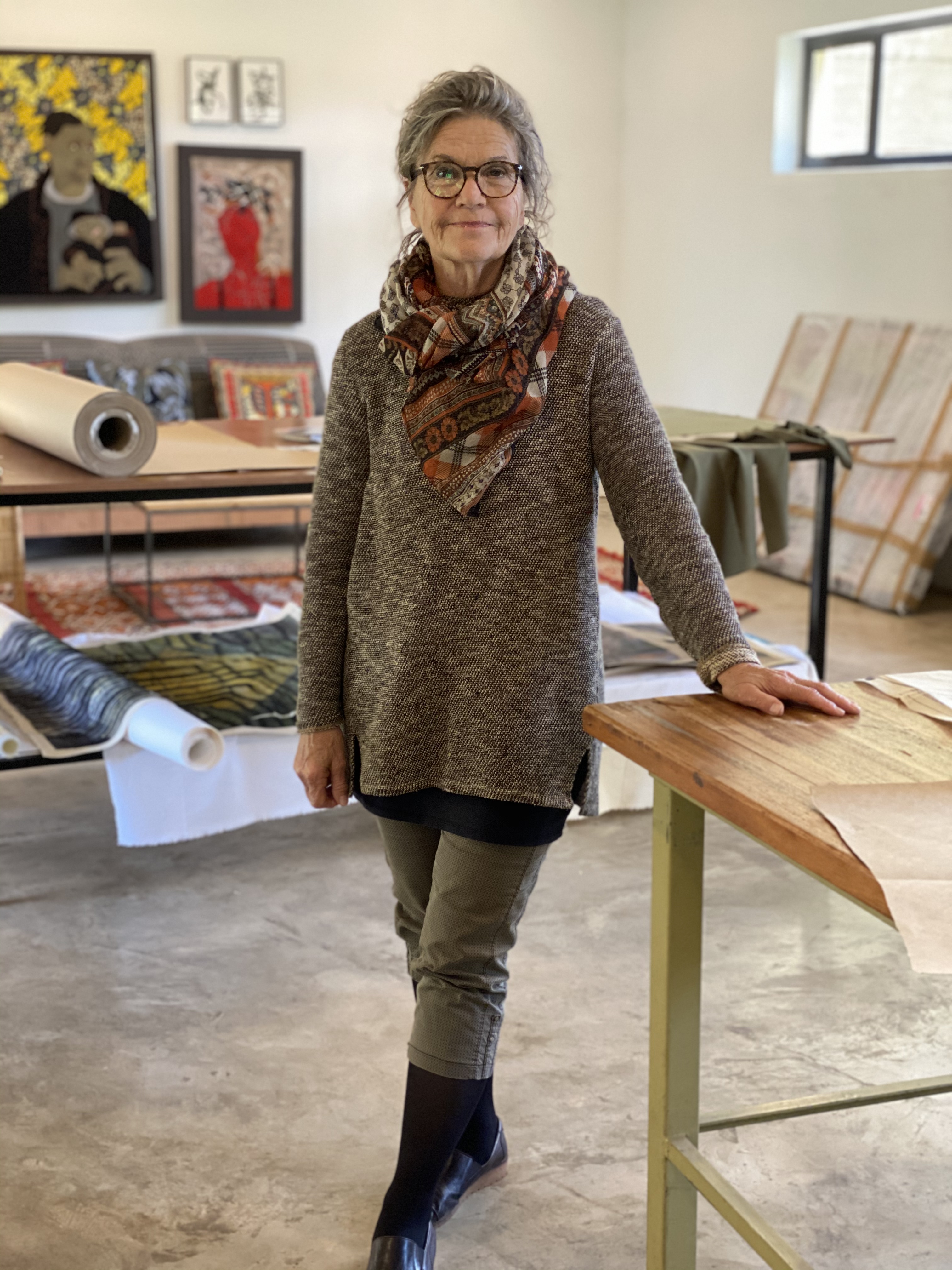
Irma van Rooyen, Kaross dreammaker.

Once the Van Rooyen’s had bought their farm, their focus shifted. Irma had three young children to raise, but when you meet her and get to know her, you witness her creative mind always at work.

It didn’t take long for her to realise that there were many women dependent on the farm, but once they had done the work required from them, there were many idle hours that could provide them with a better as well as in this instance, an income enhanced by creative and skilled work. It’s always been Irma’s lifeforce and she hoped to multiply that gift.

They had already transformed an old farmhouse on the property into Irma’s studio where she would paint and create. She understands what creativity does for the soul. Not only would those participating receive better salaries, they would also gain in dignity and pride for what they were creating.

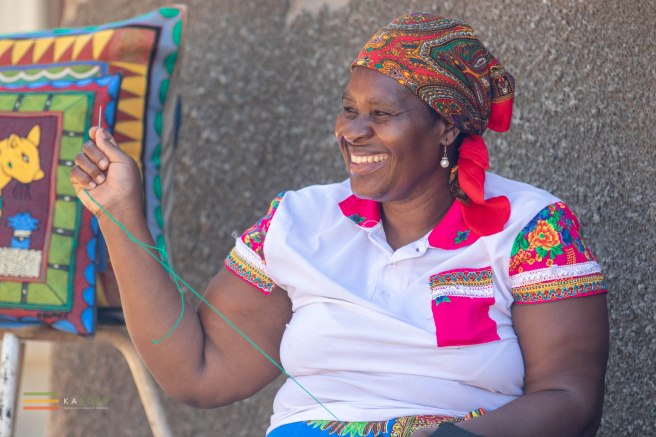
Kaross embroiderers at work: Shella Mathebula, (left) and Thandy Mongwe

Thus Kaross was born to fight not only the idle hours but also to benefit the community. When you read their mission statement on the Kaross website, the Van Rooyen couple’s strong sense of community was part of the farm’s ethos from the start in 1984, both as a family and as a citrus growing enterprise. They believed in working together with their colleagues, employees and community to create a sustainable environment in which everyone can benefit and grow.

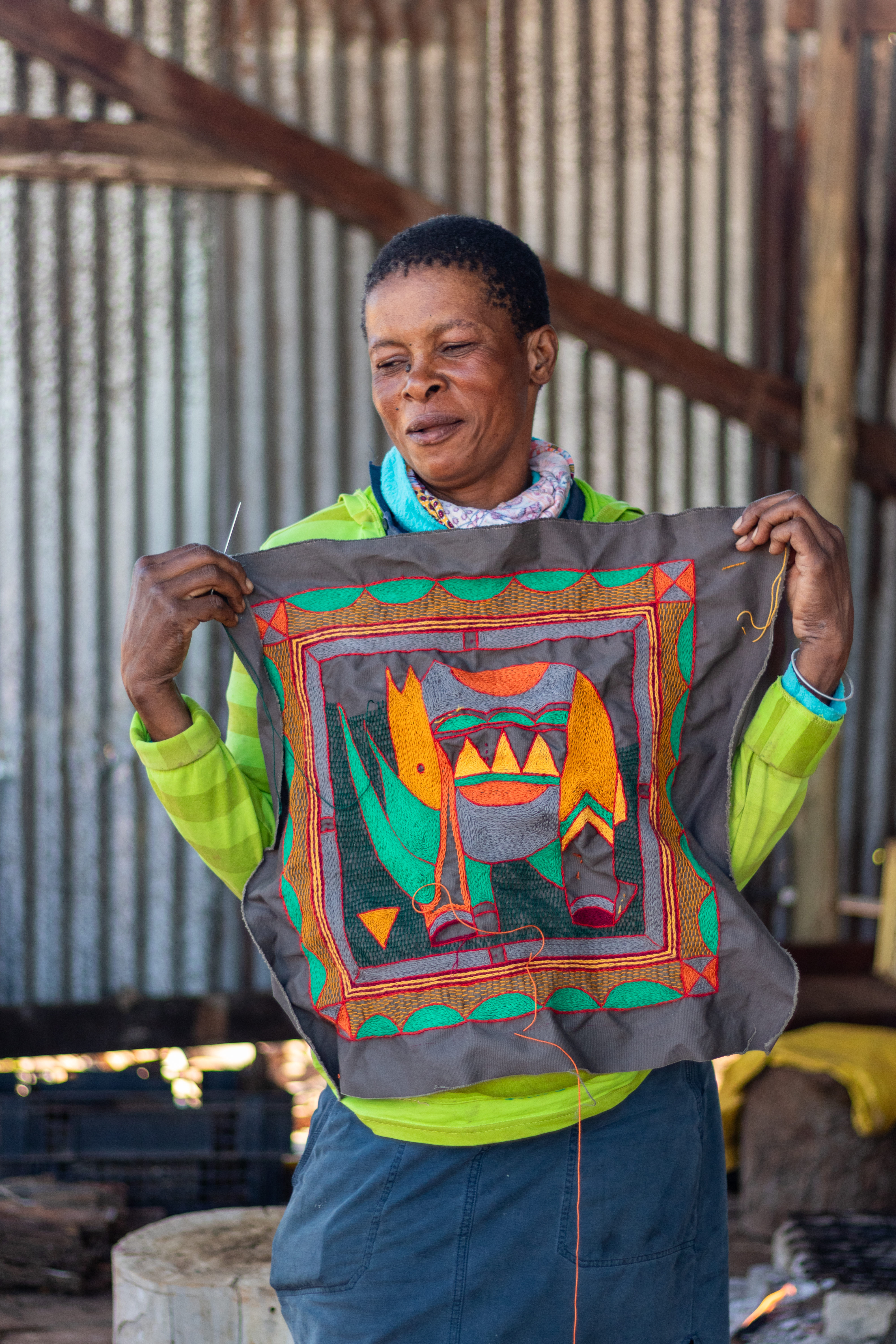
workshops; The joy of Hilda Rikhotso’s artistic endeavour

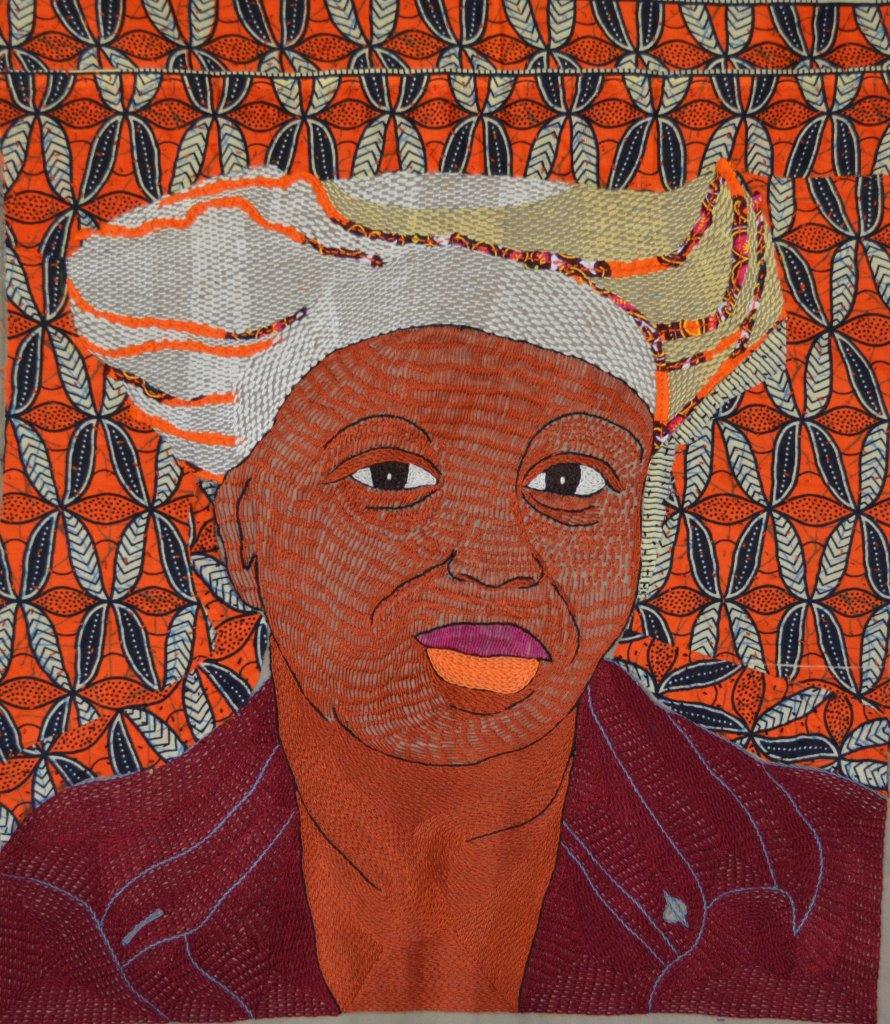
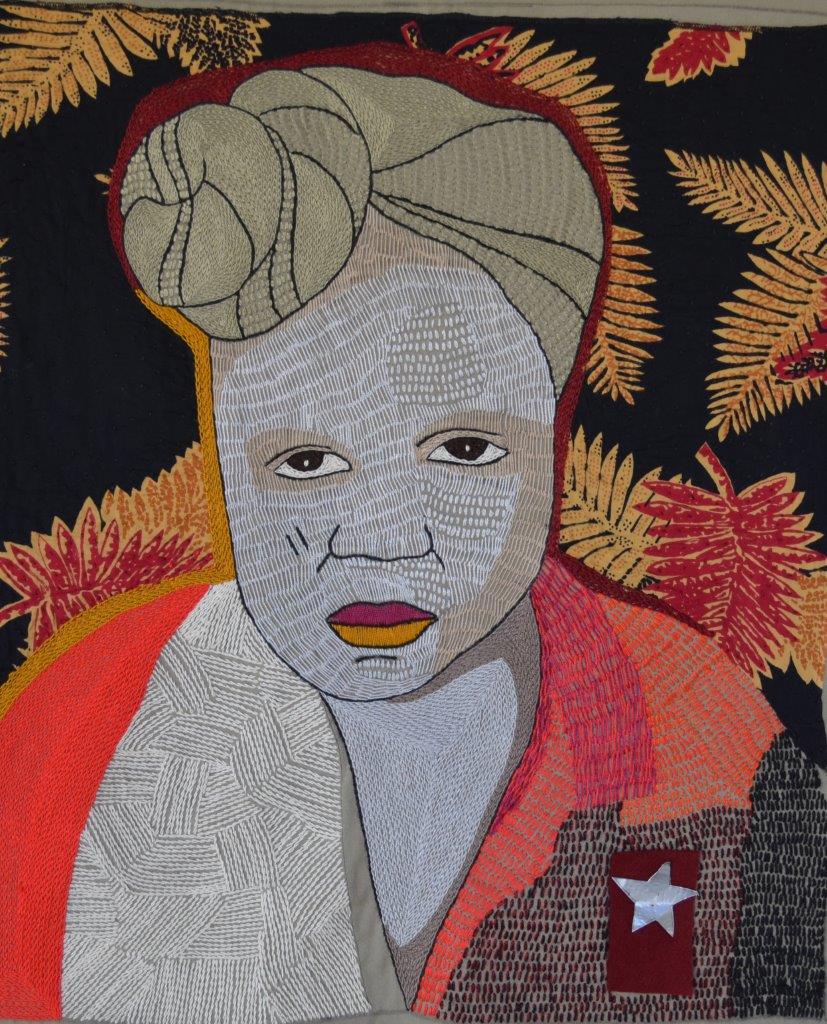
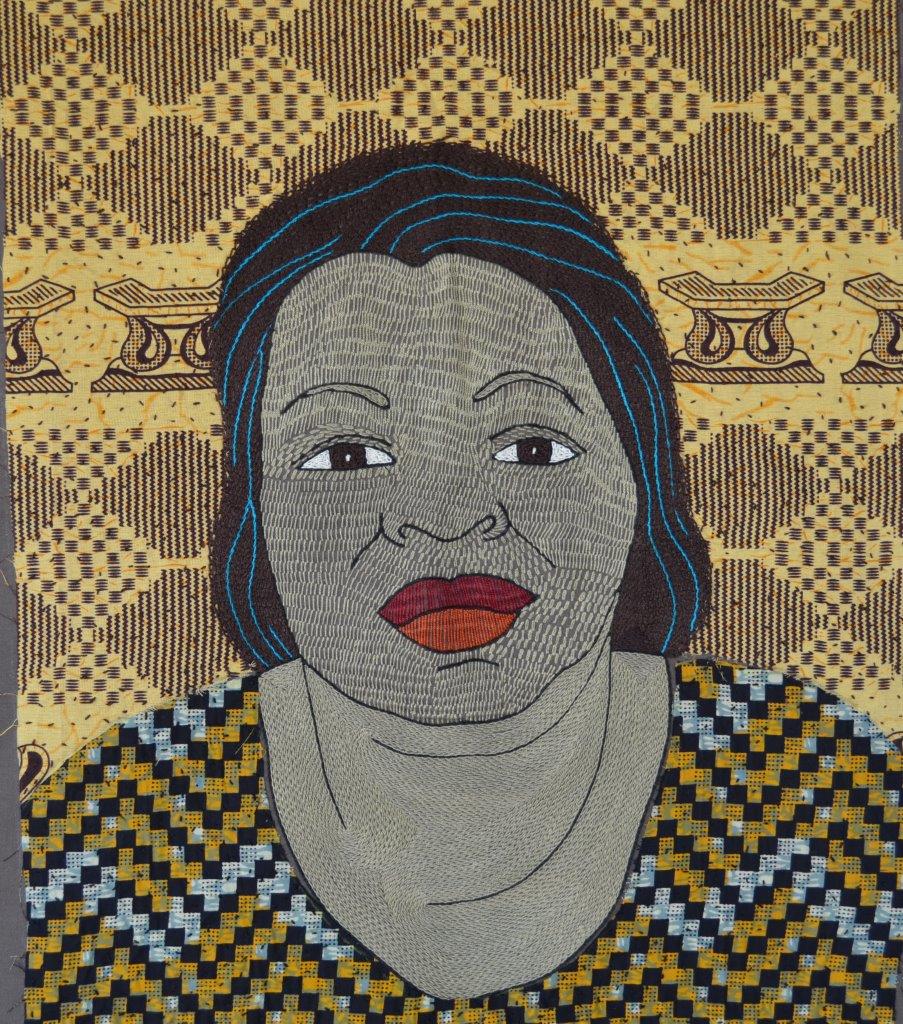
That is clearly visible when you visit the farm and the Kaross workshops. Irma is the artist and once she understood that she could do something for especially the women, embroidery immediately featured. Initially five women were keen to get started. Embroidery is a traditional skill of the Vatsonga and Northern Sotho people and through Kaross, Irma revived the skill by making it commercially viable.

The embroiderers were encouraged to tell their own stories and the hope was that a market for their goods would develop organically. Irma jumped in with drawings at the beginning and she’s still involved on that level. What started out with five women on a blanket embroidering has turned into a thriving business and today Irma’s daughter Janine Pretorius also involved.. And when you see the goods available on the market, they have developed their own style and a quality that speaks for itself.

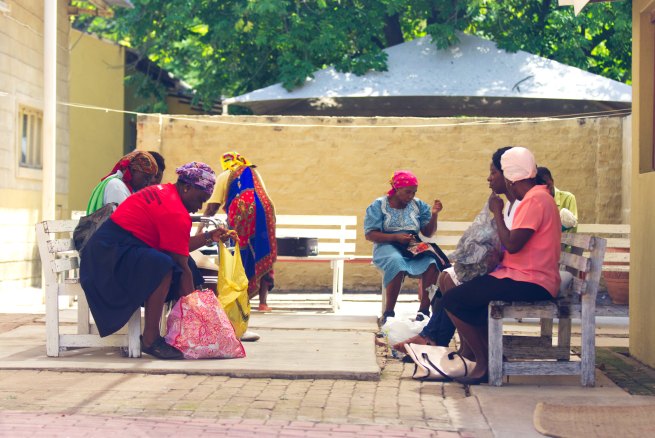
Kaross embroiderers at work.

For Irma it was always about improving lives and offering the tools to people who wanted a better life. These days, there’s hardly anywhere in the region that you won’t find someone sewing – men while waiting on a tractor or children sitting in their yard at home.

She is the perfect embodiment of someone who knows that to make a difference, you have to be the difference. What started out as a business that created bread and butter products has become a creative hub with Irma’s daughter Janine in charge of the workshop on the farm which also includes a restaurant and a gallery where their magnificent work is on sale.

Kaross is a name to be reckoned with and they are sold across the country. It makes your heart sing.

They are commissioned to do large projects and Irma is always on the lookout for new ideas. Her role is now focussed on the creative side and she is very involved for example with the colours they use, the designs selected and future possibilities. The marketing side is as valuable with everything that entails.

The success of Kaross has meant the establishment of the non-profit Kaross Foundation in 2017 with the main objective to identify, fund and implement projects that will result in a sustainable improvement in the quality of both Kaross and Group 91 Uitvoer’s employees (those working on the farm and who are part of the citrus business).

They invest their time in especially the education sector and partner with six local high- and primary schools in the region so that they are constantly improving the quality of education offered to the young learners.

It has become a South African success story that now employs 1 000 embroiders in the Letsitele/Giyani area. But that also implies huge organisation to get the work distributed, to run what has become a huge business on which many people depend and thrive. And many of the family are involved. It shows. Their  best advertising and marketing is the product, the creativity and the quality.

When you meet Irma, you quickly realise that this is a woman with vision. She is also someone who goes about her work softly but her spirit is infectious. And probably now that she is mostly at work on the creative side, she is flourishing.

It is easy to stand back and view what they have done and are doing but what Irma has achieved is astonishing. Not only did she want to help the people around her, she wanted to establish a sustainable business that would make huge impact on the lives of her community – it does and it shows.

She speaks with warmth about the embroiderers who arrive at her studio to show what they have created with finished projects. “They’re so proud,” she says. That is when she realises the difference Kaross has meant in the lives of others.

She is also excited by all the work that has been done, the Mandela and Aids hangings, the artists that have been trained to provide the scenes that are embroidered, the work that was done to tempt tourists with for example scenes of the Big Five. But what probably thrills her independent spirit most is that the ownership of Kaross has always been that of those participating on whatever level.

Kids can go to good schools that have been made available, incomes have been established and grown, and more than anything, creativity is something that benefits everyone.

Many of us have dreams of doing something for others. It’s when like Irma van Rooyen you go ahead, put in the hours, travel the miles and simply go the whole way to make it work and be sustainable – then you make a difference.

Go and have a look at the Kaross website and lose your heart:

https://kaross.co.za/

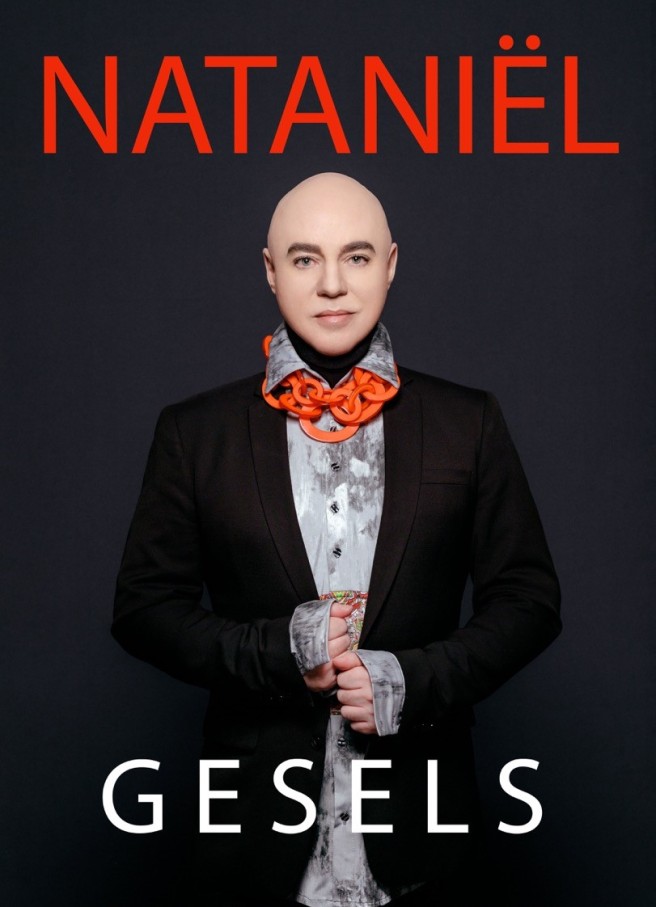
NATANIЁL IS A WIZARD WHEN WORKING WITH WORDS

I never gave much thought to Nataniël’s live talk shows but, because they had become so popular, it was time to investigate. DIANE DE BEER gives her feedback:

So I went to last year’s Fairtree Atterbury Theatre show in Pretoria, and was so impressed that I forgot to take notes. There was little chance of reporting or writing without having  a single note and when he announced the 2024 (he changes topic every year) I was ready to go – which happened a few weeks ago.

It’s always packed, no room for a single late-comer, and while last year’s topic was Pain, this year he focused on our chaotic world and the urge to achieve excellence. “What are we busy doing?” he asked. “What is going on?”

All of this chatter happens at breakneck speed and what I had forgotten was that the auditorium is pitch dark, like in a theatre show. Taking notes would be quite a challenge, but I was determined.

What I hoped to capture would perhaps not be the most accurate version of his magical monologue, but I was hopeful that I would capture the essence and encourage fans to attend future talks.

First off, it’s all in Afrikaans. But that’s always part of his charm. He often complains about a show or a talk which is too serious and not really funny. What escapes him is the way he speaks, his vocabulary and the way he constructs a sentence are unusual and often hysterically funny.

With the focus on the times we live in, he began his talk with one of his irresistible stories which set the tone for the rest of his talk. He can’t but be funny even when he is having a serious conversation. It’s his special formula and what makes you listen while forgetting that you’re actually part of a masterful sermon.

He has always had the gift of the gab. That’s how he makes a living. People hang on  his every word. Why not impart some wisdom while making them laugh? And that’s exactly what he does. Not many can make you smile while telling you how to behave. But he does, and gets paid to do exactly that.

And again, it’s because he knows how to tell a story: whether these are true or fabricated, the life lessons come from the heart – and experience. Being Nataniël, he has an unusual life and people share their secrets. He will juggle and jiggle them around so that even those involved will probably not recognise themselves, and then he will douse it with wit as well as wisdom – and the audience will lap it up.

In the current talk he investigates the need to succeed and sparkle (“prestasie” in Afrikaans, but he was unsure of the English translation as achievement doesn’t quite hit the mark!)

And while fame and celebrity seem to be the hallmark of success in today’s world, he believes there’s more to it than that. Legacy is something that is often talked about yet the individual in question doesn’t experience that, it only comes once they’re dead. “A career is also an achievement,” he suggests.  And at least then, you can share in the satisfaction of having achieved something.

While at school –  something he hated with his whole being – he was often charged by a teacher or someone in authority to participate in a competition of some kind. His response was always, but why? To what end? Who benefits? And what does any of this achieve?

Others again will equate success with money, but having raced through a spectacular career himself, he has had the chance to reflect. For him it has always been the process of getting from beginning to end – whatever the journey might entail. Once you have travelled from one point to another, you can look back, and perhaps make sense of it.

“Success changes your perspective,” he reasons. And for him, 114 productions on (all self-written, music composed, directed and performed), the pain and anxiety have remained. It has never been easy and he still questions the damage accumulated through the years. “It has to impact my health, surely,” he says. “I seem to be in constant pain.”

In his world, he only recognises five iconic individuals: Van Gogh and Leonardo da Vinci, neither of whom lived fabulous lives; Shakespeare, who had to act in his own plays to make a living; Einstein whose famous equation explains the energy released in an atomic bomb; and his grandmother who is the individual most often featured in his stories and the one he credits with influencing his life the most.

“I have tried everything but could never recreate the magic she created in her home and on others.”  That’s what he refers to as a natural achievement – not something one tries to do, it simply happens.

Go and listen when you can. Nataniël is one of those people who lives an interesting life because of who he is. It’s not so much the celebrity status, rather the way he views the world that comes through in his talks.

He is naturally wise, more witty than anyone I know or have encountered, and he knows how to tell stories. More than anything, that has probably most endeared him to audiences.

His spectacular shows are something to witness and experience, I never miss those. These latest talk sessions are something completely different yet no less entertaining. As with his shows, you leave the theatre feeling you have gained something – and for everyone it will be different.

And you will die laughing…

He can’t help himself. Even when serious, his inner clown escapes.

29 June 2024

GESELS 2024

11am + 3pm

Fairtree Atterbury Theatre, Pretoria
No children under 15
Book at: seatme.co.za

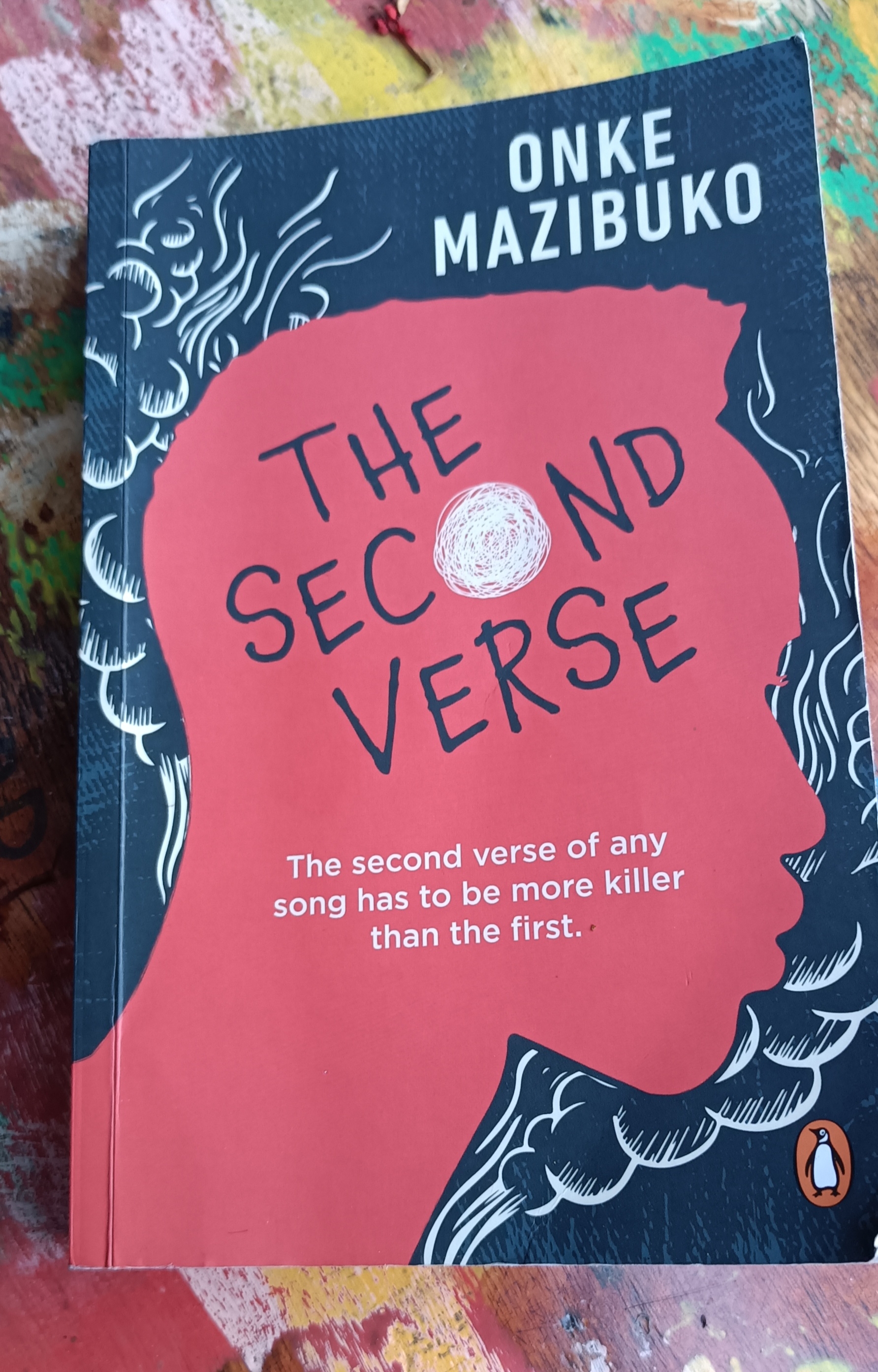
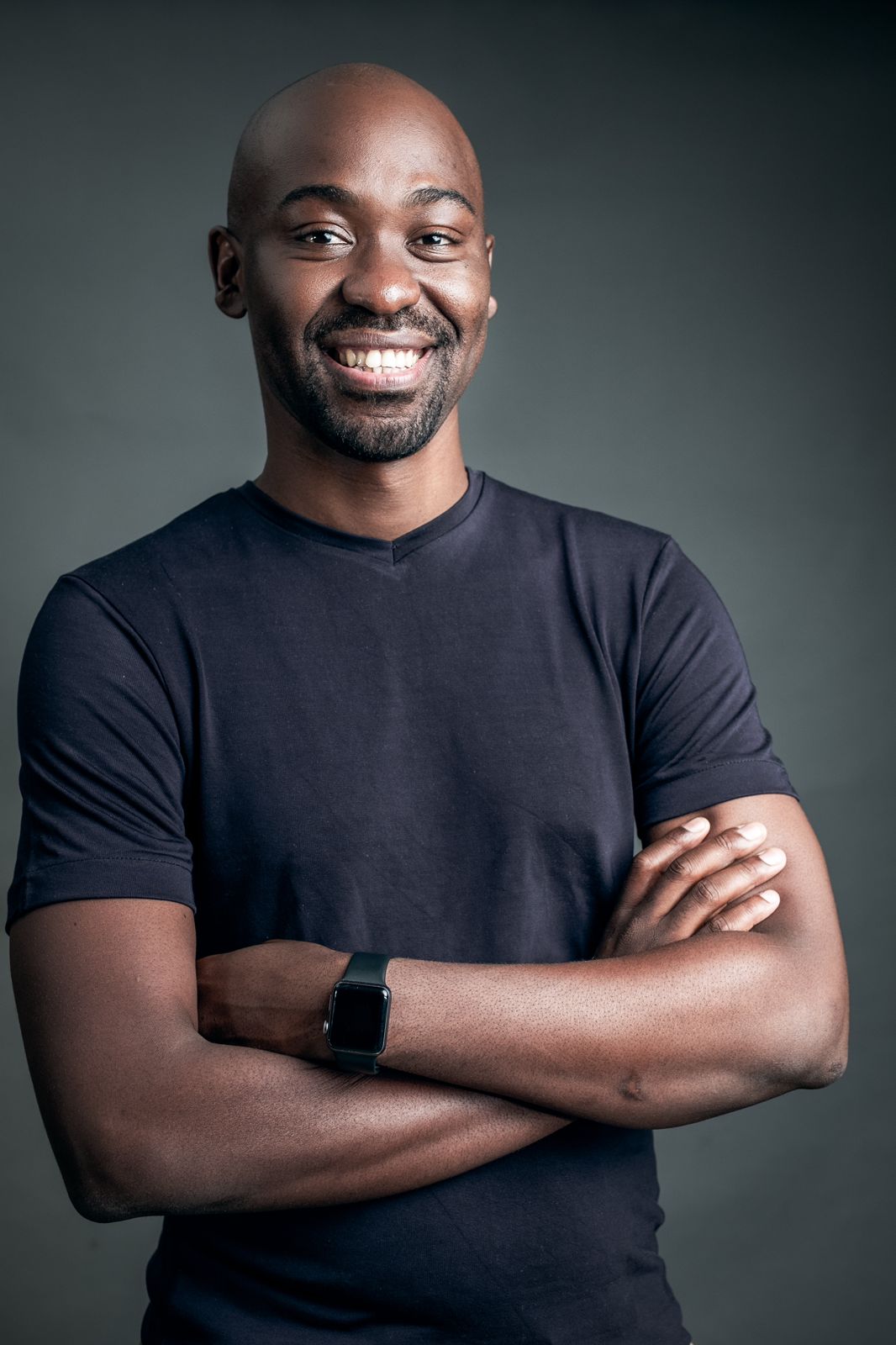
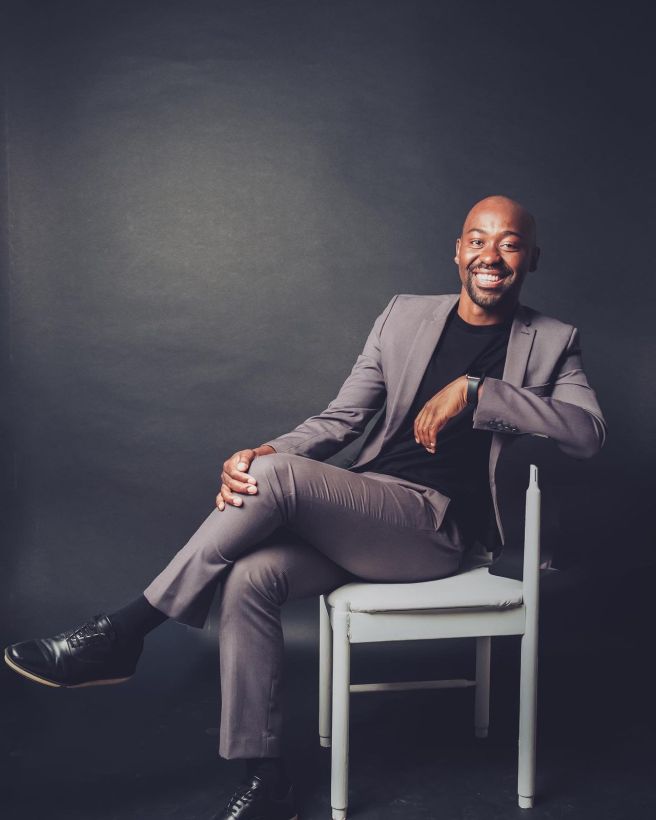
AUTHOR ONKE MAZIBUKO, A MAN FOR ALL SEASONS

The second verse of any song has to be more killer than the first. Always. The rhythm has to slap. The lyrics must be on point. The feeling intense. And the impact mad-definitive. It’s just the way it is. In the same way, if you do well in life once in a life, then you always have to be better from that point onwards. No doubt.

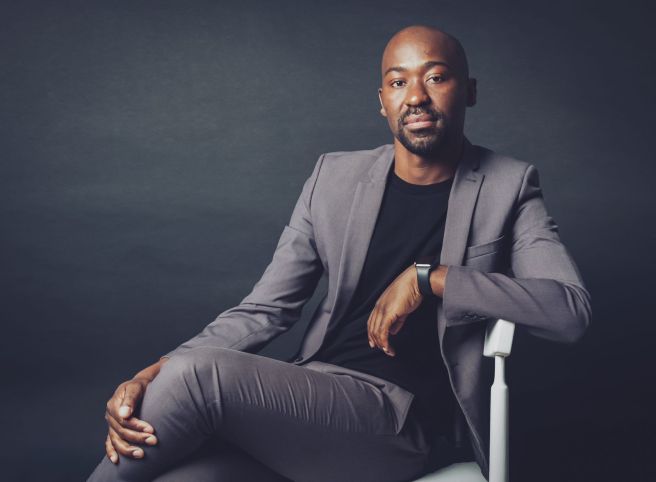
Author Onke Mazibuko is the director of transformation, diversity and inclusion at Johannesburg’s Kingsmead College, he has two master degrees, one in psychology, the other in public health and is busy with a PhD in creative writing. As if all that isn’t daunting enough, he tells DIANE DE BEER about The Second Verse, (Penguin Random) as well as two more books on the horizon – as well as a few other passions in his life:

“Whenever people ask me what I do for a living or who am I, I always feel I’m going to shortchange myself because there’s no one box or title or definition that would do it all justice.

“For example, if I say to people I work in a school as a director of transformation diversity and inclusion, that doesn’t explain that I’m also a writer. And when I say that also, it doesn’t do justice to the fact that I’m also a psychologist, and when I do that, it doesn’t do justice to the fact that I’m also a cyclist.

“I also love cycling, and when I say that, it doesn’t do justice to the fact that I love hiking. And when I do that, it doesn’t do justice to the fact that I’m curious about Buddhism. I’m practising meditation, but I’m not necessarily a Buddhist.

“And then there’s the rapping, the music aspect of it.”

And then he concludes that it’s easiest to say: “I’m a person, I’m a spirit, I am someone who is highly creative and I love learning. There’s nothing I love more than self-expression and learning.”

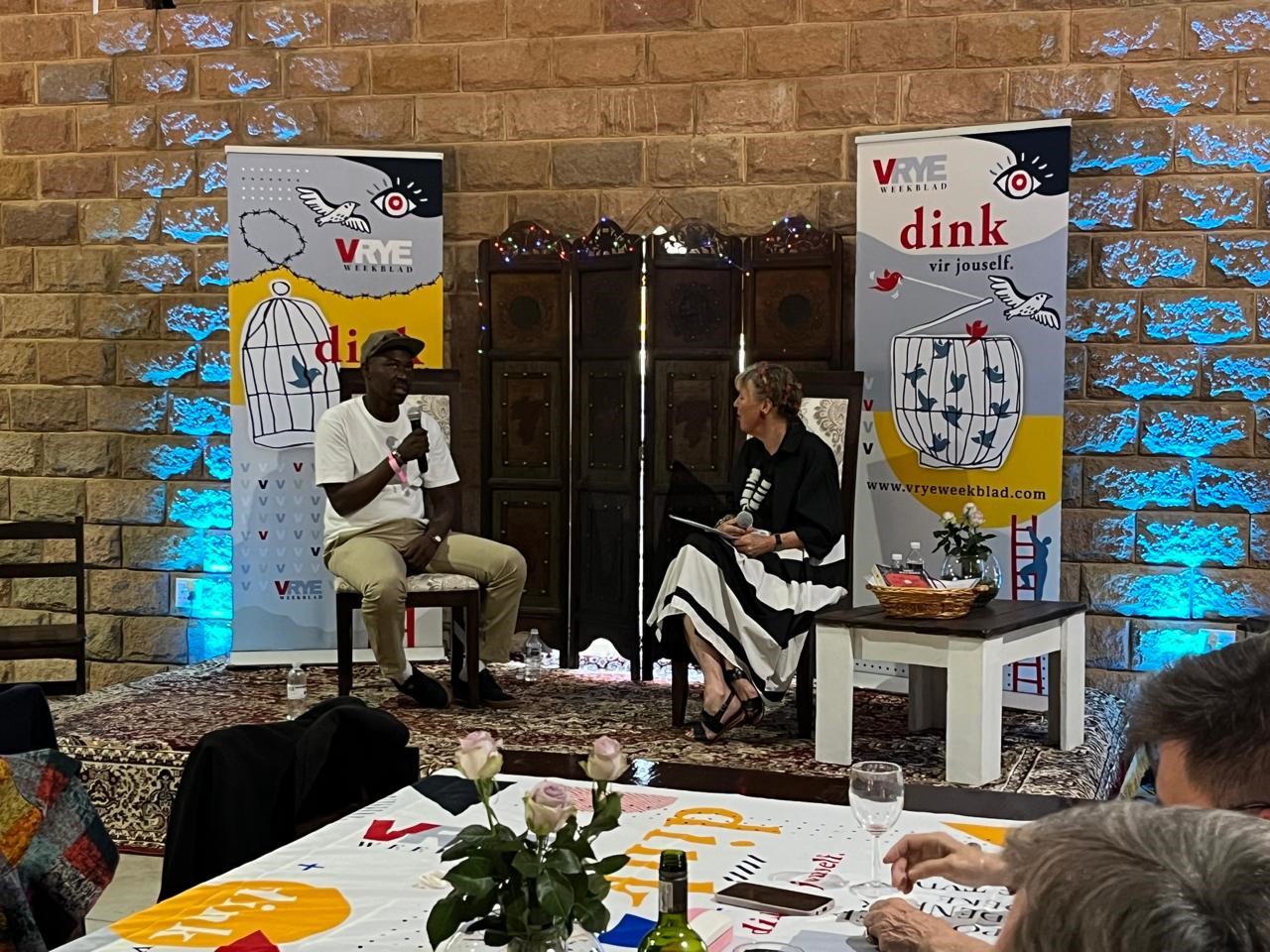
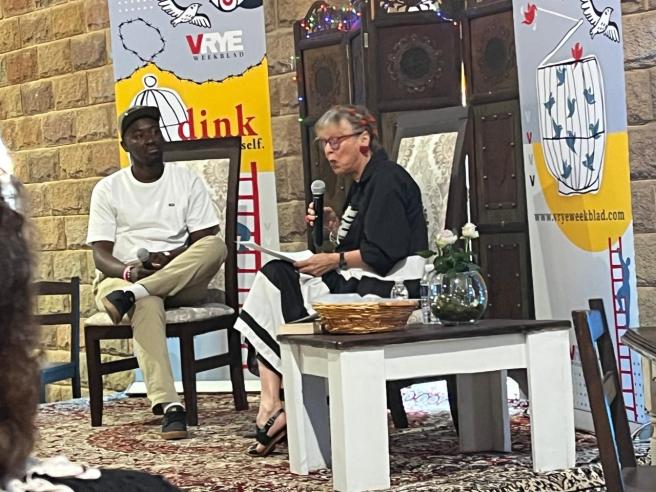
Speaking is the delightful Onke Mazibuko, whom I was privileged to interview in front of a live audience at the recent Vrye Weekblad Book Festival at Cullinan. We hadn’t met before the event apart from a short introductory phone call, but his heartfelt coming-of-age, first novel, The Second Verse (Penguin Random House), told me something about Onke’s youth.

I felt quite strongly that he had experienced the same emotions as his main character Bokang at some stage and that he was a writer I would love to read more of in the future. When asked questions about himself, he easily pours his heart out and shows who he is – as much as is comfortable – but with great sincerity.

“ I also sometimes wonder how I got to where I am because I feel there are things that happened in my life that have taken me off the path. But when I look back, I realise, I’ve never really been off the path as such,” he explains. With so many accomplishments to his name, one wonders what drives him.

“Going back to when I was six years old, all I wanted to be was a cartoonist. I used to enjoy drawing and painting and I remember my parents used to laugh at me (my father was a doctor and my mother was a nurse), thinking that this was cute maybe, and as I got older, I wanted to be a doctor like my father, but when my parents separated when I was 12, I let go of that idea. When I entered high school, it was a difficult time because our financial circumstances had changed because of the separation.

“I went from private schools to government schools and even though there are very good government schools, it was a very big change in my life. We moved from KwaZulu-Natal where I had been in boarding school for eight years and suddenly we were in East London in the Eastern Cape and I was a day scholar.”

That is where the writing started – an emotional response, perhaps a coping mechanism in a life that might have felt as though it was disintegrating.

“I started writing a lot of poetry. Now years later, I’ve become aware that whenever I go through emotionally difficult times, I tend to turn to writing.”

This developed into an interest in learning to rap and taking part in hip-hop events when he attended the University of Cape Town. For the first time he saw his peers getting on stage and doing poetry and he challenged himself to learn to rap and get over his fear of talking in front of people. “I was very shy,” he explains. Getting on stage, enjoying the hip-hop scene, that’s where he forged an identity for himself.

He eventually dropped out of university because he had chosen a specific field for the wrong reasons. And while the hip-hop was going well, at the time, it wasn’t yet commercially viable. “I was not compromising and I felt that I wasn’t going to change my music just to fit into the industry standards.”

And he still takes that stance when making decisions. Something he questions in his writing is when others try to define him. The Second Verse has been branded as young adult, while he feels that, if he had anybody in mind, it was an older reader. “I wanted readers to reflect on their past, look back,” he says.

Leaving university, his life took what some might think of as a sharp left. He went to work for a bank. But this also allowed him to explore his creative side in many ways. He decided to return to his university studies but also kept up the writing. His office and the university were in close proximity and graffiti became another pastime to indulge his creative dreams.

“I would leave home at 7am in the morning dressed in working gear, walk 25 minutes to work. Opening accounts for people, talking to them about  home loans etc, doing all these professional things, and at approximately 4pm, would walk about 5 minutes and get to school and attend lectures until about 8 at night.”

Then he would walk home at nighttime, and his creativity would emerge again. He would have his spray cans handy and start tagging and doing throw-ups. Then to bed at about 10 so that he could wake up at 2 in the morning, go and graffiti train carriages and return home to get ready for work, where he would show up with fingers covered in paint.

People didn’t know what he was doing, but he was at work on time. In-between clients, when he got bored, he would write poetry and rap, which passed the time.

He always read a lot, and he remembers reading somewhere that if you are a reader, you are a writer under cover. “If I had to find an origin of when I started writing, I would take it as far back as when I started reading.” When he was at boarding school at the age of 5, “they would read us bedtime stories, and by the time I was in std 1, you had to have your own book.”

Books were always a part of his life. His father’s books were all around the house, in fact, he and his brother’s room was pretty much his father’s library. “We felt we were sleeping in his library rather than that his books were in our room.”

He didn’t do particularly well in writing at high school and this was him trying, so he left school thinking that he couldn’t write, didn’t think it was something special. His sister (who sadly died a few years ago) always played a special mentoring role. She was a lecturer where he was studying and would give him feedback about what his lecturers were saying.

He was in the psychology department and she was in the sociology department, and she would tell him how proud she was of him because the lecturers were always saying how well he wrote.

But it wasn’t until he got to his honours degrees, when they started telling him he could write well. During his psychology studies, he was having emotional struggles and had read that journalling could help him. He has  been doing that since 2008 and hardly ever skips his daily journalling. For him it is not about the content but about the practice of making time to be with himself.

The first time he really attempted to write a story, he was 35 years old and was doing a PhD in psychology. He was having problems and again writing became his safe place. In the process, he realised how much he was enjoying the writing.

He also started volunteering at youth-centred NGO’s, while writing another novel which deals with young people. He’s continued seeing clients, not a lot, but he loves the therapy. He also does palm reading, astrology and tarot. When spending time in libraries at 19 after dropping out, he discovered books on astrology, and just read and read.

This side of his career developed organically and he knows now that when he felt his life was falling apart, he was actually gathering knowledge and strength for the future. “Things come around; what I learnt to do at a young age has become part of my life.”

When he isn’t writing, he falls apart. He does a lot of writing exercises, which keeps him healthy and focussed on a routine. Research methods, life experience, everything comes into play.

Mentoring plays a large role in his life. Once he starts talking about the youngsters he mentors, the stories just pour out. Often their stories remind him of his own journey. He is also someone who received scholarships and travel grants –  once you’ve received these kind of gifts, you want to do the same for other people.

It was one of his mentees, a young man who had never read a novel and was sent one of the early drafts of The Second Verse, whose response and determination to keep reading, proved to Onke that while he didn’t view his book as great literature, he has the ability to capture emotions. It’s not about the words (in other words), it’s about the storytelling capability.

He was humbled when he received the South African Literary Award for Youth Literature, which confirmed to him that this is the kind of story he should write.

The book was influenced by Catcher in the Rye which at first he hated, but when he read again after dropping out at varsity, he experienced it very differently. Once he realised he was writing a coming-of-age story, he tapped into the most difficult four years of his life –  high school. He was discriminated against by both white and Black kids and always made to feel different, creating a yearning to fit in.

His two latest books are a story of two brothers whose sister died and, one he is writing for his PhD in creative writing that follows his years at Transnet and deals with a whistleblower who discovers corruption in a state-owned company. It can’t come too soon.

A FRENCH EVENING OF FABULOUS HOSTS, FOOD AND WINE AND A ROOM SIZZLING WITH A DIVERSITY OF FANTASTIC FELLOW SOUTH AFRICANS

Pictures: HENNIE FISHER

ATTENDING a fabulous dinner at the French Embassy, DIANE DE BEER lost her heart not only to the fantastic food and spectacular wines, but especially to the savvy of her French hosts and the sassiness of her fellow South Africans:

A small but pretty selection of the garden as you enmter the residence grounds.

It  was the French Embassy’s Goȗt de France dinner that again reminded me of one of our best attributes – our people.

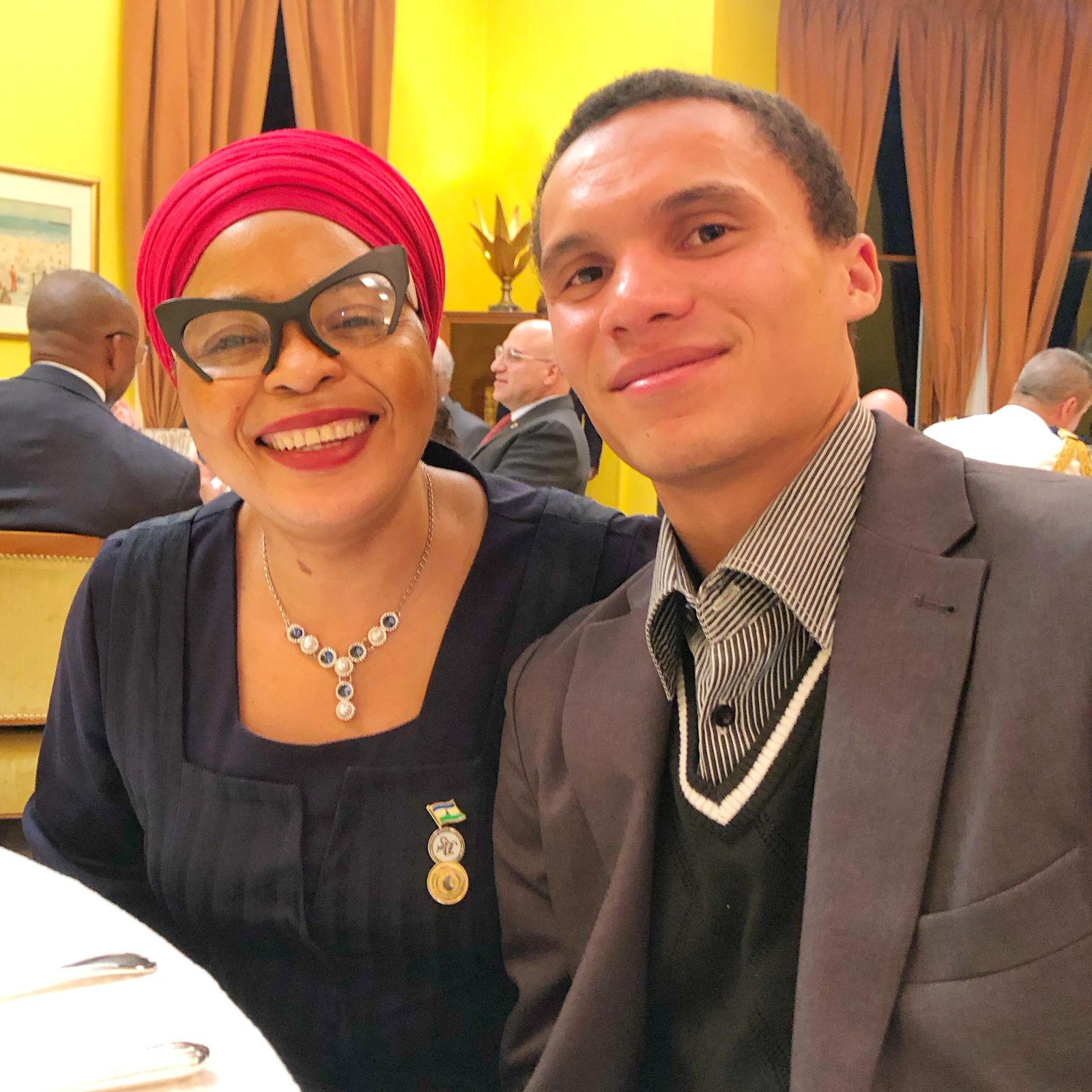
Myself with the stylish Itumeleng Makhoi; and above right, First Lady of Lesotho Mrs Mammusa Masekoalane Majoro and Namibian olympian hockey player David Britz.

Here we were in all our diversity from two soon-to-be Olympian hockey players (one representing South Africa and the other Namibia, but we claim him because he is studying at UJ) to a fashion designer whose calling card was her fabulous style on the evening, a stylish young gentleman who imports champagne for local enthusiasts, a sassy lawyer and a smart landscape architect.

Two chefs, Mpho and Mohau Seshoene (aka The Lazy Makoti) with the French Ambassador H. E. Mr David Martinon , and on the right, landscape architect Mosa Seshoene and Adv. Kutlwano Motla (or The Boujee Traveller, a travel content creator)
PICTURE: French Embassy/Aldina Mujkanovic

And that’s just a handful. There was the woman with the red headpiece and the sexy red stilettos who turned out to be the First Lady of Lesotho Mrs Mammusa Masekoalane Majoro and it wasn’t just her style that was exuberant, her personality was a perfect match. But the same could be said of the two young lasses (above) also at our table, the one a landscape architect and the other a lawyer, both of whom had as much sass as they had style.

A predictable but splendid welcome

It has always been one of the French Embassy’s secret weapons. There’s someone there who knows how to put a spectacular group of South Africans together. This time the current ambassador H.E. Mr David Martinon noted that because of the upcoming Olympics in Paris, they had hoped to combine food and sport but that wasn’t always achievable.

But what they did manage was to showcase people who displayed our most  extraordinary strength – diversity.

French Embassy chef André Ahiba (left), who has served nine Ambassadors with his staff in the kitchen.
PICTURE: French Embassy/Aldina Mujkanovic

All of this was also reflected by the charming Ambassadorial couple, H.E. Mr Martinon and his wife Karen, in the food on the night which was the brainchild of the embassy chef, André Ahiba, who has served nine ambassadors and celebrated French cuisine in marvellous fashion.

A melange of seafood

The starter was a mini seafood combo with a prawn poached in its own bisque paired with a beautiful panfried scallop. It was delicious and a fine launch into the rest of the meal.

Slow-cooked Karoo lamb shank with imaginative accompaniments.

This was followed with slow-cooked Karoo lamb shank which paid homage to produce from a specific region and then similarly, to sustainability. The accompaniments included pomme dauphine and julienne courgettes. But the piece de resistance was a morille farcie, which my chef partner said he knew about but had never eaten. When looking for a translation, stuffed mushrooms pops up, but the best I can do is to say that the chef noted it was extremely expensive and the taste was that of mushrooms, very intriguing.

Brie truffe Brioche, the cheese course.

This was followed by their cheese course which again displayed a wonderful individuality of thought. What could have been easier than presenting us with a selection of French cheeses. Everyone would have been wowed. But again the chef imaginatively presented us with Brie truffe Brioche (a brioche with truffle brie is my translation) which I loved, served with a salad, it was different and tasty.

A sweet surprise.

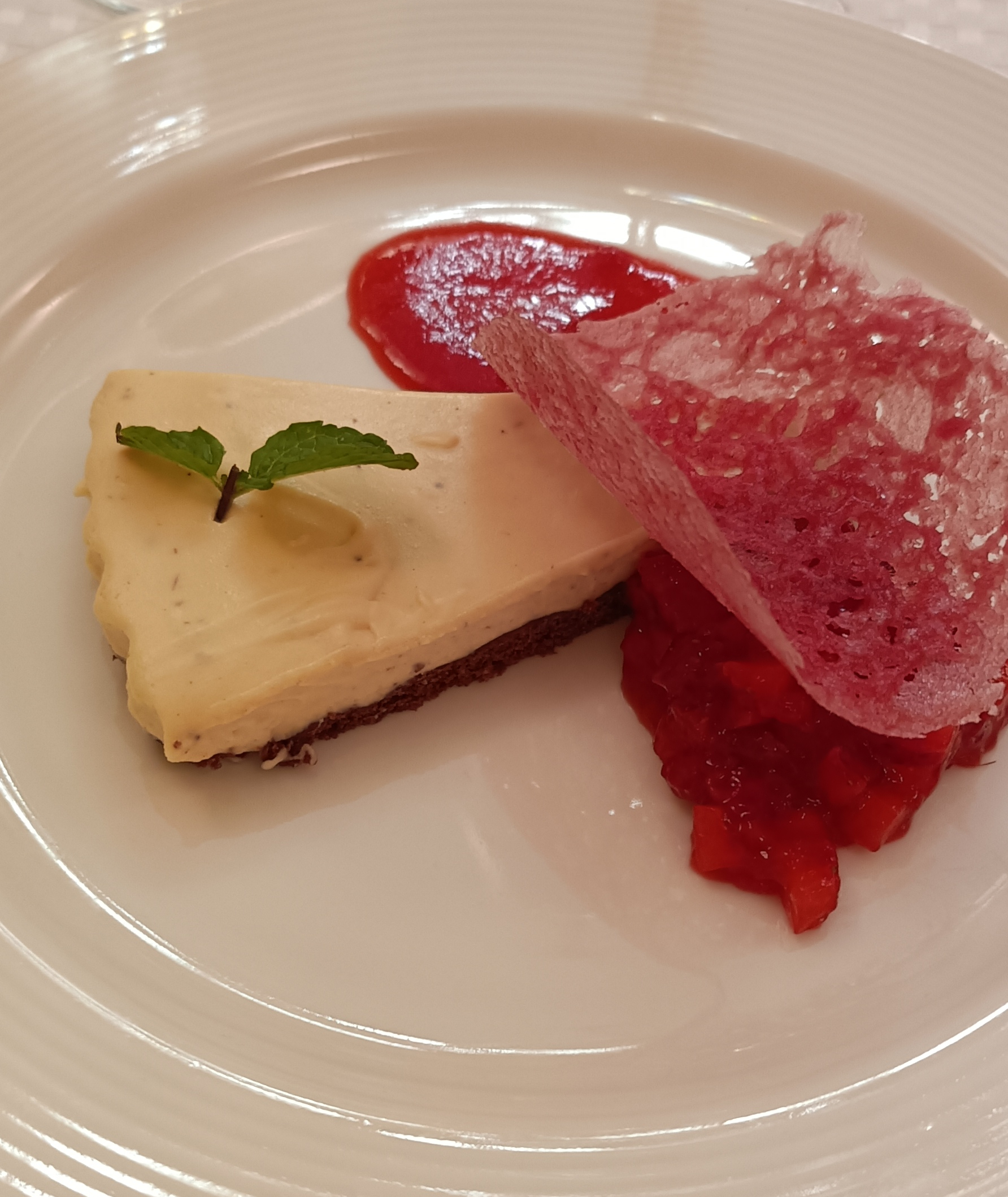
The other nod to South African produce was a Rooibos white Valrhona tart with a red fruits and a biscuit financier (which has its name because of the shape reflecting a gold bar!).

What I liked about the menu was that it felt pared down in the best sense of the word. Every dish had some extraordinary qualities but in conclusion, one left the table replenished yet comfortable.

The food was complemented with phenomenal French wines. I am by no means a wine specialist but from the apéritif served with the most delicious foie gras squares brightly decorated with rose leaves out of the spectacular embassy garden, Champagne Gobillard rosé 2016, followed by Chablis Cru Domaine Long-Depaquit 2022 and the most amazing of all, the Château SIRAN Margaux Haut Médoc 2017, and then the Petit Ours Blanc Domaine Matthieu Barret 2014 and finally yet another fantastic Champagne Mumm Olympe demi-sec.

When countries want to show off their quality and they do it this well, those of us invited to participate in the tasting, cannot but go overboard with the praise.

And in the final analysis it was the full package that gift-wrapped this evening so magnificently. From the arrivals which take you through some of the prettiest gardens to the entrance where you are met with a glorious ensemble of citizens hosted by an enchanting ambassadorial couple who as a bonus also have their young daughters meet the guests and show off some French charm.

The staff are magnificently dressed with gorgeous smiles as they gently see that the guests on the night are suitably cared for.

And then my fellow South Africans introduced to me by the French ambassador. I think I have said as much as I can and can simply add that it was an evening that I couldn’t have been more proud to be South African.

And I have the French to thank for that.

Merci beaucoup.

Vive la France!

DREAMY SINGER/SONGWRITER LUNA PAIGE IS ON THE MOVE WITH MUSIC THAT REFLECTS THE TIME

Stellenbosch singer/songwriter Luna Paige will be in Pretoria and Philadelphia for rare performances to celebrate the launch of two new albums; the one in Afrikaans (Dis die Dors), the other in English (Harmony). DIANE DE BEER chats to the singer whose career she has followed from her early days – with admiration:

Storielied Reunion.Picture: Pierre Rommelare

For singer/songwriter Luna Paige the last few years has been a sharp learning curve. Since her early start in the industry (late 1999), she has been one of the most dedicated artists I know – and she usually does it all herself.

Her first look-in was when she was invited to record three of her songs on a compilation album alongside Lesley Rae Dowling and other female artists at the time. “It is what catapulted me into a music career,” she says. But driven as she is, and one has to be when you drive your own career as she does, she would have found a way.

Since those early days she has released five solo albums and one SAMA-nominated collaborative album. And since 2015, she has released numerous songs digitally  and she believes, she has come into her own this past decade. That is until Covid struck.

She established her own music production company which developed music-driven productions, hosted and organised, concert series and co-ordinated music workshops five years ago. In her capacity at Iluminar Productions, she also represented other musicians and musical groups.

She found herself collaborating with many artists and produced shows such  as Her Blues, Korreltjie Kantel and Smeltkroes. She also played a supporting and promotional role in the popular My Miriam Makeba Story featuring the luminous Sima Mashazi.

Because her business was still young and primarily focussed on servicing art festivals and live entertainment venues and clubs, the pandemic was disastrous as for so many other artists who depend on audiences.

Luna knew it was time to join the workforce and between 2021 and 2024 she worked as a marketer and fundraiser for Paul Roos Gymnasium, a prestige Stellenbosch school. But she’s back in the music business, armed with many new skills and ideas she wants to implement in the music industry – as well as two new albums.

During Covid she had time to reflect, and, coming out of the pandemic, her thinking and that of the world around her, has changed. That is also what her songs reflect; her collaborative intent as well as the fast-paced changes in our society. “The last time I released an album, the world looked a lot different. The digital era is now in full sway. It has affected everything outside of us, but also our own internal way of processing information, and life in general.”

And that is exactly what she sings about.

When you ask Luna about her life, she speaks about the difficulty of packaging herself. “Let’s be honest, I am so many things!” She is a singer-songwriter. She writes in her mother tongue but also in English. She doesn’t compose in a specific genre. “For me, the song, and the story behind it, dictates the genre the song needs to be in. I find my influences from a wide array of genres.”

But then she is also a social worker, an altruist and an organiser. She feels she is a catalyst of sorts. “I know how to bring an interesting group of people together to do great things.” And with those words in mind, I predict exciting performances in the future.

Luna has always had to fight for her place in the industry. Performing isn’t an easy way to make a living. Music is her life, and she has always known that’s where she wants to be. Armed with new skills and insight, she believes that private investment in the arts is essential for its survival. “I believe artists have a huge responsibility to not only expect funds, but to also give back to their own communities. And the causes they believe in.”

While fundraising and marketing something other than herself, she became aware of her own different facets. “I have always seen them as separate things, one not having anything to do with the other. But now I know it’s the combination of these elements that makes me unique.”

She’s excited to explore what she calls “fusion of self”, how it will unfold and the kind of creative endeavours it will lead to.

These two latest album releases also reflect her new-found knowledge, showing the different sides of self.

“My Afrikaans side and my English side. Why? Because I do express myself differently in these two languages. It is interesting to me how I almost have a different voice in each of them,” she explains.

And speaking of voices, Luna also does different voices when she speaks and when she sings. If you have a conversation and have never heard her sing, it sounds like a completely different person.

On her Afrikaans album, Dis die Dors, she pays homage to two iconic poets – Jeanne Goosen and Antjie Krog. Their poems, which she puts to music, touch on the subject of either loneliness or aloneness. “It’s a theme I am quite interested in – especially the difference between the two. The power of the one versus the sadness of the other.”  Both poets, she notes, also touch on our thirst – for something meaningful in what can be a challenging world. “I sing about purpose, about nature’s generous supply of lessons, and about the labels we embrace for our own self-preservation.” She also addresses online nastiness and real-life kindness, and borrowed time.

And as always with the soulful singer, the genres vary from gypsy jazz and world music to folk rock, rock ‘n roll, troubadour-style songs and one typical Luna-style piano rock ballad.

On the English album, Harmony, she included some of the songs released digitally during 2021 and 2022, as they didn’t reach enough people. She believes they deserve a good resting place. She describes the album as bolder in sound and voice. “I am sharing ideas that I have never previously introduced in my music. Ideas about a lot of –isms. In my song Whose life is it anyway I am encouraging freedom of expression, of individualism, freedom from whatever the mainstream demands. In Circle of witches she addresses the sensitivity towards feminism (even from women themselves). “It is a modern take on feminism and why I believe it is still relevant.”

Not one to stand on the sidelines,  Middle Class Shoes  is dedicated to May 29 when we stand in line to vote for our next ruling party. “It is a song about classism – something we don’t acknowledge remotely enough when talking politics in SA,” she says.

Luna Paige. Picture: Nardus Engelbrecht

Real news that feels like fiction, alcohol abuse, the power of owning aloneness as well as her love of the continent all feature. And there’s much more.

What she does with her music is speak her mind. All she asks is that we take the time to listen. And I certainly can’t wait. She has a voice that melts your heart and touches the soul. And she offers wisdom and wit with her thoughtful lyrics.

Much thought and research went into producing these albums and how to package them for this digital age.

What she has decided is to release her music in USB-format.

The 2024-USB will include the two new albums, poster art, lyric sheets and two music videos. The Full Collection-USB, will offer all her releases since 2003, multiple videos and live footage. She will also be selling personalised Luna Paige notebooks – with lyric extracts inside.

Her first performance was in Stellenbosch this past weekend and these two follow in Gauteng and Philadelphia:

Sunday, 14 April. Moonshot Café. Pretoria. 2.30pm. Tickets cost R200 at Quicket. Ticket link: https://qkt.io/tR9Nhd. On stage: Luna Paige and Mauritz Lotz.

Wednesday, 17 April. BV Hall. Philadelphia. 8pm. Pre-drinks and dinner at The Pepper Tree from 5.30 to 7.30pm  (Reservations: (+27) 84 707 3177. Show time: 8pm. Tickets cost R200 at Quicket. Ticket link: https://qkt.io/DAlG8G. On stage: Luna Paige, Mauritz Lotz, Schalk Joubert, Kevin Gibson.

And then she’s off for the rest of the year as she recharges her creative instincts and inspiration. She will be visiting places she has always dreamt of like Italy, Greece, Spain, Portugal and possibly Slovenia. She will be walking and writing, researching business ideas and checking in with artists who work in a social impact sphere.

She will be vlogging for those who wish to follow: https://lunamusic.co.za/blog-and-chat/

THE HOLDOVERS HAS A WHOLESOME HEART AND A CAST WHO UNDERSTAND SUBTLE STORYTELLING

THE HOLDOVERS

DIRECTOR: Alexander Payne

CAST: Paul Giamatti, Da’Vine Joy Randolph, Carrie Preston and Dominic Sessa

Let’s start with a confession. I went to see this movie mainly because of Paul Giamatti as well as Da’Vine’s acceptance speeches. It was obvious that she was special and that’s not even on screen!

Halfway through the film, I sat back with the thought in my head that this was a comfortable movie and it was strange to get that word foremost in my mind with an Alexander Payne movie. He’s someone who deals mainly in characters and relationships and these are never comfortable.

Sideways, Nebraska, Citizen Ruth and About Schmidt are some of his best and when you look at the casting, he is obviously an actor’s director. His choices are always smart and often quirky, like Carrie Preston who one feels should now be given a starring role. She’s got the chops and has done her bit as character actor.

Boys having fun: Michael Provost, Dominic Sessa and Brady Hepner.

But back to the movie. After a rather sluggish start, it suddenly gets life. It’s not that Payne goes into overdrive but he shows why he chose these specific actors to tell this rather subtle and slow-paced film.

It’s a story about three oddball characters thrown together and how they move backwards, forwards and sideway to see how it can work. There aren’t any surprises. You know from the start that things will turn out well. It’s the way they get there and the how Payne softly nudges his actors to tell this story.

If you hear that Giamatti’s tough-toffee character is given a wandering eye as well as a lingering body odour, it already gets a smile but it also explains many of his character traits.

Paul Giamatti (centre) with a few schoolboys including Sessa (left).

While Da’Vine’s award season has been quite dramatic, her character is a much gentler yet really wise woman. As a large black woman living in a country where colour is barely tolerated, you know she knows how to make herself invisible and how to survive without compromise. She’s that gal. She knows she has to look out for herself, no one else will.

But she also has a heart that is large enough to keep a watchful eye over all the broken-winged creatures in her vicinity.

Giamatti plays true to form. He isn’t capable of a bad performance that’s why I try never to miss a movie. His films are always all about the characters and he knows how to fill those out delicately but with kick when needed.

The newcomer also does a fine star turn. He has strong competition but youth is on his side and he holds back and gives when the story or character demands.

Payne says he wanted to make a good, old-fashioned 70’s film with no CGI razzmatazz and that’s exactly what he achieved. Catch it at the one off cinemas that are still screening it.

In Gauteng you can catch it at Ster Kinekor’s Rosebank Nouveau and in Cape Town at The Labia Theatre

FOR THE LOVE OF BOOKS, READING AND AUTHORS

With Vrye Weekblad and journalist Deborah Steinmair establishing new book festivals in the wake of their success in Stilbaai, followed by the first one in Gauteng in Cullinan earlier this year and most recently in Clarens in the Free State, DIANE DE BEER, invited as an interviewer at the last two, gives her impressions of book festivals in general as VWB announce their next Cullinan festival from 10 to 12 May 2024::

Pictures: Deborah Steinmair

A man and his dog cartoons by Dries de Beer (Fatman).

Getting together a crowd of book lovers is no easy thing in these days of social media and streaming  –  there’s just too much on offer  – but if you choose your specific book festival well, take the time and spend the money, it is a glorious get-away where you get to mingle and meet like-minded people and listen to a handful of authors talking about their latest work.

While my preferences won’t sound objective, as I was invited to participate as an interviewer at the last two festivals, what appealed to my sensibility was the curation of the festivals.

First off, smart of the powers-that-be at Vrye Weekblad to know that Deborah, someone with a fantastic knowledge of books, an author herself, and a brilliant columnist, also has a deliciously quirky sensibility which then becomes part of the programme.

If you’re having a festival in the Free State, Antjie Krog is a name that would be impossible to ignore. But then to ask her to read from her latest delightful Vetplant Feëtjies (Vetplant Fairies), creatively written and illustrated, together with some poetry from her latest collection Plunder (also translated and published as Pillage) was genius.

It’s obvious why she won the Herzog Prize for poetry twice, most recently in 2017.

Just selecting at random:

It no longer comes to me

Everything is iron    everything has congealed

I read how others write:

Clove brown, Prussia blue, and creamy, creamy your neck

Your long, long, long legs fill me with fury

But to me?

To me it simply no longer comes

once I belonged to the ones on fire

now my voice wants to drift

it trembles repulsively clammy with care and forgiveness

For me, personally, she should never stop, with a mind that’s razor-sharp, older yes, but that also makes it even more wise and witty. What does she have in mind next?

And, cleverly, Deborah knew how to pair two wise journalists. It was a great idea to get two Free State born journalists/writers Max du Preez and Antjie Krog talking and reminiscing.

Max du Preez and Antjie Krog in conversation.

Both grew up in Kroonstad and Antjie spent more of her time there, while Max talks about missing this part of the world, while also celebrating his home city of Cape Town, where he says everything works.

And then he launches into a few famous authors who have left the country, some, he says, with a Nobel Prize under the arm …

And Antjie wonders about living in a country where no one knows who Gerrit Maritz is.

Max, who had passed through Winburg on his way to Clarens, wishes to become the champion of this neglected town.

But Cyril, they say, has said that the people shouldn’t be treated like charity cases. Everyone has something to give. Yet Max laments the process of Africa that is slowly engulfing the town, even if not quite done yet.

Antjie suggests that if you want to change or fix a problem, you have to bring the township with you. But Max questions how to criticise this country while contemplating the damage you might have caused. Even if you joined the struggle. You still have the privilege of whiteness which is something everyone needs to acknowledge.

As is obvious, it was a conversation between two people who know one another, who have similar backgrounds so that they can exchange thoughts and grievances without too much explanation.

And they progress…

“Wonderful things are happening in Afrikaans,” says Antje while sympathising with the Indigenous languages that suffered under apartheid.

We all have to acknowledge that we had more of everything: more Afrikaans radio stations and TV stations, more magazines and newspapers than any of the other languages. Now we have to do it for ourselves.

And it is happening with Vrye Weekblad and these kinds of book festivals. And again Deborah’s special touch emerges as she includes young poets and authors like Joylyn Philips, who launches into song when starting her poetry presentation.

Bibi SlIppers

Or the bright-eyed Bibi Slippers who cunningly whets the appetite with readings from her then soon-to-be-published poetry book, which was recently launched.

Yet, no one can rattle the rafters like the gloriously fragile Dianne Du Toit Albertze or, as they would say, Lady D. It was joyous to see them perform almost randomly dressed to kill in a shattering red dress which immediately screamed attitude, and then to back it all up with the talent of someone who knows they can take a stage while speaking in tongues … and they do.

This fresh breath of youthful exuberance during the gathering of the poets as the final salute of the weekend, captured it all. The dazzle and dare of Deborah is what makes you an ardent fan of her outspoken columns, all of which you wish you had said. And she brings that same flair and fanciful fanfare to a book festival  –  which is why these Vrye Weekblad festivals are worth watching out for. And a grand addition to the Afrikaans literary scene.

Yes, I know it’s mostly in Afrikaans, but Deborah knows about diversity even when limited most of the time, to a specific audience.  

So get booking on Quicket for the next one, you won’t be disappointed and it’s in driving distance from Pretoria and Joburg!        

Last year’s festival at the stone church in Cullinan.

PROGRAMME: The Vrye Weekblad-CULLINAN-BOOK FESTIVAL 10 – 12 May 2024

Will be held @Church venue. Books to be sold by Graffiti on the premises, food and drink will be on sale. Book at Quicket.

Queries: deborah.steinmair@gmail.com

Friday 10 May:

17:30: En tog die deuntjie draal (and still the music plays): Gielie Hoffmann chats on the birthday of singer/songwriter/poet Koos du Plessis with his wife, Mornay, about Erfdeel. His songs are also performed.

Saterday:

08:30: Skarminkels en speurders (Rogues and detectives): Phyllis Green speaks to Sidney Girlroy, Marie Lotz and Irna van Zyl.

09:30: Van rekenaarskerm na silwerskerm (From the computer screen to the movie screen : Mercy Kannemeyer chats to Zelda Bezuidenhout and Henriëtta Greyffenberg about the filming of Die dekonstruksie van Retta Blom.

10:30 The Near North: Louis Gaigher chats to Ivan Vladisivic about his latest book.

11:30: O, die vrolike, O die SALA! (Oh the happiness, oh the Salvation) Diane de Beer in conversation with Onke Mazibuko about his celebrated YA novel, The Second Verse.

12:30 Lunch

14:00: Vaders wat haper (Fathers who stutter): Jean Meiring chats to S.J. Naudé about Van vaders en vlugtelinge

15:00: Vywervrou woeker: (Pond woman works): Ilse Salzwedel chats to Chanette Paul about her character driven series.

16:00: Zonderwater en ver van die huis: (Zonderwater and far from home): Deborah Steinmair talks to Karen Horn about her novel about Italian prisoners of war: Prisoners of Jan Smuts

17:00: Psigopatiese nasie: (Psychopathic nation): Anneliese Burgess speaks to Karl Kemp about his book Why We Kill.

18:00: Kopstukke (Think pieces): A sizzling political debate about the election and other topics of the day with Piet Croucamp and JP Landman.

Sunday

10:00: Boekevat: (Devotions): Kleinboer, Lucinda Neethling and Pieter Odendaal read and sing their poetry in the beautiful stone church.

“CALL ME MILES – BRUTALLY HONEST”, A MUST SEE ON NETFLIX BRINGS CLARITY TO GENDER ISSUES

In a time when the other is viewed as much more of a threat than at any other time and the antagonism and visibility heightened because of social media, finding yourself in a body that is alienating and seemingly viewing the world differently than people around you, can make life seem intolerable. DIANE DE BEER spoke to them:

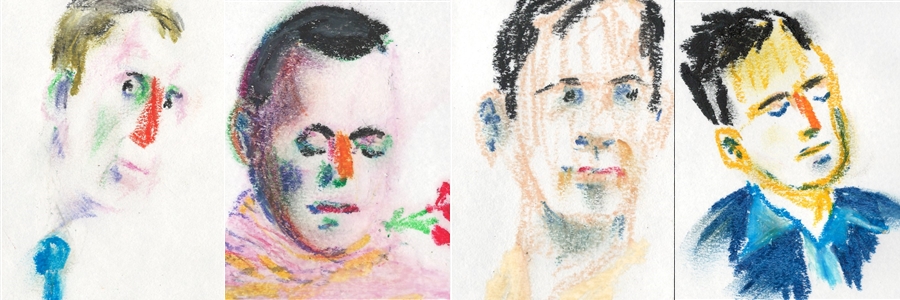
Pictures reflect the many faces of Miles:

That’s what happened to Miles Kean Cilliers Robinson when they hit puberty. What they know now is that they have been battling to identify with the gender assigned to them at birth.

In a documentary titled Call Me Miles – Brutally Honest, available on Netflix and a must-see, they tell their story with an openness and vulnerability that’s sometimes painful yet highlights the issues of growing up in a world that doesn’t make sense to them.

Finding myself battling with many of the concepts simply because the words including the way to use pronouns is unfamiliar to me, and I am someone who embraces differences as well as acceptance, I can understand how frustrating it must be to navigate a life that seems so foreign to many.

I found their guidance and explanations extremely educational. We are living in a world that is more fluid than it has been my whole life and having no children, I don’t often have to face any of these issues. But I could see that Miles didn’t appreciate any of my blunders. And I agree. It is up to all of us to inform ourselves and I suspect, that is why Miles always knew that they wanted to share their story. They knew from the age of 16 that they are non-binary and needed to find a way to align their body with their personal identity, their sense of self.

With two parents in the newspaper world, they have always been aware of the importance of facts and getting the right stuff out there. And in this era of fake news and easy targets with social media available and anonymous, even more so than before.

The only time Miles was unaware of their predicament was in that time when little boys and girls are seen as just kids. And they are blessed with parents that always treated them simply as another human being. Their problems started when the outside world started intruding.

Still in primary school, a young classmate told them that it is time for them to start wearing a bra. “I was incensed,” they say, “how dare she?” Nevertheless it had to be addressed and their mom took them shopping with the advice that a sports bra would be the most comfortable option.

                   Miles with Dad Deon .

Their life however changed overnight when their mom decided to send them to one of Tshwane’s prestige schools, Afrikaanse Hoër Meisieskool Pretoria. They are an exceptional achiever regarded as highly intelligent, and Mom wanted the best possible education for her child. In retrospect they (and I suspect their parents) believe that this was the worst possible environment for them.

Overnight they walked into a world where the scholars were referred to as “ladies” (dames) and of course, had to wear dresses. Another public shaming exacerbated their emotional dilemma. During a swimming exercise, the girls spotted that they didn’t shave under their arms and they were ridiculed. “I couldn’t believe that they (his fellow scholars) didn’t want more than simply being the perfect little girl.”

And on that day, their obsession with their body, in particular “being fat” became part of their daily obsession. Telling their story they couldn’t emphasize enough how distressing this became. It completely dictated their life.

I met Miles more or less at the age of 14, and I can clearly remember that the person I saw was completely normal in size and looks, nothing strange or out of the ordinary. I would have described them as cute and wouldn’t have referred to their body at all.

“My discomfort in my own body only started when someone else said something,” they explain. And aren’t we all familiar with that one, only in their circumstances it played into already troubled emotions.

For Miles specifically it meant withdrawal and isolation, which made everything worse. “We grew up in a time where our parents were focussed on protecting us. There wasn’t time for holding me close, we had to be tough,” they say.

Kids were not deemed to be streetwise and they had to be taught the rules of the jungle hovering out there. Their generation, they argue, has greater exposure to others (not so much part of the Apartheid era where the focus was on separation) and thus have more empathy. “I see that as a pre-requisite to see the other,” they emphasise.

At this point their world started to change dramatically. And they capture it thus: What became clear to me was that my gender is not determined by the way I paint my nails or knot a tie.”

But only after many years of torture for this struggling teenager in an all-girls school, they asked to be booked into Denmar Mental Health Services. In the interim they had been self-harming with cutting and suicide attempts simply to stop the emotional chaos that became their world. Nothing came easy and even with a group of friends whom they describe as “a ragtag band of misfits” who offered some protection, they were drowning.

But they had made a decision when they asked to be booked into Denmar. “I am a boy,” they told everyone when they arrived, “please call me Miles.” And they did. The warmth and acceptance they received at the facility (“apart from one asshole psychiatrist!”), changed their life.

And that was the beginning of a new phase in their life. They still had to share their new self with their parents which then snowballed to the rest of the family and friends. Miles would have liked to have orchestrated their “coming out” more slowly, but they also know and accept that on the whole – especially with their parents  – they have been blessed.

They still had top surgery to discuss and to navigate, all of which has been done and now their future stretches ahead of them with a clarity that perhaps during their school years seemed impossible.

Nothing came easily and their varsity studies were also interrupted by the wrong choice of subjects. But amidst all of the struggles that dominated their younger life, they know they have landed softly and opting for a degree in clinical psychology and anthropology, their future is about helping others with what they had to battle – often without guidance or role models.

When you hear them saying that a choice of opting to wear a binder (which compresses the breast) meant that they had to choose between physical or emotional discomfort, the constant unease of their life seems unbearable. Time and again, they would rather cope with the physical obstacles. “I didn’t have role models or anyone to turn to,” they say.

That is what they hope to change by opening a practise for transgender youth and young adults. “During the process of transitioning,” they say, “ I didn’t have anyone to go to. I had to put it all together myself.”

For the present, they are exactly where they want to be.