CAST: Michelle Botha, Dylan du Plessis, David Arnold Johnson, Didintle Khunou, Ilse Klink, Hlengiwe Lushaba Madlala, Carmen Pretorius, Brenda Radloff, Justin Swartz, Grant Towers, Ben Voss and the rest of the ensemble
THE BAND: Dale Ray Scheepers (musical director and arranger/keyboards), Silas Naicker (assistant musical director/ keyboard), Redgardt de Bruin (guitar) , Viwe Mkizwana (Bass), Keith Marishen (drums).
CHOREOGRAPHER: Nicol Sheraton
PRODUCTION DESIGNER: Andrew Timm
COSTUME DESIGNER Bronwen Lovegrove
LIGHTING DESIGNER: Johan Ferreira
SOUND DESIGNER: Adriaan van der Walt
RESIDENT DIRECTOR: Timothy le Roux
VENUE: The Mandela at Joburg Theatre
DATES: Until December 24
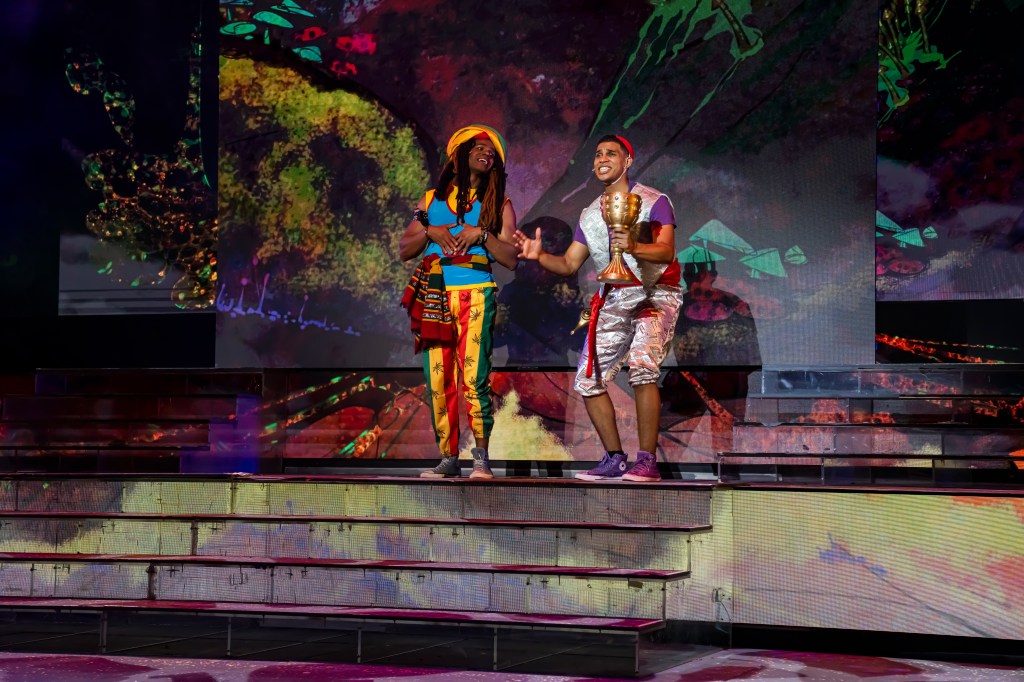
David Johnson as Jabulani The Joburg Genie and and Dylan du Plessis as AladdinEvil Action Inc with the Wicked Queen Evilina (Radloff), Captain Hideosa Hook (Johnson) Madame Kakkeloura Khakibos (Klink) and the Abominable Abanazar (Voss),
There’s a reason the panto is billed as Janice Honeyman’s Adventures …
She is the one with the pocketful of fairy dust, bags of laughter, and the knowledge to strike a balance that has the kids captivated and the adults engaged.
That’s quite something in a world where they have everything at their fingertips with iPads and iPhones.
But Honeyman won’t be phased by any of this. She simply goes next level. She has a design master (Timm) who also flies even higher than last year. He takes the audience into a wonderland unimaginable with state-of-the-art LED screens which seemingly have unlimited qualities to transform the stage constantly in front of your eyes.
The explosion of colour and artistry bedazzles you, but with typical Honeyman ingenuity, she doesn’t allow the beating heart of her production to be overwhelmed. When picking her cast, she makes sure that these are performers who command the stage and bring mountains of personality to the two or three characters everyone on stage inhabits.
And even after 20 plus pantos, some of my favourites were unrecognisable and the newbies are rehearsed to operate like seasoned pros.
From Radloff’s wicked queen to Pretorius’s and Khunou’s enchanting Princess Aurora and Snow White, to Du Plessis’s and Justin Swartz’s charmers Aladdin and Jack the Joller, we’re completely hooked from the start.
Tripping the light fantastic in China, Ilse Klink as Emperina Wun-Phat-Bum and Michelle Botha as Empress Wun-Tun-Tum with Grant Towers as Widow Twankey.
And don’t dismiss the Good Fairy (Madlala) with a voice that is as commanding as her presence, which is precisely what you want. There are truly no standouts, they all sparkle.
This is not simply one pantomime, it’s a big bunch of them, all rolled in one. To tie it all together, Honeyman has picked Good vs Evil as her theme and there’s more than enough of that going round at the moment to keep it prescient and present. She has her finger on every pulse.
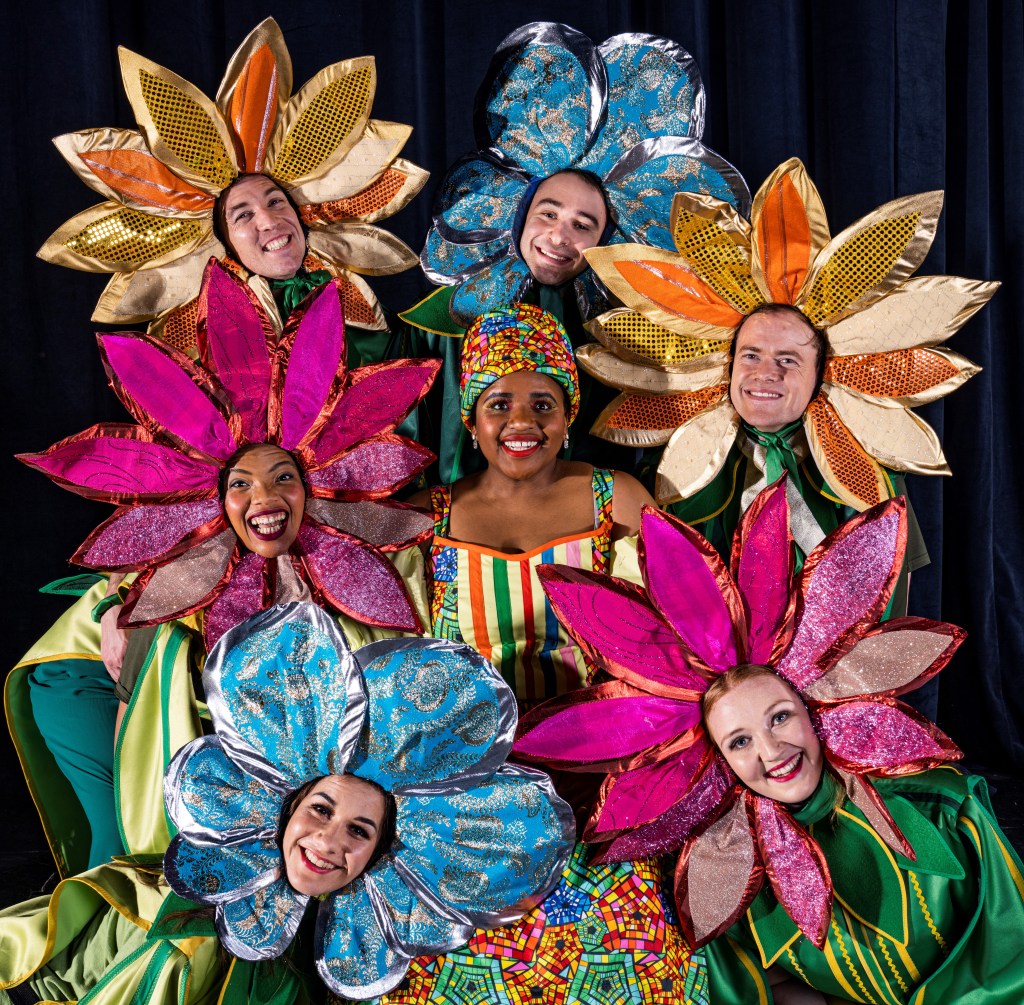
It’s all in the detail. So while the enormity of the stunning costumes and travelling sets envelops you, it also allows you to take in those winks and nudges with a picture of an oh-so-famous person displayed as Employee of the Month, or a sign pointing to the Doek Nook or simply the complexity of the costumes that tell a story all their own.
It’s bright buttons and sparkly shoes, a bright kopdoek or a fancy fan as we trip our way through the abundance of adventures in this pantoland – all on a quest to preserve goodness and kindness ̶Honeyman’s credo.
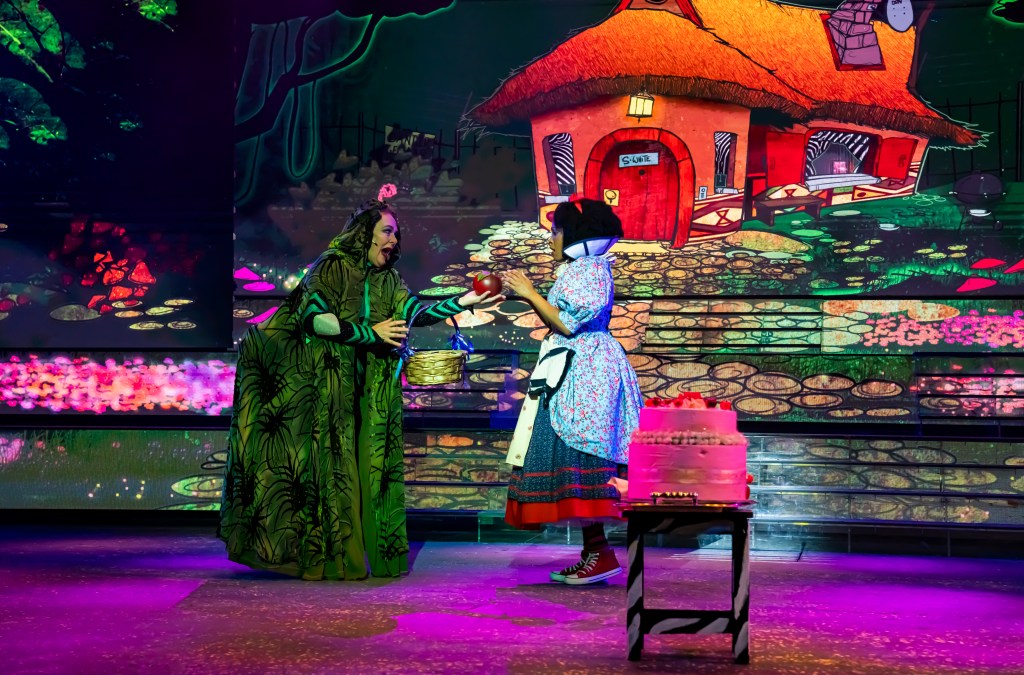
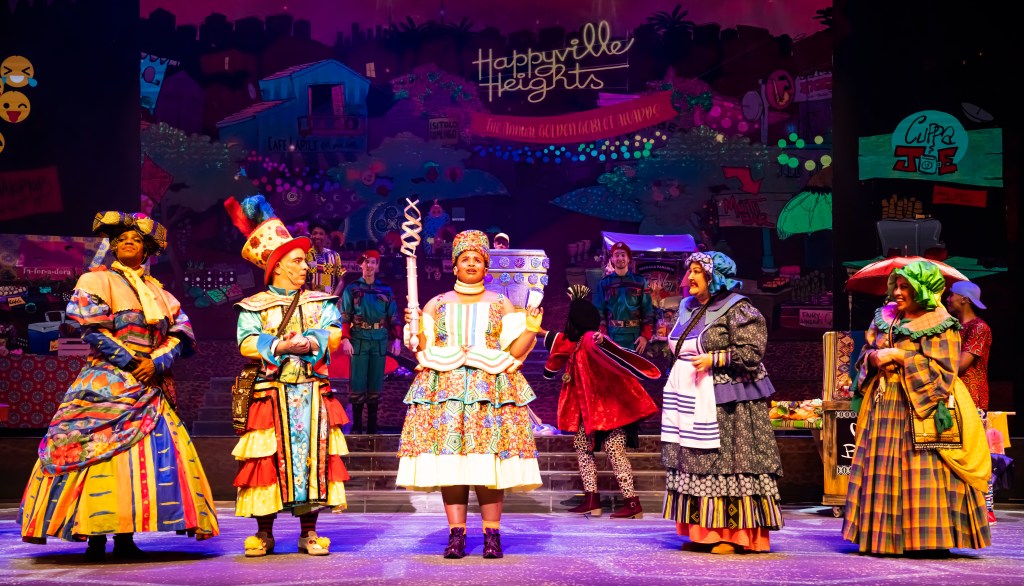
Snow White (Didintle Khunou) hoodwinked by the wicked queen Evilina (Barbara Radloff).The devastating panto dames Dolla Double-D (Johnson), Widow Twankey (Grant Towers), the good fairy Flora-Dora (Madlala), Nursey Nora (Botha) and Kitchen Katie Klink).
While pantomimes were very much a feature of my end-of-year planning in the past, I haven’t been for a few years. And having seen 20 plus, a break was necessary. But this one is truly special.
One can always bank on Honeyman’s super powers, but this time she had double the expectations. Not only is the Joburg Theatre celebrating 60 years, this is also her and producer Bernard Jay’s 21st end-of-year celebratory collaboration.
Not many would keep it as fresh and manage to tick all the boxes all of the time. Of course she does!
Fo0r her it is all about finding the angle, which she did, having audiences lean forward into the show – and with the explosion of colour and talent on stage how could they not, but then right at the top of her list is a show with a beating heart.
The spectacular cast in the shimmering finalé.
Finding and exploring new wow factors and selecting a cast that will deliver with energy and enthusiasm are where Honeyman excels. It is her inner child, that constant twinkle in her eye that creates the magic and keeps pulling the audiences in.
We’re blessed in Gauteng that we don’t have to imagine the festive season without the Honeyman pantomime adventure.
You go girl!
And as an incentive, they have a special on Black Friday (this week). Buy tickets for any of the panto shows at a mere R100. That’s a steal!
With the launch of the third in a trilogy, The Quality of Mercy (Penguin), author Siphiwe Gloria Ndlovu has firmly established herself as a writer not to be ignored. As an admirer, DIANE DE BEER writes about the way she captivates with her unique storytelling:
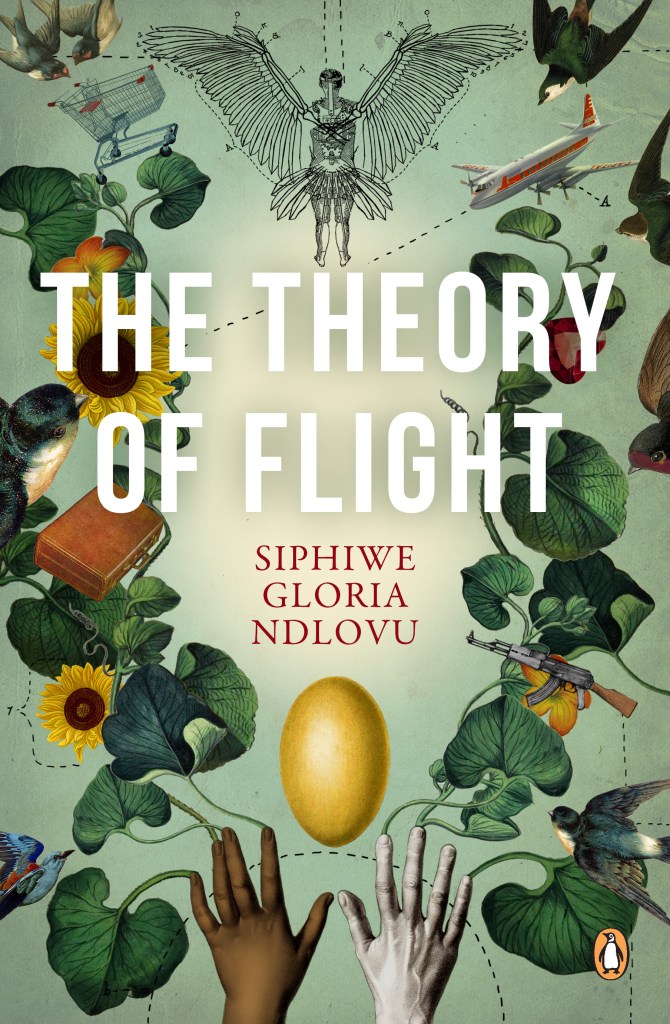
WHEN handed the third book in a trilogy by Zimbabwean author Siphiwe Gloria Ndlovu to review, my heart went up an extra beat. I had launched the first book The Theory of Flight in Pretoria a few years back, had done an email interview and reviewed the second The History of Man during lockdown and again, to my delight, I was invited to launch this latest, The Quality of Mercy.
The last is always my best, arguably because I remember it best. But I can still recall how thrilled Iwas, not yet having met the sublime Siphiwe yet, on reading the first. I immediately recognised a unique and very particular voice – and then came the second, which approached writing in a completely different style.
Third time was not such a surprise, because by now, I knew the author better and realised that for her own imagination (a wild one, early in her life activated by her grandmother) and playful nature, she had to write in this way.
Siphiwe Gloria Ndlovu and her mom Sarah in front of the Quality of Mercy poster
Asking about the three novels and what each one represents, she embroidered: “The three novels that make up the City of Kings trilogy – The Theory of Flight, The History of Man and The Quality ofMercy – all deal with aspects of Africa’s modern history. The History of Man deals with the colonial moment and its many (often limiting) narratives; the story of Emil Coetzee serves as a critique of colonial power.
“The Quality of Mercy is a story of transition and delineates a country’s journey from being a colonial state to a postcolonial state. The Theory of Flight is concerned with the postcolonial moment and its gradual loss of ‘ease’ as it becomes a place of increasing dis ‘ease’; the story of Imogen Zula Nyoni calls for a different kind of revolution from the one that led to independence.”
If she were simply telling stories it would have been fine, because she is such a superb storyteller and probably we would have loved it still, but it is also the way she goes about capturing the history of her land (ours and more) in a time of transition and beyond – as well as, of course, before.
There’s a lightness in the telling, but don’t let her deceive you. She has found her own subversive way of saying exactly all the serious things she wants to, subtly without being preachy.
For example, she had no qualms, as a black female writer, to step into the shoes of a white male protagonist, and then one who was running a deeply secretive intelligence office in a colonial land which we all know but which she never names. And pulls it off with aplomb and terrifying insight.
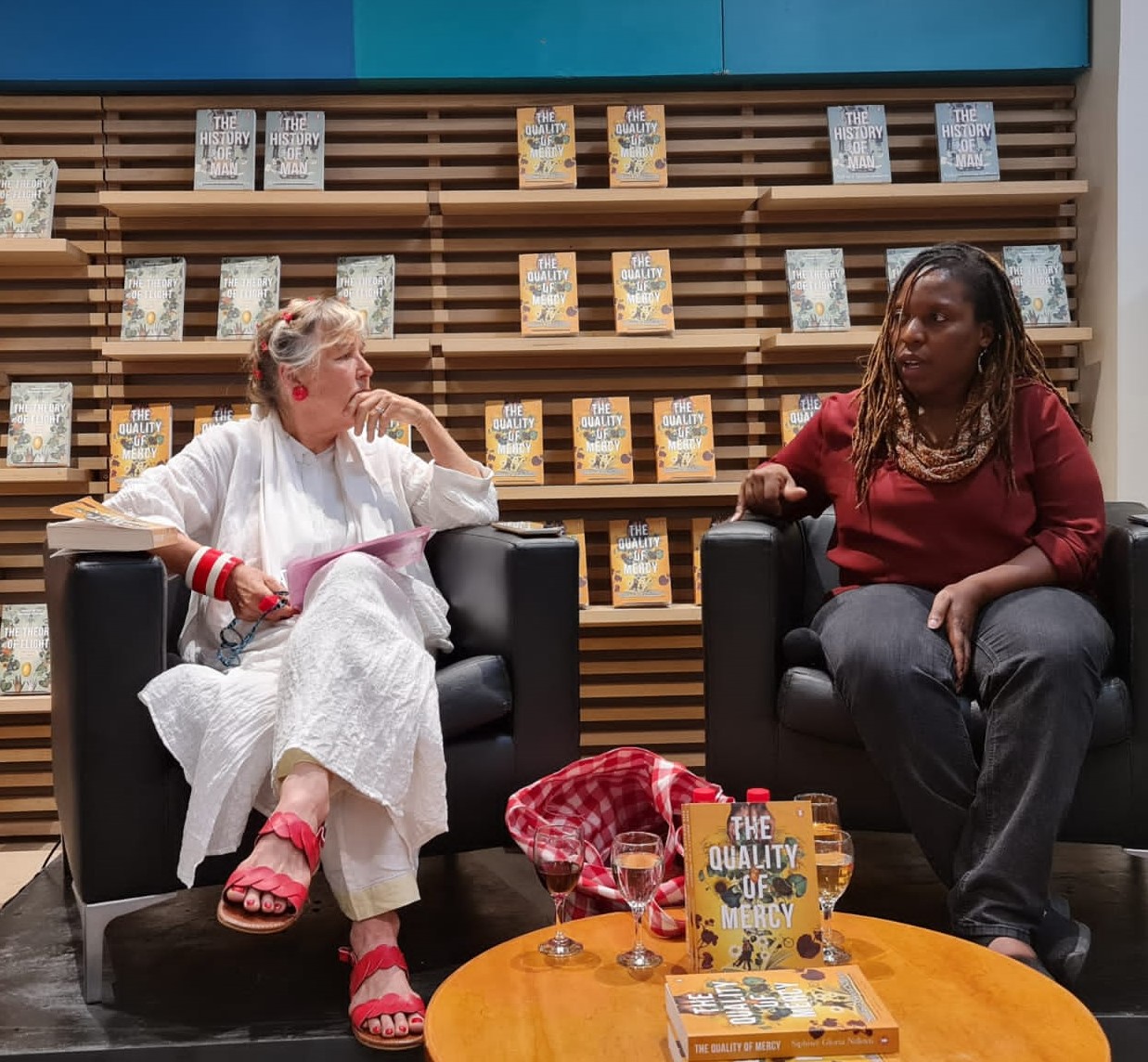
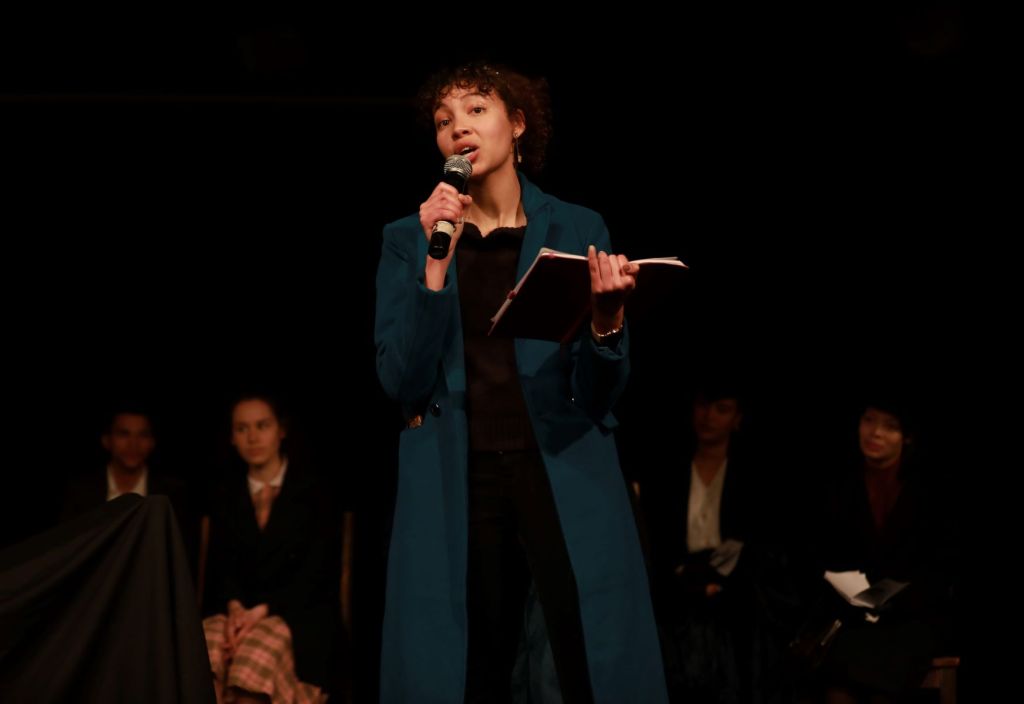
In conversation with Siphiwe at the Centurion Mall for the launch of The Quality of Mercy.
It is the way she climbs under the skin of a man who grew up privileged, but as he moved up in the world into the world, turned into a man difficult to recognise, driven from the outside rather than a true belief in what he was doing.
And that’s where her gift lies. The insight she shares about things that we all think we know and understand. This writer has a different take which she launches with a light yet incisive heft.
Talking about the period she has chosen to set this trilogy, she explains that the major plot of The Quality of Mercy, the investigation of a crime, takes place over a span of five months, December 1979 to April 1980. “Since this is a story about how a country transitions from being a colonial to a post-colonial state, these dates correspond with two very important dates in Rhodesian and Zimbabwean history – the date when the ceasefire that brought an end to the civil war was announced (December 21, 1979) and the date when independence was officially granted (April 18, 1980).
“This period of transition holds within it both hope and uncertainty ̶ what will the post-colonial moment be like, how will power change and shift, what will the experience of ‘independence’ feel like, will we all feel equally free, what will we do about the past injustices created by the many forms of colonial violence, will we seek vengeance or justice for the wrongs of the past…”
With this latest novel, even if I knew to expect the unexpected I was still caught out. I wasn’t expecting her to come at me with such a surge of visual delight, and much of it has to do with her protagonist, Spokes M Maloi. Only the toughest heart wouldn’t immediately embrace this detective who is married to the light of his life, Loveness.
There’s a reason for the loveliness and charm of Spokes, his particular job description and the fact that this one is a crime novel. Siphiwe explains: “The main protagonist of The Quality of Mercy is Chief Inspector Spokes M. Moloi, a long-serving policeman in the British South Africa Police (BSAP). Part of what I wanted to examine about the period that the novel covers is how the idea of ‘independence’ was different for different groups of people because settler colonialism had created very narrow definitions of citizenship and belonging that were based on extremely binary and limiting views on race, gender, ethnicity, class etc.
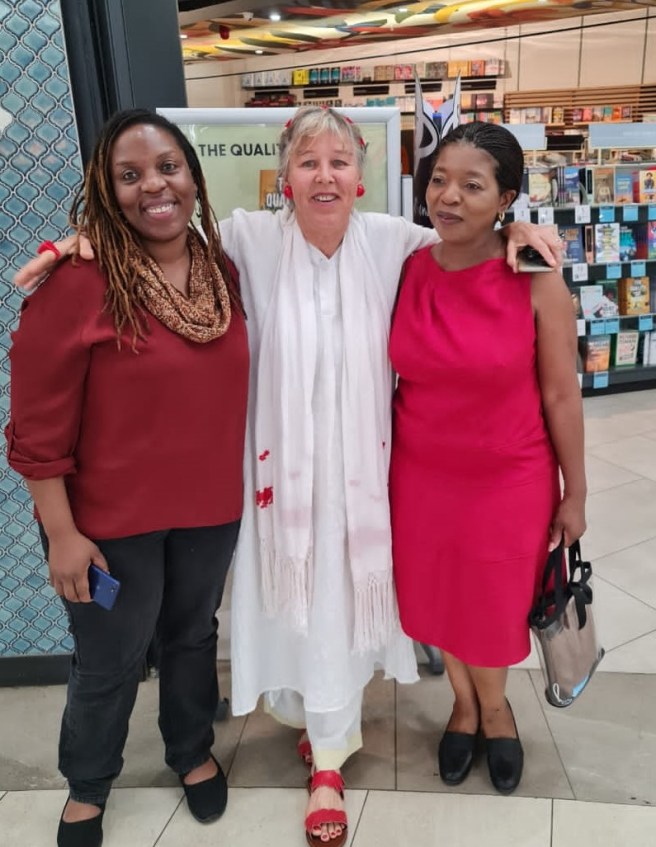
In the company of Siphiwe and her mom Sarah celebrating the latest book The Quality of Mercy.
“In order to achieve a more inclusive and bird’s eye view of this moment, I had Spokes, as a black man who had lived his entire life in a segregated country, investigate a crime that would take him into the homes and lives of an incredibly diverse group of characters. Given the particular period of history that the novel deals with, Spokes’ mobility and ease of access would have been extremely restricted and curtailed by his race (and in some instances) his gender and class were it not for the fact that his country was actively moving towards being post-colonial and he had in his possession a detective’s badge.”
He’s also at the end of his career, and as his country is attempting to move into a new phase, so he and especially his wife, are set on slipping into a much gentler realm.
There are a few hold-ups though. There’s a case that just won’t let go. Daisy was a woman killed quite brutally and spokes has never found the monster who did the dastardly deed. But no more give-aways.
This is a book you want to read without too much knowledge in hand. It has to be approached with the energy and exuberance the writer intended, and if you haven’t read any of her novels yet, you’re in for a treat.
Sarah with EB manager Louret Bell while Siphiwe signs a copy for a guest.Siphiwe Gloria Ndlovu with a friend at her book launch.Book signing.
While they are viewed as a trilogy, Siphiwe is happy to talk about interconnectedness, and I suspect there are a few still to come. Writing about the City of Kings, where she was born and has given her heart to, she has created a community with some figures more prominent than others in each of the books.
And because the protagonist in one might pop into another very scantily, once you know a bit more, there’s a curiosity to go back and re-discover where you first met someone and what all the connections are.
When she sat down to write her fist one, Theory of Flight which won the Barry Ronge Fiction Prize, Siphiwe had an idea of what her story was going to be, but it is only as she writes that everything becomes fleshed out in glorious detail ̶ and she is also caught unawares.
“What I have enjoyed most in writing the City of Kings trilogy is the slow revelation of how the different stories fit together – The Quality of Mercy begins where The History of Man ends and ends where The Theory of Flight begins, bringing everything full circle. If I had known from the first that I was setting out to write a trilogy, I would have been too overwhelmed by the prospect, so I am very happy and relieved that it was all a process of gradual discovery.”
Perhaps none of us, not even the writer, knows what’s coming. What we do know is that she will sweep you off your feet all over again.
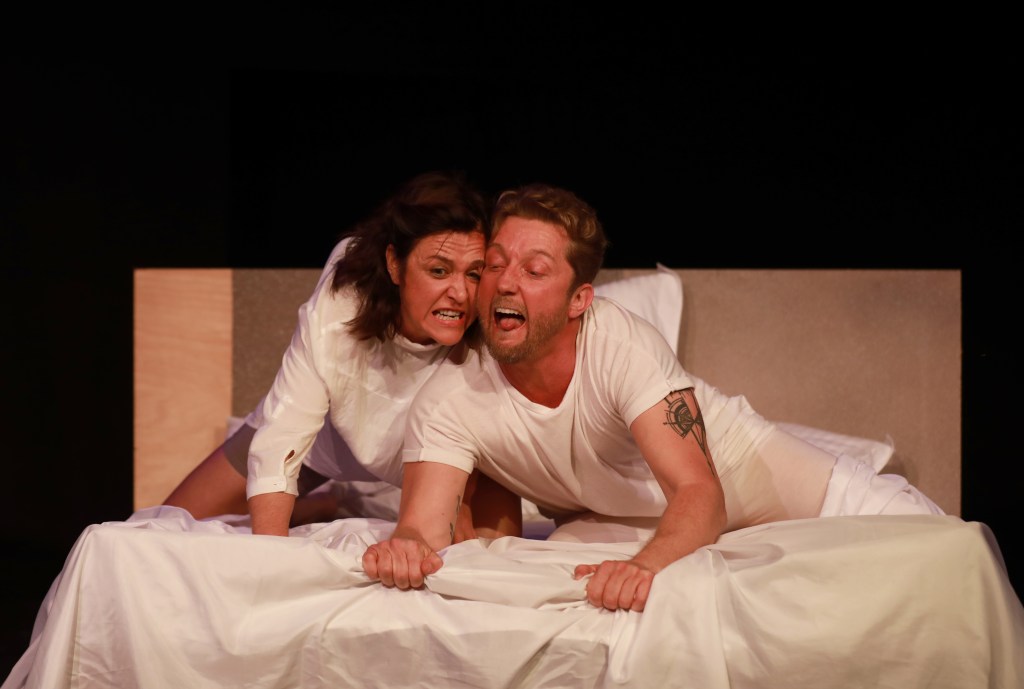
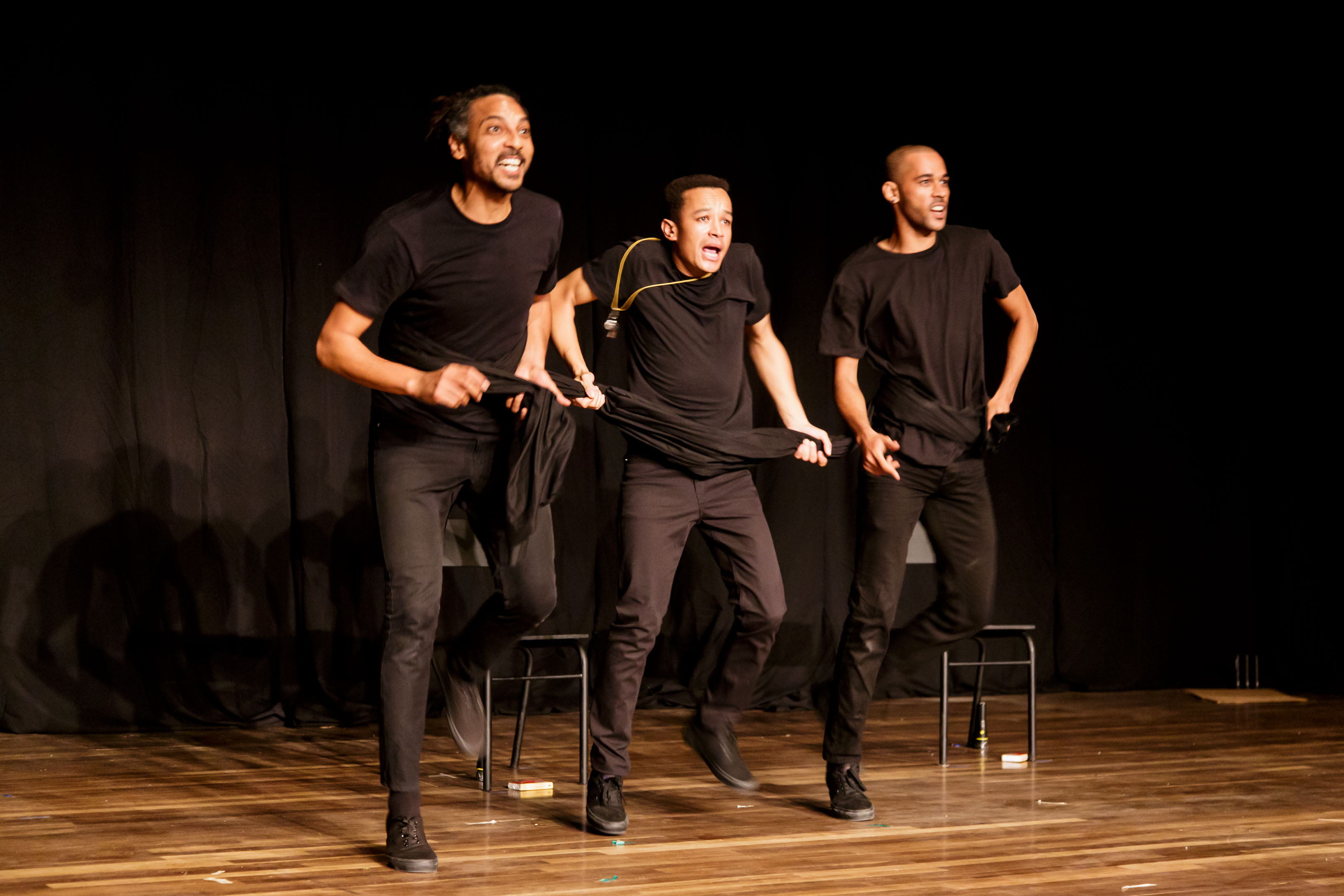
Alby Michaels and Henriëtta Gryffenberg’s 1 starring Cindy Swanepoel and Zak Hendrikz.
Teksmark2022 was presented at the Baxter Theatre in Cape Town from 24 to 26 August and could be attended by interested parties free of charge. A total of 22 playwrights presented their script ideas and 90 actors and directors participated to present excerpts from the scripts as play readings. DIANE DE BEER spotlights her personal highlights and announces the texts that gained recognition and further development:
It is the storytelling, the distinct voices, the diverse styles and the enthusiasm that turn the tide each year as I watch the artists present their work, perform extracts and show all of us what is on their minds.
While the world seems to be falling apart all around us – locally and internationally – artists do exactly what Nina Simone said all those years ago: An artist’s duty is to reflect the times.
And that’s also what the Teksmark does year after year as the artists come up with work that’s invigorating, pushes boundaries and allows us to makes sense of the world – or at least reflect on it.
It’s been a marvellous innovation on the artistic landscape and especially for theatre (one of the many struggling artforms), it’s a huge boost and an encouraging injection.
It’s fascinating to read 80 plus texts – some just examples of what’s to come and others fully written – to wonder how some of them could work on stage and then to see how the artists find solutions to present their work in the best possible light.
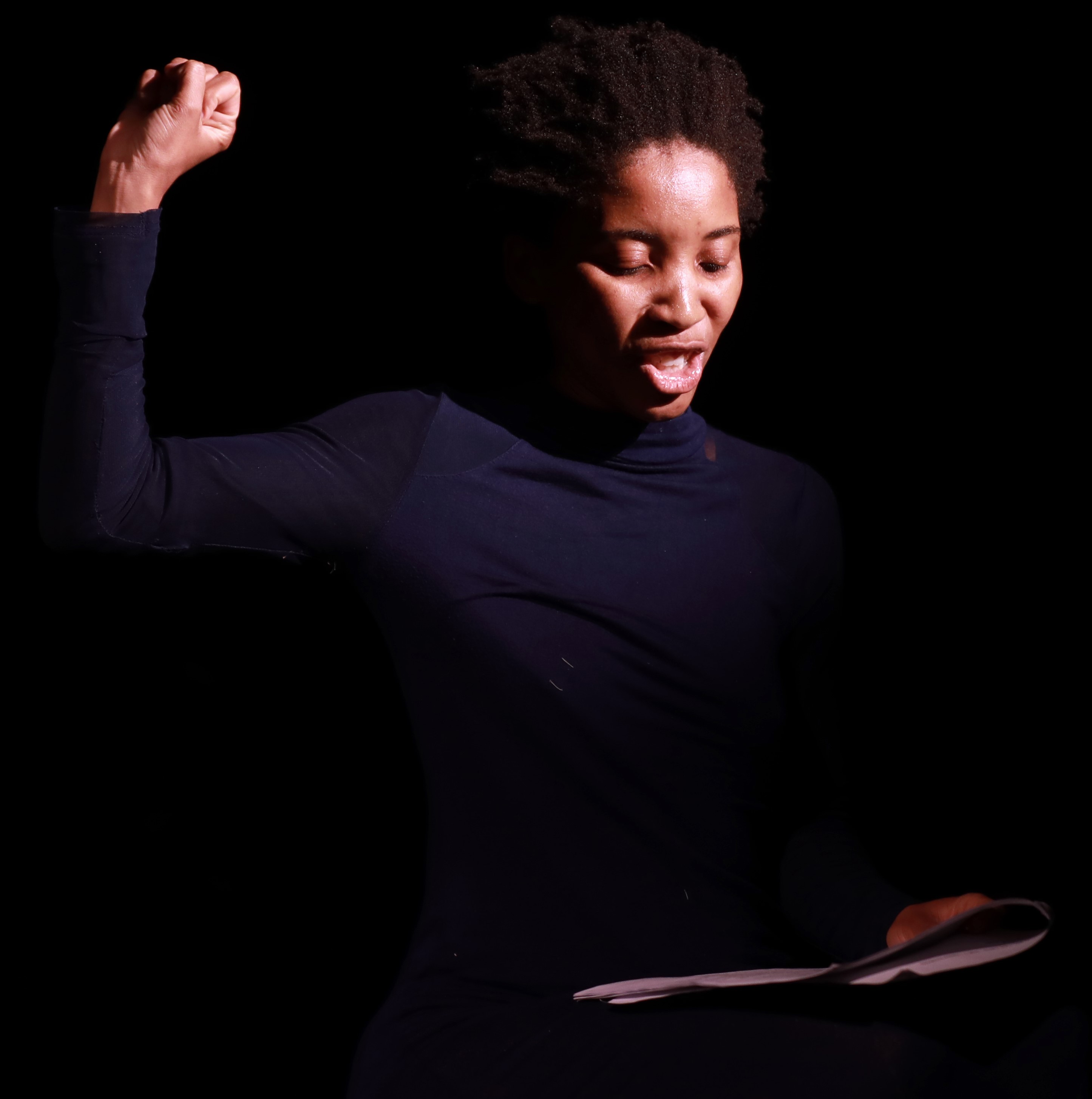
Actor/writer Jane Mpholo in Fragmented.
It was especially some of the tougher texts that surprised me. Take, for example, Jane Mpholo’s Fragmented. When reading the text, I found it too rambling and sometimes overstating or too determinedly explaining something and yet, dealing with something as urgent as gender violence, probably the most horrific scourge in our society.
She’s a smart theatre maker/writer/performer and she pulled in director Heloïne Armstrong, who a night before the performance, cut, dragged and rearranged the text to sharpen the power of the words and message Mpholo wanted to put across – and all this was the result of Teksmark and the opportunity it offers young artists to try out their work in front of their peers and other interested parties.
Another text, smartly written and in a genre that doesn’t usually have much appeal for me, is Gita Fourie’s Afval, which was also staged at October’s Woordfees.
She has already hinted at things to come with a text Mamma, ek wil ‘n man hê!, winning the University of Stellenbosch’s Toneelkompetisie, while Afval already this year won the US Première Teaterfees.
When reading the text, I knew it had the potential necessary to be performed, unaware that it had already received many accolades and a potential run at one of our largest festivals, which was achieved to great acclaim.
Watch out for this dark farcical tale about Johan the serial killer, whose wife is desperate to keep his killer instincts from his daughter, who innocently brings many possible victims home for her parents’ approval.
Two established theatre makers/writers Henriëtta Gryffenberg and Albie Michaels teamed up for a workshopped text written by Michaels under the guidance of Gryffenberg as he combined two fascinations, Greek mythology and the phenomenon of Siamese twins, to explore the concept of marriage in the madness of the contemporary world.
Their’s was the perfect example of a text cleverly realised on stage. Titled 1, the couple Hiss and Hirr, Siamese twins, have grown so accustomed to a life lived in the closest proximity with both needs constantly juggled or compromised, they hardly dare investigate other options – to try living separately for example. It’s smart and the scope of putting this on stage is intriguing. And the wisdom of having someone to bounce off and shape ideas, is a winning recipe.
Another writer who has already proved her ability is Dianne Albertze, who wrote a poem combined with dance, not an easy concept to pull off. But again, she dabbles in mythology in a region of the country that lends itself to this kind of imaginative storytelling.
It’s not an easy text, but she has proved her stage craft before and if she puts in the work, she could pull it off. She has lost her heart to Namakwaland and with the help of the legendary choreographer Alfred Hinkel, her text, which plays with the mythology of the region will be incorporated in a piece that presents the spoken word, dance and multimedia.
She has set aside more than a year and if all her dreams and desires come to fruition, this could be something quite extraordinary, capturing the landscape and the people, all of them off the beaten track and not really part of the theatrical landscape – but one that grabs the imagination and again underlines the potential of Teksmark and everything it achieves.
One of the texts I knew from the start I would love to see on stage is Andi Colombo’s Dying in the Now. It deals with grief in a most unusual and human fashion. How many of us just want to run away when things get tough. It’s not that one thinks that will make the problem disappear but perhaps you can just forget about it – even for a while.
It’s about the gentleness, generosity and probing of the text and the issues it deals with especially coming from such a young yet wise perspective that makes it exciting.
Ten scripts have been selected for further development following this seventh Teksmark.
An extract from the extraordinary Karatara.
Fahiem Stellenboom, Marketing Manager of the Baxter Theatre, mentioned during the event that Karatara by Wilken Calitz and Shaun Oelf, presented on the Teksmark stage three years ago, is a wonderful example of the success of this project. “Following Karatara’s run at the KKNK, where it received the Kanna for Best Debut, it recently returned to the Baxter Theatre, for a short season. We are very proud to be associated with this production and project.”
Hugo Theart, Artistic Director of the KKNK, confirmed that bursaries for playwrights valued at R150 000 – funded by the Nasionale Afrikaanse Teaterinisiatief (NATi) and the KKNK – were awarded to eight scripts. “Furthermore, we are proud to present a run at the KKNK and Suidoosterfees to one script and to record another script as a full-length playreading.”
Writer Alby Michaels (left) guided by Henriëtta Gryffenberg with actors Zak Hendrikz and Cindy Swanepoel.Mikayla Joy Brown, the writer of the enchanting Jantjies and the Pearls Actors Robert Hindley, Eben Genis (in a welcome return to stage) and writer of Albatros, Louw VenterProlific playwright, actor and director Wessel Pretorius who has been rewarded for his latest text Kamermusiek.Extraordinary playwright Philip Theron, who has two remarkable texts waiting to be staged.
Six scripts presented at the 2022 Teksmark were selected for further development. Mikayla Joy Brown’s Jantjies and the Pearls, (which has a new take on forced removals again from a young yet informed place) receives a run at the KKNK and the Suidoosterfees in 2023 and bursaries to complete their scripts were awarded to five scripts: Philip Theron for Babilon, Babilon (and this is his second text in so many years that has been picked), Henriëtta Gryffenberg and Alby Michaels for 1, Wessel Pretorius for Kamermusiek, (which with some thoughtful editing could be a brilliant text), Anele Kose for the heart-wrenching Mhla ndiqala idibana naye and Louw Venter for Albatros, a text that deals with the relationship – or lack thereof – between a father and son, not often seen on stage.
Writer and performer Anele Kose of the extraordinary Mhla ndiqala udibana naye.
Four scripts from Teksmark 2021 have also been selected for further development. Marí Borstlap receives a bursary to complete her script Koning van die Diereriem. Nisa Smit receives a bursary to translate her script Nipped in the butt into Afrikaans, as well as Michaela Weir for her script What happens in Russia … Another Philip Theron text, Die kontemporêre kuns komplot is recorded as full-length play reading by The Playwright’s Laboratory (TPL). TPL is a new initiative that offers an online platform for playwrights to share their work with an international audience.
Michaela Weir, writer of What happens in Russia…Nisa Smit the writer of Nipped In The Butt. which was staged at the recent Woordfees.Writer of Koning van die Diereriem, Mari Borstlap .
“Teksmark began as a small project and has started to feel like a festival that built its own audiences over the past seven years. We are truly grateful for their support and cooperation of partners like NATi and the Baxter Theatre, as well as other development partners including festivals, theatres, The Playwright’s Laboratory, Suidoosterfees, the Jakes Gerwel Foundation and the Het Jan Marais Nasionale Fonds,” concluded Theart.
Adventures in Pantoland with David Arnold Johnson, Ilse Klink, Michelle Botha and Grant Towers
Speaking to Janice Honeyman about creativity is always a treat. She’s probably one of the buzziest creatives I know, always surprising with productions and shows that either blow your mind or get you thinking.
The challenge was set and she decided to respond with the biggest and the best – taking into account that she has been at it for more than 30 years, that’s no mean feat. “I’ve done many big ones but this was going to be next level!”
And her mind wandered to Into The Woods, realising there could be a panto in that. “All our favourite characters in pantos are in that production: we see Snow White and we see Aurora from Sleeping Beauty, we see Jack from Jack and the Beanstalk, we see Aladdin, we see Peter Pan, we see Tinkerbell, we see Pinocchio and that’s just the goodies; and the baddies are the wicked queen from Snow White, the giant from Jack and the Beanstalk, Abenazer from Aladdin, and the wicked fairy Kakkalura Kakiebos from The Sleeping Beauty.”
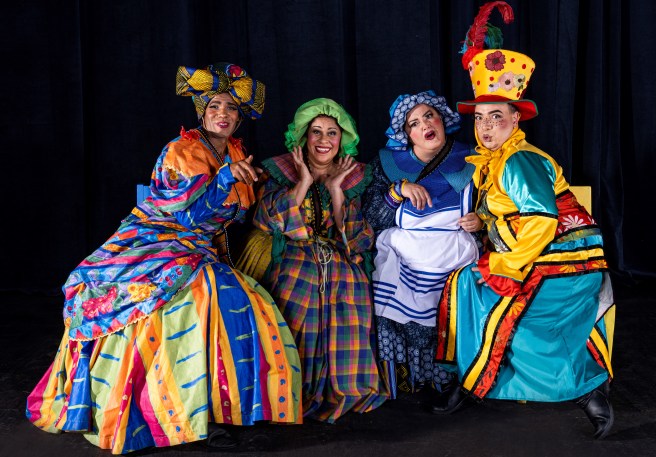
A brightly dressed cast from Adventures in Pantoland.
What she had to do was to think how to get all this stuff together. “I have, especially in the last while, been very obsessed with the lack of kindness in the world, the lack of generosity and the lack of caring for people.
“I don’t want it to sound preachy or prissy, but I was thinking we have to give kids those values, we’ve got to see that kids can have those sorts of heroes; not just the bad, hard sort of Marvel comic heroes, we need lovely people.”
“As I was conceiving all of this, bugger me if the war in Ukraine didn’t break out.”
And Putin became the follow-up villain to Boris Johnson and Donald Trump. And those were three of her obsessions, because of what they were doing to the world, of populism, dictatorship, corruption and all of that.
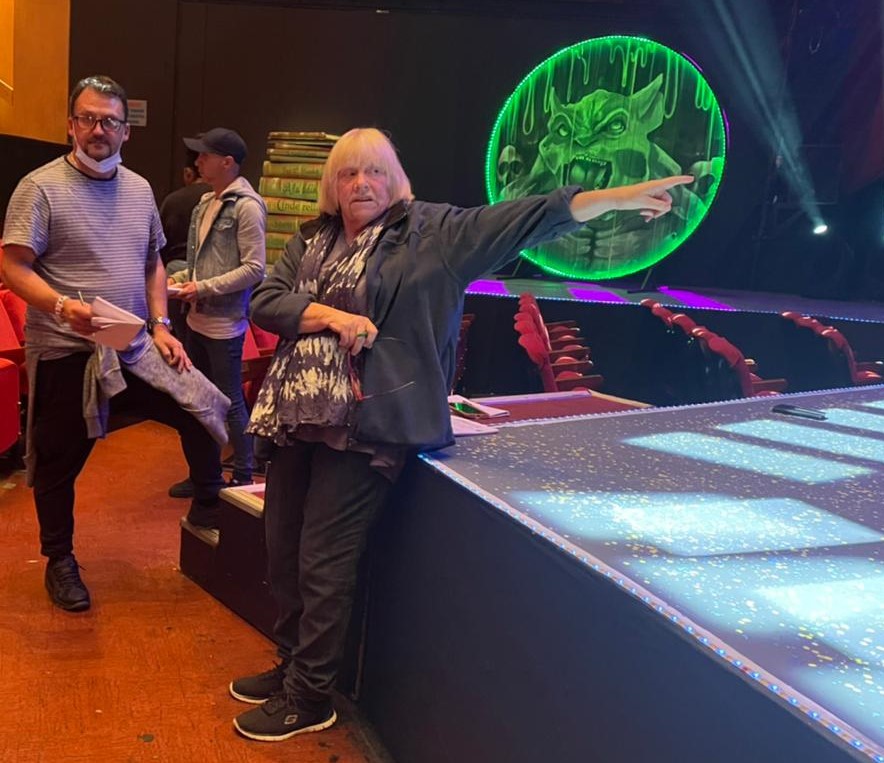
Janice Honeyman and her panto partner Timothy le Roux in rehearsals and planning.
“That was the kind of palette I was writing from and it was quite weird when I was writing, because I kept on taking a break and turning on the TV and if it wasn’t Covid 1 or 2 or 17 it would be Ukraine and what Putin was doing and the terrible pictures of little old women being chased out of their homes.
“And bad started getting to me. I thought the world cannot go on like this. That might sound very heavy and upsetting, but it isn’t. It is a proper good versus evil story, which is always what panto has to be. But somehow good versus evil was having more reverberations and echoes than it usually does each year,” she added.
When it came to casting, because of all the headliners, she knew there would be no above the line billings. What she was aiming for was a wonderful ensemble cast. She had to have good actors who could sing and dance. It was important to have actors who would portray the characters with heart and feeling and some skill.
Ben Voss as Abanazer and Brenda Radloff as Queen Evilina.
Talking me through the process, she explained that she always wanted to use Brenda Radloff because she’s always appreciated her as an actress and as a musical star.
She describes Brenda as the nicest person she knows but … also thought, who could be that terrible evil queen in Snow White?
“I thought, well, here’s a challenge for you girl, so I cast her and then I wrote, as I often do, according to the people I have in mind for particular roles. I remembered many years ago, she played Lady Macbeth for me. If the Evil Queen and Lady Macbeth aren’t equal to each other, then no characters are!”
Justin Swartz as Jack and David Arnold Johnson as Jack’s mother.
David Arnold Johnson gave a great audition and she’s always liked him as an actor. Ben Voss is a complete favourite of hers from the Beauty Rampelapela days (shows she directed) and he played The Wicked Queen in Snow White and one of the Ugly Sisters in Cinderella, so he was perfect casting for Abanazer. “I knew he would get the versatility in this particular version where he has to play toadying to the Wicked Queen because they all belong to Evil Action Inc and she’s the chairperson, he has to kowtow to her but when he’s with Aladdin, he has to be towering and a bully and a horrible, horrible person. I think Ben can be that and more!”
She’s also worked with Ilse Klink before and adores her because she’s a wonderful warm, giving actress and thus perfect for Kakkalura Kakiebos.
Hlengiwe Lushaba Madlala (and in the centre right) and Grant Towers.With Didintle Khunou as Snow White and Ilse Klink as Snow White’s motherfar right.Carmen Pretorius and Michelle Botha.
The good guys gang have to win the golden goblet of goodness. They include musical star Carmen Pretorius, Dylan du Plessis “who is really a lovely new discovery, charming, you can’t believe; Justin Swartz, Didintle Khunou who starred in The Colour Purple and I thought well here’s a lovely challenge for her, something different; and then the ensemble can all sing and dance and act very well. They’ve got that young injection which I always like, so its all about the whole spectrum,” she notes.
“Panto has got songs and dances and colour and sets and all the rest of it, but if the story doesn’t talk to your heart, it doesn’t work.
“So, at the beginning, I find the elements that mean a lot to me, I also without fail read Bruno Bettelheim’s The Uses of Enchantment about the particular pantos or fairy stories I’m doing just to give me that kind of deeper insight into the work. It hardly ever shows on stage except that with that foundation and working from that point, you can explain it to actors and they understand the psychology of the characters.”
Adventures in Pantoland at one of the colourful markets.
The toughest after all these many years is arguably to always find a new angle to tell the story, something different, something to make people sit up and lean forward. She always sits at the back of an auditorium to watch the movement of an audience, how they lean forward… and some more … and again. And then they sit still and they watch.
“It’s very important to create a story that will captivate them,” she explains. “Most young people’s stories, especially fairy tales, involve quests. This one is that the goblet of goodness is stolen by the bad guys and the good guys have to find it and bring it back.”
There’s just a whole lot of stuff that she gathers throughout the year. “It’s all about finding the topical and South African references and then jigsaw puzzling the whole thing together so that it forms a complete picture for an audience to enjoy, from beginning to end.”
Janice thinks about the total spectacle by indulging completely. “What is every single thing I want to see on stage this year?” And in it goes.
She is 73, and she still loves the end of the year joke. “I’ve done very serious stuff throughout 2022, so its lovely to be absolutely stupid, silly, rude, naughty and full of fun!”
And that she does better than anyone I know!
Adventures in Pantoland will be on The Mandela stage at Joburg Theatre from Sunday, November 6to December 24. Tickets from R260 are available now by visiting http://www.joburgtheatre.com or by calling 0861 670 670. Terrific discount prices are available for groups of ten or more.
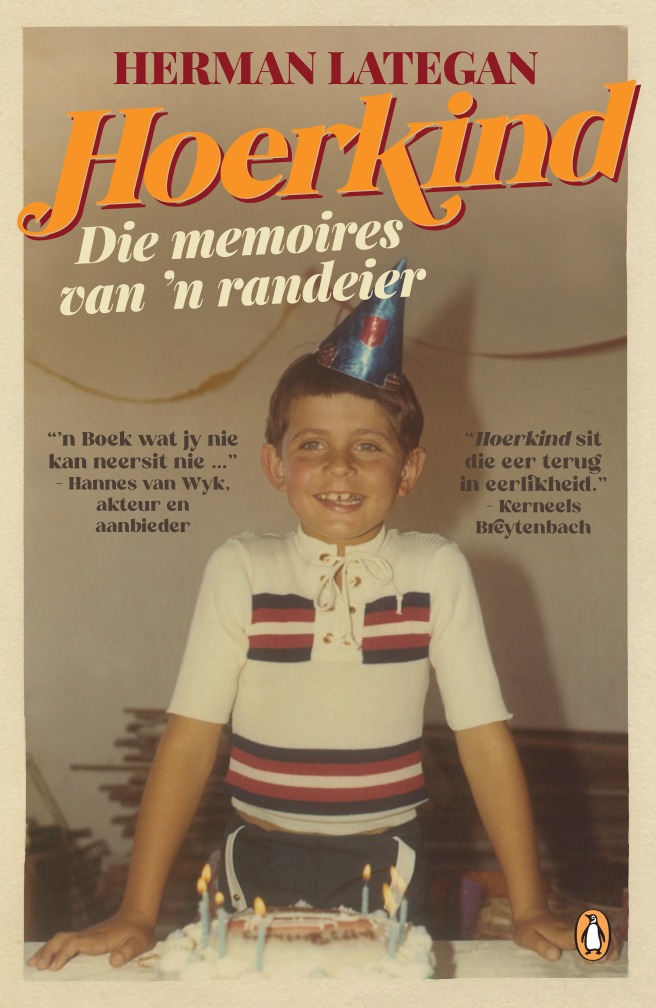
Journalist/writer Herman Lategan starts Hoerkind (Penguin) with a paragraph which states that this is how he remembers his life, and what happened from his birth until today. He notes that he was blessed to know people and to write about them. He also admits that memories can be deceiving. That there is no literary consciousness to be found. If there is a conclusion necessary to this writing, he hopes a reader or two could be encouraged to fight their fragility. Everything is fleeting. DIANE DE BEER interviewed him at his Pretoria Exclusive Books launch, was captivated by him … and his writing:
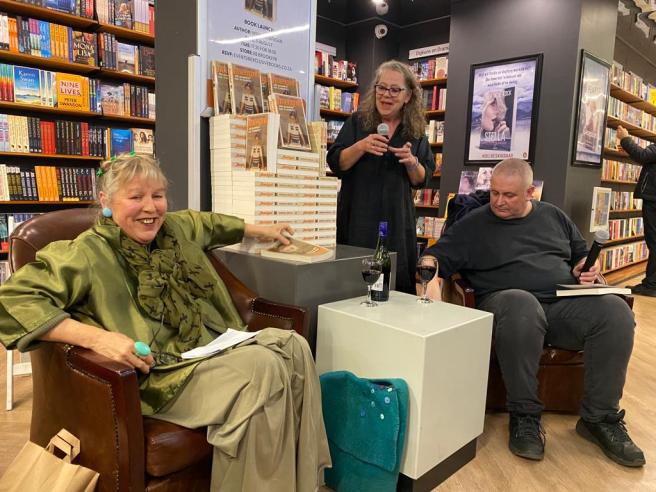
When I first read about Herman Lategan’s book Hoerkind, Die Memoires van ‘n Randeier (outsider) I realised I knew nothing about his life. When I was asked to chat to him for the Pretoria Exclusive Books launch earlier, I immediately said yes.
During the first reading of the book, my heart stopped several times and I rushed through it at breakneck speed. When I said I didn’t know anything about this beautiful boy, that wasn’t the half of it.
Because Herman lives in the Cape and now writes mostly for Afrikaans media, I only met him quite recently. Once people knew I was talking to him, lots of little titbits were recycled but I’ve always had a rule about gossip, unless something or someone has done something to me personally, I don’t take much notice. Life’s too short.
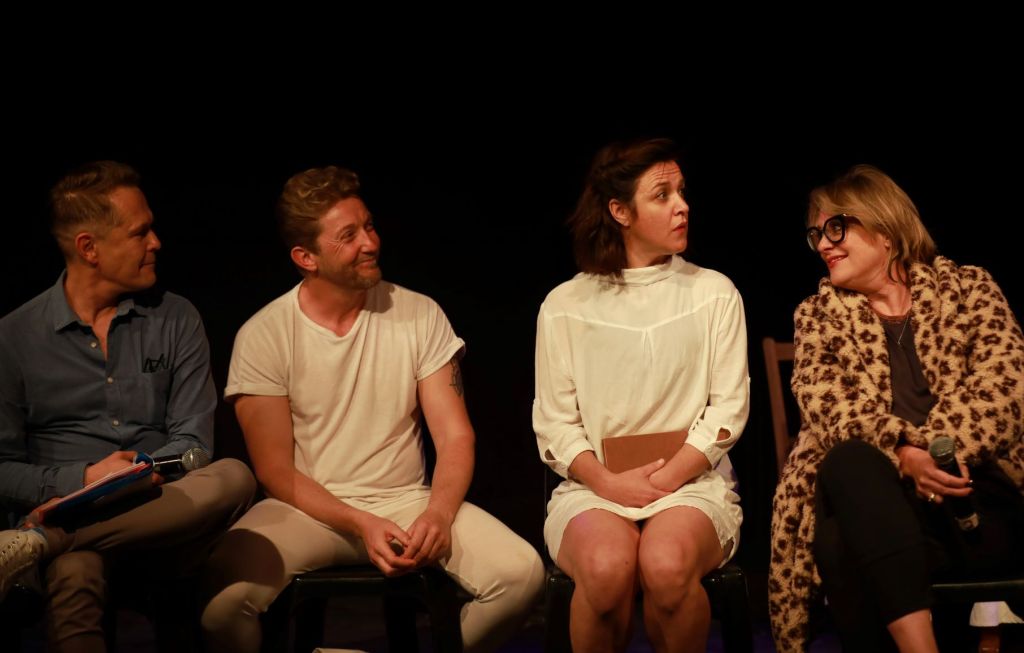
In conversation
I was slightly worried because I know Herman struggles emotionally and has addiction problems but on the night we had our conversation, he was exactly who I thought he would be. He was kind and funny and comfortable talking about what was a really challenging life ̶ and I don’t know many who would have sailed through it like he did.
And if that implies that it was easy, not at all. But he has a will to live, to make it and in spite of those who put him down throughout his life, he is determined to survive. It’s that bravado and courage, but also the vulnerability that caught my attention the first time we met. I think he felt it, because I knew from the start, Herman would be as charming as he always is when the two of us bump into one another.
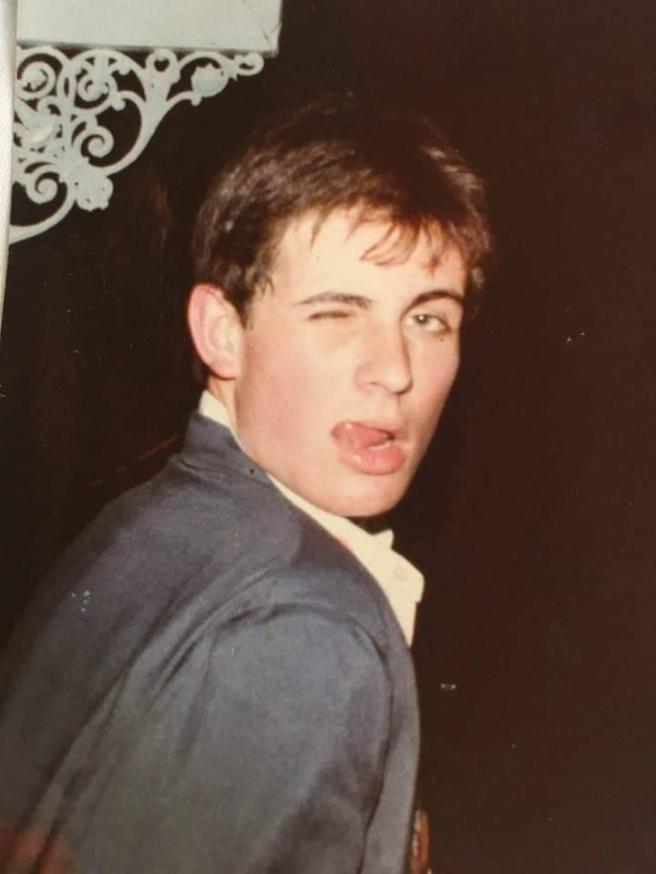
Playing the cool kid.
And he was. Not that he didn’t shock his Pretoria audience with his salty tongue, but with a title like Hoerkind (Whore Child), they would have expected that and we were all adults in the room.
Back to his story. At a second reading I could sit back and appreciate the life he had tried to navigate, the many angels he had watching over him (most spotted by him) in a life where he must have believed evil triumphs over goodness. It really takes your breath away.
There’s much about the book that I loved beginning with Herman’s voice. Like me, he started out writing in his second language (English) mainly because he had turned his back on anything Afrikaans, because it was there that he felt he received only harshness.
But in more recent times he has embraced his mother tongue and anyone who experiences his way with Afrikaans words and stringing words together, will know it’s where he belongs. It comes naturally, without pretence or a dictionary at hand – or that’s how it reads.
And because he has written the book in almost choppy chapters, allowing the events themselves to dictate, it’s an easy read. It fluctuates in mood and tempo and while much of what he has experienced has been harrowing, it is through his ability to find people who will embrace him, even adopted families who protect him, that he manages to forge ahead and achieve a life that would be admirable even without the hardships.
The Herman Lategan persona.
Understanding that he has had to do it all himself and that he knew instinctively when and where to turn for help, you also understand why he is such a survivor. Many in these circumstances would have become completely dependent on others. I don’t think he was ever allowed to do that. He had to fight his way through, go and find the answers of his neglectful parents for himself so that he could stop being the victim and forge a life that is completely reliant on his own talents – and there are many.
What’s not to love and hold?
That is exactly what he has done. Does he regret not having parents who were present in especially his young life? Of course, who wouldn’t. Is he still sad about that? Yes. And that’s never going to pass. But what he hasn’t done, is to feel so sorry for himself that it paralysed him.
He’s not that patient. Life isn’t going to pass him by. He has received as much joy as sorrow and he has decided to focus on all of it, hence the book.
He appreciates the people who have reached out a hand, but he hasn’t allowed that to define him. As many who gave, there were others who took away. He understood this balance and has probably always been battling the percentages, even putting himself at the coalface of his fears.
The Herman Lategan I know. Now you see him now you don’t …
So far he is winning and that’s the way he would say it too. He doesn’t take life for granted, that luxury has never been part of his life ̶ and in retrospect, he will probably recognise it as a gift. It’s how he kept jostling ahead.
Because Herman is as adept in English as Afrikaans, I’m holding thumbs that he rewrites/translates the book into English. It’s been hugely successful and a wider audience is certainly out there ̶ waiting.
Since this writing, the book is being translated, so those of you wanting to read it, hang tight.
From left: Graham Hopkins and Lihle Ngubo in The Lesson (Pictures by Suzy Bernstein); Alan Committie, Robyn Scott, Berenice Barbier and Sanda Shandu in Who’s Afraid of Virginia Woolf ? and Julie-Anne McDowell and Jennifer Steyn inThe Beauty Queen of Leenane (Pictures Brett Rubin).
It all began when someone at the recent Woordfees reminded me of three plays opening on the Gauteng circuit: The Beauty Queen of Leenane at Sandton’s Theatre on the Square, The Lesson at the Mannie Manim at the Market Theatre and Who’s Afraid of Virginia Woolf? at Montecasino’s Pieter Toerien Theatre.
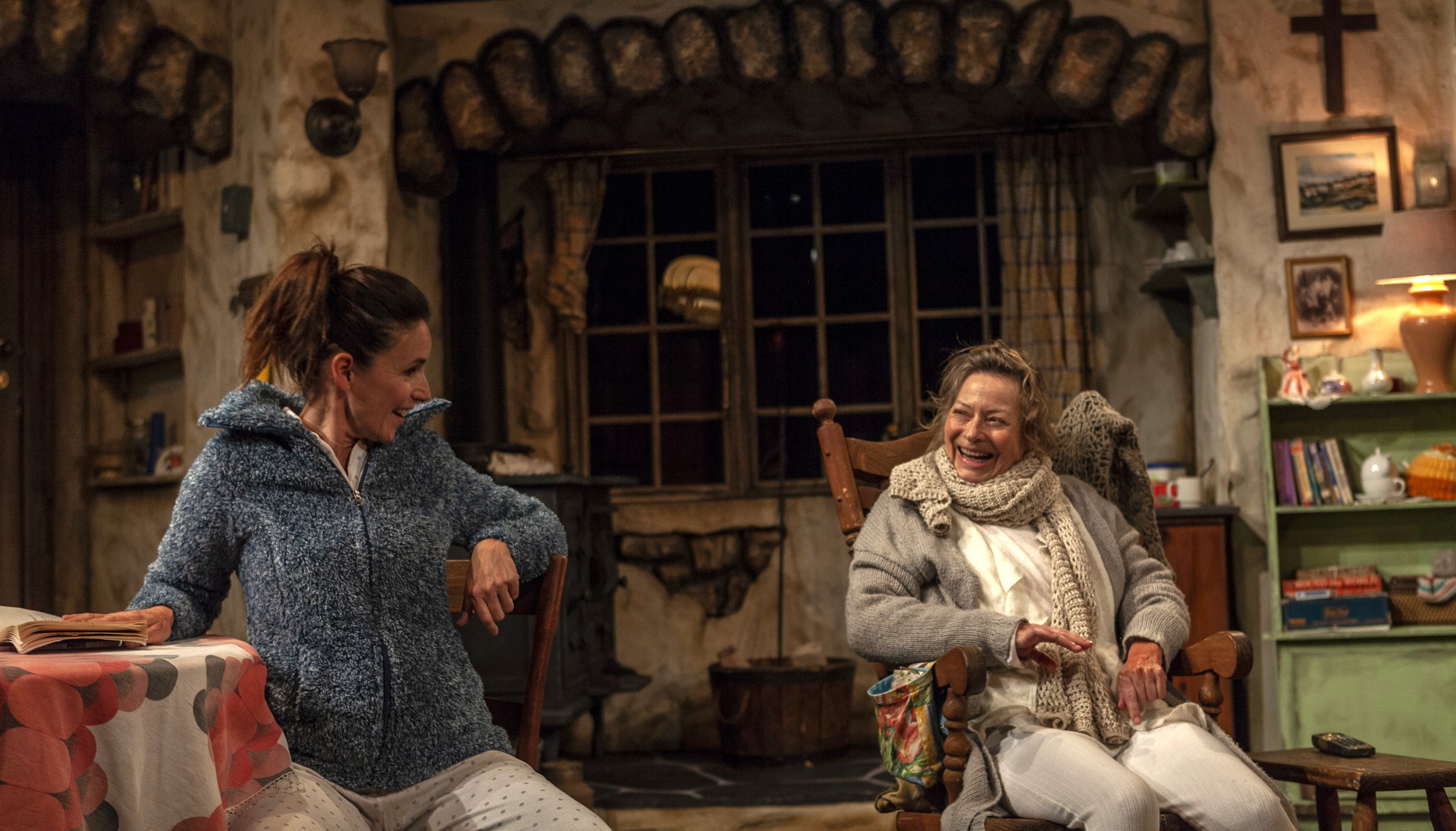
With Sandton first on the list, the cast, the director and the play were all strong attractions. With a rare appearance in Gauteng for the sublime Jennifer Steyn (who moved to the Cape a few years back) and the perceptive Charmaine Weir-Smith directing, we were in seasoned hands.
Jennifer Steyn in full force.
The Add to that an exciting younger trio consisting of Julie-Anne McDowell, Bryan Hiles and Sven Ruygrok and this black comedy has everything going for it. Steyn immediately sets the tone with a sublime if scarily monstrous performance as the mother none of us wish for.
Battling to survive the total onslaught in the role of daughter struggling to be servile, McDowell is constantly batting back the barbs with hardly any impact.
And into this grim fight walks two brothers with Hiles the one who upsets the teetering yet finely balanced relationship between mother and child.
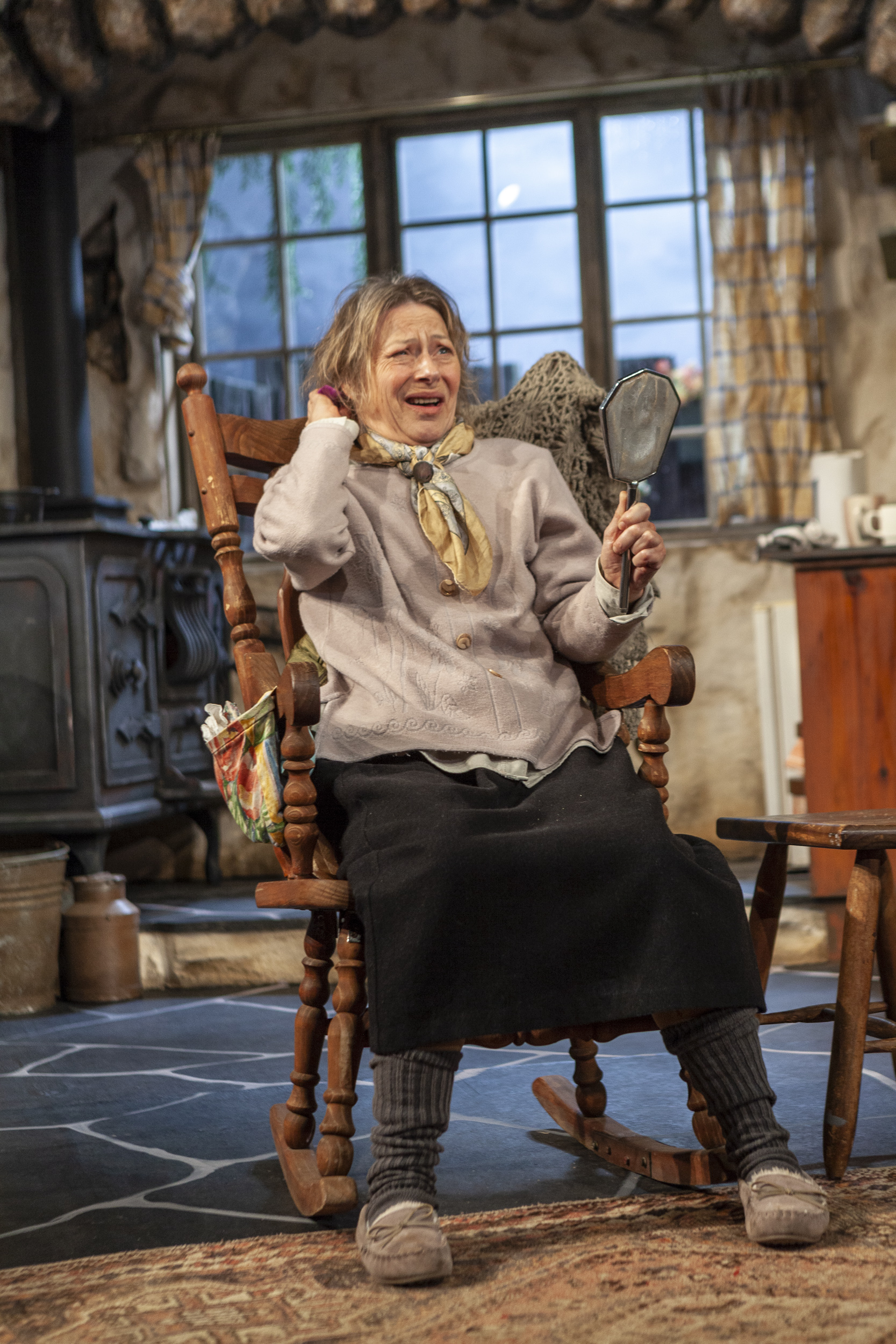
It’s about survival, darkly comical and probably one that plays out in many different forms, everywhere and all the time. But it takes the seriously sharp pen of Martin McDonagh (In Bruges; Seven Psychopaths; Three Billboards Outside Ebbing, Missouri) to add gut-wrenching to the experience. That and the performance of Steyn.
It’s a reminder of her long-felt absence on our stages. The subtlety with which she manages to create the sullen-faced mother is quite extraordinary – both hysterically funny yet deathly sad. It is the kind of performance that could so easily slide into caricature but she holds fast and never ventures that far.
Isolation and the fear of being alone do terrible things to people and while we laugh merrily at the dilemma of this mother and daughter duo, it is something that skirts many lives at some stage. That’s what makes this such a chilling encounter.
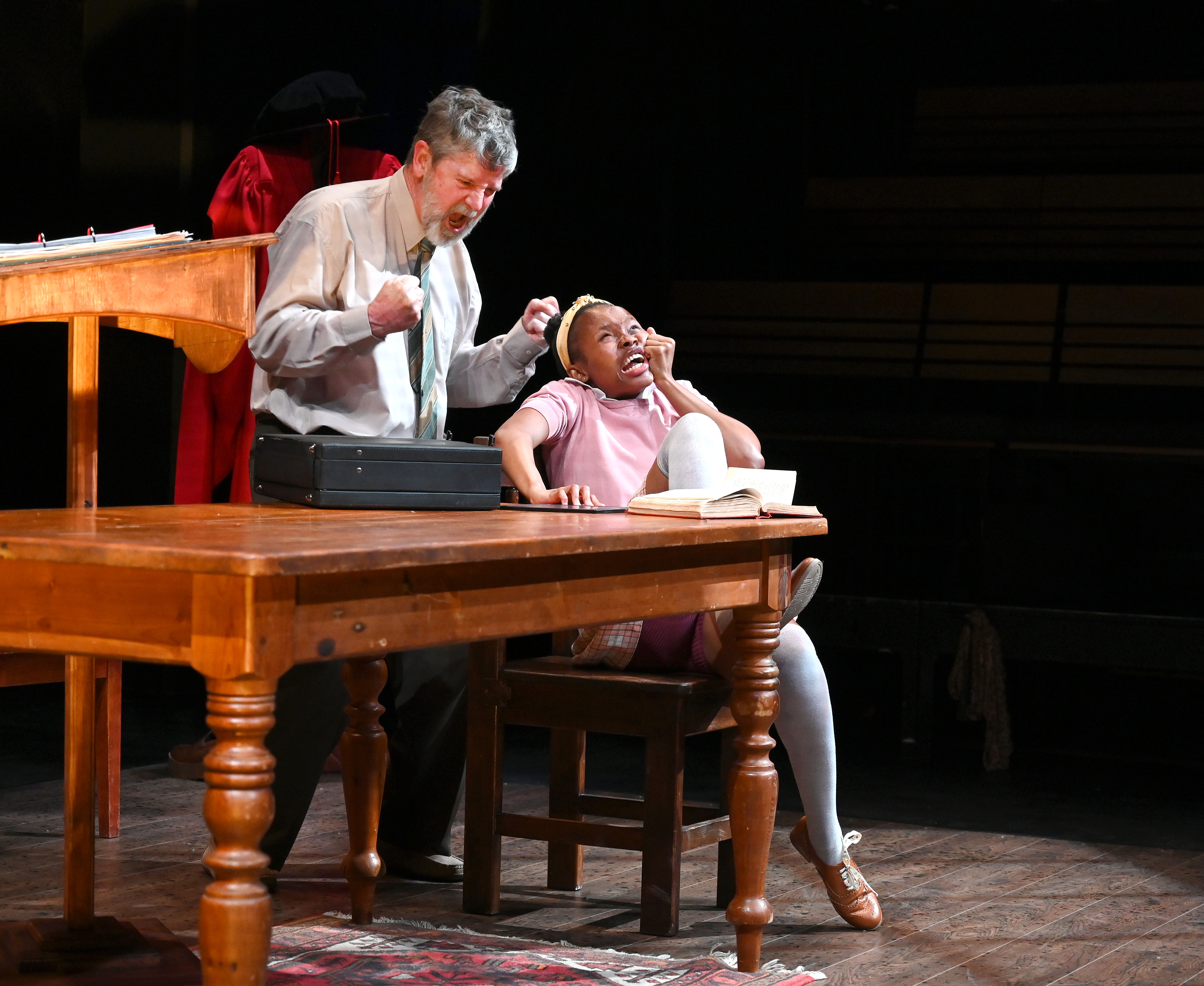
Ionesco’s The Lesson has been adapted by director Greg Homann for local audiences, and it’s a “welcome back” to another artist who has been out of the country for a few years.
It’s also a thrilling second time this year we see the excellent duo of Fiona Ramsay and Graham Hopkins on stage (with a return of the fantastic Hansard for a short run in January at Theatre on the Square) in a play that is as demanding as it is engaging. And the two veterans (wisely and to those of us witnessing both, with delight) couldn’t have chosen two more diverse plays if they tried.
Both are quite wordy and especially Hopkins has to think fast and furious on his feet while intent on bedazzling his latest pupil with his particular and peculiar lecture style and content. A wide-eyed student (Lihle Ngubo) arrives for a lesson, is welcomed by Ramsay’s rather clumsy if deliciously dilly assistant Marie and introduced to Hopkins’s almost doddering Professor – and the fun begins.
Homann’s director’s notes suggest that there are different interpretations to this locally flavoured adaptation including gender and power, and cultural oppression, or it can be viewed as a study of the relationship between student and teacher (all familiar tropes) but, more than anything, he has created a work that in this well-cast play, is as much about performance as it is about substance.
Graham Hopkins as The Professor.
If you were lucky enough to see Hansard earlier this year, it’s just magnificent to experience Ramsay and Hopkins playing completely different characters, much more wacky, yet approached with a delicacy that shows how carefully you must tread with roles that have to imply rather than be grotesque.
What a thrill for Ngubo to play with actors this experienced and she grabbed rather than shied away from the challenge. Her facial expressions (and costume) said more than words could tell and the interplay between the bullying professor and his awed student is quite riveting, with emotions ranging from amusement to outrage.
As the director also suggests, this is one to mull over and hopefully start a conversation. In the moment, the experience is almost like a slightly hazardous carnival ride.
And finally it was the turn of Sylvaine Strike’s Who’s Afraid of Virginia Woolf? with Robyn Scott and Alan Committie as Martha and George, while Sanda Shandu and Berenice Barbier as Nick and Honey are lured into the pink-tainted lair.
But in this 60th anniversary production, all this marshmallow fluff that the colours might suggest is nothing but an enticement, as the young couple discover to their surprise. But this quickly changes as they gather their own defences, with different results.
This is all about Strike’s modern take and what the actors do with their individual iconic parts. And a warning: it comes at you with all systems on red hot alert!
Scott (with purpose) has a voice used on different levels and with a mix of accents that might throw you at first – and then it DELIGHTS. Like an animal on the prowl, she uses everything from her over- the-top facial expressions to her strident body manoeuvres to make her presence shimmer and shatter in equal parts. It’s magnificent.
Unexpectedly, because of his stand-up comedy status, Committie has a subtler approach, which is wise, because if both of them came at you at full tilt, it might have been obliterating rather intimidating. Their combined assault is finely balanced to create the perfect storm.
The extraordinary quartet in Who’s Afraid of Virginia Woolf?
And while they are the prey, there’s nothing meek and mild about the younger couple’s performance. I completely lost my heart to Barbier’s innocence and desire to participate in what feels like fun and games while Shandu, whose race adds another level which is thrown at the audience to do with whatever they wished, has a presence which grows fiercer as the night’s antics progress and disintegrate.
It’s 2022, 60 years after the play premiered. Strike takes the bull by the horns, coming at you full force as people do in this current chaotic world of ours, and while our jaws drop and we grab at our chairs for safety, it’s grand and gregarious and great to wallow in this ecstatic night of sheer horror and hilarity.
Please keep in mind that it is three hours long, with two intervals. Arrive rested and prepared to engage.
All three these exciting and challenging plays deal in dysfunction and relationships in ways that are darkly funny yet deeply disturbing. With casts who carry a healthy spread of wisdom and exuberance, this was the best way to fling open those theatre doors.
The AVBOB poetry competition is a smart way to pay it forward in a country where words help to heal the past as well as celebrate hope. DIANE DE BEER celebrates the way the company has opted to play its part:
The AVBOB Poetry Trophies
If you think of projects companies could back to boost their philanthropic profile, poetry doesn’t immediately come to mind. But that’s exactly the route AVBOB, the funeral company, selected.
The link, of course, is the words. What do people need when attending a funeral or dealing with relatives or friends who have lost someone? And that’s what they have so cleverly done – while casting a wide net.
Not only did they decide to spotlight poetry, they also chose to feature all South Africa’s 11 languages in the process. What they have achieved even more smartly is to pay attention to the small stuff and to get it right.
the two fabulous presenters who got the show on the road, Rozanne McKenzie and Bolele Polisa.Urban Strings Acoustic String Trio at AVBOB Poetry Competition2022 AVBOB Pretoria Country Club
It’s no small challenge to run a national poetry competition in 11 languages. And to then select 11 winners, one for each official language. Once these are selected, all the poems are translated and each year a poetry anthology is published to further celebrate the poems, and in the bigger picture, poetry as a whole.
Eleven talented poets were announced as the overall winners of the 2022 AVBOB Poetry Competition at a gala prize-giving at the Pretoria Country Club at the end of last month. The evening was a glorious celebration of the power of poetry to bring people together, to build community, and to offer uplifting words in times of loss.
AVBOB CEO Carl van der Riet in his keynote address described poetry as an art that has a unique ability to bypass the rational mind and logical intellectual process and to speak directly to the heart.
AVBOB’s CEO, Carl van der Riet
“We have a rich heritage of poetry in South Africa. So, as we each observe Heritage Day on 24 September, I would like to encourage all of us to also remember this unique part of our heritage which has served as such a beacon of hope and inspiration for people.”
Each winner received a prize which included R10 000 cash, a R2 500 book voucher, and an elegant trophy. Each guest also received a copy of the annual anthology containing the winning poems, I wish I’d said… Vol. 5, which was launched at the event.
Van der Riet explained, “The support of mother-tongue voices has been a primary aim of the AVBOB Poetry Project since the very beginning and so the editors were encouraged that 65% of all poems entered were written in South Africa’s vernacular languages.” He further noted that the AVBOB Poetry Library now contains over 17 000 poems, each of which earned the poet a usage fee of R300. That amounts to over R5.2m spent on building a cultural repository of poems available to those who need words of comfort and consolation.
The top six poems in each language appear in the anthology accompanied by an English translation. A selection of commissioned poems and four Khoisan poems from the Bleek and Lloyd collection round out the anthology. This comprehensive collection was compiled by the editor-in-chief of the AVBOB Poetry Competition, Johann De Lange, and the esteemed Xitsonga academic, literary translator and founding chair of the PAN South African Language Board, Professor Nxalati CP Golele.
De Lange said, “Poetry bears witness to our lives, our loves and our losses. It helps us traverse major transitions, giving us the words to name the feelings and to tame the emotions. It helps us to fathom what we must live for, define what we must protect, and focus on what we must promote in a changing world.”
Viewers around the country participated simultaneously via livestream on AVBOB Poetry’s social media channels.
The 2022 AVBOB Poetry Prize winners are: Clinton V. du Plessis (Afrikaans), Letitia Matthews (English), Nkosinathi Mduduzi Jiyana (isiNdebele), Sipho Kekezwa (isiXhosa), Nomkelemane Langa (isiZulu), Pabalelo Maphutha (Sepedi), Kgobani Mohapi (Sesotho), Molebatsi Joseph Bosilong (Setswana), Prisca Nkosi (Siswati), Mashudu Stanley Ramukhuba (Tshivenda) and Pretty Shiburi (Xitsonga).
To order I Wish I’d Said… Vol.5 SMS the word ‘POEM’ to 48423 (at a standard cost of R1.50 per SMS) to have it posted to you at a total cost of R240. Alternatively, email your order to tertia@naledi.co.za or find it at selected bookstores. Visit www.avbobpoetry.co.za to find elegiac poems for reading aloud at funerals or to include in memorial leaflets, and to register to enter the 2023 AVBOB Poetry Competition (which closes on 30 November 2022).
AVBOB POETRY PRIZE WINNERS IN MORE DETAIL:
2022 AFRIKAANS WINNER – Clinton V. du Plessis
Clinton V. du Plessis lives in Cradock in the Eastern Cape where he works as an accountant. He is a prolific poet with many poetry collections to his name and his work has appeared in translation in the international arena. Listening to stories on the radio was a powerful formative influence in his childhood. He particularly loved listening to PH Nortje’s Die groen ghoen and was desperately keen to read the book. His father, who was a labourer on the railways, persuaded his boss to borrow the book from the library on young Clinton’s behalf. His winning poem Leemte is an achingly tender tribute, written in honour of his father.
2022 ENGLISH WINNER – Letitia Matthews
Letitia Matthews feels blessed to live on the southern border of the Kruger National Park with her husband, Peter. She’s a freelance web and graphic designer who found that helped her through heart-breaking losses. As a cancer survivor, she realised that loss also leads to new life and adventures. These experiences showed her how to navigate bereavement. Her poem Time Of Death comes from the dark nights and empty days that eventually led to her embracing life again.
2022 ISINDEBELE WINNER – Nkosinathi Mduduzi Jiyana
Nkosinathi Mduduzi Jiyana is known in spoken word poetry circles as Gembe Da Poet. He comes from KwaDlawulale in Limpopo, and after discovering a love of writing poetry in 2018, established a reputation as a vibrant slam poet. His poem Ithemba alibulali encourages youth to be strong, to resist fear, and to remain faithful when grief strikes. He believes that by entering the poetry competition he is exhibiting his writing talent.
2022 ISIXHOSA WINNER – Sipho Kekezwa
Sipho Kekezwa is a prolific and multi-award-winning author of children’s books, dramas, short stories and YA novels. He started his writing life as a voracious reader. Various of his titles have wearned significant acclaim over the years, but this is his first poetry award. His dramatic work, Ubomi, ungancama!, published by Oxford University Publishers in 2020, won the 2021 SALA Award in the Youth Literature category. Sipho’s winning poem ICocekavaras is a plea to heed common sense and to get vaccinated. After living in Khayelitsha for 26 years, he recently returned to East London to continue his work as a freelance editor, proofreader, translator, book reviewer and creative writing facilitator.
2022 ISIZULU WINNER – Nomkelemane Langa
Nomkelemane Langa claims the majestic rolling hills of northern KwaZulu-Natal as his geographic and cultural heritage. Born in the deep rural village of Nkandla he now lives in Richards Bay where he freelances as a TV producer and presenter, Maskandi singer and guitarist, author, poet, crafter, actor and MC.
His winning poem Mhla lishona ilanga is an aching portrait of grief set between the last light of dusk and the first light of dawn. He started writing poetry in high school as a member of the Isulabasha Dancing Pencils Writing Club. He attributes his success to the ancestral promptings that guide his words.
2022 SEPEDI WINNER – Pabalelo Maphutha
Praise poems and powerful words were Pabalelo Maphutha’s inheritance at birth. He was born into a family of traditional praise poets and writers in rural Ga-Mphahlele in Limpopo, and grew up with a deep love of the written and spoken word. He began writing and performing his own poems in the mid-2000s, while still at school. He has appeared in various theatrical and film productions and is committed to serving his artistic goals with passion, focus, and dedication. His poem Se išeng dipelo mafiša reflects on the process of aging and death and will comfort all who have lost an elder.
2022 SESOTHO WINNER – Kgobani Mohapi
Kgobani Mohapi comes from the eastern Free State town of Lindley. He has entered the AVBOB Poetry Competition every year since its inception to test his poetic skills against the best in the country and came second in 2019. His poem Ke o entseng deals with the issues lovers would ask after a separation. He was inspired to write poetry by his Sesotho teacher, Mr NJ Malindi. Kgobani is also a novelist, with a novel titled Lerato.
2022 SETSWANA WINNER – Molebatsi Joseph Bosilong
Molebatsi Joseph Bosilong is an educator and a published author from the North West province with an enormous passion for the arts. He is an engaged member of the regional writers community, committed to sharing opportunities and information with fellow Setswana writers. His poems appear in Volume 4 of the poetry anthology, ‘I wish I’d said…’ He used the form of the Mosikaro, which uses the first letter of the first word of each line going downwards to spell out the word Tsholofelo, which means hope. Tsholofelo is both the title and the theme of his poem, which pays tribute to the health workers who battled the pandemic and the hope for a vaccine to defeat the virus. He wrote this poem to heal from the pain of losing his mother.
2022 SISWATI WINNER – Prisca Nkosi
Nomvula Prisca Nkosi started writing short stories and poems at a very young age. She lives in Ermelo, where she works at a hamburger joint. While she makes fast food, she has many deep thoughts. She decided to enter the competition to improve her writing skills and to give voice to her rich imagination. Her poem Imihuzuko explores the scars that tell of life’s injuries. “Some people lose hope while others gain strength through their suffering,” says Prisca, “and to share the experience inside me.” This is her first poetry award.
2022 TSHIVENDA WINNER – Mashudu Stanley Ramukhuba
Mashudu Stanley Ramukhuba was born in Ha-Rabali village in Limpopo’s Nzhelele Valley. He attended Rabali Primary School and, later, Patrick Ramaano Mphephu Secondary School, where his love of poetry grew strong. He was inspired to enter the competition on the death of beloved family members. “When my sister died very young, it was hard to believe I would never see her again,” he says of his winning poem Maḓuvha a mudali. This carefully crafted and formal work honours his sister’s life. The poet reminds the reader in a wise and gentle tone that we are all visitors on this earth, and encourages us to consider our legacy. Mashudu is married and currently unemployed.
2022 XITSONGA WINNER – Pretty Shiburi
Pretty Shiburi is a poet making powerful connections. Born and raised in Madobi village in the far northern part of South Africa and currently studying electrical engineering at Westcol TVET College in Krugersdorp, this is a poet who makes sparks fly. Her darkly funny poem N’hwembe explores the idea of home and ownership by examining a pumpkin vine, which causes consternation in its wanderings into the neighbour’s yard. This playful metaphor demonstrates her love of her mother tongue and offers a wry glance at other wanderers.
Each year, The European Film Festival is one of the movie highlights of the year – and this time is no different running between October 13 and 23. Here is a short review by DIANE DE BEER on one of the films:
PLAYGROUND
BELGIUM
Director: Laura Wandel
Cast: Maya Vanderbeque, Günter Duret, Lena Girard Voss, Karim Leklou, Laura Verlinden
Genre: Drama Time: 72 minutes
French with English subtitles – 2021
Even if you were never bullied in school, all of us have been witness to something like that in our lives. Take Donald Trump for example, his whole existence is thanks to bullying, not an easy thing to watch even from afar.
But the title of this one says it all, and again, it is the way the young people deal with what is given to them that is captured so brilliantly.
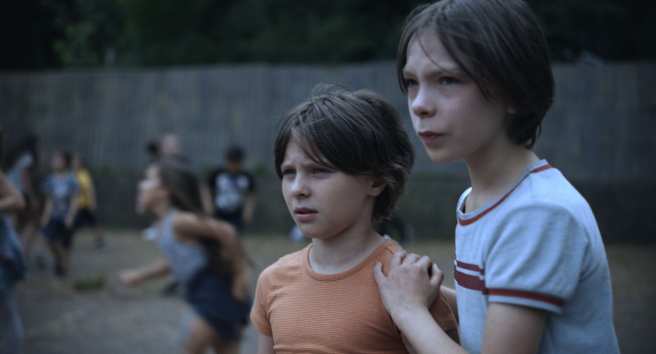
We all know and understand the impact of abuse during your younger years, on the rest of your life. When seven-year-old Nora witnesses the bullying her older brother Abel has to endure at school, she rushes to help out. But he persuades her not to tell anyone.
She is still trying to adapt to school herself and this is something that she finds quite unbearable – that and the subtle bullying that is happening amongst her own circle of new acquaintances.
It’s a hugely emotional film with the camera rigged at Nora’s height so that we are really pulled into the centre of her storm.
It’s also the inability of doing the right thing on every level. The sensitive teacher isn’t always around at the right time, and when they are, the problem is much easier to deal with – and yet when away from the adults, is when the pressure comes into play.
This is a fantastic opportunity to catch up on many of the best movies from Europe of the past year. For details on all the films and how to watch visit www.eurofilmfest.co.za
Each year, The European Film Festival is one of the movie highlights of the year – and this time is no different running between October 13 and 23. Here is a short review by DIANE DE BEER on one of the films:
Children feature strongly in this haunting, beautifully told story about a child’s perception of loss. Nelly has lost her beloved grandmother and is helping her parents clear out her mother’s childhood home. She explores and discovers both the house and the surrounding woods where her mom, Marion, used to play and built a treehouse Nelly has often heard about.
Then suddenly, out of the blue, her mother leaves and that is when Nelly meets a girl her own age building her own treehouse and named Marion.
It’s a film that explores specifically the world of children, how they are affected by what is happening in the world around them, how adults deal with them and how they cope with feelings that are way beyond their tender years.
The two young actresses are superb and add another dimension to the film, which is tenderly made and sensitively unfolds.
It is not a children’s movie, but it is very much about their lives, they way they digest what is given to them by the adults who run their little lives and how they make sense of things they don’t understand.
This is a fantastic opportunity to catch up on many of the best movies from Europe of the past year. For details on all the films and how to watch visit www.eurofilmfest.co.za
Each year, The European Film Festival is one of the movie highlights of the year – and this time is no different running between October 13 and 23. Here is a short review by DIANE DE BEER on one of the films:
OLGA
(SWITZERLAND)
Director: Elie Grappe
Cast: Nastya Budiashkina, Sabrina Rubtsova, Jérôme Martin
Genre: Drama, Coming of Age
Time: 85 minutes
French, Russian, Ukrainian with English subtitles – 2021
Anything that comes from Ukraine has added appeal because of its harrowing circumstances for almost a decade now, resulting in the most recent horrors inflicted by Putin.
But this is not a story about that, even though there are signs of things to come. What it does capture is how these catastrophic events impact the lives of children. What should have been relatively carefree times in their young lives are clouded by what is happening on the periphery.
Olga is a teenage gymnast living in exile in Switzerland where she dreams of Olympic gold as she battles to fit in with her new team.
Her mom, who is a journalist, is suffering the hardship of what that means with a sudden uprising in Kiev, the forerunner of what that brave country is facing right now.
Olga is heartbroken and scared, feeling she has deserted those she cares most about while fighting for her own freedom.
It is by no means a perfect movie, but it does have added impact because of the lives it captures almost in a bubble as we know now and with hindsight. It also throws a light on these young athletes and the pressures they face as we have recently been made much more aware of with gymnasts like Simone Biles and tennis star Naomi Osaka.
This is a fantastic opportunity to catch up on many of the best movies from Europe of the past year. For details on all the films and how to watch visit www.eurofilmfest.co.za



























 De Beer Necessities