AUTHOR SIPHIWE GLORIA NDLOVU IS A FORCE OF NATURE IN LITERARY WORLD

In a world flooded with new books  daily, it is difficult to find a voice as unique as that of Siphiwe Gloria Ndlovu. With much acclaim and a big prize for her first novel, one could have expected some hesitancy with her second attempt. But this writer outsmarted us all by completing this latest novel even before all the accolades for the first started pouring in. DIANE DE BEER revels in her story and The History of Man:\

If you have read last year’s winner of the Sunday Times Fiction Prize, Siphiwe Gloria Ndlovu’s The Theory of Flight, you would have recognised a unique voice.

Her latest, The History of Man, is further evidence of that. In fact, it’s hardly recognisable as the same writer and took me completely by surprise – fortunately in the best possible sense.

These past few years, reading as much as I did, I realised that what I loved best was for writers to overwhelm me with their originality. Siphiwe does that and so much more. After all, originality alone won’t make it. But she has already shared her abundant writing skills.

Often a second novel after the success of a debut can be a bit of a downer –from the writing or reading point of view, but this writer outsmarted us all. The second was already written when she won acclaim for the first!

Author Siphiwe Gloria Ndlovu.

Asking about her choice of follow-up story, she responded with the explanation that the question assumes she has any say in the matter. “For me the wonderful thing about writing is that it is something that happens to me. The character, Emil Coetzee, first came to me in 2007 or 2008 – I remember jotting down a few things about him then. He plays a role in The Theory of Flight, albeit a small one. That said, I had no idea that I would write The History of Man as a follow-up to The Theory of Flight.”

She notes that as her first novel was a critique of the post-colonial moment, it made sense to her, given her love of history, that she would want to explore and critique the colonial moment.

Given what I wanted to explore about the colonial moment and the narrative it creates – its effects on the coloniser and the colonised; its particular kind of masculinity; its dependence on the idea of progress; its insularity and superficiality; its many inventions and dichotomies (white superiority/supremacy, black/other inferiority, active men/passive women etc.); and, most importantly for me, its privileging of certain voices (white/male) over others and the many silences that that creates – it just made sense to have a white, male protagonist through whom the story would be focalised. And that is how Emil Coetzee’s story became the follow-up to Imogen Zula Nyoni’s story.”

What fascinated me in the reading was how seemingly comfortably this black female author crawled under the skin of a white supremacist male. I can see some conjuring up all kinds of dilemmas, the way we appropriate voices etc. but especially in Siphiwe’s case, didn’t it make her skin crawl? For me when reading,  my mind kept going to specific South African characters dubbed Prime Evil and Dr Death in the press.

That’s why we need fresh voices telling specific stories. What she set out to do was write a character that was multi-dimensional, complicated and believable, she says. She ticks all the boxes.
In fact, what I loved about the character was that he wasn’t stereotypical – the kind of person one would imagine could commit the worst atrocities against his fellow human beings. If anything, he almost disappears into the background, or as a man apart.

“When Emil Coetzee’s character first came to me I admit that he was not a particularly sympathetic character. He was a stereotype and a caricature – a womanising, racist and sexist white man with power – and, quite frankly, offended many of my black feminist ideals and sensibilities.

“At the time, I think I thought that that was a strong enough character to build a story on, so I am very happy that I did not write it then because that is not a novel that even I want to read. The saving grace came when I moved beyond the what – womanising, racist and sexist white man with power – to the how (how does someone get to be this way) and most importantly the why (why does someone get to be this way).”

And that she achieves brilliantly. While I was still trying to work out what she was trying to do because the writing and telling of this particular story was so different from her first outing – with The Theory of Flight in my mind – I was drawn into the intriguing life of a man whose actions seemed to be determined by things outside of him rather than an inner driving force.

“I was writing a character whose experience, for the most part, is different from my own. However, I found entry points, similarities in our experiences that allowed me to empathise with the character and begin to understand his inner world on a deeper level. These are a few of the entry points that I used – the boarding school experience, growing up in the City of Kings, falling in love with the savanna.

“Once I could empathise with Emil Coetzee, I understood his character fully and knew what kind of narrative he would like to exist in – in terms of plot, tone, imagery etc. For instance, I knew Emil Coetzee would only be fully comfortable in a realist novel with a linear plot because that is what makes sense to and of him. I also knew that he could not be surrounded by language that seemed too poetic because he would be deeply suspicious of that kind of language and very uncomfortable in it.”

And that’s why she says the style of a book is determined by the characters. “I have to be true to the characters in my story,” she notes. “I know this is a (frustratingly) writerly thing to say, but I listen to the characters and let them guide me. I am also guided by what the story is ultimately trying to achieve.”

And while she says she worries about how the realism of her second book will received after The Theory of Flight, which many read as magic realism, she needn’t worry.

As a writer, she is a creative force. Even though I lost my heart to her first book, this second one stayed with me for the longest time. South Africa had its own Emil Coetzees and perhaps that is what I found so disturbing on meeting this man who seemed uncomfortable in his own skin and seemingly almost thoughtlessly allowed outside forces to determine his life.

The author Siphiwe Gloria Ndlovu with her biggest fan, her mom Sarah.

With lockdown in full swing by the time The History of Man appeared on bookshelves, Siphiwe describes herself as being in the best place to have a productive lockdown. She was lucky enough to be on a writing fellowship. “In February I arrived in Johannesburg as part of an international cohort for a four-month-long fellowship at the Johannesburg Institute for Advanced Study (JIAS). My plan was to work on the first draft of my fourth manuscript, which I did. Then lockdown happened and JIAS kindly extended their fellowship until all of us could safely return to our home countries and so I had time to polish up and finalise my third manuscript, which I wrote last year.”

And if you are wondering how these stories just keep tumbling out, she’s ready with an answer: “There is a fifth book in my head. I think it definitely helps that I am writing a series of interconnected novels because until the series is done there will always be the next book.”

So get onto the second one now. If her record holds fast, you will be just in time for the third one to drop.

And this reader certainly feels blessed to have discovered this author who not only writes about a world that is sadly familiar, but also masterfully achieves making sense of it.

FEEDING FAMILY AND FRIENDS MUCH MORE THAN SPICE AND ALL THINGS NICE

Cookery books, some brand new and others not so much, but all with recipes that will send you racing to the kitchen – an enjoyable escape in a time of Covid. DIANE DE BEER grabs an apron:

Spice Odyssey by Cariema Isaacs (Struik):

Isaacs affinity for spices reflects her Cape Malay heritage and the time spent cooking and baking in her grandmother’s kitchen in the Bo-Kaap, Cape Town’s Cape Malay Quarter.

Cumin and coriander, cloves and star anise as well as cayenne pepper and masala blends are all very familiar to her and part of her cooking vocabulary.

But going even further, her travels to India, Turkey, Malaysia, Sri Lanka and the Middle East have further enhanced her spice palate and add rich flavours to her recipes.

Just paging through, it is easy to pick many recipes that could become staples with vegetables, meat and fish all playing a starring role. She says that if she had to stop eating meat she could easily survive on cauliflower and what follows is a recipe titled My Beloved Gobi Masala (Cauliflower Spiced Curry). Then there’s also a leg of lamb, a bunny chow and a Bengali fish curry.

Or that wonderful Middle Eastern breakfast/brunch dish that pops up in slightly different versions from Morocco to Turkey, a Shakshuka, which in this instance is a combo of YouTube versions from a friend!

More than anything, you should be guided by the title. If you want to expand and add more spice to your food, this is it.

Anatoli Authentic Turkish Cuisine by Tayfun Aras (Human & Rousseau):

It is quite eerie in these times to write about restaurants because you first have to check whether they have made it.

I had many meals at Anatoli but that was more than 20 years ago for no other reason than I don’t visit the Cape that often and when I do, there are so many new places to try and usually the friends who live there are the ones who decide.

But following a visit to Istanbul a few years back, I fell in love with Turkish food and who better to introduce you to the magic of their cuisine than someone who is also familiar with this country. In fact he has been the owner of this iconic Cape restaurant since 2003 and this book is a way of sharing his recipes and kitchen secrets so that his native food can be celebrated in his adopted land.

He introduces himself, offers some background and also pays homage to the original owners of Anatoli, whom he credits for the longevity of the establishment. He is only the second owner and while he inherited their menu and used it to find his feet in the first few years, he then began to put together a meaner and leaner menu, which according to statistics consists of the items most favoured by customers.

It’s a glorious book with many familiar recipes (kebabs to brinjal in many different forms) as well as their most delicious and famous rice pudding. That will be first on my list to see if I can replicate anything close to the heavenly desserts we tasted in Turkey.

 I lost my heart.

Set A Table by Karen Dudley  (Jacana):

I was so upset when I first heard that Karen Dudley’s amazing deli The Kitchen was closing that I had to recheck and confirm when reviewing this beautiful book.

Yet another reminder of her remarkable cuisine skills, which reach much further than food.

I also remember that when I read that Michelle Obama was having lunch there during a visit to Cape Town, I felty it was such a magnificent choice and would give her a real flavour of our country’s food.

With this particular book, Dudley’s latest, she focusses on entertaining – hosting a dinner party, something that might again become popular once the worst of Covid-19 has abated and we feel safer with at-home dining. In the meantime, the book allows you to dream.

“When we set a table, we reveal ourselves in an intimate way,” writes Karen, and she would know. Like her sense of style from dressing herself to her deli, she immediately speaks volumes about who she is. Every  time I was privileged to interview her on one of her two earlier cookery book tours, she made a dramatic impact – of the best kind.

For her inviting people to dine is all about friendship and sharing stories and conversation and for the sheer joy of eating something delicious!

And while there are many pictures capturing her style as well as much information on entertaining, in the end, it also holds marvellous recipes specifically for entertaining as well as a reminder of the kind of food you could find at her memorable deli.

Thank goodness she left us with recipes to keep us going.

Google Karen Dudley or check on Facebook because I know in the future she will simply reinvent herself – and that will be something to watch.

Ottolenghi FLAVOUR by Yotam Ottolenghi and Ixta Belfrage (Ebury Press):

This is the only cookbook not from our shores but Ottolenghi is an old friend and many followers will know that with his focus on vegetables in this one, it’s not a new trend: “I have never been shy about my love for vegetables. I have been singing the praises of cauliflowers, tomatoes, lemons and my old friend the mighty aubergine for over a decade.”

FLAVOUR is the third in a series and as the chef says it best: it’s about understanding what makes vegetables distinct and, accordingly, devising ways in which their flavours can be ramped up and tasted afresh; it’s about creating flavour bombs, especially designed for veg.

Here especially, he was challenged to ramp up flavour in vegetables and take it to new heights. “For me,” he confesses, “ this includes ingredients such as anchovies, fish sauce and Parmesan which are not, of course, often used in recipe books in which vegetables play the starring role.”

He understands this and the growing trend of defining as either vegetarian or vegan, but he decided to appeal to the widest group of vegetable lovers possible. However, when he uses an animal product (“we are not talking prime cuts of meat here, or a bluefin tuna steak!”), he will offer a vegetable alternative for the sticklers so that everyone can join in.

But he also introduces a secret weapon and about her, he has this to say specifically: “If you managed to spot a lime or two in places where lemons would appear in previous Ottolenghi books, or noticed a range of Mexican and other chillies peppered all over these pages, or if you came across quick pickles and infused oils used to give dishes a finishing touch – you have identified the fingerprints of Ixta Belfrage, who’s had those same fingers on the vegetable pulse for the last couple of years and helped shape the recipes in this book in particular ways.” Enough said! If you haven’t yet discovered the Ottolenghi magnificence, perhaps it’s time . His books like his food are sheer genius.

YOUNGSTERS FOLLOWING THEIR DREAMS AT THE POPULAR PRETORIA BOEREMARK

You cannot but notice the sparkle and fighting spirit of three youngsters on the job at the Pretoria Boeremark (Farmer’s Market). They do their job with enthusiasm and energy that is about so much more than simply making money. They’re taking their future in their own hands. DIANE DE BEER spoke to the three youngsters about their hopes and aspirations:

Mahlatse and Karabo Aphane at work at the Bread Gypsy.

SIBLINGS KARABO AND MAHLATSE APHANE PLAN THEIR LIVES WITH A PURPOSE

Brother and sister Karabo (16) and Mahlatse Aphane (19) are on the march and it’s all about the future.

They have many strings to their bow, one being their work at the Bread Gypsy at the Pretoria Boeremark where their embracing smiles enthuse customers as much as the high quality artisanal breads. And then they go for the full monty, when the two Ndebele and Sotho speaking kids respond to the customers in Afrikaans.

Their mother, a remarkable woman, wanted them to be in Afrikaans schools. She is also a linguist and the children rattle through the seven languages they speak, two they can understand and another in the process of learning. “It’s not easy,” says Karbabo but both are fully aware of all the benefits.

That has been a strong determinator of much of what they do. He first started at the Boeremark collecting and pushing trolleys to make pocket money. Then another stall owner employed some of the young boys to help with his plants and compost. “It was tough though, because he picked us on a first-come-first employed basis.”

Once he was spotted by the management of the very popular Bread Gypsy it was all systems go and now the two Aphane siblings are fully integrated into the system. “I was very shy in the beginning but Karabo helped me to overcome that,” says Mahlatse.

Karabo Aphane on the job

But what happens the rest of the week is also a big part of their inspirational story. From a young age, these two siblings understood that sport – any sport – would add to their life. They tried everything and finally, Karabo settled on athletics and rugby, while Mahlatse has decided to concentrate on rugby, winning a rugby scholarship to study Sport Management at the University of Pretoria this year.

Karabo, who is through to grade 12 is at the ZAYO Sport Academy on a bursary where he plays rugby (scrumhalf or fullback) and athletics (400 and 800 m).

Their days usually start with a run  and their mom (whose job is a physical one) accompanies them for the exercise. But then they also participate in hectic training programmes for their rugby (and athletic) endeavours – some part of their programmes but others undertaken to improve their performances. They’re also starting to involve a younger sibling in their activities.

They both belong to a gym and while they can’t afford personal trainers (their market pocket money doesn’t quite stretch that far!), google and Youtube has been employed when they need advice.

Even at their young age, their’s is a life with purpose. As single parent children, they want to help their hardworking mom where they can, don’t want to add to her already heavy burden but they also have an eye on the future.

The academic year had just begun when I spoke to them, and Mahlatse was discovering the leap from school to university is challenging. And yet she is determined to find her way – both with the learning and the rugby. She knows both in  the classroom and on the field she has catching up to do but these youngsters know how to keep pushing ahead.

Mahlatse Aphane always ready with a smile.

When either sibling is despondent, the other steps in determinedly. That’s what they love most about rugby. “It’s like a family, it’s a team sport,” they both agree.

Personally I can’t wait to see how these Aphane siblings just keep pushing ahead and achieving. Things haven’t been gifted to them, even though their grit and determination have been spotted and rewarded especially by the Gypsy Bread team, but they know they simply have to work hard and dream even bigger.

So far they have reaped the rewards – joyously for those of us watching.

Mahlatse and Karabo Aphane are prepared to work hard for their dreams.

Catching up with the two sport fanatics once the Boeremark had re-opened post the stricter lockdown times, Mahlatsi was much more comfortable with her studies and had also joined the Blue Bulls for training. Her dreams don’t have any horisons, while Karabo is focussed on next year’s Danie Craven week.

With their determination and staying power, their stories are just beginning, so watch this space, I’ll try to keep up.

The best advertisement for her cookies is Audrey Milligan herself.

AUDREY MLLIGAN IS NO SLOUCH WHEN MARKETING AUDREY’S COOKIES

It’s tough not to notice Audrey Milligan of Audrey’s Cookies at the Pretoria Boeremark. It’s not that she accosts you, but she makes sure you try or at least take notice of her wares. “If you want to sell something, you want to tell people,” she says.

The fact that she started when she was just 11 years old hasn’t done anything to dampen her strong exuberant entrepreneurial spirit. A visiting American currently in Pretoria with her missionary parents, she had already started a lemonade stand back home as a youngster.

She began baking with her grandmother and it was her recipes that inspired the young lass although she has added to her repertoire from different family heirlooms. And as someone who chats to her customers and invites passers-by to try some of her sweet biscuits, she keeps her eye on the cookie trend and the like and dislikes of what she sells.

For someone this young that she is even aware of products like real vanilla extract is endearing and points to a prosperous food future, but Audrey isn’t thinking that far ahead. So far the money she makes from her cookie craft has taken her and her Dad to New Zealand where she visited a friend she met in South Africa who emigrated there and she has many more dreams for the future, like a computer to keep in touch with online friends –  as she never stops baking.

The family is involved to help this young baker whose cookies include the much loved choc chop, an oats cookie and something I had never heard of, a snickerdoodle – but as I discovered, it was my absence of cookie knowledge rather than it being quite obscure. Either way, once you’ve tasted any of Audrey’s cookies, you will be addicted. I have watched those with a sweet tooth around me, it’s a stall that always makes them linger.

Audrey Milligan in the kitchen with her cookies.

Her stall also packs a double knockout shot. There’s the cookies, but there’s also Audrey and because their stall has changed into something of a family business, each one with their own passion, one assumes at the start, that the young Audrey is simply a fun sales ploy – until you dig deeper and discover that there’s much more to this youngster with the enchanting smile and endearing sales talk.

She has her eye on the future, is traveling back to the US one of these days with hopes of returning, and has future dreams of studying to become an orthodontist. “I want to help people live healthier lives,” she says.

For now her online schooling and baking keep her busy, in fact her business has blossomed and her Mom has to help with the baking. She has sold more than 10 000 cookies and apart from her Boeremark endeavour, she also delivers to few outlets across Pretoria.

Having talked and written about Audrey, but not yet published the post, lockdown happened, and I put the story on hold. In the meantime the Boeremark is up and running again with strict lockdown adherence and I caught up with Audrey:

Audrey Milligan back on the job at Audrey’s Cookies stall.

“During lockdown I spent time  with my family. It was hard at first to not be at the market, but after a year and a half of waking up every Saturday at 3:00am it was also nice to sleep in for a few weeks. Also during lockdown, friends of ours opened a coffee shop called Wild Cactus Café in Garsfontein, and they asked if I could supply them with cookies to sell. I said, “Yes, of course!” Sales have been going well there and it’s nice to tell people where they can buy my cookies during the week.

“Just before we were locked down I thought about expanding my range of cookies and ultimately decided to come up with my own new cookie. It’s a chocolate version of my classic Snickerdoodle cookie that I call a Chocodoodle. I baked a bunch and was all set to debut them, but that was the first week the market was closed.

“Since we’ve been back to the market my Chocodoodles almost always sell out. They’re delicious. We were planning to visit America for a month in April/May this year but with the lockdown all of those plans changed. Looking at the numbers in different parts of the world, we’re happy to be in South Africa and feel safe here because people seem to care about being careful.”

So get to Audrey’s Cookies stall when you can, to catch both the sweetness in the young teen as well as in her wares!

Don’t miss the hugely popular Pretoria Boermark night market on Tuesday December 15.

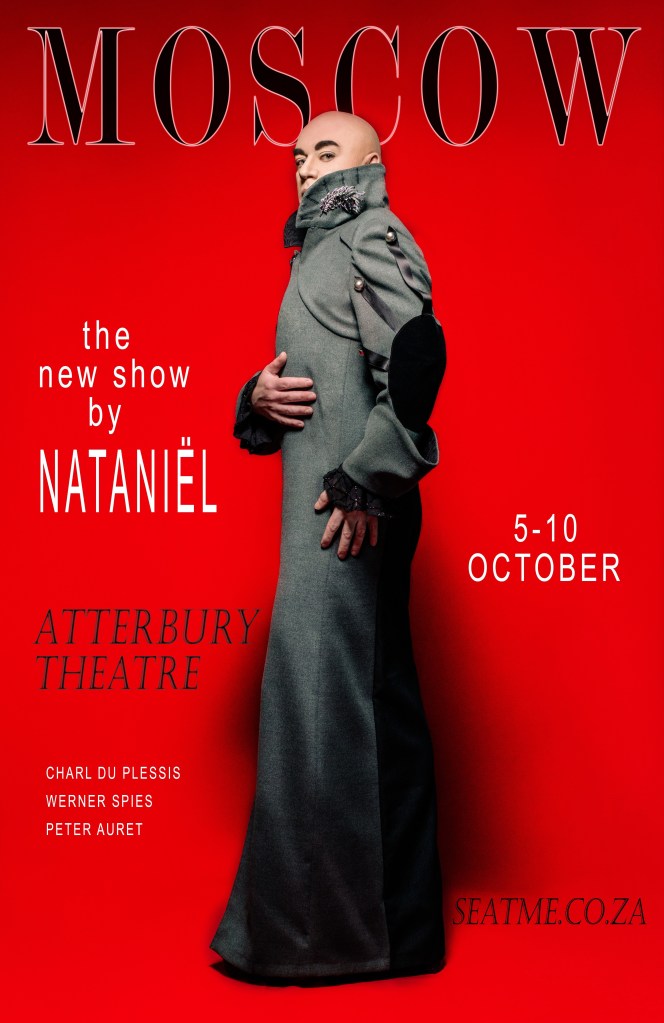
BUTTERFLIES TAKE FANCIFUL FLIGHT IN NATANIЁL SHOW WITH MELANCHOLY, MADNESS AND MAGIC

It’s a time for festive celebrations and collective reflection Nataniël tells DIANE DE BEER as he elaborates about his end-of-year show at the Atterbury Theatre,  Butterfly running from December 1 to 6 and again at the beginning of February but this had to be moved to May 14 to 18 because of lockdown:

This is not a time to pontificate, be prescriptive or preachy. It was the end of a tough year with calamitous interruptions of which no one knows the outcome  – yet ­– but with his traditional festive season show, Nataniël wanted to spotlight the effect of this period of isolation without dwelling on Covid19 specifically.

He mentions love and loss, neglect and honesty, blame and forgiveness, insanity and hope, all of which he investigates from his unique vantage, inspired by his continued isolation.

For some of us, being cut off from the rest of the world might have been frightening but for others it was a time to exhale, try to regain a sense of focussed living. “I discovered I quite enjoyed the frugal lifestyle that resulted,” says this artist of extravagance, and he immediately points to his costumes for this show specifically.

Deciding on their design route, he and his long-time designer Floris Louw went big. “Once the shops opened, we could buy fabrics but nothing new was coming into the country,” he notes.

Anyone who knows his particular bent to surprise will know that this simply wasn’t good enough. And because they had to work from different towns, it all happened digitally. “We found all these fabrics that I had bought and never used for previous shows, pieces that could be mixed and turned into something else.”

And it is all this improvisation that brings a different kind of creativity to the surface. In the end, the costumes might have had an element of frugality in terms of what was available, but being the artists they are, these garments are even bigger and more spectacular than before.

That’s Nataniël. Make it tough and he will find a way to make it work. While the theatres are only allowed a 50% capacity, the costs of staging a show remain the same.

He is flummoxed about the fact that theatres are compared to rugby matches in the pandemic sense because it has been found internationally that theatres are some of the safest venues around. “Audiences sit quietly and listen to a show. There’s no communicating and cheering or physical touch. But we still have similar costs as if the auditorium is fully packed. Theatres aren’t charging you only 50 percent fees,” he notes.

And again being artists, they don’t provide 50 percent shows. Once they decide to step up, it’s all systems go – and with more than a few months of dark theatres, there’s an excitement bubbling as the doors are still opening slowly yet with exuberance.

Musically he believes he has made accessible choices. “This is easy on the ear,” he says as he turns to his text which consists of different stories – not dealing with the pandemic directly and yet, he has been intrigued by the way individuals have reacted to these unexpected challenges. “People talk about going back to normal. I don’t want to go back.’’ This is a time for change and that’s the extraordinary opportunity he hopes many will embrace.

It is a time to learn and to leap into a newfound reality. “Many believe in stability but that sounds like a slow death to me,” he says. “I might be exhausted, but I’m excited.”

The butterfly symbolises conscience.

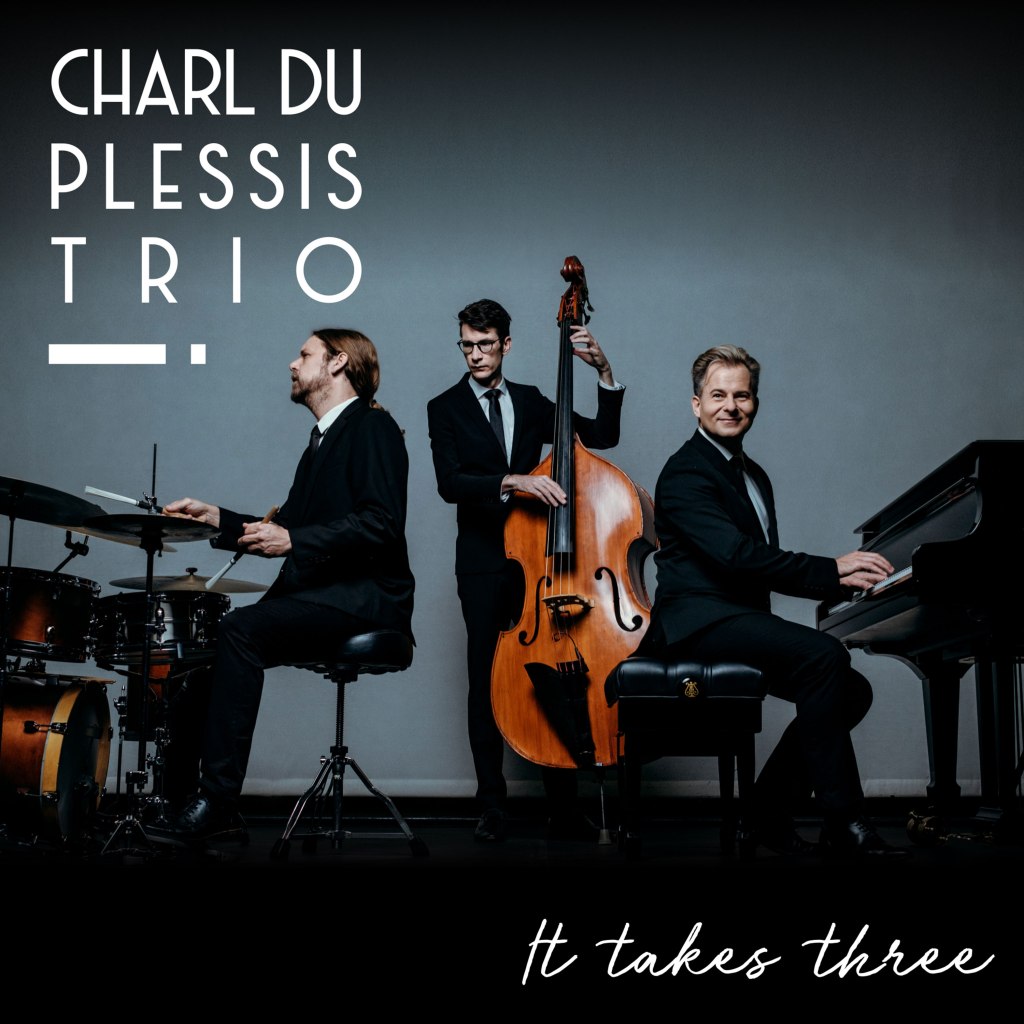
As always Nataniël is joined on stage by Charl du Plessis (piano), Werner Spies (bass), Peter Auret (drums) and Nicolaas Swart (vocals). With a soft sigh he knows live theatre comes with its own baggage and a recent visit to the Charl du Plessis Trio album launch reminded him how some people simply ignore theatre etiquette. “We had someone in front of us who was conducting a WhatsApp conversation throughout the show. She was in and out of the theatre to receive and return messages. I wanted to trip her,” he said. But few will dare to be a disturbance in his shows. In recent years, he simply calls them out aware that if they disturb those on stage, it also worries the audience.

Another irritation he has discarded is corporate bookings. “I only want people in the theatre who want to be there, not because someone else has bought them a ticket!”

While the December shows were sold out, bookings have been opened for this later mini season which runs from May 14 to 18 @ 8pm with a May 16 Sunday show @ 3pm.

Book at:
www.nataniel.co.za/new
www.atterburytheatre.co.za

Go to his recently launched blog (www.smallcoronations.com) for all then latest news, he has also launched some ridiculously delicious cookies available in selected shops as well as in the foyer during the shows and regular pop-up shopping events at Atterbury Theatre and a smart new olive oil range, as well as his latest book of short stories.

Nataniël Stories Dik Dun Think Thin will be sold at his many shows and as always is a collection of stories in Afrikaans and English, some written for shows and tweaked for a book and others specially written.

Regarded by many as one of our best short story writers, anyone who has listened to one of his tales will know about his use of language, the way he plays with and applies specific words and then, of course, his imagination, which seemingly has no limit. From show to show, book to book, they keep spilling out from a mind that doesn’t appear to be working too hard to create a world we all want to escape to.

He describes this as “a very happy book”. The title won’t be explained in any of the stories but recently someone gave his childhood piano teacher the funeral programme of a woman called Sally from Porterville who used to work for the Le Roux family when they lived there.

“Paul Kruger had smaller funeral,” says Nataniël, who explains that Sally was larger than life with HUGE personality. “She always used to say Dik, Dun, Thick, Thin,” he says almost like an exclamation mark. “I couldn’t believe how they found a way to get it (the programme) to me,” he says as he pays tribute to someone who made an impression on his young life.

Again that is part of his extraordinary storytelling ability. It often seems quite fantastical yet much of the time reflects the weird and wonderful byways of his life. He has a way of exploring those adventures with eyes that look at the world with wonder.

And we’re the blessed recipients.

Innovative Charl du Plessis Trio Play With Our Imaginations In Times of Stress

With a new album, in hand, it’s time for the Charl du Plessis Trio to launch their latest musical feast titled Imagine, apt for our times when the world has been turned upside down. But music will always be there to stimulate the imagination, Charl du Plessis tells DIANE DE BEER:

Because he works fanatically on so many different levels, it’s surprising to hear musician Charl du Plessis say that his jazz trio hasn’t released a CD for two years. He is someone who fast-tracks everything.

But this one wouldn’t have happened at this time either if they hadn’t been approached to record with Swiss speaker company as part of their Stenheim Acoustic Sessions which give artists the chance to record original tracks in unusual places and in exceptional acoustic conditions. “We were fortunate to record this project with their world-class acoustic treatment to ensure the most organic and powerful listening experience,” explains Charl about the sessions recorded at the Espace Consonance in Saxon, Switzerland.

These days with music recordings so problematic, no one is going to disregard this kind of invitation, but what really excited the trio was the quality inherent in the full process. Stenheim’s quality products are the guarantee of a superb recording in a state-of-the-art studio.

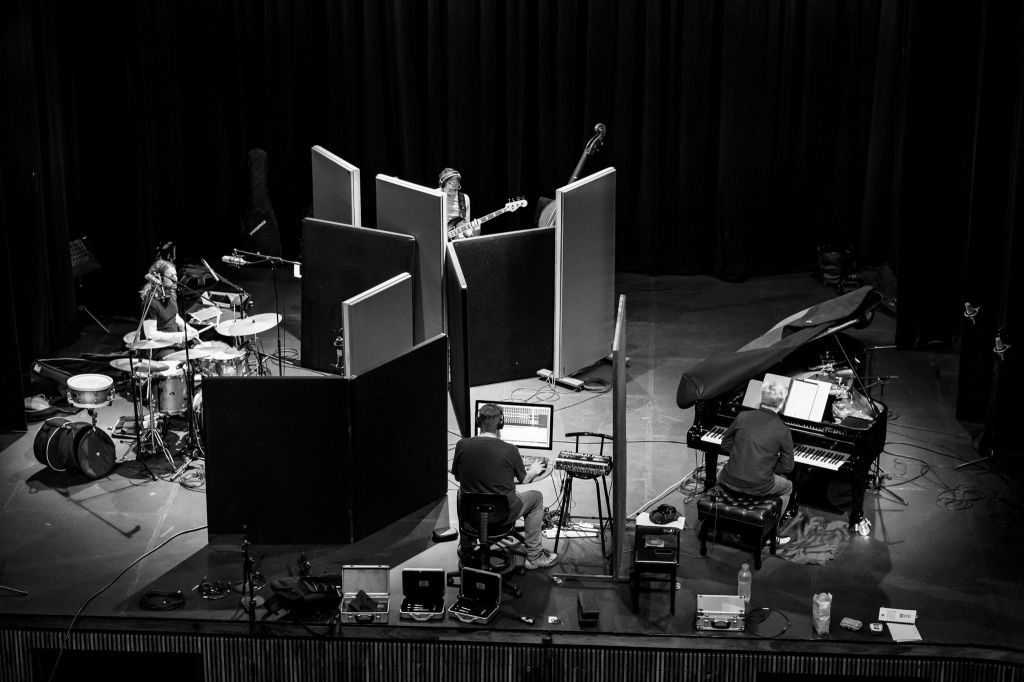
Charl du Plessis Trio

This is the first recording by the Charl Du Plessis Trio in its new format, following the departure of the former drummer for China. Peter Auret, one of Gauteng’s most sought-after jazz drummers, joins original members Charl on piano and Werner Spies on bass.

“It’s been invigorating,” says Charl, who with this album wanted to include tracks that share their respect for the original score which has always been their strong suit – a crossover between jazz and the classics, with Charl a master in both genres.

And he emphasises that with Peter joining their team, imaginative moves have been flourishing. One needs change every once in a while and when it is as positively organic as this one was, it can also be hugely beneficial. “We all work together extremely well,” adds Charl.

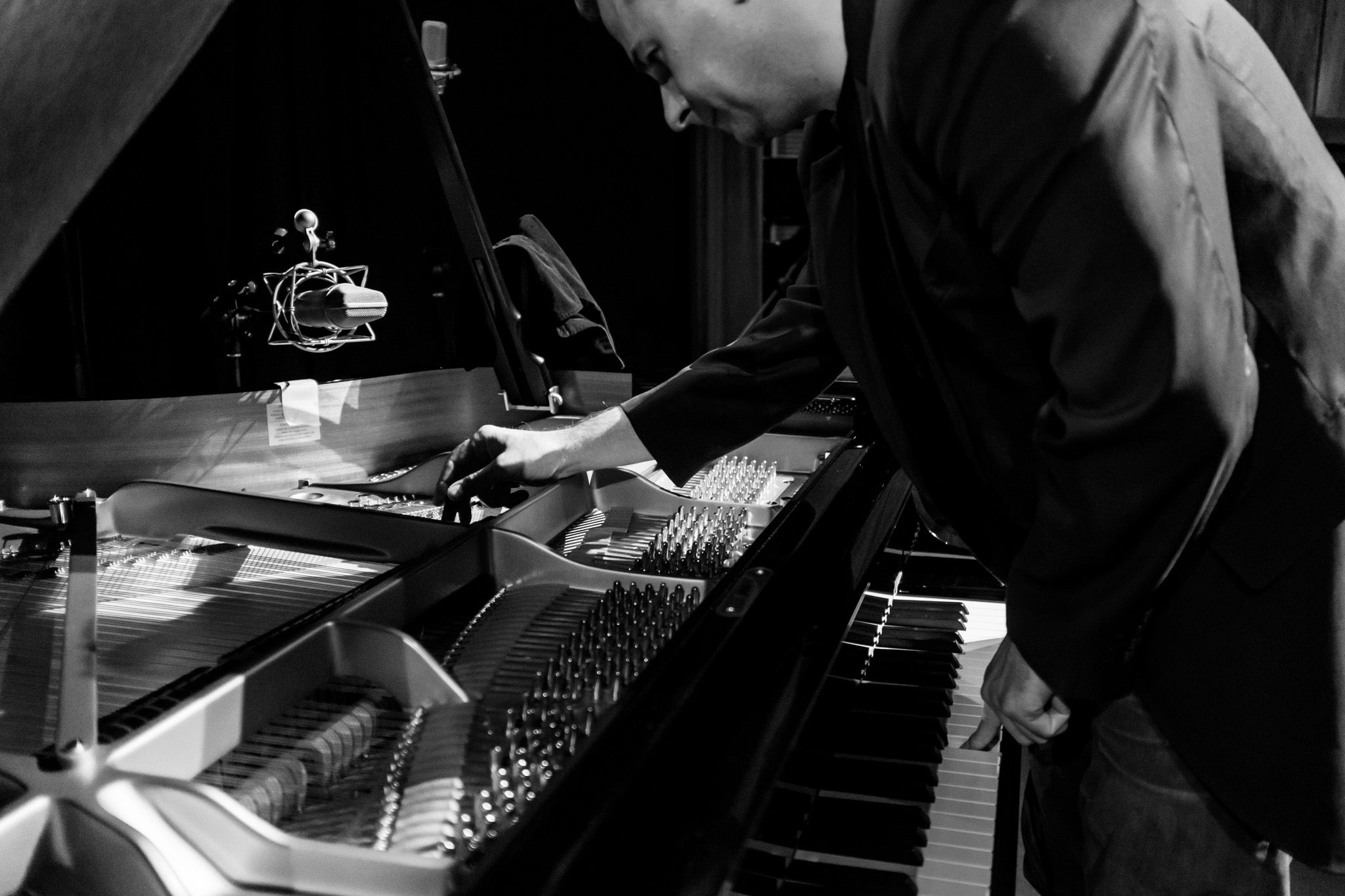
It also helps that Peter is an award-winning recording engineer and producer with his own studio while Werner adds techno buff to his skills. Charl, always someone who keeps adding yet another string to his bow (see Episode 2 of Toegang on kykNET), also recently added piano tuner to his repertoire. “One often battles to find someone at specific times,” he says and as the owner of two Steinways (being a Steinway musician), he can now do his own when required.

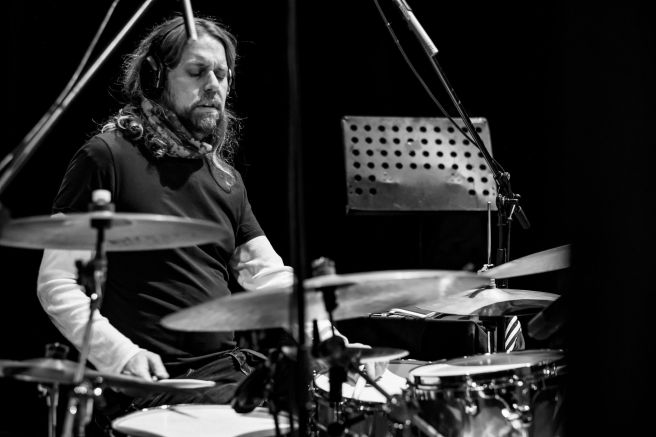
Peter Auret on drums

They say you have to know the rules before you can bend and  break them. That truly applies here and you will hear that immediately as you start listening to their music which seems to have taken on a world in trouble while offering an easy escape – for just a while.

Their music reflects their passion. These are musicians who travel the world with their special brand of music, something that translates well and appeals to both jazz and classical audiences – and that isn’t always a given. Think of the way classical or jazz music has sometimes been dumbed down for a more general audience. This is not that.

It’s about combining and infusing all their multiple influences but in a way that is smart, honours the original music and delivers a sound that is both fresh and refreshing. Included in the lineup, which should have you smiling, is Mozart’s Magic Flute, Beethoven’s Für Elise, Ode to Joy and the Adagio cantabile from Sonata Pathetique, Bizet’s Seguidilla from Carmen, Verdi’s Va Pensiero from Nabucco and to conclude, John Lennon’s Imagine!

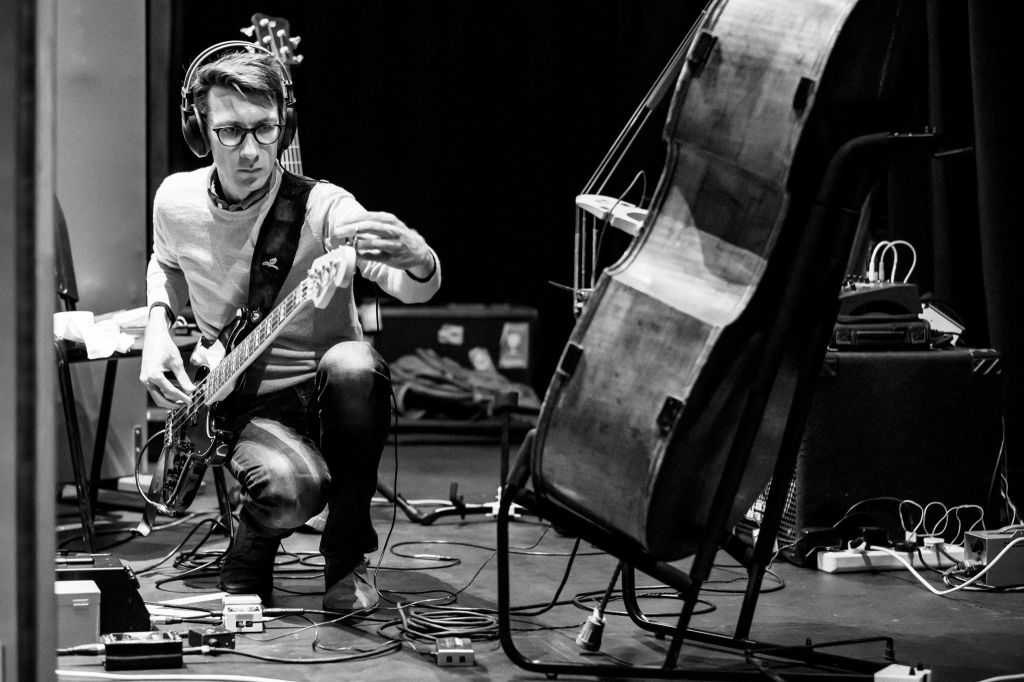
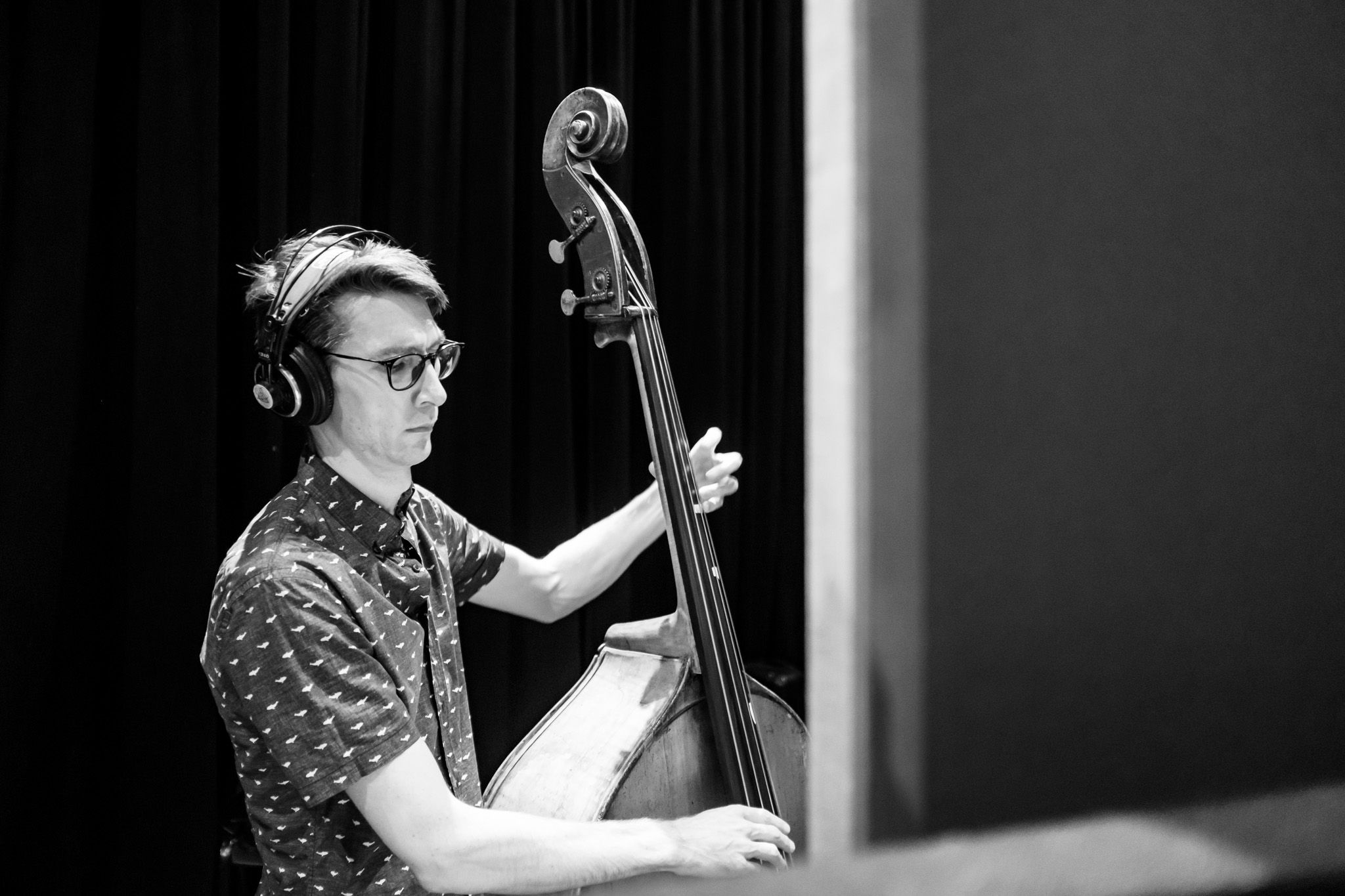
Werner Spies on bass

They’ve been at it for 12 years and in that time while not stagnating, they know what works and how to keep it challenging. They wouldn’t have had this recording if that weren’t the case. This is a difficult area to make your name – and a living. You have to deliver for it to work and they do.

They have won major music awards including a Fiësta, two SAMA awards and a Ghoema for Best Instrumental Album. They frequently perform in Europe and Asia as well as at major music festivals in South Africa. Highlights include Grachtenfestival – the Netherlands, Musikdorf Ernen – Switzerland, and Standard Bank Joy of Jazz – Johannesburg as well as most recently digitally as part of the National Arts Festival platform. 

This launch of their new album Imagine will be held at the Atterbury Theatre in Pretoria on November 1 at 3pm. Tickets can be booked at iTickets. It’s all about familiar music with “daring textures, exciting rhythms and lush harmonic landscapes” which come together in their unconventional arrangements.

Charl on keyboards

And if you’ve never attended one of their shows, this is an ideal time to sit back (in controlled circumstances) with music that will be a balm for your soul.

The trio is constantly evolving in their quest to explore uncharted musical terrains in an imaginative manner and, like the title suggests, this is not borrowing from the extraordinary John Lennon but rather paying homage.

That’s the kind of music they make and I easily recommend. For those who cannot attend the concert (and I predict there will be more around the country as things start opening up in the new year), get the album. It’s one to cherish.

For more information visit www.charlduplessis.com

Charl du Plessis Trio with Peter Auret (drums) Charl (centre) and Werner Spies (bass)

Renée Rautenbach Conradie Perfectly Blends Storytelling and a Rich French/SA History

When you start listing al Renée Rautenbach Conradie’s skills and accomplishments, it becomes quite overwhelming, but there’s a common thread that runs through her many activities: an exuberant love of life. She tells DIANE DE BEER more about her debut novel, Met Die Vierkleur in Parys (With the flag of Transvaal in Paris, Protea Boekhuis):

How many people know about the South African participation in the 1900 International Exhibition in Paris? Or who De Villebois-Mareuil (after whom  a street in the east of Pretoria is named) was? Or that Paul Kruger and the Boer Republics had crept into the hearts of the ordinary French at the turn of the last century?

In fact says Renée Rautenbach Conradie, when she and her Foreign Affairs husband Leo Conradie spent time first in Marseilles and then in Paris late in the last century and early in this one, they discovered many links between South Africa and France in centuries past.

When they lived in Paris in 2000, many of the exhibitions were repeated to commemorate the 1900 world event. “Exhibitions of Rodin, the USA and Russia whose most memorable contribution was the landmark Pont Alexandre 111, which connects the Champs-Élysées quarter with those of the Invalides and Eiffel Tower,” she explains.

With more research, one of the passions of this long-time journalist, she discovered that we had a memorable pavilion, which included a gold mine and a pioneer’s house (very much like those still seen at the Pioneer’s Museum in Silverton still today) and that this was indeed one of the most visited features at the Show.

She had found her hook for the novel she wanted to write and the serious research began. The Anglo Boer War had always featured in her life as someone from the last generation to hear stories from those who were directly involved – starting with two grandmothers with very different world views: her paternal grandmother from Oudtshoorn looked down on the Voortrekkers and anything beyond the “colony” and her maternal grandmother was six when her mother died next to her in a tent in the Standerton Concentration Camp. Hér grandfather (72) was taken to St Helena where he later died and that same grandmother also experienced the day the sheep were set alight and pigs were mutilated with sables …

Renée also shared this Anglo Boer passion with both her father and her late husband Leo, who collected turn of the century newspapers when they spent time in France. “They included many pictures of Paul Kruger arriving in Marseille as well as etchings and pictures of the Anglo Boer War,” she notes.

Knowing that she wanted to write, a few years ago, she enrolled for a masters in creative writing at the University of Pretoria. It started with short stories but slowly her interest around a story set in 1900 in Paris took hold.

“Paris was at its wildest in 1900. It was the Belle Epoque, the Bohemian lifestyle amongst artists was accepted and the buzzword of the time was avant garde,” she says. “And I have always been fascinated that Pretoria was burdened by the strict mores of the Dutch Reformed and in addition, there was the influence of the Victorians who buttoned everything up to the neck, taking little pleasure in anything!”

It was this dichotomy of different lifestyles (with the accent on hedonistic pleasures versus the restrictive narrow-mindedness) that also had a huge impact on architecture, which captured her imagination as something she wanted to explore.

She elaborates that Art Nouveau was prominent in 1900 with artists like Toulouse-Lautrec and the theme of the Paris Exhibition was Progress. “That was a time of steel and glass which can still be seen in the Grand Palais and the Petit Palais. Unfortunately some of the other structures were pulled down when the Exhibition had run its course.”

It was a time of architectural curves rather than stark lines and her more than four years in this exquisite city gave her a chance to fully appreciate the architecture of Paris. “I also participated in history classes for four years,” she says.

Her main character with a name like Paul Roux and a profession in architecture meant that research became very important. “At that time you received inhouse training and because of the timing, I could incorporate Herbert Baker as his tutor. I could also showcase the influence of French architect Thibault in Cape Town,” she adds.

It also suited her story that Pretoria was extremely busy at the turn of the century (1900), typical of a ‘sudden’ capital city. “The old Department of Works was responsible for the buildings surrounding Church Square. The Beaux Art style was used with the department headed by Sytze Wopke Wierde with many French and Dutch architects,” she says

And all of this dominates Met Die Vierkleur in Parys with the plot centred on the dishy if dishevelled architect Paul Roux who was responsible for the Pioneer House at the South African pavilion. Of course there’s intrigue, a Jewish miss who has to flee Cape Town to escape a meddling mother and makes her way to England and closer to her prospective beau.

That’s the lifeblood but the intrigue is the wheeling and dealing around the exhibition, the time and the two cities and its people on two vastly different continents in a time now very distant and far away. Yet strangely familiar and appealing …

As a veteran journalist writing about a longtime passion, her research is impeccable and something that grabbed me from start to finish. I am not someone who follows a historic lead and will see a foreign name like DeVillebois-Mareuil and wonder but then forget to follow it up. To discover the person’s identity is a real thrill as are many other historical titbits Renée has cunningly woven into her story.

Because she lived in Paris and established her own historical background, she could incorporate the landmarks that are familiar, but with detail that informs, adding to the charm of the city and the story.

As an outsider, her main character appealed to her because “I understand and empathise deeply,” she says. “Especially in Paris. You lose your heart to the city, but the city is a character and you are not really engaged or accepted by the ordinary people. My disdain for affectation also becomes clear.”

As a journalist, she is also much more accustomed to flash writing in a fast-moving world. Yet she discovered when writing a debut novel at a more advanced age, you have a full hard drive with riches to explore. And if her laziness can be circumvented, she hopes to get stuck into another one.

She writes in Afrikaans, and if it is a language you understand, it’s an unusual read. It’s much more than just a love story, in fact, she had to work very hard not to make her historical background dominate – and that she has done masterfully. But it does give an edge to the storytelling which puts the book in a class of its own.

A perfect escape for this time.

A discussion of the book with the author Renée Rautenbach Conradie will be held on October 18 at Foxwood House in Joburg. Bookings at www.skybookings.net or with Theresa at theatre@foxwood.co.za.

A Cape Town launch will also be held in November.

SU Woordfees Makes Your Heart Sing during a Covid19 Lockdown because of the Arts: the Memories Linger…

DIANE DE BEER

HUPPELKIND_NanetteEvenhuis-7
The artistry of theatre: Marthinus Basson’s Huppelkind with Andrico Goosen and René Cloete. Picture: Nanette Evenhuis.

Woordfees 2020 was the last public event which made it safely through before our current lockdown – and only by the skin of its teeth.

But the blessing for those of us who were privileged enough to be there for the full festival from March 5 to 15 was huge. The prize-giving event was planned for that final Sunday night – the only festivity which didn’t sail through because at that stage the full extent of the tragedy of Covid19 had landed.

Following the lockdown, all the judging panels swung into action and on April 7, the results were announced in a live event on Facebook (see below), I didn’t even know that was possible.

But it also gave me the chance to reflect on my highlights:

As part of the oversight panel convened by Gillian Mitchell and including Paul Boekkooi, we were responsible for the categories Best Upcoming Artists(s) and Best Festival Production. It meant that for the first time in ages I was fortunate enough to see productions across genres – and what a delight that was.

Die Poet wie is hy_Natalie Gabriels_9792
Dean Balie (centre front) with the spectacular Khoisan Gypsy Band with Frieda van den Heever as director and Charl Johan Lingenfelder as musical director. Picture: Natalie Gabriels.

As best production, Die Poet, Wie’s Hy became an early benchmark that was never surpassed. It’s as close as you can get to perfection on a live stage.

Produced by De Klerk Oelofse with writer Adam Small’s poems at the heart of the performance, this was a Dean Balie passion product – and so much more. It’s theatre at its richest when all the elements fit seamlessly.

It was the sensibility, the music, the poetry, the setting and the performances but more than that, it was the magnificence of Balie’s performance throughout. He understands every word of Small’s poetry and made it sing – whether in anger, poignancy or exaltation.

He has done beautiful work in the past but this has elevated him to another level. It was the kind of performance which will make people view him in a completely different light – and he has always been rated.

Watch out for this one down the line. It should tour the country. It was also justly rewarded with the Best Performance: Contemporary Music – Music-driven Production.

Huppekind_RethaFerguson08381 (7)
Stian Bam, René Cloete and Andrico Goosen with Huppelkind. Picture: Retha Ferguson.

The other category in which I was involved was the Best Upcoming Artist, which was awarded to René Cloete (Huppelkind). It is a Marthinus Basson children’s production which stole the hearts of many because of the way it was presented and performed, showing that you can make theatre for even the very young with enough artistry, imagination and enchantment to truly capture the compulsive nature of good theatre.

And with a cast including Joannie Combrink and Stian Bam, the young Cloete announced herself as someone to watch in the future. Not only is she a compelling performer, she also lights up a room with her enthusiasm and energy and promises to be an exciting future prospect.

Other highlights on the theatrical side included Nicole Holm (Best Actress) in Tweespoor, who again showed her acting chops; Robert Hindley (Best Actor), who plays the troubled son in Janice Honeyman’s Valsrivier, a production that showed promise but wasn’t quite where it should be at the early performance I saw. (The awards reflect that it grew during the festival run).  It’s one I would like to see again with some necessary running time.

WF Valsrivier - Greteli Fincham (12)
Tinarie Van Wyk Loots, Robert Hindley and Stian Bam in Valsrivier. Picture: Greteli Fincham

But the youngster had his character pat, perhaps because his is the receptor for everything that was wrong in those apartheid years. He climbed in boots and all, nailed it and was rewarded.

It’s quite a busy play both in storytelling and design and it needed some time for the ensemble to mesh, the spaces to be claimed and the story to truly infiltrate the stage. It made an impression, but it is one that should overwhelm.

WFBRANDBAAR__Natalie Gabriels-1086
Rehane Abrahams in Brandbaar. Picture Natalie Gabriels.


Henriëtta Gryfenberg gave a brave performance in the Lara Foot (translated) play Die Vermoeienis van Vlerke, and Woordfees should be honoured for bringing the astonishing and unique (translated) Brandbaar with Rehane Abrahams back for another viewing; also Sandra Prinsloo who goes from strength to strength in Kamphoer.


On the art side, Gerhard Marx tickled the mind with his Vehicle: Sounding and Fathoms. I had seen a much earlier version, but this was a sleek and more substance-heavy return with the art performance including wordsmith Toast Coetzer and genius musos Kyle Shepherd and Shane Cooper. Included was also an exhibition of Marx’s earlier mapping work and he did daily walkabouts which put everything imaginatively into context. There were also a few interview sessions which further enhanced the overall exhibition.

At the performance, one could sit back, experience the effect of the living exhibition on your psyche and emotional being. This is an artist who always plays with your head yet never underestimates the impact on your heart – an explosive combination.

WF Baroque Opera - Mark Cloete 2020 (62)
Camerata Tinta Barocca with Erik Dippenaar as director/pianist and soloist Lynelle Kenned. Picture: Mark Cloete.

On the music side, the classical programme was quite fantastic with local productions like the Baroque Opera Gala Concert led by Erik Dippenaar, one of the top exponents of early music, and soloists Lynelle Kenned and Brittany Smith. I have only witnessed Kenned do popular music and didn’t know Smith, but everyone on that stage was impressive and provided joyous music to listen to.

Fynbosfeëtjies wasn’t strictly speaking classical music but with Antjie Krog’s verses being read masterfully by acting couple Petru Wessels and Carel Trichardt with soprano Renette Bouwer delightfully interpreting the songs composed by (from the writing) Katrien Holm, sensitively accompanied by the string quartet Evolution, it turned into a festival gift. Drawings from the book by Fiona Moodie set the mood for a surprisingly unexpected heart-warming concert.

With the international artists, Miriam Batsashvili’s piano recital and the LGT Young Soloists were overwhelming and a privilege to experience.

Slightly off the musical charts, the contemporary sounds that made me feel weak in the knees was the musical biography of Paul Simon – ‘n Lewe with music buffs Danie Marais, Kerneels Breytenbach and Desmond Painter talking about the New York composer/performer’s music while Andries Bezuidenhout, Lise Swart and Riku Lätti interpreted the Simon songs with flair.

And  Nataniël worked his charm with Hoekom Hulle Swing with his fantastical stories and a musical genre that he does smartly as he is as much a master at re-jigging songs as he is at writing and telling stories. There are those costumes as well – and that at a rare festival appearance!

WF J Bobs - Off The Record - Lindsey Appolis-0021
J Bobs – Off The Record with Pule Welch, Jefferson Tshabalala and Philip Dikotla. Picture Lindsey Appolis.

And in conclusion, which was the best choice to finish such an extraordinary festival: J Bobs Live – Off The Record. I have long been a fan of both Jefferson Tshablala (also this year’s Young Artist at the National Festival) and Philip Dikotla, joined here by Pule Welch who was new to me and I was delighted that the south had discovered one of Gauteng’s most precious artistic entities. Tshabala has a creative mind that moves in a miraculous way and bringing this particular franchise to the Woordfees with the example of the clashing of FW de Klerk and the EFF in parliament, was a stroke of genius.

It’s deals with nothing more – or less – than racism, but in a way that has everyone in the audience engaged, never enraged. That’s quite something. It’s also a production that underlines how laughter can heal, and yet with arrows plunging the depth of what truly troubles the world.

While there was much I didn’t see, good, bad and ugly, this is just a snapshot of one individual’s experience – and it was enough to keep me smiling even in lockdown!

May the artists bounce back with brilliance as they battle the worst possible odds.

The winners are:

WOW Teacher of the Year
Rollan Andrews

WOW School of the Year
Klein Nederburg Sekondêr

Best Production: Fringe

Moord, op die 8ste gat

Best Performance: Dance

Wag / Waiting

Best Achievement: Visual Art

The Shape of Things to Come – Olaf Bisschoff

Best Technical Achievement

Johan Griesel and Revil Baselga – Sound mix: Karen Zoid 20 jaar pops

Best Achievement in Arts Journalism

Marina Griebenow

Best restaurant in Die Burgeroorlog [The Burger Wars]:

RocoMamas

CONTEMPORARY MUSIC

Best Production: Contemporary Music – Podium Production

Amanda Strydom: Stadig oor die klippers

Best performance: Contemporary Music – Open-air Production

Early B 

Best Performance: Contemporary Music – Music-driven Production

Die poet, wie’s hy?
CLASSICAL MUSIC

Best Performance: Classical Music – Vocal

Stellenbosch University Choir conducted by André van der Merwe

Best Performance: Classical Music – Instrumental

Miclen LaiPang (violin) for Beethoven’s “Kreutzer” sonata with the LGT Young Soloists

DRAMA

Best Supporting Actor (Male)

Stian Bam – Valsrivier

Best Supporting Actor (Female)

Anna-Mart van der Merwe – Valsrivier

Best Actor (Male)

Robert Hindley – Valsrivier

Best Actor (Female)

Nicole Holm – Tweespoor

Best Ensemble

Die sonkamer

Best Director

Janice Honeyman – Valsrivier

Best Production

Valsrivier

THE BOOK PRIZE WINNERS IN FOUR CATEGORIES ARE:

Bestseller: Non-fiction

Yusuf Daniels – Living Coloured (Because Black and White Were Already Taken)

Bestseller: Lifestyle
Marinda Engelbrecht (Maklik met Marinda) and Herman Lensing (Dit proe soos huis)

Bestseller: Poetry
Jeanne Goosen – Het jy geweet ek kan toor?
Bestseller: Fiction
Woordfeeskortverhaalbundel 2020: Aanhou beweeg en geraas maak (Selected by: Suzette Kotzé-Myburgh, Valda Jansen and Madri Victor)

SPECIAL AWARDS

Best Upcoming Artist

René Cloete – Huppelkind

Toyota Top Order

Karen Zoid: 20 jaar pops

This new prize will henceforth be awarded to an excellent musician or production that falls outside the traditional boundaries of contemporary music.

The award goes to Karen Zoid 20 jaar pops. It was not only the topselling show at the festival this year, but it also succeeded in blending contemporary and classical music seamlessly. This production inspired and entertained – a fitting celebration of her 20 years in the music industry.

Groundbreaking Production
J. Bobs Live – Off the Record (Jefferson Tshabalala)

In Solidarity Prize (Distell)
Amelda Brand

The In Solidarity Prize is awarded to roleplayers in the arts who tirelessly work, often for little or no compensation, towards greater social cohesion. Brand receives this recognition for her work with communities and students as well as her excellent professional work in the performing arts.

Previous winners: 2017: Simon Witbooi (HemelBesem); 2018: Janine Neethling; 2019: Felicia Lesch

Best Festival Production

Die poet, wie’s hy?
Given the extensive range of the festival programme, several panel members served on the Woordtrofees panel across the various genres. Panel members were invited to the panel on the basis of their expertise and experience across the genres. Given the scope of the programme, some panels were assigned convenors. These were: Haddad Viljoen (Drama), Heinrich van der Mescht (Classical Music) and Rafiek Mammon (Contemporary Music). The panels made recommendations to the oversight panel which was responsible for the categories Best Upcoming Artists(s) and Best Festival Production. Gillian Mitchell convened this panel which included Paul Boekkooi and Diane de Beer.


#MeToo Movement Marches Forcefully Against Powerful Monsters who For Far Too Long Had Their Way With Women

It’s been a momentous time in the #MeToo sphere with the Harvey Weinstein convictions – finally. And even with two hard hitting books out there detailing all the women and what they have gone through, the jury still found him culpable of only two of the five counts. With many other similar issues swirling about, DIANE DE BEER speaks her mind:

Harvey Weinstein at court
Harvey Weinstein playing the victim at his recent New York trial.


There’s hardly a woman who works professionally that won’t have some kind of memory about sexual harassment. I suppose with everything being aired these past few years, those of us who haven’t suffered sexual abuse should count ourselves lucky.

But I was surprised about my emotional response to Bombshell, the film starring Charlize Theron, Nicole Kidman and Margot Robbie about the horrific abuse by Roger Ailes and many more who were part of the Fox empire.

I had seen and was fascinated by The Loudest Voice, the TV series told with the accent on the bullying tactics of Roger Ailes and the culture of sexy women he created in the Fox Newsroom and on screen.

Bombshell poster
The poster says it all! Power in triplicate!

When Bombshell arrived, I felt I had viewed enough of this particular story, until someone whose judgement I trust told me to see it as this was from the women’s point of view. I didn’t realise the impact that would have on a very personal level which says so much about the culture most women find themselves in at work.

We don’t even notice because it is so prevalent and probably to most of us “normal”, so when seeing this particular film, which shows especially the environment created specifically so that this kind of thing can flourish, my flesh crawled – to my surprise.

But it was no surprise that with the final credits a notice announces that the women received 50 million dollars in damages: while Roger Ailes and another Fox News accused, Bill O’Reilly, received 65 million dollars’ worth of parting packages.

Fox News is the extreme so there’s no turning away from that aspect of the film. And with these three powerful actresses in control, it resonates dramatically and memories came flooding back. “How are the dollies doing?” was a particular rankling phrase coming from a boss or the fact that you were told that your salary increase was determined by the fact that your partner worked in IT. “That means he earns big bucks,” was the feeling. And the list of constant humiliations goes on.


And then when these men are “caught”, they are so powerful that they manoeuvre everything and everyone around them. Read Ronan Farrow’s book (reviewed in this space earlier) Catch and Kill and She Said and see what happened to these award-winning writers in the process of writing the book. It wasn’t only Weinstein who came out guns blazing, he had many who colluded and further made it tough for anyone who wanted to expose his evil practices.

And perhaps what upset me the most was the humiliation that these women, many of them with powerful careers (and not because of Roger Ailes), had to go through on a daily basis. If this is the man who employs you, how does the rest of the world view you? He in fact lays down the rules of how you appear on camera and what you are allowed to say.

Something that was always an unwritten rule in media was that your newspaper had your back if those on the outside were upset with your reporting of the facts – the newspaper would stand up for you and in that way, bring balance to the power dynamic. But that’s not what happened at Fox. When Fox news correspondent Megyn Kelly was taunted by President Trump, it was another stick in the Ailes arsenal to keep her in line.

These constant games are also part of the ritual to keep everyone functioning in place and not to overstep or rock the boat. You learn very early on when to hold back and when to fight for specific rights. Some you win and others you lose.

Others make you smile – wryly. The first time women were really promoted into certain positions was post ’94 when they were included in the list of appropriate candidates because of the neglect in the past.

Suddenly in newspaper offices around the country, women started appearing in management positions and even the first female editors started to emerge. It wasn’t a sudden belief in the ability of women. White men just thought them the lesser of all the evils!

Bombshell Robbie
Bombshell’s Margot Robbie represents the epitome of what Roger Ailes wanted the Fox women to exude.

And so one could go on and on. And that’s why women around the world were thrilled about the Weinstein conviction but…

And said best by the following tweet:

Shailja Patel: @shailapatel: (Kenyan poet, author, feminist, activist, now self-exiled after she accused a fellow Kenyan writer of sexual assualt and was ordered by the court  to pay damages and apologise to the man who assaulted her, so she left the country.)

No guilty verdict of jail sentence, even for life, can restore what Harvey Weinstein stole from his victims. Or repair the harm he inflicted on his decades-long reign of terror over an entire industry. But this is a tiny crack in the wall of impunity. Let patriarchy tremble.

She nails it!. So while we all watch and wait, the battle goes on but at least because of their shining a light so strongly, the #MeToo movement is starting to show results.

Diversity is Artistic Director James Ngcobo’s Loadstar at The Market

Pictures: THANDILE ZWELIBANZI

Paradise Blue
From left: Pakamisa Zwedala , Aubrey Poo (centre), Lesedi Job, Aubrey Poo (centre), and Seneliso Dladla with Busisiwe Lurayi (front).

It is diversity which strikes you when you look at the start of the 2020 theatre year at The Market. DIANE DE BEER speaks to artistic director James Ngcobo about his first production for Black History Month (a collaboration in its fifth year with the US Embassy in South Africa) which starts on January 31, but also checks what else is on offer:

It has been a longtime dream of  James Ngcobo to stage Paradise Blue, which he describes as a “dynamic, jazz-infused drama by award-winning African American playwright Dominique Morisseau about what’s at stake when building a better future”.

In a recent YouTube documentary on the gentrification of Los Angeles which in this instance affected an African American suburb also described as the heart of jazz in the city, longtime residents were complaining how they were being pushed out of their own neighborhood. The inference was clear, as soon as the suburb becomes white, it’s time for those who created the vibe in the first place to leave. They can’t afford it any longer anyway.

Similar scenes play out in Paradise Blue, which captures the yearning of individuals sidelined by life into the role of second-class citizens living and working in a black neighbourhood on the cusp of obliteration as part of the city’s plan to eliminate “blight”.  The characters face issues that will resonate today worldwide and specifically with South African audiences while enlightening them about similar struggles faced by low-income inner-city communities around the world.

Ngcobo had this one in mind for a few years and has assembled a young dream cast, all of whom he has worked with before. “It’s about collaboration,” says Ngcobo, which played into his choices.

One of his favourite leading men, Aubrey Poo, plays Blue, a castrated character whose life is in a rut. “He wants it all, his women and his club, yet his is a life of limitations. It looks at patriarchy but also hierarchy, which all come into play,” notes Ngcobo.

It’s a tough piece and he needed a seasoned cast who could pick up the vibe and develop it quickly. “Tight funding determines short rehearsal times,” he explains. The supporting cast includes Pakamisa Zwedala (A Raisin in the Sun) and Seneliso Dladla (One Night In Miami) as his fellow band members P-Sam and Corn. Busisiwe Lurayi (Nina Simone in F our Women) will play the naïve Pumpkin and another regular collaborator Lesedi Job (A Raisin in the Sun  as well as many other performances and directing) as the threatening Silver.

Apart from honouring Black History Month, Ngcobo pays further homage to his love of telling stories with a strong musical element and while it doesn’t feature that strongly in the original play, it’s something that resonates in much of his work as he uses music as another voice to embellish the story.

He also wanted to move away from stories about Rosie Parks, Malcolm X and Martin Luther King, all of whom have been celebrated in previous Black History Month performances. This season start tomorrow and runs until March 1 in the John Kani Theatre at The Market, Tuesdays to Saturdays at 8pm and Sundays at 3pm.

DOP - Foto kosie Smit (002)
Wilhelm van der Walt and André Odendaal in Dop directed by Sylvaine Strike. Picture by Kosie Smit.

In the meantime, things are pumping at the Market Theatre Complex. The award-winning Dop directed by Sylvaine Strike and starring André Odendaal and Wilhelm van der Walt  has just finished a short run, and playwright William Harding – whose previous work has included the adaptation of the hugely successful Tobacco and the Harmful Effects Thereof; The Cenotaph of Dan Wa Moriri and most recently Twelve Years a Poet based on the poetry of Vus’umuzi Pakhati – makes his debut as a professional director at the Market Theatre with his play, The Kings of the World.

Kings of the World
William Harding and Kaz MacFadden in The Kings of the World.

As is Ngcobo’s practice, he loves giving young artists a chance, but lends them a strong guiding hand, in this instance, director/actor Robert Whitehead, who will be mentoring the project.

The play is described as a dark comedy about the ineptitude and desperation of our times. It takes place during one night in a suburban garden cottage, where two friends and a roommate confront their neuroses and inadequacies as the night unravels around them.

Harry arrives uninvited at his friend’s cottage. David, having recently returned from a trip to Paris has become somewhat reclusive and reluctantly invites him in. David reveals he has a job opening as a freelance online copywriter.  And Harry immediately wants to be part of the action.

However, complications around the job soon arise and are further compounded when David’s drunken roommate returns.  As paranoia and desperation take over, the situation becomes tense and threatens to boil over into a dangerous conclusion. The cast includes Harding, Chris Djuma and Kaz MacFadden.

Currently running, the season ends on February 16 at the Barney Simon with performances from Tuesday to Saturday at 8.15pm and on Sundays at 3.15pm.

Brothers Gustav Gerdener, Drikus Volschecnk, Dawid MMinnaar and Ruan Wessels
Brothers Gustav Gerdener, Drikus Volschecnk, Dawid Minnaar and Ruan Wessels (front)

Finally there’s an award-winning play by Victor Gordon, Brothers, that reflects the serious side of family tragedies that tear families apart and the fundamental human truths about families haunted by past occurrences.

Again, Ngcobo combines youth and experience with actor Francois Jacobs, who makes his directing debut mentored by the award-winning actor and director, Mncedisi Shabangu, an alumnus of the Market Theatre Laboratory.


Vuka Machel Image_ (002)
Mncedisi Shabangu and Xolile Gama in vuka Machel! at the Market Lab

And to add to the productivity, Shabangu is also currently starring in Vuka Machel (with three shows left, tonight and tomorrow night at 815 and Sunday at 315pm) a revolutionary comedy told by two chicken thieves from Kanyamazane, just outside Nelspruit in Mpumalanga.

In this rollicking storytelling romp, Machel wakes from the dead to find his wife married to Mandela and Mozambique suffering. He challenges Mandela to all sorts of fights. The biggest mistake he makes is to agree to a negotiation at the World Trade Centre where Mandela challenges him to a boxing match. (Mandela is notorious for winning all his 50 fights through negotiations.)

Vuka Machel Image 2
Two actors at play in Vuka Machel!


Originally created in 1998 and the winner of an FNB Vita Award for Best Director in 2003, Vuka Machel was last performed as a one-off presentation as part of the Market Lab’s 30-year celebrations this year, where it received such an enthusiastic response that it was clear that it needed a longer season.

Written and directed by Market Lab alumnus Shabangu, and performed by Shabangu (who is an absolute treat to watch as his face and whole body all go into performance mode) and Xolile Gama (who is the fall guy), the play is a funny and insightful commentary on the lives and philosophies of two of Africa’s most influential leaders. But just in general, pushing all the boundaries, it’s a blast and perfect for the start of a year.

And for Brothers, there’s further excitement with a cast which includes Dawid Minnaar  who is joyously becoming a regular at The Market supported by an exciting and quite novel cast including Drikus Volschenk, David James, Gustav Gerderner and Ruan Wessels.

Brothers with Dawid Minnaar and Drikus Volschenk
Brothers featuring Dawid Minnaar and Drikus Volschenk

It’s also worth taking note of Karabo Legoabe’s impressive and authentic set.

Brothers is a family drama set in the Eastern Cape in the 1950s. It is a harsh existence and the story focuses on the return of a brother who had mysteriously disappeared 18 years earlier. The story reflects both the social strata and attitudes that exist within a poor white family who eked out a meagre existence in this desolate part of the world. As one can imagine, the brother’s return unearths all kinds of family secrets and frustrations that have remained hidden all these years, and the results are unexpected and dramatic.

Brothers runs until February 24 in the Mannie Manim Theatre concluding the first clutch of plays at the Market Theatre in 2020. It’s one to experience more than anything for the debut of a young director and an excellent cast.

It’s a strong starting salvo and promises much for the rest of the year.

Bring on the women…

The Theatre Gods Align for Koningin Lear

Koningin Lear with cast
TV screens amplified

We haven’t just gone back to nineteenth-century levels of income inequality, we’re also on a path back to “patrimonial capitalism”, in which the commanding heights of the economy are controlled not by talented individuals but by family dynasties.

From “Why we’re in a New Gilded Age”, The New York Review of Books — 8th of May 2014, Paul Krugman, reviewing Le Capital au XXI e Siècle, Thomas Piketty

And published as an introduction in the printed version of Koningin Lear


DIANE DE BEER

Pictures: Hans van der Veen


koningin-lear-in-storm.jpeg
The magnificent Antoinette Kellermann

Playwright Tom Lanoye has masterfully taken the iconic Shakespeare tragedy, King Lear, and recast it in a contemporary landscape with the most pressing issues of the 21st century all coming into play –  greed and grandiosity leading this particular wolfpack.

He starts with gender, flip-flopping the roles as the title Koningin Lear suggests, and gives the mighty Elizabeth Lear three sons: Greg, the eldest, Henry, the second in line, and Cornald or Corneltjie, her darling child. With the eldest two married, the two wives, Connie, the OTT shopaholic, and Alma, from the wrong side of the tracks and struggling to shrug that off, both play a particular type yet also connive with their husbands to secure future power.

Yet, as the original so smartly shows, greed might be the excess of our time, but there’s nothing new in the world of the top dogs except perhaps technology and the universal scale at which that power grows and disintegrates. It’s no longer a single kingdom on an island, everything and everyone in our universe is connected.

Koningin Lear
Neels van Jaarsveld and Anna-Mart van der Merwe

When you sneeze – especially if it affects the money markets – the effect takes on tsunami proportions. And this is where director Marthinus Basson ups the ante, being someone who always holds the bigger picture close. With this one it really counts.

The design adds to the dynastic feel of the production, which plays on different levels. Basson emphasises the age we live in with technology.  A backdrop of TV screens used in many different ways immediately add urgency and heightens the impact of the precarious nature of what Elizabeth is about to do.

More than anything else, power corrupts. And to play with it almost nonchalantly like this mother does, we all know will have devastating consequences.

koningin Lear Antoinette Kellermann
Antoinette Kellermann

This a family concern –  one that is worrying, because it is not necessarily the best that steps into a leadership position. Family is the determining factor, whether worthy or not.

Just a few minutes in, we already know that Elizabeth’s adviser would have been a better choice to make the handover a smooth and more successful one. For decades Robert Kent has been Elizabeth’s shadow, completely loyal to the family, often at his own cost

Lanoye’s words needed to be transformed in a South African context by someone who could adapt yet not dilute the essence of the playwright’s words. Antjie Krog, who previously worked wonders with the Mamma Medea translation, was the obvious choice. Not only did she have to translate, she had to transfer it to a local context.

Just listening to the language of this magisterial text is sublime, even the way Krog uses swear words or plays with the different characters in the way they use their language. She also knows how South Africans will react to different cars as wealth trophies and that “my losie by Lords” has more impact than Loftus, for example. It is all in the detail and why you can’t read, listen and experience the language and meaning enough.

koningin Lear trio
A scene from Koningin Lear

It’s a play that indulges your sense of disgust at the wealth accumulated by the powerful, their lifestyles, arrogance and disregard for anyone but their immediate family and then only those who find favour. They live by different rules and have no idea of or interest in anything but their own prosperity and anything that affects their well-being.

It is a work of majestic scale and demanded a majestic cast. With Antoinette Kellermann as Koningin Lear, half the battle is won. She is majestic as the matriarch of a business empire that she is in the throes of handing to her three sons. But first she asks for a declaration of their undying love with the results disastrous as she sets in motion a run of revolting, rampant greed and how that unhinges a dynasty in a modern world.

It’s no surprise that Steinhoff is snuck into the text at some point. If you still hadn’t got the drift, that will force you to take notice

Koningin Lear Antoinette Edwin
Edwin van der Walt in his extraordinary turn as the junkie and the powerful Antoinette Kellermann

We know the original story. It’s the way Lanoye has made this tigress fight until her last breath, the way Kellermann has ingested the text so that she can charge into glorious battle with her character and slay any dragons in her path.

And here her demise doubles up as she doesn’t only hand over all her weapons, her wealth and thus any sway, she also struggles with dementia with age finally catching up, something no money or willpower can change.

As the sons struggle with their inability to conquer the business world, pale shadows of their mother, their wives on the sidelines egg them on and soothe their egos.

It’s like an epic melodrama with a master conductor and performers who know how to play every word in its finest nuance. With the gravitas of André Roothman as Kent and a supreme supporting cast, it’s a play that strikes no false notes. Everything is music to your ears.

The three sons, Neels van Jaarsveld, Wilhelm van der Walt and Edwin van der Walt, with Anna-Mart van der Merwe and Rolanda Marais as the wives, represent a family in freefall. Not only have they not been schooled to take on their heritage, they only register the perks without any of the pitfalls.

On the sidelines, Matthew Stuurman is the carer and very importantly the moral compass who has nothing to gain or lose yet reacts with compassion to someone’s need, not something that registers where money is the only currency.

From start to finish, it is a production that ticks all the boxes. From the content to the language, the design and the staging, the extraordinary choice of cast with Kellermann conquering her most challenging role, it’s theatre to savour – over and over again.

Koningin Lear with cast

Koningin Lear is on at Cape Town’s Baxter Theatre  from November 7 to 16.