MAKE SURE YOU CAN FEND FOR YOURSELF IN THE KITCHEN IS INA PAARMAN’S MAGICAL MANTRA

Ina Paarman has been in the business for half a century and has been a competitive author in a genre that offers in abundance so you need to stand out and find your niche. She did all that and with her latest cookbook brings it all together. She shares some of the secrets of her success with DIANE DE BEER:

Success comes with consistency, says Ina Paarman who has established her reputation with just that. “You have to send out the same message all the time,” she says. Together with that you have to give practical culinary information and recipes backed by good, top quality, products.

Her food philosophy which probably grew through the years was that you have to be able to fend for yourself in the kitchen. “It is an essential life skill and the best way to stay healthy,” she advises.

And with a fast ageing population, this is her mantra, one that has never changed through the years. Instead it has grown stronger.

For those who have watched and heard stories through the years, teaching is her calling. “I love sharing knowledge. Information about skills and technique for example. I believe in removing the fear of food and at the same time the importance of understanding the essence of good nutrition.”

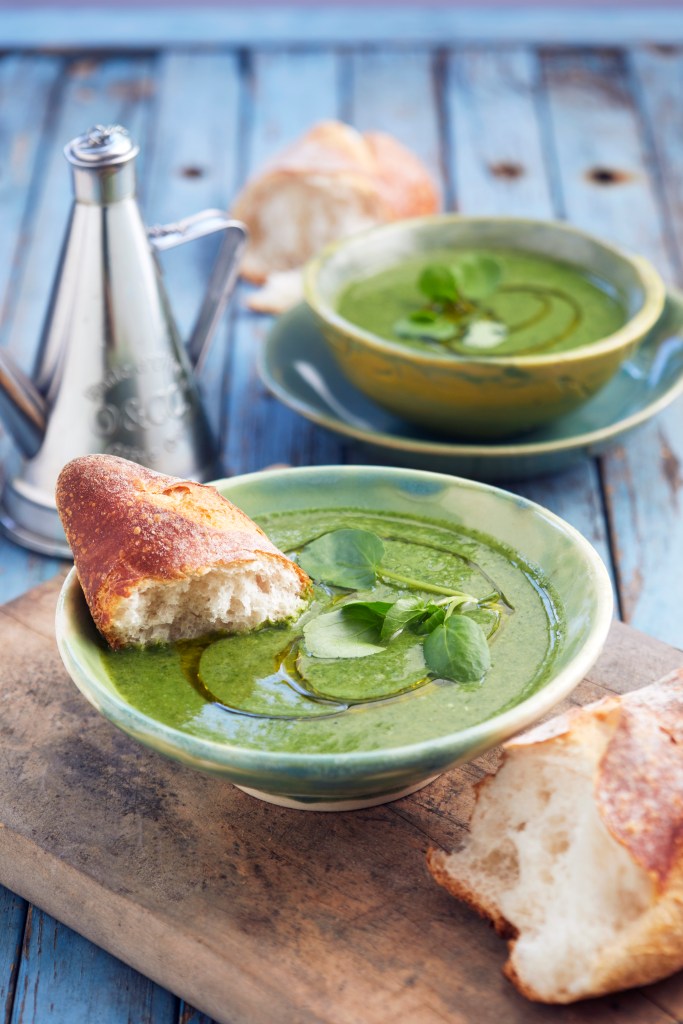
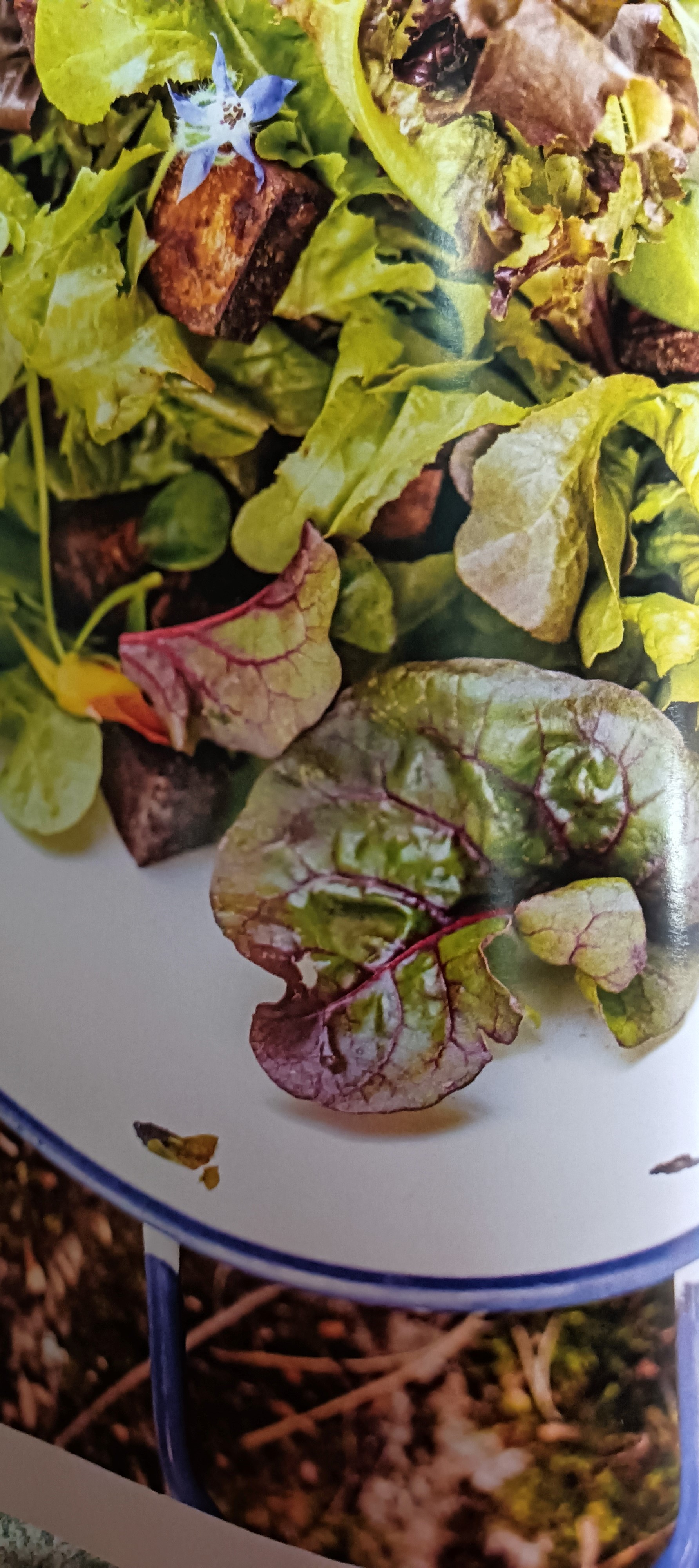
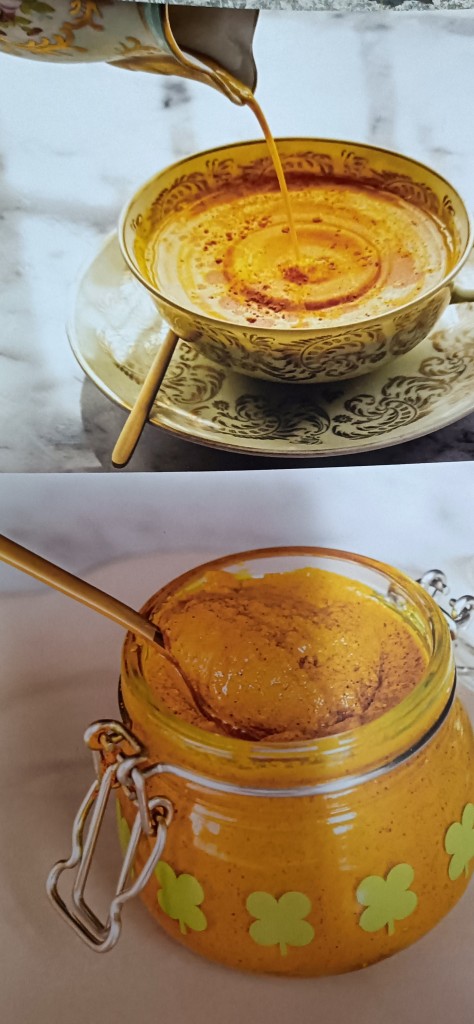
Fresh Pea Soup with Spinach Fish Cakes with Tartar Sauce

In the beginning and in her younger days, she was scared of famous dishes.; “I felt intimidated,” she confesses. But with some experience she learnt that it is best to be your own trendsetter and at the same time to pay attention to your customers. You have to understand and get to know their needs.

In her line of work, she was dealing with real people with families and friends to feed who love good food, food that men and children will enjoy. That’s quite a big ask, but because she was one of these women herself, she knew how to make it work.

In today’s world, less meat is the way to go if you take international trends into account and then you have to understand that everyone is battling with time. When it comes to preparing meals for a family, you are often dealing with people who have many different priorities and time is of the essence.

Branding in today’s world is huge and this is what Paarman understood from the earliest days. “The brand is part of who we are and what we as a family have always been intimately involved with.”

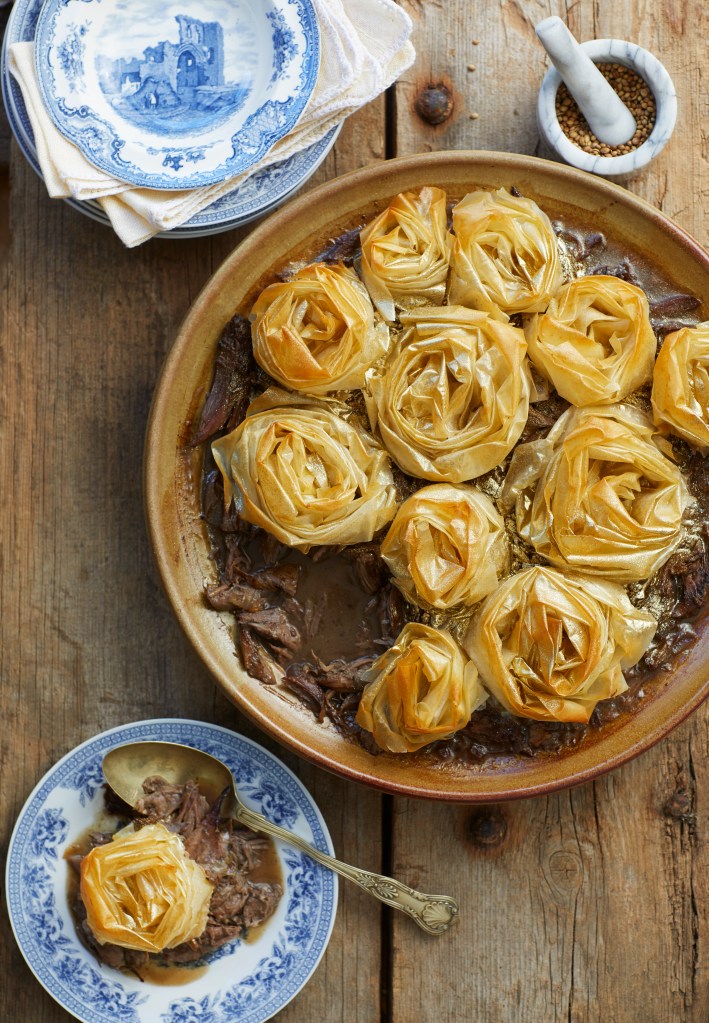
Venison Pie with Phyllo Roses

“Our lives are what we do every day. We do not have a heavy social life, and if we travel it always involves gathering ideas and knowledge. A good business is an extremely demanding taskmaster. But I won’t have it any other way.”

And it shows. Ina Paarman’s name has always been synonymous with quality and in the over-supplied world of cookbooks, you can’t afford not to get it right. There are just too many options and worldwide it has become BIG BUSINESS. Just watch the latest season of Masterchef and see what is happening in the food world. The quality of those young chefs is astounding.

Everyone who manages in a kitchen at some stage might think they have the knowledge for their own cookbook journey. Think carefully, as the specialist explains. “They must realise that success takes time and dedication. Just as you would give total dedication to raising a child, a business, to grow, demands time, attention and continuous re-investment of money.”

We should all know that nothing comes easily. Success has always meant hard work together with the luxury of talent which has been honed.

Talking to her about social media, she is still dubious about the benefits at all times. And that is probably most people’s feeling about this area of our lives which in many cases has become quite monstrous.

Even when we do understand how it has given many of us the ability to do what we do. “Social media is a great way to communicate directly with your customers,” she explains. “But you have to do it in an honest and credible way.” Again that sounds like experience talking. Everyone has had to find their own way.

Through the many decades, staying relevant has probably been her best tool. “Listening, listening and listening and then acting on what you observe,” is her solution.

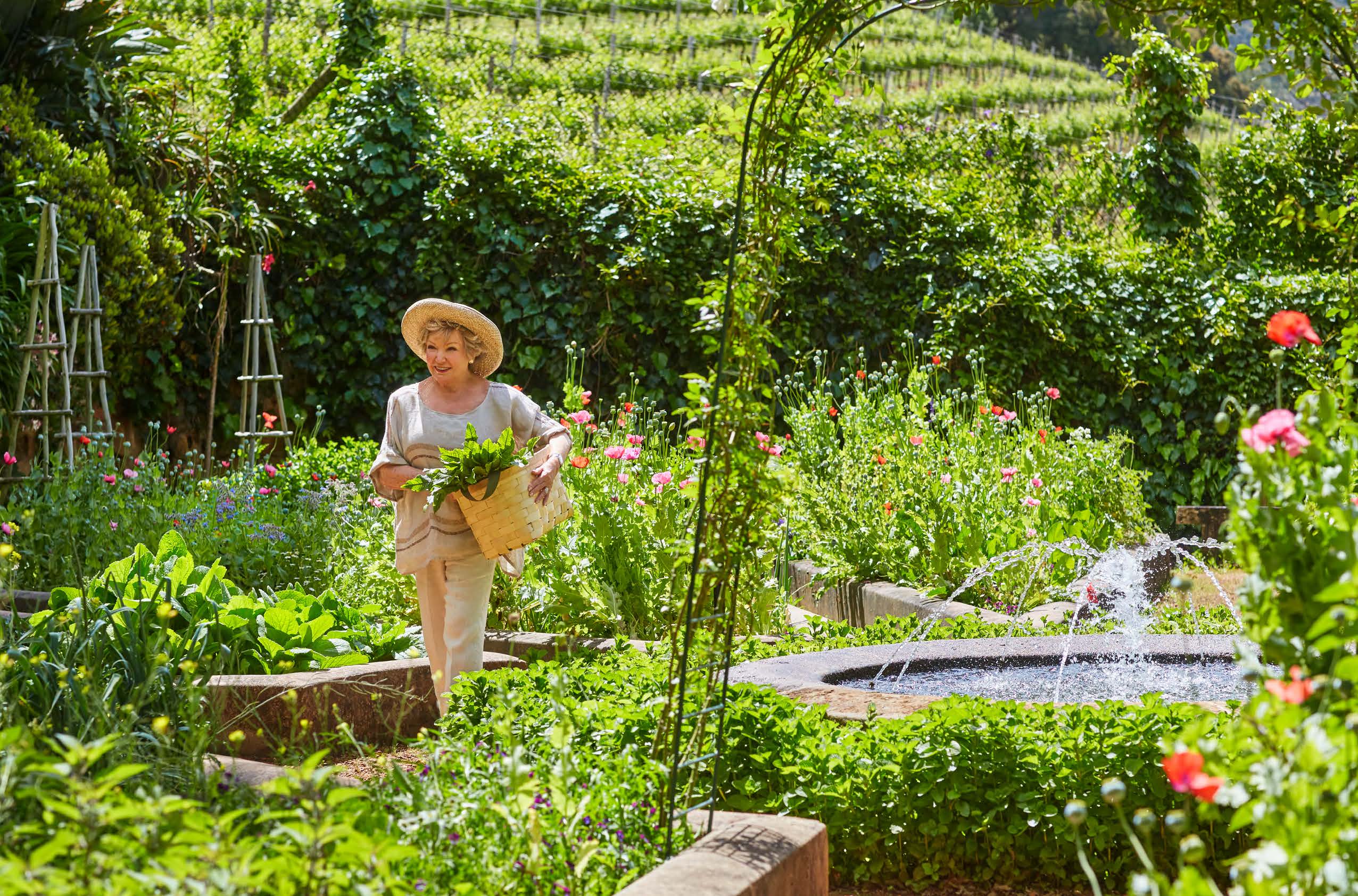
In conclusion she celebrates the latest cookbook. “It has given us all a lot of pleasure she says. I worked with a talented team and photographer Nicky Hoyle. We took time doing the book (over a year) and worked with the seasons. Our garden was great inspiration and the team are the best in town!

“Beside we enjoyed some delicious meals and had exciting moments of creative stimulation and sharing ideas.”

She recommends the book as all the recipes are thorougly tested and will always work. How can that not work for those of us in our own kitchens? It’s exactly what you want.

She also includes that all the recipes are based on our South African culture with the availaibility of products extremely important. That and our style of eating.Homecooks will feel comfortable with the recipes, she adds. The print is large enough, the ingredients familiar and as a bonus, beautiful photographs. Finally, she says, “I felt the need to share a bit about my background to ‘set the scene’ for each chapter.”

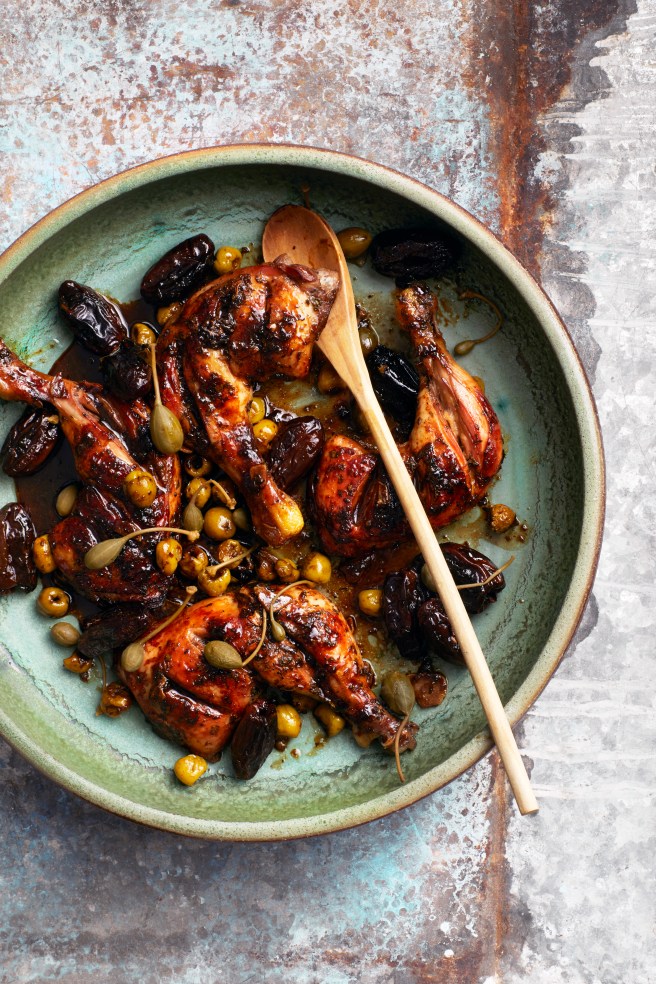
Chicken and Olive Bake with Pitted Dates.

And if you need more encouragement.:

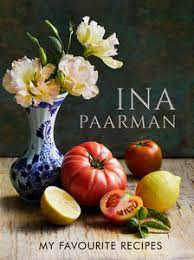
The book’s title, INA PAARMAN: MY FAVOURITE RECIPES, should seal the deal.

Their online shop has closed but the book is available from their factory shop in Diep Rivier, Cape Town or at certain Checkers and Exclusive Books brances.

Here is her favourite recipe in the book:

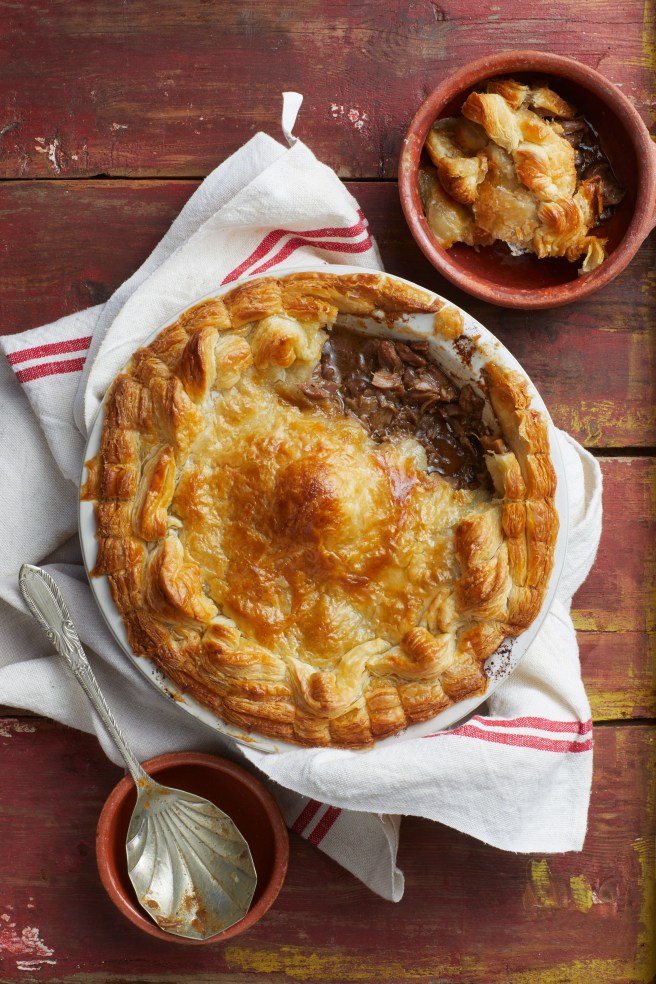
Ouma’s Karoo Lamb Pie:

This traditional recipe from my mother Nellie Jooste should be preserved for future generations. The aromatic pie always looks impressive and tastes and smells delicious. It can be prepared in advance and frozen with the uncooked pastry cover.

Main Dish:                                                                                 Sauce Condiments:

2 kg lamb on the bone (shoulder or knuckles)        1 t (5ml) ground coriander

Or a mixture of the two cut into 4cm pieces            2 cloves garlic, crushed

Ina Paarman’s Meat Spice                                                2,5ml  Ina Paarman Chilli and Garlic

2 cups (500ml) water                                                           seasoning

2 times 25g Ina Paarman Liquid Beef Stock                 2 t(10 ml) mustard powder

1 onion, chopped                                                                    2 t (10 ml) sugar

2 bay leaves and 5 cloves                                                     4 T (60 ml balsamic vinegar

Sour cream pastry if you have the book, or                    2 T (30ml) cornflour or potato flour

Bought all-butter puff pastry                                               mixed with a little cold water

Egg Wash:                                                                                Half an onion studded with 7 cloves

1 egg, a pinch of sugar and a pinch of salt

                                                                            Makes 1 to 2 pies.

METHOD

Adjust the oven rack to one slot below the middle position and preheat the oven to 160 degrees C

Season the lamb with Meat Spice. Place the water, the beef stock, onion, bay leaves and cloves into a large heavy-based cast iron pot with a lid. Add the seasoned lamb and cook the meat in the oven until  completely tender and starting to fall off the bone (approx. 2 and a half hours).

Spoon the meat out with a slotted spoon and let it cool a little. Remove the bones, excess fat, gristle and bay leaves, then flake the meat.

Fill up the stock remaining in the saucepan with water – you should have approx. one and a half cups. To that, add all the sauce condiment ingredients. Thicken it with cornflour or potato flour blended into a little water. Add the flaked meat and taste for seasoning.

Dish the meat mixture into a heat-resistant  pie dish of approx. 25 cm. Position the spiked onion half in the centre to prevent the pastry from sagging. Leave to cool down. Ideal to refrigerate overnight.

Cover the pie with pastry. Put an extra pastry strip on the rim of the pie dish, then cover the pie with pastry. Scallop  the edges. Glaze with egg wash ingredients beaten together. Turn the temperature up to 190 deg C. Bake for 45 minutes until golden brown. Cover with foil, shiny side up, for the final 15 minutes to prevent overbrowning of the pastry.WINE CHOICES: A wooded Chardonnay or Shiraz will complement the butteriness of the pastry.                

CHEF PATRON DANIEL LEUSCH CELEBRATES FOUR DECADES OF LA MADELEINE, ONE OF THE CAPITAL CITY’S BEST LOVED RESTAURANTS

When you are invited to celebrate the 40th birthday of a Pretoria restaurant which has managed to remain on the top ten list in the city from beginning to end, the excitement is huge. DIANE DE BEER pays homage:

Pictures: Hennie Fisher

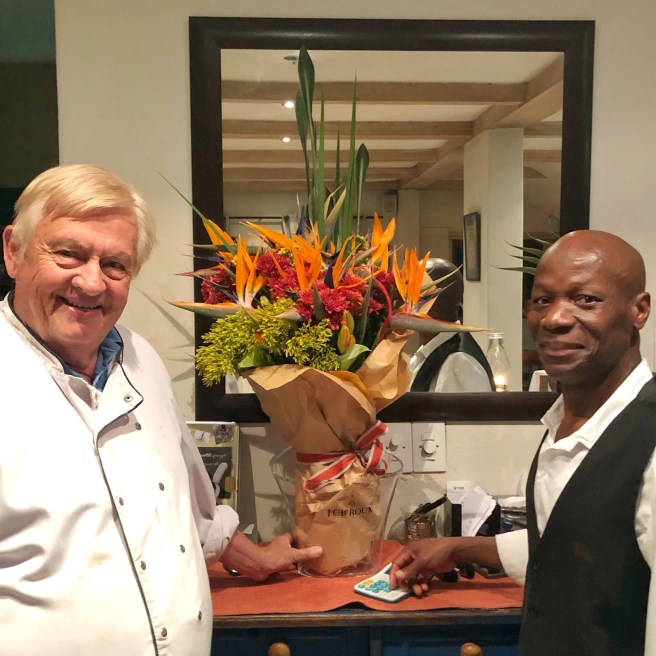
Chef patron Daniel Leusch and maitre’d Abu Fofana

I have known chef patron Daniel Leusch for as many decades and been a huge fan but I haven’t had a meal for a few years. I’m expecting nostalgia, reminiscing, and glorious food. What I didn’t expect from the classicist is a makeover, subtle as is the secret of his special craft, yet with a specific modern slant which proves why diners keep coming back.

But before I get to the menu, I returned on a Sunday at 2pm for a chat to catch up on the history as well as future dreams.

I walk into a buzzy restaurant where family and friends have packed the room for a hearty and probably heavenly Sunday lunch as my bubbles and freshly baked La Madeleine bread with cheese attest.

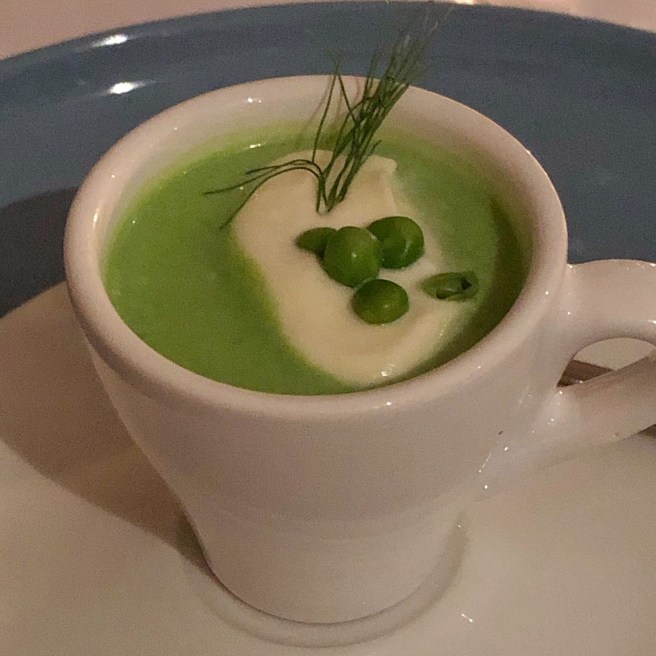
Cappuccino of fresh peas

Chef Daniel has long ago tapped into the Tshwane ethos. He knows we are still a traditional society when family rituals come into play. He has many regular diners who started with the grandparents and the parents and eventually, the kids are now the diners. La Madeleine is part of their dining DNA.

He first arrived in Johannesburg in 1976 as part of an adventure which he didn’t know at the time would shape his life. Johannesburg’s Carlton Hotel’s iconic Three Ships restaurant was his first port of call before he moved to the capital city where he started at the Alliance with Chez Daniel, an obvious beginning for a young chef (’77 to ’80) and was then gifted a sponsorship by the director of Boland bank where he opened his own restaurant.

La Madeleine had its start in Esselen Street, Sunnyside in 1984 where Daniel would be cooking for 16 years. This is where he made national news with his famous champagne-injected crayfish. There was a huge outcry but the foodies around the country took note – and with reason.

And finally, today’s setting for La Madeleine which has been the home for this extraordinary chef since 2000. And now he is celebrating one of Pretoria’s best and its 40th anniversary. It’s the longevity, the sustainability, the years of maintaining standards – and never losing his drive to excite diners as we discovered a few weeks ago at our celebratory dinner.

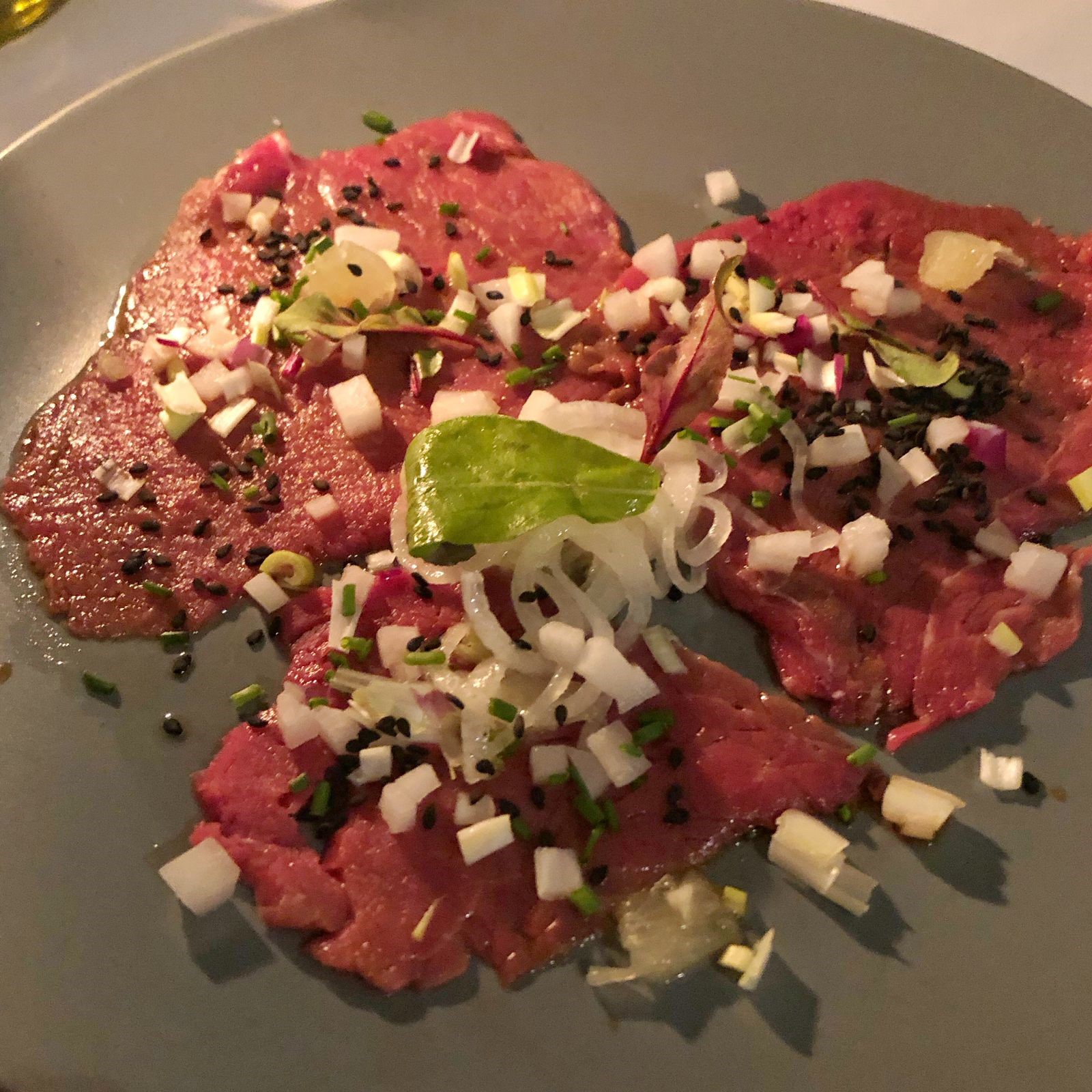
Carpaccio Japanese style

I hadn’t been for a few years because even though I’m still reporting on food and restaurants, I seldomly dine out. It’s been a privilege for a number of decades to be treated by many city restaurants and to share in their triumphs. Daniel and I come a long way and I had visited every restaurant, from the Alliance days, all these years. He has always been able to marvel at the experience he presented me with from the early days and I should have expected it now.

What I didn’t expect is that he was going to excite us (party of four with myself, chef Hennie Fisher and our partners) with beautiful classically based modern food.

I should have known. His generation of European chefs, Daniel notes, were influenced and inspired by the great Paul Bocuse. I had to smile when the cappuccino of fresh pea arrived. He had refined a masterful green pea soup that I remember from earlier days and I knew we were off on one of Daniel’s food fantasies and we were going to have an extraordinary meal.

This was followed by a carpaccio Japanese style (where his son is in the hotel management business) served with diced daikon. Simply sublime and it transported me back to that island of fine cuisine.

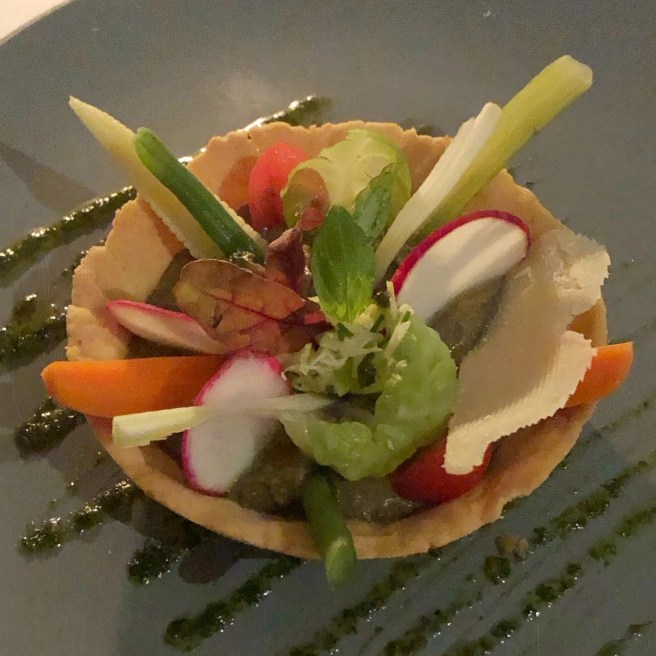
Paying tribute to his roots, next were some exquisite Provencal inspired tartlets with delicate fresh and cooked vegetables, a pastry that’s melt-in-the-mouth, shavings of Parmesan and a hint of basil pesto. Heavenly!

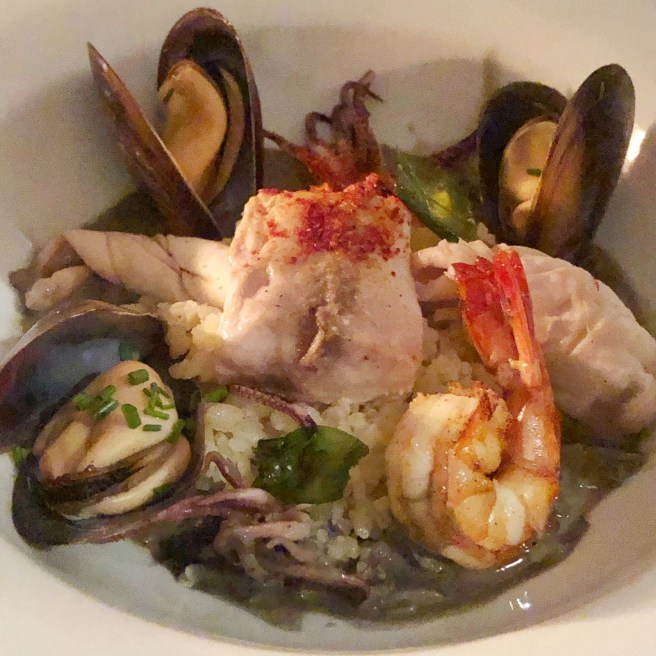
And then he came with a delightful surprise. The mains were a classical paella. And as any chef will do, he went to find fish where he knows it will be fresh as fresh can be, in Cyrildene’s Chinatown. The picture tells the story. He couldn’t have picked something more delicious. How can one not feel utterly spoilt when a fine dining chef presents you with something as wonderful as that Spanish classic.

Classic Daniel Leusch Paella

So in a sense, even though his imagination was on high alert, he did opt for the classical. Only it wasn’t what I had imagined it would be.

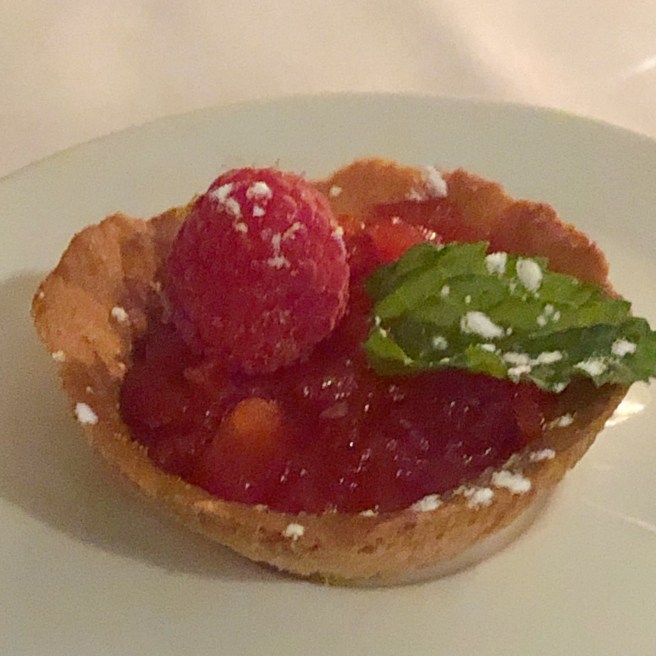
Then came what he cleverly called a pre-dessert tartlet, filled with a  paste of tomato jam and a raspberry sauce. A marvellous transition to what was to come.

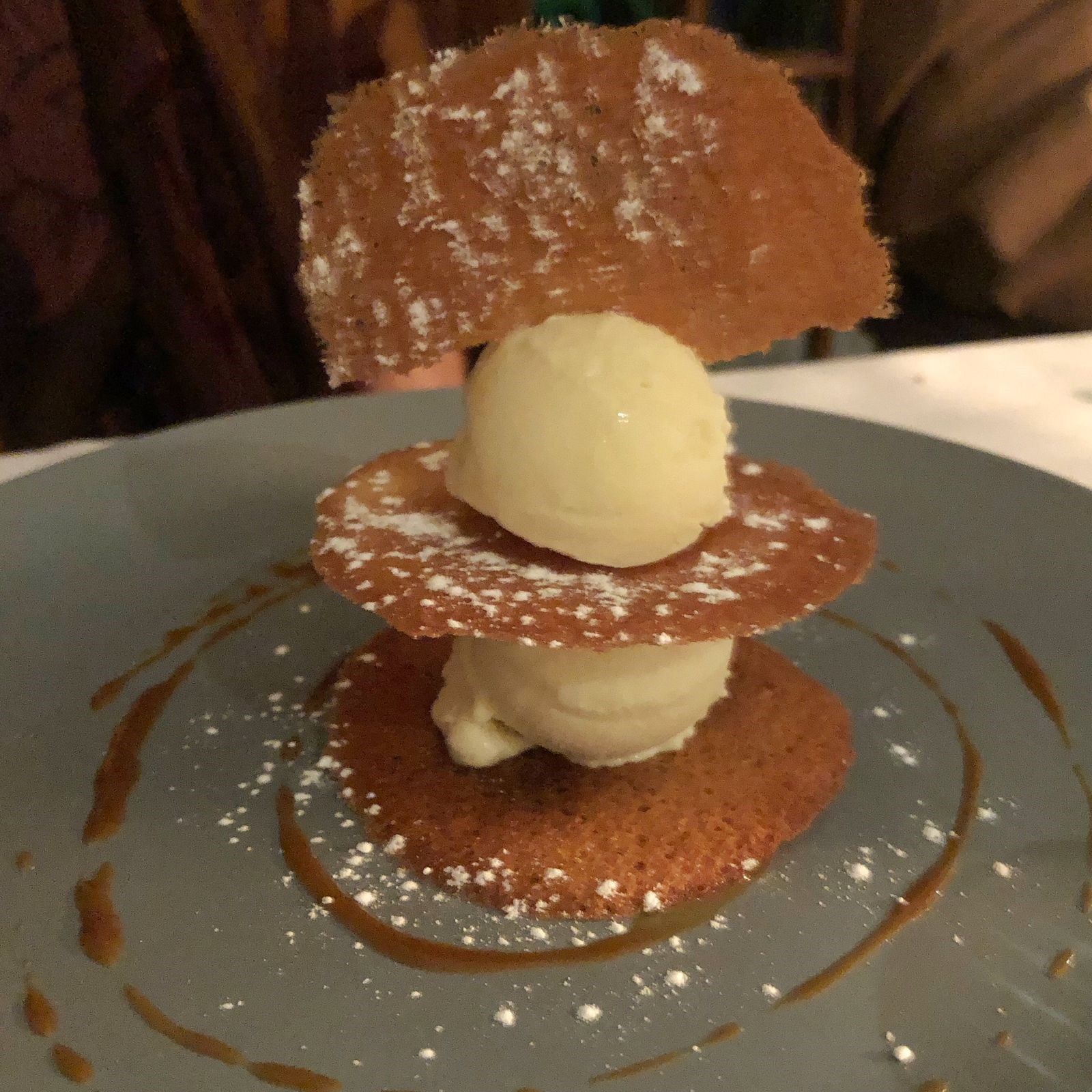
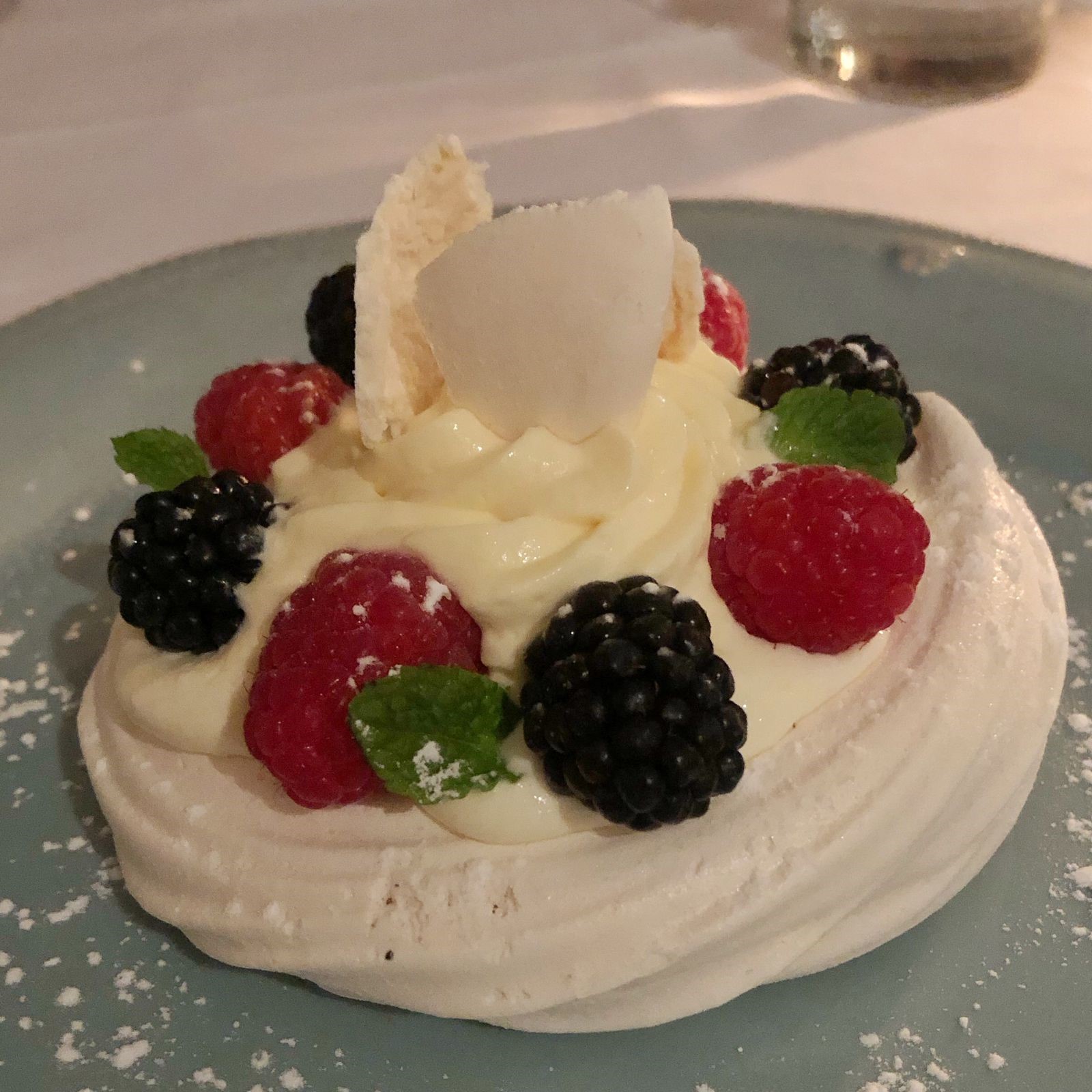
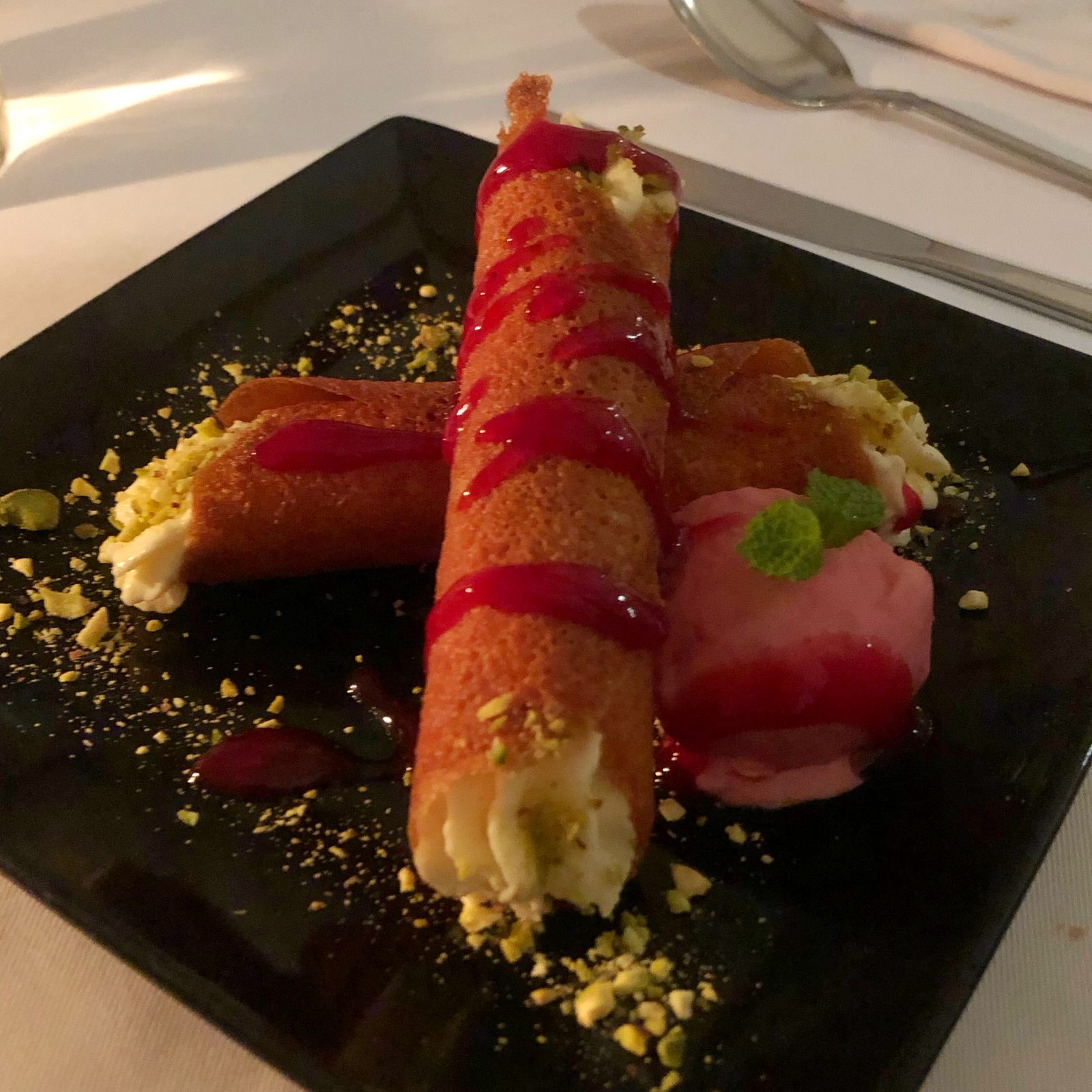
The dessert was next and he showed off his spectacular skills with four different sweet delights. It simply started a merry-go-round at the table as we moved from one to the next and started all over again.

From a homemade ice cream with a salted caramel sauce between crackling brandy snaps; meringue filled with marmalade of fresh strawberries, coconut cream and raspberries; brandy snaps filled with cream, ricotta, raspberry sauce and ice cream. The combo was spectacular and the way a meal should be concluded, all sweetness and light.

Daniel’s wife Carine who many regulars will remember was the pastry chef in earlier times and his daughter Anne, who followed in his footsteps and now cooks in France in the Paris environs, was also a pastry specialist amongst all their other skills, but he’s no slouch and he has obviously well-trained staff.

Like his maitre’d Abu Fofana from Côte d’Ivoire who recently returned to his former post where he is a huge favourite, he takes his cue from Daniel and is perfectly attuned to diners and their needs.

Daniel of course has not changed a jot from when I first met him probably at his first post at the Alliance. He has kept his accent and his familiar manner of introducing the menu and mingling with the diners throughout the meal. He’s wonderful to watch as he moves between tables chatting away while observing what may be needed.

While I was writing at a table on the side, I could hear his voice as he explained the different dishes which meant I was smiling all the time. There’s a charm, a warmth and generosity of spirit when you dine and a desire to keep everyone happy while dining. That’s worth going back for time and again.

I knew – as always – what to expect from the man himself. What was unexpected was the meal and the surprise element, the menu. I wouldn’t have been let down if I was served what I had come to expect as classic Daniel.

But the way he invigorated the menu on the day, the thoughtfulness of inviting us (myself and chef Hennie Fisher who not only took these pictures but also wrote for many decades raving about all his accomplishments) and then overwhelming us with a spread that simply took our breath away, made this 40th celebration something extraordinary. And when I look back and reflect, should have been expected.

That’s why Daniel Leusch could sustain La Madeleine for 40 years. That’s where his heart lies. He still chooses all the produce himself. He knows that’s where the heartbeat is established.

And simply stated: “It’s my life!” says Chef Daniel. What an honour to be given a taste of just that!

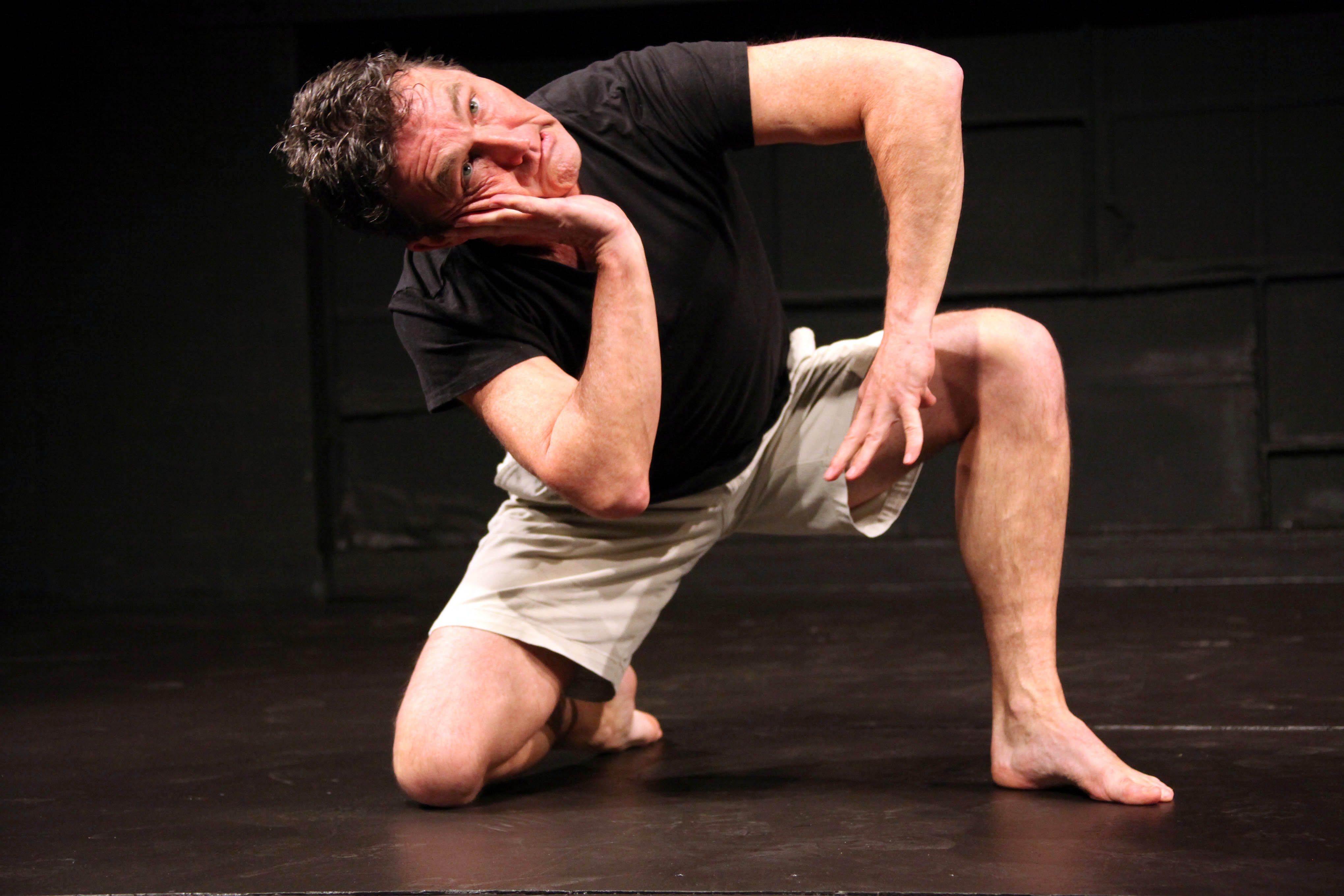
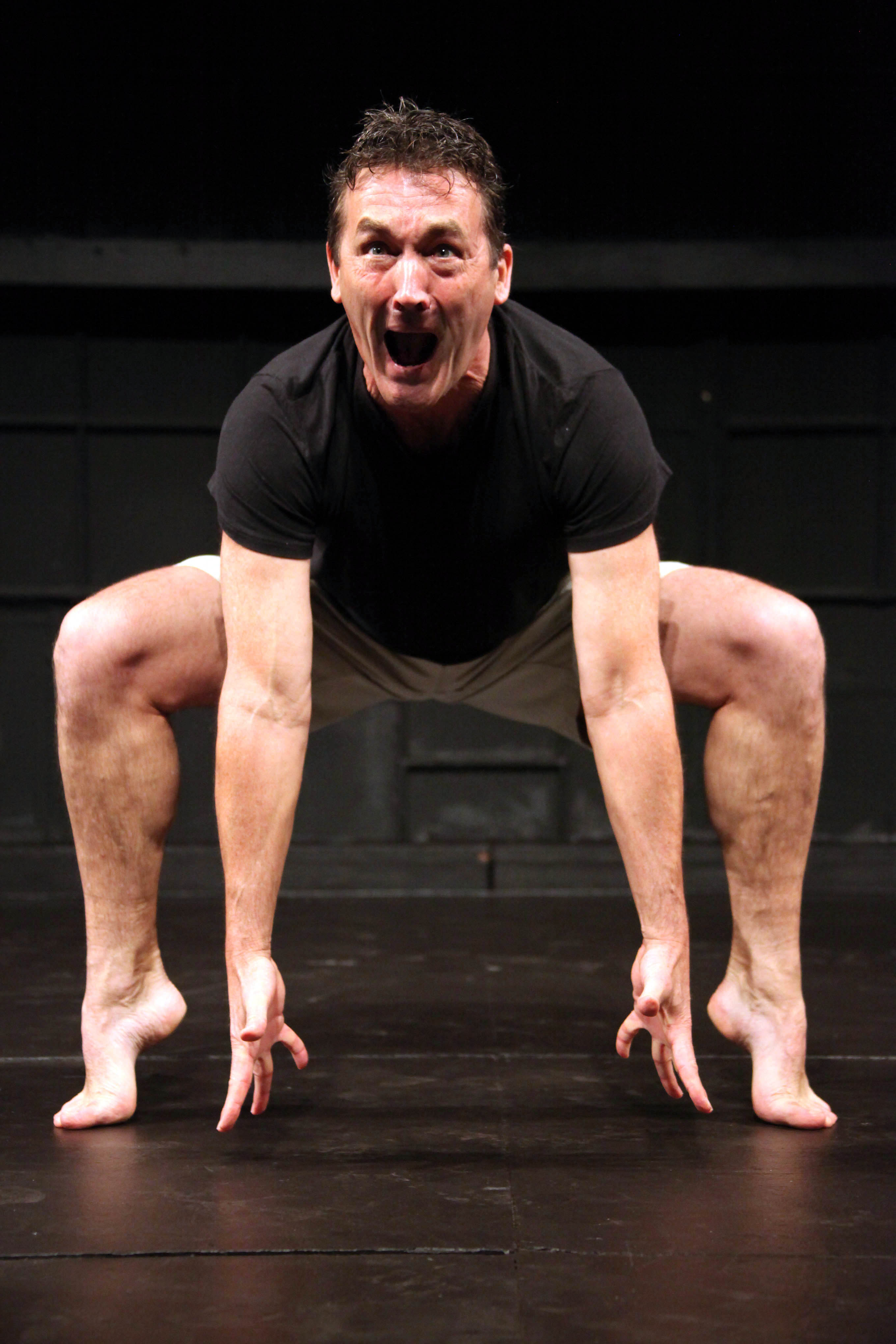
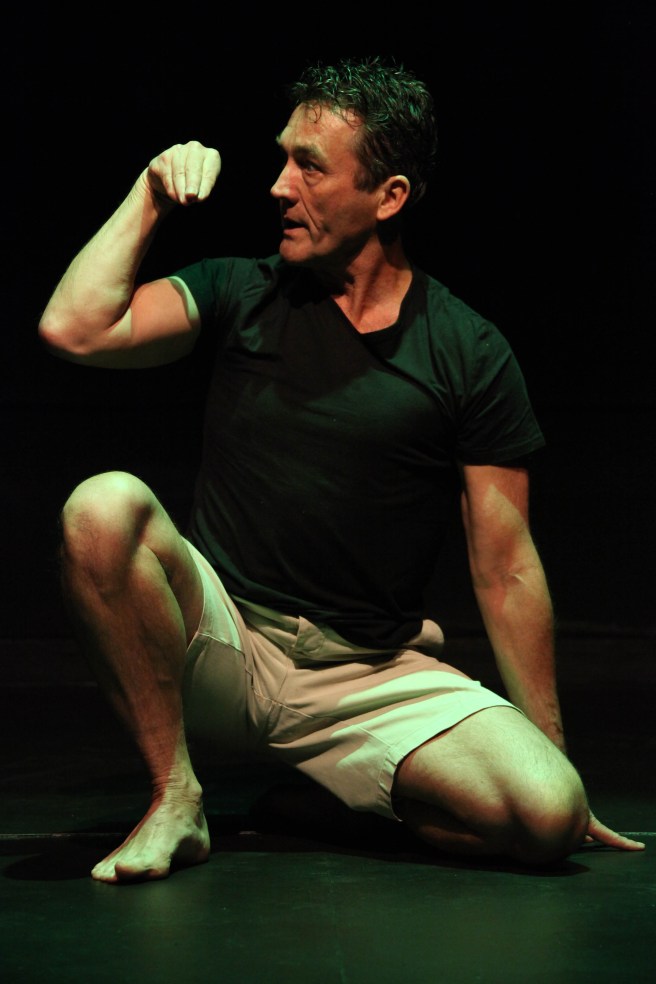
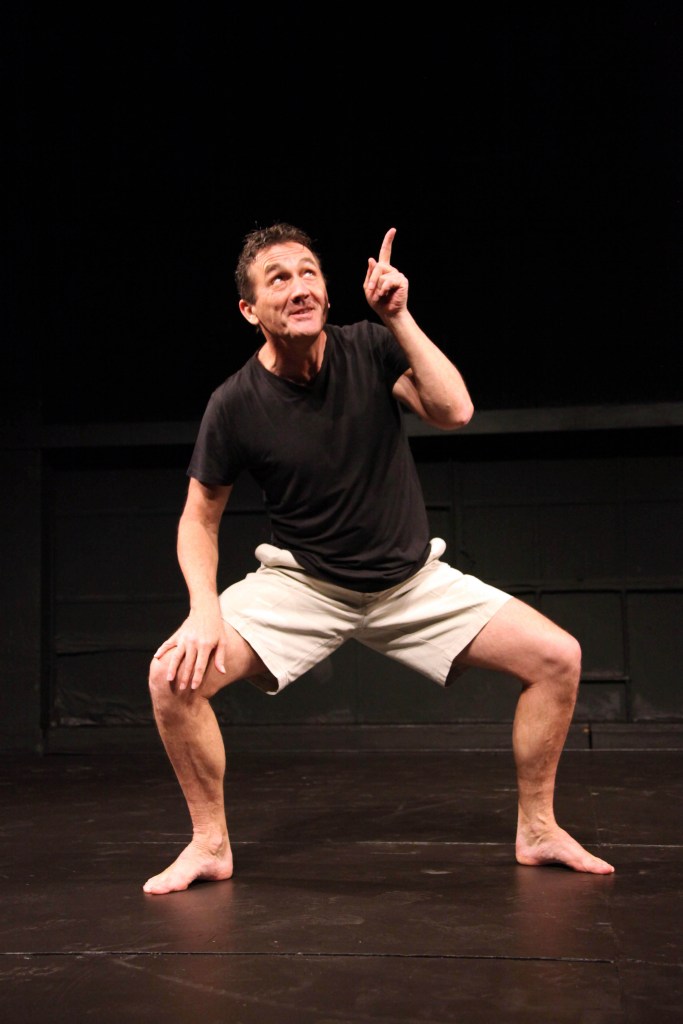
A FIERCELY FUNNY SOLO ACT AT THEATRE ON THE SQUARE WITH A SKILLED SCRIPT AND DEXTROUS PREFORMANCE BY AARON MCILROY

DIANE DE BEER

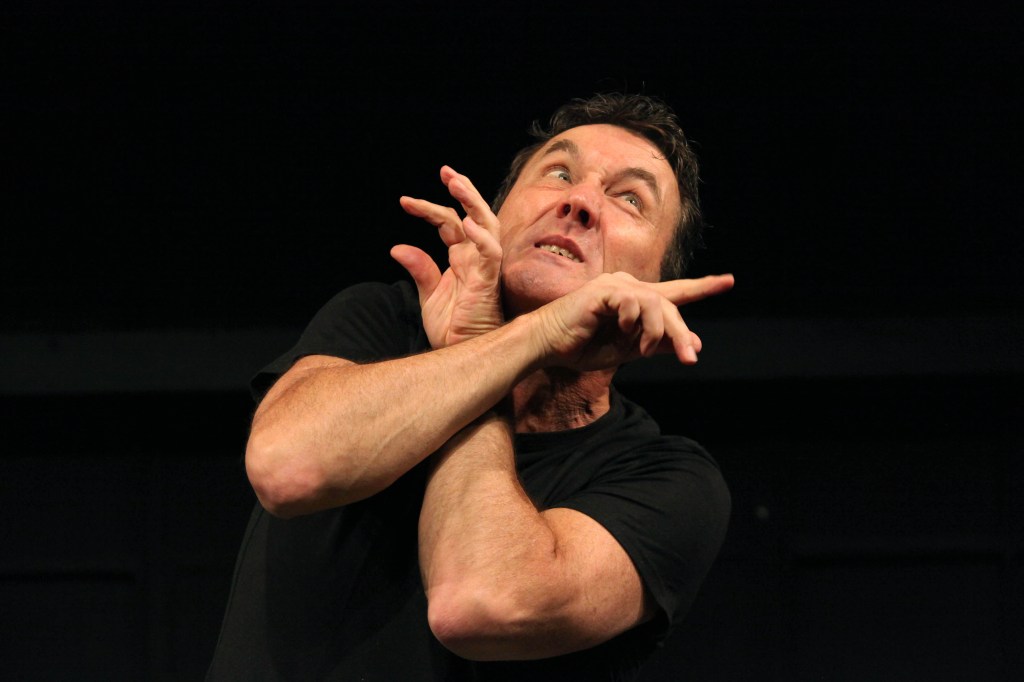
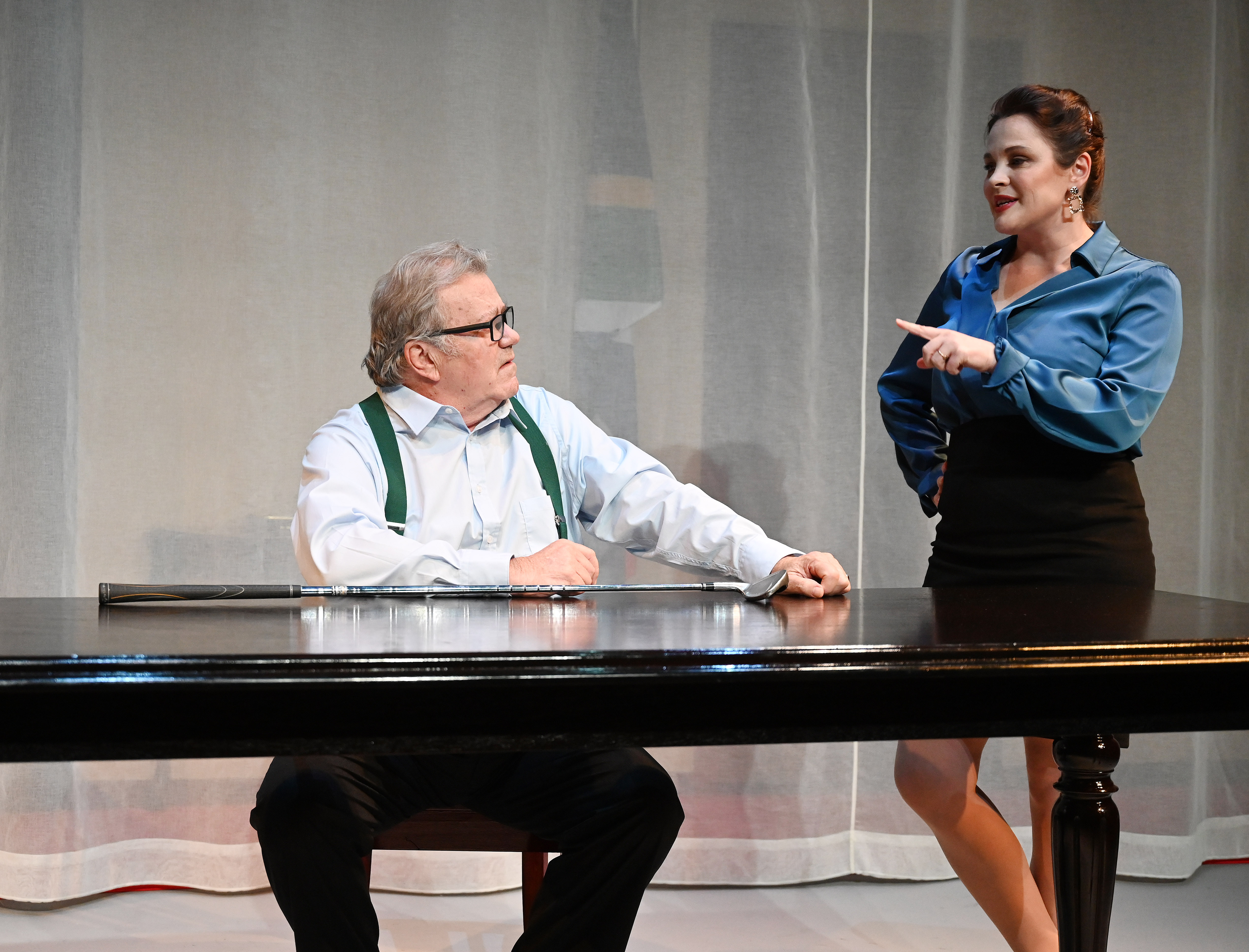
A VEGAN KILLED MY MARRIAGE

Actor: Aaron Mcilroy

Writer/director: Craig Freimond

Show times: Weekdays at 7:30pm and Saturdays at 5pm or 8pm

Dates: Until 14 July


A solo show is a difficult gig for any performer. It’s the actor and the script with no backup if things go wrong. They have to think on their feet.

But when it works, it’s usually a blast. They’re sometimes funny and often sad. But whatever the material, the performance is usually the determining factor.

That’s why I try to give solo artists at least one chance. If they’re good, you’re theirs for life and usually the progression is also special to witness.

When I saw  that Craig Freimond was the director and the scriptwriter, I knew this would be a winner. His reputation is established and I was pretty sure the trip would not be wasted.

It’s always interesting to discover new actors and Aaron Mcilroy’s performance was hugely entertaining.

The title is pretty self-explanatory and in this time of extremes, vegan is a good topic through which to exploit that particular behaviour trait. Anyone who gives up anything with success can be very painful and annoying. Perhaps “sanctimonious” captures the essence more specifically.

And that’s exactly what happens here as  this particular vegan convert decides he has to inspire the world. He has discovered the life and it is his responsibility to pass it on. Get the drift…

Especially braais – that sport of kings in the South African context – are not the place to start preaching a vegan lifestyle. But, of course, new disciples, have hardly learnt the finer nuances of taking things slowly. Trying to persuade someone to let go of their way of life because that’s what you have done is hardly a proven recipe.

And that’s exactly what happens. But without showing the play’s hand completely, rather discover it for yourself.

Mcilroy knows how to work a room, he has an abundance of tricks in his bag to layer his performance, and the script is coloured smartly with the sharpest South African shades, is extremely funny and very recognisable to anyone who has ever been in any relationship.

We all start out with good intentions and then the personalities and needs of the different parties come into play. How different individuals play their moves often determines the outcome.

Freimond and Mcilroy make a good team. It’s a sassy little play, a smart performance and, at 60 minutes long, perfect for a chilly Gauteng evening. Take some friends and have a relaxing time out.

TWO FOODIES HAVE TIPTOED IN THE GARDEN FOR THEIR ADVENTURE INTO A PLANT-BASED DIET

Pictures from the book

Cookery books have always been popular but it’s not always easy to find a hook, that something that makes it special. For creatives Isabella Niehaus and Louis Janse van Vuuren it’s as much about the creativity as it is about the food. DIANE DE BEER spoke to this powerhouse duo a while back about There’s a Vegan on my Verandah (Also available as Daar’s ‘n Vegan op my Verandah):

Food is the common thread between these two friends –Isabella Niehaus (Bella to friends) and Louis Janse van Vuuren – and, to make this one special, they decided to go the vegan route.

It has to happen with the way the world is going, and those like myself who love everything plant based will welcome their imaginative ideas. With both of them innovative chefs who are used to cooking for multitudes, coming up with novel ideas and combining that with wonderful words seem to come easily.

The fresh ingredients are from the forest/kitchen garden at Le Rembuché in the French countryside where Louis and his partner Hardy Olivier lived. And with Bella’s legendary long tables at her Duinhuis on the West Coast (she recently moved), and Louis’s fantasy vegan meals presented at Café Vincent and Chateau la Creuzette, it made sense for them to combine their cuisine adventures.

The book which has been rewarded with prizes and praise makes sense because of their passions which are so similar. Both of them are visual creatives and everything they do comes from that perspective. Which in this instance naturally means that the emphasis is as much on the pictures as on the words.

Not that the latter is neglected. Stories are the way they communicate amongst themselves but also on paper, and because this is a self-published book, they could do with it what they wanted with their own wishes, the ones to be obeyed. And you can see that.

With both having lived in what must be some of the most beautiful regions to be found (the French countryside and Cape West Coast) how they present their cuisine and their conversations is impacted by the visual presentation – something that works particularly well in a cookbook. It is who they are and how they operate.

This visual emphasis also drives how and what they do with food. “We don’t like stylised cookbooks,” they agreed at one of the presentations they did on their countrywide tour last year.

Nostalgia and memories are also feelings that dominate the way they worked with what they were going to present. Bella only got cooking late in her life, she explains, and for her, the table is as important as the food she selects for the day.

She loves working with flour and enjoys the whole tactile thing about preparing food. Fortunately we are still a country that cooks and they are hoping that with their particular plant-based ethos, they will inspire a new approach and an easy way to embrace the future where vegetables and fruit will play a far bigger role than meat and fish.

For Louis it is all about the senses and as soon as he smells food, he also visualises how it will look on the plate. “It will finally look exactly like a painting,” says the artist. His food habits had to change to improve his health. “Once I let go of dairy, I simply felt so much better.”

But that also heightened the emphasis he gave to food, because he had to put more thought into it, especially in the early days. He also believes that as he grows older, the importance of each meal is heightened. “I want every meal to be a festive occasion,” he says.

To compile and write the book, make the recipes and take the pictures, Bella had to travel to France and with her small duct-taped suitcase, she took with her some spekboom leaves (there’s simply not an English equivalent) as well as some other South African delicacies she could squeeze in.

Fresh produce is another of their secret ingredients. If they have to eat bread, it should be freshly baked. And when you think of the French and the abundance of bakeries, it’s part of how they breathe.

But that is also much more common here than before, so there’s no excuse. And even for those of us who are gluten intolerant, it’s easy to make our own version of what represents bread.

Similarly with fresh products. It’s important to go into your garden if you have one, and pick fresh lemons for example.

Simplicity is also underlined in their choice of recipes. “If I’m eating pumpkin,” says Bella, “I want to taste the pumpkin.”

Louis has been a vegan for more than seven years, while Bella with the writing of the book was dipping her toe in the water. But what they aimed to do with the book was to show the importance of produce and how to turn a vegan lifestyle into something spectacular in an everyday kind of way.

They emphasise that this cookbook is as much about the conversations as the cuisine. “We are two creative beings who like to chatter on about our food memories,” says Louis. They were guided by what they had in hand, how to combine smartly and imaginatively, and how to come up with affordable, wholesome and even luxurious meals.

I have to admit, my love of dairy still keeps me from adopting the vegan lifestyle. But I really cherish the information from those who are already doing it so that I can acquire as many of the wholesome habits as possible.

And because much of my food at home is plant-based, to find some clever combinations from those who know how is something special. It is a beautiful book with many exquisite pictures and the recipes are unusual, evoking many memories from childhood and family meals.

It is also a fantastic book to add spice to your kitchen – and we all long for that. Hurry up, because there are rumours that they are starting with a second one.

AUTHOR ONKE MAZIBUKO, A MAN FOR ALL SEASONS

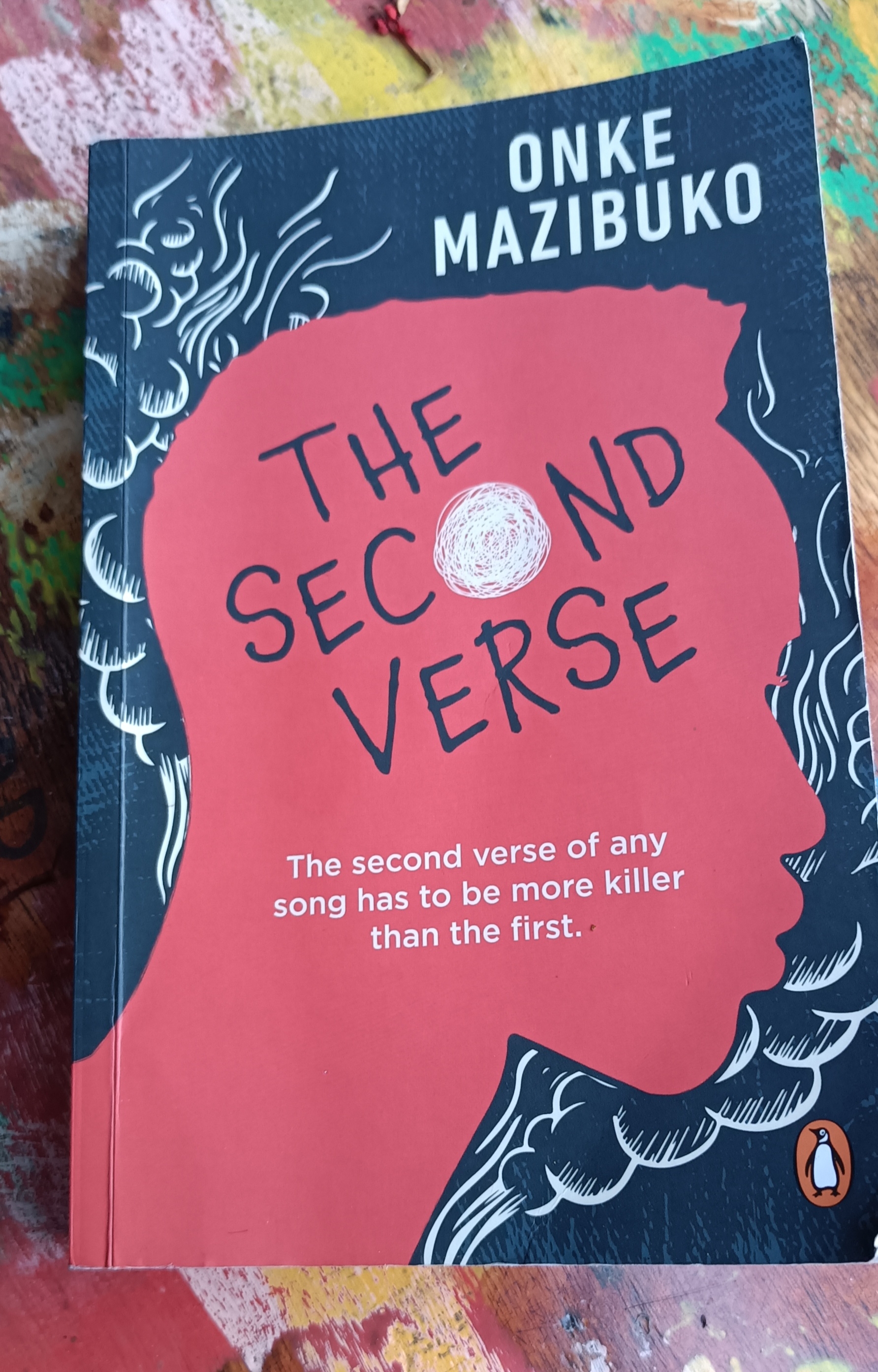
The second verse of any song has to be more killer than the first. Always. The rhythm has to slap. The lyrics must be on point. The feeling intense. And the impact mad-definitive. It’s just the way it is. In the same way, if you do well in life once in a life, then you always have to be better from that point onwards. No doubt.

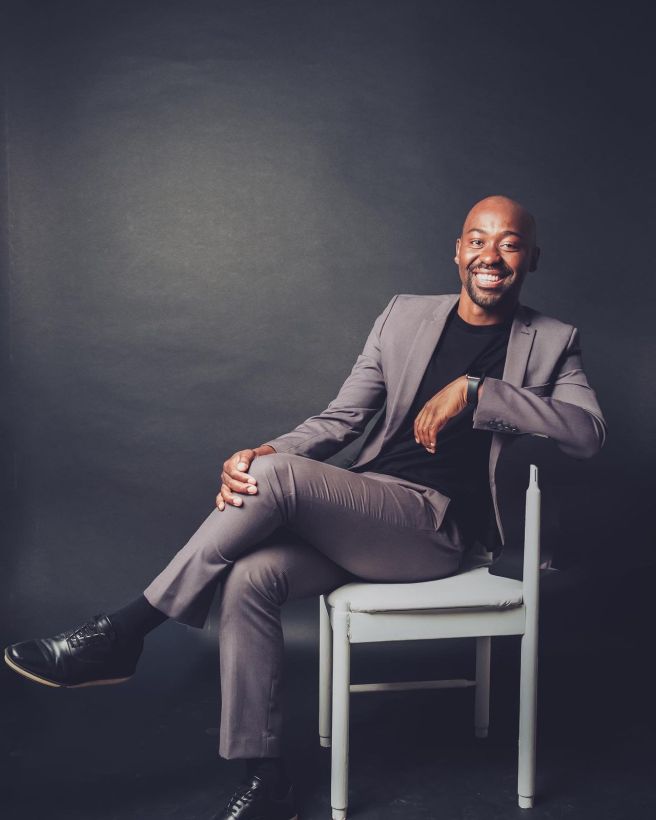
Author Onke Mazibuko is the director of transformation, diversity and inclusion at Johannesburg’s Kingsmead College, he has two master degrees, one in psychology, the other in public health and is busy with a PhD in creative writing. As if all that isn’t daunting enough, he tells DIANE DE BEER about The Second Verse, (Penguin Random) as well as two more books on the horizon – as well as a few other passions in his life:

“Whenever people ask me what I do for a living or who am I, I always feel I’m going to shortchange myself because there’s no one box or title or definition that would do it all justice.

“For example, if I say to people I work in a school as a director of transformation diversity and inclusion, that doesn’t explain that I’m also a writer. And when I say that also, it doesn’t do justice to the fact that I’m also a psychologist, and when I do that, it doesn’t do justice to the fact that I’m also a cyclist.

“I also love cycling, and when I say that, it doesn’t do justice to the fact that I love hiking. And when I do that, it doesn’t do justice to the fact that I’m curious about Buddhism. I’m practising meditation, but I’m not necessarily a Buddhist.

“And then there’s the rapping, the music aspect of it.”

And then he concludes that it’s easiest to say: “I’m a person, I’m a spirit, I am someone who is highly creative and I love learning. There’s nothing I love more than self-expression and learning.”

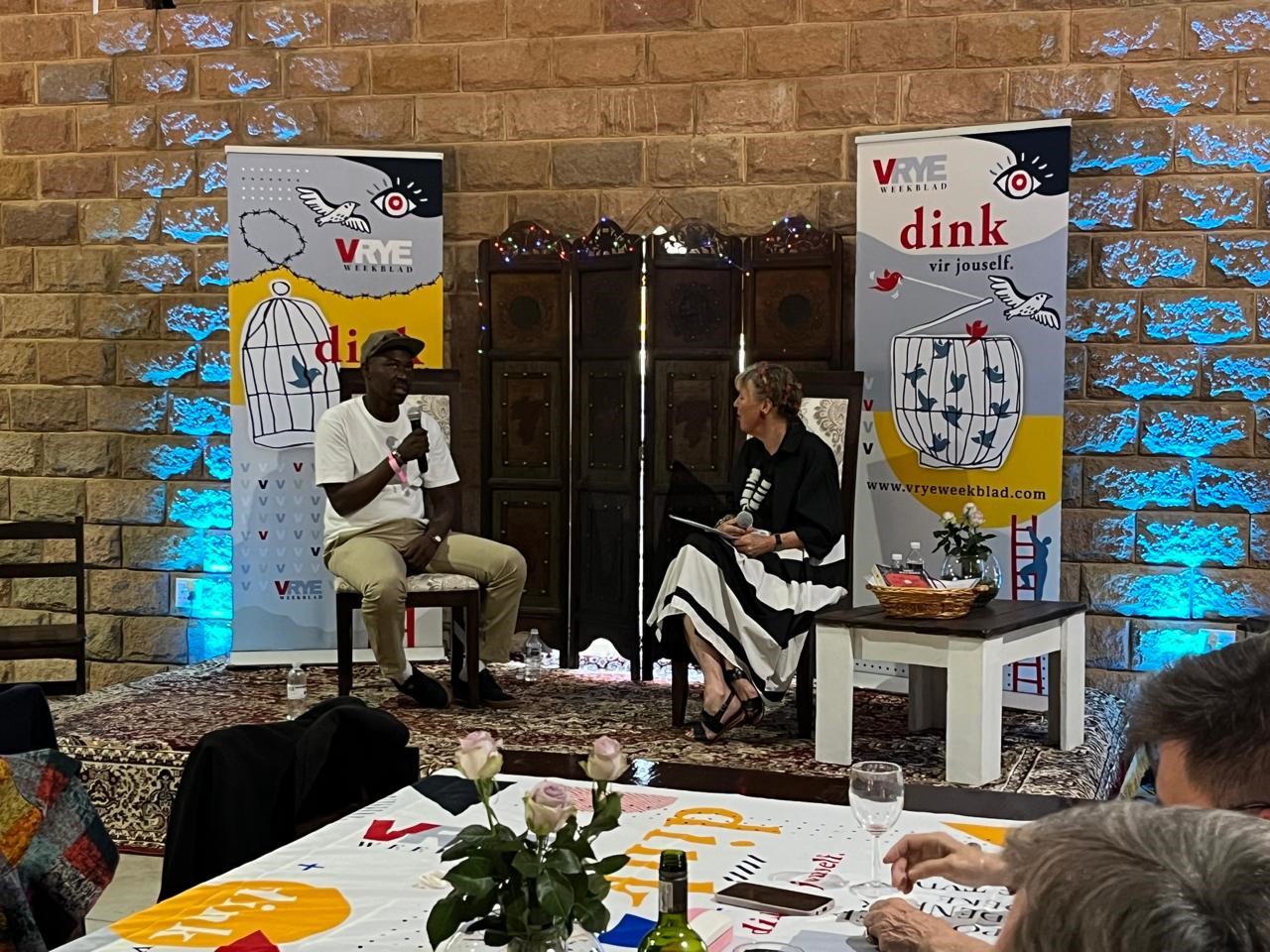
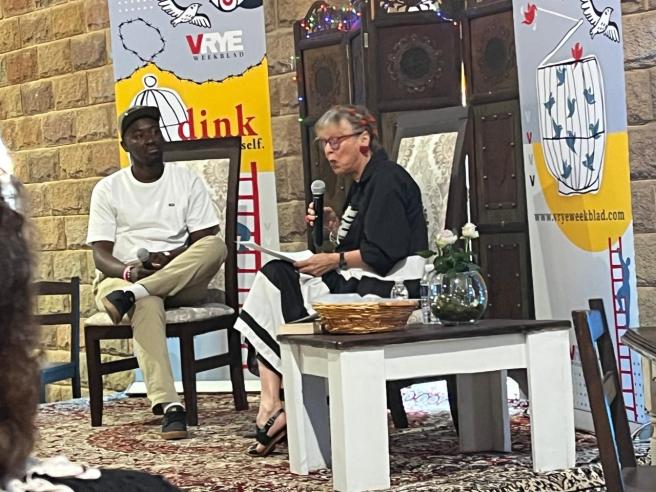
Speaking is the delightful Onke Mazibuko, whom I was privileged to interview in front of a live audience at the recent Vrye Weekblad Book Festival at Cullinan. We hadn’t met before the event apart from a short introductory phone call, but his heartfelt coming-of-age, first novel, The Second Verse (Penguin Random House), told me something about Onke’s youth.

I felt quite strongly that he had experienced the same emotions as his main character Bokang at some stage and that he was a writer I would love to read more of in the future. When asked questions about himself, he easily pours his heart out and shows who he is – as much as is comfortable – but with great sincerity.

“ I also sometimes wonder how I got to where I am because I feel there are things that happened in my life that have taken me off the path. But when I look back, I realise, I’ve never really been off the path as such,” he explains. With so many accomplishments to his name, one wonders what drives him.

“Going back to when I was six years old, all I wanted to be was a cartoonist. I used to enjoy drawing and painting and I remember my parents used to laugh at me (my father was a doctor and my mother was a nurse), thinking that this was cute maybe, and as I got older, I wanted to be a doctor like my father, but when my parents separated when I was 12, I let go of that idea. When I entered high school, it was a difficult time because our financial circumstances had changed because of the separation.

“I went from private schools to government schools and even though there are very good government schools, it was a very big change in my life. We moved from KwaZulu-Natal where I had been in boarding school for eight years and suddenly we were in East London in the Eastern Cape and I was a day scholar.”

That is where the writing started – an emotional response, perhaps a coping mechanism in a life that might have felt as though it was disintegrating.

“I started writing a lot of poetry. Now years later, I’ve become aware that whenever I go through emotionally difficult times, I tend to turn to writing.”

This developed into an interest in learning to rap and taking part in hip-hop events when he attended the University of Cape Town. For the first time he saw his peers getting on stage and doing poetry and he challenged himself to learn to rap and get over his fear of talking in front of people. “I was very shy,” he explains. Getting on stage, enjoying the hip-hop scene, that’s where he forged an identity for himself.

He eventually dropped out of university because he had chosen a specific field for the wrong reasons. And while the hip-hop was going well, at the time, it wasn’t yet commercially viable. “I was not compromising and I felt that I wasn’t going to change my music just to fit into the industry standards.”

And he still takes that stance when making decisions. Something he questions in his writing is when others try to define him. The Second Verse has been branded as young adult, while he feels that, if he had anybody in mind, it was an older reader. “I wanted readers to reflect on their past, look back,” he says.

Leaving university, his life took what some might think of as a sharp left. He went to work for a bank. But this also allowed him to explore his creative side in many ways. He decided to return to his university studies but also kept up the writing. His office and the university were in close proximity and graffiti became another pastime to indulge his creative dreams.

“I would leave home at 7am in the morning dressed in working gear, walk 25 minutes to work. Opening accounts for people, talking to them about  home loans etc, doing all these professional things, and at approximately 4pm, would walk about 5 minutes and get to school and attend lectures until about 8 at night.”

Then he would walk home at nighttime, and his creativity would emerge again. He would have his spray cans handy and start tagging and doing throw-ups. Then to bed at about 10 so that he could wake up at 2 in the morning, go and graffiti train carriages and return home to get ready for work, where he would show up with fingers covered in paint.

People didn’t know what he was doing, but he was at work on time. In-between clients, when he got bored, he would write poetry and rap, which passed the time.

He always read a lot, and he remembers reading somewhere that if you are a reader, you are a writer under cover. “If I had to find an origin of when I started writing, I would take it as far back as when I started reading.” When he was at boarding school at the age of 5, “they would read us bedtime stories, and by the time I was in std 1, you had to have your own book.”

Books were always a part of his life. His father’s books were all around the house, in fact, he and his brother’s room was pretty much his father’s library. “We felt we were sleeping in his library rather than that his books were in our room.”

He didn’t do particularly well in writing at high school and this was him trying, so he left school thinking that he couldn’t write, didn’t think it was something special. His sister (who sadly died a few years ago) always played a special mentoring role. She was a lecturer where he was studying and would give him feedback about what his lecturers were saying.

He was in the psychology department and she was in the sociology department, and she would tell him how proud she was of him because the lecturers were always saying how well he wrote.

But it wasn’t until he got to his honours degrees, when they started telling him he could write well. During his psychology studies, he was having emotional struggles and had read that journalling could help him. He has  been doing that since 2008 and hardly ever skips his daily journalling. For him it is not about the content but about the practice of making time to be with himself.

The first time he really attempted to write a story, he was 35 years old and was doing a PhD in psychology. He was having problems and again writing became his safe place. In the process, he realised how much he was enjoying the writing.

He also started volunteering at youth-centred NGO’s, while writing another novel which deals with young people. He’s continued seeing clients, not a lot, but he loves the therapy. He also does palm reading, astrology and tarot. When spending time in libraries at 19 after dropping out, he discovered books on astrology, and just read and read.

This side of his career developed organically and he knows now that when he felt his life was falling apart, he was actually gathering knowledge and strength for the future. “Things come around; what I learnt to do at a young age has become part of my life.”

When he isn’t writing, he falls apart. He does a lot of writing exercises, which keeps him healthy and focussed on a routine. Research methods, life experience, everything comes into play.

Mentoring plays a large role in his life. Once he starts talking about the youngsters he mentors, the stories just pour out. Often their stories remind him of his own journey. He is also someone who received scholarships and travel grants –  once you’ve received these kind of gifts, you want to do the same for other people.

It was one of his mentees, a young man who had never read a novel and was sent one of the early drafts of The Second Verse, whose response and determination to keep reading, proved to Onke that while he didn’t view his book as great literature, he has the ability to capture emotions. It’s not about the words (in other words), it’s about the storytelling capability.

He was humbled when he received the South African Literary Award for Youth Literature, which confirmed to him that this is the kind of story he should write.

The book was influenced by Catcher in the Rye which at first he hated, but when he read again after dropping out at varsity, he experienced it very differently. Once he realised he was writing a coming-of-age story, he tapped into the most difficult four years of his life –  high school. He was discriminated against by both white and Black kids and always made to feel different, creating a yearning to fit in.

His two latest books are a story of two brothers whose sister died and, one he is writing for his PhD in creative writing that follows his years at Transnet and deals with a whistleblower who discovers corruption in a state-owned company. It can’t come too soon.

STATE CAPTURE IN FULL COLOUR IN THE BROTHERS NUMBER ONE AND A WEEKEND SPECIAL AT JOBURG’S MARKET THEATRE

REVIEW BY DIANE DE BEER

Pictures: SUZY BERNSTEIN

THE BROTHERS NUMBER ONE AND A WEEKEND SPECIAL

A new South African Political Play

PLAYWRIGHT: Richard Calland

DIRECTOR: Greg Homann

CAST: David Dennis as Uncle; Michael Richard as Tim; Astrid Braaf as Journalist; Zane Meas as the Lawyer; Ziaphora Dakile as Tiger Claws; Melissa Haiden as Virginia

ASSISTANT DIRECTOR: Aalliyah Zama Matintela

SET AND COSTUME DESIGN: Lisa Younger

LIGHTING DESIGNER: Hlomohang ‘Spider’ Motheto

AV DESIGNER: Xolelwa ‘Ollie’Nhlabatsi

SOUND DESIGNER: Vagile Mpumlwana

VENUE: Mannie Manim Theatre at The Market

DATES: Until May 19

In the programme notes the playwright is described as a prominent political analyst, and a columnist for the Mail and Guardian newspaper as well as the author of a number of political books.

The following is also stated:

The Brothers, Number One and a Weekend Special is the story of the rise of State Capture, starting with the announcement of a new Minister of Finance in late-2015. The play, which tracks a two-year history, is written by astute political analyst, Richard Calland, who has been close to the frontline of South African politics since 1994 and a political columnist at the Mail & Guardian since 2001.

As the drama unfolds, an audience witness the high-stakes manoeuvres, clandestine dealings, and manipulation of public sentiment that fuelled further racial division across the nation. Calland weaves a narrative that connects the dots between government, media, and corrupt businessmen, laying bare the underbelly of a political landscape marked by noise, complexity, and a dangerous volatility.

This leaves you in no doubt about what is going to follow and my first thought was, this being the 30th celebration of what still feels like our young democracy, the play must be seen as a sign of our maturity as a country.

This kind of play, with a representative audience all loudly involved from start to finish, has a lot to say about what we have gone through and, how we have emerged with much more political smarts and cynicism following the Zuma years. Even though we are still suffering many financial and ideological blows from that horrific time, we are not as easily duped, no longer the silent sacrificial lambs we were then.

And at the heart of what unfolds is the playwright who as a political analyst and journalist, has the information at his fingertips.

How can we forget how the iconic Brenda Fassie song title Weekend Special became something completely different in South African minds?

Michael Richard and Melissa Haiden.

This was perhaps the turning point of the whole Zuma fiasco – his Weekend Special. You can dupe a country as much as you want it seemed, but when you go for their money, that’s a completely different ball game – and when things started to unravel for the shameless Number One. Des van Rooyen was no match for the controversially fired Nhlanhla Nene – as the rand went into free fall.

Remember those heady days for the Gupta brothers, who are still hiding out (with South African billions, mind you) somewhere in the Middle East, Switzerland or India depending on  which sources you trust.

Back to the play. We all know the facts; there were many newspaper reports as well as Thuli Madonsela and Zondo’s inquiries. With Homann smartly mixing his cast with stage veterans such as Zane Meas, Michael Richard and Dennis Becket and three young but also experienced female actors (more familiar I suspect to Cape audiences), we all had to think on our feet to work out the different characters.

David Dennis is Mac Maharaj whispered an audience member close by, but in the end it didn’t matter. You quickly gathered that the men were part of the corruption including the Guptas, as well as those handling all the shaky deals from government side, with Richard being the one watching and guiding his journalist.

David Dennis makes his point.

It was glorious to see these three in action on the same stage, masterfully matched by the young female energy in their particular roles of either ferreting out, or defying any corruption allegations, depending on their particular alliances.

It takes one back to those early days of discovery. Remember the Saxonwold shebeen? People carrying handbags stuffed with money, others denying visits to their overlords, those in command of State Capture. It feels a bit like a horror movie, but not with Calland orchestrating the manoeuvres and connecting the different dots.

And everyone was laughing. We have, after all, dodged a bullet and most of us are much less gullible than we were in those heady early days of our democracy.

The anguish is palpable.

It’s a fast-paced political thriller of sorts and it’s our own. What I would have liked is a bit more clarity in the staging. With seats on three sides, the projections were difficult to follow from the side. And some gave insight into the full affair which was unravelling at a speed.

Short and straightforward interactions would have  added more punch (from both a script and staging perspective) and added a contemporary edge. The audience obviously loved it and were fully engaged, and so was I. But, especially as we all knew the details, it simply would have elevated it into a landmark play.

A FRENCH EVENING OF FABULOUS HOSTS, FOOD AND WINE AND A ROOM SIZZLING WITH A DIVERSITY OF FANTASTIC FELLOW SOUTH AFRICANS

Pictures: HENNIE FISHER

ATTENDING a fabulous dinner at the French Embassy, DIANE DE BEER lost her heart not only to the fantastic food and spectacular wines, but especially to the savvy of her French hosts and the sassiness of her fellow South Africans:

A small but pretty selection of the garden as you enmter the residence grounds.

It  was the French Embassy’s Goȗt de France dinner that again reminded me of one of our best attributes – our people.

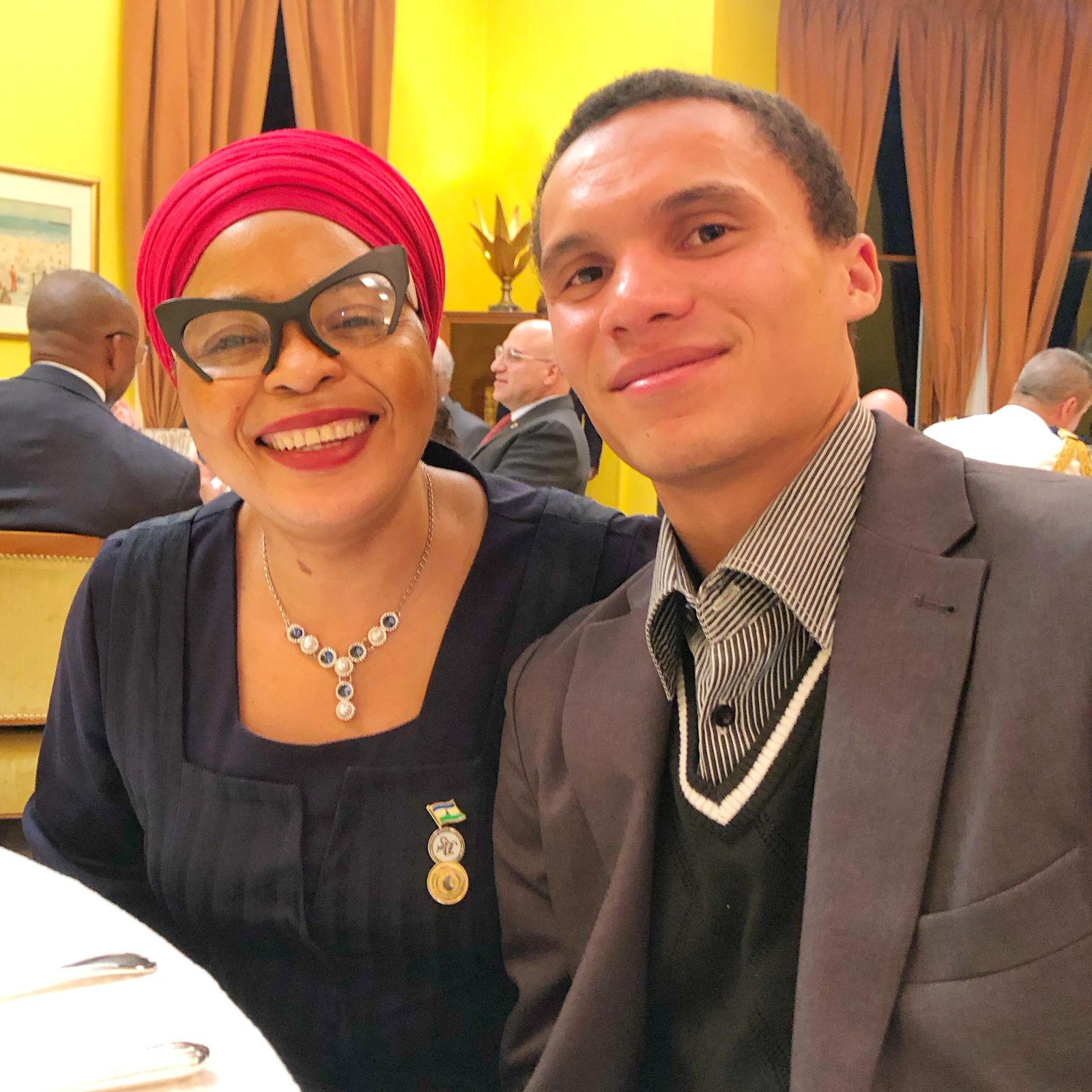
Myself with the stylish Itumeleng Makhoi; and above right, First Lady of Lesotho Mrs Mammusa Masekoalane Majoro and Namibian olympian hockey player David Britz.

Here we were in all our diversity from two soon-to-be Olympian hockey players (one representing South Africa and the other Namibia, but we claim him because he is studying at UJ) to a fashion designer whose calling card was her fabulous style on the evening, a stylish young gentleman who imports champagne for local enthusiasts, a sassy lawyer and a smart landscape architect.

Two chefs, Mpho and Mohau Seshoene (aka The Lazy Makoti) with the French Ambassador H. E. Mr David Martinon , and on the right, landscape architect Mosa Seshoene and Adv. Kutlwano Motla (or The Boujee Traveller, a travel content creator)
PICTURE: French Embassy/Aldina Mujkanovic

And that’s just a handful. There was the woman with the red headpiece and the sexy red stilettos who turned out to be the First Lady of Lesotho Mrs Mammusa Masekoalane Majoro and it wasn’t just her style that was exuberant, her personality was a perfect match. But the same could be said of the two young lasses (above) also at our table, the one a landscape architect and the other a lawyer, both of whom had as much sass as they had style.

A predictable but splendid welcome

It has always been one of the French Embassy’s secret weapons. There’s someone there who knows how to put a spectacular group of South Africans together. This time the current ambassador H.E. Mr David Martinon noted that because of the upcoming Olympics in Paris, they had hoped to combine food and sport but that wasn’t always achievable.

But what they did manage was to showcase people who displayed our most  extraordinary strength – diversity.

French Embassy chef André Ahiba (left), who has served nine Ambassadors with his staff in the kitchen.
PICTURE: French Embassy/Aldina Mujkanovic

All of this was also reflected by the charming Ambassadorial couple, H.E. Mr Martinon and his wife Karen, in the food on the night which was the brainchild of the embassy chef, André Ahiba, who has served nine ambassadors and celebrated French cuisine in marvellous fashion.

A melange of seafood

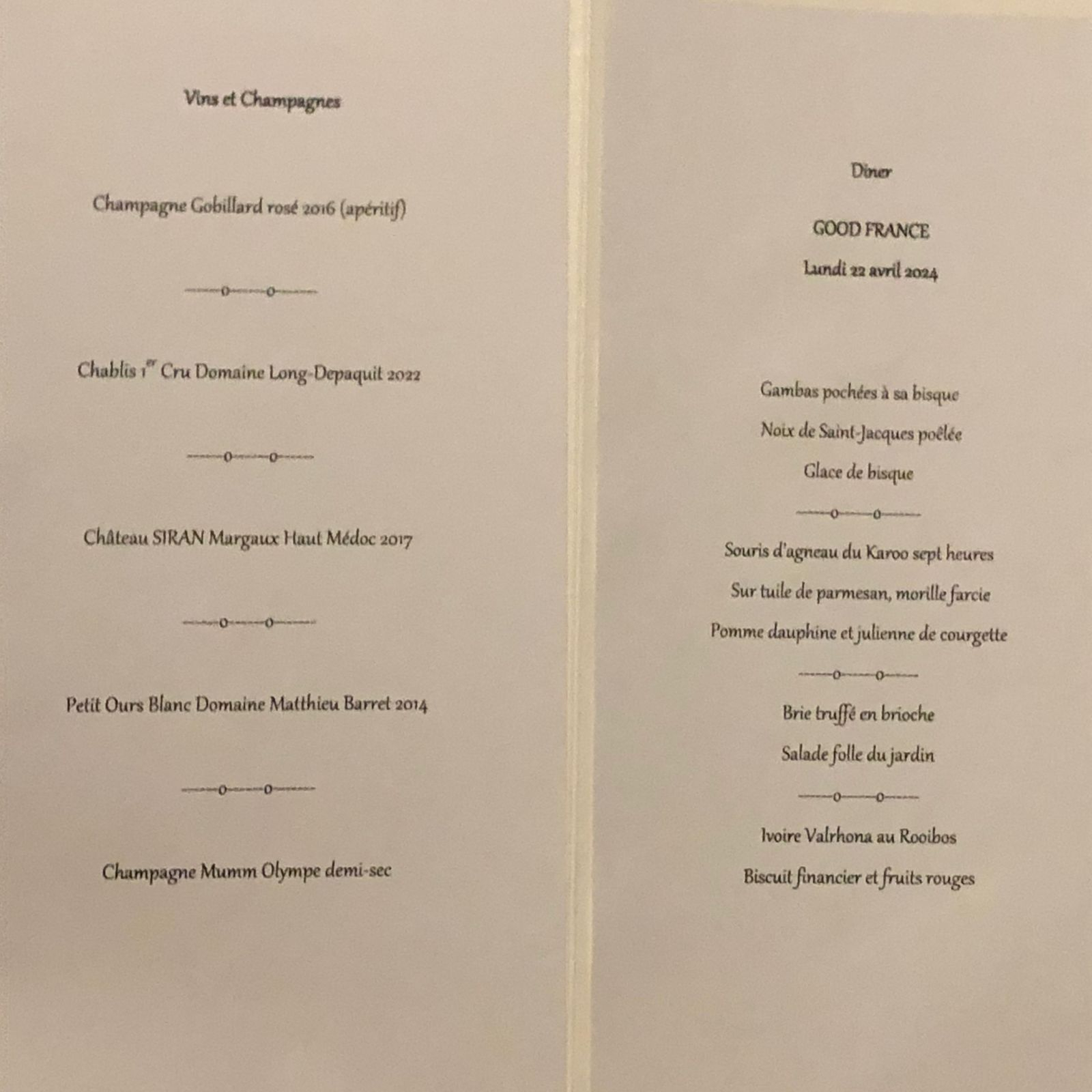
The starter was a mini seafood combo with a prawn poached in its own bisque paired with a beautiful panfried scallop. It was delicious and a fine launch into the rest of the meal.

Slow-cooked Karoo lamb shank with imaginative accompaniments.

This was followed with slow-cooked Karoo lamb shank which paid homage to produce from a specific region and then similarly, to sustainability. The accompaniments included pomme dauphine and julienne courgettes. But the piece de resistance was a morille farcie, which my chef partner said he knew about but had never eaten. When looking for a translation, stuffed mushrooms pops up, but the best I can do is to say that the chef noted it was extremely expensive and the taste was that of mushrooms, very intriguing.

Brie truffe Brioche, the cheese course.

This was followed by their cheese course which again displayed a wonderful individuality of thought. What could have been easier than presenting us with a selection of French cheeses. Everyone would have been wowed. But again the chef imaginatively presented us with Brie truffe Brioche (a brioche with truffle brie is my translation) which I loved, served with a salad, it was different and tasty.

A sweet surprise.

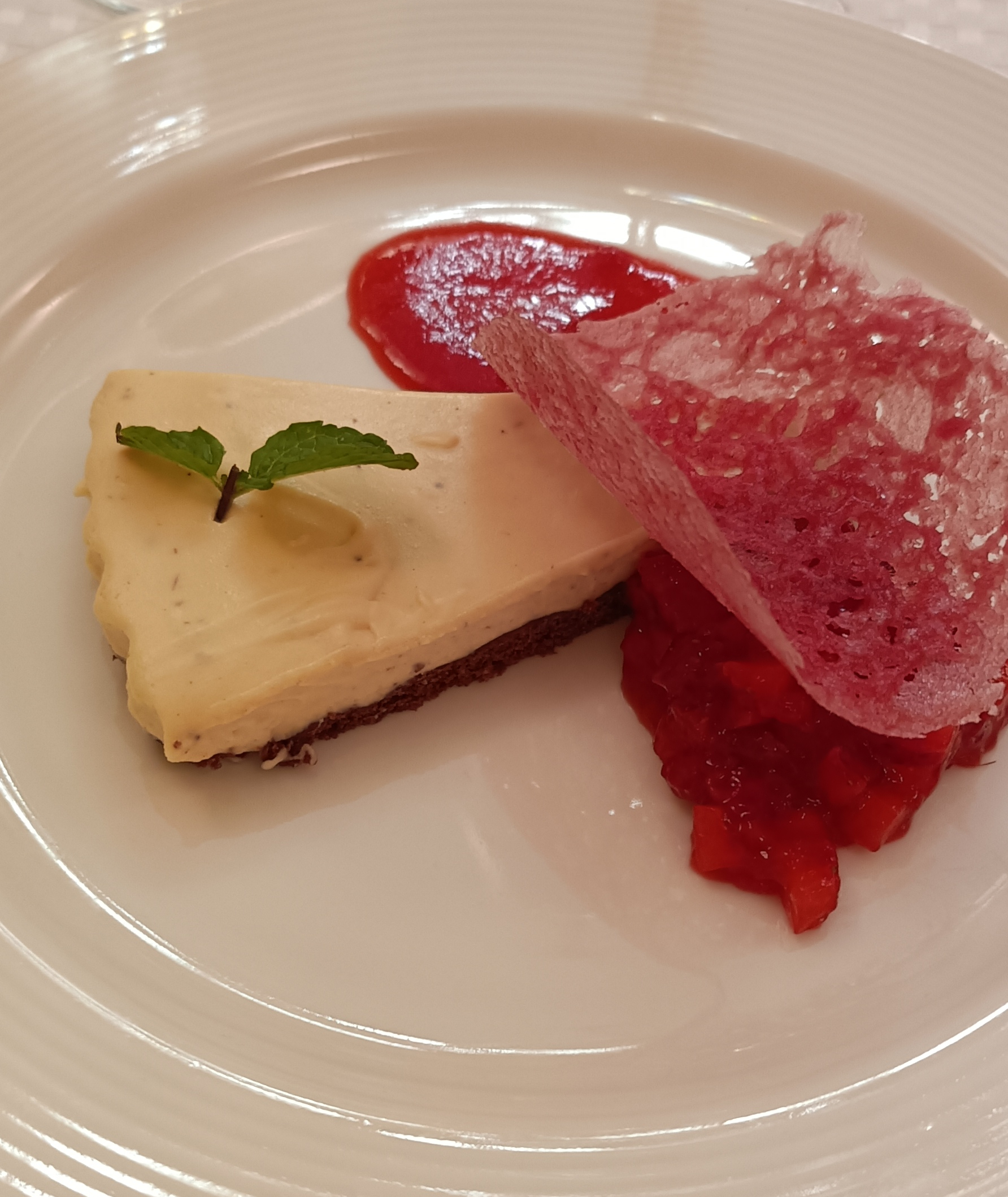
The other nod to South African produce was a Rooibos white Valrhona tart with a red fruits and a biscuit financier (which has its name because of the shape reflecting a gold bar!).

What I liked about the menu was that it felt pared down in the best sense of the word. Every dish had some extraordinary qualities but in conclusion, one left the table replenished yet comfortable.

The food was complemented with phenomenal French wines. I am by no means a wine specialist but from the apéritif served with the most delicious foie gras squares brightly decorated with rose leaves out of the spectacular embassy garden, Champagne Gobillard rosé 2016, followed by Chablis Cru Domaine Long-Depaquit 2022 and the most amazing of all, the Château SIRAN Margaux Haut Médoc 2017, and then the Petit Ours Blanc Domaine Matthieu Barret 2014 and finally yet another fantastic Champagne Mumm Olympe demi-sec.

When countries want to show off their quality and they do it this well, those of us invited to participate in the tasting, cannot but go overboard with the praise.

And in the final analysis it was the full package that gift-wrapped this evening so magnificently. From the arrivals which take you through some of the prettiest gardens to the entrance where you are met with a glorious ensemble of citizens hosted by an enchanting ambassadorial couple who as a bonus also have their young daughters meet the guests and show off some French charm.

The staff are magnificently dressed with gorgeous smiles as they gently see that the guests on the night are suitably cared for.

And then my fellow South Africans introduced to me by the French ambassador. I think I have said as much as I can and can simply add that it was an evening that I couldn’t have been more proud to be South African.

And I have the French to thank for that.

Merci beaucoup.

Vive la France!

CELEBRATING THEIR 25th ANNIVERSARY MAMMA MIA AND HER THREE STARS HAVE THEM ROCKING

REVIEW BY DIANE DE BEER

MAMMA MIA

Three dynamic stars, Ilse Klink, Gina Shmukler and Kate Normington.

CAST: Gina Shmukler, Kate Normington, Ilse Klink, Emmanuel Castis, Matt Newman, Tiaan Rautenbach, Kiruna-Lind Devar, Gianluca Gironi, Ntshikeng Matooane, Sunny Yoon, Chad Baai, Bradley Smith and the rest of the ensemble

SET AND LIGHTING DESIGNER: Denis Hutchinson

MUSICAL DIRECTOR: Charl-Johan Lingenvelder

CHOREOGRAPHER: Duane Alexander

COSTUME DESIGNER: Sue Daniels

SOUND DESIGNER: Mark Malherbe

ASSOCIATE RESIDENT DESIGNER: Timothy Le Roux

PRODUCER: Hazel Feldman, Tony Feldman

DIRECTOR: Janice Honeyman

VENUE: Teatro at Montecasino

DATES: Until June

Kate Normington, Gina Shmukler and Ilse Klink in their ABBA gear with the cast.

It wasn’t that Mamma Mia was the attraction  –  been there, done that. I was intrigued by the three actors – Gina Shmukler, Ilse Klink and Kate Normington – in the latest production.

Seasoned actors and singer all, they don’t get that many chances in lead roles (there are just not that many starring roles for women once they’re out of their 30s) and I knew this would be a triple threat. These are women with sass who strut when they walk. No shrinking violets here! They would go for this one in unison and grab that stage – as they did, fulfilling my every wish.

Like many musicals, this is also a rather silly if sweet one, but with ABBA’s music, it ticks all the boxes and has an hysterically loyal fanbase, but what I wasn’t expecting were the many youngsters (I’m guessing between 8 and 12!) in the audience.

Kiruna-Lind Devar as Sophie.

Right in front of me were two (again guessing) 12-year-old girls who were totally into the musical from start to finish. At the beginning of each song, they would glance at each other and joyfully sing along ­­– pitch and word perfect! Rather than hinder my experience, I was enchanted by their enthusiasm and it switched me on to the charm of the musical, which might otherwise have felt jaded to this seasoned viewer.

Not for this audience though. When last were you in an auditorium where they were clapping along to almost every song? You cannot but be swayed to lose all your hard-earned cynicism.

Ilse Klink, Gina Shmukler and Kate Normington and the cast.

But back to the show on stage. Can those three women sing  – together and individually they rocked and easily generated the star power this kind of show needs. It’s not that they haven’t all had the chance to individually star in shows. But these days, it’s tough to find starring roles for women beyond 40, so when you get them, you’d better make good use of the opportunity.

This is exactly what Klink, Normington and Shmukler do. They know the game and have made full use of this marvellous opportunity. And, like I thought it would, it shows.

They’re directed by another wise and wily artist, Janice Honeyman, who knows all the tricks in the book. And with these three accomplished performers, she would have had loads of fun.

The two lovebirds Gianluca Gironi (Sky) and Kiruna-Lind Devar (Sophie).

They’re well supported by the youngsters, especially the love-struck couple, Kiruna-Lind Devar and Gianluca Gironi, who both have youthful stage appeal and energy.

A personal favourite was the omnipresent, soberly yet strikingly dressed in black, little old Greek lady (Chantal Stanfield), who is a constant presence as she pops up in almost every scene, for no other reason than confirming we’re on a Greek island. This lovely throughline stays amusing, if not relevant to the story.

Tiaan Rautenbach, Emmanuel Castis and Matt Newman as the three Dads.

If you don’t know the story of the young woman who hopes to recreate her mother’s romantic dream and in the process also discover the identity of her birth father, don’t delve any further.

Check the colourful pics, see if it looks like your kind of thing, gather the family or a group of friends and make a night of it.

Chad Baai, Ginaluca Girona, Bradley Smith and the Mamma Mia male ensemble.

Think of titles like Dancing Queen, I have a Dream, Lay all Your Love on Me, Mamma Mia (of course!), Super Trouper, SOS, Our Last Summer, Take A Chance on Me… and many more.

Even if you don’t consider yourself a particular fan, I bet you can sing along to most of these songs. That’s what their music is ultimately about … and so is this musical.

And this time there’s extra punch with these three dynamic dames. They are what makes this show swing.

RINGMASTER SYLVAINE STRIKE GATHERS THE BEST AROUND HER FOR A FLOURISHING SPRING AWAKENING

The ensemble wih the love-struck couple (Scarlett Pay and Dylan Janse van Rensburg) in the front.

REVIEW BY DIANE DE BEER

Pictures: Claude Barnardo

SPRING AWAKENING

Based on the play by Frank Wedekind

Books and lyrics: Steven Sater

Music by: Duncan Sheik

Featuring: Dylan Janse van Rensburg, Scarlett Pay and Jonathan Conrad with Gemma Bisseker, Killian Blerk, Jude Bunyan, Tatum Grace Coleman, Jayden Dickson, Noa Duckitt, Skye Themeda Goss, Ché-Jean Jupp, Gabriella Knight, Jasmine Minter, Tumelo Mogashoa, Hannah Norcott, Nandipa Nyivana, Benjamin Stannard, Tjaart van der Walt, Gerhard van Rooyen (graduates and under-graduates) and playing the two adults, also former students of LAMTA (The Luitingh Alexander Musical Theatre Academy), Francis Chouler and Natalie Robbie

PRODUCERS: Anton Luitingh and Duane Alexander

LIGHTING, SCENIC AND COSTUME DESIGN: Niall Griffin

SOUND DESIGN: David Classen

ASSOCIATE DIRECTOR AND ASSISTANT MUSICAL DIRECTOR: Anton Luitingh

CHOREOGRAPHIC SUPERVISOR: Duane Alexander

VOCAL DESIGNER: Annemari Milazzo

MUSICAL DIRECTOR: Amy Campbell

CHOREOGRAPHY: Anna Olivier and Naoline Quinzin

STAGE MANAGER: Sarah Wolhuter

DIRECTOR: Sylvaine Strike

VENUE: Pieter Toerien Theatre, Montecasino

DATES: May 5

Spring Awakening a production for current times.

Perhaps Spring Awakening is the reason Sylvaine Strike is only now directing her first musical. It was destined to happen with this particular show – and she does it magnificently.

If anyone was up to this specific task, she was. Even more than I knew, because I was unaware of her teaching responsibilities at LAMTA, Luitingh and Alexander’s Musical Theatre Academy in Cape Town that invited Strike to direct.

In her programme notes, she explains that  her  students understood her approach “tackling the very controversial themes – from a physical rather than a psychological perspective – possible, and ensuring that the sexuality, heartache, and rebellion we activated during the rehearsal process always came first and foremost from the body. This was apt seeing that the impulses of adolescence also spring from this turmoiled yet effervescent well. Whether we explored the private agony of self-consciousness; the damage of self-doubt; the wreckage of hormones on both mind and soul; the pain of parents’ inability to accept a child as they are; or the blossoms of sexuality growing their gentle tendrils of yearning and fantasy throughout adolescence …”

Much of the magic is in the movement.

Her mantra was to seek a physical way to manifest these feelings and to create the characters from that specific place.

And even though I didn’t know any of this before watching this production, it was the movement and the choreography that grabbed and gripped me throughout. It was so clever and crafty to use this in both solo and ensemble numbers and even with the very specific movements of the two adults to exactly capture their strictly restrained and fastidiously maintained lives.

I kept wondering who the choreographers were, as they who would have been completely aligned with Strike’s vision because of her very detailed rehearsal process. Not surprisingly, but also with kudos to the producers and director, they picked two of their talented graduates Olivier and Quinzin, who did an amazing job both incorporating and executing their work to perfection. It adds currency and electricity to the performances that translate masterfully.

But that was just the start of the cohesion of the whole. Again the programme notes capture it best when explaining the electrifying adaptation of Wedekind’s Spring Awakening into a contemporary rock musical, which Strike rightly salutes as the key to the current success of the piece. She is convinced (and I agree) that the sheer brilliance of Steven Sater’s lyrics and Duncan Sheik’s music makes the return of this classic possible and heightens the relevance of the themes as long as there are adolescents in this world.

To pull it off though, it needed the razor-sharp vision of Strike, her pinpoint accuracy in the detail and, more than anything, the artists she surrounds herself with, assigning them to their specific fields of expertise. Even though she and designer Griffin had never worked together, she trusted her instincts and tasked him with all three design elements: lighting, costume and set, all of which establish the feel and the atmosphere of where and how the story unfolds.

 It’s brilliant. From the set that transforms with only a few movable parts to the costumes that speak volumes in their simplicity but also carry an underlying theme, as he experimented with the authenticity of the fabric, to the lighting that enhanced what he had already established with the set and the costumes.

All of this would have been superfluous without the right cast. It starts with their youthfulness. Undergraduates and graduates of LAMTA, most were already familiar with the director’s ethos, and it shows. Performances are spectacular and some of the solo moments quite breathtaking.

Spectacular singing with individual tones from Johnathan Conrad and Dylan Janse van Rensburg.

There’s too much to take in and remember in one sitting, but the performer I couldn’t turn away from was the unusual Johnathan Conrad. It needed someone like Strike to cast correctly, but it was as if the theatre gods had handed her a mini Mick Jagger in looks and talent. As the overwrought and picked-upon Moritz Stiefel, his every move, the singing and the presence never faltered  –  a wonderful foil in a complex production.

The love-struck Scarlett Pay (as Wendla Bergman) and Dylan Janse van Rensburg (Melchior Gabor) are radiant as the couple who cannot resist one another, and their singing captures their hearts’ desires magnificently. Another standout was the luminous Noa Duckitt as Ilse Neuman.

Two standout performances from Noa Duckitt as Ilse and Johnathan Conrad as Moritz Stiefel.

The music holds the show and the singing had to soar for the show to come alive. Again, musical director Amy Campbell teaches at LAMTA and wisely she was in charge and harnessed all her skills to get this working perfectly. More than anything it is the individuality of the different singers surrounded by the more gentle ensemble singing (more often than not) that rocks this one.

Finally it is Strike who pulled it all together. You can have all the talent in the world, but if the story isn’t told with one voice, it has diminishing impact.

Strike doesn’t miss a beat. She has gathered artists young and old around her to tell this striking story that affects us all at some stage in life in the best way she knows how. It has purpose, it holds you in awe from beginning to end, and you are engaged in and enraged with these youngsters as they fight for their right to live their way.

I was spellbound.

SPRING AWAKENING BLOWS INTO GAUTENG’S PIETER TOERIEN THEATRE, MONTECASINO LIKE A BREATH OF FRESH AIR

PICTURES BY CLAUDE BARNARDO.

Niall Griffin dying the costumes wearing protective gear.

When Niall Griffin was invited to take on most of the design elements (set, costumes and lighting) for the Sylvaine Strike-directed Spring Awakening, he was nervous going into the process because living up to the expectations of a legend can be daunting. He tells DIANE DE BEER about the experience, which he describes as the highlight of his career:

Spring Awakening, presented by Cape Town’s Luitingh Alexander Musical Theatre Academy (LAMTA) as their first book musical, also marks the first time that Sylvaine Strike has directed a musical. 

Based on the controversial play that was written in the late 1800s by Frank Wedekind, Spring Awakening delves into the lives of a group of adolescent students discovering their changing bodies, their sexual identities, urges and desires, all while navigating the oppressive and draconian societal norms of the day. 

Under Strike’s visionary direction, this reimagined production (with a very young cast) brings the gripping and emotional story to life as it explores complex themes such as self-discovery, repression and the power of rebellion. 

Niall Griffin, a designer with a mission.

And while there was initial anxiety, once the work began, Griffin knew instantly that he was on safe ground. “The care, respect, trust and sense of magical play that Sylvaine instilled in our journey together are unmatched in my career. I think we both felt an immediate understanding of each other and were both amazed at how perfectly our style and ethos merged,” he says.

“We care immensely for our process, our casts, our team and our audiences, sometimes to our detriment, but finding someone with that same level of care has been one of the greatest gifts of my career.”

Being familiar with the level of detail Strike approaches when making a play, all of the above sounds like a match made in heaven.

The vibrant young cast in Spring Awakening

Accepting the challenge was a no-brainer for a designer who is also described as an industry legend. “There are musicals and then there are musicals. Some are light and frivolous and the perfect escapism and then some hit you harder in a place that truly moves you. Spring Awakening is the latter for me. The little rockstar hit that came out of left field to take Broadway by storm,” is how he describes it.

“It deals with things that we’ve all been through or are going through, both good and bad. All too often, in this day and age, we are driven into false beliefs and horrific mental health issues because we carry such shame from our experiences. The show, as heartbreaking as the story is, leaves one with love, compassion and a sense of togetherness. The human condition is not singular. We are not alone. We all need a little more love in our lives… and who doesn’t love a bit of Victorian-era deliciousness?”

Describing the process, he explains that what began as an exercise in replicating period fabric developed into an exploration on how possible it was to create an entire show from natural fibre. “Our planet has rapidly become saturated with ‘the synthetic’ and I believed this show needed authenticity in every aspect if it was to have the impact it deserved.

“The entirety of the show’s design is manufactured from purely natural fibre. Costumes began as neutral cotton that were dyed with natural dyes. The set is sustainably sourced wood and hessian made from vegetable fibre. It has been an incredibly educational and rewarding process.”

It is that process that piqued my interest, especially when basically the whole look depends on the outcome. Griffin understood that taking on the full production design across set, costume and lighting was a huge undertaking and not for the faint hearted.

“My driving force is to find a seamless synergy between all departments. What I term ‘one organism’. While taking on full production design is huge, it does make knitting a visual together far easier. Even though this show was Sylvaine’s and my ‘maiden voyage’, it was clearly destined, as our sensibilities and aesthetics couldn’t be better matched.”

And there’s the key, something they obviously both understood. “Theatre design to me, at its core, is about designing emotional response. I needed to immerse myself in the emotional journey of the piece, the high and low tides, in order to find its design core,” he notes.

For him texture is far more than paint and dye. “I spent a long time with the score and libretto and, to quote the Gen Z’ers, ‘felt the feels’. This is how I approach the majority of my design work, from a place of emotional honesty. It’s about finding the heart of the piece.”

Describing his process in more detail, he began with the sets, followed by costumes and finally lighting:

“When it comes to scenic design, my favourite moments in theatre are when a space manages to completely morph its texture, feeling and setting without all the ‘big toys’ and flash. A threatening storm can become something else, in mere moments, with a shaft of light breaking through the clouds. I wanted the space to morph seamlessly so that the emotional flow wasn’t interrupted by a clunky scene change. Finding the balance between something that can feel both oppressive and beautiful was a challenge. Using exposed wood was a no-brainer for me. Wood is a material that carries its growth with it forever. Its rings and knots and imperfections are part of it. This felt poetic to me.”

When it came to costuming, he wanted to create a uniform that felt prescribed by an oppressive regime, “a regime trying to erase the individual and force uniformity. I felt this would underpin the narrative journey of our characters rebelling against the blind norm by illustrating how prescribed uniformity cannot erase the burning fire of the individual.

“Every costume, from head to toe, has been lovingly made from scratch. They are all individually hand dyed and aged, and this is where I started to sneak the individual into the uniforms by aging and breaking down each individual’s garments with their own personality. Some of this detail may not be evident to the audience, but it was important to me that the cast could experience their costumes in this way. I truly believe that what the cast feels in their costumes translates into their performances.”

Lighting delivers the final flourish. “Sometimes, at the speed a musical moves, the audience needs to understand an emotional shift quickly, and this is where lighting was vital to me. I wanted the world to feel murky and rich, like an oil painting come to life.”

If the successful runs in Cape Town are an indicator, this has all been achieved, as the visuals will attest.

And Griffin has his final say: “Making theatre, especially non-replica productions, in South Africa in the current climate is hard work. Creating an entire musical from scratch was a feat second to none. I have a team of remarkable artisans that I work closely with and whom I would be nothing without. They all share my level of delivery standards and they all jump into the deep end with my crazy ideas. A tribe second to none. I couldn’t be prouder of the product, and watching audiences experience it in Cape Town has filled me with so much joy.”
* Performances run until 5 May 2024 at Pieter Toerien’s Theatre at Montecasino with shows from Wednesdays to Saturdays at 7:30pm and matinees on Saturdays and Sundays at 2:30pm. Tickets cost from R200 through Webtickets. Please note that Spring Awakening contains mature themes, partial nudity, sexual situations as well as explicit language. No persons under 13.