DREAMY SINGER/SONGWRITER LUNA PAIGE IS ON THE MOVE WITH MUSIC THAT REFLECTS THE TIME

Stellenbosch singer/songwriter Luna Paige will be in Pretoria and Philadelphia for rare performances to celebrate the launch of two new albums; the one in Afrikaans (Dis die Dors), the other in English (Harmony). DIANE DE BEER chats to the singer whose career she has followed from her early days – with admiration:

Storielied Reunion.Picture: Pierre Rommelare

For singer/songwriter Luna Paige the last few years has been a sharp learning curve. Since her early start in the industry (late 1999), she has been one of the most dedicated artists I know – and she usually does it all herself.

Her first look-in was when she was invited to record three of her songs on a compilation album alongside Lesley Rae Dowling and other female artists at the time. “It is what catapulted me into a music career,” she says. But driven as she is, and one has to be when you drive your own career as she does, she would have found a way.

Since those early days she has released five solo albums and one SAMA-nominated collaborative album. And since 2015, she has released numerous songs digitally  and she believes, she has come into her own this past decade. That is until Covid struck.

She established her own music production company which developed music-driven productions, hosted and organised, concert series and co-ordinated music workshops five years ago. In her capacity at Iluminar Productions, she also represented other musicians and musical groups.

She found herself collaborating with many artists and produced shows such  as Her Blues, Korreltjie Kantel and Smeltkroes. She also played a supporting and promotional role in the popular My Miriam Makeba Story featuring the luminous Sima Mashazi.

Because her business was still young and primarily focussed on servicing art festivals and live entertainment venues and clubs, the pandemic was disastrous as for so many other artists who depend on audiences.

Luna knew it was time to join the workforce and between 2021 and 2024 she worked as a marketer and fundraiser for Paul Roos Gymnasium, a prestige Stellenbosch school. But she’s back in the music business, armed with many new skills and ideas she wants to implement in the music industry – as well as two new albums.

During Covid she had time to reflect, and, coming out of the pandemic, her thinking and that of the world around her, has changed. That is also what her songs reflect; her collaborative intent as well as the fast-paced changes in our society. “The last time I released an album, the world looked a lot different. The digital era is now in full sway. It has affected everything outside of us, but also our own internal way of processing information, and life in general.”

And that is exactly what she sings about.

When you ask Luna about her life, she speaks about the difficulty of packaging herself. “Let’s be honest, I am so many things!” She is a singer-songwriter. She writes in her mother tongue but also in English. She doesn’t compose in a specific genre. “For me, the song, and the story behind it, dictates the genre the song needs to be in. I find my influences from a wide array of genres.”

But then she is also a social worker, an altruist and an organiser. She feels she is a catalyst of sorts. “I know how to bring an interesting group of people together to do great things.” And with those words in mind, I predict exciting performances in the future.

Luna has always had to fight for her place in the industry. Performing isn’t an easy way to make a living. Music is her life, and she has always known that’s where she wants to be. Armed with new skills and insight, she believes that private investment in the arts is essential for its survival. “I believe artists have a huge responsibility to not only expect funds, but to also give back to their own communities. And the causes they believe in.”

While fundraising and marketing something other than herself, she became aware of her own different facets. “I have always seen them as separate things, one not having anything to do with the other. But now I know it’s the combination of these elements that makes me unique.”

She’s excited to explore what she calls “fusion of self”, how it will unfold and the kind of creative endeavours it will lead to.

These two latest album releases also reflect her new-found knowledge, showing the different sides of self.


“My Afrikaans side and my English side. Why? Because I do express myself differently in these two languages. It is interesting to me how I almost have a different voice in each of them,” she explains.

And speaking of voices, Luna also does different voices when she speaks and when she sings. If you have a conversation and have never heard her sing, it sounds like a completely different person.

On her Afrikaans album, Dis die Dors, she pays homage to two iconic poets – Jeanne Goosen and Antjie Krog. Their poems, which she puts to music, touch on the subject of either loneliness or aloneness. “It’s a theme I am quite interested in – especially the difference between the two. The power of the one versus the sadness of the other.”  Both poets, she notes, also touch on our thirst – for something meaningful in what can be a challenging world. “I sing about purpose, about nature’s generous supply of lessons, and about the labels we embrace for our own self-preservation.” She also addresses online nastiness and real-life kindness, and borrowed time.

And as always with the soulful singer, the genres vary from gypsy jazz and world music to folk rock, rock ‘n roll, troubadour-style songs and one typical Luna-style piano rock ballad.

On the English album, Harmony, she included some of the songs released digitally during 2021 and 2022, as they didn’t reach enough people. She believes they deserve a good resting place. She describes the album as bolder in sound and voice. “I am sharing ideas that I have never previously introduced in my music. Ideas about a lot of –isms. In my song Whose life is it anyway I am encouraging freedom of expression, of individualism, freedom from whatever the mainstream demands. In Circle of witches she addresses the sensitivity towards feminism (even from women themselves). “It is a modern take on feminism and why I believe it is still relevant.”

Not one to stand on the sidelines,  Middle Class Shoes  is dedicated to May 29 when we stand in line to vote for our next ruling party. “It is a song about classism – something we don’t acknowledge remotely enough when talking politics in SA,” she says.

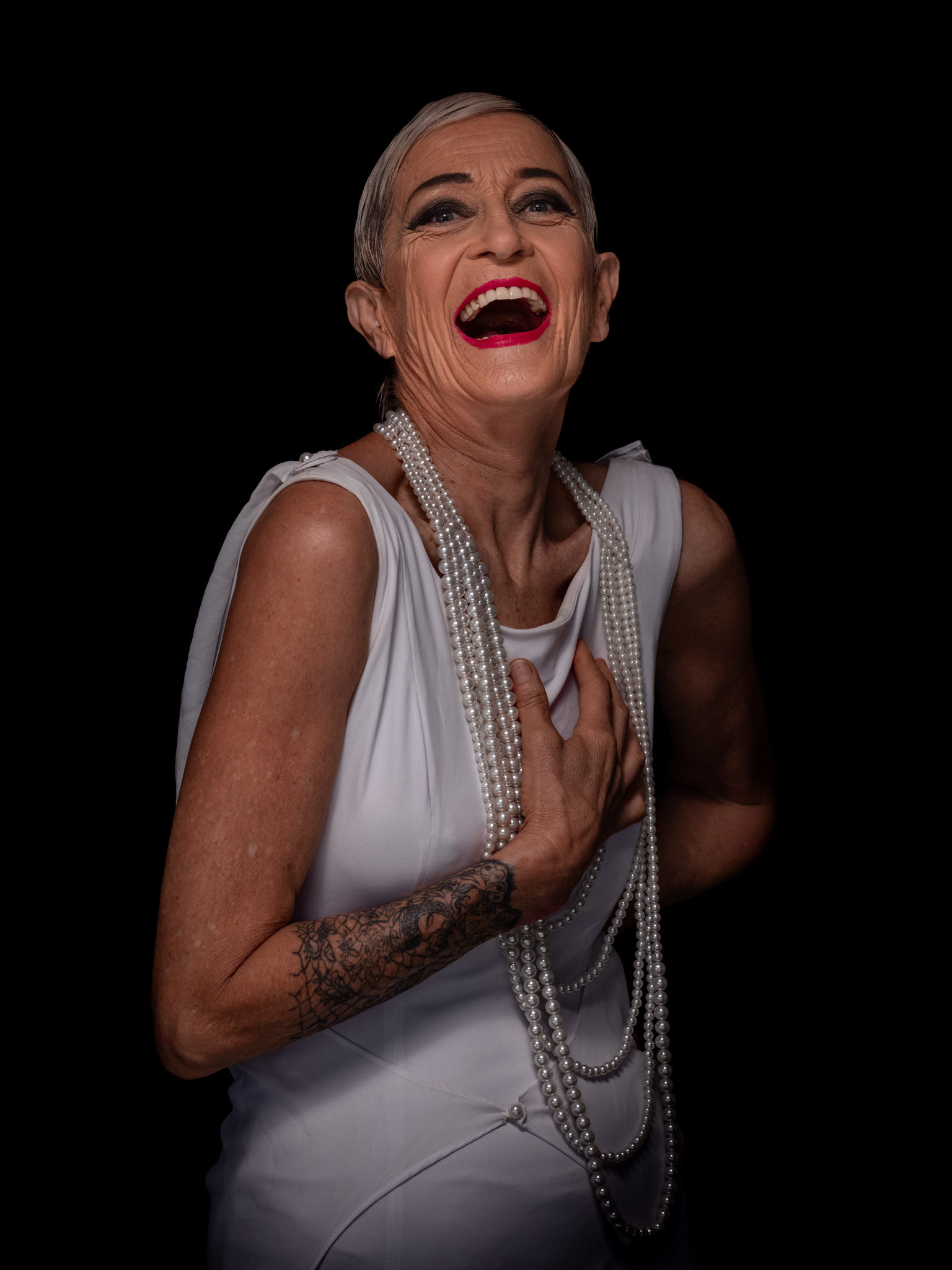
Luna Paige. Picture: Nardus Engelbrecht

Real news that feels like fiction, alcohol abuse, the power of owning aloneness as well as her love of the continent all feature. And there’s much more.

What she does with her music is speak her mind. All she asks is that we take the time to listen. And I certainly can’t wait. She has a voice that melts your heart and touches the soul. And she offers wisdom and wit with her thoughtful lyrics.

Much thought and research went into producing these albums and how to package them for this digital age.

What she has decided is to release her music in USB-format.

The 2024-USB will include the two new albums, poster art, lyric sheets and two music videos. The Full Collection-USB, will offer all her releases since 2003, multiple videos and live footage. She will also be selling personalised Luna Paige notebooks – with lyric extracts inside.

Her first performance was in Stellenbosch this past weekend and these two follow in Gauteng and Philadelphia:

Sunday, 14 April. Moonshot Café. Pretoria. 2.30pm. Tickets cost R200 at Quicket. Ticket link: https://qkt.io/tR9Nhd. On stage: Luna Paige and Mauritz Lotz.

Wednesday, 17 April. BV Hall. Philadelphia. 8pm. Pre-drinks and dinner at The Pepper Tree from 5.30 to 7.30pm  (Reservations: (+27) 84 707 3177. Show time: 8pm. Tickets cost R200 at Quicket. Ticket link: https://qkt.io/DAlG8G. On stage: Luna Paige, Mauritz Lotz, Schalk Joubert, Kevin Gibson.

And then she’s off for the rest of the year as she recharges her creative instincts and inspiration. She will be visiting places she has always dreamt of like Italy, Greece, Spain, Portugal and possibly Slovenia. She will be walking and writing, researching business ideas and checking in with artists who work in a social impact sphere.

She will be vlogging for those who wish to follow: https://lunamusic.co.za/blog-and-chat/

A JOYOUS FESTIVAL, THIS YEAR’S KLEIN KAROO NATIONAL ARTS FESTIVAL, LIFTED THE SPIRITS

Another Klein Karoo National Arts Festival has come and gone but what lingers are the artists, their originality, dedication, blood, sweat and tears and delight that they provide in a lopsided world which is difficult to navigate. DIANE DE BEER finds nourishment, inspiration and novelty in the imaginative and ingenious artistry of our creatives:

I have to be honest from the start. Festivals always have a strong emotional impact on me. I am in the fortunate position as an arts journalist to be invited to see as many productions as I can squeeze into the run of an event and at this year’s Klein Karoo Nasionale Kunstefees (KKNK) there was still a post-Covid frisson with the festival at full strength for a second year.

When a festival goes into full swing, it can be quite daunting and I’m not sure whether I want to be there, but as excellent productions and artists climb into my head, I go into full festival mode where I’m simply thrilled at being overwhelmed by the local arts community.

Being an artist isn’t an easy profession, even if many on the outside feel that they had a choice and simply have to bite the bullet. That they have a choice is arguable and to produce excellence year after year, often with few rewards and never under ideal circumstances, can be daunting and not for the fainthearted.

And yet they go full tilt as they battle extreme circumstances like pandemics or vitriolic social media, all in the name of art.

More than anything, whatever anyone says, we cannot  resist them. For me it is a huge blessing and privilege to witness and write about our uniquely original creatives.

Post-festival, an overview of the festival is always a personal reminder of and reflection on everything extraordinary, yet it’s tough to choose which among all those actors and productions, to highlight. There are simply too many that demand attention and especially this year, the scope was exceptional.

I always feel I want to bring something of the flavour of a particular festival to those who weren’t there. Perhaps one of my favourite pieces might pop up somewhere and a reader might be encouraged to go, or even more ideally, someone who has always thought about festivals but never attended might be encouraged to go.

I have to start with Karoo Kaarte. It’s one of the dream projects of the KKNK, simply ticks all the boxes and grows more impressive every year since its first inception with special mention of last year’s winning production, Droomkrans Kronieke, which landed with such impact because of its energy and precision. How can you not win when developing the underdeveloped artistic talent of the previously disadvantaged by implementing a programme that empowers those who wish to make it in the arts.

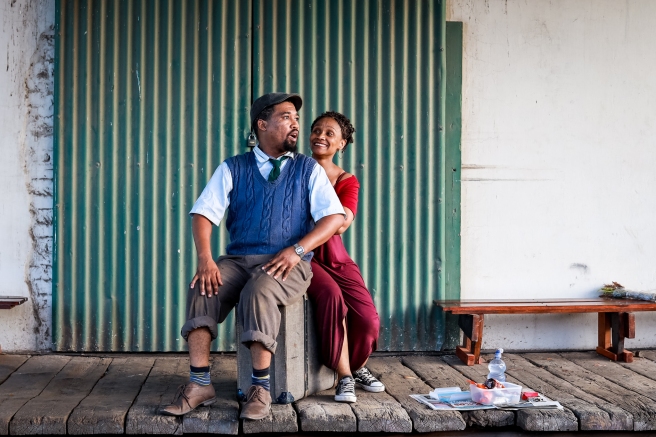
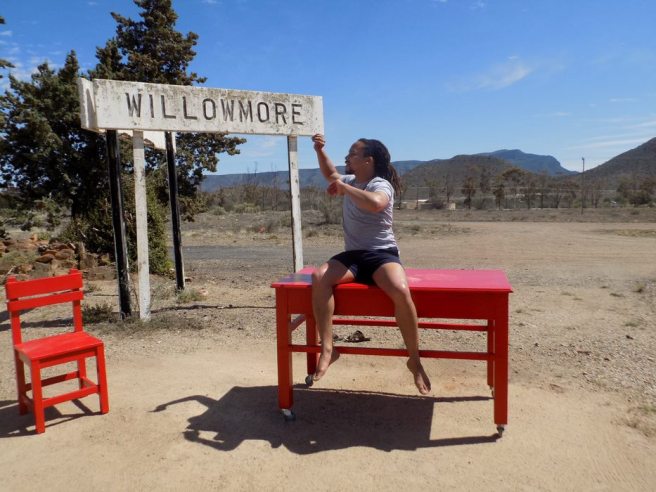
It’s inspiring and this year’s production, Die Swartmerrie, is a site-specific piece set on dilapidated terrain with a set of train tracks, an imagined train, and a rundown platform. Two people, a man and a woman (Theo Witbooi and Chantell Phillipus) are waiting, both traveling but not with the same destination in mind. There is a past, the tracks and possible journey points to a future, but this notion disappears with the wind.

It is breathtakingly beautiful and hauntingly gripping as the two talk and tackle their issues with delicate determination.

Afrikaans is an especially emotive love language and when spoken in the specific Karoo accent, warm and intimate, the sounds are as captivating and meaningful as the actual words being spoken.

I was surprised by this couple alone on stage and also electrified that the team (in this instance Neil Coppen – a facilitator of the whole project with Vaughn Sadie – and Oudtshoorn’s Tiffany Saterdacht) decided to go this route but, of course, this is a company packed with the unexpected, and hopefully it is a production that will become an institution in Oudtshoorn and won’t be limited to the festival. You don’t want to miss out on these performances and such a quality production. They should keep pushing the repeat button and keep it as part of their arsenal.

Karoo Kaarte further packed a punch with its art exhibitions, as well as walking tours done by young Oudtshoorn inhabitants all participating in turning the town’s current and future narrative into an inclusive one. The community is constantly gaining strength thanks to Coppen and Sadie who have invested their creativity in this wonderful way, all the while bringing their local learners on board.

It’s a marvellous investment in the future of this town (and hopefully others across the country will follow) and fingers crossed that a smart investor will see the potential going forward.

Because we were born in such large numbers, our generation is referred to as the baby boomers (born from 1946 to 1964) and probably that’s why ageing and the lifestyles of those growing older has become part of today’s theatre language. We are also fortunate to have some amazing artists who keep on practising their craft while ignoring any barriers that might come their way.

They know how to choose, break out and try new things and simply keep audiences flocking to their performances. Names like Sandra Prinsloo, Antoinette Kellermann, Jana Cilliers, Elzabe Zietsman, Amanda Strydom not only arrive with new productions, they’re also constantly adding skills to their resumés.

Cilliers took up playwrighting for the first time with Veelhoek, a two-hander with herself and Ludwig Binge directed by Marthinus Basson, and the wisdom and writing were quite overwhelming. Who would have thought that, apart from all her other accomplishments, she would now add writing to the list – and then perform it with such clarity as she tells a story that lies close to the heart?

Zietsman is another one who keeps shifting those barriers and I am so delighted that she has added the magnificent Tony Bentel to accompany her on stage. He is one of those pianists who brings much more than just the music to the performance and it shows. Vier Panado’s en ‘n Chardonnay again has Zietsman expounding on life, singing brilliantly and with heart – and cherishing cabaret as it should be performed. The content, which deals with resilience,needs hardly any acting by this actor. Most of it is probably her life which she has shared heartily and hastily over the years. And she will always rise…

Do we need to say anything more about those two great dames, Sandra Prinsloo and Antoinette Kellermann? How lucky are we to witness them in performance after performance as they just keep surging ahead.

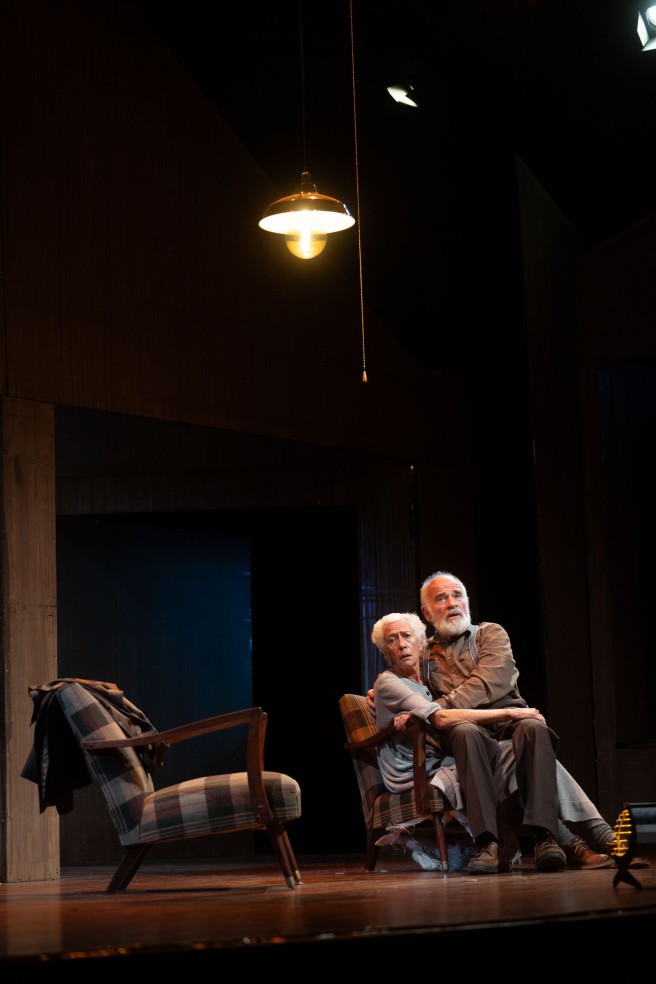
Die stoele with Antoinette Kellermann and Chris van Niekerk. Picture: Hans van der Veen.

Kellermann tackled the Ionescu tour de force Die Stoele, accompanied by a much-too-rare performance by Chris van Niekerk. Marthinus Basson adds genius to the production, which can be seen over and over again as it deals with something we all have to confront ­­– LIFE. The content might be terrifying but to watch, quite hysterical. As always Kellermann is in with everything she’s got and what she does with her body tells a story all its own.

Goed wat wag om te gebeur with an actress I would love to see more of, Emma Kotze and Gideon Lombard.

She’s also a part of the magnificent cast (Kellermann, Emma Kotze and Gideon Lombard) of Philip Rademeyer’s Goed Wat Wag Om te Gebeur. I had seen the English version most recently but also this one a few times, and this latest run proved how good theatre improves with time. It’s the best the production has been and I know the director agrees.

Prinsloo brought her masterful Master Class, a piece of classical theatre, to the festival and, also as is her nature, she teamed up with the exceptional David Viviers in a Teksmark original Op die hoek van Styx en River is Nora per Abuis met die Dood Oorgeslaan (playwright Henque Heymans). It’s a novel work which showed flickers of what it could be in time (always a scarce commodity).

Like Rademeyer’s Goed Wat Wag Om te Gebeur, Monsters, (produced, directed, adapted and translated by Tinarie van Wyk Loots) which has had runs at other festivals previously, found a remarkable rhythm that lifted the text and the performers into another realm . It was rewarding to experience and again I was reminded what a precious entity the different circuits are because single theatres cannot afford to take many risks and festivals add an extra buffer in this precarious world – to the benefit of arts audiences.

Michele Burgers in Monsters. Picture Stephanie M Gericke.

We haven’t seen much of the versatile Michele Burgers, who will hopefully return to stage more often in the future and who was beautifully supported by the talented René Cloete, Ntlanhla Kutu and Elton Landrew.

Die Vegetariër with Tinarie van Wyk Loots and Melissa Myburgh who as young actress has shown her mettle magnificently . Picture: Nardus Engelbrecht

Smartly directed by yet another multi-talented artist, Tinarie van Wyk Loots, she also featured in Jaco Bouwer’s hard-hitting Die Vegetariër (adapted and translated by Willem Anker) which also benefited from another run, as well as in the latest probing Anker text, Patmos, also brilliantly staged and directed by Jaco Bouwer, who always challenges and pushes boundaries with his choice of productions, casts and presentation.

Without these art warriors our art landscape would be barren. They keep us returning to theatres time and again with their unique approach, their determination to do their best under trying circumstances, including a lack of time and money, and simply their excellence.

Nataniël, for example, returned from an extensive tour to New Zealand and Australia during the festival yet put together one of his distinctive shows with flamboyant costumes, mind-blowing text and two musicians (Marcel Dednam on Piano and Leon Gropp on guitar) who created a spectacular rhythm to underpin his songs and singing quite magnificently.

I could go on forever, there were simply too many highlights, yet I cannot go without honourable mentions of the following, no less important than those already mentioned:

Jefferson J. Dirks-Korkee in a return of the soul-stretching Rooilug.
Marianne Thamm

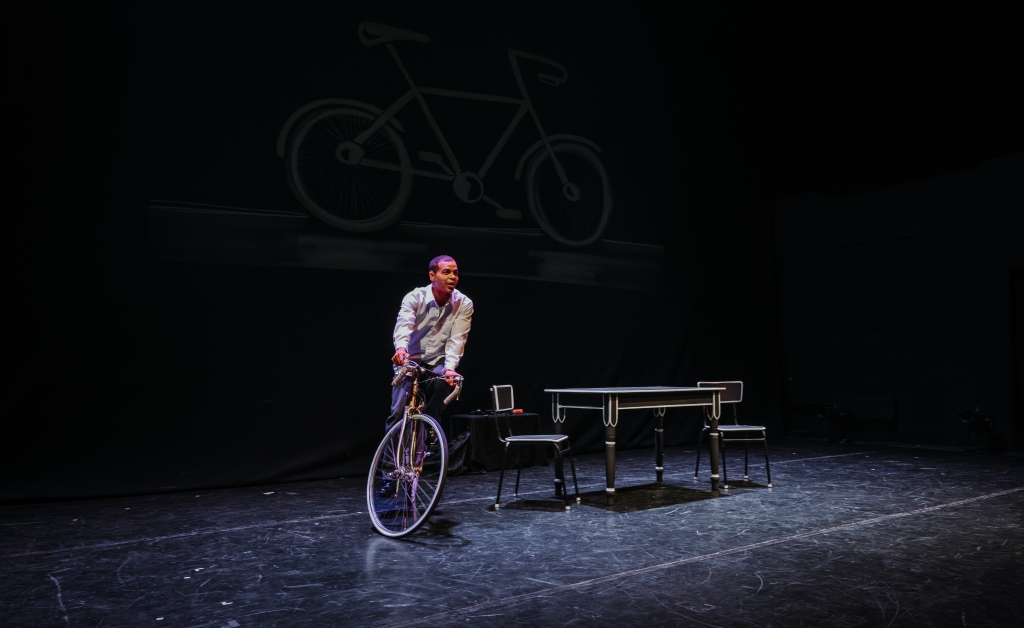
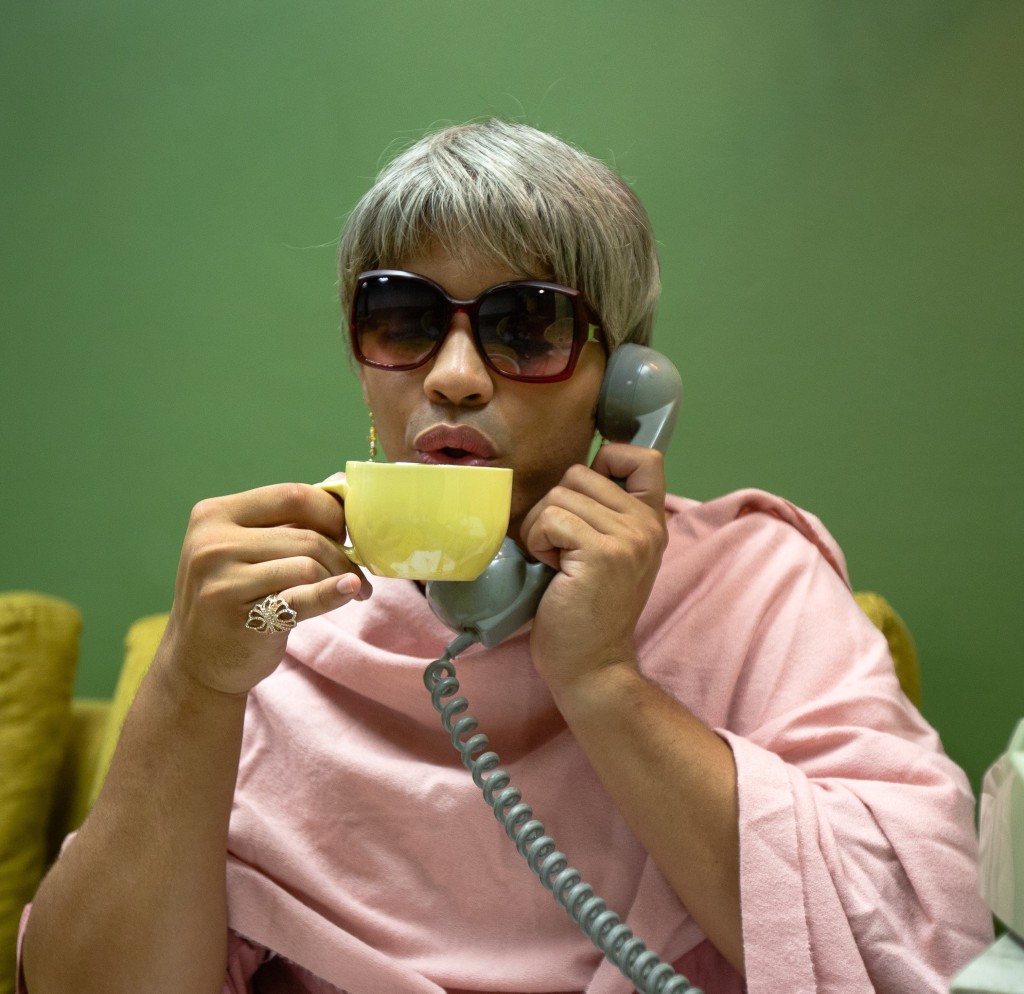
Solo shows: the return of Rooilug with the delightful Jefferson J. Dirks-Korkee; Fietsry vir Dommies (masterful text by Tiffany Saterdacht and deftly directed by Dean Balie) which showcased the enormous talent of Eldon van der Merwe, who was also rewarded with a Kunste Onbeperk prize for Young Voice. Dean John Smit shone in his now full-length solo production of Hallo, is Bettie wat Praat; the craftily current My Fellow South Africans by Mike van Graan, starring the physically and mentally dextrous Kim Blanché Adonis; Vuisvoos, maar nog regop, where journalist Marianne Thamm delivers a gloves-off and much needed monologue, incisive if laugh-out-loud, on the state of the nation; a shout-out to much missed director, Jenine Collocott, who teamed with actor Klara van Wyk to present the hysterical Monika, it’s me:

Double-up: David Viviers and Wessel Pretorius returned as a popular duo in a follow-up to their successful Klara Maas with ‘n Lewe in die die dag van ‘n vrugtevlieg, ensomeer and hopefully many more encores in the future, they were missed; an innovative new duo, Stellenbosch students Angelique Filter and Merwe van Gent, soared with the tragicomedy The Old Man who thought He had a Dog;

Stand-up (not my speciality) yet: Who can resist the always energetic and enthusiastic funny man Marc Lottering who always delivers?; as well as my comic standout of the festival, KG Mokgadi. It feels as if these two have something more to say than just one-liners.

Productions: The original Ken Jy Vir Dewie was cleverly staged with themes that target the whole family and as the play was dealing with bullying, the setting for everyone, actors and audience alike, was a classroom; and again, it was directed by yet another versatile artist, Margit Meyer-Rödenbeck, who has exchanged Dowwe Dolla for Ouma, again a sign of the times. She cleverly started the play outside with audience and cast waiting to enter the classroom!;

And Craig Morris grabs the attention in Die Rooi Ballon.

Children’s Theatre: It’s not something I usually see at festivals but, as I did, I was encouraged by the effort made by the KKNK to look after these tiny tots who are of our more enthusiastic audiences: My favourites included Braam en die Engel and Rooi Boeties.Watch out for them as they might travel.

Dance: is back with brilliance because of the clever choice of productions, only two of them but with some of the most innovative names in contemporary dance: Dada Masilo who choreographed one of three pieces, Salomé, for Joburg Ballet; and Grant van Ster and Shaun Oelf  with the Figure of 8 Dance Collective (pictured), who brought in other creatives like Nico Scheepers on text, Andi Colombo on lights and Franco Prinsloo on original music. Both companies were sublime.

Lucky Pakkie (Packet): Thanks to the brilliant team of Llandi Beeslaar and Stephanie Gericke, this is another of the KKNK delights because of their dedication and hands-on approach. It needs that because what you have is three lucky packets of four 15-minute productions each; the three sections embrace easy viewing to soft touch to pushing the envelope as much as possible, and artists who cannot manage a full production or perhaps just want to say what they need to say in this time and on this platform are vetted and included in a fun-filled programme.

The original Karli Heine. Picture by Stephanie M Gericke

There are too many to name, but for starters … what about Karli Heine, who turned herself into a pot plant and blew my mind … for script, performance and imagination!

It is impossible to cover everything and I haven’t given the art exhibitions a mention, even though curator Dineke Orton again broke down barriers and took us on a visual trip. But these are just some of my thoughts on a festival that felt like one joyous merry-go-round. Try and catch some of these through the year as they travel to different theatres and festivals.

Here’s holding thumbs!

And finally, on the last day, even the weather seemed out of sorts…

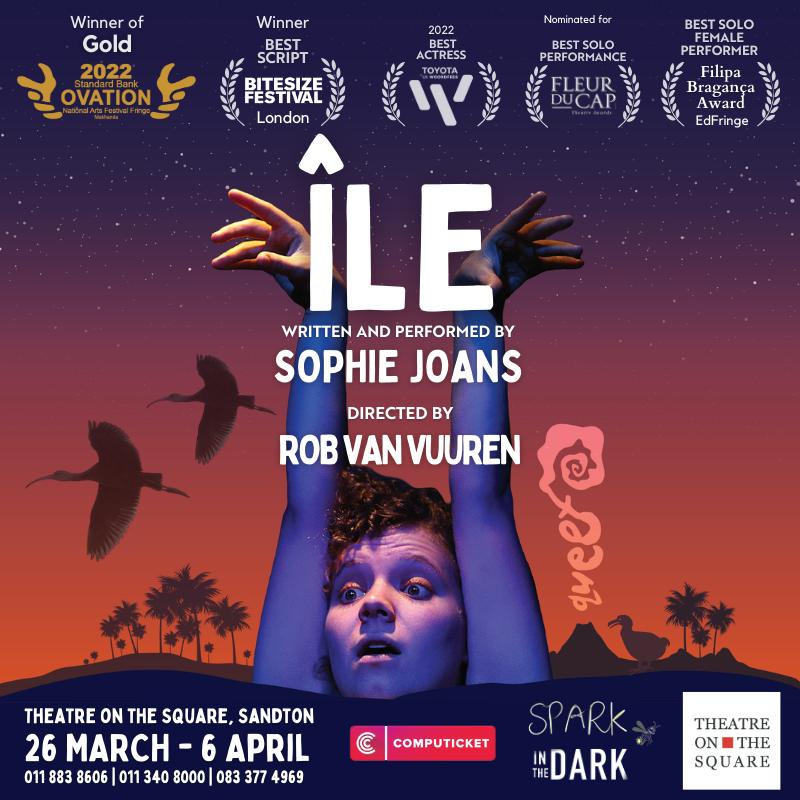
SOPHIE JOANS, AN ISLAND OF INSPIRATION

The luminous Sophie Joans in a solo performance of a play she has written.

Theatre review of ÎLE finishing this weekend at Sandton’s Theatre on the Square by DIANE DE BEER

PICTURES: PHILIP KUHN

ÎLE

WRITTEN AND PERFORMED BY: Sophie Joans

DIRECTED BY: Rob van Vuuren

DATES: Today at 7.30pm; tomorrow at 5pm and 8pm

When you’ve been around in the arts for as long as I have, it’s always an unexpected  thrill to discover a new talent.

Solo performances are obviously a handy talent to have in your bag of tricks because of the precarious nature of theatre and the performing arts. If you have to rely solely on managements, festivals and directors to keep your career going, it could be disastrous  –  and tough on your anxiety levels.

With the ability to write and perform, you can create your own work, pack a bag and travel from stage to stage or whatever entertainment platform you prefer. If you have presence, which is something that’s difficult to explain, (you either have it or you don’t), it’s a gift that should be cherished.

Sophie Joans has all of the above and more. It’s a powerful package. She’s also obviously smart to not go it completely alone but to have the skilled Rob van Vuuren on board, someone who has made the stage his home, as director.

She bounces on stage bubbling with energy and enthusiasm and launches into a travelogue with Mauritius and her mother as the main destinations – and right from the start, she holds your attention with a smart and hilarious script. She taps into the ever-fraught relationship between mothers and daughters, where the one is wise if weatherbeaten and the other knows all the answers and doesn’t want to be prompted on how to proceed in life.

We all recognise family foibles in some fashion, but this is where the writing is witty and wise. Yes, it sounds hellish and many of us will think of our mothers and their lesser indiscretions with relief, but the way Joans reflects on and rants about her family is so cleverly charged, even when it dangerously skirts the edges, that  there’s always something to hold onto as the younger Joans finds a way to explore her mother’s sometimes ferocious guidance.

It’s all about family narratives, the way mothers and daughters pass on a specific legacy that never seems to change. We all know how damage is done by those who have experienced that same pain themselves. We just have to look at the world we live in today to find all the examples needed.

While all of this might seem way too serious for someone who started in stand-up comedy, with some tweaking she has turned her sights to a more specific stage. Having just come from an arts festival, I know how  exposed the stand-up stages can be, so she obviously knows how to handle a critical crowd.

This is something quite different. She presents Île as quite a personal story, enters the stage with very little but two large boxes which she moves around, and is aided by the best weapons: her words and her warmth.

She’s a storyteller, someone who holds her audience with confidence, and with a generosity and a gentle yet gregarious approach to her performance. She aims straight for the heart. If you can possibly make it in the time left over (it only runs till Saturday), Joans is a winner.

And I can’t wait to see where and how she goes from here. We’re a rather small theatre community, so when someone with such obvious performance genes hits all the right notes, it’s a time to celebrate and embrace.

She has travelled this play from small beginnings to world stages so obviously she has made a huge splash, but for me she’s the new kid on the block. And I could not be more delighted!

Thanks Daphne Kuhn (producer and artistic director of Theatre on the Square), your theatre smarts are always appreciated.

HELEN JOSEPH HOSPITAL IN JOBURG IS WORKING ON MANY LEVELS FOR THE BENEFIT OF THE PEOPLE

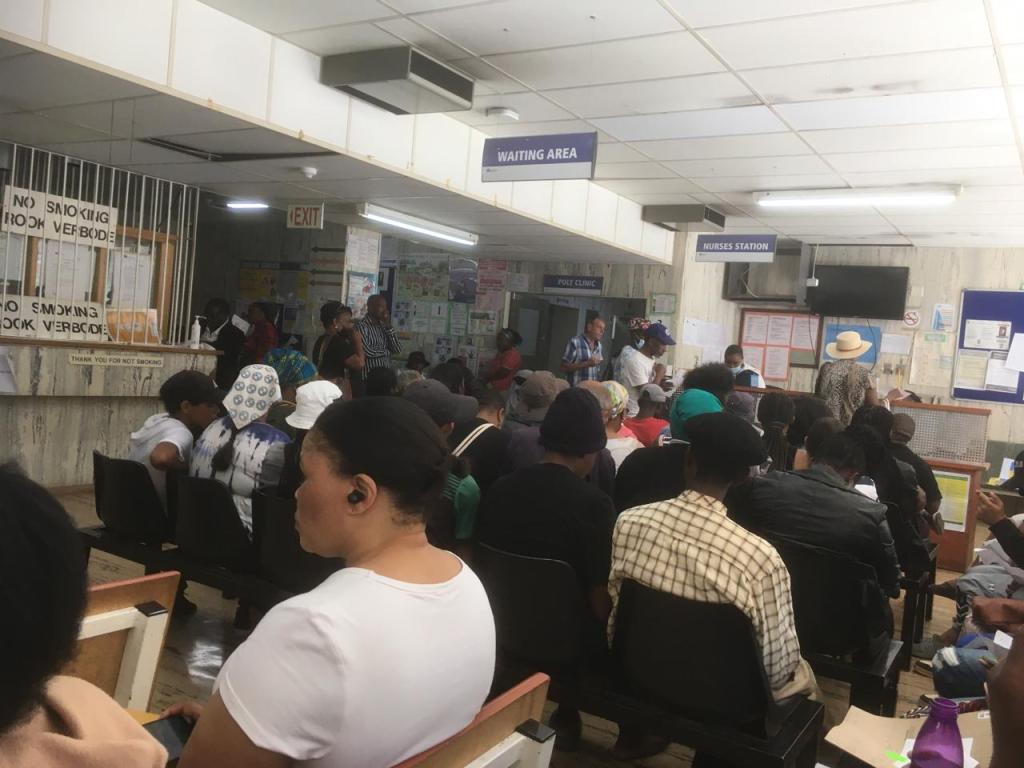
In a country where most public services in the past targeted a small privileged minority for decades, and generally, anything public about our current health service is described as a disaster, my public-minded activist brother ROBBIE SCHOLTZ, decided to test the system. He writes about his recent visit to Joburg’s Helen Joseph Hospital:

There are advantages to being a recent retiree and seemingly being deemed to be too old to make a meaningful contribution in the marketplace. First of these is the fact that, all of the sudden, for the first time in many years, it feels as though your time is your own to spend in whichever way you deem fit. As such I am a political animal and love investigating urban myths of sorts.

The general perception of our health system as totally dysfunctional is of interest to me. It is surely at the front line of service provision to ‘our people’. I realise that mine is a very small experience in this whole area of government and not meant as a final word on anything. I am just trying to translate my own experience to anyone who might have the same interest and might need the same benefit.

I have a hospital plan, which I have always believed is the lowest threshold for maintaining your medical survival in old age. But this does not cover day-to-day expenses and my budget is still stretched by the out-of-hospital costs of everyday health needs. My chronic medicine, for example, costs about R1000 per month, in addition to my already mentioned medical plan and gap cover.

The first time that I decided to make use of the public health service was when I needed X-rays of both my knees and found that it would be costing me over R1000 at a private institution. I got a referral from my GP and off I went to the Helen Joseph Hospital, where I believed the X-rays might be done at a cheaper rate if not completely free of charge.

My first hurdle when approaching public health was to get myself registered as a valid recipient. This took about a day and I nearly gave up there and then. But, as I had the time available, and decided to give it a go, I left the hospital after about 12 hours, of which the X-ray process had taken only the last hour.

While being processed, I overheard a senior at the first hurdle say, ‘But why is he still here? This is not right.’ I’m not sure why this was said or what it meant. But all that ends well, works for me and I returned home tired, hungry but satisfied.

My second visit involved a bi-annual cardiac check-up. This became an emergency procedure when I collapsed after 12 holes of golf during one of our heatwave days on a cart-friendly course. Of course, my fit partner and I decided that we could walk the course even though our opponents sensibly got themselves a golf cart. This was old-age delusion at full throttle.

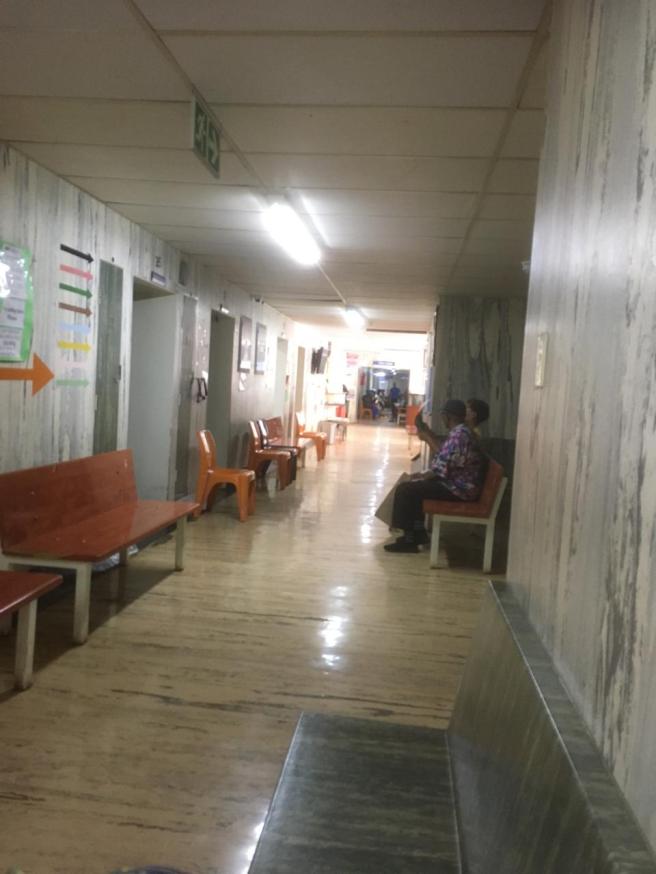
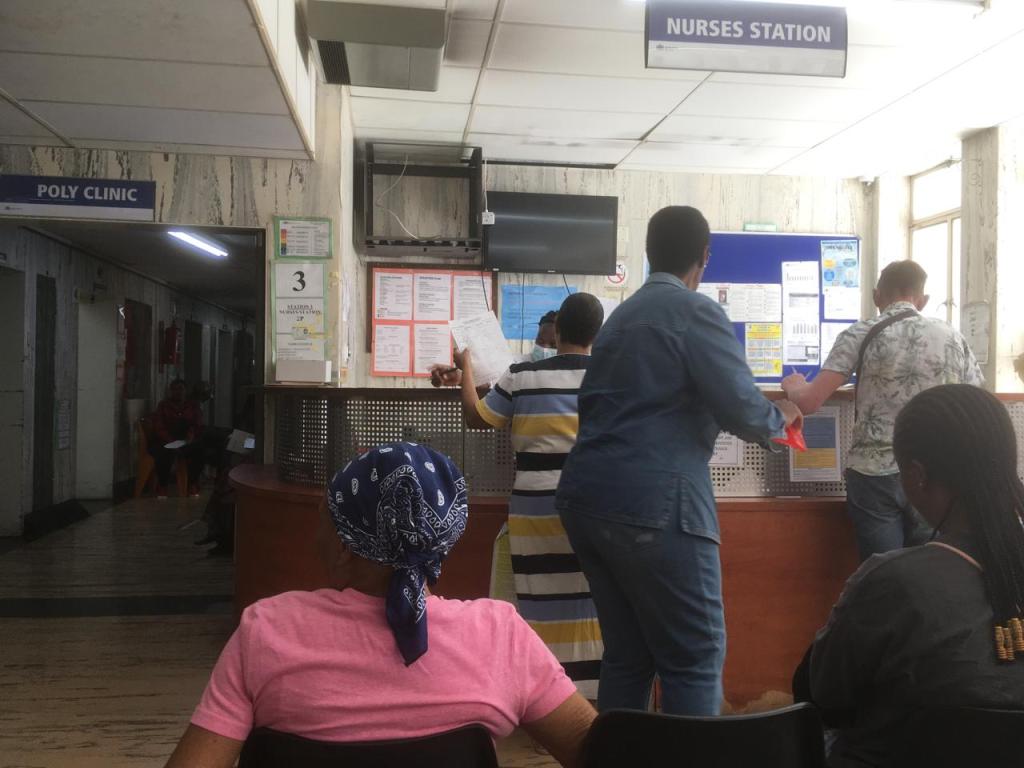
As I was already registered as a patient, I was directed to the intake queue as no. 86. This took quite some time and simply involves one’s vital signs like blood pressure being taken and charted. Once back at the sisters’ desk, I was sent to a doctor’s room, where the queue was only five strong. After another hour’s wait this triage doctor decided which GP I should be seeing for a proper diagnosis.

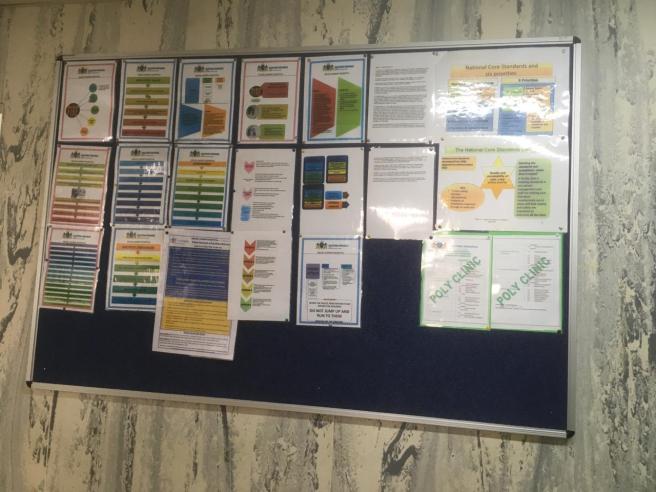
I did notice at the poly clinic that there were at least two sisters constantly monitoring all queues to ensure a steady flow. After another long day and still a few patients ahead of me, I decided at about 3pm to call it a day, with the permission from the sisters’ desk to leave and return the next morning.

The next day I was back at my post by 7.30am – opening time. I was directed to a queue for patients remaining from the previous day. The doctors arrived after 9am and I was directed to a doctors queue at about 10. The doctor spent an inordinate time with one patient and I got to see him after 12.

He spent at least another hour with me. His investigation into all my needs was very thorough and I was sent for an ECG and blood tests and told to return to his room once done. This was done in the following hour, after which I returned to his room. The ECG seemed to be clear but in the circumstances, he decided to ask for a stress ECG as well. Once this had been done, I should have my blood test results showing the way forward.

This is where I hit my first real snag. The stress ECG office would call me but could not give any indication of the time delay involved. When, after two weeks, I still had not received no call, I went back and asked for guidance. I was met with a simple ‘Have you been called?’ which, was not helpful and was told to wait for the call.

After another two weeks of silence, I asked for a number so that I could at least do my enquiries telephonically. That is what I have been doing since.

As I could not proceed due to the stress ECG not being done, I visited the hospital on my own initiative. My previous doctor had left for private practice, I believe, after his year’s public service had been completed. He had suggested that I complete my current chronic medicine dosage and replace it with the public prescribed medicine which, as a retiree, would be free of charge.

Thus, before my medicine ran out, I was back to see a new doctor. My chronic medicine was prescribed for three months, a blood test was arranged for my next month’s visit and this with the stress ECG two months later, would show the best course forward.

With this info I hope to:

·         Give a solution to fellow oldies worrying about medical costs

·         Honour the many who do a great job in the realm of public health

·         Counter the public perception that there is no public health to be relied on in one’s old age

·         Show that, if you are prepared to put in some effort, great health care is available – first hurdle is just to spend a day getting your own health file

On the negative side:

·         The public health system seems grossly underfunded specifically in the terms ofpersonnel shortages

·         The slack has to be made up by those dedicated souls who already give their all

·         There are off course many instances of neglect and journos should not stop exposing these – but this should be countered by the many positive stories also

SOCIAL MEDIA RUNS CIRCLES AROUND CLUELESS USERS, TURNING THEIR LIVES UPSIDE DOWN

Pictures: Daniel Rutland Manners.

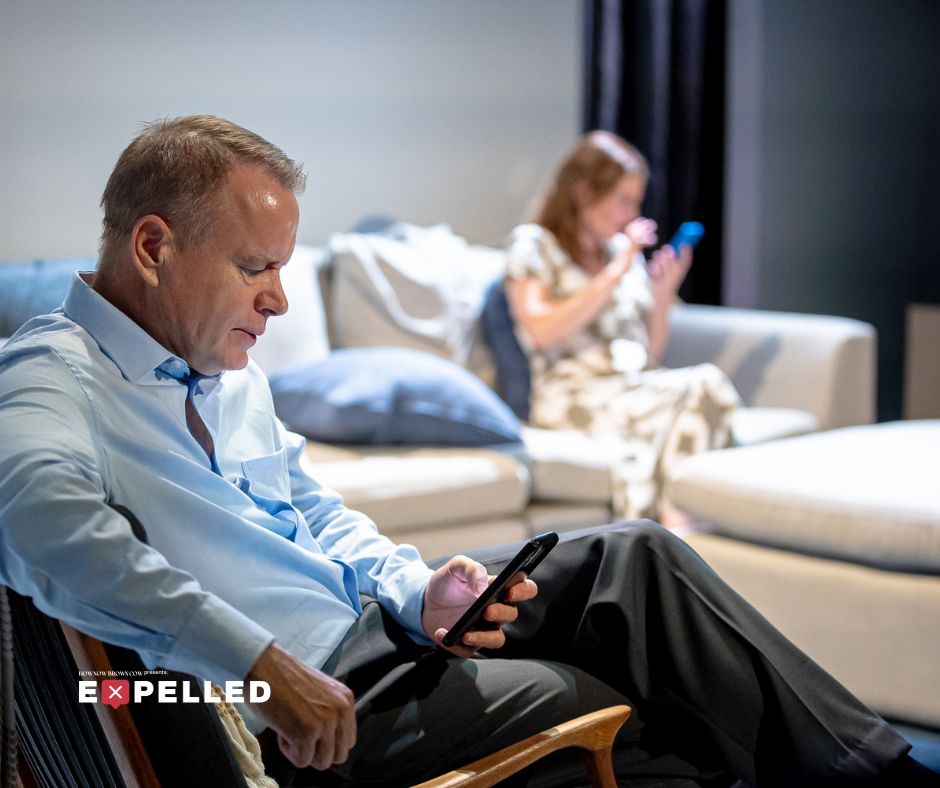
Mother (Charmaine Weir-Smith) and son (Nicholas Hattingh) in selfie mode…

DIANE DE BEER

EXPELLED

Expelled is described as a family drama which focuses on the largely ungoverned world of social media.  Alex, a matric pupil at an elite school, gets caught up in a viral scandal and is suspended. Once shared, lives alter in seconds, what’s seen cannot be unseen.  The ramifications for his family are profound.   

Rosalind Butler’s new South African play

PRODUCERS: How Now Brown Cow Productions in association with The Market

DIRECTOR: Craig Freimond

CAST: Anthony Coleman, Charmaine Weir-Smith and Nicholas Hattingh

VENUE: Mannie Manim Theatre at the Market, Joburg

DATES: Until March 31. Performances will take place Wednesday to Saturday with evening shows at 7pm and matinees on Sunday and Saturday at 3pm. There will be additional schools’ performances at 11am on Thursdays during the run.

Living in an online world.

There are few people who won’t be aware of the devastation of social media on normal lives. We all know there’s the good and the bad but taking into  account the recent banning by the US Senate of the Tik Tok app on government devices, the results are too often disastrous and, apart from this surprising development, with few guardrails.

It is with an eye on the pitfalls that Rosalind Butler wrote this play which Freimond had huge fun putting on stage and screen – which it lends itself to. If you want to know how to get younger audiences to theatre, this is it. You’re talking their language and the play offers the chance to play with different generations and their approach to social media.

With phones an additional accessory, few people can resist writing and sending off messages in abundance and often with more haste than hesitation, which would be a tool to keep in mind. Once you push that button, the harm’s done.

Parents: Charmaine Weir-Smith (right) and Anthony Coleman.

And in this version it’s all done in full colour and with the scenarios taking real issues which will cause havoc as they go viral. We’re living in a world where too many are completely unaware of the sensitivity of certain issues.

Families allow schools to dictate norms while these institutions see their roles as strictly educational, refusing to meddle with the morals of their young charges. It is a recipe for disaster, especially with all the tools available in today’s communication circus where everyone is encouraged to participate.

Butler’s text races off at breakneck speed, almost mirroring the record times messages are sent and read while disrupting and destroying lives. There’s very little chance of pulling back once the release button has been activated. And while we all know and understand the world we live in – fast and furious – we still don’t stick to the safety precautions.

It’s a topic that encourages a contemporary social media approach and Freimond with his cast go at it full tilt. Nothing has to be explained or embroidered because we all know the playing field with all its inviting yet often devastating intrigue.

Phone gymnastics.

The cast is perfect as they play their characters and their often-vacuous natures to perfection – all at different tempo yet with a serious approach only possible in our deranged contemporary landscape that encourages these public meltdowns with humiliating outcomes. Weir-Smith’s mother and wife has captured a type we all recognise, so wrapped and isolated in her own tiny world, she’s completely unaware of the destruction she leaves in her wake.

In turn her husband (Anthonty Coleman) is blinded by his own importance, with his wife and son marginal figures in his corporate universe.

Their son (Nicholas Hattingh) is focussed on the love of his life with no understanding of the effect his public vitriol might have on his mostly invisible life.

We can all see the avalanche of disaster which will soon obliterate this family teetering on the edge already, but, fortunately because of the very nature of social media, many mini scenarios are being replicated all around them.

Because we’re all au fait with social media, it’s fun to witness something so familiar unfold as we recognise and might even have participated in similar scenarios. A good edit (a cut of approx. 15 minutes) would have avoided repetition and landed a near perfect play. It might come across as fun and games, but we all recognise that in many lives it could also be deadly serious.

FOR THE LOVE OF BOOKS, READING AND AUTHORS

With Vrye Weekblad and journalist Deborah Steinmair establishing new book festivals in the wake of their success in Stilbaai, followed by the first one in Gauteng in Cullinan earlier this year and most recently in Clarens in the Free State, DIANE DE BEER, invited as an interviewer at the last two, gives her impressions of book festivals in general as VWB announce their next Cullinan festival from 10 to 12 May 2024::

Pictures: Deborah Steinmair

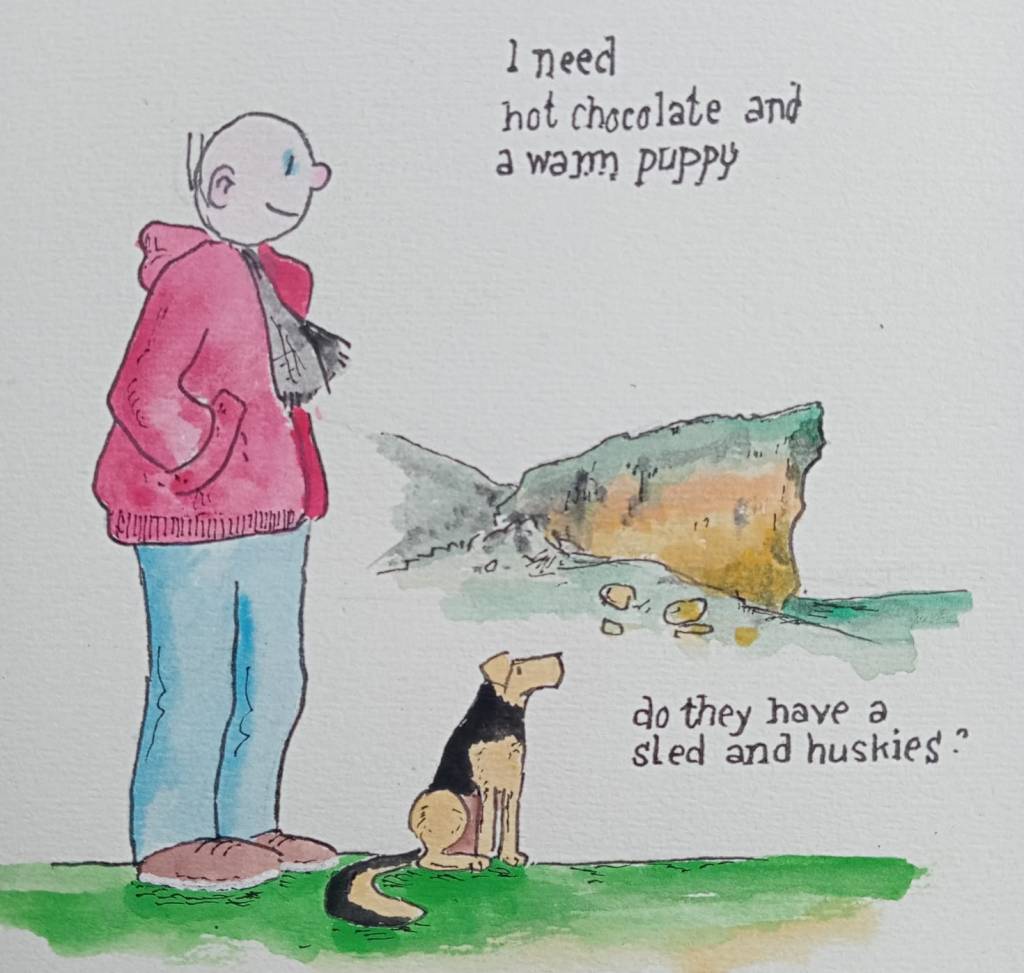
A man and his dog cartoons by Dries de Beer (Fatman).

Getting together a crowd of book lovers is no easy thing in these days of social media and streaming  –  there’s just too much on offer  – but if you choose your specific book festival well, take the time and spend the money, it is a glorious get-away where you get to mingle and meet like-minded people and listen to a handful of authors talking about their latest work.

While my preferences won’t sound objective, as I was invited to participate as an interviewer at the last two festivals, what appealed to my sensibility was the curation of the festivals.

First off, smart of the powers-that-be at Vrye Weekblad to know that Deborah, someone with a fantastic knowledge of books, an author herself, and a brilliant columnist, also has a deliciously quirky sensibility which then becomes part of the programme.

If you’re having a festival in the Free State, Antjie Krog is a name that would be impossible to ignore. But then to ask her to read from her latest delightful Vetplant Feëtjies (Vetplant Fairies), creatively written and illustrated, together with some poetry from her latest collection Plunder (also translated and published as Pillage) was genius.

It’s obvious why she won the Herzog Prize for poetry twice, most recently in 2017.

Just selecting at random:

It no longer comes to me

Everything is iron    everything has congealed

I read how others write:

Clove brown, Prussia blue, and creamy, creamy your neck

Your long, long, long legs fill me with fury

But to me?

To me it simply no longer comes

once I belonged to the ones on fire

now my voice wants to drift

it trembles repulsively clammy with care and forgiveness

For me, personally, she should never stop, with a mind that’s razor-sharp, older yes, but that also makes it even more wise and witty. What does she have in mind next?

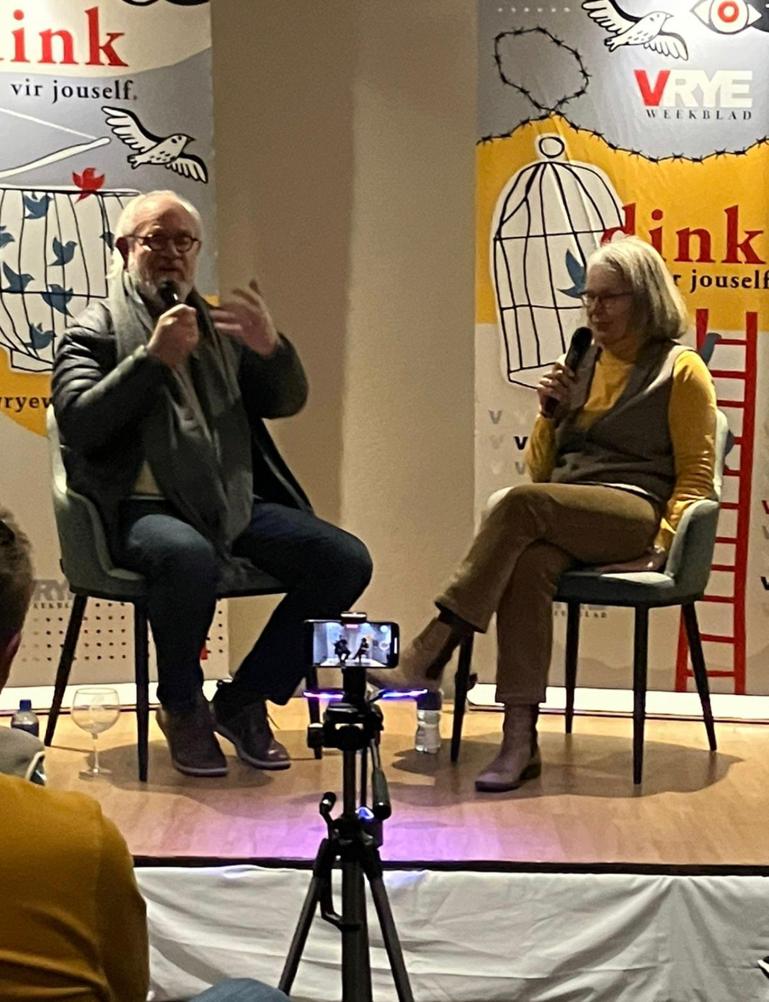
And, cleverly, Deborah knew how to pair two wise journalists. It was a great idea to get two Free State born journalists/writers Max du Preez and Antjie Krog talking and reminiscing.

Max du Preez and Antjie Krog in conversation.

Both grew up in Kroonstad and Antjie spent more of her time there, while Max talks about missing this part of the world, while also celebrating his home city of Cape Town, where he says everything works.

And then he launches into a few famous authors who have left the country, some, he says, with a Nobel Prize under the arm …

And Antjie wonders about living in a country where no one knows who Gerrit Maritz is.

Max, who had passed through Winburg on his way to Clarens, wishes to become the champion of this neglected town.

But Cyril, they say, has said that the people shouldn’t be treated like charity cases. Everyone has something to give. Yet Max laments the process of Africa that is slowly engulfing the town, even if not quite done yet.

Antjie suggests that if you want to change or fix a problem, you have to bring the township with you. But Max questions how to criticise this country while contemplating the damage you might have caused. Even if you joined the struggle. You still have the privilege of whiteness which is something everyone needs to acknowledge.

As is obvious, it was a conversation between two people who know one another, who have similar backgrounds so that they can exchange thoughts and grievances without too much explanation.

And they progress…

“Wonderful things are happening in Afrikaans,” says Antje while sympathising with the Indigenous languages that suffered under apartheid.

We all have to acknowledge that we had more of everything: more Afrikaans radio stations and TV stations, more magazines and newspapers than any of the other languages. Now we have to do it for ourselves.

And it is happening with Vrye Weekblad and these kinds of book festivals. And again Deborah’s special touch emerges as she includes young poets and authors like Joylyn Philips, who launches into song when starting her poetry presentation.

Bibi SlIppers

Or the bright-eyed Bibi Slippers who cunningly whets the appetite with readings from her then soon-to-be-published poetry book, which was recently launched.

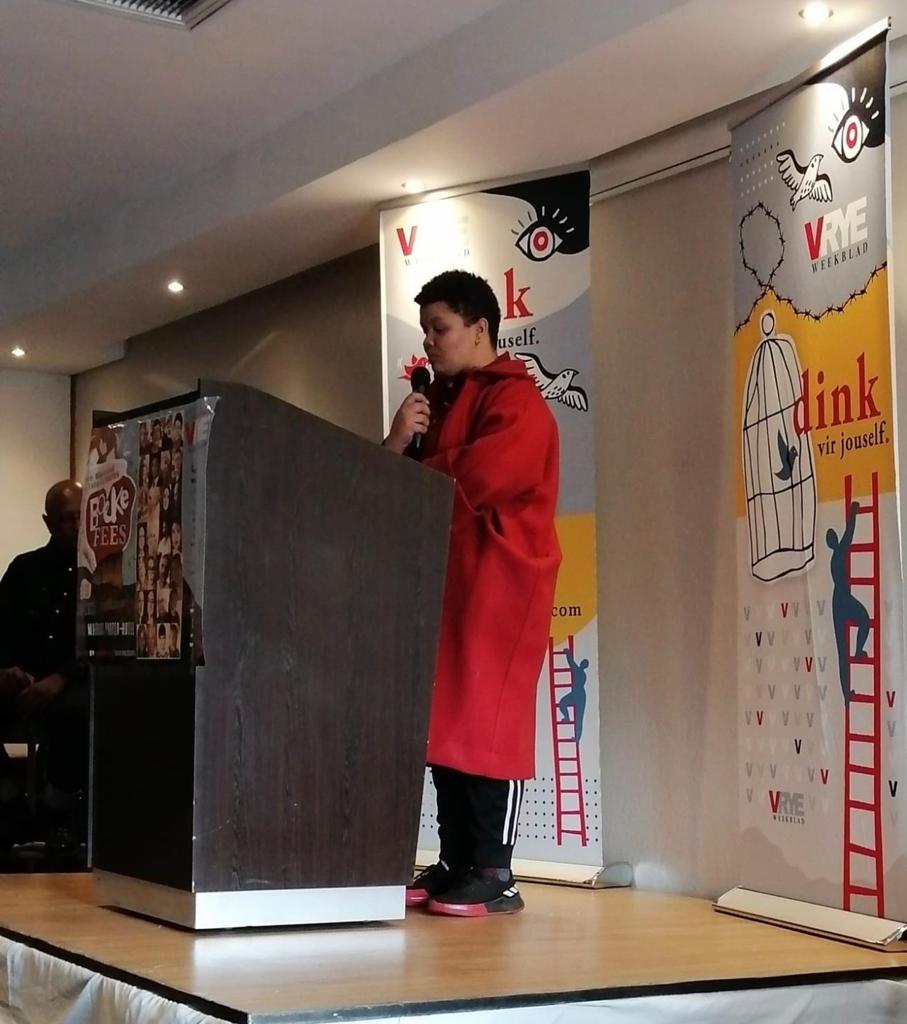
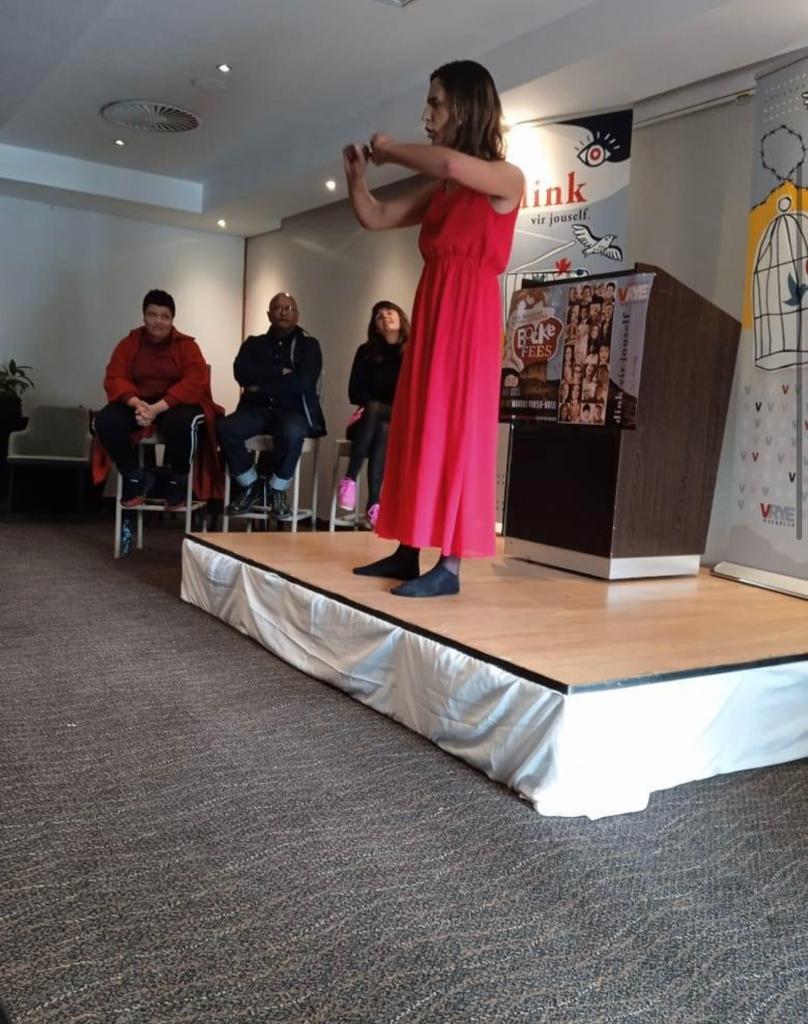
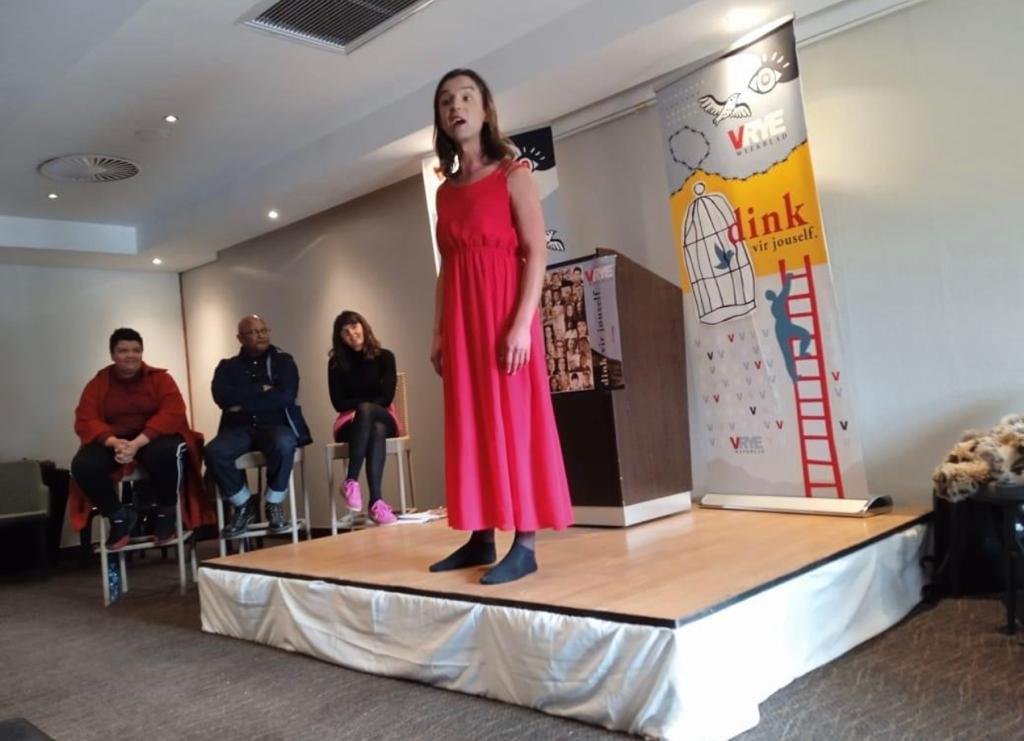
Yet, no one can rattle the rafters like the gloriously fragile Dianne Du Toit Albertze or, as they would say, Lady D. It was joyous to see them perform almost randomly dressed to kill in a shattering red dress which immediately screamed attitude, and then to back it all up with the talent of someone who knows they can take a stage while speaking in tongues … and they do.

This fresh breath of youthful exuberance during the gathering of the poets as the final salute of the weekend, captured it all. The dazzle and dare of Deborah is what makes you an ardent fan of her outspoken columns, all of which you wish you had said. And she brings that same flair and fanciful fanfare to a book festival  –  which is why these Vrye Weekblad festivals are worth watching out for. And a grand addition to the Afrikaans literary scene.

Yes, I know it’s mostly in Afrikaans, but Deborah knows about diversity even when limited most of the time, to a specific audience.  

So get booking on Quicket for the next one, you won’t be disappointed and it’s in driving distance from Pretoria and Joburg!        

Last year’s festival at the stone church in Cullinan.

PROGRAMME: The Vrye Weekblad-CULLINAN-BOOK FESTIVAL 10 – 12 May 2024

Will be held @Church venue. Books to be sold by Graffiti on the premises, food and drink will be on sale. Book at Quicket.

Queries: deborah.steinmair@gmail.com

Friday 10 May:

17:30: En tog die deuntjie draal (and still the music plays): Gielie Hoffmann chats on the birthday of singer/songwriter/poet Koos du Plessis with his wife, Mornay, about Erfdeel. His songs are also performed.

Saterday:

08:30: Skarminkels en speurders (Rogues and detectives): Phyllis Green speaks to Sidney Girlroy, Marie Lotz and Irna van Zyl.

09:30: Van rekenaarskerm na silwerskerm (From the computer screen to the movie screen : Mercy Kannemeyer chats to Zelda Bezuidenhout and Henriëtta Greyffenberg about the filming of Die dekonstruksie van Retta Blom.

10:30 The Near North: Louis Gaigher chats to Ivan Vladisivic about his latest book.

11:30: O, die vrolike, O die SALA! (Oh the happiness, oh the Salvation) Diane de Beer in conversation with Onke Mazibuko about his celebrated YA novel, The Second Verse.

12:30 Lunch

14:00: Vaders wat haper (Fathers who stutter): Jean Meiring chats to S.J. Naudé about Van vaders en vlugtelinge

15:00: Vywervrou woeker: (Pond woman works): Ilse Salzwedel chats to Chanette Paul about her character driven series.

16:00: Zonderwater en ver van die huis: (Zonderwater and far from home): Deborah Steinmair talks to Karen Horn about her novel about Italian prisoners of war: Prisoners of Jan Smuts

17:00: Psigopatiese nasie: (Psychopathic nation): Anneliese Burgess speaks to Karl Kemp about his book Why We Kill.

18:00: Kopstukke (Think pieces): A sizzling political debate about the election and other topics of the day with Piet Croucamp and JP Landman.

Sunday

10:00: Boekevat: (Devotions): Kleinboer, Lucinda Neethling and Pieter Odendaal read and sing their poetry in the beautiful stone church.

TWO DIFFERENT FILMS, “POOR THINGS” AND “THE ZONE OF INTEREST” ARE BOTH IN LINE FOR OSCARS

For film fanatics, this is the time to catch up with the Oscar-nominated films with the winners to be announced on March 10. It will add some extra fun to the whole movie experience. DIANE DE BEER opted for Poor Things andThe Zone of Interest from the current crop on the Ster Kinekor circuit and, apart from excellence and originality, the appeal was that the two films could not be more different.

Let’s first have a look at their Oscar nominations: both for Best Picture; Emma Stone from Poor Things for Best Actress; Mark Ruffalo from Poor Things for Best Supporting Actor; Best Adapted Screenplay for both Poor Things and The Zone of Interest; Best Production Design for Poor Things; Best International Film for The Zone of Interest; Best Editing for Poor Things; Best Cinematography for Poor Things; Best Costume Design for Poor Things; Best Makeup and Hairstyling for Poor Things; Best Sound for The Zone of Interest; Best Original Score for Poor Things.

And these are a strong indication of the kind of movies we’re dealing with. Let’s start with the fun, energy and exuberance of Poor Things. Emma Stone and director Yorgos Lanthimos are forming a powerful partnership following their first encounter The Favourite and it is as if this second creative endeavour was given permission by the success of the first to go all out – and they do.

Apart from the obvious deliciousness of the story depicting steam-punk retelling of a female Frankenstein, its also the landscape that Lanthimos picks and paints in which to tell the story.

With the emergence of our weird and wild scientist Dr Godwin Baxter’s (Willem Defoe) Bella (Stone), colour plays an important emotional role. As she grows into what she believes her role to be, everything becomes brighter and more visible and there’s also a quality of wonderment that runs from start to finish – both for the characters and for the audience.

Much of that can be attributed to Stone and her director, who have obviously taken the plunge and permitted themselves to tell the story that’s important to their minds – a woman with a mind of her own unfettered by the rules and morals of a society (read: men) that knows it knows best. In their world (and still today), they decide about a woman’s mind and body and the way she has to live.

From Stone’s elaborate wardrobe, her acting mobility and scope, the language in which they depict this adult fable-lesque adventure, the almost romp- and rakish elements enhanced by the beautifully bizarre yet unusual performance from the usually more affable and straight-down-the-middle Mark Ruffalo, all of these take you along on this madcap Alice-in-Wonderland – but a much more specifically driven – trip.

As the title suggests, Stone as Bella is the one in command and the one driving the process of her emancipation. In fact, she isn’t even aware she needs guidance or permission for anything in her life. She is prompted by her senses, her joy in experiencing life without any guardrails and completely unaware of the fact that the men who enter her sphere expect compliance and a dogged determination to adhere to their every command.

There’s so much more going on, but this is a film that should overwhelm, be allowed to enter your imagination and take you on their flight of fantasy. Enjoy – and then meditate on the radical directions they explore: a woman with a mind of her own!

And then for something completely different. Think World War 2, the Holocaust and the many stories told from every which way to explore the nightmarish horrors of that time. The Zone of Interest adapted from a Martin Amis novel by the same name, had to give us something new, something different to have any impact with one of the most gruesome acts in recent memory and one familiar to most of the world.

How to put the viewer into that space of horror in a different way? That was director/writer Jonathan Glazer’s task and mission. And the word that grips you from start to finish is chilling.

Glazer understood that he could tell the story without showing the victims which has been the focus of so many magnificent depictions previously. There’s Schindler’s List and The Pianist, to mention the obvious.

Rudolf Höss (Christian Friedel) is the commandant of the Auschwitz concentration camp. With his wife Hedwig (Anatomy of a Fall’s Sandra Hüller) and their houseful of children, they are living the ideal family life in what is sketched vividly as a bucolic idyll.

Yet looming in the background of their comfortable home is the camp. The smoke never stops rising, soldiers are spotted on occasion, the mistress of the house reprimands one of the staff with a warning of what her husband could do with her ashes, and Rudolf leaves every morning for work in his smartly pressed Nazi uniform on top of a magnificent steed.

This carefully choreographed, painfully pristine world of the Höss family does not miss the tiniest detail to deny the horrors that lie just beyond their perfectly  crafted  home life. Denial is a powerful tool that is deftly applied in many situations to deal with something happening to everyone’s knowledge, yet, by turning their heads, the all-powerful reality is completely dismissed and ignored.

Thát is chilling. How often in these scary situations do we hear that explanatory phrase: we didn’t know? That is why this film knocks you sideways while watching, impacts brutally and then lingers.

Hüller, arguably Europe’s hottest actress of the moment, apparently didn’t want to participate in this film. She’s magnificent and I’m thrilled she did. But it is easy to see why you wouldn’t want to immerse yourself in that dark period of Germany’s life. These kind of suppressions, oppressions and killings constantly repeat themselves across the world in many different yet no less intolerable fashions. Look at our current situation in the world. That’s why this is such an important and impactful cinematic experience. It’s smart in the way it tells a story of the past with what is happening in our world today, as cleverly injected as the camp was in the lives of the determinedly optimistic Nazi family.

CHEF LIENTJIE SHARES THE MAGIC OF MUSHROOMS IN INSPIRED CULLINAN CULINARY MASTERCLASS

DIANE DE BEER talks to the chef about the favoured ingredient:

For followers and fans of the creative chef Lientjie Wessels, her latest venture is a workshop on mushrooms on Saturday (March 2) in Cullinan.

Because of her individual style in anything she does and her vast knowledge and instinctive approach with food, expect the unexpected.

As an ingredient, mushrooms are growing bigger and bigger each year, she offers as an explanation for this particular subject. “It’s also a very interesting food. There’s so much that is still unfamiliar about mushrooms. Incredibly, there are approximately 10 000 varieties of which we only eat 30 and then about another 20 we know of that are  used in medicinal ways,” she explains. “There’s always been  a huge interest in mushrooms which I know will become even more intense in the future.”

She’s also intrigued by the fact that when taking the DNA of a mushroom into account, it is the ingredient that has the most in common with meat. Add to that its depth of flavour and as a bonus, a strong nutritious component as well.

For Lientjie, the importance of mushrooms as an ingredient, is their versatility. “You can even use it in a dessert,” she says. “It’s incredible what you can do.” She includes anything from mushroom kombucha to candies – savoury and sweet. And if anyone can let their imagination run riot in the kitchen, Lientjie is that person.

Think of the huge interest in and growth of the plant-based way of eating and thus cooking, and she knows her instincts are red-hot. Why not mushrooms, is how she views her choice.

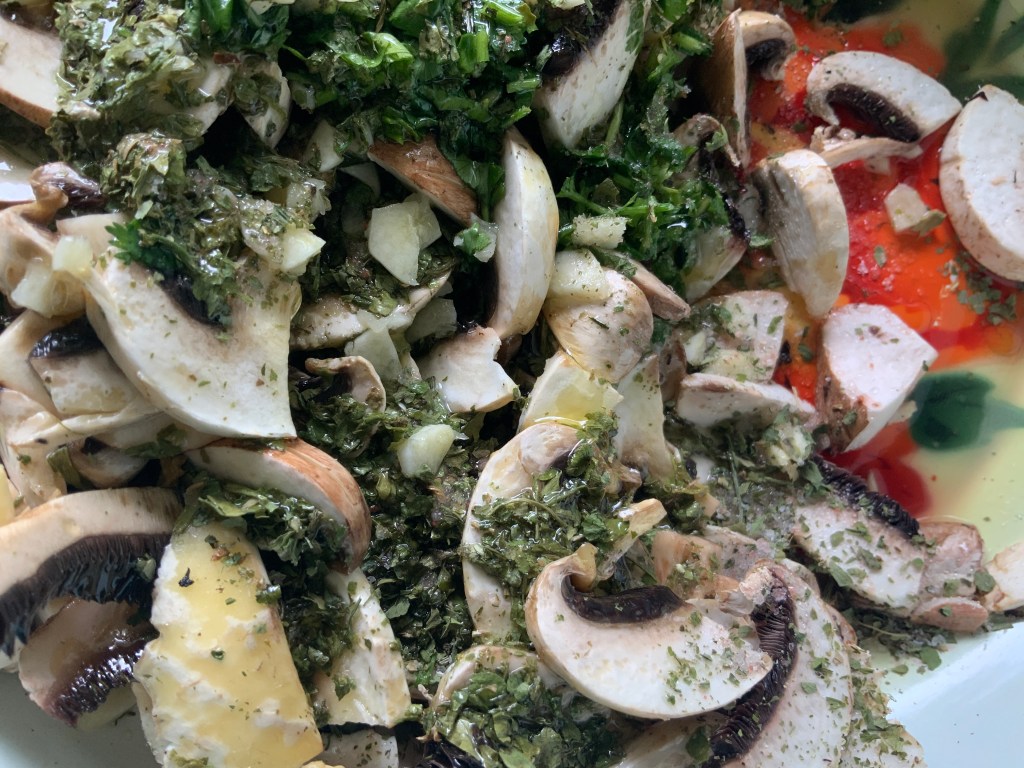
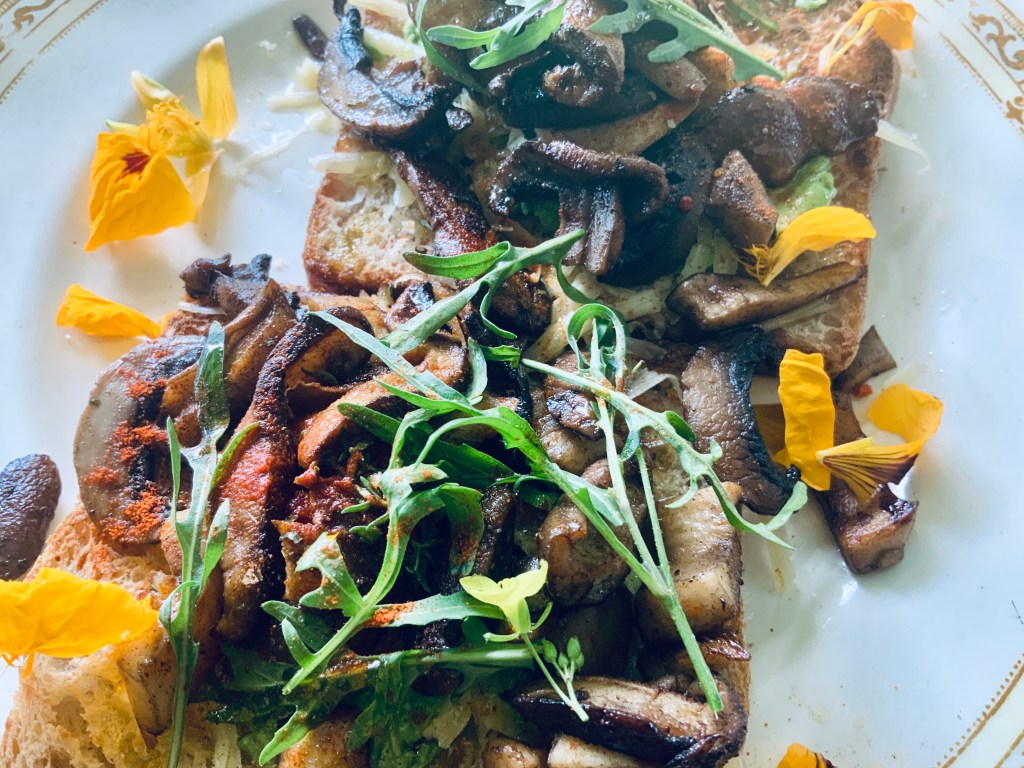
Some of her ways with mushrooms which she will include in her masterclass, are how to make a powder, which means you always have some on hand; the equivalent of meat patties with lentils and mushrooms; candied mushrooms; or a hearty winter.

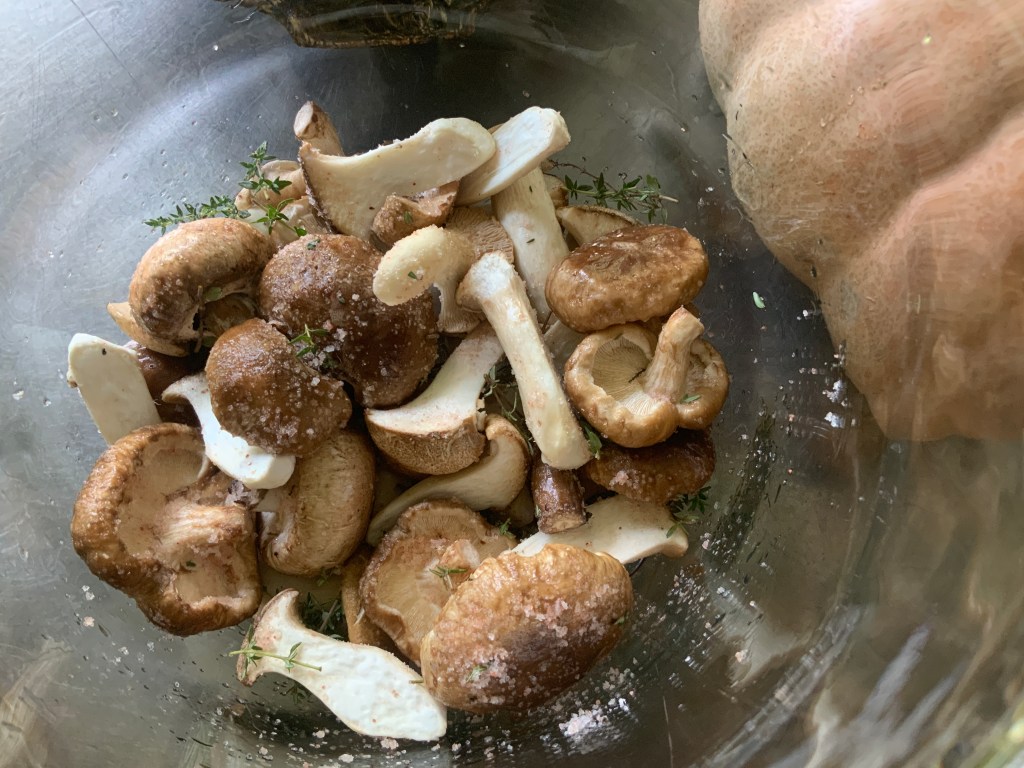
Each kind is so different and that’s why she encourages keen cooks to get to know their mushrooms and how to make the best decisions. “I can’t stand it when I’m served a watery mushroom sauce because it’s been cooked incorrectly,” she says. If you take oyster mushrooms as an example, just the different colours make her happy. And each mushroom has different traits which should be emphasised.

Describing her own food preference as flexitarian, it means she eats less meat and is more conscious of where food comes from. “What are the processes ingredients have undergone?” is what plays on her mind. Being a thoughtful eater is what our future should be all about.

It has long been an ethos, but more recently, because of the Greta Thunbergs of the world, the youth is much more aware of working more gently with the planet. The way foods are manipulated for example plays a huge role and will become more urgent in the future.

“I don’t mind meat or tripe for that matter, but I have a problem with how it is treated,” she says. But then she’s off in another direction as she muses about mushroom sausages. And why not?

Her belief is that you can really wow people with mushrooms  –  and, with her cuisine creativity, probably with anything she puts her mind to. She likes putting things together in ways which are unexpected.

She describes mushrooms as  one of the super foods that will keep growing in popularity.

There are so many advantages. For example, they are easy to grow. We still know way  too little, and could learn more and more.

If you haven’t heard of Chicken of the Woods (love that name!), know of the fermentation process, or of the different coloured oyster mushrooms, this will be the class for you.

Think about it, says Lientjie, you can harvest mushrooms every few days and even grow them in small spaces like an apartment. “What’s not to love about them?” she asks. Combined with sprouting lentils, for example, you have food. It’s an amazing source of protein!”

By now you might have gathered that Lientjie is excited about mushrooms. “People should grow their own food and know the source of what they buy,” is her dictum. Which, to her mind, makes mushrooms such an easy option.

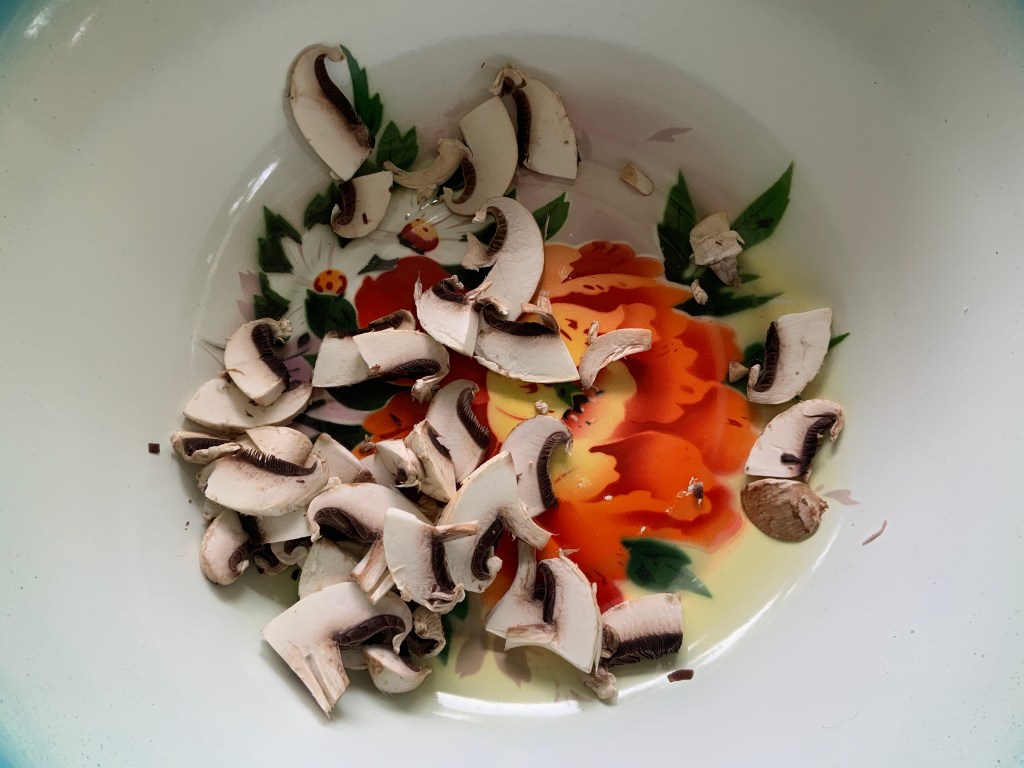
“They can be eaten all year round. You can go for something as easy and fresh as a raw mushroom salad for example. “I love the smell of a raw mushroom when I cut them,” she notes. “Just add some lovely Kalahari salt, and you have a meal.”

But she warns, mushrooms don’t work when they’re not well cooked. “If you make a mushroom sauce or fry mushrooms, do it right, or you might just serve your guests breakfast mushroom mush.”

She advocates using mushrooms more creatively and that’s what her workshop is all about.

“This is my first mushroom workshop, but it won’t be the last,” she says.

How can you resist?

The programme on the day is the following:

11.30am: Mushroom kombucha cocktail and mushroom canapés

Noon: Short intro into the wonders and umami on cooking with mushrooms

12.15pm: Recipes and goodie bags in the kitchen where we will all proceed to make:

Fermented mushroom

Mushroom umami powder

Mushroom burgers

Classic mushroom salad

2pm: Take your seat at our beautiful table to be served a lovely meal

2.30pm: Surprise dessert

R750 per perso0n including class, welcoming drink, lunch, recipe folder and goodie bag.

Wine and gins available for your account.

Contact 082 531 6141 for bookings and directions.

Don’t hesitate, Lientjie is inspirational in the way she approaches food.

“CALL ME MILES – BRUTALLY HONEST”, A MUST SEE ON NETFLIX BRINGS CLARITY TO GENDER ISSUES

In a time when the other is viewed as much more of a threat than at any other time and the antagonism and visibility heightened because of social media, finding yourself in a body that is alienating and seemingly viewing the world differently than people around you, can make life seem intolerable. DIANE DE BEER spoke to them:

Pictures reflect the many faces of Miles:

That’s what happened to Miles Kean Cilliers Robinson when they hit puberty. What they know now is that they have been battling to identify with the gender assigned to them at birth.

In a documentary titled Call Me Miles – Brutally Honest, available on Netflix and a must-see, they tell their story with an openness and vulnerability that’s sometimes painful yet highlights the issues of growing up in a world that doesn’t make sense to them.

Finding myself battling with many of the concepts simply because the words including the way to use pronouns is unfamiliar to me, and I am someone who embraces differences as well as acceptance, I can understand how frustrating it must be to navigate a life that seems so foreign to many.

I found their guidance and explanations extremely educational. We are living in a world that is more fluid than it has been my whole life and having no children, I don’t often have to face any of these issues. But I could see that Miles didn’t appreciate any of my blunders. And I agree. It is up to all of us to inform ourselves and I suspect, that is why Miles always knew that they wanted to share their story. They knew from the age of 16 that they are non-binary and needed to find a way to align their body with their personal identity, their sense of self.

With two parents in the newspaper world, they have always been aware of the importance of facts and getting the right stuff out there. And in this era of fake news and easy targets with social media available and anonymous, even more so than before.

The only time Miles was unaware of their predicament was in that time when little boys and girls are seen as just kids. And they are blessed with parents that always treated them simply as another human being. Their problems started when the outside world started intruding.

Still in primary school, a young classmate told them that it is time for them to start wearing a bra. “I was incensed,” they say, “how dare she?” Nevertheless it had to be addressed and their mom took them shopping with the advice that a sports bra would be the most comfortable option.

                   Miles with Dad Deon .

Their life however changed overnight when their mom decided to send them to one of Tshwane’s prestige schools, Afrikaanse Hoër Meisieskool Pretoria. They are an exceptional achiever regarded as highly intelligent, and Mom wanted the best possible education for her child. In retrospect they (and I suspect their parents) believe that this was the worst possible environment for them.

Overnight they walked into a world where the scholars were referred to as “ladies” (dames) and of course, had to wear dresses. Another public shaming exacerbated their emotional dilemma. During a swimming exercise, the girls spotted that they didn’t shave under their arms and they were ridiculed. “I couldn’t believe that they (his fellow scholars) didn’t want more than simply being the perfect little girl.”

And on that day, their obsession with their body, in particular “being fat” became part of their daily obsession. Telling their story they couldn’t emphasize enough how distressing this became. It completely dictated their life.

I met Miles more or less at the age of 14, and I can clearly remember that the person I saw was completely normal in size and looks, nothing strange or out of the ordinary. I would have described them as cute and wouldn’t have referred to their body at all.

“My discomfort in my own body only started when someone else said something,” they explain. And aren’t we all familiar with that one, only in their circumstances it played into already troubled emotions.

For Miles specifically it meant withdrawal and isolation, which made everything worse. “We grew up in a time where our parents were focussed on protecting us. There wasn’t time for holding me close, we had to be tough,” they say.

Kids were not deemed to be streetwise and they had to be taught the rules of the jungle hovering out there. Their generation, they argue, has greater exposure to others (not so much part of the Apartheid era where the focus was on separation) and thus have more empathy. “I see that as a pre-requisite to see the other,” they emphasise.

At this point their world started to change dramatically. And they capture it thus: What became clear to me was that my gender is not determined by the way I paint my nails or knot a tie.”

But only after many years of torture for this struggling teenager in an all-girls school, they asked to be booked into Denmar Mental Health Services. In the interim they had been self-harming with cutting and suicide attempts simply to stop the emotional chaos that became their world. Nothing came easy and even with a group of friends whom they describe as “a ragtag band of misfits” who offered some protection, they were drowning.

But they had made a decision when they asked to be booked into Denmar. “I am a boy,” they told everyone when they arrived, “please call me Miles.” And they did. The warmth and acceptance they received at the facility (“apart from one asshole psychiatrist!”), changed their life.

And that was the beginning of a new phase in their life. They still had to share their new self with their parents which then snowballed to the rest of the family and friends. Miles would have liked to have orchestrated their “coming out” more slowly, but they also know and accept that on the whole – especially with their parents  – they have been blessed.

They still had top surgery to discuss and to navigate, all of which has been done and now their future stretches ahead of them with a clarity that perhaps during their school years seemed impossible.

Nothing came easily and their varsity studies were also interrupted by the wrong choice of subjects. But amidst all of the struggles that dominated their younger life, they know they have landed softly and opting for a degree in clinical psychology and anthropology, their future is about helping others with what they had to battle – often without guidance or role models.

When you hear them saying that a choice of opting to wear a binder (which compresses the breast) meant that they had to choose between physical or emotional discomfort, the constant unease of their life seems unbearable. Time and again, they would rather cope with the physical obstacles. “I didn’t have role models or anyone to turn to,” they say.

That is what they hope to change by opening a practise for transgender youth and young adults. “During the process of transitioning,” they say, “ I didn’t have anyone to go to. I had to put it all together myself.”

For the present, they are exactly where they want to be.

LAST CHANCE TO FLY TO PANTOLAND WITH HONEYMAN AND HER FABULOUS PLAYERS

By Diane de Beer

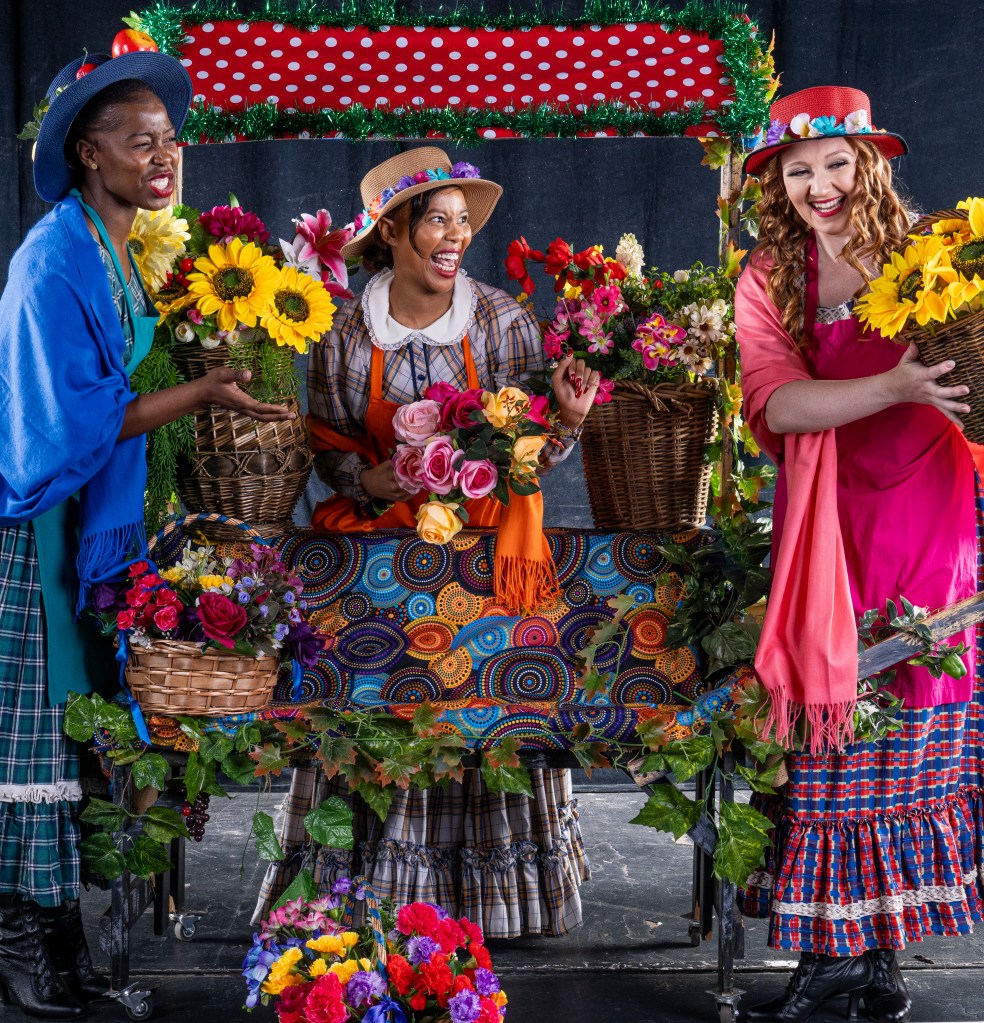
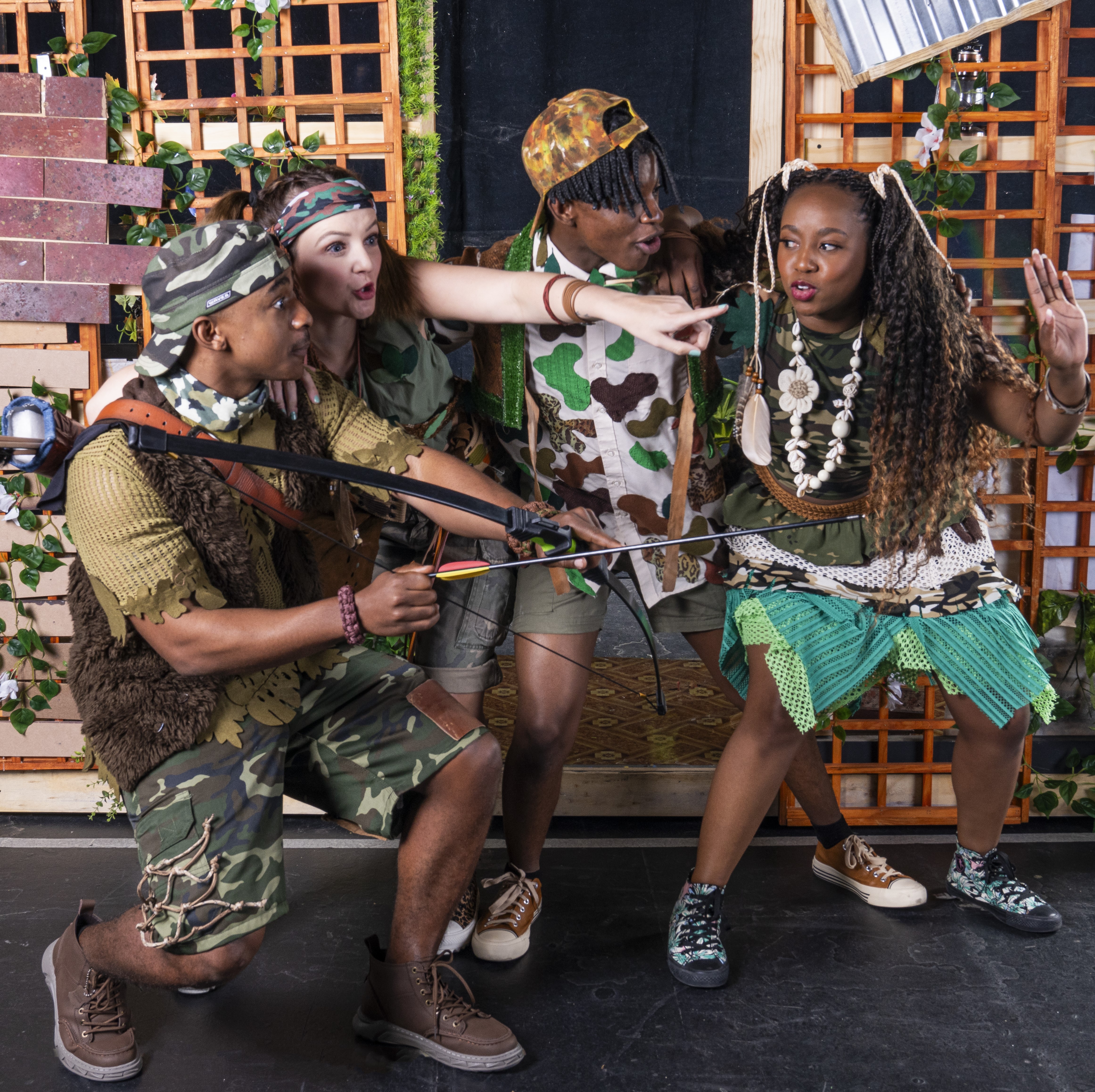
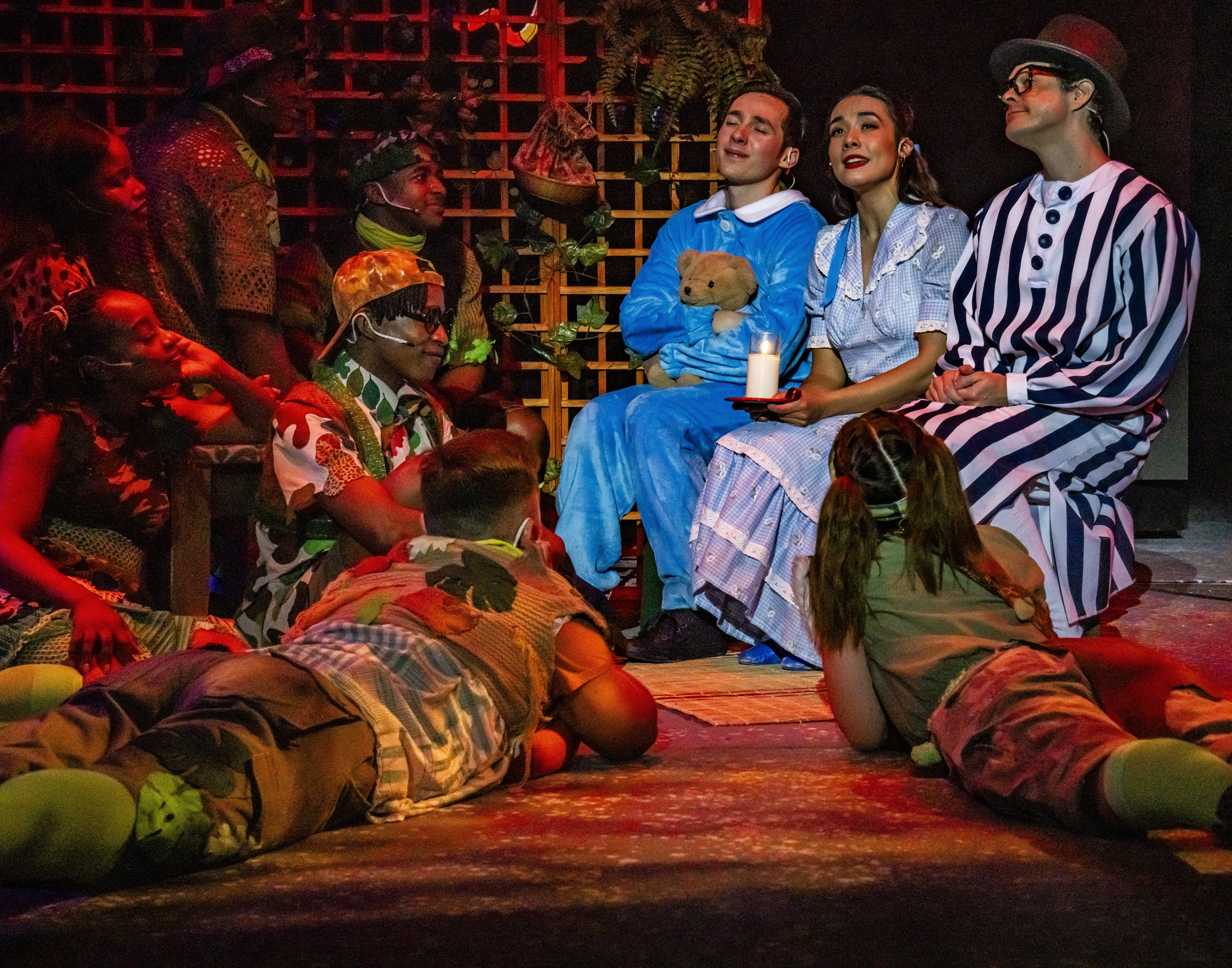
Janice Honeyman’s Peter Pan at Joburg Theatre’s Nelson Mandela Theatre

Cast: Richard Richard (Smelly Smee), Ben Voss (Mr Darling and Captain Hook), Kensiwe Tshabalala (Mrs Darling), Kiruna-Lind Devar (Wendy), Matthew Berry (John), Diego Hamity (Michael), David Arnold Johnson (Clementina Coconut), Manyano Ngoma (the dog, Nana), Virtuous KIandemiri (Thokolina Tinkerbell), Sandi Dlangalala (Peter Pan), Lesedi Rich (Sam Spaginyol), Gareth Meijsen (Seb Scumdawg), Dirk Joubert (Sparkey), Gugu Dhlamini (Curley), Sarah Leigh (Nibs), Brian Ngobese (Tootles), Bo Molefe (Slightly) and Tania Mteto (Princess Lotus Lily) and the ensemble

Associate Director: Timothy le Roux

Production Designer: Andrew Timm

Lighting Director: Johan Ferreira

Sound Designer: Akhona Bozo

Choreographer: Khaya Ndlovu

Costume Designer and Co-ordinator: Mariska Meyer

Dates: Until December 24 (so get going!)

If you have seen as many pantomimes as I have, you need some incentive (especially when you’re no longer the target market).

For me there were two big ones; Janice Honeyman and my two favourite little ones. Just the fact that I can still stomach a pantomime has everything to do with someone who is completely ruled by her inner child when writing and staging the annual panto.

Not only does she know how to negotiate an audience of young and older children but she also shares her panto story with loads of fun clues for those with many more years on the planet to keep their minds spinning once they’ve seen enough of all the silliness and have had enough festive cheer.

She has also found a compromise with the LED screens and all the bells and whistles they add to this production, while holding on to some of the more old-fashioned sets and designs, which breathe life into the rapidly developing technology.

It’s a miracle just to watch her each year as she finds ways to build novel glitz into the show. She has established her nimble dance to deliver the goods – and that she does with sparkle – time and time again. Small wonder they can’t let her go as she just keeps pushing those stakes higher and higher each time.

This is probably somewhere in the region of my 30th Honeyman panto production and the fact that I can keep going and writing willingly, says everything.

This time it’s Peter Pan and one of the delights which has been been happening for a few decades is the transformation of the South African stage. I know some might ask whether we still have to touch on these colour issues, but it is especially the popular shows that had to get it right and had the most impact. Of course Ms Honeyman did just that. And it easily gets better every year.

                     David Johnson as Clementine Coconut.

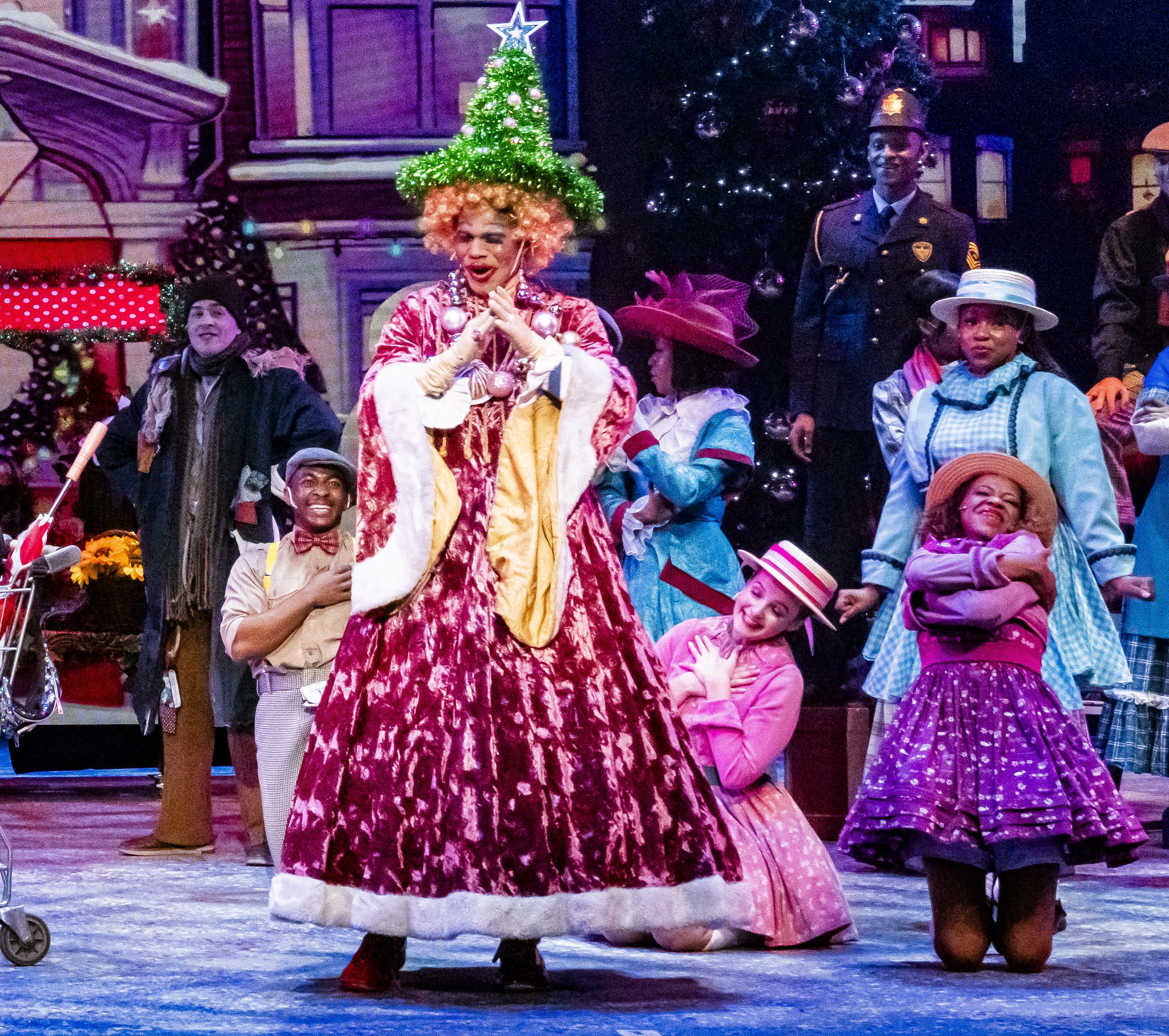
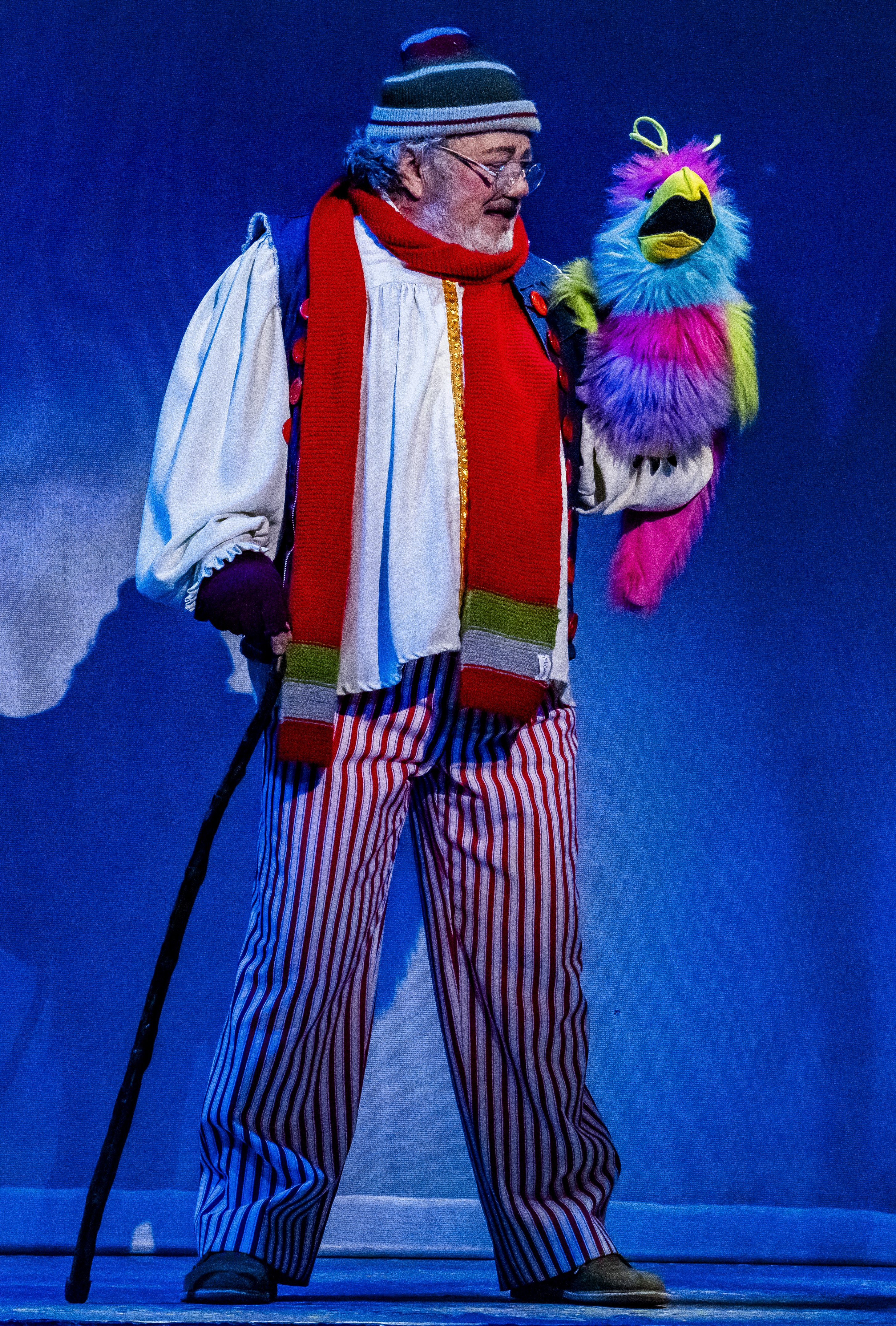
She has created many stars and again, a few are stepping out smartly to show their stuff. I have to confess, I have always been a David Johnson fan. Perhaps he’s not the obvious choice for the panto dame, but that’s another of Janice’s tricks up her sleeve. She doesn’t opt for the obvious and then she delivers another bit of magic by getting a performance that’s different, yet works. Clementine Coconut could have some fun with her costumes which already delivered the goods and to boot, Johnson added some swish and style to his panto tart.

                    Ben Voss as Captain Hook

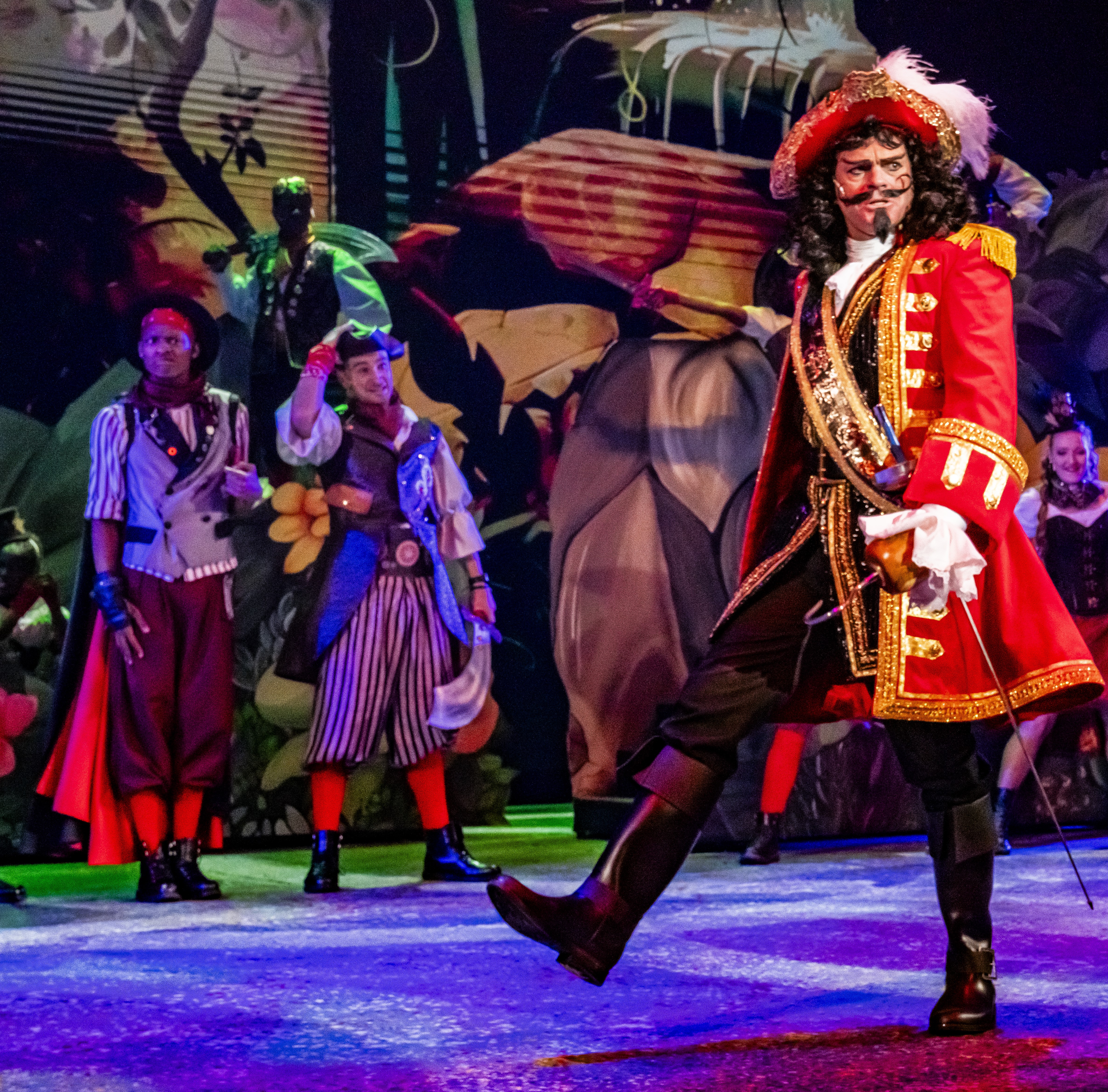
Ben Voss, another panto and Honeyman regular, did double duty and delivered a devilishly evil Captain Hook with a smart swagger and punch, which might have scared some and tickled others, and then quietly slipped into the shoes of the more demure Mr Darling.

         Virtuous Klandemiri as Thokolina Tinkerbell with Sandi Dlangalala as Peter Pan.

If you have a very traditional view of what and who Thokolina Tinkerbell should be, Honeyman flipped that applecart as well and gave us the sparkly Virtuous (could there be a more apt name!) Klandemiri as well as the light-on-his-feet Sandi Dlangalala who starred and shone as as Peter Pan in this debut performance.

                  Michael Richard as Smelly Smee.

Michael Richard added a performance with flair and wisdom enhanced by decades of experience as Smelly Smee and the youngsters in the cast kept the energy up and the artistry pumping.

It’s a gran show. This time we sat on the balcony and it was fascinating to get this different yet complete view. I know many people regard the lower level as the better seats. My small companions had seen last year’s panto from the front row.

                          The full splendour.

But in the end, the balcony offers a complete appreciation of the Honeyman approach. It allows you to focus on the whole rather than individual performances for example but also accentuates the detail that comes together in the design. It’s easy to understand why Honeyman draws you in time and again.