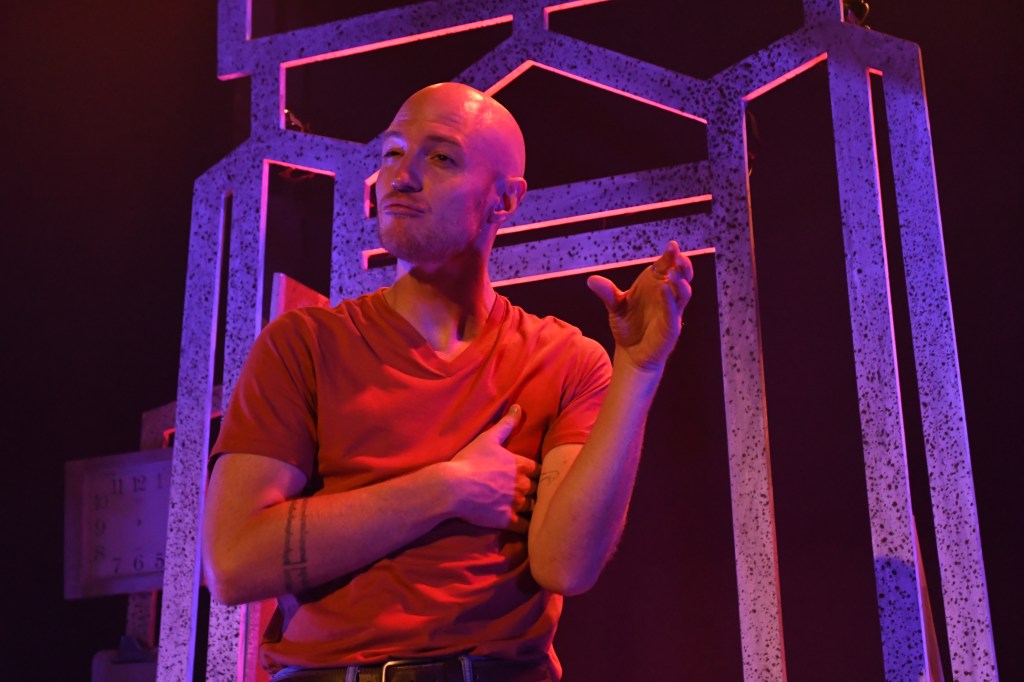
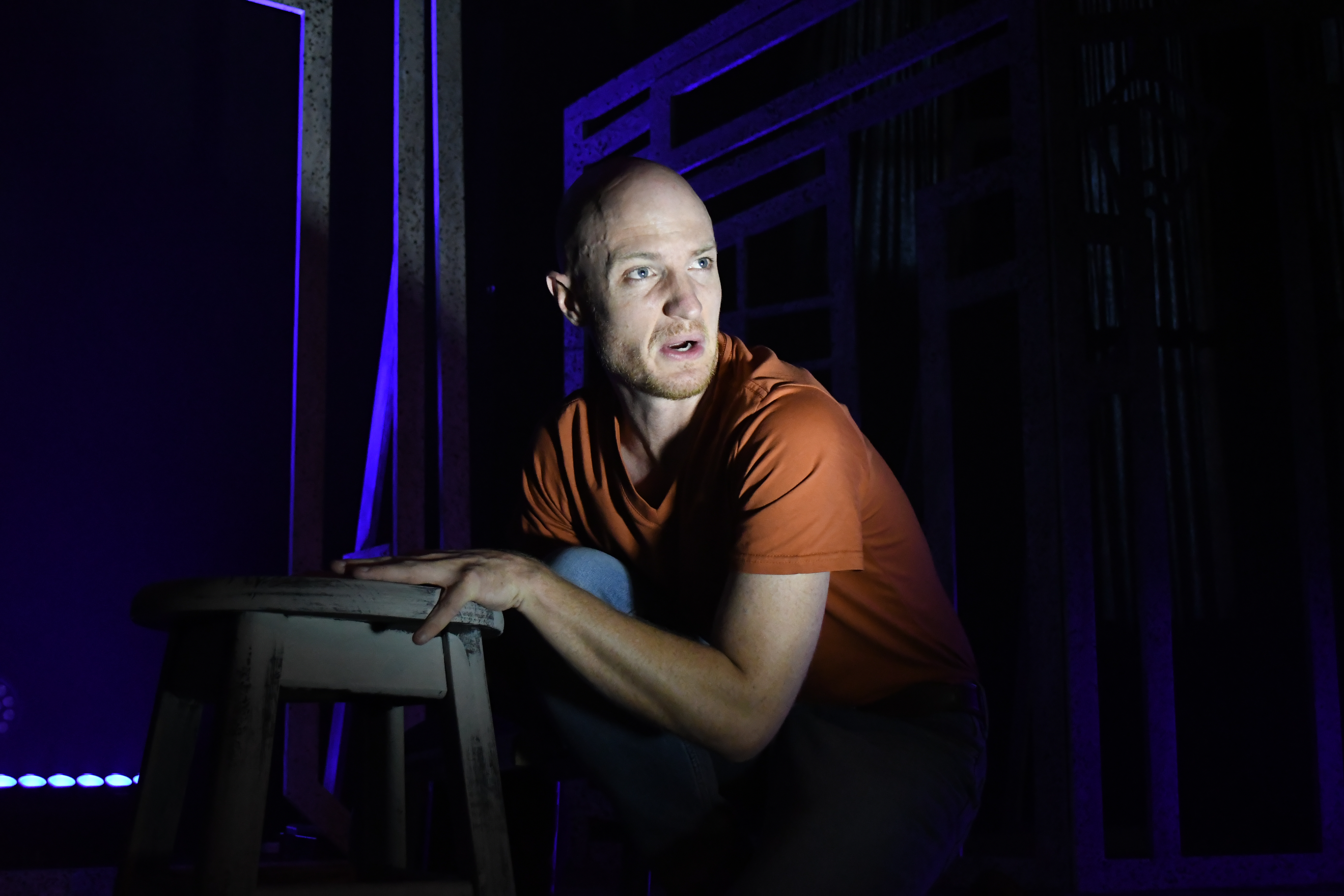
October is a month packed with performances for one of our most prolific performers, Nataniël. He tells DIANE DE BEER about his punishing schedules as he presents three shows – all completely different, yet all with one thing in common, the artist and his creativity:
It all begins with Momentum Beleggings Aardklop which is back in Potchefstroom following the upheavals of the pandemic
Ring van Vuurattempts to bind five fiery elements together: original music from more than three decades; original stories as only he can imagine; the rhythms and techniques of countries such as Mexico, Argentina, Chile and Peru; a shimmering set of costumes designed by his personal designer Floris Louw; and seven world class musicians.
Charl du Plessis on keyboards is joined by Werner Spies (bass) and Peter Auret (bass) as well as four brilliant guitar players: Juan Oosthuizen, Loki Rothman, Leon Gropp and Luke van der Merwe.
He promises to present 90 minutes of heartache, humour, heat, virtuosity and rhythms.
As part of the Aardklop festivities, the show will be presented on October 3 at 3 and 7pm in the Beeld Auditorium
Nataniël follows this with a short new season titled ROME ’62
On October 10 to 15, he returns to Pretoria’s Atterbury Theatre.
At a fair in the Free State, there’s a stall that sells second hand clothes. In between the rather tired-looking garments, there’s an unusual outfit, handmade by an acclaimed Italian designer. This discovery a few years back, was the first sighting of what has eventually turned into this particular show.
From family secrets, suspicion, stunning strangers, international travel, legendary films, timeless radio hits to exuberant fashion and the most dramatic designs, everything is included with stories in both English and Afrikaans, as well as music in abundance, brand new as well as six decades old.
Charl du Plessis (piano), Werner Spies (bass), Peter Auret (drums) and Wernd van Staden (cello) will be the accompanying orchestra.
Finally a performance that Nataniël is hugely excited about and describes as his best:
Titled MASS FOR THE GOOD PRINCES it is a follow-up of last year’s successful DIE SMITSTRAAT SUITE. This one though is his first full length musical mass based on the classical structure of a composition with five, six or seven parts, which is a prayer for goodness, new leadership and the hope of a new generation.
The mass will be sung in Latin and English with stories and descriptions in Afrikaans.
As before, he shares the stage with Ockie Vermeulen (organ),
Charl du Plessis (keyboard), Juan Oosthuizen (guitar), Werner Spies (bass), Peter Auret (drums and percussion) and the Akustika Chamber Choir led by Christo Burger.
When I look at festivals, what they have to offer, I always go to theatre first. It’s my passion, people who tell stories. Fortunately, I know that stories are an integral part of the arts and are told in different ways. That’s what makes a festival such a delight.
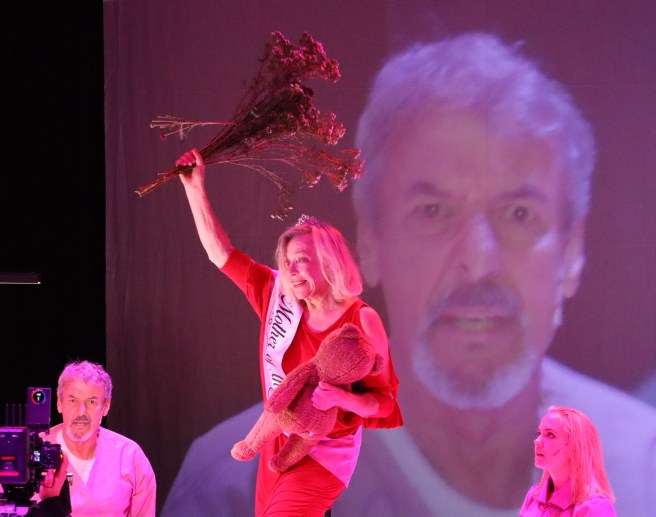
Die Moeder with Sandra Prinsloo and Dawid Minnaar. Picture: Emma Wiehman.
But let’s start with theatre. If you haven’t seen Sandra Prinsloo’s Die Moeder yet or even if you have, see it again. It’s one of those once-in-a-lifetime performances even if she has had many of those. It’s a story of a woman ageing who has lost her heart and her soul as she feels discarded and left out of the dance of life.
That might sound horrific, but the text and the ensemble cast, including the magnificent Dawid Minnaar, Ludwig Binge and Ashley de Lange with exciting directing by Christiaan Olwagen, present huge rewards.
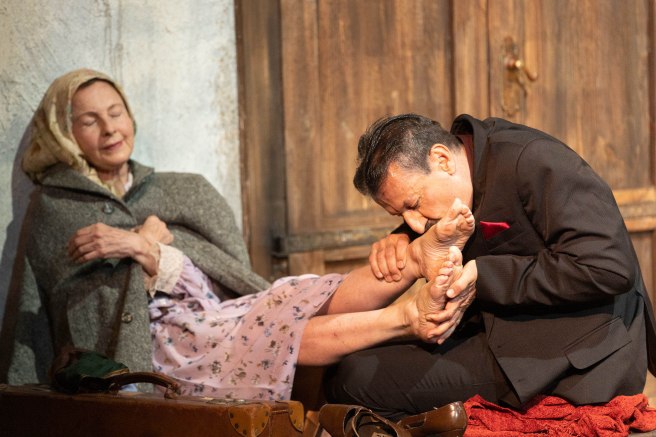
Bettie Kemp and Dawid Minnaar in Mirakel.
On a lighter note, Marthinus Basson, a Reza de Wet genius, presents probably her funniest play, titled Mirakel. With another fantastic cast, including Rolanda Marais, Carla Smith, Dawid Minnaar, Edwin van der Walt, Bettie Kemp and Ebin Genis, it takes us back in time when theatre was presented by traveling companies, which went from town to town, region to region.
That already puts a smile on my face, and when you get this almost ragtag band of actors together, trying to save their lives by enhancing their livelihood with all the drama of the time and the company, it’s a scream. Just seeing Minnaar, who we are used to seeing on stage in serious mode, is a delight as he lights up the room with his angst and artistic temperament.
Braam en die Engel with Joannie Combrink, de Klerk Oelofse, Rehane Abrahams and Shaun Oelf, directed by Nico Scheepers, has all the elements for something quite enchanting. Add to that Kanya Viljoen who adapted the text from a YA book with the eponymous title, Grant van Ster as choreographer, Franco Prinsloo as composer and Scheepers and Nell van der Merwe on props and puppets as well as set, costume and lighting design, it’s a no-brainer.
Described as a magic realism experience for the whole family, this sounds worth driving for and not to be missed. I don’t even know the book although the title does the trick, but the artists involved get my backing all the way.
Geon Nel in Hoerkind. Picture: Gys Loubser.
Also based on a book, Hoerkind, written by Herman Lategan and adapted by Francois Toerien, tells the writer’s own story about a life in tatters when as a six-year-old he is sent to an orphanage. His stepfather shoots at him, at 13 he is stalked by a paedophile, and he turns to drink and drugs to stay sane, this solo production is directed by Margit Meyer-Rödenbeck, with Geon Nel in the title role.
The young boy’s missteps are many as he tries to survive. It’s a hair-raising story of loss and triumph in a world that is feels as if it is against him as he valiantly fights to survive.
Goed wat wag om te gebeur. Picture: Nardus Engelbrecht
Another debut production, Goed Wat Wag Om te Gebeur, has impeccable credentials with a cast featuring Antoinette Kellerman, Gideon Lombard and Emma Kotze with Philip Rademeyer as playwright and director (reworked in Afrikaans from The Graveyard).
Hendrik returns home after 15 years but, because the house is deserted, he decides to wait in the cellar where he spent his childhood years. It is empty, but the family’s secrets and history thicken the air and form part of the foundation of the house. Three figures keep appearing – his hardened sister, his petite mother and his lively girlfriend … and secrets and lies come to the surface.
Droomwerk. Picture: Lise Kuhn.
Droomwerk spotlights Jill Levenberg, Ben Albertyn, Johann Nel, Tyrish Mili and Johann Vermaak, directed by Kanya Viljoen and Lwanda Sindaphi. It unfolds as a dream as the title suggests. Petrus is the one who dreams about his family’s complex past: his ancestral mother, Diana of Madagascar, is looking for her daughter; and his grandfather, an apartheid senator, is dying.
The play deals with conflict, alienation and disillusionment. Will Petrus find the answers that bring him peace? Written by Pieter Odendaal, the text has already garnered an award for the best drama by the ATKV Woordveertjies.
Cindy Swanepoel and Zak Henrdrikz star in Henrietta Gryffenberg’s text 1 (Een) – described as a tragicomedy about love. Directed by Alby Michaels with choreography by Craig Morris and original music by Coenraad Rall (Amanda Strydom’s accompanist), it’s all about once upon a time … there were two people so fond of one another that they grew,the one into the other.
With too much togetherness, the two eventually decide it’s time to separate … but which one will survive this miraculous ordeal?
This tongue-in-cheek production looks with a slight jaundiced eye at the ancient themes of love and transience while placing it in an absurd context. Are human beings likely to find their perfect partner or are the chances just endlessly slim?
It’s a challenging piece, which should translate perfectly on stage with hopefully much laughter at the fallibility of man.
Two strong solo productions include Marion Holm, a seasoned actress who works wonderfully with words and life as she experiences it. She has her own style, a way of sharing her stories that are hysterical and sometimes quite harrowing but everything is done with such hilarity, it’s laughter from beginning to end.
On a dramatic note, Je-ani Swiegers stars in Die Vrou Op Die Dak, which tells the story of a woman who flees to the roof of her house where she hopes to find the answers to a life that has suddenly become impossible. Everything she thought she knew is disintegrating and she hopes this fresh perspective might bring fresh insights.
And don’t miss out on the latest offerings from the grand dames of cabaret, Elzabé Zietsman(with Tony Bentel in the perfectly pitched Femme is Fatale) and Amanda Strydom (Amber/Ombré). Their staying power is unique as they keep refining their artistry.
It’s a lucky packet of plays with a selection of everything one could possibly wish for when going to a festival.
Most of us have dreams that we hope will become reality one day, but sometimes life happens and we don’t get round to it. Willemien du Preez and her husband, whom she refers to as Liefie, decided on what many might suggest was the spur of a moment, to buy what they believed would be their dream farm. DIANE DE BEER speaks to the author about her book Plaas se Prys (Price of a Farm) (Protea Boekhuis):
He left a perfectly good job with all the richly earned rewards still waiting in the future and she waved goodbye to city life and everything familiar to her.
The Du Preez couple had been to visit the area far fom their current home in Gauteng, much closer to Cape Town, had lost their hearts almost at first sight and here they were, taking the first steps into what they hoped would be their dream life.
Willemien’s book is about this period in her life (if you don’t read Afrikaans, hold thumbs for a translation) in which she captures the adventures of two city slickers hoping to transform overnight into their version of Karen Blixen’s “I had a farm in Africa…”.
It all began when Willemien was battling the loss of an almost three-year-long project that had demanded blood, sweat and tears, but just didn’t work out. She longed for something peaceful, something beautiful and a respite – and to add to her dilemma, her husband was also battle-weary and simply dead tired.
With hindsight, this self-made adventure felt fantastical from the start. She describes it as two desperate individuals fleeing from their reality. “The mountains and a different lifestyle were appealing.”
A the time they didn’t regard this madcap move as such. Their children were adults, they had some money in the bank and Gauteng’s crime statistics were unnerving. “My husband always wanted to farm like his grandfather before him, and I wanted to live like my grandfather and grandmother, off the land.”
“We were still young enough to start over,” she explains, “probably a misguided romance with nature.”
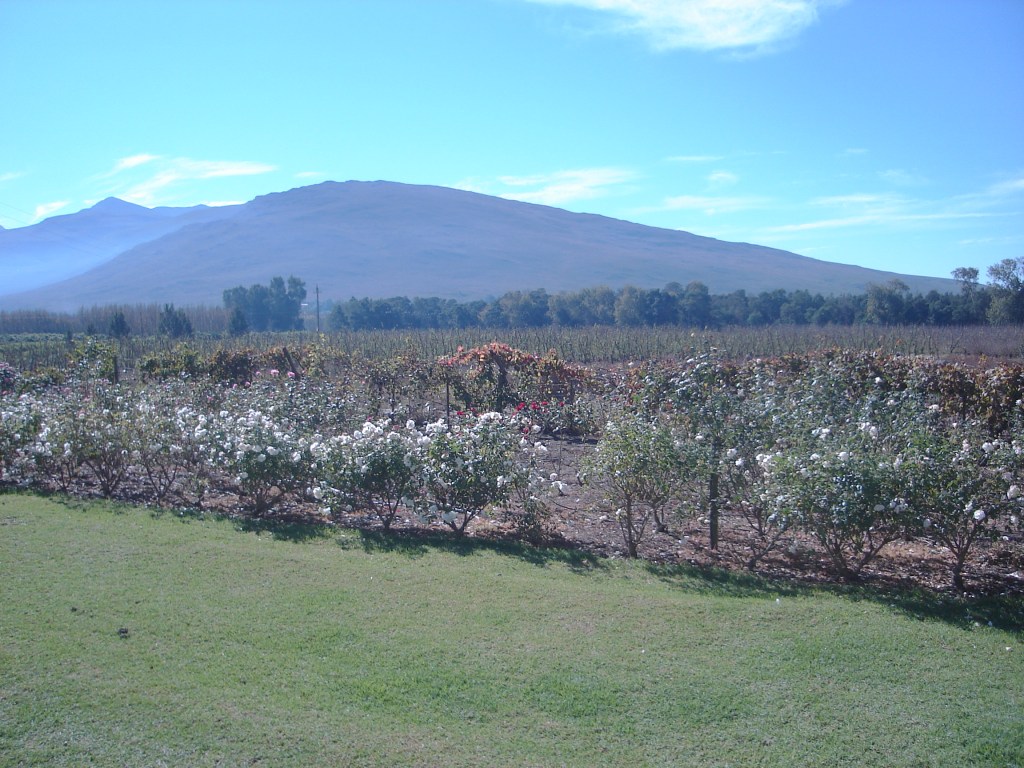
The day they bought the farm was perfect. As Willemien describes it, they were overwhelmed by the spectacle of what they hoped to purchase – and then inhabit. “The fields, the mountains, the sky, the light, everything seemed to conspire.”
For the Du Preez’s, it felt like a gift. A rose-tinted picture emerged, the income it seemed would be more than they hoped for and it felt as though the farm had been made specifically to fulfil their dreams
When your eyes rest on the cobbling stream, it fails to see the damage the flood waters could do during a terrifying rain storm. What they saw was a farming project for her husband and a restoration project for her. “I would restore the 100-year old farmhouse with two attics into a holiday home for our children and the grand-children still to come. We were thinking of the future – yet not so much!”
Again, looking back, she knows that even when packing their belongings for the grand move, there was trepidation. “The alarm bells came from inside me after that first visit to the farm. It didn’t feel so right anymore.”
On their way back following their first visit, they argued, but not about their momentous purchase. “That was too late. We had already signed the papers,” she says. But reality set in almost immediately after their arrival on the farm. “I realised it wasn’t mist blowing over the farm, it was dust,” only now realising that it dominated her huge struggle to cling to the dream.
No wisdom was passed on when they bought the farm and probably they would not have listened. Once they had decided to throw in the towel, a neighbour described as a wise boervrou (farmer’s wife), said that if she were buying a farm, she would have visited often, even if the seller grew tired of the intrusion. She would have considered every vantage point before she made an offer. “Now I would tell my younger self, you have to talk to all the farmers in the region. You have to ask about the pitfalls, know the weather patterns and discover everything there is to know which will not be included in the sales pitch,”says Willemien.
She has gained insight, of course, and now she knows that you cannot lightly tackle something this extraordinary. “You can’t just decide one day to go farming. You must know the lay of the land and preferably come from there.”
Fortunately the Du Preezs are not people who simply take life lying down. After quitting the farm, they spent a few years rebuilding their life in Cape Town and environment. André returned to law and Willemien taught Afrikaans to English speakers, picked up her acting career and earned enough money in international ads to take them on an overseas trip.
Following a decade in the Cape, they returned to Gauteng to be closer to their children and grandchildren and she started writing this book after encouragement from another author, Johann Symmington.
There were dark times as the pandemic was both a threat yet provided the time to write. For Willemien, writing about something that still has an impact on their lives was therapeutic. I suspect the rewards from grateful readers will also help to heal some wounds. It’s a story told with searing honesty and a humanity that’s heart-warming.
It’s the kind of thing that many will identify with, told in a manner that is as frank as anyone can be when focussing on their biggest folly. But don’t we all mistakes and tumble down that slippery slope and if you can rise from that heroically, take a bow.
When I met her following a talk at the Vrye Weekblad Book Festival in Cullinan, I knew that this was a book I wanted to read. When a dream shatters, not everyone manages to put the pieces together again.
But Willemien and André have done exactly that. “I know that we have accepted the past and each other.”
And most precious of all, that’s what they have left: each other.
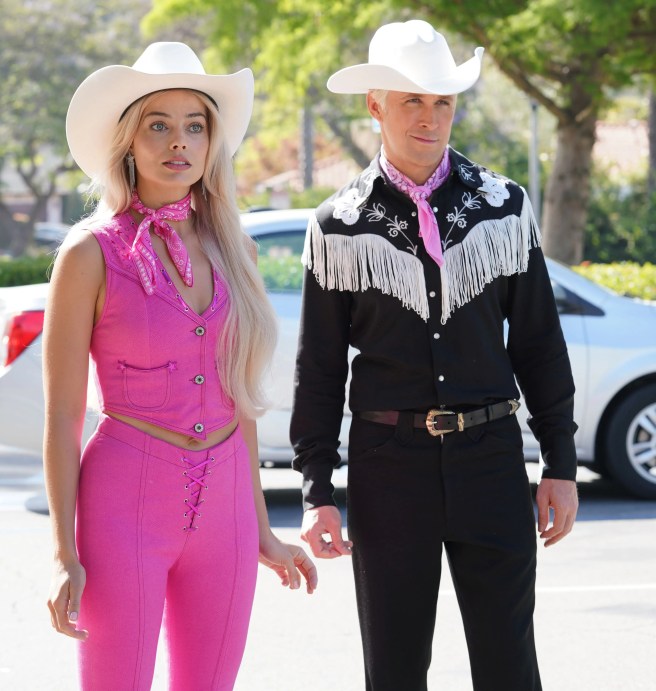
Two very different heroes: Margo Robbie as Barbie and Tom Cruise as Ethan Hunt in the latest Mission Impossible
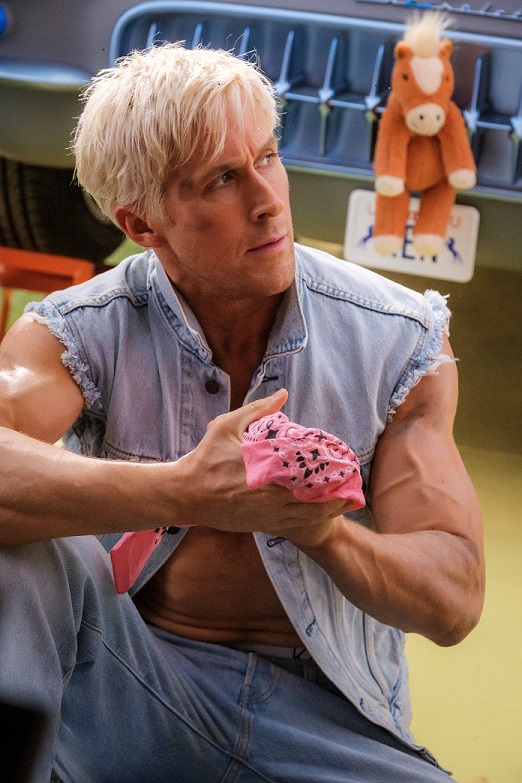
BARBIE
DIRECTOR: Greta Gerwig
CAST: Margot Robbie and Ryan Gosling as Barbie and Ken
Barbie dolls were not my thing as a little girl. What got me wanting to see the film was the choice of director Greta Gerwig. She was first approached by Margot Robbie to write the script
And it wasn’t that I was such a fan of her most recent movie, the latest version of Little Women (which I thought had more appeal for a younger generation not yet familiar with a filmed version), it was because I thought (with Lady Bird in mind) that her take on the Barbie phenomenon would be sassy and smart.
The Perfect Pair
As a modern woman/filmmaker/scriptwriter, she would have to perform quite a dance to get this one right. With her and her partner, filmmaker/scriptwriter Noah Baumbach writing the script together about something which has become a painfully idealistic pinup of a doll, it would be intriguing.
Also, she has been vocal about accepting Robbie’s invitation to direct and that she wouldn’t have become involved with any other version.
She doesn’t disappoint. Starting with the script, the approach was incredibly inventive as they deconstruct the imposed vision to illustrate the unsustainability of that Barbie if the original version was the course you would keep following.
It might have worked in its time (and they did make concessions like a space Barbie before real women were allowed to have their own credit cards, as Gerwig notes in another interview), but today’s young Barbie’s potential followers would need a different take – and that’s exactly what Gerwig has given them.
It’s a smart, good-looking, entertaining and educational film with the only perfection they go for in the genius casting of its two lead actors, Robbie and Gosling.
Anyone who has seen Gosling’s Lars and the Real Girl will know that he has comedic chops and Robbie is a no-brainer who not only looks the part but also saw the possibilities of Barbie. She made all the right moves both on the production and the performance sides.
If anything, they could have pushed it even more in every aspect, but that’s just me. It is a perfect vehicle to set Barbie on the fast track with the latest target generation. And that is probably why Martell is happy to take any criticism of the original Barbie.
She’s been set up to take on the world once again.
MISSION: IMPOSSIBLE – DEAD RECKONING PART ONE:
DIRECTOR: Christopher McQuarrie
CAST: Tom Cruise as the hero; Esai Morales as evil personified; and a list of fabulous women all holding their own
It was evident very soon into the film that my partner and I had come to the cinema with very different expectations: he was looking for content and substance that has never been part of the series even though he was the better target for the movie; and I had no expectations but to have fun, giggle at the silliness of the script, and hang on to my seat during all the fast-paced action, which we have all seen in some form or another before, yet heightened here to the nth degree.
And this was only Part One. Apparently, the filmmakers say Part Two will be better.
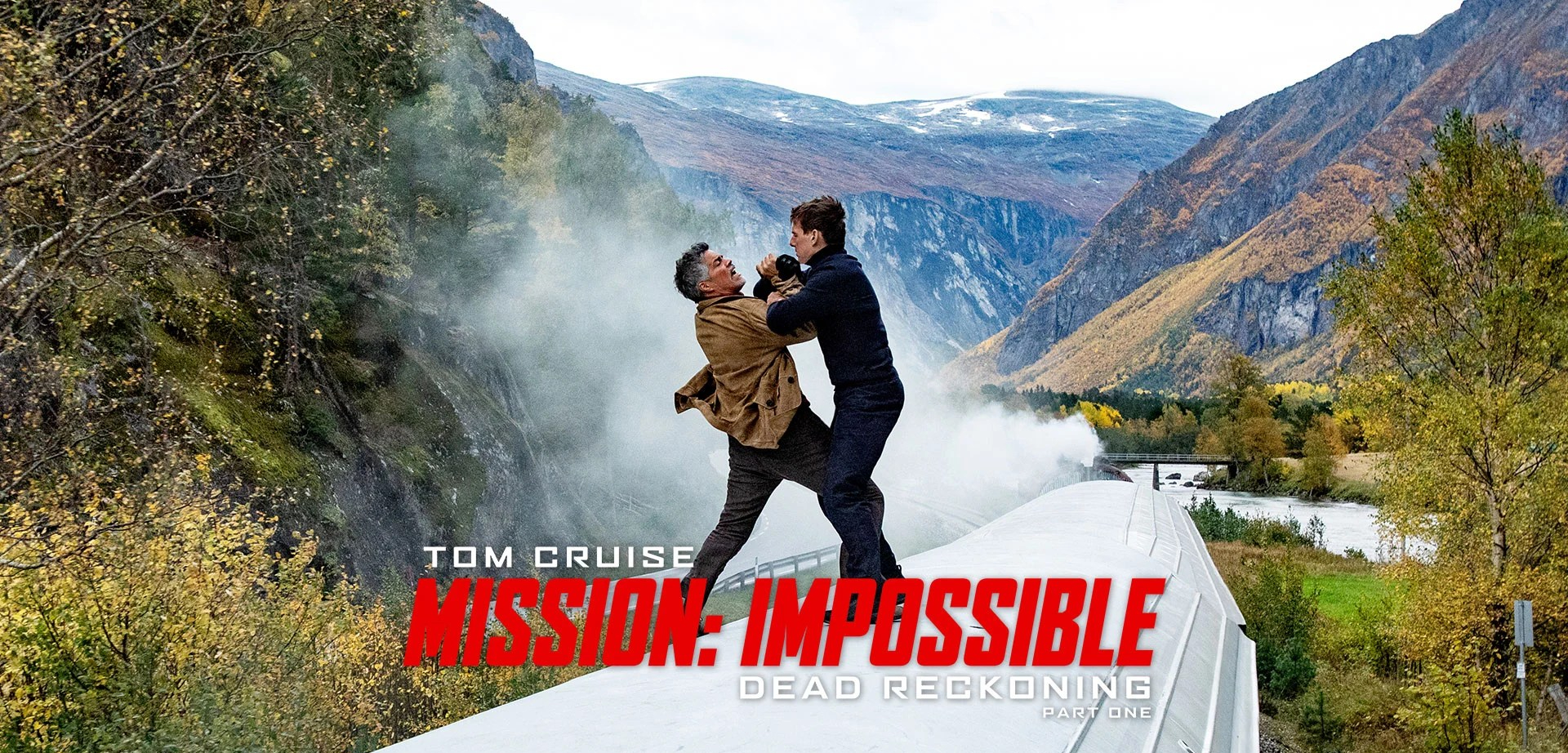
Tom Cruise as Ethan Hunt who is always on the run … to or from danger.
Is Tom Cruise ageing? Of course he is, like all our action heroes. I mention Harrison Ford as another example. And the list goes on. But as long as they still draw the crowds, they will keep reprising the roles.
And once you get beyond the age-defying make-overs, it’s all systems go. Cruise is long past having to prove his acting skills. This is not the focus here. This is where he jumps on a motorbike and races to the edge of a majestic mountain cliff where he takes off and safely lands on a fast moving train with the help of a parachute. If you haven’t heard yet, he does his own stunts.
One of the many impressive stunt sequences.
And these are truly magnificent. It’s hair raising and huge fun to watch if you’re willing to let go and embrace this for what it is. If not, it’s not your movie. The plot can become laborious and the dialogue often incomprehensible, but it doesn’t matter.
Some like it, others don’t. The approach of the viewer matters. Cartoon by Dries de Beer aka Fatman as part of A Man and his Dog series.
It’s also a movie of which one doesn’t want to reveal any of the laughs or the high-voltage action. You need to go in cold, sit back, exhale and have a blast. That’s all this is about.
It’s no more than a caper. That’s all you get, escapism deluxe.
Sylvaine Strike, director/actor/playwright and any other creative word one can dream up, teamed with three other brilliant creatives, Toni Morkel (director), Andrew Buckland (fellow actor) and Tony Bentel, musical genius to create the dreamily magical Firefly currently in its last week at the Pieter Toerien Theatre at Montecasino. Having seen it for the third time at the weekend, this is a copy of my original review to encourage anyone who hasn’t yet seen it, to go. It will warm your heart and the glow will last for the longest time.
DIANE DE BEER reviews:
Scenes from Firefly with Sylvaine Strike and Andrew Buckland:
Pictures by Nardus Engelbrecht
I was blessed to see Firefly at Cape Town’s Baxter Theatre with the emergence of live theatre following the pandemic.
The bewitching Firefly, which as one of the first Covid-19 impacted productions saw light of day as a Woordfees digital production, made a magically mesmerising transition. I had lost my heart earlier to the filmed production and was excitedly inquisitive at how that particular story – with many filmic tricks up its sleeve – would translate and transform on stage.
But this particular creative quartet (Strike, Andrew Buckland, Toni Morkel as director and Tony Bentel on piano) are the perfect combo. This is their theatrical landscape. Give them a stage and they will be telling stories in such an imaginative way, it becomes a visual feast.
Because they have all worked together, they understand each other’s strengths, and Morkel could stretch that piece of string intuitively with fantastically imaginative and explosive pyrotechnics.
Buckland and Strike are a brilliant blend of artistry with an instinct for detail that holds your attention gently yet persistently. Storytelling is their forte, aided by the fact that they have an endless supply of tools to draw on to embellish a wink or the final lift of a foot to express and underline the tiniest emotion.
It is theatre at its best when it has you smiling from start to finish because of the artistry, the wizardry of the production, the perfection of the coupling, and just the sheer audacity of the storytelling.
No matter how or why, just immerse yourself and see what happens when Saartjie Botha commands two artists to give her a production in the purest style of theatre.
If you have seen the digital version that’s a bonus, because to witness how one story can be told in such magnificent splendour in two completely different approaches is truly special and quite rare. The one had all the bells and whistles and worked like a charm. But here, with Strike and Buckland live on stage with just themselves to grab hold of their audience and cast that spell, the essence of theatre comes into play – and again I willingly lost my heart.
Add to the two artists on stage, the magnificence of Wolf Britz’s set and props as well as starstruck-inducing lighting and the keyboard genius of Bentel’s soundtrack that holds every emotion so thrillingly in a familiar yet completely Bentel-constructed composition.
If you want to see how the best make theatre with their instincts, intuition and imagination, don’t miss the sparkling Firefly. Yet don’t think for one second that the miracle unfolding on stage didn’t come with buckets of blood, sweat, tears and ENDLESS talent. Part of the theatrical trickery of this foursome is to present something that is this skilled as seemingly effortless.
It’s brilliant and personally I hope to see this travel around the country casting its spell throughout. We are desperately in need of this kind of adult fairy tale in these tumultuous times.
And with every fresh viewing, they’ve added fresh insight and sparkle if that’s even possible.
Book at Webtickets for any of the shows from tonight until Friday at 8pm, Saturday at 3 and 8pm; and Sunday at 2pm for their final bow.
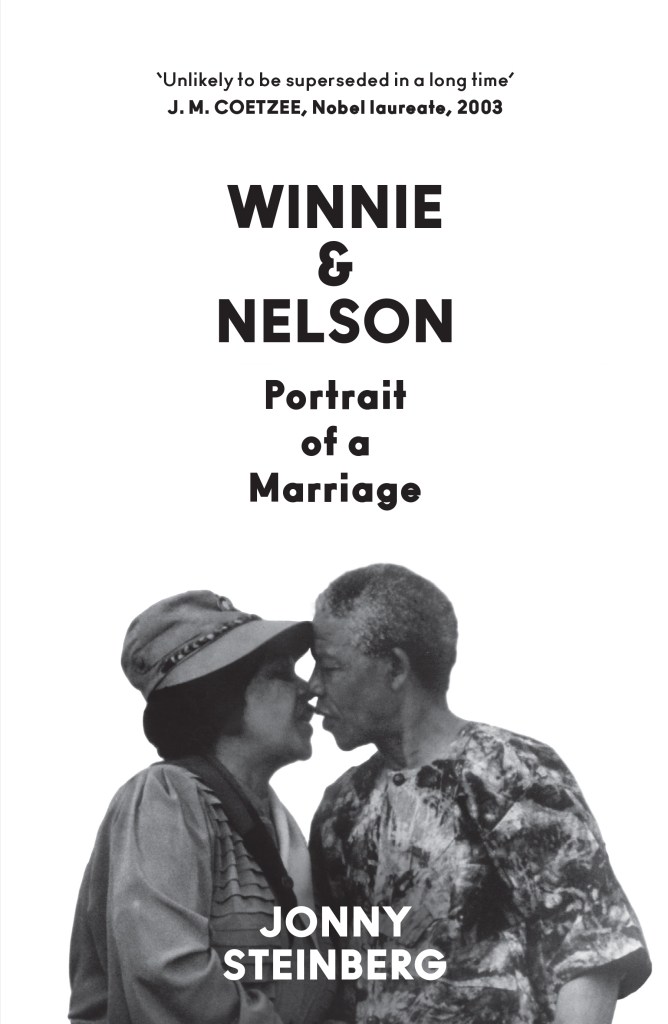
If you think you know everything about Winnie and Nelson Mandela, award-winning author Jonny Steinberg will probably change your mind with his insightful portrayal of a couple who held the world’s attention for the longest time. Having read the book, DIANE DE BEER listens to the author speak about his latest endeavour:
Pictures from the book courtesy of the publishers
When I first spotted the book Winnie and Nelson: Portrait of a Marriage (Jonathan Ball), it was the author Jonny Steinberg who caught my attention.
Not that the Mandelas aren’t worthy, simply that I didn’t think another book on the Mandelas could shed new light. But Steinberg changed that presumption.
From the first time I had to read a Steinberg book – as he was going to be a guest speaker at one of our newspaper’s book lunches – I was a fan.
Author Jonny Steinberg
The Number, which dealt with gangs, was the one that did it. I had very little interest in the subject, thought I knew enough, but having read Steinberg’s well-researched and analytically astute account, I wasn’t going to miss any of his books again.
And when I saw he was to be one of the speakers at the Franschhoek Literary Festival 2023 where I was invited to do an interview with the delightful Nataniël, I was sold on reading and listening to the author’s conversation with Hlonipha Mokoena, an associate professor and researcher at WiSER (Wits Institute for Social and Economic Research) where she specialises in African Intellectuals.
I picked the right one. Portrait of a Marriage should have been my clue because this is what this author does. He takes a topic which might not have crossed your radar in any sense of the word, and turns it on its head in a way that pulls you in and grabs your interest. It’s a gift and one that has turned him into one (if not the top) of our best non-fiction writers.
And one of the first obstacles he encountered was a feeling of shame because he found himself prying into the private world of these two icons – once again. Initially, he was going to write two books, one on each of these individuals, until someone pointed out that one would perhaps be more sensible and, ultimately, probably better.
This is where his own thoughts probably gathered momentum and insight. The question he wished to explore was Nelson’s sense of being and how much that was entwined with Winnie, especially while in prison – which was a punishing 27 years long.
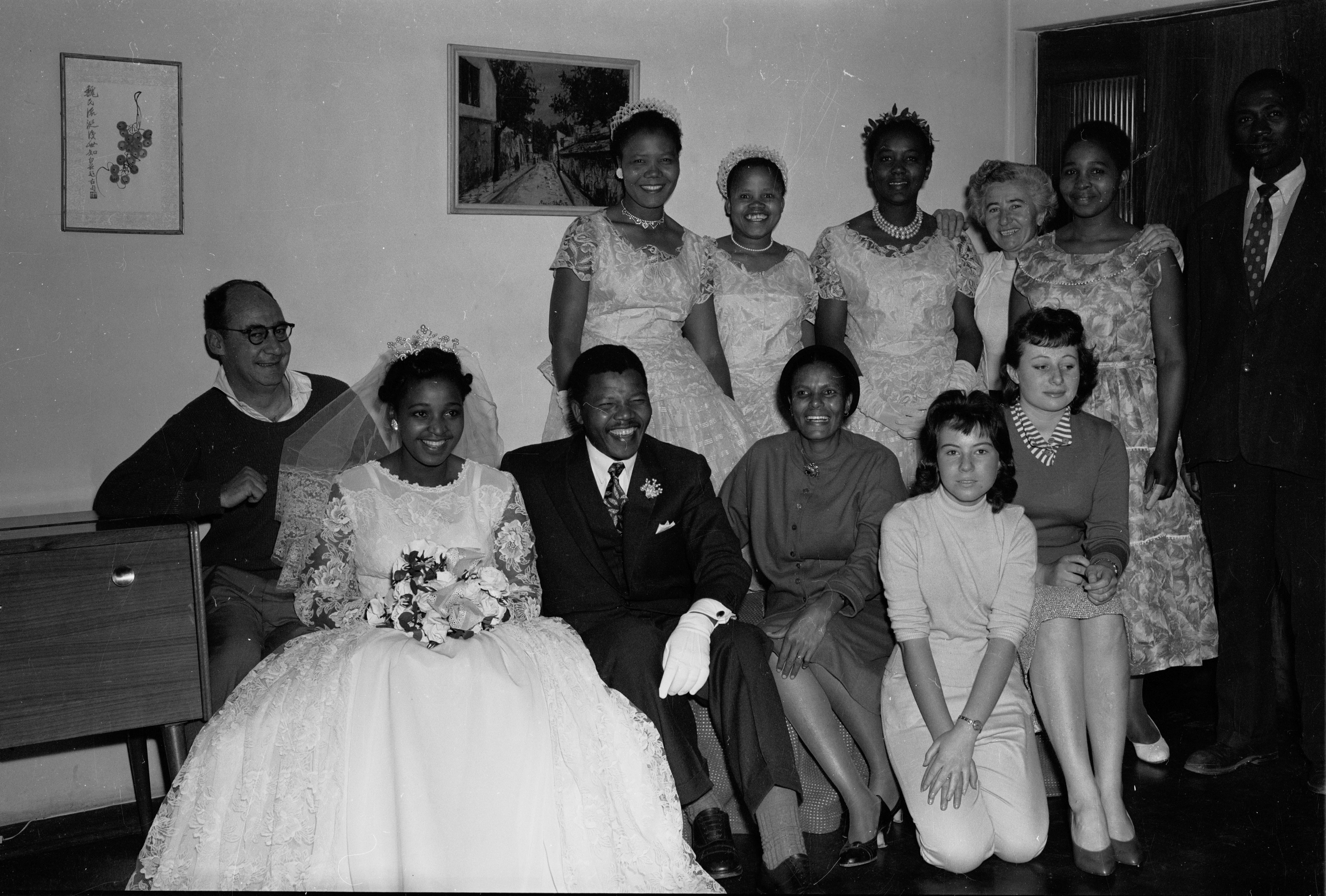
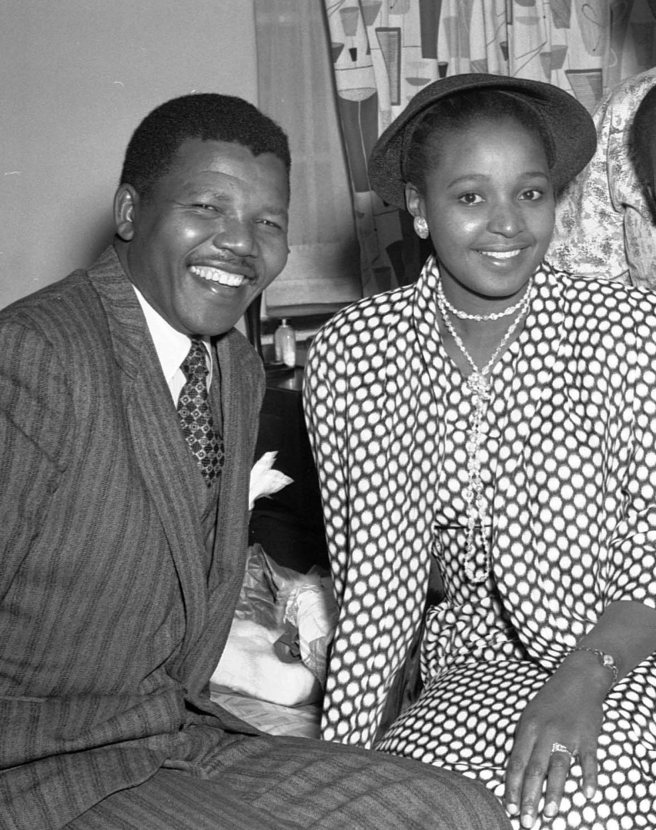
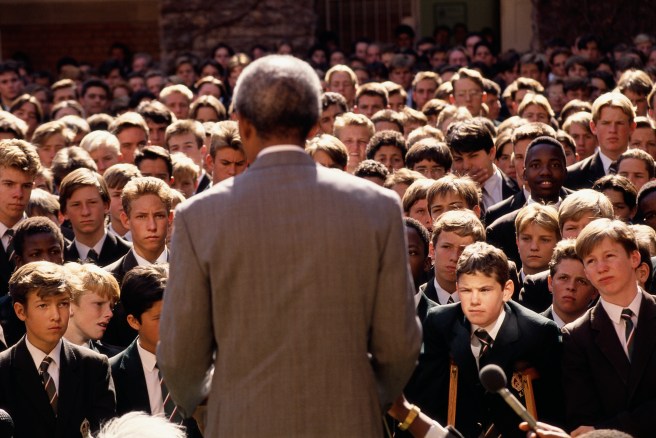
Nelson and Winnie, 1958, probably shortly before their wedding. Eli Weinberg, UWC-Robben Island Museum Mayibuye Archives.
What Steinberg realised was that when imprisoned, Nelson didn’t know Winnie that well. That’s when a fantasy of the woman he loved started emerging. She became the dominant figure in his head. When a great man is written about, his personal life is obscured but the opposite is true for a woman. And this is where the blessing and curse of the Mandela name came into play.
With Nelson’s incarceration, the impact on Winnie and her two daughters was intense on many different levels. For instance, Nelson understood himself as head of the family and he wanted to preserve his wife and their marriage.
But this became difficult in prison because of their compromised relationship. All their conversations were recorded and transcribed. And again, it is these transcriptions that gave the author entrée and heightened insight into the Mandela couple. Yet in some ways they also made him a reluctant participant.
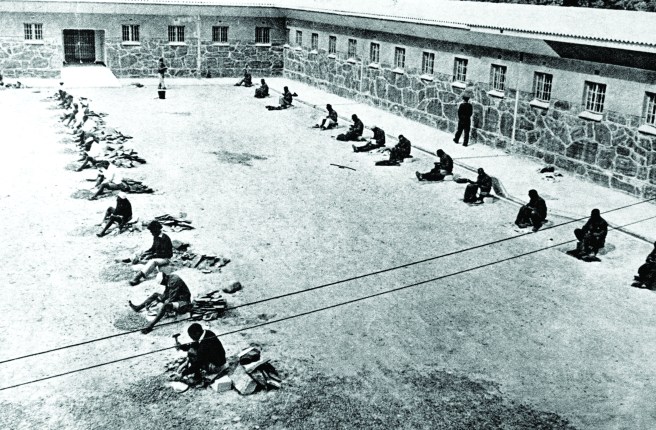
Prisoners breaking stones in the courtyard outside the leadership section on Robben Island. Nelson’s cell window is on the far right. Copyright of Cloete Breytenbach, courtesy of Leon Breytenbach.
Many issues come into play. Because they were being recorded, something they were aware of, these intimate conversations were compromised from the start. For Steinberg it became a compromising decision. Could he use these conversations without compromising the couple’s dignity? “It’s unusual to eavesdrop in this way,” he explained.
For example, the pettiness of an incarcerated Nelson was one of those situations for Steinberg, yet he knew if he wanted to write the book, he needed the information.
From very early on, Winnie used her sexuality as power, says the author. And Nelson in a similar vein was always very aware of how he looked in the suits he used to wear. Unusual at the time and with his presence, an additional bonus. “They understood that their very being was a commodity,” notes Steinberg.
One of the first photographs of Winnie Madikizela to be published. Bantu World/Arena Holdings.Winnie and daughter Zindzi leaving court in Bloemfontein, 1977. Winnie was charged with breaking the conditions of the order banning her to Brandfort. Bailey’s African History Archive/Africa Media Online.
Beauty complicated Winnie’s life. Right from the start, she was born into the struggle which determined her life. She understood how to pick winners and forget the losers. She also knew how to get under someone’s skin. Few people who met her could resist her and were left untouched.
In fact, it is the effect the Mandelas had individually and together that Steinberg explores and captures so well. Would life have been different if the couple had been less aware of their pulling power, their value as a commodity?
Winnie for example couldn’t be alone and always knew that she had to deliver on the expectations of others. She had to be what they wanted her to be. She even told tales about her childhood from very early on.
To protect herself, her reality often had to be concealed. Steinberg explains: she became the symbol of Black womanhood. She was able to become what people wanted and had a sense of her role in public life, believing that she was the centre piece.
For Nelson it was Fort Hare where the foundation of leadership was born.
When they came together, Winnie understood what it meant to be seen. The mission schools invested in the idea that Black men should marry Black women and the Mandelas represented that myth of the power couple. “Their marriage becomes a symbol for the struggle for freedom.”
Nelson and Winnie Mandela at the rally held to celebrate Nelson’s release at FNB Stadium near their Soweto home on February 13, 1990. nelson spent the previous night, his first bnack in Johannesburg, alone in a suburban house near Lanseria Airport. Photo by Udo Weitz/AP/Shutterstock (7364405a)
Nelson understood the power of his and Winnie’s story with the focus on the romance between them. Their power did represent a nation and yet, they ended up being political enemies. Is there anyone in South Africa who lived through their story and wasn’t shattered by the dissolution of their marriage?
The irony of their relationship was that for Nelson his greatest fear for his country was civil war, while his wife was the embodiment of everything he feared.
He becomes a powerful person, but in prison – and out of touch with what is happening. He is locked up by and with people who hate him and when he escapes, he does so in his imagination, The essence of Winnie’s life is her internal world of fire.
I was completely mesmerised by Steinberg’s deeply felt analytical writing about South Africa’s most powerful couple. Even before the advent of social media, with Nelson Mandela imprisoned and his wife under constant surveillance, they captured and kept the attention of the world.
Steinberg tells that story magnificently and with fresh insight and focus.
After much acclaim, following it’s London debut with Jack Holden, and then a Joburg run starring local actor Daniel Geddes, Cruise, heads for Cape Town for a short season (April 12 to 30) at the Homecoming Centre (formerly The Fugard Theatre). DIANE DE BEER chatted to the British playwright/actor about the play and the handing over of this his first stage-produced play, which he had both written and starred in back home:
It was as if all the stars aligned for actor/playwright Jack Holden with the creative processes surrounding his first play Cruise, which is having its second local run in Cape Town this month.
Jack Holden in Cruise
“I had the idea of the show for a while, for many years actually. It was based on a phone call I heard while I was volunteering for Switchboard, an LGB+ helpline here in the UK. I took that call in 2013.
“The story struck me as so moving and powerful and life-affirming that I knew I needed to tell it someday, somehow, and it was only in the pandemic when I was locked down at home with nothing else to do, I finally got on and did it. So in that sense it saved me because it really gave me a focus during the first lockdown here,” he explained.
But the writing only started in 2020. He thinks that it might have had something to do with the context of sitting with another epidemic, Covid, that made him reflect upon the sort of fear and terror that the gay community must have gone through in the UK especially, with the 1980’s HIV and AIDS. (It was more widespread in South Africa, affecting more communities).
A lot of the research about Soho where the play is set was quite easy to do online. But, he explains, “the stuff that gave the show the texture that I think makes it sing, are the interviews I did with some older gay friends that I’m lucky to have. I asked them about their time in Soho in the 1980s. Neither of them claimed to be seen kids, but they had memories which were incredibly useful, and gave so much texture to the piece. “
Initially he thought it might be a short film, but then he thought, no, be ambitious. “I also predicted that when theatres reopen after the pandemic, they are probably not going to put on massive shows, so if I can make it a solo show, that would be great. I’d performed a few monologues of other people’s writing previously in my career, so I knew I could do it and I wanted to do a show with John Patrick Elliott doing the music again.”
Daniel Geddes in Cruise.
They had worked together before and again with great foresight, Jack’s thinking was about producing a show that would land with a huge bang.
“I have a very strange relationship with the pandemic. At the start of the pandemic, I thought my career was over and at the end of it, my career was better than it had ever been, so it was a weird time.”
Theirs was the first play to open in the West End and the first new play as well. “I think people were so hungry for the live experience and Cruise is loud and brash and all of those things. I think because it’s such an ultra-high-octane live experience, people were so receptive to it, so emotional behind their medical masks, that it landed well,” which was also the intent.
From the start, the writing of it, once he got in a room with John, was actually very quick, because it was always going to be only one actor (Jack) with the DJ (John), which meant he would be playing all the parts, which also provided certain limitations. They knew it would be roughly 90 minutes straight through and he wanted it to be an odyssey that bounces around all the bars and clubs and pubs of Soho. “It’s quite a classic hero’s journey that he had to go on,” he says.
Primarily he was trying to create something that would entertain people and he doesn’t think entertainment has to be light all the time. In fact, he argues that entertainment is better if there’s a bit of darkness, a bit of sadness mixed in there, a bit of humanity that lifts the lightness and makes it even more delicious.
“I was hoping to entertain people and as I was taking on the subject of HIV and AIDS in the 1980’s, I obviously wanted the piece to feel authentic. And that was the scariest thing which only surfaced when I got to performances. I suddenly thought this could be high risk, I could have judged this wrong.”
But he had gone about the whole process in a very thoughtful way. His research was thorough and he talked to the right people with good people surrounding him who told him if something wasn’t ringing true. “And indeed, in rehearsals we had several changes and bits to cut.”
He also wanted to dive into the music of the era which hugely adds to the entertainment element of the piece. “I love ’80s music. It can be really, really good and it can also be really, really bad and I wanted to play with that. There’s been a real moment of ‘80s nostalgia, so I thought it would do really well.
“I wanted the music to be in the DNA of the play and that‘s why I worked so closely with John. I brought a few pages of text to our first workshop and he brought samples of ‘80s music. And we started mixing it together. That means the show has musicality in its veins. I love traditional shows and when it works it absolutely blows me away, but there’s no shame in putting on a show and entertaining people.
“We have so many tools at our disposal in theatre; sound, light, music, smoke, movement. And especially with a solo show, you don’t have to use all of those, but I really wanted to. I never dared to hope that the show would get as big as it did.”
Because he is dealing with something in the past, yet in a strange way linked to our present circumstances, the content has huge impact. It’s obviously been written with performance and watchability in mind. Jack has a great way with words with the text written as a kind of rhythmic monologue interspersed with music, which also passes on the message. It holds your attention throughout.
And then there’s Daniel and the local production. Jack was surprised that South Africa was the first outside of the UK to stage Cruise, “but I was also cheered by it and love it. Obviously South Africa’s history with HIV and AIDS is well known, so on that front it struck me as completely logical.
“I loved watching the South African production. It was surreal watching someone else performing Jack (me) performing the show. It was quite a mind-bending experience and really informative to see how the show can be interpreted in different ways.
“And yes, humbling. It’s not just me who can do this, other actors can do this, so I’m really thrilled that it’s getting another life. I’m so pleased about the Cape Town run, because they really deserve another go at it,” he concludes.
I have been a Lientjie Wessels fan forever – of her food, her art, her writing and more. Having tried for quite some time to go to one of her Cullinan long tables, I was excited when finally I could go with a group of foodie friends for one of her delightfully quirky meals.
Lientjie Wessels. Portrait: Hennie Fisher
That has always been part of her charm for me. She makes the kind of food with ingredients I really love. A long time ago she told me that for her mother, who passed on her love of food to her daughter, it was all about taste. I think she also taught her about unusual flavours and combinations.
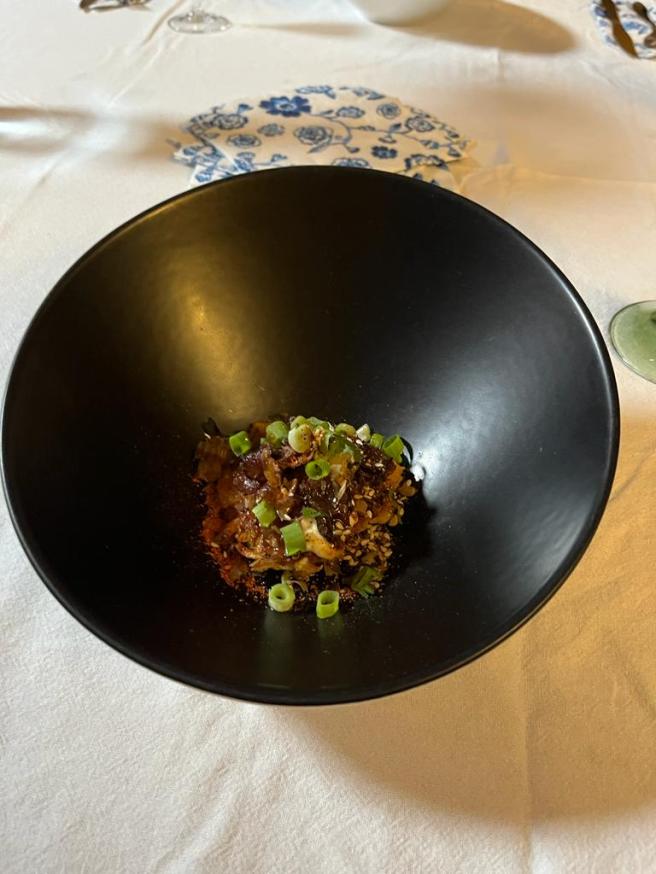
What Hennie loved about the dish was once again her creative playfulness. “It’s the clever way she emulated bonito with the fine powder biltong, almost turning the biltong into a kind of ‘land’ bonito,” he explains. “But also because she so cleverly combines meat and fish (even if both are dried), because it is so often a combination used in Asian cuisine. And how brilliant to make that connection with biltong and bonito!”
Just listing the ingredients should inform anyone about her innovative choices. But she’s not just throwing things together. Her cooking is instinctive yet thoughtful and she knows her customers. In her kitchen, she is always at play. And for diners, this is a fun adventure if you’re up for it.
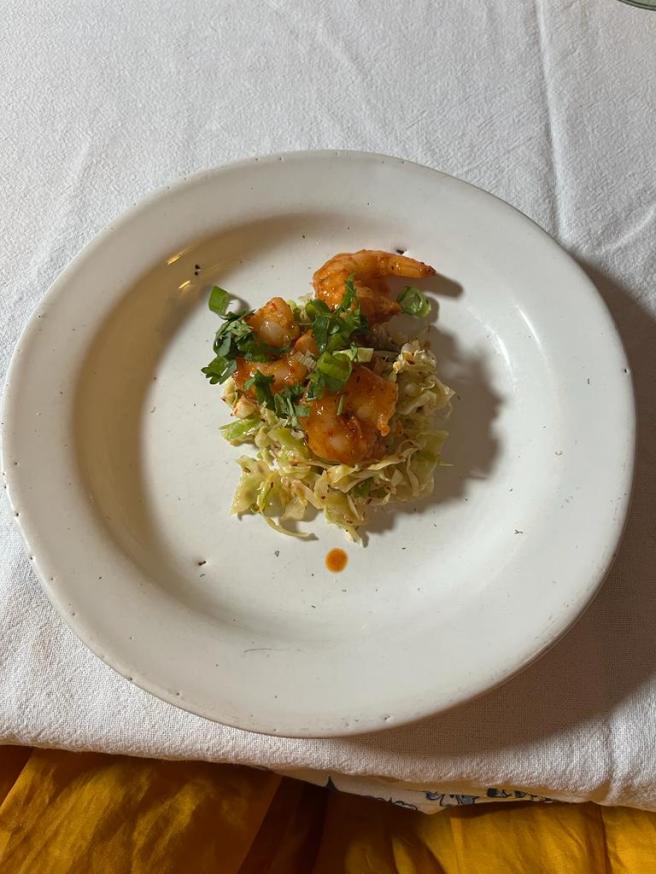
Miso and peri-peri prawns.
The next one stuck to the Asian theme and clever combo with peri-peri prawns and miso with sesame coleslaw. It was just a dream and perfectly cooked. She seamlessly ticks all the boxes.
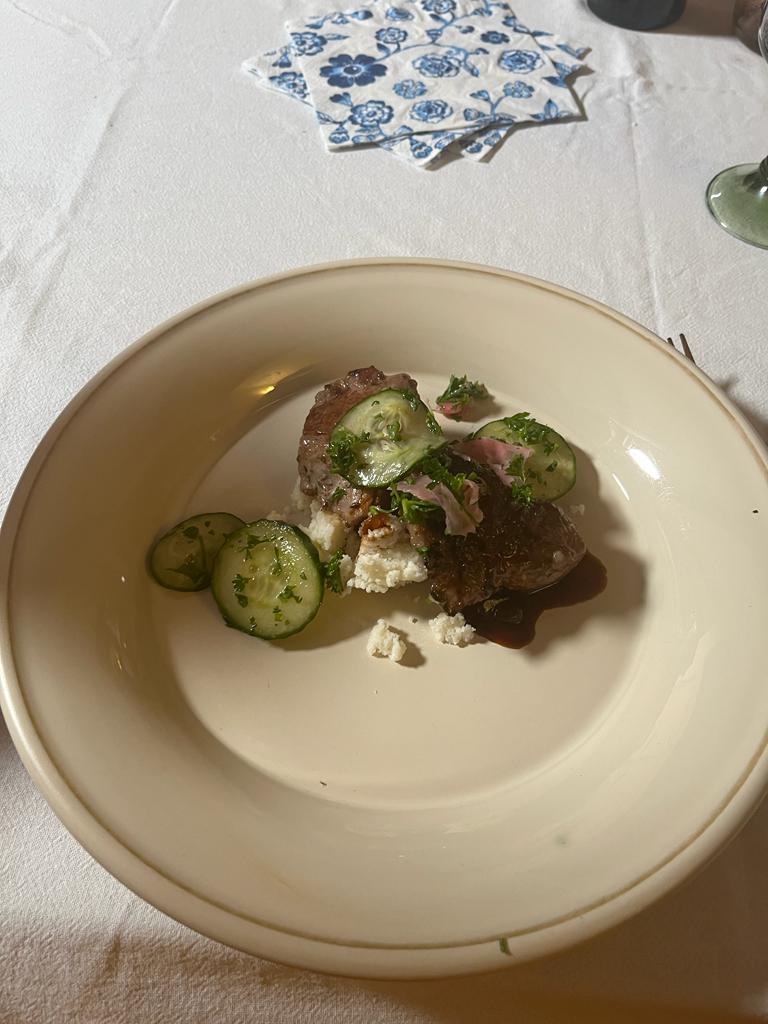
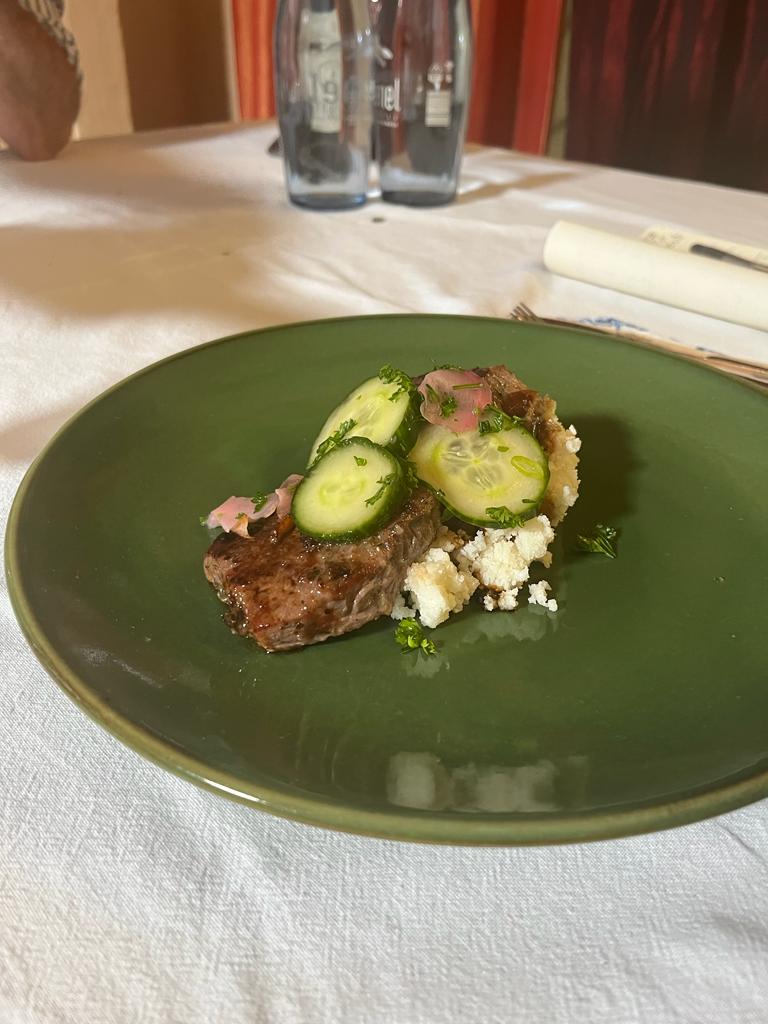
Koji beef rump, buttermilk krummelpap and ginger steakhouse sauce.Individual servings on different plates.
A Lientjie meal is possibly the only time I won’t shy away from krummelpap (maize, polenta), not one of my favourite foods but I knew if anyone could, she would convert me. She won me over with her specific buttermilk version served with Koji beef rump, a ginger steakhouse sauce (how can you not fall in love with that choice!) and pickled cucumber. It’s in the detail and the combinations, everything contributes to that single spoonful taste explosion.
And to perfectly conclude in Japanese style, the dessert, a cotton cheesecake with cinnamon syrup and tennis biscuit crumbs, sealed the deal, which I proclaimed perfection. Even as a cheesecake fanatic and two visits to Japan, I had never encountered a Japanese cheesecake before.
And blessings to the internet, which explained that this version is also known as a soufflé-style cheesecake, usually lighter in texture and less sweet than the more traditional version. But then also to serve it with Tennis biscuit crumbs! How could she not?
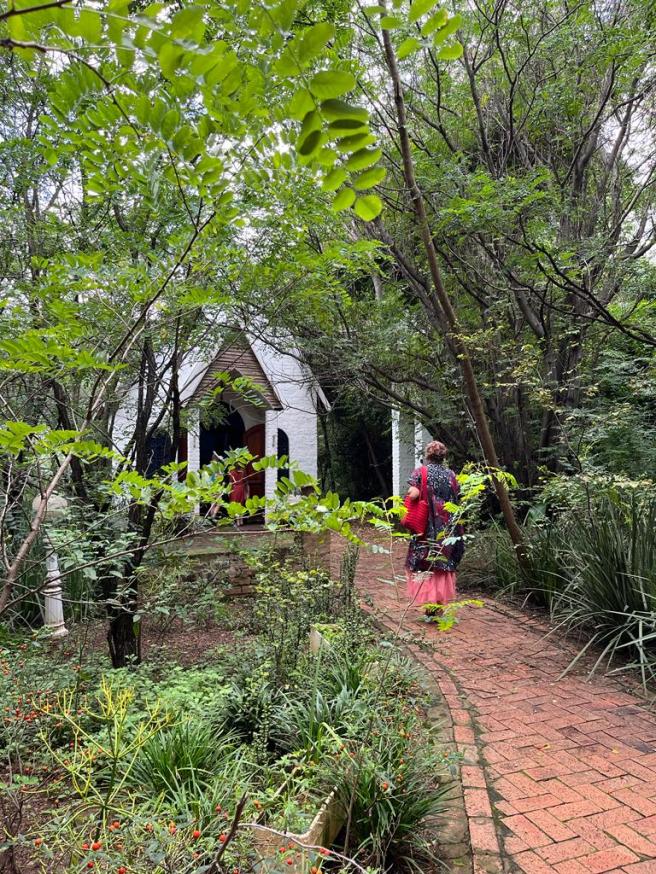
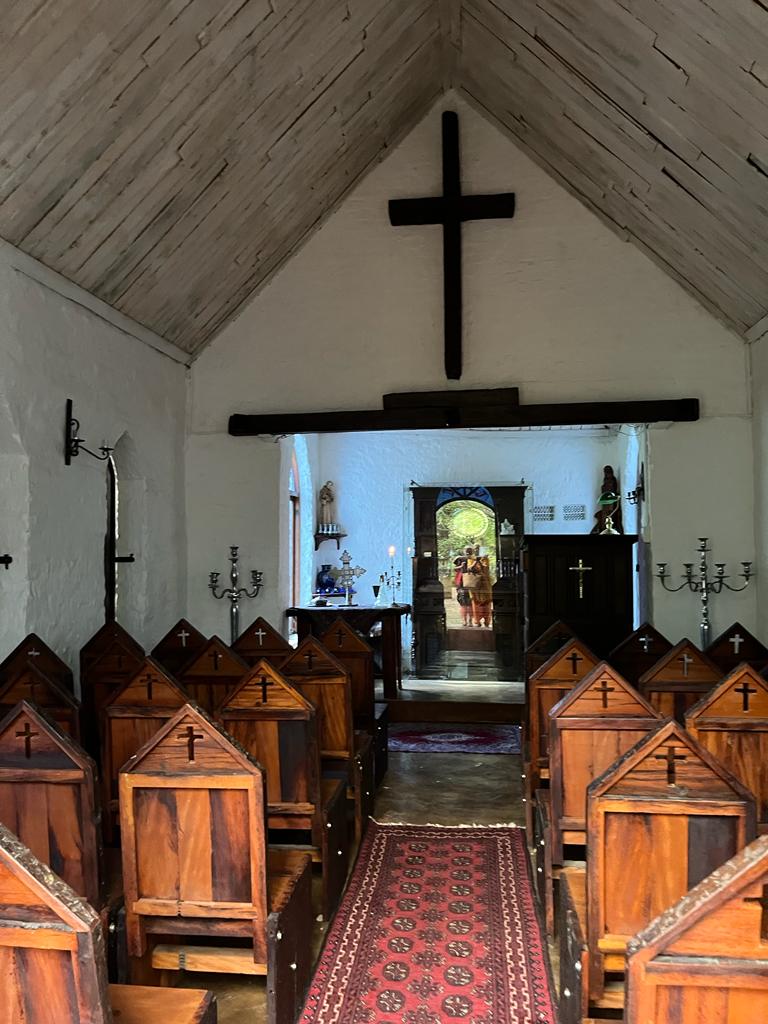
It’s not only the food that’s spectacular – the fact that Lientjie no longer has a restaurant in Cullinan hasn’t deterred her one bit. She simply commands the kitchens of friends in venues that contribute to the ambience of the event. And this one certainly did as I’m sure each one will. The walk up to the house was like stepping into a fairy tale.
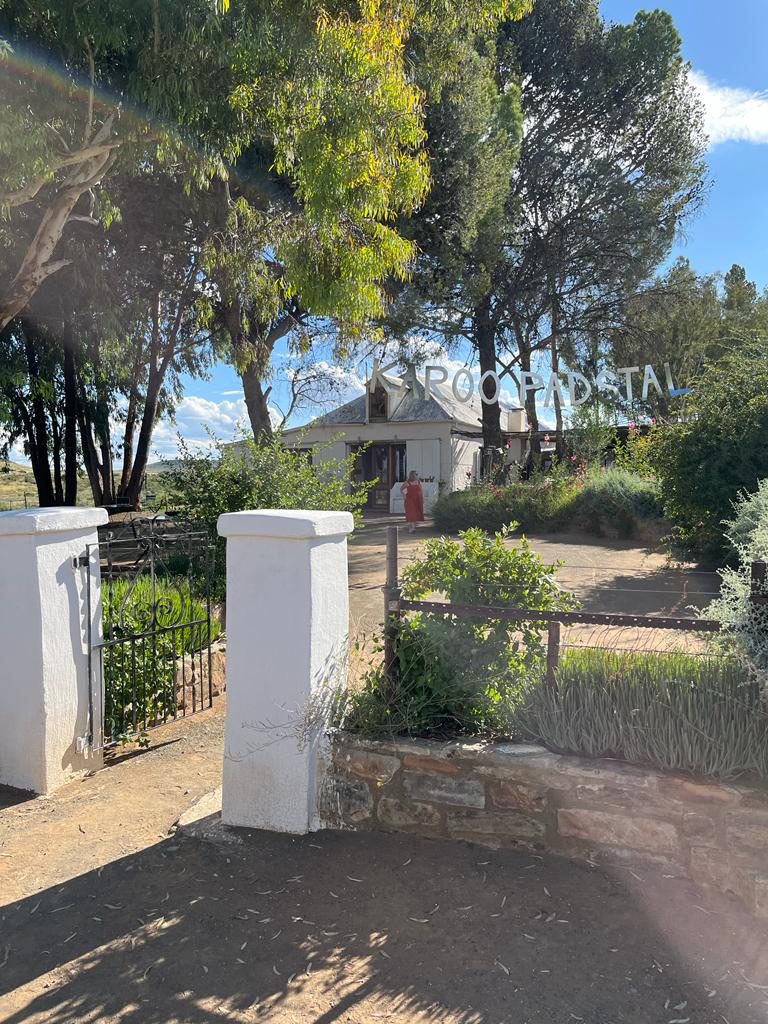
Lientjie has recently bought a house in Richmond (Cape), a town that is fast becoming yet another food destination but with added interests like Die Karoo Padstal, Richmond Rooms and Café, MAP gallery with one of the best local art collections you will find anywhere, a bookshop to keep you busy for days and much more. It’s the perfect halfway stop.
And in future, when she’s in town, she will also be doing lunch in Richmond, like on April 9 when she is presenting a fantastic feast. If you’re passing through or sleeping over, book a table. She’s also doing a dinner in Cullinan at the Vrye Weekblad Boeke Fees, which promises to be spectacular.
Check her out on Facebook and Instagram for information. And whatsapp her on 082 531 6141 for bookings.
Die Karoo Padstal
But while in Richmond, that’s also the location of my other much loved chef, Klaradyn Grobler of Richmond Café and Rooms and Die Karoo Padstal fame, who is also back in business. Yet she is still arguably the hardest booking to pin down.
I was thrilled when on our last trip to Cape Town, to show the London family the best of the best, we could manage to secure a booking for dinner while sleeping over at another guesthouse, one with an attached gallery – it is that kind of town, one with many hidden gems.
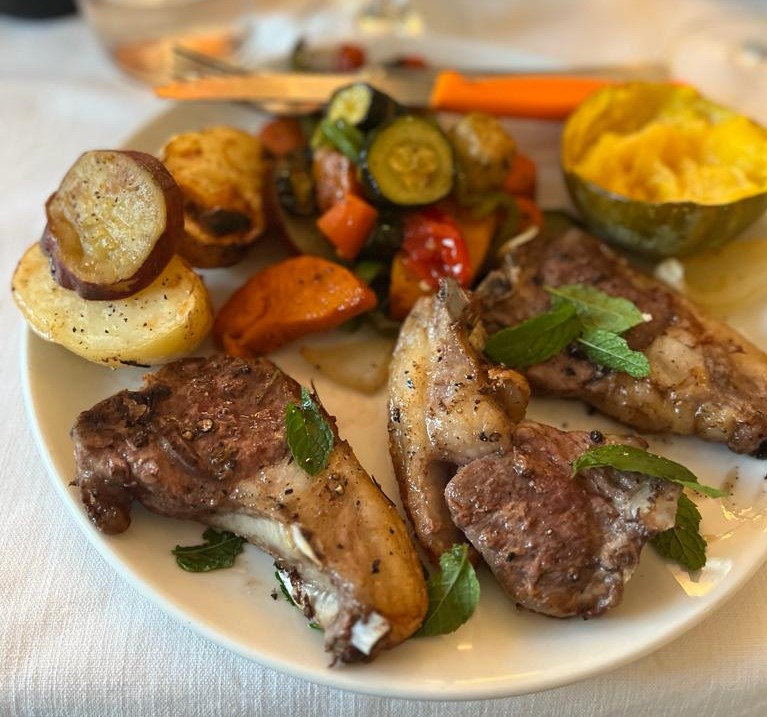
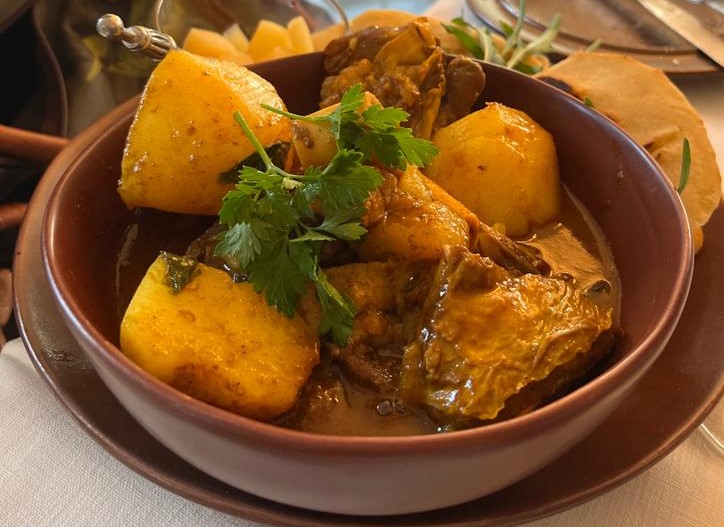
We had the best of all worlds to show off this spectacular landscape with a dinner celebrating Karoo lamb included. On our journey that morning we were sent the menu on our phones with three of us opting for lamb chops with roasted vegetables, while I couldn’t resist the lamb curry and one of the diners who couldn’t eat lamb, had a bacon pizza.
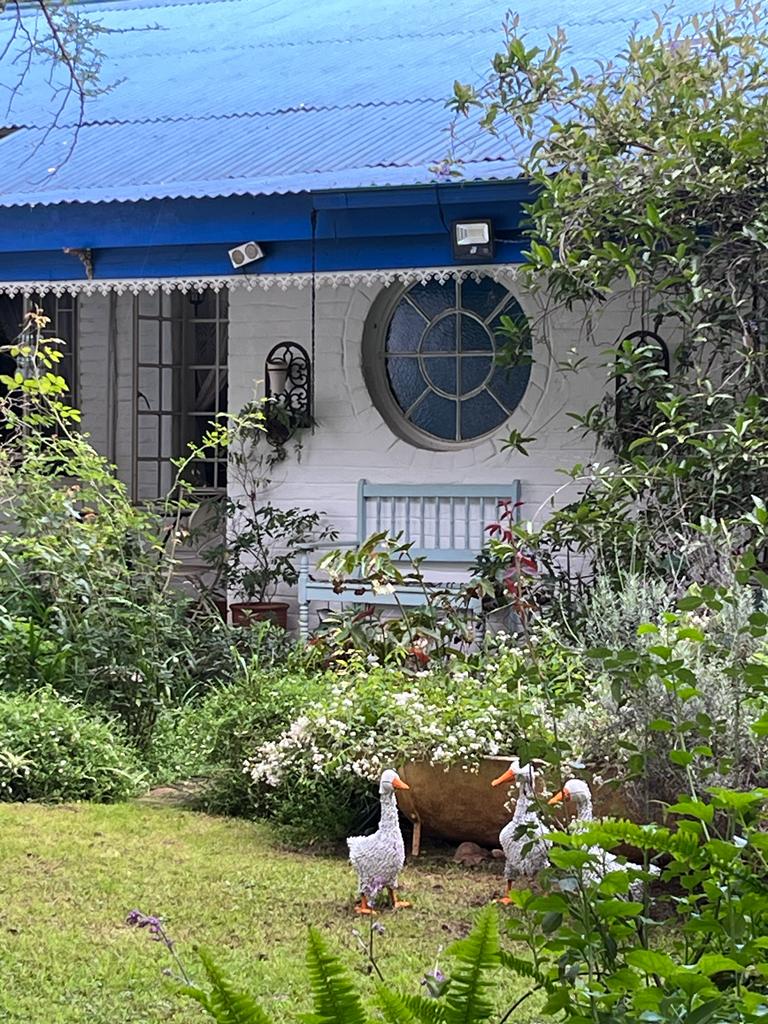
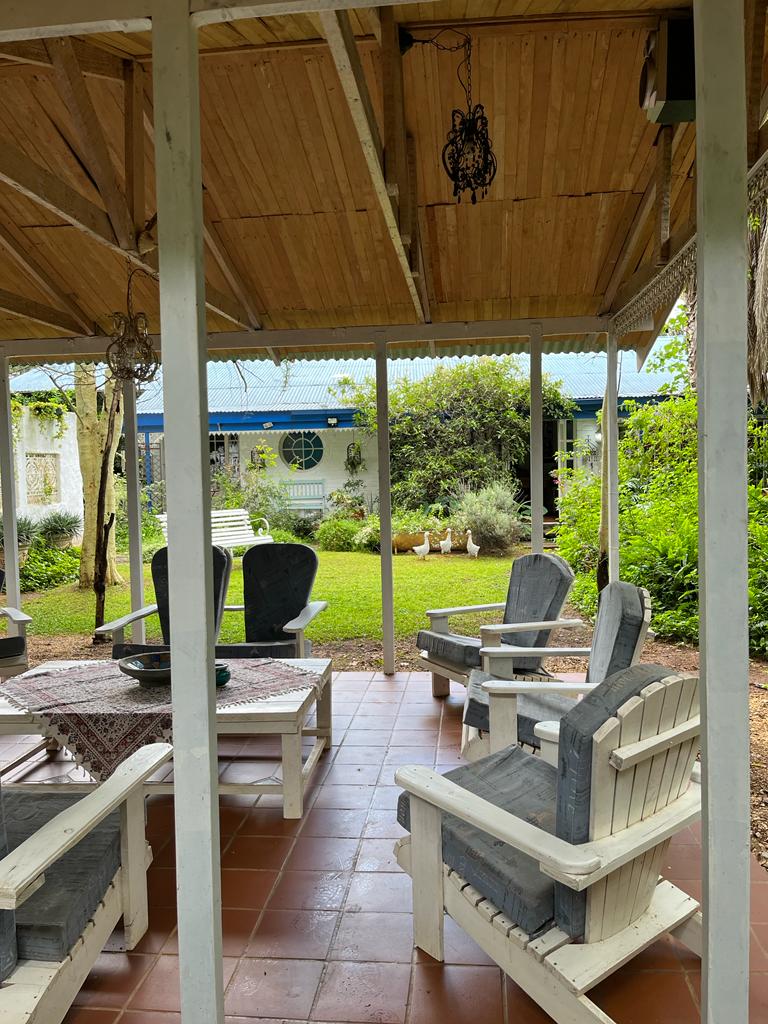
As with Lientjie, the venue is just as important as the food. In fact, I recognised Klaradyn’s style (having seen it in the Free State) when I first had a meal at her Richmond Café and Rooms. It’s unmistakable, buzzing with creativity and probably complemented by her husband Nicol’s architectural skills.
And with both these chefs, their style enhances the full experience. On the night, we had two charming women in the kitchen, and as they had our choice of meals ahead of time, everything ran very smoothly.
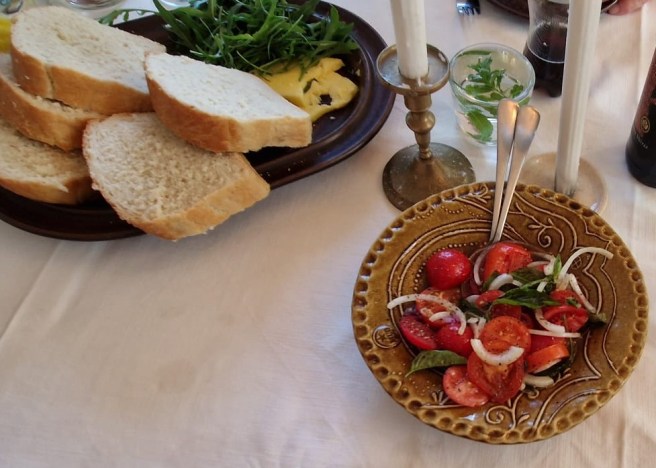
Fresh home-baked bread and home-grown tomatoes.
We sat down at 6 pm because the kitchen closed at 7 (one listens to their commands!) and were presented with what was the perfect starter, home-baked bread (deliciously thick slices) with farm butter and fresh tomatoes from the garden. We had to battle not to indulge to the point of messing with our mains.
And then the main attraction. I absolutely lost my heart to Simon’s lamb curry with flatbread even though the lamb chops (I had a taste) were fantastic. For me the curry had just the right flavours to celebrate the lamb and after a long day’s travel, it was the best comfort food.
Lamb chops and roasted vegetablesSimon’s lamb curry with flatbread
The chops were served with roasted vegetables in just the right mix. It is a skill to present a simple meal to perfection. There’s nowhere to hide so everything has to work. And it does!
On the counter was the night’s dessert, a bumper milktart, which had us licking our lips. At R250 a meal, it’s a steal.
Both these chefs, Lientjie and Klaradyn, popped in to discuss their food and acknowledge that they were dealing with diners who are devotees of their special way with food. We appreciated that.
It’s not difficult to understand these two spectacular women, the way they cook and how in different ways they celebrate their strengths. For me part of the charm is their similar ethos, presenting diners with food to die for and yet, their menus are so different. It’s about how they go about it and what they come up with – and in the end, as they say, the proof is in the pudding!
For bookings and info: Richmond Café and Rooms 079 755 8285.
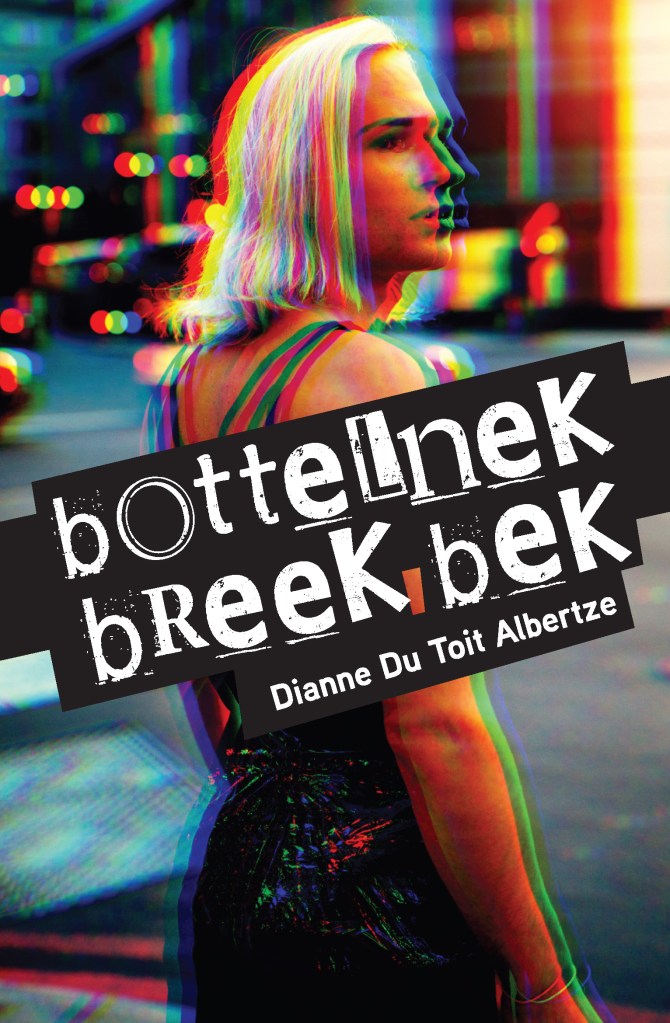
From the title of the book bottelnel breek bek, the warning signs are there — this is not going to be an easy read.
But because I have been following Dianne du Toit Albertze’s career for a long time, I knew this would be worth the battle.
In a digital interview, she tells me that the story found her rather than her discovering what she wanted to write about. “I needed to write about people who were braver than me because it was Covid and I needed something to save me,” she says.
That’s where she found Dora and Whashiela, who came with their own heaven-sent gifts. And their strong appearance was probably driven by the fact that “as a trans person, I don’t find many heroines in the books I read. I also don’t see them at festivals or on television. Especially not in my mother tongue,” she notes.
In her own way, she wanted to show Afrikaanse moffies that they shouldn’t let go of their dreams — “Moenie jou tong oppie highway verkoop nie” is how she says it bluntly and beautifully. “Nancy is waiting, we need to make and take our own space.”
Feeling and querying whether this is a very personal tale, she acknowledges that first novels are probably always close to the bone. “I wanted to push my high heels through the literary door with a story that feels close to me. I wanted to go as close to the edge as I could and much method writing followed,” she says. “I learnt about everything I wrote about and didn’t want to be a faker.
Dianne Du Toit Albertze Picture: Peter van Noord.
“Perhaps I listen to too much Tupac or hide too easily behind my pen … because the book also helped me recover from a poisonous addiction. Every day without drugs is a BIG day. And hopefully this full-frontal writing of mine will mean something to someone out there.”
We all know about method acting and what that has done to those taking it too far, and if you read the book without the hairs on your arms standing on edge you’re possibly not paying attention.
This is an artist who takes her art seriously and even if it meant she climbed a steep mountain with the language, it is what adds authenticity and soul to the characters and story.
“I wouldn’t have been true to my characters if they spoke the language of dubbed Turkish soapies,” explains Dianne about her choices. And acknowledges that she wanted to honour the colourful language of the trans community in Observatory and Matjieskloof. “A variant like Gayle (created by the queer coloured community in Cape Town) even has its own accents in specific regions.”
And then she’s not even referring to Sabela (a language flounced together from numerous local languages in local prisons for gangs to communicate) or those creative Cape expressions we’re all familiar with. This is completely different yet with distinct similarities – an anomaly in itself.
Dianne du Toit Albertze striking a pose.
“I’ve always been fascinated by linguistics – to create different codes and to learn different expressions and idioms.”
On a language level, she embroiders, the tongues of the different characters metaphorically reflect their life paths – also pushed out and teetering on the periphery. “Those of us who have for so long been hiding in the shadows should move into the light and speak loudly.” Another incentive for telling her story the way she does – letting it all hang out … bravely.
Amen, say I, having read the book and also revelling in this particular interview/conversation, which was a written rather than a spoken one. “Steve Biko says I write what I like and perhaps I agree with him,” notes Dianne. “I write about shit that matters to me and what I believe will interest a broader audience.”
She also hopes that a trans child might read the book and realise that they too matter, perhaps influenced by her own struggles and lack of support.
For the writer personally, she has many dreams and desires: a musical, Medea in Namakwaland, staged in-between the koppies; and to write a few movie scripts. These are on the cards.
For her, writing plays is like breathing in and out. She’s been doing that from a very young age right through her drama studies. “Poetry and prose come from there, but to write for stage is my big love,” she says.
As for her activist stance, she took her queue from the Sestigers (a moniker for a group of dissident Afrikaans writers, including Breyten Breytenbach, André Brink, Ingrid Jonker, Elsa Joubert, Jan Rabie and Etienne le Roux) who believed that words carry weight and that we need the arts and artists to be our conscience. This would mean, to her mind, stories that free us from what is becoming a hopeless land with steadily growing layers and levels of suffering.
In the meantime she is working with actor/director Lee-Ann van Rooy on a season of her text Kaap, which was performed at the 2020 NATi Jong Sterre Suidoosterfees . And with her Namakwaland trans sisters, she is busy creating an NGO House of Influence with which they hope to establish safe houses as well as perform community theatre.
She’s a busy woman but for those of us lucky enough to witness her creativity, moving on the edges as she does, she draws a curtain on a hidden yet important world.
This is what makes our universe an interesting one. People are allowed if not encouraged to be themselves and for those who are open to the diversity and differences, it establishes a never-ending stage of wonder, wisdom and, of course, a wackiness without which life would be so much poorer and less colourful.
And as Dianne is so determined to bring to our attention, real people are living here.
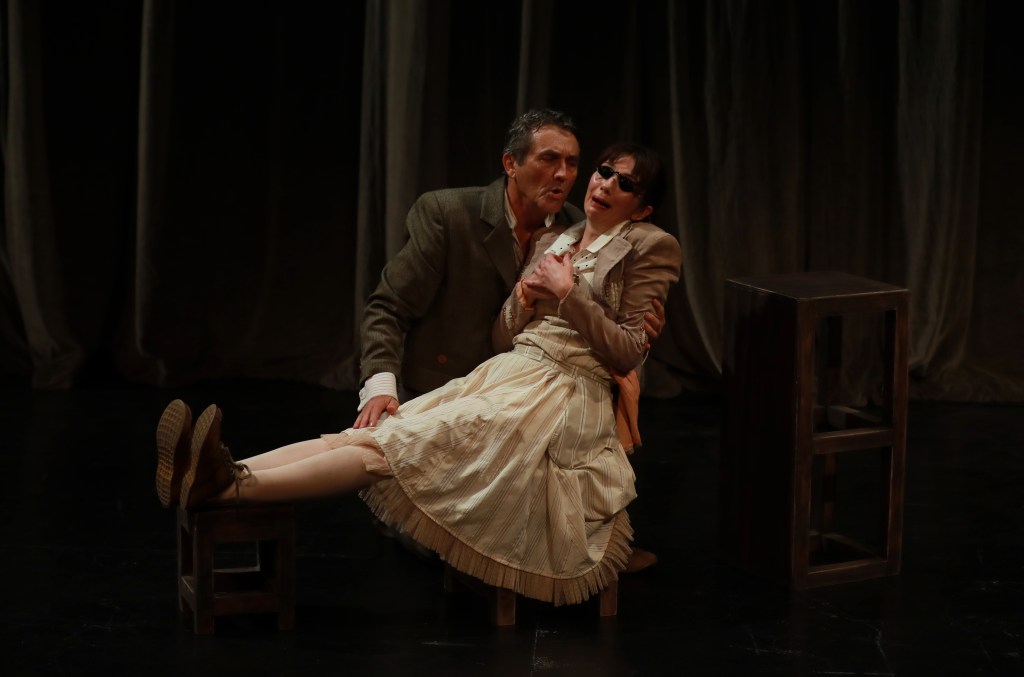
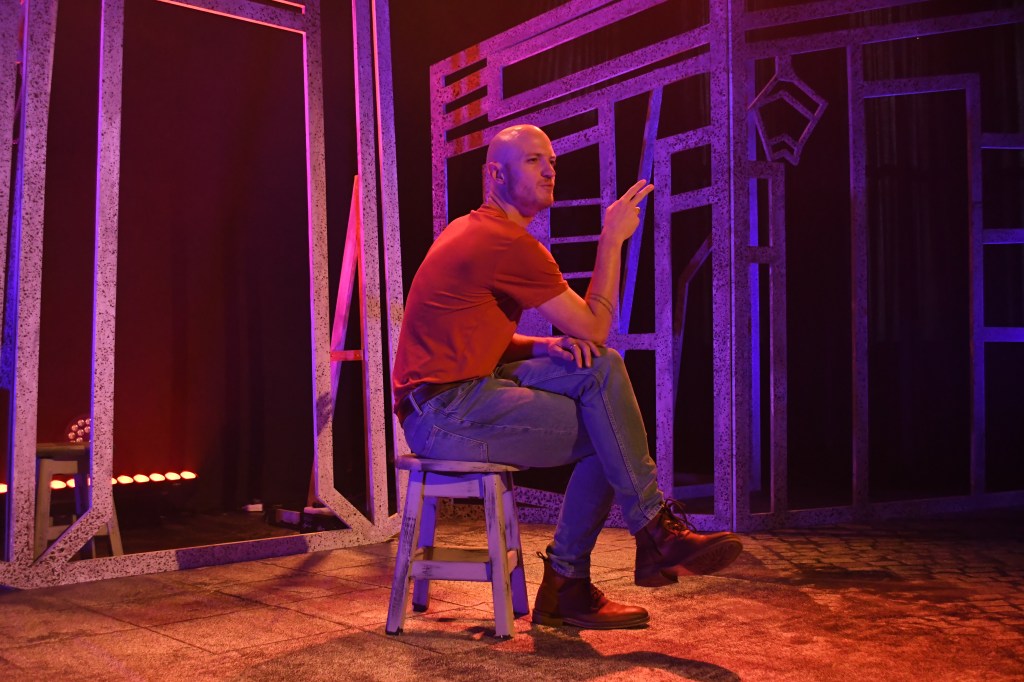
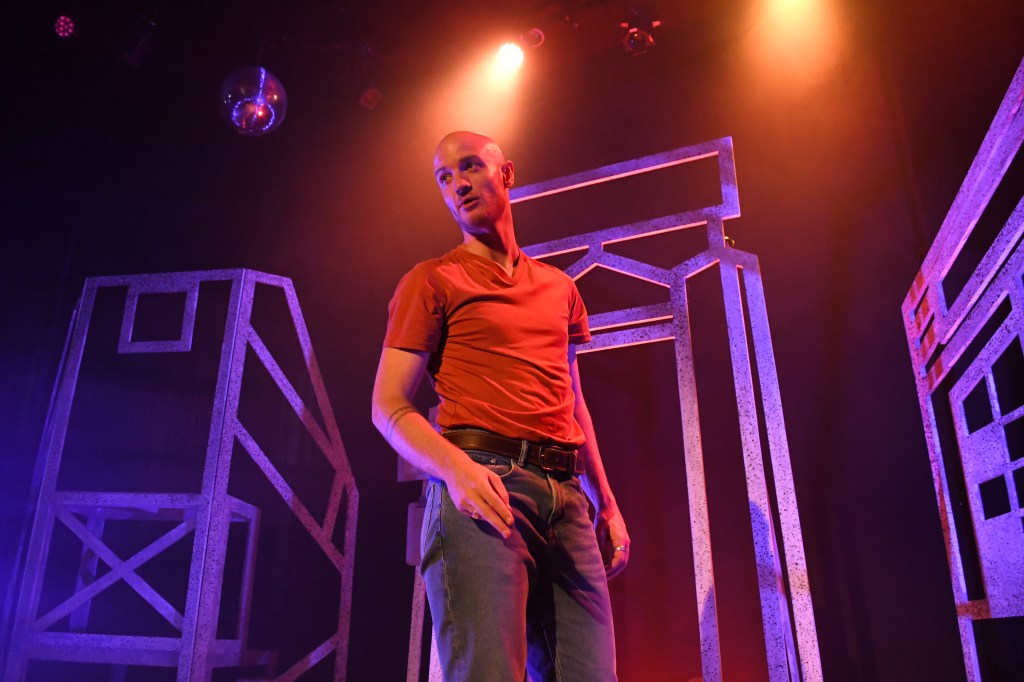
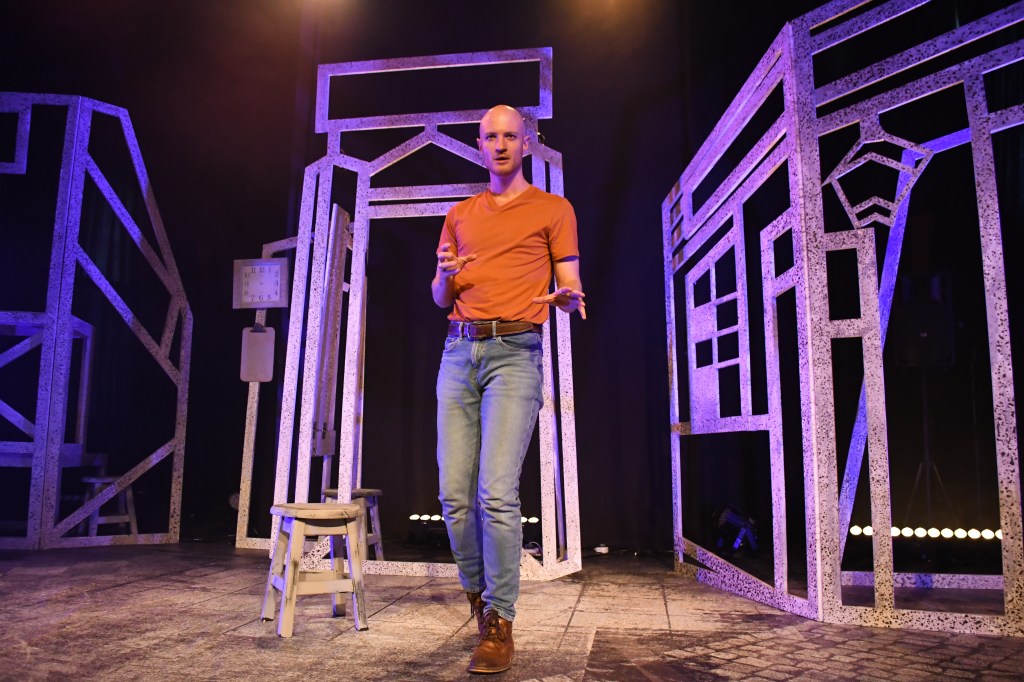
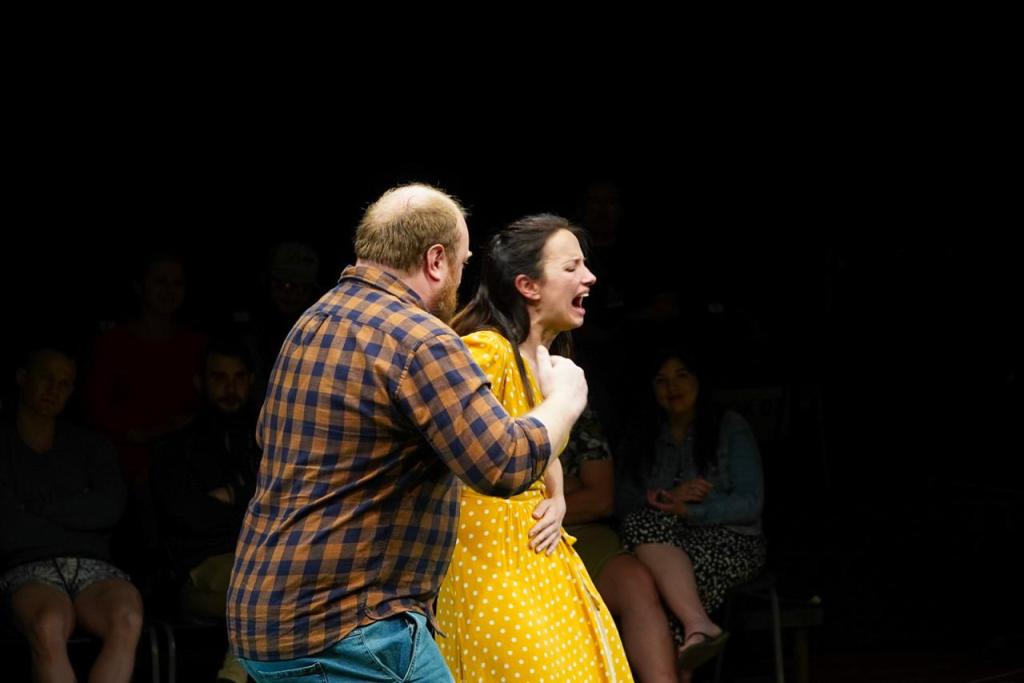
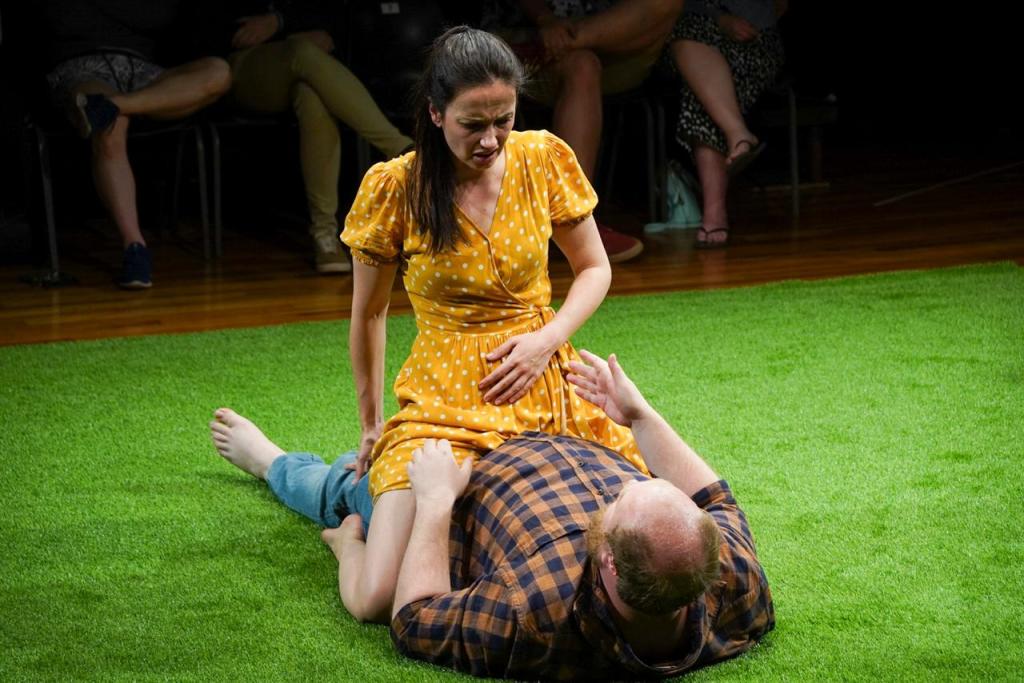
Struggles in Tien Duisen Ton .Albert Pretorius and Cintaine Schutte battling the baby odds.Arguing the nuances in a relationship.Albert Pretorius and Cintaine Schutte in Tien Duisend Ton.
PICTURES: Nardus Engelbrecht
DIANE DE BEER reviews
TIEN DUISEND TON
Translated and adapted into Afrikaans from Duncan MacMillan’s Lungs by director Nico Scheepers
CAST: Cintaine Schutte and Albert Pretorius
VENUE: Mannie Manim at the Market
DATES: Until February 5 (Tuesday – Saturday at 7pm and Sunday at 3pm)
It’s almost dizzying to keep up with the minds and meanderings of a young couple who start their conversation about having a child while shopping in Makro.
“Did you have to do it here?” asks the woman, who is obviously flustered by what she considers to be a full catastrophe, which has just been dropped into her world by her partner.
He on the other hand, calm and mostly collected, or probably simply laid-back, was making conversation.
But at breakneck speed they’re off, because having a baby when you’re dealing with two people who are also thinking about the world and their impact in and on it, clearly is no easy route to navigate.
And that’s precisely where the title slips into the equation. But between these two, it’s all about their conversation, the way they view the world and the way they present it to one another. He has an upfront approach, no frills, simply stated, almost matter of fact, whether its about his new corporate job, which boots him into adult life for the first time, or whether he should go for a run.
For her, it’s jump right in, talk before think and loudly put out every crazy thought that might pop into her head. Usually it’s those ideas that most people have, but never say for others to hear, while she just lets it all out and only when seeing the reaction, tries to smooth things over.
For her, it’s fine letting him know that she hates his parents. Doesn’t he? But when he talks about hers, she’s completely taken aback.
It’s a snapshot of the life of two human beings with similar hopes and dreams, yet no matter what the intent, their way of getting there is vastly different.
We all know love should be enough, but relationships are messy animals that have to be trained and exercised and even then, it’s a miracle if things work out.
What the playwright has done in the writing is set the tone for the piece as he jumps smartly with timelines while unfolding these lives. With director Scheepers perfectly picking up the pace, which is what really determines the ebb and flow of the piece, it’s an exhilarating experience for both players and audience.
Schutte is mesmerising in a magnetic performance that never lags and is constantly overwhelming in its intensity and innovative execution. She laughs, smiles, screams and cries in the matter of moments, because her world is driven by fiery emotions. Every arch of her eyes, sudden movement, a silence that is brought on unexpectedly, is carefully thought through and choreographed.
She has made the part her own and draws you into a life that is familiar but rarely plays out so publicly. Hers is the role of a lifetime and she’s embraced it with her whole being, magnificently.
But she needs Pretorius’s more gentle approach, his character’s humour and frailty, as the foil to her more explosive character for the whole to coalesce, which it does brilliantly.
It’s joyous and sad, witty yet wise, in your face yet delightfully wistful seemingly all at once and without labouring any points or pushing any agendas. It bears witness to two lives which have bumped into one another and are pushing for a conclusion which will make sense and hopefully bring happiness to the two souls so desperately trying to make things work.




























 De Beer Necessities