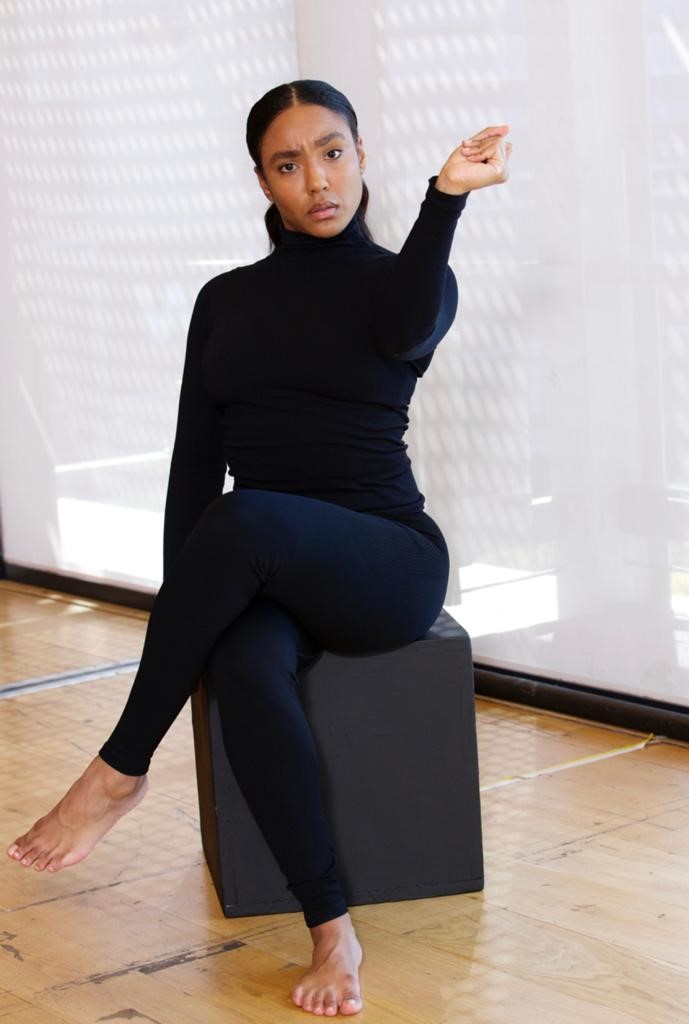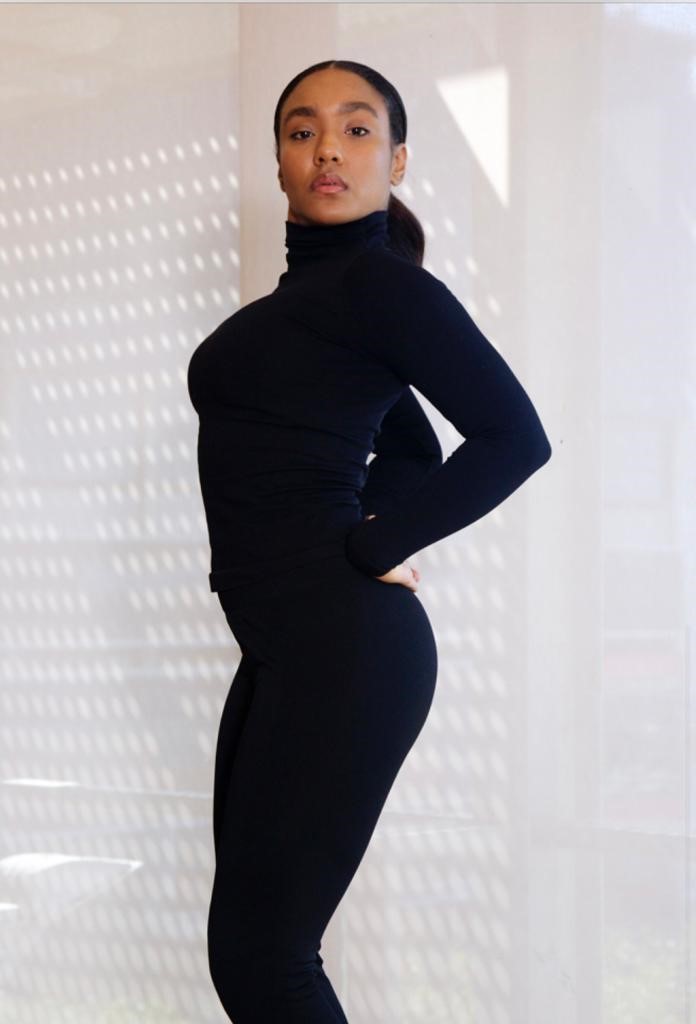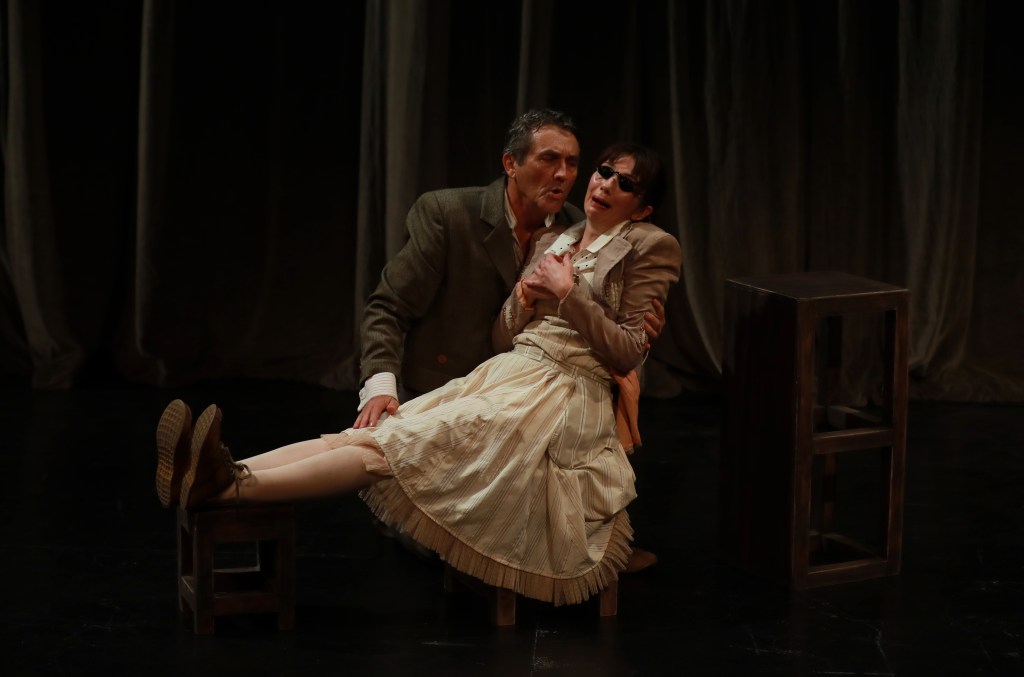
MIKE VAN GRAAN’S PIERCING GAZE PERFECTLY CHANNELED BY KIM BLANCHE ADONIS AT THEATRE ON THE SQUARE

DIANE DE BEER reviews:

MY FELLOW SOUTH AFRICANS

WRITTEN BY Mike van Graan

PERFORMED BY Kim Blanche Adonis

CHANNELING DIRECTION BY Rob van Vuuren and Daniel Mpilo Richards

PLAYING AT Theatre on the Square Sandton

UNTIL September 2 (Tuesday to Friday at 7.30pm and Saturdays at 5 and 8pm)

Booking at Computicket

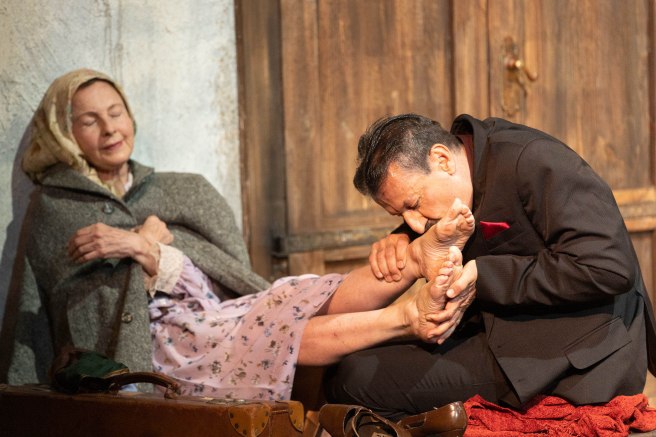
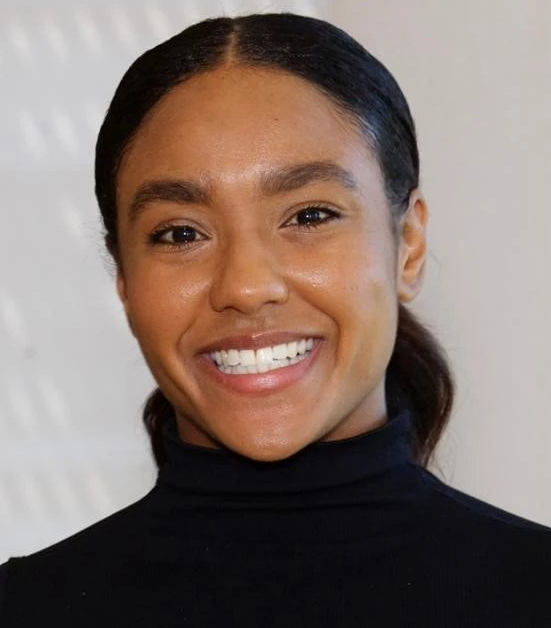
Kim Blanche Adonis has style, sass, sparkle and a suitcase stuffed with characters and wise Van Graan words.

Playwright Mike van Graan has the gift of casting his net, finding the right focus and then going in for the kill in the most devastating fashion.

But all of this is done with such skill and finesse that, even in those uncomfortable moments when you might be the target, you nod in agreement.

Yes, it is incredibly funny until it isn’t. And, sadly, in this country, it often isn’t. This time he has found a devastating target  –  the upcoming elections. With the unravelling of the country so visible in the Eskom fiasco which just keeps going, never letting up, his audience (and it was packed to the rafters on opening night) are rooting all the way. We have all suffered enough and there’s often a collective sigh.

Thirty years into our post-apartheid democracy, he tells us, our country is in desperate need of change, a reset, a re-imagining of the dream we had some three decades ago. And then he reveals the real purpose of the play: everyone agrees that the elections in 2024 offer an opportunity for the beginning of new beginnings, hence My Fellow South Africans, which he describes as his modest contribution to the discourse that may shape the elections, reflecting us back to ourselves, reminding us of our optimism, and finally urging us ‘to do something’.

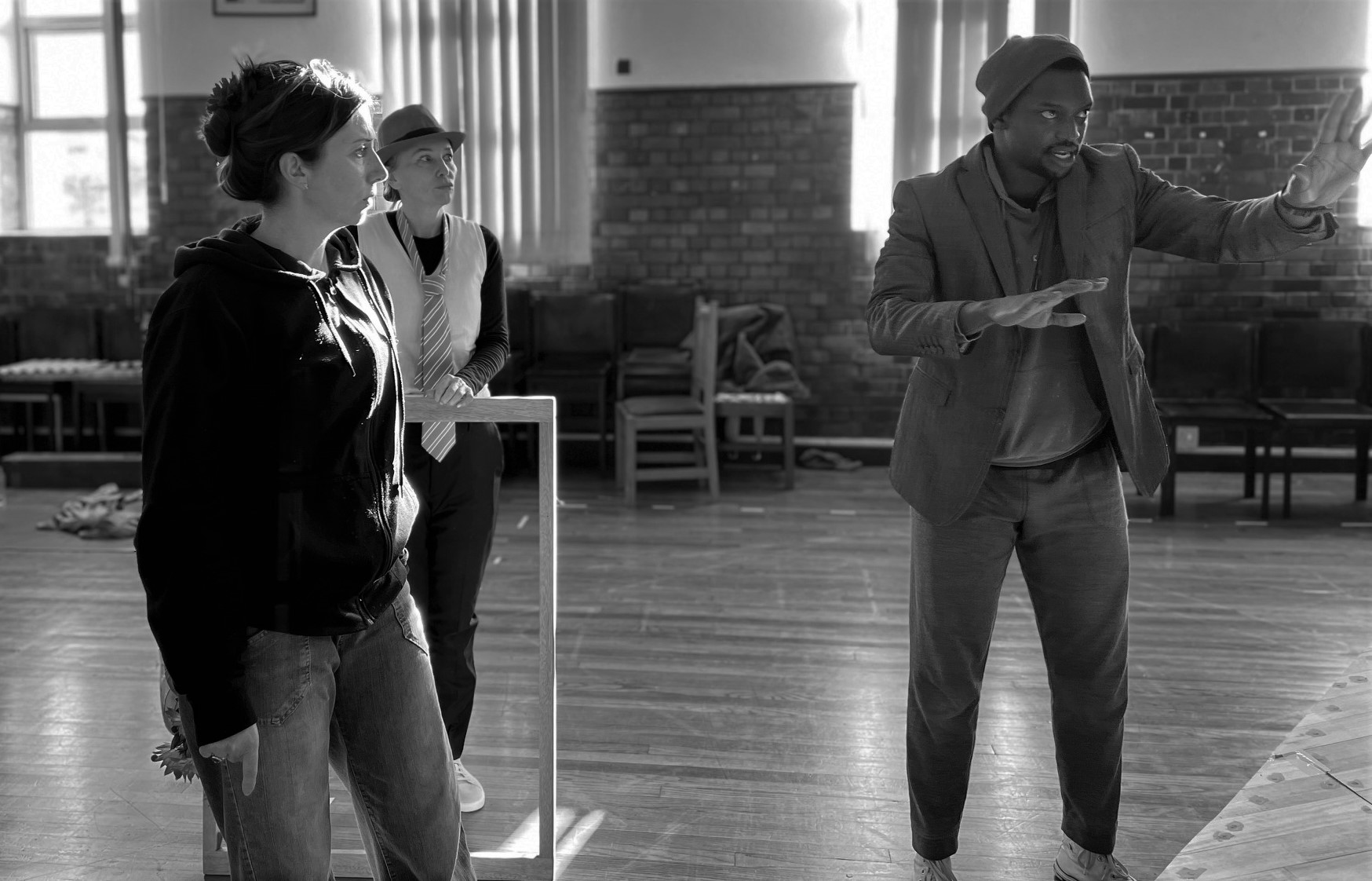
And while he is humble in his aspirations, Van Graan has been doing this for most of his playwriting life, showing us who we are and just how much we are willing to take. Through the years, he has fine-tuned what he says and how to say it, and in this instance also gathered the perfect coterie of stage chums with whom he has collaborated on three one-person revues: Rob van Vuuren (director) and Daniel Mpilo Richards (performer but in this instance director) who also brought the star of this show, Kim Blanche Adonis, on board.

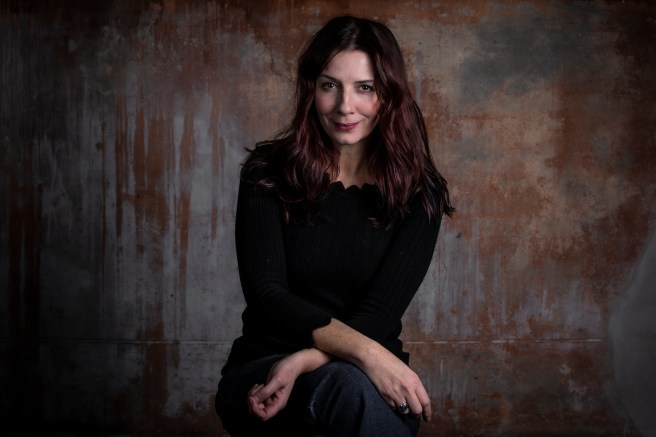
Taking over from Richards is no small ask and for the shortest time while acclimatising to her particular style, I wasn’t sure she was going to crack it – until she did with sheer determination, style, skill and an exuberant performance that never let up.

The text is dense, the demands on the actor intense, but she has taken this on with a will and willingness to make it her own. There’s nothing she’s not going to do to make a character work and her deftness with accents, complete comfort on stage and constant chameleon-like changes are astonishing. Van Graan has found a warrior for his sharpest words.

And as the audience, you have to tune in too. It’s fast and furious, and the writer doesn’t tread lightly as he flies fiercely through the South African landscape, demolishing everything he witnesses in a land that’s punch drunk as it faces one disaster after the other.

Just before the show, I was listening to a news report on the BRICS summit which revealed that the Chinese had gifted us R500 million, but it went on to report, R170 million had already disappeared! I can just imagine what Van Graan would do with that.

He wishes us a cathartic experience and it is that, but what I love the most is the way he lets rip with words and worries, always funny but never at the expense of the catastrophe of what has happened to this country we had such hopes for. He is piercingly honest. It’s not always possible to laugh and at some moments the spotlight on those of us who are born with privilege just because of the colour of a skin is vicious, as it should be.

Yes, he is there to entertain, and with the smarts of Adonis, it is just that, but he never turns away, softens the blow or shies away from making a point whatever the target might be. This is about our country, making the right choices and going into action rather than simply complaining.

Van Graan carries the moniker cultural activist because that is exactly what he does with all the skill of both his perceptive and piercing gaze and his writing wizardry.

It’s a blast!

AUTHOR/ACTRESS WILLEMIEN DU PREEZ TURNS A DEVASTATING FOLLY, A DREAM DASHED, INTO YET ANOTHER CREATIVE ENDEAVOUR

Most of us have dreams that we hope will become reality one day, but sometimes life happens and we don’t get round to it. Willemien du Preez and her husband, whom she refers to as Liefie, decided on what many might suggest was the spur of a moment, to buy what they believed would be their dream farm. DIANE DE BEER speaks to the author about her book Plaas se Prys (Price of a Farm) (Protea Boekhuis):

He left a perfectly good job with all the richly earned rewards still waiting in the future and she waved goodbye to city life and everything familiar to her.

The Du Preez couple had been to visit the area far fom their current home in Gauteng, much closer to Cape Town, had lost their hearts almost at first sight and here they were, taking the first steps into what they hoped would be their dream life.

Willemien’s book is about this period in her life (if you don’t read Afrikaans, hold thumbs for a translation) in which she captures the adventures of two city slickers hoping to transform overnight into their version of Karen Blixen’s “I had a farm in Africa…”.

It all began when Willemien was battling the loss of an almost three-year-long project that had demanded blood, sweat and tears, but just didn’t work out. She longed for something peaceful, something beautiful and a respite – and to add to her dilemma, her husband was also battle-weary and simply dead tired.

With hindsight, this self-made adventure felt fantastical from the start. She describes it as two desperate individuals fleeing from their reality. “The mountains and a different lifestyle were appealing.”

A the time they didn’t regard this madcap move as such. Their children were adults, they had some money in the bank and Gauteng’s crime statistics were unnerving. “My husband always wanted to farm like his grandfather before him, and I wanted to live like my grandfather and grandmother, off the land.”

“We were still young enough to start over,” she explains, “probably a misguided romance with nature.”

The day they bought the farm was perfect. As Willemien describes it, they were overwhelmed by the spectacle of what they hoped to purchase – and then inhabit. “The fields, the mountains, the sky, the light, everything seemed to conspire.”

For the Du Preez’s, it felt like a gift. A rose-tinted picture emerged, the income it seemed would be more than they hoped for and it felt as though the farm had been made specifically to fulfil  their dreams

When your eyes rest on the cobbling stream, it fails to see the damage the flood waters could do during a terrifying rain storm. What they saw was a farming project for her husband and a restoration project for her. “I would restore the 100-year old  farmhouse with two attics into a holiday home for our children and the grand-children still to come. We were thinking of the future – yet not so much!”

Again, looking back, she knows that even when packing their belongings for the grand move, there was trepidation. “The alarm bells came from inside me after that first visit to the farm. It didn’t feel so right anymore.”

On their way back following their first visit, they argued, but not about their momentous purchase. “That was too late. We had already signed the papers,” she says. But reality set in almost immediately after their arrival on the farm. “I realised it wasn’t mist blowing over the farm, it was dust,” only now realising that it dominated her huge struggle to cling to the dream.

No wisdom was passed on when they bought the farm and probably they would not have listened. Once they had decided to throw in the towel, a neighbour described as a wise boervrou (farmer’s wife), said that if she were buying a farm, she would have visited often, even if the seller grew tired of the intrusion. She would have considered every vantage point before she made an offer. “Now I would tell my younger self, you have to talk to all the farmers in the region. You have to ask about the pitfalls, know the weather patterns and discover everything there is to know which will not be included in the sales pitch,”says Willemien.

She has gained insight, of course, and now she knows that you cannot lightly tackle something this extraordinary. “You can’t just decide one day to go farming. You must know the lay of the land and preferably come from there.”

Fortunately the Du Preezs are not people who simply take life lying down. After quitting the farm, they spent a few years rebuilding their life in Cape Town and environment. André returned to law and Willemien taught Afrikaans to English speakers, picked up her acting career and earned enough money in international ads to take them on an overseas trip.

Following a decade in the Cape, they returned to Gauteng to be closer to their children and grandchildren and she started writing this book after encouragement from another author, Johann Symmington.

There were dark times as the pandemic was both a threat yet provided the time to write. For Willemien, writing about something that still has an impact on their lives was therapeutic. I suspect the rewards from grateful readers will also help to heal some wounds. It’s a story told with searing honesty and a humanity that’s heart-warming.

It’s the kind of thing that many will identify with, told in a manner that is as frank as anyone can be when focussing on their biggest folly. But don’t we all mistakes and tumble down that slippery slope and if you can rise from that heroically, take a bow.

When I met her following a talk at the Vrye Weekblad Book Festival in Cullinan, I knew that this was a book I wanted to read. When a dream shatters, not everyone manages to put the pieces together again.

But Willemien and André have done exactly that. “I know that we have accepted  the past and each other.”

And most precious of all, that’s what they have left: each other.

BARBIE’S SWEETNESS WITH SASS AND MISSION IMPOSSIBLE’S HIGH-VOLTAGE ACTION ADD NECESSARY VERSATILITY TO CINEMA SCREENS

Two very different movies have been drawing in the crowds with boasting admirers and detractors. DIANE DE BEER finds merit in both: the delightful Barbie as well as the Tom Cruise action extravaganza Mission: ImpossibleDead Reckoning Part One

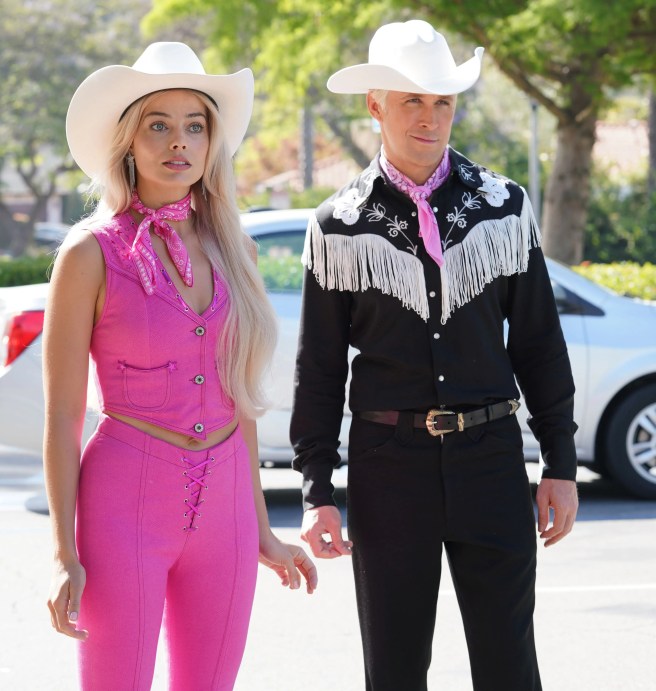
Two very different heroes: Margo Robbie as Barbie and Tom Cruise as Ethan Hunt in the latest Mission Impossible

BARBIE

DIRECTOR: Greta Gerwig

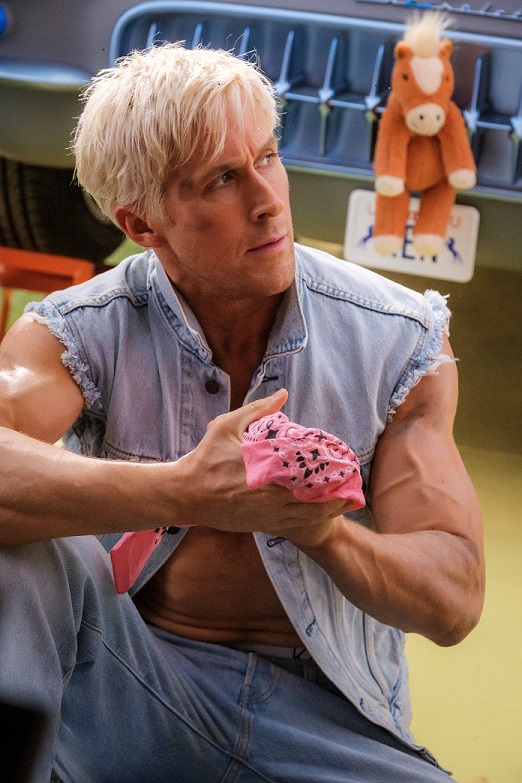
CAST: Margot Robbie and Ryan Gosling as Barbie and Ken

Barbie dolls were not my thing as a little girl. What got me wanting to see the film was the choice of director Greta Gerwig. She was first approached by Margot Robbie to write the script

And it wasn’t that I was such a fan of her most recent movie, the latest version of Little Women (which I thought had more appeal for a younger generation not yet familiar with a filmed version), it was because I thought (with Lady Bird in mind) that her take on the Barbie phenomenon would be sassy and smart.

The Perfect Pair

As a modern woman/filmmaker/scriptwriter, she would have to perform quite a dance to get this one right. With her and her partner, filmmaker/scriptwriter Noah Baumbach writing the script together about something which has become a painfully idealistic pinup of a doll, it would be intriguing.

Also, she has been vocal about accepting Robbie’s invitation to direct and that she wouldn’t have become involved with any other version.

She doesn’t disappoint. Starting with the script, the approach was incredibly inventive as they deconstruct the imposed vision to illustrate the unsustainability of that Barbie if the original version was the course you would keep following.

It might have worked in its time (and they did make concessions like a space Barbie before real women were allowed to have their own credit cards, as Gerwig notes in another interview), but today’s young Barbie’s potential followers would need a different take – and that’s exactly what Gerwig has given them.

It’s a smart, good-looking, entertaining and educational film with the only perfection they go for in the genius casting of its two lead actors, Robbie and Gosling.

Anyone who has seen Gosling’s Lars and the Real Girl will know that he has comedic chops and Robbie is a no-brainer who not only looks the part but also saw the possibilities of Barbie. She made all the right moves both on the production and the performance sides.

If anything, they could have pushed it even more in every aspect, but that’s just me. It is a perfect vehicle to set Barbie on the fast track with the latest target generation. And that is probably why Martell is happy to take any criticism of the original Barbie.

She’s been set up to take on the world once again.

MISSION: IMPOSSIBLE – DEAD RECKONING PART ONE:

DIRECTOR: Christopher McQuarrie

CAST: Tom Cruise as the hero; Esai Morales as evil personified; and a list of fabulous women all holding their own

It was evident very soon into the film that my partner and I had come to the cinema with very different expectations: he was looking for content and substance that has never been part of the series even though he was the better target for the movie; and I had no expectations but to have fun, giggle at the silliness of the script, and hang on to my seat during all the fast-paced action, which we have all seen in some form or another before, yet heightened here to the nth degree.

And this was only Part One. Apparently, the filmmakers say Part Two will be better.

Tom Cruise as Ethan Hunt who is always on the run … to or from danger.

Is Tom Cruise ageing? Of course he is, like all our action heroes. I mention Harrison Ford as another example. And the list goes on. But as long as they still draw the crowds, they will keep reprising the roles.

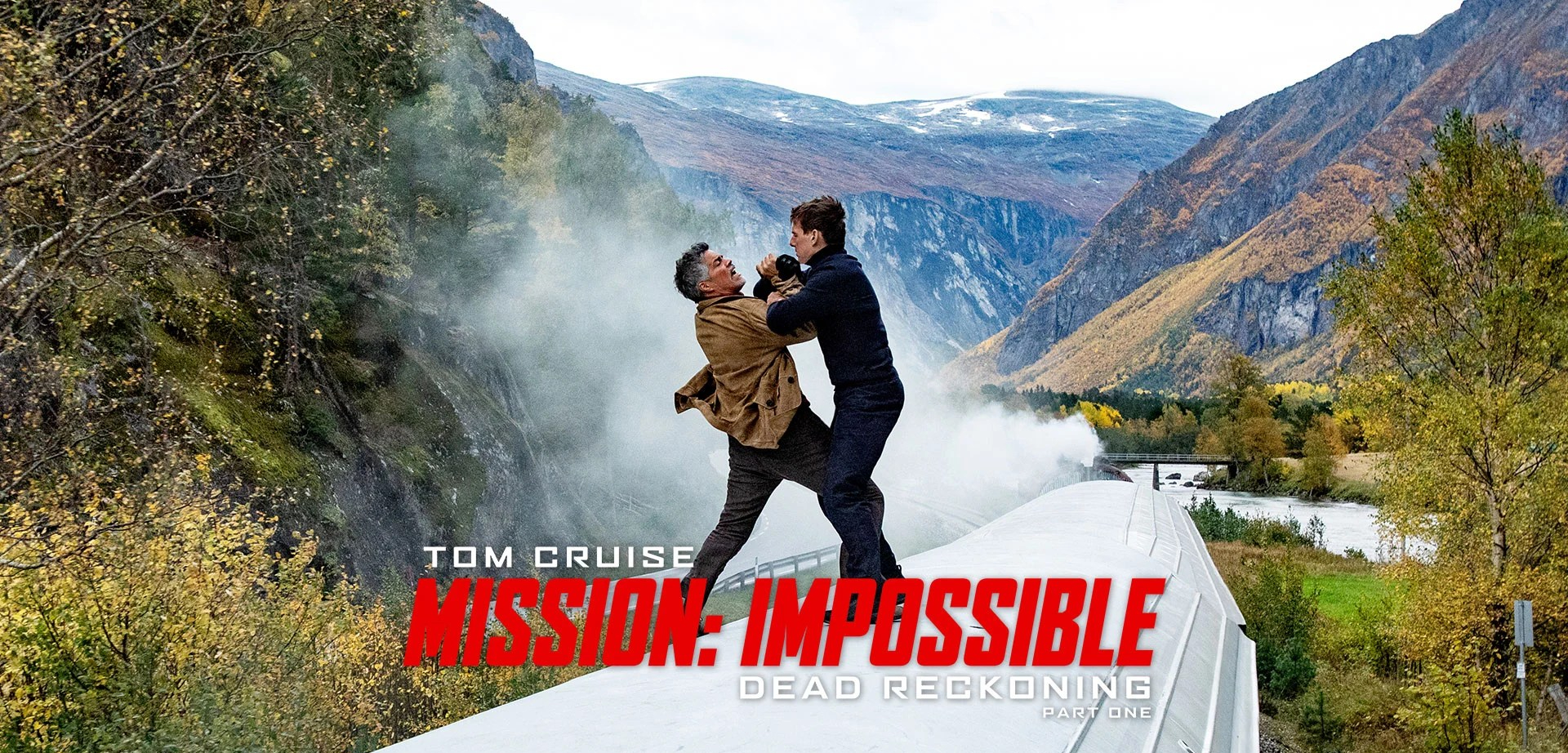
And once you get beyond the age-defying make-overs, it’s all systems go. Cruise is long  past having to prove his acting skills. This is not the focus here. This is where he jumps on a motorbike and races to the edge of a majestic mountain cliff where he takes off and safely lands on a fast moving train with the help of a parachute. If you haven’t heard yet, he does his own stunts.

One of the many impressive stunt sequences.

And these are truly magnificent. It’s hair raising and huge fun to watch if you’re willing to let go and embrace this for what it is. If not, it’s not your movie. The plot can become laborious and the dialogue often incomprehensible, but it doesn’t matter.

Some like it, others don’t. The approach of the viewer matters. Cartoon by Dries de Beer aka Fatman as part of A Man and his Dog series.

It’s also a movie of which one doesn’t want to reveal any of the laughs or the high-voltage action. You need to go in cold, sit back, exhale and have a blast. That’s all this is about.

 It’s no more than a caper. That’s all you get, escapism deluxe.

ARRESTING PORTRAIT OF A WOMAN OF SUBSTANCE WITH ACTOR MPUME MTHOMBENI AND DIRECTOR NEIL COPPEN THE PERFECT TEAM

DIANE DE BEER reviews:

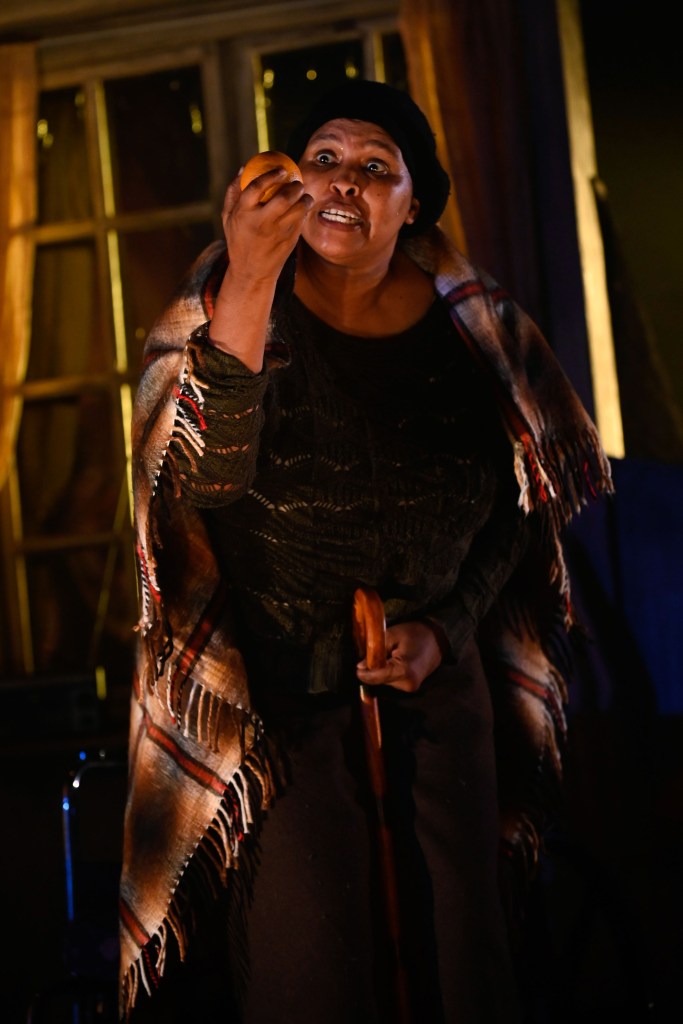
Mpume Mthombeni as Zenzile Maseko

PICTURES: Val Adamson

Isidlamlilo/The Fire Eater

Presented by The Market Theatre in association with Empatheatre and the National Arts Festival

Workshopped by actor Mpume Mthombeni and director Neil Coppen from an oral history project on migration

Dates: Sunday 30 July at 3pm, 2, 3, 4 August at 7pm and 5 and 6 August at 3 and 7pm

Our first encounter with Zenzile Maseko (Mthombeni) is in her women’s hostel room. She is a grandmother, partially disabled, who has just discovered that Home Affairs declared her dead two years ago. That’s why she hasn’t been receiving her grant, which would enable her to build her dream house in her childhood village, iPharadise.

What might have seemed to those of us looking at a woman, ageing, alone in a room with probably all her worldly possessions, as a small life is given towering proportions as this magnificent Shakespearean monologue starts spilling forth. All of this takes place in the midst of a nightmarish storm, which recalls the recent KwaZulu-Natal floods as well as the stormy life of Zenzile, who is being purged through this devastating, often delirious unfolding of a life of one of millions of similar women in similar circumstances in this country.

Few of us would even handle one of these events that seem to consume her whole being as the disasters roll in and out with regular intervals. Just the word Home Affairs is enough to draw sighs of despair as we think of the rows and rows of people seen in a distance on a monthly basis as they wait to collect their grants, which is often the only lifeline for an extended family.

But Zenzile has courage to fall back on and draw from as her life could not have been more dramatic.

And that’s just the broad strokes.

Yet, more than this epic life story that seems to span many lives, generations and cycles of violence that feel never-ending, is the performance by the magnificent Mthombeni. She transforms Zenzile in a matter of minutes as she draws on all her skills to explore this heart wrenching embodiment of a woman whose life depended on her being a warrior.

And that she is as she rises through each crisis that becomes her life. She simply has to survive. Nothing has been brought on by her own actions or even who she is. It is simply the way people are discarded and ignored as they battle their every daily task.

Few of us have any idea how most of our people live. We think loadshedding is our biggest struggle. For many electricity is but a dream.

Zenzile brings all of that to the light as she creates her own Lear, battling her fraught life as well as the elements. It is an awe-inspiring performance which takes you on an emotional endurance race that’s hugely exciting to witness but also daunting to compute.

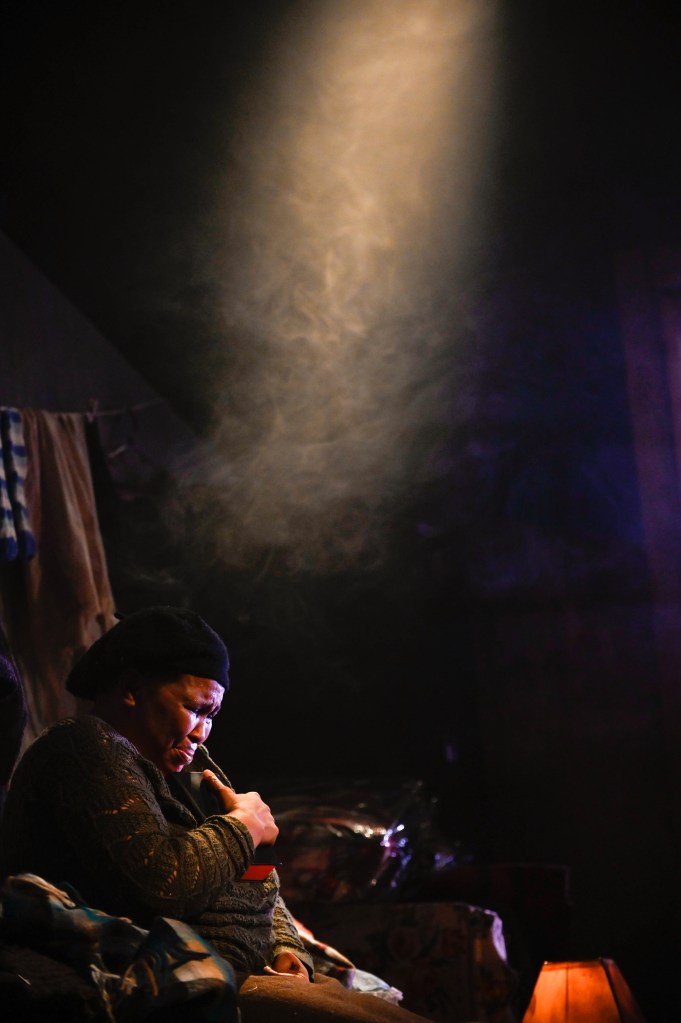
Brilliant lighting design by Tina le Roux

Her performance is enhanced by the text and the way she grabs hold of it, workshopped by Coppen and Mthombeni, who never lets up, as well as the staging which is achieved with spectacular lighting that brings a magnificent intensity.

In the publicity it is said that some have referred to this as a modern day South African classic, I can see why. It’s startling yet stunning theatre which explores invisible South African lives and gives one such woman a platform.

AUTHOR SIHLE KHUMALO KEEPS IT LIGHT WHILE SPEAKING HIS MIND ON SERIOUS ISSUES

With his latest book Milk The Beloved Country (Umuzi), author Sihle Khumalo speaks his mind on many issues, and with the focus on local, it gives readers the chance to reflect on what they have and what the future holds for this country and its people. DIANE DE BEER spends some time with the man who has much on his mind and likes to share:

At our first meeting I realized that it would be impossible to try to give a summary of who this man, Sihle Khumalo, is.

I culd capture more of this prolific writer by giving you the titles of the books he has already written: Dark Continent – My Black Arse; Heart of AFRICA; Almost Sleeping My Way to Timbuktu; and Rainbow Nation My Zulu Arse.

And then the one I will focus on most sharply here, his latest, Milk The Beloved Country. He tells that the first book was  the result of his travels from Cape Town to Cairo using public transport. This was also to celebrate his 30th birthday.

In 1999, to celebrate his 24th birthday, he bungee jumped at Victoria Falls in Zimbabwe; for his 25th he ran the Comrades Marathon (11hours 40 minutes); for his 27th birthday, in 2002, he started parachuting (on static line) at Pietermaritzburg’s Oribi airport ; in 2003, he did aerobatic flying (as a passenger) at Rand airport.

He currently lives in Johannesburg with his wife and two children. And the two women he dedicates the book to is his mother and his mother-in-law. For me that also speaks volumes and probably more revealing than anything I could add.

Perhaps this is not the kind of book that would have caught my attention if I didn’t have to speak to Sihle publicly – twice – which also meant I read the book twice. That in the end was a good thing, because it was with the second reading that I realised exactly what he was doing. It seems to be all over the place and yet, after a more careful reading, I was starting to get the drift of this very active mind.

Sihle Khumalo will have you thinking. With this smartly tongue-in-cheek book, what had me doing just that from the start, was wondering how he comes up with the concept. And even now I’m still not sure he knows. He has an active mind and personality (if that’s possible) but once you pin him down and start taking his words seriously, he has some very interesting stories to tell and points to make.

Myself (Diane de Beer ) with authors Sihle Khumalo and Deborah Steinmair at the Vrye Weekblad Book Festival at Cullinan earlier in April.

But take note, there is sleight of hand, because it might all seem frivolous, yet it’s anything but.

His previous books are travel-driven, so the research was done while visiting different places, but in this instance, the research had to come in more traditional fashion; libraries for example rather than the excitement of travel.

But he wanted to do it this way and it will be interesting to watch his future adventures to see whether they will be of the physical or mental kind.

The book is neatly divided into three sections, starting with the names of especially smaller towns and villages and where these come from. It’s intriguing and something all of us might have thought of or even discussed with children during tedious journeys, but he makes a study of it. And while there’s much to smile at, he also makes sure to spotlight some sharply observed issues, as this following notice in https://theconversation.com/africa daily email reaffirms:

“Today marks 60 years since Kenya attained internal self-rule from the British colonial powers. Names of places and other urban symbols were used as tools of control over space in many African countries during the colonial period. This strategy was epitomised by the British, who applied it vigorously in the Kenyan capital Nairobi from the late 1800s. Street names celebrating royalty and officialdom dominated the central part of the city, while African names were relegated to peripheral neighbourhoods. Melissa Wanjiru-Mwita explains the ways in which this strategy actively alienated the native African majority while promoting the political, ideological and racial dominance of the colonialist.”

What tickled me though is remembering the fuss from the white population about changes to the names of towns and provinces, for example when we were just staring out on our democracy in the early 90s. I can remember the anxiety expressed while wailing about their heritage ….

Much of the name changing has happened without fuss but, as Sihle reflects, many more changes wouldn’t be a bad idea – including the name of our country which to his mind, points to a destination rather than something which would reflect the people living there. I still have to scratch my head to remember and hold on to some of the name changes, but they do make sense and feel much more part of the continent, the country and all its people.  It is the diversity of the country that is our strength and it should be reflected in as much as possible publicly so that it becomes commonplace.

The second section starts with the intriguing quote: You’ve got to find some way of saying it without saying it (Duke Ellington) and this is something that I personally think drives Sihle’s writing.

Titled The Power Brokers he dives right in, exploring our very own secret society, the Broederbond. He starts with the role players and their influence and then moves on to the private sector and intelligence.

As with the names of towns, which most South Africans might say they’re familiar with, the Broederbond because of its secrecy was intriguing to many, but for those of us not invested in the politics of the apartheid state, we thought we knew more than we actually did. And this, coming from an outside point of view as well as after the fact (or so we hope!), reminds us where we come from when we start pointing fingers.

Politics has always been about power and we can only hold thumbs that it comes from a good place – even if just most of the time.

Drawing a line through all that secrecy, he moves to different groupings of people including the freemasons; the unions and then couples the taxis, religion and traditional leaders together concluding with The Masses and sadly, the fact that we the people warrant less than a third of a page, says it all. That and the first sentence: There is nothing significant to report here.

What I also like about this particular section is the comparison of the past with the present. Corruption for example, we all speak about it as if it’s something new. Read on …

And in conclusion, Sihle tells us to Pause and Ponder:

Two weeks after the 2021 insurrection, The Washington Post described our “celebrated rainbow nation” as the “global poster child of economic inequality where deep poverty sits in the shadow of astronomical wealth.” If that doesn’t make you weep, nothing will.

He sums up the apathy by focusing first on the Feeding frenzy on state resources. I know that surprised me most post 94. I didn’t think that the leaders would turn their back on the very people who needed their assistance most. (And I do understand that they had the best examples in the former white regime).

For those of us puzzled by the ruling party’s elective conferences, he takes a closer look at: 2007, 2012 and 2017.

The Constitutional Court and the judiciary also come into play. It’s under attack in so many countries, the US and Israel, to name a few? It’s always been my beacon of hope, and I do still in spite of, believe that our people, our strength will pull us through. Sihle speaks his mind as he does on the following hair raising issue: Is South Africa a failed state? And when exactly was it captured?

And then finally, on a second reading, this lucky packet of a book truly spoke to me. Not just about what he was writing about but also learning more about this man with his wandering mind. I have heard different opinions about his writing. I cannot speak to any other than this latest book.

Some could argue that Sihle Khumalo is a man of too many seasons. But he speaks his mind and where that takes us is what appealed to me. As a fellow South African, I want as many opinions as are out there because in the end, most of us just want to be left to get on with our lives. And, if possible, to have a government that lends a helping hand. Life is tough enough without any extra hindrances.

And while some might be milking the beloved country, we should remember what we have and that the people and the place are real strengths and not something to mess with.

LAST CHANCE TO CATCH THE GLOWING FIREFLY WITH SYLVAINE STRIKE, ANDREW BUCKLAND AND TONY BENTEL AT PIETER TOERIEN THEATRE

Sylvaine Strike, director/actor/playwright and any other creative word one can dream up, teamed with three other brilliant creatives, Toni Morkel (director), Andrew Buckland (fellow actor) and Tony Bentel, musical genius to create the dreamily magical Firefly currently in its last week at the Pieter Toerien Theatre at Montecasino. Having seen it for the third time at the weekend, this is a copy of my original review to encourage anyone who hasn’t yet seen it, to go. It will warm your heart and the glow will last for the longest time.

DIANE DE BEER reviews: 

Scenes from Firefly with Sylvaine Strike and Andrew Buckland:

Pictures by Nardus Engelbrecht

I was blessed to see Firefly at Cape Town’s Baxter Theatre with the emergence of live theatre following the pandemic.

The bewitching Firefly, which as one of the first Covid-19 impacted productions saw light of day as a Woordfees digital production, made a magically mesmerising transition. I had lost my heart earlier to the filmed production and was excitedly inquisitive at how that particular story – with many filmic tricks up its sleeve – would translate and transform on stage.

But this particular creative quartet (Strike, Andrew Buckland, Toni Morkel as director and Tony Bentel on piano) are the perfect combo. This is their theatrical landscape. Give them a stage and they will be telling stories in such an imaginative way, it becomes a visual feast.

Because they have all worked together, they understand each other’s strengths, and Morkel could stretch that piece of string intuitively with fantastically imaginative and explosive pyrotechnics.

Buckland and Strike are a brilliant blend of artistry with an instinct for detail that holds your attention gently yet persistently. Storytelling is their forte, aided by the fact that they have an endless supply of tools to draw on to embellish a wink or the final lift of a foot to express and underline the tiniest emotion.

It is theatre at its best when it has you smiling from start to finish because of the artistry, the wizardry of the production, the perfection of the coupling, and just the sheer audacity of the storytelling.

No matter how or why, just immerse yourself and see what happens when Saartjie Botha commands two artists to give her a production in the purest style of theatre.

If you have seen the digital version that’s  a bonus, because to witness how one story can be told in such magnificent splendour in two completely different approaches is truly special and quite rare. The one had all the bells and whistles and worked like a charm. But here, with Strike and Buckland live on stage with just themselves to grab hold of their audience and cast that spell, the essence of theatre comes into play – and again I willingly lost my heart.

Add to the two artists on stage, the magnificence of Wolf Britz’s set and props as well as starstruck-inducing lighting and the keyboard genius of Bentel’s soundtrack that holds every emotion so thrillingly in a familiar yet completely Bentel-constructed composition.

If you want to see how the best make theatre with their instincts, intuition and imagination, don’t miss the sparkling Firefly. Yet don’t think for one second that the miracle unfolding on stage didn’t come with buckets of blood, sweat, tears and ENDLESS talent. Part of the theatrical trickery of this foursome is to present something that is this skilled as seemingly effortless.

It’s brilliant and personally I hope to see this travel around the country casting its spell throughout. We are desperately in need of this kind of adult fairy tale in these tumultuous times.

And with every fresh viewing, they’ve added fresh insight and sparkle if that’s even possible.

Book at Webtickets for any of the shows from tonight until Friday at 8pm, Saturday at 3 and 8pm; and Sunday at 2pm for their final bow.

AUTHOR JONNY STEINBERG CAPTURES THE FORCE BEHIND THE MANDELA MARRIAGE PORTRAIT

If you think you know everything about Winnie and Nelson Mandela, award-winning author Jonny Steinberg will probably change your mind with his insightful portrayal of a couple who held the world’s attention for the longest time. Having read the book, DIANE DE BEER listens to the author speak about his latest endeavour:

Pictures from the book courtesy of the publishers

When I first spotted the book Winnie and Nelson: Portrait of a Marriage (Jonathan Ball), it was the author Jonny Steinberg who caught my attention.

Not that the Mandelas aren’t worthy, simply that I didn’t think another book on the Mandelas could shed new light. But Steinberg changed that presumption.

From the first time I had to read a Steinberg book  –  as he was going to be a guest speaker at one of our newspaper’s book lunches  –  I was a fan.

Author Jonny Steinberg

The Number, which dealt with gangs, was the one that did it. I had very little interest in the subject, thought I knew enough, but having read Steinberg’s well-researched and analytically astute account, I wasn’t going to miss any of his books again.

And when I saw he was to be one of the speakers at the Franschhoek Literary Festival 2023 where I was invited to do an interview with the delightful Nataniël, I was sold on reading and listening to the author’s conversation with Hlonipha Mokoena, an associate professor and researcher at WiSER (Wits Institute for Social and Economic Research) where she specialises in African Intellectuals.

I picked the right one. Portrait of a Marriage should have been my clue because this is what this author does. He takes a topic which might not have crossed your radar in any sense of the word, and turns it on its head in a way that pulls you in and grabs your interest. It’s a gift and one that has turned him into one (if not the top) of our best non-fiction writers.

And one of the first obstacles he encountered was a feeling of shame because he found himself prying into the private world of these two icons – once again. Initially, he was going to write two books, one on each of these individuals, until someone pointed out that one would perhaps be more sensible and, ultimately, probably better.

This is where his own thoughts probably gathered momentum and insight. The question he wished to explore was Nelson’s sense of being and how much that was entwined with Winnie, especially while in prison – which was a punishing 27 years long.

Nelson and Winnie, 1958, probably shortly before their wedding.
Eli Weinberg, UWC-Robben Island Museum Mayibuye Archives.

What Steinberg realised was that when imprisoned, Nelson didn’t know Winnie that well. That’s when a fantasy of the woman he loved started emerging. She became the dominant figure in his head. When a great man is written about, his personal life is obscured but the opposite is true for a woman. And this is where the blessing and curse of the Mandela name came into play.

With Nelson’s incarceration, the impact on Winnie and her two daughters was intense on many different levels. For instance, Nelson understood himself as head of the family and he wanted to preserve his wife and their marriage.

But this became difficult in prison because of their compromised relationship. All their conversations were recorded and transcribed. And again, it is these transcriptions that gave the author entrée and heightened insight into the Mandela couple. Yet in some ways they also made him a reluctant participant.

Prisoners breaking stones in the courtyard outside the leadership section on Robben Island. Nelson’s cell window is on the far right.
Copyright of Cloete Breytenbach, courtesy of Leon Breytenbach.

Many issues come into play. Because they were being recorded, something they were aware of, these intimate conversations were compromised from the start. For Steinberg it became a compromising decision. Could he use these conversations without compromising the couple’s dignity? “It’s unusual to eavesdrop in this way,” he explained.

For example, the pettiness of an incarcerated Nelson was one of those situations for Steinberg, yet he knew if he wanted to write the book, he needed the information.

From very early on, Winnie used her sexuality as power, says the author. And Nelson in a similar vein was always very aware of how he looked in the suits he used to wear. Unusual at the time and with his presence, an additional bonus. “They understood that their very being was a commodity,” notes Steinberg.

Beauty complicated Winnie’s life. Right from the start, she was born into the struggle which determined her life. She understood how to pick winners and forget the losers. She also knew how to get under someone’s skin. Few people who met her could resist her and were left untouched.

In fact, it is the effect the Mandelas had individually and together that Steinberg explores and captures so well. Would life have been different if the couple had been less aware of their pulling power, their value as a commodity?

Winnie for example couldn’t be alone and always knew that she had to deliver on the expectations of others. She had to be what they wanted her to be. She even told tales about her childhood from very early on.

To protect herself, her reality often had to be concealed. Steinberg explains: she became the symbol of Black womanhood. She was able to become what people wanted and had a sense of her role in public life, believing that she was the centre piece.

For Nelson it was Fort Hare where the foundation of leadership was born.

When they came together, Winnie understood what it meant to be seen. The mission schools invested in the idea that Black men should marry Black women and the Mandelas represented that myth of the power couple. “Their marriage becomes a symbol for the struggle for freedom.”

Nelson and Winnie Mandela at the rally held to celebrate Nelson’s release at FNB Stadium near their Soweto home on February 13, 1990. nelson spent the previous night, his first bnack in Johannesburg, alone in a suburban house near Lanseria Airport.
Photo by Udo Weitz/AP/Shutterstock (7364405a)

Nelson understood the power of his and Winnie’s story with the focus on the romance between them. Their power did represent a nation and yet, they ended up being political enemies. Is there anyone in South Africa who lived through their story and wasn’t shattered by the dissolution of their marriage?

The irony of their relationship was that for Nelson his greatest fear for his country was civil war, while his wife was the embodiment of everything he feared.

Nelson Mandela speaks to boys at the historically white King Edward VII School, Johannesburg, 1993.
Photo by © Louise Gubb/CORBIS SABA/Corbis via Getty Images

He becomes a powerful person, but in prison – and out of touch with what is happening. He is locked up by and with people who hate him and when he escapes, he does so in his imagination, The essence of Winnie’s life is her internal world of fire.

I was completely mesmerised by Steinberg’s deeply felt analytical writing about South Africa’s most powerful couple. Even before the advent of social media, with Nelson Mandela imprisoned and his wife under constant surveillance, they captured and kept the attention of the world.

Steinberg tells that story magnificently and with fresh insight and focus.

THE EXTRAORDINARY POWER OF PERFORMANCE AND LIVE THEATRE IS FIRMLY ESTABLISHED AT THE REVIVAL IN 2022 OF THE LIVE FESTIVAL CIRCUIT

When you are sitting in contemplation at the end of a year, your head packed full of memories of live festivals for the first time in 24 months, you realise the excitement, exuberance and energy live theatre brings to both performers and audiences. There’s simply nothing that compares DIANE DE BEER discovers. Here are just a few of those magical moments…:

There were many performances that I will hold onto for a lifetime, some that linger, others that were a fun watch, and one performance in particular that just made me senselessly happy.

(Pictures of Die Moeder by Emma Wiehman and top far right, Nardus Engelbrecht)

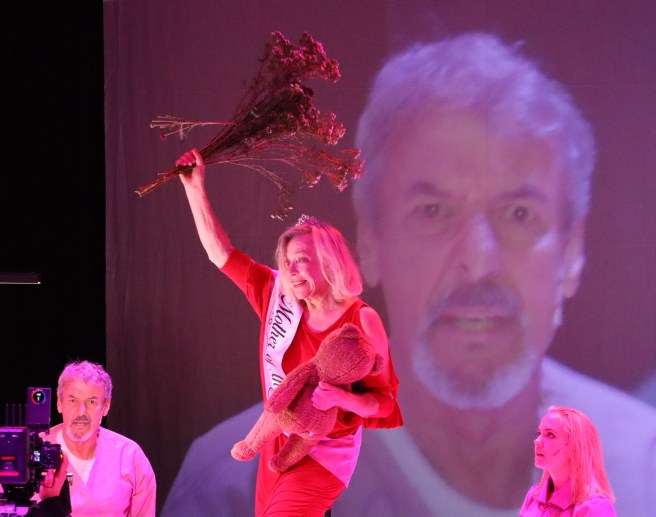
It was also the play, the director, and the rest of the cast, (Dawid Minnaar, Ludwig Binge, Ashley de Lange) , but Sandra Prinsloo was the star of Die Moeder, which had its debut at the Woordfees. It held all the potential of being something special, but what this actor brought to the role was spectacular. If this is how she dances into the twilight of her career, buckle up.

Director Christiaan Olwagen has been away playing successfully in television and movies, but it’s always on stage that he has been most impressive for me. It feels as if it is a medium he understands and where he feels at home and his vision translates magnificently.

With that driving her and a magnificent script, it was up to Prinsloo to plumb the depths of an ageing woman who has lost all sense of herself as the world (and her family) seems to have discarded her. Or that’s how she perceives it to be.

Prinsloo slips under her character’s skin (and yours) and more in a performance that simply surpasses everything she has done before (and there were some great ones). But this was next level and for this gracious actor, a just reward for years and years of hard work.

We all knew she was one of the greats and then she went one better! We’re blessed to have her.

The other magic Saartjie Botha created, with live performances allowing yet another experience of Sylvaine Strike and Andrew Buckland’s Ferine and Ferasse, was the breathtaking Firefly. A production I can see over and over again, each time reliving the complete and overwhelming embrace of old-fashioned storytelling.

But let’s start  at the beginning. I have been to perhaps too many festivals in my time, but this was my first time at Cape Town’s Suidooster at the start of a new (and hopefully) live 2022 and I was surprised and impressed by Jana Hatting’s ingenuity. Some of the smaller festivals have tight budgets, audience complexities and artists who are all vying for a slice of the cake.

She introduced a brilliant mini season titled Voices/Stemme for which she invited seasoned and exciting younger talent to tell stories, short ones, and they hit all the right buttons. It’s good at a festival, where the menu is diverse, to have short interludes of dedicated excellence. And with performances by Chris van Niekerk, Devonecia Swartz, Buhle Ngaba and Elton Landrew, for example, with directors and writers like Amelda Brand, Wessel Pretorius, Dean Balie and Jemma Kahn for these 10-minute short pieces, it hit the sweet spot time and again. And the shows were all free … and packed.

Because of the Zap Zap Circus, also on the Artscape premises, they’re included as part of the festival and that’s another huge tick in the box. There’s nothing like a circus for the whole family and especially this one, where such amazing development work is being done, is worth promoting. It also meant that the venue was available for other shows.

It’s a great little festival with great vibes as it is all contained on the premises of Artscape. Watch out for this one with many hidden treasures including young talent showing off their best on many different platforms. They had some amazing jazz as well, with some literary excellence happening on the writing/authors side.

KKNK was back with a bang, a smaller and shorter festival, but one that packed a punch. Perhaps it was a case of old favourites back at their best, but with the long break, that’s exactly what we wanted. Marthinus Basson delivered a double whammy with a recharged Ek, Anna van Wyk and a play that crept up on me and is still at work, Terminaal 3, both with star casts and both lingering with obliterating impact.

For me it was also a renewed admiration of Frieda van den Heever, the director and compiler of Oerkluts Kwyt, a programme celebrating the poetry of Antjie Krog, and the performance brilliance of Antoinette Kellermann, both of whom turned 70. Van den Heever had previously created the perfect Die Poet Wie’s Hy with Dean Balie.

She has a wonderful sensibility, she knows how to pick them and then present a programme basically consisting of the spoken word and music, but the way she balances content and creativity is delicately stunning. For this one she also brought on board astonishing sounds, two women who sing under the Ancient Voices title, the duo Lungiswa Plaatjies and Nimapostile  Nyiki, –  extraordinary.

Anna Davel

I was also reminded this year to watch out for producer/performer/writer Anna Davel (production manager for above mentioned show). She has turned into someone who seems to spot gold. She was also responsible (and part of performance) for Aardklop’s Mixtape van die Liefde where another new artist, Stephanie Baartman, made her mark. She has been part of the television soapie circuit for a few years, but she announced her presence on stage with poetry and song. And that, I suspect, is just a smidgeon of what she will show in the future.

Everyone was also raving about Davel’s exceptional 21, presented at KKNK. She has always shone on stagte, but her voice and her comfort levels on stage have matured magnificently.

Karatara, a production I’ve written about frequently, is one that honours the story which deals with the devastating Knysna fires. The performers (dancers Grant Van Ster and Shaun Oelf and Dean Balie, narrator) as well as the creative team, Wilken Calitz and Gideon Lombard created something extraordinary . It’s worth seeing again and again as it feeds the soul.

And who can forget the art of Karen Preller? Her mesmerising exhibiton took you back in time in an extraordinarily unique way.

Om Skoon Te Wees with Conradie van Heerden

And as an interlude there was the hugely successful Lucky Pakkies, an extension of the previously popular Uitkampteater, which created a stage for shorter if no less exciting work and some extraordinary performances.

It’s also a concept that allows performers to practise and hone their craft in different genres as well as roles. Writers are given a chance for short and sassy work, actors have a smaller if intimate and often vulnerable stage and directors are offered an opportunity to try different things in challenging spaces.

In the Free State, it is always the art that overwhelms and again they didn’t disappoint, one example being Pitika Ntuli’s Return To The Source (which can still be seen at the Oliewenhout Art Museum on your way to the coast), which is simply stunning and perfect for the space at that amazing institution, and they also have a provocative permanent exhibition worth viewing again and again. André Bezuidenhout’s unique photographs was another winner, with the subject well-chosen and then magnificently captured.

And then there was the welcome return of Elzabé Zietsman with the hard-hitting Femme is Fatale. This is someone who understands how to grab you by the throat when there’s no other way. Her intent is to violently if necessary showcase gender-based violence. We all know the scourge it is in this country and no one is listening.

She is going to try her best to make you listen. And with a script which is as blunt and blistering as it is determined, she hits where it hurts most. Being the veteran she is, there’s not a note, a line or a hair out of place and she shows what contemporary cabaret can achieve when done with heartfelt honesty. It’s a courageous and memorable performance.

Another standout and engaging performance was the dance production Blame It On the Algorithm by the Darkroom Contemporary Dance Theatre. It was mesmerising, memorable and something completely different, always a gift for a festival.

Finally it was with a new stance that Aardklop approached the 2022 live season. Instead of hosting a festival in Potchefstroom (it will be returning there in 2023), shows were also presented in Pretoria and Jozi. There are many differing opinions about the success, but for artistic director Alexa Strachan it is about survival.

They’re a small and possibly struggling yet determined artistic collective and they produced a few winners of which the standout was Nataniël’s Die Smitstraat Suite, an astonishing accomplishment.

It’s been a lifelong dream for this prolific artist/composer whom many simply know as a pop composer. Not being my field of expertise, he explained that the music was inspired by the classical oratorium with nine compositions sung in English and Latin (some of his songs not previously recorded combined with original music). He was accompanied by the excellent Akustika Choir led by Christo Burger.

And to add his trademark stamp, an original series of stories, which cleverly pulls the title and the full performance together.

This is what makes him so unique. Few people have the skill to come up with something as complicated as this music with choir and solo parts, accompanied by the Charl du Plessis Trio. And then to add some achingly funny stories that introduce an explosive touch before you lose yourself again in the exquisite music.

He also had two other performances at festivals during the year. First there was Moscow at the Suidooster at the beginning of the year and then Prima Donna at the KKNK. Both of these were innovative and unique in performance, scripts and music, all executed by the artist himself except for the musicans (Charl du Plessis Trio) and costume designer Floris Louw who all contributed with flourish.

Aardklop Aubade’s driving force Charl du Plessis

Produced under the Aardklop Aubade flag, this classical season, introduced by Aardklop and led by Charl du Plessis presents Sunday morning classical concerts at Affies to re-introduce the classics to a previously enthusiastic audience as well as a stage for especially solo artists, but not exclusively so. It’s another great festival invention.

In similar vein, with the help of the KKNK, artists Neil Coppen and Vaughn Sadie established the ongoing Karoo Kaarte with the aim of promoting real change in communities. The idea was to use the arts in many different ways to change the narrative of the Oudtshoorn community to a more inclusive one.

These were early days, but the work which included fine art projects to navigate and explore identities as well as a theatre production which involved the community and workshopped a story to include all their lives and dreams.

Ownership has been activated, but this was simply the beginning and it is going to be hugely exciting to watch how this develops and how local artists are given wings.

And of course there was so much more…

ZIMBABWEAN AUTHOR SIPHIWE GLORIA NDLOVU DELIGHTS WITH THE GLORIOUS QUALITY OF MERCY

With the launch of the third in a trilogy, The Quality of Mercy (Penguin), author Siphiwe Gloria Ndlovu has firmly established herself as a writer not to be ignored. As an admirer, DIANE DE BEER writes about the way she captivates with her unique storytelling:

WHEN handed the third book in a trilogy by Zimbabwean author Siphiwe Gloria Ndlovu to review, my heart went up an extra beat. I had launched the first book The Theory of Flight in Pretoria a few years back, had done an email interview and reviewed the second The History of Man during lockdown and again, to my delight,  I was invited to launch this latest, The Quality of Mercy.

The last is always my best, arguably because I remember it best. But I can still recall how thrilled Iwas, not yet having met the sublime Siphiwe yet, on reading the first. I immediately recognised a unique and very particular voice – and then came the second, which approached writing in a completely different style.

Third time was not such a surprise, because by now, I knew the author better and realised that for her own imagination (a wild one, early in her life activated by her grandmother) and playful nature, she had to write in this way.

Asking about the three novels and what each one represents, she embroidered: “The three novels that make up the City of Kings trilogy – The Theory of Flight, The History of Man and The Quality of Mercy – all deal with aspects of Africa’s modern history. The History of Man deals with the colonial moment and its many (often limiting) narratives; the story of Emil Coetzee serves as a critique of colonial power.

The Quality of Mercy is a story of transition and delineates a country’s journey from being a colonial state to a postcolonial state. The Theory of Flight is concerned with the postcolonial moment and its gradual loss of ‘ease’ as it becomes a place of increasing dis ‘ease’; the story of Imogen Zula Nyoni calls for a different kind of revolution from the one that led to independence.”

If she were simply telling stories it would have been fine, because she is such a superb storyteller and probably we would have loved it still, but it is also the way she goes about capturing the history of her land (ours and more) in a time of transition and beyond  – as well as, of course, before.

There’s a lightness in the telling, but don’t let her deceive you. She has found her own subversive way of saying exactly all the serious things she wants to, subtly without being preachy.

For example, she had no qualms, as a black female writer, to step into the shoes of a white male protagonist, and then one who was running a deeply secretive intelligence office in a colonial land which we all know but which she never names. And pulls it off with aplomb and terrifying insight.

In conversation with Siphiwe at the Centurion Mall for the launch of The Quality of Mercy.

It is the way she climbs under the skin of a man who grew up privileged, but as he moved up in the world into the world, turned into a man difficult to recognise, driven from the outside rather than a true belief in what he was doing.

And that’s where her gift lies. The insight she shares about things that we all think we know and understand. This writer has a different take which she launches with a light yet incisive heft.

Talking about the period she has chosen to set this trilogy, she explains that the major plot of The Quality of Mercy, the investigation of a crime, takes place over a span of five months, December 1979 to April 1980. “Since this is a story about how a country transitions from being a colonial to a post-colonial state, these dates correspond with two very important dates in Rhodesian and Zimbabwean history – the date when the ceasefire that brought an end to the civil war was announced (December 21, 1979) and the date when independence was officially granted (April 18, 1980).

“This period of transition holds within it both hope and uncertainty  ̶  what will the post-colonial moment be like, how will power change and shift, what will the experience of ‘independence’ feel like, will we all feel equally free, what will we do about the past injustices created by the many forms of colonial violence, will we seek vengeance or justice for the wrongs of the past…”

With this latest novel, even if I knew to expect the unexpected I was still caught out. I wasn’t expecting her to come at me with such a surge of visual delight, and much of it has to do with her protagonist, Spokes M Maloi. Only the toughest heart wouldn’t  immediately embrace this detective who is married to the light of his life, Loveness.

There’s a reason for the loveliness and charm of Spokes, his particular job description and the fact that this one is a crime novel. Siphiwe explains: “The main protagonist of The Quality of Mercy is Chief Inspector Spokes M. Moloi, a long-serving policeman in the British South Africa Police (BSAP). Part of what I wanted to examine about the period that the novel covers is how the idea of ‘independence’ was different for different groups of people because settler colonialism had created very narrow definitions of citizenship and belonging that were based on extremely binary and limiting views on race, gender, ethnicity, class etc.

In the company of Siphiwe and her mom Sarah celebrating the latest book The Quality of Mercy.

“In order to achieve a more inclusive and bird’s eye view of this moment, I had Spokes, as a black man who had lived his entire life in a segregated country, investigate a crime that would take him into the homes and lives of an incredibly diverse group of characters. Given the particular period of history that the novel deals with, Spokes’ mobility and ease of access would have been extremely restricted and curtailed by his race (and in some instances) his gender and class were it not for the fact that his country was actively moving towards being post-colonial and he had in his possession a detective’s badge.”

He’s also at the end of his career, and as his country is attempting to move into a new phase, so he and especially his wife, are set on slipping into a much gentler realm.

There are a few hold-ups though. There’s a case that just won’t let go. Daisy was a woman killed quite brutally and spokes has never found the monster who did the dastardly deed. But no more give-aways.

This is a book you want to read without too much knowledge in hand. It has to be approached with the energy and exuberance the writer intended, and if you haven’t read any of her novels yet, you’re in for a treat.

While they are viewed as a trilogy, Siphiwe is happy to talk about interconnectedness, and I suspect there are a few still to come. Writing about the City of Kings, where she was born and has given her heart to, she has created a community with some figures more prominent than others in each of the books.

And because the protagonist in one might pop into another very scantily, once you know a bit more, there’s a curiosity to go back and re-discover where you first met someone and what all the connections are.

When she sat down to write her fist one, Theory of Flight which won the Barry Ronge Fiction Prize, Siphiwe had an idea of what her story was going to be, but it is only as she writes that everything becomes fleshed out in glorious detail   ̶  and she is also caught unawares.
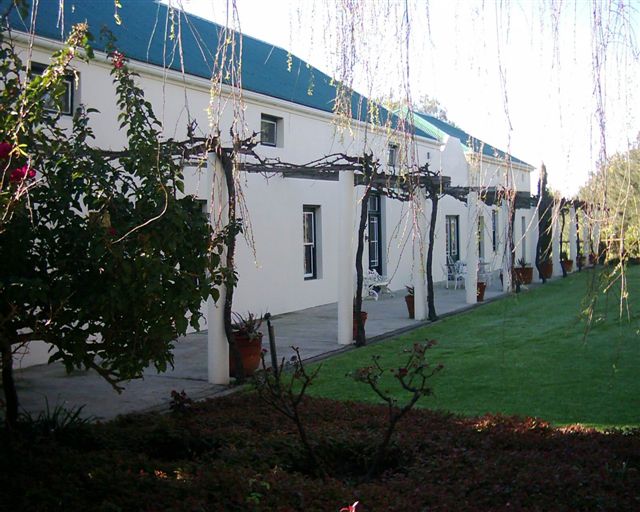
“What I have enjoyed most in writing the City of Kings trilogy is the slow revelation of how the different stories fit together – The Quality of Mercy begins where The History of Man ends and ends where The Theory of Flight begins, bringing everything full circle. If I had known from the first that I was setting out to write a trilogy, I would have been too overwhelmed by the prospect, so I am very happy and relieved that it was all a process of gradual discovery.”

Perhaps none of us, not even the writer, knows what’s coming. What we do know is that she will sweep you off your feet all over again.

THE TRANSFORMATIONAL TEKSMARK HERE TO STAY, CELEBRATING STORYTELLING, DIVERSE STYLES AND DISTINCT VOICES

PICTURES: Nardus Engelbrecht

Alby Michaels and Henriëtta Gryffenberg’s 1 starring Cindy Swanepoel and Zak Hendrikz.

Teksmark 2022 was presented at the Baxter Theatre in Cape Town from 24 to 26 August and could be attended by interested parties free of charge. A total of 22 playwrights presented their script ideas and 90 actors and directors participated to present excerpts from the scripts as play readings. DIANE DE BEER spotlights her personal highlights and announces the texts that gained recognition and further development:

It is the storytelling, the distinct voices, the diverse styles and the enthusiasm that turn the tide each year as I watch the artists present their work, perform extracts and show all of us what is on their minds.

While the world seems to be falling apart all around us – locally and internationally – artists do exactly what Nina Simone said all those years ago: An artist’s duty is to reflect the times.

And that’s also what the Teksmark does year after year as the artists come up with work that’s invigorating, pushes boundaries and allows us to makes sense of the world – or at least reflect on it.

It’s been a marvellous innovation on the artistic landscape and especially for theatre (one of the many struggling artforms), it’s a huge boost and an encouraging injection.

It’s fascinating to read 80 plus texts – some just examples of what’s to come and others fully written – to wonder how some of them could work on stage and then to see how the artists  find solutions to present their work in the best possible light.

Actor/writer Jane Mpholo in Fragmented.

It was especially some of the tougher texts that surprised me. Take, for example, Jane Mpholo’s Fragmented. When reading the text, I found it too rambling and sometimes overstating or too determinedly explaining something and yet, dealing with something as urgent as gender violence, probably the most horrific scourge in our society.

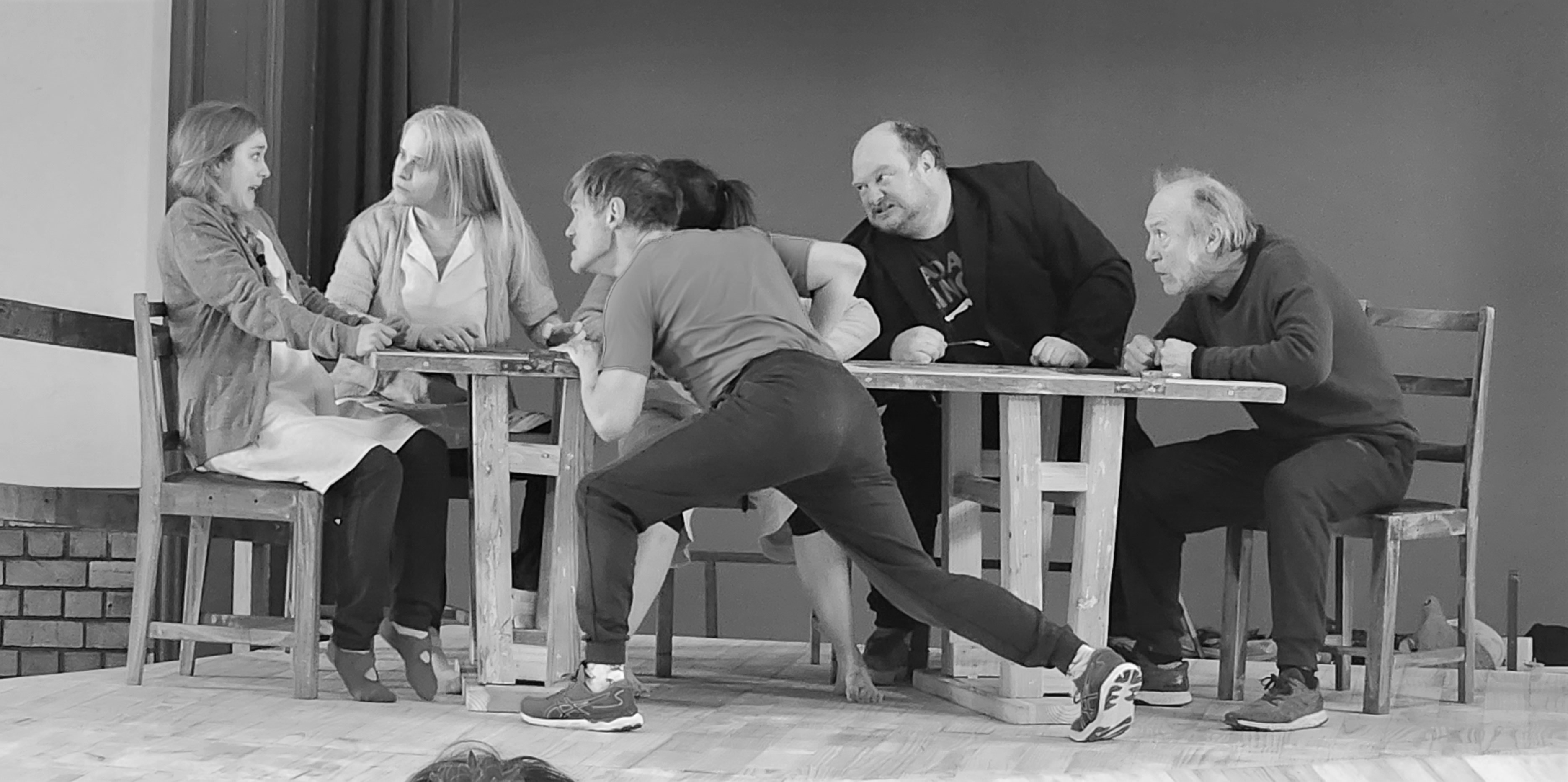
She’s a smart theatre maker/writer/performer and she pulled in director Heloïne Armstrong, who a night before the performance, cut, dragged and rearranged the text to sharpen the power of the words and message Mpholo wanted to put across – and all this was the result of Teksmark and the opportunity it offers young artists to try out their work in front of their peers and other interested parties.

Another text, smartly written and in a genre that doesn’t usually have much appeal for me, is Gita Fourie’s Afval, which was also staged at October’s Woordfees.

She has already hinted at things to come with  a text  Mamma, ek wil ‘n man hê!, winning the University of Stellenbosch’s Toneelkompetisie, while Afval already this year won the US Première Teaterfees.

When reading the text, I knew it had the potential necessary to be performed, unaware that it had already received many accolades and a potential run at one of our largest festivals, which was achieved to great acclaim.

Watch out for this dark farcical tale about Johan the serial killer, whose wife is desperate to keep his killer instincts from his daughter, who innocently brings many possible victims home for her parents’ approval.

Two established theatre makers/writers Henriëtta Gryffenberg and Albie Michaels teamed up for a workshopped text written by Michaels under the guidance of Gryffenberg as he combined two fascinations, Greek mythology and the phenomenon of Siamese twins, to explore the concept of marriage in the madness of the contemporary world.

Their’s was the perfect example of a text cleverly realised on stage. Titled 1, the couple Hiss and Hirr, Siamese twins, have grown so accustomed to a life lived in the closest proximity with both needs constantly juggled or compromised, they hardly dare investigate other options – to try living separately for example. It’s smart and the scope of putting this on stage is intriguing. And the wisdom of having someone to bounce off and shape ideas, is a winning recipe.

Another writer who has already proved her ability is Dianne Albertze, who wrote a poem combined with dance, not an easy concept to pull off. But again, she dabbles in mythology in a region of the country that lends itself to this kind of imaginative storytelling.

It’s not an easy text, but she has proved her stage craft before and if she puts in the work, she could pull it off. She has lost her heart to Namakwaland and with the help of the legendary choreographer Alfred Hinkel, her text, which plays with the mythology of the region will be incorporated in a piece that presents the spoken word, dance and multimedia.

She has set aside more than a year and if all her dreams and desires come to fruition, this could be something quite extraordinary, capturing the landscape and the people, all of them off the beaten track and not really part of the theatrical landscape – but one that grabs the imagination and again underlines the potential of Teksmark and everything it achieves.

One of the texts I knew from the start I would love to see on stage is Andi Colombo’s Dying in the Now. It deals with grief in a most unusual and human fashion. How many of us just want to run away when things get tough. It’s not that one thinks that will make the problem disappear but perhaps you can just forget about it – even for a while.

It’s about the gentleness, generosity and probing of the text and the issues it deals with especially coming from such a young yet wise perspective that  makes it exciting.

Ten scripts have been selected for further development following this seventh Teksmark.

An extract from the extraordinary Karatara.

Fahiem Stellenboom, Marketing Manager of the Baxter Theatre, mentioned during the event that Karatara by Wilken Calitz and Shaun Oelf, presented on the Teksmark stage three years ago, is a wonderful example of the success of this project. “Following Karatara’s run at the KKNK, where it received the Kanna for Best Debut, it recently returned to the Baxter Theatre, for a short season. We are very proud to be associated with this production and project.”

Hugo Theart, Artistic Director of the KKNK, confirmed that bursaries for playwrights valued at R150 000 – funded by the Nasionale Afrikaanse Teaterinisiatief (NATi) and the KKNK – were awarded to eight scripts. “Furthermore, we are proud to present a run at the KKNK and Suidoosterfees to one script and to record another script as a full-length playreading.”

Six scripts presented at the 2022 Teksmark were selected for further development. Mikayla Joy Brown’s Jantjies and the Pearls, (which has a new take on forced removals again from a young yet informed place) receives a run at the KKNK and the Suidoosterfees in 2023 and bursaries to complete their scripts were awarded to five scripts: Philip Theron for Babilon, Babilon (and this is his second text in so many years that has been picked), Henriëtta Gryffenberg and Alby Michaels for 1, Wessel Pretorius for Kamermusiek, (which with some thoughtful editing could be a brilliant text), Anele Kose for the heart-wrenching Mhla ndiqala idibana naye and Louw Venter for Albatros, a text that deals with the relationship – or lack thereof – between a father and son, not often seen on stage.

Writer and performer Anele Kose of the extraordinary Mhla ndiqala udibana naye.

Four scripts from Teksmark 2021 have also been selected for further development. Marí Borstlap receives a bursary to complete her script Koning van die Diereriem. Nisa Smit receives a bursary to translate her script Nipped in the butt into Afrikaans, as well as Michaela Weir for her script What happens in Russia … Another Philip Theron text, Die kontemporêre kuns komplot is recorded as full-length play reading by The Playwright’s Laboratory (TPL). TPL is a new initiative that offers an online platform for playwrights to share their work with an international audience.

Teksmark began as a small project and has started to feel like a festival that built its own audiences over the past seven years. We are truly grateful for their support and cooperation of partners like NATi and the Baxter Theatre, as well as other development partners including festivals, theatres, The Playwright’s Laboratory, Suidoosterfees, the Jakes Gerwel Foundation and the Het Jan Marais Nasionale Fonds,” concluded Theart.