FOOD IS THE FADDIEST THING AROUND BUT WE CAN FIGHT IT SAYS A WISE TIM SPECTOR IN SPOON-FED

Oscar Wilde

I HATE PEOPLE WHO ARE NOT SERIOUS ABOUT MEALS. IT IS SO SHALLOW OF THEM.

The Importance of Being Earnest.

DIANE DE BEER

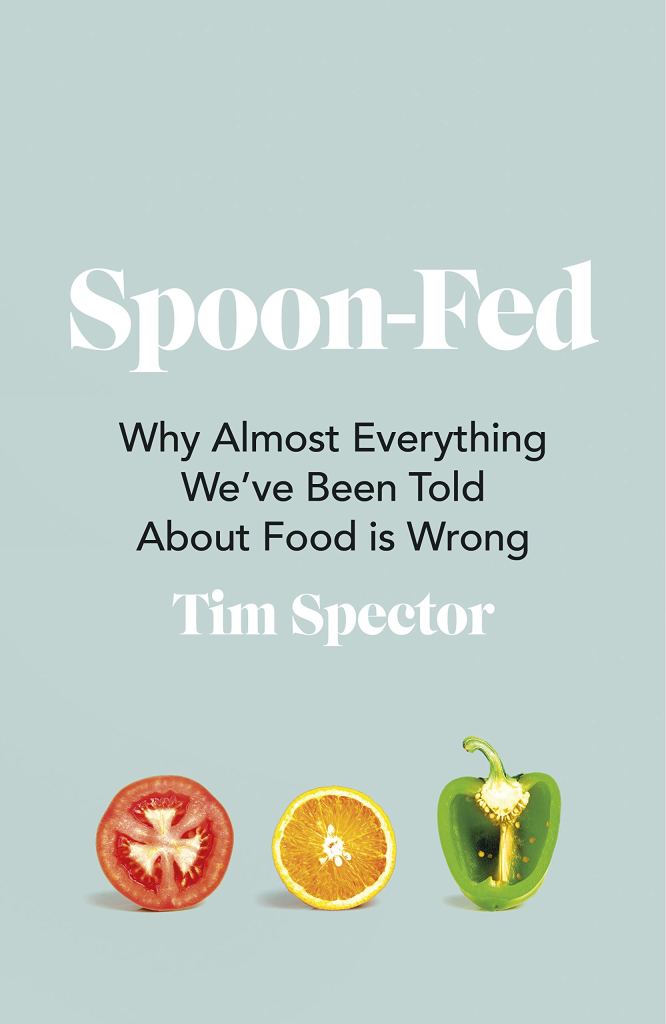
Spoon-Fed: Why Almost Everything We’ve been told About Food Is Wrong by Tim Spector (Jonathan Cape)

I’m a huge fan of chef Andrea Burgener and when I read that she recommended this book, I was onto it immediately.

She’s smart about food (and many other things, I suspect) and we need to listen to someone who knows what they’re talking about.

Food is probably one of the faddiest things around. If you’ve lived as long as I have, you would also have gone through periods in time where the goodness of avocado pears and bananas, for example, was completely forbidden. I was so thrilled when sitting in on an interview with Juliet Prowse, who amongst other things, was known for her fantastic figure, and she said that she had an avo a day! Yippee, that was the best thumbs up for me and ever since it has been one of my favourite superfoods!

But it is that dithering about what is good and what isn’t, which seemingly changes with the times, that drives those of us who are keen on good nutrition, dilly. As soon as I am told, have as much coffee as you want, someone else says NO!

So to cipher through the mountains of info and what to believe, I was delighted to find a new voice of reason with all of his facts based on science, something we now know isn’t common sense anymore.

What Tim Spector discovered in researching certain food beliefs is how shockingly little good evidence there is for many of our strongest and most deeply rooted beliefs about food. In the introduction he states that we learn most of our food myths as children.

He explains that he was told certain foods would make him grow more quickly (milk and cereal), make him more brainy (fish), give him acne (chocolate) or give him big muscles (eggs and meat). But he wasn’t told about the benefits of lentils, broccoli or beans, and was told nuts are an unhealthy snack because of the cholesterol.

He was told to eat breakfast religiously, that there was nothing wrong with mouldy food and leaving food on your plate was unacceptable. Sound familiar?

Other unquestioned advice included never swimming within an hour of eating, never eating just before bedtime and the importance of exercise to lose weight. All of these were common “facts” growing up for me too.

But, says Spector, none of these is backed up by science; in fact, many of them are categorically wrong. With all these rules around, we should all be healthy specimens, he believes, and yet since 1980, rates of obesity, food allergies and diabetes in most countries have rocketed, along with unexplained rises in dementia.

His own scientific research has focused increasingly, he writes, on nutrition and food-related questions in recent years. “I have been astonished how much of what we were told about food is misleading, and at worst, downright wrong and dangerous to our health.” And that alone should encourage reading of this wise man’s findings.

He asks insightful questions, like how did we get into this mess where unqualified people dictate the best ways for us to eat? He points the finger at three culprits: bad science, misunderstanding of the results, and the food industry. And I can see all of us nodding our heads…

Reading about his findings, I am reminded of hearing from an ophthalmologist that GPs really know little about eyes, and how a specialist recently pointed out that everyone is specialised in very specific areas. What that means is that those who know how little they know, are reluctant to give advice in areas outside of their expertise.

But if you think about it, that’s not the case with nutrition.  And Spector underlines that the study of food and health nutrition is one of the newest sciences, which appeared in many countries from the 1970s in response to the growth in the processed food industry.

He follows that with a detailed analysis of why we should be suspicious around food-related studies, the cost of comparing one diet with another, for example, and then he says something that we should all pay attention to: the assumption that we are all identical machines who respond to food in the same way, is the most prevalent and dangerous myth about food. It is, he warns, the basis of all diet advice.

We all respond differently to the same food, so the idea that we can all follow the same advice and calorie limits no longer makes sense. And he warns sharply about paying attention to the greatest obstacle when it comes to dangerously inaccurate food information: the food industry.

It’s fascinating stuff and whether you take him at his word, or in this case, scientific research, depends on your interests. I certainly did, because I found his explanations both credible and often just common sense.

Once the introduction is done, he gets into myths under headings like breaking the fast; calorie counting doesn’t add up; the big fat debate; the supplements really don’t work; the bittersweet hidden agenda; not on the label; fast-food phobia; bringing back the bacon; fishy business; veganmania; more than a pinch of salt; coffee can save your life and on and on…

But just to explain some: The subheading in breaking the fast is: Myth: breakfast is the most important meal of the day. While explaining that even when skipping what many would consider a real breakfast, many of us would have a cappuccino with milk and perhaps sugar and this would contain all three macronutrients  ̶  carbs, fats and protein – and will have the same effect on our metabolism as a bigger meal in ‘breaking’ the fast.

He then goes on to explore all the different studies, most of which sadly lack the scientific data to back their claims, and finally reaches the conclusion that it depends on the individual to decide what suits you best – and what would do you and your body the most good.

And just the fact that many of the studies are supported by breakfast food or cereal companies should already have you twitching … and thus he moves on.

I found the book as entertaining as it is informative, and being interested in food from all kinds of vantage points, I discovered enough to tweak my interest and get me thinking.

INVESTIGATIVE JOURNALISTS ARE REAL MODERN DAY WARRIORS WHO FIGHT VALIANTLY FOR TRUTH

During the early days of lockdown, I discovered two journalist-written books that I hadn’t read yet even though it is a HUGE interest and the writers, two modern-day icons in the world of investigative journalism, something that ever since the beginning of time, has kept us safe when people are clearly out of control. You might have to scratch around to find them, but if this is a field of interest, it will be worth your while:

DIANE DE BEER

TELL ME NO LIES: INVESTIGATIVE JOURNALISM AND ITS TRIUMPHS, EDITED BY JOHN PILGER (Jonathan Cape London):

Pilger writes that one of his favourite quotations is by American journalist T. D. Allman: “Genuine objective journalism is journalism that not only gets the facts right, it gets the meaning of events right. It is compelling not only today, but stands the test of time. It is validated not only by ‘reliable sources’, but by the unfolding of history. It is journalism that ten, fifteen, twenty, fifty years after the fact still holds up a true and intelligent mirror to events.”

And having read this book with great glee and horror in equal measure (joy because of the writing and horror because of the unfolding events described, some familiar, others not), it is the absolute truth.

That’s why someone like Trump, for example, can be so endlessly fascinating. It’s not the man himself (thank goodness!), it’s what the intelligent voices have to say about him as a phenomena in this time and place.

Pilger goes on to explain that Allman wrote the piece as a tribute to Wilfred Burchett, whose extraordinary career included what has been described as “the scoop of the century”. He tells us that while hundreds of journalists “embedded” within the Allied  occupation forces in Japan in 1945 were shepherded to the largely theatrical surrender ceremony, Burchett “slipped the leash”, as he put it, and set out on a perilous journey to a place now embedded in human consciousness: Hiroshima.

He was the first western journalist to enter Hiroshima after the atomic bombing, and his front page in the London Daily Express, carried the prophetic headline: “I write this as a warning to the world”.

Burchell was denounced while warning about radiation poisoning, not only by the occupation authorities but also by fellow journalists joining in the orchestrated propaganda and attacks on him.
What Allman and now Pilger point out is that he had exposed the full horror of nuclear warfare; and his facts were validated, as T.D. Allman wrote when Burchett died in 1983, by the “unfolding of history”.

His dispatch is printed on  page 10 of the book and Pilger emphasises that Allman’s tribute can be applied to all those whose work is collected in these pages.

He describes the huge honour of selecting the work to be reprinted, “the opportunity to honour the ‘forgotten’ work of journalists of the calibre of the afore mentioned”. Expanding his thought processes, he explains that the book and the stories it honours are a reminder that “one of the noblest human struggles is against power and its grip on historical memory”.

And all of us, especially in this current climate, can attest to that. Just listen to the leaders speaking about climate change at the most recent Cop26 conference and remember their denial only a few years back. But history fortunately has caught up with them – hopefully before it is too late.

Also think of Zuma and the Guptas who have crippled the country and the way investigative journalists fought the tide to tell their stories and bring their criminality to light.  Think of the brave souls who took the daily  White House beatings and the twitter humiliation from the ultimate bully with a bullhorn stronger than ever before.

With newspapers across the world in serious trouble and fake news difficult to distinguish for some, the impact of the words of these wise warriors has grown and should be nourished and given a protected platform.

“Secretive power loathes journalists who do their job: who push back screens, peer behind facades, lift rocks,” reminds Pilger.

I cannot urge you enough to read this one, be gripped by life happening and learn.

REPORTING: WRITINGS BY THE NEW YORKER, BY DAVID REMNICK (PICADOR):

David Remnick was with the Washington Post from 1982 to 1991 and then moved to The New Yorker where he was a reporter from 1992 and became the editor in 1998.

This book is different from the previous one as it is not dealing necessarily with the abuse of power, but rather with people power and someone who knows how to get under the skin of individuals and write about them in a way that has as much impact as the subjects themselves have had on the world.

Writing about one of his earlier stints as a reporter for the Washington Post in Russia, he tells how he and his wife flew back on the day before they watched “a column of tanks rumbling past our apartment building” on CNN.

The next day he was on a flight back and sheepishly had to hitch a ride to the barricades. He notes sometime later: “Flying away from the scene of a crime is a journalistic felony that can be forgiven with time only if you remind yourself that even the most observant can see only hints of a large event as it is happening.”

Obviously he recovered from there to become and establish his reputation not only as editor but also as someone who writes about others – up close. Or as he says it, attempts to do that.

His subjects are all in the public domain, passing in or out of a crisis or anticipating one on the horison. “Their time was usually limited or grudgingly provided. They had a reputation to protect, public and private agendas to consider, sometimes even a machinery of public relations to keep reporters at bay.”

He concludes in his foreword that the hope is that at some point they will let their guard down and be themselves. Generally they do what they can not to allow that to happen.

He starts with Al Gore, Mrs Graham (the erstwhile proprietor of the Washington Post) and Tony Blair. This is followed by the authors Philip Roth, Don DeLillo, Václav Havel and a series on Solzhenitsyn first in Vermont and then in Moscow. Which then naturally leads into a Russian-dominated series looking at The Last Tsar; The Translation Wars and finally Putin,

A series of outsiders is then tackled with the emphasis on Israel and the PLO, and finally, his sport fetish, boxing.

It is magnificent and anyone who has listened to his  New Yorker podcast will know that he has a way with words, knows how to pick his subject and then hangs out to give his readers an unexpected close-up and personal look.

Both of these books are available on Loot (and probably more outlets if you check) and would make perfect Christmas gifts for the newshounds or anyone who is dialled into the universe so that they can witness the events and people that dramatically changed our lives.

DIS BAIE LEKKER BY DIE SEE

Publishing this following story about a Durban/Kwa-Zulu Natal visit a month before the horrifying insurrection was quite tricky. In fact it was going to appear a day before the riots – but fortunately didn’t. In the meantime we’ve all been holding our breath so I’m hoping and have checked the places mentioned and nothing has changed apart from the city (I am told) getting a clean-up around elections, so please, if you’re planning to holiday in that region in the coming festive months, have a blast.

And for those who don’t understand the heading: It’s very good at the sea, or some such!

DIANE DE BEER gives a few impressions:

Our final birthday destination: Shangrila Beach House (in Bazley), a self-catering house, cottage and chalet with an exquisite garden designed by indigenous landscape gardener and botanist Alice Pooley.

When a friend decided to celebrate her 50th birthday on the Kwazulu-Natal South Coast recently, five of us decided to travel to Durban for a few days prior to the celebrations to explore especially the art and the food in a city none of us knew at all.

Art and culinary adventures are passions for all of us and we had read enviously about the hot spots in both Durban and the coast and we were excited to go on this adventure.

Travelling down by car, our first stop was for lunch in the region of Van Reenen’s Pass where two of our companions had previously enjoyed some excellent meals. The road to Oaklands Country Manor with a name change to Oaklands Farm Stay turns off (for a few kilometres) at the little town of Van Reenen and is easily worth the detour.

Together with the handful of super siblings (four sisters and a brother I think) who are in charge, the setting and the farm itself is special. On the day we stopped which happened to be a Sunday, there was a polo match in progress but quite a few families were occupying the outside tables with spectacular views, ready for lunch.

The splendours of Oaklands Farm Stay.

The menu was perfect for travellers, simple but with enough variety to cover the spectrum.

Salads either garden or chicken, toasted sarmies with chips, beef burger and chips, game pie or tagliatelle with garlic, chilli, anchovies, capers, broccoli and parmesan were the options. Our table covered the full menu and while the rest of the team started with a special cocktail, as the dedicated driver, I went for the homemade ice cold kombucha-style mixer, which was spot on.

The food was delicious, (I shared the game pie and the tagliatelle with the birthday girl because we both were undecided), but so was the atmosphere, the company and the hosts. We will be back whenever we travel this way.

We had ample sustenance for the rest of the journey which isn’t an easy one with all the trucks making their way to the coast. The bill without the lunch drinks was R250 per person (coffees included) which was a really good deal.

Durban was a huge surprise, great fun but not exactly what we expected. We took into account that we were there just before a strict lockdown and as we arrived the province was struggling with high covid numbers.

The splendours of the Phansi Museum.

On the art side we had two excursions: the one was the truly mind-blowing Phansi Museum (with on the side the exquisitely stocked African Art Centre if you’re in the need for some serious local craft shopping) and the other the Kwazulu-Natal Society of the Arts with a vibrant indoor/and out coffee bar/deli attached which was buzzing when we arrived.

The Phansi Museum will blow your mind. The breadth and scope of the collection is simply overwhelming and one wonders why this isn’t duplicated in every city in this country. There’s hardly a more accessible way to introduce the depth of the different cultures in South Africa. And I would travel all the way to the coast if only for a visit to this world-class museum.

Taking a guided tour with the embracing and embraceable guide, it’s amazing to discover the wealth and cultural riches of our people. Even if you are aware of the diversity out there, to see it all gathered together is magnificent. And there’s much to admire and much to learn, a truly heavenly experience.

This was followed by the Society of Arts also in the vicinity but unfortunately they were setting up for their next exhibition, which was a development project. We were, however,  enchanted that in spite of the lack of any art happening at that precise moment, the café was packed. That is good news and I want to appeal to all the large art institutions around the country, in Pretoria in particular (The Pretoria Art Museum, The Javett and Association of Arts particularly on my mind), to find a way to serve at least good coffee with some refreshments. It’s a way of drawing people in whether for an exhibition or simply to gather for some bonhomie.

This particular space is enchanting, and you could see that the refreshments and food were as good and it has to have that stamp of approval. Nothing could be more welcoming and it makes perfect business sense if you get it right. They also have a fun museum shop and anyone traveling to world museums, will know how important those are. Our art venues have to find ways to appeal to visitors. Once there, they will hopefully be captivated by the art.

We popped into one independent gallery just off the well-known Florida Road, but they were also busy setting up and apart from these three, that, according to what we discovered and were told, was it.

Florida Road, a destination we returned to time and again.

On the food side it was also hit and miss. Our first stop was a breakfast/coffee shop which came highly recommended in an online paper and sadly was a huge let down. When writers go all out with their praise that might not be warranted, you are then reluctant to follow their advice. With only a few days at our disposal, we didn’t want any more disappointments.

Fortunately we also had some pointers from friends and locals and we started with what for me was a real find and a must if you go to the city. Glenwood Bakery and its pumping pavement area is an instant comfort. These are locals and you can see this is their regular haunt.

Our visit explained why. Starting with the bill, breakfast with two cappuccinos each, cost R100 per person, which was quite extraordinary considering the quality of the food. Bread and pastries is a big thing at the Bakery and our choices were as varied as our taste – from my mushroom and egg affair which was perfect in size, produce and preparation to bagels with various toppings, and even sweet delights with flavours like hazelnut and apricot which had to be set aside because things were flying off the shelves. We were told probably to preserve freshness, only a very specific amount of baked goodies are prepared each day, so once they’re gone, that’s it.

After our previous flop, this was at the other end of the cuisine spectrum and one to keep in mind if you need a failsafe option. It’s guaranteed!

Of course we had to do Indian and the name we had was Palki, which a few sources had recommended. On our last night we wanted to do take-out and as there were restrictions anyway, it worked out well.

Our cuisine connoisseurs made the choices and we had a mixed bag, which in this style relates to a food feast. Again it is the option to go for when you have such a diverse group of diners, all foodies but with different tastes. But it also allows you to be adventurous in some of your choices and to add new dishes to the group’s repertoire. This time round, it was the not to be missed paratha and dhal makhani, both of which should be part of any Indian meal. Added were a paneer driven dish, a chicken curry and a brinjal pakora. And for the solo diner who is reluctant to be too daring, there’s always a Lamb Curry mince.

And that’s how we even drag the less adventurous along who eventually cannot resist and grow their palate. Palki is not cheap, but it’s quality with great flavours – which is what we were told.

A series of coffee shops and ice cream parlours to choose from in Florida Road.

In between we hung out in the popular Florida Road, kept missing the Patisserie du Maroc which is French flair with Moroccan inspiration, but we had a Monday and public holiday squeezed into our stay, both not good for certain businesses. We caught up on lots of good coffee and artisanal ice cream (a delicious rum ‘n raisin flavour) and even managed to squeeze in some samoosas at the Indian market.

Which is where we spent the rest of the time; a variety of markets on and around Warwick Junction. Outside of lockdown, there are tours available and probably one of these can be fun to do as the different types of markets within the bigger precinct will be showcased.

The colourful area in and around the city markets.

We didn’t have the luxury of a tour guide, but old hands, we easily found our way around the colourful markets, which range from typical Indian and African fare to the ubiquitous Chinese goods which seem to have invaded all local markets.

Getting goods during these difficult times are also problematic and without the foreign buying power, these markets also seem quite depressed. We nevertheless had a great time just walking around, checking the scene (in between a confluence of railway tracks and a graveyard with some interesting gravestones) and seeing how the city centre functions.

From there it was a brisk walk to the Durban City Hall, Post Office and some other majestic buildings including a beautifully preserved Norman Eaton building from a bygone era but many of them still in use today. Sadly the back stairs of the post office was a sight to behold and those who are responsible for cleaning, cannot point fingers at the state of the rest of the city centre if this is the example.

And that was the sad thing about this very vibrant and embracing city centre. With its wide avenues leading to the sea front, it should be a tourist mecca with the markets and beautiful buildings included in this space. But the neglect is horrifying and typical of so many South African cities as white business moves out, it appears owners of the buildings also stop caring.

Also disturbing was the fact that we were the only white people in the area on both days we were there. Just the traffic and the double parking and navigating was like an hilarious movie. It just seems such a pity that a space this vibrant if spruced up and embraced by a much wider community – could become a real tourist mecca.

We had a blast and were welcomed everywhere we went but my heart bled for those who had to spend their lives day in and day out under these sometimes horrific circumstances while hardly a kilometre away, the Durban seafront is a completely different matter.

Personally I suspect its all about money but there’s bags full to be made if the city centre was given a touch of love and care – not gentrified – just a look that a buzzing city centre deserves. It already has all the basics!

We concluded our Durban trip with a breakfast at the promenade at Circus Circus. We were told they serve great coffee and the breakfasts are hale and hearty. It was good to witness the Durban community in all its splendour with joggers, cyclists, rickshaws and hawkers all part of the parade.

From there our trip became a celebration as we moved to a little touch of heaven called the Shangrila Beach House (in Bazley), a self-catering house, cottage and chalet (depending on the amount of people) with the best sea view, its own access to the beach first crossing a working railway line, and an exquisite garden designed by indigenous landscape gardener and botanist Elsa Pooley.

The bliss of Shangrila.

And I haven’t got to the best yet, a mass of friendly dogs and the most wondrous wrap-around stoep. Self-catering with a chef (á la Dr Hennie Fisher) in our midst was bliss and apart from an excursion to Botha House (now a guest house with spectacular views), which was built for the former prime minister Louis Botha by his friend Sir Frank Reynolds, we pretty much stayed put in our imagined home away from home.

Two last suggestions on the way back, was a fuel stop just off Pinetown called the Polo Pony Convenience Centre (571 Kassier Road, Assagay) with a Woolworths food store with the best takeout sandwiches and coffee.

A little further up the road, again at Van Reenen’s Pass (this time on the left hand side of the road on the way to Jozi), there’s the perfect lunch stop at The Little Church Tea Garden which serves food made by the local farming community.

We opted for pies followed by scones and coffee as well as browsing through their well-stocked shelves for some last-minute pressies if needed. There’s also a chance to visit the little church and while having lunch, the views are spectacular. Again, it’s the perfect stop before hitting the road back home.

WATERBOY DEALS WITH A MOTHER’S LOSS OF A SON WHO COULDN’T HOLD ON TO A MEANINGFUL LIFE

One reads books for different reasons and mostly these are very personal and deal with taste, where you are at that specific time or how you wish to engage with the world. Glynis Horning’s heart wrenching lament dealing with the suicide of her eldest son is one that caught my attention, because I knew what the quality of the writing would be and while this would not be easy to read, it would contribute to life’s lessons learnt, which makes us grow.  ̶  DIANE DE BEER

Waterboy  ̶   Making sense of my son’s suicide by Glynis Horning (Bookstorm):

Perhaps it doesn’t make sense that I asked to read this book because I don’t have any children of my own.

But I have been a fan of Glynis Horning’s writing for a long time. We were young journalists together, she in Durban and I in Pretoria and I’m not even sure we met. I think so and that that’s where my interest began.

I have always know she is an amazing writer and this is what prompted me to request this book for reviewing. That and possibly also because I have read previous memoirs in honour of lost loved ones that have left their mark. Perhaps the most obvious is Joan Didion’s lament when her husband and daughter died in short succession.

And while Horning’s loss is still recent, the two-year mark looming (which, some note, brings some relief), the rawness of her grief, the way she tries to keep afloat amidst the lives that haven’t stopped, is quite breath-taking.

It felt throughout the read that I was holding my breath for some kind of revelation, some message of redemption for those left behind.

I have always felt that the worst loss must be for parents who lose their children  ̶  even without having my own. It just seems to hold such a darkness that descends on parents and siblings when that happens. And then for it to be suicide just seems so devastating.

That’s why I could understand Horning’s search for some kind of truth with her attempts to hold on to her precious boy. What could she have done? What signs did she miss? Can she bring him back or turn back that clock?

At the time when both my parents were at that stage where I knew we wouldn’t have them for much longer, Rachelle Greeff wrote a play titled Die Naaimasjien. In that she  writes: “Die dood is soos iemand wat sy rug op jou draai.” (Death is like someone turning his back on you). And because I felt directly impacted by what was going to happen, it was as if she had captured the inevitable permanence when someone dies so majestically.

Even the image of someone disappearing into the distance is captured in that poetic yet painful phrase.

That is what is captured so hauntingly in Horning’s search for something she knows is not attainable – ever again. And even though she hasn’t yet reached that point where one feels she is moving on, she is changed and more in control of her emotions. I felt it is in the writing that she has found an escape, an unravelling, a making sense and perhaps a sharing with both her closest and even those of us who in different circumstances might have to deal with something that feels as if it has ripped the life out of you.

Being the journalist she is, she methodically works her way through this difficult time  ̶  and then of course Covid-19 leaps into our lives ripping the rest of the world apart. Perhaps through doing her work as a journalist  ̶  editing and writing   ̶   which didn’t let up during even the beginning of mourning, she found a way to make her expertise (as one of our top health journalists) work for her.

She knew how to do research, which roads to travel and how to find specialists to explain the inexplicable to help her struggle her way through something she didn’t have a roadmap for. Life is like that. It constantly challenges you both in the worst and best ways and you’re not always able to pick and choose. It often seems random and what you make of it is what determines your life.

But because of who she is, she has resilience but also a fighting circle of people around her to help keep her upright. Her husband and second son have their own battles and the three of them worked together and apart to deal with their own grief. There’s also a triage of lifelong friends who simply never let go of their friend, offering constant comfort. And just being there.

Their words of wisdom, chatter and intimate knowledge of their friend allowed them to be constant warriors in this raging personal war. They were not going to allow her to slip away.

There are many reasons to read this book. Many people feel Covid is just about all we can deal with in this time. The rest should all be slightly mindless and happy, and certainly we need loads of that.

But what a book like this of Horning’s shows, even to someone who doesn’t have similar circumstances, is just what being human really means. How we all fall apart at times, overwhelmed by what life has dealt us unexpectedly. But that there’s always a way out, a light that shines somewhere down the road, something to look forward to, other people who need to hold your hand or rely on you for your particular guidance.

Horning keeps the memory of her lost boy alive with the extraordinary memory of a life lived, sometimes excruciatingly, and shows how we can never judge the lives of others. This allows every reader to walk, if even for a few seconds, in those shoes. If this doesn’t encourage empathy in a world that is more difficult to navigate for some than for others, nothing will.

IN THE CHARL DU PLESSIS TRIO UNIVERSE, IT TAKES THREE FOR A SPECIAL BRAND OF MUSIC TO SHINE

PICTURES: Bernard Brand.

Instrumental careers aren’t easy to maintain, but the Charl du Plessis Trio has achieved just that. DIANE DE BEER reflects on their reincarnation and their latest release It Takes Three, a title that aptly captures their current status:

PICTURES: Bernard Brand:

If there’s something that should be clear by now if following the career of pianist (and a string of other titles) Charl du Plessis, it’s not to expect the expected.

This artist thinks clearly about every step he makes and takes in his always-evolving career. This time the light shines brightly on the Charl du Plessis Trio, which have just released a new CD  ̶  not something rare for this trio, which includes Werner Spies (bass) and Peter Auret (drummer), and yet something unique in their recording history.

For the first time, says Du Plessis from the stage of their launch concert (which will be followed by a string of concerts around the country and probably internationally as well) they have workshopped this latest offering.

This is a result of a change in the Trio, with their original drummer relocating to China and being replaced with drummer/sound engineer Peter Auret, a man who has been seriously performing and recording with his own style very much in evidence.

As with any change, whether one is comfortable or not, especially in the creative sphere it often brings excitement, and in this instance, it seems a chemistry that has worked positively for the musos. “Peter is an experienced recording artist with his own studio and many awards. He speaks his mind and makes suggestions which changed the dynamics in the group,” says Du Plessis.

What it meant is that this latest effort was a much more democratic effort, he says  ̶  tongue-in-cheek. “Usually I would do the arrangements and hand them over to the others  ̶  a done deal.” But this time they workshopped the album with all three contributing arrangements on particular compositions. The change is dramatic, which is important when part of what you do is record. You don’t want all the albums to sound identical.

This has always been a Du Plessis trademark. As a pianist he has understood that to have a career on stage, he has to mix it up – but with thought.

The selection of music might puzzle those who aren’t familiar with the Trio’s work – dominated by classical music that is reworked and arranged to great effect. The days are long gone where audiences aren’t accepting of this kind of crossover especially when those in charge are adept in both genres – classical and jazz.

From Richard Wagner’s Pilgrim’s Chorus from Tannhäuser to Chick Corea’s Spain, Beethoven’s Moonlight Sonata to When The Saints Go Marching In, the mix is eclectic and exciting and much of the fun is recognising the original composition and how they play with it in subtle, serious and expansive ways.

Adding a new skill, Du Plessis, fine tune’s his instrument.

And the recording itself was also an unusual one. Du Plessis, who has been recording for many years both in personal and in group capacity, has had a few unpleasant and perhaps less productive sessions in the past. Now, even with someone in the group who has the expertise, they still called in the specialists to do the recording – on the Atterbury stage, which was specially set up to replicate a recording studio.

One has to know that even these unique circumstances would have influenced the performance and the outcomes. That and the fact that the sound engineer in their midst could then take his time and work on the final product. “It truly shows,” says Du Plessis – and of course it will. Who would not make their own product simply the best?

All of this started as the second year of Covid uncertainty kicked in at the start of 2021. Artists have had a torrid time. Audiences are their lifeblood and these were not allowed. Imagine 50 people at a show  ̶  you don’t even cover the cost of staging the performance.

Making music is the focus:

Travelling overseas for concerts, which is a huge part of their year, was up in the air and Du Plessis decided their project would be the recording. “It was also time to establish Peter as part of our recording cycle,” he explains and they set out to create the perfect circumstances for an end product that would have all three of them smiling.

That’s exactly what they did on stage at the launch, which was a fun affair. Du Plessis kept the chatter to a minimum while the boys dressed in black with designer (I have to assume) tackies (just to add some informality to what might be perceived as too staid an event).

The other ingredient in this production is the Steinway concert grand piano, which Du Plessis (a Steinway artist) went to fetch for the Atterbury Theatre a couple of years back at the Steinway & Sons factory in Hamburg, Germany.

There you have the chance to test many different pianos to make a very personal choice. At the time, when playing something on the piano for the first time, his thought was how cool it would be to make a recording, but also perform live on stage on this exquisite instrument.

It was obvious when attending the concert and then listening to the recording, that they pulled it all off. These are three talented and dedicated musicians who pooled their skills to enhance the end product, and with piano, drums and bass in the mix, the sound is rich and pliable – and the music familiar and yet completely new.

Like with any Du Plessis concert, and I’m not exaggerating, it’s beautifully compiled – both live and on the CD – and all you have to do in both instances (which is the perfect combo, is kick back, embrace and allow the music to wash over you.

Two more concerts in Gauteng are on the cards:

A concert arranged by a group of friends:
 At 8 Kafue road, Emmarentia
6 November 18:00
Bookings: https://qkt.io/TRIO 
R750pp
And the following day:
 at the Linder Auditorium, WITS
7 November 16:00
Bookings: info@jms.org.za or at the door
R200pp

EMOTIONAL DAMAGE AND RELENTLESS HARM OF RACISM MAGNIFIED IN ATHOL FUGARD’S BLOOD KNOT

Celebrating both playwright Athol Fugard and the 45th anniversary of the Market Theatre, artistic director James Ngcobo turns to the earlier work to capture this moment in time. DIANE DE BEER reviews Blood Knot, the perfect choice for what feels like a re-awakening of live theatre:

PICTURES: SIPHIWE MHLAMBI

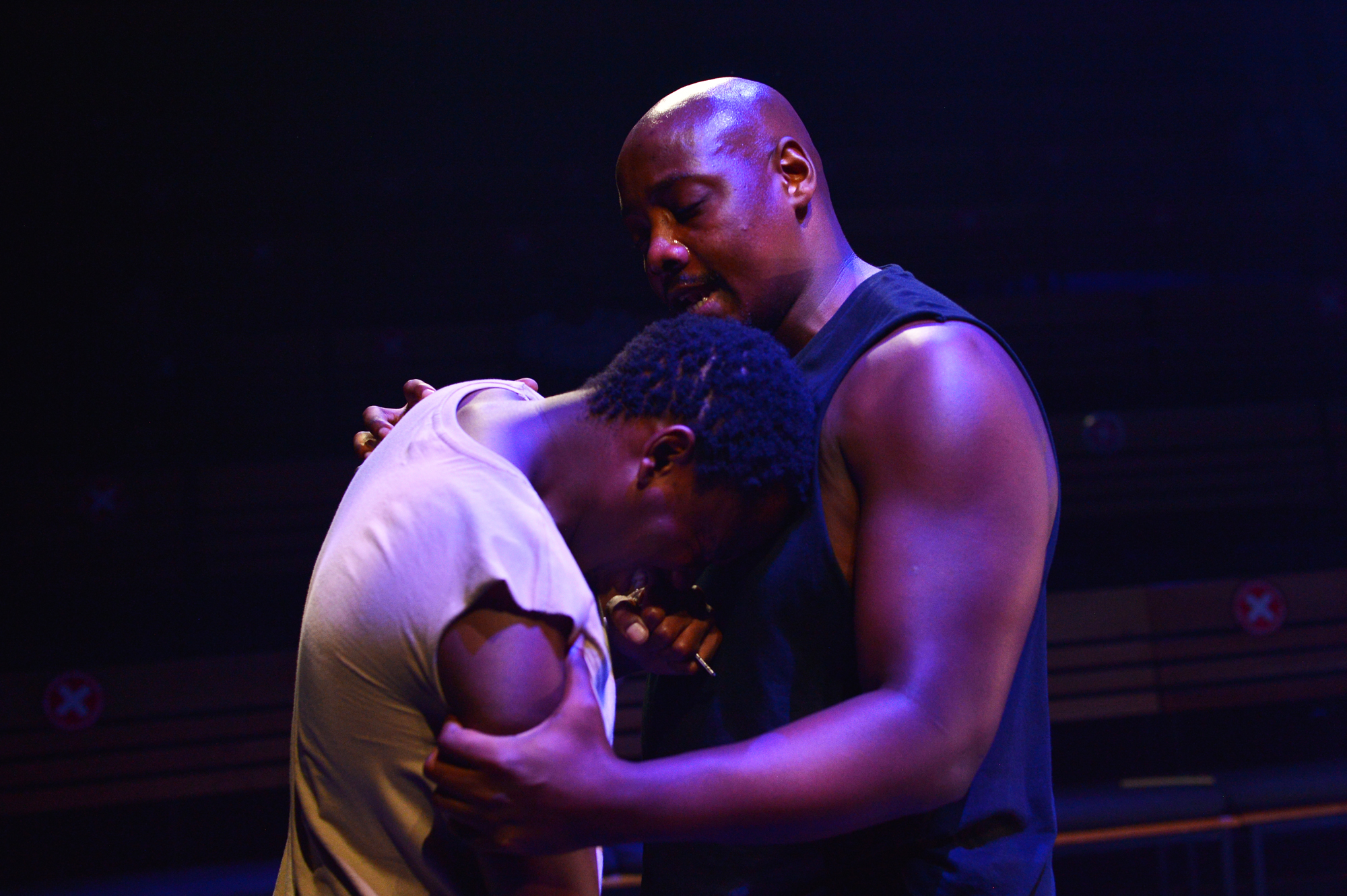
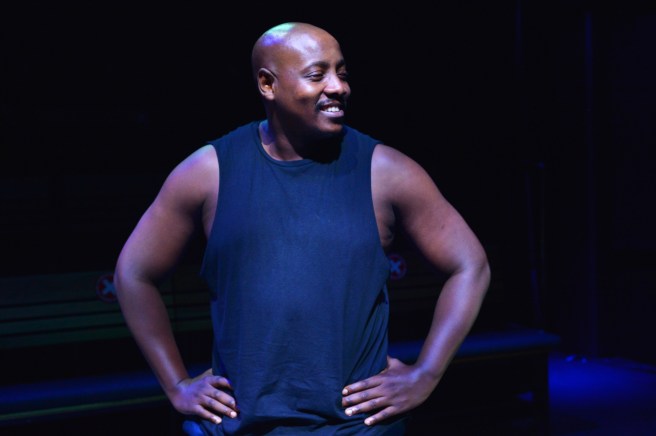
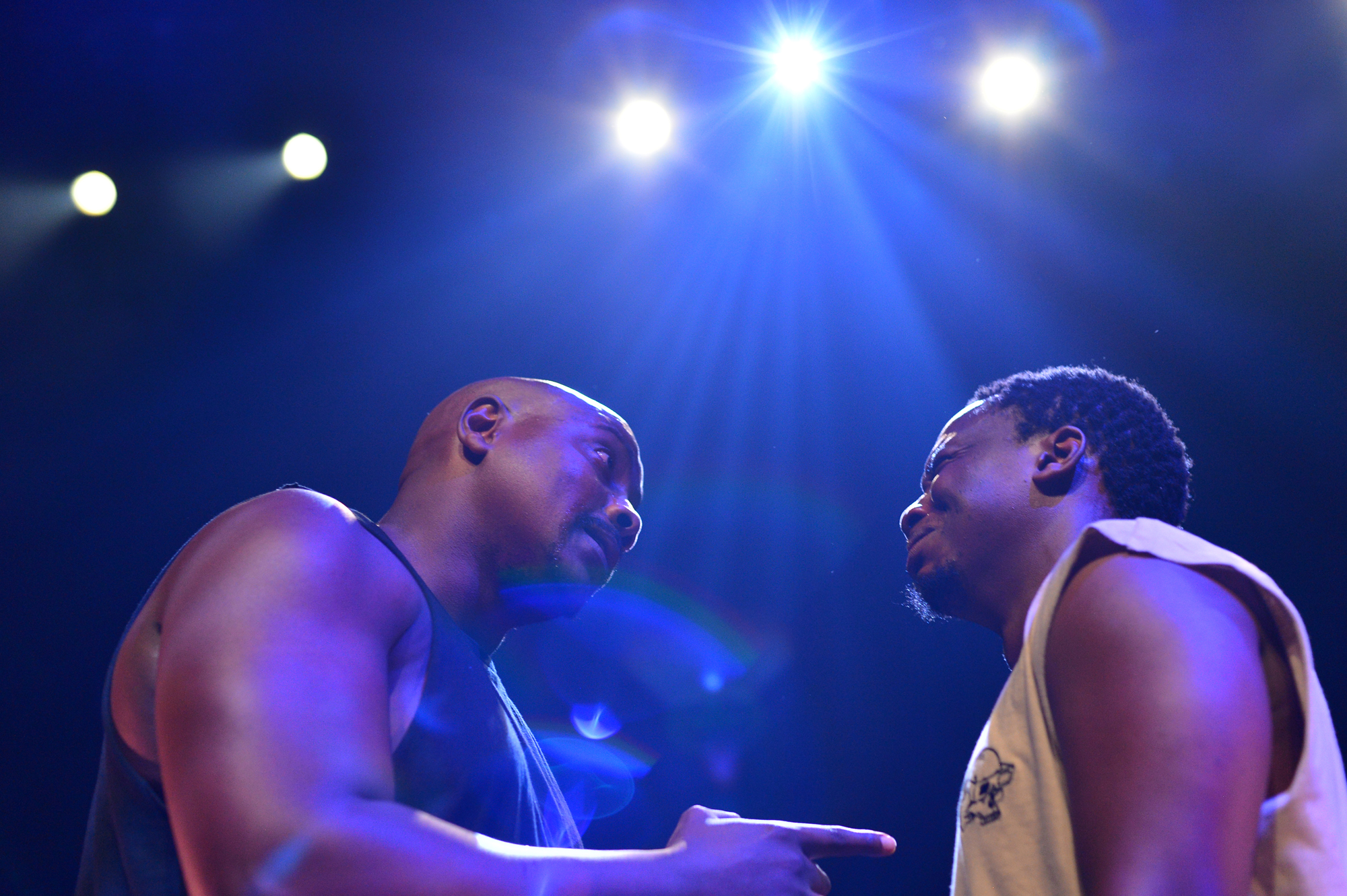
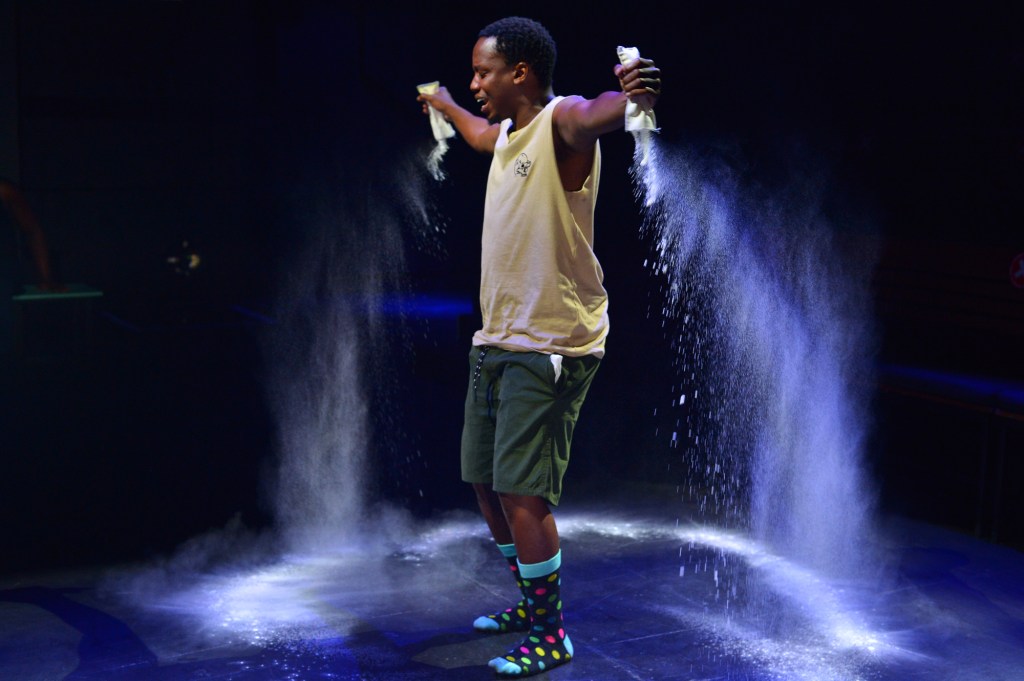
Mncedisi Shabangu in Blood Knot..

BLOOD KNOT BY ATHOL FUGARD

STARRING: Francois Jacobs (Morris) and Mncedisi Shabangu (Zacharia)

DIRECTOR: James Ngcobo

LIGHTING DESIGNER: Mannie Manim

PROPS AND SET DESIGNER: Nadya Cohen

THEATRE: Mannie Manim at The Market, Johannesburg

DATES: Until November 14 Tuesdays to Saturdays 7pm; Sundays 3.15pm;

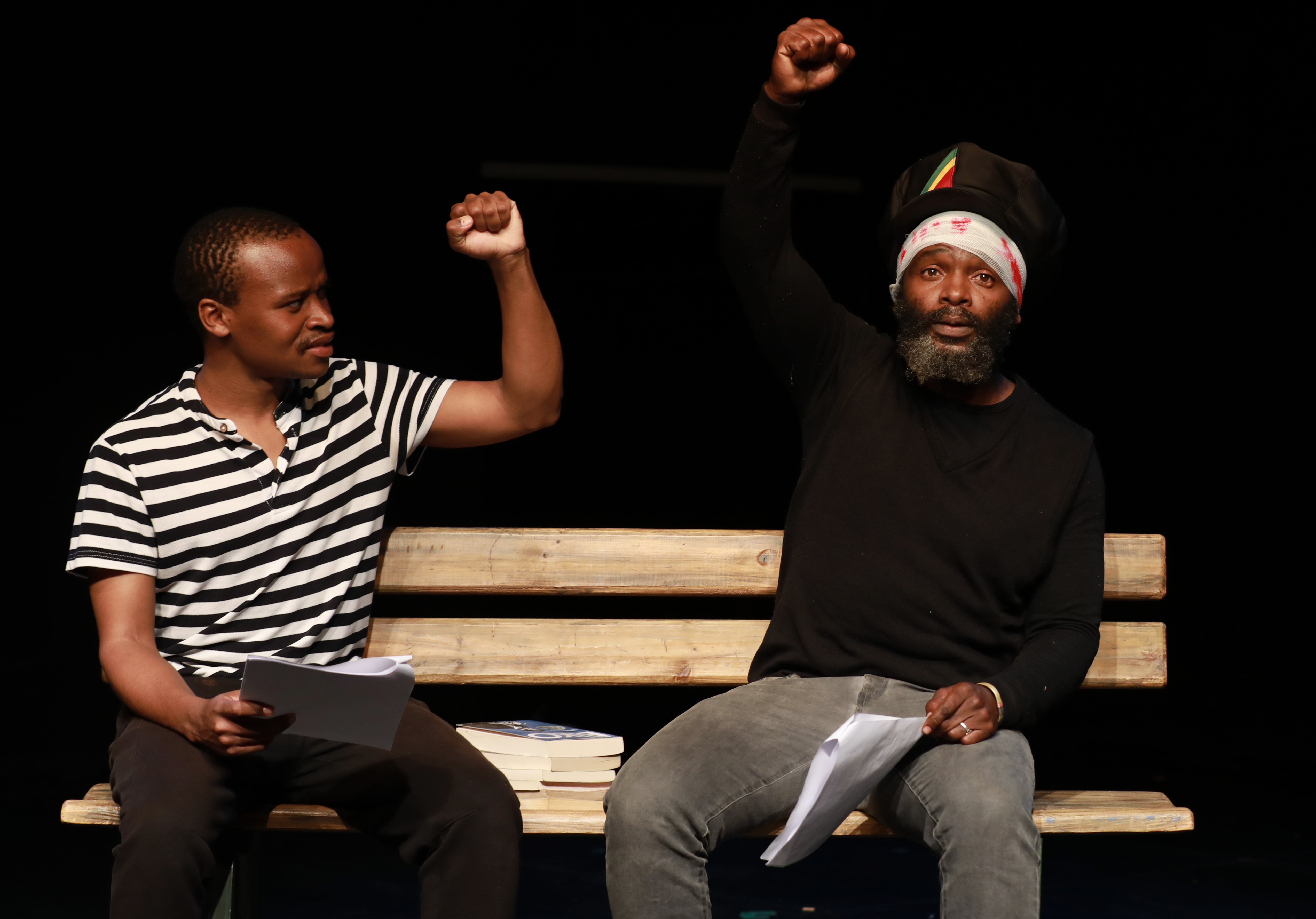
From the time you lay eyes on Mncedisi Shabangu waiting to enter into the dreamworld of the two brothers in Blood Knot, it’s difficult to turn away.

His whole body seems to be drenched in sadness, and at this point you can’t yet see his eyes. But that is Shabangu’s strength. He climbs into a character almost stretching the skin to breaking point. And when he holds onto his centre like he does here, using his tools sparsely, it’s magnificent.

The two brothers (the one seemingly white, the other black) live in a dilapidated room somewhere in a township.  Zacharia earns a living while Morris stays behind in the room, caring for his brother and their dreams.

He has his sights set on a small farm in Africa, but his brother’s desires are more immediate. What Fugard does so brilliantly is to thread the sadness of their lives through every breath they take, from start to finish.

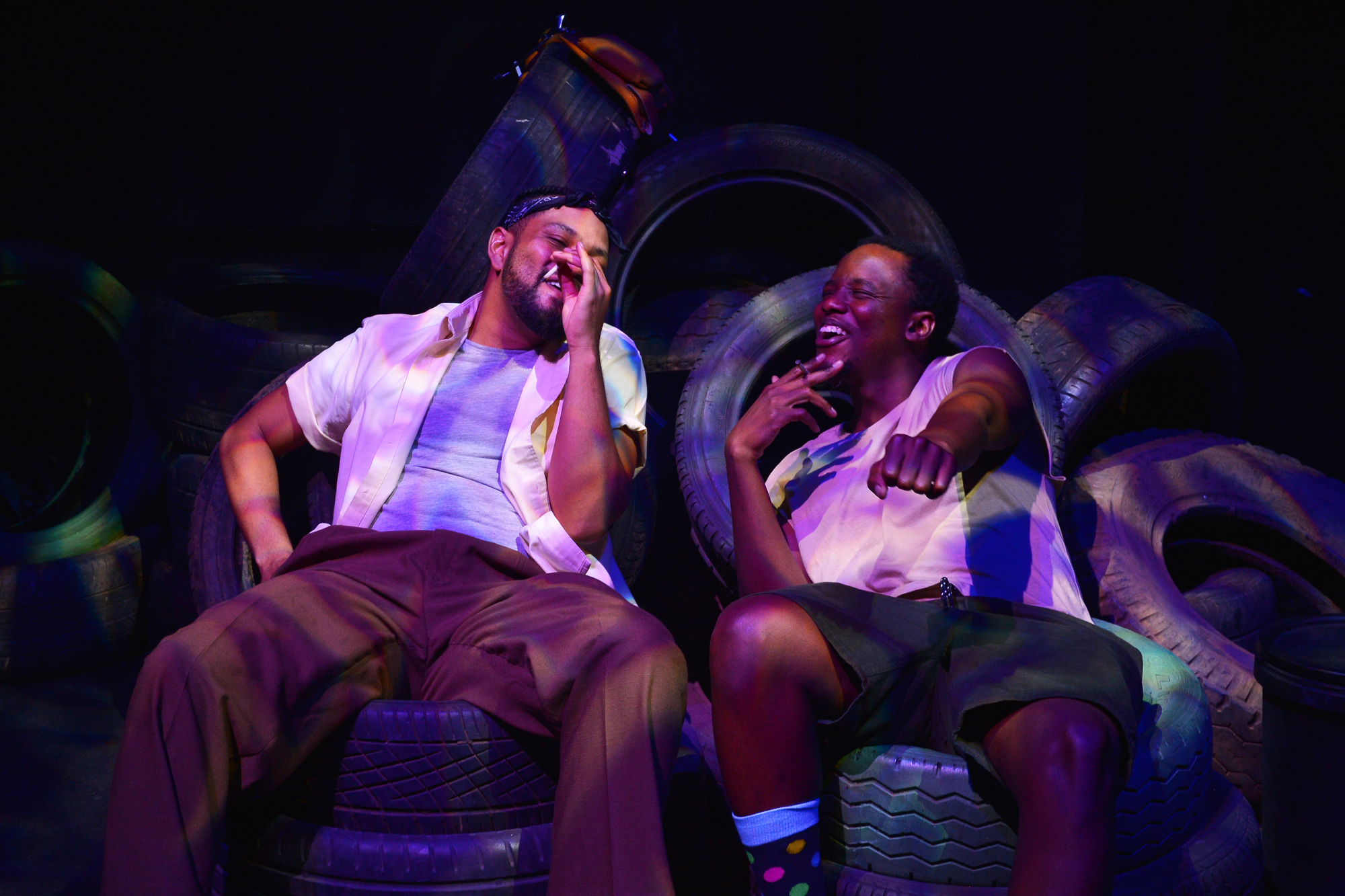
Blood Knot starring Francois Jacobs and Mncedisi Shabangu directed by James Ngcobo.

It’s not in big gestures or huge events and that’s what makes it so painful to witness. It’s visibly there in everything they do. It’s where and how they live, their isolation, the way they keep polishing their dreams, which hopefully creates a life, and perhaps as an endgame, happiness.

They take small steps as long as they can keep the harsh world at bay, but as we all know, that’s impossible when something as visible as the colour of your skin determines not only your life, but your total being. And how does one buffer the pain?

That’s what Mncedisi manages to put across with his blend of naiveté and an almost childlike desire to secure some warmth and humanity in this place that doesn’t seem to hold any of that. And still he desires and dreams.

It’s in the rhythm of the way he both moves and speaks. Sometimes he takes it slow, then speeds it up, but always quietly so that when he raises his voice in either anger or joy, it cuts through the fabric of your soul.

That’s the kind of work this is, small and written with a quiet simplicity and yet, the issues are pressing against the walls of that room as if waiting to explode. Fugard knew that it is in these small stories, the everyday events that slip by unnoticed, that the depth of racism lies.

And especially this early work, the first that made the world step back and notice, makes it very clear how this kind of hatred permeates everything it comes into contact with – every minute of the day and night. It affected everything and everyone – the oppressed and the oppressors – and it still does.

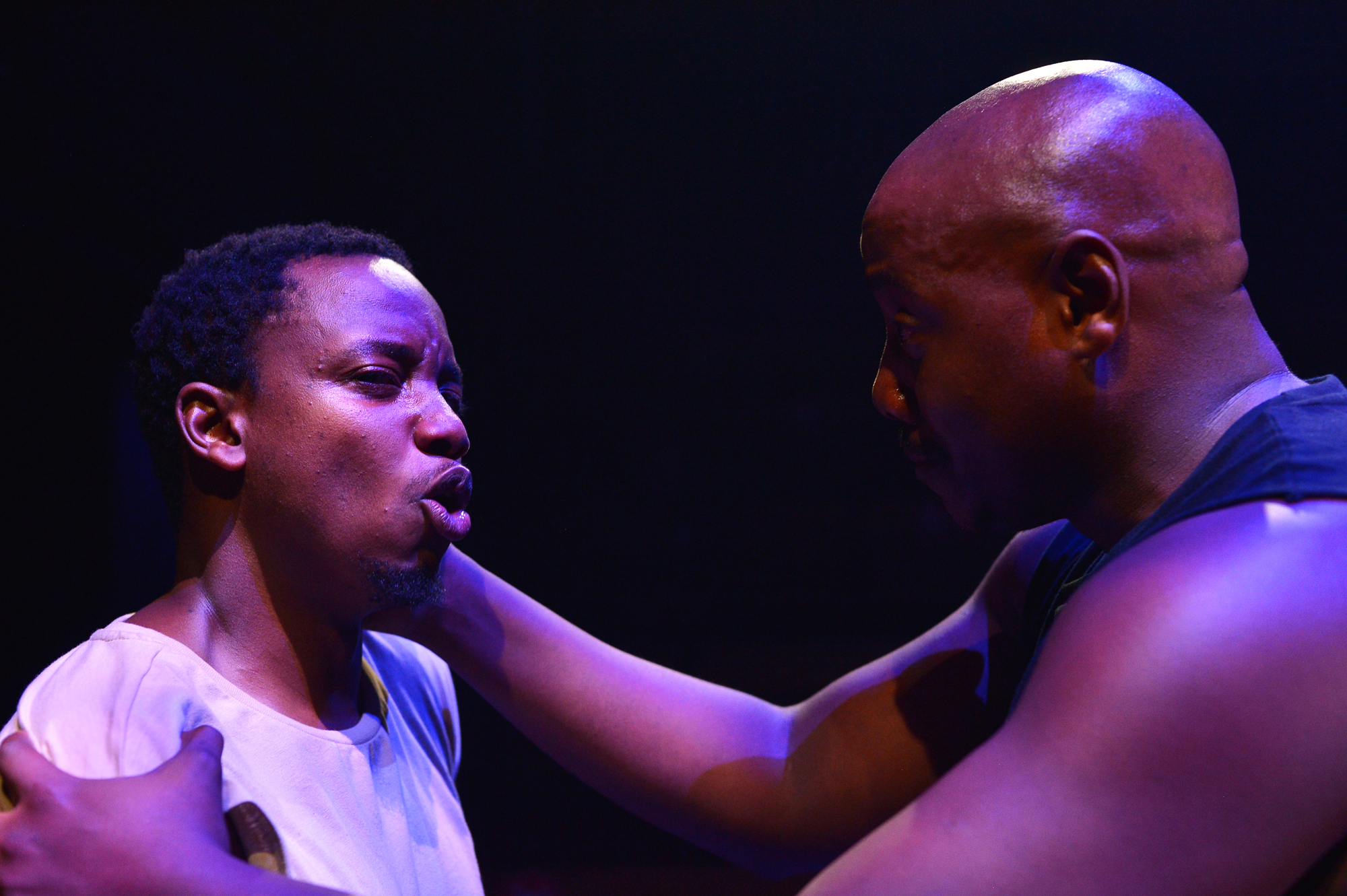
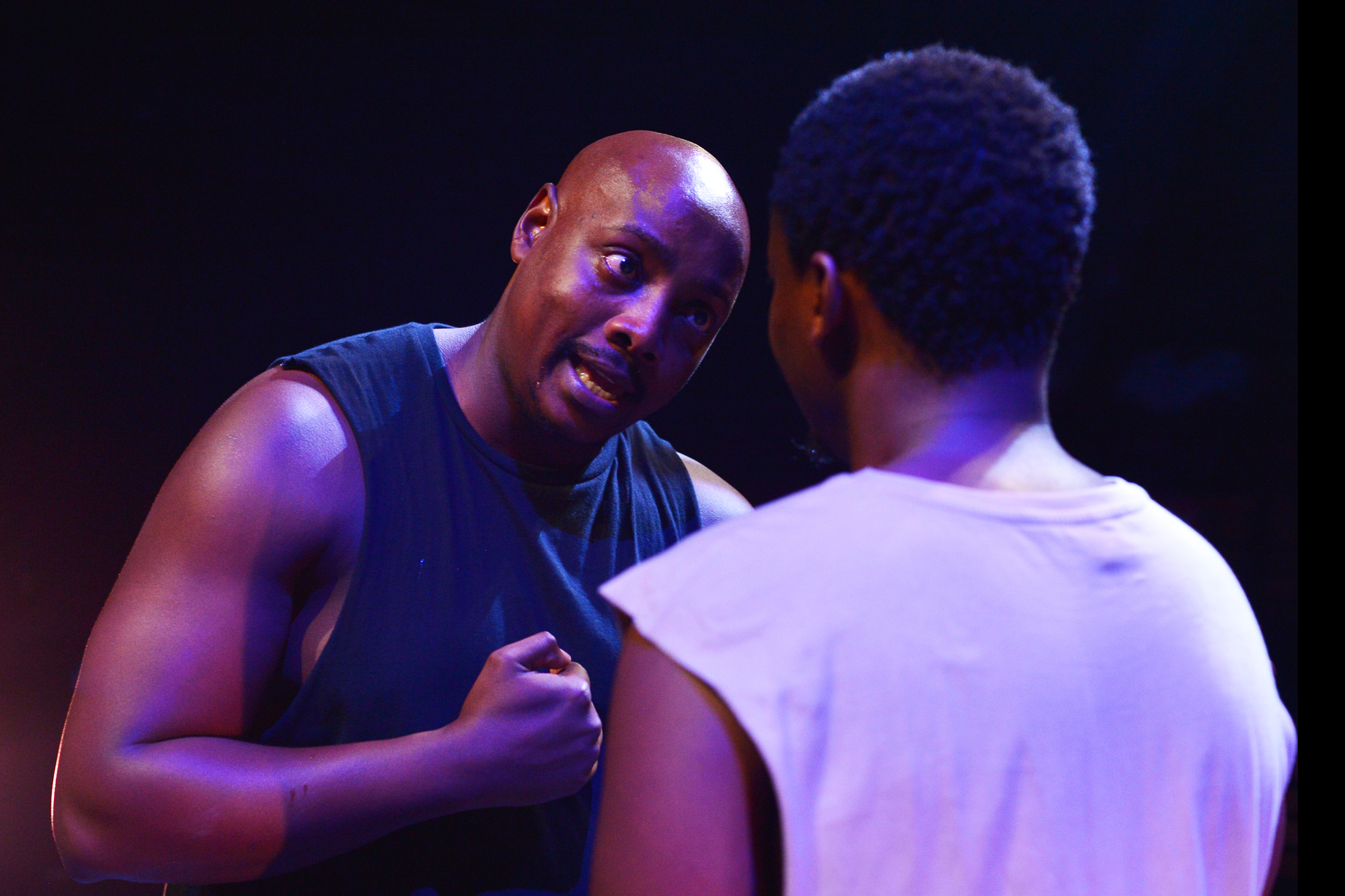
Francois Jacobs (Morris) and Mncedisi Shabangu (Zacharia).

Because Mncedisi’s character is the one who holds you tight and draws you in, Jacobs’s Morris could just disappear, but he has forged a strong presence, acts as the brother’s foil and allows the bond between these two disparate characters to evolve.

Ngcobo has always been a Fugard fan, both as an actor and as a director, and it is clear that this one, in The Market’s 45th celebratory year and Fugard’s upcoming 90th in 2022, is a heartfelt love letter. He has honoured the text and allowed the words  and the actors to sing.

And with a full understanding of the nuances of the work Mannie Manim adds to the mood as he lights the space with great dexterity and delicacy.

It is in the simplicity that everything glows and allows you to step inside the pain and experience a life that can only be determined by others. Those of us who have had the privilege of planning our own futures with relative ease, may find it difficult to understand the lives of others. That’s what Fugard did so insightfully during the apartheid years when few voices managed to make themselves heard.

Mncedisi Shabangu and Francois Jacobs.

And in a world where racism has grown rather than diminished as one would have hoped, his plays are as relevant and even more poignant than when they were first written. Because we lived through those horrific years even if we were part of the privileged (rewarded for being born white), to witness what is happening today is excruciating.

When will the world learn that diversity is what makes it turn? Fugard said it then and is still saying it now. And yet we keep shunning the other and stomping on their dreams.

Ngcobo and his two actors are determined to shine the light – and they do so stunningly.

.

AUTHOR GERDA TALJAARD’S LATEST NOVEL, VIER SUSTERS, ENCHANTS WITH FAMILY DYNAMICS AND DYSFUNCTION

When author Gerda Taljaard is asked about her latest book at a book launch, she answers with a question: “What is better to write about than dysfunction?” Probably, on par with reading on the topic, agrees DIANE DE BEER:

With a book titled Vier Susters (Four Sisters), dipping into her favourite genre, domestic noir, Gerda Taljaard has created her favourite playground.

Set on a farm in Magoebaskloof, píctures form in your mind’s eye and the house itself becomes another character. You don’t have to listen too hard to hear the floorboards creaking and the rain lashing against the windows during a storm.

And Taljaard explains it best: the house is also a powerful Jungian symbol of the female psyche, which then links it to the Gothic romance tradition: a lingering evil, the prevalence of death, the appearance of the supernatural and the hysterical woman (in this instance, Beatrice), the result of suppressed sexuality.

“It becomes a psychological space,” she notes as she explains that she didn’t want to write what is a favourite genre in Afrikaans, a plaasroman (directly translated as farm novel).

With  storms raging, water plays an important role in this novel. “It can be cleansing for those who feel troubled, a kind of baptism, or even represent undercurrents.” And the list goes on…

She wanted to make  a more skewered stab at this almost comfortable setting (on the surface) with the homestead itself in a state of disrepair, as are the relationships between the four sisters. And that is how she stumbles into the story she wants to tell.

It’s 1945 and war is at the centre with an Italian prisoner of war, mangled by a leopard during his flight, finding his way into their lives. There’s also the complicated politics of the land, with language rather than race the issue.

All the siblings are on the farm in the house they grew up in, which now belongs to the eldest, the beautiful Beatrice, married to a rather weak man; Sophie, the worrier, married to an English man, and Ivy who finds refuge in her childhood home following an escapade with what would now be described as a terrorist group (based on the truth, with the main character also based on reality).

Very much the adjunct to the three sisters, Kittie lives in an outside room/servant’s quarters but was raised as one of the white family yet never fully embraced, almost allowed only to hover on the edges.

We’re dumped into the emotional and political timebomb right from the start as the sisters tread lightly while performing their ‘allocated roles’ in the family – roles many would recognise, as they’re part of family dynamics and dysfunction.

THE many many faces of author Gerda Taljaard:

While the author is also one of four sisters, her aim with the novel wasn’t just her own familiarity but also the fact that women don’t often take centre stage in these stories –  even when they are so often at the heart of the home. “I did take courage from my own family, where strong women have always been a feature,” she says. But she also feels that women have to take their rightful place in the past. “Women should not be excluded.”

She points out that while they are a close family, the sisters are all so different in character, it’s difficult to spot that they are related. “I do, however, understand the dynamics of these kinds of relationships,” she says.

For Taljaard, the writing process is very specific. Once she knows that there’s something brewing, it’s the first sentence that opens the floodgates. “It’s what I need to get the writing to flow,” she says. She makes rough notes, not a framework, and the writing takes over. “It’s almost a spiritual process,” she explains.

And in this instance, her introductory sentence can be twofold: first there’s almost an introductory page, which makes much more sense once you’ve read the story but also introduces the sisters to you briefly and explains the name of the farm; and in Part 1, where the back story starts, one of the sisters arrives at the farm and stops to gaze at the mountains she hasn’t seen for some time. And then reflects on the brevity of life…

But there’s also a tribute in the front of the book from Tove Jansson’s the Summer Book:

At first, no one mentioned it. They had developed a habit, over the years, of not talking about painful things, in order to make them less painful. But they were very much aware of the house.

That presence also encapsulates her own story. On the sister she identifies with most, she points to Kittie. “There is something of me in all the sisters, but Kittie is the outsider and the one I feel a real kinship to,” she says. “She doesn’t fit in and I think there are many similarities.”

But more than anything it wasn’t her own siblings that came to mind when writing the book, it was her grandmother and her sisters who dominated her being, she confesses.

While we all love identifying the writer with the people she is writing about, with this one it doesn’t matter. We all have families, understand particular family dynamics and probably know dysfunction far better than we want to.

That’s what Taljaard does so well as she pulls you into her story. That and the writing. This was my first introduction to this author, who has obvious storytelling abilities but also a way with words, which is tough to capture if not in Afrikaans.

It is, however, the language, the way she juggles with words and concepts, her striking sketches of people, the way they think, trespass and trip through their lives that hold your attention – and finally your heart.

It’s also a story that’s so universal, it would be a pity if it’s not translated, giving it the accessibility it deserves.

Hopefully she will have another first sentence soon.

AT THE KLEIN KAROO NATIONAL ARTS FESTIVAL (KKNK) THE SHOW JUST KEEPS GOING ON AND ON

As things start opening slowly, the festivals are starting to show stronger movement and do things in innovative ways. As their contribution, the Klein Karoo Nasionale Kunstefees (KKNK) supported by Absa launched a virtual version of the popular Absa Kuierkamer, which is part of the festival each year and they keep adding more and more content, so keep checking their website and social media for future surprises. DIANE DE BEER shows the way:

“The KKNK has presented several online projects and productions over the past year (including Samsa Masjien by Jaco Bouwer quite recently, for example). It is an online festival where we offer the arts to everyone in the comfort of their home – whether it is on the television or computer screen, on the radio, on a smartphone, or on your doorstep – the KKNK is everywhere,” says Hugo Theart, Artistic Director of the KKNK.

The festival, which was temporarily put on hold last year due to the ongoing COVID-19 pandemic, will see Absa celebrating 16 years as a proud sponsor.

According to Theart, Absa has been involved with the festival for many years and they continue to support the arts in this challenging time with the world still grappling with the impact of the COVID-19 pandemic. “The Absa Kuierkamer has become an institution at the festival, a place where festival-goers are entertained and informed and can spend time together,” says Theart.

 Dr Paul Baylis, Absa Senior Specialist Art Curator adds: “We’re bringing innovations that will extend the reach of the festival beyond its usual territories, in the process introducing new audiences to the festival.”

They have come up with is a series of virtual engagements, activations and talks offered during the online festival period to continue to make the arts, and possibilities found there for artists, a reality. “This digital art presence makes visual arts more accessible to diverse audiences, whilst also providing visual artists with a platform to explore and comment on issues that impact their lives,” says Bayliss.

The Virtual Absa Kuierkamer also mimics aspects of the host town of Oudtshoorn and will see numerous online activities presented where visitors are given access to a variety of multimedia content. “Functions are spread across the town and art lovers can explore various beacons and buildings, just as they would during the festival. The platform boasts a wealth of unique interactive features, and all these features are offered through a web-based application, which enables a seamless experience on computers and mobile phones,” adds Bayliss.

One of the highlights on the program is award-winning presenter Hannes van Wyk’s Coffee Table Talks (popularly known as Koffietafelgesprekke). Van Wyk talks to his guests about, among other things, the impact of Covid-19 on the arts and entertainment industry and explores ideas around the future of this industry.

Another virtual experience that will be presented, is a series of art documentaries titled Beyond the Canvas. These focus on themes that have an impact on the South African visual arts landscape. The themes range from technology, social media, tourism, and graffiti, to recycling and food in relation to the visual arts and will include both local and international guests sharing their thoughts and experiences.

In addition, a series of six Business Talks is hosted by Absa’s Retail and Business Banking division (RBB) over the three-month period and will also see numerous guests invited to participate in conversations to find solutions to some of the country’s pressing questions. “Talks are compiled to focus on matters that contribute to the sustainability of our country at large,” Bayliss says.

Justin Schmidt looks at Renewable Energy and Manufacturing, James Noble sheds light on the world of Franchising, while Abrie Rautenbach highlights trends in Agribusiness. Fiks Dlamini focuses on opportunities in the Public Sector landscape and Kgalaletso Tlhoaele homes in on the importance of Enterprise Development.

Entertainment which can be enjoyed for free is also presented on the platform. These include 21 Life Lessons, a series where well-known and prominent South Africans share their life lessons; comedy segments by a few of our best comedians and storytellers; The Karoo Project, a special music series recorded by Zolani Mahola, Jitsvinger and Native Young in the Karoo during lockdown; and Oudtshoorn se mense, a series where residents not only showcase their talents, but also discuss the exceptional town and region. These sessions are available to all viewers to enjoy for free.

Starting with the music component, the  KKNK is equally well-known for its music offering and the beautiful region of the Karoo, specifically the Klein Karoo, which plays host to this festival.

Karoo Project with the sublime Zolani Mahola.

The Karoo Project was recorded by Rootspring Music in the desert landscapes of the Karoo  and  created in this amazing ecological space by musicians eager to play music again. The aim was to capture these soundscapes in their most raw and stripped-down form. Pippa Ehrlich, the Oscar-winning director of My Octopus Teacher, was a consultant on the project.

According to Yusuf Ganief, CEO of Rootspring NPC, their core purpose is to support artists and allow their creative expression to be the voice of conscience, to depict the mood of a nation. “The Karoo Project was born through a need to find ways of expressing this voice during a very challenging lockdown period,” he says.

The extraordinary Jitsvinger makes music

Mahola’s Thetha Mama is a reminder to humanity to reinvigorate the respect and humility that we once embodied towards Mother Earth. Jitsvinger’s Doenit is a head bobbing, high energy piece that speaks directly to one’s inner child and ability to move and let go. Graveyard by Native Young (Yannick Meyer & Mohau) is a deeply personal song about the ephemeral essence of life and mankind’s inevitable return to source – to nature.

Native Young’s Graveyard

Zolani Mahola’s Thetha Mama is now available to view in the Virtual Absa Kuierkamer’s theatre, via the KKNK-website as well as Jitsvinger’s Doenit launched in the beginning of October and Native Young’s Graveyard in the beginning of November.

Every bone in her body is funny: Marion Holm

It’s quite something to spend some time in these short bursts of laughter and memories. The short comic moments are almost like reading cartoons, while Mahola’s exquisite performance enveloped in her own Karoo musings linger magnificently and reminds one of the power of artists and how they state their thoughts and their expressions best- by sharing.

Absa also supports the KKNK’s second Virtual Gallery that opened its doors earlier this year. Bayliss is the curator of Absa’s exhibition, Emotion. Custom-made artworks by previous Absa L’Atelier participants, designed for this digital platform, are exhibited here. Stroll through the Virtual Gallery at www.kknk.co.za/afdeling/virtuele-gallery/.  

And watch out for some exciting theatre in the not too distant future.

The Virtual Absa Kuierkamer is presented until  the end of November 2021. Click here for an overview and virtual walk-through of the unique platform: https://bit.ly/3zW6RjP

Visit www.kknk.co.za and follow the quick registration process for access to the Virtual Absa Kuierkamer.

As a special highlight, Coenie de Villiers and Deon Meyer have put together an early Christmas concert especially for the Klein Karoo National Arts Festival (KKNK) and Oudtshoorn, to lead us into the festive season.

Audiences from across the country raved about De Villiers and Meyer’s Karoo Suite 1 & 2 and now these two masters and lovers of the Karoo have put together a special show, Karoo-Kersfees which takes place on November 25 and 26 at 7pm at the beautiful Surval Boutique Olive Estate in Oudtshoorn.

De Villiers is at home behind the piano for a Karoo programme that not only pays homage to the beautiful region, but also the Christmas season. “We can finally perform again. On top of that, we can do it under the stars in the Karoo. Come and share the Christmas spirit with us – it will be an honour to play for an audience again,” he says.

Meyer joins De Villiers on stage as they sing the praises of the Karoo, the starry night – and in particular, that one starry night thousands of years ago. “A Karoo Christmas concert under the stars. In the Karoo. After all the months of pandemic, lockdown and restrictions. It’s going to be magnificent,” says Meyer.

The production lasts 70 minutes. A limited number of tickets are available at Quicket at R250 per person. All Covid-19 protocols will be adhered to, and audience members must wear a mask at all times.

For inquiries, contact the KKNK office on 044 203 8600, send a WhatsApp to 065 285 2337, or e-mail info@kunste.org.za.

THE EUROPEAN FILM FESTIVAL 2021 VIRTUAL AND FREE OF CHARGE FOLLOWING THEIR 2020 SUCCESS

European Film Festival 2021: virtual and free of charge

We are deep into our second year of confronting the threat of Covid-19, both in terms of our lives and our livelihoods. It has been difficult … everyone is affected. This year’s European Film Festival has been inspired by overcoming difficulty and challenge. Its theme, Healing Journeys, seems rather appropriate for our times. I take this opportunity to invite you – irrespective of whether you are a repeat or a first-time viewer –to join us on this year’s exciting cinematic, and healing, journey,” says                                                            EU Ambassador Riina Kionka.

Quo Vadis deals in one of the most important issues of this century – refugees.

DIANE DE BEER

European films have become quite a rarity locally, so when the European Film Festival 2021 announced that this year’s festival would again be virtual and free of charge following the success of last year’s first virtual outing, I was elated. It will be happening from 14 to 24 October, so make sure and tune in.

It was obvious from the first film I watched that, as always, the European film sensibility is very different from that of the rest of the world. Not only is their’s a very distinct identity, but each contribution comes from a different country with a very distinct flavour.

For some of us, certain countries will be more familiar than others and some of the films I selected to watch were determined by my curiosity about the unknown, while others had a familiar actor (Gerard Depardieu) or perhaps an issue which I have a particular interest in.

That’s one of the points of interest of European movies  ̶  the stories they decide to tell. It deals with a contemporary world and the things that might be going right or wrong. That in itself is already fascinating. Which stories would feature strongly in this year’s festival?

A selection of 18 films, 13 of which have been directed by women, will be screened free of charge, providing a window onto what is fresh and new in the film industries of the respective countries, states the organisers.

 Four new participants – the Czech Republic, Denmark, Switzerland and Ukraine – will complement those from last year: Austria, Belgium, France, Germany, Ireland, Italy, Lithuania, the Netherlands, Poland, Spain, Sweden, and the United Kingdom, along with the return of Portugal.

Healing Journeys is this year’s theme, which runs through many of the films in fascinating fashion. And if there is something we need more now than perhaps in any other time in our lives, it is exactly that. That is perhaps also why women feature so strongly. Not only are they more in touch with their emotions (generally speaking), but as mothers and usually the more available parent in most families, they would be the ones who are most in touch and familiar with healing in society.

Because of the pandemic I suspect, the emphasis on mental health, for example, from a variety of sources has been more visible than previously. It is as if the  severity of  Covid 19 has given people permission to speak their minds about their personal circumstances. Think Naomi Osaka and Simone Biles.

Healing – be it mental, physical, spiritual or societal – is vital to the human condition, to our humanity, to our existence, according to the organisers.  This applies both in South Africa and in Europe, they believe, where despite our different contexts and histories, there exists common experience and a mutual need for healing.

They explain that the films on show will present, through the lenses of European filmmakers, a snapshot of experiences of re-establishing oneself after sometimes traumatic and possibly cathartic experiences. They deal with journeys that include organic growth, transition, and processes of self-discovery.  Many include a healthy dose of humour, bringing some possibly much-needed laughter into our lives. Much of the humour is of a more cerebral nature … films that make you smile and think at the same time. 

In conclusion they note that these films present stories of hope, humanity and thought-provoking intrigue, showcasing new work by some of Europe’s most accomplished filmmakers alongside exciting new talent.

The Films:

Here are a few of my picks, as well as some links to more details on the viewing process and the full programme. Nearly all of the films have won awards, with the newer films also certain to do so:

France (Robust):

I couldn’t resist picking this one starring Gérard Depardieu, paired with the little known Déborah Lukumuena. Robust is the debut feature by Constance Meyer and it deals with an aging film star and a young security guard who has been tasked with taking care of him. 

He is old and white with a huge ego (it seems), while she is young and black and busy training for a wrestling championship. They couldn’t be more different, but as these things work, despite their differences, they form an unlikely friendship.

With the inequality of their positions not only because of age but also because of the society they live in and the colour of their skin coming into play, it’s an intriguing watch. It’s subtle yet caring with a great sense of humour and humanity and the best from Depardieu in quite a while.

Germany (Mr Bachmann and His Class):

Mr Bachman and his Class is a life-affirming documentary

Citizens-in-the-making was the clause that caught my eye. That and the fact that it was a documentary. I didn’t realize that it was more than four hours long and that is quite a commitment, but I found it totally gripping for many reasons.

Mr Bachman is the teacher we all hoped for and wish our children could have. This ever-patient individual uses unconventional methods to inspire young students, all in the process of preparing for tuition in their next phase of learning, the equivalent of our high school.

They are all immigrants, in other words outsiders, and he is determined to give them an identity and a sense of belonging. And the way he tries to give these young students a healthy outlook on the people around them and in the process, wipe out prejudice, is quite extraordinary. What he is doing is giving his young charges life, showing the possibilities and the way we should treat everyone around us. It’s a good one to watch with the whole family and I’m sure you can probably watch it in bits. It is described as Maria Speth’s life-affirming documentary and I fully agree.

.  

Ireland (The Bright Side):

Gemma-Leah Devereux fighting for her life in The Bright Side

Breast cancer and stand-up comedian is probably not two phrases that fit easily together. What makes it a perfect fit here though is one knows that most stand-ups use their platforms to talk about their lives. Whether they say it or not, or it’s as explicit as that doesn’t matter, but they are used to speaking their minds.

And if one knows anything about cancer and its treatment, it is that the mind plays an important part.

Ruth Meehan’s The Bright Side is a moving and surprisingly uplifting story especially because of the mindset of the lead character.

She’s not into this cancer cure stuff and while she is persuaded by her family to go for the treatment, the thing she didn’t expect was the people who would be doing chemo with her and thus play a huge role in her life.

We all know that the pandemic has had a massive impact on our lives and, perhaps more than anything for some, it’s about not taking anything for granted. In the past, probably the big C was the thing most of us feared most – but now we know there’s much more out there which could harm us. Looking at films that might impact on how you face life, dealing in blackly comic jokes and exit strategies, can be more entertaining than you thought.

Switzerland (My Little Sister):

Siblings battle life in My Little Sister

This one is perhaps a harder sell. Not because it isn’t well made, but it is harsher and more disturbing, which is perhaps more than most of us can deal with now.

Writer-director duo Stéphanie Chuat and Véronique Reymond’s My Little Sister is an intimate, personal tale about sibling love in which a sister gives her all to support her ailing twin brother, and inspires herself at the same time.

It looks at how a family copes when one individual turns her full attention to the person who might be losing their life. And what that does to the rest of the family.

Ukraine (Stop-Zemlia):

This was the film I was most drawn to, especially because of its country of origin. Apart from the Russians’ intimidating presence in that part of the world, it’s not really familiar to me – and especially with a story about young people, who are always quite a fascinating barometer of a country, I find.

Reading some theatre scripts recently, a young voice said she was writing the play because it was what she wanted to see. And this film feels similar. Kateryna Gornostai’s Stop-Zemlia deals with young adults on the cusp of making that leap. At the centre is an introverted schoolgirl and her classmates and how she navigates what she feels is becoming quite a fraught world. But I really liked the young lass and how she was dealing with everything around her – and in the end, I realised, people are people are people wherever they come from. A nice one for a family with teenagers. Should make for some interesting discussions.

United Kingdom (After Love):

Joanna Scanlan in After Love

In Aleem Khan’s ground-breaking feature debut After Love, Joanna Scanlan is quite extraordinary as a white, English Muslim convert uncovering secrets after the death of her husband. It’s something completely different as she discovers that he had another family.

How do you deal with a life once the person you have dedicated yours to, has left and you discover he is not who you thought he was?

Special Co-Production Presentation (Quo Vadis Aida):

Trapped in the middle in Quo Vadis Aida

It was the extraordinary collaboration that drew me to this co-production between nine European countries. That and the topic they were dealing with – refugees. And with the recent disastrous US flight from Afghanistan, the story is particularly relevant.

Also we’re dealing with an atrocious war which is seared into our memory because it was one of the first following the establishment of 24-hour news channels.

Oscar nominee Jasmila Žbanić’s Quo Vadis Aida? hones in on a UN translator is caught between doing her job and trying to help local inhabitants and her own family when the Serbian army takes over the small town of Srebrenica.  

If your country collapses and you can’t stay, what does your life turn into. If we had asked this question a few decades ago, it would have felt like something that could never happen. No more, the number of refugees who have still not found permanent homes and who are constantly shunted from one border to another is ongoing all over the world. It’s terrifying and this film captures that horrific moment in people’s lives.

Please note that the films are geo-blocked for viewing in South Africa only.  For film synopses, trailers and how to watch, please visit www.eurofilmfest.co.za

TOYOTA US WOORDFEES TURNS TO DStv TO SHOWCASE AND EXPLORE A DIFFERENT WAY FOR LIVE PERFORMANCES IN EXTRAORDINARY TIMES

It’s the beginning of spring and the arts are taking a leap of faith as three of our Afrikaans festivals launch theatrical and cultural fests which offer a smorgasbord of theatre, art, books, dance, music and conversations –  as light or intense as you could wish for. DIANE DE BEER gives you a roadmap of the Toyota US WOORDFEES:

For a few years now, Saartjie Botha and the Woordfees team have tried to deliver on as many different artistic desires as possible.

And this time, the viewing has also been looked at seriously. From  October 1 to 7, Toyota US Woordfees will be broadcasting on DStv channel 150. If you are a subscriber, you can view all day and week if you wish (although they are still pleading that you pay for tickets to help the artists in these dire times, and those who can afford it, should make the gesture).

And if you don’t, the channel has the option of subscribing for a month, which might just allow you to check out their regular programming too and see whether it is something that might be worth buying into in the future – especially with the change of viewing habits currently.

Ferine and Ferase with Andrew Buckland and Sylvaine Strike. Foto: Nardus Engelbrecht

With theatre my absolute passion, it’s the first place I go to and I’m immediately excited about the second coming together of the sublime Sylvaine Strike and Andrew Buckland. This time, they’re acting together with Toni Morkel, who was part of their first pairing (then director Strike and actors Buckland and Morkel) taking the directorial reins. You’d seriously be mad not to watch – with the added bonus of Jaco Bouwer capturing it on film.

Strike says that the names Ferine and Ferase derive from two chemical components luciferin and luciferase which exist in a firefly’s bum and make it glow. “So one without the other can’t make light, they have to be together to glow. Lots of fireflies in this show,” she adds.

The play was first created on commission by head of the Woordfees Saartjie Botha in September 2020, three-quarters of the way through the first tough lockdown and the idea was to create something that would show audiences why theatre is unique and exciting. Botha didn’t want a big set, she didn’t want audio-visuals, no multi-media, only pure theatre. “We want body and craft and what the actor is,” was the instruction.

They started writing remotely through October, November, December and in mid-January came into a rehearsal room with Morkel as director. With Bentel at the piano, they began to develop the story on their feet and to find a common language between her and Buckland, who both have very specific styles, but it was wonderful for her to perform again.

They discovered and developed a mutual style, which is largely based on clowning duos. Think Laurel and Hardy for example, that kind of world, very much a nostalgic, romantic story where they play three different characters each, with the narrators the main characters called … Ferine and Ferase who have a backstory of their own, and they tell a story as travelling players of Bucket’s End.

Ferine and Ferase with the magical moves of Sylvaine Strike and Andrew Buckland. Picture: Nardus Engelbrecht

“It’s beautiful, it’s very physical, it’s gorgeously costumed with each a standard clowning costume that transforms into a couple of things,” she embroiders.

Of course, they were meant to play it on stage and they had a short trial run with a 45-minute version. For the current digital festival, the full play has been turned into a film, with Strike enchanted with Bouwer’s extraordinary transformation from stage into film, shot in studio, all in black and white, inspired by old movies.

Die poet, wie’s hy with Dean Balie. Picture: Lindsey Appolis

Another production I would urge everyone to see is the 2020 Fiësta Award winner for Best Production: Die poet, wie’s hy?, a celebration of poet Adam Small’s work, starring Dean Balie with theatre direction by Frieda van den Heever, and film direction by Christiaan Olwagen. I had the advantage of seeing it live, but this is about words and music and it will translate well.

It was as perfect a production as anyone could wish for. At the time I hoped it could tour the country, and this will do brilliantly.

If you haven’t see the magnificent Jefferson Tshabalala, check in at Off the Record. He is a performance maverick and gives a take on life and the world which might shake you up a little and add some wisdom and perspective to what you viewed as life. You will be screaming with joy at the smartness of his moves. It’s structured as a satirical gameshow with guests.

There’s also the adaptation of Dominique Botha’s Valsrivier, which first played at the last live Afrikaans festival in 2020 before it was set to travel but with time and yet another chance to find its feet and settle in. With a cast headed by Anna-Mart van der Merwe, Tinarie Van Wyk Loots, Stian Bam, Wiseman Sithole, and Peggy Tunyiswa, as well as an award-winning turn by Robert Hindley and theatre direction by Janice Honeyman (filmed by Christiaan Olwagen), it should hit all the right spots.

Jefferson Tshabalala: Off the Record. Picture: Nardus Engelbrecht

Two new productions include Reza de Wet’s Mis with Nicole Holm, Martelize Kolver, Jane de Wet and Laudo Liebenberg directed by Wolfie Britz and filmed by Bouwer, as well as Adam Small’s  Krismis van Map Jacobs with June van Merch, Ilse Klink, Dann-Jacques Mouton and Elton Landrew, theatre direction by Jason Jacobs, and film direction by Bouwer. The names involved in both productions say it all.

The Woordfees started as a festival of books and authors and this will always form a strong component, with the latest books by Nataniël, Lien Botha, Rudi van Rensburg, and Jeremy Veary  part of the strong lineup, as well as a series of probing actuality discussions presented by the University of Stellenbosch.

With the university the backbone of the festival, classical music includes students and alumni with Zorada Temmingh on organ, Megan-Geoffrey Prins and the Amici String Quartet, the celebrated University Choir with the contemporary side showcasing David Kramer, Karen Zoid with the Cape Town Philharmonic Orchestra, Deon Meyer and Coenie de Villiers in their Karoo salute, Amanda Strydom with Stadig oor die Klippers, as well as Spoegwolf and Die Heuwels Fantasties.

Celebrated chef Bertus Basson will introduce Stellenbosch delicacies with a few well-known Stellenbosch luminaries, while the wine route turns 50 this year and will be celebrating.

Churchil Naude in Die Ongetemde Stem

Movies spotlight Locked Doors, Behind Doors; Mike van Graan’s Some Mother’s Sons, Churchil Naudé in Die Ongtemde Stem and Ontluister – Die Geknoei met die Klank van Afrikaanse Musiek while stand-up comedy will feature Marc Lottering, Schalk Bezuidenhout, Nik Rabinowitz, Shimmy Isaacs, Alan Committie, Bennie Fourie, Alfred Adriaan, Melt Sieberhagen, Kagiso Mokgadi, Joey Rasdien, Hannes Brümmer, Conrad Koch and Wayne McKay.

Woordfees TV will broadcast predominantly in Afrikaans but will also include English and multi-lingual works. All Afrikaans narrative works produced by the Woordfees festival, such as plays and discussion, will have English subtitles. Fees TV will be available in South Africa on DStv Channel 150 from 1 to 7 October 2021, 24 hours a day, to all DStv Premium and Compact Plus subscribers. In Namibia, it will air on GOtv channel 15, with access for all GOtv Max subscribers. The Fees TV pop-up channel will also be available on DStv Now, and a selection of content on DStv Catch Up.

There’s so much more than I could capture in this particular roadmap. Make your own discoveries at https://www.woordfees.co.za/eng/ or https://www.facebook.com/woordfees/.