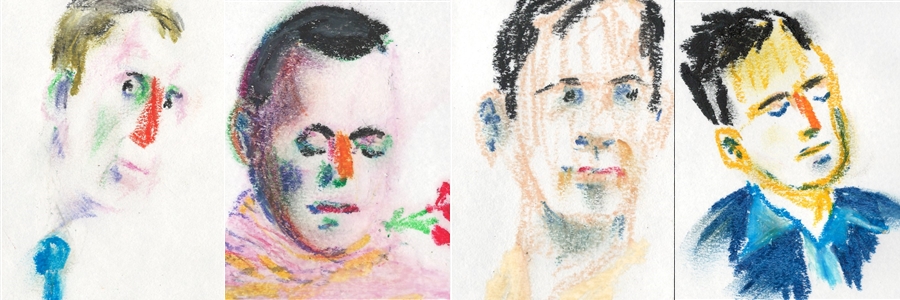
THE EUROPEAN FILM FESTIVAL 2021 VIRTUAL AND FREE OF CHARGE FOLLOWING THEIR 2020 SUCCESS

European Film Festival 2021: virtual and free of charge

We are deep into our second year of confronting the threat of Covid-19, both in terms of our lives and our livelihoods. It has been difficult … everyone is affected. This year’s European Film Festival has been inspired by overcoming difficulty and challenge. Its theme, Healing Journeys, seems rather appropriate for our times. I take this opportunity to invite you – irrespective of whether you are a repeat or a first-time viewer –to join us on this year’s exciting cinematic, and healing, journey,” says                                                            EU Ambassador Riina Kionka.

Quo Vadis deals in one of the most important issues of this century – refugees.

DIANE DE BEER

European films have become quite a rarity locally, so when the European Film Festival 2021 announced that this year’s festival would again be virtual and free of charge following the success of last year’s first virtual outing, I was elated. It will be happening from 14 to 24 October, so make sure and tune in.

It was obvious from the first film I watched that, as always, the European film sensibility is very different from that of the rest of the world. Not only is their’s a very distinct identity, but each contribution comes from a different country with a very distinct flavour.

For some of us, certain countries will be more familiar than others and some of the films I selected to watch were determined by my curiosity about the unknown, while others had a familiar actor (Gerard Depardieu) or perhaps an issue which I have a particular interest in.

That’s one of the points of interest of European movies  ̶  the stories they decide to tell. It deals with a contemporary world and the things that might be going right or wrong. That in itself is already fascinating. Which stories would feature strongly in this year’s festival?

A selection of 18 films, 13 of which have been directed by women, will be screened free of charge, providing a window onto what is fresh and new in the film industries of the respective countries, states the organisers.

 Four new participants – the Czech Republic, Denmark, Switzerland and Ukraine – will complement those from last year: Austria, Belgium, France, Germany, Ireland, Italy, Lithuania, the Netherlands, Poland, Spain, Sweden, and the United Kingdom, along with the return of Portugal.

Healing Journeys is this year’s theme, which runs through many of the films in fascinating fashion. And if there is something we need more now than perhaps in any other time in our lives, it is exactly that. That is perhaps also why women feature so strongly. Not only are they more in touch with their emotions (generally speaking), but as mothers and usually the more available parent in most families, they would be the ones who are most in touch and familiar with healing in society.

Because of the pandemic I suspect, the emphasis on mental health, for example, from a variety of sources has been more visible than previously. It is as if the  severity of  Covid 19 has given people permission to speak their minds about their personal circumstances. Think Naomi Osaka and Simone Biles.

Healing – be it mental, physical, spiritual or societal – is vital to the human condition, to our humanity, to our existence, according to the organisers.  This applies both in South Africa and in Europe, they believe, where despite our different contexts and histories, there exists common experience and a mutual need for healing.

They explain that the films on show will present, through the lenses of European filmmakers, a snapshot of experiences of re-establishing oneself after sometimes traumatic and possibly cathartic experiences. They deal with journeys that include organic growth, transition, and processes of self-discovery.  Many include a healthy dose of humour, bringing some possibly much-needed laughter into our lives. Much of the humour is of a more cerebral nature … films that make you smile and think at the same time. 

In conclusion they note that these films present stories of hope, humanity and thought-provoking intrigue, showcasing new work by some of Europe’s most accomplished filmmakers alongside exciting new talent.

The Films:

Here are a few of my picks, as well as some links to more details on the viewing process and the full programme. Nearly all of the films have won awards, with the newer films also certain to do so:

France (Robust):

I couldn’t resist picking this one starring Gérard Depardieu, paired with the little known Déborah Lukumuena. Robust is the debut feature by Constance Meyer and it deals with an aging film star and a young security guard who has been tasked with taking care of him. 

He is old and white with a huge ego (it seems), while she is young and black and busy training for a wrestling championship. They couldn’t be more different, but as these things work, despite their differences, they form an unlikely friendship.

With the inequality of their positions not only because of age but also because of the society they live in and the colour of their skin coming into play, it’s an intriguing watch. It’s subtle yet caring with a great sense of humour and humanity and the best from Depardieu in quite a while.

Germany (Mr Bachmann and His Class):

Mr Bachman and his Class is a life-affirming documentary

Citizens-in-the-making was the clause that caught my eye. That and the fact that it was a documentary. I didn’t realize that it was more than four hours long and that is quite a commitment, but I found it totally gripping for many reasons.

Mr Bachman is the teacher we all hoped for and wish our children could have. This ever-patient individual uses unconventional methods to inspire young students, all in the process of preparing for tuition in their next phase of learning, the equivalent of our high school.

They are all immigrants, in other words outsiders, and he is determined to give them an identity and a sense of belonging. And the way he tries to give these young students a healthy outlook on the people around them and in the process, wipe out prejudice, is quite extraordinary. What he is doing is giving his young charges life, showing the possibilities and the way we should treat everyone around us. It’s a good one to watch with the whole family and I’m sure you can probably watch it in bits. It is described as Maria Speth’s life-affirming documentary and I fully agree.

.  

Ireland (The Bright Side):

Gemma-Leah Devereux fighting for her life in The Bright Side

Breast cancer and stand-up comedian is probably not two phrases that fit easily together. What makes it a perfect fit here though is one knows that most stand-ups use their platforms to talk about their lives. Whether they say it or not, or it’s as explicit as that doesn’t matter, but they are used to speaking their minds.

And if one knows anything about cancer and its treatment, it is that the mind plays an important part.

Ruth Meehan’s The Bright Side is a moving and surprisingly uplifting story especially because of the mindset of the lead character.

She’s not into this cancer cure stuff and while she is persuaded by her family to go for the treatment, the thing she didn’t expect was the people who would be doing chemo with her and thus play a huge role in her life.

We all know that the pandemic has had a massive impact on our lives and, perhaps more than anything for some, it’s about not taking anything for granted. In the past, probably the big C was the thing most of us feared most – but now we know there’s much more out there which could harm us. Looking at films that might impact on how you face life, dealing in blackly comic jokes and exit strategies, can be more entertaining than you thought.

Switzerland (My Little Sister):

Siblings battle life in My Little Sister

This one is perhaps a harder sell. Not because it isn’t well made, but it is harsher and more disturbing, which is perhaps more than most of us can deal with now.

Writer-director duo Stéphanie Chuat and Véronique Reymond’s My Little Sister is an intimate, personal tale about sibling love in which a sister gives her all to support her ailing twin brother, and inspires herself at the same time.

It looks at how a family copes when one individual turns her full attention to the person who might be losing their life. And what that does to the rest of the family.

Ukraine (Stop-Zemlia):

This was the film I was most drawn to, especially because of its country of origin. Apart from the Russians’ intimidating presence in that part of the world, it’s not really familiar to me – and especially with a story about young people, who are always quite a fascinating barometer of a country, I find.

Reading some theatre scripts recently, a young voice said she was writing the play because it was what she wanted to see. And this film feels similar. Kateryna Gornostai’s Stop-Zemlia deals with young adults on the cusp of making that leap. At the centre is an introverted schoolgirl and her classmates and how she navigates what she feels is becoming quite a fraught world. But I really liked the young lass and how she was dealing with everything around her – and in the end, I realised, people are people are people wherever they come from. A nice one for a family with teenagers. Should make for some interesting discussions.

United Kingdom (After Love):

Joanna Scanlan in After Love

In Aleem Khan’s ground-breaking feature debut After Love, Joanna Scanlan is quite extraordinary as a white, English Muslim convert uncovering secrets after the death of her husband. It’s something completely different as she discovers that he had another family.

How do you deal with a life once the person you have dedicated yours to, has left and you discover he is not who you thought he was?

Special Co-Production Presentation (Quo Vadis Aida):

Trapped in the middle in Quo Vadis Aida

It was the extraordinary collaboration that drew me to this co-production between nine European countries. That and the topic they were dealing with – refugees. And with the recent disastrous US flight from Afghanistan, the story is particularly relevant.

Also we’re dealing with an atrocious war which is seared into our memory because it was one of the first following the establishment of 24-hour news channels.

Oscar nominee Jasmila Žbanić’s Quo Vadis Aida? hones in on a UN translator is caught between doing her job and trying to help local inhabitants and her own family when the Serbian army takes over the small town of Srebrenica.  

If your country collapses and you can’t stay, what does your life turn into. If we had asked this question a few decades ago, it would have felt like something that could never happen. No more, the number of refugees who have still not found permanent homes and who are constantly shunted from one border to another is ongoing all over the world. It’s terrifying and this film captures that horrific moment in people’s lives.

Please note that the films are geo-blocked for viewing in South Africa only.  For film synopses, trailers and how to watch, please visit www.eurofilmfest.co.za

TOYOTA US WOORDFEES TURNS TO DStv TO SHOWCASE AND EXPLORE A DIFFERENT WAY FOR LIVE PERFORMANCES IN EXTRAORDINARY TIMES

It’s the beginning of spring and the arts are taking a leap of faith as three of our Afrikaans festivals launch theatrical and cultural fests which offer a smorgasbord of theatre, art, books, dance, music and conversations –  as light or intense as you could wish for. DIANE DE BEER gives you a roadmap of the Toyota US WOORDFEES:

For a few years now, Saartjie Botha and the Woordfees team have tried to deliver on as many different artistic desires as possible.

And this time, the viewing has also been looked at seriously. From  October 1 to 7, Toyota US Woordfees will be broadcasting on DStv channel 150. If you are a subscriber, you can view all day and week if you wish (although they are still pleading that you pay for tickets to help the artists in these dire times, and those who can afford it, should make the gesture).

And if you don’t, the channel has the option of subscribing for a month, which might just allow you to check out their regular programming too and see whether it is something that might be worth buying into in the future – especially with the change of viewing habits currently.

Ferine and Ferase with Andrew Buckland and Sylvaine Strike. Foto: Nardus Engelbrecht

With theatre my absolute passion, it’s the first place I go to and I’m immediately excited about the second coming together of the sublime Sylvaine Strike and Andrew Buckland. This time, they’re acting together with Toni Morkel, who was part of their first pairing (then director Strike and actors Buckland and Morkel) taking the directorial reins. You’d seriously be mad not to watch – with the added bonus of Jaco Bouwer capturing it on film.

Strike says that the names Ferine and Ferase derive from two chemical components luciferin and luciferase which exist in a firefly’s bum and make it glow. “So one without the other can’t make light, they have to be together to glow. Lots of fireflies in this show,” she adds.

The play was first created on commission by head of the Woordfees Saartjie Botha in September 2020, three-quarters of the way through the first tough lockdown and the idea was to create something that would show audiences why theatre is unique and exciting. Botha didn’t want a big set, she didn’t want audio-visuals, no multi-media, only pure theatre. “We want body and craft and what the actor is,” was the instruction.

They started writing remotely through October, November, December and in mid-January came into a rehearsal room with Morkel as director. With Bentel at the piano, they began to develop the story on their feet and to find a common language between her and Buckland, who both have very specific styles, but it was wonderful for her to perform again.

They discovered and developed a mutual style, which is largely based on clowning duos. Think Laurel and Hardy for example, that kind of world, very much a nostalgic, romantic story where they play three different characters each, with the narrators the main characters called … Ferine and Ferase who have a backstory of their own, and they tell a story as travelling players of Bucket’s End.

Ferine and Ferase with the magical moves of Sylvaine Strike and Andrew Buckland. Picture: Nardus Engelbrecht

“It’s beautiful, it’s very physical, it’s gorgeously costumed with each a standard clowning costume that transforms into a couple of things,” she embroiders.

Of course, they were meant to play it on stage and they had a short trial run with a 45-minute version. For the current digital festival, the full play has been turned into a film, with Strike enchanted with Bouwer’s extraordinary transformation from stage into film, shot in studio, all in black and white, inspired by old movies.

Die poet, wie’s hy with Dean Balie. Picture: Lindsey Appolis

Another production I would urge everyone to see is the 2020 Fiësta Award winner for Best Production: Die poet, wie’s hy?, a celebration of poet Adam Small’s work, starring Dean Balie with theatre direction by Frieda van den Heever, and film direction by Christiaan Olwagen. I had the advantage of seeing it live, but this is about words and music and it will translate well.

It was as perfect a production as anyone could wish for. At the time I hoped it could tour the country, and this will do brilliantly.

If you haven’t see the magnificent Jefferson Tshabalala, check in at Off the Record. He is a performance maverick and gives a take on life and the world which might shake you up a little and add some wisdom and perspective to what you viewed as life. You will be screaming with joy at the smartness of his moves. It’s structured as a satirical gameshow with guests.

There’s also the adaptation of Dominique Botha’s Valsrivier, which first played at the last live Afrikaans festival in 2020 before it was set to travel but with time and yet another chance to find its feet and settle in. With a cast headed by Anna-Mart van der Merwe, Tinarie Van Wyk Loots, Stian Bam, Wiseman Sithole, and Peggy Tunyiswa, as well as an award-winning turn by Robert Hindley and theatre direction by Janice Honeyman (filmed by Christiaan Olwagen), it should hit all the right spots.

Jefferson Tshabalala: Off the Record. Picture: Nardus Engelbrecht

Two new productions include Reza de Wet’s Mis with Nicole Holm, Martelize Kolver, Jane de Wet and Laudo Liebenberg directed by Wolfie Britz and filmed by Bouwer, as well as Adam Small’s  Krismis van Map Jacobs with June van Merch, Ilse Klink, Dann-Jacques Mouton and Elton Landrew, theatre direction by Jason Jacobs, and film direction by Bouwer. The names involved in both productions say it all.

The Woordfees started as a festival of books and authors and this will always form a strong component, with the latest books by Nataniël, Lien Botha, Rudi van Rensburg, and Jeremy Veary  part of the strong lineup, as well as a series of probing actuality discussions presented by the University of Stellenbosch.

With the university the backbone of the festival, classical music includes students and alumni with Zorada Temmingh on organ, Megan-Geoffrey Prins and the Amici String Quartet, the celebrated University Choir with the contemporary side showcasing David Kramer, Karen Zoid with the Cape Town Philharmonic Orchestra, Deon Meyer and Coenie de Villiers in their Karoo salute, Amanda Strydom with Stadig oor die Klippers, as well as Spoegwolf and Die Heuwels Fantasties.

Celebrated chef Bertus Basson will introduce Stellenbosch delicacies with a few well-known Stellenbosch luminaries, while the wine route turns 50 this year and will be celebrating.

Churchil Naude in Die Ongetemde Stem

Movies spotlight Locked Doors, Behind Doors; Mike van Graan’s Some Mother’s Sons, Churchil Naudé in Die Ongtemde Stem and Ontluister – Die Geknoei met die Klank van Afrikaanse Musiek while stand-up comedy will feature Marc Lottering, Schalk Bezuidenhout, Nik Rabinowitz, Shimmy Isaacs, Alan Committie, Bennie Fourie, Alfred Adriaan, Melt Sieberhagen, Kagiso Mokgadi, Joey Rasdien, Hannes Brümmer, Conrad Koch and Wayne McKay.

Woordfees TV will broadcast predominantly in Afrikaans but will also include English and multi-lingual works. All Afrikaans narrative works produced by the Woordfees festival, such as plays and discussion, will have English subtitles. Fees TV will be available in South Africa on DStv Channel 150 from 1 to 7 October 2021, 24 hours a day, to all DStv Premium and Compact Plus subscribers. In Namibia, it will air on GOtv channel 15, with access for all GOtv Max subscribers. The Fees TV pop-up channel will also be available on DStv Now, and a selection of content on DStv Catch Up.

There’s so much more than I could capture in this particular roadmap. Make your own discoveries at https://www.woordfees.co.za/eng/ or https://www.facebook.com/woordfees/.

THE AARDKLOP OPWIPFEES KICKSTARTS A TIME OF THEATRE, MUSIC AND SERIOUS TALK WITH MUCH FUN AND LAUGHTER IN PRETORIA ON TUESDAY

It’s the beginning of Spring and the arts are taking a leap of faith as three of our Afrikaans festivals launch theatrical and cultural fests which offer a smorgasbord of theatre, art, books, dance, music and conversations as light or intense as you could wish for. DIANE DE BEER gives you a roadmap (in three sections) beginning with AARDKLOP:

Head of Aardklop Alexa Strachan

It’s time to catch some theatre with the Aardklop gang as they gather their artists with plays and music to entertain the Gauteng crowd deprived of regular live theatre and song.

There’s something old, something new, something for the young – and even something for those of us who too often feel blue.

Running from September 28 to October 3, it will be presented at  Atterbury Theatre, the Voortrekker Monument and Afrikaanse Hoër Seunskool.

Theatre is chosen with care to appeal to a wide range of expectations, with Sandra Prinsloo, Marion Holm, and Dawid Minnaar all returning with old favourites.

Sandra Prinsloo in Oskar en die pienk tannie (Picture: Pieter Lombaard)

Prinsloo tells the heart-wrenching story of Oskar en die pienk tannie, which showcases the relationship between a carer and her young ward who is dealing with his own trauma.

It is magically written and performed.

Dawid Minnaar in Monsieur Ibrahim en die blomme van die koran directed by Philip Rademeyer

Minnaar also takes a look at an unusual friendship in Monsieur Ibrahim en die blomme van die koran directed by Philip Rademeyer. Crossing cultural, religious and age barriers, it’s a story that is gently balanced between sentiment and sensitivity. And how we have to be open at all times to receive lessons life wants to throw at us.

Marion Holm isn’t exactly doing an old show, but she has gone scratching around and taken another look at stories she told long long ago – which might be reworked and return in dark times while shining a light on our blessings. But more than anything I know, this performer, even in these times, doesn’t know how to stop the laughter. She’s funny when she starts talking.

Frank Opperman in Ek Wens, Ek Wens (Pic: Pieter Lombard)

Frank Opperman knows how to perform solo and hold the attention. He’s back and this time he’s performing in an adaptation of Zirk van den Berg’s award-winning adult fairytale Ek Wens, Ek Wens. It could have been written with him in mind. Seb is a grey little man with a rather sad life. He’s an undertaker. Until one day when he meets an angelic child, Gawie. This magical meeting raises the question about his life and what he would wish for if he had only one chance. The book on which this solo performance is based won the WA Hofmeyer Prize as well as the kykNET-Rapport prize. And then for those double pairs:

Deon Lotz and Brendon Daniels in Kamp

First there’s Brendon Daniels and Deon Lotz in Kamp, which is perfect festival fare as they go camping and discover on their first night that they’re not quite as prepared as they should have been. No matches? And that’s only where it starts. It’s all about bonding in nature when you find yourself outside of your comfort zone. The acting combo is stunning and as the boys bond in this buddy genre, it’s much more about the fun and games than wilderness weirdness.

Brendon steps in again and this time he is partnered by the talented Tinarie van Wyk Loots in Opdrifsel, written and directed by Philip Rademeyer. A married couple is dealing with the heartache of losing a child and hope to focus on reclaiming their lives and recover from such an overwhelming tragedy.

Brendon Daniels and Tinarie van Wyk Loots in Opdrifsel

In conclusion, Nataniël will be performing as part of the Aubade series at Afrikaans Hoër Seunskool on October 3 at 11am and 3pm as the narrator with Charl du Plessis and Megan-Geoffrey Prins (both on piano) and a chamber orchestra presewnting Karanaval van die Diere (Saint-Saëns) and Pieter en die Wolf (Prokofiev).

Both of the texts have been rewritten by Nataniël (in Afrikaans, one translated from a previous English text also written by the artist) and he underlines that while these were originally created with children in mind, neither he, his texts nor his clothes will appeal to children in any form. “No one under 15 should even consider attending,” he warns.

Spirare (meaning to breathe) is the talk show series of the festival. Here are some of the highlights:

First off, there’s an invitation to write a long WhatsApp about the Voortrekker Monument, which will be followed by a discussion lead by Kabous Meiring with guests Gielie Hoffmann, Fransjohan Pretorius and Henk van der Schyf about this still-dominant Pretoria historical site.

Meiring will also take the topic in a more general direction by looking at all monuments, statues, town, city and street names. Joining her are Prof. Anton van Vollenhoven, Lindie Koorts, Lyntjie Jaars and Danie Langner 

The head honcho of Aardklop, Alexa Strachan, with guests Christo Davids, Chris van Niekerk, Deon Lotz and Brendon Daniels will focus on Festivals and discuss the accusation that they are freak shows.

Supper met die Sotte gathers some of our country’s top comedians (Schalk Bezuidenhout, Shimmy Isaacs, Rasdien and TJ Strydom) to attack everyone and anything with humour and satire.

Funny woman Shimmy Isaacs

Cornelia Faasen and her guests Dr Theuns Eloff, Lizz Meiring, and Dr Ismail Mahomed are given the title Wie Stook Watter Kool en Wie Blus die Brand. They will be looking at the responsibility of artists to stoke, stir or stroke the populace.

Municipalities are caught in the headlights with Lourensa Eckard and guests Theo Venter and Theuns Eloff talking about local government and the solutions to the current breakdown all around the country. Is it the turn of the citizenry to take control of their lives?

Political and social commentator Heindrich Wyngaard asks whether South Africans get angry about the right things? Why do they get so angry about certain topics and others they simply ignore? Should we pay attention to everything and shift our focus around? Or are we getting what we want and need?

And perhaps now is the best time to talk about swotting and whether drama is still an option. Many careers have been hard hit during the pandemic and the arts, because it is so reliant on audiences, more than most. And often artists are so busy trying to survive, they don’t have time to sharpen skills, which could see them through tough times. Tinarie Van Wyk Loots, Christo Davids and Sandra Prinsloo speak their minds.

For more detail, bookings and shows not mentioned here, check out the website on https://aardklop.co.za/category/nuus/opwipfees/ or go to their facebook page https://www.facebook.com/aardklop.

IN FULL CREATIVE SWING WITH STORIES, SONGS AND MAGICAL SHOWS, A BOOK AND TV SERIES, NATANIЁL CELEBRATES LIFE IN FULL COLOUR

It’s almost like experiencing a command performance when speaking to Nataniël about his momentous week at the beginning of October. DIANE DE BEER explains:

Being who he is with all his talents on display, it’s a busy time, even though Nataniël complains that none of his hard work is paying dividends at the moment. But we know it will. If there’s one thing he knows how to do without thinking about it, it’s being creative.

Hardly a thought crosses this uber-active mind without its generating some future event. Most people would collapse just listening…

It starts with two concerts which conclude the Aardklop Opwipfees as part of the Aubade series at Afrikaans Hoër Seunskool on October 3 at 11am and 3pm with Nataniël as the narrator and and Charl du Plessis and Megan-Geoffrey Prins (both on piano) with a chamber orchestra for Karanaval van die Diere (Saint-Saëns) and Pieter en die Wolf (Prokofiev).

Both of the texts have been rewritten by Nataniël (in Afrikaans, one translated from a previous English text also written by the artist) and he underlines that while these were originally created with children in mind, neither he, his texts nor his clothes will appeal to children in any form. “No one under 15 should even consider attending,” he warns.

He also points out that while he isn’t allowed to interfere with the music, he will. “It is deceptively difficult and I’m sure I will have something to say at rehearsal!”

People should book because tickets are limited to 250 – and you don’t want to  miss this one!

“And” says Nataniël, “if you’re an adult and you’re not fond of the classics, there are always rusks.”

Or, perhaps you might want to pop in just to see how he solved the problem of reading the text on stage. “No one knows about my reading glasses and I’m not going to buck that trend,” he says.

Bookings at ticketpros.co.za.

Nataniël takes us to another world in his latest series – and it’s not too far away

The following day is the launch of his latest television series Terwyl Ek Wag, which for him is the logical follow-up to his Nantes series in which he travelled to this historical university and cultural city to investigate and explore his roots.

This time he plays inventively and imaginatively, as he does, with the arrival of the Huguenots. The stage is set on the original farm of one of the four Le Roux families (from Normandy and not his own). It is a place he discovered many moons ago and at the time wished he could do something there. Now’s the time.

 “It’s a farm that looks like a farm, not a shopping mall,” he says pointedly, referring to the over-developed wine farms he loves to hate.

What they do in the series is to explore the skills of the time, like soap-making but also appreciate the artistic tendencies of the current family who returned to their ancestral farm some time ago. “They’ve tried to respect the past and, for example, maintained and restored some of the old buildings and pursue things like gardening,” he says. You might even find fairies if you look carefully.

And for Nataniël there is something about starting a second life. “If I had to do that now, I want a bed, a  gas flame and table for cooking, and an art gallery,” he says. He rejects all the frippery and trappings in this new life and names it antique minimalism.

Focussing on the food for the series, he hoped to create dishes that look as though they had their origins in a painting. “I like food that appears to be quite rough and ready.” Anything from the garden with lots of flour and which resembles pictures from children’s books, appeals to him.

It’s not historically researched as such, but what he made had to come from an old-fashioned farm – that’s the feel. The crew (of which his sister Madri was a part) ate everything he made.

As always, he emphasizes that he isn’t a chef. “I have zero technique,” he says, but lots of inspiration from chefs like Topsi Venter and Rachel Botes. (The recipes will appear on  his blog in English after the broadcast of each programme.)

 The series, which is broadcast on kykNET (144), is 13 episodes long and they also have an astonishing documentary, which will be screened at the end of the year about the making of the soundtrack.

In past seasons he could find appropriate music for his French series but this time he decided to compose everything himself – and this is what the documentary spotlights. “The music is as dramatic as the series,” says the drama genius.

“Everything in my series is curated,” he says and anyone who has seen this producer at work knows that what he says is what he means – EVERYTHING. And you can see that from the costumes to the cuisine.

We’re speaking French Huguenots; think collars and creativity. Fashion looms large, from the signature opening scenes to the final curtain.

And for those who are waiting for his annual stage show, even with the harshest of Covid restrictions, he is determined to step on stage with all the pomp and splendour his audiences love. “I don’t care how many see this one.”

One gets the feeling, indulgent or not, this one is for him. And if he is the audience, I want to be there – even if he feels that as actors they have been denied audiences – stupidly. “Our audiences are intelligent, don’t scream or chat, they’re silent, socially distanced as required and masked.” But to make a living, 50-strong audiences didn’t even cover the costs. Fortunately this has changed to 250, hopefully in time.

Titled Moscow and, luckily for Pretoria, staged at the Atterbury Theatre from October 5 to 10, the show will feature full costumes, full band and full lighting. But more than anything as always, it will be about the content and the chanson.

He feels this isn’t a time of laughter and frivolity but rather an exploration of chaos and order, insight and inspiration and, of course, a celebration of the most beautiful month of the year  ̶  October.

But even in his most philosophical mood, this storyteller is someone who views the world in a way that few can match   ̶  and whether he tries to make you laugh or even when it’s not that funny, the way he describes even a disaster will have you in stitches.

And there’s the music, original compositions and selections from old songbooks with the music of Dusty Springfield and the Mills Brothers, for example.

And even if you don’t like dramatic music or costumes … “there will be rusks”. That’s a promise.

Bookings at www.seatme.co.za

One of Floris Louw’s designs in 107 Kaalkoppe. .

Also on display, before and after the show, will be the collection of his unpublished Kaalkop columns, 107 Kaalkoppe, which he advises you to buy and read, one story a day. “There’s a specific rhythm involved in a book like this. Like a column, you shouldn’t read three or four at a time! Savour each one and do one a day   ̶  or even a week.”

He promises loads of fun and bookends the collection with an introductory and concluding story. And for those who want to hear him chat about his Kaalkop journey, he will be part of the Woordfees festivities on Channel 150 (DStv) from 1 to 7 October (see details on website later). Or check it out at Woordfees link, supplied below.

What more could you possibly want.

Possibly rusks?

https://www.facebook.com/woordfees/

VINCENT PIENAAR’S LIMERENCE HAS A NOSTALGIC RING TO IT WITH A ROGUISH HERO MOST LOVE TO HATE AND YET TOO FEW WOMEN CAN RESIST

THE thing that strikes one most with the two latest of Vincent Pienaar’s novels, is the joy. It’s something that he ascribes to and it works as you jump into what might not be an entirely happy premise and yet, you are taking off on an adventure. DIANE DE BEER gets some thoughts from the author and also speaks her mind:

When reading Vincent Pienaar’s previous book Too Many Tsunamis: a Tale of Love, Light and Incidental Humour (Penguin Books) it felt as though he had found a very specific (and joyous) voice.

It was as if even when dealing with serious issues in some instances, there’s always laughter bubbling just below the surface.

He has done it again in his latest book Limerence (Penguin Books), which is described as something that when you’ve got it, enjoy it. And advises you on the front cover, that if you don’t know what the title means, look it up!

As with the previous book, his first sentence immediately gets your attention: “Did you know that Robert Johnson sold his soul to the devil?”

And then he meanders on to tell you why.

But that is the interesting thing about Pienaar’s storytelling, he jumps into a place, drags you along and has you smiling (if sometimes unwillingly) on the ride.

Author Vincent Pienaar and family.

This time it’s the story of a man whom women love to hate but can’t resist. They know he will get away with it over and over again, so when he approaches four women he was involved with, all with a similar proposition, they’re reluctant yet fall for his preposterous proposition – and only start breathing fire when they discover all four of them (yes, the ego always intercepts) have been handed the same will.

Pienaar explains that the story evolved bit by bit, as his stories always do.

“I was amused by the idea of a person giving different people identical last will and testaments.”

And then he allows us to see his wandering mind, to show the process: “Why would he do that? Because he’s not dead and he wants money. As simple as that? No. Greed may be a good enough reason in real life, but in fiction you need more motivation. So he’s in trouble. He needs money quickly. For what? Unpaid debt? Maybe, but not sexy enough. He must want to do it for somebody else. Enter Julie with her three children, enter Sabelo, enter Pieter, enter Mr Downey and on and on.”

That’s when the characters get up and running and sometimes it feels as though they’re dictating where he goes. “My characters never allow me to pull anything together. The women, all from different decades, presented the perfect platform to tell the story of Johannesburg (specifically Hillbrow and Melville and later Yeoville) from the 1970s to the present. But they are all strong, which made their backstories interesting, and how the story evolved is a matter of their making. I really liked the idea of a character sauntering in and out of Melville, infuriating the women endlessly.”

Talking about the title and the obvious delight he finds in words and writing, Pienaar confesses that he liked the idea of  “finding your own voice”. But that’s easier said than done.

While you are trying to find and establish that, you are constantly being shoved into the grammar trap of do’s and don’ts. That he believes (and I agree) “smooths the peaks and valleys of the text onto a pothole-free highway of blandness”. It was a struggle, but having read both books, the Pienaar personality is unashamedly there and he’s having the best time. When an author does that, how can the reader resist?

But back to the title: he was almost finished with a book provisionally named I Love Crazy when a friend introduced him to the word “limerence” and voila, he had his title. “After I found out what it meant I worked it into the story.”

He also struggled to get a name for the main character, until a friend’s dog died. “The dog was named Scout and I decided my main guy would be Scout. This led to Scout (To Kill a Mockingbird), Holly (Breakfast at Tiffany’s), Clarissa (Mrs Dalloway), Daisy (The Great Gatsby), etc. Even Ripley is from the movie.” And the games go on with or without the story, which is part of the fun.

Having published in both Afrikaans and English, he says: “I write competently in Afrikaans, but I write comfortably in English.”

Yert he still thinks his funniest work is Jo’burg die Blues en ʼn Swart Ford Thunderbird and he’s just completed an Afrikaans play inspired by the murder of Charl Kinnear.

But he admits that the voice he has found takes courage and he doesn’t yet have that in Afrikaans. “The Afrikaans grammar Nazis scare the shit out of me.”

If you’re wondering about writing in the time of Covid, “I didn’t want the book to become a dark tale of people darting about in the shadows, jealously guarding six packs of beer under dirty overcoats.” And with that line, he has a full explanation in the front of Limerence.

What he likes pushing to its limit is humour (not necessarily funny) in any work of fiction, no matter how bleak or dismal the story. “It’s what keeps the reader reading (or amused, if you like),” he believes.

I don’t totally agree with that premise, because there are many different things that keep me reading depending on the writing and the story being told. But I do like Pienaar’s intent and style. And I love the way he runs off in all kinds of directions to say something that he finds amusing and wants to include in his story.

He describes this penchant as a noble one.

“If you watch any of the movies in Nora Ephron’s trilogy (When Harry met Sally, You’ve Got Mail, Sleepless in Seattle), it’s all about the playfulness and not about laugh-out-loud funny.”

Pienaar is on a roll and while he feels he has almost stumbled on a style with Tsunami, the next book is provisionally called A Man, a Woman and a little White Dog named Floof. But don’t attach too much importance to the title, that might change, as Limerence reminds us.

 He’s hoping because of the Ephron fan he is, these three might be considered a trilogy – perhaps an homage.

AGEING GENTLY WITH PAUL SLABOLEPSZY IN WHAT CAN BEST BE DESCRIBED AS A TIME WARP

 DIANE DE BEER

MR JOHNSON (Available on BoxOffice/DStv)

DIRECTOR/WRITER: William Collinson

CAST: Paul Slabolepszy, Frans Rautenbach, Jana Cilliers, Graham Hopkins, Anthony Coleman


A confession to start this review: I have always been a Paul Slab fan. Not only of his writing, but also of his acting. And probably more than anything, of his passion as an artist.

There’s also his friendship/collaboration on (and off) stage and on film with the late Bill Flynn, which gave so many of us pleasure and memories.

That’s why this movie appealed to me right from the start. In real life there’s a youthful exuberance to Slabolepszy that few can imitate and it is exactly that quality that inhabits the world of Mr Johnson – his character and the story.

You have to let your imagination run riot –  but that’s often the case when Slabolepszy’s involved. David Johnson has been in a coma for 47 years. He wakes up at the age of 73, which is what the movie deals with.

This is a man who when 20-something has an accident, which puts him in a coma. When he wakes up, obviously, his whole life has changed – both the physical reality of who and what he has become, but also technologically with smart phones and the internet, to name just a few.

Fortunately money isn’t a problem. What the director wanted to deal with was old age and people being discarded and ignored. And to have Slab as your vehicle is smart thinking because he brings the impetus to this Cinderella type story – the down and out ageing “20-something” is something probably only he could pull off.

Jana Cilliers and Paul Slabolepszy (here and below)

And he does – with charm and wit, the perfect antidote in today’s world. There’s much to complain about; a first-time director with first-time mistakes, a script that truly tests your BS detector, and questionable decisions on too many levels.

But then there’s the appeal of Slab, the fact that they are dealing with ageing, something that features abundantly on film, stage, books and television simply because of the Baby Boomer numbers and thus higher visibility. It is part of the zeitgeist. And there’s the excellent use of some star power we’re more used to seeing on stage than on screen like Jana Cilliers, a great (also sentimental) choice as the love interest, a superb cameo by Graham Hopkins, and a hardly-ever-seen Judy Broderick, who feels as if she has been missing in action.

When I started watching, I had only read the first few lines of the synopsis and thought I was seeing a more serious movie than the one I was about to watch. However, in these times when few people need anything serious, this fantasy romp with some serious underlying issues is probably just about the right temperature.

And who can resist Paul Slabolepszy, all dressed up and ready to go.

Watch the trailer here: https://www.youtube.com/watch?v=DsstmCBb5SY&t=1s

BOOKS ARE THE EASIEST ESCAPE AND FASTEST WAY TO TRAVEL TO ANOTHER COUNTRY OR EVEN WORLD

This has been a wonderful time for African Writers (Tanzanian writer Abdulrazak Gurnah who won this year’s Nobel Prize) and now South African writer Damon Galgut for his Booker Prize win for The Promise, a book, which delights as much for his imaginative storytelling as his innovative way with words (see below). It’s a glorious time to celebrate talent from this continent especially for artistic endeavours, something which has been neglected for far too long by those in power. And more than anyone, it is the writers (and all of the artistic community)who have opened minds and changed societies. If you haven’t yet read the The Promise, buy it now and get reading. And while you’re at it, also get acquainted with the latest Nobel Prize-Winning author by acquiring and reading one of his novels. It’s the one thing we can do in these strange times – read!

Many people, myself among them, feel better at the mere sight of a book.

Jane Smiley, Thirteen Ways of Looking at a Novel

It doesn’t matter how much good streaming is available to us in our brand new world, quiet time with a good book cannot be replaced by any of the noise around us and gives us a chance to escape to somewhere completely different – and we can decide how and where. DIANE DE BEER looks at a few of her most recent choices…

In a time when lots of reading is possible, it’s been great to catch up with books by authors I have neglected for far too long. Damon Galgut is one of those and I sure picked the right one to enter his world.

I have found when reading as much as I do now but also as I grow older, that the thing that interests me most when it comes to choosing books and really getting into the heart of whatever matter the author wishes to explore, is innovative storytelling.

And that’s what moved me most with Galgut’s latest, which already has the accolades and possibility of awards (Booker, for example) streaming in. The topic, our apartheid past, has long not yet been exhausted, but to keep readers engaged you have to find a way to look at familiar tropes and topics that is as innovative as it is engaging.

The Promise (UMUZI) does that in spades – for me. I have heard others complaining with passion about his lack of empathy with his characters and more, but none of this came into play for me in his particular telling of the story.

One of the many podcasts I listened to about the novel and the writing is that Galgut was exploring a new way of telling the story. He found the magic carpet for my ride and he loved that he had found a different voice, as did I.

I could feel that even when dealing in very heavy subject matter, especially for readers in this country at this time, there was a lightness about the telling which was joyful to read.

It’s the story of four siblings in a particular family and the events unfold around four funerals of different generations of this same family. This means it is set in different times in a country that underwent huge changes , with a different president , for example, at the telling of each tale. Not that the president and the politics are in the forefront.

What plays out in this particular family is the dictum that where you are born and how you are raised, all have an impact on who you become. And it all circles around a promise that was made a long time ago which has never been kept and has everything to do with the country we live in.

I loved the originality, the elegance of the writing and what lies underneath the story for each individual reader to unwrap.

For something completely different, Viet Thanh Nguyen, who wrote so sharply about the Vietnam war in The Sympathizer turns his gaze to a different country – and even continent – France. I couldn’t help smiling in The Committed(Corsair) as he turns his acerbic gaze on the French; and as we have discovered, those who read the first novel, in the way he treated the Americans and turned their interpretation of the Vietnam war on its head, he takes few prisoners.

But while he might be telling the story in colourful gangster style, there’s nothing rough and ready about his opinions of the latest country he has decided to tackle.

Walking through Paris (even today) with even its touristy streets very sharply defined by different races, it’s easy to spot the heart and soul of this majestic city.

And in this time of refugees, Nguyen starts his latest novel with the following penetrating sentence: “We were unwanted, the unneeded, and the unseen, invisible to all but ourselves. Less than nothing we also saw nothing as we crouched blindly in the unlit belly of our ark.”

This is not going to be an easy read and yet, the pace is fast and furious, and you have to get with the programme to keep up with his sharp comments and incisive opinions as he tells a story of corruption, complicity and companionship only if you can bring riches to the table.

“That’s not a French name they would say … All I had to do was change my name. I’ll admit, I tried on some different names, it didn’t feel right. And I thought, I went to your schools, which are my schools. I learned your language, which is my language. I don’t feel Arab at all, except when people call me an Arab. And that’s not enough? Now I have to change my name, which my parents gave me? And I knew this would not be the end. They would never stop. They would not be happy until I married a woman who looked like them, gave them children who looked more like them than me, made friends only with them. Either I could be one hundred percent French or I could just be a dirty Arab, so instead I decided to be one hundred percent gangster.”

It’s a small passage in a large book, but it captures the essence of both the story and the world we currently find ourselves in, where everything that has been done to others has festered and turned into a ferocious beast who has no way of protecting itself or those of us watching.

There’s a third in the trilogy on its way and I can’t wait.

If you’re a Deon Meyer fan there’s no need to read this but if you’ve never met the detective duo Benny Griesel and his partner Vaughn Cupido, get a life.

Most of us read a thriller at some stage of our life and because it has meant big money for many authors (probably in this country as in many others, the only authors who have any chance of making money), there’s a landscape of books to choose from.

South Africans are blessed to have one of the most successful in the world in this genre in our midst – Deon Meyer. Personally, I fell in love with his stories because of the South African landscape he established.

He might be wearing rose-tinted spectacles but I prefer to think not, because what he has done is focus on the characters and no one can argue that while we might have some of the worst politicians in the world (they didn’t really have any role models?), we also have some of the best people.

There’s not a day that goes by that  one of my fellow citizens doesn’t put a smile on my face, and it is that element that Meyer captures so well.

Then of course he also spins a good yarn. He has all the fodder available right under his nose but also in today’s zeitgeist, and he has captured that brilliantly in the past. And again in this latest novel, Donkerdrif (Human&Rouseau), (if you can, read it in Afrikaans, but the translations are good and should be available very soon) which latches onto all the evils that drive our world today: greed, power, money, corruption… and the list is endless.

We know the formula although Meyer is too smart to make it thus, but Benny and Vaughn will win the day and we will be there rooting for them all the way.

Starting this column with a book that is all about the writing and the storytelling, it is perhaps apt that I conclude with one that didn’t succeed for me in especially the familiar way the story unfolds.

We’re still reading about World War 1 and 2 and I suspect it will go on for a long time, as it should. Lest we forget and the horrors are repeated is the age old explanation and that’s true, but if you are going to focus on telling stories that capture a specific time, you are going to repeat versions of stories that came before which happened for me in mark Winkler’s Due South Of Copenhagen (Umuzi).

After all, the two boys with surnames Fritz and Udengaard aren’t the first with German or German-sounding surnames bullied by their schoolmates even 30 years after the war. So come at it with a fresh angle, a different vantage or you won’t keep my attention. I have heard and seen too many different versions and after a while, you switch off.

Winkler’s snapshot of the past is beautifully captured, he writes masterfully and perhaps from my point of view, it is best read by a younger generation who would not know about these intimate stories set against a larger backdrop.

But for me, the small-town idiosyncrasies of a specific time and place, two youngsters thrown together because of the prejudice against them, wasn’t enough to keep my attention. Because it was well written, I finished the reading, but it was in one ear and out the other as quickly as I turned the last page.

AUTHORS MICHAEL LEWIS AND TA-NEHISI COATES WRITE AND MAKE SENSE OF OUR CRAZY WORLD

DIANE DE BEER

Two of my favourite authors wrote books recently focussing on issues that are part of how we function and why. I want to urge anyone interested in the world and how we view it, to tap into their insight:

THE PREMONITION:  A PANDEMIC STORY BY MICHAEL LEWIS:

“I would read an 800 page history on the stapler if Michael Lewis wrote it,” writes a New York Times book reviewer and that is pretty much exactly what I feel about Lewis and anything he writes.

His last book, The Fifth Risk, looked at the federal bureaucracy during the Trump years and how things unravelled because of incompetence, or if you want to give them the benefit of the doubt, ignorance.

So it was perhaps justified to expect this latest book, The Premonition: A Pandemic Story, to put all the blame on Trump and his coterie of civil servants. But not so.

What he does is to go and fetch the facts from way before the pandemic, when a group of medical specialists started warning about the possibility of a pandemic like Covid-19 and how best to prepare for it. The problem was that few people were listening and the government specifically didn’t want to listen.

He has a handful of heroes and one of the most intriguing individuals in this story is a California health official, Charity Dean. Lewis has a knack of discovering these characters who seem to almost hand him his story on a plate – but it’s perhaps not that easy. You have to find them and then you have to both listen and pay attention; and that he does quite brilliantly.

He also has the instincts to know which story to follow. And if anything, Dean wasn’t obviously the voice that many would listen to. She admits that who she really is has nothing to do with her exterior, which is apparently more Barbie than Florence Nightingale.

But that’s only part of the story. Two doctors, Richard Hatchett and Carter Mecher, were part of a pandemic planning team set up during the George W. Bush administration and then they hooked up with some other extraordinary individuals who were all extremely good at what they were doing.

Almost by accident these people all get together or connect in some kind of fashion. Rather than predicting what was going to happen, as one might expect, all these people in some kind of form become interested in pandemics and start looking out for the possibility of future disaster(s).

The frightening thing though is not the incompetency of the Trump administration or even Trump’s wild claims during some of the worst times of the pandemic, but rather that this first-world country with all its expertise and some of the best brains in the world was so ill prepared.

 Most of the rest of the world is less alarmed by some of the incompetency in their own countries, having a much more jaundiced eye, but most of us will be surprised that those who constantly hold themselves up as being the best, can do so badly.

It’s worrying when even the “best” fail so miserably. And to this day, people are dying because of a refusal to take the vaccine. How is it possible to keep on refusing to take it seriously even after the high death counts? And now many of those naysayers are starting to die, so it will be interesting to see how that changes the dynamic.

The best of the Lewis style is the way he finds and fetches the story, dresses it up in the most palatable fashion and then allows the story to unfold. It’s powerful and will keep me reading – yes even when the topic doesn’t grab me. I know his storytelling abilities will.

WE WERE EIGHT YEARS IN POWER BY TA-NEHISI COATES (Hamish Hamilton):

In a sense, Ta-Nehisi Coates has a similarly mesmerising voice. He deals in a different world but also with the lives of people; and perhaps that’s the common thread.

This time it is the late Toni Morrison who is quoted on the back page: “I’ve been wondering who might fill the intellectual void that plagued me after James Baldwin died. Clearly it is Ta-Nehisi Coates.”

This one was published in 2017, but I’ve only recently received a copy and can’t resist bringing it to anyone’s attention who doesn’t know about it or is unfamiliar with this particular voice.

The premise is the Obama presidency and what Coates did was to take eight articles written during the eight years of the first black presidency. Before each of these essays, there is as the author explains “a kind of extended blog post, one that attempts to capture why I was writing and where I was in my life at the time.”

He describes what he has put together as almost a “loose memoir”. And at the end of the book, he attempts to assess the post-Obama age in which we find ourselves. He wanted all these eight essays (originally published in The Atlantic) assembled in a single volume.

It’s as smart as it is clever and I can’t think of anyone else I would rather have guide me through that particular time in American history. And because of these times of George Floyd and the renewed urgency of Black Lives Matter, it almost lands with more penetration because of current events than when it was first published.

He deals with so much that is out there right now and for years to come. About reparations, for example, he says the following: “What would it mean for American policy so often rooted in its image as the oldest enlightened republic and pioneer of the free world, to forthrightly note that freedom and enlightenment were only made possible through plunder that stretched from the country’s prehistory up into living memory?”

And that’s just a tiny snippet and sits sweetly next to Prince’s brand new album (posthumously, of course) and the searing lyrics:

“Land of the free, home of the brave

“Oops, land of the free, home of the slaves…”

Coates doesn’t mince his words either. If you want to hear, he will tell it like it is. And if anything, you could read it just to see what he has to say about Trump, the man he describes as America’s first white president. And that already is a fascinating story.

He writes in his incisive epilogue that Barack Obama delivered to black people the hoary message that in working twice as hard as white people, anything is possible. “But Trump’s counter is persuasive  ̶  work half as hard as black people and even more is possible.”

Much was explained about both the Obama and Trump presidency (according to Coates, the result of having had a black president) and again Coates steps up as the voice of a new generation, insightful about the world in which we live in, and more importantly, not one where he sees white supremacy disappearing anytime soon.

It was reported recently that Mitch McConnell expressed initial satisfaction about the Obama presidency because he felt this would put a stop to the kind of complaints heard from the Black Lives Matter movement.

Which says everything about his understanding of the lives of others especially those of colour. And again underlines the importance of this book.

ESCAPE FROM LUBUMBASHI IS ABOUT A REFUGEE’S DETERMINED STRUGGLE TO REUNITE HER FAMILY

The 1951 United Nations Refugee Convention is a key legal document and defines a refugee as: “someone who is unable or unwilling to return to their country of origin owing to a well-founded fear of being persecuted for reasons of race, religion nationality, membership of a particular social group, or political opinion”.

mde

With The Escape from Lubumbashi (published by Unisa Press), author Estelle Neethling tells a story that she felt compelled to share especially of this particular woman and her excruciating journey and circumstances to find a life and home for her family. And more than ever, this is the time to share the stories of refugees she tells DIANE DE BEER :

When author Estelle Neethling first met Adolphine Misekabu, her dignity and obvious honesty struck her forcibly. “From the very first time I saw her sitting in a makeshift classroom at a refugee centre in Cape Town in the mid-2000’s, teaching refugee children,” she says.

At the time Neethling was working for the South African Red Cross Society as the national tracing coordinator (restoring of Family Links Programme, International Committee of the Red Cross).

When the South African Red Cross, where she was based in Cape Town, relocated to Pretoria, she chose to remain in Cape Town. “I felt the need to write about the hardships of the genuine refugee, something I came to know all too well during my 10 years working in the refugee sector, my main mandate being to restore family links in cases where people had been displaced due to conflict and political turmoil over which they had no control.”

She was especially affected by the sorrow felt by women and children. And this is how her book Escape From Lubumbashi: A Refugee’s Journey On Foot To Reunite Her Family was given life.

“My life-changing ten years at the Red Cross also made me realise that there are other forms of displacement and I needed to explore and come to terms with my own personal history of emotional displacement,” she explains.

The author Esteller Neethling.

“Because Misekabu’s story so poignantly represents what the refugee goes through, I wanted her story to be ‘out there’, to combat the scourge of xenophobia so rampant in the world, but particularly among our communities in South Africa. It can be said that displacement – brought even more into focus because of the Covid-19 pandemic – is the theme of our time, second only to the ravages of World War 2.”

And fortunately or so it seems, the world is very slowly waking up to this reality with books like these and more and more real-life stories emerging. It is becoming harder and harder to simply ignore.

For Neethling this dignified woman’s story reflects the power of the human spirit to combat unimaginable challenges. “When Misekabu was finally reunited with her husband, Sepano, in Cape Town after almost two years through a confluence of circumstances, some kind of synchronicity that baffles me to this day, she suffered enormously because of cruel xenophobic attitudes, including the 2008 xenophobic violence that raged in South African for many months.”

And when you read her story, at this stage, this young woman had endured and survived what most of us will never see or experience in a lifetime. In fact, it’s impossible to understand how she motivates herself to keep going. That took willpower and courage, something not asked from many of us

“Emotionally drained at times due to the humiliation inflicted by local people and crime she encountered here after her gruelling search for her husband all the way from Lubumbashi in the DRC, she remained undaunted,” writes the author as she highlights Misekabu’s strength of character. And that’s what it takes once you’re part of that world, one you’re not a willing part of – but without any choice.

“In trains and on buses, when she was called amakwerekwere and other derogatory names, she would speak out: “Excuse me. Are you talking to me? Forget about other people’s business. Think development!” In telling me, she’d add, with eyes flashing: ‘I didn’t come to Cape Town to give up’,” explains Neethling.

She knew that this was a story that needed to be told. But she was also aware of the responsibility towards Misekabu to honour her truth. She was especially aware that she was delving however respectfully, into the life of a highly traumatised human being who had lost all her family, except for her baby, her small brother and eventually her husband.

Adolphine in the Meheba-camp in Zambia.

She explains that the enormity of this remarkable woman’s loss was due to the First Congo War during which Mobutu Sese Seko’s ruinous reign destroyed innumerable lives. “Probably only my work with people in crisis made it possible for me to take on such an onerous task, albeit with the utmost respect and sensitivity.

“Misekabu immediately agreed when I initially approached her. The problem of re-traumatisation was always foremost in my mind, but slowly we pieced together her story, because there were times when I needed to do extensive research regarding the history of the times she lived in as a Kasaian, and a member of a family which was persecuted by Mobutu’s army and the factions which supported him.

“Her enduring love, especially for her dead father shone through all our interactions. Nkudimba’s name means ‘man of peace’ was a trained doctor, an internationally recognised artist and a leading politician in opposition to Sese Seko, who had disappeared mysteriously months before she and Sepano had to flee Lubumbashi in 1976.

“Our interactions over four years, with a few intermissions when I had to earn my daily bread, were of course often emotionally draining for me. Undoubtedly these intermissions gave her respite from verbally relating her memories. However, she expressed that our work together had had a healing effect on her. But of course that is an ongoing process,” Neethling stresses.

The impact of reading  her story is one of admiration but also trying to understand why such a gruelling journey, probably the toughest you could ever make on every level possible, is turned into even more of a nightmare because of the impossibly difficult hoops refugees are asked to jump through when applying for the necessary status.

Neethling explains that there are organisations which assist refugees as best they can, but the process to obtain refugee status is gruelling, shared with migrants, persons who have come to South Africa ‘in search of a better life’, some whose goal is to be resettled in an overseas country of their choice.

“The Department of Home Affairs needs to deal with applications to become, first, an asylum seeker, secondly, a recognised refugee and, if it is the final goal, to seek permanent residency. The road to the latter is arduous, very long and not easily achieved.”

And she explains further: “The ‘refugee question’ is convoluted and many refugees become desperate. Some do ‘fall through the cracks’ or remain in the country illegally. Refugees often speak of corruption during their efforts to remain in South Africa. Our country has also had its fair share of troublemakers among these ‘immigrants’ or ‘foreigners’, as they are often called, and those who turn to crime, just as one would find in most groups of people.”

Add to that xenophobia which Neethling describes as a universal problem and based on the difficulty diverse groups have of accepting the ‘otherness’ of people who are strangers to the ways of their adopted country. “Lack of respect for human rights, an absence of tolerance, the burning issue of scarce resources and jobs play a huge part in the cruelty on which xenophobia is based,” she notes.

And how is the family doing now? In many ways fortunately after many years of unthinkable hardship and miraculous survival, three more children were born to Adolphine and Sepano.

Adolphine with her brother Joseph who finally has also received his residency papers.

There was much distress when her young brother, Joseph (five when she fled Lubumbashi with her baby, Ilunga, as a 22-year-old woman) was not granted permanent residency with the rest of the family through some bureaucratic error, but after persistent efforts, he is now also a permanent resident.

But that doesn’t mean their lives aren’t still a daily struggle. Despite being a permanent resident, finding stable work is difficult for this warrior woman. “As a strong, confident woman, a trained teacher, she should in my opinion have more employment opportunities. But as it is, she plays a significant part in assisting refugees and in helping local communities to accept refugees,” Neethling says.

She concludes that the world has in many ways become a perilous place, especially during the Covid-19 pandemic and the effect it has on people and the economy. “My hope for the future is that people will stand up for and support basic human rights. All of us have agency – even the most humble among us. Tolerance and a word of kindness to someone ‘at sea’ in their desperation can go a long way in alleviating distress and even open the door to hope of acceptance – and a good life.”

And as a final word: “The journey with Adolphine started in 2010. Writing her story was an experience I wouldn’t change for the world. However, I always knew it would be difficult to find a publisher, because it is nonfiction, although a memoir in many ways, because most of her story is told in her own words. Further, the book isn’t about a famous person or a politician. Therefore, much of the time it took before I held the book in my hands was harrowing.

I have Unisa Press to thank for believing in Escape from Lubumbashi. When all’s said and done, it is in many ways a life’s work that has become an integral part of my very being.”
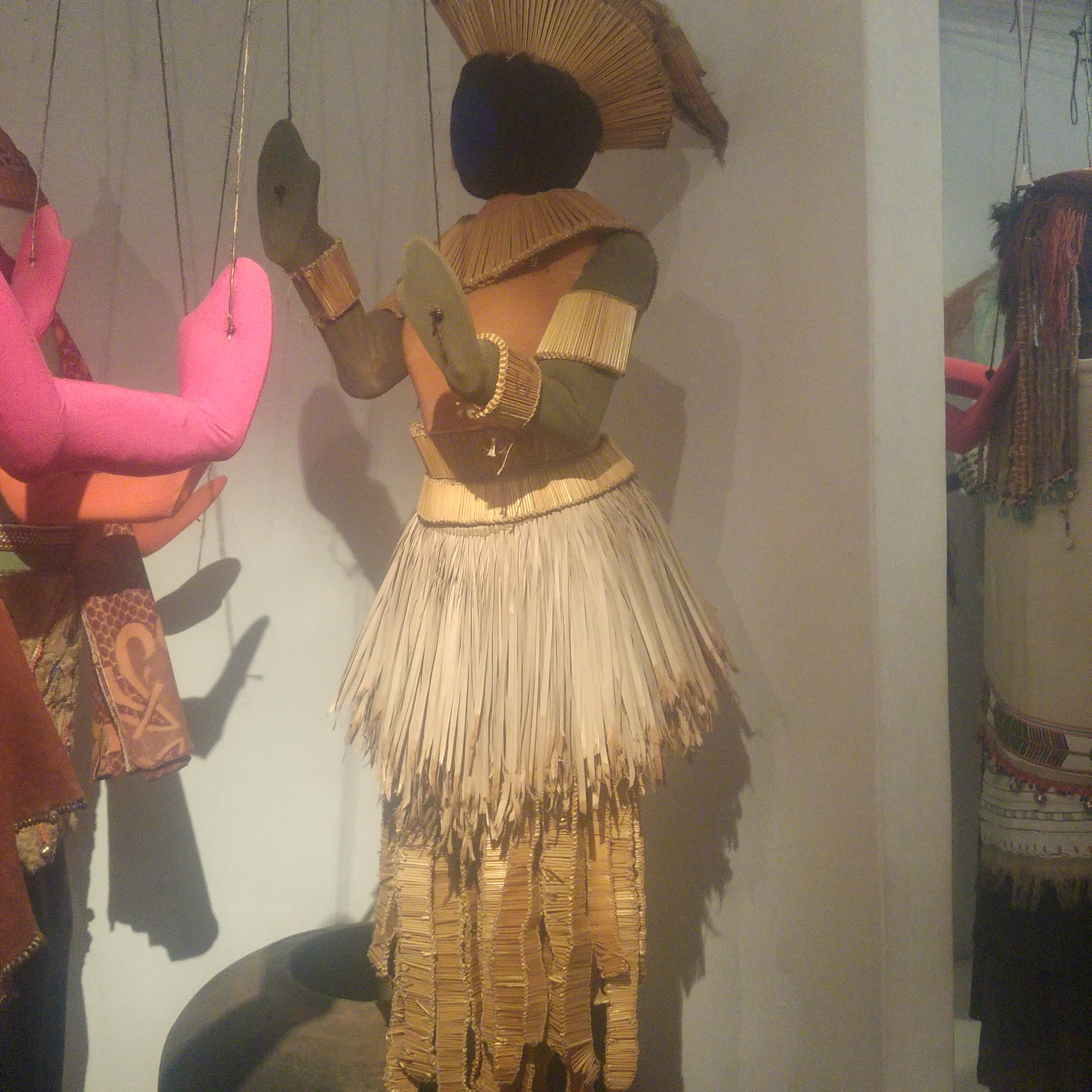
And in this time when millions in the world are either refugees or displaced people, all of us have to understand exactly what that means.
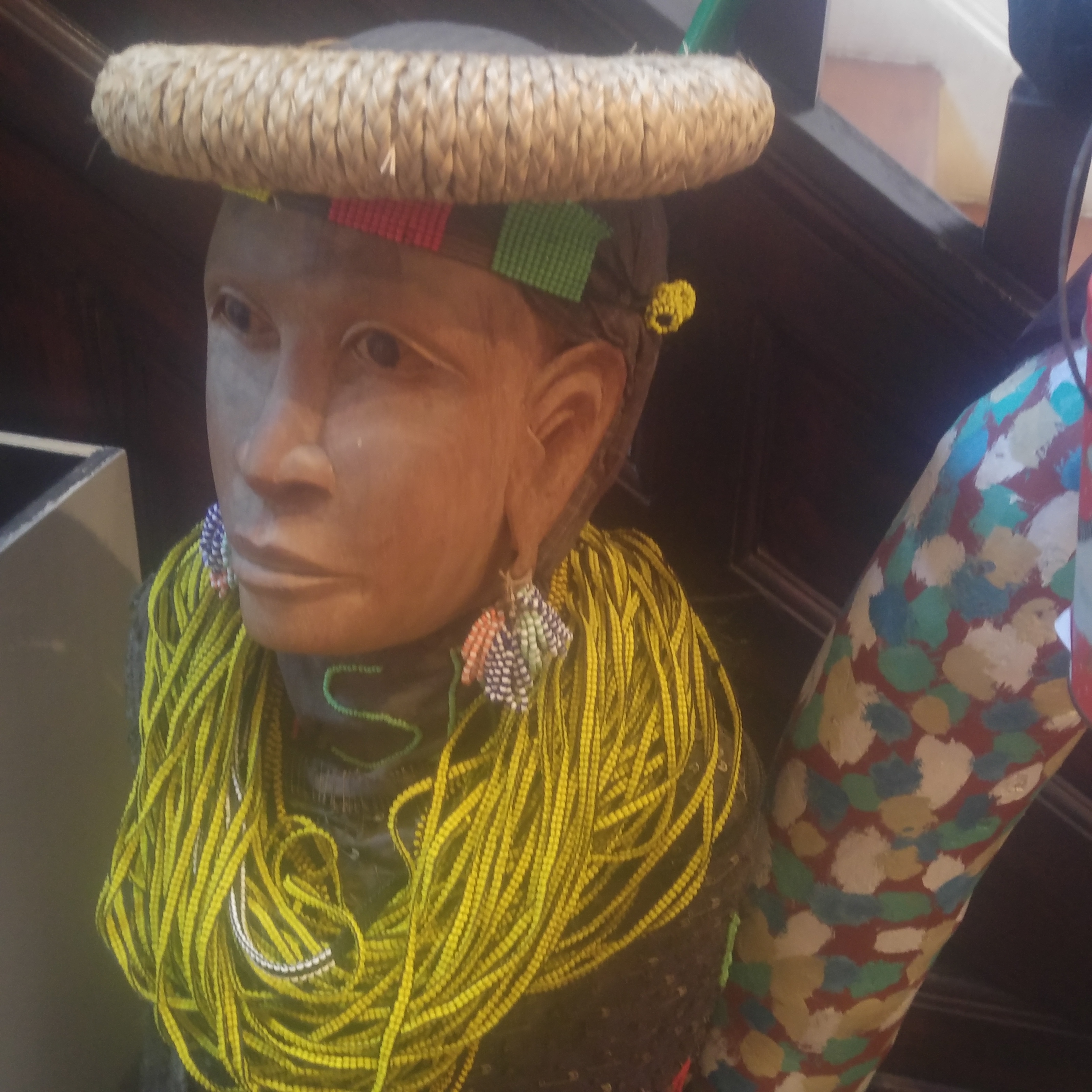
At a price of R137, the book can be ordered from Emily Monyai at monyaen@unisa.ac.za or from Johannes Morodi at morodjm@unisa.ac.za.

SAMSA-MASJIEN SHOWS AGEING AS PART OF THE LIFE CYCLE CHALLENGING BOTH YOUNG AND OLD

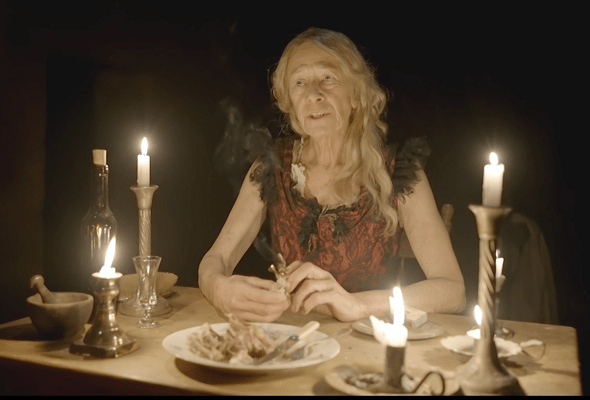
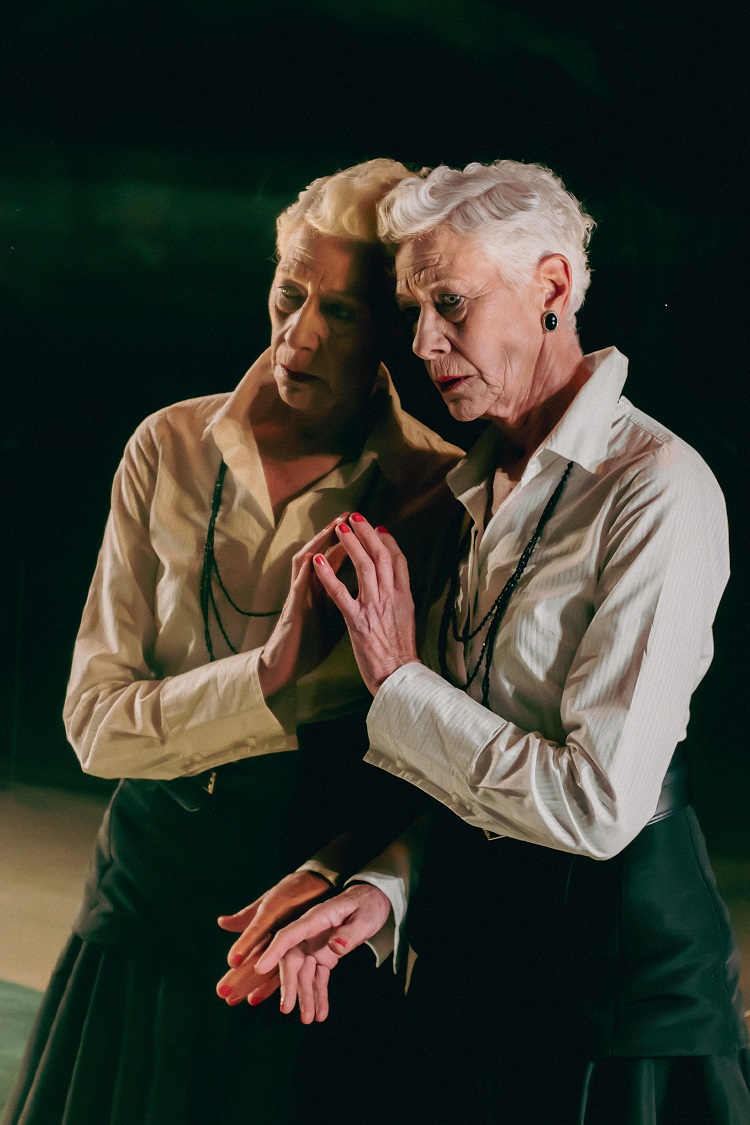
If you tune into the KKNK website, one of the many delights you will find is the route and tickets to a filmed version of Jaco Bouwer’s brilliant if disturbing Samsa-masjien written by Willem Anker and starring the brilliant Antoinette Kellermann and Gerben Kamper.

DIANE DE BEER reviews:

Gerben Kamper and Antoinette Kellermann

Most of us have or had ageing parents and will be ageing at some stage. That’s exactly what Samsa-masjien is dealing with.

When our parents are ageing, the process that becomes part of the children’s lives in some way can be either a joyous or troubling one. And often, it is in the hands of those who are younger to determine the outcomes.

The parents ageing are in most cases exactly who they are, they’re not going to change and you simply have to decide where and how you’re going to fit into the process.

When I first saw this production live, I was dealing with ageing parents and very vulnerable about the whole subject because it doesn’t matter how you regard your parents or how much work you do to deal with what may lie ahead, nothing can really prepare you for the process.

But what I had come to realise (with films like The Savages) and with dealing with people hoping to age gracefully, is that dignity is something everyone – those ageing and those caring – hope to cling onto. But it’s not easy.

So when I first experienced Samsa-masjien, I could hardly breathe being so overwhelmed. It was in fact only with a second viewing that I became aware of Pierre-Henri Wicomb’s emotive sound recordings which are almost like an invisible yet very present character – especially in the live performance.

Samsa-masjien with Ilana Cilliers

What Willem Anker did with the text was quite astonishing, as he honed into the basest of emotions when dealing with something as overwhelming as this particular human condition, which most of us will be subjected to at some stage in our lives from different vantage points.

Witnessing this on film felt to me much different – not better or worse – but different and which one you prefer will be a very individual rather than an artistic choice.

What Bouwer (who since this production was first staged live at the KKNK has focussed more on film than live theatre) decided was to shoot this play as often in close-up as he could manage – or that is what it feels like. And I suspect he was right because the thing with this topic and particular play is that you have to find yourself in the midst of this particular emotional storm because that’s what it is.

And since writing the review, I had the chance to listen in to a discussion that artistic director Hugo Theart had with Anke,  Bouwer and Wicomb which explained a lot about the process as well as the recording. This was followed later by a discussion with the cast which was as insightful. (both of these are available on the KKNK website

Samsa-masjien was in fact recorded during the Baxter Theatre run in 2015 for archival purposes, which Bouwer had started doing with his work, including Rooiland and Balbesit. (Can we please see those too?)

The way they did it was to shoot a couple of hours before every performance. “It wasn’t meant to be seen,” says Bouwer but fortunately for those of us who relished another viewing or even first-time viewers, Theart could twist his arm.

It is one of the few theatre advantages during Covid that more attention is being paid to online productions and in many instances especially in a country where theatre-makers are always struggling, that’s a good thing. There are many one-off shows for example in Joburg which I can’t make but which I would love to see. It’s also a solution to those theatre makers who struggle with producing remarkable plays for a festival and then it doesn’t travel any further.

But to get back to the production, everyone in this story is busy with their own drama because it’s as much as they can deal with.

Ludwig Binge in Samsa-Masjien

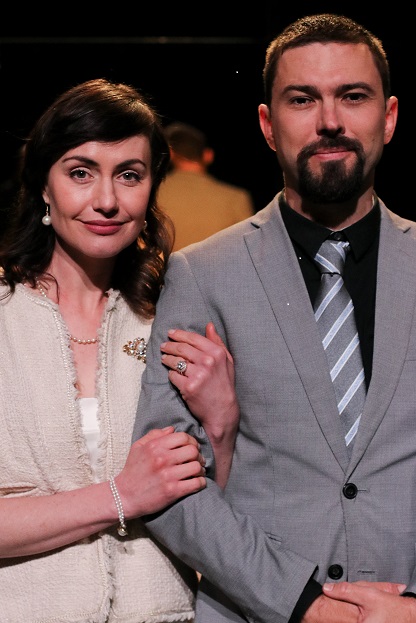
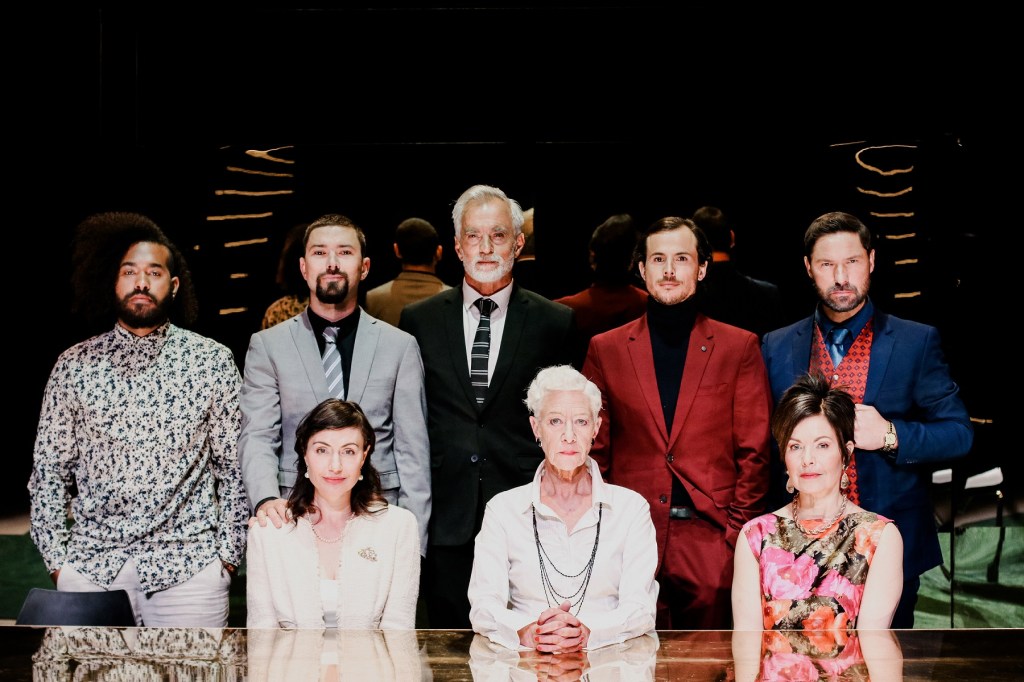
The ageing father (Gerben Kamper) is losing his mind, while his wife (Antoinette Kellermann) is trying her best to keep him safe and allow him to age gracefully. His daughter (Ilana Cilliers) is battling with what is happening to her parents and her husband (Herman Binge) doesn’t think any of this is his problem. He is already providing her parents with a place to stay. Nothing more required. They seem to be cool, calm and collected throughout the unravelling process – but obviously that’s not the case.

It’s a remarkable text (Kafka-inspired and with many different layers to delve into) with Bouwer always a visual thinker and a cast to die for. Bouwer was the first to admit that especially for the actors portraying the ageing parents, these are not easy characters to play.

But his choices were easy because few actors have the courage that these two displayed. All four actors are perfectly cast, but especially Kamper and Kellermann as the parents because of the vulnerability of the characters and the players bringing them to life. It is simply astonishing and contributes to what is essentially an ensemble piece with those on and off stage involved.

It’s not an easy piece to watch but something all of us should heed as it will be part of our lives in some form. And who knows, with enough care and understanding we might even make it a smooth process for everyone involved.

But not in this tale where the children are hosting a dinner party upstairs while the parents are sinking deeper and deeper into the obscurity of their own world below the surface – unseen, or so everyone believes.

Anyone who has walked into a retirement home (previously known  as old-age home) recently will understand that feeling of  displacement as you pass cheerful souls in the passage and people eager to see if they know you or can start a conversation.

It takes me back to boarding school.  I didn’t want to be part of that tribe then and I have no desire to repeat anything vaguely described as group activity in this lifetime.

But as my mother said to me in those tough years: “We are your children now. And I know you never wanted any!”

And that’s the irony of life. There are many things we simply have no say in. They’re given to us and usually at a time when we’re least prepared. Ageing is one of those and watching people die is at its best one of the toughest things you will be asked to do.

So watch Samsa-masjien. No one wants to go through the worst of it and at least, with some thoughtfulness, you can complete this life cycle with the gentleness required.

Go to the KKNK website for tickets and viewing.