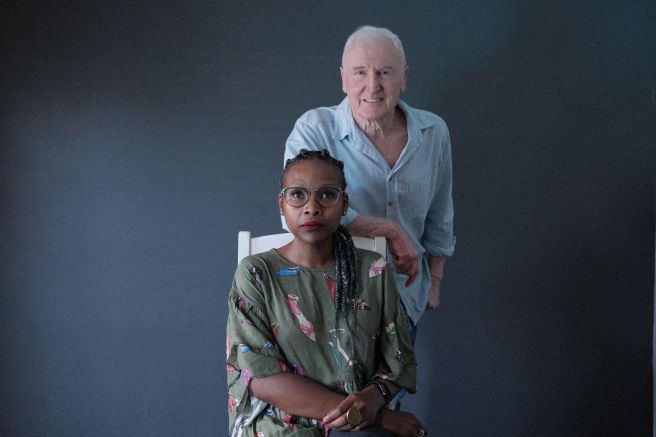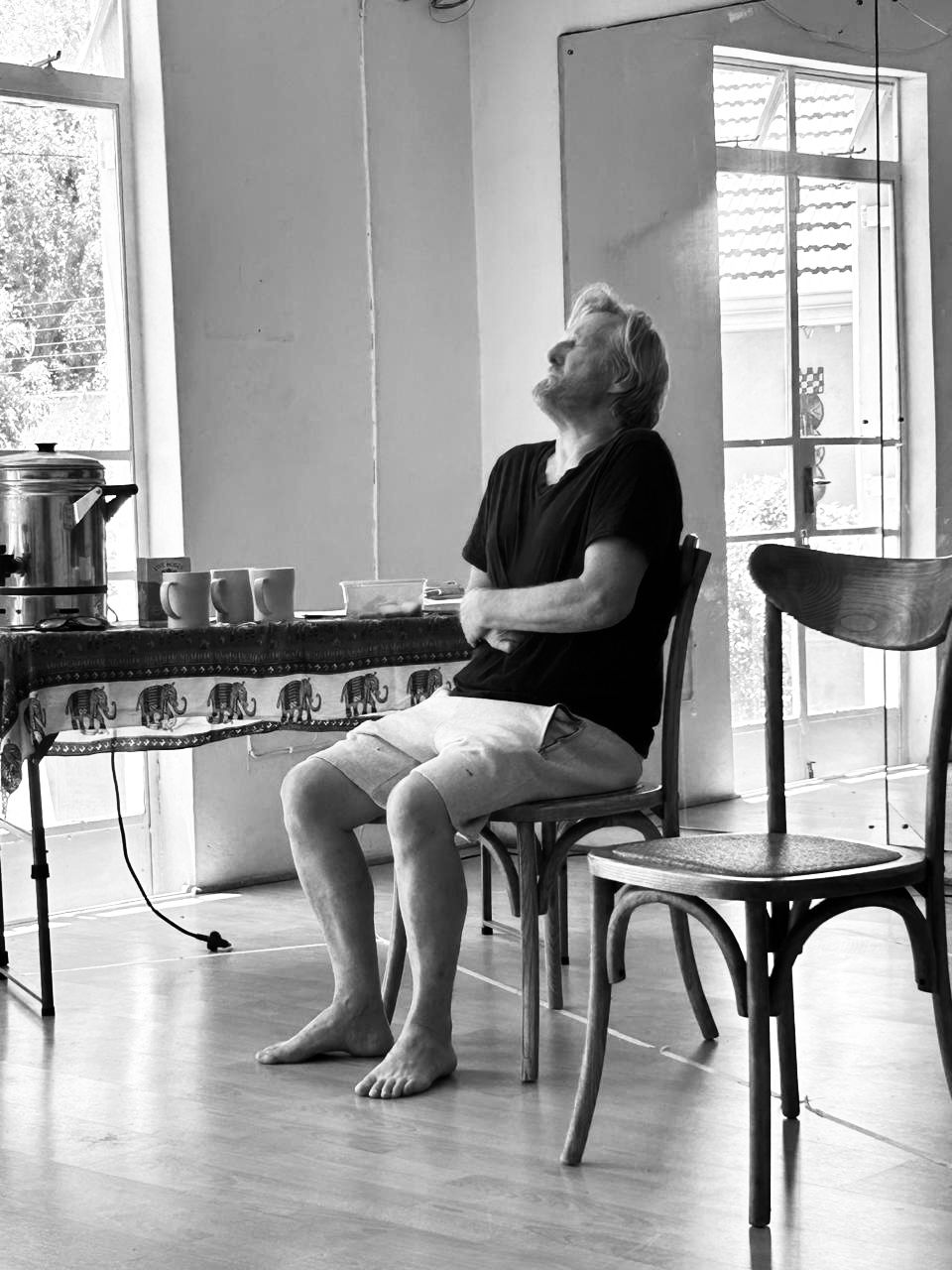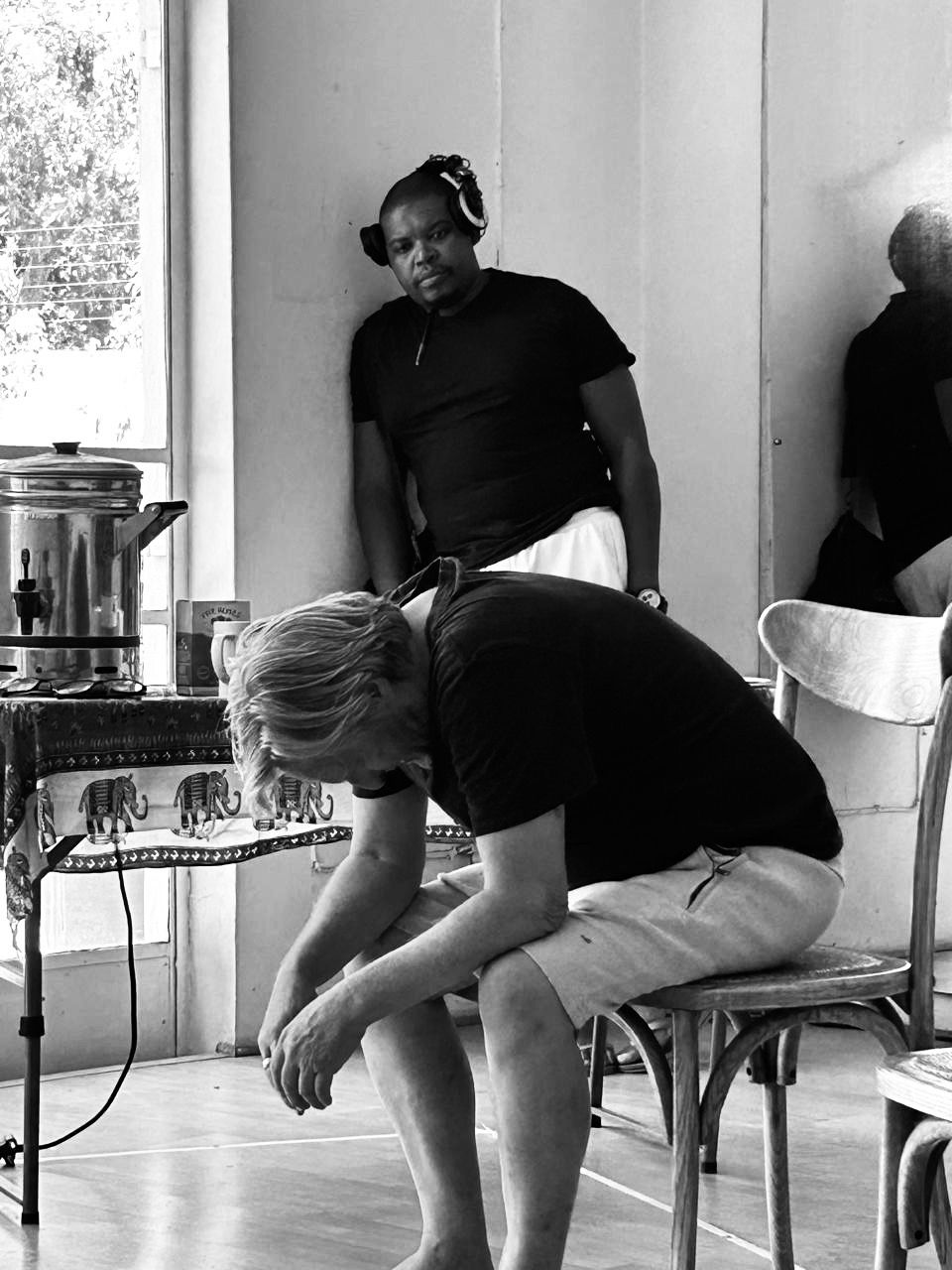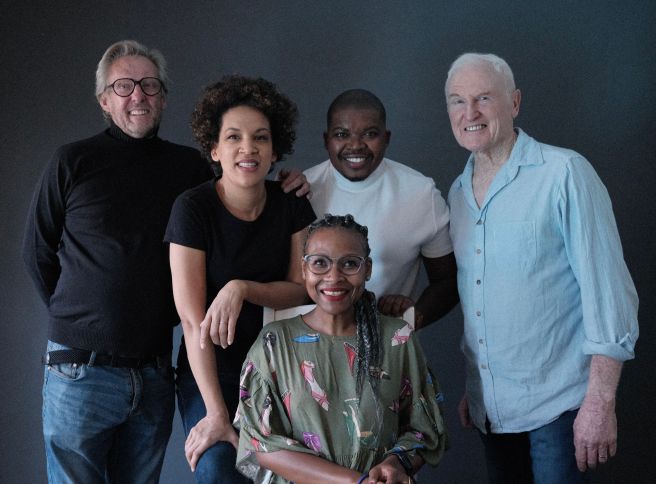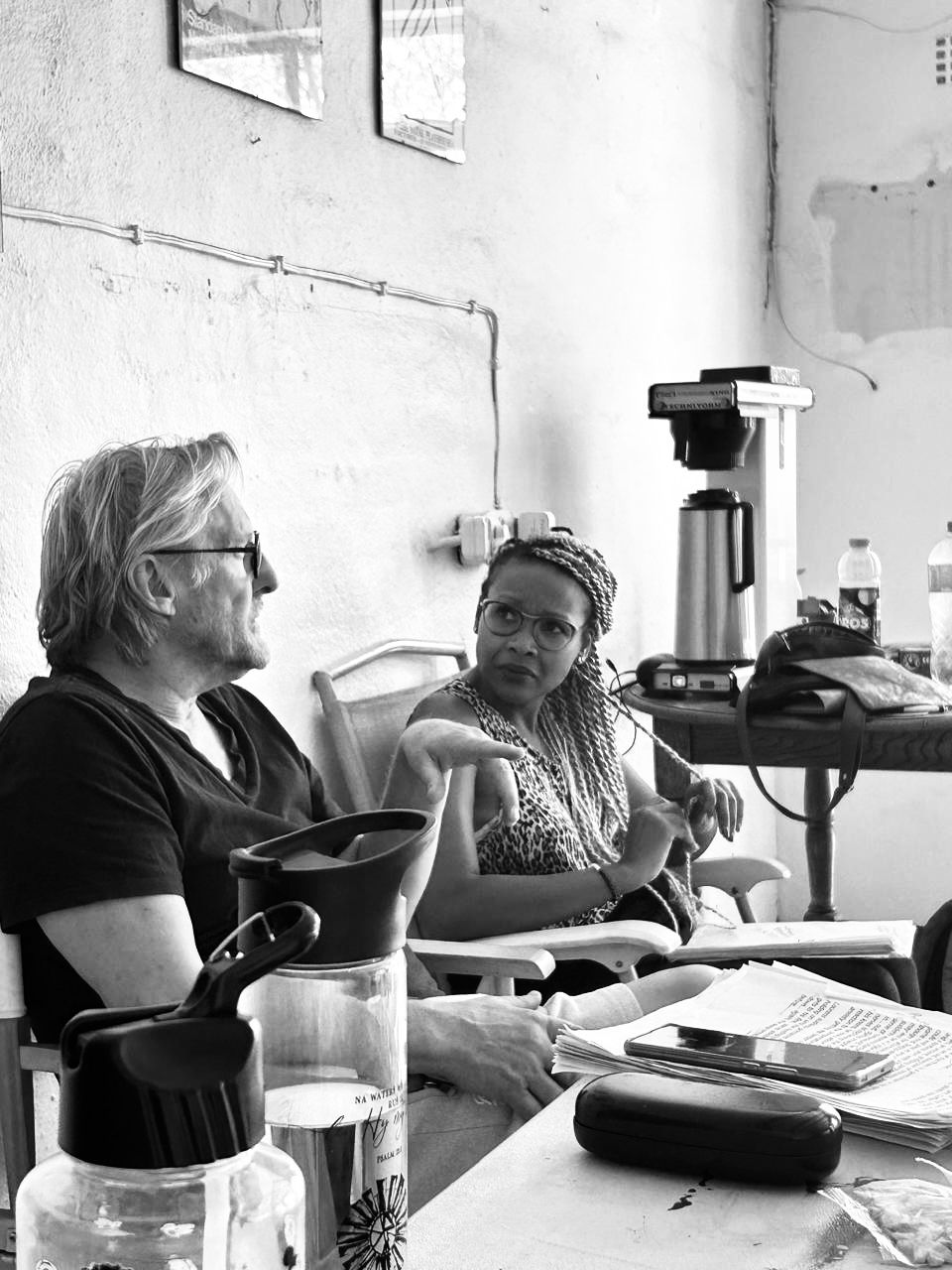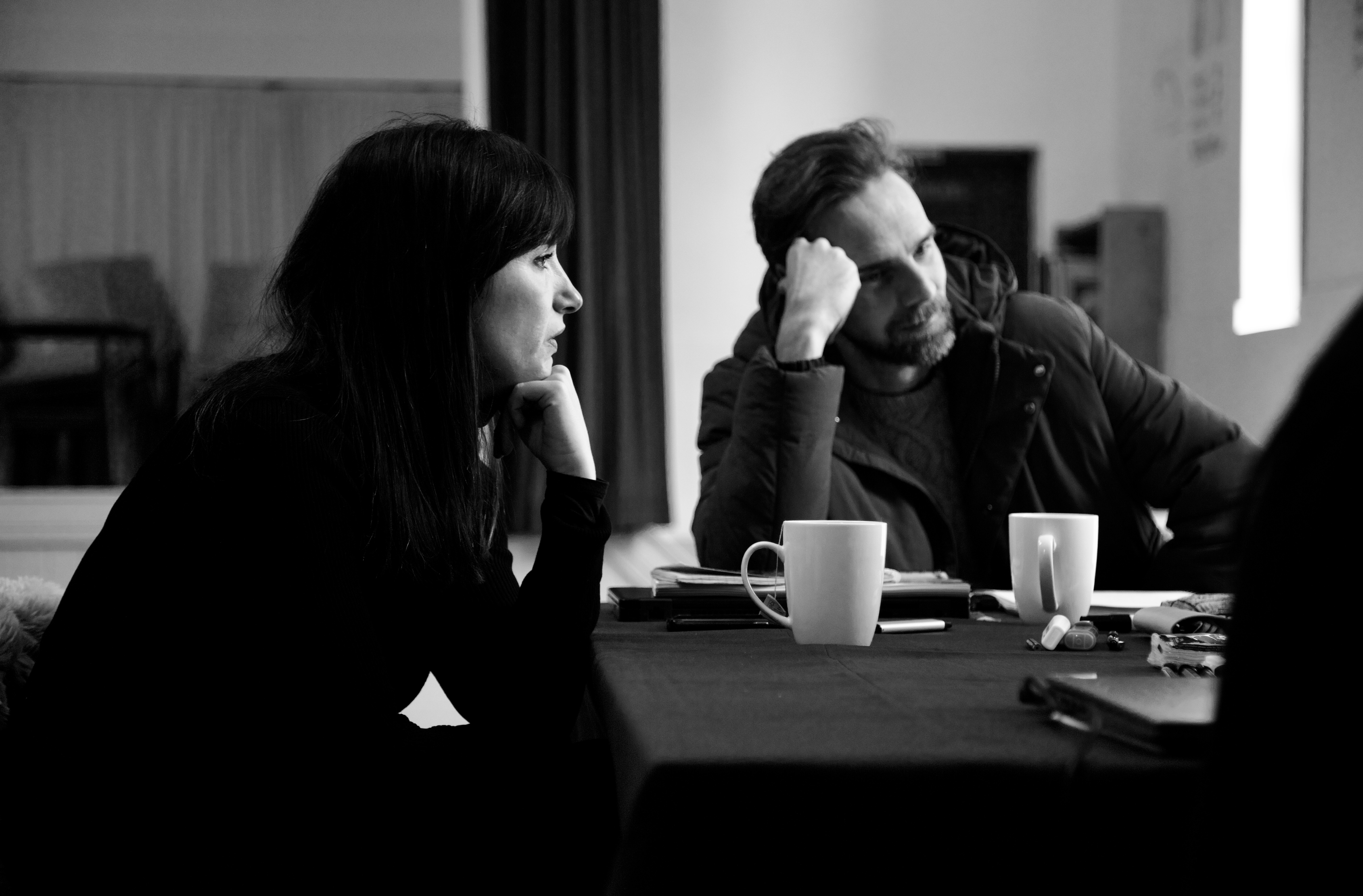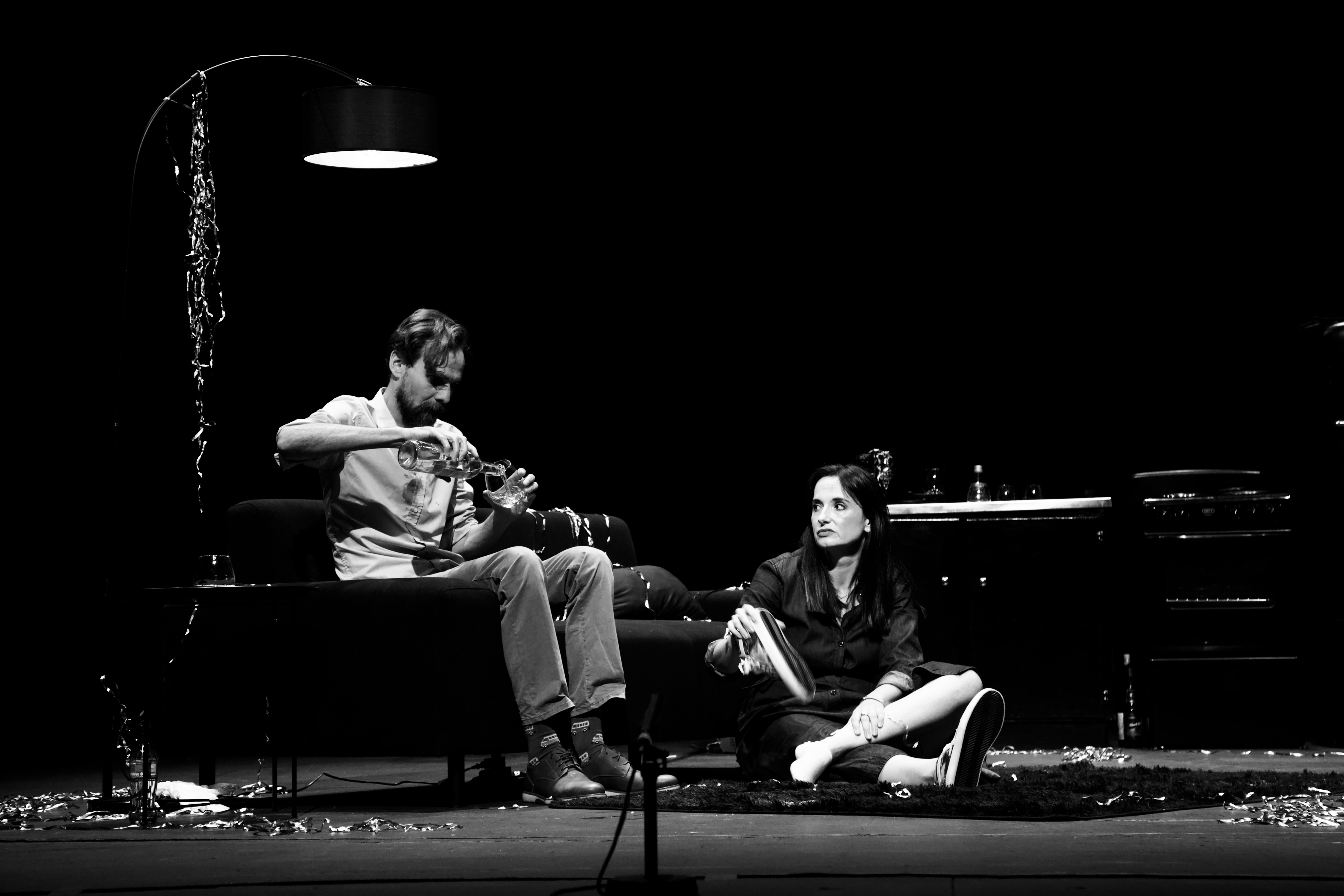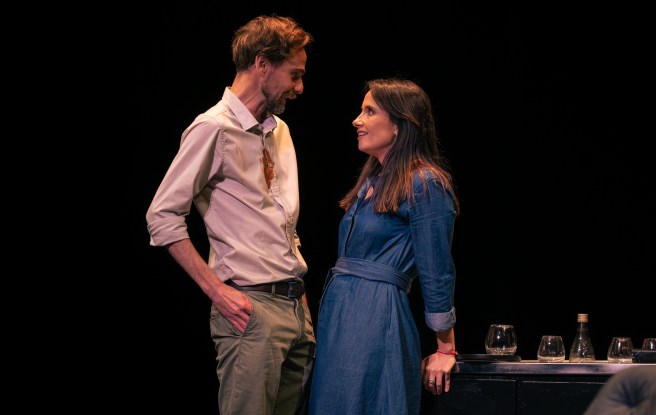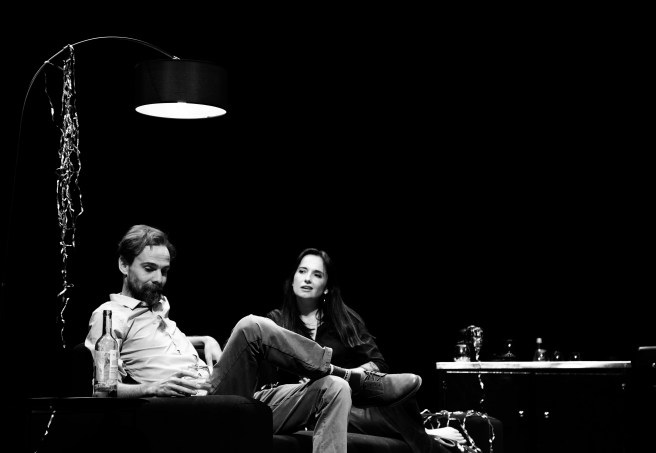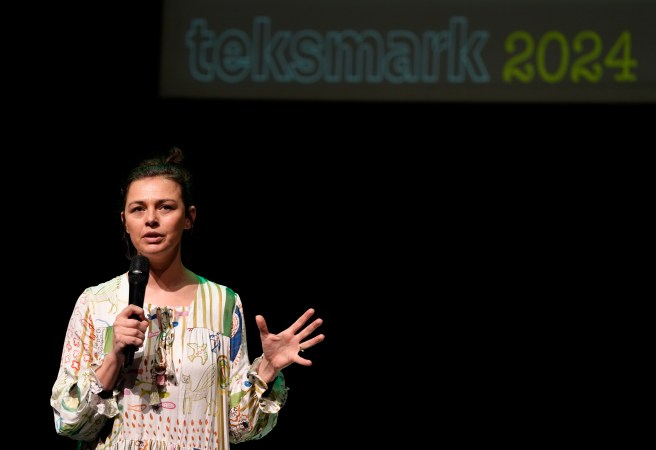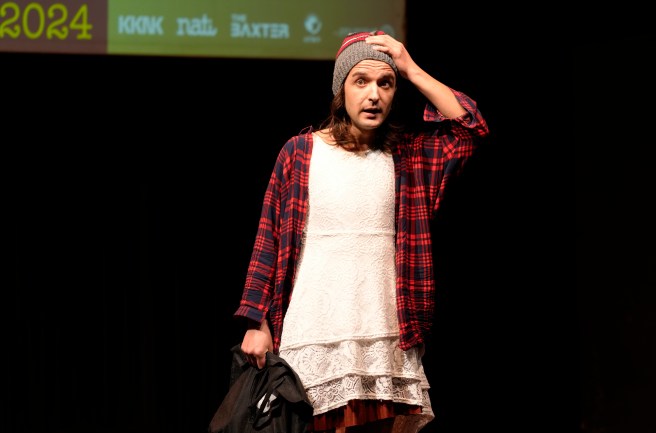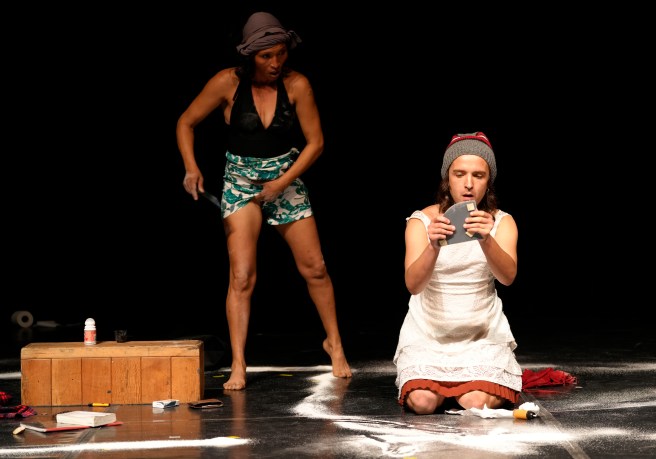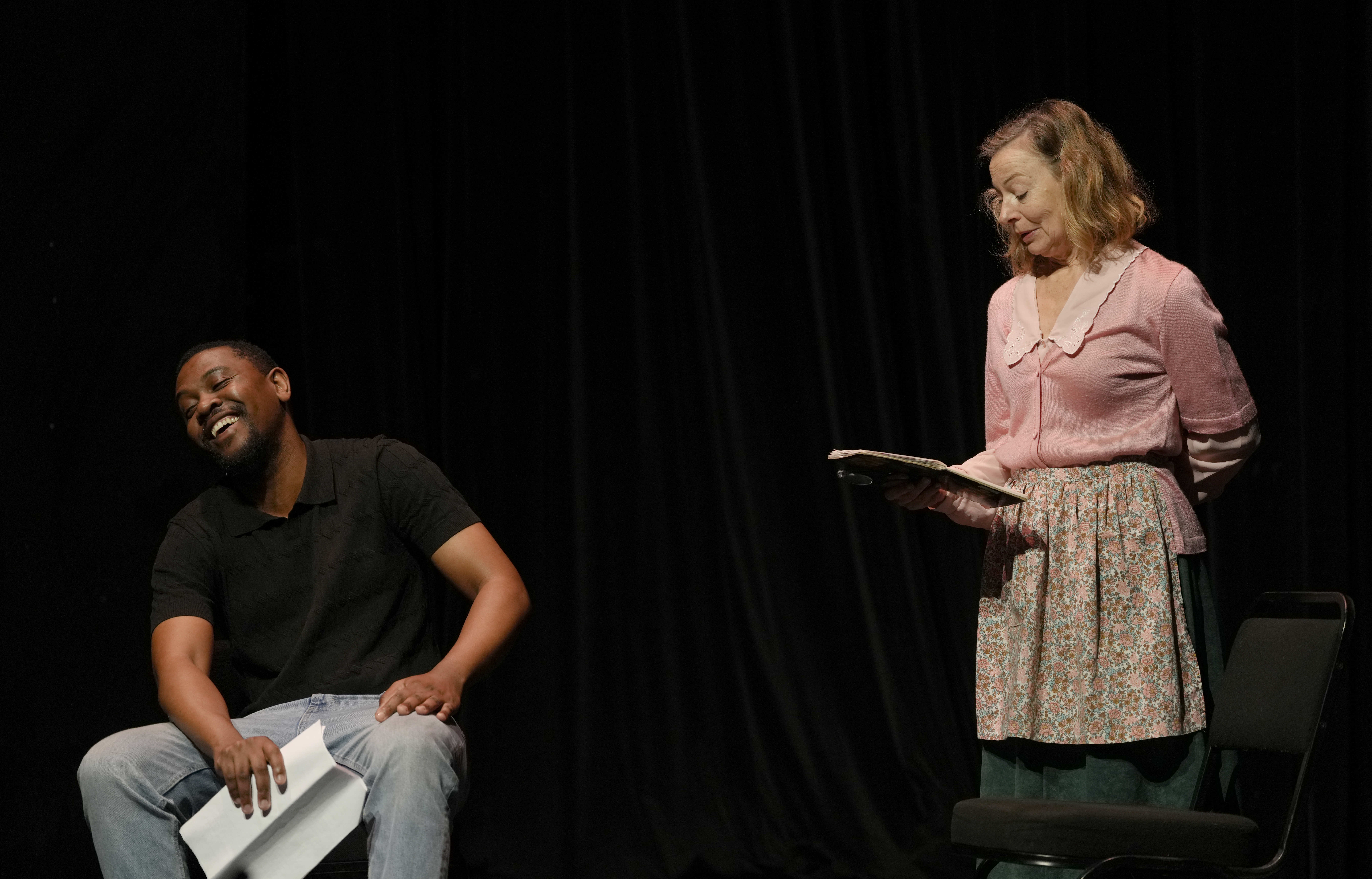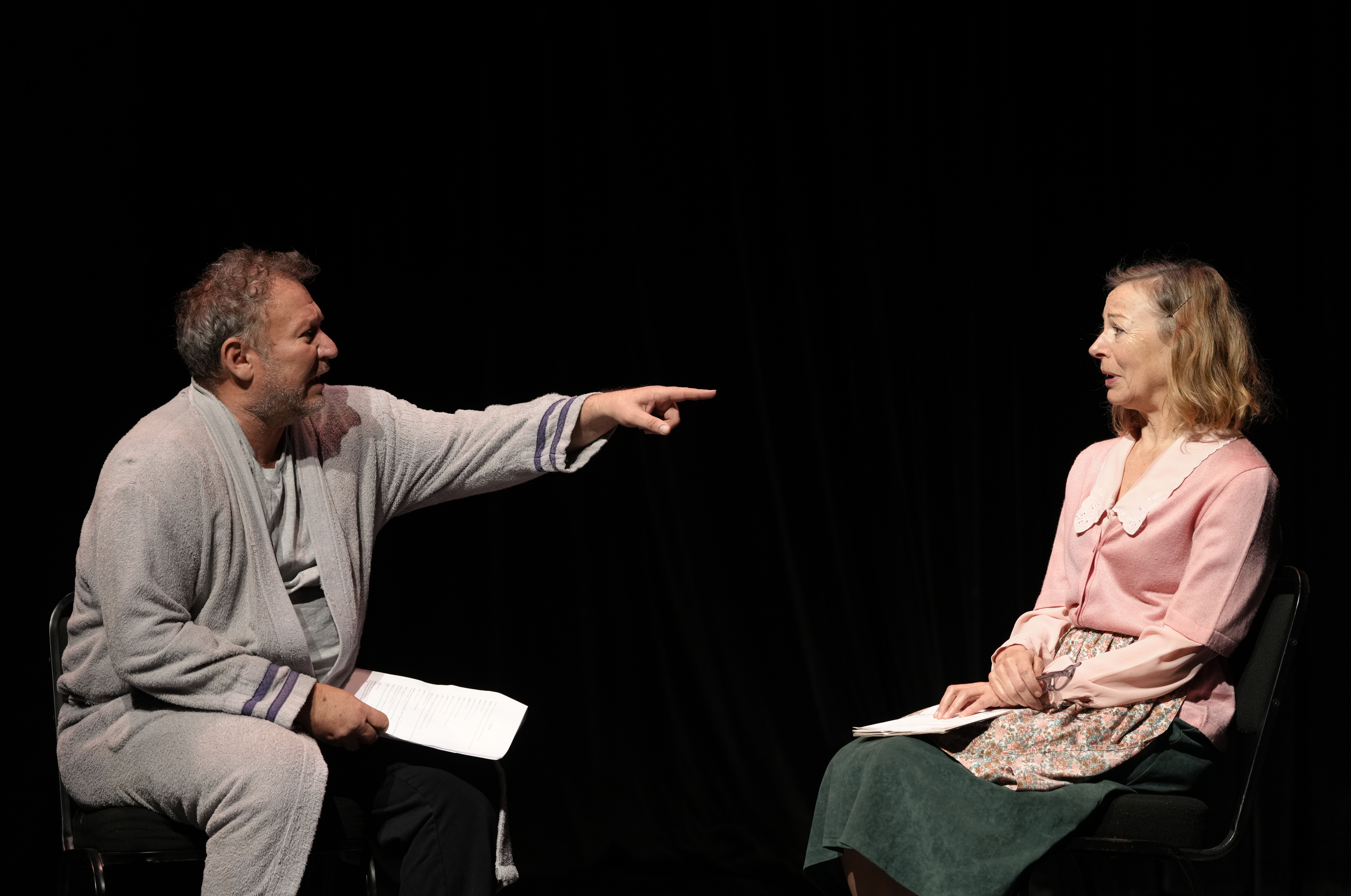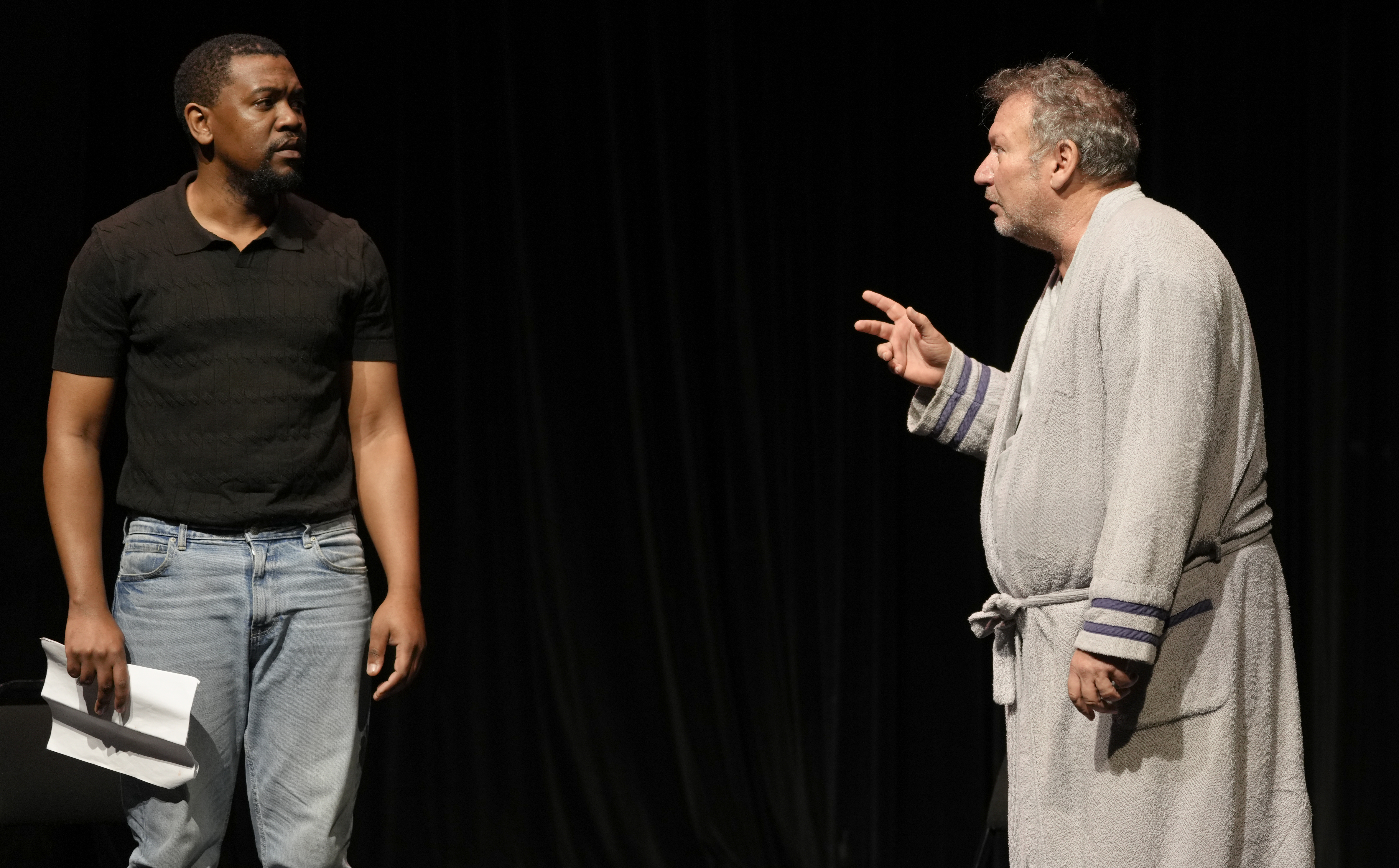
ANDREW BUCKLAND RETURNS IN THE CLASSIC UGLY NOO NOO TO JOBURG’S MARKET THEATRE

DIANE DE BEER REVIEWS:

THE UGLY NOO NOO

DIRECTOR: Janet Buckland

PERFORMER/WRITER: Andrew Buckland

VENUE: Mannie Manim Theatre at the Market

DATES: Until September 1

Pictures: Ruphin Coudyzer

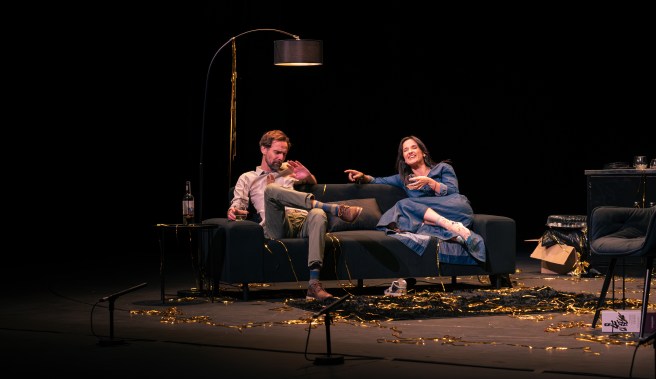
What a delight to revisit Andrew Buckland’s The Ugly Noo Noo, which was written and performed for the first time in 1988.

That feels like a lifetime ago and it’s not often that we get the chance to revisit these classics of local theatre that travelled the world and won accolades all round.

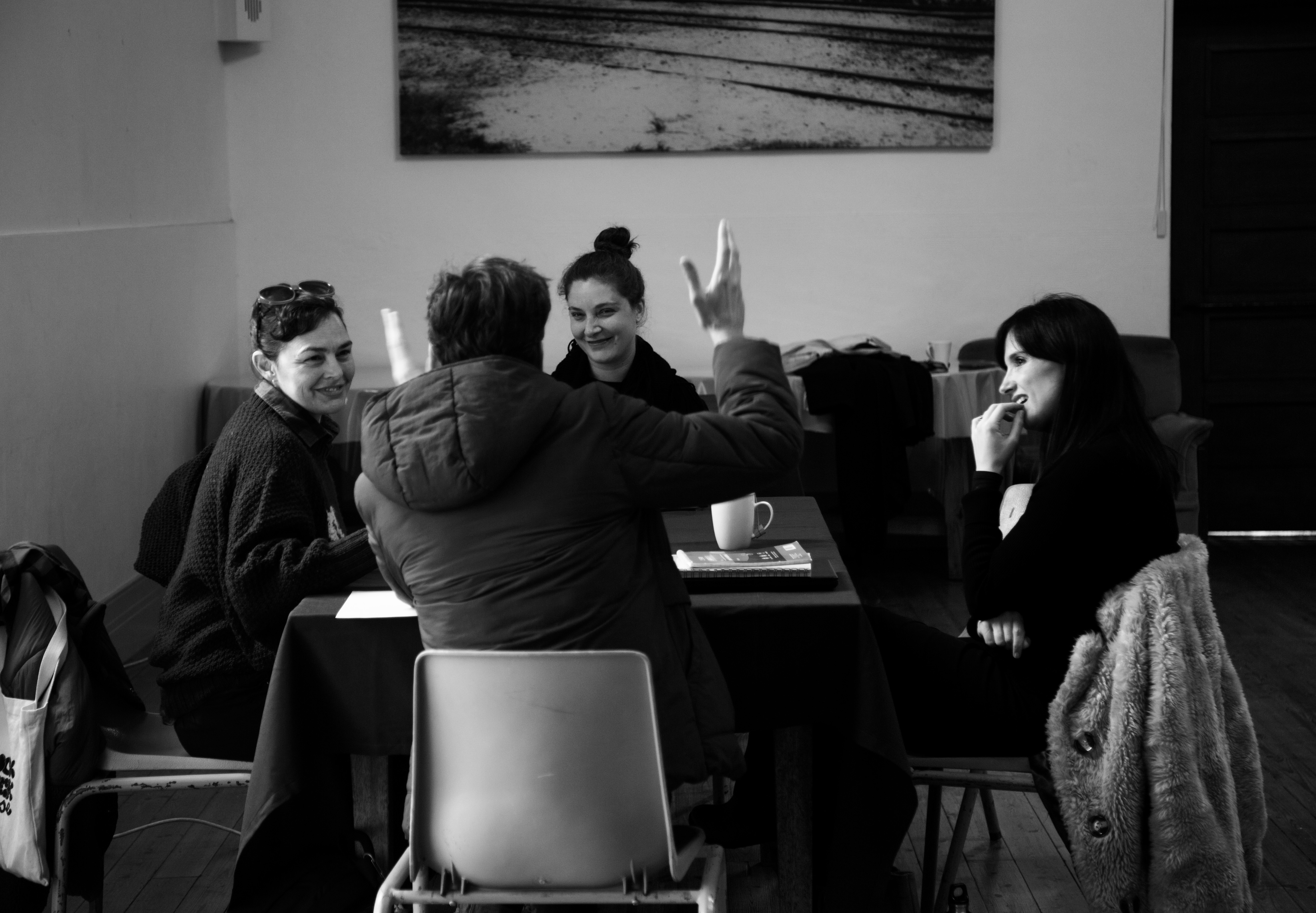
They cleverly kicked off with The Making Of, presented as part of performance lectures and demonstrations at SO|The Academy for the Less Good Idea in Johannesburg with Buckland giving audiences (those who had seen it before and those going for the first time) insight into the development of his signature style. For him, the play was a response to the political and social context of apartheid South Africa in the late 1980s. For the audience, the talk was a chance to get closer to the thinking and strategies of this astonishing South African theatre maker.

Athena Mazarakis, Momenteur for SO | The Academy for the Less Good Idea, explains that The Ugly Noo Noo is a seminal work in the canon of South African theatre.  

“The work is not only a biting piece of allegorical protest theatre but it also established Buckland’s unique style of the highly physical one-hander that blended elements of mime with razor-sharp text.

“It is a style that has since influenced and inspired multiple generations of performers and theatre makers, defining a particular South African brand of physical theatre marked by the combination of physical virtuosity with a strong textual strand and the solo performer who single-handedly takes on an entire cast of characters.”

She reminded audiences that, “not only is this re-staging a reminder of the part that theatre and artists played in the struggle but is also a continued reminder to artists today of the power that their work holds to critique and question the many injustices that surround us.”

For Buckland, his work is all about the imagination of the audience, where the action of the piece is given life. “It’s a delicate line to get the audience curious, like charades on steroids, as you draw them into the play.”

Play, in fact, says Buckland, was where it all began. He was the youngest of seven siblings and started playing on his own for hours, being the hero in his own world.

For this particular piece, 36 years ago, it began after witnessing his wife’s response to what had become known as the Parktown prawn. “I always loved language put together with movement or stillness,”  he says.

Thus began the encounter between a human and an insect. He felt trapped in the world of apartheid at the time. How does a white man deal with what is happening around him on stage? He knew he had to participate in a meaningful way. The Ugly Noo Noo gave him the perfect allegorical way out, offering him a novel way of telling stories while at the same time pointing to the world around him and the horror confronting South Africans.

What he was familiar with was his own angst and fear. Being the artist he is, The Ugly Noo Noo was where it all began. And while we were in the grips of apartheid when it first emerged, this time the world is struggling with a sudden explosion of fascism all over the place, and the timing of the current season could not have been more apt.

Looking back, that has been Buckland’s weapon (deliberately or simply instinctively). His work has managed to capture a particular zeitgeist which in some fashion seems to hold countries  to ransom.

What he discovered with this work was that it was possible to use laughter as a vehicle to invite people to acknowledge and confront their fear.

Watching the performance all these decades later and again hearing the text it is obvious why it was such a success while still retaining all the power of performance and  storytelling as when it was first performed.

When talking about the making of, Buckland referred to his age, but what struck me was that all his many years of training, of honing his craft, have added to the detail and impact of his movement, which might have been diminished with age. Older and wiser, he knows where and how to compensate and embellish.

The text has lost none of its initial cunning and while his antics on stage has the audience in laughter much of the time, the real essence of the text is a still a stomach punch.

It is one of those that has all the elements celebrating the art of performance and storytelling when there’s a true genius at work. Buckland has always been one who worked with delicacy and delight when presenting his art. And his choice and timing of when and what to perform is spot on.

Hopefully he will return to that classic treasure trove of his and bring back all those memorable gems.   

MAKE SURE YOU CAN FEND FOR YOURSELF IN THE KITCHEN IS INA PAARMAN’S MAGICAL MANTRA

Ina Paarman has been in the business for half a century and has been a competitive author in a genre that offers in abundance so you need to stand out and find your niche. She did all that and with her latest cookbook brings it all together. She shares some of the secrets of her success with DIANE DE BEER:

Success comes with consistency, says Ina Paarman who has established her reputation with just that. “You have to send out the same message all the time,” she says. Together with that you have to give practical culinary information and recipes backed by good, top quality, products.

Her food philosophy which probably grew through the years was that you have to be able to fend for yourself in the kitchen. “It is an essential life skill and the best way to stay healthy,” she advises.

And with a fast ageing population, this is her mantra, one that has never changed through the years. Instead it has grown stronger.

For those who have watched and heard stories through the years, teaching is her calling. “I love sharing knowledge. Information about skills and technique for example. I believe in removing the fear of food and at the same time the importance of understanding the essence of good nutrition.”

Fresh Pea Soup with Spinach Fish Cakes with Tartar Sauce

In the beginning and in her younger days, she was scared of famous dishes.; “I felt intimidated,” she confesses. But with some experience she learnt that it is best to be your own trendsetter and at the same time to pay attention to your customers. You have to understand and get to know their needs.

In her line of work, she was dealing with real people with families and friends to feed who love good food, food that men and children will enjoy. That’s quite a big ask, but because she was one of these women herself, she knew how to make it work.

In today’s world, less meat is the way to go if you take international trends into account and then you have to understand that everyone is battling with time. When it comes to preparing meals for a family, you are often dealing with people who have many different priorities and time is of the essence.

Branding in today’s world is huge and this is what Paarman understood from the earliest days. “The brand is part of who we are and what we as a family have always been intimately involved with.”

Venison Pie with Phyllo Roses

“Our lives are what we do every day. We do not have a heavy social life, and if we travel it always involves gathering ideas and knowledge. A good business is an extremely demanding taskmaster. But I won’t have it any other way.”

And it shows. Ina Paarman’s name has always been synonymous with quality and in the over-supplied world of cookbooks, you can’t afford not to get it right. There are just too many options and worldwide it has become BIG BUSINESS. Just watch the latest season of Masterchef and see what is happening in the food world. The quality of those young chefs is astounding.

Everyone who manages in a kitchen at some stage might think they have the knowledge for their own cookbook journey. Think carefully, as the specialist explains. “They must realise that success takes time and dedication. Just as you would give total dedication to raising a child, a business, to grow, demands time, attention and continuous re-investment of money.”

We should all know that nothing comes easily. Success has always meant hard work together with the luxury of talent which has been honed.

Talking to her about social media, she is still dubious about the benefits at all times. And that is probably most people’s feeling about this area of our lives which in many cases has become quite monstrous.

Even when we do understand how it has given many of us the ability to do what we do. “Social media is a great way to communicate directly with your customers,” she explains. “But you have to do it in an honest and credible way.” Again that sounds like experience talking. Everyone has had to find their own way.

Through the many decades, staying relevant has probably been her best tool. “Listening, listening and listening and then acting on what you observe,” is her solution.

In conclusion she celebrates the latest cookbook. “It has given us all a lot of pleasure she says. I worked with a talented team and photographer Nicky Hoyle. We took time doing the book (over a year) and worked with the seasons. Our garden was great inspiration and the team are the best in town!

“Beside we enjoyed some delicious meals and had exciting moments of creative stimulation and sharing ideas.”

She recommends the book as all the recipes are thorougly tested and will always work. How can that not work for those of us in our own kitchens? It’s exactly what you want.

She also includes that all the recipes are based on our South African culture with the availaibility of products extremely important. That and our style of eating.Homecooks will feel comfortable with the recipes, she adds. The print is large enough, the ingredients familiar and as a bonus, beautiful photographs. Finally, she says, “I felt the need to share a bit about my background to ‘set the scene’ for each chapter.”

Chicken and Olive Bake with Pitted Dates.

And if you need more encouragement.:

The book’s title, INA PAARMAN: MY FAVOURITE RECIPES, should seal the deal.

Their online shop has closed but the book is available from their factory shop in Diep Rivier, Cape Town or at certain Checkers and Exclusive Books brances.

Here is her favourite recipe in the book:

Ouma’s Karoo Lamb Pie:

This traditional recipe from my mother Nellie Jooste should be preserved for future generations. The aromatic pie always looks impressive and tastes and smells delicious. It can be prepared in advance and frozen with the uncooked pastry cover.

Main Dish:                                                                                 Sauce Condiments:

2 kg lamb on the bone (shoulder or knuckles)        1 t (5ml) ground coriander

Or a mixture of the two cut into 4cm pieces            2 cloves garlic, crushed

Ina Paarman’s Meat Spice                                                2,5ml  Ina Paarman Chilli and Garlic

2 cups (500ml) water                                                           seasoning

2 times 25g Ina Paarman Liquid Beef Stock                 2 t(10 ml) mustard powder

1 onion, chopped                                                                    2 t (10 ml) sugar

2 bay leaves and 5 cloves                                                     4 T (60 ml balsamic vinegar

Sour cream pastry if you have the book, or                    2 T (30ml) cornflour or potato flour

Bought all-butter puff pastry                                               mixed with a little cold water

Egg Wash:                                                                                Half an onion studded with 7 cloves

1 egg, a pinch of sugar and a pinch of salt

                                                                            Makes 1 to 2 pies.

METHOD

Adjust the oven rack to one slot below the middle position and preheat the oven to 160 degrees C

Season the lamb with Meat Spice. Place the water, the beef stock, onion, bay leaves and cloves into a large heavy-based cast iron pot with a lid. Add the seasoned lamb and cook the meat in the oven until  completely tender and starting to fall off the bone (approx. 2 and a half hours).

Spoon the meat out with a slotted spoon and let it cool a little. Remove the bones, excess fat, gristle and bay leaves, then flake the meat.

Fill up the stock remaining in the saucepan with water – you should have approx. one and a half cups. To that, add all the sauce condiment ingredients. Thicken it with cornflour or potato flour blended into a little water. Add the flaked meat and taste for seasoning.

Dish the meat mixture into a heat-resistant  pie dish of approx. 25 cm. Position the spiked onion half in the centre to prevent the pastry from sagging. Leave to cool down. Ideal to refrigerate overnight.

Cover the pie with pastry. Put an extra pastry strip on the rim of the pie dish, then cover the pie with pastry. Scallop  the edges. Glaze with egg wash ingredients beaten together. Turn the temperature up to 190 deg C. Bake for 45 minutes until golden brown. Cover with foil, shiny side up, for the final 15 minutes to prevent overbrowning of the pastry.WINE CHOICES: A wooded Chardonnay or Shiraz will complement the butteriness of the pastry.                

CHEF PATRON DANIEL LEUSCH CELEBRATES FOUR DECADES OF LA MADELEINE, ONE OF THE CAPITAL CITY’S BEST LOVED RESTAURANTS

When you are invited to celebrate the 40th birthday of a Pretoria restaurant which has managed to remain on the top ten list in the city from beginning to end, the excitement is huge. DIANE DE BEER pays homage:

Pictures: Hennie Fisher

Chef patron Daniel Leusch and maitre’d Abu Fofana

I have known chef patron Daniel Leusch for as many decades and been a huge fan but I haven’t had a meal for a few years. I’m expecting nostalgia, reminiscing, and glorious food. What I didn’t expect from the classicist is a makeover, subtle as is the secret of his special craft, yet with a specific modern slant which proves why diners keep coming back.

But before I get to the menu, I returned on a Sunday at 2pm for a chat to catch up on the history as well as future dreams.

I walk into a buzzy restaurant where family and friends have packed the room for a hearty and probably heavenly Sunday lunch as my bubbles and freshly baked La Madeleine bread with cheese attest.

Cappuccino of fresh peas

Chef Daniel has long ago tapped into the Tshwane ethos. He knows we are still a traditional society when family rituals come into play. He has many regular diners who started with the grandparents and the parents and eventually, the kids are now the diners. La Madeleine is part of their dining DNA.

He first arrived in Johannesburg in 1976 as part of an adventure which he didn’t know at the time would shape his life. Johannesburg’s Carlton Hotel’s iconic Three Ships restaurant was his first port of call before he moved to the capital city where he started at the Alliance with Chez Daniel, an obvious beginning for a young chef (’77 to ’80) and was then gifted a sponsorship by the director of Boland bank where he opened his own restaurant.

La Madeleine had its start in Esselen Street, Sunnyside in 1984 where Daniel would be cooking for 16 years. This is where he made national news with his famous champagne-injected crayfish. There was a huge outcry but the foodies around the country took note – and with reason.

And finally, today’s setting for La Madeleine which has been the home for this extraordinary chef since 2000. And now he is celebrating one of Pretoria’s best and its 40th anniversary. It’s the longevity, the sustainability, the years of maintaining standards – and never losing his drive to excite diners as we discovered a few weeks ago at our celebratory dinner.

Carpaccio Japanese style

I hadn’t been for a few years because even though I’m still reporting on food and restaurants, I seldomly dine out. It’s been a privilege for a number of decades to be treated by many city restaurants and to share in their triumphs. Daniel and I come a long way and I had visited every restaurant, from the Alliance days, all these years. He has always been able to marvel at the experience he presented me with from the early days and I should have expected it now.

What I didn’t expect is that he was going to excite us (party of four with myself, chef Hennie Fisher and our partners) with beautiful classically based modern food.

I should have known. His generation of European chefs, Daniel notes, were influenced and inspired by the great Paul Bocuse. I had to smile when the cappuccino of fresh pea arrived. He had refined a masterful green pea soup that I remember from earlier days and I knew we were off on one of Daniel’s food fantasies and we were going to have an extraordinary meal.

This was followed by a carpaccio Japanese style (where his son is in the hotel management business) served with diced daikon. Simply sublime and it transported me back to that island of fine cuisine.

Paying tribute to his roots, next were some exquisite Provencal inspired tartlets with delicate fresh and cooked vegetables, a pastry that’s melt-in-the-mouth, shavings of Parmesan and a hint of basil pesto. Heavenly!

And then he came with a delightful surprise. The mains were a classical paella. And as any chef will do, he went to find fish where he knows it will be fresh as fresh can be, in Cyrildene’s Chinatown. The picture tells the story. He couldn’t have picked something more delicious. How can one not feel utterly spoilt when a fine dining chef presents you with something as wonderful as that Spanish classic.

Classic Daniel Leusch Paella

So in a sense, even though his imagination was on high alert, he did opt for the classical. Only it wasn’t what I had imagined it would be.

Then came what he cleverly called a pre-dessert tartlet, filled with a  paste of tomato jam and a raspberry sauce. A marvellous transition to what was to come.

The dessert was next and he showed off his spectacular skills with four different sweet delights. It simply started a merry-go-round at the table as we moved from one to the next and started all over again.

From a homemade ice cream with a salted caramel sauce between crackling brandy snaps; meringue filled with marmalade of fresh strawberries, coconut cream and raspberries; brandy snaps filled with cream, ricotta, raspberry sauce and ice cream. The combo was spectacular and the way a meal should be concluded, all sweetness and light.

Daniel’s wife Carine who many regulars will remember was the pastry chef in earlier times and his daughter Anne, who followed in his footsteps and now cooks in France in the Paris environs, was also a pastry specialist amongst all their other skills, but he’s no slouch and he has obviously well-trained staff.

Like his maitre’d Abu Fofana from Côte d’Ivoire who recently returned to his former post where he is a huge favourite, he takes his cue from Daniel and is perfectly attuned to diners and their needs.

Daniel of course has not changed a jot from when I first met him probably at his first post at the Alliance. He has kept his accent and his familiar manner of introducing the menu and mingling with the diners throughout the meal. He’s wonderful to watch as he moves between tables chatting away while observing what may be needed.

While I was writing at a table on the side, I could hear his voice as he explained the different dishes which meant I was smiling all the time. There’s a charm, a warmth and generosity of spirit when you dine and a desire to keep everyone happy while dining. That’s worth going back for time and again.

I knew – as always – what to expect from the man himself. What was unexpected was the meal and the surprise element, the menu. I wouldn’t have been let down if I was served what I had come to expect as classic Daniel.

But the way he invigorated the menu on the day, the thoughtfulness of inviting us (myself and chef Hennie Fisher who not only took these pictures but also wrote for many decades raving about all his accomplishments) and then overwhelming us with a spread that simply took our breath away, made this 40th celebration something extraordinary. And when I look back and reflect, should have been expected.

That’s why Daniel Leusch could sustain La Madeleine for 40 years. That’s where his heart lies. He still chooses all the produce himself. He knows that’s where the heartbeat is established.

And simply stated: “It’s my life!” says Chef Daniel. What an honour to be given a taste of just that!

A FIERCELY FUNNY SOLO ACT AT THEATRE ON THE SQUARE WITH A SKILLED SCRIPT AND DEXTROUS PREFORMANCE BY AARON MCILROY

DIANE DE BEER

A VEGAN KILLED MY MARRIAGE

Actor: Aaron Mcilroy

Writer/director: Craig Freimond

Show times: Weekdays at 7:30pm and Saturdays at 5pm or 8pm

Dates: Until 14 July


A solo show is a difficult gig for any performer. It’s the actor and the script with no backup if things go wrong. They have to think on their feet.

But when it works, it’s usually a blast. They’re sometimes funny and often sad. But whatever the material, the performance is usually the determining factor.

That’s why I try to give solo artists at least one chance. If they’re good, you’re theirs for life and usually the progression is also special to witness.

When I saw  that Craig Freimond was the director and the scriptwriter, I knew this would be a winner. His reputation is established and I was pretty sure the trip would not be wasted.

It’s always interesting to discover new actors and Aaron Mcilroy’s performance was hugely entertaining.

The title is pretty self-explanatory and in this time of extremes, vegan is a good topic through which to exploit that particular behaviour trait. Anyone who gives up anything with success can be very painful and annoying. Perhaps “sanctimonious” captures the essence more specifically.

And that’s exactly what happens here as  this particular vegan convert decides he has to inspire the world. He has discovered the life and it is his responsibility to pass it on. Get the drift…

Especially braais – that sport of kings in the South African context – are not the place to start preaching a vegan lifestyle. But, of course, new disciples, have hardly learnt the finer nuances of taking things slowly. Trying to persuade someone to let go of their way of life because that’s what you have done is hardly a proven recipe.

And that’s exactly what happens. But without showing the play’s hand completely, rather discover it for yourself.

Mcilroy knows how to work a room, he has an abundance of tricks in his bag to layer his performance, and the script is coloured smartly with the sharpest South African shades, is extremely funny and very recognisable to anyone who has ever been in any relationship.

We all start out with good intentions and then the personalities and needs of the different parties come into play. How different individuals play their moves often determines the outcome.

Freimond and Mcilroy make a good team. It’s a sassy little play, a smart performance and, at 60 minutes long, perfect for a chilly Gauteng evening. Take some friends and have a relaxing time out.

THE STRENGTH OF A WOMAN’S DREAM DRIVES AND SUSTAINS THE KAROSS CREATIVE ENTERPRISE

Irma van Rooyen’s life is driven by her creative instincts. What started as an idea has changed and enhanced many lives. DIANE DE BEER speaks to a woman who didn’t only have a dream, but turned it into reality called Kaross:

Kaross Cloth being created by Thembi Lebepe.

When Irma van Rooyen and her husband started farming in the Letsitele region (nearest town Tzaneen), their life took an unexpected turn.

It wasn’t part of their dream from the start, but once they decided this was their future, it was all systems go.

Growing up in a creative household, art was always part of Irma’s destiny. That was what she studied, with sculpture and mosaic all part of the programme. At home, her mother gave embroidery classes, all their clothes were made and fabulous food was what the family enjoyed.

Irma van Rooyen, Kaross dreammaker.

Once the Van Rooyen’s had bought their farm, their focus shifted. Irma had three young children to raise, but when you meet her and get to know her, you witness her creative mind always at work.

It didn’t take long for her to realise that there were many women dependent on the farm, but once they had done the work required from them, there were many idle hours that could provide them with a better as well as in this instance, an income enhanced by creative and skilled work. It’s always been Irma’s lifeforce and she hoped to multiply that gift.

They had already transformed an old farmhouse on the property into Irma’s studio where she would paint and create. She understands what creativity does for the soul. Not only would those participating receive better salaries, they would also gain in dignity and pride for what they were creating.

Kaross embroiderers at work: Shella Mathebula, (left) and Thandy Mongwe

Thus Kaross was born to fight not only the idle hours but also to benefit the community. When you read their mission statement on the Kaross website, the Van Rooyen couple’s strong sense of community was part of the farm’s ethos from the start in 1984, both as a family and as a citrus growing enterprise. They believed in working together with their colleagues, employees and community to create a sustainable environment in which everyone can benefit and grow.

workshops; The joy of Hilda Rikhotso’s artistic endeavour

That is clearly visible when you visit the farm and the Kaross workshops. Irma is the artist and once she understood that she could do something for especially the women, embroidery immediately featured. Initially five women were keen to get started. Embroidery is a traditional skill of the Vatsonga and Northern Sotho people and through Kaross, Irma revived the skill by making it commercially viable.

The embroiderers were encouraged to tell their own stories and the hope was that a market for their goods would develop organically. Irma jumped in with drawings at the beginning and she’s still involved on that level. What started out with five women on a blanket embroidering has turned into a thriving business and today Irma’s daughter Janine Pretorius also involved.. And when you see the goods available on the market, they have developed their own style and a quality that speaks for itself.

Kaross embroiderers at work.

For Irma it was always about improving lives and offering the tools to people who wanted a better life. These days, there’s hardly anywhere in the region that you won’t find someone sewing – men while waiting on a tractor or children sitting in their yard at home.

She is the perfect embodiment of someone who knows that to make a difference, you have to be the difference. What started out as a business that created bread and butter products has become a creative hub with Irma’s daughter Janine in charge of the workshop on the farm which also includes a restaurant and a gallery where their magnificent work is on sale.

Kaross is a name to be reckoned with and they are sold across the country. It makes your heart sing.

They are commissioned to do large projects and Irma is always on the lookout for new ideas. Her role is now focussed on the creative side and she is very involved for example with the colours they use, the designs selected and future possibilities. The marketing side is as valuable with everything that entails.

The success of Kaross has meant the establishment of the non-profit Kaross Foundation in 2017 with the main objective to identify, fund and implement projects that will result in a sustainable improvement in the quality of both Kaross and Group 91 Uitvoer’s employees (those working on the farm and who are part of the citrus business).

They invest their time in especially the education sector and partner with six local high- and primary schools in the region so that they are constantly improving the quality of education offered to the young learners.

It has become a South African success story that now employs 1 000 embroiders in the Letsitele/Giyani area. But that also implies huge organisation to get the work distributed, to run what has become a huge business on which many people depend and thrive. And many of the family are involved. It shows. Their  best advertising and marketing is the product, the creativity and the quality.

When you meet Irma, you quickly realise that this is a woman with vision. She is also someone who goes about her work softly but her spirit is infectious. And probably now that she is mostly at work on the creative side, she is flourishing.

It is easy to stand back and view what they have done and are doing but what Irma has achieved is astonishing. Not only did she want to help the people around her, she wanted to establish a sustainable business that would make huge impact on the lives of her community – it does and it shows.

She speaks with warmth about the embroiderers who arrive at her studio to show what they have created with finished projects. “They’re so proud,” she says. That is when she realises the difference Kaross has meant in the lives of others.

She is also excited by all the work that has been done, the Mandela and Aids hangings, the artists that have been trained to provide the scenes that are embroidered, the work that was done to tempt tourists with for example scenes of the Big Five. But what probably thrills her independent spirit most is that the ownership of Kaross has always been that of those participating on whatever level.

Kids can go to good schools that have been made available, incomes have been established and grown, and more than anything, creativity is something that benefits everyone.

Many of us have dreams of doing something for others. It’s when like Irma van Rooyen you go ahead, put in the hours, travel the miles and simply go the whole way to make it work and be sustainable – then you make a difference.

Go and have a look at the Kaross website and lose your heart:

https://kaross.co.za/

TWO FOODIES HAVE TIPTOED IN THE GARDEN FOR THEIR ADVENTURE INTO A PLANT-BASED DIET

Pictures from the book

Cookery books have always been popular but it’s not always easy to find a hook, that something that makes it special. For creatives Isabella Niehaus and Louis Janse van Vuuren it’s as much about the creativity as it is about the food. DIANE DE BEER spoke to this powerhouse duo a while back about There’s a Vegan on my Verandah (Also available as Daar’s ‘n Vegan op my Verandah):

Food is the common thread between these two friends –Isabella Niehaus (Bella to friends) and Louis Janse van Vuuren – and, to make this one special, they decided to go the vegan route.

It has to happen with the way the world is going, and those like myself who love everything plant based will welcome their imaginative ideas. With both of them innovative chefs who are used to cooking for multitudes, coming up with novel ideas and combining that with wonderful words seem to come easily.

The fresh ingredients are from the forest/kitchen garden at Le Rembuché in the French countryside where Louis and his partner Hardy Olivier lived. And with Bella’s legendary long tables at her Duinhuis on the West Coast (she recently moved), and Louis’s fantasy vegan meals presented at Café Vincent and Chateau la Creuzette, it made sense for them to combine their cuisine adventures.

The book which has been rewarded with prizes and praise makes sense because of their passions which are so similar. Both of them are visual creatives and everything they do comes from that perspective. Which in this instance naturally means that the emphasis is as much on the pictures as on the words.

Not that the latter is neglected. Stories are the way they communicate amongst themselves but also on paper, and because this is a self-published book, they could do with it what they wanted with their own wishes, the ones to be obeyed. And you can see that.

With both having lived in what must be some of the most beautiful regions to be found (the French countryside and Cape West Coast) how they present their cuisine and their conversations is impacted by the visual presentation – something that works particularly well in a cookbook. It is who they are and how they operate.

This visual emphasis also drives how and what they do with food. “We don’t like stylised cookbooks,” they agreed at one of the presentations they did on their countrywide tour last year.

Nostalgia and memories are also feelings that dominate the way they worked with what they were going to present. Bella only got cooking late in her life, she explains, and for her, the table is as important as the food she selects for the day.

She loves working with flour and enjoys the whole tactile thing about preparing food. Fortunately we are still a country that cooks and they are hoping that with their particular plant-based ethos, they will inspire a new approach and an easy way to embrace the future where vegetables and fruit will play a far bigger role than meat and fish.

For Louis it is all about the senses and as soon as he smells food, he also visualises how it will look on the plate. “It will finally look exactly like a painting,” says the artist. His food habits had to change to improve his health. “Once I let go of dairy, I simply felt so much better.”

But that also heightened the emphasis he gave to food, because he had to put more thought into it, especially in the early days. He also believes that as he grows older, the importance of each meal is heightened. “I want every meal to be a festive occasion,” he says.

To compile and write the book, make the recipes and take the pictures, Bella had to travel to France and with her small duct-taped suitcase, she took with her some spekboom leaves (there’s simply not an English equivalent) as well as some other South African delicacies she could squeeze in.

Fresh produce is another of their secret ingredients. If they have to eat bread, it should be freshly baked. And when you think of the French and the abundance of bakeries, it’s part of how they breathe.

But that is also much more common here than before, so there’s no excuse. And even for those of us who are gluten intolerant, it’s easy to make our own version of what represents bread.

Similarly with fresh products. It’s important to go into your garden if you have one, and pick fresh lemons for example.

Simplicity is also underlined in their choice of recipes. “If I’m eating pumpkin,” says Bella, “I want to taste the pumpkin.”

Louis has been a vegan for more than seven years, while Bella with the writing of the book was dipping her toe in the water. But what they aimed to do with the book was to show the importance of produce and how to turn a vegan lifestyle into something spectacular in an everyday kind of way.

They emphasise that this cookbook is as much about the conversations as the cuisine. “We are two creative beings who like to chatter on about our food memories,” says Louis. They were guided by what they had in hand, how to combine smartly and imaginatively, and how to come up with affordable, wholesome and even luxurious meals.

I have to admit, my love of dairy still keeps me from adopting the vegan lifestyle. But I really cherish the information from those who are already doing it so that I can acquire as many of the wholesome habits as possible.

And because much of my food at home is plant-based, to find some clever combinations from those who know how is something special. It is a beautiful book with many exquisite pictures and the recipes are unusual, evoking many memories from childhood and family meals.

It is also a fantastic book to add spice to your kitchen – and we all long for that. Hurry up, because there are rumours that they are starting with a second one.

THE WAY A CHILD’S HEART FINDS HAPPINESS

REVIEW BY DIANE DE BEER

THE KING OF BROKEN THINGS

DIRECTOR AND WRITER: Michael Taylor-Broderick

ACTOR: Cara Roberts

VENUE: Mannie Manim Theatre at the Market Theatre

DATES: Until Sunday

AGE: From 10 years old

DURATION: Approximately an hour

This is the final call for this delightful play which has been doing the rounds for some time but, is as far as I know, this is its first visit to Gauteng.

Solo plays are festival standards and a wonderful way to discover new directors and actors. In this instance, Roberts, who according to the internet, is based in Durban, has been seen on local stages but also has a number of solo productions as part m of her repertoire.

That tells you about a performer who knows how to generate her own work, something they need when trying to survive in an industry hard hit in any troubled times. Survival is part of their normal game.

And for the character Roberts is portraying in this particular venture, a 10-year old boy, it is all about survival.

We don’t know too much about him except that he is living in a world of “broken things”, which dominate his life and the space in which we find him. If the world he was given is too difficult to navigate, it seems, his remarkably skilled solution is to create a space that can accommodate his wounded soul.

But that is how many young children react to a tough situation which they might not understand and in which the adults in their lives are sometimes the culprits who have created what seems to be a dark space.

And we all know that while communication is the best way to keep anyone’s world on track, it’s something that everyone seems to have a problem understanding. Just check around you and the problems you bump into – communication is such a handy tool if we would just go there.

Yet when your life seems to be dominated by pain, losing people you love and trying to find the reason for these tough times, you will find a way. You might not understand what is happening, but in this instance, the young child talks and creates his way to a better place.

It’s one of those plays that presents you with a moment in time, one that most of us encounter in some way, but he has found a way. If others can’t fix you, there are ways to make your dreams come true.

Roberts is an astonishing actor. Playing someone much younger is a tough ask, but with a smart script and a performer that throws herself at the role with just the right balance, it works.

It’s a charming hour and a play which I think especially teenagers should see. They would pick up a few life lessons and discover the way theatre can generate both wisdom and wit as The King of Broken Things leads them into a world of wonder where imagination is the ingredient that really matters. Shows tonight (7pm), tomorrow (3 and &pm) and Sunday (3pm). Bookings at https://www.webtickets.co.za/v2/Event.aspx?itemid=1537172754

NATANIЁL IS A WIZARD WHEN WORKING WITH WORDS

I never gave much thought to Nataniël’s live talk shows but, because they had become so popular, it was time to investigate. DIANE DE BEER gives her feedback:

So I went to last year’s Fairtree Atterbury Theatre show in Pretoria, and was so impressed that I forgot to take notes. There was little chance of reporting or writing without having  a single note and when he announced the 2024 (he changes topic every year) I was ready to go – which happened a few weeks ago.

It’s always packed, no room for a single late-comer, and while last year’s topic was Pain, this year he focused on our chaotic world and the urge to achieve excellence. “What are we busy doing?” he asked. “What is going on?”

All of this chatter happens at breakneck speed and what I had forgotten was that the auditorium is pitch dark, like in a theatre show. Taking notes would be quite a challenge, but I was determined.

What I hoped to capture would perhaps not be the most accurate version of his magical monologue, but I was hopeful that I would capture the essence and encourage fans to attend future talks.

First off, it’s all in Afrikaans. But that’s always part of his charm. He often complains about a show or a talk which is too serious and not really funny. What escapes him is the way he speaks, his vocabulary and the way he constructs a sentence are unusual and often hysterically funny.

With the focus on the times we live in, he began his talk with one of his irresistible stories which set the tone for the rest of his talk. He can’t but be funny even when he is having a serious conversation. It’s his special formula and what makes you listen while forgetting that you’re actually part of a masterful sermon.

He has always had the gift of the gab. That’s how he makes a living. People hang on  his every word. Why not impart some wisdom while making them laugh? And that’s exactly what he does. Not many can make you smile while telling you how to behave. But he does, and gets paid to do exactly that.

And again, it’s because he knows how to tell a story: whether these are true or fabricated, the life lessons come from the heart – and experience. Being Nataniël, he has an unusual life and people share their secrets. He will juggle and jiggle them around so that even those involved will probably not recognise themselves, and then he will douse it with wit as well as wisdom – and the audience will lap it up.

In the current talk he investigates the need to succeed and sparkle (“prestasie” in Afrikaans, but he was unsure of the English translation as achievement doesn’t quite hit the mark!)

And while fame and celebrity seem to be the hallmark of success in today’s world, he believes there’s more to it than that. Legacy is something that is often talked about yet the individual in question doesn’t experience that, it only comes once they’re dead. “A career is also an achievement,” he suggests.  And at least then, you can share in the satisfaction of having achieved something.

While at school –  something he hated with his whole being – he was often charged by a teacher or someone in authority to participate in a competition of some kind. His response was always, but why? To what end? Who benefits? And what does any of this achieve?

Others again will equate success with money, but having raced through a spectacular career himself, he has had the chance to reflect. For him it has always been the process of getting from beginning to end – whatever the journey might entail. Once you have travelled from one point to another, you can look back, and perhaps make sense of it.

“Success changes your perspective,” he reasons. And for him, 114 productions on (all self-written, music composed, directed and performed), the pain and anxiety have remained. It has never been easy and he still questions the damage accumulated through the years. “It has to impact my health, surely,” he says. “I seem to be in constant pain.”

In his world, he only recognises five iconic individuals: Van Gogh and Leonardo da Vinci, neither of whom lived fabulous lives; Shakespeare, who had to act in his own plays to make a living; Einstein whose famous equation explains the energy released in an atomic bomb; and his grandmother who is the individual most often featured in his stories and the one he credits with influencing his life the most.

“I have tried everything but could never recreate the magic she created in her home and on others.”  That’s what he refers to as a natural achievement – not something one tries to do, it simply happens.

Go and listen when you can. Nataniël is one of those people who lives an interesting life because of who he is. It’s not so much the celebrity status, rather the way he views the world that comes through in his talks.

He is naturally wise, more witty than anyone I know or have encountered, and he knows how to tell stories. More than anything, that has probably most endeared him to audiences.

His spectacular shows are something to witness and experience, I never miss those. These latest talk sessions are something completely different yet no less entertaining. As with his shows, you leave the theatre feeling you have gained something – and for everyone it will be different.

And you will die laughing…

He can’t help himself. Even when serious, his inner clown escapes.

29 June 2024

GESELS 2024

11am + 3pm

Fairtree Atterbury Theatre, Pretoria
No children under 15
Book at: seatme.co.za

AUTHOR ONKE MAZIBUKO, A MAN FOR ALL SEASONS

The second verse of any song has to be more killer than the first. Always. The rhythm has to slap. The lyrics must be on point. The feeling intense. And the impact mad-definitive. It’s just the way it is. In the same way, if you do well in life once in a life, then you always have to be better from that point onwards. No doubt.

Author Onke Mazibuko is the director of transformation, diversity and inclusion at Johannesburg’s Kingsmead College, he has two master degrees, one in psychology, the other in public health and is busy with a PhD in creative writing. As if all that isn’t daunting enough, he tells DIANE DE BEER about The Second Verse, (Penguin Random) as well as two more books on the horizon – as well as a few other passions in his life:

“Whenever people ask me what I do for a living or who am I, I always feel I’m going to shortchange myself because there’s no one box or title or definition that would do it all justice.

“For example, if I say to people I work in a school as a director of transformation diversity and inclusion, that doesn’t explain that I’m also a writer. And when I say that also, it doesn’t do justice to the fact that I’m also a psychologist, and when I do that, it doesn’t do justice to the fact that I’m also a cyclist.

“I also love cycling, and when I say that, it doesn’t do justice to the fact that I love hiking. And when I do that, it doesn’t do justice to the fact that I’m curious about Buddhism. I’m practising meditation, but I’m not necessarily a Buddhist.

“And then there’s the rapping, the music aspect of it.”

And then he concludes that it’s easiest to say: “I’m a person, I’m a spirit, I am someone who is highly creative and I love learning. There’s nothing I love more than self-expression and learning.”

Speaking is the delightful Onke Mazibuko, whom I was privileged to interview in front of a live audience at the recent Vrye Weekblad Book Festival at Cullinan. We hadn’t met before the event apart from a short introductory phone call, but his heartfelt coming-of-age, first novel, The Second Verse (Penguin Random House), told me something about Onke’s youth.

I felt quite strongly that he had experienced the same emotions as his main character Bokang at some stage and that he was a writer I would love to read more of in the future. When asked questions about himself, he easily pours his heart out and shows who he is – as much as is comfortable – but with great sincerity.

“ I also sometimes wonder how I got to where I am because I feel there are things that happened in my life that have taken me off the path. But when I look back, I realise, I’ve never really been off the path as such,” he explains. With so many accomplishments to his name, one wonders what drives him.

“Going back to when I was six years old, all I wanted to be was a cartoonist. I used to enjoy drawing and painting and I remember my parents used to laugh at me (my father was a doctor and my mother was a nurse), thinking that this was cute maybe, and as I got older, I wanted to be a doctor like my father, but when my parents separated when I was 12, I let go of that idea. When I entered high school, it was a difficult time because our financial circumstances had changed because of the separation.

“I went from private schools to government schools and even though there are very good government schools, it was a very big change in my life. We moved from KwaZulu-Natal where I had been in boarding school for eight years and suddenly we were in East London in the Eastern Cape and I was a day scholar.”

That is where the writing started – an emotional response, perhaps a coping mechanism in a life that might have felt as though it was disintegrating.

“I started writing a lot of poetry. Now years later, I’ve become aware that whenever I go through emotionally difficult times, I tend to turn to writing.”

This developed into an interest in learning to rap and taking part in hip-hop events when he attended the University of Cape Town. For the first time he saw his peers getting on stage and doing poetry and he challenged himself to learn to rap and get over his fear of talking in front of people. “I was very shy,” he explains. Getting on stage, enjoying the hip-hop scene, that’s where he forged an identity for himself.

He eventually dropped out of university because he had chosen a specific field for the wrong reasons. And while the hip-hop was going well, at the time, it wasn’t yet commercially viable. “I was not compromising and I felt that I wasn’t going to change my music just to fit into the industry standards.”

And he still takes that stance when making decisions. Something he questions in his writing is when others try to define him. The Second Verse has been branded as young adult, while he feels that, if he had anybody in mind, it was an older reader. “I wanted readers to reflect on their past, look back,” he says.

Leaving university, his life took what some might think of as a sharp left. He went to work for a bank. But this also allowed him to explore his creative side in many ways. He decided to return to his university studies but also kept up the writing. His office and the university were in close proximity and graffiti became another pastime to indulge his creative dreams.

“I would leave home at 7am in the morning dressed in working gear, walk 25 minutes to work. Opening accounts for people, talking to them about  home loans etc, doing all these professional things, and at approximately 4pm, would walk about 5 minutes and get to school and attend lectures until about 8 at night.”

Then he would walk home at nighttime, and his creativity would emerge again. He would have his spray cans handy and start tagging and doing throw-ups. Then to bed at about 10 so that he could wake up at 2 in the morning, go and graffiti train carriages and return home to get ready for work, where he would show up with fingers covered in paint.

People didn’t know what he was doing, but he was at work on time. In-between clients, when he got bored, he would write poetry and rap, which passed the time.

He always read a lot, and he remembers reading somewhere that if you are a reader, you are a writer under cover. “If I had to find an origin of when I started writing, I would take it as far back as when I started reading.” When he was at boarding school at the age of 5, “they would read us bedtime stories, and by the time I was in std 1, you had to have your own book.”

Books were always a part of his life. His father’s books were all around the house, in fact, he and his brother’s room was pretty much his father’s library. “We felt we were sleeping in his library rather than that his books were in our room.”

He didn’t do particularly well in writing at high school and this was him trying, so he left school thinking that he couldn’t write, didn’t think it was something special. His sister (who sadly died a few years ago) always played a special mentoring role. She was a lecturer where he was studying and would give him feedback about what his lecturers were saying.

He was in the psychology department and she was in the sociology department, and she would tell him how proud she was of him because the lecturers were always saying how well he wrote.

But it wasn’t until he got to his honours degrees, when they started telling him he could write well. During his psychology studies, he was having emotional struggles and had read that journalling could help him. He has  been doing that since 2008 and hardly ever skips his daily journalling. For him it is not about the content but about the practice of making time to be with himself.

The first time he really attempted to write a story, he was 35 years old and was doing a PhD in psychology. He was having problems and again writing became his safe place. In the process, he realised how much he was enjoying the writing.

He also started volunteering at youth-centred NGO’s, while writing another novel which deals with young people. He’s continued seeing clients, not a lot, but he loves the therapy. He also does palm reading, astrology and tarot. When spending time in libraries at 19 after dropping out, he discovered books on astrology, and just read and read.

This side of his career developed organically and he knows now that when he felt his life was falling apart, he was actually gathering knowledge and strength for the future. “Things come around; what I learnt to do at a young age has become part of my life.”
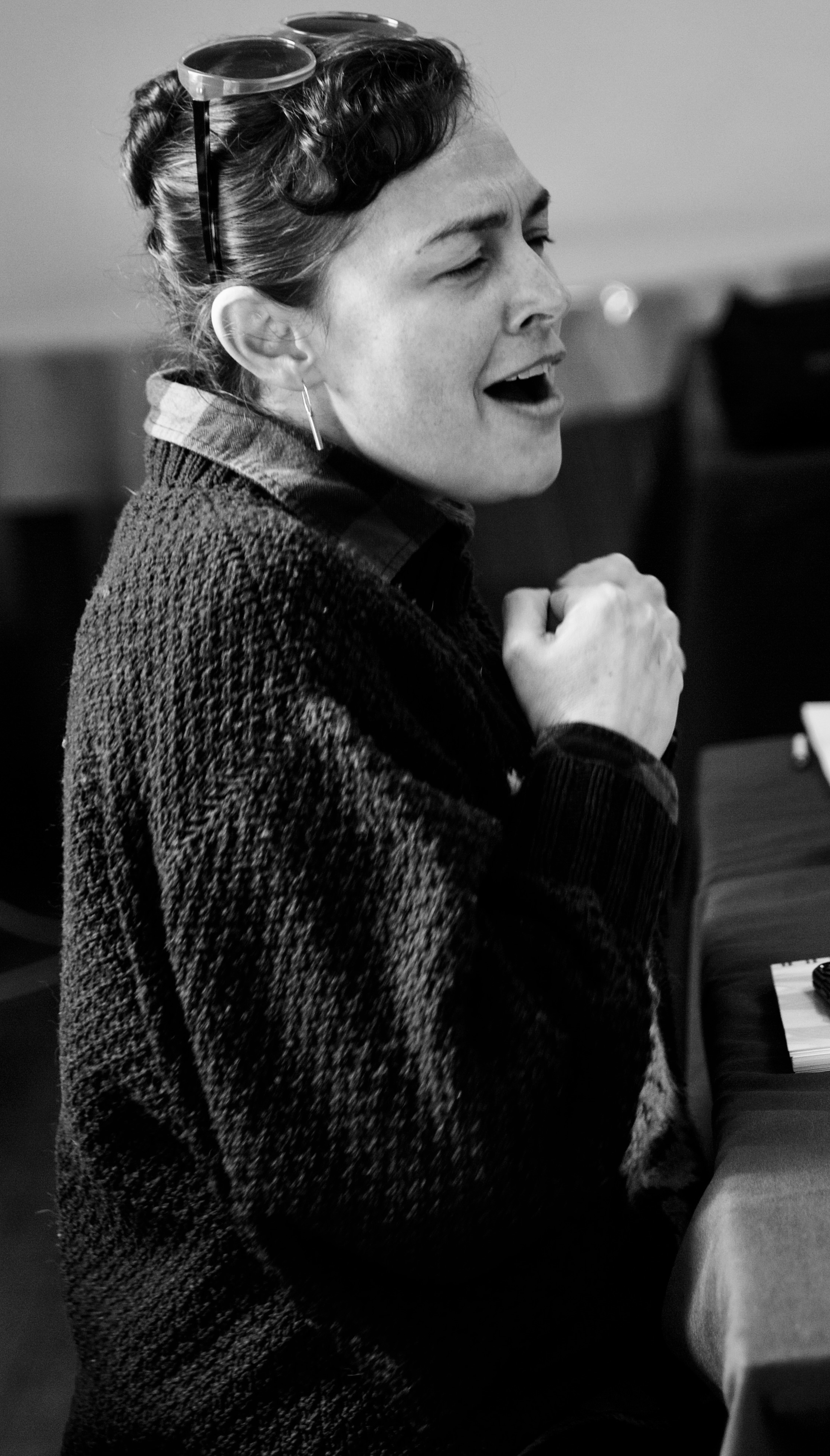
When he isn’t writing, he falls apart. He does a lot of writing exercises, which keeps him healthy and focussed on a routine. Research methods, life experience, everything comes into play.

Mentoring plays a large role in his life. Once he starts talking about the youngsters he mentors, the stories just pour out. Often their stories remind him of his own journey. He is also someone who received scholarships and travel grants –  once you’ve received these kind of gifts, you want to do the same for other people.

It was one of his mentees, a young man who had never read a novel and was sent one of the early drafts of The Second Verse, whose response and determination to keep reading, proved to Onke that while he didn’t view his book as great literature, he has the ability to capture emotions. It’s not about the words (in other words), it’s about the storytelling capability.

He was humbled when he received the South African Literary Award for Youth Literature, which confirmed to him that this is the kind of story he should write.

The book was influenced by Catcher in the Rye which at first he hated, but when he read again after dropping out at varsity, he experienced it very differently. Once he realised he was writing a coming-of-age story, he tapped into the most difficult four years of his life –  high school. He was discriminated against by both white and Black kids and always made to feel different, creating a yearning to fit in.

His two latest books are a story of two brothers whose sister died and, one he is writing for his PhD in creative writing that follows his years at Transnet and deals with a whistleblower who discovers corruption in a state-owned company. It can’t come too soon.

STATE CAPTURE IN FULL COLOUR IN THE BROTHERS NUMBER ONE AND A WEEKEND SPECIAL AT JOBURG’S MARKET THEATRE

REVIEW BY DIANE DE BEER

Pictures: SUZY BERNSTEIN

THE BROTHERS NUMBER ONE AND A WEEKEND SPECIAL

A new South African Political Play

PLAYWRIGHT: Richard Calland

DIRECTOR: Greg Homann

CAST: David Dennis as Uncle; Michael Richard as Tim; Astrid Braaf as Journalist; Zane Meas as the Lawyer; Ziaphora Dakile as Tiger Claws; Melissa Haiden as Virginia

ASSISTANT DIRECTOR: Aalliyah Zama Matintela

SET AND COSTUME DESIGN: Lisa Younger

LIGHTING DESIGNER: Hlomohang ‘Spider’ Motheto

AV DESIGNER: Xolelwa ‘Ollie’Nhlabatsi

SOUND DESIGNER: Vagile Mpumlwana

VENUE: Mannie Manim Theatre at The Market

DATES: Until May 19

In the programme notes the playwright is described as a prominent political analyst, and a columnist for the Mail and Guardian newspaper as well as the author of a number of political books.

The following is also stated:

The Brothers, Number One and a Weekend Special is the story of the rise of State Capture, starting with the announcement of a new Minister of Finance in late-2015. The play, which tracks a two-year history, is written by astute political analyst, Richard Calland, who has been close to the frontline of South African politics since 1994 and a political columnist at the Mail & Guardian since 2001.

As the drama unfolds, an audience witness the high-stakes manoeuvres, clandestine dealings, and manipulation of public sentiment that fuelled further racial division across the nation. Calland weaves a narrative that connects the dots between government, media, and corrupt businessmen, laying bare the underbelly of a political landscape marked by noise, complexity, and a dangerous volatility.

This leaves you in no doubt about what is going to follow and my first thought was, this being the 30th celebration of what still feels like our young democracy, the play must be seen as a sign of our maturity as a country.

This kind of play, with a representative audience all loudly involved from start to finish, has a lot to say about what we have gone through and, how we have emerged with much more political smarts and cynicism following the Zuma years. Even though we are still suffering many financial and ideological blows from that horrific time, we are not as easily duped, no longer the silent sacrificial lambs we were then.

And at the heart of what unfolds is the playwright who as a political analyst and journalist, has the information at his fingertips.

How can we forget how the iconic Brenda Fassie song title Weekend Special became something completely different in South African minds?

Michael Richard and Melissa Haiden.

This was perhaps the turning point of the whole Zuma fiasco – his Weekend Special. You can dupe a country as much as you want it seemed, but when you go for their money, that’s a completely different ball game – and when things started to unravel for the shameless Number One. Des van Rooyen was no match for the controversially fired Nhlanhla Nene – as the rand went into free fall.

Remember those heady days for the Gupta brothers, who are still hiding out (with South African billions, mind you) somewhere in the Middle East, Switzerland or India depending on  which sources you trust.

Back to the play. We all know the facts; there were many newspaper reports as well as Thuli Madonsela and Zondo’s inquiries. With Homann smartly mixing his cast with stage veterans such as Zane Meas, Michael Richard and Dennis Becket and three young but also experienced female actors (more familiar I suspect to Cape audiences), we all had to think on our feet to work out the different characters.

David Dennis is Mac Maharaj whispered an audience member close by, but in the end it didn’t matter. You quickly gathered that the men were part of the corruption including the Guptas, as well as those handling all the shaky deals from government side, with Richard being the one watching and guiding his journalist.

David Dennis makes his point.

It was glorious to see these three in action on the same stage, masterfully matched by the young female energy in their particular roles of either ferreting out, or defying any corruption allegations, depending on their particular alliances.

It takes one back to those early days of discovery. Remember the Saxonwold shebeen? People carrying handbags stuffed with money, others denying visits to their overlords, those in command of State Capture. It feels a bit like a horror movie, but not with Calland orchestrating the manoeuvres and connecting the different dots.
And everyone was laughing. We have, after all, dodged a bullet and most of us are much less gullible than we were in those heady early days of our democracy.

The anguish is palpable.
It’s a fast-paced political thriller of sorts and it’s our own. What I would have liked is a bit more clarity in the staging. With seats on three sides, the projections were difficult to follow from the side. And some gave insight into the full affair which was unravelling at a speed.
Short and straightforward interactions would have  added more punch (from both a script and staging perspective) and added a contemporary edge. The audience obviously loved it and were fully engaged, and so was I. But, especially as we all knew the details, it simply would have elevated it into a landmark play.