This is a year of anniversaries, with theatres and institutions celebrating milestones. One of these is Joburg Ballet whose 25thAnniversary Season promises a monumental year of dance with a range of exciting productions that will showcase the company’s rich history, artistic vision and institutional growth, according to their CEO, Elroy Fillis-Bell at the launch of their milestone Silver Jubilee year.
With this in mind and in partnership with Arts & Culture at the University of Johannesburg, a division of the Faculty of Art, Design & Architecture (FADA), is currently staging “a world-first Choral Ballet that reimagines Euripides’ iconic tragedy through a uniquely South African lens – The Bacchae: An African Choral Ballet”.
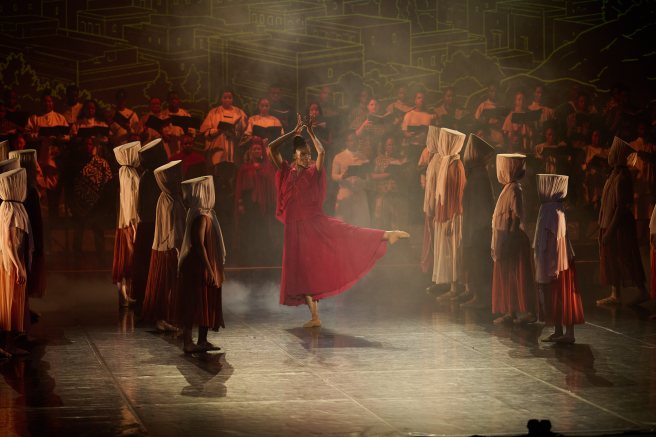
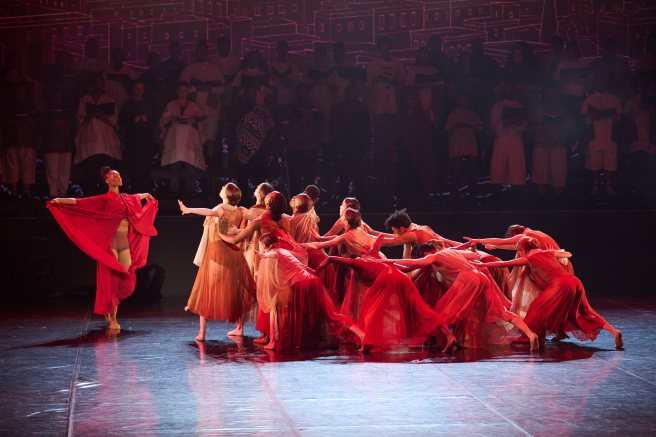
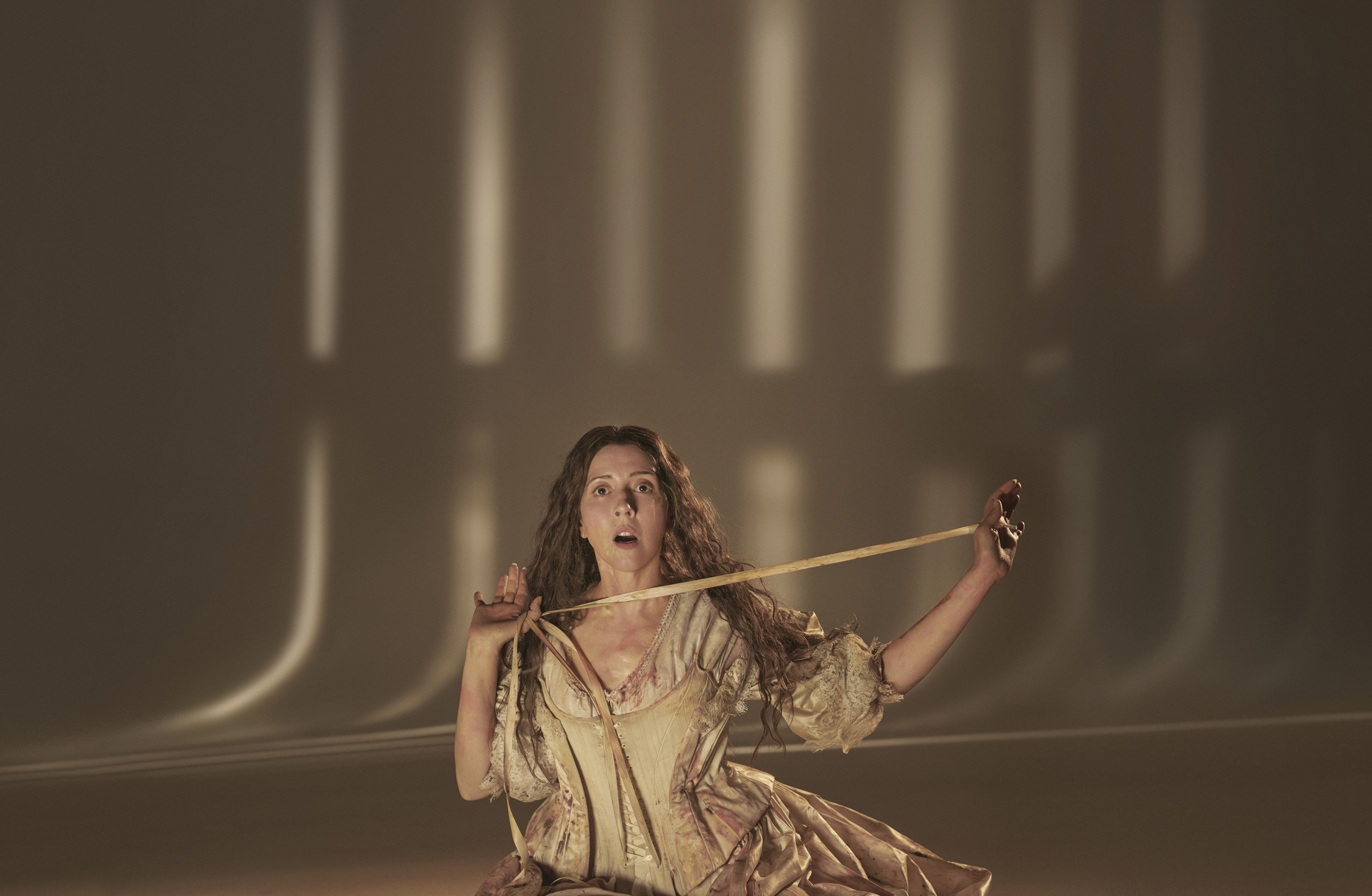
Kitty Phetla centrestage with the Joburg Ballet and the UJ Choir in the background.
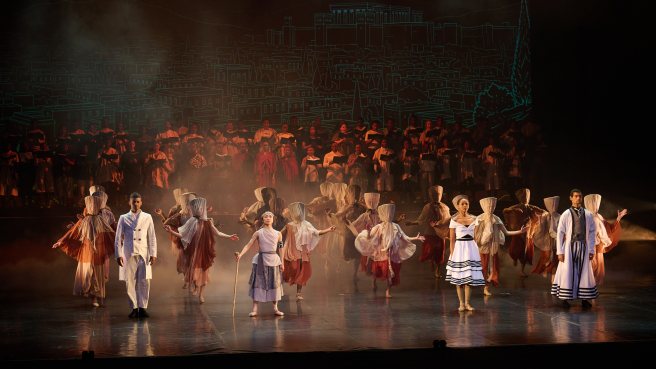
And for this spectacular event, they have put together an extraordinary creative team which will excite art lovers across the country. There’s director Jay Pather with his second work on stage this month (see previous review of Constellations at Sandton’s Theatre on the Square), award-winning choreographer Mthuthuzeli November, and most impressively, composer Neo Muyanga, who conceptualised, wrote and composed this first African choral birthday celebration. On stage the Joburg Ballet came together with the UJ Choir and guest artist Kitty Phetla with a production team of note in the wings.
Muyanga started dreaming about the project a number of years ago when he first read a translation of Euripides’s text. “Later,” he writes in the programme, “I was able to locate versions of the story authored by the legendary Wole Soyinka as well as poet Anne Carson, and at each reading I found the story resonated deeply with expressions of worry I hear shared over the media as well as in my own personal interactions regarding what feels like an impending societal crisis, both locally and globally.”
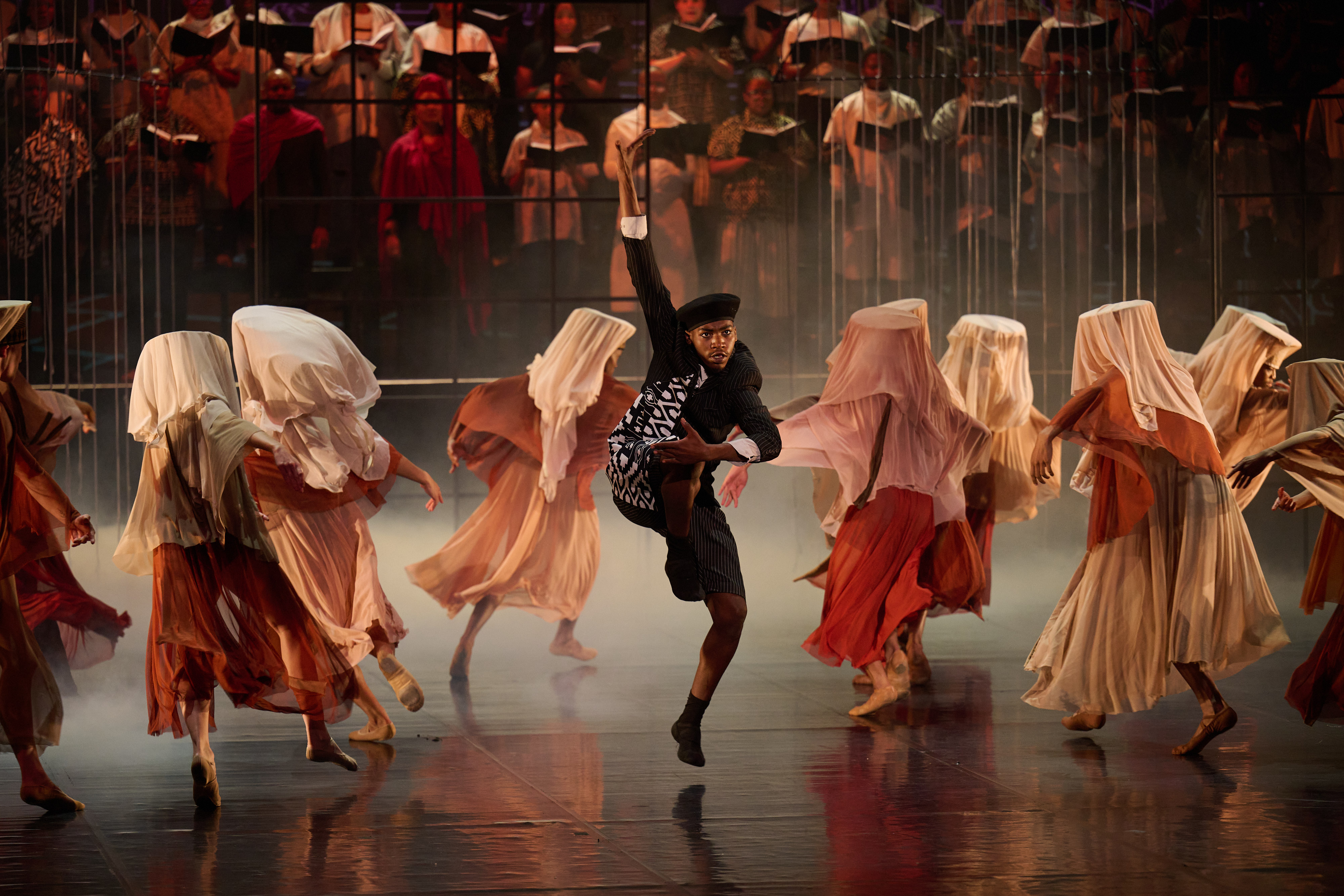
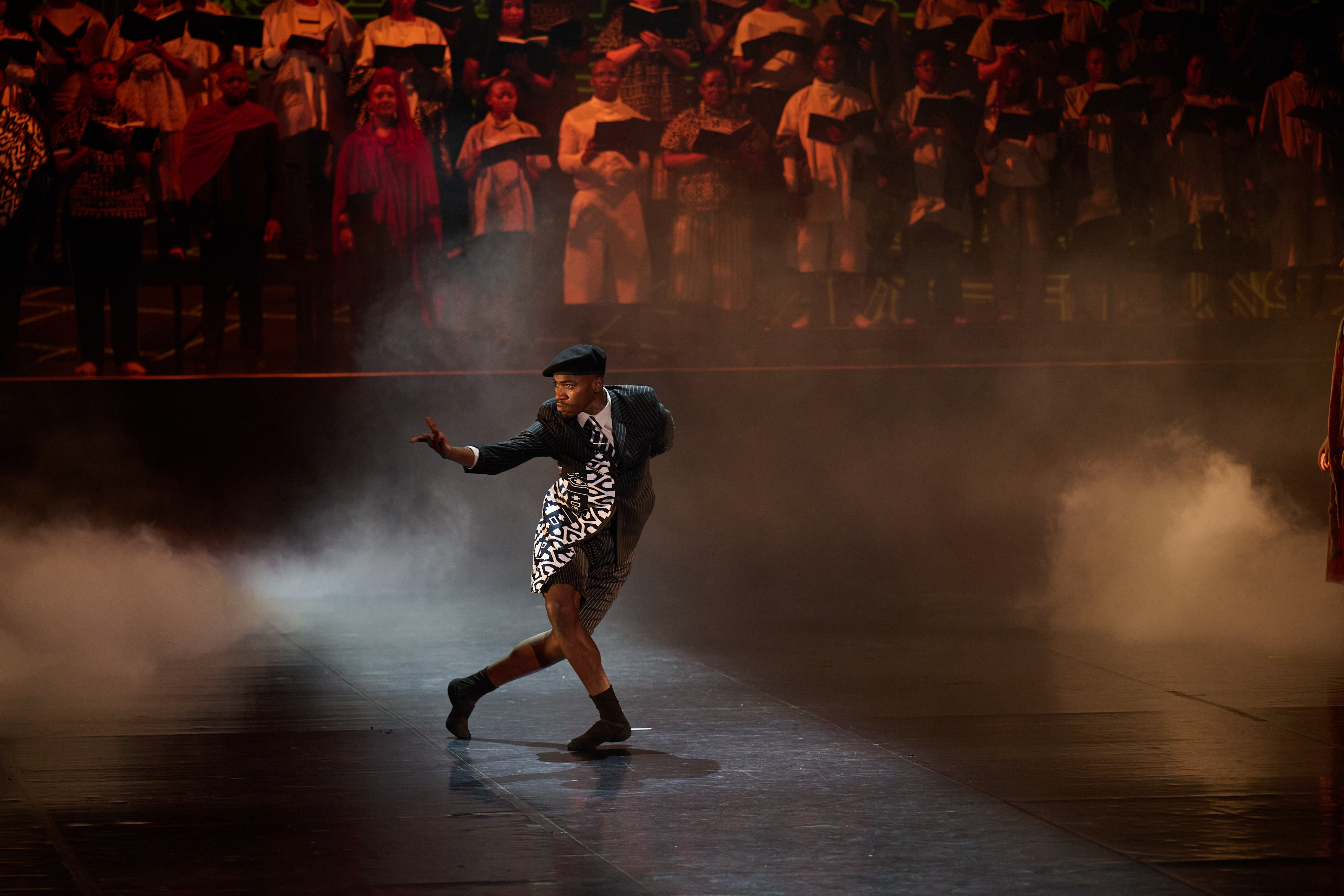
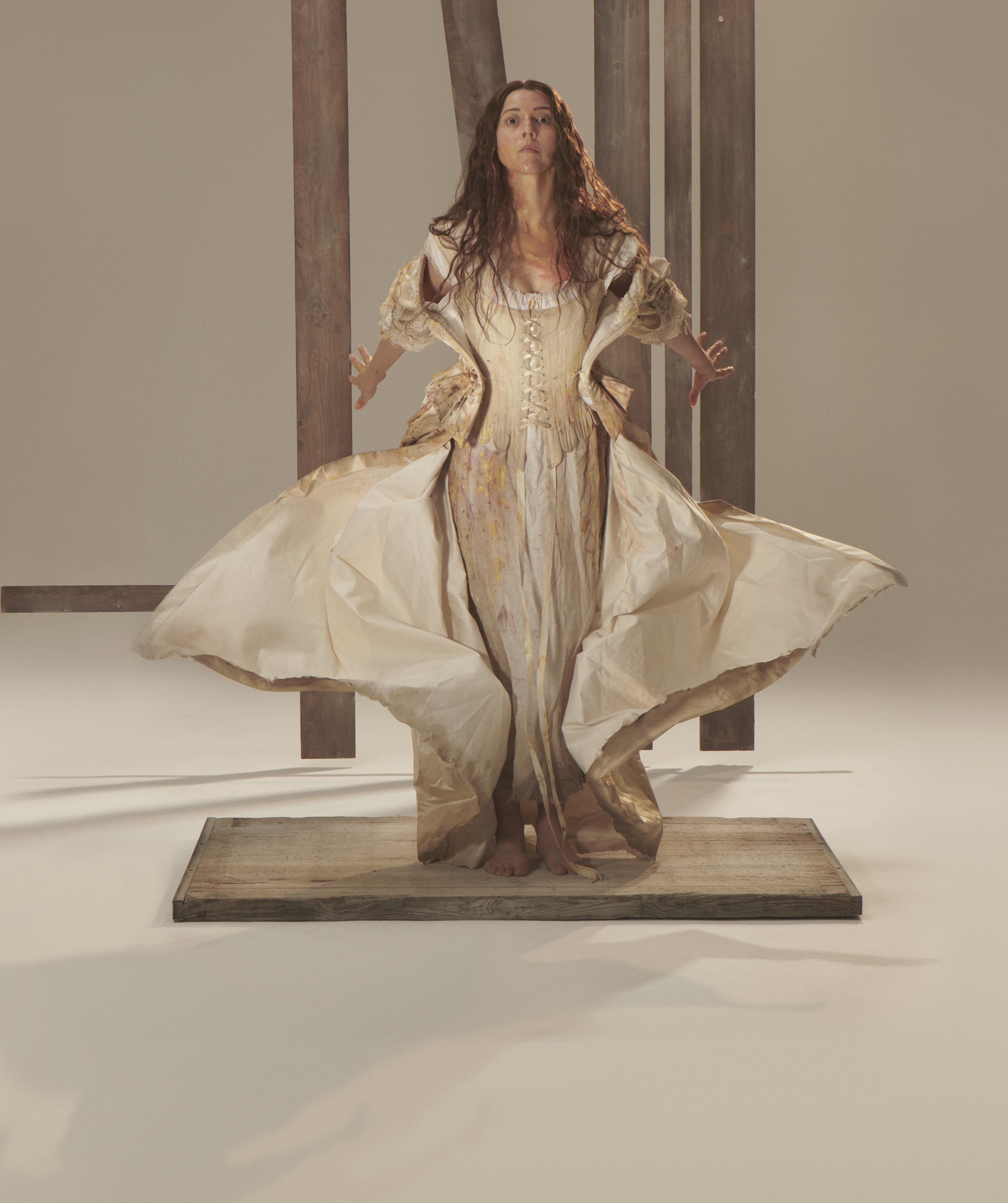
The illustrious dancer Thando Mgobihozi, Joburg Ballet dancers and the UJ Choir in the background.
He describes The Bacchae as “a harrowing tale of what the ancient Greeks called Sparagmos – a festival of violence and mayhem involving the tearing of one another from limb to limb of spilling blood in order to work through periods of upheaval.” He explains that the ancient Greeks devised the genre of tragedy as a way of helping a troubled society navigate towards a catharsis – reaching a point of resetting the city and returning to the ‘right behaviour’.
He started the project by firstly writing a libretto that elaborates on the themes of magic, power, violence and seduction which feature powerfully in the original work to illustrate how these topics could be found in our own contemporary context: the spectre of a political force running roughshod over a systematically disempowered populace, but which is ultimately halted by a saviour figure derisively called ‘a foreigner’ by detractors.
He composed a musical score that hopefully speaks to the pre-eminence of ritual and trance, making deliberate use of brass, percussion and choral, which he argues are meant to reflect our own practices of ritualised worship in the African Christian tradition.
November, the choreographer, realised that for him, it was meant to be a sort of epic ballet. “It’s huge in scope but deeply human,” he emphasises.
“As an artist, I come from many different backgrounds, from traditional African dance, kwaito, pantsula, ballet, contemporary dance and have gone to a performing arts school. A lot of that then informed what felt important at what point.
“I believe this work is about community, and time and time again South Africans have been a strong community that comes together, to fight, to celebrate.”
Bringing it all together, director Pather views The Bacchae as an unbearably tragic story and sums it up as follows: “The slighted and banished God of wine, ecstasy and fertility, Dionysus” (in this instance cast as a woman, the statuesque Kitty Phetla) “returns to Thebes and exacts revenge on the autocratic ruler Pentheus. Swept up in the magical energy of Dionysus (also known as Bacchus), the citizens (who become Bacchae, hence the title) experience ecstasy and freedom as never before. But like all excess, this also has its toll and leads to clashes and violence.”
He notes that the work is variously seen as an ancient tale that demonstrates that disrespect for the Gods will have consequences. And it is also read as a metaphor for, and a warning that, oppressive patriarchal regimes cannot last forever, that they maintain that volcano beneath them at their peril and will explode.
We can all certainly agree that we are living in a world that is dominated by these kinds of excesses, with rulers who are more worried about themselves and their immediate family and friends than about their fellow countrymen.
It’s a glorious proposition to explore and one worthy of the spectacular production in the Joburg Theatre. It’s a chance to see our artists when they come together for a grand collaborative effort on a grand scale.
Personally, however, I felt it lacked that African spirit of originality which I was expecting. Theatre is my area of expertise, but I have always loved especially local music and dance. For me the production was magnificently staged and yet, being the first African choral and ballet of its kind, I was charmed by the performance but left wanting for something more explosively original and African, something that would blow my mind.
Even so, I would urge everyone to go. The fact that something like this was attempted on such a gigantic scale is magnificent. That it didn’t succeed for everyone is what happens in the arts when something new is attempted.
If you’re not constantly shifting boundaries, what’s the point? If anything, this production speaks volumes about the healthy state of the arts.
Soloist/accompanist/lecturer Charl du Plessis is all about music. He is constantly travelling all over the world, but everything is about the performance – or occasionally catching one of his cherished artists either in the classical or jazz genres.
His annual classical festival at the Fairtree Atterbury Theatre has become legendary in a very short time because of its innovative programming as well as the acclaimed artists participating.
Where he finds the time for everything he packs into his life, we all wonder, but not for too long, because all of those who share his musical bent, benefit from his crazy schedules which are always varied and adventurous. Similarly, this year, it will be difficult to choose from excellent programming, but it doesn’t happen more than once a year, so be generous and treat yourself.
Here is a rundown of the perfectly planned programming with a fantastic performance celebrating the Fairtree Atterbury Theatre:
Atterbury Klassiek 2026 21-24 May (Presented by Atterbury Trust Fairtree Atterburyteater)
VOX CHAMBER CHOIR: GLASS MUSIC
The Vox Chamber Choir, founded in 2017 by Franco Prinsloo, is a Pretoria-based ensemble of 40 highly skilled singers dedicated to performing and recording Prinsloo’s compositions.
Prinsloo, an internationally acclaimed composer, has played a significant role in shaping South Africa’s contemporary classical music landscape. The choir serves as a professional platform to bring his innovative works to life.
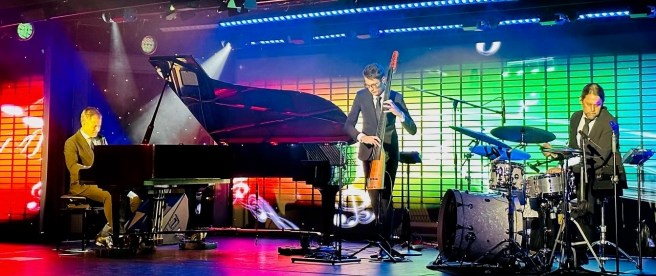
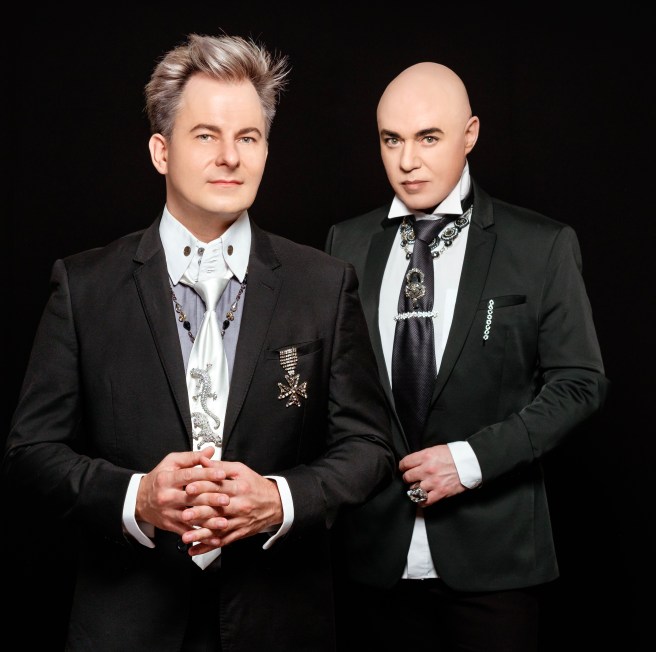
Charl du Plessis Trio & Friends need no introduction. The celebration of two decades on stage reaches its pinnacle in what should be a spectacular concert featuring the trio alongside a remarkable lineup of guest artists. The programme consists of a curated selection of works drawn from the Trio’s 10 albums, as well as brand-new material performed live for the first time. On offer is both a retrospective and a glimpse into the future, capturing the Trio’s signature blend of classical refinement, jazz energy, and crossover innovation. Joining them on stage are guest artists: percussionist and marimba virtuoso Magda de Vries as well as guitarist and long-time collaborator Juan Oosthuizen and iconic vocalist Nataniël. This is a celebration of musical connection, creativity, and the enduring life force of music itself.
Introduction to the Orchestra: A Magical, Interactive Concert Experience for Children at Atterbury Klassiek 2026
Step inside the world of the orchestra in this vibrant and engaging concert-lecture designed for curious minds of all ages. It’s a musical journey through the different sections of the ensemble, uncovering how each family of instruments contributes its own colour, character, and voice. From the shimmering strings to the bold brass, this interactive experience brings the orchestra to life through live demonstrations, familiar musical examples, and moments of audience participation. Discover how composers combine these sounds, explore the building blocks of orchestral music, and gain insight into the creative process behind the music. Conducted by Richard Cock, whose engaging and audience-friendly style has inspired music lovers, this concert promises to be as entertaining as it is enlightening.
Fairtree Atterbury Theatre Saturday, 23 May 11:30 seatme.co.za (R100 children R200 adults) (duration 60 min)
Mozart’s Three Pianos
Three Steinway Grand Pianos will share the stage in an historic Mozart celebration at the Fairtree Atterbury Theatre. The concert will feature the Phoenix Co Orchestra under the baton of maestro Richard Cock. The highlight will be Mozart’s rarely performed Concerto for 3 pianos in F major, K. 242, an exuberant work that showcases the brilliance and interplay of three soloists performing together: distinguished pianists Charl du Plessis, Megan-Geoffrey Prins and Tessa Rhoodie – all faculty members of the University of Pretoria.
The programme also includes Mozart’s sparkling Concerto for 2 pianos in E-flat major, K.365. Du Plessis will be joined by rising star Hermanus Schmidt, winner of the 2025 Atterbury National Piano Competition and the Hennie Joubert Piano Competition. Originally from Stellenbosch, Schmidt is currently a student of renowned South African pianist Mario Nell.
Fairtree Atterbury Theatre Saturday, 23 May 18:00 Sunday, 24 May 15.00 seatme.co.za (R330, R280, R220) (duration 75 min)
And to top it all, not strictly speaking part of the festival, yet landing with a celebratory blast off:
Fairtree Atterbury Theatre’s 15th Birthday Celebration with Charl du Plessis – My Favourite Things — a personal journey through classical and jazz piano. 18 May | 19:00 | R200 Moving seamlessly between classical piano repertoire and jazz-inflected reinterpretations, Du Plessis creates a musical journey that balances elegance, spontaneity and expressive depth. The programme features works by Brahms, Chopin and Rachmaninoff with imaginative crossover arrangements of Mozart and Beethoven. Well-loved melodies such as Salut d’amour, Rustle of Spring and Bésame Mucho are reimagined through Du Plessis’ distinctive pianistic lens, where lyricism and rhythmic vitality coexist effortlessly. Also included are an improvisation on Somewhere Over the Rainbow from The Wizard of Oz and a sensitive arrangement of the traditional South African song Ntyilo Ntyilo, underscoring Du Plessis’ longstanding engagement with improvisation and musical storytelling. BOOK TICKETS
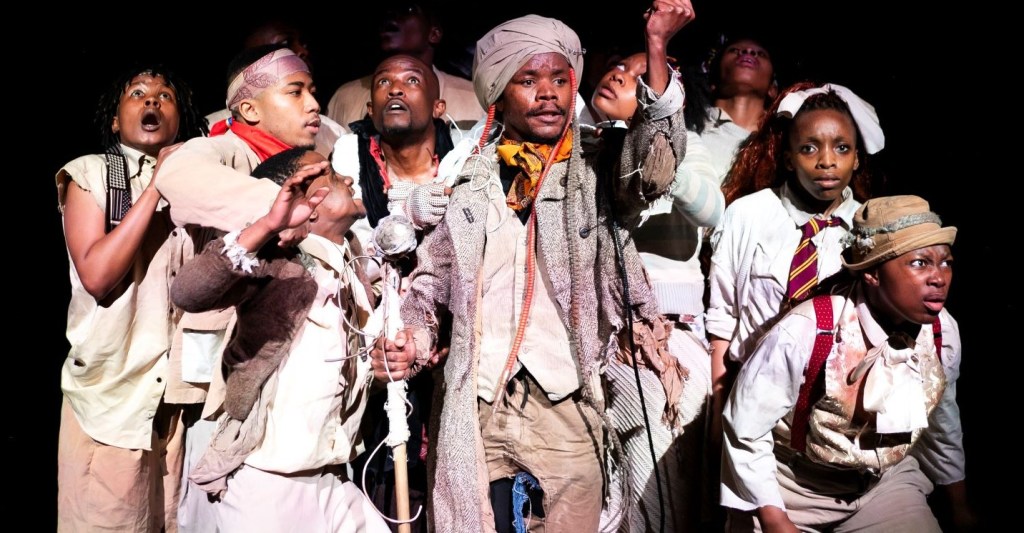
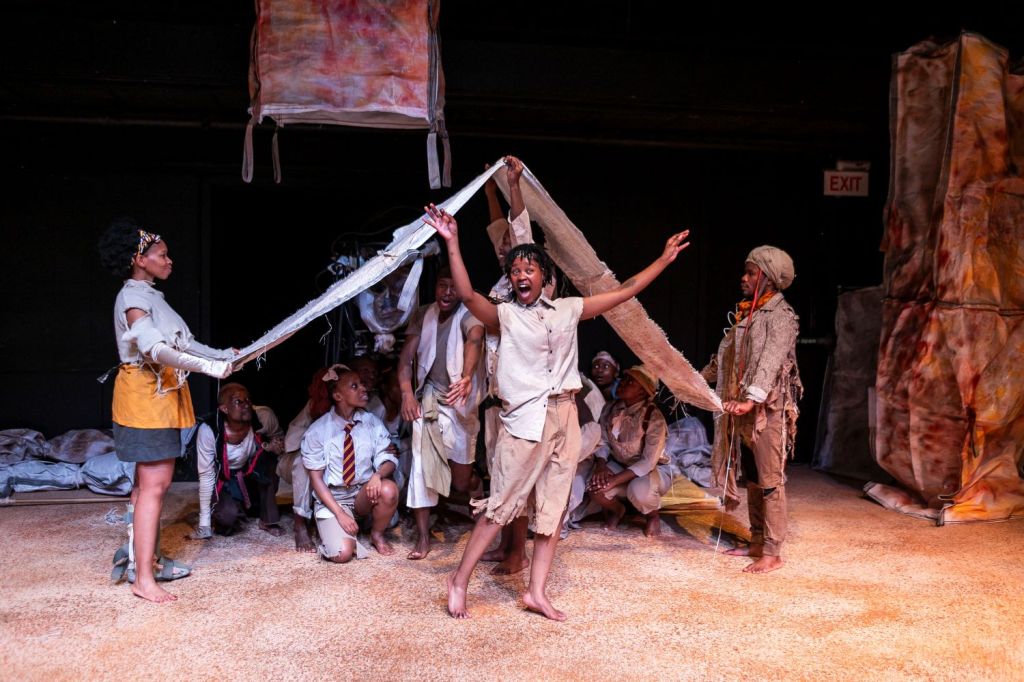
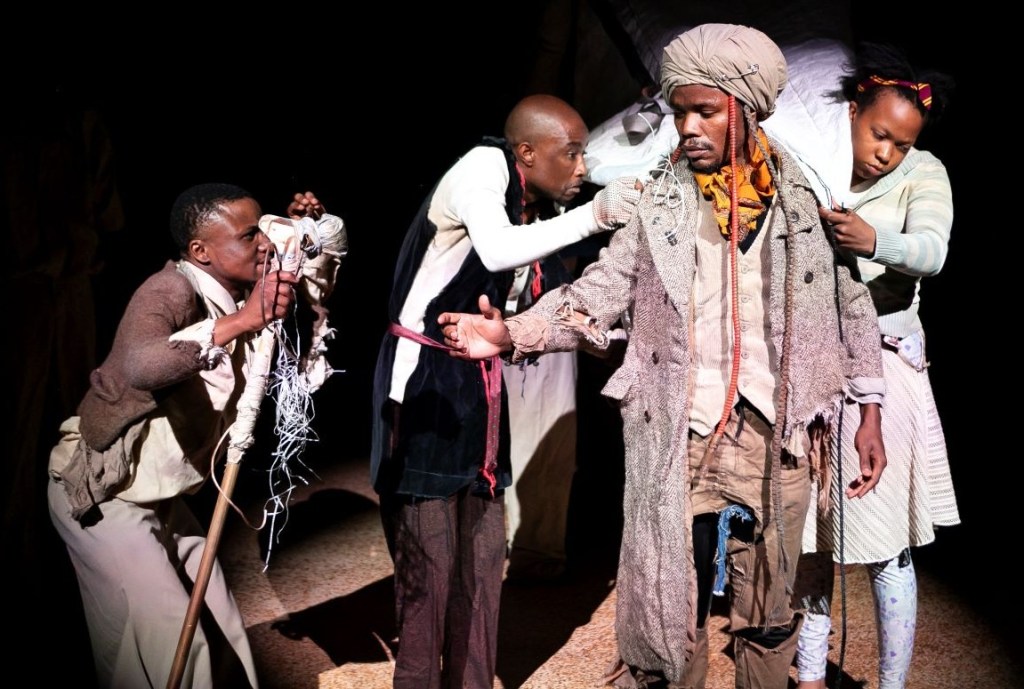
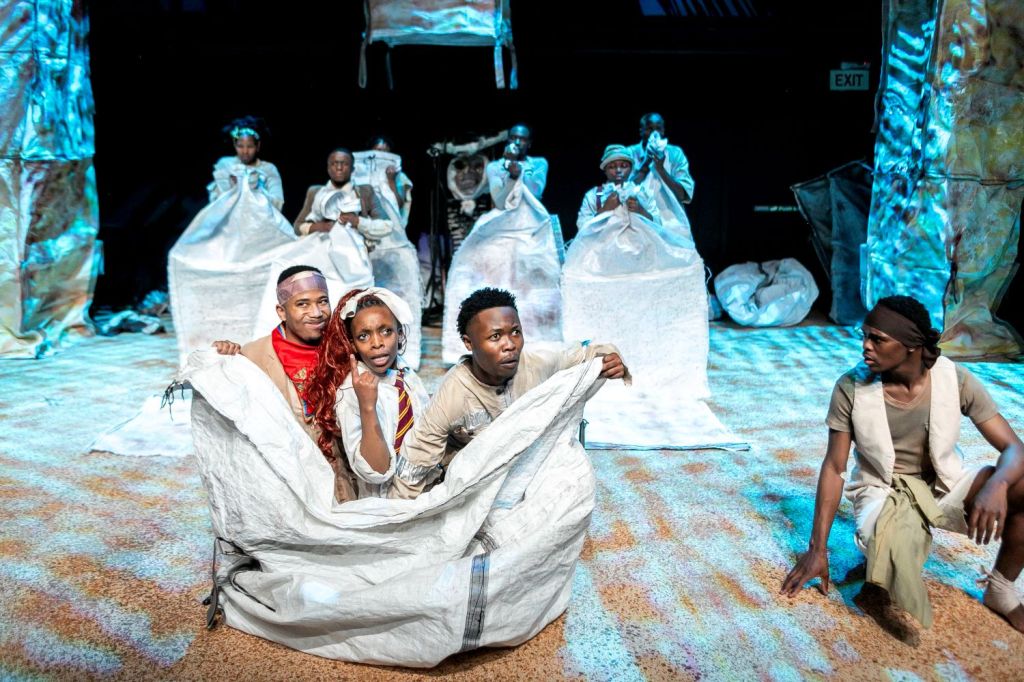
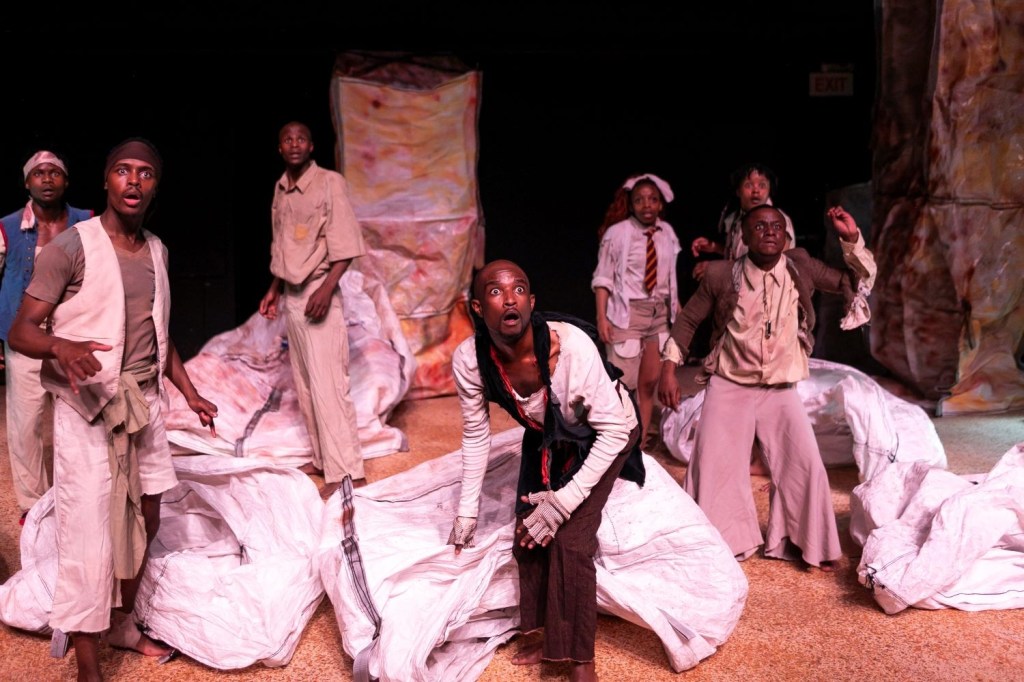
It bubbles and bristles with energy, enthusiasm and excitement in this return season of a play which started as a student production in 2024 and returned in 2025 to the National Arts Festival, where it won a Golden Ovation Award, as well as a Naledi for Best Ensemble.
This current season is the forerunner of a showcase at a Swedish Festival, where it is one of four international productions selected from 600 applicants. And rightly so.
I was surprised when leaving the show that it had only been 60 minutes long. It felt much longer, in the best possible sense, and grabs your attention from start to finish. It was packed with adventure and a cast of 14 who never let up as they leapt into this glorious yet often gruesome adventure of the human condition in a world out of kilter.
How would theatre react to a world unhinged, as is presently at play? Through storytelling, of course, and taking this one to a European audience is the perfect choice.
Think of this country’s past and, in the present turmoil, one can only smile. We are sailing along quite nicely, apart from the constant syphoning off of state money, in this instance from the art coffers, which could benefit so many rather than just a few unworthy recipients.
Nevertheless, taking four constant bogeymen in a world that feels overwhelmingly disastrous and desperate: greed, mortality, religion and unconditional love – this outrageous yet wildly entertaining ragtag group use physical theatre and magic realism to uncover and explore what is happening around them and especially out there.
The fact that this comes from a country that not too long ago was viewed as one of the worst in the world, in itself brings hope.
With Buckland’s theatre-making ideal for this tawdry yet dynamic storytelling, it’s a joy to watch with the cast performing magnificently. It’s a compelling piece, told in an original fashion with a story that reaches young and old.
This is what the Market Theatre Laboratory does best. Described as “an incubator for the development of skilled theatre-makers while also producing bold, cutting-edge work”, that is exactly what is represented here.
That is why the way this specific piece has been transformed from its first performances to where it stands now is spectacular and a wonderful testament to what can be achieved in theatre with the right people and plans in place.
None of these 14 players has ever performed internationally and with this one, they are a testament to how theatre can evolve from small beginnings into something special.
Local audiences who see the piece will also be contributing towards the tour, and the cast are given every chance to land on the international stage in the best shape possible. What could be a better advertisement for local theatre, especially in a country like Sweden, which has contributed hugely to The Market and its pursuit of world-class theatre?
But don’t think you will be doing something charitable when going to experience this remarkable play, audiences are the ones that are rewarded.
In essence, the power lies in the originality of the text, the exuberant application and the perfection of the cast.
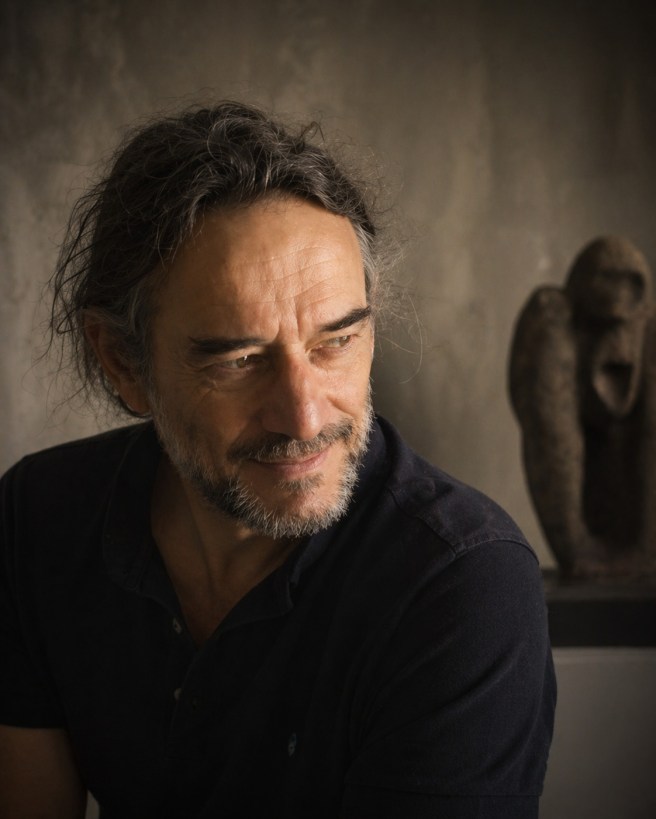
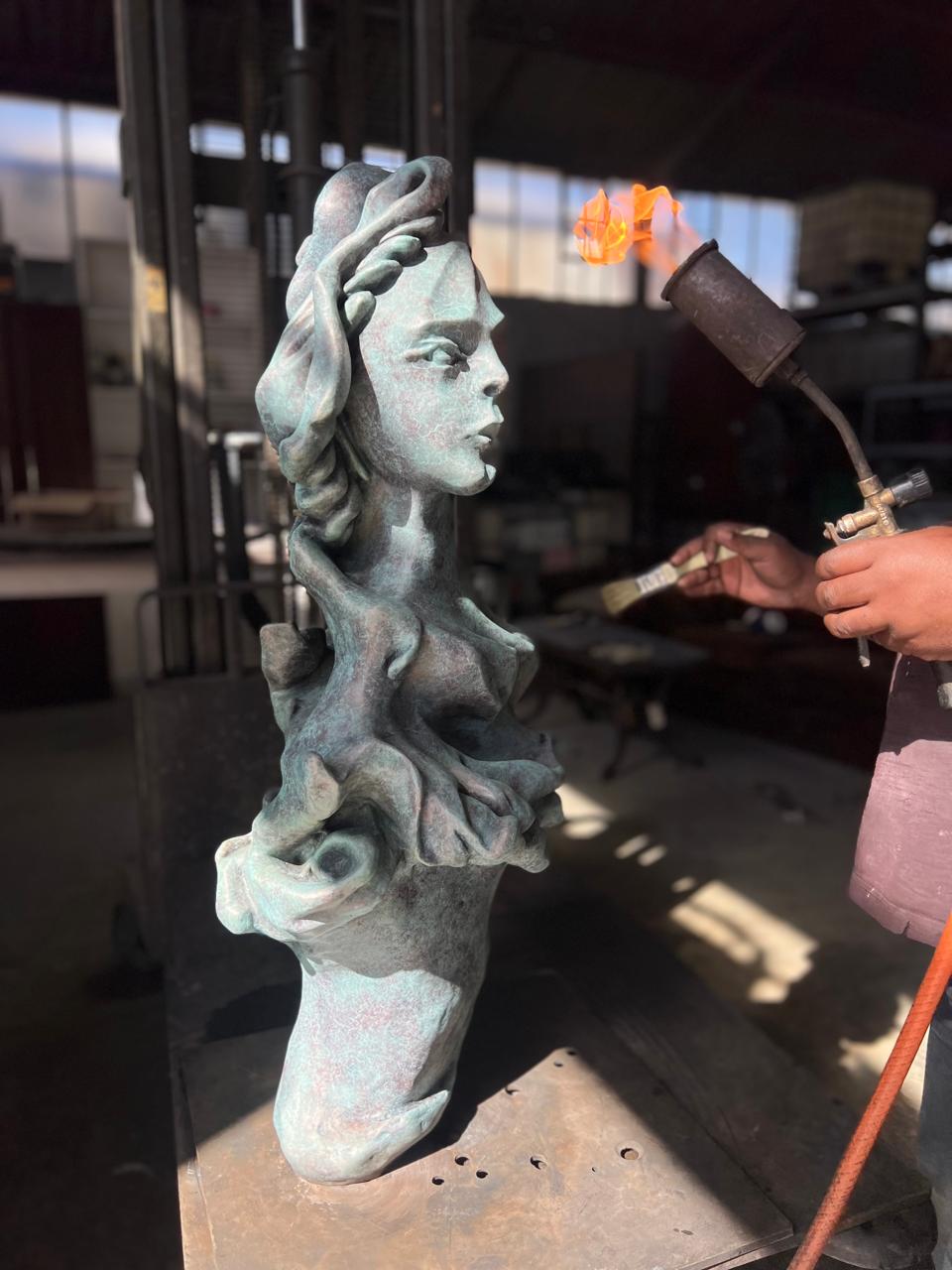
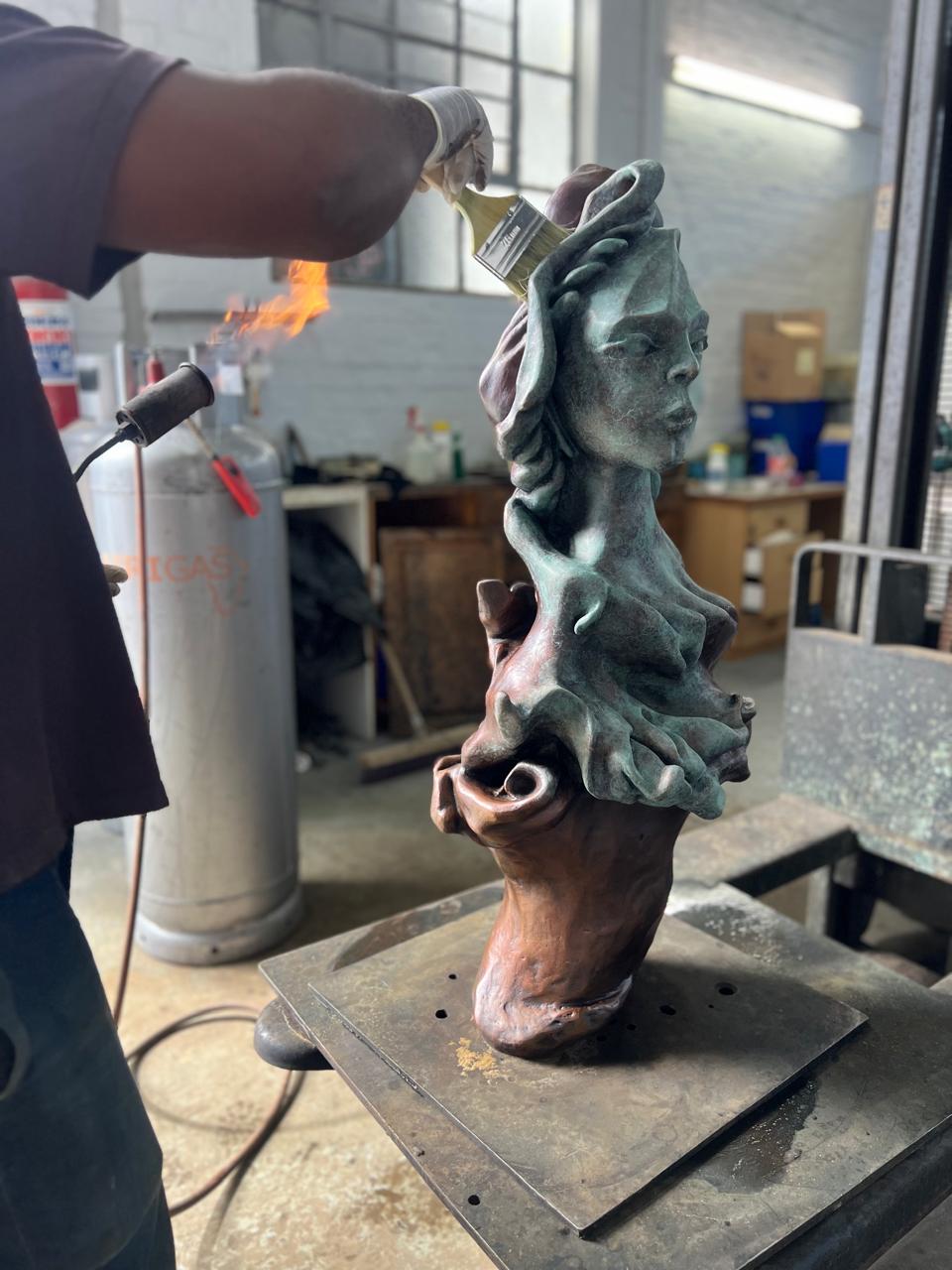
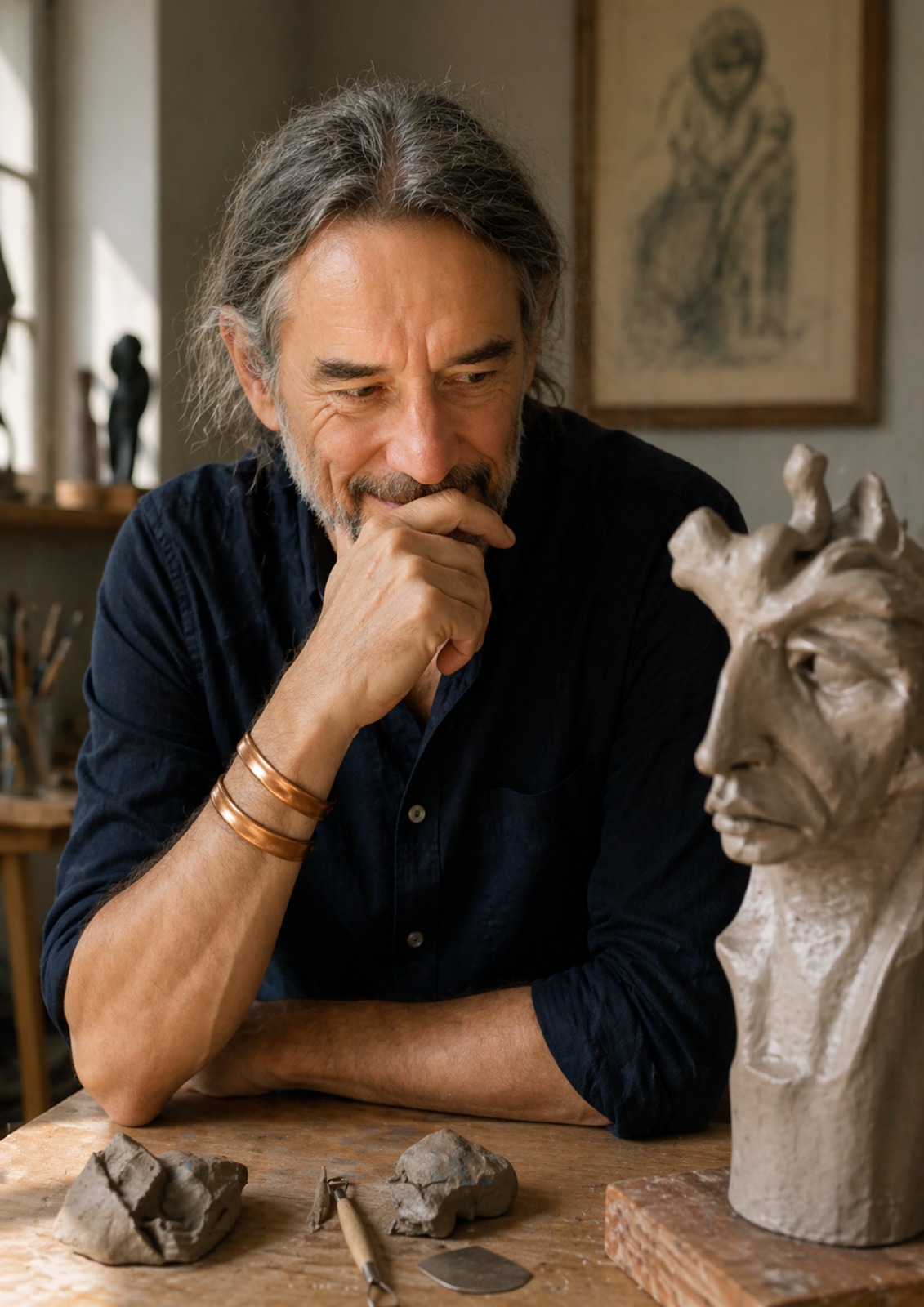
My favourite psychologist, JO Steenkamp, is playing in a different medium and yet, like his focus on spontaneous healing and internal transformation, which he has developed into his own modality, SHIP (Spontaneous Healing Intrasystemic Process), his art and more specifically sculpture follow the same principles of spontaneity. He talks to DIANE DE BEER about his longtime yet recently rekindled fascination with sculpture, which has resulted in an exhibition titled Shape-Shifters: The voice behind the veil, which will be held at Pretoria’s Pierneef’s Kraal from May 7 to June 7:
From an early age, JO Steenkamp knew what he wanted to do. Even though he didn’t have any artistic influences in his youth, he started sculpting at the age of 16. But when life decisions had to be made, he realized that his interest was psychology – and not simply the true and tested path of the time; he was intrigued by spontaneous healing, something he developed through his doctoral work and which he turned into what today would best be understood as Steenkamp brand.
Once he had decided on his future, he was determined to pursue his dream. Because the number of places had already been allocated for the Honours course, he wasn’t accepted. He was persistent and kept turning up at the head of department’s office until the accepted number was moved from 30 to 31.
His art followed a similar obstinacy once he decided to explore his 16-year-old dream. His son (also a clinical psychologist) was moving out of the house, which meant JO could use the rooms which were now unoccupied.
He phoned someone close by who he knew had clay, and when she said, “Come over and let’s have a cup of coffee,” his response was quick: “You don’t understand, I need the clay N0W!”
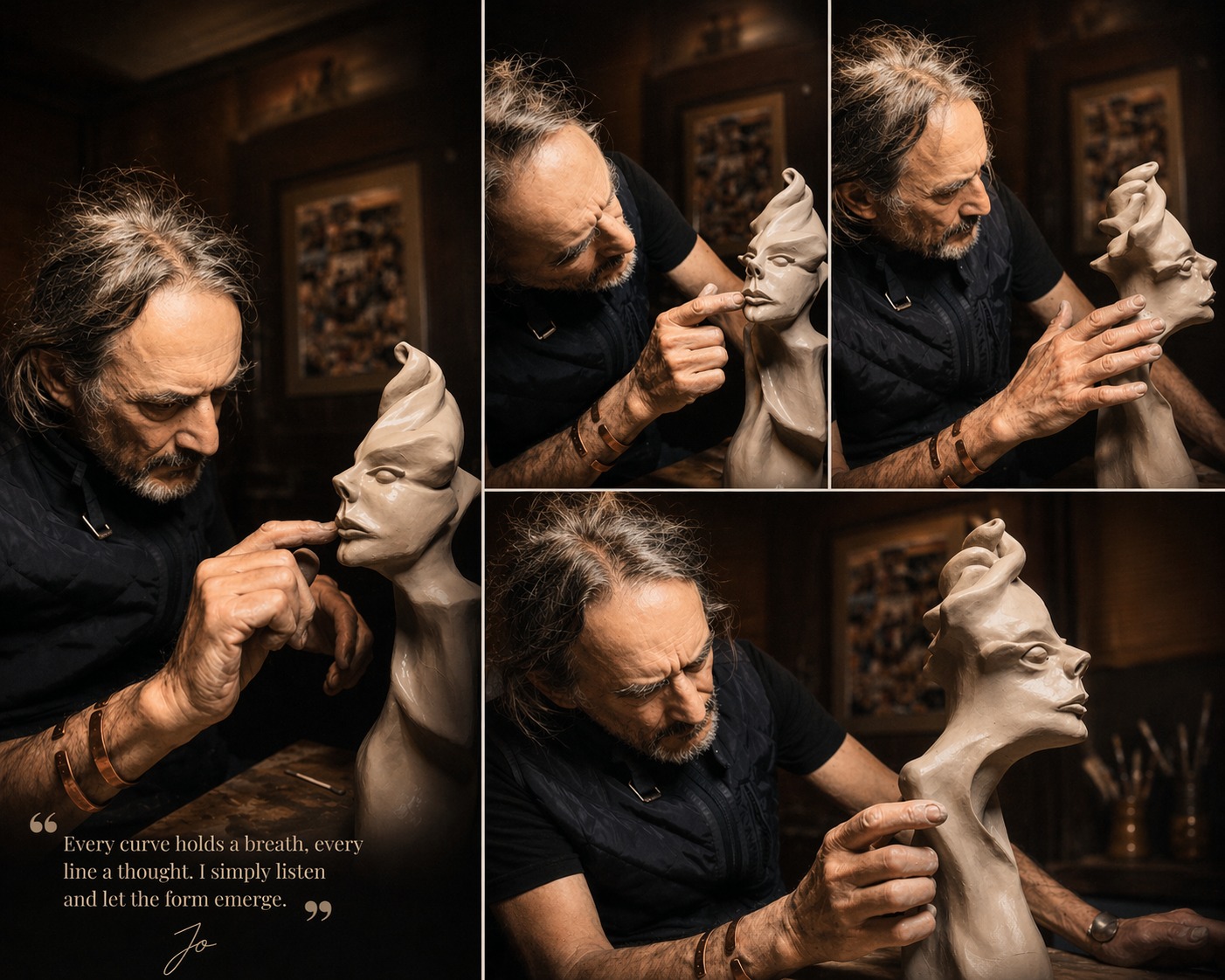
He already knew the process he wanted to follow. He simply reached back to his youth. “It happens by itself,” explains JO. “I follow the lines and then comes the magic. I am not doing it for anything else but the connectedness,” says the disciple of spontaneity.
Reproductions don’t feature in his creativity, and because his spirit is driven in a very particular way, he doesn’t do requests either. Once he has a piece of clay in front of him, anything can happen. When someone asked him to sculpt a water nymph for them because apparently there’s one in every French river, he said the best he could do was to think about one when he was sculpting.
His process has to be spontaneous and he simply taps into consciousness. “It’s a knowledge that’s there,” he says. “It’s exactly like my psychology works. You’re tapping into something that already exists and you’re simply the vehicle. It’s a knowing.”
When it comes to the titles of his work and especially a special descriptive poem that accompanies each individual sculpture, it’s as if it taps into the consciousness of the viewer. It’s almost as if it opens something, he explains;
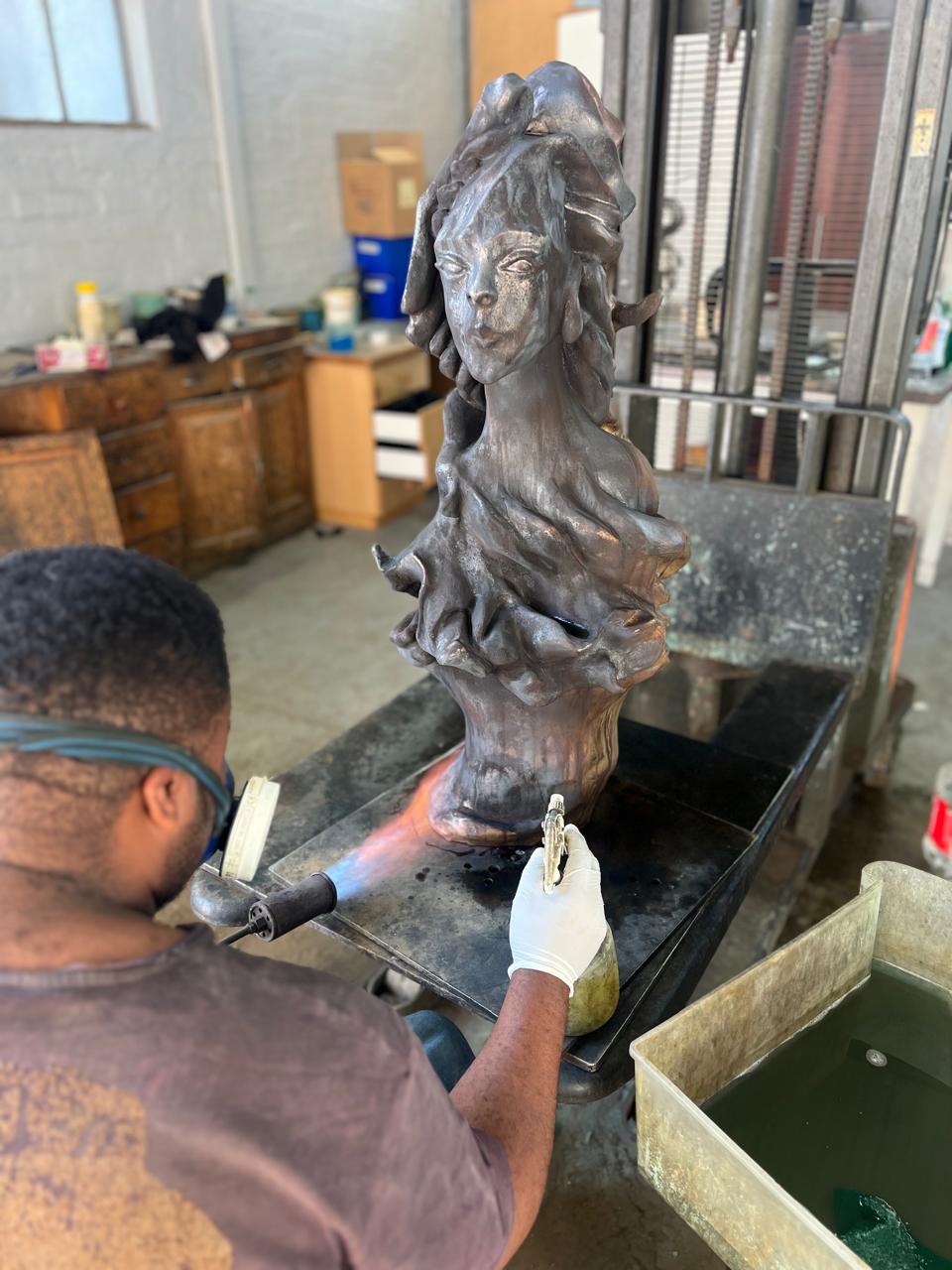
Even the way he decided on the use of bronze for the final sculpture. It is the ancient quality that caught his eye and he knew, it was the only way.
The title of the exhibition, Shapeshifter: the voice behind the veil, he describes as a celebration of something that was created.
When JO starts talking about the meaning of the process and the work, his passionate descriptions are hard to resist. Sculpting for him is an exploration of himself. He is constantly in conversation and, once that has been concluded, it is something he wants to share. “Something magical, mystical and fabulous,” he adds.
Listening to him talk takes me back a few decades to when I was one of his patients. I had been to many psychologists before him, but none of them could speak in a language that I understood. When JO first explained his method of spontaneous healing, I knew I had finally found someone who could show me the way.
And he did. But that is also why it is so fascinating to see his art and to hear him speaking about his creativity – all these years later. To my mind, his art is simply an extension of his psychological methodology. He takes the clay and allows the process to unfold spontaneously. It all makes perfect sense as his spontaneous flair is constantly nurtured, the one flowing into the other, forming a perfect circle.
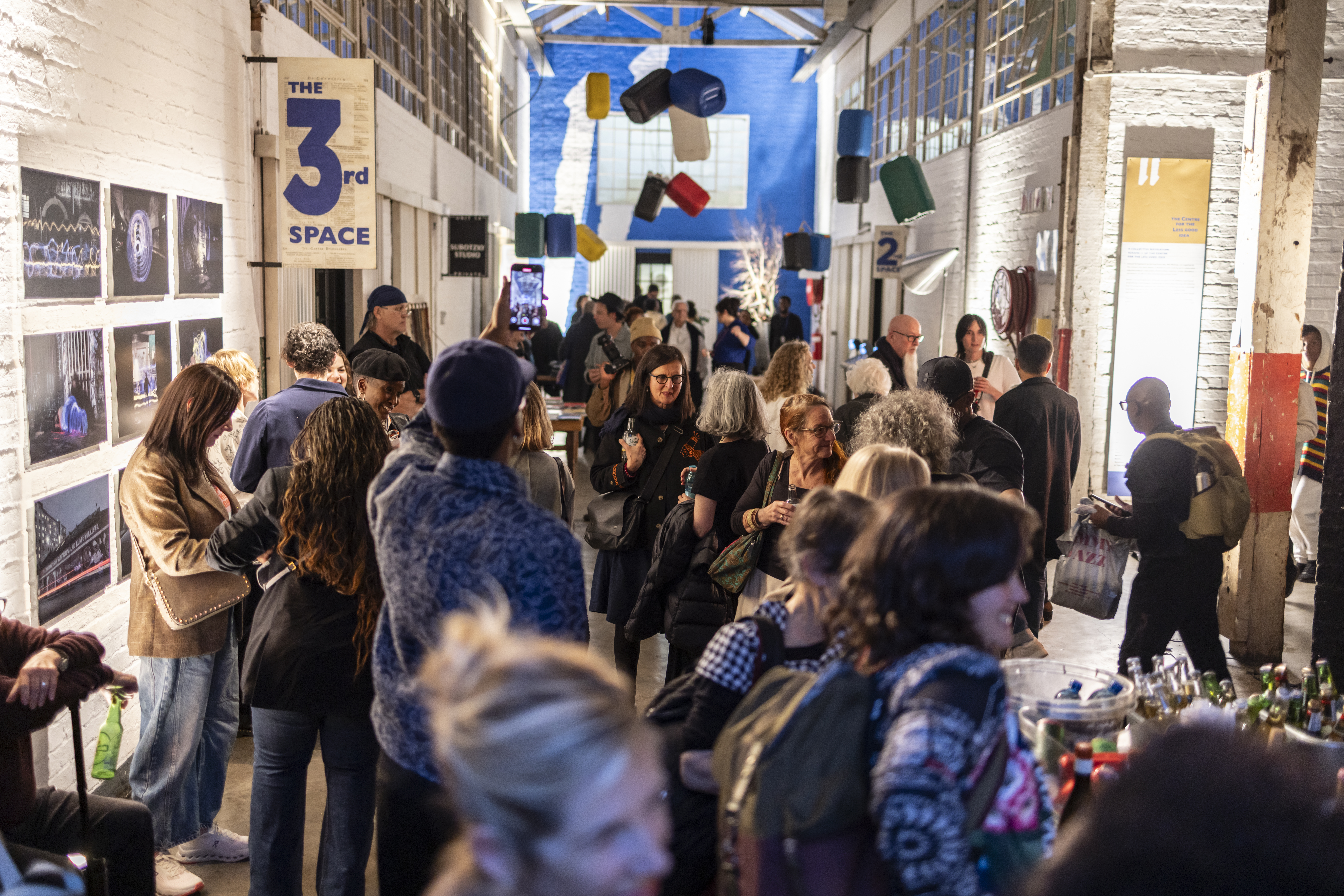
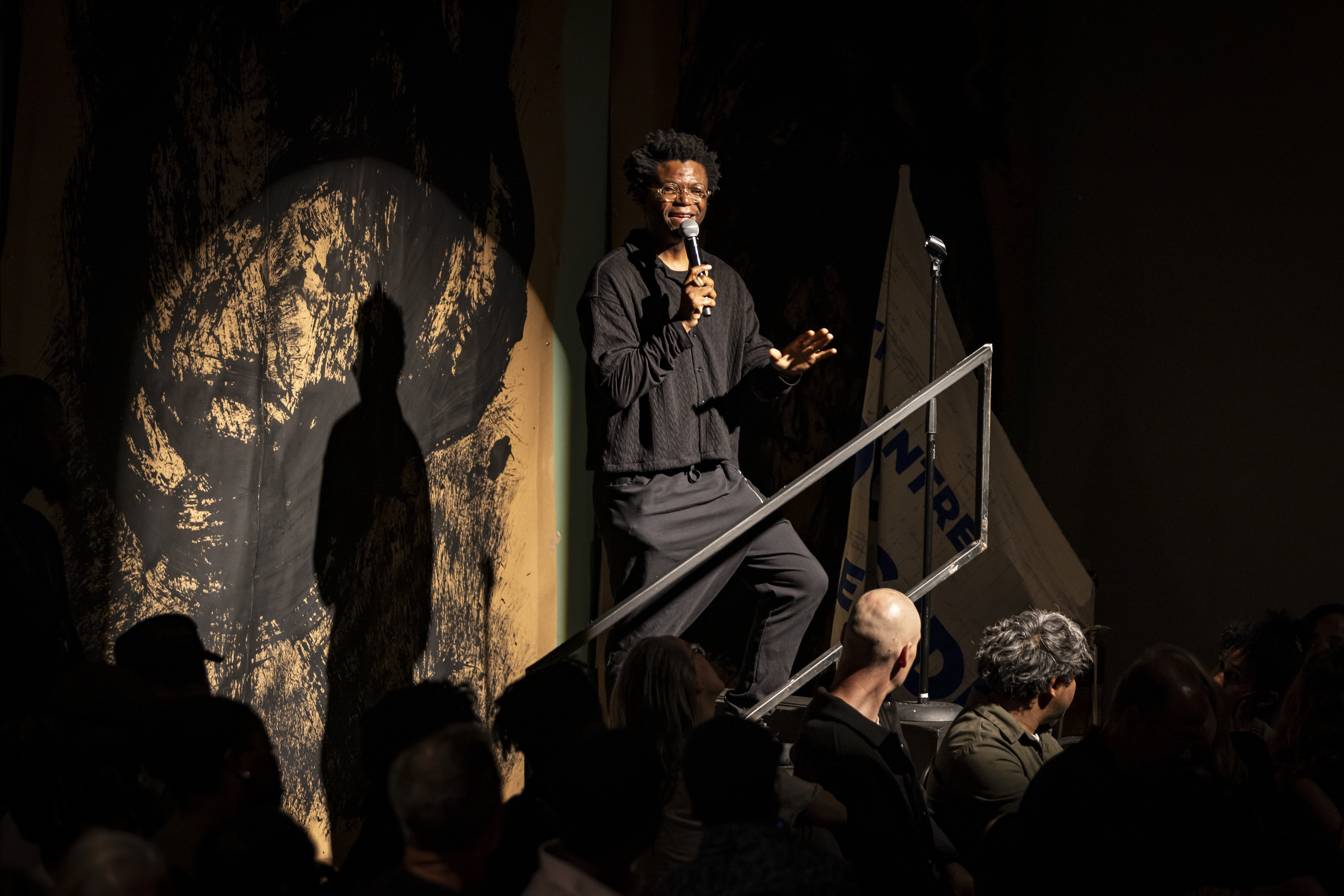
“It’s about how we become an ensemble, whether we are performers, audience members, or neighbours. It’s how the city performs itself through us, and also how we choose to perform the city. Johannesburg is a place that requires a collective navigation, a mutual reliance, a particular call and responses.” Neo Muyanga, Impressario of the Centre for the Less Good Idea in Maboneng.
Dancer Thulisile Binda
By DIANE DE BEER
The best would have been to attend all the evenings of the 11th season to experience the full impact of what co-founder and director of The Centre, Bronwyn Lace describes as a multi-limbed, complex organism which she believes is what the Less Good Idea has evolved into. “…our arms reaching into various directions but connected to the same robust body. It makes sense for us to share a season at the end of this year, because we have an abundance of new strategies, forms, and artworks to test, show, and celebrate.”
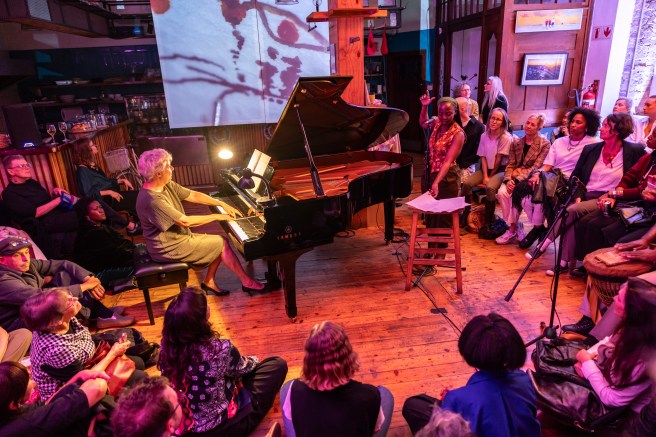
Pianist Jill Richards with vocalist Pertunia Msani.
And it certainly was all of that, exploding with a sense of creative abandon in two hours of exuberant performance which ranged from the glorious musically driven showcase by classically trained improviser Jill Richards who performed magnificently with the Benin drummer, percussionist, composer and arranger Angelo Moiustapha accompanied by the melodic voice of Pertunia Msaniiwith Marcus Neustetter’s digital storytelling adding yet another dimension to the experience. The musicianship was breathtaking.
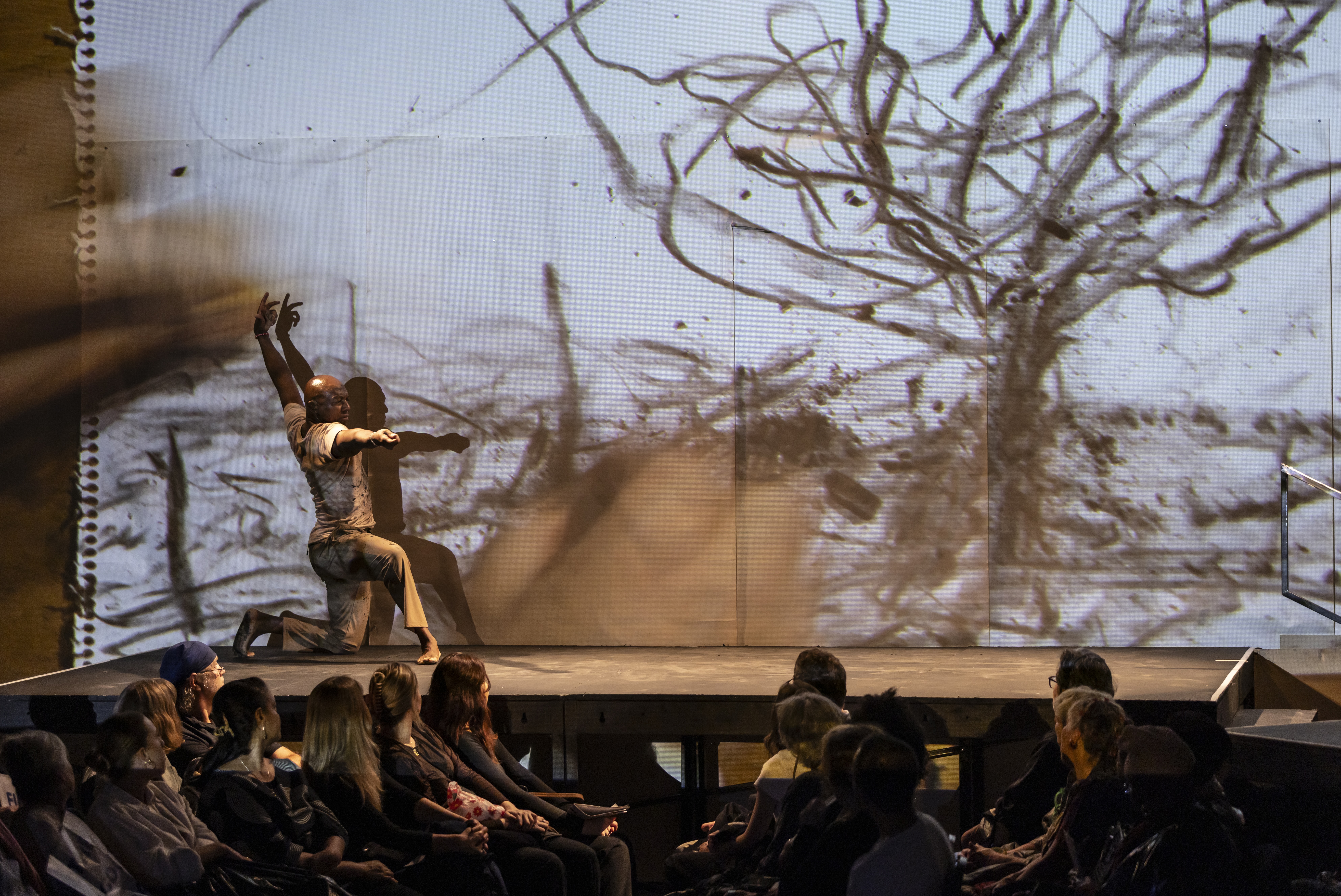
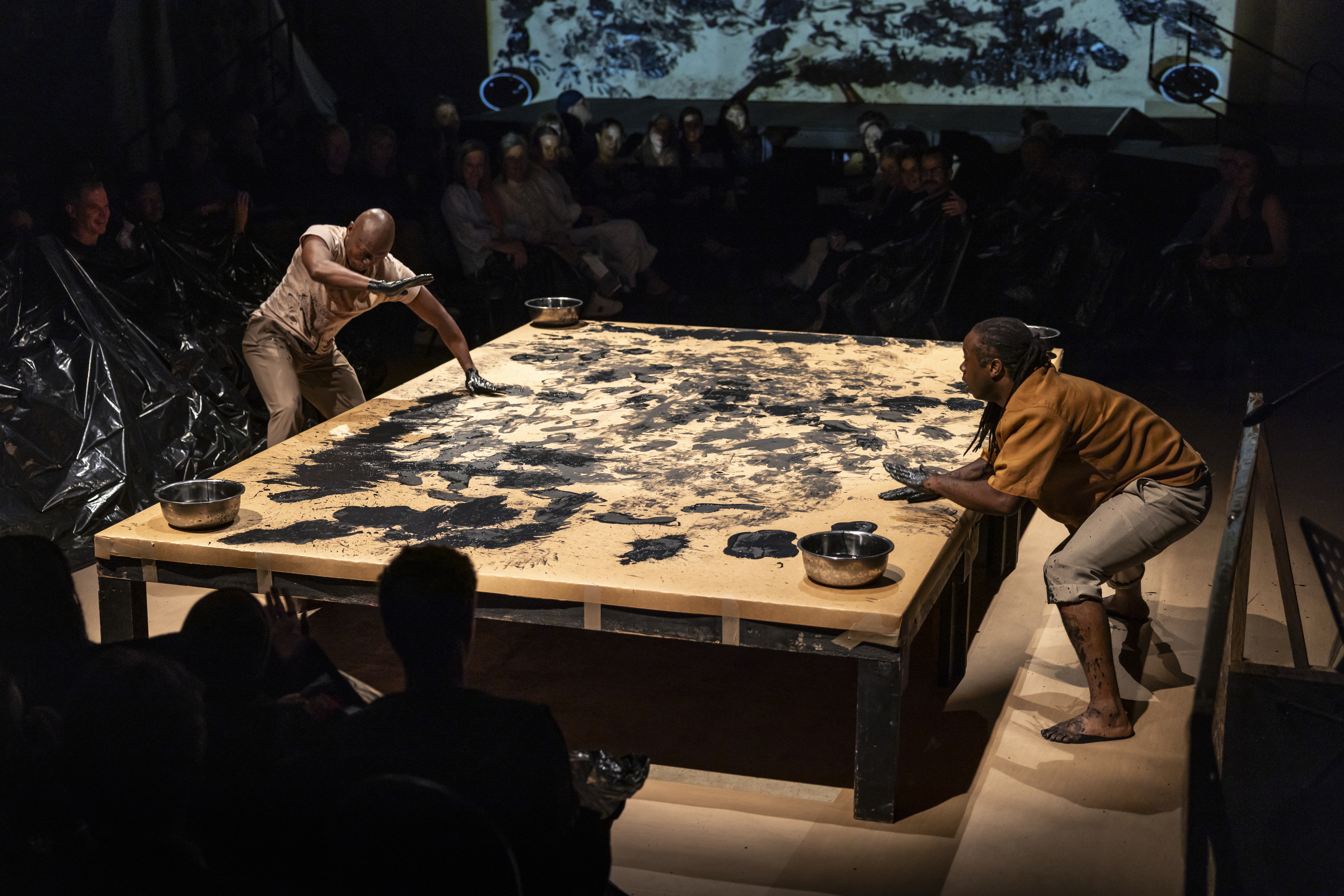
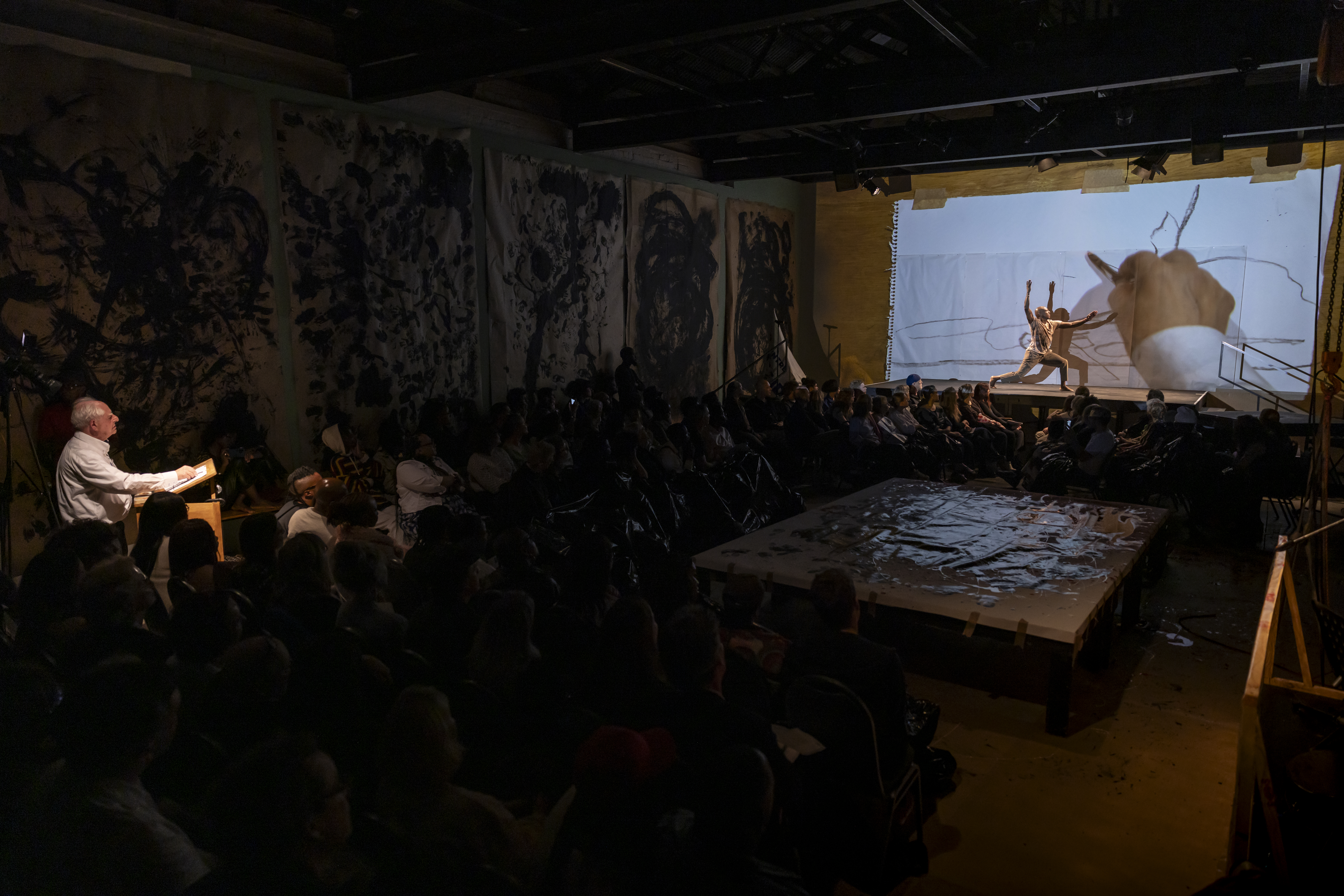
It set the tone for what was to come as the audience moved to William Kentridge’s studio to experience a collection of mindblowing artists, starting with the spiritually immersive Vincent Mantsoe, one of our finest choreographers/dancers in one of his rare local appearances. Translike in his movement and tearing at the soul of those witnessing his deep level of engagement, the evening merged from one artist to another as Kentridge stepped from one stage to the next as he expressed his creativity with body and soul.
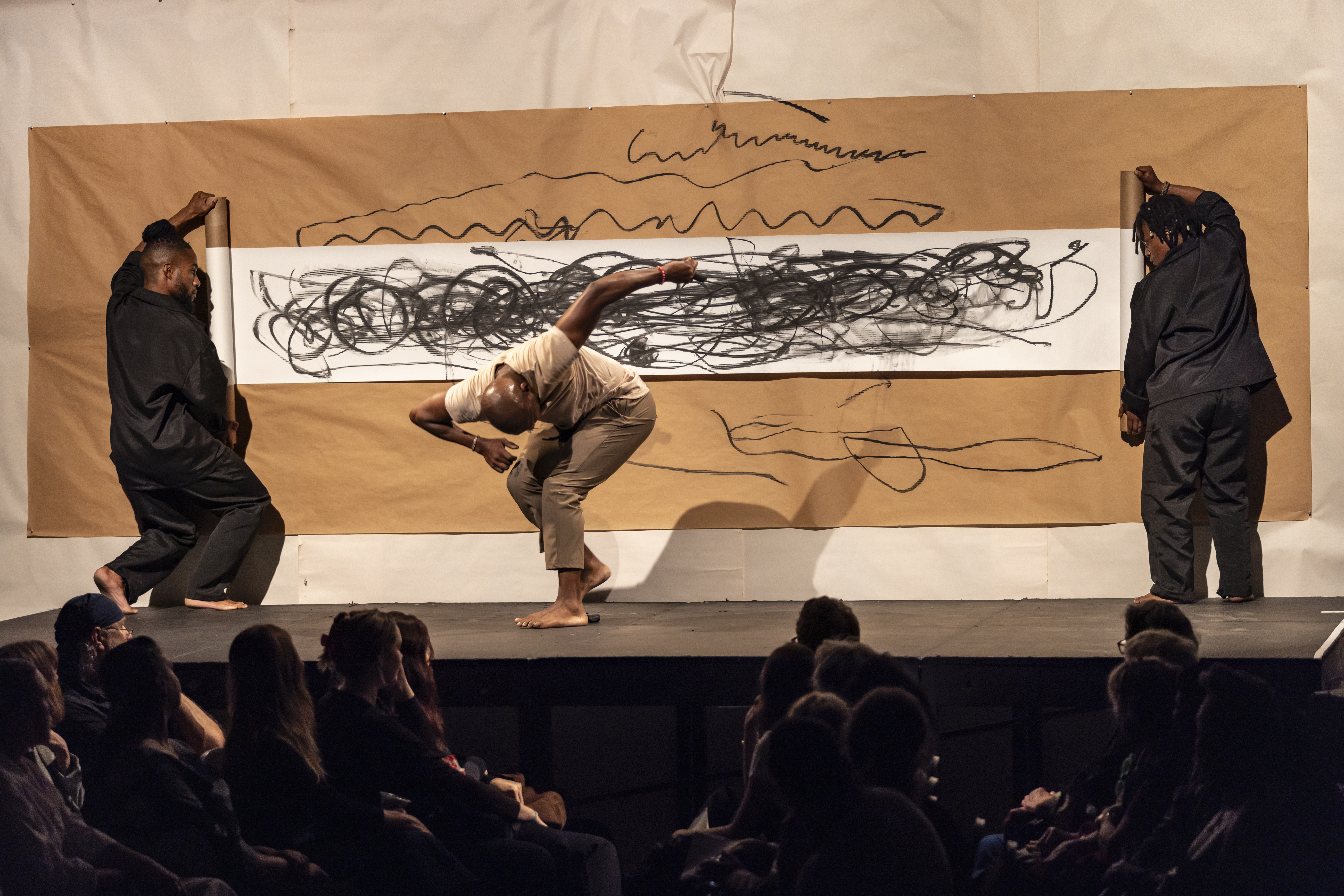
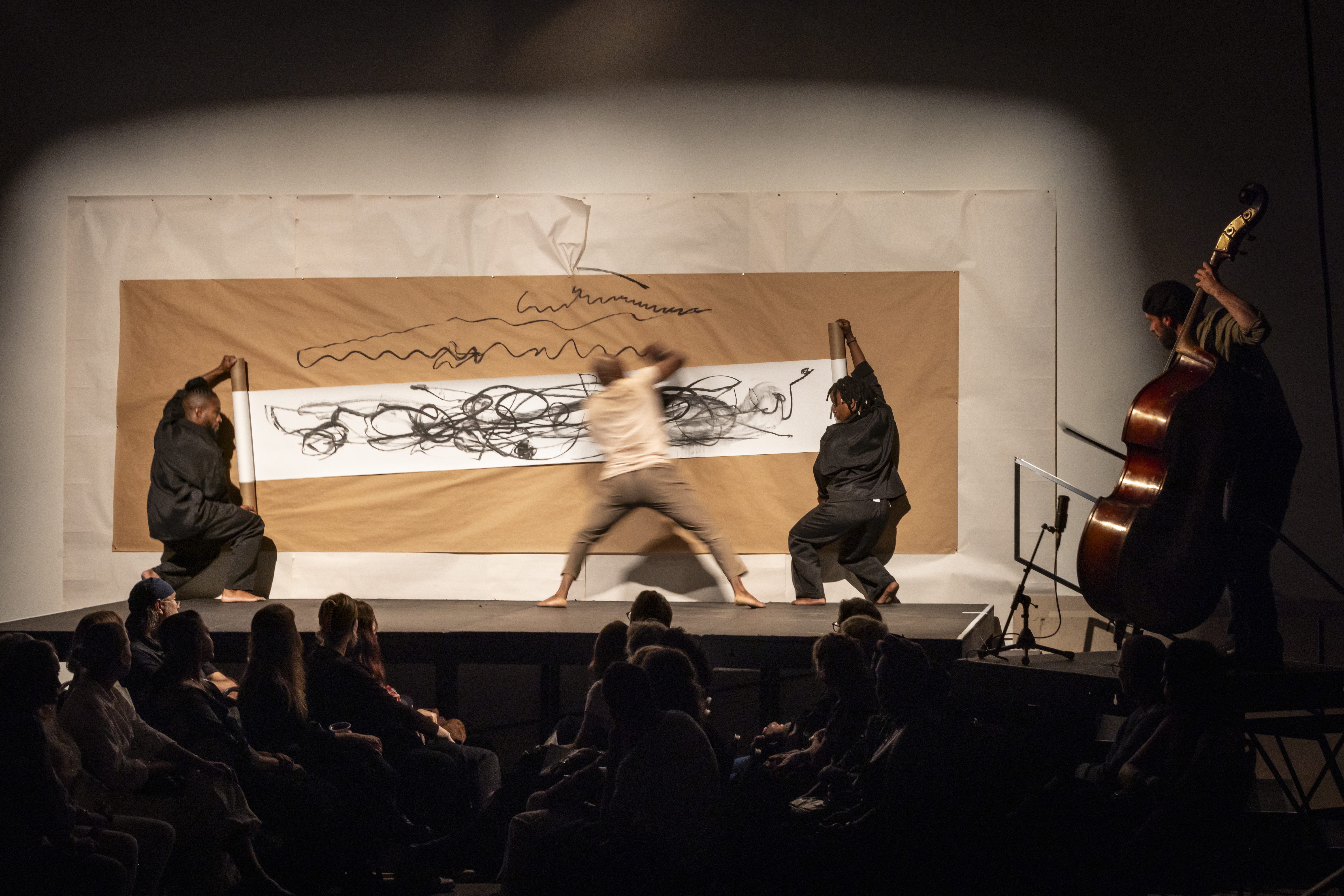
It was all about the merging of art and movement, Moving the Mark, as the event was titled, exploring the relationship between visual art and dance. What they wanted to achieve was to explore the relationship between these unusual pairings and what would emerge.
Vincent Mantsoe in action with percussionist Micca Manganye
How would the pure art of collaboration determine new creative decisions for an audience to experience and absorb? What happens when a dancer like Mantsoe mimics the ink stains of an artist like Kentridge, or from a different vantage, when the painter choreographs their brushstrokes?
Artist Penny Siopis took to the air in almost trapeze-like fashion, painting her canvas on the floor from up high while choreographer/dramaturg Shannel Winlock-Pailman worked her magic below in mesmerizing fashion, the two artists in total union while expressing their heightened emotions.
All the while, the musical accompaniment captured the experience of the moment, enveloping the audience in the round, some wrapped in black bags to protect them from the explosive expression of art as artists flung paint creatively with fearsome flair.
The Centre for the Less Good Idea is all about the collective voice expressed in collaborative pairings, artists who work in different mediums but have creativity and exploration that binds them, pushing the boundaries, trying different ways of making new work to excite themselves as artists while also challenging and stimulating audiences constantly searching for art and creativity exploring the evolving world we live in.
Curator Neo Muyanga (left) and Kentridge (right, in the left corner) choreographing with brushstrokes while Mantsoe is on stage following the moves.
It’s exciting when artists go beyond the expected, and are given free rein to explore their storytelling genres. How can they beat that drum differently? Given the chance to fail is often the best way to reach excellence but the restrictions are many. And more than anything, it is the encouragement to stretch far beyond the boundaries, to take that leap and to experience the beginning of experiments which are allowed to grow and flourish.
This first sold-out performance of the 11th season proved that the audience is willing and determined to experience artists moving the mark. The rest of the season sounded as extraordinary and my wish would have been to witness the full week of extraordinary creativity encouraged to dare to go beyond the expected.
How blessed are Gauteng audiences (who showed their appreciation) to experience these glorious experiments inspired and empowered by William Kentridge who could have staged them anywhere in the world. Kentridge gives us the opportunity to grow together and to expand our idea of what anything and everything is. Step into the void and see what happens comes to mind.
Like most things in life there are good and bad to small packages, but Aardklop CEO Alexa Strachan has turned her shiny Potchefstroom gem into a star through clever planning, a balancing act of note and enough variety to have everyone laughing and crying – with good food all over the place to boot. DIANE DE BEER speaks her mind:
My husband knows I’m a festival junkie (while he is NOT) but it is a personal indulgence and one that clearly nourishes.
This year was no different. Taking only a handful of my best, it’s not a difficult case to make.
Running down the alphabet as the festival guide does, it’s the overwhelming laughter that blew me away. I’m not a comedy girl so I didn’t know who Alfred Adriaan was but I screamed with laughter from start to finish and he was obviously a festival favourite in the packed auditorium.
With the name of Magda Louw (Desiré Gardner), one would think that I would remember that this is one of my favourite characters, but again, because of the comedy aversion, it just never surfaces. And yet, from the minute she walks on stage in her latest production, Magda Louw en haar Erhard, how Louw can you go?, this time with her husband Erhard (a delightfully Sad Sack performance by Hannes van Wyk), they just bowl you over.
What makes Magda so delightful to embrace is that she doesn’t go on the clichéd South African rant of potholes and politics, she has much more exciting things to deal with like the man constantly shuffling behind her as she leads the way at a faster pace and with much more rhythm, but the two ageing souls give you hope for the future as you realise that life is just a bowl of bubbles if you attack it in the right way.
On the other side of the spectrum there’s the magnificent solo debut by the extraordinary Wilhelm van der Walt, who unassumingly takes the stage and then reaching into a far too familiar past, given new perspective.
There was a time when I could hardly stomach another troepie tirade because it was so dominating in the country that it constantly surfaced on stage. What I realized this time round, is that Van der Walt himself probably never participated in this deadly exercise for so many decades part of our lives and there were certainly many young audiences who needs this insight on our past.
And if it is done with such magnificence, the flashbacks are worth recalling even if the past could be wished away.
How can anyone not be thrilled to experience Antoinette Kellermann and Dawid Minnaar on stage and in this instance in Breyten Breytenbach’s last play, Verwelkingslied, before he died. Although he dedicated the piece to Antoinette Kellermann and Marthinus Basson, she performed with her long-time stage partner Minnaar with Mari Borstlap as director on a set which was reminiscent of some of their earlier work together.
Minnaar is an eerily similar version of the poet in voice and image and immediately you can lose yourself in the meanderings of this philosophical and always poetic (almost) memoir. As the two actors take turns in monologue yet sharing Breytenbach’s feelings on death, one drifts away in the words so magnetic and the voice so penetrating, almost in dreamlike state, the actors and the audience.
The simplicity of the presentation is apt as it holds the depth and strength of the text so delicately. This is where we need the words to wash over us as an audience in almost immersive fashion.
I know that Amanda Strydom first mesmerized me with The Incredible Journey of Tinkerbell van Tonder and was eager to experience the performance all these decades later. Not that I can remember the detail, but with age of both text and performer, it’s as if everything has just found a warmer and gentler place to settle and lay her head down.
Finding your place in the world is a never-ending search and when you are fighting for freedom it is almost impossible – yet not when you’re Nelia Petersen who was handed the struggle together with mother’s milk.
It’s rigorous and robust with Strydom tackling the text and music with equal energy and exuberance. And all these years later, if anything, it is even more brittle and brilliant than before. I could watch this performance any day.
Belofte van Vere was our first production and yet another Breytenbach tribute but, once I witnessed the full cast on stage, they had my full attention. With the musically adventurous Laurinda Hofmeyr on piano, a rare singing appearance from the jazz-infused Ilse Klink, the genius muso Leon Gropp (guitar and voice), the soulful David Klassen (drums), a rhythmic Concord Nkabinde (bass) with the velvet voices of Rolanda Marais and Eben Genis, I knew I would be transformed. And I was.
Performers Eben Genis and Rolanda Marais
This exciting, gifted collection of artists would know how to do Breyten Breytenbach, without frills and fancy tricks, just delivering on their accomplishments and Breyten’s poetry and words. Anything else to my mind would have been unwarranted.
It’s my kind of show with my kind of people and poems. I needed nothing more. For me this was a Breytenbach celebration and I’m certain he would have been honoured.
Combining two dance companies, Cape Town’s magnificent Figure of 8 Dance Theatre who also performed their haunting tribute (Die Een Wat Bly) to the relationship between mothers and sons, the more expansive Wings of Light: Dance of an Angel returned dance to Aardklop in spectacular fashion. The music composed by Mauritz Lotz set the tone for an exquisite performance which showcased both classical and contemporary dance, the perfect rendition for an audience who might not often have the chance to see this kind of performance. It was a rare feat to stage this production and hopefully paved the way for similar ventures in the future.
Festivals have to walk a tightrope of not playing it too safe yet not antagonising their core audiences. With the large auditorium thé venue for one of our best comedians as well as two of the most exciting dance companies in the country, they managed just that.
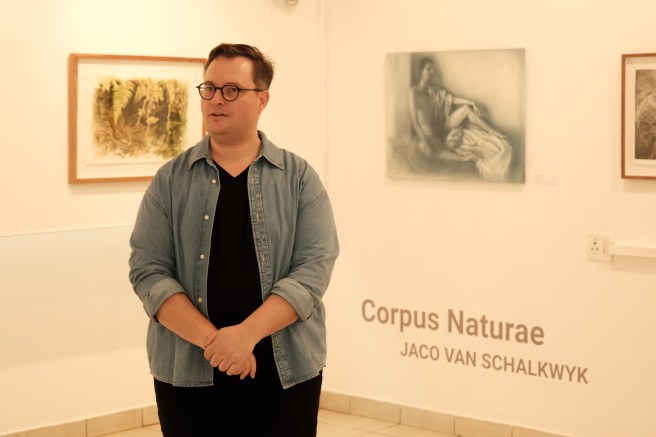
There was also time to slip into the art venues, always something to cherish, and this time it was the festival Artist Jaco van Schalkwyk as well as a challenging group exhibition Vice Versa curated by artist Gwynneth Miller, all of which got the mind racing on a variety of contemporary issues. The renovated campus art museum also featured an exciting range of Nataniël pictures captured by his longest serving photographer Clinton Lubbhe
As an extra fillip, there was the celebratory concert of Nataniël and Charl du Plessis’s 25-year collaboration on stage. And as I had witnessed their initial first performances together, this was quite emotional.
To watch two stratospheric artists develop, dissect and model their artistry as they grow and stretch in different ways is unexpected and artistically adventurous.
There’s Du Plessis’s breathtaking exuberance and excellence on piano, the way he shifts between genres and his approach to his longtime stage companion. Nataniël again exhibits his stagecraft, flips easily from text to music, his stories hilariously funny with a hint of melancholy, or on the musical side, surprising everyone with his superb classical training which he hardly ever shares. They are an unbeatable combination with so many years of performance between them.
Aardklop features youth theatre with their Pronk Podium product, which this year invited its most successful writer/director/producer to present his latest work Doolhof together with the NWU Kampustoneel winner Diereryk directed and written by Pierre-André Viviers, cleverly based on Animal Far.
Every year I am thrilled and struck by the quality of the productions and everyone’s artistry involved. For future artists, this is unequalled training ground and for audiences the ideal opportunity to see how young artists tell their stories and what to expect in the future.
At future festivals, remember to watch out for this special section.
I could go on and on, I even made a turn at the market, something I never do, but I wanted to surprise my favourites at home with some specialty snacks.
As always it was a festival with feisty and fabulous fare on every level.
And the winners for the annual Aardklop festival awards are:
Best Actress: Elzabé Zietsman for Routrip
Best Actor: Wilhelm van der Walt for Seun
Best Director: Nico Scheepers for Seun
Best Overall Production: Seun
Award for most innovative work: The Scullery Quintet: Stir-fried Sonatas
Visual Art: Best Exhibition: Corpus Naturae, Jaco van Schalkwyk
Best Music-driven Production: Amanda Strydom: The incredible journey of Tinkerbell van Tonder
Best Classical Music performance: Road Trip Rhythms
Best Musical-driven performance: The Scullery Quintet
Hartsvriende Beste Produksie: Seun
Best new Afrikaans Script: Nataniël for NATANIËL + CHARL = 25
Best Production: Drama: Seun
Knockout Award: Alfred Adriaan: Positive Strokes
Extra Mile: Riaan Rademan (Technical project manager for Blond Productions)
Screened exclusively at Ster-Kinekor cinemas, with select livestreams at V&A Waterfront
Deborah Nansteel as Teresa, Nadine Sierra as Amina, Sydney Mancasola as Lisa, Xabier Anduaga as Elvino, and Nicholas Newton as Alessio in Bellini’s “La Sonnambula.” Photo: Marty Sohl / Met Opera
It’s time for the 25/26 Met Opera season and what a spectacular worldwide season they’ve put together for the opera cognoscenti including South African opera enthusiasts.
This is the 18th Met: Live in HD, the Metropolitan Opera’s award-winning series of live high-definition cinema simulcasts and will locally be seen exclusively at select Ster-Kinekor and Cinema Nouveau cinemas.
With eight productions screening from this Sunday to mid-June 2026, the 2025-26 Live in HD season features one premiere, three new productions of much-loved operas and four revivals.
“With The Met: Live in HD productions screening in our cinemas, local audiences get to experience some of the world’s best-loved opera productions in a near-live situation, from The Met’s opulent stage to our big screens. The theatre-like setting enables cinemagoers to become an extension of the live production’s audience, making these world-class productions from the Met in New York accessible to anyone who enjoys and appreciates great opera,” says Lynne Wylie, chief marketing officer at Ster-Kinekor Theatres.
“What began as an experiment 18 years ago has become a staple experience for opera lovers all over the world,” said Peter Gelb, the Met’s Maria Manetti Shrem General Manager.
“Our 2025–26 season in cinemas reflects how opera is changing at the Met, where we’re balancing timeless classics with accessible new work that is advancing the art form and attracting younger and more diverse audiences.”
Don’t miss this world-class opera production, filmed and transmitted from the Met stage to the big screen at Cinema Nouveau and select Ster-Kinekor cinemas: Eastgate and Rosebank Nouveau in Johannesburg; Brooklyn in Tshwane; Watercrest in Hillcrest, KZN; Garden Route in George; Somerset in Somerset West; and Blue Route and V&A Waterfront (with live streams) in Cape Town. Loyalty card discounts apply, as does Ster-Kinekor’s Half-Price Tuesdays ticket price offering.
Bookings are open, with each production limited to two screenings only. Book your tickets now on the new-look Ster-Kinekor website at www.sterkinekor.com or download the new SK App on your smartphone. For news and updates, go to Facebook: Ster-Kinekor Theatres | follow Ster-Kinekor on Twitter: @Ster-Kinekor. For all queries, call Ticketline on 0861-Movies (668 437).
Here is the 2025-26 Met: Live in HD season at a glance, hold on to the programme for bookings:
Nadine Sierra as Amina in Bellini’s La Sonnambula. Photo: Marty Sohl / Met Opera
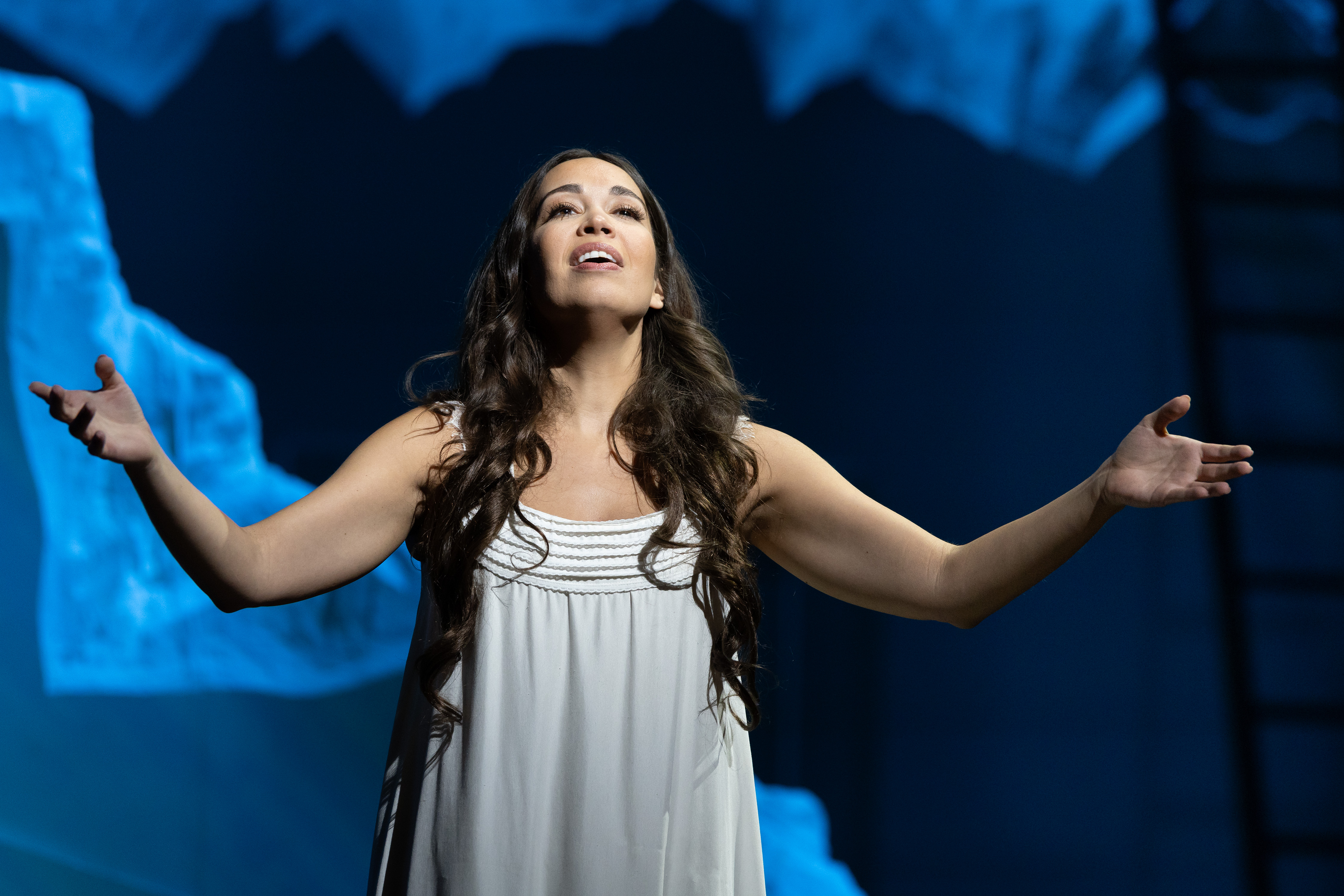
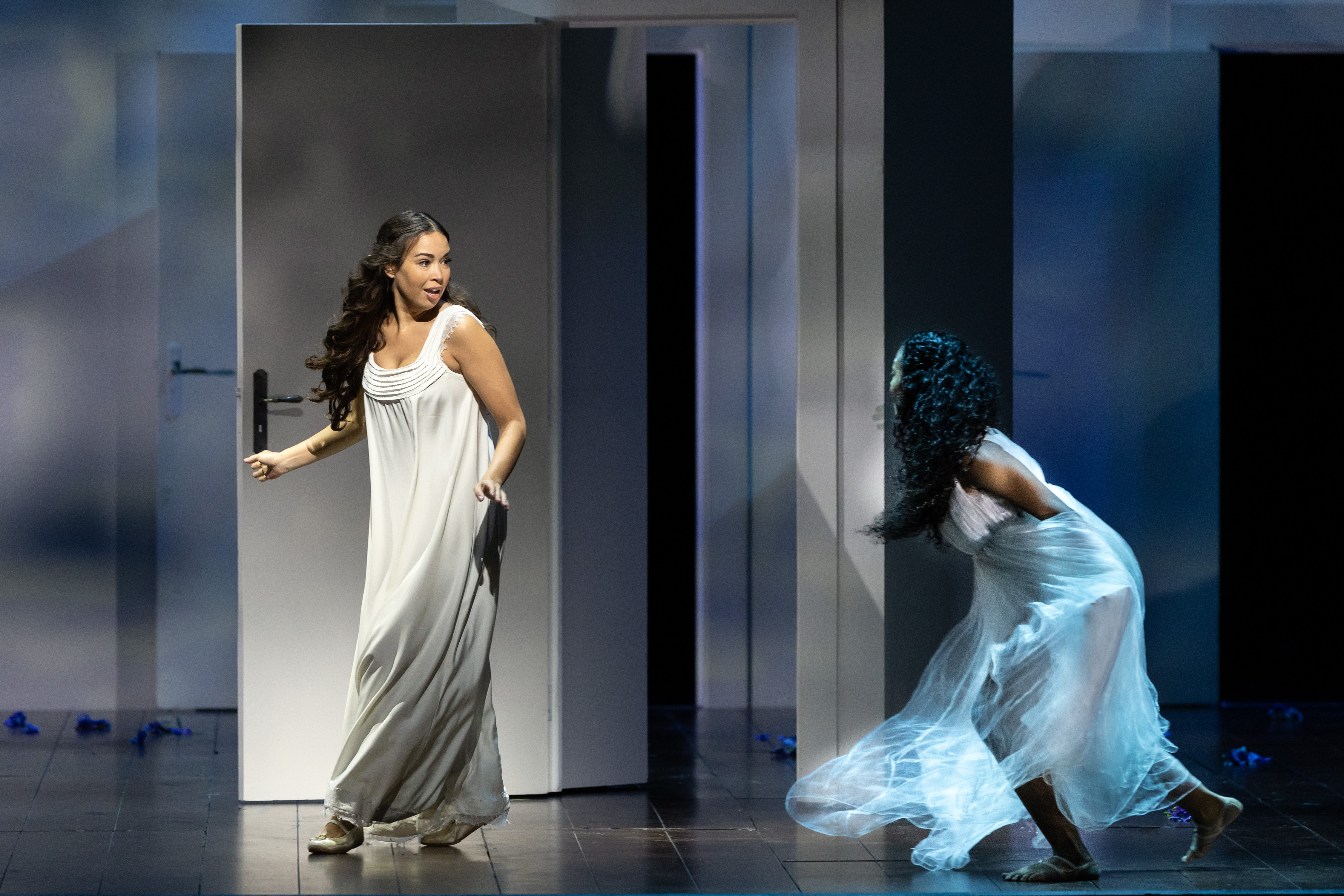
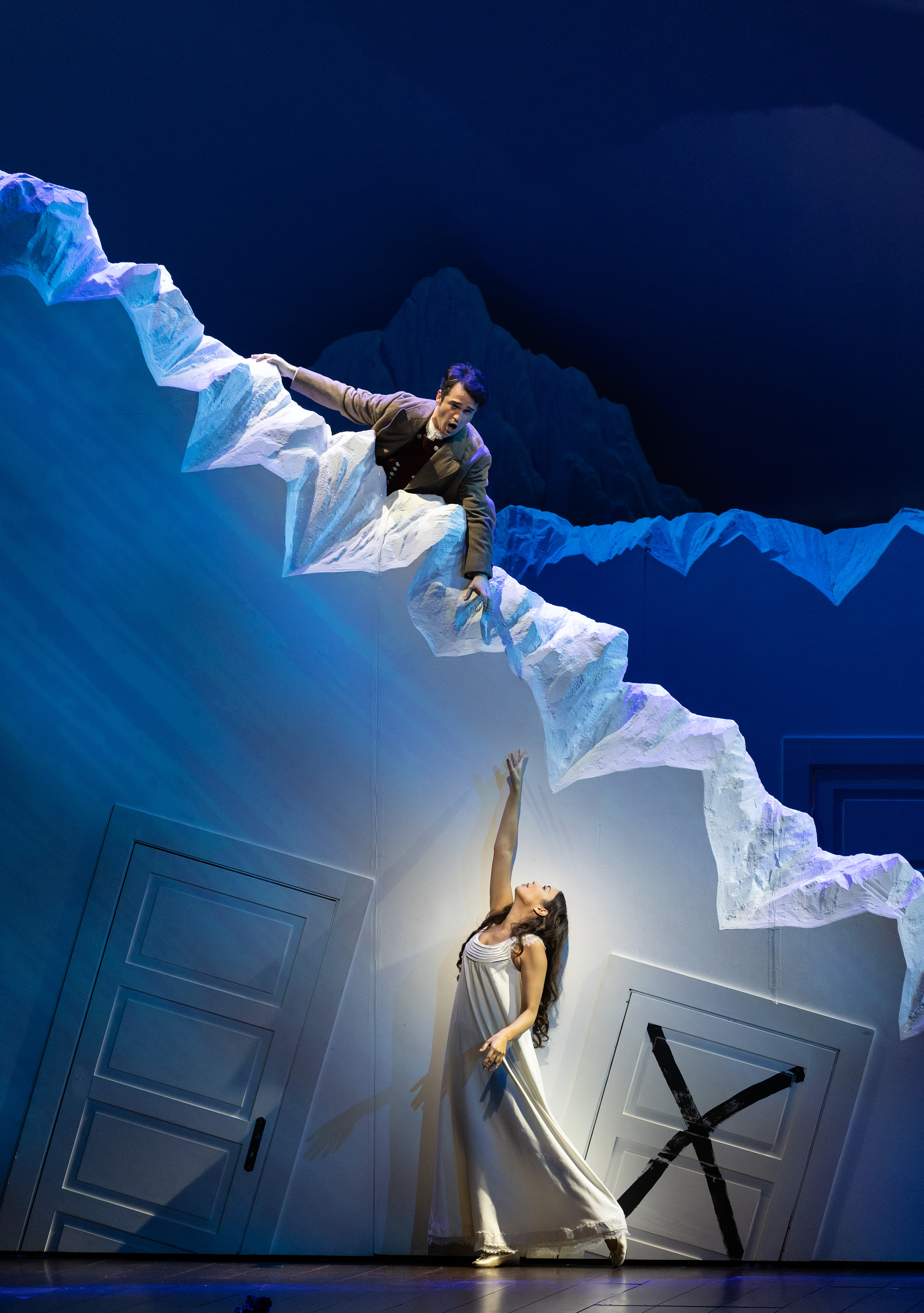
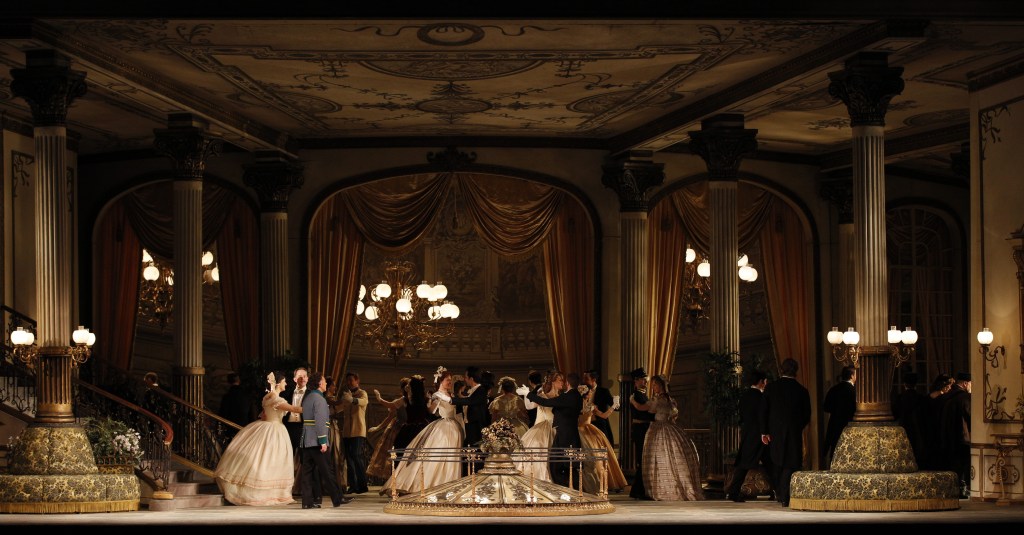
La Sonnambula – Bellini (new production)
Screening dates: 02 and 04 November 2025 (3h 15min)
Music by Vincenzo Bellini | Libretto by Felice Romani
Conductor: Riccardo Frizza
Cast: Amina – Nadine Sierra; Lisa – Sydney Mancasola; Elvino – Xabier Anduaga; Rodolfo – Alexander Vinogradov
Roméo et Juliette, Verdi’s La Traviata, and Donizetti’s Lucia di Lammermoor, Nadine Sierra (seen in previous seasons of Roméo et Juliette, Verdi’s La Traviata, and Donizetti’s Lucia di Lammermoor) summits another peak of the soprano repertoire as Amina, who sleepwalks her way into audiences’ hearts in Bellini’s poignant tale of love lost and found.
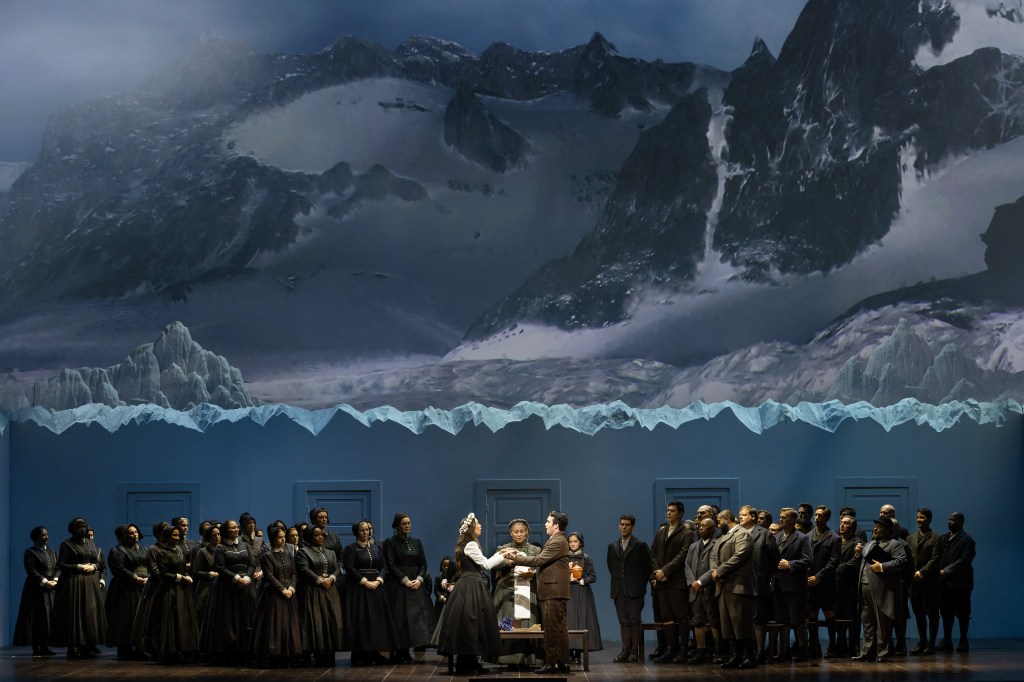
In this new production, Rolando Villazón—the tenor who has embarked on a brilliant second career as a director—retains the opera’s original setting in the Swiss Alps but uses its somnambulant plot to explore the emotional and psychological valleys of the mind.
Tenor Xabier Anduaga co-stars as Amina’s fiancé, Elvino, alongside soprano Sydney Mancasola as her rival, Lisa, and bass Alexander Vinogradov as Count Rodolfo. Riccardo Frizza takes the podium for one of opera’s most ravishing works.
Juliana Grigoryan as Mimì and Freddie De Tommaso as Rodolfo in Puccini’s La Bohème. Photo: Karen Almond / Met Opera
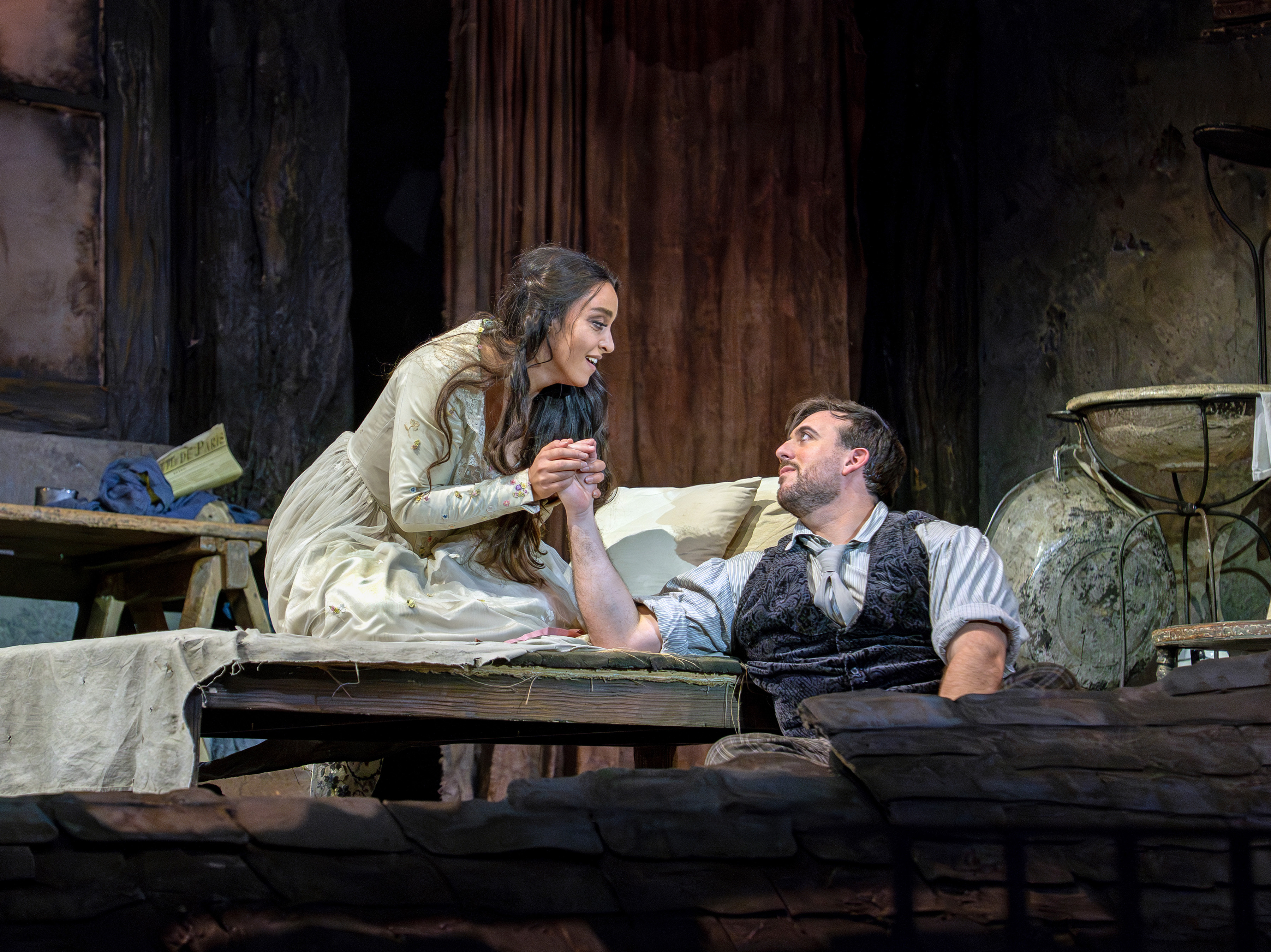
La Bohème – Puccini (revival)
Screening dates: 08 November (livestream at V&A Waterfront); 23 and 25 November 2025
(3h 29min)
Music by Giacomo Puccini | Libretto by Luigi Illica and Giuseppe Giacosa
Conductor: Keri-Lynn Wilson | Production: Franco Zeffirelli
Cast: Mimì – Juliana Grigoryan; Musetta -Heidi Stober; Rodolfo – Freddie De Tommaso; Marcello – Lucas Meachem; Schaunard – Sean Michael Plumb; Colline – Jongmin Park; Benoit/Alcindoro – Donald Maxwell
With its enchanting setting and spellbinding score, the world’s most popular opera is as timeless as it is heartbreaking. Franco Zeffirelli’s picture-perfect production brings 19th-century Paris to the Met stage as Puccini’s young friends and lovers navigate the joy and struggle of bohemian life. Soprano Juliana Grigoryan is the feeble seamstress Mimì, opposite tenor Freddie De Tommaso as the ardent poet Rodolfo. Keri-Lynn Wilson conducts the 08 November performance, which will be transmitted live from the Met stage to cinemas worldwide, including at Ster-Kinekor V&A Waterfront in Cape Town.
A scene from Strauss’s Arabella. Photo: Marty Sohl / Met Opera
Arabella – Strauss (revival)
Screening dates: 07 and 09 December 2025
(4h 12min)
Music by Richard Strauss | Libretto by Hugo von Hofmannsthal
Conductor: Nicholas Carter
Cast: Arabella – Rachel Willis-Sørensen; Zdenka – Louise Alder; Matteo – Pavol Breslik; Mandryka – Tomasz Konieczny; Waldner – Brindley Sherratt
Strauss’s elegant romance brings the glamour and enchantment of 19th-century Vienna to cinemas worldwide in a sumptuous production by legendary director Otto Schenk that “is as beautiful as one could hope” (The New York Times). Soprano Rachel Willis-Sørensen stars as the title heroine, a young noblewoman in search of love on her own terms. Radiant soprano Louise Alder is her sister, Zdenka, and bass-baritone Tomasz Konieczny is the dashing count who sweeps Arabella off her feet.
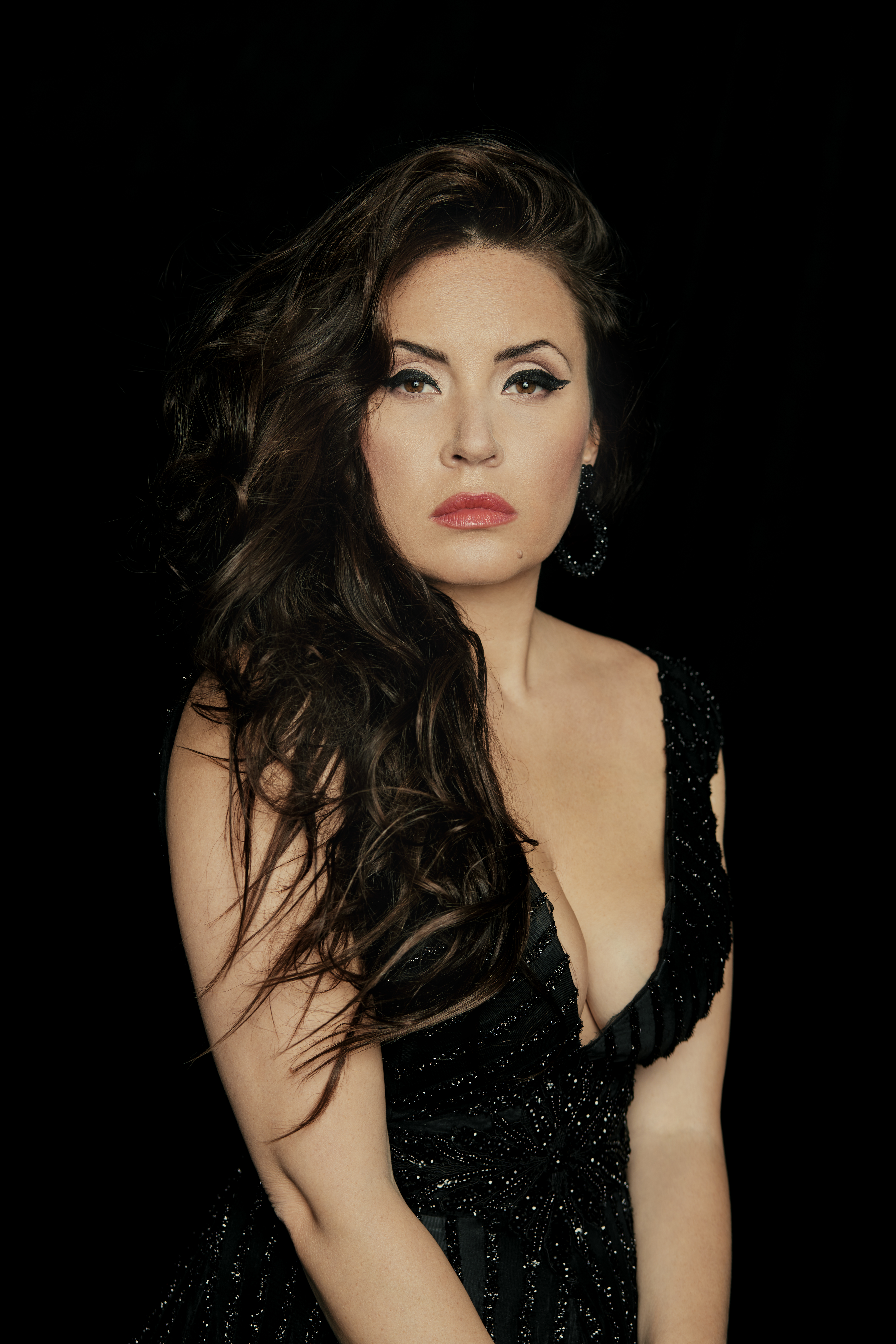
Soprano Sonya YonchevaA scene from Giordano’s Andrea Chénier. Photo: Marty Sohl / Met Opera
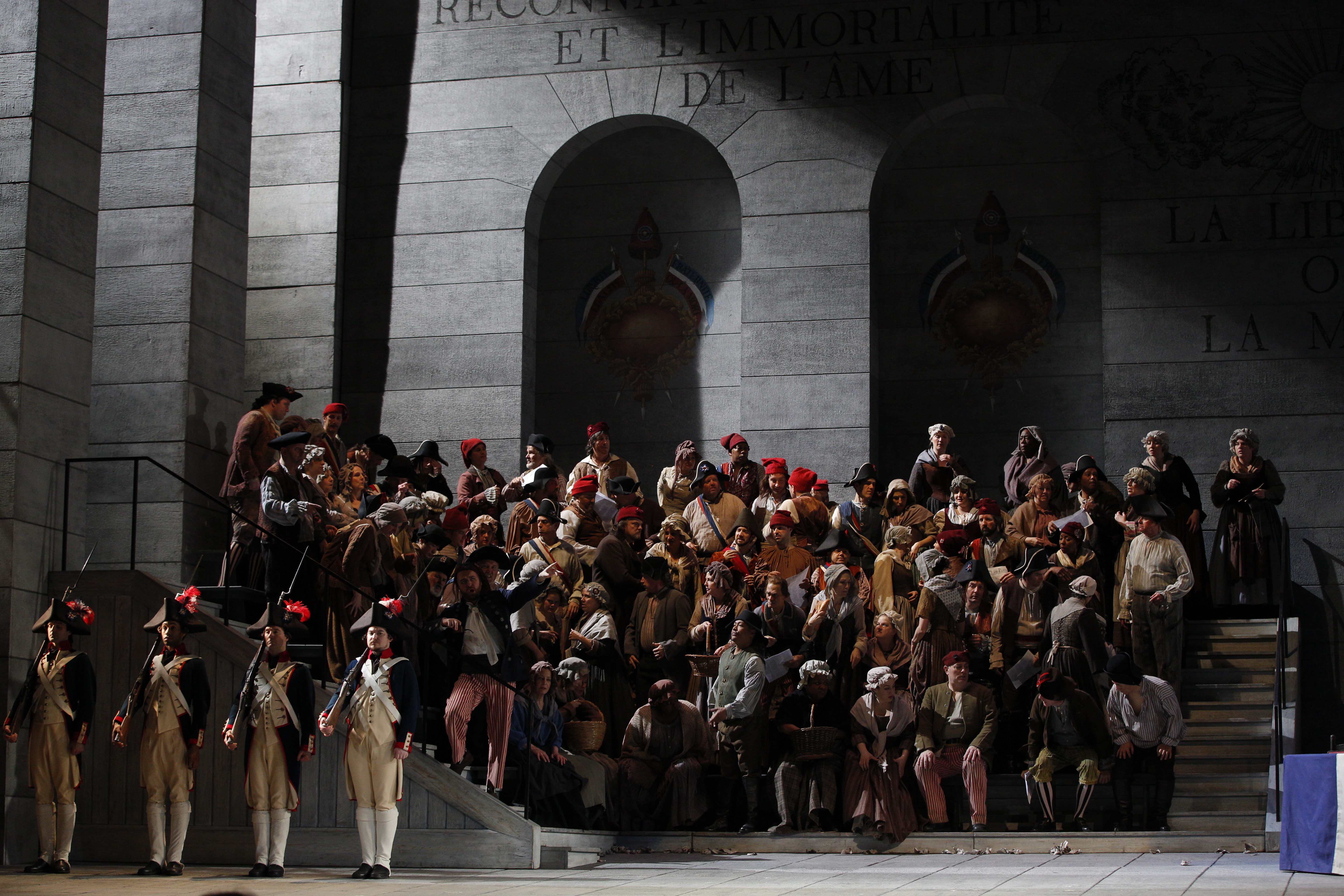
Andrea Chénier – Giordano (revival)
Screening dates: 13 December 2025 (livestream at V&A Waterfront); 04 and 06 January 2026
(3h 31min)
Music by Umberto Giordano | Libretto by Luigi Illica
Conductor: Daniele Rustioni
Cast: Maddalena di Coigny – Sonya Yoncheva; Andrea Chénier – Piotr Beczała; Carlo Gérard – Igor Golovatenko
Giordano’s passionate tragedy stars tenor Piotr Beczała as the virtuous poet who falls victim to the intrigue and violence of the French Revolution. Following their celebrated recent partnership in Giordano’s Fedora in the 2022–23 Live in HD season, Beczała reunites with soprano Sonya Yoncheva as Chénier’s aristocratic lover, Maddalena di Coigny, with baritone Igor Golovatenko as Carlo Gérard, the agent of the Reign of Terror who seals their fates. Met Principal Guest Conductor Daniele Rustioni takes the podium to lead Nicolas Joël’s gripping staging.
Lisette Oropesa as Elvira in Bellini’s I Puritani. Photo: Paola Kudacki / Met Opera
I Puritani – Bellini (new production)
Screening dates: 10 January (livestream at V&A Waterfront); 08 and 10 February 2026
(3h 31min)
Music by Vincenzo Bellini | Libretto by Carlo Pepoli
Conductor: Marco Armiliato
Cast: Elvira Walton – Lisette Oropesa; Lord Arturo Talbot – Lawrence Brownlee; Riccardo Forth – Artur Ruciński; Giorgio Walton – Christian Van Horn
For gorgeous melody, spellbinding coloratura, and virtuoso vocal fireworks, I Puritani has few equals. The first new Met production of Bellini’s final masterpiece in nearly 50 years – a striking staging by Charles Edwards, who makes his company directorial debut after many successes as a set designer – arrives in cinemas worldwide. The Met has assembled a world-beating quartet of stars, conducted by Marco Armiliato, for the demanding principal roles. Soprano Lisette Oropesa and tenor Lawrence Brownlee are Elvira and Arturo, brought together by love and torn apart by the political rifts of the English Civil War, with baritone Artur Ruciński as Riccardo, betrothed to Elvira against her will, and bass-baritone Christian Van Horn as Elvira’s sympathetic uncle, Giorgio.
Lise Davidsen as Isolde in Wagner’s Tristan und Isolde. Photo: Paola Kudacki / Met Opera
Tristan und Isolde – Wagner (new production)
Screening dates: 05 and 07 April 2026
(5h 12min)
Music by Richard Wagner | Libretto by the composer
Conductor: Yannick Nézet-Séguin
Cast: Isolde – Lise Davidsen; Brangäne – Ekaterina Gubanova; Tristan – Michael Spyres; Kurwenal – Tomasz Konieczny; King Marke – Ryan Speedo Green
After years of anticipation, a truly unmissable event arrives in cinemas as the electrifying Lise Davidsen tackles one of the ultimate roles for dramatic soprano: the Irish princess Isolde in Wagner’s transcendent meditation on love and death. Heroic tenor Michael Spyres stars opposite Davidsen as the love-drunk Tristan. The momentous occasion also marks the advent of a new, Met-debut staging by Yuval Sharon – hailed by The New York Times as “the most visionary opera director of his generation” and the first American to direct an opera at the famed Wagner festival in Bayreuth, as well as Music Director Yannick Nézet-Séguin’s first time leading Tristan und Isolde at the Met. Mezzo-soprano Ekaterina Gubanova reprises her portrayal of Brangäne, alongside bass-baritone Tomasz Konieczny, who sings Kurwenal after celebrated Met appearances in Wagner’s Der Fliegende Holländer and Ring cycle. Bass-baritone Ryan Speedo Green makes an important role debut as King Marke.
Soprano Asmik Grigorian A scene from Tchaikovsky’s Eugene Onegin. Photo: Ken Howard / Met Opera
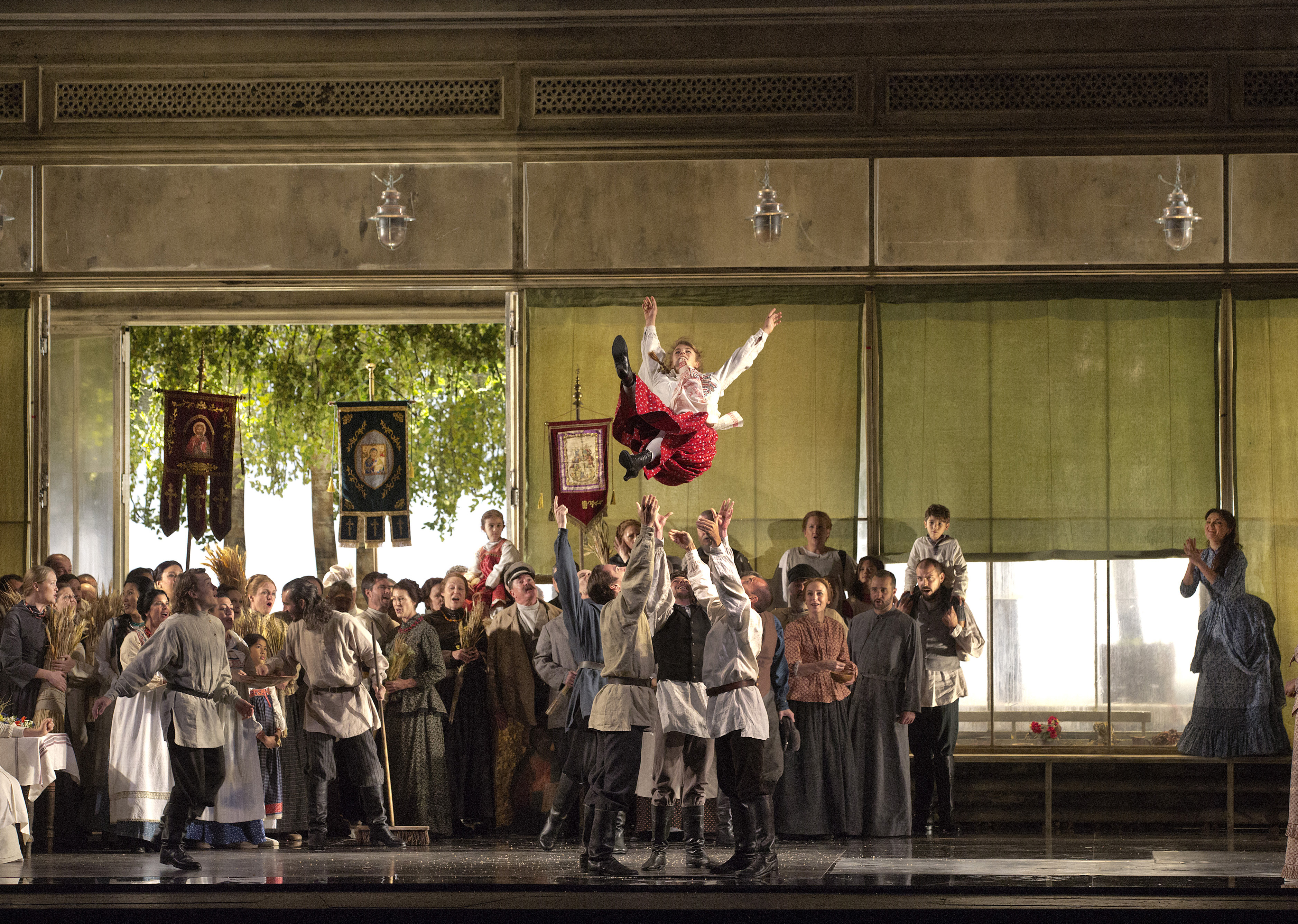
Eugene Onegin – Tchaikovsky (revival)
Screening dates: 02 May (livestream at V&A Waterfront); 17 and 19 May 2026
(4h 05min)
Music by Pyotr Ilyich Tchaikovsky | Libretto by the composer and Konstantin Stepanovich Shilovsky
Conductor: Timur Zangiev*
Cast: Tatiana – Asmik Grigorian; Olga – Maria Barakova; Filippyevna – Stephanie Blythe; Lenski – Stanislas de Barbeyrac; Eugene Onegin – Igor Golovatenko; Prince Gremin – Alexander Tsymbalyuk
Following her acclaimed 2024 company debut in Puccini’s Madama Butterfly, soprano Asmik Grigorian returns to the Met as Tatiana, the lovestruck young heroine in this ardent operatic adaptation of Pushkin, which will be transmitted live from the Metropolitan Opera stage to cinemas worldwide on 02 May, including at Ster-Kinekor V&A Waterfront, on 02 May. Baritone Igor Golovatenko reprises his portrayal of the urbane Onegin, who realises his affection for her all too late. The Met’s evocative production, directed by Tony Award–winner Deborah Warner, “offers a beautifully detailed reading of … Tchaikovsky’s lyrical romance” (The Telegraph).
El Último Sueño de Frida y Diego – Frank (Metropolitan Opera premiere)
3 / 5
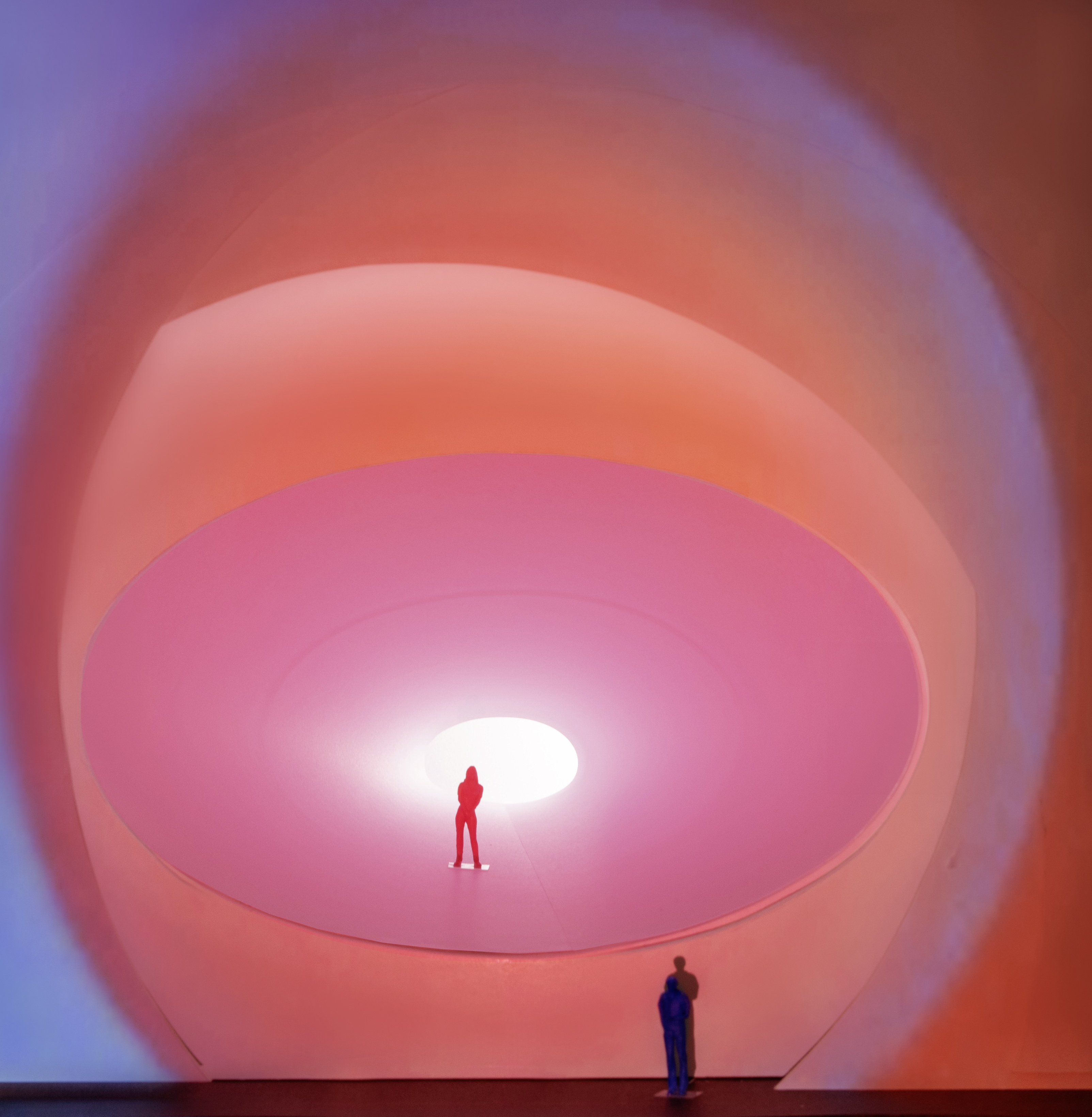
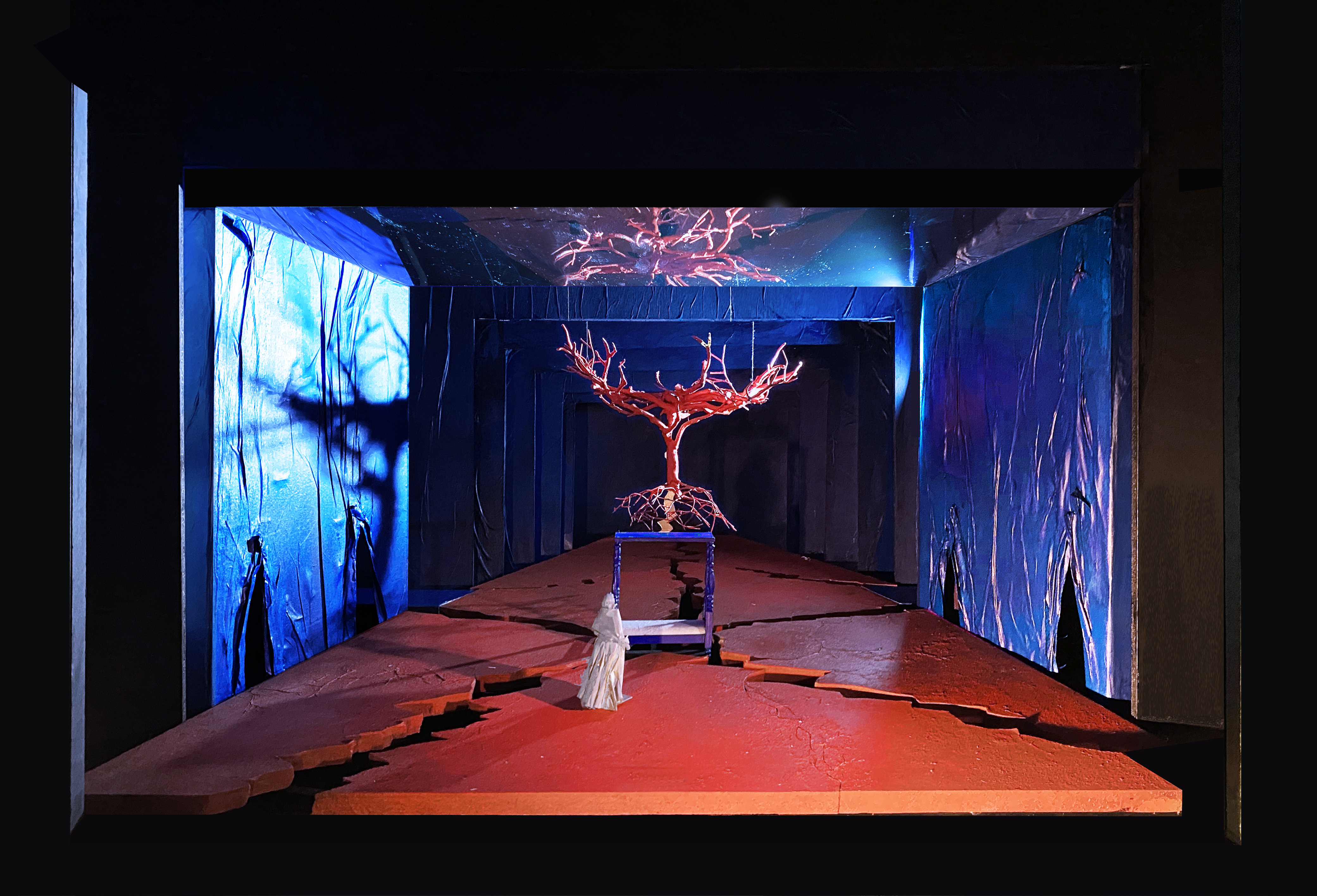
A set design by Jon Bausor for the Met premiere of Gabriela Lena Frank’s El Último Sueño de Frida y Diego.
Screening dates: 30 May (livestream at V&A Waterfront); 14 and 16 June 2026
(2h 48min)
Music by Gabriela Lena Frank* | Libretto by Nilo Cruz*
Conductor: Yannick Nézet-Séguin
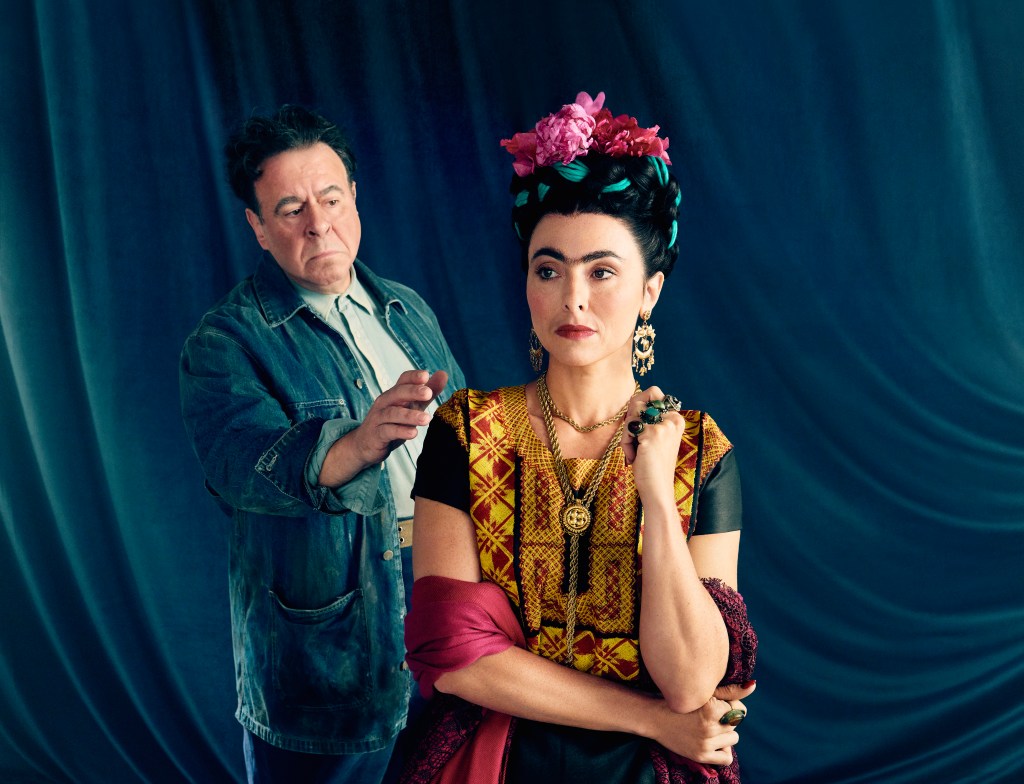
Cast: Catrina – Gabriella Reyesl; Frida – Isabel Leonard; Leonardo – Nils Wanderer; Diego – Carlos Álvarez
A scene from Tchaikovsky’s Eugene Onegin. Photo: Ken Howard / Met Opera
On 30 May, the Metropolitan Opera’s 2025–26 Live in HD season comes to a close with a live transmission (only at V&A Waterfront) of American composer Gabriela Lena Frank’s first opera, a magical-realist portrait of Mexico’s painterly power couple Frida Kahlo and Diego Rivera, with libretto by Pulitzer Prize–winning playwright Nilo Cruz. Fashioned as a reversal of the Orpheus and Euridice myth, the story depicts Frida, sung by leading mezzo-soprano Isabel Leonard, leaving the underworld on the Day of the Dead and reuniting with Diego, portrayed by baritone Carlos Álvarez. The famously feuding pair briefly relive their tumultuous love, embracing both the passion and the pain before bidding the land of the living a final farewell. Music director Yannick Nézet-Séguin conducts the Met-premiere staging of Frank’s opera, a “confident, richly imagined score” (The New Yorker) that “bursts with colour and fresh individuality” (Los Angeles Times). This vibrant new production, taking enthusiastic inspiration from Frida and Diego’s paintings, is directed and choreographed by Deborah Colker.
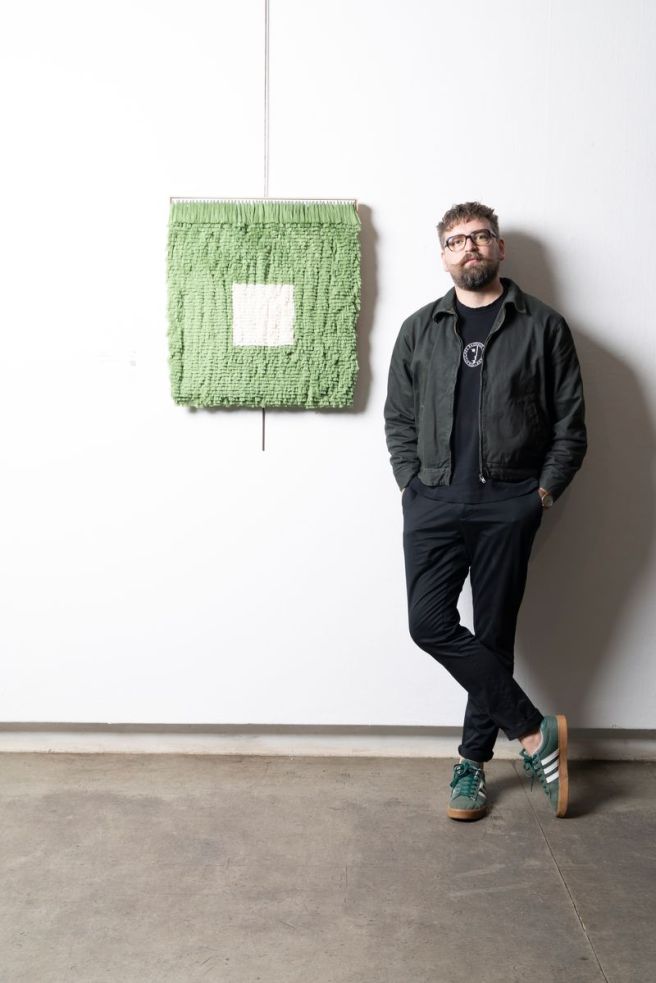
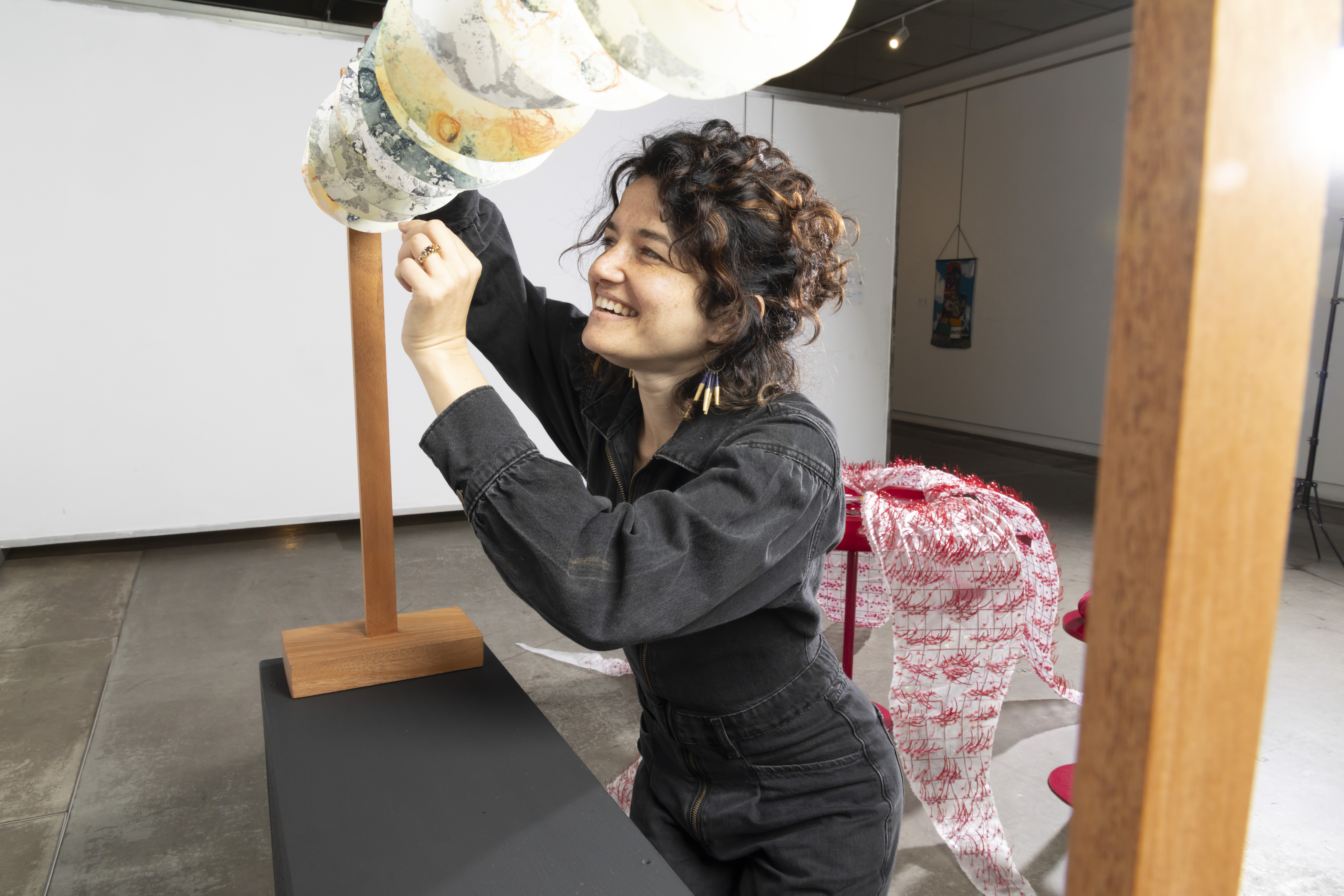
There are less than two weeks left to explore the 2025 Sasol New Signatures Visual Arts Exhibition at the Pretoria Art Museum, which closes on November 2, 2025. The exhibition features works from all 103 finalists, including the top seven award-winners and is quite magnificent. Don’t miss it!
“This is a must-see exhibition. The standard of entries this year was exceptionally high, showcasing the newest creative voices leading the next wave of South African visual art,” said Cate Terblanche, Curator of the Sasol Art Collection.
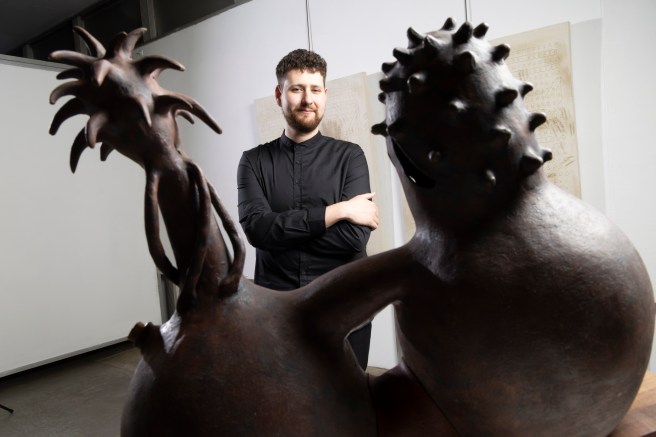
The 2025 Sasol New Signatures Visual Arts Competition attracted more than 900 entries from across South Africa. Juandré van Eck (Gqeberha), an Honours student at Nelson Mandela University, was announced as the overall winner for 2025 for his interactive ceramic installation titled Cycles of the Mind. The work captivated judges with its acoustic and meditative presence, and its poetic interplay of breath, water, and voice. Van Eck received a cash prize of R100 000 and is already conceptualising his solo exhibition, which will be showcased at the Pretoria Art Museum in 2026.
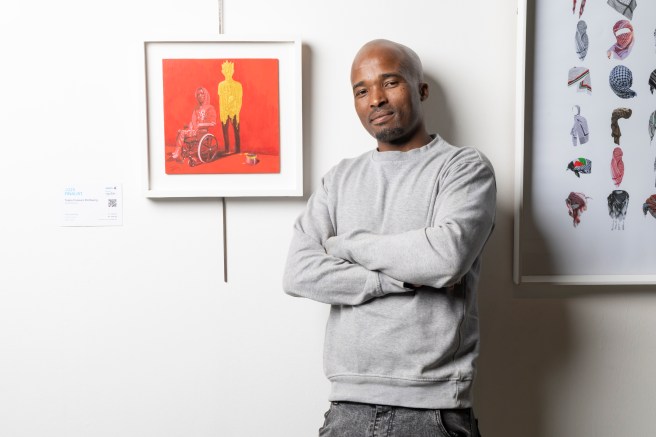
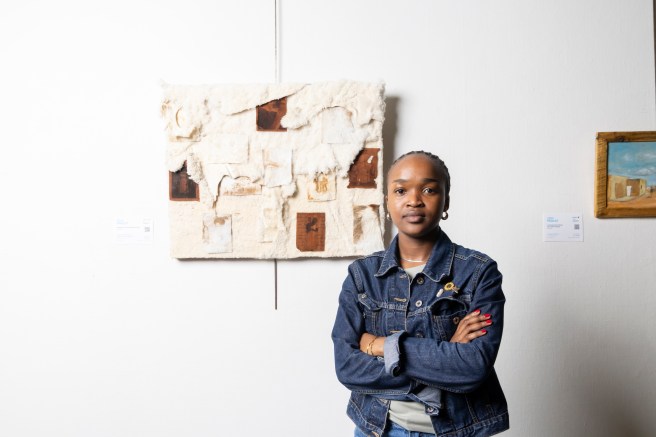
The Runner-up Award and R25 000 went to Thabo Treasure Mofokeng (Johannesburg) for Still Standing, a painting inspired by resilience in the face of adversity
The five Merit Award winners, each receiving R10 000, are:
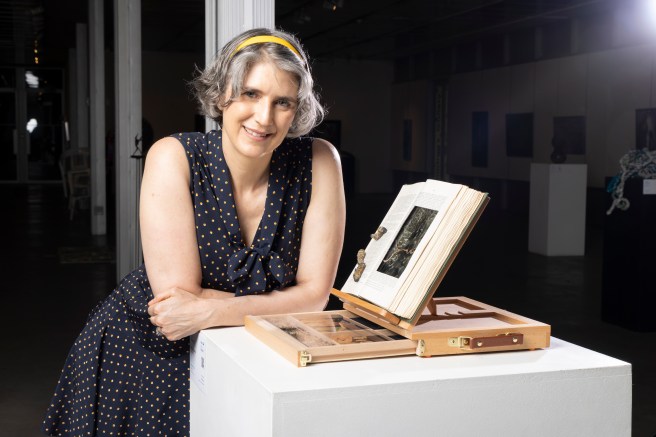
Tammy Lee Baikie (Johannesburg) – Book Worms (mixed media)
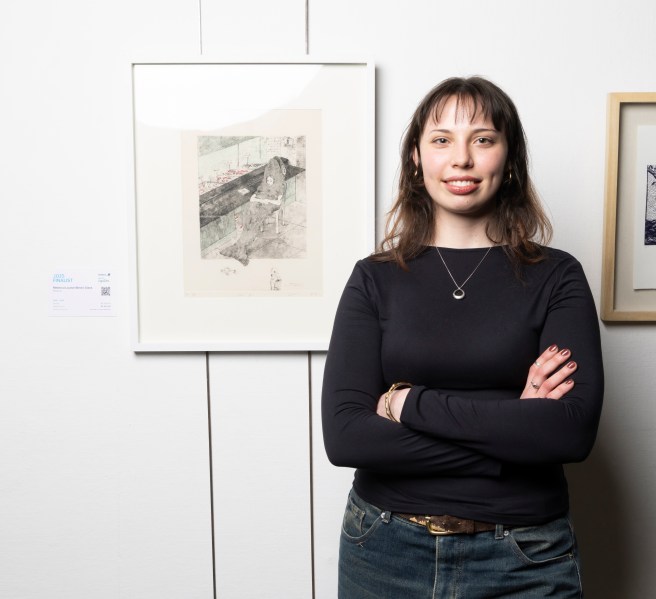
Rebecca Louise (Beck) Glass (Pretoria) – Sell–Fish (etching)
Snelihle Asanda Maphumulo (Gqeberha) – Ngaphansi kwesithunzi sakhe (Under His Shadow) (sheep hide on canvas)
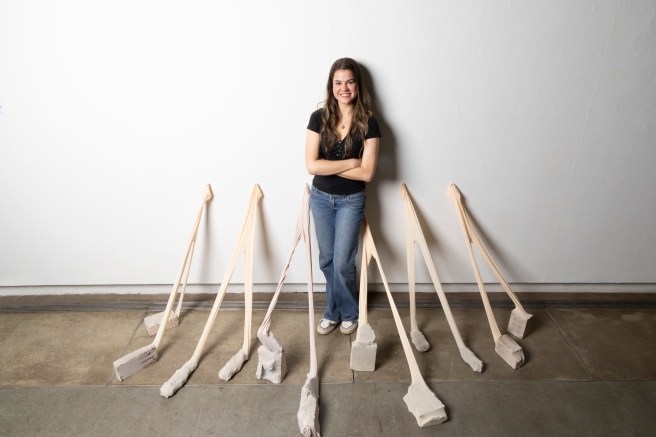
Sarah Volker (Gqeberha) – Taut, Tethered and Torn (ballet tights, stones, cement blocks)
“Sasol New Signatures continues to play a crucial role in discovering, nurturing, and showcasing the next generation of South African artists,” said Pfunzo Sidogi, Chairperson of Sasol New Signatures. “Each year, the competition provides an invaluable platform for emerging voices to share their perspectives, experiment boldly, and contribute meaningfully to the country’s vibrant visual arts landscape.”

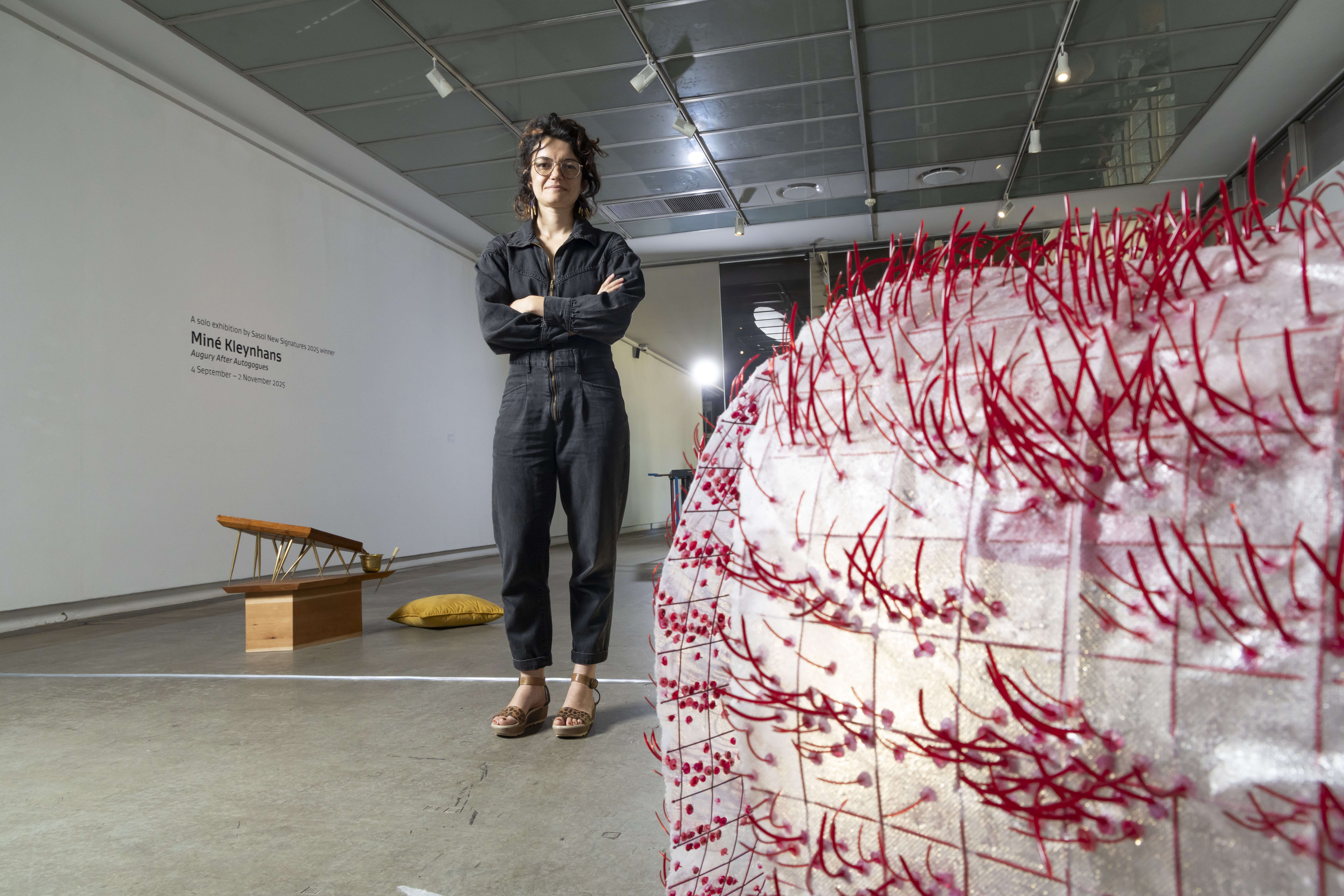
Running concurrently with the New Signatures exhibition is the solo exhibition by Miné Kleynhans, winner of the 2024 Sasol New Signatures competition. Titled Augury After Autogogues, Kleynhans presents a speculative and satirical cosmos in which individual mystics, or “Autogogues,” use invented devices to divine meaning from the overload of media, relationships, and impressions. The works include Orbea kako-occultus, Abacus for Emotional Transactions II, State of Reproach, and Meditations on Resentment (her 2024 award-winning piece). Using a mix of wood, metal, 3D printing, resin, and found objects, Kleynhans constructs intricate instruments that blur the line between sincerity and satire. Through interaction, viewers are invited to ask: In a world saturated with information, how do we make sense of our own inner lives?
This year, the museum experience has been enhanced with QR codes placed beside each work, allowing visitors to access the artist statements for deeper insight into each creative process.
For audiences outside Pretoria or abroad, the entire exhibition, including all finalists and winners, can be viewed through a virtual exhibition hosted on the Sasol New Signatures website. The digital gallery replicates the in-museum experience, ensuring that art lovers everywhere can engage with South Africa’s most exciting emerging talents.
With only two weeks remaining, now is the perfect time to visit in person or online and experience the freshest voices shaping the future of South African art. Don’t miss out on the fantastic art by our future masters of the local art world.
Exhibition Details
Venue: Pretoria Art Museum, corner Francis Baard & Wessels Streets, Arcadia Park, Pretoria Dates: Until November 2, 2025 Museum Hours: Tuesday to Sunday, 10:00–17:00 (closed Mondays and public holidays) Virtual Exhibition:www.sasolsignatures.co.za
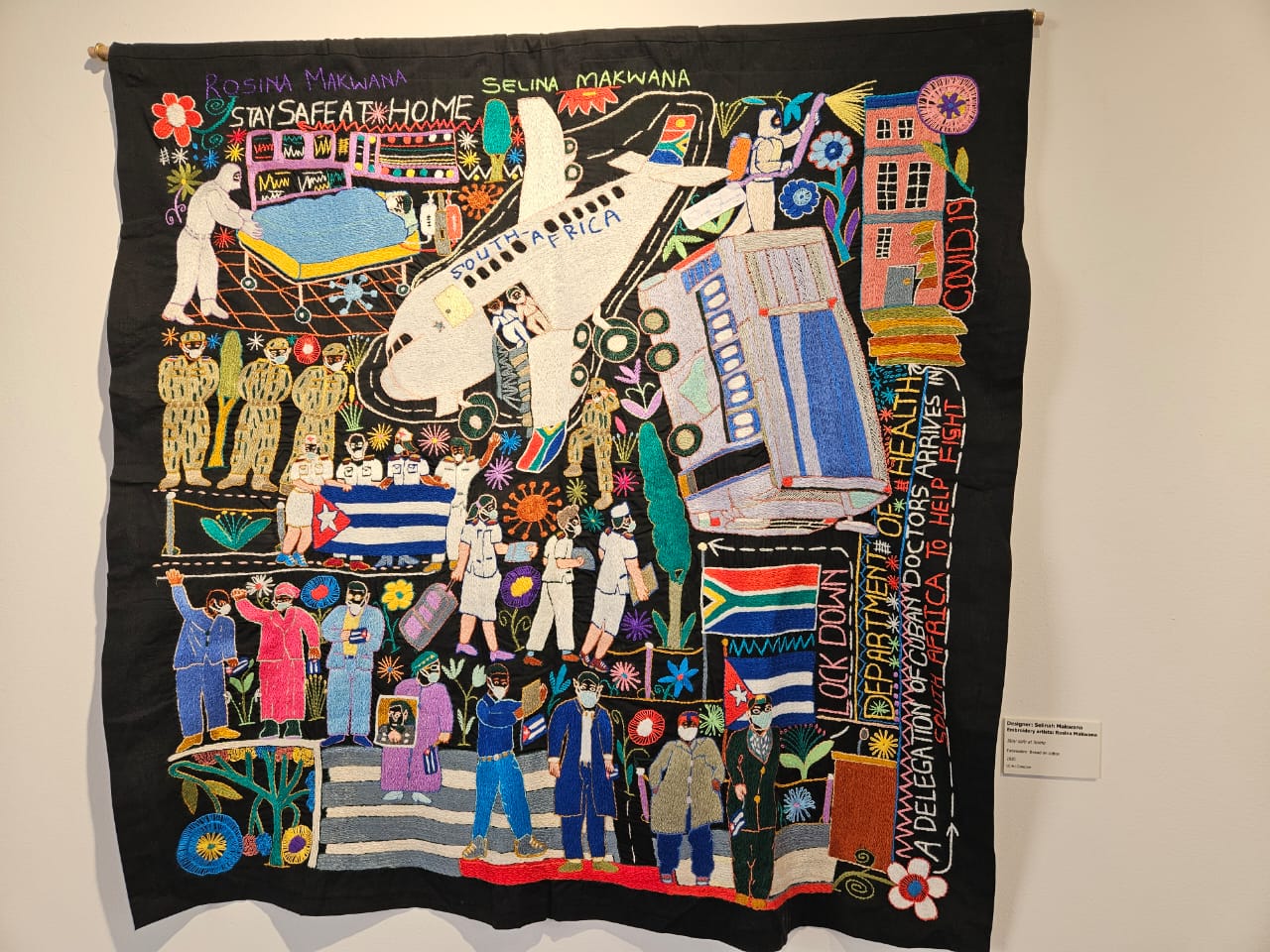
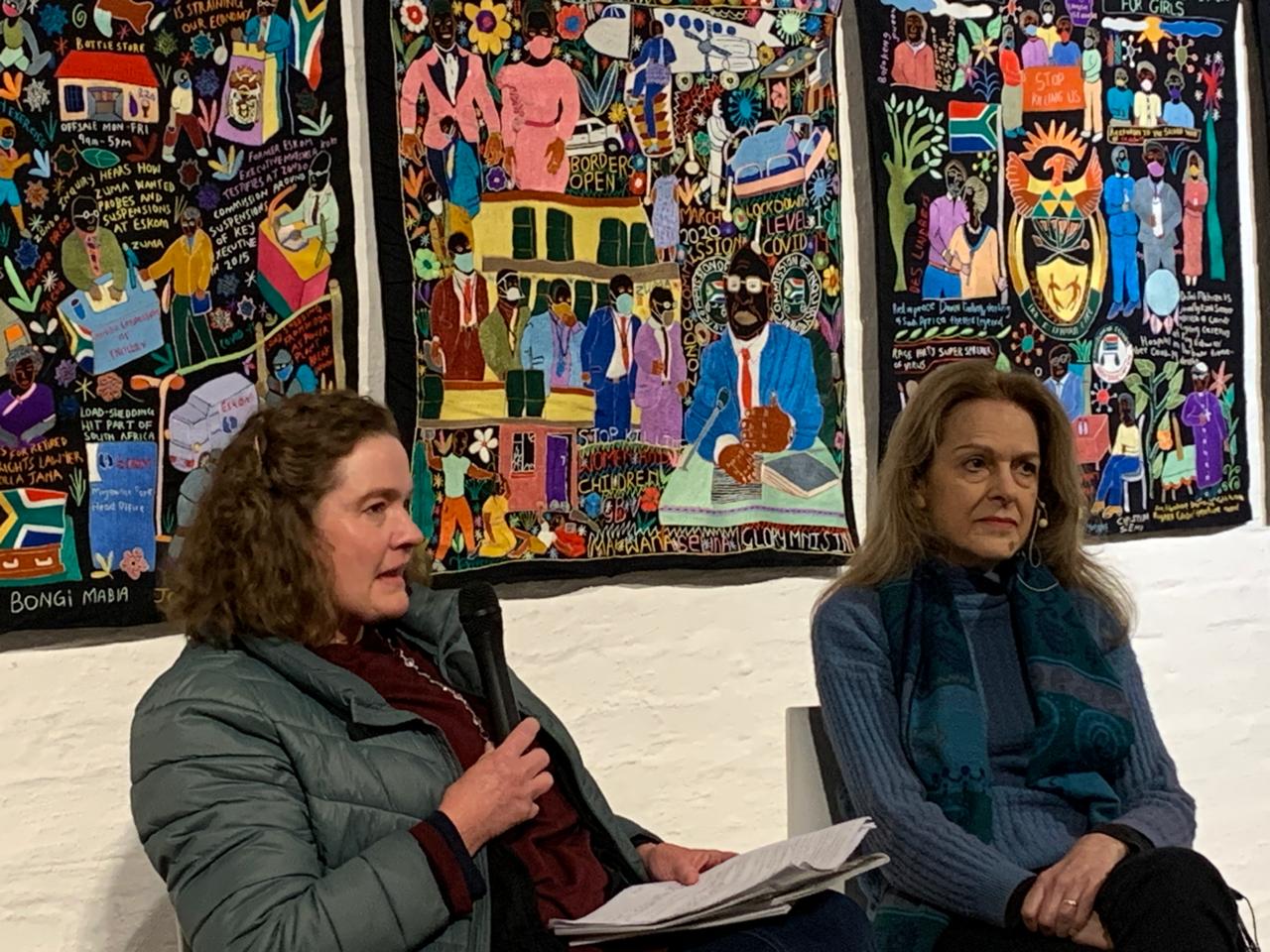
A walkabout of the newly installed exhibition 2020 Through the Eye of a Needle: Remembering the Covid-19 Pandemic in 2025 curated by Julia Charlton, senior curator at WAM (Wits Art Museum), reminded everyone who was present how quickly we move on from events that change the world dramatically. DIANE DE BEER gives her impression of the way women rule the charity world:
As Professor Brenda Schmahmann — South African art historian and current South African Research Chair in South African Art and Visual Culture (SARChI) at the University of Johannesburg’s Faculty of Art, Design and Architecture (FADA) — was in conversation with Julia, I was again reminded of women and the way they participate in the world where people are negatively impacted simply because of their circumstances, not because of anything they did wrong.
Living in Africa has many advantages, and for me, one of them is the constant reminder of how the real world functions. Privilege is usually something that is bestowed on you at birth and in a sense with the roll of the universal dice, it could just as well have been the other way.
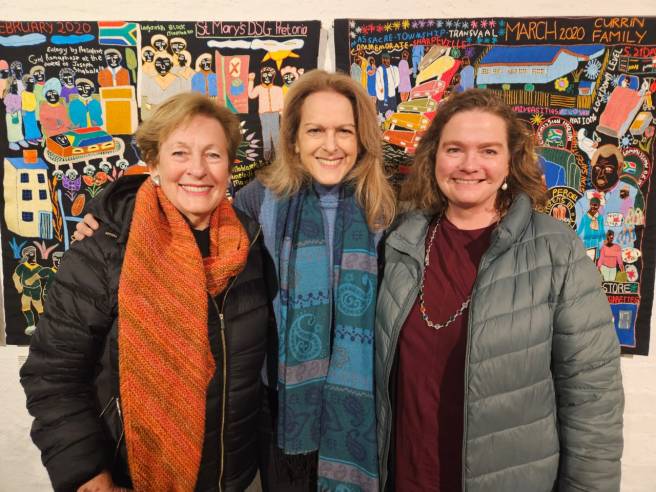
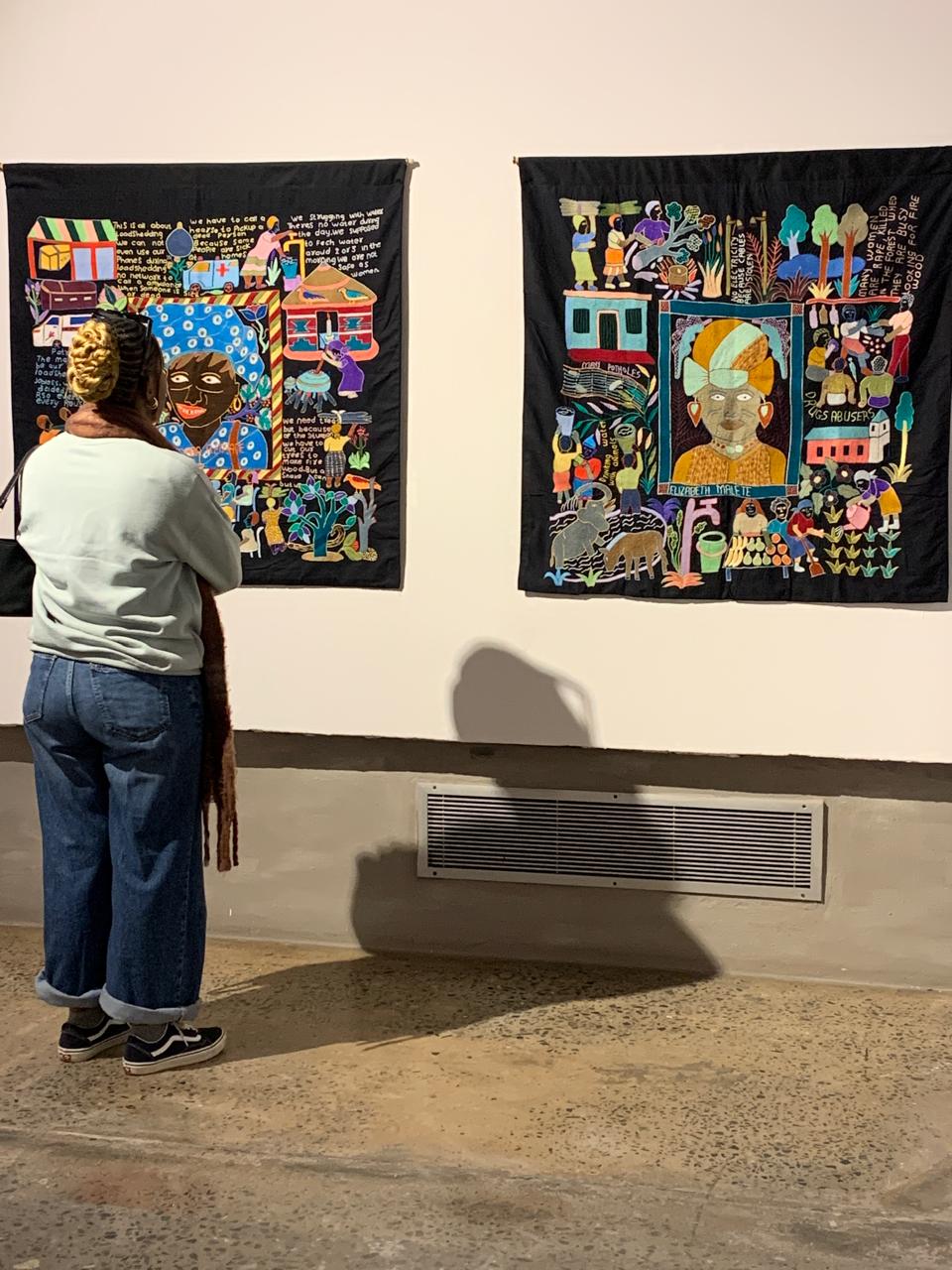
But listening to these women as they share reflections and insights into the embroideries on exhibition, created by members of the Mapula Embroidery Project, a community art collective of women embroiderers based in the Winterveld and Hammanskraal, I again witnessed the part three women played and in the process changing the lives of many families in the Winterveld.
It’s as though the time since Covid passed in a flash, but this year marks five years since the World Health Organisation declared Covid-19 a global pandemic.
We all know how the disease has devastated the whole world. There was the astronomical loss of life, terrible emotional strain, extreme social disruption and economic devastation. We were also reminded of the impact of so many things in personal lives: first year students who in the end never had the opportunity to experience campus life and live lectures; exacerbating the horror of the high number of deaths, no one could attend funerals which had to happen in isolation; and following that time, we’ve simply had to get on with recapturing some of the life we had lost.
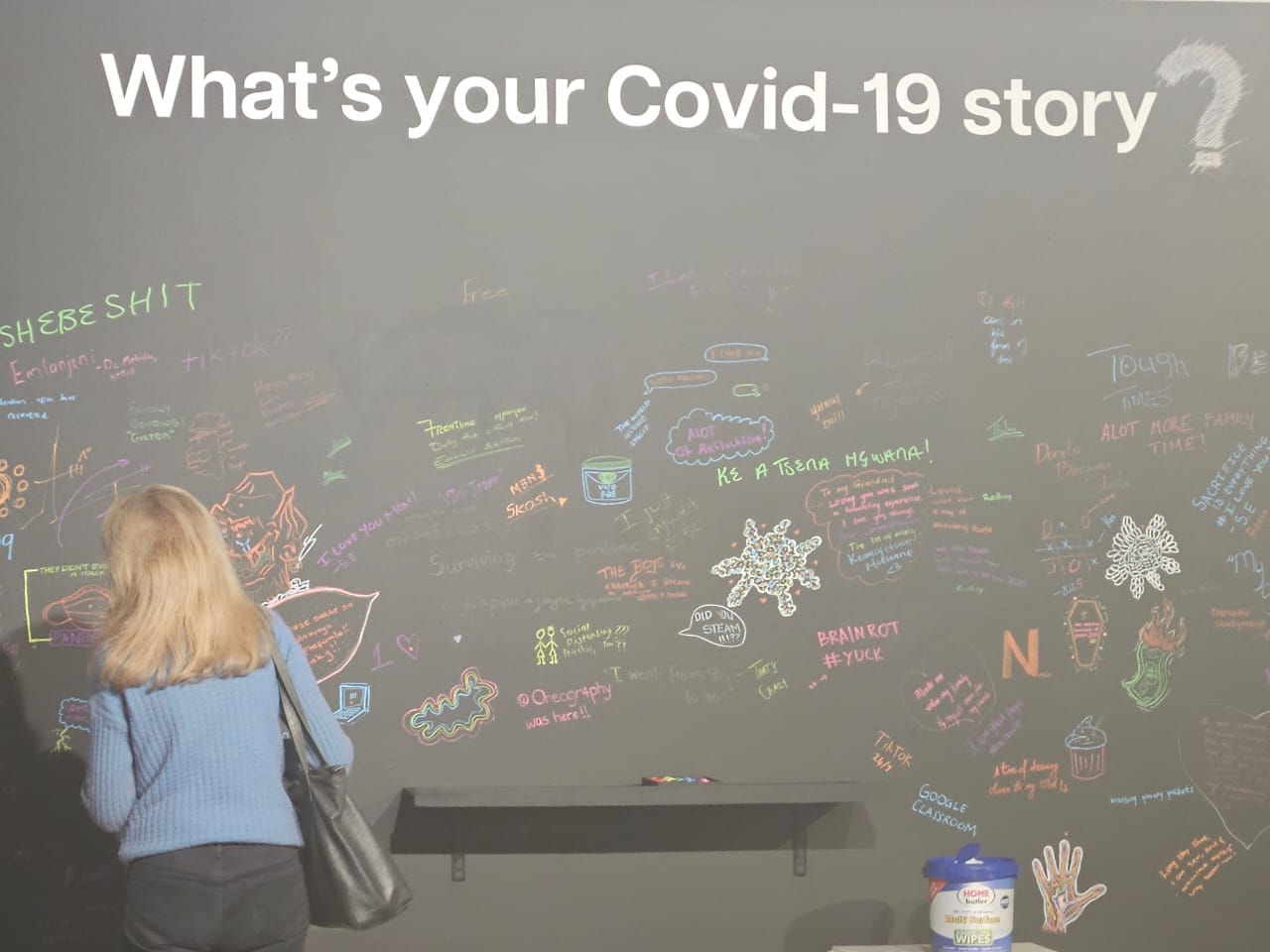
This exhibition on the five year anniversary offers an opportunity to reflect on that time by considering an interactive exhibition of embroidered textiles dealing with Covid-19 and its impact on a community. Without the Mapula project, it would have been an even worse catastrophe for this community and other groups also part of the Mapula family.
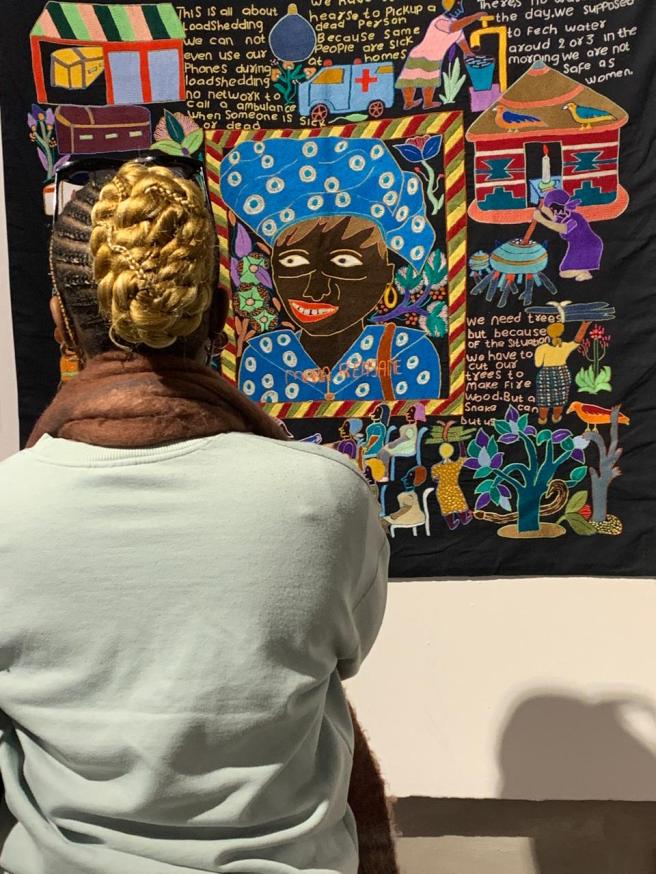
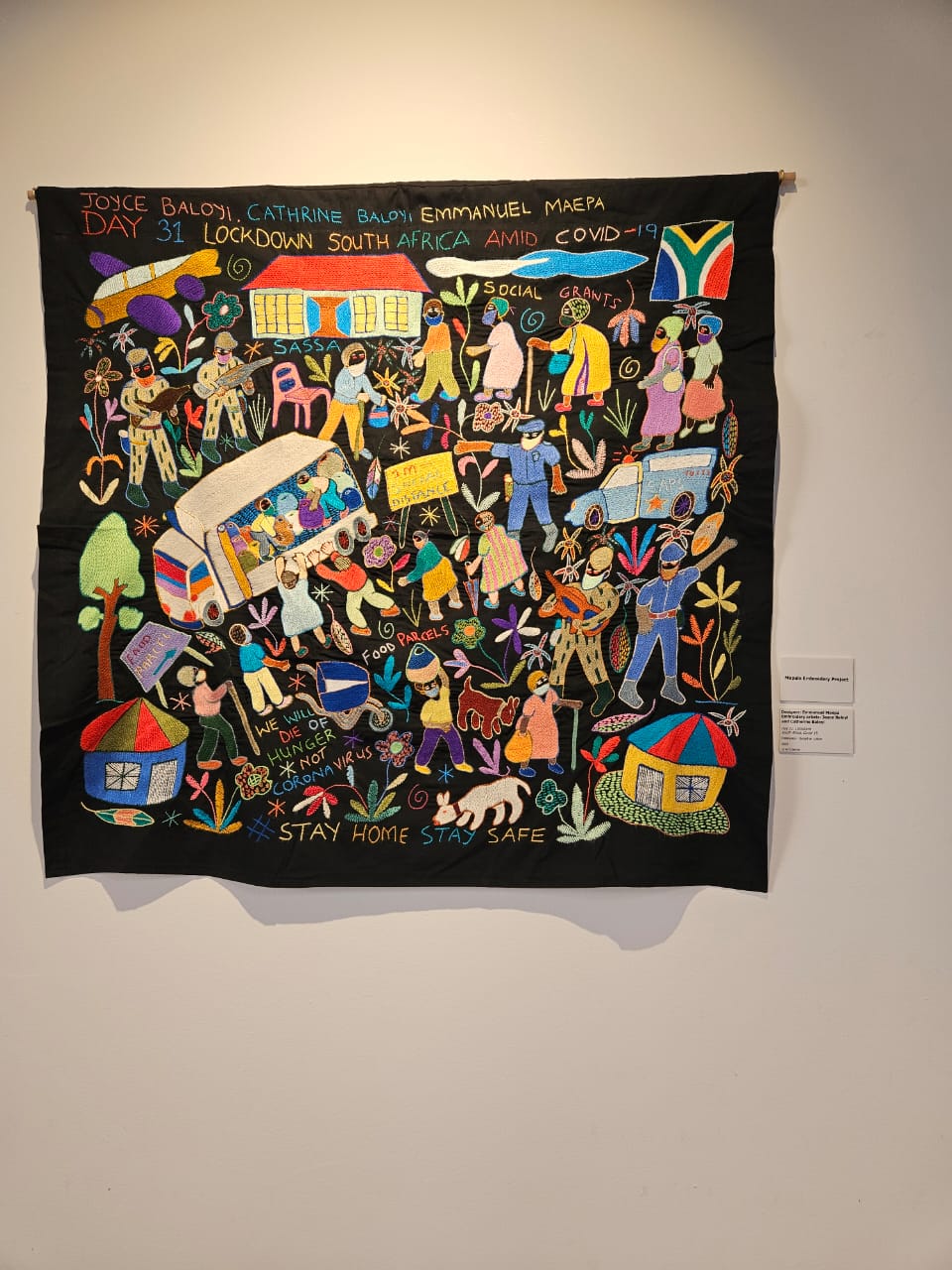
When engaging with the exhibition it is clear that the women use these hangings to depict their own lives. One of the first things you notice in the Covid panels for example, are the people featured all wearing masks, a vivid reminder of a time we had to isolate from others.
The hangings also serve as an historical document of a specific time. Whether it is the floods in Mozambique, the pandemic or even the tsunami in different parts of the world, these events are first captured by different artists in the group and then the individual women get sewing to create these artworks, hence the title Through the eye of the needle.
Other themes that pop up are food parcels during the pandemic, which were made up out of samp, rice and sugar, the absolute basics. Many of the cloths are also inspirational, not depicting what their lives are, but what they would like them to be.
What would we be as human beings without dreaming? “There’s always a focus on positive things,” noted Brenda
Janetje, who is involved with the embroiderers on almost a daily basis, explaining the logistics of keeping this group going. Because distances are sometimes huge due to the past, it takes planning and organizing to purchase the raw materials, get them delivered and establish pathways amongst the women to make it all work and come together.
In today’s hectic lives with family demands another obstacle, many women would have thrown their hands up in the air.
But these three are amazing examples of how women often work tirelessly to improve the lives of people who, but for the grace, might have been any of us.
Go and remind yourself in the coming months. Entrance is free and no booking is required.
It’s an enriching experience which the whole family can witness and enjoy. And along the way, a few lessons are imparted with quite a few fun interactive features, which will get everyone participating.
Museum hours: Tuesday – Saturday 10am to 4pm with the exhibition on until 13 September 2025.Physical address University Corner, Corner Bertha (extension of Jan Smuts Avenue) and Jorissen Streets, Braamfontein, Johannesburg. 011 717 1365 (Week-days) and 011 717 3158 (Weekends) E-mail: info.wam@wits.ac.za
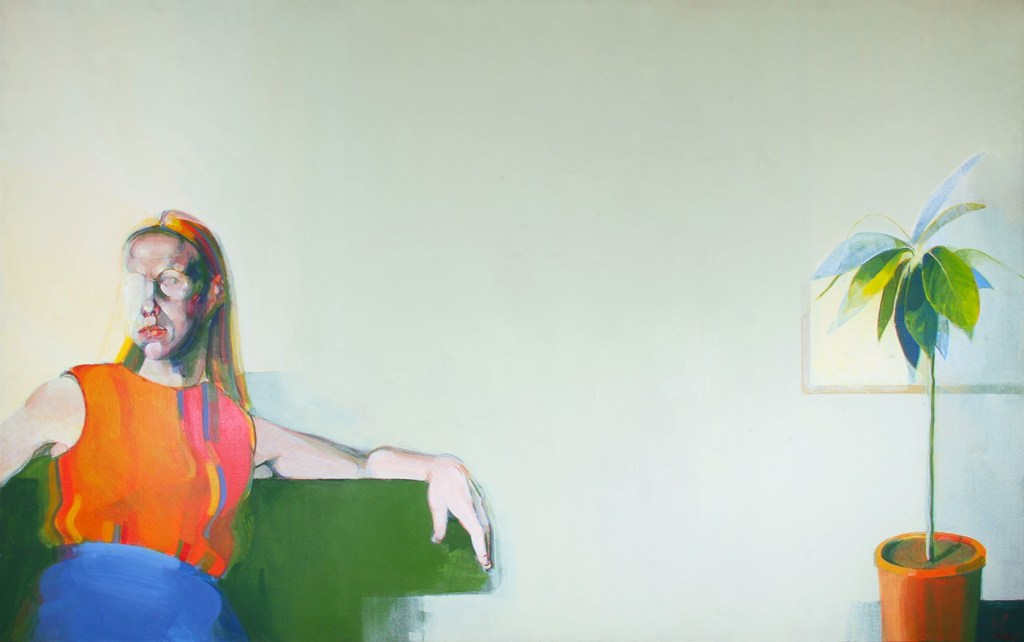
Margaret Nel on the journey of a painting: – “This work, titled Corner seat was completed in 1976 and was sold to Mrs Dora Scott when it was exhibited in Bloemfontein. Dora Scott and her husband were very involved in the arts in the Free State and her son Fred Scott is a founding partner of Walker Scott Art Advisory. When Dora Scott died, some of her large collection of art works, including this one, were put on auction and it was bought by the collector, art dealer \and erstwhile gallery owner Warren Siebrits. I bumped into him at an art fair and he invited me to see the painting at his house. I asked him to let me know if he wanted to sell the work at some stage and he later contacted me to say it was for sale. It is a good example of my figurative work painted during the 1970’s. I have very few paintings from this period in my possession and I was very glad to be able to buy it to add to my personal collection. It is about 50 years old and quite frail.”
Before starting to write this story, I quickly glanced through an interview I had done a few years back with one of my favourite artists, Margaret Nel, when she held a major retrospective at the Pretoria Art Museum in conjunction with the Association of Arts Pretoria where her latest exhibition titled Aftermath opens on Saturday May 10 running until the end of the month.
As she says so clearly in her Artist Statement, the theme that dominates her work from her earliest days hasn’t changed. It has always been about loss. She believes we have all witnessed and experienced loss in some form during our lives. “The debilitating effects of age and consequent loss of power and a voice and sense of self are perhaps the ultimate cruel and unexpected loss that all of humanity has to encounter eventually.”
Yet while her driving force hasn’t changed for this exhibition, her subject matter has. She has turned to objects rather than her usual figurative work, which has become more and more difficult to apply. “It’s easier to work with a theme and a new way of exploring the things I want to say,” she explains.
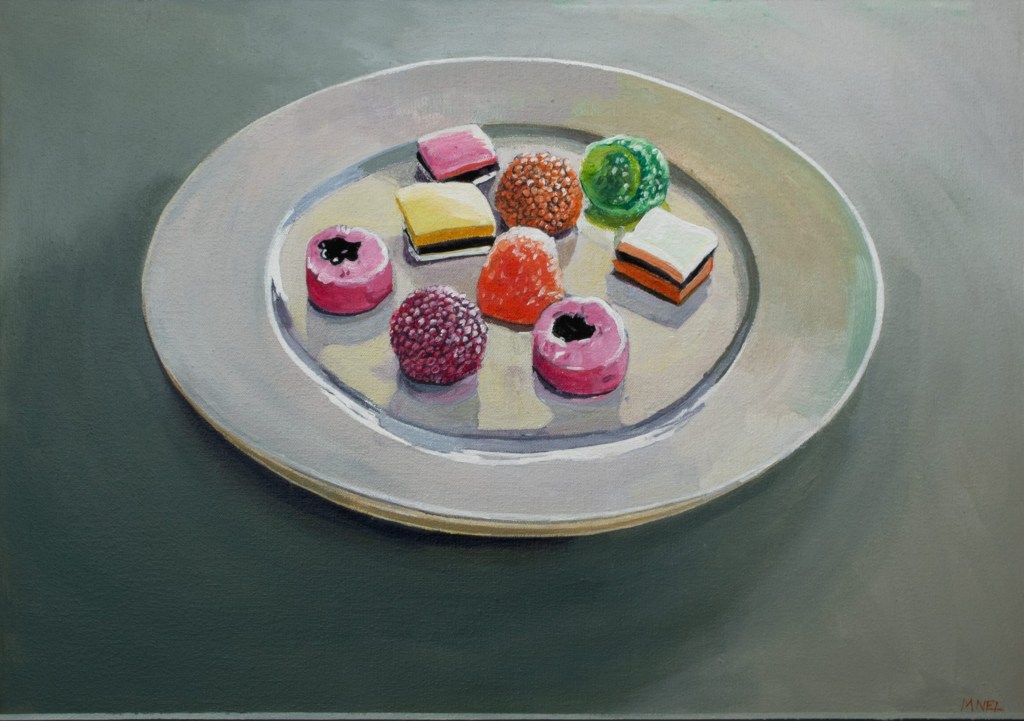
Allsorts 1
It is also a tough ask to find models willing to take the time, she says.
When listening to her talk about life and the harshness of loss, which the word almost unconsciously implies, I was surprised at my immediate reaction to her current work.
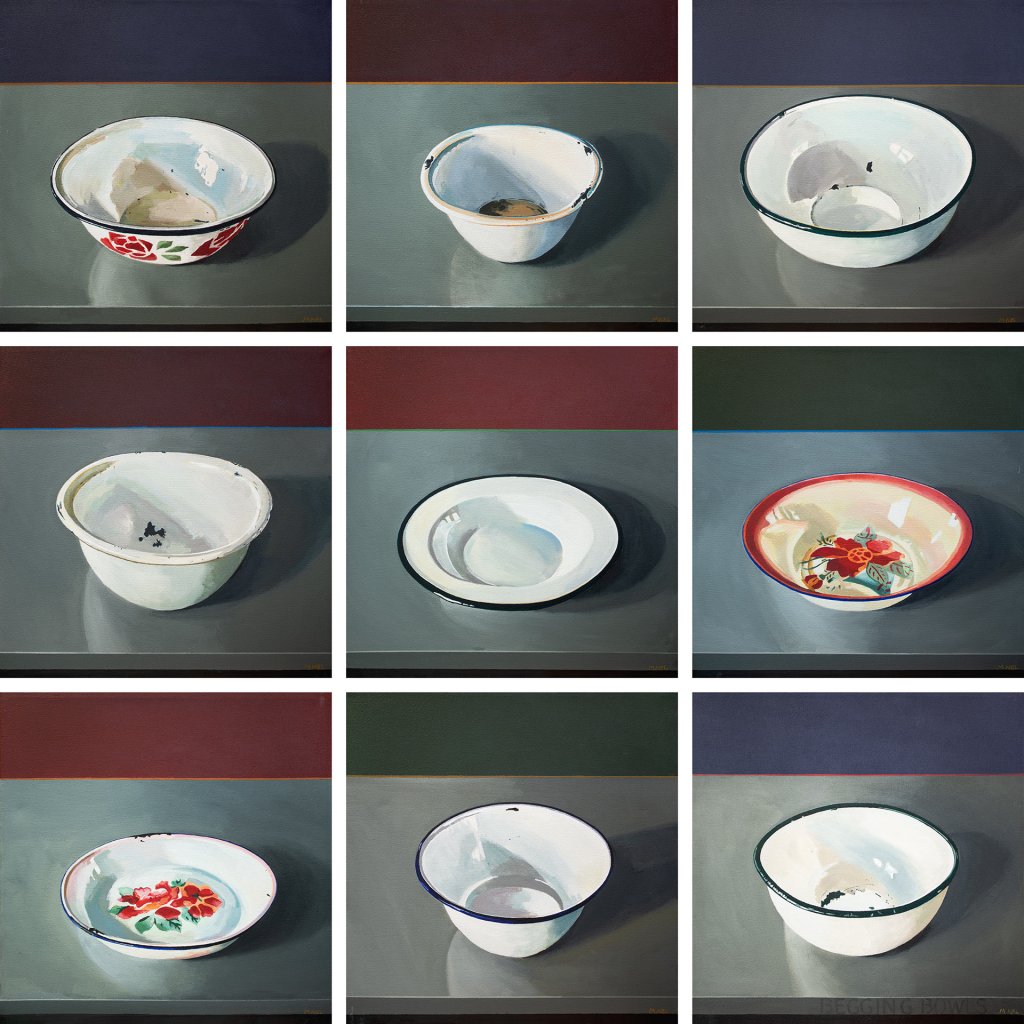
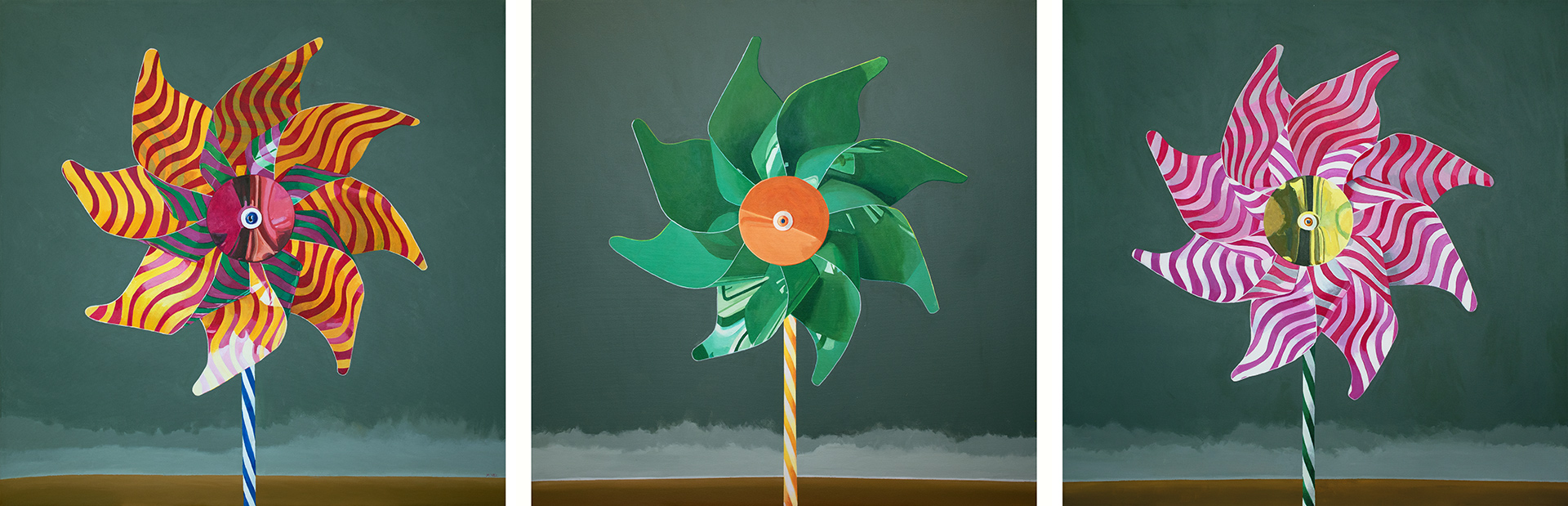
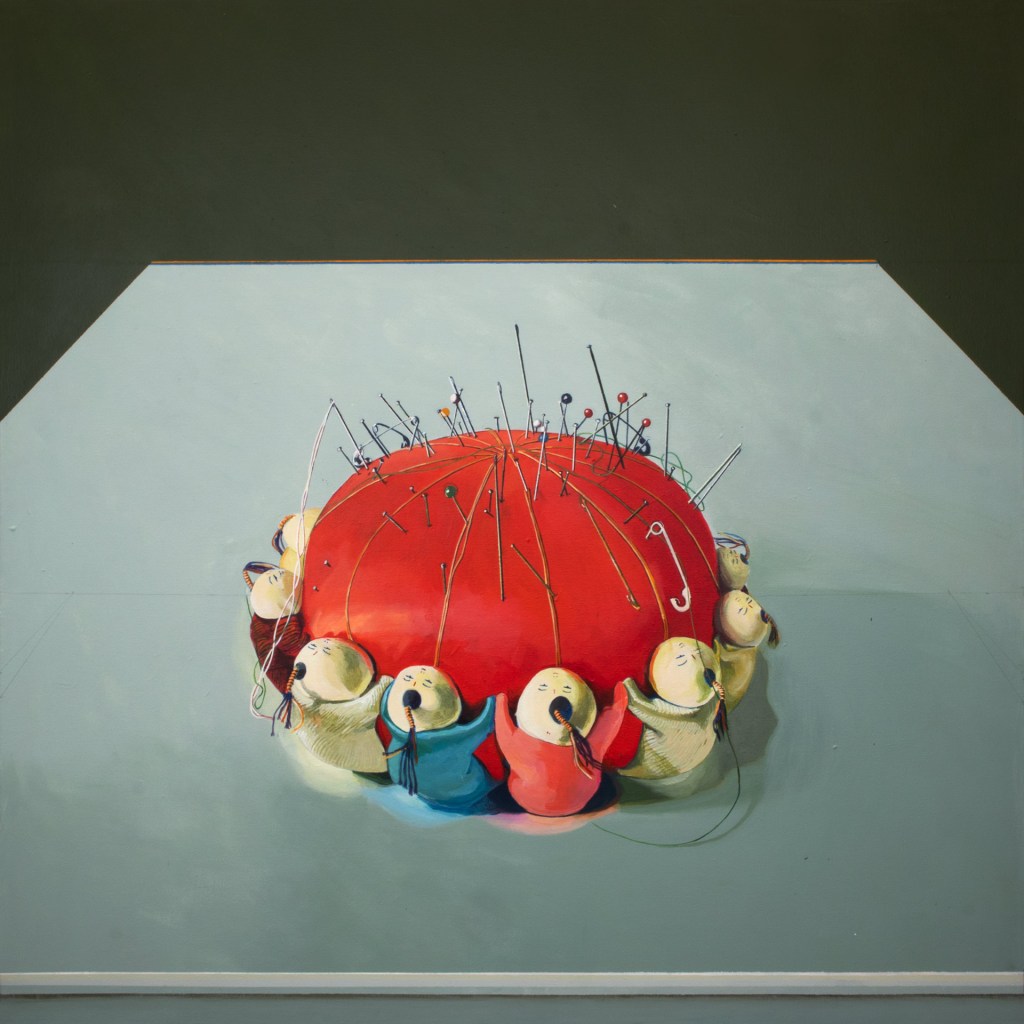
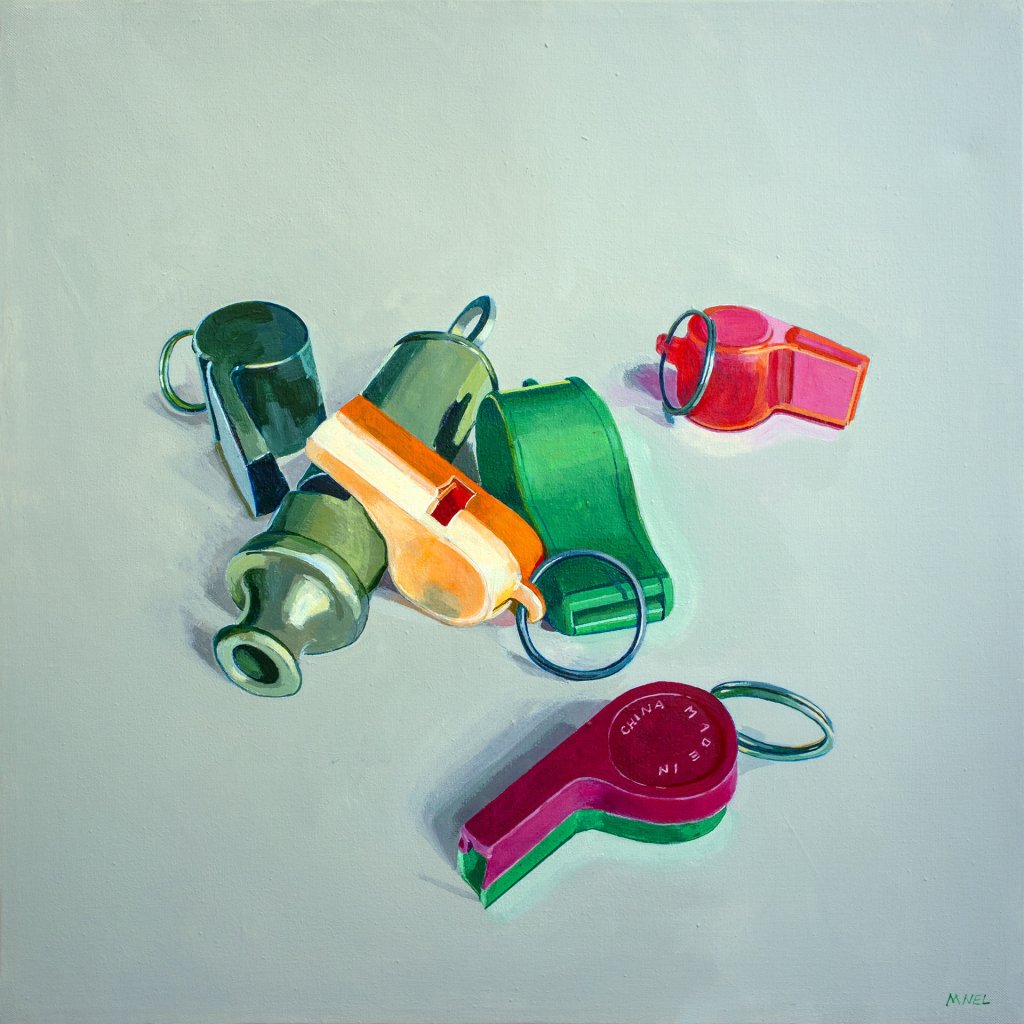
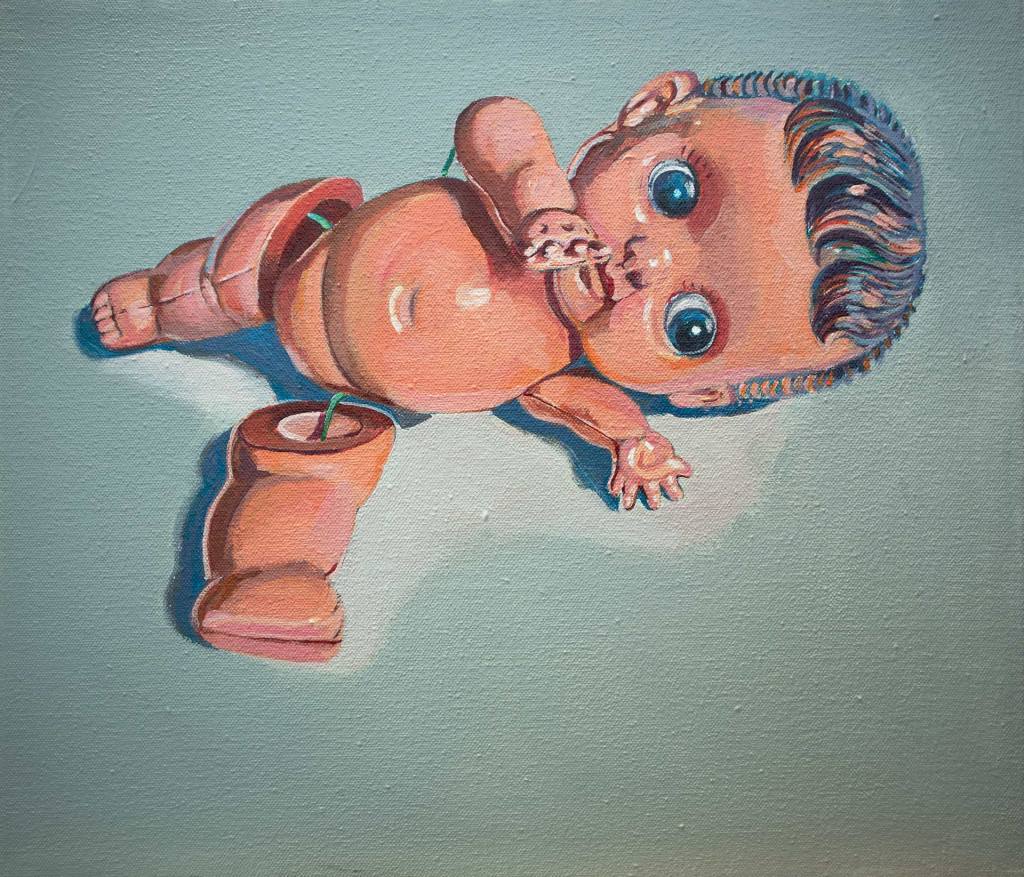
She is dealing mostly in things from her past, which means that many of us would find them familiar too: shiny pinwheels, old fashioned pincushions, Liquorice Allsorts, sweets in shiny wrappers in different stages of unwrapping or even the unfolded, now empty wrapper without the sweet, tinfoil containers, mechanical birds, wrapped flowers, colourful whistles, enamel bowls and a rather disconsolate plastic doll.
And even though I concede there is a certain melancholy, it also brings me great joy in a nostalgic kind of way. And who would not be tempted by her bright sunshine colours?
As important as the paintings themselves are, the names she gives each work also play a huge role and will point many in a certain direction. The enamel bowls for instance are titled Begging Bowls (see below). The name alone will encourage viewers to uncover their own stories. Alert is how she identifies the whistles, and it is as though you can immediately hear that shrill sound or visualize a school sports event.
All these objects were carefully selected by Margaret, who understands and is happy if everyone viewing the paintings gives them a different meaning. It’s not something she wishes to impose and if the work is simply seen as pretty pictures, which they certainly also are, she is fine with that.
For her, the objects in the individual works all play with the meanings of loss. And there certainly is a feeling of melancholy when you look at the exquisitely rendered paintings. Personally, it takes me back to childhood. I have always had a fascination with pinwheels, which because of their colours as well as their joyous twirling when the wind blows, have always held that hint of magic.
As someone who sews, I was immediately enchanted by the pincushions, the like of which I had never seen before, but Margaret explains : “I am not sure if the Chinese pincushions are made any more. Mine are antique and probably about 80 years old, the material is silk and the stuffing is some sort of organic material like grass. We regularly holidayed in Lourenco Marques (now Maputo), when I was a child and the pincushions were bought at small Chinese curio shops. Nothing similar was available in post war South Africa.
Curio 111
In her world, when it comes to her peers, she says she feels like the last man standing, which also explains why loss at present conjures up such heartfelt emotions. There’s no one around who witnessed her childhood or even young adulthood, she says, and expresses envy as an only child for those of us who have siblings. There’s no one who can hold on with her and share her memories.
Talking about the process of painting, she declares that she often feels quite high when a painting is completed.She also does all her framing and with these paintings has changed from aluminium frames to wood which she can also paint and feels adds to the painting. She’s also in the habit of reworking old paintings and precisely that compulsion will be the subject of her next exhibition.
She will be looking at old work, all locked away in a storeroom, figurative work, which will be reworked.
Alert.
“I’m full of self-doubt,” she notes, and one can understand why. Her work is usually done in isolation with no one to encourage or discuss issues or share her thoughts about the work. Yet her beautiful home, the iconic round house close to the Union Buildings, is an interior masterpiece and glorious example of how exquisitely she curates her own life.
The house has been furnished magnificently to capture a very specific mood with, at the time of my visit, her exhibition paintings displayed on all the walls throughout the house. Because of the prolific windows, the backdrop is the sunny highveld skies while the furniture has an industrial feel with added warmth due to her cunning colour choices.
It is a pity that in today’s often hostile world, she has decided against a home exhibition because this is where Margaret so obviously feels at ease. And for the visitor it is an exciting extension of her creativity.
She knows she has to take her whole body of work into consideration, yet she’s constantly worrying about certain decisions and whether she has got it right. But still, she welcomes and encourages criticism and is sad that art criticism has all but vanished. She talks about very harsh criticism she received at a previous showing and feels that the writer opened new avenues for her. They probably simply confirmed something that had worried her and that set her off in a new direction.
Doll.
“I can’t promote myself,” she says and, because she is quite solitary, she finds it hard to put herself out there. Yet she is keen to have proper conversations about her art. “How else would I learn?” she wants to know.
What she believes though is that her experiences of life captured so stunningly in this body of work would be familiar to viewers. “Life is just full of loss,” she laments – and she’s right, yet there’s so much more captured in this magnificent display of her latest exhibition.
The exhibition will be complemented by a selection of ceramic vessels by Dale Lambert. Her delicate, decorative stoneware is characterised by minimal, bold forms and vibrant, primary colours. The artist states: “My obsessive fascination with clay goes back to my early childhood and remains to this day. I currently enjoy the thrill of working with porcelain, and the translucent pieces I create are an expression of my being.”



 De Beer Necessities