REVIEW BY DIANE DE BEER
THE OPERA SINGER
PRODUCED BY TONY FLACK, TROUPE THEATRE COMPANY AND THE THEATRE ON THE SQUARE
STARRING FIONA RAMSAY AND OWAIN RHYS DAVIES
WRITTEN AND DIRECTED BY JANNA RAMOS-VIOLANTE
VENUE: THEATRE ON THE SQUARE, SANDTON
DATES: 17 to 19 March (7.30 to 9pm), 20 and 21 March 5 to 6.30 pm and 7.30 to 9pm) with similar schedules from 24 to 28 March
A NOTE FROM JANNA RAMOS-VIOLANTE
I wanted to write THE OPERA SINGER because I am deeply interested in the stories we tell about greatness and in what those stories leave out.
We celebrate artists at their peak. We applaud them, photograph them, quote them. We call them icons, divas, legends. But we rarely stay long enough to ask what it cost them to become that, or what remains once the applause has faded. We are very good at consuming brilliance. We are far less comfortable sitting with the human being behind it.
THE OPERA SINGER is a woman who gave everything to her art. Not symbolically. Literally. Her body, her relationships, her youth, her possibility of an ordinary life. She was rewarded with adoration, but adoration is loud and fleeting. Love is quieter. It stays. That distinction became central to the writing of this piece.
Opposite her stands Theo, a journalist. Not a villain. Not a hero. Simply a man who believes, or hopes, that truth can be captured in words. Journalism in this play is not an attack, but a question. Who owns a life once it has been written about?
What happens when private pain becomes public narrative? When does documentation become theft, even when intentions are good?
I am interested in the uneasy space where art, journalism, and celebrity meet. Where the hunger to understand collides with the need to protect. Where truth is slippery, memory unreliable, and identity something that keeps shifting depending on who is looking.
This is not a play about opera. It is a play about devotion. About the choices we make in the name of calling, and the parts of ourselves we quietly abandon along the way. It is about fear, and discipline, and the seduction of being seen. It is also about ageing, and what it feels like to exist in a world that no longer knows what to do with you once your prime has passed.
I hope this piece invites you not just to watch, but to listen. And perhaps to leave thinking a little differently about the lives we admire, the art we consume, and the cost we rarely see.
What joy to have the supreme Fiona Ramsay back on stage in a production written by her regular collaborator Janna Ramos-Violante. And welcome back to her as well on a local stage, living as she has in Europe these past few years. We’ve missed her sharp and incisive voice.
She’s written a thought-provoking play that encourages Ramsay to show her remarkable artistic prowess. There’s so much to admire here, the writing, the staging and the acting – all in ascendancy throughout.
But even more than that, it is a play that’s mesmerizing from start to finish as it draws the curtains on that hidden side of being an artist. Who isn’t intrigued by these backstage secrets, the hidden lives of performers who have to step on stage and share the most intimate details in a story written by someone else?
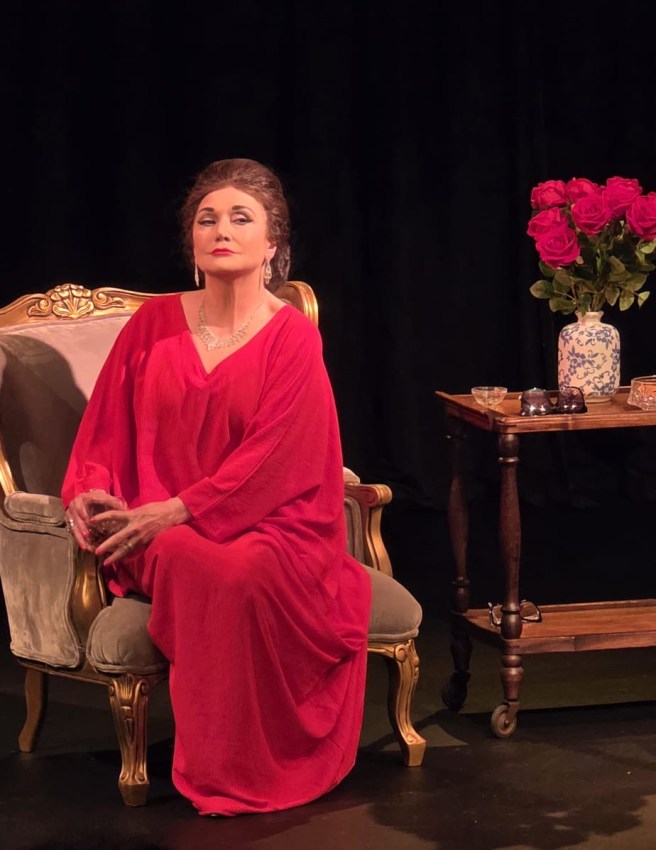
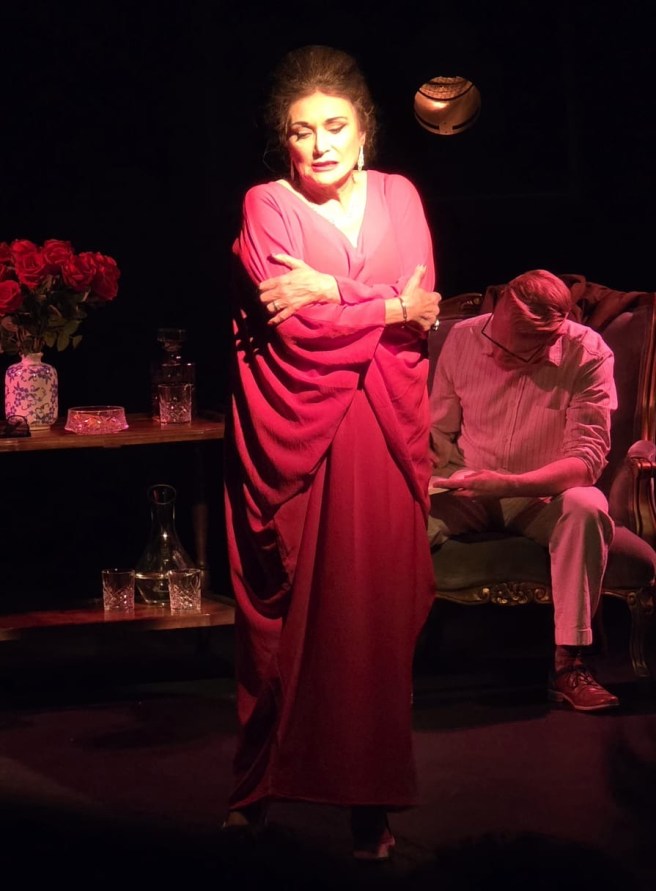
Through the years Ramsay has given her audience extraordinary characters she has inhabited with her whole body, soul and voice. And this time she brings the flamboyant ageing opera star to glorious life. She looks and plays the part to perfection.
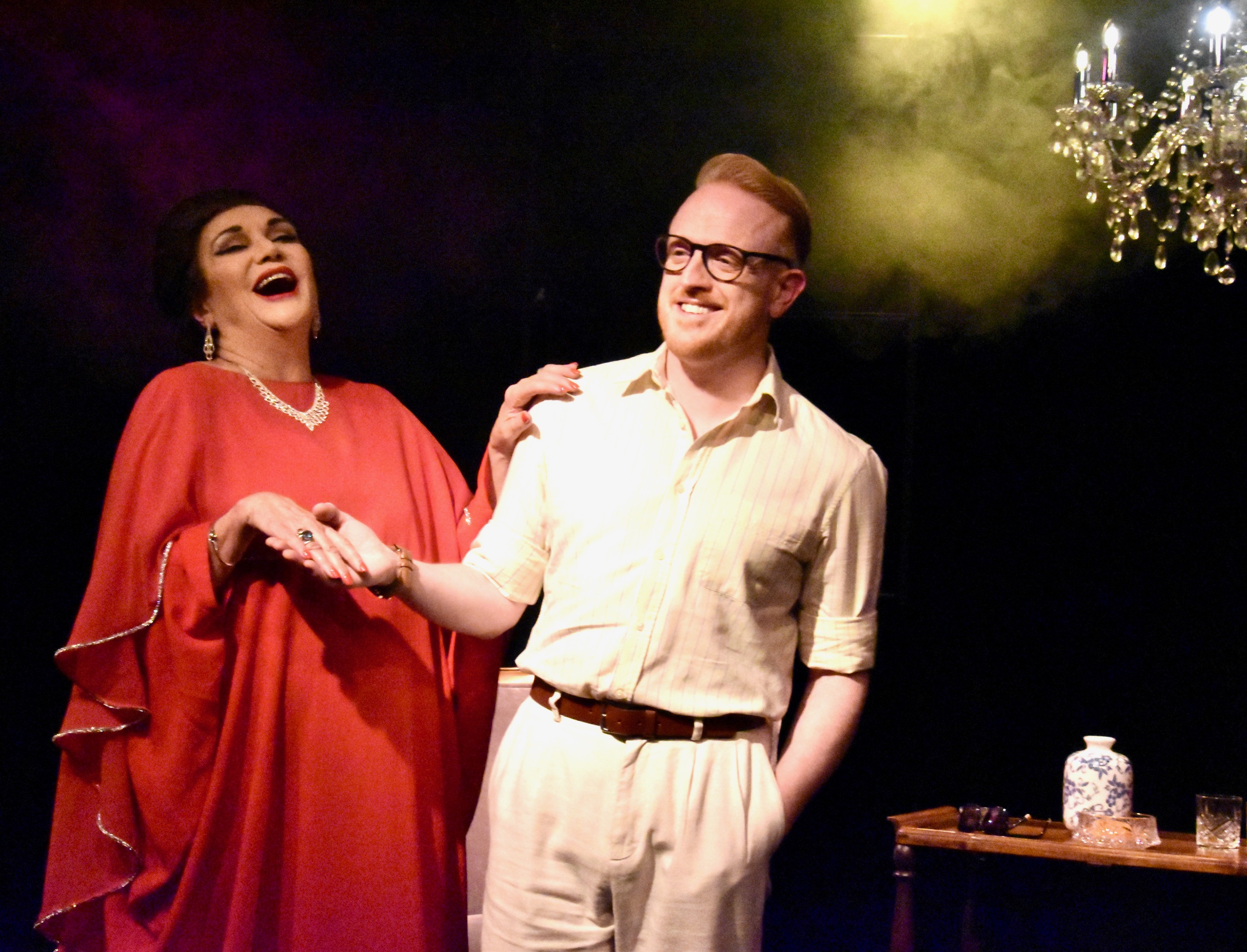
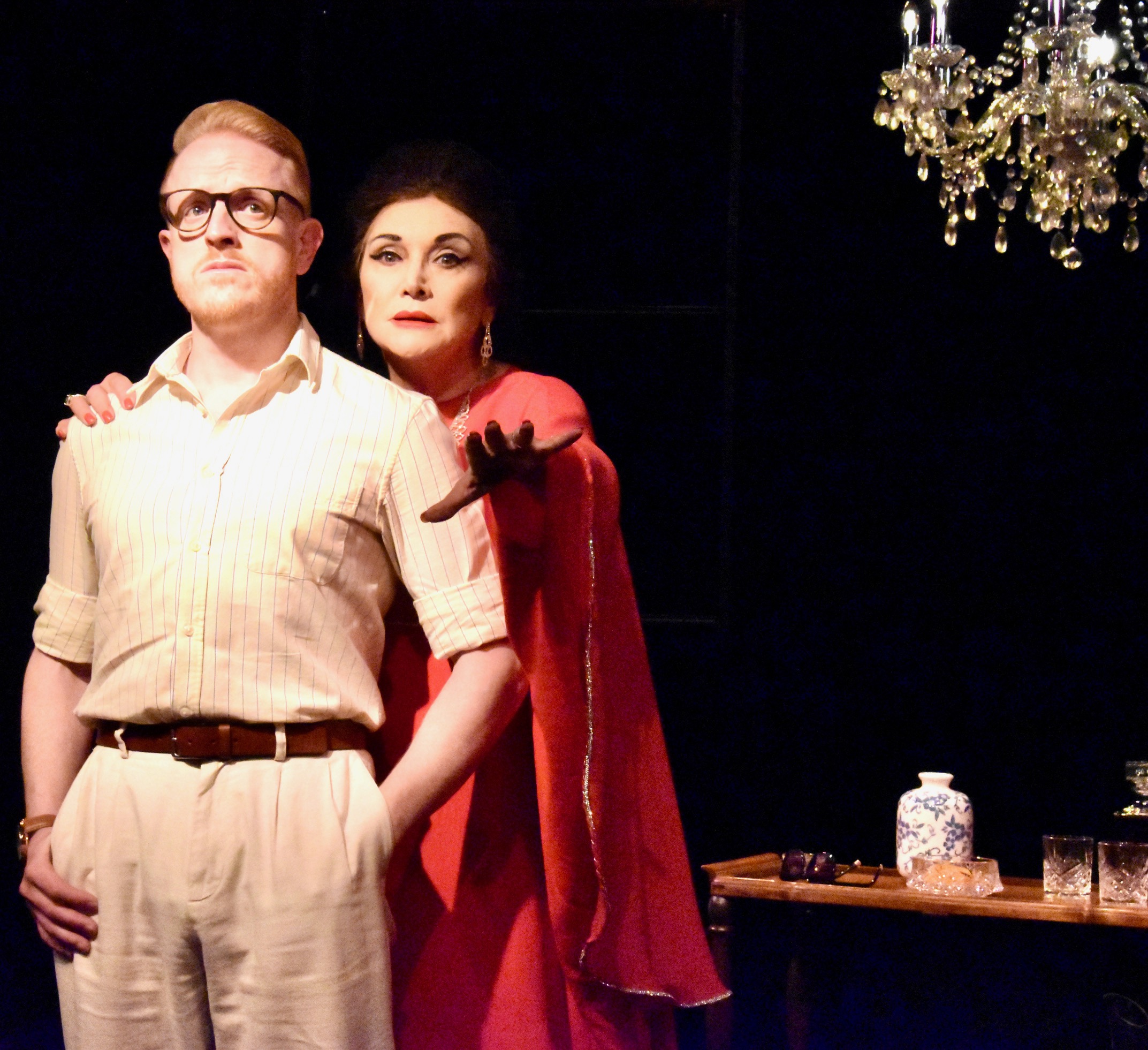
It’s a delightful production that allows the actors (Ramsay and Rhys Davies as Harrington, who brilliantly captures the fan/foil to the irascible fading artist) to play out different scenarios as the artist and the journalist face-off, reflecting the nature of their relationship.
She also shines what she describes as a questioning light on the role of the journalist, who hopes to invite the audience to experience truly great acting or criticize the way a performer might be telling a particular story.
And yet,with the arts always fighting for their very existence, for everyone involved, specifically those with passion, it’s a delicate balance. If you’re not truthful (good or bad) about a particular production, who will trust your guidance in the future?
But who can claim the right to make that judgement? And yet, each one plays a particular role, and hopefully in the end, it’s all driven by a passion for the arts.
As a performer, director and playwright, Ramos-Violante has always had a very strong voice. She interrogates her world with a sharp eye and gives different points of view for her audience to digest. She is intimately familiar with that world and knows all the pitfalls, most of which have no solution but come with the territory, which doesn’t necessarily make it right or wrong. As in many professions, it just is.
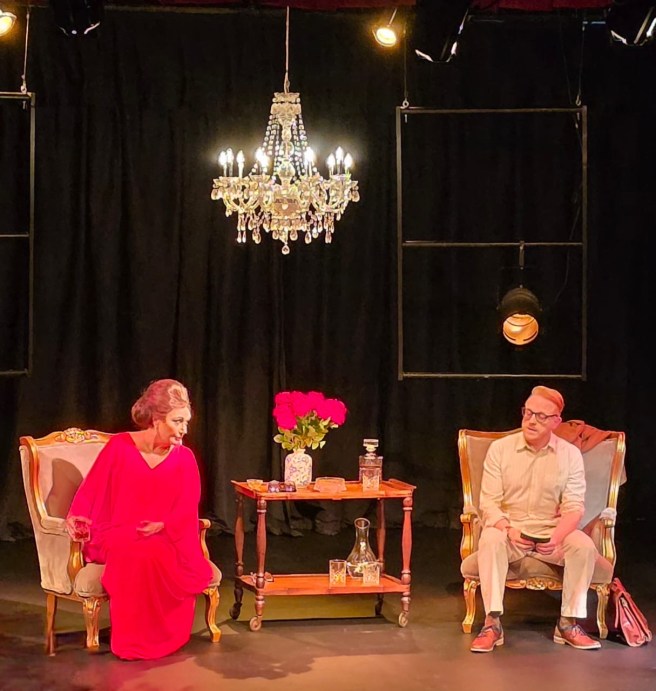
She has always had an interesting take on things, writes brilliantly and, in this instance knows her subject. She throws it out there and gives the experienced Ramsay free rein which she claims magnificently.
If you’re interested in theatre and the arts, this is soul food. And especially in these times when everyone is battling for your time and presence, it’s marvelous to witness good old-style theatre with content which has never been more relevant.

 De Beer Necessities