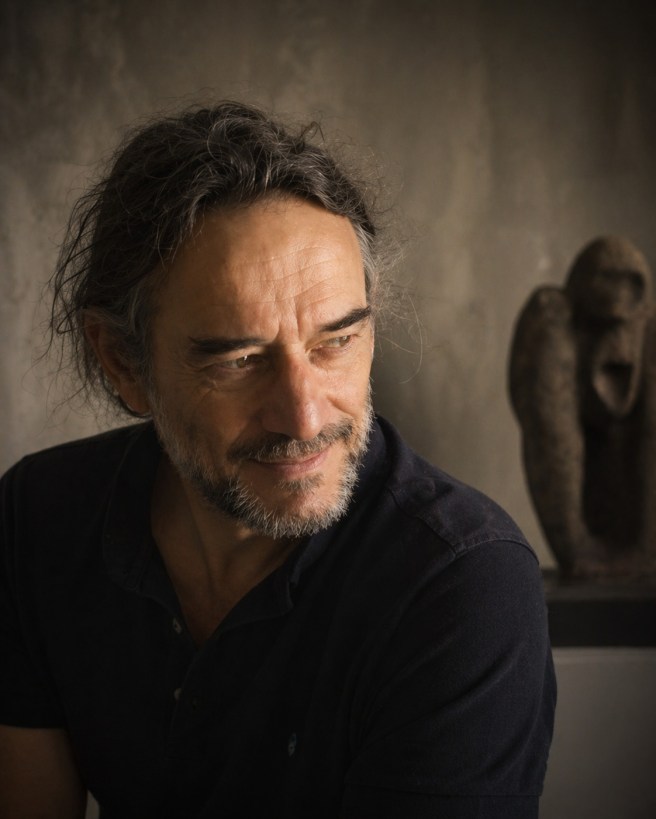
My favourite psychologist, JO Steenkamp, is playing in a different medium and yet, like his focus on spontaneous healing and internal transformation, which he has developed into his own modality, SHIP (Spontaneous Healing Intrasystemic Process), his art and more specifically sculpture follow the same principles of spontaneity. He talks to DIANE DE BEER about his longtime yet recently rekindled fascination with sculpture, which has resulted in an exhibition titled Shape-Shifters: The voice behind the veil, which will be held at Pretoria’s Pierneef’s Kraal from May 7 to June 7:
From an early age, JO Steenkamp knew what he wanted to do. Even though he didn’t have any artistic influences in his youth, he started sculpting at the age of 16. But when life decisions had to be made, he realized that his interest was psychology – and not simply the true and tested path of the time; he was intrigued by spontaneous healing, something he developed through his doctoral work and which he turned into what today would best be understood as Steenkamp brand.
Once he had decided on his future, he was determined to pursue his dream. Because the number of places had already been allocated for the Honours course, he wasn’t accepted. He was persistent and kept turning up at the head of department’s office until the accepted number was moved from 30 to 31.
His art followed a similar obstinacy once he decided to explore his 16-year-old dream. His son (also a clinical psychologist) was moving out of the house, which meant JO could use the rooms which were now unoccupied.
He phoned someone close by who he knew had clay, and when she said, “Come over and let’s have a cup of coffee,” his response was quick: “You don’t understand, I need the clay N0W!”
He already knew the process he wanted to follow. He simply reached back to his youth. “It happens by itself,” explains JO. “I follow the lines and then comes the magic. I am not doing it for anything else but the connectedness,” says the disciple of spontaneity.
Reproductions don’t feature in his creativity, and because his spirit is driven in a very particular way, he doesn’t do requests either. Once he has a piece of clay in front of him, anything can happen. When someone asked him to sculpt a water nymph for them because apparently there’s one in every French river, he said the best he could do was to think about one when he was sculpting.
His process has to be spontaneous and he simply taps into consciousness. “It’s a knowledge that’s there,” he says. “It’s exactly like my psychology works. You’re tapping into something that already exists and you’re simply the vehicle. It’s a knowing.”
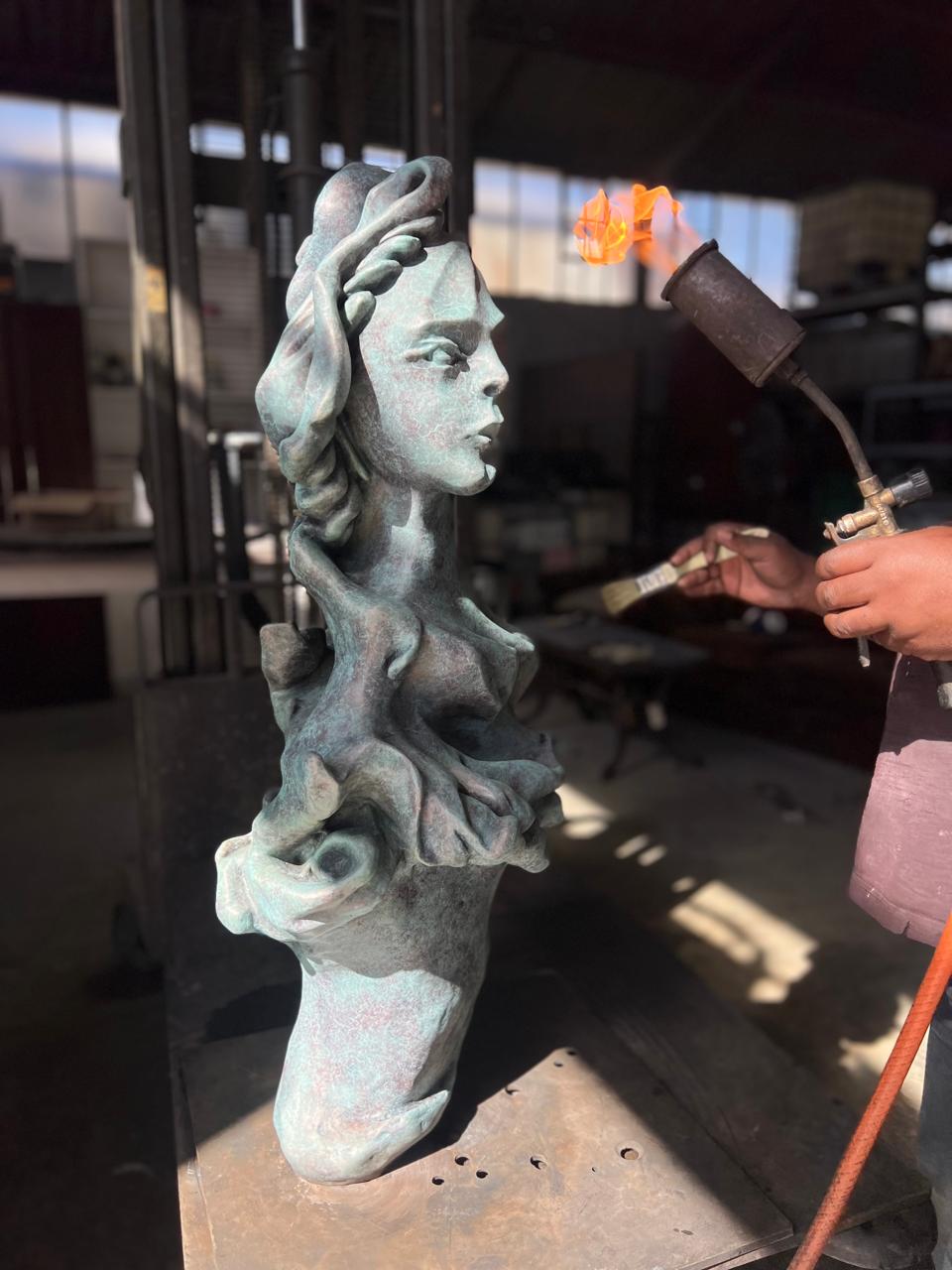
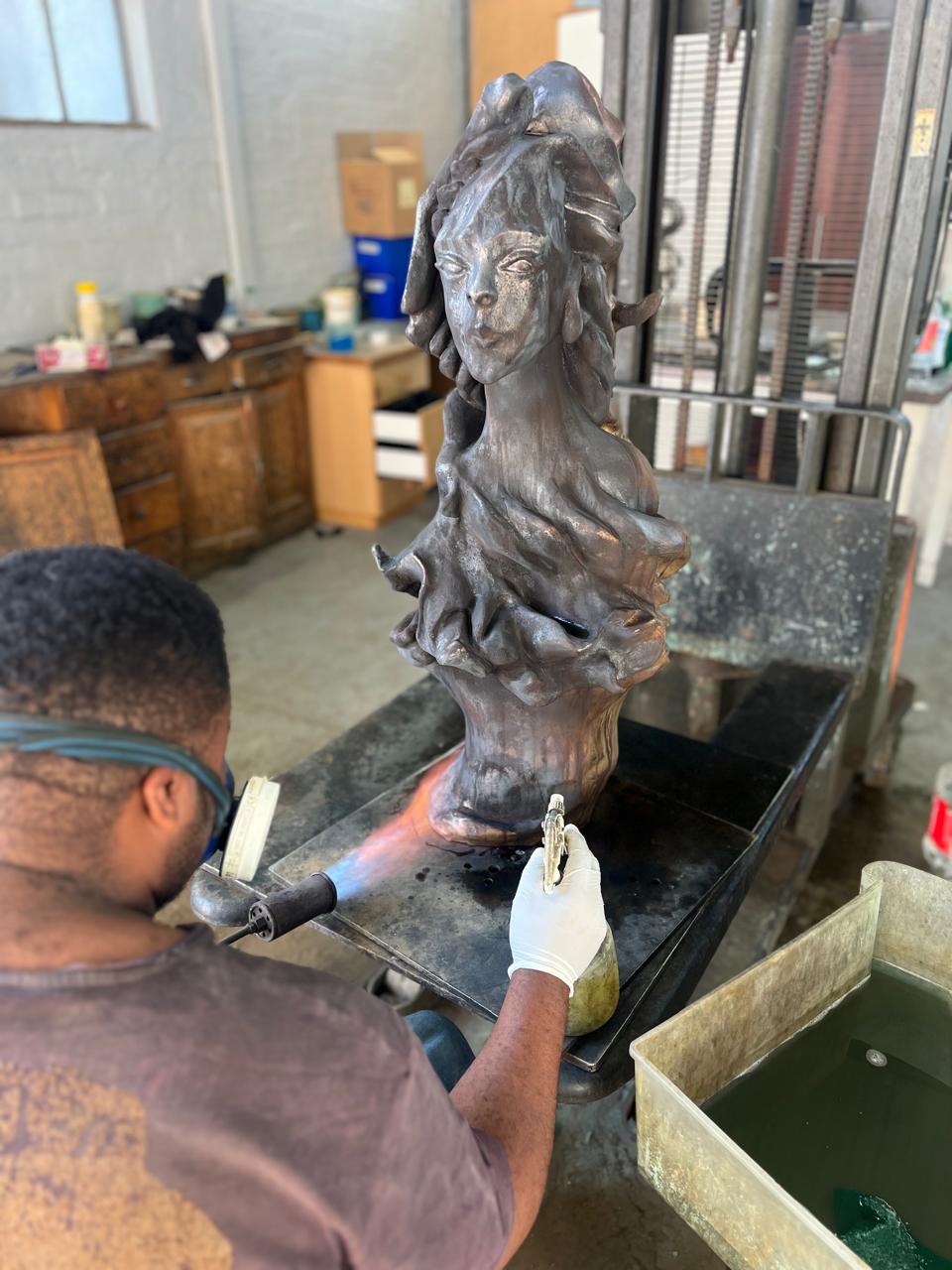
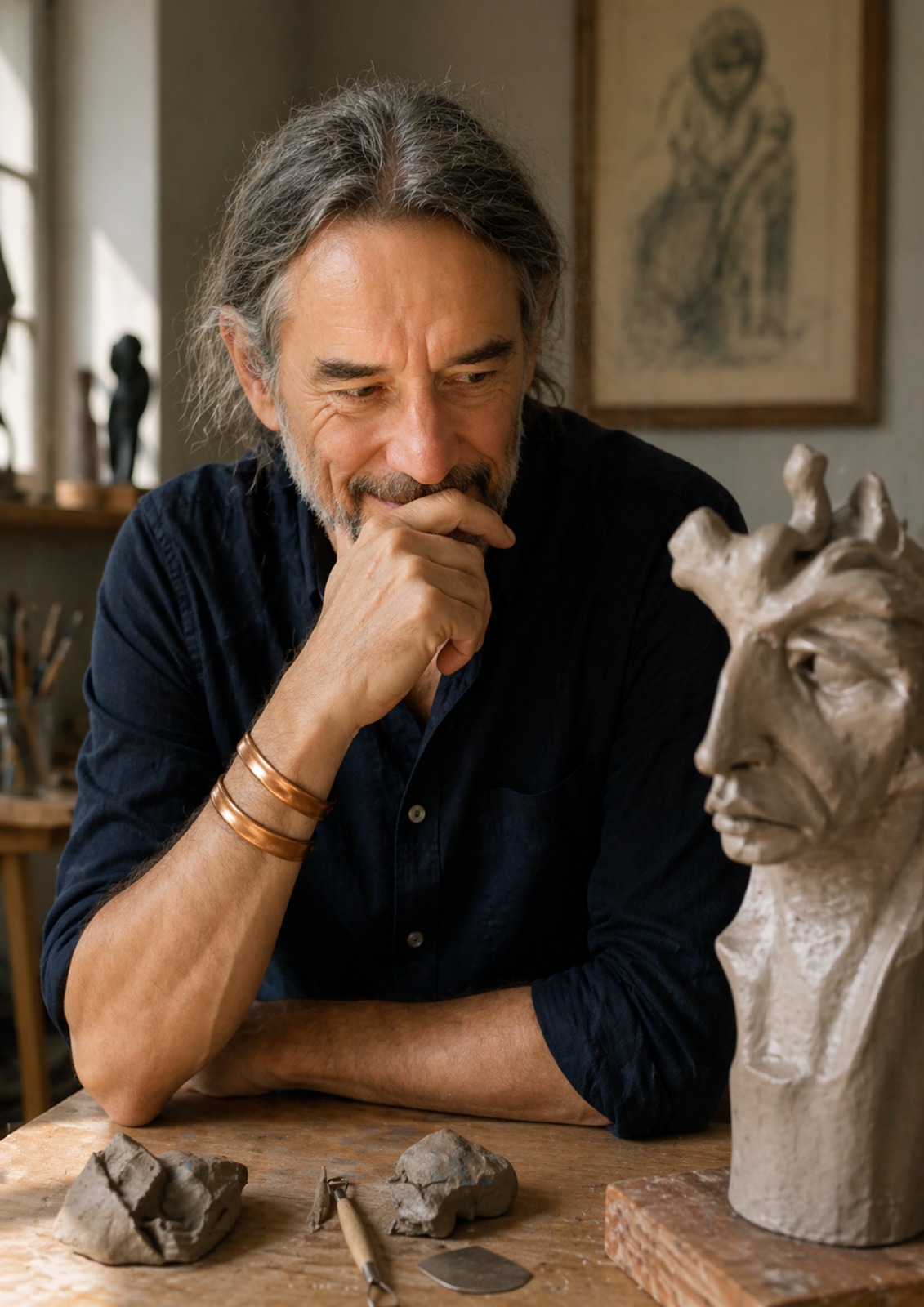
When it comes to the titles of his work and especially a special descriptive poem that accompanies each individual sculpture, it’s as if it taps into the consciousness of the viewer. It’s almost as if it opens something, he explains;
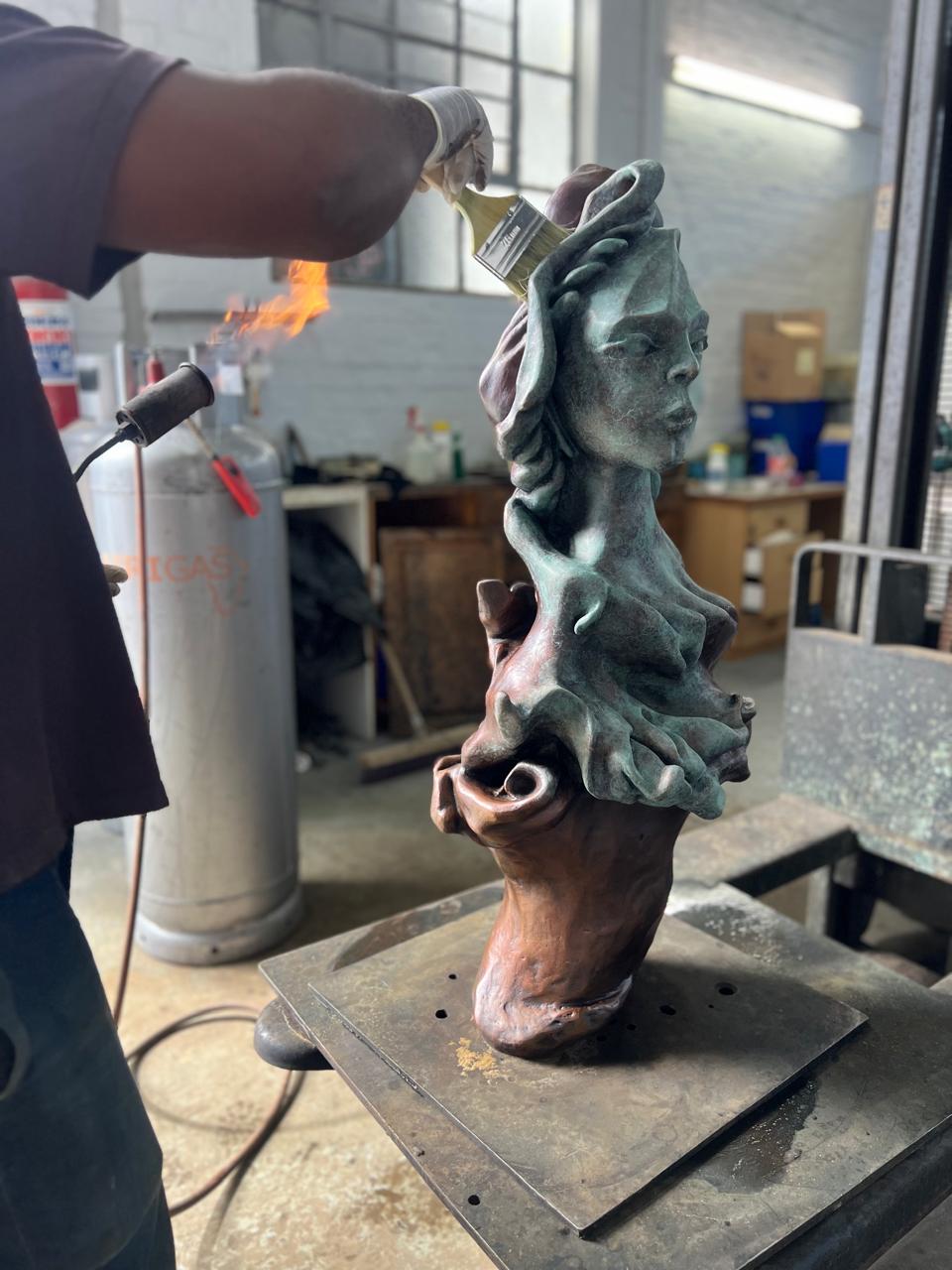
Even the way he decided on the use of bronze for the final sculpture. It is the ancient quality that caught his eye and he knew, it was the only way.
The title of the exhibition, Shapeshifter: the voice behind the veil, he describes as a celebration of something that was created.
When JO starts talking about the meaning of the process and the work, his passionate descriptions are hard to resist. Sculpting for him is an exploration of himself. He is constantly in conversation and, once that has been concluded, it is something he wants to share. “Something magical, mystical and fabulous,” he adds.
Listening to him talk takes me back a few decades to when I was one of his patients. I had been to many psychologists before him, but none of them could speak in a language that I understood. When JO first explained his method of spontaneous healing, I knew I had finally found someone who could show me the way.
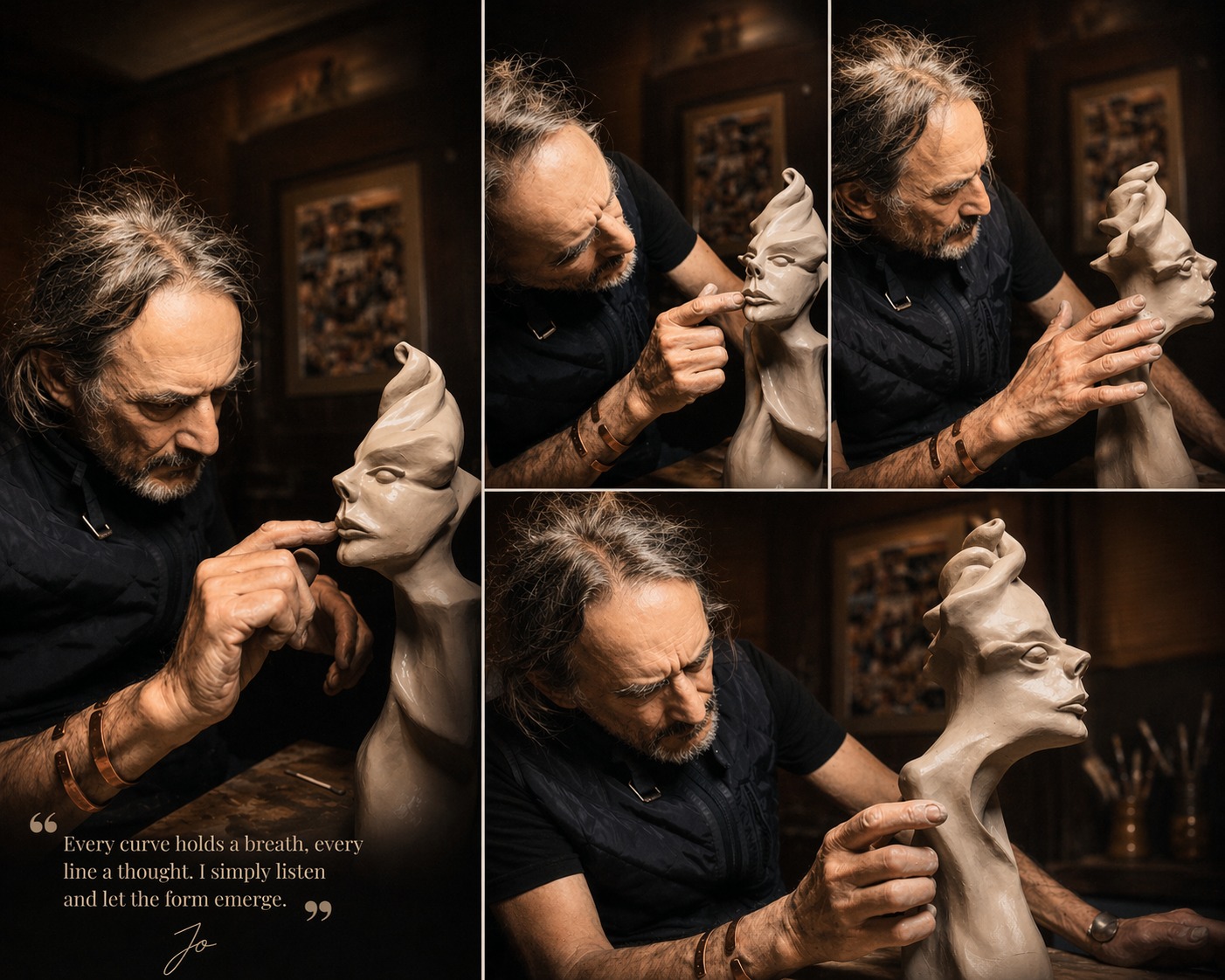
And he did. But that is also why it is so fascinating to see his art and to hear him speaking about his creativity – all these years later. To my mind, his art is simply an extension of his psychological methodology. He takes the clay and allows the process to unfold spontaneously. It all makes perfect sense as his spontaneous flair is constantly nurtured, the one flowing into the other, forming a perfect circle.

