Review by Diane de Beer
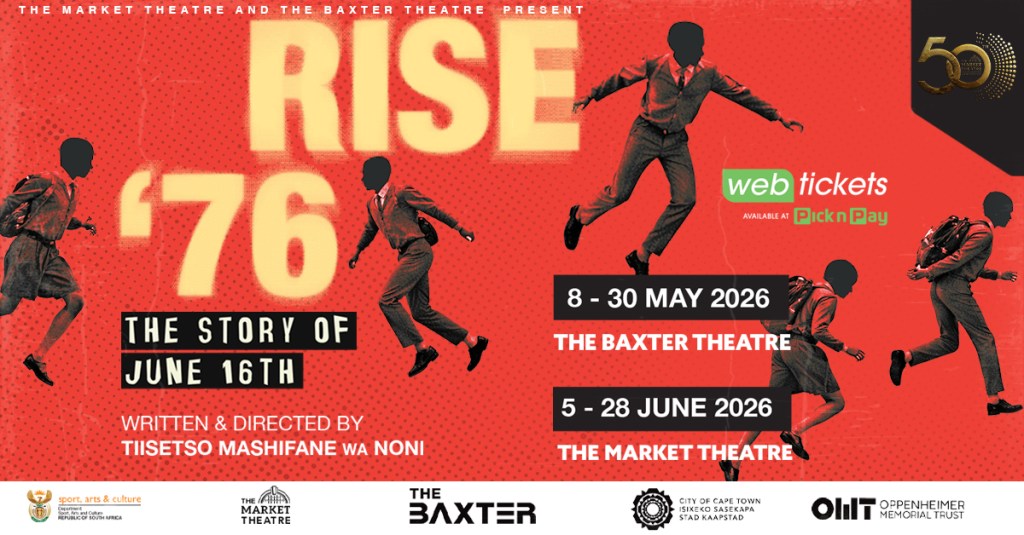
RISE ’76: THE STORY OF JUNE 16TH
WRITER/DIRECTOR: Tiisetso Mashifane wa Noni
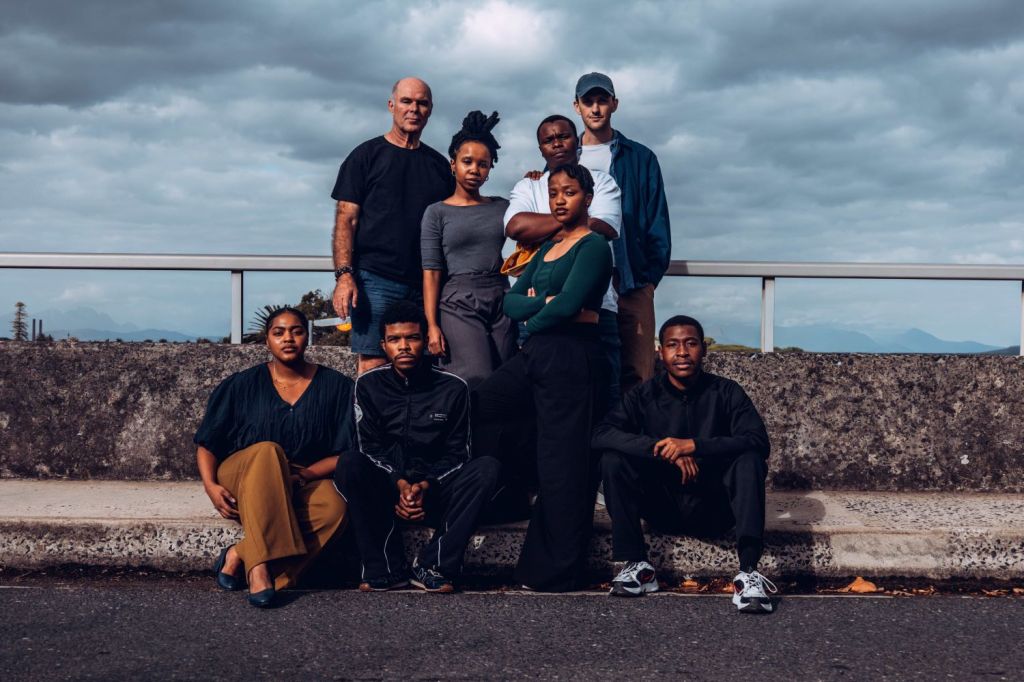
CAST: Deon Lotz (police commander), Sbuja Dywili (policeman) and Ben Albertyn (policeman), the three men at the back
With bottom row from left to right: Mfuneli Ntumbuka (teacher), Alex Sono (male pupil) Zilungile Mbombo (standing, female pupil), and Botlhale Mahlangu (headmaster)
With all of them playing many other smaller characters in the play
VENUE: Mannie Manim Theatre at Joburg’s Market
DATES: Until June 28
Can it be 50 years ago that our nation was confronted with one of its most devastating yet life-changing catastrophes?
In a country as diverse and divided (not only by law) as we were, everyone would have experienced that cataclysmic day differently and arguably, many older folk will think they remember it all too well.
And yet, because of the intimate setting, the small ensemble and the personal gaze of the historical retelling, it unfolds in waves of emotional information that often overwhelm you completely. For the audience, there’s no holding back, no place to hide. Whether you ‘witnessed’ the events or only heard about them many years or decades later, the full impact will catch you unawares.
That is what makes this such a masterpiece. So much has happened since the day the schoolchildren decided to take matters into their own hands. The focus has been dimmed and June 16 is a date remembered, but one that needs to be put out there in blazing colour and minute detail – not just the headlines.
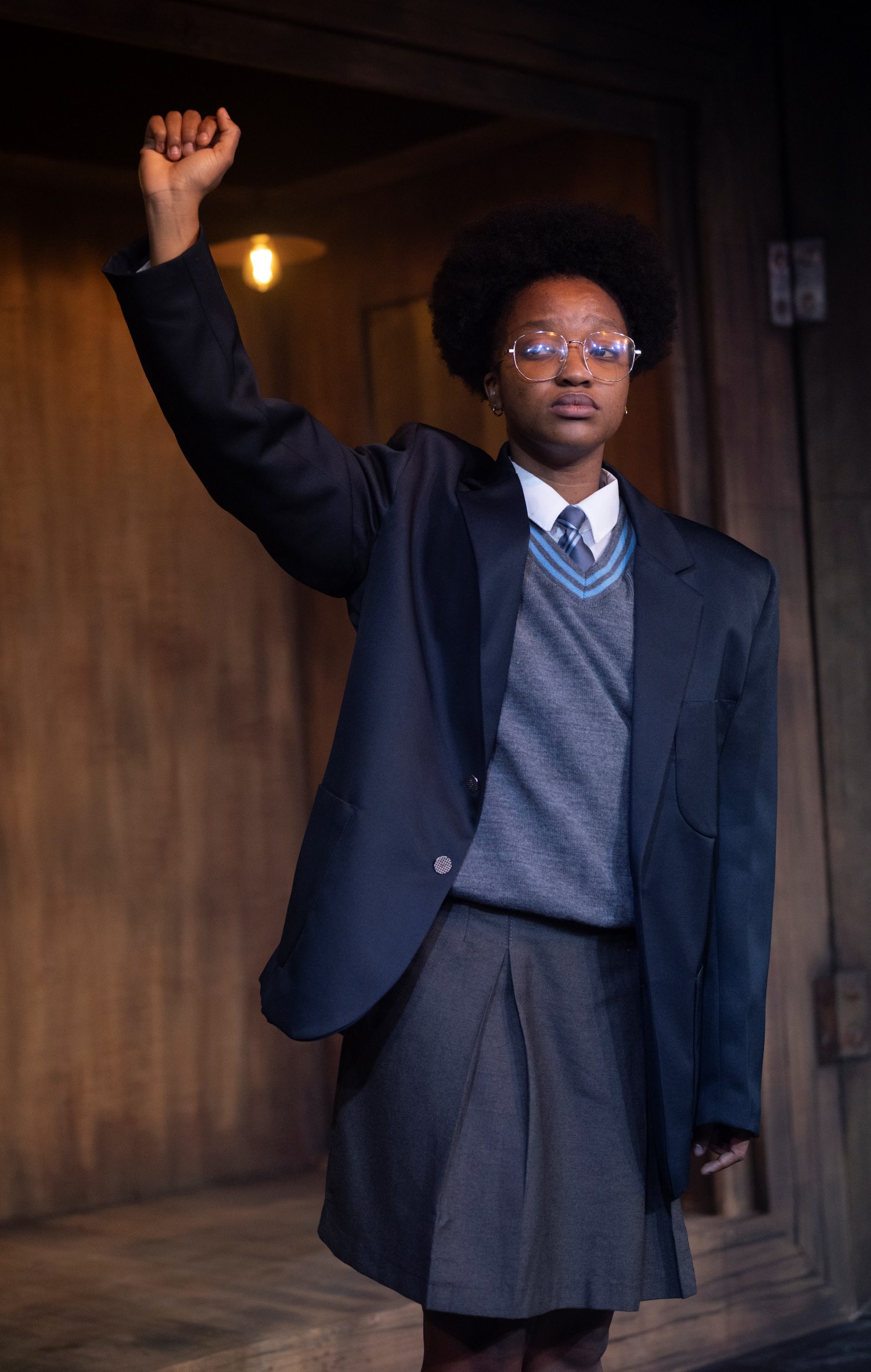
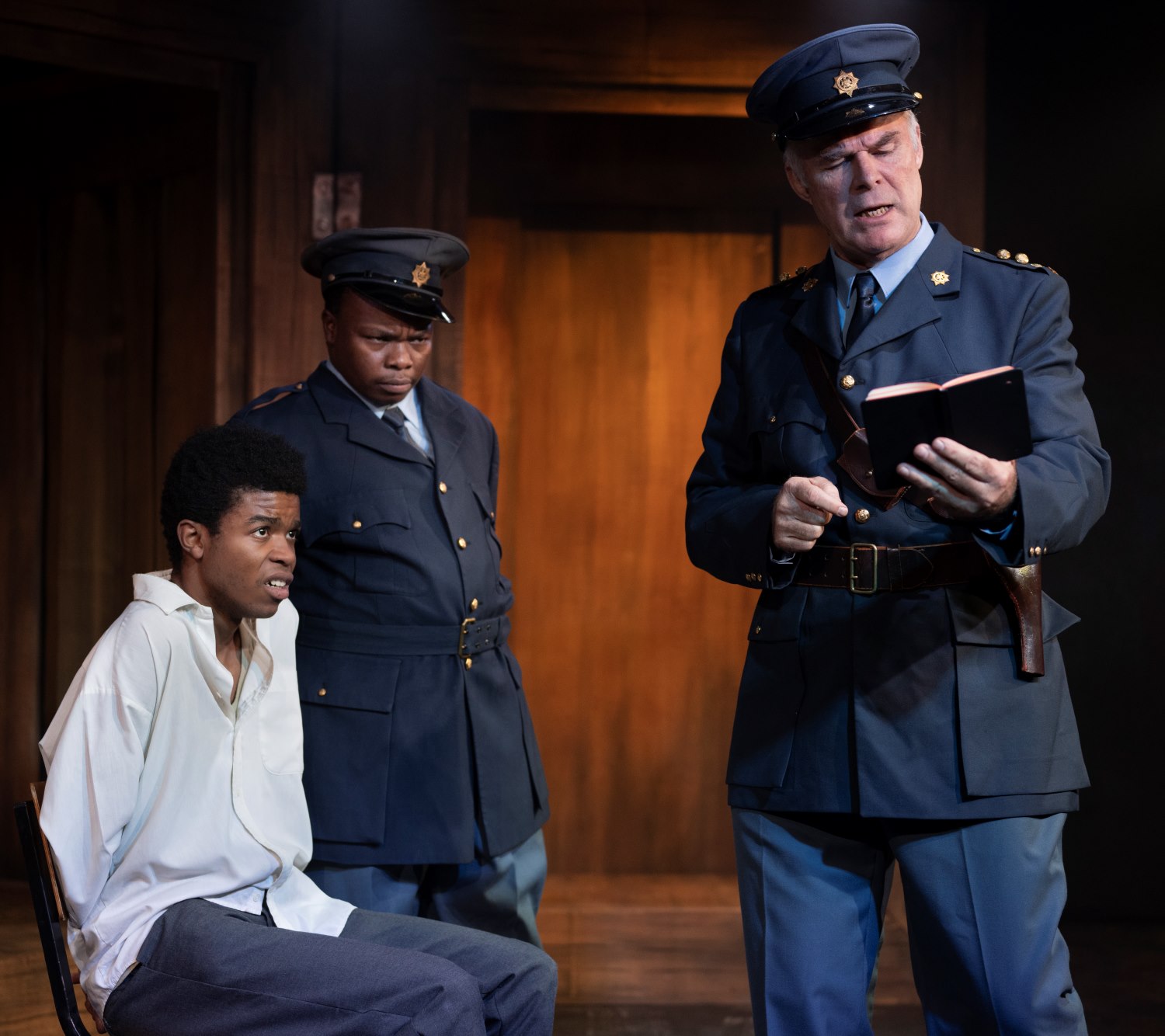
Pupils Zilungile Mbombo (above) and Alex Sono (pupil), Sbuja Dywili (policeman) and Deon Lotz (police commander)
Because it had such an explosive impact and awakened the inevitable revolution, which was destined to follow, it is something that needs to be part of each generation’s psyche – and this certainly achieves that in a most courageous and daring fashion.
Whatever your political persuasion, you will be affected by this remarkable play and the choices made. Itis the full package that makes this work so magnificently, starting with the thoughtful and thought-provoking text.
This is then further cemented by the creative casting, with each member of the cast the perfect fit. And it shows in many different ways because most of them play many different characters, each one capturing the heart of the character they adopt. Ntumbuka’s teacher seems aghast at what she is expected to teach, for example. Imagine, she almost shrieks, that she is expected to teach maths in Afrikaans, a language completely foreign to her. And yet, when she appears as a mother, she’s calmness herself.
And the rest of the cast follow suit, slipping easily into whoever they’re expected to become next. The two youngster Zilungile Mbombo and Alex Sono, deserve special mention because they weren’t even born in ’76 and yet they capture the defiance and courage of that time with the energy required.
As you relive these traumatic times now almost a half-century ago, you cannot help but feel pride at the progress this country, which held such horror for such a large number of its citizens has already achieved. Much bigger countries (in fact, large chunks of the world) are suffering rough times and struggling with the animosity between citizens.
Nothing comes easily, but the work done these past 30 years is obviously paying dividends. With the introspection that Rise ’76 brings, it reminds us where we come from and how much we have to cherish 50 years down the road on a continent and in a country that not many gave much of a chance to succeed.
Our outrageous systems of the past, with fortunately the most unattainable expectations of disempowerment of most of the nation, should never be forgotten even though we achieved miracles against all odds.
Those of us who lived through it should never lose the sense of wonder as we witness the cohesion that is starting to rear its head all over the show.
Many laughed at the notion of a Rainbow Nation in the early days. And while nothing is ever perfect, from my point of view, if you have a mixed populace turning up to something called the Pretoria Boeremark in the capital city every Saturday, we are doing something right.
And while comparisons are odious, as a nation we have to smile if 50 years on with many countries battling stability, we seem to be going from strength to strength.

