ALBIE SACHS THE MAN, THE FATHER, THE SURVIVOR

Review by Diane de Beer


Pictures: Philip Kuhn

ALBIE SACHS, FATHERS, SONS, AND SOFT VENGEANCE

Presented by Troupe Theatre Company in association with Daphne Kuhn
Playwright: Gail Louw
Actor: Graham Hopkins
Director: Fiona Ramsay

Venue: Theatre on the Square, Sandton

Dates: Until May 24

If you were witness to the birth of the South African democracy in 1994, Albie Sachs will be familiar to you.

Not only was he part of the drafting of a charter for the new non-racial South Africa, but he also fought for the inclusion of a Bill of Rights and an independent judiciary in the new constitution.

On a more visible front, he was involved with the development of the new Constitutional Court building, and it is widely acknowledged that he was the instigator of the magnificent artistic heritage so marvellously displayed all over Constitution Hill.

As the title suggests, that’s not the story told in Albie Sachs: Father, Sons and Soft Vengeance; many of those facts will be familiar to South Africans.

It is Albie the man, the father, the survivor who tells this personal story of a young boy whose life was shaped and politically driven by parents who were both part of the Communist Party while his father, Solly, was also the leader of South Africa’s Garment Workers Union.

He grew up seeing white and black adults interacting as equals. That’s the background.

But here is a man who was also a father and a freedom fighter, somebody who lost an arm in a car bomb in Mozambique, where the South African secret service was actively trying to obliterate their antagonistic fellow South Africans.

And this is where the play is focused. Albie, instead of being crushed by the apartheid regime, viewed his scarred limb as a symbol of strength. It also pushed him onto a world stage where he became an icon of the liberation.

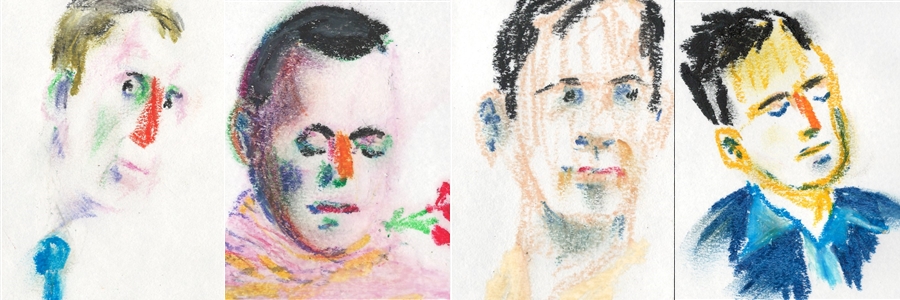
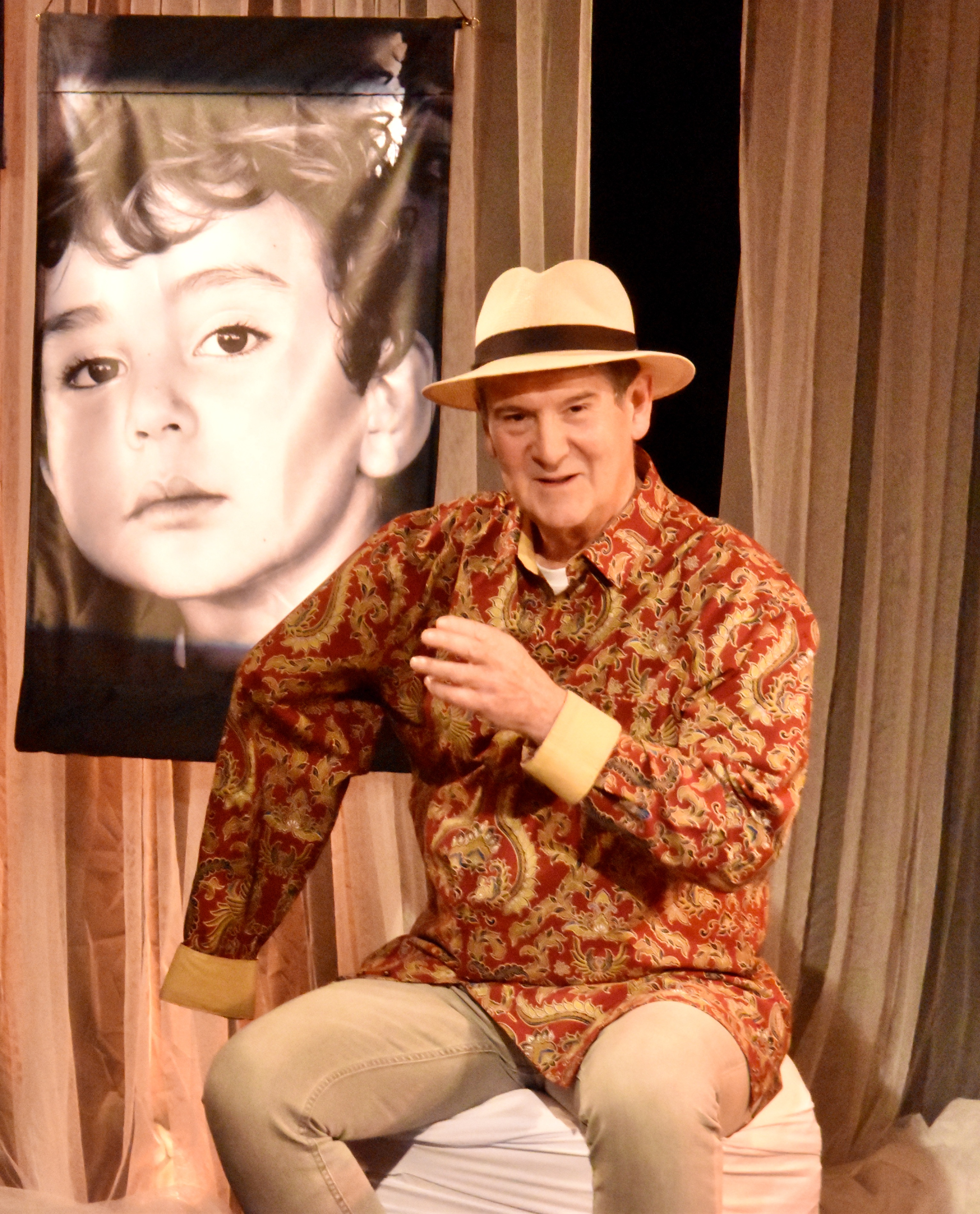
These musings of a man whose life was determined by the laws of the country of his birth, come to life in especially conversations with his son Oliver and that is how the story unfolds. It’s fascinating stuff which is magnificently explored by Graham Hopkins, who allows Sachs to emerge as a full-blooded human being.

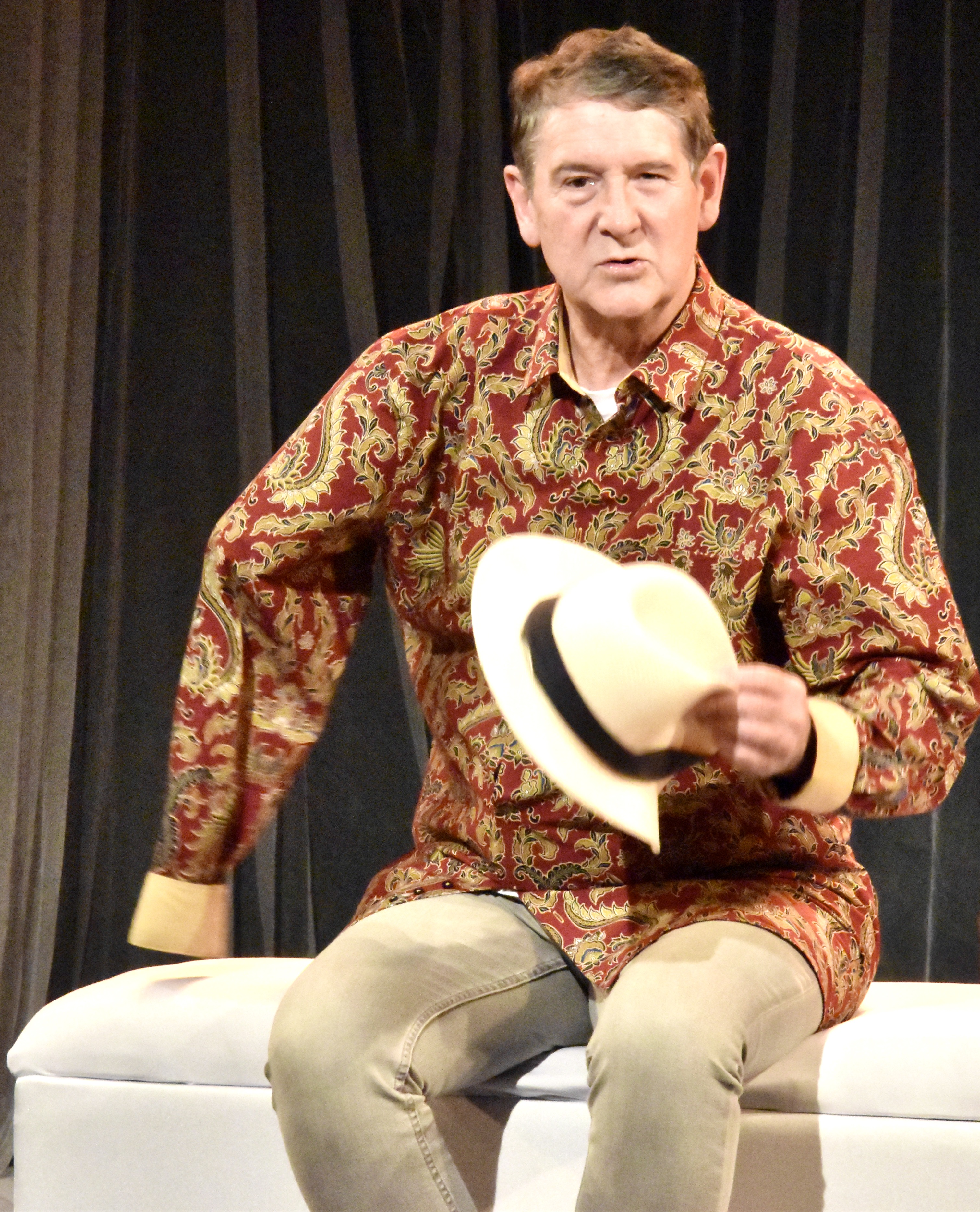
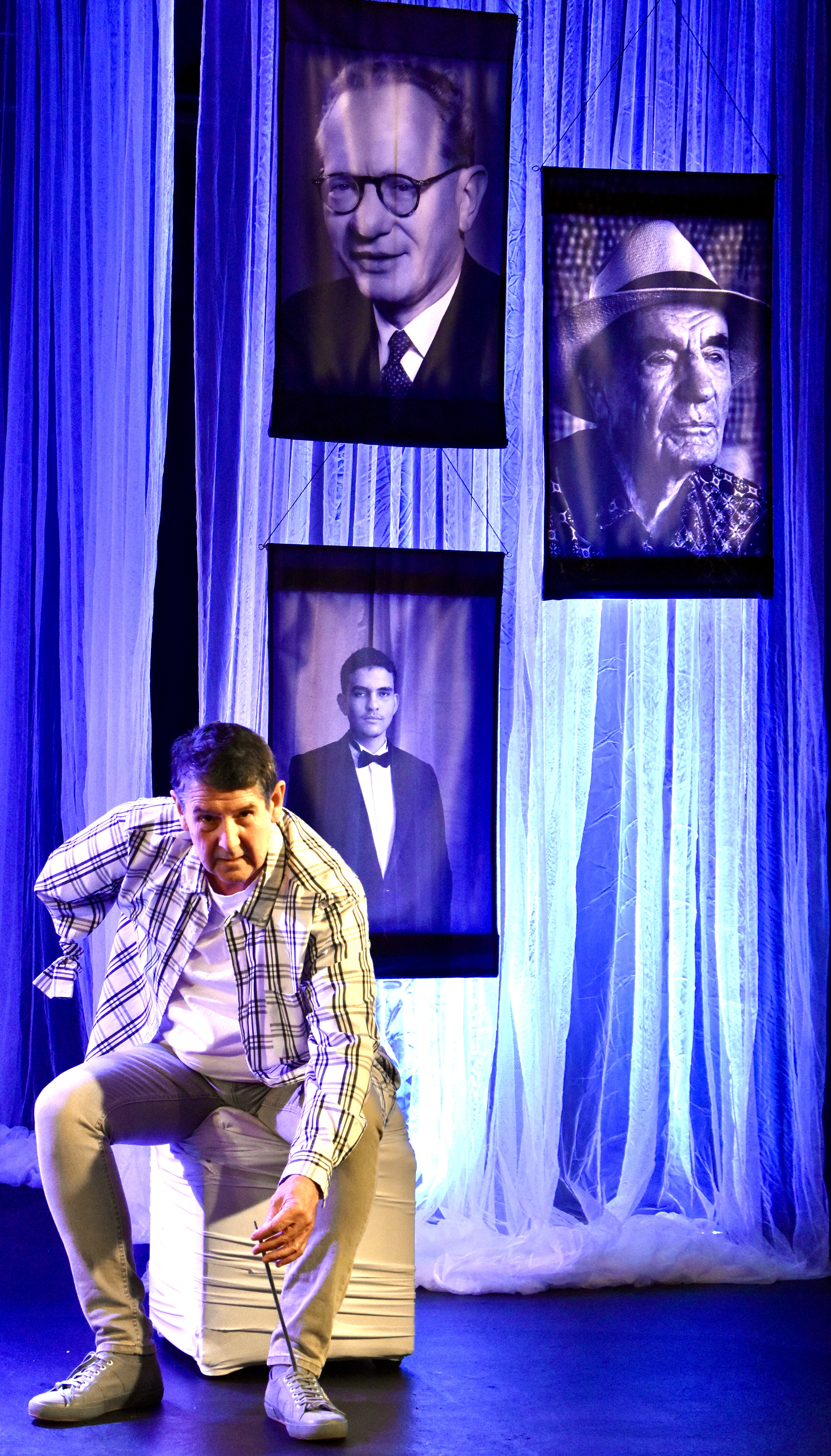
It’s in the clothes, the way he moves and takes on the persona with a subtle touch. Seamlessly, he acquires the accents he uses for particular characters with astounding Hopkins flair. He moves through the 90-minute monologue in the blink of an eye without losing his audience as he tells the story of a man and a country fighting for their life.

It’s not an easy play to stage, but with the experienced Ramsay both as director and as actor, found imaginative ways to approach what could have been clumsy rather than crafty. Solo productions can easily fall into the trap of trying to add movement into a too static production, which then detracts from rather than embraces the text.

And then the play. Telling an Albie Sachs story could have been many different things. He is such a remarkable individual, a South African we were lucky to have during a momentous time in our nation’s future development as a democracy.

There were so many ways to swing with this one, but opting for the personal, the impact on his life of events he had no control over, is where the focus lies. That and the bridging of the gap between father and son, sharing the story in a way that explains how and why he was influenced in a specific way and how he hoped to have an impact on the future he wished for his children.

It also feels as though it is Sachs speaking, as though he has opened his heart and his mind to those who care to listen. It’s an extraordinary life and one that fellow South Africans can celebrate with pride.

He has been actively part of living and shaping the history of this country. It is individuals like him with strong belief systems who have turned this country into a beacon of hope in a world that seems to have lost its way.

Who would have thought?
ANTJIE KROG, AN AUTHOR WHO SPEAKS HER MIND

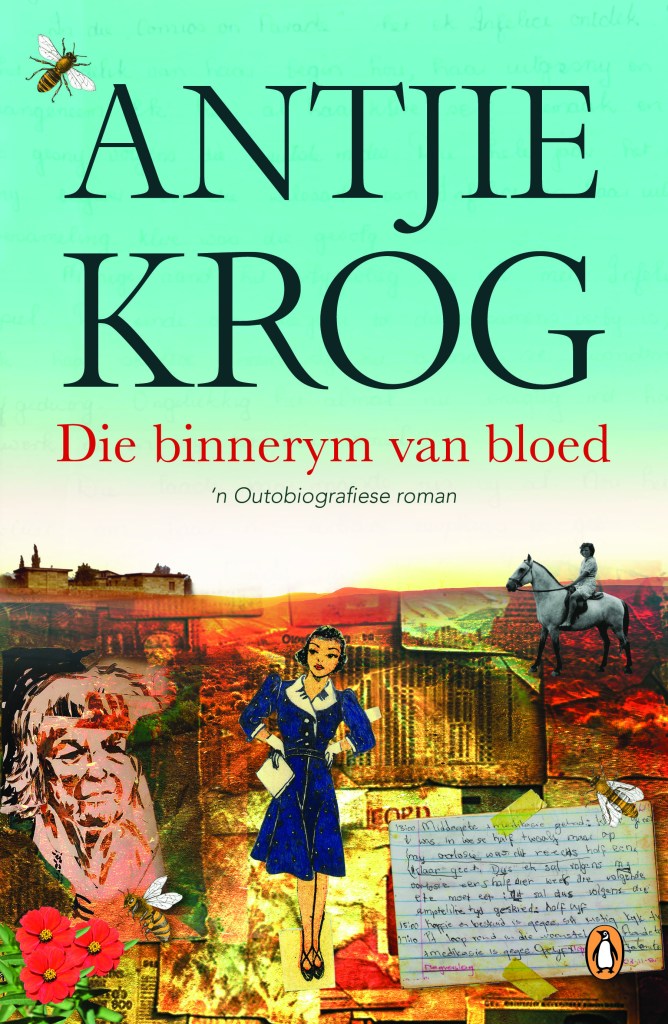
When you have one writer in the family, I would imagine you feel blessed. Two? Perhaps not so much but someone who makes a meal of this is ANTJIE KROG who in her latest memoir writes about the relationship between her and her mother, the author Dot Serfontein. DIANE DE BEER started out reading the English version, followed that with the one in Krog’s home language and then listened to her talk about the book:

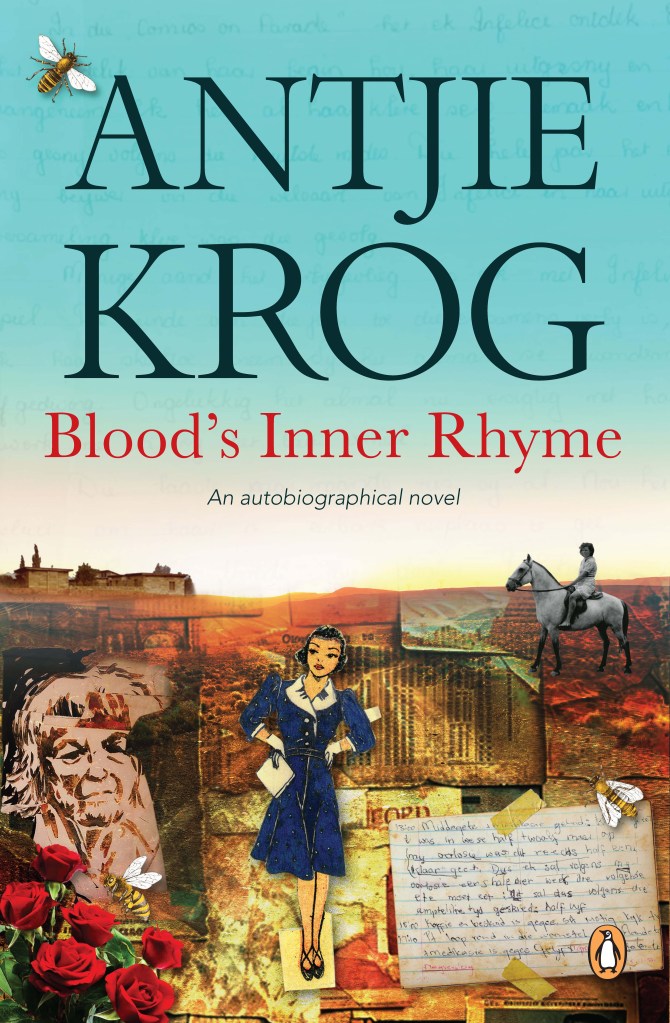
It’s a personal thing, I know, but if I can read a writer in her home language, I do. And again I was proved right with Antjie Krog’s latest offerings, Blood’s Inner Rhyme or the Afrikaans version Binnerym van die Bloed, which she describes as an autobiographical novel.

Because I write in English, I thought it might be easier to read that version, but after hearing her speak, I knew I had to get my hands on the Afrikaans book. It’s the way she Krog uses the Afrikaans language which enriches the reading.

If I didn’t have the option, I would have given the English a similar review, it’s simply that the Afrikaans introduces a different heartbeat.

Even in the best pairings, mothers and daughters have complicated relationships. When you are competing with one another even if that’s not the intention, which I’m sure it wasn’t, it’s going to be tough. Add to that two headstrong women who arguably stand on opposite sides of the political spectrum, expect fireworks – and that’s what you get.

Women all have mothers, that’s obvious, and some have their own daughters. All of us know the intricacies of that relationship – and that is when it isn’t public. Writing for an English newspaper, I wasn’t part of the Afrikaans writers’ circles and even I, not your natural gossip girl, heard rumours. And that’s where I admire Krog for doing this extraordinary book.

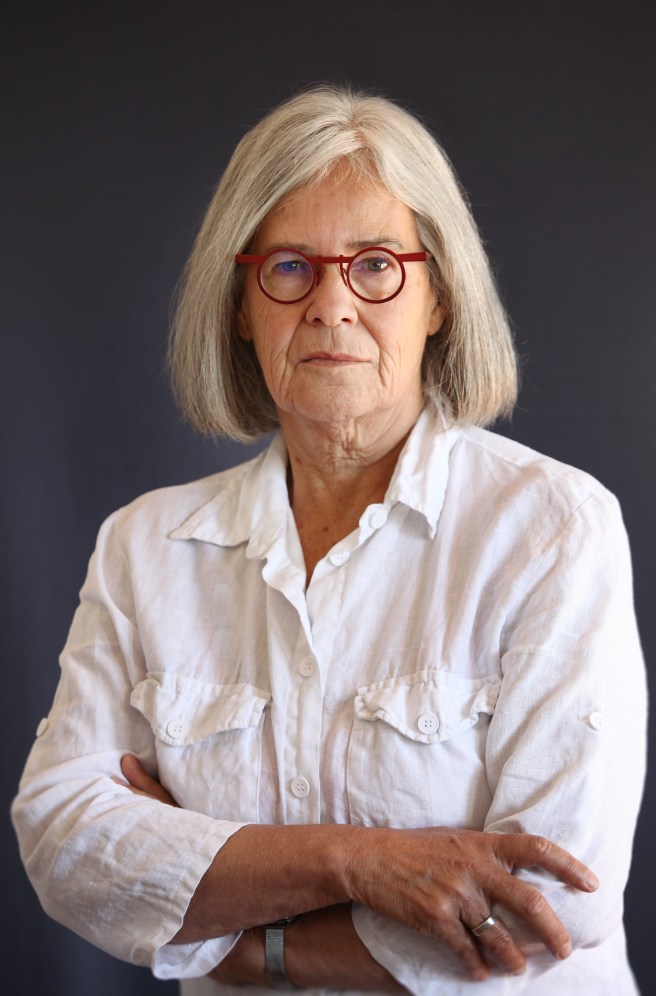
Antjie Krog, author extraordinaire.

Both of these women are celebrated writers who lived their lives in the spotlight. To then delve even more publicly into that life must have been an excruciating decision. And then to travel the country as one does to promote the book – what extraordinary courage. It reminds me that artists sometimes don’t have a choice, it has to come out. And usually it is the reader who benefits.

Thanks goodness Krog decided to write about this often fraught, sometimes fragile but also intense relationship. I can only guess that while sometimes devastating it must also have been therapeutic and the way to mourn and celebrate what she once had. Death has a way of shining a new light on something that was just too overwhelming to observe as it was happening.

For those of us ageing ourselves who have also shared a close relationship with a mother in her last years, it is especially meaningful. My eldest sister booked my parents into a retirement home which was on the way home from my work and I could pop in as often as possible without any inconvenience. I coped with the sometimes-daily trauma of witnessing this ageing process by communicating with a third sister who could only get the news via whatsapp or email. It was a lifesaver.

I could appreciate the daily diary of Krog’s mother’s most basic needs. That is in fact what happens when people age as we are forced to focus on the brutal minutiae of their lives. For example:

Night report:

20.00 Medication. Pt (patient) didn’t want to drink half a sleeping pill. Wanted a whole one

22.45 PT said her toes hurt. Applied Turlington + gave another half sleeping pill

00.30 Pt wanted another half sleeping pill. She was uncomfortable. She wanted to get up, I had to hold her by the sides. Pt wanted to make food. Pt was angry that the freezer had no meat.

These diaries were kept day and night – every day and night. It constantly reminds one of the process that is unfolding. As Krog tells it, focussing on her mother’s “excrement which happens daily is to own that which is being rejected, that which is such a part of her waning existence, her body’s extremities.” Krog who tells things exactly how they are explains: “There’s actually a very profound thing about shit,” she says as she captures the importance of change as life starts running out.

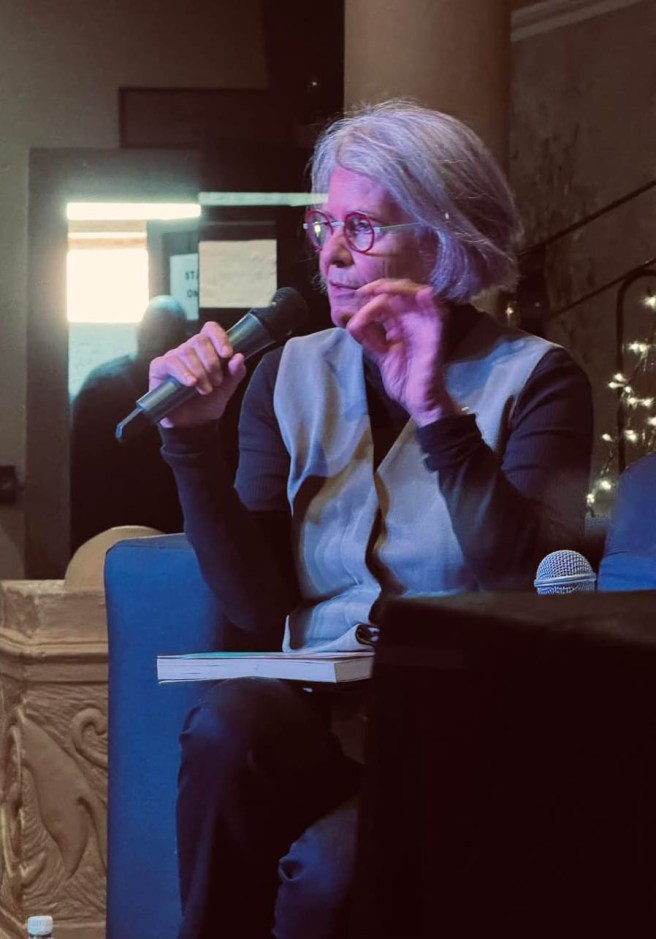
In full flow.

Yet there’s so much more happening around the family. It is an especially fraught time for farmers and for Dot Serfontein the family farm represents who she is. It was her inheritance. For Krog, even though she has similar bonds to the farm, she also knows and is burdened by the privilege it represents – something in this country that was often at the cost of someone else.

It is fascinating to read and witness the lives of different generations, especially in that time when everyone in the country knew things were going to change dramatically. She acknowledges that the relationship between mother and daughter is complex. In this family and between this mother and daughter perhaps even more than most.

While Krog is at pains to write about this sometimes combative relationship, it is also a celebration of Dot Serfontein, who she was and what she achieved with her writing. This is where and how Krog first discovered her words and both she and her readers have benefited.

There are so many stories captured in what can be described as a memoir. Having lived through the ageing process of my parents, that is what drew me to the writing. One learns so much about your own mortality, growing old gracefully and celebrating life whatever your age.

And thus her mother concludes only a couple of chapters into the book: “I keep all your letters,”  she writes to her daughter. “One day you can compile us in a plundered book like Audrey Blignault’s daughter. Initially I wondered whether the sudden revival of my oevre was thanks to you, but when I saw so many Dot Serfonteinisims in your work and some of our private family phantom(b)s, I thought we constitute each other.”

Having lived in each other’s shadow most of their lives, it couldn’t be any other way. That is what this astonishing writer captures so magnificently. Yes it is about a mother and daughter, but there is so much more. It’s insightful, entertaining, both sad and extremely funny, and even historical in many instances. But what captured my heart was Krog’s writing. She has a way with words that is unequaled.