South Africa’s own Charl du Plessis Trio are celebrating 20 years with concerts throughout the year, as well as the launch of their 10th CD. DIANE DE BEER highlights their celebrations of what has been an extraordinary career for this musical trio:
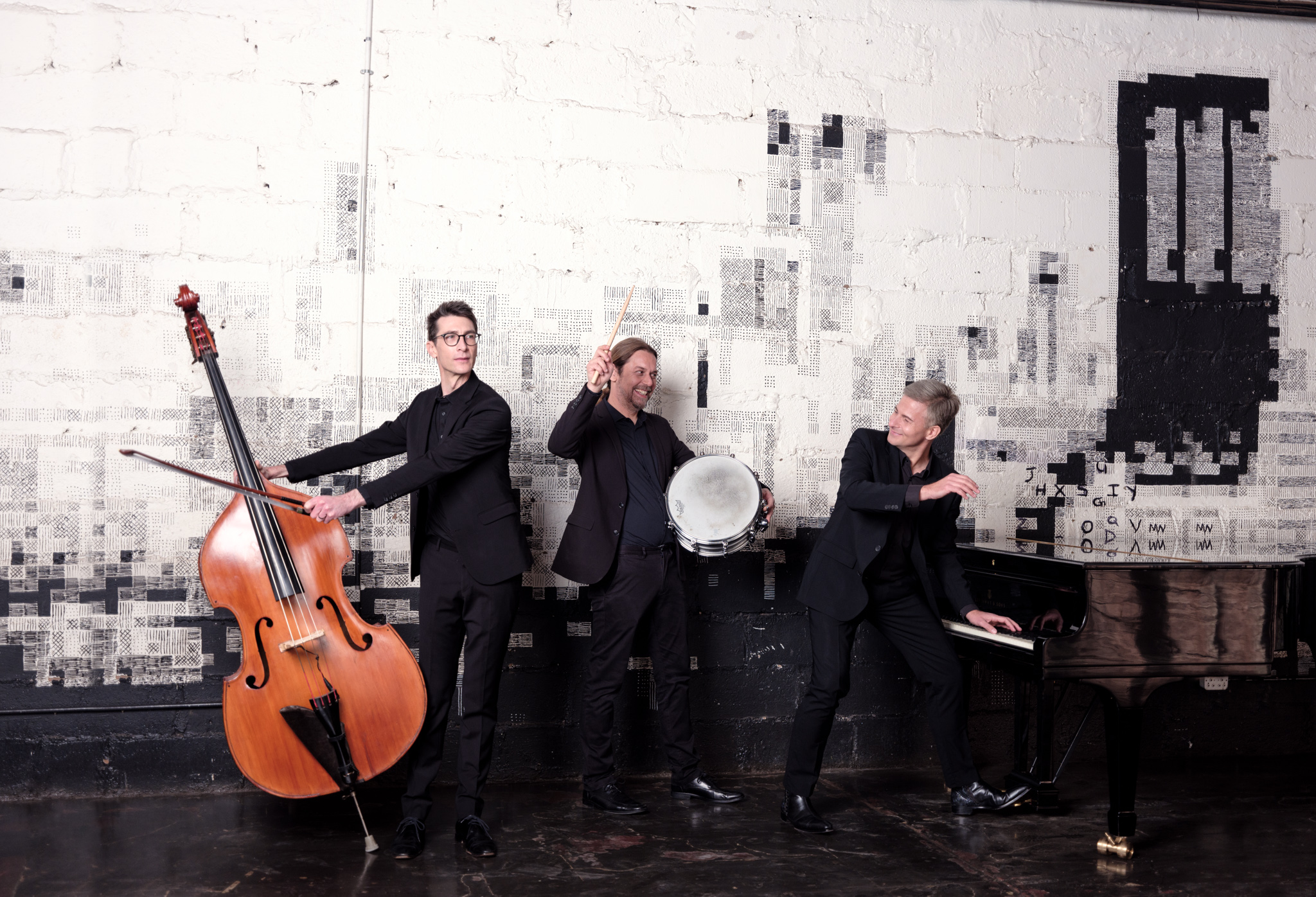
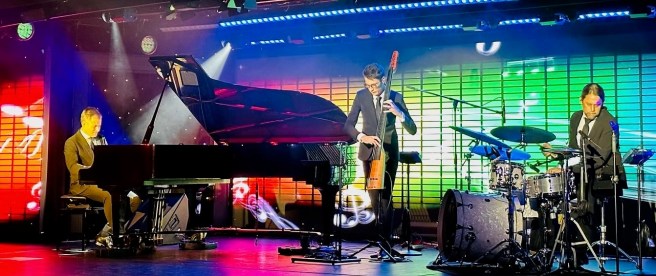
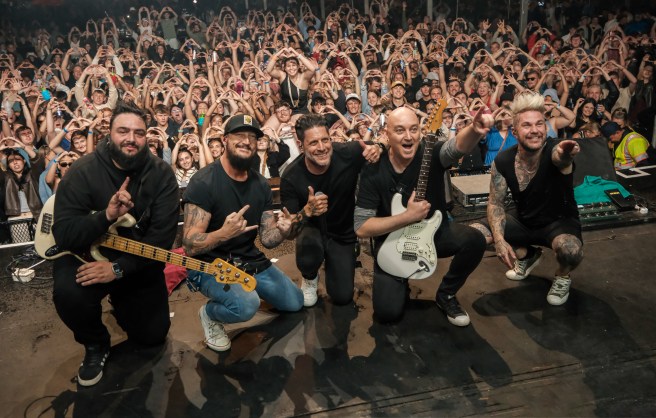
Steinway Artist Charl du Plessis is joined by long-time collaborators Werner Spies (double bass) and Peter Auret (drums) for a reflective journey through two decades of crossover music-making – both on stage and on their latest album.
As one of the most unique and recognizable musical ensembles in the country, they have built a special audience who enjoy their crossover of classical and jazz tunes with very unique Du Plessis orchestrations and a style that these three individual artists have created together.
Travelling wide, both locally and internationally, they have built a following from Zeerust to Zürich, Stellenbosch to Shanghai, and for those of us watching, follow a punishing schedule that few could imitate.
The way they have perfected their unusual operation, skillfully streamlined the way they rehearse, travel and perform, which allows each one of them to perform on different platforms, is phenomenal and something that budding artists could study.
The Trio was formed in 2006 with Charl and Werner on board while Peter, the latest member to join nine years ago, has worked with them for 18 years as a recording engineer. “Initially, I established the trio because I wanted to play ‘real jazz’,” explains Charl.
The crossover route came later, almost organically. “It was never the plan to mix classical and jazz music.” And that probably is the key to their success – the unique combo. As Peter points out, it isn’t as if there aren’t other musicians doing a similar thing, but it is the unique infusion of the three styles and their musicality that holds the key.
Their many years of working and travelling together has turned them into an unusually tight group, which is visible and audible in their music. That is their strength and as a bonus their professionalism on and off stage. They have discovered a niche, which has been honed, growing an unusual brand all their own.
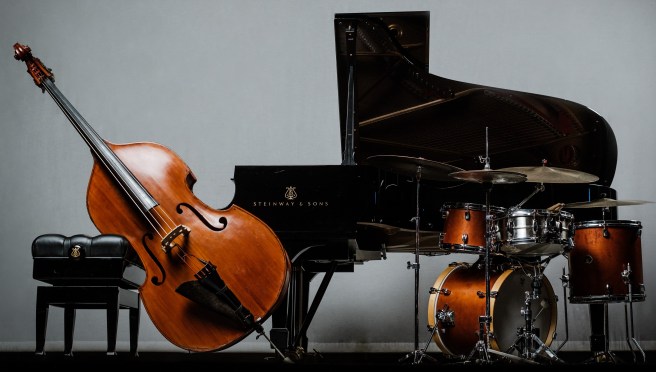
Just their instruments, how they choose on which one they play, (Charl, for example, travels with his piano, you have to see it to understand).
He first came to Pretoria as Nataniël’s accompanist and knew that he would have to create and work at his own career. The Charl du Plessis Trio was a result. Not only does he have a double doctorate (classical and jazz music), he also found two magnificent musicians with whom he could develop a specialist genre because of their different skills.
The programme for the anniversary features instrumental favourites, works by classical composers, and a selection of Charl’s original compositions. “Virtuoso improvisation and finely balanced ensemble playing offer an intimate listening experience and a tribute to highlights from their 20-year history.”
The latest CD, which was recorded in Joburg a month ago, is their 10th. Their previous one was recorded during Covid (can you believe, five years ago) titled It Takes Three.
This one offers the music they performed over the past five years, a little bit of Mozart and Beethoven with a jazzy edge and several Beatles songs. “That’s especially what we have been performing most recently, and the traction of the Beatles music was high; people really loved it!”
The title of the album is Take a Sad Song and Make It Better which Fab Four fans will immediately recognise. And that is the perfect representation of their music for these three musos: “We take sad classical music and jazz it up,” says Charl, who is thrilled with the balanced mix of music on this latest addition.
Performance schedule:
*Knysna February 22
* Fairtree Atterbury Theatre March 21/22 (with the launch of the CD on the first night)
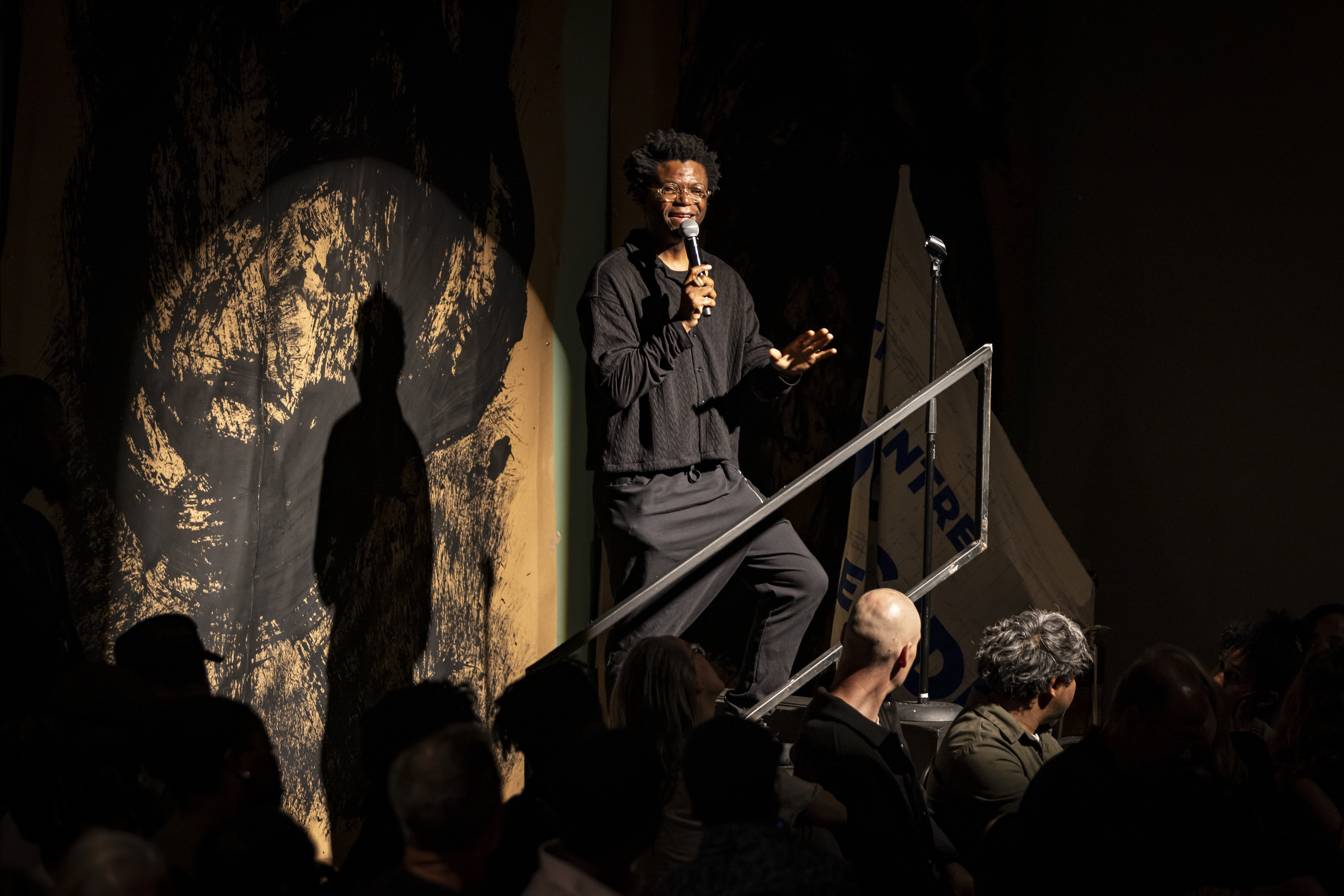
“It’s about how we become an ensemble, whether we are performers, audience members, or neighbours. It’s how the city performs itself through us, and also how we choose to perform the city. Johannesburg is a place that requires a collective navigation, a mutual reliance, a particular call and responses.” Neo Muyanga, Impressario of the Centre for the Less Good Idea in Maboneng.
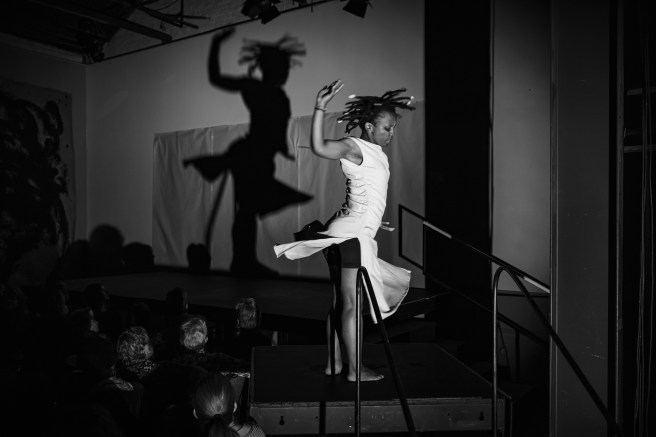
Dancer Thulisile Binda
By DIANE DE BEER
The best would have been to attend all the evenings of the 11th season to experience the full impact of what co-founder and director of The Centre, Bronwyn Lace describes as a multi-limbed, complex organism which she believes is what the Less Good Idea has evolved into. “…our arms reaching into various directions but connected to the same robust body. It makes sense for us to share a season at the end of this year, because we have an abundance of new strategies, forms, and artworks to test, show, and celebrate.”
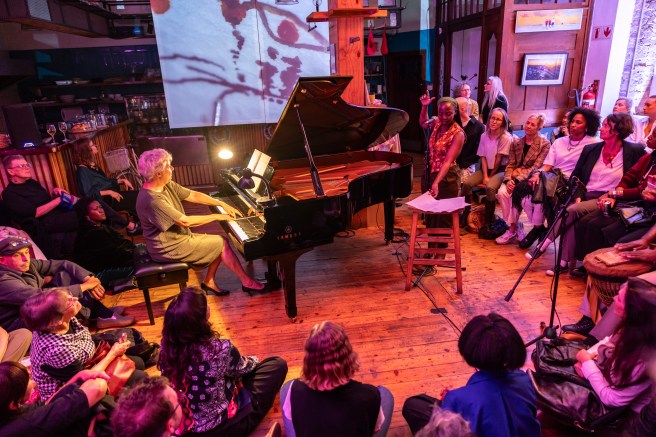
Pianist Jill Richards with vocalist Pertunia Msani.
And it certainly was all of that, exploding with a sense of creative abandon in two hours of exuberant performance which ranged from the glorious musically driven showcase by classically trained improviser Jill Richards who performed magnificently with the Benin drummer, percussionist, composer and arranger Angelo Moiustapha accompanied by the melodic voice of Pertunia Msaniiwith Marcus Neustetter’s digital storytelling adding yet another dimension to the experience. The musicianship was breathtaking.
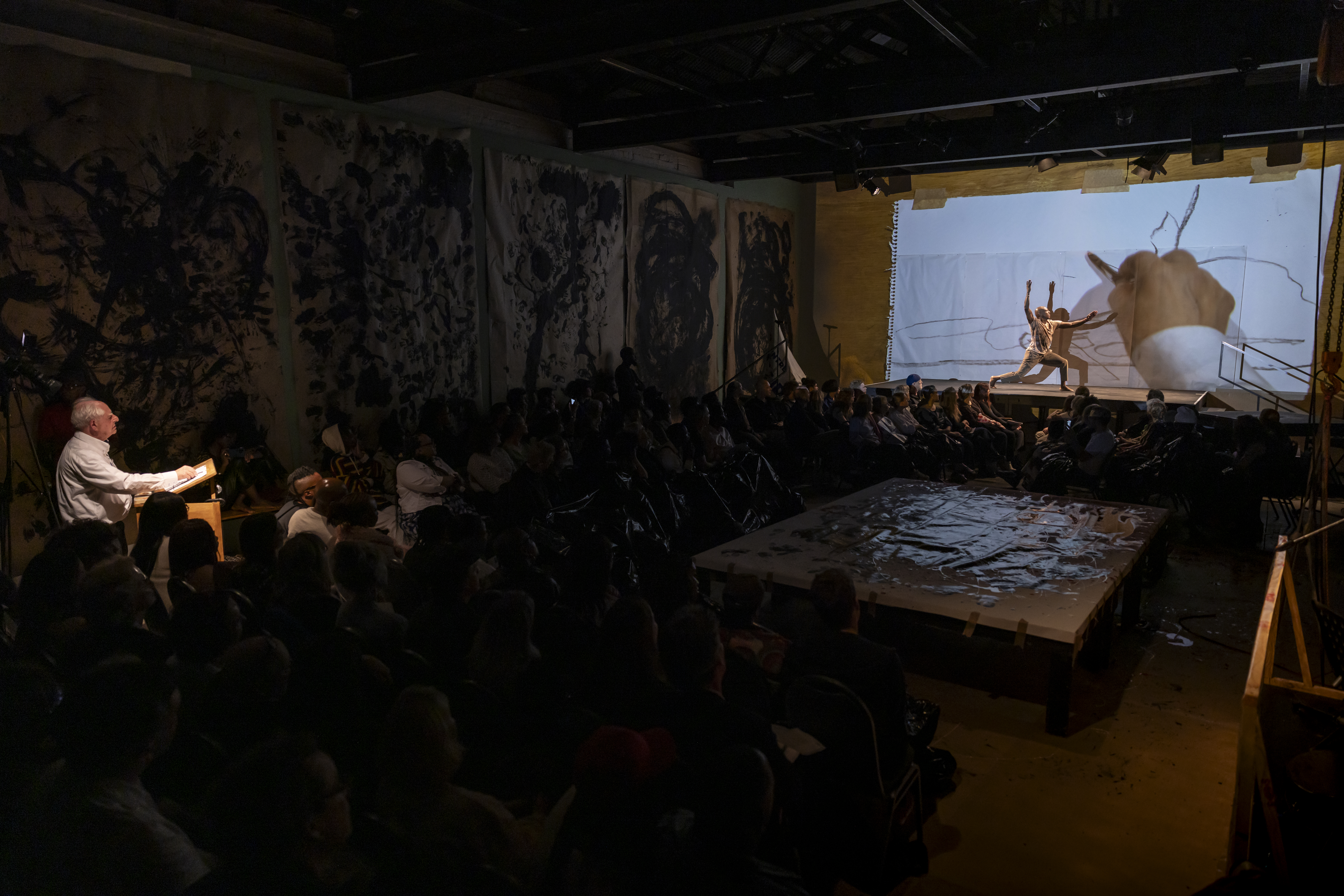
It set the tone for what was to come as the audience moved to William Kentridge’s studio to experience a collection of mindblowing artists, starting with the spiritually immersive Vincent Mantsoe, one of our finest choreographers/dancers in one of his rare local appearances. Translike in his movement and tearing at the soul of those witnessing his deep level of engagement, the evening merged from one artist to another as Kentridge stepped from one stage to the next as he expressed his creativity with body and soul.
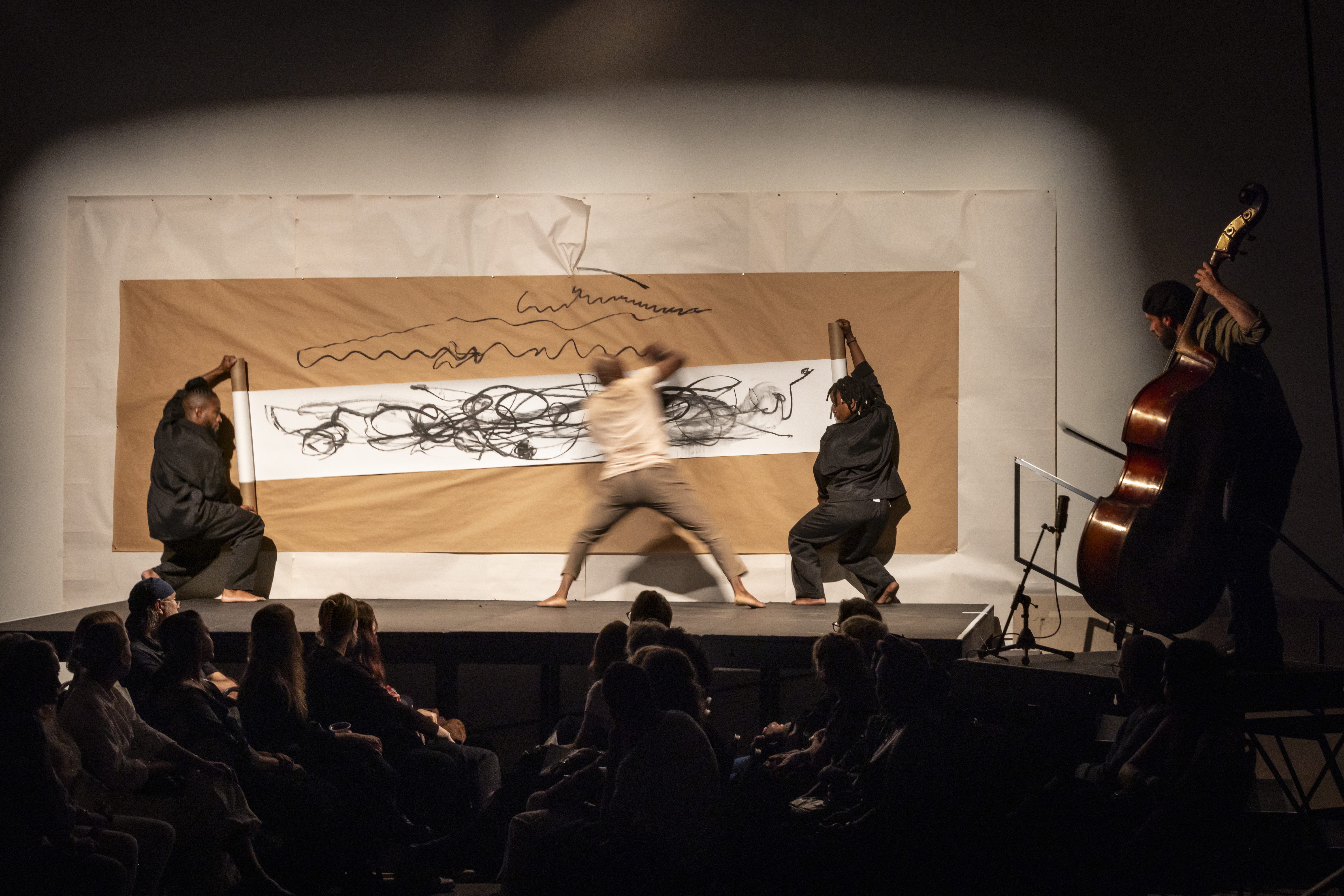
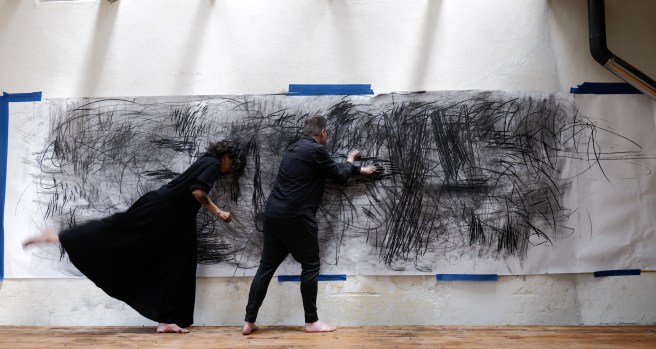
It was all about the merging of art and movement, Moving the Mark, as the event was titled, exploring the relationship between visual art and dance. What they wanted to achieve was to explore the relationship between these unusual pairings and what would emerge.
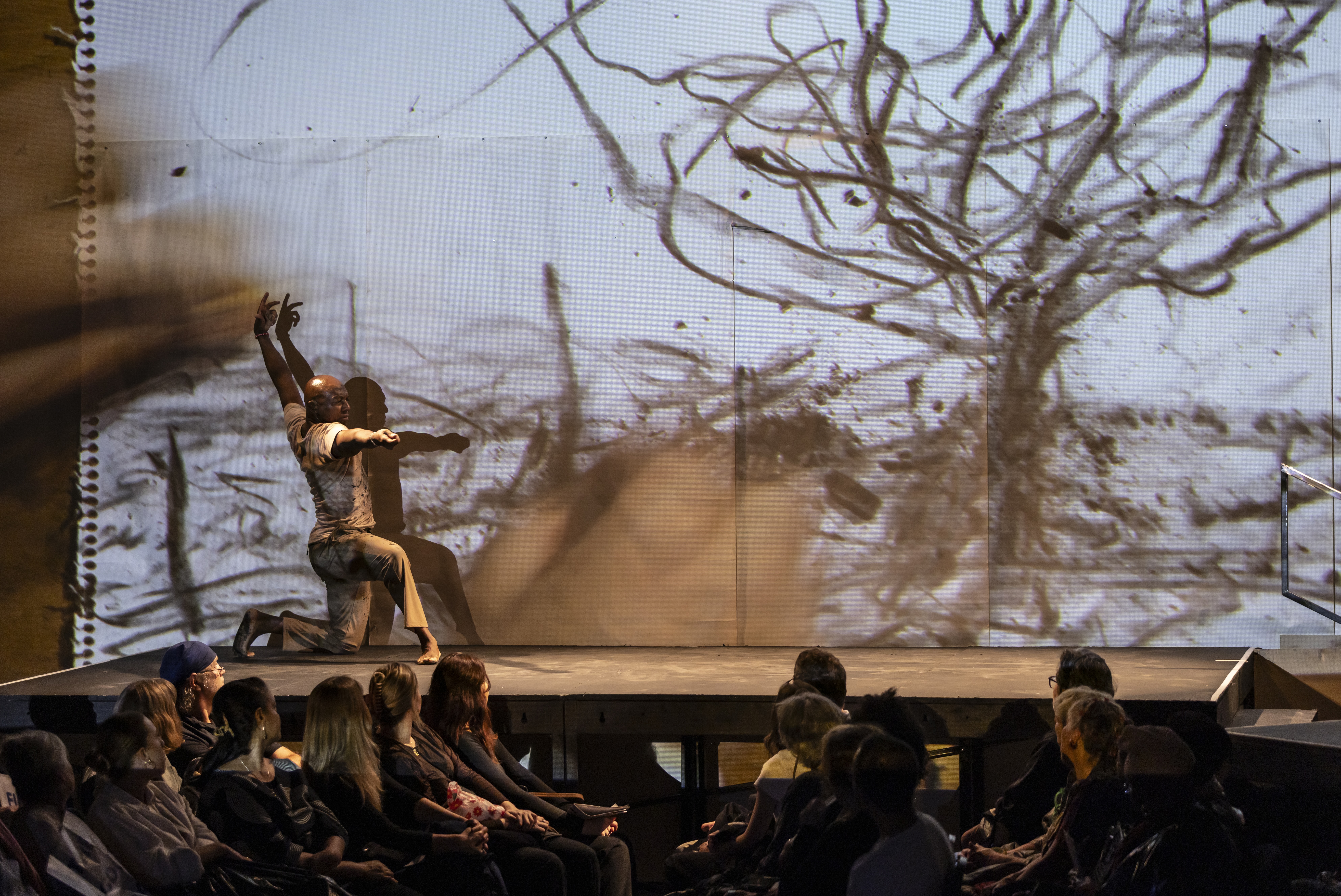
Vincent Mantsoe in action with percussionist Micca Manganye
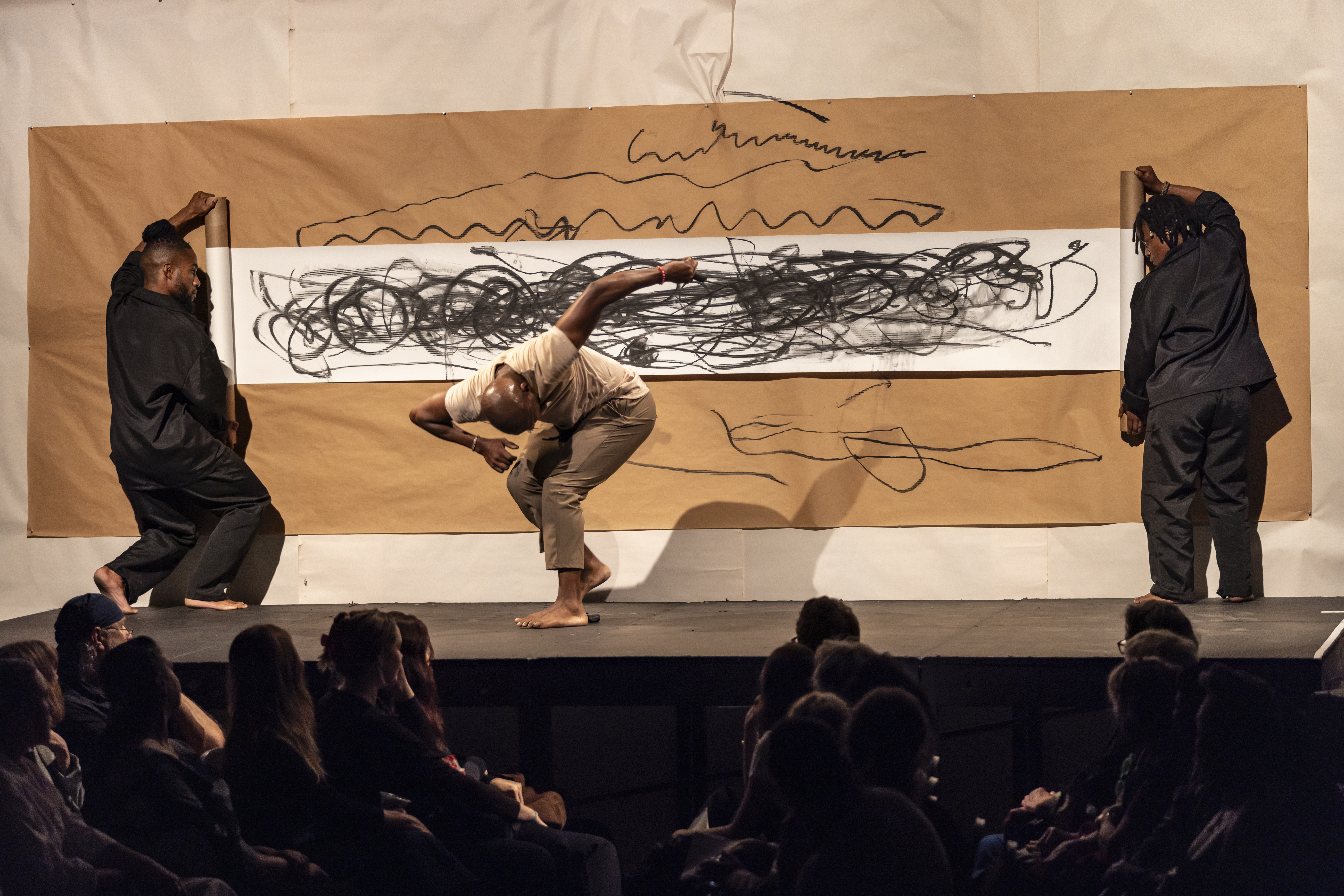
How would the pure art of collaboration determine new creative decisions for an audience to experience and absorb? What happens when a dancer like Mantsoe mimics the ink stains of an artist like Kentridge, or from a different vantage, when the painter choreographs their brushstrokes?
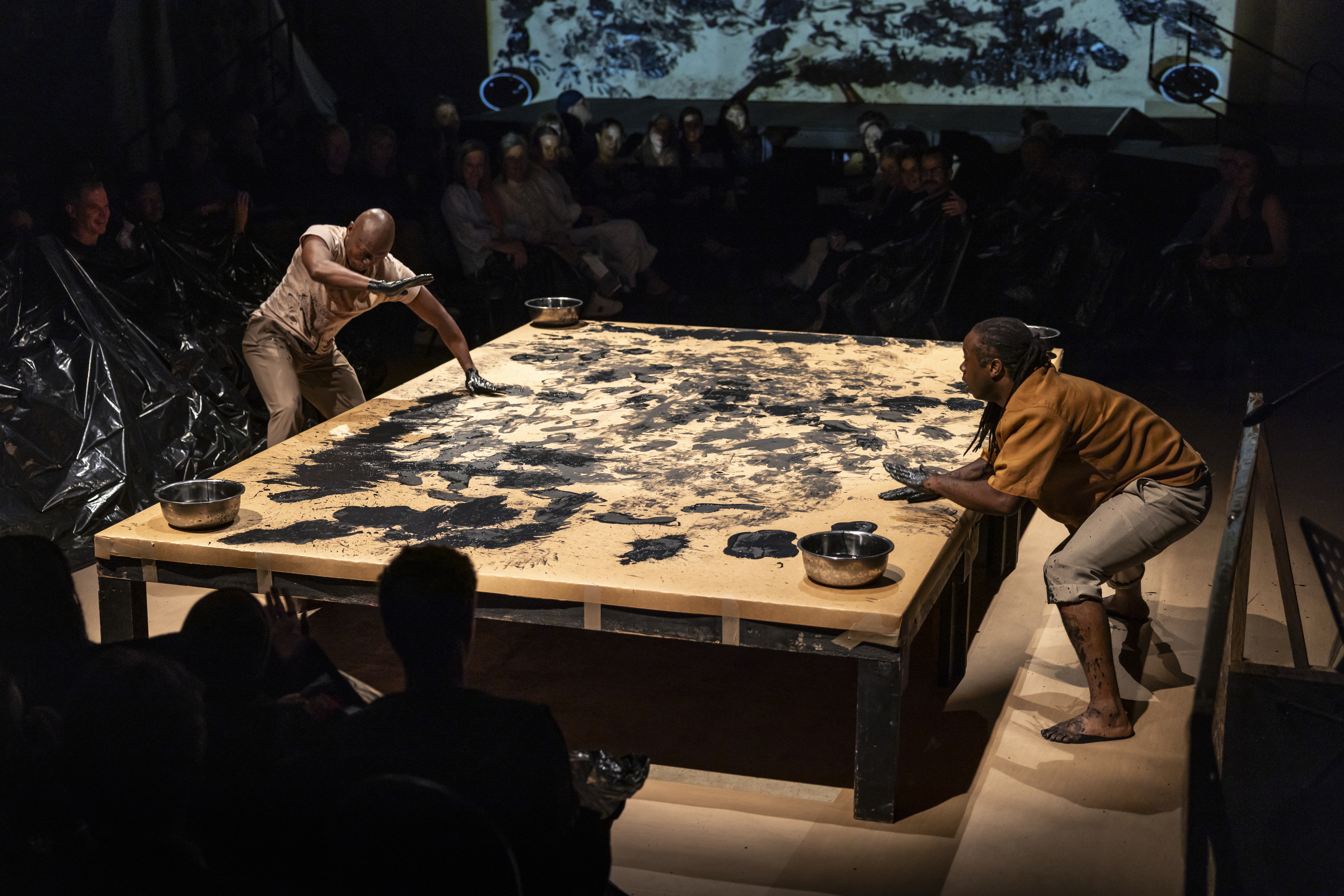
Artist Penny Siopis took to the air in almost trapeze-like fashion, painting her canvas on the floor from up high while choreographer/dramaturg Shannel Winlock-Pailman worked her magic below in mesmerizing fashion, the two artists in total union while expressing their heightened emotions.
All the while, the musical accompaniment captured the experience of the moment, enveloping the audience in the round, some wrapped in black bags to protect them from the explosive expression of art as artists flung paint creatively with fearsome flair.
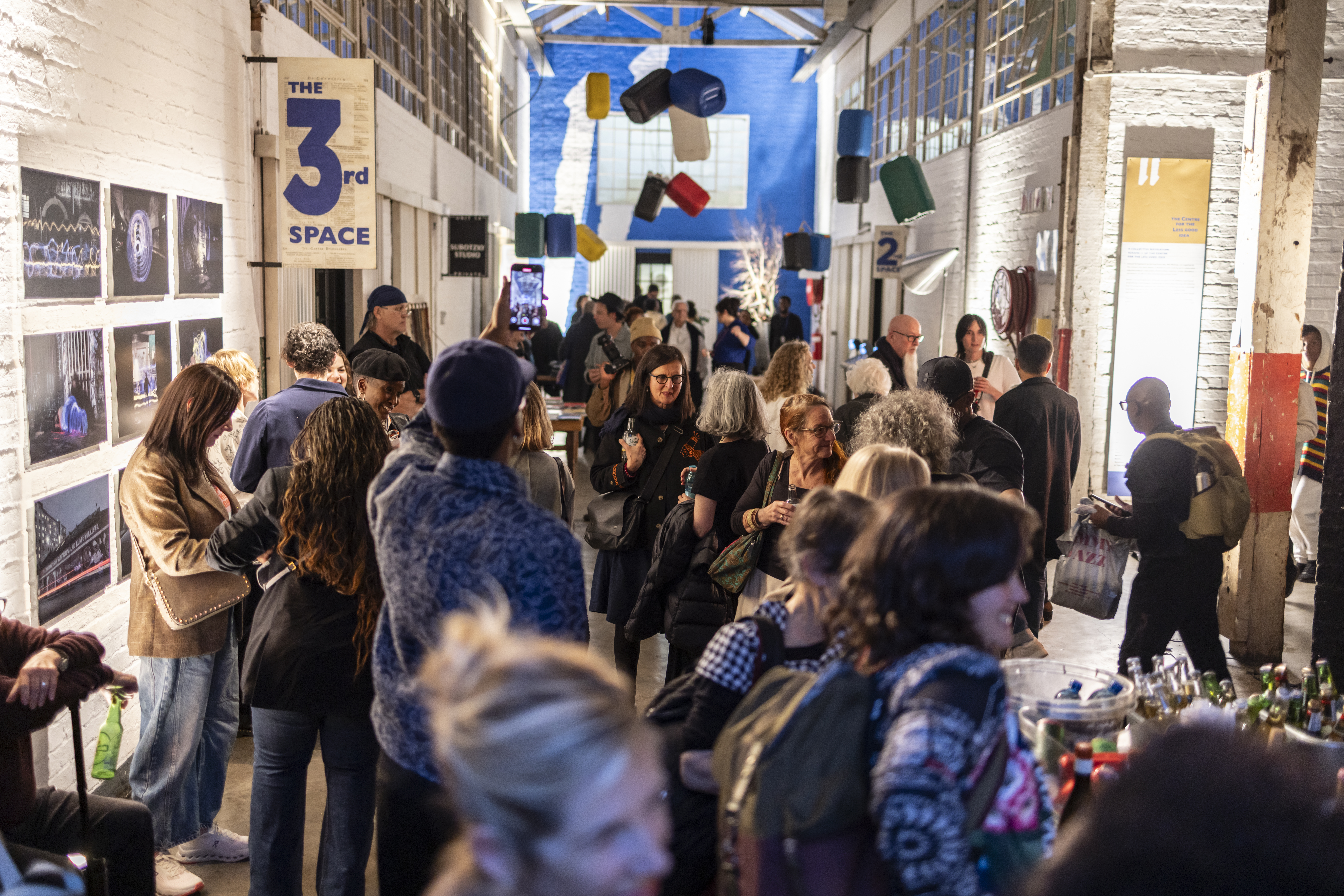
The Centre for the Less Good Idea is all about the collective voice expressed in collaborative pairings, artists who work in different mediums but have creativity and exploration that binds them, pushing the boundaries, trying different ways of making new work to excite themselves as artists while also challenging and stimulating audiences constantly searching for art and creativity exploring the evolving world we live in.
Curator Neo Muyanga (left) and Kentridge (right, in the left corner) choreographing with brushstrokes while Mantsoe is on stage following the moves.
It’s exciting when artists go beyond the expected, and are given free rein to explore their storytelling genres. How can they beat that drum differently? Given the chance to fail is often the best way to reach excellence but the restrictions are many. And more than anything, it is the encouragement to stretch far beyond the boundaries, to take that leap and to experience the beginning of experiments which are allowed to grow and flourish.
This first sold-out performance of the 11th season proved that the audience is willing and determined to experience artists moving the mark. The rest of the season sounded as extraordinary and my wish would have been to witness the full week of extraordinary creativity encouraged to dare to go beyond the expected.
How blessed are Gauteng audiences (who showed their appreciation) to experience these glorious experiments inspired and empowered by William Kentridge who could have staged them anywhere in the world. Kentridge gives us the opportunity to grow together and to expand our idea of what anything and everything is. Step into the void and see what happens comes to mind.
Like most things in life there are good and bad to small packages, but Aardklop CEO Alexa Strachan has turned her shiny Potchefstroom gem into a star through clever planning, a balancing act of note and enough variety to have everyone laughing and crying – with good food all over the place to boot. DIANE DE BEER speaks her mind:
My husband knows I’m a festival junkie (while he is NOT) but it is a personal indulgence and one that clearly nourishes.
This year was no different. Taking only a handful of my best, it’s not a difficult case to make.
Running down the alphabet as the festival guide does, it’s the overwhelming laughter that blew me away. I’m not a comedy girl so I didn’t know who Alfred Adriaan was but I screamed with laughter from start to finish and he was obviously a festival favourite in the packed auditorium.
With the name of Magda Louw (Desiré Gardner), one would think that I would remember that this is one of my favourite characters, but again, because of the comedy aversion, it just never surfaces. And yet, from the minute she walks on stage in her latest production, Magda Louw en haar Erhard, how Louw can you go?, this time with her husband Erhard (a delightfully Sad Sack performance by Hannes van Wyk), they just bowl you over.
What makes Magda so delightful to embrace is that she doesn’t go on the clichéd South African rant of potholes and politics, she has much more exciting things to deal with like the man constantly shuffling behind her as she leads the way at a faster pace and with much more rhythm, but the two ageing souls give you hope for the future as you realise that life is just a bowl of bubbles if you attack it in the right way.
On the other side of the spectrum there’s the magnificent solo debut by the extraordinary Wilhelm van der Walt, who unassumingly takes the stage and then reaching into a far too familiar past, given new perspective.
There was a time when I could hardly stomach another troepie tirade because it was so dominating in the country that it constantly surfaced on stage. What I realized this time round, is that Van der Walt himself probably never participated in this deadly exercise for so many decades part of our lives and there were certainly many young audiences who needs this insight on our past.
And if it is done with such magnificence, the flashbacks are worth recalling even if the past could be wished away.
How can anyone not be thrilled to experience Antoinette Kellermann and Dawid Minnaar on stage and in this instance in Breyten Breytenbach’s last play, Verwelkingslied, before he died. Although he dedicated the piece to Antoinette Kellermann and Marthinus Basson, she performed with her long-time stage partner Minnaar with Mari Borstlap as director on a set which was reminiscent of some of their earlier work together.
Minnaar is an eerily similar version of the poet in voice and image and immediately you can lose yourself in the meanderings of this philosophical and always poetic (almost) memoir. As the two actors take turns in monologue yet sharing Breytenbach’s feelings on death, one drifts away in the words so magnetic and the voice so penetrating, almost in dreamlike state, the actors and the audience.
The simplicity of the presentation is apt as it holds the depth and strength of the text so delicately. This is where we need the words to wash over us as an audience in almost immersive fashion.
I know that Amanda Strydom first mesmerized me with The Incredible Journey of Tinkerbell van Tonder and was eager to experience the performance all these decades later. Not that I can remember the detail, but with age of both text and performer, it’s as if everything has just found a warmer and gentler place to settle and lay her head down.
Finding your place in the world is a never-ending search and when you are fighting for freedom it is almost impossible – yet not when you’re Nelia Petersen who was handed the struggle together with mother’s milk.
It’s rigorous and robust with Strydom tackling the text and music with equal energy and exuberance. And all these years later, if anything, it is even more brittle and brilliant than before. I could watch this performance any day.
Belofte van Vere was our first production and yet another Breytenbach tribute but, once I witnessed the full cast on stage, they had my full attention. With the musically adventurous Laurinda Hofmeyr on piano, a rare singing appearance from the jazz-infused Ilse Klink, the genius muso Leon Gropp (guitar and voice), the soulful David Klassen (drums), a rhythmic Concord Nkabinde (bass) with the velvet voices of Rolanda Marais and Eben Genis, I knew I would be transformed. And I was.
Performers Eben Genis and Rolanda Marais
This exciting, gifted collection of artists would know how to do Breyten Breytenbach, without frills and fancy tricks, just delivering on their accomplishments and Breyten’s poetry and words. Anything else to my mind would have been unwarranted.
It’s my kind of show with my kind of people and poems. I needed nothing more. For me this was a Breytenbach celebration and I’m certain he would have been honoured.
Combining two dance companies, Cape Town’s magnificent Figure of 8 Dance Theatre who also performed their haunting tribute (Die Een Wat Bly) to the relationship between mothers and sons, the more expansive Wings of Light: Dance of an Angel returned dance to Aardklop in spectacular fashion. The music composed by Mauritz Lotz set the tone for an exquisite performance which showcased both classical and contemporary dance, the perfect rendition for an audience who might not often have the chance to see this kind of performance. It was a rare feat to stage this production and hopefully paved the way for similar ventures in the future.
Festivals have to walk a tightrope of not playing it too safe yet not antagonising their core audiences. With the large auditorium thé venue for one of our best comedians as well as two of the most exciting dance companies in the country, they managed just that.
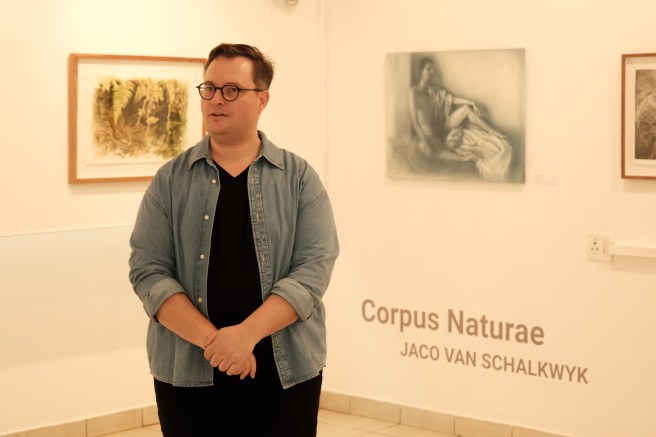
There was also time to slip into the art venues, always something to cherish, and this time it was the festival Artist Jaco van Schalkwyk as well as a challenging group exhibition Vice Versa curated by artist Gwynneth Miller, all of which got the mind racing on a variety of contemporary issues. The renovated campus art museum also featured an exciting range of Nataniël pictures captured by his longest serving photographer Clinton Lubbhe
As an extra fillip, there was the celebratory concert of Nataniël and Charl du Plessis’s 25-year collaboration on stage. And as I had witnessed their initial first performances together, this was quite emotional.
To watch two stratospheric artists develop, dissect and model their artistry as they grow and stretch in different ways is unexpected and artistically adventurous.
There’s Du Plessis’s breathtaking exuberance and excellence on piano, the way he shifts between genres and his approach to his longtime stage companion. Nataniël again exhibits his stagecraft, flips easily from text to music, his stories hilariously funny with a hint of melancholy, or on the musical side, surprising everyone with his superb classical training which he hardly ever shares. They are an unbeatable combination with so many years of performance between them.
Aardklop features youth theatre with their Pronk Podium product, which this year invited its most successful writer/director/producer to present his latest work Doolhof together with the NWU Kampustoneel winner Diereryk directed and written by Pierre-André Viviers, cleverly based on Animal Far.
Every year I am thrilled and struck by the quality of the productions and everyone’s artistry involved. For future artists, this is unequalled training ground and for audiences the ideal opportunity to see how young artists tell their stories and what to expect in the future.
At future festivals, remember to watch out for this special section.
I could go on and on, I even made a turn at the market, something I never do, but I wanted to surprise my favourites at home with some specialty snacks.
As always it was a festival with feisty and fabulous fare on every level.
And the winners for the annual Aardklop festival awards are:
Best Actress: Elzabé Zietsman for Routrip
Best Actor: Wilhelm van der Walt for Seun
Best Director: Nico Scheepers for Seun
Best Overall Production: Seun
Award for most innovative work: The Scullery Quintet: Stir-fried Sonatas
Visual Art: Best Exhibition: Corpus Naturae, Jaco van Schalkwyk
Best Music-driven Production: Amanda Strydom: The incredible journey of Tinkerbell van Tonder
Best Classical Music performance: Road Trip Rhythms
Best Musical-driven performance: The Scullery Quintet
Hartsvriende Beste Produksie: Seun
Best new Afrikaans Script: Nataniël for NATANIËL + CHARL = 25
Best Production: Drama: Seun
Knockout Award: Alfred Adriaan: Positive Strokes
Extra Mile: Riaan Rademan (Technical project manager for Blond Productions)
There are less than two weeks left to explore the 2025 Sasol New Signatures Visual Arts Exhibition at the Pretoria Art Museum, which closes on November 2, 2025. The exhibition features works from all 103 finalists, including the top seven award-winners and is quite magnificent. Don’t miss it!
“This is a must-see exhibition. The standard of entries this year was exceptionally high, showcasing the newest creative voices leading the next wave of South African visual art,” said Cate Terblanche, Curator of the Sasol Art Collection.
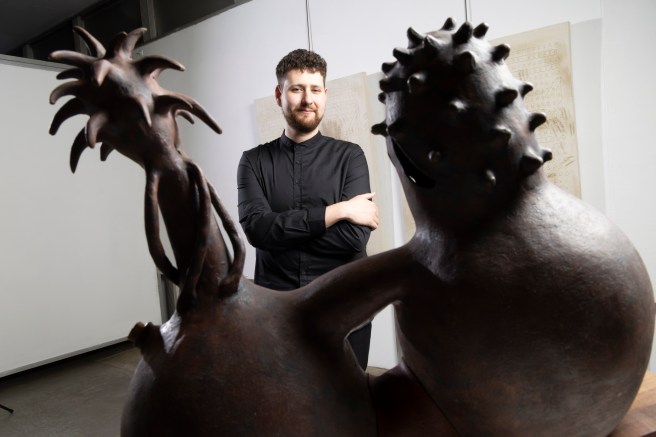
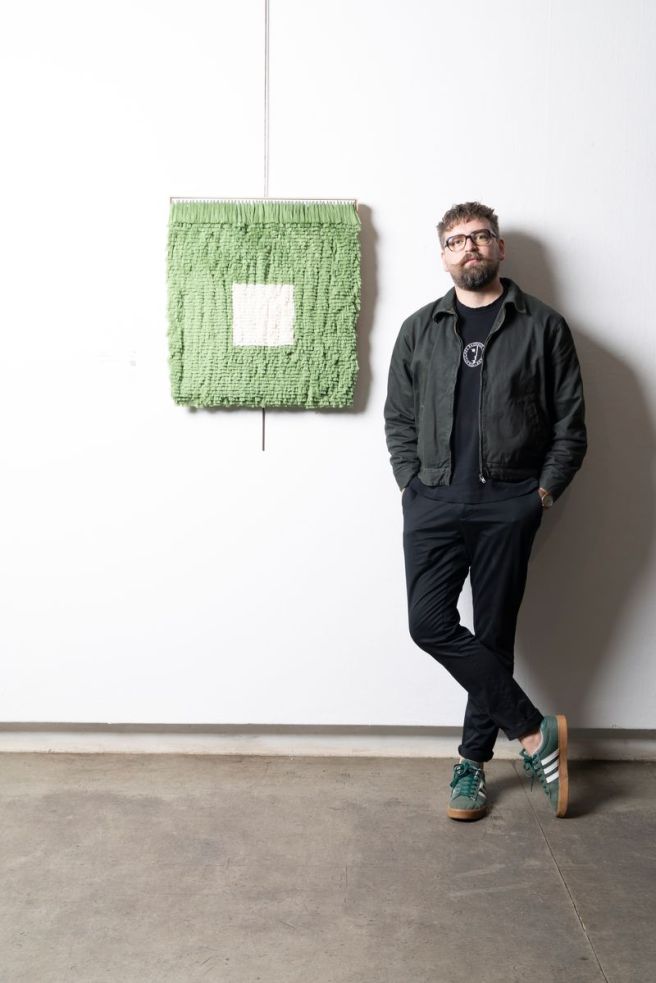
The 2025 Sasol New Signatures Visual Arts Competition attracted more than 900 entries from across South Africa. Juandré van Eck (Gqeberha), an Honours student at Nelson Mandela University, was announced as the overall winner for 2025 for his interactive ceramic installation titled Cycles of the Mind. The work captivated judges with its acoustic and meditative presence, and its poetic interplay of breath, water, and voice. Van Eck received a cash prize of R100 000 and is already conceptualising his solo exhibition, which will be showcased at the Pretoria Art Museum in 2026.
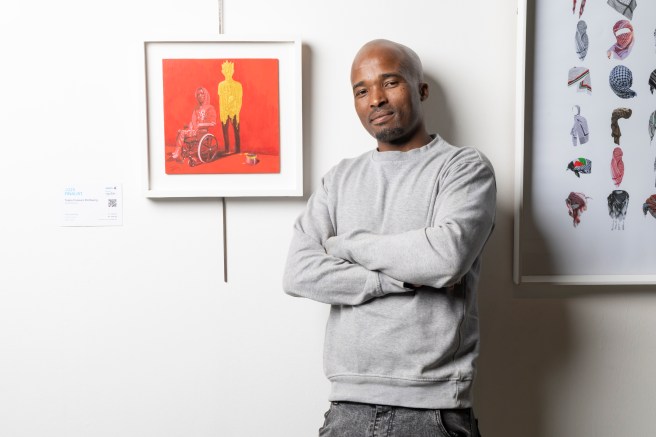
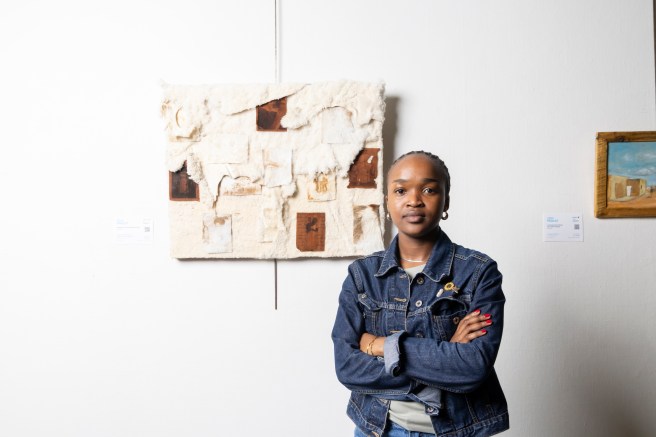
The Runner-up Award and R25 000 went to Thabo Treasure Mofokeng (Johannesburg) for Still Standing, a painting inspired by resilience in the face of adversity
The five Merit Award winners, each receiving R10 000, are:
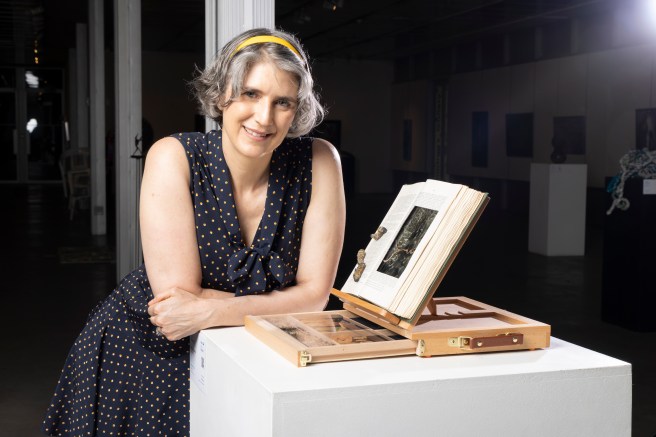
Tammy Lee Baikie (Johannesburg) – Book Worms (mixed media)
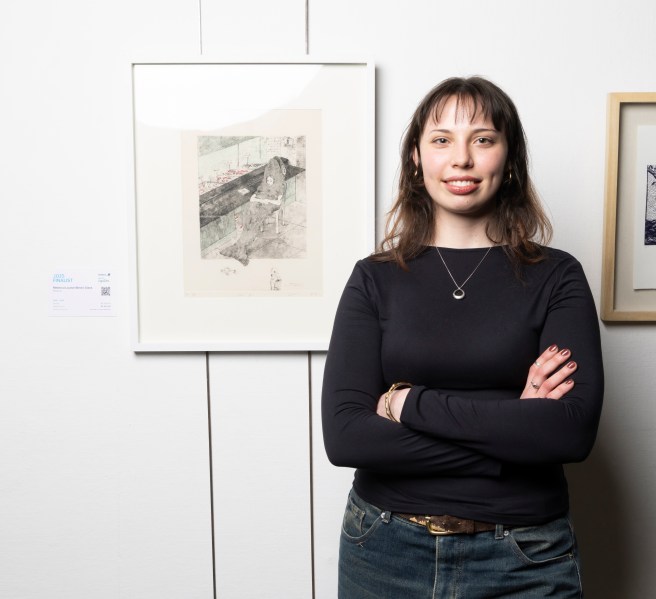
Rebecca Louise (Beck) Glass (Pretoria) – Sell–Fish (etching)
Snelihle Asanda Maphumulo (Gqeberha) – Ngaphansi kwesithunzi sakhe (Under His Shadow) (sheep hide on canvas)
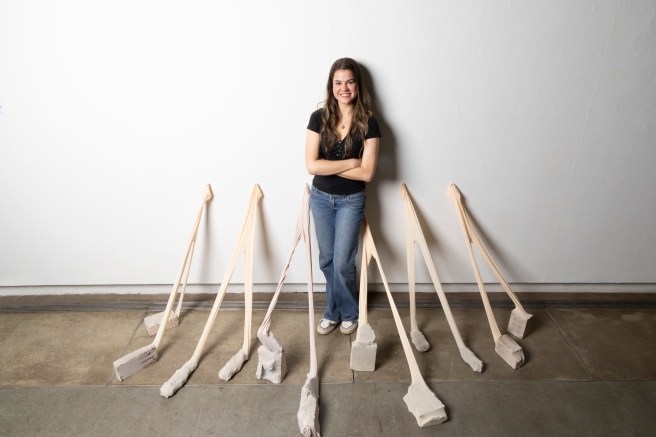
Sarah Volker (Gqeberha) – Taut, Tethered and Torn (ballet tights, stones, cement blocks)
“Sasol New Signatures continues to play a crucial role in discovering, nurturing, and showcasing the next generation of South African artists,” said Pfunzo Sidogi, Chairperson of Sasol New Signatures. “Each year, the competition provides an invaluable platform for emerging voices to share their perspectives, experiment boldly, and contribute meaningfully to the country’s vibrant visual arts landscape.”
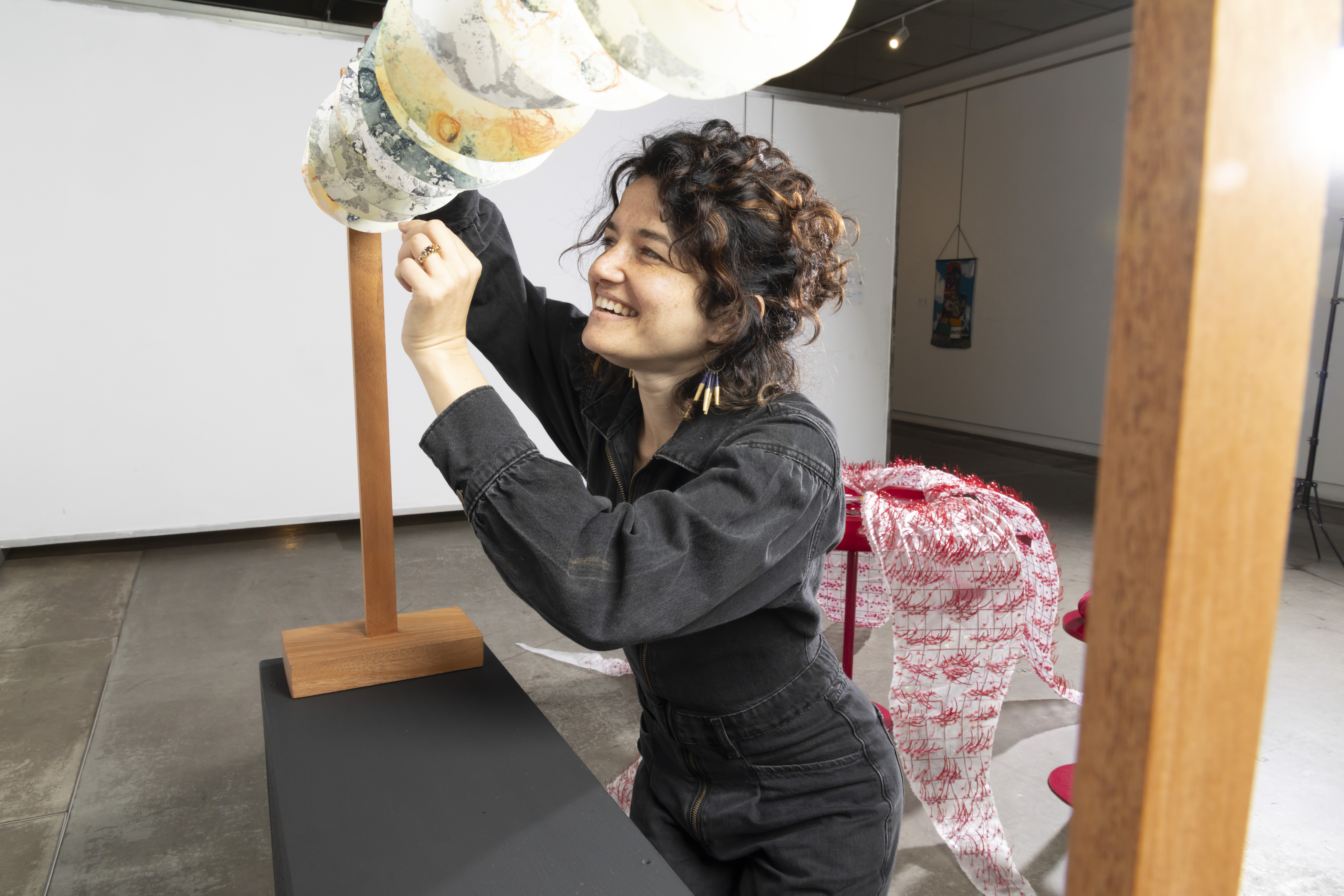

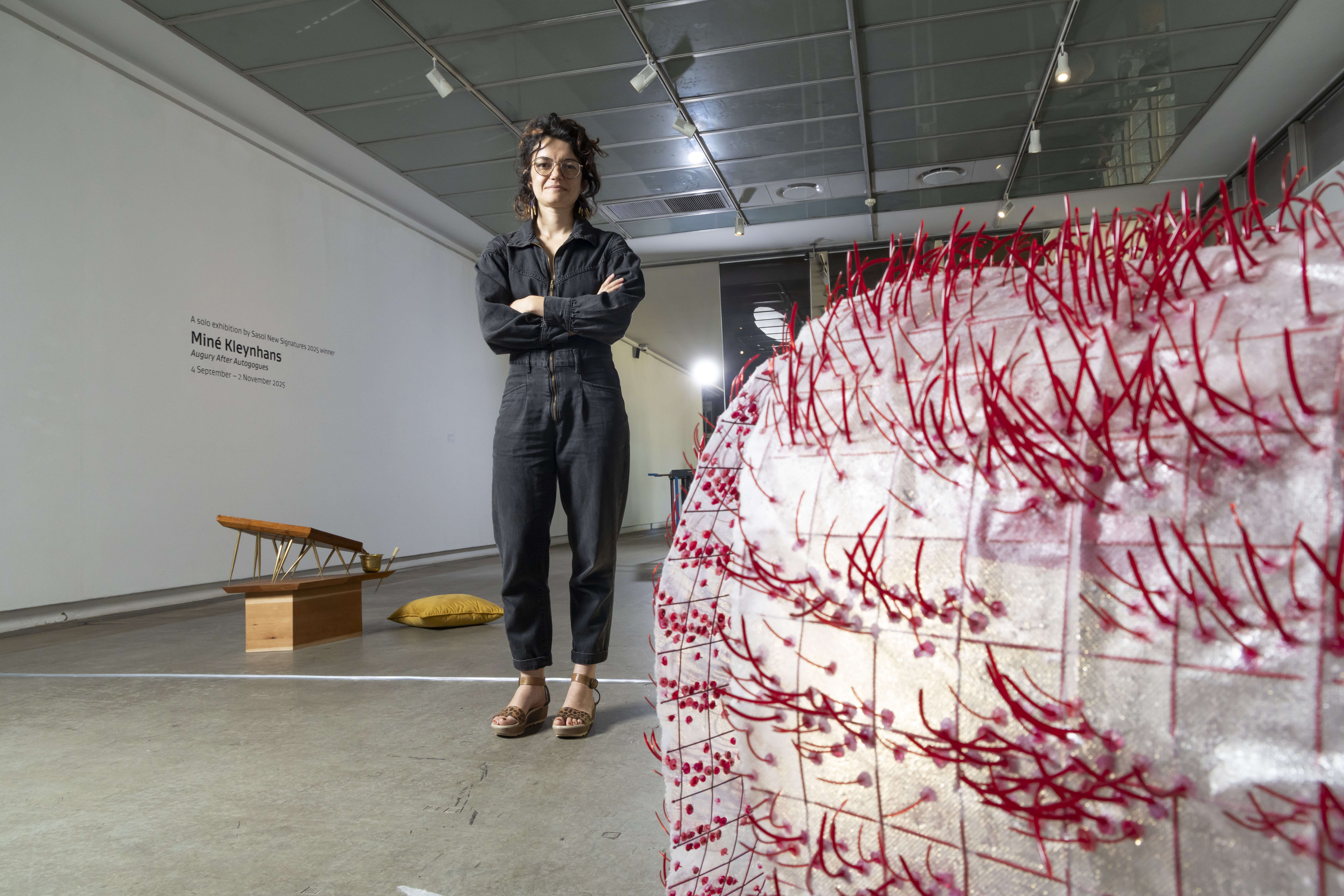
Running concurrently with the New Signatures exhibition is the solo exhibition by Miné Kleynhans, winner of the 2024 Sasol New Signatures competition. Titled Augury After Autogogues, Kleynhans presents a speculative and satirical cosmos in which individual mystics, or “Autogogues,” use invented devices to divine meaning from the overload of media, relationships, and impressions. The works include Orbea kako-occultus, Abacus for Emotional Transactions II, State of Reproach, and Meditations on Resentment (her 2024 award-winning piece). Using a mix of wood, metal, 3D printing, resin, and found objects, Kleynhans constructs intricate instruments that blur the line between sincerity and satire. Through interaction, viewers are invited to ask: In a world saturated with information, how do we make sense of our own inner lives?
This year, the museum experience has been enhanced with QR codes placed beside each work, allowing visitors to access the artist statements for deeper insight into each creative process.
For audiences outside Pretoria or abroad, the entire exhibition, including all finalists and winners, can be viewed through a virtual exhibition hosted on the Sasol New Signatures website. The digital gallery replicates the in-museum experience, ensuring that art lovers everywhere can engage with South Africa’s most exciting emerging talents.
With only two weeks remaining, now is the perfect time to visit in person or online and experience the freshest voices shaping the future of South African art. Don’t miss out on the fantastic art by our future masters of the local art world.
Exhibition Details
Venue: Pretoria Art Museum, corner Francis Baard & Wessels Streets, Arcadia Park, Pretoria Dates: Until November 2, 2025 Museum Hours: Tuesday to Sunday, 10:00–17:00 (closed Mondays and public holidays) Virtual Exhibition:www.sasolsignatures.co.za
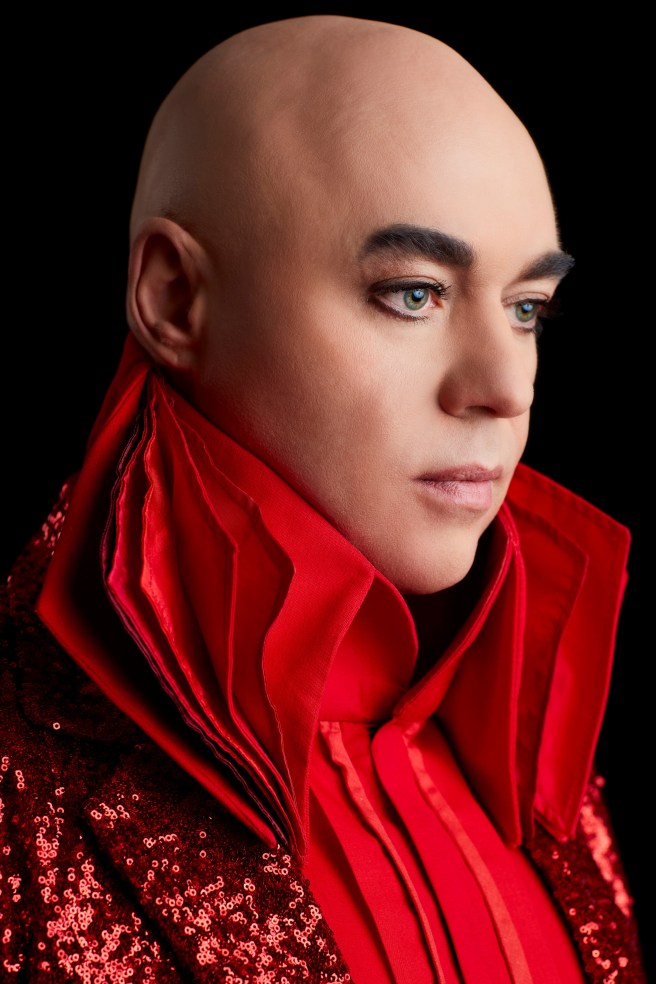
Nataniël is on the go – again – and it was time for DIANE DE BEER to pop in and find out more about upcoming shows, events and anything else happening in this prolific artist’s life:
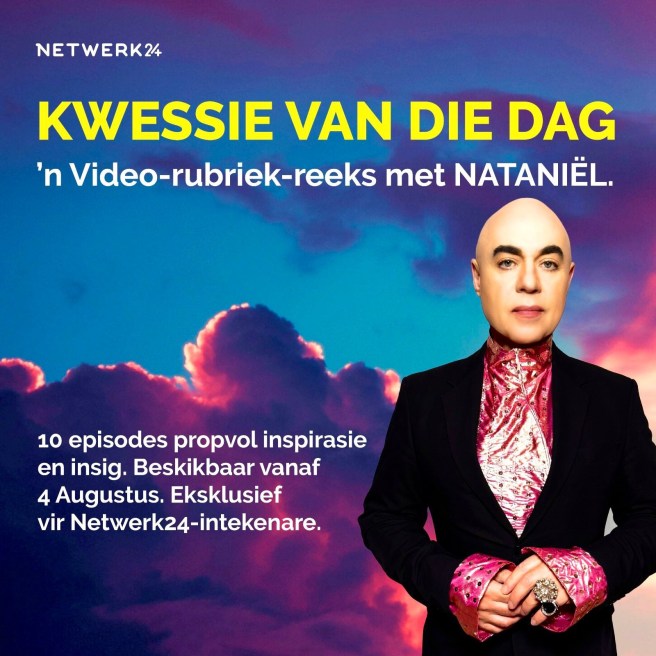
What is keeping him up at night and awake at the crack of dawn is the work on his latest podcast series, which has become yet another of his performance features since his first series a while back. Kwessie van die Dag, his brand-new video column, starts on August 4 on Netwerk24.
As with anything he does, Nataniël approaches these latest podcasts with everything he’s got. “It’s as much work as a TV series,” he notes. And for this perfectionist, it is. He simply cannot do things haphazardly, with quality a constant taskmaster.
He is aware that everybody has turned to podcasts and his will be the best. This isn’t boasting because he is genius when it comes to storytelling. There’s no competing with this conversationalist.
It is all about the words which he has to learn by heart – 3 000 a week! They are his words, he has written each one, but then he has to get them tripping off the tongue. While it comes easily, he believes in scripts and knows exactly what he has to do and how he wants it to sound. So while there are many copycats, few can master him at his craft.
I often see pieces written by “Nataniël”, but it’s easy to spot when someone tries to capture his style because it is so unique. And this is where his podcast will pass with flying colours. “I don’t like waffling,” he says as he launches an attack on what he has labelled “electronic pollution”!
“There’s enough rubbish around.” He has an opinion which his followers will be familiar with, but he also loves facts when he is dealing in a specific subject. One of the many hurdles is the battle of language. He will be speaking in Afrikaans and to capture a language in this way is fraught with many pitfalls especially the way we mix our languages in our daily conversations.
It is clear that this is his latest challenge but also part of the excitement that charges his existence.
He is always busy creating and many of the things might seem as though they have a familiar pattern which, if you study them, they don’t. Into that mix, he is also constantly injecting new accomplishments which keep him on his toes.
“Everyone invites me to be a guest on their podcasts.” But for him there is a specific reason to engage with people in this fashion. “I want to address issues and for me it is about inspiration.”
BOEK • BYBEL • BIOSKOOP is the title of the show he is doing with organist Zorada Termmingh, a friend from varsity, together with his accompanist, pianist Charl du Plessis. Knowing something about his creative mind, he will be pulling all their respective talents together in a spectacular bouquet.
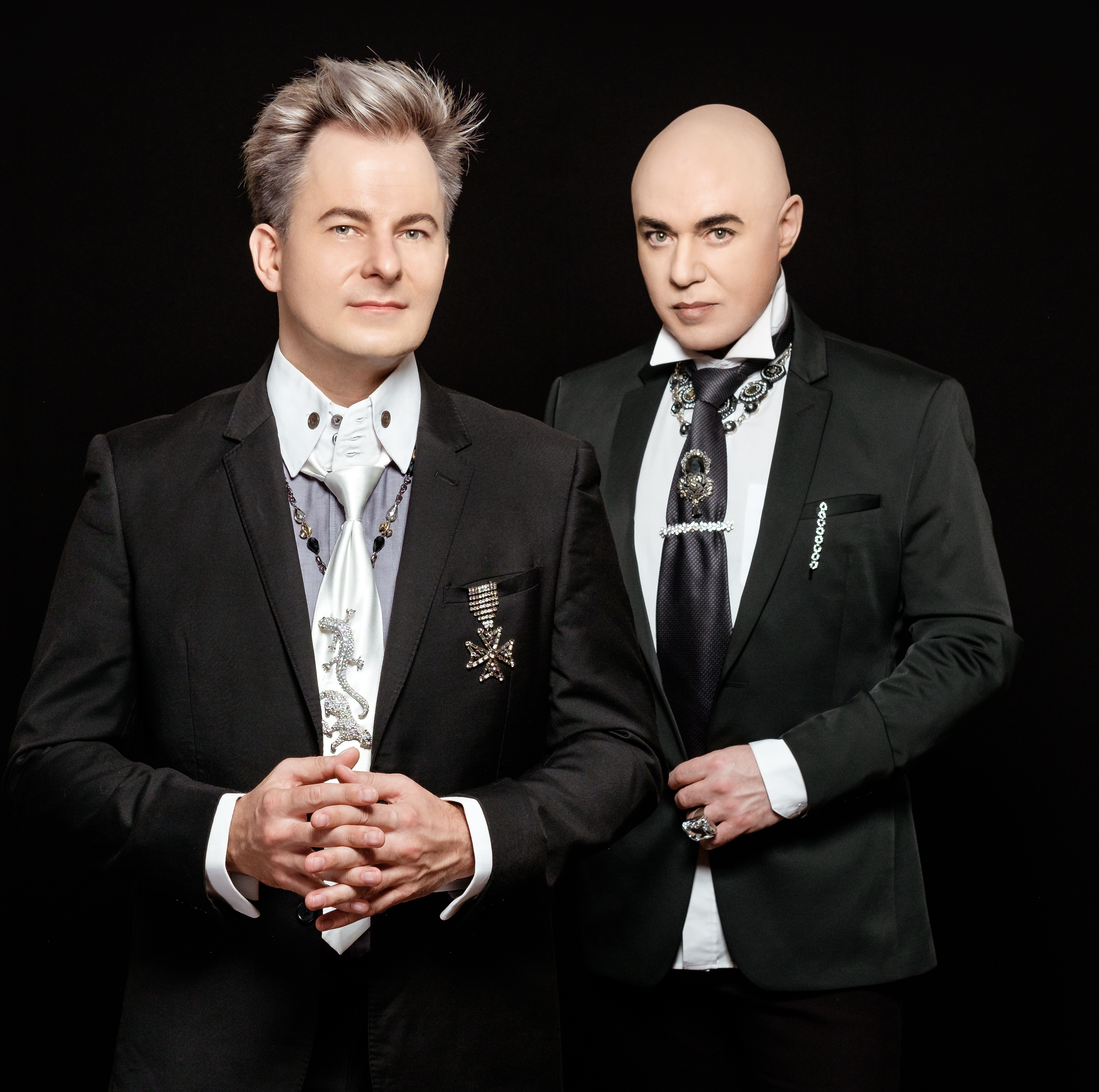
We’re in August and it is all about women. Composers, writers, singers, designers, as well as timeless characters from movies, classic literature, Biblical tales, art and theatre are their inspiration in this colourful show full of stories and songs. Zorada and Nataniël have performed on stage many times, starting during their student years. Charl has been his accompanist (apart from establishing his own career as a solo artist and performing with the Charl du Plessis Trio) for the past 25 years. And this is not the first outing for this trio of consummate performers.
It is a one-off in the capital city on August 13 at 7pm and the Ned Geref Universiteitsoord Kerk. The show is 90 minutes (more or less) long.
In September he returns to one of his most ambitious projects, Mass for the Good Princes (recently released on CD), which will be performed in the Cape for the first time thanks to the goodwill of the Atterbury Trust.
It’s a double whammy for Nataniël – one of both joy and hysteria. This was one of those accomplishments he had dreamt of for a very long time. Writing it was an almost impossible feat with his kind of schedule, and with each performance he has to once again memorise the Latin text, which is a killer.
This will be the 3rd time that he attempts this daunting exercise and while it stretches even his seemingly limitless determination, he can’t resist it. It is based on the classical structure of a Latin church mass with a sacred composition by Nataniël in six parts which includes a prayer for goodness, new leadership and the hope of a new generation. It will be sung in English and Latin with descriptions and translations in Afrikaans.
It will be presented at the Ned Geref Welgemoed Church on Saturday September 20 at 5pm. He will be joined by the Charl du Plessis Trio (Charl with Werner Spies and Peter Auret) as well as organist Ockie Vermeulen, guitarist Luke van der Merwe and the Akustika Chamber Choir led by Christo Burger.
In March this year, Nataniël and Charl celebrated 25 years on stage together and they seal this with a Gala Concert at Aardklop – on October 7 (7pm) and October 8 (10 am) in the University of Potchefstroom Auditorium.
This won’t be an ordinary concert. These two artists haven’t only shared 25 years on stage and many kilometres of travel through the South African countryside for one-off shows, but this was also the start of Charl’s stage career, which has been quite stunning to witness from the start – one he has since established both nationally and internationally – a feat for someone who started out as a classical pianist (one of the most difficult careers to pursue) and accompanist. Today he has a doctorate and is celebrated as both a classical and jazz artist. I can’t wait to see these two face off on stage on equal footing. For those fortunate enough to see one of these concerts, I predict something unique.
Nataniël is already making promises that this won’t be a rundown of what they have already accomplished. They will be celebrating today and tomorrow. “Who are we now and how do we see the future” will be their aim.
“Why would we return to the past? That’s done and we have all been there.” And in typical Nataniël fashion he predicts: “I want to hear an intake of breath when I walk on stage!”
As he so astutely confirms, it will be 70 years of experience when the two of them mark their stage partnership.
While talking partnerships and friendships, one of his closest friends, actress/comedian Marion Holm, will be interviewing Nataniël on his latest book of short stories titled Sweetie. Book discussions aren’t his favourite, but if he has to do it, Marion would be his choice. “She can physically shut me up just by barking.” You’ll have to be there to understand exactly what that means. They go way back and to experience these two like-minded actors sparring verbally, you don’t want to miss that. They’re a scream individually, together it’s an exuberance.
Your ticket will be a copy of Sweetie which can either be bought before the time or at the Exclusive Pop-Up in the book tent. The first 200 people with a book in hand will be allowed into the space, which will be closed off for this event. You won’t be able to listen in on the sidelines. The Sweetie discussion is going to be that exclusive and is happening on October 8 at 3pm at Aardklop.
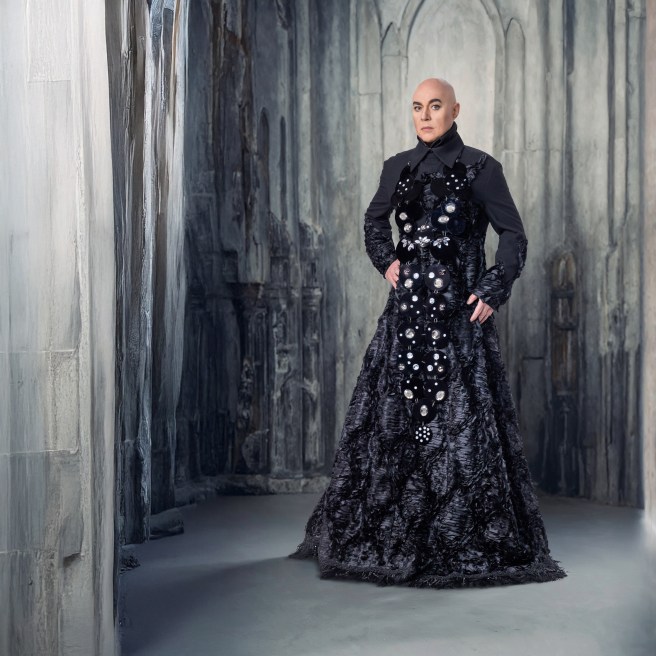
And it’s not over yet by a long stretch. A photographer who for more than two decades documented Nataniël’s career, Clinton Lubbe, who immigrated a few years back, is back in town for an exhibition of life-size Nataniël pictures titled Parade, another first for Aardklop. Their collaboration has also been running for more than two decades and Nataniël describes Clinton’s camera as a paintbrush, because of the way he creates pictures. They’re not simply pictures, they’re artworks, he notes. “I’m going to be the Naomi Campbell of Aardklop,” he says with a smile and a wink.
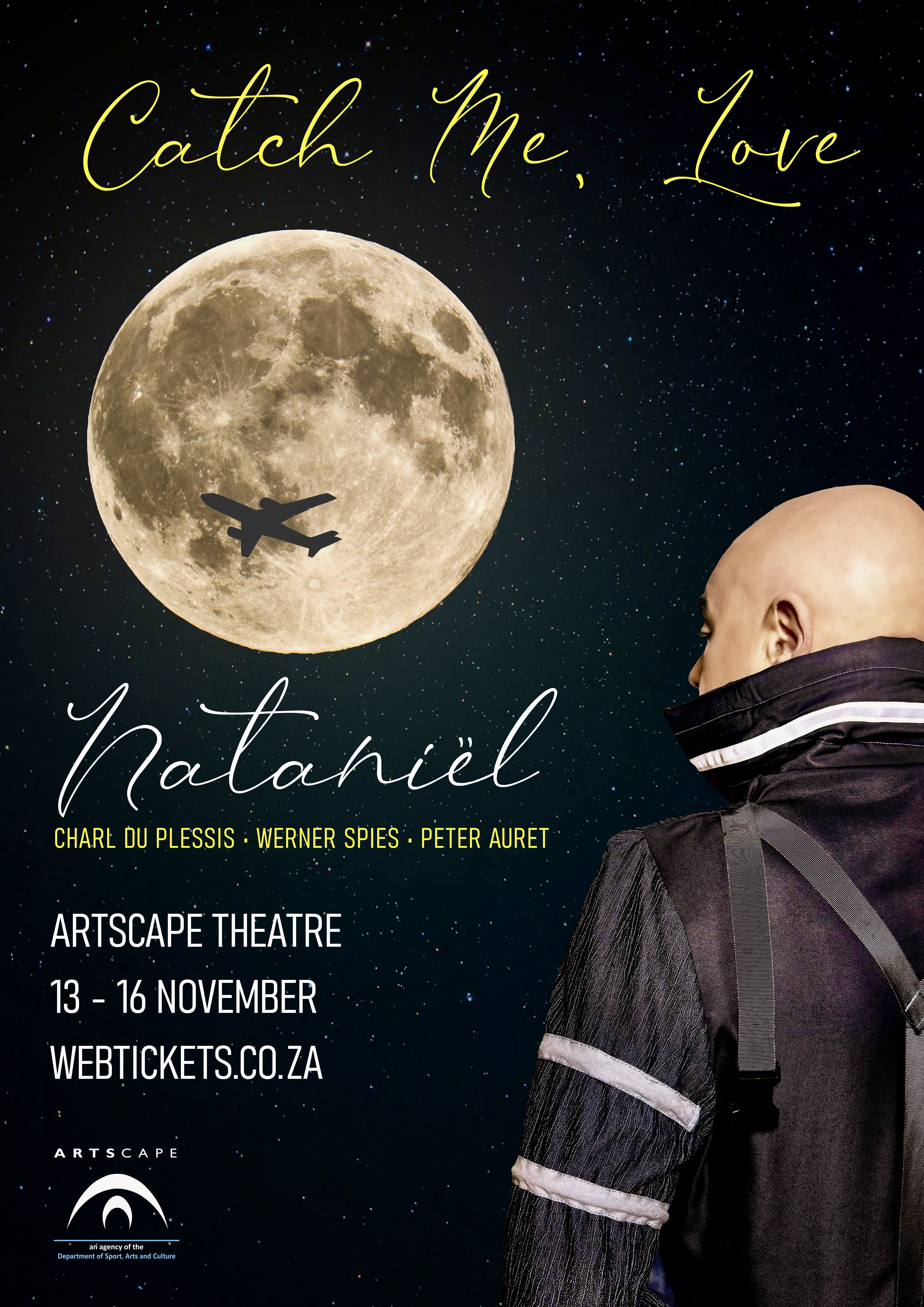
Finally, but just for the moment, there’s his latest production, Catch Me, Love, which will be staged at Artscape from November 13 to 16. He is already busy writing, which is unheard of. He usually works on his scripts much closer to his performance than a few months, but looking at his schedule, he knew he had to get ahead.
This one is going to be visually and structurally different to his former shows, he says. And although it is still early days, I know he has already dreamt and planned it in detail. It will only feature in Gauteng in the New Year because in-between there’s the promise of a French countryside holiday, his annual escape (when he can manage) to one of his favourite places, which is what motivates him these days.
Watch this space for fresh announcements or changes. They will be coming …
In the programme notes online it says that this play is a masterclass in writing and performance – and that is exactly what it is. And the aspects that I found most intriguing as being a born South African, I have been dealing and watched others sharing their trauma in this country for many decades.
Some similarities especially in text will occur, but I am passionate about people creating theatre – especially solo theatre.
Having to travel from Pretoria for most of my theatre, I consider very carefully which plays I want to see whether good or bad, just work that will appeal to me. And this is where theatre sometimes becomes problematic. If you are going to see a play that is 70 minutes long, it becomes a money issue. It has to. Time and travel become a worry.
So I have started coming up with fresh solutions to make my choices easier. With this one, I had already booked for a new musical opening and I thought I could slip this short prodcution into the mix without any difficulty. I see many more plays on one day when attending a festival. And that is what I did and will do more of in the future when the problem rears its head.
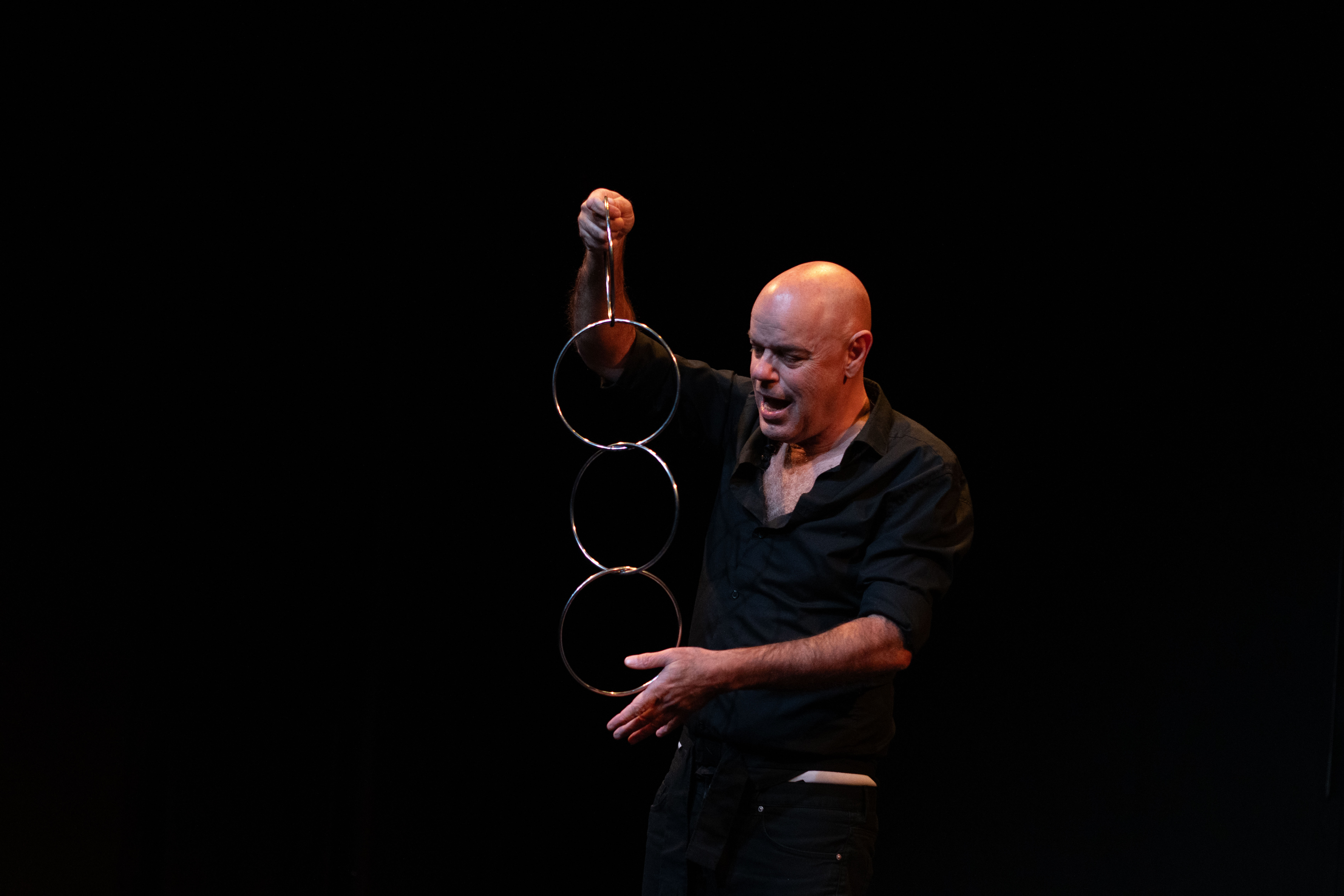
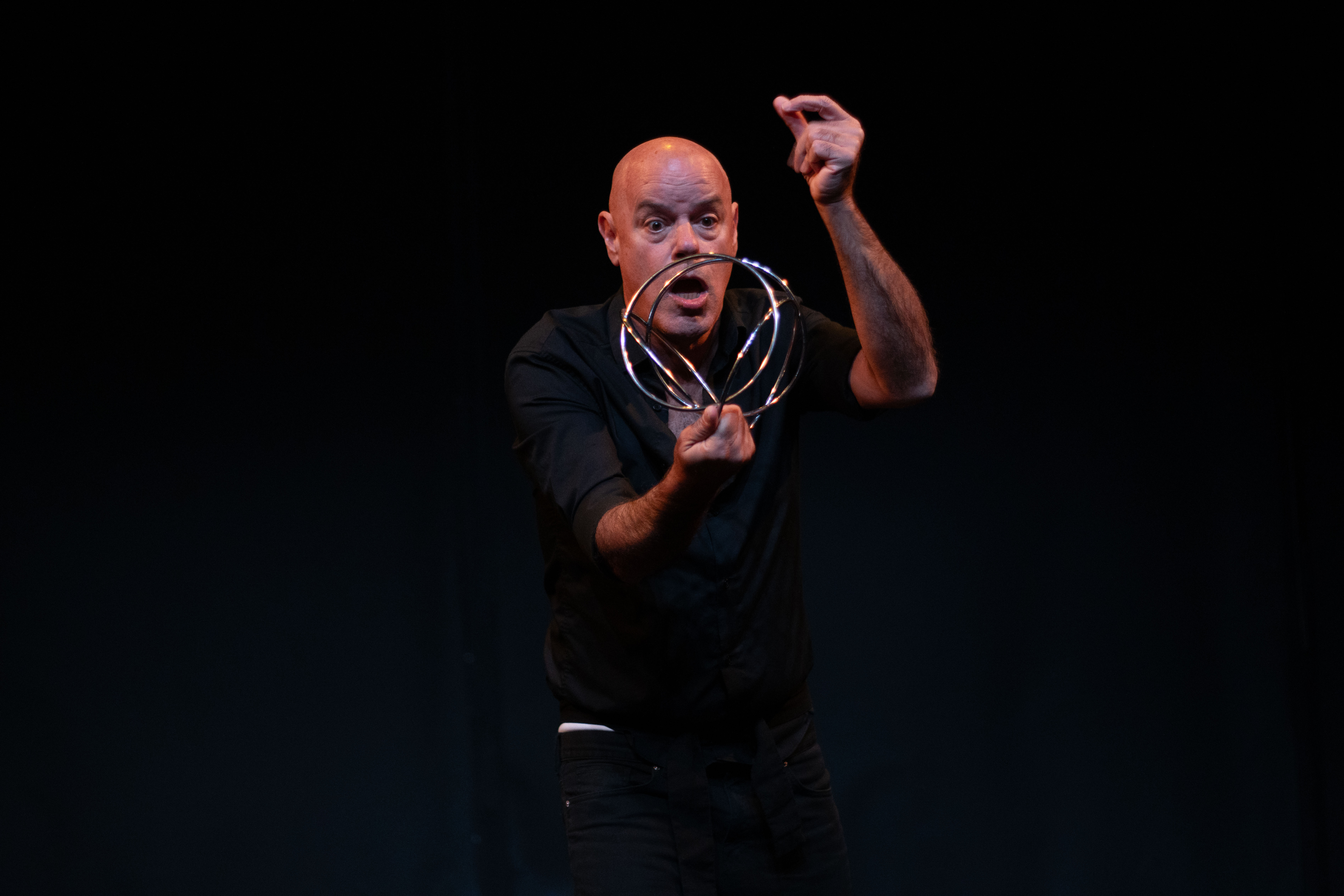
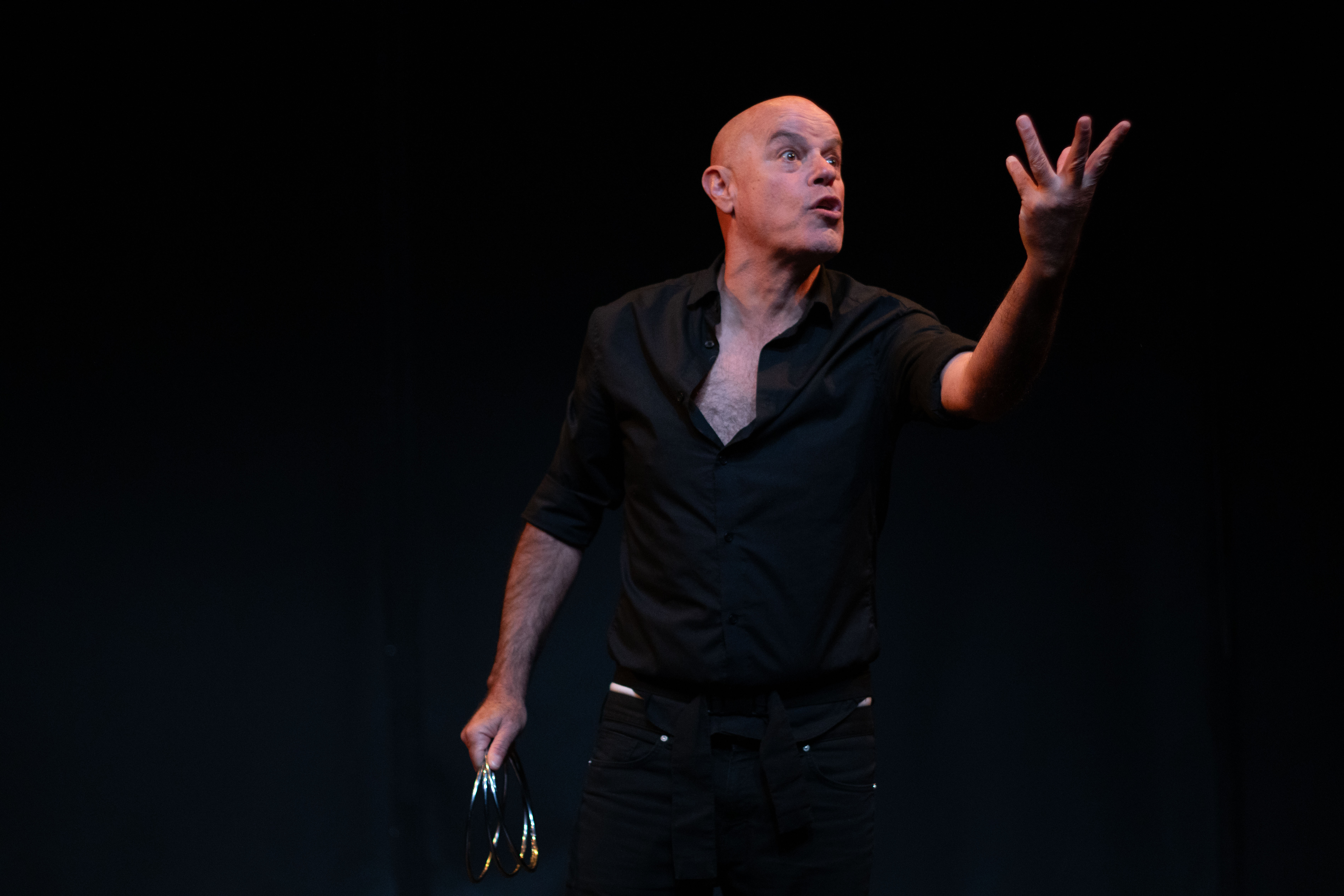
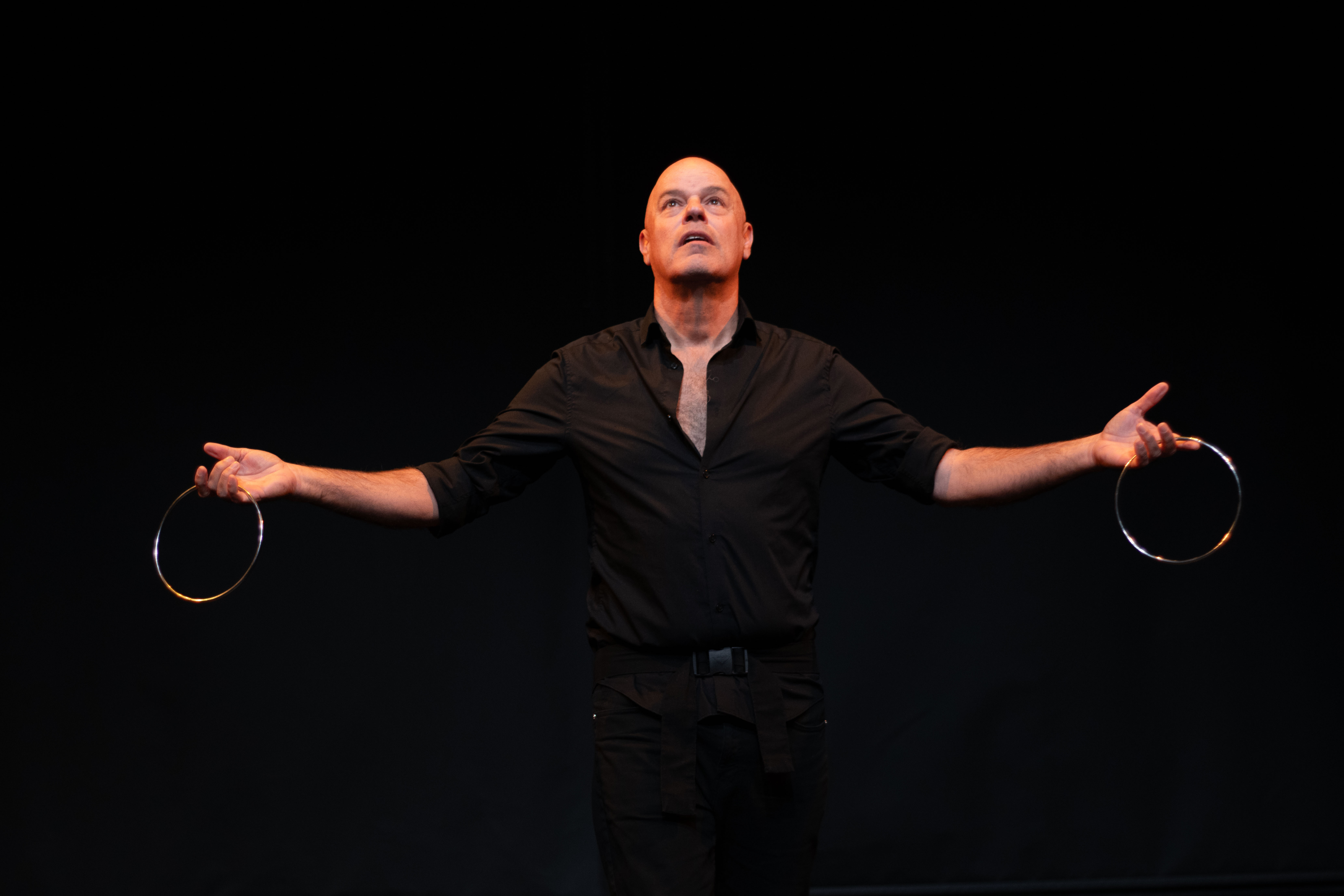
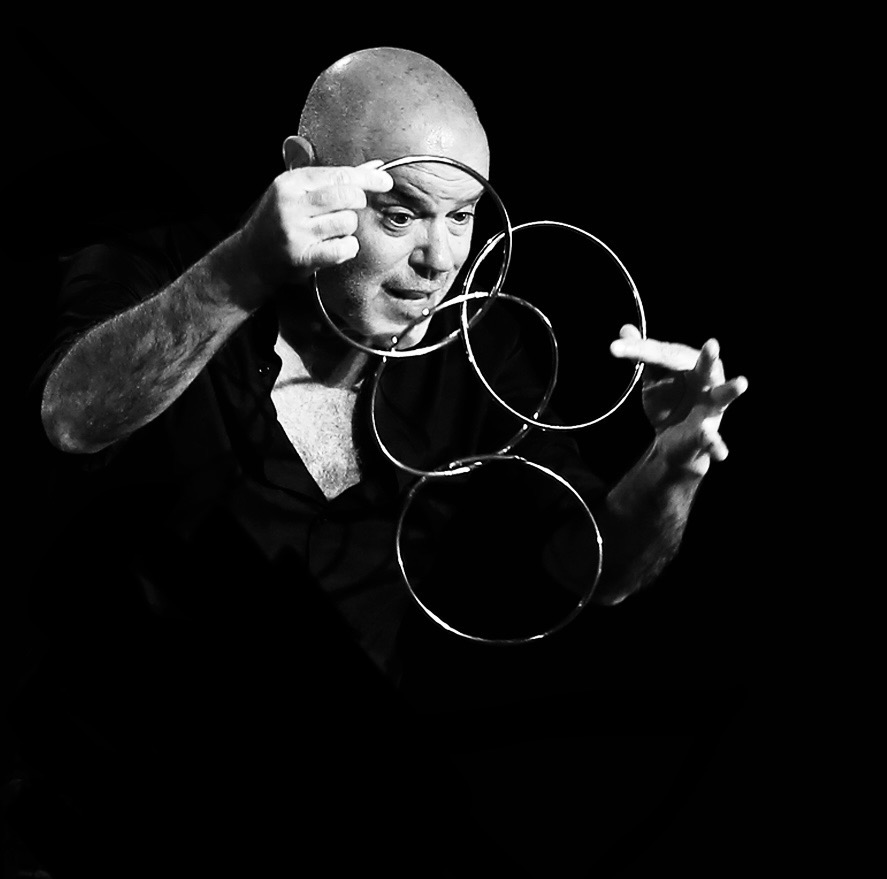
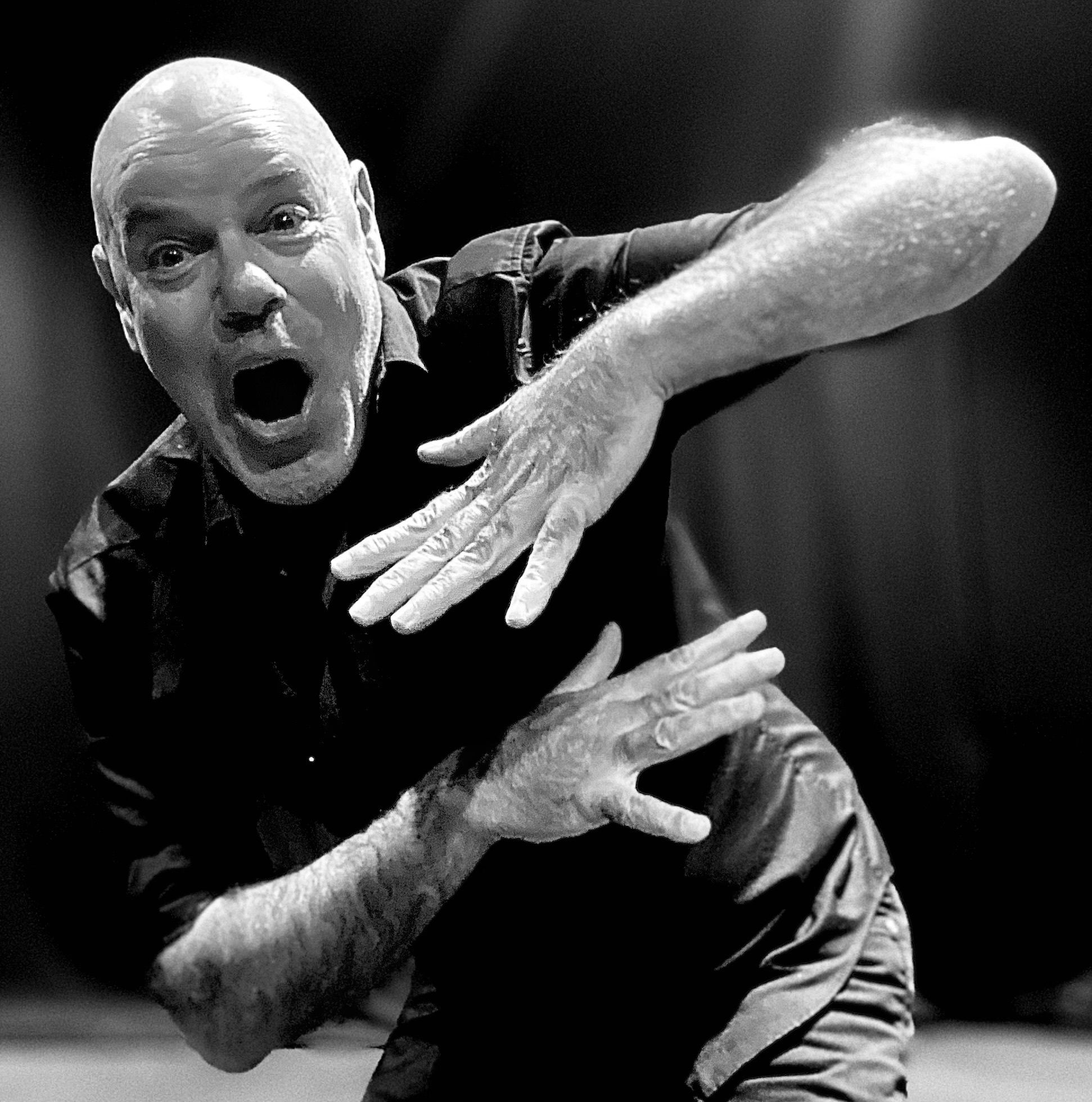
Brincat, who is a first generation South African, is described in many different ways and with many accomplished skills from acting, juggling and magic artistry to fine art, chef, writing and producing one-man shows, it seems.
But this is my first encounter as far as I can tell with this versatile artist. As he’s based in Cape Town and visits the National Arts Festival, while I am based in Pretoria and cover the Afrikaans festivals around the country, his work is unfamiliar to me.
The Moon Looks Delicious from Here is a man’s struggle with identity and finding his own place in what should be his world but isn’t always that straightforward is what he shares and struggles with.
It is familiar territory stretching from the ‘60s tot ’94, but it’s always interesting to discoverhow other people deal with issues that come up for many of us in different ways. It is also fascinating to see how others approach their work, especially when at play, as solo shows can be limiting, depending on the content and how familiar you are with the subject.
He had me from beginning to end; engaging with his audience wasn’t an issue for him even with a most unusual mix on a Sunday afternoon. Half of the 100-plus theatre audience (and I’m guessing numbers) were elderly white couples and the other half were young (between 20 and 35) Black men and women. And throughout there was laughter from different quarters. It was a journey of remembrance for oldies and probably one of illumination for youngsters.
It would have been fascinating to have an audience talk after the show in this instance. This is Brincat sticking his toe in the water and it feels good. Hopefully he will be back so that we can get to know more of his work and his content.
Diversity was the element that dominated this year’s fantastic KKNK Festival (in Oudtshoorn at the beginning of the month) – from the audiences to the artists, also including the plays and performances. DIANE DE BEER reports:
PICTURES: Hans van der Veen (unless otherwise stated.)
On one day you could see a solo show, a play with both words and movement, a translated modern classic and a new work that will outlast some of us watching.
Yet as is often the case at this festival, theatre was what really captured the imagination – and true to the diversity theme, it played out in many ways.
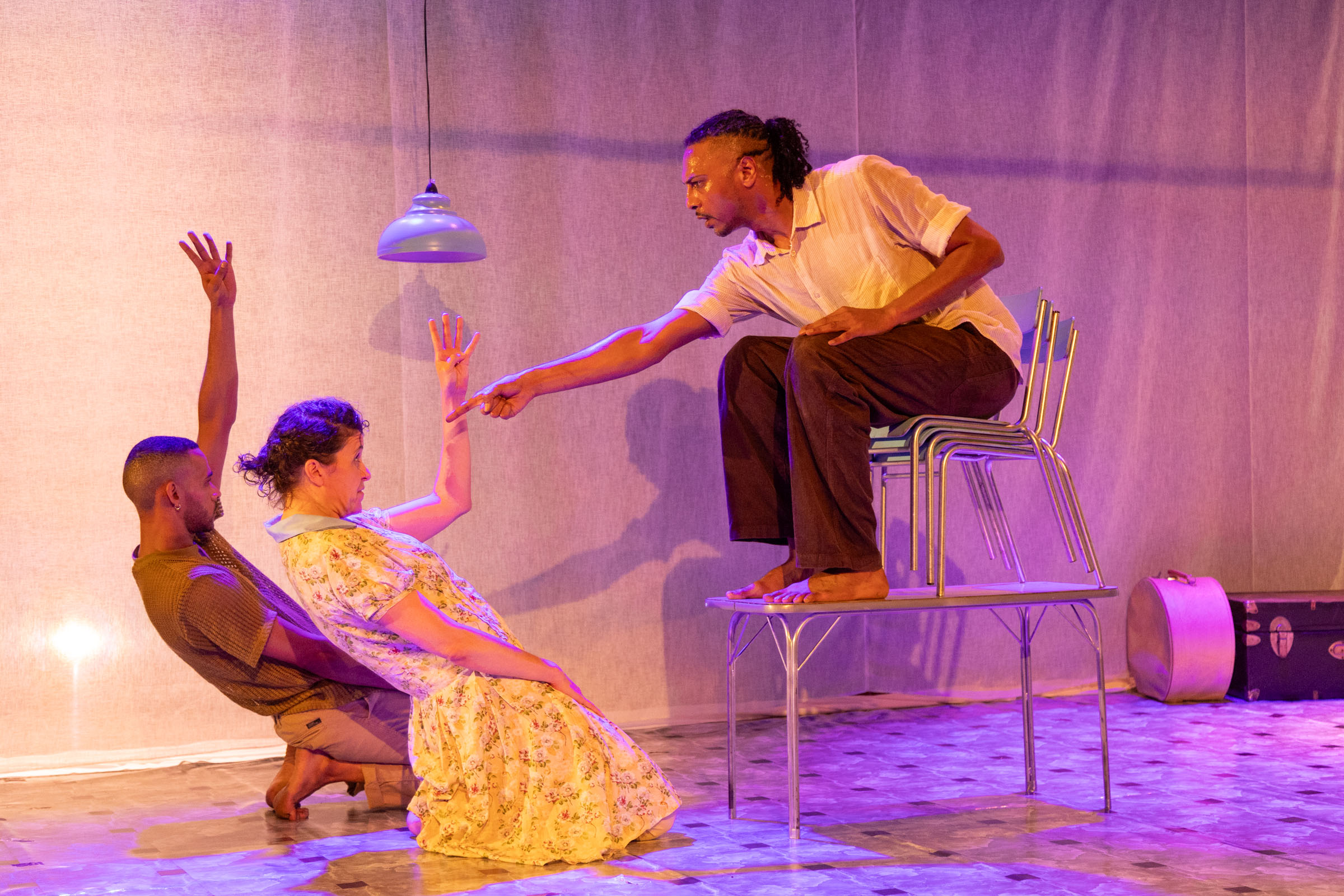
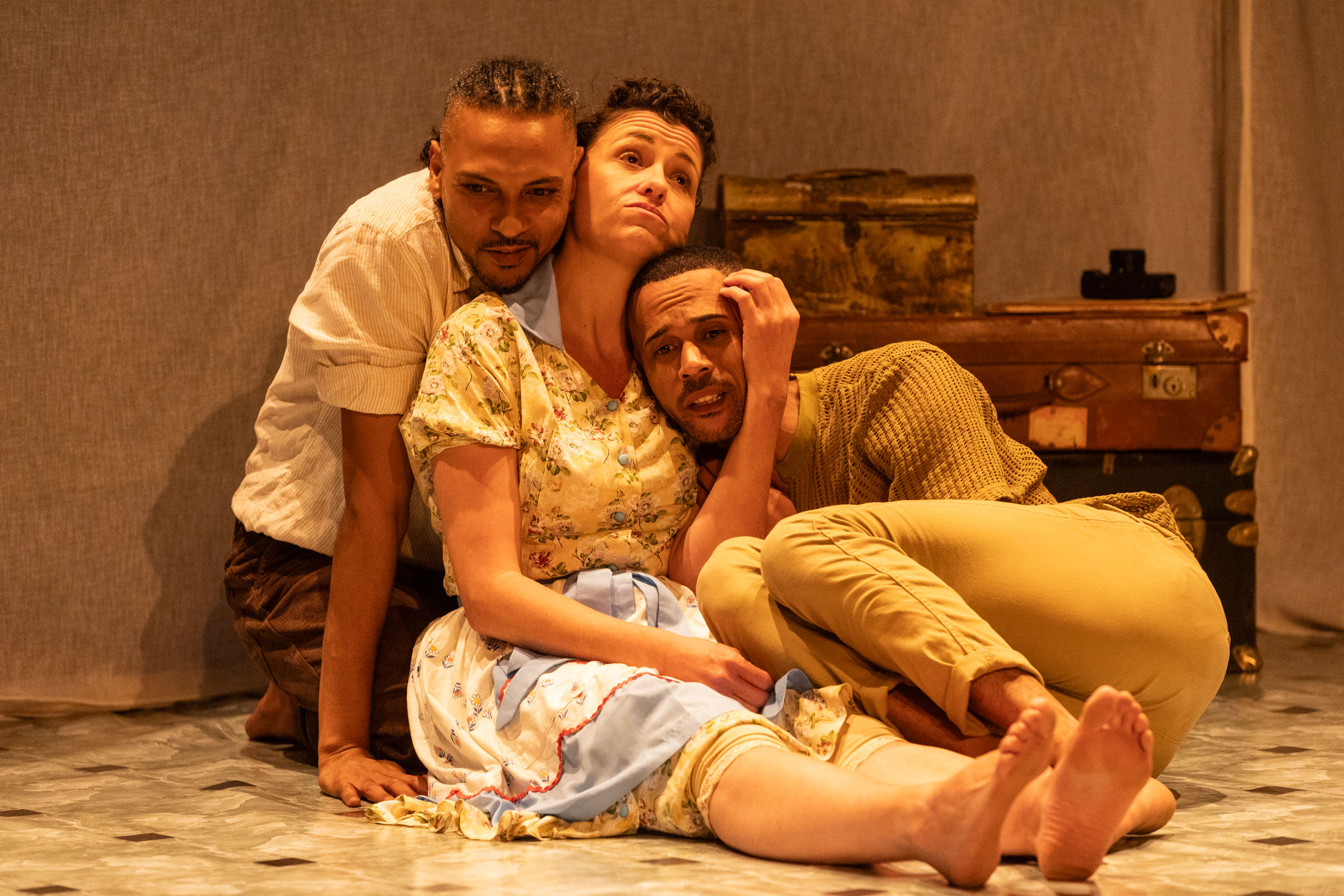
For me it started with a bang with a piece titled Die Een Wat Bly (which can also be seen at the upcoming Cape Town Suidooster) with a cast consisting of the two talented dancers from Figure of 8 Dance Theatre (Grant van Ster and Shaun Oelf) who in this instance combined their extraordinary movement with the insightful words of Wessel Pretorius who seems to deliver an endless stream of brilliance. And the third member of this inspired cast is Daneel van der Walt who is an actor who has emerged these past few years as someone to watch.
Everything seemed to combine beautifully, from the story, how it was written, the excellence of the casting and the way movement underlined and emphasized every emotion so magnificently. I couldn’t resist catching it a second time and it confirmed my initial instincts that all the elements just flowed together seamlessly to present perfect theatre. I could easily watch it again … and again… and again.
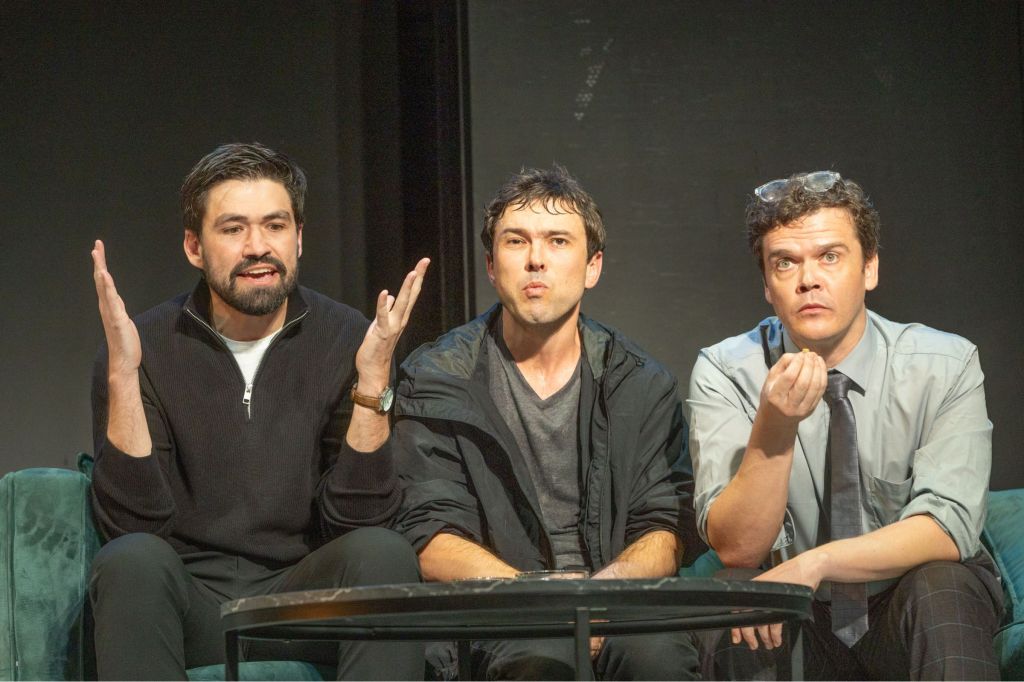
In a different guise, Pretorius performed in Yasmina Reza’s translated text Kuns (which had previously been performed by two of the actors, also directed by Marthinus Basson in the English version titled Art). Pretorius and Wilhelm van der Walt (part of the former cast) were joined by Ludwig Binge in a play that satirises the often achingly precious way people view and talk about art.
Because of the NOW, a time where an anti-wokeness and fake news seem to dominate everything, it worked even better than the first time I saw it and with these three adventurous actors (all three Basson graduates who have established exciting theatre careers), it was perfect for this festival which always celebrates.
Basson also delighted with a play which has been on the circuit for a while, and I was thrilled to finally experience. Who would not be intrigued by a play titled Kruispad, of die legende van die goue vis.
Picture: Nardus Engelbrecht.
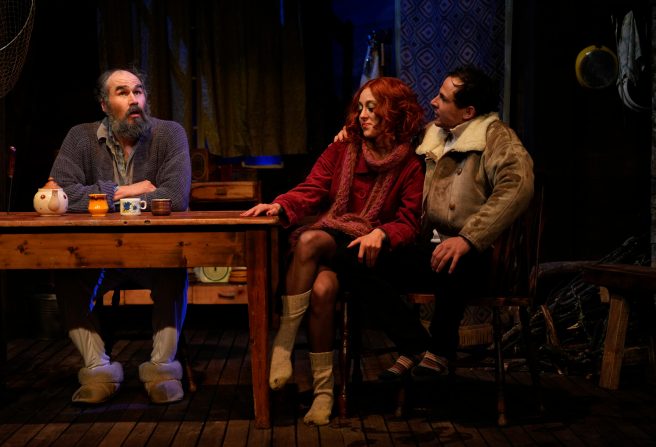
Again the casting blew me away with Eben Genis giving one of his finest performances in the role of the eccentric recluse Oswald whose life is rudely interrupted by two lost and rain-drenched youngsters played by two of the best, Edwin van der Walt and Carla Smith, with a glorious copper-coloured wig which completely changed her character without her having to say a word.
Because it plays with temptation and loyalty, it reminded me of the film Indecent Proposal in which Robert Redford offers to buy Demi Moore for a million dollars for the night.
Masterfully written and performed with great gusto you are never sure what is real or not, whether something is fact or fiction, and in fact when someone is being honest or not. It’s like trying to solve a puzzle that tortures and teases with a few disruptive detours that keep you slightly unbalanced as an audience.
There was so much more in the theatrical realm with solid performances in the Hennie van Greunen translated and directed Annie+Helen with Cintaine Schutte as Annie, the governess/teacher in the Hellen Keller story and Judi Hattingh as the severely damaged teenager who cannot see, hear or talk.
A mighty struggle ensues and from beginning to end, the two actors battle, and sometimes, bruise one another in a fight for something so much more than survival.
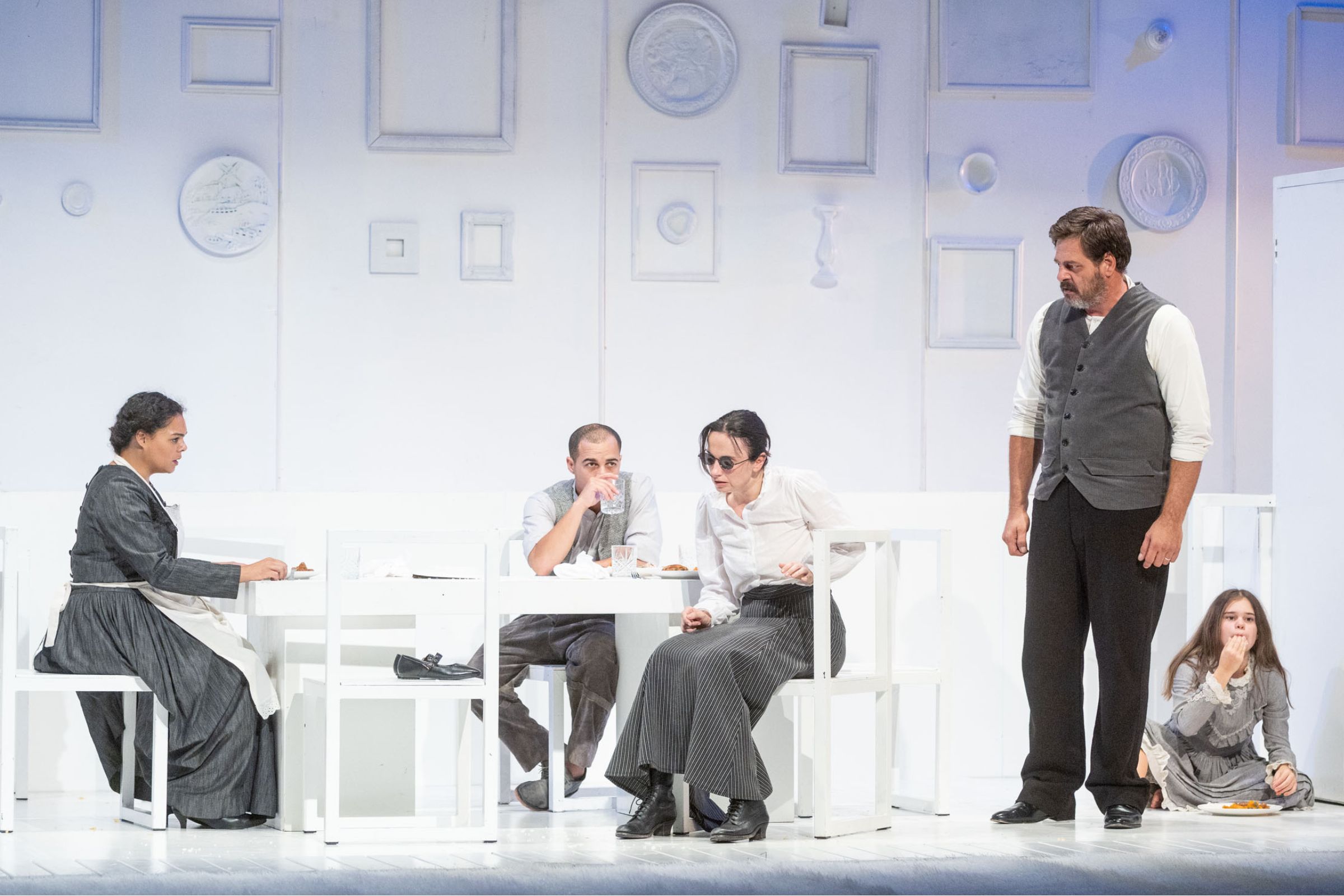
I have always been a huge fan when some of our younger directors (and he might take exception to that description) take on the classics, and I was excited to see Speelgoed van Glas translated, directed and designed by Nico Scheepers.
Casting was a further incentive with Annamart van der Merwe, Carla Smith, Ben Albertyn and Mark Elderkin on board, and was also alerted by all the awards they had already received, all of them thoroughly deserved. Van der Merwe’s bravura performance as the brittle mother is bruising as she embodies a woman who is desperately fighting to hold on to the only power available to her, that of motherhood (and in this instance also victimhood).
Her children, especially her son, have no such illusions and their confrontation reminds one of how a home which should be a protected space for a family can become a warzone which holds only fear and a frantic will of those threatened, to flee and find emotional freedom.
It’s devastating writing, smartly translated and, set in the present with a cast who have had the time to hone their craft and honour the play.
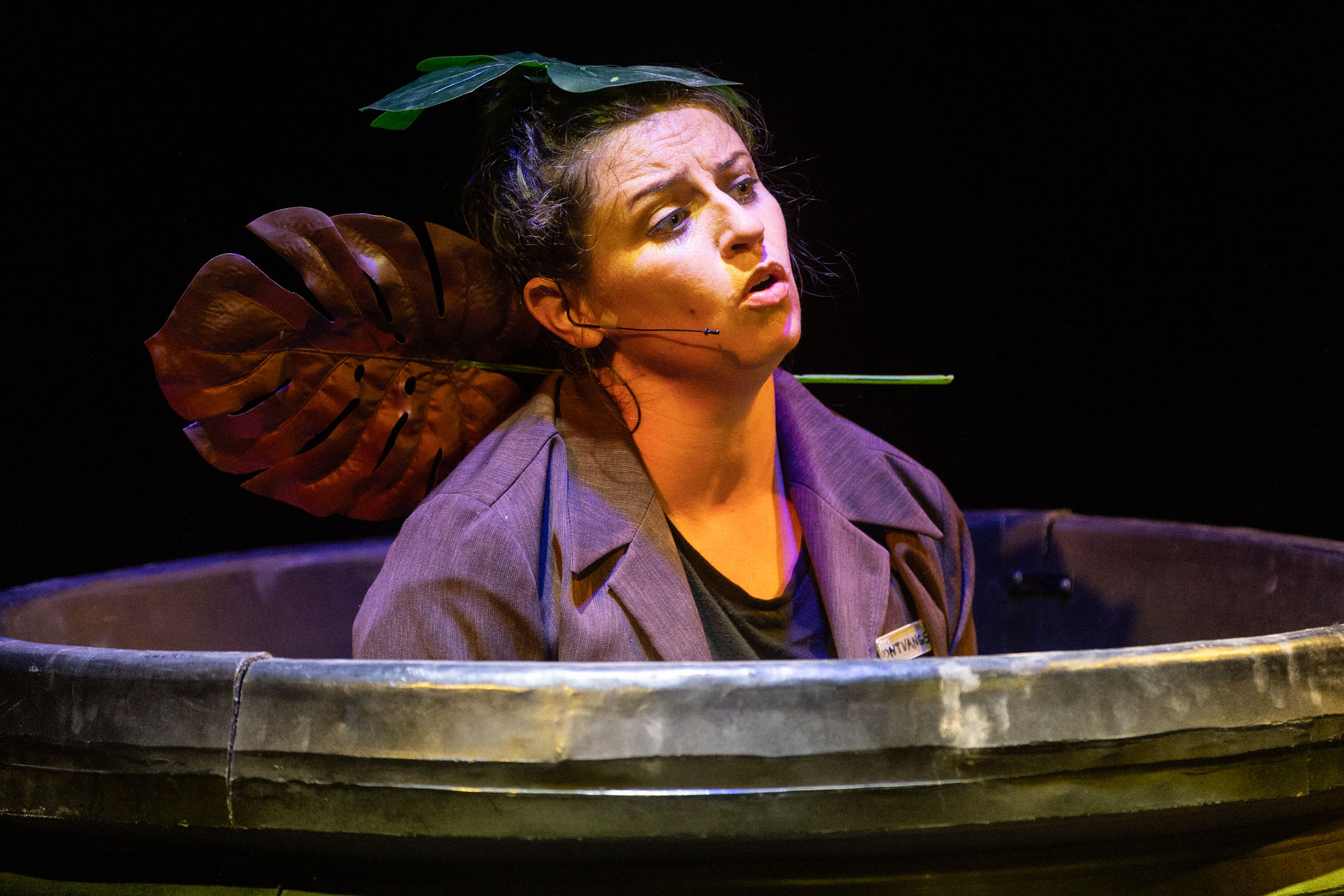
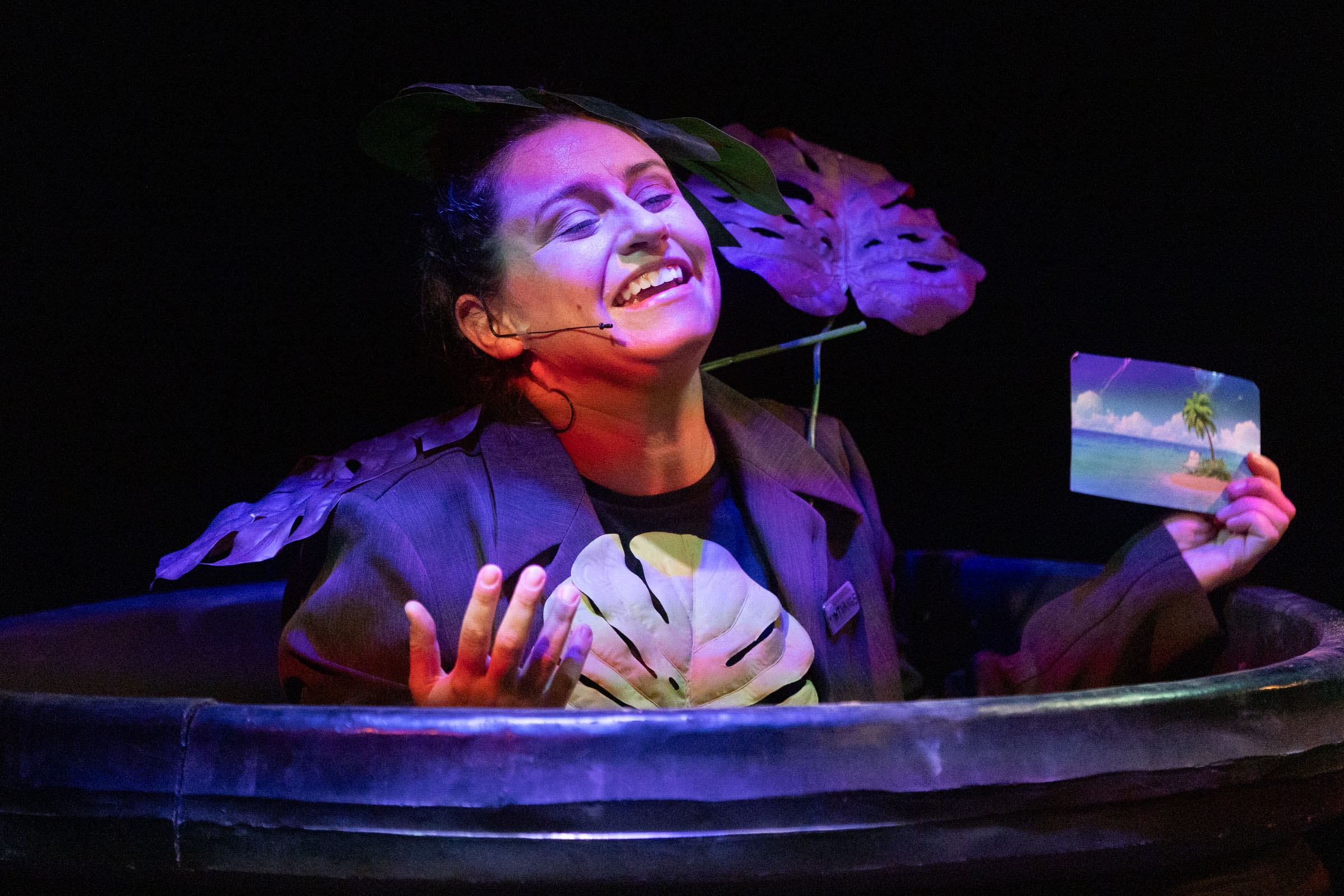
Also Die Potplant: ‘n Tragedie written and played by Karli Heine who changed what had previously been part of something now called Blitsteater into a longer piece had an interesting effect on me. It’s a wonderful idea with a script that’s inventive with underlying pathos – and yet, while it still had the impact and was cleverly stretched into a more comprehensive play, I think I preferred the shorter version.
It might have had something to do with the impact it had the first time round as well as having lost my heart to that version, I was more aware of the padding. Yet Heine is worth watching. She is someone that thinks out of the box as well as having the courage to take chances. You need all of that in this challenging profession.
Another joy at a festival is discovering new talent as well as witnessing the creativity of artists and how they find ways to explore their craft in a world with no boundaries yet many obstacles. Bibi Slippers, who can only be described as a compulsive creative did two shows as part of the Blitsteater (a bit like fast food, fast theatre), but there’s nothing fast about what she does with her imagination.
Picture: Stephanie M. Gericke.
I have always been fascinated by this young woman who has carved her own career in a very individual way. She pops up all over the show and her strengths lie in her words. She knows how to use them and has two spectacular poetry books that run like a thread through her performances.
Everything she does has thought behind it, is usually novel and it works. If anyone wants to see how to be an artist in today’s world and be in command of your own life, this is it.
In similar vein Sandi Dlangalala and Ilana Cilliers combined style and swagger to present an interlude of theatrical magic with Smak. The way they told the story in very little time with their whole being and soul was quite extraordinary.
A regular festival contributor, Llandi Beeslaar, who with her partner has been running a series of short performances by various artists, in the above mentioned Blitsteater, decided it was her turn to shine individually. She was ready to test herself as a comic with her first stand-up piece.
She participates in the arts in different ways, but this is a chance to use her own voice – and that she does with a particular style. Most importantly she has something to say and should keep going while honing her craft. There aren’t enough women in this space and the only thing she lacks is confidence.
Picture: Mia Truter.
A solo performance that stood out was that of singer/songwriter Frieda van den Heever. I first noticed her as producer with a fine sensitivity as well as an imagination which seemed to be strongly independent.Picture
She has obviously decided it is her time and instead of producing others, she staged her own show. She’s got all the goods and probably if you start counting, has more talents than a triple threat. In this her first solo show (that I know of) at a festival, she did the performance as well as the production. She brought in Mauritz Lotz on guitar, but the rest was all done by this astonishing performer.
I’m more of a theatre girl than music, but she blew me away with her presentation, the way she put together her show, her music (on piano as well as singing and songwriting), her lyrics and her singing. I know I can find her album Ontspoor, onlineand that’s what I’ll do.
But to find new music so accessible and a performance that’s fresh, daring and quite darling. I’m a groupie. Once I checked her previous work (which I had seen, with her as producer rather than performer) I understood why I liked the show so much.
Karoo Kaarte is one of my favourite experiences every year at this festival. They pick their battles, how best to explore them and this year they joined forces with the District Six Museum and GALA queer archive and used the Kewpie: Daughter of District Six picture archive as a platform to develop this years’ experience.
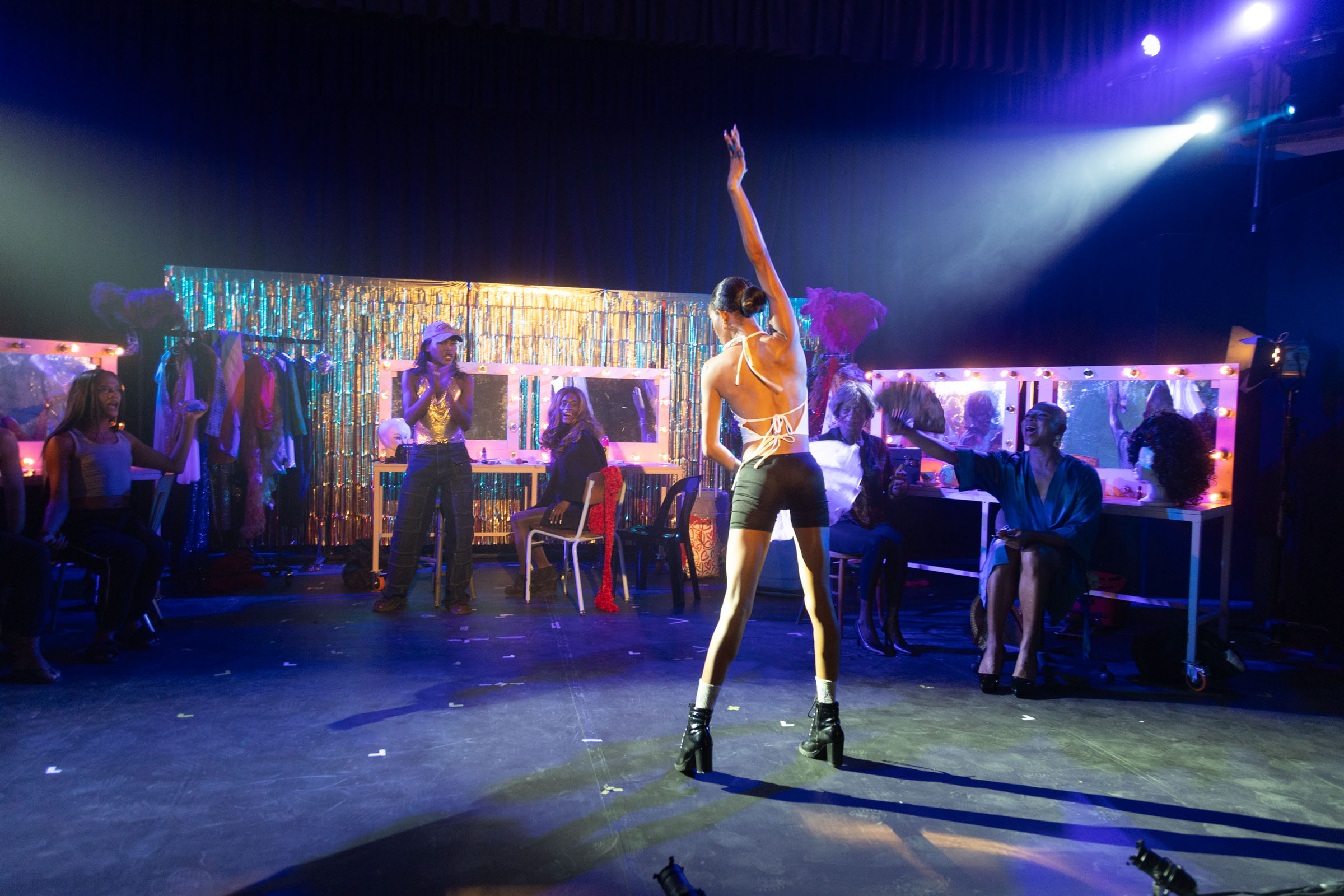
It all culminated in a queer festival with a multi-disciplinary drama titled Kroon en Konfetti which incorporated three elements: Kewpie’s life and legacy as dancer and artist; the rich culture of Oudtshoorn’s beauty competitions called “models”; and 25 personal stories collected from Oudtshoorn’s queer community.
Dressed in all their finery, the “models” all gathered in a dressing room to start their show with the dialogue smart, sassy and with an edge. It was quite magnificent as are all the Karoo Kaarte productions and more than anything it’s the topics they choose to spotlight that’s so important.
Here is deals with a group of people who are already sidelined in a country where prejudice is still rife. With their queer status they are in search and hoping to find safe spaces in their community where they can celebrate their culture, yet behind all the glitz and glamour, the shadow of oppression is hard to ignore.
As always Neil Coppen, Vaughn Sadie and Tiffany Witbooi are the creative team responsible and my only regret – as happens every year – is that I couldn’t participate in all their offerings. It’s one of those projects that’s imaginative and innovative and even more importantly, they’re constantly working with elements that result in real change in a community that has always been neglected.
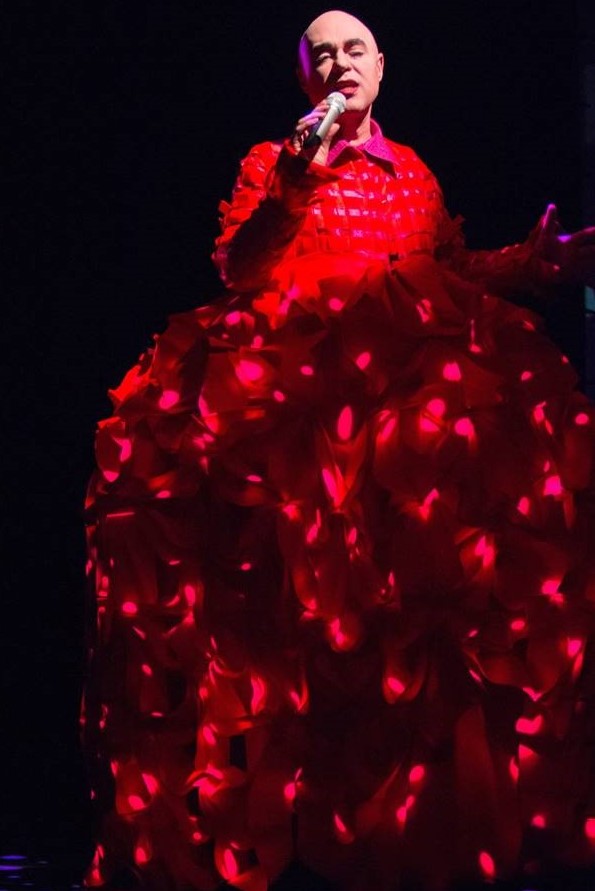
And then cleverly the festival ended with Nataniël and a company of 10 on the openair stage under the Oudtshoorn night skies. The elements aren’t his friends, but it was a glorious way to end the festival with a performance that showcased new voices and performers as well as the glorious artist himself with stories and songs that suited the occasion.
Tracy-Lee Oliver was the artist he chose to spotlight on the night, and she made full use of the occasion with spunk and singing that added spark to this final show. It was great to see someone step into the limelight with such poise. As usual, making sure he gave his audience all the hysterical stories and masterful songs they expected with his superb band and backup singers, he also paid it forward with this sassy introduction of new voices for this audience.
He first spotted her when she was a contestant on a television show he judged, and astute as he always is when it comes to producing for an occasion, this was where he decided to showcase her – for all the world to witness.
Rehearsal picture.
I haven’t even touched on the festival artist Henk Serfontein’s magnificent exhibition Die Stomme Aarde complimented by a performance piece by the artist and his collaborator Hannah Loewenthal as he made a painting to which she contributed while both of them participated in an expressive dance which further enhanced this particular emotional landscape of both the St Jude’s Church as well as the art displayed in this holy space .
It was the perfect example of how art and artists when working with an emotional intelligence can transport you in a way that seldomly happens in what has become quite a cranky world.
Similarly, Mareli Stolp, a pianist with a particular penchant for avant garde music invited animation artist Diek Grobler to illustrate her chosen compositions for a programme Die Gevlerktes. It was a stroke of genius.
The exquisite animation was imaginative in the way it enhanced the music and the listening experience which then also transformed into a visual feast.
I could go on, but this is simply one art lover’s experience …
See if you can catch any of these gems at other festivals and theatres in the year ahead.
CAST: André Odendaal, Oarabile Ditsele, Chantal Stanfield
DIRECTOR: Lesedi Job
VENUE: Pieter Toerien’s The Studio at Montecasino
DATES: Until March 16
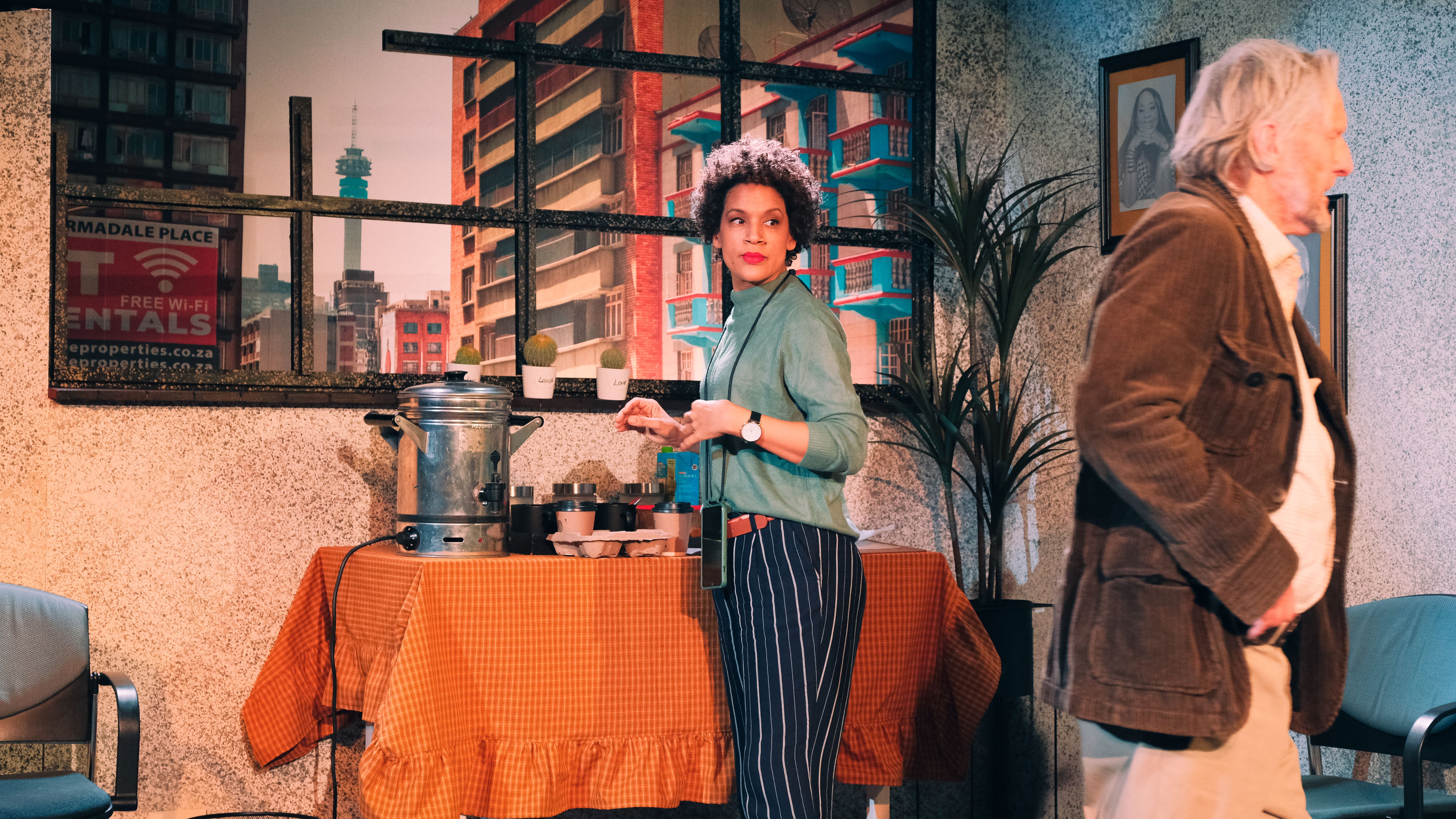
Everything to my mind seemed aligned for this one. I found the casting as well as the director intriguing, a new local play is always something to be excited about and Paul Slab has a way of climbing into a story.
At the same time, it also makes me nervous. I don’t want to raise my expectations by thinking ahead, but one can hardly prevent it.
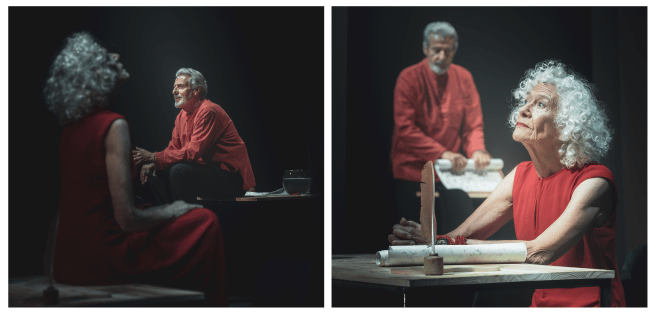
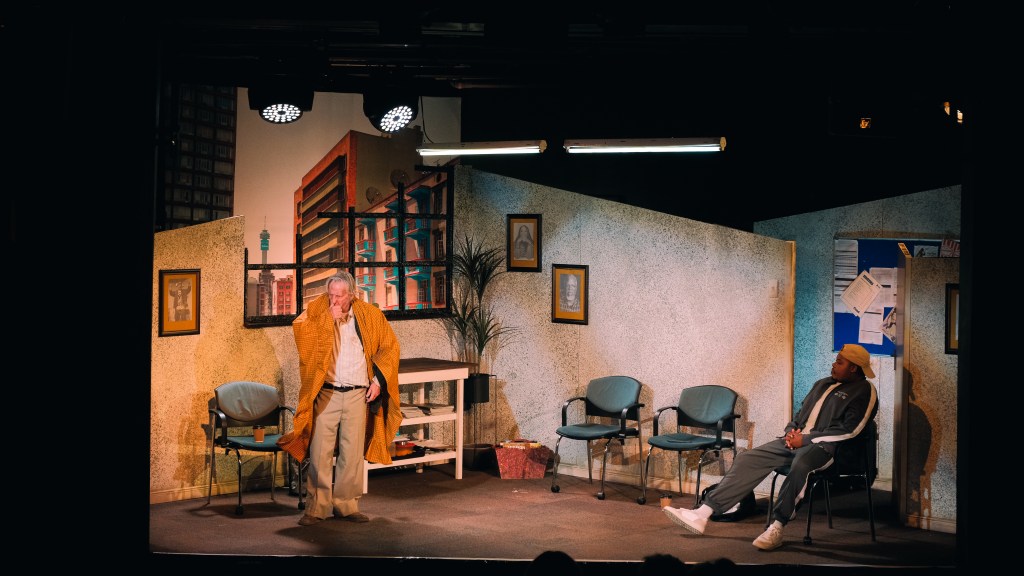
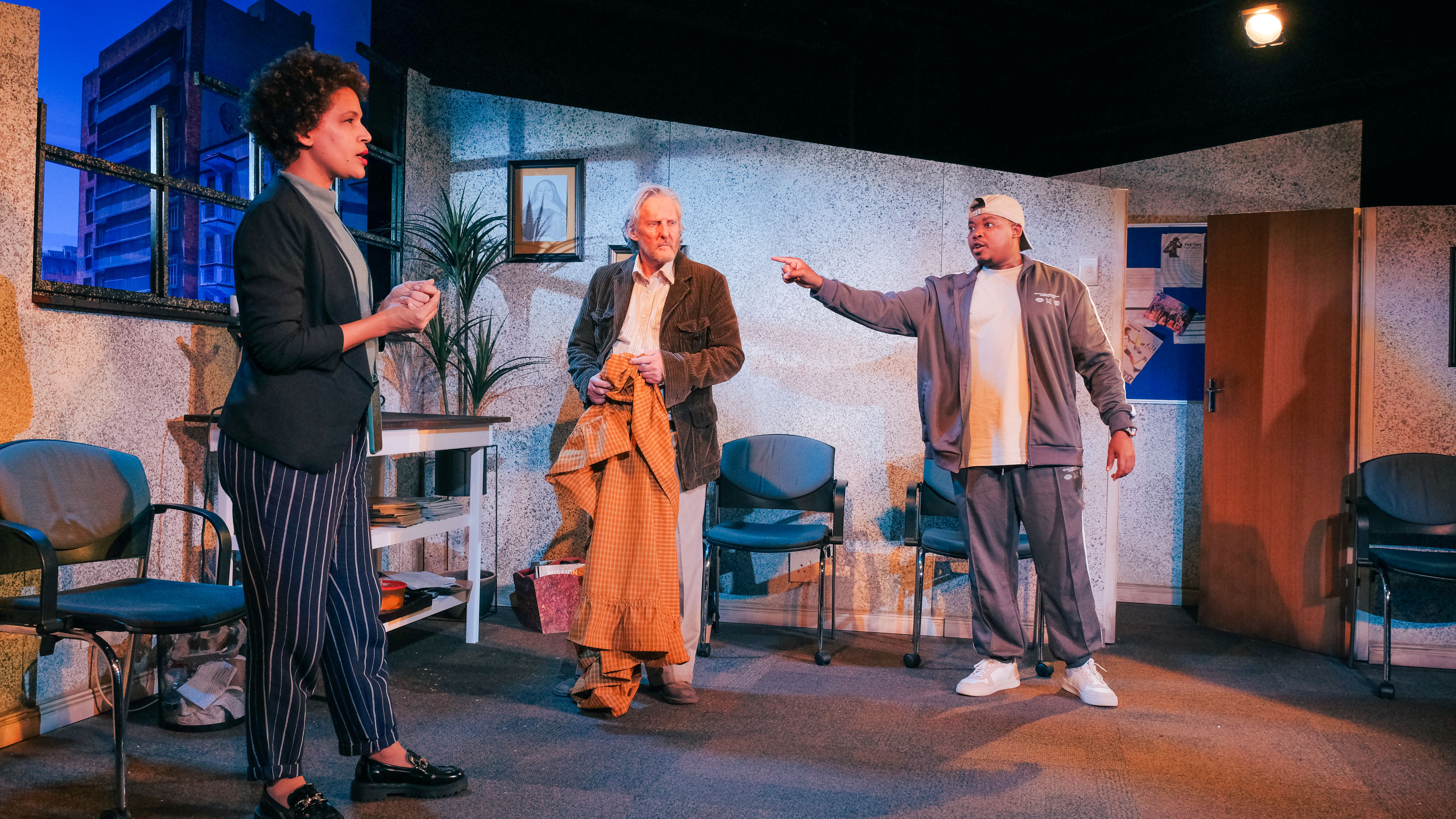
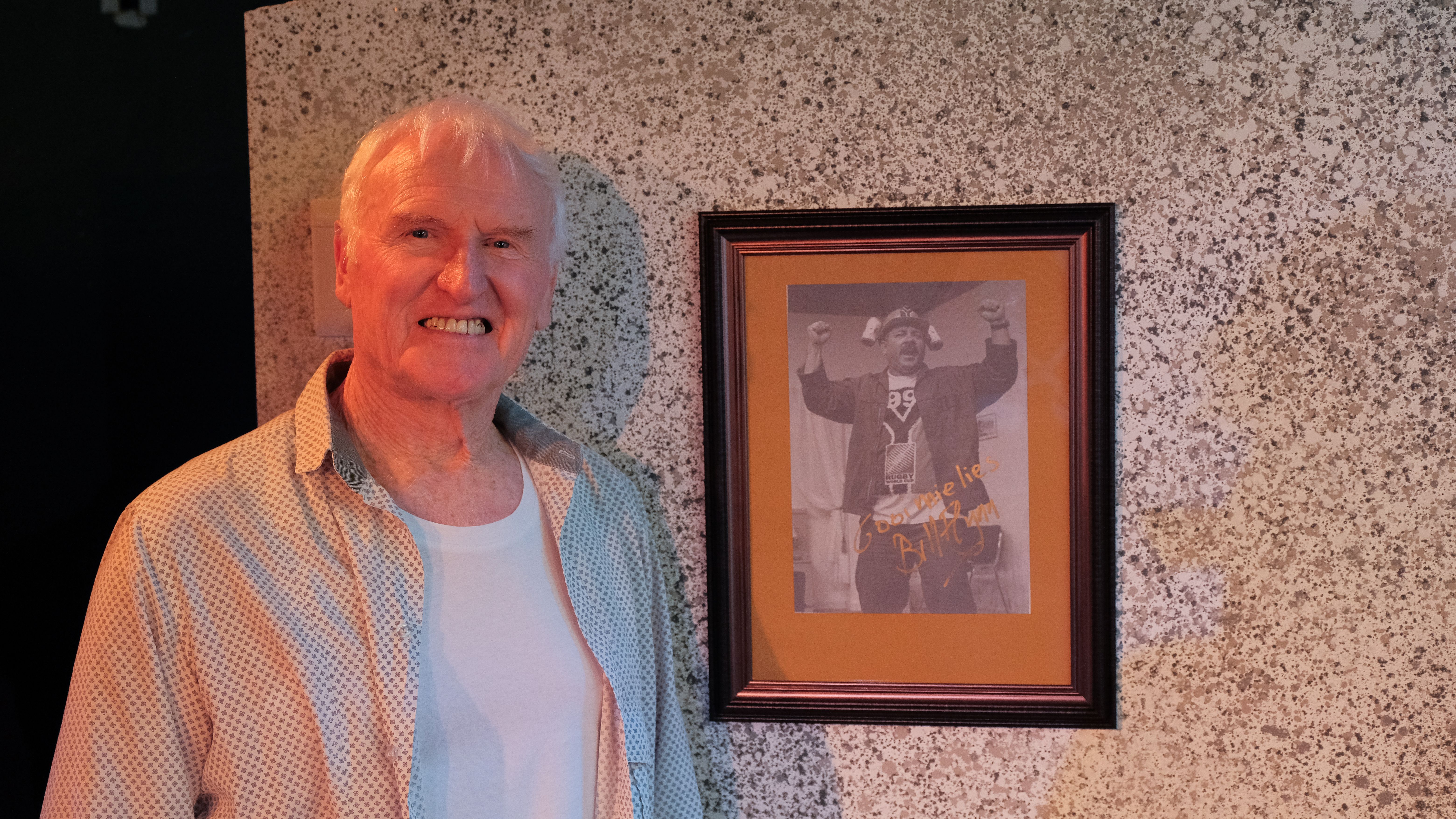
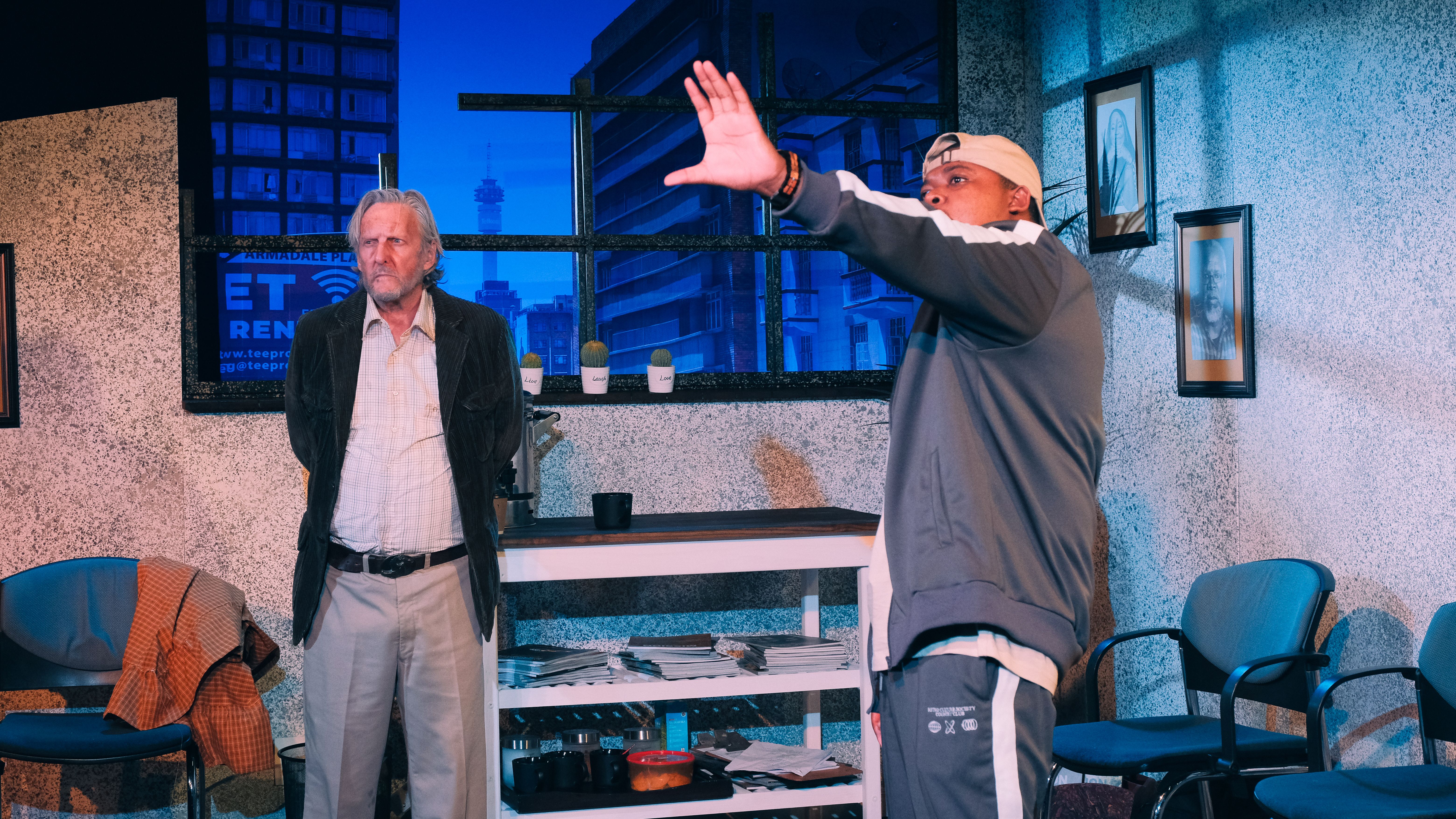
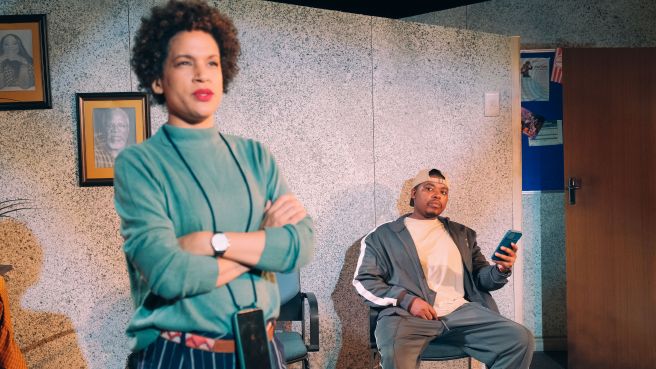
Ensemble cast (Chantal Stanfield, André Odendaal and Oarabile Ditsele) and playwright Paul Slabolepszy
Either way, I was quick to exhale once the actors found their way on stage. One feels it immediately. It’s two actors in a room waiting (rather like a doctor’s waiting room) to be auditioned.
Anyone who knows anything about theatre knows that this is both an exhilarating and a scary experience. Not many of us have to sell ourselves in such a public way each time when applying for a new job. And like most things in life, there’s not really anything that can be done to alleviate the nerves crashing into one another at high speed in these circumstances.
Not only that. If there’s something Paul knows everything about, it’s this. Both as a writer and an actor, it’s a scenario that he has lived most of his life – and one feels all of that when watching the play.
The two hopeful actors (the one at the end of his career, the other excited about the life ahead) who don’t know one another are sitting in a room checking each other out. Times are tough – not only for actors – and this is not a friendly space. There’s no one around trying to soften the gig they’re waiting for.
Every once in a while, a rather officious woman enters and, while she’s charming to the one actor, she bristles when the other asks anything. The tension is palpable.
Already a scary space for all involved, it is also heightened in the South African context. And this is what the playwright handles so well. He plays the moment and not the context, which he leaves to the audience to experience.
It’s subtle yet clichéd but with this clever script and a team who works with everything they’re given, it sweeps you along.
The title could work in two of our languages, English and Afrikaans, and that’s another trick up Slab’s sleeve. He has both languages (as well as three more indigenous languages inluding Sesotho, isiZulu and Tsotsi) flowing throughout and, in this instance appropriately and with some delicious irony in hand as he points to the state of the arts in general.
The choice of actors and director, novel and genius, adds to the grit and weightiness of what we’re dealing with. It’s not an easy world to navigate in current times and if your particular career choice constantly also takes you to the edge of life’s challenges, it can be excruciating.
And yet, that is where these people involved choose to play. That is exactly what this play explores. It’s part of who they are and what they have to do.
Bitter Winter is a fantastic vehicle for someone who has been in the game for some time and knows the territory, the people and their insecurities, and the fears involved. But then he also knows how to capture the magnetism of live theatre, how it cherishes the soul, captures our imagination and makes you think.
It works because everyone pulls together. The acting, the directing and the text all play their part.
I can hear Paul say Local is Lekker in his exuberant manner. And he’s right. When it works this wonderfully, it’s a joy to behold.
Bitter Winter is donating a portion of ticket sales to the Theatre Benevolent Fund and every cent counts.
BAND: Charl du Plessis (keyboards); Werner Spies (bass); Juan Oosthuizen (guitar); Peter Auret (drums)
VENUE: Atterbury Theatre with shows tonight at 7pm, tomorrow at 7pm, Saturday at 11am and 3 pm, and Sunday at 3pm; (13 to 16 February Roodepoort Teater; 5 and 6 March, Sand Theatre in Bloemfontein)
If you have followed an artist as closely as I have Nataniël, it’s not only the performance but also the progression that becomes part of the thrill of this spectacular talent.
Time and again, I have been curious at my astonishment at what I am experiencing during one of his shows, but I know it is the constant evolution of what he presents that keeps me enthralled.
He is one of the few who has managed to keep the element of surprise always present and he does this especially with his scripts. He has a mind that keeps on giving stories so fantastical and yet so based in reality that everyone can identify. But what elevates the presentation is his genius with words.
Bilingual and equally adept in English and Afrikaans, he has managed through the years to broaden his audience base in the way he has become comfortable in both. The stories immediately draw you in and the choice of language doesn’t play a part. It is the way his mind wanders, how he tells a story and the unique way he presents and arranges every single sentence.
Originality is one of those elements you either have or don’t. You cannot make it happen if it’s not there. And through the years, his has become stronger as his comfort levels have grown.
What you have now is a performer in total command of his art as he mesmerises his audience with his phenomenally unique storytelling. He is comfortable sharing the personal stories of his life and the way the world has always viewed and treated anyone who isn’t exactly moulded in the image of everyone else. He revels in the differences and through the years has become emboldened and embraces exactly the artist he is and wants to be. And we love him for that.
In everything he does, he always opts for the best and this is especially true of his band of class musicians. Headed by the masterful pianist Charl du Plessis, both Spies (bass) and Auret (drums) add to the individuality with their own musical flair. Add to that trio of perfection Juan Oosthuizen whose mastery with the guitar is legendary. Their performance is bliss.
It’s rare to have the accompaniment of such unusual talent, but Nataniël has always been secure in his own performance and knowledge that exquisite music enhances his singing, the real reason he loves performing.
The balance of stories and songs is important because the songs give you a reprieve from the density and sheer delight of the stories as well as a chance to breathe as you appreciate the excellence of what you are witnessing. And with time and maturity, Nataniël’s voice is richer, the music more nuanced and the singer has perfected his authentic sound.
I have always been captivated by what this artist brings to the stage because it is so unique, put together with boundless imagination and because of the inspired stories – a new play with every show he presents – each season is an explosion of the extraordinary. He has been a blessing to local audiences because of who he is and the riches he presents on stage.
The rarity of his creativity is a joy to behold. May he keep being the wonderfully colourful creation who once, twice, or if we’re lucky, three times a year holds us in the palm of his hand as he takes us wandering with wonderment into a world that is as charming as it is complicated.
Tinarie van Wyk Loots talking about her script Hamlet/Speenvark. Picture: Nardus Engelbrecht
DIANE DE BEER
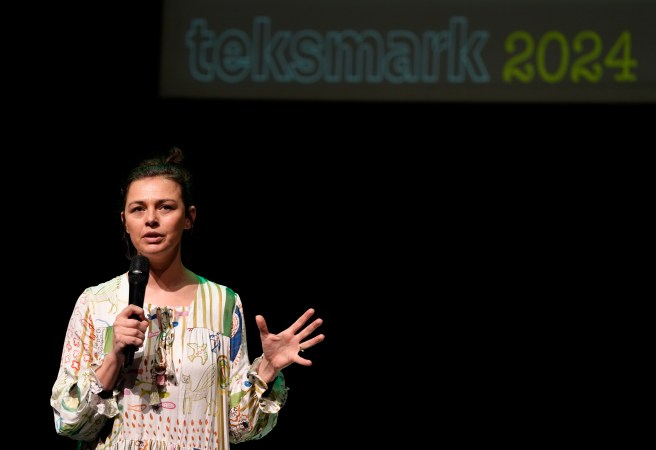
This is the 9th time I’ve written about the Klein Karoo Kunstefees/NATi/Baxter Teksmark (text market), the reason being it is such a smart creative endeavour.The brainchild of Hugo Theart, the CEO and artistic director, Hugo Theart of the Klein Karoo Nasionale Kunstefees (KKNK), it is one of my favourite events of the year It’s existence was born out of need because original local scripts had become a problem. What they were hoping to do was to create new theatre texts which would provide local content for the festivals as well as encouragement for both budding and seasoned writers. And that is exactly what happened.
This past festival was the 9th, 156 text ideas in many of our official languages have been presented and in total, 43 of these texts have been developed into full scale productions, some of which can also boast well-deserved prizes.
What I find so intriguing is the zeitgeist that shifts year by year. Very specific strong themes usually emerge and it is fascinating to observe the topics tackled and which struggles or celebrations the creatives have focused on in a particular year.
One of the extraordinary gifts that this particular platform supplies is the chance for artists to experiment, to test ideas, to play and simply to reach for the stars which is something that quite a few playwrights attempted with brilliant results.
Acknowledged as one of our best actors, Tinarie van Wyk Loots presented a play titled Hamlet/Speenvark. Even the title suggests that this is going to be something unusual. Blessed with her acting skills, she could present her own play/monologue, which I found challenging yet immensely exciting.
She describes it as an attempt at a solo production, or struggling poem, modelled on, and with apology to Shakespeare’s Hamlet (and she cites Jonker, De Villiers, Malherbe, Totius, Opperman and Yeats). That’s quite a list.
She writes that it is “a tentative but violent investigation into the emotional landscape of being South African – the search for identity and a relationship with guilt and victim mentality.”
She further explains that her choice was driven by her “ancestors rooted in Africa and Europe, the disillusion of humanity, and emotional suicide depicted through the extrapolation of various characters in the original script, who all speak from the same mouth.”
The reading was magnificent and I could feel that this was going to develop into something quite extraordinary. Van Wyk Loots is someone who has given her heart and soul to the stage. Few actors can still afford to do that. But she has the skill and talent to keep adding to her repertoire and her engagement with theatre.
Not only can she write, she can then take the text, already her own, and do with it whatever she wishes. Personally I can’t wait. This is the kind of production that keeps theatre alive.
Dianne du Toit Albertze in conversation about Meire en Pinkie. Picture: Nardus Engelbrecht
Never one to shy away from tackling holy cows, Dianne du Toit Albertze’s writing grabs you by the throat. On first reading of the text, I needed to know who had written with such abandon and such a brave heart. When I discovered who it was, I knew it couldn’t be anyone else and I was surprised I didn’t pick up the harsh yet haunting style of this writer.
Meire en Pinkie depict orphanage runaways and ladies of the night and day. Okiep jintoes with nagging drug addictions who scramble for survival daily, searching for a cure, writes Du Toit Albertze, but fail to know how to get it. But they continue running towards ways to escape the vicious cycle of poverty and abuse.
But she points out, life has a way of outsmarting you. The sins of their mothers catch up with them when they are accused of selling the means to vicious addiction, Meire’s child. It’s something they endured themselves as children. And now they feel abandoned
Picture: Nardus Engelbrecht A scene from Meire en Pinkie.
It’s gritty, hard-hitting and without compromise. Some would argue for something with less hard edges but this is exactly what theatre can achieve: to tell real-life stories in a language that becomes a character, confronts you and makes you listen without turning away. This is when theatre becomes therapy for those writing and performing as well as those watching.
These are just two of the standout texts, part of this year’s text market at the Baxter but there were many more that had potential for further development and some already stage-ready.
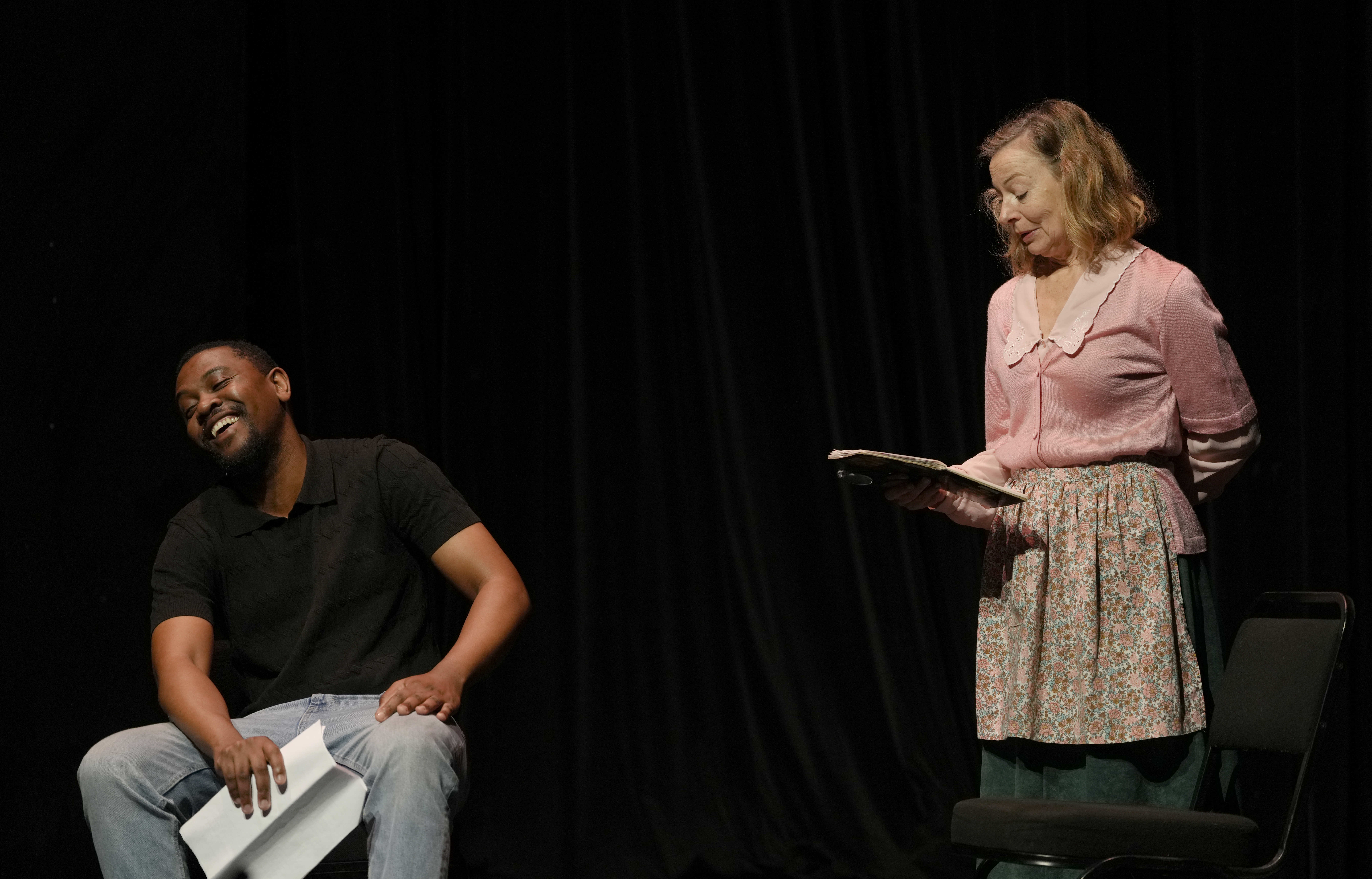
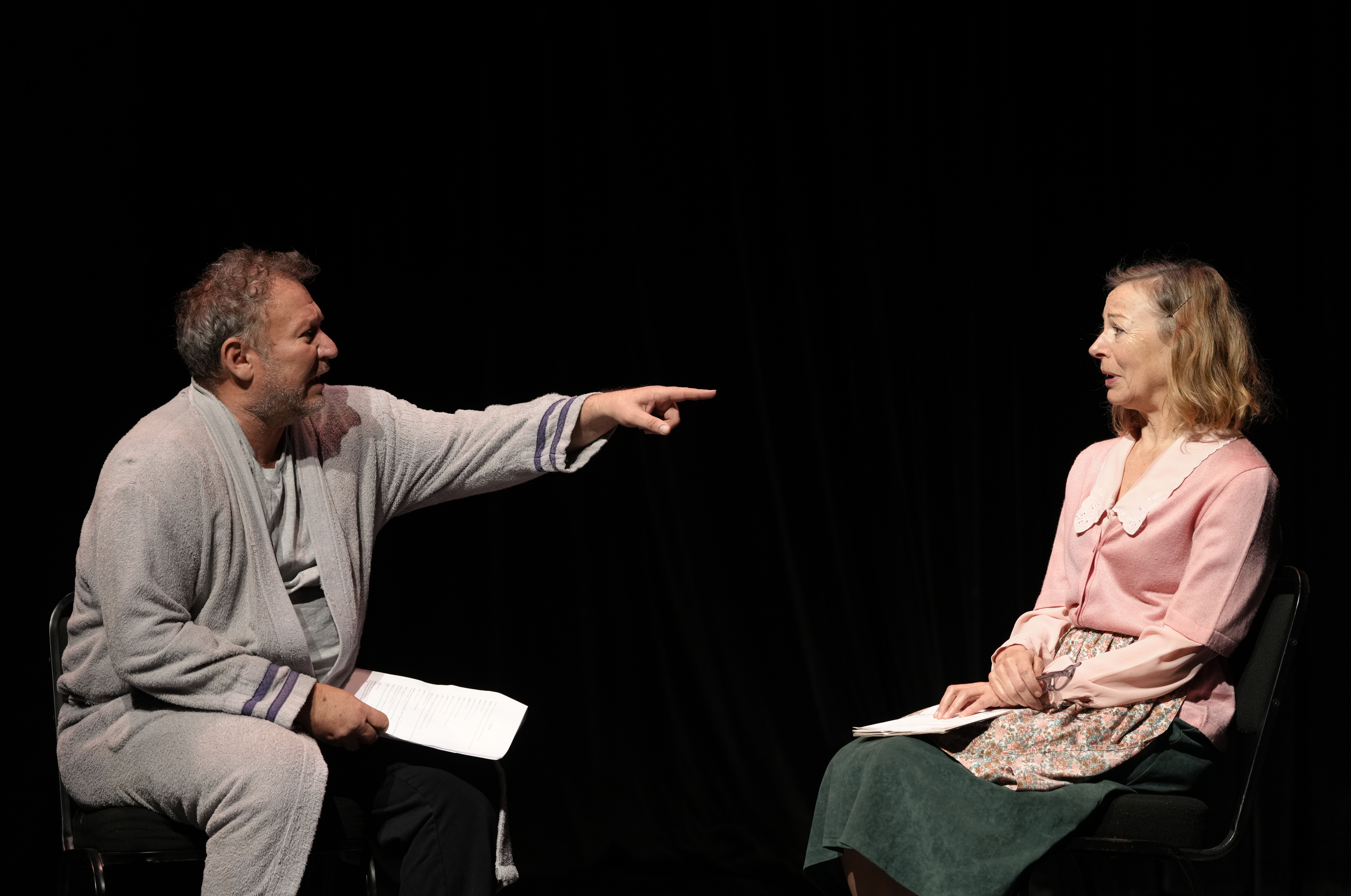
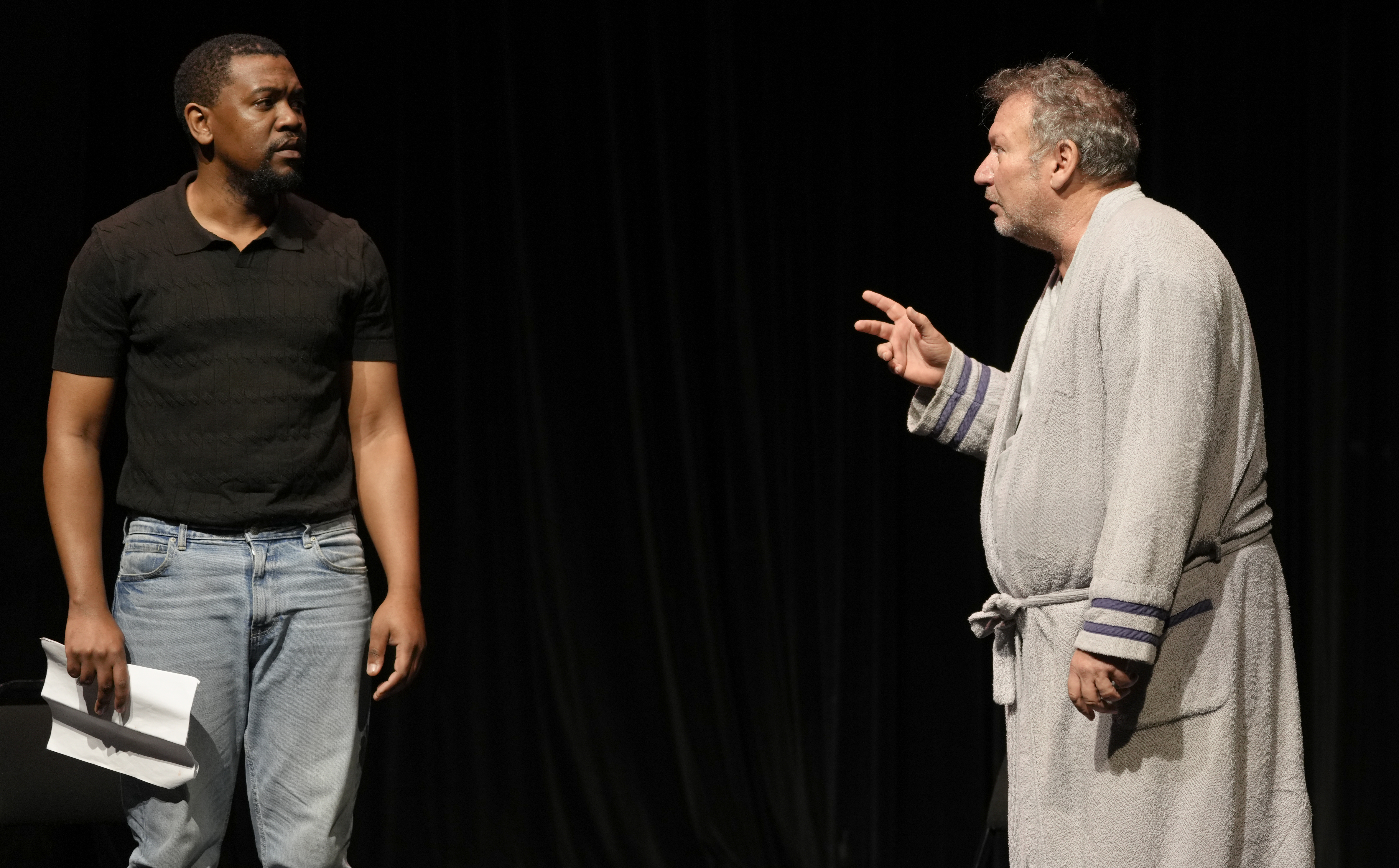
Playwright Gavin Werner (Meeting Murphy, centre) with two actors playing the parts on either side. Foto: Nardus Engelbrecht
The theme of bullying captured by Gavin Werner in Meeting Murphy will touch everyone who would have experienced it in some form. Another one that popped up in quite a few texts was memory and the way individuals remember the same event in different ways. How we view the world is often coloured by past experiences and this can lead to discomfort in some instances.
The Salt Lesson by the insightful Sibuyiselo Dywill also tackles memory but here it has to do with different generations, cultures and languages and most importantly for the playwright, from the same bloodline. In any context this is a huge ask but with the South African apartheid past, when the elderly family member (white) suffers from dementia and regards the youngster (black) as an intruder rather than a son, things can get really messy.
Playwright Sibuyiselo (with the mic) surrounded by the three actors in his play The Salt Lesson. Picture: Nardus Engelbrecht
It’s such a clever idea which explores different issues in genius and thoughtful fashion forcing audiences to look at their own world views from a different vantage point.
Scenes from The Salt Lesson. Pictures: Nardus Engelbrecht
With plays written in home languages including Afrikaans, English and Xhosa, the premise is embracing and expansive with the graft expanding year by year. Once we can figure out how to present theatre in different languages so that everyone can understand – easily – Teksmark will truly break down barriers and shift theatre in this country into a unique stratosphere.
And if you want to check out what is happening at the second Gauteng Teksmark to be held at UJ, where different playwrights and others involved in the theatre industry discuss their ideas as play readings, enquire with J.C. Aucamp at 0763335945 or jc@kunste.org.za.
The KKNK 2024 Gauteng Teksmark will be held on 24 and 25 October at Keorapetse William Kgositsile Theatre, Kingsway Campus, University of Johannesburg.





 De Beer Necessities