When Irma van Rooyen and her husband started farming in the Letsitele region (nearest town Tzaneen), their life took an unexpected turn.
It wasn’t part of their dream from the start, but once they decided this was their future, it was all systems go.
Growing up in a creative household, art was always part of Irma’s destiny. That was what she studied, with sculpture and mosaic all part of the programme. At home, her mother gave embroidery classes, all their clothes were made and fabulous food was what the family enjoyed.
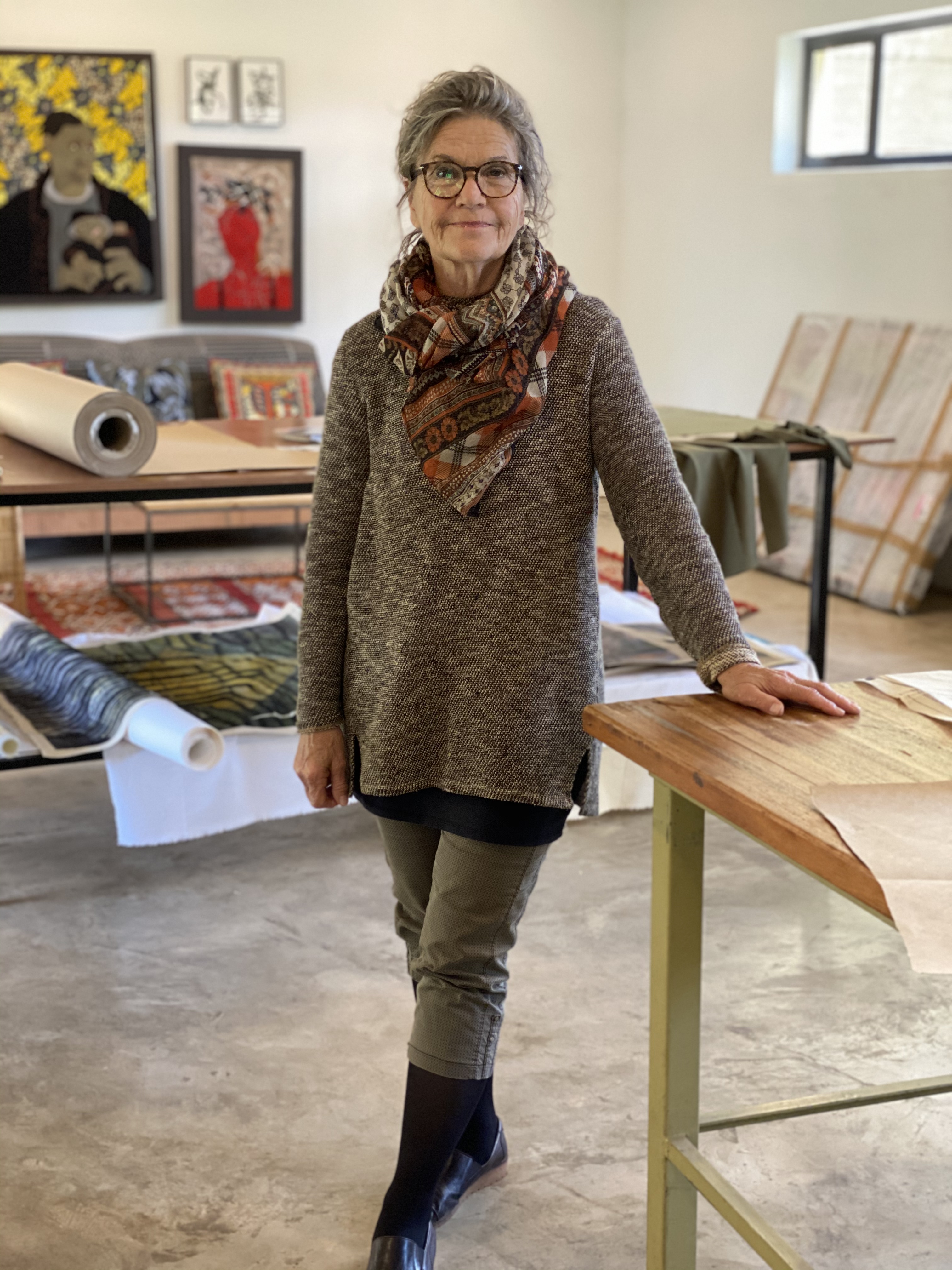
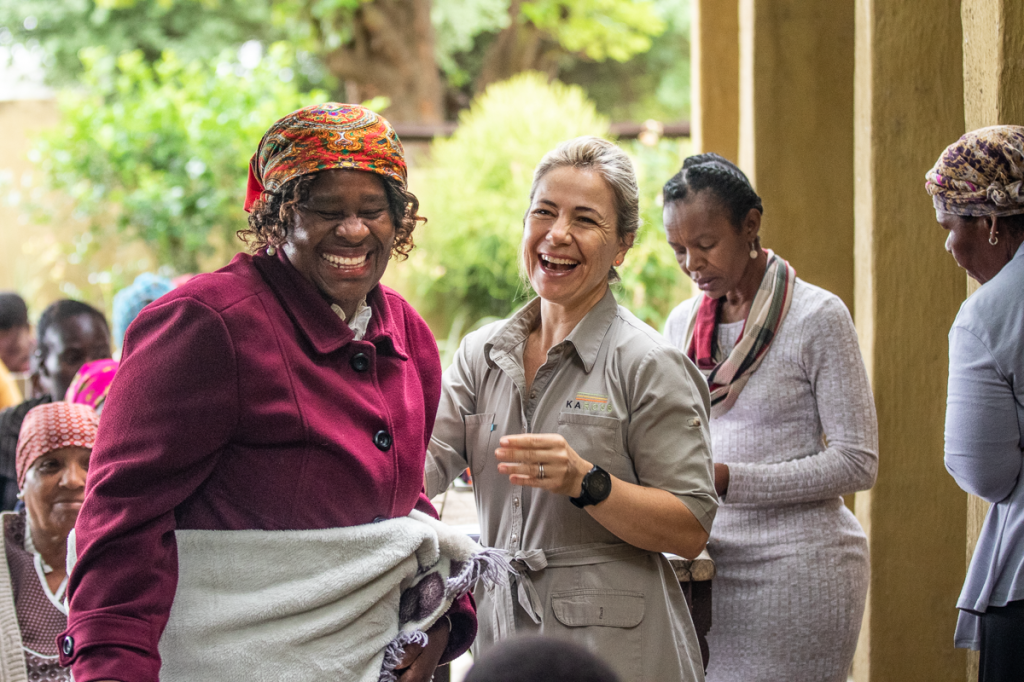
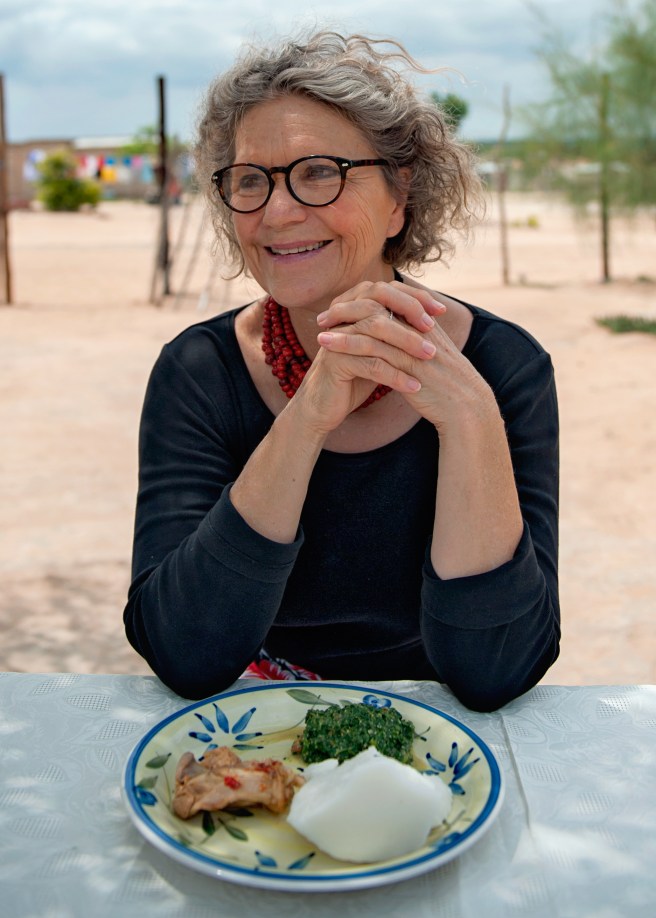
Irma van Rooyen, Kaross dreammaker.
Once the Van Rooyen’s had bought their farm, their focus shifted. Irma had three young children to raise, but when you meet her and get to know her, you witness her creative mind always at work.
It didn’t take long for her to realise that there were many women dependent on the farm, but once they had done the work required from them, there were many idle hours that could provide them with a better as well as in this instance, an income enhanced by creative and skilled work. It’s always been Irma’s lifeforce and she hoped to multiply that gift.
They had already transformed an old farmhouse on the property into Irma’s studio where she would paint and create. She understands what creativity does for the soul. Not only would those participating receive better salaries, they would also gain in dignity and pride for what they were creating.
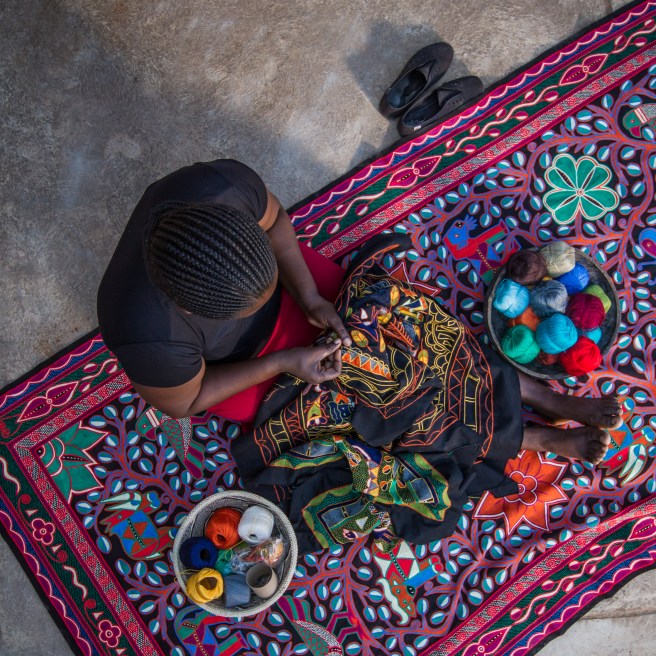
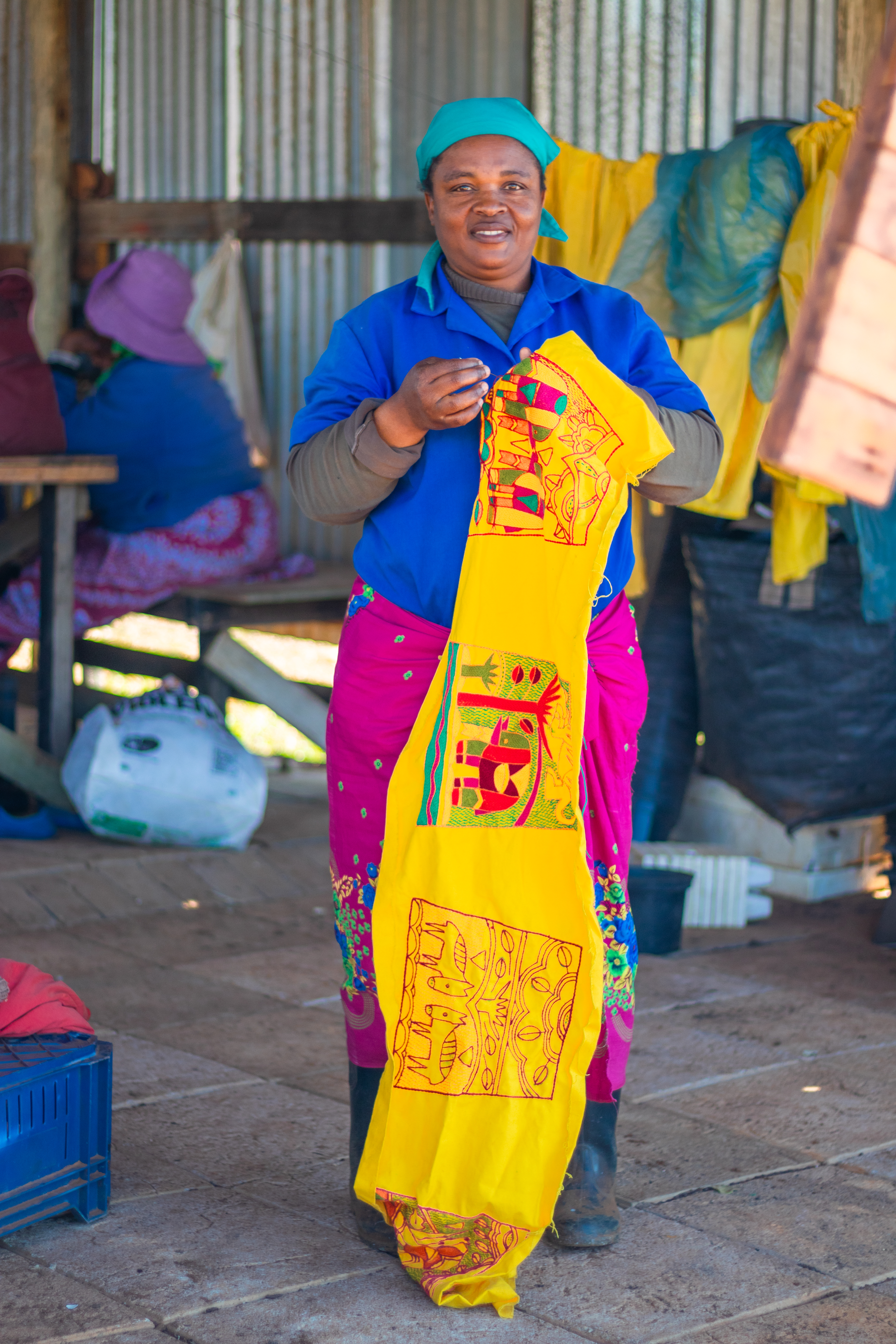
Kaross embroiderers at work: Shella Mathebula, (left) and Thandy Mongwe
Thus Kaross was born to fight not only the idle hours but also to benefit the community. When you read their mission statement on the Kaross website, the Van Rooyen couple’s strong sense of community was part of the farm’s ethos from the start in 1984, both as a family and as a citrus growing enterprise. They believed in working together with their colleagues, employees and community to create a sustainable environment in which everyone can benefit and grow.
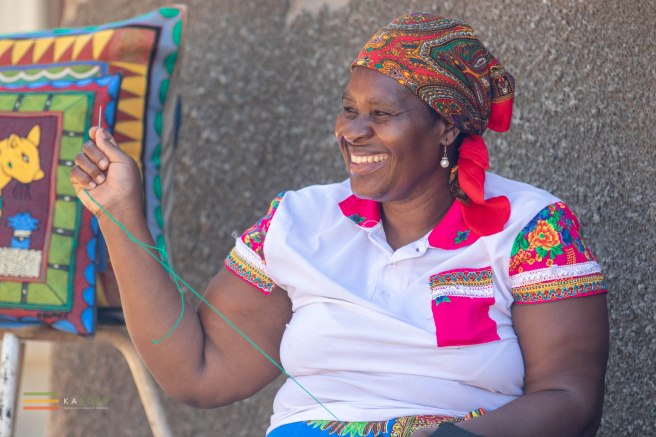
workshops; The joy of Hilda Rikhotso’s artistic endeavour
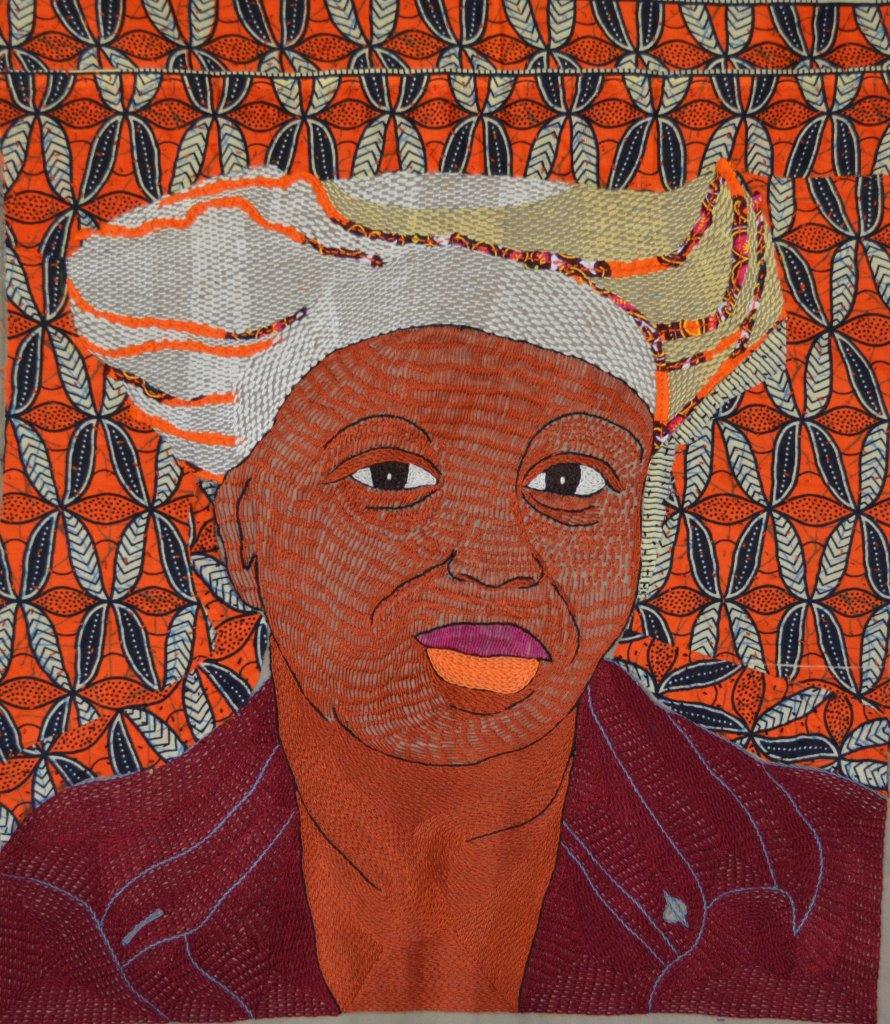
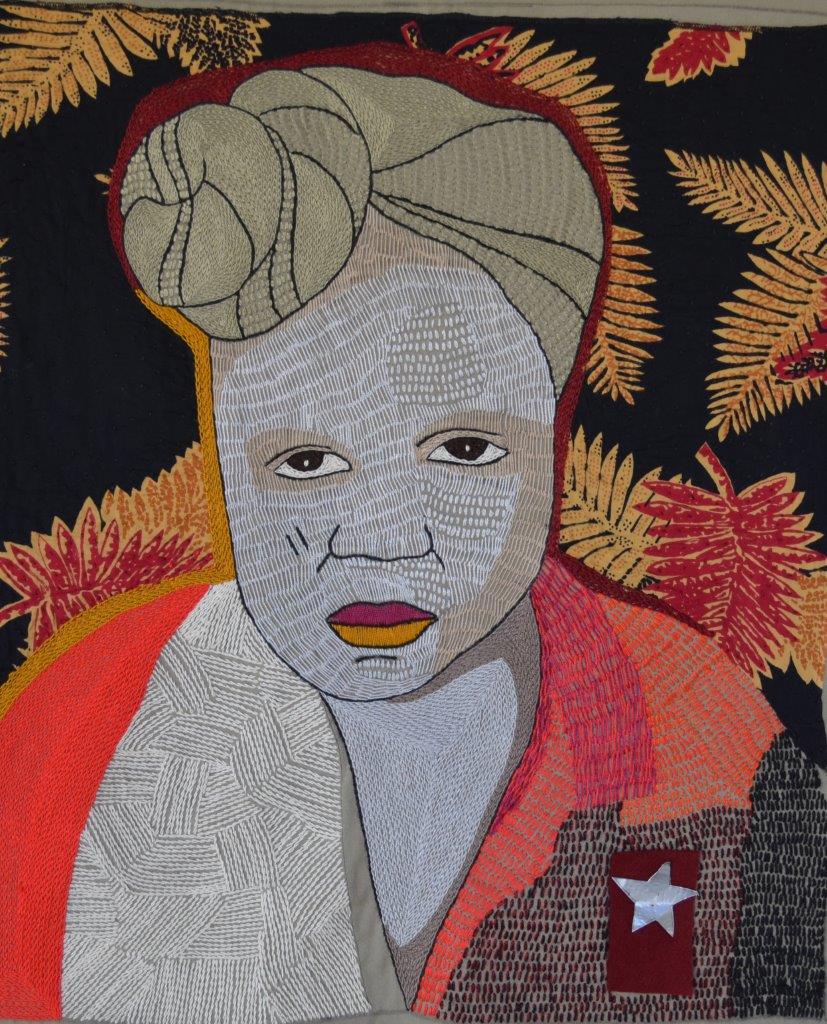
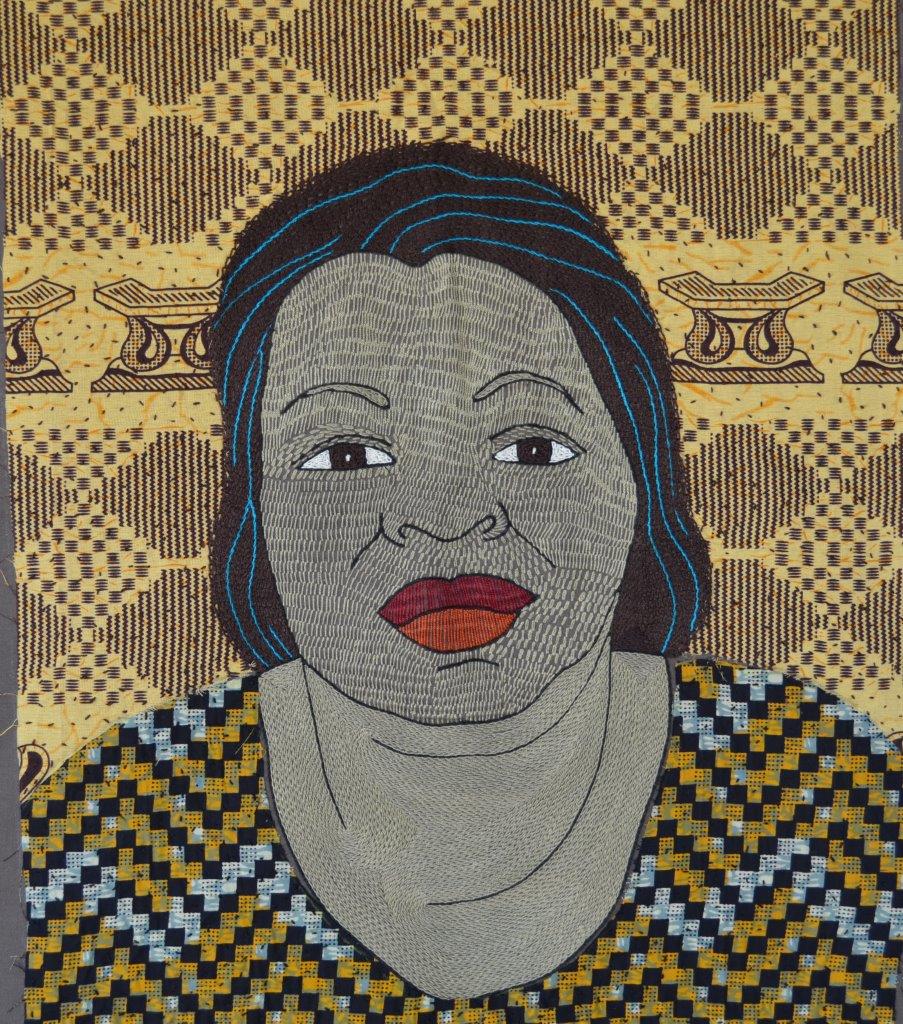
That is clearly visible when you visit the farm and the Kaross workshops. Irma is the artist and once she understood that she could do something for especially the women, embroidery immediately featured. Initially five women were keen to get started. Embroidery is a traditional skill of the Vatsonga and Northern Sotho people and through Kaross, Irma revived the skill by making it commercially viable.
The embroiderers were encouraged to tell their own stories and the hope was that a market for their goods would develop organically. Irma jumped in with drawings at the beginning and she’s still involved on that level. What started out with five women on a blanket embroidering has turned into a thriving business and today Irma’s daughter Janine Pretorius also involved.. And when you see the goods available on the market, they have developed their own style and a quality that speaks for itself.
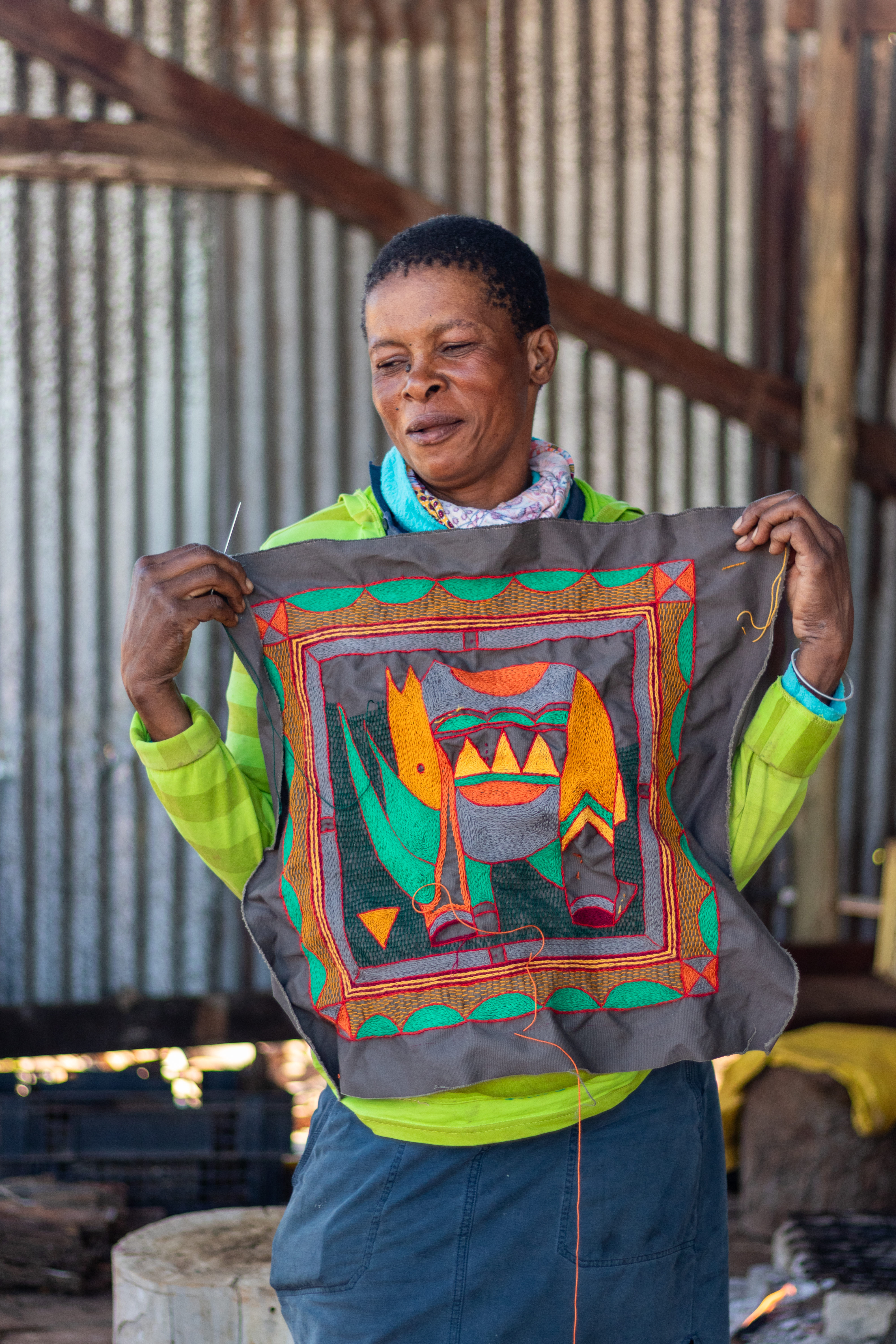
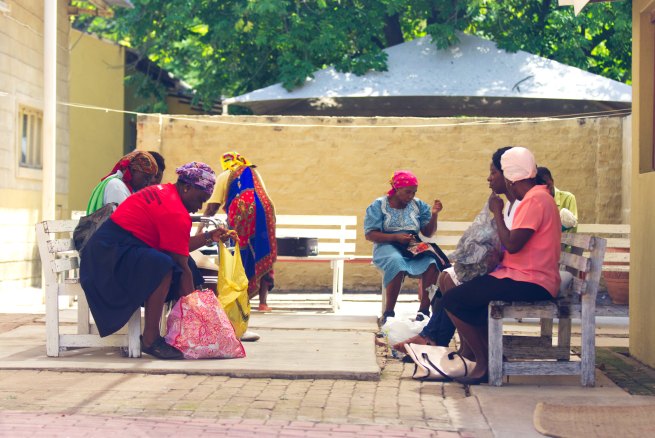
Kaross embroiderers at work.
For Irma it was always about improving lives and offering the tools to people who wanted a better life. These days, there’s hardly anywhere in the region that you won’t find someone sewing – men while waiting on a tractor or children sitting in their yard at home.
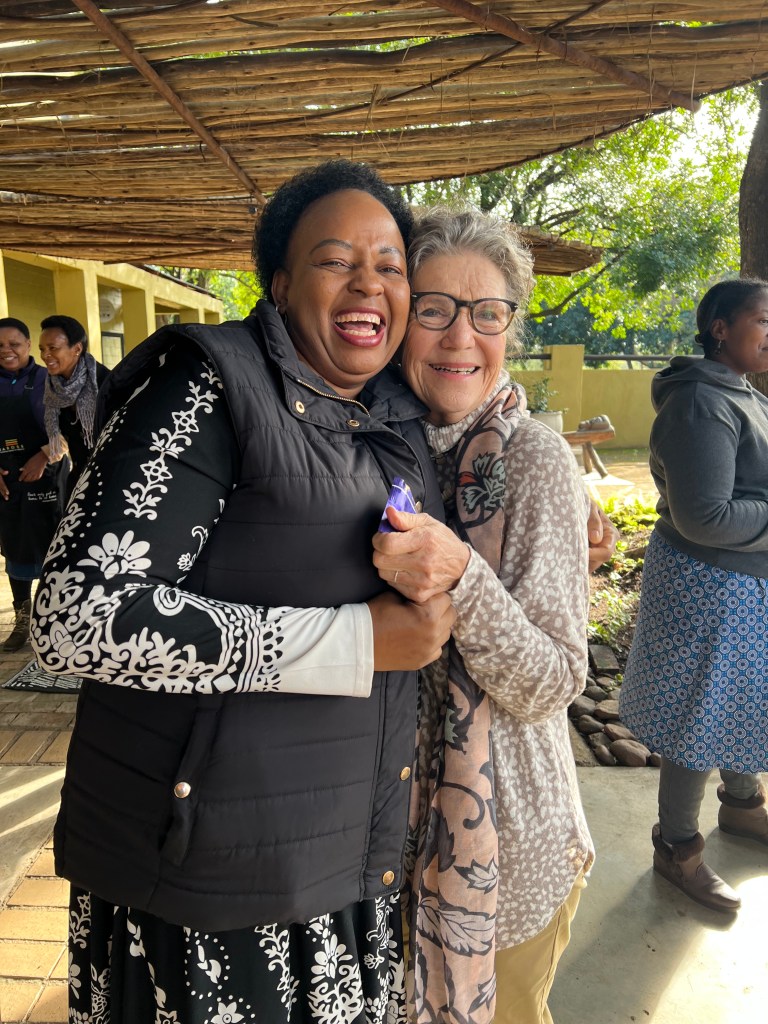
Friends in creativity, Olivia Phephenyane and Irma van Rooyen Hilda Rikhotso (left) and Janine Pretorius share a Kaross moment.
She is the perfect embodiment of someone who knows that to make a difference, you have to be the difference. What started out as a business that created bread and butter products has become a creative hub with Irma’s daughter Janine in charge of the workshop on the farm which also includes a restaurant and a gallery where their magnificent work is on sale.
Kaross is a name to be reckoned with and they are sold across the country. It makes your heart sing.
They are commissioned to do large projects and Irma is always on the lookout for new ideas. Her role is now focussed on the creative side and she is very involved for example with the colours they use, the designs selected and future possibilities. The marketing side is as valuable with everything that entails.
The success of Kaross has meant the establishment of the non-profit Kaross Foundation in 2017 with the main objective to identify, fund and implement projects that will result in a sustainable improvement in the quality of both Kaross and Group 91 Uitvoer’s employees (those working on the farm and who are part of the citrus business).
They invest their time in especially the education sector and partner with six local high- and primary schools in the region so that they are constantly improving the quality of education offered to the young learners.
It has become a South African success story that now employs 1 000 embroiders in the Letsitele/Giyani area. But that also implies huge organisation to get the work distributed, to run what has become a huge business on which many people depend and thrive. And many of the family are involved. It shows. Their best advertising and marketing is the product, the creativity and the quality.
When you meet Irma, you quickly realise that this is a woman with vision. She is also someone who goes about her work softly but her spirit is infectious. And probably now that she is mostly at work on the creative side, she is flourishing.
It is easy to stand back and view what they have done and are doing but what Irma has achieved is astonishing. Not only did she want to help the people around her, she wanted to establish a sustainable business that would make huge impact on the lives of her community – it does and it shows.
She speaks with warmth about the embroiderers who arrive at her studio to show what they have created with finished projects. “They’re so proud,” she says. That is when she realises the difference Kaross has meant in the lives of others.
She is also excited by all the work that has been done, the Mandela and Aids hangings, the artists that have been trained to provide the scenes that are embroidered, the work that was done to tempt tourists with for example scenes of the Big Five. But what probably thrills her independent spirit most is that the ownership of Kaross has always been that of those participating on whatever level.
Kids can go to good schools that have been made available, incomes have been established and grown, and more than anything, creativity is something that benefits everyone.
Many of us have dreams of doing something for others. It’s when like Irma van Rooyen you go ahead, put in the hours, travel the miles and simply go the whole way to make it work and be sustainable – then you make a difference.
Go and have a look at the Kaross website and lose your heart:
Another Klein Karoo National Arts Festival has come and gone but what lingers are the artists, their originality, dedication, blood, sweat and tears and delight that they provide in a lopsided world which is difficult to navigate. DIANE DE BEER finds nourishment, inspiration and novelty in the imaginative and ingenious artistry of our creatives:
I have to be honest from the start. Festivals always have a strong emotional impact on me. I am in the fortunate position as an arts journalist to be invited to see as many productions as I can squeeze into the run of an event and at this year’s Klein Karoo Nasionale Kunstefees (KKNK) there was still a post-Covid frisson with the festival at full strength for a second year.
When a festival goes into full swing, it can be quite daunting and I’m not sure whether I want to be there, but as excellent productions and artists climb into my head, I go into full festival mode where I’m simply thrilled at being overwhelmed by the local arts community.
Being an artist isn’t an easy profession, even if many on the outside feel that they had a choice and simply have to bite the bullet. That they have a choice is arguable and to produce excellence year after year, often with few rewards and never under ideal circumstances, can be daunting and not for the fainthearted.
And yet they go full tilt as they battle extreme circumstances like pandemics or vitriolic social media, all in the name of art.
More than anything, whatever anyone says, we cannot resist them. For me it is a huge blessing and privilege to witness and write about our uniquely original creatives.
Post-festival, an overview of the festival is always a personal reminder of and reflection on everything extraordinary, yet it’s tough to choose which among all those actors and productions, to highlight. There are simply too many that demand attention and especially this year, the scope was exceptional.
I always feel I want to bring something of the flavour of a particular festival to those who weren’t there. Perhaps one of my favourite pieces might pop up somewhere and a reader might be encouraged to go, or even more ideally, someone who has always thought about festivals but never attended might be encouraged to go.
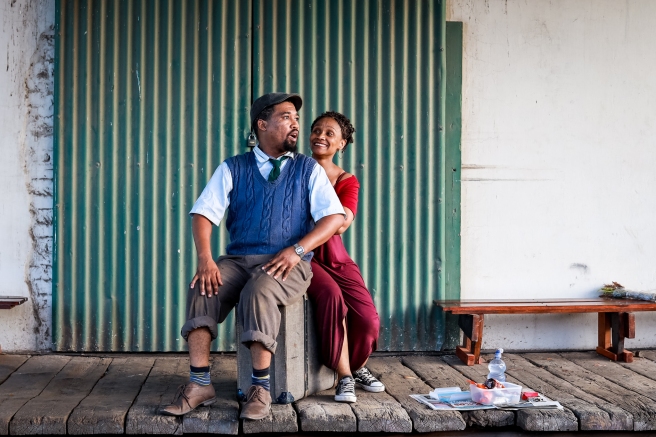
The enchanted Die Swartmerrie withTheo Witbooi and Chantell Phillipus. Pictures: Ryan Dammert.
I have to start with Karoo Kaarte. It’s one of the dream projects of the KKNK, simply ticks all the boxes and grows more impressive every year since its first inception with special mention of last year’s winning production, Droomkrans Kronieke, which landed with such impact because of its energy and precision. How can you not win when developing the underdeveloped artistic talent of the previously disadvantaged by implementing a programme that empowers those who wish to make it in the arts.
It’s inspiring and this year’s production, Die Swartmerrie, is a site-specific piece set on dilapidated terrain with a set of train tracks, an imagined train, and a rundown platform. Two people, a man and a woman (Theo Witbooi and Chantell Phillipus) are waiting, both traveling but not with the same destination in mind. There is a past, the tracks and possible journey points to a future, but this notion disappears with the wind.
It is breathtakingly beautiful and hauntingly gripping as the two talk and tackle their issues with delicate determination.
Afrikaans is an especially emotive love language and when spoken in the specific Karoo accent, warm and intimate, the sounds are as captivating and meaningful as the actual words being spoken.
I was surprised by this couple alone on stage and also electrified that the team (in this instance Neil Coppen – a facilitator of the whole project with Vaughn Sadie – and Oudtshoorn’s Tiffany Saterdacht) decided to go this route but, of course, this is a company packed with the unexpected, and hopefully it is a production that will become an institution in Oudtshoorn and won’t be limited to the festival. You don’t want to miss out on these performances and such a quality production. They should keep pushing the repeat button and keep it as part of their arsenal.
Karoo Kaarte further packed a punch with its art exhibitions, as well as walking tours done by young Oudtshoorn inhabitants all participating in turning the town’s current and future narrative into an inclusive one. The community is constantly gaining strength thanks to Coppen and Sadie who have invested their creativity in this wonderful way, all the while bringing their local learners on board.
It’s a marvellous investment in the future of this town (and hopefully others across the country will follow) and fingers crossed that a smart investor will see the potential going forward.
Because we were born in such large numbers, our generation is referred to as the baby boomers (born from 1946 to 1964) and probably that’s why ageing and the lifestyles of those growing older has become part of today’s theatre language. We are also fortunate to have some amazing artists who keep on practising their craft while ignoring any barriers that might come their way.
They know how to choose, break out and try new things and simply keep audiences flocking to their performances. Names like Sandra Prinsloo, Antoinette Kellermann, Jana Cilliers, Elzabe Zietsman, Amanda Strydom not only arrive with new productions, they’re also constantly adding skills to their resumés.
Cilliers took up playwrighting for the first time with Veelhoek, a two-hander with herself and Ludwig Binge directed by Marthinus Basson, and the wisdom and writing were quite overwhelming. Who would have thought that, apart from all her other accomplishments, she would now add writing to the list – and then perform it with such clarity as she tells a story that lies close to the heart?
Zietsman is another one who keeps shifting those barriers and I am so delighted that she has added the magnificent Tony Bentel to accompany her on stage. He is one of those pianists who brings much more than just the music to the performance and it shows. Vier Panado’s en ‘n Chardonnay again has Zietsman expounding on life, singing brilliantly and with heart – and cherishing cabaret as it should be performed. The content, which deals with resilience,needs hardly any acting by this actor. Most of it is probably her life which she has shared heartily and hastily over the years. And she will always rise…
Do we need to say anything more about those two great dames, Sandra Prinsloo and Antoinette Kellermann? How lucky are we to witness them in performance after performance as they just keep surging ahead.
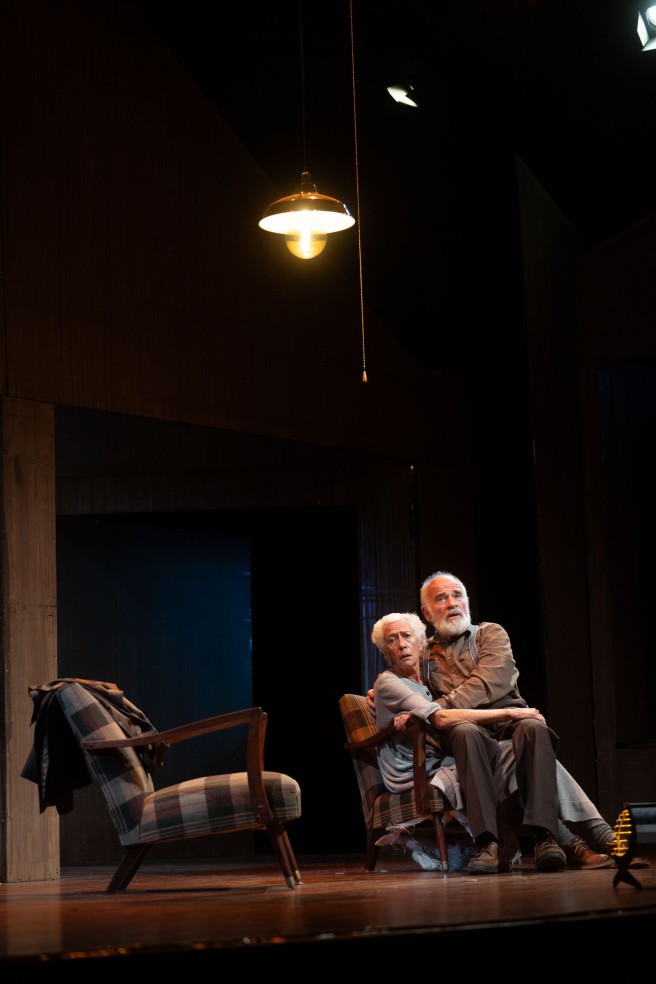
Die stoele with Antoinette Kellermann and Chris van Niekerk. Picture: Hans van der Veen.
Kellermann tackled the Ionescu tour de force Die Stoele, accompanied by a much-too-rare performance by Chris van Niekerk. Marthinus Basson adds genius to the production, which can be seen over and over again as it deals with something we all have to confront – LIFE. The content might be terrifying but to watch, quite hysterical. As always Kellermann is in with everything she’s got and what she does with her body tells a story all its own.
Goed wat wag om te gebeur with an actress I would love to see more of, Emma Kotze and Gideon Lombard.
She’s also a part of the magnificent cast (Kellermann, Emma Kotze and Gideon Lombard) of Philip Rademeyer’s Goed Wat Wag Om te Gebeur. I had seen the English version most recently but also this one a few times, and this latest run proved how good theatre improves with time. It’s the best the production has been and I know the director agrees.
Prinsloo brought her masterful Master Class, a piece of classical theatre, to the festival and, also as is her nature, she teamed up with the exceptional David Viviers in a Teksmark original Op die hoek van Styx en River is Noraper Abuis met die Dood Oorgeslaan (playwright Henque Heymans). It’s a novel work which showed flickers of what it could be in time (always a scarce commodity).
Like Rademeyer’s Goed Wat Wag Om te Gebeur, Monsters, (produced, directed, adapted and translated by Tinarie van Wyk Loots) which has had runs at other festivals previously, found a remarkable rhythm that lifted the text and the performers into another realm . It was rewarding to experience and again I was reminded what a precious entity the different circuits are because single theatres cannot afford to take many risks and festivals add an extra buffer in this precarious world – to the benefit of arts audiences.
Michele Burgers in Monsters. Picture Stephanie M Gericke.
We haven’t seen much of the versatile Michele Burgers, who will hopefully return to stage more often in the future and who was beautifully supported by the talented René Cloete, Ntlanhla Kutu and Elton Landrew.
Die Vegetariër with Tinarie van Wyk Loots and Melissa Myburgh who as young actress has shown her mettle magnificently . Picture: Nardus Engelbrecht
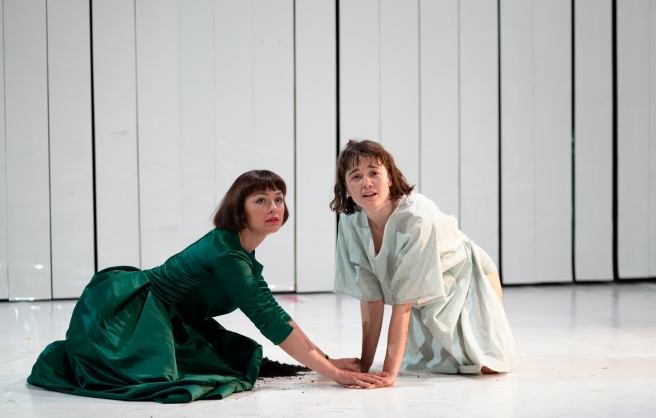
Smartly directed by yet another multi-talented artist, Tinarie van Wyk Loots, she also featured in Jaco Bouwer’s hard-hitting Die Vegetariër (adapted and translated by Willem Anker) which also benefited from another run, as well as in the latest probing Anker text, Patmos, also brilliantly staged and directed by Jaco Bouwer, who always challenges and pushes boundaries with his choice of productions, casts and presentation.
The visually captivating Patmos with Melvyn Minnaar and Tinarie van Wyk Loots. Picturess Hans van der Veen.
Without these art warriors our art landscape would be barren. They keep us returning to theatres time and again with their unique approach, their determination to do their best under trying circumstances, including a lack of time and money, and simply their excellence.
Nataniël, for example, returned from an extensive tour to New Zealand and Australia during the festival yet put together one of his distinctive shows with flamboyant costumes, mind-blowing text and two musicians (Marcel Dednam on Piano and Leon Gropp on guitar) who created a spectacular rhythm to underpin his songs and singing quite magnificently.
I could go on forever, there were simply too many highlights, yet I cannot go without honourable mentions of the following, no less important than those already mentioned:
Jefferson J. Dirks-Korkee in a return of the soul-stretching Rooilug.
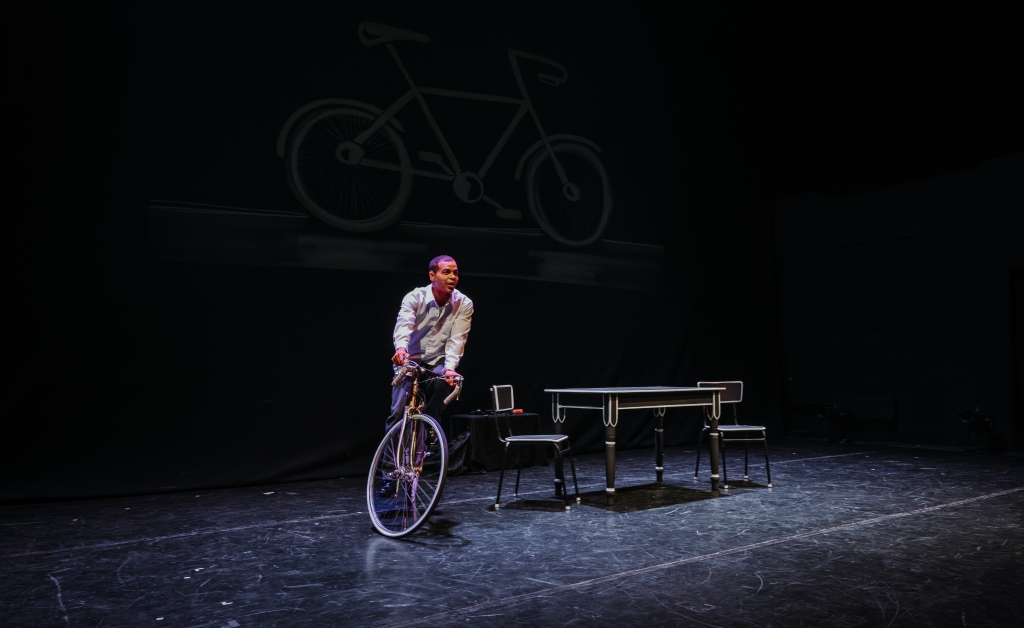
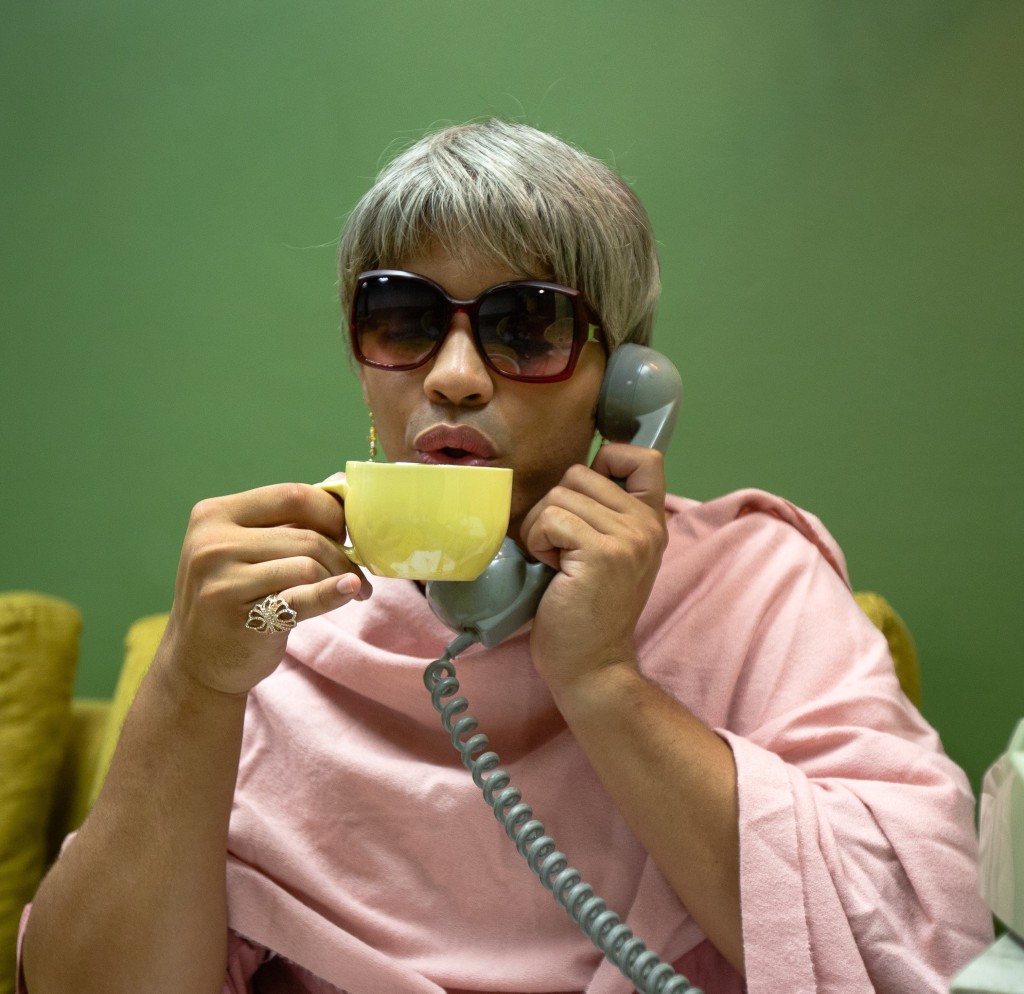
Fietsry vir dommies. Picture: Gys Loubser Hallo, is Bettie wat praat with Dean John Smith.
Marianne Thamm
Solo shows: the return of Rooilug with the delightful Jefferson J. Dirks-Korkee; Fietsry vir Dommies (masterful text by Tiffany Saterdacht and deftly directed by Dean Balie) which showcased the enormous talent of Eldon van der Merwe, who was also rewarded with a Kunste Onbeperk prize for Young Voice. Dean John Smit shone in his now full-length solo production of Hallo, is Bettie wat Praat; the craftily current My Fellow South Africans by Mike van Graan, starring the physically and mentally dextrous Kim Blanché Adonis; Vuisvoos, maar nog regop, where journalist Marianne Thamm delivers a gloves-off and much needed monologue, incisive if laugh-out-loud, on the state of the nation; a shout-out to much missed director, Jenine Collocott, who teamed with actor Klara van Wyk to present the hysterical Monika, it’s me:
The mesmerising ‘n Lewe in die dag van ‘n vrugtevlieg ensomeer with David Viviers and Wessel Pretorius. Picture: Hans van der Veen The Old Man Who Thought He Had a Dog with Merwe van Gent and Angelique Filter.
Double-up: David Viviers and Wessel Pretorius returned as a popular duo in a follow-up to their successful Klara Maas with ‘n Lewe in die die dag van ‘n vrugtevlieg, ensomeer and hopefully many more encores in the future, they were missed; an innovative new duo, Stellenbosch students Angelique Filter and Merwe van Gent, soared with the tragicomedy The Old Man who thought He had a Dog;
The delightfully funny Marc Lottering.KG Mokgadi- Weighing In.
Stand-up (not my speciality) yet: Who can resist the always energetic and enthusiastic funny man Marc Lottering who always delivers?; as well as my comic standout of the festival, KG Mokgadi. It feels as if these two have something more to say than just one-liners.
Ken Jy Vir Dewie with , Joshwin Dyson, Crystal Donna Roberts and Robert Hindley
Productions: The original Ken Jy Vir Dewie was cleverly staged with themes that target the whole family and as the play was dealing with bullying, the setting for everyone, actors and audience alike, was a classroom; and again, it was directed by yet another versatile artist, Margit Meyer-Rödenbeck, who has exchanged Dowwe Dolla for Ouma, again a sign of the times. She cleverly started the play outside with audience and cast waiting to enter the classroom!;
The joyous Braam en die engel with Rehane Abrahams, De Klerk Oelofse and Timothy Isaacs. Picture Hans van der Veen
And Craig Morris grabs the attention in Die Rooi Ballon.
Children’s Theatre: It’s not something I usually see at festivals but, as I did, I was encouraged by the effort made by the KKNK to look after these tiny tots who are of our more enthusiastic audiences: My favourites included Braam en die Engel and Rooi Boeties.Watch out for them as they might travel.
Dance: is back with brilliance because of the clever choice of productions, only two of them but with some of the most innovative names in contemporary dance: Dada Masilo who choreographed one of three pieces, Salomé, for Joburg Ballet; and Grant van Ster and Shaun Oelf with the Figure of 8 Dance Collective (pictured), who brought in other creatives like Nico Scheepers on text, Andi Colombo on lights and Franco Prinsloo on original music. Both companies were sublime.
Lucky Pakkie (Packet): Thanks to the brilliant team of Llandi Beeslaar and Stephanie Gericke, this is another of the KKNK delights because of their dedication and hands-on approach. It needs that because what you have is three lucky packets of four 15-minute productions each; the three sections embrace easy viewing to soft touch to pushing the envelope as much as possible, and artists who cannot manage a full production or perhaps just want to say what they need to say in this time and on this platform are vetted and included in a fun-filled programme.
The original Karli Heine. Picture by Stephanie M Gericke
There are too many to name, but for starters … what about Karli Heine, who turned herself into a pot plant and blew my mind … for script, performance and imagination!
It is impossible to cover everything and I haven’t given the art exhibitions a mention, even though curator Dineke Orton again broke down barriers and took us on a visual trip. But these are just some of my thoughts on a festival that felt like one joyous merry-go-round. Try and catch some of these through the year as they travel to different theatres and festivals.
Here’s holding thumbs!
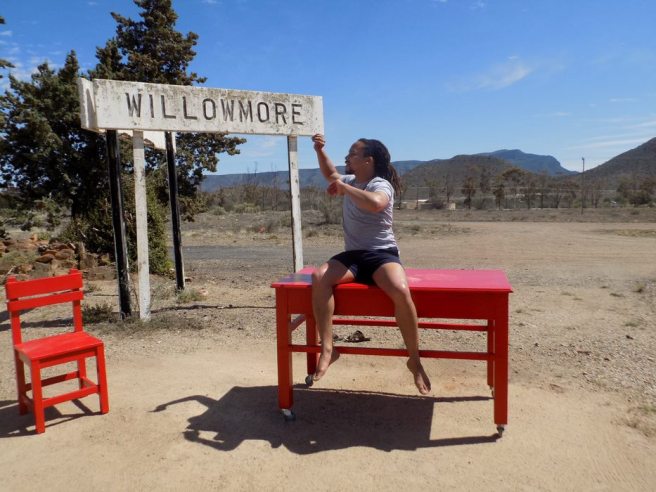
And finally, on the last day, even the weather seemed out of sorts…













 De Beer Necessities