SAVIOUR OF DEMOCRACY OR DESTINED TO DISAPPOINT IN A COUNTRY RAVAGED BY WAR?

DIANE DE BEER

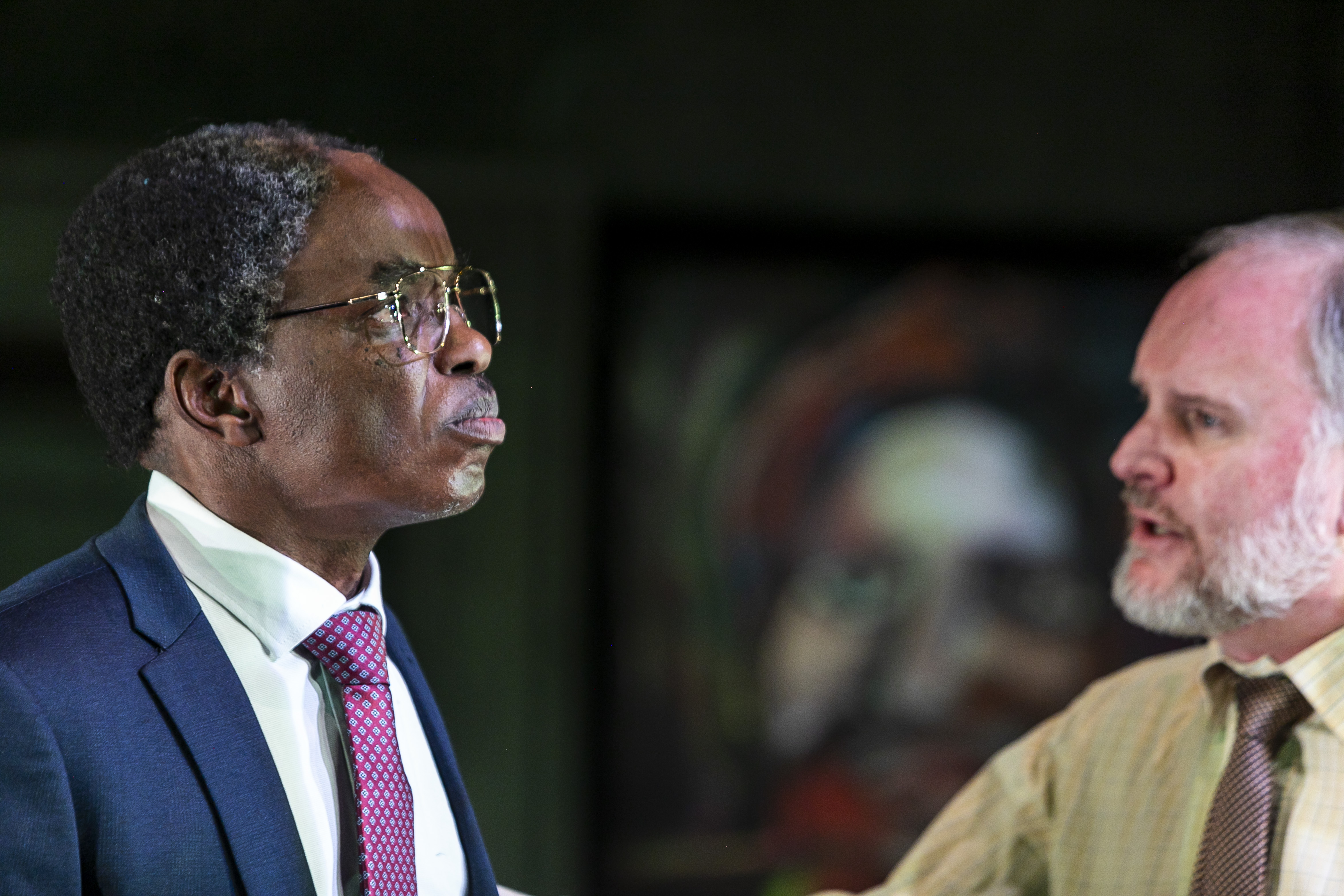
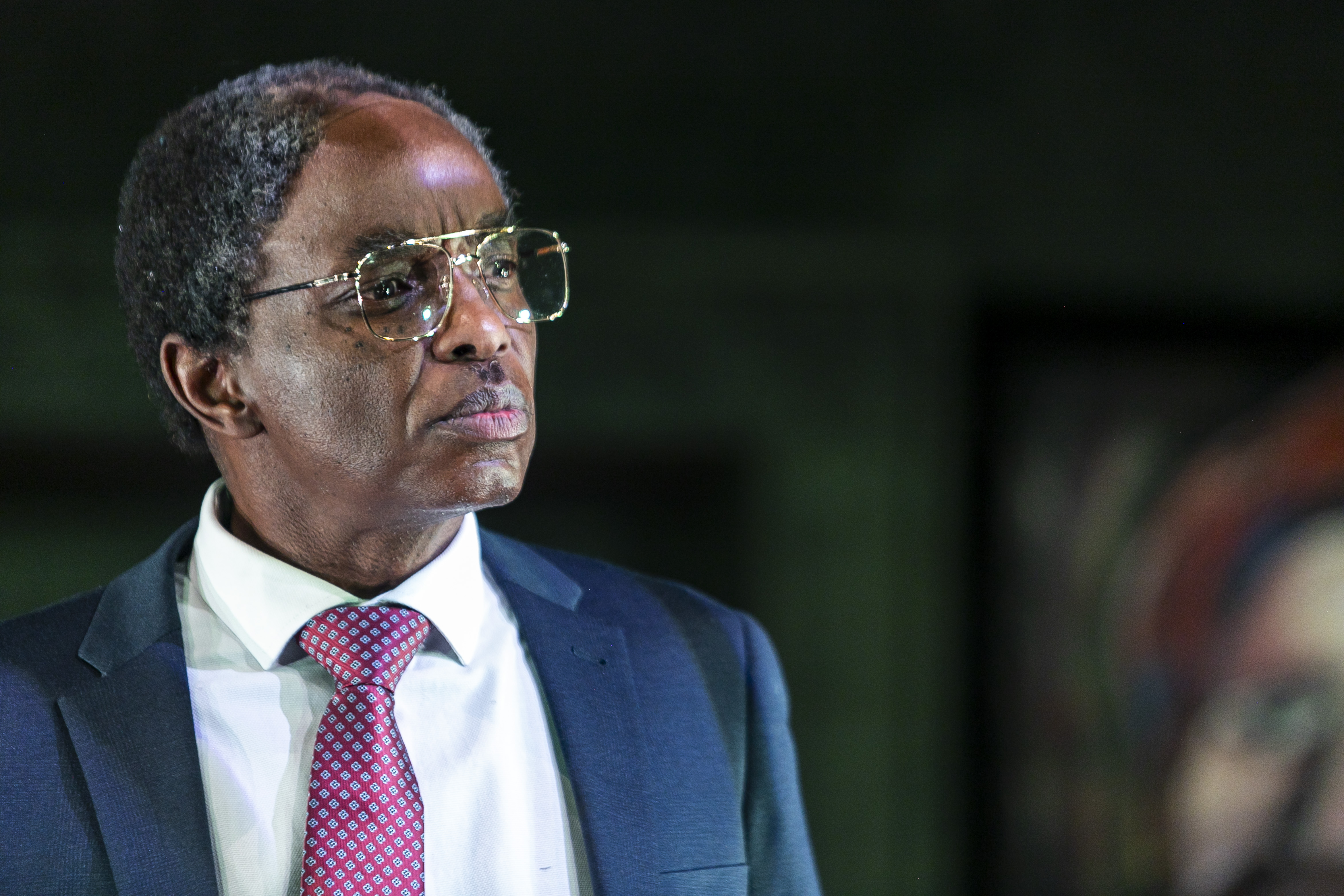
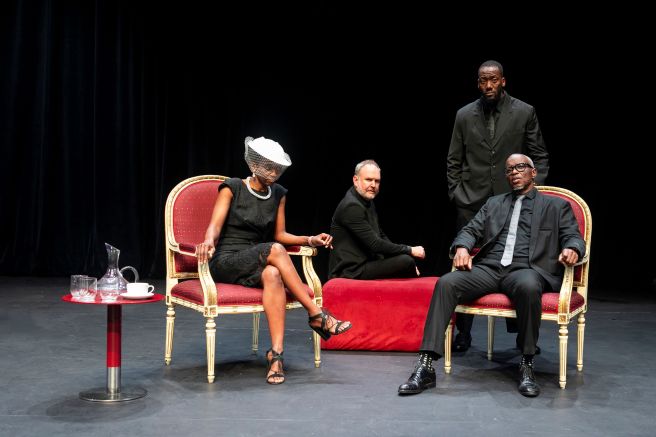
FROM LEFT TO RIGHT: Gontse Ntshegang as Grace, Craig Jackson as the psychiatrist and Farai Chigudu as the bodyguard with Themba Ndaba as Robert Mugabe.

PICTURES: Ngoma KaMphahlele

BREAKFAST WITH MUGABE by FRASER GRACE

DIRECTOR: Calvin Ratladi

PLAYWRIGHT: Fraser Grace

SET DESIGNER: Wilhelm Disbergen

COSTUME DESIGNER: Sheli Masondo

LIGHTING DESIGNER: Denis Hutchinson

CULTURAL DRAMATURGE: Professor Samuel Ravengai

MUSIC: Matthew Macfarlane

ACCENT COACH: Louise-Saint Claire

 CAST: Themba Ndaba as Mugabe, Gontse Ntshegang as Grace, Craig Jackson as Andrew Peric and Farai Chigudu as Gabriel

VENUE: Mannie Manim at the Market Theatre

DATES: until August 10
If you are intrigued by the title, this is a play you will want to see. With the name Robert Mugabe having special meaning in South Africa, neighbouring country to Zimbabwe, it was a packed buzzy audience in attendance, always a joy to behold in an industry that’s constantly in battle.

If you google the number of Zimbabweans living in South Africa, they are described as the largest group of foreign migrants in the country. “Some estimates suggest the number could be as high as 3 to 5 million.”  And it goes on to say that the influx is primarily due to economic hardship and instability in Zimbabwe.

South Africans will all have some opinion of what occurred in Zimbabwe. Mugabe is still an enigma to many because he started as a saviour in the new democracy in 1980 in a country which was ravaged by civil war. The education system alone can attest to that.

Yet, because of the ambiguities, political perspectives and where you come from will come into play when watching this fierce production. If you are expecting answers to the many questions you might have, what you get is a view of the complications of a system which so clearly exposes the cliché, “you cannot please all of the people all of the time”.

What you have is a deeply troubled man haunted by his actions as a political leader of a country that lay in ruins yet full of hope for a new dawn. The action is heightened from the start as Grace Mugabe (his second wife) has summoned a white psychologist to see her husband. What unfolds all happens in hushed tones, with people looking over their shoulders waiting for some kind of menace.

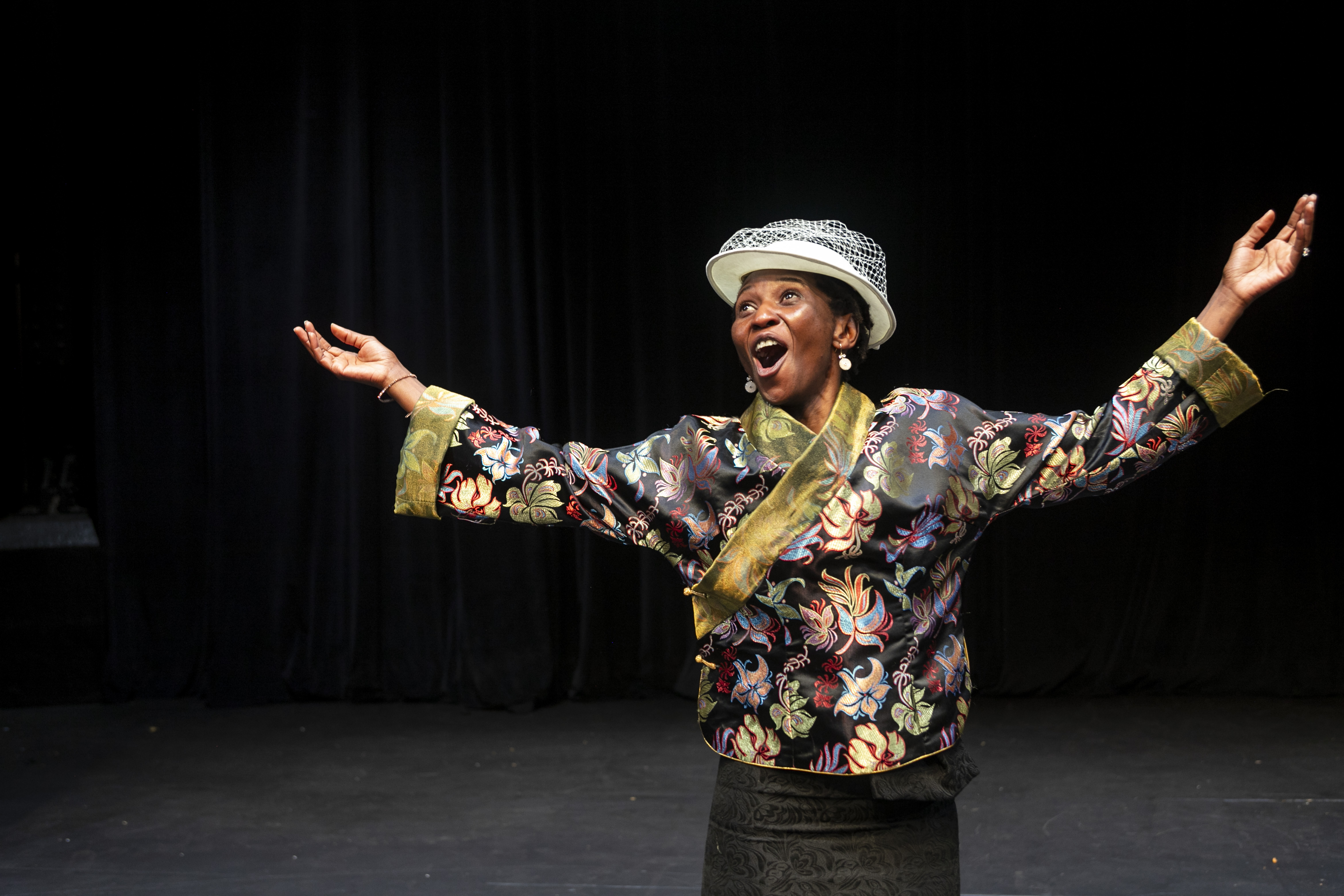
A man who was born to intimidate, Mugabe’s bodyguard, is hovering and watching in constant attendance. A jittery wife at first seems worried about her distressed husband, yet as she almost pounces on her guest, it is clear that she is much more concerned with her own wellbeing as Shopper of the Nation (which is clearly and most deliciously displayed in her glitzy attire) and wants to make sure her own position isn’t threatened. She is after all a secretary, who switched to sycophantic wife.
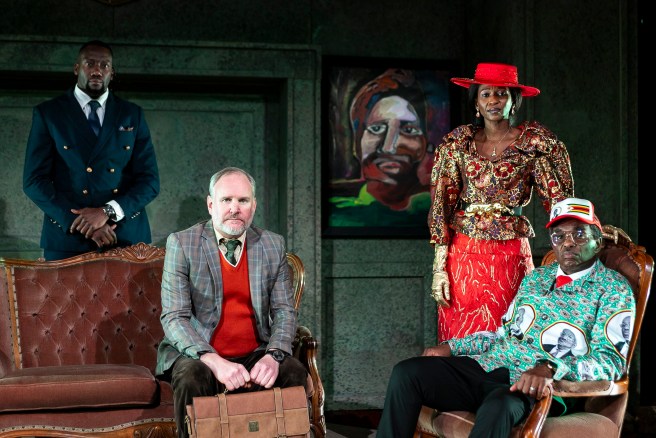
What happens next is like a thriller unspooling in almost Shakespearean fashion. Present are Robert Mugabe, his wife Grace, an English psychiatrist and the ever present bodyguard. The tone is set by an obviously agitated and deeply paranoid leader who, even though haunted by the past, is intent on dissembling reality.

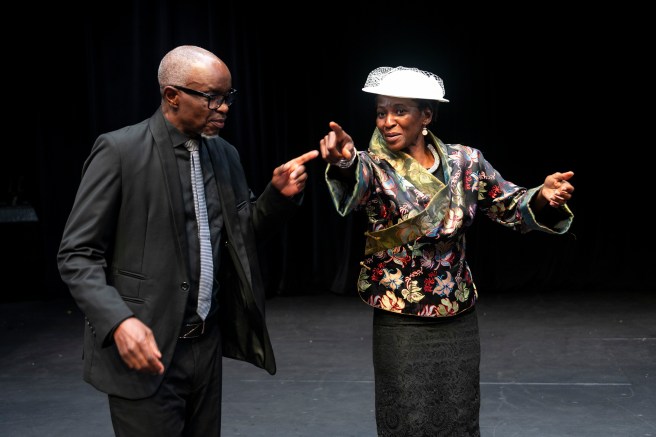
The cast is astounding, from Ndaba’s resolved Mugabe and Jackson’s bewildered yet embattled psychiatrist to the staunch bodyguard portrayed by Chigudu and the glorious Ntshegang, who masterfully displays Grace’s Machiavellian traits as she plays everyone differently.

The writing is a masterpiece. First written at the turn of the century, its relevance seems heightened in today’s world where unfettered power is displayed and celebrated with such candour and even pride. But it’s the way playwright Fraser Grace tackles all the issues, explores the ruthlessness of the regime and manages to stand aside from the writing that makes this hair-raising yet compulsive viewing.

Perhaps it takes someone from such a distance, almost unattached, to tackle such momentous events with such a clearcut vision.  He writes vividly in the Guardian about his own experiences, and it is worth reading for further clarity. https://www.theguardian.com/stage/2025/jul/23/play-breakfast-with-mugabe-market-theatre-johannesburg-fraser-grace.
Well done to Greg Homann and The Market for staging this work and for the passion of director Calvin Ratladi, Standard Bank Young Artist for Theatre who held onto his dream of directing this play one day and grabbed the opportunity when he had the chance.

He knew exactly how and with whom it should be told.
MAGIC ON STAGE IN THE MOON LOOKS DELICIOUS FROM HERE

REVIEW BY DIANE DE BEER

Pictures: Hoek Swaratlhe

THE MOON LOOKS DELICIOUS FROM HERE

WRITTEN AND PERFORMED: Aldo Brincat

DIRECTOR: Sjaka September

VENUE: Market Theatre

DATES: July 27

DURATION: 70 minutes

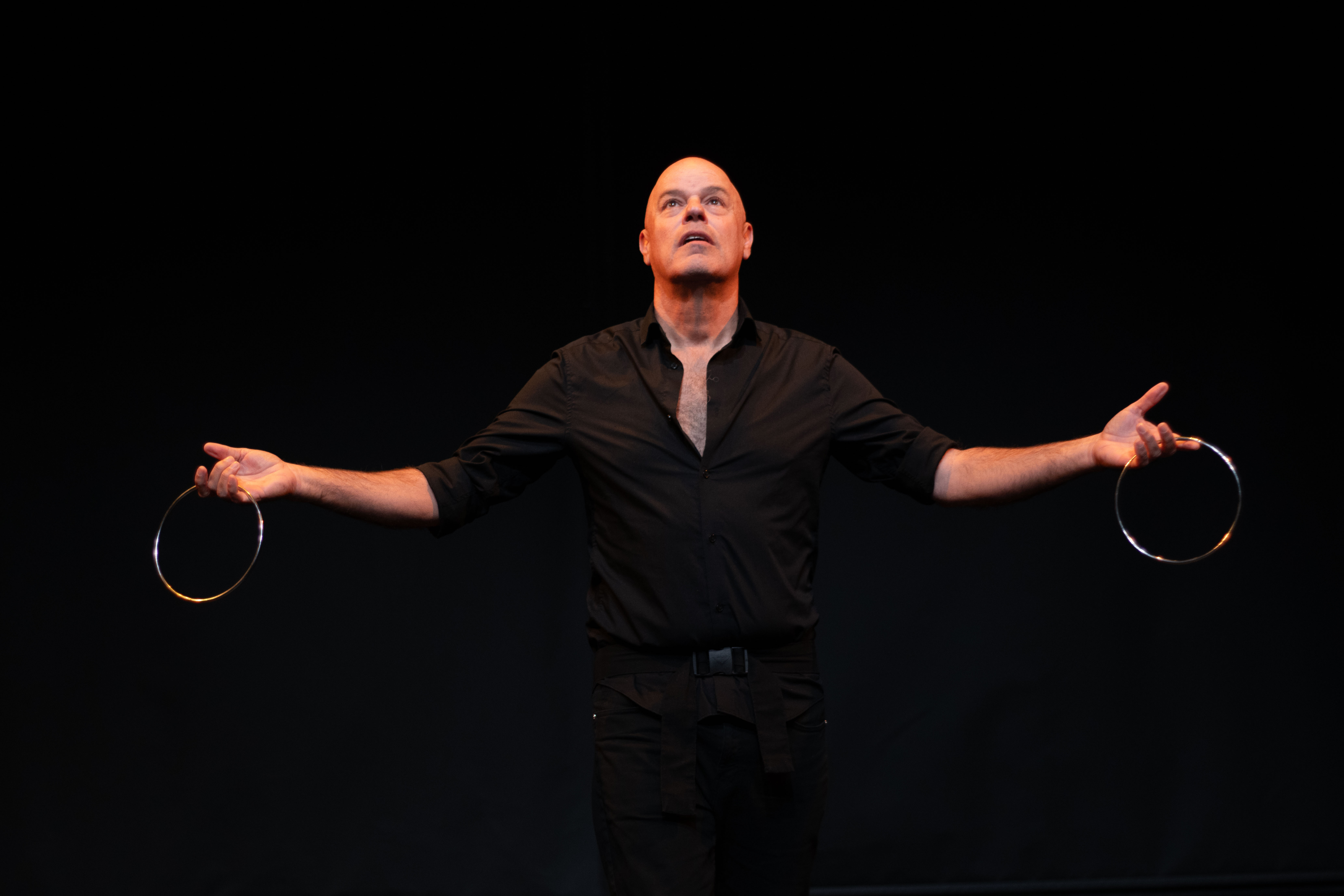
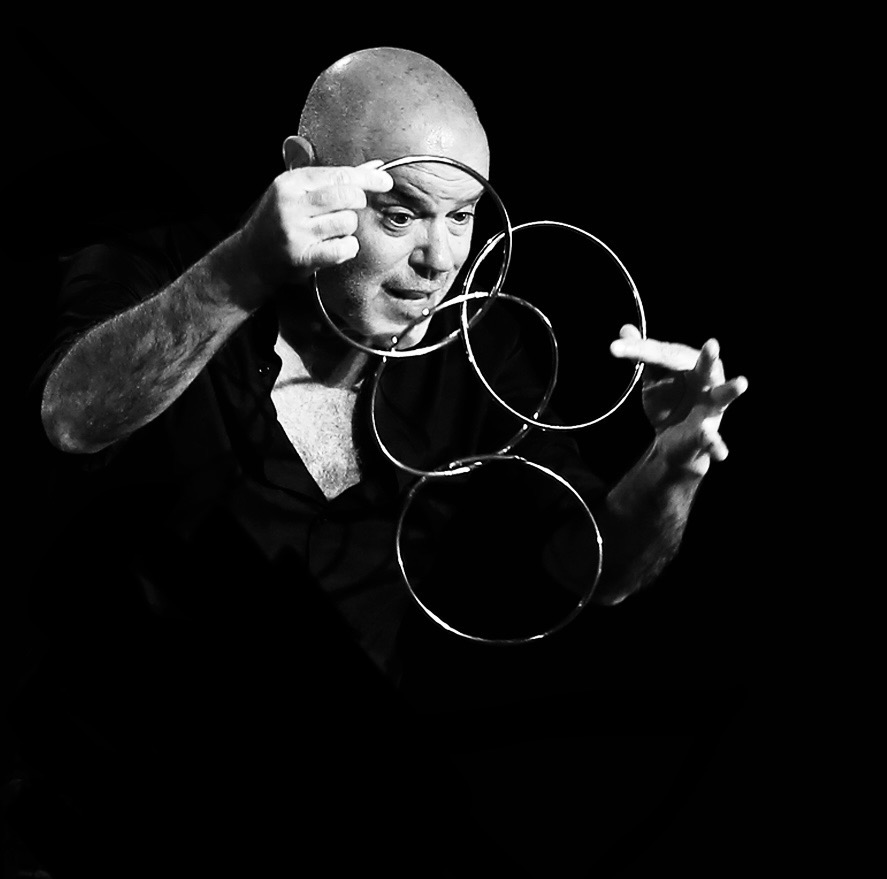
In the programme notes online it says that this play is a masterclass in writing and performance – and that is exactly what it is. And the aspects that I found most intriguing as being a born South African, I have been dealing and watched others sharing their trauma in this country for many decades.

Some similarities especially in text will occur, but I am passionate about people creating theatre – especially solo theatre.

Having to travel from Pretoria for most of my theatre, I consider very carefully which plays I want to see whether good or bad, just work that will appeal to me. And this is where theatre sometimes becomes problematic. If you are going to see a play that is 70 minutes long, it becomes a money issue. It has to. Time and travel become a worry.

So I have started coming up with fresh solutions to make my choices easier. With this one, I had already booked for a new musical opening and I thought I could slip this short prodcution into the mix without any difficulty. I see many more plays on one day when attending a festival. And that is what I did and will do more of in the future when the problem rears its head.

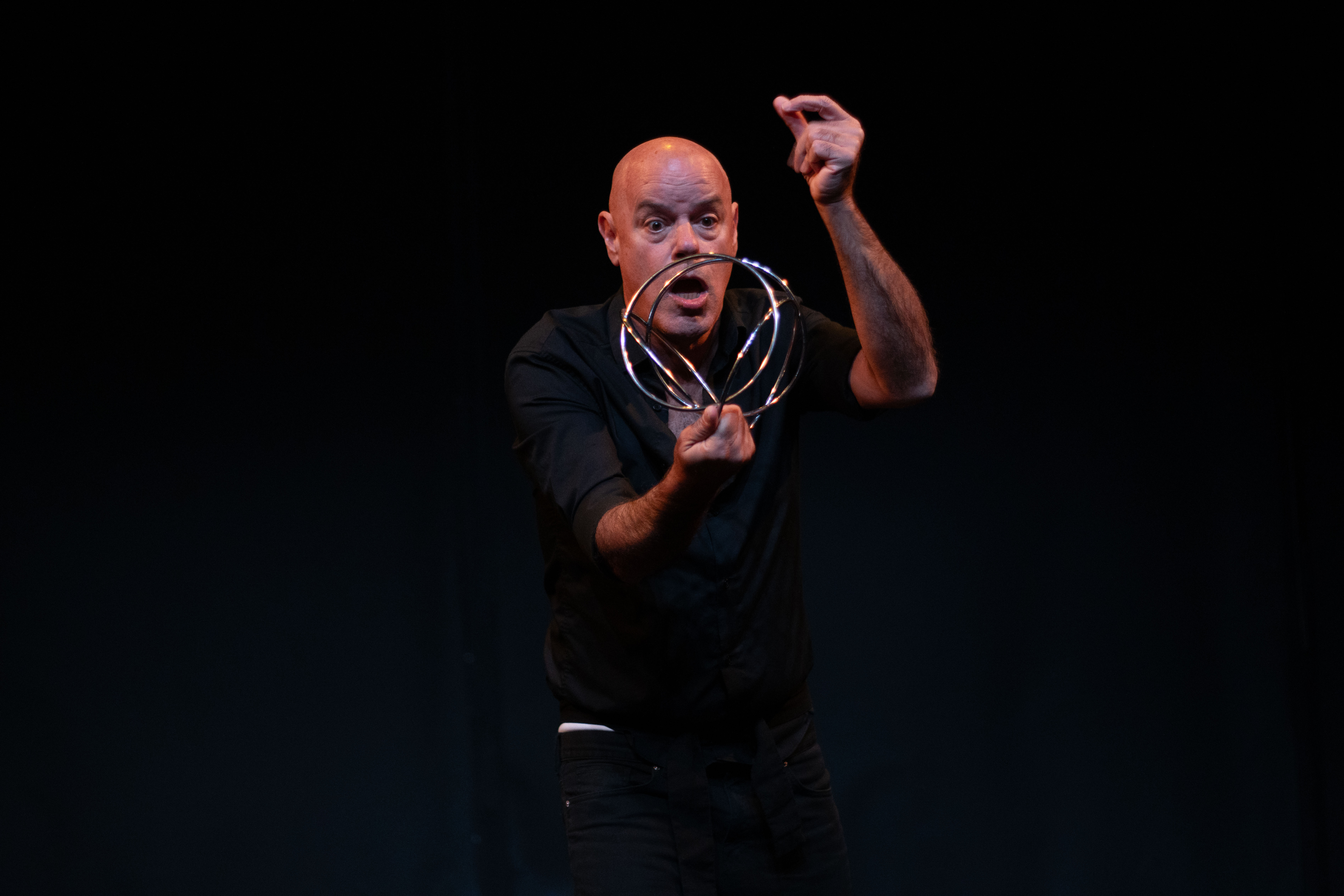
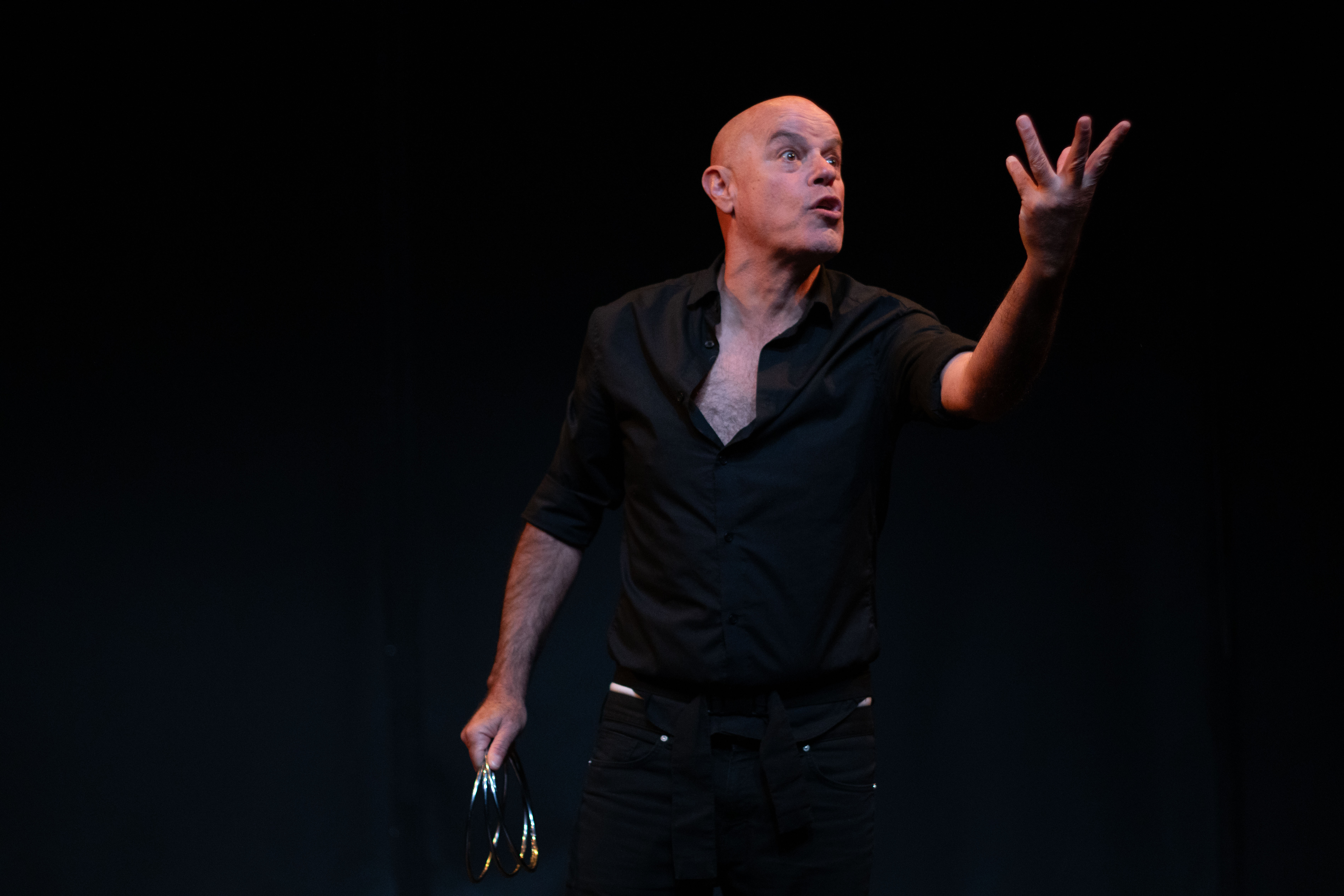
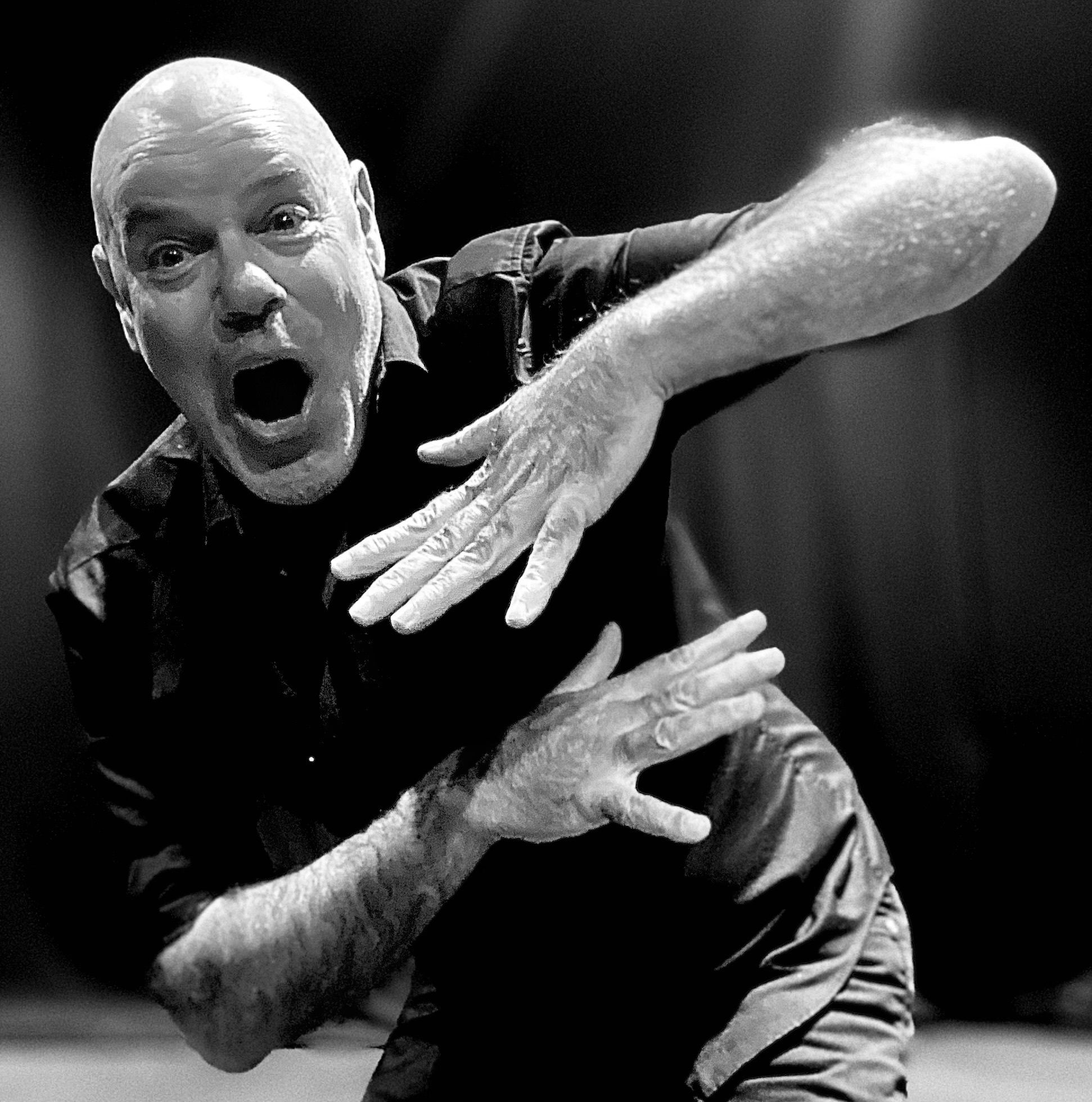
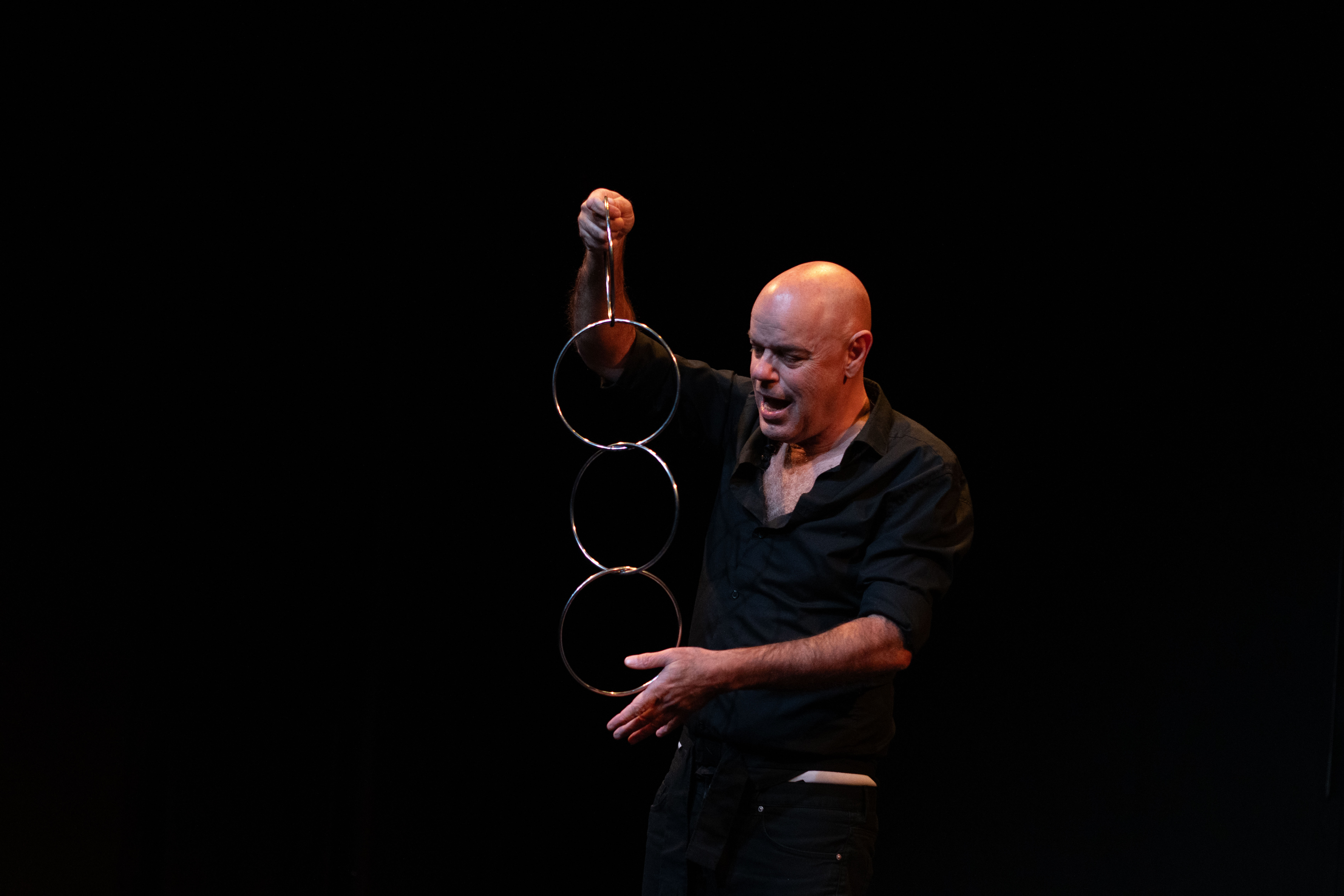
Brincat, who is a first generation South African, is described in many different ways and with many accomplished skills from acting, juggling and magic artistry to fine art, chef, writing and producing one-man shows, it seems.

But this is my first encounter as far as I can tell with this versatile artist. As he’s based in Cape Town and visits the National Arts Festival, while I am based in Pretoria and cover the Afrikaans festivals around the country, his work is unfamiliar to me.

The Moon Looks Delicious from Here is a man’s struggle with identity and finding his own place in what should be his world but isn’t always that straightforward is what he shares and struggles with.

It is familiar territory stretching from the ‘60s tot ’94, but it’s always interesting to discoverhow other people deal with issues that come up for many of us in different ways. It is also fascinating to see how others approach their work, especially when at play, as solo shows  can be limiting, depending on the content and how familiar you are with the subject.

He had me from beginning to end; engaging with his audience wasn’t an issue for him even with a most unusual mix on a Sunday afternoon. Half of the 100-plus theatre audience (and I’m guessing numbers) were elderly white couples and the other half were young (between 20 and 35) Black men and women. And throughout there was laughter from different quarters. It was a journey of remembrance for oldies and probably one of illumination for youngsters.

It would have been fascinating to have an audience talk after the show in this instance. This is Brincat sticking his toe in the water and it feels good. Hopefully he will be back so that we can get to know more of his work and his content.

SPRING AWAKENING BLOWS INTO GAUTENG’S PIETER TOERIEN THEATRE, MONTECASINO LIKE A BREATH OF FRESH AIR

PICTURES BY CLAUDE BARNARDO.

Niall Griffin dying the costumes wearing protective gear.

When Niall Griffin was invited to take on most of the design elements (set, costumes and lighting) for the Sylvaine Strike-directed Spring Awakening, he was nervous going into the process because living up to the expectations of a legend can be daunting. He tells DIANE DE BEER about the experience, which he describes as the highlight of his career:

Spring Awakening, presented by Cape Town’s Luitingh Alexander Musical Theatre Academy (LAMTA) as their first book musical, also marks the first time that Sylvaine Strike has directed a musical. 

Based on the controversial play that was written in the late 1800s by Frank Wedekind, Spring Awakening delves into the lives of a group of adolescent students discovering their changing bodies, their sexual identities, urges and desires, all while navigating the oppressive and draconian societal norms of the day. 

Under Strike’s visionary direction, this reimagined production (with a very young cast) brings the gripping and emotional story to life as it explores complex themes such as self-discovery, repression and the power of rebellion. 

Niall Griffin, a designer with a mission.

And while there was initial anxiety, once the work began, Griffin knew instantly that he was on safe ground. “The care, respect, trust and sense of magical play that Sylvaine instilled in our journey together are unmatched in my career. I think we both felt an immediate understanding of each other and were both amazed at how perfectly our style and ethos merged,” he says.

“We care immensely for our process, our casts, our team and our audiences, sometimes to our detriment, but finding someone with that same level of care has been one of the greatest gifts of my career.”

Being familiar with the level of detail Strike approaches when making a play, all of the above sounds like a match made in heaven.

The vibrant young cast in Spring Awakening

Accepting the challenge was a no-brainer for a designer who is also described as an industry legend. “There are musicals and then there are musicals. Some are light and frivolous and the perfect escapism and then some hit you harder in a place that truly moves you. Spring Awakening is the latter for me. The little rockstar hit that came out of left field to take Broadway by storm,” is how he describes it.

“It deals with things that we’ve all been through or are going through, both good and bad. All too often, in this day and age, we are driven into false beliefs and horrific mental health issues because we carry such shame from our experiences. The show, as heartbreaking as the story is, leaves one with love, compassion and a sense of togetherness. The human condition is not singular. We are not alone. We all need a little more love in our lives… and who doesn’t love a bit of Victorian-era deliciousness?”

Describing the process, he explains that what began as an exercise in replicating period fabric developed into an exploration on how possible it was to create an entire show from natural fibre. “Our planet has rapidly become saturated with ‘the synthetic’ and I believed this show needed authenticity in every aspect if it was to have the impact it deserved.

“The entirety of the show’s design is manufactured from purely natural fibre. Costumes began as neutral cotton that were dyed with natural dyes. The set is sustainably sourced wood and hessian made from vegetable fibre. It has been an incredibly educational and rewarding process.”

It is that process that piqued my interest, especially when basically the whole look depends on the outcome. Griffin understood that taking on the full production design across set, costume and lighting was a huge undertaking and not for the faint hearted.

“My driving force is to find a seamless synergy between all departments. What I term ‘one organism’. While taking on full production design is huge, it does make knitting a visual together far easier. Even though this show was Sylvaine’s and my ‘maiden voyage’, it was clearly destined, as our sensibilities and aesthetics couldn’t be better matched.”

And there’s the key, something they obviously both understood. “Theatre design to me, at its core, is about designing emotional response. I needed to immerse myself in the emotional journey of the piece, the high and low tides, in order to find its design core,” he notes.

For him texture is far more than paint and dye. “I spent a long time with the score and libretto and, to quote the Gen Z’ers, ‘felt the feels’. This is how I approach the majority of my design work, from a place of emotional honesty. It’s about finding the heart of the piece.”

Describing his process in more detail, he began with the sets, followed by costumes and finally lighting:

“When it comes to scenic design, my favourite moments in theatre are when a space manages to completely morph its texture, feeling and setting without all the ‘big toys’ and flash. A threatening storm can become something else, in mere moments, with a shaft of light breaking through the clouds. I wanted the space to morph seamlessly so that the emotional flow wasn’t interrupted by a clunky scene change. Finding the balance between something that can feel both oppressive and beautiful was a challenge. Using exposed wood was a no-brainer for me. Wood is a material that carries its growth with it forever. Its rings and knots and imperfections are part of it. This felt poetic to me.”

When it came to costuming, he wanted to create a uniform that felt prescribed by an oppressive regime, “a regime trying to erase the individual and force uniformity. I felt this would underpin the narrative journey of our characters rebelling against the blind norm by illustrating how prescribed uniformity cannot erase the burning fire of the individual.

“Every costume, from head to toe, has been lovingly made from scratch. They are all individually hand dyed and aged, and this is where I started to sneak the individual into the uniforms by aging and breaking down each individual’s garments with their own personality. Some of this detail may not be evident to the audience, but it was important to me that the cast could experience their costumes in this way. I truly believe that what the cast feels in their costumes translates into their performances.”

Lighting delivers the final flourish. “Sometimes, at the speed a musical moves, the audience needs to understand an emotional shift quickly, and this is where lighting was vital to me. I wanted the world to feel murky and rich, like an oil painting come to life.”

If the successful runs in Cape Town are an indicator, this has all been achieved, as the visuals will attest.

And Griffin has his final say: “Making theatre, especially non-replica productions, in South Africa in the current climate is hard work. Creating an entire musical from scratch was a feat second to none. I have a team of remarkable artisans that I work closely with and whom I would be nothing without. They all share my level of delivery standards and they all jump into the deep end with my crazy ideas. A tribe second to none. I couldn’t be prouder of the product, and watching audiences experience it in Cape Town has filled me with so much joy.”
* Performances run until 5 May 2024 at Pieter Toerien’s Theatre at Montecasino with shows from Wednesdays to Saturdays at 7:30pm and matinees on Saturdays and Sundays at 2:30pm. Tickets cost from R200 through Webtickets. Please note that Spring Awakening contains mature themes, partial nudity, sexual situations as well as explicit language. No persons under 13.