THE TOYOTA STELLENBOSCH WOORDFEES FEATURES MANY DREAM PRODUCTIONS AND PERFORMANCES

Photographers: Jeremeo Le Cordeur; Llewelyn de Wet and Gys Loubser

The Stellenbosch Woordfees can be quite a daunting prospect because there is so much on offer. It is perhaps easier if you have specific artistic passions, as most of them will be on offer here and it is possible to make a selection. DIANE DE BEER spotlights what caught her fancy

There’s not even a chance that you can include all your darlings in a festival wrap or even try to see them all.

I did my best, was constantly on the move and writing, and still I hear of more productions you just had to see.

Personal favourites (don’t discount others because I probably didn’t see them):

My best theatre productions were stories that turned me into an emotional wreck but did so with authenticity (I know this is a woke word, but …).

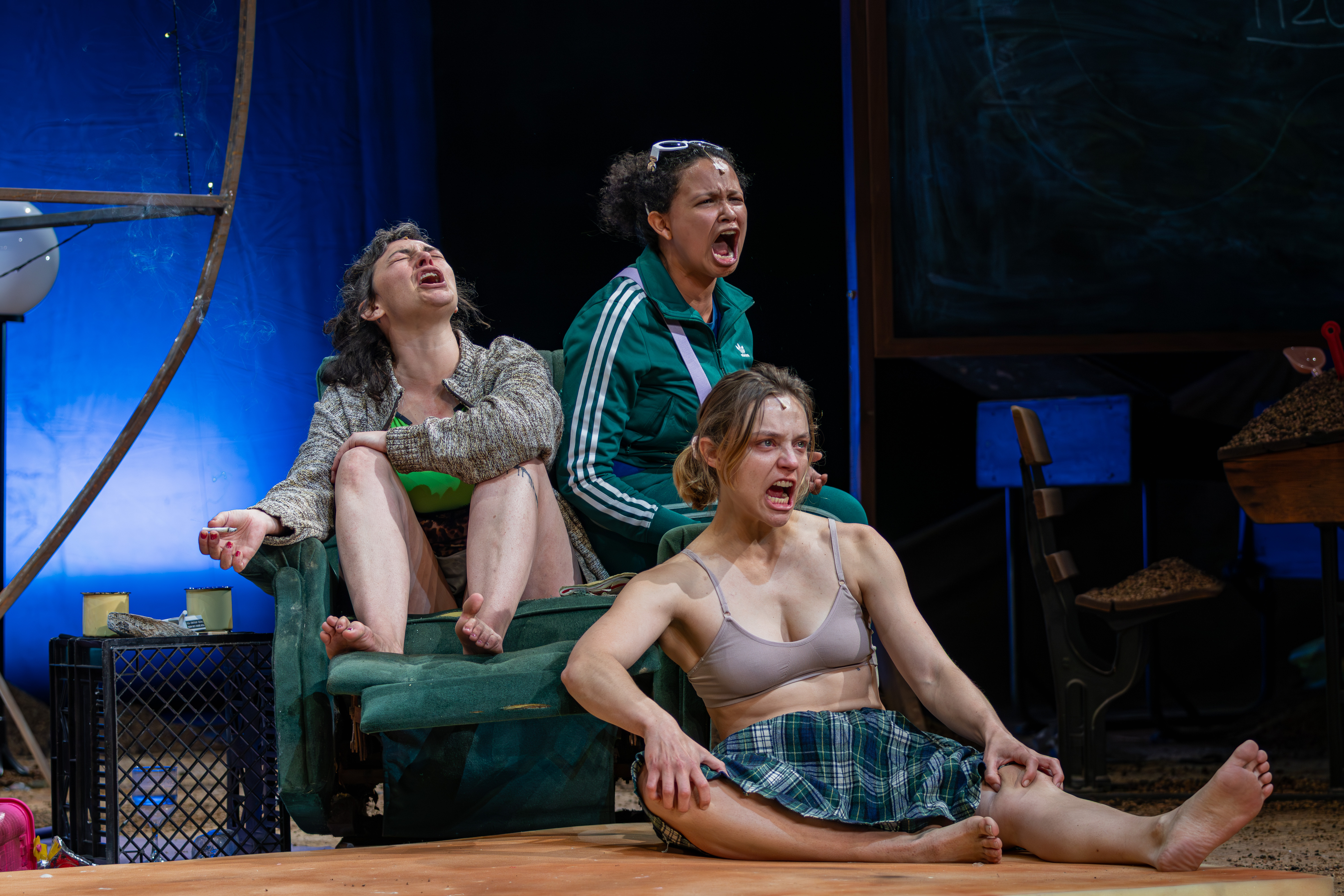
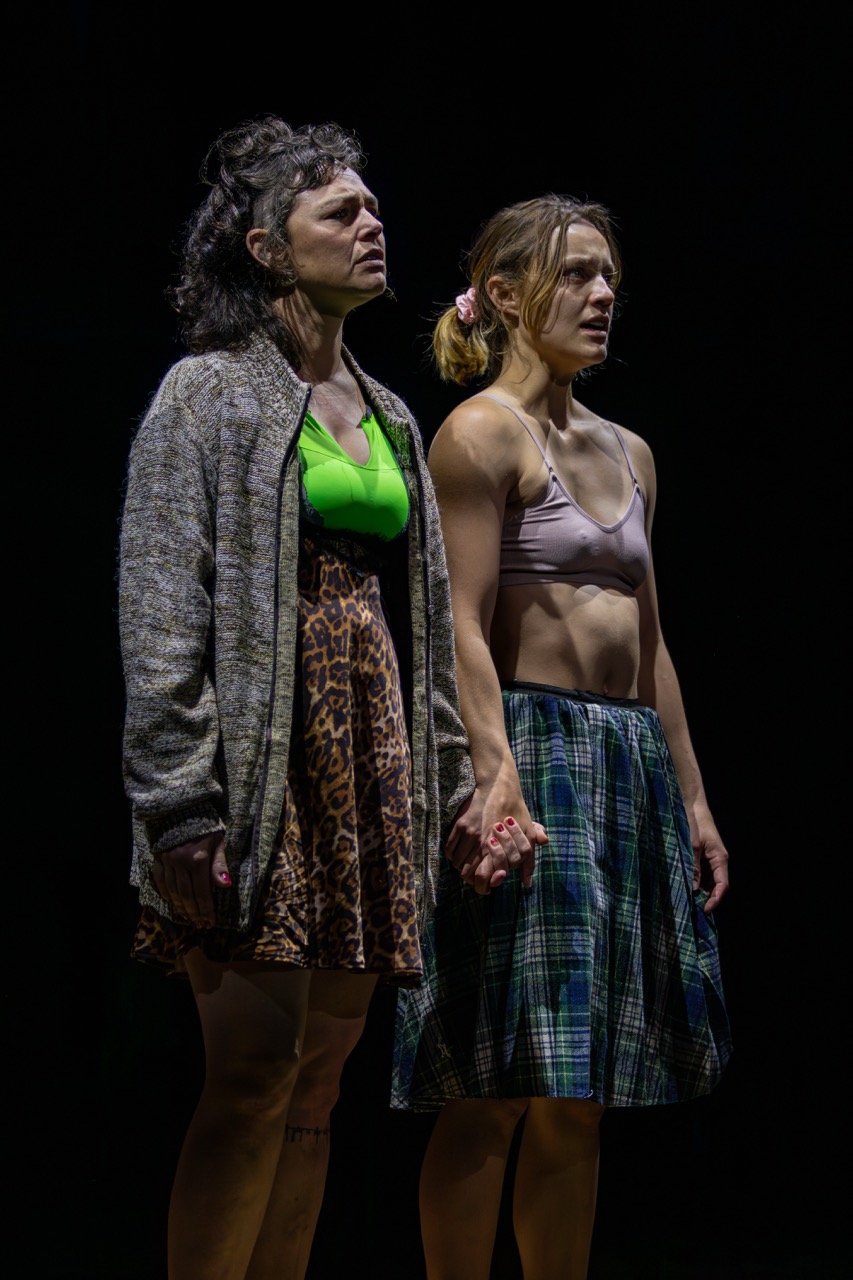
Tinarie van Wyk-Loots and Kristen Raath (left) and Jefferson J Dirks-Korkee (right) in

Dianne du Toit Albertze’s Huis van Sand. Pictured by Jeremeo Le Cordeur

The winning text of the prestigious Reinet Nagtegaal prize, Dianne du Toit Albertze’s Huis van Sand, with her honest portrayal of a dysfunctional family that’s probably not even part of most audiences’ consciousness. She writes about what she knows and where she comes from, the Northern Cape. But she does this in her self-made tongue, which shoots right to the heart and guts of the matter, no pussyfooting around with this one.

It is not a place many of the traditional Woordfees audiences will know. The backdrop is the N7, a route that runs from one end of the country to the other. It is her little spot next to the highway that Sandy knows. She and her daughter share Rodney’s caravan and too much of his life, especially the dark side. They’re trapped and yet the lifestyle is passed on from one generation to the next with the whole family fully engaged. A seemingly never-ending devastating cycle.

What drives Huis van Sand are Albertze’s words, her imagination, and the way she plays wildly with your head and emotions. Throw into the mix director Wolfie Britz’s strong casting and determined direction. With the remarkable Tinarie van Wyk-Loots launching herself body and soul into this one, Sandy’s daughter (Kristen Raath) trying to duck the missiles and resist diving headfirst into the temptations, Jefferson J Dirks-Korkee’s chilly capture of the toxic male scent always hovering menacingly and René Cloete showing she is much more than just an innocent bystander, everything about this production hits you like an onslaught.

Yet this is one you want to struggle and engage with because of the sharp edges and the unblinking gaze at the harsh reality of so many lives. It’s heartwrenching, but that is something this playwright has never turned away from. She stares straight into the skewered glare of too many unseen lives and throws us all in at the deep end. The brilliance is well worth the battle.

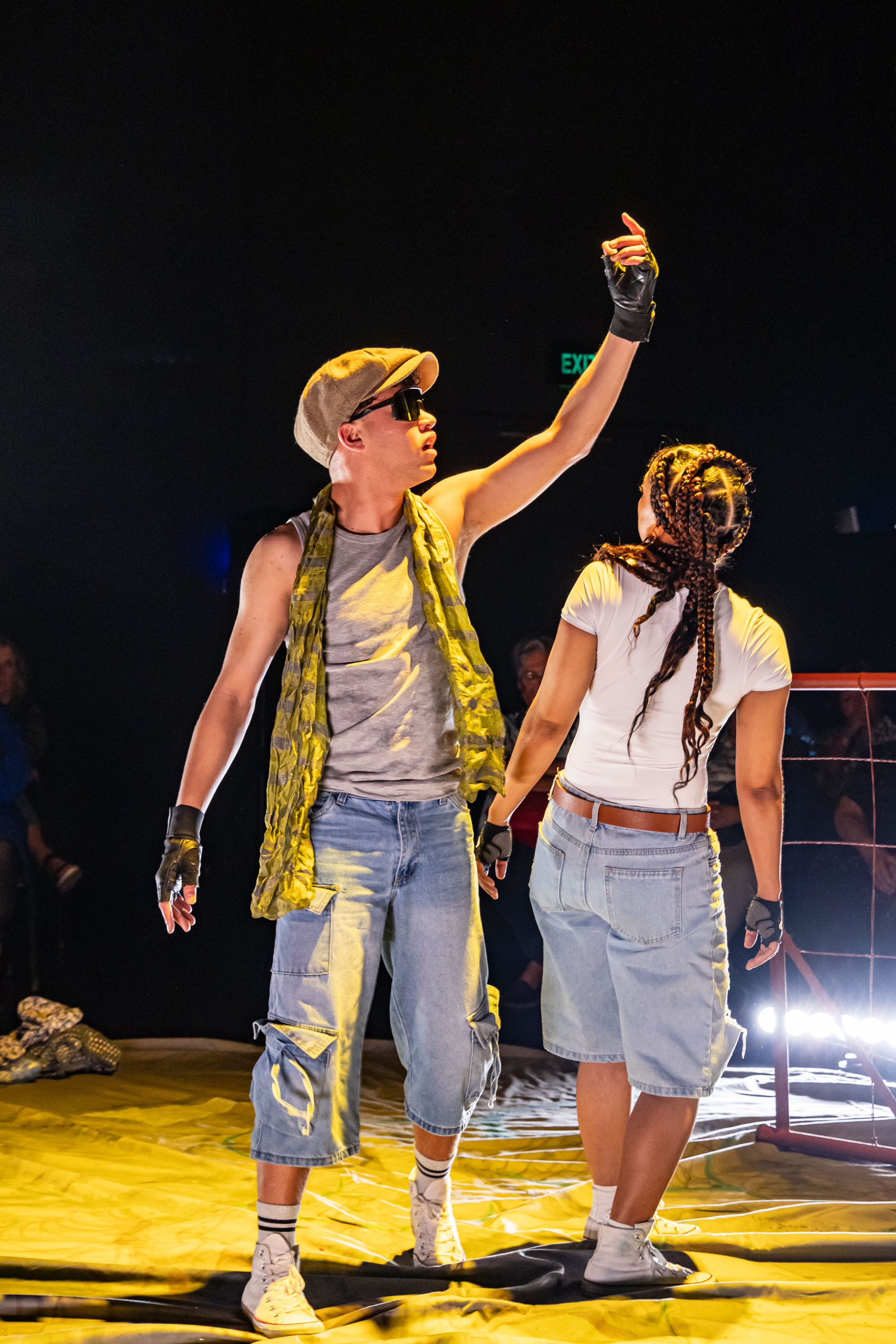
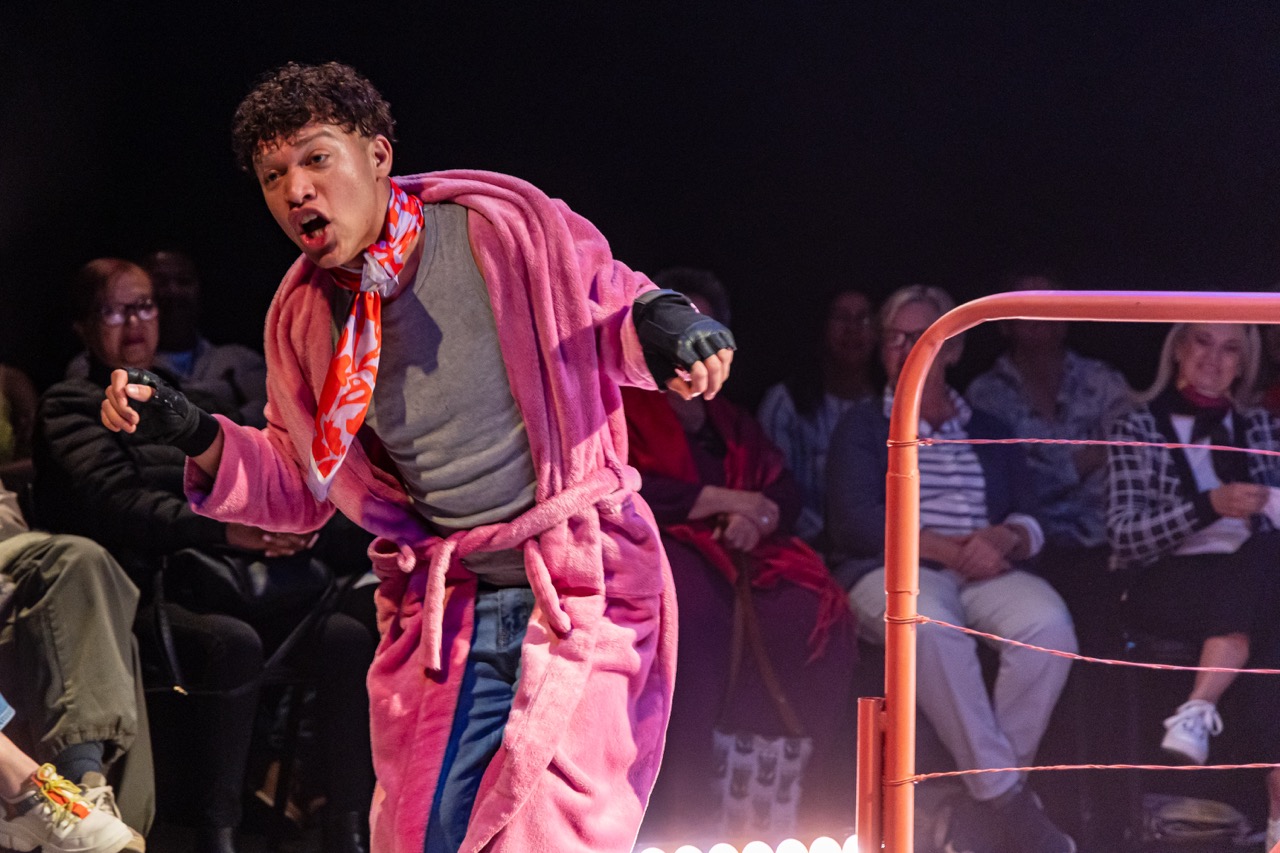
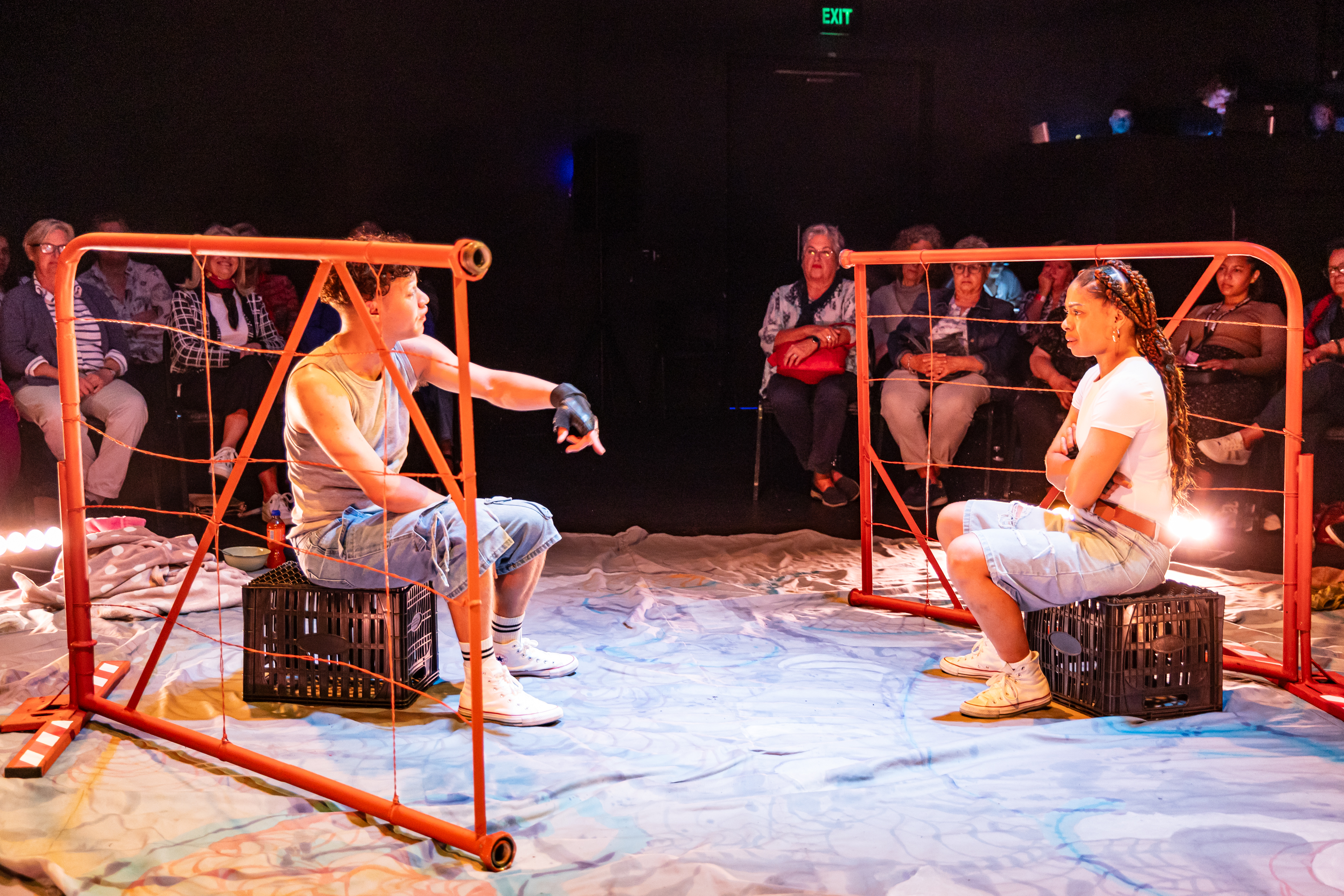
Melissa de Vries as Nadia and Angelo Bergh as her friend Zavie

Walking the same tightrope, is the adaptation by Jolyn Phillips of Ronelda Kampher’s ravaging novel starring two vulnerable yet resilient teen cousins who try their best to navigate a world they don’t understand while instinctively understanding that they are their only protection.

For Nadia (Melissa de Vries) and her chum Zavie (Angelo Bergh) their bond while tenuous and often fragile is what keeps them breathing.

With this one it is again the magnificence of the performances and the staging by Lee-Ann van Rooi that holds the attention as these two baby-adults going about their lives as if it is normal – and for them it is, it’s all they know.

That’s precisely the point. This is their normal, their life and the one Kampher’s words in her searing novel lay bare. Their whole existence is determined by outside factors, never certain or expected. Yet they do know how to grab the small slices of life when given the chance which isn’t often. They should not even be aware of the things happening in their lives, yet that’s the only way they know how to roll.
Kampher’s language is brilliantly captured by Phillips’ adaptation. How she even knew where to start! It’s such a complex and almost crippling story about these children whose future is determined purely by the happenstance of their birth.

Both of them have bucketsful of gifts which will never be realized because there’s simply no support or networks for these drifting families where not one generation manages to get even a foothold on a real life.

If anything good happens in their lives, it is luck and often, at that particular moment, the recipient doesn’t know how to deal with it.
When reading Kampher’s book the first time, you’re in awe of the writing and the storytelling. It’s the way she focused on the stories never told, the way she draws the characters, gives them flesh and emotions, which in this instance are perfectly re-created by the choices of Van Rooi and the adaptation by Phillips.
What a beautiful acting team. I don’t know them, don’t watch television if that’s where they perform, but I do know that they have inhabited these two kids with so much energy and guts, it’s hard to resist.

And that’s the joy of festivals, the opportunities that arise for artists so that when the stars align (a good script, director and actors), nothing can hold them back.

All of these performances should and will hopefully travel. For far too long too many voices have been silenced. We are so much richer as a country, as audiences and as performers when all our stories are shared.

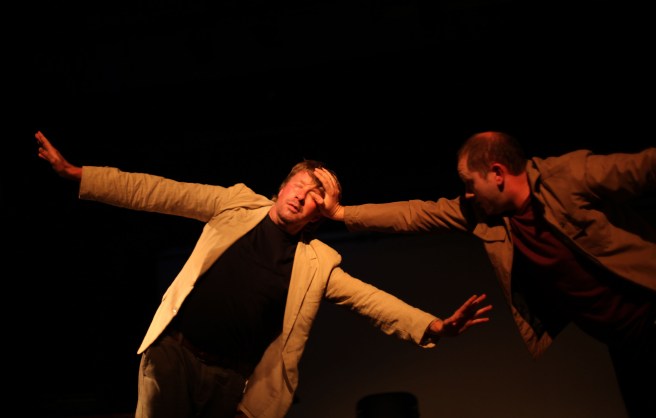
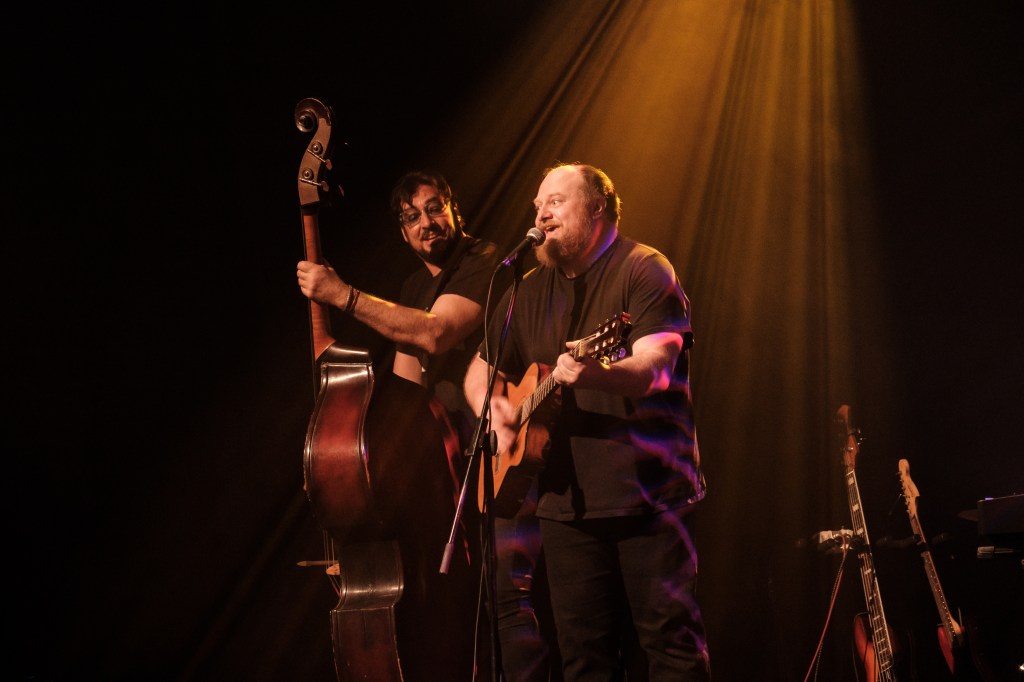
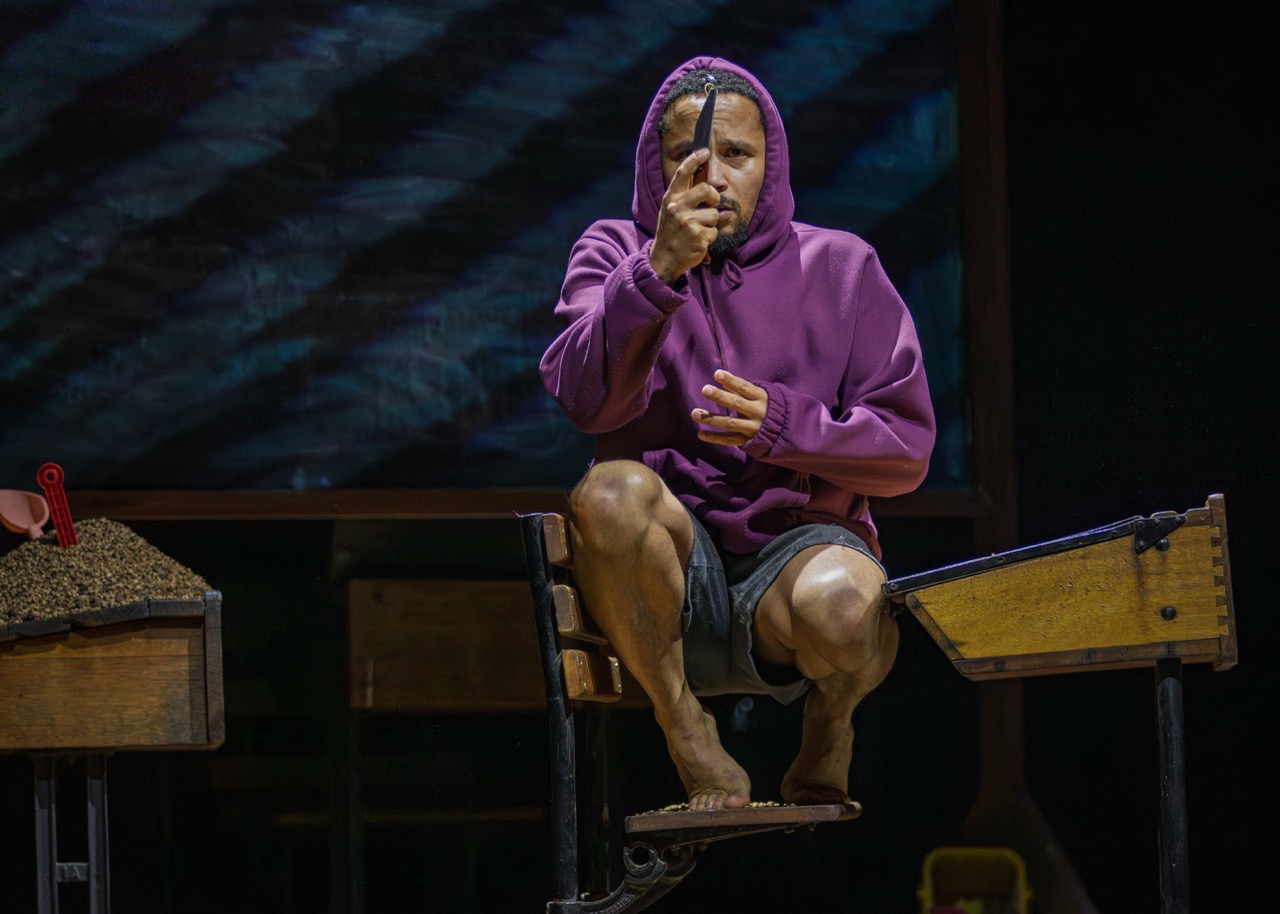
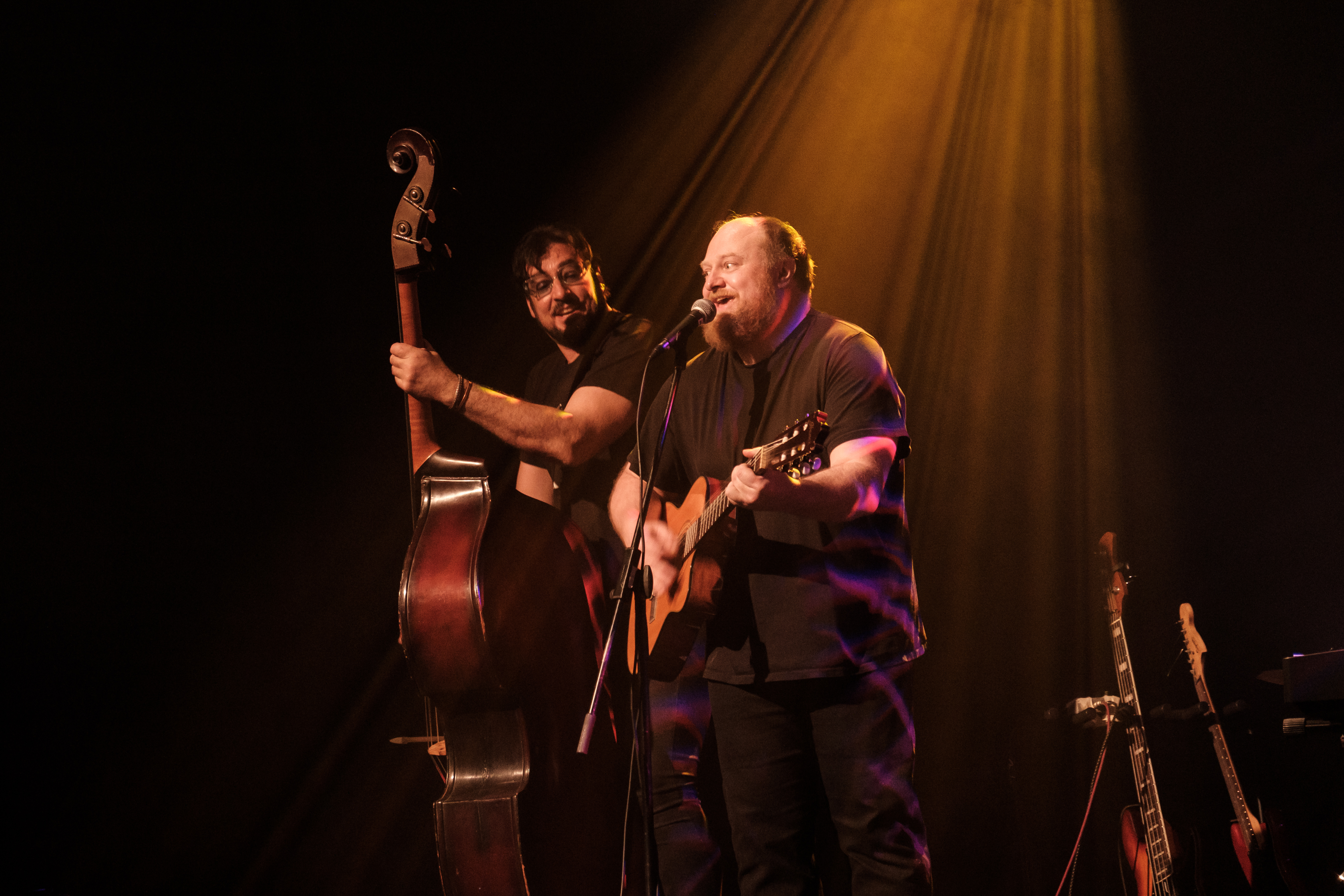
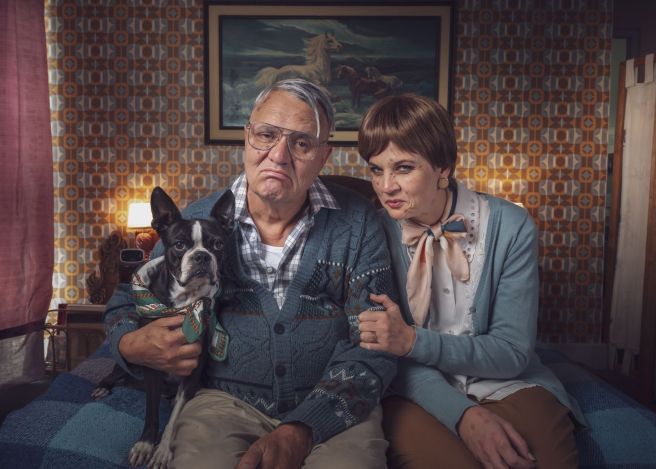
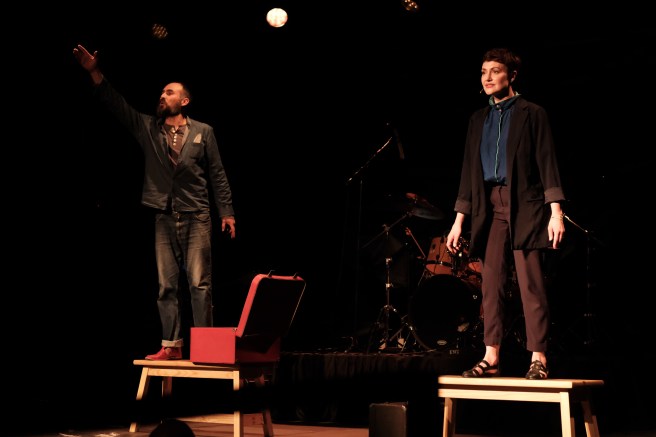
Albert Pretorius (actor) and Schalk Joubert (guitarist) in Ek is nie Danie pictured by Llwellyn de Wet and Gys Loubser.

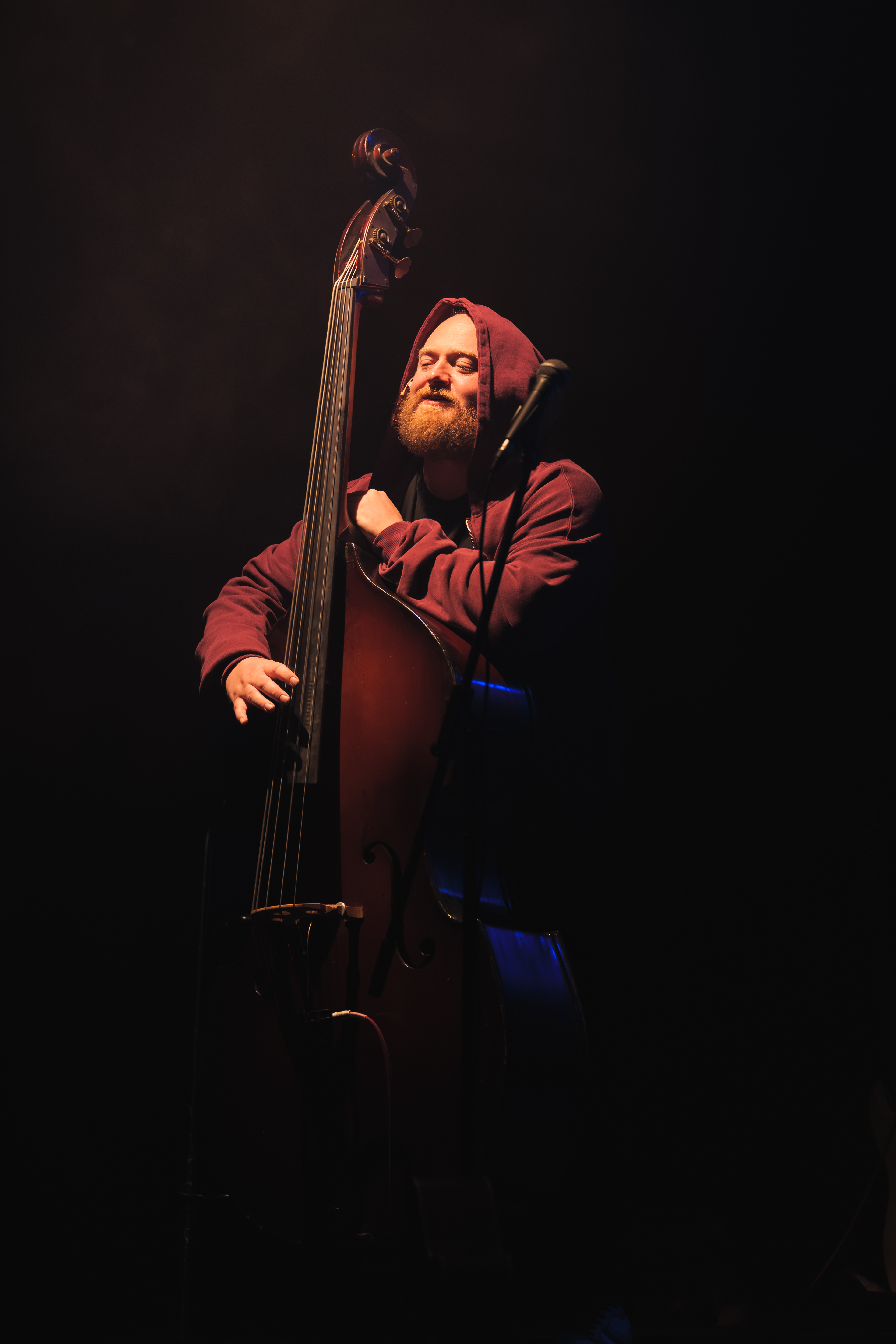
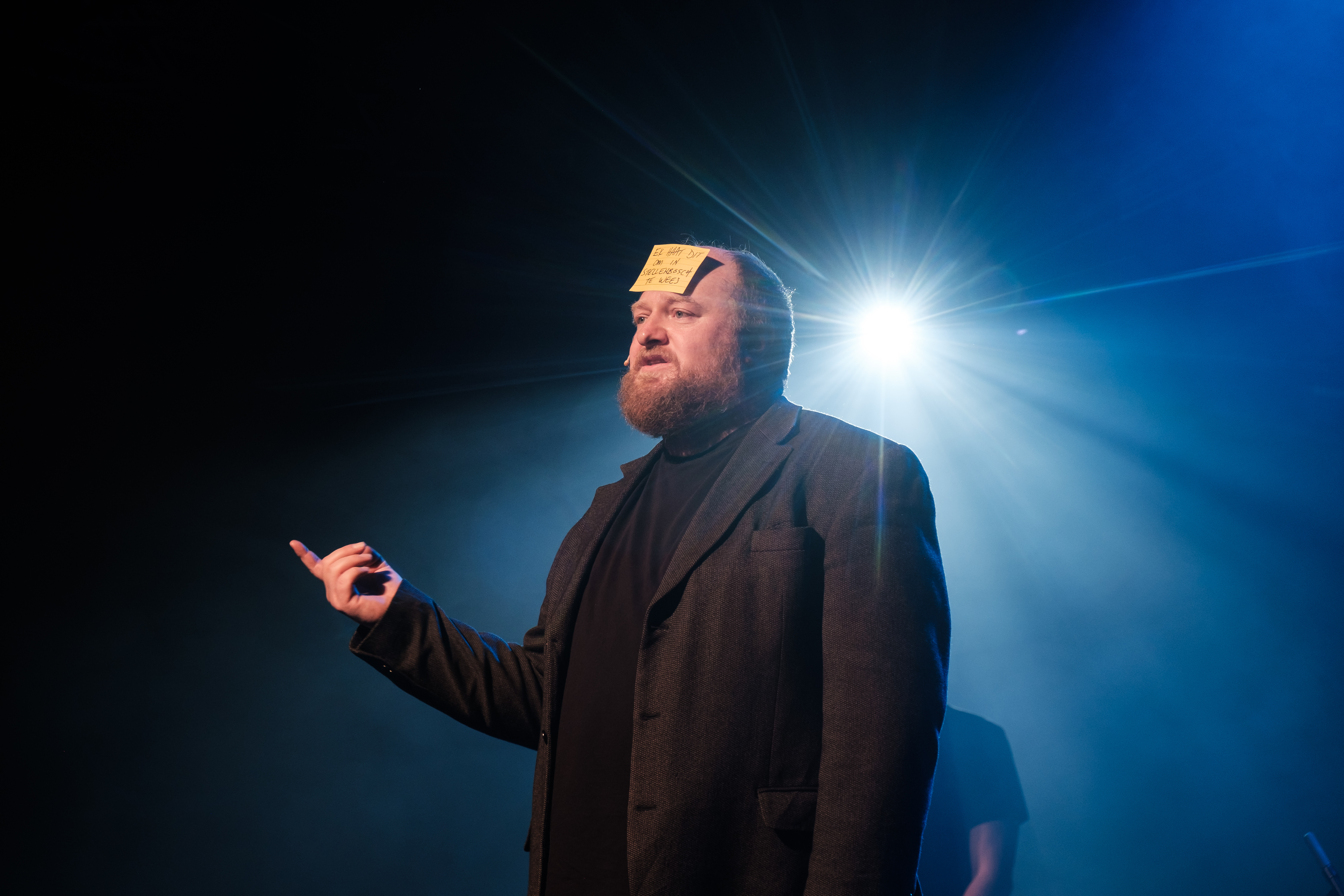
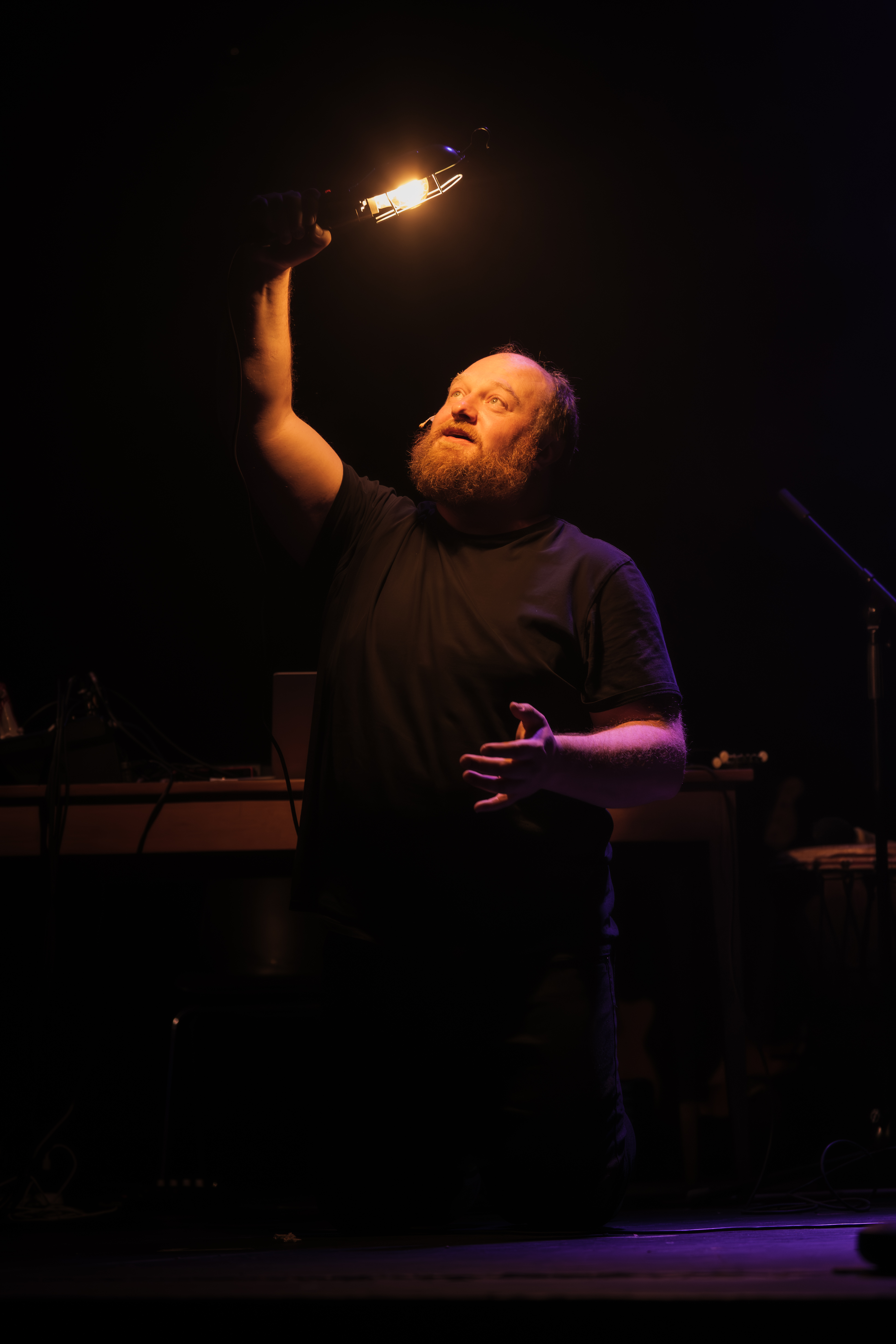
Writing about stars aligning, another perfect example of this was Ek Is Nie Danie with 21 poems from poet Danie Marais’ four collections woven into a magnificent text that deals with a middle-aged white man struggling.

What four middle-aged men did with what they had, was inspirational. They took something which if not handled with the same delicacy as the poetry, could have been disastrous. But because of deft hands and hearts, it feels as though you are dealing with an emotional vortex, but one driven with artistic insight and instinct which holds the audience tightly and sharply in focus from start to finish.

It worked because of the truly exquisite writing and then the choice of the right participants. The concept was Niel van Deventer’s according to the programme, but then handed to one of our smartest directors, Nico Scheepers. He is given a topic which would turn most people away – the angst and anxiety of ageing white men, not a species that many have much sympathy for.

Yet this company with actor Albert Pretorius and musical director/guitarist Schalk Joubert has shown that, given the right elements, a director who knows how to shape something yet value his actor and musician by allowing them the freedom to be and to do, it will work – and in this instance, explosively.

It’s one of those performances that you want to see again as soon as you leave the theatre. I hope it travels the country.

I took these three stunning plays to give some flavour to the Woordfees which is far too dense and diverse to dilute, but that there’s something for everyone, that’s a certainty and you won’t have to look too far or hard.

They have achieved much in only a short time and in the future with everything changing so rapidly, we can only expect to experience even more.

And then just a small PS: I was asked to interview Nataniël on a book Bloei+Blom and being who he is, the first lunch was booked out swiftly and another date the next day was included and again fully booked. But hey, the more the merrier.

As an interviewer, this is the one date I don’t have nerves. I know I am in safe hands and he is the master of chat.

It was the easiest gig in town. Even though he and I had talked about topics of conversation before the time, once on a roll, and only three questions down, I could sit back, relax and enjoy one of our best (and naturally funniest) conversationalists in action.

There was no way to ask anything else. He was in full flight on his own. He did glance my way once or twice, but there was no interrupting the flow. And even better, he was the one they wanted to see and hear.

I felt blessed, centre stage and could watch the wizard in full flights of fantasy.

*There were many others I loved, many of which I had written on at the Woordfees or previously including Boklied, Seun, Bridling, Kuns, Magda en haar Erhard, Ont-, and always The Ugly Noo Noo …

AARDKLOP PUNCHES ABOVE ITS WEIGHT

Like most things in life there are good and bad to small packages, but Aardklop CEO Alexa Strachan has turned her shiny Potchefstroom gem into a star through clever planning, a balancing act of note and enough variety to have everyone laughing and crying – with good food all over the place to boot. DIANE DE BEER speaks her mind:

My husband knows I’m a festival junkie (while he is NOT) but it is a personal indulgence and one that clearly nourishes.

This year was no different. Taking only a handful of my best, it’s not a difficult case to make.

Running down the alphabet as the festival guide does, it’s the overwhelming laughter that blew me away. I’m not a comedy girl so I didn’t know who Alfred Adriaan was but I screamed with laughter from start to finish and he was obviously a festival favourite in the packed auditorium.

With the name of Magda Louw (Desiré Gardner), one would think that I would remember that this is one of my favourite characters, but again, because of the comedy aversion, it just never surfaces. And yet, from the minute she walks on stage in her latest production, Magda Louw en haar Erhard, how Louw can you go?, this time with her husband Erhard (a delightfully Sad Sack performance by Hannes van Wyk), they just bowl you over.

What makes Magda so delightful to embrace is that she doesn’t go on the clichéd South African rant of potholes and politics, she has much more exciting things to deal with like the man constantly shuffling behind her as she leads the way at a faster pace and with much more rhythm, but the two ageing souls give you hope for the future as you realise that life is just a bowl of bubbles if you attack it in the right way.

On the other side of the spectrum there’s the magnificent solo debut by the extraordinary Wilhelm van der Walt, who unassumingly takes the stage and then reaching into a far too familiar past, given new perspective.

There was a time when I could hardly stomach another troepie tirade because it was so dominating in the country that it constantly surfaced on stage. What I realized this time round, is that Van der Walt himself probably never participated in this deadly exercise for so many decades part of our lives and there were certainly many young audiences who needs this insight on our past.

And if it is done with such magnificence, the flashbacks are worth recalling even if the past could be wished away.

How can anyone not be thrilled to experience Antoinette Kellermann and Dawid Minnaar on stage and in this instance in Breyten Breytenbach’s last play, Verwelkingslied, before he died. Although he dedicated the piece to Antoinette Kellermann and Marthinus Basson, she performed with her long-time stage partner Minnaar with Mari Borstlap as director on a set which was reminiscent of some of their earlier work together.

Minnaar is an eerily similar version of the poet in voice and image and immediately you can lose yourself in the meanderings of this philosophical and always poetic (almost) memoir. As the two actors take turns in monologue yet sharing Breytenbach’s feelings on death, one drifts away in the words so magnetic and the voice so penetrating, almost in dreamlike state, the actors and the audience.

The simplicity of the presentation is apt as it holds the depth and strength of the text so delicately. This is where we need the words to wash over us as an audience in almost immersive fashion.

I know that Amanda Strydom first mesmerized me with The Incredible Journey of Tinkerbell van Tonder and was eager to experience the performance all these decades later. Not that I can remember the detail, but with age of both text and performer, it’s as if everything has just found a warmer and gentler place to settle and lay her head down.

Finding your place in the world is a never-ending search and when you are fighting for freedom it is almost impossible – yet not when you’re Nelia Petersen who was handed the struggle together with mother’s milk.

It’s rigorous and robust with Strydom tackling the text and music with equal energy and exuberance. And all these years later, if anything, it is even more brittle and brilliant than before. I could watch this performance any day.

Belofte van Vere was our first production and yet another Breytenbach tribute but, once I witnessed the full cast on stage, they had my full attention. With the musically adventurous Laurinda Hofmeyr on piano, a rare singing appearance from the jazz-infused Ilse Klink, the genius muso Leon Gropp (guitar and voice), the soulful David Klassen (drums), a rhythmic Concord Nkabinde (bass) with the velvet voices of Rolanda Marais and Eben Genis, I knew I would be transformed. And I was.

Performers Eben Genis and Rolanda Marais

This exciting, gifted collection of artists would know how to do Breyten Breytenbach, without frills and fancy tricks, just delivering on their accomplishments and Breyten’s poetry and words. Anything else to my mind would have been unwarranted.

It’s my kind of show with my kind of people and poems. I needed nothing more. For me this was a Breytenbach celebration and I’m certain he would have been honoured.

Combining two dance companies, Cape Town’s magnificent Figure of 8 Dance Theatre who also performed their haunting tribute (Die Een Wat Bly) to the relationship between mothers and sons, the more expansive Wings of Light: Dance of an Angel returned dance to Aardklop in spectacular fashion. The music composed by Mauritz Lotz set the tone for an exquisite performance which showcased both classical and contemporary dance, the perfect rendition for an audience who might not often have the chance to see this kind of performance. It was a rare feat to stage this production and hopefully paved the way for similar ventures in the future.

Festivals have to walk a tightrope of not playing it too safe yet not antagonising their core audiences. With the large auditorium thé venue for one of our best comedians as well as two of the most exciting dance companies in the country, they managed just that.

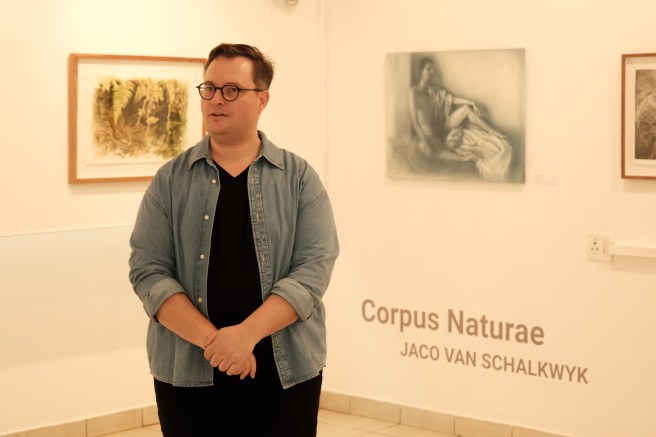
There was also time to slip into the art venues, always something to cherish, and this time it was the festival Artist Jaco van Schalkwyk as well as a challenging group exhibition Vice Versa curated by artist Gwynneth Miller, all of which got the mind racing on a variety of contemporary issues. The renovated campus art museum also featured an exciting range of Nataniël pictures captured by his longest serving photographer Clinton Lubbhe

As an extra fillip, there was the celebratory concert of Nataniël and Charl du Plessis’s 25-year collaboration on stage. And as I had witnessed their initial first performances together, this was quite emotional.

To watch two stratospheric artists develop, dissect and model their artistry as they grow and stretch in different ways is unexpected and artistically adventurous.

There’s Du Plessis’s breathtaking exuberance and excellence on piano, the way he shifts between genres and his approach to his longtime stage companion. Nataniël again exhibits his stagecraft, flips easily from text to music, his stories hilariously funny with a hint of melancholy, or on the musical side, surprising everyone with his superb classical training which he hardly ever shares. They are an unbeatable combination with so many years of performance between them.

Aardklop features youth theatre with their Pronk Podium product, which this year invited its most successful writer/director/producer to present his latest work Doolhof together with the NWU Kampustoneel winner Diereryk  directed and written by Pierre-André Viviers, cleverly based on Animal Far.

Every year I am thrilled and struck by the quality of the productions and everyone’s artistry involved. For future artists, this is unequalled training ground and for audiences the ideal opportunity to see how young artists tell their stories and what to expect in the future.

At future festivals, remember to watch out for this special section.

I could go on and on, I even made a turn at the market, something I never do, but I wanted to surprise my favourites at home with some specialty snacks.

As always it was a festival with feisty and fabulous fare on every level.

And the winners for the annual Aardklop festival awards are:

  • Best Actress: Elzabé Zietsman for Routrip
  • Best Actor: Wilhelm van der Walt for Seun
  • Best Director: Nico Scheepers for Seun
  • Best Overall Production: Seun
  • Award for most innovative work: The Scullery Quintet: Stir-fried Sonatas
  • Visual Art: Best Exhibition: Corpus Naturae, Jaco van Schalkwyk
  • Best Music-driven Production: Amanda Strydom: The incredible journey of Tinkerbell van Tonder
  • Best Classical Music performance: Road Trip Rhythms
  • Best Musical-driven performance: The Scullery Quintet
  • Hartsvriende Beste Produksie: Seun
  • Best new Afrikaans Script: Nataniël for NATANIËL + CHARL = 25
  • Best Production: Drama: Seun
  • Knockout Award: Alfred Adriaan: Positive Strokes
  • Extra Mile: Riaan Rademan (Technical project manager for Blond Productions)

SAVIOUR OF DEMOCRACY OR DESTINED TO DISAPPOINT IN A COUNTRY RAVAGED BY WAR?

DIANE DE BEER

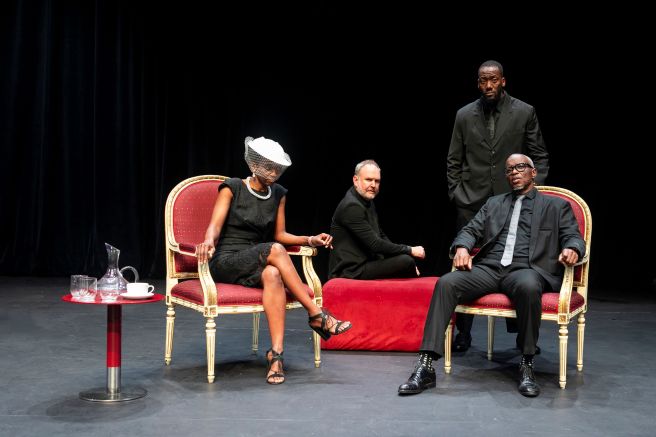
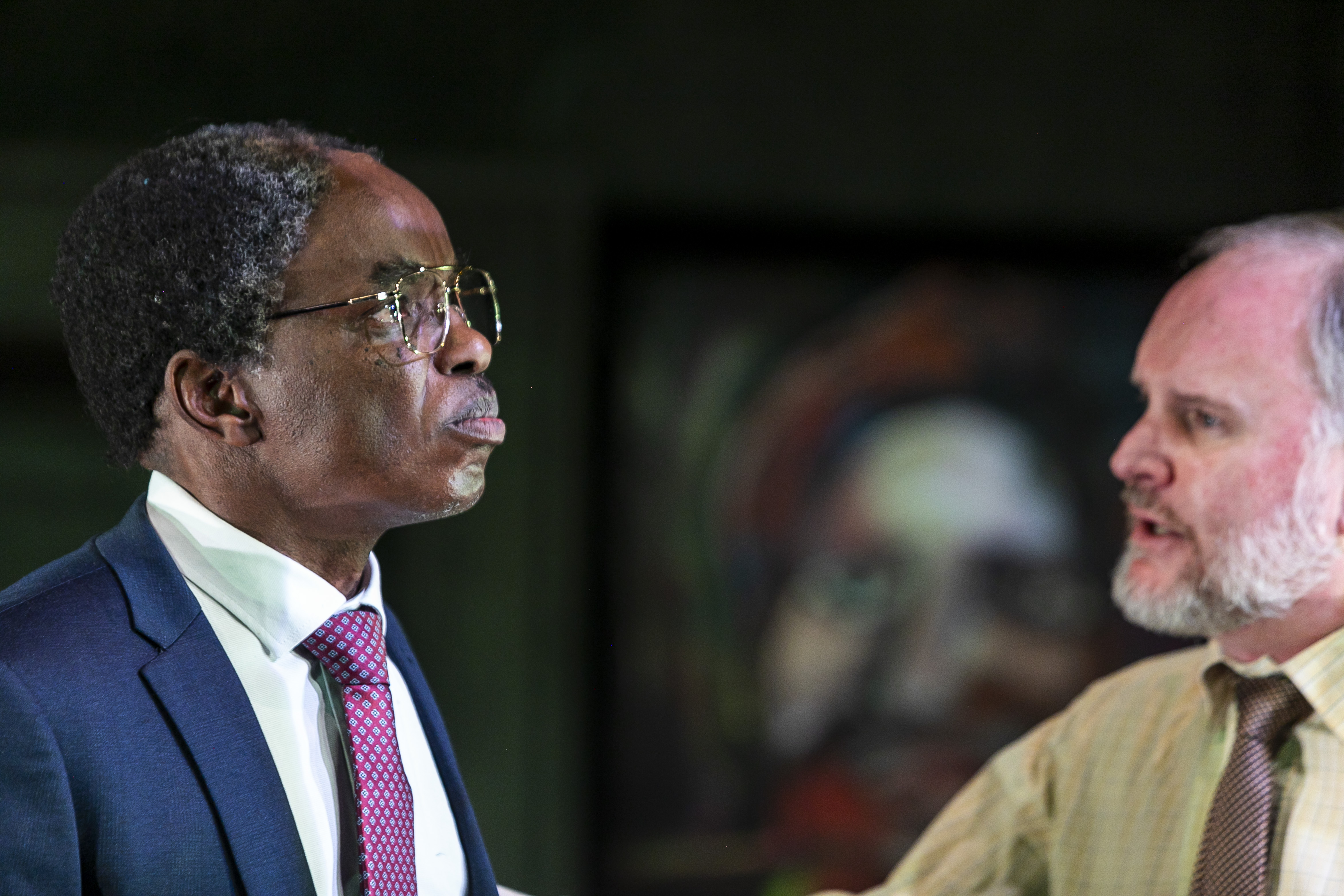
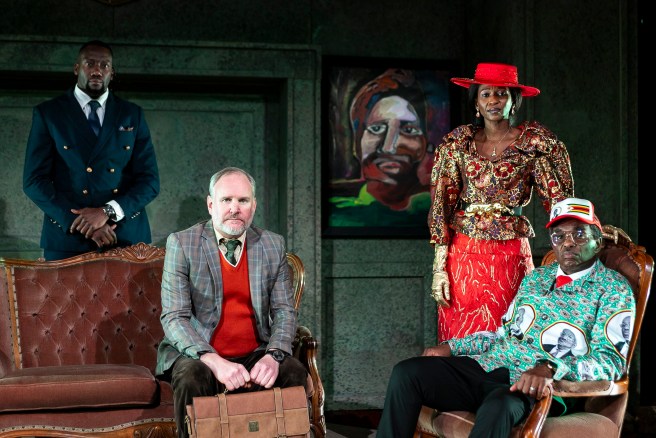
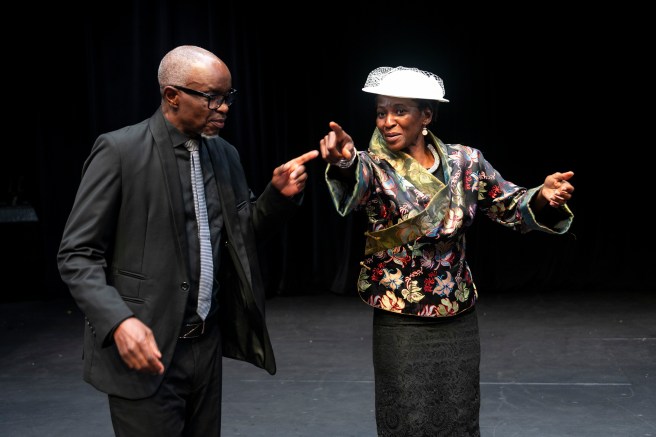
FROM LEFT TO RIGHT: Gontse Ntshegang as Grace, Craig Jackson as the psychiatrist and Farai Chigudu as the bodyguard with Themba Ndaba as Robert Mugabe.

PICTURES: Ngoma KaMphahlele

BREAKFAST WITH MUGABE by FRASER GRACE

DIRECTOR: Calvin Ratladi

PLAYWRIGHT: Fraser Grace

SET DESIGNER: Wilhelm Disbergen

COSTUME DESIGNER: Sheli Masondo

LIGHTING DESIGNER: Denis Hutchinson

CULTURAL DRAMATURGE: Professor Samuel Ravengai

MUSIC: Matthew Macfarlane

ACCENT COACH: Louise-Saint Claire

 CAST: Themba Ndaba as Mugabe, Gontse Ntshegang as Grace, Craig Jackson as Andrew Peric and Farai Chigudu as Gabriel

VENUE: Mannie Manim at the Market Theatre

DATES: until August 10

If you are intrigued by the title, this is a play you will want to see. With the name Robert Mugabe having special meaning in South Africa, neighbouring country to Zimbabwe, it was a packed buzzy audience in attendance, always a joy to behold in an industry that’s constantly in battle.

If you google the number of Zimbabweans living in South Africa, they are described as the largest group of foreign migrants in the country. “Some estimates suggest the number could be as high as 3 to 5 million.”  And it goes on to say that the influx is primarily due to economic hardship and instability in Zimbabwe.

South Africans will all have some opinion of what occurred in Zimbabwe. Mugabe is still an enigma to many because he started as a saviour in the new democracy in 1980 in a country which was ravaged by civil war. The education system alone can attest to that.

Yet, because of the ambiguities, political perspectives and where you come from will come into play when watching this fierce production. If you are expecting answers to the many questions you might have, what you get is a view of the complications of a system which so clearly exposes the cliché, “you cannot please all of the people all of the time”.

What you have is a deeply troubled man haunted by his actions as a political leader of a country that lay in ruins yet full of hope for a new dawn. The action is heightened from the start as Grace Mugabe (his second wife) has summoned a white psychologist to see her husband. What unfolds all happens in hushed tones, with people looking over their shoulders waiting for some kind of menace.

A man who was born to intimidate, Mugabe’s bodyguard, is hovering and watching in constant attendance. A jittery wife at first seems worried about her distressed husband, yet as she almost pounces on her guest, it is clear that she is much more concerned with her own wellbeing as Shopper of the Nation (which is clearly and most deliciously displayed in her glitzy attire) and wants to make sure her own position isn’t threatened. She is after all a secretary, who switched to sycophantic wife.

What happens next is like a thriller unspooling in almost Shakespearean fashion. Present are Robert Mugabe, his wife Grace, an English psychiatrist and the ever present bodyguard. The tone is set by an obviously agitated and deeply paranoid leader who, even though haunted by the past, is intent on dissembling reality.

The cast is astounding, from Ndaba’s resolved Mugabe and Jackson’s bewildered yet embattled psychiatrist to the staunch bodyguard portrayed by Chigudu and the glorious Ntshegang, who masterfully displays Grace’s Machiavellian traits as she plays everyone differently.

The writing is a masterpiece. First written at the turn of the century, its relevance seems heightened in today’s world where unfettered power is displayed and celebrated with such candour and even pride. But it’s the way playwright Fraser Grace tackles all the issues, explores the ruthlessness of the regime and manages to stand aside from the writing that makes this hair-raising yet compulsive viewing.

Perhaps it takes someone from such a distance, almost unattached, to tackle such momentous events with such a clearcut vision.  He writes vividly in the Guardian about his own experiences, and it is worth reading for further clarity. https://www.theguardian.com/stage/2025/jul/23/play-breakfast-with-mugabe-market-theatre-johannesburg-fraser-grace.

Well done to Greg Homann and The Market for staging this work and for the passion of director Calvin Ratladi, Standard Bank Young Artist for Theatre who held onto his dream of directing this play one day and grabbed the opportunity when he had the chance.

He knew exactly how and with whom it should be told.

THE BLACK CIRCUS OF THE REPUBLIC OF BANTU IS ORIGINAL, LIFE CHANGING AND A JOY TO BEHOLD

REVIEW BY DIANE DE BEER:

THE BLACK CIRCUS OF THE REPUBLIC OF BANTU

ARTIST: Albert Ibokwe Khoza

DIRECTOR: Princess Zinzi Mhlongo

DATES: June 26, 27, 28, 29

VENUE: Mannie Mannim Theatre at The Market

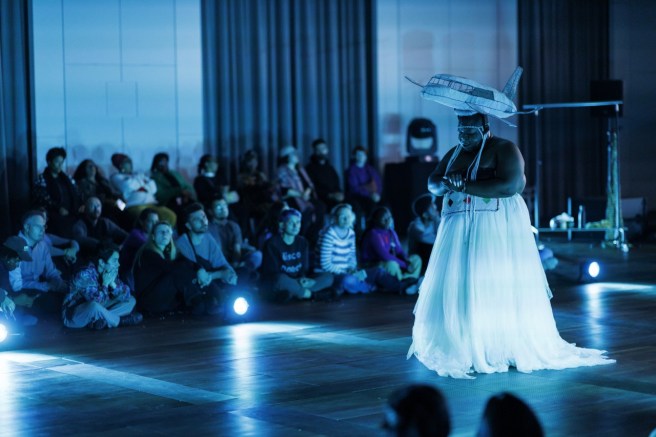
It’s explosive, it’s engaging, it plays with your mind (stretching it this way and that), it’s mesmerising, it sweeps your whole being along and most of all, it’s original and creative in a way that heightens all the senses. And then it shows you everything theatre can be.

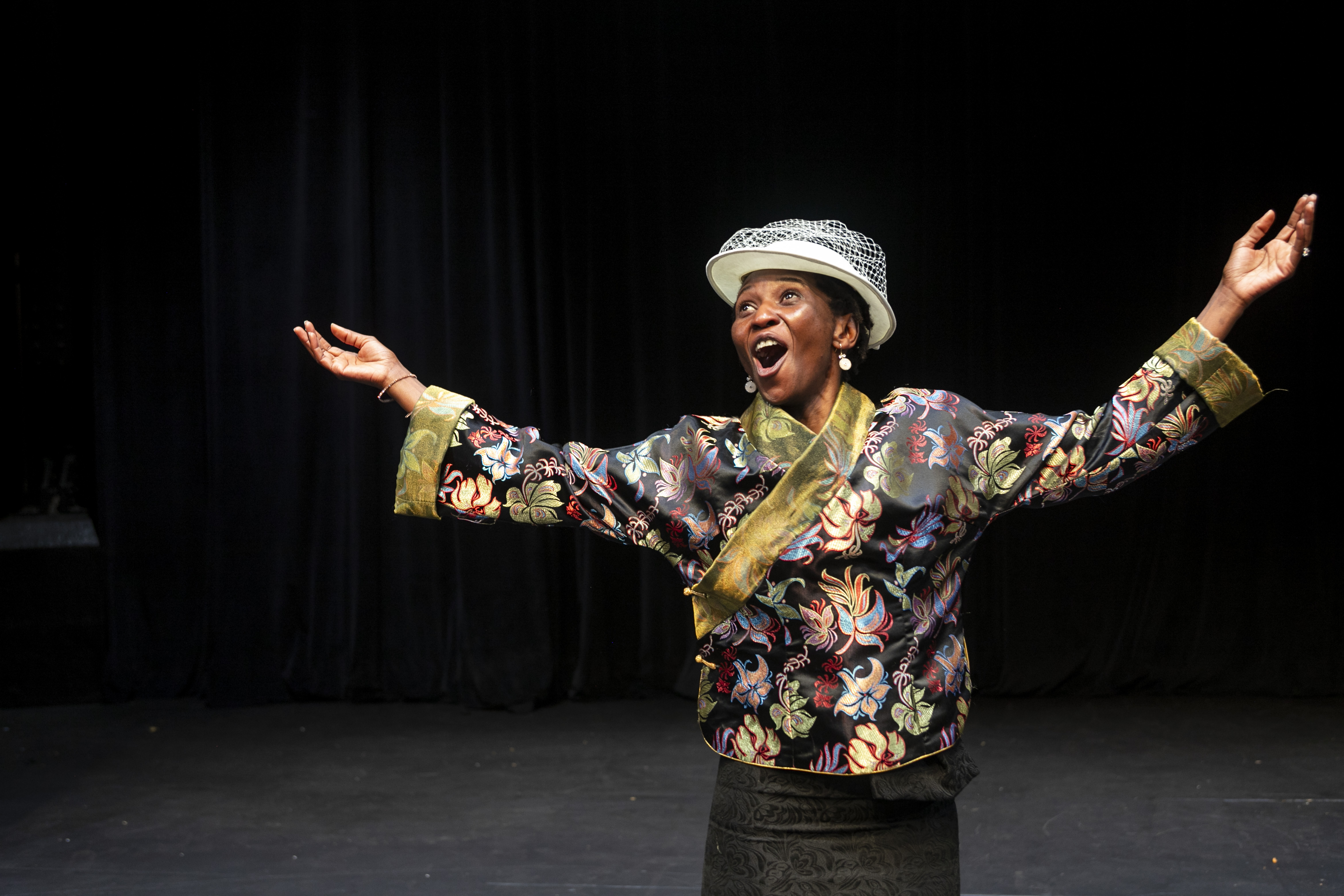
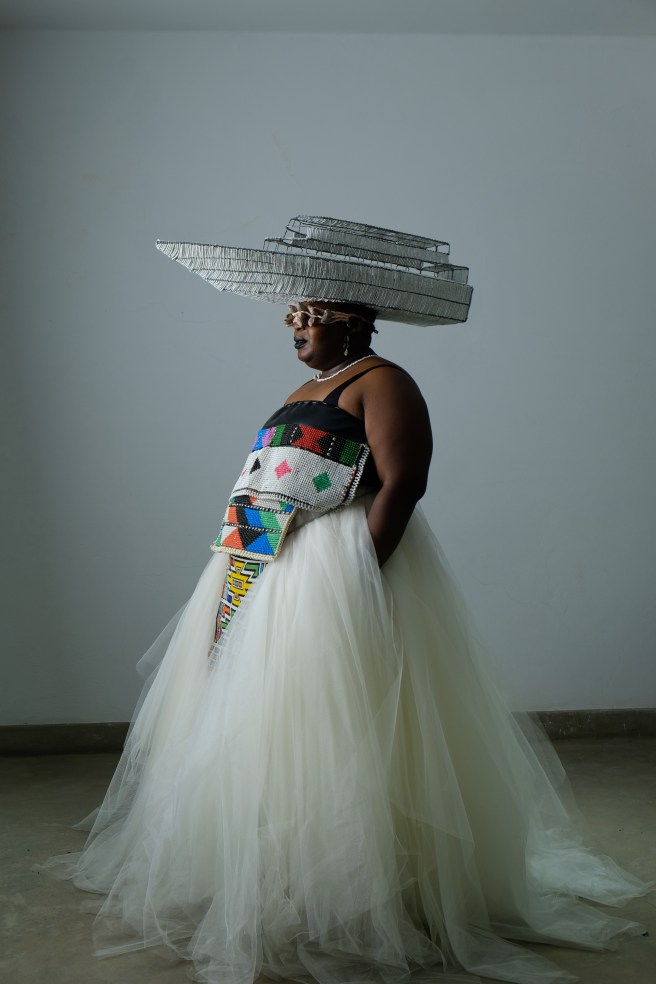
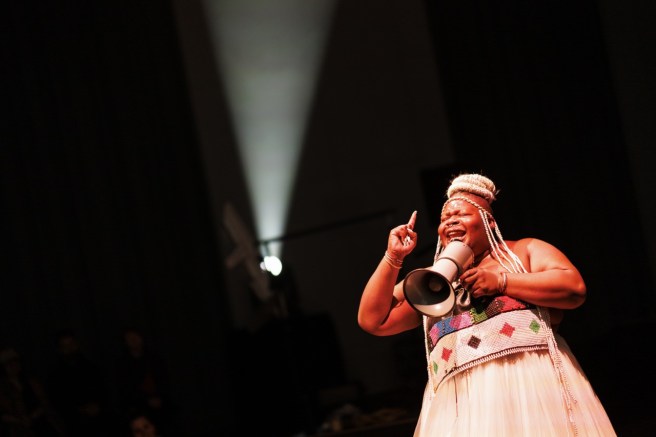
Khoza is a presence not only with the theatricality of their costumes but especially with the way they move, speak, sing, chant and engage their audience from start to finish. There’s no time for your mind to wander or wonder, you’re simply in the moment as you participate in this experience that for most of us would be completely unique.

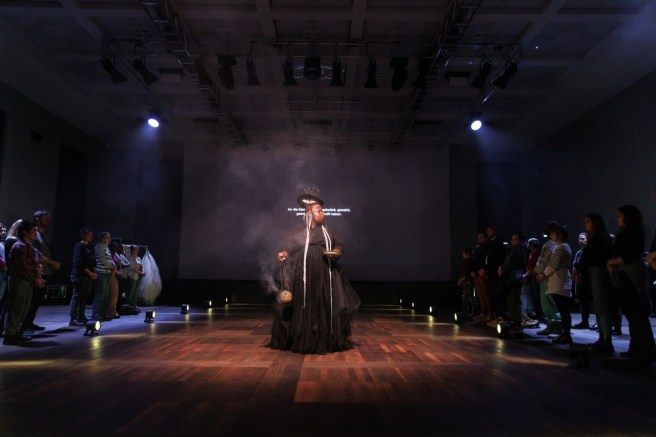
It’s ritual and rhythm, it’s engaging your whole being. This isn’t something you‘re watching, you’re participating on a level that is here and now. It’s theatre-in-the round with the performer, the one who is leading the way on this exploration of the past where human zoos and exhibitions in Western societies, our societies, turned people into curiosities to be paraded and exploited for the delight of white fetish. That is even difficult to write after seeing this play.

Especially for those of us on the oppressors’ side, while we gasp in horror at the stories, we know what our race has done to people because of the colour of their skin, have seen many plays and read many books about those times, yet, sadly it remains just that. It’s not as though your body can viscerally experience what that must have been like. It’s something that white people to this day never experience. They simply don’t have to navigate a world that plays by rules made for them … still.

How many times have you as a white body thought about how anything that you do on a specific day will be determined by the colour of your skin? Think of Trump’s world in today’s context for example. People are being rounded up and deported even with citizenship because of the way they look.

Khoza suggests that it is a history that is not spoken about and which they are determined to address so that those affected can reclaim, reflect and confront themselves as people. Because it is something that continues to this day, for them it is about the need for spiritual healing and reclaiming violated dignities.

The one thing all of us have felt in our lives is humiliation. For many it is an occasional thing that can be quickly discarded as you move on with your life. For others it is an institutionalized part of their life and there’s no escaping. The only requisite to fall prey to this is the colour of your skin. Everything in our lives to this day is determined by this. Think Black Lives Matter.

It is described as an installation-based performance and for me personally, it was as though my whole body had suddenly been awakened. I felt alerted to the way the world works. Was there anything said that I hadn’t heard before or didn’t know? How many times have I not experienced the Saartjie Baartman story, a woman torn from her family, stripped of her identity as a human being, taken from Africa to Europe and displayed for the Western world to view in a human zoo? We know and sympathise about the atrocities of the past. And again we wonder about those happening all around us, because they’re still there.

What The Black Circus does is change the perspective; it inhabits your body and soul in a way that takes you the the heart of the atrocities. For Khozait is a place of collective healing where the shackles are discarded, and a spiritual connection established.

It’s a difficult experience to write about because it is one to experience rather than to analyse. You want to enter the space knowing just the title.

At the beginning I felt as though I was sitting in a glorious painting. A story of some kind was going to unfold and as with most theatre, I was excited. What I got was so much more. It was unexpected, challenging in the way theatre should be, explosive in performance and presentation, and something that has changed my life. And that is what theatre should be.

I will be looking at and facing the world diffently.

PAUL SLAB’S NEW LOCAL PLAY, BITTER WINTER, CELEBRATES SCRIPT, DIRECTING AND ACTING

PICTURES: Regardt Visser

BITTER WINTER

PLAYWRIGHT: Paul Slabolepszy

CAST: André Odendaal, Oarabile Ditsele, Chantal Stanfield

DIRECTOR: Lesedi Job

VENUE: Pieter Toerien’s The Studio at Montecasino

DATES: Until March 16

Everything to my mind seemed aligned for this one. I found the casting as well as the director intriguing, a new local play is always something to be excited about and Paul Slab has a way of climbing into a story.

At the same time, it also makes me nervous. I don’t want to raise my expectations by thinking ahead, but one can hardly prevent it.

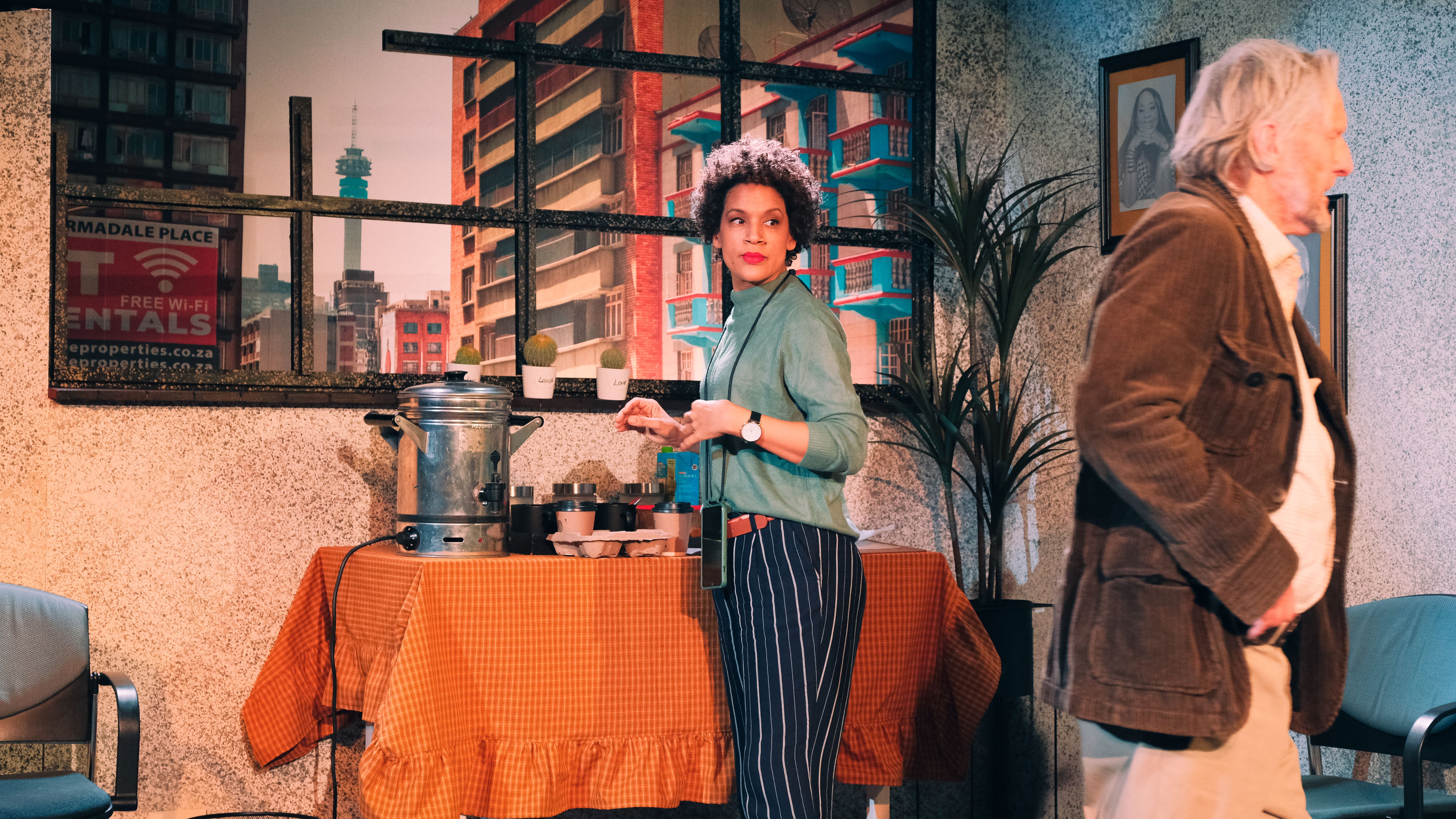
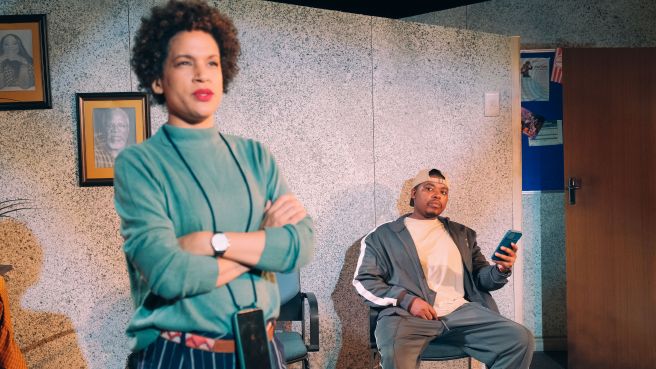
Ensemble cast (Chantal Stanfield, André Odendaal and Oarabile Ditsele) and playwright Paul Slabolepszy

Either way, I was quick to exhale once the actors found their way on stage. One feels it immediately. It’s two actors in a room waiting (rather like a doctor’s waiting room) to be auditioned.

 Anyone who knows anything about theatre knows that this is both an exhilarating and a scary experience. Not many of us have to sell ourselves in such a public way each time when applying for a new job. And like most things in life, there’s not really anything that can be done to alleviate the nerves crashing into one another at high speed in these circumstances.

Not only that. If there’s something Paul knows everything about, it’s this. Both as a writer and an actor, it’s a scenario that he has lived most of his life – and one feels all of that when watching the play.

The two hopeful actors (the one at the end of his career, the other excited about the life ahead) who don’t know one another are sitting in a room checking each other out. Times are tough – not only for actors – and this is not a friendly space. There’s no one around trying to soften the gig they’re waiting for.

Every once in a while, a rather officious woman enters and, while she’s charming to the one actor, she bristles when the other asks anything. The tension is palpable.

Already a scary space for all involved, it is also heightened in the South African context. And this is what the playwright handles so well. He plays the moment and not the context, which he leaves to the audience to experience.

It’s subtle yet clichéd but with this clever script and a team who works with everything they’re given, it sweeps you along.

The title could work in two of our languages, English and Afrikaans, and that’s another trick up Slab’s sleeve. He has both languages (as well as three more indigenous languages inluding Sesotho, isiZulu and Tsotsi) flowing throughout and, in this instance appropriately and with some delicious irony in hand as he points to the state of the arts in general.

The choice of actors and director, novel and genius, adds to the grit and weightiness of what we’re dealing with. It’s not an easy world to navigate in current times and if your particular career choice constantly also takes you to the edge of life’s challenges, it can be excruciating.

And yet, that is where these people involved choose to play. That is exactly what this play explores. It’s part of who they are and what they have to do.

Bitter Winter is a fantastic vehicle for someone who has been in the game for some time and knows the territory, the people and their insecurities, and the fears involved. But then he also knows how to capture the magnetism of live theatre, how it cherishes the soul, captures our imagination and makes you think.

It works because everyone pulls together. The acting, the directing and the text all play their part.

I can hear Paul say Local is Lekker in his exuberant manner. And he’s right. When it works this wonderfully, it’s a joy to behold.

Bitter Winter is donating a portion of ticket sales to the Theatre Benevolent Fund and every cent counts.

FIRST-TIME AUTHOR JULIETTE MNQETA CONFESSES THAT SHE LOVES WRITING AND TELLING STORIES

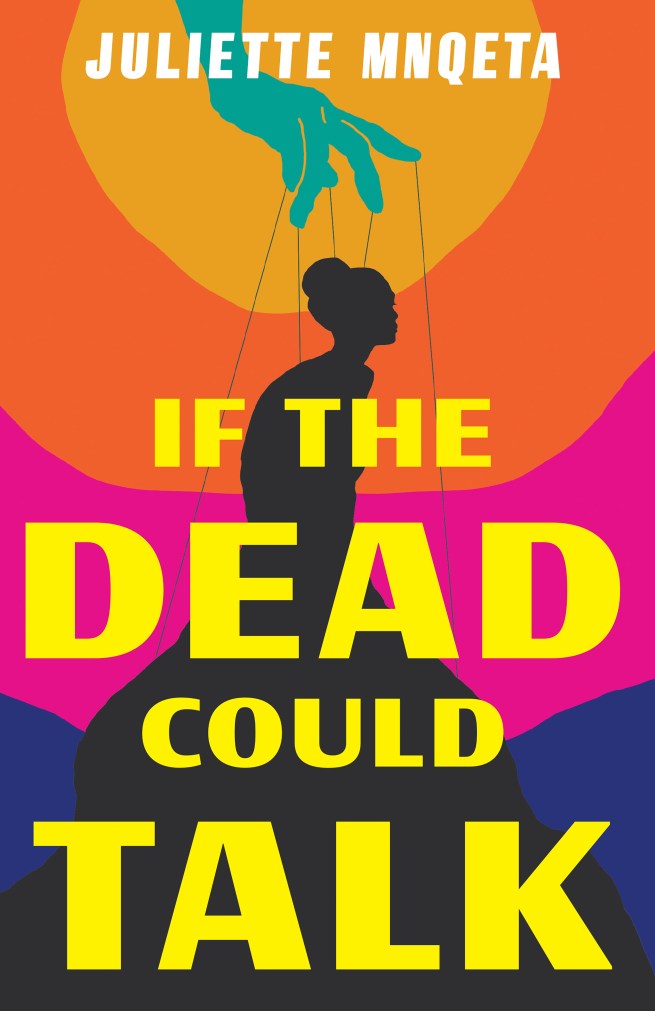
Juliette Mnqeta has dreamt about her debut novel and now that it is finally here, she’s hoping that this, a crime novel, will be the first of many more adventures. If The Dead Could Talk (published by Kwela)is impressive and DIANE DE BEER was keen to meet the writer who seems so comfortable in her author skin:

Playing the sleuth: first-time author Juliette Mnqeta (Picture: Sean Eyes)

“A WHITE PIECE OF PAPER IS A SAFE SPACE.”

Anyone who can say those  words must be confident because I haven’t heard many writers confess that.

First-time author Juliette Mnqeta also writes in her preface: ‘‘I believe I can … write.’’

When you start asking her questions, she’s quick to confide that she’s shy and doesn’t have too much self-belief.

Not too far into the story, I was thinking of Deon Meyer, so impressed was I by the storytelling. “Well, I am the youngest of nine children. I guess that’s why I have so much to say,” is her response. “I have always loved telling a story, which I think I got from my mother. She was a very emotive woman and could always retell events with a little bit of  her own  spice.’’

Juliette spent most of her childhood and teenage years in Wynberg and began writing once in her teens. She started with short stories and even tried her hand at writing poetry, but it never occurred to her to study anything that would help her with writing.  “I just love to write.”

She had no particular interest in crime novels and it only started when she realised most of the girls in her class would go for romance, so she opted for crime. “The first crime novel she ever read was in high school, a book by Ruth Rendell and that was for a school project.

Her interest was piqued when watching a few Agatha Christe adaptations on television. “I started reading her novels and haven’t stopped since,” she explains. “What draws me in is the puzzle of solving the crime.

“There’s a sense of justice and lightbulb moment when everything comes together, I enjoy that.”

And that’s exactly what she gives us with this her first venture into this world, resulting in her debut novel.

She’s still a young writer but her processes reflect her love of writing. “With my Facebook stories, I simply open the page and start typing to see where it leads,” she says.

It all falls in the realm of practice, practice, and more practice, long believed to be thé thing to do.

With If the Dead could Talk, she started with the full reveal. “I remember starting with the planning of the ending.”

She had her villain(s) first, their motives outlined and only then did she start working on her protagonists. She knew if she had her culprits, she could disguise that person amongst a few red herrings and suspects. “I then worked backwards, which was fun because I slowly discovered my protagonists’ personalities and fell in love with them.”

At the tender age of 19, she was told by her then employer that to be a writer, she would have to be exceptional, and he didn’t think she quite fit that criterion. But she always knew he said that without having read her work. When her mother died in 2018, she decided to start writing this current novel.

“My mother had always bragged to her friends that I could write, even though she had also never read my work. But when she was suddenly gone, I opened my laptop, and started mapping out my story.

“I already had my villain. I had my crime, and I had the reaction in mind that I wanted the audience to have when they figured out who this villain was.”

While writing had always come easily, this was different, even humbling, she says. She had the ideas, would turn them into words but, when read from a  reader’s point of view, suggestions would come her way as well as a few plot blunders. “I would have to come up with changes that would make it work,” she explains.

But she knew, listening to these early readers and taking suggestions from her editor were key to what got the book published.

I think she listened carefully. Right from the start I was excited by the book. I felt very early on that this was an exceptional voice and that feeling never dimmed from beginning to end.

If the ending was something of a bumpy ride, I’m not sure it wasn’t me as a reader who really enjoys the exhilaration of the build-up and often finds the roll-out something of an anti-climax or perhaps a mini let-down.

But here’s holding thumbs that she keeps writing and plays around with the crime genre for a little bit longer.

 I’m excited to see what her unique voice and perspective will come up with as she gains confidence and a following.

I suspect she’s something special.

“When I conceived of If The Dead Could Talk, the idea was that it would be a one shot only and I would give it my all. I can now see that I can try my hand at the crime genre again.

“When I read a cozy mystery, there is something exciting for me as a reader to try and work along with the detective or protagonist. I put together every clue and see how close I am to solving the crime. I want to offer other readers that feeling.”

Who as a first-time published author would not suffer – even if just a light touch of – imposter’s syndrome? But Juliette is learning to beat those battles.
 “I actually have a book published now! People will get to meet Azania. That’s exciting. It’s exhilarating knowing that I’ve introduced her to the world,” she concludes.  

“I love the fact that I can imagine. When I write, I genuinely feel that it’s fine to be me. It’s fine to be Juliette. On a piece of paper, I just run wild with characters, scenarios, dialogue and everything else I  can think of.

“Let me dream a little and say I can picture myself thinking up a bestseller one day. That’s the empowering element of an imagination. I can imagine just about anything.”

That would be my wish for this talented author. I for one would love to read her often in the future.


KKNK’S BI-ANNUAL TEXT MARKET A THEATRE EXPERIENCE THAT SPARKLES WITH INNOVATION

DIANE DE BEER

Tinarie van Wyk Loots talking about her script Hamlet/Speenvark.
Picture: Nardus Engelbrecht

DIANE DE BEER

This is the 9th time I’ve written about the Klein Karoo Kunstefees/NATi/Baxter Teksmark (text market), the reason being it is such a smart creative endeavour.The brainchild of Hugo Theart, the CEO and artistic director, Hugo Theart of the Klein Karoo Nasionale Kunstefees (KKNK), it is one of my favourite events of the year It’s existence was born out of need because original local scripts had become a problem. What they were hoping to do was to create new theatre texts which would provide local content for the festivals as well as encouragement for both budding and seasoned writers. And that is exactly what happened.

This past festival was the 9th, 156 text ideas in many of our official languages have been presented and in total, 43 of these texts have been developed into full scale productions, some of which can also boast well-deserved prizes.

What I find so intriguing is the zeitgeist that shifts year by year. Very specific strong themes usually emerge and it is fascinating to observe the topics tackled and which struggles or celebrations the creatives have focused on in a particular year.

One of the extraordinary gifts that this particular platform supplies is the chance for artists to experiment, to test ideas, to play and simply to reach for the stars which is something that quite a few playwrights attempted with brilliant results.

Acknowledged as one of our best actors, Tinarie van Wyk Loots presented a play titled Hamlet/Speenvark. Even the title suggests that this is going to be something unusual. Blessed with her acting skills, she could present her own play/monologue, which I found challenging yet immensely exciting.

She describes it as an attempt at a solo production, or struggling poem, modelled on, and with apology to Shakespeare’s Hamlet (and she cites Jonker, De Villiers, Malherbe, Totius, Opperman and Yeats). That’s quite a list.

She writes that it is “a tentative but violent investigation into the emotional landscape of being South African – the search for identity and a relationship with guilt and victim mentality.”

She further explains that her choice was driven by her “ancestors rooted in Africa and Europe, the disillusion of humanity, and emotional suicide depicted through the extrapolation of various characters in the original script, who all speak from the same mouth.”

The reading was magnificent and I could feel that this was going to develop into something quite extraordinary. Van Wyk Loots is someone who has given her heart and soul to the stage. Few actors can still afford to do that. But she has the skill and talent to keep adding to her repertoire and her engagement with theatre.

Not only can she write, she can then take the text, already her own, and do with it whatever she wishes. Personally I can’t wait. This is the kind of production that keeps theatre alive.

Dianne du Toit Albertze in conversation about Meire en Pinkie.
Picture: Nardus Engelbrecht

Never one to shy away from tackling holy cows, Dianne du Toit Albertze’s writing grabs you by the throat. On first reading of the text, I needed to know who had written with such abandon and such a brave heart. When I discovered who it was, I knew it couldn’t be anyone else and I was surprised I didn’t pick up the harsh yet haunting style of this writer.

Meire en Pinkie depict orphanage runaways and ladies of the night and day. Okiep jintoes with nagging drug addictions who scramble for survival daily, searching for a cure, writes Du Toit Albertze, but fail to know how to get it. But they continue running towards ways to escape the vicious cycle of poverty and abuse.

But she points out, life has a way of outsmarting you. The sins of their mothers catch up with them when they are accused of selling the means to vicious addiction, Meire’s child. It’s something they endured themselves as children. And now they feel abandoned

Picture: Nardus Engelbrecht
A scene from Meire en Pinkie.

It’s gritty, hard-hitting and without compromise. Some would argue for something with less hard edges but this is exactly what theatre can achieve: to tell real-life stories in a language that becomes a character, confronts you and makes you listen without turning away. This is when theatre becomes therapy for those writing and performing as well as those watching.

These are just two of the standout texts, part of this year’s text market at the Baxter but there were many more that had potential for further development and some already  stage-ready.

Playwright Gavin Werner (Meeting Murphy, centre) with two actors playing the parts on either side.
Foto: Nardus Engelbrecht

The theme of bullying captured by Gavin Werner in Meeting Murphy will touch everyone who would have experienced it in some form. Another one that popped up in quite a few texts was memory and the way individuals remember the same event in different ways. How we view the world is often coloured by past experiences and this can lead to discomfort in some instances.

The Salt Lesson by the insightful Sibuyiselo Dywill also tackles memory but here it has to do with different generations, cultures and languages and most importantly for the playwright, from the same bloodline. In any context this is a huge ask but with the South African apartheid past, when the elderly family member (white) suffers from dementia and regards the youngster (black) as an intruder rather than a son, things can get really messy.

Playwright Sibuyiselo (with the mic) surrounded by the three actors in his play The Salt Lesson.
Picture: Nardus Engelbrecht

It’s such a clever idea which explores different issues in genius and thoughtful fashion forcing audiences to look at their own world views from a different vantage point.

Scenes from The Salt Lesson. Pictures: Nardus Engelbrecht

With plays written in home languages including Afrikaans, English and Xhosa, the premise is embracing and expansive with the graft expanding year by year. Once we can figure out how to present theatre in different languages so that everyone can understand – easily – Teksmark will truly break down barriers and shift theatre in this country into a unique stratosphere.

And if you want to check out what is happening at the second Gauteng Teksmark to be held at UJ, where different playwrights and others involved in the theatre industry discuss their ideas as play readings, enquire with J.C. Aucamp at 0763335945 or jc@kunste.org.za.

The KKNK 2024 Gauteng Teksmark will be held on 24 and 25 October at Keorapetse William Kgositsile Theatre, Kingsway Campus, University of Johannesburg.