Juliette Mnqeta has dreamt about her debut novel and now that it is finally here, she’s hoping that this, a crime novel, will be the first of many more adventures. If The Dead Could Talk (published by Kwela)is impressive and DIANE DE BEER was keen to meet the writer who seems so comfortable in her author skin:
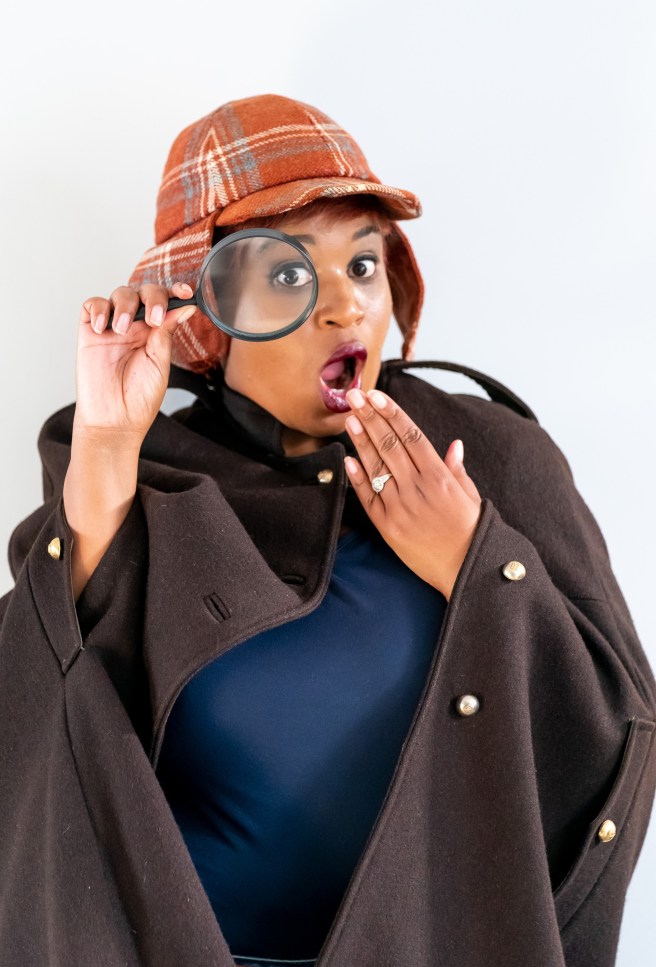
Playing the sleuth: first-time author Juliette Mnqeta (Picture: Sean Eyes)
“A WHITE PIECE OF PAPER IS A SAFE SPACE.”
Anyone who can say those words must be confident because I haven’t heard many writers confess that.
First-time author Juliette Mnqeta also writes in her preface: ‘‘I believe I can … write.’’
When you start asking her questions, she’s quick to confide that she’s shy and doesn’t have too much self-belief.
Not too far into the story, I was thinking of Deon Meyer, so impressed was I by the storytelling. “Well, I am the youngest of nine children. I guess that’s why I have so much to say,” is her response. “I have always loved telling a story, which I think I got from my mother. She was a very emotive woman and could always retell events with a little bit of her own spice.’’
Juliette spent most of her childhood and teenage years in Wynberg and began writing once in her teens. She started with short stories and even tried her hand at writing poetry, but it never occurred to her to study anything that would help her with writing. “I just love to write.”
She had no particular interest in crime novels and it only started when she realised most of the girls in her class would go for romance, so she opted for crime. “The first crime novel she ever read was in high school, a book by Ruth Rendell and that was for a school project.
Her interest was piqued when watching a few Agatha Christe adaptations on television. “I started reading her novels and haven’t stopped since,” she explains. “What draws me in is the puzzle of solving the crime.
“There’s a sense of justice and lightbulb moment when everything comes together, I enjoy that.”
And that’s exactly what she gives us with this her first venture into this world, resulting in her debut novel.
She’s still a young writer but her processes reflect her love of writing. “With my Facebook stories, I simply open the page and start typing to see where it leads,” she says.
It all falls in the realm of practice, practice, and more practice, long believed to be thé thing to do.
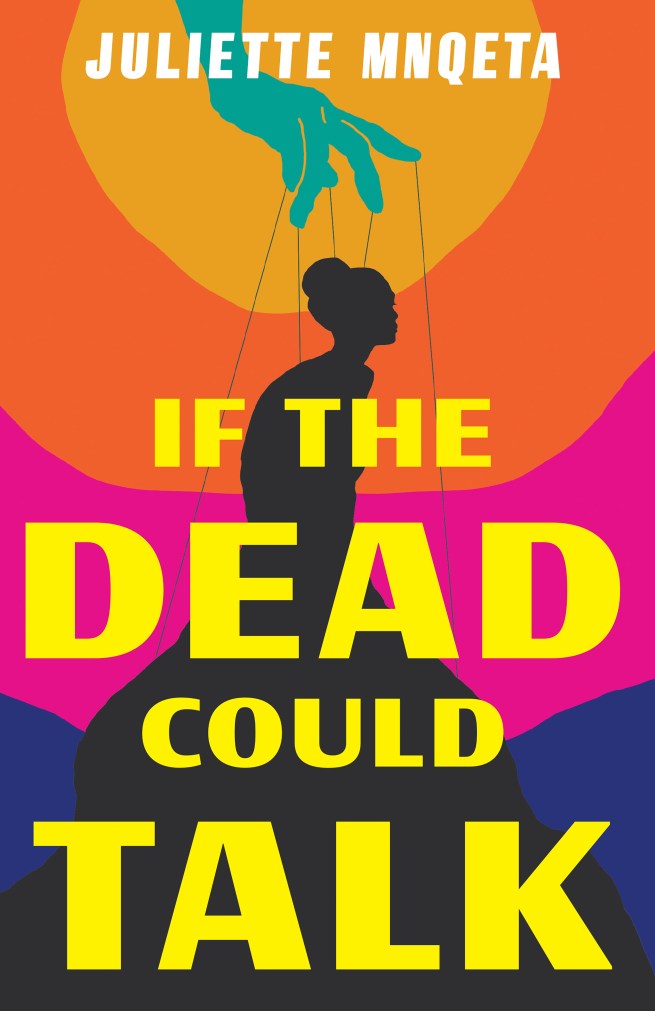
With If the Dead could Talk, she started with the full reveal. “I remember starting with the planning of the ending.”
She had her villain(s) first, their motives outlined and only then did she start working on her protagonists. She knew if she had her culprits, she could disguise that person amongst a few red herrings and suspects. “I then worked backwards, which was fun because I slowly discovered my protagonists’ personalities and fell in love with them.”
At the tender age of 19, she was told by her then employer that to be a writer, she would have to be exceptional, and he didn’t think she quite fit that criterion. But she always knew he said that without having read her work. When her mother died in 2018, she decided to start writing this current novel.
“My mother had always bragged to her friends that I could write, even though she had also never read my work. But when she was suddenly gone, I opened my laptop, and started mapping out my story.
“I already had my villain. I had my crime, and I had the reaction in mind that I wanted the audience to have when they figured out who this villain was.”
While writing had always come easily, this was different, even humbling, she says. She had the ideas, would turn them into words but, when read from a reader’s point of view, suggestions would come her way as well as a few plot blunders. “I would have to come up with changes that would make it work,” she explains.
But she knew, listening to these early readers and taking suggestions from her editor were key to what got the book published.
I think she listened carefully. Right from the start I was excited by the book. I felt very early on that this was an exceptional voice and that feeling never dimmed from beginning to end.
If the ending was something of a bumpy ride, I’m not sure it wasn’t me as a reader who really enjoys the exhilaration of the build-up and often finds the roll-out something of an anti-climax or perhaps a mini let-down.
But here’s holding thumbs that she keeps writing and plays around with the crime genre for a little bit longer.
I’m excited to see what her unique voice and perspective will come up with as she gains confidence and a following.
I suspect she’s something special.
“When I conceived of If The Dead Could Talk, the idea was that it would be a one shot only and I would give it my all. I can now see that I can try my hand at the crime genre again.
“When I read a cozy mystery, there is something exciting for me as a reader to try and work along with the detective or protagonist. I put together every clue and see how close I am to solving the crime. I want to offer other readers that feeling.”
Who as a first-time published author would not suffer – even if just a light touch of – imposter’s syndrome? But Juliette is learning to beat those battles.
“I actually have a book published now! People will get to meet Azania. That’s exciting. It’s exhilarating knowing that I’ve introduced her to the world,” she concludes.
“I love the fact that I can imagine. When I write, I genuinely feel that it’s fine to be me. It’s fine to be Juliette. On a piece of paper, I just run wild with characters, scenarios, dialogue and everything else I can think of.
“Let me dream a little and say I can picture myself thinking up a bestseller one day. That’s the empowering element of an imagination. I can imagine just about anything.”
That would be my wish for this talented author. I for one would love to read her often in the future.

 De Beer Necessities