IF YOU WANT TO HAVE A GOOD HOUSE YOU NEED TO WORK ON THE FOUNDATIONS, SAYS AMY JEPHTA

REVIEW BY DIANE DE BEER
PICTURES BY THANDILE ZWELIBANZI

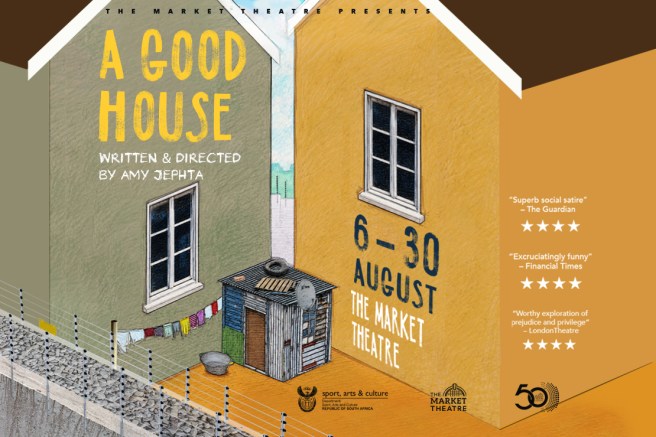
A GOOD HOUSE

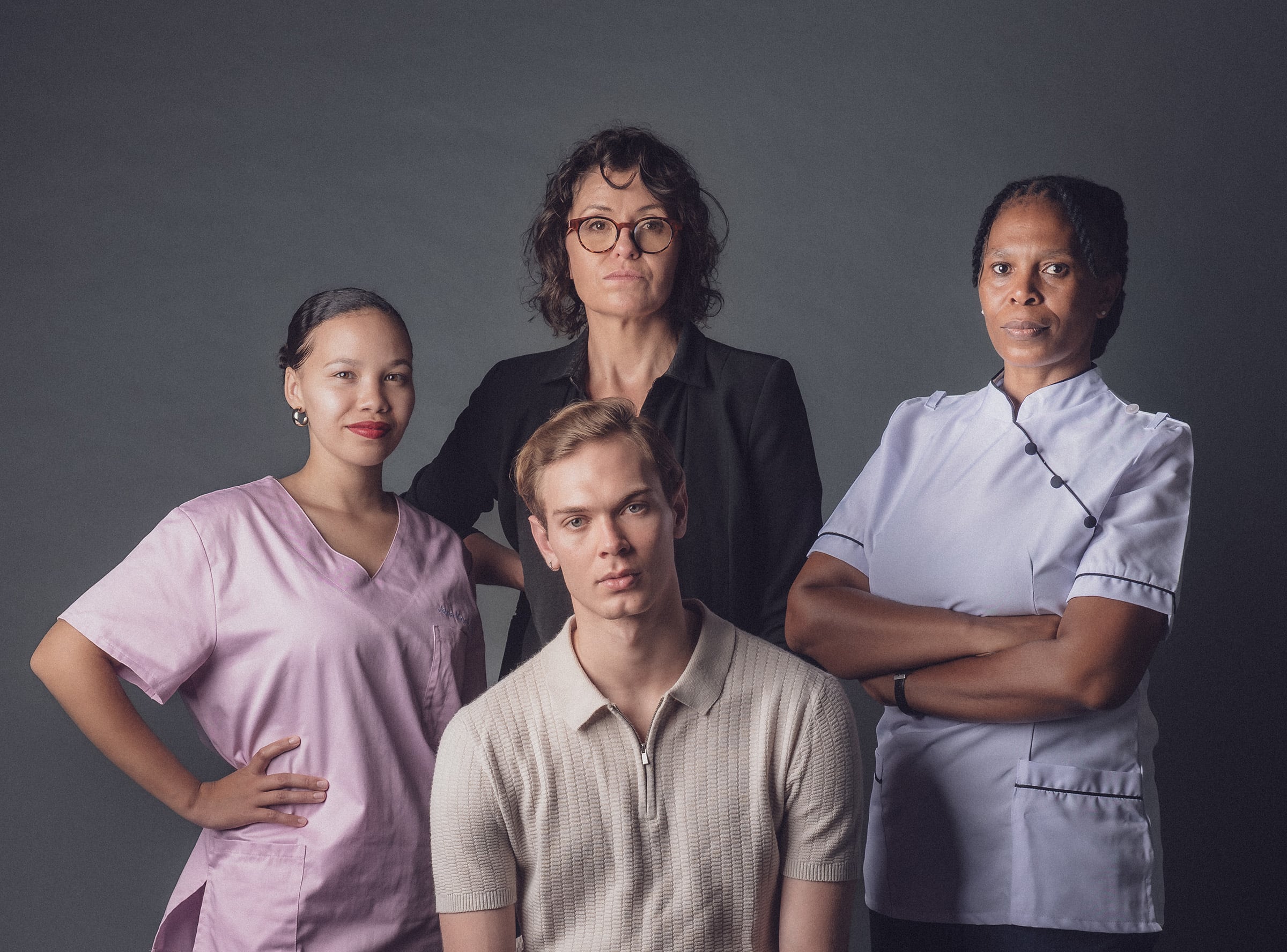
CAST: Homeowners Nhlakanipho Manqele and Lesoko Seabe (Bonolo), and their neighbours Jose Domingo and Mary-Ann Barlow, and  Christine van Hees and Conrad Kemp

I was listening to two American podcasters speaking about movies and television recently, talking about the lack of current events featured in any of their fictional TV series or films.

They pointed to Nixon and the Kennedys, for example, who have had so much filmed about their lives – in reality and fictionalized – but said nothing similar was being done about the Trump dynasty.

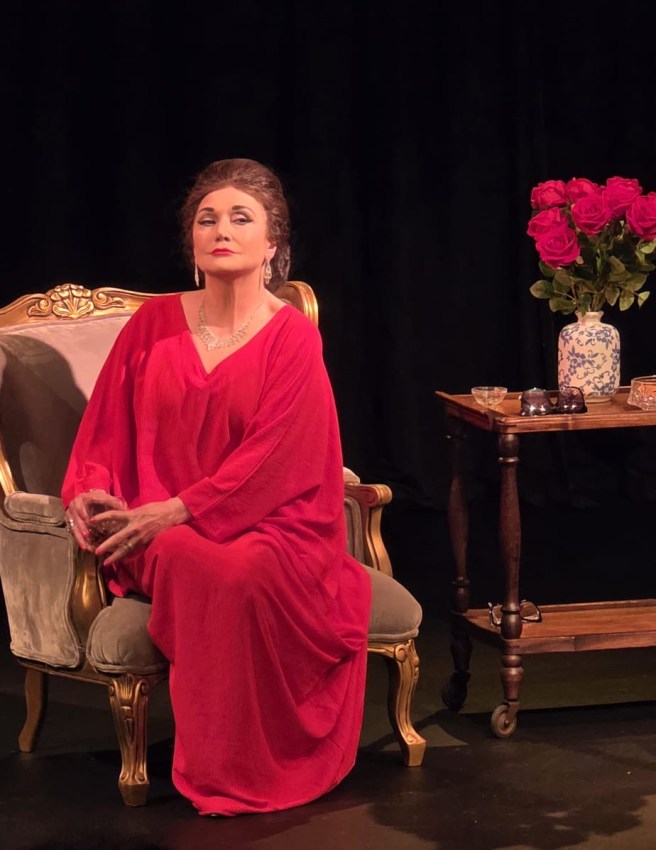
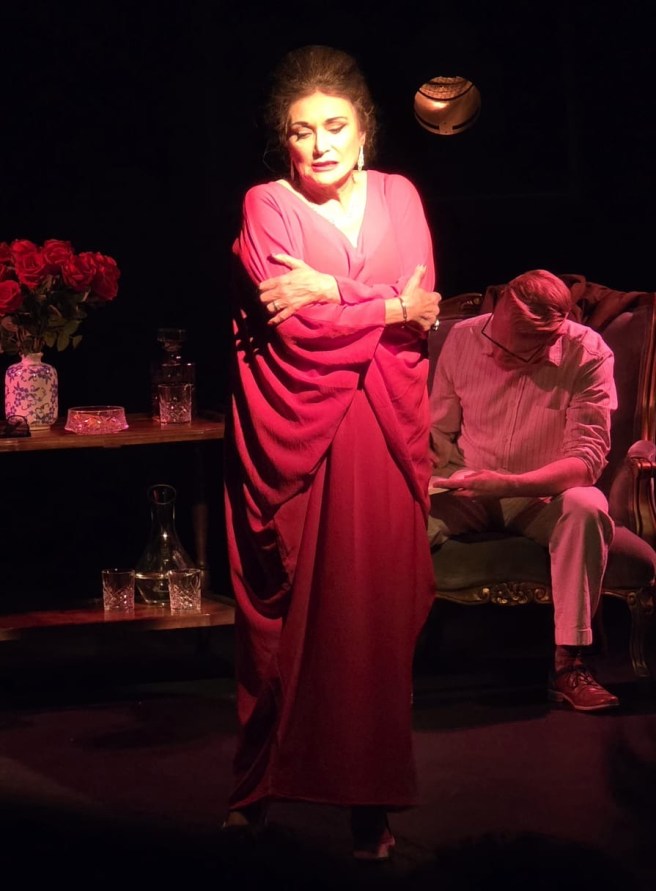
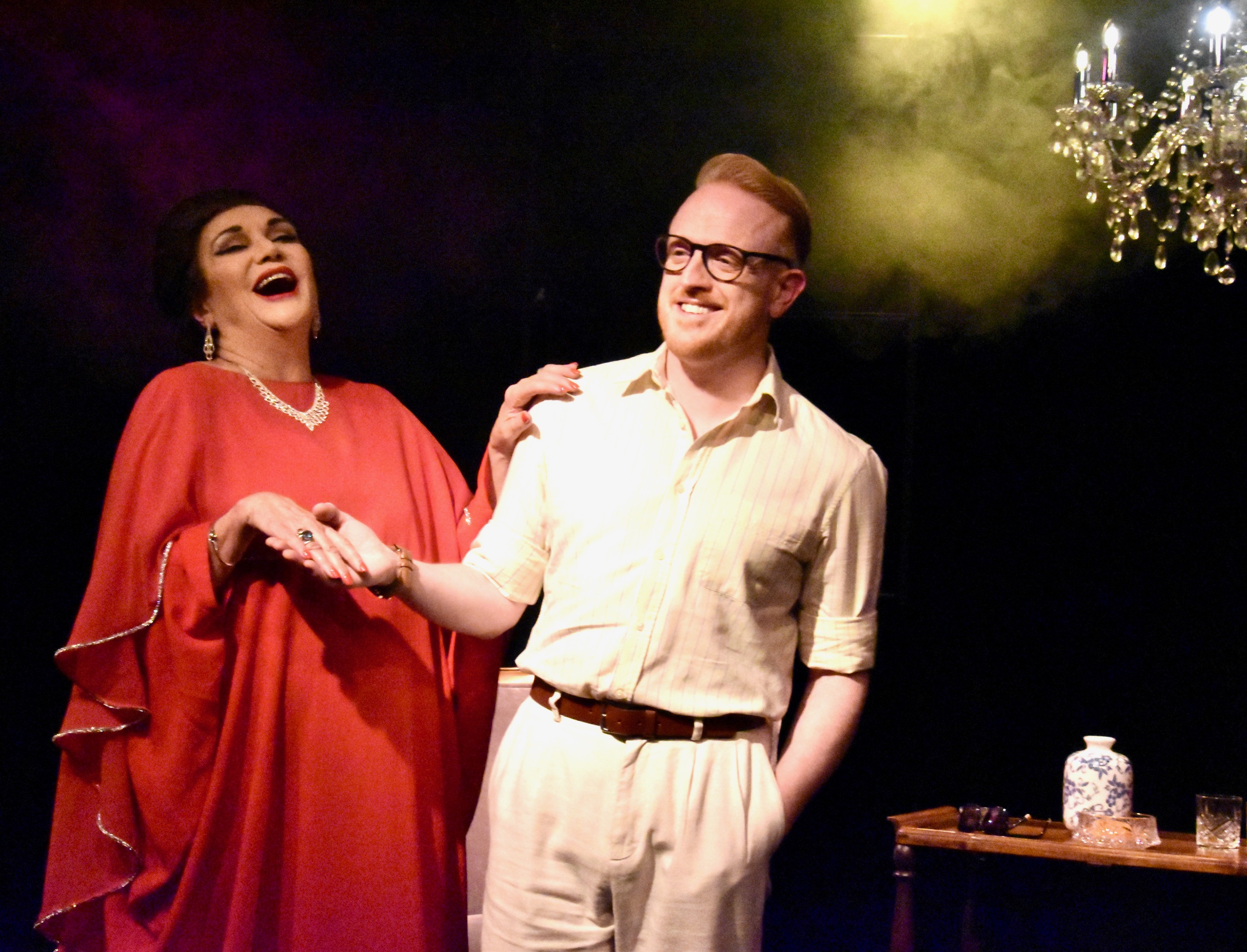
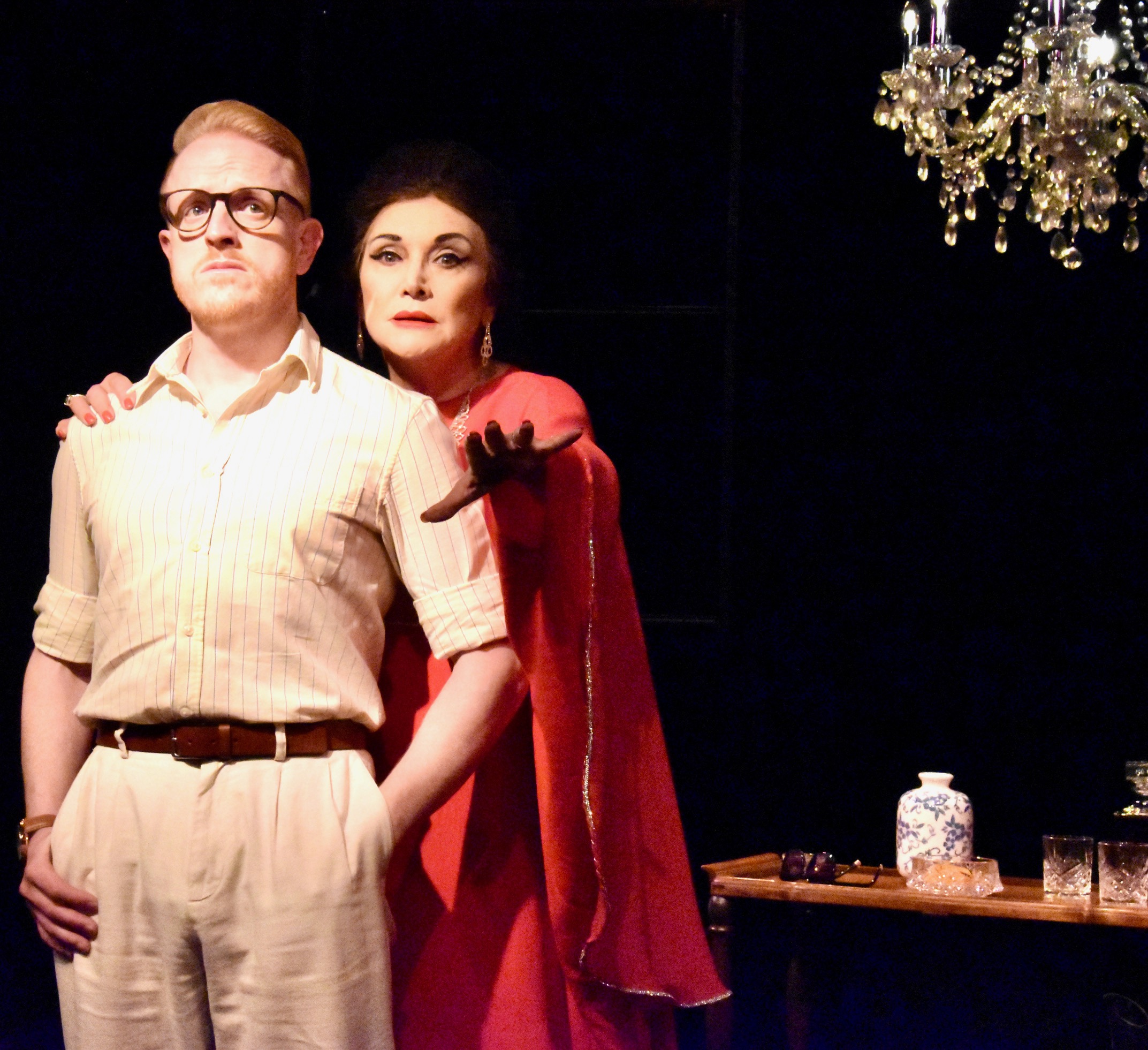
Fresh from witnessing Amy Jephta’s A Good House, currently playing at Joburg’s Market Theatre, it is all about current South Africa and accompanied by a strong local audience, all ages colours and genders, whose participation was as much fun as the play.

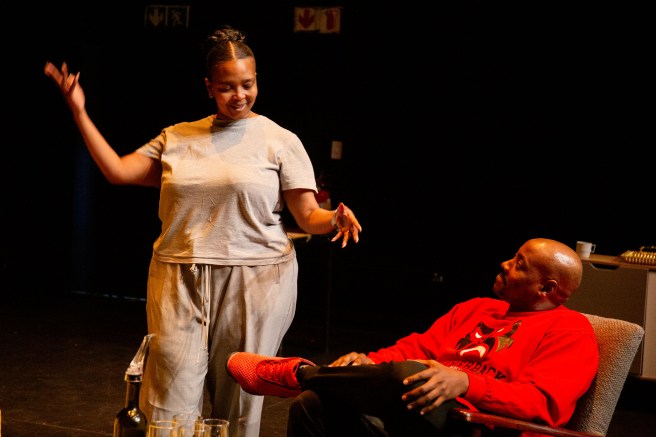
Lesoko Seabe and Nhlakanipho Manqele

I know we’re still a young democracy in global terms, but we’re moving on with some maturity as we head for our fourth decade. We certainly have stories to tell, time to reflect, discussions to be had and people who are still willing to talk to one another.
Are we one big happy family? Of course not. We would be idiots to think that is going to happen with alacrity, but we are busy moving away from those early rainbow phases simply to breathe more easily because we are all still alive and kicking.

In the international stakes though, we’re reaching for the top and it certainly isn’t out of our reach. And if anything, even with a group of cantankerous neighbours trying to make their way in Amy Jephta’s A Good House, it was easy to recognize what was developing on stage.

How good it is to smile at the things we get up to, the way we look at each other and the assurance with which we sometimes say something when we assume we know, but don’t have a clue.

From left: Jose Domingo, Mary-Ann Barlow, Lesoko Seabe and Nhlakanipho Manqele.

Three couples have chosen to live in one of the many gated communities which are such a part of our landscape. Apart from sizing each other up from every angle, what they have in common is their worry, in varying degrees, about a shack which has suddenly appeared on the periphery of their much valued and carefully selected suburb of Stillwater.

Jephta was already rewarded for the play when she was nominated for the prestigious international Susan Smith Blackburn Prize that honours women and writing for the stage. It was described as full of wit, humour, insight and exhilarating tension.

For her, it is a provocative exploration of the meaning of place, the contradictions of belonging and the definitions of community. Conversations are as fast and furious as change, according to the people in the room. It’s sizzling with all that predictable foot-in-the-mouth chatter crashing before its landed as husband and wife stare each other down, while carefully trying to navigate this sacred space which they can’t afford – financially or mentally – and have to try to make work.

Jephta latches on to the shifting terrain our country is still experiencing and has fun at everyone’s expense. No one escapes her sharp gaze, as she has picked her characters with care: men not used to even having to think about biting their tongue; women who know it all; those who feel entitled and those who don’t even know what that means; and others too scared to move.

Colour still looms large in our country and unfamiliar relationships still on shaky ground as people have to play specific games to make their world work. It’s specific algorithms, they say, or, in this instance, agendas. The difference is that they are historical and the patterns hardly noticed by those playing, so ingrained have they become.

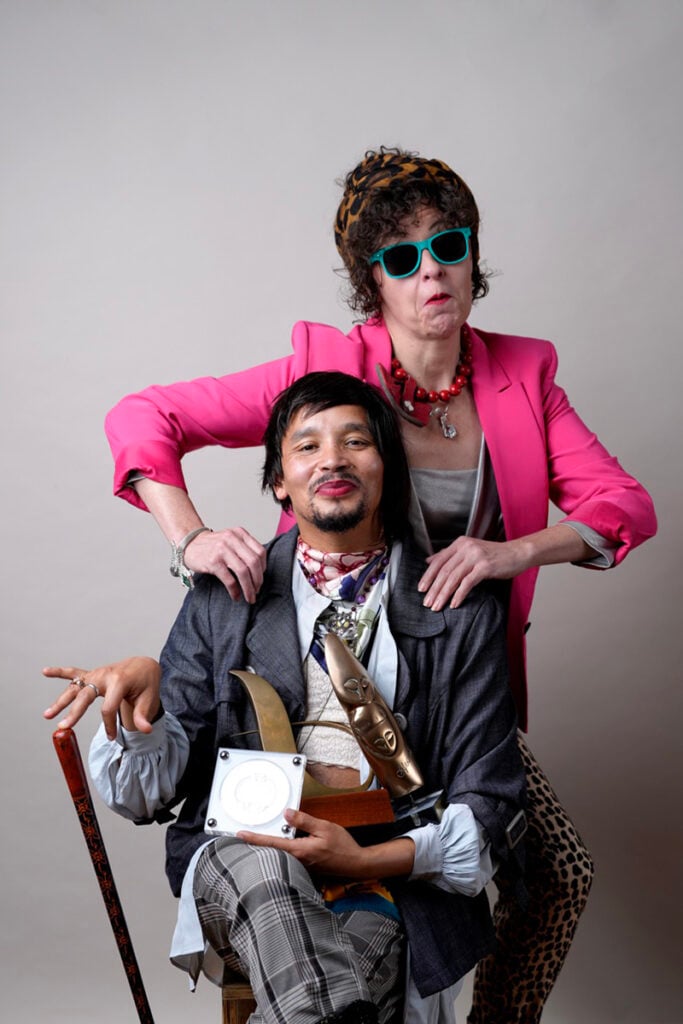
Christine von Hees and Conrad Kemp.

Yet the fact that we are dealing, on whatever level, is already large in a world that turns its back on its horrific past as if the generations that follow feel it is their right to ignore or even wipe out the scars of those affected communities whose very existence depended on the goodwill of their enemies.

It is the kind of theatre that’s engaging and healing as writers refuse to let go of the ills of the past that have not yet been dealt with. It’s  not just a litany of fingers being pointed at the obvious perpetrators; it’s dealing with a legacy that still has an impact on a country that has survived so much that some say it is enough.

And yet, if you listen carefully, usually those arguing are not the people who have suffered, and thoeirs are the voices that should be listened to.

Jephta is an experienced voice who speaks her mind; her plays grapple with who we are and she bravely has an embracing and nuanced outlook which doesn’t simply take the easy way out. She lines us all up to pull together, no matter where we come from, but hopefully to build rather than break down our future. And all the while, she has us laughing at ourselves.

Congratulations to The Market as well as a production with a stunning writer/director and cast who stand their ground in a space so intimate, you cannot turn away.

ALBIE SACHS THE MAN, THE FATHER, THE SURVIVOR

Review by Diane de Beer


Pictures: Philip Kuhn

ALBIE SACHS, FATHERS, SONS, AND SOFT VENGEANCE

Presented by Troupe Theatre Company in association with Daphne Kuhn
Playwright: Gail Louw
Actor: Graham Hopkins
Director: Fiona Ramsay

Venue: Theatre on the Square, Sandton

Dates: Until May 24

If you were witness to the birth of the South African democracy in 1994, Albie Sachs will be familiar to you.

Not only was he part of the drafting of a charter for the new non-racial South Africa, but he also fought for the inclusion of a Bill of Rights and an independent judiciary in the new constitution.

On a more visible front, he was involved with the development of the new Constitutional Court building, and it is widely acknowledged that he was the instigator of the magnificent artistic heritage so marvellously displayed all over Constitution Hill.

As the title suggests, that’s not the story told in Albie Sachs: Father, Sons and Soft Vengeance; many of those facts will be familiar to South Africans.

It is Albie the man, the father, the survivor who tells this personal story of a young boy whose life was shaped and politically driven by parents who were both part of the Communist Party while his father, Solly, was also the leader of South Africa’s Garment Workers Union.

He grew up seeing white and black adults interacting as equals. That’s the background.

But here is a man who was also a father and a freedom fighter, somebody who lost an arm in a car bomb in Mozambique, where the South African secret service was actively trying to obliterate their antagonistic fellow South Africans.

And this is where the play is focused. Albie, instead of being crushed by the apartheid regime, viewed his scarred limb as a symbol of strength. It also pushed him onto a world stage where he became an icon of the liberation.

These musings of a man whose life was determined by the laws of the country of his birth, come to life in especially conversations with his son Oliver and that is how the story unfolds. It’s fascinating stuff which is magnificently explored by Graham Hopkins, who allows Sachs to emerge as a full-blooded human being.

It’s in the clothes, the way he moves and takes on the persona with a subtle touch. Seamlessly, he acquires the accents he uses for particular characters with astounding Hopkins flair. He moves through the 90-minute monologue in the blink of an eye without losing his audience as he tells the story of a man and a country fighting for their life.

It’s not an easy play to stage, but with the experienced Ramsay both as director and as actor, found imaginative ways to approach what could have been clumsy rather than crafty. Solo productions can easily fall into the trap of trying to add movement into a too static production, which then detracts from rather than embraces the text.

And then the play. Telling an Albie Sachs story could have been many different things. He is such a remarkable individual, a South African we were lucky to have during a momentous time in our nation’s future development as a democracy.

There were so many ways to swing with this one, but opting for the personal, the impact on his life of events he had no control over, is where the focus lies. That and the bridging of the gap between father and son, sharing the story in a way that explains how and why he was influenced in a specific way and how he hoped to have an impact on the future he wished for his children.

It also feels as though it is Sachs speaking, as though he has opened his heart and his mind to those who care to listen. It’s an extraordinary life and one that fellow South Africans can celebrate with pride.

He has been actively part of living and shaping the history of this country. It is individuals like him with strong belief systems who have turned this country into a beacon of hope in a world that seems to have lost its way.

Who would have thought?

THE DELIGHTFUL DILEMMA OF DEALING WITH LIFE

Review by Diane de Beer

Pictures: Ngoma Mphahlele

AFROPOCALYPSE

DIRECTOR: Daniel Buckland

CAST: Market Theatre Laboratory 2nd Year Students

DATES: Until May 23

VENUE: Mannie Manim Theatre at the Joburg Market

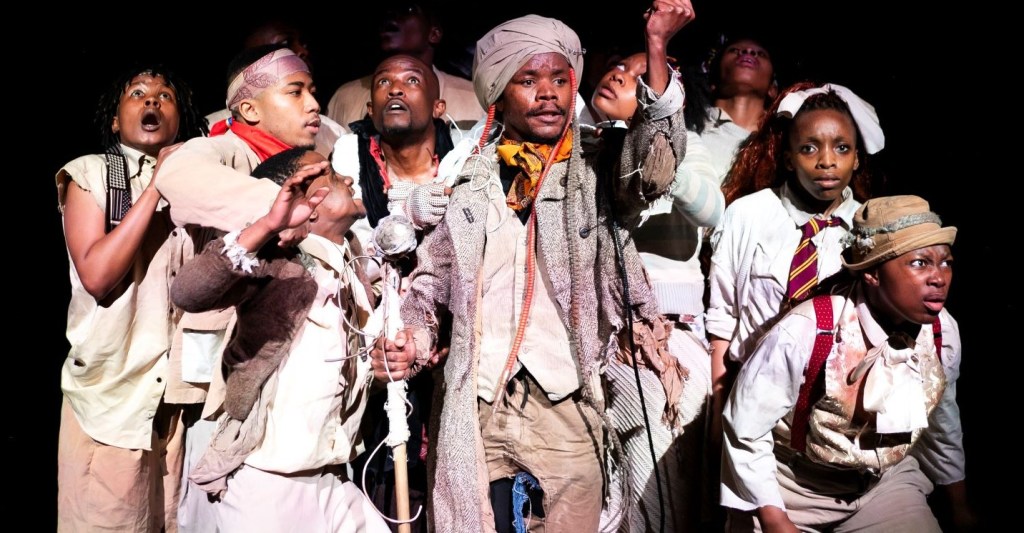
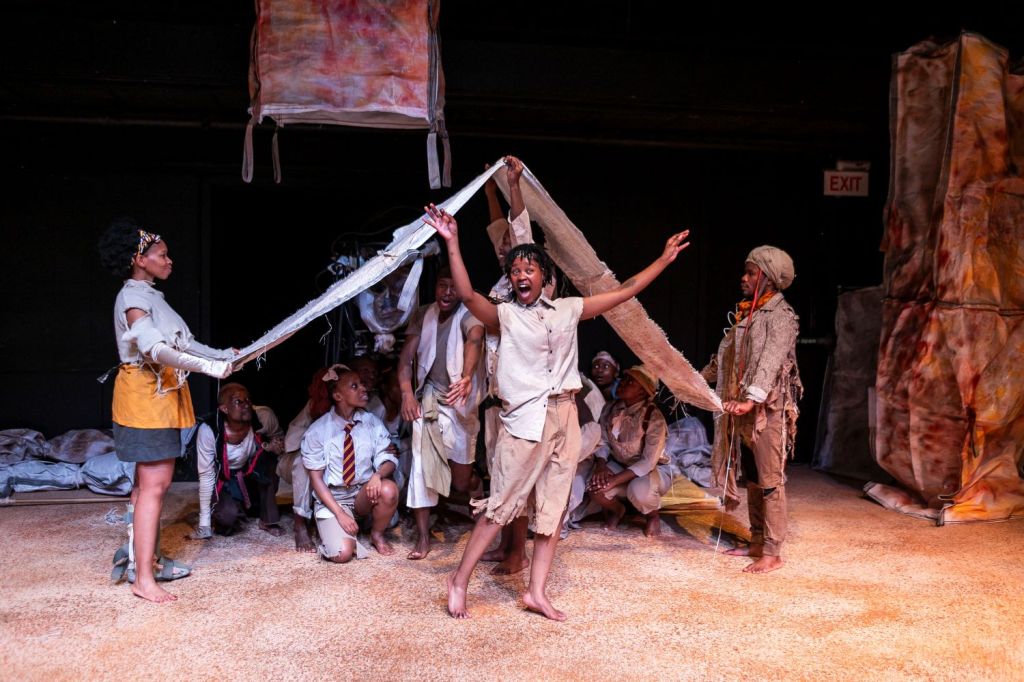
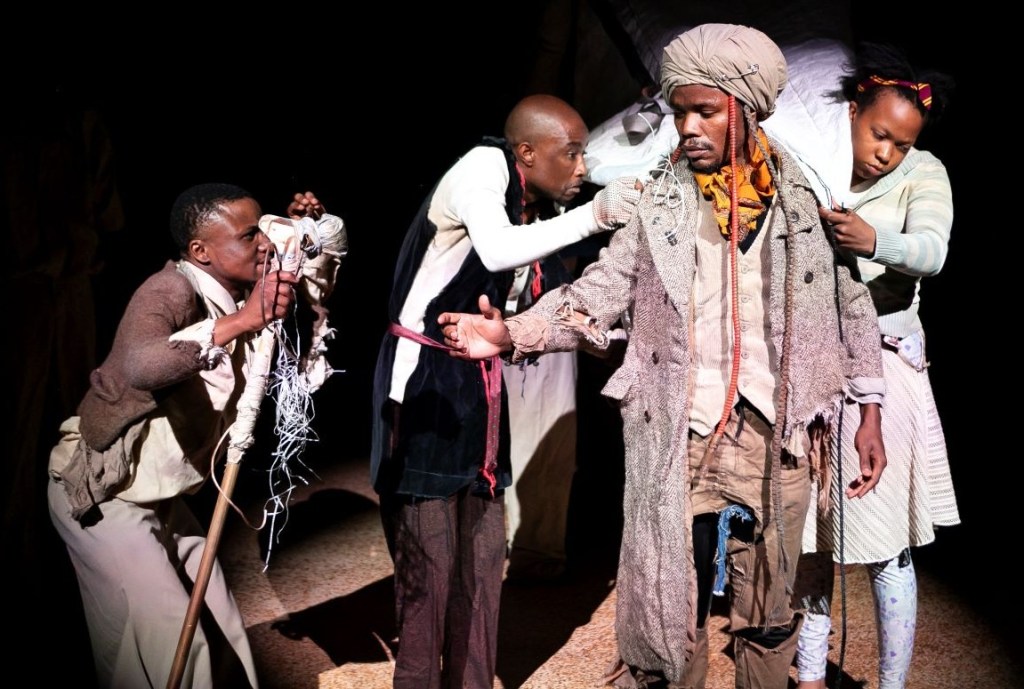
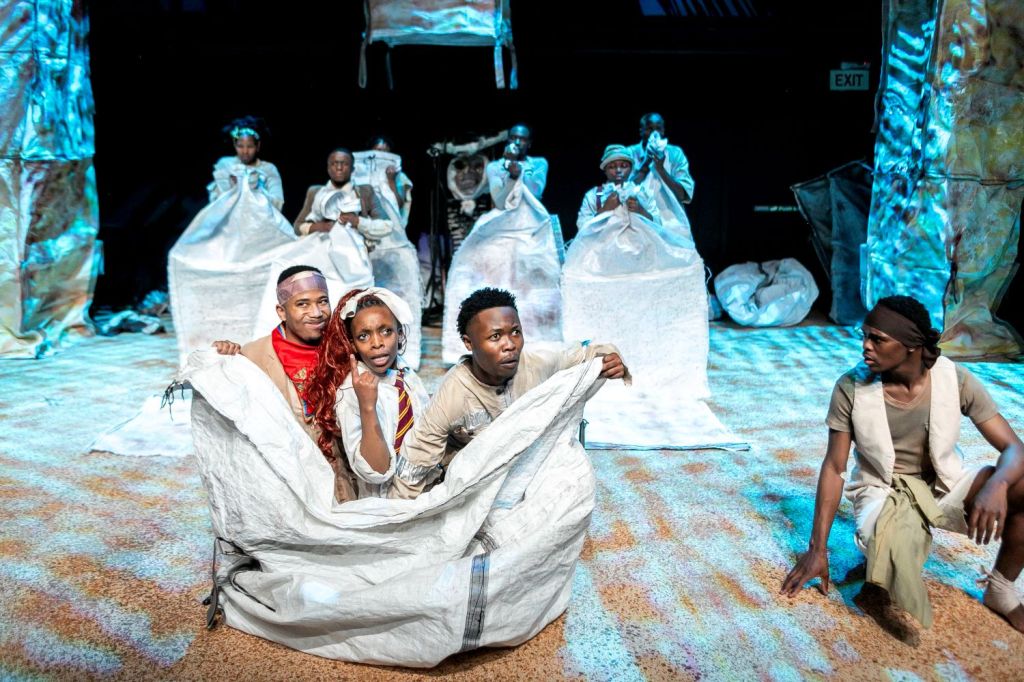
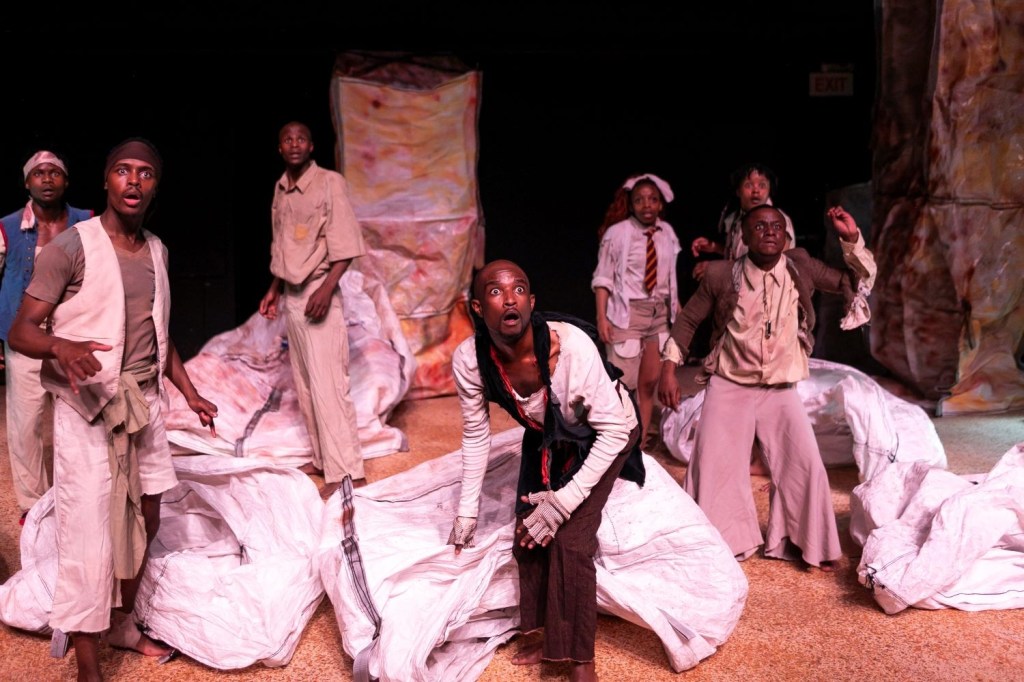
It bubbles and bristles with energy, enthusiasm and excitement in this return season of a play which started as a student production in 2024 and returned in 2025 to the National Arts Festival, where it won a Golden Ovation Award, as well as a Naledi for Best Ensemble.

This current season is the forerunner of a showcase at a Swedish Festival, where it is one of four international productions selected from 600 applicants. And rightly so.

I was surprised when leaving the show that it had only been 60 minutes long. It felt much longer, in the best possible sense, and grabs your attention from start to finish. It was packed with adventure and a cast of 14 who never let up as they leapt into this glorious yet often gruesome adventure of the human condition in a world out of kilter.

How would theatre react to a world unhinged, as is presently at play? Through storytelling, of course, and taking this one to a European audience is the perfect choice.

Think of this country’s past and, in the present turmoil, one can only smile. We are sailing along quite nicely, apart from the constant syphoning off of state money, in this instance from the art coffers, which could benefit so many rather than just a few unworthy recipients.

Nevertheless, taking four constant bogeymen in a world that feels overwhelmingly disastrous and desperate: greed, mortality, religion and unconditional love – this outrageous yet wildly entertaining ragtag group use physical theatre and magic realism to uncover and explore what is happening around them and especially out there.

The fact that this comes from a country that not too long ago was viewed as one of the worst in the world, in itself brings hope.

With Buckland’s theatre-making ideal for this tawdry yet dynamic storytelling, it’s a joy to watch with the cast performing magnificently. It’s a compelling piece, told in an original fashion with a story that reaches young and old.

This is what the Market Theatre Laboratory does best. Described as “an incubator for the development of skilled theatre-makers while also producing bold, cutting-edge work”, that is exactly what is represented here.

That is why the way this specific piece has been transformed from its first performances to where it stands now is spectacular and a wonderful testament to what can be achieved in theatre with the right people and plans in place.

None of these 14 players has ever performed internationally and with this one, they are a testament to how theatre can evolve from small beginnings into something special.

Local audiences who see the piece will also be contributing towards the tour, and the cast are given every chance to land on the international stage in the best shape possible. What could be a better advertisement for local theatre, especially in a country like Sweden, which has contributed hugely to The Market and its pursuit of world-class theatre?

But don’t think you will be doing something charitable when going to experience this remarkable play, audiences are the ones that are rewarded.

In essence, the power lies in the originality of the text, the exuberant application and the perfection of the cast.

THE OPERA SINGER HAS PERFECT PITCH

REVIEW BY DIANE DE BEER

THE OPERA SINGER

PRODUCED BY TONY FLACK, TROUPE THEATRE COMPANY AND THE THEATRE ON THE SQUARE

STARRING FIONA RAMSAY AND OWAIN RHYS DAVIES

WRITTEN AND DIRECTED BY JANNA RAMOS-VIOLANTE

VENUE: THEATRE ON THE SQUARE, SANDTON

DATES: 17 to 19 March (7.30 to 9pm), 20 and 21 March 5 to 6.30 pm and 7.30 to 9pm) with similar schedules from 24 to 28 March

A NOTE FROM JANNA RAMOS-VIOLANTE

I wanted to write THE OPERA SINGER because I am deeply interested in the stories we tell about greatness and in what those stories leave out.
We celebrate artists at their peak. We applaud them, photograph them, quote them. We call them icons, divas, legends. But we rarely stay long enough to ask what it cost them to become that, or what remains once the applause has faded. We are very good at consuming brilliance. We are far less comfortable sitting with the human being behind it.
THE OPERA SINGER is a woman who gave everything to her art. Not symbolically. Literally. Her body, her relationships, her youth, her possibility of an ordinary life. She was rewarded with adoration, but adoration is loud and fleeting. Love is quieter. It stays. That distinction became central to the writing of this piece.
Opposite her stands Theo, a journalist. Not a villain. Not a hero. Simply a man who believes, or hopes, that truth can be captured in words. Journalism in this play is not an attack, but a question. Who owns a life once it has been written about?
What happens when private pain becomes public narrative? When does documentation become theft, even when intentions are good?
I am interested in the uneasy space where art, journalism, and celebrity meet. Where the hunger to understand collides with the need to protect. Where truth is slippery, memory unreliable, and identity something that keeps shifting depending on who is looking.
This is not a play about opera. It is a play about devotion. About the choices we make in the name of calling, and the parts of ourselves we quietly abandon along the way. It is about fear, and discipline, and the seduction of being seen. It is also about ageing, and what it feels like to exist in a world that no longer knows what to do with you once your prime has passed.
I hope this piece invites you not just to watch, but to listen. And perhaps to leave thinking a little differently about the lives we admire, the art we consume, and the cost we rarely see.

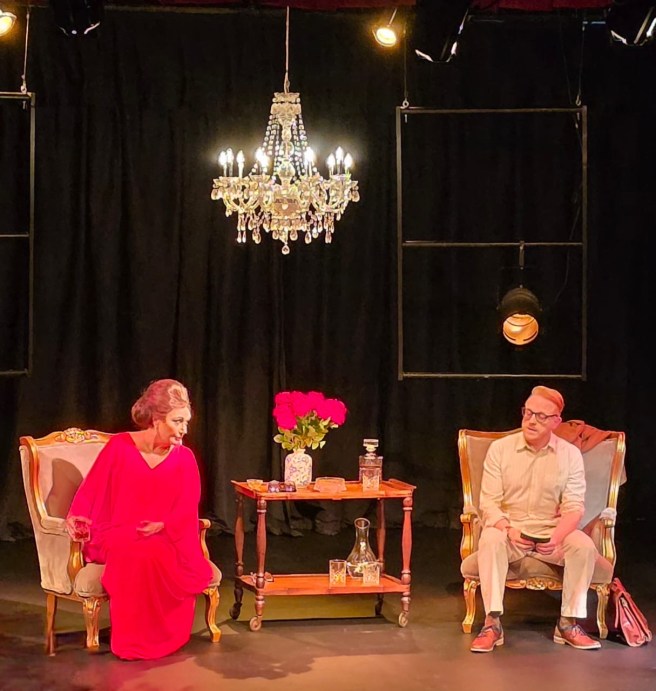
What joy to have the supreme Fiona Ramsay back on stage in a production written by her regular collaborator Janna Ramos-Violante. And welcome back to her as well on a local stage, living as she has in Europe these past few years. We’ve missed her sharp and incisive voice.

She’s written a thought-provoking play that encourages Ramsay to show her remarkable artistic prowess. There’s so much to admire here, the writing, the staging and the acting – all in ascendancy throughout.

But even more than that, it is a play that’s mesmerizing from start to finish as it draws the curtains on that hidden side of being an artist. Who isn’t intrigued by these backstage secrets, the hidden lives of performers who have to step on stage and share the most intimate details in a story written by someone else?

Through the years Ramsay has given her audience extraordinary characters she has inhabited with her whole body, soul and voice. And this time she brings the flamboyant ageing opera star to glorious life. She looks and plays the part to perfection.

It’s a delightful production that allows the actors (Ramsay and Rhys Davies as Harrington, who brilliantly captures the fan/foil to the irascible fading artist) to play out different scenarios as the artist and the journalist face-off, reflecting the nature of their relationship.

She also shines what she describes as a questioning light on the role of the journalist, who hopes to invite the audience to experience truly great acting or criticize the way a performer might be telling a particular story.

And yet,with the arts always fighting for their very existence, for everyone involved, specifically those with passion, it’s a delicate balance. If you’re not truthful (good or bad) about a particular production, who will trust your guidance in the future?

But who can claim the right to make that judgement? And yet, each one plays a particular role, and hopefully in the end, it’s all driven by a passion for the arts.

As a performer, director and playwright, Ramos-Violante has always had a very strong voice. She interrogates her world with a sharp eye and gives different points of view for her audience to digest. She is intimately familiar with that world and knows all the pitfalls, most of which have no solution but come with the territory, which doesn’t necessarily make it right or wrong. As in many professions, it just is.

She has always had an interesting take on things, writes brilliantly and, in this instance knows her subject. She throws it out there and gives the experienced Ramsay free rein which she claims magnificently.

If you’re interested in theatre and the arts, this is soul food. And especially in these times when everyone is battling for your time and presence, it’s marvelous to witness good old-style theatre with content which has never been more relevant.

FOR AUTHOR MARITA VAN DER VYVER AND HER HUSBAND ALAIN, HOME IS WHERE THE HEART IS

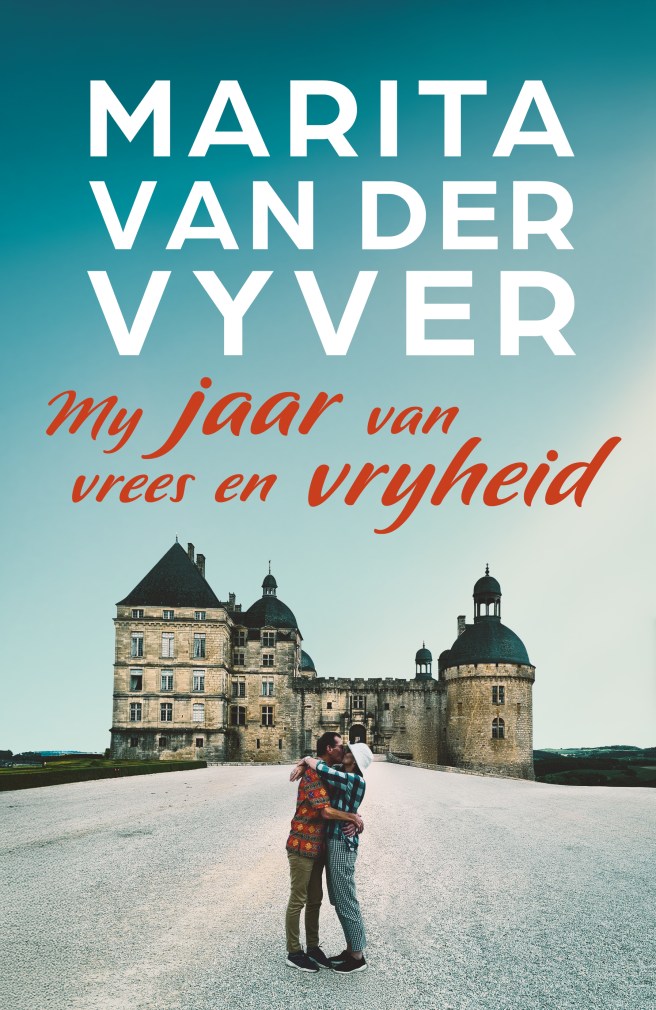
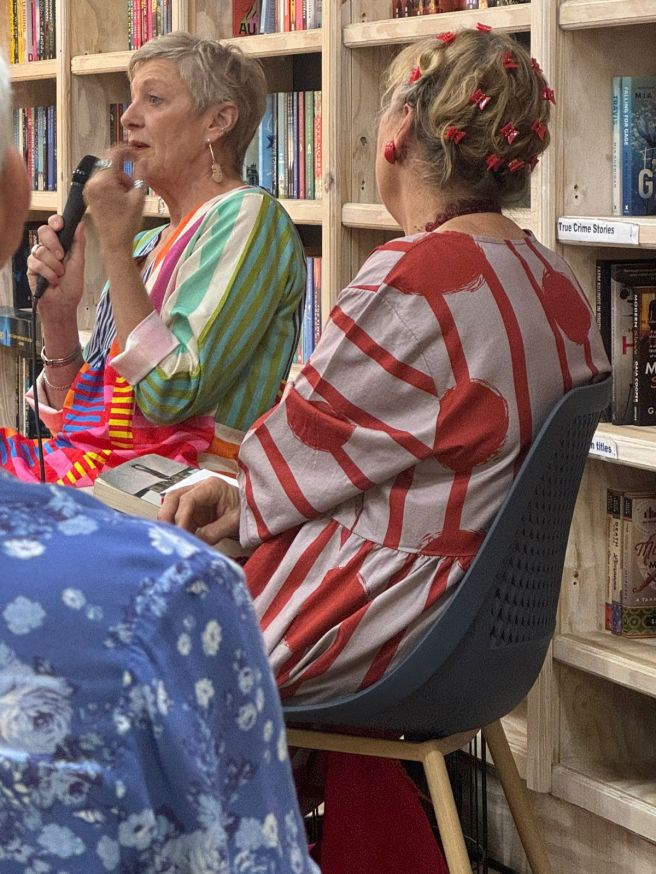
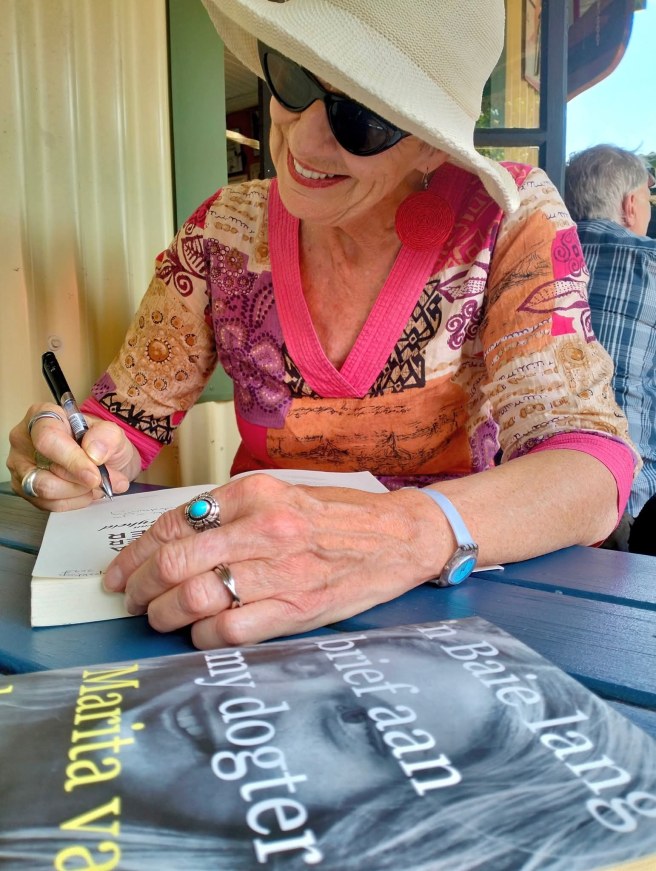
Author Marita van der Vyver who has been living in France for most of her adult life recently returned to her home country to promote her latest book My Jaar van Vrees en Vryheid (My Year of Fear and Freedom), and hopefully the Afrikaans version will be translated soon. DIANE DE BEER interviewed her with a live audience:

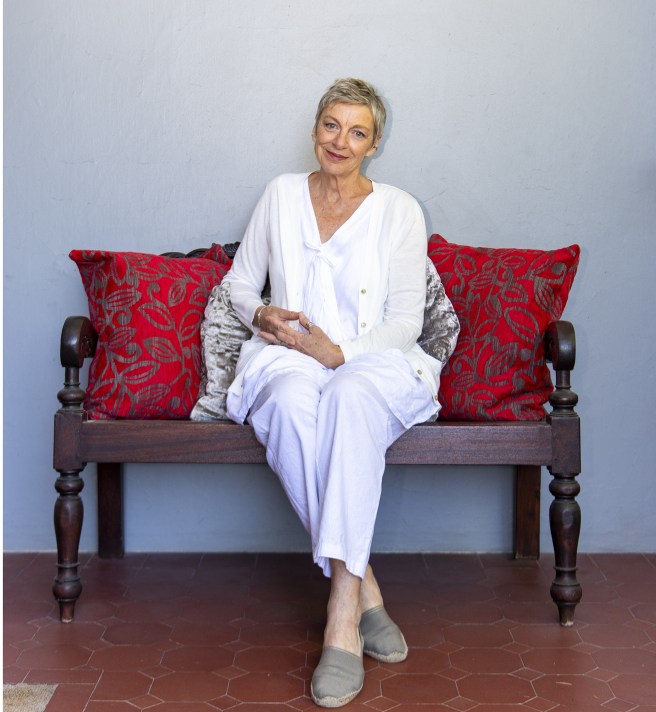
Marita van der Vyver, Picture: Jaco Marais.

“I think if you lose your language, it’s because you want to lose it,” says Marita in response to my remarking on her excellent Afrikaans after so many years spent living in France. “Your language will always be part of you,” she admonishes.

And that’s the thing about this author, she’s been around and done many of these travelling book tours, which though a welcome financial opportunity, can probably be exhausting. Having done many of these as the enquiring journalist, my empathy always remains with the authors, but I also enjoy these conversations because they’re usually keen to promote their writing.

I was delighted when I realized the book I was sent by the publishers was a memoir rather than fiction. Either would have been fine, but I was looking forward to reading about her travels.

When she and husband Alain decided to embark on this extraordinary journey, many things were in play. “I didn’t know whether the marriage would still be intact following this adventure,” she admitted.

And at the start of their expedition, a book wasn’t on her mind. As a writer she always takes notes and to generate an income she wrote for Litnet, Daily Maverick, Sarie as well as Vrye Weekblad, which was still publishing at the time of the journey.

She never stopped capturing moments along the route. Back home there was a sigh of relief because the marriage had stood the test; in fact, their relationship was stronger than before.

That was what turned her head to a book. In the first chapter she explains the reasons for the journey, which was the result of the confluence of many incidents. Writers, she tells us, always live things twice. “You live it in the moment, but then you’re always standing back and observing, living it a second time when you write about the experience. Only then do you know what you truly felt about it.”

“Once I was writing, I could really understand what I had experienced,” she explains. She admits to being very honest and once you read the book, you will understand and agree.

Initially she was going to write a travelogue, but regular first readers (honest friends), encouraged her to delve more deeply into their lives. This wasn’t an easy time and without her husband’s permission, she would never have drawn back the curtains so sharply, revealing much more than many would care to share.

This is also what makes this such a fascinating read. Wherever you are in your life’s journey, relationships play out in many different ways, but there are always incidents that will remind readers of their own lives. That and because Alain wasn’t only a willing participant but also the comic relief (“he’s funny naturally,” says his wife).

Travelling, as we all know, can be huge fun, but it’s also hard work and often extremely trying to make your way in foreign lands.

When writing, Marita is always very protective of her family. Yet writing a memoir depends on the author opening up, making themselves vulnerable. But her husband easily agreed and their relationship and togetherness contribute warmly to the enjoyment of their journey.

Yet, it also meant that she had to share the details about her husband’s depression and addiction. During Covid, as for so many freelancers, her income evaporated. Being an Afrikaans writer who is trying to make a living in Europe includes many different jobs. She has to do functions, writing schools, talks to various groups and more. All of this was impossible due to the pandemic.

Together with the reappearance of Alain’s depression, her world collapsed. Depression and addiction often go hand in hand, but both of these had been under control, until it wasn’t. “There were none of the usual aids, including psychologists or AA meetings, everything was cancelled. His regular psychiatrist had to turn to the physical needs of those struggling rather than mental health issues.”

Suddenly their needs changed drastically, and she thought of something written by James Baldwin in Giovanni’s Room: “Perhaps home is not a place but simply an irrevocable condition.”

That and the way the couple adapted to their year-long journey is what is so deftly and delightfully sketched by Marita, who made all the right decisions to turn this into so much more than simply traveling from one country to the next, and from one continent to another.

Isn’t that just the dream of many people? And yet it always sounds more romantic and achievable than it is. But here Marita and her Frenchman show how it can be done, even with all the odds against you.

And perhaps even more than the travels – and I truly enjoyed and relished every little byway and highway – it’s about two individuals who might be at the end of their time together, trying to give it one more chance.

Who can resist? Marita is a writer who knows how to tell stories and with this one she instinctively realized what had to be done. The fact that Alain agreed to everything tells me much more about their marriage than any book could. How could they not survive?

Because of the originality of the book, I am hoping and holding thumbs that it will be translated for a much wider audience. Not only will it inform you about the way to approach something of this magnitude, but it also proves when two people are meant to be together, their happiness has a much bigger chance of survival.

And what could be a better panacea than going off on a madcap adventure crisscrossing the world. After all, as one of her other favourite quotes by the Egyptian Naguib Mahfouz remind us: “Home is not where you are born, home is where all your attempts to escape cease.”

So lets keep moving …

SIMPLY LEAN IN


Review by Diane de Beer

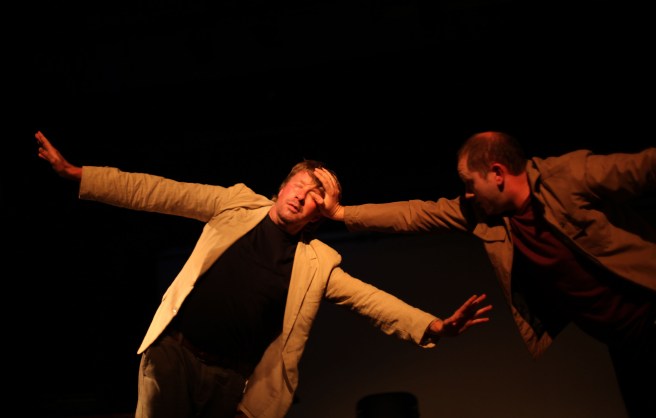
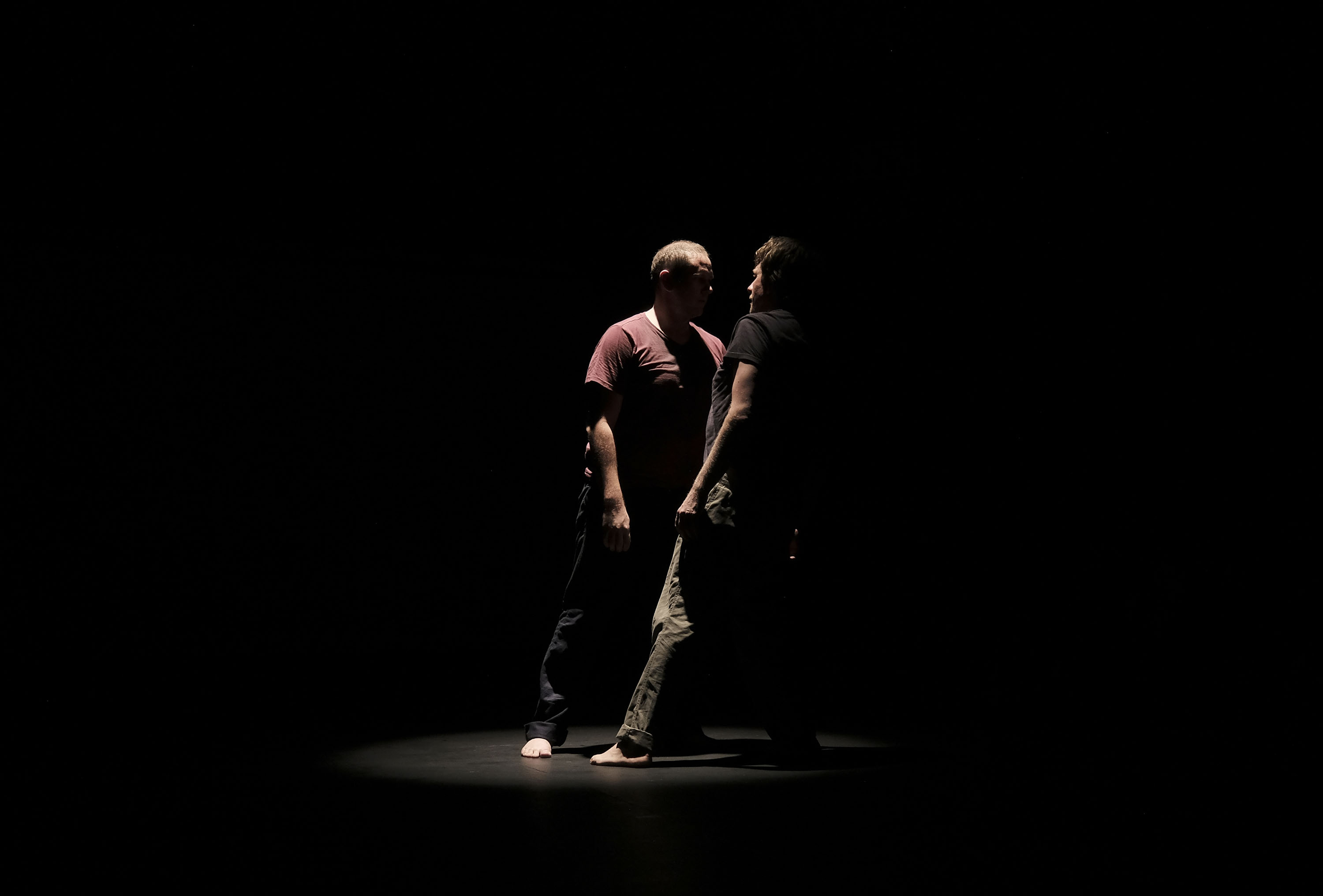
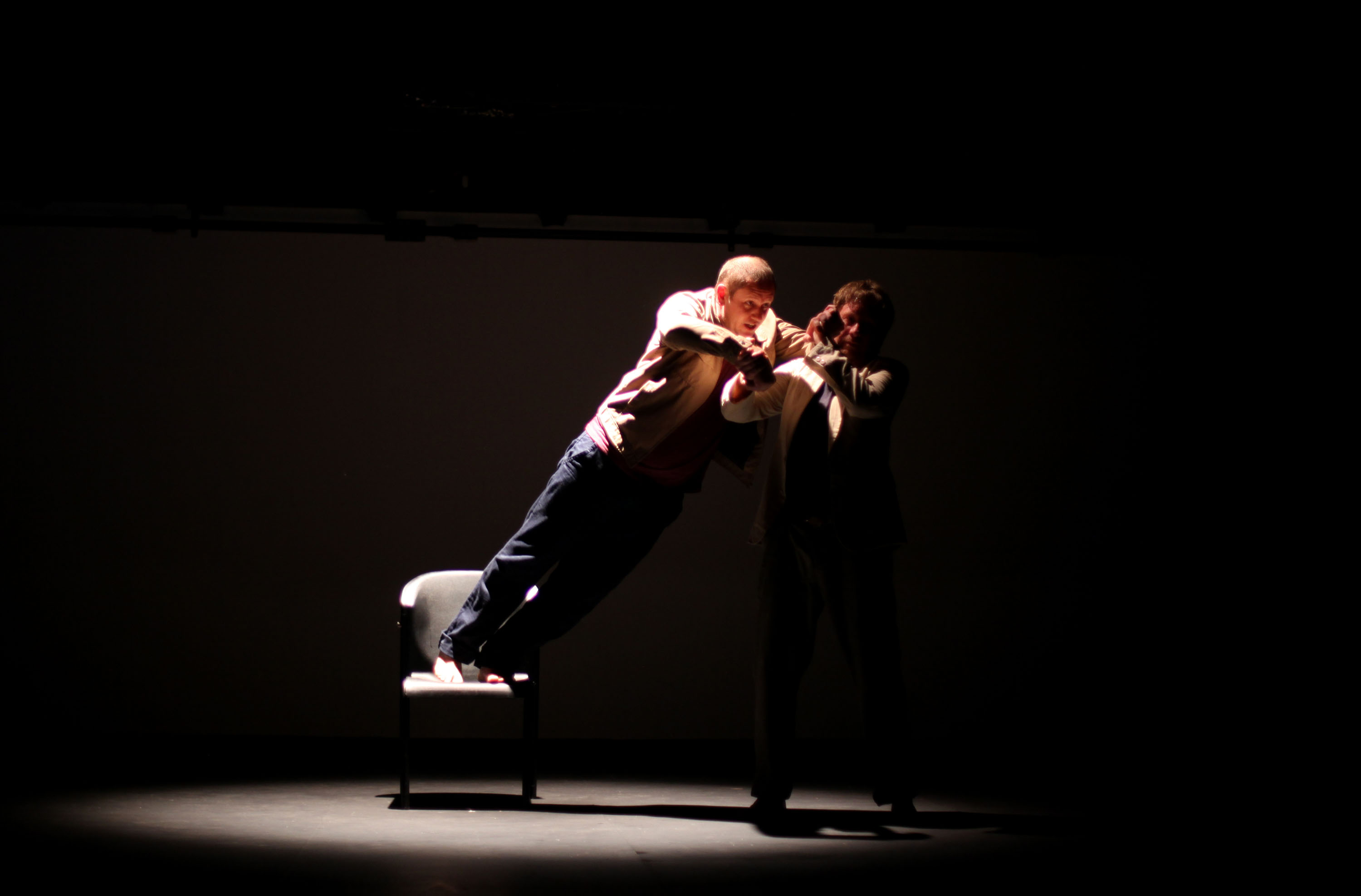
Gerard Bester (left) and Alan Parker

Photographs: John Hogg

SOMETIMES I HAVE TO LEAN IN
Choreographer & Performer: Alan Parker
Director & Performer: Gerard Bester
Dramaturg: Gavin Krastin
Text (“Wallflower”): Gwydion Beynon
VENUE: POPArt Theatre
DATES: Today at 3pm

It’s difficult to let people know in time to catch one of the shows at Joburg’s POPArt, because they have short runs, but that’s also the purpose of their theatre.
It’s for an easy yet discerning theatre crowd who like seeing something unusual and probably not available at a more traditional theatre.
It’s one of the delights of theatre that it offers such diversity. And this particular venue is a great example.
This present production has been around for a while starting as a commissioned work for Dance Umbrella in 2018 before playing at the Live Art Festival in Cape Town and most recently in 2024 for the National Arts Festival in Makanda.
Gerard Bester and Alan Parker created this delightful physical theatre piece playing with ideas that possibly featured in their own lives as ageing performers which begins as soon as you pass through that first theatrical endeavour.
Rather than focusing on age, it’s looking at two performers who have been in the industry for some time and are leaning in to find not only themselves and each other but also a way to be creative – not only on stage but also, hopefully in the world.
There’s a sweetness and a melancholy to their approach which might seemingly come across as quite lowkey, yet delivers a strong emotional punch.
It’s the unusual way they both move, sometimes leaning against a wall or in-between each other or simply trying their best to lean over while being held tightly by the ankles.
It’s about bringing those emotions into the light so that you cannot resist embracing the storytelling as well as the performers.
Perhaps co-director of POPArt, Hayleigh Evans says it best: once she saw it a few years back, she knew she had to present it at POPArt. It’s exactly right for this neighbourhood venue that’s easy to access, casual yet professional in its approach and yet another fabulous way to experience theatre at its most pleasurable.
With Bester and Parker’s experience, their easy approach and their individually original style, it’s yet another way to access life and all the challenges thrown our way.
Simply lean in!

To check out upcoming shows and events:

https://popartcentre.co.za

or

CONTACT:
General: +27 83 245 1040
email: popartjhb@gmail.com

ADDRESS:

POPArt is now located at 59 Dorset Road, Parkwood / Greenside East

LANIE VAN REENEN KEEPS TELLING HER OWN LIFE STORY IN A WAY THAT REMINDS US OF LIFE EVOLVING WITH ALL ITS SPLENDOUR AND HEARTACHE

One of the joys of reading is to discover a writer who appeals to your sensibility and who has you reaching back to discover her whole catalogue. DIANE DE BEER was delighted to find (for a second time in one instance) the books of author Lanie van Reenen who shares her life in all its ups and downs quite gloriously:

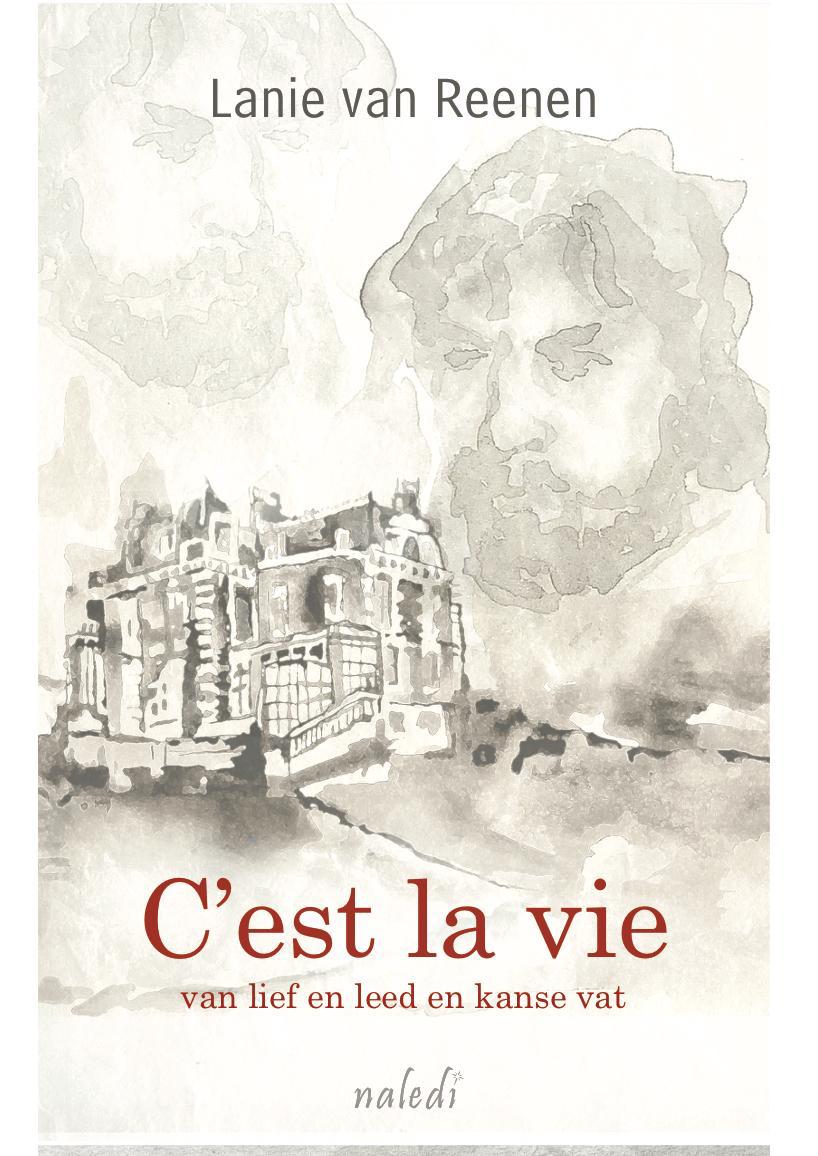
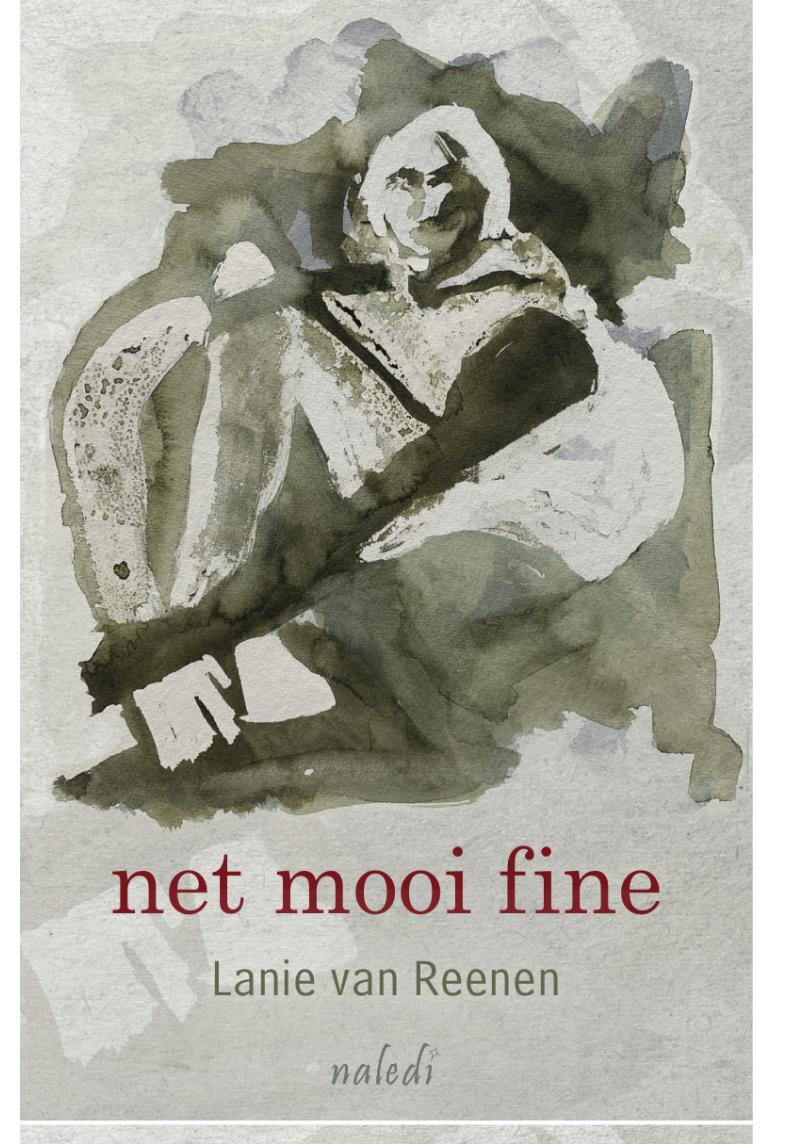
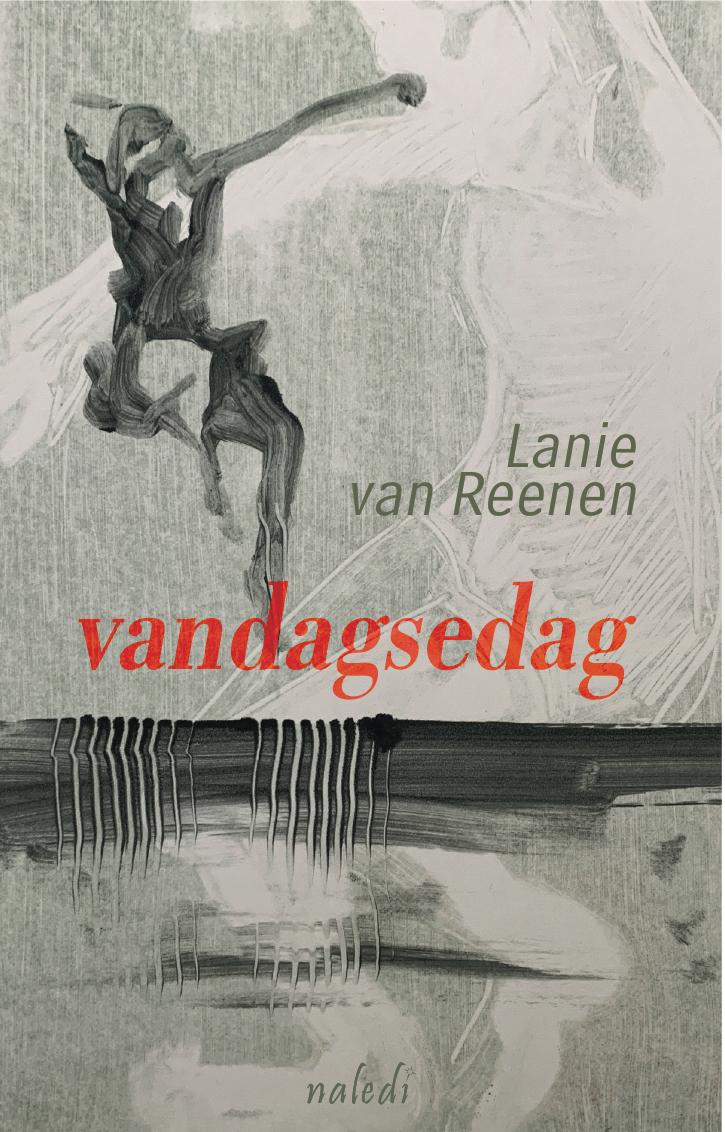
When I was first handed Lanie van Reenen’s latest novel with the unusual title Vandagsedag (translated as Today’s Day), something sounded familiar but I wasn’t sure.

I was asked to have a chat with her with an audience in attendance, so I was keen to explore her third book. She’s adamant that she doesn’t do fiction; she tried, and (she believes) failed miserably.

But her unusual life, not strictly planned, was what first started her writing. She kept notes on her life to make sense of what was happening, which started with the disintegration of her marriage – unexpectedly.

To help her get through this painful experience, she wrote her first book, C’est La Vie, which told the story of her French sojourn, dominated by a castle turned into a guest house, which turned into a disastrous enterprise because of the worldwide financial crash, amongst other things.

This was when she discovered the strength of putting her thoughts on paper, which then turned into a book. “I don’t write what I write with the intention of publishing,” she notes. She insists she isn’t a writer. When she simply writes to deal with her tumultuous feelings, she finds it healing. If she should sit down and do it intentionally for a book, her writing feels self-conscious.

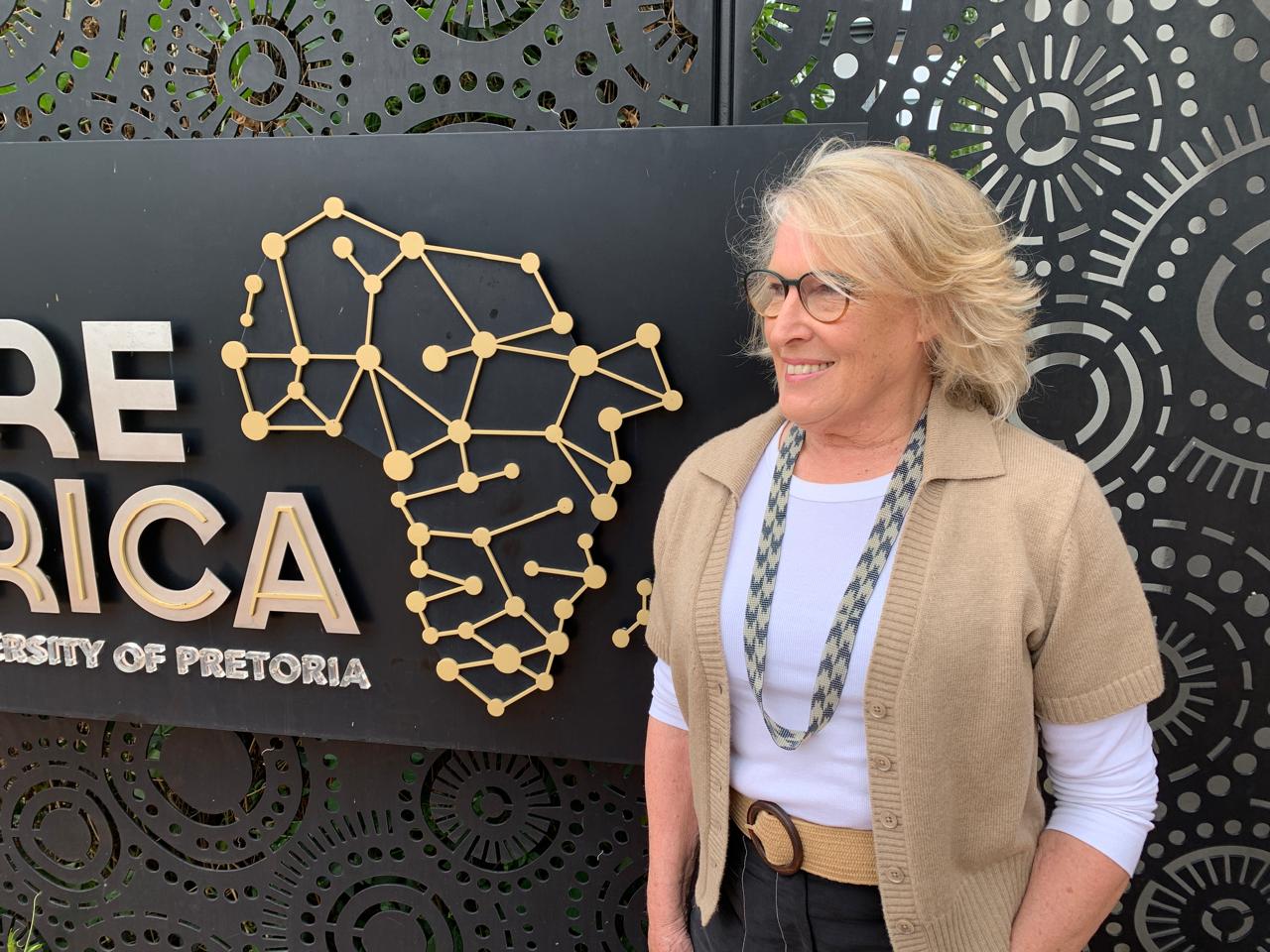
Lanie van Reenen, the reluctant yet invigorating writer.

Whatever she is doing, it obviously works. I absolutely loved the writing and the way she engages readers with her life. It is the way she achieves writing about herself yet embracing the world. That and her determination to move forward and on when disaster strikes. She writes well and because of her adventurous drive, she is constantly finding herself in some kind of pickle or another, which she then battles to solve in a way that works for her and harms no others.

In this latest offering, she pinpoints a few themes. Probably the most dominant, is the focus on her mother’s last years. Who of us have not had to deal with that, or will in the future – especially women?

“My mom was blessed because she had five daughters all living quite close to her at the time.” In her case, she was living in Stanford, her mom in Hermanus, so she could pop in quite frequently.

But the daughters were also lucky to have a mother who took advantage of life and the fact that she was still living. On her 90th birthday she jumped from a plane. I’m not sure many of us would do that at any age.

It also explains much of Lanie’s spirit. How could one not embrace life with a mother like that! “She was really special,” says Lanie. But at this stage, her mom knew this was her last season.

And that is how this latest book made its first appearance – or at least the title. “She asked one day when she thought she was ready to let go, ‘How difficult can it be? What else do you have but today’s day? (vandagsedag)’”

Chatting about her writing process, especially one that doesn’t lead specifically to writing a book, Lanie does make An effort to document her life. Whenever something special happens (a wale turns up right next to her while she’s having one of her regular swims in the open sea), she writes it down as soon as she can.

In her younger days she was given a special notebook by a special friend, the late Merwede van der Merwe, a television producer in the early days of local television. This became part of Lanie’s life and one that she has always stuck to.

“I also regularly attend writing schools,” she says, “in the hope that I will actually learn to write. It’s about those of us who feel we cannot write.” Here the participants are given special writing exercises, like creating something about their earliest memories for example.

Busy with her third book, and yet another life crisis she had to deal with, she decided she would include these earliest memories throughout the book to give readers an inkling of who she was as a youngster and then grew up to be.

Lanie (right) and Diane pictured by Janetje van der Merwe.

And because these pieces were written to be read aloud the following day in front of a group of would-be writers, she threw herself into every piece. “Luckily, because of that they were usually well written,” she explains.

“I realized there aren’t that many stories about my adult life I have yet to tell.” And as this was to be her last book, she thought that she might as well go back to the beginning, which she did.

She is still amazed at how she managed to publish three books, which she attributes to her years and years of detailing her own life. “Even if I’m on the road, I will stop and write it down,” she says. And we all know how you think you will remember that last thought before you drift off at night …

The next morning it’s gone and you can’t believe that you let those brilliant words go. Each time Lanie decided she would attempt another book, she turned to her notes. “If you want to heed the discipline of writing a book, you have to make a daily appointment with yourself and you have to turn up,” she admonishes.

Following the reading of her first book many years ago and this last book for our conversation, I also read the middle book which completed the circle. I am convinced Lanie isn’t yet finished with her writing. It has become a part of her life, something she turns to when she wants to make sense of her life.

In the meantime, for those of you who haven’t yet discovered her particular oeuvre, explore and enjoy. Hers is an unusual life and one worth reading about.

THE TOYOTA STELLENBOSCH WOORDFEES FEATURES MANY DREAM PRODUCTIONS AND PERFORMANCES

Photographers: Jeremeo Le Cordeur; Llewelyn de Wet and Gys Loubser

The Stellenbosch Woordfees can be quite a daunting prospect because there is so much on offer. It is perhaps easier if you have specific artistic passions, as most of them will be on offer here and it is possible to make a selection. DIANE DE BEER spotlights what caught her fancy

There’s not even a chance that you can include all your darlings in a festival wrap or even try to see them all.

I did my best, was constantly on the move and writing, and still I hear of more productions you just had to see.

Personal favourites (don’t discount others because I probably didn’t see them):

My best theatre productions were stories that turned me into an emotional wreck but did so with authenticity (I know this is a woke word, but …).

Tinarie van Wyk-Loots and Kristen Raath (left) and Jefferson J Dirks-Korkee (right) in

Dianne du Toit Albertze’s Huis van Sand. Pictured by Jeremeo Le Cordeur

The winning text of the prestigious Reinet Nagtegaal prize, Dianne du Toit Albertze’s Huis van Sand, with her honest portrayal of a dysfunctional family that’s probably not even part of most audiences’ consciousness. She writes about what she knows and where she comes from, the Northern Cape. But she does this in her self-made tongue, which shoots right to the heart and guts of the matter, no pussyfooting around with this one.

It is not a place many of the traditional Woordfees audiences will know. The backdrop is the N7, a route that runs from one end of the country to the other. It is her little spot next to the highway that Sandy knows. She and her daughter share Rodney’s caravan and too much of his life, especially the dark side. They’re trapped and yet the lifestyle is passed on from one generation to the next with the whole family fully engaged. A seemingly never-ending devastating cycle.

What drives Huis van Sand are Albertze’s words, her imagination, and the way she plays wildly with your head and emotions. Throw into the mix director Wolfie Britz’s strong casting and determined direction. With the remarkable Tinarie van Wyk-Loots launching herself body and soul into this one, Sandy’s daughter (Kristen Raath) trying to duck the missiles and resist diving headfirst into the temptations, Jefferson J Dirks-Korkee’s chilly capture of the toxic male scent always hovering menacingly and René Cloete showing she is much more than just an innocent bystander, everything about this production hits you like an onslaught.

Yet this is one you want to struggle and engage with because of the sharp edges and the unblinking gaze at the harsh reality of so many lives. It’s heartwrenching, but that is something this playwright has never turned away from. She stares straight into the skewered glare of too many unseen lives and throws us all in at the deep end. The brilliance is well worth the battle.

Melissa de Vries as Nadia and Angelo Bergh as her friend Zavie

Walking the same tightrope, is the adaptation by Jolyn Phillips of Ronelda Kampher’s ravaging novel starring two vulnerable yet resilient teen cousins who try their best to navigate a world they don’t understand while instinctively understanding that they are their only protection.

For Nadia (Melissa de Vries) and her chum Zavie (Angelo Bergh) their bond while tenuous and often fragile is what keeps them breathing.

With this one it is again the magnificence of the performances and the staging by Lee-Ann van Rooi that holds the attention as these two baby-adults going about their lives as if it is normal – and for them it is, it’s all they know.

That’s precisely the point. This is their normal, their life and the one Kampher’s words in her searing novel lay bare. Their whole existence is determined by outside factors, never certain or expected. Yet they do know how to grab the small slices of life when given the chance which isn’t often. They should not even be aware of the things happening in their lives, yet that’s the only way they know how to roll.

Kampher’s language is brilliantly captured by Phillips’ adaptation. How she even knew where to start! It’s such a complex and almost crippling story about these children whose future is determined purely by the happenstance of their birth.

Both of them have bucketsful of gifts which will never be realized because there’s simply no support or networks for these drifting families where not one generation manages to get even a foothold on a real life.

If anything good happens in their lives, it is luck and often, at that particular moment, the recipient doesn’t know how to deal with it.

When reading Kampher’s book the first time, you’re in awe of the writing and the storytelling. It’s the way she focused on the stories never told, the way she draws the characters, gives them flesh and emotions, which in this instance are perfectly re-created by the choices of Van Rooi and the adaptation by Phillips.

What a beautiful acting team. I don’t know them, don’t watch television if that’s where they perform, but I do know that they have inhabited these two kids with so much energy and guts, it’s hard to resist.

And that’s the joy of festivals, the opportunities that arise for artists so that when the stars align (a good script, director and actors), nothing can hold them back.

All of these performances should and will hopefully travel. For far too long too many voices have been silenced. We are so much richer as a country, as audiences and as performers when all our stories are shared.

Albert Pretorius (actor) and Schalk Joubert (guitarist) in Ek is nie Danie pictured by Llwellyn de Wet and Gys Loubser.

Writing about stars aligning, another perfect example of this was Ek Is Nie Danie with 21 poems from poet Danie Marais’ four collections woven into a magnificent text that deals with a middle-aged white man struggling.

What four middle-aged men did with what they had, was inspirational. They took something which if not handled with the same delicacy as the poetry, could have been disastrous. But because of deft hands and hearts, it feels as though you are dealing with an emotional vortex, but one driven with artistic insight and instinct which holds the audience tightly and sharply in focus from start to finish.

It worked because of the truly exquisite writing and then the choice of the right participants. The concept was Niel van Deventer’s according to the programme, but then handed to one of our smartest directors, Nico Scheepers. He is given a topic which would turn most people away – the angst and anxiety of ageing white men, not a species that many have much sympathy for.

Yet this company with actor Albert Pretorius and musical director/guitarist Schalk Joubert has shown that, given the right elements, a director who knows how to shape something yet value his actor and musician by allowing them the freedom to be and to do, it will work – and in this instance, explosively.

It’s one of those performances that you want to see again as soon as you leave the theatre. I hope it travels the country.

I took these three stunning plays to give some flavour to the Woordfees which is far too dense and diverse to dilute, but that there’s something for everyone, that’s a certainty and you won’t have to look too far or hard.

They have achieved much in only a short time and in the future with everything changing so rapidly, we can only expect to experience even more.

And then just a small PS: I was asked to interview Nataniël on a book Bloei+Blom and being who he is, the first lunch was booked out swiftly and another date the next day was included and again fully booked. But hey, the more the merrier.

As an interviewer, this is the one date I don’t have nerves. I know I am in safe hands and he is the master of chat.

It was the easiest gig in town. Even though he and I had talked about topics of conversation before the time, once on a roll, and only three questions down, I could sit back, relax and enjoy one of our best (and naturally funniest) conversationalists in action.

There was no way to ask anything else. He was in full flight on his own. He did glance my way once or twice, but there was no interrupting the flow. And even better, he was the one they wanted to see and hear.

I felt blessed, centre stage and could watch the wizard in full flights of fantasy.

*There were many others I loved, many of which I had written on at the Woordfees or previously including Boklied, Seun, Bridling, Kuns, Magda en haar Erhard, Ont-, and always The Ugly Noo Noo …

AARDKLOP PUNCHES ABOVE ITS WEIGHT

Like most things in life there are good and bad to small packages, but Aardklop CEO Alexa Strachan has turned her shiny Potchefstroom gem into a star through clever planning, a balancing act of note and enough variety to have everyone laughing and crying – with good food all over the place to boot. DIANE DE BEER speaks her mind:

My husband knows I’m a festival junkie (while he is NOT) but it is a personal indulgence and one that clearly nourishes.

This year was no different. Taking only a handful of my best, it’s not a difficult case to make.

Running down the alphabet as the festival guide does, it’s the overwhelming laughter that blew me away. I’m not a comedy girl so I didn’t know who Alfred Adriaan was but I screamed with laughter from start to finish and he was obviously a festival favourite in the packed auditorium.

With the name of Magda Louw (Desiré Gardner), one would think that I would remember that this is one of my favourite characters, but again, because of the comedy aversion, it just never surfaces. And yet, from the minute she walks on stage in her latest production, Magda Louw en haar Erhard, how Louw can you go?, this time with her husband Erhard (a delightfully Sad Sack performance by Hannes van Wyk), they just bowl you over.

What makes Magda so delightful to embrace is that she doesn’t go on the clichéd South African rant of potholes and politics, she has much more exciting things to deal with like the man constantly shuffling behind her as she leads the way at a faster pace and with much more rhythm, but the two ageing souls give you hope for the future as you realise that life is just a bowl of bubbles if you attack it in the right way.

On the other side of the spectrum there’s the magnificent solo debut by the extraordinary Wilhelm van der Walt, who unassumingly takes the stage and then reaching into a far too familiar past, given new perspective.

There was a time when I could hardly stomach another troepie tirade because it was so dominating in the country that it constantly surfaced on stage. What I realized this time round, is that Van der Walt himself probably never participated in this deadly exercise for so many decades part of our lives and there were certainly many young audiences who needs this insight on our past.

And if it is done with such magnificence, the flashbacks are worth recalling even if the past could be wished away.

How can anyone not be thrilled to experience Antoinette Kellermann and Dawid Minnaar on stage and in this instance in Breyten Breytenbach’s last play, Verwelkingslied, before he died. Although he dedicated the piece to Antoinette Kellermann and Marthinus Basson, she performed with her long-time stage partner Minnaar with Mari Borstlap as director on a set which was reminiscent of some of their earlier work together.

Minnaar is an eerily similar version of the poet in voice and image and immediately you can lose yourself in the meanderings of this philosophical and always poetic (almost) memoir. As the two actors take turns in monologue yet sharing Breytenbach’s feelings on death, one drifts away in the words so magnetic and the voice so penetrating, almost in dreamlike state, the actors and the audience.

The simplicity of the presentation is apt as it holds the depth and strength of the text so delicately. This is where we need the words to wash over us as an audience in almost immersive fashion.

I know that Amanda Strydom first mesmerized me with The Incredible Journey of Tinkerbell van Tonder and was eager to experience the performance all these decades later. Not that I can remember the detail, but with age of both text and performer, it’s as if everything has just found a warmer and gentler place to settle and lay her head down.

Finding your place in the world is a never-ending search and when you are fighting for freedom it is almost impossible – yet not when you’re Nelia Petersen who was handed the struggle together with mother’s milk.

It’s rigorous and robust with Strydom tackling the text and music with equal energy and exuberance. And all these years later, if anything, it is even more brittle and brilliant than before. I could watch this performance any day.

Belofte van Vere was our first production and yet another Breytenbach tribute but, once I witnessed the full cast on stage, they had my full attention. With the musically adventurous Laurinda Hofmeyr on piano, a rare singing appearance from the jazz-infused Ilse Klink, the genius muso Leon Gropp (guitar and voice), the soulful David Klassen (drums), a rhythmic Concord Nkabinde (bass) with the velvet voices of Rolanda Marais and Eben Genis, I knew I would be transformed. And I was.

Performers Eben Genis and Rolanda Marais

This exciting, gifted collection of artists would know how to do Breyten Breytenbach, without frills and fancy tricks, just delivering on their accomplishments and Breyten’s poetry and words. Anything else to my mind would have been unwarranted.

It’s my kind of show with my kind of people and poems. I needed nothing more. For me this was a Breytenbach celebration and I’m certain he would have been honoured.

Combining two dance companies, Cape Town’s magnificent Figure of 8 Dance Theatre who also performed their haunting tribute (Die Een Wat Bly) to the relationship between mothers and sons, the more expansive Wings of Light: Dance of an Angel returned dance to Aardklop in spectacular fashion. The music composed by Mauritz Lotz set the tone for an exquisite performance which showcased both classical and contemporary dance, the perfect rendition for an audience who might not often have the chance to see this kind of performance. It was a rare feat to stage this production and hopefully paved the way for similar ventures in the future.

Festivals have to walk a tightrope of not playing it too safe yet not antagonising their core audiences. With the large auditorium thé venue for one of our best comedians as well as two of the most exciting dance companies in the country, they managed just that.

There was also time to slip into the art venues, always something to cherish, and this time it was the festival Artist Jaco van Schalkwyk as well as a challenging group exhibition Vice Versa curated by artist Gwynneth Miller, all of which got the mind racing on a variety of contemporary issues. The renovated campus art museum also featured an exciting range of Nataniël pictures captured by his longest serving photographer Clinton Lubbhe

As an extra fillip, there was the celebratory concert of Nataniël and Charl du Plessis’s 25-year collaboration on stage. And as I had witnessed their initial first performances together, this was quite emotional.

To watch two stratospheric artists develop, dissect and model their artistry as they grow and stretch in different ways is unexpected and artistically adventurous.

There’s Du Plessis’s breathtaking exuberance and excellence on piano, the way he shifts between genres and his approach to his longtime stage companion. Nataniël again exhibits his stagecraft, flips easily from text to music, his stories hilariously funny with a hint of melancholy, or on the musical side, surprising everyone with his superb classical training which he hardly ever shares. They are an unbeatable combination with so many years of performance between them.

Aardklop features youth theatre with their Pronk Podium product, which this year invited its most successful writer/director/producer to present his latest work Doolhof together with the NWU Kampustoneel winner Diereryk  directed and written by Pierre-André Viviers, cleverly based on Animal Far.

Every year I am thrilled and struck by the quality of the productions and everyone’s artistry involved. For future artists, this is unequalled training ground and for audiences the ideal opportunity to see how young artists tell their stories and what to expect in the future.

At future festivals, remember to watch out for this special section.

I could go on and on, I even made a turn at the market, something I never do, but I wanted to surprise my favourites at home with some specialty snacks.

As always it was a festival with feisty and fabulous fare on every level.

And the winners for the annual Aardklop festival awards are:

  • Best Actress: Elzabé Zietsman for Routrip
  • Best Actor: Wilhelm van der Walt for Seun
  • Best Director: Nico Scheepers for Seun
  • Best Overall Production: Seun
  • Award for most innovative work: The Scullery Quintet: Stir-fried Sonatas
  • Visual Art: Best Exhibition: Corpus Naturae, Jaco van Schalkwyk
  • Best Music-driven Production: Amanda Strydom: The incredible journey of Tinkerbell van Tonder
  • Best Classical Music performance: Road Trip Rhythms
  • Best Musical-driven performance: The Scullery Quintet
  • Hartsvriende Beste Produksie: Seun
  • Best new Afrikaans Script: Nataniël for NATANIËL + CHARL = 25
  • Best Production: Drama: Seun
  • Knockout Award: Alfred Adriaan: Positive Strokes
  • Extra Mile: Riaan Rademan (Technical project manager for Blond Productions)

SAVIOUR OF DEMOCRACY OR DESTINED TO DISAPPOINT IN A COUNTRY RAVAGED BY WAR?

DIANE DE BEER

FROM LEFT TO RIGHT: Gontse Ntshegang as Grace, Craig Jackson as the psychiatrist and Farai Chigudu as the bodyguard with Themba Ndaba as Robert Mugabe.

PICTURES: Ngoma KaMphahlele

BREAKFAST WITH MUGABE by FRASER GRACE

DIRECTOR: Calvin Ratladi

PLAYWRIGHT: Fraser Grace

SET DESIGNER: Wilhelm Disbergen

COSTUME DESIGNER: Sheli Masondo

LIGHTING DESIGNER: Denis Hutchinson

CULTURAL DRAMATURGE: Professor Samuel Ravengai

MUSIC: Matthew Macfarlane

ACCENT COACH: Louise-Saint Claire

 CAST: Themba Ndaba as Mugabe, Gontse Ntshegang as Grace, Craig Jackson as Andrew Peric and Farai Chigudu as Gabriel

VENUE: Mannie Manim at the Market Theatre

DATES: until August 10

If you are intrigued by the title, this is a play you will want to see. With the name Robert Mugabe having special meaning in South Africa, neighbouring country to Zimbabwe, it was a packed buzzy audience in attendance, always a joy to behold in an industry that’s constantly in battle.

If you google the number of Zimbabweans living in South Africa, they are described as the largest group of foreign migrants in the country. “Some estimates suggest the number could be as high as 3 to 5 million.”  And it goes on to say that the influx is primarily due to economic hardship and instability in Zimbabwe.

South Africans will all have some opinion of what occurred in Zimbabwe. Mugabe is still an enigma to many because he started as a saviour in the new democracy in 1980 in a country which was ravaged by civil war. The education system alone can attest to that.

Yet, because of the ambiguities, political perspectives and where you come from will come into play when watching this fierce production. If you are expecting answers to the many questions you might have, what you get is a view of the complications of a system which so clearly exposes the cliché, “you cannot please all of the people all of the time”.

What you have is a deeply troubled man haunted by his actions as a political leader of a country that lay in ruins yet full of hope for a new dawn. The action is heightened from the start as Grace Mugabe (his second wife) has summoned a white psychologist to see her husband. What unfolds all happens in hushed tones, with people looking over their shoulders waiting for some kind of menace.

A man who was born to intimidate, Mugabe’s bodyguard, is hovering and watching in constant attendance. A jittery wife at first seems worried about her distressed husband, yet as she almost pounces on her guest, it is clear that she is much more concerned with her own wellbeing as Shopper of the Nation (which is clearly and most deliciously displayed in her glitzy attire) and wants to make sure her own position isn’t threatened. She is after all a secretary, who switched to sycophantic wife.

What happens next is like a thriller unspooling in almost Shakespearean fashion. Present are Robert Mugabe, his wife Grace, an English psychiatrist and the ever present bodyguard. The tone is set by an obviously agitated and deeply paranoid leader who, even though haunted by the past, is intent on dissembling reality.

The cast is astounding, from Ndaba’s resolved Mugabe and Jackson’s bewildered yet embattled psychiatrist to the staunch bodyguard portrayed by Chigudu and the glorious Ntshegang, who masterfully displays Grace’s Machiavellian traits as she plays everyone differently.

The writing is a masterpiece. First written at the turn of the century, its relevance seems heightened in today’s world where unfettered power is displayed and celebrated with such candour and even pride. But it’s the way playwright Fraser Grace tackles all the issues, explores the ruthlessness of the regime and manages to stand aside from the writing that makes this hair-raising yet compulsive viewing.

Perhaps it takes someone from such a distance, almost unattached, to tackle such momentous events with such a clearcut vision.  He writes vividly in the Guardian about his own experiences, and it is worth reading for further clarity. https://www.theguardian.com/stage/2025/jul/23/play-breakfast-with-mugabe-market-theatre-johannesburg-fraser-grace.

Well done to Greg Homann and The Market for staging this work and for the passion of director Calvin Ratladi, Standard Bank Young Artist for Theatre who held onto his dream of directing this play one day and grabbed the opportunity when he had the chance.

He knew exactly how and with whom it should be told.