The brightly-coloured paintings in the latest exhibition by Pretorian artist MARGARET NEL will take viewers down memory lane as she showcases subjects that seem to reflect a different time. There is however much more to this than meets the eye she tells DIANE DE BEER
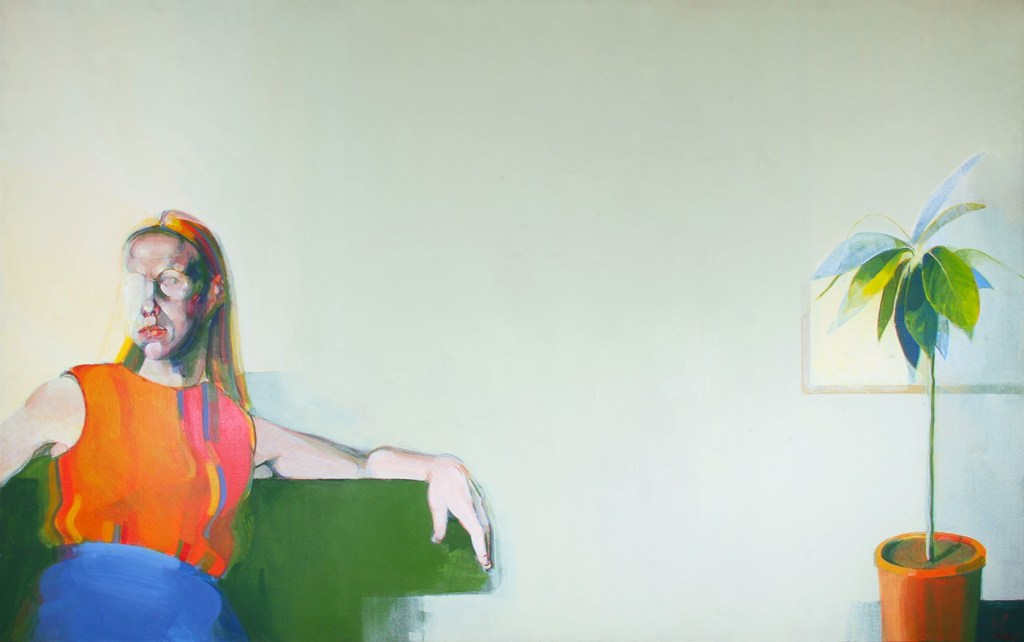
Margaret Nel on the journey of a painting: – “This work, titled Corner seat was completed in 1976 and was sold to Mrs Dora Scott when it was exhibited in Bloemfontein. Dora Scott and her husband were very involved in the arts in the Free State and her son Fred Scott is a founding partner of Walker Scott Art Advisory. When Dora Scott died, some of her large collection of art works, including this one, were put on auction and it was bought by the collector, art dealer \and erstwhile gallery owner Warren Siebrits. I bumped into him at an art fair and he invited me to see the painting at his house. I asked him to let me know if he wanted to sell the work at some stage and he later contacted me to say it was for sale. It is a good example of my figurative work painted during the 1970’s. I have very few paintings from this period in my possession and I was very glad to be able to buy it to add to my personal collection. It is about 50 years old and quite frail.”
Before starting to write this story, I quickly glanced through an interview I had done a few years back with one of my favourite artists, Margaret Nel, when she held a major retrospective at the Pretoria Art Museum in conjunction with the Association of Arts Pretoria where her latest exhibition titled Aftermath opens on Saturday May 10 running until the end of the month.
As she says so clearly in her Artist Statement, the theme that dominates her work from her earliest days hasn’t changed. It has always been about loss. She believes we have all witnessed and experienced loss in some form during our lives. “The debilitating effects of age and consequent loss of power and a voice and sense of self are perhaps the ultimate cruel and unexpected loss that all of humanity has to encounter eventually.”
Yet while her driving force hasn’t changed for this exhibition, her subject matter has. She has turned to objects rather than her usual figurative work, which has become more and more difficult to apply. “It’s easier to work with a theme and a new way of exploring the things I want to say,” she explains.
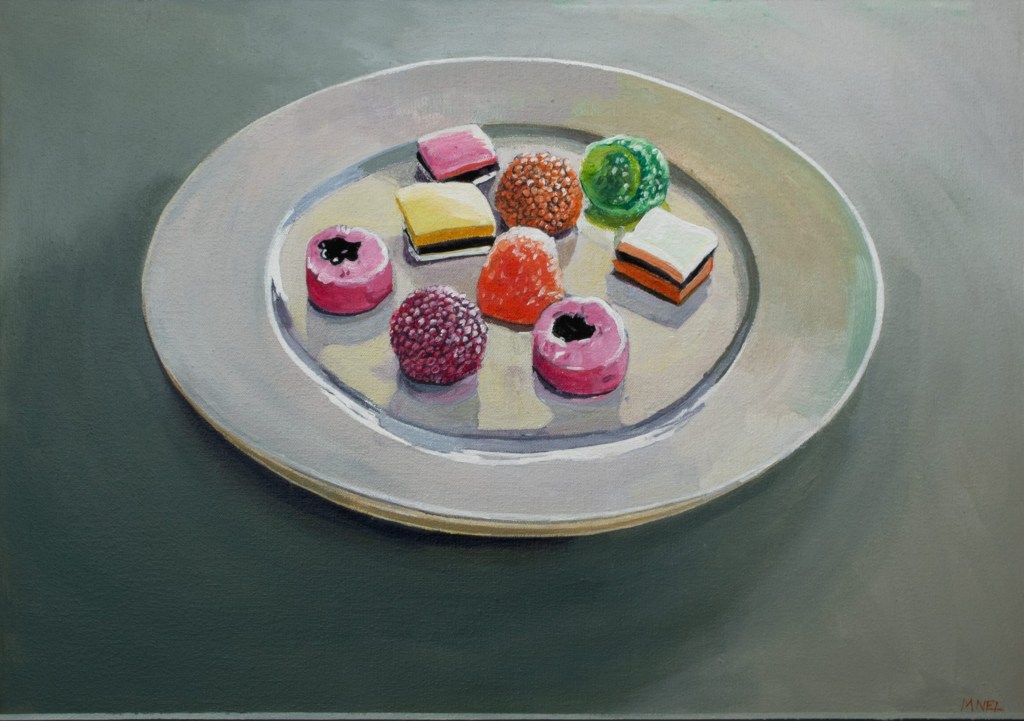
Allsorts 1
It is also a tough ask to find models willing to take the time, she says.
When listening to her talk about life and the harshness of loss, which the word almost unconsciously implies, I was surprised at my immediate reaction to her current work.
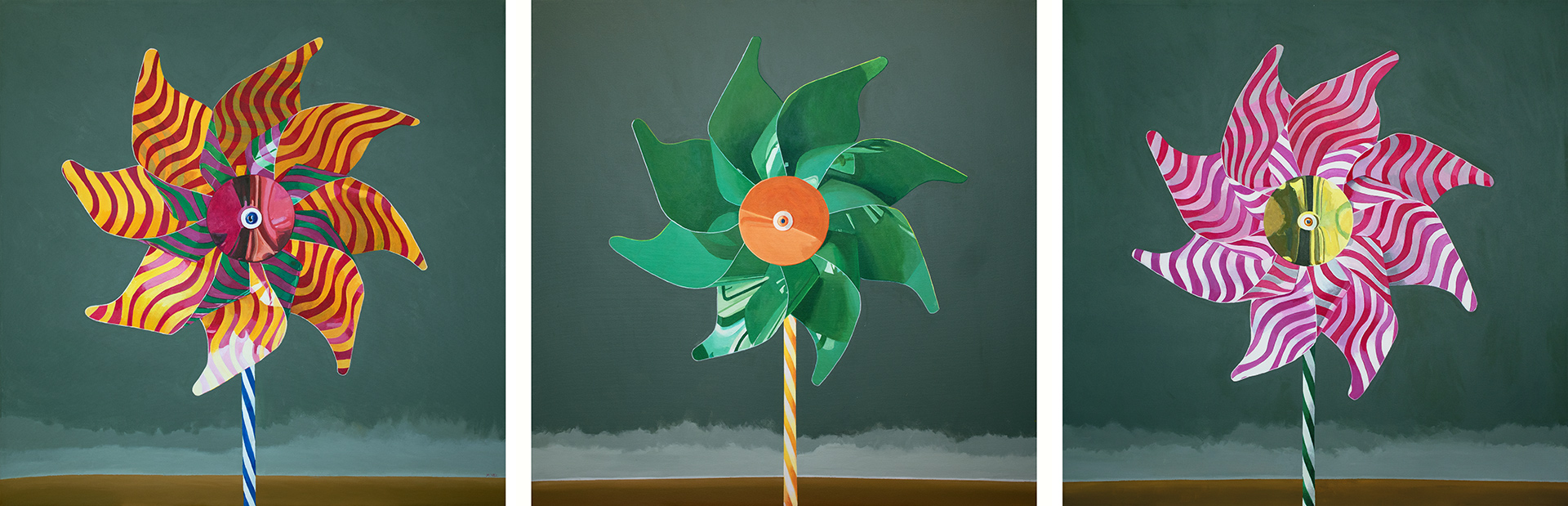
She is dealing mostly in things from her past, which means that many of us would find them familiar too: shiny pinwheels, old fashioned pincushions, Liquorice Allsorts, sweets in shiny wrappers in different stages of unwrapping or even the unfolded, now empty wrapper without the sweet, tinfoil containers, mechanical birds, wrapped flowers, colourful whistles, enamel bowls and a rather disconsolate plastic doll.
And even though I concede there is a certain melancholy, it also brings me great joy in a nostalgic kind of way. And who would not be tempted by her bright sunshine colours?
As important as the paintings themselves are, the names she gives each work also play a huge role and will point many in a certain direction. The enamel bowls for instance are titled Begging Bowls (see below). The name alone will encourage viewers to uncover their own stories. Alert is how she identifies the whistles, and it is as though you can immediately hear that shrill sound or visualize a school sports event.
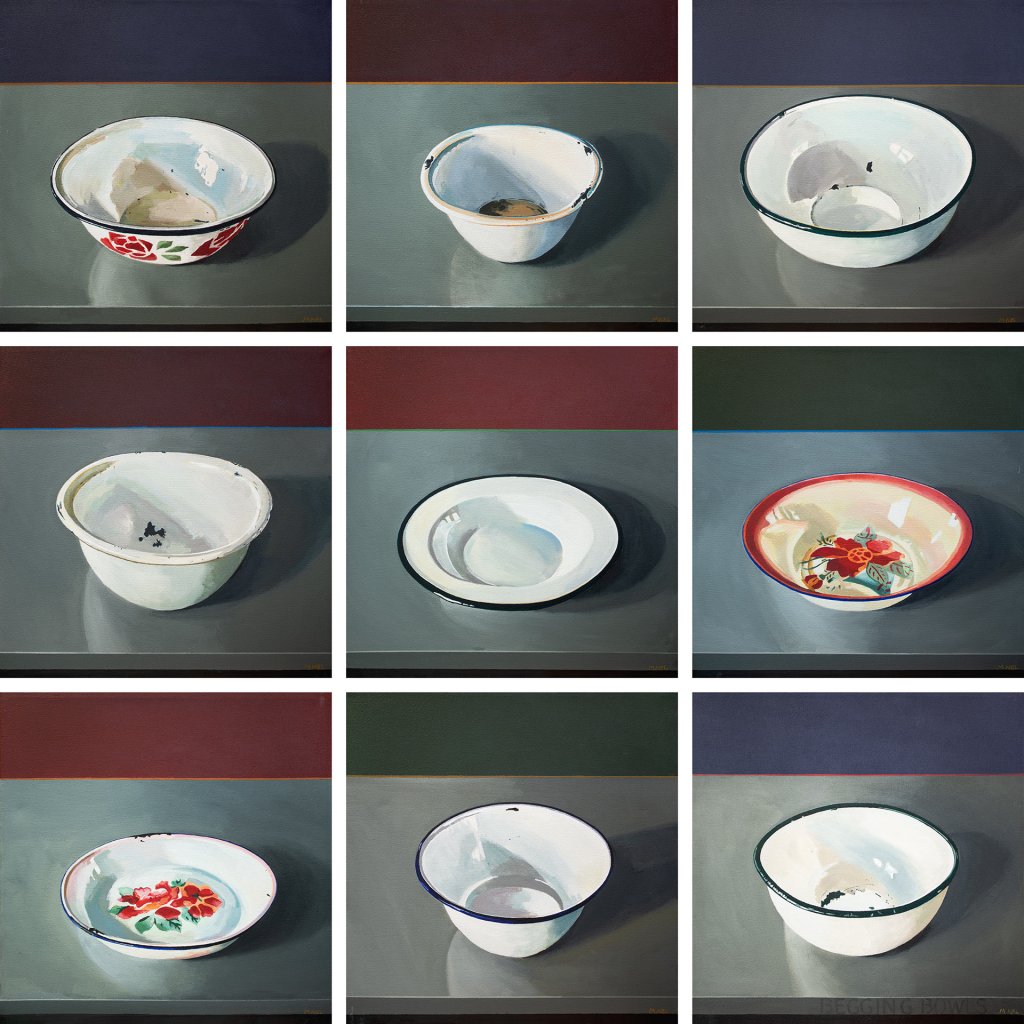
All these objects were carefully selected by Margaret, who understands and is happy if everyone viewing the paintings gives them a different meaning. It’s not something she wishes to impose and if the work is simply seen as pretty pictures, which they certainly also are, she is fine with that.
For her, the objects in the individual works all play with the meanings of loss. And there certainly is a feeling of melancholy when you look at the exquisitely rendered paintings. Personally, it takes me back to childhood. I have always had a fascination with pinwheels, which because of their colours as well as their joyous twirling when the wind blows, have always held that hint of magic.
As someone who sews, I was immediately enchanted by the pincushions, the like of which I had never seen before, but Margaret explains : “I am not sure if the Chinese pincushions are made any more. Mine are antique and probably about 80 years old, the material is silk and the stuffing is some sort of organic material like grass. We regularly holidayed in Lourenco Marques (now Maputo), when I was a child and the pincushions were bought at small Chinese curio shops. Nothing similar was available in post war South Africa.
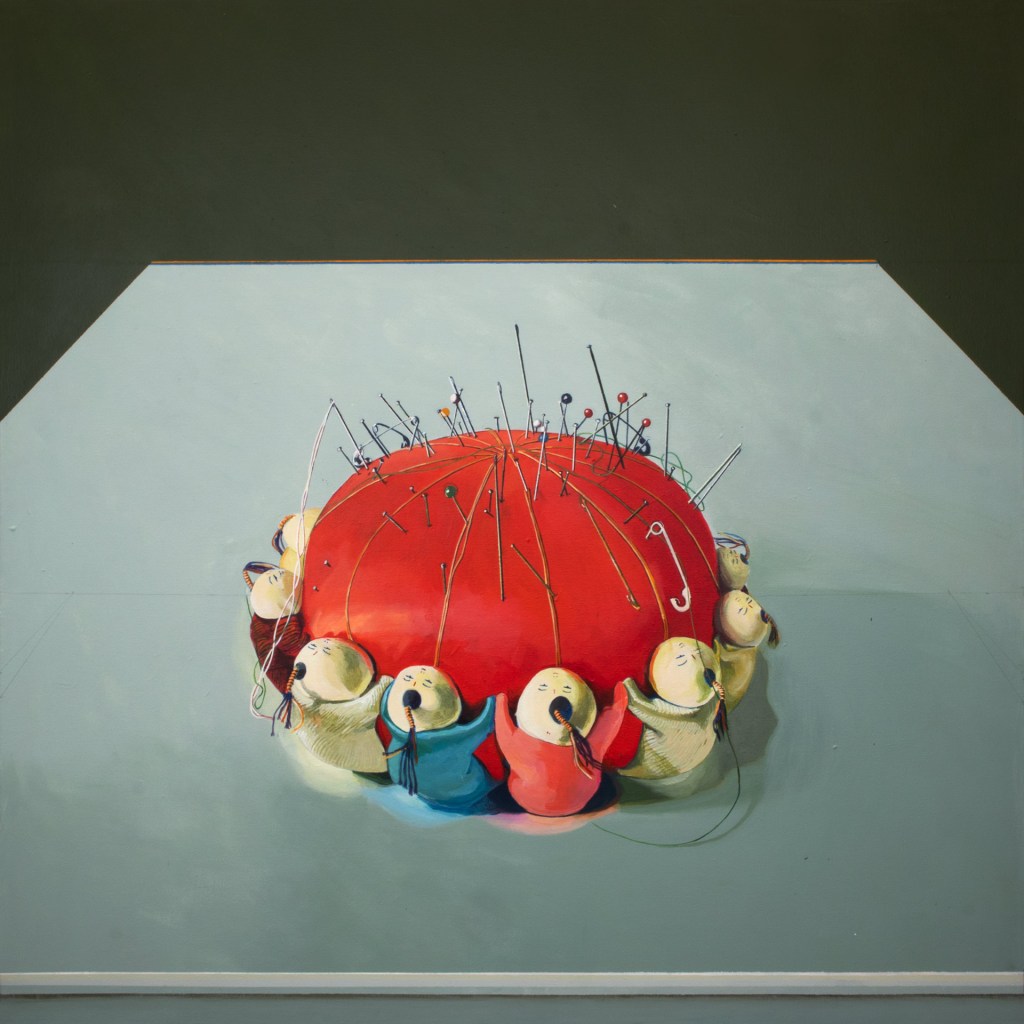
Curio 111
In her world, when it comes to her peers, she says she feels like the last man standing, which also explains why loss at present conjures up such heartfelt emotions. There’s no one around who witnessed her childhood or even young adulthood, she says, and expresses envy as an only child for those of us who have siblings. There’s no one who can hold on with her and share her memories.
Talking about the process of painting, she declares that she often feels quite high when a painting is completed.She also does all her framing and with these paintings has changed from aluminium frames to wood which she can also paint and feels adds to the painting. She’s also in the habit of reworking old paintings and precisely that compulsion will be the subject of her next exhibition.
She will be looking at old work, all locked away in a storeroom, figurative work, which will be reworked.
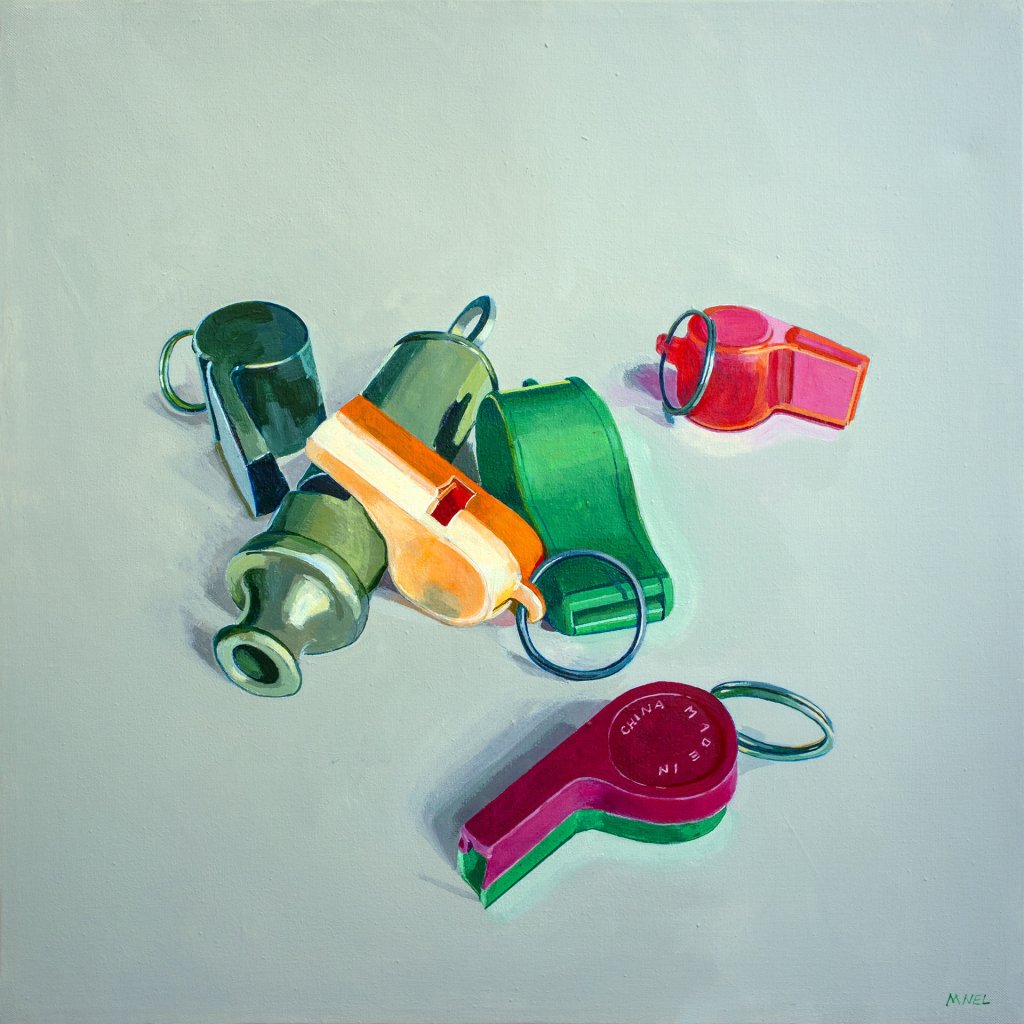
Alert.
“I’m full of self-doubt,” she notes, and one can understand why. Her work is usually done in isolation with no one to encourage or discuss issues or share her thoughts about the work. Yet her beautiful home, the iconic round house close to the Union Buildings, is an interior masterpiece and glorious example of how exquisitely she curates her own life.
The house has been furnished magnificently to capture a very specific mood with, at the time of my visit, her exhibition paintings displayed on all the walls throughout the house. Because of the prolific windows, the backdrop is the sunny highveld skies while the furniture has an industrial feel with added warmth due to her cunning colour choices.
It is a pity that in today’s often hostile world, she has decided against a home exhibition because this is where Margaret so obviously feels at ease. And for the visitor it is an exciting extension of her creativity.
She knows she has to take her whole body of work into consideration, yet she’s constantly worrying about certain decisions and whether she has got it right. But still, she welcomes and encourages criticism and is sad that art criticism has all but vanished. She talks about very harsh criticism she received at a previous showing and feels that the writer opened new avenues for her. They probably simply confirmed something that had worried her and that set her off in a new direction.
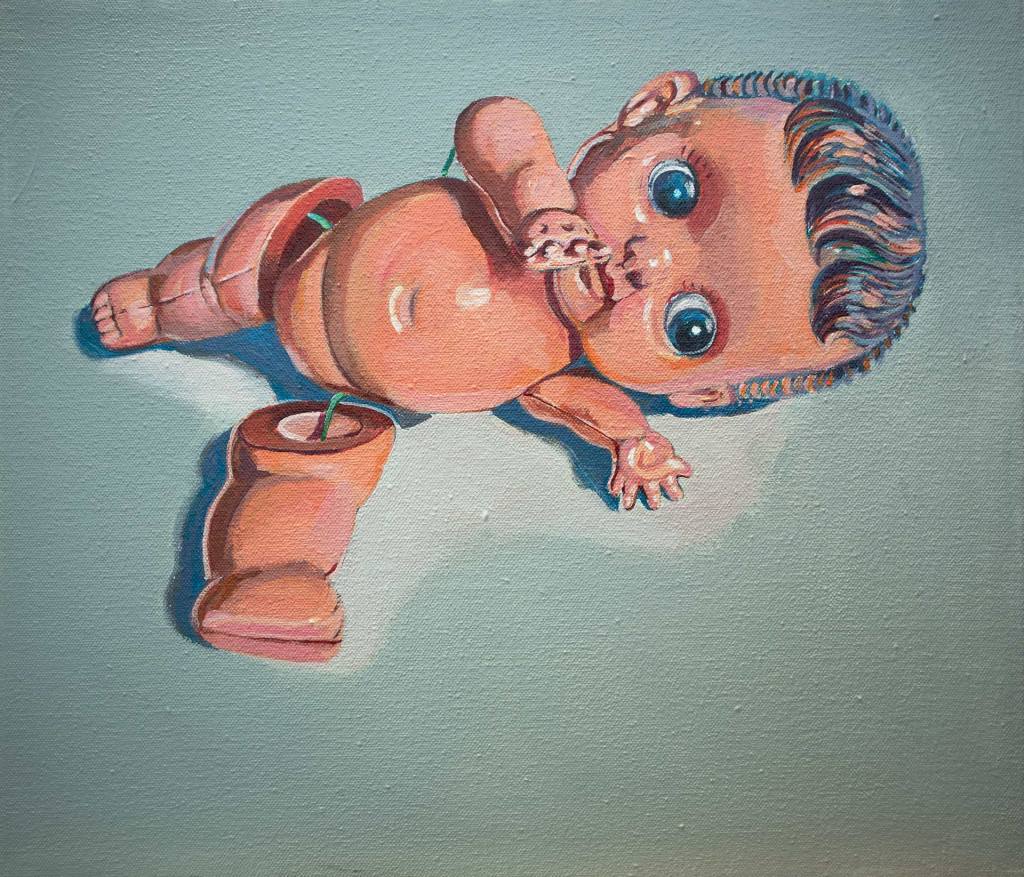
Doll.
“I can’t promote myself,” she says and, because she is quite solitary, she finds it hard to put herself out there. Yet she is keen to have proper conversations about her art. “How else would I learn?” she wants to know.
What she believes though is that her experiences of life captured so stunningly in this body of work would be familiar to viewers. “Life is just full of loss,” she laments – and she’s right, yet there’s so much more captured in this magnificent display of her latest exhibition.
The exhibition will be complemented by a selection of ceramic vessels by Dale Lambert. Her delicate, decorative stoneware is characterised by minimal, bold forms and vibrant, primary colours. The artist states: “My obsessive fascination with clay goes back to my early childhood and remains to this day. I currently enjoy the thrill of working with porcelain, and the translucent pieces I create are an expression of my being.”
*Visit the exhibition between May 10 and 31.
Association of Arts Pretoria
173 Mackie Street
Tel: 012 346 3100 | artspta@mweb.co.za | www.artspta.co.za
Nieuw Muckleneuk, Pretoria

 De Beer Necessities