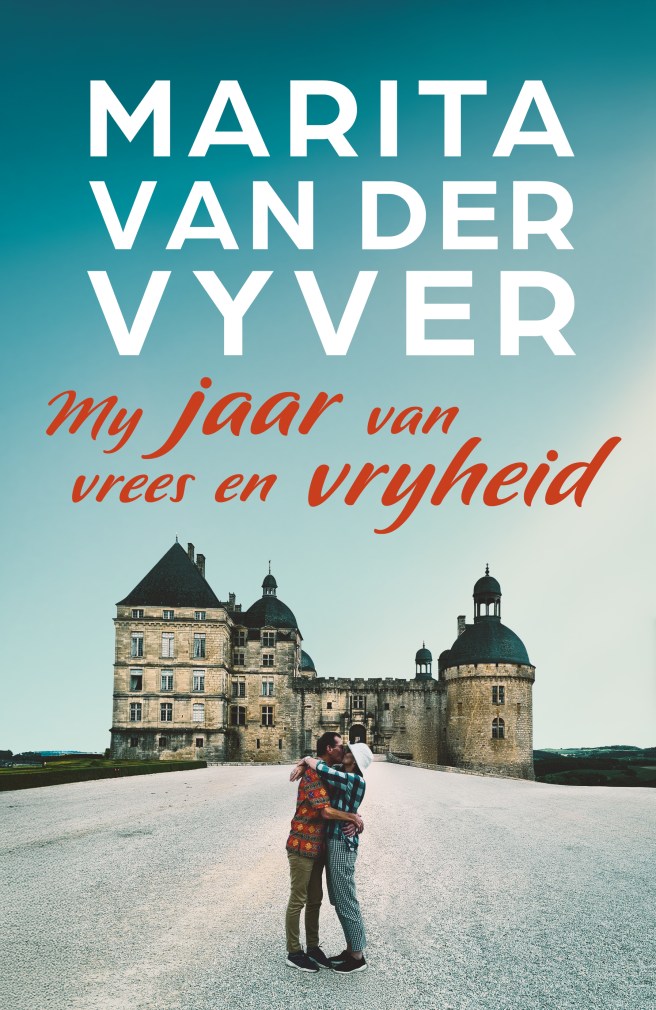
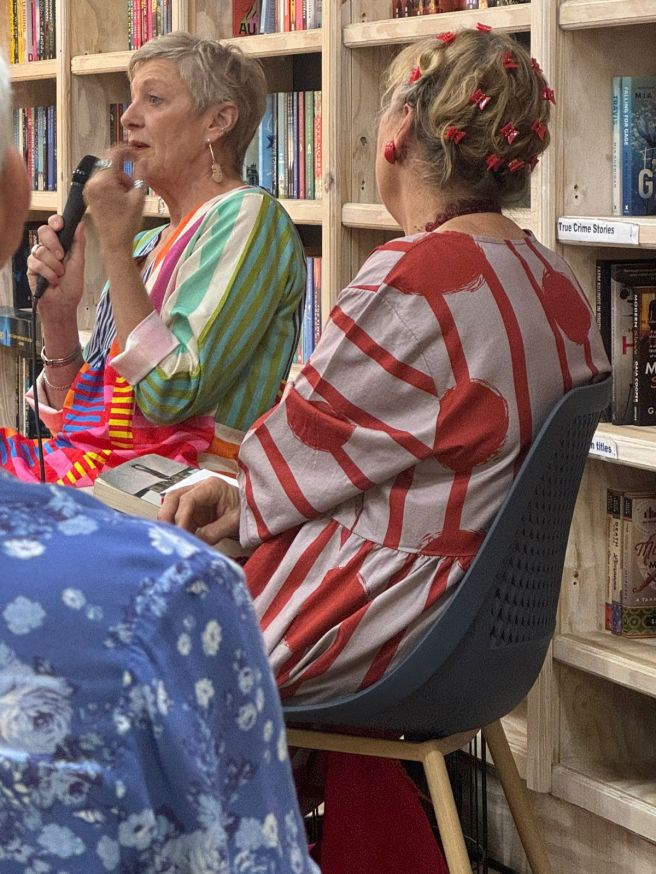
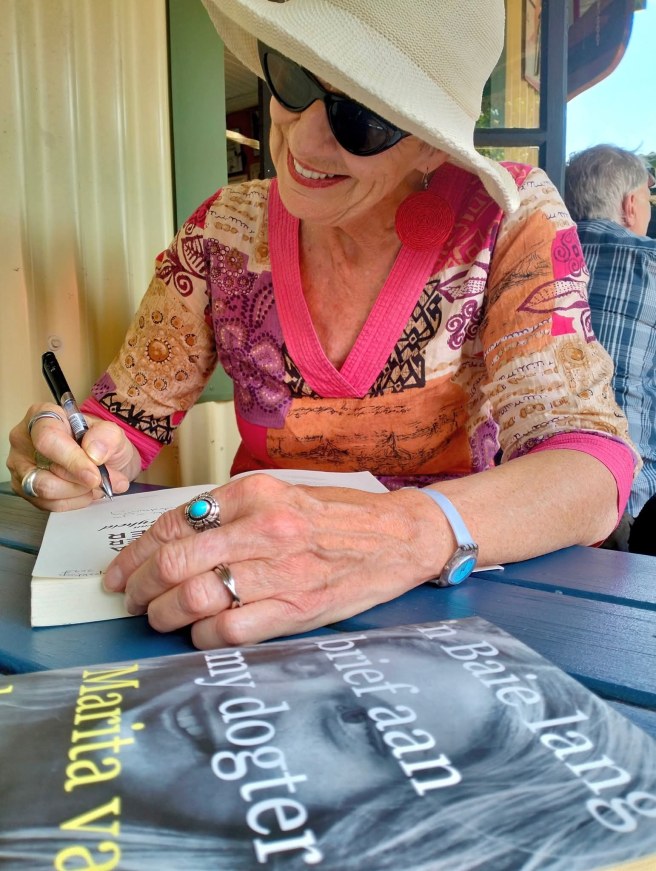
Author Marita van der Vyver who has been living in France for most of her adult life recently returned to her home country to promote her latest book My Jaar van Vrees en Vryheid (My Year of Fear and Freedom), and hopefully the Afrikaans version will be translated soon. DIANE DE BEER interviewed her with a live audience:
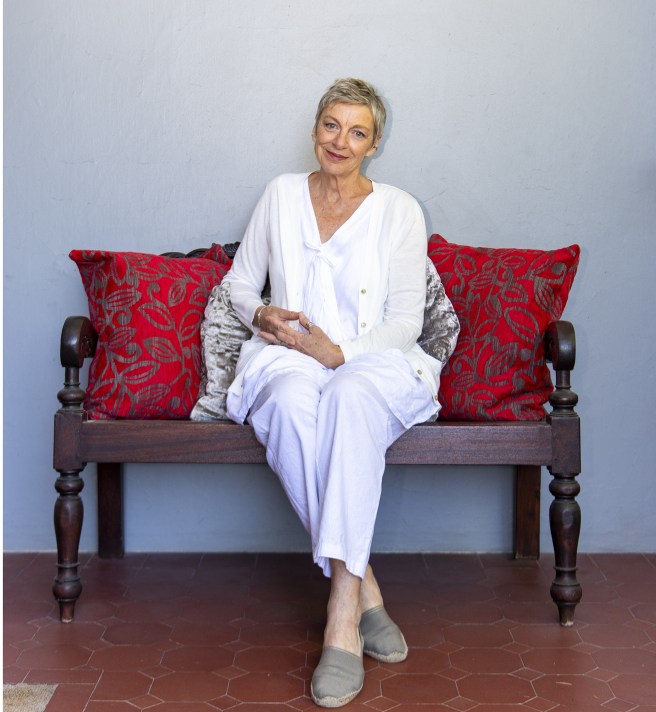
“I think if you lose your language, it’s because you want to lose it,” says Marita in response to my remarking on her excellent Afrikaans after so many years spent living in France. “Your language will always be part of you,” she admonishes.
And that’s the thing about this author, she’s been around and done many of these travelling book tours, which though a welcome financial opportunity, can probably be exhausting. Having done many of these as the enquiring journalist, my empathy always remains with the authors, but I also enjoy these conversations because they’re usually keen to promote their writing.
I was delighted when I realized the book I was sent by the publishers was a memoir rather than fiction. Either would have been fine, but I was looking forward to reading about her travels.
When she and husband Alain decided to embark on this extraordinary journey, many things were in play. “I didn’t know whether the marriage would still be intact following this adventure,” she admitted.
And at the start of their expedition, a book wasn’t on her mind. As a writer she always takes notes and to generate an income she wrote for Litnet, Daily Maverick, Sarie as well as Vrye Weekblad, which was still publishing at the time of the journey.
She never stopped capturing moments along the route. Back home there was a sigh of relief because the marriage had stood the test; in fact, their relationship was stronger than before.
That was what turned her head to a book. In the first chapter she explains the reasons for the journey, which was the result of the confluence of many incidents. Writers, she tells us, always live things twice. “You live it in the moment, but then you’re always standing back and observing, living it a second time when you write about the experience. Only then do you know what you truly felt about it.”
“Once I was writing, I could really understand what I had experienced,” she explains. She admits to being very honest and once you read the book, you will understand and agree.
Initially she was going to write a travelogue, but regular first readers (honest friends), encouraged her to delve more deeply into their lives. This wasn’t an easy time and without her husband’s permission, she would never have drawn back the curtains so sharply, revealing much more than many would care to share.
This is also what makes this such a fascinating read. Wherever you are in your life’s journey, relationships play out in many different ways, but there are always incidents that will remind readers of their own lives. That and because Alain wasn’t only a willing participant but also the comic relief (“he’s funny naturally,” says his wife).
Travelling, as we all know, can be huge fun, but it’s also hard work and often extremely trying to make your way in foreign lands.
When writing, Marita is always very protective of her family. Yet writing a memoir depends on the author opening up, making themselves vulnerable. But her husband easily agreed and their relationship and togetherness contribute warmly to the enjoyment of their journey.
Yet, it also meant that she had to share the details about her husband’s depression and addiction. During Covid, as for so many freelancers, her income evaporated. Being an Afrikaans writer who is trying to make a living in Europe includes many different jobs. She has to do functions, writing schools, talks to various groups and more. All of this was impossible due to the pandemic.
Together with the reappearance of Alain’s depression, her world collapsed. Depression and addiction often go hand in hand, but both of these had been under control, until it wasn’t. “There were none of the usual aids, including psychologists or AA meetings, everything was cancelled. His regular psychiatrist had to turn to the physical needs of those struggling rather than mental health issues.”
Suddenly their needs changed drastically, and she thought of something written by James Baldwin in Giovanni’s Room: “Perhaps home is not a place but simply an irrevocable condition.”
That and the way the couple adapted to their year-long journey is what is so deftly and delightfully sketched by Marita, who made all the right decisions to turn this into so much more than simply traveling from one country to the next, and from one continent to another.
Isn’t that just the dream of many people? And yet it always sounds more romantic and achievable than it is. But here Marita and her Frenchman show how it can be done, even with all the odds against you.
And perhaps even more than the travels – and I truly enjoyed and relished every little byway and highway – it’s about two individuals who might be at the end of their time together, trying to give it one more chance.
Who can resist? Marita is a writer who knows how to tell stories and with this one she instinctively realized what had to be done. The fact that Alain agreed to everything tells me much more about their marriage than any book could. How could they not survive?
Because of the originality of the book, I am hoping and holding thumbs that it will be translated for a much wider audience. Not only will it inform you about the way to approach something of this magnitude, but it also proves when two people are meant to be together, their happiness has a much bigger chance of survival.
And what could be a better panacea than going off on a madcap adventure crisscrossing the world. After all, as one of her other favourite quotes by the Egyptian Naguib Mahfouz remind us: “Home is not where you are born, home is where all your attempts to escape cease.”
So lets keep moving …

 De Beer Necessities