The Culinary Art of Healthy Fine Dining

Pictures: Paige Derbyshire
bistro-terrine-e1525769101422.jpg
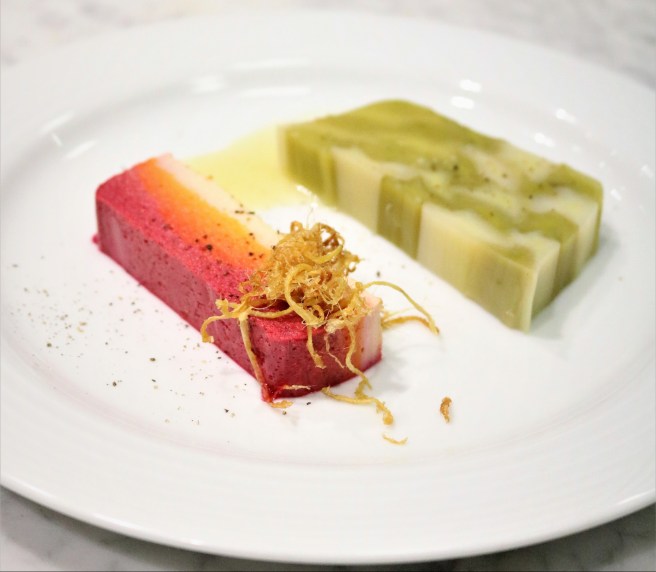
Duo of Vegetable Terrines

DIANE DE BEER


The 4th year Culinary Art students at the department of Consumer and Food Sciences at the University of Pretoria recently presented a French Bistro Evening instigated by the French Embassy’s promotion of the international Goût de France (taste of France) to be followed this coming Saturday by something completely different – a healthy fine dining dinner in collaboration with Mpho Thsukudu – a registered dietitian and published author, a specialist in the practicalities of healthy eating.

Planning for the French evening was as much fun as the actual night says guest chef Renée Conradie who spent many years in France where she enhanced her already flourishing accomplishments in the kitchen. “I was flattered to have been asked and then honoured to work with such diligent and innovative fourth year students.”

They picked a bistro evening after much deliberation because it would be the most convivial and celebrates hearty food. Their biggest challenge was to stay within a budget as they thought lamb (it was close to Easter) would be the best main course.
Two different vegetable terrines, a seven-hour lamb from the lesser known Auvergne region chosen specifically for that reason, a classic cheese platter and a deconstruction of the classic Tarte Tatin completed the menu on the night.

The planning, invitations, preparations and managing were all handled by the very capable students while the chef just kept an eye on the lamb.

As always, it was an excellent night from many different vantage points. For those dining, it was inspiring to see the students excel in these professional circumstances but also, because it’s a culinary institution, the menu reflects (is often ahead of) contemporary cuisine and its an easy way to keep in touch with what is happening in the ever-changing culinary landscape. It is most importantly also a learning experience – and sometimes the lessons are tough!
IMG_3058

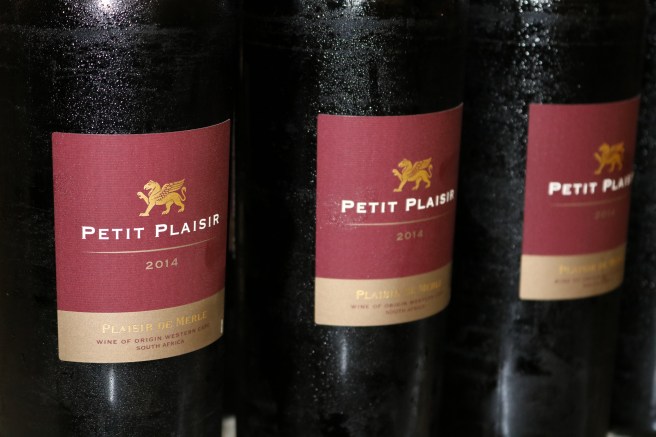
Presented by the French Embassy and Plaisir de Merle (the wine on the night), the amuse bouche introduced French flair with Lavender-inspired crisp wafers with black tapenade served with Grand Brut MCC followed by the visually pleasing terrines: a carrot, beetroot and turnip, paired with leek (served with Chardonnay).

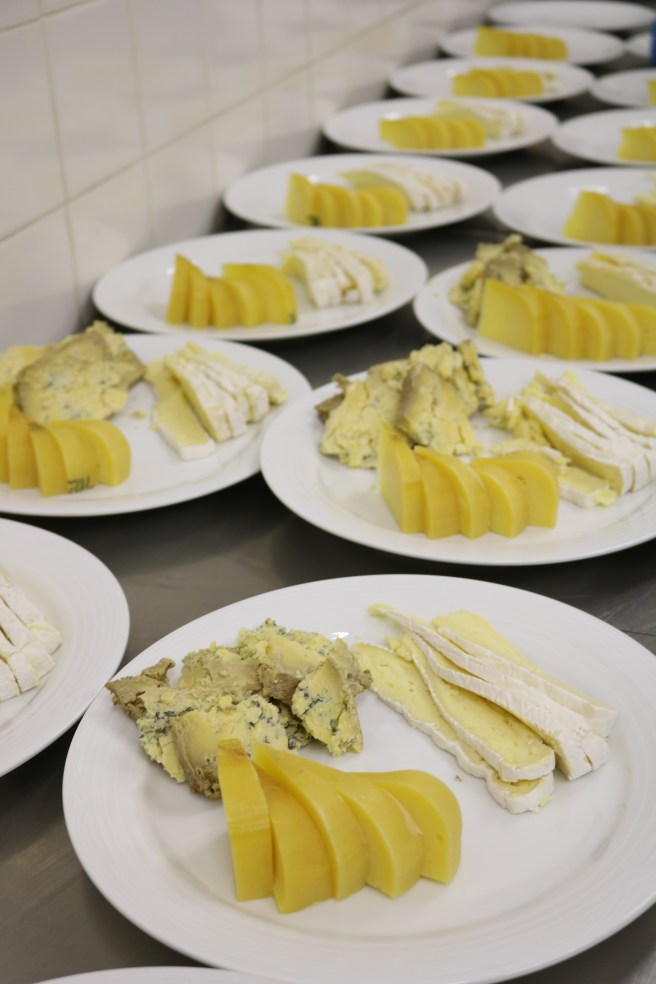
The tasty seven-hour lamb with wine sauce served with carrots and potato (and Cabarnet Sauvignon) could not have been more hearty as suggested but a tad dry and might have benefitted from a more substantial sauce (which was the lesson on the night); and this was followed by the typically French-inspired fromage course, a selection of artisanal cheeses (with Malbec) and beautifully concluded with the deconstructed Tarte Tatin served with Pastis crème Anglaise (and Merlot).

The next food adventure by the final year Culinary Art students aims to celebrate nutritious food in a South African context, while remaining flavourful. Many people might think this is impossible but in today’s high-stress world it is no longer an option if you want optimum health.

According to Culinary Arts lecturer, Hennie Fisher, the only thing most practitioners of food health agree on, is the volume/portioning that we eat; that we should eat less – for the rest there is little sound scientific evidence about what is healthy and what not.
IMG_3354

He notes that for many years Oprah Winfrey tried to make people understand that you could actually lose weight by eating chocolate (only just enough for one’s energy needs of course – a practice that would nutritionally be very dangerous, but not impossible). “So I suppose we are left to our own interpretation.”

On that note, he follows a philosophy of food health that trusts in eating anything which has the least processing involved. “Food is something (like humans) that is found in a specific state here on earth, and if one starts analysing what ‘processing’ of food implies, one soon finds that it automatically discounts things like coffee, tea, chocolate, cream, bread, etc. – those are all food products that have been changed from its natural state.

“If one could minimise that, and just keep to food elements in their most raw/basic state, you’d still be able to eat a potato, or eat a yummy sweet strawberry, but sugar and oils are not part of that deal.”

With this meal, the goal is to see how culinary people interpret a menu in the context of health – to see if they can create a menu that is ‘healthy’? He explains that they also hope to make people aware that fine dining and health can sit side by side in the same category.

It should be everyone’s aim to make mouth-watering food without instantly grabbing the easy taste drivers like oil and sugar. Making delicious and tasty but healthy food naturally comes with more effort, because it steers clear of the elements that usually provide instant taste gratification. “It’s all about giving the diner the same sensory satisfaction but without the elements that would be considered unhealthy and that is no easy feat. And perhaps that is our only resolve as a species for the future in terms of our food-related health; to learn how to make amazing food whilst considering our health,” he concludes.

The menu at R250 starts with an oyster and cucumber jelly and an oyster and mushroom Rockefeller (Sauvignon Blanc); an entrée of Springbok carpaccio with chickpea and rooibos cream, millet, carrot and pumpkin seed salad and cured egg yolk (Shiraz); for mains a pan seared ostrich (for obvious reasons) with carrot mash, scorched brussel sprouts, popped sorghum, Parmesan zucchini and glace de viande (single malt whisky); and perhaps most importantly/challenging, dessert with a poached apple with apple sorbet and roast pineapple with pineapple sorbet with a seed cracker, waterbessie reduction and aquafaba (water of chickpeas) meringue (sherry cocktail).

The thinking when one looks at the menu is obvious and there’s no doubt in my mind, that the students in the capable hands of Thsukudu will pull this one off – deliciously!

If anyone is interested or needs more detail, contact kyla.balcou@gmail.com.
Athol Fugard’s Train Driver On the Right Track with John Kani and Dawid Minnaar

Pictures: Brett Rubin

Train Driver3
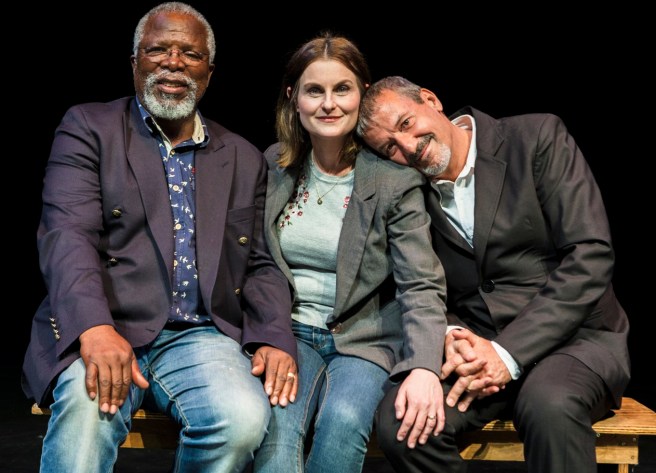
John Kani, Charmaine Weir-Smith and Dawid Minnaar


With director Charmaine Weir-Smith focussed on the storytelling, Athol Fugard’s The Train Driver which runs at the Market’s Mannie Manim Theatre from May 4 to June 3 starring Dawid Minnaar and John Kani is in gently guiding hands. DIANE DE BEER spoke to three amazing artists:


It is the unexpected coming together of two theatre greats, John Kani and Dawid Minnaar, in The Market’s Fugard@86 season that had director Charmain Weir-Smith bubbling with excitement at the offer to direct Fugard’s little known The Train Driver.

Even though she was ecstatic at the thought, she first had to check whether she connected with the story. “I have to be able to tell the story,” she says – only then could she celebrate with exuberance.

For Minnaar and Kani, it was an easy fit. These two acclaimed actors, while both working in Gauteng, had never worked together. “He has always been on my list,” notes Kani even though he has resisted playing in his friend Fugard’s The Train Driver, because he couldn’t see the point of his character.

But he didn’t need much convincing and when Hollywood (where he is busy with the latest version of Lion King) gave the thumbs up because of a break in his schedule, it was all systems go.

For Minnaar, returning to The Market is something to cherish. He regards it as his theatrical home, but in the past few decades his appearances there were minimal. Hopefully that’s about to change.

It is a haunting play that is only fully realised in performance which is why these two actors and their particular skills are exactly what Fugard would have imagined for this post-apartheid play. In part he reflects on the state of the nation with a clarity and simplicity of thought that possibly only South Africans can fully grasp.

Train driver2
John Kani and Dawid Minnaar

What this theatrical trio appreciated was the commitment from each other. It’s the process they appreciate and enjoy which in today’s festival-driven world is such a luxury. “They think it is a snap of a finger and you have a play,” says Minnaar wryly as he dreams about escaping the relentless festival circuit.

Time allows the director and the actors to work with the text. That’s when they get to the essence not only of the text but also of each other. One can just imagine these two passionate performers and their processes as they twist and turn their characters inside out to get closer to the truth.

It’s a Fugard text that teases the players while not allowing any tricks, to get to the truth. And for the audience the experience is similar as he slips in familiarities in our landscape as clues to what he is really dealing with.

On the surface it is the story of a tormented train driver, Roelf Visagie, who turns up at a graveyard with unmarked graves at the edge of an informal settlement in the middle of nowhere. He is  determined to find the grave of an unknown woman who with her baby on her back, stepped in front of his train. He is in obvious distress as he seeks the guidance of the gravedigger, Simon Hanabe, who is unable to be of assistance but nevertheless willing to sympathise.

Generosity is what was evidenced in the rehearsal space, that and an absence of ego, says the director who believes that is what is necessary for the authenticity that will make or break this particular play.

And while Kani was initially puzzled by the purpose of Simon with Roelf the focus as he struggles to come to terms with the way his life has been upended by a single act, that is no longer true. “I am pleased to be paying tribute to my friend Athol,” he says.

His connection with and knowledge of Fugard’s work and writing has been hugely important to this production. The playwright has Americanised some of his work over the past few years while writing from that country. “He speaks, for example, of barbeque rather than braai,” says Weir-Smith and having sat through a rehearsal, the way they have worked with the text has grounded it locally in a way only Fugard would – thanks to Kani.

Simon, argues Kani, is the one who knows about loss and blame. “I know how to listen,” he adds, and Weir-Smith agrees. “You are the one who holds Roelf,” she says. And even though his own script load isn’t that heavy, he had to learn all Minnaar’s lines. “There aren’t many queues,” he wails which means he has to know when and how to simply nod or come in with a brief phrase or two.

Kani describes the female director as someone who “mothers the process”. And for the director, it is simply about telling a story. “Once upon a time there was a woman with a child …”

No more no less – especially with this one where you don’t want anything to take away from the writer and his words, the way the story unfolds and the two men untangling their minds and their worlds in a way that brings new insights – or reminders of where we are even when dealing with the past.

For Minnaar this is a time of firsts. Not only is this a meeting of minds with Kani, it is also his first encounter with Fugard. “It feels right for me now,” is how he views the season. “I am honoured and to do a Fugard, is fantastic.”

Watching the two men at work and play is a privilege but nothing is guaranteed on stage – not even with Kani and Minnaar. Yet when you watch them slip into their characters, silently but with an assured stride, it is a world of make-believe that comes alive.

These are artists who believe in what they do and will work as hard as it takes – given the time and place – to make it work. We who can witness this, are blessed and Fugard will know that The Train Driver is cherished in this company of true artists.


Mike van Graan – A Warrior for the Arts

Mike van Graan

By Diane de Beer


This has been a good year for cultural activist and playwright Mike van Graan.

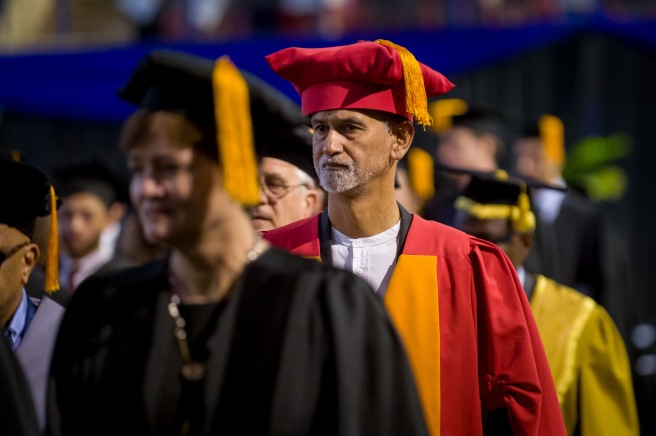
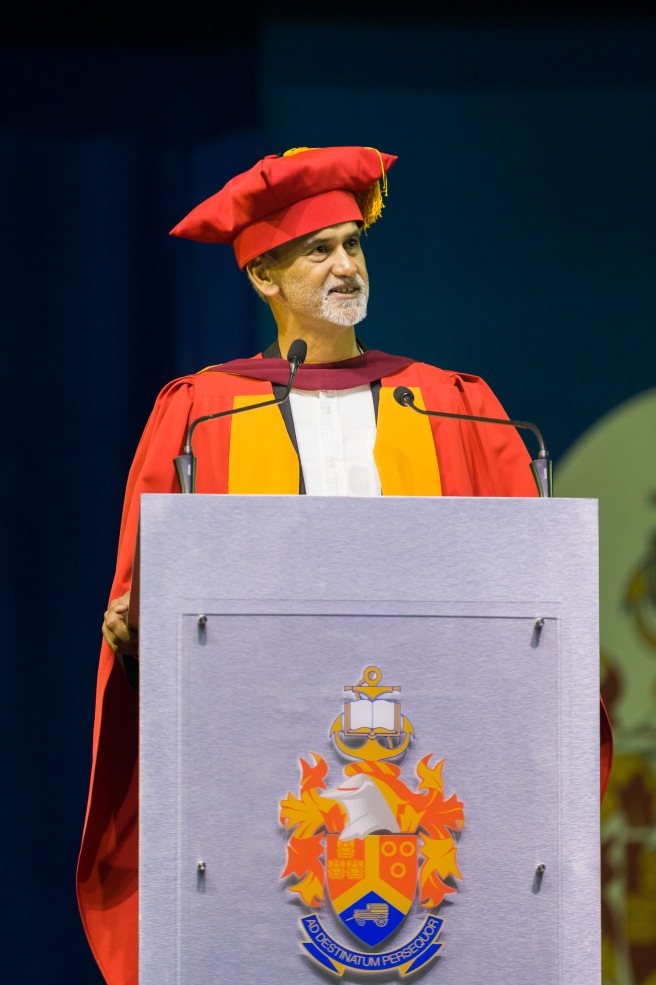
Not only has he won the 2018 Hiroshima Foundation for Peace and Culture, a biannual international award recognising those who foster dialogue, understanding and peace in conflict areas, but was also awarded an honorary doctorate from the University of Pretoria.

The opening lines of his address at the university ceremony continues his interrogation of the cultural landscape: “This is my first graduation ceremony.  I was part of the apartheid-must-fall generation.  To attend the University of Cape Town – a “white” university – I was required to apply for a permit from the Department of Coloured Affairs.

“In terms of the separate-and-unequal policies of the time, it was deemed that people of my classification would attend the University of the Western Cape.  To qualify for a permit to UCT, I had to do a subject not offered at UWC.  My permit subject was … drama.

“ By the time of my application, I had never been to a formal theatre; the state-subsidised Nico Malan Theatre in Cape Town where I lived, was boycotted first because it started as a whites-only facility and restrictions were placed on racially mixed casts, and then when it received a permit to allow people other than those classified white, as audience members, this was deemed an affront to those who self-identified as “black”.

“Similarly, many in my generation boycotted our graduation ceremonies; while we were obliged to apply for permits to obtain what we considered to be better education offered at institutions like UCT at that time, we viewed graduation ceremonies as symbolic inductions into an essentially unjust system.

Mike van Graan3

“We live in different times.  And yet, we are no less shaped as individuals by the context in which we live, and we are no less graduating into a society wracked by deep inequality.

“As a playwright, I seek to interrogate contemporary moral questions we encounter in a society in transition.”

More than anything the above should explain to those not familiar with this provocative playwright’s work (including Green Man Flashing, Some Mothers’ Sons and Brothers in Blood) why he is celebrated by the university.

Van Graan, whose plays have often been performed in Pretoria, Johannesburg, Cape Town and around the country as well as internationally – most recently State Fracture at the Klein Karoo Nasionale Kunstefees (KKNK) and Green Man Flashing at Sandton’s Theatre on the Square – is described as a “courageous and provocative advocate not only for local theatre, but also for the broader field of cultural heritage in general,” by Prof Vasu Reddy, Dean of the Faculty of Humanities.

“His plays interrogate South Africa’s socio-political conditions and he locates these explorations in a deeply human context to create layered and emotionally evocative plays. His plays are testimony to a critical and political consciousness that both demonstrates and encourages engaged, critical citizenship in and through the theatre,” the citation reads in part.

“I am deeply conscious that while I am able to write and produce these plays, in a society in which more than half the population lives below the poverty line, with official unemployment at 26%, many of my fellow citizens will be unable to access these plays, and not enjoy their fundamental right “to participate in the cultural life of the community and enjoy the arts” as affirmed in Article 27 of the Universal Declaration of Human Rights.

“In such a divided society, with its inheritance of division, whose stories are told?  Whose values and interests are served by theatre?  Whose standards are used to evaluate theatre?  Who acts, who directs, who designs the lighting, the costumes, the sets?

“It is not enough simply to write and produce within the system, within the structures as they exist; it is necessary simultaneously to work for systemic and structural changes within the theatre sector itself, and within our broader society that shapes both the theatre industry and the opportunities afforded our citizenry, always working towards a more just, more humane order,” he concludes.

That is who Mike van Graan is. At a time when the number of journalists, arts journalists in particular, often at the bottom of the rung in news structures, was curtailed, covering arts and culture in a broader and more in-depth context became impossible.

Van Graan, who has always had much on his mind stepped in with regular newsletters The Cultural Weapon, writing about the state of the arts in general and more particular, in this country, where the arts played such a huge role in the struggle. He was determined to participate, to make his voice heard on as many platforms as possible and was often a lone voice, much maligned.

Awarded the Doctor of Philosophy degree from the UP Faculty of Humanities on April 23 and currently in Sweden where he will be awarded the 2018 Hiroshima Foundation for Peace and Culture  prize (previously awarded to Antjie Krog and John Kani and worth R1-million), it could not happen to a more dedicated cultural warrior.

May his fight always be as persistent.

Mike van Graan2

* Mike van Graan is the president of the African Cultural Policy Network and an associate professor of drama at the University of Cape Town. Professionally, he works as a consultant in the arts and culture arena, while also serving on UNESCO’s technical facility for the 2005 Convention on the Protection and Promotion of the Diversity of Cultural Expressions. Creatively, he works as a playwright and has written 30 plays to date, most of which interrogate the post-apartheid condition.

  • Green Man Flashing will also have a run at this year’s National Arts Festival as well as the Hilton Festival in KwaZulu-Natal.

Africa Meets Europe in World of Rock Art in Major Exhibit at the Sci-Bono Centre

In the world of Rock Art, Africa meets Europe for the first time in real life with an exhibition at the Sci-Bono Discovery Centre writes DIANE DE BEER:

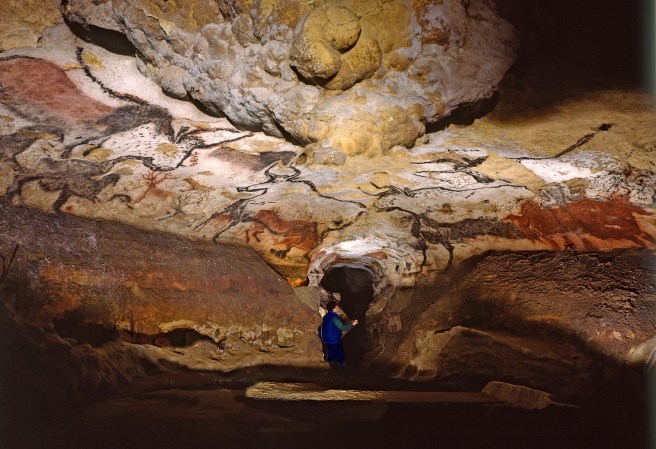
Lascaux cave
The Lascaux Caves


“We’re all African,” said French Ambassador to South Africa Christophe Farnaud when introducing the first exhibition of its kind The Wonders of Rock Art: Lascaux and Africa, at Sci-Bono Discovery Centre from May 17 to October 1.

In a first for Africa, European history meets African history with this unprecedented exhibition celebrating the rock art from two continents. The Sci-Bono Discovery Centre in Johannesburg, in collaboration with the French Embassy in Pretoria and the French Institute of South Africa (IFAS), are bringing a replica of the world-famous Lascaux cave paintings and the cave itself to South Africa.

The Palaeolithic cave paintings, found in 1940 in the Lascaux caves near the village of Montignac in Dordogne, southwestern France, are around 17 000 years old and are mostly of large animals native to the region at the time. They are regarded as masterpieces because of their outstanding quality and sophistication. The replica is an exact reproduction of more than 2 000 figures painted on the walls of the caves and was done to protect the caves.

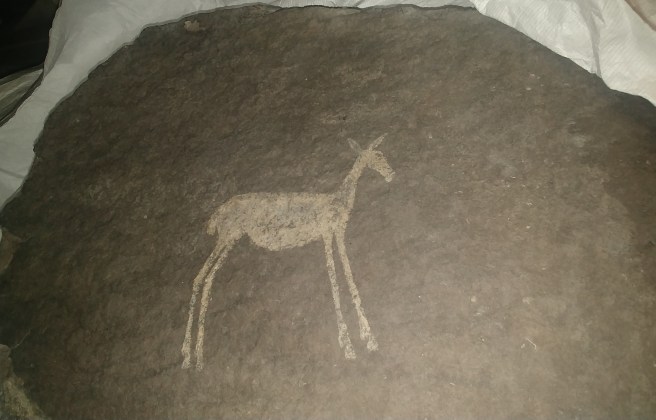
Origins Centre_The Dawn of Art_Object3
Origins Centre: The Dawn of Art

In an exhilarating coming together, they will go on show at the Sci-Bono Discovery Centre in May, alongside prehistoric South African rock art, for a once-in-a-lifetime opportunity to engage with humanity’s earliest impulse for creative expression.

With the world’s first examples of art and symbolism, found in Southern Africa, (more than 100 000 years old), and Europe a home to some of the world’s most well-preserved prehistoric cave-art sites, one of the stakeholders, Mr Rufus Mmutlana, CEO of Gauteng City Region Academy, stressed that the past is a treasure trove of learning and this is where his interest lies.

“The exhibition points to the creativity of our ancestors with storytelling and a particular narrative innately human.” His field of expertise and focus is learning outside of formal education which is why when Dr More Chikane, Sci-Bono Discovery Centre CEO says that it is a place of learning, discovery, wonder but mostly fun because that’s exactly what learning is all about, this exhibition makes perfect sense for young and old.

105_quatrieme_taureau
Bulls in Lauscaux Caves

“It’s about the ingenuity of our ancestors, the way they started developing our first tools which were used for creativity and expression. It was all about making sense of and improving their worlds.”

That has always been the driving force in the world and something everyone can relate to. It is important to understand and experience how our world today was shaped by those ancient ancestors and their art.

This will be the first time that the Lascaux paintings will be exhibited alongside the oldest African art, celebrating the earliest works created by humans on two continents. And while the rock art was executed on different continents and thousands of years apart, the Lascaux and African rock paintings have much in common and point to one essential truth: there’s more that unites and binds us as people and cultures than there is that divides us all of the speakers pointed out.

The South African component of the exhibition, The Dawn of Art, is curated by the University of the Witwatersrand’s Rock Art Research Institute, the Origins Centre and IFAS-Recherche. It will include photographs of iconic South African rock art, as well as a display of priceless authentic pieces.

The Lascaux cave replica was meticulously recreated using materials and tools identical to those that the original artists used about 17 000 years ago and was replicated to preserve what has become a World Heritage site yet was closed in 1963 to protect the priceless artwork which was being damaged by the humidity and heat of so many visitors that visibly damaged the artwork.

Origins Centre_RARI
Origins Centre rock art

“We are excited, honoured and proud to host this remarkable, one-of-a-kind exhibition,” says Dr Chakane. “The combined exhibition will be seen nowhere else on earth. The masterpieces by our own African ancestors, viewed alongside those of the ancient Paleolithic Europeans, provide a unique opportunity to experience the very earliest dawn of human creativity.”

French ambassador to South Africa Christophe Farnaud adds: “France is proud to partner with Sci-Bono Discovery Centre to bring the Lascaux International Exhibition to Johannesburg, a first for Africa. As art and symbolism originated in Southern Africa, it will showcase an important part of our shared heritage. The exhibition highlights our long-lasting cooperation in the fields of culture, research and science in South Africa.”

The Lascaux exhibition was created by the Departmental Council of Dordogne, with the support of the Regional Council of New Aquitaine, the French Ministry of Culture and Communication and the European Union. The exhibition’s worldwide tour is organised by the SPL Lascaux International Exhibition.

207_vache_tombant
A falling cow in Lascaux Caves

The Wonders of Rock Art sponsors include French banking group BNP Paribas and its South African subsidiary RCS; global oil and gas company Total South Africa; and Bolloré Transport & Logistics South Africa.

Their contribution will afford learners from disadvantaged communities the opportunity to participate in workshops and to be hosted by Sic-Bono.

 Work will start soon on assembling the exhibition, which opens at the Sci-Bono Discovery Centre at the corner of Miriam Makeba and Helen Joseph Streets in Newtown on May 17.

Ambassador Farnaud concluded that the exhibition will be French, it will be South African, and most importantly, it will be human.


For more information, visit www.scibono.co.za


Womb of Fire a Play of and for our Time

Pictures: by Ratheesh Sundaram

w2
Rehane Abrahams in Womb of Fire


Two women came together over a cup of chai in a Mumbai kitchen in 1999 and the result was an organisation called The Mothertongue Project and a magnificent play titled Womb of Fire which has a three -week run at Cape Town’s Baxter Theatre. It has also had a recently announced grand win at the Stellenbosch Woordfees for Best Actor (Rehane Abrahams), Best Director (Sara Matchett) and Best Play (Womb of Fire). DIANE DE BEER digs deeper:


It all began when actress/writer Rehane Abrahams persuaded Dr Sara Matchett, Senior Lecturer at the University of Cape Town’s Centre for Theatre, Dance and Performance Studies, to direct a piece she was writing. She described the work as seminal and that it would mark a transition into a new way of being for her.

Back in South Africa a few years later and after a rewarding run of What the Water Gave Me in Cape Town, they were faced with a choice: to either continue and grow their organisation, which had been established for funding purposes or abandon it and carry on with their individual lives.

“Rehane and I chose the former. The need for a women’s arts collective – one that focused on women creating and performing theatre inspired by women’s personal stories – became apparent in terms of the role it would play in redressing gender imbalances historically prevalent in South African theatre.

“The necessity to challenge the silencing and marginalisation of women’s voices in theatre was evident. The Mothertongue Project was officially formed in 2000.”

w9(1)
Rehane Abrahams

In 2010, while visiting her parents in Cape Town, Abrahams ended up staying longer than intended and with her mother (Cass Abrahams) grieving the death of her own mother developed an interest in her maternal ancestry – her grandmother’s grandmother.

“My mother writes in her most recent book, how her mother finally admitted Khoekhoen (or ‘Hotnot’ as she said) ancestry as she was in the process of dying. It moved my mother and she herself expressed a strong desire to connect with her Kat Rivier ancestors and retrieve a long denied and erased Khoekhoen connection.”

Abrahams was hospitalised at the time and with a lot of time on her hands, she began writing and dreaming. “The time in hospital delirious with pain medication gave me some of the text used in Womb of Fire – a core kernel if you will of the text – that had to do with blood, and the stories carried by mitochondrial DNA which is passed from daughter to daughter.”

“Of course, I told Sara about this and we talked about making a play that would pull me closer to the earth where I was born, through my motherline in a sense. In a way, I was growing tired of drifting untethered from South African soil.”

Matchett tells of yet another connection in the multi-layered play. “I had the fortunate opportunity of spending a week at Kalakshetra Manipur in October 2012, as part of a PhD research visit to India.  My experience was a deeply transformative one on many levels.”

Kalakshetra Manipur is a theatre company founded by Heisnam Kanhailal, the husband of Ima Sabitri, who started as a child star of Manipuri Opera theatre in the 50s, but later joined her husband and devoted herself to experimental theatre best described as “a fusion of instinctive physical movements with hard-hitting political aesthetic”.

w10(1)

“The experience of living in residence with the couple and the company of young actors, afforded me the opportunity to engage with them beyond the theatre practice.  I felt that the sense of community that they inculcate, deeply informs the work that they make. I was particularly struck by Ima’s sense of playfulness coupled with deep wisdom.

She and Abrahams later saw more work by the company together and the issues raised in their piece had profound resonances with women’s experiences in Southern Africa.

Abrahams’ research for her also Masters inspired her, especially Zoe Wicomb and Pumla Dineo Gqola. “I encountered the stories of Grote Katrijn van Pulicat and Zara, who are the other two characters in the play through the research of a remarkable man called Mansell Upham, who came to a rehearsal while he was visiting from Japan where he now lives; he gave us valuable insights and corrected misconceptions. He is also a descendant of Grote Katrijn and has conducted the most thorough research of her story, so it was imperative that he give his blessings.

w7(1)
Rehane Abrahams

“The story unravels the first years of the colony – our birth, our country’s Womb of Fire. The two characters was based on my mother’s two grandmothers; one a Khoe woman from the Kat Rivier, who was a difficult person apparently, racist, vicious and sexy, even into old age; and Zara written with my mother’s description of Mama Hendrika Jeggels in mind. My mother’s other granny was Catherine Prins who was half Scottish, half Tamil. She was sweet and dignified, the first certified midwife of colour on the Rand and she gave us the sweetness, the love and the tenactiy of Grote Katrijn. Her journey also drew on my own experiences of India and Indonesia – Jakarta or Batavia in particular.”

The language also plays an important role and is selected for the audience it plays to. “I wanted to express something of the polyglot nature of the first years at the Cape with the different languages. I speak Indonesian, which we used for Katrijn’s time in Batavia and baby words from Malayalam for India. For Zara, we use a smattering of Khoekhoegowab or Nama for words of deep significance. For the Woordfees run, we decided to try Afrikaans and asked Jason Jacobs to translate and it foregrounded different aspects in the text and deepened the characterisation. I loved the richness of switching linguistic registers.”

In its finality, Womb of Fire, set against an episode of Indian epic The Mahabharata, interweaves personal narrative and contemporary realities with the lives of two women from the founding years of the Cape Colony to interrogate the Womb of Fire that birthed South Africa. Grote Katrijn (1681-1683) journeys across India to Batavia and then to Cape Town as the first female bandit slave; and the life of Zara (1648-1671), a Khoekhoen servant who was violently punished posthumously by the VOC for the crime of suicide, is explored. In performance, the power of the performing female body challenges the pornography of Empire, in the process decolonising and retrieving itself. The play reaches back and forward across time to reassemble the dismembered body allowing it to speak.

“It is a roar, not a lament,” says Matchett.

And so much more. It’s a play of and for our time, exquisitely executed and accessible to everyone.


*The Baxter run is from April 18 to May 5 in The Golden Arrow Studio at 20h15. They have also been invited to the SA Women’s Arts Festival at the Playhouse in Durban in August as well as Afrovibes in the Netherlands in October and there’s also the possibility of an Indian City tour at the end of the year.

Engaging With The Diversity Of Our Narratives Is How We Learn From The Past And Progress Into The Future

 It was the best of times, it was the worst of times, it was the age of wisdom, it was the age of foolishness, it was the epoch of belief, it was the epoch of incredulity, it was the season of light, it was the season of darkness, it was the spring of hope, it was the winter of despair. ­– Charles Dickens, A Tale of Two Cities.

DIANE DE BEER

NEW-TIMES-COV

New Times by Rehana Rossouw (Jacana):

Familiar and startling as the quote (above) might be, it is the perfect introduction to Rossouw’s book as she must have intended – placing it on the page preceding the start of this involved and intriguing tale of a country at the dawn of its democracy.

It points to many different things including that familiar adage that the more things change, the more they stay the same. It’s the never-ending cycle experienced through the ages, as the story takes the reader back more than 20 years to a time of hope and distrust, mingling together in a way this country had never experienced and allowing for many different narratives to develop.

The excitement was palpable, and remembering those heady days at a time in our country’s history when we seem to be experiencing this kind of maelstrom yet again is a reminder of the validity of the Dickens quote, and adds to the depth of the story which makes it so much more than mere fiction.

Most of us will have our own memories, but what Rossouw is doing is dipping into her own world to tell a story and investigate certain personal truths she wants to play with.

Rehana Rossouw

But she stresses: “The story is not mine, although I was a political reporter in 1995 and I was covering Parliament and the Presidency. Nelson Mandela’s timeline in the book is accurate and all the issues Ali covers were unfolding at the time. And I do have PTSD (post traumatic stress disorder), partly as a result of covering all the political violence of the 1980s. I began writing the novel out of frustration with the Fallists: in many interactions I had with them there were two refrains: Nelson Mandela was a sell-out and violence is a justified form of protest. I wanted to explore how compromised Mandela was as he spent most of his presidency involved in work on reconciliation and did little to ensure redistribution of wealth to poor and black South Africans.”

She does however emphasize that the book was written in anger and that she was unhealthily obsessed by violence. “I need to write for other reasons, other than healing,” she says about future work. But it feels as if she hasn’t quite finished what she has started in her first two books – both so revealing in different ways of so many different issues which is what makes her stories so powerfully engaging.

Her father died while she was writing, which was incredibly stressful and triggered one of her worst bouts of PTSD flashbacks and she explains that all of the symptoms Ali experiences are hers. She would write during these attacks which is why they make such an impact and feel so immediate and raw.

The PTSD flashback, for me personally, was a revelation. Of course, when you look back at our history and what journalists were put through during those horrific, oppressive years, it is understandable.

It’s not as if no one has spoken about it before but Rossouw has given it a personality in the form of Ali and lifted the veil for us to experience what it feels like and how it happens. It did catch me by surprise and brought a renewed awareness of the different lives led in the same country from so many perspectives – not just the obvious ones.

That has always been both our challenge but also the fascination of living here – and as Ramaphosa pointed out time and again in his first State of the Nation Address – as one people.

But writing about the PTSD as she does also plays into her engagement with the Fallists. “Don’t lead your people into violence,” is what she argued strongly because students can do their protests legally and Rossouw is still carrying the pain of the violence she witnessed and experienced. She knows what that does to a life.

Being a woman in today’s world is not an easy thing – and again this changes from individual to individual and personal circumstances. Ali’s struggles in her community, who she is, her coming to terms with her sexuality in a religiously conservative environment, where being a woman comes with very particular problems, drive much of the story.

She’s appealingly hardcore, a politically-driven journalist, the toughest job in a country as volatile as ours – especially in those times if you had all the cards stacked against you. Ali was both female and a woman of colour. That was enough to make her world a much tougher one than many of us experienced.

We are currently living in times when perhaps we look at the world more cynically than we did in the Mandela years. And many believe that skeletons from those heady days will all start tumbling out as Zuma tries to salvage some honour.

That rockets this book into a heightened space even though it was relevant from the start. That’s the thing about our stories. We live in such a divided country still. What that means is that some narratives still play out more loudly than others and the different sections of society are at odds often because they ignore the similarities and focus on the differences, which should be exciting and embraced rather than viewed as a threat. But that’s the world we live in and who we are.

Reviewing our world today through the prism of the past but selecting specifically a time that is arguably viewed by many as golden years, reminds us how far we have come and who we are becoming, even when it is a sometimes an excruciatingly bumpy ride.

And in-between all these huge stories, Rossouw reminds us that there are the smaller individual stories about people who are affected directly as history plays itself out around us. It’s fast, furious and I love the fact that I am constantly learning more about our people and this place when I read stories from here.

In a fractured society and world like ours, it’s the best way to discover who we are in all our rich diversity.

And as Rossouw talks about issues she deals with when writing, she concludes that with everything that has happened in her life, she would still rather be part of the oppressed than the oppressor.  That’s why her stories have such power and reach – especially today.

With Laurinda Hofmeyr At The Helm, Afrique Mon Désir Makes The Right Sounds

Laurinda ensembleAfrique Mon Désir, both an album and a live show to be presented at this year’s Klein Karoo National Arts Festival following their amazing debut in Stellenbosch at the Woordfees, is the culmination of many different desires but more than that, the right people at the right time for performer/composer Laurinda Hofmeyr to stretch herself and broaden her scope. She talks to DIANE DE BEER about this latest venture, which can be seen at the Klein Karoo National Arts Festival in the next few days but watch out for further sightings as well as a trip to France:
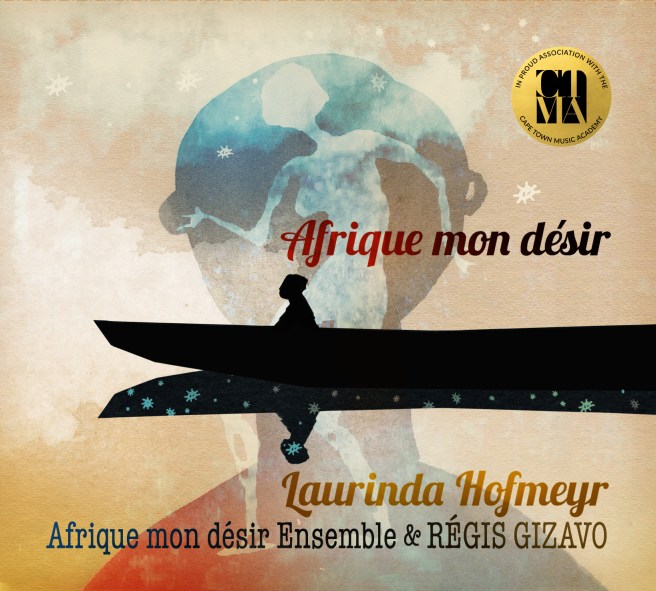
It began with a meeting with Nico McLachlan of the Cape Town Music Academy who sponsored the project and was the initial driver. He introduced her to the then director of the Alliance in Cape Town, Christian Pizafy, who organised a few concerts at the Alliance through 2015 and 2016.

Hofmeyr’s magic has always been setting Afrikaans poetry to music with strong African rhythms inherent in the music. “The crowd at the Alliance was very multicultural and quite a few French people also attended. So I made a point of throwing in a sentence or two in French into the English presentation (where I sang Afrikaans songs). I liked the context; it was as if I heard the Afrikaans poems as pearls when I sang to a multicultural audience.”

It was also McLachlan that suggested she branch out with the same art but in a new direction. “He suggested I take French poetry from Africa (actually English was initially also included in the mix) and put it to music. I was hesitant because I thought Afrikaans was the only language where every word had a special colour and texture for me.

“I think the longing poems, the French that I could speak as well as the French African people far from their homes in Cape Town, were probably the elements that ignited the project,” she explains.

The thing that finally convinced her was that McLachlan said the newly founded Cape Town Music Academy would sponsor her and fund the new CD, also titled Afrique Mon Désir.

This was a new world for this lone musician, who in the past had to battle her way through the artistic world just to get herself heard. She has always had her followers (myself included), but not the audience that her extraordinary work deserved. While she is a niche performer, it was as if her audience had not yet found her – and perhaps the language was limiting.

Afrique1

Another theme in her life has been French, as both school and University French had opened doors in her head and in real life. “Important people in my life also had a French African connection (like Breyten Breytenbach). The only connection to French I had for a long time though, was speaking to the car guards, all people longing for home.”

The fact that McLachlan was aware of French-speaking people far from home (maybe through the Alliance) made him suggest that they bring musicians from French-speaking countries into the project. Here Pizafy from the Alliance assisted in a huge way. “He listened to over 70 West African musicians and chose 10 for a workshop in December 2016. From these, we chose the three fantastic singers and the one guitarist that forms part of the Afrique mon Désir Ensemble,” she says.

During the workshop Hofmeyr realised that the theme of ‘world music’ being an inspiration for her, was also taken to new heights with this project. Another musician, Régis Gizavo (a Madagascan accordion player), was also brought on board, someone she describes as one of the most amazing musos she has ever met. “He took just one take with most of the songs and that is without even listening once to a song before he started playing along.” (Sadly, he died unexpectedly only a few weeks after the recording.) “I feel very blessed to have shared some of his last musical moments on this planet.”

The poetry was selected from countries like Madagascar, Senegal, Mauritania and Chad and she was assisted by Catherine du Toit, head of foreign languages at the University of Stellenbosch, suggested by Breytenbach. “All French departments at different SA universities were busy with a project where a famous poet from Madagascar was translated into Afrikaans and English. That was the first poet that Catherine introduced me to. With each poet, she chose a few poems herself that she thought would be workable; not too long, and then I translated every word for myself with a French dictionary.

“Before actually trying to set the poem to music, I made sure that the words had a colour and texture for me and that I was convinced of my interpretation. Only then did I choose a poem or two from a specific poet.

“I also did some research of the countries where the poets were born (most live in non-African countries now). I tried to listen and read about different musical traditions and how the musical elements are used in those traditions which I used as inspiration. A good example is Mon pays and the suggestion of a Modus that I heard in Mauritanian music. I tried to let my picture of how the landscape would look, where the poet grew up, correspond with the feel of the music.”

Combining these new French-African poems with some of her Afrikaans poems already set to music, her selections were determined by those that had specific themes of longing and of course, Africa.

“Working with the four musicians made me aware of all the borders drawn between people through language, a different culture but also through socio-economic status. The little bit that I have learned about their lives here in South Africa as well as their excellent musical ability has been an eye opener.” As always, her musical collaboration when working on the poems was genius guitarist and composer in his own right Schalk Joubert. “Where I explored the poems, Schalk did a lot of the crossover/fusion work. I explained the theme of a poem and then he often suggested a ‘chorus’ and the singers would come up with words that would fit.”

Anyone who can catch any of these concerts should try to do so but there’s also the album which might not be live, but captures some of the magical coming together on the continent from musicians who all feel the heartbeat.


Pieter Dirk Uys Aims to Reboot Live Theatre with When In Doubt Say Darling

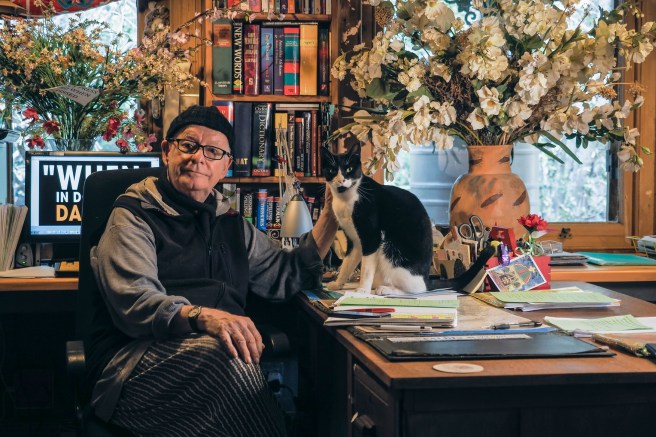
OLYMPUS DIGITAL CAMERAIt’s show time and Pieter Dirk Uys is on the march as he opens his latest show at the Klein Karoo National Arts Festival followed with a season of the same show – albeit with a switch of languages from Afrikaans to English – with a stated mission: Live theatre has slipped down to the bottom of page 5 of everyone’s priorities. Let us reboot it back to page one!
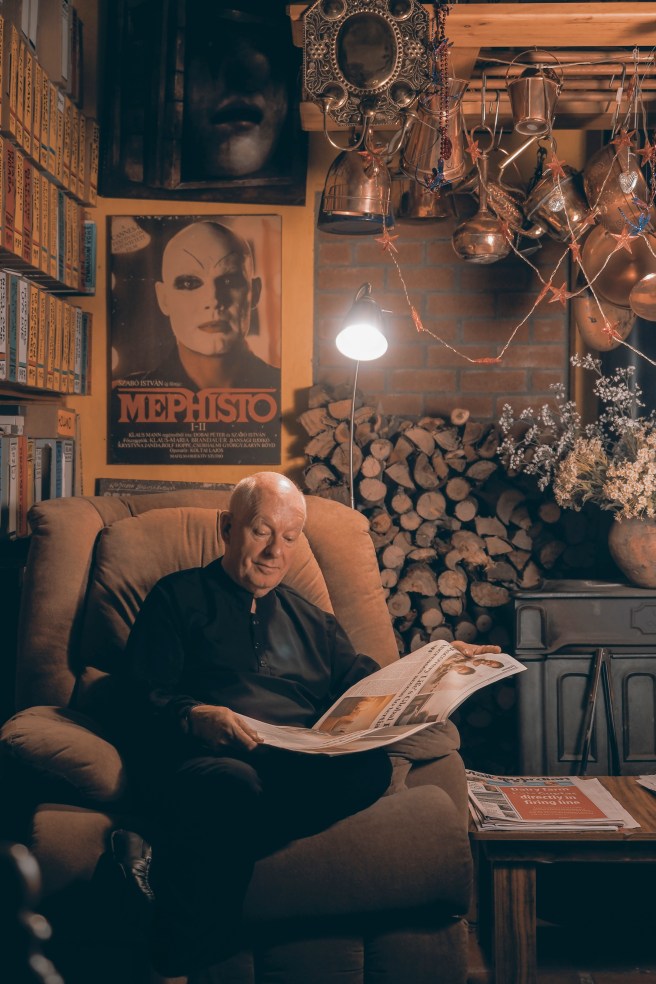
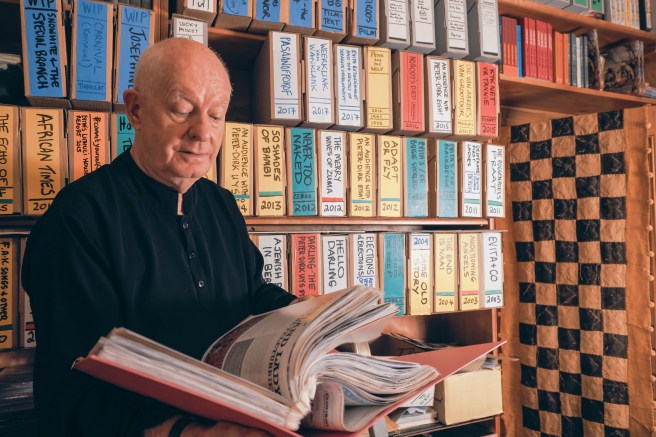
He speaks to DIANE DE BEER about this time of performance:


The wonderful thing about artist Pieter Dirk Uys is his maturity, the way he is looks back yet keep his eye on the future as he confronts, charms and sometimes chills us with his stories about our past, present and what to expect in years to come.

“The age of 72 is a very specific place to be,” he says. “You can see your sell-by date. The audition is also over. The disease to please has been cured. You don’t have to prove anything; just improve. To quote from (a previous show) The Echo of a Noise: sort out your legacy. Make sure you flush before you go.”

That’s exactly what he is doing with Weifel oor Jy Twyfel: When in Doubt say Darling which plays at the Klein Karoo National Arts Festival on March 29 and 30 followed by a season at Montecasino’s Pieter Toerien Theatre from April 4 to 22.

“The stage setting is an area filled with cardboard boxes, crates and black bags. Packing-up time. After 40 years I have a collection of props, costumes, wigs, eyelashes, hats and Koornhof masks among old Nat emblems. The show is about sorting out, and reinventing.

“Out of a box comes a prop. I give it a place in our history, and then it also becomes the centre of a new sketch, character, issue. I also weave throughout stories about my d—word: darling. And living in Darling: the kids, the community, the hope, the humour and the reality that if we do not look after our communities, the country will dissolve.

“Too much focus on government as a superman; no, government is the essential toilet paper to help us clean up and move on!”

As always, this one also started with the title which began in 1968 when he was the only one in CAPAB’s PR department brave enough to deal with Taubie Kushlick who was arriving to direct The Lion in Winter.

“Pietertjie-darling, she called me, and I was at her bek se call! Instinctively I knew how to handle her demands and maybe that was the beginning of the rest of my life as a one-man band. PR is essential. Diplomacy is a foundation to negotiation. When I kissed her goodbye, I said: ‘Mrs Kushlick, you call everyone darling.’ ‘Yes, darling?’ she asked. I said: ‘You must call your autobiography When in doubt say darlng.’ She looked at me as if I had coughed. Didn’t get it. Didn’t use it. Now I use it!”

OLYMPUS DIGITAL CAMERA

Proof again, that his way of thinking is instinctive and is always there – in the early days as much as it is now. But now, many decades on, he can reach back and recycle the past while reinventing the future.

He understands that he has a broader horizon behind him than ahead and that’s why he dusts off those targets to remind audiences that bad politics easily reinvents itself as a democratic solution.

“In this new show I even do Piet Koornhof in a sketch from 1984 with his focus on illegal blacks, and then reinvent him in the same voice as an officer at Heathrow Airport, sorting out refugees and illegals who want to get into the UK – not unlike what we did in the old days of apartheid.

“Yes, it is a full English Brexit. I am moving away from the brittle political reflections. Let the younger generation sort out their future. I am already in my future!”

And as he points to his future, he also gives credit to his health. “If you can do it, get on with it. And so far, touch wood and stroke kitty, I still have the discipline and energy to tour with three 70-minute solo shows in the boot of my car. I also treasure my independence. I have no staff: I am my own stage manager, writer, director, performer (he or she) driver, publicist and sometimes my own worst enemy.”

“All you need to do is speak clearly and not bump into the furniture.”

His shows are all about the audience. He wants to make a difference to their view of life and their belief in themselves. No small task!

OLYMPUS DIGITAL CAMERA

It’s about laughing at your fear, confronting fear, giving it a name, understanding its lethal ability but never allowing it to win, he explains. “There is no time for knock-knock jokes. The reality of the absurdity around the obscenity of daily life is enough to fill 70 minutes. And then someone leaves my theatre and realises that they have laughed at something they don’t even dare think about.”

He points out that we have just again teetered on the edge of a cliff only to see “the Ramaphosa wind gush up and level the playing field. We must stop blindly believing that things will get better. They won’t.  What you see is what we’ve got. Just make sure things don’t get worse.”

Instead of watching the world, he suggests we look in the mirror and ask the stranger his/her next move.

“Courage, honesty, compassion, healthy anger, information, respect and maybe a talent to amuse,” are his keys to success.

But not just any old talent. It is one that he has kept shining for more than half a century – and now sparkles more brightly than ever.

PS: ‘Evita’s Free Speech’ on You Tube every Sunday is now in Episode 132!  On Daily Maverick on Mondays. She has 140,000 on @TannieEvita.

* KKNK: Thursday and Friday (March 29 and 30) at 6pm at Oudtshoorn Civic Centre

Pieter Toerien Theatre, Montecasino: (April 4 to 22); Wednesday to Friday at 8pm, Saturdays at 4pm and Sundays 3pm.