Each year, The European Film Festival is one of the movie highlights of the year – and this time is no different running between October 13 and 23. Here is a short review by DIANE DE BEER on one of the films:
PLAYGROUND
BELGIUM
Director: Laura Wandel
Cast: Maya Vanderbeque, Günter Duret, Lena Girard Voss, Karim Leklou, Laura Verlinden
Genre: Drama Time: 72 minutes
French with English subtitles – 2021
Even if you were never bullied in school, all of us have been witness to something like that in our lives. Take Donald Trump for example, his whole existence is thanks to bullying, not an easy thing to watch even from afar.
But the title of this one says it all, and again, it is the way the young people deal with what is given to them that is captured so brilliantly.
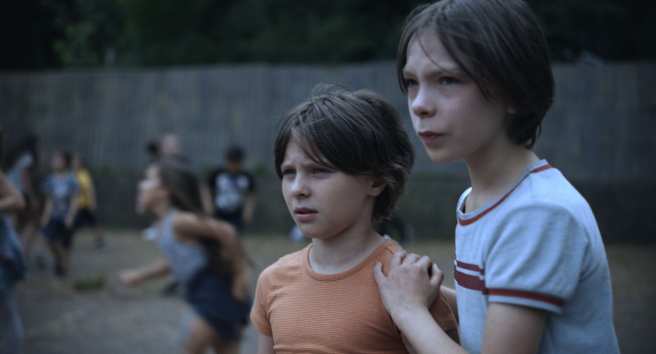
We all know and understand the impact of abuse during your younger years, on the rest of your life. When seven-year-old Nora witnesses the bullying her older brother Abel has to endure at school, she rushes to help out. But he persuades her not to tell anyone.
She is still trying to adapt to school herself and this is something that she finds quite unbearable – that and the subtle bullying that is happening amongst her own circle of new acquaintances.
It’s a hugely emotional film with the camera rigged at Nora’s height so that we are really pulled into the centre of her storm.
It’s also the inability of doing the right thing on every level. The sensitive teacher isn’t always around at the right time, and when they are, the problem is much easier to deal with – and yet when away from the adults, is when the pressure comes into play.
This is a fantastic opportunity to catch up on many of the best movies from Europe of the past year. For details on all the films and how to watch visit www.eurofilmfest.co.za
Each year, The European Film Festival is one of the movie highlights of the year – and this time is no different running between October 13 and 23. Here is a short review by DIANE DE BEER on one of the films:
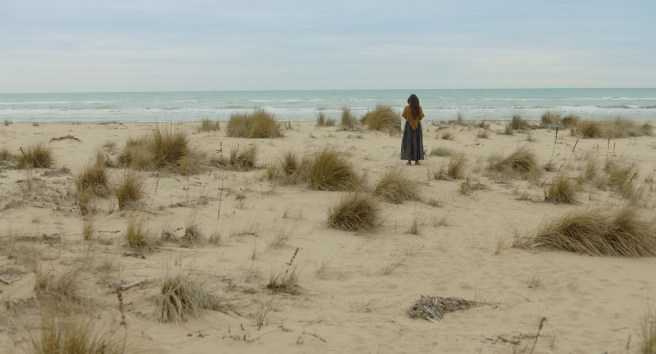
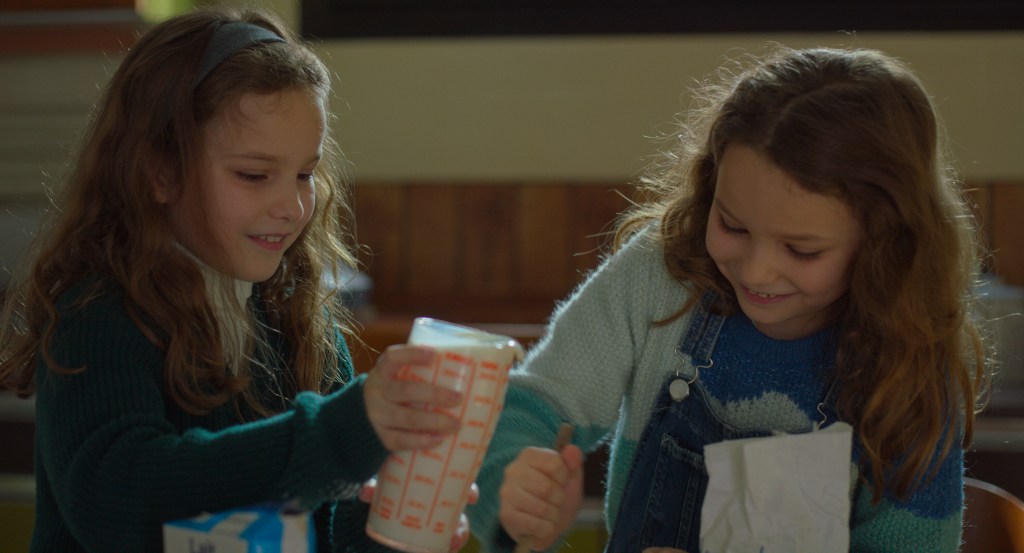
Children feature strongly in this haunting, beautifully told story about a child’s perception of loss. Nelly has lost her beloved grandmother and is helping her parents clear out her mother’s childhood home. She explores and discovers both the house and the surrounding woods where her mom, Marion, used to play and built a treehouse Nelly has often heard about.
Then suddenly, out of the blue, her mother leaves and that is when Nelly meets a girl her own age building her own treehouse and named Marion.
It’s a film that explores specifically the world of children, how they are affected by what is happening in the world around them, how adults deal with them and how they cope with feelings that are way beyond their tender years.
The two young actresses are superb and add another dimension to the film, which is tenderly made and sensitively unfolds.
It is not a children’s movie, but it is very much about their lives, they way they digest what is given to them by the adults who run their little lives and how they make sense of things they don’t understand.
This is a fantastic opportunity to catch up on many of the best movies from Europe of the past year. For details on all the films and how to watch visit www.eurofilmfest.co.za
Each year, The European Film Festival is one of the movie highlights of the year – and this time is no different running between October 13 and 23. Here is a short review by DIANE DE BEER on one of the films:
OLGA
(SWITZERLAND)
Director: Elie Grappe
Cast: Nastya Budiashkina, Sabrina Rubtsova, Jérôme Martin
Genre: Drama, Coming of Age
Time: 85 minutes
French, Russian, Ukrainian with English subtitles – 2021
Anything that comes from Ukraine has added appeal because of its harrowing circumstances for almost a decade now, resulting in the most recent horrors inflicted by Putin.
But this is not a story about that, even though there are signs of things to come. What it does capture is how these catastrophic events impact the lives of children. What should have been relatively carefree times in their young lives are clouded by what is happening on the periphery.
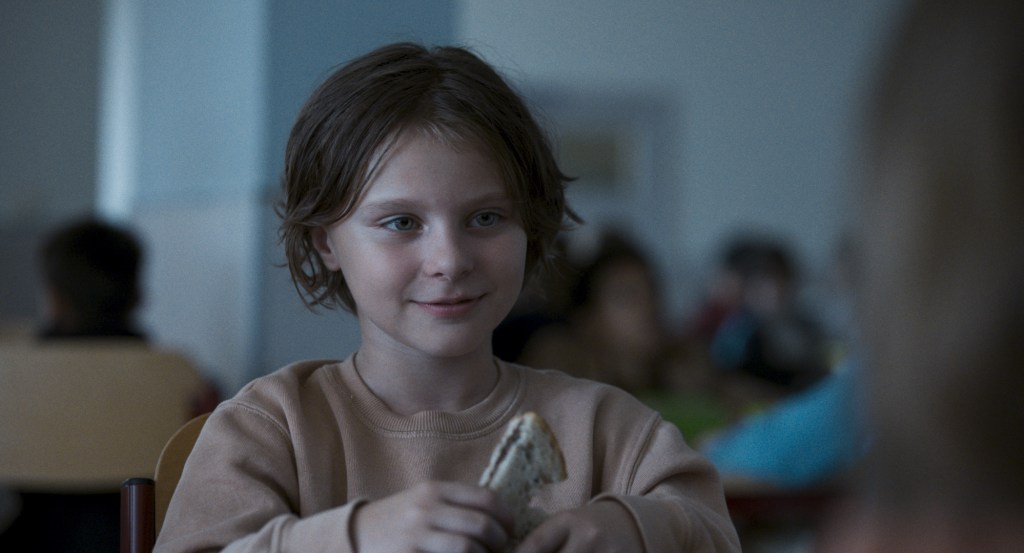
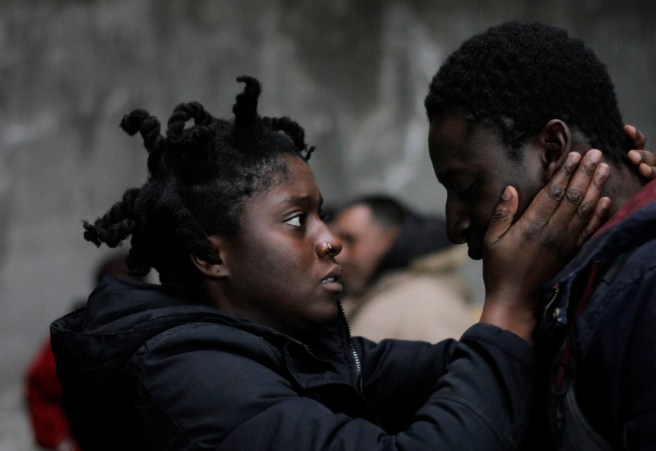
Olga is a teenage gymnast living in exile in Switzerland where she dreams of Olympic gold as she battles to fit in with her new team.
Her mom, who is a journalist, is suffering the hardship of what that means with a sudden uprising in Kiev, the forerunner of what that brave country is facing right now.
Olga is heartbroken and scared, feeling she has deserted those she cares most about while fighting for her own freedom.
It is by no means a perfect movie, but it does have added impact because of the lives it captures almost in a bubble as we know now and with hindsight. It also throws a light on these young athletes and the pressures they face as we have recently been made much more aware of with gymnasts like Simone Biles and tennis star Naomi Osaka.
This is a fantastic opportunity to catch up on many of the best movies from Europe of the past year. For details on all the films and how to watch visit www.eurofilmfest.co.za
Each year, The European Film Festival is one of the movie highlights of the year – and this time is no different running between October 13 and 23. DIANE DE BEER picks a few to highlight and expands on everything available to watch – for free:
SMALL BODY
Festival co-director Magdalene Reddy explains that they will continue to cater for viewers and followers who have become accustomed to watching films at home, while also providing for those who long to return to the cinema.
“This is our transitional approach of coming back to theatres gradually,” she says – and I will hold thumbs that it stays this way especially for those of us not in cities where the screenings happen.
The online screenings are free while a ticket price will be charged for the theatre screenings. Each film will have a single screening at both Ster-Kinekor’s The Zone in Johannesburg and at The Labia in Cape Town.
PLAYGROUNDPETITE MAMAN
Sixteen award-winning films, eight of them by women directors, will be screened. This year’s theme, Innocence and Beyond, explores innocence not just as a legal concept, but also as a human quality. This includes two stand-out perspectives through the eyes of children in Petite Maman and Playground (see reviews below) with fantastic performances by the young stars.
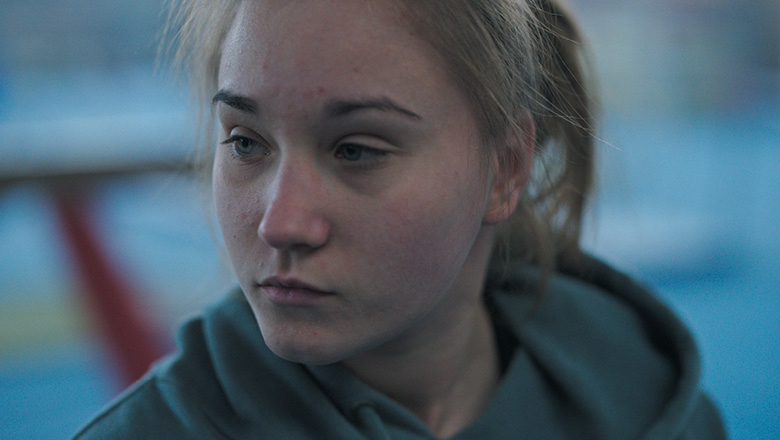
OLGA
There is no set age for when loss of innocence can occur and a number of films focus on youth as they navigate the often turbulent process of growing into adults. From the Netherlands, Shariff Korver’s slow-burning psychological thriller Do Not Hesitate depicts unprepared Dutch youths thrown into the crucible of war, while Swiss film Olga, by Elie Grappe, is a tense but sensitively handled tale of exile (see review below). The riveting women-driven film Small Body is an adventure story infused with a wonderful mythological sensibility that earned Laura Samani the best new director prize at Italy’s David d’Donatello awards.
AS FAR AS I CAN WALK
How much does innocence inform a young woman’s quest for love and meaning? This is the question in Joachim Trier’s The Worst Person in the World, a Norwegian/French/Danish/Swedish co-production that earned two Oscar nominations this year. Stefan Arsenijević’s Serbian/French/Luxembourgian/Bulgarian/Lithuanian co-production As Far As I Can Walk highlights that it’s not just securing a roof over one’s head but also the challenges of emotional and intellectual deprivation that young migrants face today.
THE EMIGRANTS
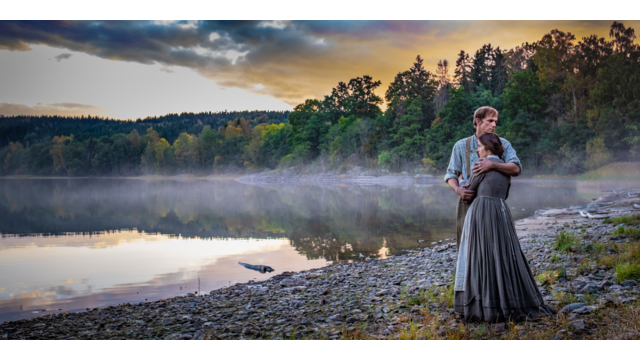
Is innocence solely about what’s right and what’s wrong? Sometimes it’s about what we don’t do. Silent Land, by Poland’s Aga Woszczyńska, is a case of what the protagonists didn’t do (see review), and Erik Poppe’s Swedish film The Emigrants is an epic period drama about a poverty-stricken family who emigrate to the United States in the 1800s, told from a woman’s perspective, in a search for a second chance in life. From the Republic of Georgia, Levan Koguashvili’s comedic Brighton 4th is a portrait of parental sacrifice and the love of a father for his son that also shows the elusiveness of the American Dream.
THE GOOD BOSS
Ali and Ava, written and directed by one of the UK’s most distinctive cinematic voices, Clio Barnard, is about a couple from different cultural backgrounds beginning a relationship while The Good Boss, directed by Fernando León de Aranoa, is a satire about the indignities of working life, with Javier Bardem in the spotlight (see review).
Austrian Sebastian Meise’s Cannes-winner Great Freedom explores tenderness, love, lost time, and the tenacity of the human spirit while Portuguese director Catarina Vasconcelos’s unorthodox film The Metamorphosis of Birds sifts through the memories and dreams of her ancestors. The German film I’m Your Man by Maria Schrader is a spunky sci-fi dramedy that asks what humans want in relationships, and if AI beings should have rights.
Finally, the world is again witnessing and affected by a terrible war, and innocence is an unfortunate casualty. Director/screenwriter/editor Maryna Er Gorbach’s Ukrainian-set drama Klondike deals with the travails of parents-to-be living near the Russian border exposing the absurdity of war and how it affects those who aren’t directly involved.
This is a fantastic opportunity to catch up on many of the best movies from Europe of the past year. For details on all the films and how to watch visit www.eurofilmfest.co.za
OLGA
(SWITZERLAND)
Director: Elie Grappe Cast: Nastya Budiashkina, Sabrina Rubtsova, Jérôme Martin Genre: Drama, Coming of Age Time: 85 minutes
French, Russian, Ukrainian with English subtitles – 2021
Anything that comes from Ukraine has added appeal because of its harrowing circumstances for almost a decade now, resulting in the most recent horrors inflicted by Putin.
But this is not a story about that, even though there are signs of things to come. What it does capture is how these catastrophic events impact the lives of children. What should have been relatively carefree times in their young lives are clouded by what is happening on the periphery.
Olga is a teenage gymnast living in exile in Switzerland where she dreams of Olympic gold as she battles to fit in with her new team.
Her mom, who is a journalist, is suffering the hardship of what that means with a sudden uprising in Kiev, the forerunner of what that brave country is facing right now.
Olga is heartbroken and scared, feeling she has deserted those she cares most about while fighting for her own freedom.
It is by no means a perfect movie, but it does have added impact because of the lives it captures almost in a bubble as we know now and with hindsight. It also throws a light on these young athletes and the pressures they face as we have recently been made much more aware of with gymnasts like Simone Biles and tennis star Naomi Osaka.
Children feature strongly in this haunting, beautifully told story about a child’s perception of loss. Nelly has lost her beloved grandmother and is helping her parents clear out her mother’s childhood home. She explores and discovers both the house and the surrounding woods where her mom, Marion, used to play and built a treehouse Nelly has often heard about.
Then suddenly, out of the blue, her mother leaves and that is when Nelly meets a girl her own age building her own treehouse and named Marion.
It’s a film that explores specifically the world of children, how they are affected by what is happening in the world around them, how adults deal with them and how they cope with feelings that are way beyond their tender years.
The two young actresses are superb and add another dimension to the film, which is tenderly made and sensitively unfolds.
It is not a children’s movie, but it is very much about their lives, they way they digest what is given to them by the adults who run their little lives and how they make sense of things they don’t understand.
PLAYGROUND
BELGIUM
Director: Laura Wandel Cast: Maya Vanderbeque, Günter Duret, Lena Girard Voss, Karim Leklou, Laura Verlinden Genre: Drama Time: 72 minutes
French with English subtitles – 2021
Even if you were never bullied in school, all of us have been witness to something like that in our lives. Take Donald Trump for example, his whole existence is thanks to bullying, not an easy thing to watch even from afar.
But the title of this one says it all, and again, it is the way the young people deal with what is given to them that is captured so brilliantly.
We all know and understand the impact of abuse during your younger years, on the rest of your life. When seven-year-old Nora witnesses the bullying her older brother Abel has to endure at school, she rushes to help out. But he persuades her not to tell anyone.
She is still trying to adapt to school herself and this is something that she finds quite unbearable – that and the subtle bullying that is happening amongst her own circle of new acquaintances.
It’s a hugely emotional film with the camera rigged at Nora’s height so that we are really pulled into the centre of her storm.
It’s also the inability of doing the right thing on every level. The sensitive teacher isn’t always around at the right time, and when they are, the problem is much easier to deal with – and yet when away from the adults, is when the pressure comes into play.
It is their lives that become the playground as Nora starts acting out because of the way she has been messed up by all these raging emotions around the problems of protecting her brother.
Astonishing acting from all the children in a story that can impact so many lives everywhere. It’s also a directorial debut for Laura Wandel and shows great promise for the future. Her filmmaking is already faultless.
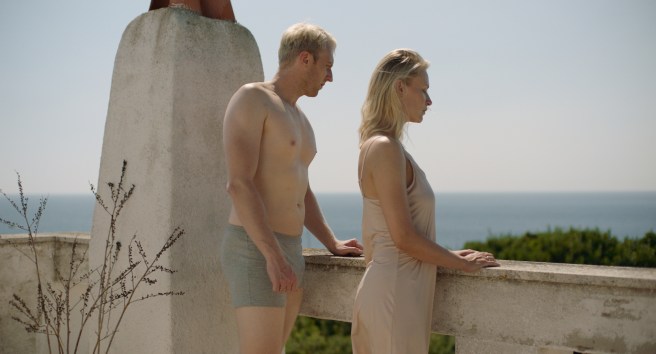
SILENT LAND
POLAND
Director: Agnieszka Woszczyńska Cast: Dobromir Dymecki, Agnieszka Żulewska, Jean Marc Barr, Alma Jodorowsky, Marcello Romolo Genre: Drama Time: 113 minutes
Polish, English, French, Italian with English subtitles – 2021
Everything about this film screams art movie in the best sense of the word. It’s the setting up of the story, the young couple playing the leads, the pace or sometimes lack thereof as well as the unfolding and slightly mysterious tone of film that adds to the quality of the viewing.
I was reminded throughout of European movies seen in the past presenting a similar atmosphere and handling of character and content. There’s no spoon feeding and the substance is serious yet accessible.
Director Agnieszka Woszczyńska says it best: ‘Silent Land is not only about the collapse of a relationship, but also about the collapse of the value system in the modern world, the general indifference to reality, and social lethargy. Ultimately, it is a tale about alienation, not only from each other, but also from the world. It’s about conformity and passivity, where the need for safety and convenience is a strategy for survival.’
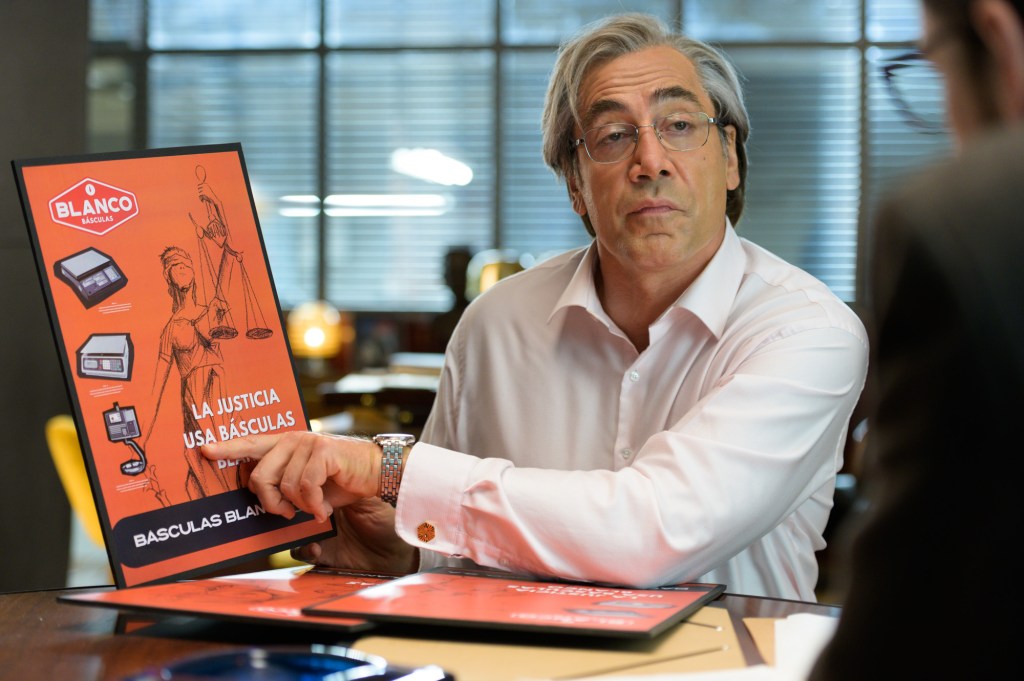
THE GOOD BOSS
SPAIN
Director: Fernando León de Aranoa Cast: Javier Bardem, Manolo Solo, Almudena Amor Genre: Comedy Drama Time: 116 minutes
Spanish with English subtitles – 2021
Javier Bardem is one of those actors always worth watching. Not only does he pick his projects well, but his acting prowess is astonishing.
It’s especially when he is not the hero that all his instincts seem to kick in as he taps into even the darkest soul he has to portray.
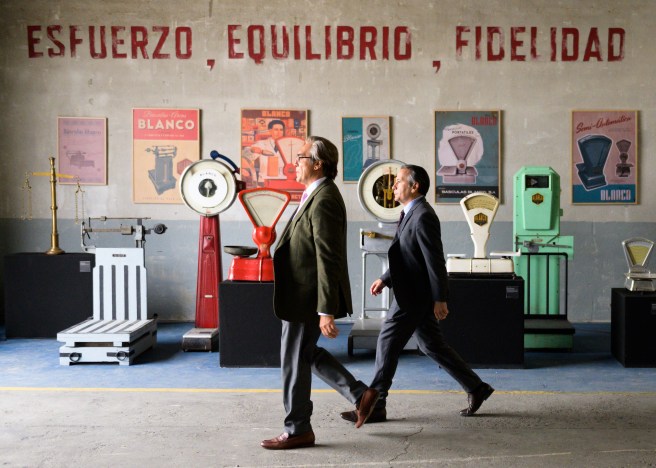
As the title of this one suggests, he is anything but The Good Boss and again, few of us as employees would not recognise this manipulating, truly wily, yet awful human being. He is only concerned with his own well-being and whatever serves his personal needs.
That’s why his downfall is so delightful to experience especially in the capable hands of Bardem, who plays the smarmy owner of a family-run factory. If you need further persuasion, the film scooped a record-breaking 20 nominations at the 36th Spanish Goya Film Awards, winning 6 (Best Picture, Best Director, Best Actor, Best Original Screenplay, Best Score and Best Editing). It was also the Spanish entry for Best International Feature Film at the 94th Academy Awards
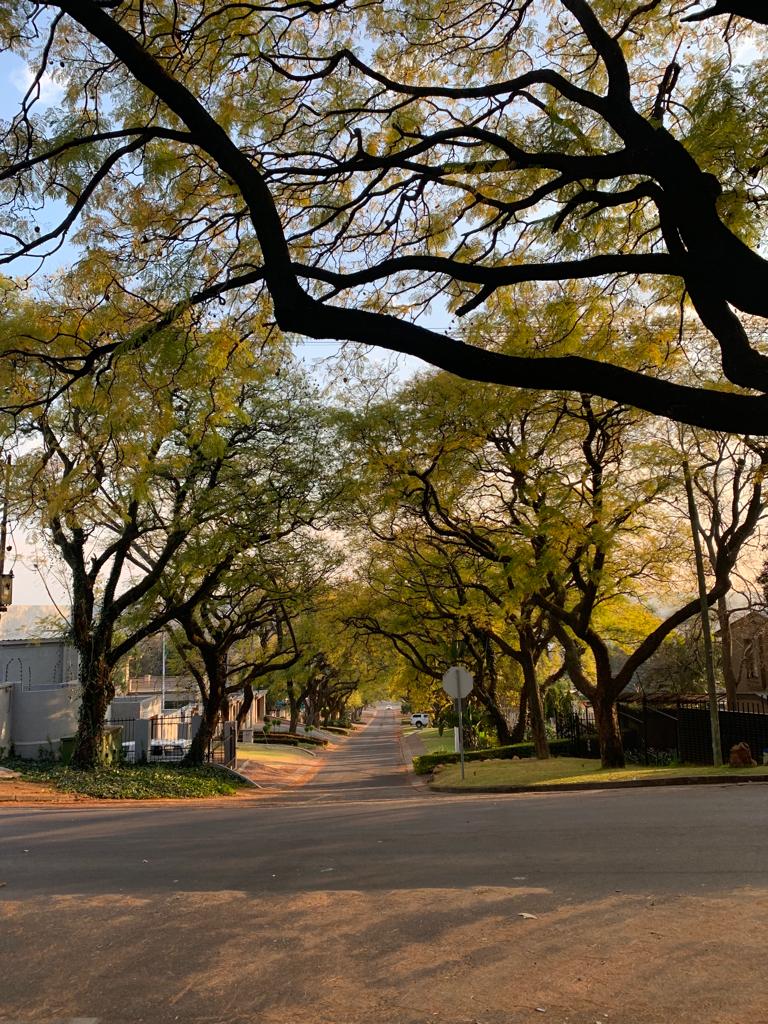
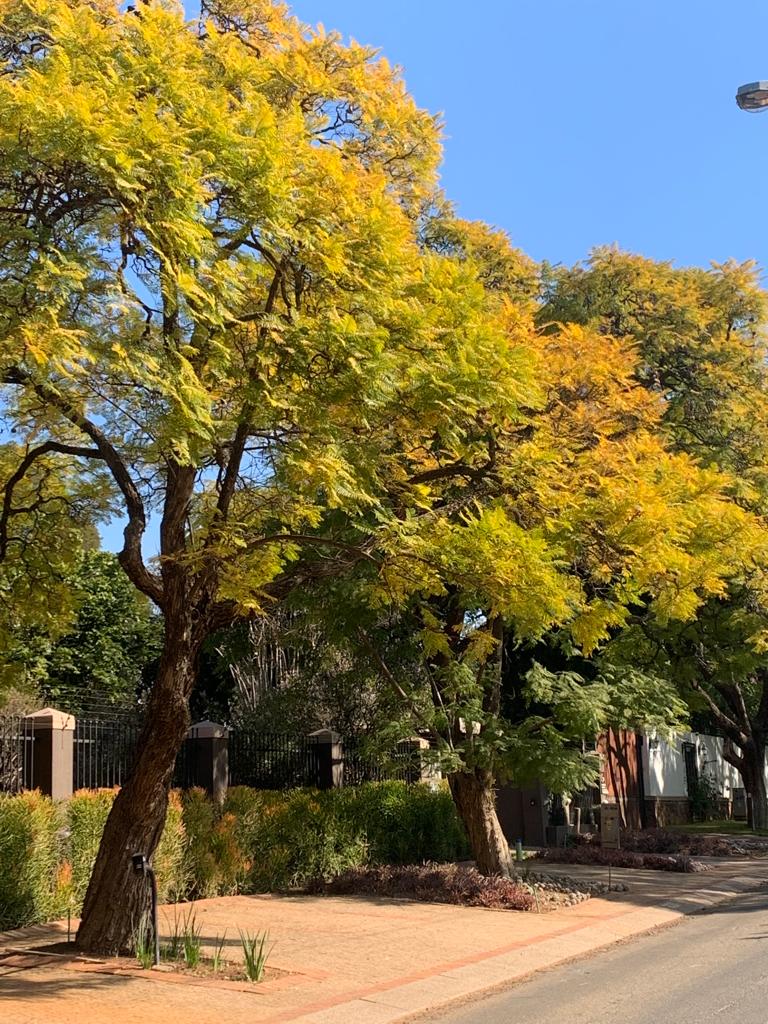
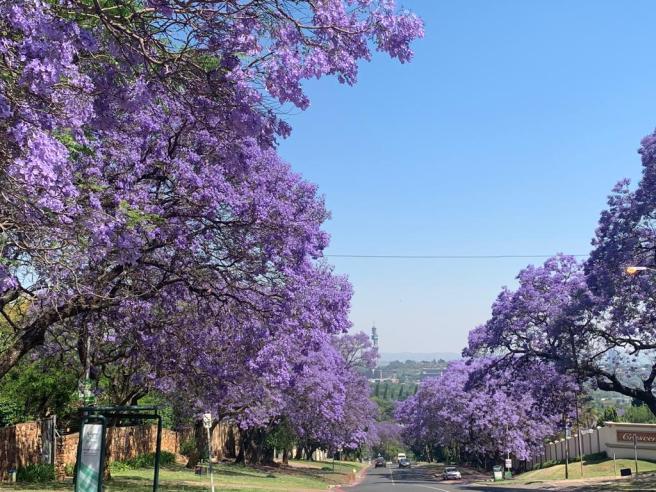
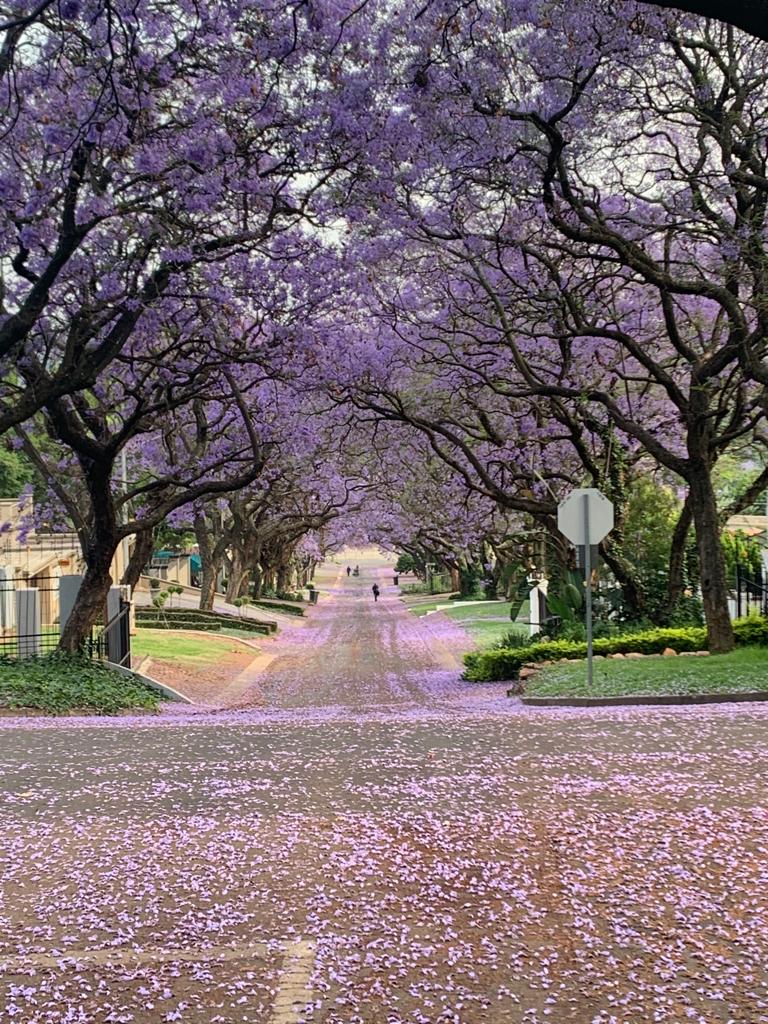
This is the first verse of singer/songwriter sublime Koos du Plessis’s ode to Pretoria.
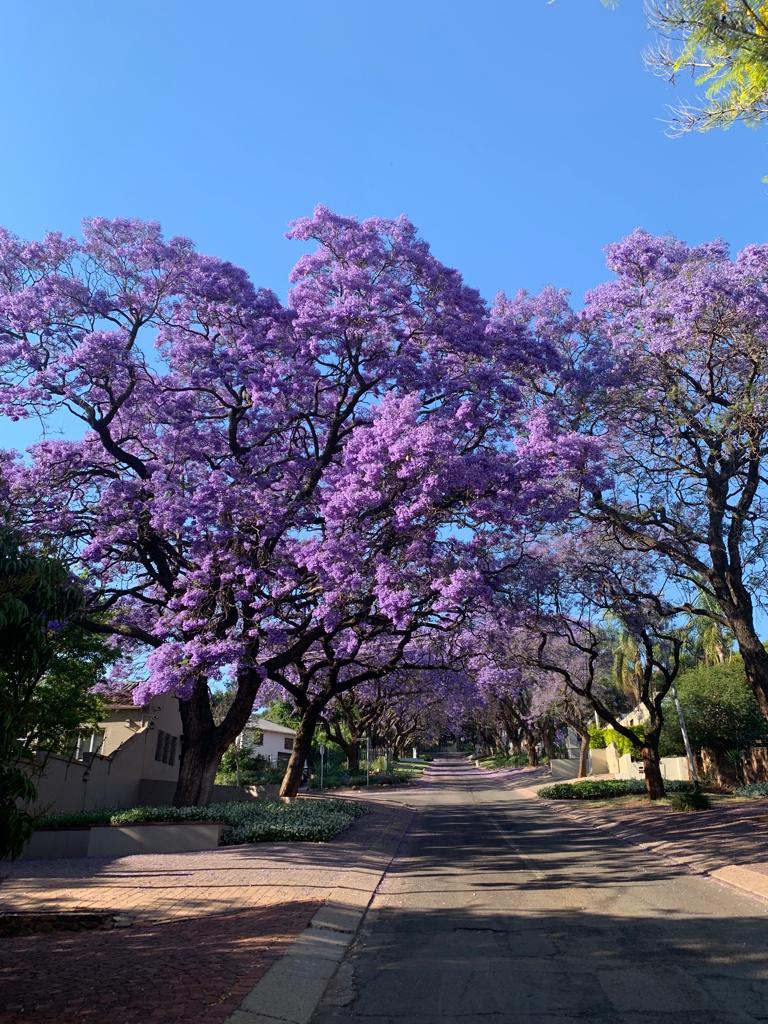
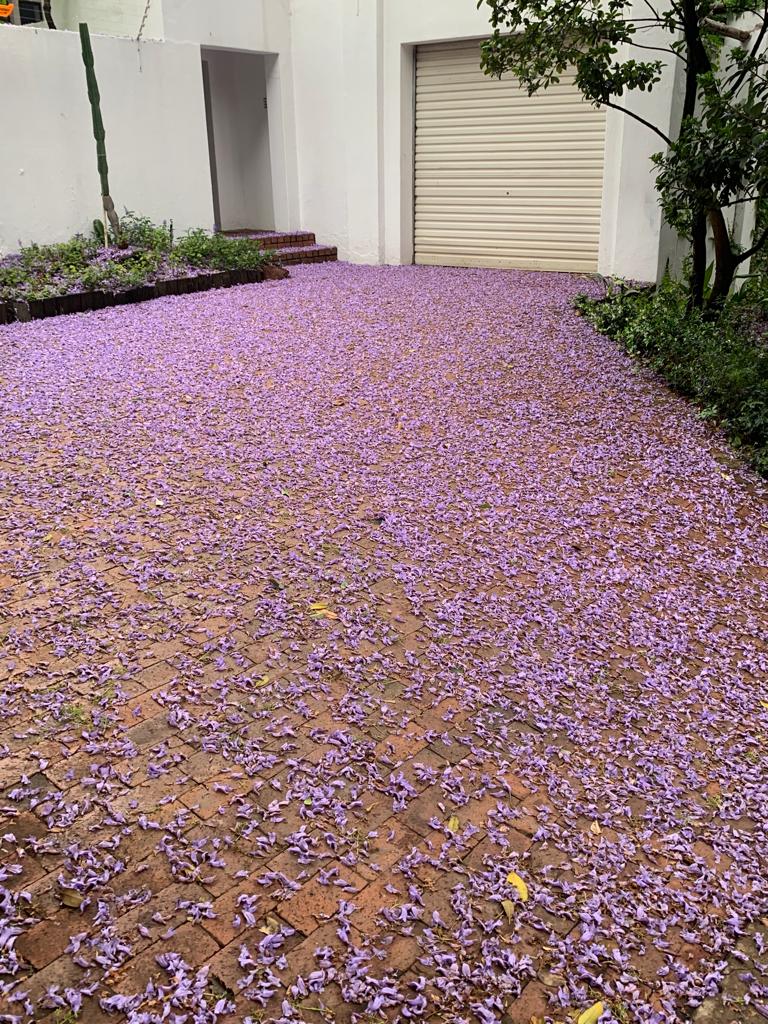
He frames his beloved city in a cloak of purple haze, which is how many of us identify the most colourful capital city.
But much controversy has surrounded this emblem of the city over the years and there are visions of fights for this particular tree and the replanting and upkeep of the city’s pride for those of us living here long enough.
Money talks, and the hordes of tourists who visit the city annually is proof enough for everyone who witnesses this influx that, at least for the moment, Jacarandas are allowed to flourish and bloom in all their splendour.
The four annual stages of the Jacaranda tree
Jacaranda trees were first imported from Rio de Janeiro by Baron von Ludwig of Cape Town in about 1830. A travelling nurseryman from Cape Town named Templemann brought two Jacaranda trees to Pretoria in 1888. He planted them in the garden he had laid out for Jacob Daniel (Japie) Celliers at Myrtle Lodge in Sunnyside, shortly after it was established as Pretoria’s second suburb.
In the 1890s Celliers secured a concession from President Paul Kruger to plant trees in Groenkloof for the Government of the Republic. James Clark, a wholesale and retail seedsman, florist and nursery, received the order to import seeds from Australia.
The story goes that among the consignment of eucalyptus seeds Clark imported for planting in Pretoria in 1898, a packet of Jacaranda seeds had found their way.
On 16 November 1906, the 51st anniversary of the founding of Pretoria, Clark presented 200 Jacaranda trees to the City Council as a birthday present to Pretoria. These trees were planted in Bosman street in Arcadia Park where the Pretoria Art Museum was established in 1864.
Frank Walton James was appointed as town engineer in 1909. He suggested the planting of Jacarandas in all the streets of the town to enhance the status of Pretoria as the proposed capital of the Union. When Jameson left the Council in 1920, fewer than 6 000 trees had been planted. By 1939, with the constant encouragement of Jameson, the number of trees had risen to 17 000.
Today there are approximately 40 000 Jacaranda trees in the streets of Pretoria.
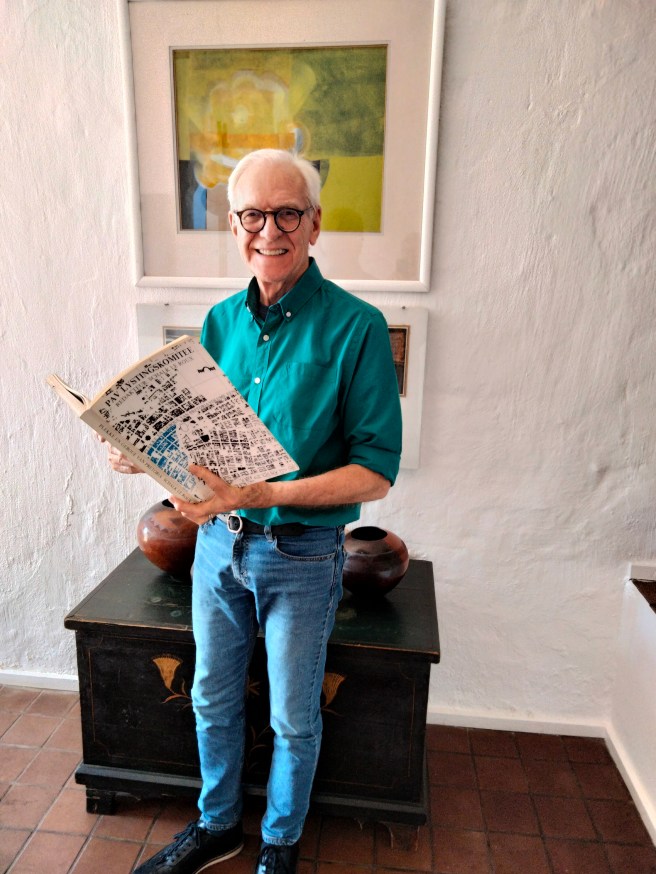
And these facts were all handed to me in a letter by Jacaranda activist, architect Thomas Honiball, a man who has always battled and fought for the preservation of Pretoria as the beautiful city it is.
Some of us still remember the huge controversy about the west façade of Church Square, which was going to be demolished, but was finally left intact thanks to Honiball and a committee he had established with exactly this in mind. And the city proudly hails this part of its heritage today.
The aforementioned letter was written with a request to the Minister of Agriculture for the planting of Jacaranda trees in the city of Tshwane – and fortunately those battles were hard fought and won.
For Thomas, who lives in Nieu Muckleneuk with a spectacular view of Jacaranda blossoms when they are in full bloom, these trees hold and embrace the spirit of the city. He believes they were first planted to establish the character of a city that would be named the country’s capital – and thus it was.
“We have something that no other city boasts in such abundance,” he says. He also argues it is especially the city’s layout, the long streets, and the koppies, that allow for the spectacular showing of this tree Pretorians have claimed for themselves.
And he has many anecdotes to claim the city’s towering Jacaranda status. “I was told the story that Elon Musk’s grandfather when he flew over the city and saw the spectacle of the purple blooms was so overwhelmed, he emigrated here,” he says.
He also remembers as a young Free State lad paying his first visit to the city and sighting the purple spectacle, how it overwhelmed him. “It was just so pretty!”
Thomas Honiball and the book of listings he instigated.
That’s not all he achieved in this city. He was also instrumental in the production of a book with the listing of buildings worth holding on to, often used by city planners to save specific buildings which form a part of the city’s heritage. It’s not something South Africa has always done well and we need these visual planners who understand the importance of cherishing the old while celebrating the new.
He is very aware that everything cannot be kept simply because its old. There’s a saying that if a city centre doesn’t change, keep up with the times, it will die.
Fortunately for Tshwane, we have citizens like Thomas Honiball in our midst who have the city’s interests at heart and understand the importance of the picture perfect visual that keeps us all mesmerised.
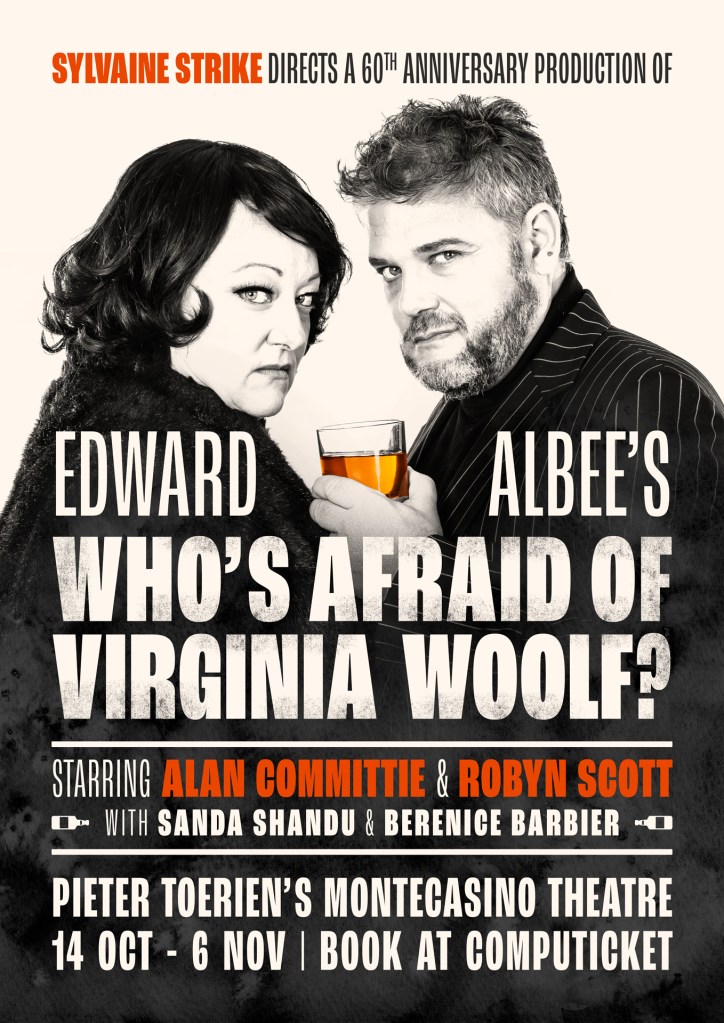
Edward Albee’s iconic play Who’s Afraid of Virginia Woolf celebrates its 60th anniversary. But this didn’t scare seasoned director Sylvaine Strike, who jumped at the chance even if she knew it would be tough. She spoke to DIANE DE BEER about the process:
Alan Committie (George), Robyn Scott (Martha), Berenice Barbier (Honey) and Sanda Shandu (Nick).
Who’s Afraid of Virginia Woolf runs at Cape Town’s Theatre on The Bay until Saturday 8 October with performances every Tuesday to Saturday at 8pm and a Saturday matinee at 4pm. It then moves to Pieter Toerien’s Montecasino Theatre in Fourways, where it will run from 14 October to 6 November with performances Wednesday to Saturday at 8pm and matinees on Saturday and Sunday at 3pm.
An age appropriate restriction of no under 13’s apply.
Tickets are available through Computicket
“Where does one begin?
“A 60-year-old iconic play, a great classic known all over the world and translated into many languages. The first time I came across Who’s Afraid of Virginia Woolf was at university when I was in first year and the play at the time was 30 years old and that seemed ancient! And now, it’s 60 years old and I’m doing it. So do the maths!”
But this is Sylvaine, someone who understands the pitfalls and go for it anyway. It’s been mammoth, far harder than she could imagine. And it started with the casting. The ensemble includes Alan Committie (George), Robyn Scott (Martha), Sanda Shandu (Nick) and newcomer Berenice Barbier (Honey).
Committie initially approached her with the project, asking if she would direct him and Robyn in those roles, she explains. “And quite frankly, even though the roles seemed so ancient when I attempted them in first year (I attempted to play Martha at 19, in an exercise of course when we were studying texts!), but now I realise that they weren’t that old at all.”
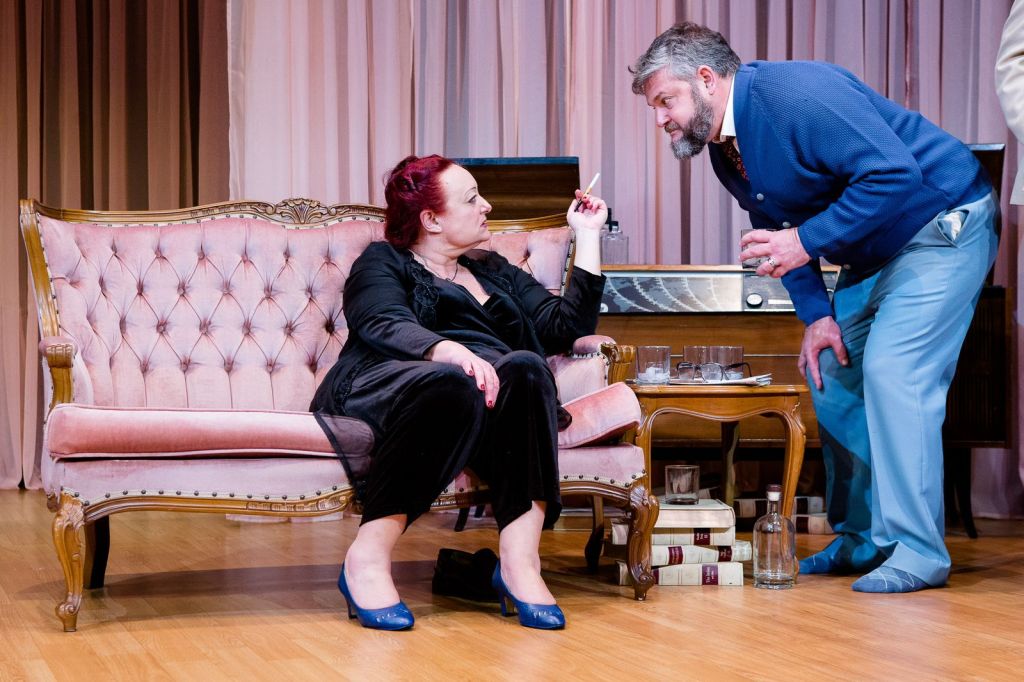
En famille in Who’s Afraid of Virginia Woolf?
Albee specifies that Martha is 52 and George is 48, so she’s gone with the original ages. “Robyn is a little younger, but it feels completely right so I immediately said yes, jumped at the chance of directing an Albee play. With him there’s always the circularity, the nonsensical, as each character exists in their own private ego, their own private silo, as we try and make meaning out of nothing for a night of absolute debauchery, madness, game playing and relationship thrashing.”
With her two leads in hand, it was time to turn her attention to the younger players. The chemistry between the couples as well as that between the younger and older couple, is what makes the play soar. That’s why, Alan and Robyn were both in attendance with the extensive auditions.
Post-covid, a lot of amazing young actors turned up and much brilliance presented itself, but Sylvaine had to find the right match and chemistry. “It was also important to redefine the casting, to challenge Albee’s instructions, to challenge what an all-American couple looks like now, but it was finally determined by Berenice and Sanda, who are just exceptional together and have the most fantastic funny bones, and perfect chemistry.”
While it was written and produced as an all American play and Albee’s description of Nick is a blond, good-looking, all American boy, the times determined those norms. “It’s a typical American look, but that’s changed 60 years down the line and about time,” says the director.
Sanda Shandu (Nick) and Berenice Barbier (Honey).
Once she had cast the production, she realised that hers would be a very new take on this play. And that’s the honest way to treat these classic productions – honour the writing yet adapt to the times.
As always, she did blind casting, but a very distinctive voice in her started asking questions. What would it look like, a Black man in the role of Nick? How will it be and what changes will occur in Albee’s writing that will hit home that haven’t hit home before in other productions all over the world?
And it came down to Berenice and Sanda who are just exceptional together. He isn’t new to the scene and people might recognise him from King Kong, but this is Berenice’s debut.
Sylvaine Strike pictured by Martin Kluge.
In the final analysis according to Strike, Who’s Afraid of Virginia Woolf has hardly ever been done any other way than with two white couples and that’s missing out on numerous opportunities, because the text lends itself to how much and how little has changed in the US. And that especially is thrown into sharper focus.
She got together with her set designer Wolf Britz very early on to discuss what the template would be. She reminds me that she works with her set before anything else and both of them were completely in agreement that Albee’s words are enough and very little else is needed to support this particular story, this particular night in these people’s lives.
“So we haven’t gone with the clutter and the realism of an academic’s house. It is quite stark and very inviting in the sense that it is all in plush pink. But I actually don’t want to give too much away. It’s a perfect setting for things to go absolutely wrong and dark.
General chaos with the full cast.
“We basically have sofas and curtains and that’s to be used in ways that haven’t been used before, as usual,” she says with hints of Sylvaine secrecy and surprise.
To get the orchestration of this world, she’s using a world of ice and of liquor, tinkling of bottles and even more. And that, she says is just a tiny bit of it all, but it needs massive orchestration.
She chose to go with the American version of the play, because of the 60th celebration, and the cast underwent serious dialect coaching under Robyn, who is a prolific dialogue coach in Cape Town.
“They are speaking with an American accent, but that’s really all that lends from an American world, the rest is left to interpretation. Sando playing opposite Alan will resonate on a local level because there’s very much a boss and an underdog relationship that forms purely from the hierarchy that George imposes on Nick as a young academic new to the university and George having been there forever.
“And suddenly Albee’s words are revisited in a light that is really painful, very incisive and quite brutal. When George says to Nick, ‘I wish you wouldn’t say the word sir like that, you always call me sir with a little question mark at the end’, things like that suddenly resonate so much deeper. The words do all the work”
And, she notes, Nick has some amazing retorts back at George in which he claims the space and the future as the young man on the scene, so it speaks for itself, and speaks volumes.
Those in Gauteng might have missed the fact that Sylvaine has swapped her home in Joburg and moved to Cape Town.
Her son is starting university and it made a lot of sense for her to move, but she had been toying with it a long time since she was spending most of her working time there; making work, taking work or filming there.
“It meant I was away from the family more and more and more, longer days, longer months,” she says.
She also needed to be in a place that inspired her because she was battling to be in Johannesburg, to live there as an artist. “It had fuelled my fire for so long, but in the last five years, it’s been very hard.”
This is the change she needed, in the future she will continue to make work, collaborate with the festivals, The Baxter and this is her first play ever for Theatre on the Bay.
And good news for Gauteng, the Cape Town run is being followed by a season at the Pieter Toerien Theatre in Montecasino.
The best thing about the arts is that it is all about storytelling of some kind. Whether you are looking forward or reaching into the past, those who are the blessed recipients of the work whether on stage or hanging in an art gallery, will learn something that will have relevance in their own lives. DIANE DE BEER takes a look at current exhibitions at the Pretoria Art Museum:
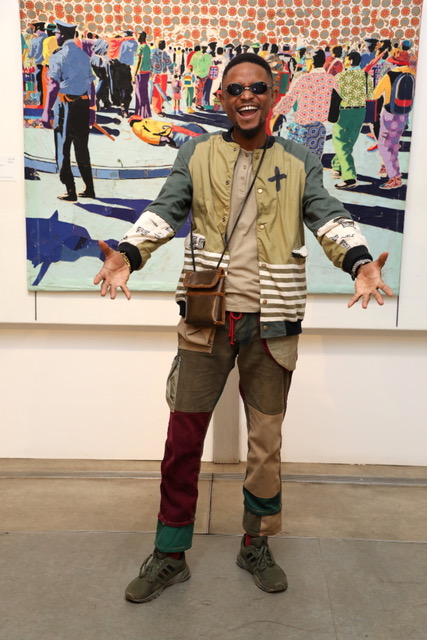
Mondli Augustine Mbhele with his winning work for the 2022 Sasol New Signatures.
Full-time artist Mondli Mbhele (28) from Durban, KwaZulu-Natal has done exactly that, tell stories, and in the process has been announced as the winner of the 2022 Sasol New Signatures Art Competition.
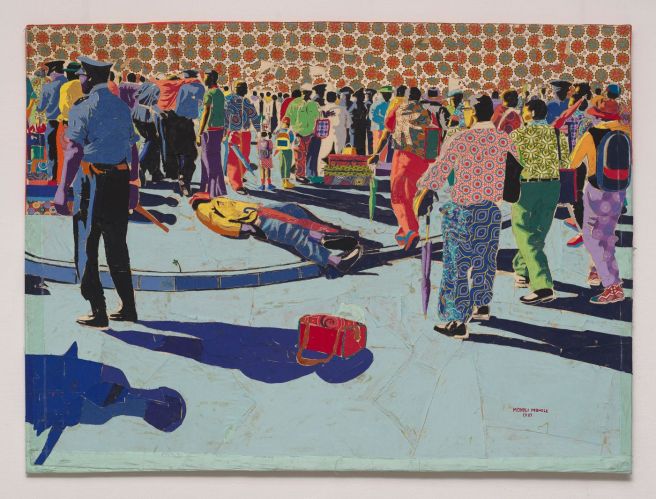
Mbhele won the grand title for his work titled Iphasi nesiphesheli, which is part of a bigger series titled Umlando uyaziphinda. This is an isiZulu phrase, meaning “history repeats itself”. And don’t we all know that.
The series of mixed-media works is inspired by various iconic events from South Africa’s history. In his winning work, Mbhele explores the dynamics of protests in contemporary South Africa. Yet before one even gets to the story, it is the colour and the clothes that captures your attention.
Mondli explains that this artwork was inspired by Sharpeville’s 21 March 1960 Anti-pass law event and the 2020 Covid19 events/laws regarding vaccination cards and face masks. “I saw that both of these share the same ideas in terms of accessibility.
“I use fabric collage as my medium of expression, because I am inspired by how fabric can be used in creating garments for different groups and ages of people, and I also realised similarities that fabric shares with our daily life events in the perspective of covering our bodies and busting or elevating our confidence to be able to face a new day. And also as a symbol of recognition or direction for example uniforms, like doctors, police, cleaners etc.
Mondli Mbhele’s Iphasi nesiphesheli, the winning work.
“In my work, I also use offcuts that I collect from fashion designers around Durban. While collecting these, I realised that fabrics have a gradation of value, worth and qualities. But when those offcuts of fabric are thrown away, they share the same state of being vulnerable. I recycle those offcuts and create a new dialogue that will get a chance to be appreciated and have a sense of their own purpose and voice rather than being thrown away.”
The brightly coloured collage is a snapshot of an ominous moment in a protest wherein a person is lying lifeless on the ground, yet no one seems alarmed. And therein lies the tale.
Mbhele walks away with a cash prize of R100 000 and the opportunity to have a solo exhibition at the Pretoria Art Museum in 2023.
From left: Malik Mali (Cape Town), Linde Kriel (Bloemfontein), Omolemo Rammile (Bloemfontein), Rohini Amratlal (Durban), Mondli Mbhele (Durban), Herman Pretorius (Pretoria) and Andrea Walters (Durban)
“For emerging artists, the challenge remains the same: breaking into a very competitive, ever-evolving field. Sasol is honoured to play a role in providing opportunities for emerging artists to showcase their work. This year we had an unprecedented number of entries, which reinforces the need for a platform such as this. It also highlights the depth of talent and creativity across South African society,” said Elton Fortuin, Sasol Vice President: Group Communications and Brand Management.
Pfunzo Sidogi, Chairperson of the Sasol New Signatures Competition, said: “This year, we received over 1 000 entries from the seven regional judging rounds, the highest number of submissions in the competition’s long history. We were particularly encouraged by the increased number of entries received from artists who did not attain formal university art education. This speaks volumes of the creative energy and passion to produce art that exists in all quarters of the country, and it is critical that we provide platforms for this creativity to be seen and celebrated”.
I was also pleasantly surprised for example that the country as whole seemed to be represented and wish the exhibition could travel more widely – or even digitally.
Runner up Omolemo Rammile’s Mére célibataire (single mom).
Omolemo Rammile from Bloemfontein was crowned runner-up and awarded R25 000 for her work entitled Mére célibataire (single mom), which pays tribute to her mother and acknowledges the personal sacrifices she makes on a daily basis as a sole provider and breadwinner for her twin daughters. Bread is universally considered a staple food source. The artist uses embossed bread tags to symbolise the ‘daily bread’ her mother buys to feed her family. The multiple imprints of the bread tag on the paper are akin to the lasting impact and inner mark that the mother’s love has left on the artist and her family.
And again, staying with the storytelling, the two winning works would both resonate with especially South Africans because the stories although with universal merit, is also particularly (and poignantly) from home ground.
The 5 Merit award winners are:
Rohini Amratlal (Durban)
Merit award winner: Durban’s Rohini Amratlal’s Unveiling the archive. Epoxy resin, wood, ‘Icansi’ (grass mat)
Epoxy resin, wood, ‘Icansi’ (grass mat)
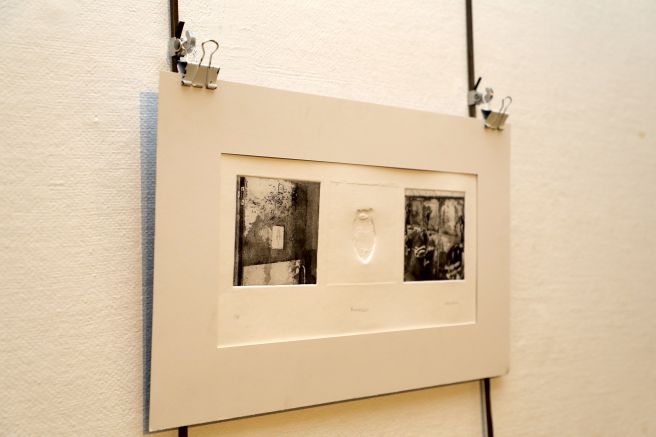
Merit award winner: Bloemfontein’s Linde Kriel’s (Rest)Room.
Copperplate etching
Merit award winner: Upington’s Malik Mani’s From the concrete grew a rose.
Pencil on Arches paper
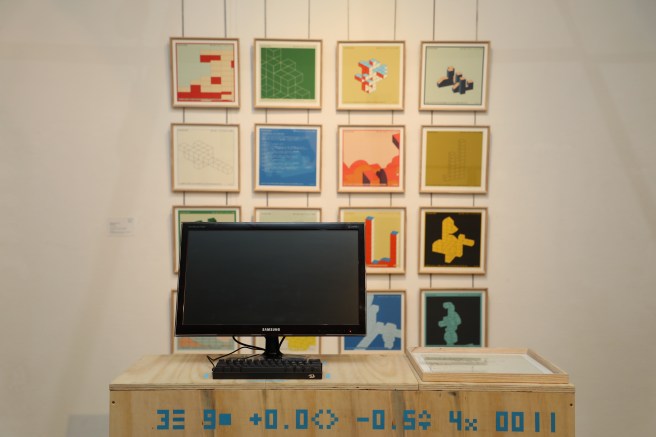
Merit award winner: Instructures by Herman Pretorius, Pretoria.
Archival prints & computer installation
Andrea Walters (Durban) #OverMyDeadBody 1 & #OverMyDeadBody 4
Each Merit Award winner received a R10 000 cash prize.
“The judges at both the regional and final judging round were inspired and impressed by the diversity of narratives and boldness in artistic vision evident in some of the submissions, added Sidogi. While he paid tribute to the judges, the biggest acknowledgement went to every artist who entered the competition this year. “Your creativity, passion, and commitment to artmaking are priceless. The incredible turnout of entrants bodes well for the current and future vitality of art in South Africa. Onwards with the spirit of creativity. All sectors of South Africa are desperate for it.”.
Those who didn’t see the winning work of last year’s new Signature winner, will be able to view Supernature: Simulacra, the solo exhibition by the multidisciplinary artist Andrea du Plessis. This exhibitionis a deepening of her research into the sublime experience and the complex relationship with nature in an age marked by technological augmentation and simulation.
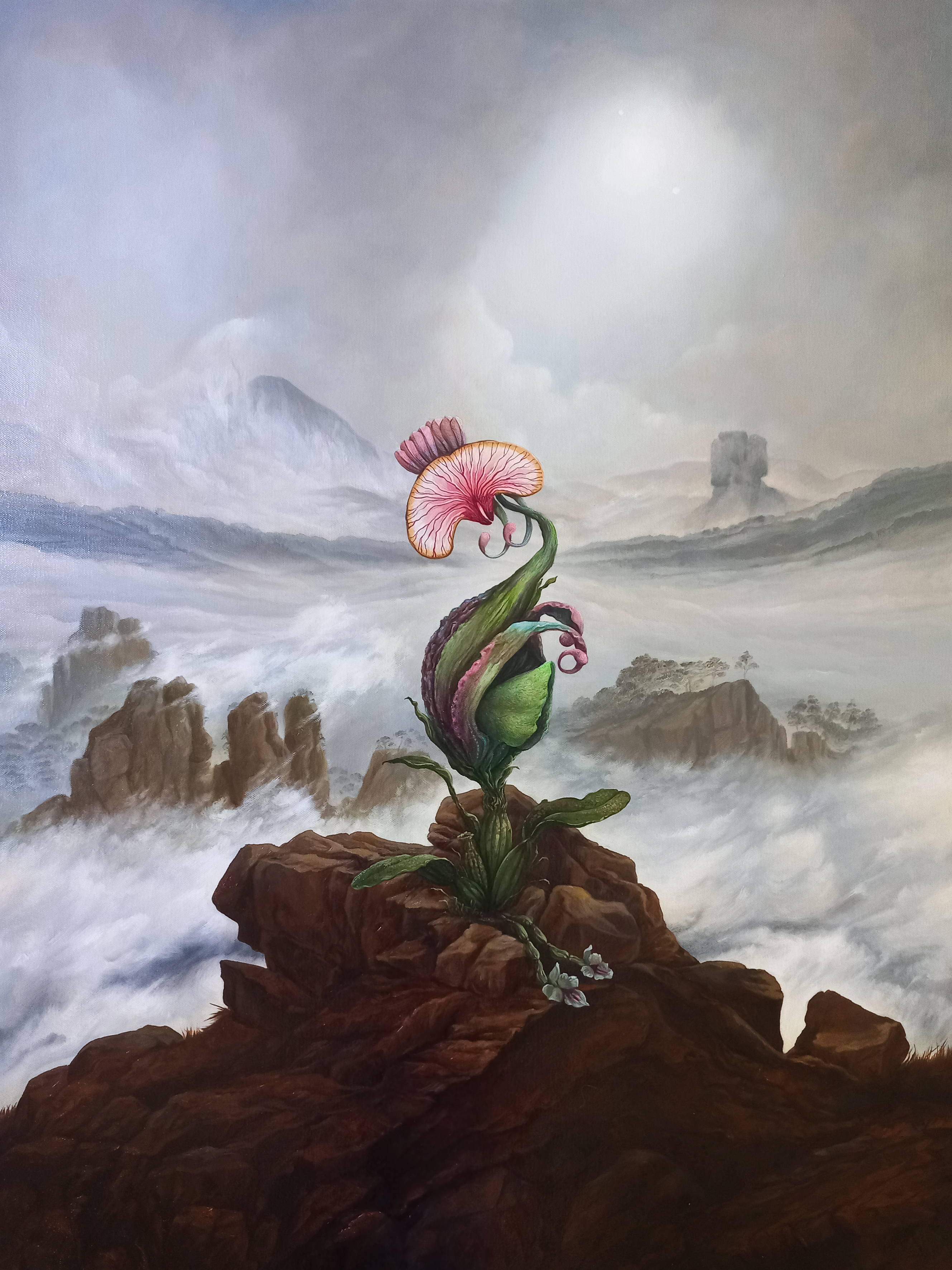
Her work is quite extraordinary and pictures as with many other artworks, don’t do justice. It’s an extension of the Supernature series, she began in 2020; the work features an exploration of emerging technologies in combination with traditional oil painting to create interactive, immersive realms as well as an encyclopaedia of hybrid lifeforms. The artist hopes to offer the viewer an opportunity to consider our interconnectivity with the natural world and examines the possibility of reconnecting to nature via technology.
The solo exhibition and the Sasol New Signatures Art Competition exhibition runs until 2 October 2022. All the finalists are included in the competition catalogue which can also be sourced online. The full exhibition is also available to view virtually on the website.
The fantastic work of last year’s winner Andrea du Plessis.
Her work is quite extraordinary and pictures as with many other artworks, don’t do justice. It’s an extension of the Supernature series, she began in 2020; the work features an exploration of emerging technologies in combination with traditional oil painting to create interactive, immersive realms as well as an encyclopaedia of hybrid lifeforms. The artist hopes to offer the viewer an opportunity to consider our interconnectivity with the natural world and examines the possibility of reconnecting to nature via technology.
From the beginning of September until 30 October 2022, an exhibition titled Fired Up! – Celebrating Southern African Glass Art showcases glass art and design in a myriad of creative interpretations at the Pretoria Art Museum.
Fired Up! will be complemented by a day of glass-blowing demonstrations at the Tshwane University of Technology Faculty of Arts and Design Campus from 26 to 29 September 2022 from 9am to 4pm, as well as a symposium on Saturday, 1 October 2022.
Those who didn’t see the winning work of last year’s new Signature winner, will be able to view Supernature: Simulacra, the solo exhibition by the multidisciplinary artist Andrea du Plessis. This exhibition is a deepening of her research into the sublime experience and the complex relationship with nature in an age marked by technological augmentation and simulation.
Sue Meyer (Abstract).Stephen Mofokeng (Death be not proud).Lothar Bottcher (Piece of Cake).James Magagula Umphakatsi (Royal Kraal).Sibusiso Mahlanga (Spring).
The United Nations has declared 2022 as the International Year of Glass. A multitude of international events are planned throughout this special year, and several local institutions have been hard at work to ensure that Southern Africa is featured on this prestigious global calendar.
Several speakers from artists, academics and the industry will discuss the theme, Glass and its Future in an African Context. Attendees of this symposium will also enjoy live glass-blowing demonstrations at the Tshwane University of Technology Glass Studio.
Also check them on Instagram @southern_african_glass or email them at yog2022.southafrica@gmail.com for more information.
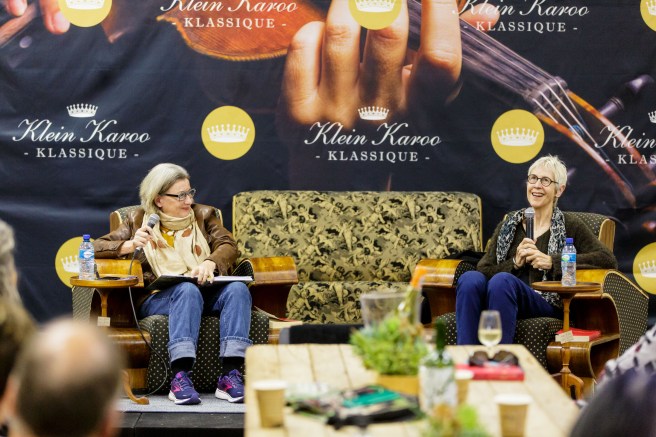
As part of Karoo Klassique earlier in August, two Herzog prize-winners, Ingrid Winterbach (Voorouer. Pelgrim. Berg.) and Johan Myburg (Narreskip) chatted about their latest work. DIANE DE BEER reports on two informative conversations on creativity:
As a double Herzog Prize winner, a new novel by author Ingrid Winterbach is always a celebration. But it’s not only the accolades of course, it is the writing that gets people talking.
Voorouer. Pelgrim. Berg. (NB Publishers), her latest novel was the book under discussion and she was in conversation with book editor Elna van der Merwe. The fact that the one had written and the other was so familiar with the content, turned this into something extraordinary – and, for the prospective reader, an indication of whether this was something for them or not. That is what book discussions should do – not only explain or dissect the book but also encourage those listening to read.
Talking about the writing process, Winterbach was quick to note that if she had to wait for inspiration, she wouldn’t have been as prolific. As most writers would attest, it’s a hard daily grind of writing, re-writing and refining, and her latest book deals with family history and, at the other end of the spectrum, online dating to bring some light relief.
She and artist husband Andries Gouws have separate studios where they work every morning and where she writes. Afternoons might be spent painting. She chats delightfully about the writing process. Having written more than a dozen books (as well as others under the pseudonym Lettie Viljoen), she finds herself revisiting old themes. “But now I approach them differently,” she says, the implication being that she’s older and wiser.
Elna van der Merwe and Ingrid Winterbach.
Even if her books are viewed as challenging, when writing, she doesn’t think about the readers. Writing is enough of a challenge and her plots are never straightforward. She knows it would be easier to simply have a plot that’s marching towards a final conclusion, but that’s never been the way she tells stories. “That doesn’t interest me at all,” she says as she illustrates her penchant for a “sombre story with manic pace”.
When asked about the way she uses language and introduces English slang, she’s quick to note that she doesn’t know anyone under 50 who speaks pure Afrikaans. It would sound unnatural in today’s world, she believes, if she should write in that pure sense. The only character who does speak Afrikaans without any deviations in this particular book is a character called Gysbert, who is slightly mad.
And that is how she defines her characters, by playing with their dialogue. “The fact that he speaks in the way he does, is part of his aberration.”
Writing for her is a time she searches for something new, something that challenges her. Just as she doesn’t want to read the same book over and over again, the same instincts kick in when writing.
For her it is about writing brilliantly. As Van der Merwe pointed out, Ingrid would be bored with a mediocre novel – either reading or writing. It was fascinating listening to these two specialists in their craft talk about both writing and reading.
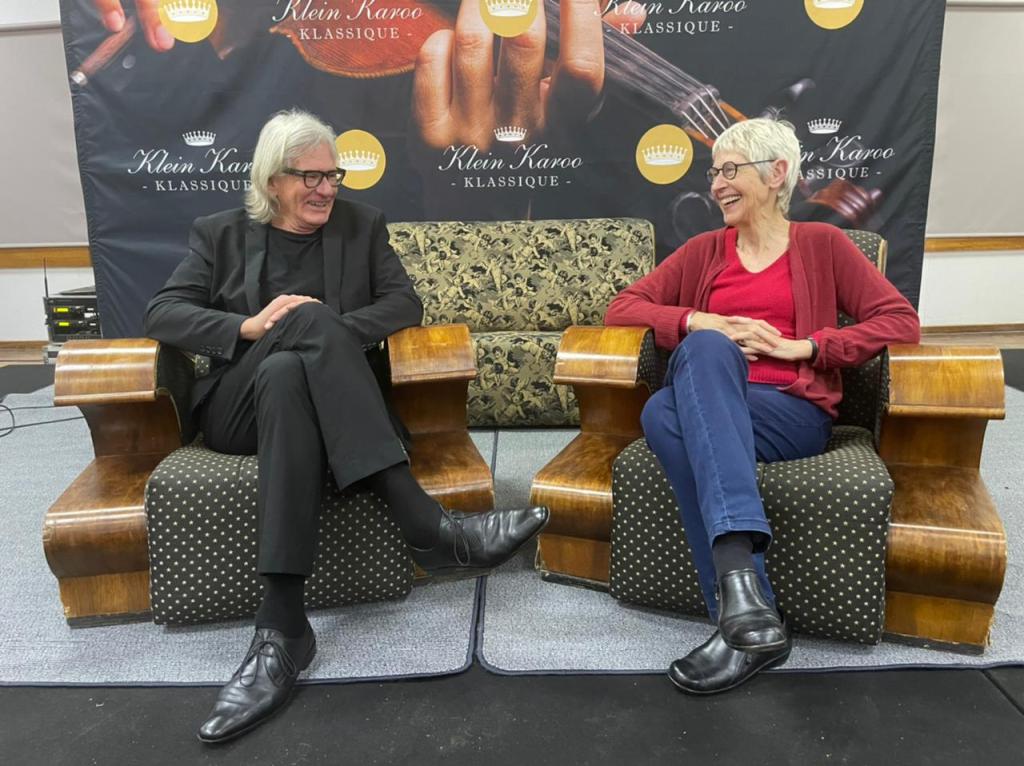
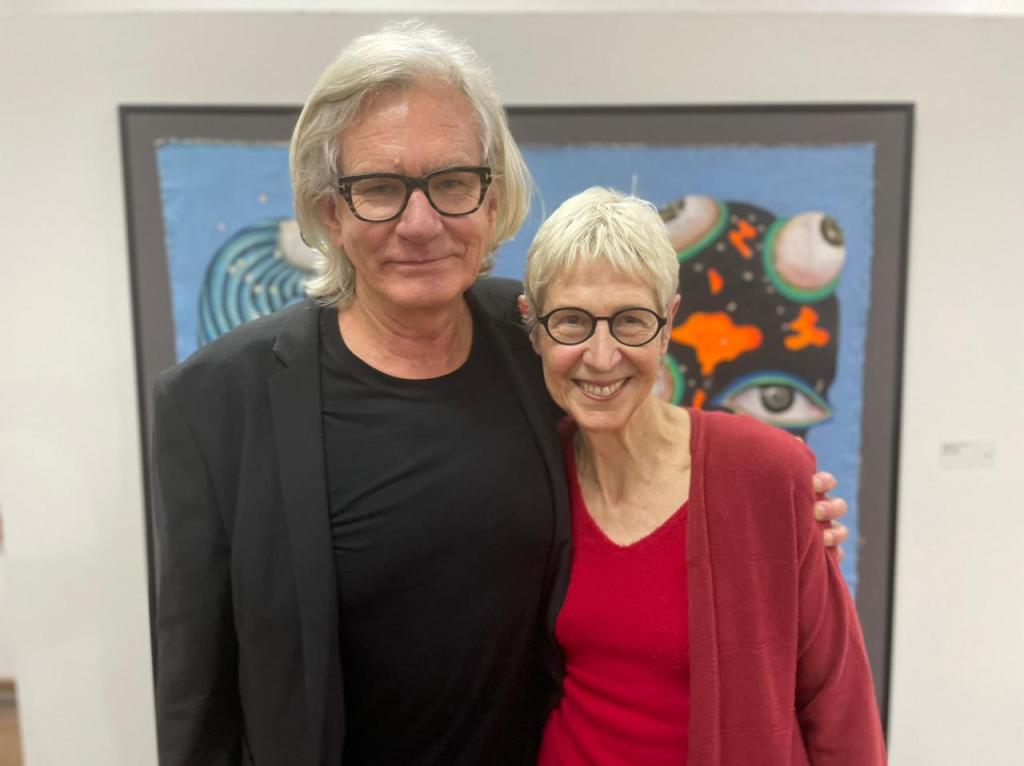
Poet Johan Myburg with author Ingrid Winterbach
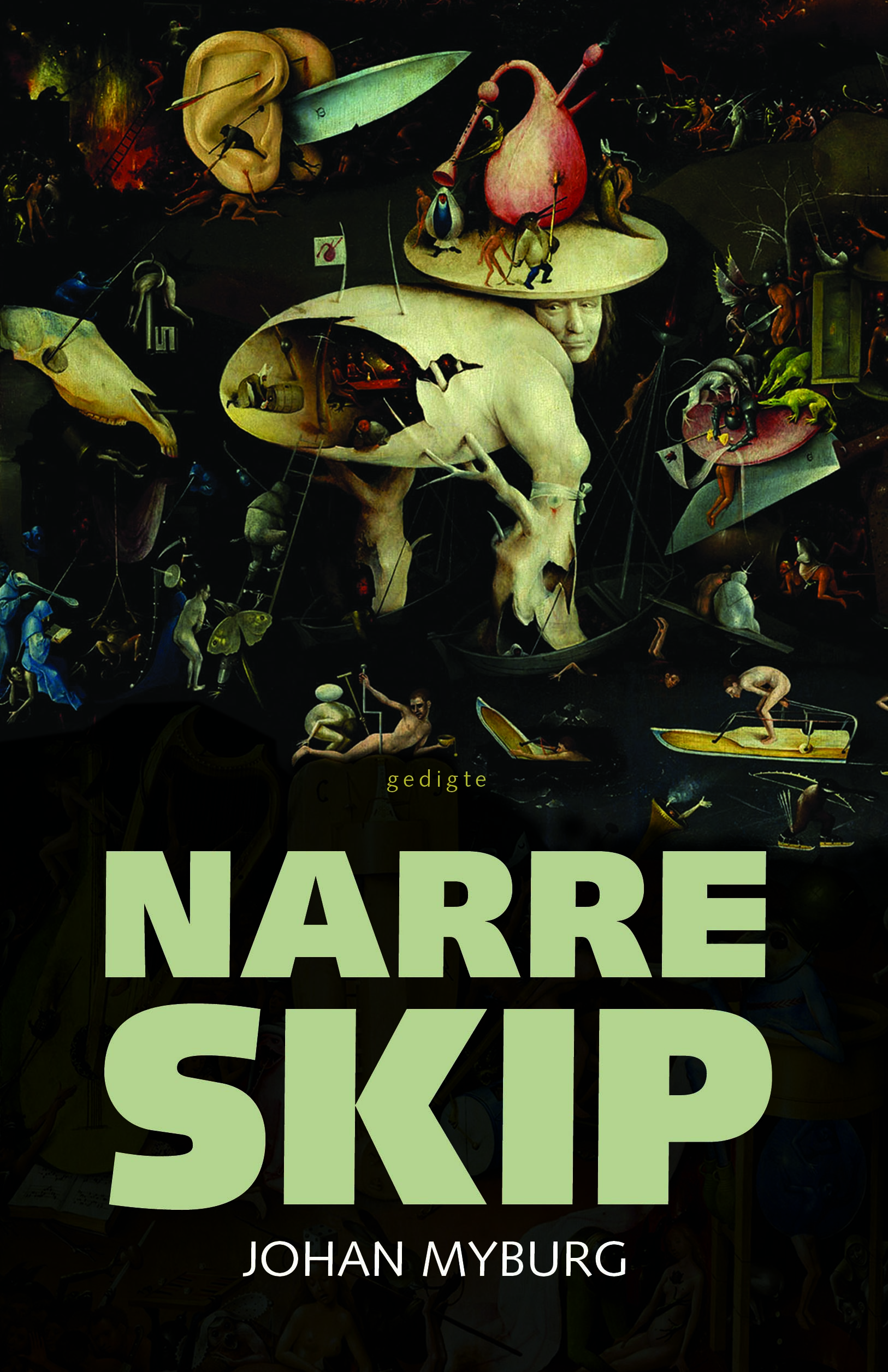
Winterbach later sat down to speak to fellow Herzog prize winner, poet Johan Myburg, about his latest poetry book, Narreskip (Protea Books, see https://bit.ly/3bjfs9b) and with these two writers working in different genres, they shared their mutual admiration.
To listen to the novelist discuss her impressions of a master poet was extremely special. She started by describing Narreskip as fresh and astonishing, written with outrage, but never shrill, always controlled.
Both of them admitted that they would like to swap genres once in a while, but that it wouldn’t be possible, hence the admiration.
Winterbach explained the differences as poets (carrying) everything with them, while for a novelist when writing, it’s like going on a camping trip when writing a book.
Both were equally intrigued with the other’s process and because they understand writing, the process was also diligently discussed.
Asked about when to rhyme and when not, Myburg responded that the poem is the one that demands. “It also has to do with the look of a poem on a page,” he explained. Who would have thought?
As someone who uses a lot of references and not many that ordinary readers would recognise, Winterbach gave a handy guide of how to approach each of the Myburg poems. She obviously had huge fun reading and noted that it was a massive learning exercise for her. That’s just the way Myburg writes and because his areas of speciality are so wide-ranging, he can dip into quite obscure places.
Being an art critic is particularly handy as he reaches into the past to look at the present. Pointing to the famous Yeats line from his poem The Second Coming:
And what rough beast, it’s hour come round at last…
This is where his poetry took her.
Two special writers.
She would first read the poem and then start analysing and checking possible references. It meant that not only was she more informed after reading the poems, she understood and thus enjoyed them more – and only then can the reader truly wallow in the wealth of riches provided by the poet.
And speaking about language, she was delighted to read that even when dabbling in the 15th and 16th centuries, he could tongue-in-cheek have a scribe writing a blog! Or when writing about muti murders, he would reference the Goya sketches Disasters of War and not giving these particular poems titles, it was as if the journalist stepped forward and reported what he had witnessed.
Both these two talks emphasized the importance of book launches and also the fun. If you match the right people, not only will prospective readers gain insight, but they will also have a much better understanding of the author as well as the writing process and in some instances, how to approach a specific poetry collection or novel. I felt blessed.
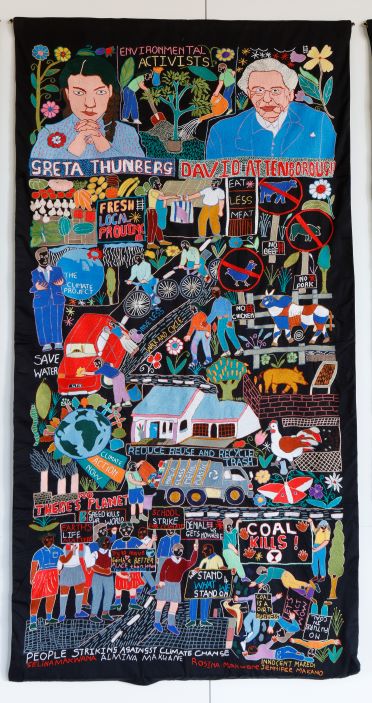
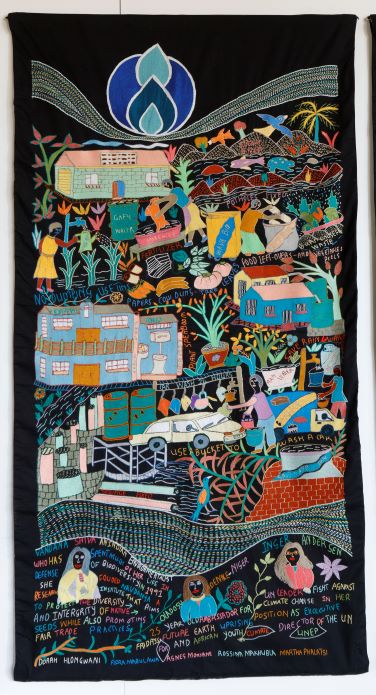
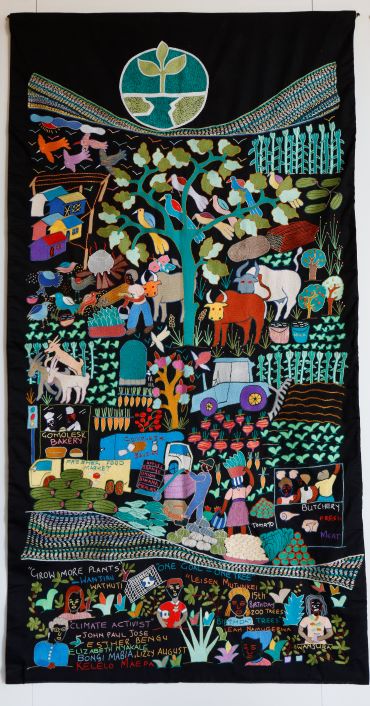
A group of South African embroidery artists recently turned their hearts and hands to the rapidly rising urgency of climate change with an embroidered artwork of 11 panels which is being displayed in Tshwane’s Javett Art Centre at the University of Pretoria until the end of the month. DIANE DE BEER gives the details:
Puleng Plessie, Curator: Education Mediation promotes the educational aspects at the Javett Art Centre.
“The world’s women are the key to sustainable development, peace and security,” said UN Sec-General Ban Ki-moon. (2010)
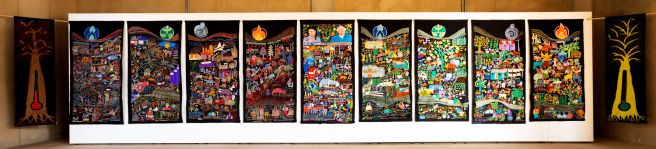
Acknowledging the truth of this statement, the Mapula Embroidery artists – who are rural women completely dependent on available natural resources for food, fuel and shelter for themselves, their families and community and, thus, extremely vulnerable to the effects of climate change and environmental threats – conceptualised and created a significant textile work: Women of the Winterveld: Hands Become Voices for our Planet.
The Mapula Embroidery Panels
The women of the project have demonstrated their resilience over many years and, through this work, aimed to show their agency regarding the global issue of our time.
They depict in their embroidery their local environment and climate change impacts, as well as their vision of what successful activism can achieve in bringing about changed behaviours to promote adaption and mitigation in order to ensure a healthy, sustainable planet for future generations.
This puts them at the centre of climate change awareness-raising, activism and the promotion of an urgent response in their own community and far beyond.
(Left) WATER: The story of drought and floods, wastage, water-borne disease and contamination.
(Centre ) EARTH: The images depict a dry earth which is infertile and polluted, threatening all forms of life.
(Right) AIR: Illustrations of the major contributors to a polluted atmosphere with CO2 emissions – the major cause of global warming – out of control.
Since research shows that gender inequalities, which result in the increased vulnerability of women, will be aggravated by climate change, it is fitting that the first showing of this piece is happening in South Africa’s Women’s Month. Mapula’s hope is that by engaging with this work the public will engage seriously with the issues of climate crisis, climate action, vulnerability of women in gender-unequal societies and their intersectionalities.
The Mapula women’s lives have been transformed through their embroidery work. They have reached a stage where they are ready to become agents of change themselves as they advocate – using their own personal experiences and creative expression – on the climate emergency in the hope of not only changing their immediate environment but also bringing climate justice to the wider world.
(Left) FIRE: The story of death and destruction by spontaneous and uncontrolled fires caused by the extreme heat, dry vegetation easily catching fire and severe electric storms which accompany global warming.
(Centre) CLIMATE WARRIORS: The world’s most recognised climate and environmental activists as well as other prominent activists and active citizens – notably women dominate this space – are seen with placards broadcasting messages which show the urgency for changing targeted human activity.
(Right) WATER: A contrasting story of water where human activity is modified to preserve the health of our planet. Clean water, good water management, efficient water supply systems and humans taking care in using this precious resource without wastage.
As they have a large following, their voices will be heard locally and globally. The artists are already recognised for their story cloths, which they have designed and embroidered over the past 30 years, and their work hangs in museums and private collections worldwide, appears in many publications and is sought-after by textile collectors.
Future exhibition opportunities for this artwork will present chances for awareness-raising amongst an even broader public.
Importantly, such a large project ensures that the artists develop further and have work and income – all of which are central to vulnerable women and their families, as is a possibility with many of these participants.
Income from the sale of this collectable textile piece will contribute towards the future of Mapula Embroideries.
(Left) EARTH: The earth can be healthy, fertile and abundant if human activity is modified to care for the environment and global warming is not left unchecked.
(Centre) AIR: With good quality air plants, animals, humans thrive.
(Right) FIRE: Plants grow, people and animals thrive and are safe when global temperatures are kept at healthy levels and fire is not unpredictable, widespread and out of control.
The artwork Women from the Winterveld: Hands become Voices for our Planet is a piece of 11 panels hanging in sequence and measuring approximately 10 metres across and 2 metres in height.
Nine panels are held together by the first and last panels, which depict global temperatures, reminding the viewer of our collective global responsibility to keep the rise to a maximum of 1.5 degrees C above pre-industrial levels.
The 1m x 2m panels are separated by a central panel paying respect to the climate warriors who are dedicated to climate activism and action urging the global population to modify their behaviours in order to save our planet. The first four 1m x 2m panels depict our planet suffering the impacts of global warming and the next four 1m x 2m panels show our planet recovering and restored with global temperatures being kept below critical levels.
Essentially the sequence shows an extremely endangered planet followed by a healthy, sustainable planet achieved through changed human activity. The four elements of water, earth, air and fire – their symbols headlining each panel – organise the thinking and images in the work.
A previous MAPULA EMBROIDERIES’ 2021 MAJOR WORK: 2020 Through the Eye of a Needle was well received and has been sold into the collection of the University of the Witwatersrand’s Art Museum (WAM).
To see the catalogue of the work go to the Mapula website www.mapulaembroideries.org and find the flipbook under the ABOUT tab.
In troubled times like the world seems to be experiencing at the moment, the art world is a wonderful place to turn to if you’re hoping to find solace. Perhaps a solo glass exhibition isn’t exactly what you might be looking for, but that’s the magic of art ̶ you never know what you’re going to find. And that’s why this introduction to the conceptual artist, glass blower Martli Jansen van Rensburg:
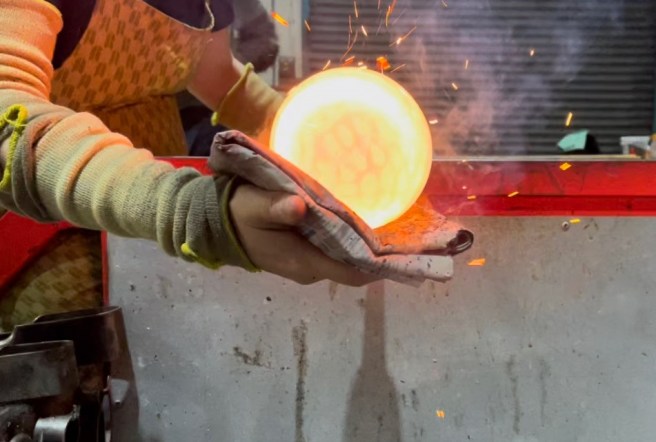
Artist Martli Jansen van Rensburg at work.
In recent years we have been introduced to the world of glass blowing on a wider scale by reality series on TV, and if there’s anything these seasons brought home to me, it was that this wasn’t an easy route to follow.
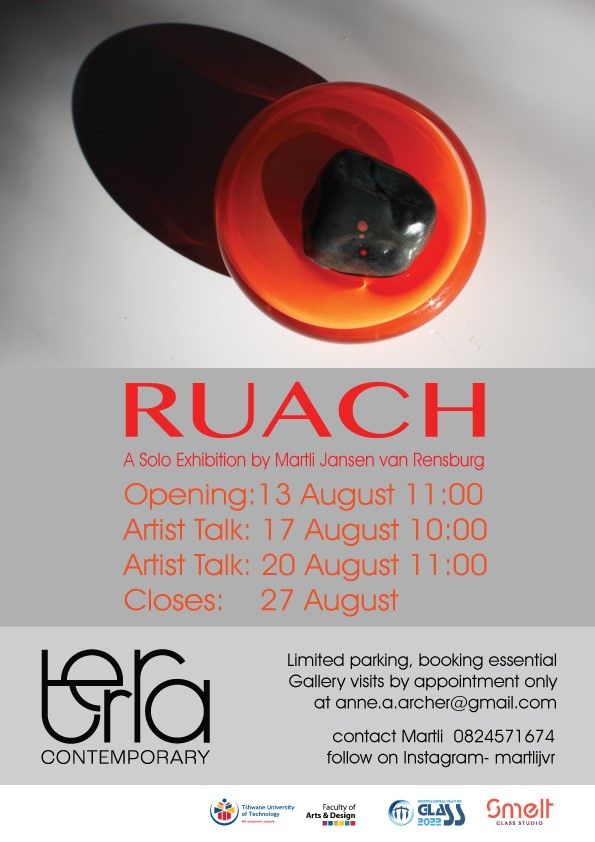
Martli Jansen van Rensburg has been working as conceptual artist and glass designer for the past 20 years and this latest exhibition, Ruach, is her first solo exhibition in 10 years … and she’s excited.
It might seem a long time in-between exhibitions but with the amount of work that has to go into especially a solo exhibition, the prohibitive cost as well as establishing her brand with her own studio, a furnace where there’s also access to the wider world as well as her lecture and teaching responsibilities, it’s a big ask.
But she knew the time was right and she got cracking. In-between came covid, all of which gave her a chance to breathe, to take stock of her life and her art, and to explore her possibilities. She was also approached by a friend who offered her the perfect space to exhibit her work as the inaugural artist – and the deal was done.
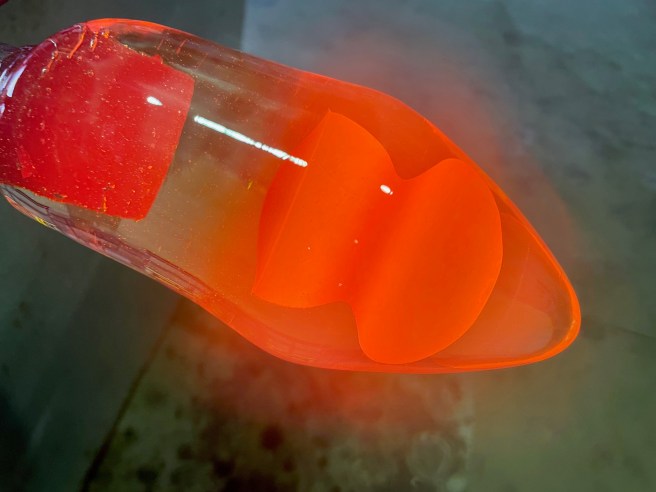
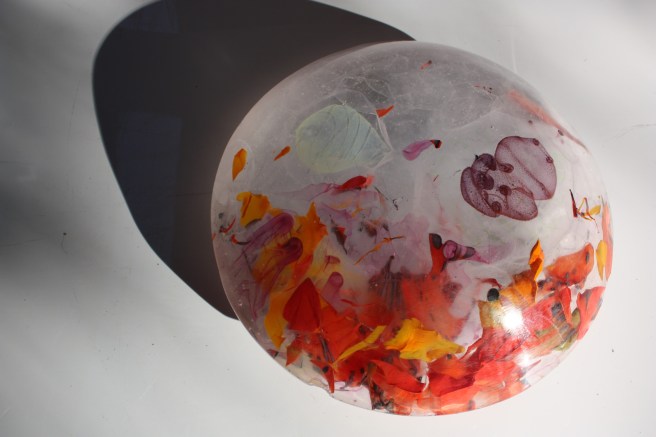
Vibrant shapes and colours.
She describes the show as a conclusion of things in her heart, a spiritual journey which explored why she did what she did. She started her artistic career by studying sculpture with no idea that glass sculpting would become her endgame.
She finished her degree in Fine Arts at TUT in 2000, received a scholarship to study glass design in Sweden in 2007 and had extensive training as glass blower in the UK, Germany and Scotland. Currently she is director at Smelt Glass studio together with Michael Hyam where she designs work and produces art. She also lectures at TUT.
She sees herself more than anything as a conceptual artist exploring the realm of abstract forms and then as a glass blower who practises a craft or a skill. In the past 12 years she has been part of many group exhibitions locally and abroad and has worked on many different projects including Afrika for Coca-Cola Lab, Light for Randlords Bar, an installation for the Graskop Hotel and Squaring the Circle 2 for the Michelangelo Hotel. She has also featured as a finalist in many competitions, including Absa Atelier, Brett Keble Artist Award, Ekurhuleni Fine Arts Award and FNB Crafts Award.
In 2003 she established a glass design company called Molten. The products include everyday articles, limited edition vases, bowls and custom-made lights. She also works with many architects and interior designers producing custom made lights and commissions. In 2009, Molten won the Elle Decorations – Edida Awards for best tableware in South Africa.
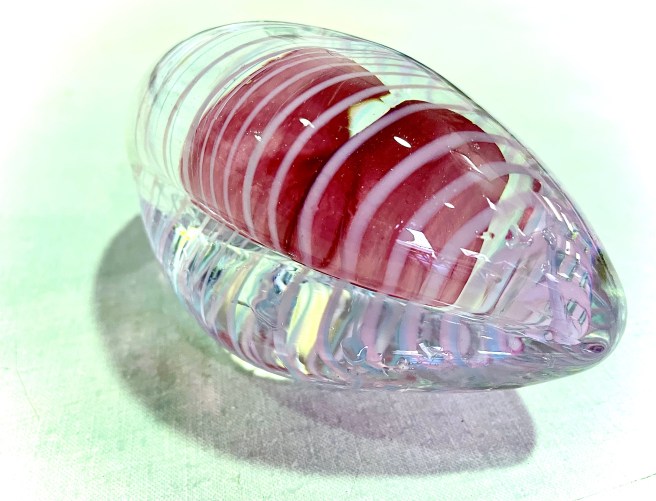
A play with glass and colour.
She has always had a passion for teaching and sharing her skills while developing glass in South Africa. She taught at TUT between 2004 and 2008 and from 2008, until 2011 she trained young up-end-coming artists and rural glass blowers from KwaZulu-Natal at Smelt glass studio. She has also hosted a student project for the National Arts Council and was part of the Ekurhuleni mentorship programme in 2009. Currently she lectures part time at TUT’s fine arts department.
The reason there are relatively few (or perhaps unseen) artists who work in glass is because it is such a difficult art form.
With the title of her exhibition RUACH, a Hebrew word translated in three ways ̶ breath, spirit and wind ̶ she offers the following quote by American sculptor Janet Echelman to encapsulate the exhibition:
Breath is a strange thing, it is both tangible and intangible. You can sense it and feel it. It touches you, but you can’t grab it. You cannot completely control it, but it can completely control you. There is a power connected to wind and breath. A strong wind can tear down a city, a breath taken away always ends a human life.
It is how she feels about her work, the blowing of the glass naturally emphasising everything she feels, while the lack of control and never knowing what the final result will be following the process in the furnace, presents a specific challenge.
“Glass is a slow liquid and with the breathing and the blowing, as an artist, I am completely involved,” explains Martli. And part of the creative process is to push rather than fight the uncontrollable, because part of the process is to let the glass happen.
As clear as glass.
She describes her colourful glass sculptures as floating objects and that’s also the way the exhibition will be displayed. It’s all about movement, whether visible or not. It’s there in the sculptured pieces. Some of her work she titles landscapes, but the thing that struck me most was the individuality of her work and her electric colour combinations.
“If you engage and see it,” she notes, “you will be moved.” And I agree. With her guidance especially, the work invites you to enter this world and to learn to see – again.
“It’s about that moment just before the sun goes down,” she says. It’s brief but brilliant and if you catch it, it’s magical.
“You can choose to dwell on all the darkness in life,” but not this artist. She is intent on sharing the love. “My work is happy and features the brightest colours.” And all of this contributes to the emotional impact of the work.
She works intuitively and feels that there are specific keys that unlock the meaning of the work. She is doing a few walkabouts, which I would encourage art lovers to attend because it certainly adds to the depth and understanding of what she hopes to achieve.
But if you are fired up by your own narrative, that will also make her smile. She is intent on sharing the love and the light.






















 De Beer Necessities