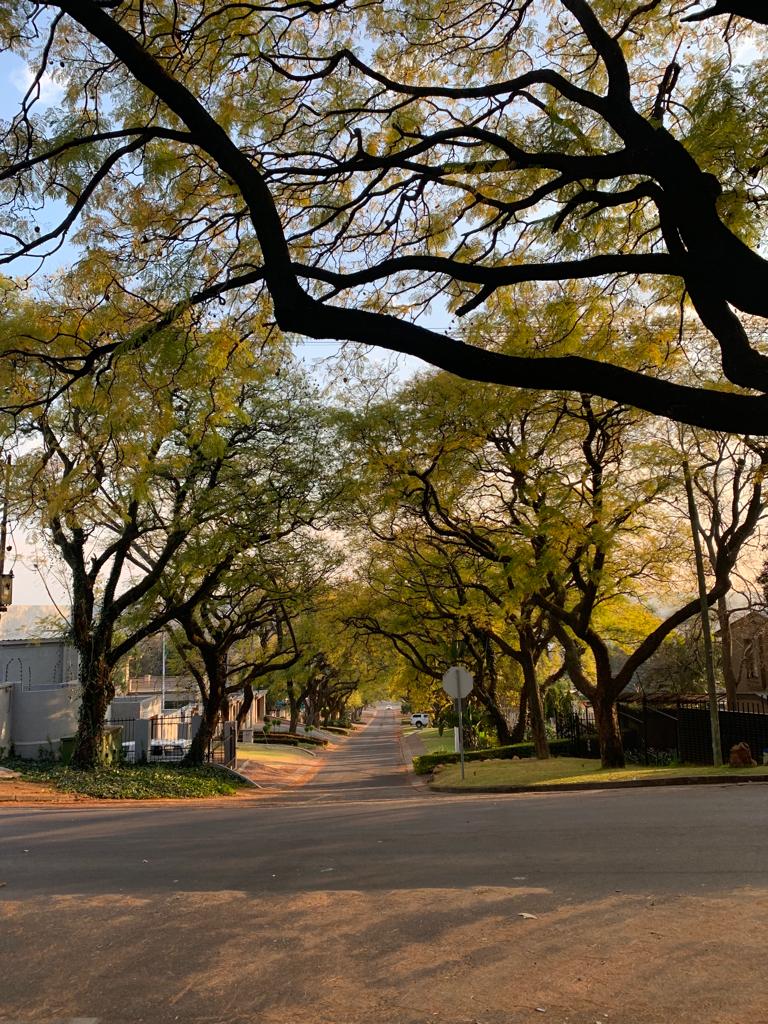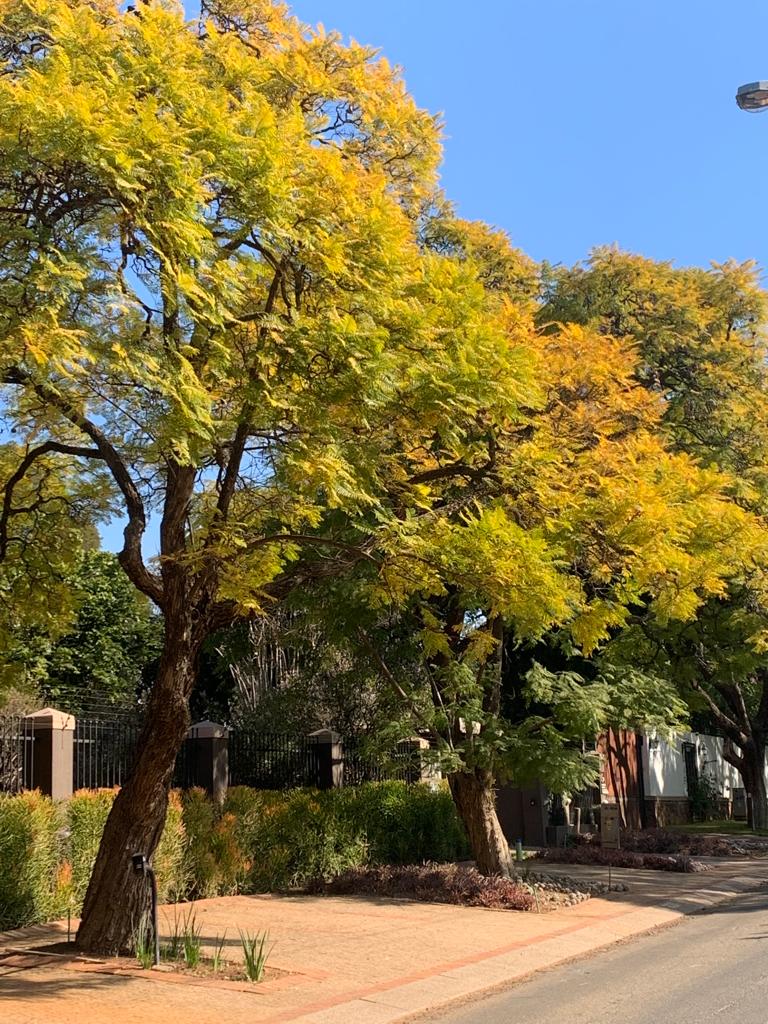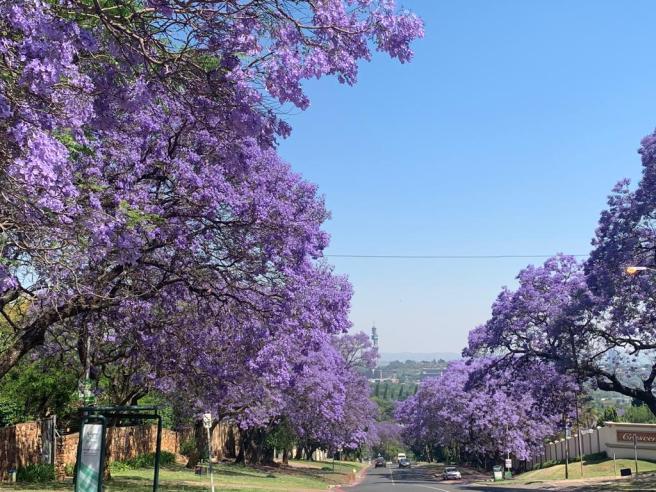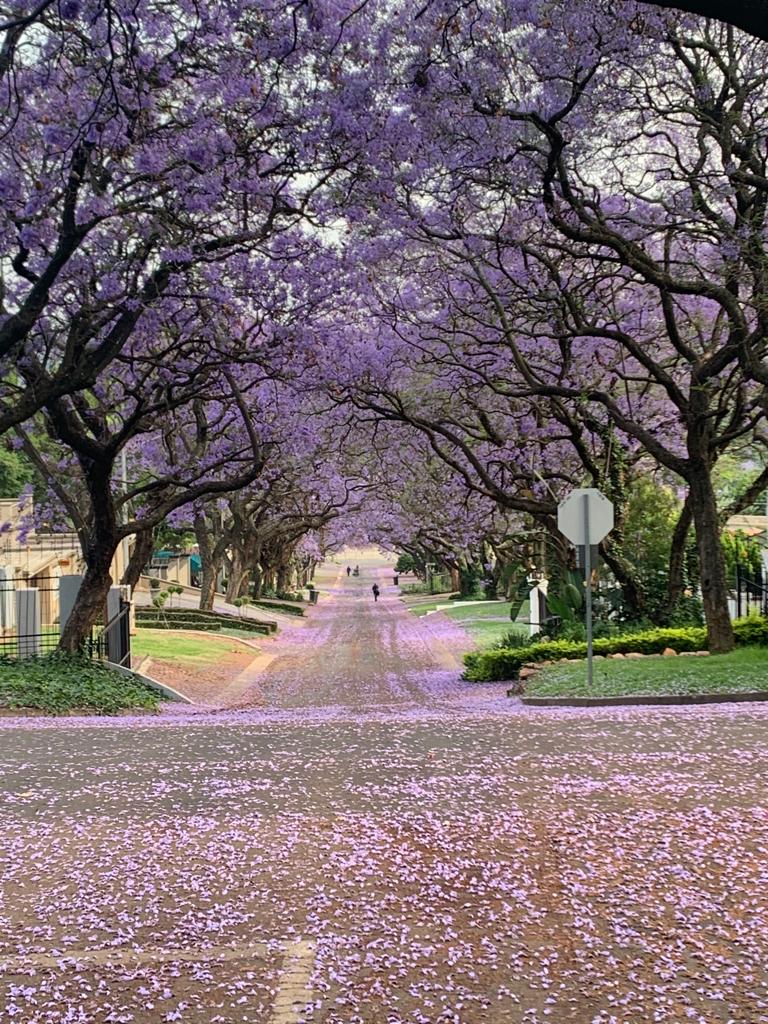
THE PURPLE HAZE OF PRETORIA’S JACARANDAS CREATES THE PERFECT PICTURE OF A CAPITAL CITY

DIANE DE BEER

PICTURES: Thomas Honiball

PRETORIA, jakarandastad,

Dis weer Oktobermaand…

Miskien is dit die rede dat

Ek só verlang vanaand,

Want hoeveel jare het jy nie

My life en leed gedeel

En stil geluister wanneer ek

My ou kitaar bespeel

This is the first verse of singer/songwriter sublime Koos du Plessis’s ode to Pretoria.

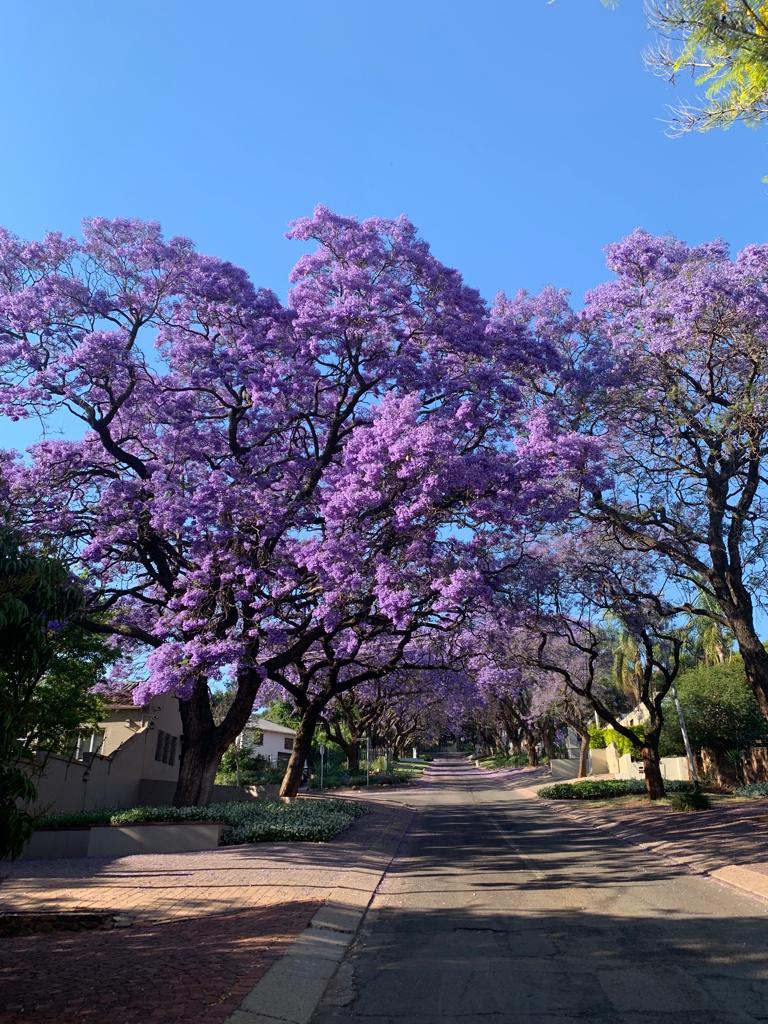
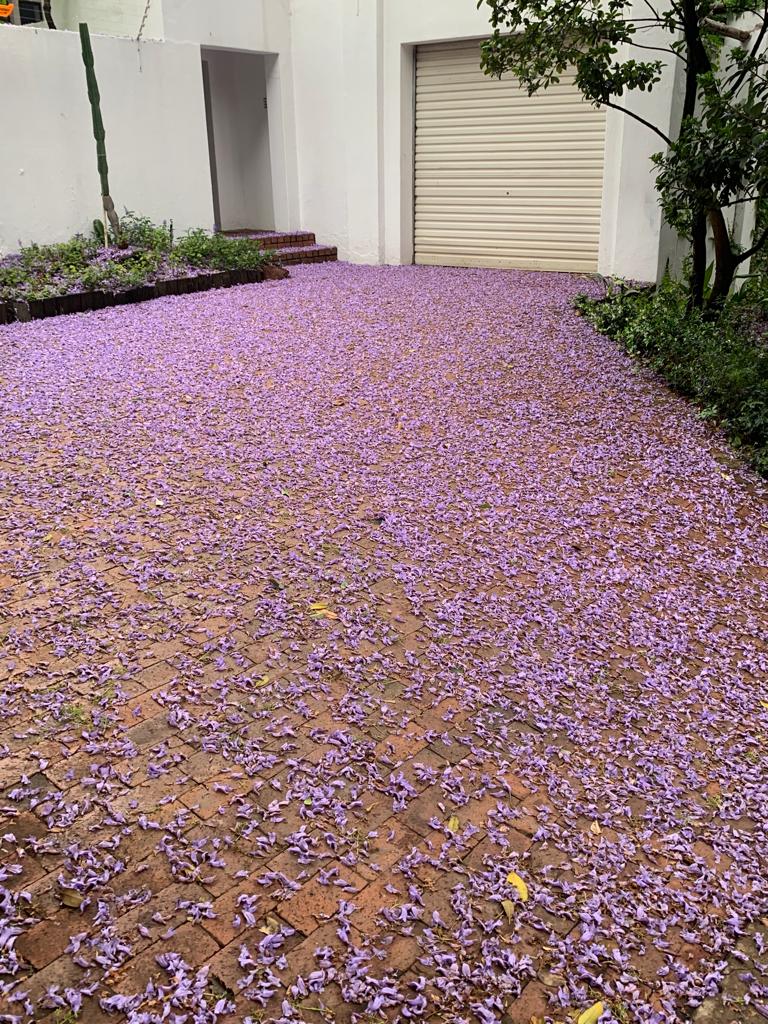
He frames his beloved city in a cloak of purple haze, which is how many of us identify the most colourful capital city.

But much controversy has surrounded this emblem of the city over the years and there are visions of fights for this particular tree and the replanting and upkeep of the city’s pride for those of us living here long enough.

Money talks, and the hordes of tourists who visit the city annually is proof enough for everyone who witnesses this influx that, at least for the moment, Jacarandas are allowed to flourish and bloom in all their splendour.

The four annual stages of the Jacaranda tree

Jacaranda trees were first imported from Rio de Janeiro by Baron von Ludwig of Cape Town in about 1830. A travelling nurseryman from Cape Town named Templemann brought two Jacaranda trees to Pretoria in 1888. He planted them in the garden he had laid out for Jacob Daniel (Japie) Celliers at Myrtle Lodge in Sunnyside, shortly after it was established as Pretoria’s second suburb.

In the 1890s Celliers secured a concession from President Paul Kruger to plant trees in Groenkloof for the Government of the Republic. James Clark, a wholesale and retail seedsman, florist and nursery, received the order to import seeds from Australia.

The story goes that among the consignment of eucalyptus seeds Clark imported for planting in Pretoria in 1898, a packet of Jacaranda seeds had found their way.

On 16 November 1906, the 51st anniversary of the founding of Pretoria, Clark presented 200 Jacaranda trees to the City Council as a birthday present to Pretoria. These trees were planted in Bosman street in Arcadia Park where the Pretoria Art Museum was established in 1864.

Frank Walton James was appointed as town engineer in 1909. He suggested the planting of Jacarandas in all the streets of the town to enhance the status of Pretoria as the proposed capital of the Union. When Jameson left the Council in 1920, fewer than 6 000 trees had been planted. By 1939, with the constant encouragement of Jameson, the number of trees had risen to 17 000.

Today there are approximately 40 000 Jacaranda trees in the streets of Pretoria.

And these facts were all handed to me in a letter by Jacaranda activist, architect Thomas Honiball, a man who has always battled and fought for the preservation of Pretoria as the beautiful city it is.

Some of us still remember the huge controversy about the west façade of  Church Square, which was going to be demolished, but was finally left intact thanks to Honiball and a committee he had established with exactly this in mind. And the city proudly hails this part of its heritage today.

The aforementioned letter was written with a request to the Minister of Agriculture for the planting of Jacaranda trees in the city of Tshwane – and fortunately those battles were hard fought and won.

For Thomas, who lives in Nieu Muckleneuk with a spectacular view of Jacaranda blossoms when they are in full bloom, these trees hold and embrace the spirit of the city. He believes they were first planted to establish the character of a city that would be named the country’s capital – and thus it was.

“We have something that no other city boasts in such abundance,” he says. He also argues it is especially the city’s layout, the long streets, and the koppies,  that allow for the spectacular showing of this tree Pretorians have claimed for themselves.

And he has many anecdotes to claim the city’s towering Jacaranda status. “I was told the story that Elon Musk’s grandfather when he flew over the city and saw the spectacle of the purple blooms was so overwhelmed, he emigrated here,” he says.

He also remembers as a young Free State lad paying his first visit to the city and sighting the purple spectacle, how it overwhelmed him. “It was just so pretty!”

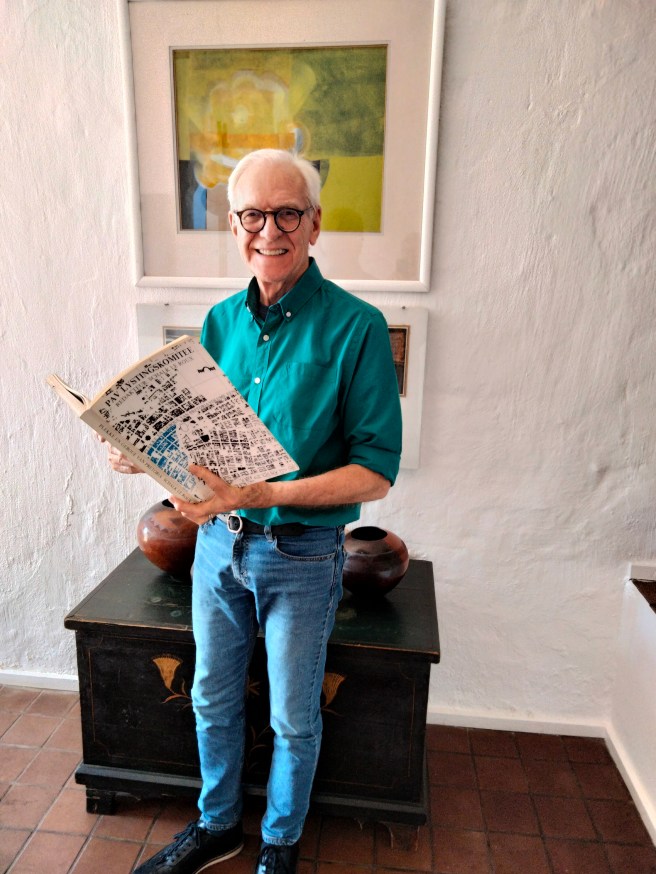
Thomas Honiball and the book of listings he instigated.

That’s not all he achieved in this city. He was also instrumental in the production of a book with the listing of buildings worth holding on to, often used by city planners to save specific buildings which form a part of the city’s heritage. It’s not something South Africa has always done well and we need these visual planners who understand the importance of cherishing the old while celebrating the new.

He is very aware that everything cannot be kept simply because its old. There’s a saying that if a city centre doesn’t change, keep up with the times, it will die.

Fortunately for Tshwane, we have citizens like Thomas Honiball in our midst who have the city’s interests at heart and understand the importance of the picture perfect visual that keeps us all mesmerised.

#MeToo Movement Marches Forcefully Against Powerful Monsters who For Far Too Long Had Their Way With Women

It’s been a momentous time in the #MeToo sphere with the Harvey Weinstein convictions – finally. And even with two hard hitting books out there detailing all the women and what they have gone through, the jury still found him culpable of only two of the five counts. With many other similar issues swirling about, DIANE DE BEER speaks her mind:

Harvey Weinstein at court
Harvey Weinstein playing the victim at his recent New York trial.


There’s hardly a woman who works professionally that won’t have some kind of memory about sexual harassment. I suppose with everything being aired these past few years, those of us who haven’t suffered sexual abuse should count ourselves lucky.

But I was surprised about my emotional response to Bombshell, the film starring Charlize Theron, Nicole Kidman and Margot Robbie about the horrific abuse by Roger Ailes and many more who were part of the Fox empire.

I had seen and was fascinated by The Loudest Voice, the TV series told with the accent on the bullying tactics of Roger Ailes and the culture of sexy women he created in the Fox Newsroom and on screen.

Bombshell poster
The poster says it all! Power in triplicate!

When Bombshell arrived, I felt I had viewed enough of this particular story, until someone whose judgement I trust told me to see it as this was from the women’s point of view. I didn’t realise the impact that would have on a very personal level which says so much about the culture most women find themselves in at work.

We don’t even notice because it is so prevalent and probably to most of us “normal”, so when seeing this particular film, which shows especially the environment created specifically so that this kind of thing can flourish, my flesh crawled – to my surprise.

But it was no surprise that with the final credits a notice announces that the women received 50 million dollars in damages: while Roger Ailes and another Fox News accused, Bill O’Reilly, received 65 million dollars’ worth of parting packages.

Fox News is the extreme so there’s no turning away from that aspect of the film. And with these three powerful actresses in control, it resonates dramatically and memories came flooding back. “How are the dollies doing?” was a particular rankling phrase coming from a boss or the fact that you were told that your salary increase was determined by the fact that your partner worked in IT. “That means he earns big bucks,” was the feeling. And the list of constant humiliations goes on.


And then when these men are “caught”, they are so powerful that they manoeuvre everything and everyone around them. Read Ronan Farrow’s book (reviewed in this space earlier) Catch and Kill and She Said and see what happened to these award-winning writers in the process of writing the book. It wasn’t only Weinstein who came out guns blazing, he had many who colluded and further made it tough for anyone who wanted to expose his evil practices.

And perhaps what upset me the most was the humiliation that these women, many of them with powerful careers (and not because of Roger Ailes), had to go through on a daily basis. If this is the man who employs you, how does the rest of the world view you? He in fact lays down the rules of how you appear on camera and what you are allowed to say.

Something that was always an unwritten rule in media was that your newspaper had your back if those on the outside were upset with your reporting of the facts – the newspaper would stand up for you and in that way, bring balance to the power dynamic. But that’s not what happened at Fox. When Fox news correspondent Megyn Kelly was taunted by President Trump, it was another stick in the Ailes arsenal to keep her in line.

These constant games are also part of the ritual to keep everyone functioning in place and not to overstep or rock the boat. You learn very early on when to hold back and when to fight for specific rights. Some you win and others you lose.

Others make you smile – wryly. The first time women were really promoted into certain positions was post ’94 when they were included in the list of appropriate candidates because of the neglect in the past.

Suddenly in newspaper offices around the country, women started appearing in management positions and even the first female editors started to emerge. It wasn’t a sudden belief in the ability of women. White men just thought them the lesser of all the evils!

Bombshell Robbie
Bombshell’s Margot Robbie represents the epitome of what Roger Ailes wanted the Fox women to exude.

And so one could go on and on. And that’s why women around the world were thrilled about the Weinstein conviction but…

And said best by the following tweet:

Shailja Patel: @shailapatel: (Kenyan poet, author, feminist, activist, now self-exiled after she accused a fellow Kenyan writer of sexual assualt and was ordered by the court  to pay damages and apologise to the man who assaulted her, so she left the country.)

No guilty verdict of jail sentence, even for life, can restore what Harvey Weinstein stole from his victims. Or repair the harm he inflicted on his decades-long reign of terror over an entire industry. But this is a tiny crack in the wall of impunity. Let patriarchy tremble.

She nails it!. So while we all watch and wait, the battle goes on but at least because of their shining a light so strongly, the #MeToo movement is starting to show results.

Social Media and Smartphones Dictate the Pace but Detract from the Vibe

Social media and smartphones can play havoc with the way you understand the world. DIANE DE BEER is hoping for a reality check where the picture doesn’t tell the only story:

20181015_202015
Smartphones on the march


There are lots to say for both these modern amenities but sometimes – and that probably has much to do with my age – I can’t help but wonder about real life and slow living that is lost along the way. Two examples of their impact had me puzzling just a bit recently.

The one had to do with commuters on a train in Tokyo all so lost in their smart phones, they might – and probably are – be living in a parallel universe. Back home, an invitation to sample the new summer menu at one of Joburg’s premiere restaurants had me struggling to make sense of the moment as single plates of every dish was passed around for diners to sample, photograph and promote to the outside world – at breathtaking speed or that’s how it felt.

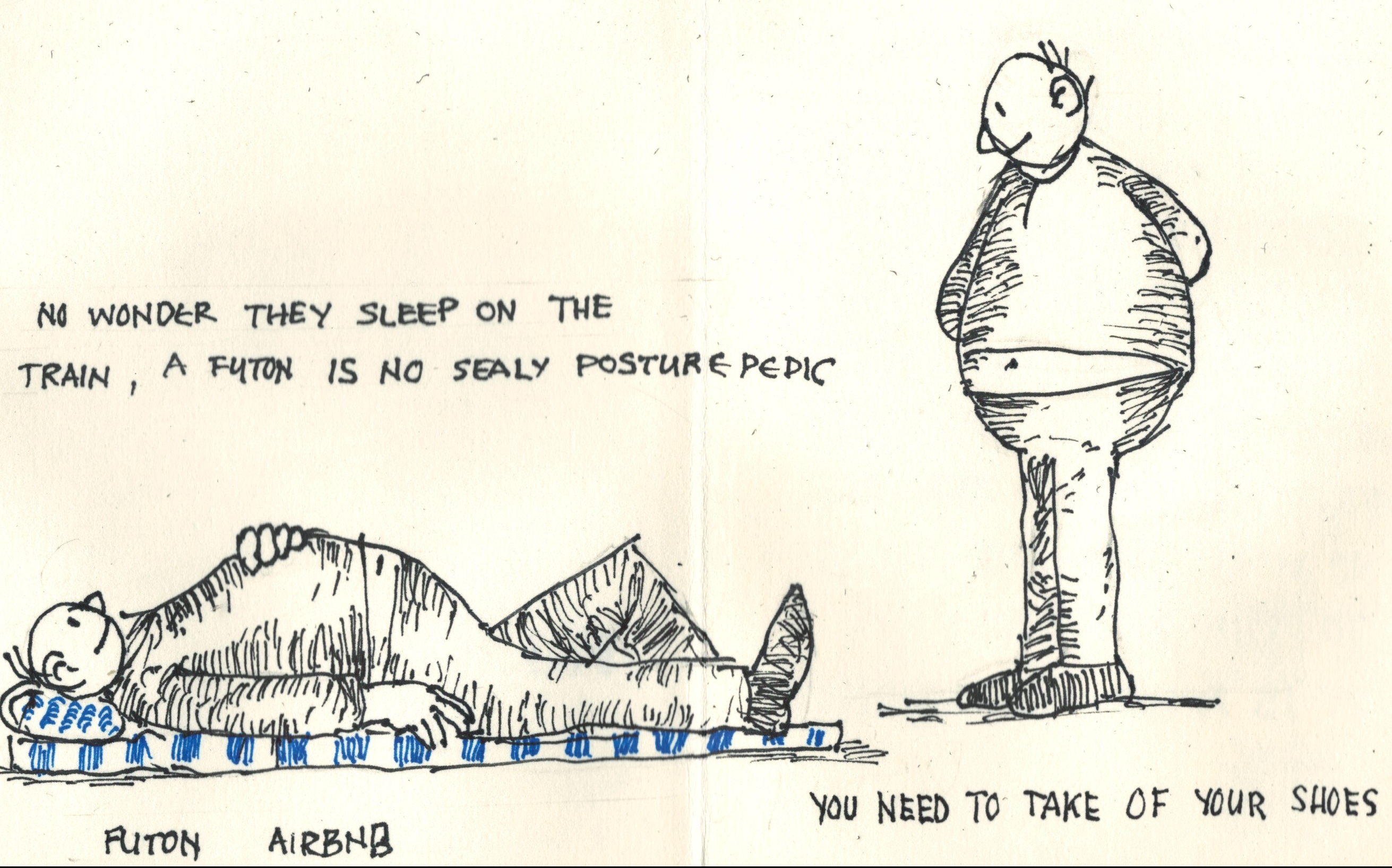
On a trip to Japan, our mode of transport in Tokyo was the train – sometimes above the ground and, when we couldn’t do it any other way, underground. But this didn’t really make any difference to the phone phenomenon which was so pervasive it had my whole party pondering the merits of easy access to … well almost anything. And that is the problem perhaps.

It wouldn’t it be smart phones I suppose if we didn’t have perfect access?

It doesn’t take long for foreign travellers to notice that everyone on the train is either on their phone or sleeping. That’s sounds like a rather mild condition when stated like that. But what I really mean, from the moment you walk into the station and then arrive at the right platform and step onto the train, there’s no eye contact with any individual who is probably making this journey twice a day.

It makes sense that they would use this instant source of entertainment to keep themselves occupied during what must be a tedious part of their day. But it is the level of engagement which completely ignores the public space they find themselves in that is quite fascinating.

Given the Japanese innate politeness, it feels especially as if the young men have found a way of ignoring all the social conventions of their society by simply locking into their phones. From the moment they step onto the train and off and beyond, they have their phone pressed – up close and personal – right into their face and they do all of this while grabbing a seat and then they stay put.

There’s no acknowledgement of pregnant women or elderly individuals who might warrant a young man giving up his hard-earned seat – and which they are advised constantly to do via public announcements and one understands why.

But there’s also no embarrassment or losing face, because he is locked completely off from the world happening around him. If they were reading books or even watching news, that would also add some justice to the endeavour but it’s usually games. We did spot some manga to our relief and perhaps three books (always manga) and perhaps two newspapers on our journey.

BirthDayFatman_0001 (16)

Those on the train who aren’t on their phones (both men and women) are asleep, standing or sitting, sometimes with the phone pressed to their noses. Admittedly, commuting is tiring and while we are on holiday with all the time in the world, this is a hard slog – before and after work – either way.

What is disturbing though is the absence of discovering who these people are. They’re simply missing – any time of the day. It seems that’s what the Japanese do – particularly in Tokyo –when on their commute. The sleeping is less disturbing because tiredness in today’s world is a universal trait amongst workers.

The stress and long days are easy culprits but the cutting off from the outside world, your fellow travelers, to the point of not making any contact at all cannot be healthy. Instead you’re in communication with a machine.

Our fellow commuters seemed lovely people, but who could really tell?

Similarly, a recent media lunch at 54 on Bath’s Level Four to test their new Summer Menu was equally soulless. Don’t get me wrong, it’s not the function that’s at fault, it’s what the world has become and what we have to do, to survive. By ignoring the process and going simply for goal, depth and thus lasting impact is missing, to my mind.

Previously – and not that long ago – a tasting menu would actually include having a meal, conversing with you fellow diners, testing the temperature of the room for conviviality and all those other benefits that add to a great meal.

Call me old fashioned and I am when it comes to this kind of stuff, but simply gathering around a table while the starters, then mains and concluding with desserts are placed on the table while everyone has the chance to sample, doesn’t do the food any favours. There’s too little time to savour and chatter about the food, because everyone is busy taking pictures and posting it on one of the many social platforms all of us use to promote whatever catches our fancy and an event expects.

It’s not that I want to fault the restaurant or their marketing people. This isn’t their doing.  It’s how media works now and how it works best. I love the instant thing and the fact that one can get your message out there.  I use it myself to promote my blog and anything I might post – how could we possibly have done any of this before? It opens new vistas for those who love to write (or want to promote anything else) and want to share what they experience with like-minded souls who might tune into a particular vibe.

Level Four starter_Sweet potato ginger tart (002)
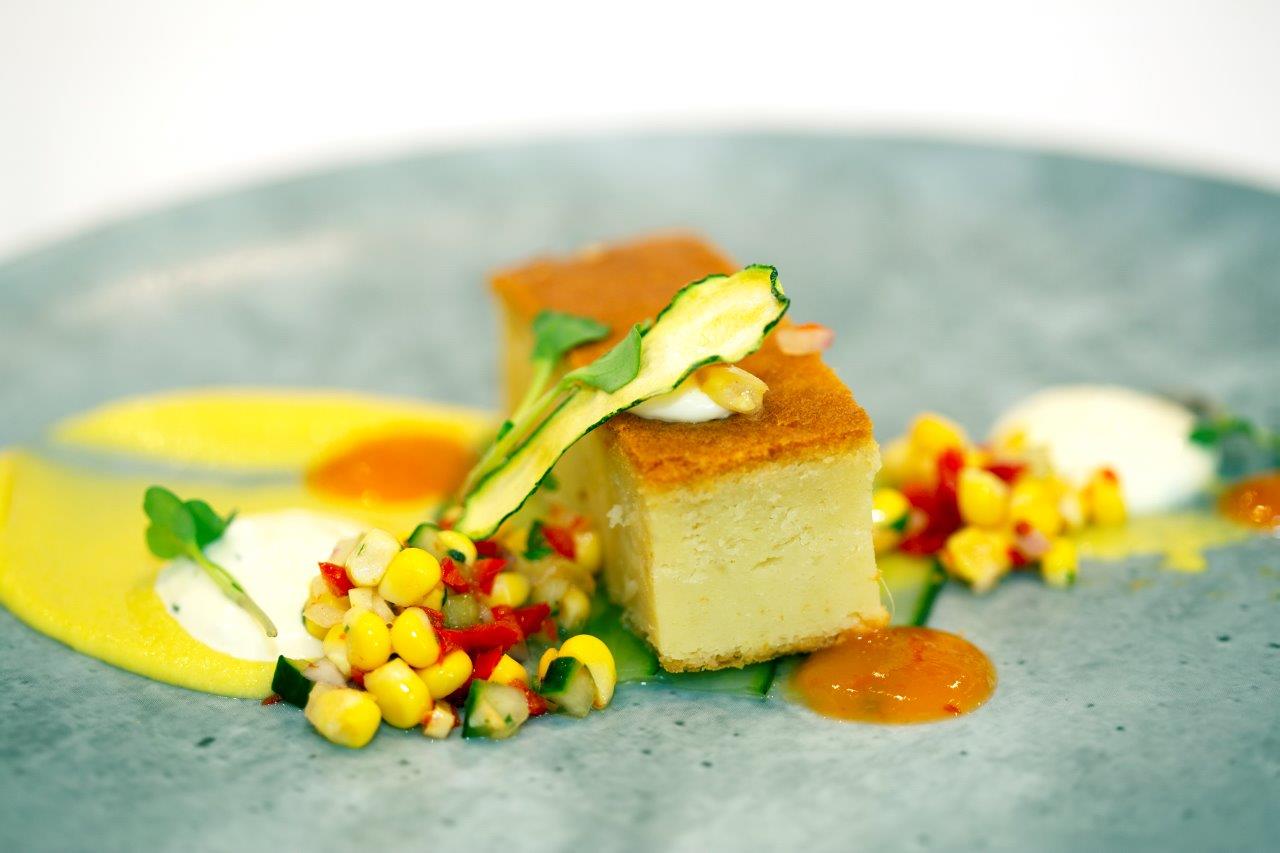
Sweet potato ginger tart starter

It’s not that difficult to give a snapshot and a soundbite about the dishes as they pass you by. The starters feature seared yellow fin, fresh raw peas, avocado mousse, wasabi powder, and pickles; the ‘Black Angus’ carpaccio, quail egg, pomegranate, truffle mayonnaise, and parmesan; the chicken and sundried tomato terrine, with smoked tomato, baby beetroot, radish, apple gel and roast nuts; and my favourite for its originality, the sweet potato and ginger tart, with spicy pineapple gel, corn, lemon cream, and pickled cucumber.

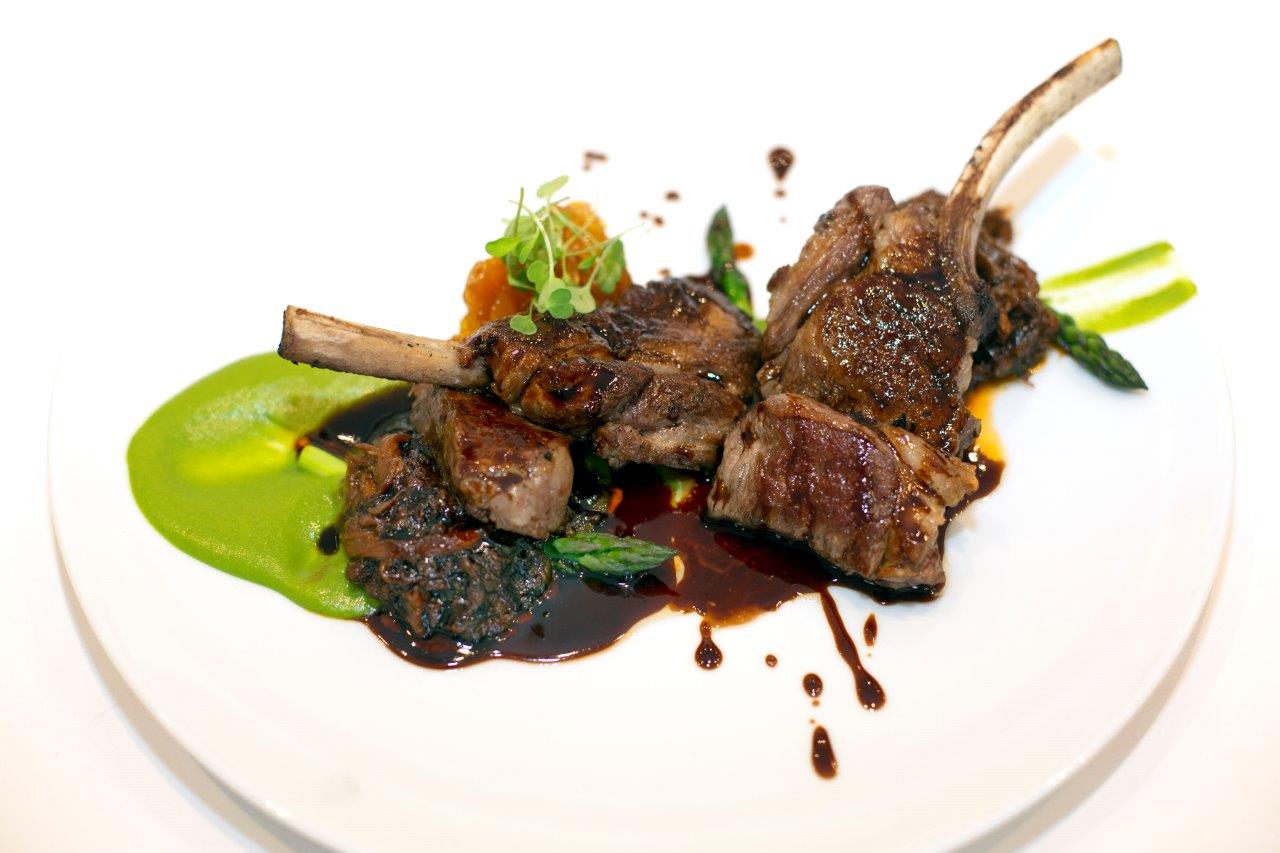
For mains I would opt for the nose to tail eating with the ‘Marino’ lamb cutlet, loin, confit belly, braised shoulder, with pea puree, and asparagus which is hearty and rich in flavour yet strangely works as a summer dish, while with dessert, opt for two classics, lemon crème brûlée or vanilla pannacotta, both with a summer swirl of berries interpreted in different ways.

_'Marino' lamb cutlet (002)
Marino lamb cutlet

The accent is on quality ingredients like yellow fin tuna, duck and Wagyu sirloin while punting local with fresh produce and artisanal cheese. Dining at 54 on Bath has long established itself and with their exec chef Matthew Fox inviting all his chefs to the party to contribute their own dish, there’s an individuality to the different dishes which works well.

There’s a lot going in its favour, but sadly for me personally, sampling a new menu, I want an individual bite of food which I can savour if not in my own time, given some time rather than sitting in the middle of a hectic scramble to get it out there briskly please. It’s as if the chase is on because the ice cream might melt before the picture hits its audience.

Lemon créme brulee (002)
Lemon crème brûlée

Is it only me? Or do I simply long to focus on more than just the destination? Personally, eating has as much to do with the vibe as the visuals.