Visionary Dinners by Consumer and Food Sciences at UP Future Africa Campus

A couple of departments from the University of Pretoria combined forces to focus on foraging, future African foods and a South African menu, which embraces not only the skills but also the cuisine worth celebrating on our continent last year. With food memories still lingering and their latest indigenous dinner on the horison, DIANE DE BEER captures the experience:

Future Africa pictured by Kaylan Reddy
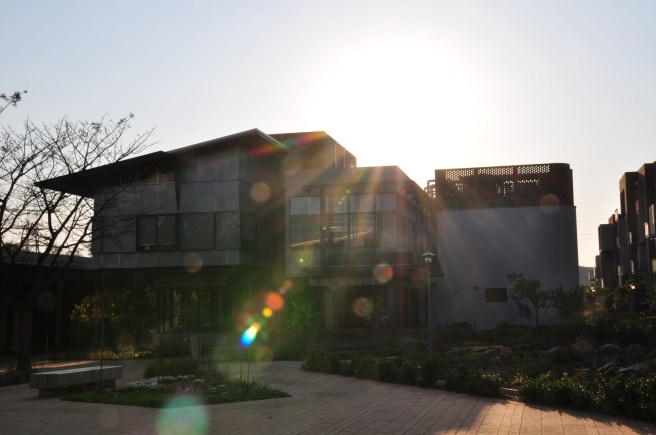
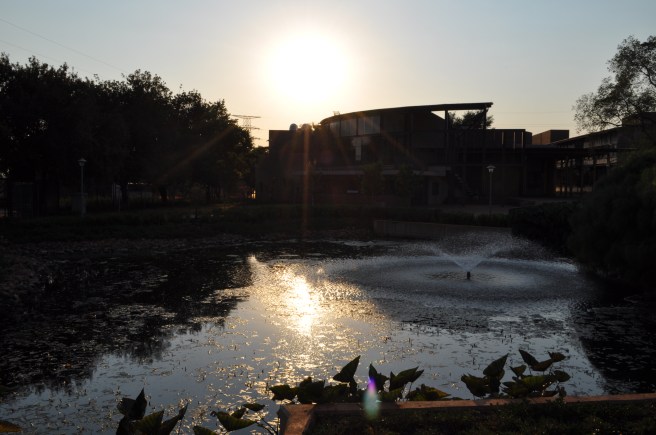
Water feature and indigenous plants at UP Future Africa Campus. Pics by Kaylan Reddy.


“Enjoy the fruits of our labour,” invited Sandile Finxa, one of the final year Hospitality Management students from the Department of Consumer and Food Sciences of the University of Pretoria.

They were hosting (and she was responsible for the menu) a special dinner to celebrate our indigenous food of which some of these ingredients were foraged on their Future Africa Campus where the dinner was held.

The Future Africa campus is the new research facility of the university with specially planted gardens purposefully designed and developed to cultivate and produce edible and indigenous plants.

Much of the expertise and help was extended by botanist Jason Sampson from the Department of Plant and Soil Sciences, the man responsible among others for the botanical garden on the main campus of the University of Pretoria which holds a collection of living plants that is scientifically managed for the purposes of education, research, conservation as well as community service.

With all the UP gardens, Future Africa included, the aim is to raise awareness of our indigenous plant heritage and if you’re fortunate to be taken around the campus by Sampson, it becomes a living organism with aloe walks on the Hillcrest campus and his magnificent fully fledged plant wall for the masterfully designed Plant Science building which functions as insulation as well as an aesthetically pleasing feature while also mimicking the natural habitat of some very unique plants.
Future Africa by Kaylan Reddy
Scenes from Future Africa

He is a font of knowledge and with his passion for especially indigenous flora and to the benefit of the Consumer and Food Sciences students, a love of food, he walks you through the Future Africa gardens, still in their infancy but constantly evolving, and if you listen to him talk, have dishes rolling off his tongue.

“We developed a menu to celebrate and use some of these ingredients that we were able to harvest and include them in our menu (like water chestnuts and makataan),” explained associate professor Gerrie Du Rand in charge of the Hospitality Management Final year students who prepared the dinner also under the guidance of Dr Hennie Fisher.
Future Africa4
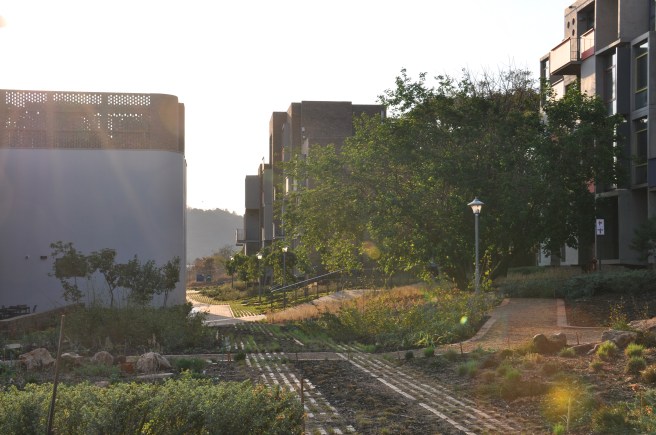
Some of the Future Africa indigenous gardens.

“What is also exciting about this garden is the fact that many of these plants are unusual and not freely available and it provided our students the opportunity to celebrate these ingredients in a challenging manner with an unusual menu.”

In fact, as Finxa explained, in case you’re wondering who did the harvesting of the products that found their way onto the dinner plates, they had to get into bathing costumes to pick the water chestnuts, but the results were well worth the effort. And the learning experience for the students, many of whom had never heard of some of these ingredients, was invaluable.

With a visiting professor from the US raving about the menu and resulting dinner, it was obvious that this kind of meal could have a huge culinary impact on foreign visitors. But also, local diners. How many of us would think of serving ting in risotto style?

UP menu advisor
Menu advisor Sandile Finxa


The menu was priceless. According to Finxa, the menu was inspired by the gardens of Future Africa. “Each item was made with the intention of highlighting the very rare, but indigenous plants of Africa found within our gardens,” she noted.


Calling our taste buds to attention, the amuse bouche consisted of savoury Msoba panna cotta, a pickled aloe aborescens and spekboom salad with wild African sage croutons. Sounds like a mouthful but the different flavours and textures combined brilliantly.

UP amuse bouche
Amuse bouche: savoury Msoba panna cotta, a pickled aloe aborescens and spekboom salad with wild African sage croutons. Dinner pictures by Marlow du Plessis.

Perusing the menu, she explained the different choices and methods selected. “Umsoba/Msoba, also known as nightshade/nastergal, are traditionally used to make sweet jam. The plant has a savoury flavour and beautiful purple hue and so we adapted it to create a savoury dish instead.”

But it didn’t come easy. After many mishaps to keep the beautiful purple colour, they added some vinegar to the process and voilá. The big-leafed spekboom mixed with the pickled aloe aborescence is a different version of the one that has become so fashionable these past few years and packs an even bigger punch.

UP starter
The starter: a panfried amadumbe gnocchi on African water chestnut mash with roasted balsamic beetroot, guinea-fowl and beetroot extract and biltong dust.

The starter, a panfried amadumbe (root vegetable) gnocchi was served on African water chestnut mash with roasted balsamic beetroot, guinea-fowl and beetroot extract and biltong dust. “Cornstarch was used for the amadumbe instead of flour making it gluten-free and the freshly picked water chestnut (à la swimsuits) with twice the nutritional content, has a sweeter, nuttier taste than the tinned variety and also retains a crunch after being cooked” which adds to the eating pleasure.
UP table deco
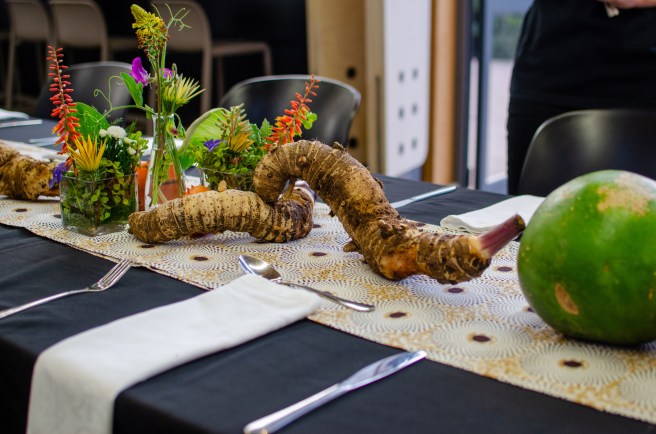
Imaginative table setting.

These two introductory dishes telegraphed the splendour of the rest of the dinner. With the mains centred on the seared sous-vide Kudu loin with ting (mabele/sorghum), prepared risotto style most spectacularly, it was embellished with butter-tossed waterblommetjies, rooibos-smoked carrots, creamed morogo and a venison red wine jus.

Showing off the versatility of ting was why it was done risotto-style and it worked magnificently. Could this perhaps be our first African-inspired risotto?

The amaranthus plant (known as Marog) is grown on the university campus and was served in a special Pretoria nostalgia-tinged way – creamed. It was a hearty and inspired presentation.

UP dessert
Dessert: milktart given a playful twist by turning it into a macaron filling with amarula.

Dessert was a traditional milktart given a playful twist by turning it into a macaron filling and with amarula, one of our most loved cream liqueurs paired to create an ice cream. Kiwano (commonly known as African horned cucumber) was turned into a gel, introducing a refreshing flavour and brightness to the dish.

With a sweet packet of glazed makataan as a take-home gift, a Cape-Malay koesister and coffee on the way out, the dinner represented an African taste sensation served in stunning style.
Robertson winery and Fat Bastard sponsored the beverages with grand aplomb.
Future Africa
The spectacular UP Future Africa Campus.

The innovative architecture of the Future Africa room, the flora and fauna from their gardens serving as table decorations, and as close to an early African summer night in Tshwane, mid-winter, all combined magnificently.

If this is where the culinary skills of our future chefs are focussed, bring it on. For too long, we have been serving often exquisite food to our foreign guests but apart from the odd braai or bobotie, not indicative of our very own culinary riches.

What these young students managed to achieve was a dinner flavoured and textured proudly South African.

Combining strengths and forces, Dr Hennie Fisher and Prof Gerrie du Rand and their Consumer and Food Sciences students, director of Future Africa Prof Bernard Slippers and his team as well as inspired botanist and curator Jason Sampson from the Department of Plant and Soil Sciences, all from UP, have established a benchmark in South African cooking which should be expanded joyously.

It was one of the most visionary dinners held by The Department of Consumer and Food Sciences, and again, the head of Consumer and Food Sciences of UP, Prof Buys, in partnership with Chilean Gastronomic Engineer, Prof José Miguel Aguilera, is hosting an evening of indigenous African Cuisine prepared by the final year Hospitality Management Students.

The dinner will consist of four courses, each with a specially selected wine and will be held on Friday, 13 March at the Future Africa Hillcrest UP Campus. Dress is semi-formal, the dinner costs R350 per person, and booking will only be confirmed once payment has been received.

For further enquiries and bookings: email Taylen Kench at u17196982@tuks.co.za


Majak Bredell is an Artist with a Mission

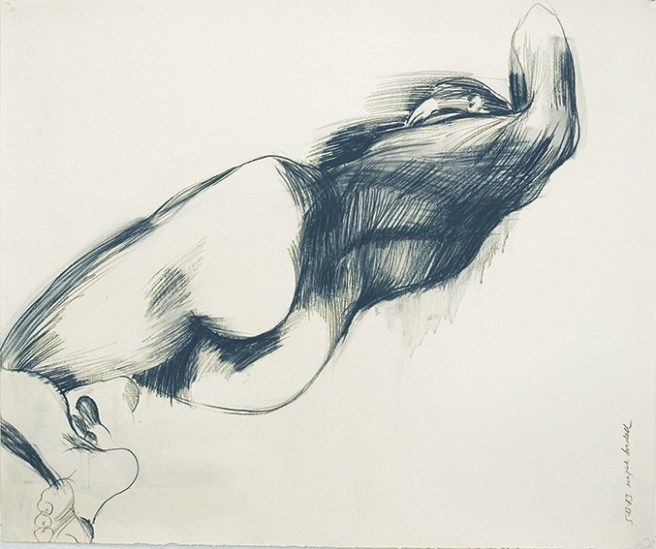
Majak Bredell n1983 study
Majak Bredell – 1983 study

Majak Bredell is one of those artists whose exhibitions feel like an adventure you’re undertaking as she maps out the journey you’re embarking on. DIANE DE BEER tells some of her story:


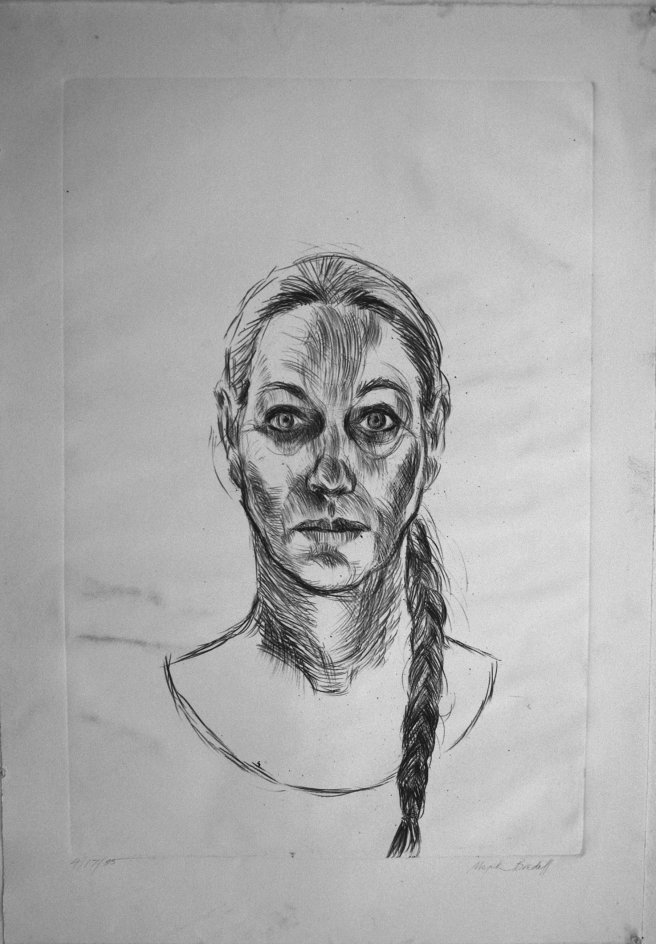
Majak Bredell - Self portrait 1995 (002)
Majak Bredell – Self portrait 1995

Majak Bredell’s upcoming exhibition(s), MAJAK BREDELL: THE NEW YORK YEARS: 1981-2003, is a case in point. Not being someone who believes in keeping it simple, it is a curated collaboration between the Association of Arts Pretoria and the Pretoria Art Museum suggested by the association’s director Pieter van Heerden.

When you can, go big, is what Majak does well and because of the scope, she was thrilled about the collaboration.

The two part retrospective overview in the two galleries is accompanied by a full-colour catalogue that includes an essay by the curator, Prof. Elfriede Dreyer.

Looking back at her life, when Majak emigrated to New York in 1981 with her husband and two young children, she embarked on a journey that would lead her “from the confines of a traditional marriage on to the riches this world-city had to offer a searching artist.”

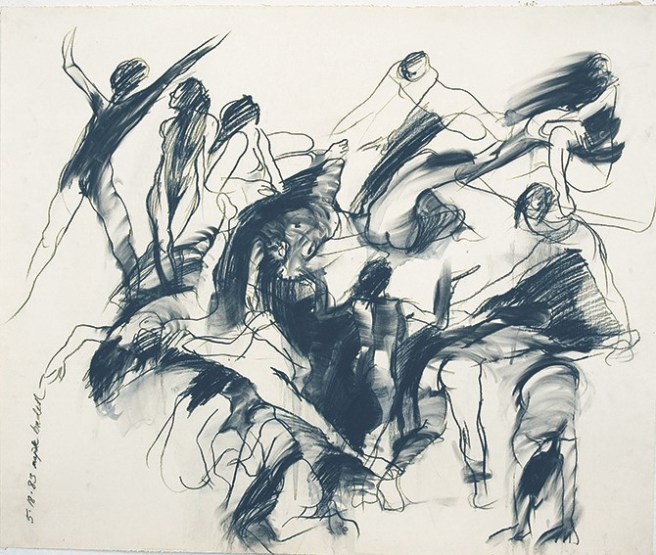
Majak Bredell Gesture Drawings
Gesture drawings

The works on show at both the venues cover a period of 22 years that follow the trajectory of the artist’s initial confrontations with issues of belonging and dis-belonging as the chasm between her mother country and her adopted home were mediated in both image and poetry. Several artist’s books with images and bilingual poems resulted from this.

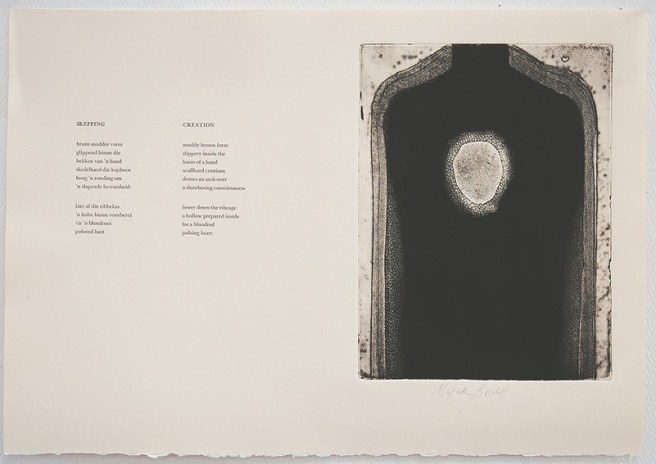
majak poetry
A page from Mother Passage which has been framed for the exhibition.

The Association’s showcase is an introduction together with a book titled Mother Passage, which includes 20 etchings and 20 bilingual poems, all of which she had framed so that it can be viewed in a particular way in the gallery.

The Pretoria Art Gallery covers similar themes and it was helpful to have a curator like Prof Dreyer who could pull things together. “There are so many works,” says Majak, “we could only use half of all the actual pieces.”

She also has a slideshow of all her workbooks and sketches and she was still crossing fingers (at the time of our chat) that she could achieve it technically – so that it could run on a loop. “It’s been put together in no particular order, no narrative, so that people can start watching at any point,” she says and it will take 33 minutes. Nothing is left to chance. She also has text cards throughout her exhibition to guide the viewer. “I’m covering a big arc,” she acknowledges.

This is an artist who very early on in her career knew that she didn’t want to use her art to make a living. “My lifeline couldn’t be diluted,” she says earnestly. She wanted no compromises. Instead she made a living as a graphic artist, something which has also stood her in good stead because she can self-publish her amazing catalogue for example.

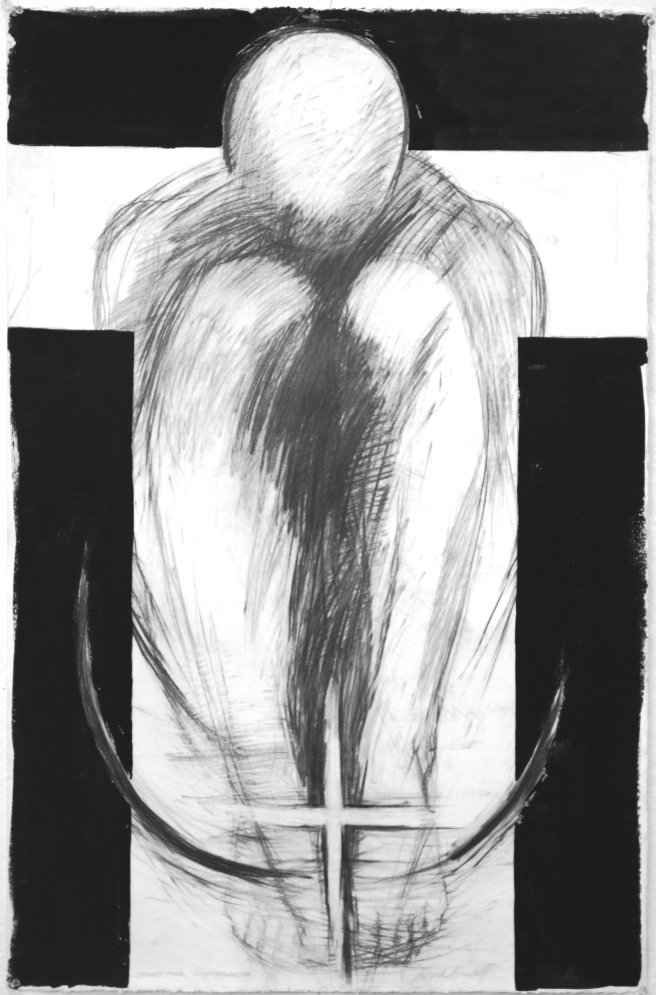
Majak Bredell - Study for mother passage (002)
Majak Bredell – Study for Mother Passage

Bredell states in that catalogue accompanying the exhibitions:

“Through art-making I quarreled with the legacy and unyielding demands of the patriarchal Calvinism that shaped my childhood in the 1950s South Africa. This journey, accompanied by Jungian therapy and much reading, eventually led me to a gender shift in the image of the sacred, culminating in my resurrection of ancient notions of the great mother, goddess, the sacred female.

“In this process, I imagined an embodied reflection of those parts of being that had been marginalized or rejected by western monotheism’s misogyny and its casting of the sexual female body into the abyss of so-called original sin. During my sojourn in that great city, art-making remained my passion despite limited exhibition opportunities.

“Longing  for my mother country and the loss of a South African identity eventually precipitated my return to South Africa after a hiatus of almost 23 years.  By which time my identity had shifted to include my New York identity that I wore like a second skin — a double identity I wear to this day.”

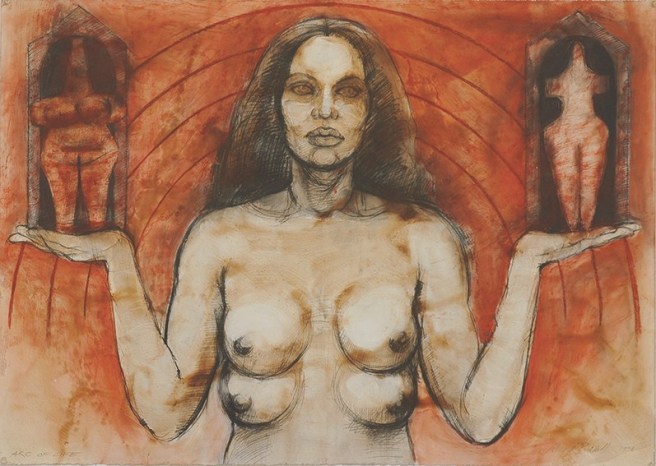
Majak Bredell 1998 Arc of Life
1998 Arc of Life

Since her return to South Africa, the themes developed in New York were further elaborated and exhibited:  2009: Alter Images: The Black Madonna & Sisters; 2013: Roll Call: a vindication of the lives and bodies that were destroyed during the centuries-long European witch persecutions; 2016: Codex Magdalene+: towards a new iconography and re-imaging the mythology and legends of Mary Magdalene; and her current works in progress, Earth/Body, that explore dialogues between the human body and the body of the earth.

And underlying all of her work is her quest to emphasise why the gender of God has done such damage to women’s bodies and a sense of self. “I was highly influenced by the writing of the spiritual feminists,” and she rattles off a slew of names as well as the website www.feminismandreligion.com for anyone interested.

Do yourself a favour. Set aside a day, or perhaps two mornings or afternoons to break it up. Visit both exhibitions and do them thoroughly. It will be like reading an extraordinary book by a remarkable woman sharing her soulful story.


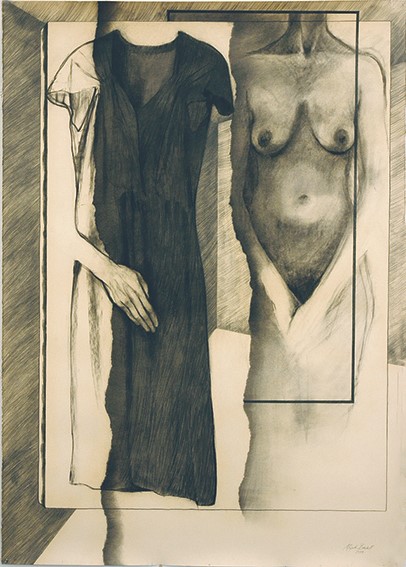
majak4
A favourite dress – layers of being. Graphite and charcoal on Arches cover paper

Details of the Pretoria exhibitions:

1: — an introduction to the work
Opening:  Friday 6 March 2020 at 7pm

THE ASSOCIATION OF ARTS PRETORIA
173 Mackie Street
Nieuw Muckleneuk, Pretoria

Opening speaker: Dr Avitha Sooful

Walkabout by the artist:  Wednesday 11 March 2020 at 12 noon

Closing:  Wednesday 25 March 2020 at 3pm


2: — the comprehensive exhibition
Opening:  Saturday 14 March 2020 at 11 am

THE PRETORIA ART MUSEUM
cnr Francis Baard and Wessels Streets
Arcadia Park, Pretoria

Opening speaker: Prof. Elfriede Dreyer

Walkabout by the artist:  Tuesday 24 March 2020 at 11 am.

Closing:  Sunday 14 June 2020

Bredell’s book, SACRED SCARS, will be introduced at the Association of Arts Pretoria at both the opening and at the walkabout.  The artist researched and compiled images that represent humankind’s embodied relationship to the sacred female in art and artefacts dating from pre-history to the early modern period.

#MeToo Movement Marches Forcefully Against Powerful Monsters who For Far Too Long Had Their Way With Women

It’s been a momentous time in the #MeToo sphere with the Harvey Weinstein convictions – finally. And even with two hard hitting books out there detailing all the women and what they have gone through, the jury still found him culpable of only two of the five counts. With many other similar issues swirling about, DIANE DE BEER speaks her mind:

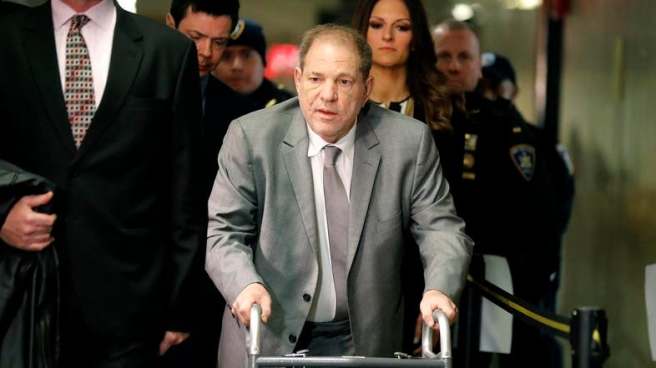
Harvey Weinstein at court
Harvey Weinstein playing the victim at his recent New York trial.


There’s hardly a woman who works professionally that won’t have some kind of memory about sexual harassment. I suppose with everything being aired these past few years, those of us who haven’t suffered sexual abuse should count ourselves lucky.

But I was surprised about my emotional response to Bombshell, the film starring Charlize Theron, Nicole Kidman and Margot Robbie about the horrific abuse by Roger Ailes and many more who were part of the Fox empire.

I had seen and was fascinated by The Loudest Voice, the TV series told with the accent on the bullying tactics of Roger Ailes and the culture of sexy women he created in the Fox Newsroom and on screen.

Bombshell poster
The poster says it all! Power in triplicate!

When Bombshell arrived, I felt I had viewed enough of this particular story, until someone whose judgement I trust told me to see it as this was from the women’s point of view. I didn’t realise the impact that would have on a very personal level which says so much about the culture most women find themselves in at work.

We don’t even notice because it is so prevalent and probably to most of us “normal”, so when seeing this particular film, which shows especially the environment created specifically so that this kind of thing can flourish, my flesh crawled – to my surprise.

But it was no surprise that with the final credits a notice announces that the women received 50 million dollars in damages: while Roger Ailes and another Fox News accused, Bill O’Reilly, received 65 million dollars’ worth of parting packages.

Fox News is the extreme so there’s no turning away from that aspect of the film. And with these three powerful actresses in control, it resonates dramatically and memories came flooding back. “How are the dollies doing?” was a particular rankling phrase coming from a boss or the fact that you were told that your salary increase was determined by the fact that your partner worked in IT. “That means he earns big bucks,” was the feeling. And the list of constant humiliations goes on.


And then when these men are “caught”, they are so powerful that they manoeuvre everything and everyone around them. Read Ronan Farrow’s book (reviewed in this space earlier) Catch and Kill and She Said and see what happened to these award-winning writers in the process of writing the book. It wasn’t only Weinstein who came out guns blazing, he had many who colluded and further made it tough for anyone who wanted to expose his evil practices.

And perhaps what upset me the most was the humiliation that these women, many of them with powerful careers (and not because of Roger Ailes), had to go through on a daily basis. If this is the man who employs you, how does the rest of the world view you? He in fact lays down the rules of how you appear on camera and what you are allowed to say.

Something that was always an unwritten rule in media was that your newspaper had your back if those on the outside were upset with your reporting of the facts – the newspaper would stand up for you and in that way, bring balance to the power dynamic. But that’s not what happened at Fox. When Fox news correspondent Megyn Kelly was taunted by President Trump, it was another stick in the Ailes arsenal to keep her in line.

These constant games are also part of the ritual to keep everyone functioning in place and not to overstep or rock the boat. You learn very early on when to hold back and when to fight for specific rights. Some you win and others you lose.

Others make you smile – wryly. The first time women were really promoted into certain positions was post ’94 when they were included in the list of appropriate candidates because of the neglect in the past.

Suddenly in newspaper offices around the country, women started appearing in management positions and even the first female editors started to emerge. It wasn’t a sudden belief in the ability of women. White men just thought them the lesser of all the evils!

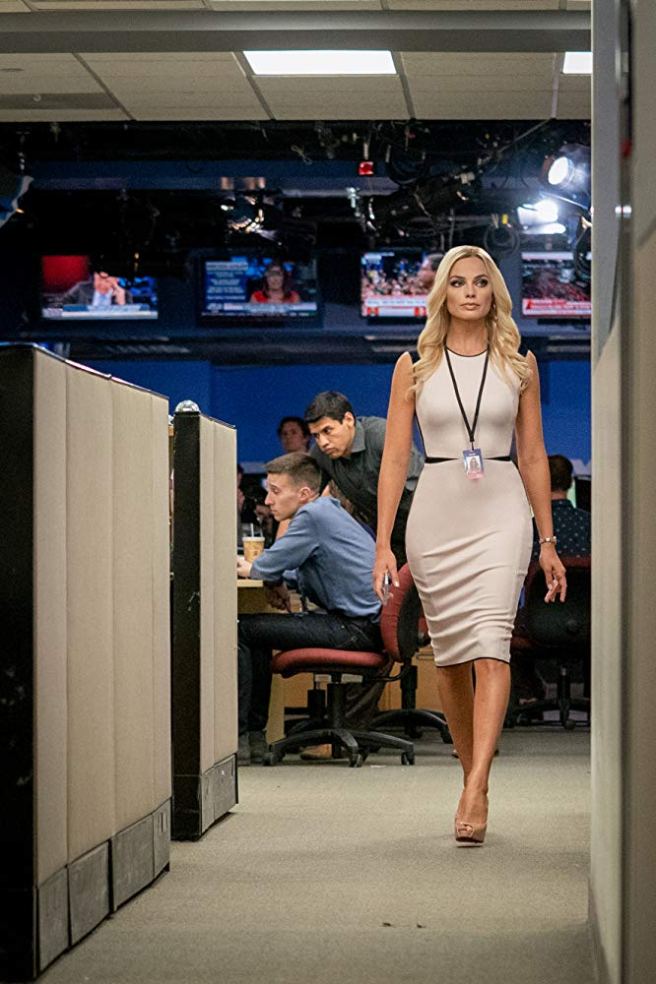
Bombshell Robbie
Bombshell’s Margot Robbie represents the epitome of what Roger Ailes wanted the Fox women to exude.

And so one could go on and on. And that’s why women around the world were thrilled about the Weinstein conviction but…

And said best by the following tweet:

Shailja Patel: @shailapatel: (Kenyan poet, author, feminist, activist, now self-exiled after she accused a fellow Kenyan writer of sexual assualt and was ordered by the court  to pay damages and apologise to the man who assaulted her, so she left the country.)

No guilty verdict of jail sentence, even for life, can restore what Harvey Weinstein stole from his victims. Or repair the harm he inflicted on his decades-long reign of terror over an entire industry. But this is a tiny crack in the wall of impunity. Let patriarchy tremble.

She nails it!. So while we all watch and wait, the battle goes on but at least because of their shining a light so strongly, the #MeToo movement is starting to show results.

Freehand is the Personal Story of Pianist Charl du Plessis and his Life in Music

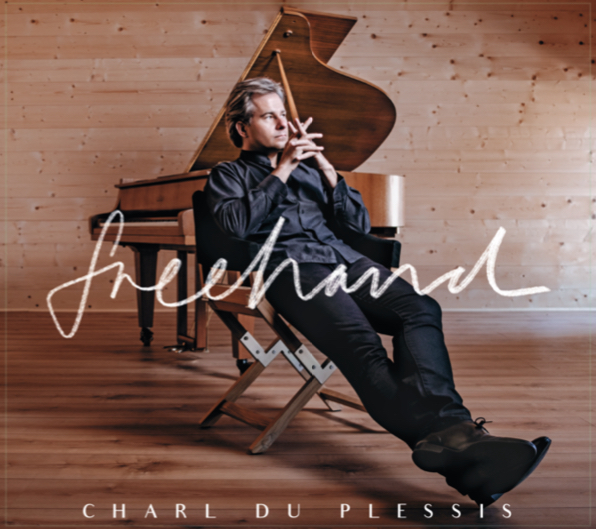
Freehand Cover

The whirlwind that is pianist Charl du Plessis’s life has meant that more than 20 years into his performance career, he is finally releasing his first solo album. He reveals the thought processes behind Freehand to DIANE DE BEER:


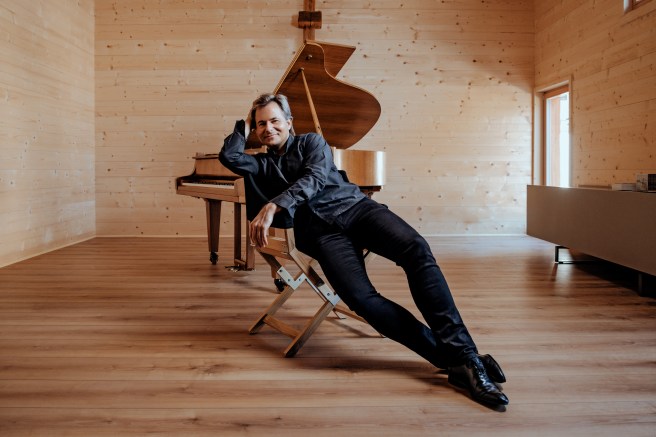
Pianist extraordinaire Charl du Plessis is all about improvisation – not only on the keyboards but also in his life. He has to be. He has that many projects in the air at a given time, and constantly has to juggle.

Stepping off a plane from an international destination, he runs to catch another flight to make a concert as Nataniël’s accompanist the following day and then he rushes from there to catch up with the Charl du Plessis Trio who are also releasing a CD at the Woordfees in March.

But with improv part of his game, he will be performing his latest and first solo album,  Freehand, at the Atterbury Theatre (and in concerts throughout the year across the country) on Sunday at 3pm, followed by a performance in the Cango Caves just outside Oudtshoorn on March 28 at 8pm as part of this year’s Klein Karoo National Arts Festival (KKNK), bookings opening on Saturday (February 21). This hasn’t happened in 24 years and is a rare event, which won’t happen any time soon – if ever.

He will be the first pianist to present a performance in the Caves on International Piano Day. Strict rules will be applied to avoid any damage to this historical site and for Charl, it is a dream come true. “The space, the acoustics, the darkness and the sounds that will embrace everyone!”

The origin of the solo album began with unwinding after concerts and a hectic touring life. Arriving home and wishing to unwind, this Steinway artist would sit and tinkle on one of his two Steinways (one a new acquisition) playing music that’s gentle to his ear. When he felt it was time for a solo album  – finally – it was to these excursions in his mind that he decided to escape to.

He would sit down at the piano, and we all know that end of day feeling, and start playing. This was music that he liked listening to and never to please anyone. It’s mostly gentle and spontaneous, yet once he decided this was the way to go, he would practice improvising according to a specific mood, a moment or an object that would take him to a specific place.

“I didn’t feel I had to prove anything,” he says about this solo attempt – and many of his fans would say about time.

But of his many endeavours, where Charl has also excelled is planning his own career. Any solo career is a challenge as an artist. You only have yourself, your skills and a professionalism which helps you to sell and establish yourself. But mostly you’re always on show.

And one of his attributes is coming up with new ways of making music – classical, jazz and simply a melody that he finds enchanting or a composer he wants to showcase. He would contact a fellow performer or two or three and put together a show.

_DSF5929

What is truly impressive is that these shows always had a specific individuality and originality and never felt forced. This was an unusual yet also deliberate route. And those who know Charl’s work would have expected something as smart as Freehand to go solo with.

He is celebrating two decades as concert pianist in both classical and jazz  spheres. This is not typical but from the start (and I witnessed his first jazz competition in which he competed against some of the top young talent in the country, achieving a brilliant second place), he felt comfortable in both spaces. “I have had true musical satisfaction in combining my passion for various styles in crossover arrangements for multiple projects with my trio, with orchestra or solo,” he writes in his album notes.

This one specifically captures his own voice – an important step for especially solo artists. He describes this way of playing piano almost like an artist doodling or a chef who after a particular stint in the kitchen would crave comfort food not fine dining. And once he knew this was what he was going to do, he turned to fellow musician, the Trio’s drummer, Peter Auret, who is also an award-winning recording engineer, to record this pet project. It took three solid days of spontaneously improvising at the Etienne Rousseau Theatre in Sasolburg  – no rules, no preconceived ideas.

They have worked together before and the reason Charl is comfortable with this particular artist is that he feels no judgement. This was a project that felt very personal, a statement as a first solo album, but Charl also needed it to be far removed from critics, purists and conservatives.

Living and working in this world, especially in South Africa, he knows the pressures. It’s a tiny but hugely critical community and can sometimes inhibit artists to try something new – the essence of being an artist. By chance I heard some critics talk about his first Freehand performances and it was clear that he had found something truly unique to share with an already adoring following. But that’s how you get there.

Once the recordings had been made, the process was still on-going. “I left it before listening for five months because I needed some breathing space and distance,” he explains. Then he was called to choose some tracks because these improvs didn’t yet have titles. Following the completion of the album, which then had to be performed, he had to relearn the pieces that had flowed from his imagination.

“I couldn’t even recognise some of the pieces when I listened to it the first time,” he says. “This is what I love about spontaneous music making: the unpredictable journey, the freshness, the honesty, the energy, the enjoyment,” he concludes in his album notes.

The success has been sweet and he walked off after that Aardklop run with the best musical production award. Something that has been rewarding too which he didn’t take into account was the mobility of the project. “I’m reaching different audiences because I can pack up, travel and play,” he says – from Upington to Vleesbaai and from Shanghai to Switzerland.

Charl knew early on  that he didn’t want to travel the typical classical route. He needed to find a voice that would catch the fancy of audiences – worldwide. He has done exactly that on a stage, probably the most difficult in the world. This is storytelling without words and demands that the audience truly use their imagination.

With all his different projects, Charl has made sure of that – and now for the first time, he hopes to capture them with a very personal story. Listen and make up your mind. I think it is difficult to resist.

For more detail and dates, check https://charlduplessis.com/

The Artistry of the Best on Tennis and Music Stages Makes My People Sing

IMG-20200219-WA0002
In the beginning … as the excitement was building.

Pictures of tennis: Esther du Plessis

Pictures of Kirstenbosch Concert: Debra de Souza


When you are gifted the weekend of a lifetime and things work out and then, as a bonus, you are unexpectedly given much more than even you bargained for, all you can do is smile – for the longest time. DIANE DE BEER loses her heart  – again – to her people and continent:


Not only would I have the chance to see two of the best tennis players on the planet in action at the Greenpoint Stadium in Cape Town (courtesy of the children of a close friend), but would also see cellist Yo-Yo Ma in action in the spectacular setting of Kirstenbosch as part of his Bach Project.

The gods were smiling and it turned out to be so much more – in unexpected fashion – than I thought it could be.

South Africa is not in a good place and there’s not much hope that the turn-around will be swift. Those working against the citizens have done too much damage and are still sowing havoc. We will make it though as this weekend again promised, but patience is required.

Too often so many dump on what this country and its people are, that those of us who are optimistic by nature have a tough battle on a daily basis. But sometimes the country and its people deliver brilliantly.

With the excitement at an all-time high, seeing these artists of sport and music was all we dreamt it would be.

We planned the logistics of especially the tennis. In fact, we had a full day of entertainment planned so that we would not find ourselves in traffic jams or in a distressing situation where we couldn’t make the game.

jojoTOP-800x528
The exuberance and ingenuity of Jojo Rabbit set the mood for the day.

With the stadium in walking distance of the V&A Waterfront, that was an obvious destination. Our movie for the day was picked, Jojo Rabbit, and we would have a late lunch at about 3pm before making our way to the stadium at 5.

Everything played into our hands. We had picked the parking mall closest to the stadium and it was literally a 10 minute walk from both the stadium and the movie mall. The stars had aligned and once we experienced the delight of Jojo Rabbit, the perfect pick for the day, it seemed nothing could go wrong.

Even our late lunch at Tashas, which consisted of a house salad with the freshest finely cut greens and avo mixed with portions of pickled calamari and squid heads with a cool glass of Cape wine, was perfect.

This was followed by a short walk to the stadium, the palpable excitement of the crowds starting to amass and the simplicity of finding the right entrance and our seats. Of course the stands are far from the court and we couldn’t really see their facial expressions, and we were sitting in an area where the sound was distorted (all of which we could later catch up on DStv), but we could certainly experience the play, see the balletic magnificence of Federer and experience Nadal’s joy as he became more and more aware of the importance of this meet for someone who is now his big tennis buddy.

IMG-20200219-WA0004
Nadal and Noah vs Federer and Gates… with everyone in stitches.

I am a Federer fanatic and the pleasure of witnessing the way he plays in real life and real time is something that’s hard to explain and with that, the bonus of the gracious Nadal who could hardly keep the smile off his face the whole game. How blessed tennis fans are to have these two gentle sports giants at the top of their game for much of our lives – and then to catch them in Cape Town nogal!

Who could have thought. And then in typical South African fashion, a young man with an exquisite voice started singing Shosholoza, capturing that awesome home ground spirit that we wallow in and reminds us just who we are.

IMG-20200219-WA0005

Throughout the game, if I had criticism, it was the music which should all have been from here. It’s such a brilliant showcase and we certainly have a choice which would have every spectator’s hair standing on edge as could be witnessed with the spirited Shosholoza. It was a night when the people, the organisation, the tennis and the players and for those of us who have never been, even the stadium with the starry night skies, were doing their best.

The following night was Yo-Yo Ma’s Kirstenbosch concert as part of his 36 Concerts. 6 Continents. 36 Days of Action, exploring how culture connects us.

CONCERT YO YO
The beauty of Kirstenbosch with nature the perfect setting for Yo-Yo Ma.

It all began in August 2018 when he started a two-year journey to perform Johann Sebastian Bach’s six suites for cello in 36 locations around the world. For me this was meant to be. He is probably my favourite classical musician and not only for his playing but also for the way he embraces world music and makes huge statements without saying a word – all in aid of our common humanity. We need these artists, especially when they have his insight and platform.

What were the odds that these two events would come together on one weekend in one city on the Southern-most point on Africa – or almost. And yet another perfect night. It started in Cape Town’s best late-afternoon light (not a sign of the wind of the previous night which had Trevor Noah asking for the aircon to be switched off!) and worked itself into the most precious full moon which shone on Yo-Yo and the crowds like a halo.

Yo Yo Ma, Credit- Austin Mann
Tripping the light fantastic pictured by Austin Mann.

It was sublime – everything. From the musician all by himself making heart-achingly beautiful music, the setting, the lit trees as the darkness descended and even going home, making your way back to the car, not everyone sure which route to take yet being directed out by traffic police who had warned before the time that they would be there.

YO YO MA PIC
A night to remember with all the planets in alignment.

And through this all, it was being South African and participating in when we are at our best that kept me smiling. From the spectators and audience to the organisation at both events, to the settings and more than anything the people and the camaraderie, we couldn’t find that anywhere else.

We have proved that as a nation when we find common ground, we have the same drum beating the African rhythms that keep us fighting for a country where diversity has always been its strength.

ZOLANI AND YO YO
The perfect partnership: Zolani Mahola and Yo-Yo Ma.

The genius Yo-Yo Ma experienced that as he invited Zolani Mahola (formerly Freshly Ground) onto the stage and they performed one of Johnny Clegg’s most haunting anthems Asimbonanga:

Oh the sea is cold and the sky is grey
Look across the Island into the Bay
We are all islands till comes the day
We cross the burning water…


Niq Mhlongo’s Black Tax: Burden …or Ubuntu Reminds us of the Discrepancies Determined by the Colour of your Skin

Black Tax bkLike so many things in South Africa, Black Tax: Burden …or Ubuntu? (Jonathan Ball Publishers) will be read and understood in very different ways depending on the colour of your skin. DIANE DE BEER gives some insight:
 

“Black tax,” writes the author/editor of the book, Niq Mhlongo, in his introduction, “is a highly sensitive and complex topic that is often debated among black South Africans. While these debates are always inconclusive due to the ambiguity, irony and paradoxes that surround it, as black people we all agree that ‘black tax’ is part of our daily lives.”

He notes that the book acknowledges these complexities and tries to represent a vast variety of  voices on the subject. “I tried to get a diversity of viewpoints by incorporating young and old, urban and rural, male and female contributors.”

In an attempt to answer the question represented in the title, the idea of both the black family and the black middle class is interrogated. “As an ideological concept, the black family is constantly changing to accommodate new economic, political and social realities and opportunities.”

That is what makes this such a fascinating read because to some of us, it explains a concept we know about yet doesn’t affect us in exactly the same way (I know some people will argue that white people also pay forward but it is an entirely different concept) and for black people, it captures the differences of opinion. Your financial status because of the endemic poverty in this country will determine whether black tax will be either a burden or a blessing.

As Mhlongo underlines, “a black person may earn the same salary as their white counterparts, but they will have more financial responsibilities to their family, which is often trapped in poverty due to the inequalities that were engineered by the apartheid system.”

That in itself is a response to people who question those who still point a finger at apartheid when regarding daily obstacles in their lives. Yes we’ve been in a democracy now since 1994, but the effects are here to stay for generations to come. That’s why, amongst many other examples, it was and remains such an evil system.

There is one point of agreement, explains Mhlongo. “Black tax is a daily reality for nearly every black South African.” That is also why so few black people get to choose the career they want to pursue. “Black parents expect their children to study something that will allow them to earn a high salary one day.”

In closure he notes that the real significance of this book lies in the fact that it tells us more about the everyday life of black South Africans. “It delves into the essence of black family life and the secret anguish of family members who often battle to cope.”

It is all the above that makes this such an important read because it explains the lives of others – so important in a society so divided and often ignorant about each other.

In a chapter titled Black tax – what you give up and what you gain, Dudu Busani-Dube (fiction writer and journalist) writes “…because we are the children of domestic workers and gardeners, we have no ‘old money’ and nothing to inherit. It comes with some anger, too, and no, it is not directed at the families we have to take care of, but at the system that was created to ensure that no matter how much freedom we think we finally have, it will still take us decades to crawl out of the jungle we were thrown in. Black tax is not our culture, no it isn’t. It has everything to do with the position this country’s history has put us in.”

And the “burden” is difficult for those not participating to understand. Nkateko Massinga explains in Casting a Spell on Poverty (poet and 2019 fellow of Ebedi International Writer’s Residency): “My relationship with my family will continue to be difficult because I am yet to meet their expectations. … The expectations of black parents and their need to live a life that looks good to others creates an emotional tax on black professionals.”

Think of the “burden” when starting your first job and everything that goes with the insecurity and the novelty of being in that position. Now add black tax as yet another obstacle to just finding your feet as gently as possible while trying to cope.

As Sifizo Mzobe (writer, content editor and translator) underlines in The Hopes and Dreams of Black Parents: “When a black graduate gets a job, they have a lot to make up for compared to their colleagues from better economic backgrounds. They have a deep economic hole to fill before they can start with their own lives. And life is tough in today’s economy; sometimes impossibly tough.”

That is above and beyond the ordinary high levels of stress in today’s society!

Most of us can remember our first salaries and everything we needed to do with that money. It’s about living expenses and living a life at your own cost for the first time. Nothing comes easy and I couldn’t even begin to imagine also taking care of people in abject poverty or helping younger siblings with their studies.

Think of the unemployment numbers in our land and the crisis becomes even more dramatic and traumatic. It’s tough enough trying to cope with your immediate family’s survival. And then we’re not even thinking of those families working on coal mines or for Eskom who are scared that their jobs will soon become redundant. In those circumstances can one expect people to think of the greater good?

That is what is really so smart about this book. With many different voices, many different ideas surface, many of them landing hopefully in a receptive or at least educational place.

I remember years back reading Redi Tlhabi’s first book Endings & Beginnings: A Story of Healing. She told a story of how at the age of 10 or 11 she was scared of being raped on her way to school. At the time, thinking about my own youth, I wondered if I had even been aware of rape – all of which reminded me of the discrepancies in the conditions of people living in this country.

Black Tax makes very clear (and we read about it every day) that nothing in that sense has changed. In fact because of the horrific looting of the past decade, for the have nots, it has simply become untenable. And that is exactly what Niq Mhlongo’s exploration in Black Tax highlights.

It is insightful and should be compulsory reading. But apart from that, what a gripping way to get to know one another while adding greater understanding. As South Africans, we owe it to ourselves and one another.

On and Off Stage Charl and Nataniël Sparkle and Shine in Story and Song

This is the third instalment of this particular story due to COVID-19. The following is a short review of the concert held this past Sunday and Monday in the Atterbury Theatre at 505 capacity but hopefully they can simply play it forward in 2021 so that the rest of the country can also be witness to such a remarkable partnership:

As we slide into the end of the year, especially this one, there’s nothing like nostalgia, which is exactly what Twintig/2020, Nataniël and Charl du Plessis’s 20th anniversary show, represented this past weekend.

It was planned as something far bigger (see below), but these two creative souls were determined not to bend the knee completely to COVID-19.

And fortunately as Pretoria citizens, this is where the show landed – for now. What a blessing. The programme was decided (with a few sharp suggestions from the maestro) by Charl, who has more than anyone witnessed all Nataniël’s stories and songs. What you hear are his favourites of Nataniël’s stories and songs.

It’s a masterclass in storytelling, song and accompaniment. After 20 years, these two performers have established a rhythm and rapport that’s unique and contributes to the ultimate success of a Nataniël show.

There is no one who can compete with Nataniël’s storytelling – not in language, his choice of words and how to apply them, tone of voice, imagination, performance and then that final gut-wrenching twist which is the knockout punch. And the examples at this show were formidable. First they had you screaming with laughter and then, as always, in pain.

Because he has a history (in his own mind) of failed albums, Nataniël usually denigrates his choice of songs as well as the singing, but the performance, his music and his unique arrangements, offer the perfect mix. With his high-intensity stories, you need some quiet after the storm – as delicious as it might be. And that is what the music adds together with superb accompaniment by Charl.

With Charl a classical and jazz pianist as well as a solo performer in his own right, they make the perfect pair and listening to the way his music holds Nataniël’s voice – when to swing and when to step lightly – is quite superb. My personal favourites were the exquisite La Memoire d’Abraham, Nataniël’s quiet song 100 Years, a transporting arrangement of You’re my World and then always mesmerising, his very specific rendition of Oh Come All Ye Faithful

Add to that the cracking colour of Nataniël’s couture, the changes and tweaks which all add to the perfect package. Even with 50 % audiences, they don’t present 50% shows, which is why he keeps packing them out. He always presents the best and fans know that. And with two pianos on the Atterbury Stage for the last time (one is being sold), it gave them a chance to play one of their rare duets on stage- always a treat!

Hopefully with a COVID-19 vaccination, they can tour with a 21st anniversary version of their partnership celebration. From the costumes to the songs as well as the stories, it’s great to see his loyal base have been right from the start.

There’s nothing like witnessing artists at their best.


When I first published this story in February, the devastation of the pandemic had not yet reached our shores. That didn’t change any of the facts and stories about the partnership, yet it did change the performance schedule drastically. But now is the time for them to catch up slowly but securely and while their first show on November 15 has already sold out, there are still some seats left for a second extra show the following night, Monday 16 November at 7pm at the Atterbury Theatre in Pretoria.

Nataniël and Charl will celebrate twenty years of music, memories, moods, challenges, highlights and stories. This will also mark their return to the stage after months of Covid-19 lockdown. For this special show, Charl chose his favourite Nataniël stories and his most-loved music from their repertoire of hundreds of songs. (Nataniël has very little say about the contents of this show!)

Presented in English and Afrikaans. No children under 15. Book at iTickets.co.za

Read the original story below about this original partnership:

On February 5, showman Nataniël and his piano man Charl du Plessis celebrate 20 years in performance together. They tell DIANE DE BEER why – in spite of such different personalities – it has worked and turned into the perfect professional partnership:


To witness these two talk about their dual career is to understand their partnership. Because they spend so much time traveling and performing, they can complete one another’s sentences – and often do.

Du Plessis is also one of those caring souls who understands the pressures his funny man must endure daily and when he can, he tries to make life simple and at the same time sweet.

When they arrive at an airport with someone waiting to drive them to the next small town and

Nats en Charl
Charl (piano) and Nataniël in concert.

tells him to take the front seat, he understands the artist wants to take a back seat in all the implications of the word.

Theirs is no ordinary life as they arrive at small town halls, discover interior decorations that make them want to burst into tears and have to find a way – diplomatically often – to fix. And diplomatic is hardly in Nataniël’s nature and we love him for that.

Charl is also constantly trying to avoid embarrassing situations because Nataniël on seeing something he abhors might ask if there was a blind mannequin in charge of decorations. It’s Charl’s way to find gentler phrases while Nataniël uses humour to deflect his disdain.

He might be sweeping the foyer while Charl tries to make the dressing rooms habitable – or whatever is needed. “I’m a team player,” says Du Plessis, while Nataniël would rather run a mile.

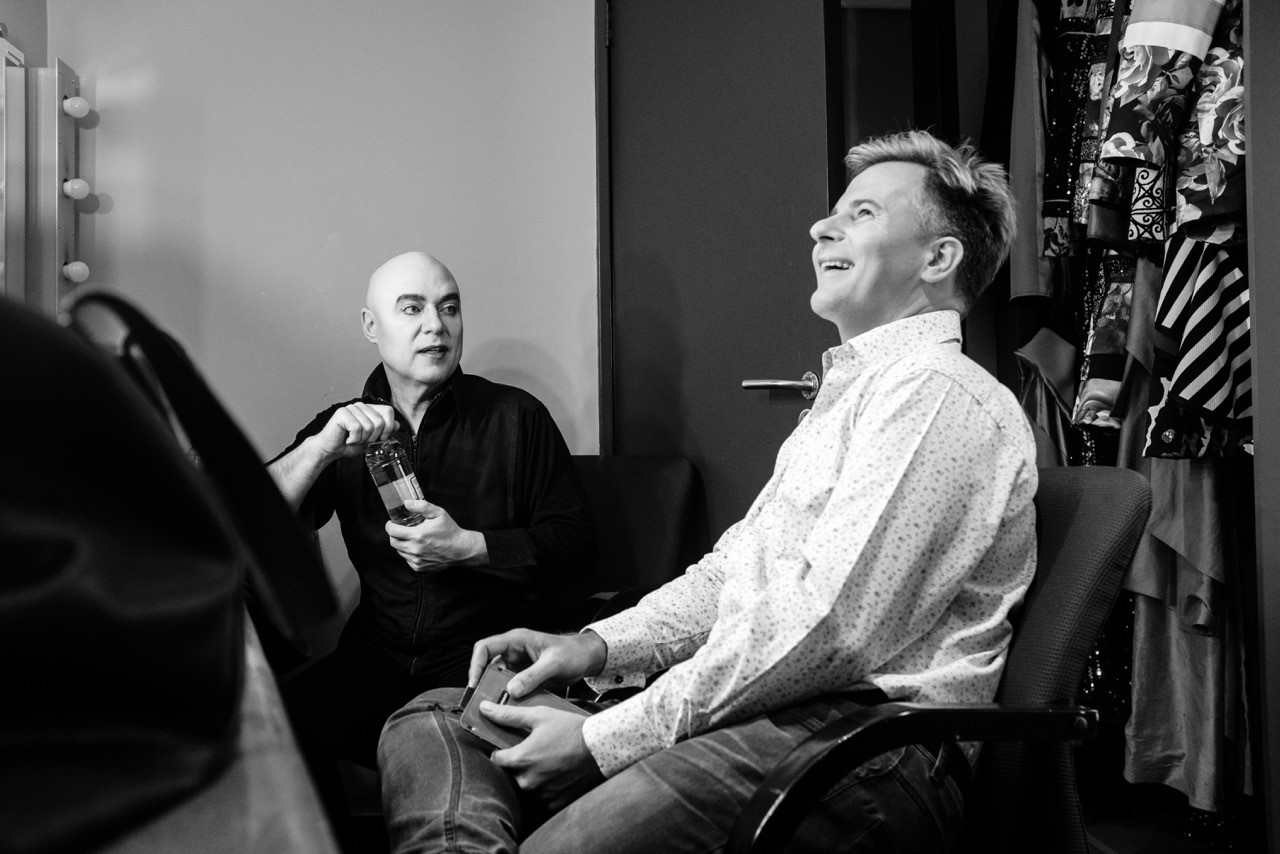
Nats and Charl laughing

A lamp might need straightening or a straight face needs to save the day when first impressions might include a bed as part of the stage set-up.

But part of that has also impacted Du Plessis’s career in a big way. This is how he learnt the ropes. “He was interested in everything from the beginning,” says Nataniël. He wanted to know it all – from lighting to staging – and today it is part of his own shows.”

Du Plessis has contributed in his own way too. The band,  including Du Plessis, that currently plays for Nataniël is part of the Charl du Plessis Trio that he formed. “It makes it so much easier as we all know one another extremely well.” In fact, I have even heard Nataniël say quite fondly (he will deny this!) that his current company operates like a family

“I have become lazy,” explains Nataniël, because of the energetic Du Plessis who has taken so many of the mundane tasks of performance on his shoulders. For him it is about making Nataniël ‘s life easier. At the beginning, his own career might have been a touch quieter, but these days, he is juggling as many balls as Nataniël and he has to operate on a generous abundance of energy that keeps him running.

Charl and Nataniel at play
Impromptu at the French Embassy in Pretoria at the launch of Nataniël’s book about Nantes.

“I used to do everything myself …” says Nataniël as he reminds himself of the early days. But that diminishes as you start growing your empire.

Du Plessis at some point even started producing most of Nataniël’s shows. “There are a few theatres I am happy dealing with but not too many,” says Nataniël. These have become Du Plessis’s responsibility and Nataniël knows he will organise it all with the precision he needs.

“I speak for a living,” explains Nataniël, when chatting about his reluctance to communicate off stage. “Have you noticed, hairdressers often have the worst hairdo’s themselves. So it follows … ” He has probably said as much as he wants you to know, on stage, and he is adamant that it is there that he likes surprising people.

Charl en Nataniel

I have learnt that through the years of doing interviews about upcoming shows. It’s not that he tells any lies or doesn’t give me information, it’s just that once I’ve written and published and then see the show, I realise he hasn’t given away a damn thing! “What’s the point,” he wants to know?

Even the band doesn’t really know what the show is about before opening night. “We only rehearse the music and the scene changes if we need to carry props or some such, not Nataniël’s stories,” adds Du Plessis. “It’s quite tough keeping a straight face on opening night!”

He also doesn’t like complimenting. “I will say something if it doesn’t work or is wrong,” he says. “I reward with gifts and food!”

That was probably one of the toughest adjustments for Du Plessis. But he acknowledges that there was a neediness to have his talent confirmed by others. It’s been a bonus to bolster his own confidence.

He is constantly writing thankyou notes about something that has happened between them or a particular gratitude he wants to express. And in their own way, they have carved a working relationship that is smooth sailing most of the time.

Right from the start, Du Plessis knew that Nataniël wasn’t interested in technology. He wants everything – like his phone eg – to work, but he doesn’t need to know how. That is just one of the interventions he applies in his boss/friend’s life. And even while chatting, Nataniël has some phone queries that need solving.

CharlNat
charl and Nataniël in tandem.

“I write everything down in a paper diary,” says Nataniël. Du Plessis’s life  is checked into his phone or other electronic devices.

When he has sung the last note at a concert, Nataniël already has his mind on that night’s supper, which he will buy on his way home. Du Plessis on the other hand is happy mingling with friends and fans in the foyer for as long as it takes. “He networks, me not so much,” says Nataniël.

Du Plessis is happy to chat to anyone who corners him,  Nataniël is thinking how he can avoid a handshake, one of his many foibles. Du Plessis, explains Nataniël, is happy to explain something to someone in great detail. He on the other hand is curt and hopes to detour as many people as possible.

At some point, Charl decided Nataniël suffers from night blindness, and he is the one to drive as soon as darkness descends.

One of their most dramatic moments was when Nataniël ‘crashed’ on stage because of low blood sugar. “With a phalanx of medics around him and the band trying to help where they can, the audience were laughing because they thought it was all part of a joke,” notes Charl as he shakes his head at their sometimes bizarre circumstances.

“Now I know I simply have to eat an apple halfway through the show,” says Nataniël. They love and learn.

And as they chatter, while Du Plessis is the busy bee and the organiser of the two, Nataniël is the one who keeps everyone laughing. Not always purposely, but it’s the way he operates, how his mind works and how he communicates.

And thus it has been for these two artists together – and in their own right. More than anything, what they have in common is their love of the stage and their ability to perform. On stage, they sparkle and shine for their adoring audiences.

May it last for the longest time!


Watch out for further notices on their different websites and on social media for further shows around the country in 2021. This is one fans don’t want to miss. “There’s nothing wrong with celebrating 21 years!”


Books are Telling the Impactful Stories of the #MeToo Movement With Great Vigour

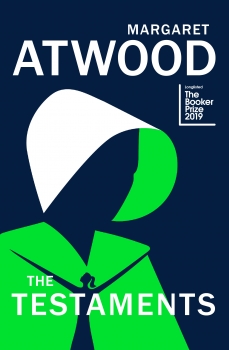
Book The TestamentsMany are wondering what the impact of the #MeToo movement has had on the lives of women. Has the serial stalking subsided or is it business as usual. The backlash as well as the reinvention of some of the accused might be an indication and yet, like in #BlackLivesMatter, it’s as if voices have been given a freedom to tell stories and more people are listening. DIANE DE BEER highlights some of the good news:
 

There’s no doubt that The Handmaid’s Tale in 1984 was ahead of its time (some would say at the right time) but now, looking back, it’s almost as if the world has caught up with Atwood’s dystopian tale.

Women’s reproductive functions became their only value in a world where a previously free-wheeling democracy turned into a totalitarian dictatorship in which specific men made all the decisions with no attempt at embracing the needs of the female populace.

Some would say that’s the lives women were living anyway, but with more subtlety in the execution, but perhaps the fact that little has changed for women since, is more of an indictment. Even the new millennium didn’t offer many new horizons.

But there has been a mind shift even if it still only finds its power in the “voices” of those creative women who write or tell stories through film or theatre or other writing of course.

And while Atwood never wanted to write a sequel to her most iconic novel, she might have been pushed by the success of the television series based on her book, which had to its advantage the timing as well as the excellence of the production on all levels.

Some have said enough already, but personally having witnessed a third generation of girls entering exactly the same world I did midway through the last century, that’s where I want to say enough already!

So well done Ms Atwood for both novels, and while The Testaments (Chatto & Windus) has to my mind an easy (yet hopeful) ending (no wonder art historian Mary Beard described her as a “optimistic dystopian”), I was thrilled that the author’s prescience kicked in both times – in 1984 and again in 2019 and that she was thus rewarded with the 2019 Booker Prize (shared as it was).

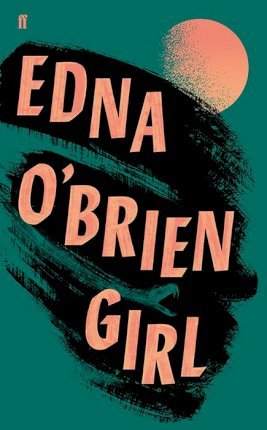
BK Girl (002)Perhaps on a different timeline but Edna O’Brien’s Girl (Faber & Faber), speaks to similar themes.  While this is a work of fiction, there’s enough fact around for her to tell a story based on reality – and it’s horrific. That 276 female students could be kidnapped by an extremist terrorist group in the Northern province of Nigeria and disappear overnight with all our sophisticated surveillance techniques is astounding.

And yet, while 57 were rescued a few months after the capture, and a few stragglers have managed to escape, more than 200 women (no longer girls, all these years later) are still missing. Hopefully this book by one of the world’s leading writers, described by some as her masterpiece – understandably – will shine a searing spotlight on those still missing.

Had they been on another continent and perhaps not black, more effort would have been made and yet, the same group is still terrorising African people in that part of the world and the women must surely by now be fully integrated into their way of life. It’s been almost six years and they were at a very vulnerable age when first captured.

What O’Brien has done so cleverly is write a story of a young girl, now with a baby, who escapes the tyranny to journey back home through nightmarish terrain. But she is courageous and by now crafty and by sheer force of will, she makes it home.

Many would imagine that would be the end of her hellish life’s journey. But as is so often the case with female victims even someone who has discovered her own voice – she is silently blamed for everything that has happened to her, including the kidnapping and the pregnancy.

It’s tough to imagine how you deal with one tragedy after another and yet, it’s almost as if life keeps throwing those challenges at those who don’t buckle. It is about the strength of a woman fighting for her life and fighting back, in spite of a world which has turned its back on her. It’s full of heartache but finally, also hope for each woman survivor.

bk she saidJodi Kantor and Megan Twohey, winners of the Pulitzer Prize, have written a book about their article on “breaking the sexual harassment story that helped ignite a movement”.

She SaidBreaking The Sexual Harassment Story That Helped Ignite The Movement (Bloomsbury) is an extraordinary read as they go into great detail to tell the story of their travails to get to a story that had to be watertight, so that it wouldn’t simply be dismissed and disappear into thin air – as was so often the case in the past.


What has been happening is that the entitlement of some powerful men turns them into monsters, who believe they can simply take women whenever and wherever they want.

And in the case of perhaps now the most visible alleged sexual molester, Harvey Weinstein, he had an army of enablers around him to make this predator’s sex life run smoothly. Some who didn’t care to confront him, some who went out of their way to help, because it would benefit their careers and others, like his brother, who kept fixing the problem, yet never making it go away. Somewhere in all of this, women’s lives and dreams were being destroyed. No one seemed to care and the women were too scared to talk.

Even the most famous ones. If women like Angelina Jolie, Gwyneth Paltrow and Ashley Judd couldn’t stand up to Weinstein, what chance did a young assistant or secretary have?

If you never pay for any wrongdoing and you are perceived to be all-powerful, you will believe and write  your own press. And while they tell Weinstein’s story and his efforts to kill the story and to deny any wrongdoing (to this day), they also turn to one of the other high-profile rape cases, that of Christine Blasey Ford’s accusation against Donald Trump’s Supreme Court nominee, Brett Kavanaugh.

We all know what happened there in spite of amazing testimony by a woman of such impeccable character and dignity. And yet like the Anita Hill case in 1991, where her accusation against another Supreme Court nominee, Clarence Thomas was roughly brushed aside at great personal cost to the accuser, all these years later, the results were the same.

The only impact of the #MeToo movement was more publicity. As a result, it was more delicately handled by the members of congress because of the media scrutiny. But still, the US now have two men accused of sexual crimes, sitting on the highest court in the land.

Fortunately, the #MeToo movement has gained immeasurably as women got the courage to step forward and many mighty men who have been paying cash for their sins in the past decades, yet never punished publicly, have had to leave their high-paying, high-profile jobs as the women stood up and together made their voices heard – too loudly to be ignored.

And because the media was so often part of the story, like in the Fox News case with Roger Ailes and Bill O’Reilly, both mighty powerful and then brought to their knees, the details were given to the world in full colour. There was no more escaping these sins that had been perpetrated for decades on naive young women with dreams – all shattered.

BKcatch & killThe second book covering the Weinstein sexual abuse allegations comes from a different angle – yet making many of the same points. It seems investigative journalist Ronan Farrow’s Catch and Kill – Lies, Spies and a Conspiracy to Protect Predators (Fleet) was ahead of the pack but the closer he got to the nub of the story, the harsher the degree of resistance from even his own network that would finally have to screen the story.

It meant that he had to switch from a release on NBC News to a print story in The New Yorker, which the magazine was happy to publish after fact-checking extraordinaire. This book tells how this investigative reporter had to battle violence and even espionage to expose this celebrity serial abuser while focusing on the powerful people surrounding him at his own workplace as well as the coverups from Washington to Hollywood.

Weinstein had learnt and perfected the ways of wielding power and he used that liberally to obtain support for his evil lifestyle with full consent of people – both men and women – who should have known better. It’s an astonishing read, more of a thriller than a news report, which is more the style of She Said.

And while it seems to go on and on, especially towards the conclusion, he wanted to emphasize the lengths he had to go to  get this story told. The amazing thing is that everyone knew. Yet no one was speaking – even the women were too scared to share the horror of their experiences.

It is this silent conspiracy that has turned rape into an epidemic worldwide. When the powerful think they can get away with something, many of them would do just that, as those being accused attest too.

And if anything, what all these public revelations have done is to show why women were so scared to tell their stories. No one was listening and when they did, they simply refused to believe the accusations. Think of Strauss-Kahn, former IMF boss who was accused by the hotel worker cleaning his room.

Finally those doors have been opened. Now we have to make sure that those who have to make decisions are representative of the whole community not only the perpetrators.

Perhaps then, some of the outcomes will make more sense


Hard Hitting Message Movies at European Film Festival at SK Cinema Nouveau in Pretoria, Johannesburg and Cape Town

Les Miserables Still 1
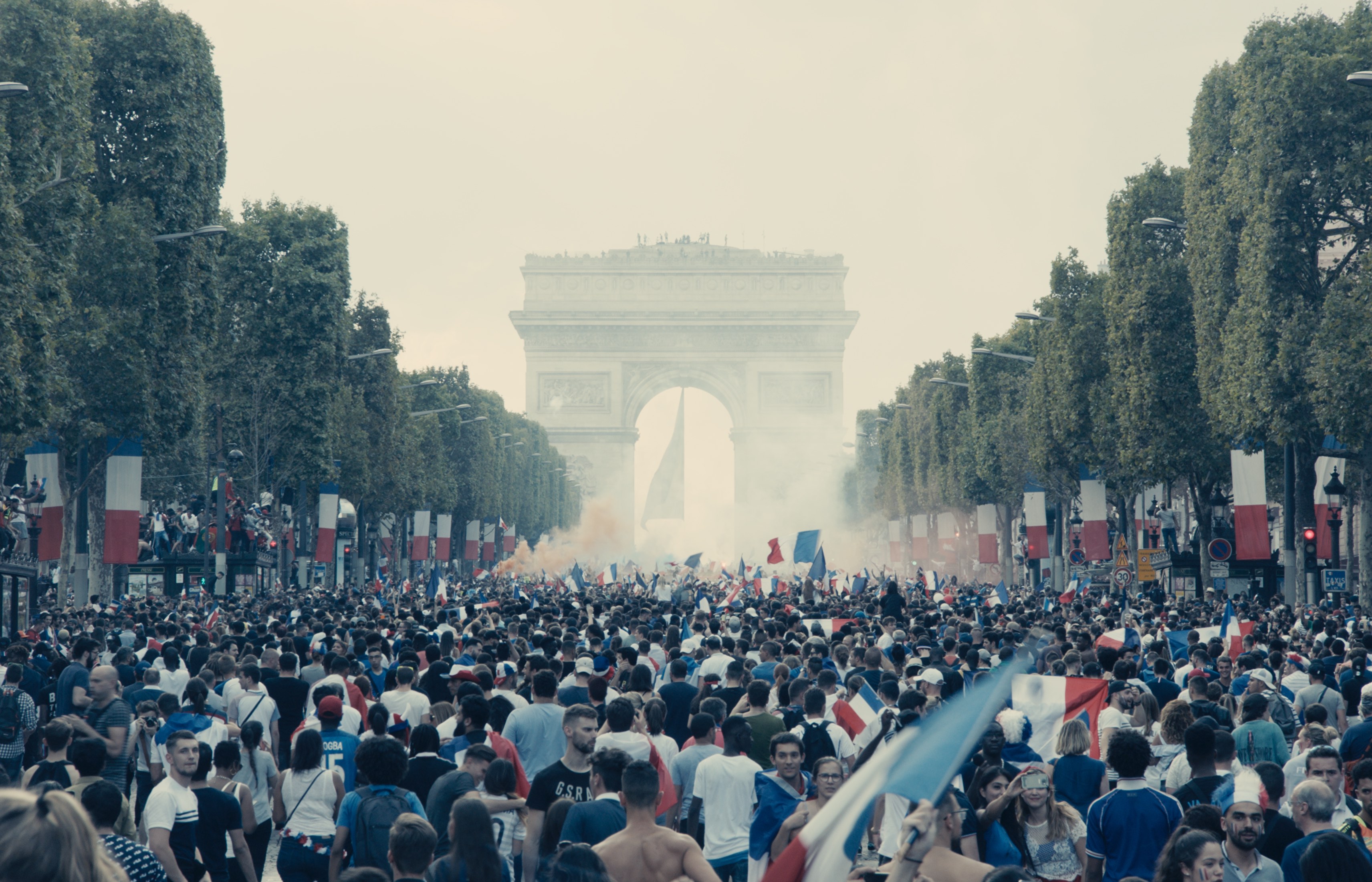
A shot from the opening scenes of Les Miserables setting the scene of young protesters.

The European Film Festival is strongly issue-driven this year which takes us into the eye of the storm of what people are struggling with around the world: from immigration to homelessness, the scourge of survival at any cost and even ageing with the baby boomers all hitting their final stride. DIANE DE BEER reviews:

While we’re complaining about the heat, a film like Rosie reminds you about lives battling with real problems.

Rosie 7I9A0004
Short solace in the back of a car in Rosie

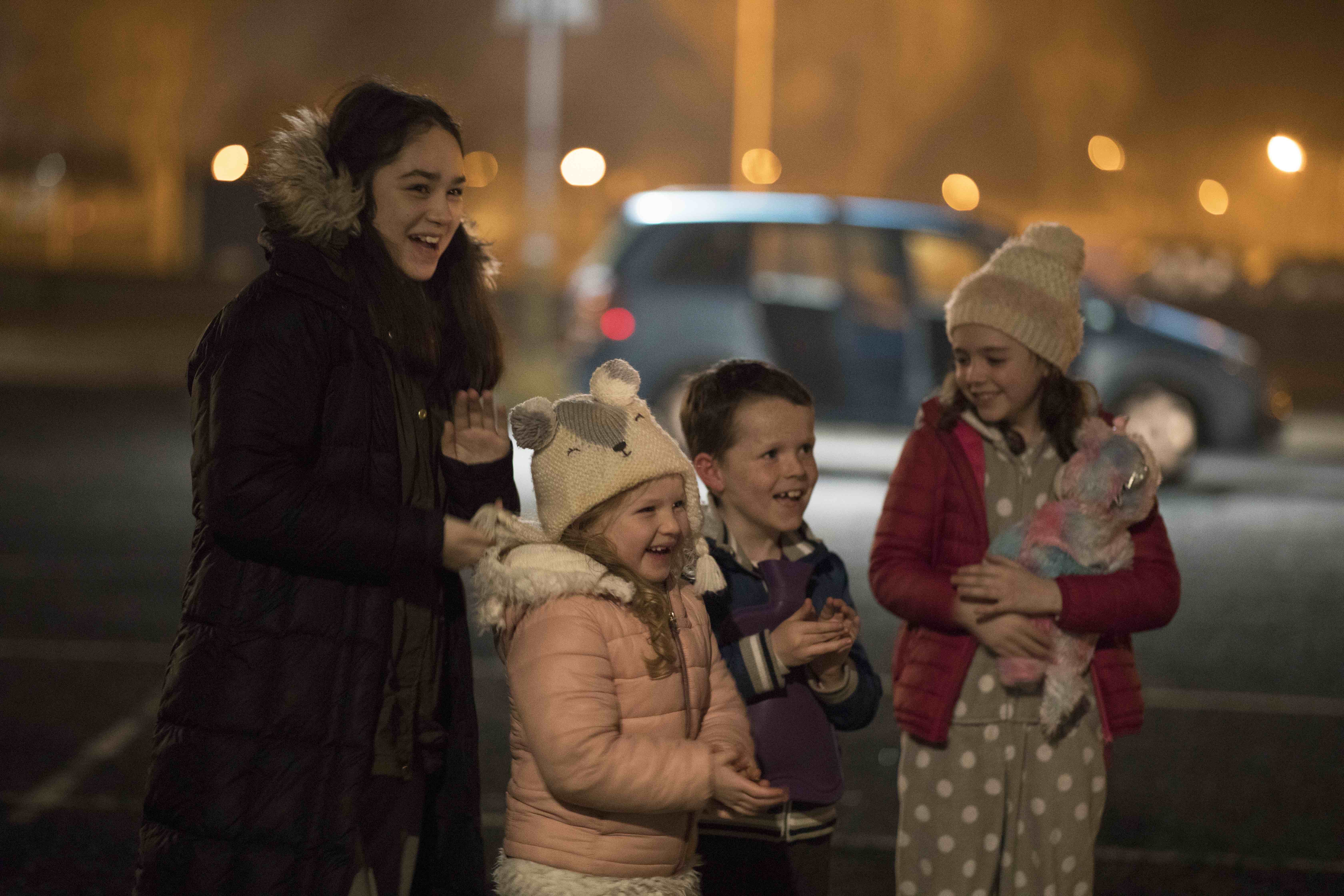
This Irish family of six, Rosie, her husband John Paul and four kids, three of them still only tots, are out house hunting. The thing is, they’re only searching for the night, every night, and because it’s such a struggle to find one room a night before the kids go back to school, there’s no time to look for anything more permanent.

While her husband is at work at a restaurant, a tough slog, the kids are dropped off at school and Rosie can get to phoning the hotels for a family room for the night – with one toddler in tow. “I never knew there were so many hotels in Dublin,” she tells her brother-in-law who is trying to tell her that they can’t look after the family dog any longer, one of the few emotional lifts they have left with which to give the kids a bit of joy.

Rosie 7I9A0457_1
Capturing a moment of happiness in the sorrow of Rosie.

It’s heart wrenching as the family is left destitute and yet there’s a warmth amongst the adult couple as they try holding it together for the children who are struggling with these dire circumstances. Life is tough enough without any of these circumstances added to the daily burdens. Keep that in mind as you think of the unemployment numbers in this country and the people who are represented by those numbers.

It’s brilliantly made, and even if bleak, it’s a story of our time and has to be told. And we have to pay attention.

If you’re thinking Les Misérables the musical, think again. It reminded of a recent television interview by a young Limpopo student leader who was speaking in protest at a fellow student’s murder, which included rape and 52 stabbings with a knife. Her anger was palpable as she told of students reporting rape to their local police station only to be told, it was their boyfriend.

With a similar disregard for young lives, the police, who claim to have worked this particular banlieue for 10 years, are looking for a lion cub that was stolen from the circus. One kid in particular is targeted and in a scuffle with the youngsters who are becoming quite menacing, one of the policemen fires his gun and harms this particular boy.

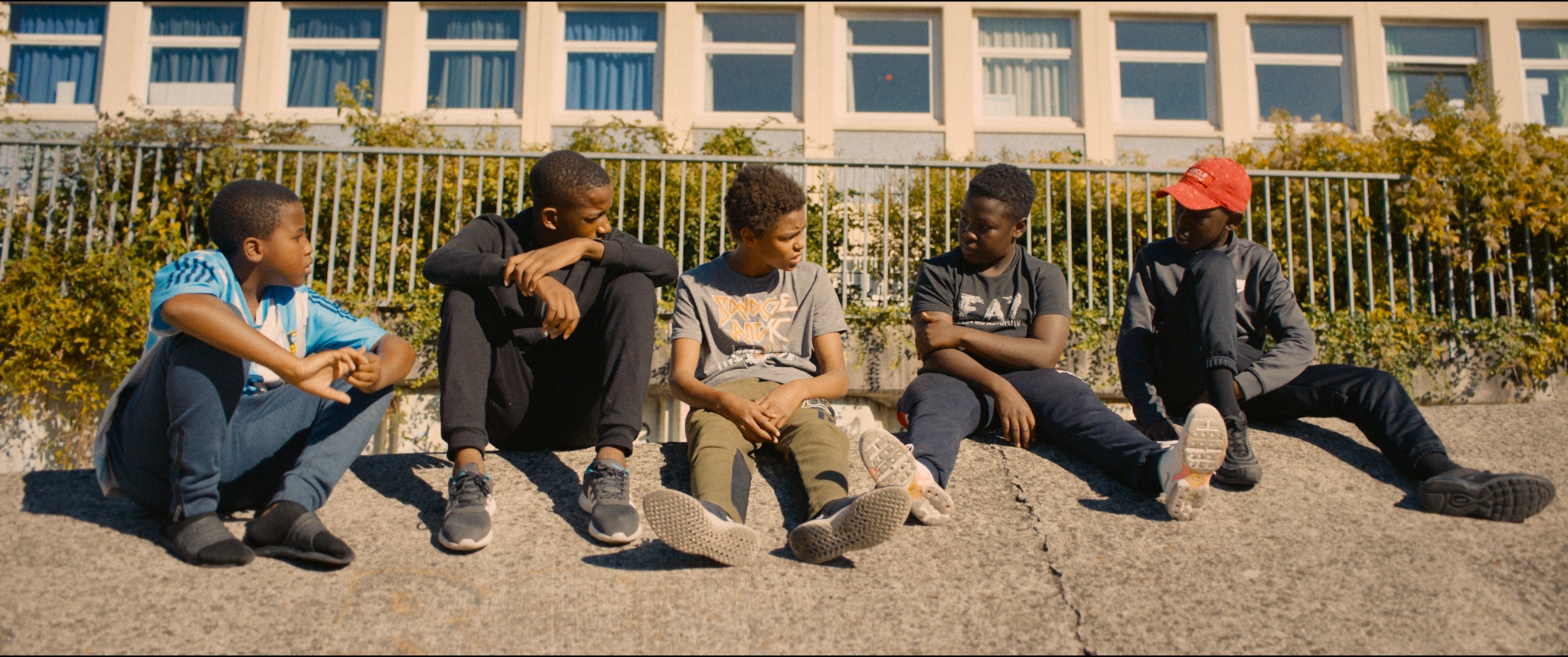
Les Miserables Still 3 (8)
Five young lads from Les Miserables

The rest of the film is about trying to destroy the footage shot of this incident but also trying to keep the young wounded warrior from actually dying and bringing the incident to light in a way the police don’t want it spotlighted.

This is a time when the voiceless in different areas of life are starting to speak up and they’re doing it loudly. The one gives the other courage perhaps, but even more likely is the disgust experienced by different groupings in society at the complete disregard for their lives. They have finally hit urgency levels which needs addressing.

It’s gritty, hard-hitting but these stories need to be told and taken seriously. What makes this one so incisive is the fact that this debut director, Ladj Ly, and many of the cast are telling the story of their suburb. They know these streets and these people. It is their lives.

It deservedly won the Jury Prize at the Cannes Film Festival in 2019, received the Best International Feature Film at the Durban International Film Festival in July, and has been selected as the French entry for the Best Foreign Film for the 2020 Oscars. It will be distributed locally by Videovision next year.

The_Vice_Of_Hope7
Delivering the innocents in Vice of Hope.

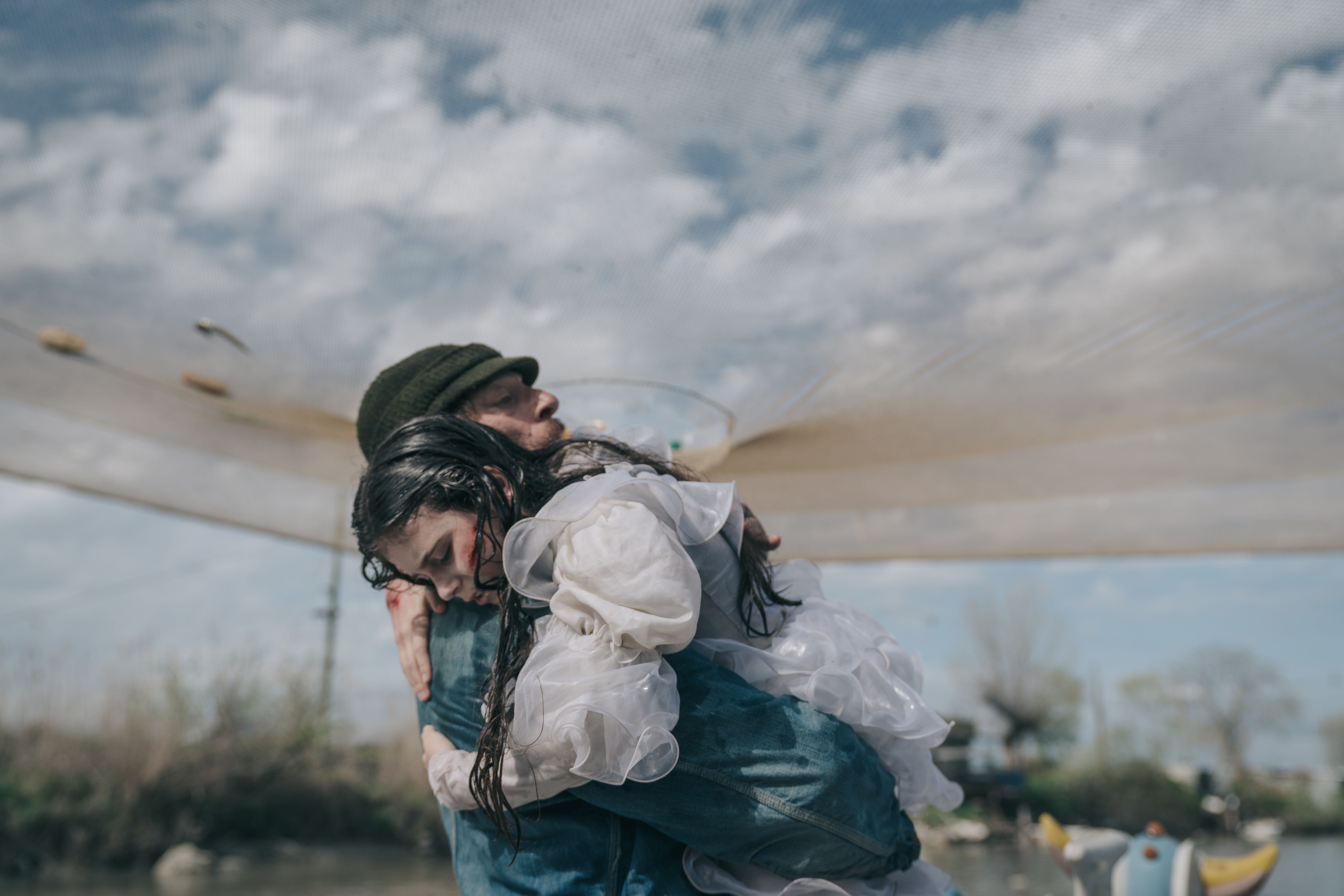
In similar fashion, the aptly named Vice of Hope hones in on the women, both heroes and villains, who live on the edges of the towns surrounding Naples.

It deals with poverty, African immigration, human trafficking and the surrogacy business that follows as a result. It’s almost impossible to escape this nightmarish life as the young girls have babies who are then sold on the market before the cycle repeats itself again and again.

Those not making babies are pulled in to keep the others in line and, life being what it is on the edge of these waters, it doesn’t take long for them to fall into the same trap.

Like so many of the other films, it’s a bleak picture of what it takes to survive but it also shows the strength of those who are determined to survive and hold the hands of others to drag them out of these dastardly circumstances.

The_Vice_Of_Hope5
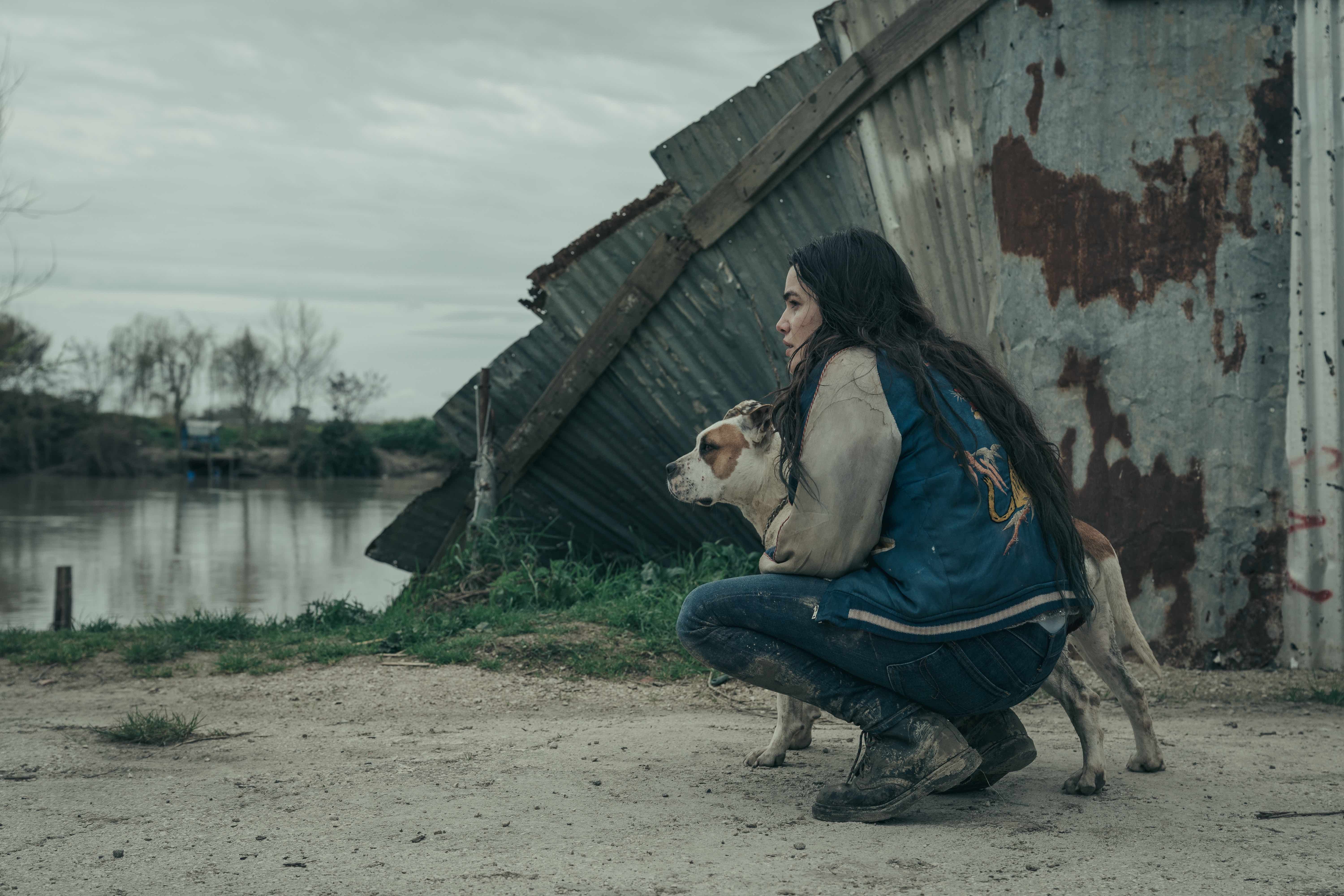
Protagonist Maria with her only faithful friend.

Life deals different cards to different communities, which is why phrases like first world problems are much darker than they may seem. Most of the time, survival means choosing between life and death, with neither choice being an easy one.

We live in a world where the problems seem insurmountable and we think we would do better to simply turn away. But in today’s world, that’s not an option any longer as filmmakers not only stories of fantasy, but also show us the real world in all its horror.

We need to know.

painandglory
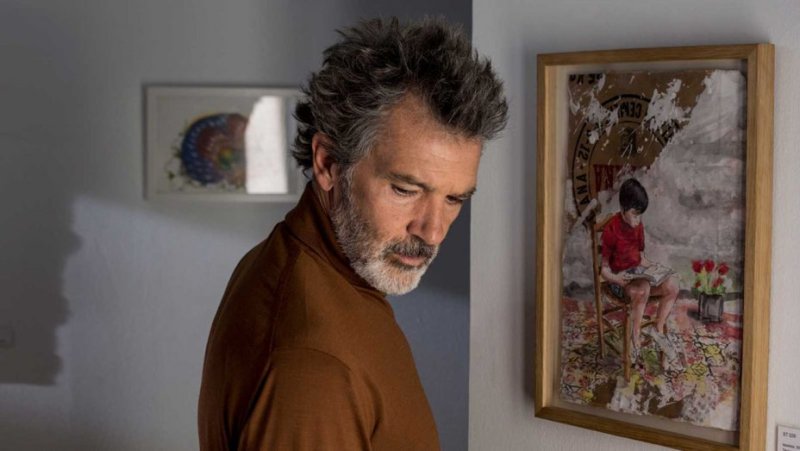
Antonio Almodovar as Salvador in Pain and Glory

Who can resist a Pedro Almodóvar movie and with his latest Pain and Glory, described by many as his finest in many years, it’s a rare treat. The ageing director hitting his 70s is in a reflective mood as he casts a wary eye towards the future while looking back with lingering love at especially life with his mother, always a force in his films.

With two of his favourite actors, Antonio Banderas as Salvador, the weary director who is more at ease doing nothing and obsessing about his ailing body and mind, and the exquisite Penelope Cruz playing his adored mother, a time he reflects on when he was still a young boy, this is Almodóvar baring his soul – even if it isn’t, strictly speaking, all his life.

Penelope Cruz in Pain and Glory
Penelope Cruz in Pain and Glory.

There’s enough to tempt you into thinking so, which adds to the oft melodramatic meanderings of a director who feels he still has enough to say and yet, has neither the energy nor the spirit to do so.

But even as he seems to step out of his life, he finds a way to make his own mindful meanderings cinematic in a blast of colour that all those passionate about Pedro’s artistic bent will appreciate.

It’s like poetry as he walks you through the different moods with people of his past and present, all of them impacted by his artistic talent and the way he told his stories and lived his life. Even when someone’s life looks like something to be desired, that’s never true. We are all trying to navigate the best we can, with all our neuroses and passions, the best life we can possibly live.

This one predictably has been earmarked as Spain’s 2020 Oscar nomination and watch out for a few general nominations as well.

See http://www.eurofilmfest.co.za/ for detailed synopses, trailers and links to the screening schedule and ticket bookings.


Music and Magic at Market@theSheds

DIANE DE BEER

best of sheds 19 square (002)

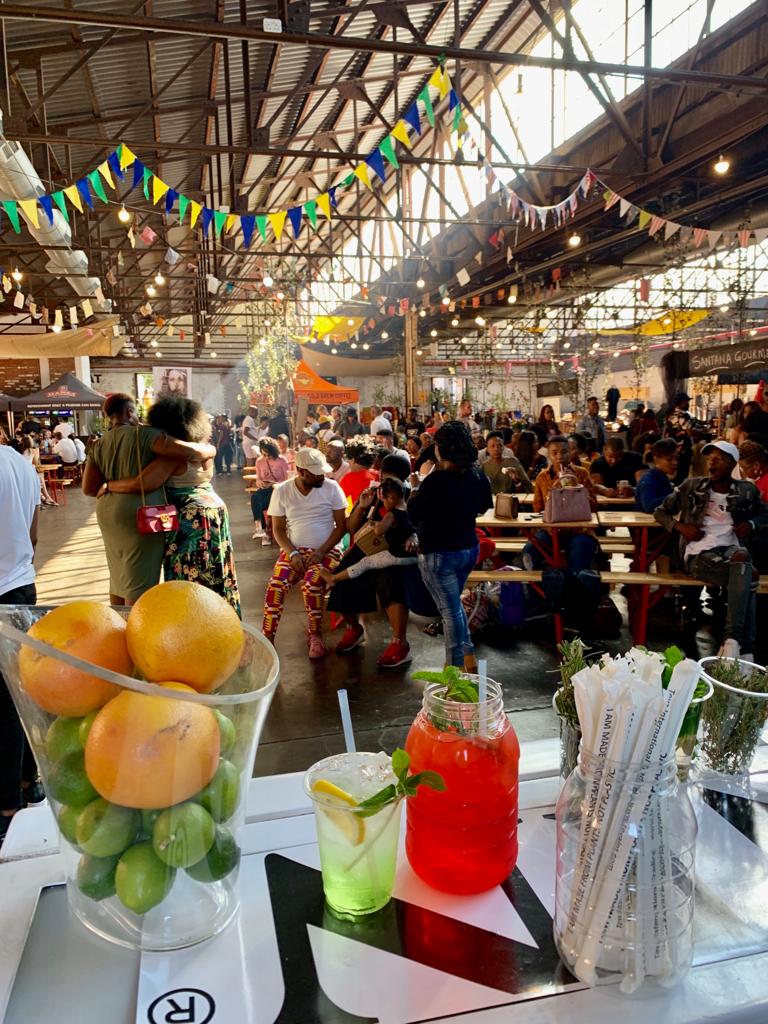
Pretoria has some of the best markets in the country and one of those, Market@theShedsis probably still one of the best kept secrets in town.

Part of the reason is because it happens in the city at 012central, the trendy arts precinct in Pretoria CBD.

And importantly, first things first, there’s safe parking. Find free parking at 216 Sisulu Street which provides direct access to the market. Overflow parking is available at the State Theatre, 140m away from the main entrance at 381 Helen Joseph street.

Morayks
Morayks in concert

This coming market on Saturday is really one for music lovers. Best of the Sheds Music Festival is the grand finalé for 2019 and the emphasis is on local. Throughout the year, more than 60 talented local bands and musicians perform on stage at the monthly Market@TheSheds.

Once a year, people get the chance to see the year’s favourite bands and musicians with this action-packed Best of the Sheds Music Festival. It truly is Tshwane’s best showcase of the finest local artists and bands.

If music is your thing, this is a fantastic venue to catch the vibe. Join the festivities on Saturday (November 30) and see more than 10 live bands in action. What is described as the ultimate line-up includes The Muffinz, Brian Temba, Morayks, Pedro Barbosa, Gina Mabasa, 1520, The Tshwane School of Music, Lehlohonolo Ntsoko, Chievosky and Zebra.

What makes Best of The Sheds different from their usual market experience? It’s more than just a vibe-driven art, fashion, food and a designer show. Complimenting the music festival, there is a festive market with over 40 designer stalls stocked with colourful, locally produced products. It’s a perfect opportunity to shop the market streets and find quirky gifts while having a great time with family and friends.

Market@theSheds has always meant different things to different people. Personally it’s people watching and fantastic food for me although music is a big part of the market’s success. But if you want less noise and more kuier, it’s best to go earlier in the day rather than later, when the party really gets going.

Kudzaishe Gumbo (5)
Dancing in style at Market@theSheds Picture: Kudzaishe Gumbo

Pretoria’s hip inner-city market is where you will find delicious gourmet street food, craft beer, gin and cocktail stalls and the open-air courtyard with a jumping castle makes it fun for the whole family. But it’s also a place where those with true Tshwane style hang out – both the parents and their kids.

If you’re checking for classy street vibes or high-end individual style that seems ready to vogue, this is where you’ll find it.

Tickets can be bought on-line at Quicket. Online tickets are R120 pp and entrance at the gate will be R 150 pp. Kids under 12 come in free.

Gerrit Wassenaar
Picture: Gerrit Wassenaar

It’s time to shop, play, dance, be merry and have fun with family and friends.

Market@theSheds is the place to start the discovery of a city you think you know. It is a project of the Capital Collective, a non-profit organisation promoting rejuvenation efforts in the inner-city. And it’s working. Don’t miss out being part of this hidden jewel of the inner city. It’s a blast, every last Saturday of the month.

And this one will be happening with a music line-up of note.