AFTER A MUCH TOO LONG SILENCE THERE’S THE PROMISE OF THE GLORIOUS SOUND OF MUSIC

With the relaxing of the lockdown restrictions in May and then a sudden freedom for artists performing to full capacity venues from the end of June, the classical music scene has popped up in full colour with spectacular effect. For those who have missed the few presentations that heralded the incremental emergence of packed performances, there’s even more to be excited about on the immediate horizon… and beyond. DIANE DE BEER gives the lowdown:
In performance: Charl du Plessis

It all began for me with the Charl du Plessis performance for Aardklop Aubade in collaboration with Afrikaanse Hoër Seunskool on Mother’s Day titled Songs for my Mother


Not only does he create the imaginative programme for these fantastic Sunday morning classical interludes for Aardklop, but he also performs as soloist or with his trio, Nataniël or another classical performer at these magical hour-long performances once a month.

This time he made it personal as he celebrated Mother’s Day 2022 with a very idiosyncratic and sentimental selection of music which has special meaning to him. His programme was all about the influence of his family’s vinyl record collection which brought back a flood of memories for both the performer and his audience.

And because of his versatility as both classical and jazz pianist, the programme included composers like JS Bach and French chanson superstar Michel Legrand featuring alongside standards by Fats Waller and Chopin.

As always with this extraordinary talent, it was about the selection of music as well as the performance and making it this personal was a stroke of genius.

The other attraction of this monthly series is an introduction of young musical stars from Affies, which has a very strong musical department. This time it was an extraordinary acapella ensemble cleverly named A-minere!’

The next concert is on August 7 with a cello and piano duo, Gerrit Koorsen and Eugene Joubert, who will be performing musical arrangements by three composers from the Romantic period. Tickets at www.ticketpros.co.za

Watch this space for further concerts or check Aardklop Aubade online.

Realising that Pretoria has had a paucity of classical music these past couple of years, musical entrepreneur Du Plessis decided to also introduce a mini festival – Atterbury Klassiek – from July 15 to 17.

It starts on July 15 at 7.30pm with The Scullery Quintet, a new South African classical and contemporary music crossover group that is made up of a rather unusual string quintet. The ensemble features the standard string quartet configuration: first violin, second violin and viola, but the cello role is replaced by double bass, with drum set as the fifth instrument.

https://www.instagram.com/reel/CflqrqODkjs/?igshidYmMyMTA2M2Y

This multicultural ensemble was conceived in early 2020 by a group of like-minded musicians who got together to share their varied musical influences and keep their musical abilities alive during the pandemic.

They will be performing arrangements and improvising on compositions by their favourite composers ranging from Vivaldi, Dvorak , Herbie Hancock, and Weather Report to Radiohead, which indicates their repertoire is driven by passion.

Atterbury National Piano Competition winner 2021, Gerhard Bester.

On Saturday, July 16 at 3pm follows a piano recital by Gerhard Joubert. He is the 2021 winner of the Atterbury National Piano Competition and will be performing his first full length solo recital in this theatre. He is currently a piano student of well-known pianist and lecturer Francois du Toit and the youngster has won many other competitions including the National Youth Music, Pieter Kooij and Johann Vos music competitions and is completing his BMus degree at the University of Cape Town. The recital will include works by Schubert and Chopin.

Du Plessis and fellow jazz pianist David Cousins will present Double Trouble Jazz Piano on Saturday night at 7pm with favourite jazz standards, Latin classics and music by Handel and JS Bach in new arrangements for four hands and two pianos. Composers include Chick Corea and Milt Jackson and South African Jazz legends Abdullah Ibrahim and Hotep Idris Galeta. Du Plessis is a Steinway Artist and Sama Award-winning recording artist for Claves and Steinway Spirio. Cousins is a Berklee College Boston graduate and teaches jazz piano at Wits. This is their first musical collaboration.

Jazz pianist David Cousins.

On Sunday at 3pm, t he award-winning violinist and senior lecturer in violin and viola at Nelson Mandela University David Bester again joins forces with leading South African-based guitarist and three-time SAMA nominee James Grace in Paganini to Piazzolla 2.0 for the concluding concert of this classical season.

Violinist David Bester and guitarist James Grace.

This follows on a sold-out performances at Woordfees 2020, with Paganini to Piazzolla 2.0 evolving around Máximo Diego Pujol’s Suite Buenos Aires – a four-movement work that sketches a musical picture of life in the South American capital city Piazzolla ultimately called home. Originally composed for flute and guitar, the violin offers a fresh perspective and distinctive sound in this intense and flavourful work.

All bookings at seatme.co.za

Following the Aubade concert early in May, impresario Herman van Niekerk joined forces with the Italian Cultural Institute of Pretoria for a fantastic series of concerts starting from his special Sasolburg venue, the Etienne Rousseau Theatre and concluding with a wondrous concert with the spectacular accordionist Pietro Roffi, who joined forces with the marvellous Free State Odeion String Quartet with Samson Diamond, Sharon de Kock, Jeanne-Louise Moolman and Anmari van der Westhuizen.

The Toeac Accordion Duo from The Netherlands.

Van Niekerk has previously also featured this extraordinary instrument with two accordion virtuosi, the Toeac Accordion Duo from The Netherlands, performing at Johannesburg’s Linder Auditorium.

Many classical followers might have been surprised when hearing of the classical bent of Roffi because we are much more familiar with the accordion in more popular genres of music.

Accordionist Pietro Roffi and the Odeion String Quartet busy setting up on Atterbury Theatre stage.

With a special Roffi arrangement of the familiar Vivaldi Four Seasons to include the accordion, the main feature of the performance, it was a fantastic choice because even those who just dabble in classical music will be familiar with it. And that gave one the platform to appreciate just what these musicians were doing with the music with such delicacy and obvious delight.

https://www.facebook.com/watch/?v=740577567292983

Also included in the extraordinary performance was Bach’s Minuet and Badinerie from his Orchestral Suite No. 2 in B Minor as well as the much loved Piazollo’s Oblivion and Adios Nonino, and an original composition performed solo to start off this remarkable concert and magnificently introducing the magic still to come.

The musicians en route…

It was mesmerising and yet another reminder of what we had been missing these past few years. For those who missed it, hold thumbs that this collaboration will be repeated again and again in the future.

If you haven’t yet discovered Van Niekerk’s extraordinary programming in Sasolburg (and sometimes repeated in Johannesburg or/and Pretoria, make a note to follow the Etienne Rousseau Theatre notices.

It is joyous that the classics are back and hopefully some of the above concerts will be supported by the pandemic-driven neglected classical audiences.

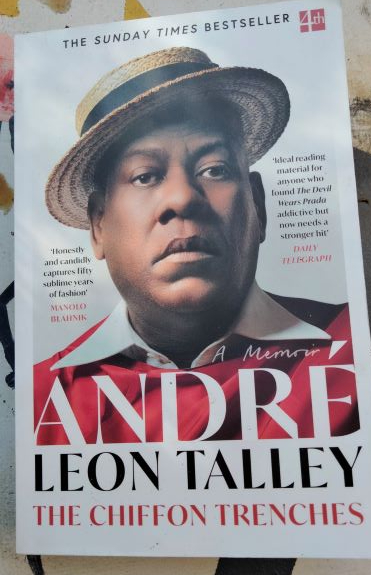
FASHION MAVERICK ANDRÉ LEON TALLEY CONQUERS THE CHIFFON TRENCHES IN STYLE

There’s so much surprising in the André Leon Talley book, which as the title suggests is all about the haute couture world, that temple of mainly French fashion, but also the world of the high priestess Anna Wintour. And then he deals with the rapidly declining media world because of the shift of advertising and of course all the personalities he mingled with daily. DIANE DE BEER hangs on to every word:

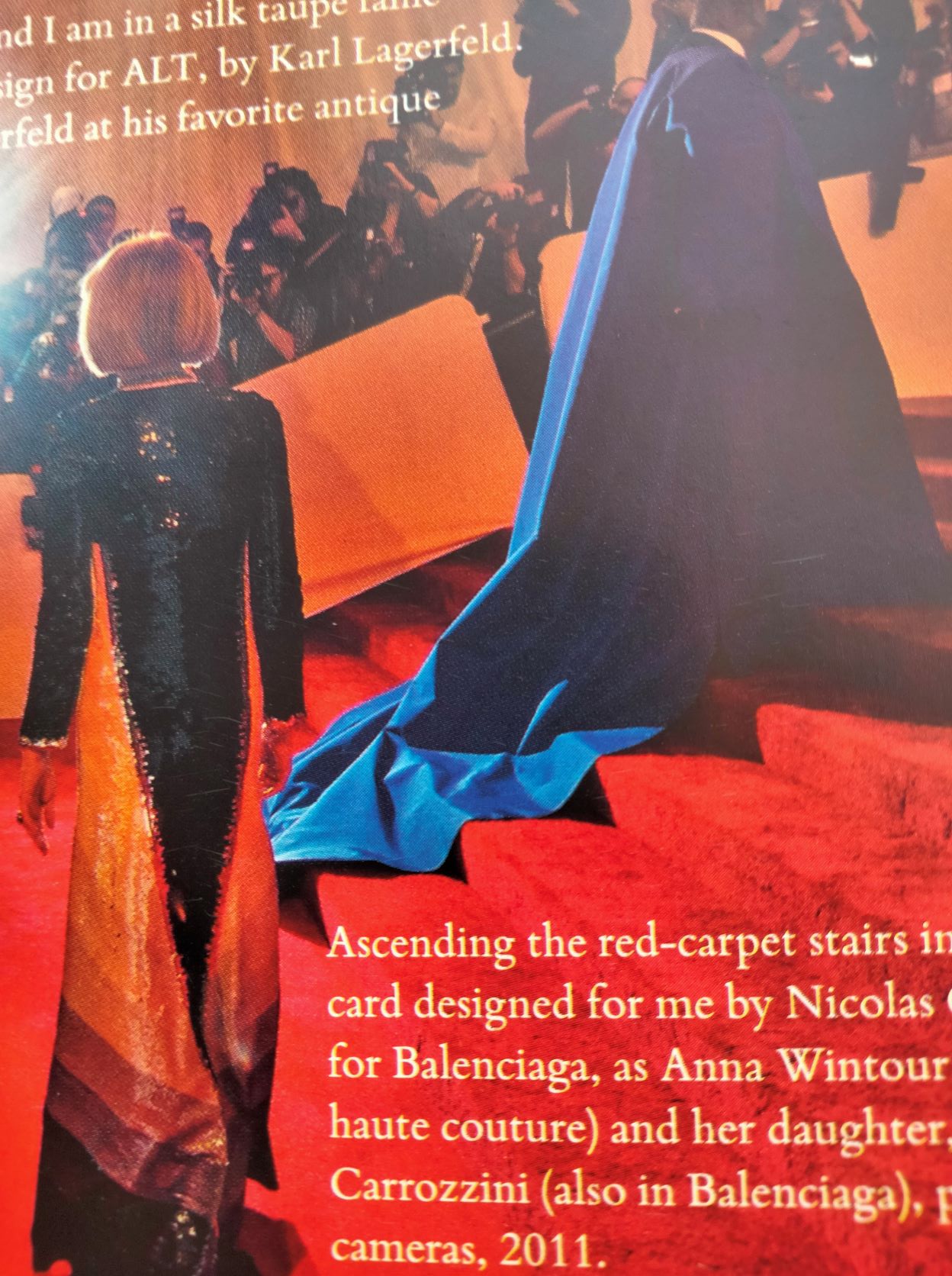
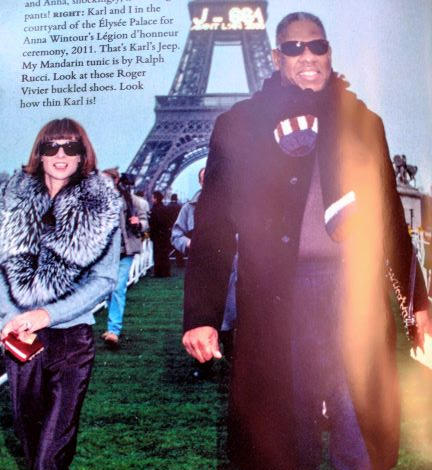
Pictures from the book

André Leon Talley’s The Chiffon Trenches (4th Estate)

Anyone who has even the slightest interest in the fashion world would at least have noticed this author at international fashion events.

He stood out –physically because of his size and his race in this almost lily-white world, but also because of his presence, his flamboyance, yes even amongst the fashion glitterati. He knew how to do that.

I’m not sure I would have read the book if one of my smartest friends didn’t gift it to me. She sussed that this might have more depth than simply chronicling the sometimes vacuous world of couture.

And indeed it does. If we have realised anything in this past decade if paying attention to America (and how can we not), it is that nothing when race is involved is as it should be. That was even true for this remarkable man, who made such an impact in the way he celebrated fashion.

There was really nothing he loved more. His own stylish entrance into this world, the way he found a way to work for Andy Warhol and form a decades-long friendship with Karl Lagerfeld. And finally at the tail end of his career, his working and more intimate relationship with Anna Wintour.

As part of the printed world, I was stunned by the revelations in this book almost mirroring what happened in our newspaper and magazine world when their advertising platforms started imploding.

I used to jokingly say that I would be switching off the lights, but not thinking for a second that the rarefied world I had been working in for most of my life would end almost with my formal career – and quite harshly at that.

Surprise then that even for those glamorous journalists and editors who are almost as much part of the story as the people they write about, life was not much different. When printed journalism’s problems escalated locally because of a dearth of advertising, it was happening worldwide. And the bosses there behaved as badly as the bosses locally.

“When Polly Mellen who had been at Vogue for thirty years, was forced to retire, they gave her a cocktail party in the basement of Barneys. I went, and remained utterly confused about it throughout the night. It didn’t make sense; it was undignified. They could have honoured her with a seated dinner, with guests of her choice. Or a golden watch, a Bentley, a Rolls Royce, something! She could decide to keep it or sell it, but a little cocktail bash in the Barneys basement? Ageism at its worst. They wanted to get rid of her at Vogue to make way for someone else. They booted her upstairs to Allure, and she retired soon afterwards. That was not befitting of what Polly Mellen had contributed to Vogue, nor of the decades for which she worked there

This might all sound a bit over-the-top. Who gets a Bentley when they leave the company? No one who can be described as middle class. But I suppose in this moneyed world where the journalists become as famous as those they’re writing about, it happenened.

What fascinated me was the business ethics which are on a par around the world. One thinks it is just in one’s little corner. But as Talley illustrates, this is the way the world turns and why we have the top 1 percent so far removed from ordinary lives that they can’t respond to their employees with any humanity.

It’s not all gloom and doom, however, not in the life of the larger-than-life André. Because of who he is and where he works, he doesn’t have to name drop, those are the people who are part of his immediate circle. From Lee Radziwill (Jacky O’s sister) to Karl Lagerfeld, Anna Wintour (whom he both admires and admonishes for her lack of warmth), and of course many others like the supermodels who reigned during his time as well as the different designers who would share their design secrets, their fears and their dreams with someone like André who had both power and empathy.

From the early days, long before Vogue, he established his own style. That’s what propelled him into this world. He could identify style, he could step into that world with grace and he could write about it with flair. He also became part of the fanfare which is part of the chiffon trenches if you really want to be part of that world. And he did.

His passion for couture and everything that represented is what dominated his life. And like any creative, he simply put his head down and found a way to become part of everything he most loved in this world.

Friends in fashion: Lagerfeld and Talley

Sadly, Talley (and of course Karl Kagerfeld) died early this year and that world has lost one of its most entertaining and flashy personalities. And as is often the case, he is really only appreciated now.

It’s a fascinating read, because of the man and the universe he lived in. No one is irreplaceable, but I’m sure even Ms Wintour must miss this valued eye who was both honest and honoured to be asked for advice on, for example, her outfit for a smart occasion.

But also his take on the world, his way of entering a room, what he believed his role was and how his whole being was thrown into his daily work. The chiffon trenches is where his heart and his passion lay.

JAPANESE TEAM PRESENT DREAM CUISINE, TIME AND AGAIN

DIANE DE BEER

The exquisite tastes of Japan as presented by the Japanese embassy.

If a Japanese ambassador brings his own chef (and, as a bonus, the chef’s wife who is also his assistant in the kitchen), you can know there’s something interesting happening both in the kitchen and at the table. We have been privileged (myself and chef/wine connoisseur Hennie Fisher) to be part of these Japanese dinner adventures a few times:

Because Ambassador Norio Maruyama arrived in this country almost at the same time as Covid19, he has had to keep his wits about him when trying to fulfil his mandate. Sometimes there was nothing to do because lockdown prohibited all gatherings, but with the lifting of restrictions, he came up with the idea of hosting small dinner parties rather than large gatherings.

This, of course, especially for those of us not part of the diplomatic scene, was a perfect solution and one that worked brilliantly. Sometimes at the large ambassadorial events, the diplomatic corps gather for dinner talk and other guests are left dangling somewhat.

Yet with these small dinners, not only can the food be more splashy, but –  especially, as in this instance, when  your host is both a foodie and a wine lover (one with excellent knowledge of local wine, to our excitement)  – the dinner can also turn into a huge learning as well as extravagant sensual experience.

From the first dinner (which I wrote, about in previous posting), we knew that not only did we discover new delights when presented with their amazing cuisine, but – especially we also lost our heart to the host and his chefs, Jun Suzuki and his wife Mutsumi.

Returning recently for a dinner, we both felt that because the chef was aware of our admiration for his food, he could relax and be more comfortable in what he presented us with. We are the kind of diners who like being surprised and discovering different levels of a cuisine we are getting to know. And with the excellent wine pairings, as well as detailed descriptions of each dish, it’s my favourite kind of meal. I’m getting nourishment of both the soul and senses – narrative and nurturing. What more could one possibly ask for?

******

And here some wine notes from wine connoisseur Hennie Fisher, who accompanied me on these dinners:

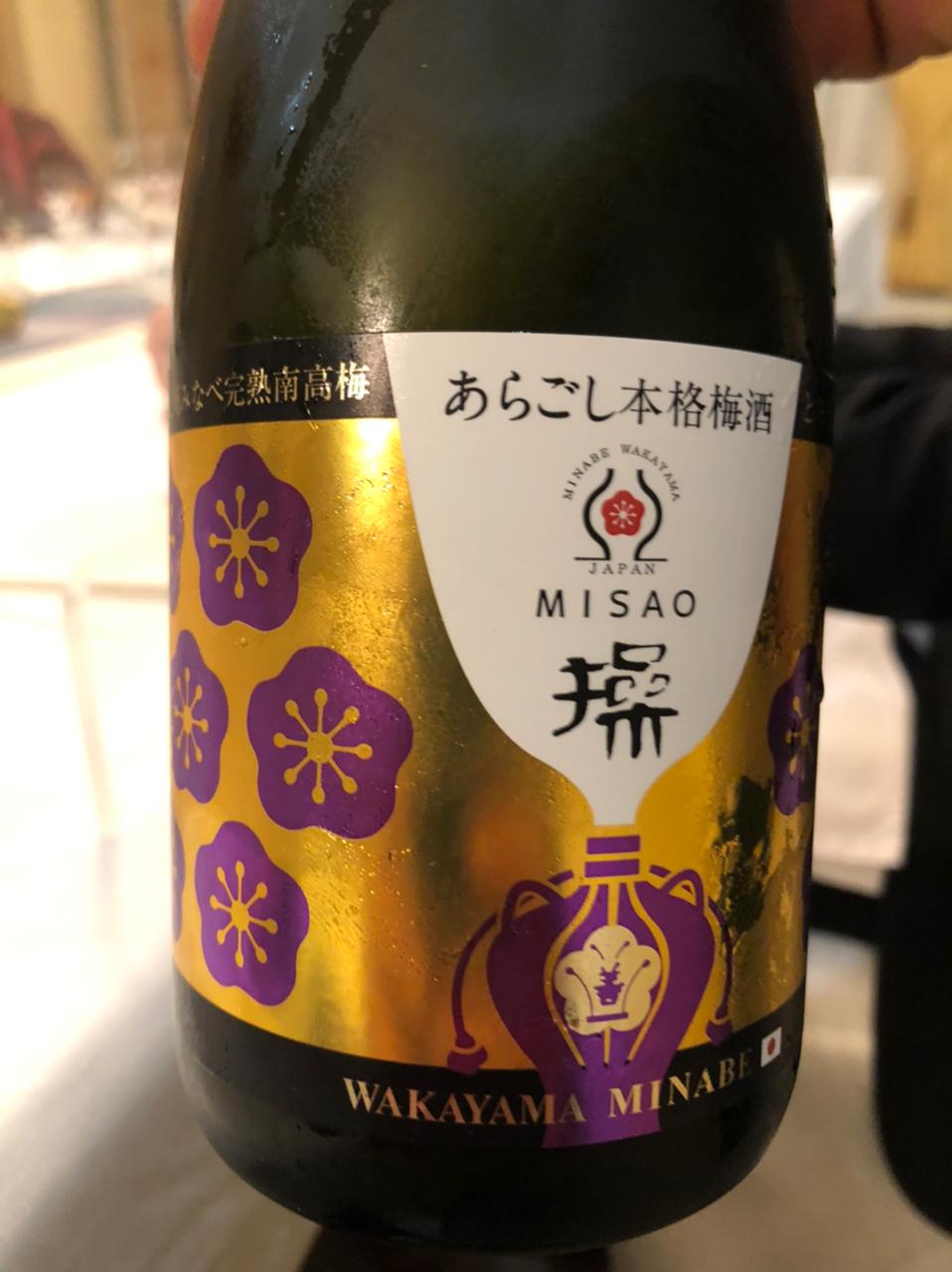
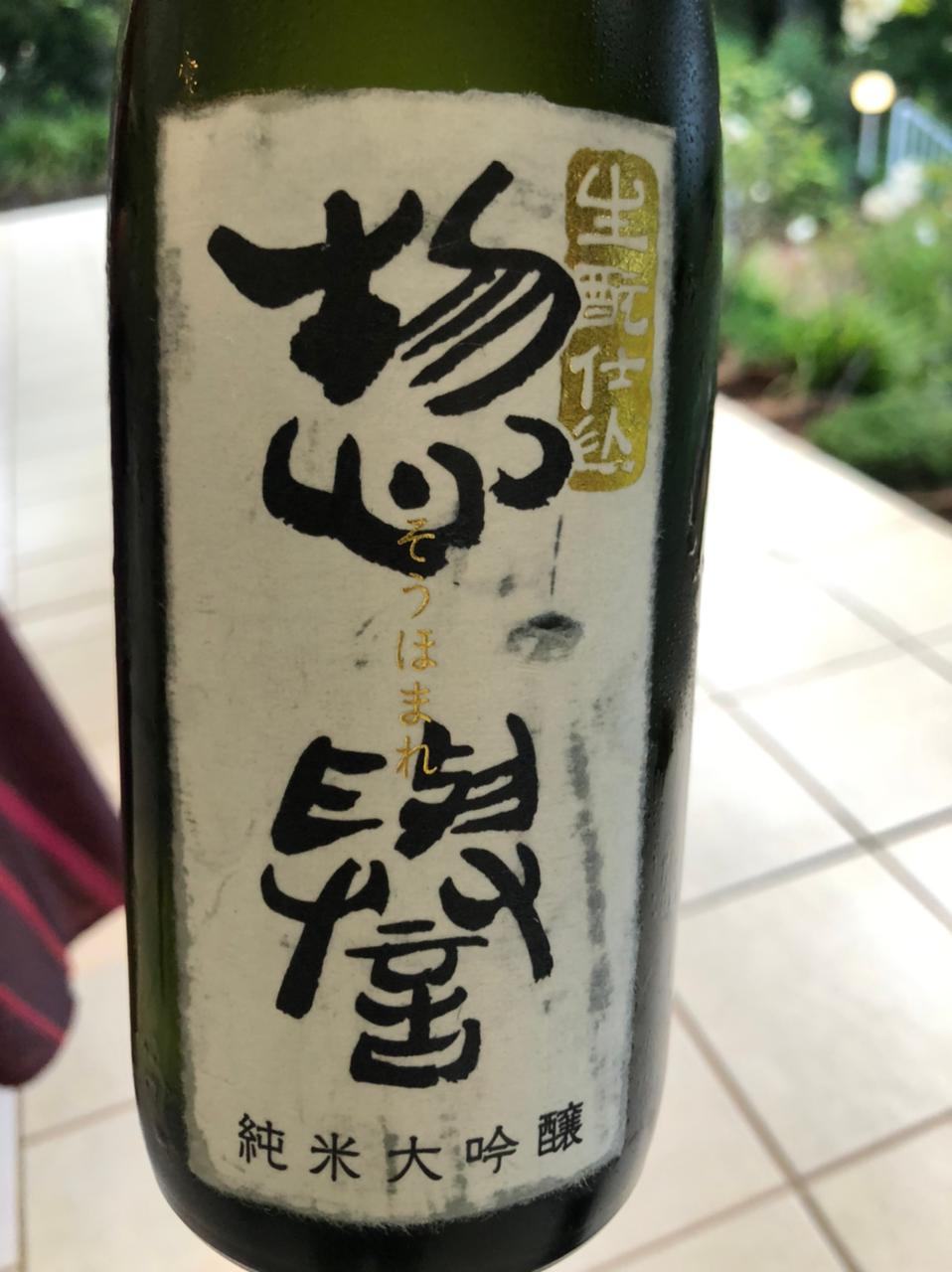
Often, people who love food also feverishly investigate and research beverages to enjoy along with their food. This includes wine, but also other drinks. In fact, the art of pairing food and wine seems to be an increasingly popular pastime. Ambassador Murayama, who loves wine, of course came to the right country to indulge his interest. One seldom visits someone’s house to be presented with wines from your own country that you know nothing about. You may not previously have drunk that exact wine, but at least, because you have close interaction with wine as an agri-product in South Africa, you generally know either the producer, farm, or estate where the wine originated. On different occasions, Ambassador Murayama brought out the big guns, local as well as international one example is a sake from Ichinokura.

The ambassador was especially proud of a white wine made here in South Africa, by Stark Conde ‘Round Mountain’ Sauvignon Blanc, because the Japanese symbol for round mountain is the same as his surname, Maruyama. On another visit, we were served a barrel-selected Roussanne 2013 from Ken Forrester, which was probably one of the most exciting wines I ever had the pleasure to drink. A Storm Pinot Noir 2018 was also sublime. On yet another occasion we had a

Testalonga El Bandito Cortez, an orange wine by Elementis, followed by a Taaibosch 2018 Crescendo, and we ended the meal with some serious Japanese whiskies such as Hibiki Suntory, a 21-year-old whisky. We will miss the ambassador’s fine palate when he moves on to his next posting.

Kanpai!

******

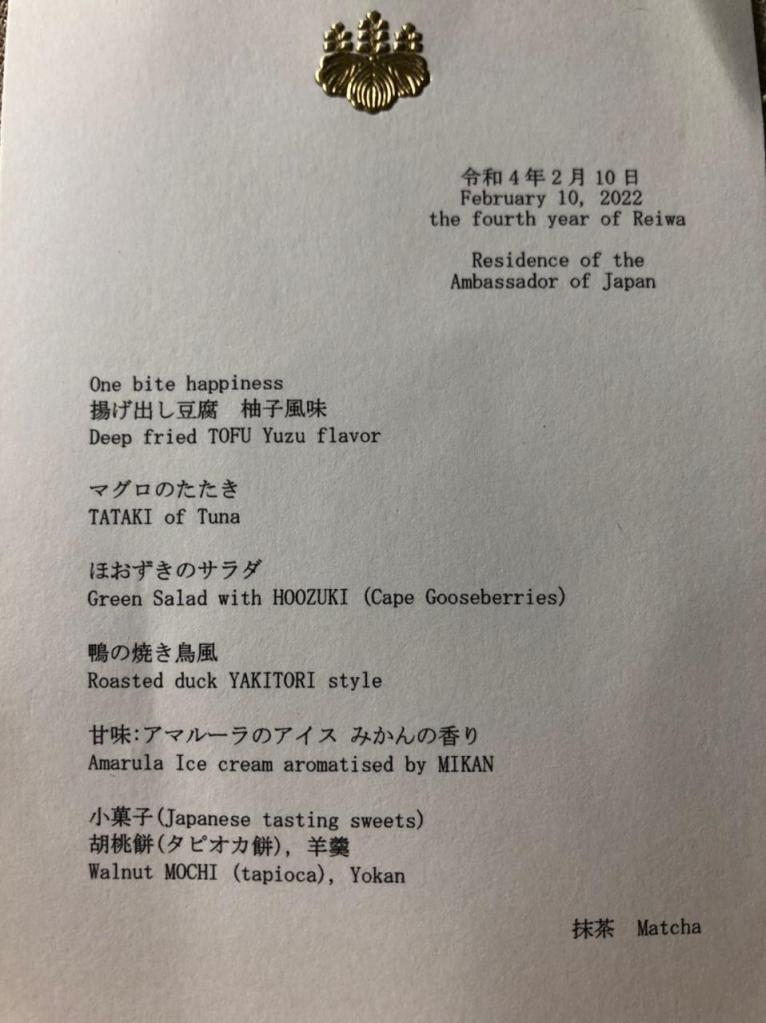
As on a previous occasion, we again started off with One Bite of Happiness, a title I love, and it’s exactly what you get. As pretty as a picture, the deep-fried tofu with yuzu was exquisite. This was followed by a Tataki of tuna which simply means the method (pounding in this instance) of preparation served on a dashi foam. You can’t fault the Japanese on fish – and that’s no exaggeration. Next was their delightfully inventive gooseberry salad, taking the place of  the more traditional palate cleanser.

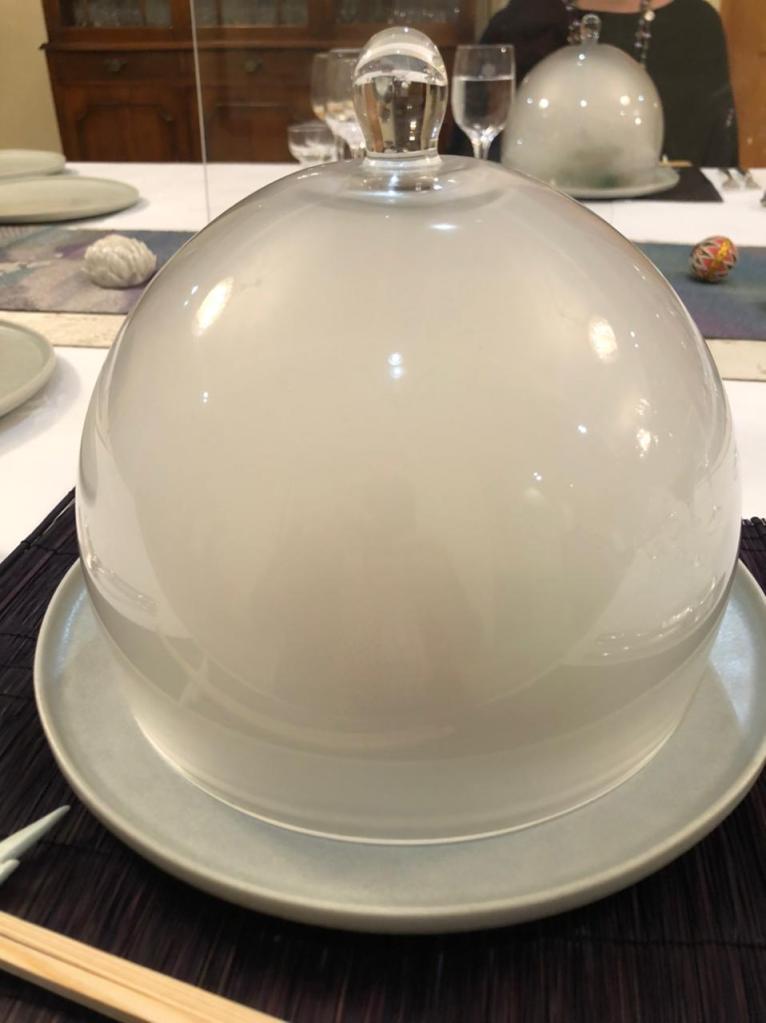
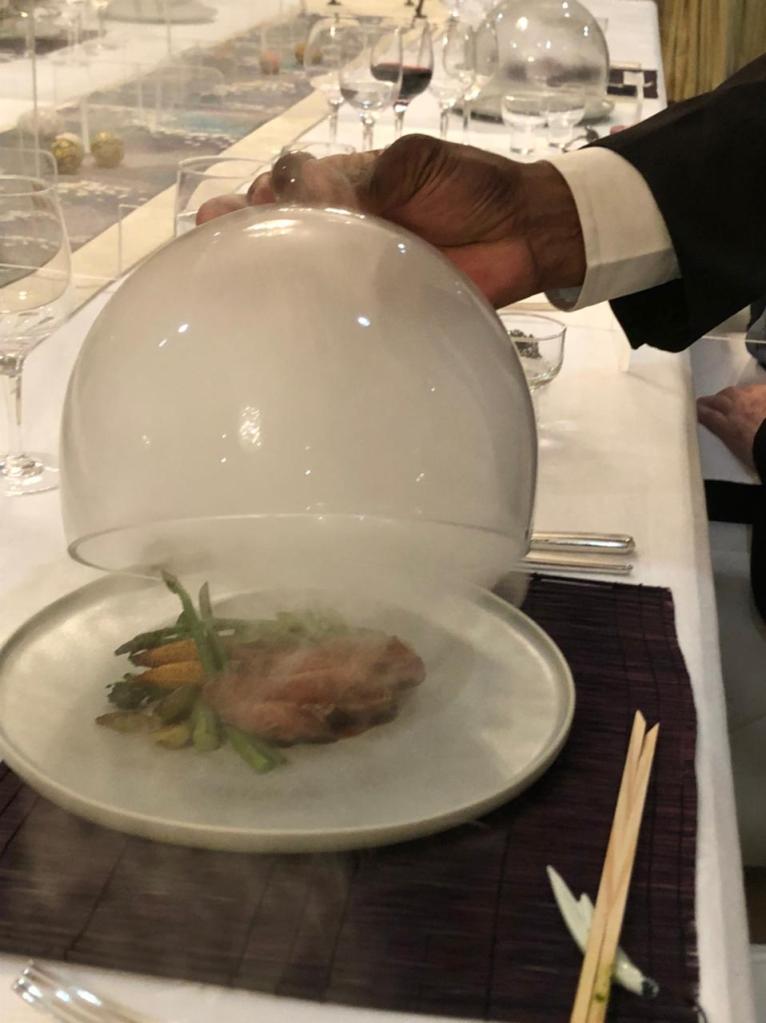
Duck yakatori style was the main and this was presented with great flair, to the guests’ absolute joy. And this being our first duck experience à la Japanese, it was quite splendid – and it had to be, not to disappoint after such a theatrical entrance.

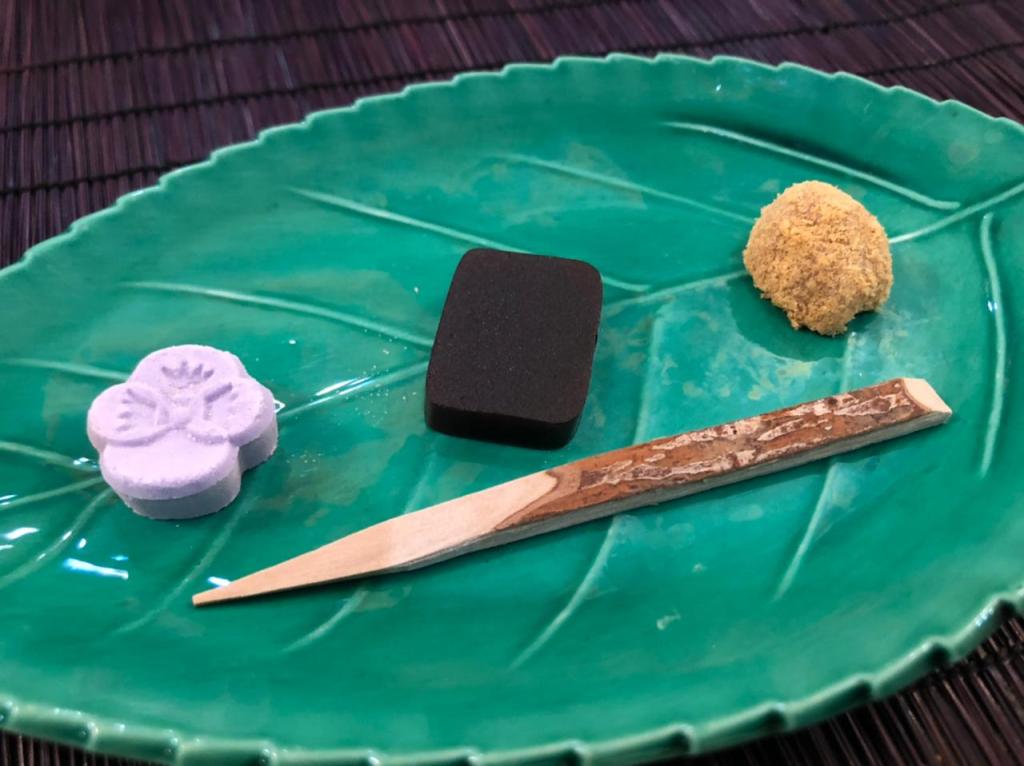
Sweets started with an Amarula ice cream with the citrussy mikan and finally a work of art in the form of three sweet things: walnut, mochi (rice cake) and yokan (red bean paste).

Our appreciation was complete and we loved the way they paid homage to the host country with ingredients like the gooseberries and the Amarula.

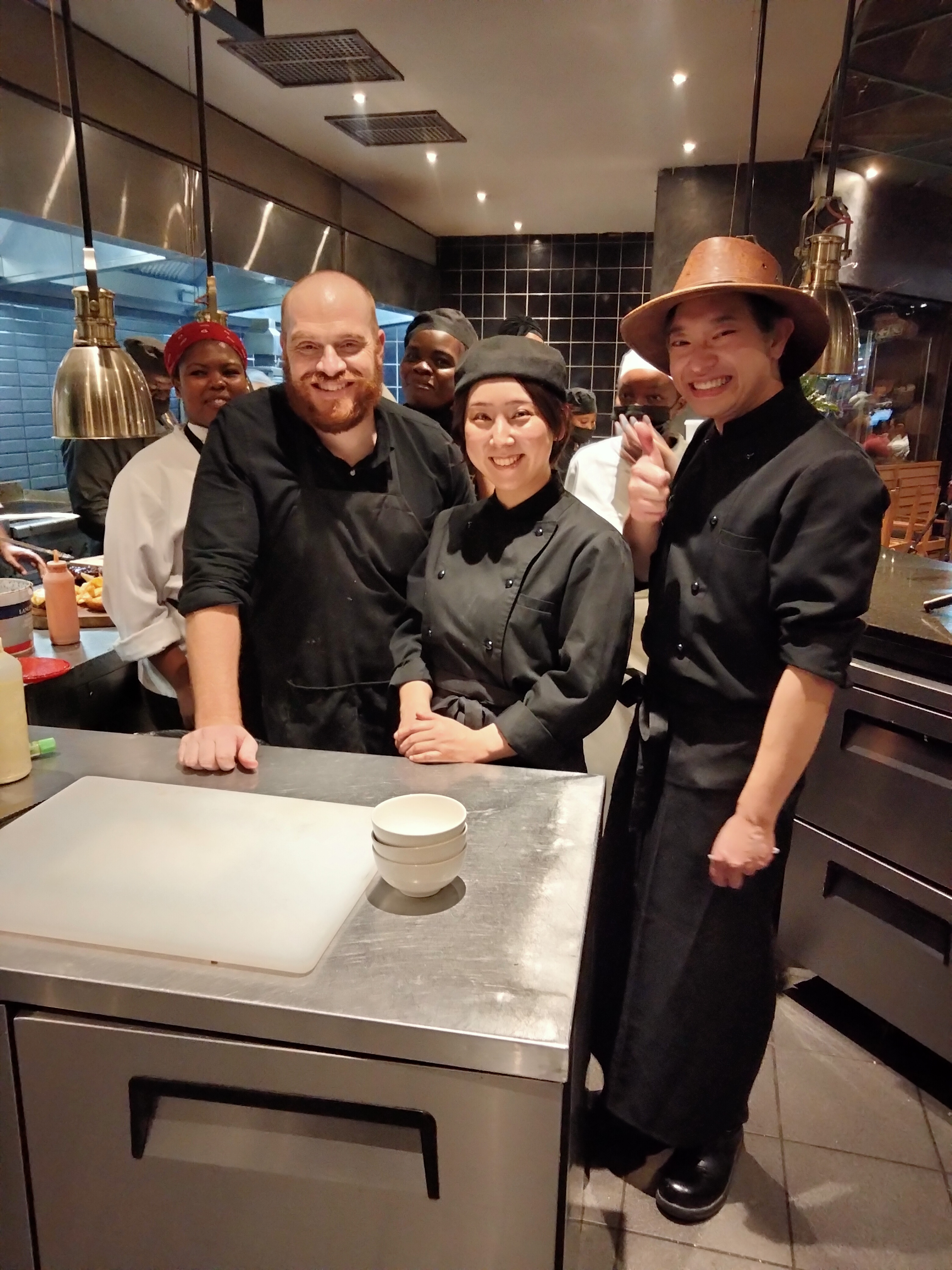
Chef Zane Figueiredo from Brooklyn’s Wood and Fire with the two Japanese counterparts Mutsumi and Jun Suzuki with the restaurant staff all part of the glorious evening.

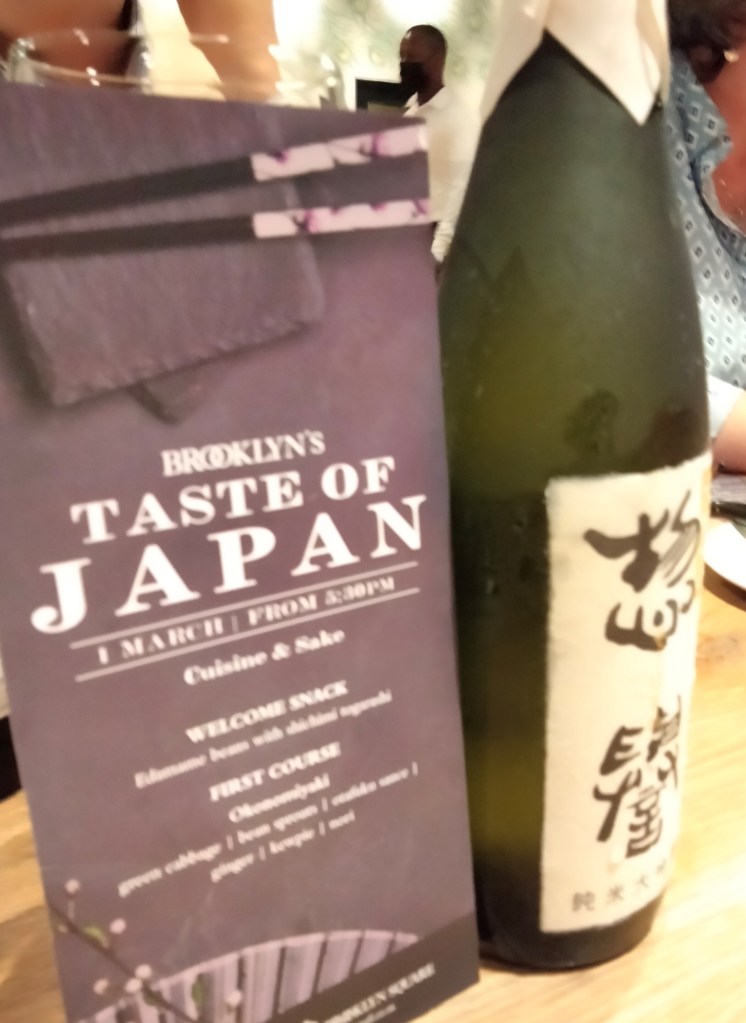
For the second time in almost a month, we attended a Taste of Japan held annually at Wood and Fire in Brooklyn, as the guests of Ambassador Maruyama. This time Jun and Mutsumi stepped into the kitchen of the restaurant and with the help of yet another of my favourite chefs, Zane Figueiredo, produced an extraordinary tasting menu which was the perfect infusion of Japanese cuisine to satisfy both the novice and those of us who feel we have been introduced to their food by those who know and love it best.

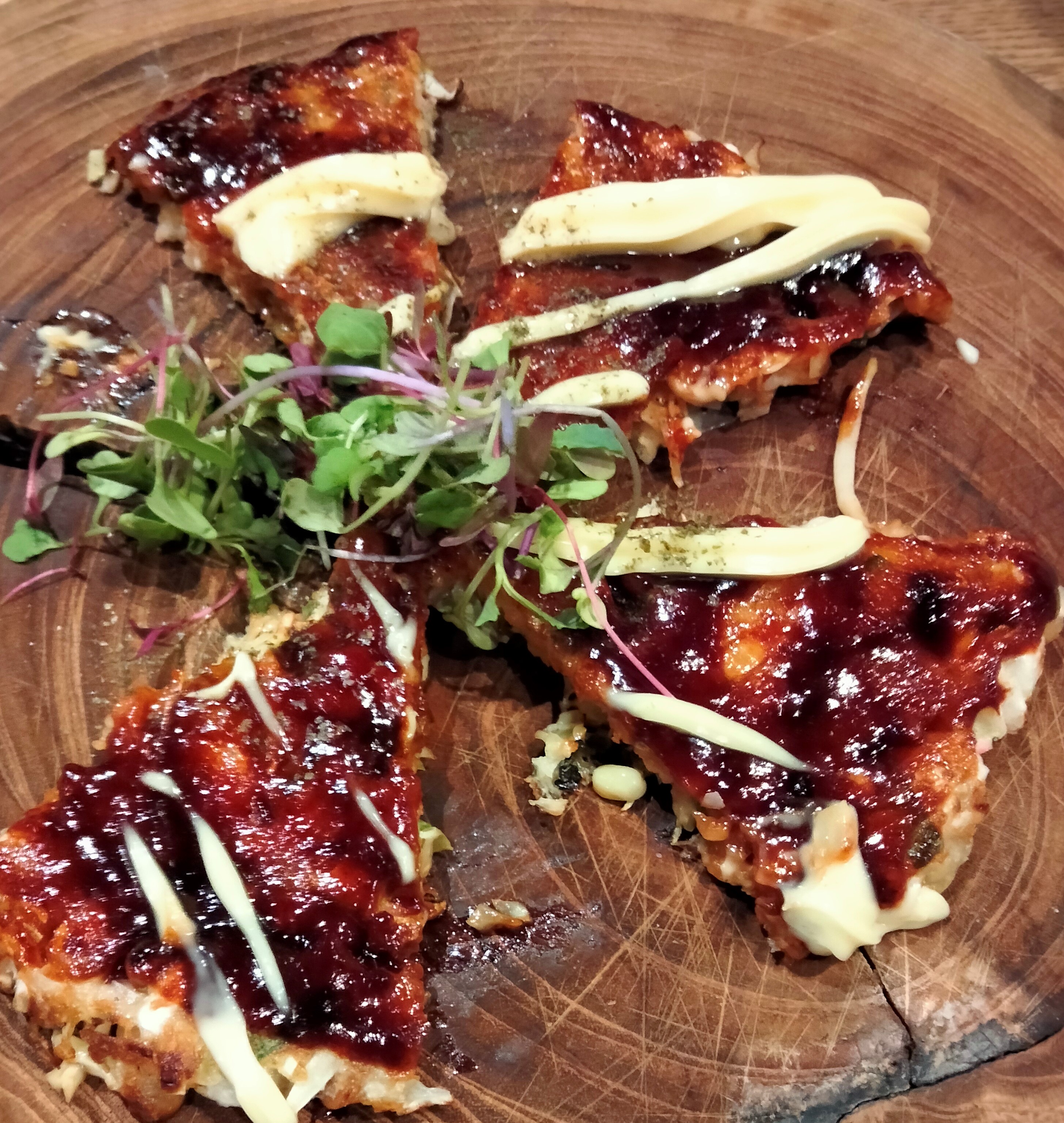
Okonomiyaki

The welcome snack of edamame beans with schichimi togarashi (a red pepper spice) is a staple on Japanese tables, familiar here but less frequently served. It’s a pity because it has that moreish quality which makes it difficult to stop and it’s healthy!

Okonomiyaki, another Japanese favourite and quite yummy, is a savoury pancake (almost pizza-like) and this was flavoured with green cabbage, beansprouts, kewpie (mayo), ginger, nori and otafuku sauce (close to our Wocestershire).

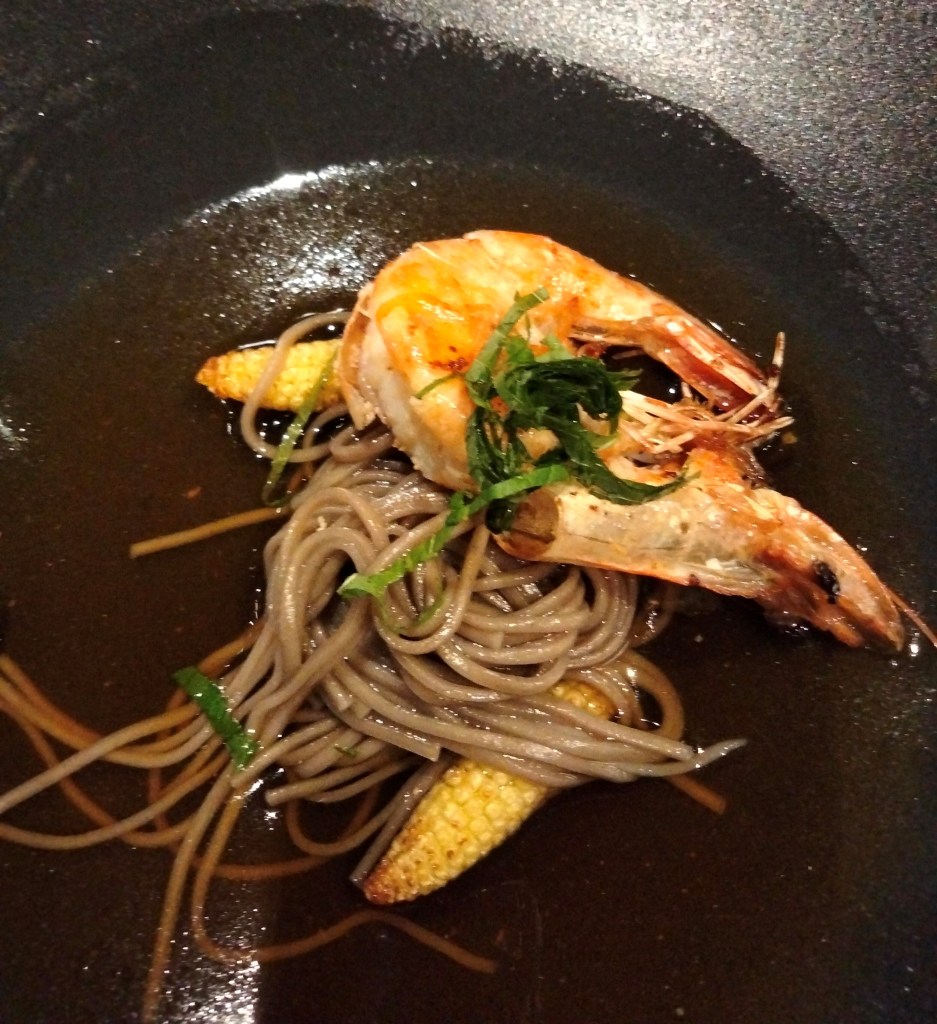
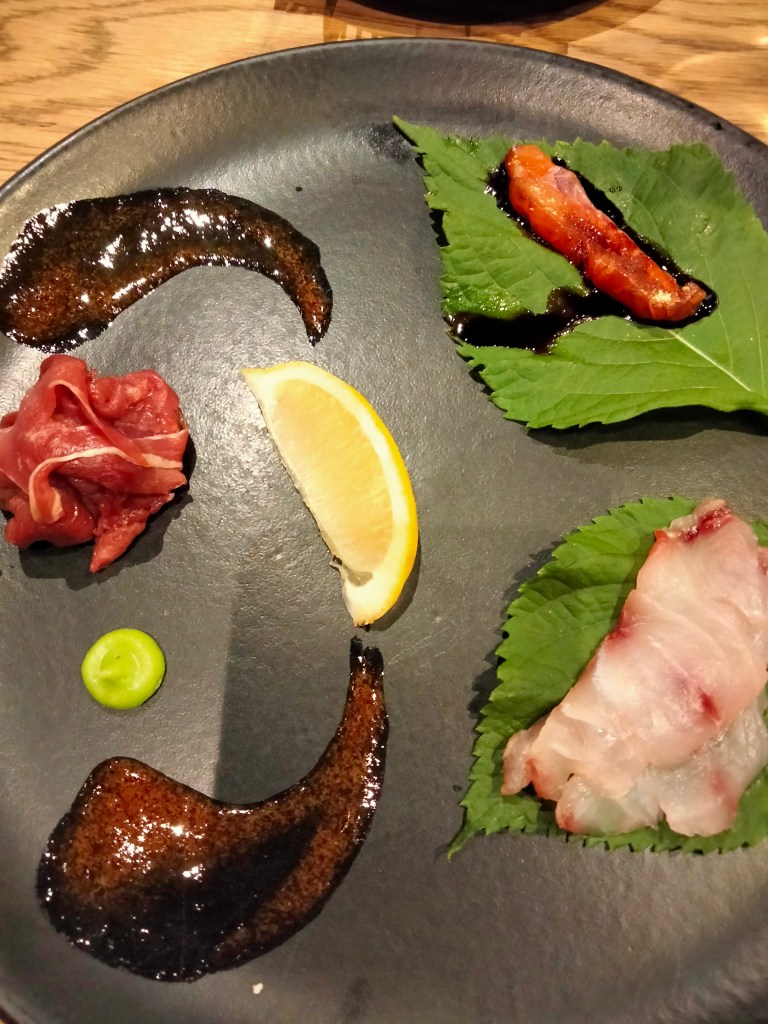
Noodles was next on the list with prawn served with a shiitake broth, assorted veggies and shiso (a mint herb) followed by a delicate arrangement of sashimi, including salmon, sea bass, and with a nod to the South Africans, Springbok carpaccio all with a dash of different Japanese condiments which just take it to another level.

Yakitori (either chicken or green beans with spring onion) was the last appetiser before the mains consisting of Katsu Curry, which included a choice of pork, chicken or aubergine with fukujinzuke (Japanese pickles) and short grain rice.

Most of the servings were small and with healthy food inherently part of  Japanese  cuisine, it was again a broad introduction to many Japanese ingredients and flavours in a meal that was delicately balanced and, as always, finished with a flourish of mochi and ice cream!

Soudai na (Magnifique)!

IT’S TIME FOR MOTHERS TO MATTER, SPEAK OUT AND CLAIM THEIR RIGHTFUL STATUS IN THE FAMILY

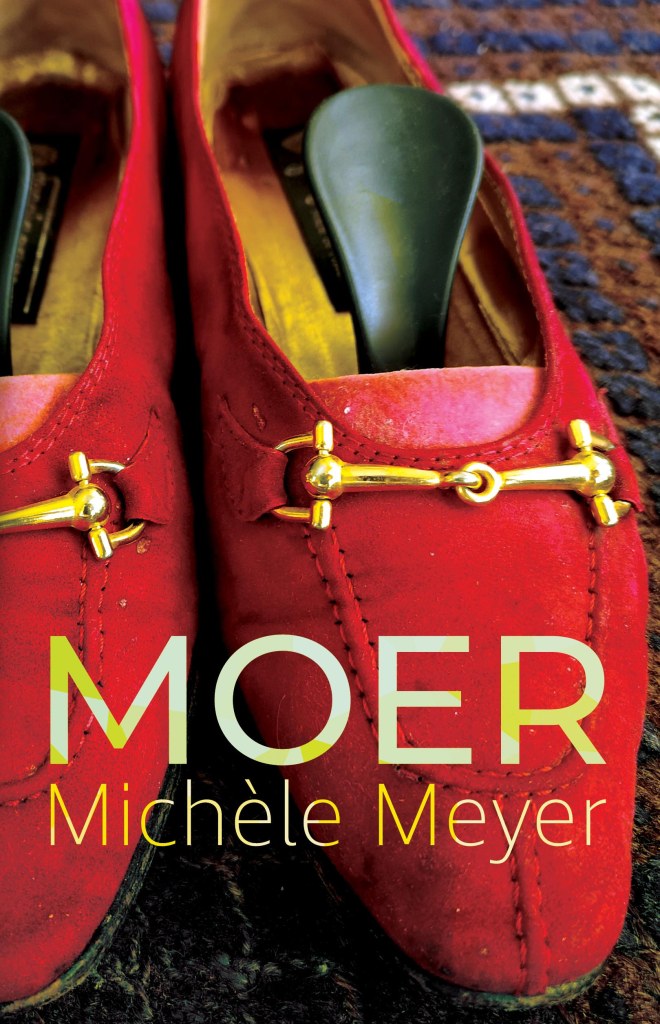
MOER (Protea Books), the debut novel of Michèle Meyer, tackles the shrine of motherhood and both dismantles and deconstructs the position of family saviour these often battered and bruised women have to uphold. It’s a brave and necessary approach to take, writes DIANE DE BEER:

Mothers of the world are often celebrated in superficial ways, but when it comes to their daily lives and how they have to cope, it is often woman alone.

She isn’t really allowed to complain because so many get on with it and don’t say a word. It is a selfless task, even with the rewards of raising a family. With that comes a responsibility that must be quite terrifying.

And on my part that’s only conjecture, because by choice I didn’t have any. The task for me seemed too daunting and I knew for my sanity I needed to work. For some of us that’s just how it is.

Michèle Meyer’s book MOER (Protea Books) has a title with many meanings, amongst them an old-fashioned word for mother, but also translating to extremely harsh words, and thus giving the indication, certainly to this reader, that this is going to be an interesting read.

And it is so much more. It does indeed deal with motherhood, but is written in quite a novel fashion. The chapters are mostly short and while the characters are all connected and there is a throughline, it’s not a once-upon-a-time story.

It deals with different aspects of being a woman in relation to being a mother. I know that editor Deborah Steinmair guided the decision of how to present this particular story and it’s something author Michèle Meyer eagerly acknowledges.

It is the clever combination of the writing and the compilation that adds power to this/these  particular mother(s) story.

That’s what Meyer achieves. It becomes universal rather than personal, even when it feels almost painfully personal. As her mother was singularly alone in a house filled with husband and children, so many wives/mothers are confronted with children whom they have to raise on their own. Sometimes they are single, but other times the need for help isn’t acknowledged – mentally or physically – and often the means aren’t there and one partner is out in the world earning the family’s keep, while the other keeps the family alive.

It’s a setup that hasn’t changed for far too long with most of the time, the children handed over to the mother to do as she sees fit – and sometimes she has no clue.

In many instances, it is the circumstances not the people involved that turn out to be harrowing, but in others, it’s just the way things have been done for generations with the man of the household making the decisions while everyone else has to comply.

And then, of course, there are many permutations … yet very few are resolved. Meyer’s mother(s), alas, is from a very isolated place. Young and fragile, she is left to her own devices as she tries to face the terrors of motherhood singly. The husband is carving out his career and that is something that takes up all of his time, his wife and his growing brood hardly acknowledged.

And yes, I know in many instances these things can be worked out and dealt with in quite a wholesome manner, but that is still unattainable in most households. Sometimes money helps to alleviate the worst, but there’s not much one can do about an emotional wasteland.

Not many people have the fight to go this one alone, but sometimes, that’s the only option. And for this mother that was it – and her saving grace. Meyer doesn’t save us the hardship of what her mother had to battle to survive. And that’s yet another courageous decision. Mothers are meant to carry the load – without complaints. This one does too, but she knows she has to save her life for the sake of her children and even when losing them at the start of rebuilding her life, she knows she doesn’t have a choice.

A recent story of a single mother who fought for her child on one of the streaming services told a similar story. It was based on a true story of a young woman involved with a weak man she knew she had to shake. She does, but her only option is to work in the service industry cleaning houses, and everything (especially bureaucracy) is against her succeeding. The world isn’t set up to reach out  a helping hand. Instead these women are disregarded, or seen as victims, never worth saving. They have to fight for themselves.

It’s time that more women speak out, tell and share their stories so that others might have the courage to stand up and walk out when often their sanity and their lives are involved.

Because it is a story of mothers, individual readers will read it from different perspectives, and that is what makes this such a smart read.

Meyer’s writing is hard-hitting (many will think personal) and that especially makes it such a brave book and one that will bring relief to many who will (hopefully) no longer feel alone.

RONELDA S KAMFER’S KOMPOUN WILL LEAVE YOU SHATTERED BUT THE BRILLIANCE WITH WHICH SHE WRITES IS LASTING AND WILL BLOW YOUR MIND

As a fan of Ronelda Kamfer’s gut-wrenching poetry, I was excited by the announcement of her first novel, Kompoun (Kwela). There’s something about her writing that holds you in its thrall and instinctively I knew that whichever way she chooses to tell a story, I will be on board. And having declared my subjectivity, I, DIANE DE BEER and the author speak our minds:

Ronelda S Kamfer

With Ronelda S Kamfer you know from the first sentence the kind of story you’re about to drop into.

And if you want to know what’s happening in literature in this country, you have to read this one. As an award-winning poet, this is her first novel, but she says that she doesn’t view the writing in any way as different.

“There was never really a shift. To me the boundaries between poetry and prose are superficial. I felt the story would benefit from a longer form. I wanted to capture more detail than I usually would. 

 “The main differences were the technical aspects of writing a novel. Basic things like ensuring continuity and providing geographical context, etc. But I tend to keep a lot of notes anyway.

“ And that helped. With Kompoun (the title, which is explained by a dictionary entrance on o the word in the front of the book), Nadia and Xavie had a notebook, the landscape had its own notebook, and my feelings had its own little section in a bigger notebook.

“I had a very clear idea of all the different elements that would make up the book eventually,” she explains

The brilliance of the writing and the story lies in the way she catches life, colours it in so many different shades and textures that you have to keep your wits about you, and also tugs constantly at any emotional toughness you think you have.

You should know by the end of page one whether you can stomach this one and if you do, you will be gloriously enriched on many different levels. But believe me, it’s tough.

The young Nadia explains that her Uncle Empty is actually oraait. He hits his wife, but she has too few nice adults in her life to write him off. And right off the bat you take the first hit.

Telling the story is Nadia and she alternates with her cousin Xavie as they reflect on their childhood.

Readers not familiar with Afrikaaps but also the way Ronelda tells the story, will have to pay close attention when reading Kompoun. It is  heart-breaking and often shattering in its pain, yet completely compulsive – and brilliant.

Ronelda’s choice of young narrators also determines how you experience the story. “We are children for such a short time. But it’s a time of our lives where we’re most ourselves in many ways,” she says. “ It’s a beautiful moment, before we start to compromise bit by bit.

“We are more selfish in little ways, but less selfish in the ways that matter most. When we’re children, we are less averse to risk, and that makes us more open, more forgiving and more honest.

“Most adults are calculating and closed off to some extent. Self-preservation becomes the dominant theme in our lives.

“Their resilience in the face of life’s disappointments made the children the ideal storytellers because the story to a large degree is about the struggle to retain your innocence and the desire to live freely, openly and honestly.”

And this is perhaps further explained in the dedication in the front of the book: All the women, who had to say sorry, even when they weren’t sorry

Musing on the difference between the novel and poetry, she felt that the novel required more stamina and concentration for a longer stretch of time. “I get bored very quickly, so my mind would trail off to other things. With poetry everything moves faster. And every new poem feels like its own thing even if it’s part of a collection.

“With the novel I was always aware that every part is a piece of the whole. That’s one of the reasons perhaps why I had to break the book down into these short fragments. So that every chapter could feel like a little project. It kept me engaged. I will always write poetry and I will continue writing novels, but I’m sure I will write other things as well.”

One of the riches of the book is the language but it also restricts the readership as your Afrikaans has to be good to get a grip on the Kaaps. But if you do, it’s like music to the ear.

And for Ronelda, it is who she is and how she expresses herself, as she explains:

“The language is very important, because the story spans across generations and different geographical spaces. It was important to represent all the different variations of Kaaps, whether it was Plattelandse Kaaps or the way it’s spoken in the Western Cape.

“Kaaps is also a very visual language, that relies a lot on metaphors. My mother died 10 years ago and my grandmother a year ago and I see the way they used language as part of my inheritance.

“With Kompoun I managed to come up with some phrases that felt like it came from their mouths. And that is probably one of the most satisfying things for me.”

And for those of us who read it, the way the language is used is such a huge part of the story, as often it hits its target with a speed and velocity that catches you unaware – but has double the impact. It’s simply not translatable.

It has been said that it feels like an autobiographical story, but when you ask Ronelda about the objective of the story, she says it was the book itself.

“I write things because I feel compelled to write them. It’s not a reaction to anything nor a statement. It’s really just the manifestation of a desire. I wanted to see these places and these characters in literature, so I expressed that,” she says.

And that’s  precisely why you are drawn into the lives of these children from the start. In a South African context, it is a familiar world, perhaps harsher than many of us might imagine, but something we can understand.

I have found that the thing that excites me most in any book is originality. They say there are only a few stories to be told, but it is the way the story is told where the creativity lies. That’s true for Ronelda as well.

“I love books and films and music that give me an adrenaline rush. And I get that rush from hearing a truly original thought, or seeing something beautifully observed or understood.

“My aim as a writer is the same as my aim as a consumer of art. I want the reader’s heart to skip a beat.”

And that mine did from start to finish!

I was fascinated by the way I experienced Kompoun. While the story is devastating and, the lives of the children, especially Nadia’s beatings, emotionally and physically painful, the book is powerful rather than painful, as if  by telling the story and not hiding from the truth, the children reclaim their power.

“I think Kompoun is the first book I wrote without any rage; the characters might be fighting but the story is not about rage. For me, it is about profound loss and we have all lost.

“ It is not about whiteness or patriarchy or violence. These things are a product of loss but I understand how someone might read into that first. I think it has to do with empathy, and how you relate to the unfairness of the lives of the characters.

“In some people this need to empathize causes that almost knee-jerk reaction, to look for reasons and to allocate blame. I do that all the time, but I am learning to process things slower and sit with my feelings longer.”

And then she concludes with what she wishes for readers.

“It was important to me that the experience of reading the book would conjure more than just sadness in the reader. These are strong characters who have things they believe in. I felt the character’s rebelliousness was integral to the book.

“It’s not a book about being defeated, it’s a book about emotional and psychological revolution.”

That is exactly what stays with you throughout the reading. This group of cousins, children all at the time, looked out for one another and were born into a generation that decided it was time to talk. And that made the difference. And does similar things for the reader.

If you think you might understand it and get to grips with Kaaps, no one tells a better story about these people and their lives than Ronelda S Kampher. May she never stop telling her stories – it doesn’t matter whether in poems or novels or any other way she comes up with. I will stand in the front of the line.

YOU CAN EXPERIENCE THE FOOD PARADISE CREATED BY SAVVY CHEF ELZE ROOME IN DIFFERENT WAYS

When someone so accomplished in the cuisine universe shares her food stories, you listen. Her adventures are many as she shares everything she learns while moving around in different hospitality ventures. DIANE DE BEER visits her current spot Tashas on Menlyn Main:

Pictures: supplied by Tashas

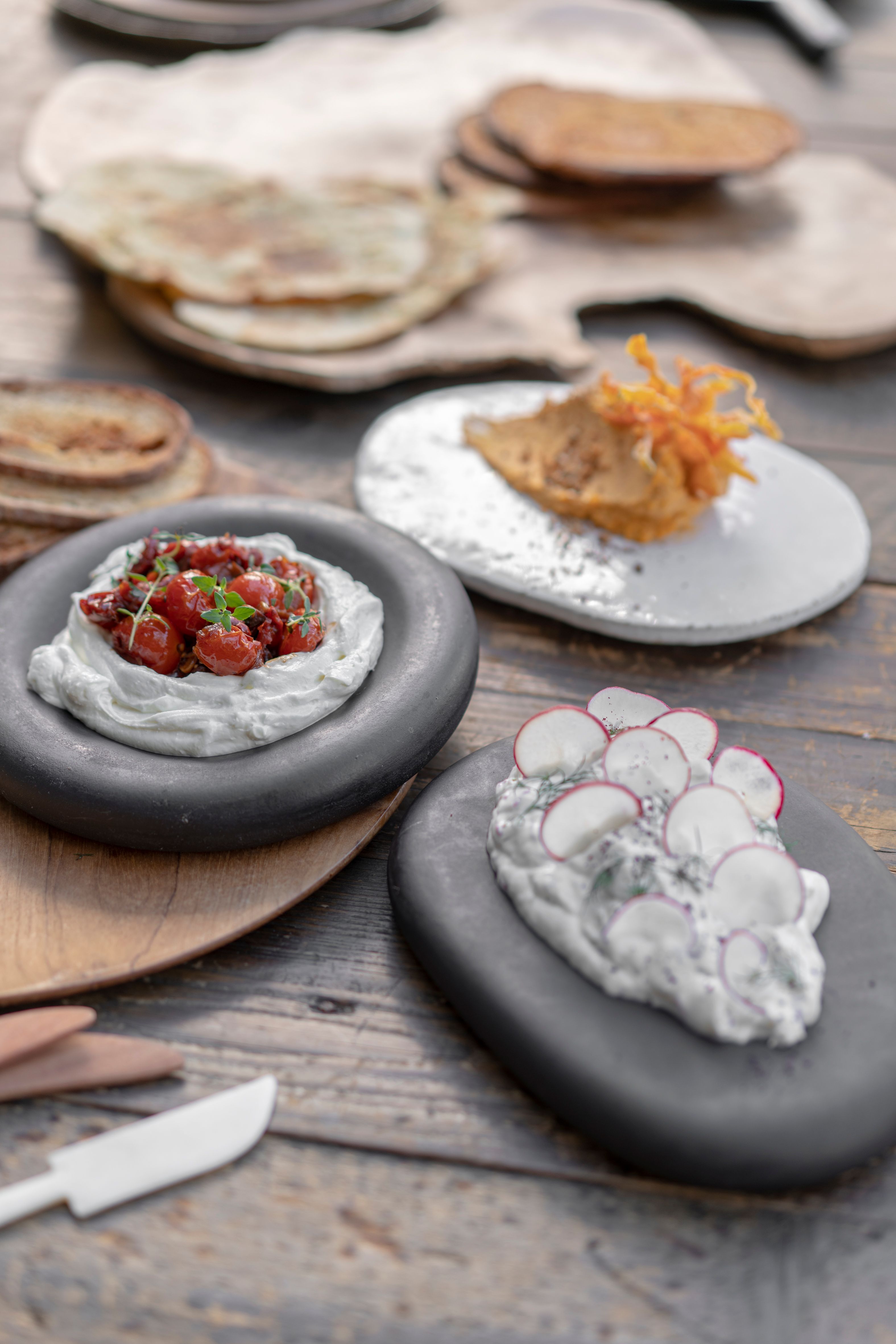
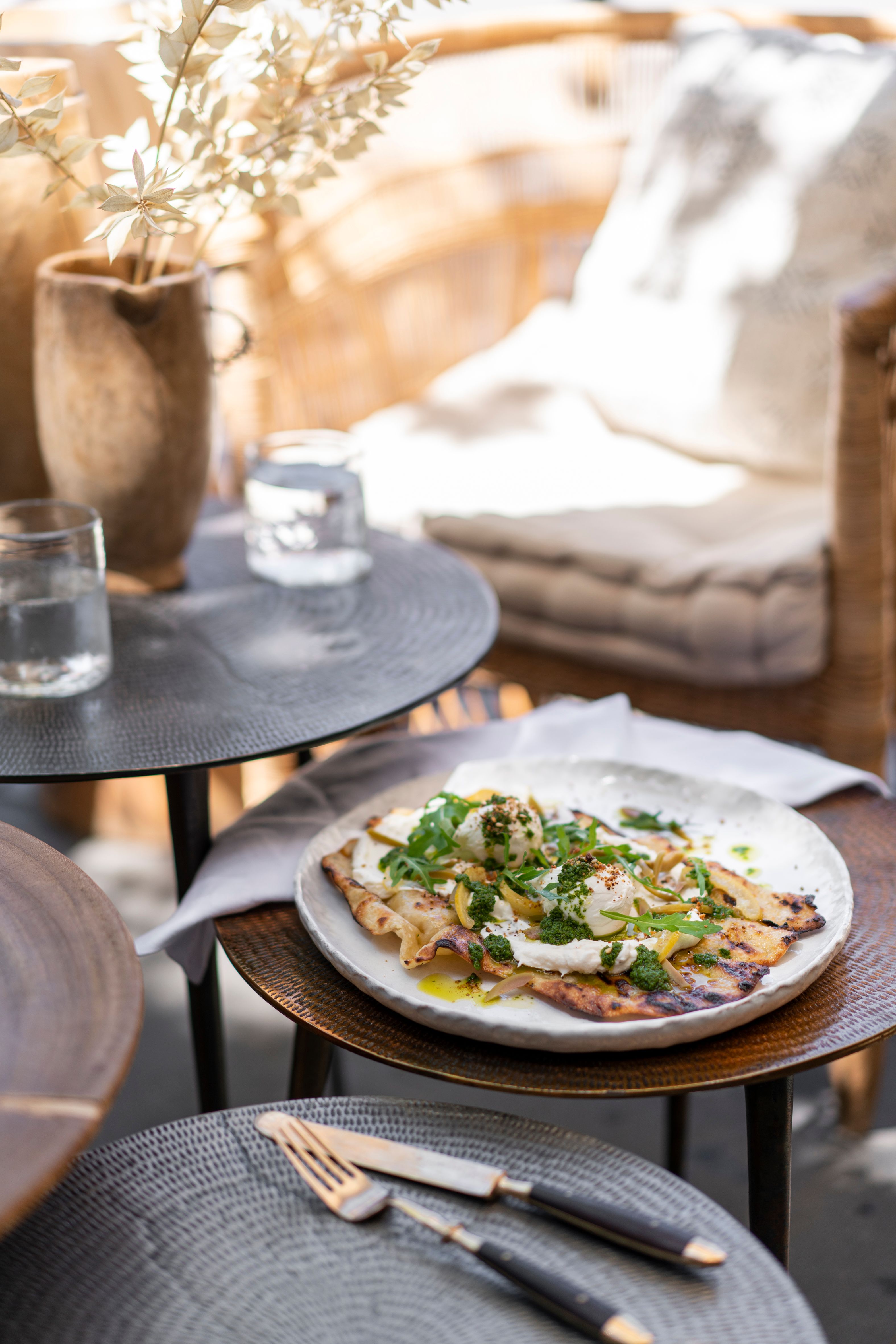
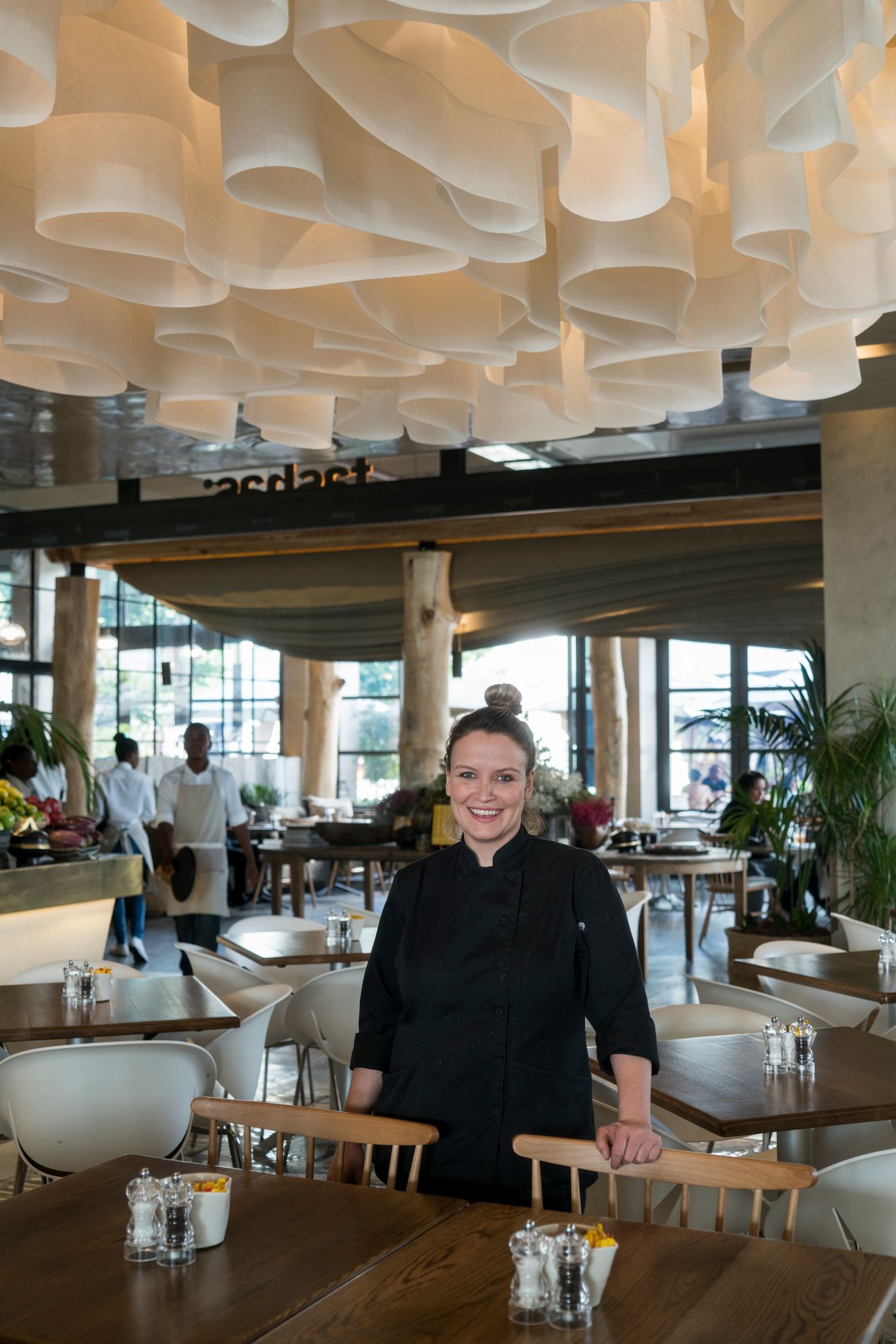
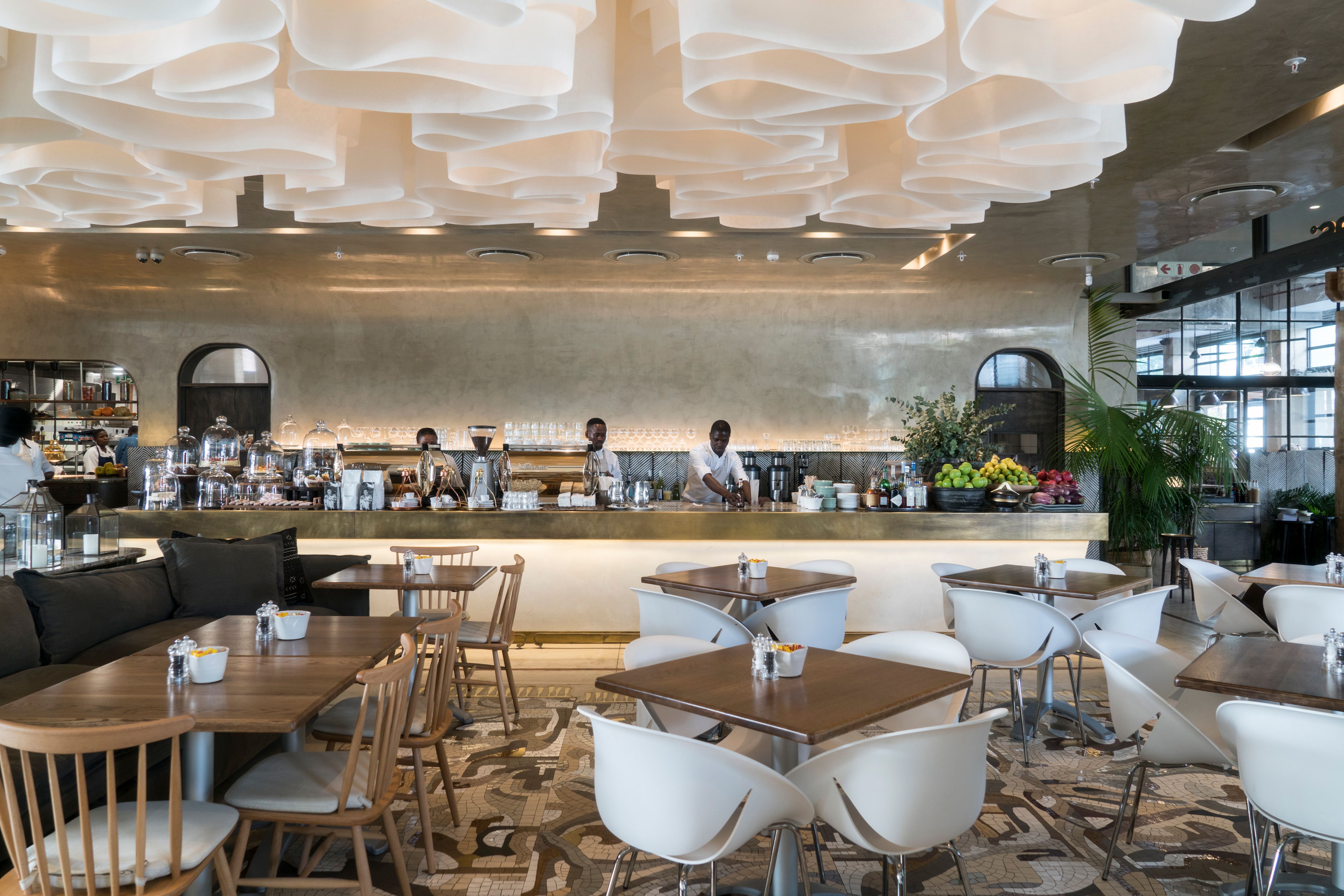
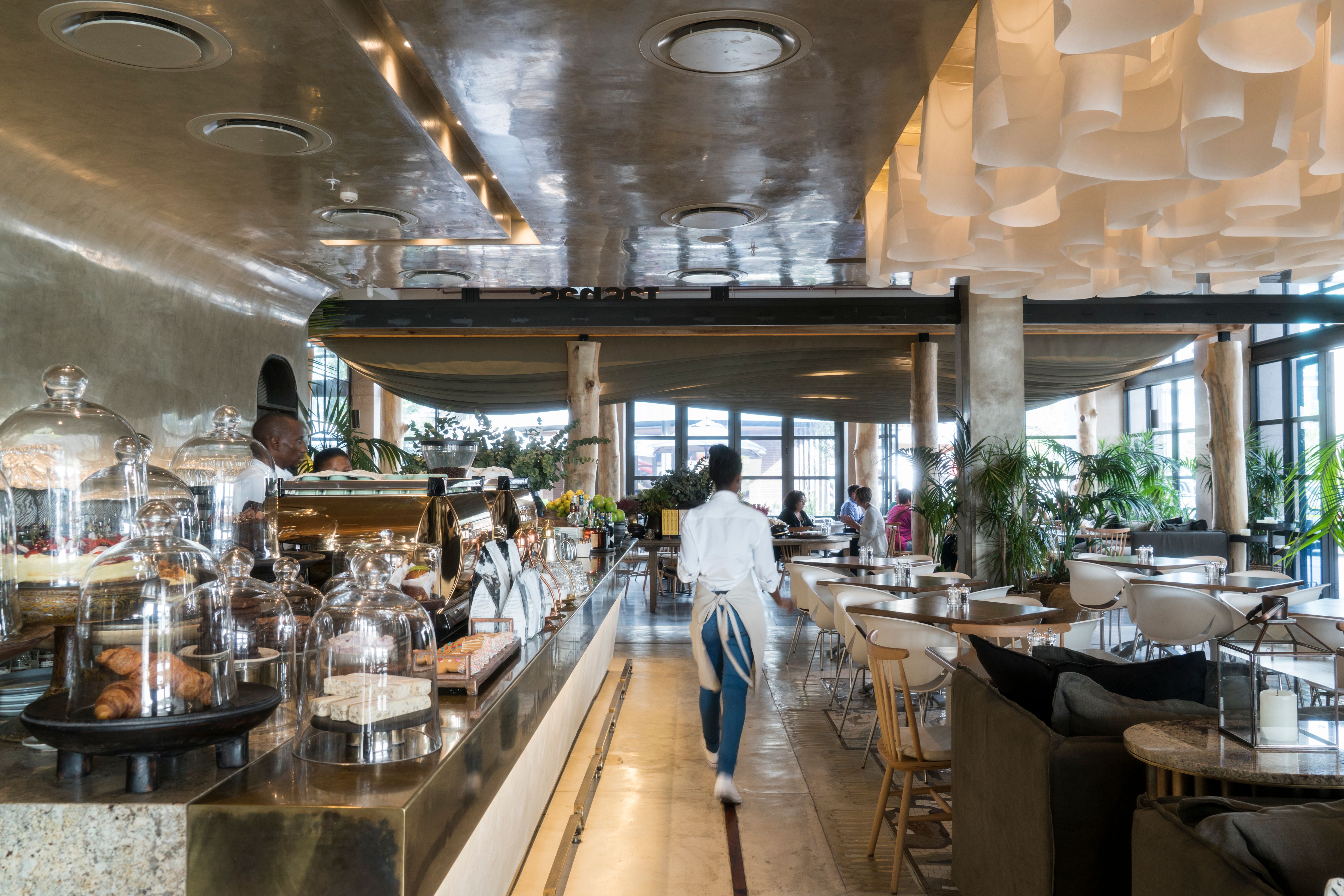
This was the best of worlds. I was having a late lunch with chef-patron Elze Roome at Tashas, Menlyn Main, sampling her new menu in tapas style, while listening to her latest food adventures.

It’s been five years since she and her brother Wally opened this little corner of heaven where people are endlessly drifting in and out and platters of food come streaming past anywhere you sit in the room.

There’s nothing better than have the one who came up with the menu also make the selection of whatever you are going to have. Elze’s favourite (coincidently like mine) has always been the Levant and when she had to introduce her trademark to this particular Tashas, the region was an easy one.

“I’ve always liked the combination of spices,” she says and agrees with me, that a close second is Thai food.

I first met Elze when she was executive chef at Brasserie de Paris following their move to Waterkloof in their iconic Karel Jooste home. With the owner (who also happens to be Elze’s aunt), these two presented me and a couple of friends with many memorable evenings of sheer delight.

The one was an Easter dinner (bunny ears deluxe included) on their magnificent rooftop with food that was quite extraordinary and night skies that stole all our hearts.

But also the dinner led by Elze, when the Brasserie recently decided to close its doors, was quite spectacular. Fortunately for fans, they quickly opened again with new management after only a few months of closed doors and the reports out there are good. Similar ambience and food as before.

In typical Brasserie style, the farewell (if brief) dinner was done with many of the previous chefs slipping in for this one extravagance to celebrate the restaurant and everything it stood for.

Chef patron Elze Roome and Tashas, Menlyn Main.

But since her stint as fine-dining chef, Roome has travelled the world. First she spent some time in France where she trained as patisserie chef and on her return she was courted by Tashas as executive chef and product developer.

She was not easy to lure, but Natasha Sideris was determined. She is obviously someone who knows how to spot talent and once she has, she wants you as part of the Tashas team. Which is exactly where Elze has been this past decade.

It’s been an adventure and much of that time was also spent in Dubai where she helped with the establishment of the first restaurant in the emirates. In Dubai, they now have the fine-dining Flamingo Room, the Avli which is Greek inspired, the Galaxy Bar which has been named #45 in  the world’s 50 best bars, with four Tashas restaurants- one in Abu Dhabi.

So watch this space. The Tasha empire is expanding … constantly.

In the process, Elze gave her heart to Dubai. If you ask her about the attraction, she distils it to the constant buzz. “Both Paris and London are sleepy towns in comparison,” she says as she explains how this desert city is always on the hop.

For this foodie, that’s part of the attraction. Anyone who has watched anything on food in Dubai will know that they have attracted many of the world’s top chefs. “It can take you easily an hour just to scroll through Uber Eats,” she says.

She also likes the idea of night or day, anything you want or wish to do is probably available. And, she says, the people are super friendly. It probably helps being part of the Tashas team which also provides her with a very special place at the Dubai table. After all, the brand has firmly established their credentials in a very short space of time.

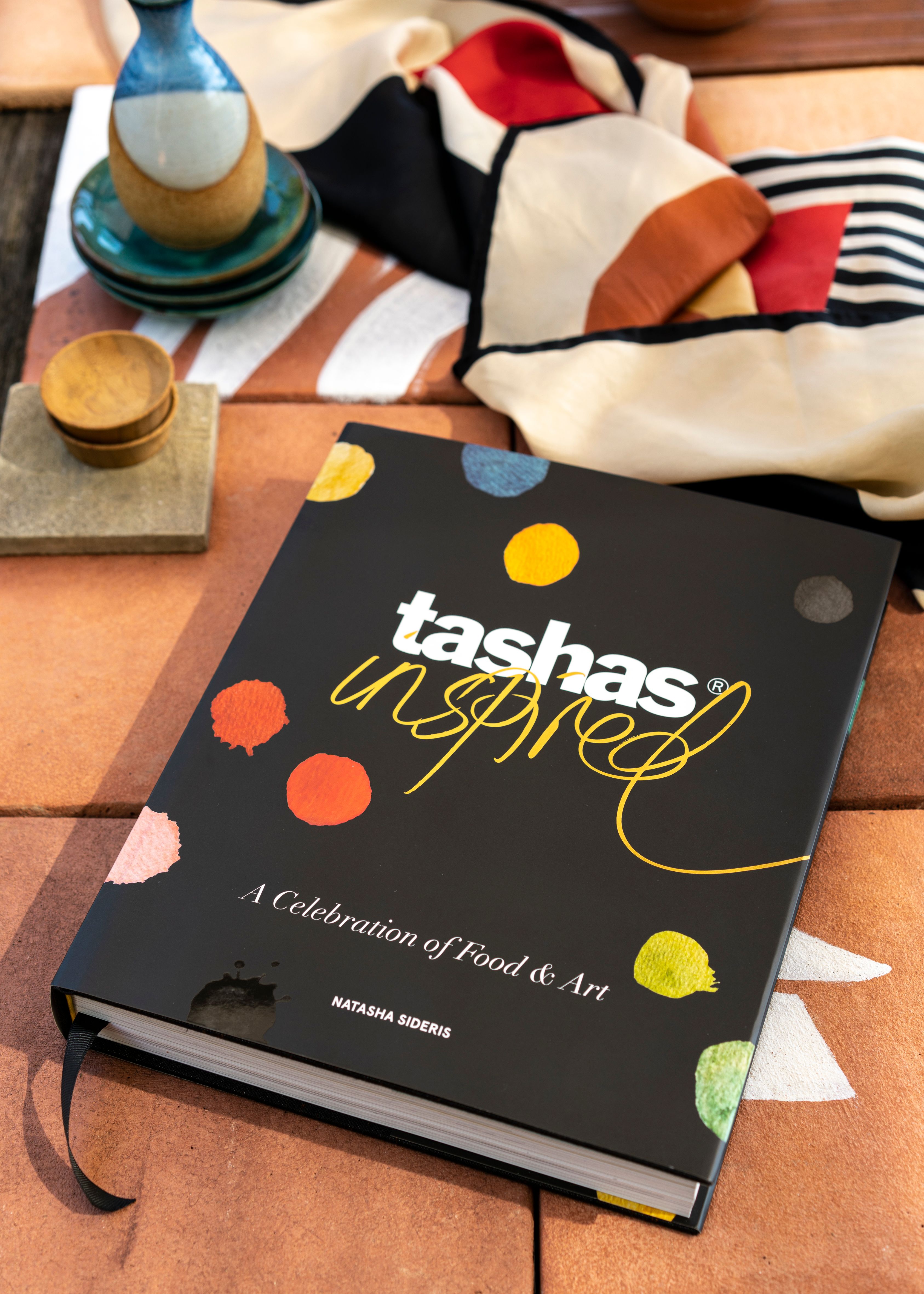
One of her most recent Tashas adventures has been developing the recipes for the very smart Tashas Inspired: A Celebration of Food and Art.

The production team was identical to that of the previous book, Tashas Timeless Café Classics, but this was a much more expansive book with Elze focussing on the food side specifically. “We had many team meetings about the way to go, how to approach the book and what the end product should be,” she noted. But in the end, the food was really inspired by Natasha’s food memories.

“She wanted to reflect her food memories by way of her travels and her favourite cities and flavours,” explains Elze and obviously when it came to the Greek side of things, the family was very specific about the food, the presentation and how they do it. After all, this is how Tashas evolved into what it has become today.

It is a franchise but from the start, even in the early days, visitors to the different restaurants knew that each one had its own flavour and if you visit the revamped Hyde Park Tashas Le Parc today, the cake section has been another Roome-inspired  creation.

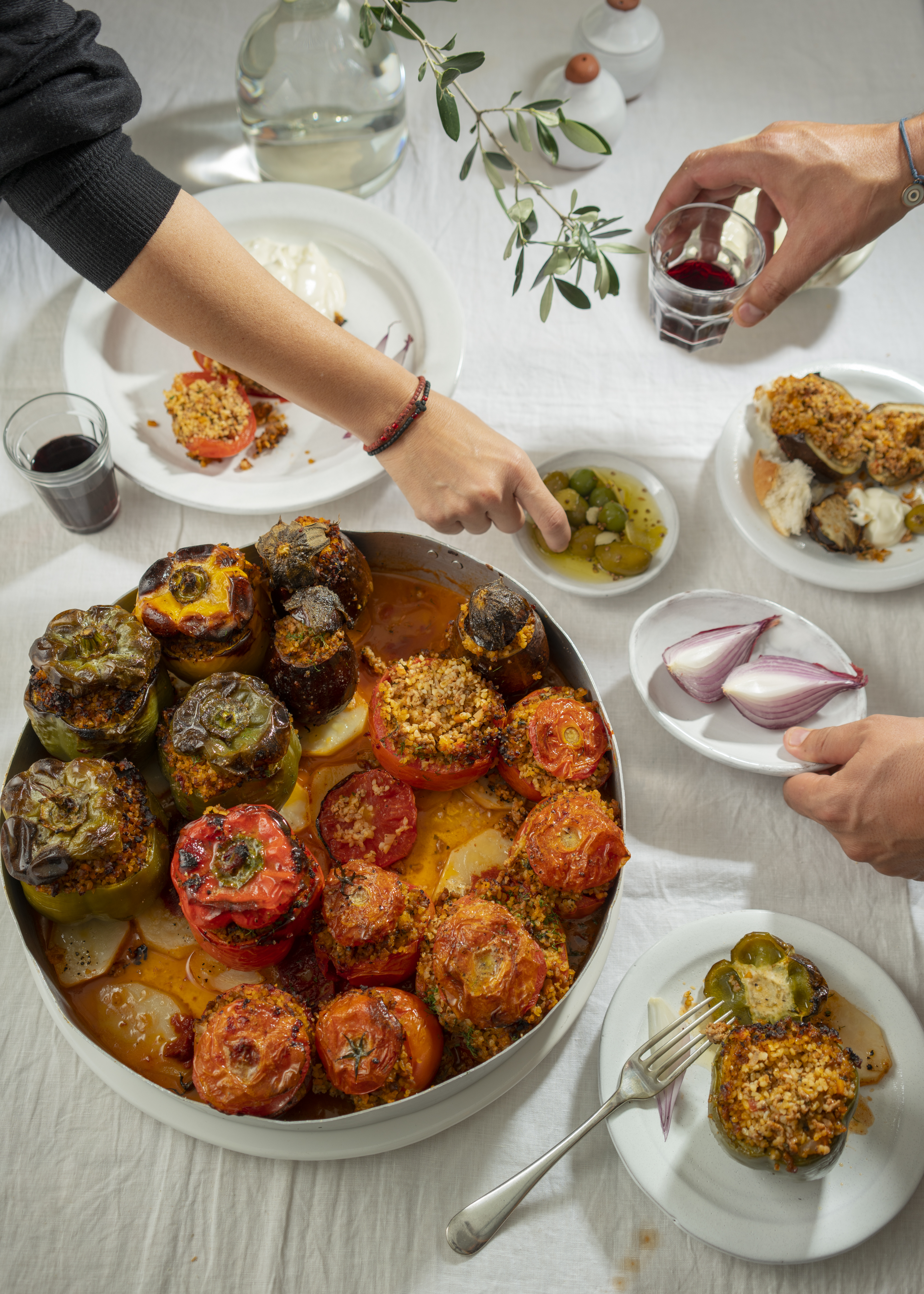
The book too is something else. It is as much a lifestyle extravagance as it is a food journey as we go from New York deli to Greek taverna. And in typical Tashas style, even though this is a high-end cookery/art book, Natasha hopes it will sit as easily on the kitchen top as it does on the coffee table. In other words, appreciate the art, luxuriate in the lifestyle and travels to get to this continental style cuisine, but also get your hands dirty and start cooking.

Here’s one of my favourites from the latest cookbook extravaganza.. It is an easy salad/accompaniment and it points to the layering of tastes and textures:

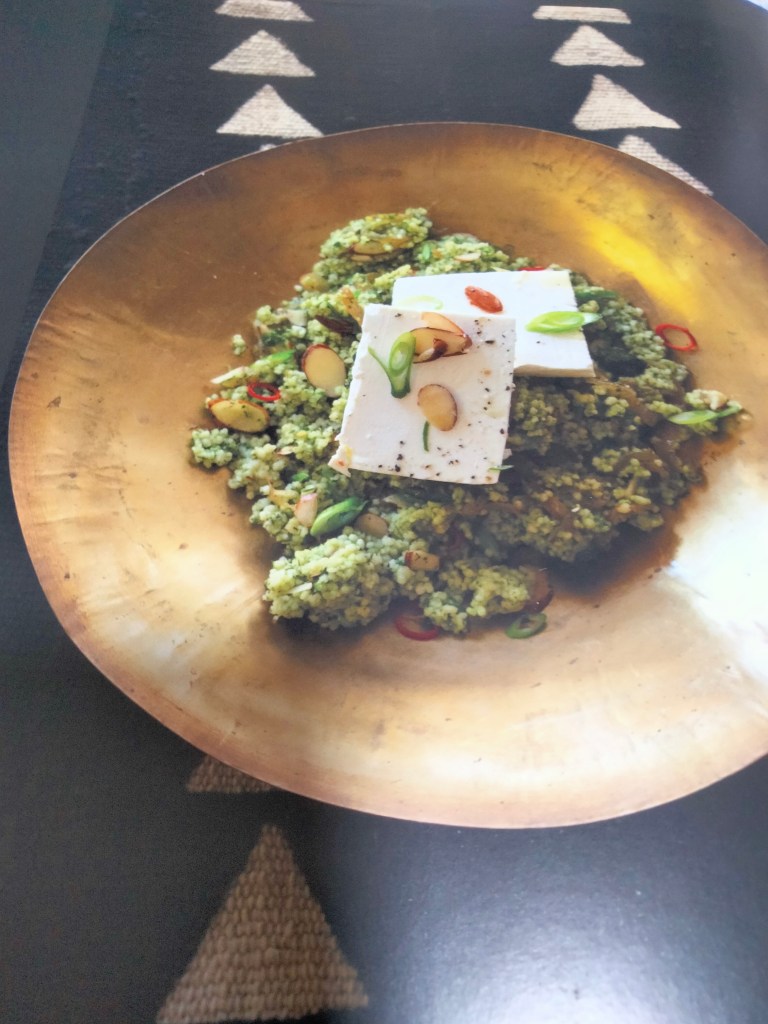
Tashas yummy coriander couscous.

CORIANDER COUSCOUS

Caramelised onion, feta, handfuls of fresh herbs and couscous make for a full-bodied flav ourful dish that can be a salad on its own or a side dish.

Couscous

4 cups cooked couscous (I use the bigger sized couscous, but that’s a preferance)

Herb paste

1 onion, caramelised in olive oil (love that they tell you that)

4 spring onions, chopped

2 red chillies (optional)

4 tsp cumin seeds, crushed

80g shaved almonds toasted

120 extra-virgin olive oil,

Plus extra for drizzling

Juice and zest of 2 lemons

Salt and freshly ground black pepper

120 g feta cheese

Handful of flat-leaf parsley, chopped

Herb paste

20 g flat-leaf parsley

20g dill

20 g coriander leaves

10g tarragon

10 g mint

150 ml olive oil

Herb paste Blend the herbs and the oil to a smooth paste in a food processor or with a stick blender.

Couscous  Put the cooked couscous in a serving bowl and stir in the herb paste, onion and chilli, cumin, almonds (keep some for the garnish), olive oil and lemon juice and zest. Mix well and season to taste. Cut the feta into thick slices and arrange on top of the couscous. Drizzle liberally with olive oil and garnish with shaved almonds and parsley.

WHEN VOICES AS STRONG AS PEDRO ALMODOVAR AND MAGGIE GYLLENHAAL GET INVOLVED THE LIVES OF MOTHERS SHINE WITH GREAT STRENGTH

The universe of mothers is something everyone has plenty to say on. But take two storytellers with the gravitas and sparkle of Pedro Almodovar and Maggie Gyllenhaal, who seamlessly slides from actor to director, and you have two extraordinary films with casts that make the stories come alive. DIANE DE BEER reviews:

The great thing about a new Pedro Almodóvar movie is that it is like coming home. It’s about the colours and the characters, the way he tells his stories and the choices he makes. From the start I’ve been a fan.

And because I haven’t yet been back to brick-and mortar-cinemas, I have to depend on what is offered to me. DStv’s Box Office could not have made a better decision than adding Almodóvar’s latest film PARALLEL MOTHERS to its line-up. Not in a million years did I expect that! (The run is finished, but try streaming it somewhere else)

Like the name suggests, it is about mothers but that is about the only thing in this film that is predictable. The rest is like a crazy Almodóvar adventure which makes twists and takes turns to make your head spin. In typical Almodóvar fashion, it’s a story of humanity and even if wild, not that improbable that you can’t take your emotions with you on this ride.

There’s so much that made me happy. I want to live in an Almodóvar world, the way he dresses his people and his rooms, his landscapes and the faces he peoples his films with. All of these appeal to me and take me to a place where I can wallow for a couple of hours.

And then there’s the magnificent Penelope Cruz. She has never done better than in an Almodóvar movie. They get and trust one another and as she grows older, she has also let go and allows him to push her where he wants her to go.

It’s the story of two unlikely mothers-to-be, the one a 40-something and the other just out of her teens (Milena Smit). Together they give birth to their first babies but because of their circumstances, their lives and the outcomes are completely different. And yet they connect through these circumstances that bind them together in a completely fantastic fashion.

Being Almodóvar, there’s also a political thread that runs through the film that plays out both visually and emotionally in a way that rips your heart out. You wouldn’t want it any other way though.

From the leader of the pack, Cruz, to the young Smit, and another Almodóvar regular, Rossy de Palma, they all climb into their characters and before long you’ve forgotten this is only a movie. Don’t miss it, and especially if you don’t know this Spanish filmmaker’s films, have some fun in his world.

And hopefully you have Netflix to access the acting phenomenon Olivia Colman’s latest exposé of feelings in Maggie Gyllenhaal’s directorial debut, THE LOST DAUGHTER, based on the short novel by Elena Ferrante. It’s also a film on motherhood but in this instance coming from a completely different place – and I’m sure on all counts, many women will identify.

I was almost a newly-wed when I decided not to have children. At the time and as I grew older, the fact that I had taken that decision and wasn’t dictated to by perhaps an inability to have children (don’t know, I never tried!), was often disturbing to others. I was called selfish, asked what I would do when I was old and so forth.

And what this film deals with is also a motherhood topic that isn’t often discussed or publicly explored. The title The Lost Daughter already opens many different possibilities, but what is really at the core here is the inability of some women to easily fall into the mothering role. It isn’t that they don’t love their children or even had an unhappy childhood themselves, it simply doesn’t come naturally to everyone. But in our world today (and that before and after us, I suspect), motherhood is sacrosanct.

In Gyllenhaal and Colman’s extraordinary hands and made with an extremely sensitive yet startling vision, the story unfolds in delicate yet dramatic fashion. It takes a while to find your way, especially if you don’t really know what the film’s about. But from the start it grips you as red herrings unfold and tumble out all over the place.

However, yearning, it seems, is the great motivator here. When you discover something in others (and on full frontal display) that you have lacked, it can do strange things to you head.

More than anything though thanks to the teaming of these two talents, it is the unusual story that turns this into such a tour de force. It’s difficult to believe that there are still such taboo topics so part of our everyday lives.

Everything is also enhanced in the film universe by the diversity on all levels that is growing and unfolding by the day. The more stories that are told from different perspectives, the better and more probing our films will be. And in that way, hopefully touch us more deeply, as both these films do so magnificently.

Parallel Mothers is available on DStv Box Office until 1 April 2022, and The Lost Daughter was on local release.

FIREFLY GLOWS WITH WONDER AS A CLUTCH OF ARTISTS CELEBRATE THE MAGIC OF LIVE THEATRE

Pictures taken off the screen by directors Toni Morkel and Jaco Bouwer during the film shoot:

If you haven’t yet seen Sylvaine Strike’s wondrous Firefly, Pieter Toerien’s Montecasino Theatre is having another season from May 19 to June 11. It’s a once-in-lifetime theatrical experience with two seasoned artists stepping into the magical world of storytelling in a way that plays with your imagination in the best possible sense. If you want to know more, see below. This is the story written when they first stepped onto stage following covid:

The Countess Pafanesca in the Vodka Tango

When you are excited by the group of artists who have  come together to make theatre, sparks can fly. And that’s exactly what can happen with the first live run of Firefly, a production that was created to celebrate live theatre. DIANE DE BEER speaks to a few of the artists involved:

Theatre fans are blessed with the latest Sylvaine Strike, Andrew Buckland and Toni Morkel collaboration as they bring last year’s Ferine and Ferase (which was filmed by Jaco Bouwer for the Woordfees digital programme) to life on stage – as it was originally planned.

This is the second time this trio have combined their creative talents (the first was in the much lauded Tobacco and the Harmful Effects Thereof) even if the roles have been switched. In the newly named Firefly, Sylvaine and Andrew are acting together with Toni directing for a run at the Baxter Flipside from 24 March to 9 April  (2022) at 7.30pm nightly, with Saturday matinees at 2.30pm.

Sylvaine Strike and Andrew Buckland at play.

The initial name was derived from two chemical components luciferin and luciferase, which exist in a firefly’s bum and make it glow, explained Sylvaine. “So one without the other can’t make light, they have to be together to glow. Lots of fireflies in this show.” And that is why it is now called the more familiar Firefly.

The play was first created on commission by head of the Woordfees Saartjie Botha in September 2020, three-quarters of the way through the first tough lockdown. The idea was to create something that would show audiences why theatre is unique and exciting. Saartjie didn’t want a big set, she didn’t want audiovisuals, no multimedia, only pure theatre. “We want body and craft and what the actor is,” was the instruction.

Because of lockdown, they started writing remotely through October, November and December, and in mid-January last year met in a rehearsal room with their director. With Tony Bentel on piano, they began to develop the story on their feet to find a common language between Sylvaine and Andrew, who both have very specific styles. But when this trio are tasked to make theatre, that’s exactly what they do.

It’s all in the telling of the tale.

They discovered and developed a mutual style for the two actors largely based on clowning duos. Think Laurel and Hardy, for example, that kind of world, very much a nostalgic, romantic story where they play three different characters each, with the narrators the main characters called … Ferine and Ferase. They have a backstory of their own, which they tell as travelling players of Bucket’s End. It’s a time of magic and wonder which allows you to sit back, be transported and dream, a luxury in these times.

“It’s beautiful, it’s very physical, it’s gorgeously costumed with each a standard clowning costume that transforms into a couple of things,” Sylvaine embroiders.

Every detail tells a story.

From the start it was meant to play on stage and they had a short trial run with a 45-minute version. But this all had to take on a different hue when live changed to digital and they spread their special brand of fairy dust.

The full play was filmed with Sylvaine enchanted with Jaco’s extraordinary transformation from stage into film, shot in studio, all in black and white, inspired by old movies. And those of us lucky enough to have seen it, agree.

It was delightful to witness how they adopted and adapted for the new medium with all the elements colliding and fusing.

 And now they’re back on stage and it will be marvellous to be experience yet another transformation. Personally, I can’t wait!

Crafting a clutch of characters with craft and creativity.

Sylvaine and Andrew make perfect sense together and then to have the extraordinary Toni Morkel directing is genius.

As she has often been directed by Sylvaine and performed with Andrew, she was terrified yet thrilled when asked but she trusted her instincts because all three of them know one another well and understand each other’s particular theatre language.

“I’m very excited to do it live,” says Toni, who has just started with rehearsals again. These are two actors who know how to act with their whole being and she finds herself smiling as she watches them go through their moves. “I’m living my dream,” says this consummate theatre maker.

The great difference between the screen and stage version is most specifically the sets. The two actors with their costumes and imagination have to construct their world on stage. And while it is sometimes frustrating to remember what they could do on film, the stage version is what they envisioned from the start.

“We wanted to create a play that would travel easily and anywhere – whether we had lights, curtains, even a stage,” she says. And knowing what they have achieved in the past together and individually, this is not an impossible ask. It has always been part of their theatre ethos, and while it might have been initiated by a scarcity of funds, it also focused their imaginations magnificently.

Andrew Buckland and Sylvaine Strike in Firefly.

“I know their world, their physical ability and strength and how they work,” she says about the process. “What we are relying on is good old-fashioned storytelling.”

She does have two more aces up her sleeve with Wolf Britz again making magic with his wondrous lighting and he has a few more tricks in the bag. And there’s Tony Bentel’s wizardry on piano. “I can’t help but gush when speaking of his astonishing ability. He has a world of music in his body,” is how she explains this gifted musician who accompanies the two actors live.

“For any section of the play, he comes up with five or six different musical suggestions and because he is adept with improv, he can embellish what the actors are trying to express at any moment. I am constantly in awe of what he has arranged musically.

“I am blessed,” she says.

And so are we. With these dynamic artists, expect fireworks in Firefly!

JM COETZEE’S LIFE AND TIMES OF MICHAEL K IS A STORY THAT RESONATES

PICTURES: Fiona McPherson

Craig Leo and Carlo Daniels in Life and Times of Michael K

DIANE DE BEER

JM COETZEE’S LIFE AND TIMES OF MICHAEL K

ADAPTED AND DIRECTED by Lara Foot

CAST: Sandra Prinsloo, Andrew Buckland, Faniswa Yisa, Craig Leo, Roshina Ratnam, Carlo Daniels, Marty Kintu, Billy Langa and Nolufefe Ntshuntshe with the Handspring Puppet Company

CO-PRODUCTION: Düsseldorfer Schauspielhaus (Germany) and Baxter Theatre

SET DESIGN: Patrick Curtis

LIGHTING DESIGN: Joshua Cutts

ORIGINAL MUSIC COMPOSITION: Kyle Shephard

DIRECTORS OF PHOTOGRAPHY AND FILM: Fiona McPherson and Barrett de Kock

VIDEOGRAPHY AND EDITING: Yoav Dagan

PROJECTION DESIGN: Kirsti Cumming

COSTUMES: Phyllis Midlane

 SOUND DESIGN: Simon Kohler

VENUE: Baxter Theatre

DATES AND TIMES:  7pm nightly until 19 March with Saturday matinees at 2pm on 5, 12 and 19 March

Craig Leo, Nolufefe Ntshuntshe, Carlo Daniels, Faniswa Yisa, Billy Langa in Life and Times of Michael K

It is quite astonishing with the Russian invasion of Ukraine as the backdrop on most minds, how the horror in JM Coetzee’s Life and Times of Michael K is amplified.

Written in 1983 in Coetzee’s sparse yet startling style, the story shines a powerful light on the life of a simple man, afflicted by a disfigurement, standing out without being someone, and being in the world not to engage, but rather flee from others.

That’s where he finds his freedom – in the wild, desolate landscape of a country that doesn’t want him and yet pursues him for crimes not committed or even imagined.

Both Michael K and his mother have lived honourable lives in service of others, he as a gardener and she as a domestic worker who lives under the stairs in an apartment block, like her son, unseen and unheard.

When she falls ill, with war raging around them, she turns to her son to take her “home”, there where she was born and raised, where she believes she once found happiness. And so their harrowing journey begins.

Sandra Prinsloo, Faniswa Yisa, Craig Leo, Roshina Ratnam in Life and Times Of Micheal K

Because of where we find ourselves right now, and looking back through the history of these past 30 years, both nationally and internationally, Michael K’s story hasn’t changed. That’s why it is such a brilliant choice to herald what we are hoping beyond hope, might be better times.

There was a buzzy anticipation on opening night as people moved into the Baxter Theatre for the Lara Foot-adapted and -directed Life and Times of Michael K, a production cleverly staged with the Handspring Puppet Company in a multi-dimensional fashion including performance, film and music – all on a grand scale.

And with a magnificent set which constantly changes with moving as well as still images and lighting that astounds, we’re off into the story and running with the narrative from the start. It’s quite overwhelming as Michael K’s story is told from many different angles and voices with different landscapes as he goes on his long and winding journey. Visually it is spectacular and achieves a moving world that is both elaborate and evocative.

Telling the story, there’s an ensemble playing different characters; the physical Michael K, exquisitely crafted by the Handspring masters happily accompanied by his equally statured mother; the voices and puppeteers; as well as the film, which simply because of scale could be jarring at times rather than just slipping in and out of the narrative – yet all of these combined make it quite difficult to get to the beating heart of the story.

Nolufefe Ntshuntshe, Craig Leo, Carlo Daniels, Roshina Ratnam and Andrew Buckland in Life and Times of Michael K

As the name suggests, this is Michael K’s story. While the character himself can be seen as an insignificant man, that is the point and what Coetzee hopes to uncover in his desolate and desperately haunting tale of a man who is struggling to find and cling to his freedom. Gardening is what moves his world, something that adds rather than detracts from our physical place on this earth.

But even that is not good enough. Somehow it is twisted into an act of terrorism as he is accused of feeding a guerrilla army. He is simply never allowed to be.

Coetzee’s descriptive and detailed telling of Michael K’s battle to survive on this arid land, the way he works with the earth to both feed the soil and his soul, nourishing his freedom, his sole means of survival, doesn’t quite have the impact on stage as it does on the page. The exquisite existential rendering which won Coetzee such applause is somehow missed.

His is a harsh world in which there is mistrust all round. Who is Michael K? Even though he is described as someone who cannot organise a dart game, he is still seen as a threat by those who feel they are in command and have to lead the way.

No one can be left to their own devices. And it is this stranglehold, a man’s desperate struggle to hold on to his freedom, that disappears under the weight of the production, one where the true horror of being Michael K struggles to break through.

Foot has thrown all her energy and skill into this one and there are many memorable moments to witness and remember. It is a worthy production that captures the zeitgeist – a time of pandemics and panicked, power-driven presidents.

What you don’t get is the bewilderment of a man who has found himself in a world that prohibits him from finding his own way and making a life unaffected by those around him. The only way he knows how to breathe and survive.

Thát is the life and times of Michael K.

WRITING IS AUTHOR ERIKA MURRAY-THERON’S SOLACE WHEN MAKING SENSE OF HER LIFE

When Erika Murray-Theron started writing about her life following the Parkinson’s diagnosis of her husband Tom, she couldn’t predict that capturing her thoughts on paper would be her way of coping. Yet writing became her solace and eventually a book titled  Kom Ons Loop Weg (Protea Boekhuis), which she hopes might shed some light for others struggling with debilitating disease. She talks to DIANE DE BEER:

It says everything about author Erika Murray-Theron when she tells you with a twinkle in her eye: “In one year I turned 80, got married, had a knee replacement and launched this book.”

Published by  Protea Boekhuis, the front cover also explains that this is her and her first husband’s journey with Parkinson’s disease.

It all started in 2001 when Erika’s husband Tom was diagnosed. Initially once they were fully immersed in the illness and coping with its progression, Erika started a file on her computer but it was simply meant for her eyes. As someone who had always kept a diary on her life (until her family with five children took over), she knew she needed somewhere she could gather her thoughts and make sense of all the changes they were confronted with on a daily basis.

From the beginning, the onslaught on what had been their life was quite overwhelming, but as one does in these circumstances, you deal and cope. When Tom’s mind was still unaffected, they could make decisions together but eventually, Erika really had to take charge and, as so often with his particular diagnosis, she had to  handle everything with great care when dealing with Tom.

Part of Parkinson’s symptoms can be fears of abandonment, and reality for the couple soon became a very individual experience.

The book deals mostly with the last three years of Tom’s life, which because of the degeneration, were also the most difficult. For Erika it wasn’t just the decisions about where and when to move, how to physically manage their lives, but also to bear such constant and intimate knowledge of Tom’s decline.

Theirs had been a fulfilling marriage and what she was witnessing was the dismantling and slow disintegration of both the physical and intellectual beings of her life partner. And with that comes the loss, which is a slow and debilitating process for both, the one suffering and the carer.

This wasn’t a time to think, she had to do. But she is a writer and from as young as five, she would tell herself stories and end sentences with “she said!”, as though writing a story. “I don’t know where that came from,” explains Erika, and even though she started writing books at a relatively late stage, storytelling has always been a part of her being.

Writing is how she makes sense of things and, during Tom’s illness, it helped her make sense of her feelings and her understanding of what was happening.

She hates being viewed as a victim or as someone who wallows in misery, and given what she had to deal with, not languishing in those emotional places is tough. But with Tom the priority, she managed with the help of her children and friends to cope.

That’s where and why the book became important. Once she caught her breath following her husband’s death in 2014, she knew she had to revisit these last years of their life together – that as well as nurture the memories of happier and easier times.

Erika Murray-Theron.

She had been caught unawares by the deep loss she felt with Tom’s passing away, especially following the struggles of the last years. That also meant that she hadn’t yet mourned the loss even though it had been such a part of her life even before his death. “I knew I had to deal with all of that,” she explains. Now she had time to step back, return to her notes to gather her thoughts of what their life had been.

When she started thinking about writing a book, she was driven by the feeling that her experience could benefit others.

But this also meant more exposure, the one aspect of being an author that doesn’t appeal to Erika. “I am a very accessible person but I don’t like being out there,” is how she explains it.

But telling this story she believed she had to be truthful and honest about their lives, especially the last years that were so tough. It also meant that she had to discuss  this opening up so publicly with her children.

They are a tightknit family, some more private than others, and this was her and Tom’s story and where she was going to concentrate. And even though the book is extraordinary and something Erika doesn’t regret, the publicity surrounding it has been difficult for her. “Many people only see my plight rather than the extraordinary journey,” she says.

What she has done with telling her story, one that no one really wishes on anyone, is to show the resilience of human beings. How we stand up and get going when life is unexpectedly tough. For her it was about finding the meaning and making sense of it as she was gathering her notes and her thoughts to finish the book.

She contacted the editor of her last book at Protea Publishers, Kristèl de Weerd, and gave her the notes which she had already sorted into some kind of order. Writing and the process is something Erika enjoys and especially the final reworking and editing. “I can sit for hours adjusting one paragraph,” she confesses.

That is why the book is such a revelation. When keeping notes, Erika is someone who has depth and detail in the palm of her hand. The title KOM ONS LOOP WEG (loosely translated as Let’s run away) comes from a moment in time when Tom said to her quite unexpectedly and lucidly: “I miss you … I hunger for you… Let’s run away…”

Gideon and Erika

And still her story isn’t completed and if there are any tears to be shed, perhaps this happy note will do it.

Following Tom’s death, a close friend of theirs, Gideon, also lost his wife. He turned to Erika for some help with things he had to sort through – and, she says, she immediately knew that this friendship was going to develop into something different and deeper. Today she is taking a timeout from writing and the newly-weds are making the best of their time together.

For those of us looking on, it feels as if they were blessed with a special gift.