The universe of mothers is something everyone has plenty to say on. But take two storytellers with the gravitas and sparkle of Pedro Almodovar and Maggie Gyllenhaal, who seamlessly slides from actor to director, and you have two extraordinary films with casts that make the stories come alive. DIANE DE BEER reviews:
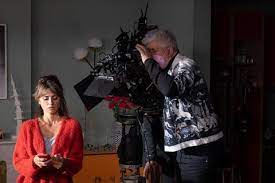
The great thing about a new Pedro Almodóvar movie is that it is like coming home. It’s about the colours and the characters, the way he tells his stories and the choices he makes. From the start I’ve been a fan.
And because I haven’t yet been back to brick-and mortar-cinemas, I have to depend on what is offered to me. DStv’s Box Office could not have made a better decision than adding Almodóvar’s latest film PARALLEL MOTHERS to its line-up. Not in a million years did I expect that! (The run is finished, but try streaming it somewhere else)
Like the name suggests, it is about mothers but that is about the only thing in this film that is predictable. The rest is like a crazy Almodóvar adventure which makes twists and takes turns to make your head spin. In typical Almodóvar fashion, it’s a story of humanity and even if wild, not that improbable that you can’t take your emotions with you on this ride.
There’s so much that made me happy. I want to live in an Almodóvar world, the way he dresses his people and his rooms, his landscapes and the faces he peoples his films with. All of these appeal to me and take me to a place where I can wallow for a couple of hours.
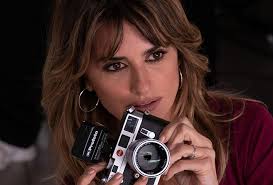
And then there’s the magnificent Penelope Cruz. She has never done better than in an Almodóvar movie. They get and trust one another and as she grows older, she has also let go and allows him to push her where he wants her to go.
It’s the story of two unlikely mothers-to-be, the one a 40-something and the other just out of her teens (Milena Smit). Together they give birth to their first babies but because of their circumstances, their lives and the outcomes are completely different. And yet they connect through these circumstances that bind them together in a completely fantastic fashion.
Being Almodóvar, there’s also a political thread that runs through the film that plays out both visually and emotionally in a way that rips your heart out. You wouldn’t want it any other way though.
From the leader of the pack, Cruz, to the young Smit, and another Almodóvar regular, Rossy de Palma, they all climb into their characters and before long you’ve forgotten this is only a movie. Don’t miss it, and especially if you don’t know this Spanish filmmaker’s films, have some fun in his world.
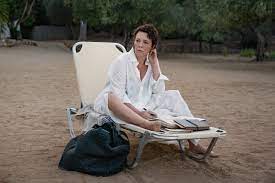
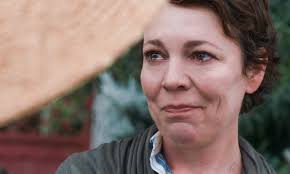
Olivia Colman in Lost Daughter
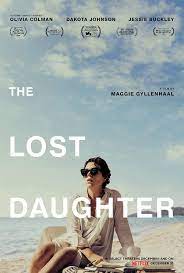
And hopefully you have Netflix to access the acting phenomenon Olivia Colman’s latest exposé of feelings in Maggie Gyllenhaal’s directorial debut, THE LOST DAUGHTER, based on the short novel by Elena Ferrante. It’s also a film on motherhood but in this instance coming from a completely different place – and I’m sure on all counts, many women will identify.
I was almost a newly-wed when I decided not to have children. At the time and as I grew older, the fact that I had taken that decision and wasn’t dictated to by perhaps an inability to have children (don’t know, I never tried!), was often disturbing to others. I was called selfish, asked what I would do when I was old and so forth.
And what this film deals with is also a motherhood topic that isn’t often discussed or publicly explored. The title The Lost Daughter already opens many different possibilities, but what is really at the core here is the inability of some women to easily fall into the mothering role. It isn’t that they don’t love their children or even had an unhappy childhood themselves, it simply doesn’t come naturally to everyone. But in our world today (and that before and after us, I suspect), motherhood is sacrosanct.
In Gyllenhaal and Colman’s extraordinary hands and made with an extremely sensitive yet startling vision, the story unfolds in delicate yet dramatic fashion. It takes a while to find your way, especially if you don’t really know what the film’s about. But from the start it grips you as red herrings unfold and tumble out all over the place.
However, yearning, it seems, is the great motivator here. When you discover something in others (and on full frontal display) that you have lacked, it can do strange things to you head.
More than anything though thanks to the teaming of these two talents, it is the unusual story that turns this into such a tour de force. It’s difficult to believe that there are still such taboo topics so part of our everyday lives.
Everything is also enhanced in the film universe by the diversity on all levels that is growing and unfolding by the day. The more stories that are told from different perspectives, the better and more probing our films will be. And in that way, hopefully touch us more deeply, as both these films do so magnificently.
Parallel Mothers is available on DStv Box Office until 1 April 2022, and The Lost Daughter was on local release.
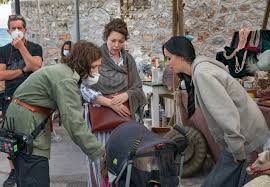
Pictures taken off the screen by directors Toni Morkel and Jaco Bouwer during the film shoot:
If you haven’t yet seen Sylvaine Strike’s wondrous Firefly, Pieter Toerien’s Montecasino Theatre is having another season from May 19 to June 11. It’s a once-in-lifetime theatrical experience with two seasoned artists stepping into the magical world of storytelling in a way that plays with your imagination in the best possible sense. If you want to know more, see below. This is the story written when they first stepped onto stage following covid:
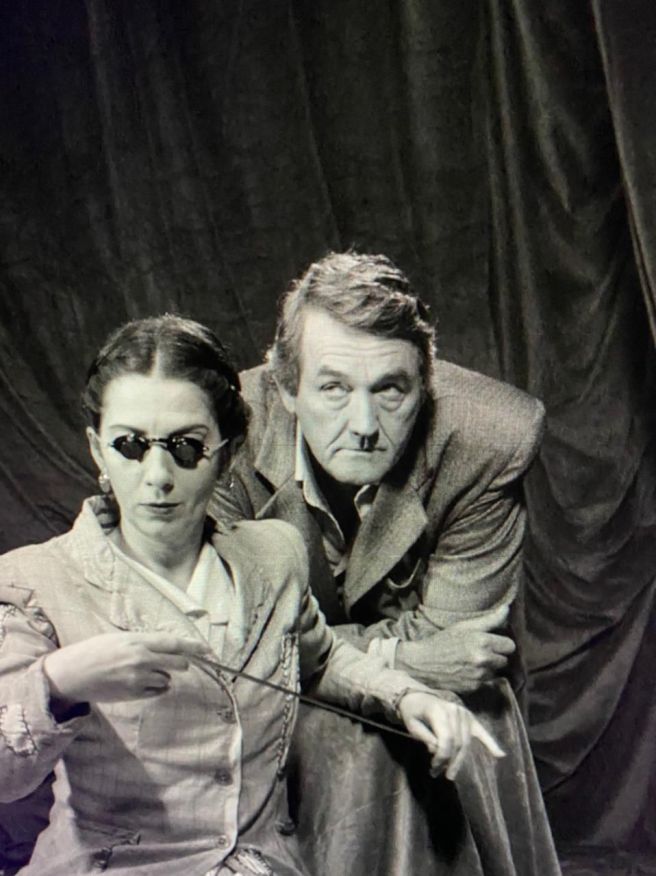
The Countess Pafanesca in the Vodka Tango
When you are excited by the group of artists who have come together to make theatre, sparks can fly. And that’s exactly what can happen with the first live run of Firefly, a production that was created to celebrate live theatre. DIANE DE BEER speaks to a few of the artists involved:
Theatre fans are blessed with the latest Sylvaine Strike, Andrew Buckland and Toni Morkel collaboration as they bring last year’s Ferine and Ferase (which was filmed by Jaco Bouwer for the Woordfees digital programme) to life on stage – as it was originally planned.
This is the second time this trio have combined their creative talents (the first was in the much lauded Tobacco and the Harmful Effects Thereof) even if the roles have been switched. In the newly named Firefly, Sylvaine and Andrew are acting together with Toni directing for a run at the Baxter Flipside from 24 March to 9 April (2022) at 7.30pm nightly, with Saturday matinees at 2.30pm.
Sylvaine Strike and Andrew Buckland at play.
The initial name was derived from two chemical components luciferin and luciferase, which exist in a firefly’s bum and make it glow, explained Sylvaine. “So one without the other can’t make light, they have to be together to glow. Lots of fireflies in this show.” And that is why it is now called the more familiar Firefly.
The play was first created on commission by head of the Woordfees Saartjie Botha in September 2020, three-quarters of the way through the first tough lockdown. The idea was to create something that would show audiences why theatre is unique and exciting. Saartjie didn’t want a big set, she didn’t want audiovisuals, no multimedia, only pure theatre. “We want body and craft and what the actor is,” was the instruction.
Because of lockdown, they started writing remotely through October, November and December, and in mid-January last year met in a rehearsal room with their director. With Tony Bentel on piano, they began to develop the story on their feet to find a common language between Sylvaine and Andrew, who both have very specific styles. But when this trio are tasked to make theatre, that’s exactly what they do.
It’s all in the telling of the tale.
They discovered and developed a mutual style for the two actors largely based on clowning duos. Think Laurel and Hardy, for example, that kind of world, very much a nostalgic, romantic story where they play three different characters each, with the narrators the main characters called … Ferine and Ferase. They have a backstory of their own, which they tell as travelling players of Bucket’s End. It’s a time of magic and wonder which allows you to sit back, be transported and dream, a luxury in these times.
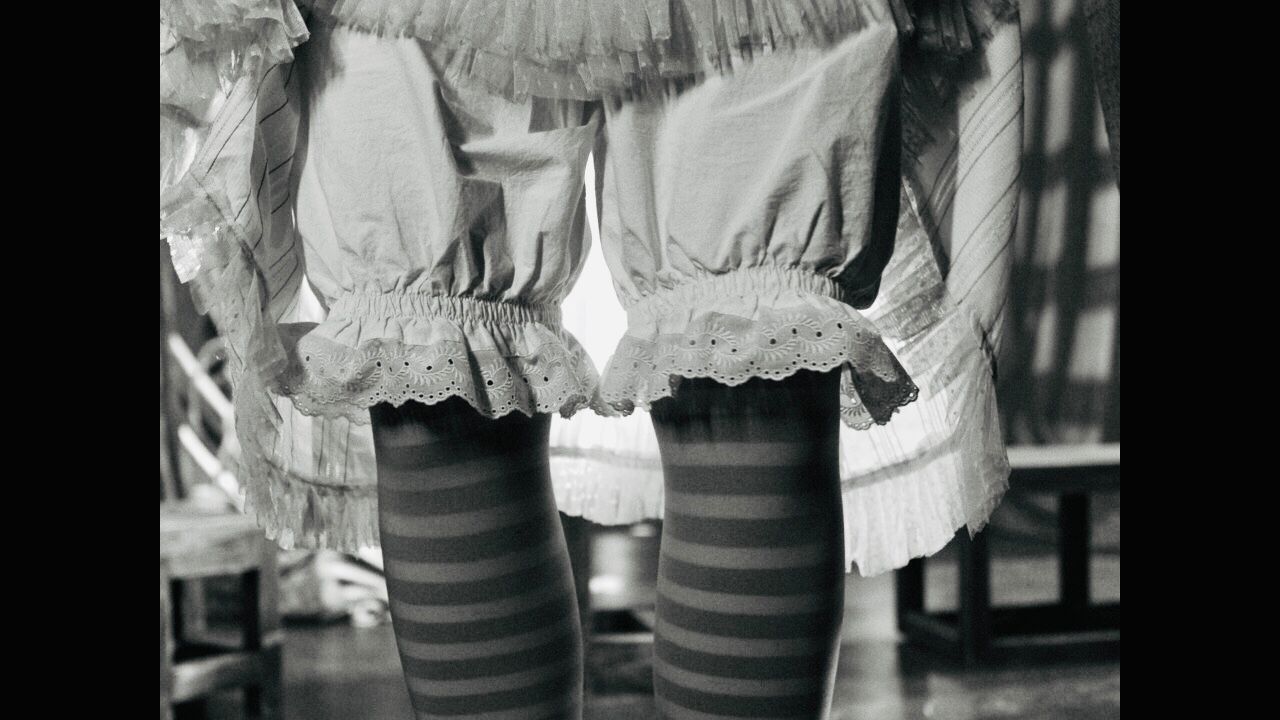
“It’s beautiful, it’s very physical, it’s gorgeously costumed with each a standard clowning costume that transforms into a couple of things,” Sylvaine embroiders.
Every detail tells a story.
From the start it was meant to play on stage and they had a short trial run with a 45-minute version. But this all had to take on a different hue when live changed to digital and they spread their special brand of fairy dust.
The full play was filmed with Sylvaine enchanted with Jaco’s extraordinary transformation from stage into film, shot in studio, all in black and white, inspired by old movies. And those of us lucky enough to have seen it, agree.
It was delightful to witness how they adopted and adapted for the new medium with all the elements colliding and fusing.
And now they’re back on stage and it will be marvellous to be experience yet another transformation. Personally, I can’t wait!
Crafting a clutch of characters with craft and creativity.
Sylvaine and Andrew make perfect sense together and then to have the extraordinary Toni Morkel directing is genius.
As she has often been directed by Sylvaine and performed with Andrew, she was terrified yet thrilled when asked but she trusted her instincts because all three of them know one another well and understand each other’s particular theatre language.
“I’m very excited to do it live,” says Toni, who has just started with rehearsals again. These are two actors who know how to act with their whole being and she finds herself smiling as she watches them go through their moves. “I’m living my dream,” says this consummate theatre maker.
The great difference between the screen and stage version is most specifically the sets. The two actors with their costumes and imagination have to construct their world on stage. And while it is sometimes frustrating to remember what they could do on film, the stage version is what they envisioned from the start.
“We wanted to create a play that would travel easily and anywhere – whether we had lights, curtains, even a stage,” she says. And knowing what they have achieved in the past together and individually, this is not an impossible ask. It has always been part of their theatre ethos, and while it might have been initiated by a scarcity of funds, it also focused their imaginations magnificently.
Andrew Buckland and Sylvaine Strike in Firefly.
“I know their world, their physical ability and strength and how they work,” she says about the process. “What we are relying on is good old-fashioned storytelling.”
She does have two more aces up her sleeve with Wolf Britz again making magic with his wondrous lighting and he has a few more tricks in the bag. And there’s Tony Bentel’s wizardry on piano. “I can’t help but gush when speaking of his astonishing ability. He has a world of music in his body,” is how she explains this gifted musician who accompanies the two actors live.
“For any section of the play, he comes up with five or six different musical suggestions and because he is adept with improv, he can embellish what the actors are trying to express at any moment. I am constantly in awe of what he has arranged musically.
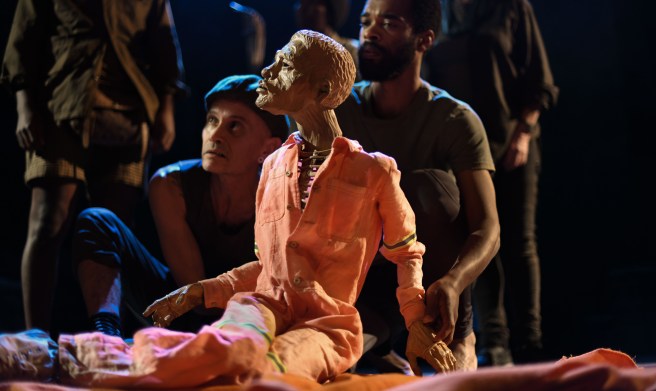
Craig Leo and Carlo Daniels in Life and Times of Michael K
DIANE DE BEER
JM COETZEE’S LIFE AND TIMES OF MICHAEL K
ADAPTED AND DIRECTED by Lara Foot
CAST: Sandra Prinsloo, Andrew Buckland, Faniswa Yisa, Craig Leo, Roshina Ratnam, Carlo Daniels, Marty Kintu, Billy Langa and Nolufefe Ntshuntshe with the Handspring Puppet Company
CO-PRODUCTION: Düsseldorfer Schauspielhaus (Germany) and Baxter Theatre
SET DESIGN: Patrick Curtis
LIGHTING DESIGN: Joshua Cutts
ORIGINAL MUSIC COMPOSITION: Kyle Shephard
DIRECTORS OF PHOTOGRAPHY AND FILM: Fiona McPherson and Barrett de Kock
VIDEOGRAPHY AND EDITING: Yoav Dagan
PROJECTION DESIGN: Kirsti Cumming
COSTUMES: Phyllis Midlane
SOUND DESIGN: Simon Kohler
VENUE: Baxter Theatre
DATES AND TIMES: 7pm nightly until 19 March with Saturday matinees at 2pm on 5, 12 and 19 March
Craig Leo, Nolufefe Ntshuntshe, Carlo Daniels, Faniswa Yisa, Billy Langa in Life and Times of Michael K
It is quite astonishing with the Russian invasion of Ukraine as the backdrop on most minds, how the horror in JM Coetzee’s Life and Times of Michael K is amplified.
Written in 1983 in Coetzee’s sparse yet startling style, the story shines a powerful light on the life of a simple man, afflicted by a disfigurement, standing out without being someone, and being in the world not to engage, but rather flee from others.
That’s where he finds his freedom – in the wild, desolate landscape of a country that doesn’t want him and yet pursues him for crimes not committed or even imagined.
Both Michael K and his mother have lived honourable lives in service of others, he as a gardener and she as a domestic worker who lives under the stairs in an apartment block, like her son, unseen and unheard.
When she falls ill, with war raging around them, she turns to her son to take her “home”, there where she was born and raised, where she believes she once found happiness. And so their harrowing journey begins.
Sandra Prinsloo, Faniswa Yisa, Craig Leo, Roshina Ratnam in Life and Times Of Micheal K
Because of where we find ourselves right now, and looking back through the history of these past 30 years, both nationally and internationally, Michael K’s story hasn’t changed. That’s why it is such a brilliant choice to herald what we are hoping beyond hope, might be better times.
There was a buzzy anticipation on opening night as people moved into the Baxter Theatre for the Lara Foot-adapted and -directed Life and Times of Michael K, a production cleverly staged with the Handspring Puppet Company in a multi-dimensional fashion including performance, film and music – all on a grand scale.
And with a magnificent set which constantly changes with moving as well as still images and lighting that astounds, we’re off into the story and running with the narrative from the start. It’s quite overwhelming as Michael K’s story is told from many different angles and voices with different landscapes as he goes on his long and winding journey. Visually it is spectacular and achieves a moving world that is both elaborate and evocative.
Telling the story, there’s an ensemble playing different characters; the physical Michael K, exquisitely crafted by the Handspring masters happily accompanied by his equally statured mother; the voices and puppeteers; as well as the film, which simply because of scale could be jarring at times rather than just slipping in and out of the narrative – yet all of these combined make it quite difficult to get to the beating heart of the story.
Nolufefe Ntshuntshe, Craig Leo, Carlo Daniels, Roshina Ratnam and Andrew Buckland in Life and Times of Michael K
As the name suggests, this is Michael K’s story. While the character himself can be seen as an insignificant man, that is the point and what Coetzee hopes to uncover in his desolate and desperately haunting tale of a man who is struggling to find and cling to his freedom. Gardening is what moves his world, something that adds rather than detracts from our physical place on this earth.
But even that is not good enough. Somehow it is twisted into an act of terrorism as he is accused of feeding a guerrilla army. He is simply never allowed to be.
Coetzee’s descriptive and detailed telling of Michael K’s battle to survive on this arid land, the way he works with the earth to both feed the soil and his soul, nourishing his freedom, his sole means of survival, doesn’t quite have the impact on stage as it does on the page. The exquisite existential rendering which won Coetzee such applause is somehow missed.
His is a harsh world in which there is mistrust all round. Who is Michael K? Even though he is described as someone who cannot organise a dart game, he is still seen as a threat by those who feel they are in command and have to lead the way.
No one can be left to their own devices. And it is this stranglehold, a man’s desperate struggle to hold on to his freedom, that disappears under the weight of the production, one where the true horror of being Michael K struggles to break through.
Foot has thrown all her energy and skill into this one and there are many memorable moments to witness and remember. It is a worthy production that captures the zeitgeist – a time of pandemics and panicked, power-driven presidents.
When Erika Murray-Theron started writing about her life following the Parkinson’s diagnosis of her husband Tom, she couldn’t predict that capturing her thoughts on paper would be her way of coping. Yet writing became her solace and eventually a book titled Kom Ons Loop Weg (Protea Boekhuis), which she hopes might shed some light for others struggling with debilitating disease. She talks to DIANE DE BEER:
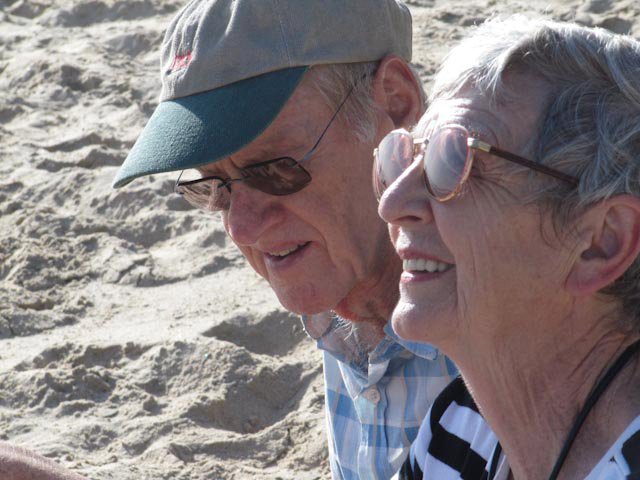
In silhouetteSea fun for Tom and his grandchildrenTom and Erika in healthier times.
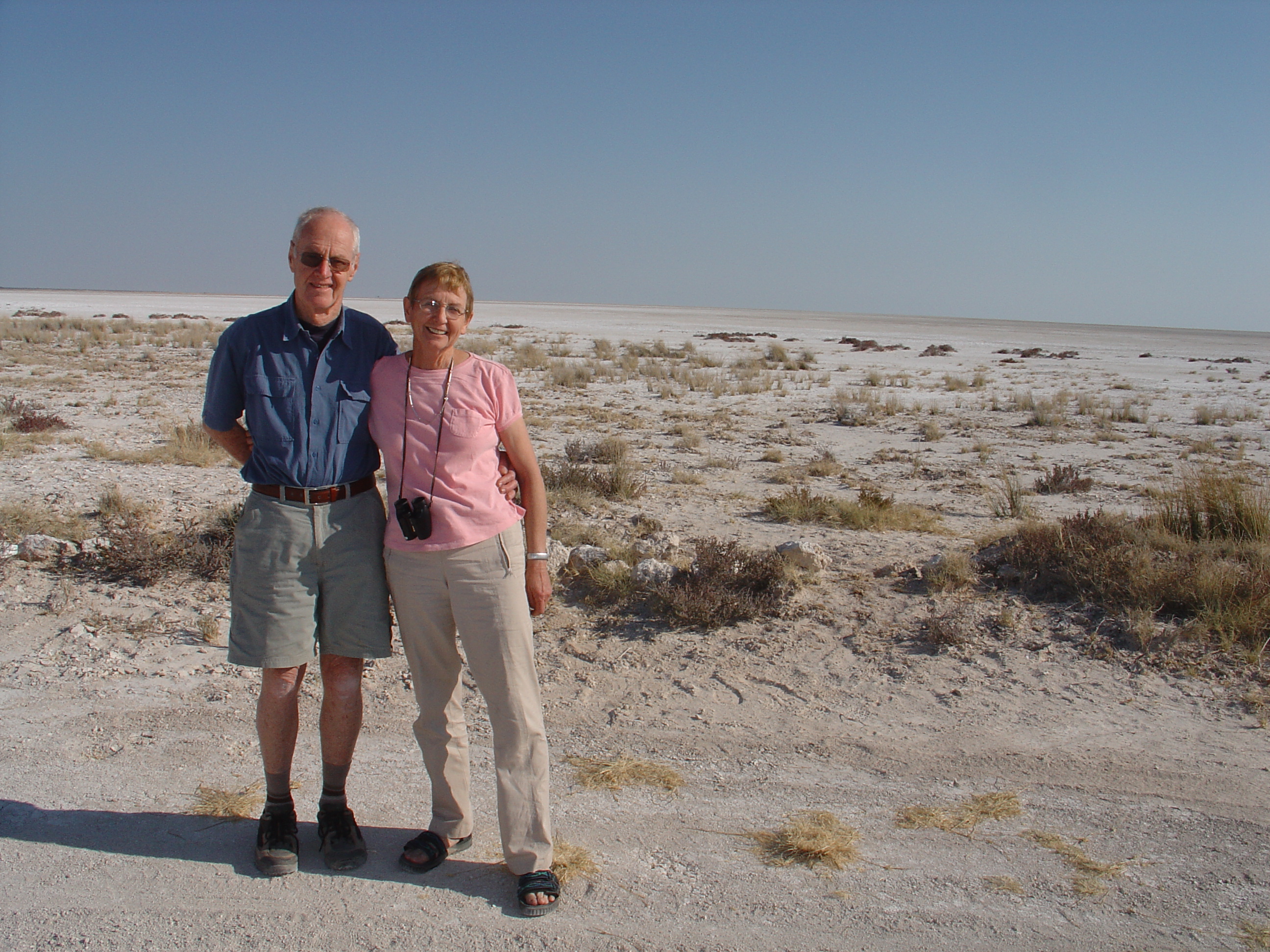
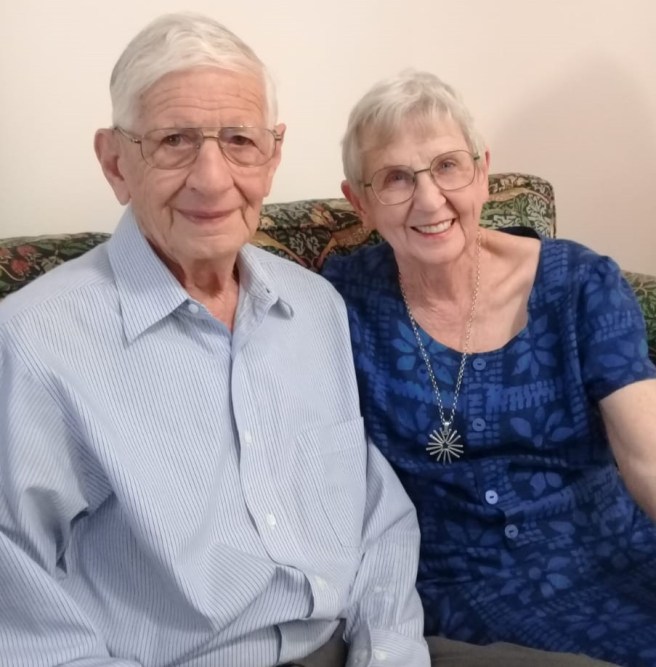
It says everything about author Erika Murray-Theron when she tells you with a twinkle in her eye: “In one year I turned 80, got married, had a knee replacement and launched this book.”
Published by Protea Boekhuis, the front cover also explains that this is her and her first husband’s journey with Parkinson’s disease.
It all started in 2001 when Erika’s husband Tom was diagnosed. Initially once they were fully immersed in the illness and coping with its progression, Erika started a file on her computer but it was simply meant for her eyes. As someone who had always kept a diary on her life (until her family with five children took over), she knew she needed somewhere she could gather her thoughts and make sense of all the changes they were confronted with on a daily basis.
From the beginning, the onslaught on what had been their life was quite overwhelming, but as one does in these circumstances, you deal and cope. When Tom’s mind was still unaffected, they could make decisions together but eventually, Erika really had to take charge and, as so often with his particular diagnosis, she had to handle everything with great care when dealing with Tom.
Young newly-wedsAuthor Erika Murray-TheronTom in reflection.
Part of Parkinson’s symptoms can be fears of abandonment, and reality for the couple soon became a very individual experience.
The book deals mostly with the last three years of Tom’s life, which because of the degeneration, were also the most difficult. For Erika it wasn’t just the decisions about where and when to move, how to physically manage their lives, but also to bear such constant and intimate knowledge of Tom’s decline.
Theirs had been a fulfilling marriage and what she was witnessing was the dismantling and slow disintegration of both the physical and intellectual beings of her life partner. And with that comes the loss, which is a slow and debilitating process for both, the one suffering and the carer.
This wasn’t a time to think, she had to do. But she is a writer and from as young as five, she would tell herself stories and end sentences with “she said!”, as though writing a story. “I don’t know where that came from,” explains Erika, and even though she started writing books at a relatively late stage, storytelling has always been a part of her being.
Writing is how she makes sense of things and, during Tom’s illness, it helped her make sense of her feelings and her understanding of what was happening.
She hates being viewed as a victim or as someone who wallows in misery, and given what she had to deal with, not languishing in those emotional places is tough. But with Tom the priority, she managed with the help of her children and friends to cope.
That’s where and why the book became important. Once she caught her breath following her husband’s death in 2014, she knew she had to revisit these last years of their life together – that as well as nurture the memories of happier and easier times.
Erika Murray-Theron.
She had been caught unawares by the deep loss she felt with Tom’s passing away, especially following the struggles of the last years. That also meant that she hadn’t yet mourned the loss even though it had been such a part of her life even before his death. “I knew I had to deal with all of that,” she explains. Now she had time to step back, return to her notes to gather her thoughts of what their life had been.
When she started thinking about writing a book, she was driven by the feeling that her experience could benefit others.
But this also meant more exposure, the one aspect of being an author that doesn’t appeal to Erika. “I am a very accessible person but I don’t like being out there,” is how she explains it.
But telling this story she believed she had to be truthful and honest about their lives, especially the last years that were so tough. It also meant that she had to discuss this opening up so publicly with her children.
They are a tightknit family, some more private than others, and this was her and Tom’s story and where she was going to concentrate. And even though the book is extraordinary and something Erika doesn’t regret, the publicity surrounding it has been difficult for her. “Many people only see my plight rather than the extraordinary journey,” she says.
What she has done with telling her story, one that no one really wishes on anyone, is to show the resilience of human beings. How we stand up and get going when life is unexpectedly tough. For her it was about finding the meaning and making sense of it as she was gathering her notes and her thoughts to finish the book.
She contacted the editor of her last book at Protea Publishers, Kristèl de Weerd, and gave her the notes which she had already sorted into some kind of order. Writing and the process is something Erika enjoys and especially the final reworking and editing. “I can sit for hours adjusting one paragraph,” she confesses.
That is why the book is such a revelation. When keeping notes, Erika is someone who has depth and detail in the palm of her hand. The title KOM ONS LOOP WEG (loosely translated as Let’s run away) comes from a moment in time when Tom said to her quite unexpectedly and lucidly: “I miss you … I hunger for you… Let’s run away…”
Gideon and Erika
And still her story isn’t completed and if there are any tears to be shed, perhaps this happy note will do it.
Following Tom’s death, a close friend of theirs, Gideon, also lost his wife. He turned to Erika for some help with things he had to sort through – and, she says, she immediately knew that this friendship was going to develop into something different and deeper. Today she is taking a timeout from writing and the newly-weds are making the best of their time together.
For those of us looking on, it feels as if they were blessed with a special gift.
In times of Covid things have been tough for everyone, but some had no options, they had to make plans. DIANE DE BEER speaks to (her friend) Dr Hennie Fisher, chef and lecturer at University of Pretoria about food and the innovative ways he got working to get the students cooking when the world was in lockdown. But also exploring the way he celebrates his own creativity in this world:
PICTURES: AB Heyns and Hennie Fisher
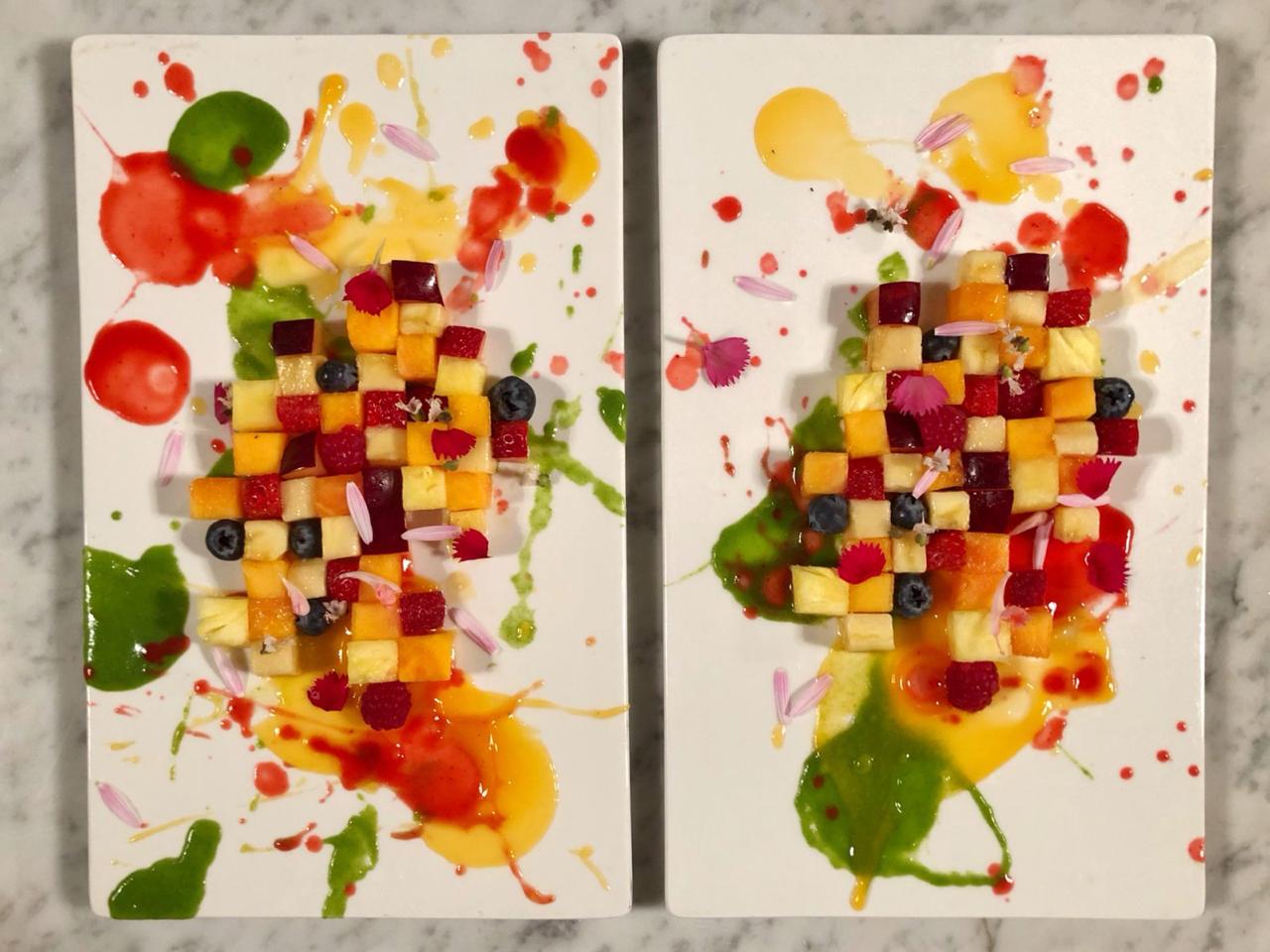
Hennie Fisher paints pictures with fruit.
Thinking about food, chef Hennie Fisher can’t remember a time that he wasn’t fascinated by it. He didn’t come from a family particularly interested in food, with the result, that food nostalgia has little meaning for him.
And yet, once he moved into the food realm himself, he never stopped experimenting – to the delight of those of us who are part of some of these kitchen creations. He believes culture rather than history is what drives him.
That’s what gives us the measure of things. If, for example, you are doing a korma recipe and it wasn’t part of your upbringing, you don’t have anything to measure it against. But in that instance, because there was no way he was strictly sticking to the food he was familiar with, he developed his senses.
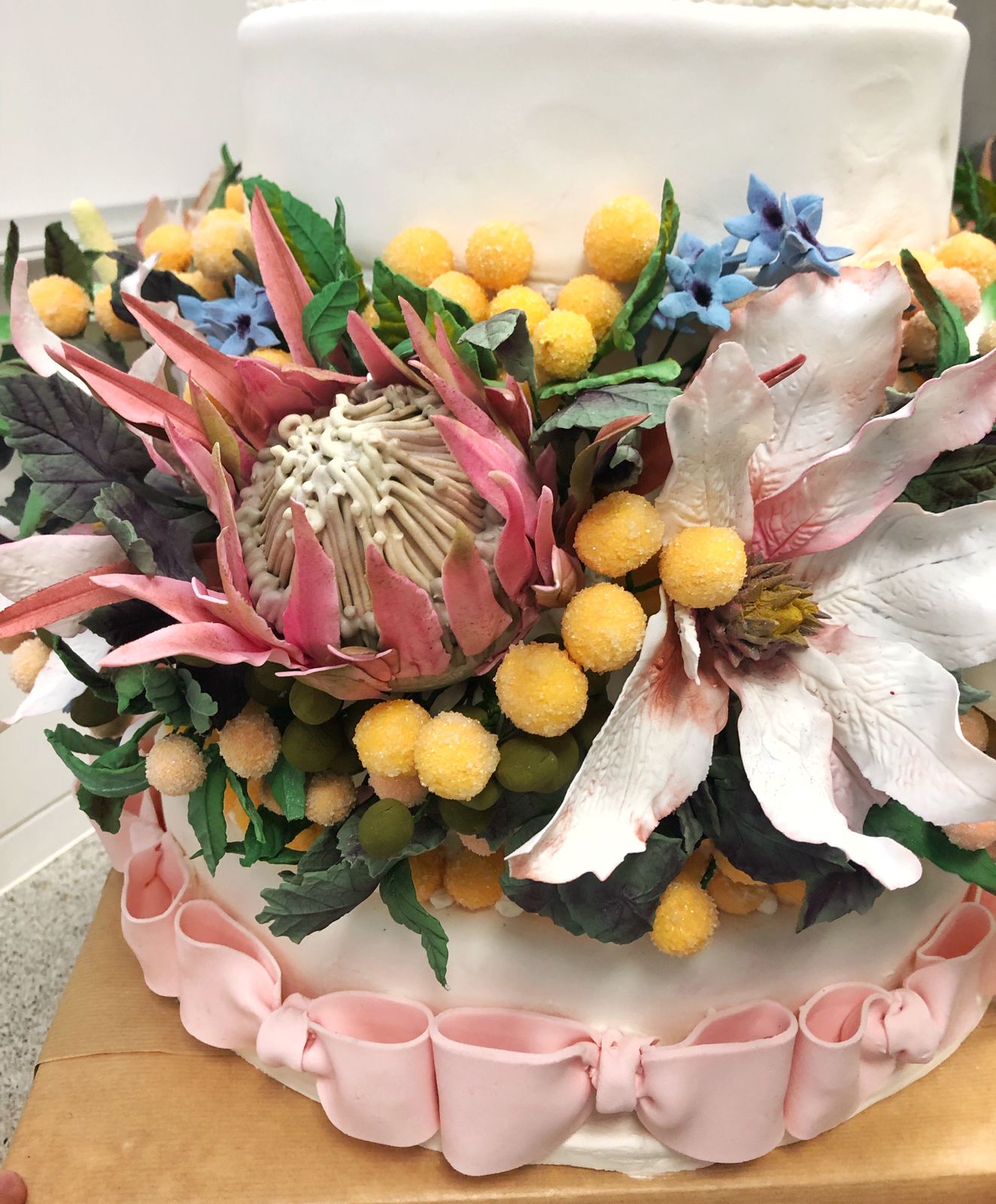
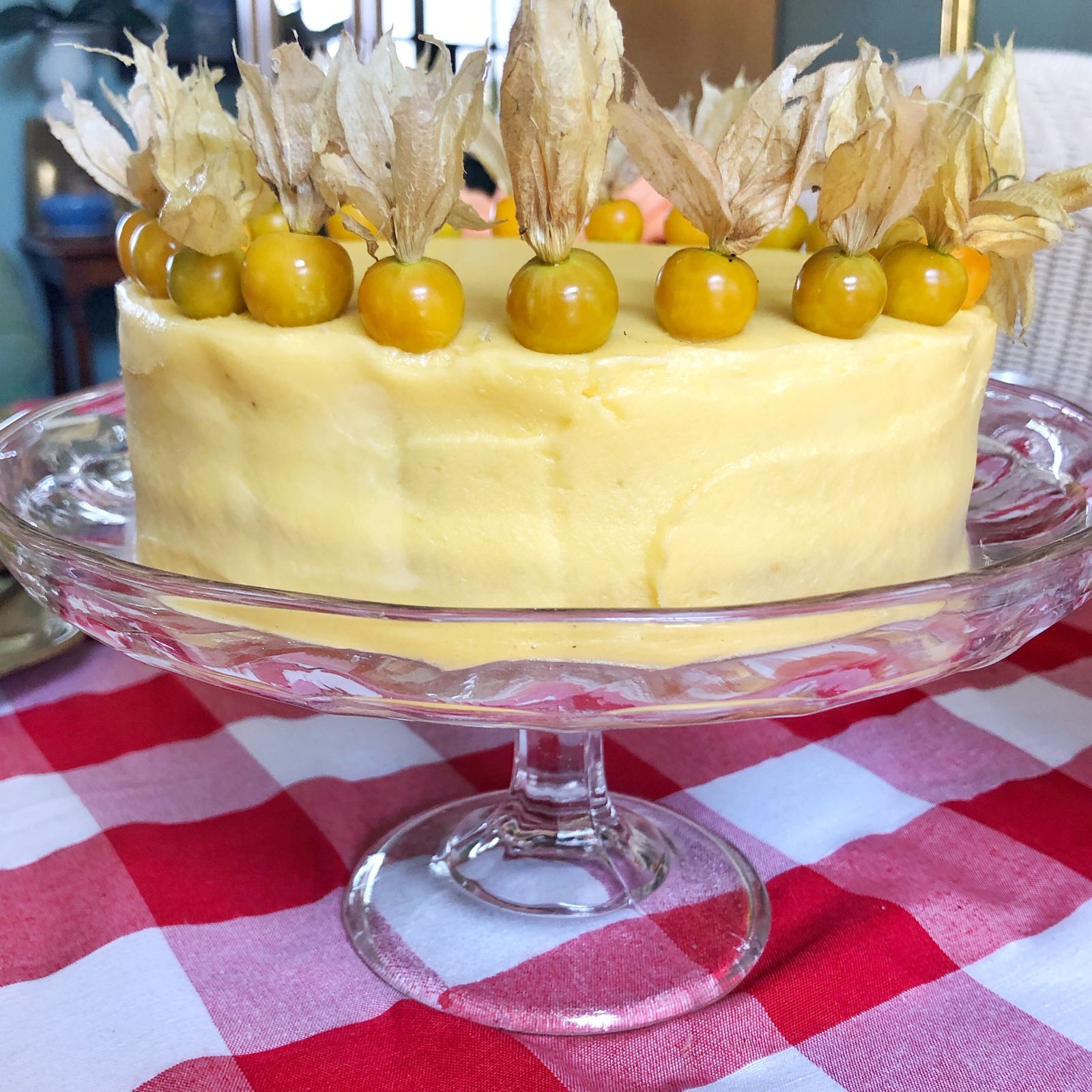
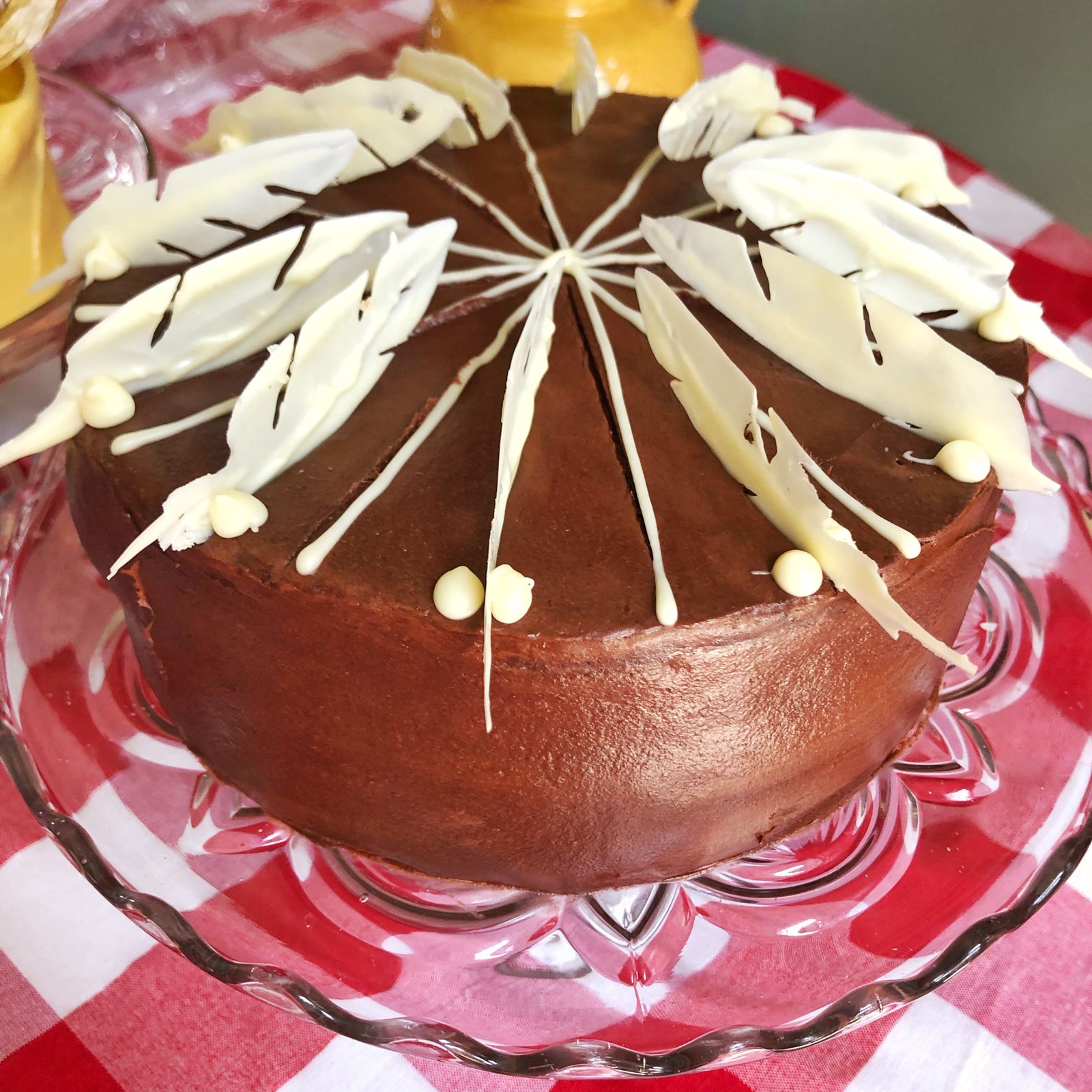
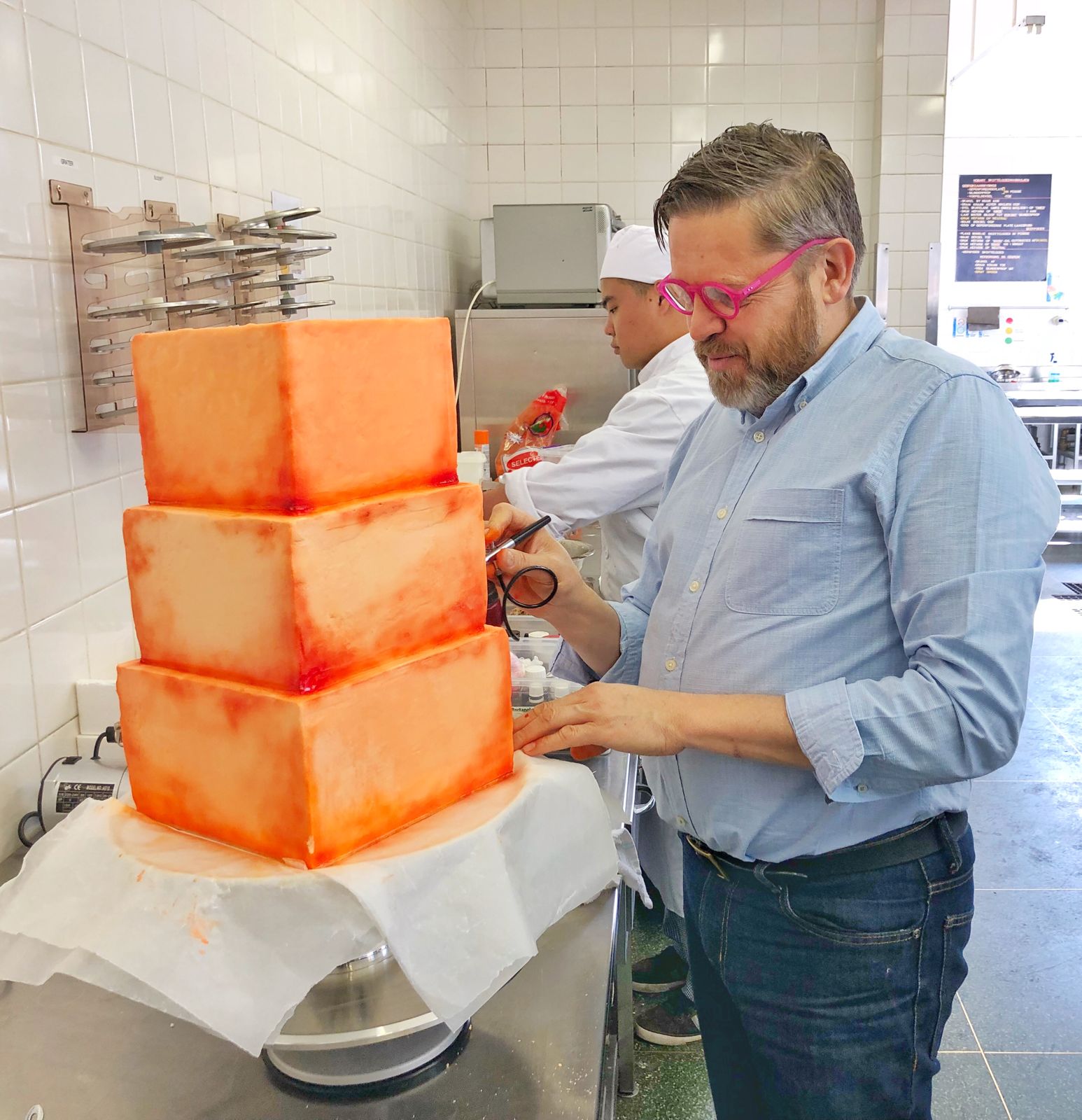
Cake sculpting in progress.
That’s what the modern consumer does, he says. And, more than anything, he loves cooking off the cuff. Something I witnessed again, when we spent a week at the coast where he could let his hair down and cook for appreciative people who love to eat – no pressure. It was a time to relax, with sea air and food to make everyone happy.
The previous year we had gone mad foraging, but this year the pickings were scarce and we did less of that with Fisher relying on the produce we had all brought to the table.
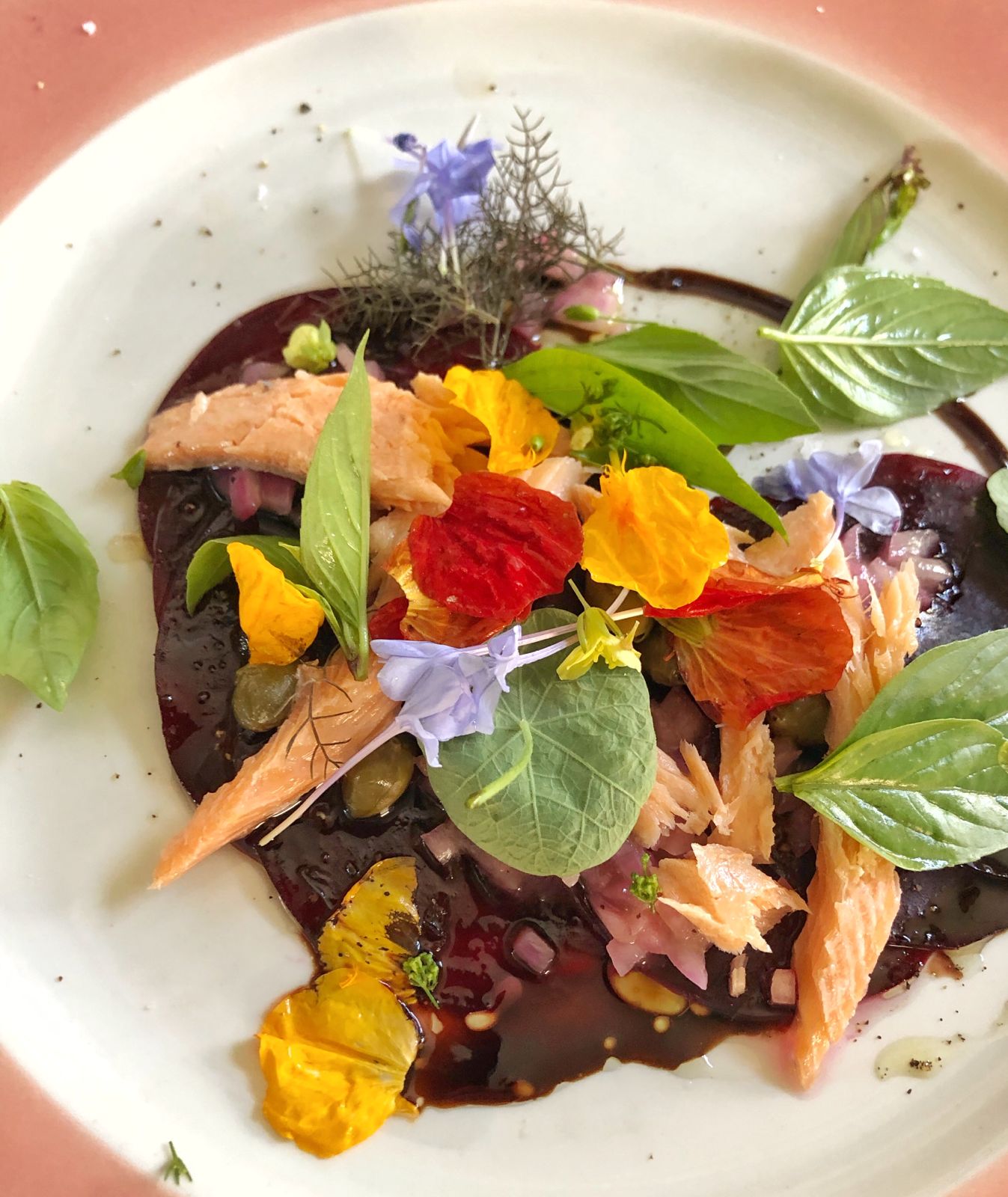
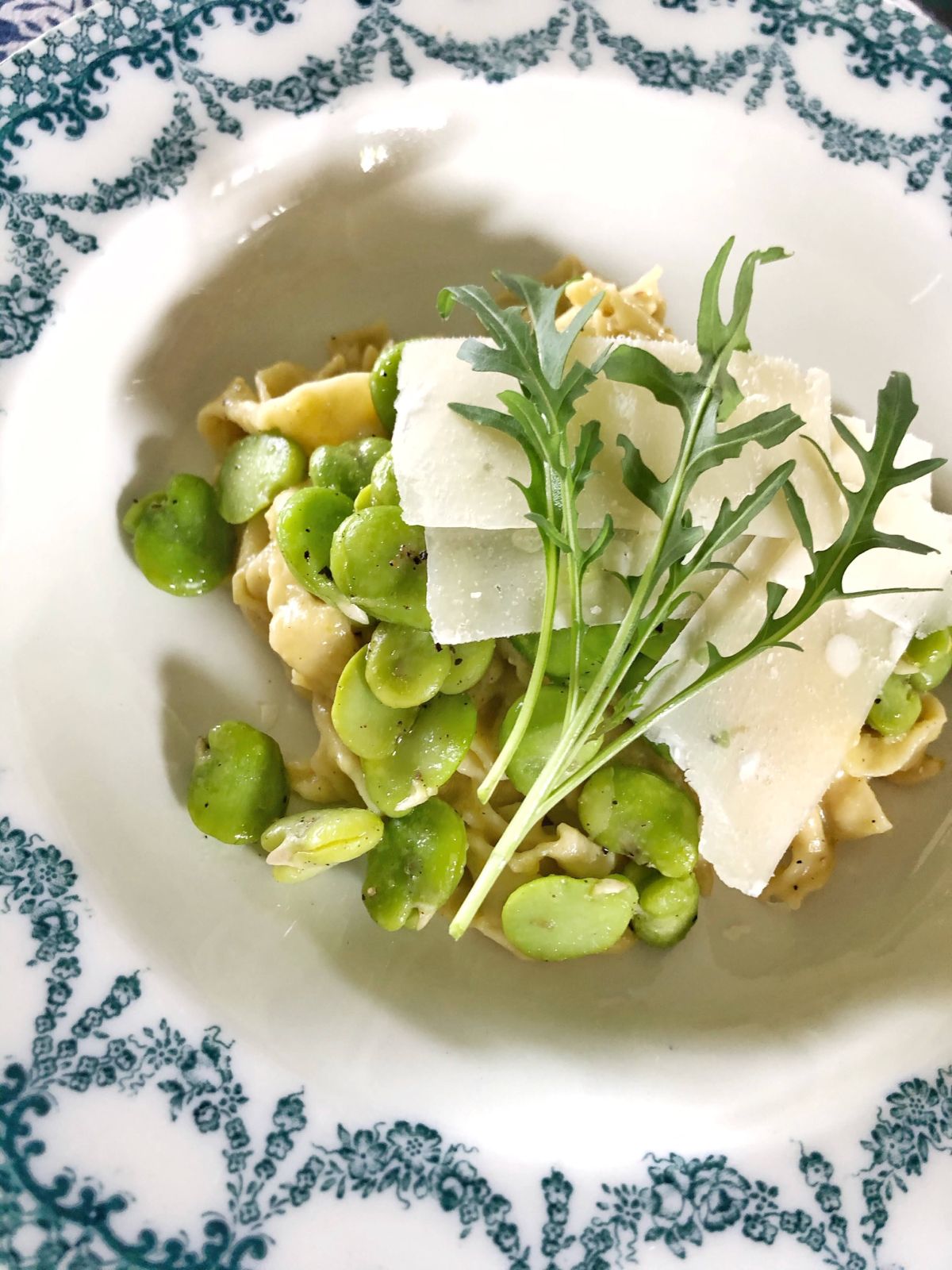
For me, more than anything, it is exciting to witness how the mind of a chef works, what he comes up with and how food enchants when it is well made and the simplicity celebrated.
Cake kaleidoscope.
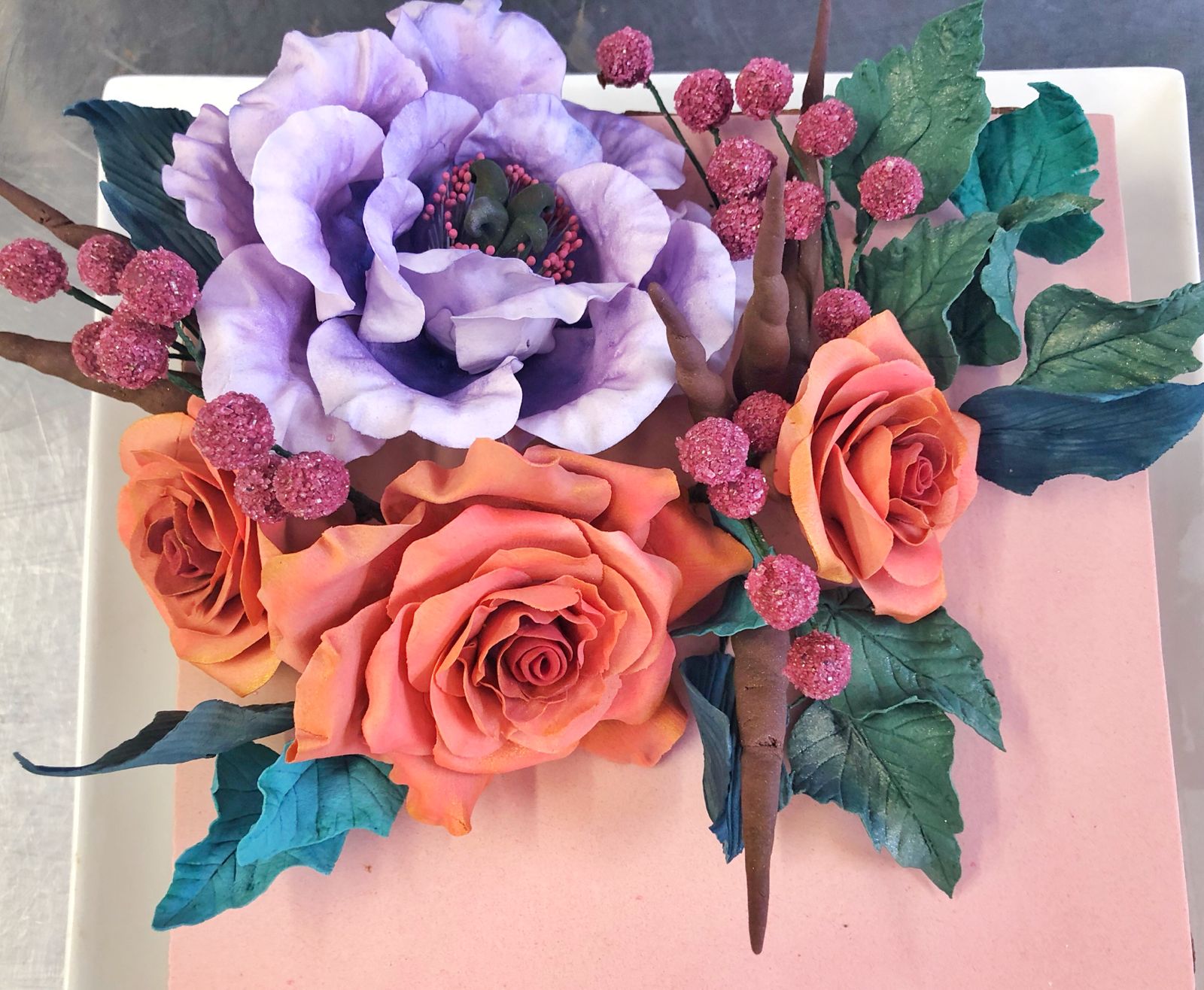
Floral fantasy.
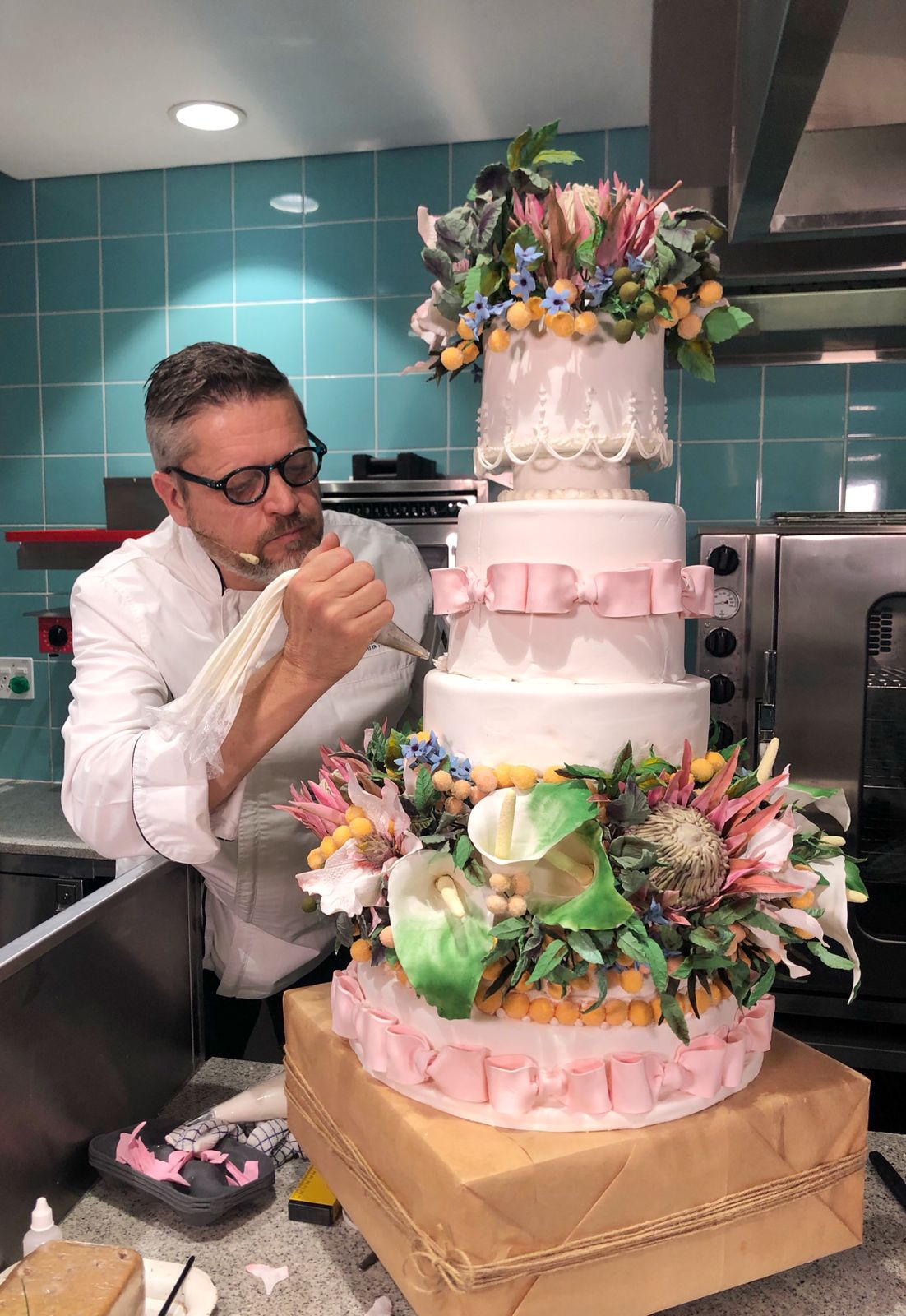
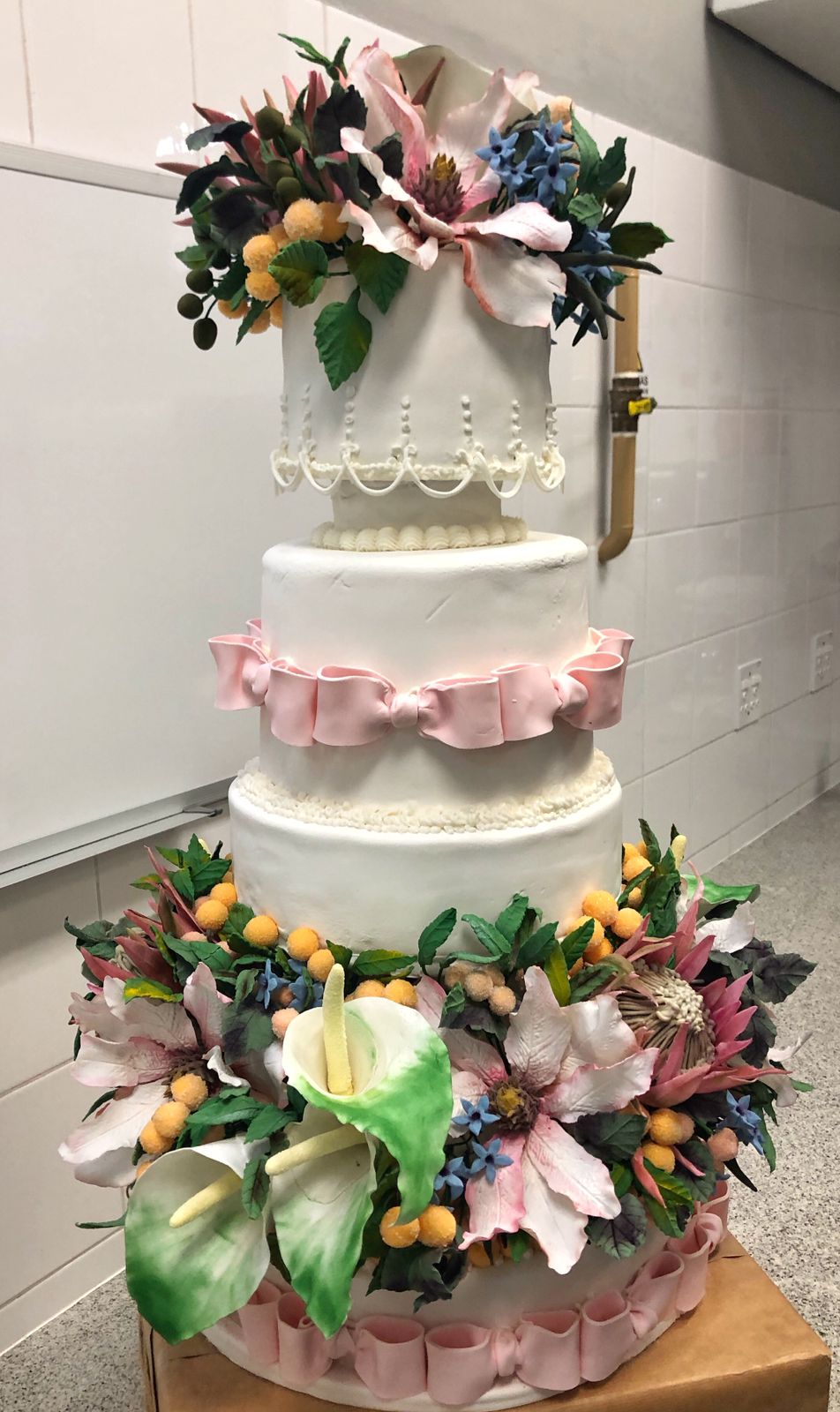
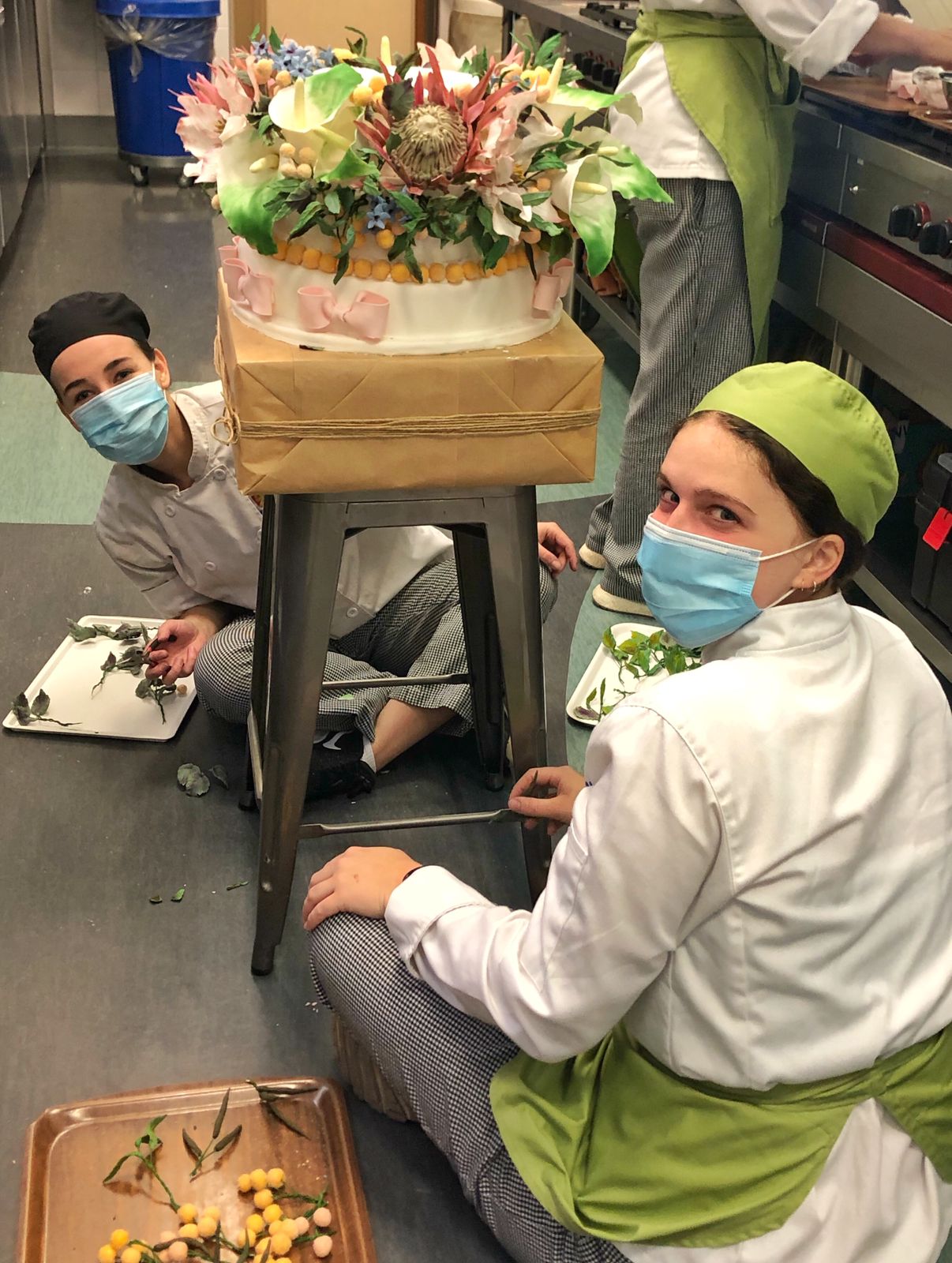
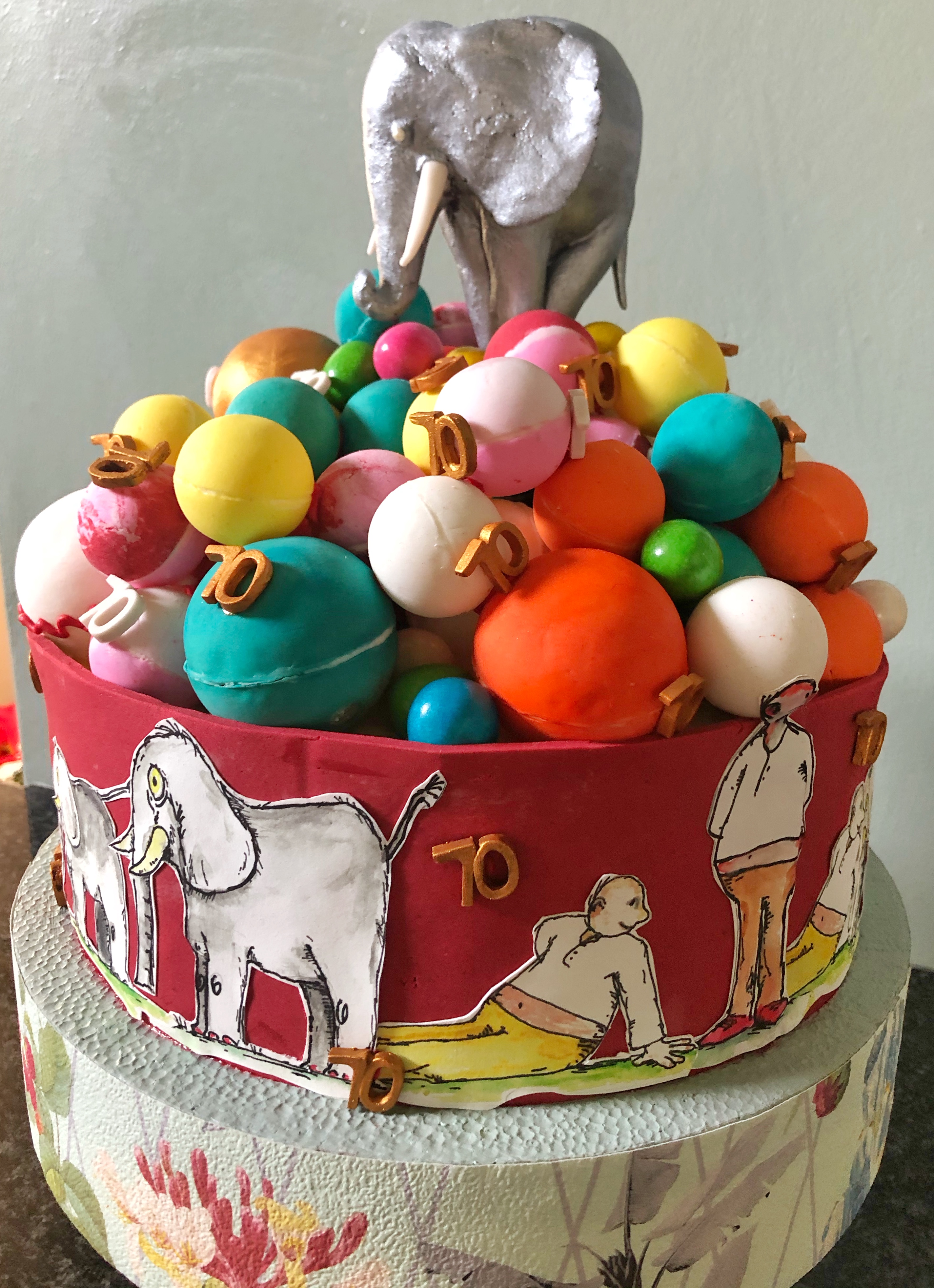
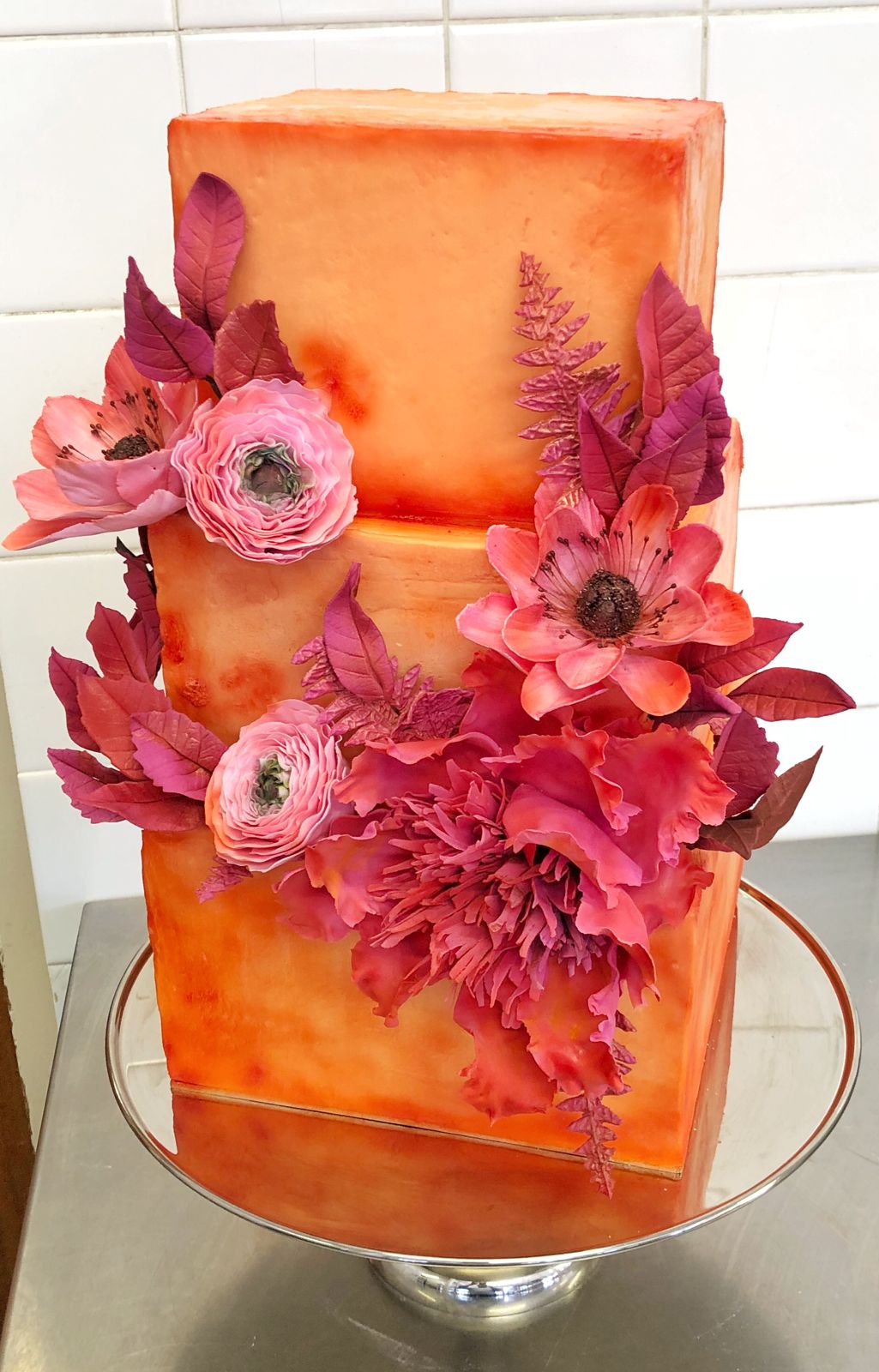
One of his favourite things to do is baking, especially magnificent cakes which are decorated in a way that’s difficult to absorb. When I think of cake decorating in the past and what happens in that field today when you have a real master at work, it’s astonishing. There’s nothing more beautiful than watching an artist at work and being able to witness what he comes up with.
Like anything in the creative world, when you give artists free rein, is when they have most fun. Working within guidelines is fine, but preferably give them the freedom to play.
Genius at work.
On a trip that we did together to Turkey, six of us stayed together in an apartment block where we cooked on and off when we didn’t go out for a meal.
Watching Hennie put all of this together was quite something. In the middle of a cooking stint, he would dash outside to a pavement quite close by, where he had spotted some herbs growing wild. That would just be the final touch to another taste sensation – and it might have been something as simple as a roasted chicken which he then turned into something extraordinary.
Hennie’s food feasts.
In the meantime, his real work is as a lecturer at the Department of Consumer and Food Sciences at the University of Pretoria. This is where the real challenge began a few years back with the start of Covid. Their’s is a practical degree and while there isn’t really any replacement for a hands-on food demo with the students doing their own cooking, Hennie had long been thinking about creating a digital library which would be on hand for students to access when necessary.
Now was the time and, when he thought about it, digital demos were the only alternative, but one which would also have long-term advantages. The idea that face-to-face teaching was suddenly impossible was daunting, because there simply was no other option. Working with students you can see where they stumble and you also get to know one another on a deeper level. But this was the challenge.
It meant hard work, as did the new Zoom lectures all of which required a different work process and a deep dive to establish the best way forward in this interrupted and episodic lifestyle we all entered and are still engaged in.
A demo unfolding.
It’s all about setting a base and establishing videos that would be the best version of what was possible. This was as much a learning process for the lecturer as it would be for the students and, having sat in at some of those sessions, the work that goes into the cooking sessions, in preparation and then the actual filming, is quite something.
What appealed to him was the learning process, which is continuous. Even though he had lost the possibility to learn from the students, which was always there when they were cooking together, new skills were suddenly surfacing in this novel way of teaching he suddenly had to establish. Yet, everything, unfortunately comes at a price.
Students at work and play.
He already knew that much of his teaching in the past came about when he watched the students cooking. “It’s about seeing them do it,” he explains. Think of yourself doing something in a kitchen and suddenly being stumped by a particular method ̶ should it first cool down or should you immediately go ahead with the process, for example. Cooking is like that and by example and repetition, is how you learn.
“Cooking is complex,” says Hennie, and that is something all of us can concede. He does encourage those interested in the food industry to go ahead, however. “There are so many different opportunities,” he says , and both the conditions and the pay have improved over time and trickled down.
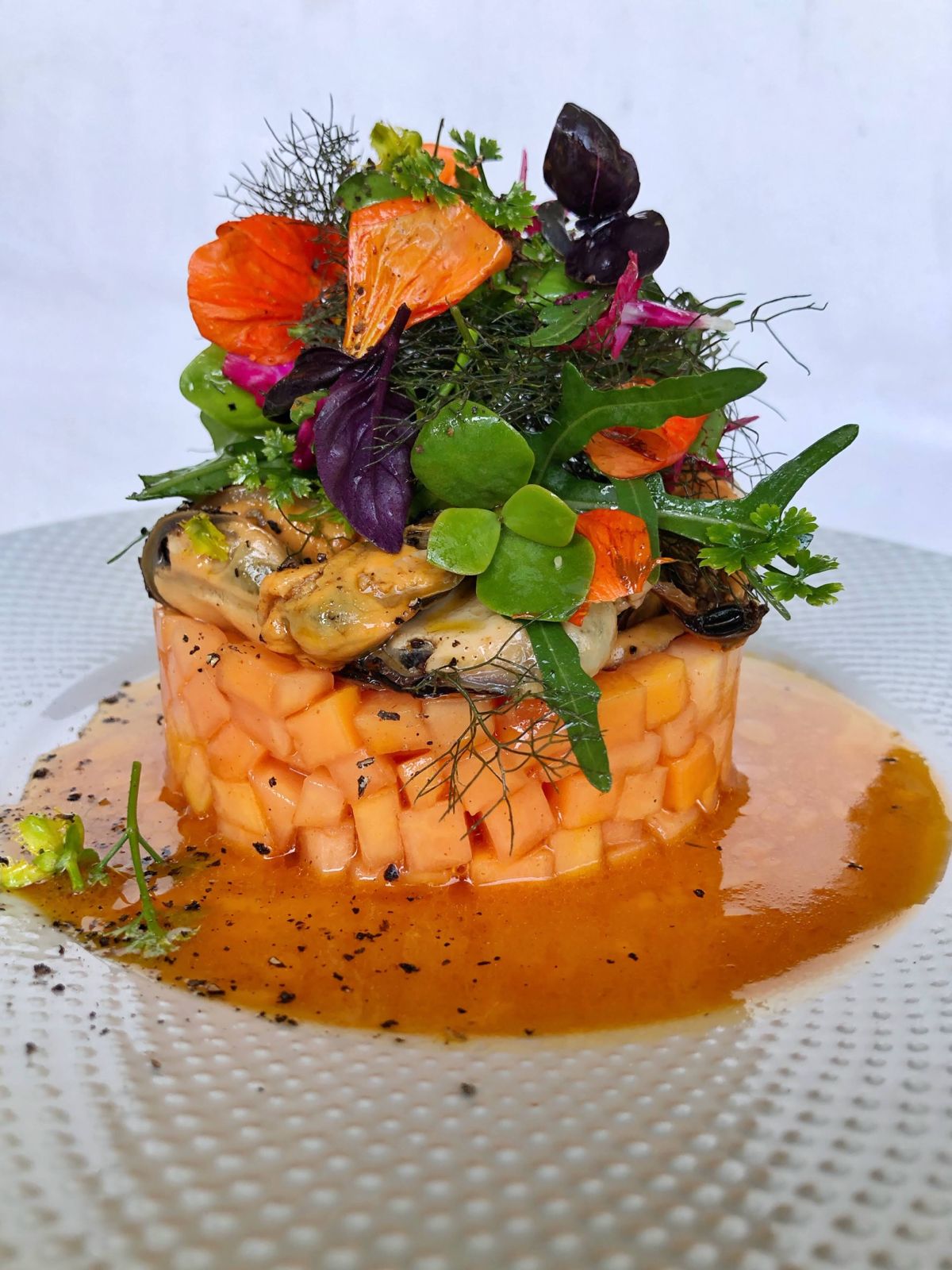
A selection of paw paw recipes developed by Chef Fisher for an ongoing project.
With the advent of social media, it is also much easier for people to reinvent themselves, and he feels, the work is much more satisfying than it might have been in the past. If you think of all the imaginative developments in the food world, the mind boggles.
With someone like Hennie, who seems to have food and the way to present it as part of his DNA, I can only smile at the future and the many meals created in that brilliant mind that will make my heart sing.
Cast: Katlego Chale, Nhlakanipho Manqele and Marlo Minnaar
Lighting Designer: Simon King
Set and Props Designer: Nadya Cohen
Costume Designer: Nthabiseng Makone
Sound Designer: Mandla Mkaba
Choreographer: Lulu Mlangeni
VENUE: Mannie Mannim at the Market Theatre
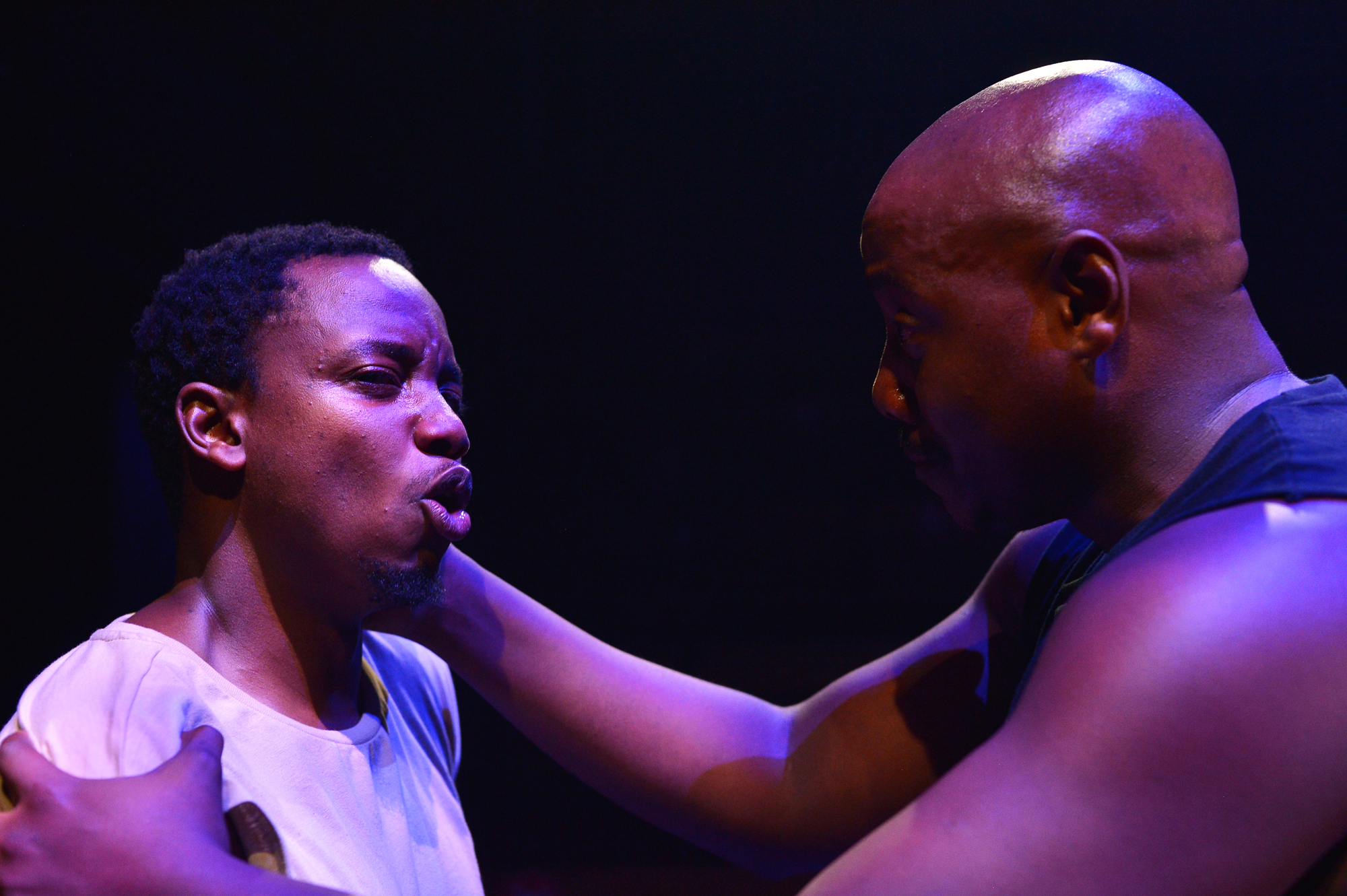
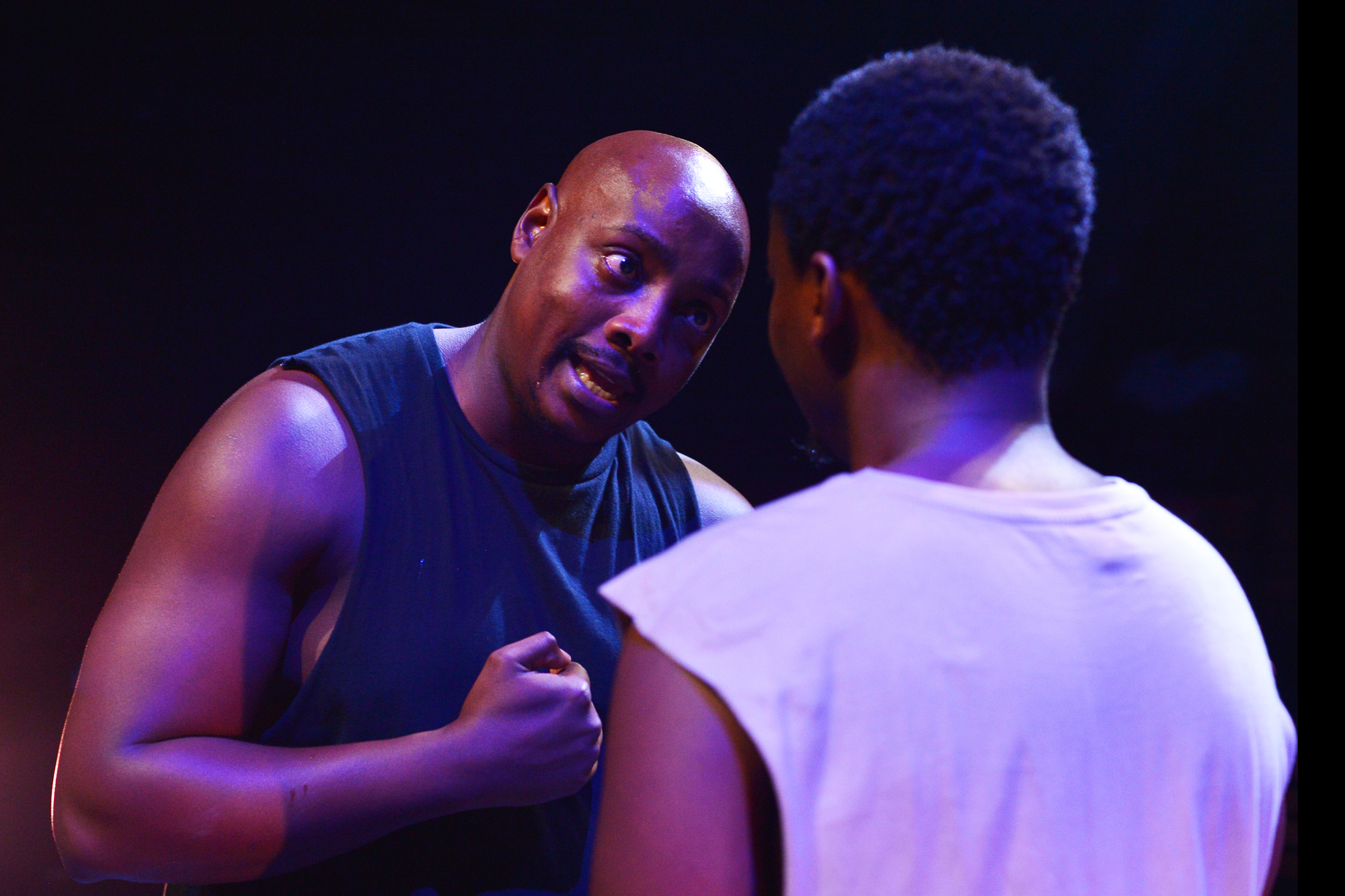
For the past few years artistic director of the Market James Ngcobo has been exploring especially themes of brotherhood when selecting their Black History Month production – and 2022 is no different.
This time he has opted for a revival of The Brothers Size by award winning playwright Tarell Alvin McCraney for a limited season until February 28 . It was first presented here with an American cast and Ngcobo was keen to try his own hand with local actors because of the universal theme and the excellence of the play.
And last time, he explains, it was a week run only with not too many theatregoers able to attend.
He is also excited because he is working with three actors he has never worked with before. “It’s been a hands-on and collaborative effort,” he notes and he was thrilled by their response to the play.
, Nhlakanipho Manqele
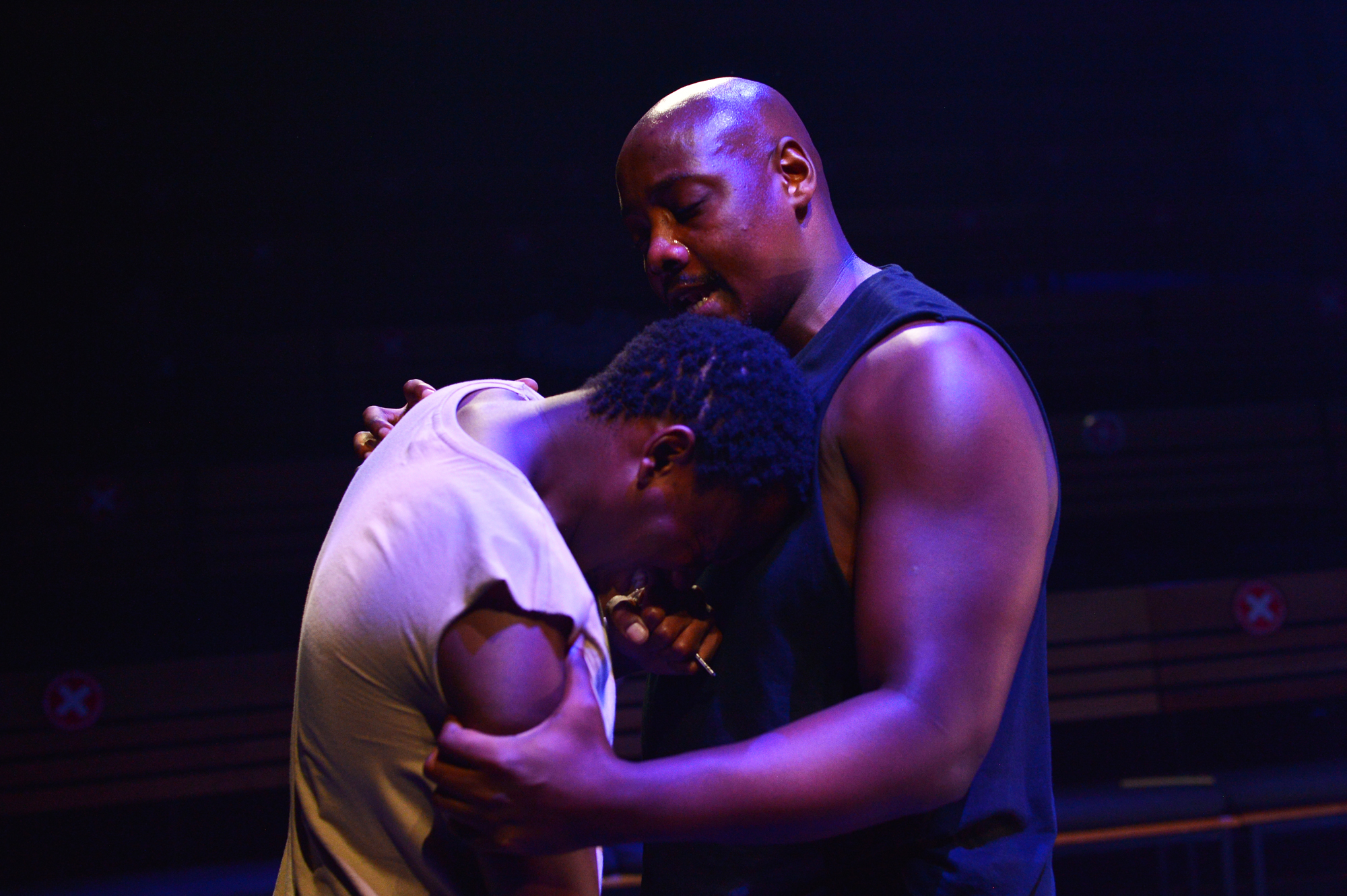
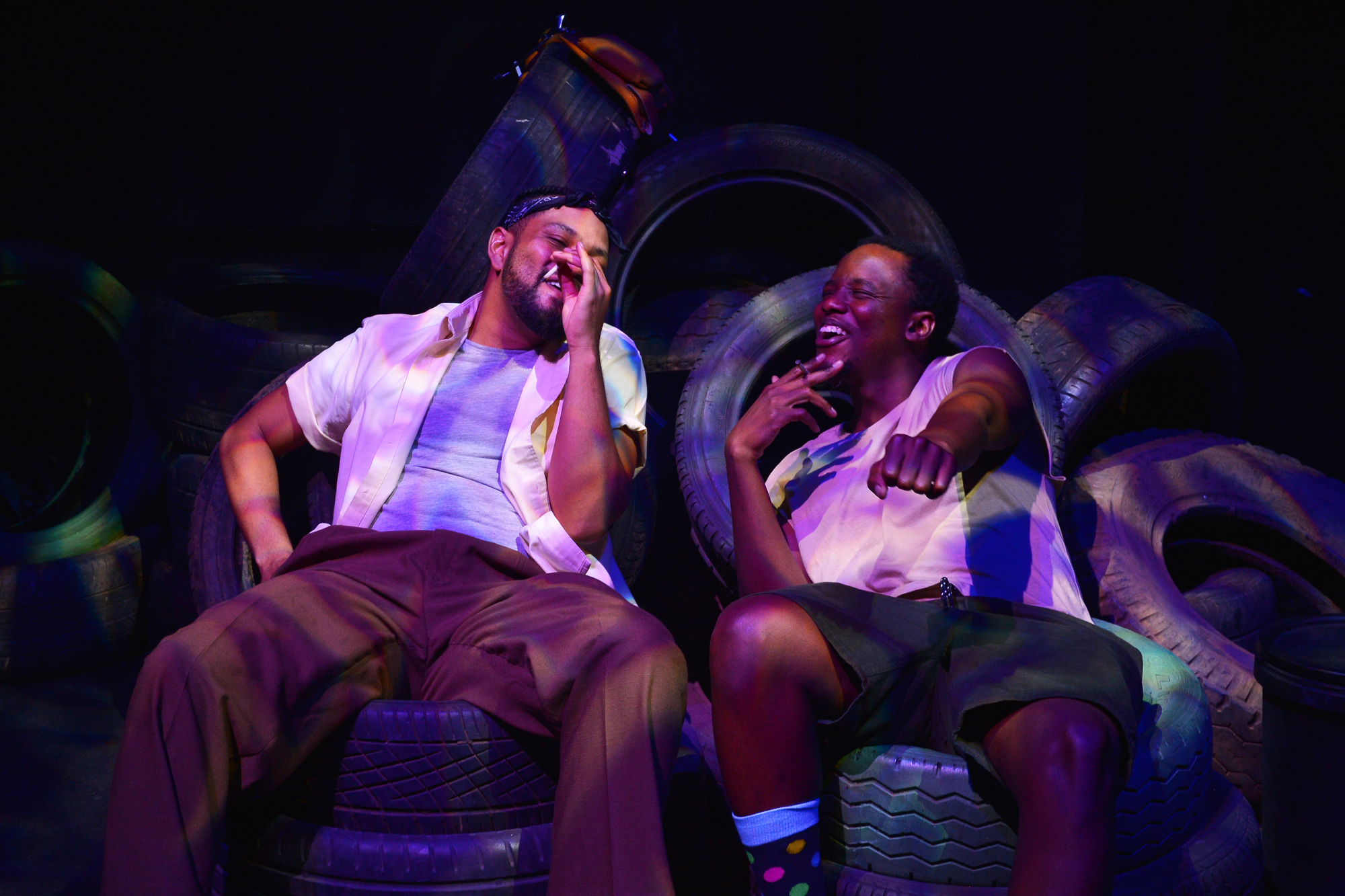
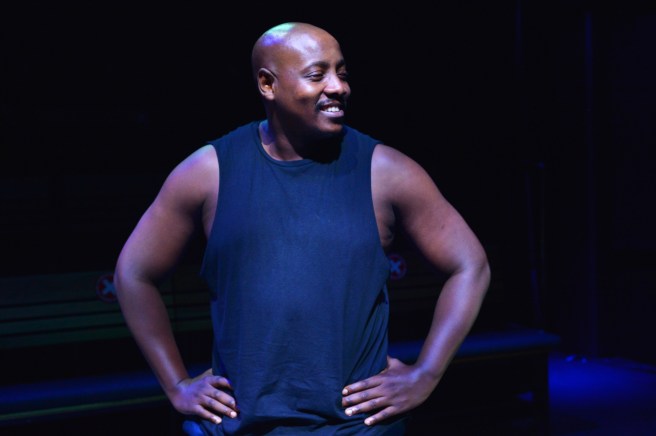
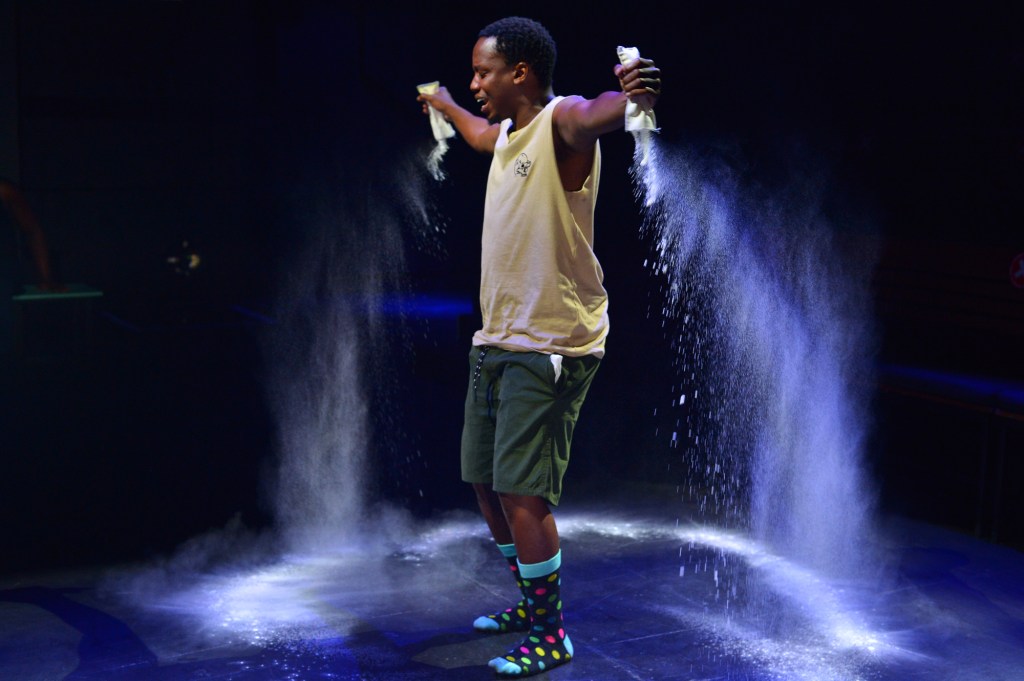
It’s the story of two brothers, one of whom has been incarcerated and just returned to normal life. Ogun Size played by Nhlakanipho Manqele is named after the spirit of iron and labour. Oshoosi Size, played by Katlego Chale, is the younger brother named after the spirit of the forest and a wanderer.
Elegba, played by Cape Town actor Marlo Minnaar, who arrives as a friend of the brothers who comes to stir the pot and provoke additional discord between the them, is named after the spirit of chaos and the god of the crossroad.
Pointing to the names, Ngcobo liked the fact that the playwright used Yoruba names, which in typical African fashion, give some of the character of each of the men.
Together the two brothers and a friend start the conversation about prison and the rest develops from there.
For those who don’t recognise the playwright’s name, he was also involved with the film Moonlight’s script, which received so much Oscar buzz and awards a few years ago.
Brothers in arms.
If you saw the film, you would have recognised the sensitivity with which the story was told. It was also refreshing at the time that this was a Black voice telling their own stories. It has fortunately become more commonplace now with the Black Lives Matter movement which adds a much more personal dimension to these stories.
It is set in Louisiana which, according to Ngcobo, is also the prison capital of the world ̶ not a title that many world cities want to claim. Especially in the past decade, much has become more public about the imprisonment of especially Black men with the numbers suggesting that not many of them escape this horrific punishment. This plays a huge role in this particular story.
As they start their conversation it is clear that the younger brother feels a certain entitlement because he has just left prison and is perhaps in need of some pampering from his perfect older bro.
There’s also a friend who is obviously not the influence needed in the vulnerable convict’s life at that exact time.
With all our knowledge about the African American male and his precarious position in American life, one cannot but experience the play through that prism. It’s like navigating a slippery ledge throughout.
As the older and wiser brother, Manqele is the one who holds all the cards. His character is the one who opens his heart and allows the story to shine through in full colour. The strength of both his words and his action leads the way, with Minnaar’s cool cat someone who could lead those with less backbone astray. And his slippery Elegba is in it only for himself. What happens to those around him is only a concern when it affects him and his wellbeing.
Magical moves.
The younger Size is perhaps the most difficult role to play. He needs to generate some sympathy from the audience to get them engaged. But because Chale starts on such a climatic note, he has nowhere to go as the play builds towards a climax. From start to finish his bravado never lets up to allow for some compassion.
Yet his sensitive moves in a few passages throughout show a side of the actor which could have been harnessed more effectively throughout.
This is a play that relies heavily on performance, and a wrong step upsets the rhythm. We don’t want to see any of the work as we step into the story.
The music and the visuals could also have more impact if they land at exactly the right time with precision.
Nonetheless, it is a courageous play to stage, with more than enough to grapple with ̶ including the performances.
McCraney is regarded as one of the most talented and significant writers in the US. He is the Chair, and Professor in the Practice of Playwriting at the Yale School of Drama; and is the Yale Repertory Theatre Playwright-in-Residence. He is also a member of Teo Castellanos/D-Projects Theater Company in Miami, a member of Chicago’s highly regarded Steppenwolf Theatre Ensemble, and 2016’s Moonlight is based on his own work In Moonlight Black Boys Look Blue. With his co-writer, director Barry Jenkins, they received the Oscar for Best Adapted Screenplay.
Age Recommendation:16 (L)
Season: until Sunday 28 February 2022
Venue: Mannie Manim at the Market
Performance times: Tuesday – Saturday @7pm and Sunday @3.15 pm.
THE fun of a Nataniël interview is always the unexpected. DIANE DE BEER shares some of the fairy dust he always has in his pocket:
Being the journalist, one would expect that I would come up with some surprises when doing yet another interview, especially as we have had to do so many through the years.
But Nataniël is so entertaining – whether on stage in a packed hall or with an audience of one – it never occurs to me.
Of course, I always forget about the masses of creativity coursing through his veins, and his ability to turn anything into a moment of magic – both for himself and those he has to entertain.
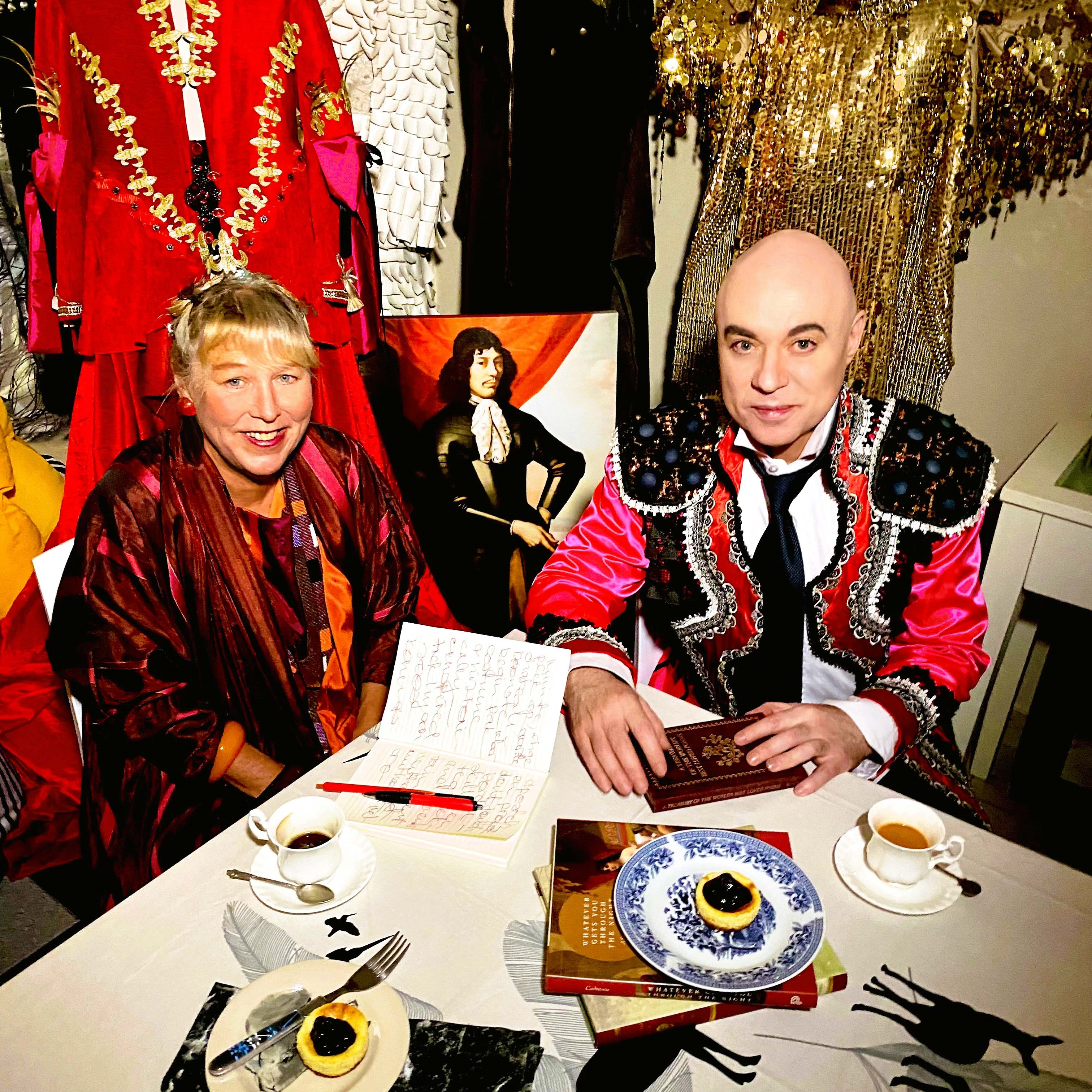
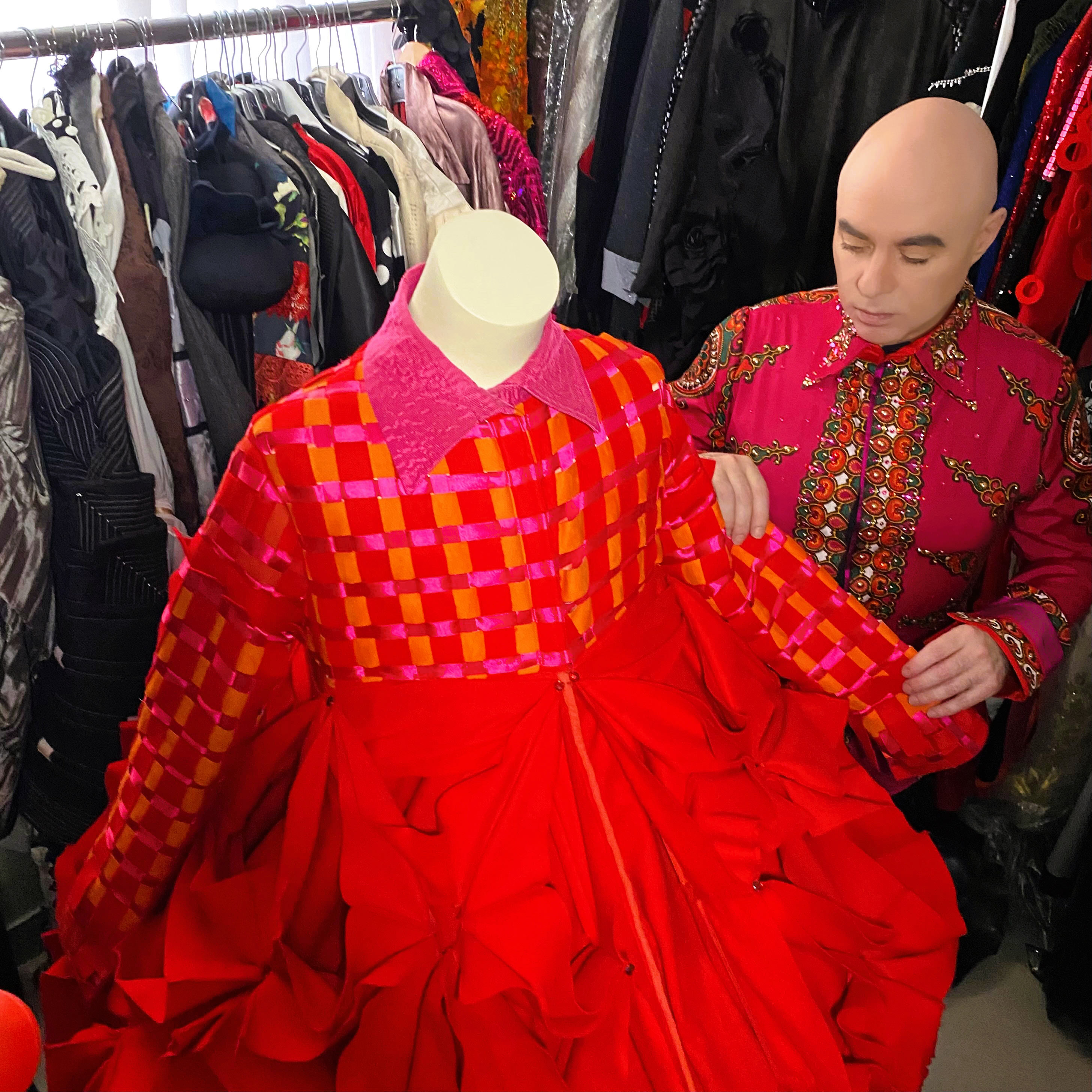
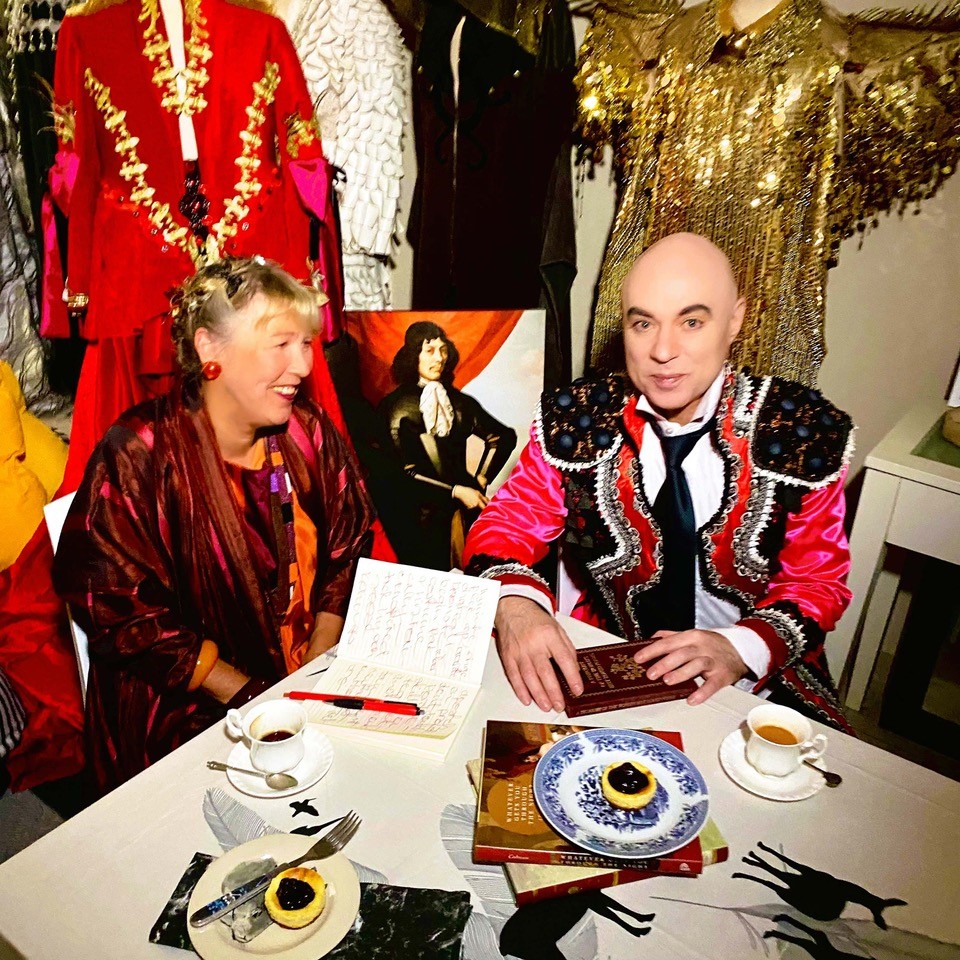
So this time, when discussing the time and place to chat about his latest show, he suggested we dress up and meet in one of his wardrobes where he stores only a fraction of his costumes and accessories from decades gone by.
It’s an apartment now packed with Nataniël costumes and other valuable mementoes from his unimaginably busy life.
Always in the mood for play, I selected one of my brightest outfits, sent through the colour scheme so that he could clash or subtly enhance the picture we were planning to produce from this working meeting – not party mind you, even if you see tea and cakes!
It’s a new time for an artist who has been producing his life on and off stage, mostly very publicly but with a private side that is fiercely guarded.
As for many around the globe, his world was flung into orbit with the pandemic and everything that came tumbling down around our well-ordered lives.
Nataniël with one of his many detailed costumes I covet!
Especially as he marches to what many might see as the latter stages of his career, there had to be a quick turnaround to adjust expectations and to reset future plans from those that had become improbable.
Re-ordering and remaking his world started with scaling down, which meant, amongst other things, cleaning up both his personal space and, as is his wont, also the greater planet out there.
Nataniël has been stripping his life for quite some time, but now there is an urgency which doesn’t allow for single-purpose plastic̶ – ̶̶ or over-used costumes for that matter.
Repurpose and recycle is what drives him today and as far as he goes, he spreads the message. None of his disciples would dare venture on a shopping trip without their personal shopping bags and everyone who watches his lifestyle programmes on kykNET will be aware that this is someone who as much as he loves food, has also trained his body and mind into a healthy way of being – to his and the planet’s benefit.
With his costumes sorted for the moment, in a place that allows for all the right conditions, he visits this apartment high up (“so that no insects can get to them”) making new plans. For the future, he dreams about a fashion museum and a setup that allows for art installations.
“We don’t have a culture that cares for the past,” he muses, but what he wants to display is the artistry of true technicians trained in fields that are hardly nurtured anymore and might disappear in the future.
And when I start looking through the costumes, most of them still trigger memories of past shows. At the same time, their details are overwhelming and were rarely seen from the auditorium. And still, not a sequin or button was left out because it was all part of the bigger picture.
For Nataniël it is about the inspirational, the way he has been dressed by designers as kings, disciples and prophets for example, always in period in a manner that isn’t visible in today’s world.
Some of these costumes can be reshaped and modelled into something different and new because, as someone who in the past was passionate about shopping, discovering new delights (usually to dish out to friends), what kept him enthralled was the creativity and novelty that he could find in many unique and treasured Aladdin’s Caves.
This type of lifestyle was anathema to the Covid era and Nataniël, true to type, also shifted in his head and discovered his own way of dressing his world. Once he started scratching around and asking his designer (for example) what he had been doing with all the left-over fabric of past seasons and found they were all carefully stored, he discovered endless drawers and rooms in his own house filled with every type of fabric and accessory he could hope for.
He was also driven by the lack of travel, as well as the fact that distribution hassles meant the sudden halt of novelty items. He knew he would simply have to create his own and he could do this in a sustainable way. No more buying needlessly. The motto driving him is to use imagination and innovation, something which has always been his loadstar.
An artist who is all heart.
His latest stage creation, LOVESICK TIM, will be presented at Pretoria’s ATTERBURY THEATRE from 11 to 14 February 2022. Four nights only, ending on Valentine’s Day and sadly it has already been booked out. (But check the latest dates still available below).
And because he is guided not by the obvious, the name of the show was determined by his passion for the word “lovesick”. “I have always had problems with love songs because the lyrics are so awful!” but with lovesick, he thought it would allow him a certain latitude. “I will feature love songs from the earliest of times to the very latest of trends, the jazz of the 40s, the crooners of the 50s, the freedom of the 60s, the heartbreak of the 70s and the never-ending evolution of love and chaos in pop culture,” he says.
He searched for songs containing the much-loved word, but also wrote a love song himself and discovered some music that boasts a narrative rather than a repetition of silly love lyrics.
As always ,the stories will steal the thunder because Nataniël has a way of meandering in magic and melancholy which few others can achieve.
He will be accompanied by Charl du Plessis (piano), Werner Spies (bass) and Peter Auret (drums).
Costumes are by Floris Louw, with the added flourish that they will be ‘green’, repurposed and recharged from carefully stored fabrics and vintage collections. They have been declared a feast for the eye, but made with a reworked responsibility.
Publishing this following story about a Durban/Kwa-Zulu Natal visit a month before the horrifying insurrection was quite tricky. In fact it was going to appear a day before the riots – but fortunately didn’t. In the meantime we’ve all been holding our breath so I’m hoping and have checked the places mentioned and nothing has changed apart from the city (I am told) getting a clean-up around elections, so please, if you’re planning to holiday in that region in the coming festive months, have a blast.
And for those who don’t understand the heading: It’s very good at the sea, or some such!
DIANE DE BEER gives a few impressions:
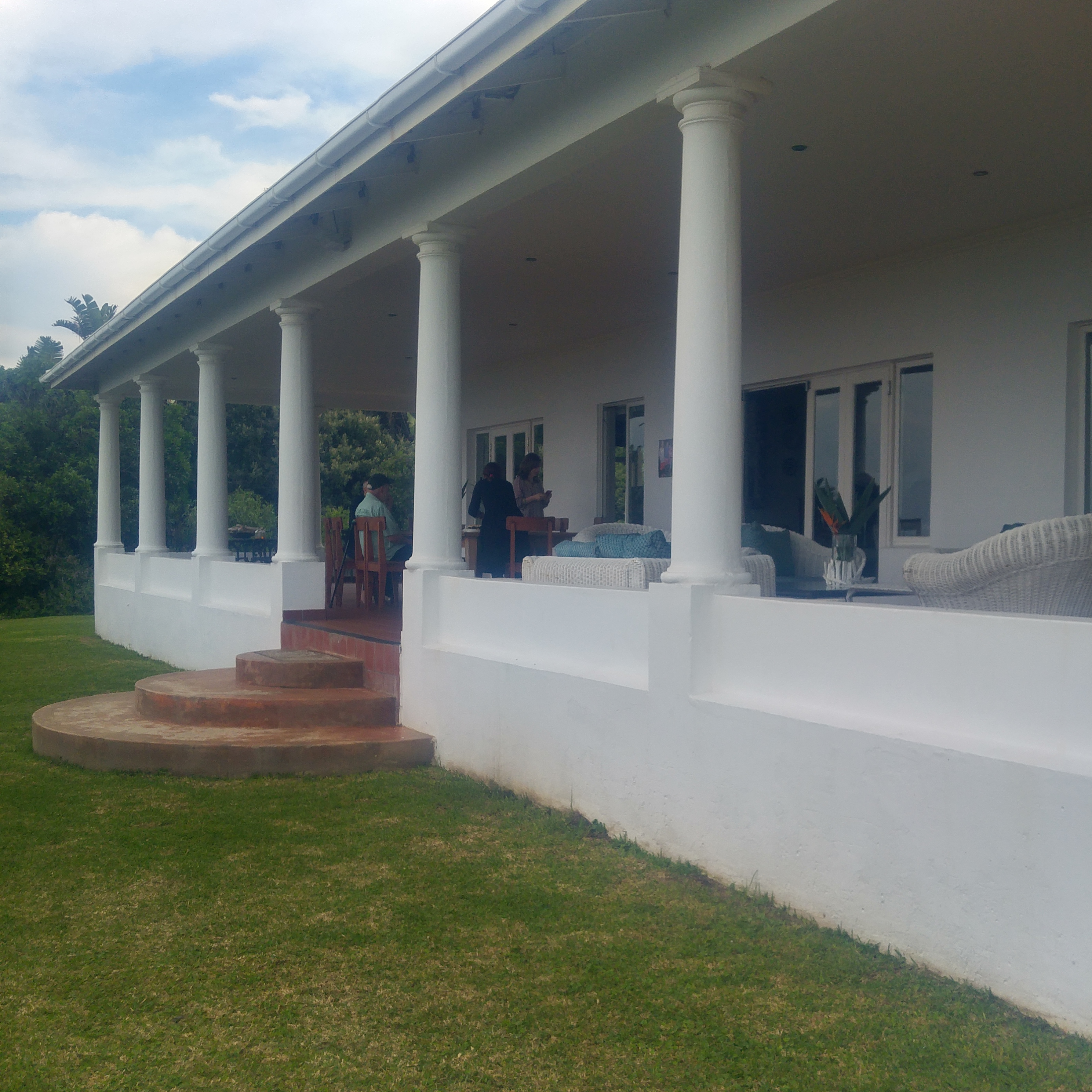
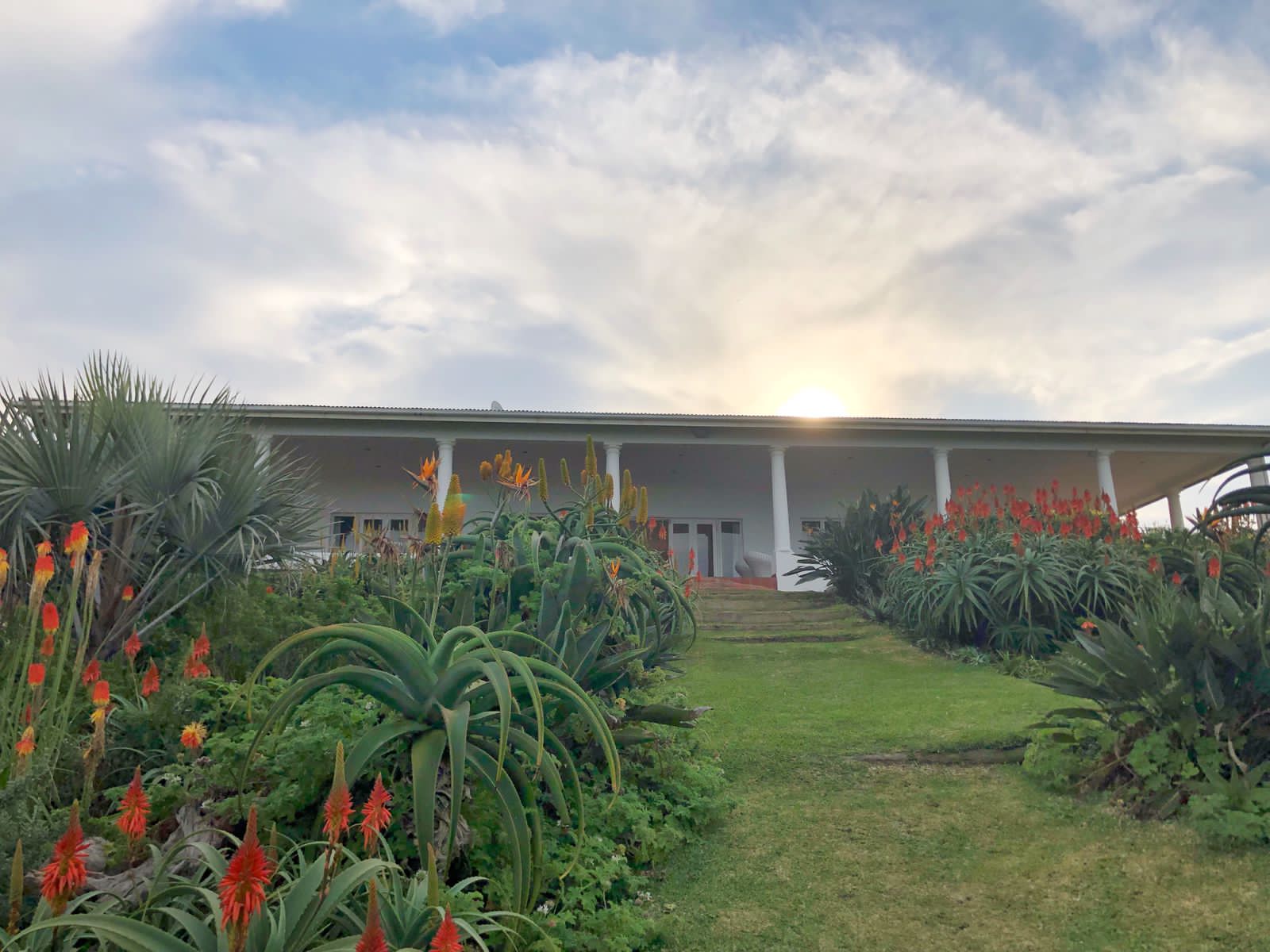
Our final birthday destination: Shangrila Beach House (in Bazley), a self-catering house, cottage and chalet with an exquisite garden designed by indigenous landscape gardener and botanist Alice Pooley.
When a friend decided to celebrate her 50th birthday on the Kwazulu-Natal South Coast recently, five of us decided to travel to Durban for a few days prior to the celebrations to explore especially the art and the food in a city none of us knew at all.
Art and culinary adventures are passions for all of us and we had read enviously about the hot spots in both Durban and the coast and we were excited to go on this adventure.
Travelling down by car, our first stop was for lunch in the region of Van Reenen’s Pass where two of our companions had previously enjoyed some excellent meals. The road to Oaklands Country Manor with a name change to Oaklands Farm Stay turns off (for a few kilometres) at the little town of Van Reenen and is easily worth the detour.
Together with the handful of super siblings (four sisters and a brother I think) who are in charge, the setting and the farm itself is special. On the day we stopped which happened to be a Sunday, there was a polo match in progress but quite a few families were occupying the outside tables with spectacular views, ready for lunch.
The splendours of Oaklands Farm Stay.
The menu was perfect for travellers, simple but with enough variety to cover the spectrum.
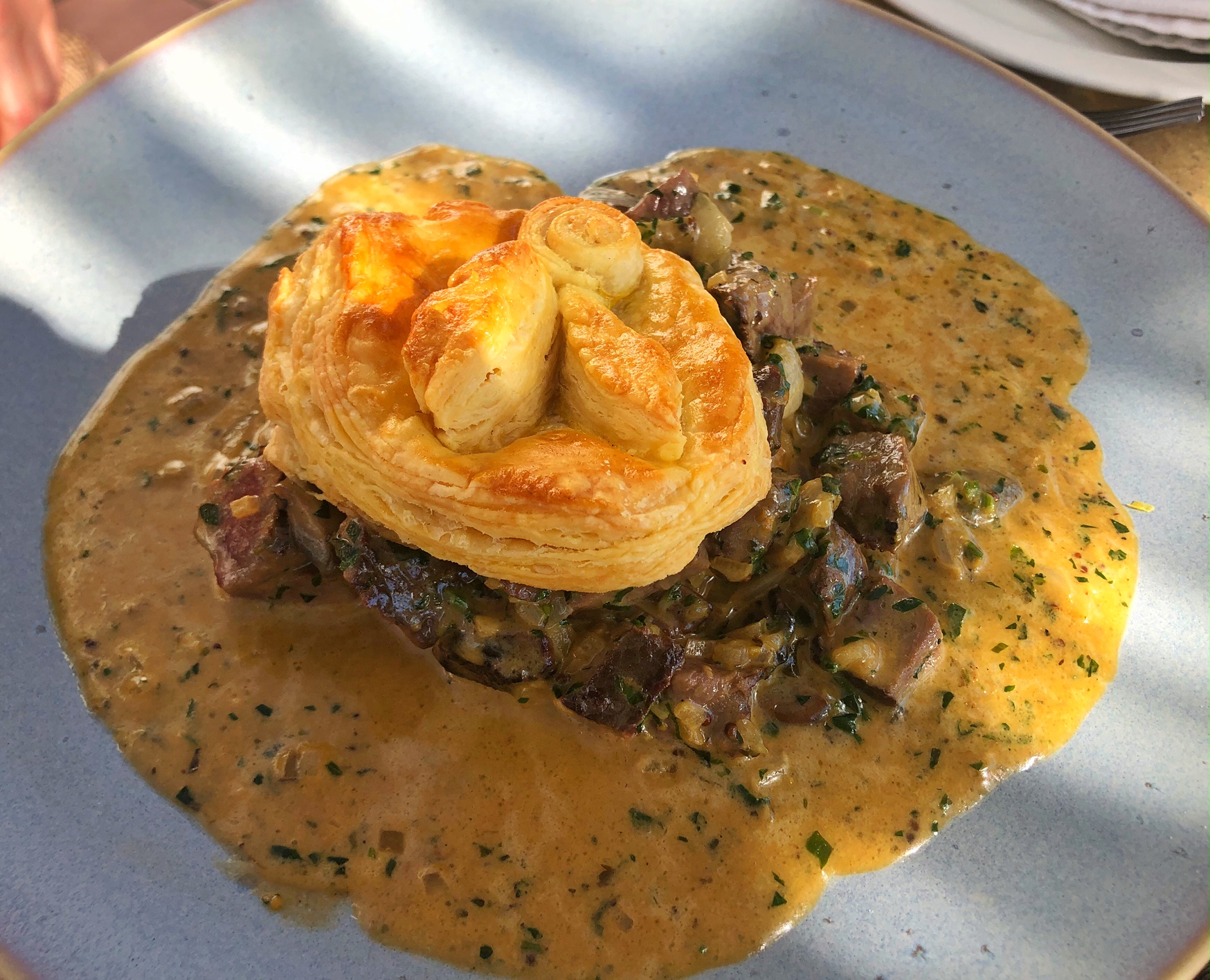
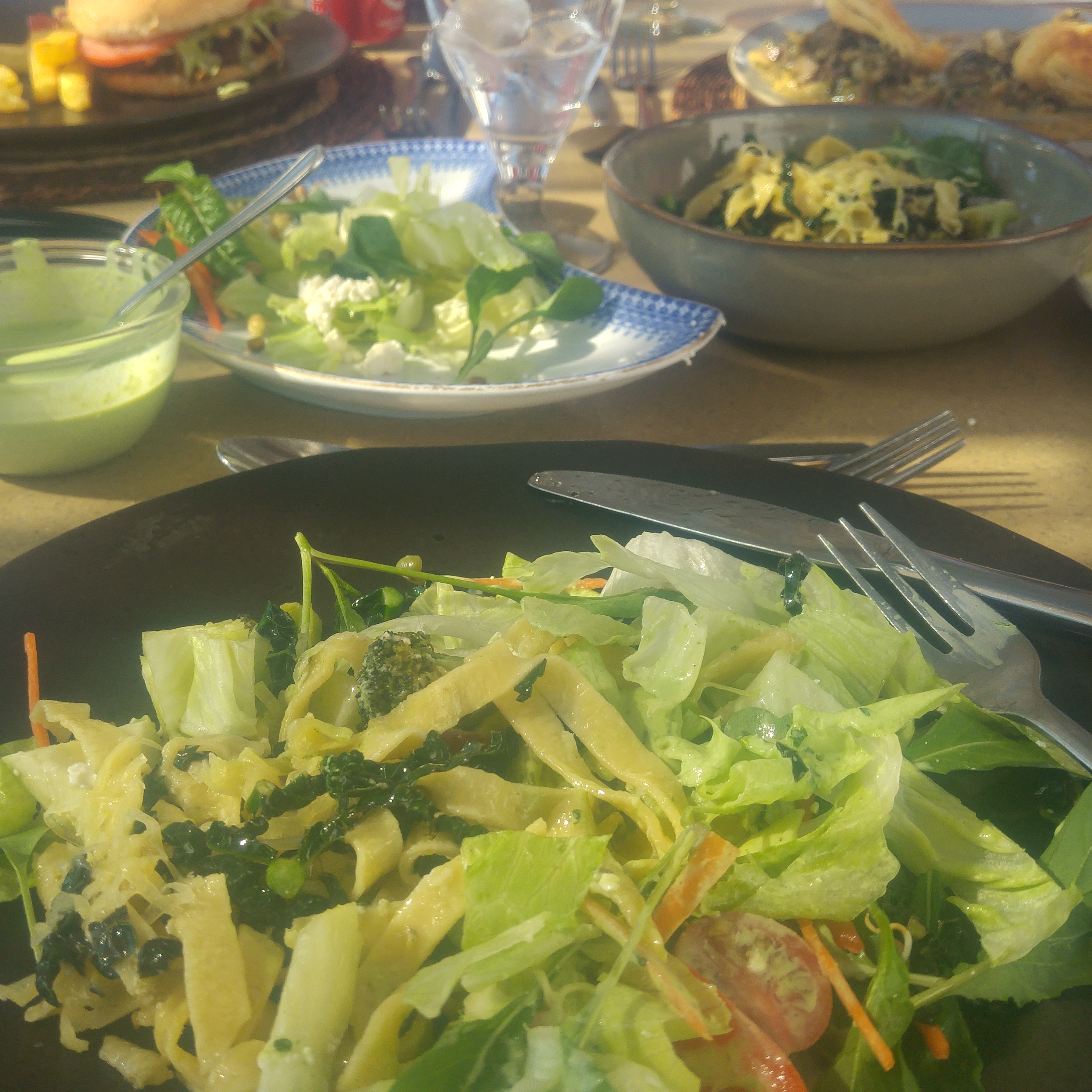
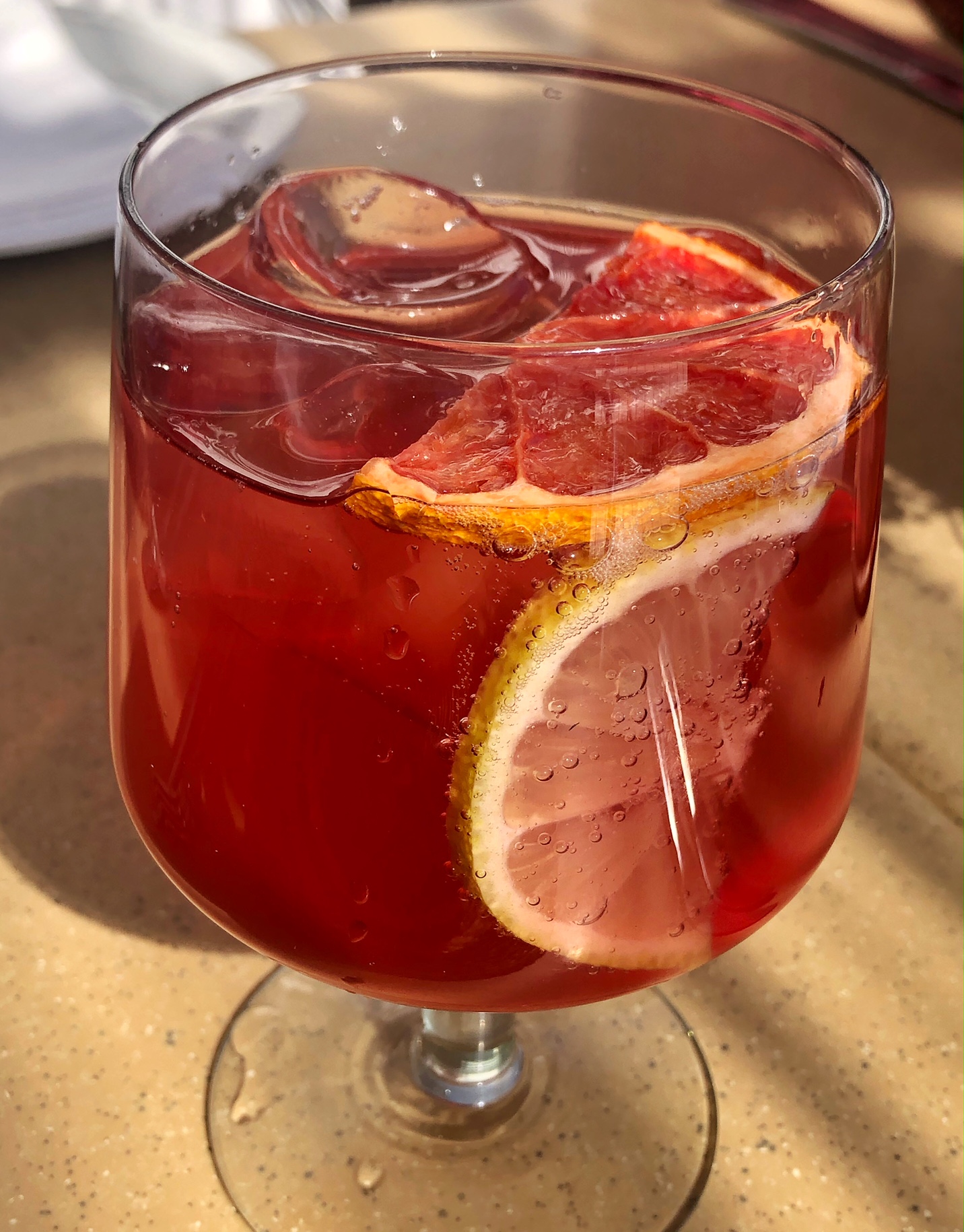
Salads either garden or chicken, toasted sarmies with chips, beef burger and chips, game pie or tagliatelle with garlic, chilli, anchovies, capers, broccoli and parmesan were the options. Our table covered the full menu and while the rest of the team started with a special cocktail, as the dedicated driver, I went for the homemade ice cold kombucha-style mixer, which was spot on.
The food was delicious, (I shared the game pie and the tagliatelle with the birthday girl because we both were undecided), but so was the atmosphere, the company and the hosts. We will be back whenever we travel this way.
We had ample sustenance for the rest of the journey which isn’t an easy one with all the trucks making their way to the coast. The bill without the lunch drinks was R250 per person (coffees included) which was a really good deal.
Durban was a huge surprise, great fun but not exactly what we expected. We took into account that we were there just before a strict lockdown and as we arrived the province was struggling with high covid numbers.
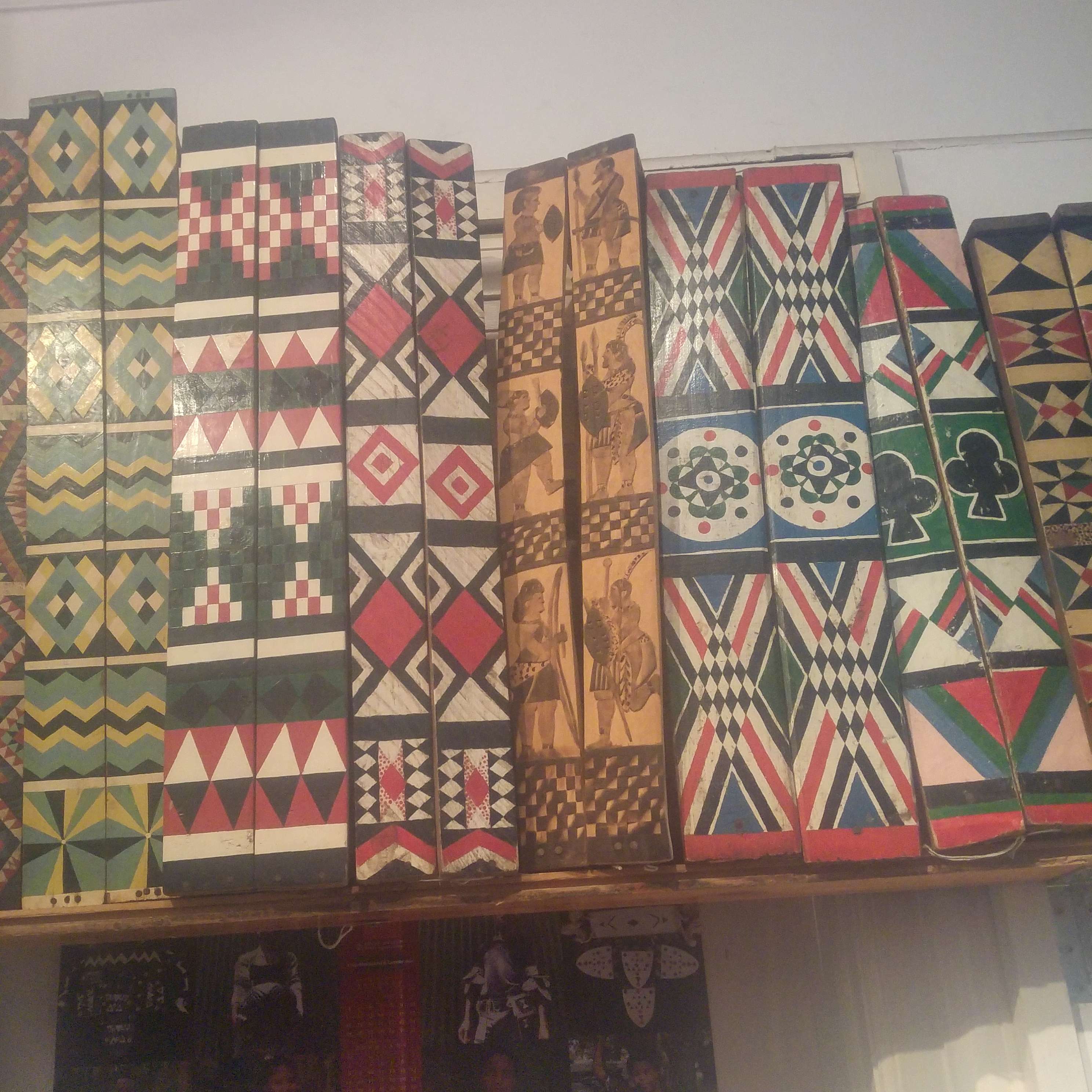
The splendours of the Phansi Museum.
On the art side we had two excursions: the one was the truly mind-blowing Phansi Museum (with on the side the exquisitely stocked African Art Centre if you’re in the need for some serious local craft shopping) and the other the Kwazulu-Natal Society of the Arts with a vibrant indoor/and out coffee bar/deli attached which was buzzing when we arrived.
The Phansi Museum will blow your mind. The breadth and scope of the collection is simply overwhelming and one wonders why this isn’t duplicated in every city in this country. There’s hardly a more accessible way to introduce the depth of the different cultures in South Africa. And I would travel all the way to the coast if only for a visit to this world-class museum.
Taking a guided tour with the embracing and embraceable guide, it’s amazing to discover the wealth and cultural riches of our people. Even if you are aware of the diversity out there, to see it all gathered together is magnificent. And there’s much to admire and much to learn, a truly heavenly experience.
This was followed by the Society of Arts also in the vicinity but unfortunately they were setting up for their next exhibition, which was a development project. We were, however, enchanted that in spite of the lack of any art happening at that precise moment, the café was packed. That is good news and I want to appeal to all the large art institutions around the country, in Pretoria in particular (The Pretoria Art Museum, The Javett and Association of Arts particularly on my mind), to find a way to serve at least good coffee with some refreshments. It’s a way of drawing people in whether for an exhibition or simply to gather for some bonhomie.
This particular space is enchanting, and you could see that the refreshments and food were as good and it has to have that stamp of approval. Nothing could be more welcoming and it makes perfect business sense if you get it right. They also have a fun museum shop and anyone traveling to world museums, will know how important those are. Our art venues have to find ways to appeal to visitors. Once there, they will hopefully be captivated by the art.
We popped into one independent gallery just off the well-known Florida Road, but they were also busy setting up and apart from these three, that, according to what we discovered and were told, was it.
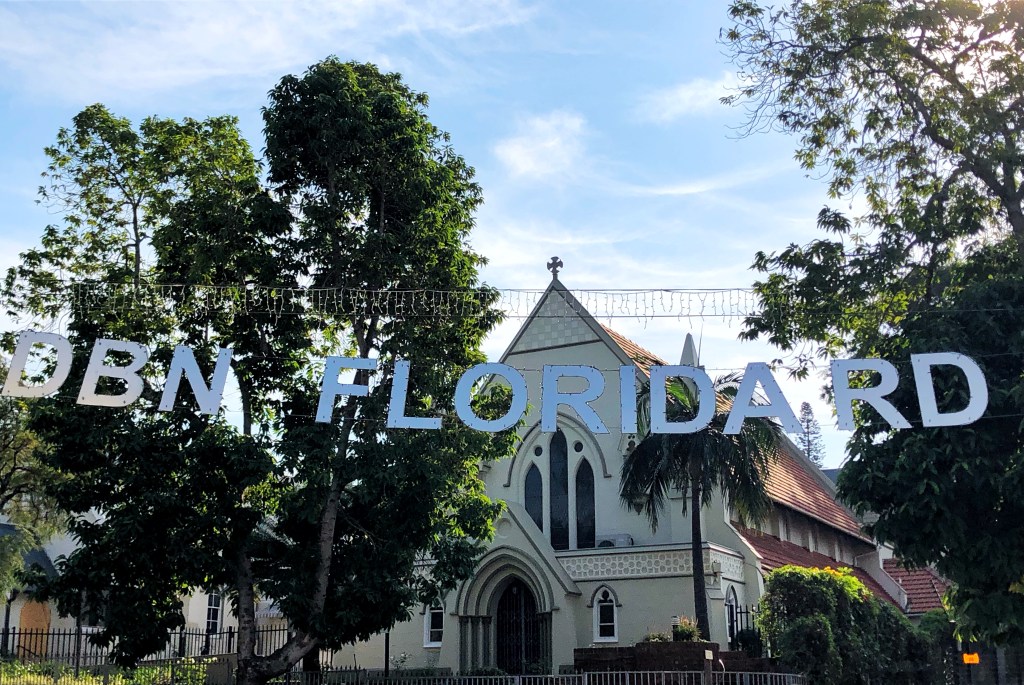
Florida Road, a destination we returned to time and again.
On the food side it was also hit and miss. Our first stop was a breakfast/coffee shop which came highly recommended in an online paper and sadly was a huge let down. When writers go all out with their praise that might not be warranted, you are then reluctant to follow their advice. With only a few days at our disposal, we didn’t want any more disappointments.
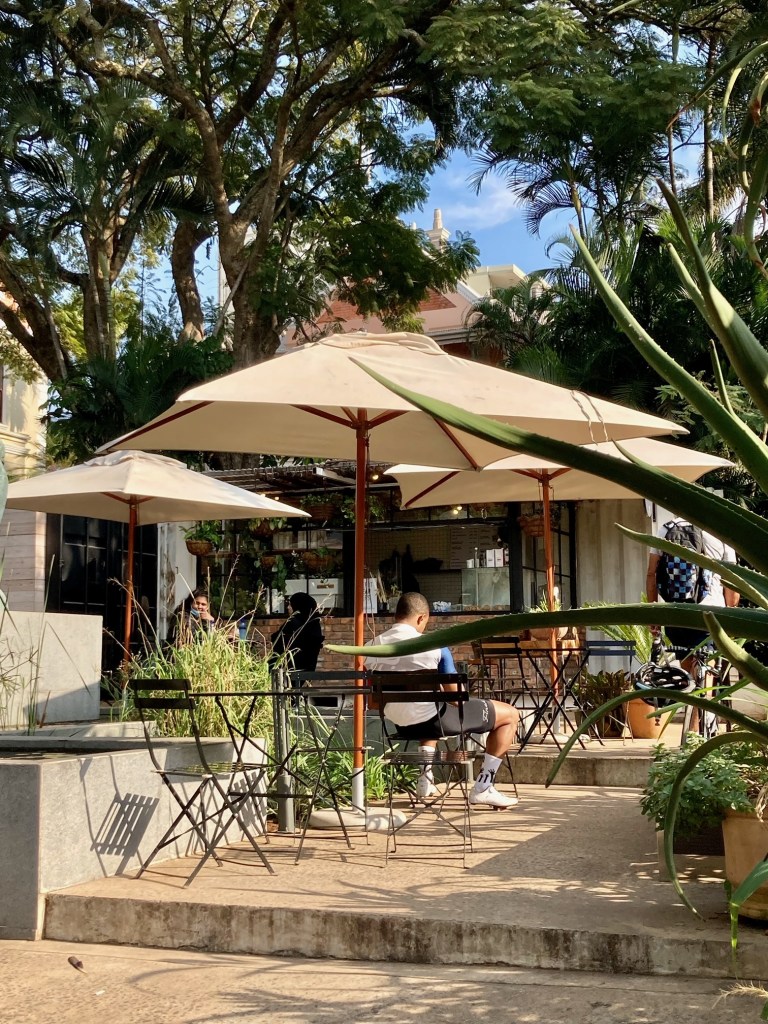
Fortunately we also had some pointers from friends and locals and we started with what for me was a real find and a must if you go to the city. Glenwood Bakery and its pumping pavement area is an instant comfort. These are locals and you can see this is their regular haunt.
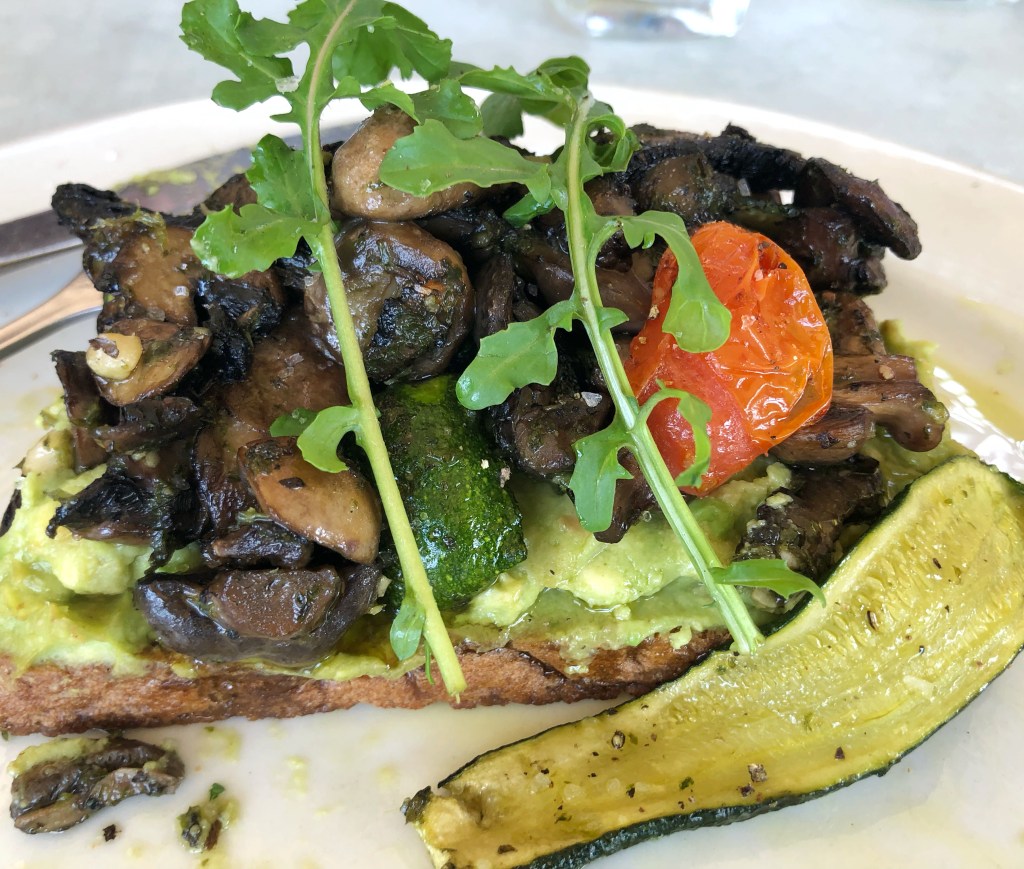
Glenwood Bakery breakfast was a huge hit.
Our visit explained why. Starting with the bill, breakfast with two cappuccinos each, cost R100 per person, which was quite extraordinary considering the quality of the food. Bread and pastries is a big thing at the Bakery and our choices were as varied as our taste – from my mushroom and egg affair which was perfect in size, produce and preparation to bagels with various toppings, and even sweet delights with flavours like hazelnut and apricot which had to be set aside because things were flying off the shelves. We were told probably to preserve freshness, only a very specific amount of baked goodies are prepared each day, so once they’re gone, that’s it.
After our previous flop, this was at the other end of the cuisine spectrum and one to keep in mind if you need a failsafe option. It’s guaranteed!
Of course we had to do Indian and the name we had was Palki, which a few sources had recommended. On our last night we wanted to do take-out and as there were restrictions anyway, it worked out well.
Our cuisine connoisseurs made the choices and we had a mixed bag, which in this style relates to a food feast. Again it is the option to go for when you have such a diverse group of diners, all foodies but with different tastes. But it also allows you to be adventurous in some of your choices and to add new dishes to the group’s repertoire. This time round, it was the not to be missed paratha and dhal makhani, both of which should be part of any Indian meal. Added were a paneer driven dish, a chicken curry and a brinjal pakora. And for the solo diner who is reluctant to be too daring, there’s always a Lamb Curry mince.
And that’s how we even drag the less adventurous along who eventually cannot resist and grow their palate. Palki is not cheap, but it’s quality with great flavours – which is what we were told.
A series of coffee shops and ice cream parlours to choose from in Florida Road.
In between we hung out in the popular Florida Road, kept missing the Patisserie du Maroc which is French flair with Moroccan inspiration, but we had a Monday and public holiday squeezed into our stay, both not good for certain businesses. We caught up on lots of good coffee and artisanal ice cream (a delicious rum ‘n raisin flavour) and even managed to squeeze in some samoosas at the Indian market.
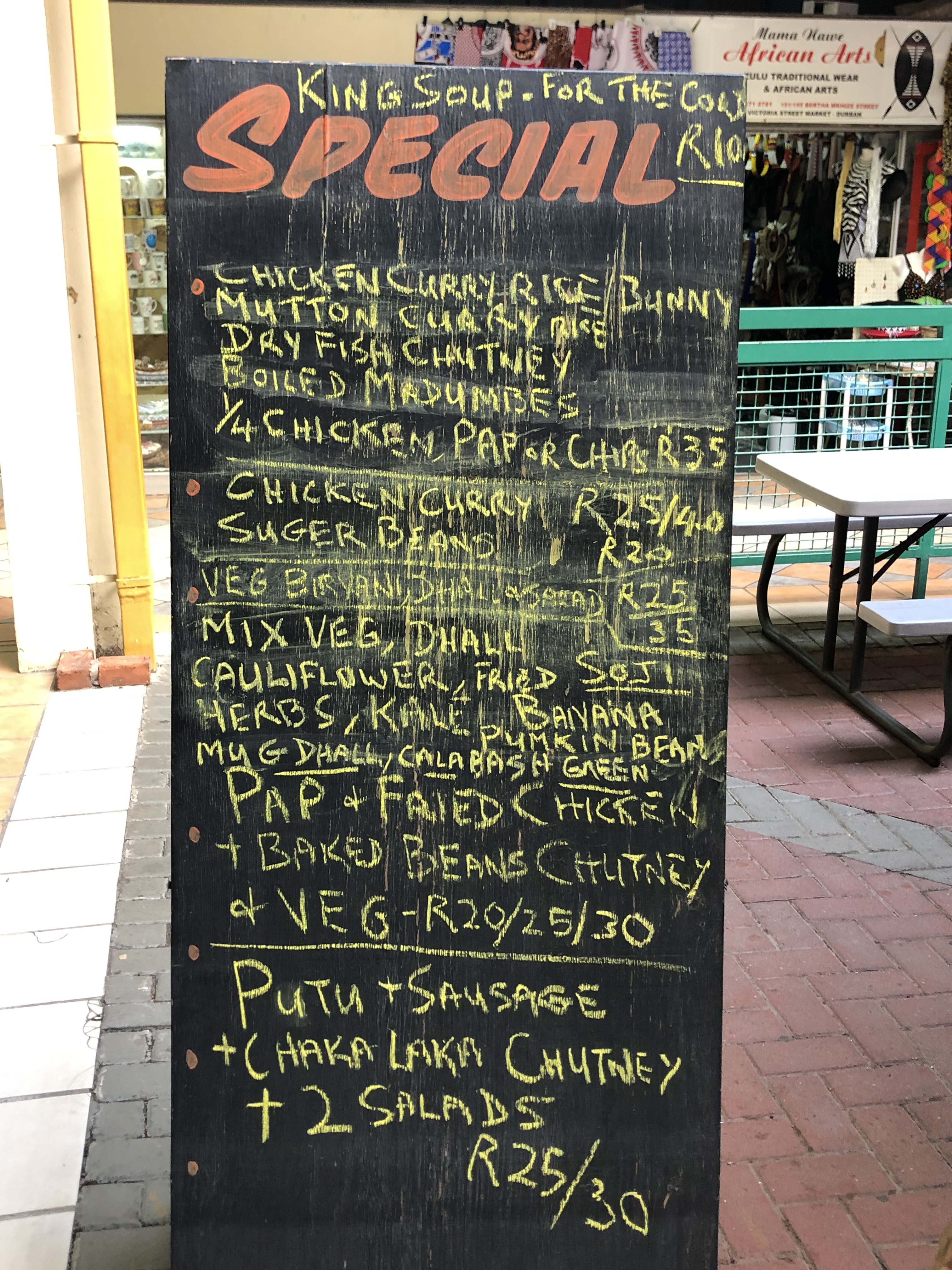
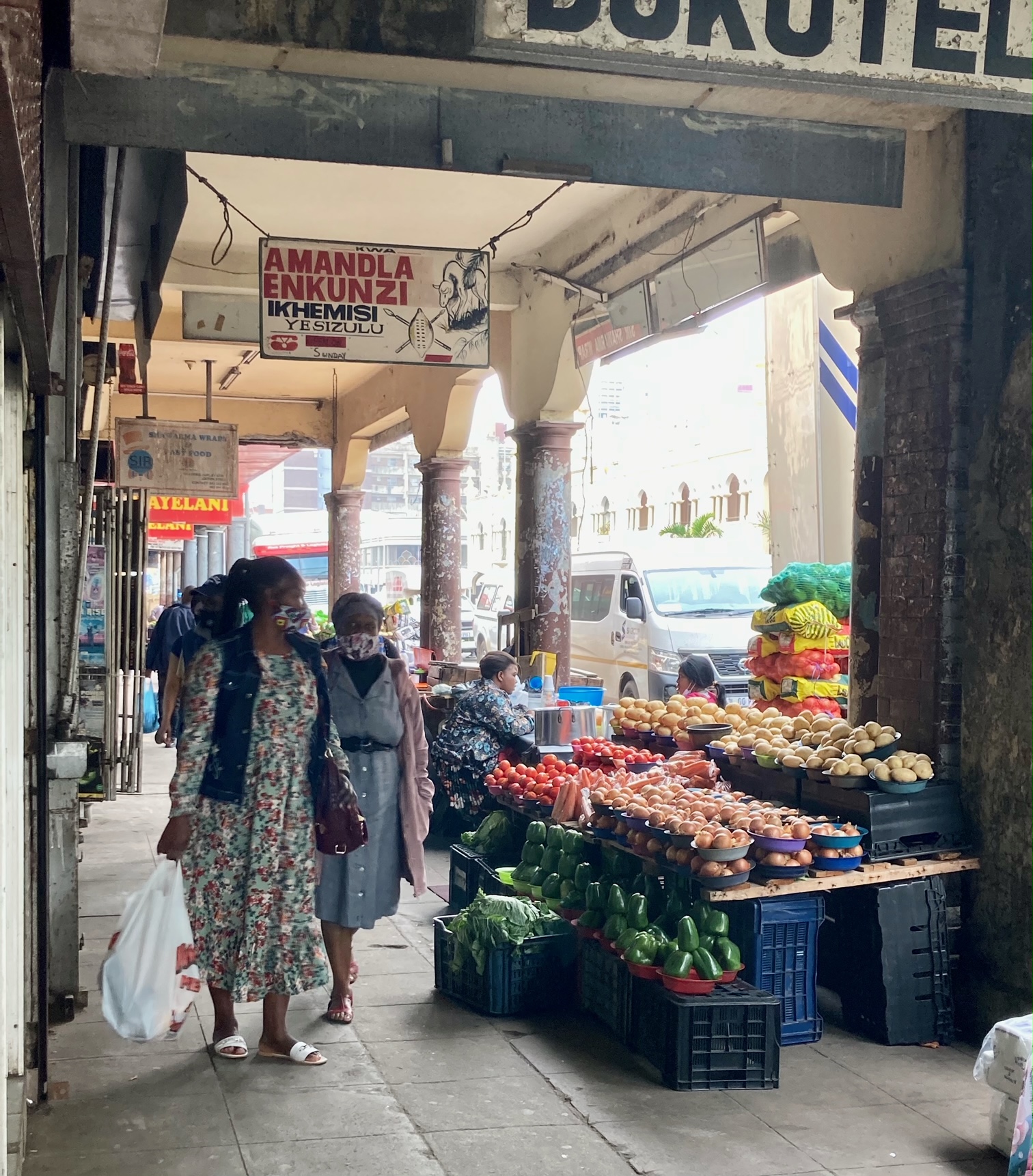
Which is where we spent the rest of the time; a variety of markets on and around Warwick Junction. Outside of lockdown, there are tours available and probably one of these can be fun to do as the different types of markets within the bigger precinct will be showcased.
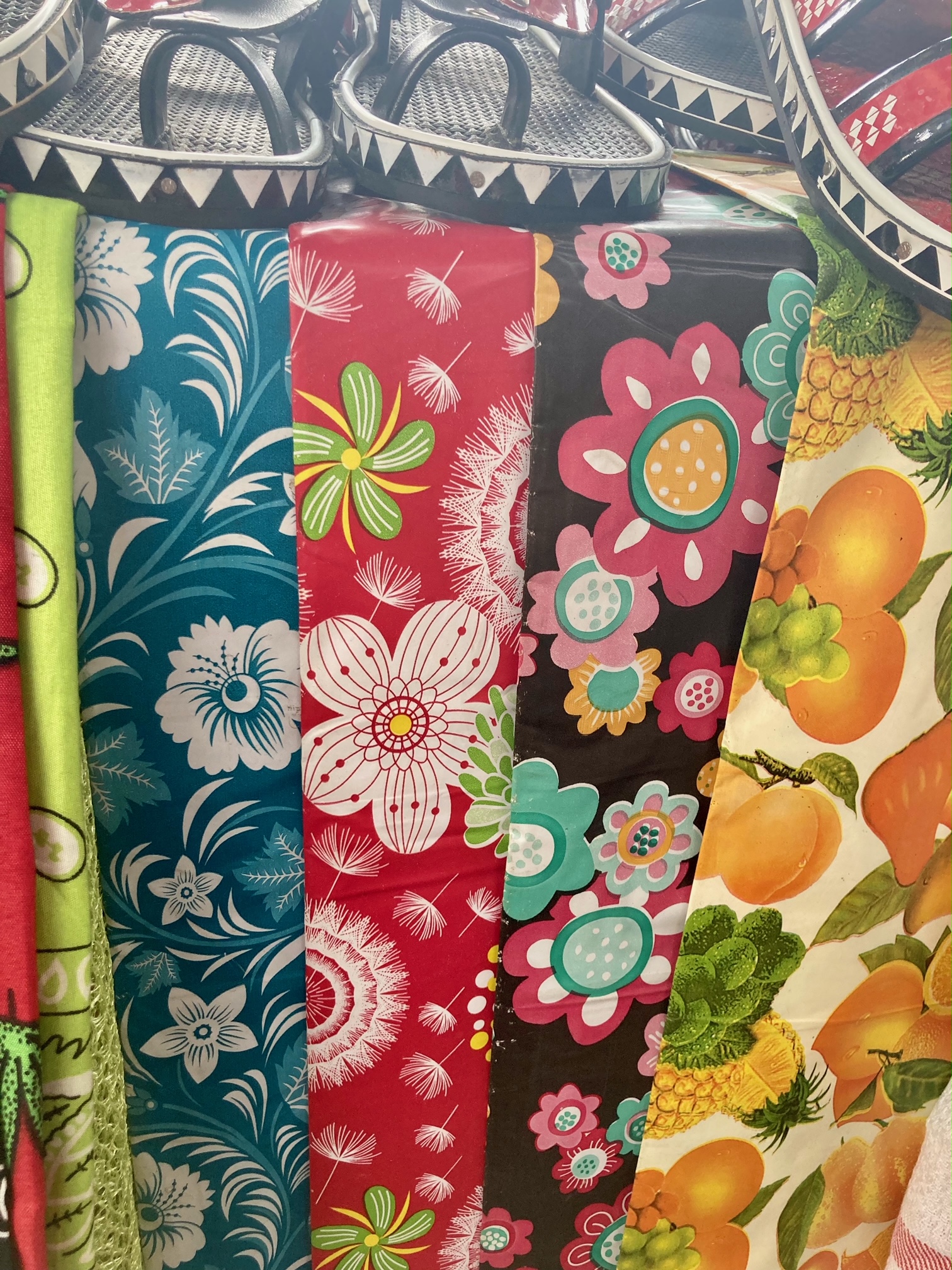
The colourful area in and around the city markets.
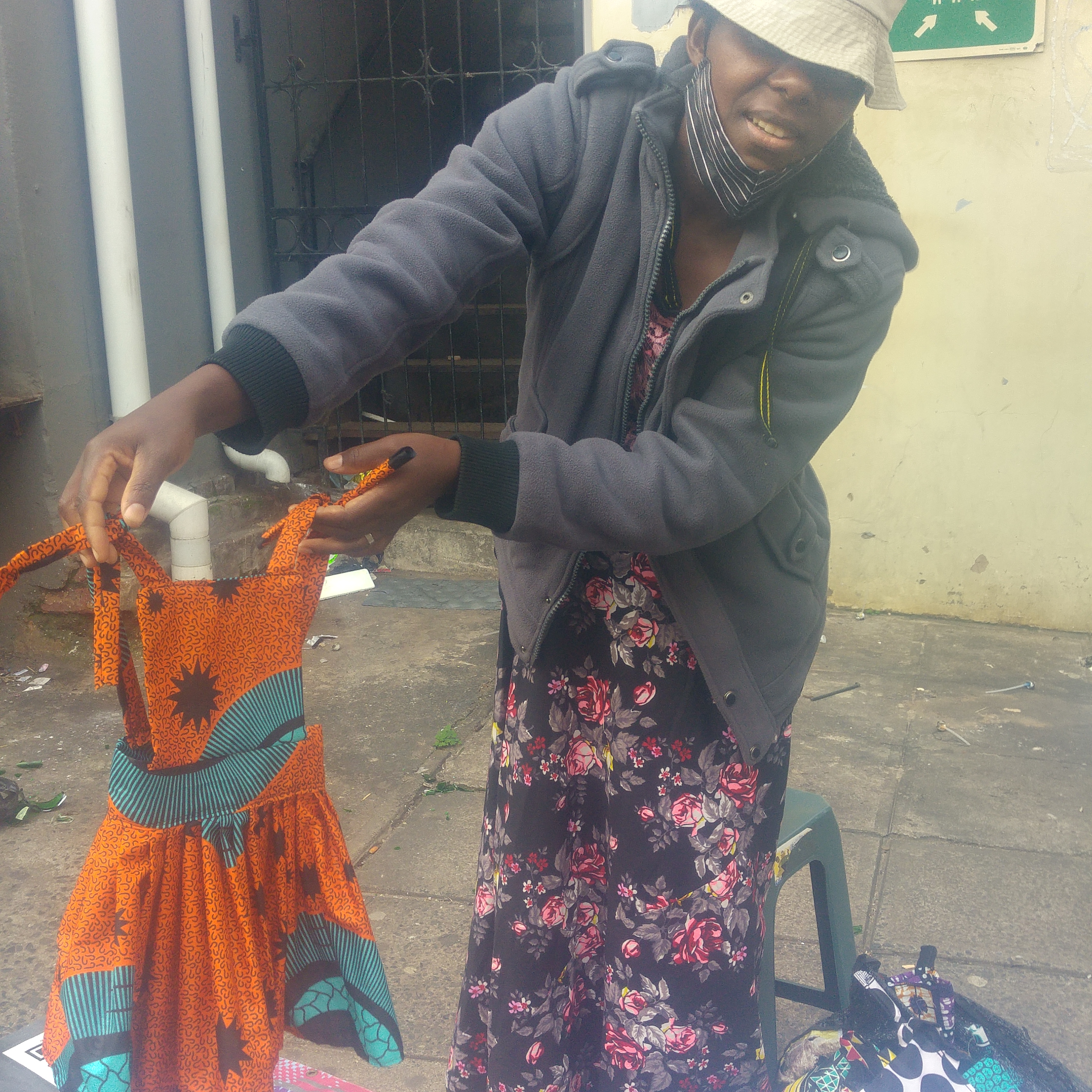
We didn’t have the luxury of a tour guide, but old hands, we easily found our way around the colourful markets, which range from typical Indian and African fare to the ubiquitous Chinese goods which seem to have invaded all local markets.
Getting goods during these difficult times are also problematic and without the foreign buying power, these markets also seem quite depressed. We nevertheless had a great time just walking around, checking the scene (in between a confluence of railway tracks and a graveyard with some interesting gravestones) and seeing how the city centre functions.
From there it was a brisk walk to the Durban City Hall, Post Office and some other majestic buildings including a beautifully preserved Norman Eaton building from a bygone era but many of them still in use today. Sadly the back stairs of the post office was a sight to behold and those who are responsible for cleaning, cannot point fingers at the state of the rest of the city centre if this is the example.
And that was the sad thing about this very vibrant and embracing city centre. With its wide avenues leading to the sea front, it should be a tourist mecca with the markets and beautiful buildings included in this space. But the neglect is horrifying and typical of so many South African cities as white business moves out, it appears owners of the buildings also stop caring.
Also disturbing was the fact that we were the only white people in the area on both days we were there. Just the traffic and the double parking and navigating was like an hilarious movie. It just seems such a pity that a space this vibrant if spruced up and embraced by a much wider community – could become a real tourist mecca.
We had a blast and were welcomed everywhere we went but my heart bled for those who had to spend their lives day in and day out under these sometimes horrific circumstances while hardly a kilometre away, the Durban seafront is a completely different matter.
Personally I suspect its all about money but there’s bags full to be made if the city centre was given a touch of love and care – not gentrified – just a look that a buzzing city centre deserves. It already has all the basics!
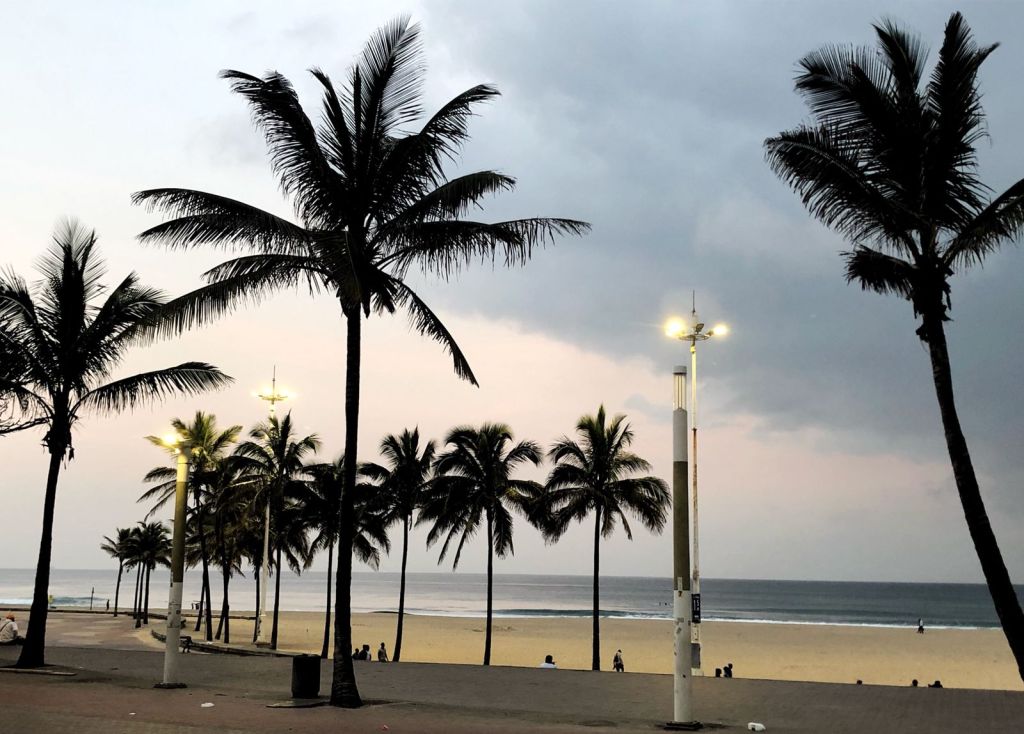
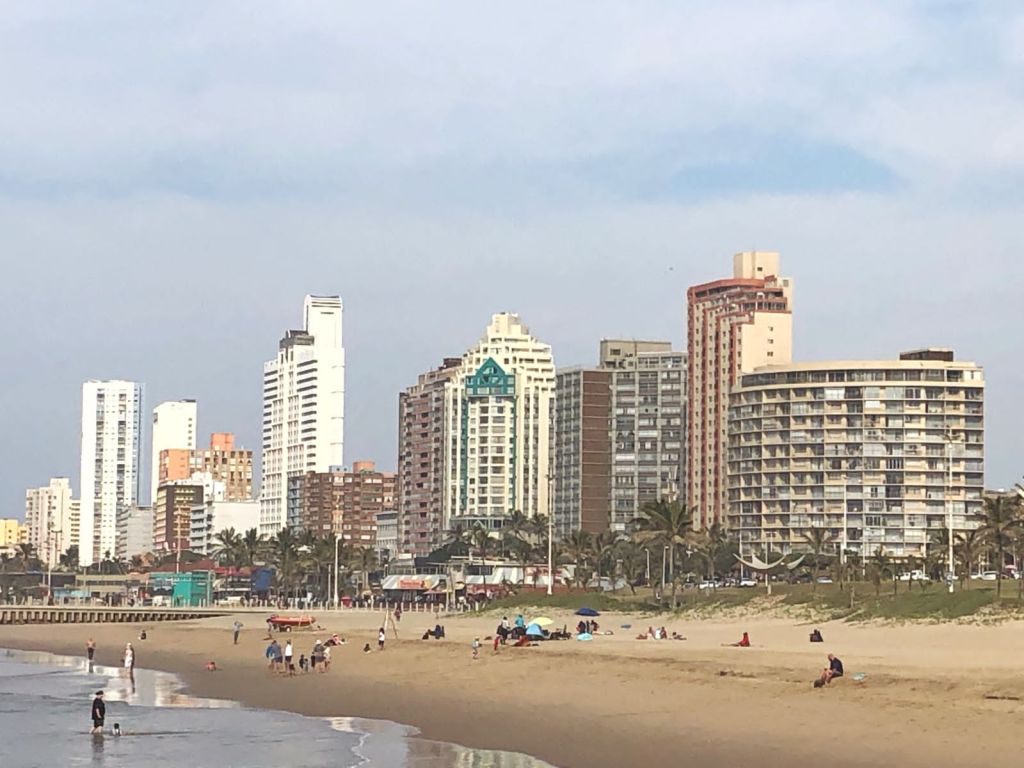
The magic of the Durban beachfront.
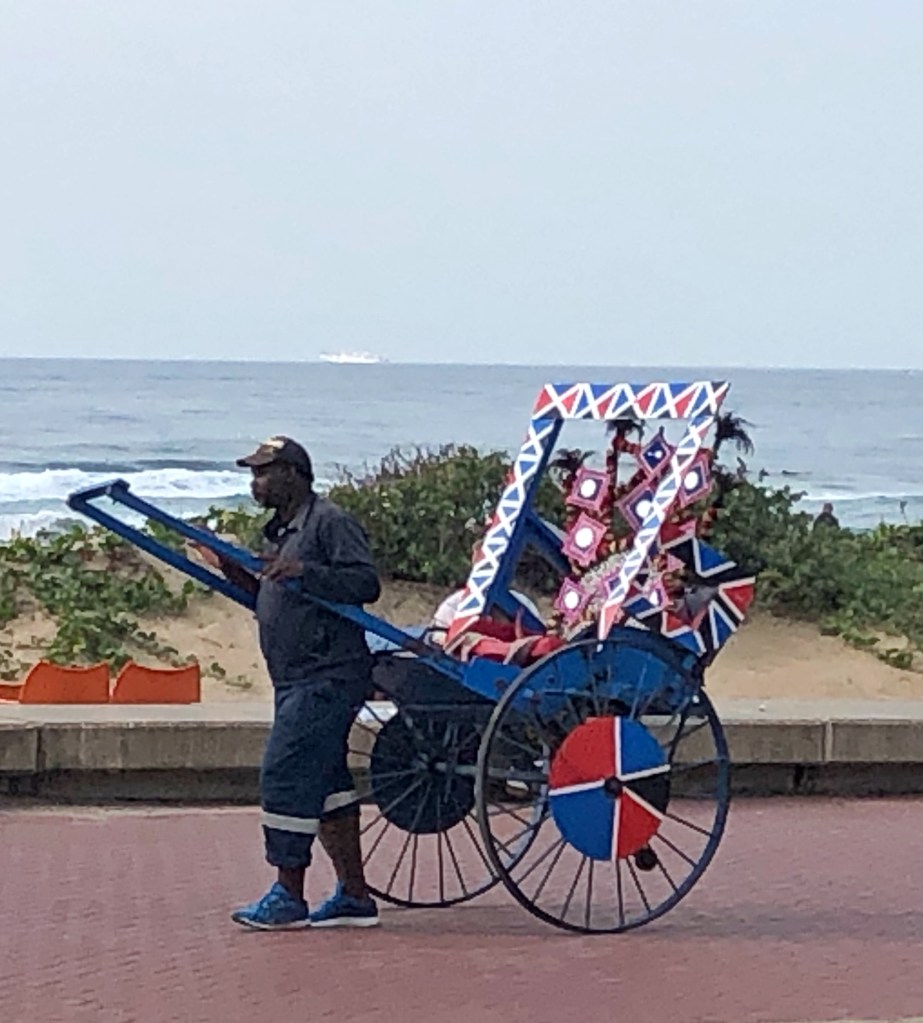
We concluded our Durban trip with a breakfast at the promenade at Circus Circus. We were told they serve great coffee and the breakfasts are hale and hearty. It was good to witness the Durban community in all its splendour with joggers, cyclists, rickshaws and hawkers all part of the parade.
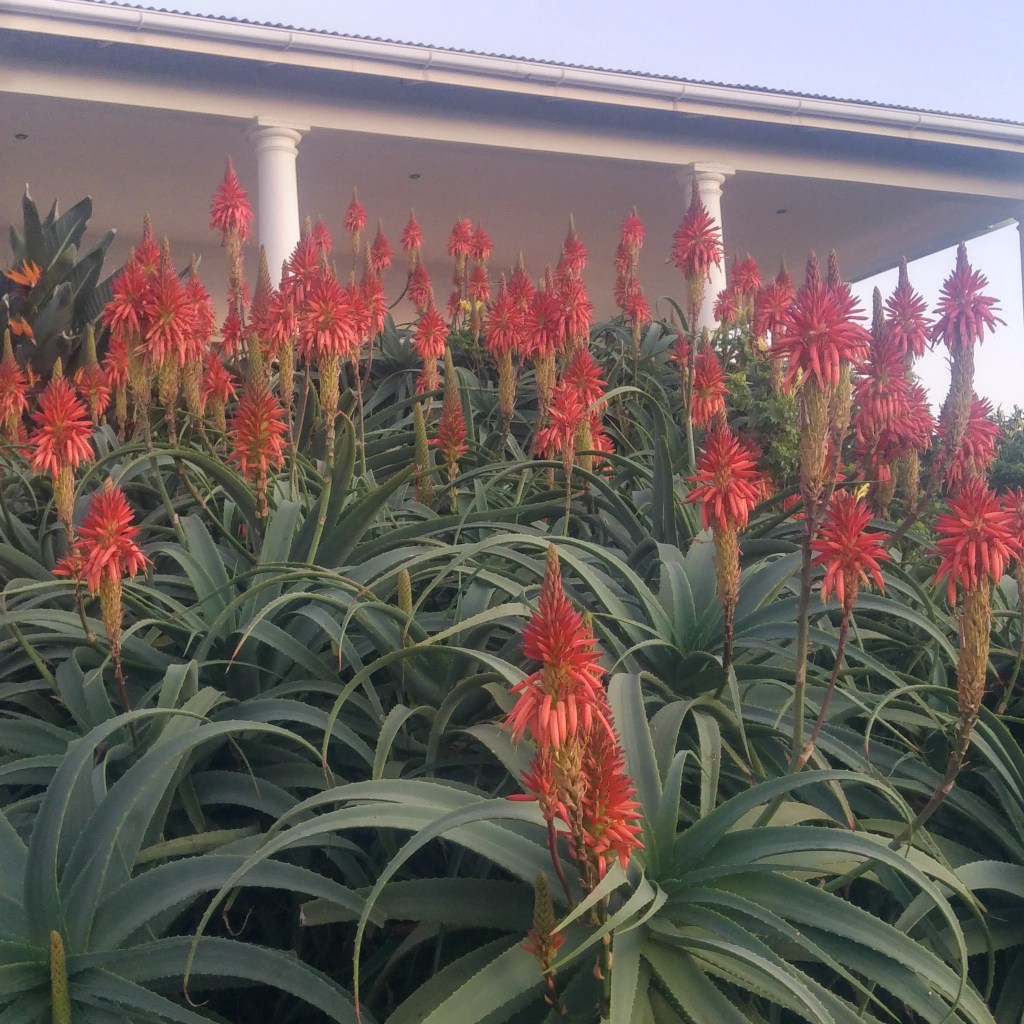
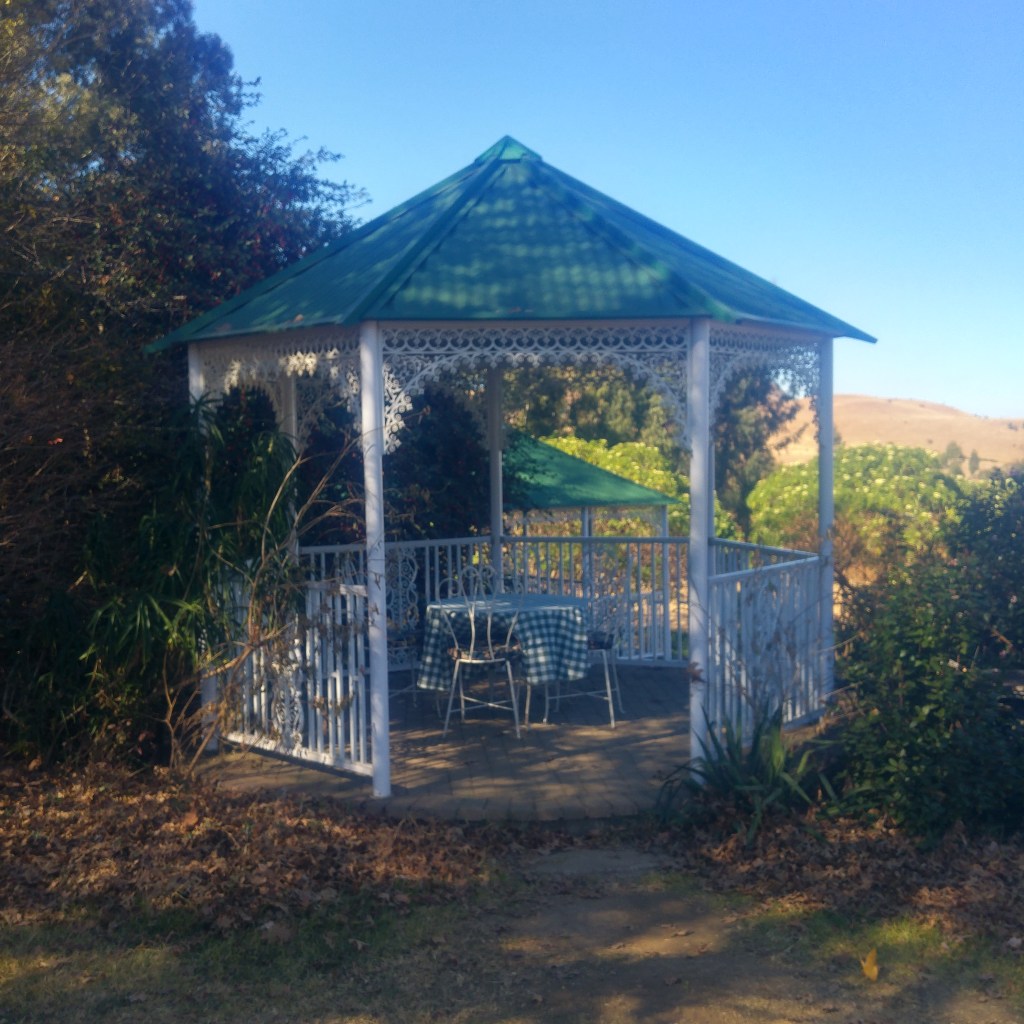
From there our trip became a celebration as we moved to a little touch of heaven called the Shangrila Beach House (in Bazley), a self-catering house, cottage and chalet (depending on the amount of people) with the best sea view, its own access to the beach first crossing a working railway line, and an exquisite garden designed by indigenous landscape gardener and botanist Elsa Pooley.
The bliss of Shangrila.
And I haven’t got to the best yet, a mass of friendly dogs and the most wondrous wrap-around stoep. Self-catering with a chef (á la Dr Hennie Fisher) in our midst was bliss and apart from an excursion to Botha House (now a guest house with spectacular views), which was built for the former prime minister Louis Botha by his friend Sir Frank Reynolds, we pretty much stayed put in our imagined home away from home.
Two last suggestions on the way back, was a fuel stop just off Pinetown called the Polo Pony Convenience Centre (571 Kassier Road, Assagay) with a Woolworths food store with the best takeout sandwiches and coffee.
A little further up the road, again at Van Reenen’s Pass (this time on the left hand side of the road on the way to Jozi), there’s the perfect lunch stop at The Little Church Tea Garden which serves food made by the local farming community.
We opted for pies followed by scones and coffee as well as browsing through their well-stocked shelves for some last-minute pressies if needed. There’s also a chance to visit the little church and while having lunch, the views are spectacular. Again, it’s the perfect stop before hitting the road back home.
Two of my favourite authors wrote books recently focussing on issues that are part of how we function and why. I want to urge anyone interested in the world and how we view it, to tap into their insight:
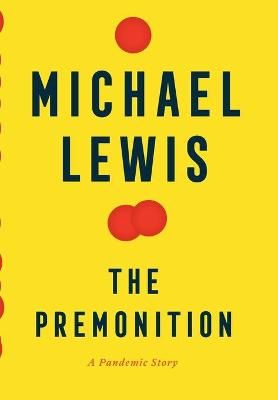
THE PREMONITION: A PANDEMIC STORY BY MICHAEL LEWIS:
“I would read an 800 page history on the stapler if Michael Lewis wrote it,” writes a New York Times book reviewer and that is pretty much exactly what I feel about Lewis and anything he writes.
His last book, The Fifth Risk, looked at the federal bureaucracy during the Trump years and how things unravelled because of incompetence, or if you want to give them the benefit of the doubt, ignorance.
So it was perhaps justified to expect this latest book, The Premonition: A Pandemic Story, to put all the blame on Trump and his coterie of civil servants. But not so.
What he does is to go and fetch the facts from way before the pandemic, when a group of medical specialists started warning about the possibility of a pandemic like Covid-19 and how best to prepare for it. The problem was that few people were listening and the government specifically didn’t want to listen.
He has a handful of heroes and one of the most intriguing individuals in this story is a California health official, Charity Dean. Lewis has a knack of discovering these characters who seem to almost hand him his story on a plate – but it’s perhaps not that easy. You have to find them and then you have to both listen and pay attention; and that he does quite brilliantly.
He also has the instincts to know which story to follow. And if anything, Dean wasn’t obviously the voice that many would listen to. She admits that who she really is has nothing to do with her exterior, which is apparently more Barbie than Florence Nightingale.
But that’s only part of the story. Two doctors, Richard Hatchett and Carter Mecher, were part of a pandemic planning team set up during the George W. Bush administration and then they hooked up with some other extraordinary individuals who were all extremely good at what they were doing.
Almost by accident these people all get together or connect in some kind of fashion. Rather than predicting what was going to happen, as one might expect, all these people in some kind of form become interested in pandemics and start looking out for the possibility of future disaster(s).
The frightening thing though is not the incompetency of the Trump administration or even Trump’s wild claims during some of the worst times of the pandemic, but rather that this first-world country with all its expertise and some of the best brains in the world was so ill prepared.
Most of the rest of the world is less alarmed by some of the incompetency in their own countries, having a much more jaundiced eye, but most of us will be surprised that those who constantly hold themselves up as being the best, can do so badly.
It’s worrying when even the “best” fail so miserably. And to this day, people are dying because of a refusal to take the vaccine. How is it possible to keep on refusing to take it seriously even after the high death counts? And now many of those naysayers are starting to die, so it will be interesting to see how that changes the dynamic.
The best of the Lewis style is the way he finds and fetches the story, dresses it up in the most palatable fashion and then allows the story to unfold. It’s powerful and will keep me reading – yes even when the topic doesn’t grab me. I know his storytelling abilities will.
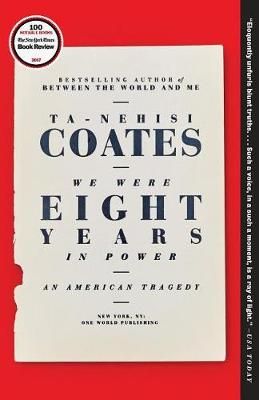
WE WERE EIGHT YEARS IN POWER BY TA-NEHISI COATES (Hamish Hamilton):
In a sense, Ta-Nehisi Coates has a similarly mesmerising voice. He deals in a different world but also with the lives of people; and perhaps that’s the common thread.
This time it is the late Toni Morrison who is quoted on the back page: “I’ve been wondering who might fill the intellectual void that plagued me after James Baldwin died. Clearly it is Ta-Nehisi Coates.”
This one was published in 2017, but I’ve only recently received a copy and can’t resist bringing it to anyone’s attention who doesn’t know about it or is unfamiliar with this particular voice.
The premise is the Obama presidency and what Coates did was to take eight articles written during the eight years of the first black presidency. Before each of these essays, there is as the author explains “a kind of extended blog post, one that attempts to capture why I was writing and where I was in my life at the time.”
He describes what he has put together as almost a “loose memoir”. And at the end of the book, he attempts to assess the post-Obama age in which we find ourselves. He wanted all these eight essays (originally published in The Atlantic) assembled in a single volume.
It’s as smart as it is clever and I can’t think of anyone else I would rather have guide me through that particular time in American history. And because of these times of George Floyd and the renewed urgency of Black Lives Matter, it almost lands with more penetration because of current events than when it was first published.
He deals with so much that is out there right now and for years to come. About reparations, for example, he says the following: “What would it mean for American policy so often rooted in its image as the oldest enlightened republic and pioneer of the free world, to forthrightly note that freedom and enlightenment were only made possible through plunder that stretched from the country’s prehistory up into living memory?”
And that’s just a tiny snippet and sits sweetly next to Prince’s brand new album (posthumously, of course) and the searing lyrics:
“Land of the free, home of the brave
“Oops, land of the free, home of the slaves…”
Coates doesn’t mince his words either. If you want to hear, he will tell it like it is. And if anything, you could read it just to see what he has to say about Trump, the man he describes as America’s first white president. And that already is a fascinating story.
He writes in his incisive epilogue that Barack Obama delivered to black people the hoary message that in working twice as hard as white people, anything is possible. “But Trump’s counter is persuasive ̶ work half as hard as black people and even more is possible.”
Much was explained about both the Obama and Trump presidency (according to Coates, the result of having had a black president) and again Coates steps up as the voice of a new generation, insightful about the world in which we live in, and more importantly, not one where he sees white supremacy disappearing anytime soon.
It was reported recently that Mitch McConnell expressed initial satisfaction about the Obama presidency because he felt this would put a stop to the kind of complaints heard from the Black Lives Matter movement.
Which says everything about his understanding of the lives of others especially those of colour. And again underlines the importance of this book.
The 1951 United Nations Refugee Convention is a key legal document and defines a refugee as: “someone who is unable or unwilling to return to their country of origin owing to a well-founded fear of being persecuted for reasons of race, religion nationality, membership of a particular social group, or political opinion”.
mde
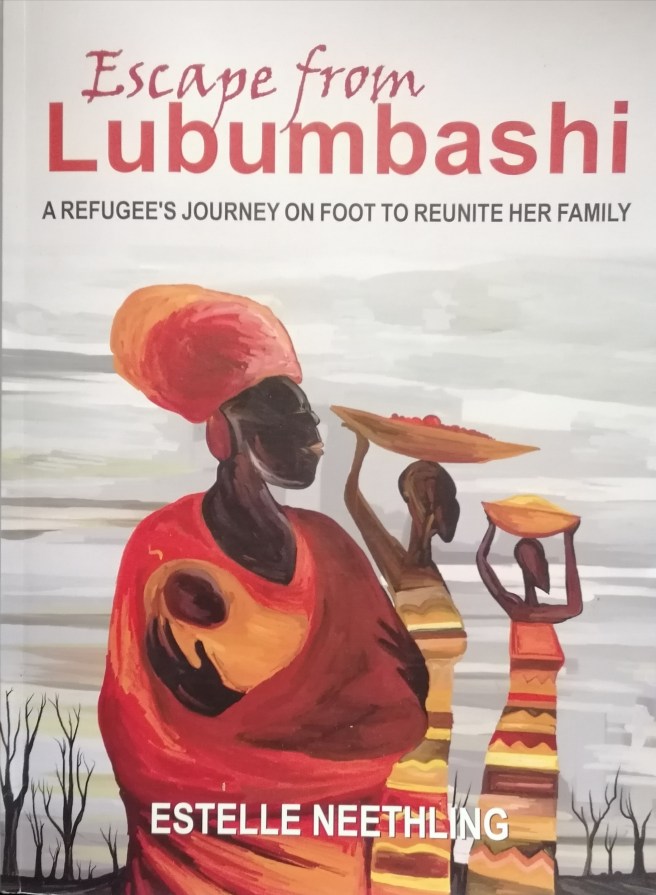
With The Escape from Lubumbashi (published by Unisa Press), author Estelle Neethling tells a story that she felt compelled to share especially of this particular woman and her excruciating journey and circumstances to find a life and home for her family. And more than ever, this is the time to share the stories of refugees she tells DIANE DE BEER :
When author Estelle Neethling first met Adolphine Misekabu, her dignity and obvious honesty struck her forcibly. “From the very first time I saw her sitting in a makeshift classroom at a refugee centre in Cape Town in the mid-2000’s, teaching refugee children,” she says.
At the time Neethling was working for the South African Red Cross Society as the national tracing coordinator (restoring of Family Links Programme, International Committee of the Red Cross).
When the South African Red Cross, where she was based in Cape Town, relocated to Pretoria, she chose to remain in Cape Town. “I felt the need to write about the hardships of the genuine refugee, something I came to know all too well during my 10 years working in the refugee sector, my main mandate being to restore family links in cases where people had been displaced due to conflict and political turmoil over which they had no control.”
She was especially affected by the sorrow felt by women and children. And this is how her book Escape From Lubumbashi: A Refugee’s Journey On Foot To Reunite Her Family was given life.
“My life-changing ten years at the Red Cross also made me realise that there are other forms of displacement and I needed to explore and come to terms with my own personal history of emotional displacement,” she explains.
The author Esteller Neethling.
“Because Misekabu’s story so poignantly represents what the refugee goes through, I wanted her story to be ‘out there’, to combat the scourge of xenophobia so rampant in the world, but particularly among our communities in South Africa. It can be said that displacement – brought even more into focus because of the Covid-19 pandemic – is the theme of our time, second only to the ravages of World War 2.”
And fortunately or so it seems, the world is very slowly waking up to this reality with books like these and more and more real-life stories emerging. It is becoming harder and harder to simply ignore.
For Neethling this dignified woman’s story reflects the power of the human spirit to combat unimaginable challenges. “When Misekabu was finally reunited with her husband, Sepano, in Cape Town after almost two years through a confluence of circumstances, some kind of synchronicity that baffles me to this day, she suffered enormously because of cruel xenophobic attitudes, including the 2008 xenophobic violence that raged in South African for many months.”
And when you read her story, at this stage, this young woman had endured and survived what most of us will never see or experience in a lifetime. In fact, it’s impossible to understand how she motivates herself to keep going. That took willpower and courage, something not asked from many of us
“Emotionally drained at times due to the humiliation inflicted by local people and crime she encountered here after her gruelling search for her husband all the way from Lubumbashi in the DRC, she remained undaunted,” writes the author as she highlights Misekabu’s strength of character. And that’s what it takes once you’re part of that world, one you’re not a willing part of – but without any choice.
“In trains and on buses, when she was called amakwerekwere and other derogatory names, she would speak out: “Excuse me. Are you talking to me? Forget about other people’s business. Think development!” In telling me, she’d add, with eyes flashing: ‘I didn’t come to Cape Town to give up’,” explains Neethling.
She knew that this was a story that needed to be told. But she was also aware of the responsibility towards Misekabu to honour her truth. She was especially aware that she was delving however respectfully, into the life of a highly traumatised human being who had lost all her family, except for her baby, her small brother and eventually her husband.
Adolphine in the Meheba-camp in Zambia.
She explains that the enormity of this remarkable woman’s loss was due to the First Congo War during which Mobutu Sese Seko’s ruinous reign destroyed innumerable lives. “Probably only my work with people in crisis made it possible for me to take on such an onerous task, albeit with the utmost respect and sensitivity.
“Misekabu immediately agreed when I initially approached her. The problem of re-traumatisation was always foremost in my mind, but slowly we pieced together her story, because there were times when I needed to do extensive research regarding the history of the times she lived in as a Kasaian, and a member of a family which was persecuted by Mobutu’s army and the factions which supported him.
“Her enduring love, especially for her dead father shone through all our interactions. Nkudimba’s name means ‘man of peace’ was a trained doctor, an internationally recognised artist and a leading politician in opposition to Sese Seko, who had disappeared mysteriously months before she and Sepano had to flee Lubumbashi in 1976.
“Our interactions over four years, with a few intermissions when I had to earn my daily bread, were of course often emotionally draining for me. Undoubtedly these intermissions gave her respite from verbally relating her memories. However, she expressed that our work together had had a healing effect on her. But of course that is an ongoing process,” Neethling stresses.
The impact of reading her story is one of admiration but also trying to understand why such a gruelling journey, probably the toughest you could ever make on every level possible, is turned into even more of a nightmare because of the impossibly difficult hoops refugees are asked to jump through when applying for the necessary status.
Neethling explains that there are organisations which assist refugees as best they can, but the process to obtain refugee status is gruelling, shared with migrants, persons who have come to South Africa ‘in search of a better life’, some whose goal is to be resettled in an overseas country of their choice.
“The Department of Home Affairs needs to deal with applications to become, first, an asylum seeker, secondly, a recognised refugee and, if it is the final goal, to seek permanent residency. The road to the latter is arduous, very long and not easily achieved.”
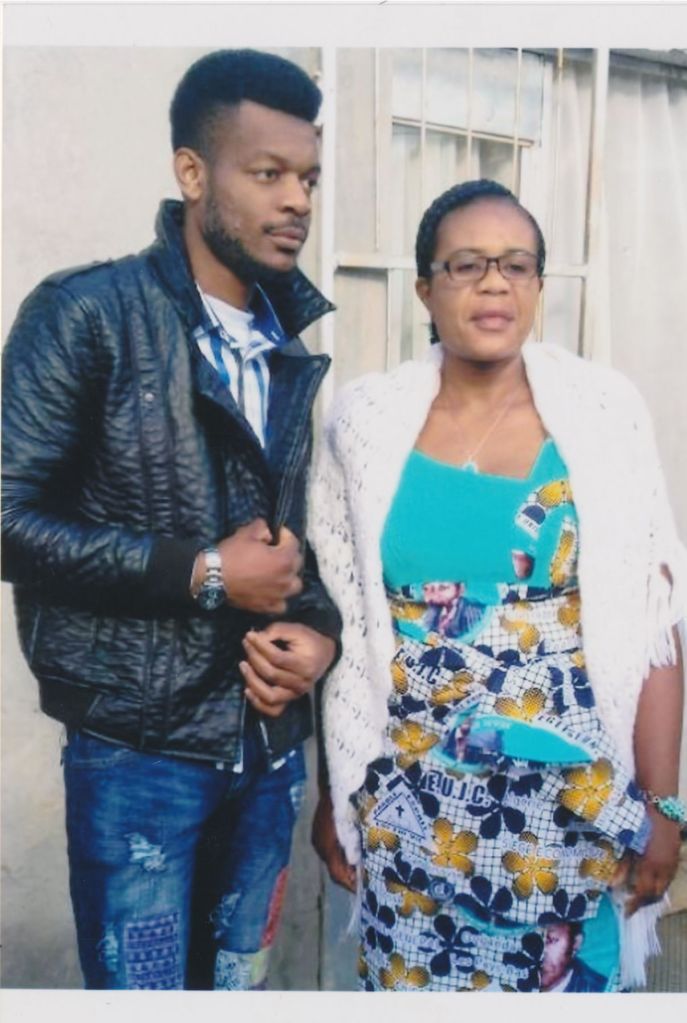
Adolphine and Ilunga.
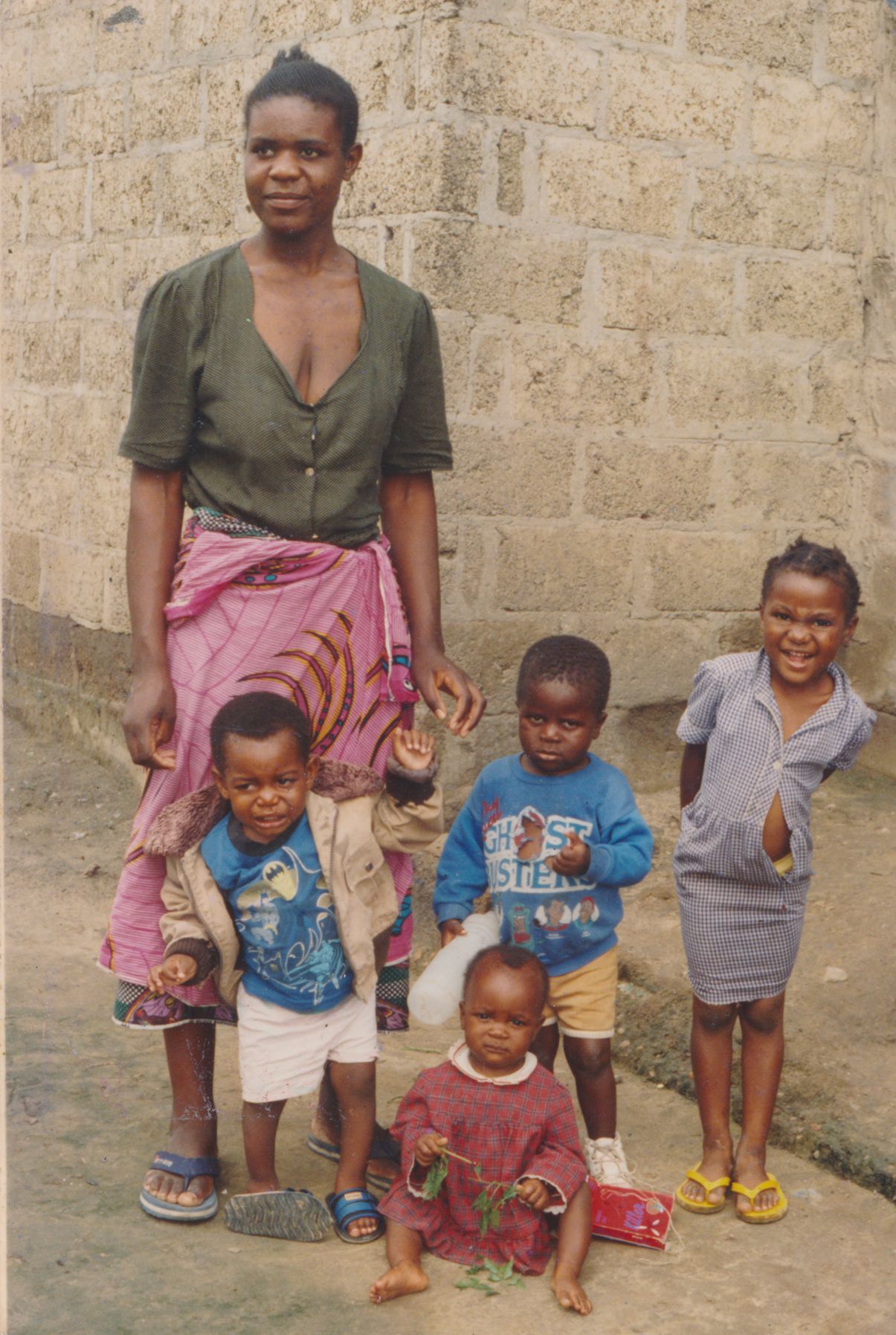
Adolphine’s four children: Ilunga, Christine, Bernadette and Joseph.
And she explains further: “The ‘refugee question’ is convoluted and many refugees become desperate. Some do ‘fall through the cracks’ or remain in the country illegally. Refugees often speak of corruption during their efforts to remain in South Africa. Our country has also had its fair share of troublemakers among these ‘immigrants’ or ‘foreigners’, as they are often called, and those who turn to crime, just as one would find in most groups of people.”
Add to that xenophobia which Neethling describes as a universal problem and based on the difficulty diverse groups have of accepting the ‘otherness’ of people who are strangers to the ways of their adopted country. “Lack of respect for human rights, an absence of tolerance, the burning issue of scarce resources and jobs play a huge part in the cruelty on which xenophobia is based,” she notes.
And how is the family doing now? In many ways fortunately after many years of unthinkable hardship and miraculous survival, three more children were born to Adolphine and Sepano.
Adolphine with her brother Joseph who finally has also received his residency papers.
There was much distress when her young brother, Joseph (five when she fled Lubumbashi with her baby, Ilunga, as a 22-year-old woman) was not granted permanent residency with the rest of the family through some bureaucratic error, but after persistent efforts, he is now also a permanent resident.
But that doesn’t mean their lives aren’t still a daily struggle. Despite being a permanent resident, finding stable work is difficult for this warrior woman. “As a strong, confident woman, a trained teacher, she should in my opinion have more employment opportunities. But as it is, she plays a significant part in assisting refugees and in helping local communities to accept refugees,” Neethling says.
She concludes that the world has in many ways become a perilous place, especially during the Covid-19 pandemic and the effect it has on people and the economy. “My hope for the future is that people will stand up for and support basic human rights. All of us have agency – even the most humble among us. Tolerance and a word of kindness to someone ‘at sea’ in their desperation can go a long way in alleviating distress and even open the door to hope of acceptance – and a good life.”
And as a final word: “The journey with Adolphine started in 2010. Writing her story was an experience I wouldn’t change for the world. However, I always knew it would be difficult to find a publisher, because it is nonfiction, although a memoir in many ways, because most of her story is told in her own words. Further, the book isn’t about a famous person or a politician. Therefore, much of the time it took before I held the book in my hands was harrowing.
I have Unisa Press to thank for believing in Escape fromLubumbashi. When all’s said and done, it is in many ways a life’s work that has become an integral part of my very being.”
And in this time when millions in the world are either refugees or displaced people, all of us have to understand exactly what that means.
At a price of R137, the book can be ordered from Emily Monyai at monyaen@unisa.ac.za or from Johannes Morodi at morodjm@unisa.ac.za.