NOTHING IS AS TERRIFYING AND SIMULTANEOUSLY EXHILARATING THAN A BRAND NEW LOCAL PLAY

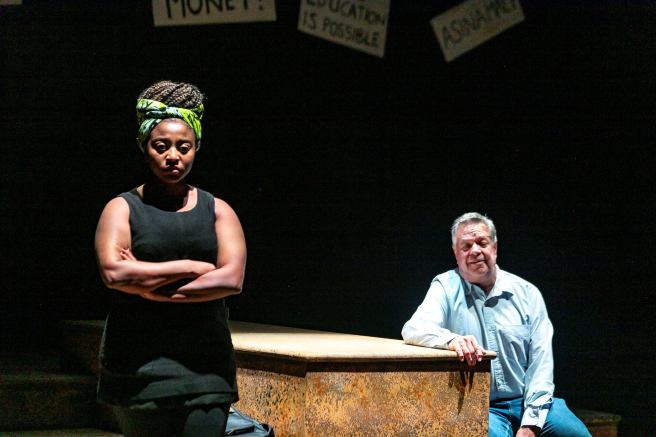
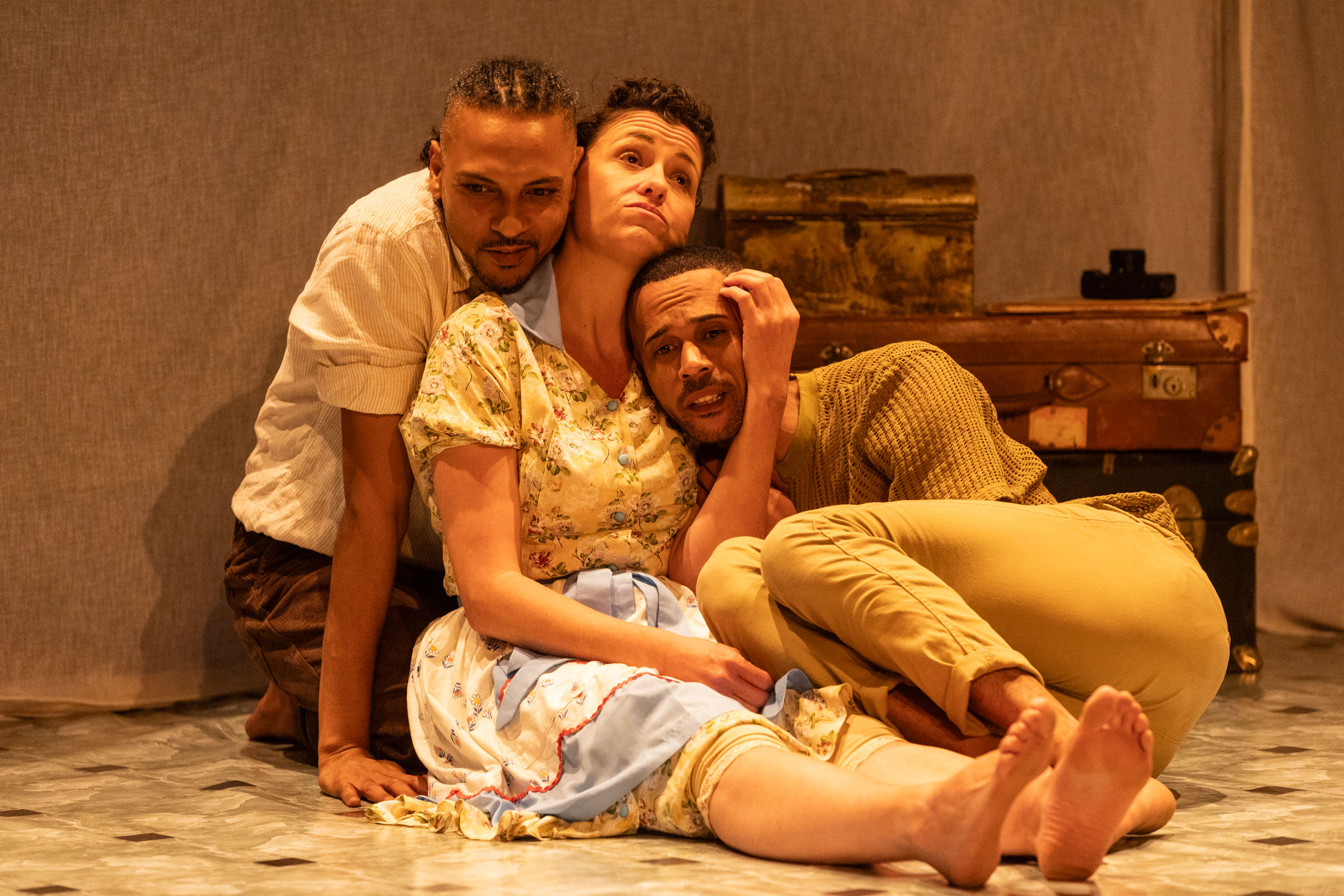
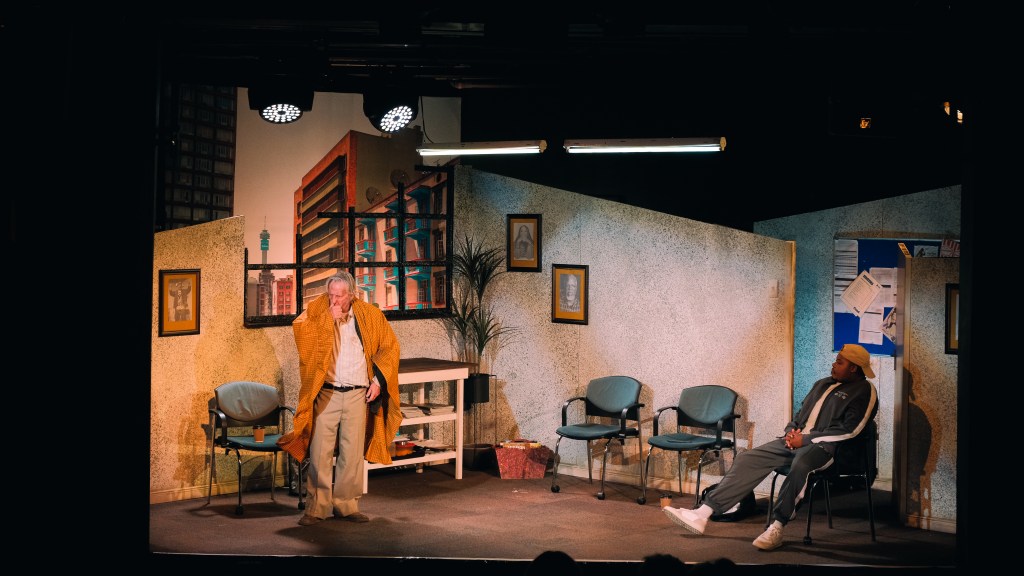
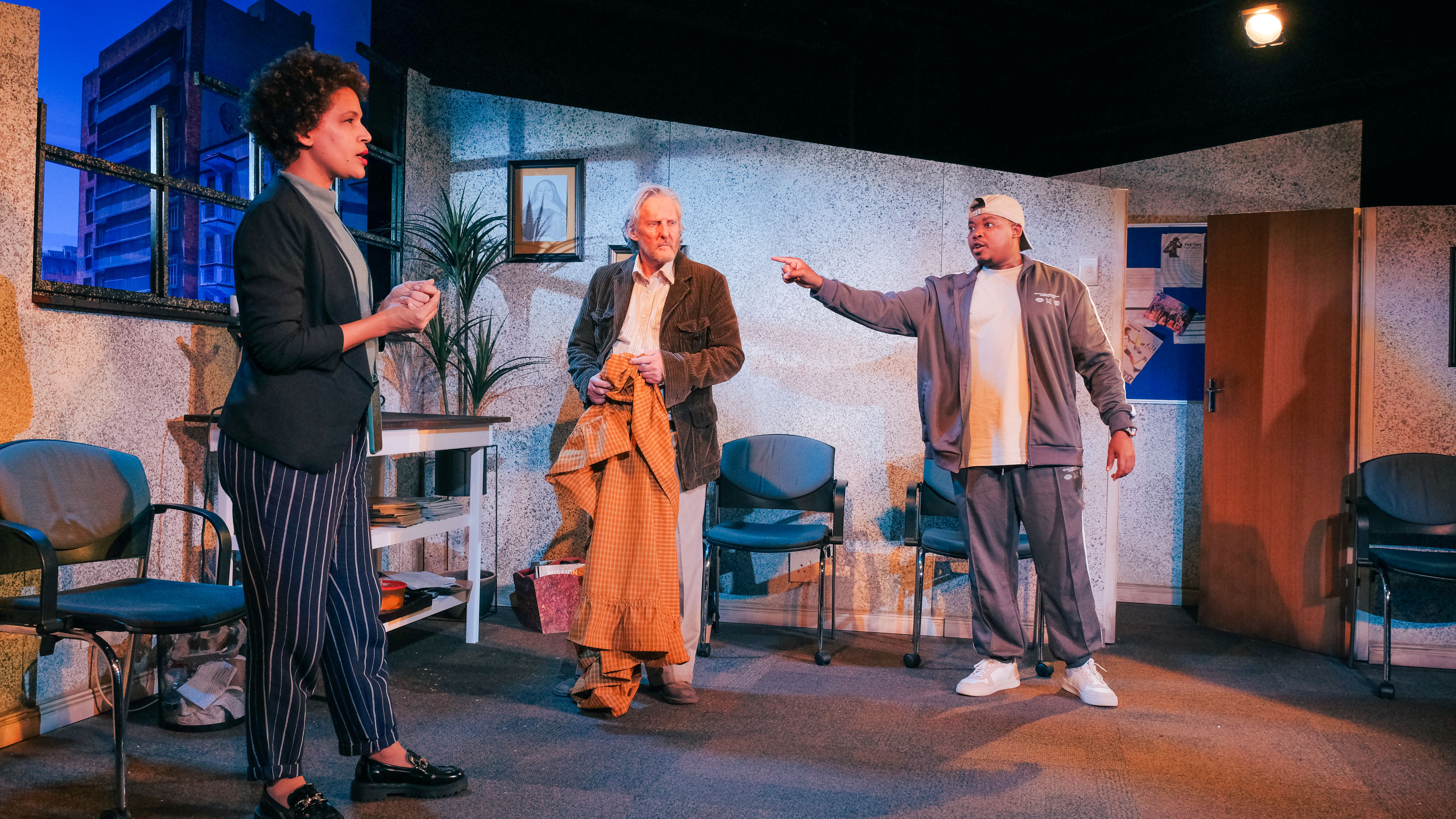
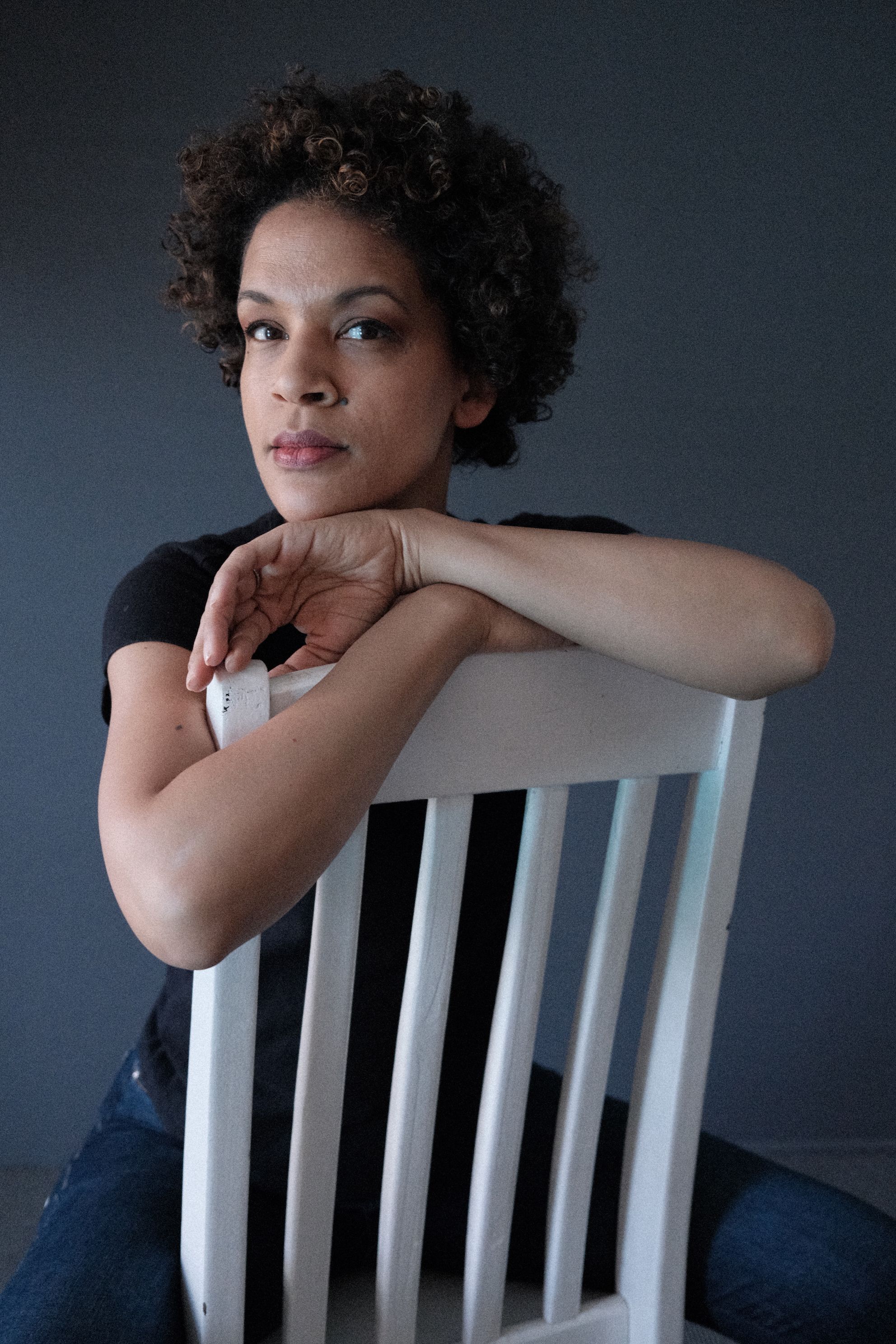
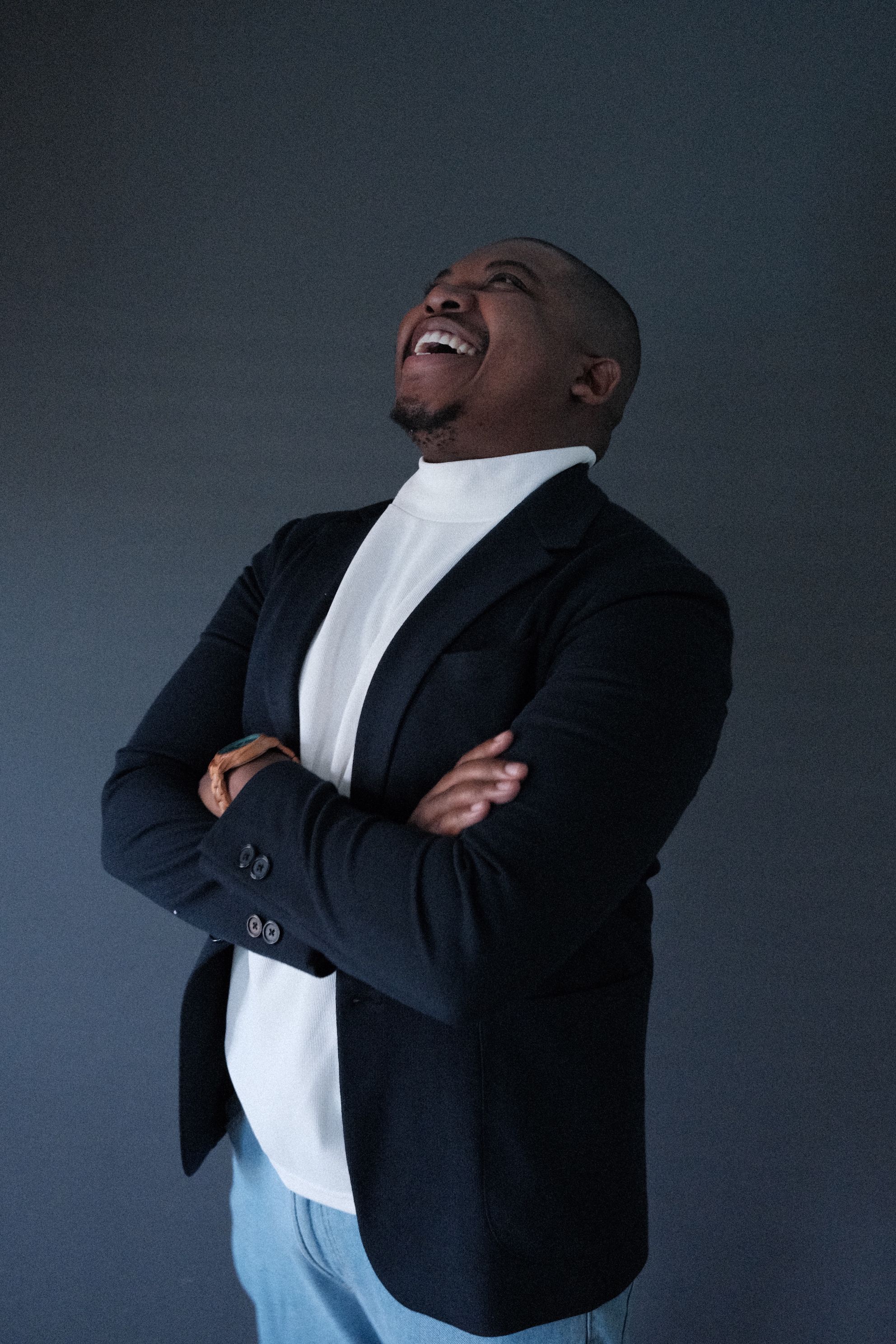
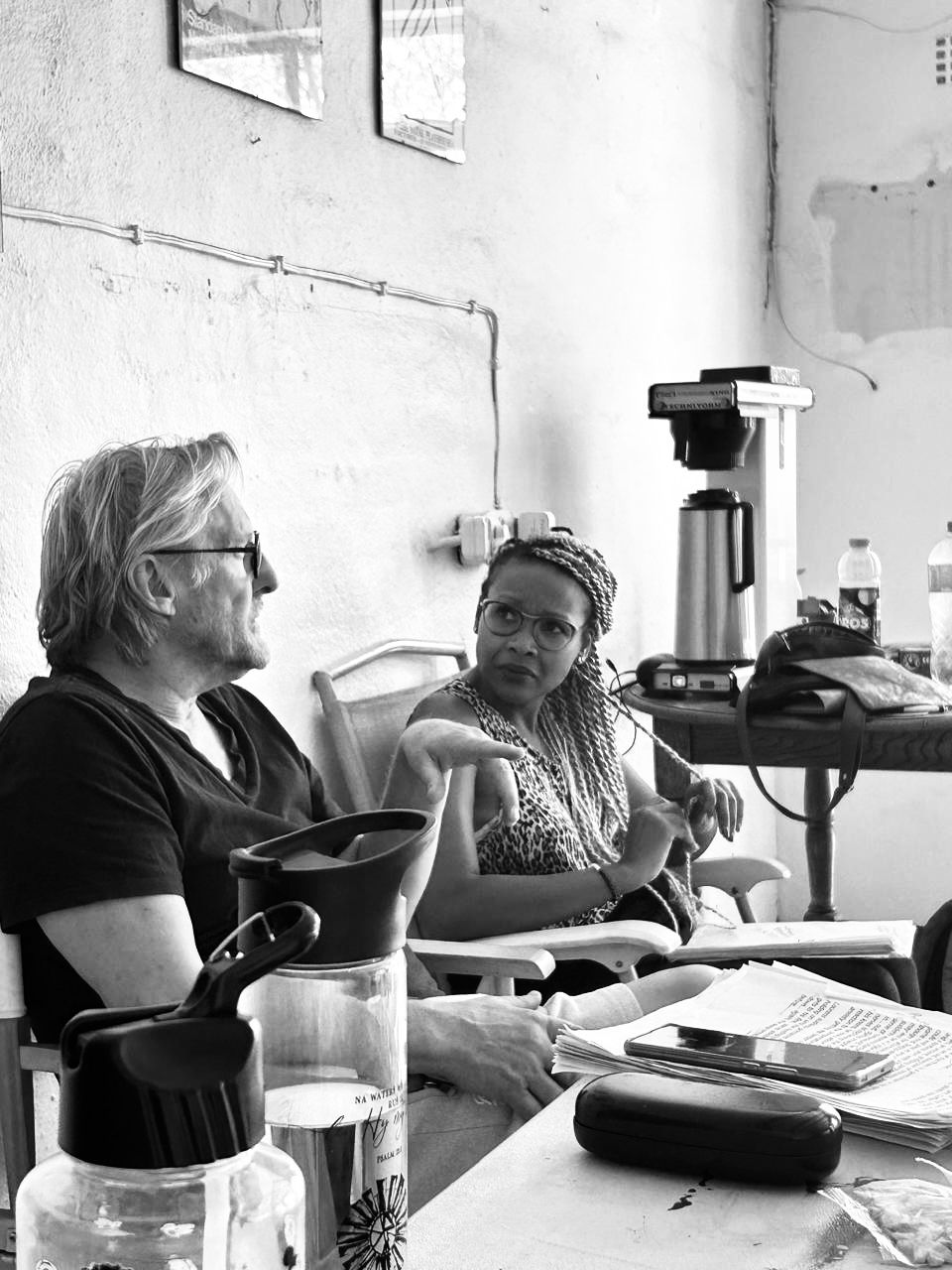
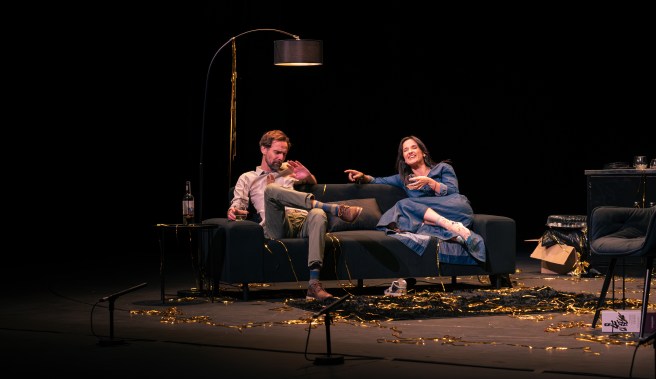
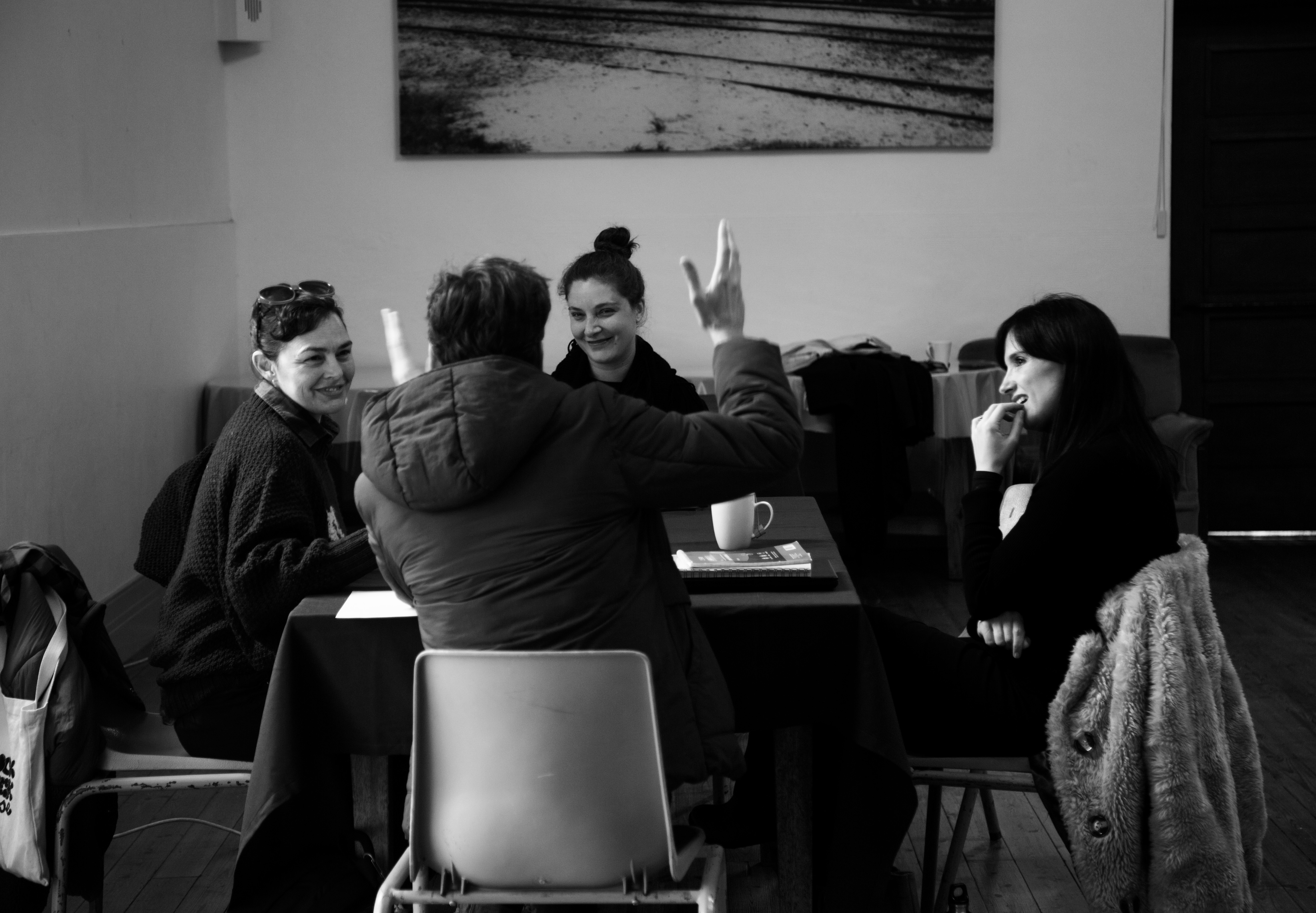
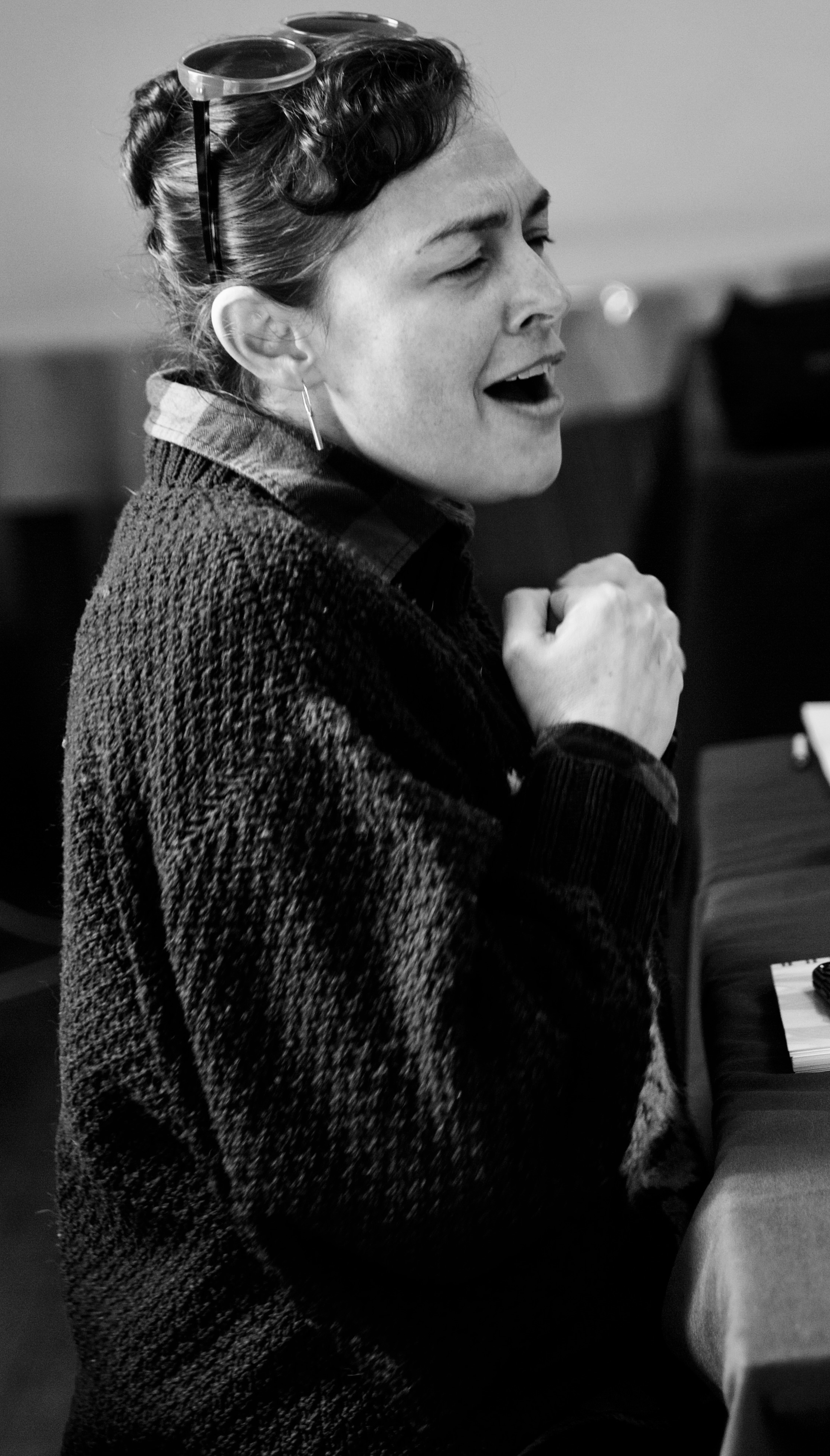
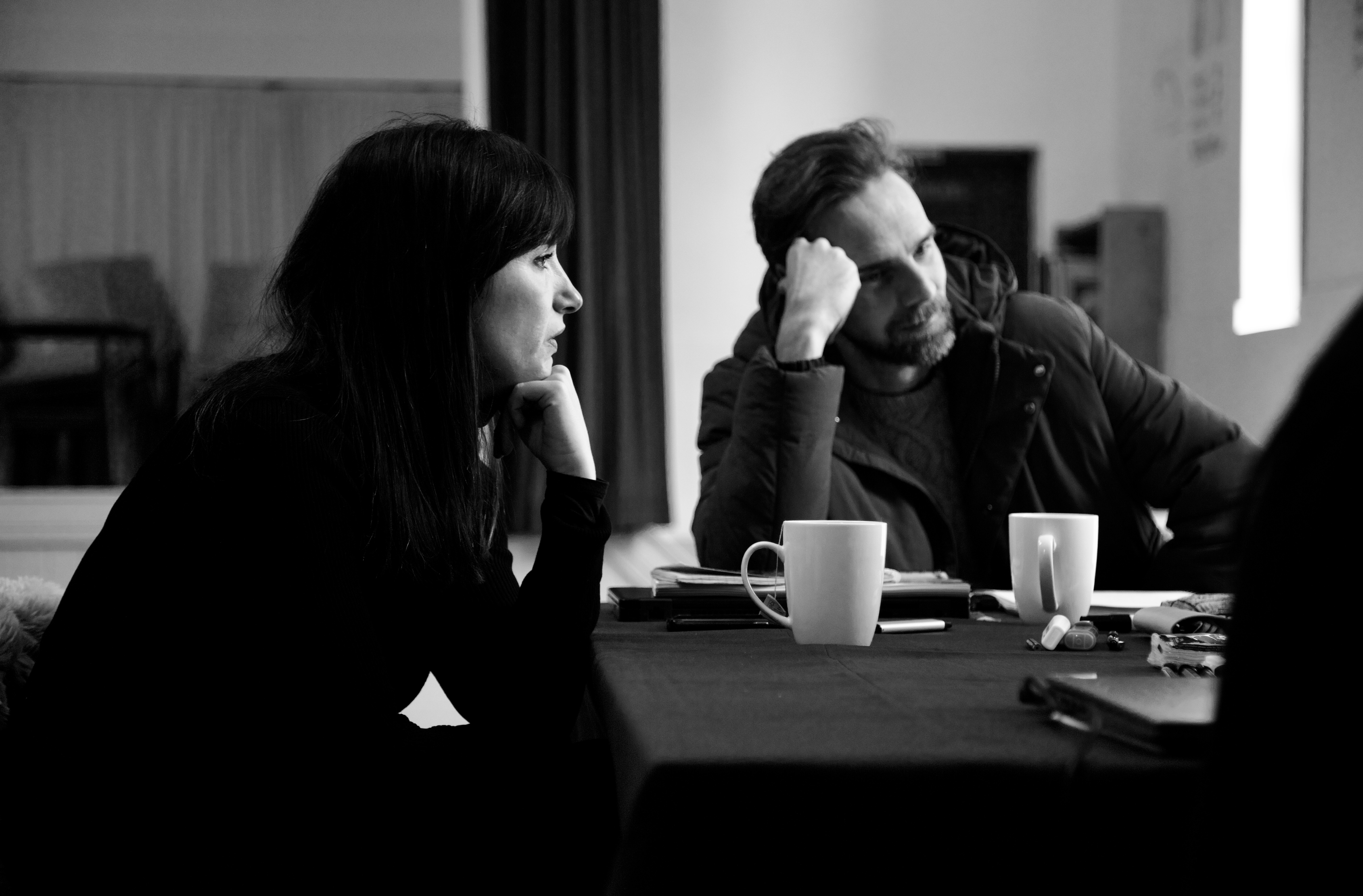
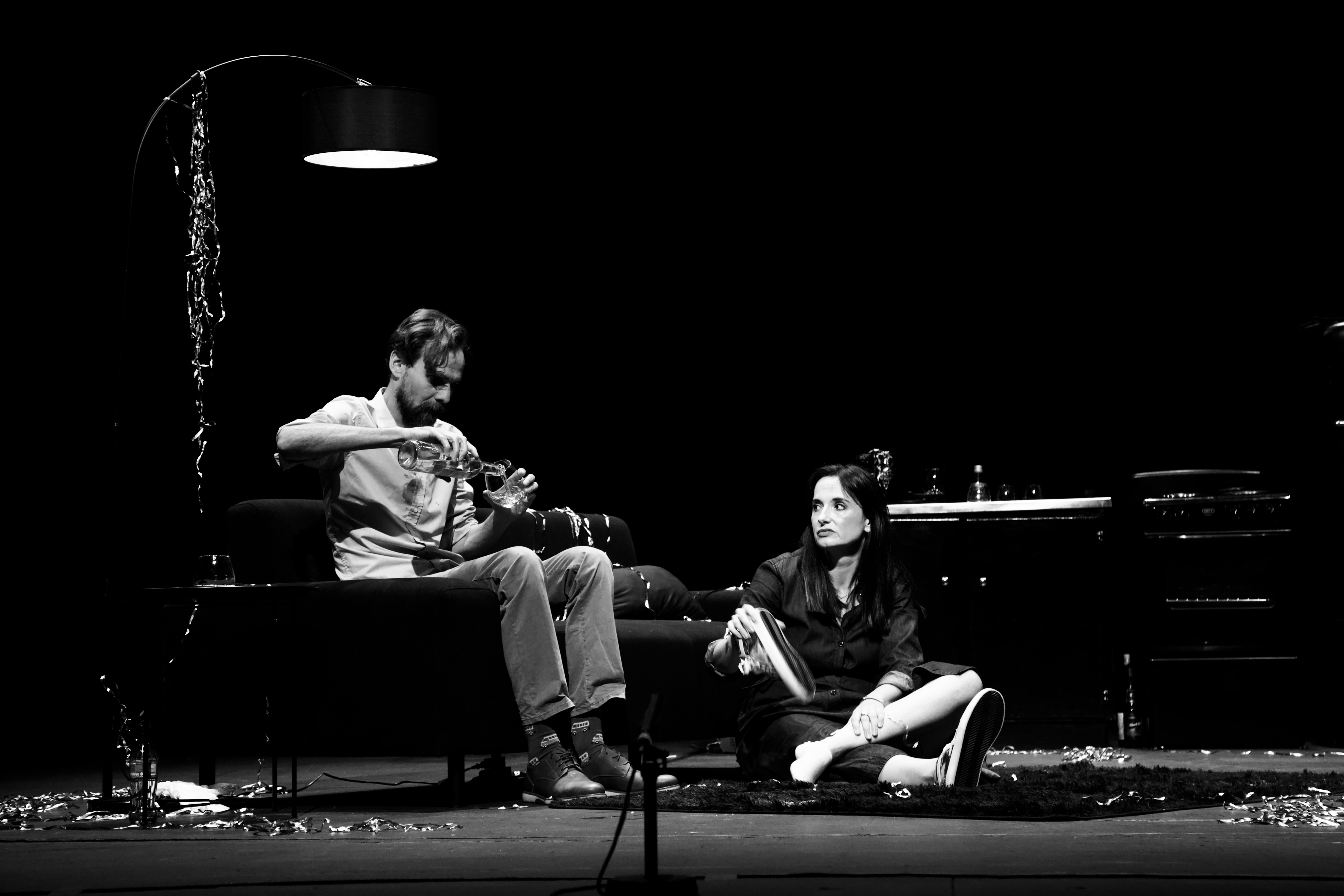
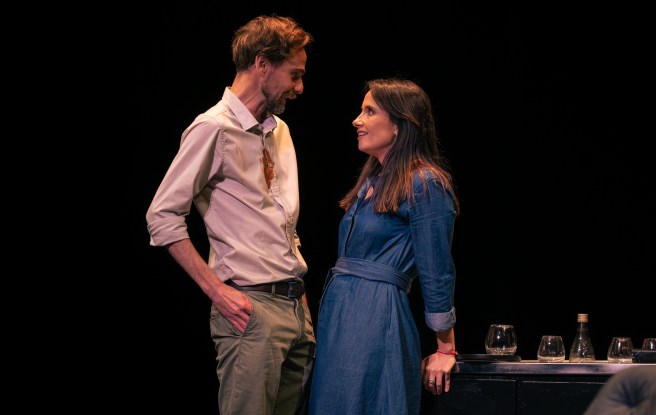
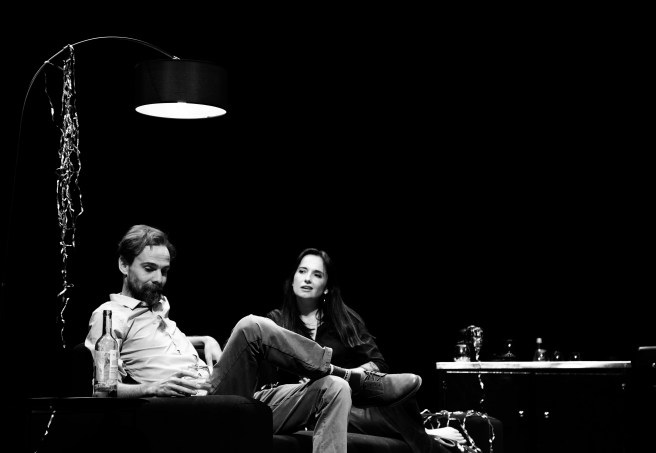
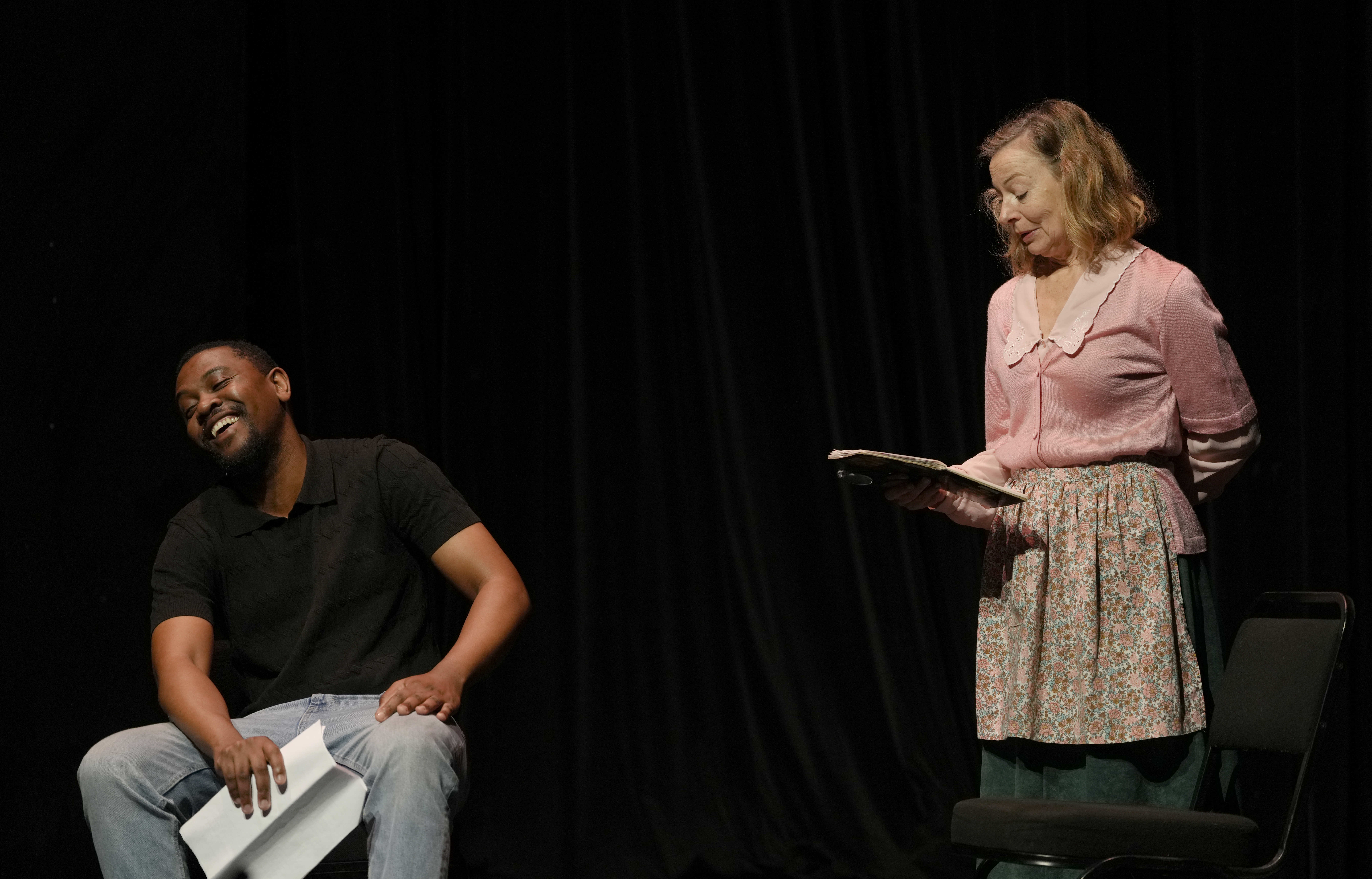
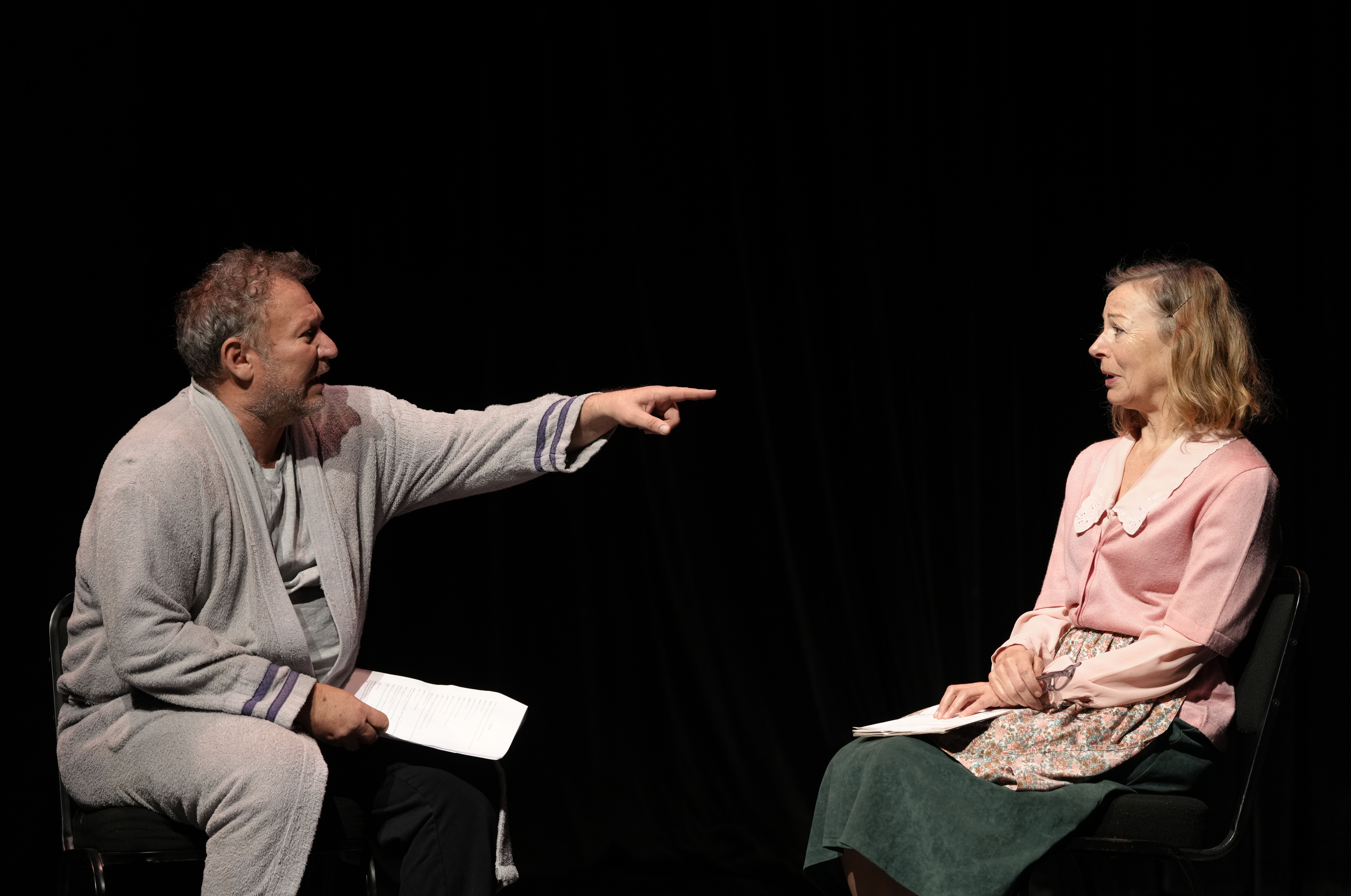
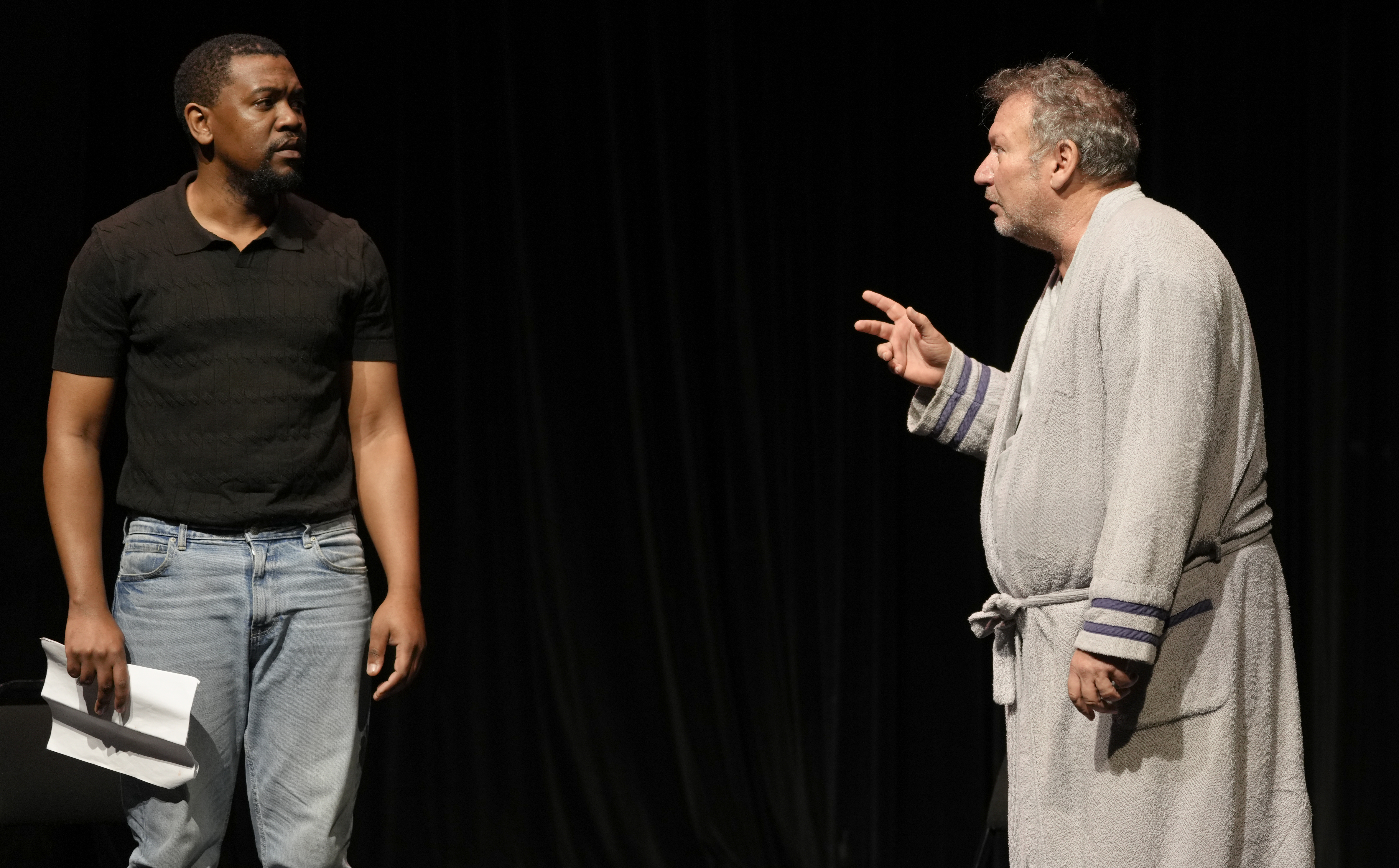
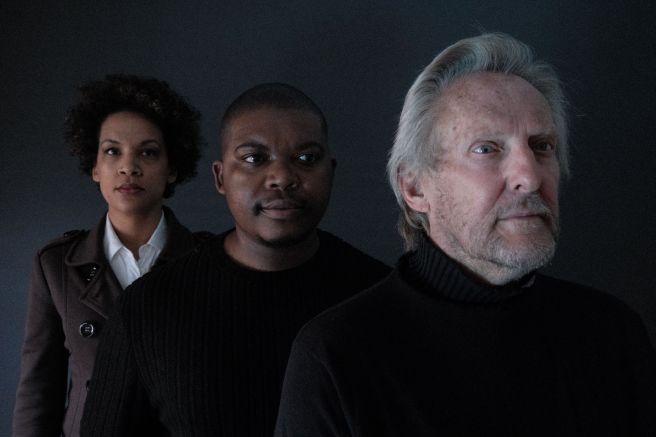
Rehearsals are underway for Bitter Winter  –  a new play penned by acclaimed South African playwright Paul Slabolepszy, which premieres at Pieter Toerien’s Studio Theatre at Montecasino from February 20th – March 16th. Director Lesedi Job and cast members Andre Odendaal (Jean-Louis Lourens), Oarabile Ditsele (Prosper Mangane) and Chantal Stanfield (Felicia Willemse) are currently in rehearsals, discovering the nuances and back-stories of this character-driven piece that deals with the human condition while sharing a story of resilience and discovery.

Pictures; Gustav Gerdener

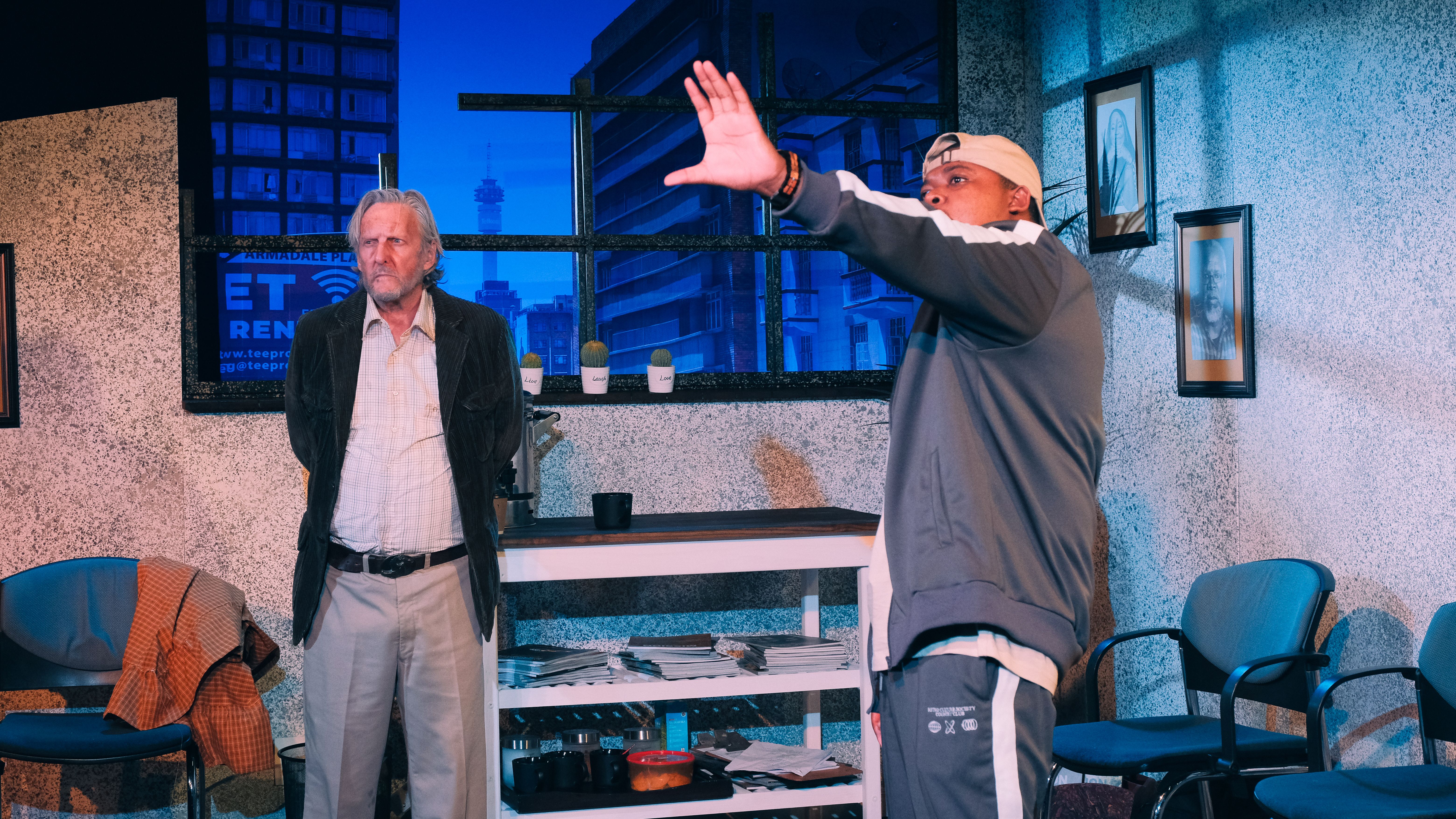
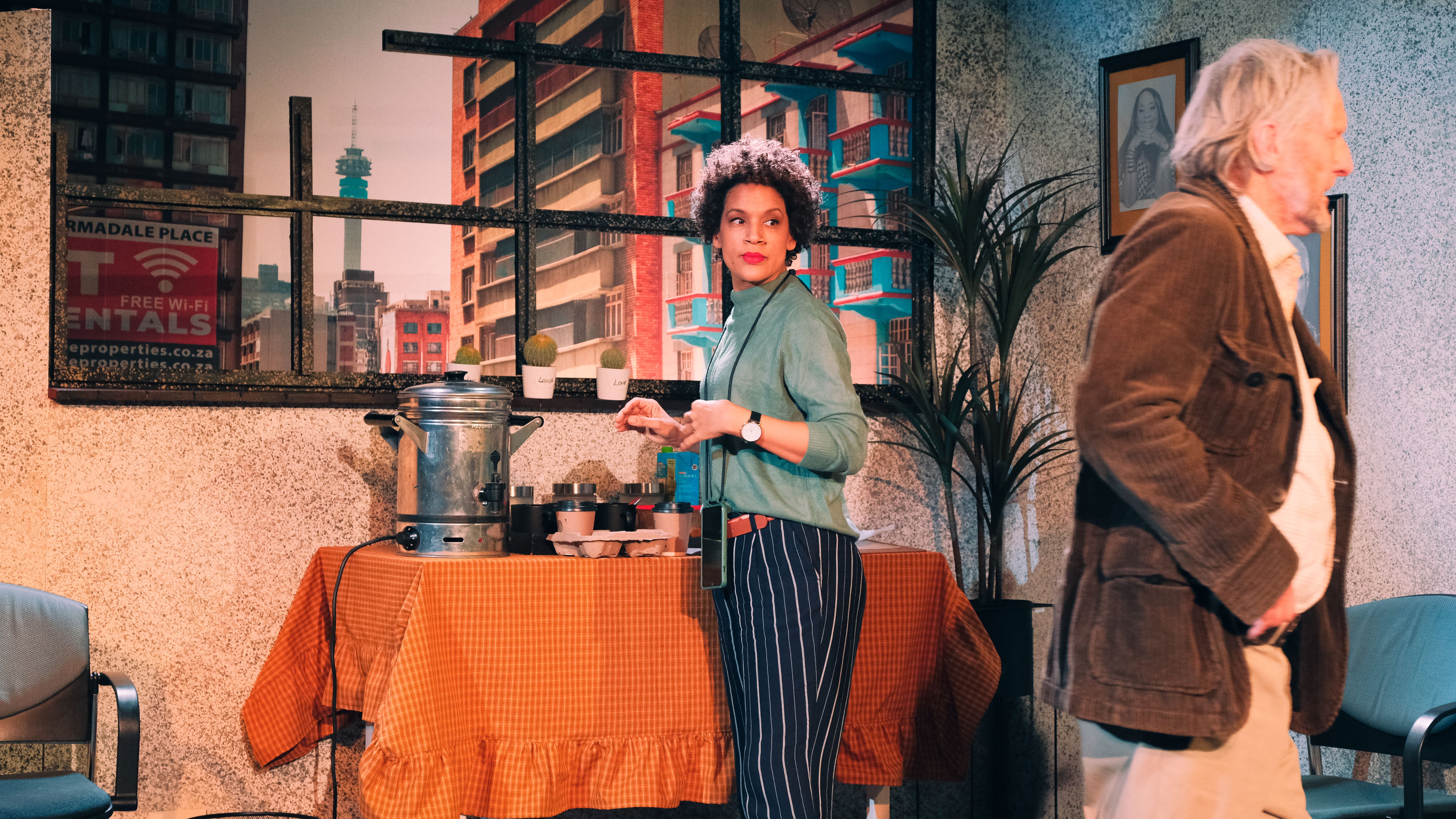
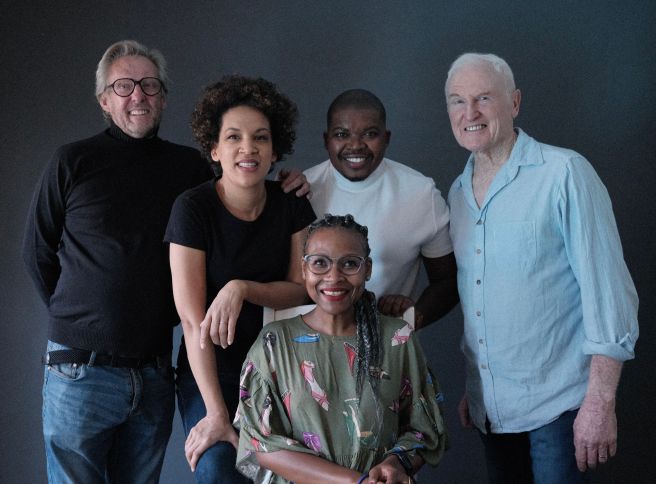
From left; The cast Chantal Stanfield, Oarabile Ditsele and Andre Odendaal

With Paul Slab (as he is known) himself an artist, both a playwright and an actor, he has turned to his own life experiences with this exploration of an artist’s life. Bitter Winter celebrates the legends of South African theatre while shining a light on the new generation of rising stars making their mark on the global stage.

What he is hoping to share is the  sometimes rocky road that many artists are driven to travel in pursuit of their dreams.

It all begins in a venue which is like a home to actors, perhaps often an uncomfortable one, with the characters sitting in an audition room.

It’s about the life of an actor, the struggles and triumphs of those artists who remain deeply committed to their craft despite the challenges they face.It tells the story of two actors, one at the end of a career spent mainly on the classical stage, and another starting out on his journey, with  the magic and the madness of this ‘make-believe’ world on full display.

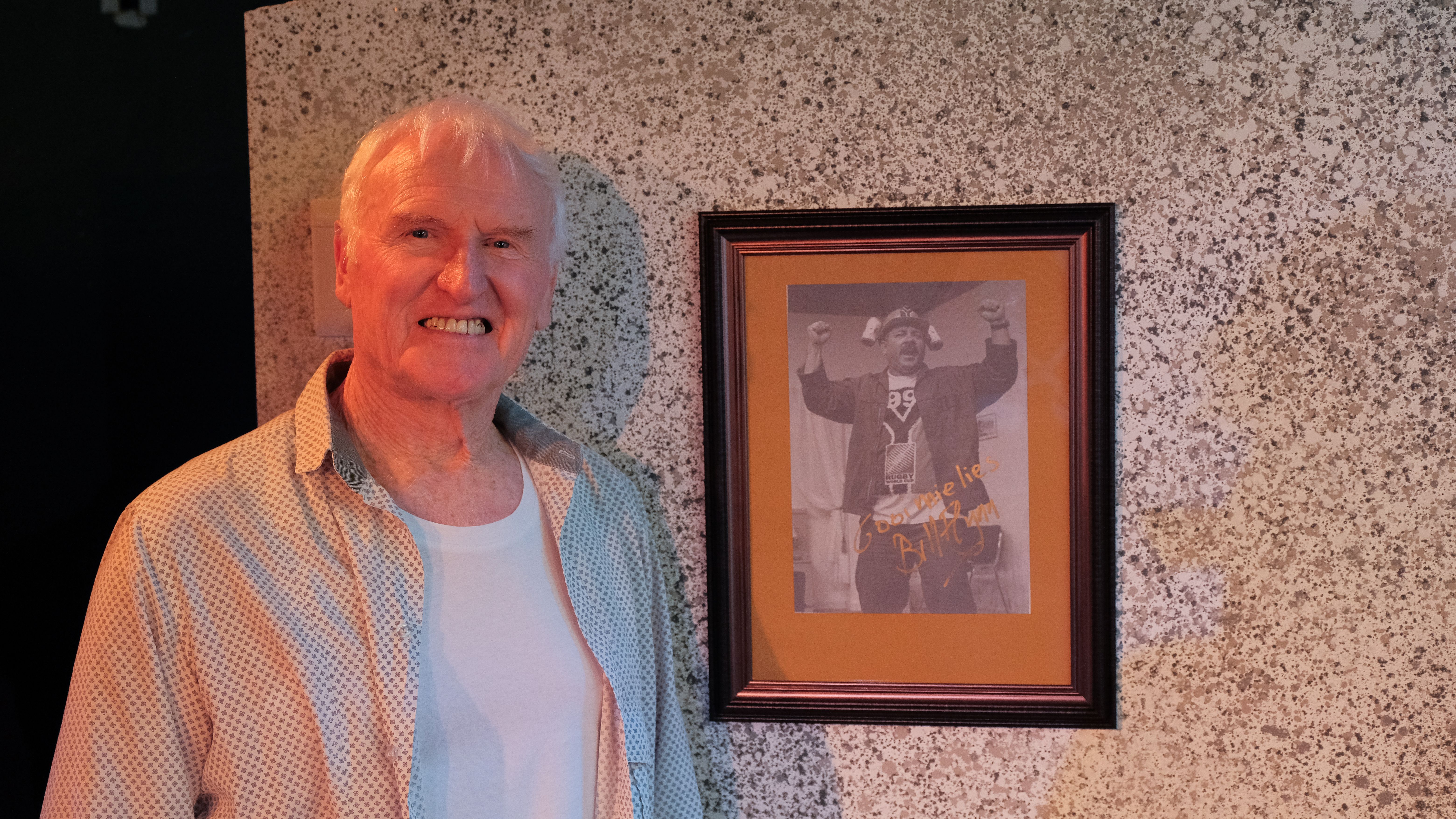
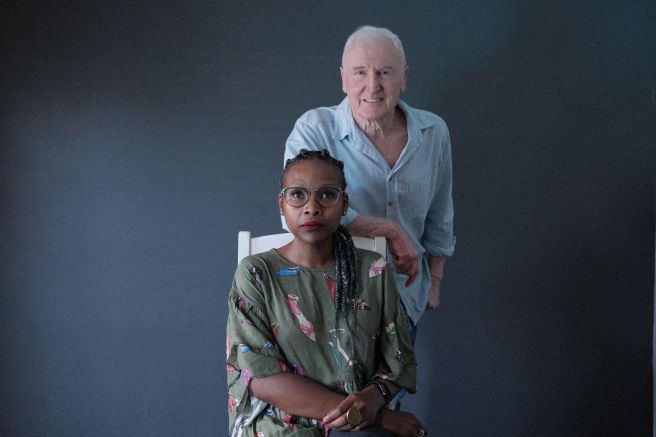
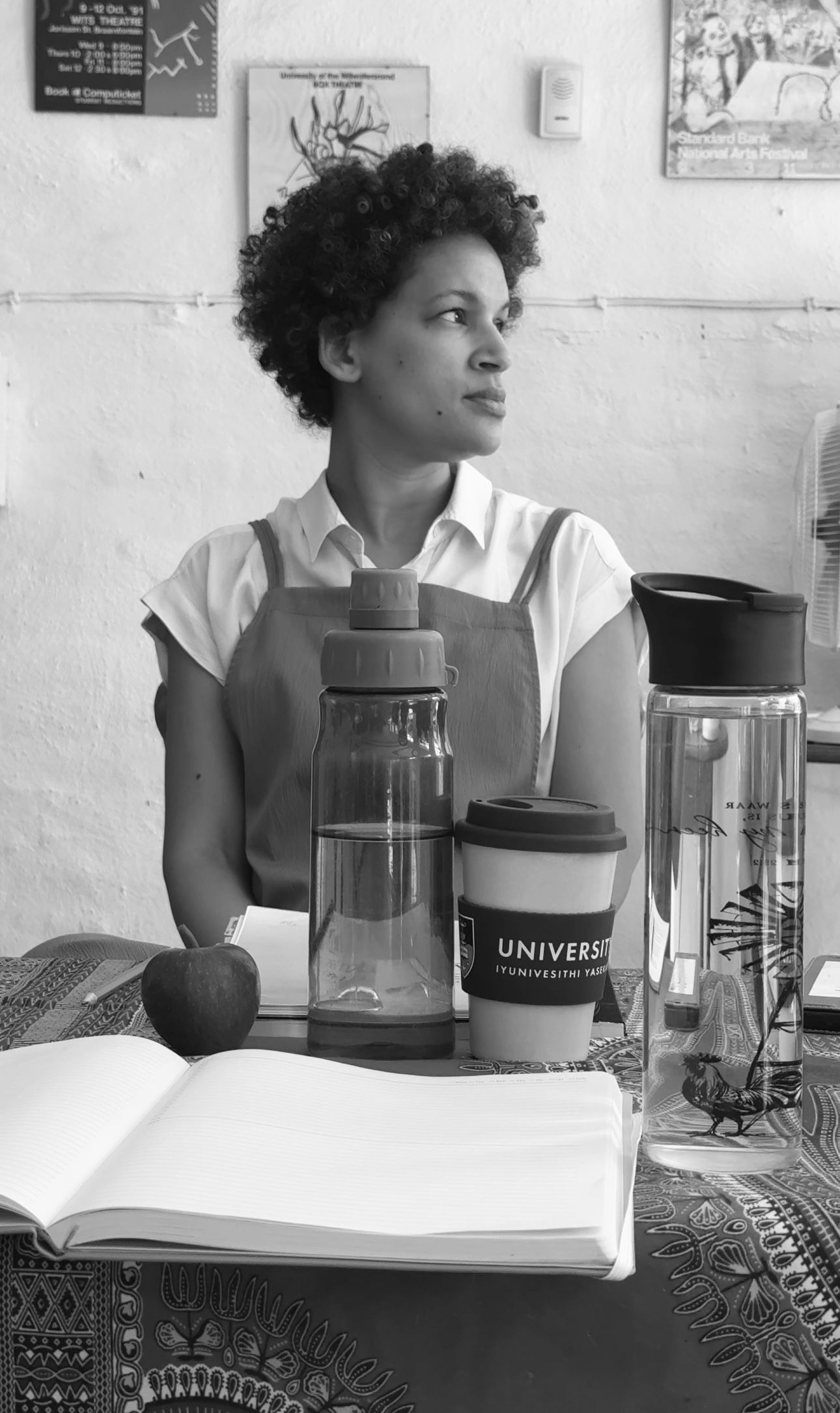
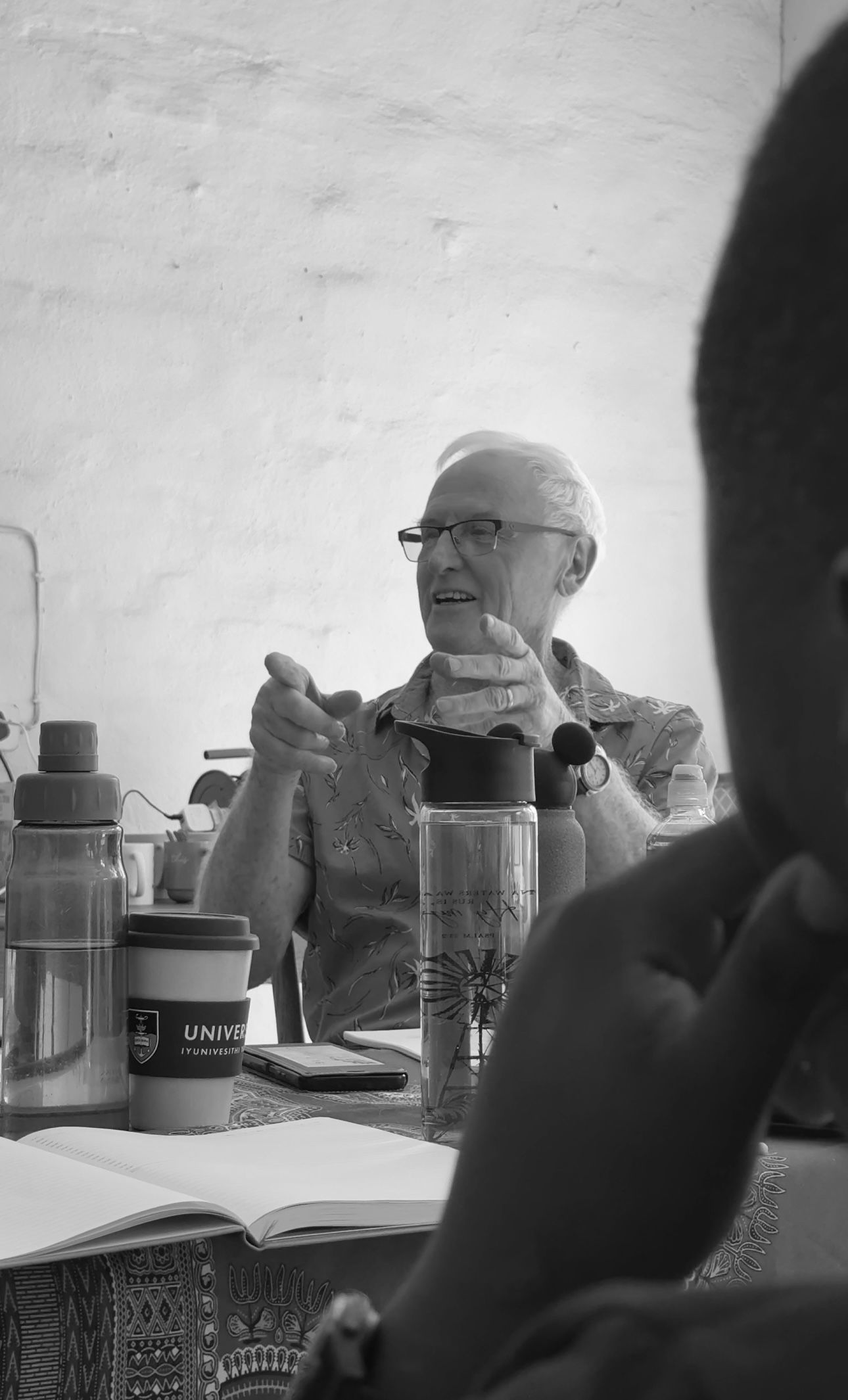
Playwright Paul Slab and director Lesedi Job

According to the producer, Weslee Lauder, the idea of a play with such an important story, especially since local actors have been bearing the brunt of an industry not taken care of by its governing parties, spoke to him

He also liked the concept of youth honouring the elderly, which speaks to a powerful truth.

In life, the young often forget that the paths they walk were paved by generations before them. And here, he believes, it is vital to remember the legacy, wisdom, and sacrifices they’ve left behind—and to show gratitude in every aspect of life.

A seed was planted, according to the playwright, when he heard Lizz Meiring giving a talk a number of years ago about all the vital work that the Theatre Benevolent Fund does, stressing the plight of aging artists in South Africa as they reach the end of their careers.
“I was asked after that talk whether I would write a play about it and I jumped right in. Then Covid hit, but I kept working on it. I wrote the piece with Andre Odendaal in mind, who then brought Weslee Lauder in to produce. And here we are!”

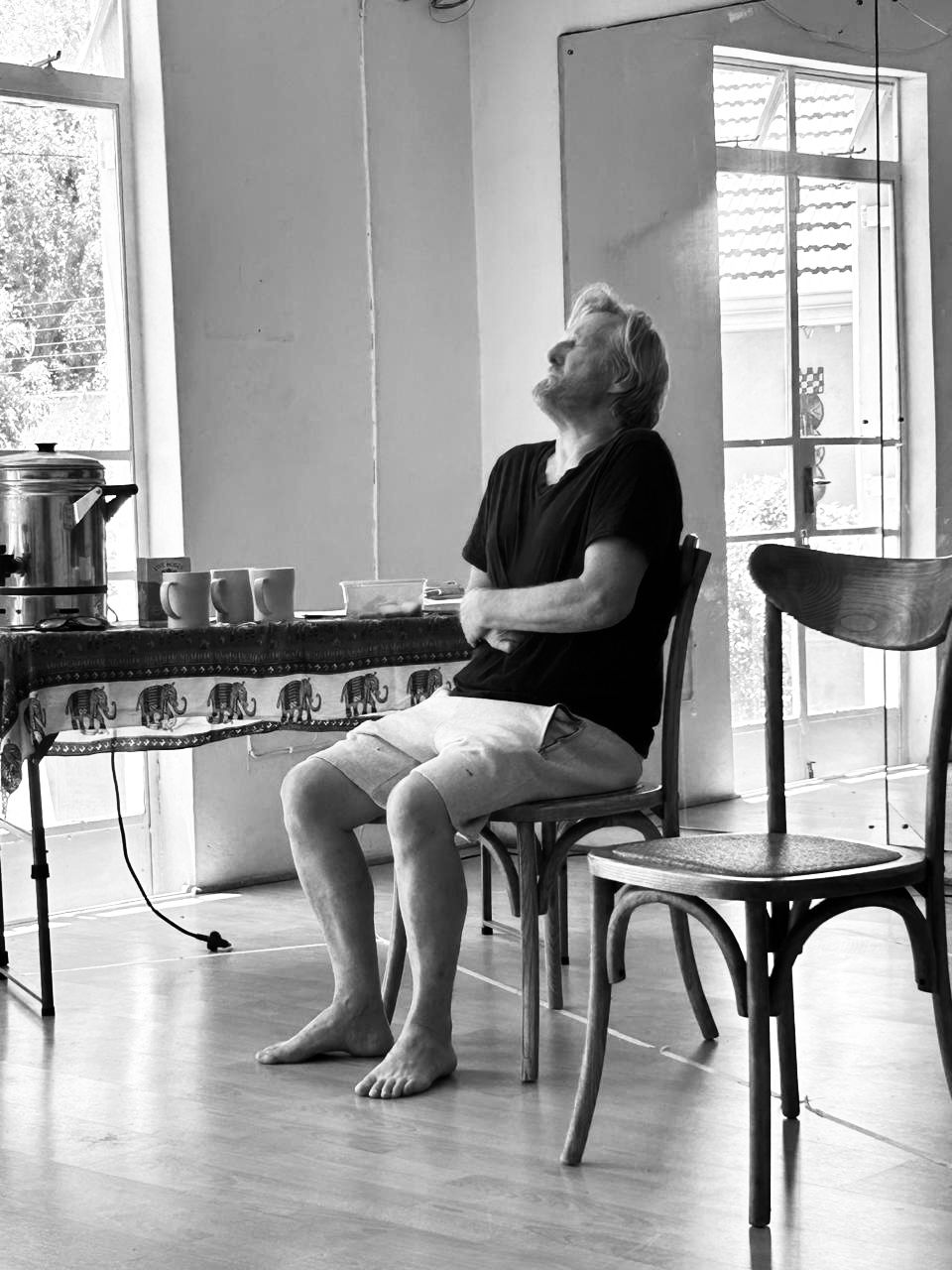
Slab had seen Andre, pictured above during rehearsals, in Dop  and thought he would be ideal for Jean-Louis. The other two artists went through the audition process.

Collaboration comes easily to Paul who always collaborated, especially with his close friend Bill Flynn before his untimely death. “In many instances, it’s the only way to get a show on stage, especially a new play,” he explains
While Paul has always enjoyed writing comedy, he is also known for theatre with strong moral values and believes it is especially important right now, given the current state of the world.

It is important to deal with the issues, but to talk about them in such a way for the audience to be receptive. We need to keep writing authentic stories, he says.

Lesedi Job, above with cast members and Paul, was drawn to the play because of the story. She was reminded of her own complex love affair with theatre as an artist. “But as I started working on the play, I became aware of how this is a story that inspires self-reflection and I love telling stories that leave an audience thinking.’’
Telling local stories especially appeals to her because she is passionate about being part of a next generation of storytellers who contribute to the history of South African theatre. “Bitter Winter is the fifth new South African play I am directing and I think this is not only out of choice but also because it is my purpose.”

She is especially affected by the theme of an older generation versus the younger generation. “I am reminded of my mother and her wisdom and the quiet knowledge that comes with age and experience. The other themes are that of the complexity of our identity that is informed by our history, our languages, our traditions and culture as well as our scars. And that of humanity.’’Maya Angelou says: “During bad circumstances, which is the human inheritance, you must decide not to be reduced. You have your humanity, and you must not allow anything to reduce that.”
Discussing her processes, she explains she spends a lot of time before the rehearsal process preparing, researching, interrogating and unpacking the script to get a handle on the story, the world and the characters.
“Once in the rehearsal room, I download information to the actors and plant seeds for them to think about; allowing an actor to bring themselves and their choices to the creative process.

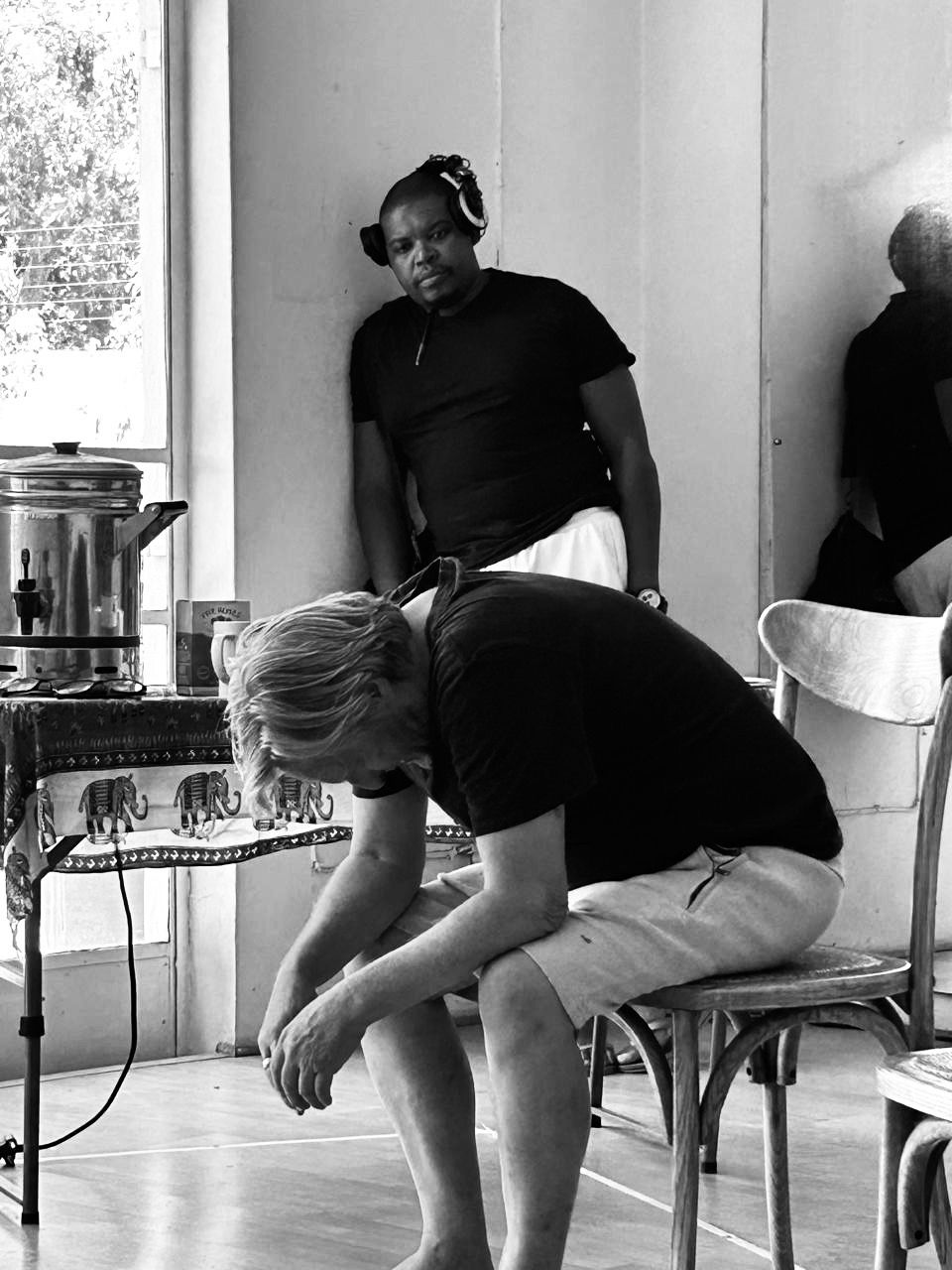
Chantal Stanfield and Oarabile Ditsele

The process requires planning and thinking on your feet, humility and grace, as the director knows that at times you might not know what to do and to not get stuck on an idea you may have had beforehand.

For Andre Odendaal it’s a love for new South African work. “These opportunities are rare and always special. An authentic voice and a remarkable challenge.’’

 His  preparation for any character always starts by finding relatable qualities first. “Do I understand the character’s emotional world, what are the points of connection either to my own life or a that I have observed? Then one finds a physical and vocal quality. Here it is an older actor’s so that commonality was easy to find, albeit a very different mind space to my own.”

As for the audience, he hopes that they take home not only a better understanding of the plight of an artist and the commitment but also the joy of watching live theatre.

“A realisation that art feeds the soul.’’

For Oarabile Ditsele,  it was a chance to collaborate with people who have shaped the theatrical landscape of South African theatre, people like Andre and, of course, Paul Slab.

None of them had worked on a Slab piece before.

For Chantal Stanfield,  it is her first time working on one of the playwright’s plays professionally. She did some curriculum scene work at drama school, but to actually work with him 20 years after she graduated is such a gift.

She loves originating a new piece. “It’s a fresh and daunting challenge with no ‘original cast recording’ to fall back on. We don’t just decide to do this, it is a mad calling that is so fulfilling that we endure the scorn, the rejection, and dismissive attitudes every day.”

 Bitter Winter will be on stage at Pieter Toerien’s Studio Theatre at Montecasino from February 20th – March 16th. Bitter Winter is donating a portion of ticket sales to the Theatre Benevolent Fund and every cent counts. 

A FABULOUS FEAST OF THEATRICAL GENIUS

Review by DIANE DE BEER

CAKE STOPPER

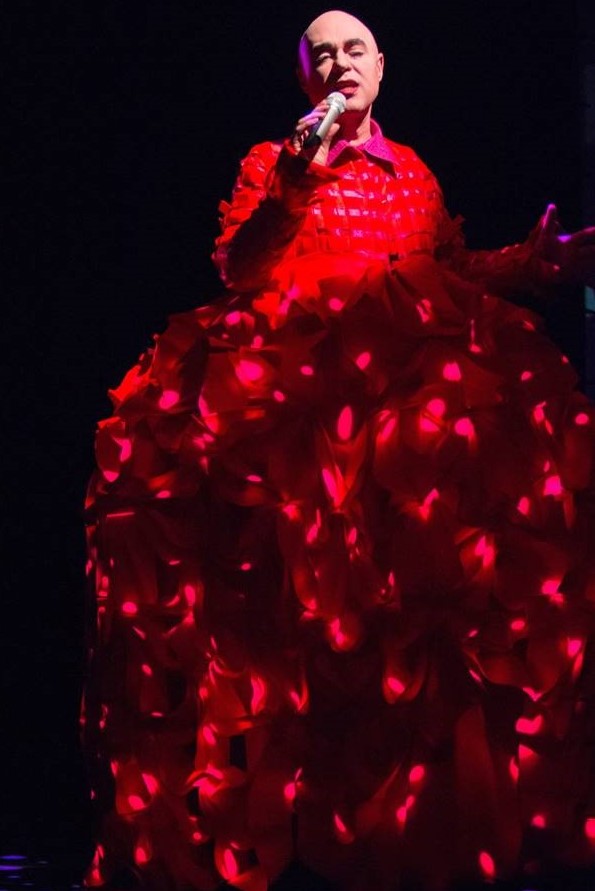
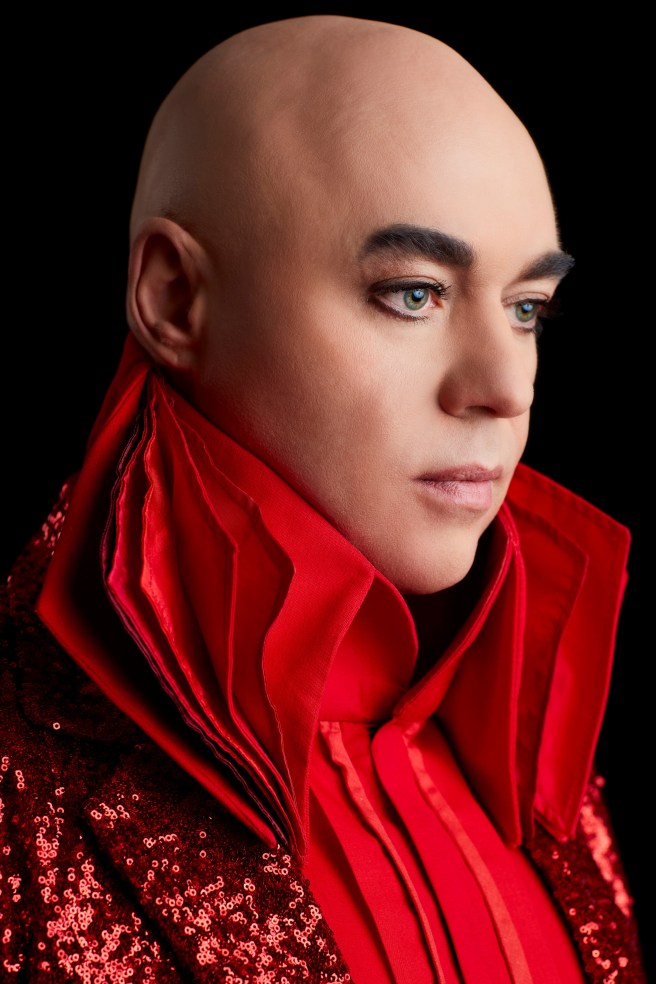
ARTIST: Nataniël

BAND: Charl du Plessis (keyboards); Werner Spies (bass); Juan Oosthuizen (guitar); Peter Auret (drums)

VENUE: Atterbury Theatre with shows tonight at 7pm, tomorrow at 7pm, Saturday at 11am and 3 pm, and Sunday at 3pm; (13 to 16 February Roodepoort Teater; 5 and 6 March, Sand Theatre in Bloemfontein)

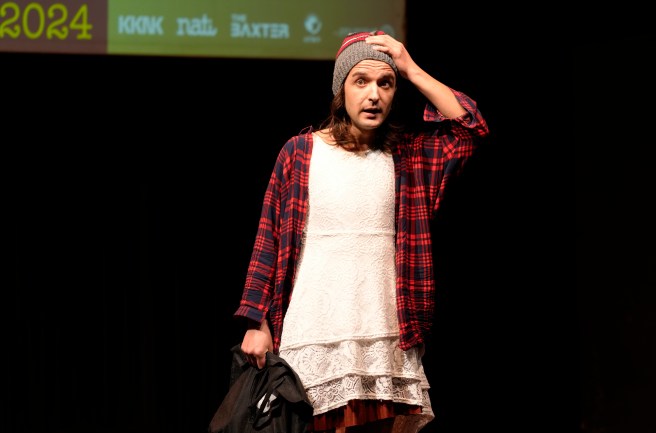
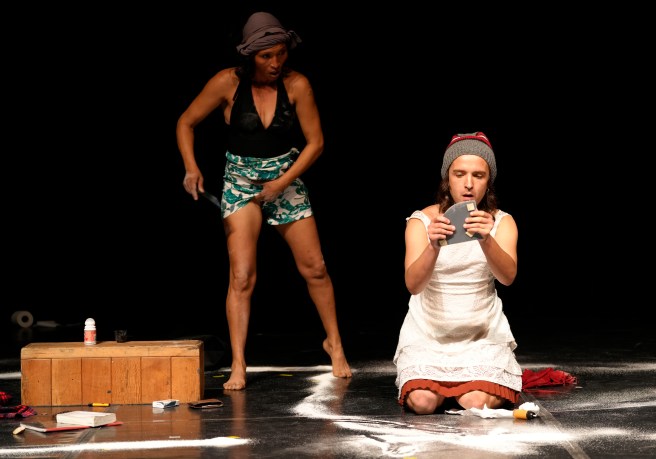
If you have followed an artist as closely as I have Nataniël, it’s not only the performance but also the progression that becomes part of the thrill of this spectacular talent.

Time and again, I have been curious at my astonishment at what I am experiencing during one of his shows, but I know it is the constant evolution of what he presents that keeps me enthralled.

He is one of the few who has managed to keep the element of surprise always present and he does this especially with his scripts. He has a mind that keeps on giving stories so fantastical and yet so based in reality that everyone can identify. But what elevates the presentation is his genius with words.

Bilingual and equally adept in English and Afrikaans, he has managed through the years to broaden his audience base in the way he has become comfortable in both. The stories immediately draw you in and the choice of language doesn’t play a part. It is the way his mind wanders, how he tells a story and the unique way he presents and arranges every single sentence.

Originality is one of those elements you either have or don’t. You cannot make it happen if it’s not there. And through the years, his has become stronger as his comfort levels have grown.

What you have now is a performer in total command of his art as he mesmerises his audience with his phenomenally unique storytelling. He is comfortable sharing the personal stories of his life and the way the world has always viewed and treated anyone who isn’t exactly moulded in the image of everyone else. He revels in the differences and through the years has become emboldened and embraces exactly the artist he is and wants to be. And we love him for that.

In everything he does, he always opts for the best and this is especially true of his band of class musicians. Headed by the masterful pianist Charl du Plessis, both Spies (bass) and Auret (drums) add to the individuality with their own musical flair. Add to that trio of perfection Juan Oosthuizen whose mastery with the guitar is legendary. Their performance is bliss.

It’s rare to have the accompaniment of such unusual talent, but Nataniël has always been secure in his own performance and knowledge that exquisite music enhances his singing, the real reason he loves performing.

The balance of stories and songs is important because the songs give you a reprieve from the density and sheer delight of the stories as well as a chance to breathe as you appreciate the excellence of what you are witnessing. And with time and maturity, Nataniël’s voice is richer, the music more nuanced and the singer has perfected his authentic sound.

I have always been captivated by what this artist brings to the stage because it is so unique, put together with boundless imagination and because of the inspired stories – a new play with every show he presents – each season is an explosion of the extraordinary. He has been a blessing to local audiences because of who he is and the riches he presents on stage.

The rarity of his creativity is a joy to behold. May he keep being the wonderfully colourful creation who once, twice, or if we’re lucky, three times a year holds us in the palm of his hand as he takes us wandering with wonderment into a world that is as charming as it is complicated.

Bookings: seatme.co.za

TROU- EN SPEELMAATS CINTAINE SCHUTTE EN CAREL NEL MAAK ‘n BEGIN BY DIE MARK TEATER

KLEUR FOTOS: Gys Loubser

SWART EN WIT FOTOS: Stephanie Gericke

Cintaine Schutte en Carel Nel speel nie aldag op die verhoog saam nie, maar die tyd is reg. Die twee gesels met DIANE DE BEER oor hulle jongste stuk ‘n Begin, wat Donderdag 30 Januarie by die Mark Teater in Johannesburg begin, oor hulle prosesse:

Cintaine Schutte en Carel Nel in rehearsals (links) saam met Tinarie van Wyk Loots (regisseur) en verhoogbestuurder Lize-Marie Wait (regs)

HOEWEL hulle werkprosesse baie verskil, is daar darem baie voordele ook aan saamwerk.

“Hoe nader ons kom aan die speelvak by die Mark Teater (Johannesburg), is dit net ‘n luuksheid dat ek dadelik ‘n wordrun kan doen saam met Carel in die sitkamer of ons kan praat oor die karakters,” vertel Cintaine.

“Maar natuurlik is daar altyd tussen hom en my ‘n Cintaine en Carel. Daar’s ‘n tyd wanneer ons praat oor werk en daars ‘n tyd wanneer ons nie praat oor werk nie, want ons moet ook lewe tussenin, en ek moet dit ook respekteer.”

Sy is iemand wat te veel wil praat oor werk, en dikwels belaai met notaboekies en bladsye vol geskryf. “Dan sien ek vir Carel  op die bank lê en as ek vra ‘wat doen jy’, dan sê hy, hy dink aan die scenes en hoe dit uitspeel in sy kop.

 “Ek moet dit op die bladsy hê.  Ek dink ook dis belangrik om nie altyd uit te vra oor sy werkproses nie, want dan verras jy jouself op die vloer. As ek uit ‘n gemaklike plek uit speel, kan ek enige iets regkry. Vir my is voorbereiding baie groot.”

Carel besef dat almal anders  werk. “Ek het nog nooit met ‘n akteur gewerk wat presies dieselfde werksprosesse as ek het nie. Dis normaal, en jy moet dit maar net respekteer. Elke persoon werk anders. Solank die eindresultaat positief is, gee ek nie rerig om hoe die ander  se prosesse werk nie.”

Vir hom is die belangrikste om by die waarheid van die stuk uit te kom en die eerlikheid daarin vind. En egos moenie deel van die proses wees nie.

“Dis die eerste maal in ‘n lang tyd dat die twee van ons saamwerk maar as vervaardiger toe ek eers besluit het dat Tinarie van Wyk Loots (onder links) die regisseur is, het ek haar die keuse laat maak van wie my Daniel sou wees. Sy het nie eerse tweekeer gedink nie, en dadelik Carel voorgestel want sy het gesê dit kort ‘n akteur met gravitas en sy het al met Carel gewerk met Baby I Love You.”

Cintaine  was dadelik opgewonde oor die saamwerk. “Hy is natuurlik ‘n goeie akteur, en daar sou ‘n shorthand tussen ons wees maar ek was ook bietjie huiwerig dat man en vrou in regte lewe op die verhoog gaan staan. Maar dit is waar die verbeelding van teater inkom waar ons verdwyn in die karakters.

 “Ek het ook iemand gekies wie se spelleiding baie sterk moet wees en daarom het ek as vervaardiger vir Tinarie gekies.”

Sy weet sy sal die vertroue wat hulle in die regte lewe het verplaas na die  verhoog en nie te veel druk daarop plaas nie. En dan kyk waar die kreatiewe proses hulle neem. Maar sy wil ook seker maak dat hulle lekker  kan  speel  en  fun  kan hê met die stuk.

Hoewel  Carel vier of   vyf   jaar laas  op die verhoog was  gaan hy  die  stuk   benader soos enige ander stuk met enige ander akteur of aktrise. “Julle moet mekaar toelaat om julle eie prosesse te volg en dis wat ons doen.”

Cintaine vertel dat hulle aan die begin van verlede jaar iewers in Europa saam  op ‘n trein was toe iets  vir  haar  fluister  dat sy weer lus is om te vervaardig. Kies ‘n stuk wat jy sal wil doen, is verder gefluister.

“Toe dink sy aan ‘n two-hander want dit is miskien beter as ‘n groot rolverdeling. Mens  wil soms groot gaan maar dis moeilike tye.”

Met navorsing kom sy op David Eldridge se Beginning af, bestel die play, kry dit en begin lees. Dit het haar gevang. Dit is ‘n stuk wat haar geraak en gepraat het.

“Laura is 38 en Daniel is 42 en dit raak baie punte aan van gesprekke wat ek al met my vriende gehad het, die psige van mense ons ouderdom. Dis ‘n baie naturalistiese play in die sin dat dit speel in regte tyd oor 80 minute, daar’s geen truuks of twists of plot -turns nie. Dis net ‘n slice of life.

“Hierdie stuk praat met my en ek het gedink ek moet iemand on board kry wat vertaling goed ken en wat dit kan lokaliseer.  Ek besluit toe op Nico Scheepers juis omdat ek al met hom gewerk het met Tienduisend Ton en ‘n fliek wat hy ook vertaal het.

“Die speelbaarheid het ook baie te maak met die vertaling en ek dink Nico het baie goeie werk gedoen.”  Tog met die eerste week van repetisies het sy, Carel, Tinarie en hulle verhoogbestuurder Lize-Marie Wait ook gesit en  dit hulle eie gemaak. “Ons het gesny waar ons gedink het maar nie te ver van Nico se vertaling verwerk nie, maar ons eie stempel daarop  afgedruk.”

Nou kan hulle met repetisies dit eg Suid Afrikaans hou, en die twee mense wat in die Kaap woon met eerlikheid speel.

Cintaine vertel dat daar baie verskillende temas aangeraak word en dat die skrywer baie lekker stories vertel. Die stuk het al oor die hele wêreld gespeel en die skrywer en sy agent was baie opgewonde oor die Suid Afrikaanse speelvak.

Vir haar as vervaardiger is dit ook lekker om van die sukses te hoor. “The proof is in the pudding, en juis omdat dit in soveel lande gespeel het, beteken dat dit praat met mense.”

Vir Carel is die temas wat uitstaan,  eensaamheid in die moderne wêreld. Dit handel oor mense van hulle ouderdom, laat 30s en vroeë 40s, hoe om iemand te vind in liefde en in vriendskap in die moderne wêreld van Tinder, Facebook en Instagram.

 “Hoe navigate jy om iemand te ontmoet. Dit klink dalk of dit makliker is  maar dit kompliseer eintlik dinge,”  sê Carel. “Dit maak dit anders,  en op daai ouderdom is mense getroud of geskei, hulle kom met baie baggage, so dis ook wat elke persoon saamdra. Wanneer jy iemand nuuts ontmoet is daar allerhande goeters wat jy uitvind.

“Die skryfwerk is baie naturalisties, dis twee mense wat mekaar ontmoet aan die einde van ‘n aand na ‘n partytjie, en ek dink Nico het ‘n baie goeie vertaling gedoen soos altyd. Dis net ‘n blik op die lewe, dis 90 minute waarin twee mense mekaar ontmoet vir die eerste keer, maar albei het ‘n verlede.”

Cintaine se karakter is Laura, 38 jarige vrou, en ‘n besturende direkteur by haar maatskappy. Sy is baie suksesvol, het sopas ‘n woonstel in Sandton gekoop en dit was haar housewarming  

“Sy is ‘n interessante kat en dit is so lekker om met Tinarie te werk want sy gee my so baie insig, verskillende perspektiewe om hierdie karakters in fully-fleshed mense te verander.”

Hulle hoop gehore sal hulleself of ander in die karakters herken.

“Laura is baie ver verwyderd van my af, en nou dat ek ‘n breuk gehad het na verlede jaar se Woordfees, is dit lekker dat ek weer bietjie kan deepdive in haar psige. Sy het ‘n baie goeie selfbeeld, lyk na ‘n baie sterk vrou, en sy sê haar vriende is jaloers op haar, die aande uit, die sukses. Sy is so in beheer van haar eie lewe.”

Dis hoe dit voorkom sê Cintaine, maar onder draai die duiwels rond. “Diep, diep binne is sy baie alleen en eensaam. Sy wil ook die wit trourok he, die kinders, ‘n familie. Sy wil ook iemand na haar huis toe kan nooi om te kuier. Dis maar die primere behoeftes van menswees en sy het dit nie in haar lewe nie.”

As dit by Cintaine kom wat haarself beskryf as  “‘n groot empath”, sy het empatie met Laura, maar sy  sal moet diep gaan delf om daai eerlikheid te kan speel wanneer sy uitkom by hierdie vreemdeling.

“Want ek dink nie sy deel verskriklik baie nie, sy bou mure op waar ek self so min mure het dat ek te baie deel. Maar as sy met Daniel begin deel, dan sien ons wat gebeur as daardie mure afgebreek word, en hoe die eerlikheid uitkom.”

“Daniel is ook baie anders as ek, dra baie bagasie saam met hom rond,en het baie verkeerde besluite geneem in sy lewe,” vertel Carel. “Hy is alleen en op soek na iets. Ek dink hy soek na human connection as gevolg van omstandighede en waar hy is in sy lewe hy is.

“Hy is baie anders as ek maar tot ‘n mate tog die selle. Elke mens soek maar connection, dis alles goeters wat jy verstaan. Hy’s net gewone man wat soek na die dinge wat ons almal wil he.

“Ek hoop mense geniet dit obviously, ek hoop hulle lag want ek vind van dit nogal komies en snaaks en ek hoop mense hou van die karakters want hulle is gewone mense met goeie harte wat eintlik net hulle pad deur hierdie wêreld probeer vind en ek hoop tot ‘n mate dat die gehoorlede sal voel asof hulle voyeuristies (nie op weird manier nie),  kyk hoe mense mekaar ontmoet, die op en af van nuwe verhoudings, dis wat ek hoop wat mense sal ervaar.”

Vir Cintaine as vervaardiger is dit ‘n groot eer om in een van ons land se beste teaters te kan speel en die stuk na Gautengse gehore te kan bring. Butterflies is daar, sê  sy maar daar is niks lekkerder as om op ‘n verhoog te staan met ‘n gehoor nie. “Hulle voel amper vir my soos deel van die stuk, nog ‘n karakter. Die energie is so tasbaar in daai 90 minute, mens moet maar duimvas hou dat dit werk.”

Maar die ergste lekker lê vir haar by die optel repetisies wanneer jy kan werk aan die stuk en so gemaklik as moontlik kan wees voor jy op die verhoog klim.

Vir Carel is dit sy eerste liefde. Dis wat hy geswot het, intussen paar liefdes bygekry, “Cintaine is een van hulle maar ook televisie en film en baie lekker om terug te wees … op die verhoog.”

Vir“hom is die lekkerte altyd die repetisie periode want “as jy begin en jy  kry die ritmes, is dit amper soos jou eie klein geheimpie en ek hou nogal daarvan om dit vir myself te hou. Dan kom die anxieties van nou moet ons dit deel met ander mense. Gaan jy gejudge word, is jy goed genoeg. maar jy kom oor dit alles en beweeg terug na die eerlikheid van die storie wat jy met mense wil deel. Jy leer om met die anxieties saam te leef.”

“As die stuk lekker speel, is dit ‘n wen situasie, en as mens by ‘n teater kan speel en ons sal graag na verskillede feeste wil reis,” sê Cintaine oor die verloop van die stuk.

Sy speel ook bietjie met die idee omdat sy die laaste paar jaar huiskonserte gedoen het dat mens  die stuk in iemand se sitkamer kan doen. Maar sy besef ook sy  moet  haar mede akteur respekteer en dit sal afhang of hy dit sal wil doen, getroud of nie.

Dit is ‘n baie anderste energie en tipe intimiteit wat jy jouself voor oopmaak, vertel sy, maar miskien is dit tog iets wat die stuk voor vra. “Die tyd sal leer,” sê sy.

Vir Carel sal dit  afhang van sy beskikbaarheid,  sê hy tong-stewig-in-kies. “Maar sy sal maar my beskikbaarheid moet check, want ek is soms nogal besig.”

En ons wat teater kyk, hou duimvas dat dit goed gaan met die twee – deesdae gesoute -akteurs, en dat hule die land deur speel met ‘n Begin.

*Die twee toegewyde akteurs het vrae beantwoord terwyl hulle luilekker in Griekeland getoer het verlede jaar voor die Woordfees speelvak. Die het intussen suksesvol plaasgevind met baie goeie terugvoer. Dit open 30 Januarie by Johannesburg se ikoniese Mark Teater en die speelvak is tot 16 Februarie.

Om te bespreek:

https://www.webticket.co.za/v2/event.aspx?itemid=1558065074
KKNK’S BI-ANNUAL TEXT MARKET A THEATRE EXPERIENCE THAT SPARKLES WITH INNOVATION

DIANE DE BEER

Tinarie van Wyk Loots talking about her script Hamlet/Speenvark.
Picture: Nardus Engelbrecht

DIANE DE BEER

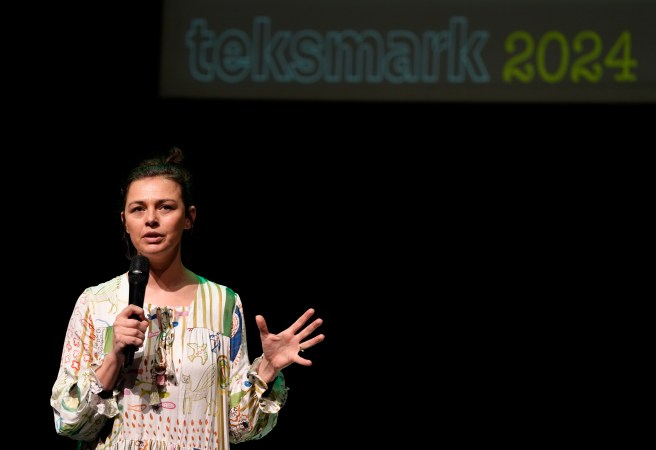
This is the 9th time I’ve written about the Klein Karoo Kunstefees/NATi/Baxter Teksmark (text market), the reason being it is such a smart creative endeavour.The brainchild of Hugo Theart, the CEO and artistic director, Hugo Theart of the Klein Karoo Nasionale Kunstefees (KKNK), it is one of my favourite events of the year It’s existence was born out of need because original local scripts had become a problem. What they were hoping to do was to create new theatre texts which would provide local content for the festivals as well as encouragement for both budding and seasoned writers. And that is exactly what happened.

This past festival was the 9th, 156 text ideas in many of our official languages have been presented and in total, 43 of these texts have been developed into full scale productions, some of which can also boast well-deserved prizes.

What I find so intriguing is the zeitgeist that shifts year by year. Very specific strong themes usually emerge and it is fascinating to observe the topics tackled and which struggles or celebrations the creatives have focused on in a particular year.

One of the extraordinary gifts that this particular platform supplies is the chance for artists to experiment, to test ideas, to play and simply to reach for the stars which is something that quite a few playwrights attempted with brilliant results.

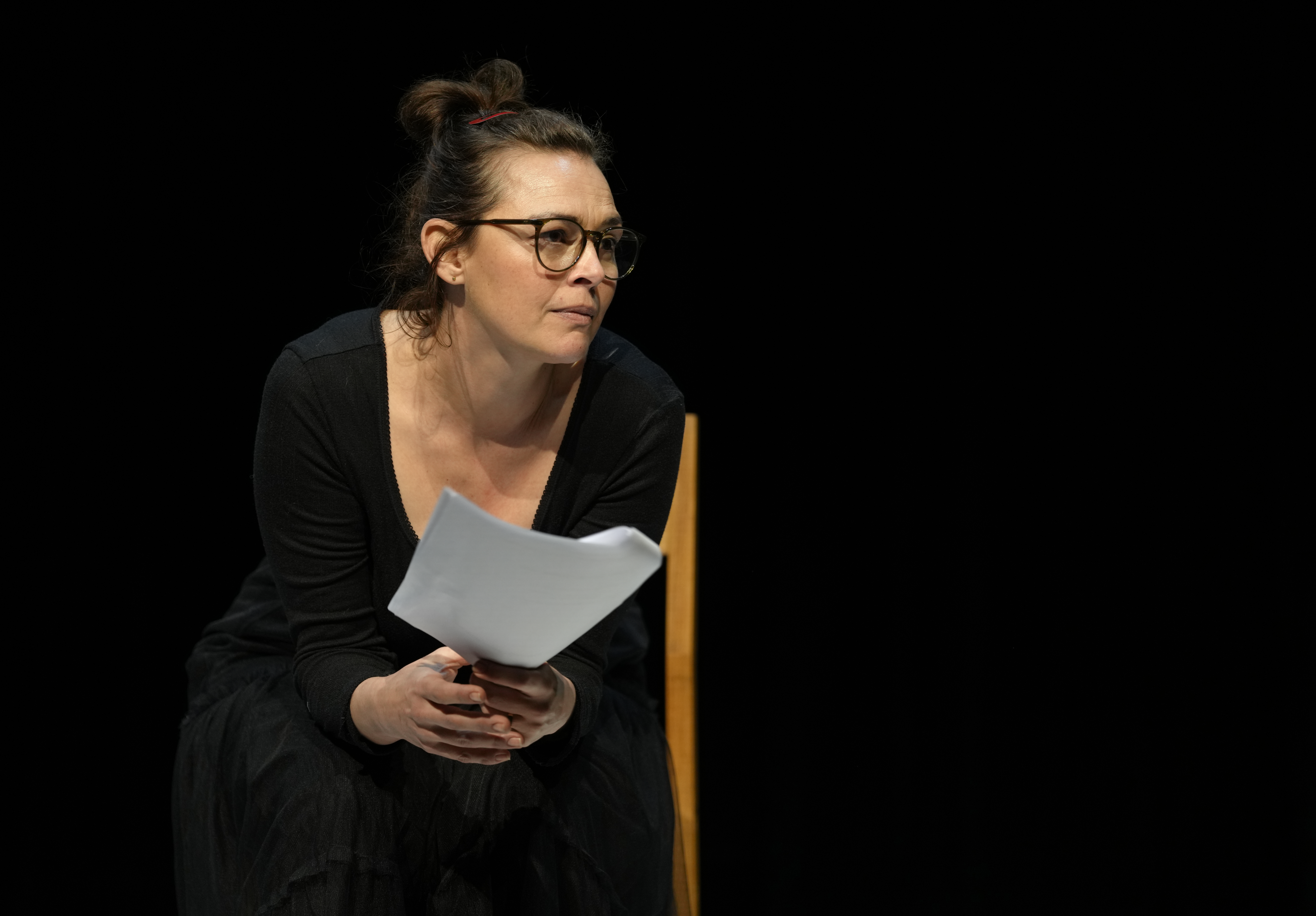
Acknowledged as one of our best actors, Tinarie van Wyk Loots presented a play titled Hamlet/Speenvark. Even the title suggests that this is going to be something unusual. Blessed with her acting skills, she could present her own play/monologue, which I found challenging yet immensely exciting.

She describes it as an attempt at a solo production, or struggling poem, modelled on, and with apology to Shakespeare’s Hamlet (and she cites Jonker, De Villiers, Malherbe, Totius, Opperman and Yeats). That’s quite a list.

She writes that it is “a tentative but violent investigation into the emotional landscape of being South African – the search for identity and a relationship with guilt and victim mentality.”

She further explains that her choice was driven by her “ancestors rooted in Africa and Europe, the disillusion of humanity, and emotional suicide depicted through the extrapolation of various characters in the original script, who all speak from the same mouth.”

The reading was magnificent and I could feel that this was going to develop into something quite extraordinary. Van Wyk Loots is someone who has given her heart and soul to the stage. Few actors can still afford to do that. But she has the skill and talent to keep adding to her repertoire and her engagement with theatre.

Not only can she write, she can then take the text, already her own, and do with it whatever she wishes. Personally I can’t wait. This is the kind of production that keeps theatre alive.

Dianne du Toit Albertze in conversation about Meire en Pinkie.
Picture: Nardus Engelbrecht

Never one to shy away from tackling holy cows, Dianne du Toit Albertze’s writing grabs you by the throat. On first reading of the text, I needed to know who had written with such abandon and such a brave heart. When I discovered who it was, I knew it couldn’t be anyone else and I was surprised I didn’t pick up the harsh yet haunting style of this writer.

Meire en Pinkie depict orphanage runaways and ladies of the night and day. Okiep jintoes with nagging drug addictions who scramble for survival daily, searching for a cure, writes Du Toit Albertze, but fail to know how to get it. But they continue running towards ways to escape the vicious cycle of poverty and abuse.

But she points out, life has a way of outsmarting you. The sins of their mothers catch up with them when they are accused of selling the means to vicious addiction, Meire’s child. It’s something they endured themselves as children. And now they feel abandoned

Picture: Nardus Engelbrecht
A scene from Meire en Pinkie.

It’s gritty, hard-hitting and without compromise. Some would argue for something with less hard edges but this is exactly what theatre can achieve: to tell real-life stories in a language that becomes a character, confronts you and makes you listen without turning away. This is when theatre becomes therapy for those writing and performing as well as those watching.

These are just two of the standout texts, part of this year’s text market at the Baxter but there were many more that had potential for further development and some already  stage-ready.

Playwright Gavin Werner (Meeting Murphy, centre) with two actors playing the parts on either side.
Foto: Nardus Engelbrecht

The theme of bullying captured by Gavin Werner in Meeting Murphy will touch everyone who would have experienced it in some form. Another one that popped up in quite a few texts was memory and the way individuals remember the same event in different ways. How we view the world is often coloured by past experiences and this can lead to discomfort in some instances.

The Salt Lesson by the insightful Sibuyiselo Dywill also tackles memory but here it has to do with different generations, cultures and languages and most importantly for the playwright, from the same bloodline. In any context this is a huge ask but with the South African apartheid past, when the elderly family member (white) suffers from dementia and regards the youngster (black) as an intruder rather than a son, things can get really messy.

Playwright Sibuyiselo (with the mic) surrounded by the three actors in his play The Salt Lesson.
Picture: Nardus Engelbrecht

It’s such a clever idea which explores different issues in genius and thoughtful fashion forcing audiences to look at their own world views from a different vantage point.

Scenes from The Salt Lesson. Pictures: Nardus Engelbrecht

With plays written in home languages including Afrikaans, English and Xhosa, the premise is embracing and expansive with the graft expanding year by year. Once we can figure out how to present theatre in different languages so that everyone can understand – easily – Teksmark will truly break down barriers and shift theatre in this country into a unique stratosphere.

And if you want to check out what is happening at the second Gauteng Teksmark to be held at UJ, where different playwrights and others involved in the theatre industry discuss their ideas as play readings, enquire with J.C. Aucamp at 0763335945 or jc@kunste.org.za.

The KKNK 2024 Gauteng Teksmark will be held on 24 and 25 October at Keorapetse William Kgositsile Theatre, Kingsway Campus, University of Johannesburg.
ANDREW BUCKLAND RETURNS IN THE CLASSIC UGLY NOO NOO TO JOBURG’S MARKET THEATRE

DIANE DE BEER REVIEWS:

THE UGLY NOO NOO

DIRECTOR: Janet Buckland

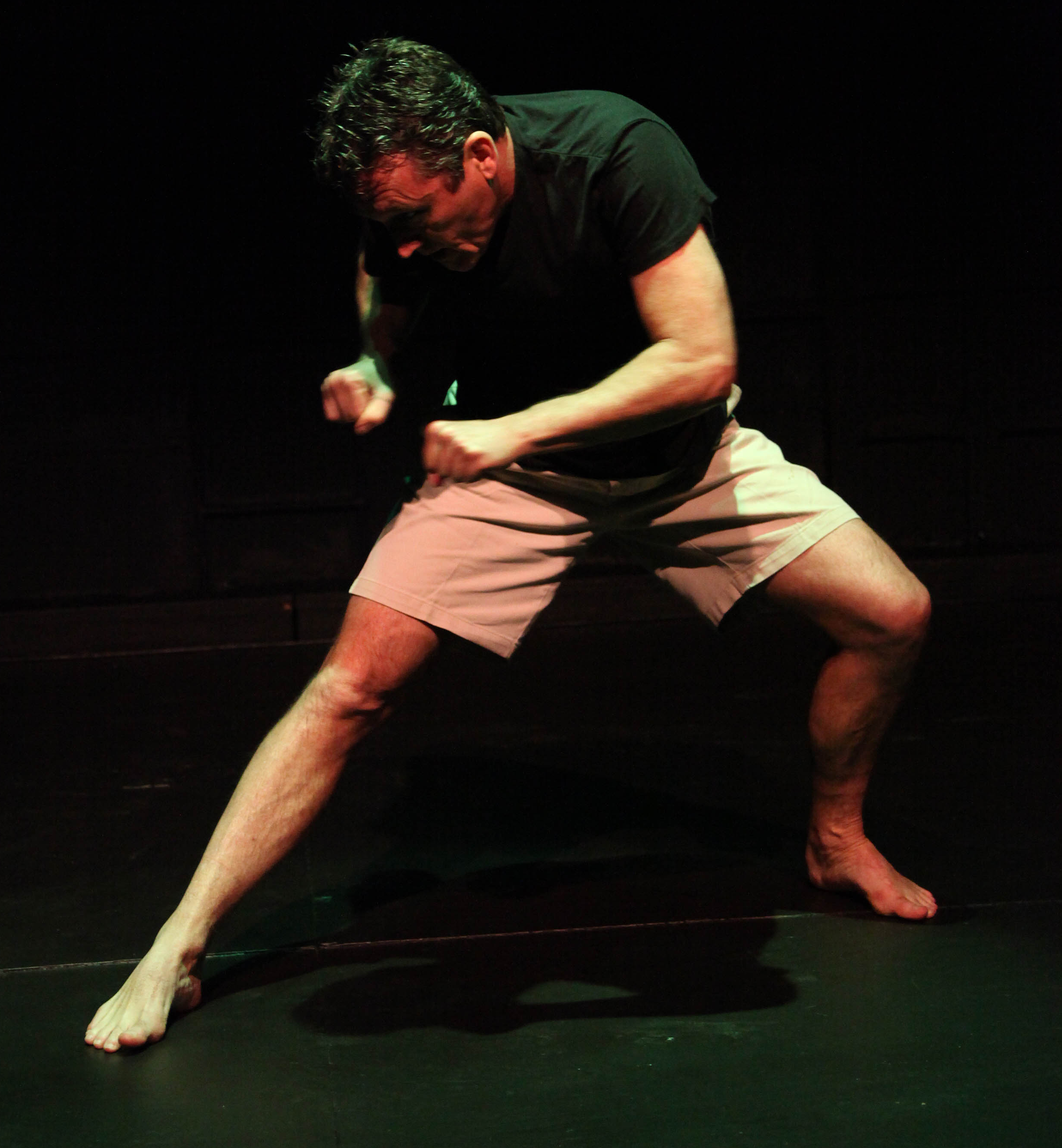
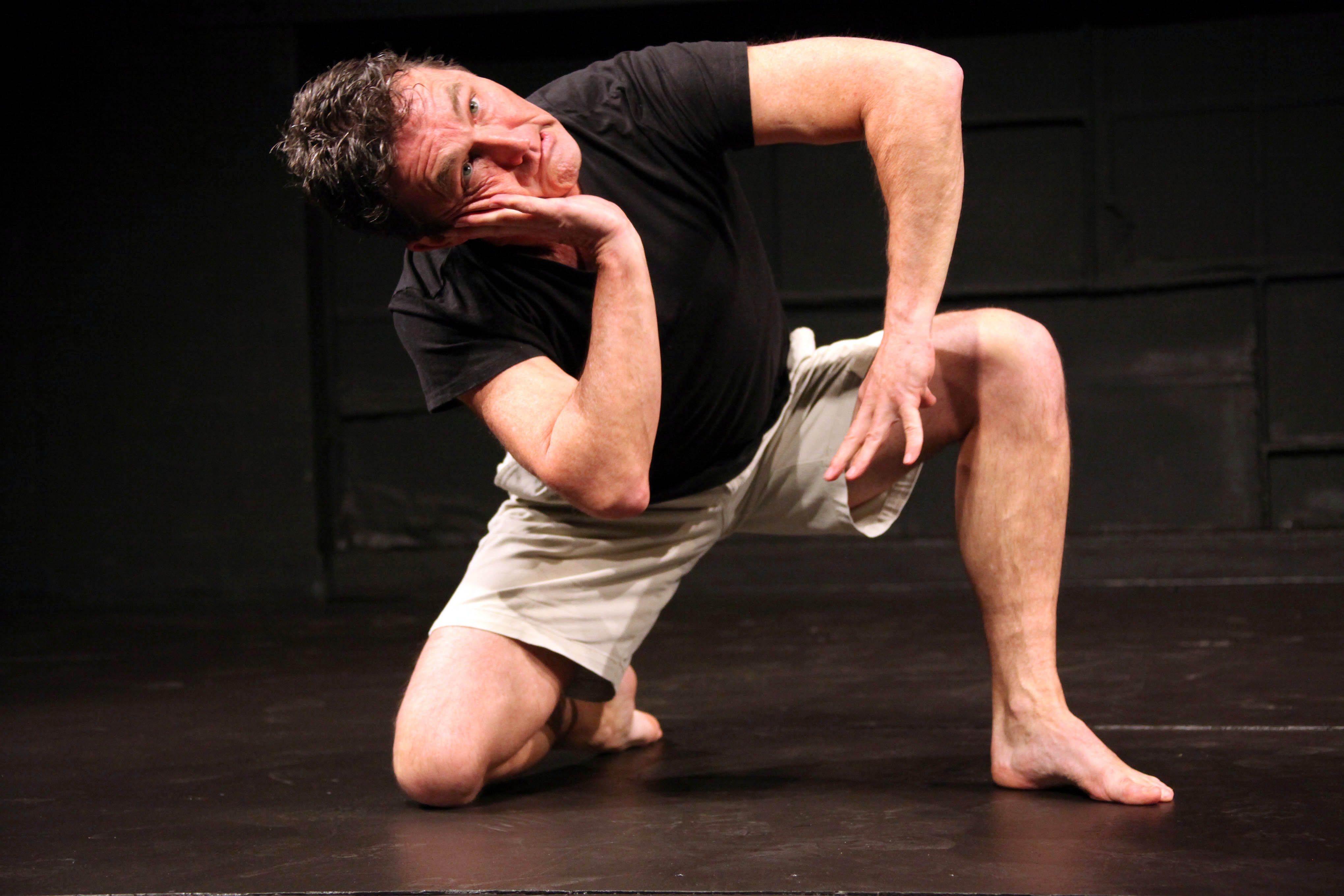
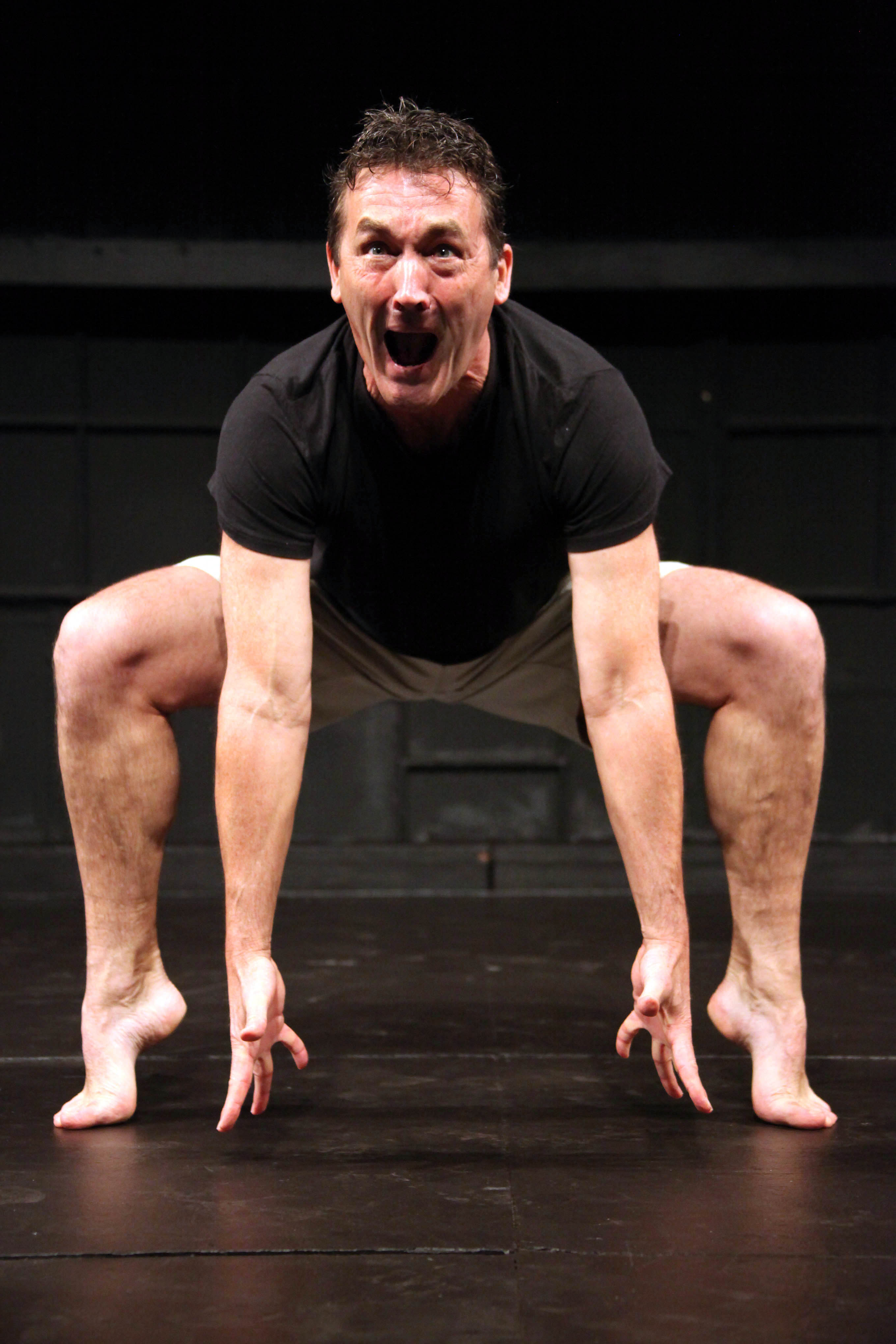
PERFORMER/WRITER: Andrew Buckland

VENUE: Mannie Manim Theatre at the Market

DATES: Until September 1

Pictures: Ruphin Coudyzer

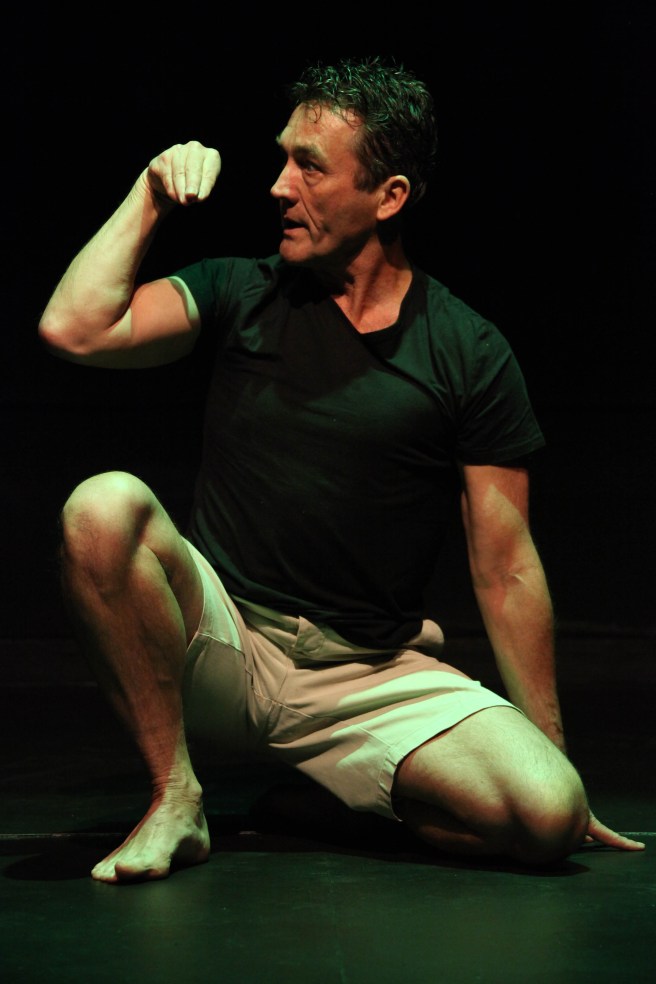
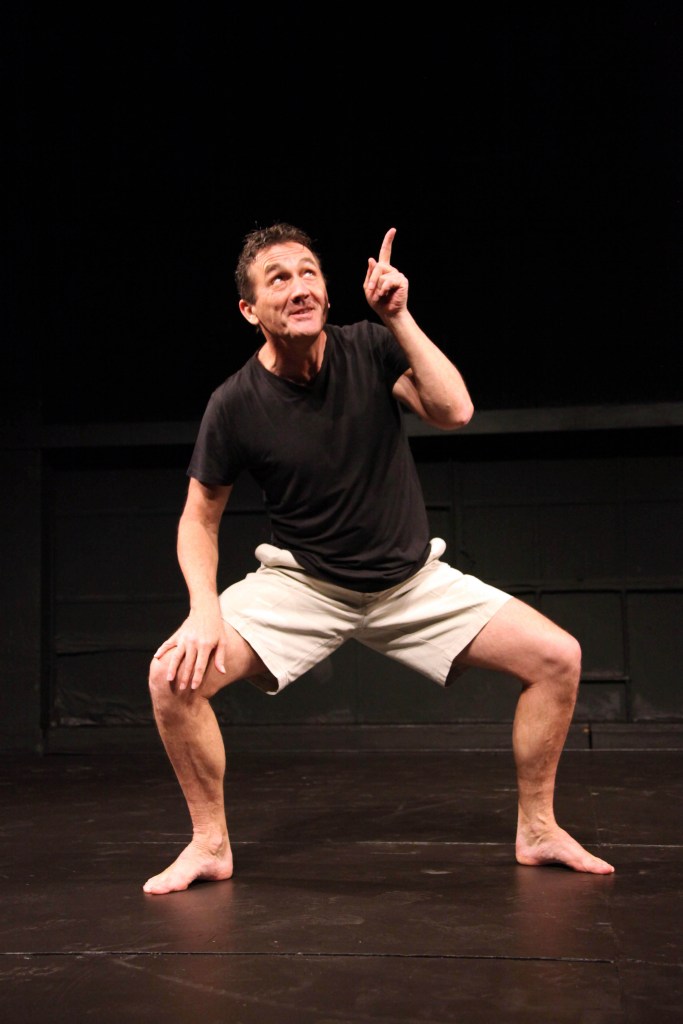
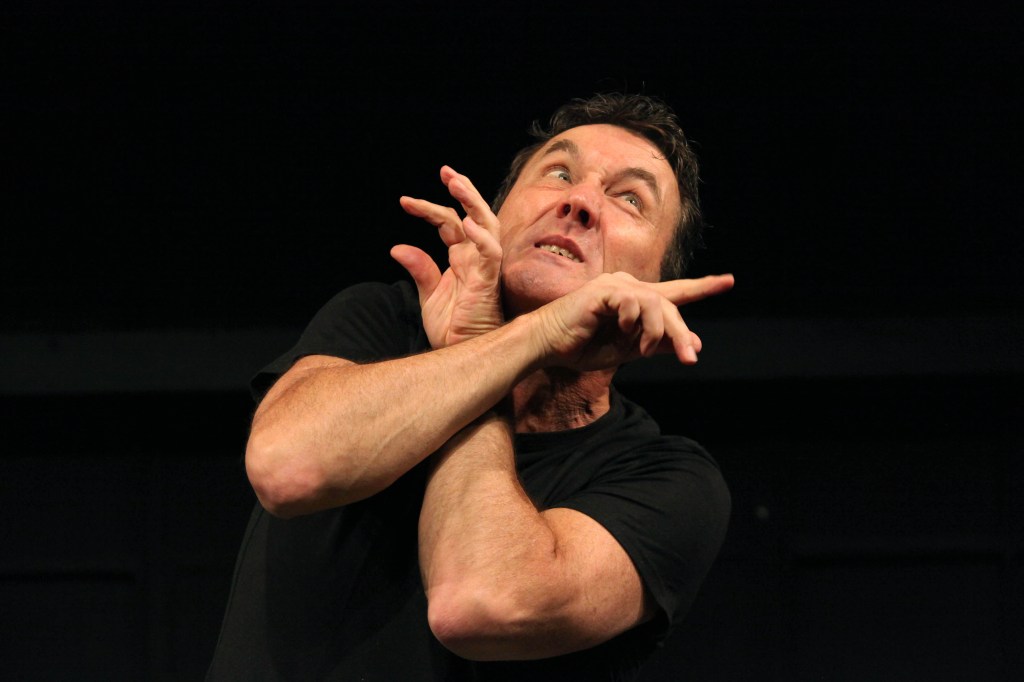
What a delight to revisit Andrew Buckland’s The Ugly Noo Noo, which was written and performed for the first time in 1988.

That feels like a lifetime ago and it’s not often that we get the chance to revisit these classics of local theatre that travelled the world and won accolades all round.

They cleverly kicked off with The Making Of, presented as part of performance lectures and demonstrations at SO|The Academy for the Less Good Idea in Johannesburg with Buckland giving audiences (those who had seen it before and those going for the first time) insight into the development of his signature style. For him, the play was a response to the political and social context of apartheid South Africa in the late 1980s. For the audience, the talk was a chance to get closer to the thinking and strategies of this astonishing South African theatre maker.

Athena Mazarakis, Momenteur for SO | The Academy for the Less Good Idea, explains that The Ugly Noo Noo is a seminal work in the canon of South African theatre.  

“The work is not only a biting piece of allegorical protest theatre but it also established Buckland’s unique style of the highly physical one-hander that blended elements of mime with razor-sharp text.

“It is a style that has since influenced and inspired multiple generations of performers and theatre makers, defining a particular South African brand of physical theatre marked by the combination of physical virtuosity with a strong textual strand and the solo performer who single-handedly takes on an entire cast of characters.”

She reminded audiences that, “not only is this re-staging a reminder of the part that theatre and artists played in the struggle but is also a continued reminder to artists today of the power that their work holds to critique and question the many injustices that surround us.”

For Buckland, his work is all about the imagination of the audience, where the action of the piece is given life. “It’s a delicate line to get the audience curious, like charades on steroids, as you draw them into the play.”

Play, in fact, says Buckland, was where it all began. He was the youngest of seven siblings and started playing on his own for hours, being the hero in his own world.

For this particular piece, 36 years ago, it began after witnessing his wife’s response to what had become known as the Parktown prawn. “I always loved language put together with movement or stillness,”  he says.

Thus began the encounter between a human and an insect. He felt trapped in the world of apartheid at the time. How does a white man deal with what is happening around him on stage? He knew he had to participate in a meaningful way. The Ugly Noo Noo gave him the perfect allegorical way out, offering him a novel way of telling stories while at the same time pointing to the world around him and the horror confronting South Africans.

What he was familiar with was his own angst and fear. Being the artist he is, The Ugly Noo Noo was where it all began. And while we were in the grips of apartheid when it first emerged, this time the world is struggling with a sudden explosion of fascism all over the place, and the timing of the current season could not have been more apt.

Looking back, that has been Buckland’s weapon (deliberately or simply instinctively). His work has managed to capture a particular zeitgeist which in some fashion seems to hold countries  to ransom.

What he discovered with this work was that it was possible to use laughter as a vehicle to invite people to acknowledge and confront their fear.

Watching the performance all these decades later and again hearing the text it is obvious why it was such a success while still retaining all the power of performance and  storytelling as when it was first performed.

When talking about the making of, Buckland referred to his age, but what struck me was that all his many years of training, of honing his craft, have added to the detail and impact of his movement, which might have been diminished with age. Older and wiser, he knows where and how to compensate and embellish.

The text has lost none of its initial cunning and while his antics on stage has the audience in laughter much of the time, the real essence of the text is a still a stomach punch.

It is one of those that has all the elements celebrating the art of performance and storytelling when there’s a true genius at work. Buckland has always been one who worked with delicacy and delight when presenting his art. And his choice and timing of when and what to perform is spot on.

Hopefully he will return to that classic treasure trove of his and bring back all those memorable gems.   

A FIERCELY FUNNY SOLO ACT AT THEATRE ON THE SQUARE WITH A SKILLED SCRIPT AND DEXTROUS PREFORMANCE BY AARON MCILROY

DIANE DE BEER

A VEGAN KILLED MY MARRIAGE

Actor: Aaron Mcilroy

Writer/director: Craig Freimond

Show times: Weekdays at 7:30pm and Saturdays at 5pm or 8pm

Dates: Until 14 July


A solo show is a difficult gig for any performer. It’s the actor and the script with no backup if things go wrong. They have to think on their feet.

But when it works, it’s usually a blast. They’re sometimes funny and often sad. But whatever the material, the performance is usually the determining factor.

That’s why I try to give solo artists at least one chance. If they’re good, you’re theirs for life and usually the progression is also special to witness.

When I saw  that Craig Freimond was the director and the scriptwriter, I knew this would be a winner. His reputation is established and I was pretty sure the trip would not be wasted.

It’s always interesting to discover new actors and Aaron Mcilroy’s performance was hugely entertaining.

The title is pretty self-explanatory and in this time of extremes, vegan is a good topic through which to exploit that particular behaviour trait. Anyone who gives up anything with success can be very painful and annoying. Perhaps “sanctimonious” captures the essence more specifically.

And that’s exactly what happens here as  this particular vegan convert decides he has to inspire the world. He has discovered the life and it is his responsibility to pass it on. Get the drift…

Especially braais – that sport of kings in the South African context – are not the place to start preaching a vegan lifestyle. But, of course, new disciples, have hardly learnt the finer nuances of taking things slowly. Trying to persuade someone to let go of their way of life because that’s what you have done is hardly a proven recipe.

And that’s exactly what happens. But without showing the play’s hand completely, rather discover it for yourself.

Mcilroy knows how to work a room, he has an abundance of tricks in his bag to layer his performance, and the script is coloured smartly with the sharpest South African shades, is extremely funny and very recognisable to anyone who has ever been in any relationship.

We all start out with good intentions and then the personalities and needs of the different parties come into play. How different individuals play their moves often determines the outcome.

Freimond and Mcilroy make a good team. It’s a sassy little play, a smart performance and, at 60 minutes long, perfect for a chilly Gauteng evening. Take some friends and have a relaxing time out.

THE WAY A CHILD’S HEART FINDS HAPPINESS

REVIEW BY DIANE DE BEER

THE KING OF BROKEN THINGS

DIRECTOR AND WRITER: Michael Taylor-Broderick

ACTOR: Cara Roberts

VENUE: Mannie Manim Theatre at the Market Theatre

DATES: Until Sunday

AGE: From 10 years old

DURATION: Approximately an hour

This is the final call for this delightful play which has been doing the rounds for some time but, is as far as I know, this is its first visit to Gauteng.

Solo plays are festival standards and a wonderful way to discover new directors and actors. In this instance, Roberts, who according to the internet, is based in Durban, has been seen on local stages but also has a number of solo productions as part m of her repertoire.

That tells you about a performer who knows how to generate her own work, something they need when trying to survive in an industry hard hit in any troubled times. Survival is part of their normal game.

And for the character Roberts is portraying in this particular venture, a 10-year old boy, it is all about survival.

We don’t know too much about him except that he is living in a world of “broken things”, which dominate his life and the space in which we find him. If the world he was given is too difficult to navigate, it seems, his remarkably skilled solution is to create a space that can accommodate his wounded soul.

But that is how many young children react to a tough situation which they might not understand and in which the adults in their lives are sometimes the culprits who have created what seems to be a dark space.

And we all know that while communication is the best way to keep anyone’s world on track, it’s something that everyone seems to have a problem understanding. Just check around you and the problems you bump into – communication is such a handy tool if we would just go there.

Yet when your life seems to be dominated by pain, losing people you love and trying to find the reason for these tough times, you will find a way. You might not understand what is happening, but in this instance, the young child talks and creates his way to a better place.

It’s one of those plays that presents you with a moment in time, one that most of us encounter in some way, but he has found a way. If others can’t fix you, there are ways to make your dreams come true.

Roberts is an astonishing actor. Playing someone much younger is a tough ask, but with a smart script and a performer that throws herself at the role with just the right balance, it works.

It’s a charming hour and a play which I think especially teenagers should see. They would pick up a few life lessons and discover the way theatre can generate both wisdom and wit as The King of Broken Things leads them into a world of wonder where imagination is the ingredient that really matters. Shows tonight (7pm), tomorrow (3 and &pm) and Sunday (3pm). Bookings at https://www.webtickets.co.za/v2/Event.aspx?itemid=1537172754

STATE CAPTURE IN FULL COLOUR IN THE BROTHERS NUMBER ONE AND A WEEKEND SPECIAL AT JOBURG’S MARKET THEATRE

REVIEW BY DIANE DE BEER

Pictures: SUZY BERNSTEIN

THE BROTHERS NUMBER ONE AND A WEEKEND SPECIAL

A new South African Political Play

PLAYWRIGHT: Richard Calland

DIRECTOR: Greg Homann

CAST: David Dennis as Uncle; Michael Richard as Tim; Astrid Braaf as Journalist; Zane Meas as the Lawyer; Ziaphora Dakile as Tiger Claws; Melissa Haiden as Virginia

ASSISTANT DIRECTOR: Aalliyah Zama Matintela

SET AND COSTUME DESIGN: Lisa Younger

LIGHTING DESIGNER: Hlomohang ‘Spider’ Motheto

AV DESIGNER: Xolelwa ‘Ollie’Nhlabatsi

SOUND DESIGNER: Vagile Mpumlwana

VENUE: Mannie Manim Theatre at The Market

DATES: Until May 19

In the programme notes the playwright is described as a prominent political analyst, and a columnist for the Mail and Guardian newspaper as well as the author of a number of political books.

The following is also stated:

The Brothers, Number One and a Weekend Special is the story of the rise of State Capture, starting with the announcement of a new Minister of Finance in late-2015. The play, which tracks a two-year history, is written by astute political analyst, Richard Calland, who has been close to the frontline of South African politics since 1994 and a political columnist at the Mail & Guardian since 2001.

As the drama unfolds, an audience witness the high-stakes manoeuvres, clandestine dealings, and manipulation of public sentiment that fuelled further racial division across the nation. Calland weaves a narrative that connects the dots between government, media, and corrupt businessmen, laying bare the underbelly of a political landscape marked by noise, complexity, and a dangerous volatility.

This leaves you in no doubt about what is going to follow and my first thought was, this being the 30th celebration of what still feels like our young democracy, the play must be seen as a sign of our maturity as a country.

This kind of play, with a representative audience all loudly involved from start to finish, has a lot to say about what we have gone through and, how we have emerged with much more political smarts and cynicism following the Zuma years. Even though we are still suffering many financial and ideological blows from that horrific time, we are not as easily duped, no longer the silent sacrificial lambs we were then.

And at the heart of what unfolds is the playwright who as a political analyst and journalist, has the information at his fingertips.

How can we forget how the iconic Brenda Fassie song title Weekend Special became something completely different in South African minds?

Michael Richard and Melissa Haiden.

This was perhaps the turning point of the whole Zuma fiasco – his Weekend Special. You can dupe a country as much as you want it seemed, but when you go for their money, that’s a completely different ball game – and when things started to unravel for the shameless Number One. Des van Rooyen was no match for the controversially fired Nhlanhla Nene – as the rand went into free fall.

Remember those heady days for the Gupta brothers, who are still hiding out (with South African billions, mind you) somewhere in the Middle East, Switzerland or India depending on  which sources you trust.

Back to the play. We all know the facts; there were many newspaper reports as well as Thuli Madonsela and Zondo’s inquiries. With Homann smartly mixing his cast with stage veterans such as Zane Meas, Michael Richard and Dennis Becket and three young but also experienced female actors (more familiar I suspect to Cape audiences), we all had to think on our feet to work out the different characters.

David Dennis is Mac Maharaj whispered an audience member close by, but in the end it didn’t matter. You quickly gathered that the men were part of the corruption including the Guptas, as well as those handling all the shaky deals from government side, with Richard being the one watching and guiding his journalist.

David Dennis makes his point.

It was glorious to see these three in action on the same stage, masterfully matched by the young female energy in their particular roles of either ferreting out, or defying any corruption allegations, depending on their particular alliances.

It takes one back to those early days of discovery. Remember the Saxonwold shebeen? People carrying handbags stuffed with money, others denying visits to their overlords, those in command of State Capture. It feels a bit like a horror movie, but not with Calland orchestrating the manoeuvres and connecting the different dots.

And everyone was laughing. We have, after all, dodged a bullet and most of us are much less gullible than we were in those heady early days of our democracy.

The anguish is palpable.

It’s a fast-paced political thriller of sorts and it’s our own. What I would have liked is a bit more clarity in the staging. With seats on three sides, the projections were difficult to follow from the side. And some gave insight into the full affair which was unravelling at a speed.

Short and straightforward interactions would have  added more punch (from both a script and staging perspective) and added a contemporary edge. The audience obviously loved it and were fully engaged, and so was I. But, especially as we all knew the details, it simply would have elevated it into a landmark play.

WITH RULES CHANGING CONSTANTLY, KING GEORGE AT SANDTON’S THEATRE ON THE SQUARE IS ALL ABOUT THOSE WHO MANOEUVRE THE GAME BEST

REVIEW BY DIANE DE BEER

Pictures by Philip Kuhn

KING GEORGE

A new play by Brent Palmer

DIRECTOR and production design: Adrian Collins

CAST: Clyde Berning and Brent Palmer

VENUE: Theatre on the Square, Sandton

DATES: Until May 4

King George with Brent Palmer (left) and Clyde Berning.

It’s not an easy world we live in. Nothing seems to come without some kind of threatening event or warnings to watch out for scams when dealing with the outside world with its big bad wolves on the take.

This is exactly what you witness in this smartly crafted play by Brent Palmer – one of the actors and the playwright. In the world of theatre, it helps when you can also write the stories you want to tell and if you do it this well, it’s a bonus.

The fact that it doesn’t take much more than two male actors in a room makes this one a no-brainer, especially for independent theatres that have relentless financial restrictions. Shane Wynstock (Berning) is the slick CEO of Synergy Properties. He is in the process of starting a new development and boasting about his accomplishments to a possible investor when there’s a knock on the door.

George Megalos (Palmer, who recently won a Fleur du Cap for this particular role) is someone who slides into a room and not with the bravado of  Seinfeld’s Kramer – it’s much more of a slithering entrance. He’s trouble, and that’s immediately visible.

The gloves are off.

Not that Shane seems to be bothered. And the dilemma unfolds cunningly and with great sparring between the two obviously adversarial men. It appears that there’s a problem with an audacious development plan which Shane is about to set in motion. It means problems for homeowners in the area though, as they’re just expected to vacate their homes and move.

In a standoff, George (right) and Shane are in a heated discussion

George is determined to have nothing of this as they become embroiled in a heated argument.

 The interesting twist is the switch of villains with the more sleazy character the one who can claim the moral high ground, while the obviously moneyed man is the bully who knows he has the bucks to win this round. That’s all that counts.

It’s intriguing theatre as the two actors inhabit their characters and quickly draw you into their different worlds – with some ambivalence because we live in times where first impression is based on appearance. Shane wins hands down, but it becomes clear that the tables might be turned in this one.

The play is not about the outcome; it’s much more about the world we find ourselves navigating, where the traditional rules no longer apply. It’s all about power, and that is determined by the one who has the money.

But the manoeuvring is fun and the actors obviously delight in this fast-paced duel. I loved the originality as it’s not something I’ve seen before, and it’s perfect for our crazy world where men like Trump and Zuma think they have a second chance at the top spot in spite of their sullied reputations known to all.

And they have the followers who egg them on.

RINGMASTER SYLVAINE STRIKE GATHERS THE BEST AROUND HER FOR A FLOURISHING SPRING AWAKENING

The ensemble wih the love-struck couple (Scarlett Pay and Dylan Janse van Rensburg) in the front.

REVIEW BY DIANE DE BEER

Pictures: Claude Barnardo

SPRING AWAKENING

Based on the play by Frank Wedekind

Books and lyrics: Steven Sater

Music by: Duncan Sheik

Featuring: Dylan Janse van Rensburg, Scarlett Pay and Jonathan Conrad with Gemma Bisseker, Killian Blerk, Jude Bunyan, Tatum Grace Coleman, Jayden Dickson, Noa Duckitt, Skye Themeda Goss, Ché-Jean Jupp, Gabriella Knight, Jasmine Minter, Tumelo Mogashoa, Hannah Norcott, Nandipa Nyivana, Benjamin Stannard, Tjaart van der Walt, Gerhard van Rooyen (graduates and under-graduates) and playing the two adults, also former students of LAMTA (The Luitingh Alexander Musical Theatre Academy), Francis Chouler and Natalie Robbie

PRODUCERS: Anton Luitingh and Duane Alexander

LIGHTING, SCENIC AND COSTUME DESIGN: Niall Griffin

SOUND DESIGN: David Classen

ASSOCIATE DIRECTOR AND ASSISTANT MUSICAL DIRECTOR: Anton Luitingh

CHOREOGRAPHIC SUPERVISOR: Duane Alexander

VOCAL DESIGNER: Annemari Milazzo

MUSICAL DIRECTOR: Amy Campbell

CHOREOGRAPHY: Anna Olivier and Naoline Quinzin

STAGE MANAGER: Sarah Wolhuter

DIRECTOR: Sylvaine Strike

VENUE: Pieter Toerien Theatre, Montecasino

DATES: May 5

Spring Awakening a production for current times.

Perhaps Spring Awakening is the reason Sylvaine Strike is only now directing her first musical. It was destined to happen with this particular show – and she does it magnificently.

If anyone was up to this specific task, she was. Even more than I knew, because I was unaware of her teaching responsibilities at LAMTA, Luitingh and Alexander’s Musical Theatre Academy in Cape Town that invited Strike to direct.

In her programme notes, she explains that  her  students understood her approach “tackling the very controversial themes – from a physical rather than a psychological perspective – possible, and ensuring that the sexuality, heartache, and rebellion we activated during the rehearsal process always came first and foremost from the body. This was apt seeing that the impulses of adolescence also spring from this turmoiled yet effervescent well. Whether we explored the private agony of self-consciousness; the damage of self-doubt; the wreckage of hormones on both mind and soul; the pain of parents’ inability to accept a child as they are; or the blossoms of sexuality growing their gentle tendrils of yearning and fantasy throughout adolescence …”

Much of the magic is in the movement.

Her mantra was to seek a physical way to manifest these feelings and to create the characters from that specific place.

And even though I didn’t know any of this before watching this production, it was the movement and the choreography that grabbed and gripped me throughout. It was so clever and crafty to use this in both solo and ensemble numbers and even with the very specific movements of the two adults to exactly capture their strictly restrained and fastidiously maintained lives.

I kept wondering who the choreographers were, as they who would have been completely aligned with Strike’s vision because of her very detailed rehearsal process. Not surprisingly, but also with kudos to the producers and director, they picked two of their talented graduates Olivier and Quinzin, who did an amazing job both incorporating and executing their work to perfection. It adds currency and electricity to the performances that translate masterfully.

But that was just the start of the cohesion of the whole. Again the programme notes capture it best when explaining the electrifying adaptation of Wedekind’s Spring Awakening into a contemporary rock musical, which Strike rightly salutes as the key to the current success of the piece. She is convinced (and I agree) that the sheer brilliance of Steven Sater’s lyrics and Duncan Sheik’s music makes the return of this classic possible and heightens the relevance of the themes as long as there are adolescents in this world.

To pull it off though, it needed the razor-sharp vision of Strike, her pinpoint accuracy in the detail and, more than anything, the artists she surrounds herself with, assigning them to their specific fields of expertise. Even though she and designer Griffin had never worked together, she trusted her instincts and tasked him with all three design elements: lighting, costume and set, all of which establish the feel and the atmosphere of where and how the story unfolds.

 It’s brilliant. From the set that transforms with only a few movable parts to the costumes that speak volumes in their simplicity but also carry an underlying theme, as he experimented with the authenticity of the fabric, to the lighting that enhanced what he had already established with the set and the costumes.

All of this would have been superfluous without the right cast. It starts with their youthfulness. Undergraduates and graduates of LAMTA, most were already familiar with the director’s ethos, and it shows. Performances are spectacular and some of the solo moments quite breathtaking.

Spectacular singing with individual tones from Johnathan Conrad and Dylan Janse van Rensburg.

There’s too much to take in and remember in one sitting, but the performer I couldn’t turn away from was the unusual Johnathan Conrad. It needed someone like Strike to cast correctly, but it was as if the theatre gods had handed her a mini Mick Jagger in looks and talent. As the overwrought and picked-upon Moritz Stiefel, his every move, the singing and the presence never faltered  –  a wonderful foil in a complex production.

The love-struck Scarlett Pay (as Wendla Bergman) and Dylan Janse van Rensburg (Melchior Gabor) are radiant as the couple who cannot resist one another, and their singing captures their hearts’ desires magnificently. Another standout was the luminous Noa Duckitt as Ilse Neuman.

Two standout performances from Noa Duckitt as Ilse and Johnathan Conrad as Moritz Stiefel.

The music holds the show and the singing had to soar for the show to come alive. Again, musical director Amy Campbell teaches at LAMTA and wisely she was in charge and harnessed all her skills to get this working perfectly. More than anything it is the individuality of the different singers surrounded by the more gentle ensemble singing (more often than not) that rocks this one.

Finally it is Strike who pulled it all together. You can have all the talent in the world, but if the story isn’t told with one voice, it has diminishing impact.

Strike doesn’t miss a beat. She has gathered artists young and old around her to tell this striking story that affects us all at some stage in life in the best way she knows how. It has purpose, it holds you in awe from beginning to end, and you are engaged in and enraged with these youngsters as they fight for their right to live their way.

I was spellbound.