Peter Pan on Ice is Fun Festive Entertainment for the Family

DIANE DE BEER

Poster 2 Teatrosmall (002)

PETER PAN ON ICE

COMPANY: The Imperial Ice Stars who collectively hold more than 250compdetition medals and include 23 former World, European and National Championship-level skaters

PRODUCER and ARTISTIC DIRECTOR/CHOREOGRAPHER: Tony Mercer

VENUE: Teatro at Montecasino

DATES: Until January 11; Tuesday to Friday at 7.30pm; Saturdays 3pm and 7.30pm; Sundays 2pm and 5.30pm

It is the time of year when entertainment takes on different proportions. For many the end of 2019 means sheer exhaustion and what we need is some rollicking fun and whoopee, ESCAPISM in capital letters.

That’s exactly what this one is with accent on family, which is perfect for this time of year. This is when you want to pack the kids into the car and take them for a magical evening to a show that creates a magical wonderland.

PANimage1
It’s fun and games for the cast of Peter Pan on Ice

It’s not easy to capture the amazement of young and old in one show but the sheer splendour of skillful skating will do it every time. And then to scale it down to fit onto a theatre stage while not diminishing any of the spectacle, is quite something.

The previous shows by this company include Swan Lake on Ice, Sleeping Beauty on Ice and Cinderella on Ice, all of them spectacular in their own right and expect nothing less from this one. Their reputation is firmly established.

Peter Pan is perhaps a more complicated story to tell in this fashion but the company made full use of the inspiring and inspired extras including flight, something that Peter Pan and Tinker Bell do with grace. It’s huge fun including some unexpected innovative figures like a dancing crocodile who is arguably the most popular character on stage – even though he frightened a few of the young ones at first sight.

Perhaps that’s why Captain Hook didn’t seem as ferocious as his reputation predicts and one expected him to be. After all he is the leader of the fearsome pirates!

PANimage2 (002)
It’s a show packed with athletic acrobatics.

But this is a great yarn and while perhaps it’s not for the very young, there’s enough action to keep everyone happy. From the astounding and non-stop acrobatics of the full cast, the balletic aerial gymnastics and exquisite flight sequences, which are always fun to watch, the balance between the spectacular and skillful skating and the action sequences with even a fire-on-ice scene for breath-taking dramatic effect are all part of a theatrical presentation.

As the story unfolds, Wendy and her brothers are whisked off by the boy who never grows old and his accomplice, Tinker Bell to Neverland where they meet the Lost Boys, Tiger Lily and some swimming mermaids on the way to a showdown between the good guys (Peter and the gang) and Captain Hook and his pirates.

Towards the end, everyone was in the mood as the champion croc gets them rocking and the magic of Peter Pan and his girl, once again, captured the imagination.

It’s a smart invention, an ice spectacular in a theatre. It keeps it intimate, turns the choreography into something more balletic and up close, while audiences in a sweltering Africa are transported to a completely different world.

Take the leap with them. It’s a way to send of the old and welcome the new!

Nataniël Set to Sparkle in Xmas Show

Nataniel Xmas posterDIANE DE BEER

It’s been a remarkable year for Nataniël with his first memoir published in both Afrikaans and English last month and a return to Emperors for his spectacular annual show. Now the sparkler on the tip of the Christmas tree is his end-of-year concert at the Atterbury Theatre in his hometown.

The title, Lily Refuses to Listen, is already worth the price of admission, but especially for those whose spirits are dampened by the distress of today’s world, this is one to opt for. An escape that will have you thinking while laughing and crying from start to finish!

From Tuesday December 3 tot Sunday December 8, Nataniël presents a brand new show at Atterbury Theatre for a limited season of 6 performances only.

“At the end of another year of being bombarded by bad news,” he writes, “damning prophecies, evil politics, corruption, loud neighbours, endless traffic, horrific music, bad advertising and desperate social media,” this is a time to celebrate personal space, personal choices, selective listening, self-care and resilience.

“Out with the bull, in with the beauty!” is his war cry. “Out with the yes, in with the no! Out with the trends, in with the timeless! Out with parties, in with privacy! Out with the ordinary, in with the exclusive!”

“Everybody was screaming as loudly as they could this year,” explains Nataniël as he speaks about the inspiration for this particular show. “Everyone wanted to make sure they would be heard or become famous.”

He also admonishes those who do selective listening. “You have to listen properly,” he says. “I want to tell people that it’s important to listen, not to be intimidated, but to really listen.”

Choice of music is never a problem. He loves Christmas music and often takes old familiar songs and turns them into something individual yet as sacrosanct as the original. Songs from the treasure trove of timeless blues, jazz, soul and pop, as well as original songs will all feature.

Costumes will be to die for, colourful and festive with a contemporary take on a more glorious time.

Lily Refuses To Listen features fantastical stories in both English and Afrikaans, but don’t expect anything to be ordinary or to unfold without exotic names for strange yet wacky and witty creatures and towns with names that remind you that we live in a weird and wonderful world. With this storyteller’s vivid imagination, it’s easy to follow the yellow brick road wherever it leads. And for 90 minutes, what is round might become square, but you would find it difficult to leave.

Nataniël shares the stage with c (piano), Werner Spies (bass) and Peter Auret (drums). Costumes are by Floris Louw and a Kaalkop Christmas Shop will be available in the foyer.

The show is 90 minutes long, with no interval, no cell phones, no shorts and no children under 15.

LILY REFUSES TO LISTEN: 3 – 8 December 2019; Atterbury Theatre; Book at iTickets

Teksmark Delivers Powerful Storytelling

yanaPictures: NARDUS ENGELBRECHT

Fresh Meat Foto Nardus Engelbrecht 13
The narrator in Fresh Meat by Zac Fleishman


In four years Teksmark, a concept thought up by Hugo Theart (artistic director: Kunste Onbeperk) and supported  by Cornelia Faasen (CEO of the Nasionale Afrikaanse Teater-inisiatief NATi) as well as Lara Foot (CEO and artistic director  of the Baxter Theatre Centre), has gone from strength to strength. Nothing emphasised this more strongly than the last session at this year’s event a few weeks ago. DIANE DE BEER reports:

On the programme four diverse productions, four stories and four genres, all offering challenges to the actors and the audience.

If the idea is to promote theatre (which must be top of the heap), develop South African stage plays and create a platform for writers to showcase their ideas and scripts for possible further development by interested parties, including independent funders, festivals and theatres, it’s a runaway success. Every year the input expands and the products excel.

The idea at the start was to grow Afrikaans playwriting and to create new plays for especially festival stages – with work that would eventually travel to more traditional stages. But with the Baxter’s support, last year Foot encouraged the further expansion of allowing different languages to participate. This includes all the official languages.

This arguably has had unexpected value, not only in the broadening of storytelling possibilities but also in discussions between what in this country is still problematic – different groupings. It is especially exciting because in general those participating are young. This allows them from an early age to participate in complex conversations and hopefully in the future, collaborate, as some stories become South African in a more inclusive way.

Telling our own stories  in our own language, as the Afrikaans festivals are well aware of, is critical but can sometimes be isolating. This particular stage by flinging open its doors has expanded the storytelling notion into something quite exuberant as the different voices engage, start     conversations and listen to the stories of others – some with many similarities, others not so much. All of this is, apart from anything else, also an exercise in getting to know one another.

Theatre can do that best – and it is the right time. Embracing one another is much more enriching than the other way round. We have tried that with disastrous results – for everyone.

Agulhasvlakte Foto Nardus Engelbrecht 10
Gretchen Ramsden (front) and René Cloete in Herschelle Benjamin’s Agulhasvlakte.

First on the agenda that final morning was budding young playwright Herschelle Benjamin’s Agulhasvlakte, set in a bio-diversity hotspot where many endangered flowers are at risk of becoming extinct. It’s the story of two sisters, each extinct in the eyes of the other, who are trying to reach out.

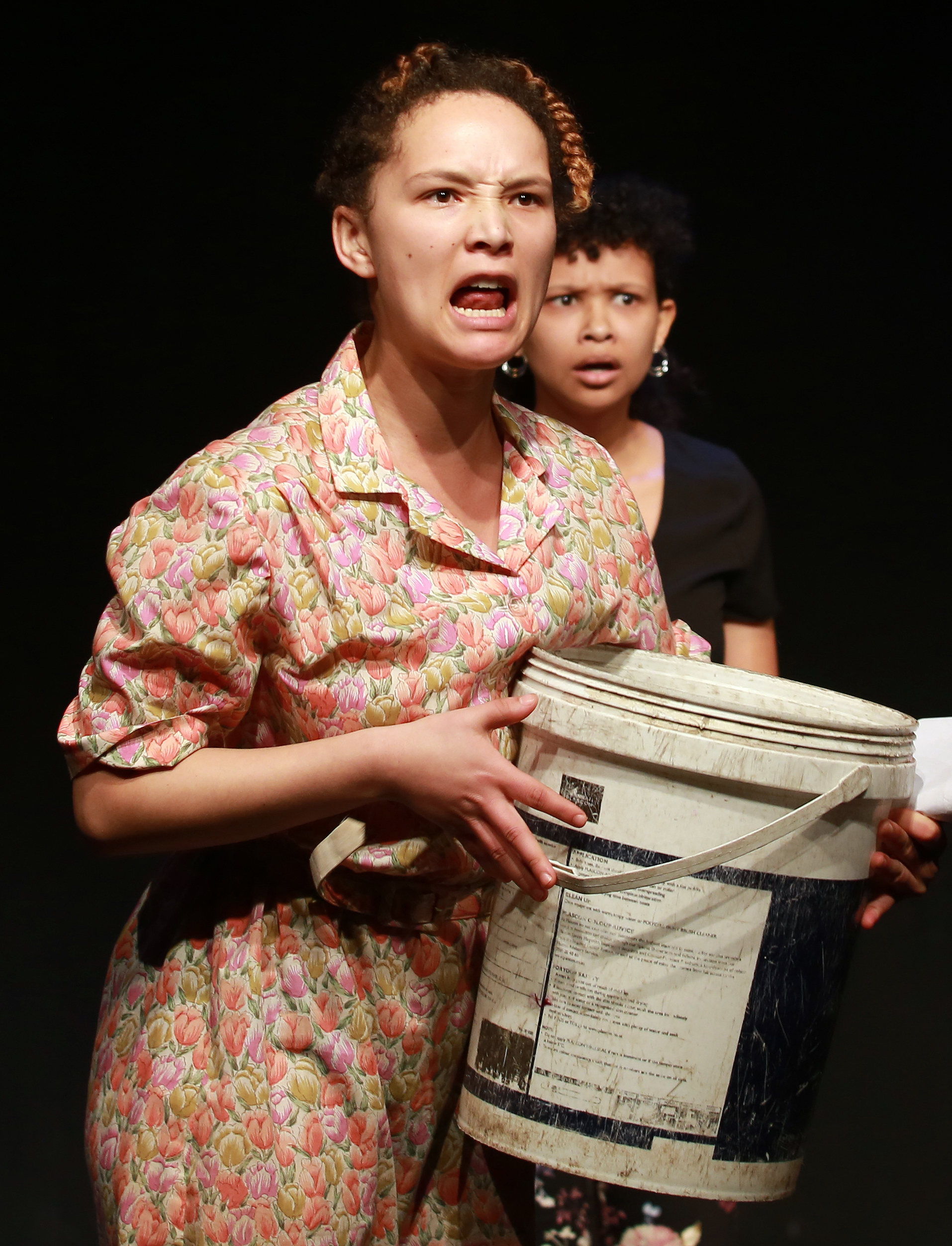
He deals in issues of climate change, land reform as well as sibling rivalry and relationships. It is beautiful work by a young cast, René Cloete and Gretchen Ramsden, who should be kept when the play is developed. But the foundation was the exquisite text.

Benjamin, who studied drama at the University of Stellenbosch and has been firmly entrenched in the arts on many different levels. He has been writing plays constantly these past few years and this one in particular, has stepped up a level. It’s about the story and the language, a young man who feels confident enough to take on two female characters, and a play that should travel, is hugely accessible and tells a story so unique yet universal.

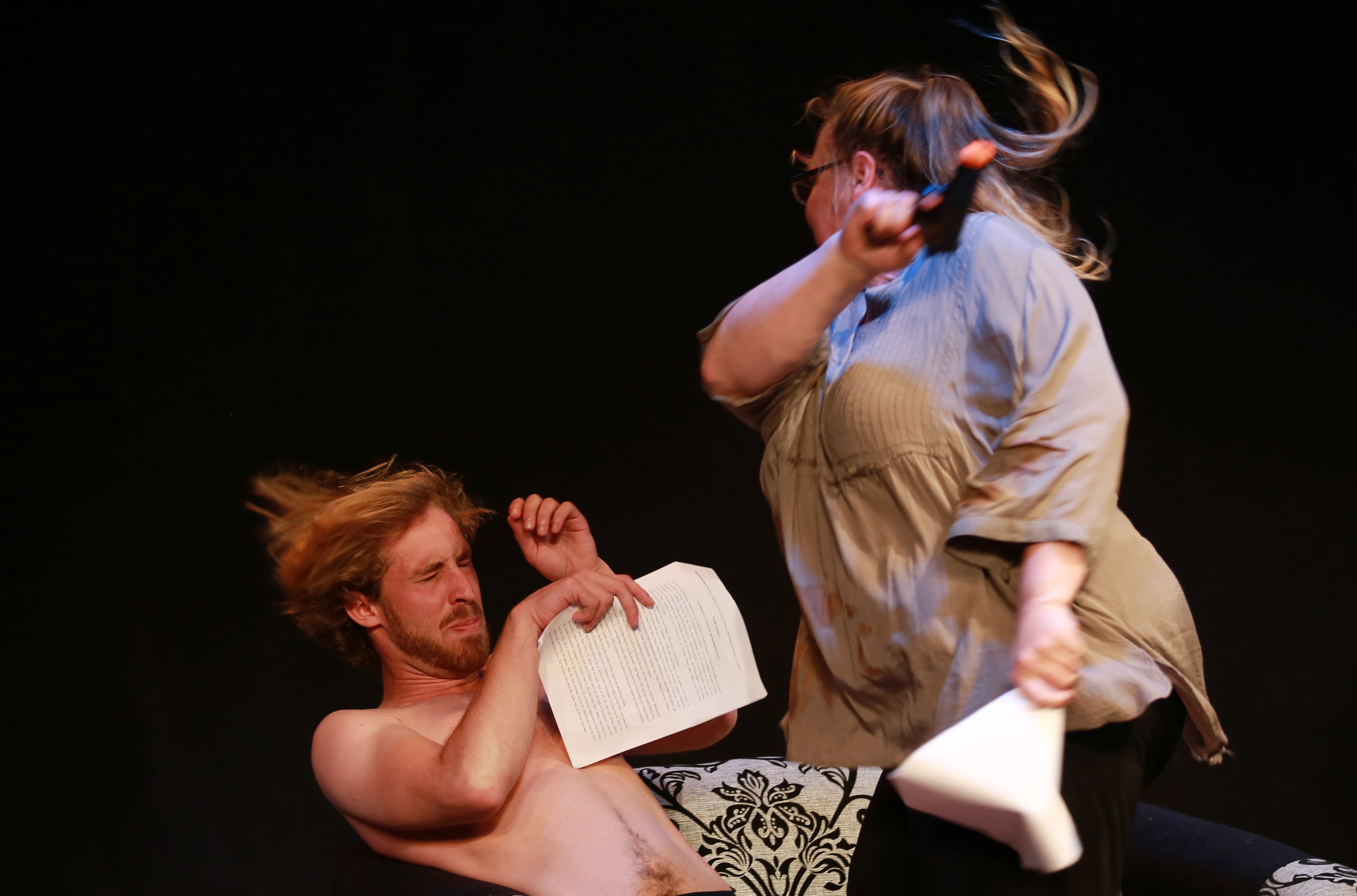
Fresh Meat Foto Nardus Engelbrecht 14
A scene from Fresh Meat by Zac Fleishman.

One almost felt sorry for the plays to follow but fortunately, each one brought its own magic. Zac Fleishman, a young man standing firmly on his own two feet but with a surname bristling with theatre history, played with the macabre with a futuristic feel and a story that stretches the mind, always an exciting prospect in a theatrical sense. Who doesn’t want to walk out of a theatre changed?

The text plays with themes of desire, taboo, order and dirt. The writing started with a desire to make historical research and concepts more visible and digestible outside of academic journals and official institutions. With his background, he knew this would be theatre and storytelling. He is currently busy with his Honours in history and playwriting, which means more good things in the future. And to see this particular one play out is an intriguing prospect.

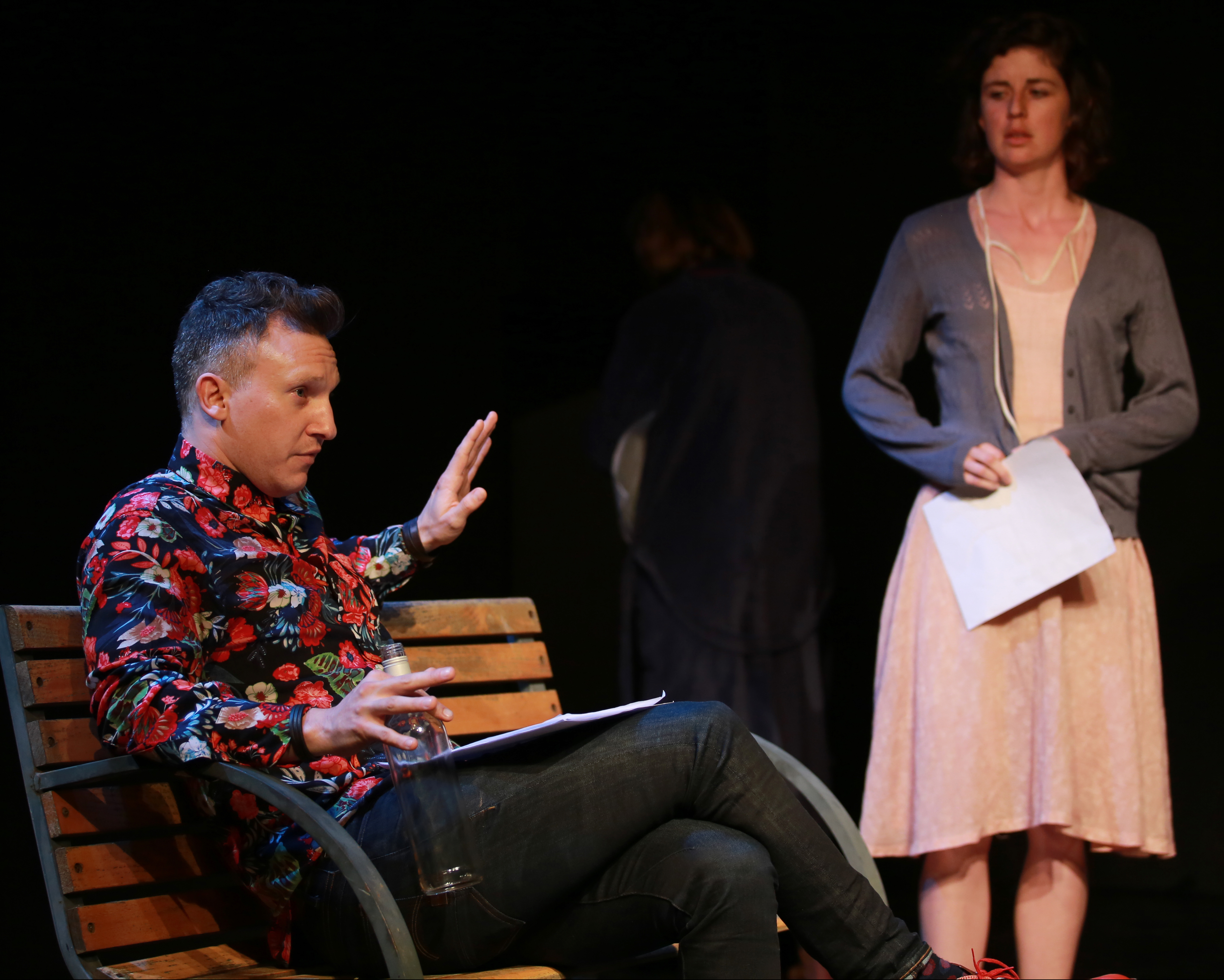
Roosmaryn Foto Nardus Engelbrecht 21
Wian Taljaard and Nicole Holm in Roosmaryn by Ben de Vos.

From one thrill to the next, Beyers de Vos’s Roosmaryn is exactly that. His debut novel reached the Sunday Times fiction long list this year and similar achievements seem possible with his playwriting debut. While he is sticking to crime themes, that’s the only similarity. Writing dialogue was novel for him, but with a lively imagination and a creative writing Masters to his name, this was a blast.

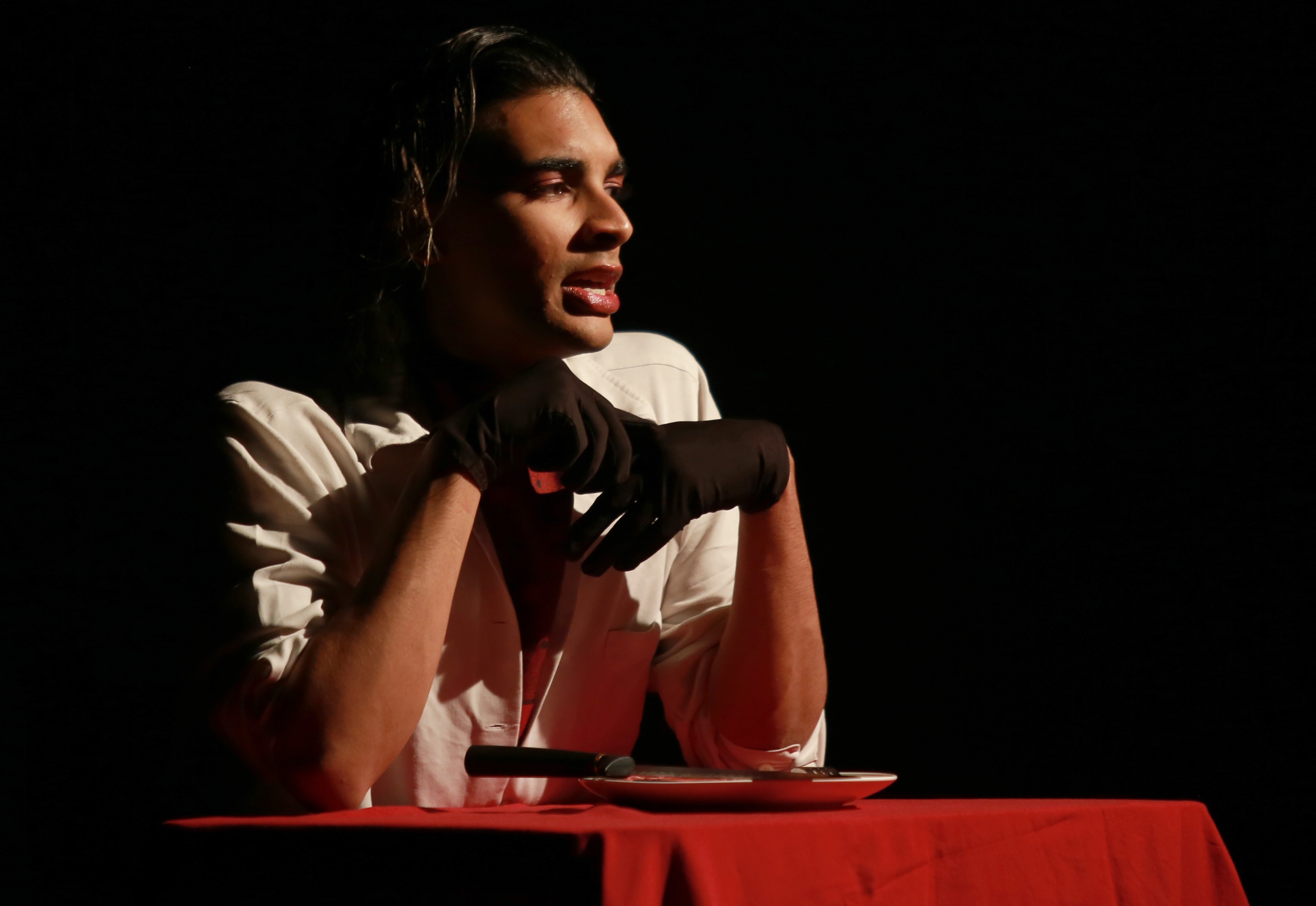
He described it as “a bloody tragedy about ghosts, trauma, guilt, a racist penis and the consequences of violence”. He also had the bonus of Nicole Holm as the protagonist, someone who knows how to grab a stage majestically.

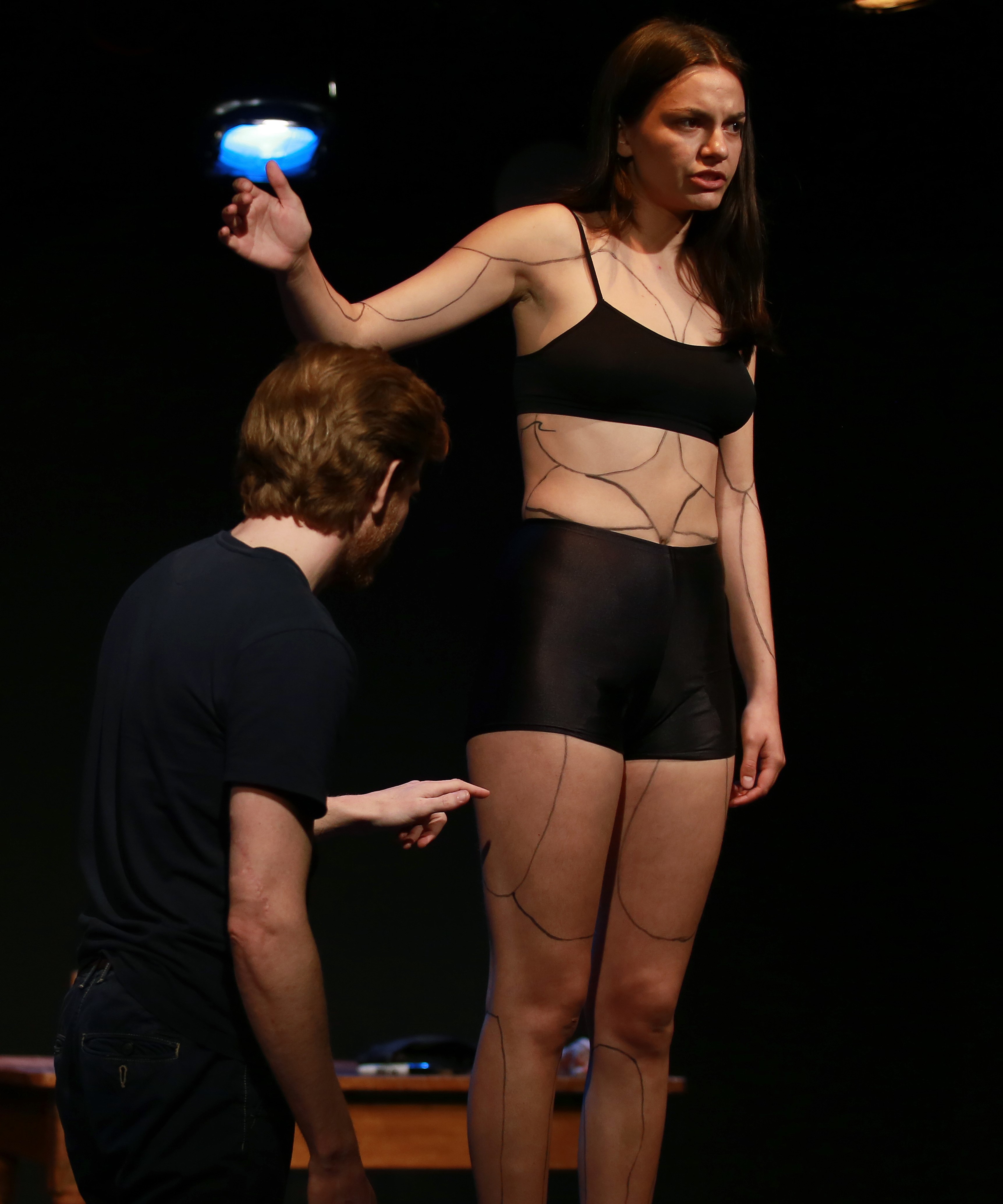
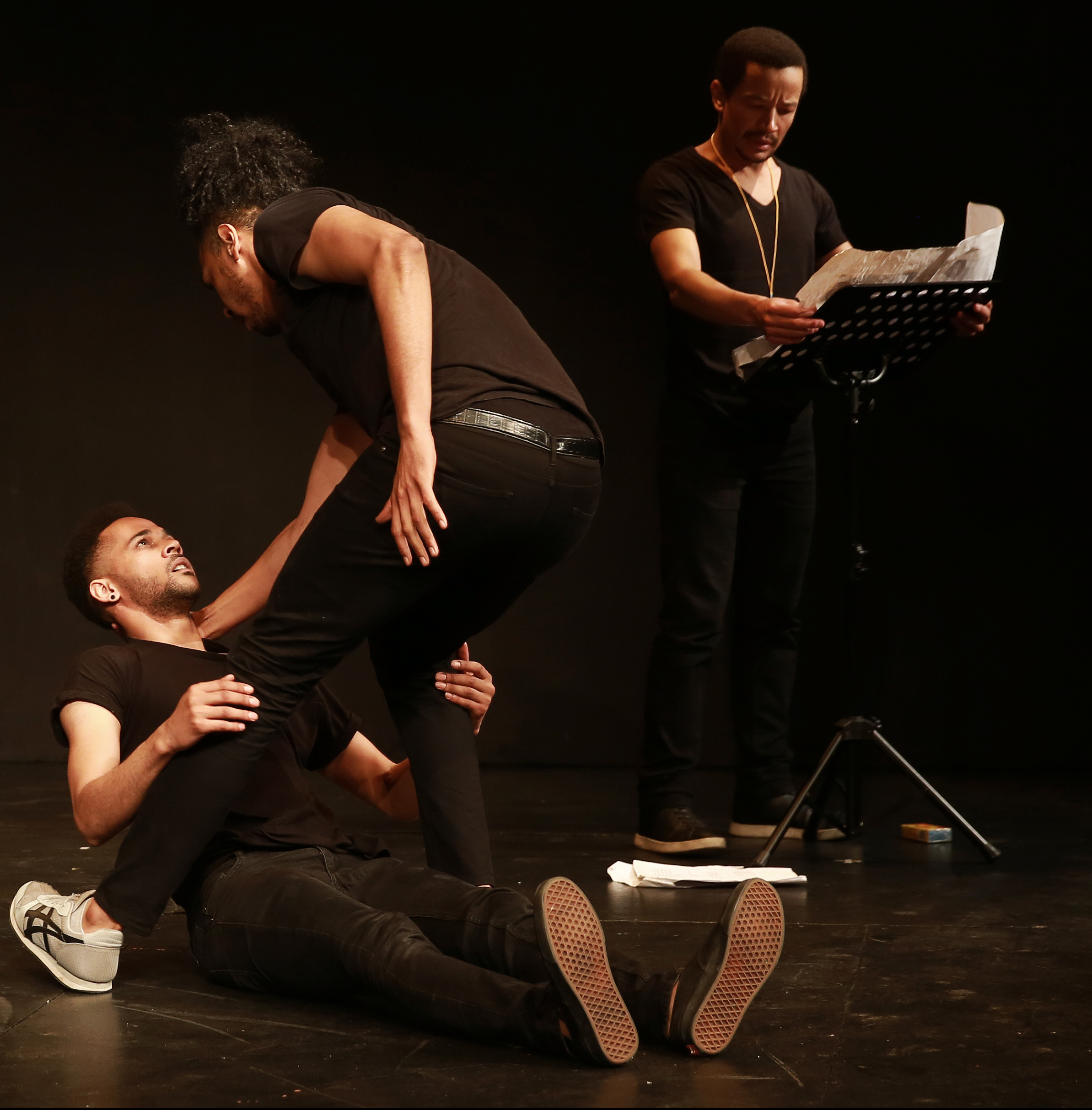
Karatara Foto Nardus Engelbrecht 14
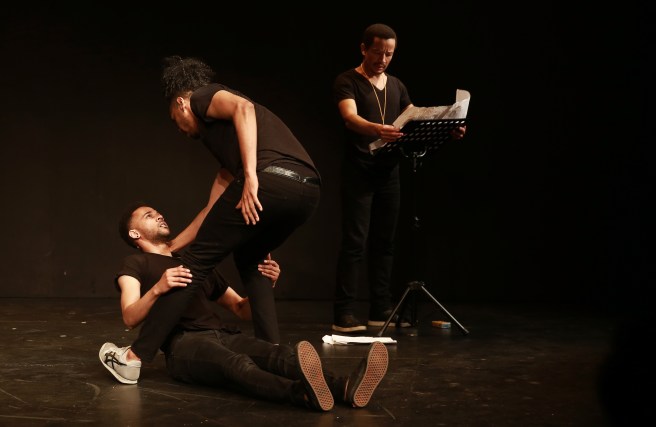
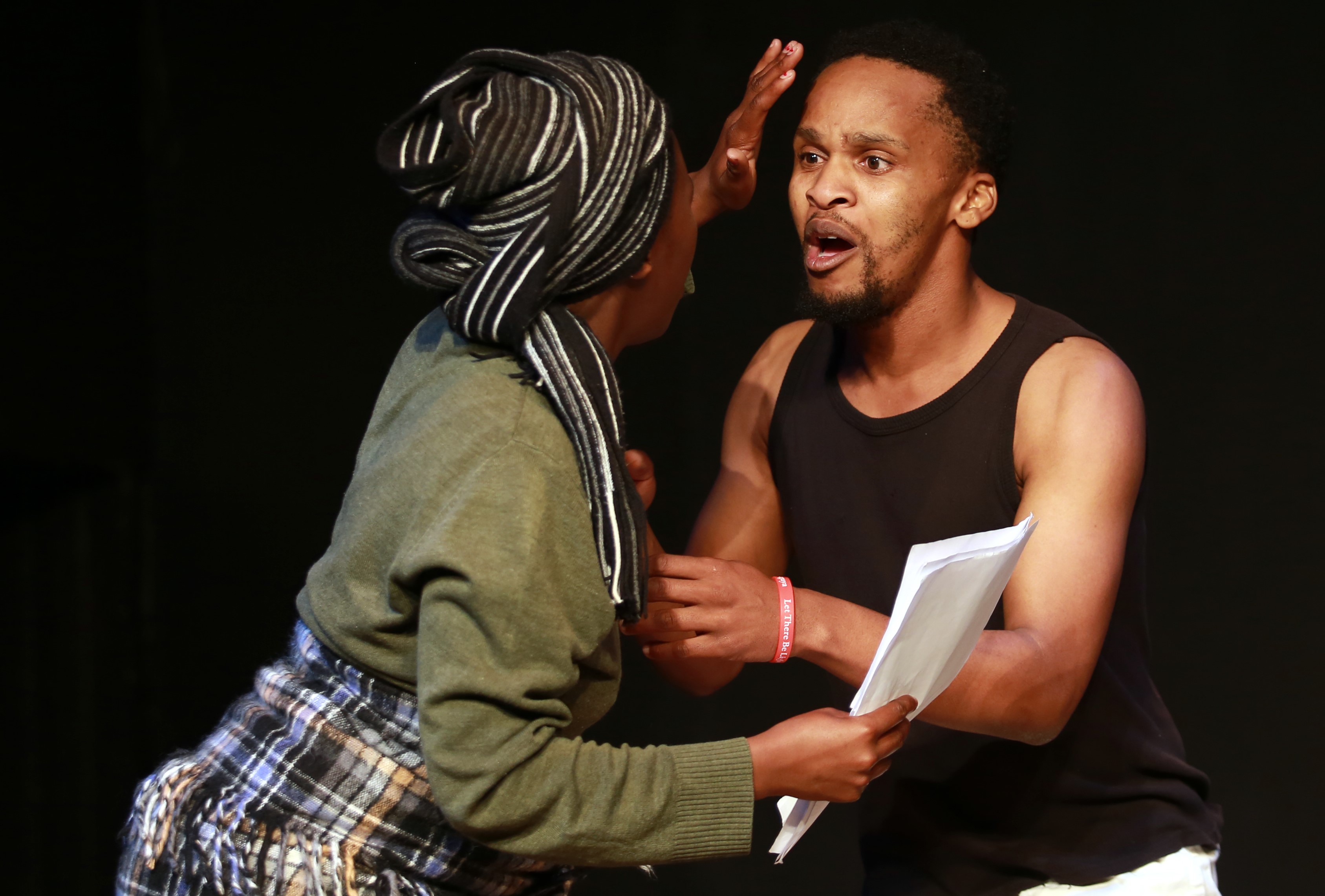
A scene from Karatara by Wilken Calitz (musician and writer) and Shaun Oelf (choreographer and dancer) with Shaun Oelf (sitting), Grant van Ster (looming) and Dean Balie as narrator.

Karatara was the perfect conlcusion of three days of explosive debut dramas by emerging and established playwrights. Dealing with the catastrophic Knysna fires where nine people from the Farleigh community lose their lives close to the Karatara River, this was described as a community’s loss through a combined narrative of dance and drama.

On first reading the text, it held huge promise but was also one of those scripts that could go horribly wrong. But it didn’t. Wilken Calitz (musician and writer) and Shaun Oelf (choreographer and dancer), who comes from that area, combined magnificently and magically. And for the future, they have hit a rich vein.

MaanSonde Foto Nardus Engelbrecht 3
Gideon Lombard and Emma Kotze in Maansonde by Philip Rademeyer.

Directed by Gideon Lombard, who had earlier given a bravura performance in Philip Rademeyer’s MaanSonde, it was the perfect mix of emotions and movement, narrative and intuition.

It’s a slam dunk of what theatre can accomplish when creativity is allowed to blossom, when theatre makers care and are encouraged, when the platform is an exciting but safe one, and set up for young theatre makers to experiment and learn.

Those of us watching were reminded of the power of live theatre, of telling our stories, of reaching out and coming together.

That’s why theatre will always flourish. As old as the mountains, telling stories keeps renewing itself while communicating in a way that’s as familiar as it is novel, as comforting as it’s challenging, as revolutionary as it drowns you in riches.

The Boy from the Mountain Foto Nardus Engelbrecht 7
The Boy from the Mountain with playwright Thukelo Maka and Kwindla Pearl Antony.

And these weren’t the only young voices to resonate. It was just that the four pieces in their differences had such impact played together in one session. Others during the run included Caitlin Wiggill with her glorious stream-of-consciousness A Prayer Group Called Water Wings; Lwanda Sindaphisa’s I Will Teach You How To Share The Milk zooming in on domestic workers and their two sets of “children”; gay marriages and their all too recognisable problems in Rafiek Mammon’s hilarious Marry-Go-Round; Philip Rademeyer’s disturbing Maansonde; Veronique Jephtas’ brilliantly scathing and personal take on the hair issue in My Kroon se krank; Thukelo Maka’s ritualistic exploration of death in different culutral groups in The Boy of the mountain; and in conclusion Wessel Pretorius’s Valskermstories based on Pascual Wakefield’s personal narrative on dealing with a diagnosis of testicular cancer at the age of 20. He also stars in the production.

Bring it on in 2020!


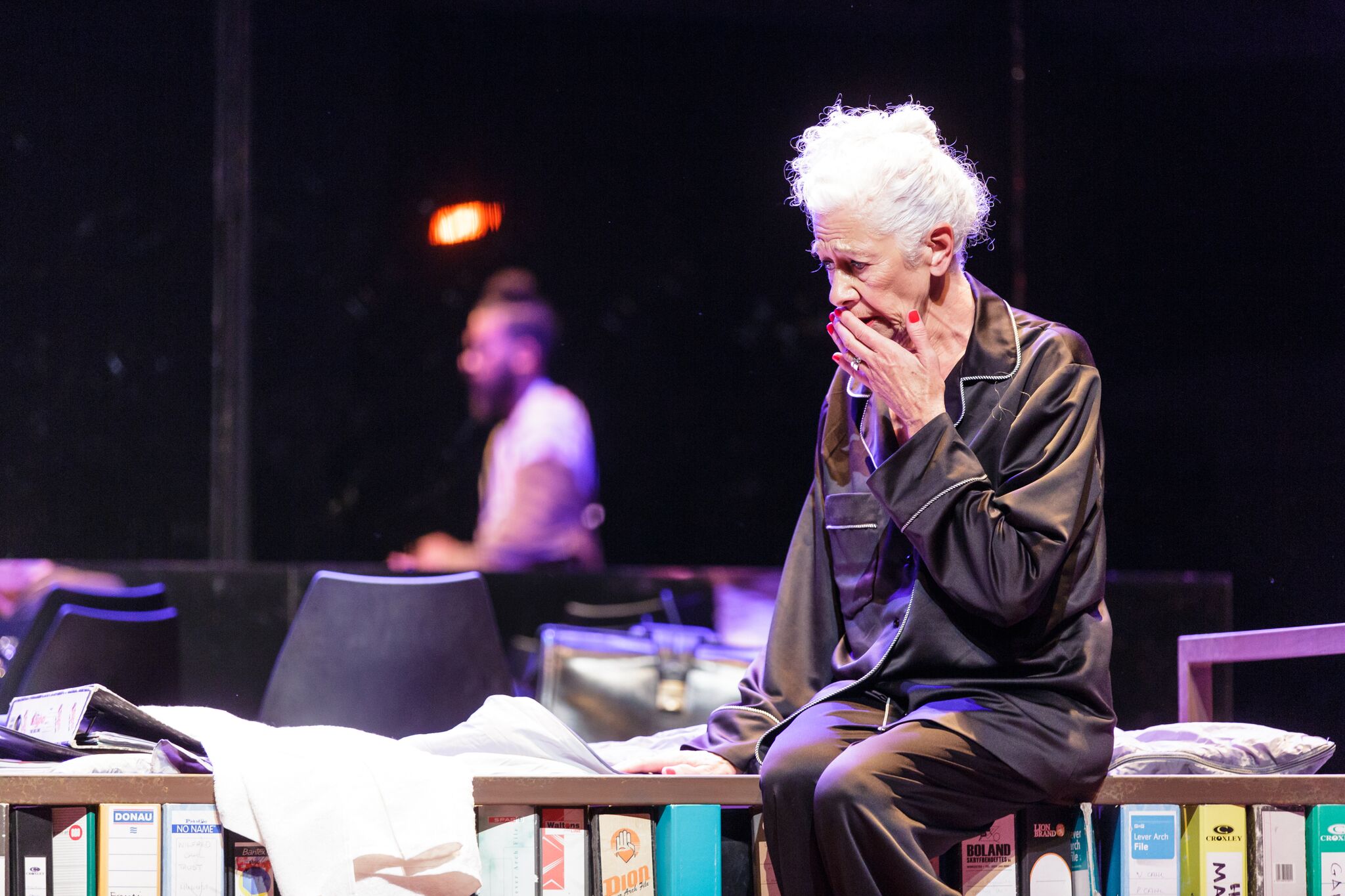
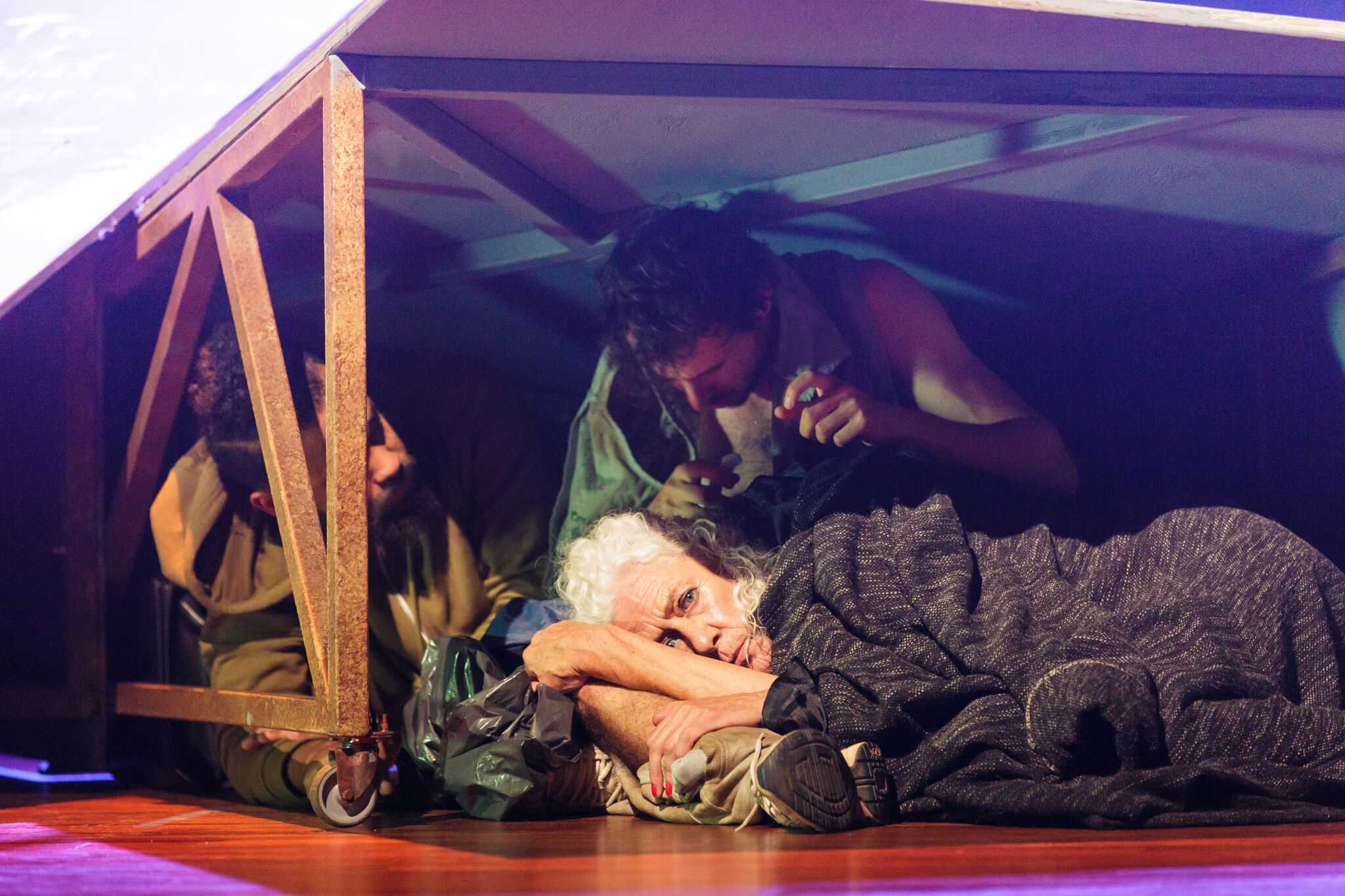
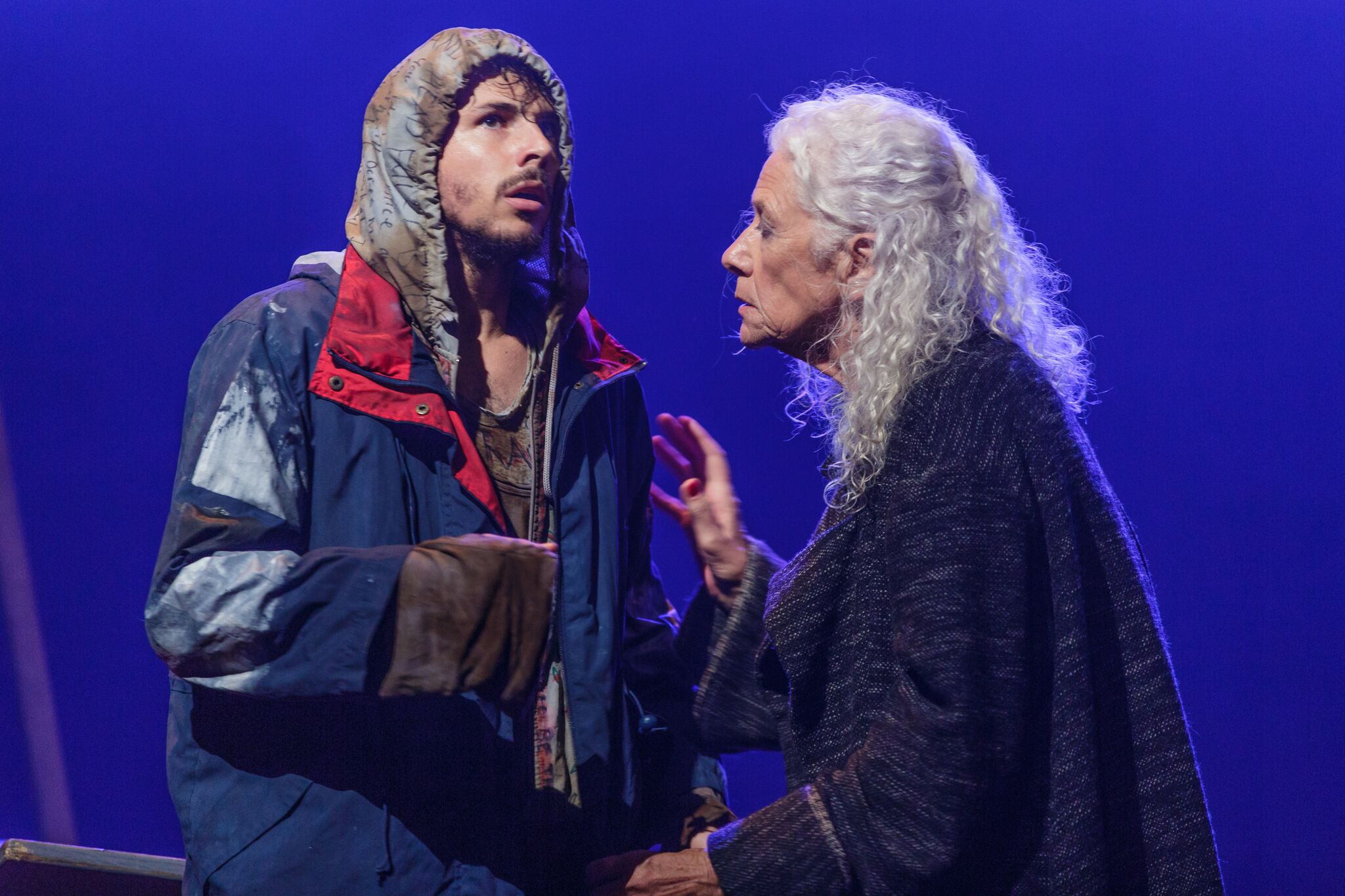
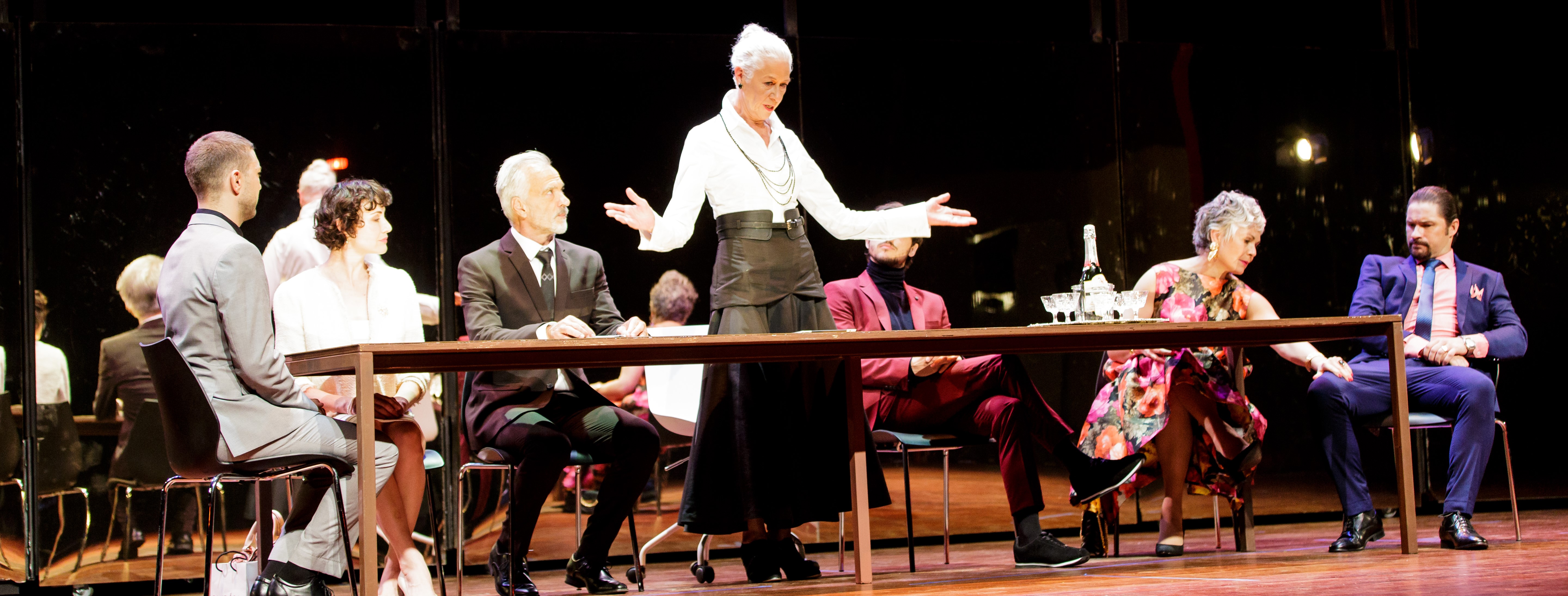
The Theatre Gods Align for Koningin Lear

Koningin Lear with cast
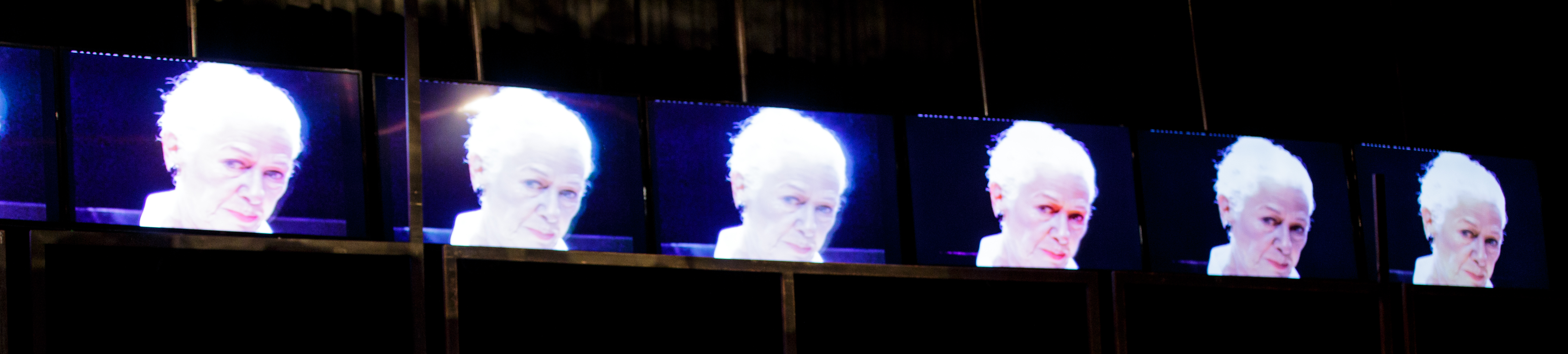
TV screens amplified

We haven’t just gone back to nineteenth-century levels of income inequality, we’re also on a path back to “patrimonial capitalism”, in which the commanding heights of the economy are controlled not by talented individuals but by family dynasties.

From “Why we’re in a New Gilded Age”, The New York Review of Books — 8th of May 2014, Paul Krugman, reviewing Le Capital au XXI e Siècle, Thomas Piketty

And published as an introduction in the printed version of Koningin Lear


DIANE DE BEER

Pictures: Hans van der Veen


koningin-lear-in-storm.jpeg
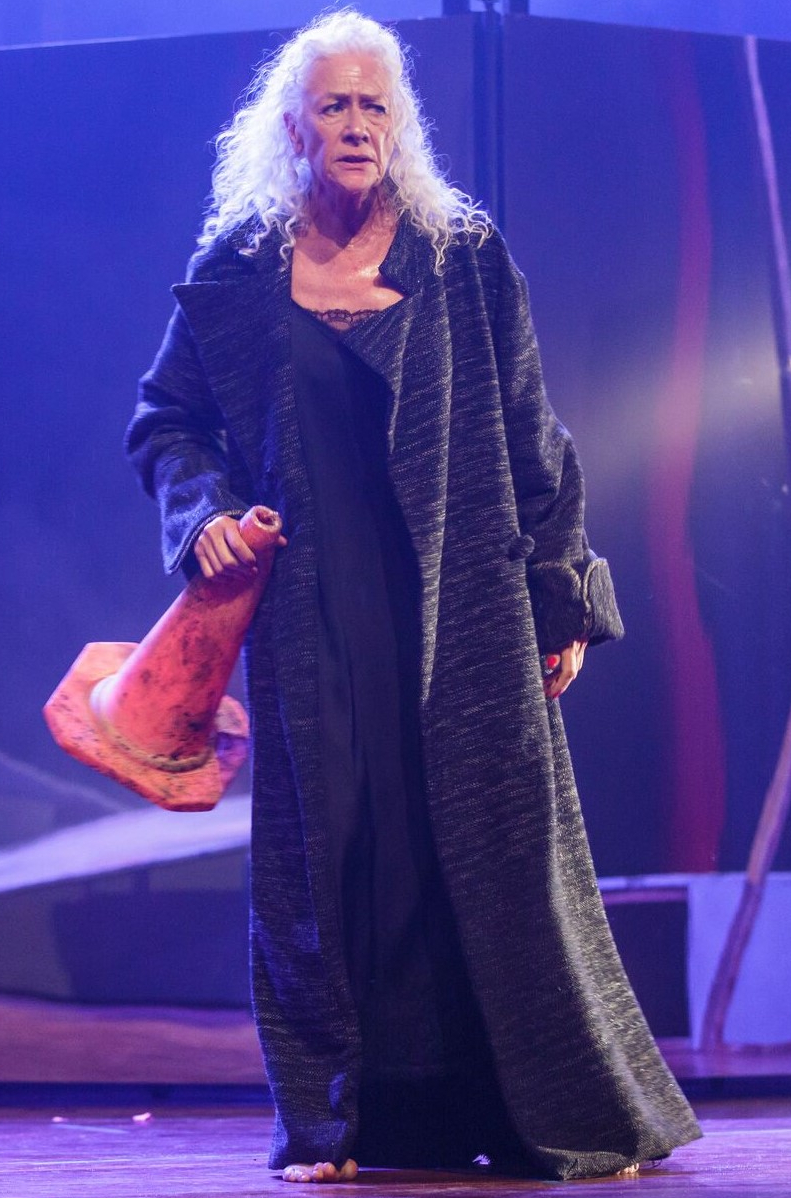
The magnificent Antoinette Kellermann

Playwright Tom Lanoye has masterfully taken the iconic Shakespeare tragedy, King Lear, and recast it in a contemporary landscape with the most pressing issues of the 21st century all coming into play –  greed and grandiosity leading this particular wolfpack.

He starts with gender, flip-flopping the roles as the title Koningin Lear suggests, and gives the mighty Elizabeth Lear three sons: Greg, the eldest, Henry, the second in line, and Cornald or Corneltjie, her darling child. With the eldest two married, the two wives, Connie, the OTT shopaholic, and Alma, from the wrong side of the tracks and struggling to shrug that off, both play a particular type yet also connive with their husbands to secure future power.

Yet, as the original so smartly shows, greed might be the excess of our time, but there’s nothing new in the world of the top dogs except perhaps technology and the universal scale at which that power grows and disintegrates. It’s no longer a single kingdom on an island, everything and everyone in our universe is connected.

Koningin Lear
Neels van Jaarsveld and Anna-Mart van der Merwe

When you sneeze – especially if it affects the money markets – the effect takes on tsunami proportions. And this is where director Marthinus Basson ups the ante, being someone who always holds the bigger picture close. With this one it really counts.

The design adds to the dynastic feel of the production, which plays on different levels. Basson emphasises the age we live in with technology.  A backdrop of TV screens used in many different ways immediately add urgency and heightens the impact of the precarious nature of what Elizabeth is about to do.

More than anything else, power corrupts. And to play with it almost nonchalantly like this mother does, we all know will have devastating consequences.

koningin Lear Antoinette Kellermann
Antoinette Kellermann

This a family concern –  one that is worrying, because it is not necessarily the best that steps into a leadership position. Family is the determining factor, whether worthy or not.

Just a few minutes in, we already know that Elizabeth’s adviser would have been a better choice to make the handover a smooth and more successful one. For decades Robert Kent has been Elizabeth’s shadow, completely loyal to the family, often at his own cost

Lanoye’s words needed to be transformed in a South African context by someone who could adapt yet not dilute the essence of the playwright’s words. Antjie Krog, who previously worked wonders with the Mamma Medea translation, was the obvious choice. Not only did she have to translate, she had to transfer it to a local context.

Just listening to the language of this magisterial text is sublime, even the way Krog uses swear words or plays with the different characters in the way they use their language. She also knows how South Africans will react to different cars as wealth trophies and that “my losie by Lords” has more impact than Loftus, for example. It is all in the detail and why you can’t read, listen and experience the language and meaning enough.

koningin Lear trio
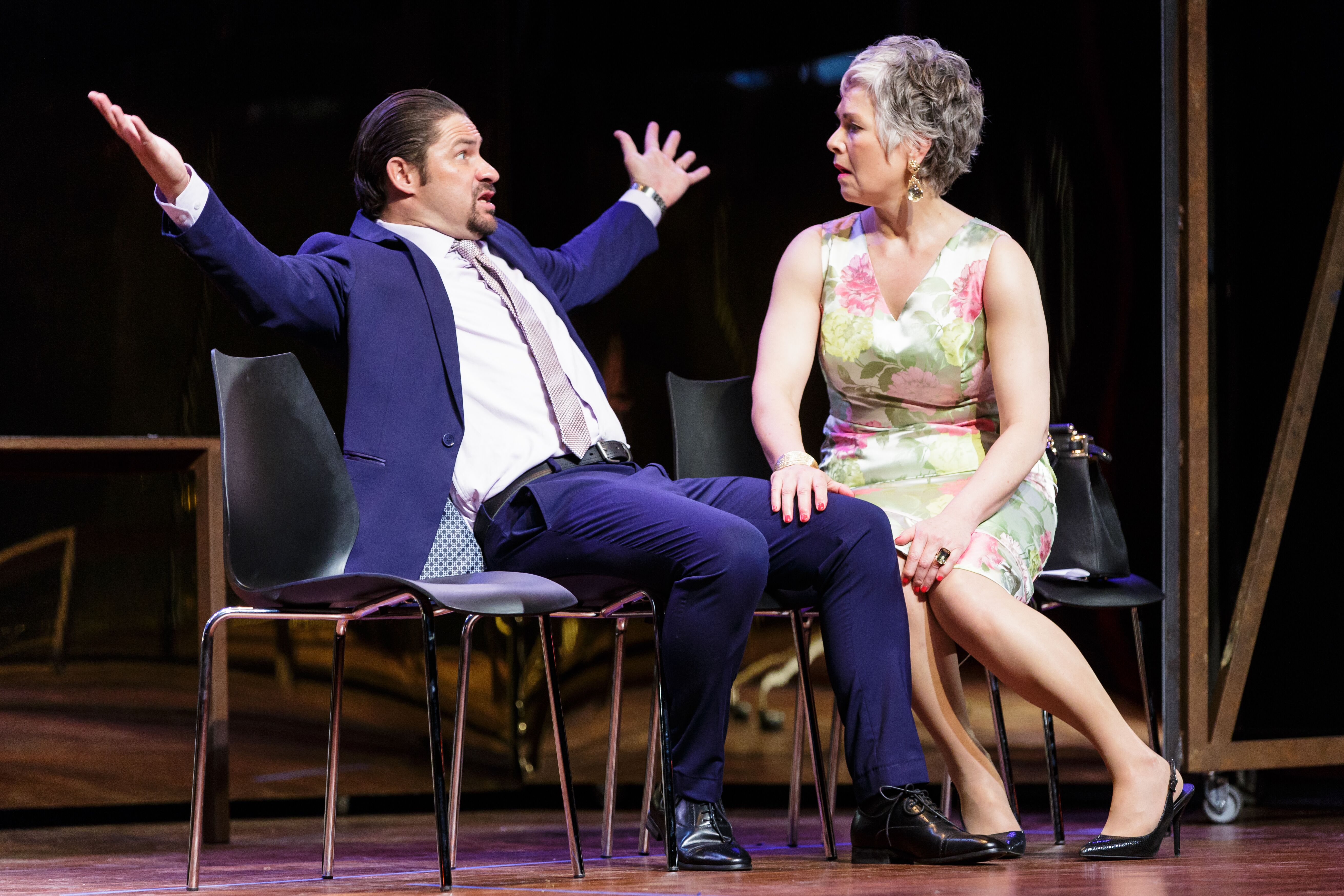
A scene from Koningin Lear

It’s a play that indulges your sense of disgust at the wealth accumulated by the powerful, their lifestyles, arrogance and disregard for anyone but their immediate family and then only those who find favour. They live by different rules and have no idea of or interest in anything but their own prosperity and anything that affects their well-being.

It is a work of majestic scale and demanded a majestic cast. With Antoinette Kellermann as Koningin Lear, half the battle is won. She is majestic as the matriarch of a business empire that she is in the throes of handing to her three sons. But first she asks for a declaration of their undying love with the results disastrous as she sets in motion a run of revolting, rampant greed and how that unhinges a dynasty in a modern world.

It’s no surprise that Steinhoff is snuck into the text at some point. If you still hadn’t got the drift, that will force you to take notice

Koningin Lear Antoinette Edwin
Edwin van der Walt in his extraordinary turn as the junkie and the powerful Antoinette Kellermann

We know the original story. It’s the way Lanoye has made this tigress fight until her last breath, the way Kellermann has ingested the text so that she can charge into glorious battle with her character and slay any dragons in her path.

And here her demise doubles up as she doesn’t only hand over all her weapons, her wealth and thus any sway, she also struggles with dementia with age finally catching up, something no money or willpower can change.

As the sons struggle with their inability to conquer the business world, pale shadows of their mother, their wives on the sidelines egg them on and soothe their egos.

It’s like an epic melodrama with a master conductor and performers who know how to play every word in its finest nuance. With the gravitas of André Roothman as Kent and a supreme supporting cast, it’s a play that strikes no false notes. Everything is music to your ears.

The three sons, Neels van Jaarsveld, Wilhelm van der Walt and Edwin van der Walt, with Anna-Mart van der Merwe and Rolanda Marais as the wives, represent a family in freefall. Not only have they not been schooled to take on their heritage, they only register the perks without any of the pitfalls.

On the sidelines, Matthew Stuurman is the carer and very importantly the moral compass who has nothing to gain or lose yet reacts with compassion to someone’s need, not something that registers where money is the only currency.

From start to finish, it is a production that ticks all the boxes. From the content to the language, the design and the staging, the extraordinary choice of cast with Kellermann conquering her most challenging role, it’s theatre to savour – over and over again.

Koningin Lear with cast

Koningin Lear is on at Cape Town’s Baxter Theatre  from November 7 to 16.


The Arts Not Always Recognised In The Way It Should Be Counts at Aardklop 2019

Aardklop 2019 made great inroads under difficult economic and social circumstances with women stealing the show on many of the stages writes DIANE DE BEER;


One of the problems that Afrikaans festivals battle with is inclusivity. It is less problematic in the Cape (Woordfees and Klein Karoo Nasionale Kunstefees) because Afrikaans is a language spoken by different groups.

Less so in a place like Potchefstroom where English would be the spoken language common to most of the people. But that doesn’t mean trying to embrace the different communities should not be attempted.

You want a whole town to celebrate and share in the advantages of any arts festival. The arts have often been used as inspiration in this country – good times and bad – and can be used as a common language.

20190928_122143_HDR
Organsier and jewellery maker Seitebaleng Legoale with poet Tlholeho Lekena celebrating their award

This year inroads were made with an art tour (for the second year in succession) to the local township Ikageng. Catching a specially designated shuttle, the Maboneng Township Experience, is the start of an inspired journey.

Founding director Siphiwe Ngwenya who instigated these art tours in Alex, Langa and Joburg previously, was also instrumental in the Ikageng initiative now being run by Seitebaleng Constance Legoale who has started specifically in one designated street where sometimes it is the house of the artist, other times, art is exhibited in specific homes. She believes this is just the beginning.

20190928_112737_HDR
Poet Tlholeho Lekena in action.

With Carien Brits from the ATKV’s language department as part of the experience, she kickstarts the tour on the shuttle with a talk on language, that spoken most widely in Ikageng (Sesotho) and the culture those making the journey will experience in the township where we are greeted by a local poet Tlholeho Lekena. He does a great introductory poem titled Grey, promoting the absence of white and black while rather focussing on a combination of the two – in essence an absence of colour.

20190928_120419_HDR
An anguished rape lament

From the different kinds of art, photographs, live poetry and writing put up on the wall raging about rape to the colourful grandmothers who are often the backbone of their self-made families, it is yet another small step to change township into town with none of the often-self-imposed barriers.

They were rewarded with an Aardklop award for ground-breaking work and hopefully the venture will go from strength to strength.

On the stages, it was the time of especially three women: Sandra Prinsloo, Antoinette Kellermann and Cintaine Schutte. Naturally there was more, but festivals always produce something extraordinary that stands out for different reasons.

Here it was about performance in three very different productions, yet each one with its own challenges and each one very specific to the production.

Sandra Prinsloo
Sandra Prinsloo Picture: Eye Poetry Photography

Prinsloo stars as Susan Nell in Kamphoer (on at The Baxter in Cape Town until October 26) , a piece that on paper looks tough to transpose to stage. But with the phenomenal Prinsloo working for the first time with insightful director Lara Foot (the production is currently playing at The Baxter in Cape Town), they workshopped the text with scriptwriter Cecilia du Toit, and produced something powerful for especially this time.

It’s a story of violent abuse during a time of war, someone whose rape earned her the damning title of camp whore, a woman left for dead at the side of the road, and finally, after many detours and gentle helping hands from concerned strangers, a chance at retribution.

For Prinsloo and Foot, the X factor was bringing this extraordinary woman to life. It’s not just about what happened to her, but how she experienced her life, something she had no control over. It is the way Nell (Prinsloo) takes you through her life, removes her skin layer for layer as she is violated and tries to rebuild and find a way to regain a measure of what could become a life once again.

It is the way she shares her story, the fragility of what becomes her existence, reaching a hand to help others but never escaping the trauma of her past that has such emotional impact even when she has lost that part of herself – she believes, forever.

If anyone wonders about rape, the lasting effects and the different ways it impacts individual victims, Nell’s story unleashes the horror in a way that removes any questions as it takes you to the core of what this defenceless woman had to endure.

None of this would have come across without the unique text, the choice staging and direction and Prinsloo’s towering presence as Nell.

She gives a performance of such devastating delicacy that the aftershock is shattering.

Cintaine Schutte
Cintaine Schutte

In the translated Tien Duisend Ton (which I originally saw in English), and here directed by Nico Scheepers with Cintaine Schutte and Albert Pretorius, the two lovers trying to make sense of their lives, Schutte’s desire for a child with Pretorius slightly dubious, what really matters is the performances.

And while Pretorius does what needs to be done, it is a blossoming Schutte’s performance that has you holding your breath throughout.

It happens at breakneck speed, almost in manic monologue fashion with Schutte’s inflection, her body language, the speed with which she reacts and charges her performance with emotional heft, that has you gasping.

Keep up and don’t lose her as she races off at a speed that’s sometimes exhausting yet always exhilarating. It’s contemporary, young and dealing with issues that many – young and older – struggle with on a daily basis, if they’re blessed to have that kind of luxury which this couple obviously have.

Schutte has been someone to watch from the start but this past year has obviously been her time and perhaps a new confidence is starting to emerge and colour her performances. No longer the new kid on the block and with a series of roles in her repertoire, the range, which is expansive for someone so young, she seems to have a newfound fire which is mesmerising.

And there’s so much more to come.

Koningin Lear in storm
Antoinette Kellermann     Picture: Hans van der Veen


Then there’s also the grand dame of classical theatre Antoinette Kellermann as Elizabeth Lear in charge and in command of the luminous translation of Tom Lanoye’s Koningin Lear by Antjie Krog (on at The Baxter in Cape Town from November 7 to 16) . With the support of a tremendous, choice cast, she inhabits a woman whose power is waning on a business and personal level.

As the story goes, she decides to pass her wealth on to her heirs, but they have to declare undying love before the inheritance can be owned. And that’s when the fun begins.

It’s also the arc she is expected to play, the transformation from start to finish as she first emerges as the powerful matriarch at the top of her game. And yet, from the beginning, there are some unnerving hitches which Kellermann exposes with subtlety because of the crescendo she is aiming for at the end.

With this performance of extremes, she has the mammoth task of getting to grips with a text which drives all of her actions. But Kellerman, being the artist she is, takes on the challenge and triumphs magnificently.

Because of the ambition of the playwright, all the elements had to work together sweetly – and they do. That’s what makes this such a majestic experience.

And these are but a few of the elements and people that made the 2019 Aardklop swing – under difficult economic circumstances – proving once again that the arts do so much more than simply entertain – even as it pulls that off too.

Nataniël Makes the Earth Move in When Giants Waltz – 12 Monumental Concerts

nats giants3
The stars from When Giants Waltz

DIANE DE BEER

WHEN GIANTS WALTZ – 12 MONUMENTAL CONCERTS  

Artist/writer/composer: Nataniël 

Musicians: Charl du Plessis (keyboards), Juan Oosthuizen (guitar), Brendan Ross (keyboards, saxophone and vocals), Werner Spies (bass), Peter Auret (drums)

Vocals: Dihan Slabbert and Nicolaas Swart

Costumes: Floris Louw

Venue: Theatre of Marcellus, Emperors Palace

Dates: Until October 27; Fridays and Saturdays at 8pm, Sundays at 3pm12 concerts only; 90 minutes long; no interval; no cellphones, sandals or shorts; no children under 15


No matter how little or how well you know this artist’s work, he surprises you.

How does he do it? I watched in wonderment and awe while experiencing the thrill of a performance that epitomises the excitement of live theatre – and it happens year after year.

It’s like a surprise party. Before the time he has much to say about what won’t be part of the concert, for example, the absence of a set, no more choreography, music that’s not accessible, no overarching story – he doesn’t speak much about what will be part of the show.

That’s Nataniël, someone who works imaginatively and creatively to catch his audience off guard, to always bring something new, not only with message as he moves with the times, but also with his evocative stage craft.

Nats giants4
Creative costumes are part of the storytelling.

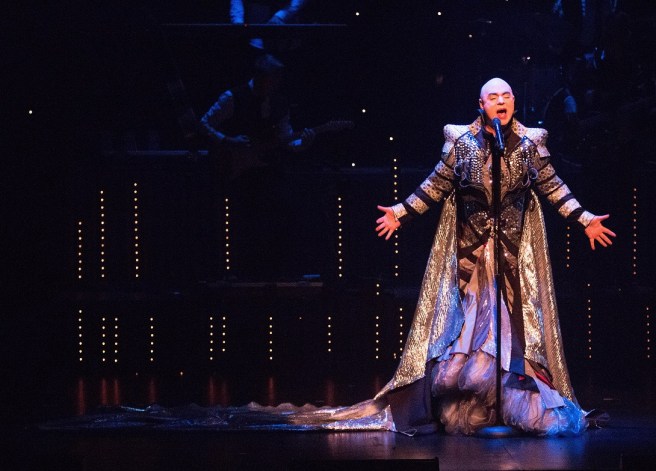
Following a hiatus last year after more than a decade of annual shows at this theatre, he’s back with a vengeance in a way specifically structured to catch you unawares. The costumes are bigger and even grander in conception than before with many gigantic garments filling the giant-themed landscape.

They are heart stopping, from a different era, in royal fabric and often bright colours, with the result that many are clamouring for an exhibition of his stage couture. The finer detail is difficult to catch from an auditorium.

There’s a costume in front of a backdrop which mirrors the fabric, lamps drop from the sky and moonscapes create a lunar atmosphere, a brilliant blast of red with a sign dropping from the heavens with the word blue – in fact colour plays a huge part as his storytelling both tickles and tortures as he is wont to do. There’s always a sting in many of his tales.

Then the performance and the show, the substance and the visuals, the stories and the songs with musicians of stature who all contribute to the overall artistry, take over.

From the entrance with Nataniël tripping onto stage draped in creature couture which immediately puts you in an imaginary place, this genius storyteller takes you a-wandering in his world of merriment intertwined with melancholy.

nats giants 2
Nataniël in full flow

The language, the images he conjures up with his characters and the lives they lead, the way everything unfolds and the music which drifts between blues, jazz and a few pop classics – some original, others re-arranged – all come together sweetly.

Backed by three sassy vocalists or sometimes performing with only the sounds of a lone guitar as accompaniment, Nataniël has through the years found the music that works best for his voice and which accommodate and remark and elaborate on his stories. Sometimes he might google the saddest jazz song in the world (for example), which he then sings and when he can’t find anything for a particular story, he simply writes one.

He has never had a hit, he says only half-forlornly, but he shines when performing live, relaxed in his own skin, crooning with musos who know his style and get into the swing and rhythm (as well as a constant change of costumes for the band too) of his particular vibe. Everyone shines.

The show is presented in a series of montages, almost like paging through an album. The costumes and props do the visual fantasy and the stories fill in the details. These leave you giggling and gasping in turn as as he dips into the often hysterical lives of a woman who has arranged her life to accommodate the elephant in the room, another with blue ribbons whose knitting finds no conclusion and yet another whose names are constantly switched until she owns her identity.

He bookends the show with the history of giants and their place in the world and in conclusion, confronts those who feel larger than life with unchecked power, who believe they are mightier than the law and trample those they regard as lesser human beings and easy to destroy.

nats giant4
Nataniël in song

In each tale, once the laughter dies down, and just before the next song, the sadness of all the hilarity at what is sometimes the horrors we all encounter in normal living, hits you full on. But, with perfect timing, just before you succumb, a stunning new costume, or a song fills the empty space and we move on.

This is an artist who has perfected his craft. None of the normal rules applies. He has used a director on occasion but not for the last decade. He writes all his own scripts, guides his designer in the costumes he hopes to see, plans the lighting which sometimes only show the costumes in full light as the last note rises and designs the stage and anything he needs to accomplish a mood for a story and a song.

It’s transcendent what he achieves and in-between, he tours the platteland with shows and speaking dates, does cooking shows and TV series, and has just published his first book that didn’t first play on stage – in both Afrikaans and English.

It’s his imagination – unchecked – that never lets him down as he draws a world with his visually rich stories (in both English and Afrikaans) while entertaining in a manner few can achieve year in and year out.

When giants waltz, Nataniël says, the earth moves, which may be true. He doesn’t have to rely on size or stature, he gets everything moving with his gigantic creativity and imagination.

That’s the artist he is and it’s joyous to experience this kind of quality.


Make a Move on the Wild Side with Ben Voss’s Benny Bushwacker: Human Nature

Pictures: Val Adamson.

Ben Voss is Benny Bushwhacker. Photo credit_Val Adamson - Photo 6
Preaching to the converted

 DIANE DE BEER 

            BENNY BUSHWACKER: Human Nature

Starring BEN VOSS
Written by John van de Ruit
Directed by Janice Honeyman

The Studio Theatre @ Montecasino until October 20

 For many there might be much counting against venturing out for a theatre experience titled Benny Bushwacker: Human Nature.

It might appeal to the nature crowd, but depending on the seriousness of your calling, this might just sound too silly rather than wacky which might appeal.

What does catch the attention are the names Ben Voss and John van de Ruit. These two stage chums first made their mark with a series of Mamba two-handers before Voss stepped into another persona with the solo shows Bend it Like Beauty and Beauty and the BEE.

Van de Ruit in the meantime hit the headlines with his series of popular Spud books. The two again team up for this latest incarnation with Voss starring as Benny Bushwacker, a man who is desperately passionate about the environment.

While he tries to impart a serious message (which he does), he is also desperately funny – and the specific use of desperately becomes clear when you hysterically hear his version of natural disasters, sound effects and meltdown included.

And it is the memory of Voss pushing the envelope and his excellence on stage that might pull you into this one – and you would be following the right instincts.

Ben Voss is Benny Bushwhacker. Photo credit_Val Adamson - Photo 2
Ben Voss is Benny Bushwhacker

He is an extraordinary performer and just watching him perform, his skills, his detail to attention, his bravado and determination to hold everyone in that intimate theatre close while telling Bushwacker’s story, is something to behold.

Not only is Bushwacker, a nature man with a mission, in full flight, he also calls on a series of commentators, including his frail yet feisty gran and his spud-deficient nature buddy with the soprano voice as a result, for example. The acting is a tour de force.

As director Honeyman says: “He’s a good actor, and a thinking actor.” That shows and adds to the weight of the wackiness. She also admires the “less didactic, preachy context” of the text, which is what Van de Ruit explores so brilliantly.

They make a good pair because they obviously understand each other, which is the true strength of their collaboration.

But in the end, it is Voss’s performance perfection that turns this into mindful entertainment, not that anything stands between you and the laughter which takes over as Benny gets on a roll.

In these harsh times when we’re overwhelmed by a world at war with itself and its people on many different levels, escapism is worth striving for. And laughter is the best way to do that with Voss a master puppeteer to get this particular show on the road.

He has all the attributes to pull it off – and he does.

While touring South Africa, Benny Bushwhacker is raising awareness and moola for the Lebombo Leopard – Human Conflict Survey which all becomes clear when seeing the show.

Artists Lara Foot and Sandra Prinsloo Create the Perfect Storm for Kamphoer

Sandra Prinsloo
Sandra Prinsloo as Susan Nell in Kamphoer Pictures: Eye Poetry Photography

Sandra Prinsloo has established herself as the queen of solo shows. She knows how to pick them and with whom to collaborate. She tells DIANE DE BEER about her latest venture, Kamphoer – die verhaal van Susan Nell, with Lara Foot, CEO/artistic director of The Baxter, as director:

That was then, 2019, when Kamphoer made its debut at the Vrystaat Arts Festival and this is now, with its latest (and for now, last) run. The times slots for the run of Kamphoer  opening on January 27 until February 14 at Joburg’s Market Theatre are Tuesday – Saturday 6pm; and Sunday 3pm. This is to accommodate the curfew times imposed by level 3 regulations. The Market Theatre  celebrates 45 years and marks this milestone with this solo production presented by two audacious artists. They urge patrons to arrive at 5.30pm so they can allow sufficient time for getting screened. Masks need to be worn at all times. The production transfers to the Roodepoort Theatre from 16 – 28 February also performing to the new time slots Tuesday – Saturday 6pm and Sunday 3pm.

Here follows the initial story (updated) about this marvellous production which should be seen as widely as possible in Gauteng. With so little theatre around because of Covid19, to see one of the best in these times, is thrilling:

It’s the coming together of two talented artists who haven’t worked together before that can create fireworks on stage.

That’s exactly what has happened with leading actress Sandra Prinsloo and dynamic director Lara Foot. When they bumped into one another and Prinsloo said that Kamphoer was her next project, Foot acknowledged interest – and they made it happen.

That was probably the only simple element in their coming together. They were handed the initial script by their producers and with scriptwriter Cecilia du Toit in tow, they knew they still had a long way to go.

Kamphoer – die verhaal van Susan Nell (based on the best-selling and debut novel Kamphoer by Francois Smit and the non-fiction publication The Boer Whore by Nico Moolman and produced by Theatrerocket Productions) is the amazing true story set against the backdrop of the Anglo Boer War. A prisoner in the Winburg Concentration Camp, Nell is brutally raped by two British soldiers and a joiner and left for dead. She is confronted by one of her rapists many decades later when she tends war victims in a British hospital – where she starts reliving the old trauma.

“It was a process,” says Prinsloo, but as Foot is also a writer, it was also a huge but fascinating learning curve for Prinsloo. Because of the way the books are written, the main character, the one Prinsloo portrays, doesn’t emerge strongly.

What she does is more prominent than who she is. But the breadth of her experiences also presented them with many obstacles. “She manages to go through so much in a relatively short period of time,” explains the actress.

But being the experienced theatre makers they are, they found the solutions and if you have read any of the books and see the production, you will understand how brilliantly it was pulled off. (Talk of an English translation and travel to the Edinburgh Festival which both director and actress have experienced before, has been put on hold which has happened to almost everything planned in the theatre world.)

Once they got talking, the women knew they had to discover who this woman was and how to present her. Who was she talking to? And what part of her journey do they cover and which parts do they leave out?

Foot made a construction graph, signposting the different features important in a text – to begin with. “It was very technical but taught me a great deal,” notes Prinsloo.

The presentation they decided should almost play in a kind of Truth and Reconciliation format. It also starts with the words, “Ek is Susan Nell…”(I am Susan Nell…)

There were however many more headscratchers, such as the eventual confrontation between Nell and one of her rapists and  again, the solution, a brainwave by Foot, is the perfect one.

Sandra Prinsloo1

This is a dramatic and traumatic story of one woman’s life and in present times, particularly relevant as the more things change, the more they stay the same. The dignity she fought for in her own life is exactly what so many women are still fighting for. Few will not identify with some of her life and that is the truly sad thing.

When she finds herself in the same room as her rapist, as a therapist she has sworn a medical oath to save lives – even if the only thing she wants to do is to kill this man who had so damaged her life.

What Prinsloo loves about the piece is how they are telling the story. “I play the character at different ages, but there are no huge shifts, even when I switch into different characters,” she says. It flows seamlessly.

She also embraces the staging, adores the set and has lost her heart to the music and the fact that composer Simon Kohler attended rehearsals and did quite a measured yet magical soundtrack to what was being said on stage. It hugely benefits the final result.

Prinsloo has become a master of the solo show and while she enjoys huge ensemble casts and does many of those too, this journey has been a joyous if tough one. She loved the encouragement from her director, the choices Foot made, the consultation – in fact the full process.

Kamphoer is an epic tale but Foot managed the timelines and flew across continents and back to honour the Susan Nell story. “It was amazing to rehearse in a theatre space (Cape Town’s Baxter Theatre in 2019) and to have everything we needed on hand,” says an actress who has gone through many phases of the South African theatre landscape. The last few decades have often been rough on individual players with very little support from outside. And now there’s Covid19 to contend with.

Her most recent production was also her most recent solo show, Spertyd,  based on Elsa Joubert’s autobiographical book dealing with the author at 95 reflecting on her life. Directed and adapted by the innovative Philip Rademeyer, it had a short run at Cape Town’s Boer Theatre but has also come to a sudden halt with the harsh Covid19 restrictions.

A plucky Prinsloo has always had a gritty approach to her work. From her early days she has been a force in the profession which she has served magnificently – and still does. She is one of the few names who always draws full auditoriums and she seldomly fails to deliver.

She works hard as she flies between provinces to play in different solo productions. She can currently be seen in the film Racheltjie de Beer on DStv and there’s more on the horizon. She feels rejuvenated by the young guns like Rademeyer, Christiaan Olwagen and Nico Scheepers who have opened new vistas on stage and screen and with yet more accolades for Kamphoer which has come full circle starting with a festival opening in 2019,  followed by Aardklop 2019, the Baxter Theastre in October 2019 and Woordfees 2020, which could still be accommodated before the Covid19 restrictions and now a protected run at Joburg’s Market Theatre.

For Prinsloo the positives around this production accumulated. But more than anything, she is excited not only about the performance but also about the timing of this particular story.  It’s the right time for women to tell stories about strong women who overcome extreme adversity. “Healing can only start if you touch the scar,” she says referring to the play – but also valid in a much wider context.

So much time has passed, so many battles fought and still the issues for women remain the same. It’s time those with the voices start raising them – loudly. And if you can do it with Prinsloo’s power, it really counts.

If you understand Afrikaans, this is a story that will speak to everyone – and with two great dames coming together, actor Sandra Prinsloo in spectacular form guided by the inspirational director Lara Foot, it’s theatre that should be cherished. Everything about this production is pure gold but because of the pandemic, as a live performance on a local stage, it’s also rare and precious.


Kamphoer – die verhaal van Susan Nell made its debut at Vrystaat Arts Festival 2019 in Potchefstroom before a run that same year at Aardklop and Cape Town’s Baxter Theatre. It played its last season at the 2020 Woordfees but its concluding KKNK festival run  was cancelled because of Covid19. For the time being, this current Market and Roodepoort Theatre season is its final tour de force. This might change in the future as new opportunities present.

Maqoma’s Cion: Requiem of Ravel’s Bolero Mourns Death Magnificently


CION_Maqoma_0355
The memorable Cion conceived and choreographed by Gregory Maqoma

 CION: REQUIEM OF RAVEL’S BOLERO

Conceived and choreographed by: Gregory Maqoma

Creative input and rehearsal director: Gladys Aghulas

Music composed and directed by: Nhlanhla Mahlangu

Dancers: Vuyani Dance Theatre

Singers: Soweto Gospel Choir

Musical assistance: Xolisile Bongwana and Sbusiso Shozi

Costumes: Jacques van der Watt and Black Coffee

Set and technical direction: Oliver Hauser

Lighting: Mannie Manim

Sound: Ntuthuko Mbuyazi

Choir under direction of Bongani Ncube

Venue and Dates: Nelson Mandela Theatre until September 15


DIANE DE BEER

It is such a strange time in the world, with the arts perilously balanced with all the usual stumbling blocks. Add to that the decimation of arts writing on all the traditional platforms with nothing in its place – or where there is, no way for possible readers to find it.

With the result that everyone is battling to get their stories out there. I was at a National Theatre Live screening of The Lehman Trilogy with Sam Mendes directing Simon Russel Beale, Adam Godley and Ben Miles last week.

There were five people watching this majestic piece. No one I asked knew about the screening and I spoke and wrote about it because I love sharing the arts because of the impact it has on individual lives.

Hopefully similar things will not happen to Gregory Maqoma’s sublime Cion: Requiem of Ravel’s Bolero, currently on at the Joburg Theatre until Sunday in celebration of the vibrant Vuyani Dance Theatre’s 20th anniversary.

In an amplified version (“death needs amplifying in the present circumstances,” says the choreographer) which starts with bone-chilling sobs drenched by shafts of sharp light from which the dancers emerge, the tone is set as the heartache of those sounds find solace in the rhythms of Ravel’s Boléro. As the dancers start moving as one, they sweep your emotions along.

CION

It is a mighty piece on multiple levels and even though it is inspired and based on two Zakes Mda books, Ways of Dying and Cion, the strength lies in  the complexity of the whole with the evocative lighting, the heightened sounds of the Soweto Gospel Choir as the dancers bring their own singing to create specific rhythms and textures, all contributing to the enormity of what Maqoma is dealing with.

Enveloped in this grief, the production is mesmerising and astonishing in its excellence. From Black Coffee’s costumes, the diversity of the music and the singing, the Ravel rhythms often suggested by the dancers’ clicking or tapping or a drumbeat, the melancholy and sometimes even merriment of the production are completely overwhelming in its brilliance.

We are living in a world that takes dying lightly. Just the last few days in our country underlines that in different ways. Gender-based abuse has again galvanised women to step out and shout while simultaneously a young man is being sentenced for raping a 7-year old girl in a toilet at a restaurant.

A young mother kills four of her children with rat poison and goes out partying.

Shops in both Joburg and Tshwane are set alight and burnt to the ground while politicians argue whether this is xenophobia or not. People are dying because they are hungry and the root causes are never addressed.

Schoolchildren fear for their safety at schools while others are kidnapped on their way or back home.

In the rest of the world, refugees are growing in numbers as they flee from their countries because of war or dictatorships and some are simply banished because they’re not wanted. “We are forced into mourning,” says Maqoma who tells the story in the way he best knows how.

And yet failed leaders are mourned in their death and feted while their people suffer and eventually flee their land.

CION
Scenery and lighting extraordinaire

It is against this backdrop that Maqoma creates a visual spectacle that grabs you tightly around the throat and never lets go. The dancers move, en masse it feels, yet are given individual moments, from Afro fusion to a nod to the classics but in contemporary and fast- changing style, everyone on stage is celebrated and contributes to hold their audience in complete awe.

The beauty, the execution, the quality and excellence unfolding underline the talent of our artists who are out there fighting and creating on their own. If this is what they achieve while struggling, the heights they could reach are staggering.

But that is the world of the artist. He can’t help himself. As Maqoma suggests, with individuals who are daily running the Vuyani Dance Theatre, he has been encouraged and allowed to dream, which he fortunately does on grand scale. He doesn’t hold back and does it the only way he knows how

There are only five performances left. It’s one of those landmark theatrical experiences which is on its way to London to be staged during the Dance Umbrella festival at the Barbican. Those performances will be packed and so should they be back home.

It’s accessible, the music is mindblowing and Gregory Maqoma’s talent and collaboration genius should be witnessed again and again. His artistry is recognised internationally but he insists on staying and performing at home.

I am eternally grateful. Seeing Cion: Requiem of Ravel’s Bolero, not once but twice, has been a theatrical miracle.


Little Nataniël Waltzes With Giants

If you know Nataniël, you won’t be able to resist his latest season. If you don’t, DIANE DE BEER coaxed him to share the story of his upcoming show:

nataniel1

The title alone will stop you in your tracks: When Giants Waltz – 12 Monumental Concerts by Little Nataniël.

But that has always been his power – getting you to gasp – at his costumes, his words, his gestures – or simply the spectacular staging of his shows.

Not this time says the performer – but we won’t quite take his word for it.

The title dictates that the costumes will be monumental – and that is where he starts – always with the way he looks when on stage.

 Singer, songwriter and storyteller Nataniël returns to the Theatre of Marcellus for his 17th production at Emperors Palace after a year’s sabbatical. This latest creation will first be staged at Artscape, one of his favourite theatres, from September 10, with a smaller band but the same set, props and costumes as well as script to be presented as 12 concerts from October 4 to 27,  Fridays and Saturdays at 8pm; and Sundays at 3pm.

nataniel poster

A typical Nataniël year consists of three original stage productions, one at Artscape, one at Emperors Palace and one at the Atterbury Theatre. The rest of the year is filled with numerous concert tours.

These concerts (“the friendly shows”) are as structured and detailed as all his work, but allow him more freedom for improvisation and informal banter. For the first time he will present this format at Artscape and Emperors Palace.

And as a bonus, there will be as many costume changes as he can manage! With the show title as an example, he is going grand and gigantic. “Expect them to be epic,” he says. “I can hardly move them. Every time I do, I find myself with a sleeve in my hand.”

Last year’s sabbatical (only from the grandly staged shows) obviously gave him the chance to reassess. He believes audiences prefer his solo stories rather than a single story told from the beginning to end of the show.

This also gives him more time to play around, allows for a mini-sermon slipped in at some stage which also gives you a measure of where his head is at for the moment – always a bonus.

But then the title should do that too, he explains. “When giants waltz, the earth moves. Apparently,” he says, “size does matter!”

“As far back as your childhood, everything is a battle between big and small. This is my chance to lead a well-dressed rebellion against institutions. I despise any structure that involves a boardroom. Some people, however, will be victims of this stupidity.”

NatanielEmperorsPortrait (1)

If all of this simply sounds too serious, don’t fear, the shows are focused on entertainment yet “from a pedestal of profound values and issues,” he says with what may to some sound like a heavy heart.

“It’s fun from beginning to end. If we can’t have fun in this mess …” And if anyone can turn the prediction of the end of the world into something hilarious, Nataniël is your man.

The way he thought about this season was to start with a costume that he imagined as the outfit he would wear at the last ball held on the Titanic!

Staged with his trademark stylish lighting, he has visualised this concert as a series of portraits. It reminds him of those tableaux from a time, long, long ago when photography was in its infancy. “It will hopefully remind people of paging through an album,” he suggests. “When the lights go on, everything stops on stage! In the dark, out of sight, is when everything happens,” he notes. “During the blackouts we move.”

With his stories, he isn’t only comparing big versus small, but also the constant struggle between the indestructible and the threatened, the always present war between the individual and the establishment, and the exhausting debate between the political and the intelligent.

Nataniël performs music from an endless catalogue of blues and jazz evergreens, pop classics and original songs.

This time even the music has been simplified and made as accessible as he knows how.

And no more choreography. While some will miss those quirky hops, skips and jumps so beautifully executed with often military precision, he feels as if someone has handed him his freedom. “I would panic through every show that I would forget my steps,” he explained. “Why did I do that all these years? What was I thinking?”

He shares the stage with his brilliant band led by Charl du Plessis (keyboards), Juan Oosthuizen (guitar), Brendan Ross (keyboards, saxophone and vocals), Werner Spies (bass), Peter Auret (drums), and on vocals, Dihan Slabbert and Nicolaas Swart.

The minimalist set (notwithstanding the multitude of props) will be complemented by another collection of extraordinary costumes created by Floris Louw, Nataniël’s award-winning designer of the past 18 years.

Describing this as a concert for the connoisseur, he never fails to entertain. His stories and songs, the staging and the costumes, when they all come together – that’s showbiz, and perfect for these tough times.

Cds, dvds, books (including his brand new book – a memoir in Afrikaans and English), ceramics and products from Nataniël’s lifestyle range will be available at all performances.

*Artscape, Cape Town; September 10 to 15.

*Theatre of Marcellus, Emperors Palace; October 4 to 27, 2019

Fridays & Saturdays at 8pm, Sundays at 3pm

12 concerts only; 90 minutes long; no interval; no cellphones, sandals or shorts; no children under 15.


Bookings at Computicket.