Choreographer/Dancer Gregory Maqoma and Vuyani Dance Theatre Celebrate 20 Years, Spotlighting Zakes Mda’s Cion

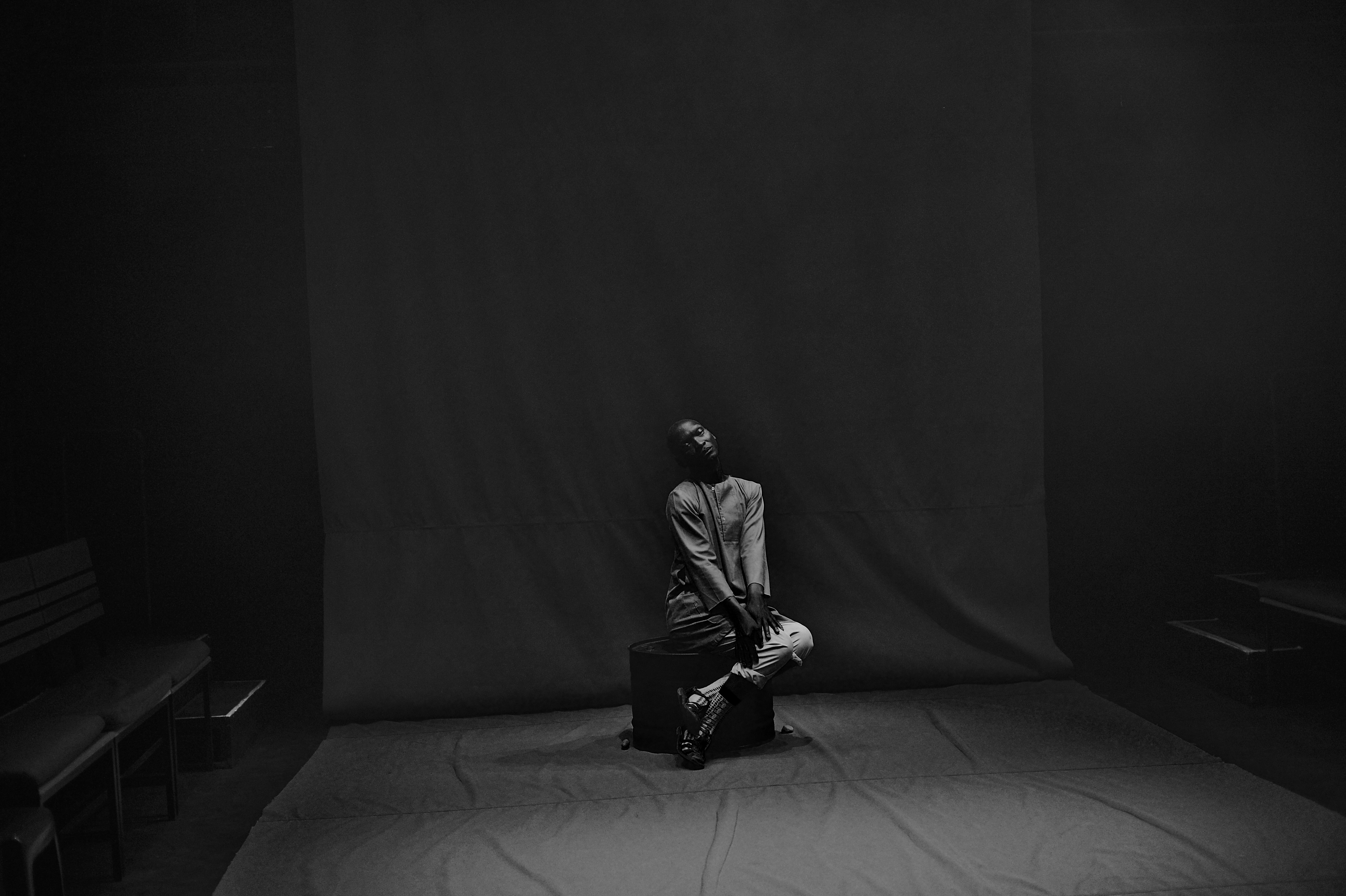
©Siphosihle-Mkhwanazi_CION-29-1-1024x300
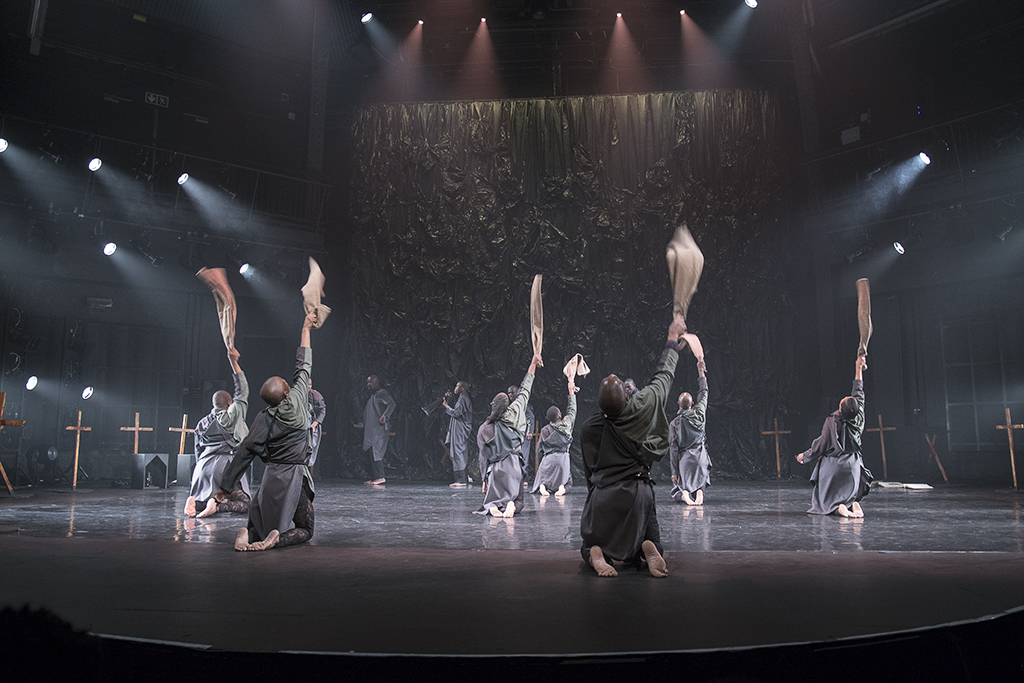
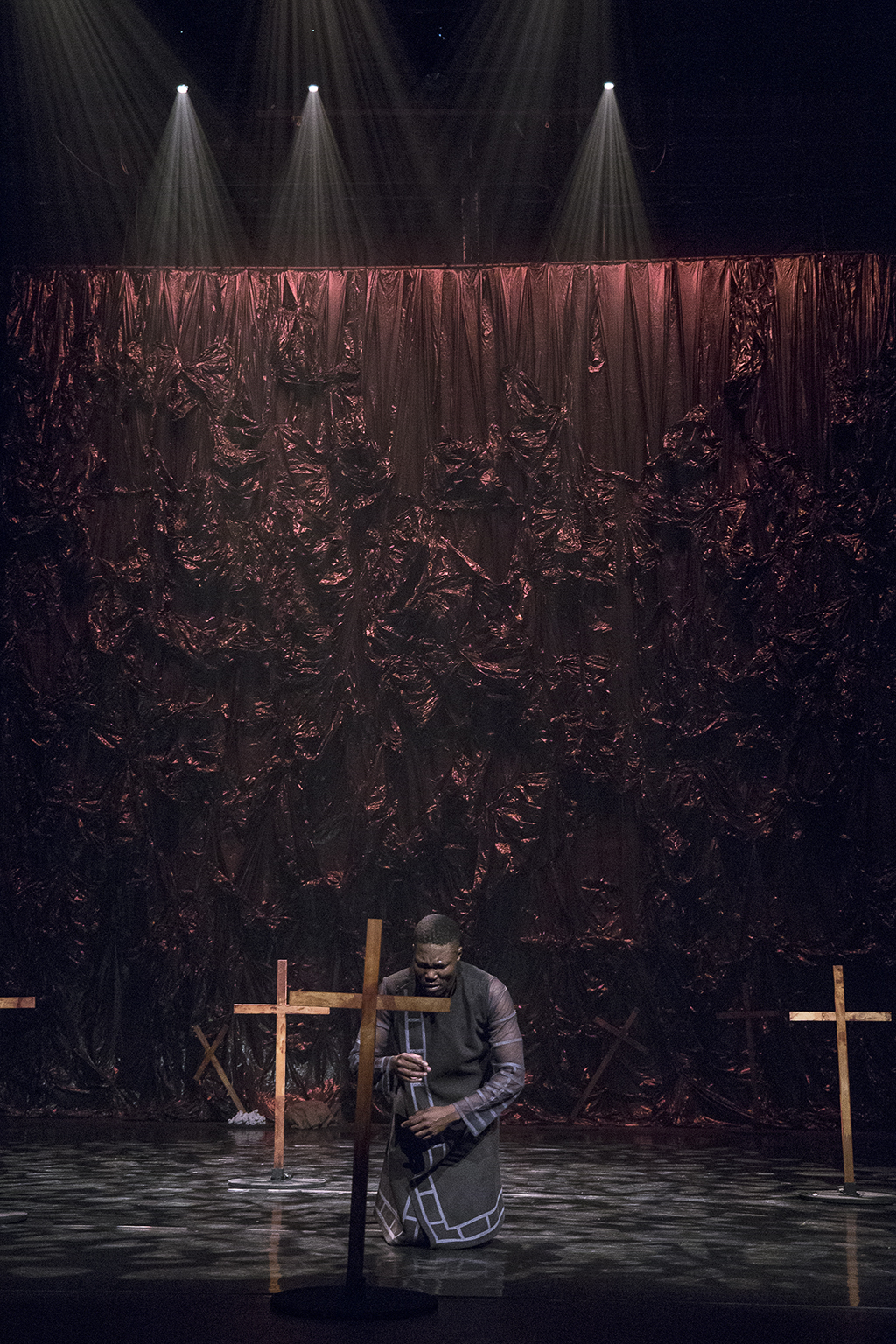
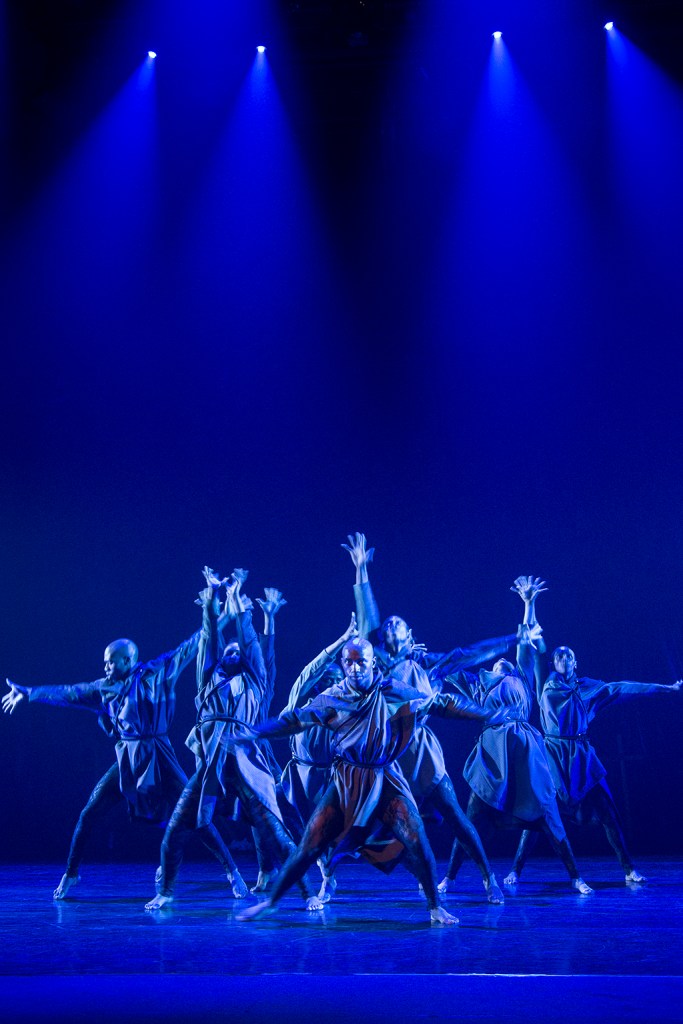
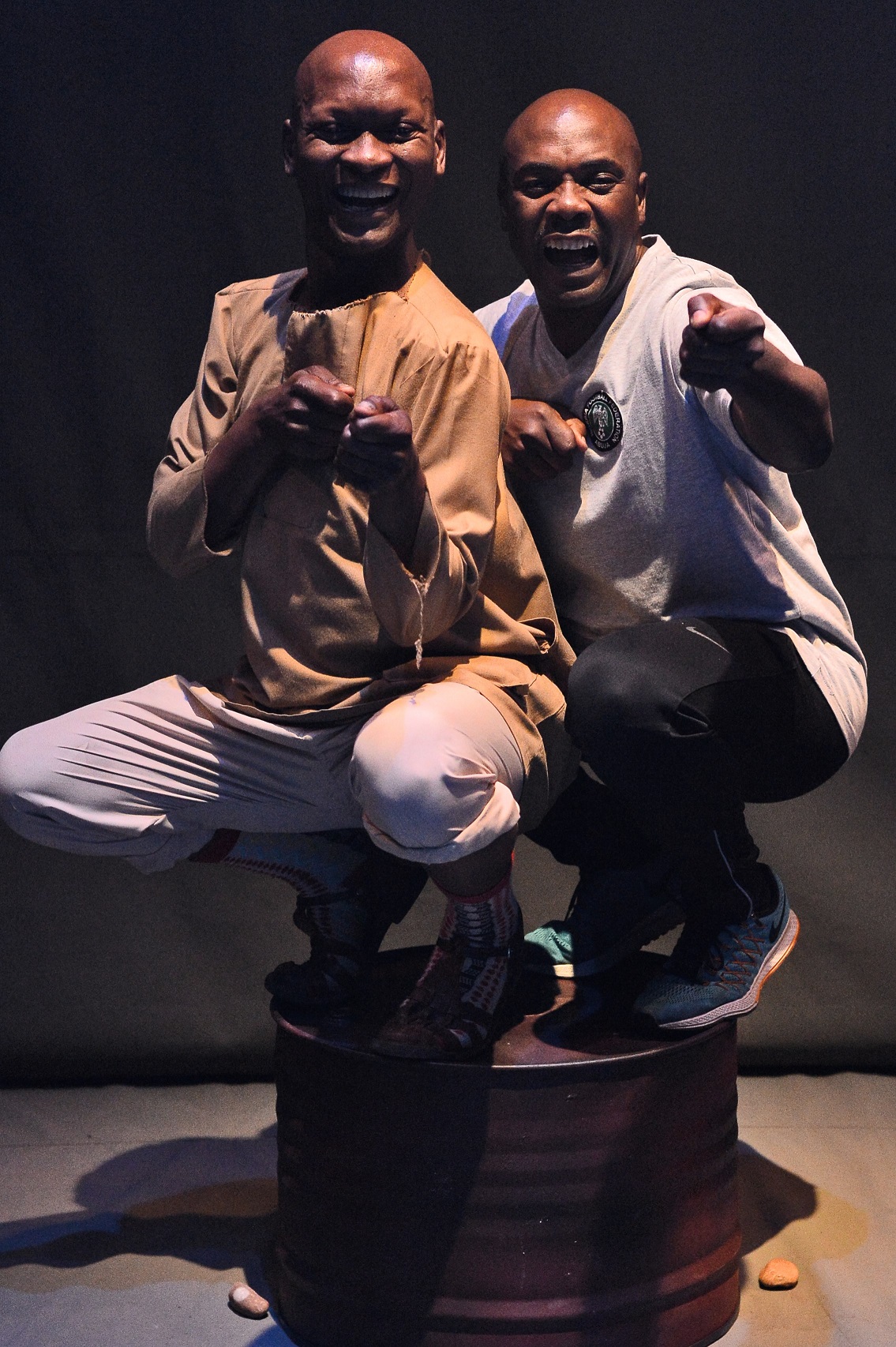
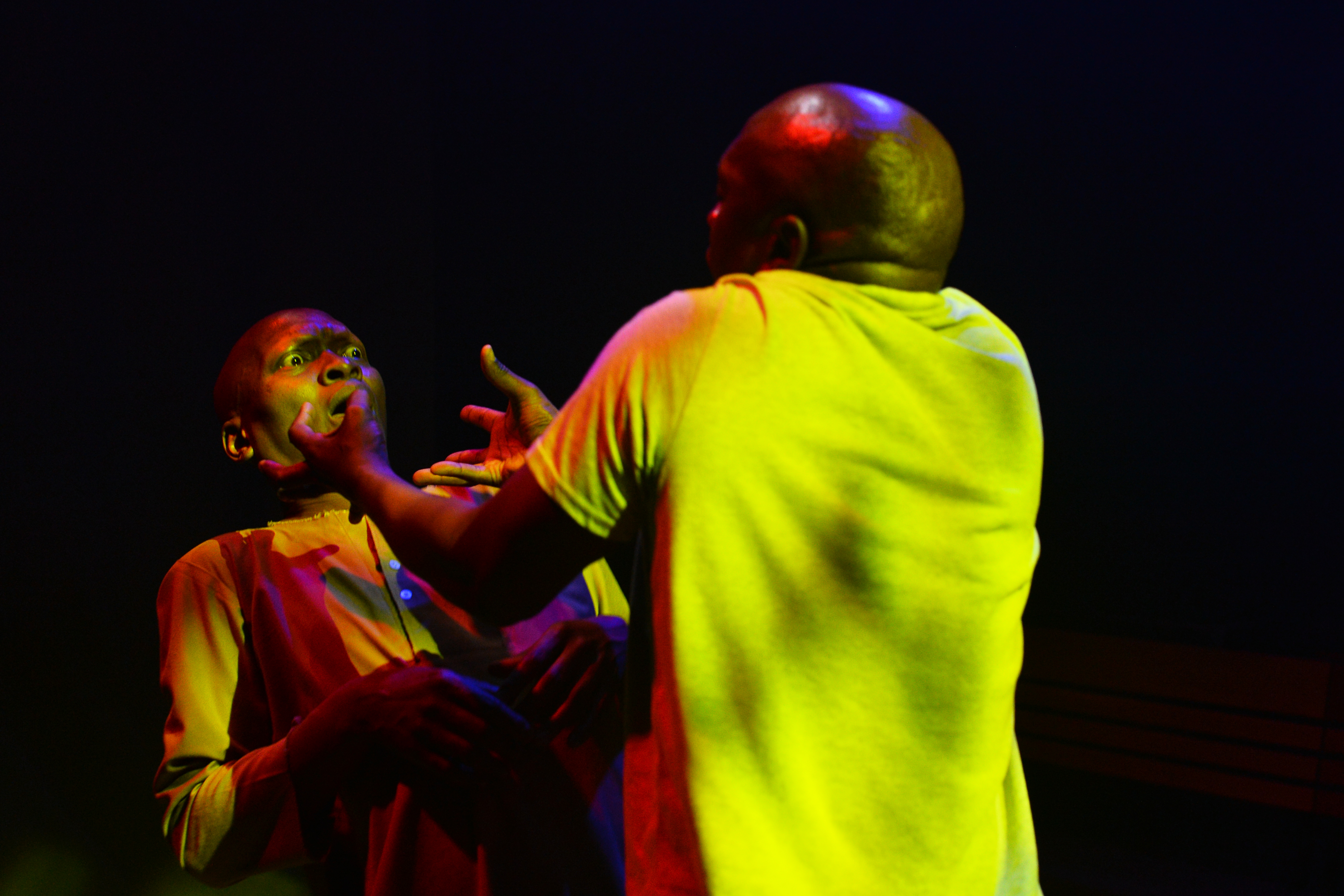
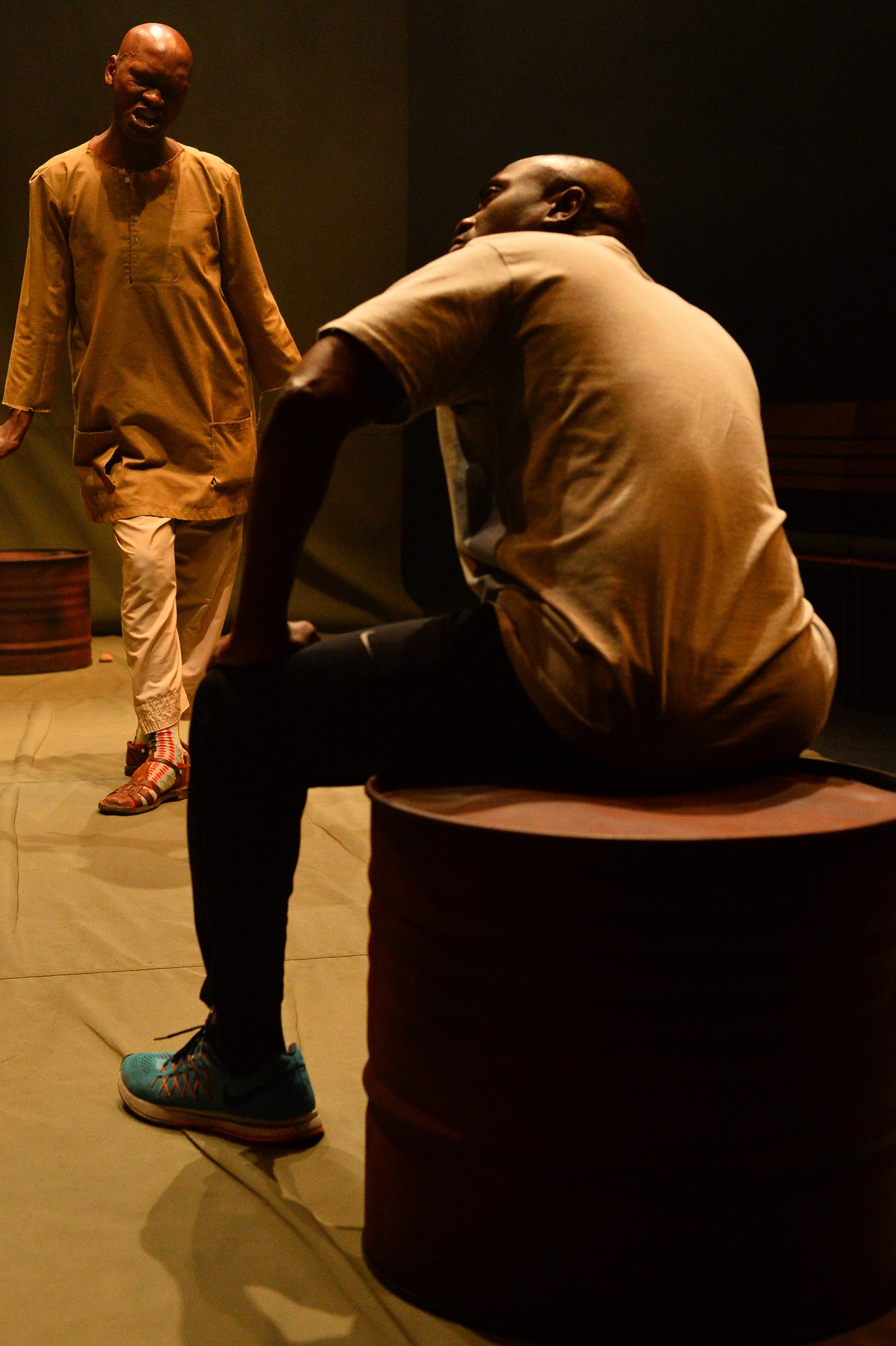
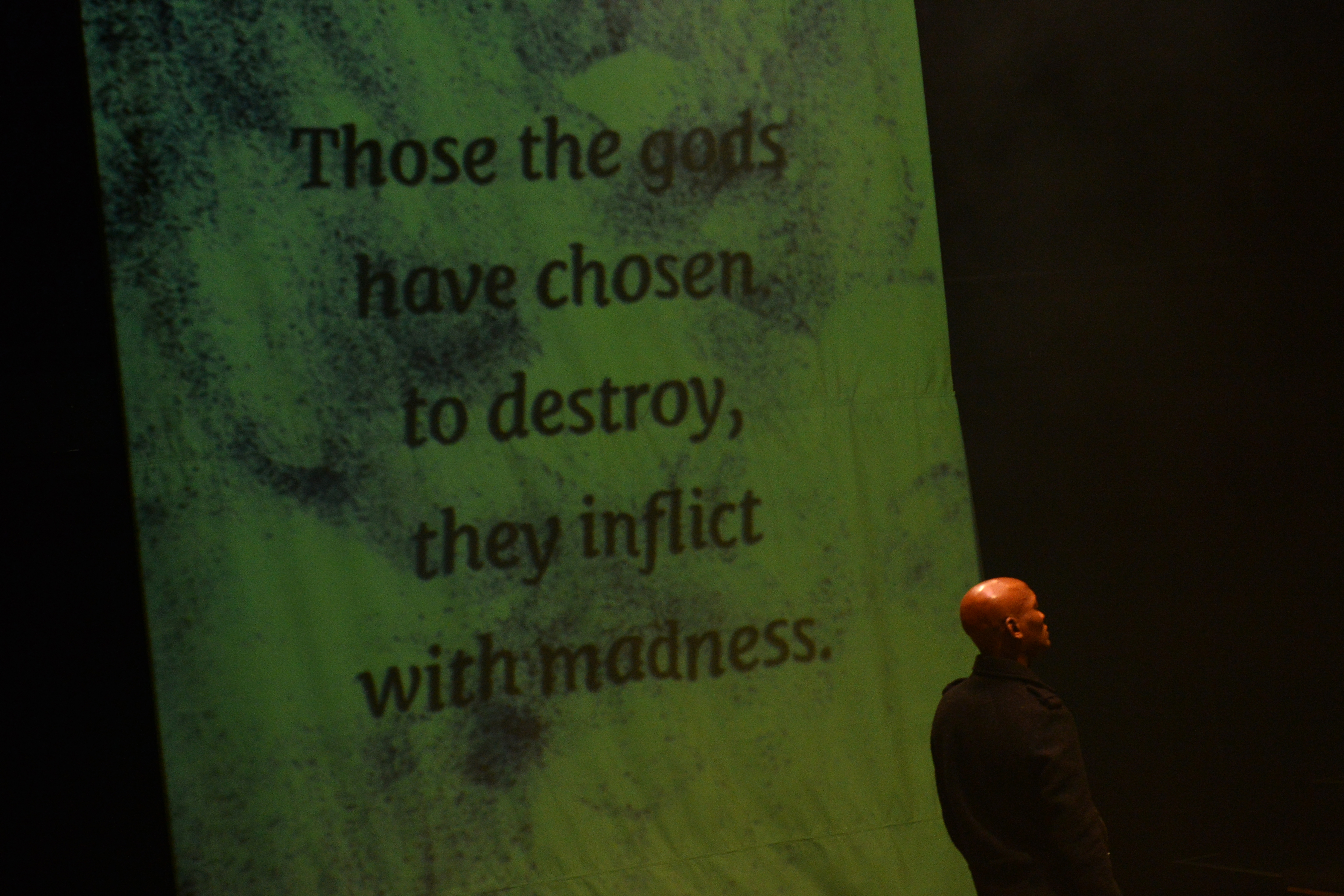
A scene from Cion ©Siphosihle-Mkhwanazi

Choreographer/dancer Gregory Maqoma and the Vuyani Dance Theatre are celebrating 20 years in the contemporary dance sphere in South Africa and abroad. DIANE DE BEER speaks to him about a reworked Cion, the piece he has selected to showcase their accomplishments in the Nelson Mandela Theatre from September 5 to 15:

CION
Gregory Maqoma in Cion


“I’ve just kept working,” says the explosive driving force behind Vuyani Dance Theatre (VDT), founder and creative director Gregory Maqoma, when reminiscing about the achievement of their 20th anniversary celebration with the already celebrated Cion at the Joburg Theatre starting on September 5.

Five years ago, the company celebrated with Full Moon which dance critic Adrienne Sichel lauded as “flights of conceptual fancy, wrapped around a creation myth, tap into South Africa’s diverse dance lineage ranging from classical ballet to contemporary African dance.

“Maqoma’s aesthetic plumage and Afro-classicism don’t ignore the Odette/Odile legacy but neither does he forget Africa’s ornithology.”

At that time, they didn’t have any backing, and not much has changed since. “It hasn’t been easy,” says the softly spoken Maqoma but argues that it speaks to their resilience. Then they were looking at their 15-year achievement, already a major feat for a local contemporary dance company, but this time round it’s #Vuyani20 and for the future, #ShapingTheNext20.

As they have done in the past, when it seems like too much of a struggle, they simply go bigger. And that’s not only into the future but also with what seemed to many the perfect production. For these current festivities, Maqoma has decided to amplify Cion because he believes that in current circumstances, death needs amplifying.

He is doing this by adding dancers as well as voices – and no less than the Soweto Gospel Choir – to this extraordinary performance. “It’s about legacy,” he says proudly.

CION_Maqoma 1

He points to their future and a combined invitation from “Sadler Wells, Theatre de la Ville and a Dutch company for performances of four shows two years hence.” That’s the luxury that he knows dancers in South Africa seldom have. “It gives us two years to just think,” he says. It also brings financial muscle and support, something that is sadly missing at home.

“We need acknowledgement of the spaces we find, as well as support and marketing,” he adds almost mournfully.

Everything happens here with little rehearsal time and much ingenuity as audiences can witness in the reworked Cion. That’s the way they roll. It’s not that he doesn’t speak loudly when given the opportunity, but from government they have had few favours.

CION
Cion

Artists/directors like James Ngcobo and Idris Elba (whose currently running production Tree Maqoma has just choreographed) know what the man is capable of and so do international audiences. But fortunately, Maqoma keeps coming home. This is where he dances and teaches with the company whose trainees will also be participating in the pulsating production on the Nelson Mandela stage in September.

His work has always been about challenging a Eurocentric way of structuring and to give it a contemporary African edge – with conviction – while at the same time honouring black artists. “We want to take control of our own craft,” he says. “It’s about validity.” And the fact that he should still be seeking that at this time, says so much about the world we live in.

If anything, Cion is proof of so much more than that.

CION_Maqoma_0235
Gregory Maqoma (front) in Cion


When it was first performed at the Market Theatre in 2017, he explained the creation thus: “I am drawn to Zakes Mda’s character Toloki the professional mourner from his beloved Ways of Dying as he further uncovers in his book Cion the story of the runaway slaves.

“In my interpretation, Toloki rediscovers death in a modern context, inspired by the universal events that lead to death, not as a natural phenomenon but by decisions of others over the other. We mourn death by creating death.

“The universe of greed, power, religion has led us to be professional mourners who transform the horror of death and the pain of mourning into a narrative that questions what seems to be normalised and far more brutal in how we experience death and immigration.

CION_Maqoma

“I am creating this work as a lament, a requiem required to awaken a part of us, the connection to the departed souls.”

And about that first season: nothing prepares you for the performance by Maqoma who has gathered a group of dancers, musicians and singers who mourn death in a way that both embraces and expunges the horrors of this world.

“From the design to the dance to the magnificent music and singing, Maqoma transports you to a place of healing by tearing the horror apart – step by step, note by note.

“If you ever see Cion is being performed anywhere, don’t hesitate, just go. It’s world class and feeds the soul.”

That’s what I wrote two years ago and that’s why it’s thrilling that he has decided to stage this majestic work at this particular time. If you see anything this year, it should be this.

Maqoma’s whole life has been about pushing boundaries and acknowledging himself and the company. “No more gatekeepers,” is his rallying cry.

cion.jpg
In full flow, Gregory Maqoma in Cion with singers in the background

And even though he laments the lack of support in a larger sense, he feels blessed for the support he has in the company. “I’ve been able to step away from the day-to-day running,” he explains. That gives him the luxury of time to sleep, to strategise and to dream. It also means he can make all of those a reality.

Vuyai Dance Theatre has become a machine that can function without his daily attention – and that, more than anything gives him great joy.

When he talks about going bigger, their first step towards #ShapingTheNext20 is to start laying the bricks for their own building. “If we’re able to cross borders, what is stopping us to lay those first bricks in our own country? We are fighting for our own space.”

In conclusion, he declares that he has been pushed post-apartheid to recognise the many atrocities including the senseless killings at Marikana – hence Cion. “It needs a strong push,” he exclaims, “we need to raise questions and we need to be loud.”

Government-funded art centres have not embraced their own he feels, and any plea from artists is landing on deaf ears. In the coming years apart from building VDT and working towards further success, he will also be developing a curriculum as a training institution and documenting the choreographic methodology of his and fellow choreographer Vincent Mantsoe’s work which will establish their own technique internationally.

It’s all about ownership, ownership, ownership.


Pietie and his Tannie Evita make #hetwo


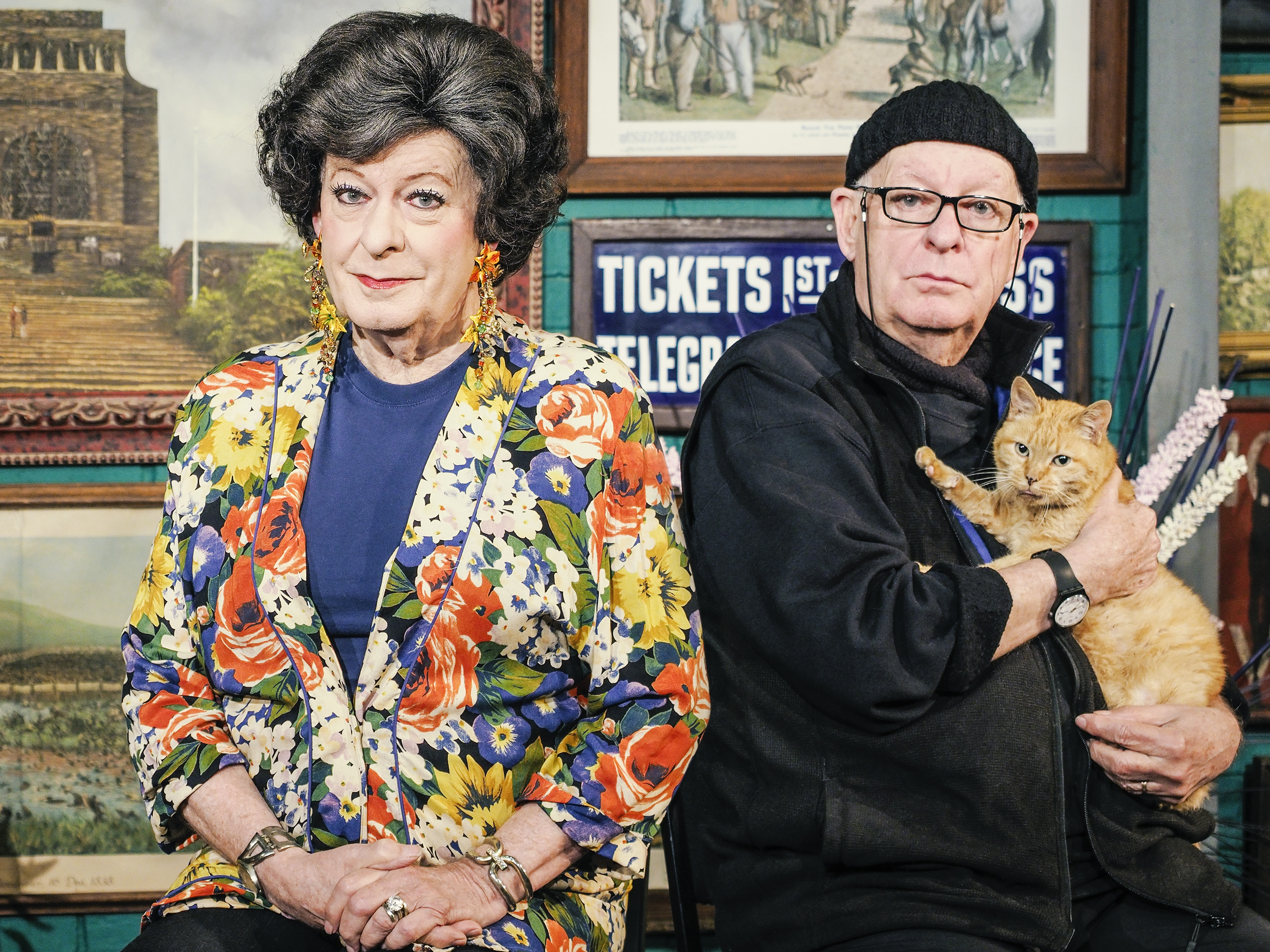
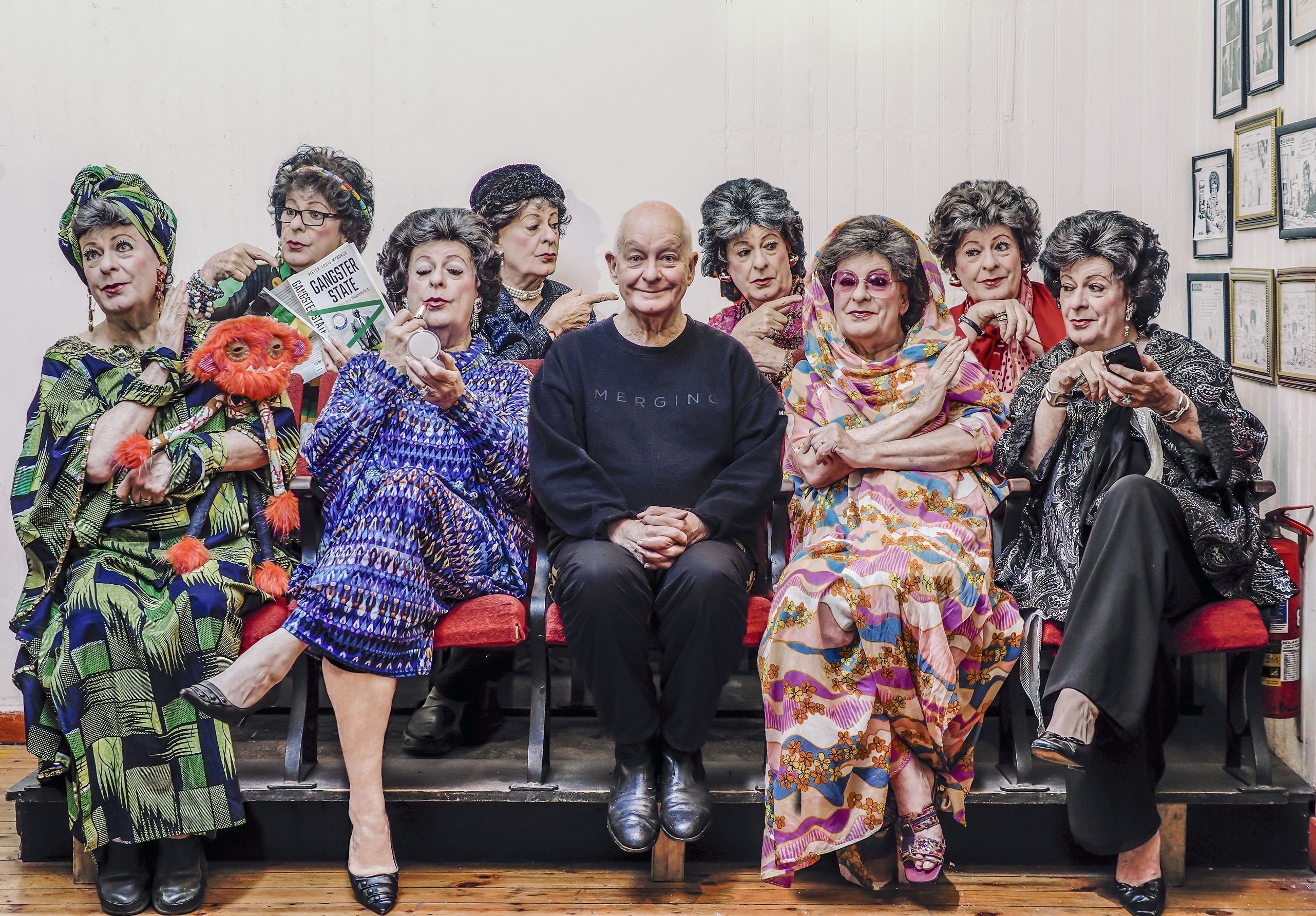
Tannie Evita and Pieter Dirk Uys photo by Stefan Hunter
Tannie Evita and Pieter-Dirk Uys

It’s the great standoff between Pieter-Dirk Uys and his celebrity creation Tannie Evita Bezuidenhout. He tells DIANE DE BEER about the battle of sharp tongues and minds in #hetwo:


It’s difficult to imagine how actor/writer/director (and the list goes on) Pieter Dirk Uys (PDU) keeps producing fresh material – but a few minutes in his company, listening to those ideas almost tumble over one another, the answer is simple.

It’s his vocation, his passion, and PDU (with all his personae) is unique. I am reminded of a day decades ago when I slipped into a lecture hall at the then Pretoria Technikon (now TUT) and listened to him chatting to drama students.

Quick and nimble, thinking on his feet, and everyone eating out of his hand, I was quickly won over, but was certain that even though seemingly impromptu, this speech was rehearsed. It was only many years later that I understood how foolish I was. It’s simply the way he works and thinks and has fashioned a career not only brilliantly but with versatility and such longevity.

It’s always new as out pops yet another gag – whether it’s that of Piet Koornhof or who knows, decades later turned into Trump. He brilliantly used one of the Koornhof-driven apartheid laws and moved to British immigration officers to show the world for what it really is – up close.

Tannie Evita is one who just won’t let go. Ever since she slipped onto stage in 1981 (just short of four decades ago), she’s been misbehaving but as her creator explains: Because she doesn’t exist, she can’t be real and then, she proves them wrong.

PDU and his master creation have never come face to face on stage until now. As his publicity announces à la the LA Times: Uys dons false eyelashes and presidents listen. And even if that’s perhaps no longer a compliment, Tannie Evita’s long list of celebrity fans have been committed from the start and still remain true.

When he started impersonating her in 1978, it was illegal to have an opinion about anything political, so he reasoned, maybe an Afrikaans woman with an NP husband could spill the beans. “The fact that she was portrayed by a man dressed as a woman when cross-dressing was also illegal, could force the edge of the envelope. Or maybe that she was there for only one reason: to eventually make Nelson Mandela laugh. And she did.”

And many others.

PDU knows a good thing when he has one. The myth keeps running: “For nearly 40 years she has had to tolerate the impersonation of her by a local comedian,” reads the publicity blurb. “She tried to sue him for libel; she swore never to allow him into her life and yet, now in the 25th year of her democracy, she will be on the stage with Pieter-Dirk Uys at the same time.”

_Evita_Bezuidenhout_stand_up)
Stand up the real Evita Bezuidenhout

There’s a hitch though says PDU with a dramatic pause: “It starts with her death…” and sadly, you will have to go and see the rest for yourself because that will be the fun of #hetwo –  another of PDU’s gifts, titles, always read them carefully, as therein also lies a tale.

Know that it will be fresh and new but never clean – tralala. He recently picked up some flack because of Ouma Ossewania’s language. PDU is puzzled but not troubled. “The title is Ouma Ossewania Praat Vuil.” They have warning notices, age restrictions AND that title. Feels like old times as the wheels keep turning – round and round.

He has been put through the censorship wringer for most of his career. But that keeps challenging him. There are so many taboos, some where he will bend the knee but others he will keep challenging. In the apartheid years, the security police and the censorship board presented him with sold-out shows, but he’s not going to do things for expediency alone. Whatever happens, he deals with it. If people have a point, he will listen, if not, he will tell them that too.

That both PDU and Tannie Evita will have you giggling in #metwo while banishing the truoubles of the outside world is a no-brainer. While he is aware of everything in the entertainment basket, he’s never had a problem packing them in.

Apart from this latest creation, he currently has 10 shows in his repertoire. At the drop of a hat, he can pack up his wardrobe and go.

He has teetered around on those high heels, donned too many wigs and battled the elements whatever they might be on his own for decades. When people ask him about his swansong, he’s retorts  that every show might be one, he doesn’t know. But those who have watched him through the years will know that he has always claimed that he won’t stop.

He might do things differently, and with this coming face to face of PDU and Tannie Evita, he pulls yet another trick out of his shimmering stage hat. There isn’t an end to his inventiveness. He has done it his whole life, that’s how he rolls – to his audience’s benefit  and delight.

An artist isn’t always appreciated in his own land and PDU has been around so long, many tend to take him for granted. Don’t! Live theatre has become a luxury and many artists have had to turn to television or film just to pay the rent.

There are a few like PDU who knew from the start they would have to do it all. It is the only way he can achieve everything he wants to. “I’m writing a new solo play,” he says. “It has to be for one man only because I can’t afford to pay actors.” That’s the reality and has been for quite a while.

Bambi, Evita’s sister is on her way to Berlin for a few shows. There’s life in quite a few of his dames yet – and that’s how you do it.

And Tannie Evita shares her weekly comments on YouTube and Daily Maverick about the state of her nation, where her Evita’s Free Speech has gathered supporters from all the corners of the globe. Her 140 000 Twitter followers are also tuned in around the clock.

“My instinct drove me. I’m a terminal optimist which we have to be as artists because what we do is total madness,” he said last year when speaking to Marthinus Basson at a text market in Cape Town. This is what he wanted to do and where he wanted to be – on stage among people with passion and humour.

He also had a message for artists: “You have to be a unique talent. Don’t be a copy, we have enough of those. Be original. Don’t specialise, do everything. You must learn the alphabet of the theatre – everything. Read, watch documentaries by people who do what you want to achieve. Don’t be afraid to adore talent.”

And we do.

#HeTwo will perform in Johannesburg at Pieter Toerien’s Montecasino Theatre from July 31 to August 18. The run in Cape Town is at Theatre on the Bay from 27 August 27 to September 14. Book at Computicket or theatres.

Director Lesedi Job Has Many Voices And She Wants Them All To Be Heard Equally

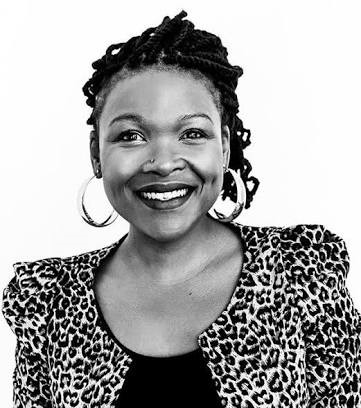
Lesedi Headshot (002)
Lesedi Job

Young black female directors are a rarity in the South African theatre landscape (and probably around the world) but Lesedi Job, who has been on a roll since her first production a couple of years back, tells DIANE DE BEER she is determined to change all that:


Representation is a rare commodity but one of the few positives in our crazy world is that in spite of protestations, that is changing – especially in the world of theatre, film and television.

It’s voices that we have missed up to now and while some of their stories have been told by others, this no longer holds true. Think the Central Park Five story When They See Us, Get Out and BlacKkKlansman, to mention a few.

It isn’t even the stories that always need to change, it’s the perspective, says director/actor/singer Lesedi Job who is directing her 7th play, The Dead Tinder Society, in just a couple of years. “When James (Ngcobo, artistic director at The Market) first mentioned that I should direct, I was hesitant,” she says.

But that’s then and since that time, she has been piling on the experience with very diverse plays and even a sublime stint in Canada where she mixed and worked with the best in the industry. If there was a common denominator it was quite tough social commentary, she notes.

This wasn’t necessarily a choice but as a newbie, what she found was that she was mainly directing local debut works, which appealed to her because there was no blueprint. She was gifted to find her own voice. She knows and believes that hers is an important voice.

Also because of her age, which already broadens her viewing audience. It’s precisely her youth (30something), that drives me to want to see her newest work to catch her perspective and where her head is at. The topic doesn’t necessarily interest or affect me.

Having said that, there is much to recommend in Job’s latest production running until August 25. The new South African play dealing with post-divorce Tinder-dating, The Dead Tinder Society, is about that difficult time in a 30/40something woman’s life when she must re-enter the dating world – and how to do that. “It might not be a funny time in a woman’s life,” says Job, but both the playwright and the director wanted to highlight the funny side of this one.

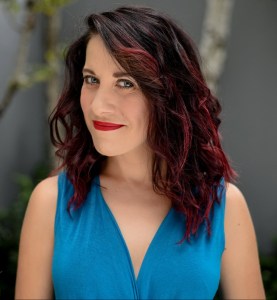
Ashleigh Harvey Headshot_ (002)
Ashleigh Harvey

Actor Ashleigh Harvey (who has recently left SA for Britain) switched roles in this her debut playwrighting effort.
As she’s left the country, they have been speaking via social media and having studied at the same time at Wits (in fact the two actors are also Wits alumni), they knew one another well which made the process much easier.

“Ashleigh gave me carte blanche on the actors,” notes Job and she decided that with her pick of both a white and black actor, the interracial dynamic would also come into play. And when she was auditioning, the thing that appealed to her most was an actor’s hunger for the role. “I know when I felt like that, I did my best work on stage,” she says.

Sharon Spiegel-Wagner is best known as a musical theatre performer, but Job points out that she studied straight drama. “I think she’s loving this.” She had worked with Mpho Osei-Tutu on When Swallows Cry and she knew what she was looking for was versatility because he had to play different characters.

She’s thrilled with the process because with a new script, it’s important to have everyone on board – leaving any preciousness to the side. And they have. Job insists that she brings all her attributes to the table. Her age, especially, because she believes that whatever age, a play will be approached differently.

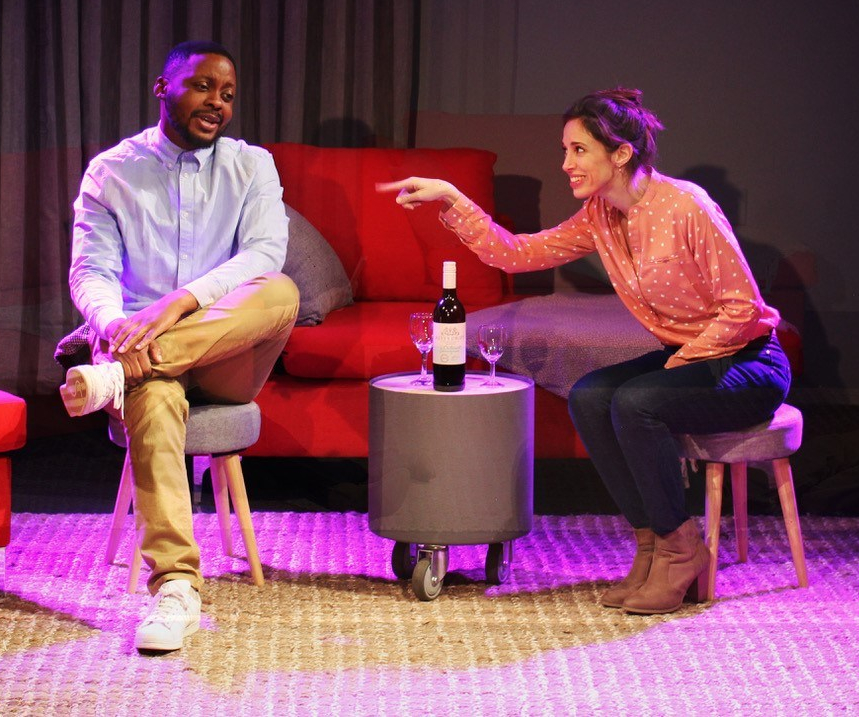
Tinder2
Mpho Osei-Tutu and Sharon Spiegel-Wagner. Picture: Wessel Odendaal

Also with a play that has Tinder at its centre, even if that is simply there to get to the more emotional stuff, you have to know what that culture is about. “You’re required to think on your feet,” she says because time is short and money is scarce. But Job has learnt to work around all of that. For the moment, it’s a fact of an artist’s life – and won’t change in the foreseeable future. “It’s important that the actors also have a voice and that they’re allowed to connect to their instincts,” she says. “I encourage play and towards the end, pull it all together.”

The way Job has been pulled from one play to the next is impressive, with different people spotting that it quality. She is in the process of finding her artistic voice. Because all the plays have been different, it’s allowed her to explore and examine her craft. “For me it is really important that what I do has to work for the writing. It’s about the text,” she says.

And while it is not the end goal, for the moment, theatre is her teaching tool. As an actress (Raisin in the Sun, Fishes of Hope), she knew she wanted to direct – some day.

And she’s had wonderful guiding hands from James Ngcobo to Megan Willson who pushed her to find her own voice. “It was like freestyle dancing. She stood there and gave me the tools – me, myself and I.”

At the time it might have been frightening, but it’s easy to see and hear when she talks, that this is a woman with a mind of her own. She has a strong voice and one that has found many different stages.

Her biggest dream is to grow the industry, to keep the wheel turning. “I want to be part of that. This is my life – and for all my years to come.”

Flying high so quickly, she has also become a target of politics, but she shrugs that off. “South Africa is too small, we should be working together not against each other,” she advocates. “We all need each other.”

Once theatre is up and running, she would love to turn to film and television but knows that she will always return to the stage. “That’s where an actor exercises his muscle.” And finally, the thing she really really wants to do is to create and direct a fully-fledged South African musical. “I know we can do it!”

And while few know it, not only is she a remarkable actress (who still wants to act), she’s also a good singer. “Even as a voice artist, I’m brilliant,” she says almost shyly. “It’s all about telling a story.”

And in that vein, meet Jody Green, a 36-year-old recently divorced mother of two. With the help of her best friend Ray, she signs up to Tinder (the infamous mobile dating app) in an attempt to put her shattered love life back together again.

Watch and learn.

Tinder
Sharon Spiegel-Wagner

Tickets@R130  at Computicket

Running time: 60 minutes

Pieter Toerien’s Montecasino Studio Theatre

Producers: VR Theatrical (award-winning Hedwig and the Angry Inch and Rock of Ages)


The Continent Comes Alive with the Storytelling of Nigerian Chigozie Obiama’s The Fishermen at Jozi’s Market


Youngsters at play1
Youngsters (Warren Masemola and Siyabonga Thwala) at play

Pictures: Lungelo Mbulwana

In search of our continent and thus celebrating its stories, artistic director of The Market James Ngcobo was excited when he discovered a new writer whose work had been adapted for stage and could be explored and examined. DIANE DE BEER experiences Nigerian storytelling in dramatic fashion:


There’s been a rich vein of African writing the the past decade, with Chigozie Obiama from Nigeria with his debut The Fishermen regarded as one of the most promising to emerge in the past few years.

When James Ngcobo, artistic director of The Market, finished reading the novel, he knew straight away that he wanted to stage this particular piece.

It has long been a gripe of his that African work is featured more widely in the rest of the world than in South Africa. Having staged Wole Soyinka’s The Lion and the Jewel and Sunjata, a Malian story he both wrote and directed a few years back, he feels it is something he wishes to promote in an  ongoing fashion.

This time he curated a continental season with the eye on a country in which the narrative is changing constantly. Starting off last month with Frontières, written and mentored by Bobby Rodwell, directed by Mmabatho Montsho, he describes it as testimonial theatre with immigrants/refugees to this country telling their stories of hardship, inhospitability and simply being obstructed in any attempt to make their stay a legal one.

These stories are rife, the way people have suffered to get here, only to find they are not wanted. With the current refugee crisis across the world and the inability of governments to deal with this, spotlighting our own harsh ways in the wake of Africa welcoming our exiles in the past, is illuminating.

And to base this on research on migration and the status of African foreign nationals in South Africa that began in 2005, is also valuable because of the depth of the testimonies.

Warren masemola (left) and Siyabonga Thwala into their storytelling
Warren Masemola (left) and Siyabonga Thwala into their storytelling

The Fishermen is completely different and falls more in Ngcobo’s explanation that “we need to tell stories that highlight the daily lives of people, the events in the countries they come from, the need to get up, jump over hurdles and move on”.

There’s a folktale quality to the way the story is told. Ngcobo was very specific about his choice of actors, who need special qualities to pull this one off. Not only are the two actors playing all four brothers that populate this play, they also have to perform all the other characters that appear, including their parents.

Warren Masemola and Siybonga Thwala1
Warren Masemola and Siybonga Thwala

Ngcobo regular Siyabongo Thwala, who can switch to a younger version of himself with a face of perfect innocence, and the flexible Warren Masemola, in both gait and mentality, are the ideal cast as they move between the different personalities to tell their stories of this troubled family.

Even though there’s a comedic element because of the writing and the performance, the work itself is much more complex than it seems on the surface. It is the story of four Nigerian brothers – the eldest 15 and the youngest 9 – who take advantage of their father’s absence when he moves to another town for work, to play hooky while going fishing in a river that because of its deterioration is forbidden.

With a mother who finds it tough to control her sons as she runs her own business, all kinds of external factors take control of their lives. It’s about a close-knit family, brotherly love and devotion and a trust that is broken. There’s also a hint of the Cain/Abel story with many biblical references as well as traditions and beliefs that can rule and ruin people.

And as the family stand, the cycle of violence once set into motion and spinning out of control, a larger vision emerges of a country and where it might be heading.

The Fishermen
The Staging of The Fishermen

Like with Ngcobo’s Sunjata which was also driven more than anything by storytelling, there’s a folkloric quality to it. One almost expects it to kick off with a once upon a time…

It all lies in the words and the telling. When Ngcobo speaks about the piece and especially the writing, he expresses his love of the author’s way with language which for him has a sound and feel of Yoruba rather than English.

This is enhanced in quite comical fashion by the accents (in which the actors have been guided by accent coach Dike Sam). “We needed to tone it down so that audiences didn’t battle too much but with some of the more over-the-top characters, we turn it up,” says the director.

It takes a moment just to adjust your ears, but that has the added bonus of finetuning your focus and taking you right into the heart of the piece.

And together with the accent, it is all in the writing, the descriptions and the telling of the story. To make this come to life, it needed the playfulness and skills of the two actors who have to leap back into their youthful past while in-between taking on adult mode for the colourful telling of this in-the- end very tragic tale.

With this Masemola’s first appearance at The Market in 10 years, his confidently comical and often on the edge performance comes as quite a surprise. A delightful one indeed, with his actions matching his words. And he very early on announces his intent when after an admonishment from his “brother”, he plays his “Mommy” with an exaggerated swing of the arms and legs.

But its also his vocal ability as he turns the volume on and off to make a point or to relay an emotion that spectacularly adds to the fun of the piece – even as devastation sets in.

Similarly yet in clever contrast, Thwala’s colouring is much more mischievous, which works well with his features, (big eyes that grow bigger with the drama) and the two manage to tell a tale in quite mesmerising fashion.

Warreen Masemola in contemplation
Warren Masemola in contemplation in character

Ngcobo drew on his love for storytelling, allowing the characters to draw the pictures of our imagination but also helping in the detail with smart projections which tell a story of mood and sometimes melancholy.

With atmospheric lighting, costumes that reflect the characters as well as sound, all adding to the drama, its like stepping back in time and into another world which is exactly what the director was hoping for and what storytelling dreams of doing.

It’s about our stages reflecting the continent (amongst others), storytelling in a different guise with words that paint novel pictures.

My only critique would be a slightly shorter version to make it smartly slim.

  • The Fishermen will be on at the Market’s Mannie Manim Theatre until August 4.

Theatrerocket goes on Theatrical March in This Festival Season with Debut Shows

Pictures: The Sjokoladeshow and Koekeloer: Wendy van Heerden


Kamphoer
Sandra Prinsloo in Kamphoer.

With Theatrerocket in panic mode as three national festivals run almost at the same time, Rudi Sadler and Johan van der Merwe have all their theatre ducks in a row – as they always have. DIANE DE BEER checks their many productions in debut seasons at Innibos in Mbombela and at the Free State Festival in Bloemfontein starting this week:


The names of actress Sandra Prinsloo and director Lara Foot in the same sentence? That’s already a coup!

Then you give them a text adapted by Cecilia du Toit from Francois Smith’s fictionalised Kamphoer and Nico Moolman’s non- fiction Camp Whore, dealing with the life of Susan Nell – and you have fireworks.

Kamphoer which debuts in the Free State plays out against the backdrop of the South African War (Anglo Boer War, 1899 – 1902) where Susan Nell is raped in the Winburg concentration camp and left for dead. She is found by a black couple who gently nurse her back to life and from there she travels to the Cape and finds her way to Europe where she is trained as a psychologist. That’s in broad brush strokes.

During World War 1, she works at a psychiatric institution in England where she crosses paths with one of her rapists, who is suffering from a post-war condition that was then labelled as shellshock.

This year, 2019, is the 120th anniversary of the South African War and the production is about honouring that devastating period.

It is produced by Theatrerocket whose first solo production Die Reuk Van Appels (starring Gideon Lombard and directed by Lara Bye) was showered with awards for everyone involved. The anticipation for this one is quite something – and it is perhaps with some gentle breathing that they welcome this Free State debut.

For those not visiting the festival, this is a production that will travel. Make a note.

But with much more laughter in mind, their other two productions offer much lighter fare with debuts at Innibos (from June 26 to 29) before racing to the Free State Festival (July 1 – 7).

Moulin Rouge sjok plakkaat Innibos en Vryfees-s (002)Die Sjokoladeshow is something Johan van der Merwe came up with while visiting the Drakensberg, eating chocolate fondue and thinking that they had never done a chocolate show. It can absolutely be as random as that.

In conversation with author Riana Scheepers, they decided to invite a clutch of writers to come up with some sketches which would be selected for a show – which after much whittling down was exactly what happened.

Into the picture step a quartet of artists: director/writer Henriëtta Gryffenberg, actors Lizz Meiring and Jak de Priester and musical director Heinrich Pelser.

“I love the different stories,” says Gryffenberg. They range from drama, to comedy, monologues, storytelling and two songs that celebrate the sweet- and sadness of love. “Each item has its own colour and scent and leaves me with food for thought,” she reminisces.

Die Sjokoladeshow 2 (002)

“I wanted to do an escapist show as balm to these tough times. I didn’t want politics of the day to intrude. I wanted to work with themes of relationships between parents and children as well as men and women. I also wanted to explore the exile of the outsider because these are all issues that I believe are currently neglected.”

Talking about her team, she praises Meiring as the theatrical trooper. “Her enthusiasm and energy are catching. She eats, lives and breathes theatre and her interpretations stretch from a 20-something nun to a 60-year plus woman who rants about her mother’s moral messages.”

Situated on the opposite end of the acting spectrum, this is De Priester’s debut as actor. A successful singer and performer, the stage is also his home, but this has a different slant. “We had to turn him into an actor in 15 rehearsal sessions,” explains Gryffenberg. “He pulled it off and I didn’t think it would be possible! I think many of his admirers will be amazed at his performance.”

She also has high praise for her music man. “He is musical magic,” she says. His understanding of her needs was spot-on and his live soundtrack extraordinary without being overpowering in a theatre landscape. He also performs with aplomb.

For Gryffenberg, from putting together the text to ensure a dramatic arc, to the Johan Engelbrecht set to getting stuck into a stage production, was both tough and thrilling. In conclusion she celebrates that Die Sjokoladeshow is a confluence of many talents which will now be revealed at the two art festivals.

And last (but not least), it was time for Theatrerocket to dip their toe into farce territory with a production titled Koekeloer! And for this first effort, they were determined to get all the pieces of the puzzle to fit perfectly.

Koekeloer group
The cast of Koekeloer

The story deals with the popular kykNET cooking show Koekedoor, familiar territory for audiences. Playwright Braam van der Vyver, familiar with farce, got together with the two producers and together they believe they have concocted the perfect comedy plot.

Two finalists, Marié Coleské, a spinster from Koekenaap and Marié Kok, a lingerie model from Ruimsig have to battle this particular baking bulge with cunning conniving and some half-baked plans.

Also introduce a clumsy crook and a private detective, a jealous boxing champion, a lingerie designer (of course!), a dominee, a controversial book and an upside-down cake. That’s farce.

Ben en Gavin 1 (002)
Ben Pienaar and Gavin van den Berg

The cast includes many of the more experienced players from DEURnis with the bonus of veteran actor Gavin van den Berg as the fallible preacher.

This is one dish which they are determined will deliver in all its deliciousness. Fingers crossed for no load shedding in case the cake flops!

So get thee to the theatre at either Innibos in Mbombela or at the Free State Festival in Bloemfontein. If you’re in Grahamstown, see the DEURnis/Uzwelo season.

DEURnis/Uzwelo is One-On-One Theatre that Debuts at National Arts Festival

Deurnisposter4

The Afrikaans Festivals have for a couple of years enjoyed the expansive embrace of performance the Theatrerocket way. The production company has found innovative ways of appealing to theatre audiences as well as making the more seasoned theatre followers pay attention to DEURnis. Now they have collaborated with Windybrow Art Centre for the National Arts Festival (June 27 to July 7). DIANE DE BEER explores the concept:

No one would have given much of a thumbs up to this first and probably edgy concept dubbed DEURnis. It just sounds silly – one-on-one theatre!

But Rudi Sadler and Johan van der Merwe who a few years back formed a production company Theatrerocket had an idea and they were determined. DEURnis is a one-on-one site-specific theatrical production with a very intimate yet cutting-edge and experimental approach. It involves a single audience member who views three separate dramatic pieces per package (there are four different ones to choose from at the National Arts Festival for the first time this year), with each of these having one performer and one audience member.

Each piece is approximately 20 minutes long and written for a particular room/space in a house/building, so as a viewer, you move from one room or even caravan to the next to see your three chosen plays.

It is the social issues that permeate the different works that affect individuals in different ways depending who you are. And for those who aren’t interested in gimmicky theatre, that’s exactly the trap they have avoided by aiming for excellence and substance in the texts. Some will suit specific individuals better than others.

Personally I’m not too excited by the more confrontational ones (there’s usually one that’s slightly more out there in a package), but then other audience members might feel differently. “We have been inundated by people interested in writing for this venture,” says Van der Merwe.

The duo are theatre fanatics of a kind, they know and understand the pitfalls and what audiences want.

Deurnis poster

Part of why DEURnis works so well is because it is such a well-executed concept. They understood from the beginning that the control had to be constant to see that everything works superbly. And as they have had many plays to choose from, they have managed to execute their strict code of excellence.

It’s a fascinating experience, being the only one in the room in situations with a stranger telling a story that is often inclusive rather than intrusive but affects you as the viewer in very specific ways. For many it might also be uncomfortable to be this intimate with someone you’re not familiar with. But that’s part of the experience.

This is not a financial venture for the company. With only single actors and audience members, the numbers simply don’t add up. But because of the way it has been done, the performance-experience the mostly young actors accumulate, can’t be calculated.

And chatting to a few of them in-between performances, they are thrilled by how much they are learning in the process. “Each performance is different because of the reaction of the individual viewing,” says one performer. Many of them are already in their second or third play and the growth is obvious in their performances as well as a play’s toughness, a second time round.

Deurnis Poster3

Prospective directors are also excited about the challenge and safety of testing their skills on such a small and intimate stage. “It’s a safe environment in which to experiment and push your own boundaries,” says Van der Merwe.

Having sat through two nights of 12 plays (even a dance with Ignatius van Heerden, Droom, with multi-media included), it doesn’t matter which package you choose. They’re all extremely well crafted and in sometimes scary ways, fun to experience. Following the earliest season, I was excited because of the great potential – and they keep delivering.

They keep on adding to the concept with interesting twists. The latest will be seen at the National Arts Festival later this week. It all began when the head of the Windybrow Arts Centre, Keituletse Gwanga, came to see the production in Tshwane a while back. Six Market Lab graduates, Kwasha! Theatre Company, who work with Windybrow as an introduction to the professional world, have joined Theatrerocket for DEURnis/Uzwelo (a Zulu translation of deurnis which means empathy/compassion) on this year’s main programme.

Deurnis poster2

It’s been an amazing learning curve explains Van der Merwe because they started with expanded workshops with Windybrow where they explained, explored and taught the concept, with end results that deliver a diverse and rich programme.

“The stories they came with are fascinating,” says Sadler which meant that both groups benefitted from this collaborative effort. Each programme has been put together to showcase the diversity with the first, for example, presenting Koud (Afrikaans: a schoolboy with a secret, forbidden love, that should be kept secret at all costs); Khogo/Chicken (Sesotho: a man sells chickens in the basement of his building and is at pains to prove his compassion to the SPCA) and Kwas (Afrikaans: Esther loves posing for artists but has problems staying still).

Other languages included are English, Sepedi, Greek, IsiXhosa and even Tsotsi taal. Because many of the pieces feature the actor’s first language, it has been constructed to be played for audiences who might not understand but should follow the story which is another interesting addition to this already exploratory work.

A work titled Womb, for example, places the audience member in the womb, the language (in this instance English) shouldn’t matter, while Gone by Renos Spanoudes deals with death which expands on the Becket quote: “We are born astride a grave”. Even though he includes some Greek, the meaning is never lost.

DEURnis has won many different theatre prizes, most of them national and there have been a few acting awards as well. Two years into this project, the growth has been impressive. And while this latest innovation can be seen at Makhanda from June 27 to July 1 (at 11am, 3pm and 4.30pm daily at PJ Olivier), they already have exciting new plans which they will pull from their theatrical hat at the right moment.


Two Young Art Activists, Herschelle Benjamin and Jeremeo Le Cordeur, Shine their Creative Light with Flair

Pictures: Jeremeo Le Cordeur


Jeremeo and Herschelle
Jeremeo Le Cordeur and Herschelle Benjamin

In a world where the arts are no longer a priority, two young art activists caught DIANE DE BEER’S eye in the way they were forging ahead and establishing their careers in a space which would nourish their own creativity but where they also wanted to promote that of others:


Two young Capetonians Herschelle Benjamin and Jeremeo Le Cordeur are proof that artists often don’t have a choice. Once those creative genes kick in, they have to listen.

Benjamin, an only child, when choosing a career knew that law would be a wiser bet, but he enrolled for that as well as a drama degree – just to make sure.

“After one week of depressing law lectures, knowing that I will fail because I had no real interest or passion for it and seeing all of my drama friends at the library or at the drama department living their dreams, I changed courses without consulting my parents.”

With bursaries for Stellenbosch University studies, when switching lanes he knew he had to succeed and show his parents that he would still be a star pupil.

Jeremeo Le Cordeur
Jeremeo Le Cordeur with his award from the Suidoosterfees

Independently, Jeremeo Le Cordeur who describes himself as a creative soul, is a performer, theatre-maker and arts photographer who graduated from City Varsity, a school of media and creative arts in 2008.

Since then he has been working the arts in any way he knew how. In 2009, he joined Fresh Theatre Company, a community theatre group specialising in musical theatre, where he performed in musicals such as, Life is Rock N Roll, Love in Cyberspace, and Pinocchio.

In the following year, he created Vulture Productions, a platform to support and create new work. Since then, he has been at the helm of many successful productions such as Pizza’s Here (2011), I Know How You Screamed Last Scary Movie (2011), and Risk for the 2012 and 2013 National Arts Fringe Festival in Grahamstown and in 2013, he directed a play at Artscape titled, February 14th, which received excellent reviews.

In 2014, he directed Tannie Dora Goes Bos, which was included as part of Artscape’s 8th Women’s Humanity Arts Festival. The following year he directed John, which explored the controversial world of sex workers, working alongside SWEAT (Sex Workers Education & Advocacy Taskforce).

In the meantime, in 2016, a photography project was introduced to Vulture Productions. It was aimed at showcasing the work of South African theatre practitioners through arts journalism. In 2018, he was selected to represent Artscape Theatre in an arts-residency program called EVS (European Volunteer Service), based in Liverpool in the UK – which led to the creation of Mama, with performances at The Unity Theatre, Woordfees and Artscape.

Jeremeopic
Jeremeo Le Cordeur starring in his own production Dude, Wa’s My Bakkie? Picture: Warren Meyer

And this year, he wrote and performed in two mono-dramas and collaborated with directors Ian van der Westhuizen and Dan van der Ventel to present Jerry An Unconventional Hero and Dude, Wa’s My Bakkie? (A Double Feature). These productions performed at Alexander Bar, Woordfees Fringe and Suidoosterfees, where he was the recipient of the NATi (Nationale Afrikanse Teater-inisiatief) Rising Star award for his vibrant storytelling.

As a youngster, Benjamin’s mom would tell him that a “pencil should never be left untouched”. “I didn’t think I was the best artist or writer but was forced to become friends with pencils, pens, paper and books. They were always there. Through all the phases and changes, my relationship to words and language is one constant one that has helped me in some of the darkest times of my life,” he explains.

The writing became more frequent and across different mediums. “Poetry still remains my secret love, dramas entice and challenge me, journalism makes me feel I don’t know enough and that I want to know more… It’s not the medium or genre that resonates but the power or ability of words, the imagination and the truth always being at the forefront of it all.”

Completing his initial studies, he received an internship at Media24 as an arts journalist. He also won the international Elizabeth McLennan Scholarship for Theatre & Performance from the Scottish Universities’ International Summerschool in Edinburgh. “This year, I’m going back after being picked as the first student host/tutor from Africa to the summer school.”

Slavenhuis 39
Herschelle Benjamin’s Slavenhuis 39 performed at the US Woordfees

Last year he won the Teksmark Writers Bursary, was also picked as one of Artscape’s New Voices and had a play produced and performed in the Arena Theatre under direction of Sandra Temmingh. Another play, In Slavenhuis 39, was also produced this year for the US Woordfees where it was well received and won the award for Best Upcoming Artist(s).

“I’ve written pieces for the Die Student on Netwerk24 and the new Vrye Weekblad. I am also working on my M degree. And I’m partnering on a few other projects for the future.”

Just a glance at their work and one can see these two artists were destined to meet. “We first met at Teksmark in 2017 and started working together,” explains Le Cordeur.

“He told me about his media production company, Vulture Productions, and that he needed a writer for the US Woordfees, because the company was invited as media. I was busy with my Honours degree and had time to help him during the festival. The rest is history…”

Herschelle
Herschelle Benjamin

“With Herschelle’s creative writing and my arts photography, we reported on many productions in Cape Town and at the Stellenbosch Woordfees. Our work was later recognized by Hugo Theart, artistic director of KKNK, who invited us to join Kritiek, a critical writing project to nurture new arts writers in 2018.”

This year they moved into the marketing departments at arts festivals. At the US Woordfees Benjamin ran the social media for the festival and at the KKNK, Vulture Productions were represented by the two of them as part of the social media marketing team.

“It’s all about building our industry, becoming well-rounded business-like artists and creating a career that span decades,” explains Benjamin.

Le Cordeur believes that Vulture Productions has shown the importance and value of support within the arts. “It’s provided opportunities for myself and so many others and it continues to have a significant impact on my own artistic development. I would love to have an exhibition of my photographs in the future,” he concludes.

As a performer, he’d like to sink his teeth into as many characters as he can, which is exactly why he collaborated with two directors to bring his own creations to life. He was rewarded richly for the effort. He will also be presenting three plays at the Free State arts festival from July 1 to 7.

Watching them operate at festivals is hectic, but these two youngsters understand that they have to grab every opportunity to make their way – especially in these early days. From reporting on and photographing the arts, to writing, performing and directing usually their own material, they have individually and collectively created a brand.

They deliver, are often over-used to a point of exhaustion because of the quality of their work, but this is their way of becoming fully fledged artists. Who says it’s easy? But if you’re Jeremeo Le Cordeur and Herschelle Benjamin, you have found a way. It’s hard work, but that’s how they keep those creative juices pumping – for themselves and their community.

For more information visit www.vulture-productions.com

Storytelling for a Novel Congregation

Jobe2
Muzi Mthabela as Jobe

As it became more and more difficult to produce theatre, director/playwright Josias Dos Moleele decided to combine all his passions. He speaks to DIANE DE BEER about his latest production Jobe, which plays at Sandton’s Theatre on the Square from May 29 until June 15:


Josias Moleele looked around at the theatre landscape he believed was diminishing, and decided he would take theatre and the church and bring the two together.

As the son of a pastor, when he was younger, there were expectations for him to follow in his father’s footsteps, but he had different plans. He wanted a career on the stage, whether it was performing in a production like Five Guys Named Mo or writing and directing his most popular play Call Me Crazy (which will have yet another run at Sandton’s  Auto & General Theatre on the Square later this year), or my personal favourite, Sarafina in Black and White which he did a few years back with the TUT students.

And to this day, he still lectures at both TUT and the University of Pretoria’s drama departments.

Josias Dos Moleele
Director/playwright Josias Dos Moleele

But writing and staging his own productions is his calling and when he thought about the tradition in local churches to dramatize stories from the bible, he knew this was where he wanted to go.

He knew that there were more than enough ministries in Gauteng, that he would be able to put together professional productions and that he would have an inbuilt audience. His model was a simple one. While he would be doing training for free, people would have to pay for the production, which included the actors and everyone who worked on it.

Once his ideas were aired, a young aspirant playwright came to him with the story of Job which he knew would be inspiring. He knew there was something there and together he and Teboho Sengoai started reworking the original text to take it to a different level.

Once they had played it at different ministries, Moleele wanted to test the professional stage and they did a run at the Joburg Theatre in 2017. “There’s a new audience emerging,” he says as he explains that churchgoers enjoy seeing a familiar story reinterpreted in a modern setting. And this is when he decided to contact Daphne Kuhn at Sandton’s  Auto & General Theatre on the Square for a season with the hope of testing his theories positively.

Jobe4
Mogau Motlhatswi as Princess and Muzi Mthabela as Jobe

Jobe is the story of a man who goes through adversity and pain, and longs for an explanation and counsel as to why his world has been turned upside down. Why do bad things happen to good people? When life is going smoothly, faith is easy. The test of faith always comes when life stops making sense.

According to the biblical tale, counsel is revealed in a dramatic life changing dream and vision that hits his beliefs to the core and those of his friends and his wife.

“It’s a universal story set in a modern time,” says Moleele.

What interests him is also the mixed audience that will hopefully see the play. In his diverse working life, he has produced documentaries for a Jewish audience, and with Jobe based on an old testament story, he believes that in discussion sessions following the performances, interesting conversations could emerge.

It’s the different congregations present at the theatre that Moleele finds intriguing and hopes will instigate probing conversations.

“I feel theatre isn’t speaking boldly at the moment and because I kept on facing rejection, I had to redirect my own intentions and passions.”

Jobe1
The cast of Jobe with Muzi Mthabela (centre,) questioning his conscience.

He was determined to do it professionally with a cast that includes the following:

Muzi Mthabela (Jobe) who aside from his role on Isibaya, is a regular on TV including Jacob’s Cross, Dream World, The Road and more. Mogau Motlhatswi (Princess, Jobe’s wife)

is best known for her role as Mapitsi in Skeem Saam. This is her debut stage role.

Titus Mekgwe (Lebese Titus) started his career professionally in 2010 and is both actor and director. He has also worked on film. Simpho Mathenjwa (Jwara) has a BA deg in the arts (Wits) and has done mainly industrial theatre and television while Teboho Sengoai (Professor) who wrote the initial play which he reworked with Moleele, completes the cast.

Following his work with the different ministries, Moleele has also established his own ministry in Atteridgeville Faith Acts Ministries (FAM where he hopes to do things a little differently with all the focus on the congregation. His work around theatre will continue as he keeps training actors through his Graduate Arts Project (GAP) as a feeder programmed to community theatre groups. and everyone involved with the production from the different congregations he works with.

He wants to keep it as professional as possible and has joined a Chamber of Business to help guide him in this world.

Having found a way to feed his different passions, Moleele is determined to navigate his way through all the teething problems. Like many others before him (and many to come), his choice of career(s) is more of a calling which makes it tough to turn his back on any of this.

He knows he is probably a trailblazer but with so many disruptors in this time, it is those who can be innovative who will find new ways to follow their dreams.

In the meantime, this novice preacher is determined to keep telling stories and to find different ways of finding a captive audience. He wants to keep it exciting and with our diverse audiences, reverting to age-old stories familiar to many in different guises, he hopes to get the conversations up and running.


The Arts Show Us The Way – Joyously

voice-sa-with-riana-nel-ricky-rick-lira-and-francois-van-coke.jpg
The Voice SA with Riana Nel, Ricky Rick, Lira and Francois van Coke.

There is so much to celebrate when we consider our country and our people and the arts have a huge role to play says DIANE DE BEER:


Watching the first season of The Voice SA some time back, the overwhelming feeling was surprise at how specifically the format impacted this country.

It wasn’t that race or colour was an issue, it was precisely because it was taken out of the equation, with the judges turning their backs on singers vying for contestant status, that the magic happened and just kept rolling in.

With this current season and a change of judges with an unexpected dynamic, the impact seems even more emotionally driven. Lira is the only one from the first round and she is joined by Ricky Rick, Riana Nel and Francois van Coke. The fact that she speaks Afrikaans adds another dimension, but it could just as well have been Riana speaking Zulu, a similar impact would have occurred. As South Africans we know these cross-cultural exchanges are still too rare and always hugely appreciated and acknowledged.

The audience shows that all the time and just seeing South Africans come together with such gusto is such a treat – especially now. It’s a reminder of who we are which isn’t always the message out there.

I haven’t calculated or counted but it feels as if the majority of contestants are either of colour or Afrikaans-speaking and that also makes for some fascinating stereotypes biting the dust. And the reaction of the judges as well as the audience which is as mixed as it should be, reflects the importance of reconciliation – still.

There’s huge reaction when a black contestant for example translates a popular Afrikaans song into Zulu because she loved the song but didn’t understand the lyrics, or when a prospective contestant chooses a judge and that choice seems at odds with their race. When someone singing in Afrikaans for example, goes for Ricky who doesn’t understand their home language, it is powerful in the context of our country. And then Francois van Coke remarks on the lyrics of a Zulu song obviously understanding the language. It’s lekker!

Mentioned in any other context, all of this would be difficult to understand, but in a country with our past, small gestures still have massive impact and what should be expected is still unexpected. Yet the goodwill is overwhelming and in our current climate of political chaos and upheaval, like a breath of fresh air on a Sunday night.

When people are in a creative space and left to their own devices, it seems to result in only good things even when there’s a competitive edge. Especially in this country where the arts had such impact during the struggle years, we should not be surprised by the healing impact that is possible even in these random spaces.

Hugh Masekela used to say that white people were also deprived during the apartheid years because they were cut off from the creativity of most of their countrymen and when you listen to the music and how it is interpreted by different language groups and the impact that has on everyone, it reinforces the strength of diversity. Music in all its different forms (like sport) is a universal language which is again so clear as this one plays out.

It’s such a neutral space for people to come together to play and that’s where South Africans show how their diversity comes together powerfully and why people are truly the strength of this country. When we get together and embrace, we can truly be proudly South African – and are.

The arts are in dire straits in this country because funding has been impossible in these dire times. Yet even with these odds, artists will find a way to perform and get the message out there. That’s also in spite of arts coverage which has dwindled disastrously in traditional media. So strange that because I would have thought especially die-hard newspaper readers would want more of that.

Rooilug picture Retha Ferguson
Rooilug with Jefferson Dirks-Korkee Picture: Retha Ferguson

Watching two recent performances from two young coloured men at consecutive Afrikaans art festivals, both dealing with what felt like very personal stories if not of them individually, from the community or perhaps both, the power of storytelling and eventual healing for both performer and audiences was rewarding.

Both Jefferson J Dirks-Korkee with his luminous Rooilug at the US Woordfees and Carlo Daniels with the innovative Klippies van die Grond at the Klein Karoo National Arts Festival (KKNK) announced their strong presence in this artistic space with stories that were self-written or with some help.

The talent though was evident in these two young men who entered a world outside their comfort zone, though one that had flung open its arms to encourage new voices from a wider South African community to tell their stories. This is how we get to know and understand one another. That’s always been the most positive strength of the arts in this country.

It is in our stories that we find common ground and empathy for the other’s circumstances. That’s what especially these Afrikaans festivals have done almost unwittingly. Because there’s a real desire (growing stronger in this past decade) to be inclusive, people get to hear from one another and more often than not, it is the similarities rather than the differences that come into play. But it is also the chance to acknowledge the humanity in us all that adds to the insight.

Living in a country so fraught with racial inequality – still – where one group remains empowered to a much greater degree than another, it is in the arts where we can stand still, tell our stories, reach out and start understanding and embracing the lives of others.

Embracing diversity is not encouraged in our world today, but our past has handed us some insight and the gift of understanding how easy it is to turn our backs but how rewarding it is to celebrate the diversity.

With yet another Freedom Day on the horizon, it’s about time.

Viva the Arts Viva!


Royal rewards for Koningin Lear led by Marthinus Basson at 25th KKNK Festival

PICTURES: Hans van der Veen

Koningin Lear with cast
The cast led by Antoinette Kellermann in Koningin Lear

With Koningin Lear rewarded in all the categories they were nominated for at the Klein Karoo National Arts Kanna Awards – eight of them – it was an extraordinary year for theatre. DIANE DE BEER reviews the spectacular 25th anniversary of the KKNK and the way festivals have changed hearts and minds. (See full list of winners below.):


While waiting for a show to begin, a festival goer went up to actress Cintaine Schutte and thanked her for the kind of work they were doing. She was referring to Huishou, a play that spotlights a same-sex couple.

What was more interesting was her age (approximately 70 plus) and that she was an inhabitant of Oudtshoorn and she was waiting to see Rokkie with Charlton George telling a transgender story. “I don’t know about these worlds,” she explained and that’s why she specifically chose these two particular plays, to broaden her scope.

That’s what an arts festival can mean to a rural community and its people. Through the 25 years of its existence, those of us who have been attending and reporting on the festival for all those years have noticed the audiences mature in their appreciation of a world that they might not always recognise or be familiar with and embrace it in all its diversity.

In the process of writing this, I watched a BBC arts programme Front Row discussing censorship and the anxiety amongst the public in both Britain and Brazil about a play dealing with a transgender Jesus written and performed by Jo Clifford.

Lovers, dogs and rainbows
Rudi van der Merwe and Oyama Mbopa (right) in Lovers, Dogs and Rainbows.

To even see a production like Rudi van der Merwe’s Lovers, Dogs and Rainbows supported by Pro Helvetia Swiss Arts Council would not have happened a decade ago without a fuss. This is the kind of innovation that all arts festivals long for – worldwide.

It’s an agonising balancing act for the artistic directors to serve the widest possible community while creating an identity for the festival which will appeal to newcomers but also those searching for the extraordinary.

Van der Merwe’s physical theatre piece told a story of almost excruciating emotional transformation as the young boy tried to establish his identity in the small rural town of Calvinia. Now based in Geneva, he interrogates his past with a documentary shot in the town of his youth in 2017 and played as a backdrop (yet centre stage) while Van der Merwe and Oyama Mbopa move from the shadows into the light simply to disappear again in a physical drama all its own.

Marginalised places and people dominate his playground as the camera lingers on the coloured and the LGBTQ community, as among the most displaced in this world, where the shock of apartheid still lingers and people and livestock from cattle to dogs are all treated harshly as if that is the way of the world.

Van der Merwe and Mbopa move in and out of elaborate scenes dressing up while moving from darkness to spotlight – often in chains as their lives must have felt to them in this isolated world where people are all trying to survive. Living on the edge wasn’t even part of that equation.

In conclusion it is in a spoken/printed letter to his father in his new home language – French screened as part of the documentary that he breaks out of any prescribed mould, any pretense of who he is emotionally and physically and yet his message is shrouded in a kind of secrecy as if he still cannot shout too loudly. Or might he be in a place where it doesn’t matter?

Not all of the translation of the letter is visible all of the time, so one snatches at something here and there.  I thought that in a show planned in minute detail, there’s a message, perhaps a warning here, that everything is not as it should be even if he has embraced his new world, who he is and how he wants to tell his story. But he corrected this blurring of the message after two shows by moving to the side.

It is the approach and the execution, the content and the substance that all contribute to this extraordinary performance that grabs one by the throat and doesn’t let go for the longest time.

Antoinette Kellerman in Koningin Lear
The phenomenal Antoinette Kellermann in Koningin Lear

On the other end of the spectrum, there’s the magnificent troika of playwright Tom Lanoye, translator Antjie Krog and director Marthinus Basson. Koningin Lear is a majestic production worthy of the 25th anniversary of the KKNK with Antoinette Kellermann in the role of a lifetime (and her career as we all know, is not a shabby one).

But Lanoye, having said that the role was created with her in mind, has written a part for the ages, on a scale that not many women get the chance to play. From the moment she enters the stage and grabs the attention, dressed to kill, until she collapses in a bundle of bones in a shabby slip of a petticoat with her darling son dead in her arms, she is allowed to tower above them all with a might that obliterates, until it turns on her in similarly cruel fashion.

With a script that would have many on their knees, but that Kellermann masters powerfully, her queen of the business world storms majestically but stumbles as disastrously as she demands that her three sons vie for the family riches by declaring their undying love.

It’s in the shading of her character and her speech that Kellermann astounds in this almost three hour play as she paints a picture of a woman fading both mentally and physically as she is ravaged by the worlds she was seen to have conquered yet is ready to relinquish – or so she thinks. It’s about grandeur and grandiosity which falters as greed in every sphere becomes the overwhelming motivator.

Not only does Kellermann command the stage and the character physically, emotionally she gives it all in a role which demands this kind of effort. The work isn’t visible, and the results are riveting.

A New York Times quotation published in the book of the translated play from a review written by Paul Krugman of  Thomas Piketty’s Capital of the Twenty First Century captures the intent of this Lanoye flirtation with King Lear: We haven’t just gone back to the nineteenth-century levels of income inequality, we’re also on a path back to “patrimonial capitalism”, in which the commanding heights of the economy are controlled not by talented individuals but by family dynasties”.

And this dynastic aspect is glaringly explored and exploited in the three sons: Gregory (Neels van Jaarsveld playing the bully with brawn), Hendrik (Wilhelm van der Walt portraying his character’s smarmy self-serving mode) and Cornald (Edwin van der Walt as the gentler more caring sibling and in a contrasting scene-stealing junkie performance).

The eldest two brothers are supported by their differently conniving wives, Connie (a brilliant Anna-Mart van der Merwe as the flamboyantly brassy broad) and Alma (Ronalda Marais as the silent usurper whose roots tug at her better self but loses the battle).

A business-like André Roothman as the somewhat bewildered Kent and Matthew Stuurman as the carer and moral compass, Oleg, complete a cast that contributes and brilliantly balances the whole.

With all his design and directing flair on display, Basson began with clever casting because with a storming Kellermann in the lead of a play titled Koningin Lear, it could have been a lopsided production and it needed all the pieces to fit together.

None of this would have been possible without Antjie Krog’s staggering translation of Tom Lanoye’s Flemish text. She has such command of what she wants to say and how she says it that it gives a specific context, a gravitas as well as playfulness, all of which combine to make it such an exciting and textured work to both watch and listen to. It also allows the actors to spread their wings and with a director of Basson’s stature and vision, the guidance to make this one fly.

It deserves to be seen and theatre goers who understand the language should not let this one pass if there’s another opportunity. Many flew in specially and they were rewarded royally. (Presently a run is planned at The Baxter later this year and perhaps there’s a possibility at the final of the Afrikaans festivals in Potchefstroom).

Other notable artists include Sima Mashazi with her Miriam Makeba Story, a musical performance with the singer sharing a personal connection with the iconic songbird. Supported by the excellent jazz pianist Ramon Alexander, it was a simple yet compelling performance which allowed the music to shine as it should.

johnny-boskak-pictured-by-retha-ferguson-e1552917383453.jpg
Johnny Boskak with Craig Morris Picture: Retha Ferguson

Craig Morris travelled from the Woordfees with Johnny Boskak but this time he played in both English and Afrikaans. He says that the languages and their specific rhythms have interesting effects on the character, and it was fascinating to see it performed in Afrikaans with a smart translation. It’s a piece that has withstood the test of time driven by Morris’s physical approach to the role which takes audiences on a wild ride reminiscent for me of a film like Who Framed Roger Rabbit?

And for the sheer joy of it, the delightful Springtime in which Hendrick-Jan de Stuntman meets Merel Kamp (Jos van Wees and Merel Kamp). Presented on an outside stage in front of the ABSA Auditorium for everyone to watch, the two actor/mime artistes were each hooked to a swing furnished with very lively springs which meant that their love story was told with a jaunty air and a jolliness that was mesmerising – entertainment supreme.

Naturally there was more, but if I had to put a few perfect shows together to make or break an arts festival, this would be it. A bouquet that incorporates something larger than life, something that pushes the gender boundaries, someone who captivates musically, a motormouth in motion and a buoyant romance of the sweetest kind.

JAKKALS EN WOLF ONBEPERKDEBUUT Gesinsvermaak ’n Kunste Onbepe
Devonecia Swartz as Best Newcomer in Jakkals en Wolf Onbeperk

The Kanna Awards:

Best literary contribution for her translation: Antjie Krog for Koningin Lear.

Best Production and Best Debut Production: Koningin Lear.

Best Actress: Antoinette Kellermann in Koningin Lear.

Best Actor: Craig Morris in Johnny Boskak voel ‘n bietjie…

Best Supporting Actress: Anna-Mart van der Merwe in Koningin Lear.

Best Sopporting Actor: Edwin van der Walt in Koningin Lear.

Best Director as well as Best Design: Marthinus Basson for Koningin Lear.

Best Musical contribution: Sima Mashazi for My Miriam Makeba Story

Best Newcomer: Devonecia Swartz in Jakkals en Wolf Onbeperk.

Herrie Prize for innovation: Rudi van der Merwe for Lovers, Dogs and Rainbows 

Best Visual Art: Ugandan Donald Wasswa and Kenyan Onyis Martin and their collective exhibition Imagining Tomorrow.

Best Technical contribution: Jaco Conradie

Special Service Kanna: Daleen Witbooi